Moongazy Pie

Ready for cooling 2

Moongazy Pie – an original Roaringwater Journal recipe

Each year around this time we look forward to the annual Cornish Invasion – a group of men and women from Cornwall who come on a cultural exchange to sing and tell stories around West Cork. Some are old friends of Robert’s and we inevitably end up in pubs, singing and playing our hearts out until all hours.

A Cornish Quartet

A Cornish Quartet in O’Donovan’s Hotel, Clonakilty

This year we managed to get a couple of them and their Irish hosts to sit still long enough to eat dinner with us. To celebrate the theme of our Irish/Cornish friendship, we made a special dish – Moongazy Pie.
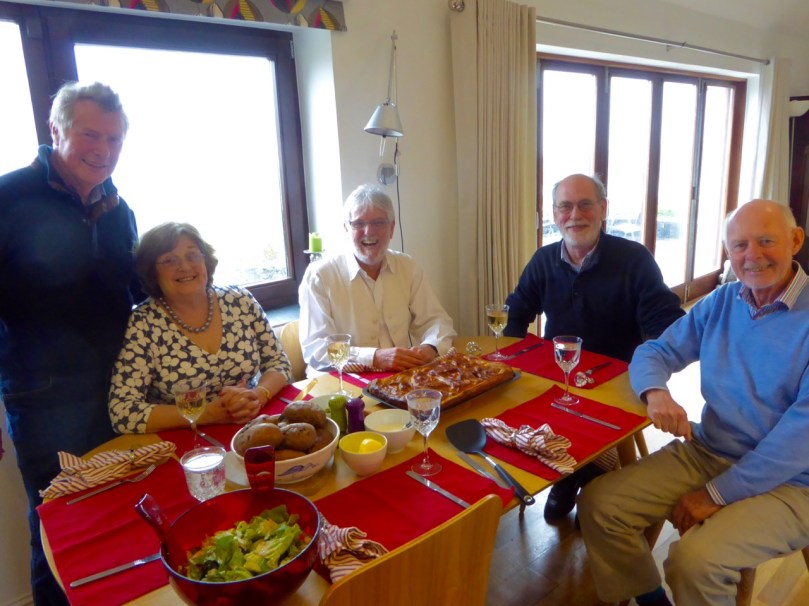
Dinner Group

Robert, Majella O’Callaghan, Jonathan Ball, Nick Blood, Brendan O’Callaghan

Have you heard of the famous Cornish dish, Stargazy Pie? It’s an arresting looking dish, with pilchards’ heads peeking out of a pastry crust as if gazing at the stars. Of course, there’s a whole legend to go with it and lots of traditions.

stargazy

Photo from http://www.jusrol.co.uk/pastry-recipes/stargazy-pie/

Regular readers will know by now that Robert is a hare fanatic. (In fact, he thinks he is a hare, but don’t tell him I told you that.) What better way to combine his Cornish heritage and his hare obsession than with the symbol of the moon-gazing hare – one of the classic, universal images with which we associate hares.
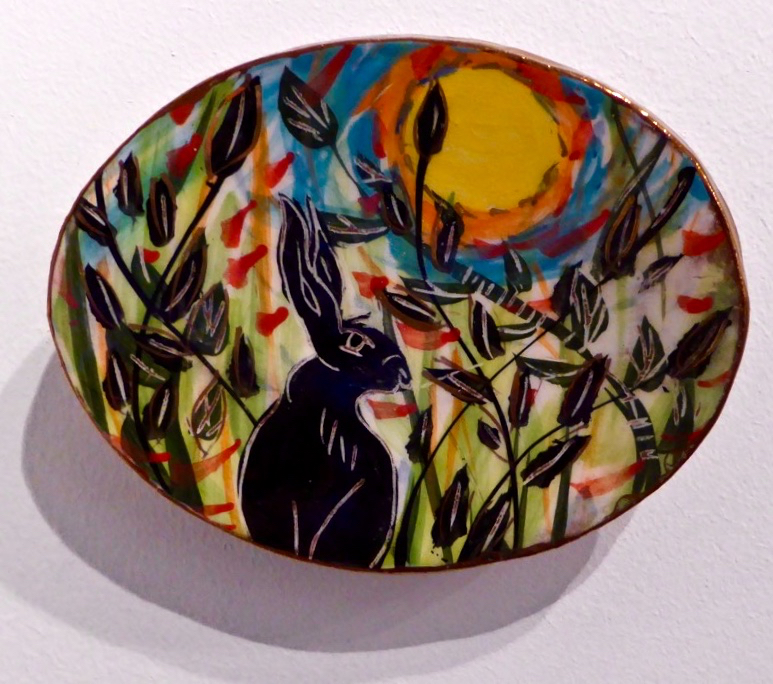
oval

One of Etain Hickey’s wonderful moon gazing hares

So here is the recipe we devised! I’m not sure who likes pilchards (not me!) so don’t worry, there isn’t a pilchard in sight – just beautiful salmon and lots of leeks. Although this is an easy recipe give yourself time to make it, as part of the process involves cooling the ingredients and then the pie itself before baking. It’s a great dish to make in the morning for a Sunday lunch, or in the early afternoon for dinner.
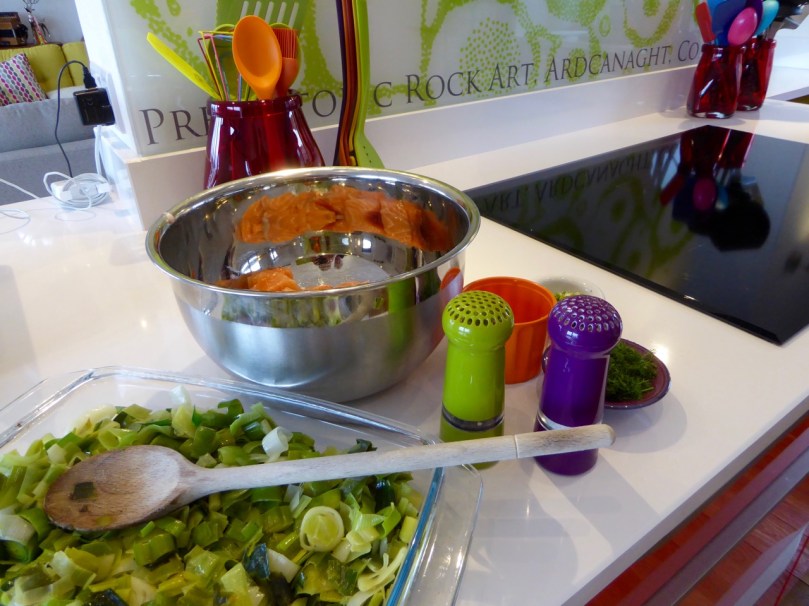
Ingredients

MOONGAZY PIE

6 leeks

2 tbs butter

A side of salmon (1 – 1.5k/2.5 – 3.5lbs), skinned and boned (we got our fishmonger to do this for us).

A large handful of fennel fronds (I happen to have this in the garden and I love the aniseedy aroma  but you can substitute fresh dill)

Freshly grated zest and juice of one lime

1 large egg

1 tablespoon water

2 packs ready-made puff pastry sheets – You’ll need about 900g/2lbs in total.

PREPARE

Take the puff pastry from the fridge so it will be at room temperature when you are ready to roll it out.

Wash the leeks very well, making sure to separate the leaves and hunt for that pesky soil that lurks between them. Drain them, pat them dry and cut them into rounds approx half inch or 1.5cm long. Sauté the leeks in butter over moderate heat, stirring, until tender, about 20 minutes. Set aside to cool.

Zest and juice the lime.

Cut off the coarser stalks from the fennel (or dill) and chop the fronds finely.

Cut salmon into pieces – about 2”/5cm square.

Once the leeks are cool, mix the leeks, salmon, lime zest and juice and fennel/dill in a bowl.

Whisk together egg and water to make an egg wash.

Dust a baking tray with floor. A 35 x 25 x 2cm (14″ x 10″ x 1”) works well.

Filling the pie

ASSEMBLE

On a lightly floured surface with a lightly floured rolling pin roll 1 puff pastry sheet (about 300g /10oz) to fit the baking tray with some overhang. Once rolled, transfer it to the tray. Roll a second sheet the same size. Mound the salmon mixture on to the pastry in the tray and spread carefully to fill the tray. Brush the edges with some egg wash and drape the second sheet over top. Roll the edge of the bottom sheet over the edge of the top sheet to form a seal and press it down all the way around with the tines of a fork.

Roll out a third sheet of pastry. Use a plate or saucer to cut out the moon shape. For the hare, we found a suitable silhouette on the internet and Robert used the printer to make one the right size to use as a template. There are various ways you can do this – make it your own, as long as you use the image of a hare gazing at the moon.

Cut four steam vents on top and brush all over with the remaining egg wash. Then cool the pie in the fridge for at least an hour and up to 3.

BAKE

Preheat oven to 205C OR 400F.

Bake pie in middle of oven until pastry is golden brown, about 30 minutes.

Ta Da!

Black Pudding

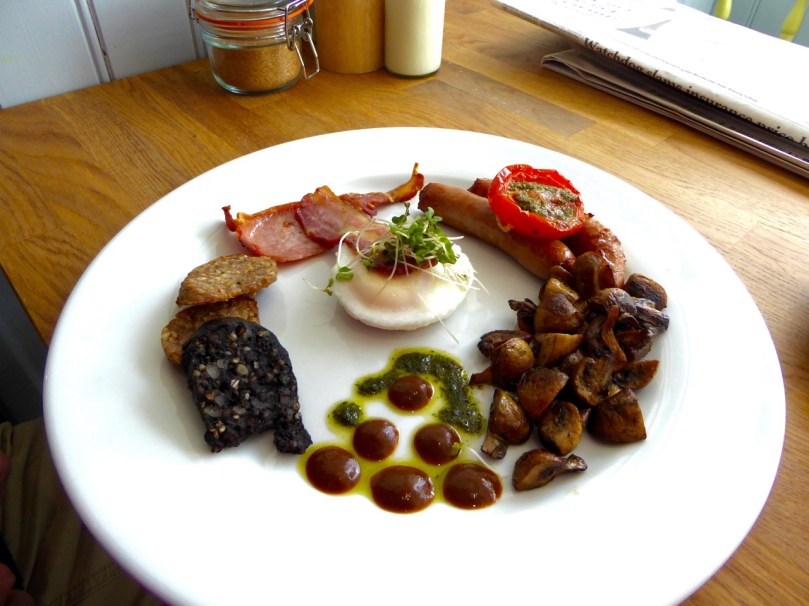
Breakfast at Budd's

Breakfast at Budd’s of Ballydehob – all local ingredients

When did black pudding assume foodie status?

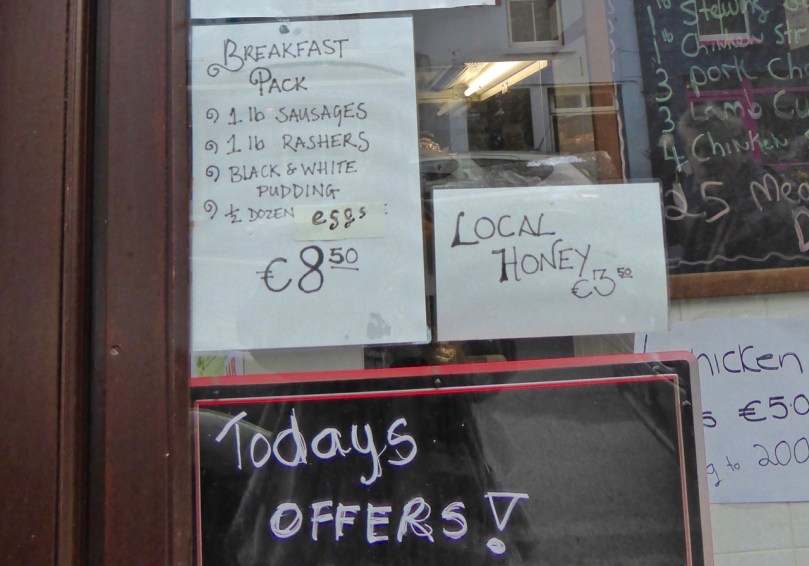
Breakfast Pack

Black pudding (a blood sausage) was always a popular breakfast staple in Ireland – served in all decent bed-and-breakfasts on a ‘Full Irish’ plate along with white pudding, sausages, rashers and eggs, and sometimes tomatoes and mushrooms, accompanied by homemade brown soda bread. I never liked it – “Please, no black pudding on mine.”

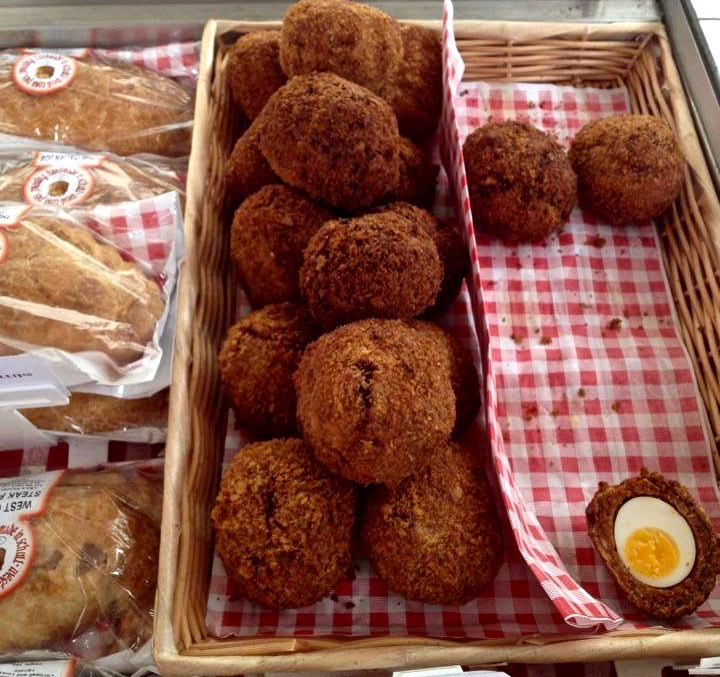
West Cork Pies' Black Pudding 'Brunch' Scotch Eggs, at the Skibbereen Market

West Cork Pies‘ Black Pudding ‘Brunch’ Scotch Eggs, at the Skibbereen Market

But somewhere in the last ten years black pudding has been transformed into the gourmet must-have ingredient du jour: added to scallops or crab, used to lend interest to staid sausage rolls and scotch eggs, served as canapés with the requisite goat’s cheese and caramelised onions.

The black pudding selection at Field's of Skibbereen

The black pudding selection at Field’s of Skibbereen

And it’s delicious! Artisan butchers and food producers all over the country have been developing their own recipes and flavours, although the basic ingredients (pig’s blood and oatmeal) have remained the same. Some credit Clonakilty Black Pudding with leading the charge. They use beef rather than pork and their exact formula is a closely guarded secret. Their website has lots of recipes and the history page features a video on how the pudding is made. This has become such a celebrated West Cork product that there has been talk of a Black Pudding Visitor Centre!

Clon web page

Nowadays, every supermarket meat section will sport an array of artisan black and white puddings. Here in West Cork we find local varieties such as McCarthy’s of Kanturk, Putóg De Róiste (an Irish-speaking black pudding from the Ballyvourney Gaeltacht), Hodgins of Michelstown, as well as Rudd’s from County Offaly, further afield. There are mass-produced varieties too, and supermarket chain generic puddings, all of which have their fans.

Avril Allshire at a function in Rosscarbery, handing around her black pudding swirls – our first taste of them; The Rosscarbery Recipes range of products on sale at Fields

My own favourite is made by Rosscarbery Recipes. This is totally attributable to Avril Allshire, the cheerful producer whom I have met on numerous occasions demonstrating ways to eat their black pudding or serving it up at events. She’s always up for a chat and she loves to share her enthusiasm and her recipes. She and husband Willy and two sons run Caherbeg Free Range pig farm (the Facebook page is full of adorable piggy pics), as well as the Rosscarbery Recipes food range and are totally committed to food quality, to provenance control, and to traditional curing methods that result in delicious pork products. They’ve even developed a gluten-free black pudding!

The Allshire Family with awards for their food products. Avril, William and the two boys are totally involved in all aspects of the business

The Allshire Family with awards for their food products. Avril, William and the two boys are totally involved in all aspects of the business

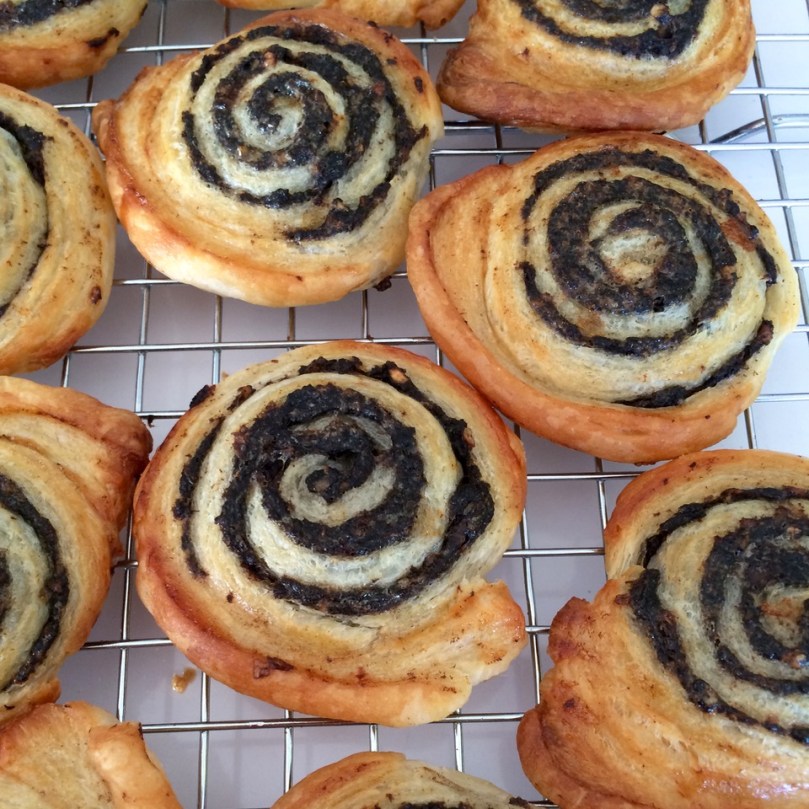
Avril’s Black Pudding Swirls have become my go-to appetiser recipe and I am sharing it at the end of the post, taken directly from her website but adapted for our non-West Cork readers.

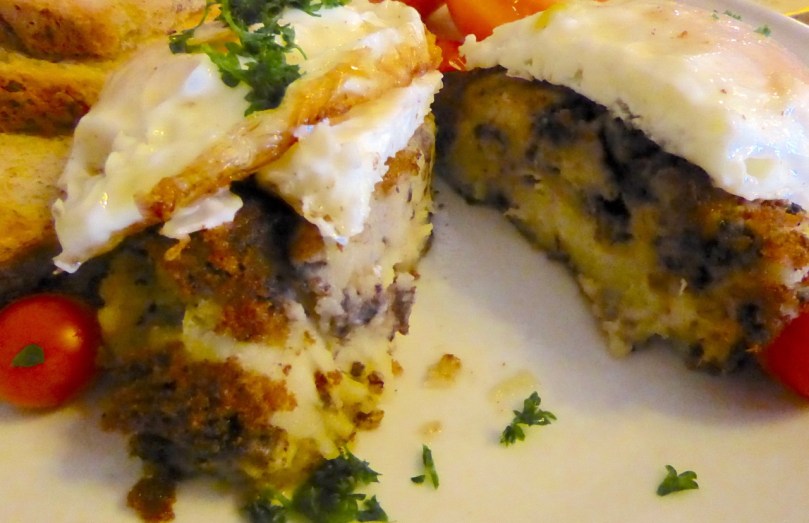
An Chístín Beag's black pudding potato cakes.

An Chístín Beag’s black pudding potato cakes

The other way I have come to love black pudding is in potato cakes. As served by the fabulous An Chístín Beag (The Little Kitchen) in Skibbereen, this is a way to start your day off right, especially if you’re planning a hike! According to Pauline, you simply add chopped up black pudding to mashed potato, shape it into cakes, and fry. There’s got to be more to it than that, I insist – egg? flour? But no, that’s it. I think it helps if you leave them in the fridge to chill and firm up a bit before you cook them.

The choir Christmas get-together at Rosie's Pub. My contribution was the black pudding swirls, recipe below.

The choir Christmas get-together at Rosie’s Pub. My contribution was the black pudding swirls, recipe below

What about you and black pudding? Love it? Hate it? Got a favourite? Figured out how to get hold of it outside Ireland or the UK?

Making the swirls

Making the swirls

Rosscarbery Recipes’ Black Pudding Swirls

By Avrill Allshire (additional notes by Roaringwater Journal)

Ingredients:

1 pack of Field’s Puff Pastry; (any ready-to-bake puff pastry will do, 500g or 1lb)

1 Rosscarbery Recipes Black Pudding; (Any good-quality black pudding can be substituted, 300g or 11oz)

1 large egg.

Method:

About an hour beforehand, take the puff pastry and the black pudding from the fridge and allow to come to room temperature.

Preheat the oven to 200°C/ 400°F/Gas Mark 6.

Whip the egg.

Roughly chop the black pudding and blitz in the food processor with half the whipped egg. If you don’t have a food processor, use a fork or wooden spoon. The idea is to get it to a spreadable consistency.

Dust your rolling surface with flour and roll the puff pastry into a large rectangle. Lay the Black Pudding mixture on the puff pastry. Spread it out evenly but not to the edge of one long side which should be brushed with a little of the whipped egg. Roll from the other side. Finish the roll by pressing gently onto the whipped egg end. Slice in 1cm slices and place on a sheet of greaseproof paper on a baking sheet. Brush each slice with the whipped egg.

Put in the oven and bake until a golden brown. This will take anywhere from 12 to 15 mins, so keep an eye on it.

Remove and allow to cool. Makes about 50 swirls.

swirls finished

Yummers!

Shauna and Robert tasting

Monica Sheridan’s Christmas Cake

When my mother made Christmas cake she always used Monica Sheridan’s recipe. Mum had an old cookbook stuffed with pieces of paper, cuttings and recipe cards and out of this jumble came marvellous concoctions to feed her appreciative family. As everyone did in those days she iced the Christmas cake with almond paste and royal icing and decorated the top with winter scenes and figurines.

I have searched in vain on the internet for Monica Sheridan’s famous Christmas Cake recipe and I have noticed that many readers who wander into Roaringwater Journal have googled ‘Monica Sheridan’. I suspect, therefore, that others may be looking for this recipe as well so I have decided to reproduce it below.

Monica’s measurements are all in ounces (that’s the same in Ireland, Britain and North America) but I have added the conversion to grams for modern cooks. I tried doing a conversion to cup measures for our Canadian and American readers, but the exercise defeated me. If anyone out there has the exact equivalents, I’d love to have them.

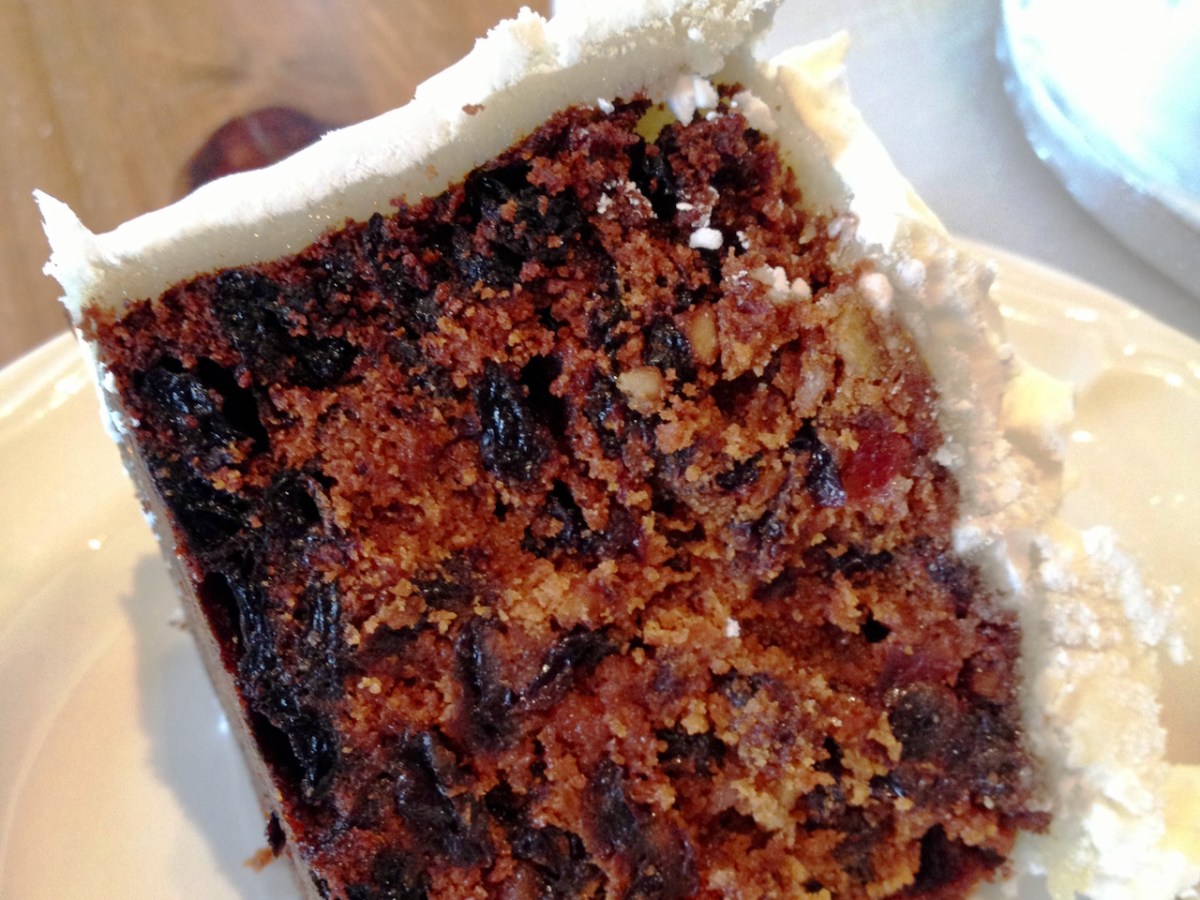
Last year was my first time ever making Christmas cake. Robert and I each made one using Delia Smith’s recipe. This time I will try Monica’s. After all, In her book she relates that when she first published this recipe (her mother’s) in the Irish Times she “…got thousands of letters from people, all over the world, who had made the cake with great success…” Not sure if I feel encouraged or intimidated by that – perhaps I will feature the results in a future post. Meanwhile, I include some images from last year’s efforts, to get you in the mood to go out and buy glacé cherries and angelica.

Have you got a favourite Christmas cake recipe, dear blog reader? Any tips and hints for the novice baker? Any Christmas cake memories to share?

MONICA SHERIDAN’S CHRISTMAS CAKE RECIPE

(from My Irish Cook Book)

Ingredients

6oz/175gm glacé cherries

12oz/350gm seedless raisins

12oz/350gm sultanas

6oz/175gm currants

4oz/110gm mixed candied peel

2oz/50gm finely chopped angelica

6oz/175gm chopped walnuts

12oz/350gm  butter

12oz/350gm sugar

7 eggs

12oz/350gm flour

1tsp salt

1tsp mixed spice (optional)

Method

Prepare the Fruit (some hours before making the cake)

Turn on the oven to 240F/120C.

Halve the cherries. Put all the fruits and the nuts into a casserole dish. Mix them well together with your hands so that all the different species are well distributed. Cover loosely with baking parchment or foil and put into the warm oven. Toss once or twice until the fruit is well heated through. This heating makes the fruit sticky and prevents it from falling to the bottom of the cake. It also plumps the fruit and makes it juicier. Never roll fruit in flour and never wash it.

When the fruit is heated through and is sticky, take it out of the oven and let it get quite cold. Warm fruit added to a cake mixture would melt its way down to the bottom before the mixture had set in the oven.

Prepare the Cake Tin

Use a high-sided 10” cake tin and grease or oil it well. Now line it, sides and bottom with two thicknesses of greaseproof or parchment paper and grease the paper.

Make the Cake

Heat the oven to 300F/150C

Cream the butter and sugar together until white and fluffy. Add the eggs, one at a time, with a teaspoon of flour for each egg. This prevents the eggs from curdling the mixture. Beat well between each egg.

Sift the flour with the salt and fold into the egg mixture. Lastly, fold in the fruit and nuts which you have separated by running your fingers through them.

Pour the mixture into the lined cake tin. It shouldn’t come up to more than 2” from the top of the tin. Trim the lining paper level with the top of the tin. Rest an inverted tin plate, or a lid, over the tin.

Put the cake in the oven. After 1 hour, reduce the heat to 280F/135C and continue to bake for another 5 hours, or 6 hours in all.

If you think the cake is baking too fast, keep gradually reducing the heat. This cake should be golden rather than brown on top. Do not remove from the tin until cold.

The secret of success with this cake is the plumping of the fruit and the slow baking.