Nano Nagle – Lady of the Lantern

A Cork heroine: Nano Nagle was given the accolade ‘Ireland’s Greatest Woman’ by RTE in 2005, and at that time it was suggested that she would be a Nobel Prize winner if she were alive today. Why? Because she devoted her own adult life to helping – and educating – deprived Catholic families during the ‘Penal times’ in which she lived: she was born in 1718.

Header, tailpiece and above: images from the audio-visual display which can be seen in Nano Nagle Place, located on Douglas Street, Cork – only five minutes’ walk from the English Market

While Nano Nagle was actively agitating for – and lived to see – some relaxation of the laws against Catholics, particularly the repeals of 1778, she died in 1784 and it was not until 1791 that the Roman Catholic Relief Act saw some significant lessening of discrimination – although one of the sorest points, the continuing requirement for Catholics to pay tithes to the Established (Protestant) Church, was not fully overturned until the Irish Church Act of 1869.

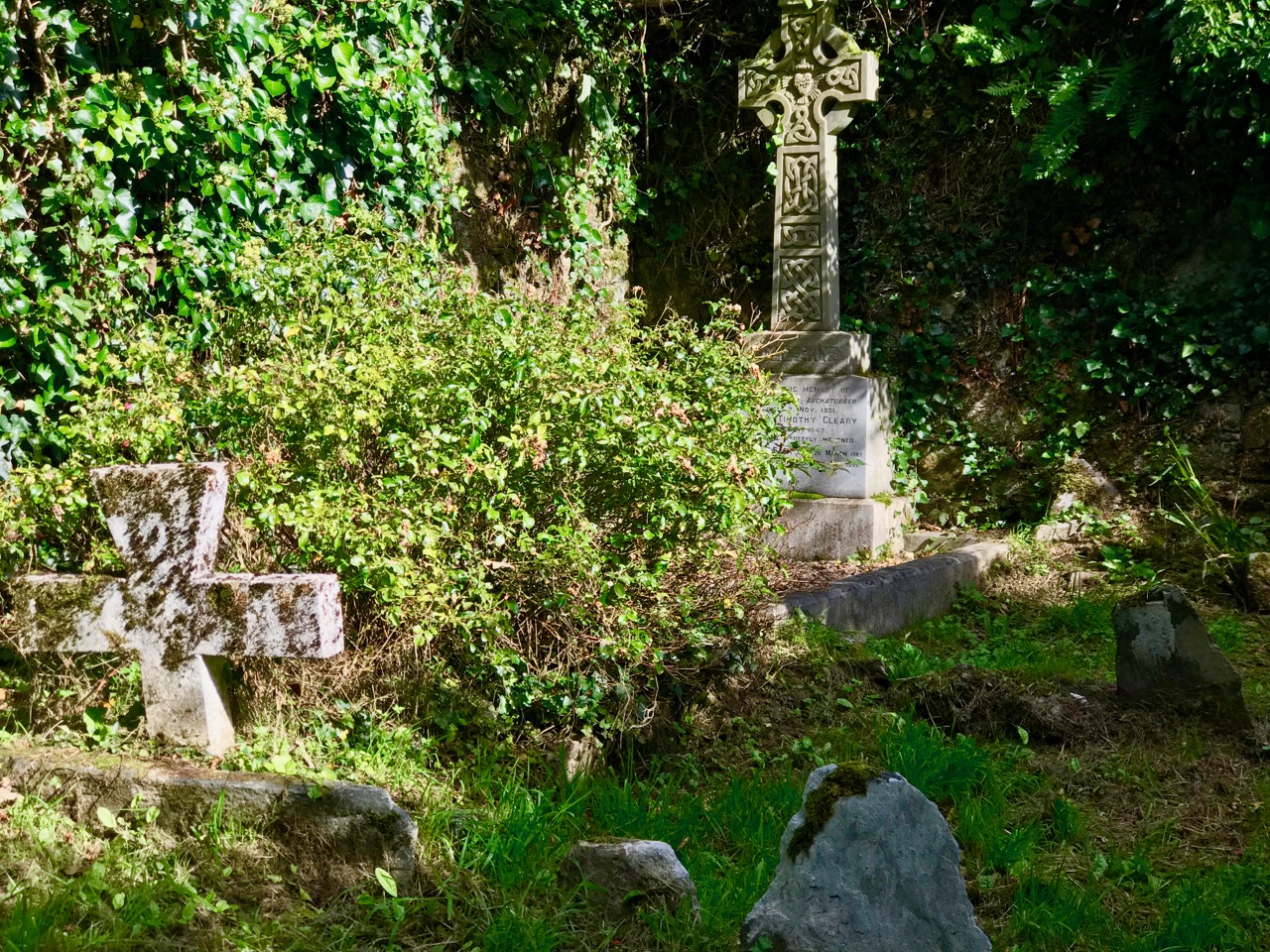
Above – the landscaped gardens at Nano Nagle Place, Cork, are a city centre oasis, and contain Nano Nagle’s tomb and the graves of the sisters of the communities which carried out Nagle’s work from the mid eighteenth century onward

Nano herself seemed able to work ‘above the law’: she was born in Ballygriffin, near Mallow, County Cork into a wealthy family and experienced an idyllic childhood. The Penal Laws of that time meant that education for Catholics was not available in Ireland unless they were willing to attend Church of Ireland schools, and Irish Catholics were forbidden from travelling to the continent to be educated. Despite this, Nano was educated in France, where she experienced an epiphanic moment and determined to devote the rest of her life to the service of the poor back home in Ireland. 

Above – part of a painting in the Nano Nagle Room at Díseart Institute of Irish Spirituality and Culture (formerly the Presentation Convent) in Dingle, Co Kerry. The painting, by Eleanor Yates, shows the moment when Nano, travelling from a ball in Paris, sees pauper children suffering on the streets and realises that her life mission should be to care for and educate the poor

When Nano’s father and sister died, she moved to live with her brother’s family on Cove Street, Cork – now named Douglas Street. There she began to carry out her mission and opened a girls’ school around 1750 focussing on reading, writing, catechism and needlework. She had to work in secret as, under the Penal Laws, operating a Catholic school could result in imprisonment. 

Nano Nagle Place in Cork City incorporates some of the earliest buildings dating from the time of the Ursuline Sisters: the buildings have been restored and extended to form the present day Centre

Within ten years Nano was operating seven schools across the city of Cork, teaching both boys and girls. When her brother’s family moved to Bath, Nano took a small cottage on Cove Street. By day she visited each of her schools, and by night she visited the poor. This was dangerous work:  the city streets were neither lit nor properly policed. Nano travelled by the light of the lantern she carried, and she became known as ‘Miss Nagle, the Lady of the Lantern’.

Today there are displays in Nano Nagle Place showing some original artefacts from Nano’s time, including an early Convent accounts book and Nano’s cap

In 1771 Nano Nagle used a family inheritance to build a convent for the Ursuline sisters, a teaching order, whom she invited from France. The Ursuline Order, however, is ‘cloistered’ – unable to leave the convent and only able to teach within the convent. Thus,  to continue with her work in the schools she had set up all over Cork, Nano founded her own order – The Society for Charitable Instruction of the Sacred Heart – in 1775. The name was changed in 1791 to The Presentation Sisters, and there were from that time two religious communities both established by Nano Nagle, working side by side on Cove Lane (now Douglas Street), all living in mutual harmony and support, and continuing the mission of Nano Nagle across the world and into the present day.

Above – the death notice of Nano Nagle, and a recent water sculpture adjacent to her grave in Cork. Below – Nano’s gravestone and some graves of Sisters from the communities which were set up in Douglas Street

The Nano Nagle Heritage Centre has been established on Douglas Street and is open to all. It houses a very good visual presentation on the history of Cork in Nano’s time – and of Nano herself. It has beautiful landscaped gardens – quite a surprise in this urban setting – and Good Day Deli: a restaurant serving excellent food. Nano’s grave can be visited, and has recently been given a sculptural treatment which blends well with the historic buildings and graveyard of the early convent.

We are very grateful to Dr Danielle O’Donovan, Programme Manager of Nano Nagle Place, for personally showing us around the Centre and explaining its considerable historical significance

Eleventh Hour

I write this at 11am on the 11th November 2018 – exactly 100 years since the ending of The Great War. I have been aware of the significance of this moment of remembrance since my childhood: wherever we were at the eleventh hour of the eleventh day of the eleventh month, we had to stop what we were doing and be silent for two minutes. This – and the horrors of war – have been in my psyche forever.
Growing up in Britain there was always that awareness of the two world wars, and the losses and sacrifices that they caused: every town and village has its war memorial, giving the names of those who died. That first – Great – war also affected Ireland but, until quite recently, it seems those Irish people who died because of it have received scant commemoration. But – as always in Ireland – once you begin to turn over the stones you do find the history; today’s post looks at just a few examples of memories and commemorations of the 1914 – 1918 conflict.
Firstly, the poetry. Yeats wrote of war poets – “We have no gift to set a statesman right.” I think he was wrong – poets and artists are probably most able to express emotions about war and its outrages in ways that others can approach and embrace. Francis Ledwidge, although an ardent Irish nationalist, states that he . . . joined the British Army because she stood between Ireland and an enemy common to our civilization and I would not have her say that she defended us while we did nothing at home but pass resolutions . . . Only a poet, surely, could describe an army as feminine. Ledwidge gave his life in pursuit of the cause: he was blown to pieces at Ypres on 31 July 1917. A year previously his friend, Irish patriot (and poet) Thomas MacDonagh, was executed (for his part in the 1916 rising) by soldiers in the same uniform that Ledwidge was wearing. The irony is only compounded by the fact that the poet’s Lament for Thomas MacDonagh can be seen now as Ledwidge writing on his own fate:

He shall not hear the bittern cry
in the wild sky, where he is lain,
Nor voices of the sweeter birds
Above the wailing of the rain
  
Nor shall he know when the loud March blows
Thro’ slanting snows her fanfare shrill,
Blowing to flame the golden cup
Of many an upset daffodil.
  
But when the dark cow leaves the moor
And pastures poor with greedy weeds
Perhaps he’ll hear her low at morn
Lifting her horn in pleasant meads.

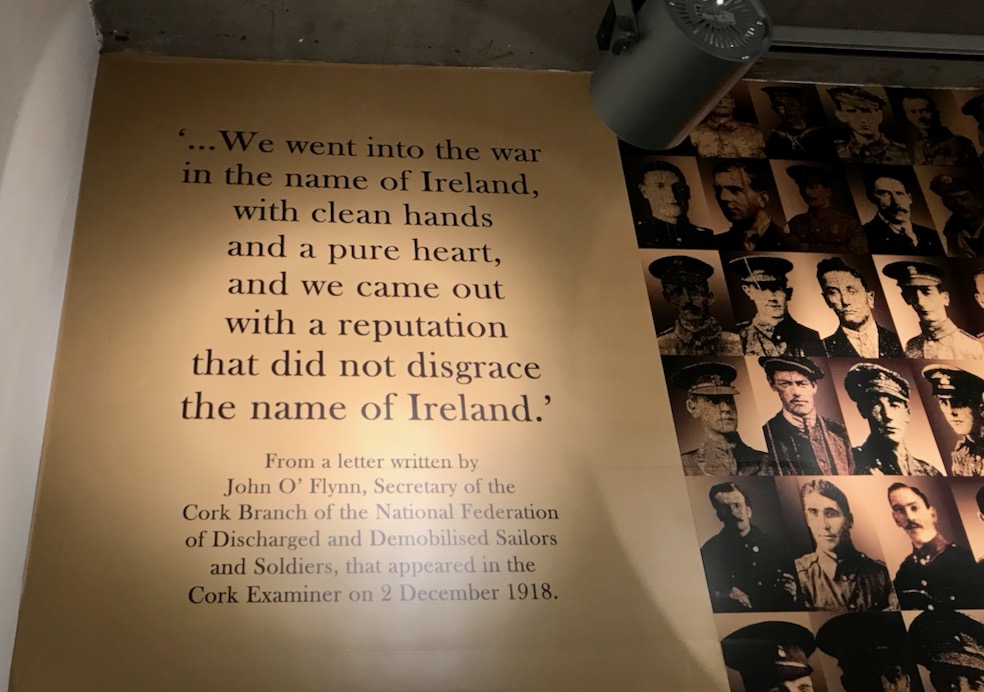
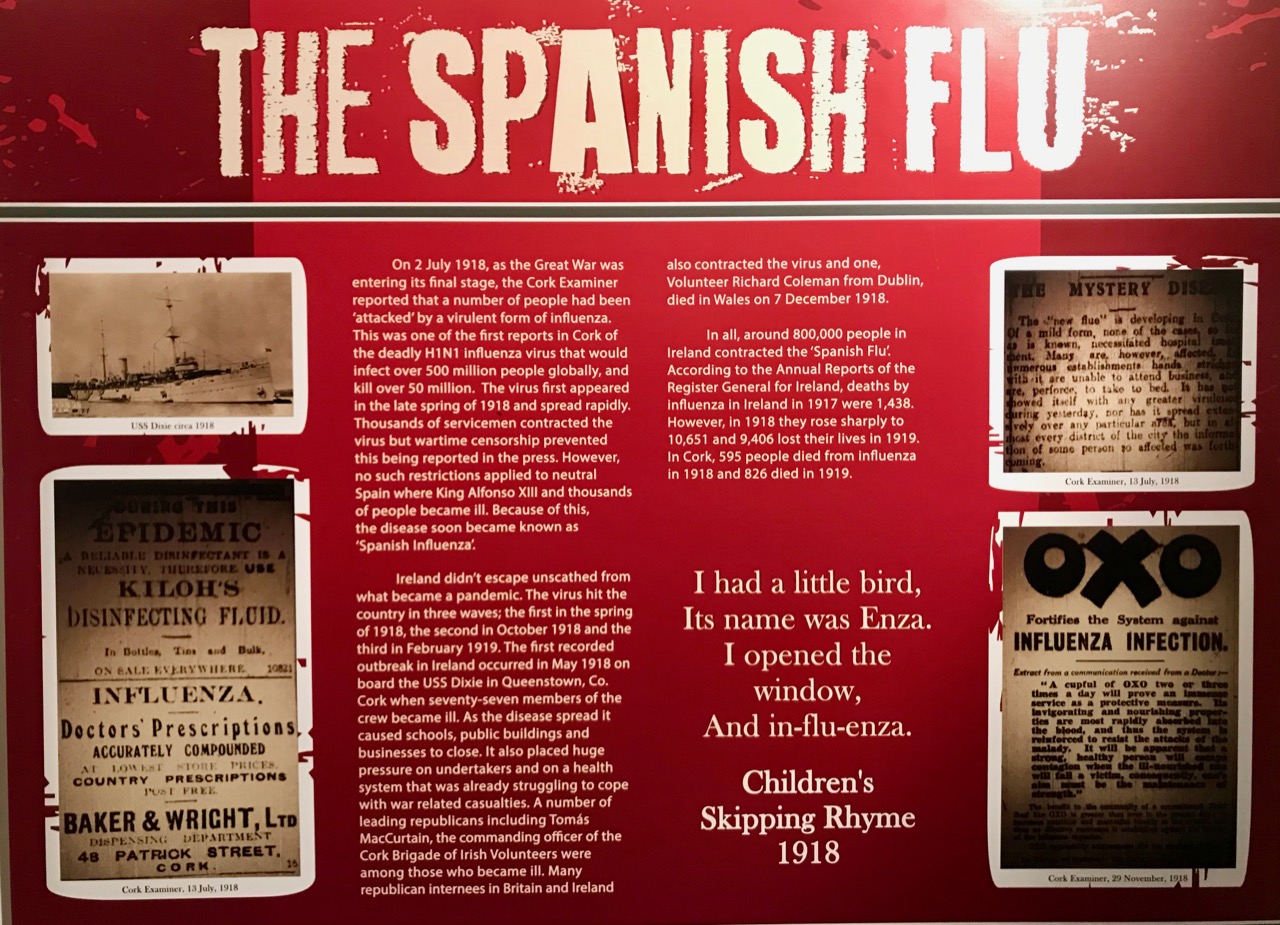
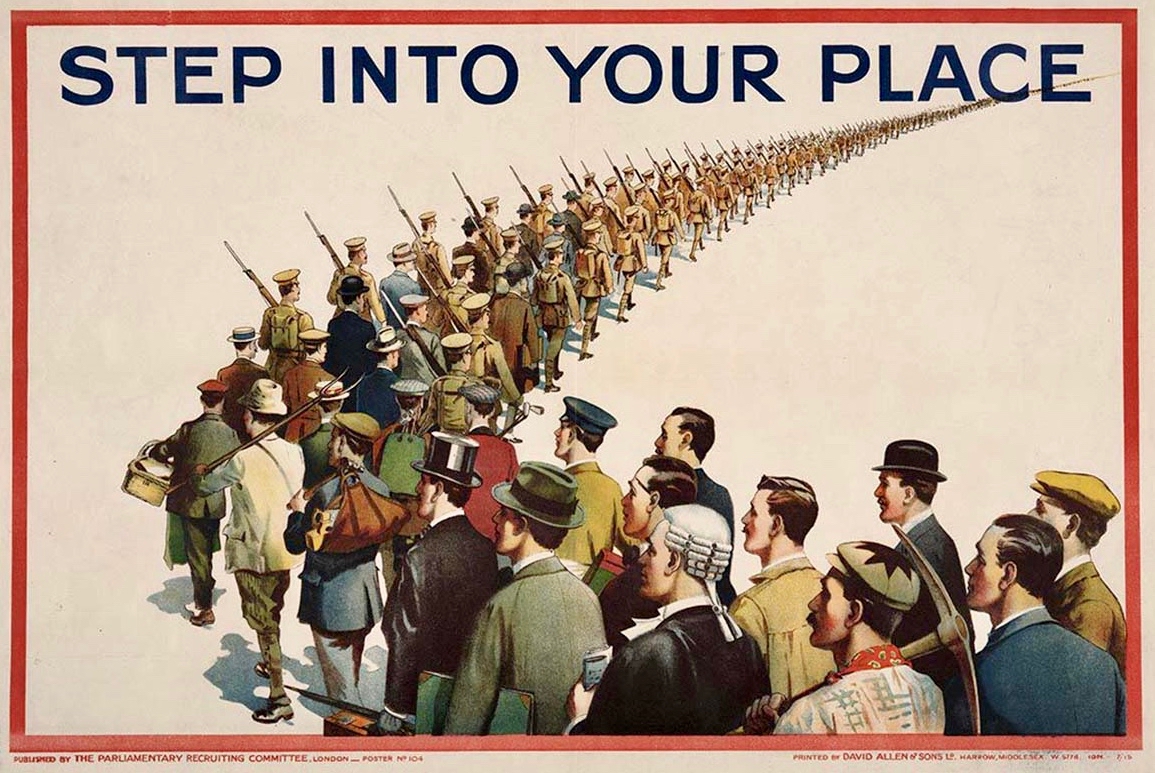
Last week saw the opening of a new exhibition at the Cork Public Museum – Cork 1918: Victory, Virus and Votes. There are photographs, posters and artefacts – all very well displayed – telling the story of the involvement of people from Cork in the Great War, the political fallout from the War and the aftermath of the world wide Spanish Flu epidemic which claimed millions of victims. It’s a must-see exhibition and congratulations are due to Dan Breen and his dedicated team at the museum for bringing it to fruition at this appropriate time. The images above and below are from the new exhibition.

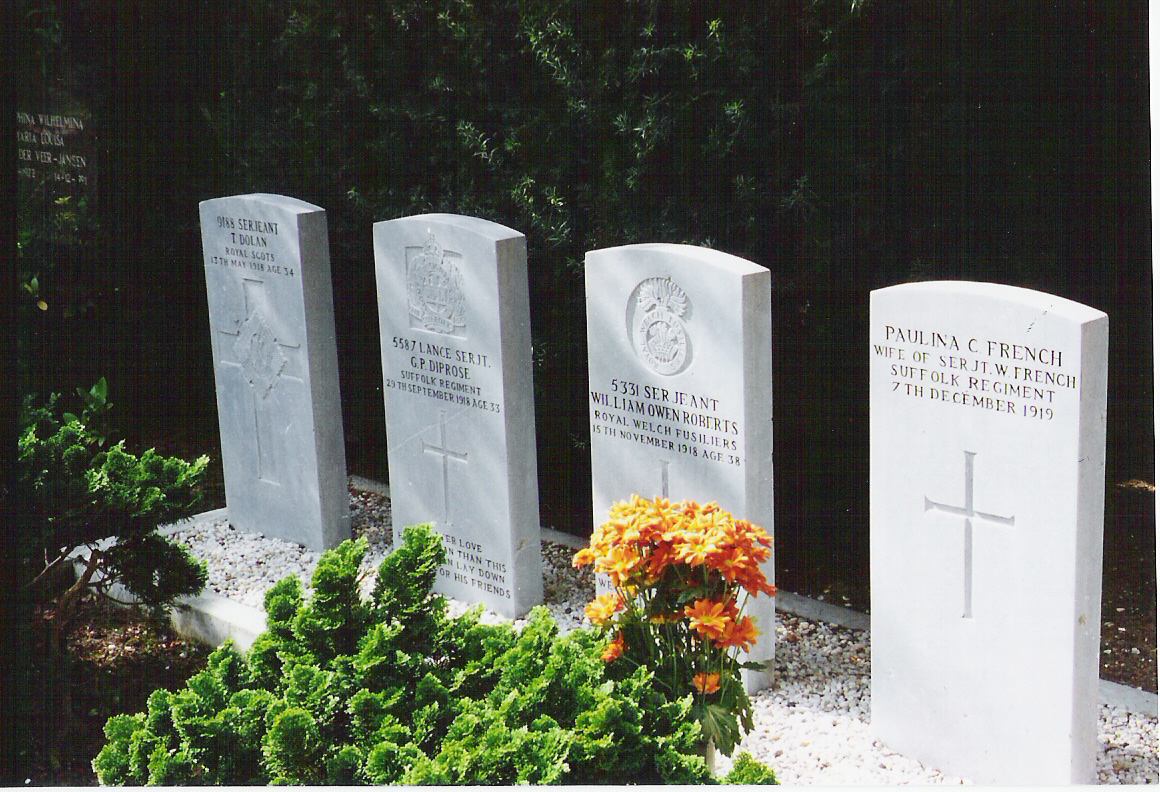
Today Finola is thinking about her grandfather – Sgt William Owen Roberts – who served in the Welsh Fusiliers and had a distinguished military career which included the Boer War and the Chinese Boxer War. He served in the Great War and was captured and interned in Germany and Holland. He contracted and died of the Spanish Flu on 15th November, 1918 – just a few days after the end of the conflict – at the age of 39. His grave is in The Hague.

There can be only a few families not affected by the wars of the twentieth century. My own Uncle Jack died in a prison camp in the 1940s, while my mother’s mother was a victim of the flu epidemic, dying in 1918 and effectively orphaning my mother (aged four) and her three siblings, as their father was away serving in the army.

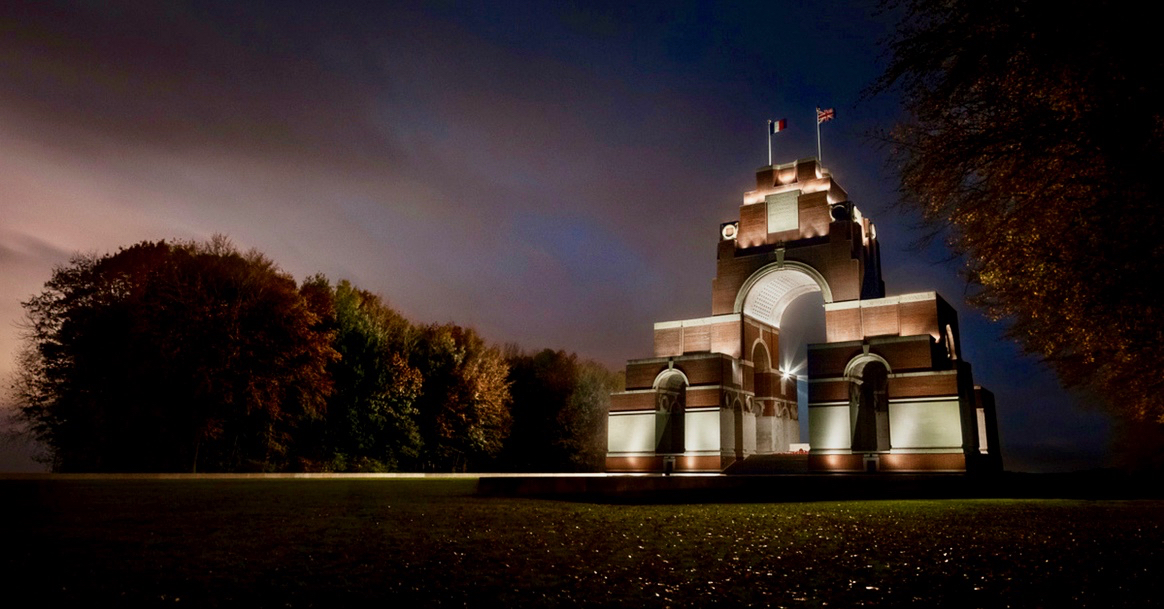
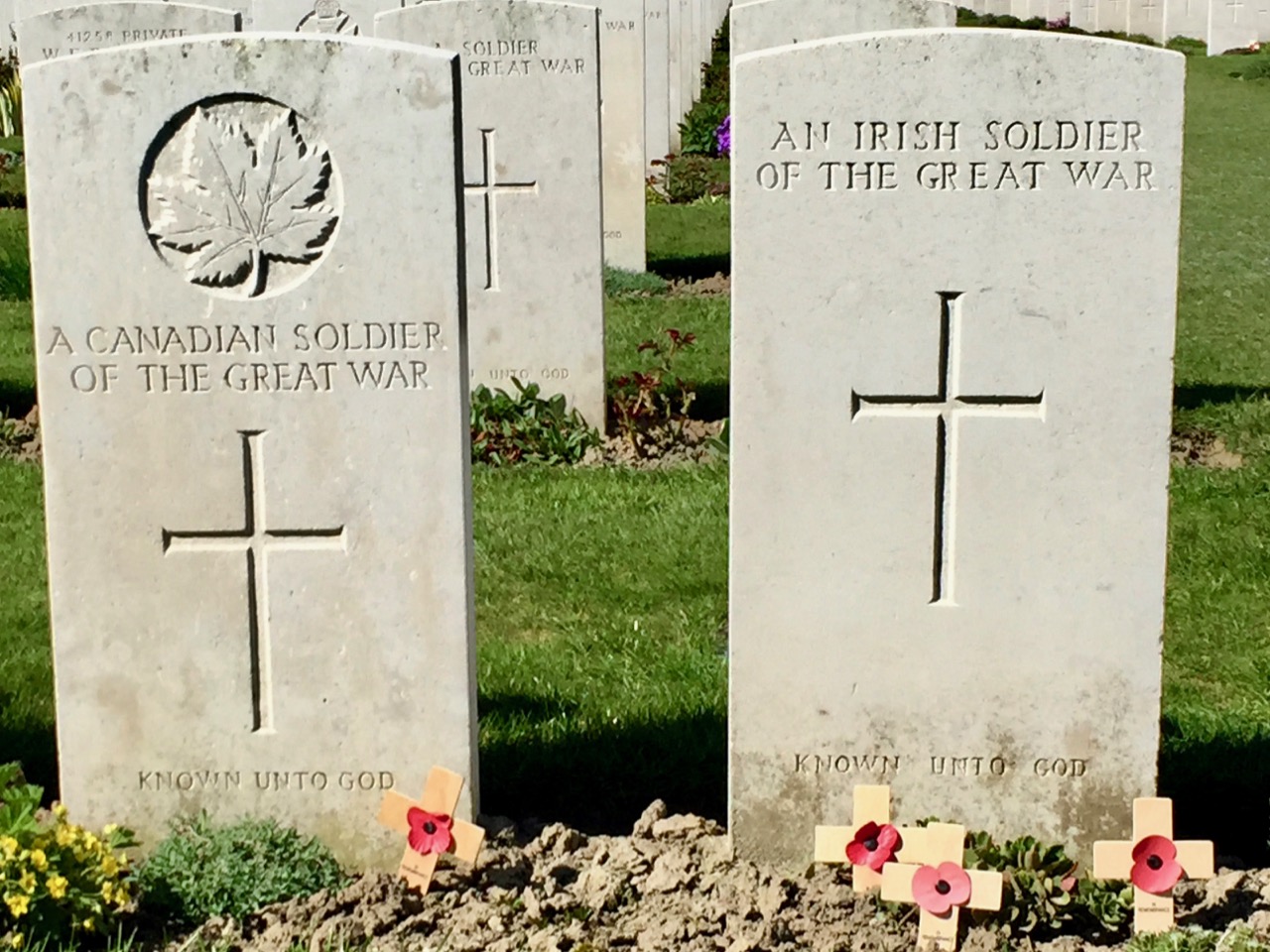
Tucked away in burial grounds around Ireland are the graves of those who died in Europe between 1914 and 1918 in that awful war – and of those who died subsequently as a result of injuries and mental stress arising from the war. We mark them out on our travels around the country. The graves – erected by the Commonwealth War Graves Commission – are of a distinctive uniform design, originated by the architect Edwin Lutyens (who also designed the great Thiepval Memorial in France, the largest Commonwealth memorial to the missing in the world, inscribed with over 72,000 names). The sheer magnitude of that number – people of whom no trace is left other than a name carved on stone – is bewildering. The image below of Thiepval is courtesy of the CWGC.

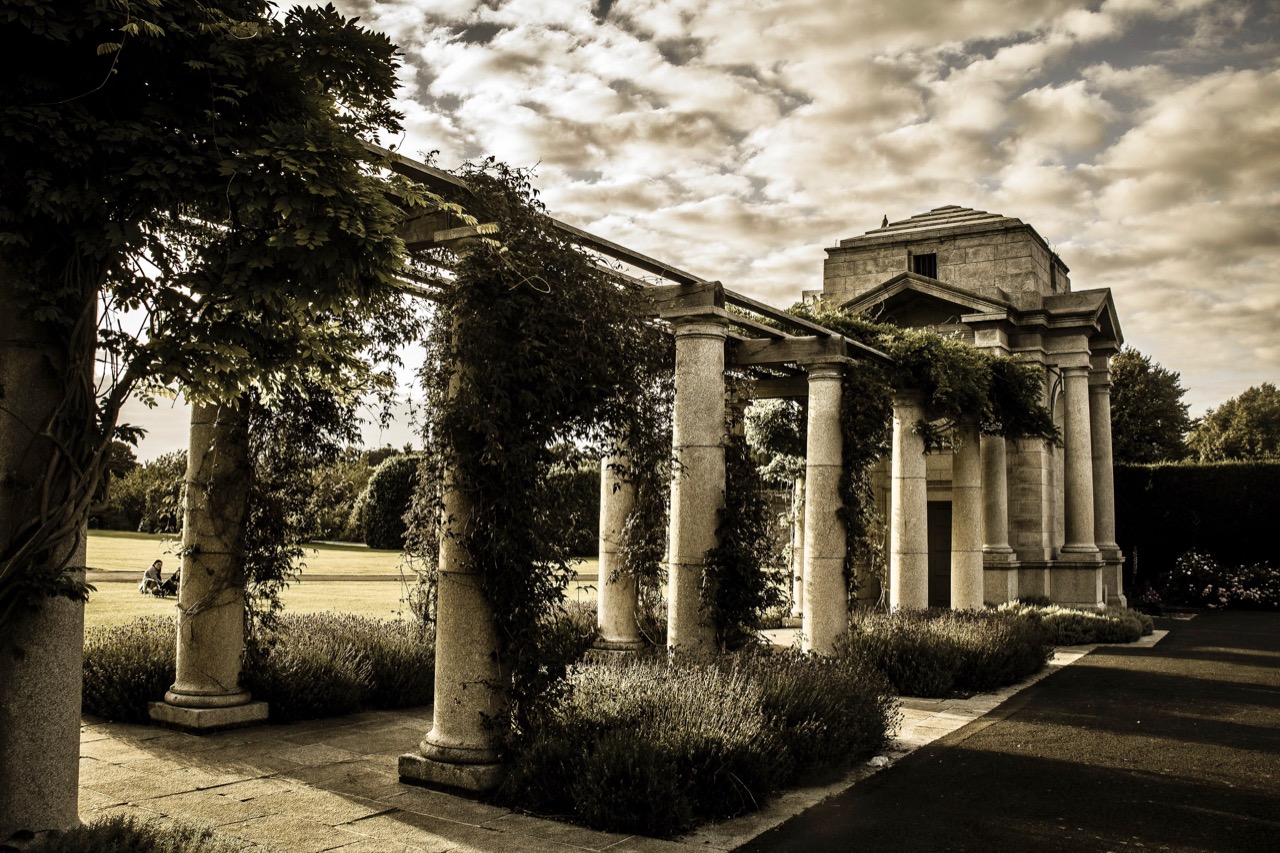
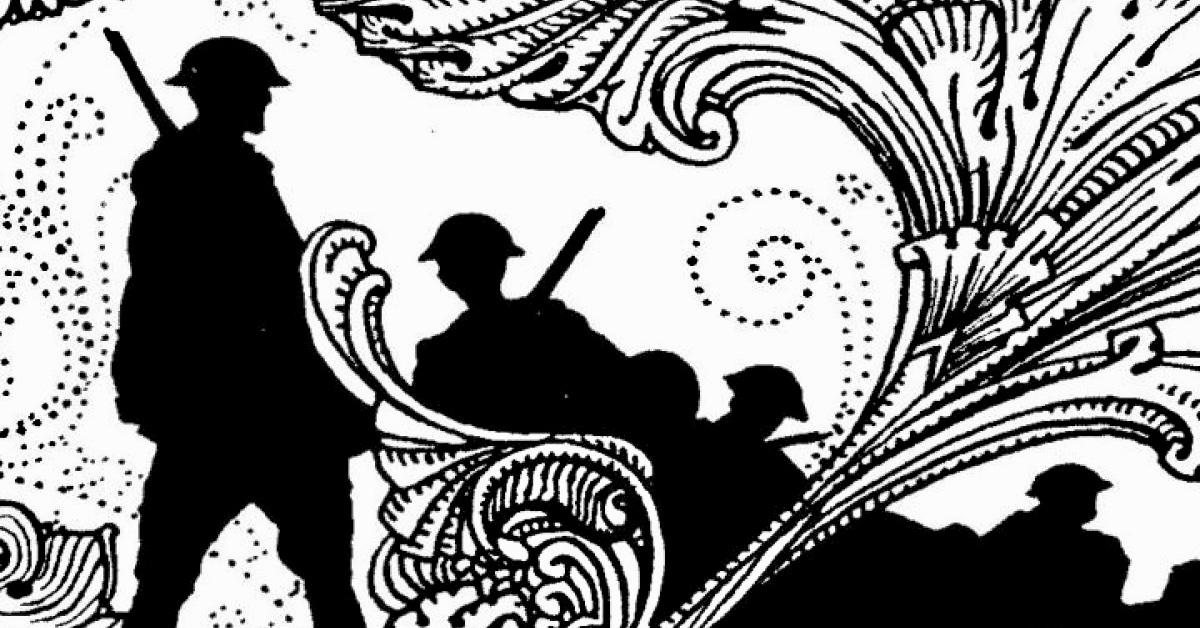
Ireland does now have its own dedicated national war memorial to commemorate the Irish men and women who died during the First World War. The idea was first mooted in 1919 but took years to gestate. Lutyens was commissioned to design formal gardens in Islandbridge, Co Dublin, in the early 1930s, and construction work was largely completed in 1937, following by the establishment of trees and landscaping, an essential element of the design. The 1939 – 45 war in Europe delayed the opening of the memorial, which languished and suffered from decay and neglect for years after that. It wasn’t until 10th December, 1980 – following restoration by the Office of Public Works – that the Irish National War Memorial Gardens were formally dedicated, and they are now maintained to a high standard. As a point of interest, the gardens include classical pavilions – ‘Bookrooms’ – designed to house the memorial record illustrated by Harry Clarke and inscribed with the names of the 49,400 Irish soldiers lost during the Great War. The image of the memorial gardens below is by Diego Lopez Sebastian. The ‘tailpiece’ is a Harry Clarke Illustration from Ireland’s Memorial Records.

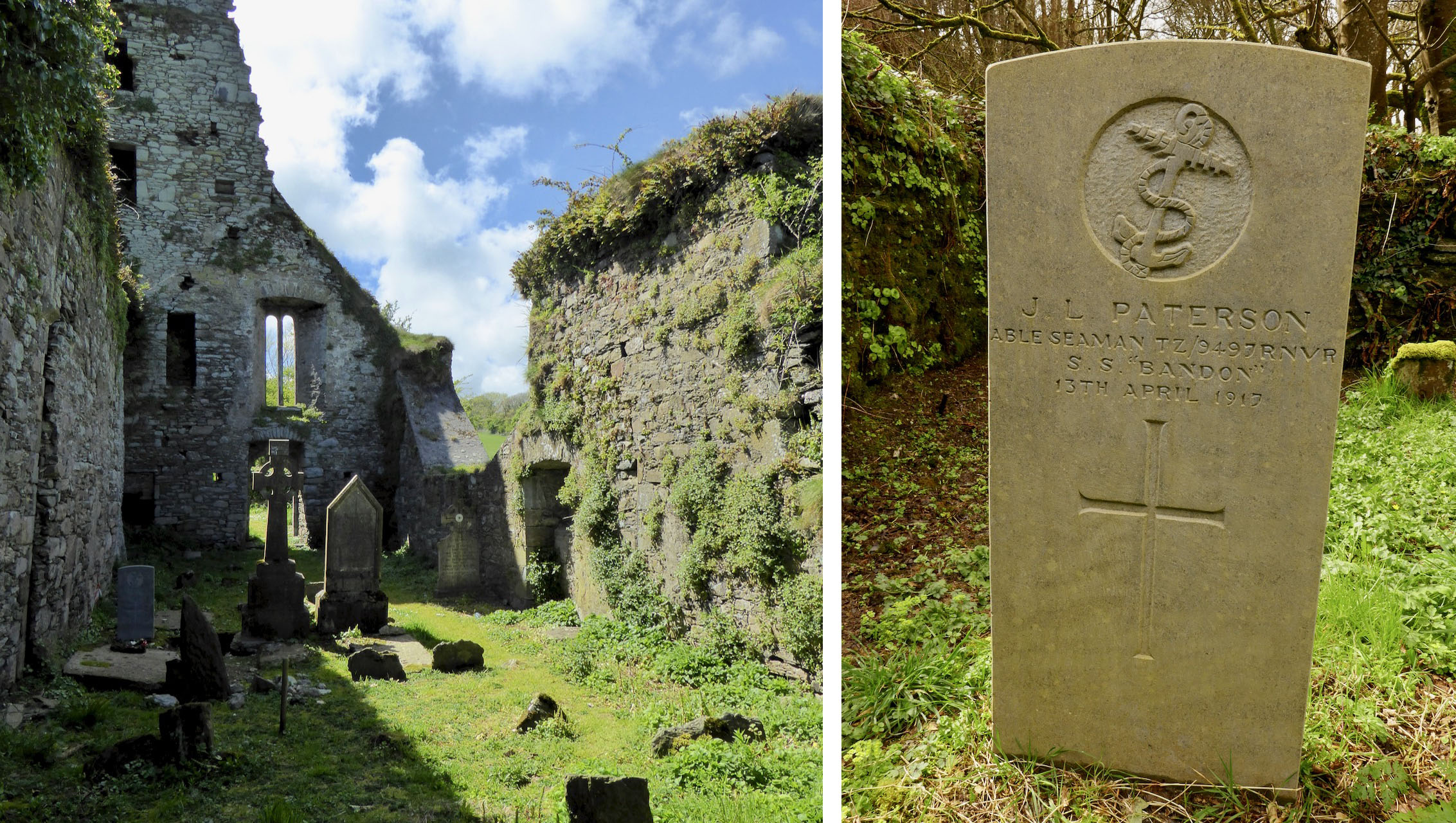
For us, perhaps it’s those tucked-away and often forgotten graves in the corners of Irish cemeteries that are the most poignant. We know that each one tells a story: we can’t know that story – but hopefully there is always somebody who does know – and who passes on the memories to future generations.

Above: two tucked-away West Cork war graves. The left-hand picture has an example, lower left, and is at Abbeymahon Graveyard, Courtmacsherry. On the right is an example at the ancient burial ground of Castlehaven.

Autumnal Day Out – Myross Pyramid

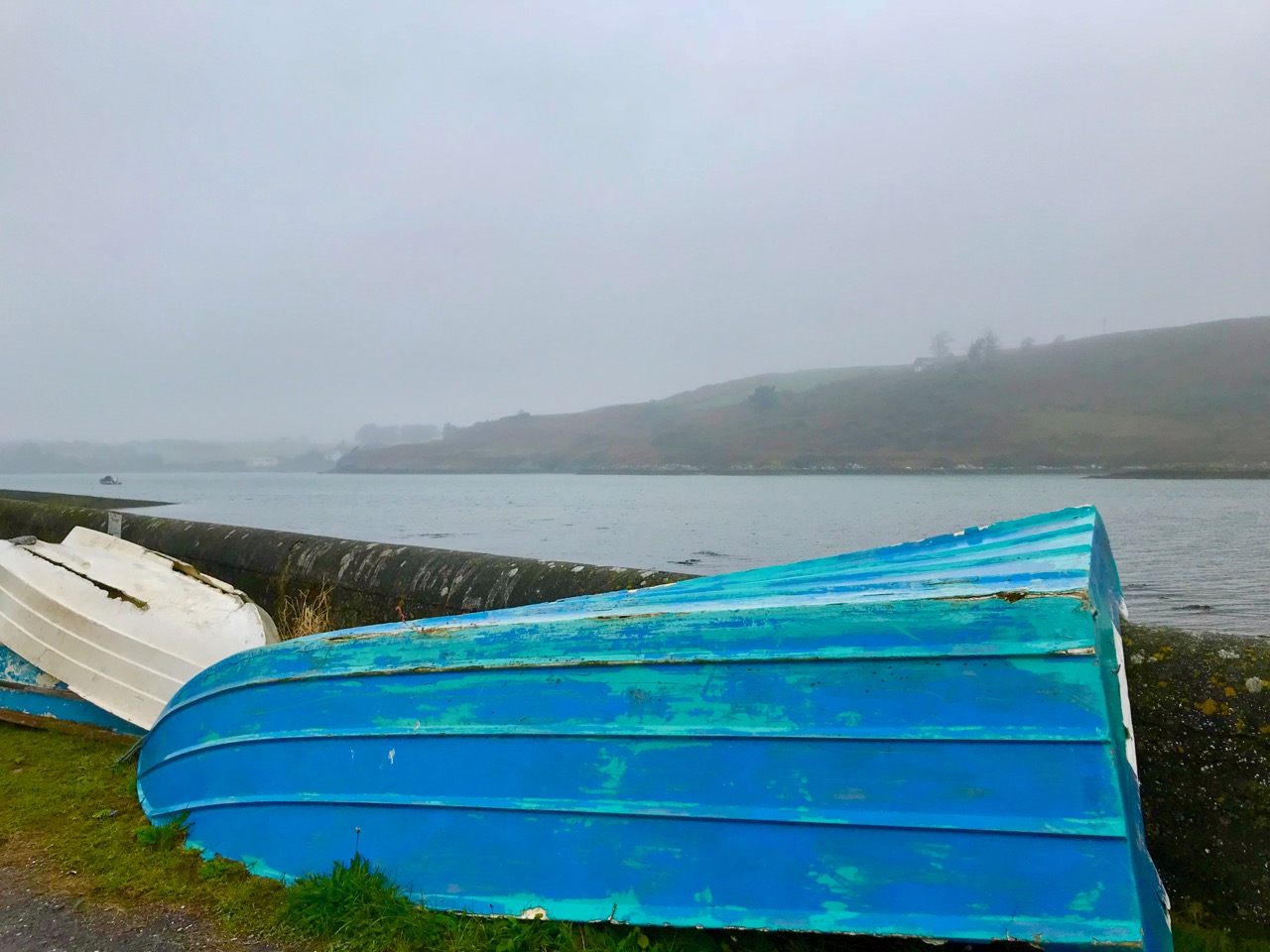
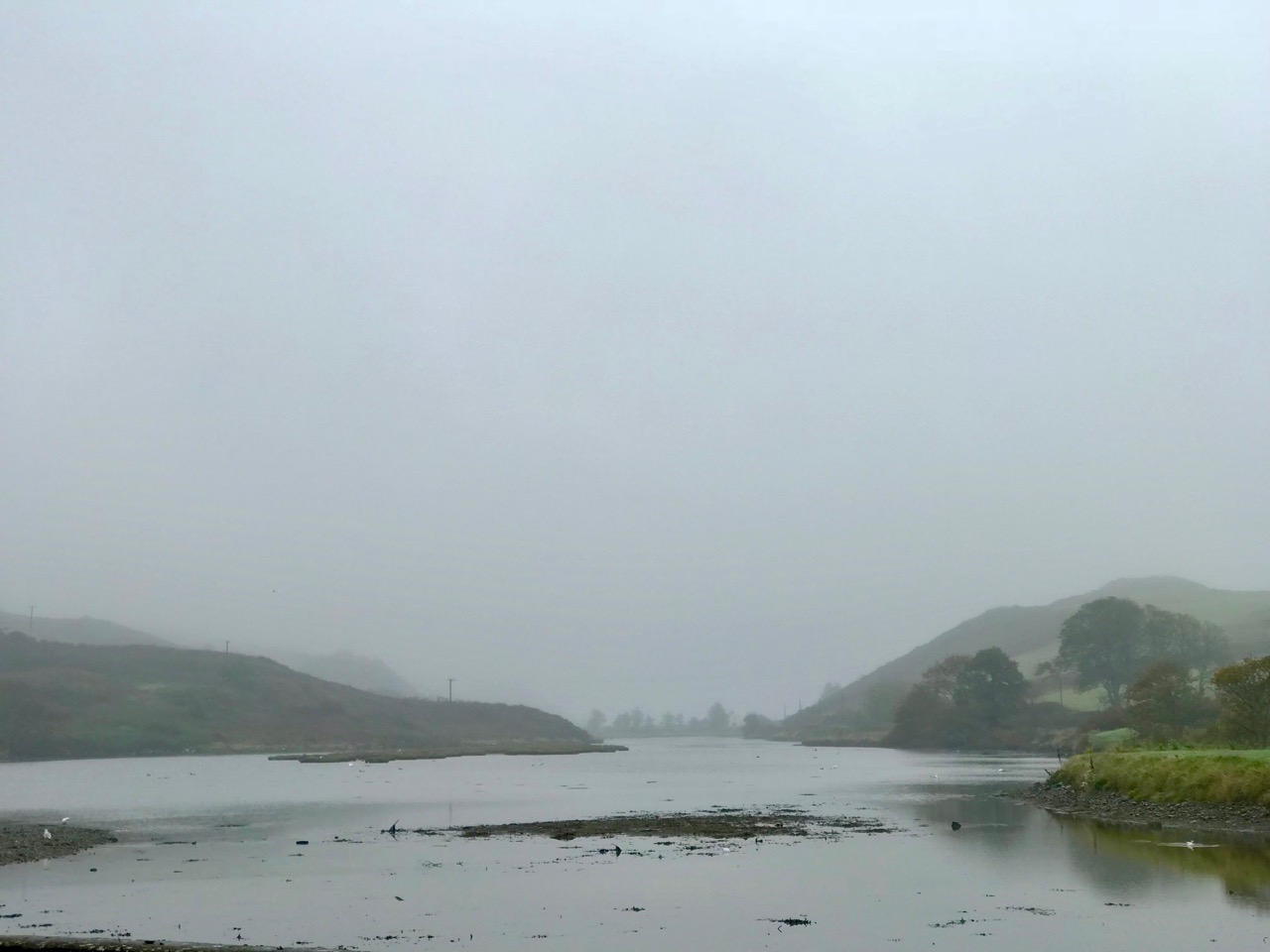
Following what might be described as a Mediterranean summer which went on beyond all expectations well into October – where I suppose it became an Indian summer – we have just had the first truly autumnal days. Mist has descended over the islands of Roaringwater Bay and everything – trees, grass, nature – is dripping wet. This doesn’t put a stop to our travels, but we do see everything in a different light.

Last week I reported on a surprising find, a pyramid-shaped tomb in the idyllically off-the-beaten-track burial ground at Glandore over the hills not too far away from Nead an Iolair. This led to a large number of comments and responses, including some that told us about another West Cork pyramid, at a graveyard in Myross parish, only a little bit further along the coast. Thank you to all our correspondents: you sent us out on a fruitful search in this mellow season of mists.

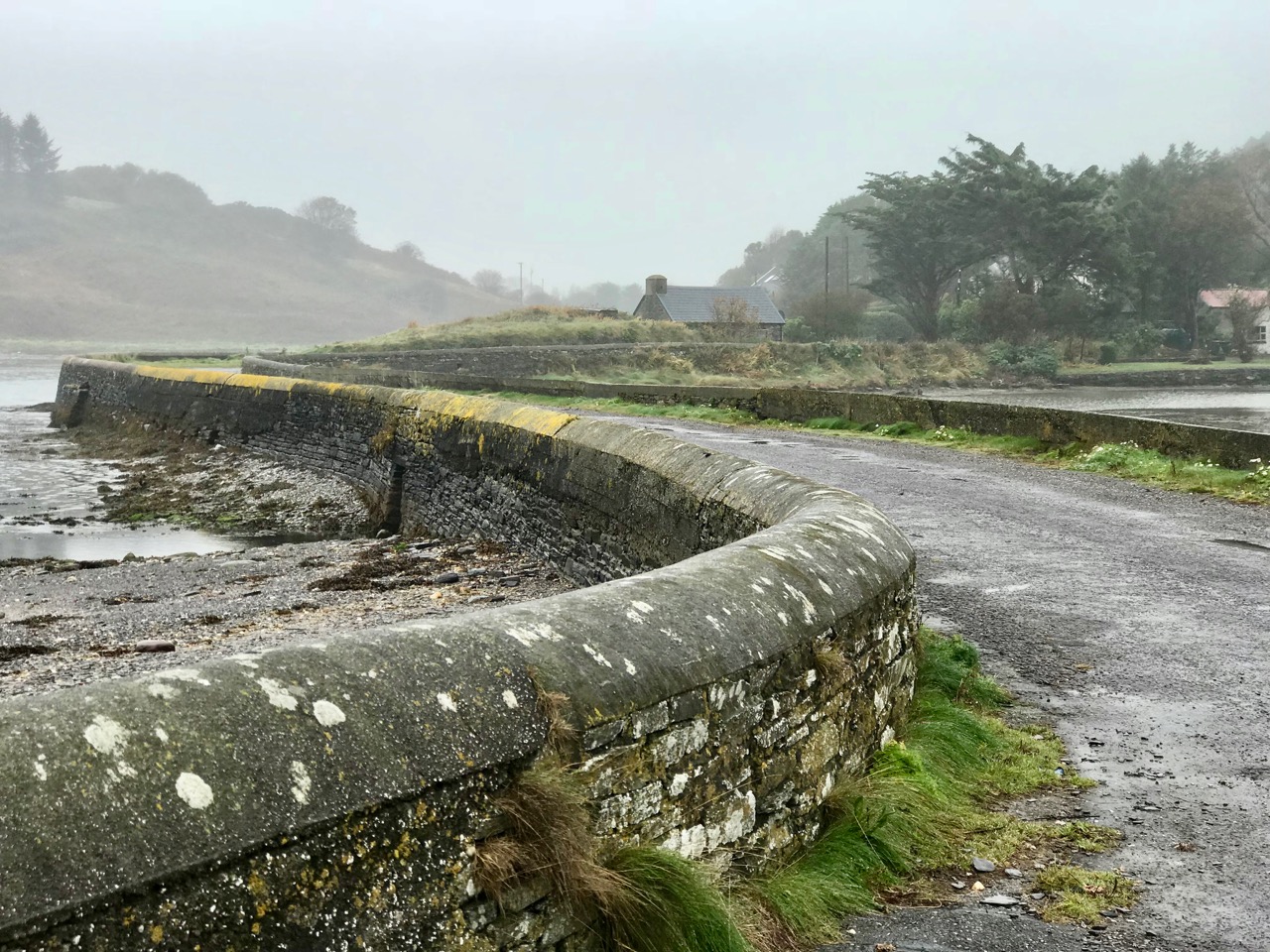
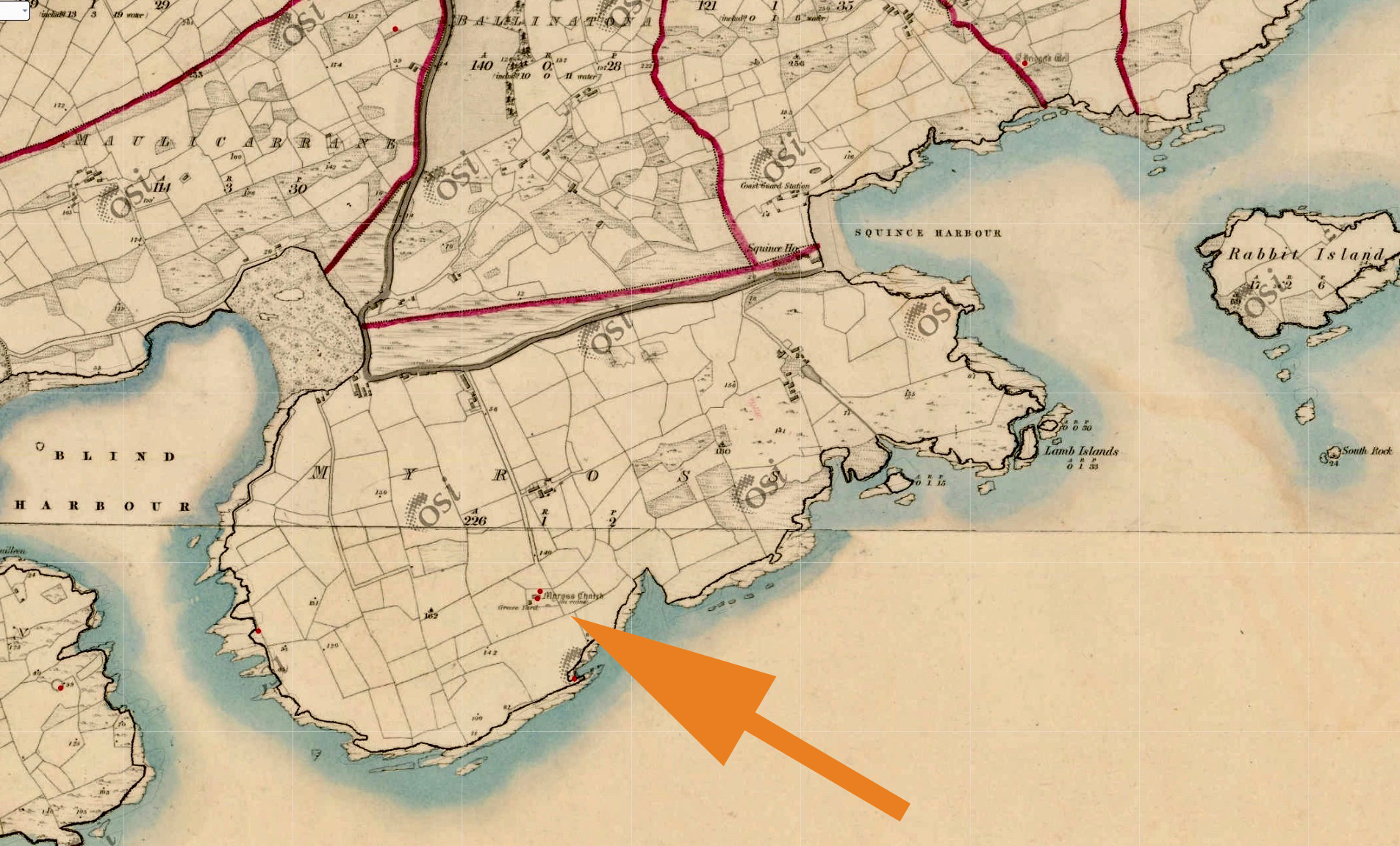
The townland of Myross is an island, of sorts. A stretch of water runs between Blind Harbour in the west and Squince Harbour in the east, and old stone causeways give access at either end. On the day of our visit there was hardly a sign of life, and the fog prevented us getting any idea of the fine ocean views which can evidently be enjoyed from the ancient graveyard. Nevertheless, we felt the day that was in it empathised with the muted atmosphere of this silent place.

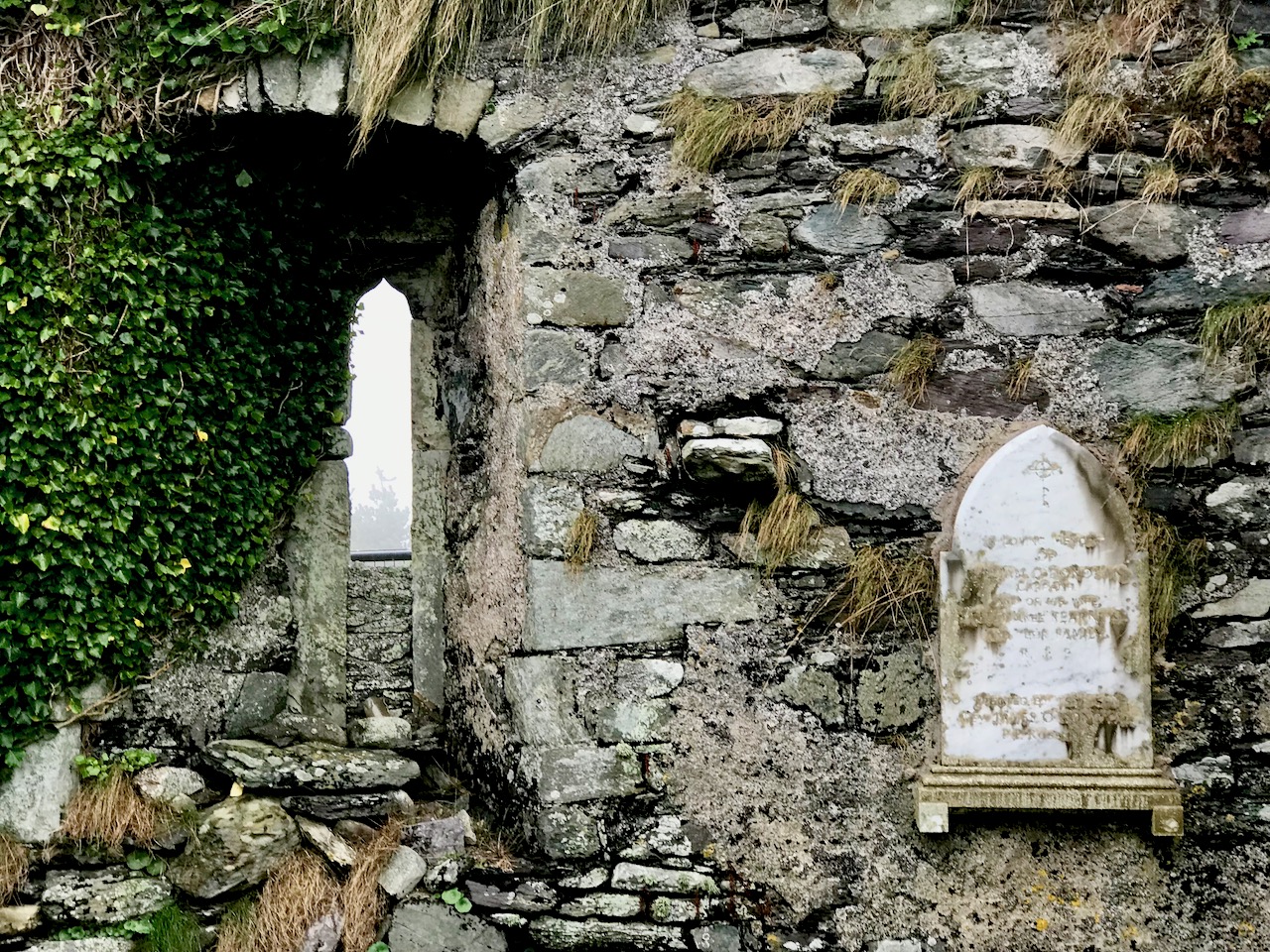
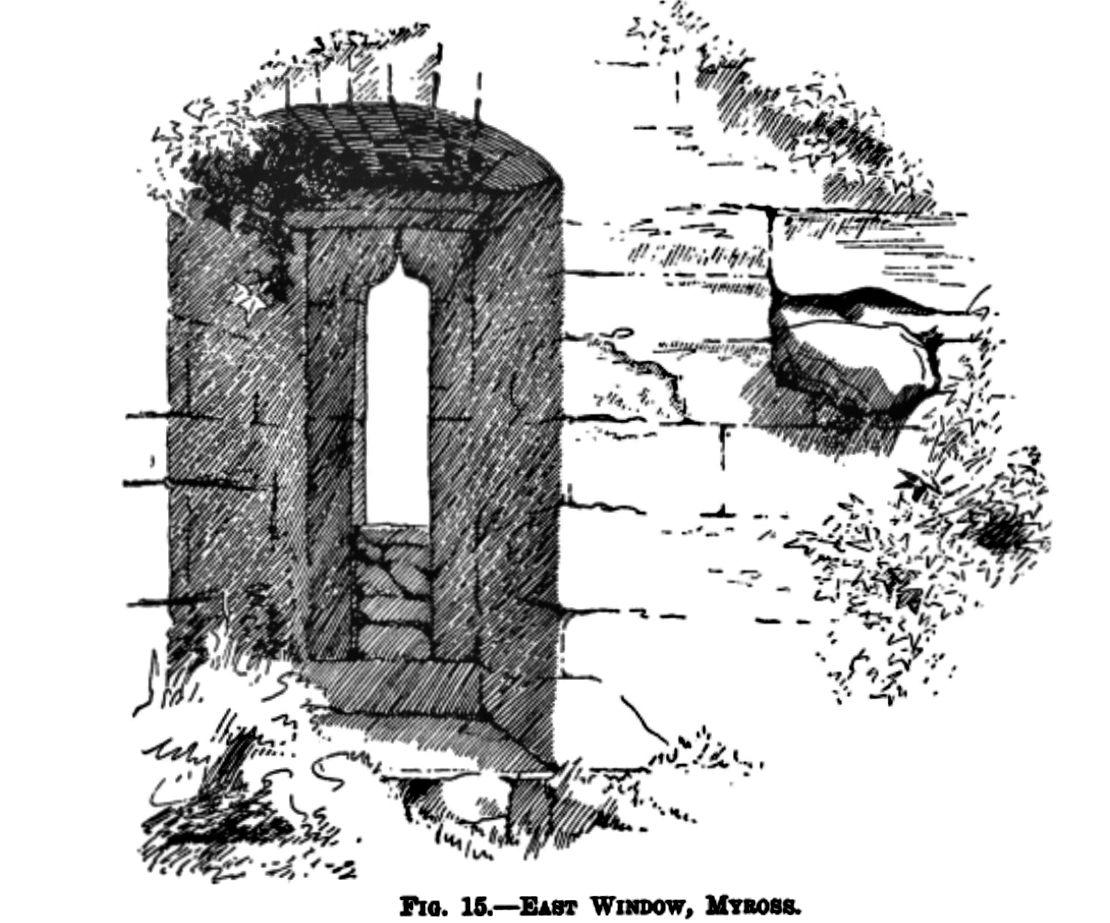
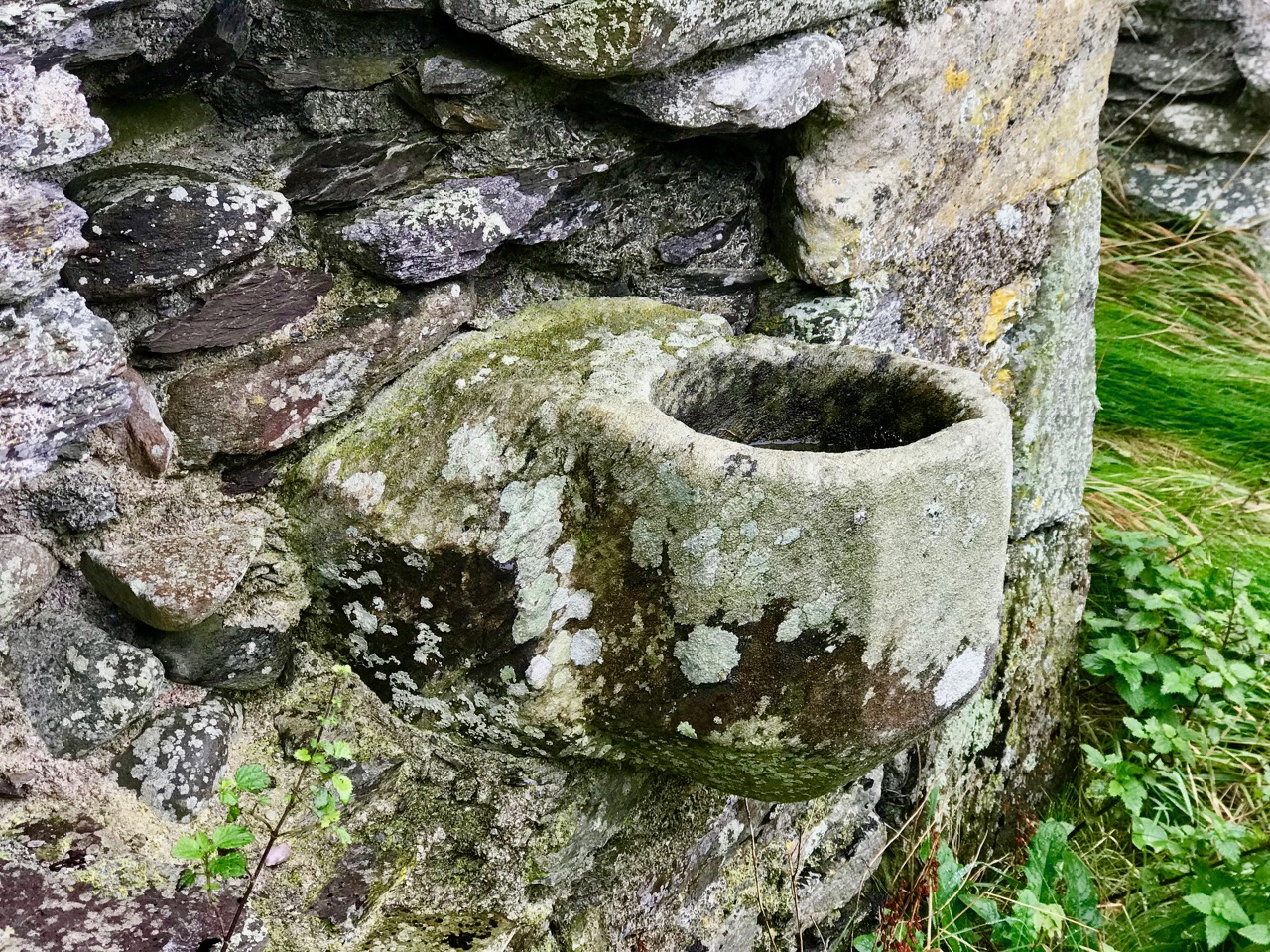
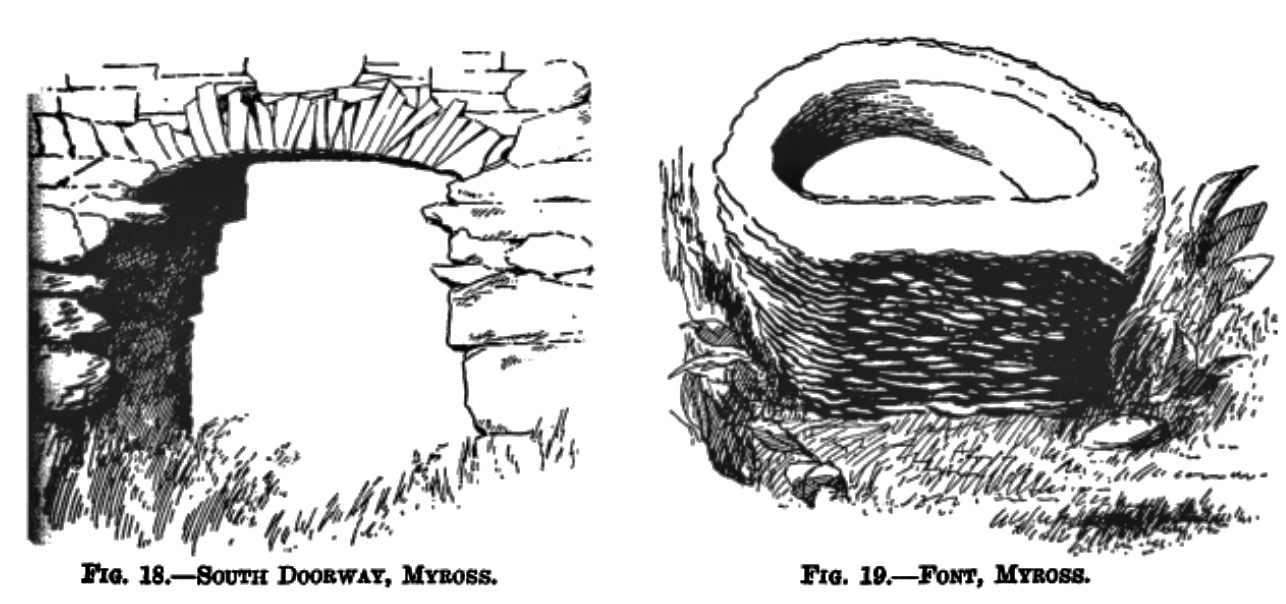
At the centre of the burial ground stand the ruins of a substantial church, in very poor repair. Some of the masonry has been reinforced with brick piers and timber posts, but the structure is fenced off to indicate the risks of its instability. Inside the church are an old font, and a piscina. The illustrations here are from a massive work – The Diocese of Ross and its Ancient Churches by Charles Webster, Dean of Ross, published by the Royal Irish Academy in 1932.

W Mazier Brady’s Clerical and Parochial Record of Cork, 1863, records that the Church of Myross was in use in 1615 but in ruins by 1699. Subsequent researches tell us that a little further to the east is the townland of Carrigihilly and here survives another ancient burial ground: local tradition asserts that here was a Cistercian Monastery – Maure Abbey (Abbey de Sancto Mauro) – founded in 1172 by Dermot MacCarthy, King of Desmond. We didn’t get to Carrigihilly on our autumnal day out: another expedition to the area beckons.

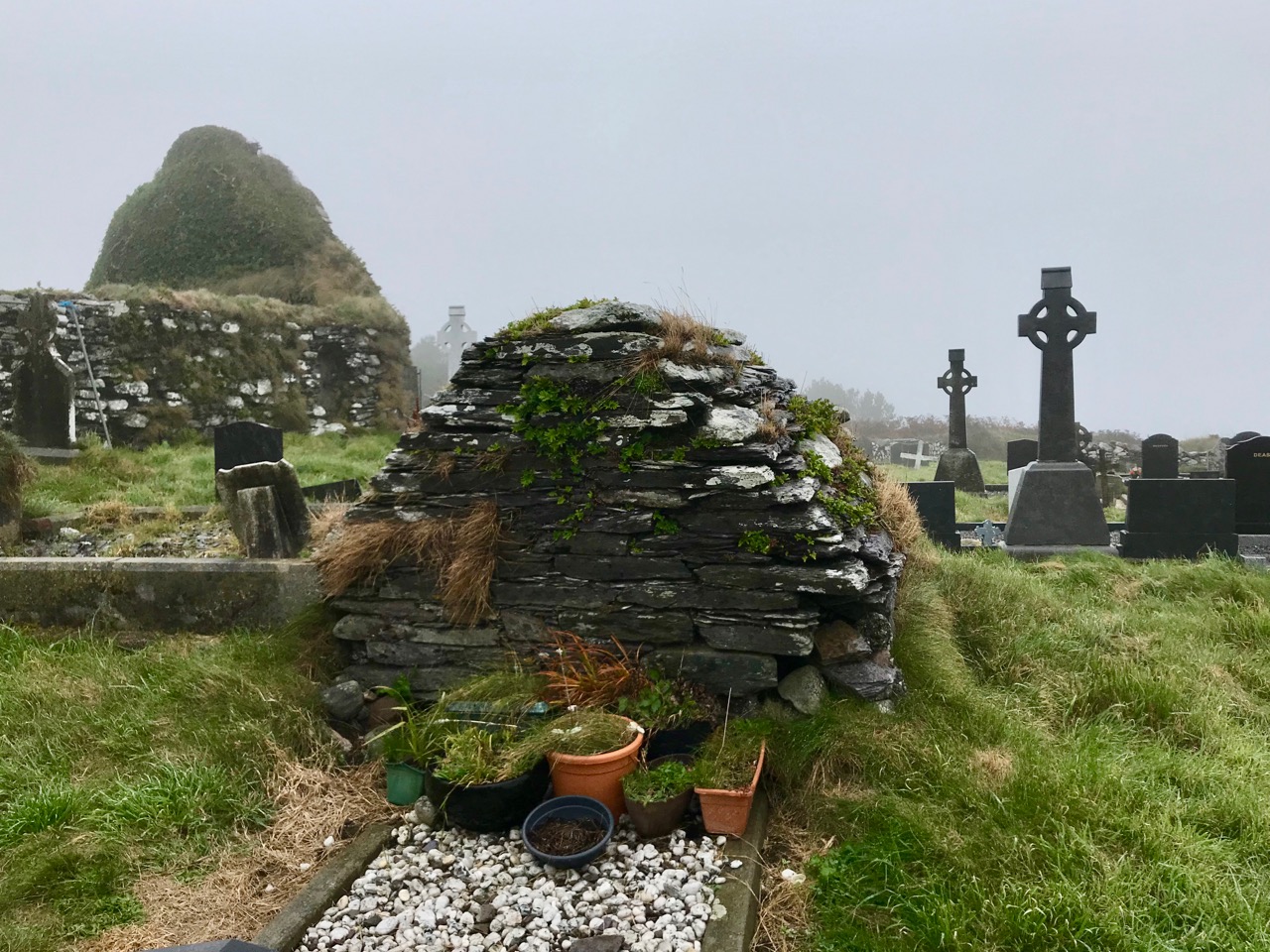
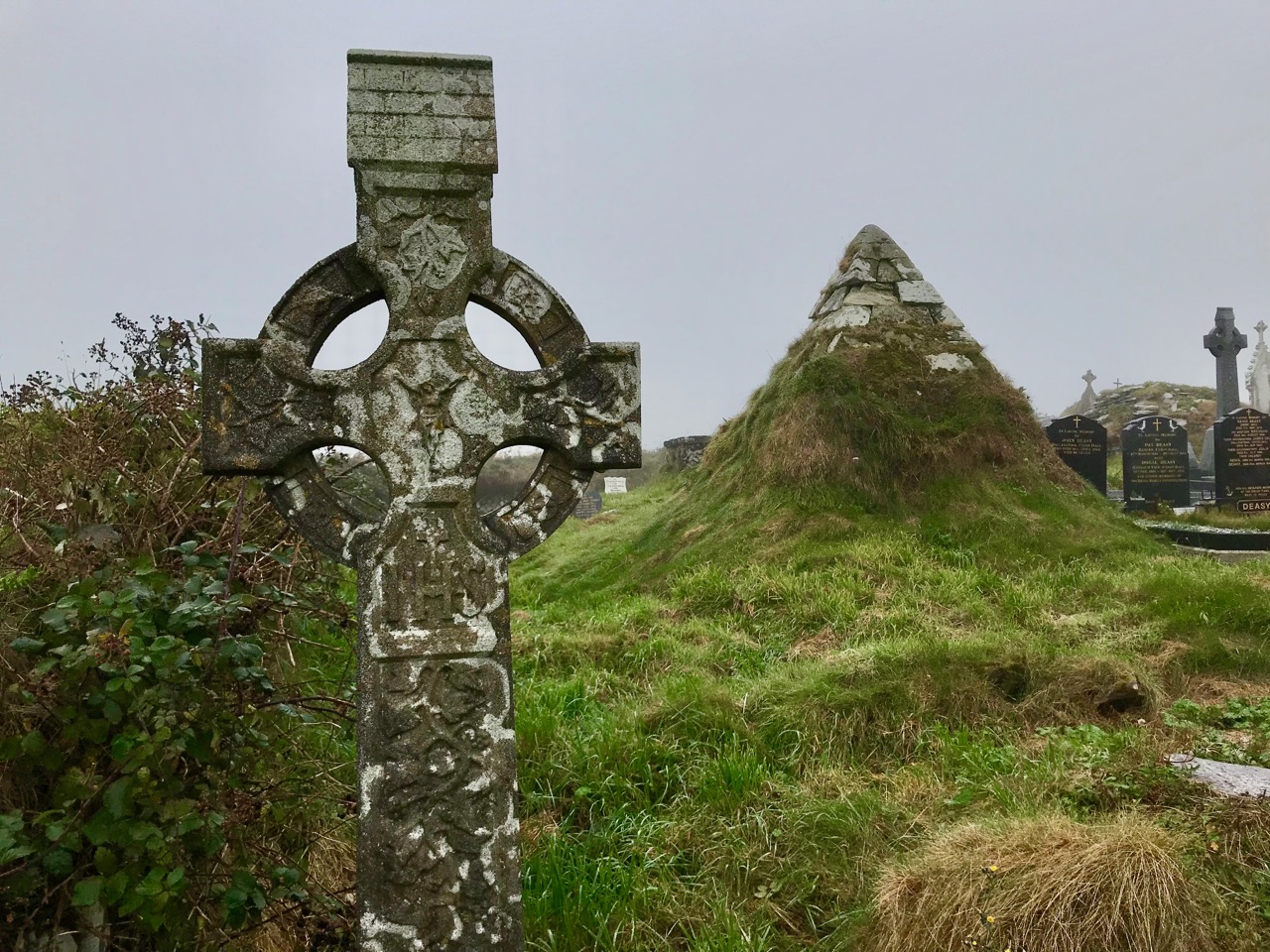
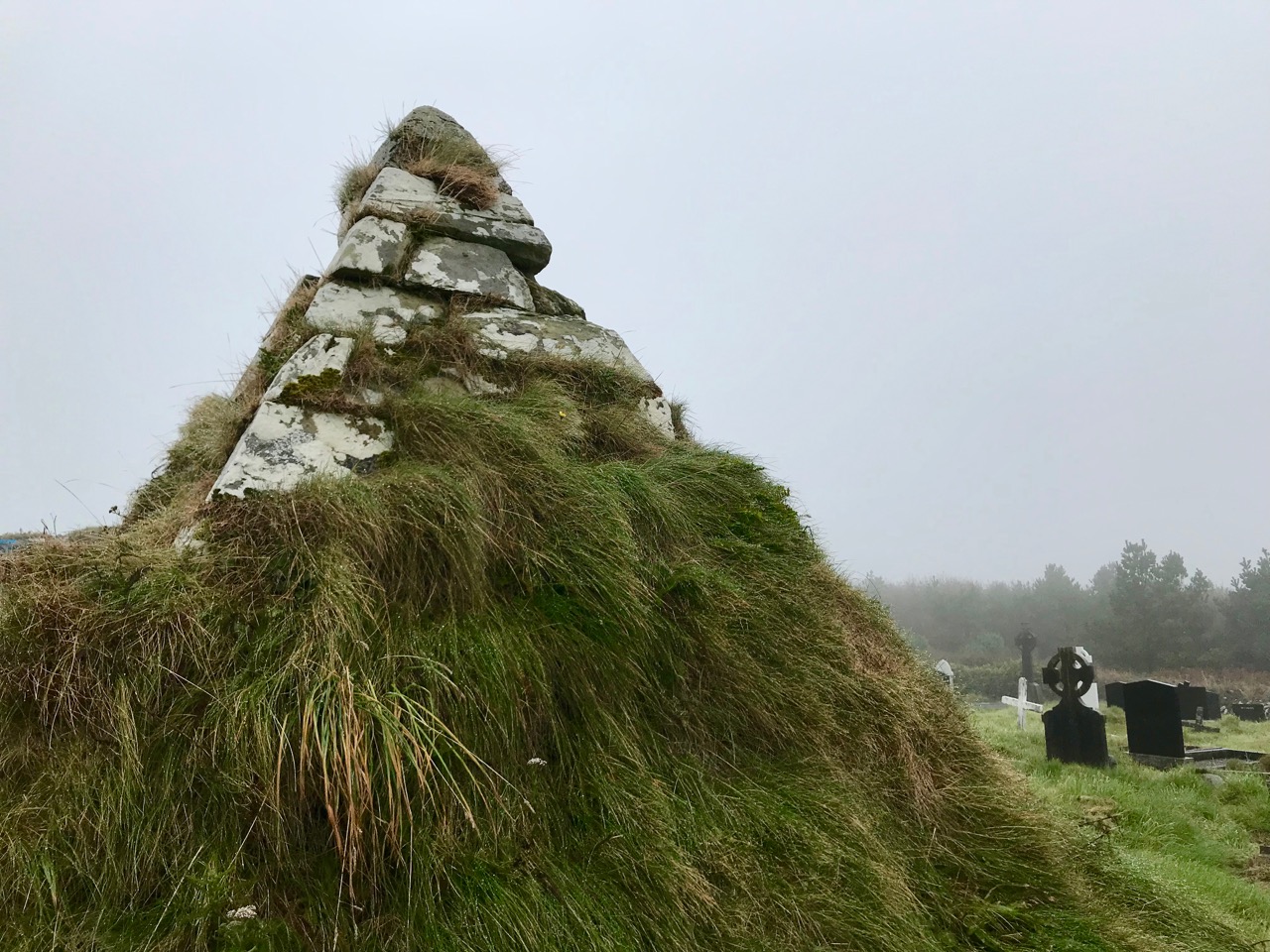
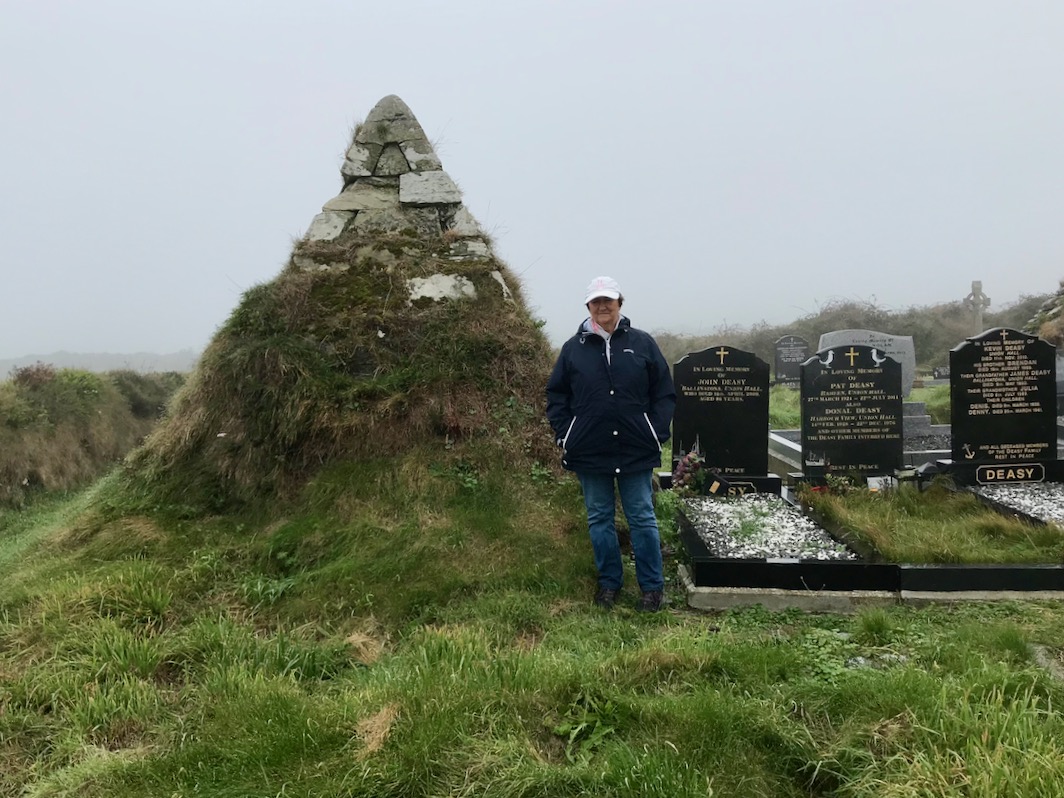
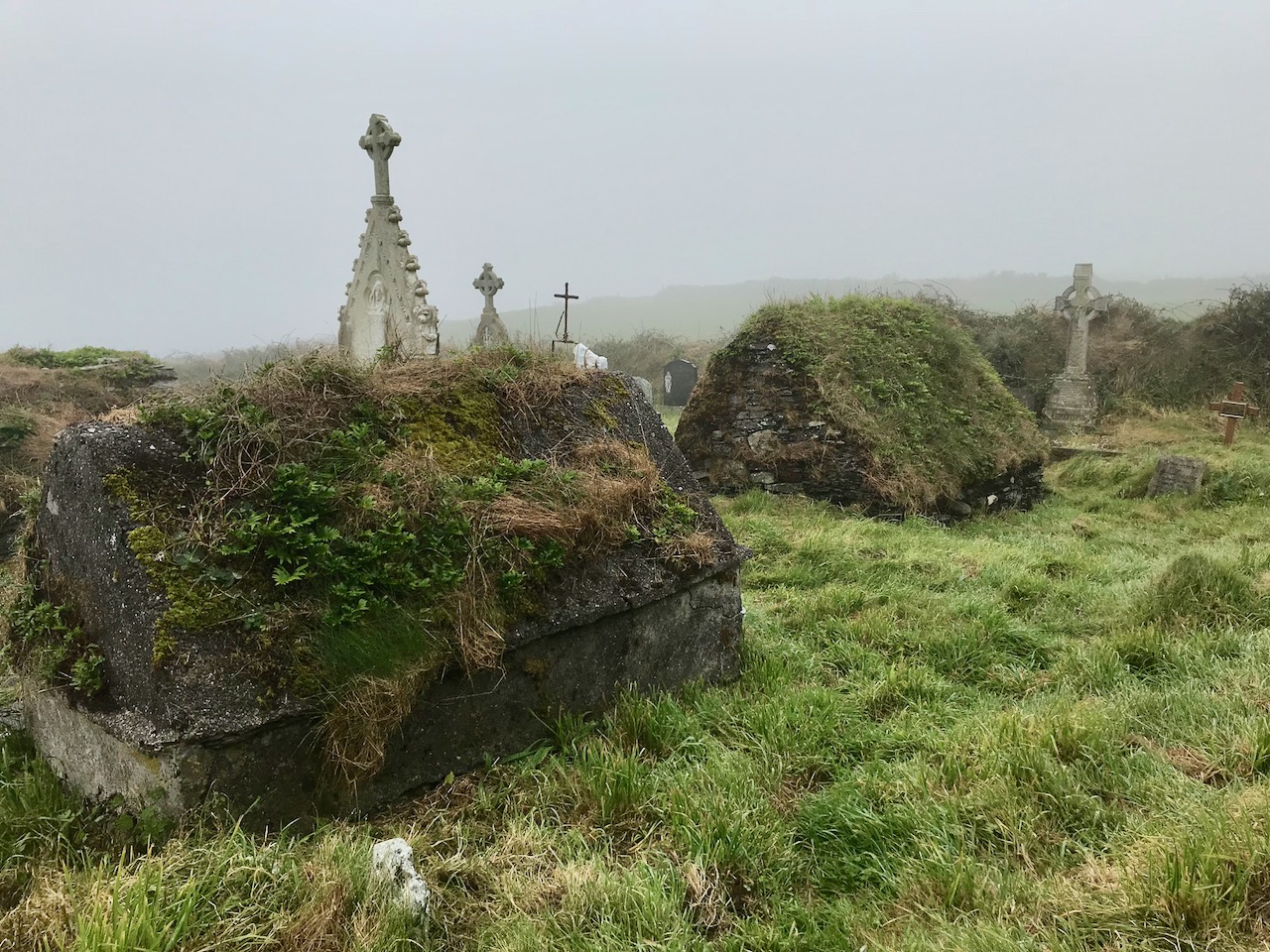
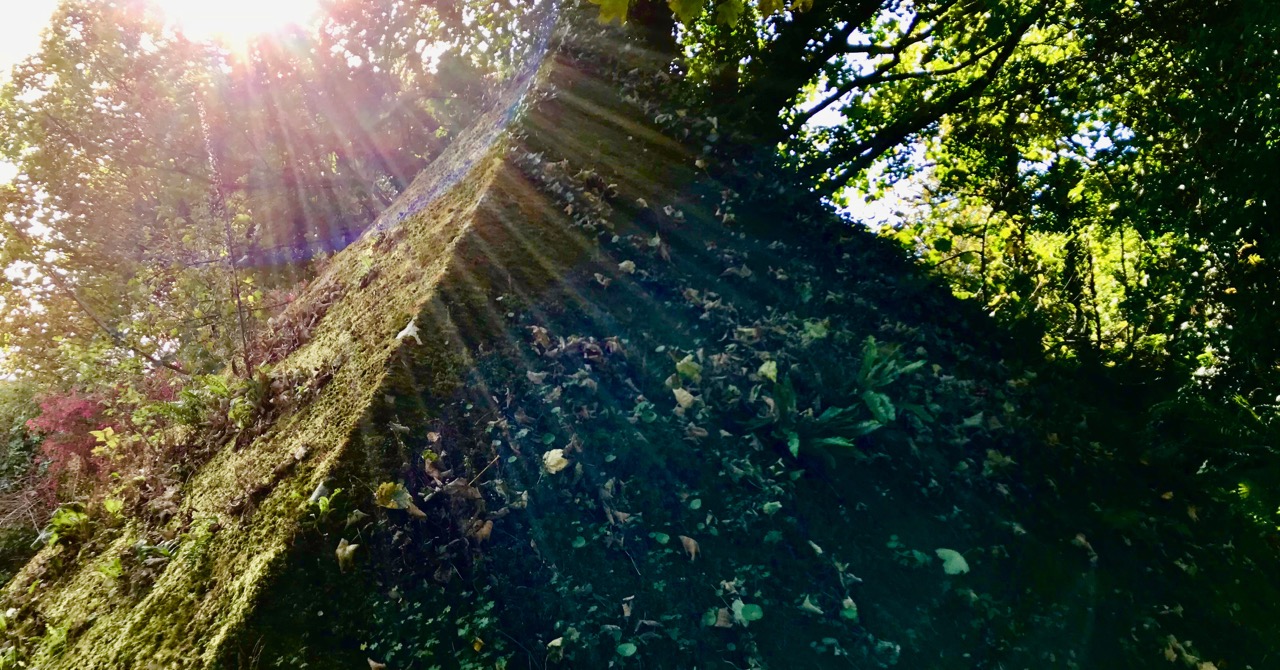
The focus of our visit was, of course, a second pyramid in West Cork – and there it is! More modest in size, perhaps, than the Glandore example, but standing out, nevertheless. Unlike the one at Glandore, there is no visible inscription on the masonry, much of which is quite overgrown. Tradition has it, however, that this tomb is a burial place for the O’Donovans, who are well represented in this part of West Cork, even today.

Keeping the pyramid company in this Myross graveyard are other significant chest tombs and unusual ‘gabled’ tombs, also uninscribed, and a small number of carved gravestones dating from the nineteenth century, very weathered but partly legible. It would be fascinating to know something of the lives of those who are interred in this remote and atmospheric West Cork location.

A Pyramid in West Cork

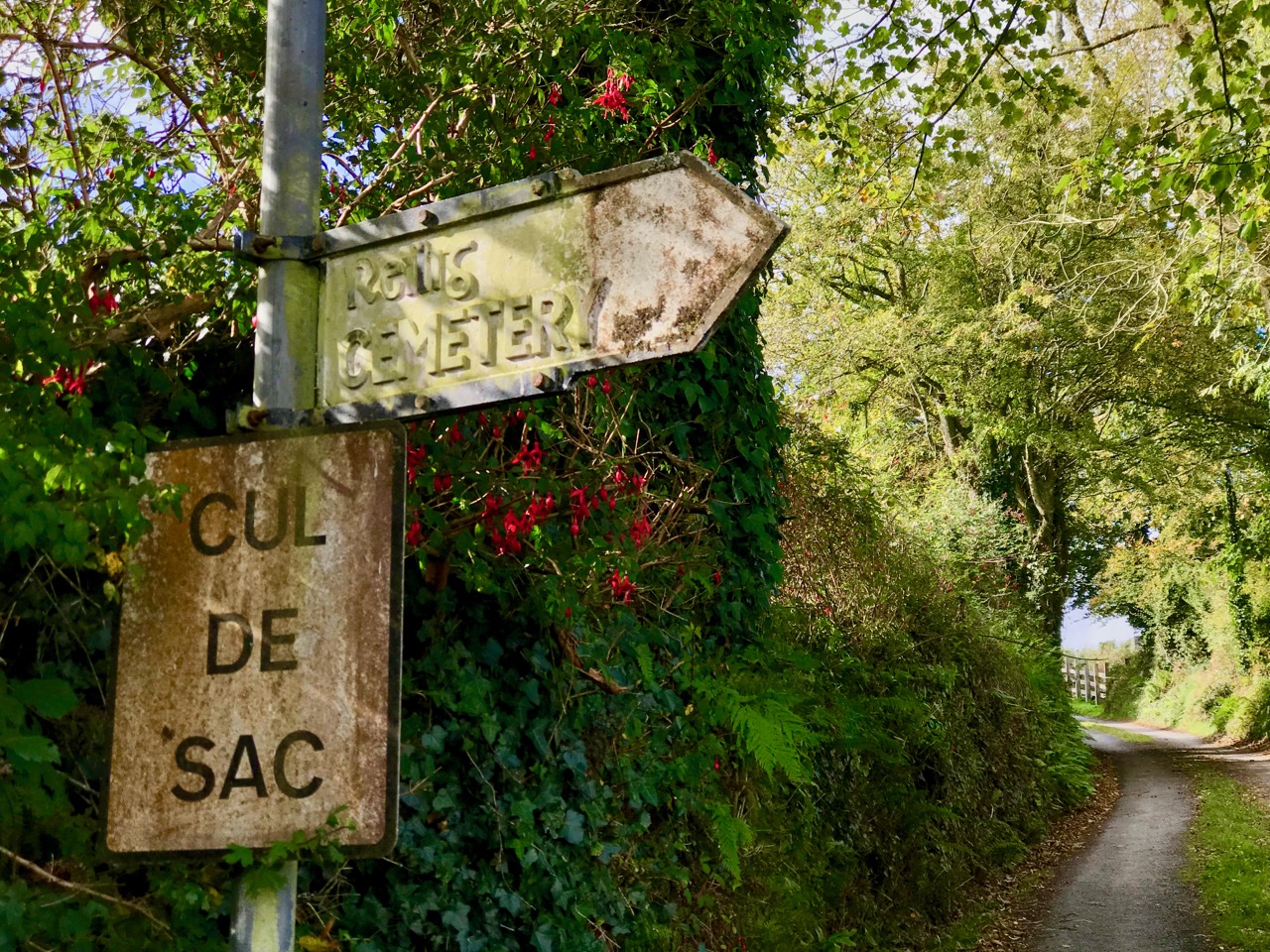
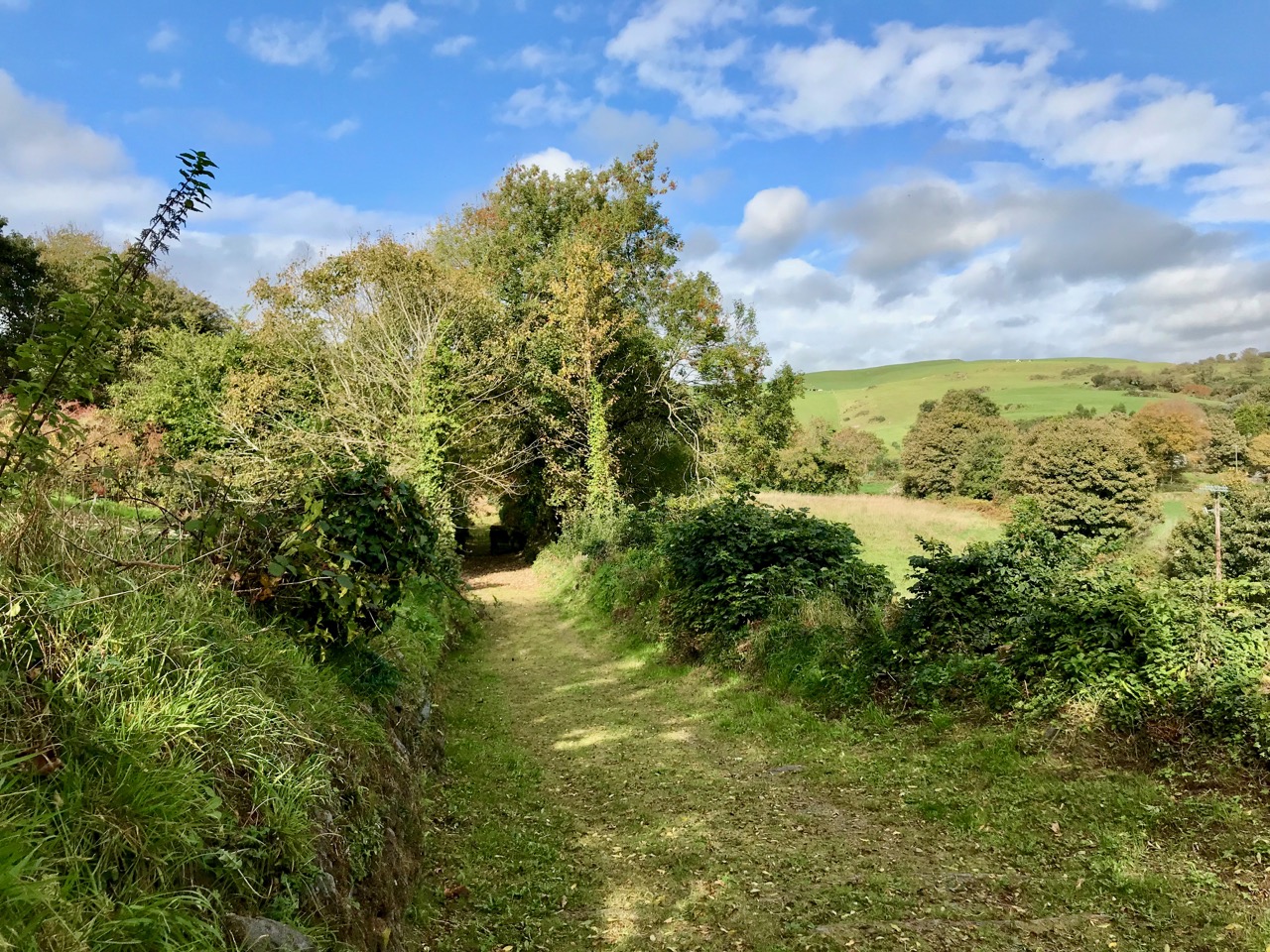
In our travels we always have an eye open for signposts, especially those that point down leafy, narrow boreens: there’s probably some piece of almost lost history at the end of every one. We were beckoned, last week, by a fading cast iron plate written in ‘old Irish’ – Reilig – and the English word Cemetery. It was in a remote spot, and indicated a long, green lane with a gate in the distance. There had to be something there for us!

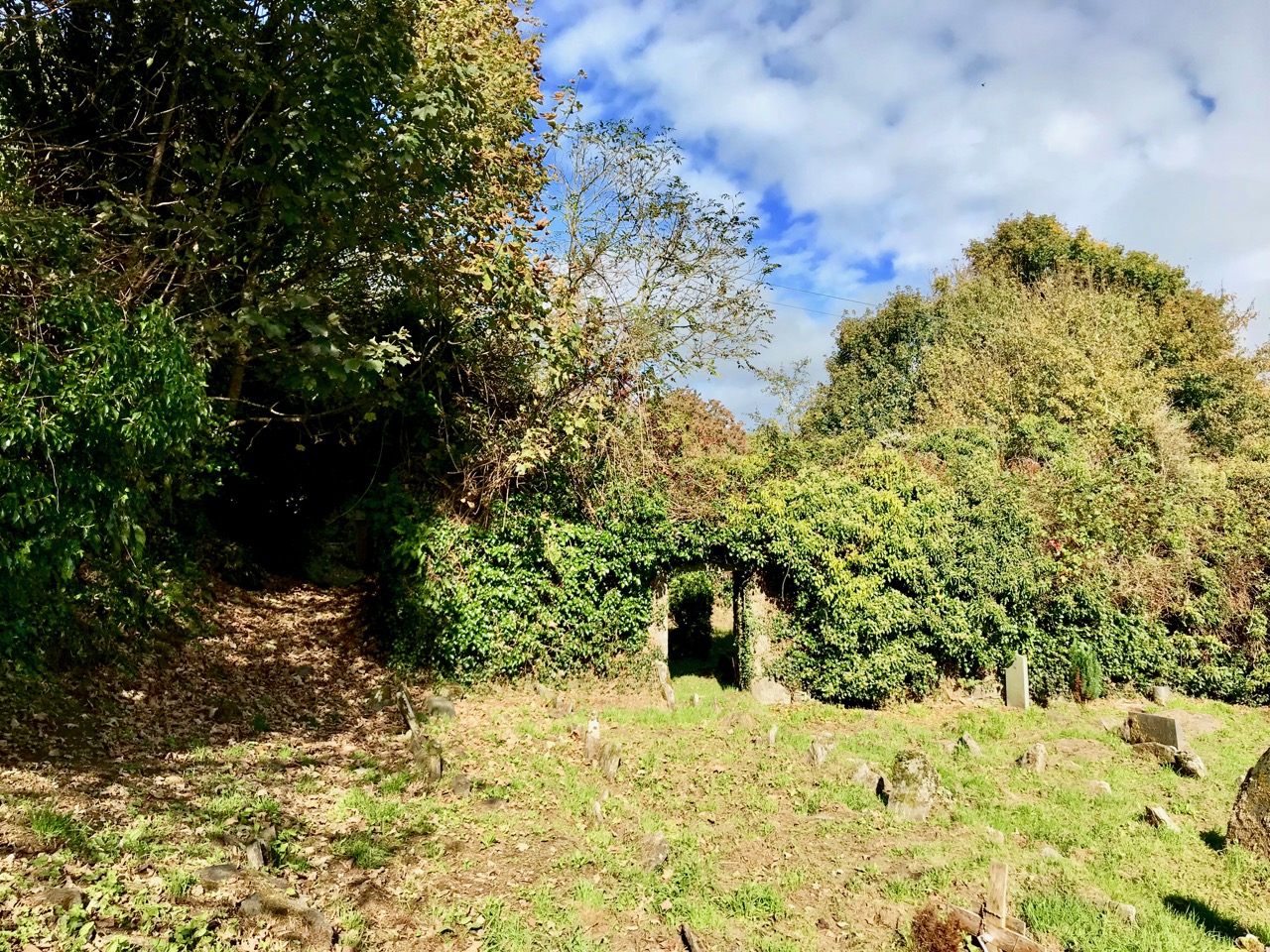
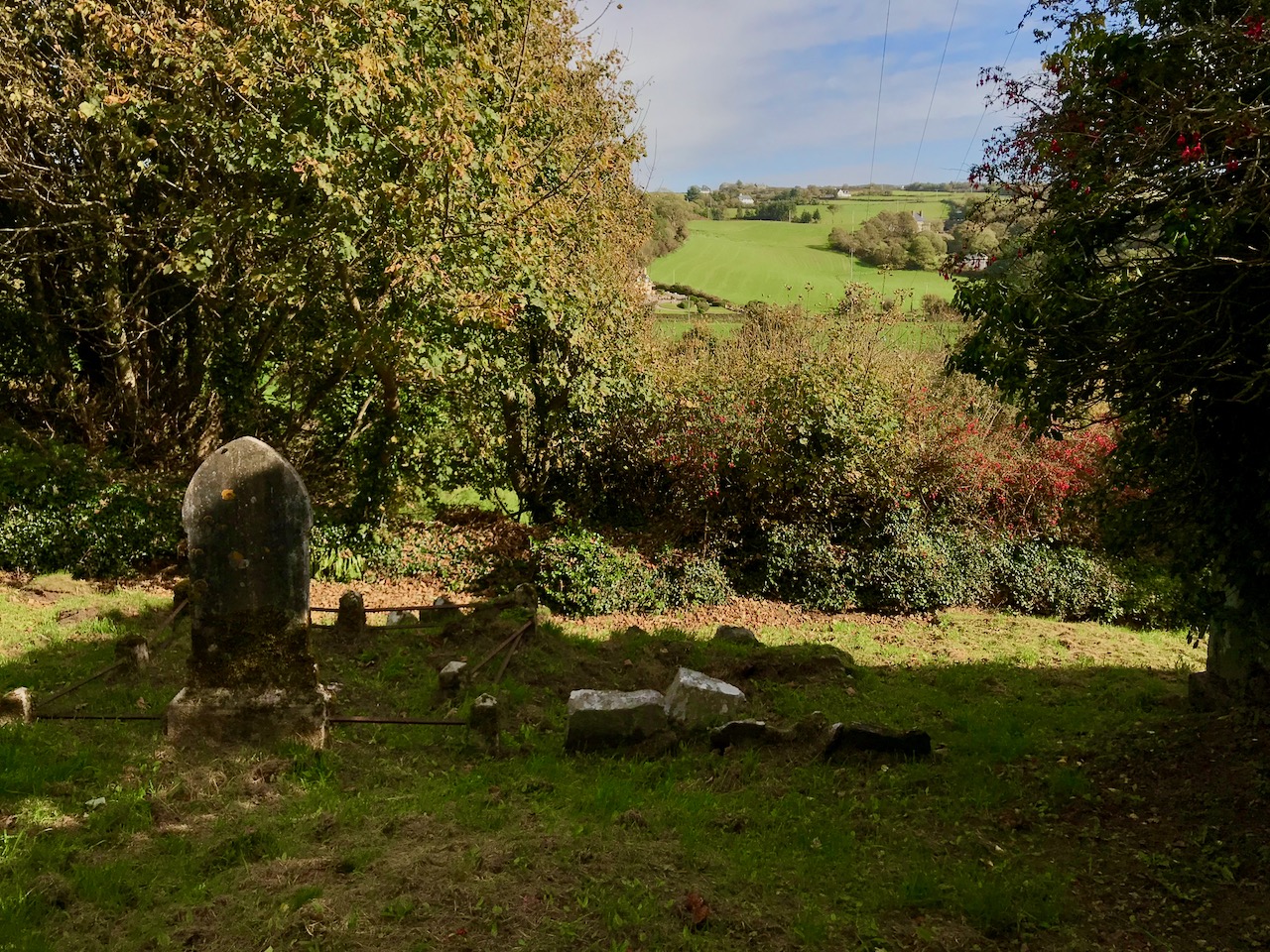
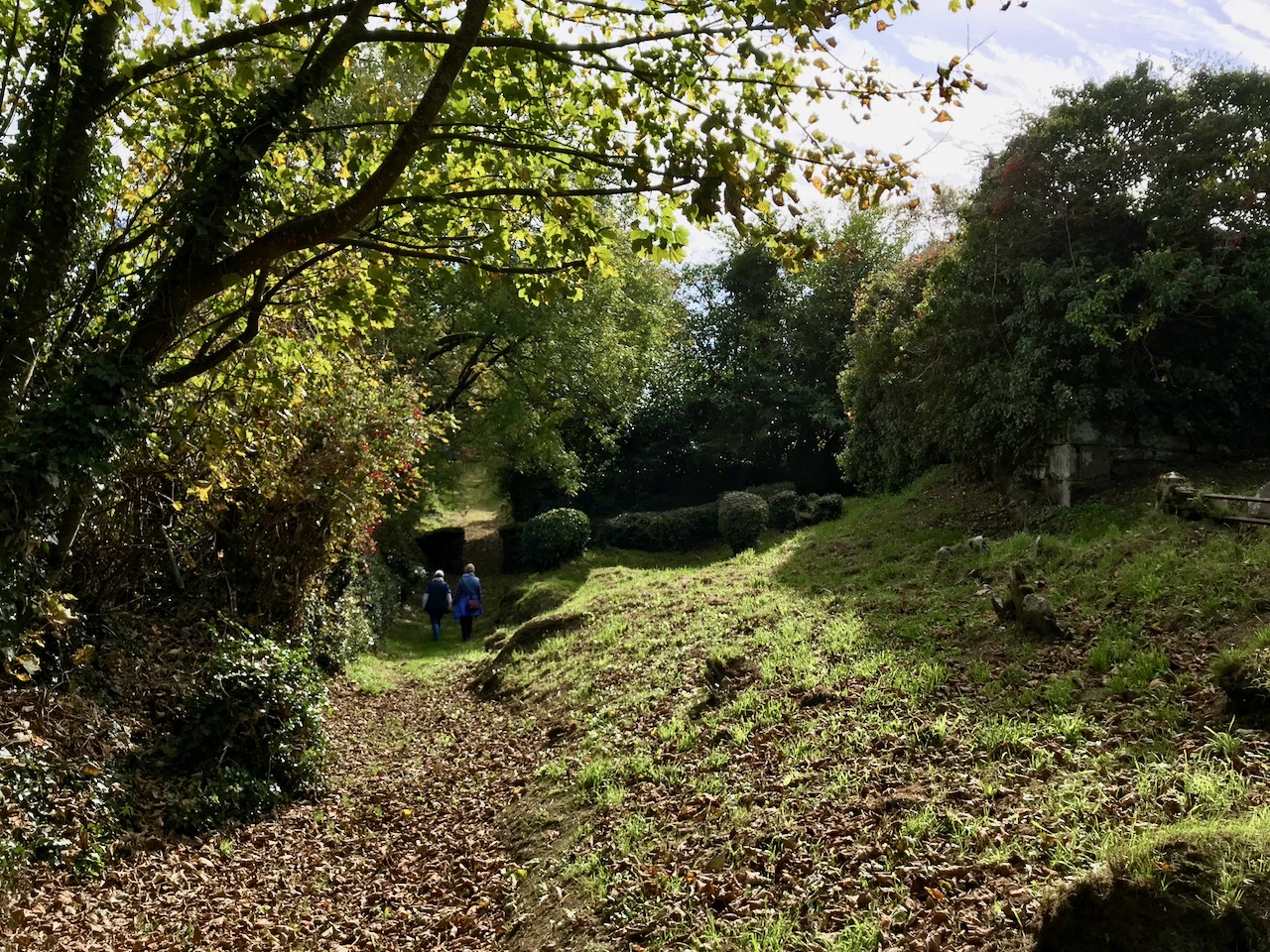
We were in West Cork, just by the little harbour of Glandore (in Irish Cuan D’Ór – Harbour of Gold). The green boreen took us down to an old burial ground which surrounds the ruins of a church dating, probably, to the 12th century. Around this are ancient stones – marked and unmarked – which signify the resting places of generations. It seems an idyllic place to rest, right off the beaten track, with only the sounds of nature to enhance the peace.

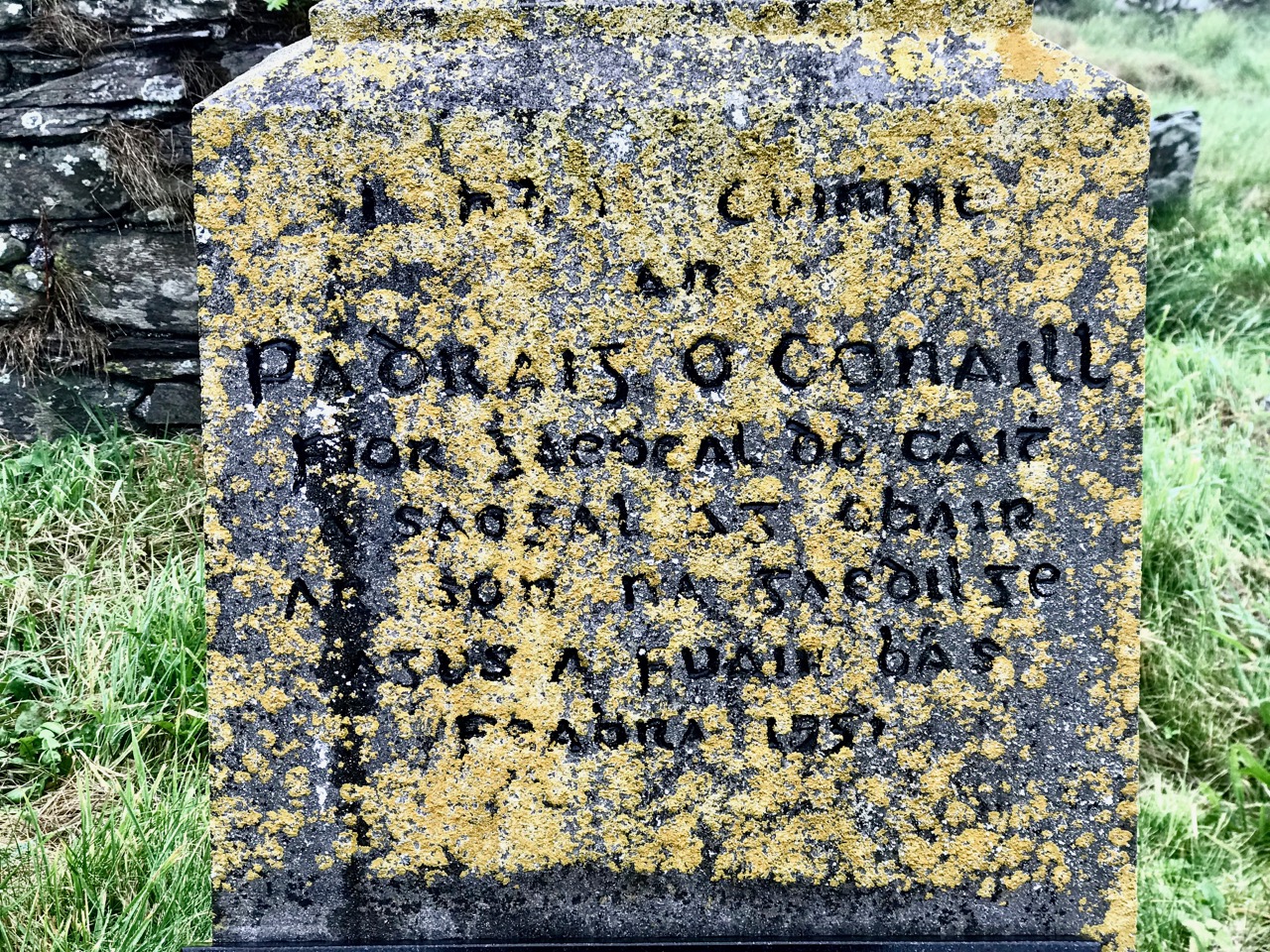
‘As quiet as the grave’ might be an apt expression in this place where we spent half an afternoon and saw no living soul. But the physical evidence of those who had passed was constantly fascinating. In Ireland, the simplest of grave markers is just an undressed stone firmly embedded in the soil. To us, they look random and rough, but it is said that every stone is chosen for a particular shape which is always remembered by the family who set it, and who passed the knowledge on – no markers were needed as long as that memory continued. Other stones are inscribed, although these are fewer – and some are particularly fine: a Celtic cross which dates to 1931, for example.

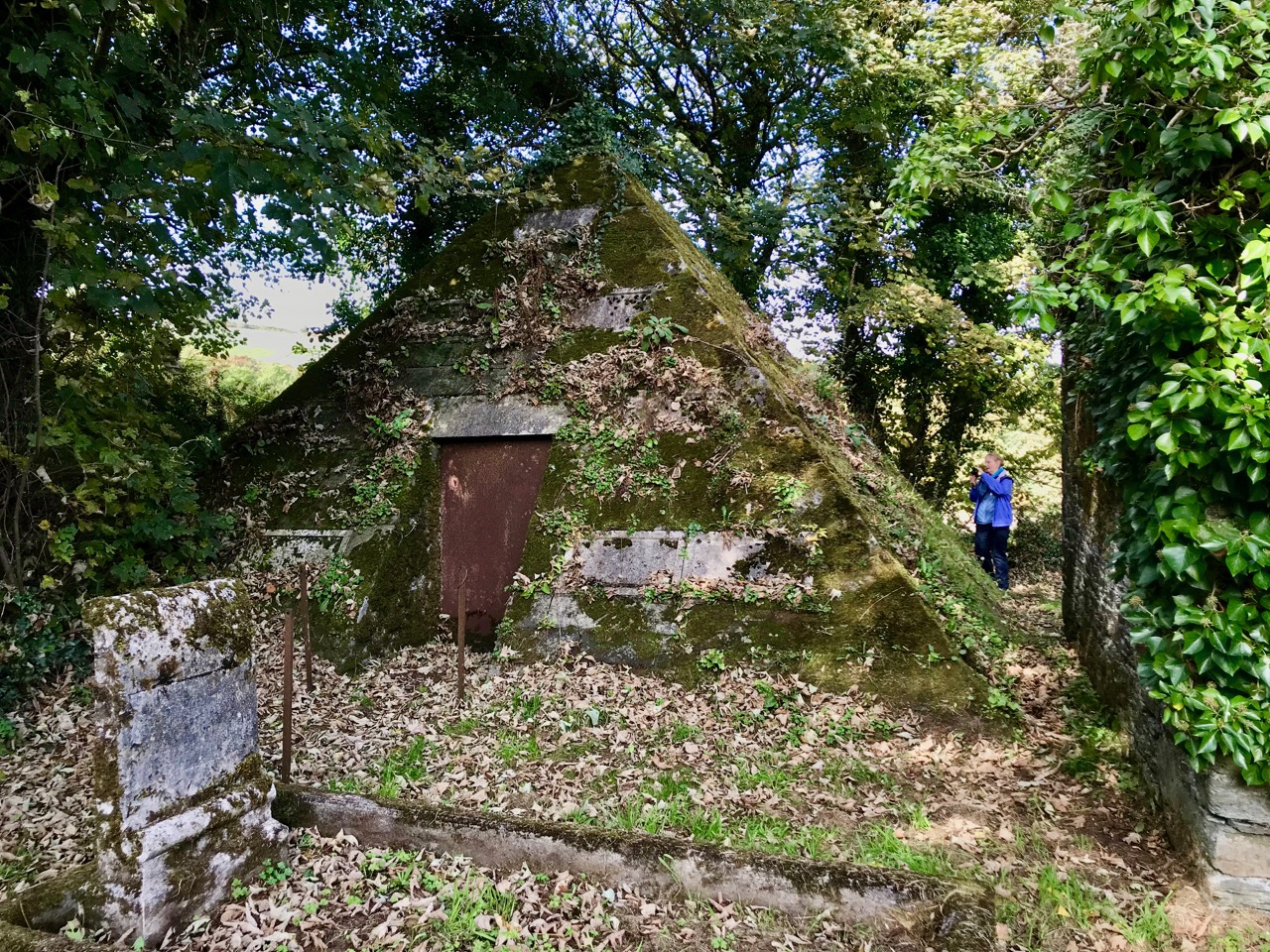
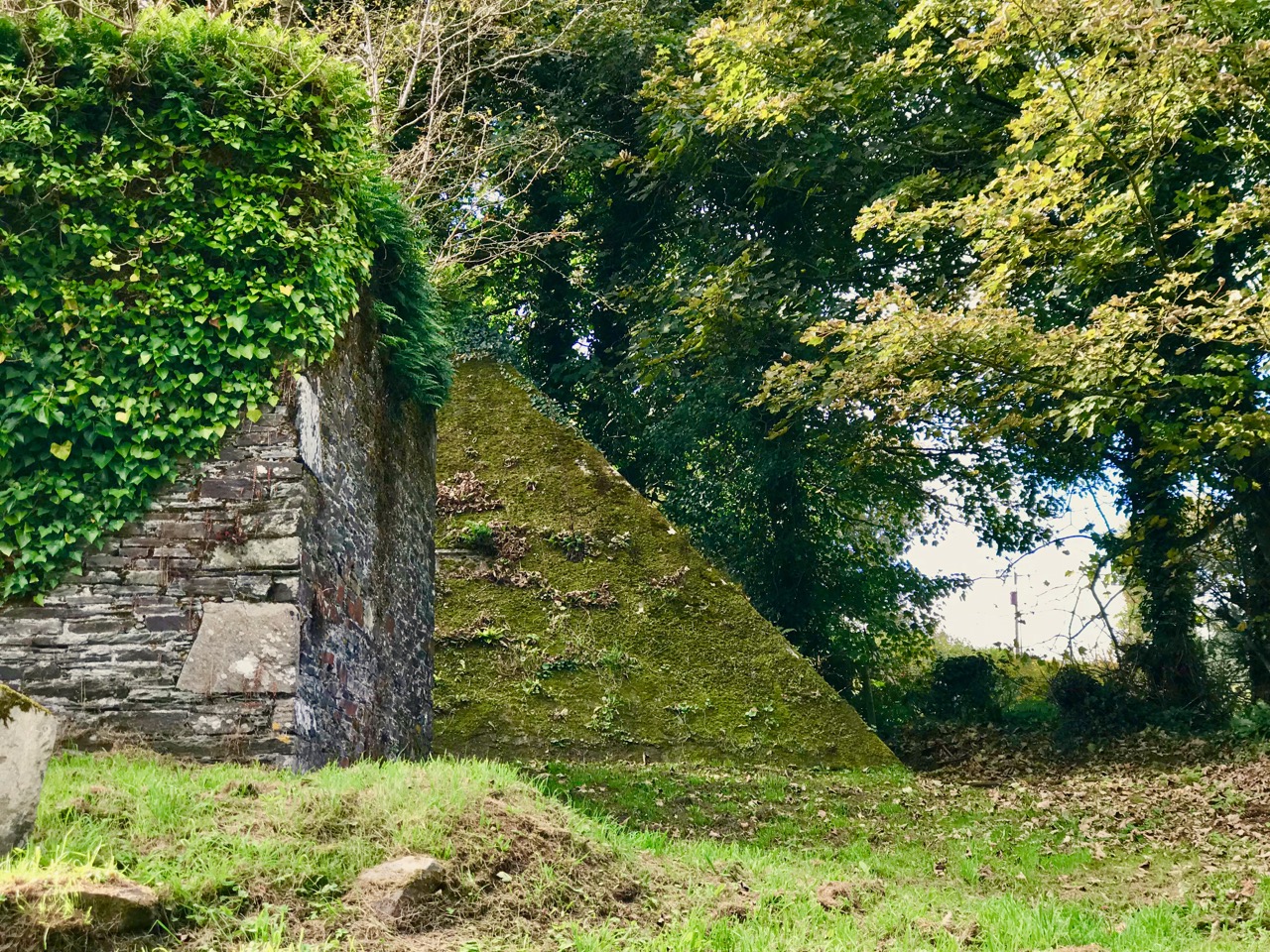
So far, our explorations in the Old Cemetery were typical of many another burial ground, but as we walked around the back of the ruined church we were astonished to see something we have never come across before in Ireland – a large pyramid!

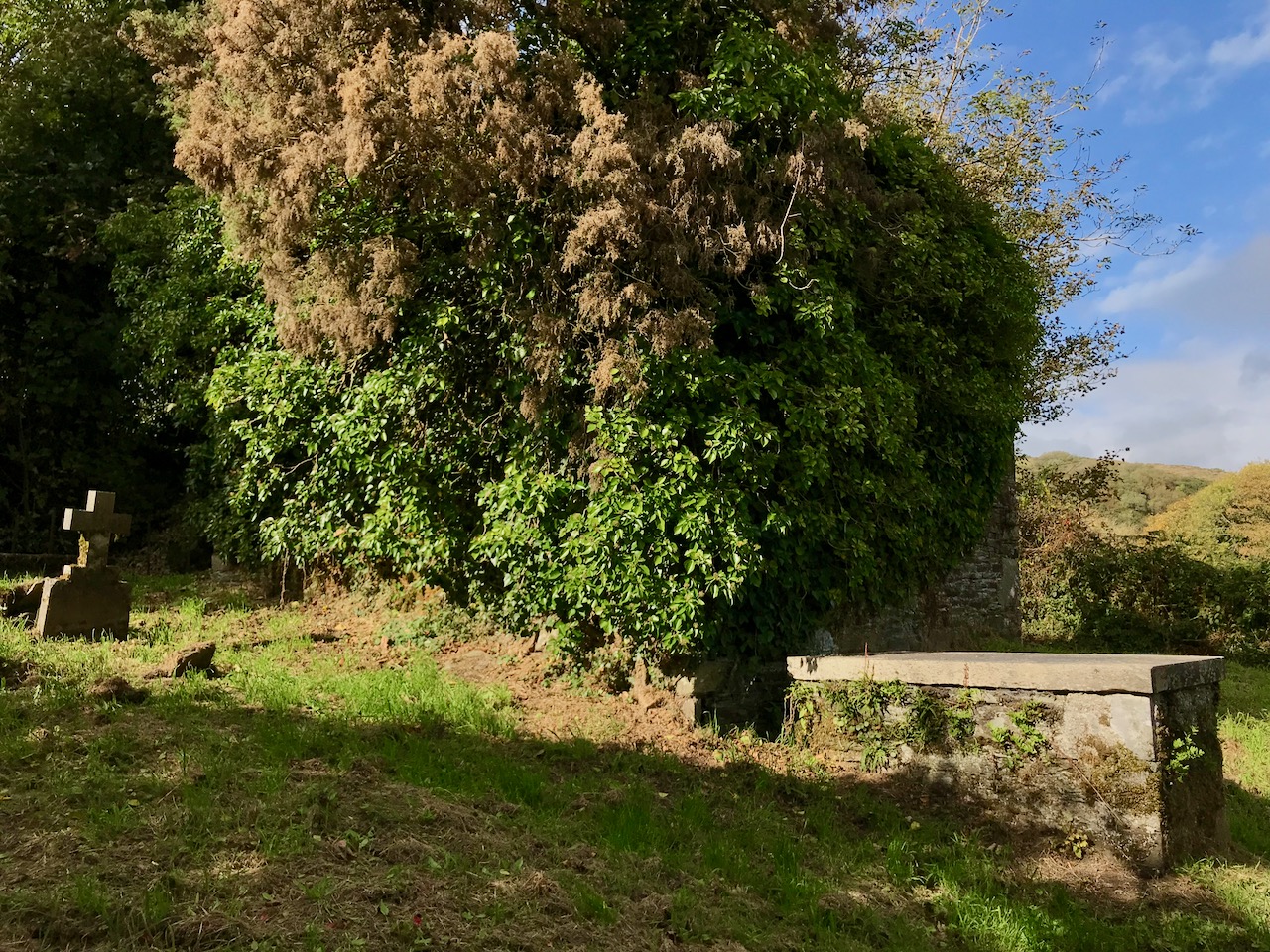
You get a sense of the scale of this construction by the figure in the picture above. No Giza, perhaps, but nevertheless something monumental and unexpected in this out-of-the-way corner of West Cork. It isn’t alone, as right next to it is another mausoleum (for a mausoleum is the pyramid’s purpose): an ivy-clad masonry stronghold, huge and impenetrable.

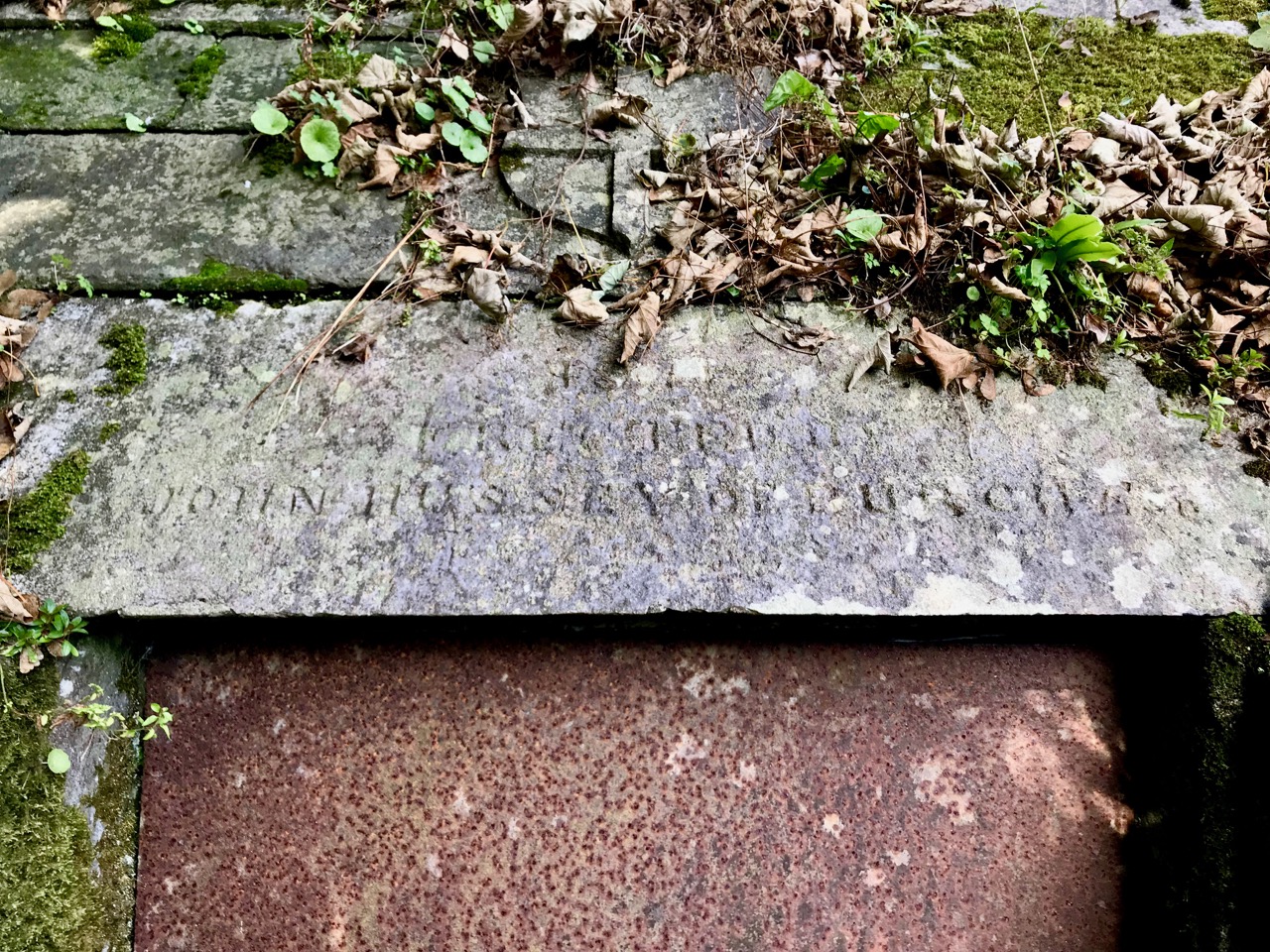
The two vast tombs stand side by side (above) in an odd juxtaposition. We scratched our heads in wonder and searched for clues of names and dates while we were there in the churchyard and, later, in records online. Very little is revealed. There are several inscriptions set on carved stone plaques on the pyramid – all impossible to read because of the moss and lichen growth. Over the iron doorway is a lintel inscribed with – I believe – the name John Hussey de Burgh.

Later searches revealed the following:

. . . John de Burgh was born on 10 June 1822 and died 25 April 1887. Page 159 of The Calendar of Wills and Administration 1858-1922 in the National Archives of Ireland records that the will of “John Hamilton Hussey de Burgh late of Kilfinnan Castle Glandore County Cork Esquire”, who died on 25 April 1887 at the same place, was proved at Cork on 6 July 1887 by “Louis Jane de Burgh Widow and FitzJohn Hussey de Burgh the Executors”. Effects £1,246 11s 1d . . .

Kilifinnan Castle (a replacement built on the site of a structure dating from 1215) is a short distance to the south of the old cemetery, and it is highly likely that John Hamilton is the de Burgh commemorated on the pyramid. Apparently, he had seven children so it is likely that at least some of the other plaques would refer to these. The large stone-block tomb was giving up no secrets, with no apparent entrance and no plaques. There are signs that the burial ground is still visited and kept tidy.

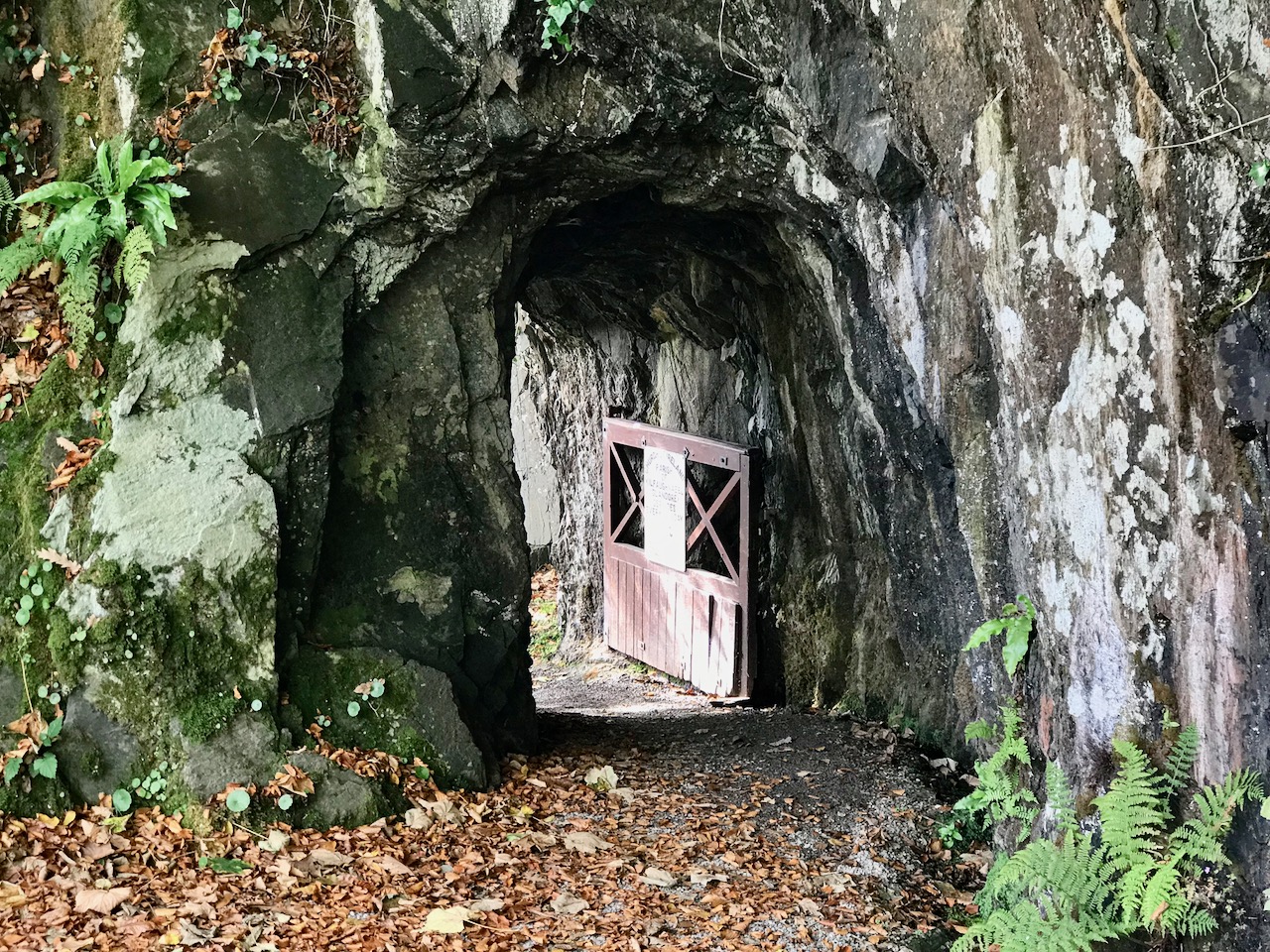
We had to tear ourselves away from Glandore’s Old Cemetery: it is a beautiful and peaceful place. We didn’t much increase our knowledge of the history of the settlement itself, although the 1861 C of I Christ Church (Kilfaughnabeg – The Little Church of Fachtna) above the bay has a display of local lore and tales and is in any case well worth a visit: the only approach to it is through a tunnel hewn from a rock face.

Our explorations in the Reilig left us with questions to be answered: not least, what was the inspiration for the pyramid, which seems so alien in far away West Cork?

The Priest’s Leap

Off the beaten track – that’s how to really see West Cork!

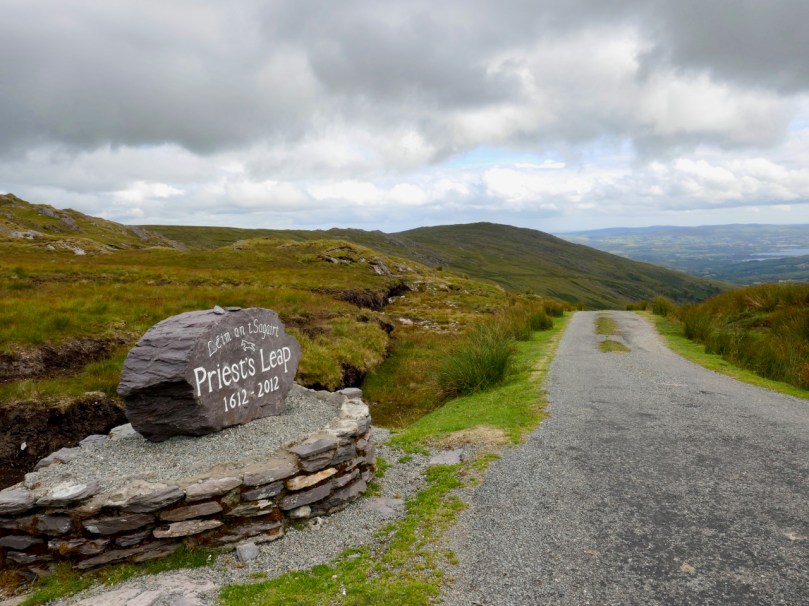
On a recent trip from Kerry we decided to take the road less travelled and ended up coming over the Priest’s Leap. It’s a little tricky to find from the Kenmare side, so Ordnance Survey map number 85 is your best friend here.

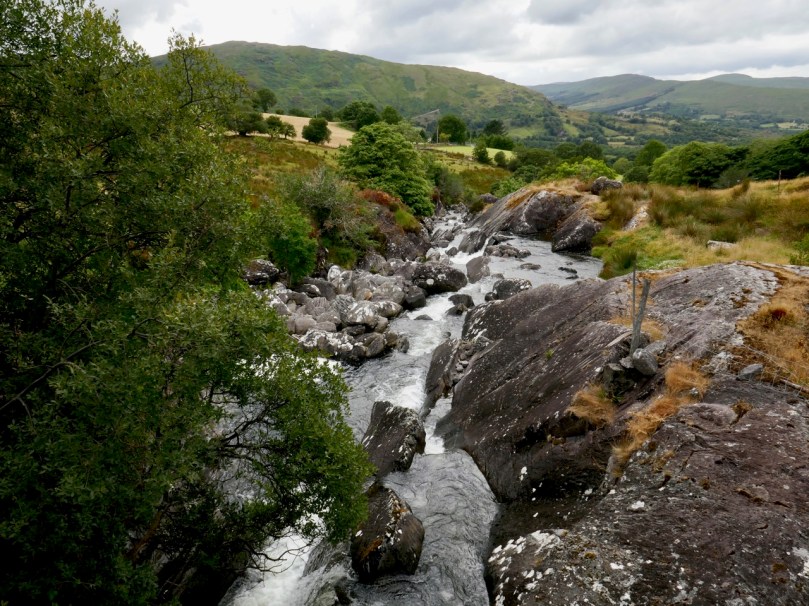
Along the way you come to Bonnane Heritage Park. We didn’t have time to stop but promise ourselves a return trip there soon to explore their archaeological sites and their trails. We also passed this ford and stepping stones – you don’t see those too often!

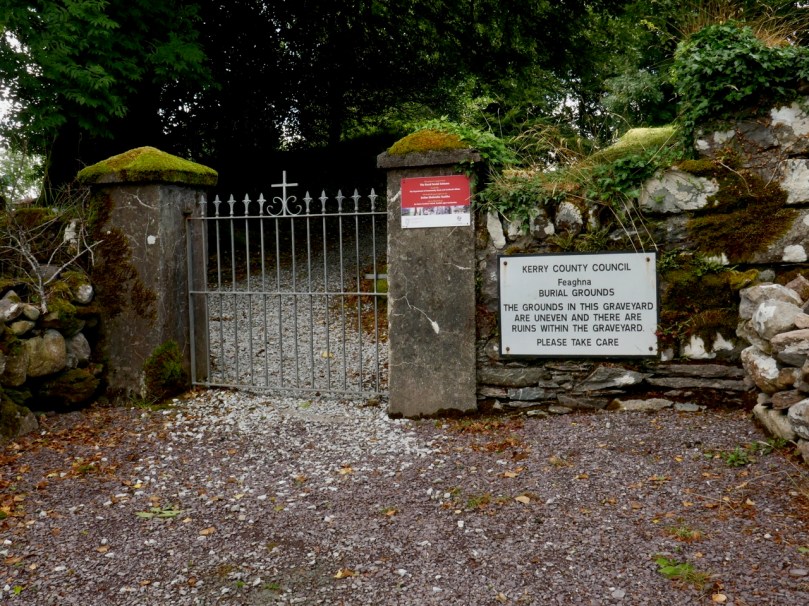
Because we are inveterate graveyard visitors we stopped at the Feaghna Burial Ground for a poke around. The graveyard contained several very old headstones and views to, er, die for (sorry).

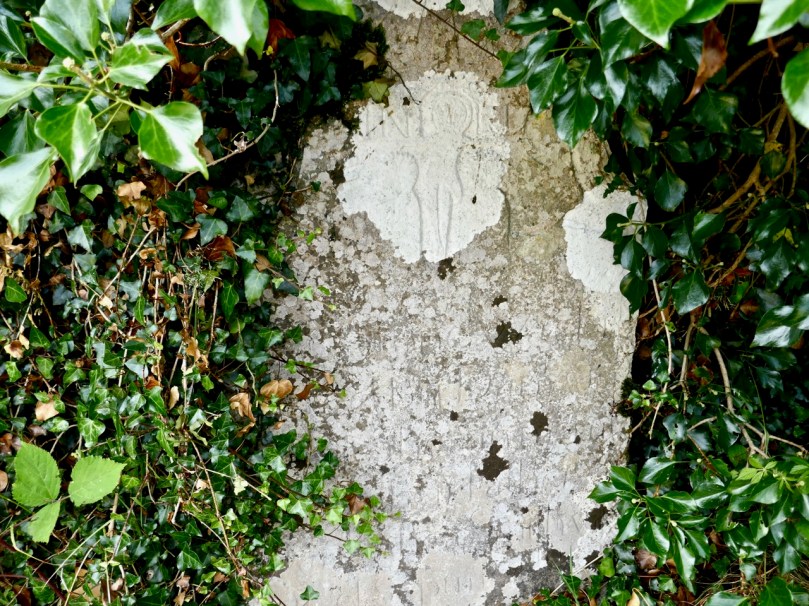
Headstones with crucifixion scenes are very rare in this part of Ireland

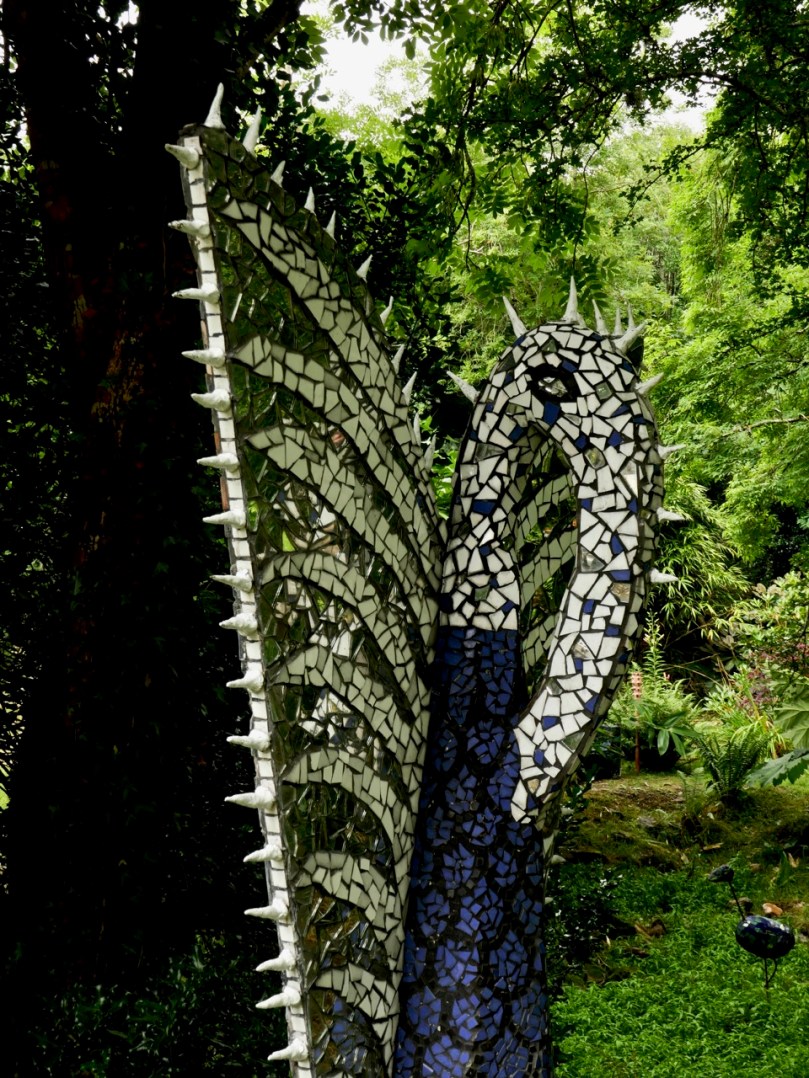
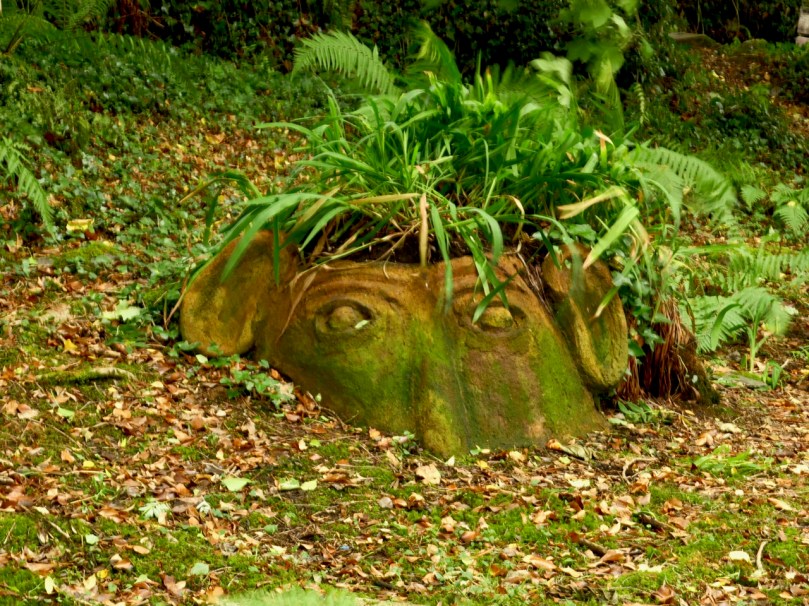
Shortly after Feanagh we were intrigued to see signs advertising VerArt Sculpture Garden and how could we not investigate that? Vera herself showed us around and the place is utterly charming! She’s from Germany but has been living here for many years and has slowly and steadily turned this remote spot into an enchanted garden.

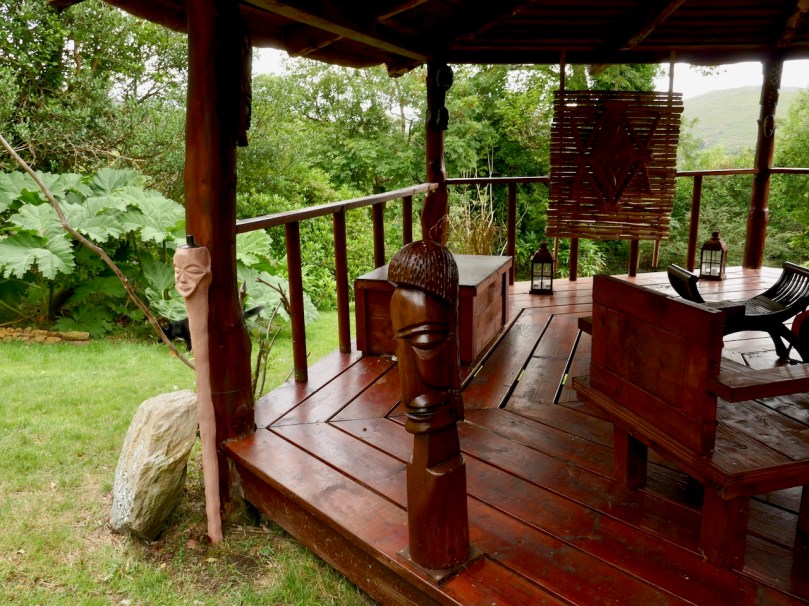
Around every bend is a quirky and amusing sculpture, fountain, stairway, figure, planter – all made using found and handmade materials. There was even a giant chess set (lead photograph) and an African veranda. We had never heard of this place before so it all goes to show there are lots of hidden gems left for us to discover. If you get a chance, do go – you will be hard pressed to find a more whimsical and enjoyable way to spend an hour or two.

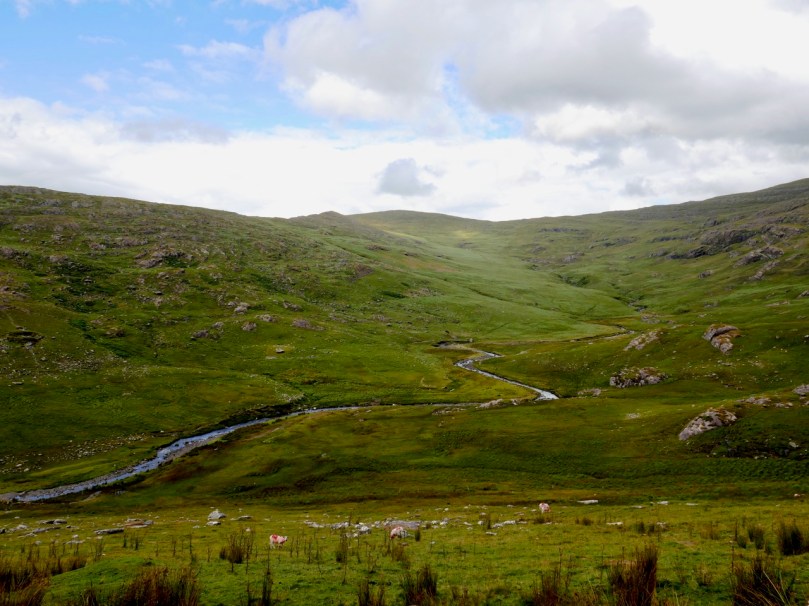
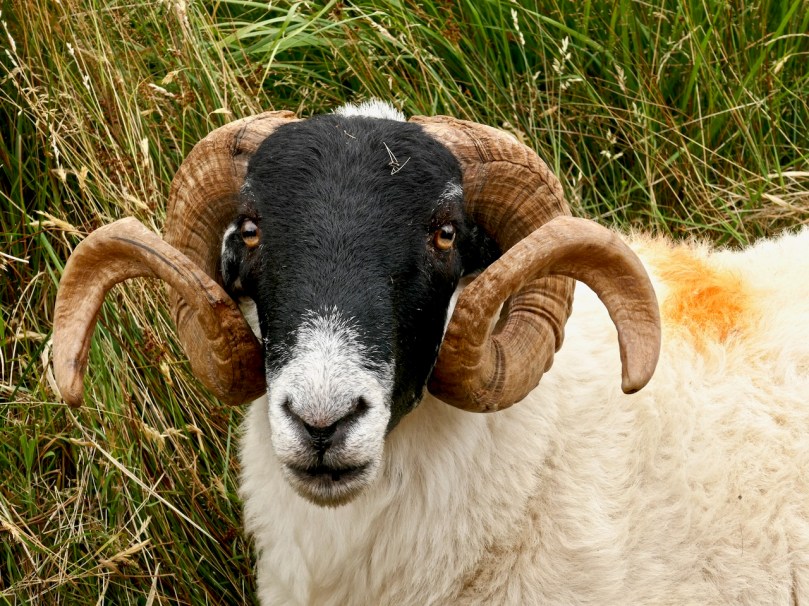
Leaving VerArt we headed up the mountain pass and into a remote a beautiful territory. There are whole valleys here where only sheep live.

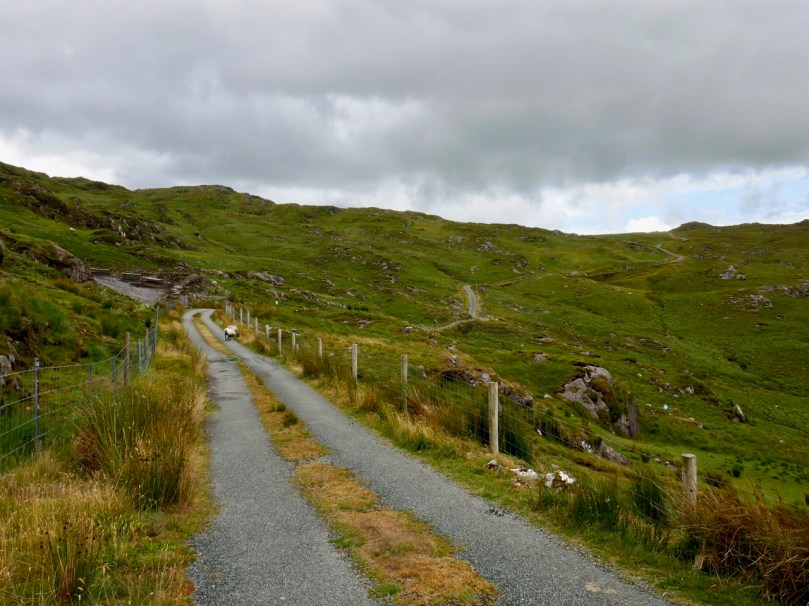
It’s strictly single track and we were lucky not to meet any oncoming traffic but the drive is magnificent and well worth the occasional adrenaline spike where the road seems to disappear ahead.

The summit is where we enter Cork and it’s called the Priest’s Leap. According to distinguished historian Gerard Lyne*:

According to tradition in the locality it derives from an episode in which a priest pursued by soldiers escaped through having his horse make a miraculous leap from a mountain cliff in the townland of Cummeenshrule into the county Cork. The pursuit of the priest began in the townland of Killabunane where a rock, which miraculously melted under the pursuing hounds, is pointed out to this day. The rock, deeply pitted with what look like pawmarks, is situated close beside the main road from Kenmare. It is known locally as “Carraig na Gadharaigh” (i.e., Carraig na nGadhar or the Rock of the Dogs?). The present writer remembers his father often pointing it out to him as a child when driving past the spot. Marks of the priest’s knees and hands and of the horse’s hooves appear on another rock a few miles from Bantry where he is said to have landed after his miraculous leap.

Gerard goes on to say that heroic leaps have a long tradition in Irish Mythology and in folklore, Robert’s post Beyond Leap, Beyond the Law is one such example. But also, he says, Mad Sweeny, the Hag of Beara and Gormfhlaith, wife of Brian Boru, were credited with impossible leaps. Even St Moling, whom we encountered in Wexford had a name that meant, in Old Irish, Long Leap.

The foregoing evidence signifies what folklorists call “a recycling of motifs”, whereby, in the case under consideration, feats formerly attributed to mythological heroes are transferred to saints, secular heroes and (in Bonane’s case) a priest. We need not doubt that a priest actually did narrowly escape pursuing soldiers at The Lep. In the eyes of the people his escape would have seemed miraculous. From this it would have been but a short step to ascribe to him the conventional folk motif of the great leap – hence the legend and the placename.

He concludes with a poem:

Look up! Look up! a soldier shouts: oh, what a sight is there,
Behold the priest on a horseback still speeding through the air!
They looked, and lo, the words were true and trembling with fright,
They saw the vision pierce the blue and vanish from their sight!

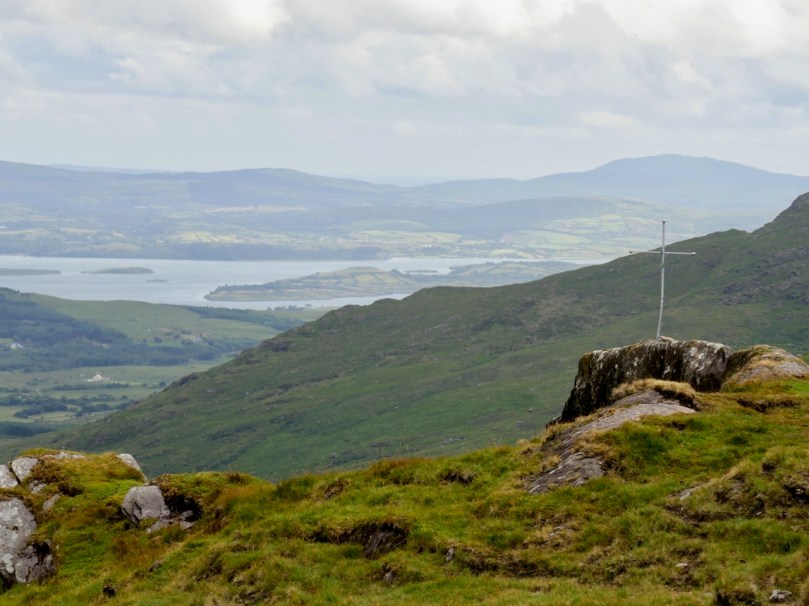
And after that stirring thought, all that remained for us was to wind our way down to Bantry marvelling as we went at the fact that we could be the only ones driving on what is surely one of Ireland’s most scenic routes. Given that it’s also one of the steepest and narrowest, perhaps that’s not so surprising after all.

*The quotes from Gerard Lyne were found by following a link in the Wikipedia entry on Priest’s Leap: Gerard Lyne: The Priest’s Leap: An Intriguing Place Name. Archived 2016-05-28 at the Wayback Machine. Originally published in Bonane: A Centenary Celebration (1992).

‘Ye Citie of the Seven Crosses’

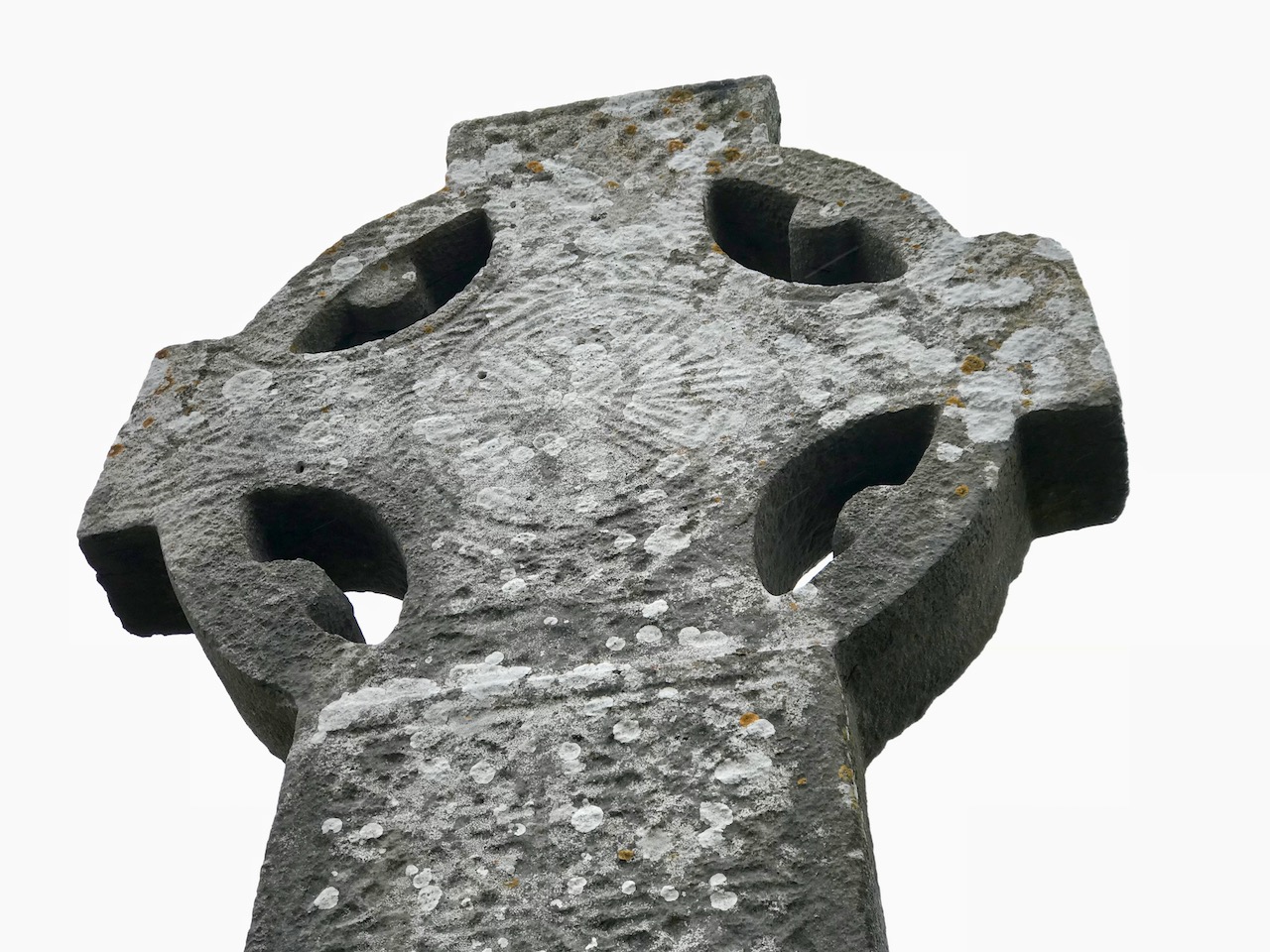
As you will know from these pages, ‘Ireland of the Saints’ is a country rich in treasures dating from medieval times. Architecture and stone carved ecclesiastical monuments were prolific on the island of Ireland, with many examples and fragments remaining. Finola has a series covering Romanesque Architecture, while I have always been on the lookout for High Crosses from the early medieval period. Over 250 examples of High Crosses are said to survive in Ireland, either complete or broken – a remarkable number. Without fail, all are beautiful, and wonderful examples of early art and craftsmanship.

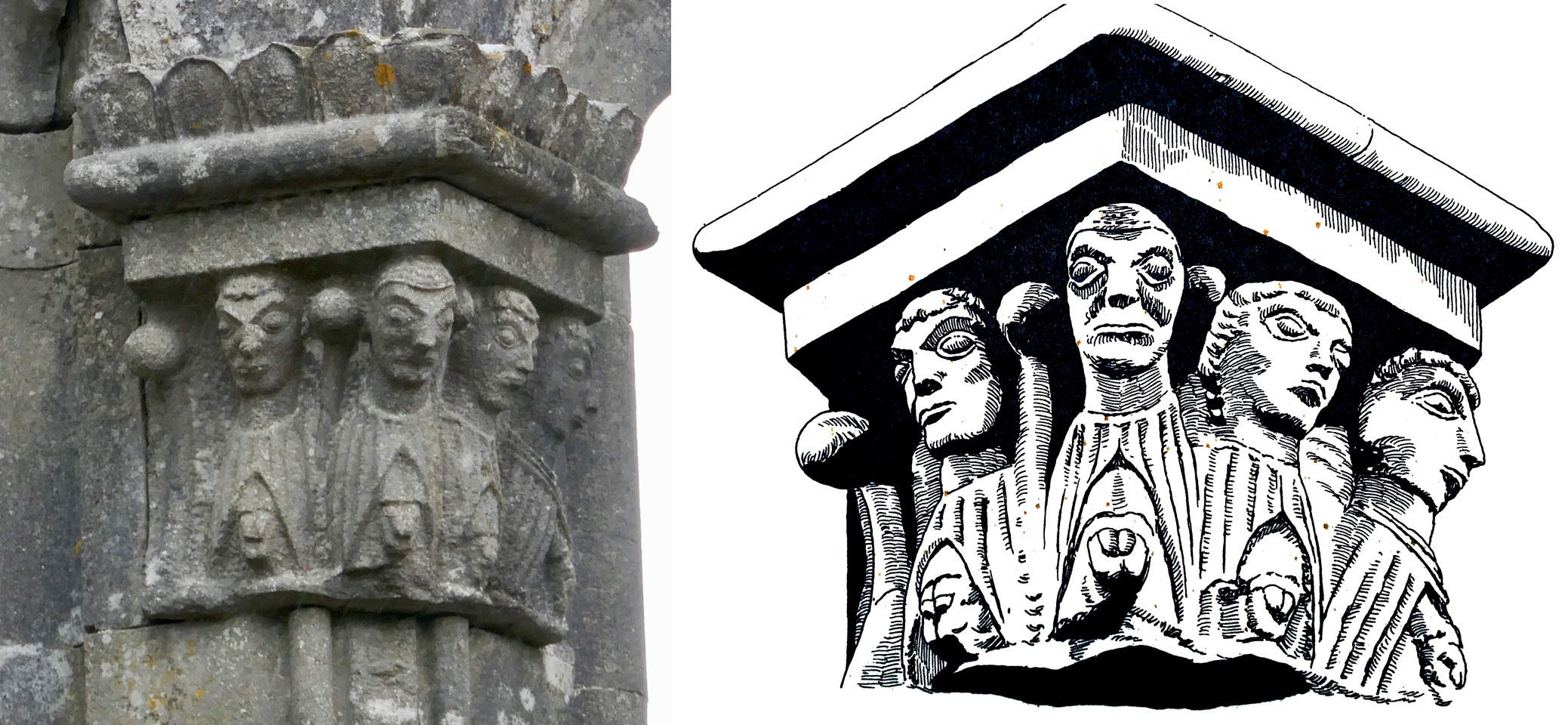
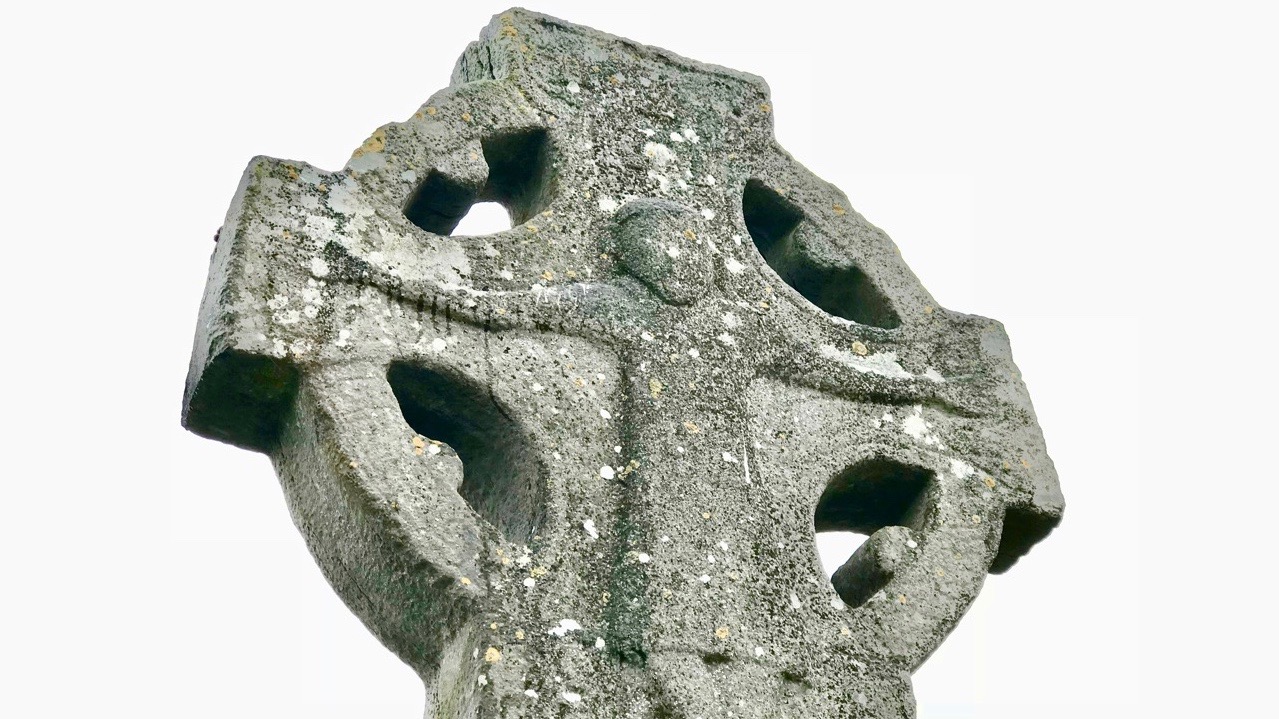
When we are out and about, we usually don’t have to go very far off whichever route we are travelling to find more examples to add to our archive of The Irish High Cross. Last week was no exception: we were off to the Burren in County Clare to see a new exhibition of the work of our friend Keith Payne, and it was no trouble to take a little detour in County Clare to view ‘Ye Citie of the Seven Crosses’ – Kilfenora. A wonderful carved capital on the Cathedral there is shown above (the drawing of it on the right is from Duchas). I knew the place because of its famous Ceilidh Band, but I am now aware that even this admirable institution must take second place to the Kilfenora High Crosses.

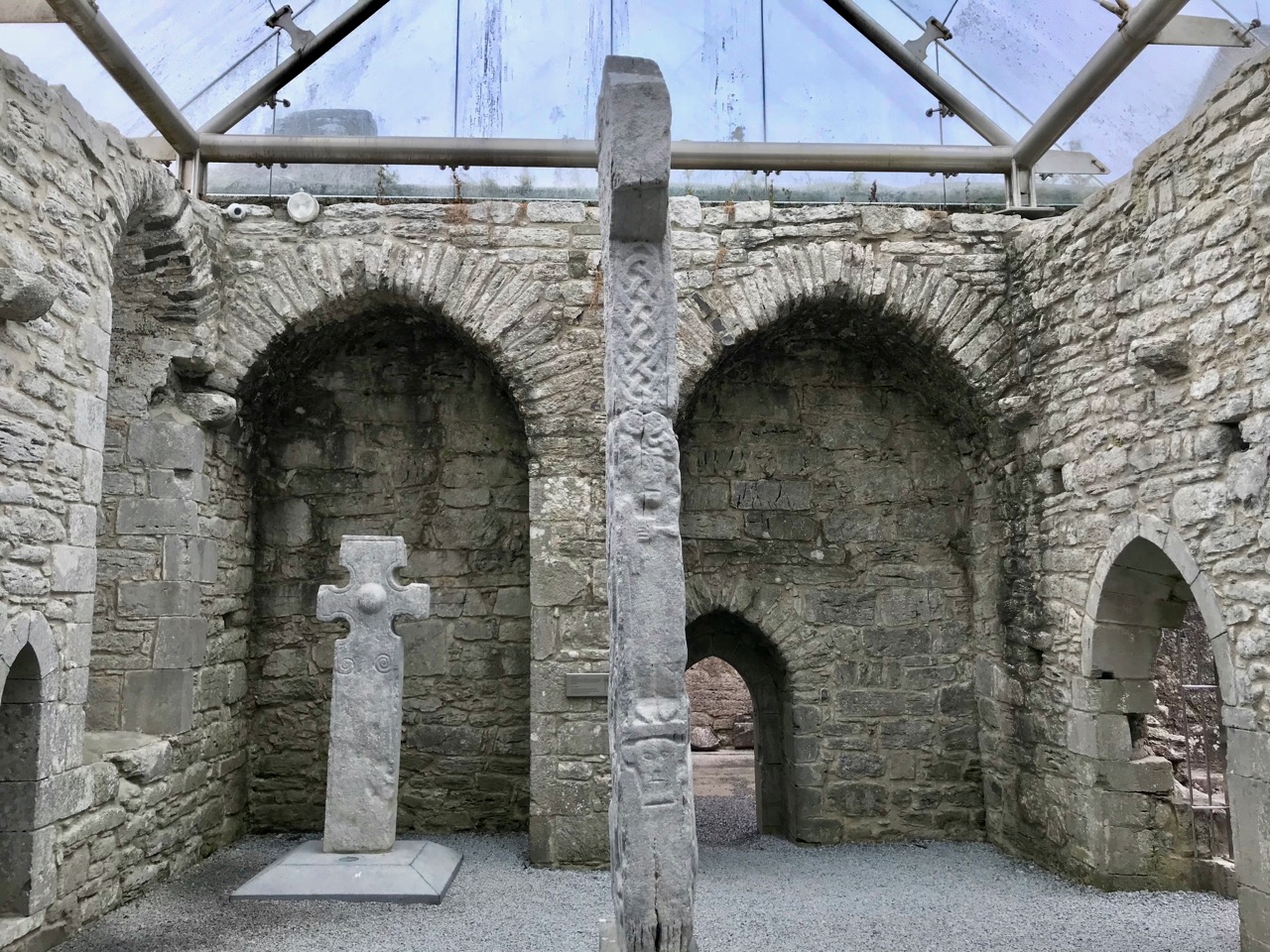
The most detailed description of the Kilfenora crosses was written by historian Jack Flanagan (1921 – 2014) and it’s available online, courtesy of Clare County Library. Jack lived most of his life around Kilfenora, and charts the fortunes of the High Crosses through the 20th century, mostly from his personal experience. Now they are well looked after – some are under a glass roof – but they have suffered various misfortunes throughout the last Millennium. Above are all that’s left of two of the crosses – both now protected.

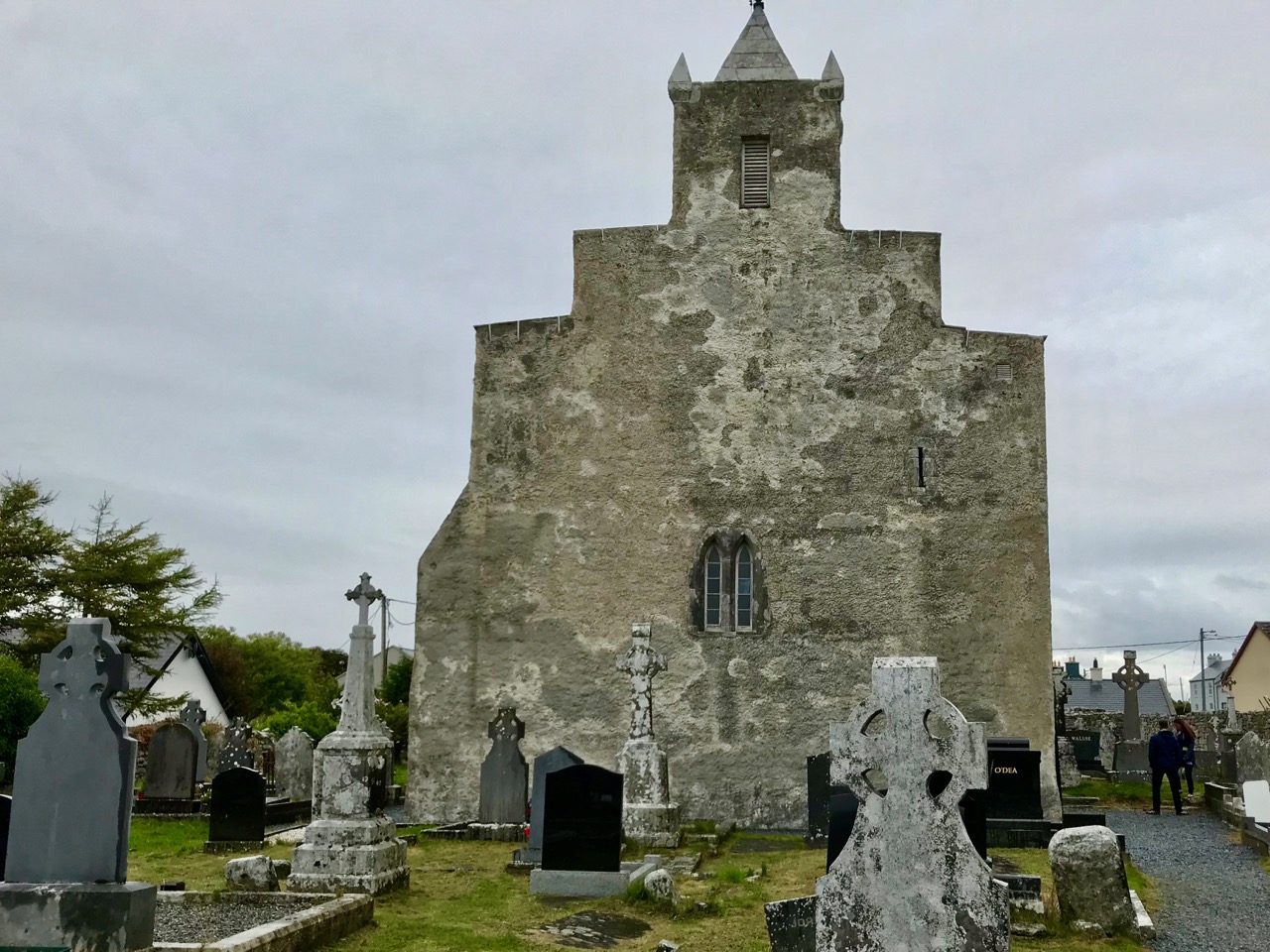
You would hardly think of Kilfenora as a ‘city’ – but the hamlet of thatched dwellings was an important monastic centre from the days of  Saint Fachtnan (from County Cork) who founded it around 650AD. It has its Cathedral (above), although . . . it was the smallest with the poorest diocese in Ireland . . . (Flanagan). However in 1111 the Synod of Rathbreasail snubbed the claims for diocesan status by Kilfenora, and the O’Connors and the O’Loughlens came together in their desire to remain aloof from the Diocese of Killaloe which was very much under the patronage of the O’Briens. There was history here, as it was the O’Briens who had burned Kilfenora Abbey and its inhabitants in 1055. At the Synod of Kells in 1152 Kilfenora did succeed in its claims, and attained status as a separate diocese. It’s said that some of the High Crosses were carved and erected to celebrate this achievement.

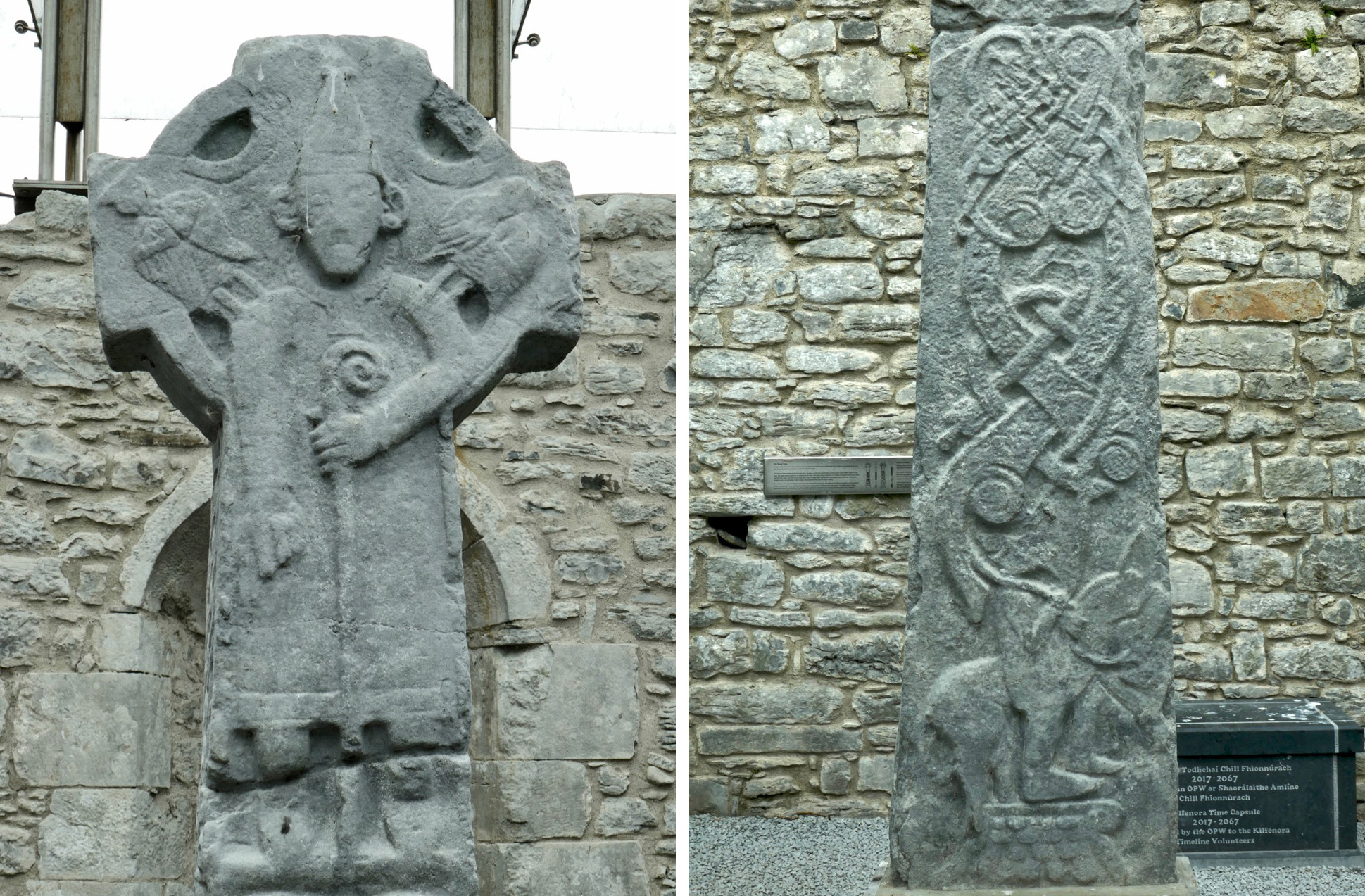
If this is the case, then the Kilfenora High Crosses are relatively late examples of the art. This would seem to be borne out by the style of the finest of them – now known as the Doorty Cross – because the interlacing designs on the shaft are undoubtedly influenced by Scandinavian motifs. This, then, must have been a time when the Viking invaders were not only accepted but also assimilated into the artistic culture: this would have been the case by the mid twelfth century.

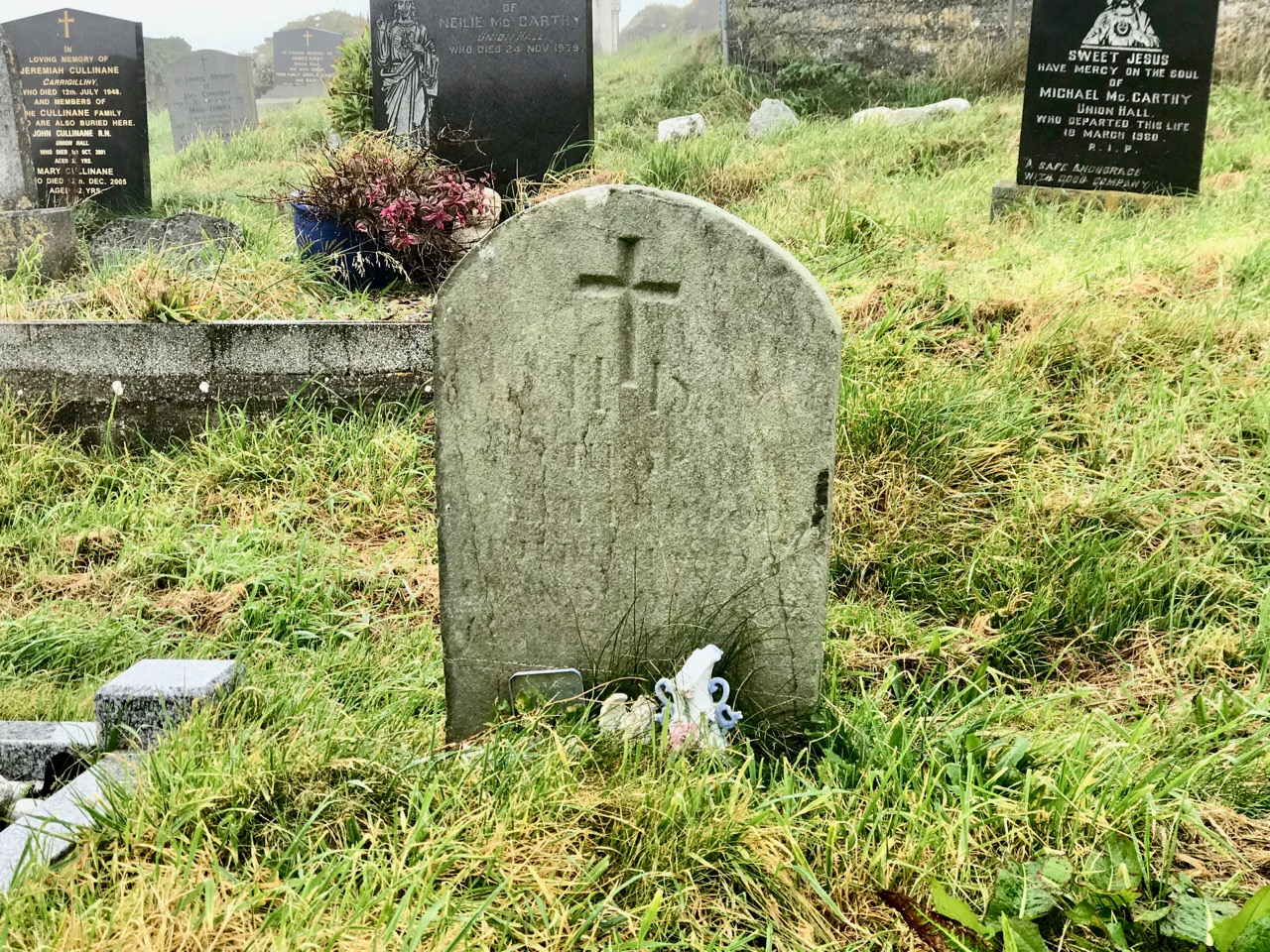
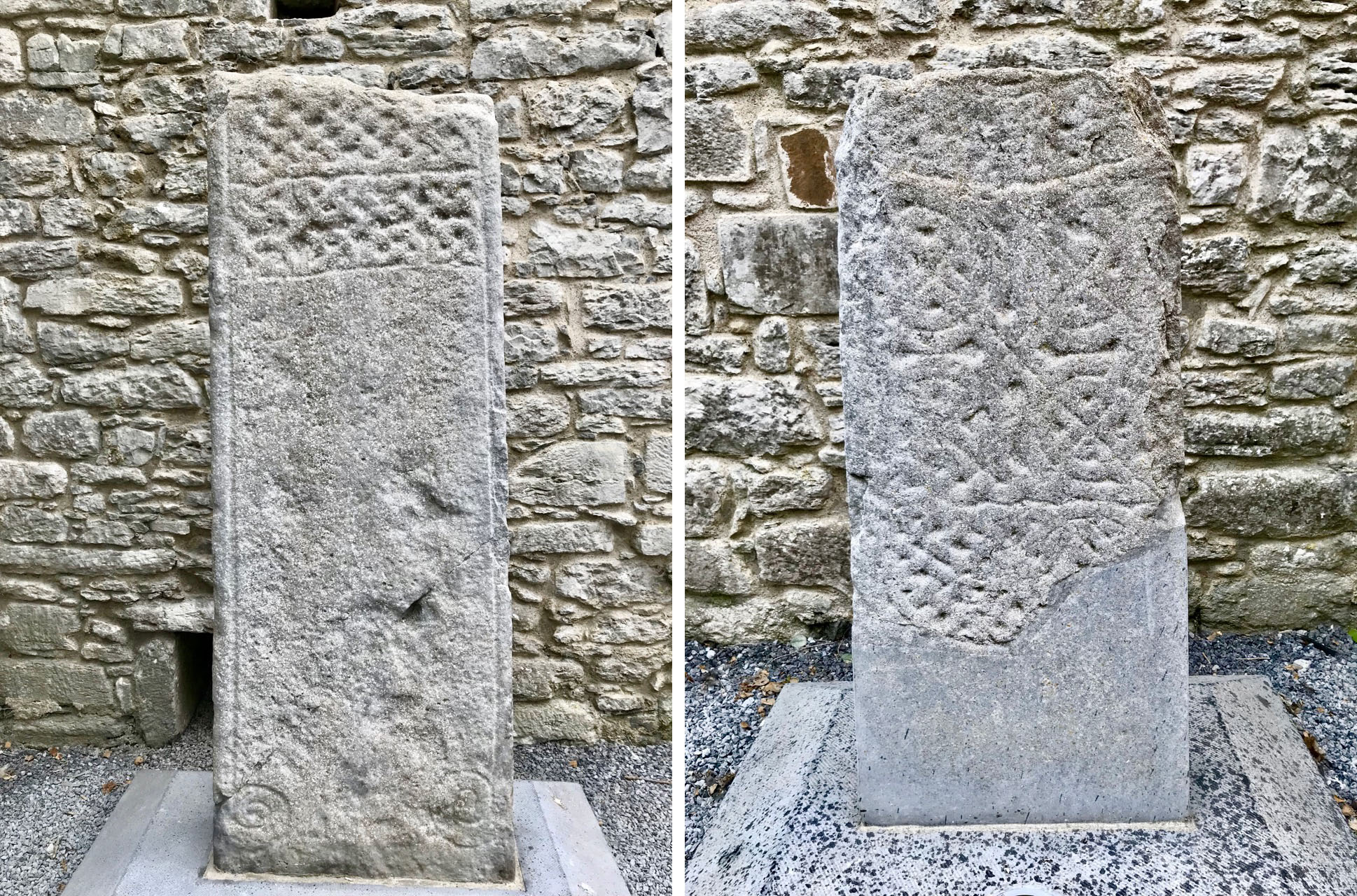
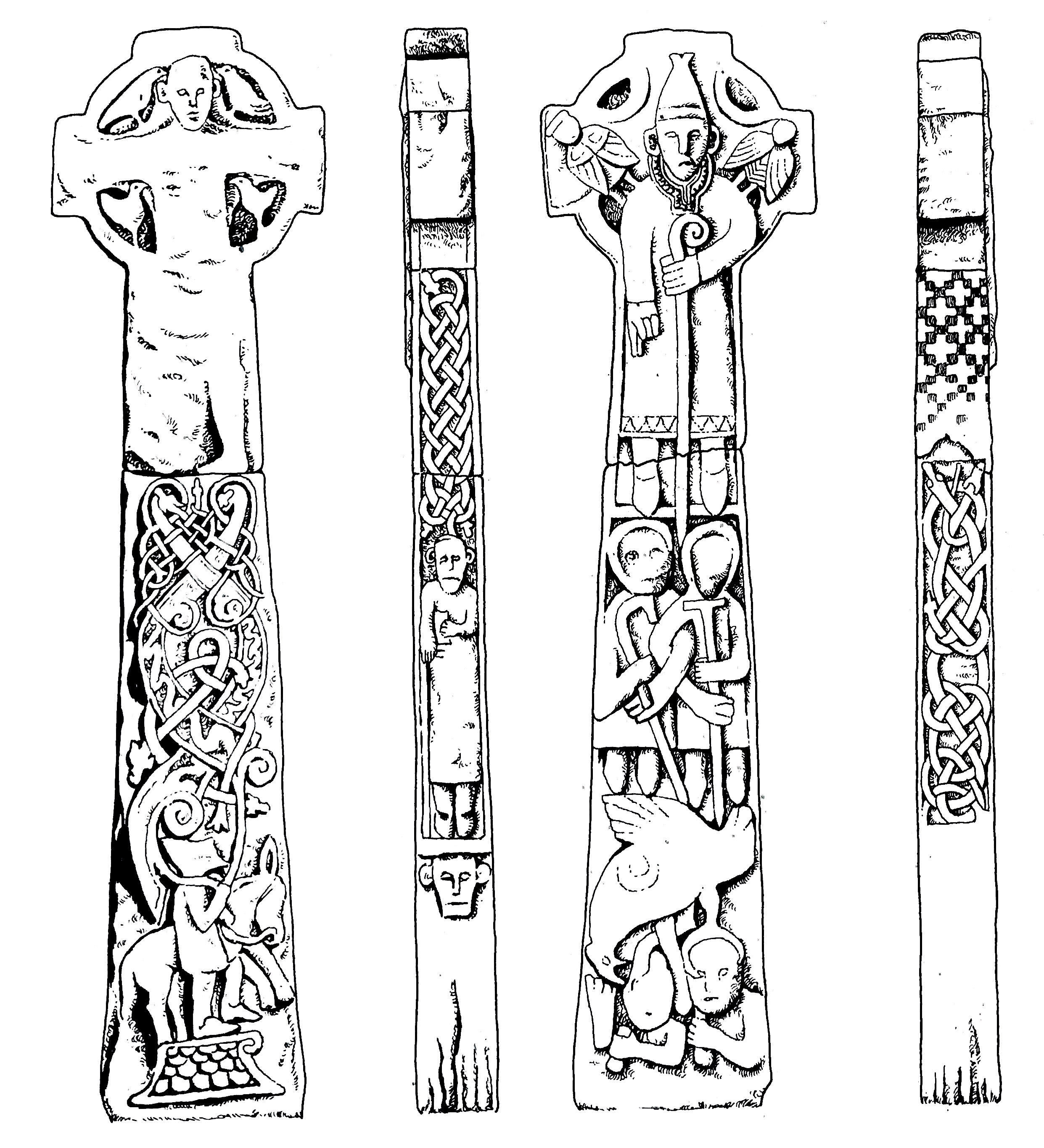
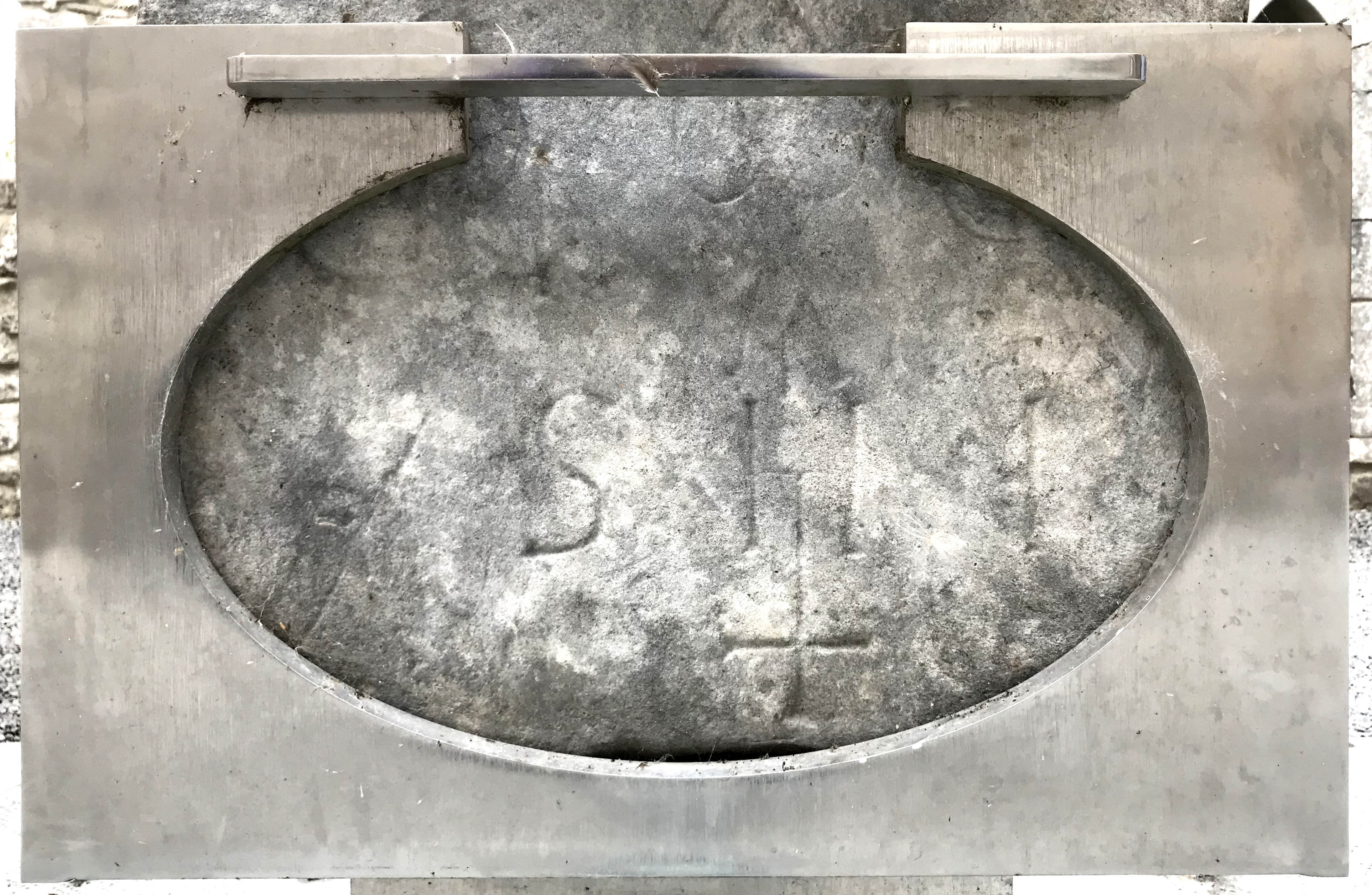
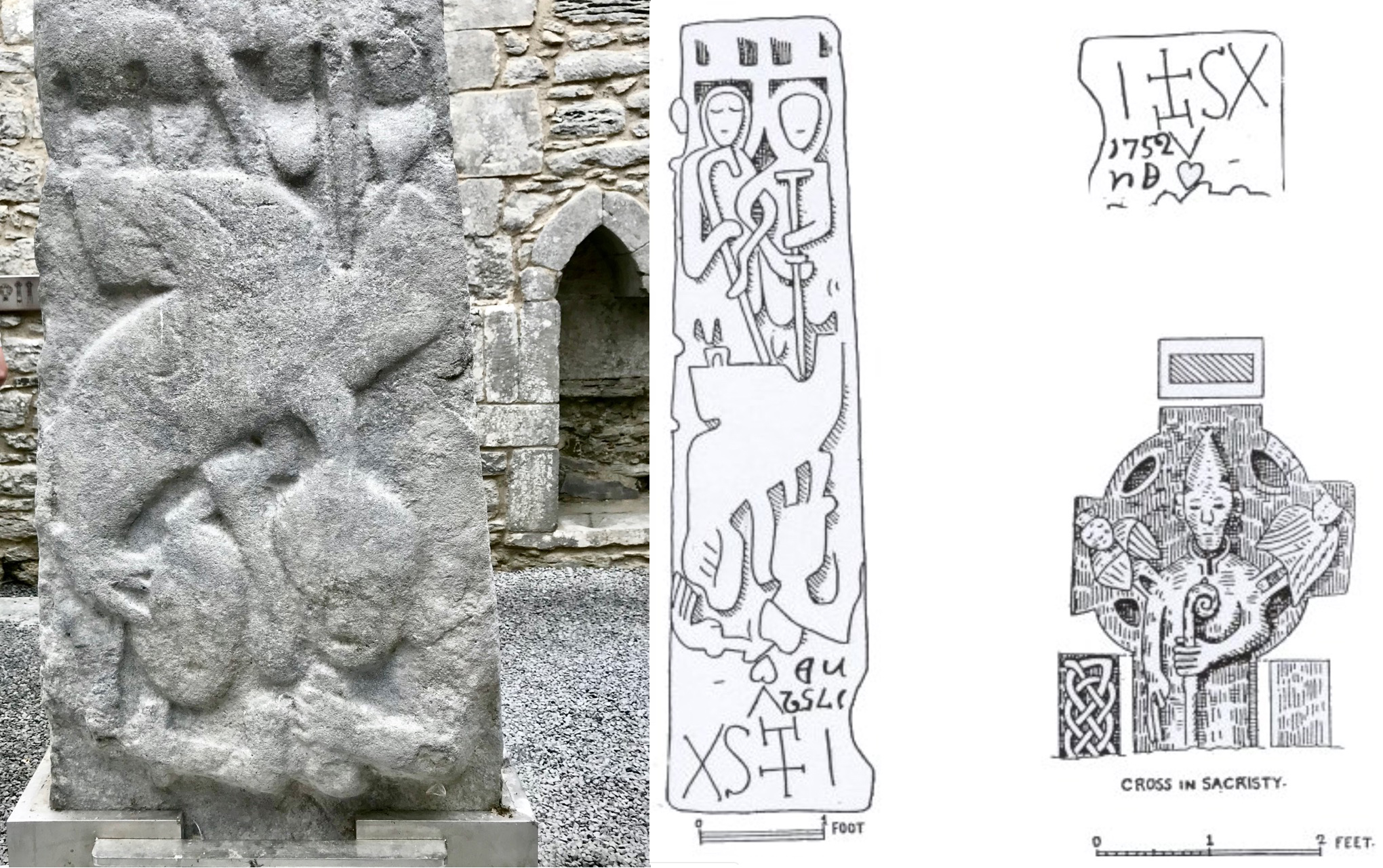
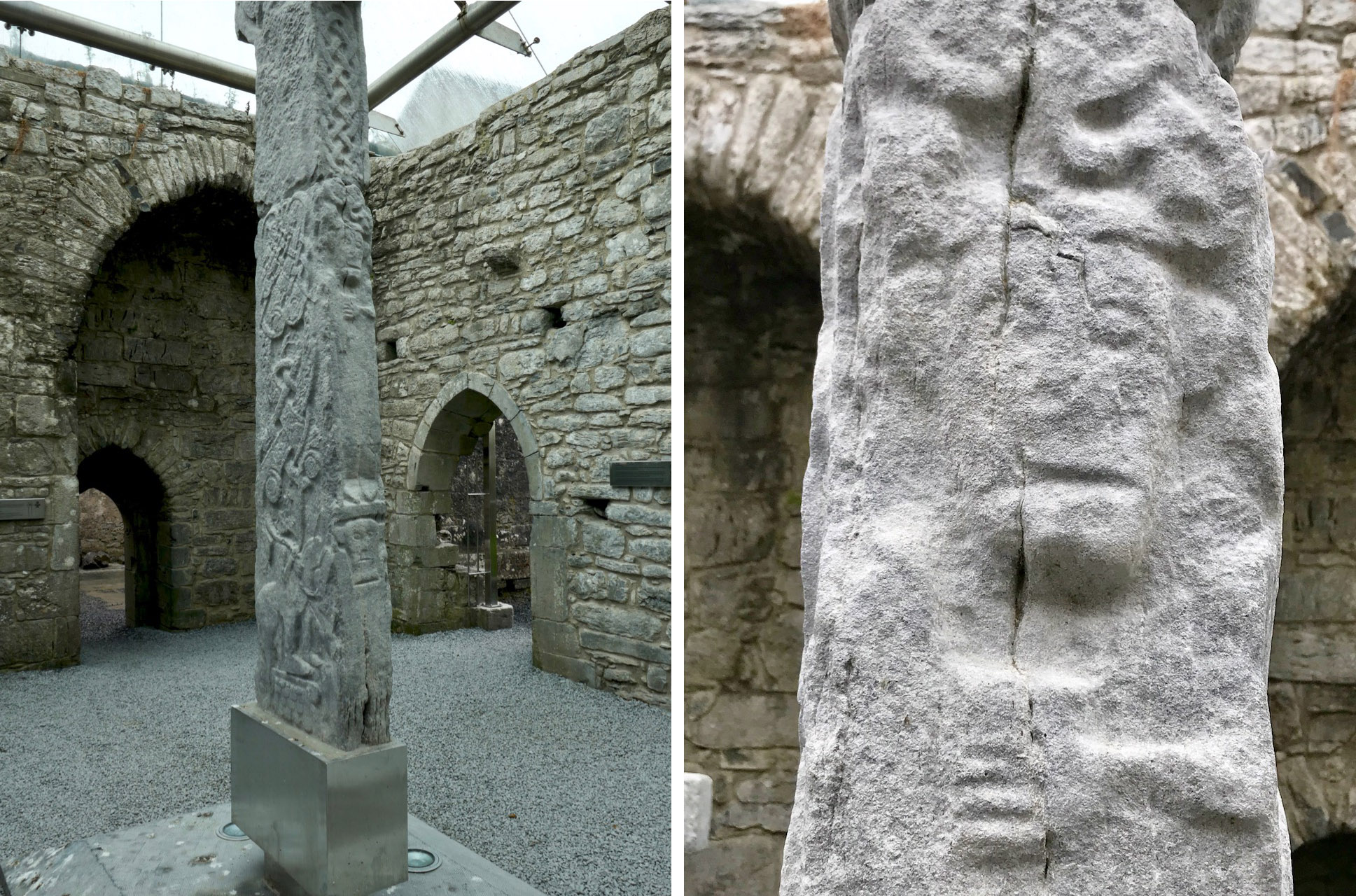
The Doorty Cross (upper, details from west and east faces and lower, Duchas drawing) has a partially traceable history. Jack Flanagan remembers when the main part of the shaft was in use as a grave slab of the Doorty family in the burial ground of the Cathedral, while the head was lying under the chancel arch in the sacristy. In the 1950s the two parts of the cross were reunited by the Office of Public Works, and the restored cross was erected next to the Doorty grave – hence this cross is now known as the Doorty Cross. Interestingly, there is an inscription on the base of the cross shaft which dates from 1752: this was buried when the cross was re-erected, but is now visible as the cross was removed into the new glass roofed shelter in the mid 2000s. The upper picture below shows the inscription visible today – it’s upside down on the raised cross: the lower picture shows a drawing made by Westropp in 1910 when the shaft was still used over the grave: the inscription can be read as IHS X V n D – the V n D stood for V ni Doorty.

The battle between the diocese of Kilfenora and Killaloe wasn’t quite won as they became combined in later years. Dr Richard Mant was appointed Bishop of Killaloe and Kilfenora in 1820, and in that year he set out on a visitation of his two diocese. In early August he arrived in Kilfenora which he described as “the worst village that I have seen in Ireland and in the most desolate and least interesting country” . In a subsequent letter to a friend he describes;

. . .  On a visit to Kilfenora in 1820 where there had been five or six stone crosses I found two or three broken and laying on the ground, neglected and over-grown with weeds. On expressing my concern that these remnants of ecclesiastical antiquity were left in such a state, a clergyman of the parish proposed to send me one of them, which he said might be done without difficulty or danger of giving offence, as when they were brought to that state the people had no regard for them. One was accordingly sent to Clarisford, and I caused it to be erected among some trees in a picturesque spot, between the house and the canal, having inlaid the shaft with a marble tablet bearing the inscription annexed below. When my daughter was at Clarisford about three years ago, the cross was still standing, being considered “an ornament to the grounds” . . .

Upper picture – the High Cross which was taken from Kilfenora by Bishop Mant in 1821, and which has ended up – after a series of excursions – in St Flannan’s Cathedral, Killaloe. A translation of the Latin on the marble tablet which was placed there by the Bishop:

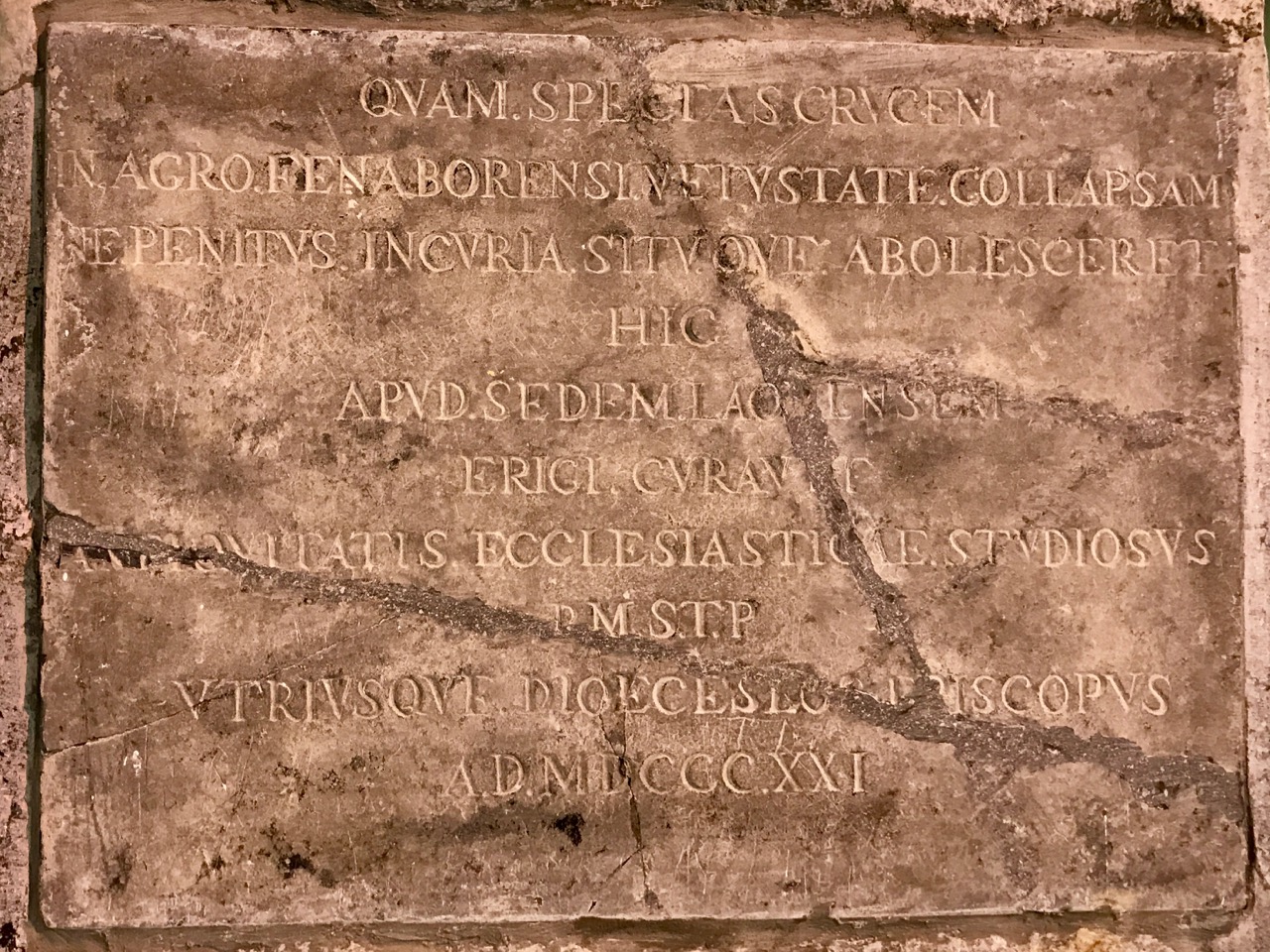
. . . R.M.S.T.P. (Bishop’s name and title) of both diocese, being solicitous for church antiquity, took care to erect at the See of Killaloe this cross which you see, and which collapsed at Kilfenora lest it entirely disappear through neglect, and by reason of the site A.D. 1821 . . .

It seems there was still little love lost between the two diocese. The Kilfenora Cross on the Hill has now been moved into the St Flannan’s Cathedral at Killaloe – and that’s where we saw it back in September last year. When you speak to local people in Kilfenora you get a sense that there are grumblings – they feel they would like their cross back: it would be one of the finest in the collection.

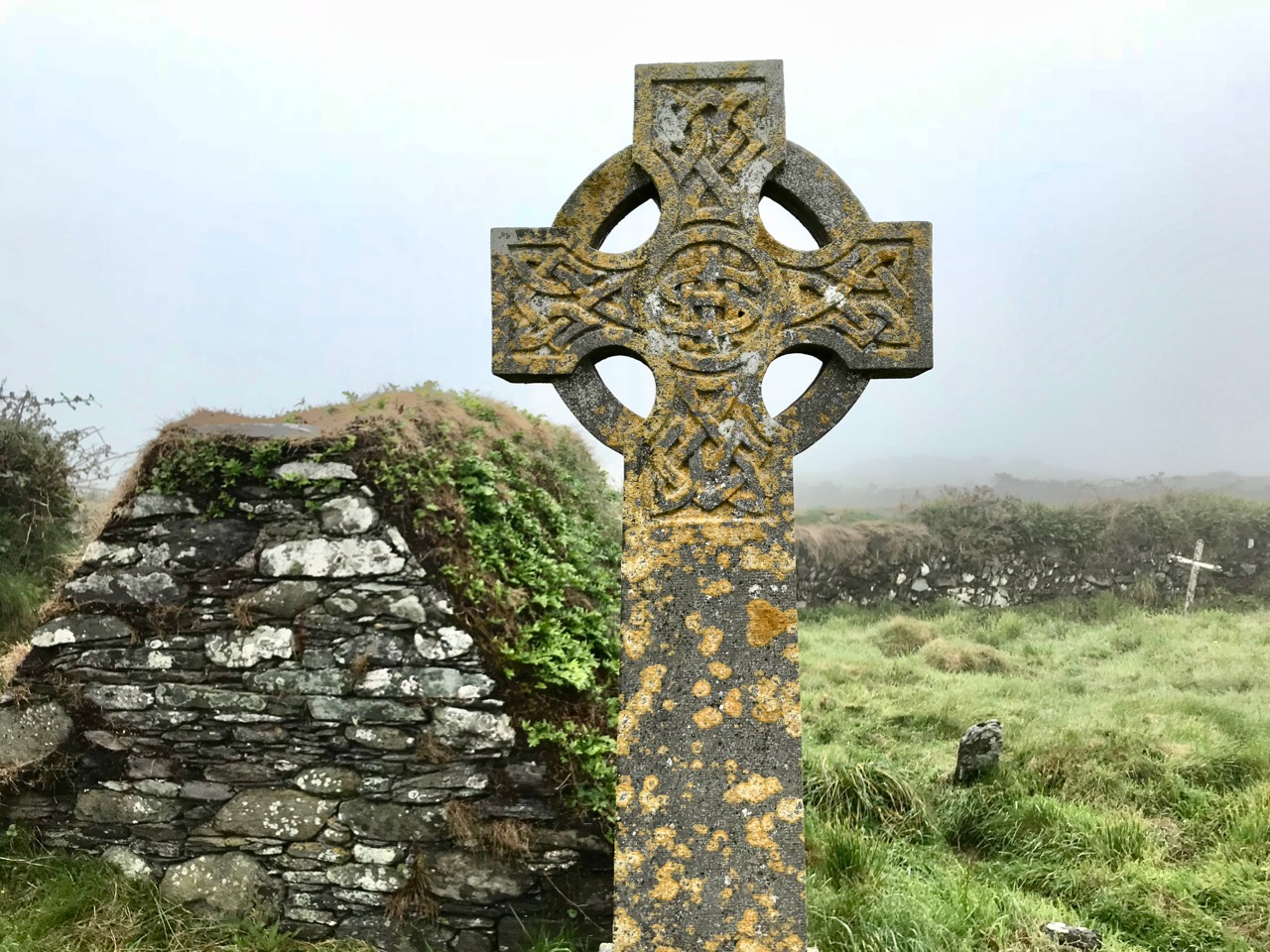
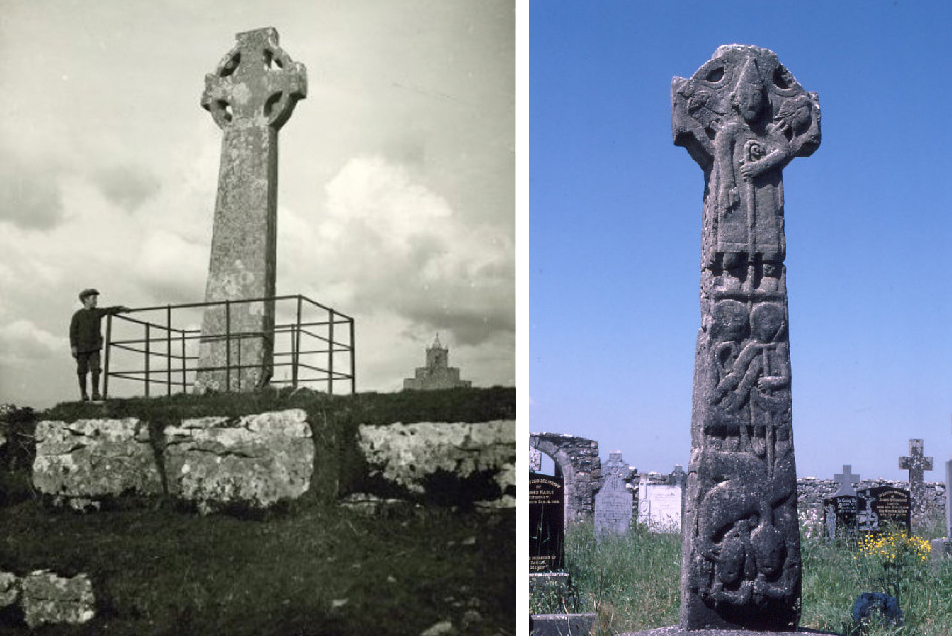
Left – the West Cross (see header picture and below) in 1910, possibly taken by Westropp: it’s still in situ to the west of the Cathedral today – the cathedral building is on the right of this photo. Right – the Doorty Cross standing beside the Doorty grave in 1980.

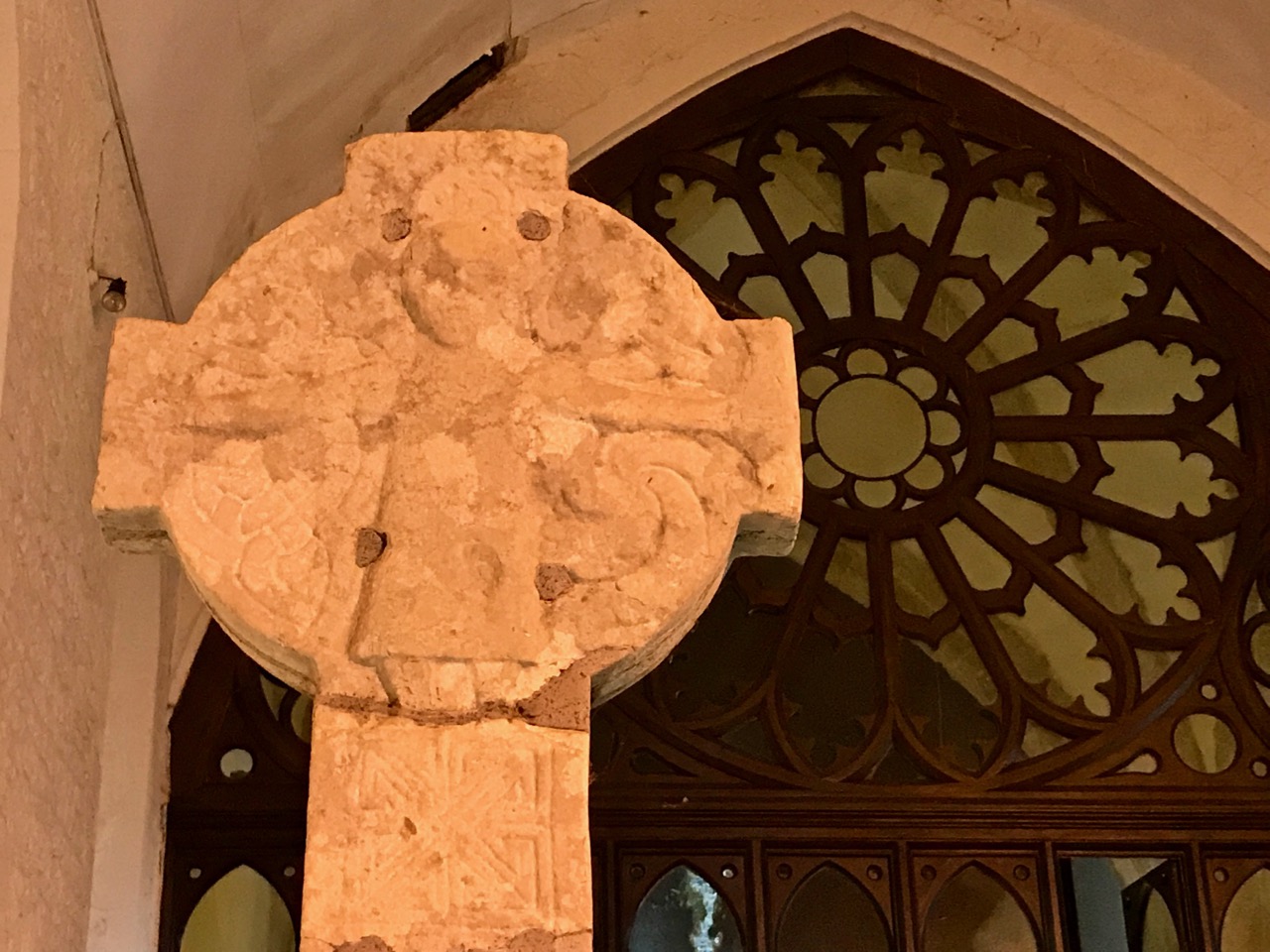
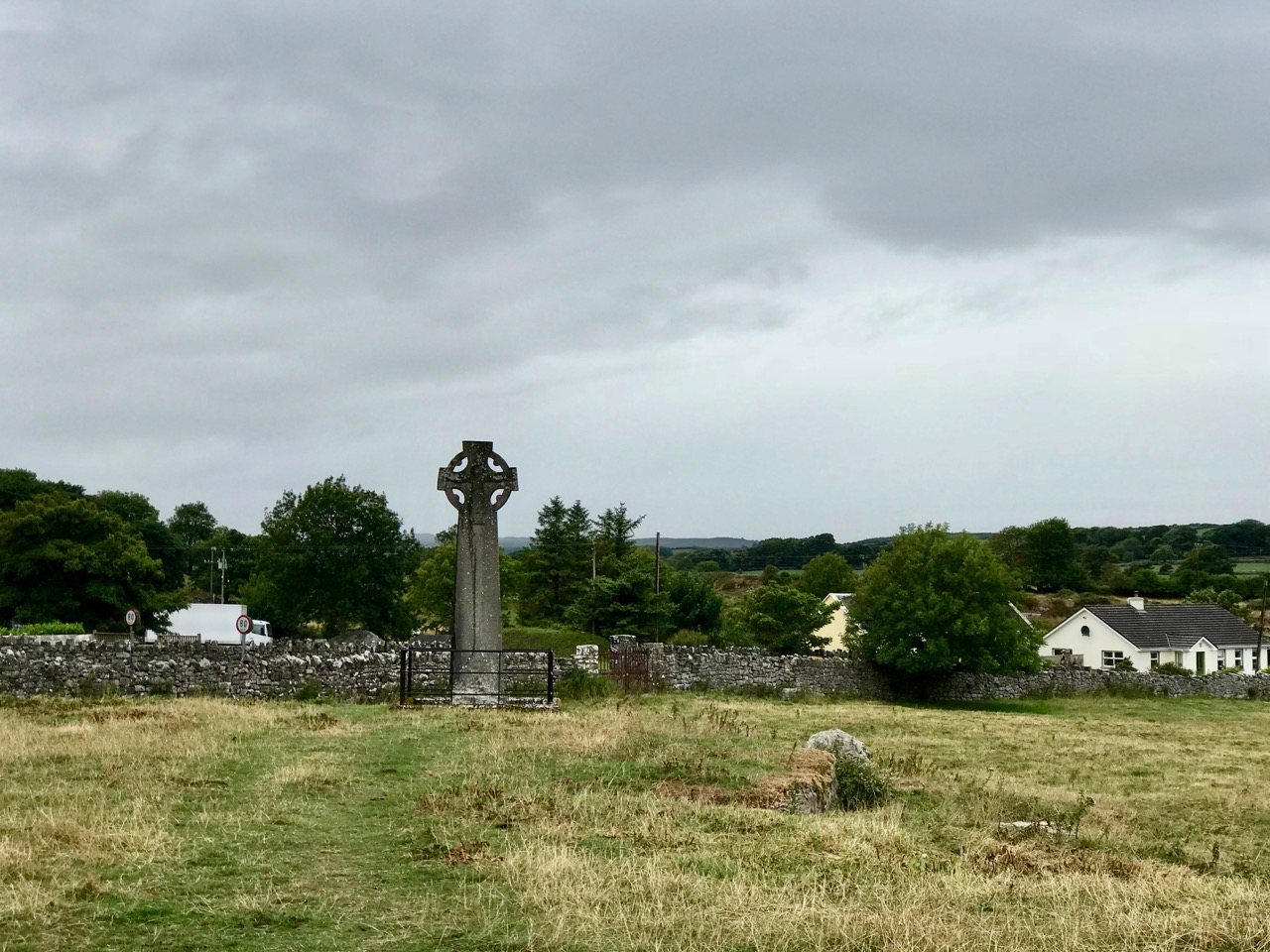
The West Cross at Kilfenora has escaped capture under the glass roof and still stands – probably where it always has – on a prominent knoll to the west of the Cathedral. It’s open to the elements, but seems to be in good condition. In some ways, the protection of these ancient pieces does in some way detract from their magnificence, but there’s no doubt that constant exposure to the weather extremes that we experience here in Ireland must ultimately adversely affect them. It’s a conundrum – and a debate we have touched on before.

Perhaps my own response to these protected High Crosses in Kilfenora is that I feel they are under-appreciated. I saw – at the height of the tourist season – coach-loads of visitors disembark, enter the sheltered enclosure, stand and look at the old stones for a few minutes and then file out. What did it all mean to them? There are interpretation boards but I doubt they get the message across: these are great monuments of the world, to be revered, respected and wondered at: these representations take you back through a thousand years of history: we are fortunate that we can still be in their presence.