On the Passing of Poets

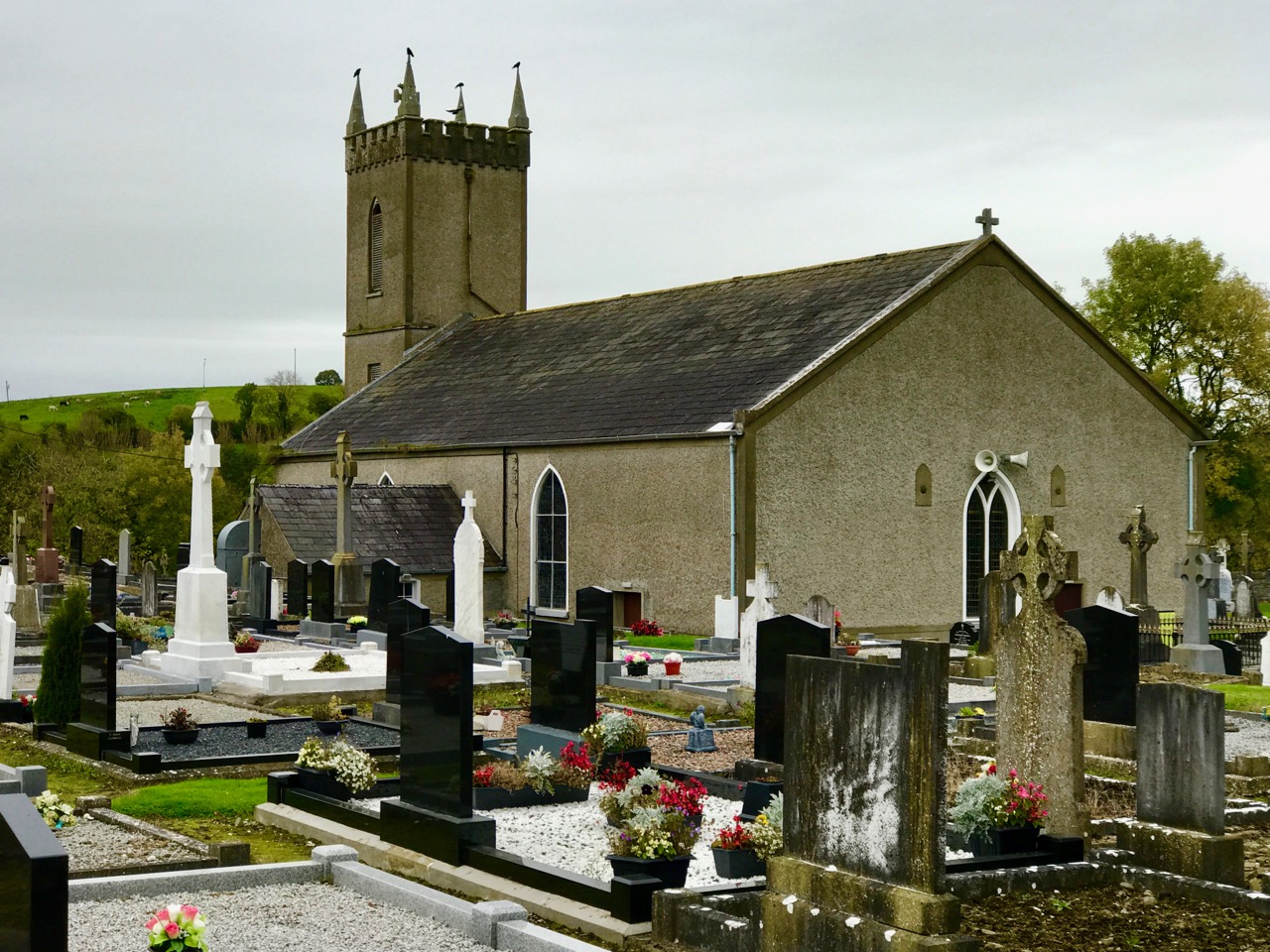
Ireland: ‘land of Saints and Scholars’ – and poetry, as we found on our travels. In just a few days we have discovered how three pre-eminent Irish poets – whose passing has spanned a century – are being celebrated and commemorated in their own townlands.
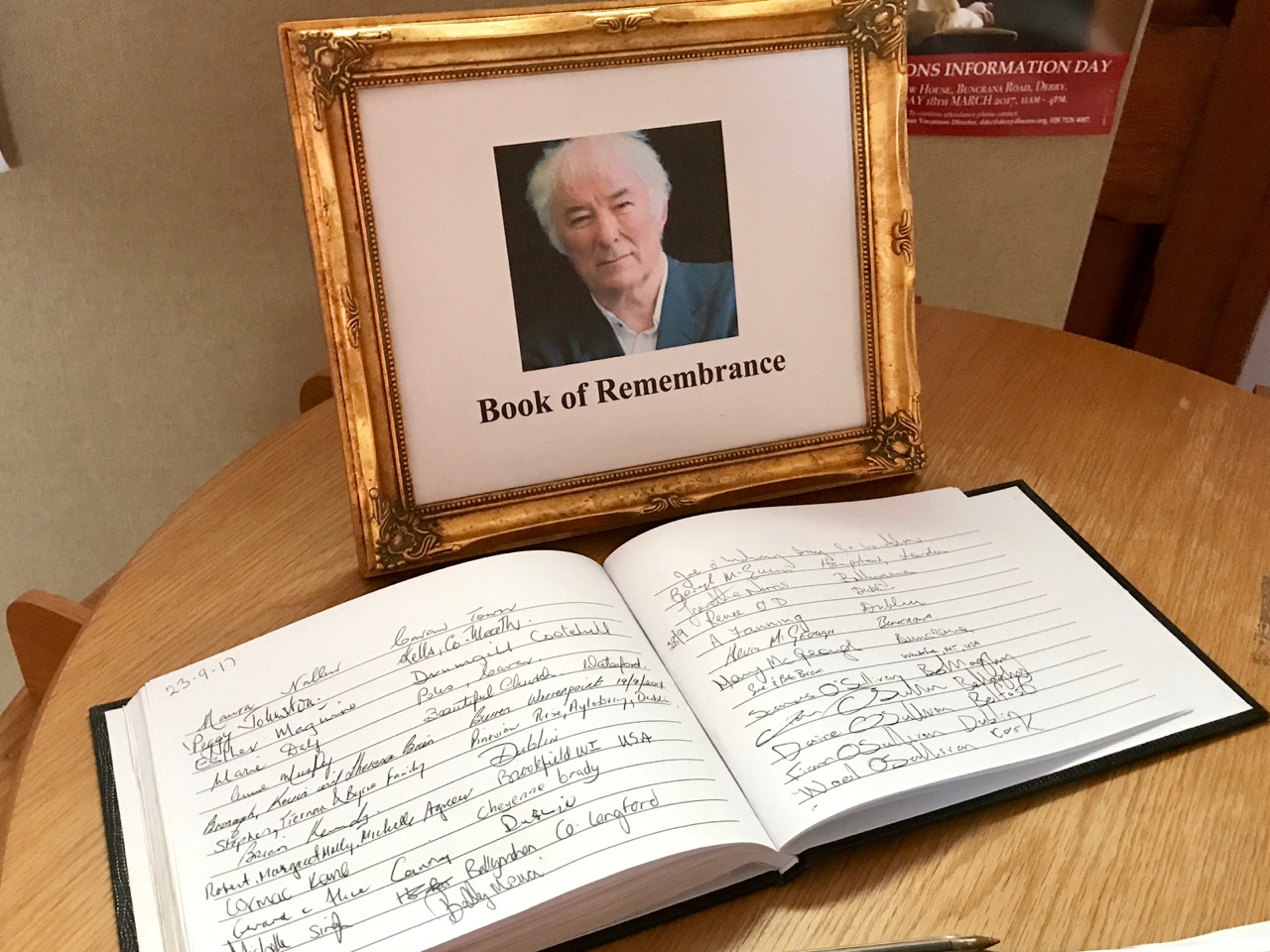
Bellaghy, County Londonderry, in Northern Ireland was the childhood home of Seamus Heaney  who was born at nearby Mossbawn on 13 April 1939, the eldest of nine children. Heaney passed away on 30 August 2013 and, in accordance with his own wishes, he is buried in the Cemetery of St Mary’s Church, Bellaghy. A Book of Remembrance is kept in the church, and on his headstone is a line: Walk on air against your better judgement, from one of his poems – The Gravel Walks.

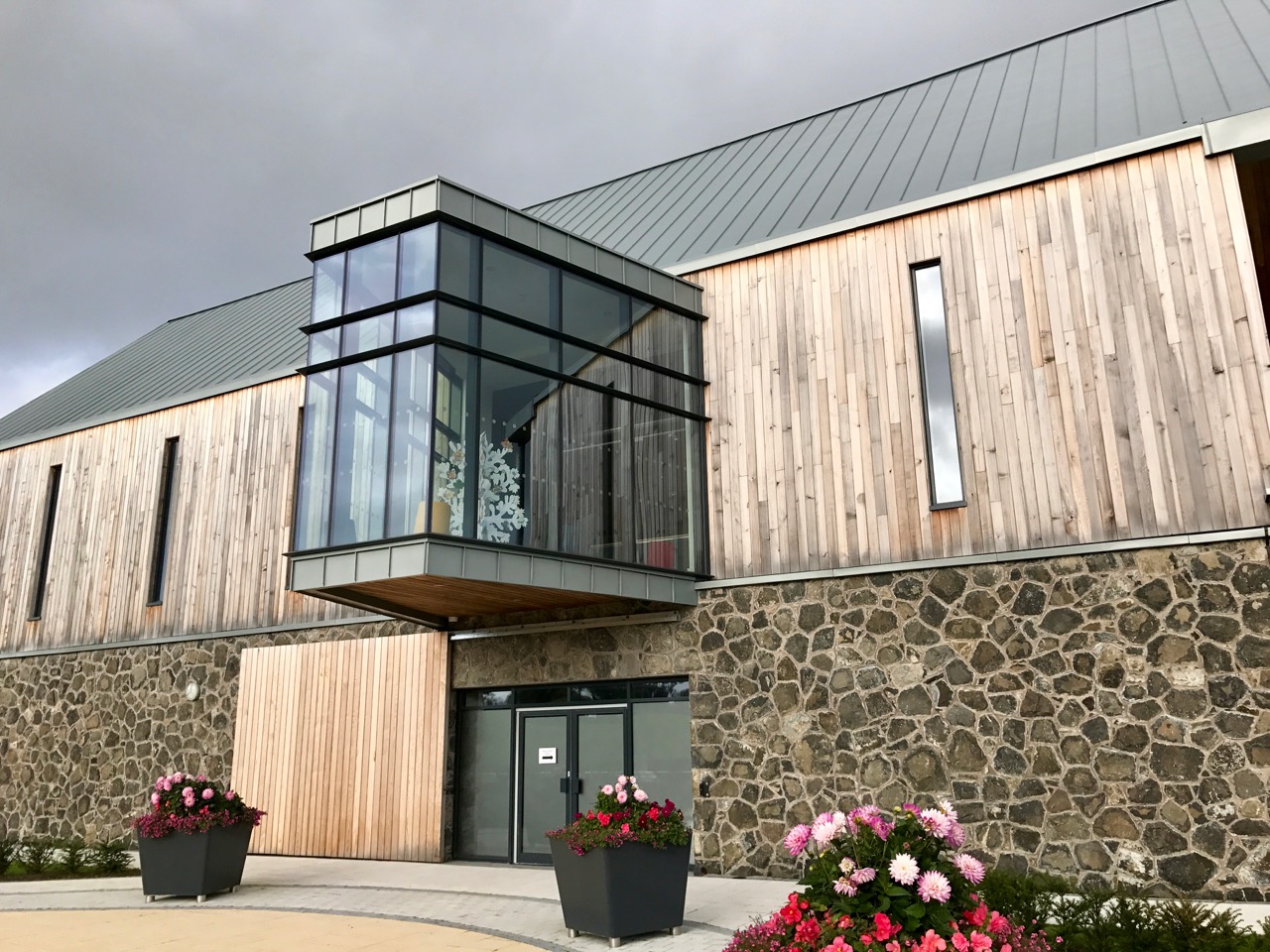
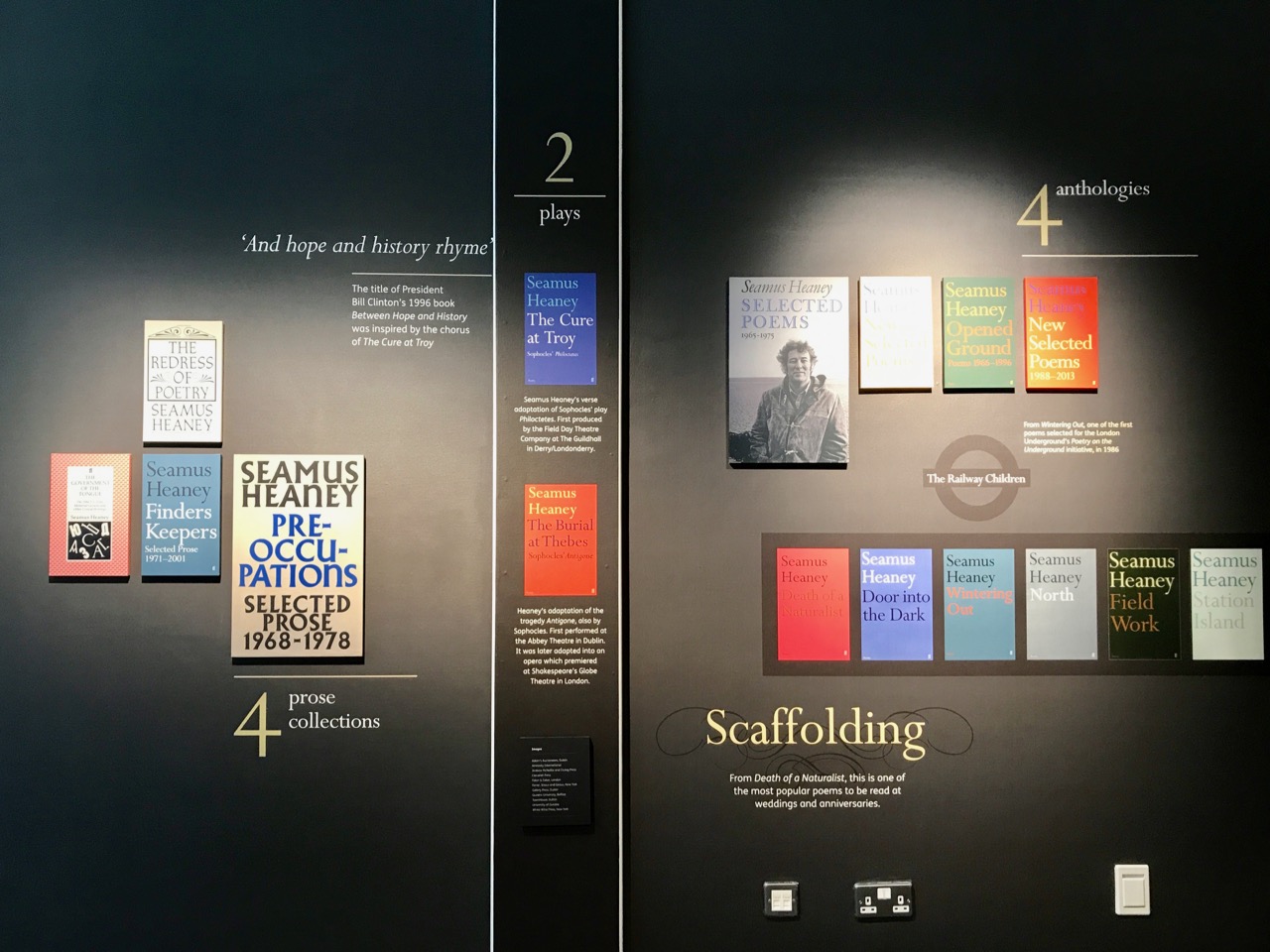
Exactly a year ago – October 2016 – a new building was opened to commemorate Heaney, the Nobel Prize winner, who has been described as ‘…the most important Irish poet since Yeats…’, ‘…the greatest poet of our age…’ and ‘…probably the best-known poet in the world…’ The quality of the HomePlace centre reflects this reputation and provides excellent facilities for the sheer exploration of words as well as performance, lectures and research.
This year sees the 50th anniversary of the death of another of Ireland’s country-born poets: Patrick Kavanagh. We visited Inniskeen, County Monaghan, to search out the old St Mary’s Church, which has been transformed to a Centre – open to the public – which displays information on the poet born and raised on a nearby farm in 1904, the fourth of ten children. The Centre also carries out research into the poet’s life and work, and organises an annual event to celebrate him. I am grateful to the staff of the Centre for allowing me to photograph the interior of the former church.

Appropriately, the grave of the poet can be found in the churchyard. Strangely, an elegant memorial to the poet and his wife (below left) vanished in 1989 and was replaced with a simple wooden cross (below right), said to have been carved by his brother, Peter. I could not get to the bottom of this matter: there are various reports to be found on the internet, including this one from RTE.

Like Heaney, Kavanagh’s strong influences came from his rural background. Some of his best-loved works portray country life, but without sentimentality. He remained on the farm in Monaghan until 1931, when he walked the 80 kilometres to Dublin. At first rejected by the literary establishment, his work eventually received appreciation. Seamus Heaney acknowledged that he had been influenced by Kavanagh.

When Kavanagh died on 30 November 1967, at the age of 62, he was recognised as …Ireland’s leading poet in English…

For our third commemoration we travelled to Slane, County Meath, to find the Francis Ledwidge Museum. This poet died exactly a hundred years ago, a victim of the Great War.

The Museum has been created in the cottage where Francis was born on 19 August 1887, the eighth of nine children. Again, he came from a rural background. His father died when he was only five, and he spent much of his life as farm hand, road builder, and copper miner. He was an active campaigner for better working conditions, became an early Trade Unionist, and attempted to organise strikes.
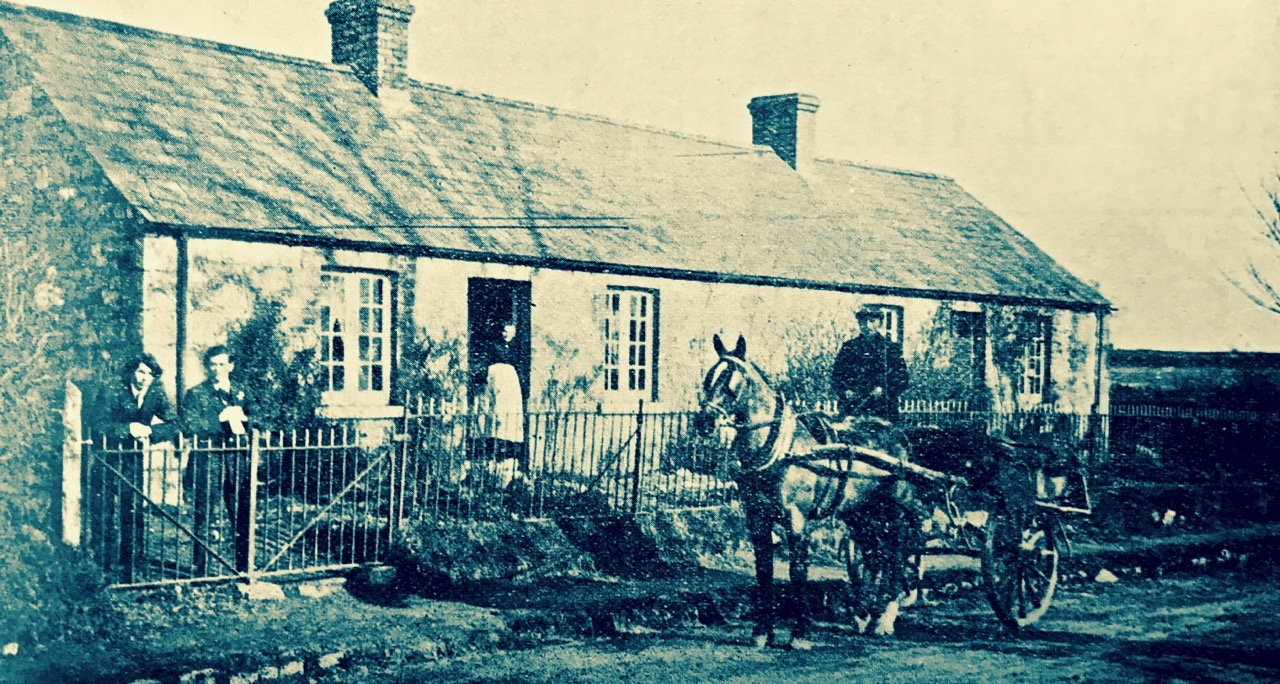
The Ledwidge cottage in Janeville, Slane, around the end of the nineteenth century (top), and the cottage – now the Francis Ledwidge Museum – today (lower)

Francis had written poetry all his life, and some was published in local newspapers when he was 14 years old. He attracted the patronage of Lord Dunsany, who introduced him to W B Yeats. Like many other artists, writers and poets, Ledwidge’s life was tragically cut short by the war. In the Third Battle of Ypres he and five companions were hit by an exploding shell. Father Devas, a Chaplain who was a family friend, recorded ‘…Ledwidge killed, blown to bits…’ A memorial was raised to him on the place of his death in Belgium, and a replica of this memorial can be found in the garden of the Janeville cottage.

Seamus Heaney also acknowledged Ledwidge as one of his influences

During our travels we have seen that poets in Ireland have respected the work of their compatriots. Wordsmithing is a time-honoured profession: there’s a common thread running from the Bards of old, who carried traditions, myths and genealogies through generations and over centuries.

Below – a portrait of Seamus Heaney by the Welsh artist Jeffrey Morgan hangs in the HomePlace Centre, Bellaghy

Rejecting those Earthly Dignities: Irish Women Saints by Harry Clarke

I’ve been struck by the absence of sacred women in the iconography of stained glass windows in Irish Protestant churches. Sure, there’s the odd window devoted to or including Mary (such as Nativity scenes) or Bridget, or images of women as Charity or Hope, but for windows depicting women who are venerated for their piety or leadership or courage you have to visit Catholic churches in Ireland. 

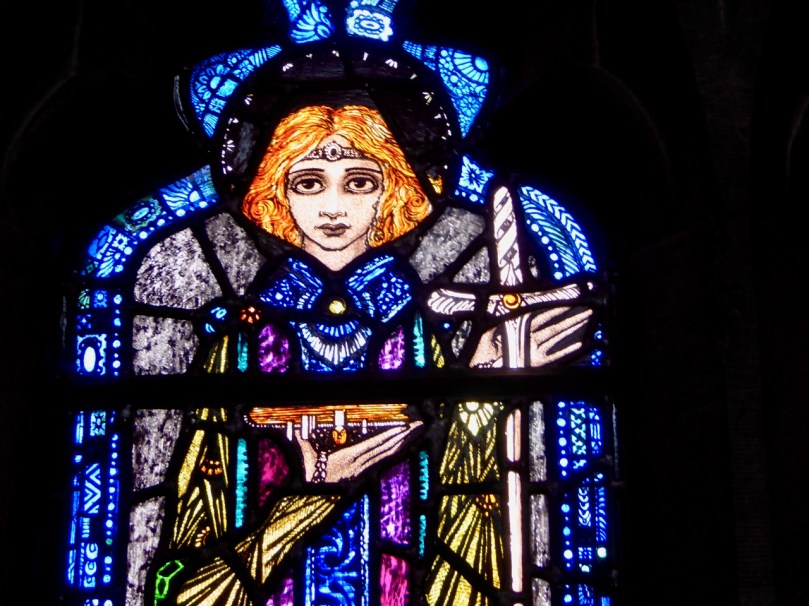
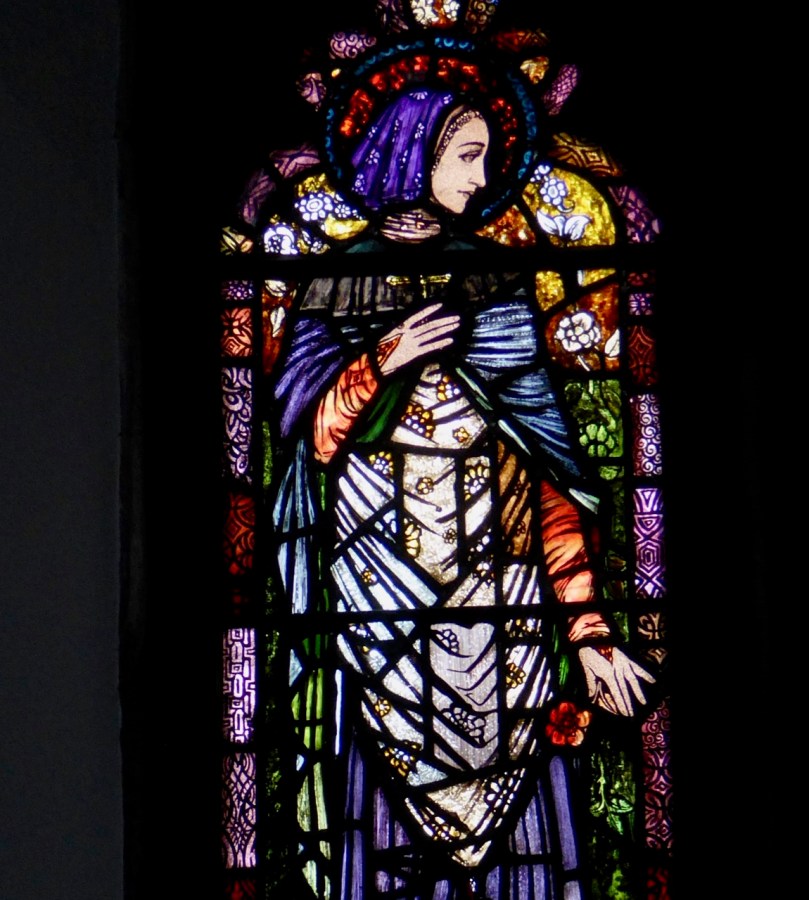
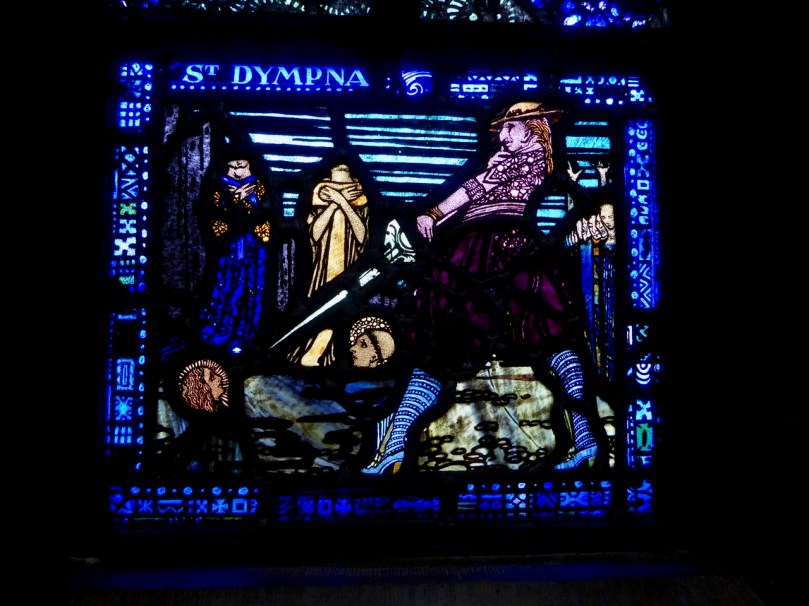
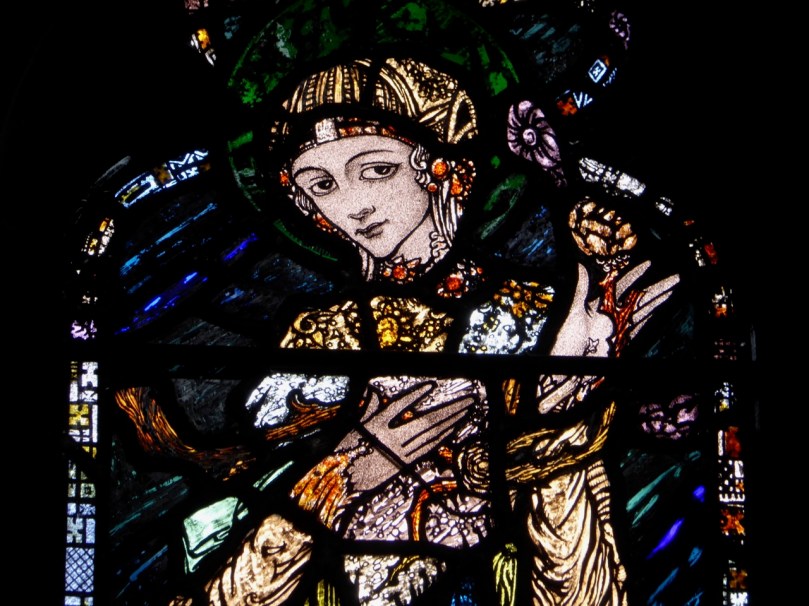
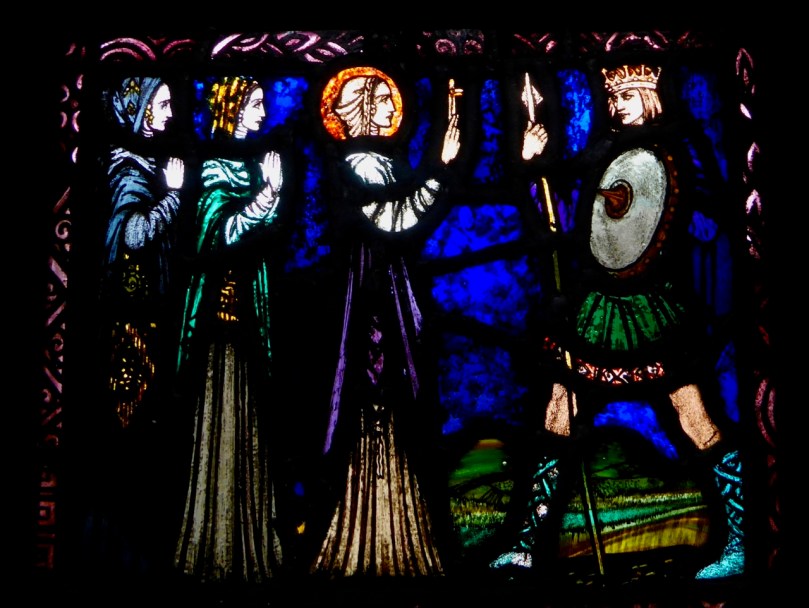
The top picture is St Dympna, depicted with a sword – it is a tradition to depict martyrs with the instrument of their death. She looks wide-eyed and innocent – she was only 15 when she died. Above is St Fanchea, bearing a rose and with a kindly expression

We’ve written already about Bridget here and here and about Gobnait: Bridget is considered the female equivalent of Patrick in being the most widely known and celebrated of the Irish women saints. Gobnait is a good example of a local saint, in this case she is associated with the Muskerry area of Cork. When you read the lives of Irish saints, women and men, you are reading accounts written many centuries after they lived, often a mixture of tradition, mythology, folklore and reconstructed hagiography. 

Harry Clarke, as I have discovered before, had a thing for red hair and gave St Dympna a particularly glowing crop. Here she shelters her patients, the mentally ill poor who came to her hospital

Robert and I have been travelling in Ireland and visiting stained glass here and there, and in the process discovering more unfamiliar Irish saints. Harry Clarke, Ireland’s incomparable stained glass artist of the early part of the 20th century, was often asked to depict local saints and always did as much research as he could into their lives, to enable him to tell their stories and use appropriate elements and symbols. [For more posts about the genius of Harry Clarke, Ireland’s most famous stained glass artist, go to our Navigation page and scroll down to C5.] In Carrickmacross (Co Monaghan) this week I found three Harry Clarke windows illustrating three Irish female saints, two of whom I had never heard of before. Let’s start with the one I thought I knew because I’ve had friends with that name – St Dympna.

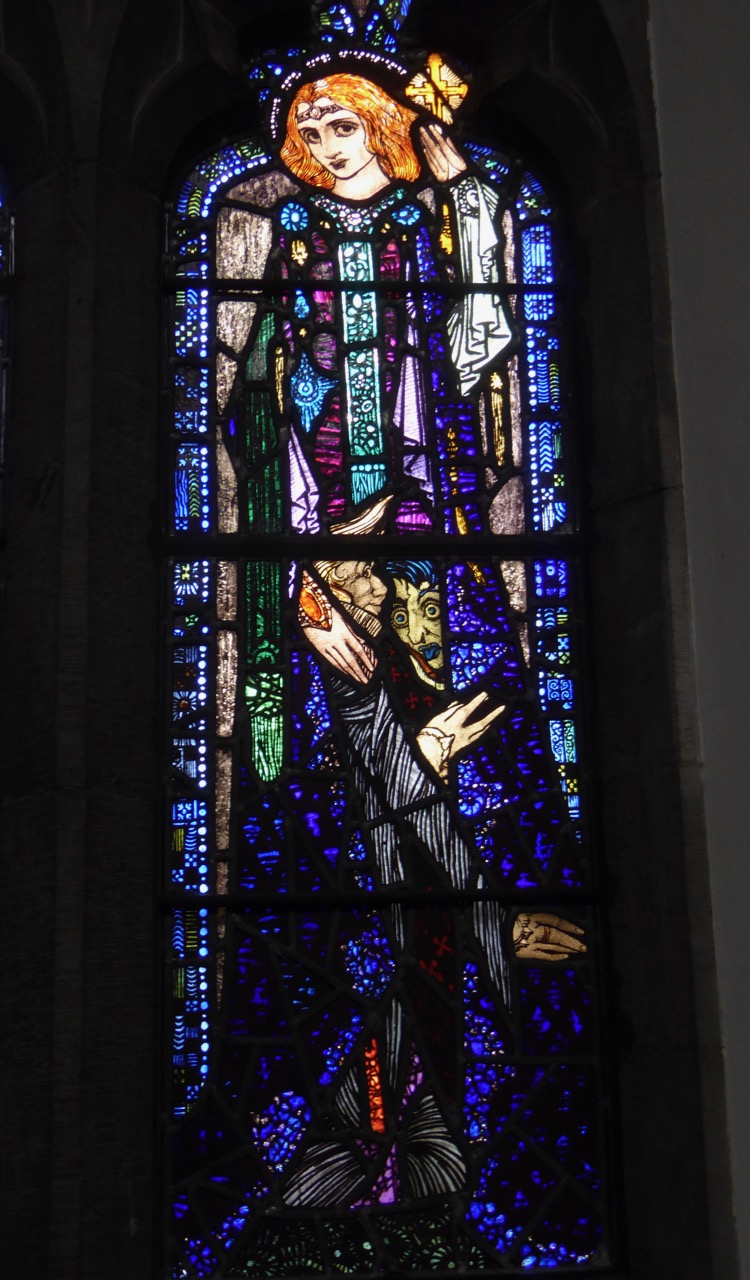
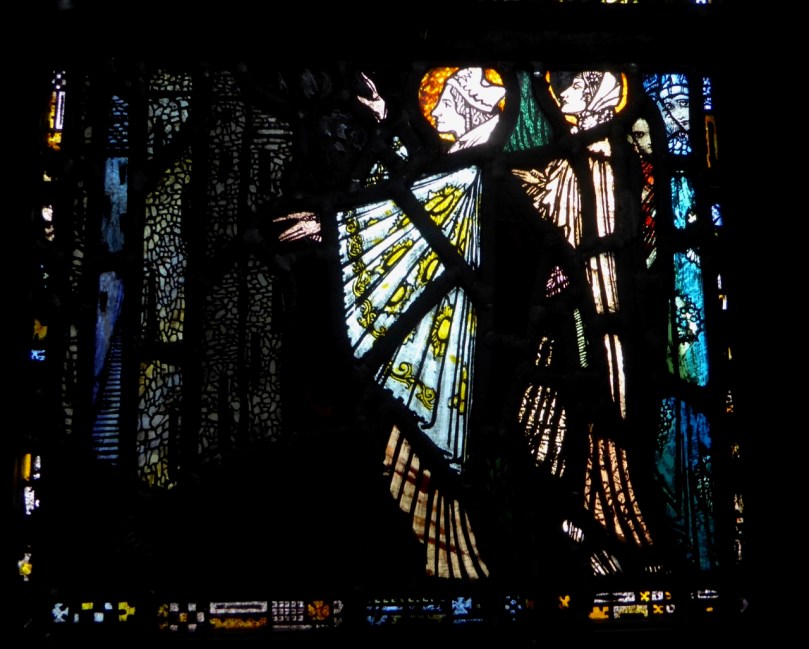
Dympna flees her father’s house. Following her is the court jester, his wife, bearing medicines, and Gerebran, her confessor

Dympna was the daughter of an Irish King called Damon. When his wife died, her father became unhinged and decided he would only marry the one who was as beautiful as her – his own daughter Dympna. Horrified, she fled with her confessor, Gerebran, and travelled to Gheel in Belgium. There she established a hospital and tended to the poor and sick. But her father found her and in his rage beheaded first the faithful Gerebran and then, when she refused to yield to him, his daughter.

Harry Clarke did not shy away from depicting the grizzly end of Dympna and Gerebran

She is venerated in Ireland and in Belgium, and particularly associated with care of the sick and those who are mentally ill. She is also a patron saint for those who have suffered incest. There are shrines and hospitals named for her in Belgium, Ireland and the United Stares. She is also known as St Davnet, and there are hospitals and holy wells with this name.

If you’d like to know more about St Dympna, take a look at this post from the wonderful Ali Isaac.

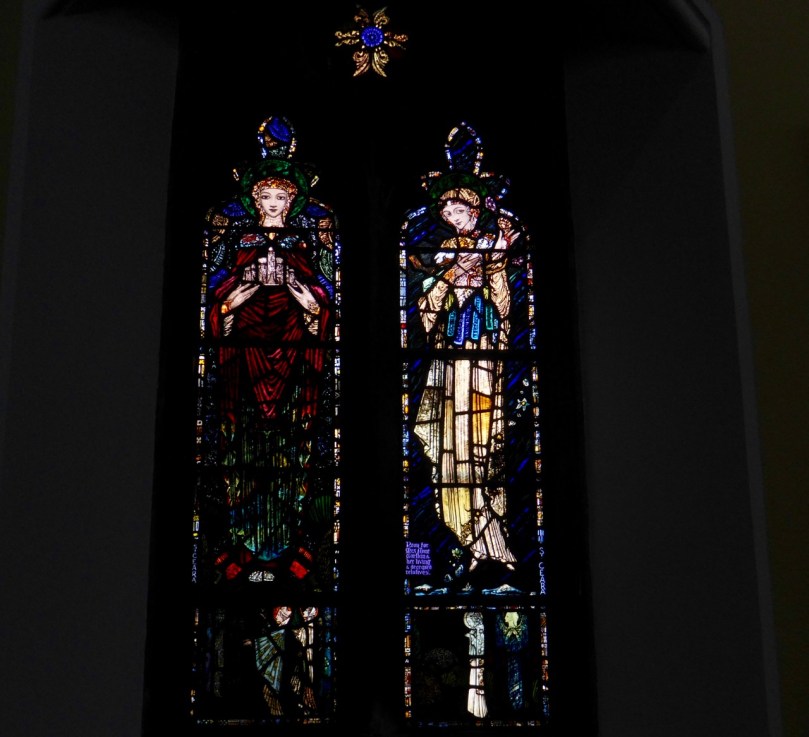
St Ceara is the subject of one window with two lights

Like Dympna, Ceara was of royal blood and established her first monastery in present-day Westmeath on land granted by St Fintan – or perhaps in Kilkeary near Nenagh in Tipperary at the behest of Brendan of Clonfert. You see, there may have been two Cearas and over time their stories were conflated. To add to the confusion, St Ceara, also known as Ciara, is known to have been an abbess who founded a monastery near the spot currently better known as Kilcrea Friary in Cork.

St Ceara and her virgins

Harry Clarke in his windows chooses to depict her as beautiful and royal, in one window carrying her monastery and in the other (below) sumptuously dressed and appearing more the princess than the holy woman.

St Fanchea was the sister of St Enda of Aran, and they share the two lights of one window. St Fanchea was famed for her holiness and founded a monastery in Fermanagh. Enda was a warrior-king but was finally won over by the piety of his sister and converted when he came to see her in her convent.

Fanchea and her brother, Enda of Aran

For a full (and graphic!) account of the brother and sister relationship, see the marvellous post in Omnia Sanctorum Hiberniae, a fabulous blog for anyone interested in obscure Irish saints. Marcella starts her story of Fanchea this way:

Aengus, son of Natfraich, King of Munster, is said to have desired Fanchea’s hand in marriage. Notwithstanding all his pressing entreaties, however, and rejecting those earthly dignities to which she might be advanced by yielding to his suit, the holy virgin’s mind was intent on a life of celibacy, and on those rewards promised by Christ to his spouses.

St Fanchea stops her brother, Enda, and turns him from his warrior ways

I’d love to hear from readers who have their own favourite women saints, especially Irish ones.

Richard King in Mayo

Scenes from The Old Testament by Richard King

In my post Discovering Richard King, I introduced you to the stained glass artist and the extraordinary windows in Athlone. If you haven’t read that post, pop back now and read it for an overview of King’s career, before continuing. Ever since then, I have been trying to track down Richard King’s art – he was active in several media and also exported windows to the US, UK and Australia. In Mayo recently, I was finally able to photograph more of his stained glass.

The Assumption window in Swinford

King was greatly influenced by Harry Clarke in his time at the studio, and when he took over as chief designer upon Harry’s death in 1931 he carried on very much in Harry’s style. After all, that was the style the clients wanted, and he excelled in producing it. I think I have tracked down several windows produced in the decade from 1930 to 1940 (when he left to open his own studio) that bear his hallmarks, but since Studio windows were never signed by individual artists after Harry died (with a few notable exceptions) it is impossible to verify whether or not I am correct. That’s why it was a thrill, on a recent visit to Mayo, to be able to view and photograph three Richard King windows, all of which date to the period after he left the Harry Clarke Studio. Richard came from Mayo (from Castlebar) so no doubt was a popular choice when stained glass was needed. Together, these three windows illustrate the evolution of his style over time.

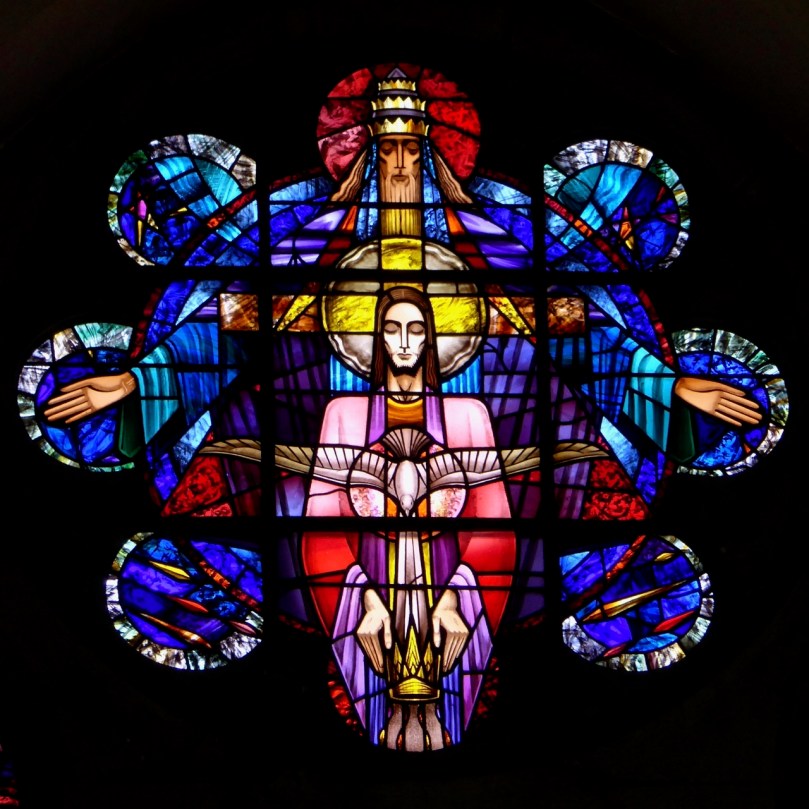
The earliest, and largest, window dates to 1952 and is in the Church of Our Lady Help of Christians in Swinford. It consists of three lights and a rose window above them and the theme is the Assumption of Mary into heaven. The rose window above the depiction of Mary rising shows the Trinity – Father, Son and Holy Spirit – with the Son holding the crown with which he will declare his mother to be Queen of Heaven. I can’t help thinking that the Father looks a little like a depiction of one of the ancient Irish chieftains from the Athlone Patrick windows.

Mary is flanked by John the Evangelist and by Patrick – unusual choices and one wonders who dreamed them up. We know it’s John since he holds a quill pen with which to write the gospel, and is accompanied by an eagle, his symbol as one of the four evangelists. Patrick is always recognisable in green, with a crozier on his arm and a snake underfoot, and is accompanied by geese. I’m not sure of the symbolism of the geese – perhaps they were to balance the eagle [EDIT: see Niall McAuley’s comment below]. He’s wearing fetching green gloves and slippers. Take a close look at the church he carries – the windows are the same configuration as these windows – a little visual pun that Richard must have enjoyed making.

The lingering influence of the Clarke style is still visible in the extraordinary detail of every part of the window, in the glowing colours, the symmetry of the matched angels and in the cherubim faces below Mary. However, in every respect this is the work of an artist who is his own man – it could never be mistaken for a Clarke, or even a Clarke Studio, window.

But the Swinford church has a surprise – a second Richard King window, dating from 1964 and radically different from the Assumption. This is a two-light window depicting the Old and the New Testaments. The style is suddenly modernist, bold, faux-naïf and reflects his own study of the modern styles of the time and his experimentation with new ways of capturing religious themes. The windows are also delightful – strong colours and carefully placed figures create an attractive whole.

Pentecost – the Holy Spirit descends on Mary and the apostles

I think my favourite image is the one in which Pope Paul VI steers a boat full of bishops – a reference, apparently, to the ‘barque of Peter’. Paul was pope from 1963 to 1978, much of my young life, and his likeness was instantly recognisable. It brought a smile to my face.

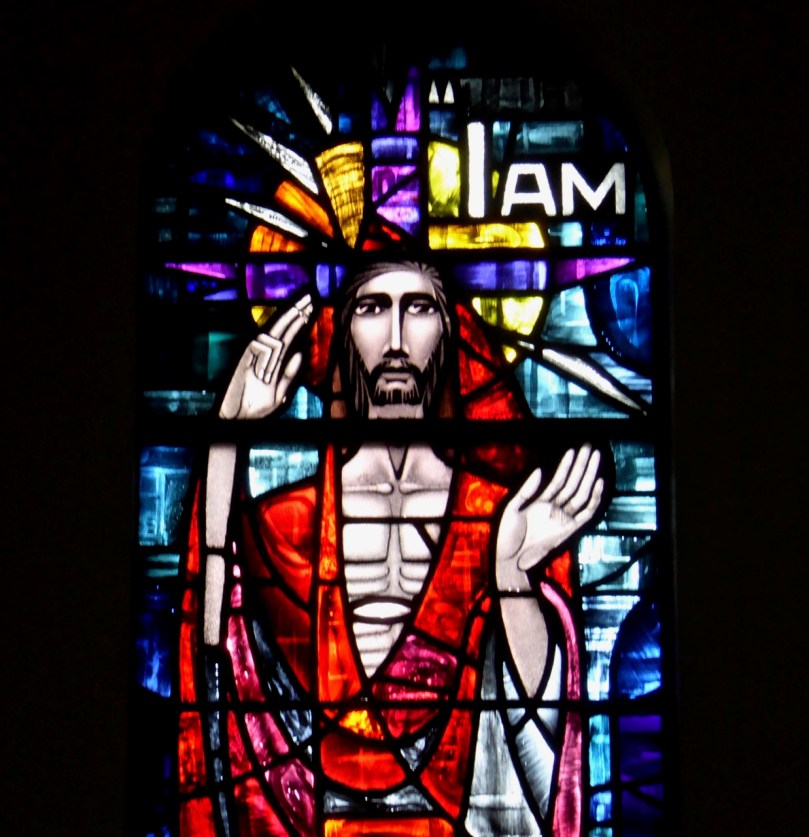
The last Richard King window is a two light window in the St Patrick’s Church in Newport. The theme is I Am The Resurrection And The Light. This one dates from 1973, the year before he died and what is striking is how far now he has moved towards a fully modern style with elements of cubism and abstraction.

The glowing colours are still there, the strong reds and blues, but there is no attempt at realism in the figures (note for example his treatment of Christ’s ribs as a series of rectangles) and a strong geometric arrangement is obvious throughout the composition.

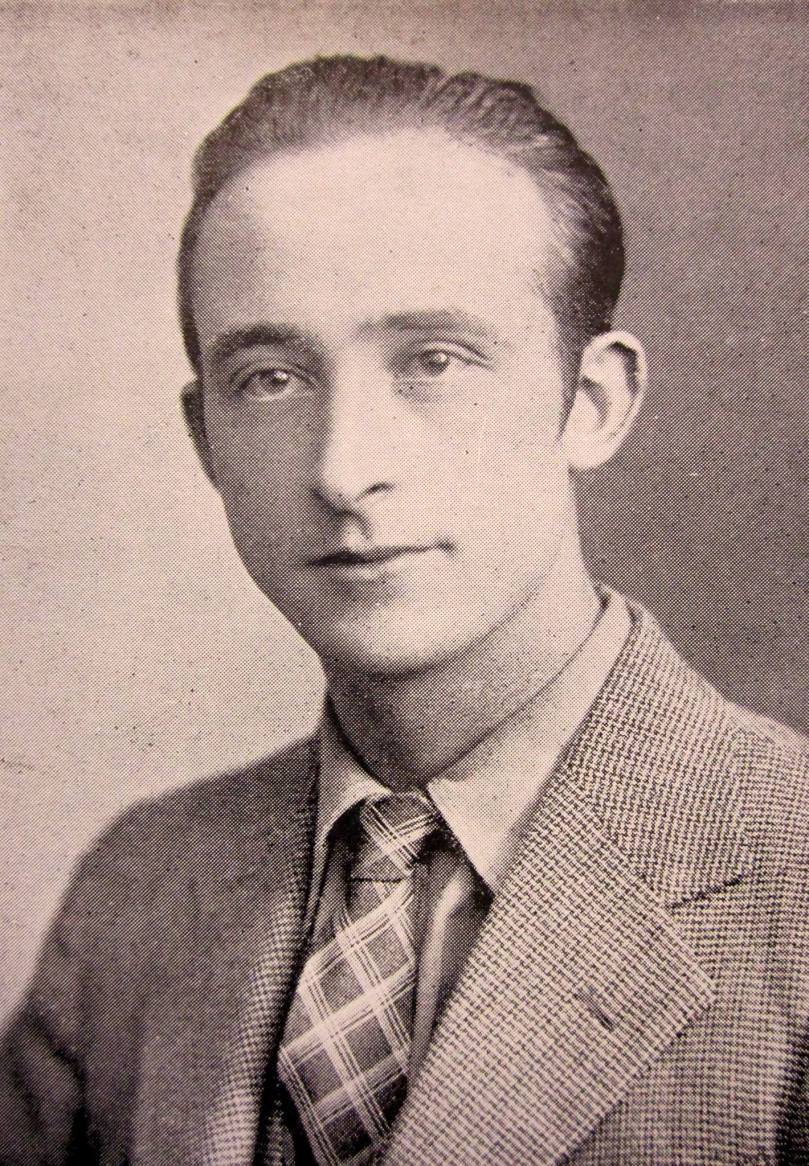
So far I have only written about Richard King as a stained glass artist, but there was more, much more, to him than glass. In future posts I will endeavour to expand on that statement. Meanwhile, I will leave you with a photograph of the young Richard King, courtesy of the Capuchin Archives.

The Significant Rock Art of Clonfinlough

Whenever we stray from our home territory of West Cork, we are always on the lookout for archaeological wonders. When we set our course for Clonmacnoise, in County Offaly, last week (I like the possible translation of the Irish Cluain Muccu Nóis: Meadow of the Pigs of Nós, but there is an alternative Cluain Mhic Nóis: Meadow of the Sons of Nós), we were looking for Ireland’s most important medieval monastic site, but we were diverted only a stone’s throw from our destination by a sign that we couldn’t ignore…

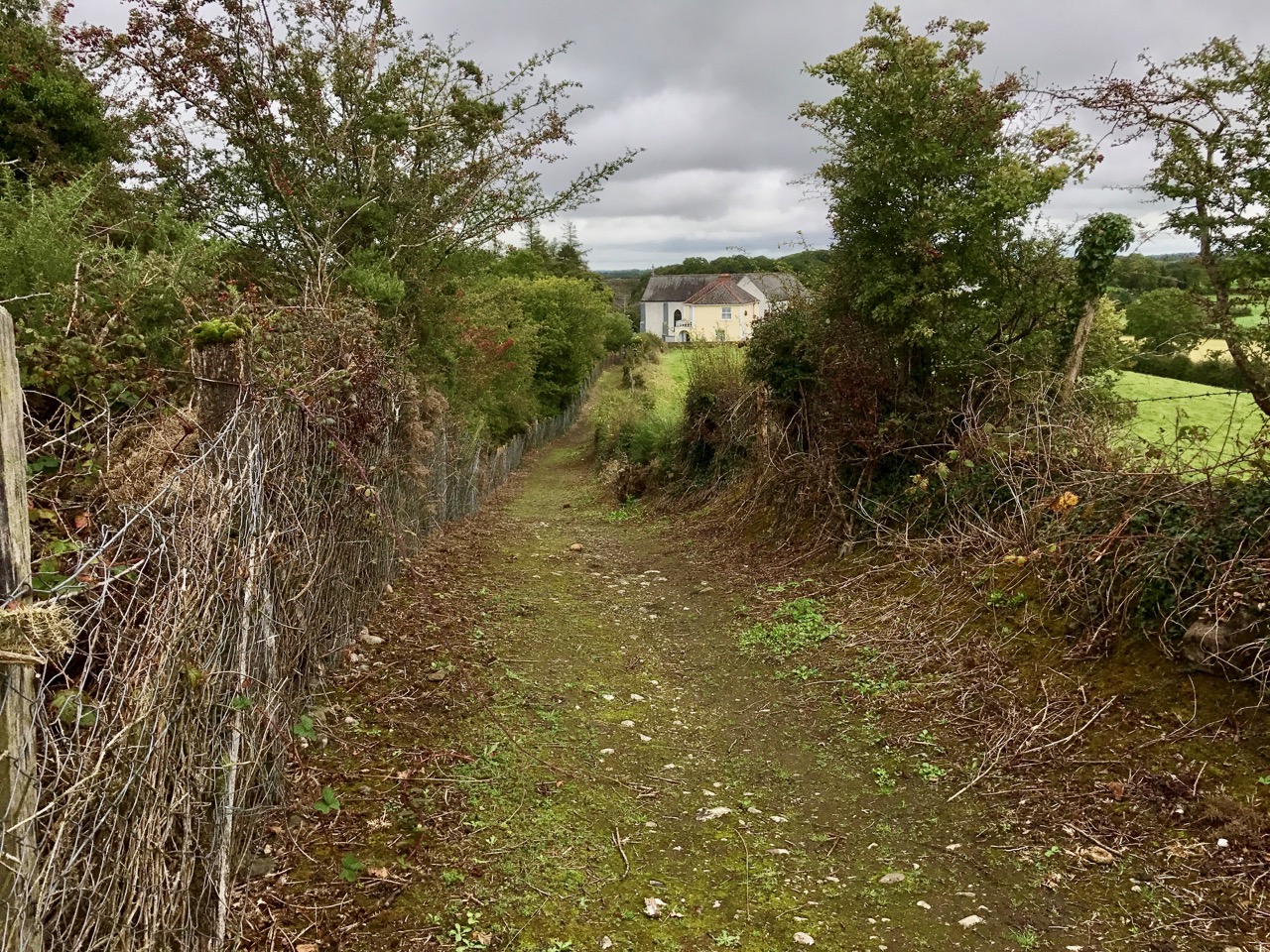
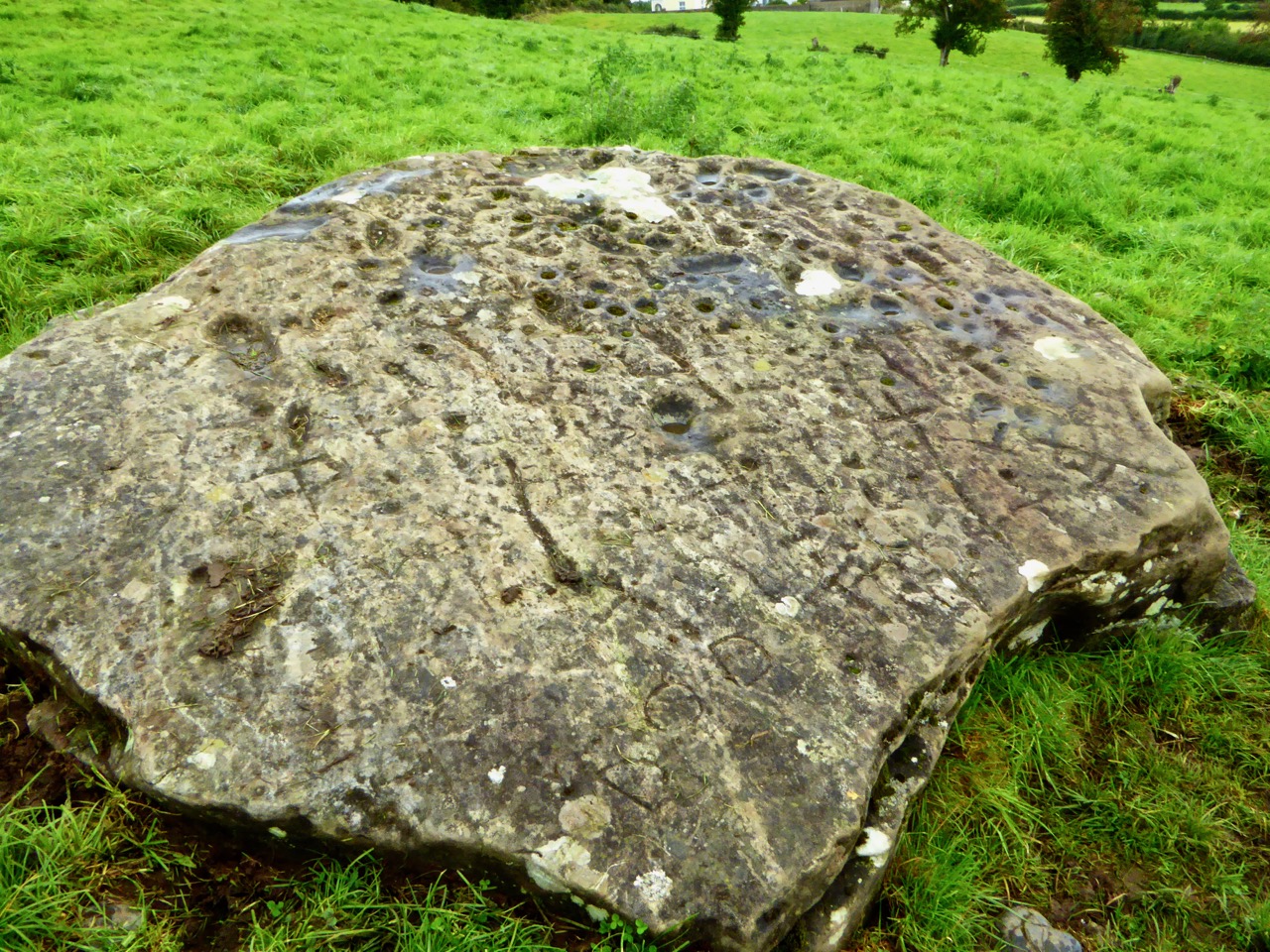
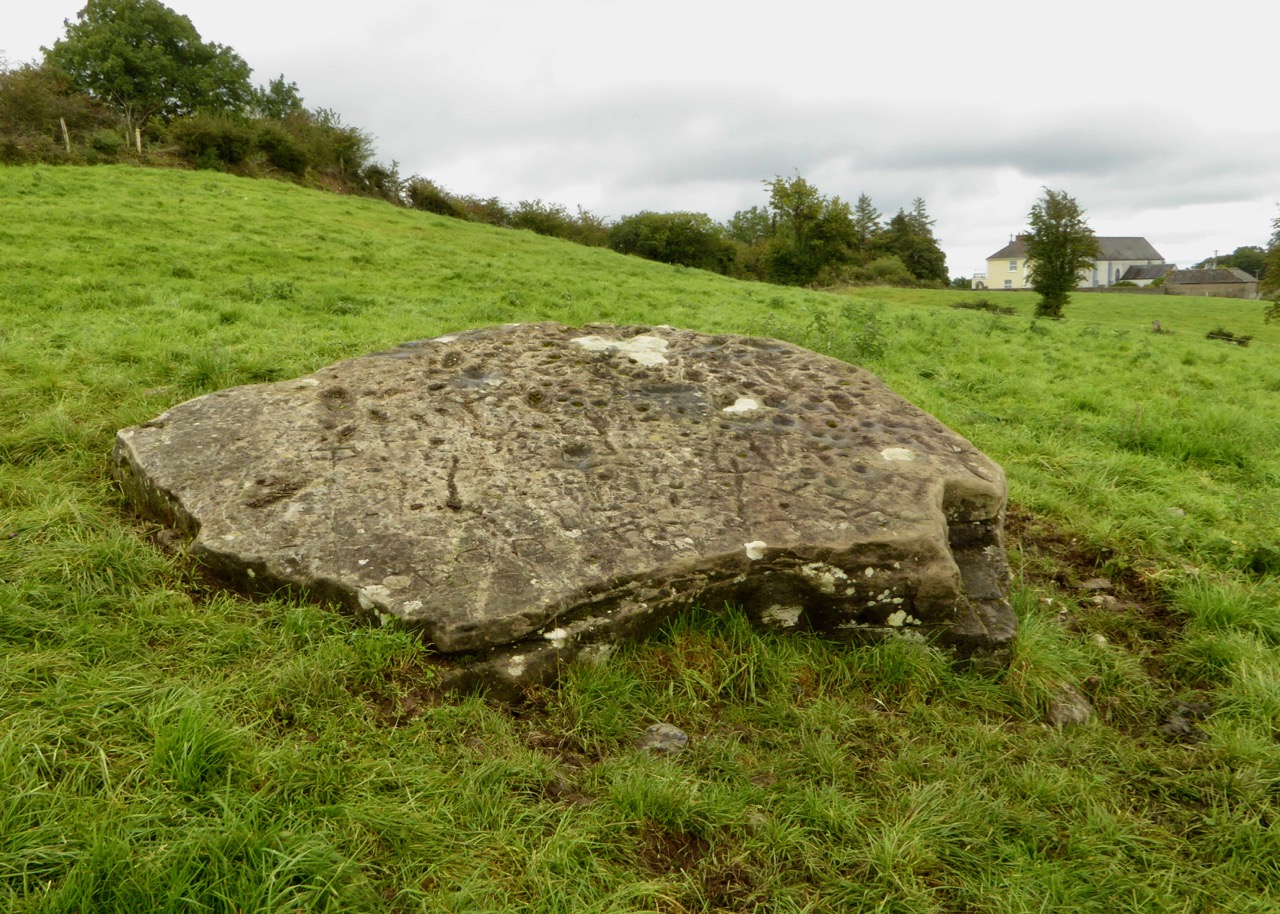
Tucked away to the south east of Clonmacnoise, on a by-road, sits an isolated church in front of which is a well defined and fenced pathway leading past the Priest’s house, through fields, over a stile and into a pasture where cows grazed and barely gave us a glance. There – open to the ravages of weather and cattle – is a large, earthfast slab of limestone bearing a remarkable array of markings.

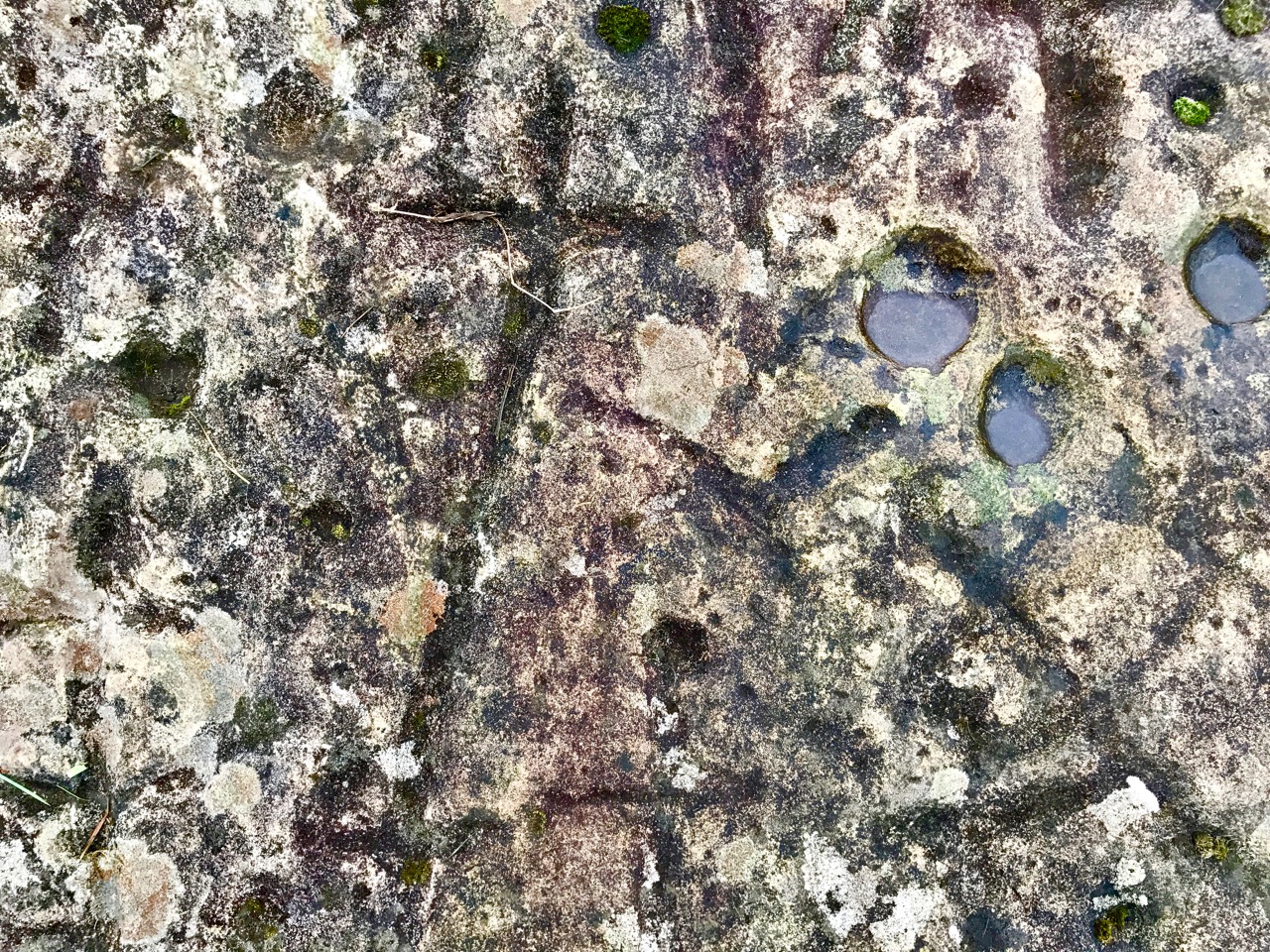
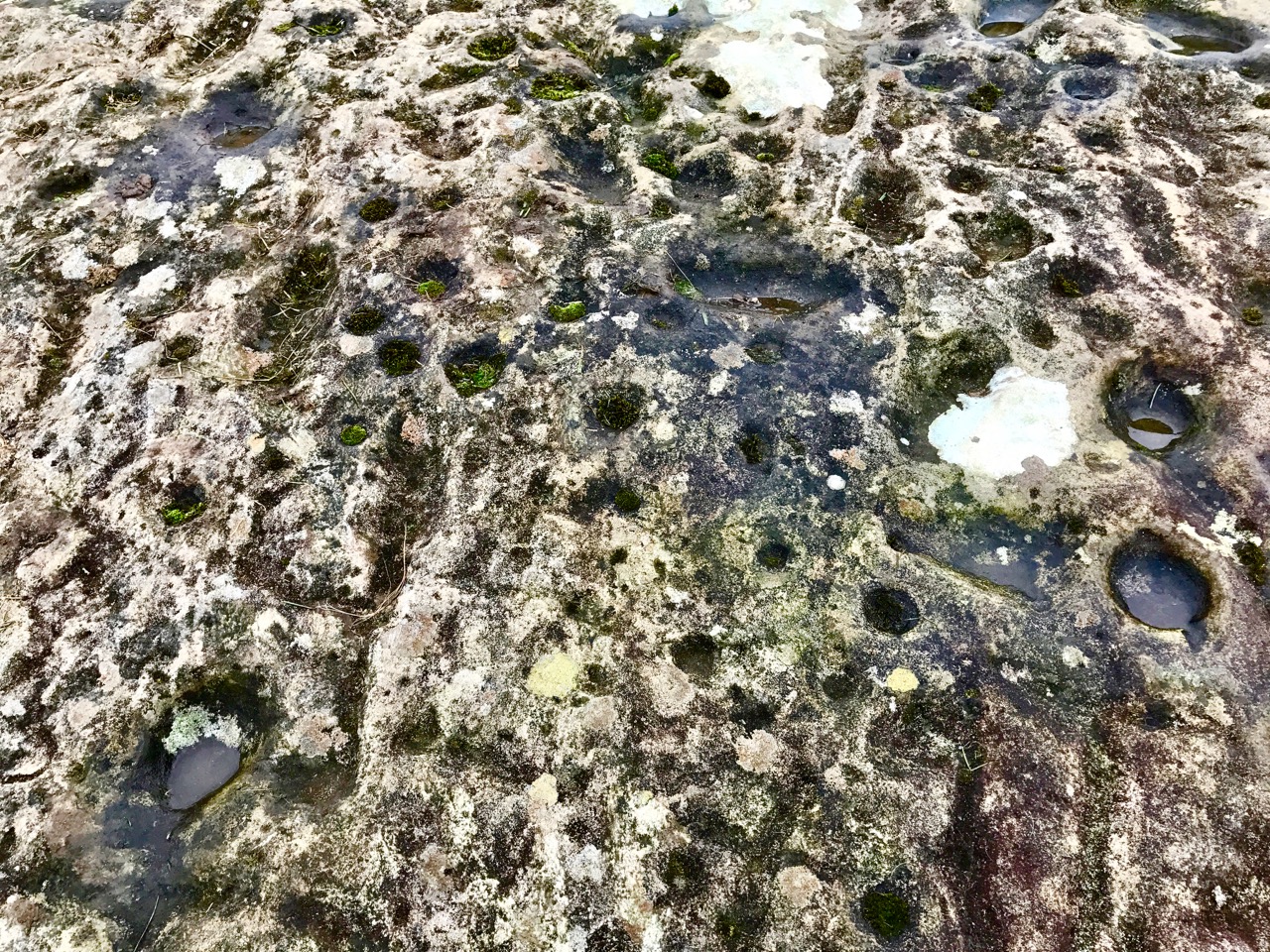
Header – a detail from the stone’s crowded surface. Upper – the well-defined path leading from St Kieran’s Church to the stone (don’t confuse this St Kieran with the one from Cape Clear). Lower – the limestone slab situated beyond the stile

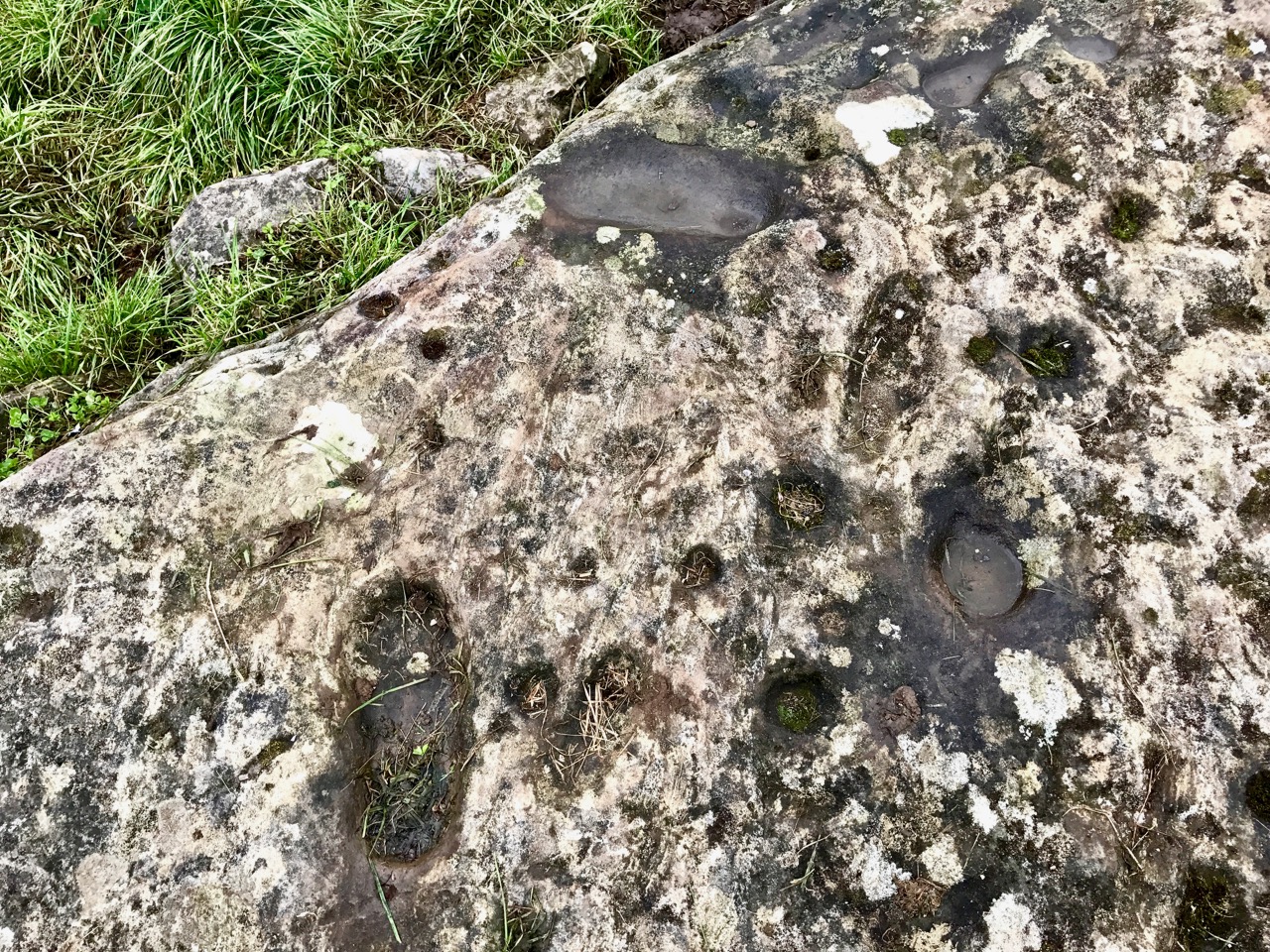
For Rock Art enthusiasts like us the stone was a wonderful find. The surface is teeming with rings, lines, shapes – and even lettering. In spite of the weathering, everything was deeply defined and easy to see. And the more we looked, the more we did see, and the more perplexed we became. I even noted footprints! Remember my search last week for the footprint left by Archangel Gabriel on his visit to his eponymous mountain in West Cork? Here I counted six, and my size nine feet fitted perfectly in them all.

Upper – two of the ‘footprints’ scattered on the stone’s marked surface. Lower – the stone in its landscape context: ‘footprints’ are also visible

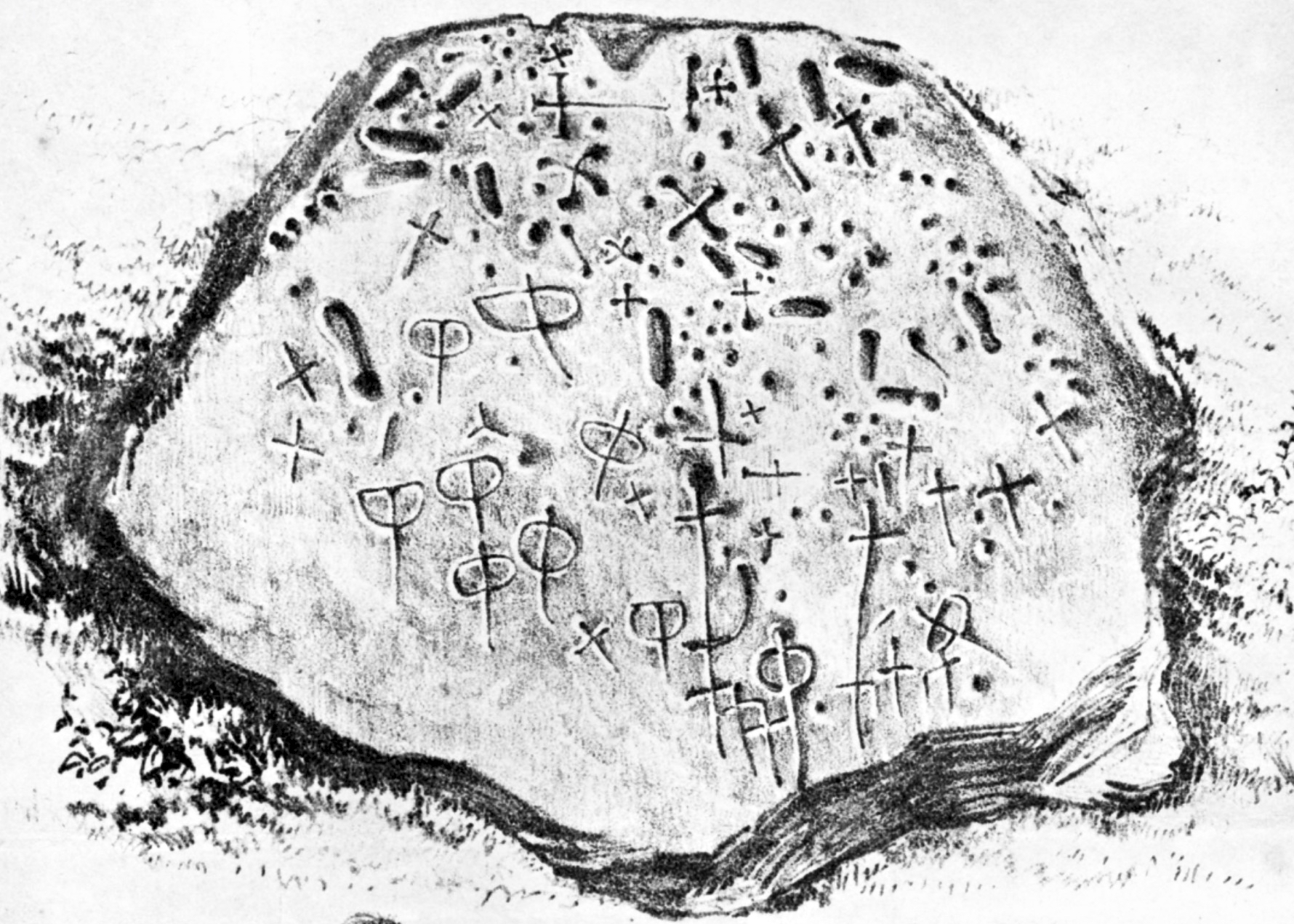
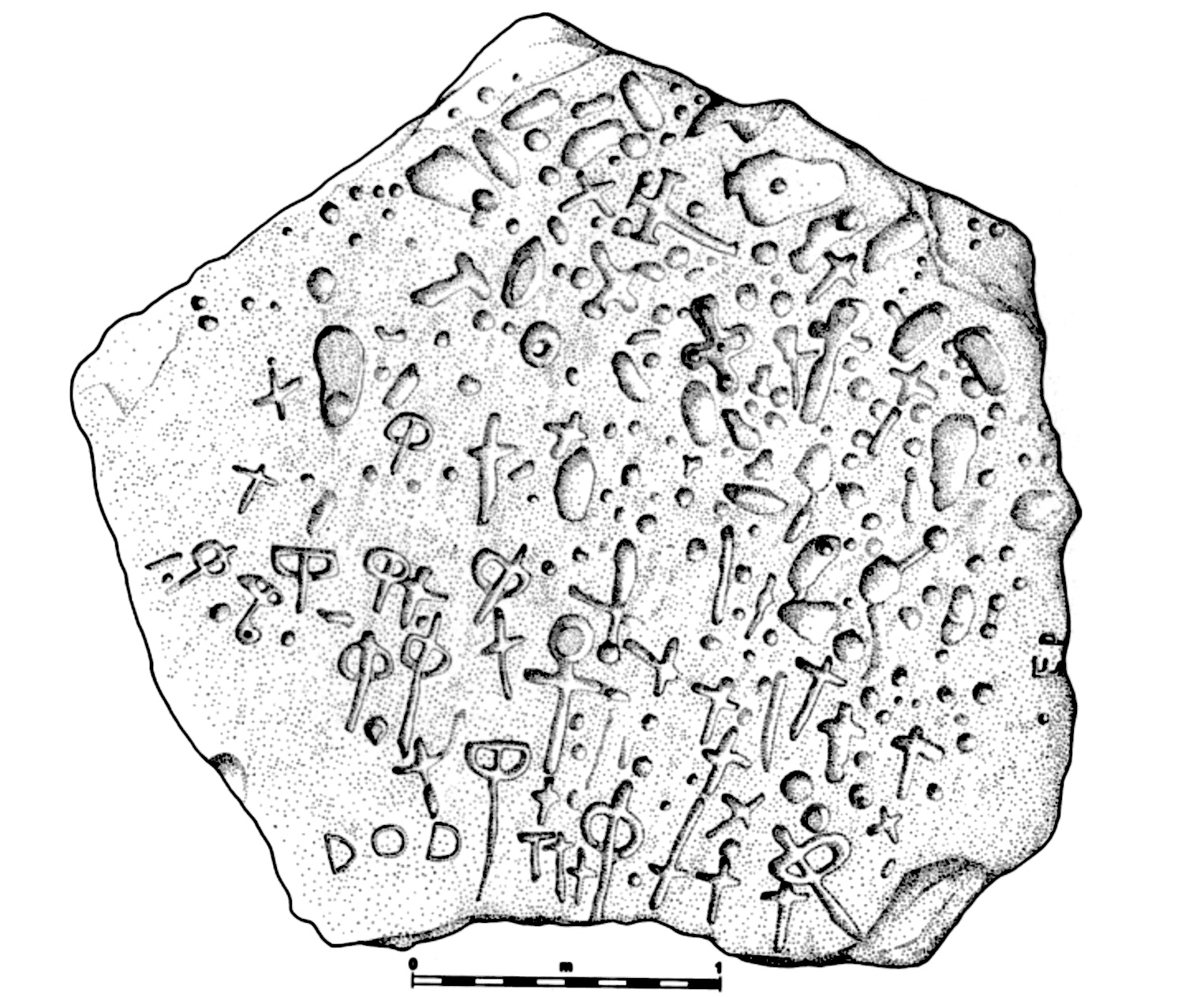
When we returned from our visit to Offaly I was able to research the available information on the Clonfinlough Stone and was delighted to find a very comprehensive study of it written by Finola’s old friend and Rock Art expert from UCC, Elizabeth Shee Twohig. The piece – Context and Chronology of the Carved Stone at Clonfinlough, County Offaly – was published in 2002 in The Journal of The Royal Society of Antiquaries of Ireland, Volume 132 pp 99-113. It makes the most enlightening read, outlining the ways in which the stone was regarded and drawn by early antiquarians and then opening up discussion on how much of the stone’s markings might in fact be natural formations, or natural forms which have influenced and been enhanced by ‘artists’ working with motifs which have become familiar to Rock Art researchers today, including cupmarks.

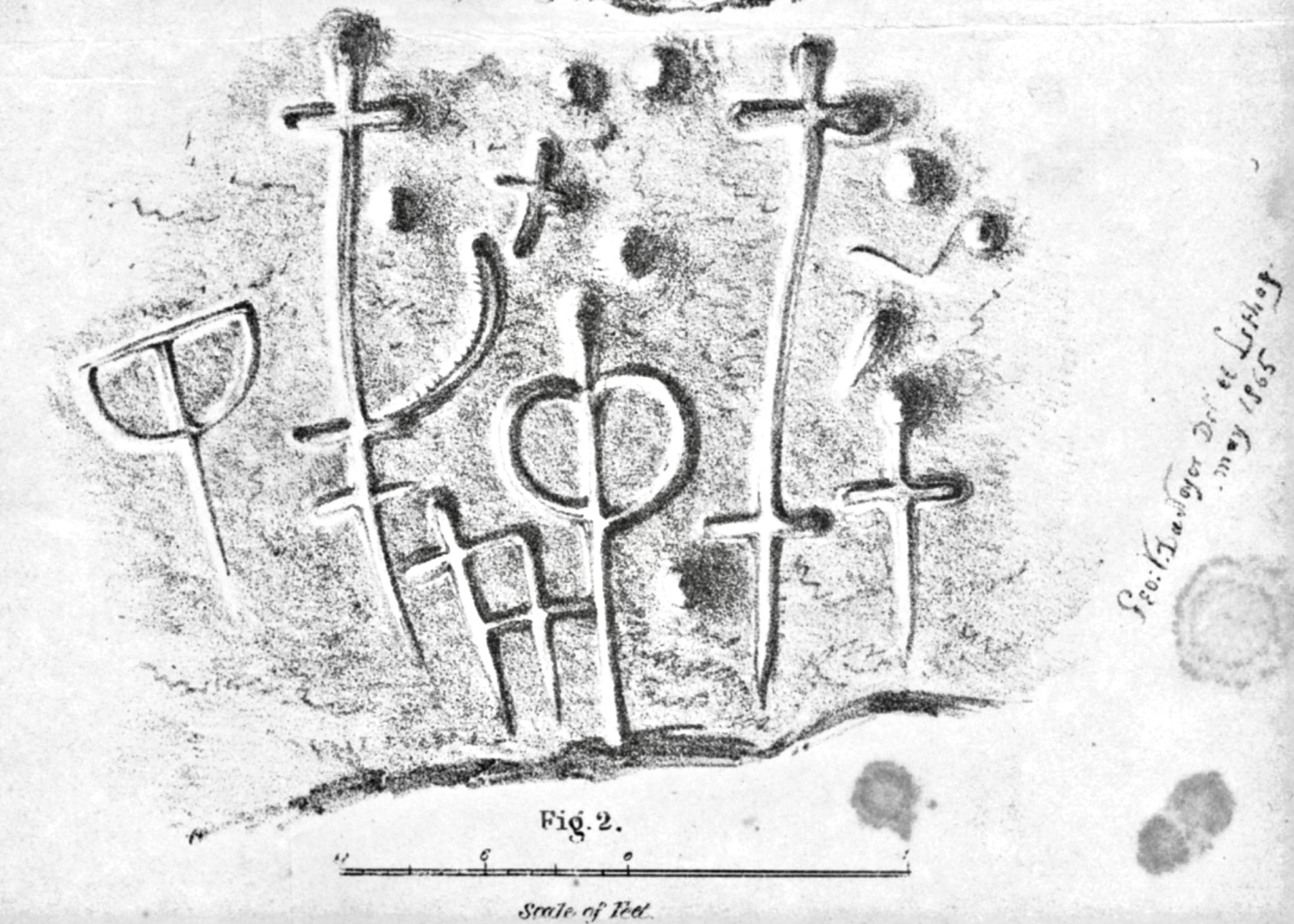
Engravings by George Victor du Noyer illustrating a paper published by James Grave in 1865. Note the emphasis that du Noyer has placed on recognisable ‘Greek’ style lettering (termed phi by Shee Twohig)

Elizabeth Shee Twohig quotes theories by RAS Macalister which evolved between 1921 and 1949, and which include the idea that the phi markings represent ‘…a possible depiction of a battle between the ‘loop men’ and the ‘cross men’ and suggested that the cupmarks …may even indicate the number of severed heads!…’ In his 1928 book The Archaeology of Ireland Macalister (quoted by Shee Twohig) suggests ‘…the carvings as showing a battle or pre-battle scene, the medicine men having prepared for their occult purposes a picture of the consummation desired…’ while in 1949 he saw it as a sign-manual of a hostile expedition from Spain which sailed up the Shannon: ‘…the battlefield, printed with the footmarks of the flying foe, strewn with weapons cast away in their flight and with missile stones…’

These are but brief extracts from the Shee Twohig account and discussions, which are essential reading – not just for possible enlightenment on the markings on this stone, but also for a well defined background on how ideas about Rock Art generally have developed since the time of the earliest antiquarians.

Elizabeth Shee Twohig has amplified her study of the Clonfinlough Stone with the first truly accurate drawing of the markings on it (above). It is certainly interesting to compare this with the 1865 engravings by du Noyer

Elizabeth Shee Twohig brings in to her study the possible significance of the stone’s positioning close to the great monastic centre of Clonmacnoise, which in medieval times was the prime pilgrimage destination in Ireland. There is evidence that one of the paved pilgrim routes passed close by the Clonfinlough Stone. It is plausible, therefore, that at least some of the markings on this limestone slab could have dated from those times: Clonmacnoise was active between the 6th and 12th centuries.

Upper – the many enigmatic markings on the stone: natural limestone solution pits, Bronze Age Rock Art, crosses carved by or for medieval pilgrims? Lower – the stone is within sight of the present day church

A trawl through the folklore records proves fertile. One legend says that at certain times of the year a horseman manifests and gallops around the stone. Another has it that a local boy named Michael used to play at the rock and there met another boy who gave him a silver knife. His mother made him take the knife back and leave it on the stone, for she said the boy was a fairy trying to entice him away. It is also said that another Michael will find the knife, and when he does he will find two big pots of gold under the rocks. Whatever the truth is about the rock and its meaning, I am struck by the path we found coming from the little church which is in sight of the Clonfinlough Stone: could there be something pagan in that stone which required the church to be built there – or is it a mutual guardianship?

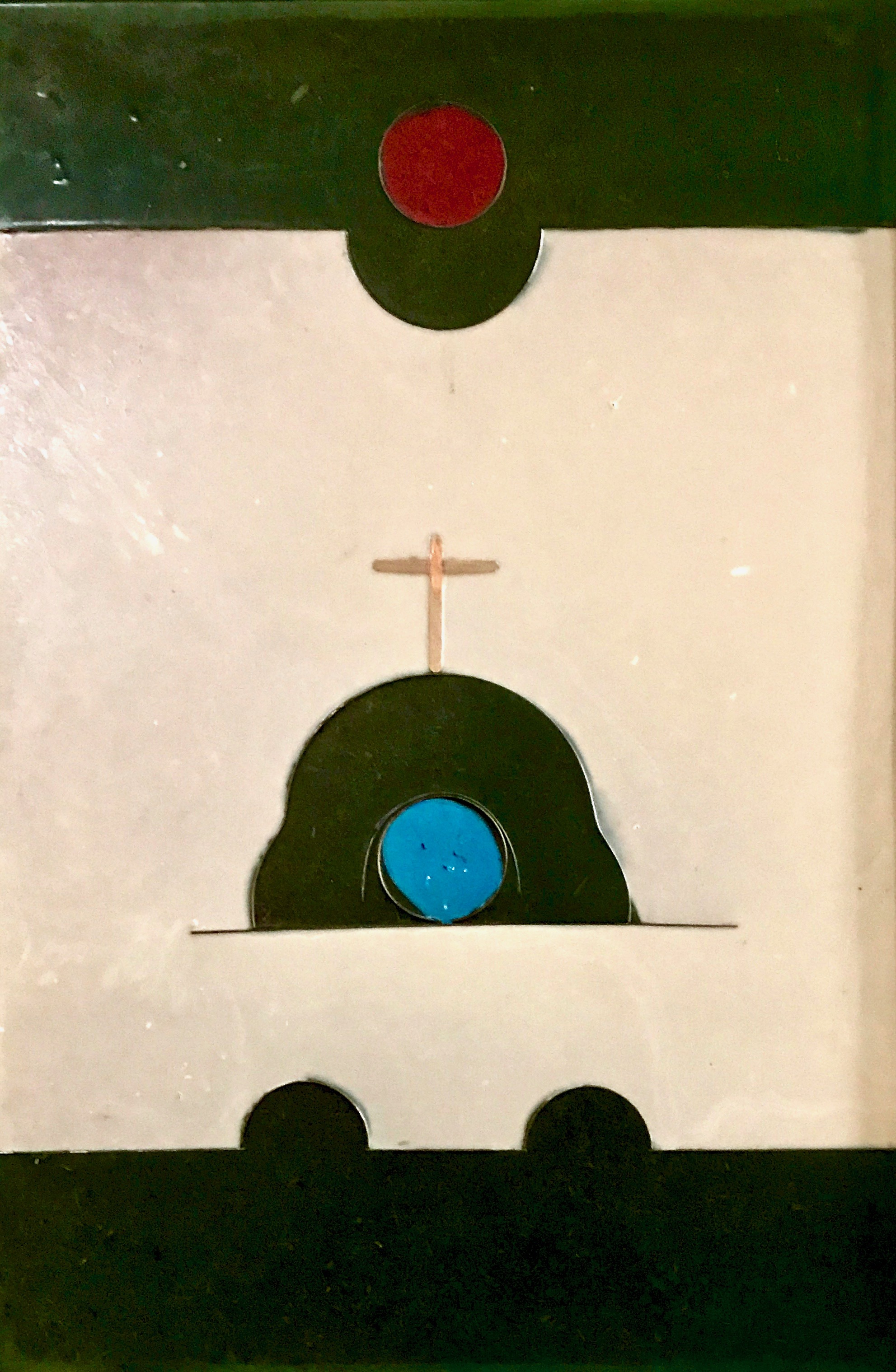
In the church at Clonfinlough is a curious series of Stations: this one showing the ’empty tomb’ can be seen as a rock supplanted by a cross…

The Treasures of Castledermot

Last week we explored the medieval wonders at Moone, in County Kildare. We couldn’t leave the area without going on to Castledermot to visit the monastic site of Díseart Diarmada, (the hermitage of Dermot) – a few minutes’ drive down the road. Stone carving artists were active here, too, as we can see from the many artefacts mainly centred today around St James’ Church, built on the site of the former monastery. These include a decorated Romanesque doorway: Finola is writing about Romanesque architecture today.

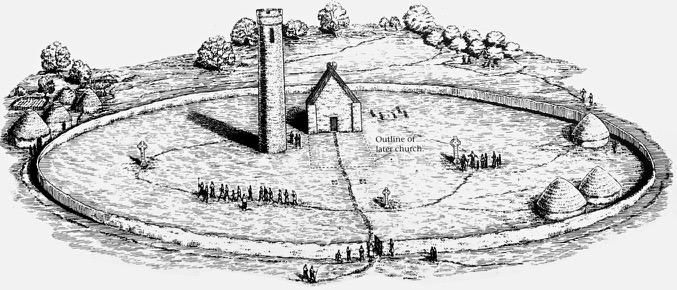
Díseart Diarmada as it might have appeared in the 800s. This reconstructed view is taken from the excellent Dúchas interpretation panels on the site, and shows the earliest church, the 20m high round tower (which still stands today) and the two ornate high crosses, which also remain intact

The settlement itself was highly important. There were Viking raids during the 9th century, probably indicating that there was wealth to be plundered there. A royal grant was given for a fair in 1199, and the very first Irish parliament was convened in the town on 18th June 1264. In 1393 Castledermot was granted permission to mint its own coins.

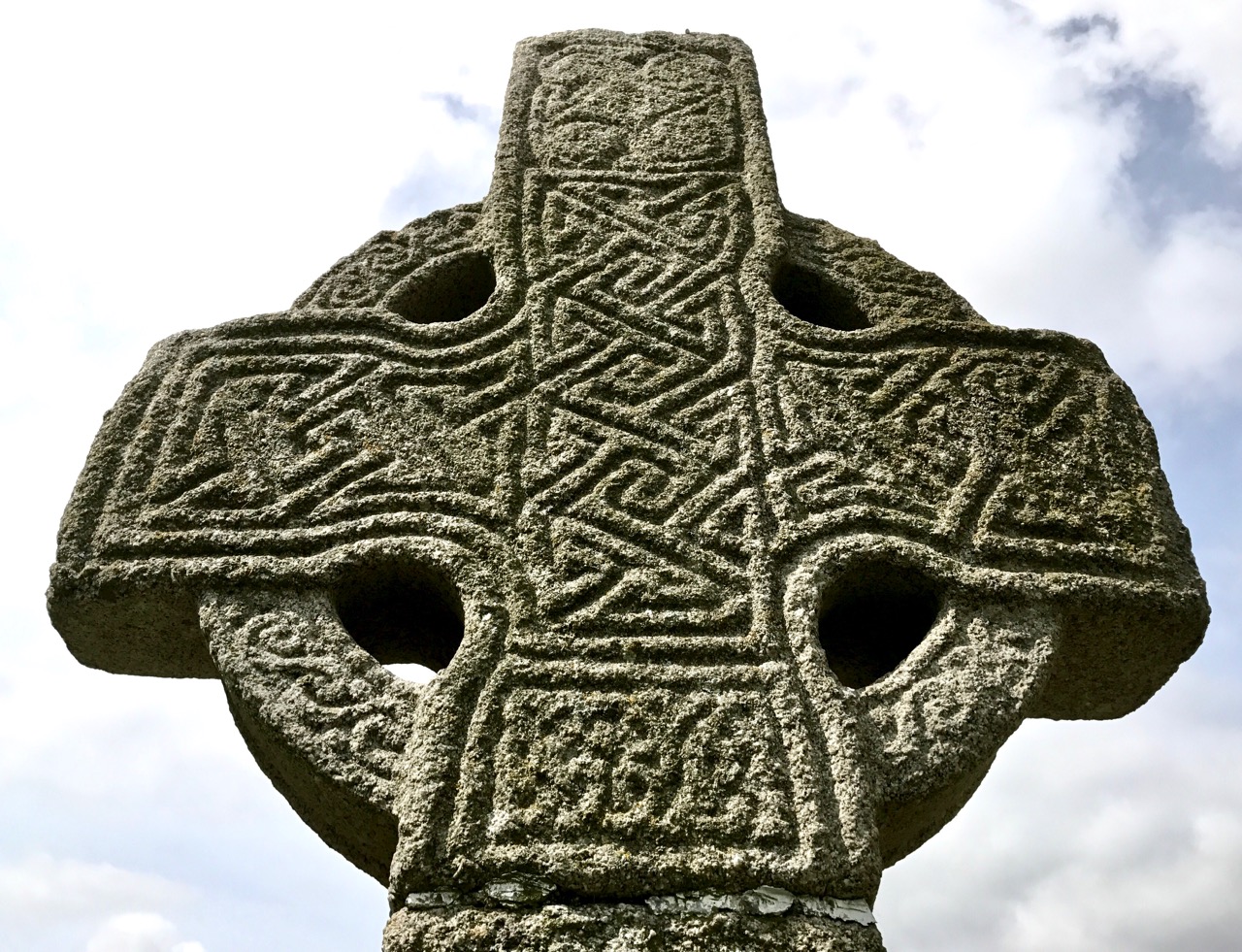
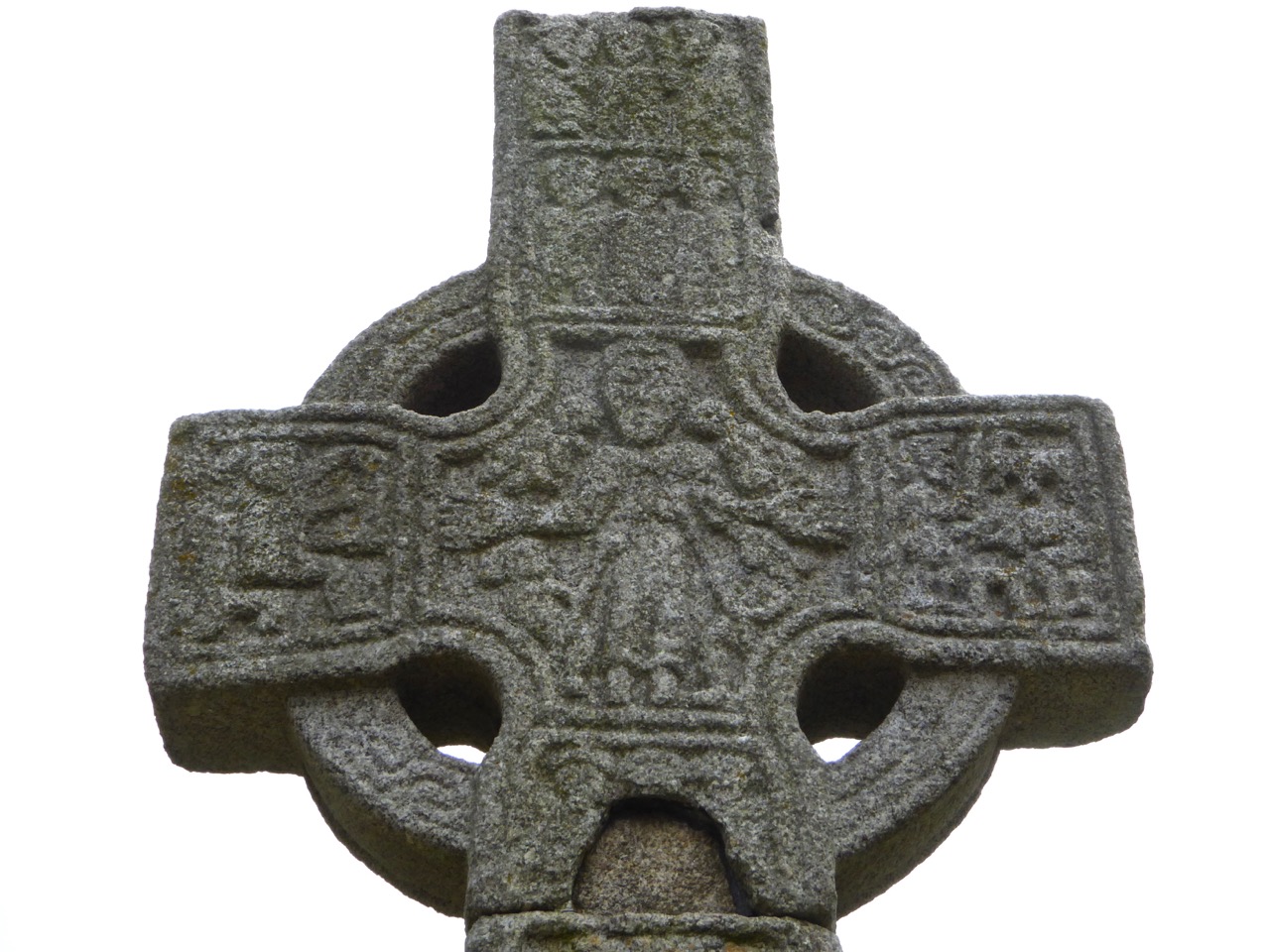
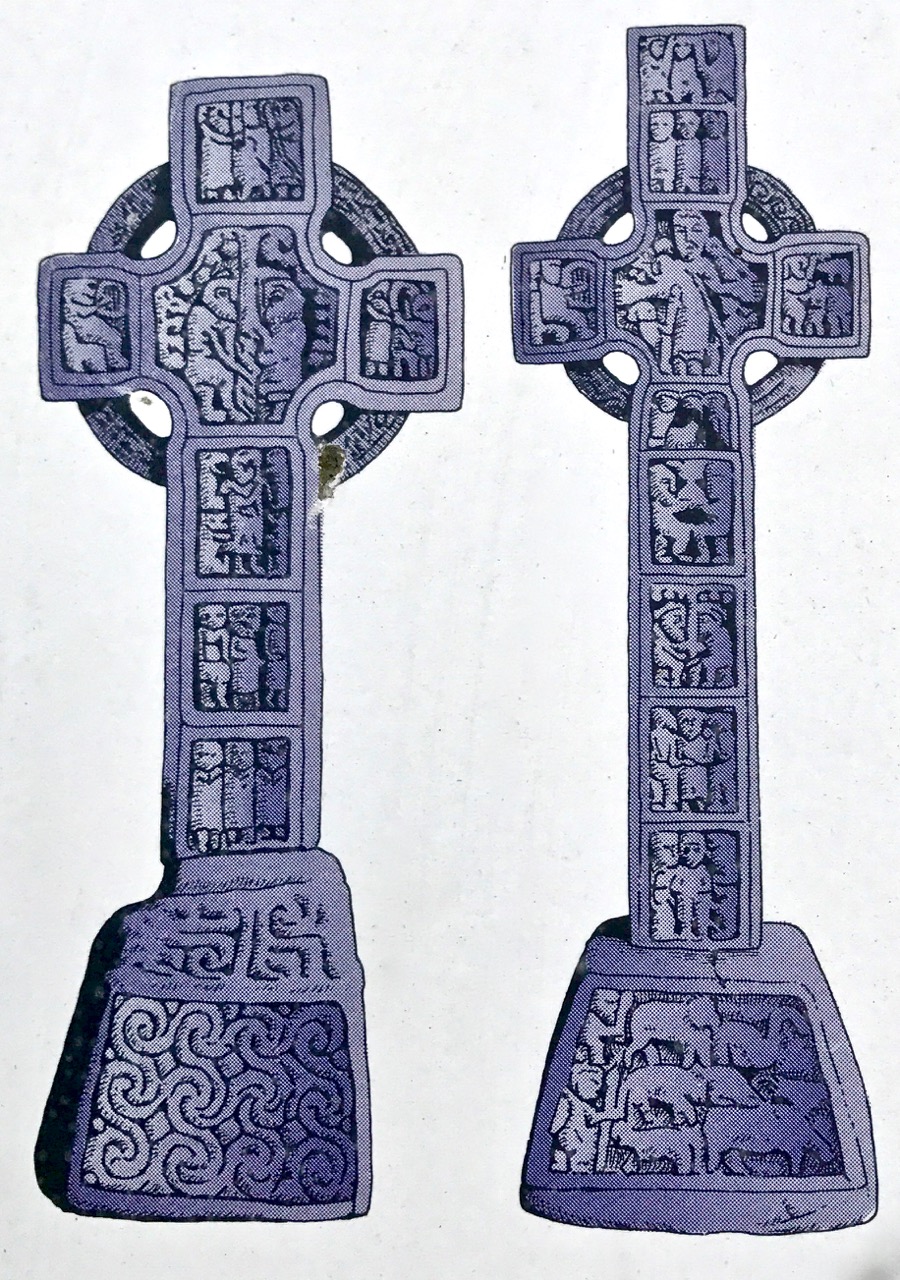
The two high crosses at Castledermot: south cross (left) and north cross (right – round tower beyond). The header picture shows the geometric work on the east face of the south cross

There are certainly figurative carvings on the two crosses to almost rival those found at Moone. I was particularly interested to see other versions of the stories of the loaves and fishes and Daniel in the lions’ den. But the real glory of Castledermot lies in the panels of knotwork. If these were coloured (as suggested at Moone) they must have been spectacular.

Note the loaves and fishes, bottom left

It’s interesting to speculate who might have been responsible for this ancient carving. Could it have been the monks themselves, who considered that part of their dedicated life was to build and decorate the great monastic buildings? Or were they constructed by travelling masons, much as the later cathedrals were? And who directed and designed the work? These are such important monuments – a legacy which we must be sure to look after: they have been here for more than a thousand years and – in spite of being in the open and subject to constant weathering – are still clear to see. At Moone the great cross there has been placed under a modern protective canopy, which is not intrusive. Perhaps such actions should be considered for all these Irish medieval works of art.

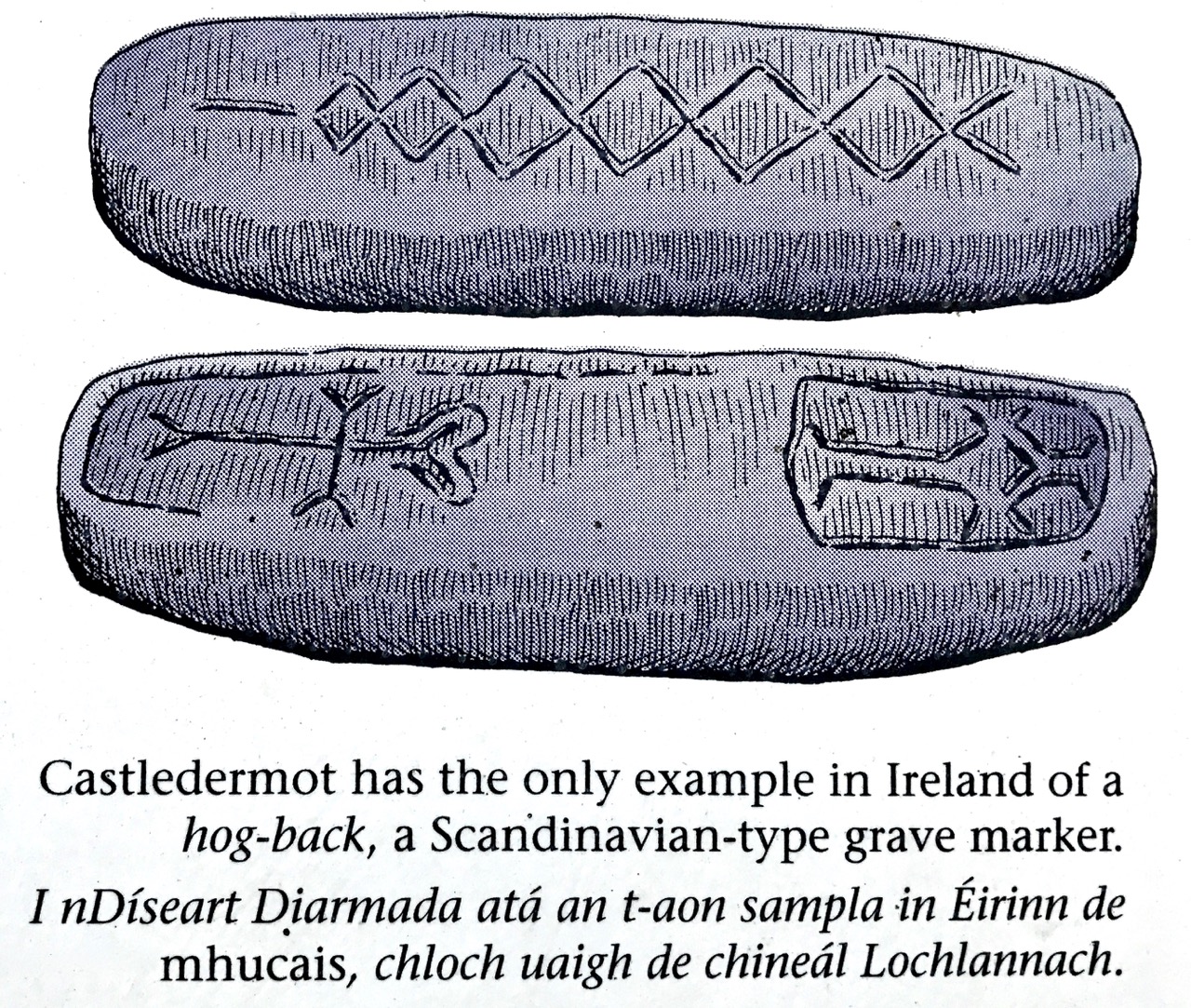
The site at Castledermot reveals many other remains which appear to be weathering quite badly. These include the Hogback Stone, which has been linked to Viking activity in the area: it was discovered just below the ground in its present location in 1967. It is said to represent a House for the Dead, and other examples have been found in Scotland and England: this is the only one found so far in Ireland.

The Hogback Stone (top – Dúchas – and bottom left) and an unusual type of cross-slab close by (right). This is known as the Swearing Stone, and it is said that it may have been used during wedding ceremonies or for swearing oaths or allegiances in early times

Although residents in Castledermot are keen that their historic artefacts are well looked after and are seen by an interested public, the site remains rather obscure and perhaps deserves to be better known. There is a wealth of heritage in Ireland – do we take it too much for granted? The Office of Public Works (formally Dúchas) do their best to maintain and advertise the monuments under their care but it’s an uphill job with a budget which is far too small.

We have by no means exhausted the treasures of this remarkable Irish town. There are other intriguing carved stones and crosses on the monastic site, and, at the southern end of the town are impressive remains of a Franciscan Friary, founded around 1247. This site has a guardian and a key holder, but we didn’t have time to visit. Inside it is a rare cadaver grave stone dating to about 1520. In 1275, the town was given a royal murage grant. This allowed the collection of tolls from people entering Castledermot to pay for the construction and maintenance of town walls. The wall, with three gates, was completed around 1300.

Ancient Irish Art – Moone High Cross

Wherever we travel in Ireland, we look for the routes which will take us past sites rich in history and archaeology. Finola wrote a while ago about places to visit close to the M8, which links Cork to Dublin. Last week we discovered a real gem, in County Kildare, about 40 kilometres east of the motorway – well worth the diversion.

Just outside the village of Moone is the finest medieval high cross that we have seen in Ireland. It is on the site of Moone Abbey (above right – a sketch from 1784 by antiquarian Austin Cooper), where a church is believed to have been founded by St Palladius, who came to Ireland in 431. It was later dedicated to St Columcille. The abbey ruins date from the 13th century, but the site must have been an important religious foundation long before this as the high crosses (there were once four here) are very much older. Historical sources differ on their age – I have found them variously attributed to the 7th, 8th, 9th and 10th centuries! It’s safe to say they are at least 1100 years old.

Early views of the High Cross at Moone: left – an engraving from 1857 and right – a photograph from the Lawrence Collection dating from the 1890s. Both images show the earlier reconstruction, before the centre pillar was discovered and added

The Abbey was ransacked and burned along with the nearby Castle by Cromwellian forces in the 17th century and the high crosses were probably buried at that time. Two sections of the one we can see today were rediscovered in the Abbey grounds in 1835 and re-erected in the Abbey by the Duke Of Leinster. In 1893 a further section was uncovered and added to bring the full height of this cross to 5.3 metres. This is not quite the highest high cross in Ireland – Muiredach’s Cross at Monasterboice is 5.5 metres – but Moone is visually more impressive because it is so slender, and beautifully decorated.

The west face of the Moone High Cross seen in its present context in the ruined Abbey. The site has been well laid out and presented with the fragments of other carved stones discovered during excavations. A protective roof has also been constructed in a non-intrusive simple style

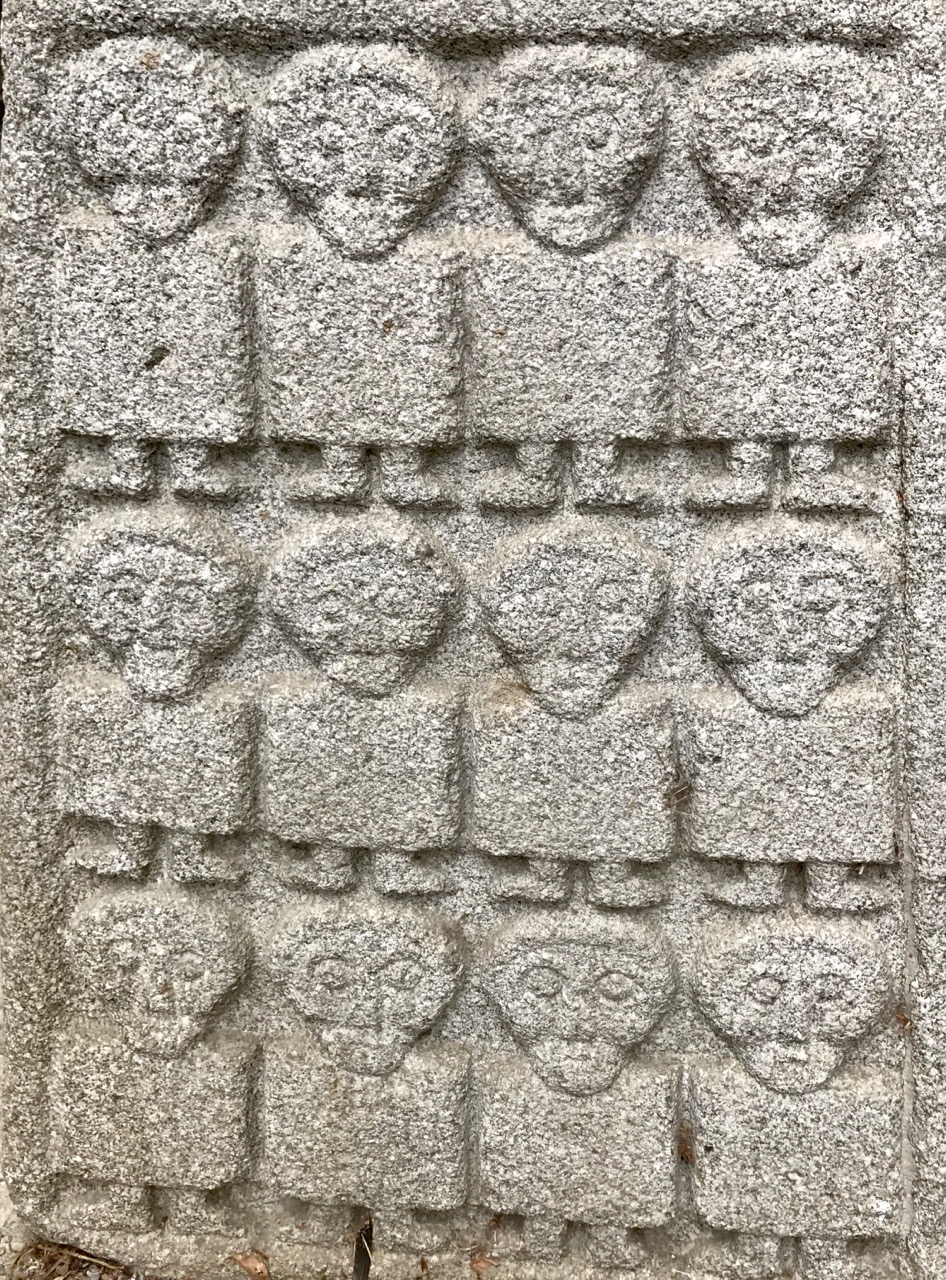
The carvings on the granite Moone cross are in relatively good condition and all the panels can be clearly seen. They are fine examples of medieval Irish art: stories from the Bible  are mingled with Celtic knotwork and some enigmatic bestiary. The figurative work is simple and stylised – yet somehow very modern in its execution.

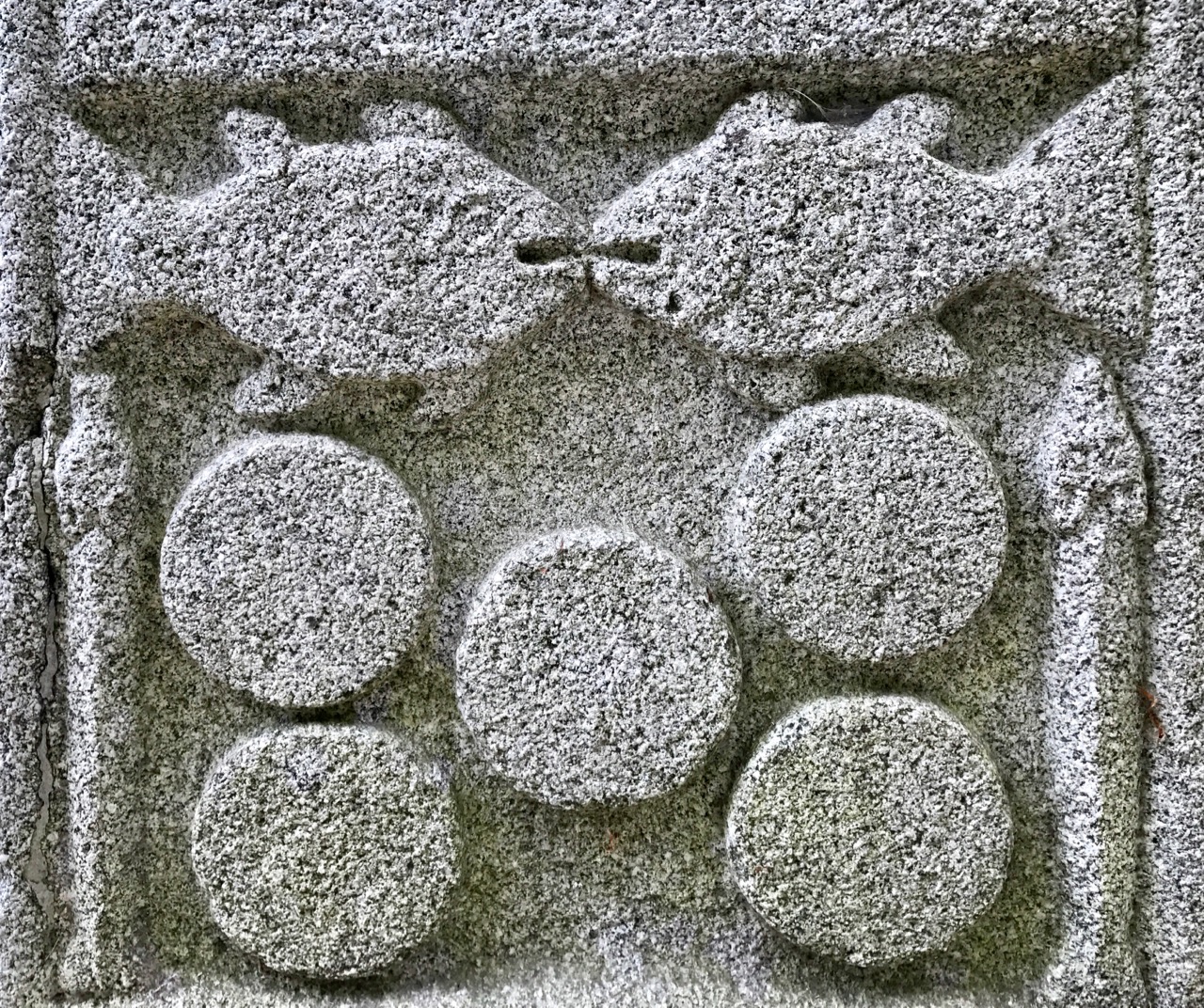
Stories told in stone: Adam and Eve, Daniel in the Lion’s Den and the Flight into Egypt. The header image is a wonderful representation of the Loaves and Fishes
The Crucifixion, SS Paul and Anthony breaking bread in the desert and The Fiery Furnace
Abraham about to sacrifice Isaac and the Temptation of St Anthony the Hermit

A six-headed monster? Probably not a Bible story…

The site is very well interpreted by the Heritage Service: there are comprehensive information boards describing every carved panel.

Interpretation boards include full annotation for the panels on the High Cross, together with projected reconstructions of the other findings on the site

Top picture – looking towards the east face of the High Cross; below – the east and west faces of the cross wheel
Left – an interesting conjecture showing that the panels may have been coloured in; right – the friendly Keeper of the Cross!

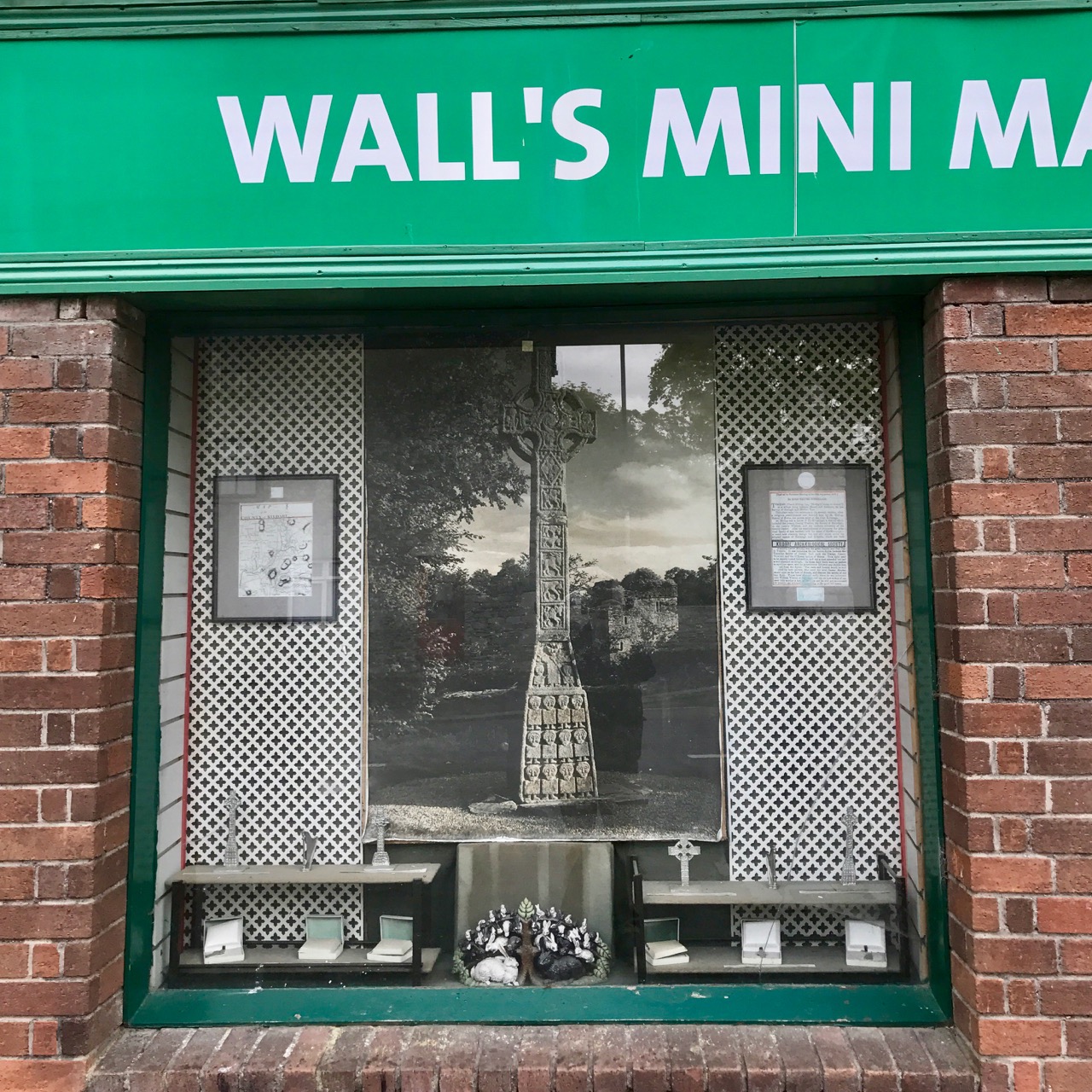
Be sure to visit this site – and don’t forget to purchase your guide book at Wall’s Mini Mart in the village!