Where Art and History Meet

Perhaps I should say where they collide! West Cork has both, in abundance, and we’ve just lived through one of those once-in-a-lifetime conjunctions of  the artistic and the historical that leave you stimulated, thoughtful and reeling all at once.

Clockwise from top left: Coverage of the Festival in the Southern Star – the headline says it all; Roy Foster delivered an acclaimed opening address; Finola introduces Kevin Vickers, Canada’s Ambassador to Ireland; Canon Salter and his daughter Brigid at the screening of An Tost Fada, perhaps the most controversial (and certainly one of the most interesting) moments of the Festival

First of all, as our readers must be tired of hearing by now, we participated in the brand new West Cork History Festival. It was a great success, with well over 400 people enjoying a huge variety of talks, films, and panels, augmented with lashings of food and drink. It was so well planned, in fact, that the rain showers obliged by only appearing during the talks, and clearing off when it was time to be outside mixing and mingling and moving between marquees. The Festival wasn’t short on controversy. Sparks flew at several sessions, mainly between speakers and audience members, proving, if we didn’t already know it, that history is very much alive in West Cork. Depressingly, it also signals that, 100 years on, some people are still fighting the old battles. However, to judge from the general climate, those folks are in the minority.
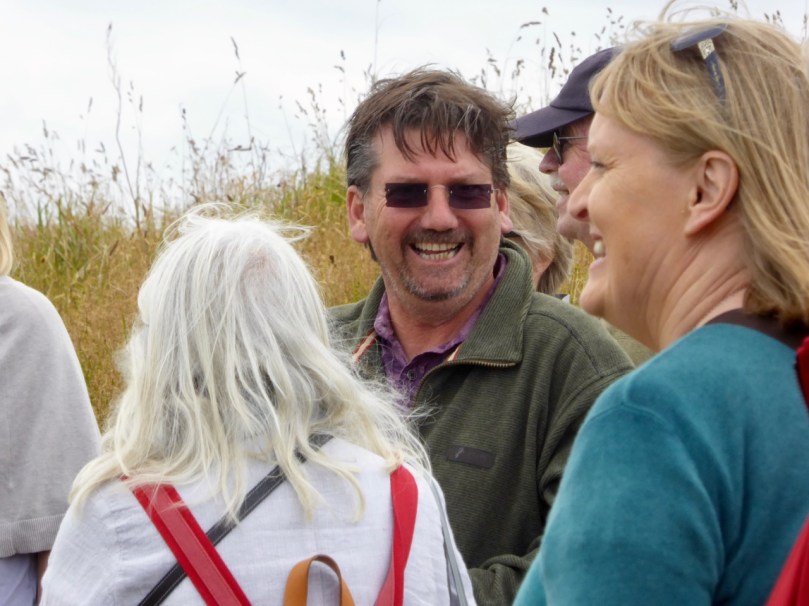
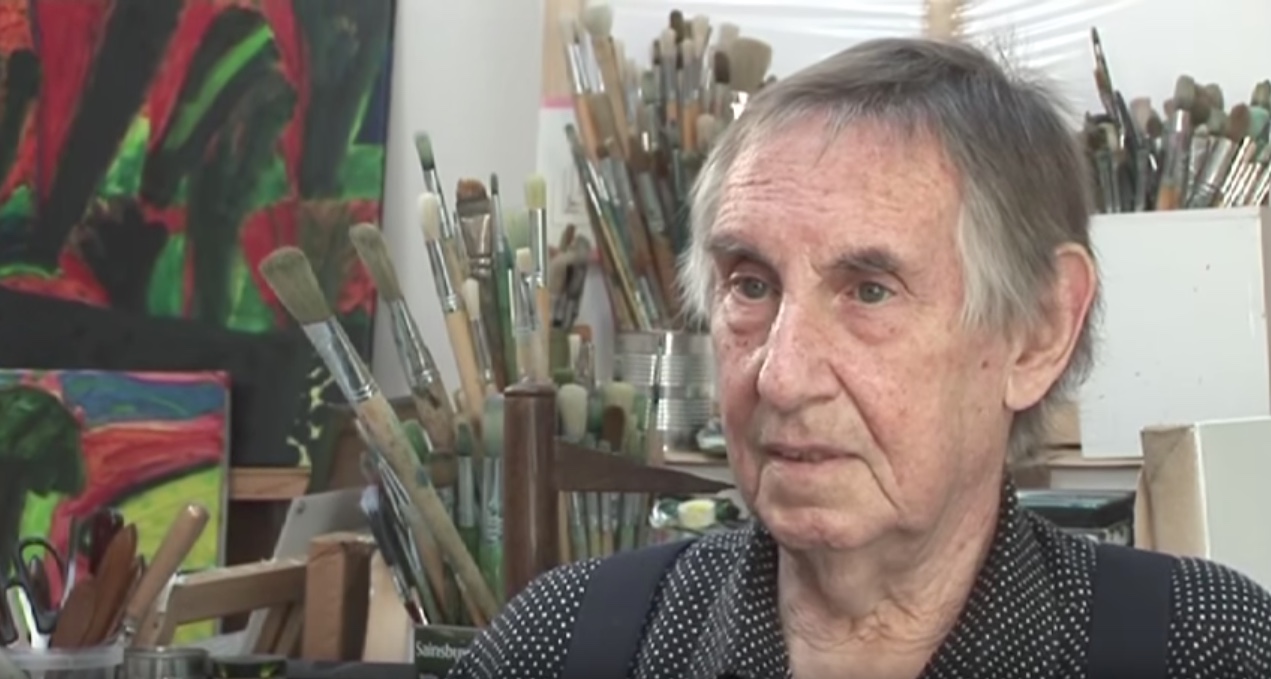
John Kelly the Irish/British/Australian artist, and West Cork resident

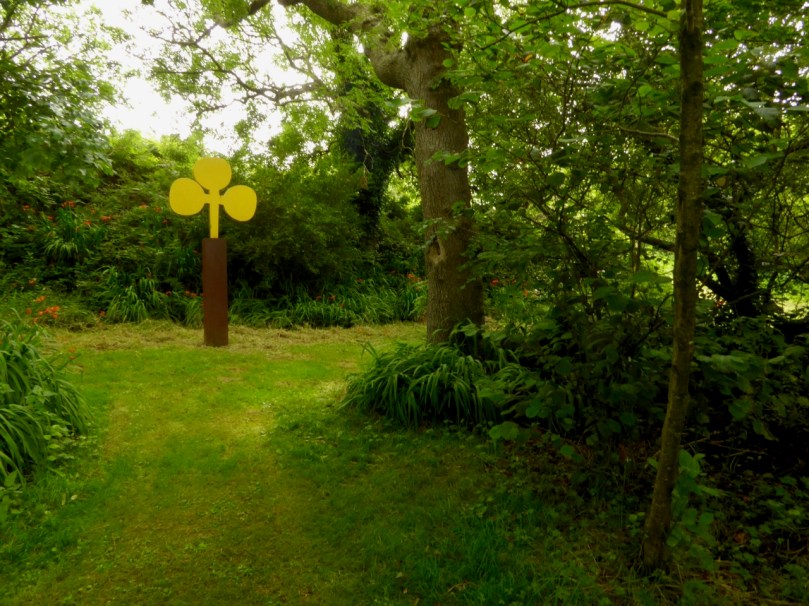
Two days after the Festival, we moved on to art. Or so we thought. We had signed up for a guided tour of Reen Farm, the Sculpture Garden that is the home, studio and inspiration for the artist John Kelly. This event was part of the marvellous Skibbereen Arts Festival that has been running all week.
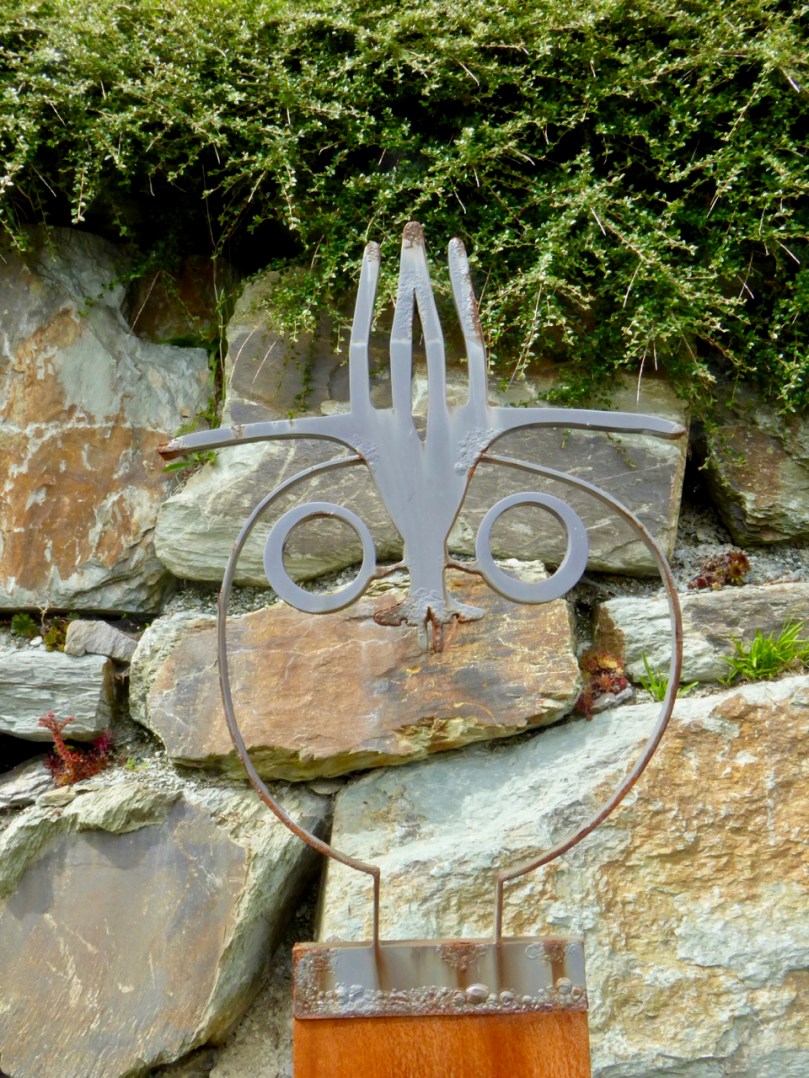
Two upside-down kangaroos in the tennis court – don’t ask me to explain this one, my head was spinning at that point

We’ve met John a couple of times and had seen an exhibition of his at Uillinn that focused on his experiences in the Antarctic. We were aware that, as a sculptor, a painter, and a writer John is internationally esteemed and has exhibited world-wide.
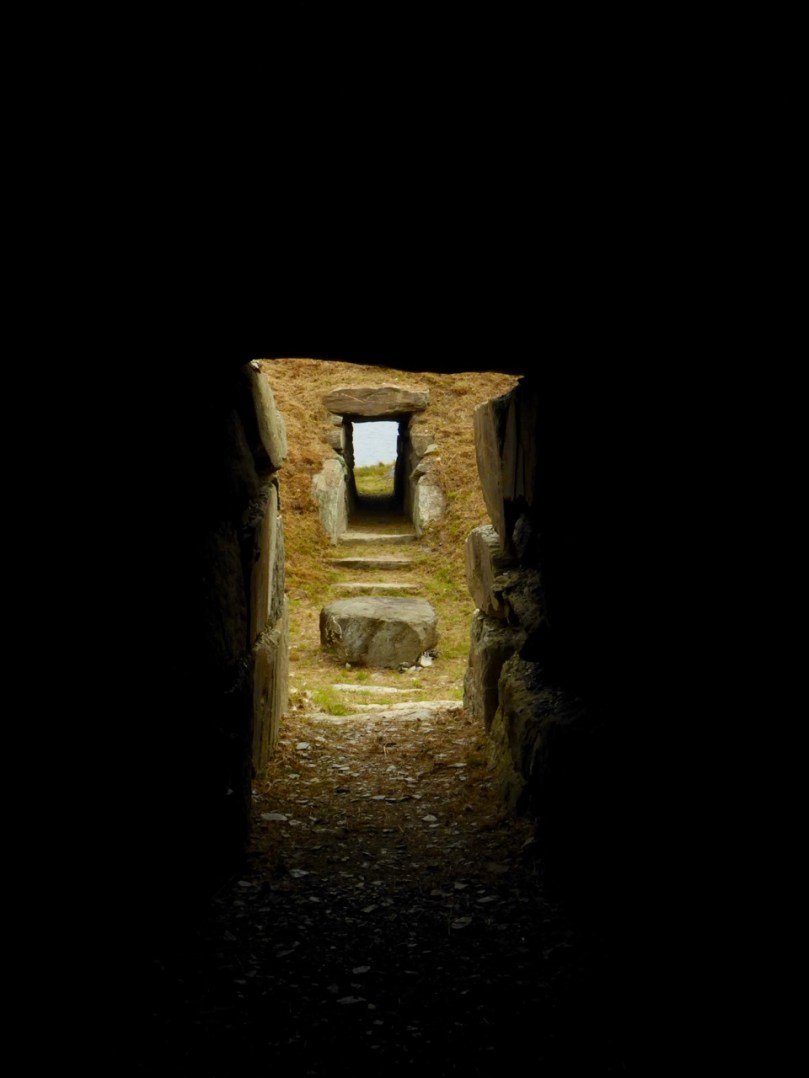
The Turrell-inspired crater with passages leading through it to the sea. (We have our reason to relate to John’s version of the famous Sky Garden at Liss Ard Estate in Skibbereen)

You’ve probably all visited a sculpture garden at some point – but I guarantee you, you’ve never had an experience like this. Being led around by John himself was a privilege, but it’s also a must in order to understand his inspirations, because it’s all about history, and eclectic history at that. 
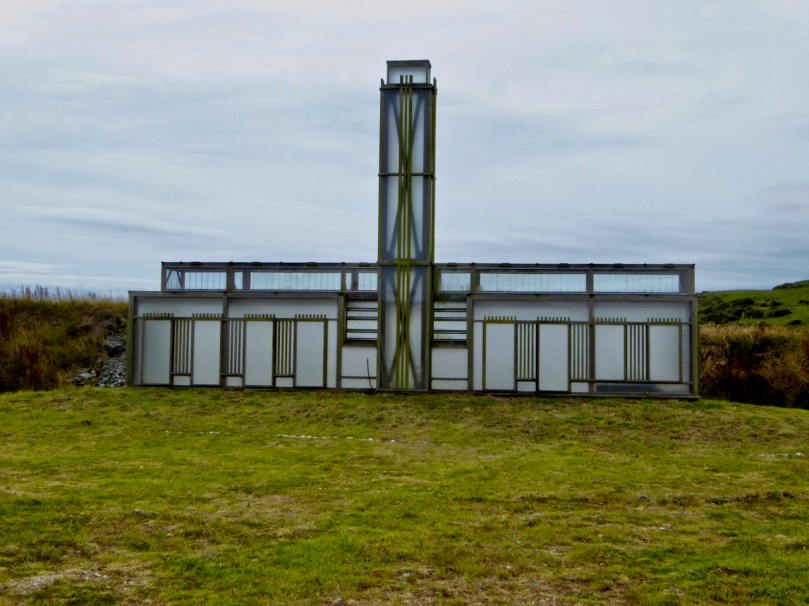
His Tate Modern piece (above) was a response to the famine in his townland, Reen, as reported in 1846 by a local resident, N M Cummins. Now, looking at it, you would never arrive at that conclusion by yourself, but once you stand there and listen to John recounting the grim happenings that took place there 170 years ago and how that led him to contemplating the food abundance that made Henry Tate a millionaire around the same time, it all starts to come together.
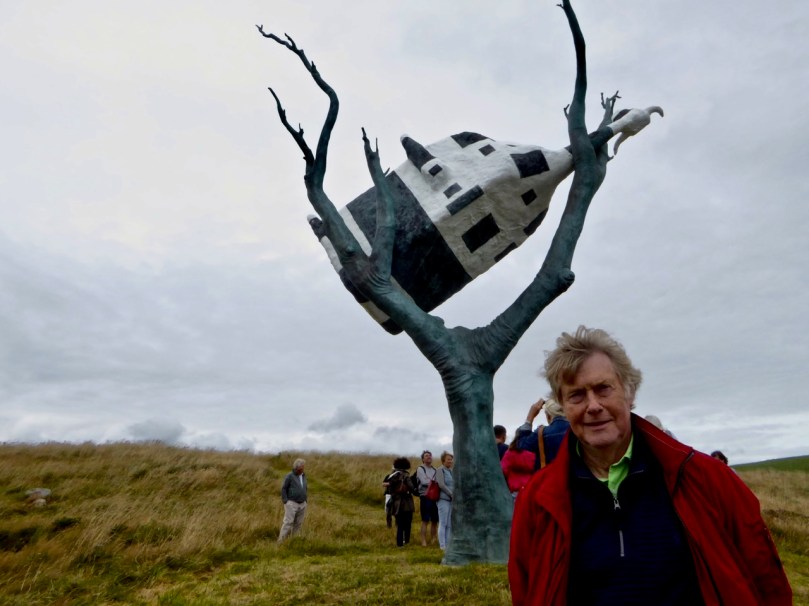
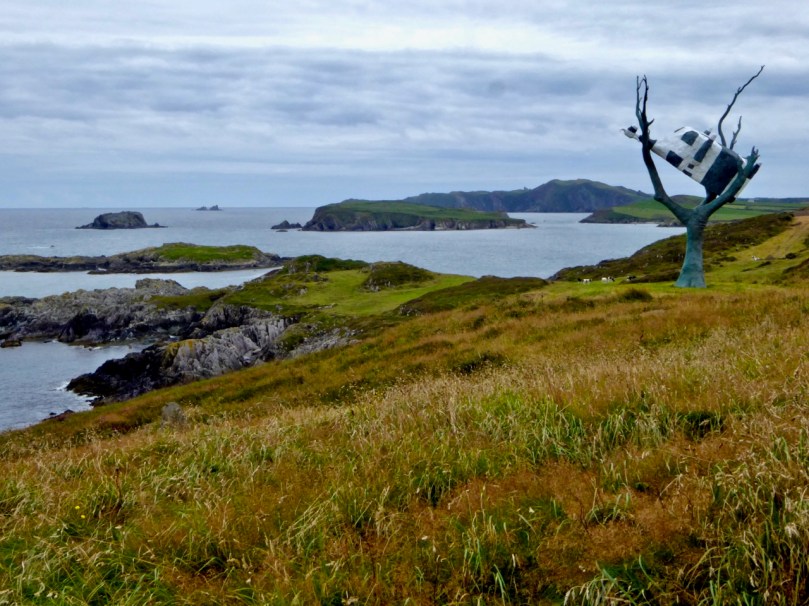
Robert and the Cow up a Tree – just to give you a sense of the scale of the sculpture

I won’t recount the story of the Cow up a Tree, because you have to go yourself and hear it from John in all its convoluted glory. (If you really need to know you can read about it on John’s website.) It’s the highlight of the tour, but definitely only one part of a whole fascinating set of experiences that goes on and on. 
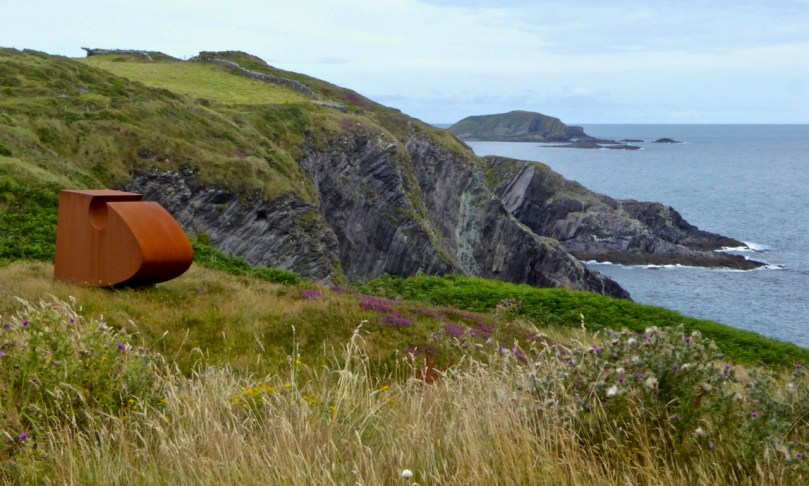
Besides the art (some of which will make you laugh out loud), stunning views greet you as you follow the trail, and finally Christina’s garden and John’s studio round out the day. The Garden is now part of the West Cork Garden Trail and is open from August 7th (tomorrow) until the 13th.
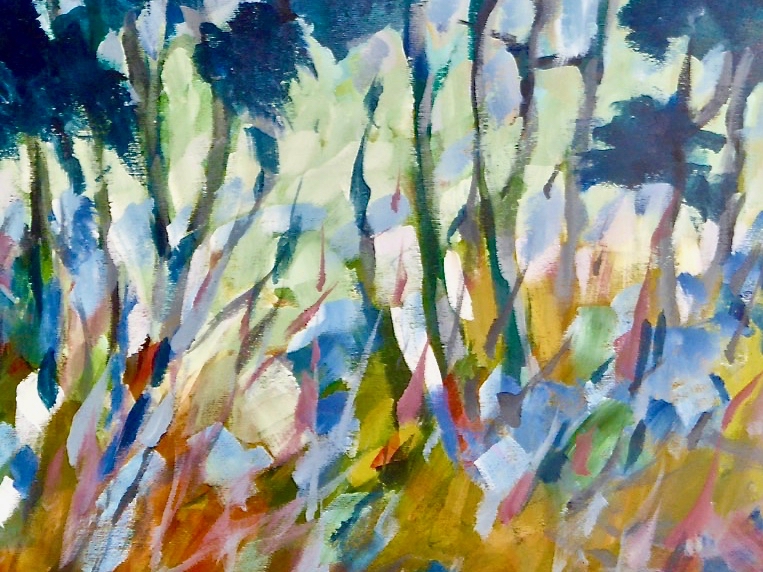
Terry Searle – A West Cork Artist

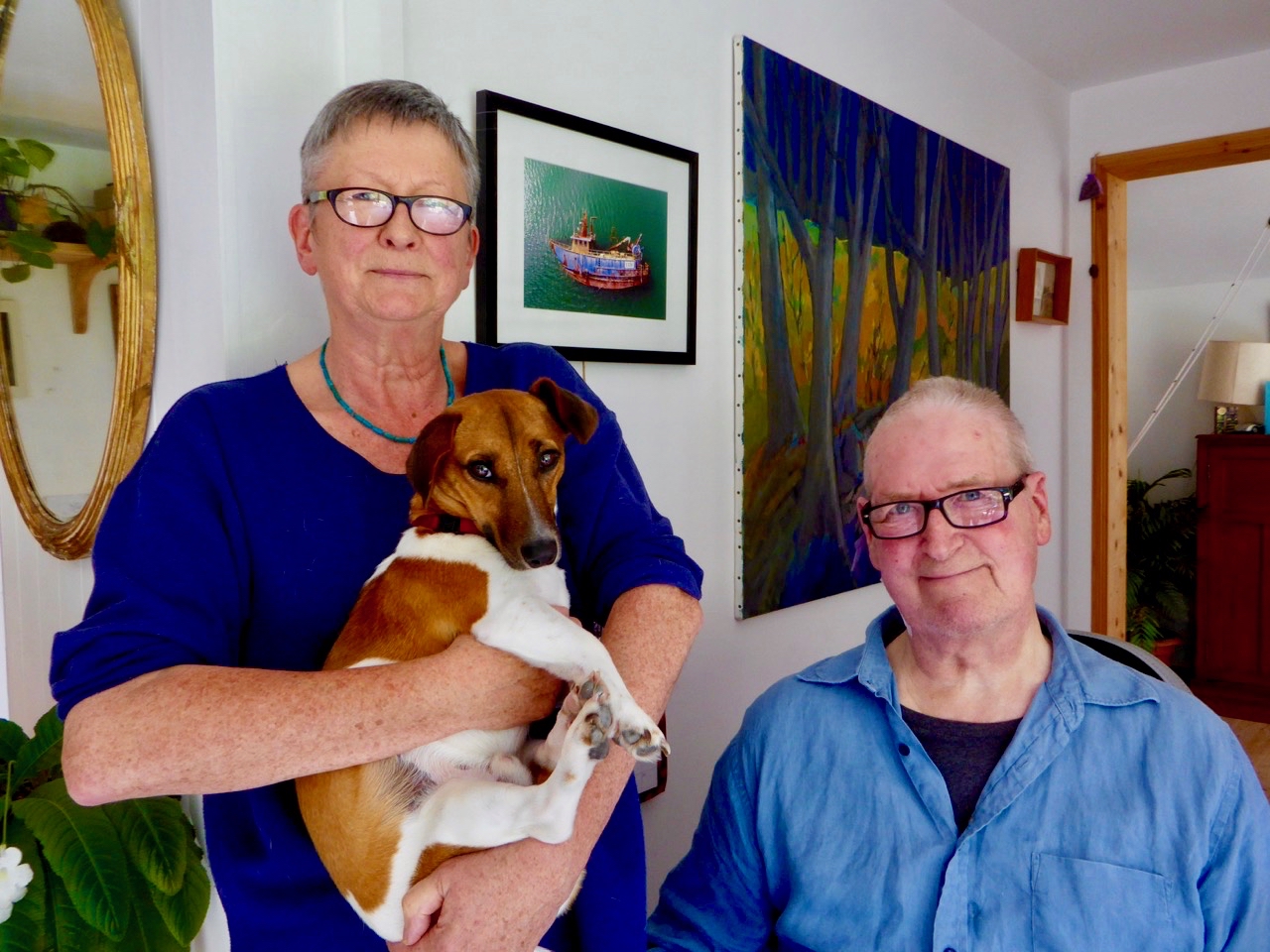
It’s all happening in West Cork at the moment! In particular, there’s a lot going on in Skibb: the fabulous Skibbereen Arts Festival continues to run all through the week and we have already enjoyed some memorable events. The first West Cork History Festival has been a resounding success – and a learning experience: look forward to great things in the future. But don’t leave Skibbereen without visiting the O’Driscoll Building at Levis Quay, in the town centre. Opening at 1pm on Saturday 5 August and running through to 2 September is an important exhibition of the work of two artists: Terry Searle and Ian McNinch. I’m concentrating today on the life and work of Terry – one of the ‘West Cork Artists’ Group’ who built up a reputation during the latter part of the 20th century, and the story of which has still to be written. Finola and I were privileged to meet with Terry and his wife Penny Dixey recently, and thoroughly enjoyed their accounts of the somewhat Bohemian life and times of artists in West Cork.

Penny (left, with Ted) and Terry (right) at home in Schull

The exhibition is a retrospective of Terry’s work. His great grandfather was from Dublin: he was born in 1936 and brought up in the East End of London. Like many of his contemporaries he was evacuated to the countryside during the war and spent six years away from his home. It’s hard to imagine how that experience might have affected a young, evolving mind: his positive take is that it imbued in him a permanent love for nature and this has been reflected in his life work.

Terry is a painter. At the end of the war Terry was called up for National Service, where he rubbed shoulders with would-be actors, artists and musicians: their outlooks attracted him and, when he moved back to London, he started evening classes at St Martin’s School of Art and then signed on for a full-time course at Goldsmith’s College of Art. Although life was hard – there were no grants available and he had to fund his studies through a variety of jobs occupying all hours – he never looked back. As he says “…life in the coffee shops in Soho was enjoyable, with a lively social scene…”

Terry’s influences were many – particularly the large, colour-full abstracts of Rothko and Joan Mitchell – but his life-long hero is JMW Turner. London’s Tate Britain has the world’s largest collection of Turner on exhibition, so Terry had the opportunity to study his hero at first hand. Turner challenged the art traditions of his time (first half of the 19th century) and his techniques appear very ‘modern’ to our eyes. Terry is no slave to Turner’s style, but has a very particular way of viewing his subjects. I think Terry’s work is vibrant – colourful – approachable – very attractive yet with a powerful individuality. I can see some parallels with William Crozier, whose work is currently being shown at Uillinn. By chance, Terry Searle and Crozier once lived in the same road in London but were only on nodding acquaintance. As their lives and work progressed, both found their way to West Cork.

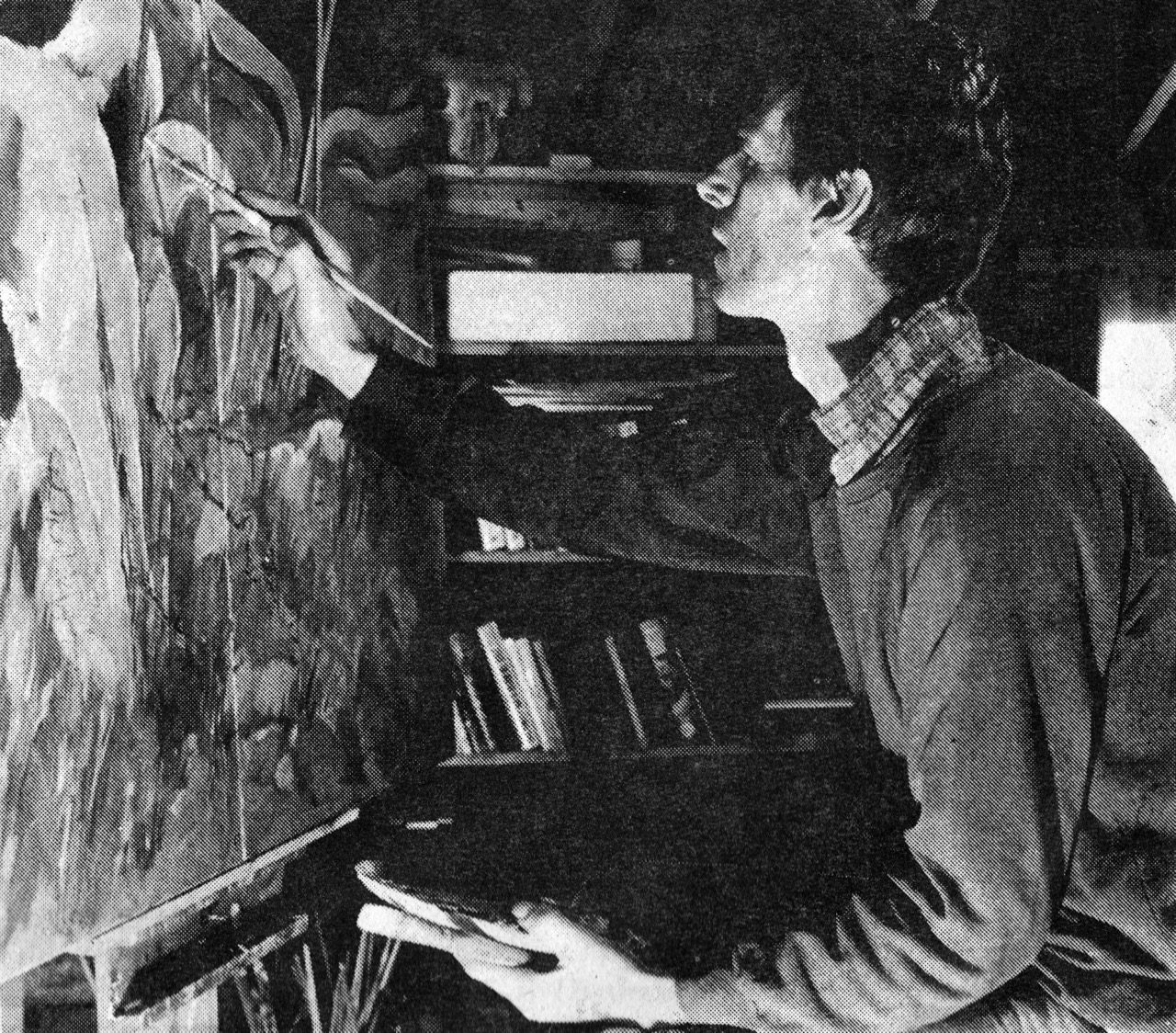
Terry Searle at work, probably around 1986: photograph by Kevin O’Farrell

Terry first visited West Cork when travelling with a group of friends in the 1970s. A number of visits followed and he found himself “enchanted” by the natural beauty of the place, and the civilised pace of life here. He must also have been aware of the strong artistic movement which focussed around Ballydehob and Skibbereen at the time. When he made the permanent relocation to the west of Ireland in 1981 he quickly became active in that movement, and was one of the founders of the West Cork Arts Centre. He contributed to the 1985 exhibition of West Cork artists in Zurich, and in 1987 was part of the important Living Landscape ‘87 Exhibition, which showed in the Crawford Gallery, Cork, as well as in the West Cork Arts Centre in Skibbereen. This extract from the introduction of the exhibition catalogue is enlightening on the spirit of the time:

…Skibbereen is a small town in the South West of the country with a population of 2,000 people. Ten years ago, because of the number of artists living in the area, a small interested group started an art society and held an annual members exhibition which ran for two weeks every July in a local hall. The demand from artists and local people increased over the years and due to the hard work of a dedicated committee, they realised a dream come true – an Arts Centre for West Cork; and with the essential practical help from the Vocational Education Committee in the provision of the building, we became the proud ‘owners’ of a thriving Arts Centre. We run exhibitions monthly, organise musical and theatrical evenings, and provide classes for all, covering a full range of artistic interests in our newly reconstructed classroom. Today, we are very proud to be hosting the first ‘Living Landscape’ exhibition by the top 25 landscape artists working in this country. Our intention to make this a prestigious annual event is ambitious, but then all our plans are ambitious…!

The Living Landscape exhibition shown at The Crawford and in Skibbereen: Terry is third from the right

I wonder how many of those involved in those times could have foreseen just where those ambitions would lead? With Uillinn in Skibbereen, the West Cork Arts Centre now has the foremost public gallery west of Cork city, and it is pushing the boundaries with major exhibitions of contemporary work. Readers will be aware of the recent West meets West exhibition – which heralds a regular exchange of art between West Cork and Cornwall – and the gallery, currently, is hosting a collaborative exhibition with IMMA on the opus of William Crozier.

It’s so good that Terry Searle is being appreciated with this show: he has never been a self-publicist, and it is high time his work received full and proper recognition. He celebrates his eightieth birthday this year. A few years ago he was diagnosed with a degenerative neuromuscular disease and has now been forced to stop painting altogether. It is painful to imagine what a loss that must be to a creative ethos such as his. This exhibition is a very special one – be sure to see it!

Robert is lining up further posts on the stories of the West Cork Artists group dating from the 1960s (and still thriving!) and would be delighted to hear from anyone who has personal accounts, reflections or memories from those days…

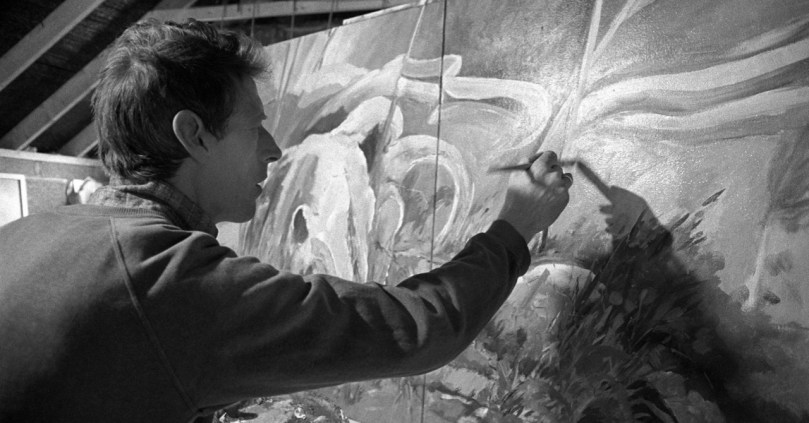
Image below – Terry Searle in his studio c1986 – courtesy of Kevin O’Farrell

Terry Searle - Kevin O'Farrell

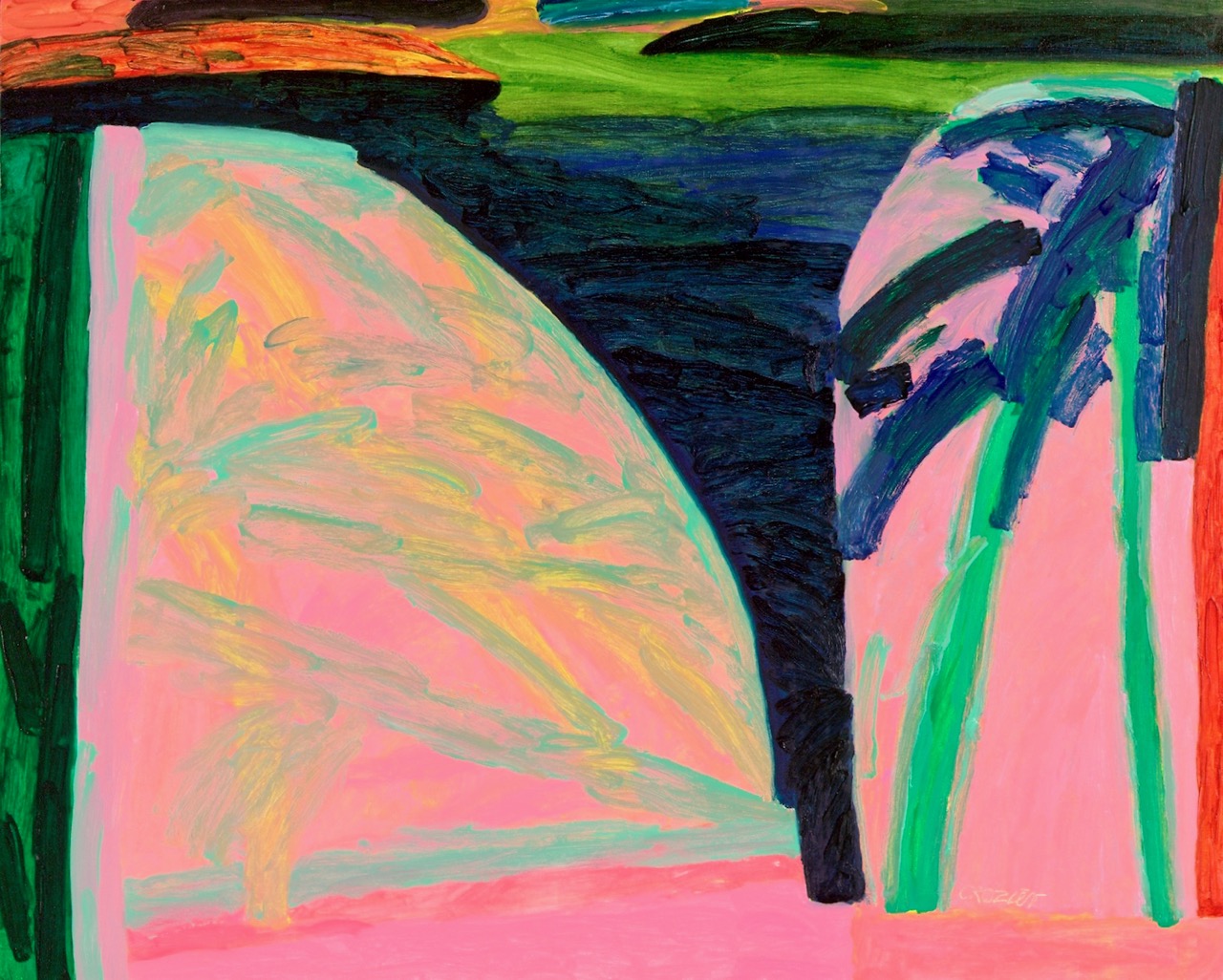
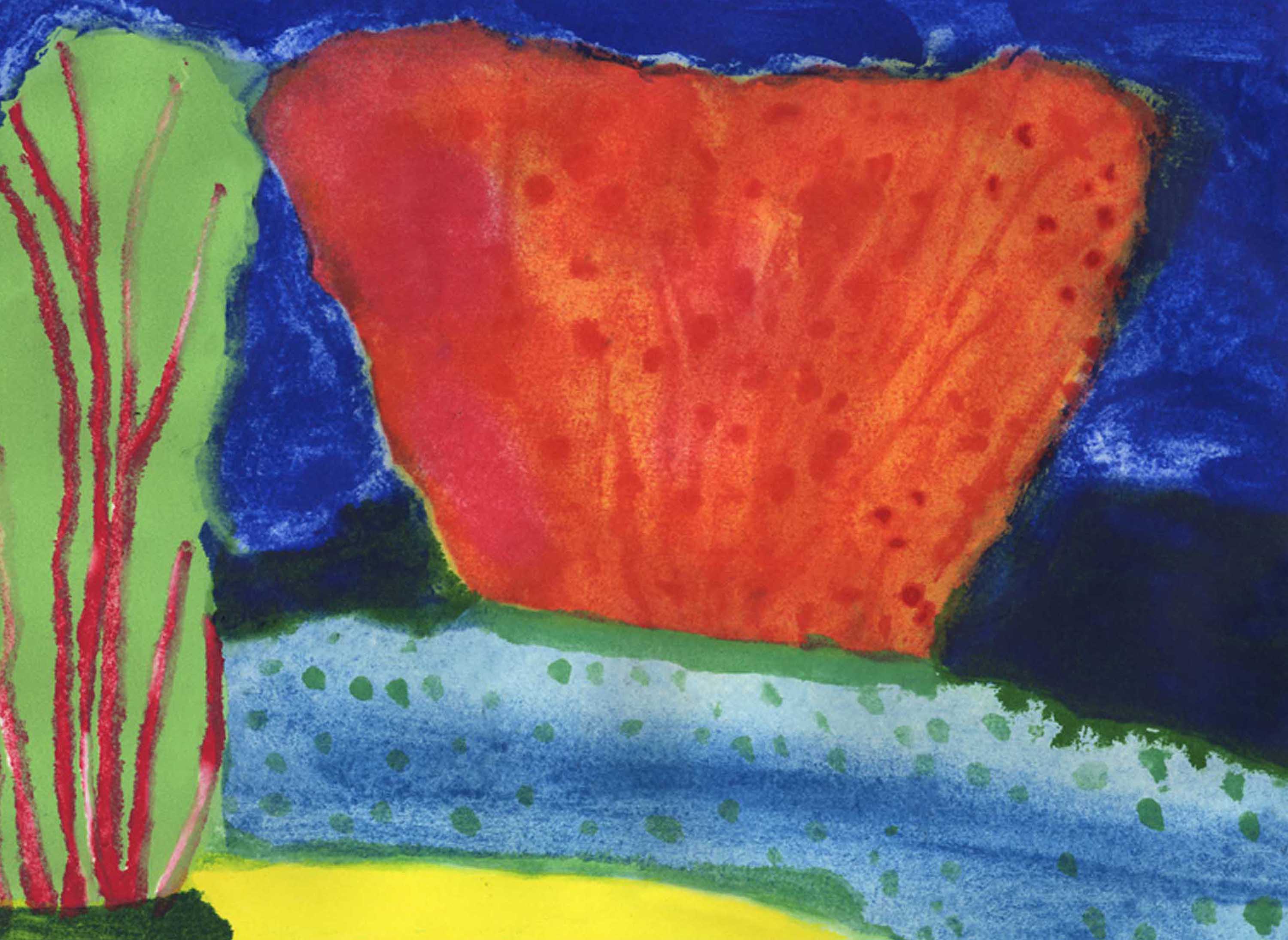
The Edge of the Landscape – William Crozier

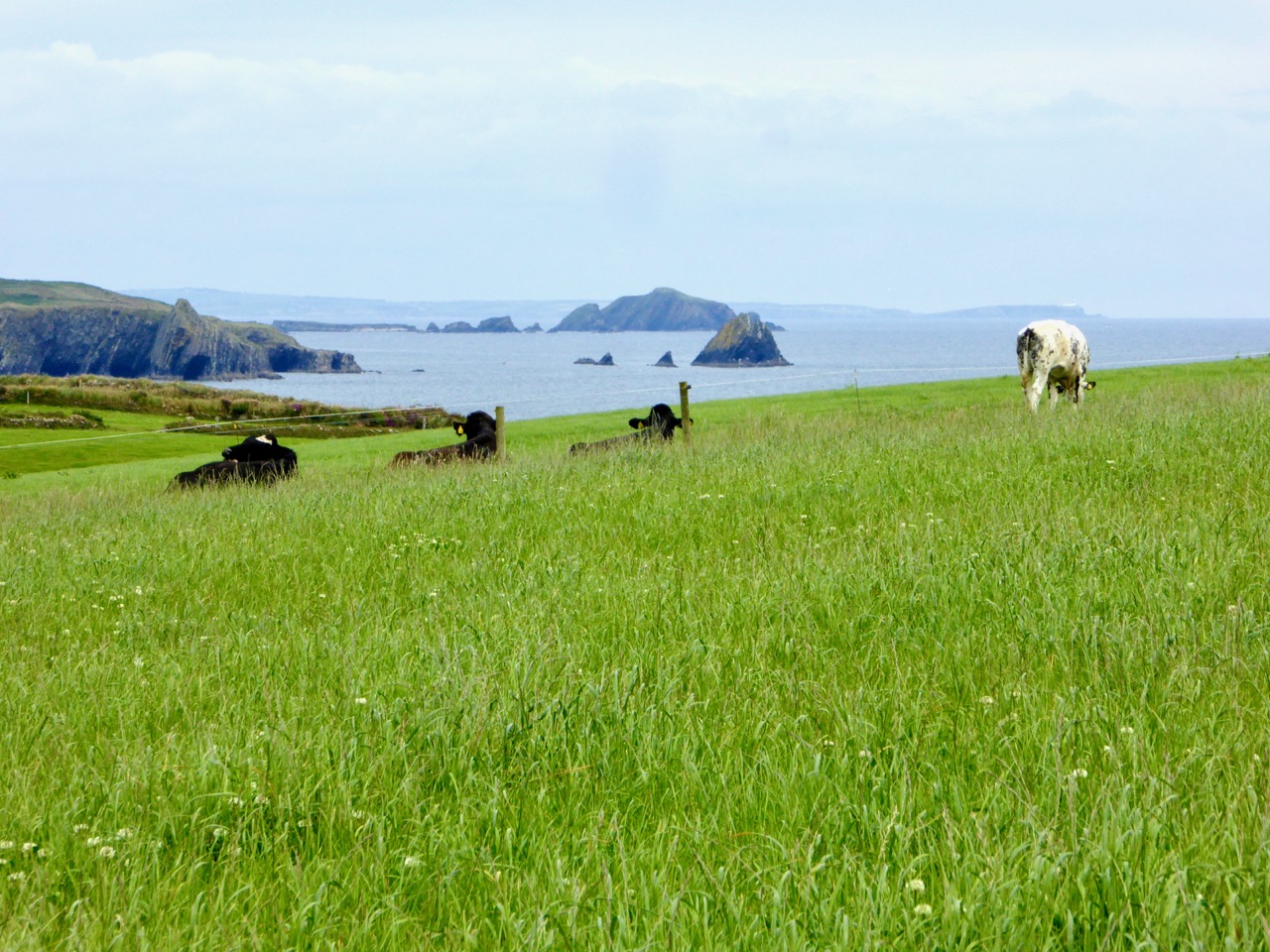
The Edge of the Landscape is the title of an upcoming exhibition which opens this weekend at Uillinn. It will show some of the later work of William Crozier (1930 – 2011), a Scottish born artist who considered himself more Irish than Scottish as his parents were from Ballinderry, Co Antrim. He adopted Irish citizenship in 1973 and purchased a cottage at Kilcoe, West Cork, in the early 1980s. Although he worked both here and in Hampshire for the rest of his life, most of his later paintings dwelled on the Irish landscape – specifically the splendours of West Cork, which are so familiar to us.

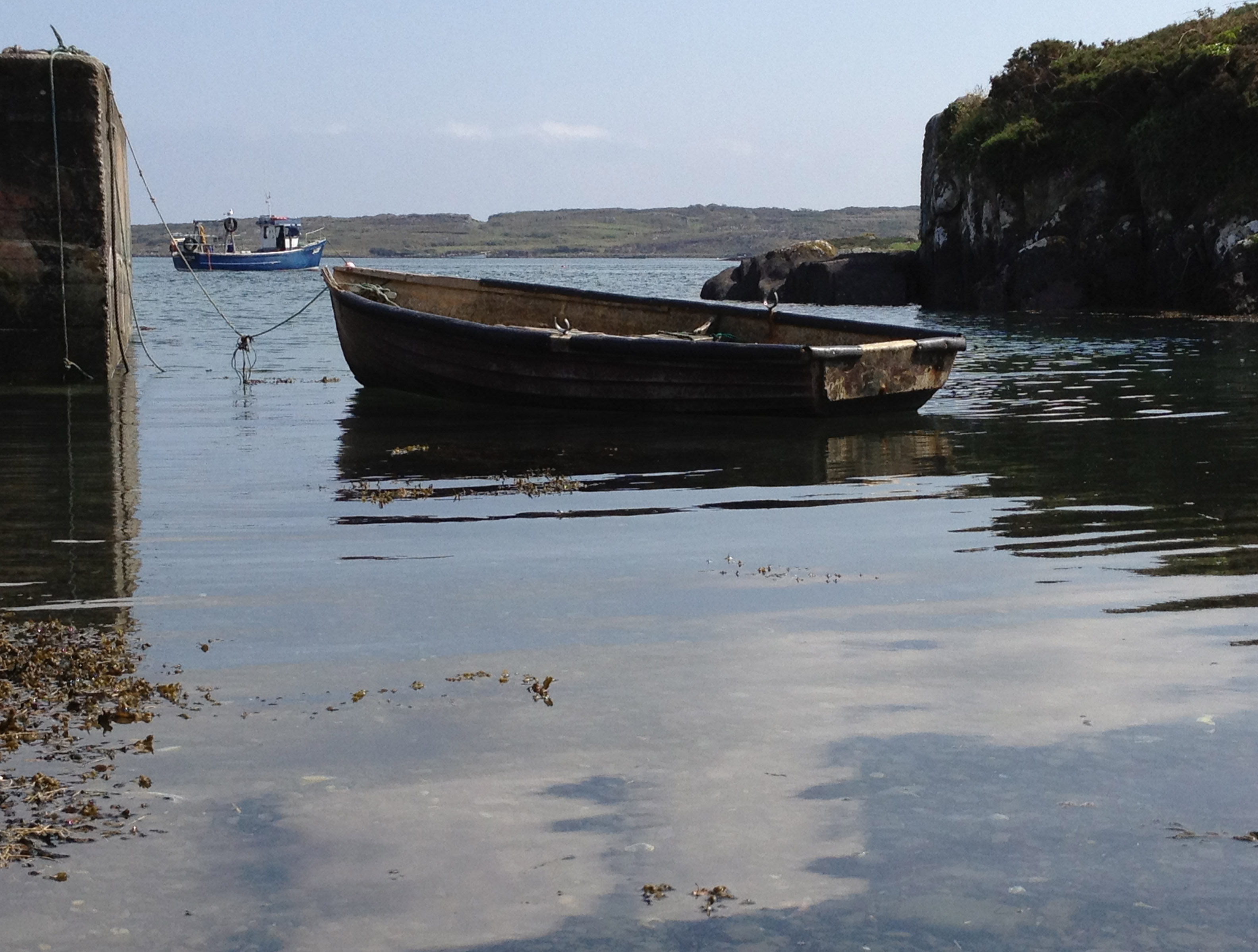
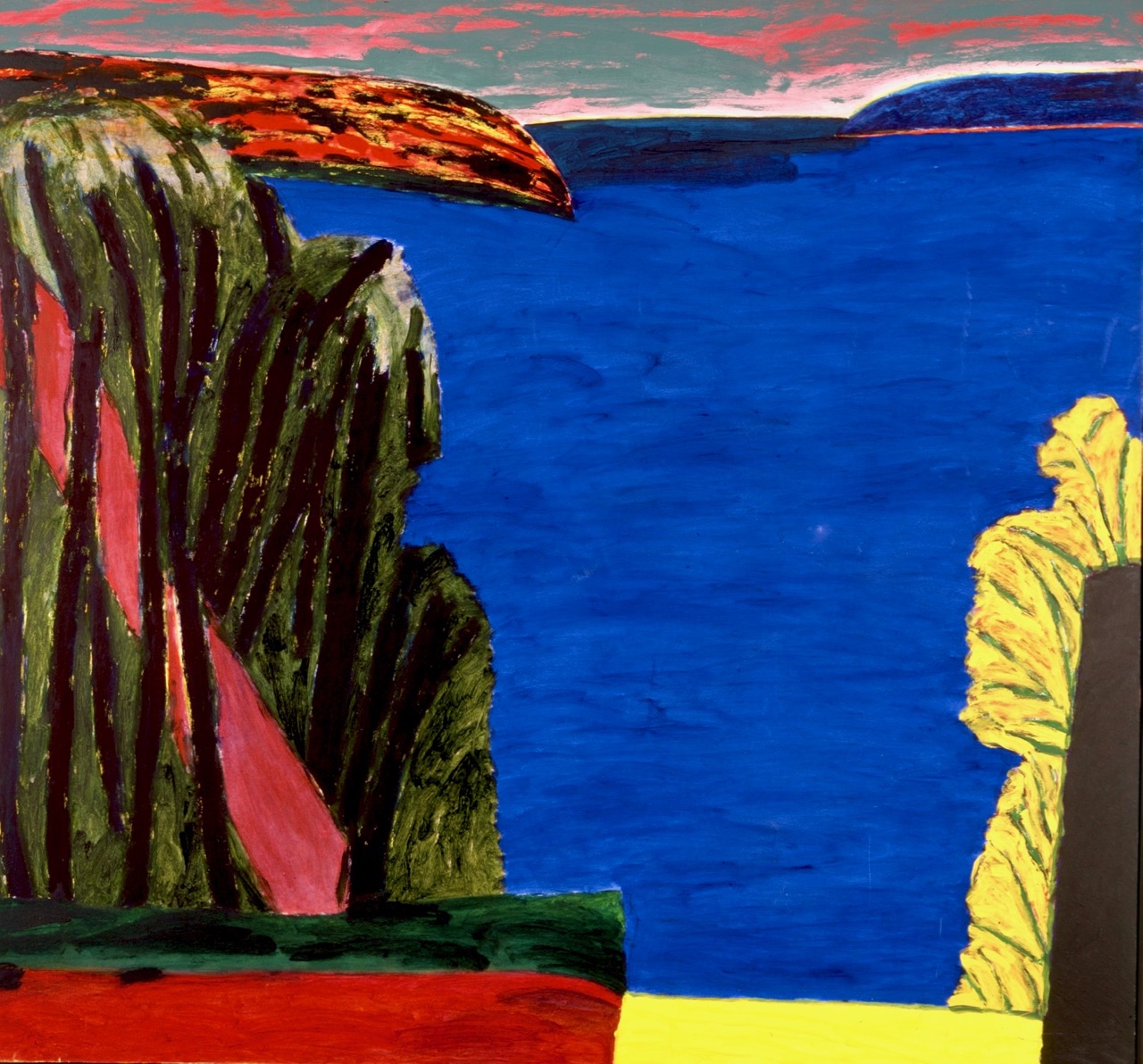
The meeting of land and sea was a recurring theme in Crozier’s work. The quay at Turk Head, above, inspired the header on this post – painted by Crozier in 2003. We might wonder at the eye of the artist that pictures the scene in such vivid colours, but anyone who has lived in West Cork will be familiar with his palette: the rocks, the fields, the lanes, wildflowers, water and ever-changing skies provide all the colours in his paintings, tints, tones and shades which are successfully pulled into unexpected compositions.

Katharine Crouan – Bill Crozier’s widow – has written to me “…Bill was not, in any way, a topographical artist but you can see in his work – particularly from 1984-95 – the stimulus  the landscape provided. He spoke of loving the ‘glamour’ of the West Cork landscape, referring to the glitter of water and sunlight on foliage after rain and the dark shadows that came out of nowhere. For him it was all magical…”

‘Kilcoe Strand (From Peninsula)’, painted by William Crozier in 2011

I am reminded of Peter Lanyon, the St Ives artist (who was, interestingly, the subject of a book titled At the Edge of Landscape): he famously said that, as a painter, he needed to “…get under the skin of the landscape…” That need informs his work, which is abstract rather than specifically landscape-based yet inspired, as he stated, from flying over his native Cornwall and – by exploring the mine shafts – tunnelling underneath it. For me, William Crozier has the same regard for his West Cork homeland and successfully expresses his relationship with it through the richness of his work.

Toe Head, West Cork (upper picture) was the inspiration for many paintings. Lower works: Toe Head 1989, (left), and Wolf’s Castle, Toe Head 1998 (right – Richard Barrett) 

William Crozier was a prolific painter – he estimated that he had painted more than 12,000 pictures, each executed in a single session. The landscape-inspired works are just one part of an enormous opus. He did not overlook the sometimes hard realities of his surroundings. Cocks of hay drying in a field may appear a romantic ‘rural idyll’, but are equally a portrait of an economically unviable small-holding.

William Crozier in his studio c 2009

The exhibition of a selection of Crozier’s work produced since 1985 is showing at Uillinn: West Cork Arts Centre from 15 July to 31 August, and later in the year some of his earlier works will be shown at IMMA: The Irish Museum of Modern Art from 12 October 2017 to 8 April 2018. Both exhibitions are curated by Seán Kissane (Curator, Exhibitions, IMMA), who will be presenting a talk on the work at 6pm this Friday, 14 July, in Uillinn, following which the exhibition will be formally opened by Sarah Glennie, the Director of IMMA. An important new publication edited by Katharine Crouan and Seán Kissane and designed by Peter Maybury accompanies the exhibition with texts by Mark Hudson, Katharine Crouan, Seán Kissane, Riann Coulter, Enrique Juncosa, and Sarah Turner.

Below – Departure from the Island, William Crozier 1993 (Flowers Gallery). Note that copyright on all works rests – unless otherwise stated – with the William Crozier Estate

Postscript – In the Tracks of the Yellow Dog

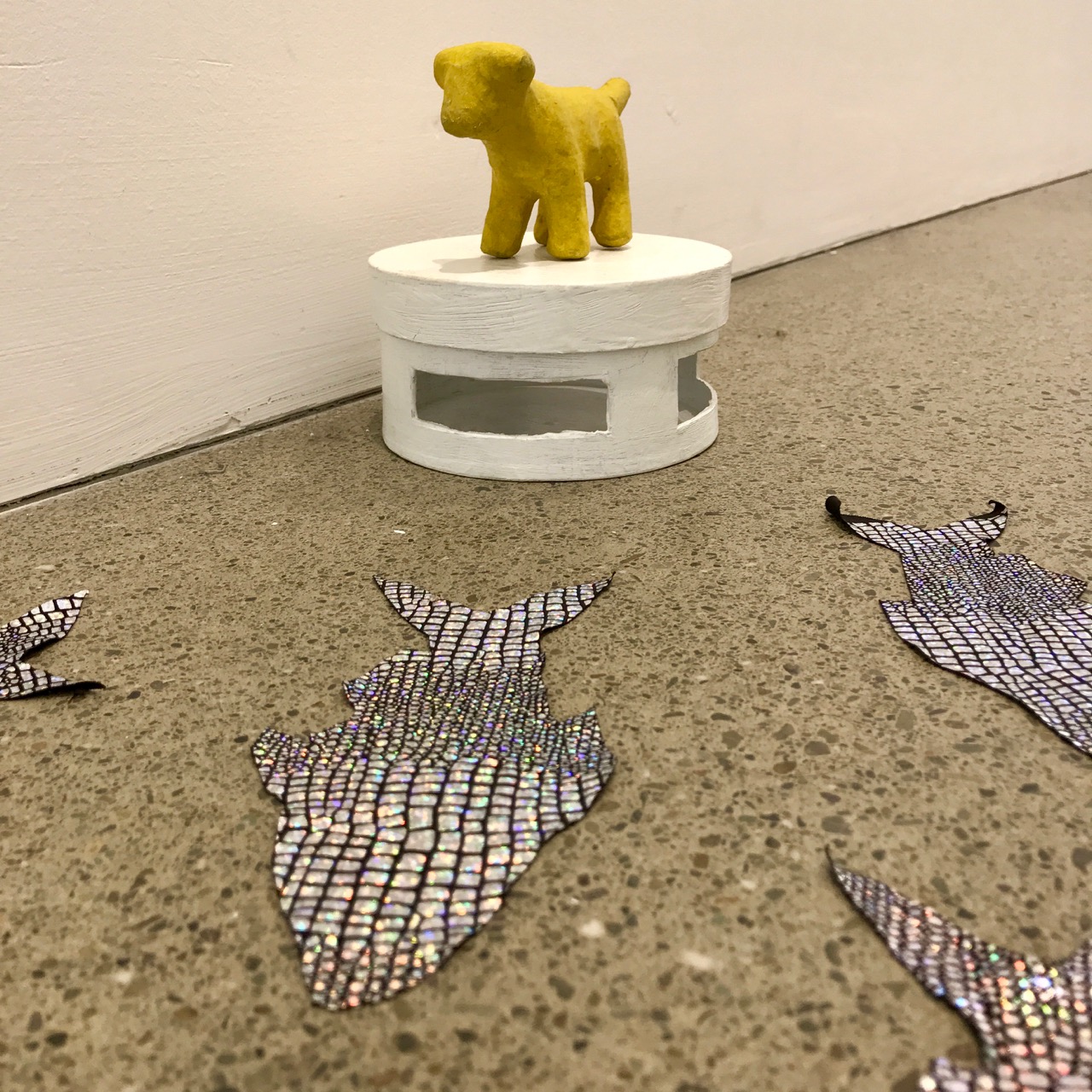
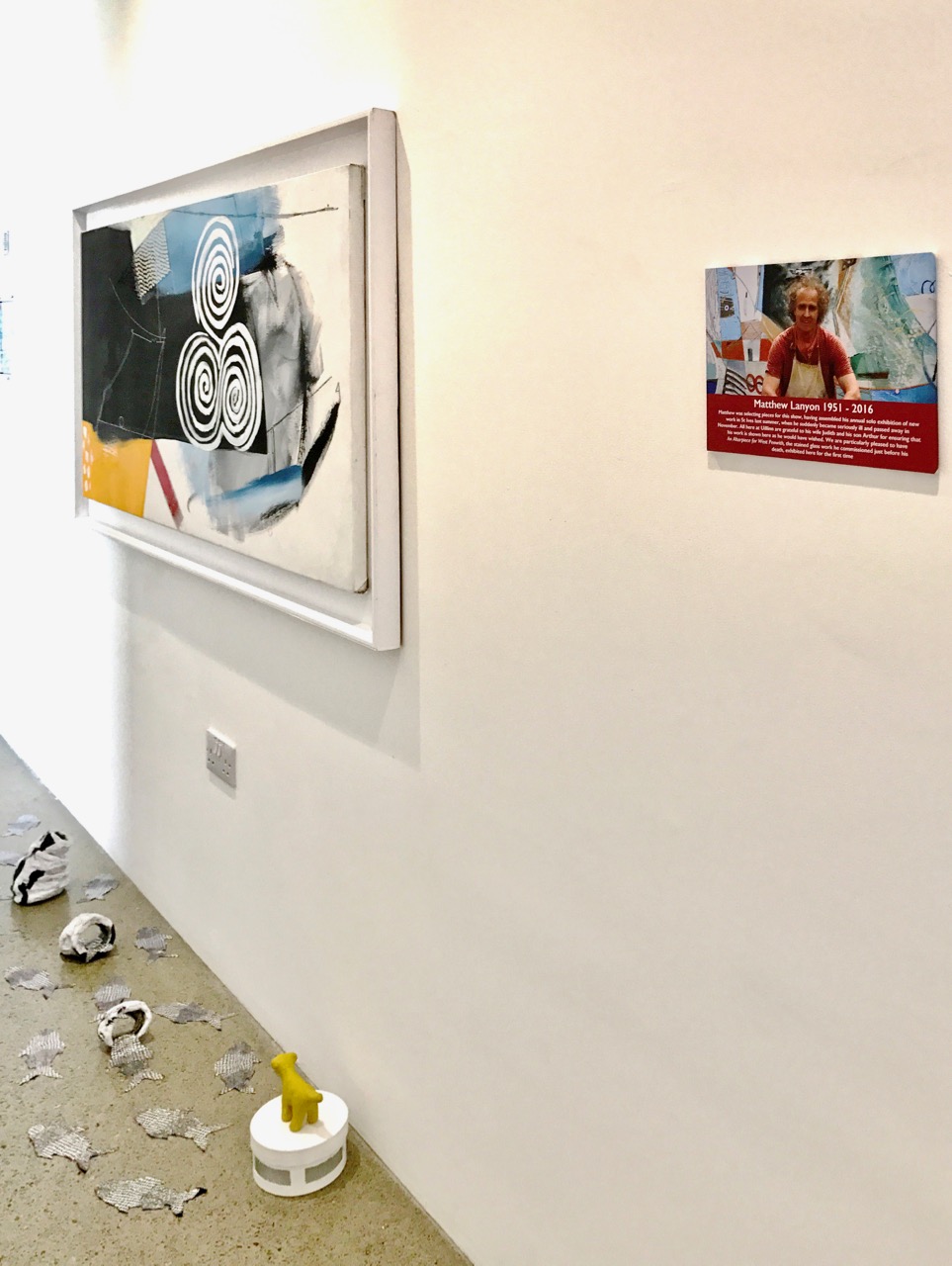
Uillinn – the West Cork Arts Centre gallery in Skibbereen – has a great facility in its exhibitions – a Discovery Box which can be used by children (or anyone else) to express their reactions to whatever is on show. I went in the other day to have a last look at the West meets West show of the work of Cornish Artists (hurry! – it closes on Saturday 8 July) and was delighted to see that someone had used some elements from the box to place a little installation under Matthew Lanyon’s painting aptly titled ‘Skibbereen’.

The Discovery Box in action at Uillinn – left, with Phil Booth’s impressive construction Gwennap Head in the background and – right – set against Tony Lattimer’s wonderful ceramics. (Photos courtesy of West Cork Arts Centre)

The Discovery Boxes are tailor-made for each exhibition. This one has been assembled by Sarah Ruttle and includes (amongst a multitude of inspired shapes) fish and fishing nets, miniature coiled ceramics reminiscent of Tony’s work – and a yellow dog! Why a yellow dog? Well, one of the most striking exhibits in this show is a tapestry designed by Matthew Lanyon – In the Tracks of the Yellow Dog.

Upper picture – the Discovery Box installation under Matthew Lanyon’s ‘Skibbereen’ painting and (lower left) the tapestry with (lower right) the paw print of the Yellow Dog substituted for the artist’s signature

The tapestry was manufactured by Flanders Tapestries in Belgium: cottons, wools and acrylics were selected in close collaboration with Matthew to achieve a tonal harmony from his original design. The yellow dog, a reference to Yellow-Dog Dingo from Kipling’s Just So stories, makes only one appearance; the paw print from a dried out salt lake in central Western Australia substitutes for the artist’s signature. 

We will miss the excitement and impact of those large, very Cornish works once they are packed up and sent back across the Celtic Sea, but that’s the nature of a gallery: the moment has to be enjoyed and then set aside as it will be soon replaced by other stimuli. Following on from West meets West at Uillinn is The Edge of the Landscape a major retrospective of the art of William Crozier (1930-2011), opening on Friday 14 July at 7pm. Born in Scotland, Crozier spent much of his time in Kilcoe, West Cork, from the mid-1980s, and this exhibition will present many of his works which have been inspired by the landscapes so familiar to us.

Below: Matthew Lanyon’s Skibbereen

Saintly Pigs and Curious Carvings

This is the last in the series of West meets West posts, which have been running alongside the exhibition of Cornish artists at the West Cork Arts Centre’s gallery in Skibbereen – Uillinn.

The painting (above left) by Cornish artist Alex Smirnoff (courtesy of Bryony Harris) wonderfully illustrates the story of Saint Credan who, like Saint Piran before him, travelled from Ireland to convert the heathens in Cornwall to Christianity in the 7th century. Our Saint Credan is looking a little melancholy. That’s because he accidentally killed his own father and therefore spent the rest of his life as a swineherd in penance. As a compensation it has to be said that he raises very fine pigs! Behind him is the ancient parish Church of Sancreed, very accurately portrayed with its huge colony of rooks in the trees behind. In the same picture is one of the five ancient crosses in the churchyard. The church itself dates from the 14th century: the crosses may be much older than that.

Above right is from a fine study of the entrance to Sancreed churchyard – by the Irish-born ‘Father’ of the Newlyn School, Stanhope Alexander Forbes. It is titled ‘October’ and was painted in 1898. Sancreed was the church attended by many of the Newlyn School artists, and the churchyard contains the graves of some of them, including Forbes and his wife Elizabeth Armstrong. In the church is a memorial designed by Forbes to commemorate their only son, Alec, who was killed in the Battle of the Somme in 1916. Close by is a holy well, described by Amanda.

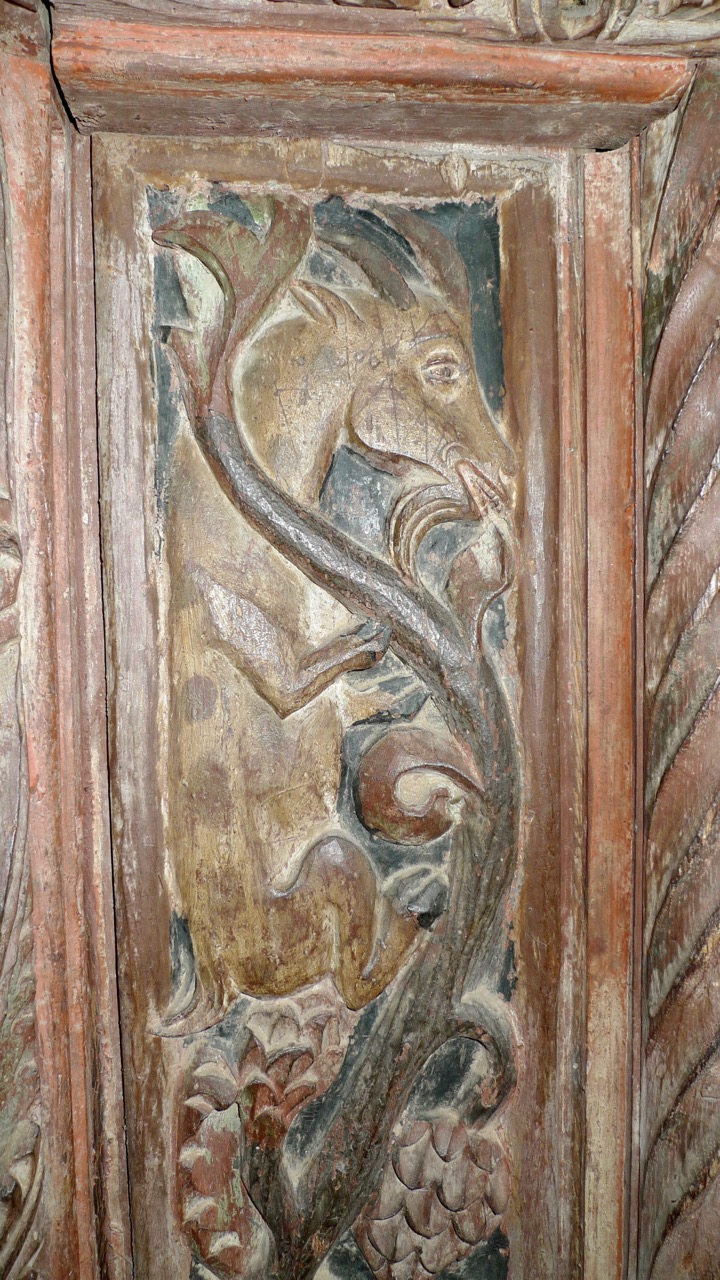
The crowning glories of this church, however, are the unusual carvings on the rood screen inside, which date from the 16th century. Last week I showed you the carving of the Chough – a bird closely linked with Cornwall and Ireland. Today I am illustrating some more of these carvings, and these show very strange beasts indeed! Some of them can be recognised as heraldic; no doubt they all would have carried symbolism when they were placed here five hundred years ago.

A basilisk is hatched by a cockerel from the egg of a toad. Be careful, because it has a lethal glare and poisonous breath. The basilisk carved in Sancreed church (above left) looks fairly personable, while Alex Smirnoff’s version of it (above right – inspired by the Sancreed carving) should be given a wide berth. Look at the shadowy figures – and the ancient cross – hiding in the background of Alex’s painting: typical of his work.

It’s not just strange creatures that are depicted at Sancreed (and there are many more of them) – there are figures as well:

Above are two panels with ‘Janus’ figures, male and female and – on the right – is a most curious character who seems to be a musician playing, perhaps, a serpent or a cornett. But he seems to be part bird, or wearing a feathered cloak. Below is a three-headed figure and a representation of an angel, perhaps: could this actually be Saint Credan hiding in his own church?

All this might seem a far cry from the exhibition in Skibbereen, which features three contemporary artists from Cornwall… But it certainly is art from Cornwall – and in a church which was founded by an Irish Saint; and a church, moreover, which had a special meaning for many of the Newlyn School artists, including Irish-born Stanhope Forbes, founding ‘Father’ of that school.

This series consist of twelve posts (including this one). You can link to them individually through this list:

Off to Skibbereen
A Saint’s Day – Ciarán and Piran
West meets West
Connecting with St Ives
A Watery Tale
Ways West
Sheep’s Head: Searching for Cornish Miners
Artists of the Western Coasts
Up and Running!
Forbes – An Irish Artists in Cornwall
Choughs – and their travels
Saintly Pigs and Curious Carvings

There’s still time to visit Skibbereen to see the exhibition of the Cornish artists’ work: West meets West is on until July 8 at Uillinn. Enjoy it!

Forbes – An Irish Artist in Cornwall

In yesterday’s gallery talk as part of the West meets West exhibition at Uillinn, Skibbereen, I concentrated on one of the many artists who made their way to Cornwall in the late nineteenth century: Stanhope Alexander Forbes. He deserves a Roaringwater Journal post of his own, as he rather neatly embodies the concept of linking the two westernmost seaboards of Ireland and England, which is an essential element of the West meets West project. Colloquially known as the ‘Father of the Newlyn School’ of painters who were established in the West of Cornwall, and who have left an impressive legacy of their work in the most remote part of the peninsula, it was probably his longevity that earned him that title (he lived in Newlyn for most of his working life and died there in 1947) rather than a particular comparison of his work with others. There was a large group of talented artists, men and women, who contributed to the reputation of the Newlyn colony.

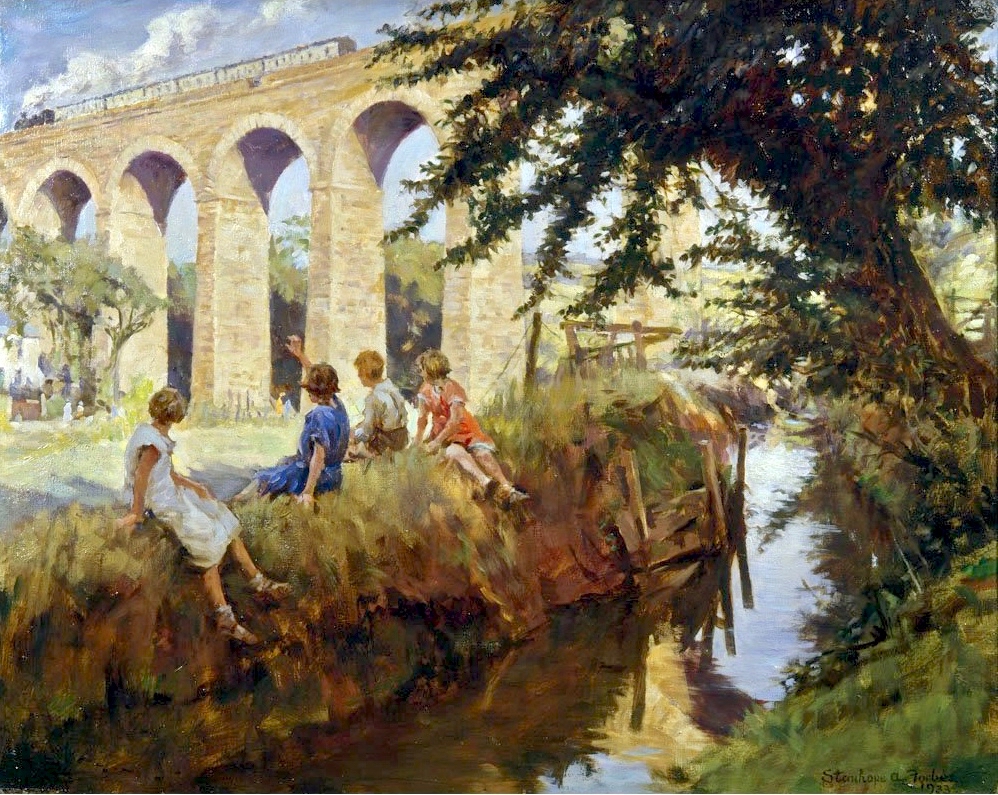
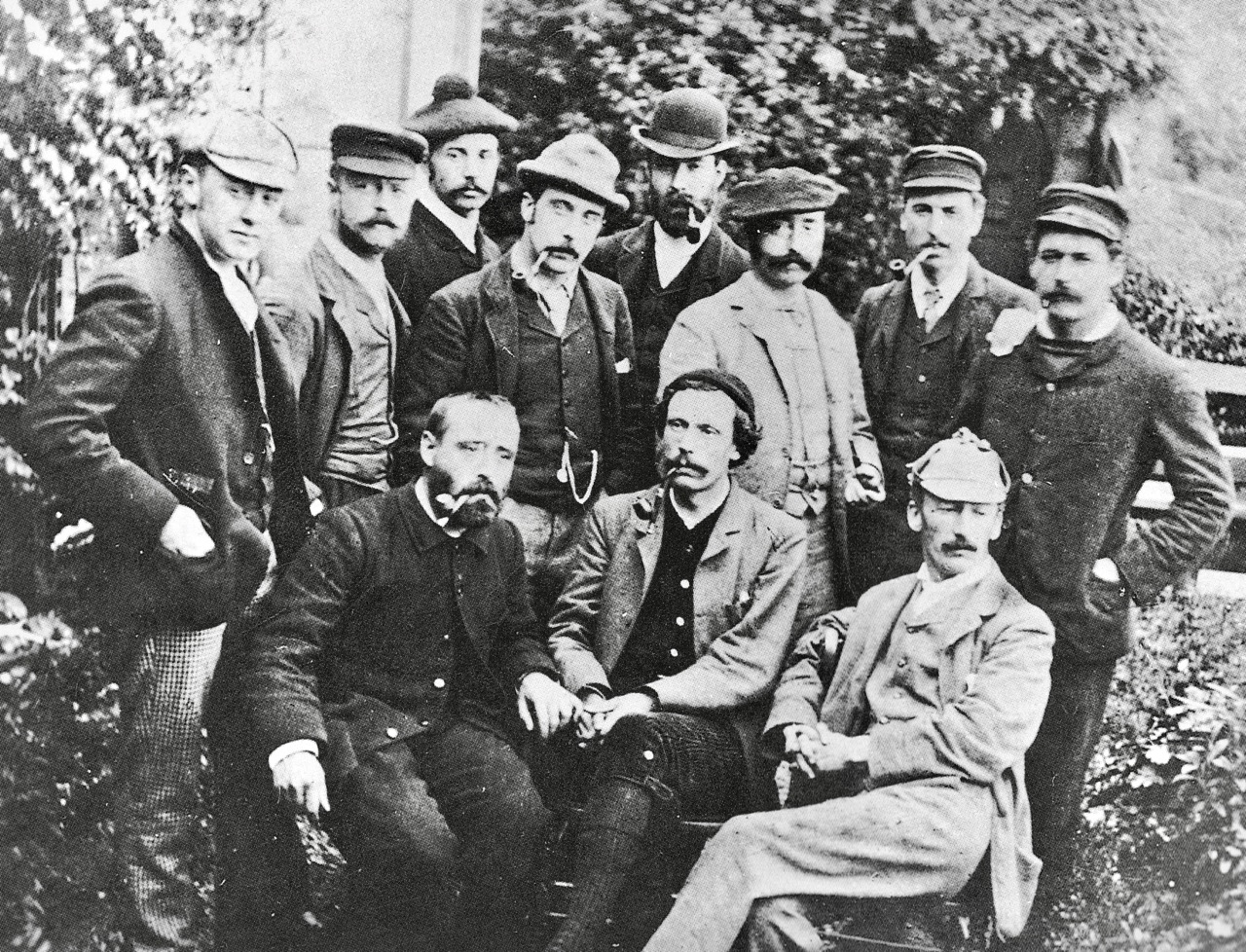
Header Picture – Perranwell Viaduct, Cornwall, painted by Stanhope Forbes in 1933, when he was 76 (The Medici Society Ltd). Above – a photograph of the Newlyn Group, taken in the early 1880s: shown are Frank Bodilly, Fred Millard, Frank Bramley, William Blandford Fletcher, William Breakspeare, Ralph Todd, William Wainwright, Edwin Harris and (seated lower right) Stanhope Forbes

Stanhope Forbes was born in Dublin in 1857. His father, William Forbes, was manager of the Midland Great Western Railway of Ireland. William was also a folklorist and probably passed his interest in traditions and traditional lifestyles on to his son. Stanhope’s uncle, James Staats Forbes (also a railway manager) had a large collection of paintings from the French Barbizon School whose members (including Corot and Rousseau) abandoned formalism to draw directly from nature. Stanhope was familiar with these works and the aspirations of these painters, and it is likely that when he embarked on a career in art he was heavily influenced by their heritage.

Forbes early works: left – A Street in Brittany 1881 (Walker Art Gallery), and right – Beach Scene St Ives (City of Bristol Art Gallery) 1886

Norman Garstin, another Irish artist who joined the Newlyn group and documented some of its history, described the Forbes family as “…essentially of the nineteenth century, full of its movement and restless activity…” Stanhope attended the Royal Academy School in London where he would have had a traditional training in still life and figure painting in the studio. London itself in those post-Industrial Revolution Victorian days was no doubt dirty and noisy, and the air would have been polluted. Forbes and many of his student companions would have longed for clean air and light and yearned to join the then fashionable (but daring and rebellious) en plein air movement where the object was to paint ‘natural’ colours and tones direct from life, albeit with the inherent problems of changing light through the days and seasons, and the practicalities of carrying easels, canvases and equipment to wherever they wanted to paint. As Norman Garstin said: “…your work could not be any good unless you caught a cold doing it…” The young artists were attracted to Brittany, where they discovered an ‘idyllic’ unchanging lifestyle and, latterly, to Cornwall, where they also perceived the ‘rural idyll’ existing closer to home, among the villages, farms and fishing communities.

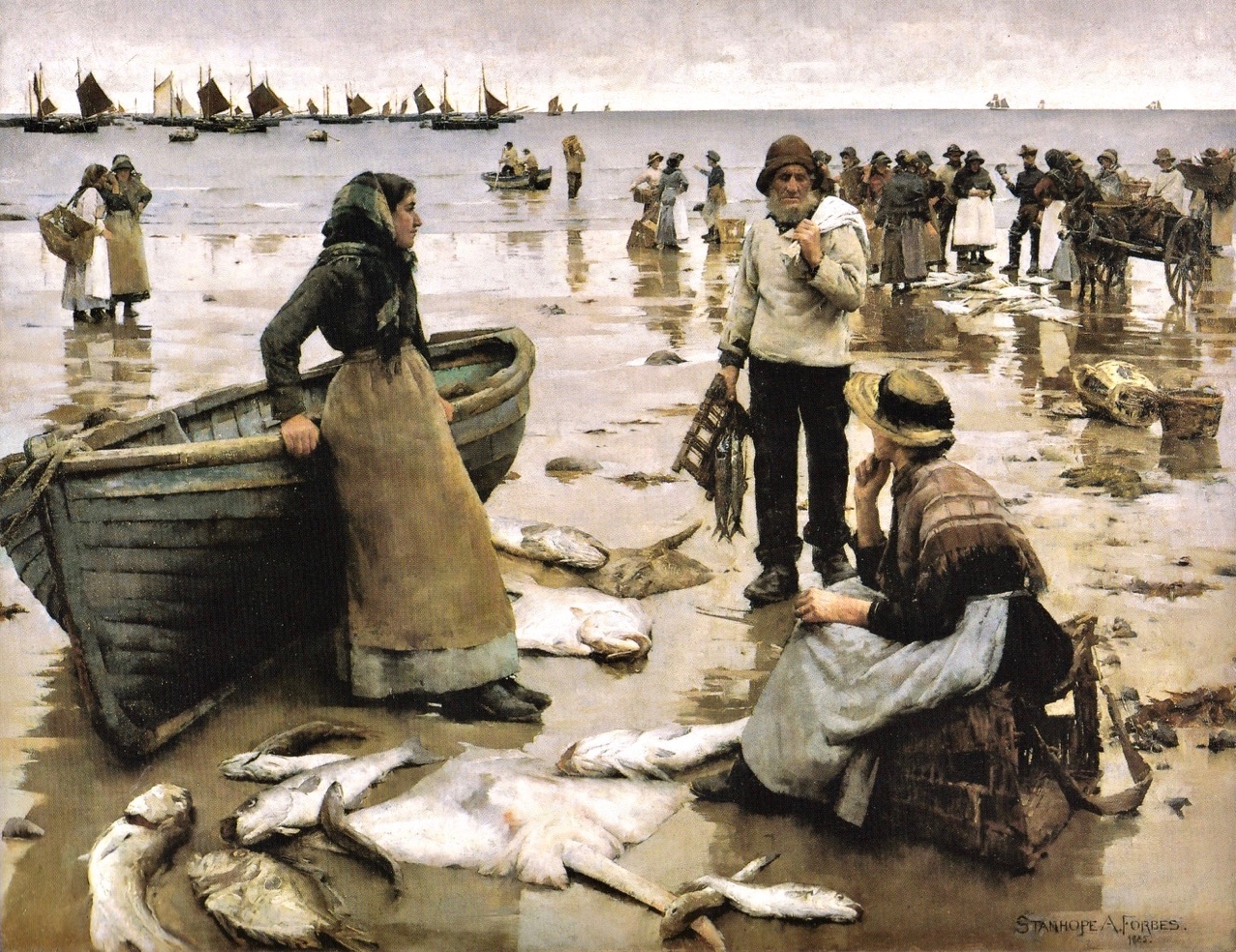
A Fish Sale on a Cornish Beach by Stanhope Alexander Forbes, completed in 1885 (now in the City of Plymouth Museum and Art Gallery). This spectacular painting – five feet long – is a masterpiece of composition and contains portraits drawn from real life: Newlyn locals were delighted to receive ‘sitting fees’ from the influx of artists

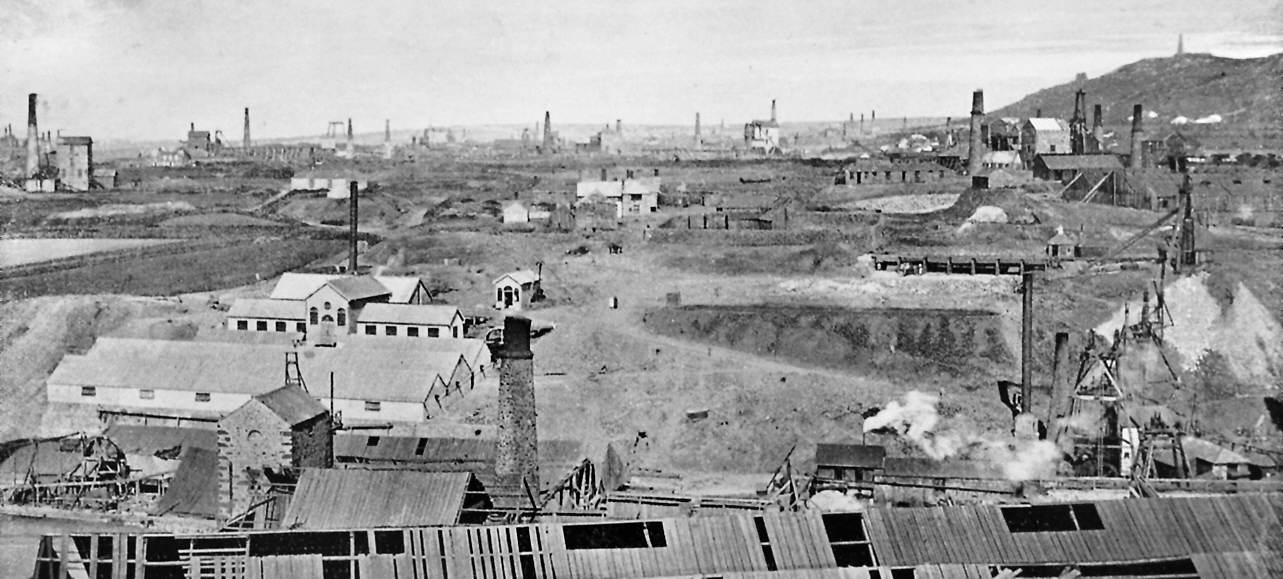
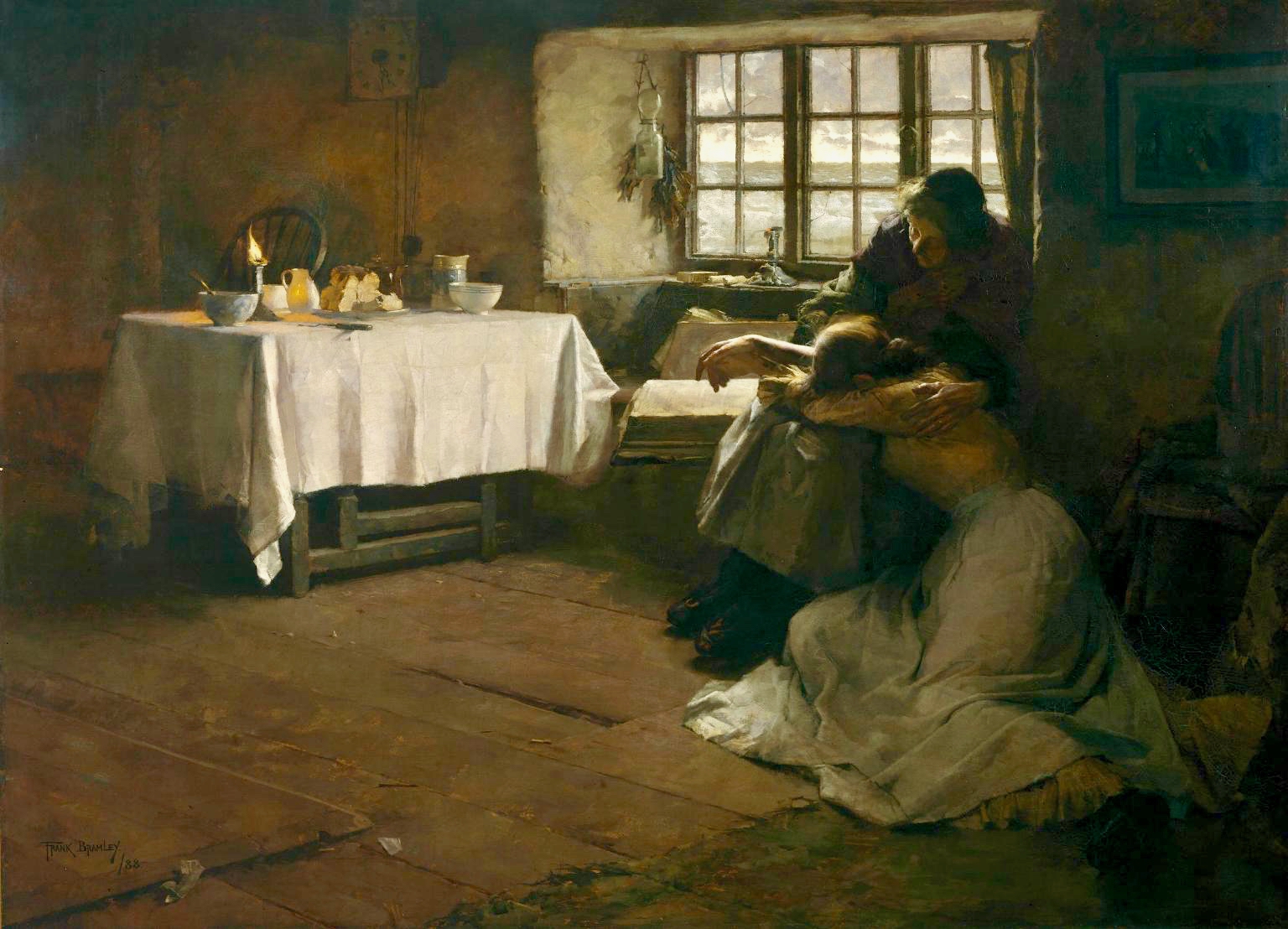
It’s probably true to say that the Newlyn artists romanticised the way of life in rural Cornwall by concentrating on the fishing communities and the beautiful seaboard. There was another reality: the interior of Cornwall’s peninsula was heavily industrialised in the 19th century by the metal mining industry. The artists must have been aware of this reality but ignored any recording of it. There was, at least, some acknowledgement of the hardship and distress of those connected to the sea itself. Frank Bramley’s Hopeless Dawn (beautifully painted although also romanticising in a very Victorian way the aftermath of lost lives at sea), painted in 1888, depicts the widow of a drowned fisherman being comforted by her mother; the lighting and composition of the interior view is remarkable.

Upper picture – the industrial landscape of inland Cornwall: Dolcoath Mine 1883. Lower picture – Frank Bramley’s A Hopeless Dawn, painted in 1888 (Tate Gallery, London)

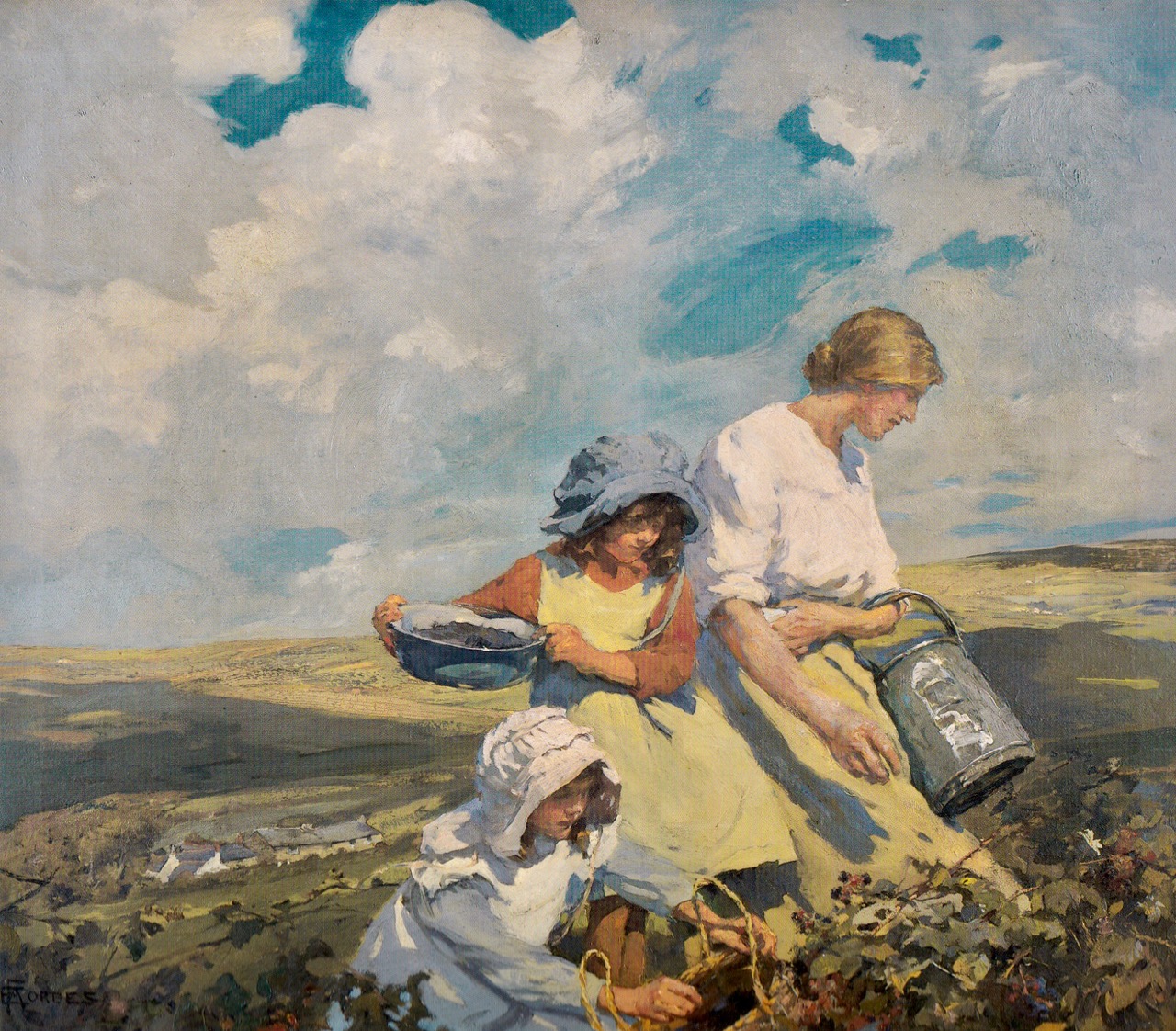
Stanhope Forbes lived into his ninetieth year. By all accounts he achieved success in his chosen profession, but his personal life saw some tragedies: Elizabeth Armstrong – an equally talented artist who travelled from her native Canada to work in Newlyn – married Stanhope in 1889. She pursued her own career as a painter and etcher until her early death – aged 52 – in 1912. Their son Alec died on the battlefields of France in 1916. All are buried in the beautiful churchyard of Sancreed, in Cornwall.

Blackberry Gatherers, painted by Elizabeth Armstrong Forbes in 1912 (Walker Art Gallery)

West meets West – a celebration of three contemporary artists from Cornwall – runs through to 8 July at Uillinn, Skibbereen

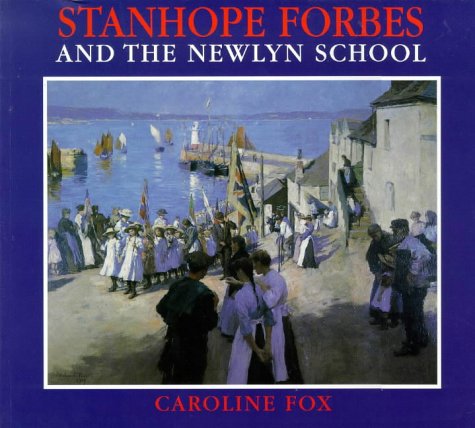
I am indebted to Stanhope Forbes and the Newlyn School by Caroline Fox, published by David & Charles 1993, for much of the biographical information on the artist in this post.