The Wonders of Monasterboice

In our recent journeys around Ireland we both had opportunities to indulge our particular interests. Among them, Finola was able to take in some fine examples of stained glass and Romanesque architecture, while I concentrated on the beautiful medieval carving of a number of Irish High Crosses, to add to the examples I have written about recently.
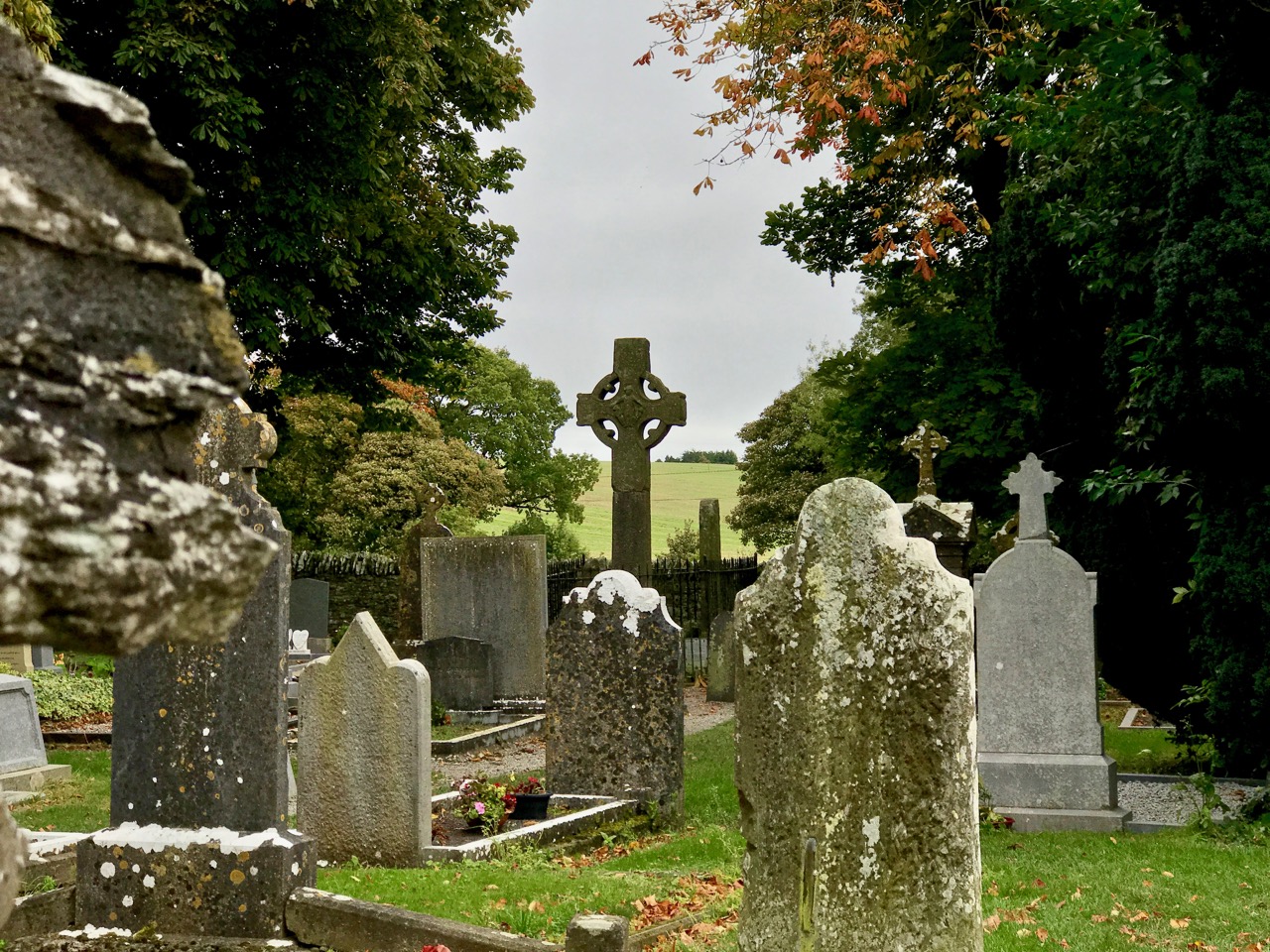
For any Irish High Cross enthusiasts (I suspect that there are many of you out there), Monasterboice in County Louth has to be on the list of ‘must see’ places. It was founded in the 5th century by Saint Buithe, a follower of St Patrick – the Irish Mainistir Bhuithe means Monastery of Buithe – and was an active and important Christian settlement through to the 12th century, when its importance was eclipsed by Mellifont. I found out that St Buithe ascended into Heaven by climbing a ladder that was lowered down to him for the purpose.

Left – a photograph of the great cross at Monasterboice – known as  Muiredach’s Cross – taken in 1905 and, right – the same west face seen today. Finola is there to show its true scale: remarkably it is 5.5m tall

Muiredach mac Domhnaill, who died in 923, was an Abbot at Monasterboice. He is  credited with commissioning the great cross, shown above. It’s not quite the tallest high cross in Ireland, but it’s said to be the finest, probably because of its stature and remarkable state of preservation. The carved panels are all legible, and the biblical stories illustrated have all been identified. An inscription on the lower section of the cross shaft states: OR DU MUIREDACH LASNDERNAD IN CHROS – A prayer for Muiredach under whose auspices this cross was made. Confusingly there was also a king, Muiredach mac Cathail, who owned the lands on which the monastery was built. He died around 867, so it is possible that the cross was commissioned by him, or was made in commemoration of him, rather than by the Abbot.
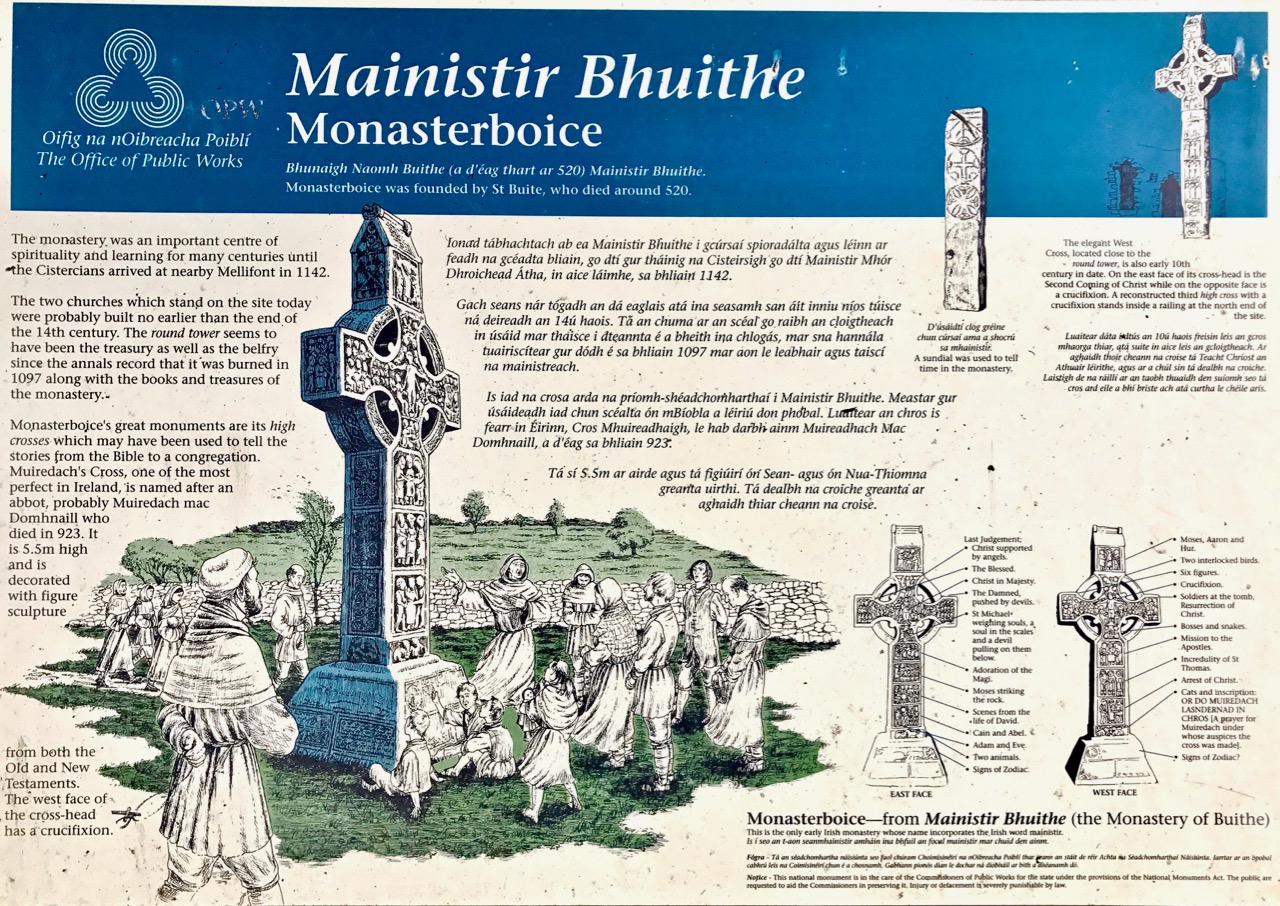
The Office of Public Works has responsibility for overseeing the site at Monasterboice. The well produced information panel details the carvings on Muiredach’s Cross

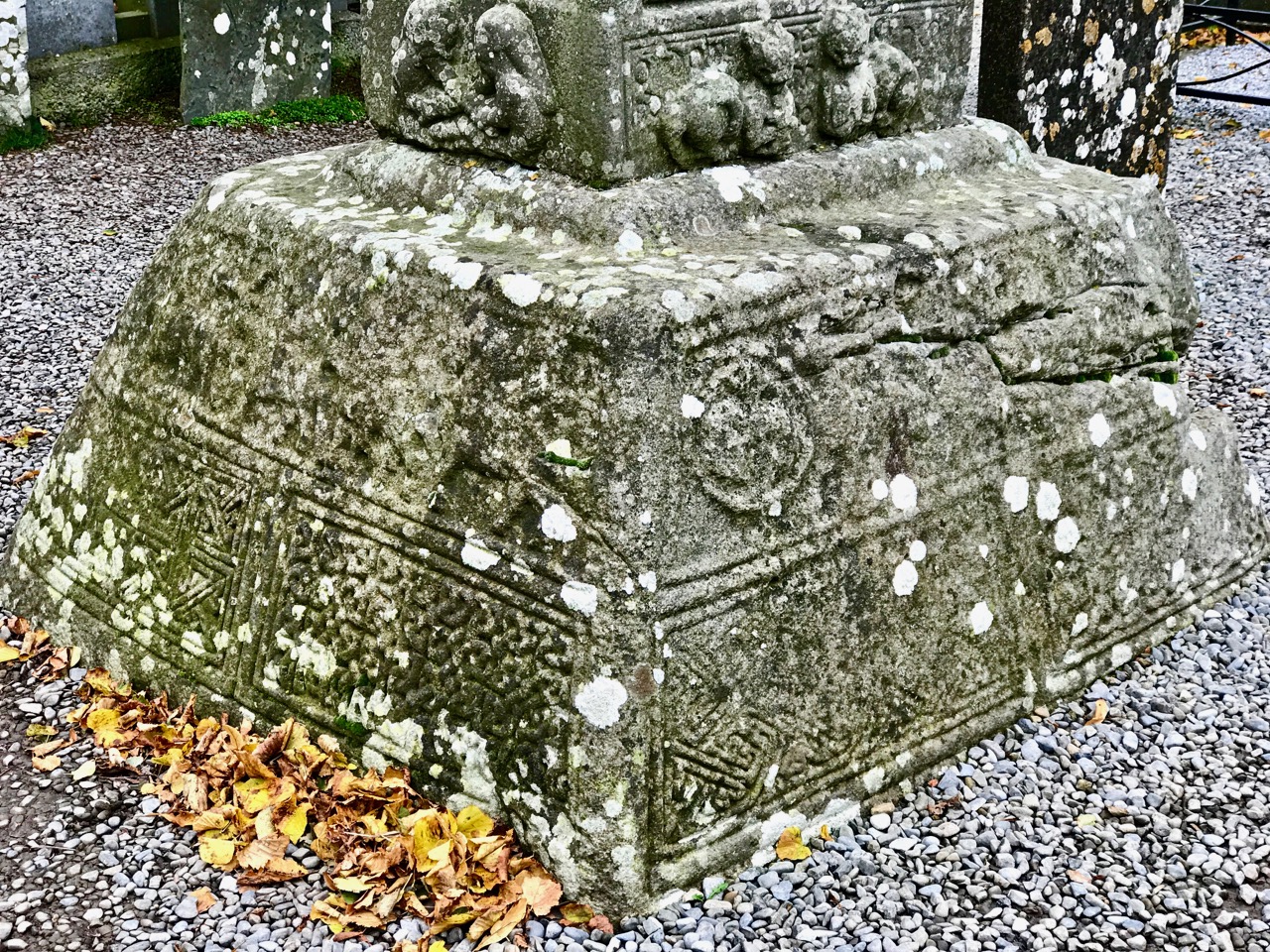
A gallery of detailed carving work from Muiredach’s great cross: the subjects include Adam and Eve and Cain and Abel; Celtic knotwork; Moses striking the rock; the crucifixion and (header) nativity scene with the Magi. The lowest picture, above, shows the decorated base, which is shaped like a saint’s reliquary and the panel with two cats and the prayer for Muiredach

This wealth of medieval art is only part of the site’s wonders. There are two more complete High Crosses, fragments of other carvings and slabs, and a round tower. The Tall Cross or West Cross is the highest in Ireland, at nearly 7 metres. Because of its size it has the greatest number of carved panels of any Irish High Cross. However, these panels are suffering from weathering much more than Muiredach’s Cross, and their present state must raise concerns for all the carvings at Monasterboice. At other sites, crosses have been sheltered (Moone) or moved into buildings (Clonmacnoise, Durrow).

The Tall Cross (or West Cross) at Monasterboice; left – in context with the round tower beyond; right – an example of a badly weathered panel on the Tall Cross
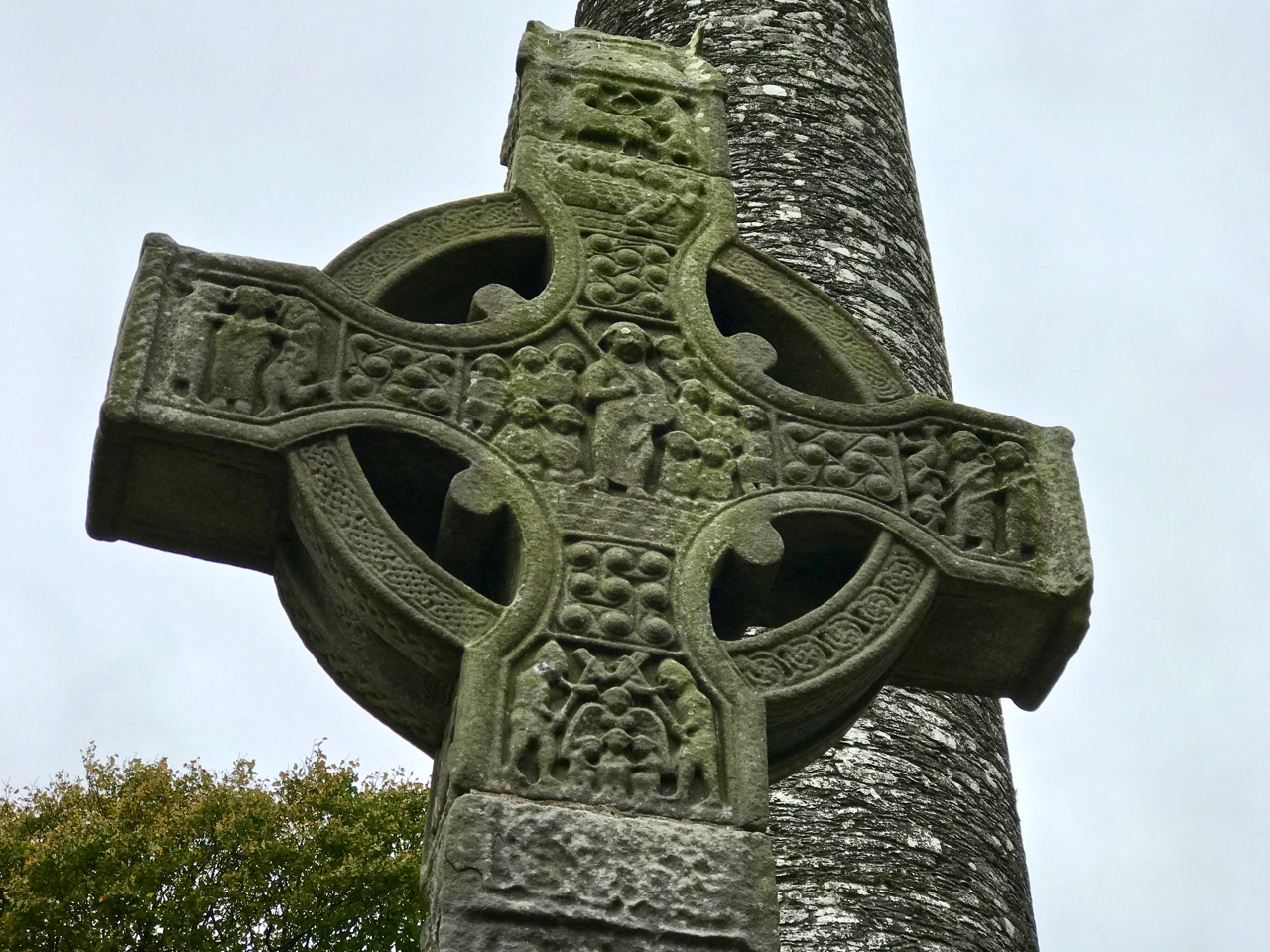
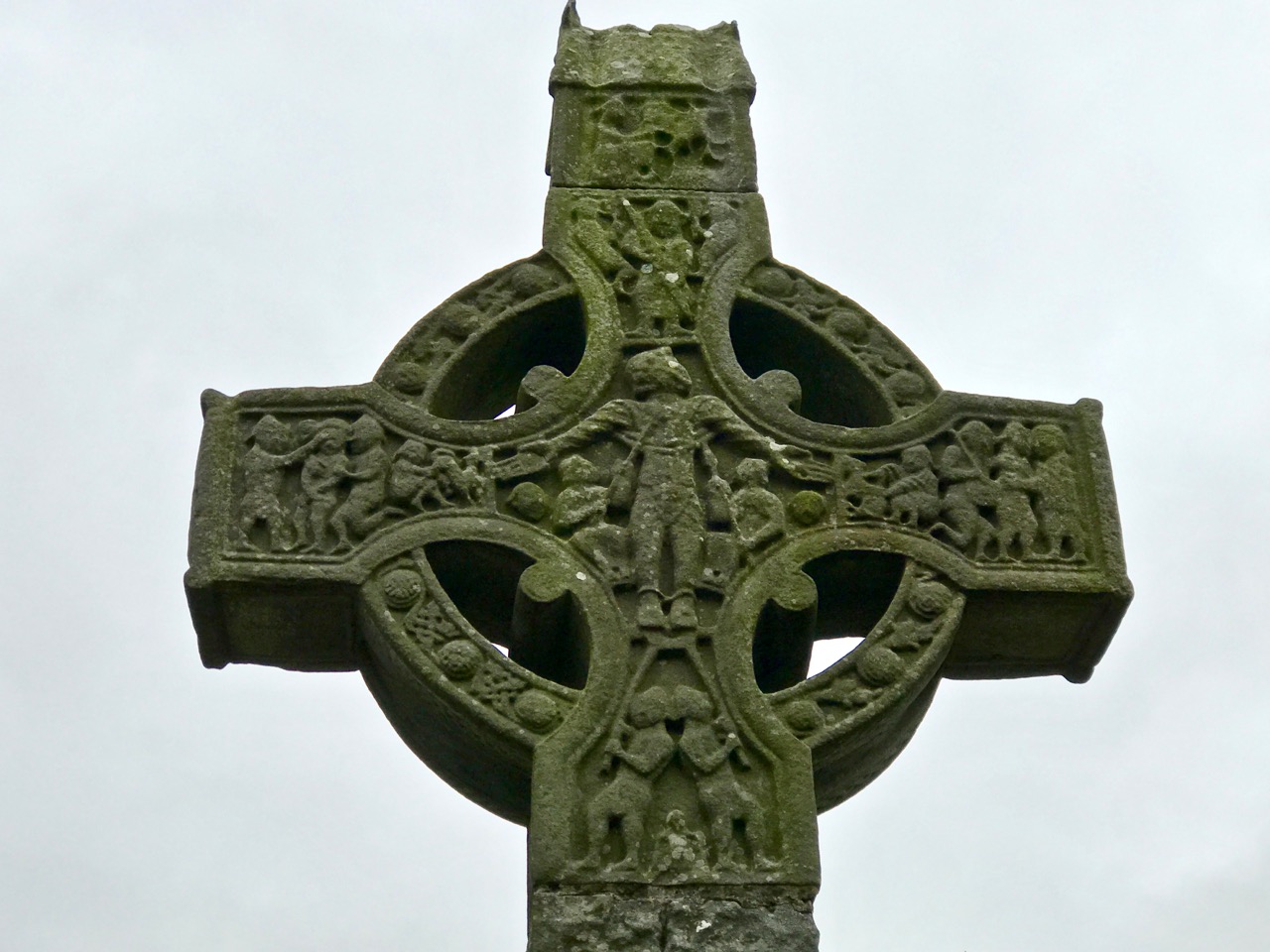
Upper – the west face of the Tall Cross cross-wheel, which is in comparatively good condition, and lower – the east face. The number of scenes depicted on these panels alone is remarkable

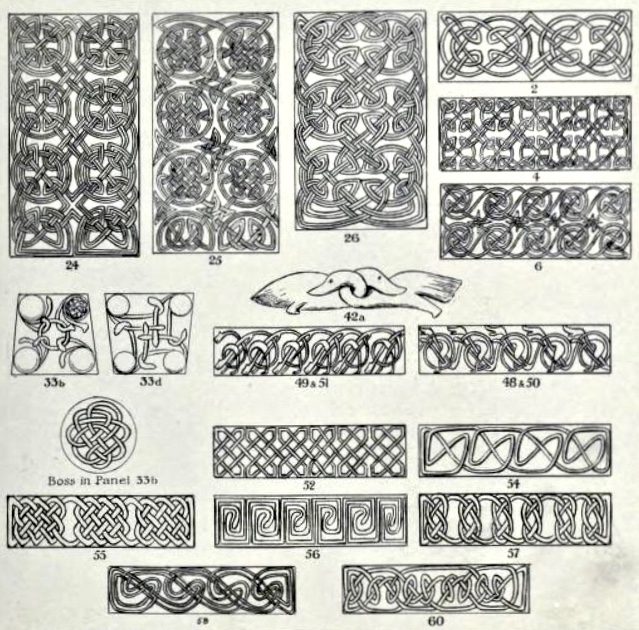
Carved panels on the Tall Cross at Monasterboice and – lower – a study of Celtic knotwork found on Irish High Crosses, taken from MUIREDACH – Abbot of Monasterboice 890-923 AD by R A S McAlister MA FSA, Dublin 1914

There is a third High Cross at Monasterboice, known as the North Cross. It is less spectacular, perhaps, than the large ones, and the carvings are comparatively minimal. Nevertheless, its modesty gives it a somewhat more refined character. Close to the North Cross are some fragments, including part of a medieval sundial – reminiscent of the one we saw at Kilmalkedar, County Kerry, earlier this year.
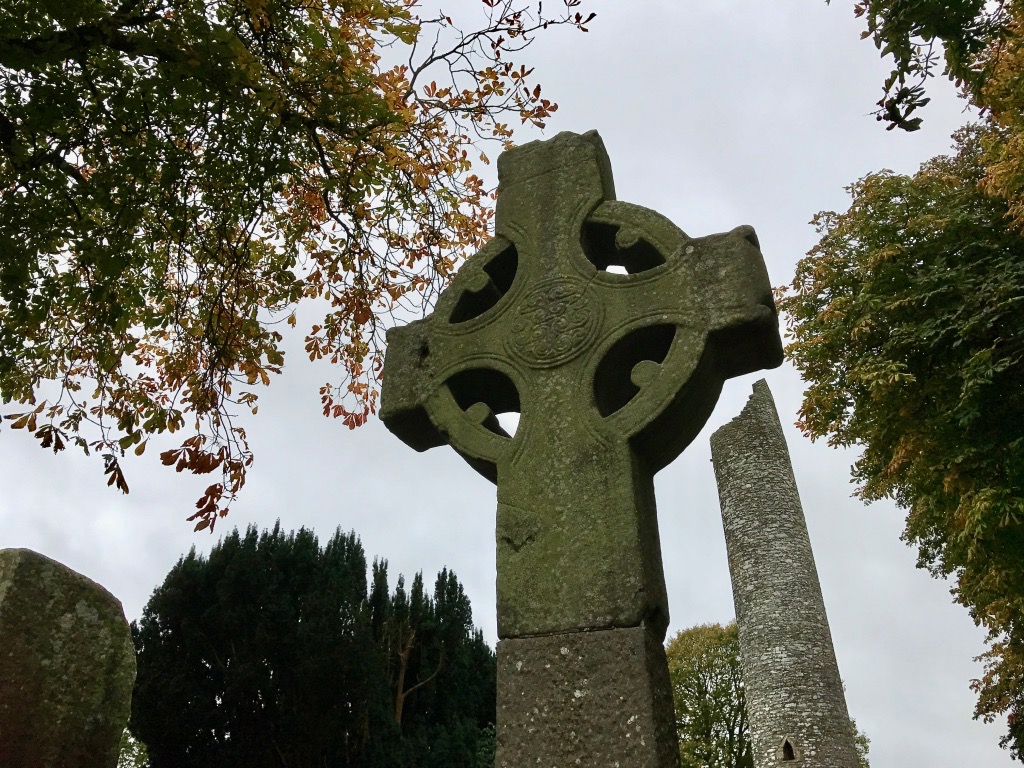
Upper – the North Cross with the round tower in the background; lower left – North Cross east face and, lower right – nearby fragment of a medieval sundial

Monasterboice displays so many wonders. Yet, in some ways, it’s an uneasy site. It’s probably not helpful – but perhaps essential – that the parking area a little way off is rife with warnings about thieves, and broken glass is evident. There have also been reports of vandalism against the monuments themselves – emphasising their vulnerability. The place is of major importance: during the summer season the site is attended, and guides are available. We were there in early October, when no-one was around.
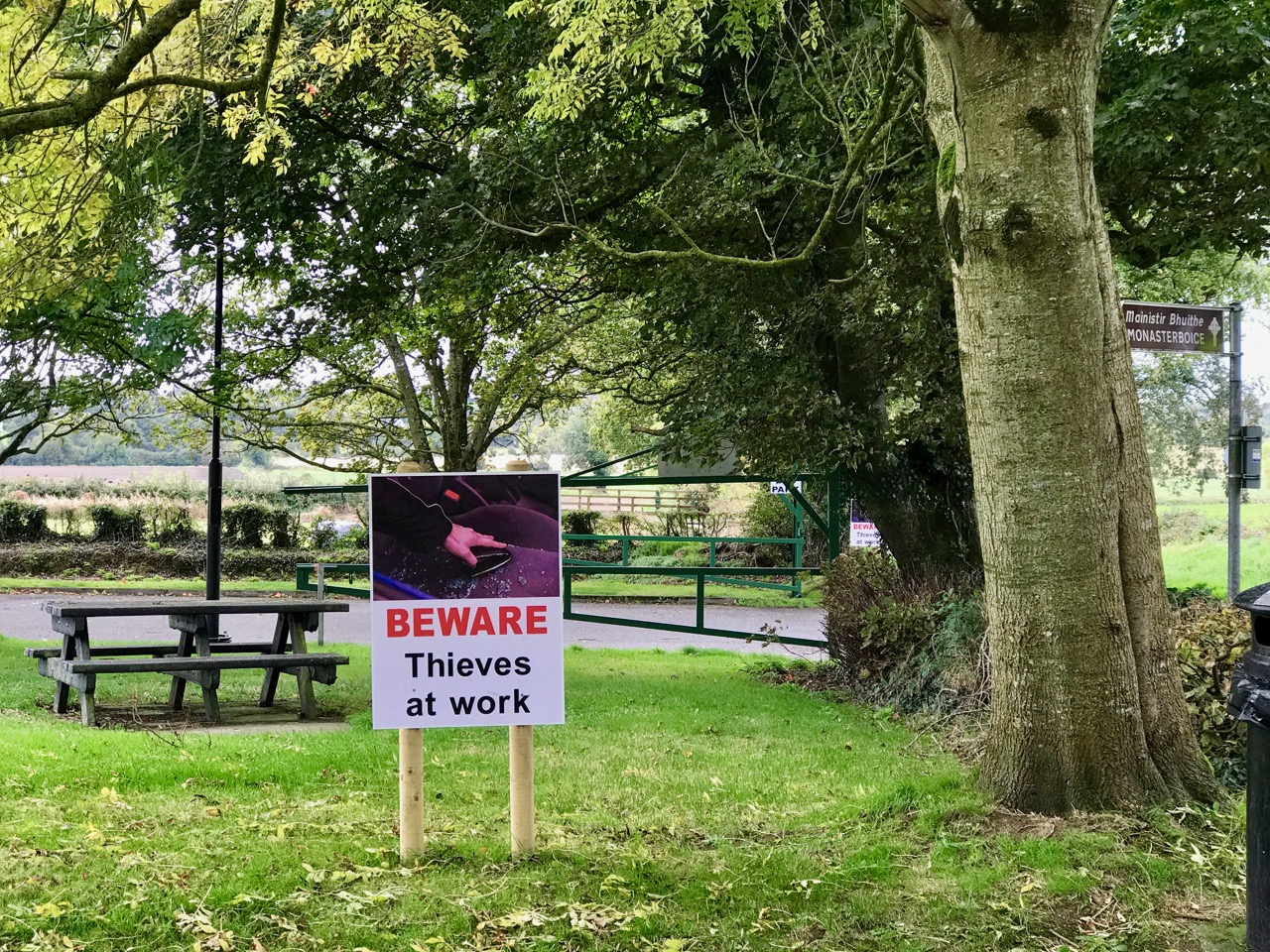
This site – and similar ones all across Ireland – are vitally important to the heritage of this country. The artefacts are irreplaceable, yet too little resource is given to protecting them – from weather and people. As we know from our forays into the world of Prehistoric Rock Art, stone carvings are fragile, and under-appreciated. There’s no obvious easy solution, apart from them being given higher status and priority by the empowered bodies such as the Office of Public Works. They, in turn, need to be given more support by the State, particularly in terms of funding: they do the best they can with very limited resources.

Cats on the base of Muiredach’s Cross, recorded  by McAlister in 1914:

Freshly Dug Queens

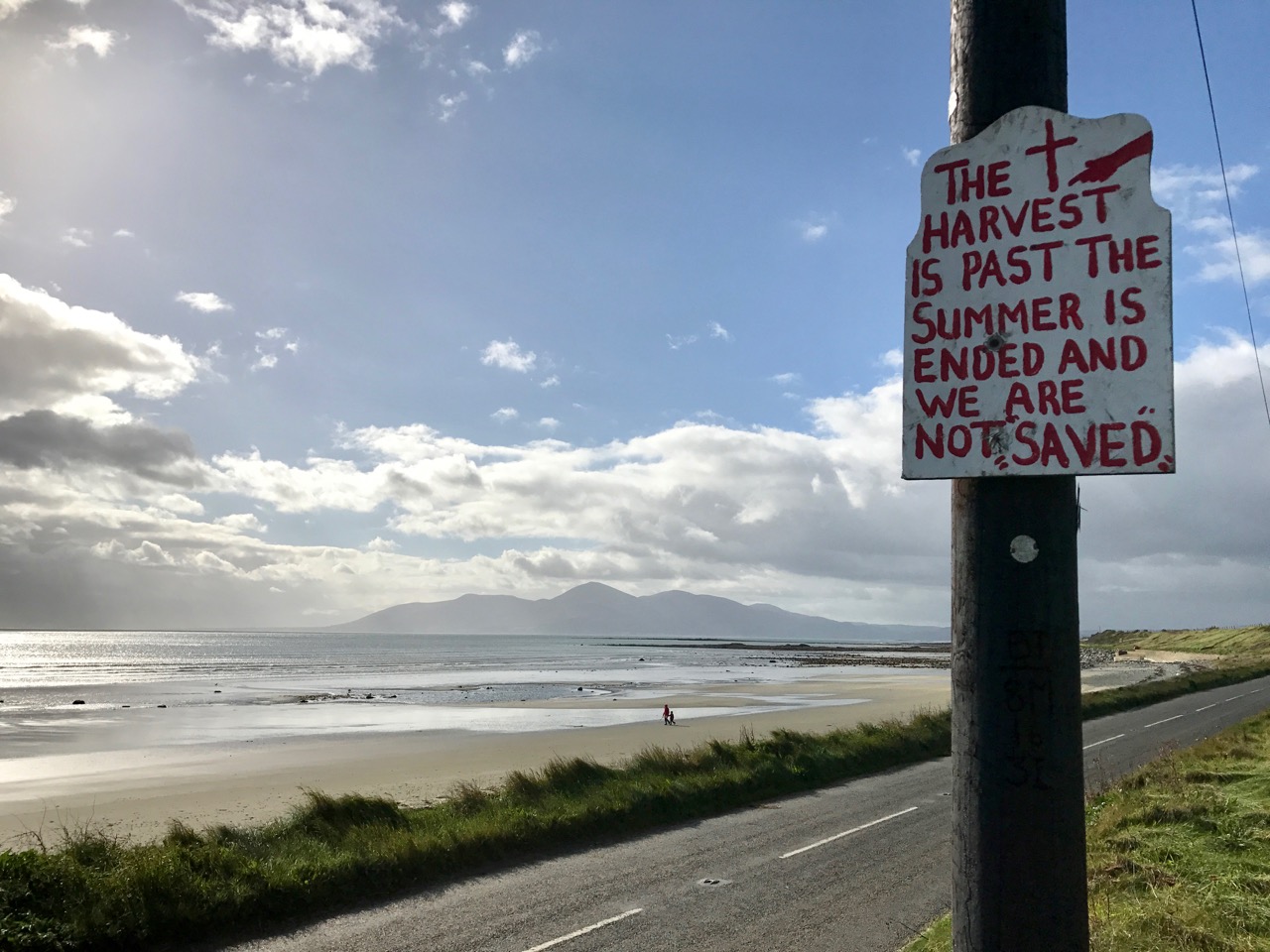
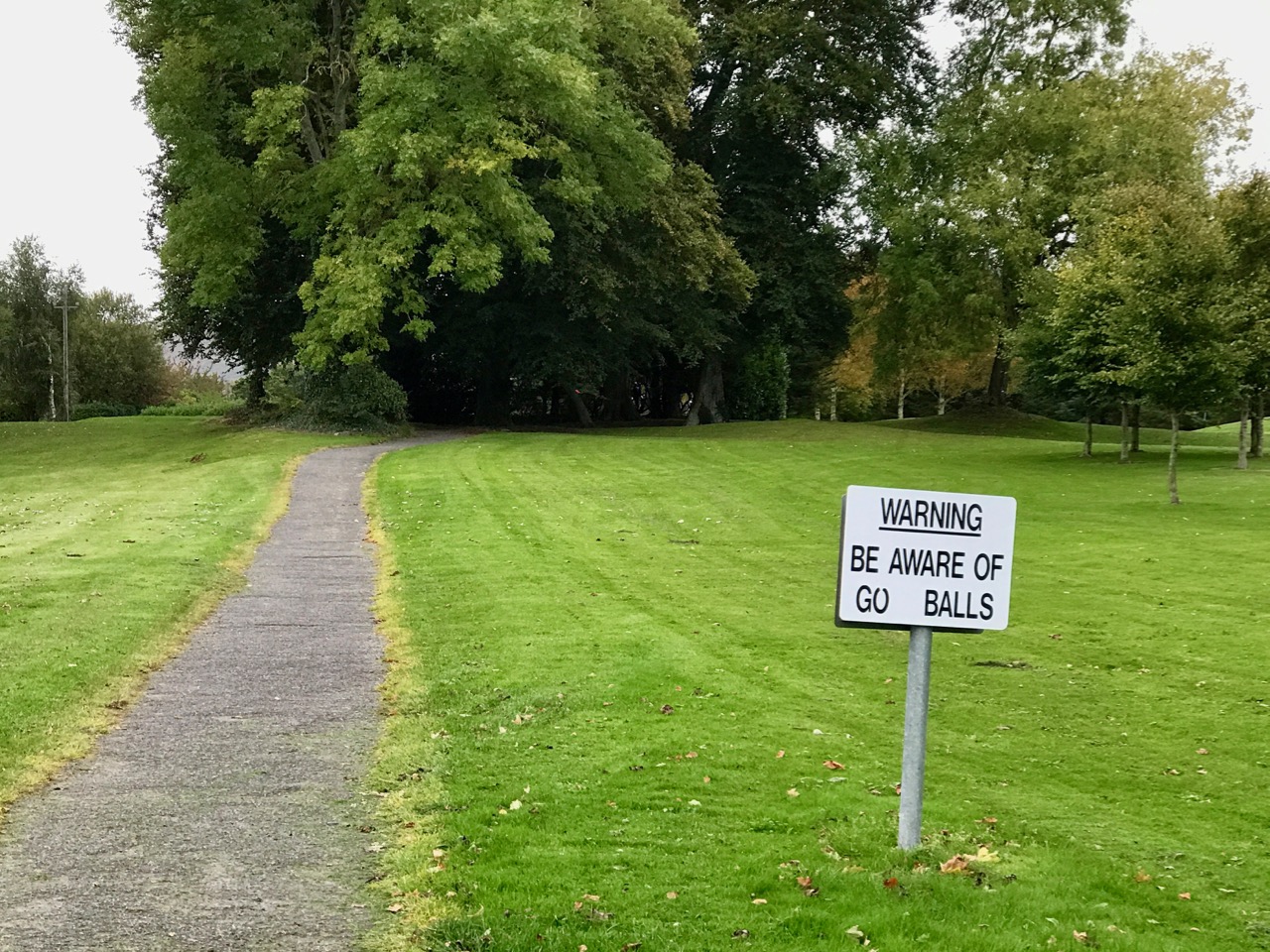
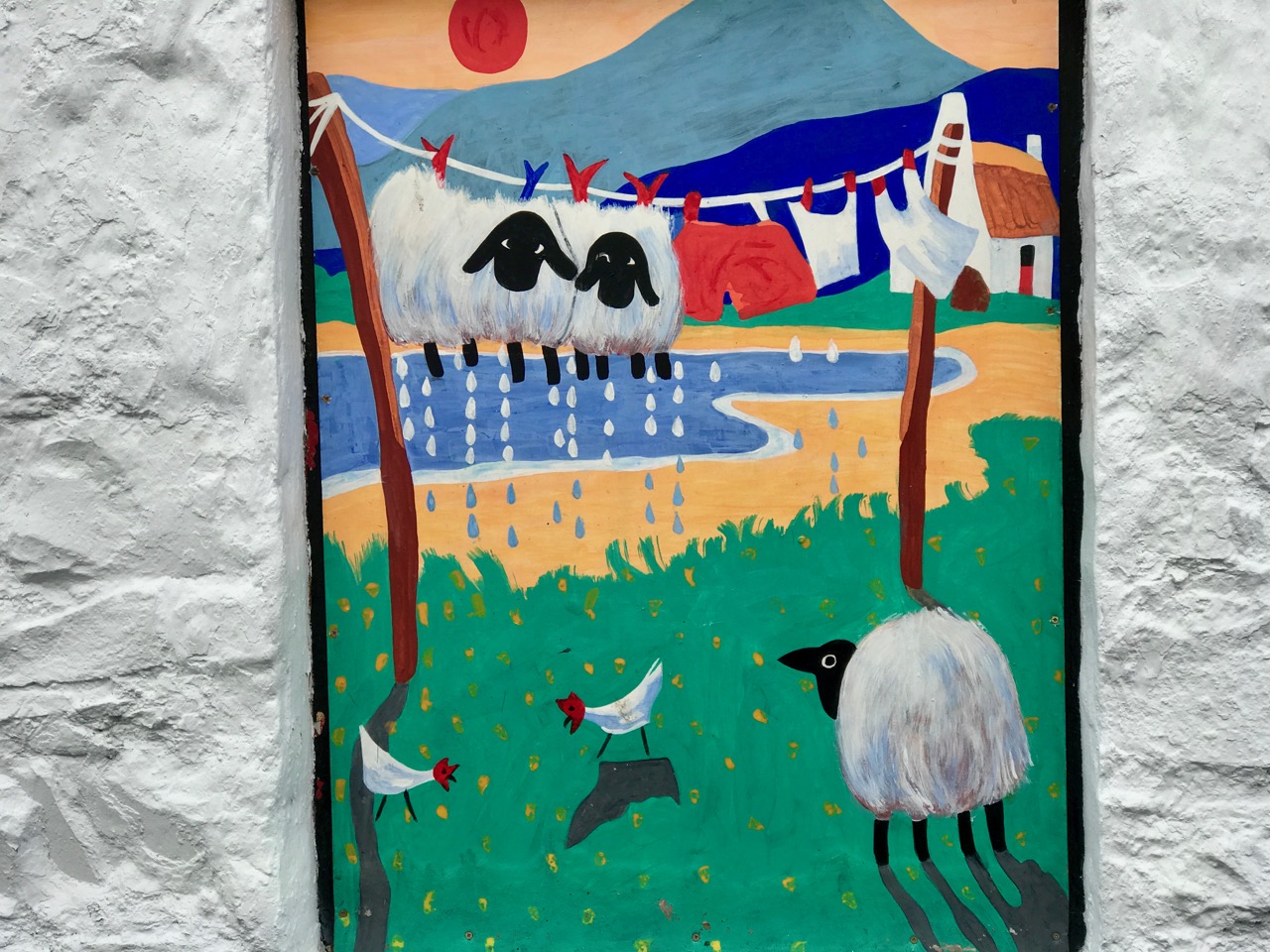
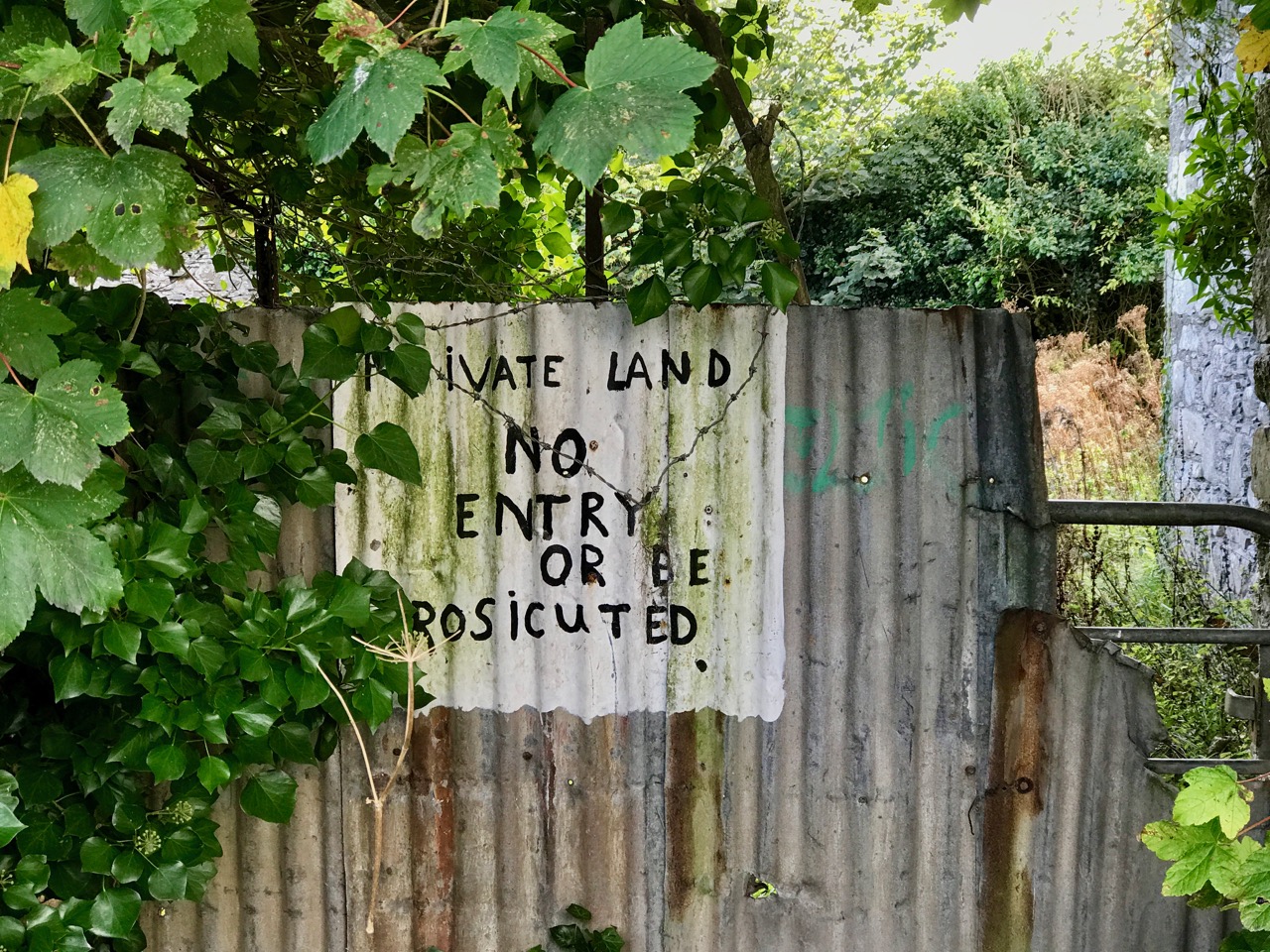
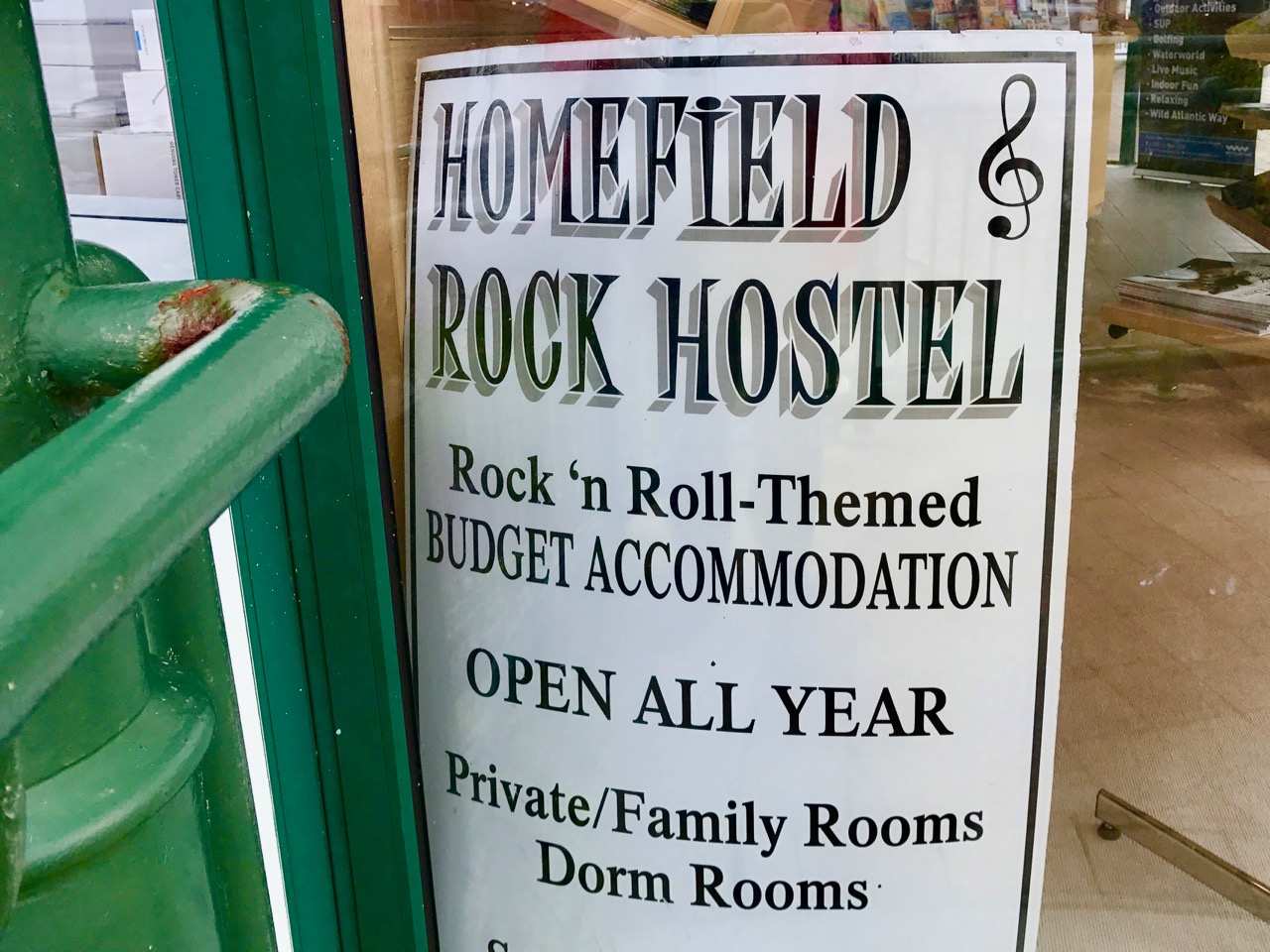
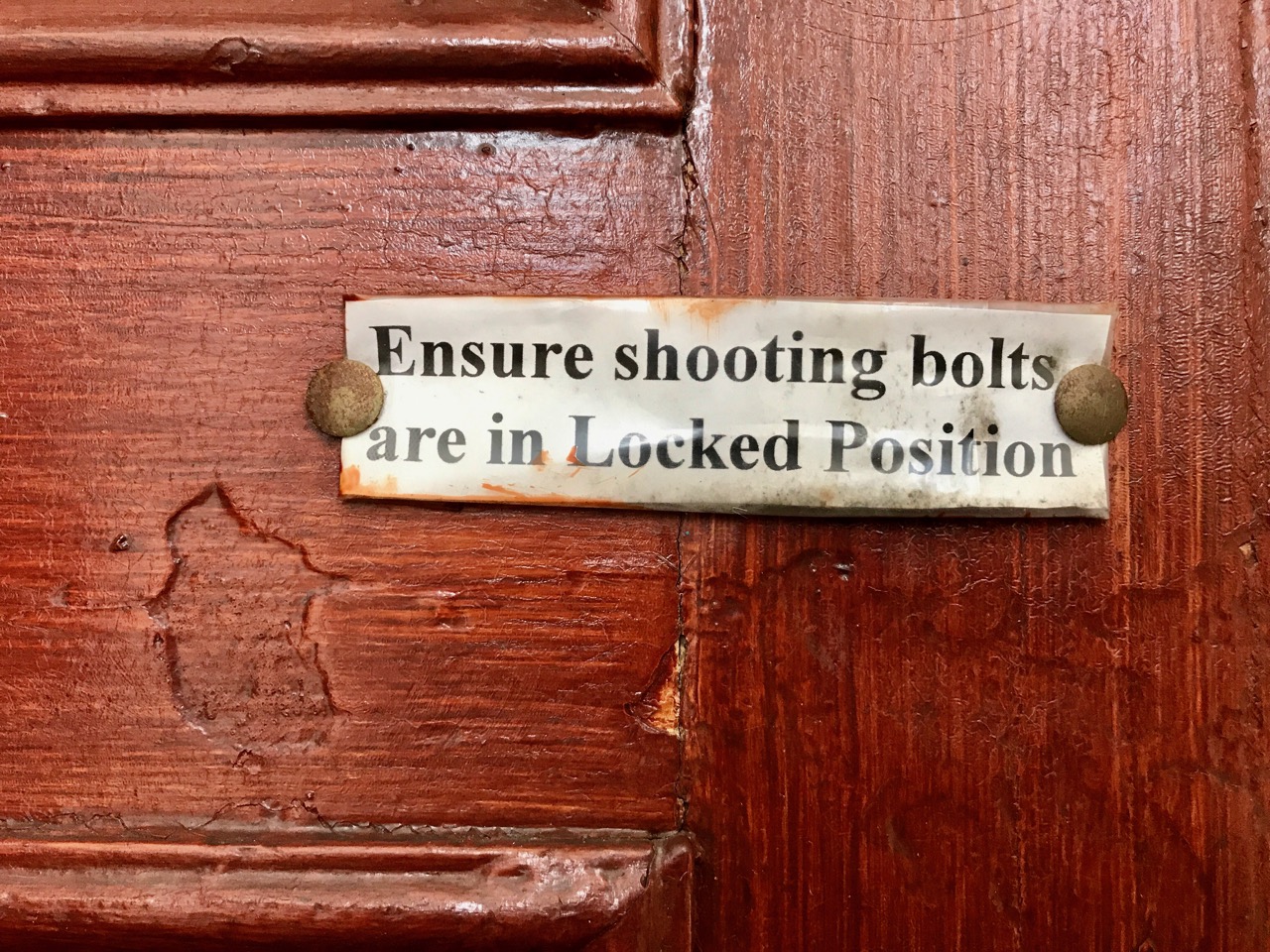
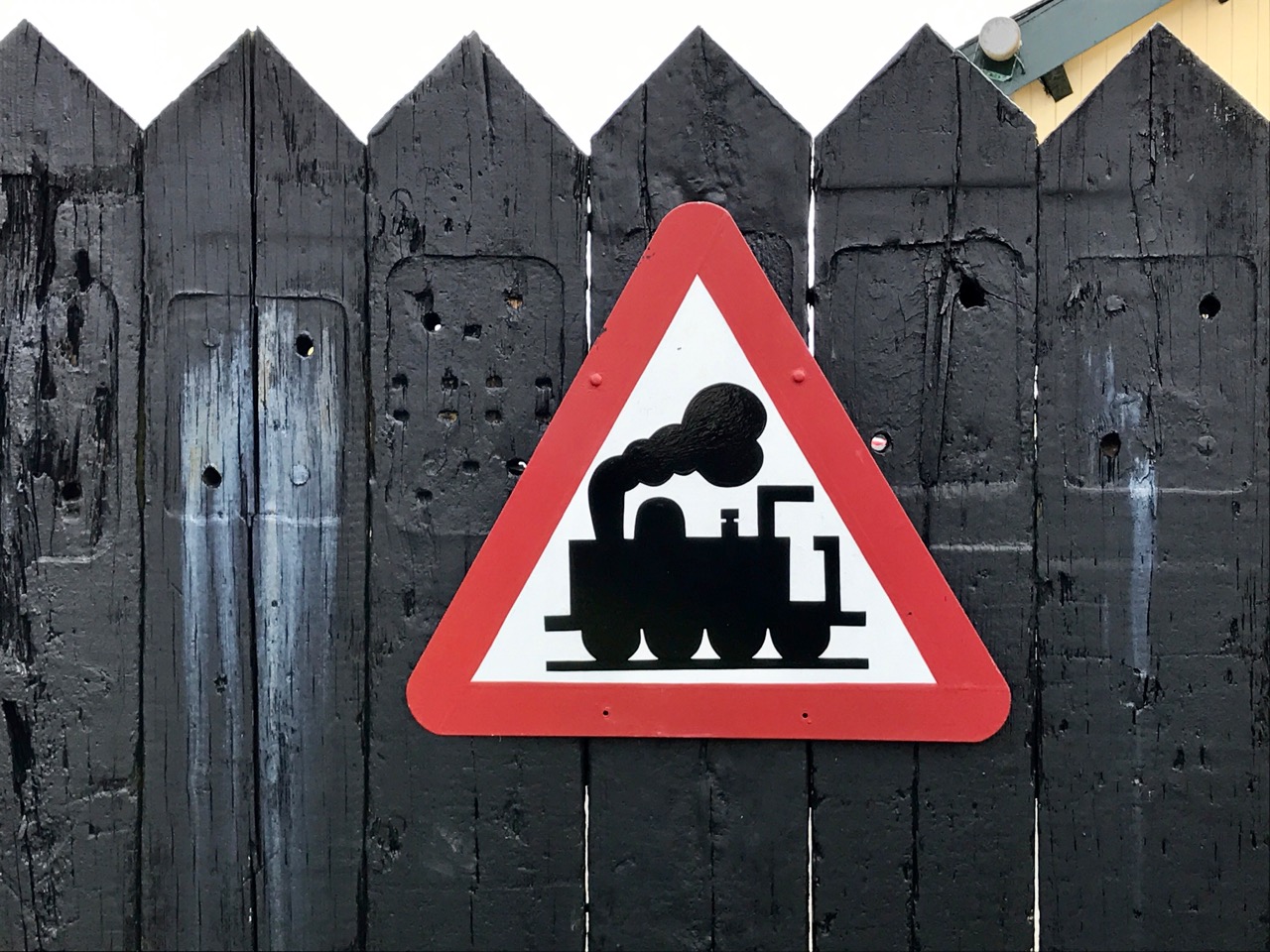
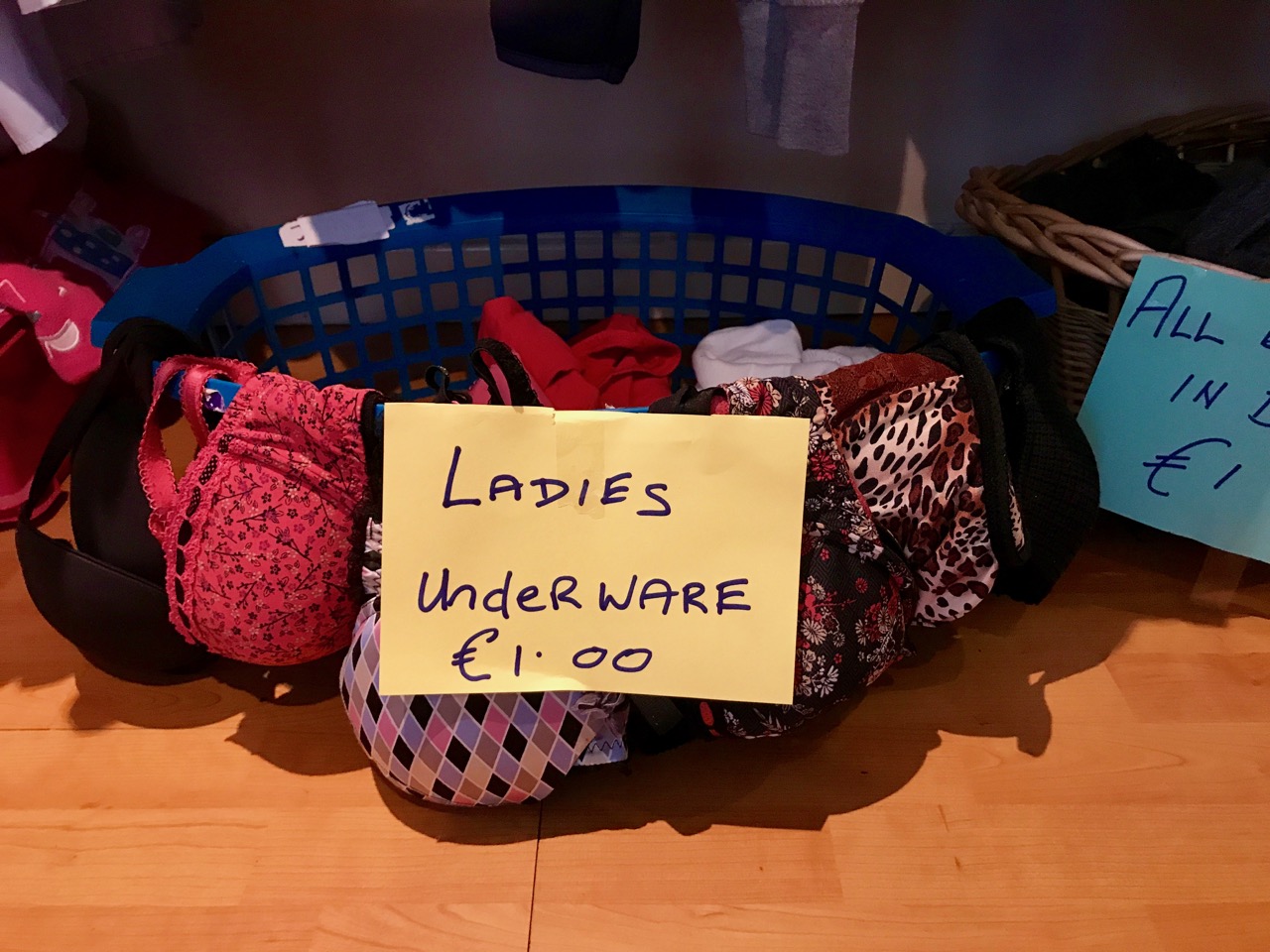
It’s always the ones that got away that are the best! We saw Freshly Dug Queens in a field of potatoes in Northern Ireland but were unable to stop on the busy road to capture it on film. We are just left with the concept hanging in the air… Worthy of a title, however, for this latest review of signs – amusing, curious and sometimes just plain puzzling – from all around Ireland. Take a look at the picture above: the dramatic Mountains of Mourne form a serene backdrop, but I couldn’t resist the enigmatic message hanging on a pole beside the beach.

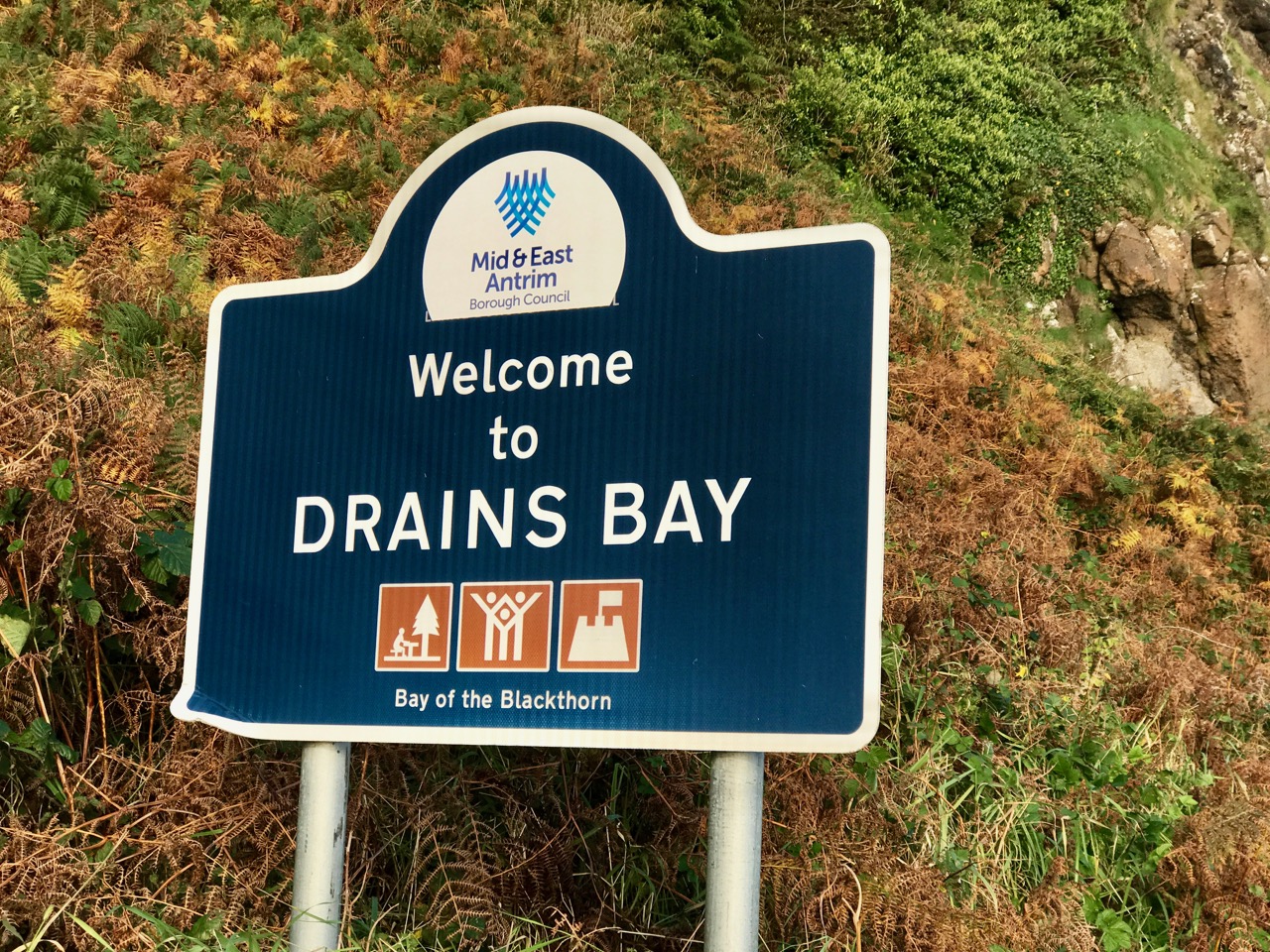
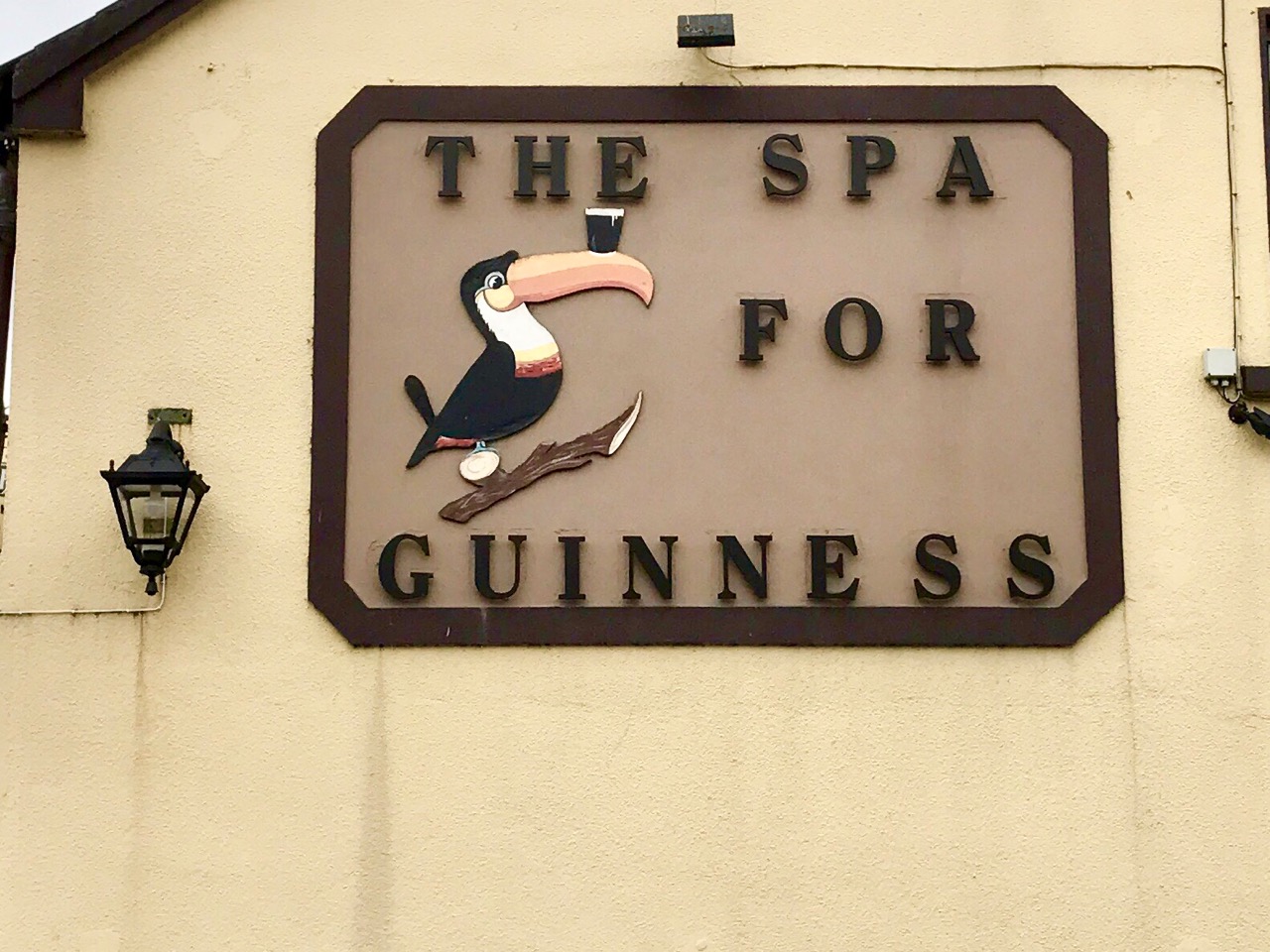
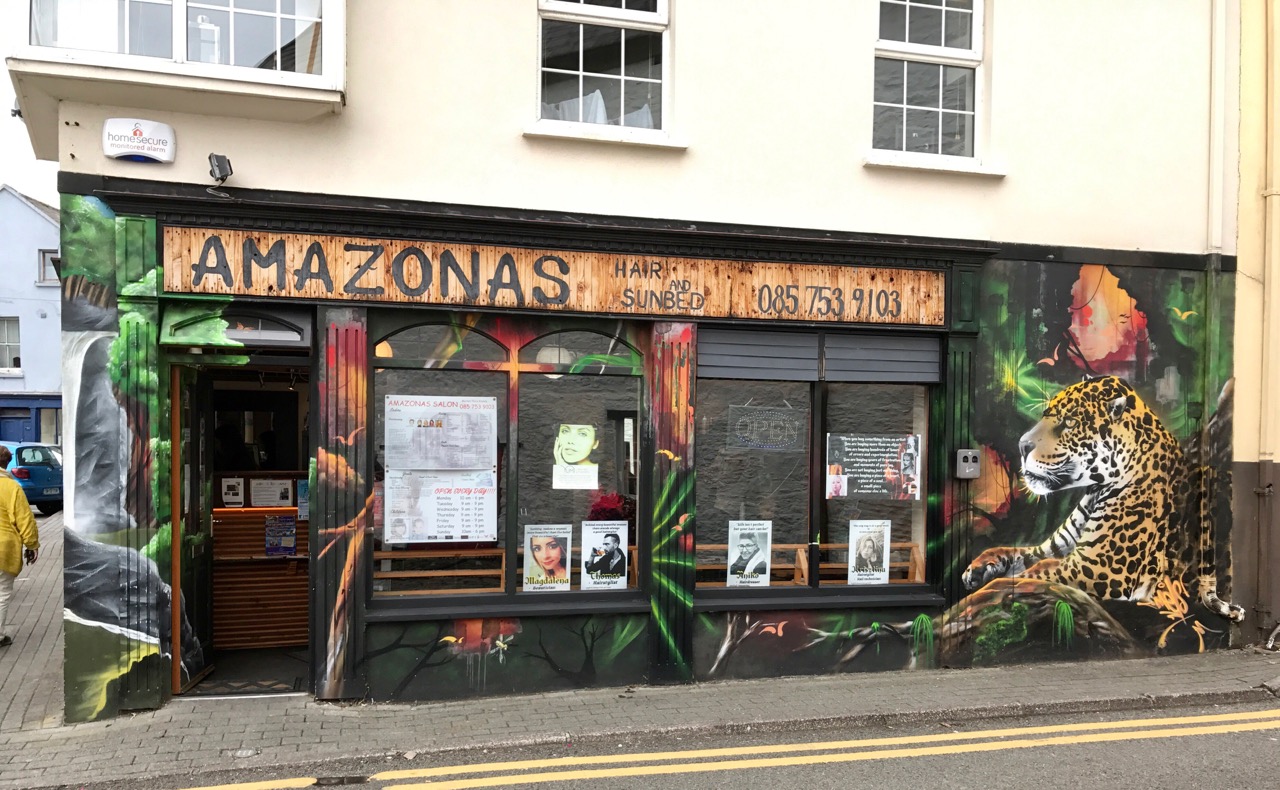
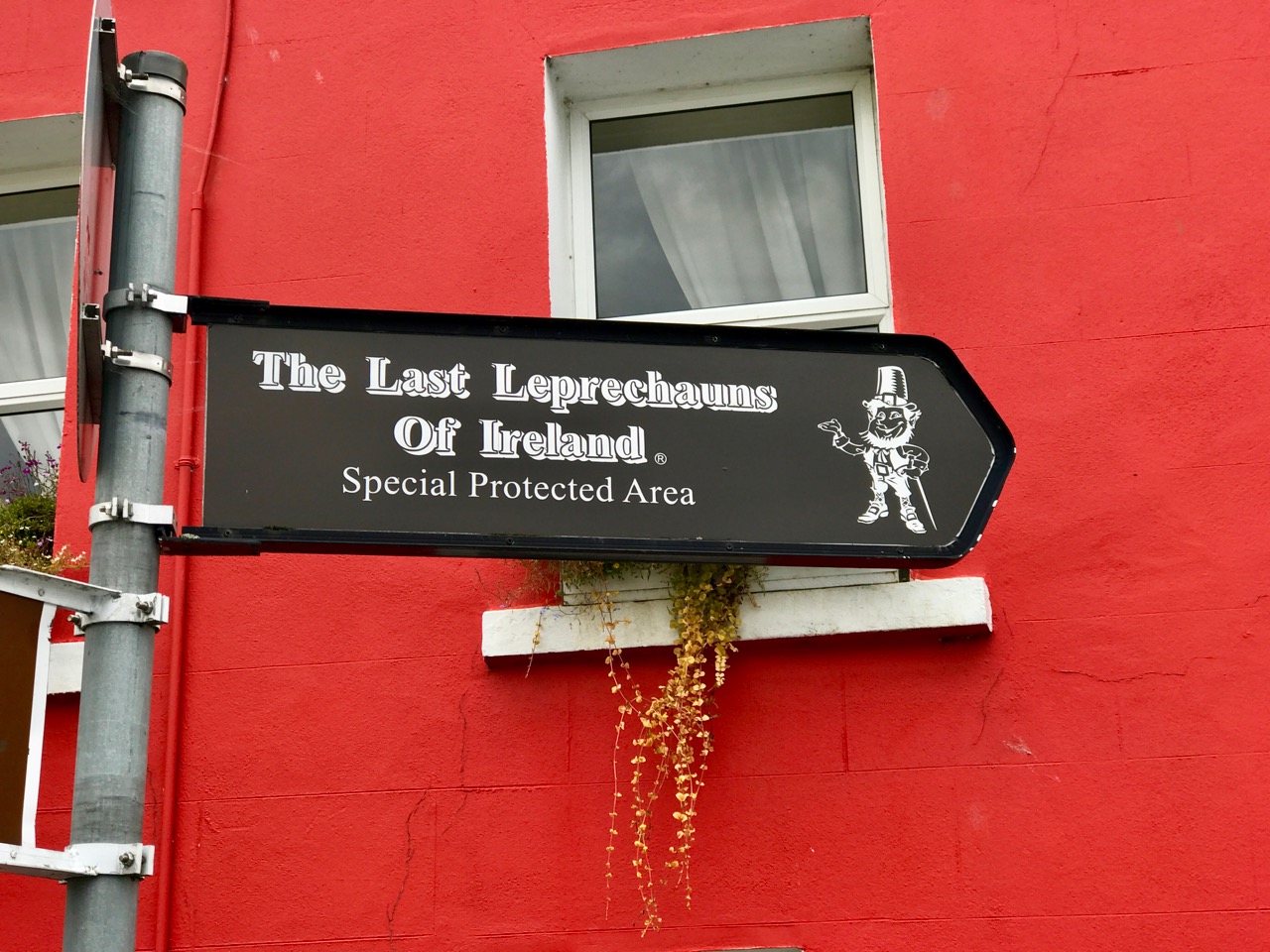
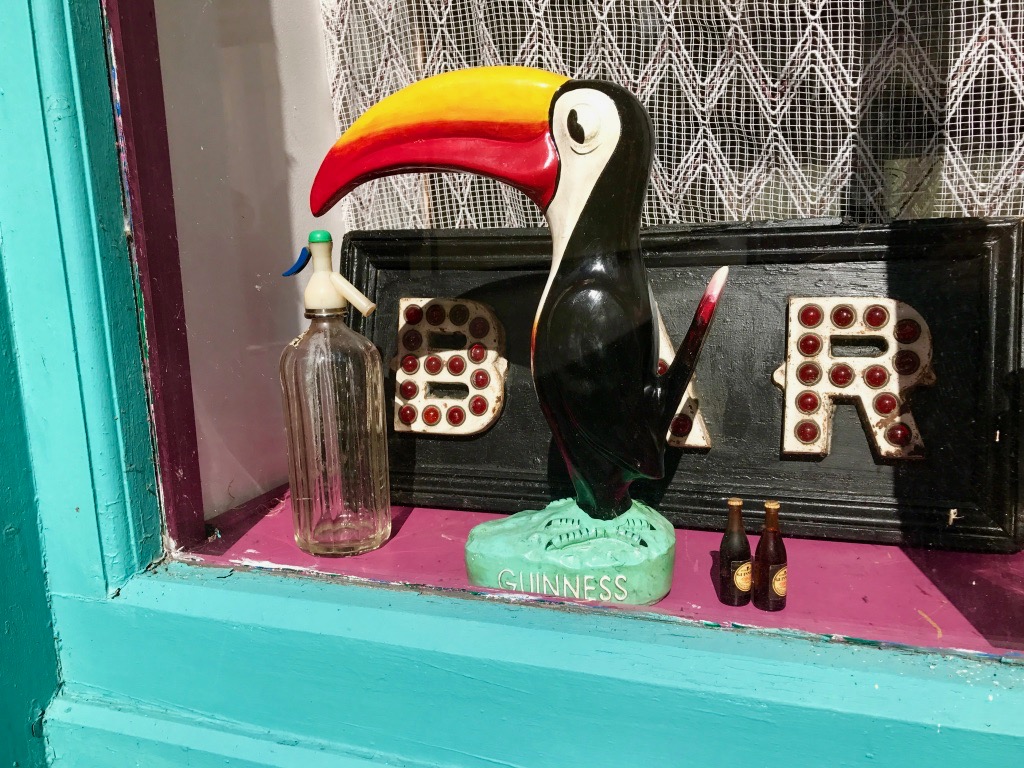
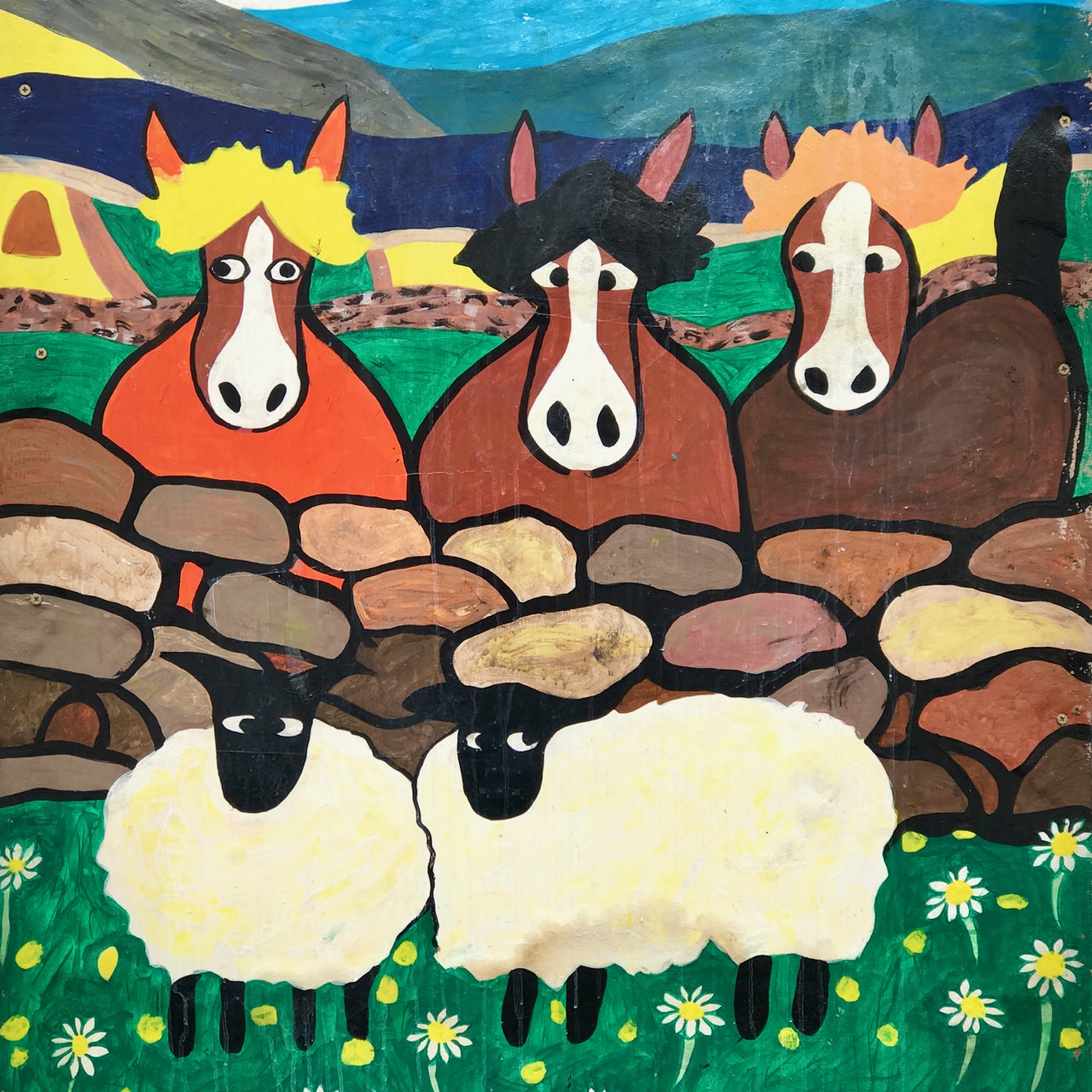
It’s always the case that context is everything: where the sign is often provides the clue as to what it means. But it’s almost better not to know the context. This time around, I’m including some which are purely pictorial – and even some shopfronts which, for me, enter the category of Folk Art. There’s plenty more in my own archives – you’ll find some here. Meanwhile, just enjoy them for the visual delights that they are.

You’ll notice that I have a particular liking for the various Guiness signs. That’s because I remember being fascinated by them during my childhood. I think I learned to read through looking at them!


Shay Hunston and the People of the Wild Atlantic Way

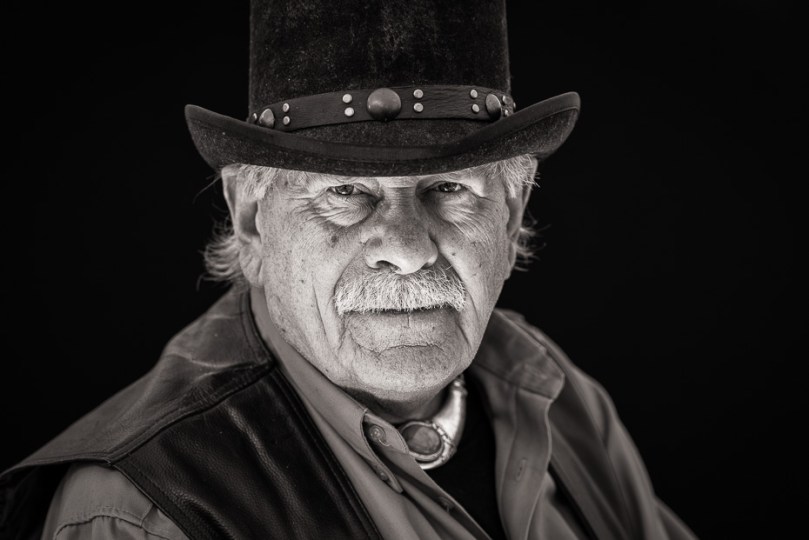
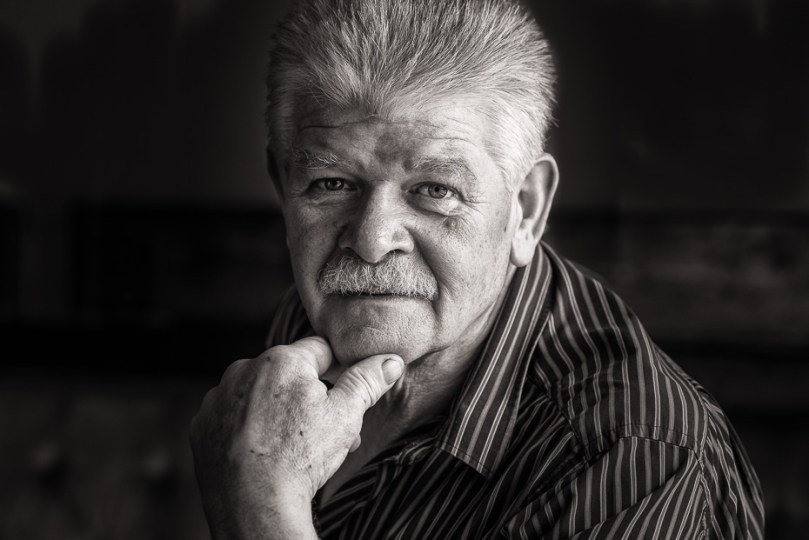
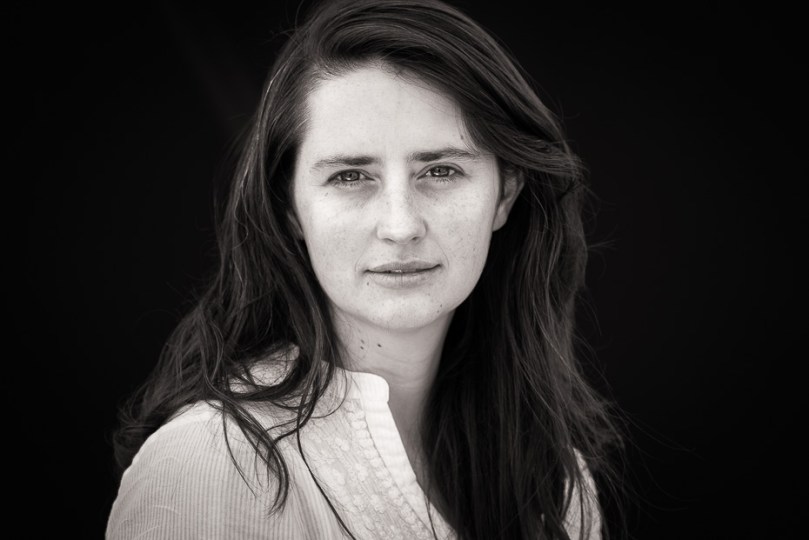
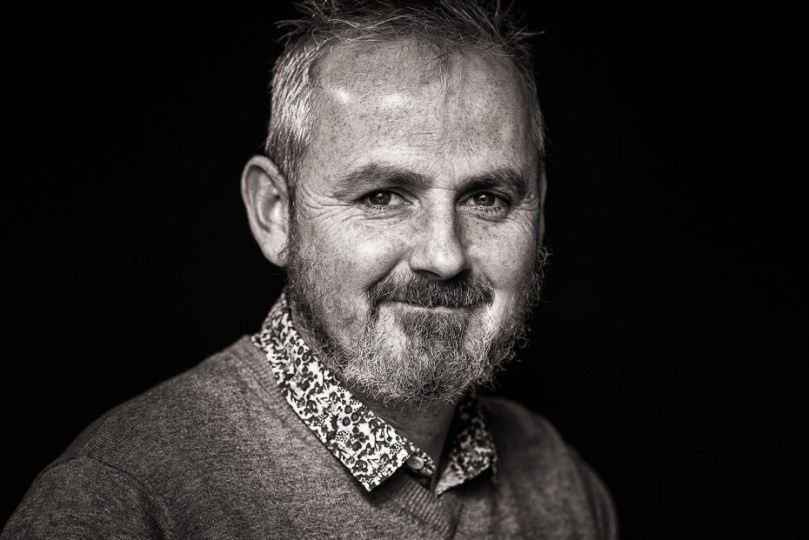
It’s the people! Shay Hunston is passionate about his subject. Sure, we have wonderful scenery, and every photographer is out capturing it. But time and again, what visitors tell us is that what makes Ireland special for them is the people they meet, their warmth, humour, empathy, poetic language, and the interest they take in others. So I set out to document those people – to show the faces and the personalities you will meet along the Wild Atlantic Way.

The first photograph above is part of that project – it’s Mike Watkins, the friendly face we pass most days as we drop into Budd’s of Ballydehob. He sits outside, drinking tea and greeting everyone. Here’s what he has to say about life: I have sunshine in my heart and I never, ever, ever get upset about anything. I’m happy every single day and everybody else should be the same, and we should all hug each other and talk to each other. This I have learnt from a lifetime of experience.

Tim Healy – Leap. The best advice I ever received in life was when I came to live in Leap in 1983. I knew of a local lad who had a reputation for liking a bit of a ‘Work Out’, he was well able to look after himself. So I said to him, just to wind him up, would you like to have a go, the two of us for 20 pounds. No, he said, I’ll tell you what, don’t be wasting your money, we’ll fight for pleasure.

So far, Shay’s project has been a Wild Atlantic Success, and he hasn’t even moved beyond Cork yet. He’s been going from community to community along the Wild Atlantic Way, photographing whoever volunteers. Once the prints are made, the town or village mounts an exhibition of his strong black and white images, in shop fronts, on the approaches to town, on walls and railings.

Caroline O’Donnell – Ballydehob. My grandmother once told me that as long as I have music and laughter in my life I would never grow old. I think about her every day and try not to grow old. She also said never marry a man you haven’t seen drunk… I’m still thinking about that advice.

We missed the shoot in Ballydehob as we were away, so we participated in Schull. It’s a nervous business, sitting for a portrait, but Shay creates an instantly warm and relaxing environment. He’s good humoured and patient and empathetic and he obviously loves doing this. He was also cool about my photographing him and his process (no pressure like, to be snapping away in the presence of genius!) and doing a blog post.*

Pat Murphy – Castletownbere. I started fishing at 13 years of age in open boats with a crew of three. We fished winter and summer in all kinds of weather. From October to March we fished for scallops, two rowing the boat and the third man looking after the dredge, by God you had muscles from pulling oars for six months…In summer we would fish for lobsters and crabs. To make the pots we would go to the mountains to cut hazel and sally rods. I use to make four pots a day. Besides the fishing we all had a bit of land to grow our own vegetables and potatoes. Come September, those of us who had a pig or a cow would slaughter them, butcher and salt the pieces and put them in a barrel, there they would be left for 6/8 weeks, they would then be hard dried or smoked, we would also salt fish. The best life advice I could give anybody is to be able to negotiate with people, to work together, not against each other.

Shay asks people to write a few words to go with the image. It’s lovely to meander down the street and read what people have said, so I’ve included snippets under each photograph.

Saoirse Canty – Ballydehob. My perfect day would be my friends and I hanging out around Ballydehob. We would do nothing and talk about nothing all day. The reason why that is so perfect to me is because it makes me truly happy and the familiarity of this beautiful town is very comforting. It is one of those things that I could do forever.

You will notice, of course, that this post is (not surprisingly) a little heavy on Ballydehob folk, so as part justification for that, here’s what Shay himself wrote about his experience working in Ballydehob:

Ballydehob is a remarkable place, a multicultural melting pot of creative activity and is home to artists, poets, writers, musicians, sculptors and craftworkers. The local community encourages people to pursue and develop their creative and artistic talents…With the influx of artistic people in the 70’s, Ballydehob became known as the ‘San Francisco of the Mizen’. Ballydehob is an inspiration to all and is a template for how a multicultural community can live in harmony, with sympathy and compassion for each others needs.

But just to show I am not totally biased, here’s Danny Smith, whose day job as a postman in Bantry allows him the space to observe and dream about his next painting. Next time you’re in Kilcrohane, drop into The Old Creamery and see the wonderful results.

Danny Vincent Smith – Bantry. I started painting as long ago as I can remember, this passion for painting started from there. Every hour I would be thinking and looking for some kind of angle for a painting, observing everyday life, watching people’s faces, their expressions, trying to capture movement in the moment, such as an old lady with shopping, old farmers or a fella sitting inside the pub by himself. I try to picture people’s life’s and transfer them to canvas. My environment has a massive influence on my work and I feel like I’m documenting a time and place in rural life from where I live for future generations.

Go visit Shay’s website NOW to see lots more of his people photography, including his project to photograph the people of Dublin’s Temple Bar. Or sign up to follow him on Facebook or on Twitter. The Schull images should be ready in a few weeks – I will let you know.

Callum Donnelly – The Ludgate Hub, Skibbereen. My Perfect Day – A frosty morning, circa 8am, the ground is firm. I wrap up in a coat, scarf, gloves and I bring my springer spaniels for a walk around our local woodland. The air is sharp, and you can take a deep breath, and try to ignore the daily bombardment of emails, messages & calls. To be able to walk in silence, absorb your surroundings is a fantastic way of  balancing your mind in a world where work can often take precedence. Young people feel enormous pressure to succeed, and perform, its good to take some time out in an environment that is a polar opposite to your usual surroundings.

I will leave you with a couple of shots of Shay himself and his session with Robert. If he comes your way, you lucky people of the Wild Atlantic Way, take advantage of this opportunity! And as for everyone else – come and meet us for yourselves.

Shay and Robert

Himself

*Images were downloaded from Shay’s website with his permission. Please always credit the source for any image you download from the internet.

On the Passing of Poets

Ireland: ‘land of Saints and Scholars’ – and poetry, as we found on our travels. In just a few days we have discovered how three pre-eminent Irish poets – whose passing has spanned a century – are being celebrated and commemorated in their own townlands.

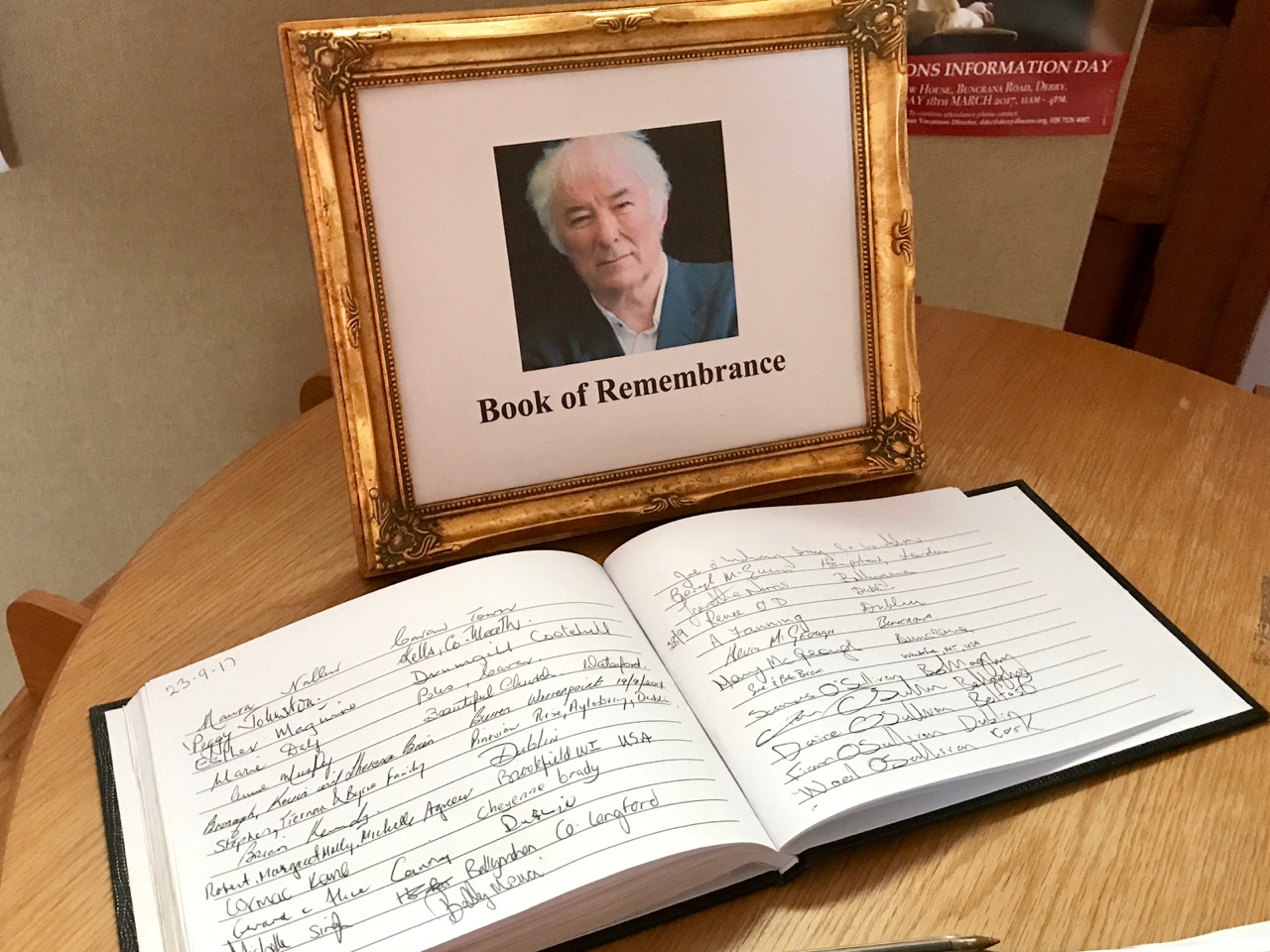
Bellaghy, County Londonderry, in Northern Ireland was the childhood home of Seamus Heaney  who was born at nearby Mossbawn on 13 April 1939, the eldest of nine children. Heaney passed away on 30 August 2013 and, in accordance with his own wishes, he is buried in the Cemetery of St Mary’s Church, Bellaghy. A Book of Remembrance is kept in the church, and on his headstone is a line: Walk on air against your better judgement, from one of his poems – The Gravel Walks.

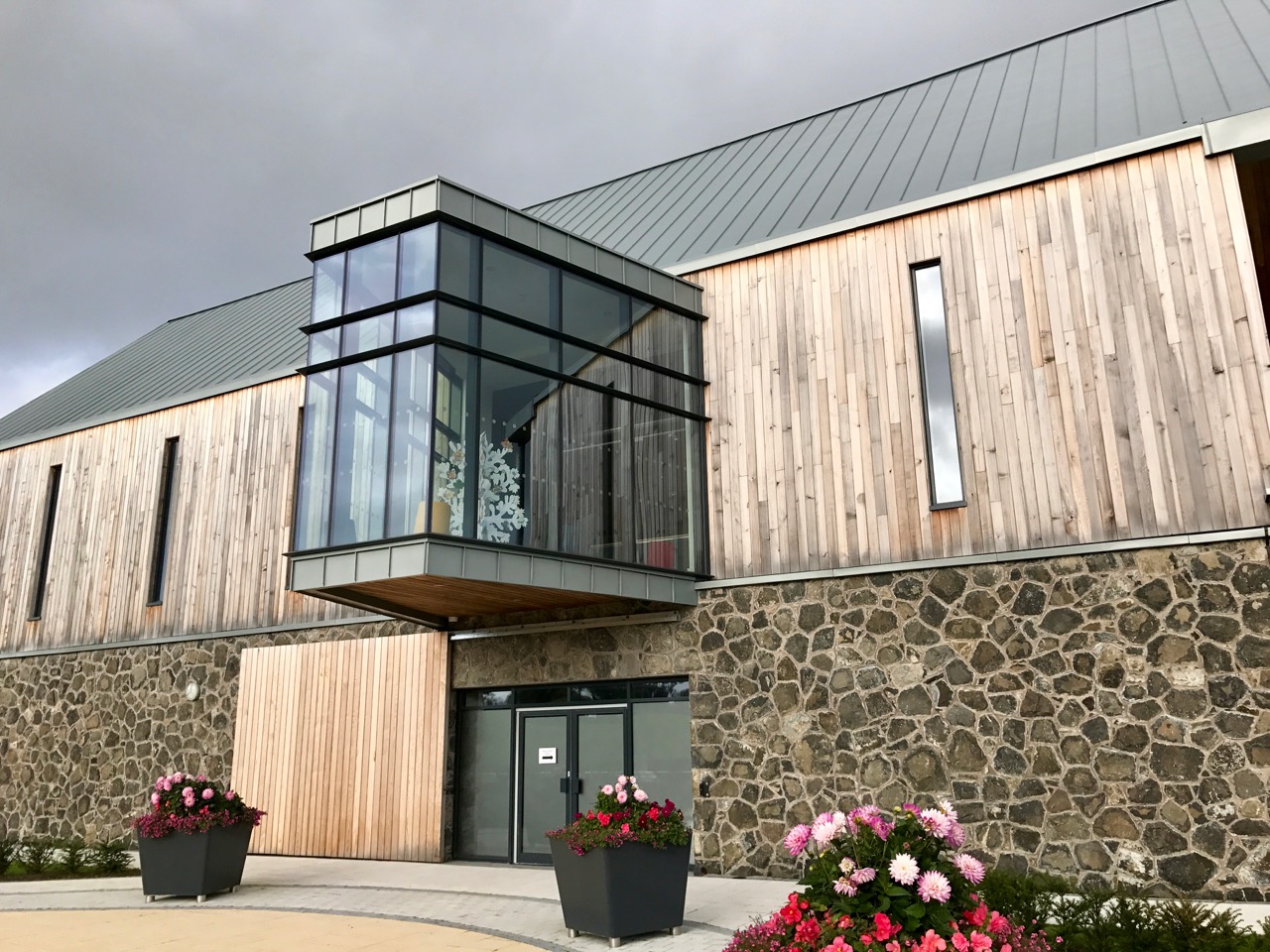
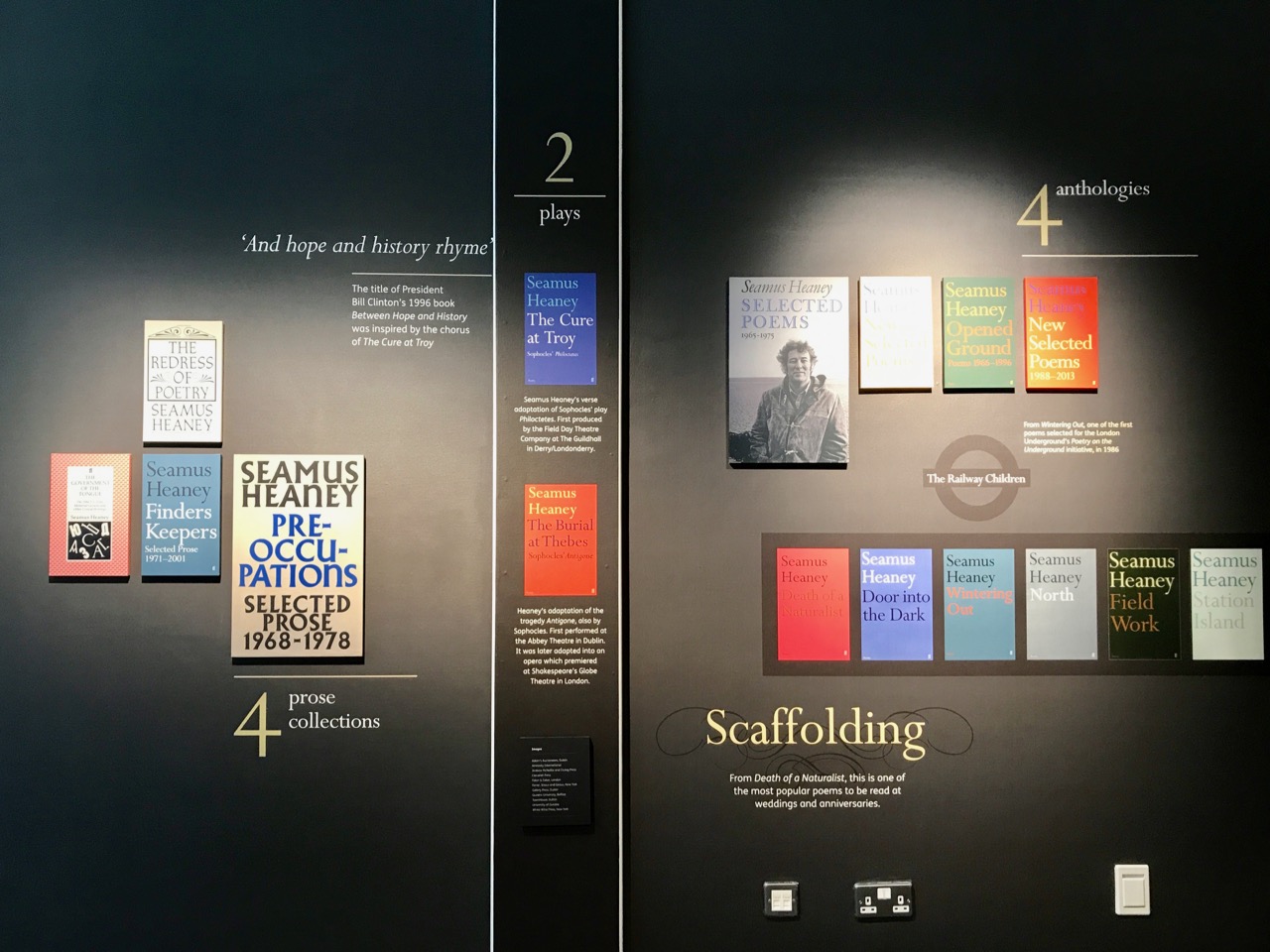
Exactly a year ago – October 2016 – a new building was opened to commemorate Heaney, the Nobel Prize winner, who has been described as ‘…the most important Irish poet since Yeats…’, ‘…the greatest poet of our age…’ and ‘…probably the best-known poet in the world…’ The quality of the HomePlace centre reflects this reputation and provides excellent facilities for the sheer exploration of words as well as performance, lectures and research.

This year sees the 50th anniversary of the death of another of Ireland’s country-born poets: Patrick Kavanagh. We visited Inniskeen, County Monaghan, to search out the old St Mary’s Church, which has been transformed to a Centre – open to the public – which displays information on the poet born and raised on a nearby farm in 1904, the fourth of ten children. The Centre also carries out research into the poet’s life and work, and organises an annual event to celebrate him. I am grateful to the staff of the Centre for allowing me to photograph the interior of the former church.

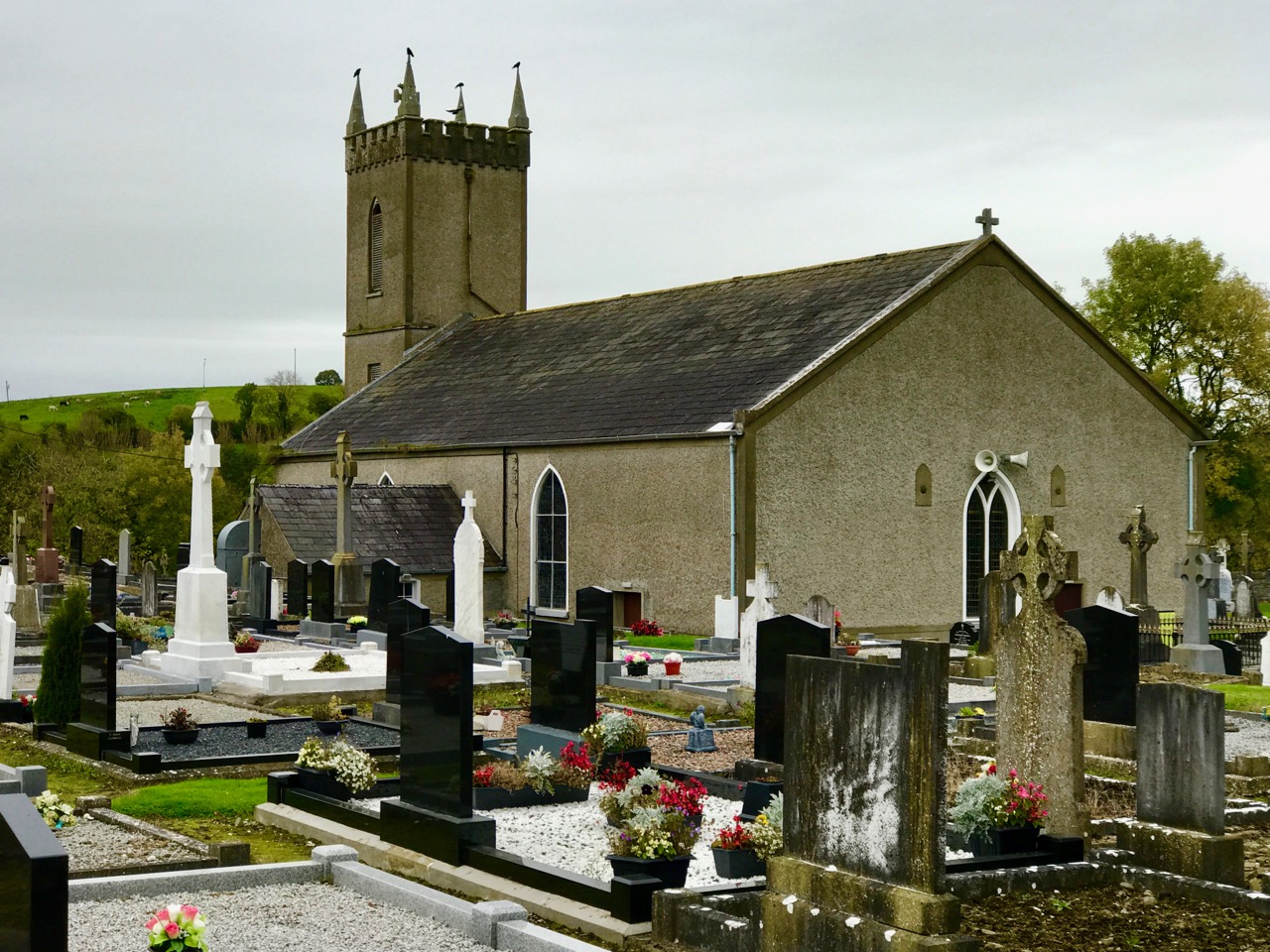
Appropriately, the grave of the poet can be found in the churchyard. Strangely, an elegant memorial to the poet and his wife (below left) vanished in 1989 and was replaced with a simple wooden cross (below right), said to have been carved by his brother, Peter. I could not get to the bottom of this matter: there are various reports to be found on the internet, including this one from RTE.

Like Heaney, Kavanagh’s strong influences came from his rural background. Some of his best-loved works portray country life, but without sentimentality. He remained on the farm in Monaghan until 1931, when he walked the 80 kilometres to Dublin. At first rejected by the literary establishment, his work eventually received appreciation. Seamus Heaney acknowledged that he had been influenced by Kavanagh.

When Kavanagh died on 30 November 1967, at the age of 62, he was recognised as …Ireland’s leading poet in English…

For our third commemoration we travelled to Slane, County Meath, to find the Francis Ledwidge Museum. This poet died exactly a hundred years ago, a victim of the Great War.

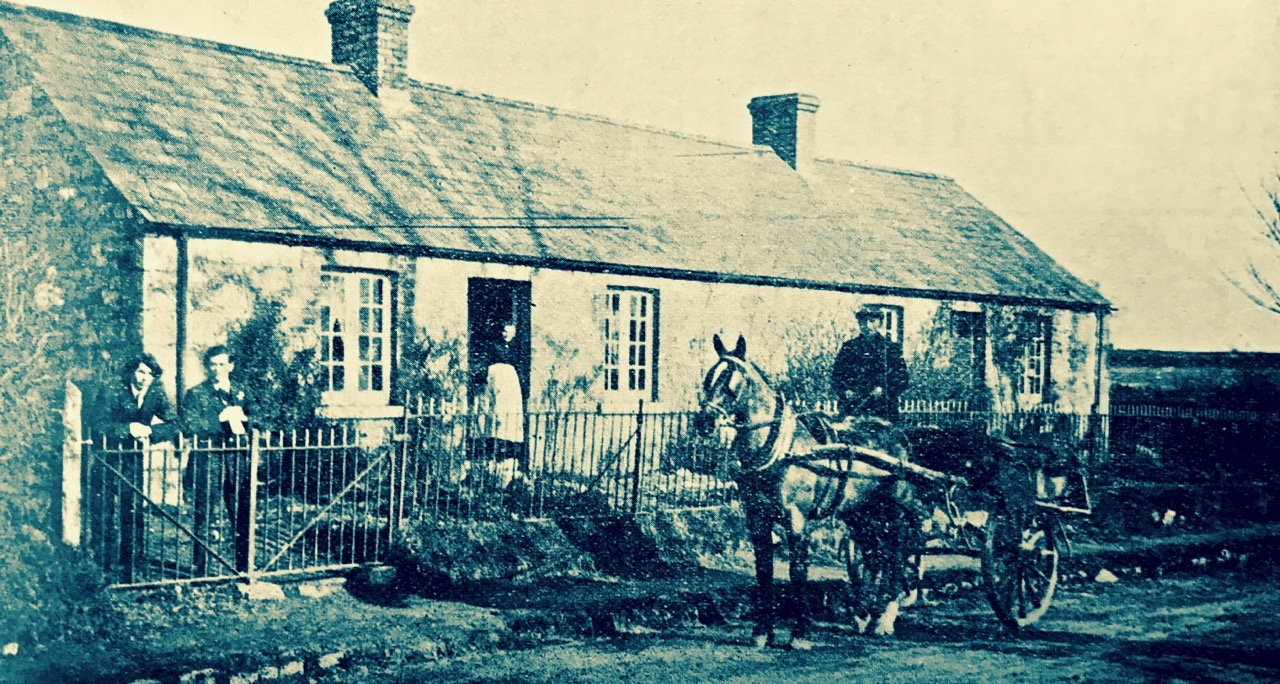
The Museum has been created in the cottage where Francis was born on 19 August 1887, the eighth of nine children. Again, he came from a rural background. His father died when he was only five, and he spent much of his life as farm hand, road builder, and copper miner. He was an active campaigner for better working conditions, became an early Trade Unionist, and attempted to organise strikes.

The Ledwidge cottage in Janeville, Slane, around the end of the nineteenth century (top), and the cottage – now the Francis Ledwidge Museum – today (lower)

Francis had written poetry all his life, and some was published in local newspapers when he was 14 years old. He attracted the patronage of Lord Dunsany, who introduced him to W B Yeats. Like many other artists, writers and poets, Ledwidge’s life was tragically cut short by the war. In the Third Battle of Ypres he and five companions were hit by an exploding shell. Father Devas, a Chaplain who was a family friend, recorded ‘…Ledwidge killed, blown to bits…’ A memorial was raised to him on the place of his death in Belgium, and a replica of this memorial can be found in the garden of the Janeville cottage.

Seamus Heaney also acknowledged Ledwidge as one of his influences

During our travels we have seen that poets in Ireland have respected the work of their compatriots. Wordsmithing is a time-honoured profession: there’s a common thread running from the Bards of old, who carried traditions, myths and genealogies through generations and over centuries.

Below – a portrait of Seamus Heaney by the Welsh artist Jeffrey Morgan hangs in the HomePlace Centre, Bellaghy

Rejecting those Earthly Dignities: Irish Women Saints by Harry Clarke

I’ve been struck by the absence of sacred women in the iconography of stained glass windows in Irish Protestant churches. Sure, there’s the odd window devoted to or including Mary (such as Nativity scenes) or Bridget, or images of women as Charity or Hope, but for windows depicting women who are venerated for their piety or leadership or courage you have to visit Catholic churches in Ireland. 

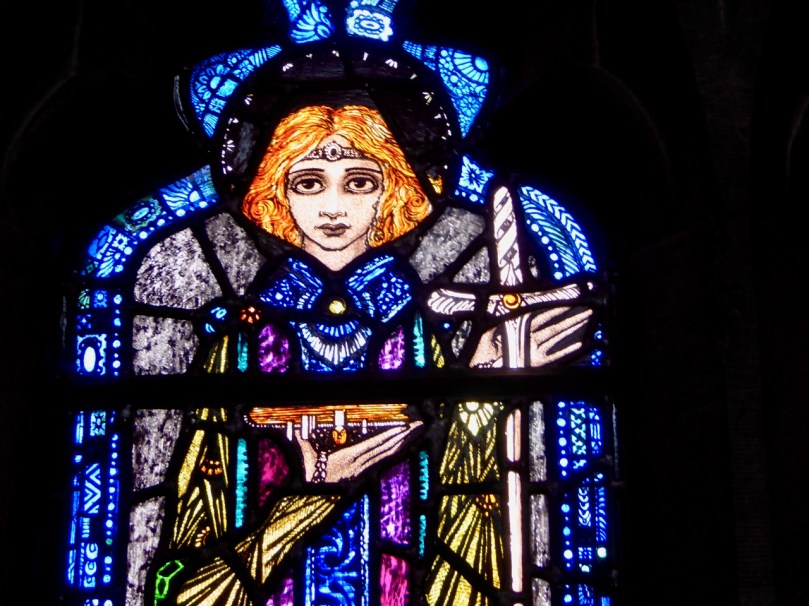
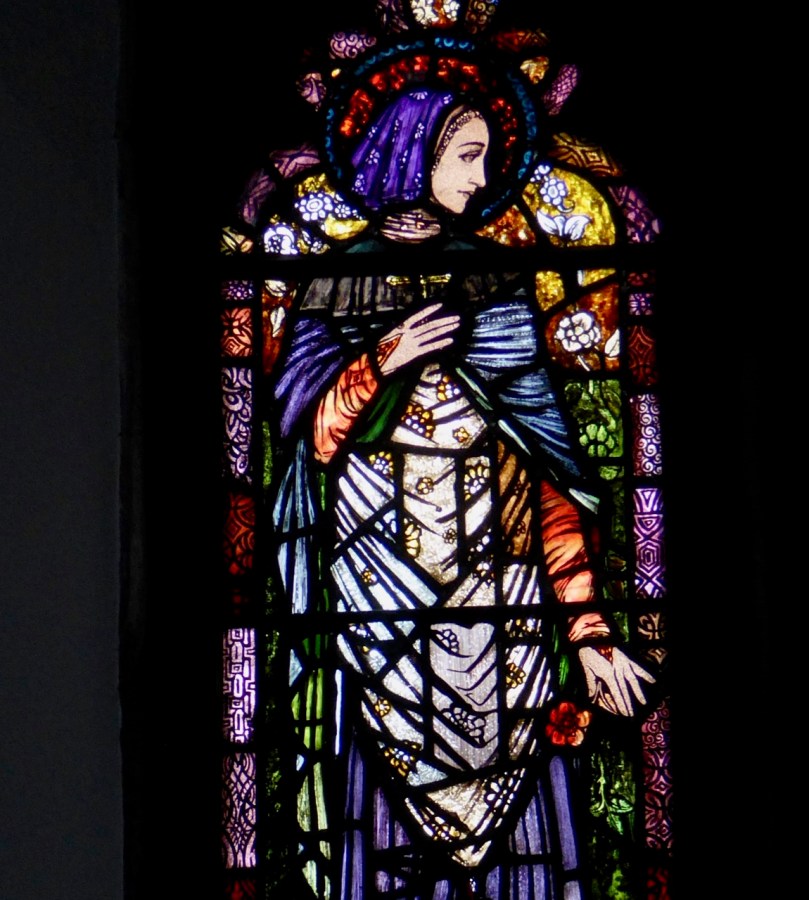
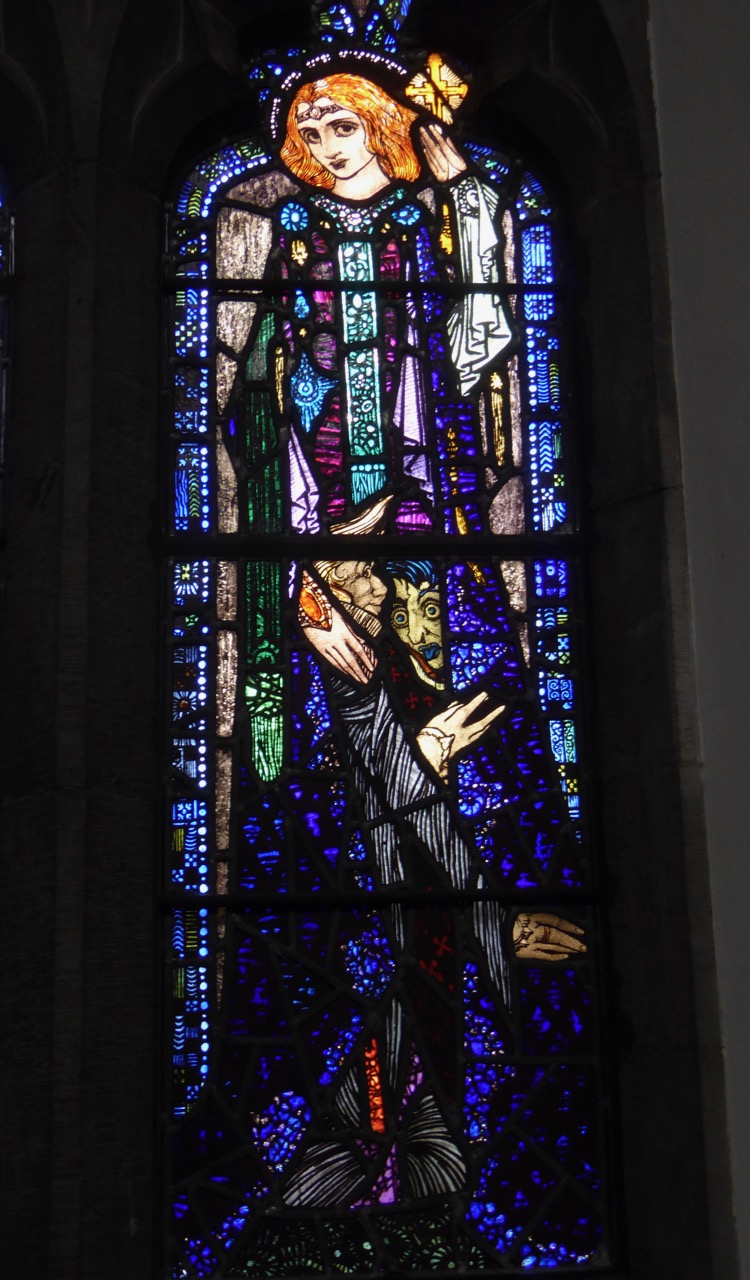
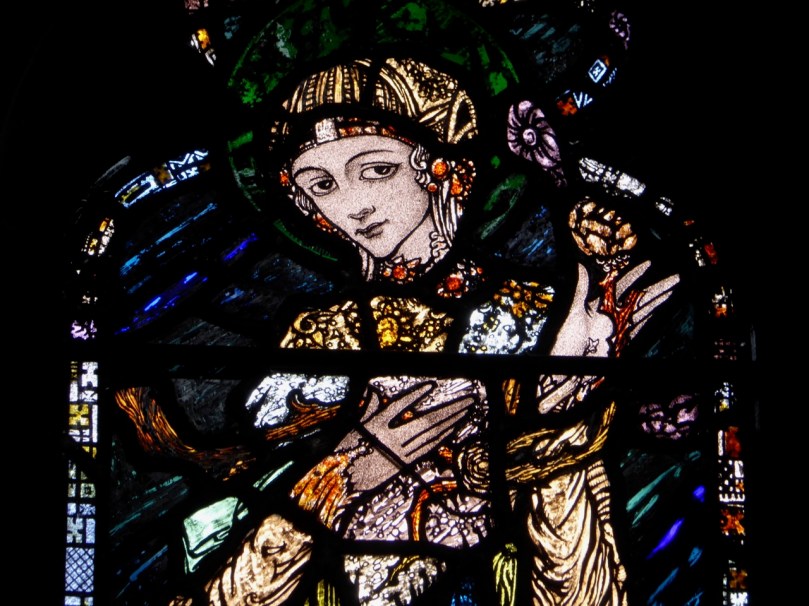
The top picture is St Dympna, depicted with a sword – it is a tradition to depict martyrs with the instrument of their death. She looks wide-eyed and innocent – she was only 15 when she died. Above is St Fanchea, bearing a rose and with a kindly expression

We’ve written already about Bridget here and here and about Gobnait: Bridget is considered the female equivalent of Patrick in being the most widely known and celebrated of the Irish women saints. Gobnait is a good example of a local saint, in this case she is associated with the Muskerry area of Cork. When you read the lives of Irish saints, women and men, you are reading accounts written many centuries after they lived, often a mixture of tradition, mythology, folklore and reconstructed hagiography. 

Harry Clarke, as I have discovered before, had a thing for red hair and gave St Dympna a particularly glowing crop. Here she shelters her patients, the mentally ill poor who came to her hospital

Robert and I have been travelling in Ireland and visiting stained glass here and there, and in the process discovering more unfamiliar Irish saints. Harry Clarke, Ireland’s incomparable stained glass artist of the early part of the 20th century, was often asked to depict local saints and always did as much research as he could into their lives, to enable him to tell their stories and use appropriate elements and symbols. [For more posts about the genius of Harry Clarke, Ireland’s most famous stained glass artist, go to our Navigation page and scroll down to C5.] In Carrickmacross (Co Monaghan) this week I found three Harry Clarke windows illustrating three Irish female saints, two of whom I had never heard of before. Let’s start with the one I thought I knew because I’ve had friends with that name – St Dympna.

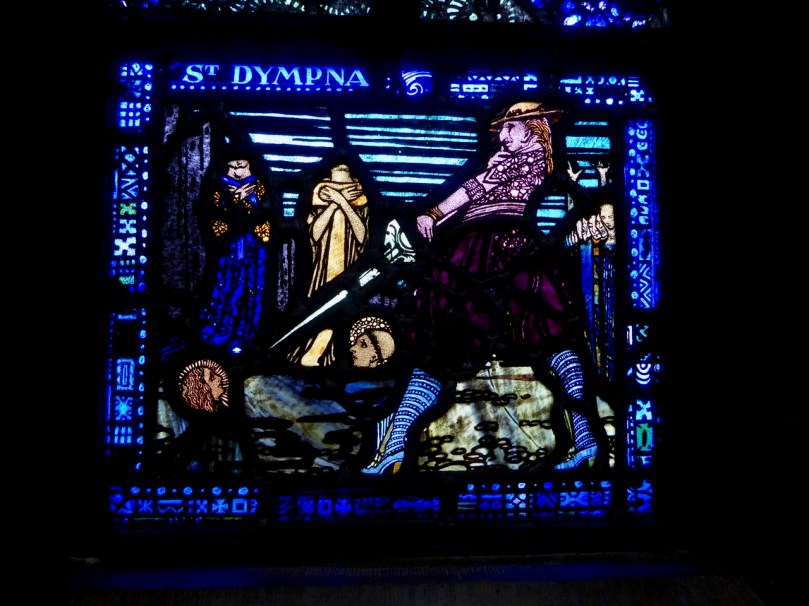
Dympna flees her father’s house. Following her is the court jester, his wife, bearing medicines, and Gerebran, her confessor

Dympna was the daughter of an Irish King called Damon. When his wife died, her father became unhinged and decided he would only marry the one who was as beautiful as her – his own daughter Dympna. Horrified, she fled with her confessor, Gerebran, and travelled to Gheel in Belgium. There she established a hospital and tended to the poor and sick. But her father found her and in his rage beheaded first the faithful Gerebran and then, when she refused to yield to him, his daughter.

Harry Clarke did not shy away from depicting the grizzly end of Dympna and Gerebran

She is venerated in Ireland and in Belgium, and particularly associated with care of the sick and those who are mentally ill. She is also a patron saint for those who have suffered incest. There are shrines and hospitals named for her in Belgium, Ireland and the United Stares. She is also known as St Davnet, and there are hospitals and holy wells with this name.

If you’d like to know more about St Dympna, take a look at this post from the wonderful Ali Isaac.

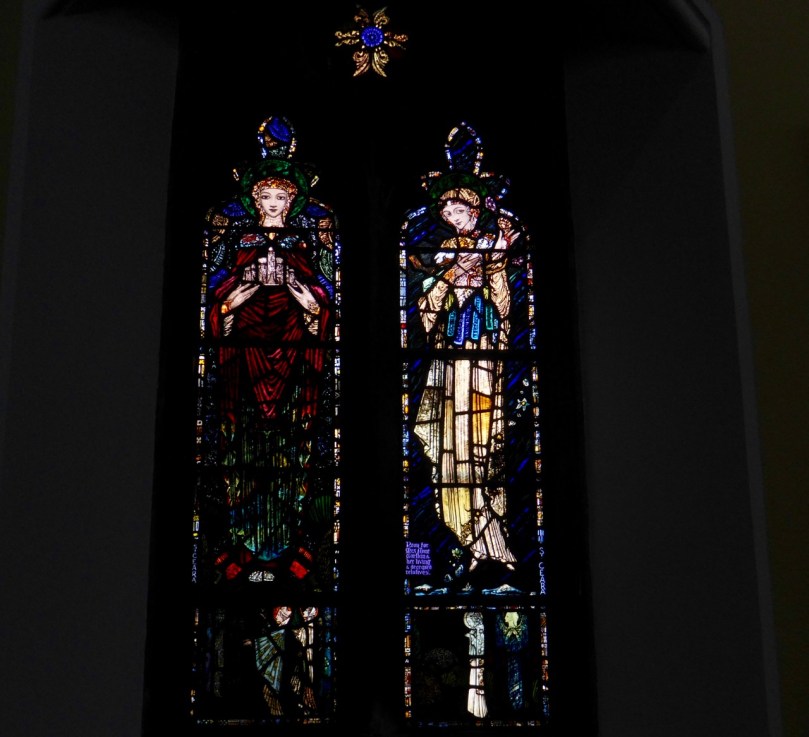
St Ceara is the subject of one window with two lights

Like Dympna, Ceara was of royal blood and established her first monastery in present-day Westmeath on land granted by St Fintan – or perhaps in Kilkeary near Nenagh in Tipperary at the behest of Brendan of Clonfert. You see, there may have been two Cearas and over time their stories were conflated. To add to the confusion, St Ceara, also known as Ciara, is known to have been an abbess who founded a monastery near the spot currently better known as Kilcrea Friary in Cork.

St Ceara and her virgins

Harry Clarke in his windows chooses to depict her as beautiful and royal, in one window carrying her monastery and in the other (below) sumptuously dressed and appearing more the princess than the holy woman.

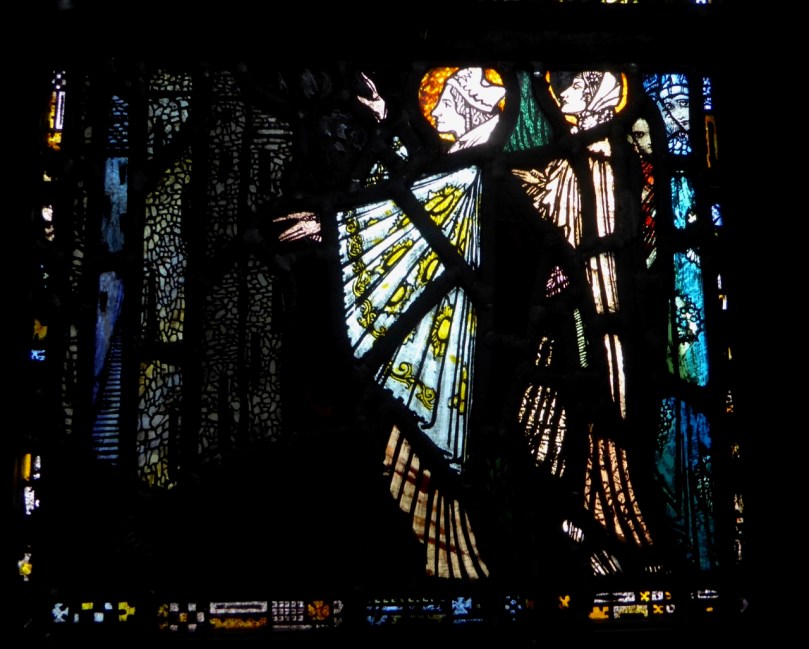
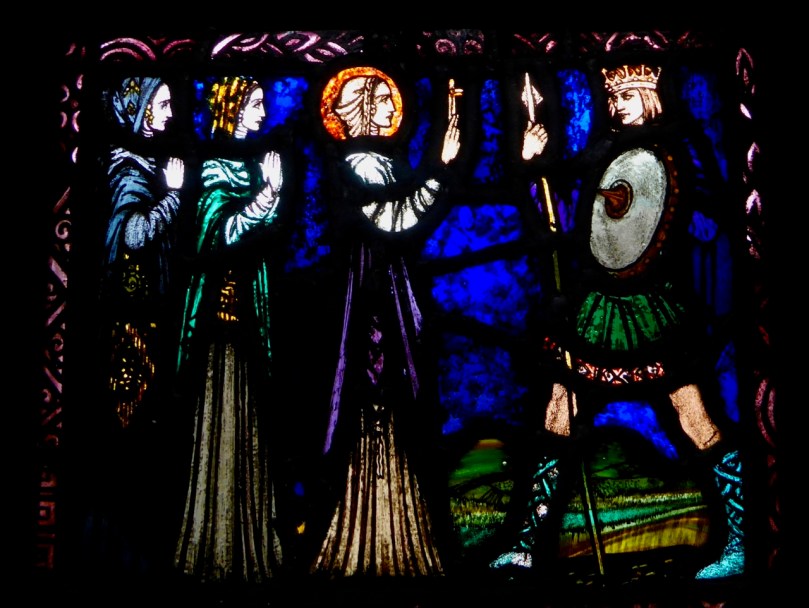
St Fanchea was the sister of St Enda of Aran, and they share the two lights of one window. St Fanchea was famed for her holiness and founded a monastery in Fermanagh. Enda was a warrior-king but was finally won over by the piety of his sister and converted when he came to see her in her convent.

Fanchea and her brother, Enda of Aran

For a full (and graphic!) account of the brother and sister relationship, see the marvellous post in Omnia Sanctorum Hiberniae, a fabulous blog for anyone interested in obscure Irish saints. Marcella starts her story of Fanchea this way:

Aengus, son of Natfraich, King of Munster, is said to have desired Fanchea’s hand in marriage. Notwithstanding all his pressing entreaties, however, and rejecting those earthly dignities to which she might be advanced by yielding to his suit, the holy virgin’s mind was intent on a life of celibacy, and on those rewards promised by Christ to his spouses.

St Fanchea stops her brother, Enda, and turns him from his warrior ways

I’d love to hear from readers who have their own favourite women saints, especially Irish ones.

Richard King in Mayo

Scenes from The Old Testament by Richard King

In my post Discovering Richard King, I introduced you to the stained glass artist and the extraordinary windows in Athlone. If you haven’t read that post, pop back now and read it for an overview of King’s career, before continuing. Ever since then, I have been trying to track down Richard King’s art – he was active in several media and also exported windows to the US, UK and Australia. In Mayo recently, I was finally able to photograph more of his stained glass.

The Assumption window in Swinford

King was greatly influenced by Harry Clarke in his time at the studio, and when he took over as chief designer upon Harry’s death in 1931 he carried on very much in Harry’s style. After all, that was the style the clients wanted, and he excelled in producing it. I think I have tracked down several windows produced in the decade from 1930 to 1940 (when he left to open his own studio) that bear his hallmarks, but since Studio windows were never signed by individual artists after Harry died (with a few notable exceptions) it is impossible to verify whether or not I am correct. That’s why it was a thrill, on a recent visit to Mayo, to be able to view and photograph three Richard King windows, all of which date to the period after he left the Harry Clarke Studio. Richard came from Mayo (from Castlebar) so no doubt was a popular choice when stained glass was needed. Together, these three windows illustrate the evolution of his style over time.

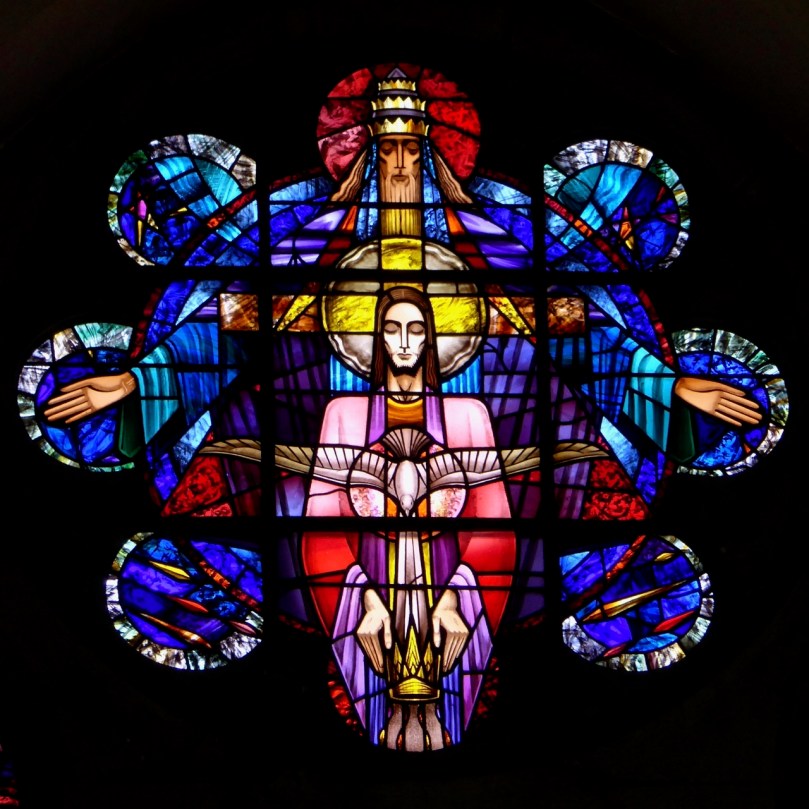
The earliest, and largest, window dates to 1952 and is in the Church of Our Lady Help of Christians in Swinford. It consists of three lights and a rose window above them and the theme is the Assumption of Mary into heaven. The rose window above the depiction of Mary rising shows the Trinity – Father, Son and Holy Spirit – with the Son holding the crown with which he will declare his mother to be Queen of Heaven. I can’t help thinking that the Father looks a little like a depiction of one of the ancient Irish chieftains from the Athlone Patrick windows.

Mary is flanked by John the Evangelist and by Patrick – unusual choices and one wonders who dreamed them up. We know it’s John since he holds a quill pen with which to write the gospel, and is accompanied by an eagle, his symbol as one of the four evangelists. Patrick is always recognisable in green, with a crozier on his arm and a snake underfoot, and is accompanied by geese. I’m not sure of the symbolism of the geese – perhaps they were to balance the eagle [EDIT: see Niall McAuley’s comment below]. He’s wearing fetching green gloves and slippers. Take a close look at the church he carries – the windows are the same configuration as these windows – a little visual pun that Richard must have enjoyed making.

The lingering influence of the Clarke style is still visible in the extraordinary detail of every part of the window, in the glowing colours, the symmetry of the matched angels and in the cherubim faces below Mary. However, in every respect this is the work of an artist who is his own man – it could never be mistaken for a Clarke, or even a Clarke Studio, window.

But the Swinford church has a surprise – a second Richard King window, dating from 1964 and radically different from the Assumption. This is a two-light window depicting the Old and the New Testaments. The style is suddenly modernist, bold, faux-naïf and reflects his own study of the modern styles of the time and his experimentation with new ways of capturing religious themes. The windows are also delightful – strong colours and carefully placed figures create an attractive whole.

Pentecost – the Holy Spirit descends on Mary and the apostles

I think my favourite image is the one in which Pope Paul VI steers a boat full of bishops – a reference, apparently, to the ‘barque of Peter’. Paul was pope from 1963 to 1978, much of my young life, and his likeness was instantly recognisable. It brought a smile to my face.

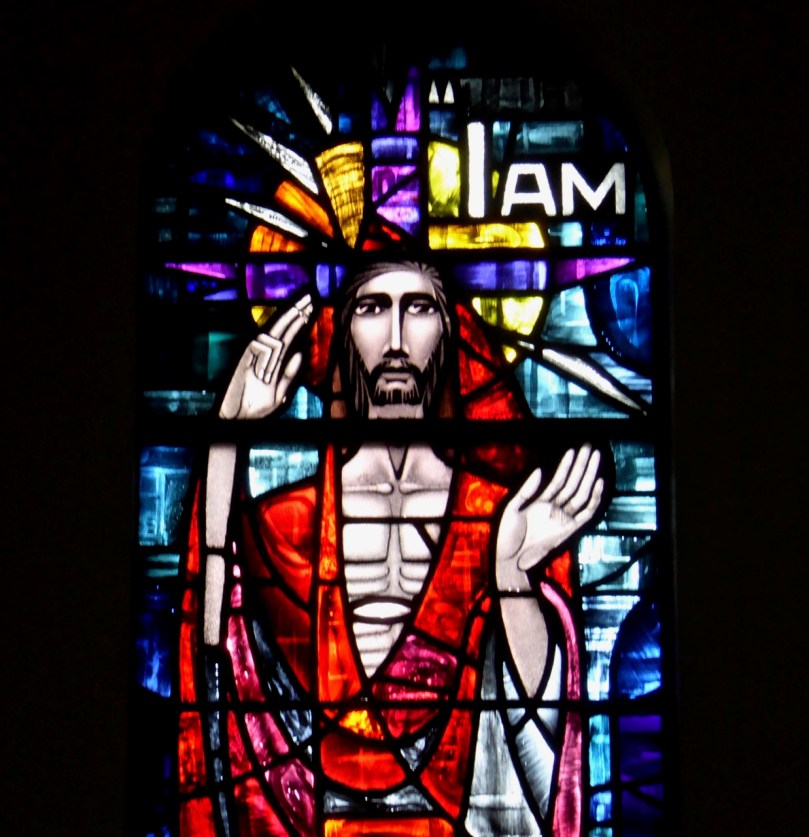
The last Richard King window is a two light window in the St Patrick’s Church in Newport. The theme is I Am The Resurrection And The Light. This one dates from 1973, the year before he died and what is striking is how far now he has moved towards a fully modern style with elements of cubism and abstraction.

The glowing colours are still there, the strong reds and blues, but there is no attempt at realism in the figures (note for example his treatment of Christ’s ribs as a series of rectangles) and a strong geometric arrangement is obvious throughout the composition.

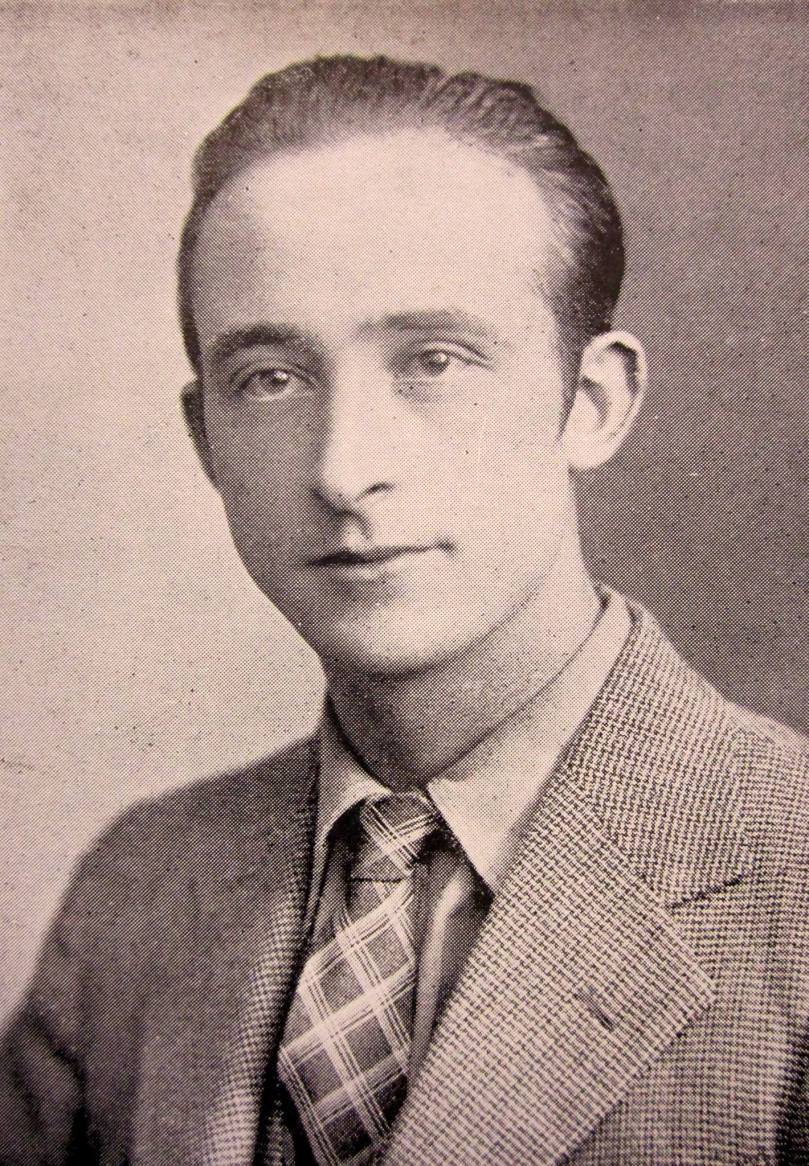
So far I have only written about Richard King as a stained glass artist, but there was more, much more, to him than glass. In future posts I will endeavour to expand on that statement. Meanwhile, I will leave you with a photograph of the young Richard King, courtesy of the Capuchin Archives.