Cape Clear

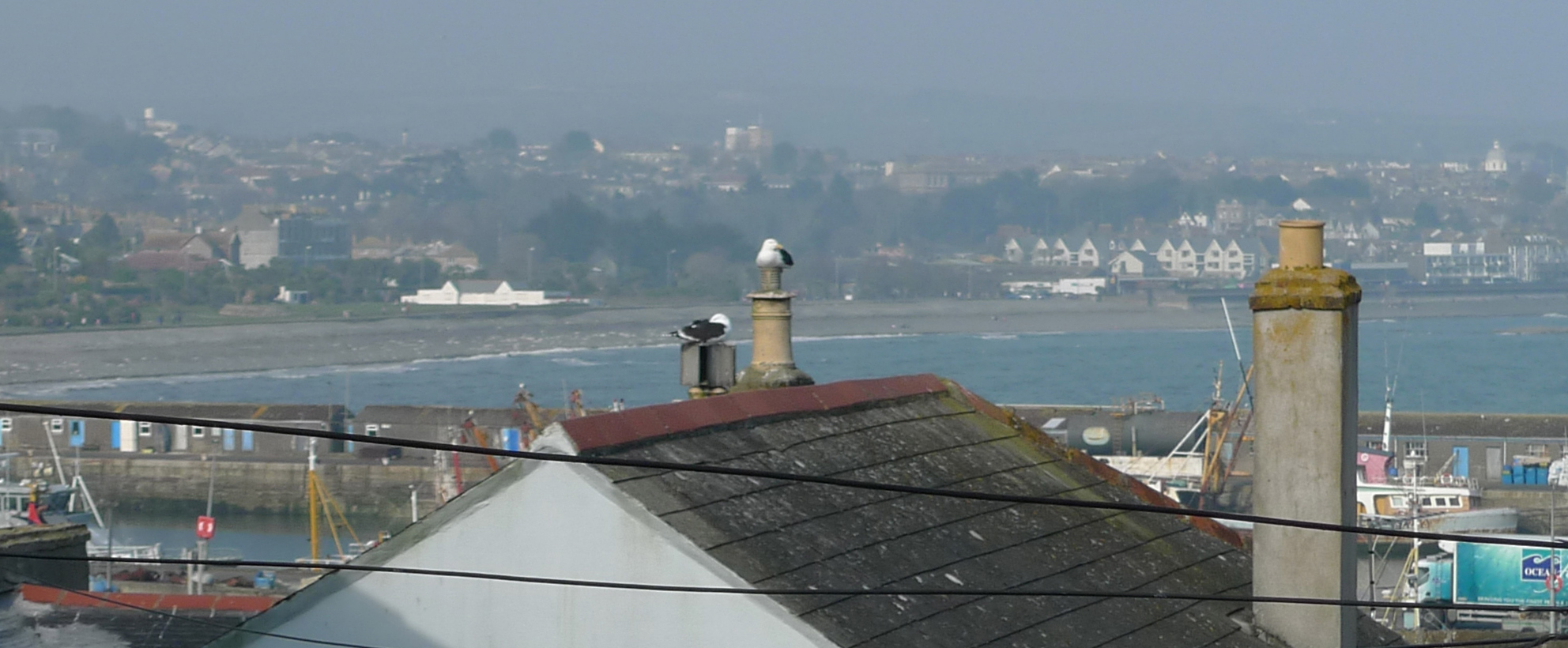
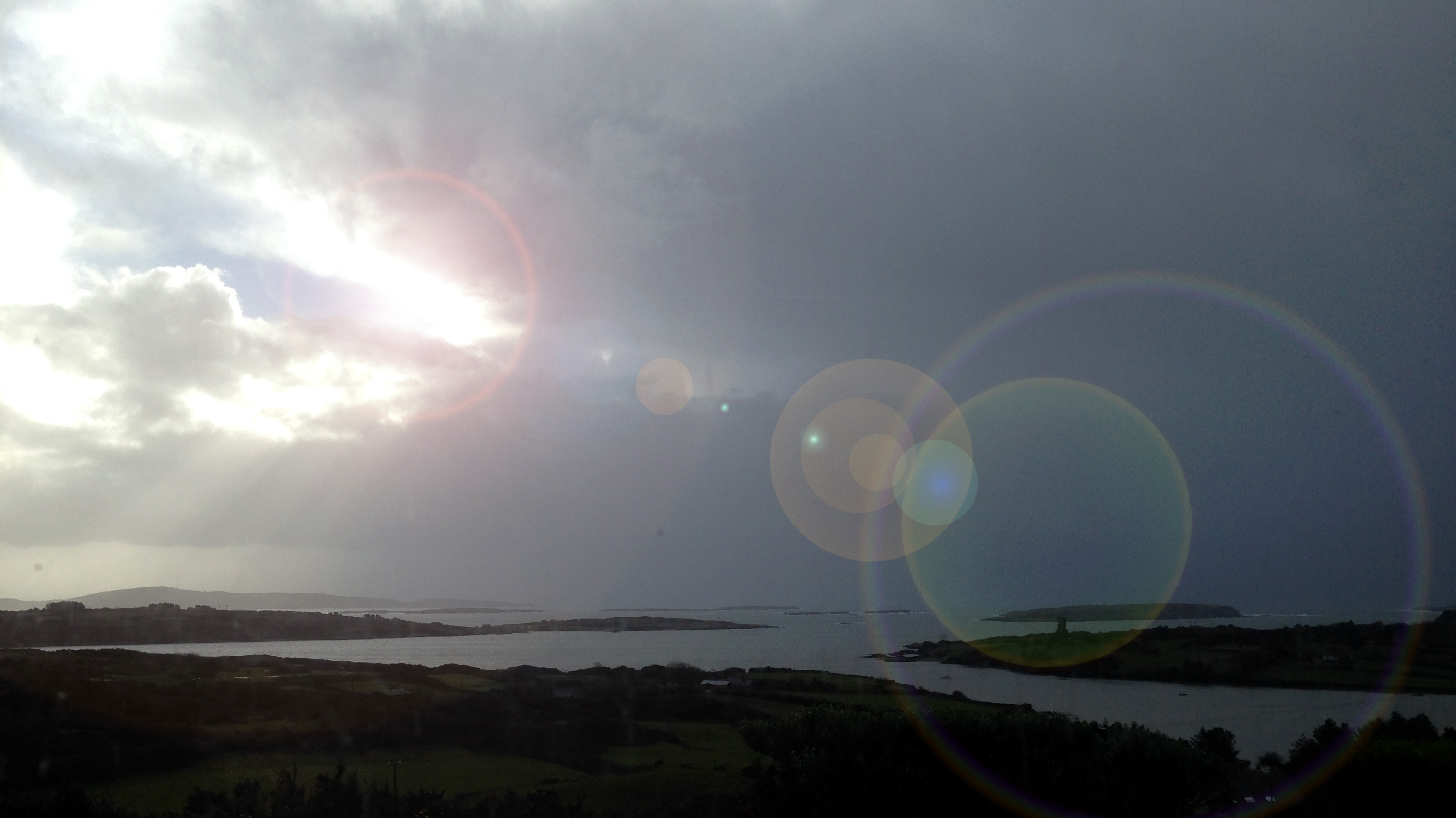
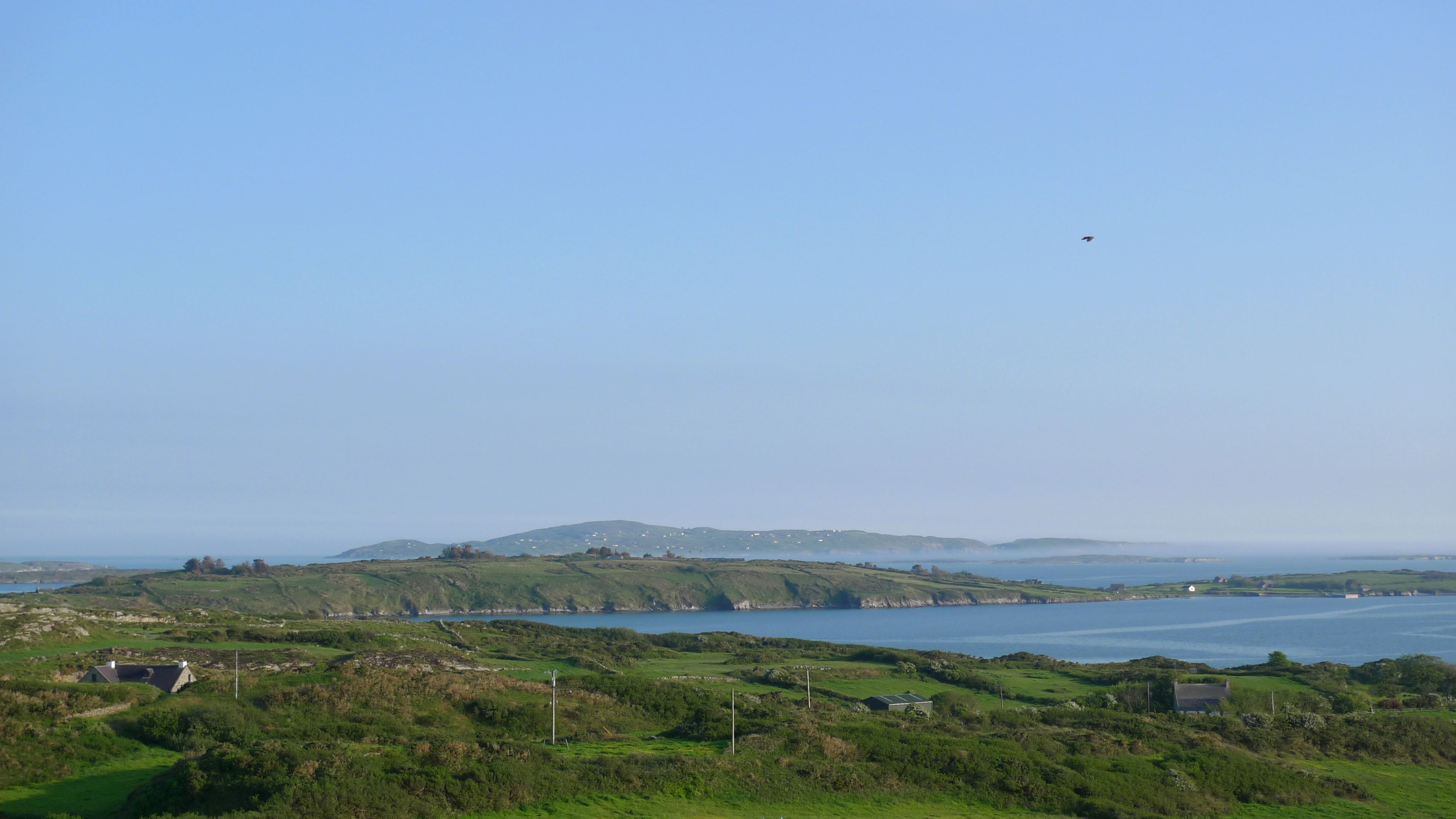
Distant Cape Clear - with solar effects

Distant Cape Clear – with solar effects

Always in our view from Nead an Iolair are the many islands of Roaringwater Bay: sometimes they are referred to as ‘Carbery’s Hundred Isles’. The largest of them – and the furthest out into the Atlantic – is Cape Clear. From our vantage point in Cappaghglass it sometimes floats on the horizon like a great seal under brooding skies, yet with the clarity of summer skies every hillside cottage can shine like a white jewel. I visited the island for the first time last weekend, drawn to its isolation and history – and by its own Saint – Ciarán, born on this most southerly point of Ireland and preceding Saint Patrick by some generations as the ‘Apostle of Eirinn’.

ghaeltact

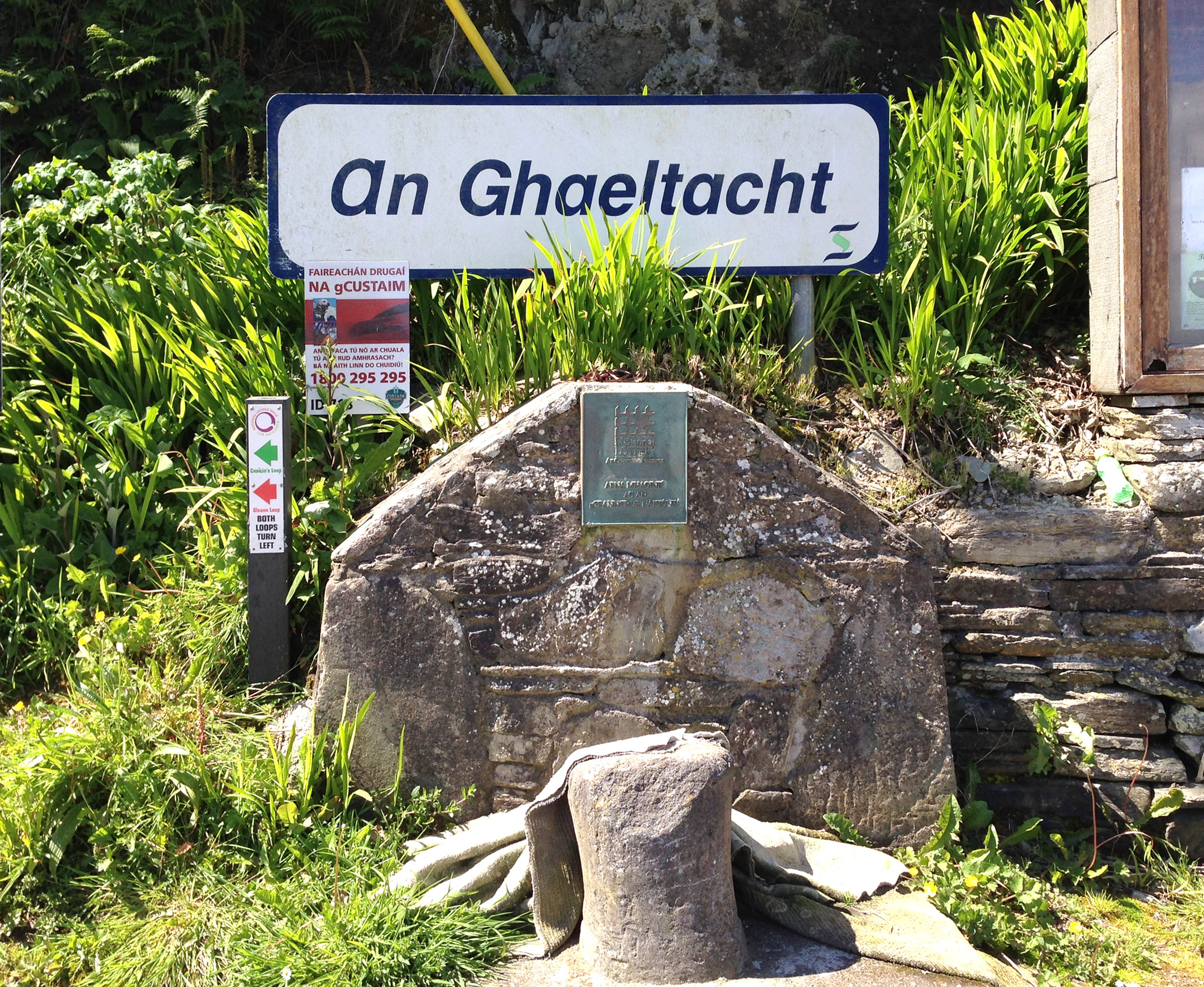
Cape Clear is a place apart. It is one of the Irish Gaeltacht areas – where Irish Gaelic is spoken as the first language. Oileán Chléire is the Island of Ciarán, and one of the first things to be seen after landing is an ancient stone by the quay – said to have been placed there by the Saint himself – and his holy well – while nearby are the ruins of an ancient church and burial ground.

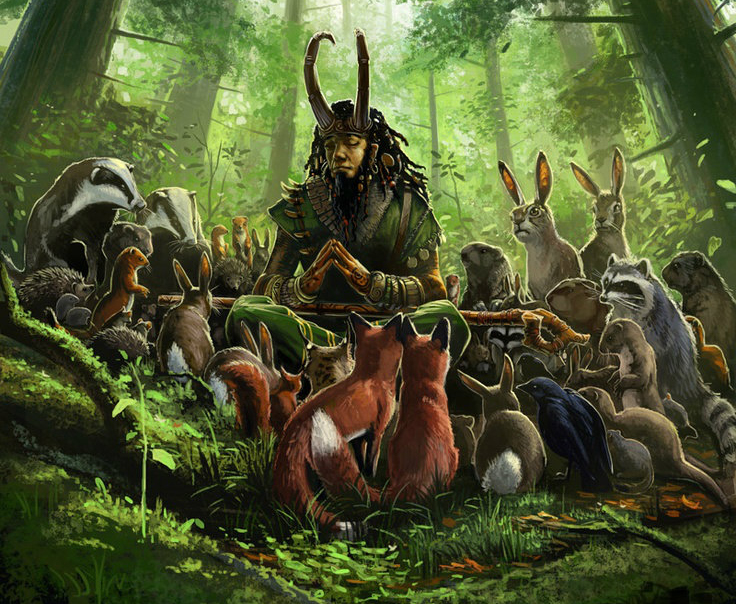
Saint Ciarán’s life has inspired some colourful stories. Before he was conceived Ciarán’s mother (Liadán) had a dream that a star fell into her mouth. She related this dream to the tribal elders who were knowledgeable of such things, and they told her that she would bear a son whose fame and virtues would be known as far as the world’s end. Ciarán’s first disciples included a Boar, a Fox, a Brock and a Wolf: they all became monks and worked together to build the community.

An interesting find: Ciarán as a Celtic God by Astrella

An interesting find: Ciarán as a Celtic god by Astrella

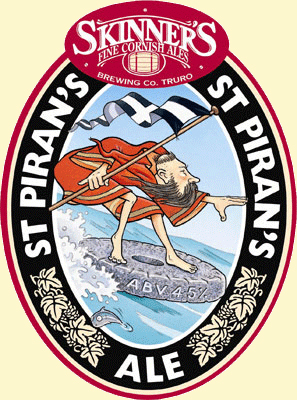
An unusual incarnation of the St Ciaran / Piran legend!

An unusual incarnation of the St Ciaran / Piran legend!

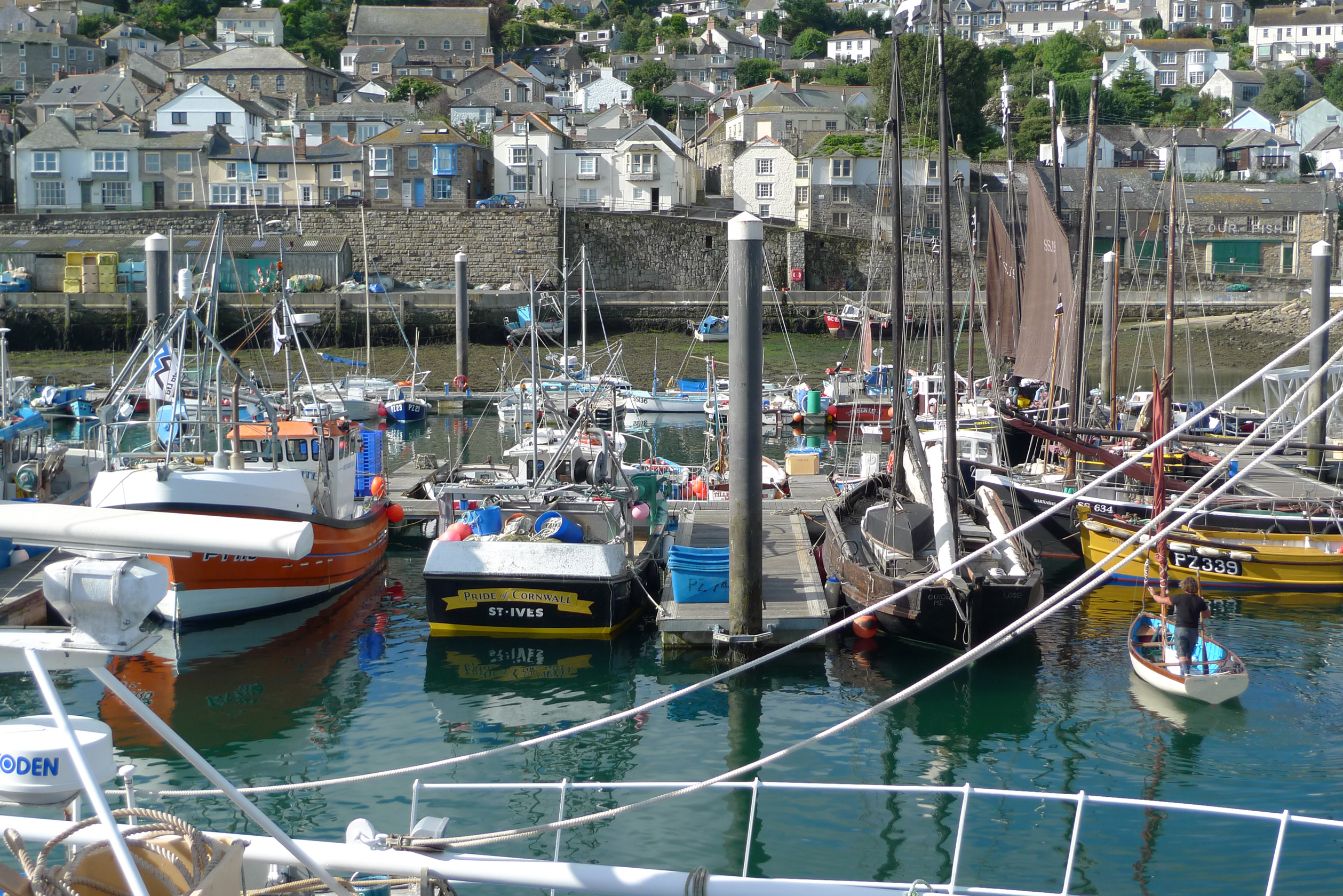
The Saint is also recognised in Cornwall, where he is known as Piran (or Perran) – scholars argue that in some ‘Celtic’ languages the C sound is interchangeable with the P sound. Certainly there is a legend that the Heathen Irish tied St Ciarán to a millstone and dropped him into the sea – and he then floated across to Cornwall where he converted the Heathen Cornish. Whatever the basis of this, both Piran and Ciarán share the same Saints Day: March 5th – which is also my birthday – so that puts me firmly into the picture!

Writers in the past have commented on the island’s particular character:

“…The natives of Cape Clear are distinct in a great measure from the inhabitants of the mainland; they have remained from time immemorial as a separate colony, always intermarrying amongst themselves; so that we must regard them as amongst the most typical specimens at the present day of the old Milesian race. The name of nearly all the islanders is O`Driscoll or Cadogan, the later being only a sobriquet for the former. Baltimore and Cape were originally the stronghold of this family, the principal Chieftain, O`Driscoll Mór, residing in Baltimore. There can be no doubt that they were the aboriginal race residing along the sea-coast of Carbery. The isolated position of the island and its difficulty of approach, have kept the population in a comparatively antique state and distinct condition during the lapse of centuries, so far as nationality and descent. Until the year 1710 Cape was an established monarchy, and an O`Driscoll – the head of the clan- was always styled, “King of the Island”. They had a code of laws handed down from father to son. The general punishment was by fine, unless some grave offence was committed, and then the delinquent was banished forever to the mainland, which was looked upon as a sentence worse than death…’ (from Sketches in Carbery by Daniel Donovan,1876)

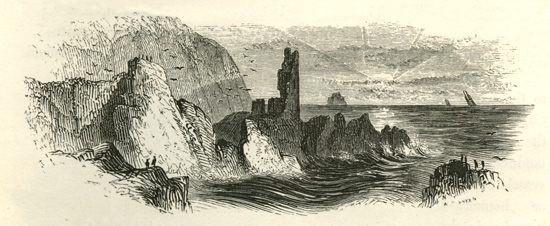
Dunanore – engraving by W Willes 1843

Our visit was organised by the Skibbereen and District Historical Society, and was masterminded by past Chairman Brendan McCarthy. He had arranged for the sun to be shining all day, and for the sea to be the calmest that anyone had known for years. A bonus was the presence of Dr Éamon Lankford – a knowledgeable and erudite local historian and toponymist whose projects have included setting up detailed place name archives for Cork County, Kerry, and Cork City. There are now over 200 large volumes of historic place name references and the work is still under way: examples from the city survey include Black Ash, Cáit Shea’s Lane, Murphy’s Farm, the Snotty Bridge, The Shaky Bridge, the Boggy Road, Tinker’s Cross, Skiddy’s home… Éamon‘s unbounded energy has not stopped there – he has gone on to set up and run the Cape Clear Island Museum and Archive and written books on the Island’s people and landscape, on Saint Ciarán, on the Fastnet Rock, on Cape Clear place names- and has set up the Cape Clear Trail… Phew! We walked up the (very) steep hill to the Museum, which is housed in the restored old school building, and no-one could fail to be impressed by the sheer volume of information and artefacts it contains. Volunteers are needed to help run it through the summer months, so anyone fancying a bit of island life please make contact through the website. On our ferry trip from Baltimore and in the Museum Éamon kept us entertained and educated with stories, history and local lore.

I was keen to visit the Museum because I knew it housed a replica of the passage grave art (carved stone) found on Cape Clear and now believed to have once been part of a passage tomb on the highest point of the island – Cill Leire Forabhain. In 1880 the original stone was turned up in a field and taken across to Sherkin by the then curate of that island to ornament his garden. He left Sherkin only a year later, and the stone became overgrown and forgotten. It was rediscovered in 1945 and given to the Cork Public Museum where it is now on display. The carvings on this stone are in the style of the other spectacular decorated stones in the Boyne Valley and at Loughcrew, rather than the simpler Rock Art we are working on in West Cork and Kerry (although this ‘simplicity’ is belied somewhat by the recent discovery at Derreennaclogh). Beside the replica stone in the Museum is a smaller piece of Rock Art, although debatably labelled as being caused by ‘solution pits’.

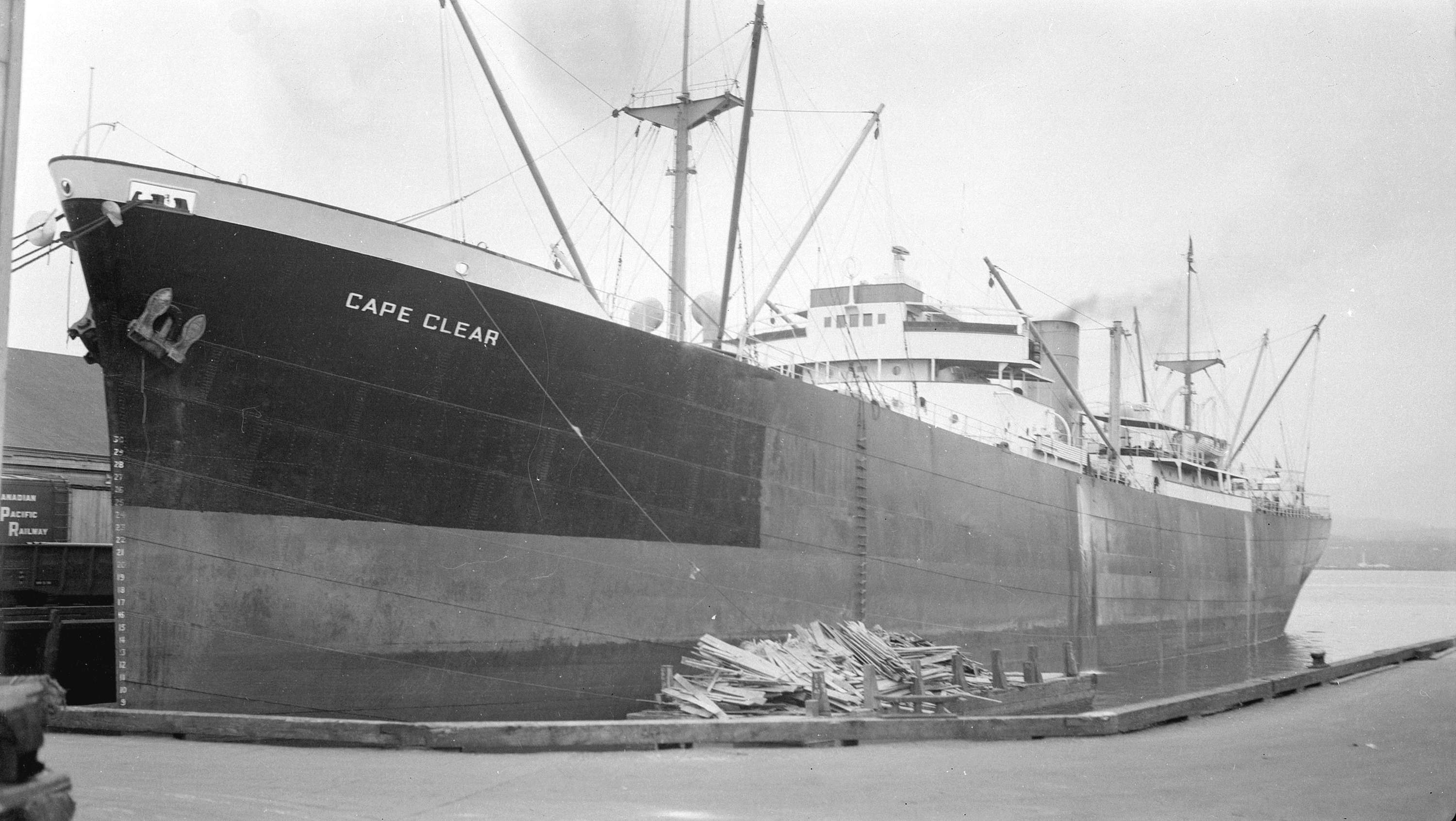
MV Cape Clear - built in Glasgow in 1939; went down in the Red Sea 1944

MV Cape Clear docked in Vancouver – built in Glasgow in 1939; went down in the Red Sea 1944

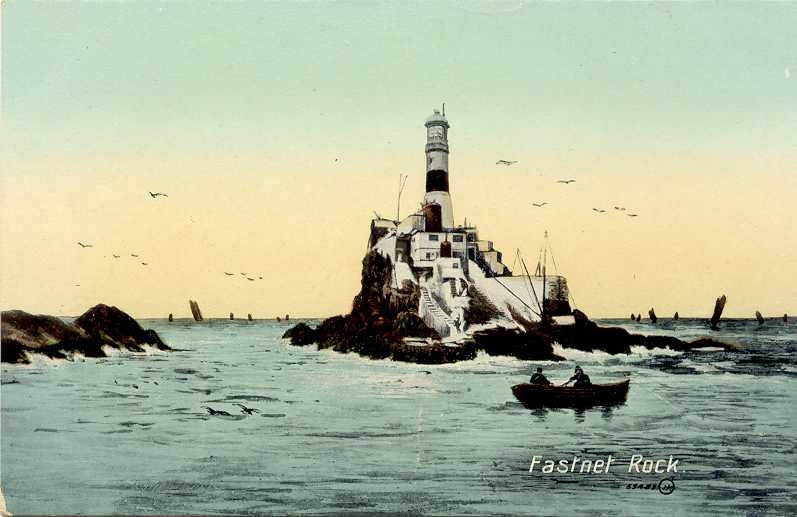
There is so much more to say about Cape Clear: it has given its name to a settlement in Victoria, Australia, supposedly named by gold miners from Ireland, and also to a number of ships built in Scotland. Talking of ships, the surroundings of the island have seen many a shipwreck: more than 50 wrecks have been recorded off Cape Clear between 1379 and 1944. This is partly because of the proximity to the notorious Fastnet Rock. FASTNET

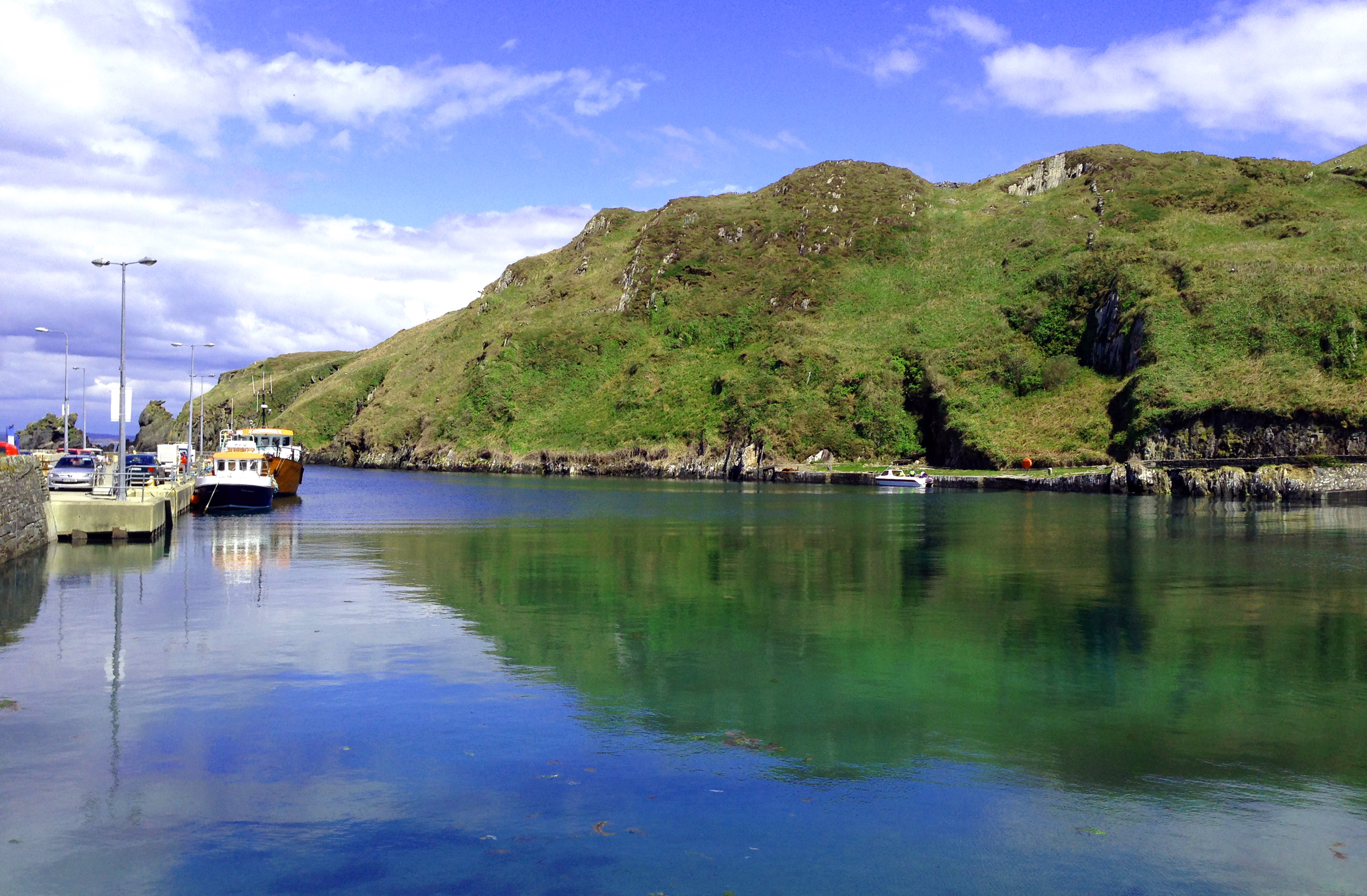
We have to revisit Cape Clear again in the not too distant future, when we can devote more time to a full exploration of the island: it comprises 7 sq kilometres and 16 townlands. This time, however, it was down to the harbour for an excellent lunch before embarking on the ferry for the next stage of the trip to…. But that story must wait until another time!

harbour

For me, small island communities have a very particular feel: it’s not just the silence and closeness to nature, but a real awareness of how fragile, yet tenacious, the tenets of human existence / subsistence can be. As I write this, Cape Clear is romantically shrouded in mist out there over the bay: only the highest ridge, the cairn, the watchtower and the old lighthouse visible in grey silhouette. It’s a place that will pull us back across the water very soon.

today

Today’s view of the Cape from Nead an Iolair

Cloyne Connections

sir edward fanshawe 1856

During our anniversary trip to Ballymaloe (over the other side of Cork) we couldn’t resist a diversion to Cloyne, where Finola remembered having visited a round tower in her youth, just a few years ago. At that time it was possible to climb up inside the tower, after calling in at the local post office to collect the key. Round towers are a significant archaeological feature of Ireland and I like the enigma of them: no-one knows quite when they were built or why (a bit like Rock Art), but there are 65 of them still standing in the Republic in various states of repair. We proceeded to the post office to be told that it had been possible to climb up the tower up until ‘just a few years ago’ – now, health and safety regulations prevented it. Later, I read an account of someone who went to see this tower in 2004, 10 years before, and was told that it had been possible to climb up the tower ‘just a few years ago’… which shows that time and memory are relative.
tower

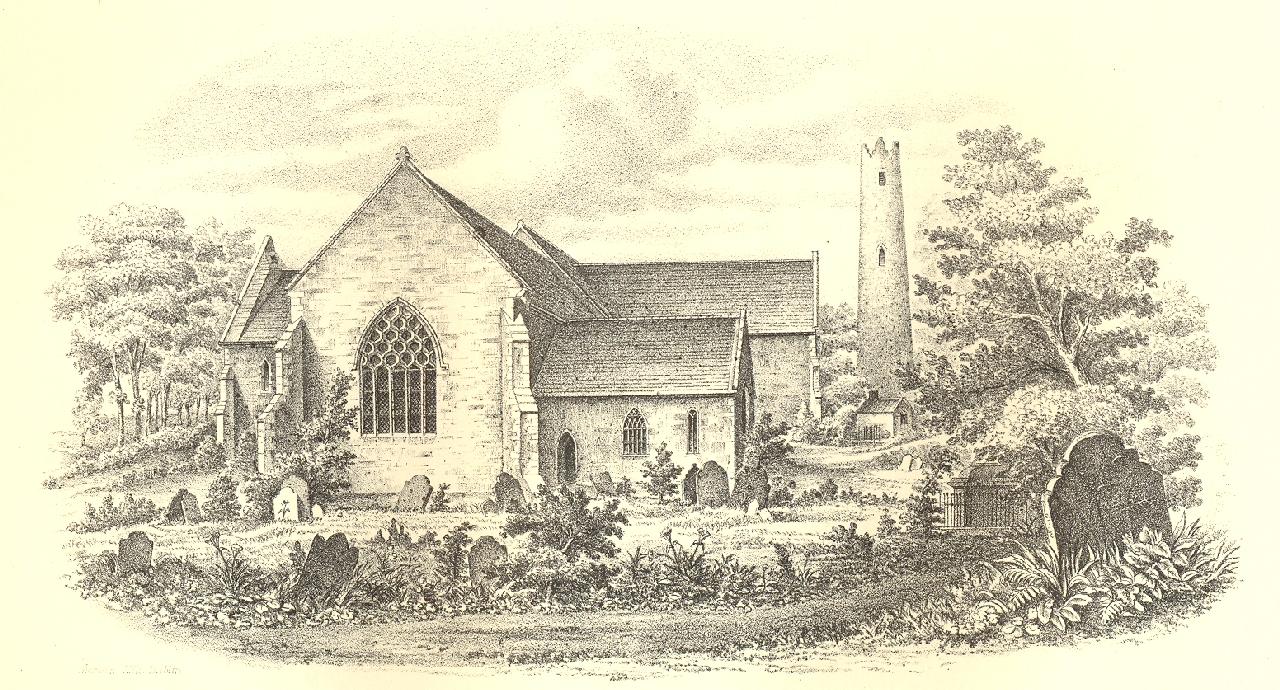
Although we were disappointed in our aspirations to climb the tower, our visit to the post office turned up a very friendly lady who said that she held the key to the adjacent cathedral, and would be pleased to let us go in there instead.St Colman's Cathedral at Cloyne - a print from 1853St Colman’s Cathedral at Cloyne – a print from 1853

Cloyne Cathedral: the worship area, a small part of the large building

Cloyne Cathedral: the worship area, a small part of the large building

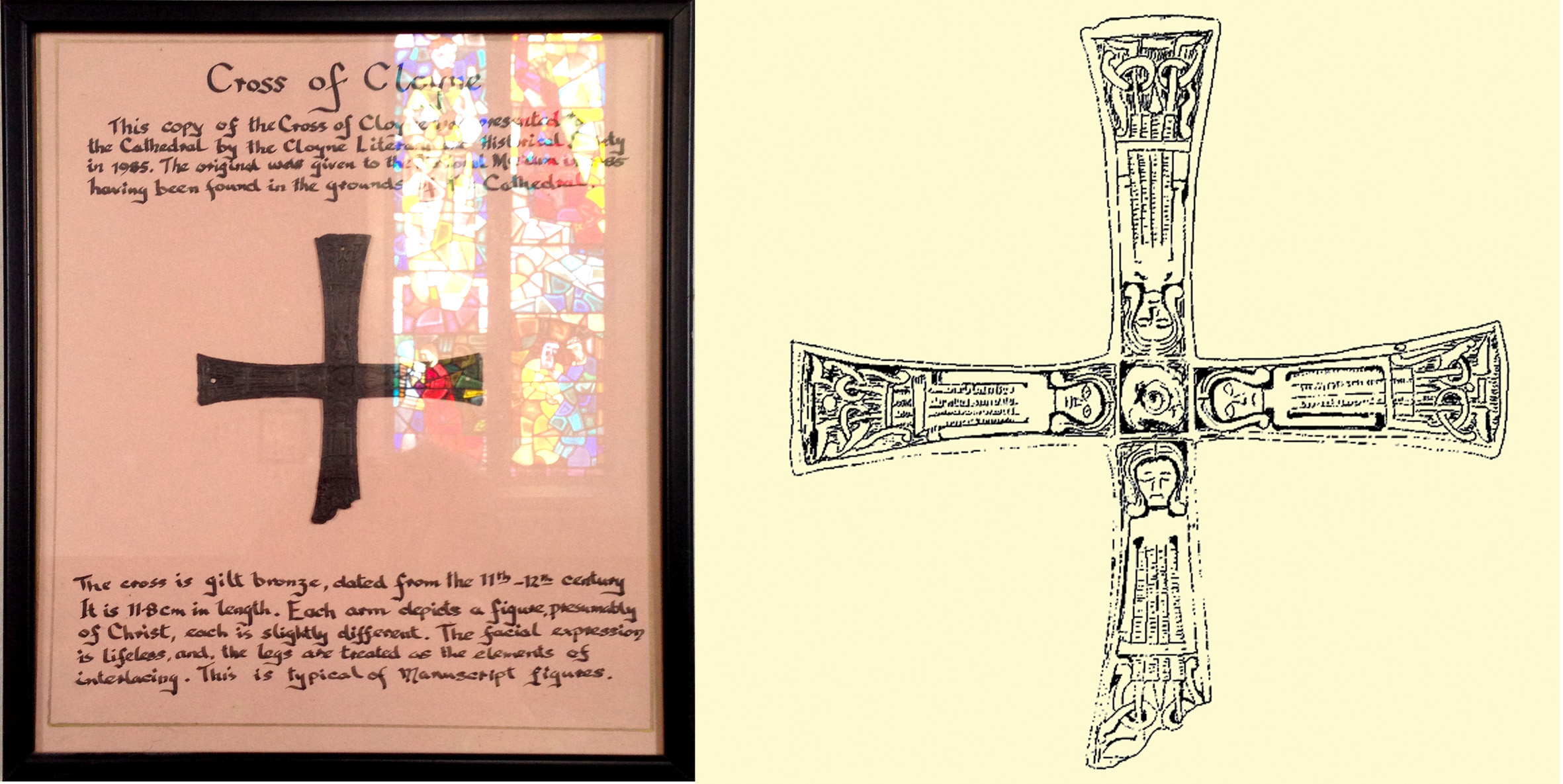
An 11th century gilt bronze cross was found in the Cathedral grounds

An 11th century gilt bronze ‘pilgrims cross’ was found in the Cathedral grounds

The Cathedral of St Colman in Cloyne is well worth a visit. To this Englishman the term ‘cathedral’ conjures up images of Gothic magnificence with soaring spires, arches and intricate buttressing – and set picturesquely within a medieval city centre; this, however, is a humbler structure – although grand in size – constructed in 1250 and located in a somewhat overgrown graveyard in the back streets of a small East Cork town. For more detailed information on the cathedral, have a look at the excellent blog Pilgrimage in Medieval Ireland.

blue flowers

Every day you should learn something new, and until then I had heard nothing of St Colman: St Colman mac Lenene lived in the sixth century and was a friend of St Finbarr, who we have encountered previously. He founded his monastery in Cloyne in 560 here and the cathedral is built over a network of caves, now inaccessible but used in the penal days by priests as a secret underground link from Cloyne House to the Catholic graveyard in order to say mass for the people.

pye window

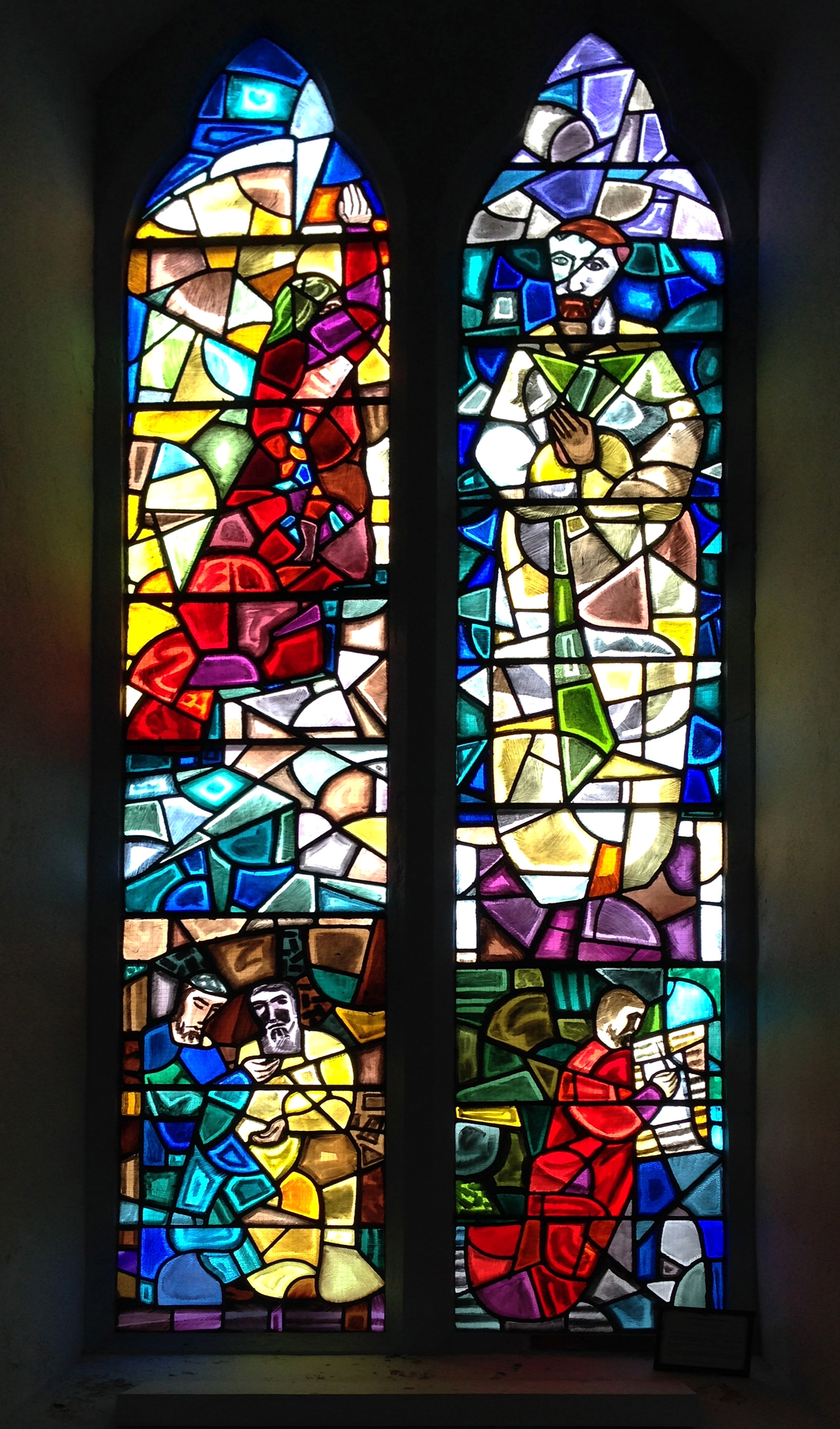
A window by artist Patrick Pye

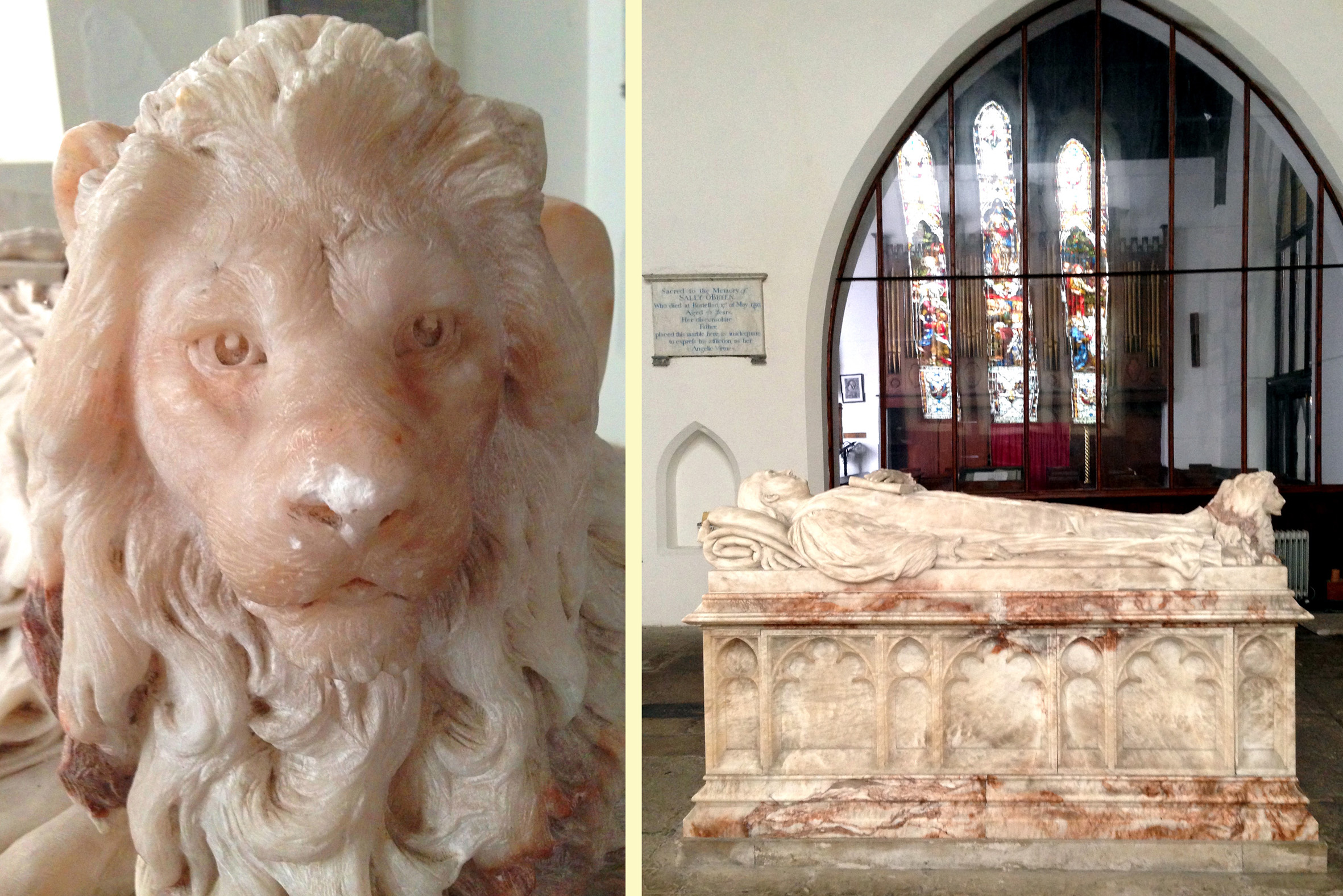
Nor did I know anything about the Bishop of Cloyne whose alabaster effigy rests in the north transept of the cathedral, watchfully guarded by a wonderfully personable Lion: it all made me think about how I would like the world to remember me after I’m gone…

bishop b

George Berkeley, Bishop of Cloyne – with Guardian

You may know – or you may not – that it was Bishop Berkeley who gave his name to the University of California, Berkeley, although he gets a very scant mention on the University’s website. George Berkeley (correctly pronounced bark-lee) was born on 12 March 1685 in Kilkenny and was educated at Trinity College, Dublin, where he later became a lecturer in Greek. He was a radical thinker and philosopher whose best known achievement was the advancement of a theory he called Immaterialism, also known as Subjective Idealism. This theory denies the existence of material substance and contends that familiar objects like tables and chairs are only ideas in the minds of perceivers, and as a result cannot exist without being perceived.


He left the British Isles for the American Colonies in 1729, settling in Rhode Island but determined to found a Utopian city in Bermuda based in principles which he set out. One was: …for the better supplying of churches in our foreign plantations and for converting the savage Americans to Christianity… while …being in Bermuda would prevent the Native American youngsters from “returning to their brutal customs, before they were thoroughly imbued with good principles and habits.”

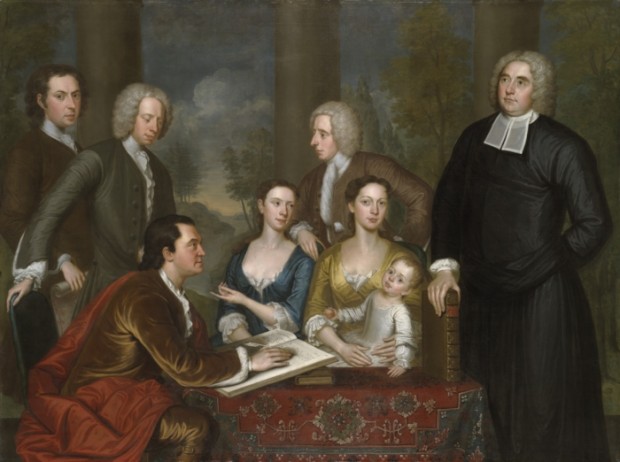
The 'Bermuda Group' - George Berkeley with his family on Rhode Island

The ‘Bermuda Group’ – George Berkeley with his family and friends on Rhode Island (John Smibert)

Berkeley’s social experiments didn’t get off the ground, mainly due to lack of funding, and he returned to London in 1732 and then to Ireland where he was appointed Bishop of Cloyne in 1734, a post which he retained until his death in 1752.

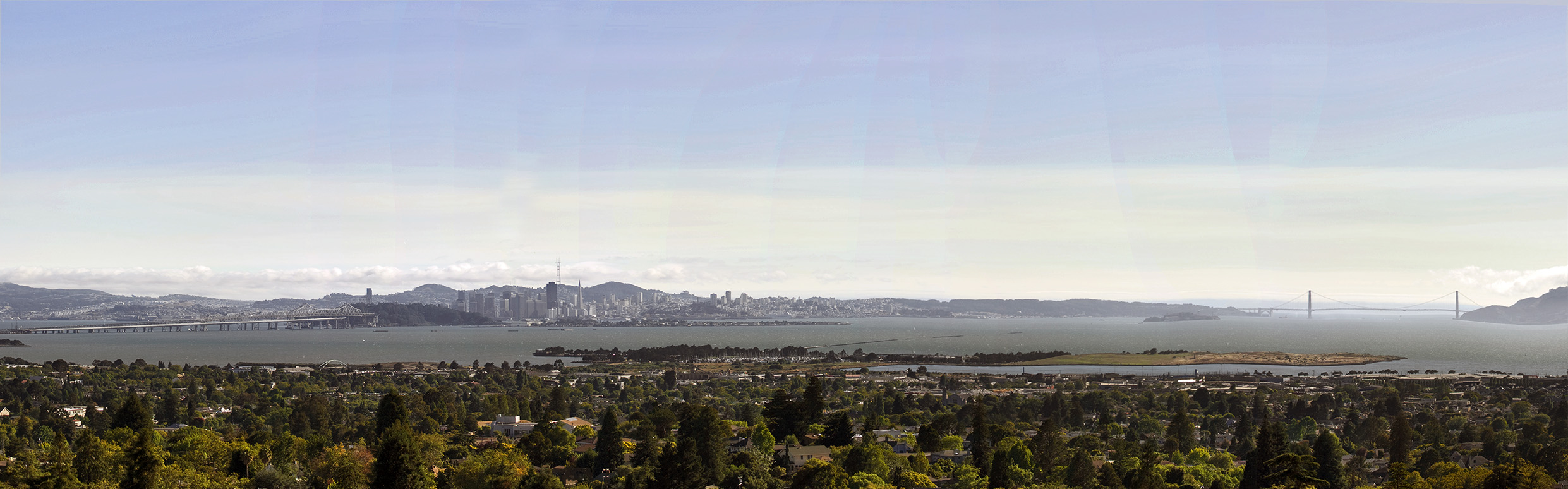
It's a long way to Indian Rock: Berkeley, California - named after the Bishop of Cloyne

It’s a long way to Indian Rock: Berkeley, California – named after the Bishop of Cloyne

George Berkeley wrote Verses on the Prospect of Planting Arts and Learning in America – inspired by the colonisation of the New World: …Westward the course of empire takes its way; The first four Acts already past, A fifth shall close the Drama with the day; Time’s noblest offspring is the last…  and it was these lines that were remembered when the city and University of Berkeley were founded in 1866. This Californian institution ‘…became a catalyst of economic growth and social innovation — the place where vitamin E was discovered, a lost Scarlatti opera found, the flu virus identified, and the nation’s first no-fault divorce law drafted…’

graves

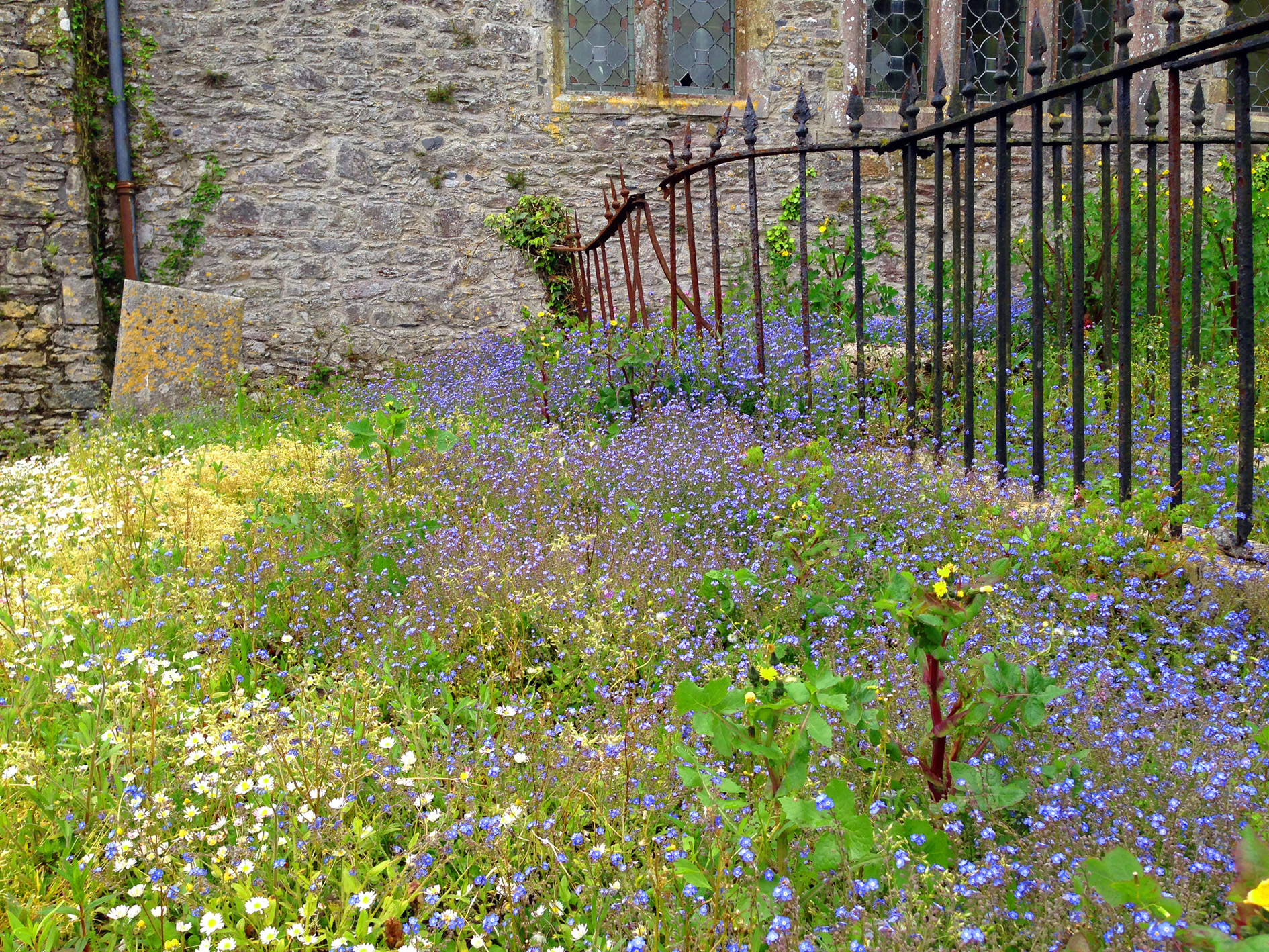
From the time of Colman and Finnbarr Cloyne was a great centre of ecclesiastical power. Today the cathedral is a Church of Ireland (Protestant) house and in need of maintenance and repair – a problem for a small population of worshippers. The churchyard is overgrown, and a sanctuary for wild flowers; the ancient gravestones are leaning and barely decipherable. All in all, a place – like so many in Ireland – imbued with a fascinating history which embraces the world.

St Colman

St Colman

Battling It Out

image-2

…Fierce is the wind tonight, it ploughs up the white hair of the sea – I have no fear that the Viking hosts will come over the water to me…

Translated by F N Robinson from an old Gaelic poem ‘The Viking Terror’

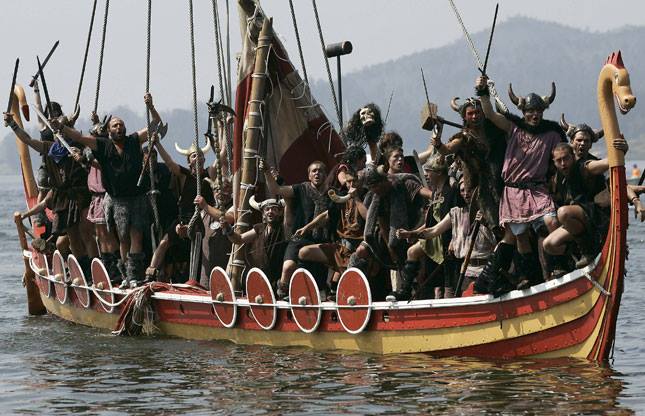
The Vikings are coming!

The Vikings are coming!

There was a great battle fought in Ireland on Good Friday.

Really? Good Friday just gone?

Yes – huge forces, hundreds of people, Viking longboats, swords, spears, axes…

I don’t think that’s very likely in this day and age.

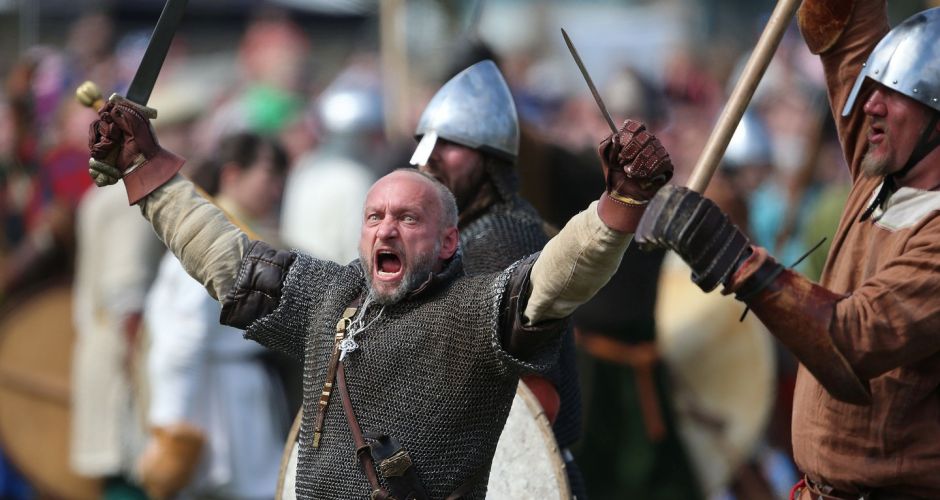
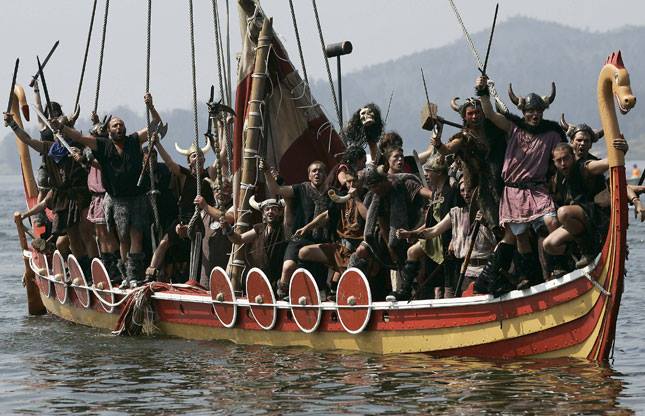
It is in Ireland: the Battle of Clontarf was re-enacted this Easter – 2014 – exactly 1,000 years after it took place.

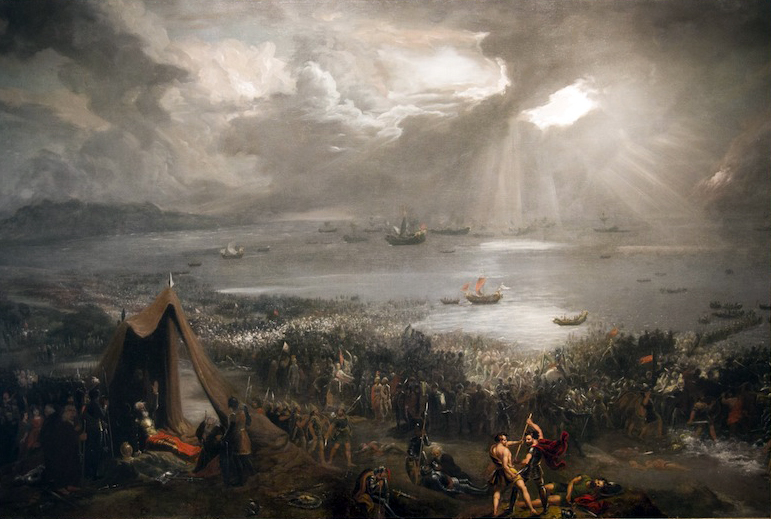
Battle of Clontarf, Good Friday 1014

Battle of Clontarf, Good Friday 1014 (Hugh Frazer 1826)

So what’s the connection with West Cork?

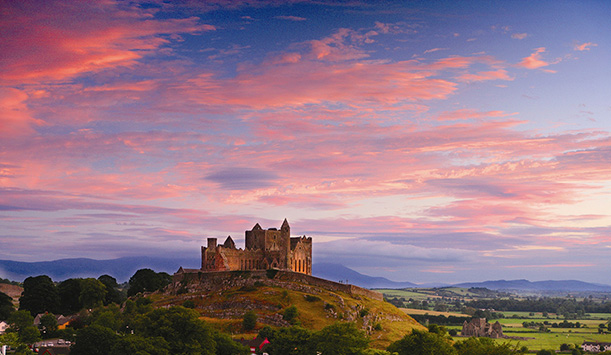
Well, the victor of the battle was Brian Boru, and he was at one time the King of Munster – crowned on the magnificent Rock of Cashel. That is, before he became the High King of all Ireland – seated at Tara, County Meath, and before he decided to take up arms against the Vikings.

The Rock of Cashel

The Rock of Cashel

So, this was a battle between the Irish and the Vikings?

Actually, no. This was the Irish and the Vikings fighting – er – the Irish and the Vikings.

Sounds a bit complicated.

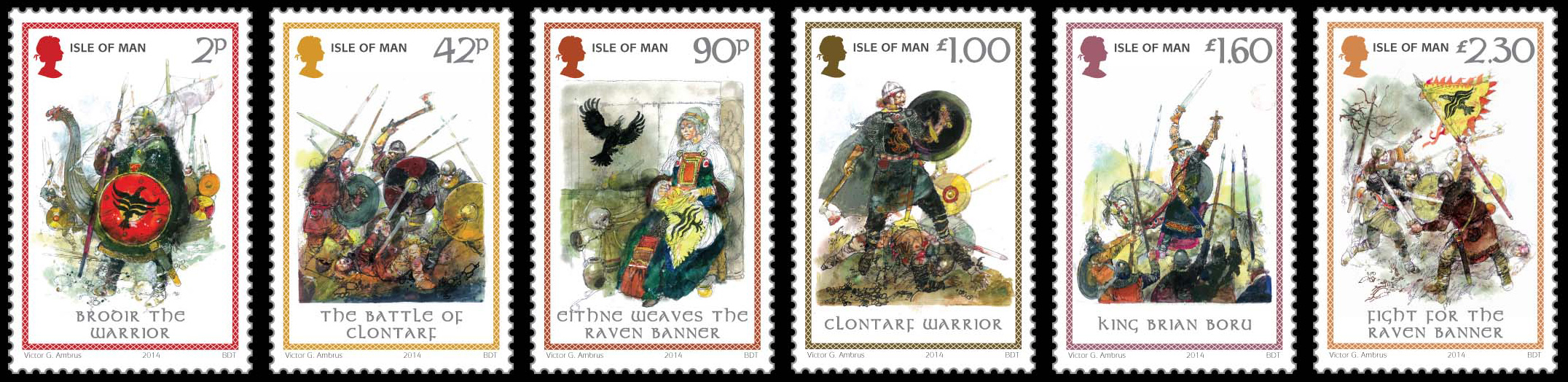
Irish history has always been complicated. The first Viking raids on Ireland took place in the eighth century. Initially they were aimed at the rich ecclesiastical centres but eventually the raiding parties became colonising parties, and by the tenth century there were many settlements of Norse people in Ireland who mingled, married and traded with the locals. As always there were factions within factions and the Irish clans – who frequently picked fights with each other – formed allegiances with some of the colonisers while falling out with others.

stamps


So, who won the Battle of Clontarf?

Well, in 2014 everybody did: there were no casualties. But in 1014 Brian Boru’s forces (which included some Viking allies) lost 4,000 of his 7,000 followers while on the other side the opposing mainly Viking forces (but including a contingent of Leinster men who had fallen out with Brian Boru) lost 6,000, leaving them only 500 standing on the field. You could say that it was a rout – and legend has it that Brian Boru drove the Vikings out of Ireland.

So we’ll put that down as a win for Brian then?

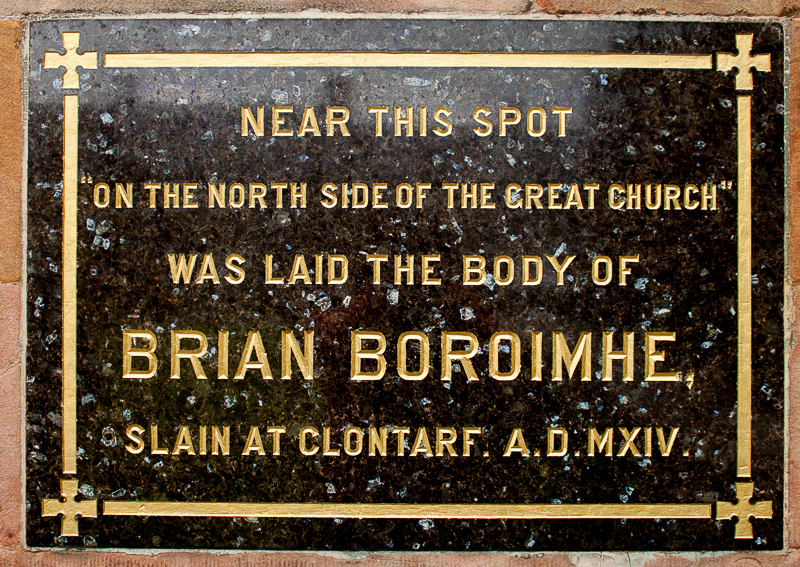
In a way, but sadly he didn’t live to see it. At 74 he was too old to fight and he spent the day praying in his tent. Brodir of Mann, one of the fleeing Vikings, found him there and murdered him.

That’s a bit much…

Yes, not exactly the end you’d like to see for such a hero. But I suppose it made him a martyr for the Irish cause and has certainly assured him a top place in history and legend.

plaque

You haven’t mentioned any legends.

To be honest the whole Brian Boru story was once considered to be a complete legend. No archaeological remains have ever been found of the battle; its site is disputed; and no-one knows exactly where Brian Boru has been buried – although there are various stories about all this which are still told in good faith after 1,000 years.

Didn’t he play the harp?

Well ‘the Harp that once through Tara’s Hall the soul of music shed’ was supposedly played by King Brian. It’s kept in Trinity College Dublin – where you can also see the Book of Kells. Unfortunately it’s been dated to the 15th century and therefore could never have belonged to Brian.

The harp has been used as a national symbol by the Free State but is perhaps most familiar in its incarnation on Guiness bottle labels. It has a chequered history itself: it was restored (very badly) and played for a time on special occasions but is now considered too fragile to allow the wire strings to be fully tensioned. In March 1969 it was stolen!

boru harp

Oh no! Did it come back?

Yes: after some very cloak-and-dagger antics involving large sums of ransom money being left in a dustbin in a Dublin back street it was eventually found wrapped in a sack in a sandpit.

Did they catch the dastardly thief?

They did, and he was given a two year suspended sentence as his defence counsel argued that he should be allowed to flee the country or he would be lynched…

A sensible approach to matters of law!

Indeed. And we can be happy that the whole Brian Boru / Battle of Clontarf story has given rise to huge media coverage, hopefully boosting tourism in Ireland.

That’s grand.

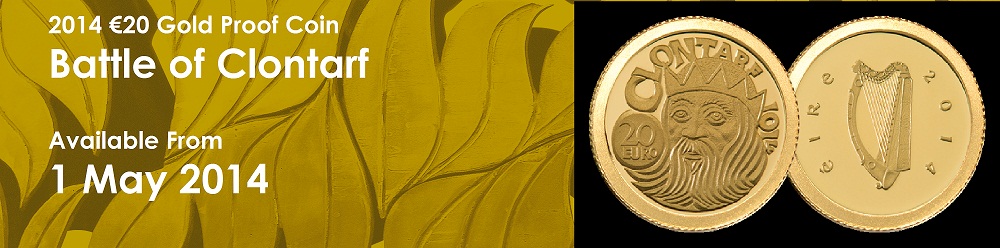
coin


Dancing Sun

Dancing Sun, Roaringwater Bay

Dancing Sun, Rossbrin Cove

“Where does that road lead?” said I, pointing to a road on the left of the one we were pursuing. “The road is it?” said the man with the cloak, “why, then, what road should it be, but the road to Sunday’s Well, a fine well it is, and a blessed place, for sure they say, though myself never seen it, that if one was to go there at peep of day on an Easter Sunday, they’d see the sun dancing a jig on the rim of the sky for joy; and I suppose that’s the reason they calls it Sunday’s Well” [Thomas Crofton Croker, Legends of the Lakes: or Sayings and Doings at Killarney, 1829]

When I lived in Devon I was told that the sun danced on Easter morning, but also that the ancient stone at the crossroads above the house where I lived could be seen to move at dawn on that day. I never caught the dawn when I lived there but here’s evidence that the sun does, indeed, dance at Roaringwater Bay. According to Kevin Danaher children in Ireland were shown the sun on Easter morning reflected in water – perhaps in the sea or a well – and this ensured that it would be seen to dance.

Gathering Bia Tragha at Rossbrin: the house on the skyline is Nead an Iolair

Gathering Bia Tragha at Rossbrin: the house on the skyline is Nead an Iolair

There are so many Easter customs: Finola is writing about the bia tragha – the custom of gathering shellfish and seaweed on Good Friday, the culmination of the austerity of Lent. Down in the Cove we joined several families collecting mussels. When I asked them why people in Ireland carry out this Good Friday tradition I always got the same answer – ‘…because we have always done it…’

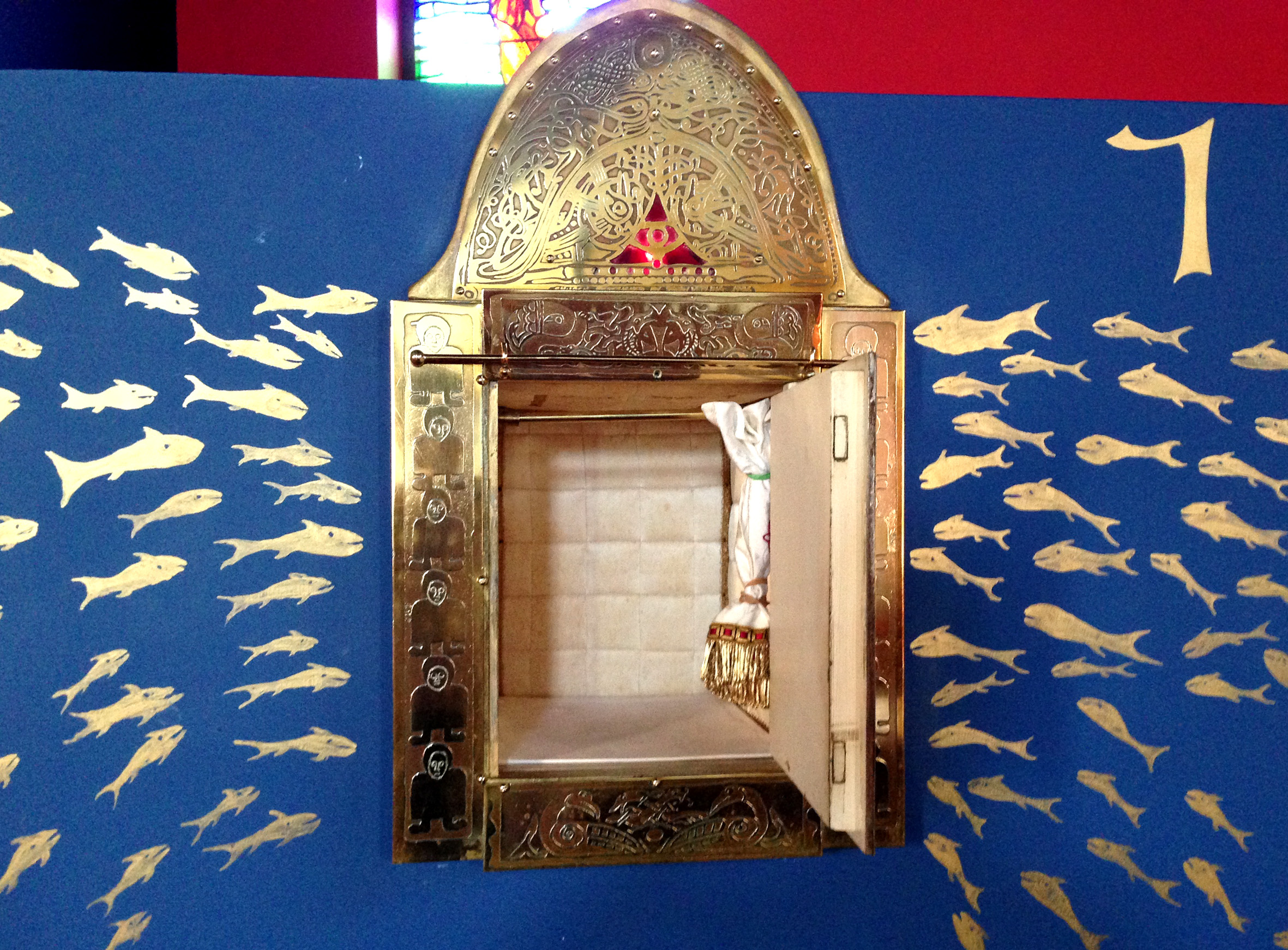
Good Friday - and the Tabernacle in Ballydehob Church is empty

Good Friday – and the Tabernacle in Ballydehob Church is empty

There is a lot of respect for the observance of Good Friday here. No alcohol is consumed: the pubs close at midnight sharp on Thursday evening (it’s not unusual on a normal day for them to stay open until two or three in the morning – especially if there is a session going on) and don’t reopen until Saturday. Ireland is probably the only Catholic country in the world where this tradition is still kept up. Not so long ago no work was done on the land, and ‘…no blood should be shed, thus no animal or bird could be slaughtered, no wood should be worked or burned and no nail should be driven on the day on which the Saviour was crucified…’ (Danaher)

Burning the Mountain on Good Friday

Burning the Mountain on Good Friday

Bearing this in mind we were surprised to encounter a ‘controlled burning’ of the gorse on the Sheep’s Head when travelling back from visiting friends on Good Friday evening. It was spectacular: the whole mountainside seemed to be engulfed.

On the Mizen – according to McCarthy + Hawkes – ‘…Early on Easter Sunday morning all the lads from the townlands would go around in a big group, blowing a trumpet made from a cow horn. The women of the houses visited would give them boiled hen’s eggs to eat, sometimes coloured yellow from boiling with furze petals or onion skins. After Easter Mass everyone went home for a quiet day of rest and a good feed after Lent. The night would bring a ball with much drink and dance…’

simnel

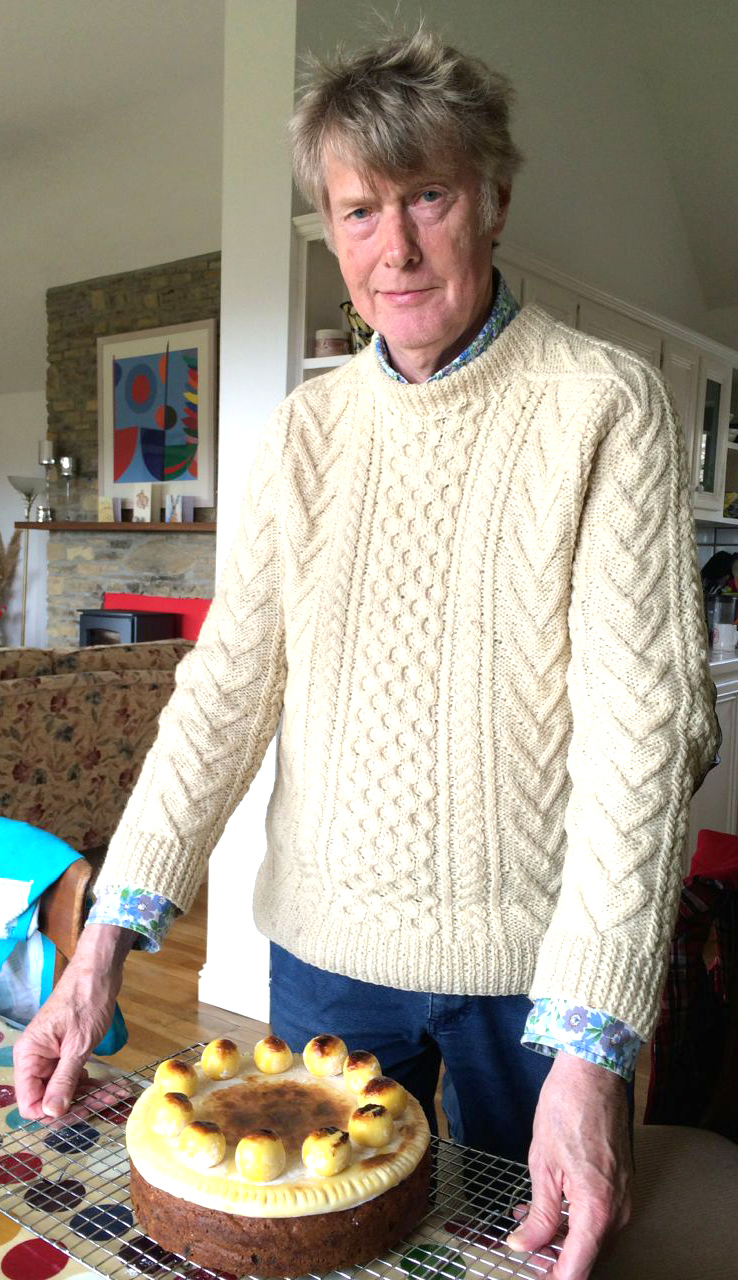
We are observing some of our own traditions today: we’ll be eating the Simnel Cake which I have made – more of an English tradition than an Irish one: the eleven marzipan balls represent the twelve Apostles (minus Judas) – and then we’re off to the Ballydehob Road Trotting races. Oh – and there are some eggs involved.

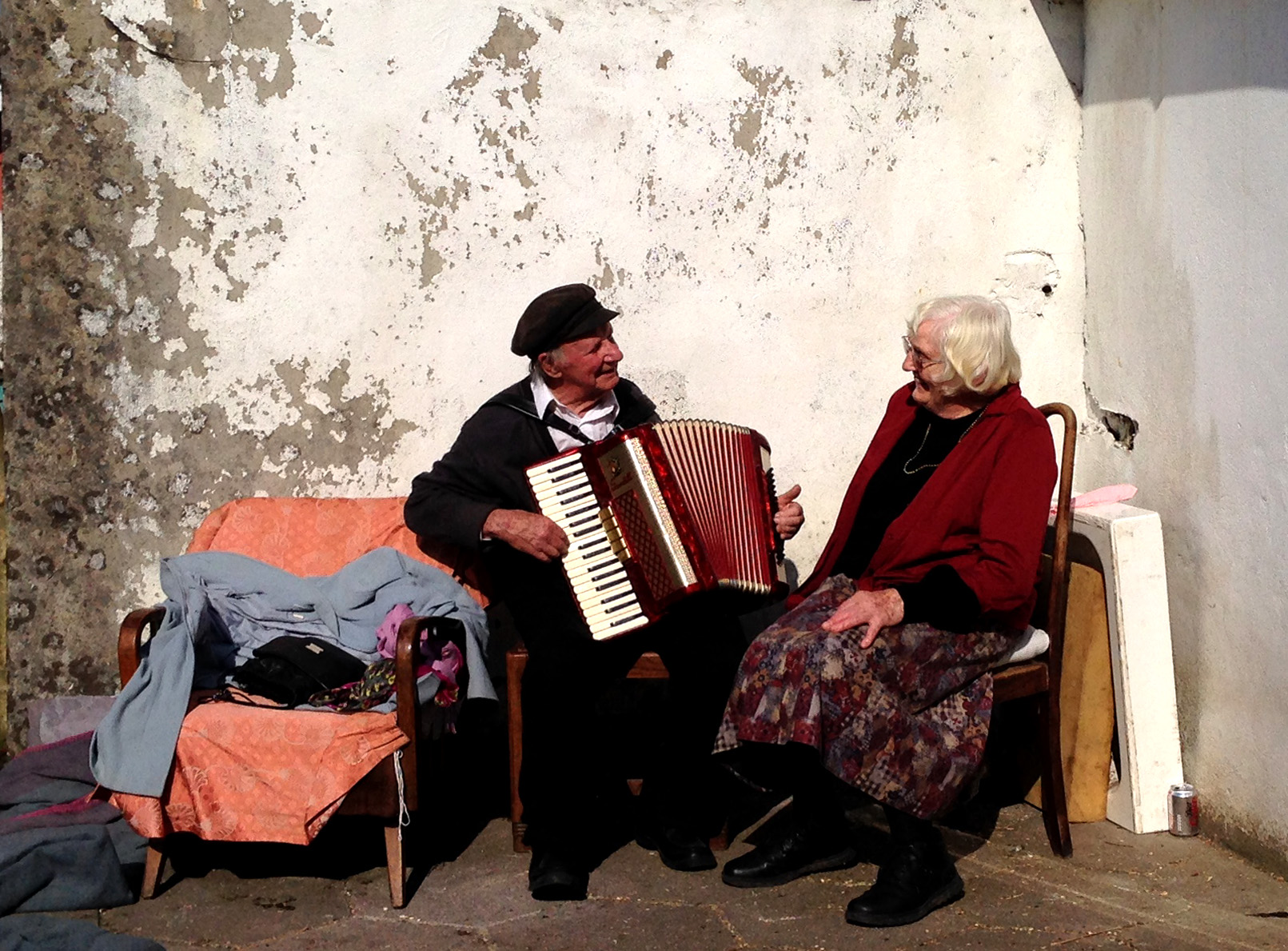
A scene in Provence? No - a sunny corner in Ballydehob on Easter Saturday

A scene in Provence? No – a sunny corner in Ballydehob on Easter Saturday


News from The Pale

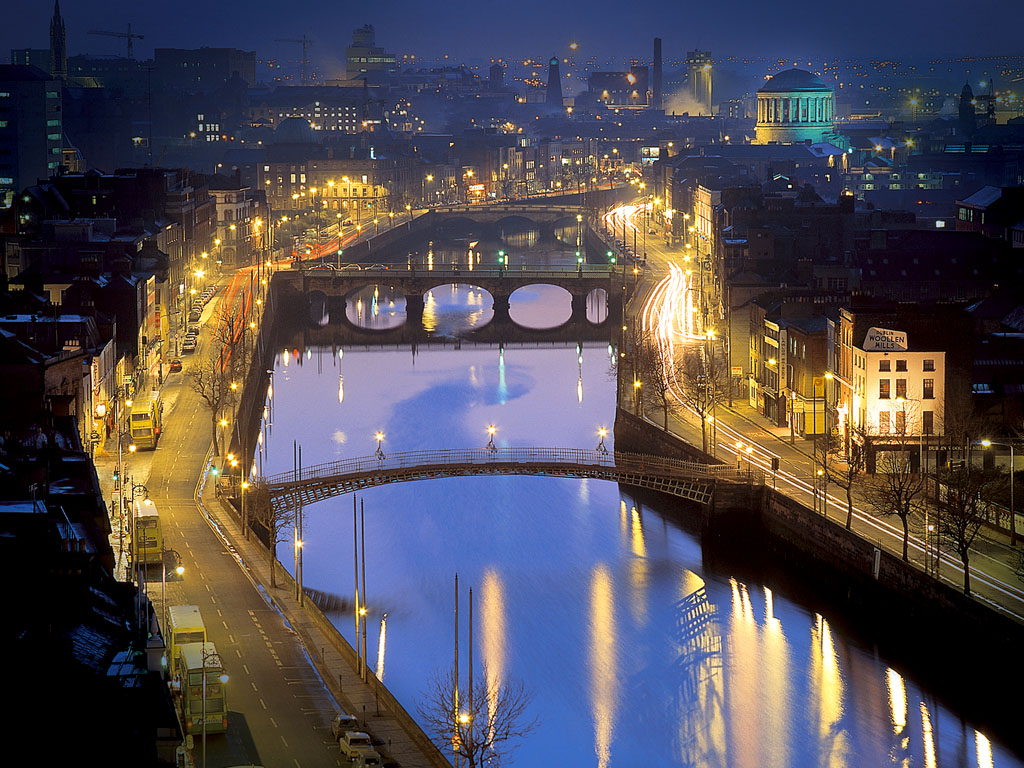
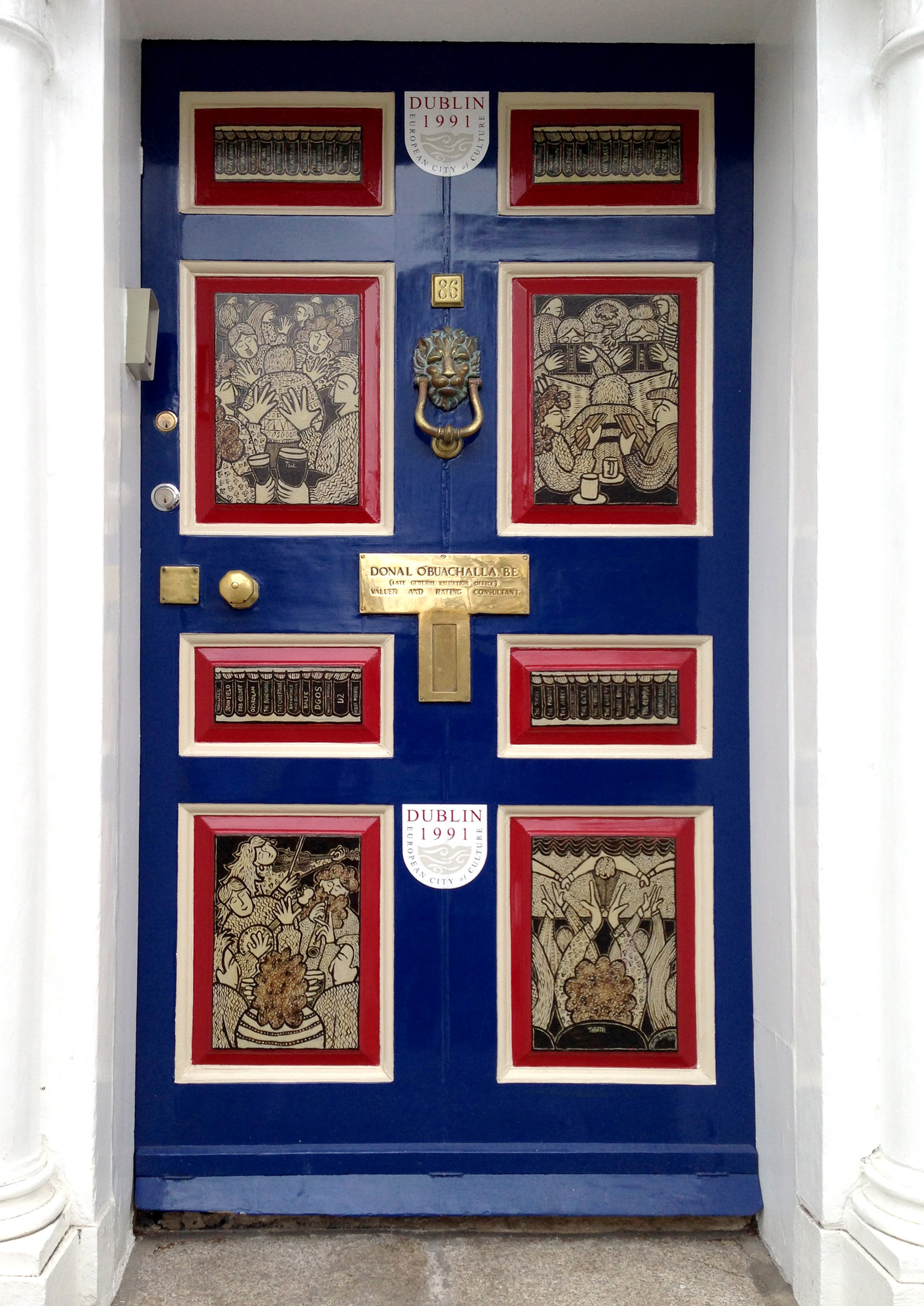
The European City of Dublin

The European City of Dublin

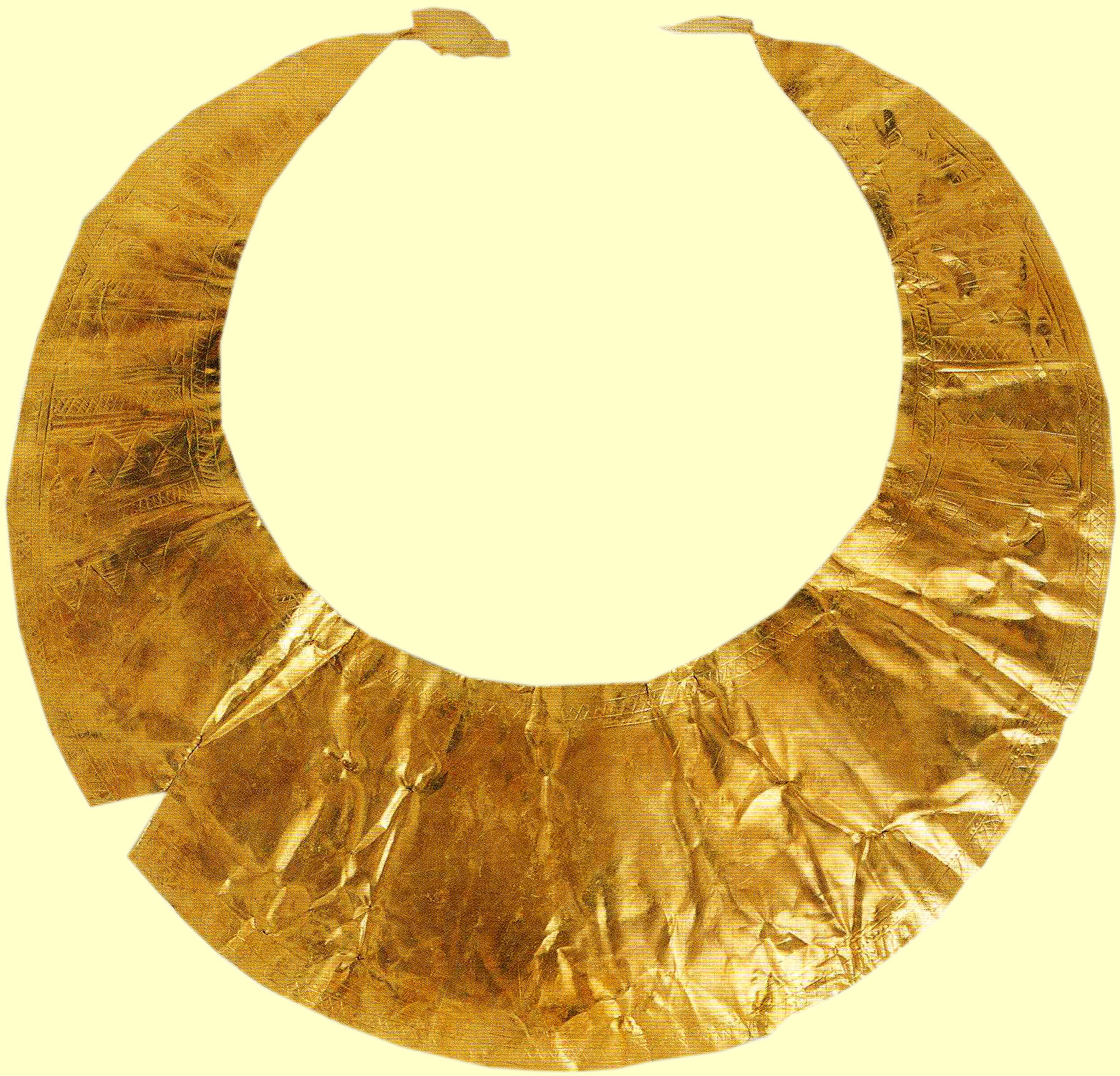
We are in  Dublin for a few days. Some of you will remember my piece on the expression Beyond the Pale: now I can report from The Pale itself. In some ways Dublin is quite like any other capital city in the world – it has its shops and shows – but in others it is unmistakably Irish. The National Museum, for example, has one of the greatest collection of Bronze Age artefacts anywhere – and some Rock Art…

Gold Lunula from County Kerry - a 4,500 year old artefact in the National Museum

Gold Lunula from County Kerry – a 4,500 year old artefact in the National Museum

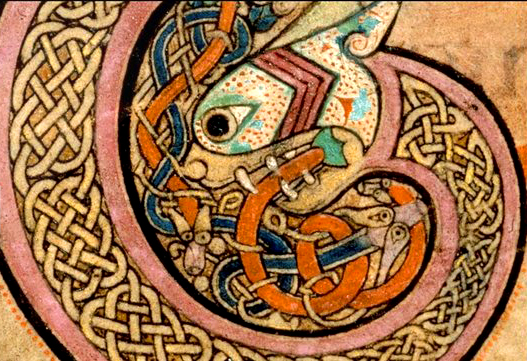
…while Trinity College Library, Dublin, is the home of the Book of Kells – an equally impressive medieval treasure. This unfinished manuscript dates possibly from the eighth century and tradition has it that it could have been begun by St Columba himself and that it was worked on for at least three centuries.

kells

The Book of Kells

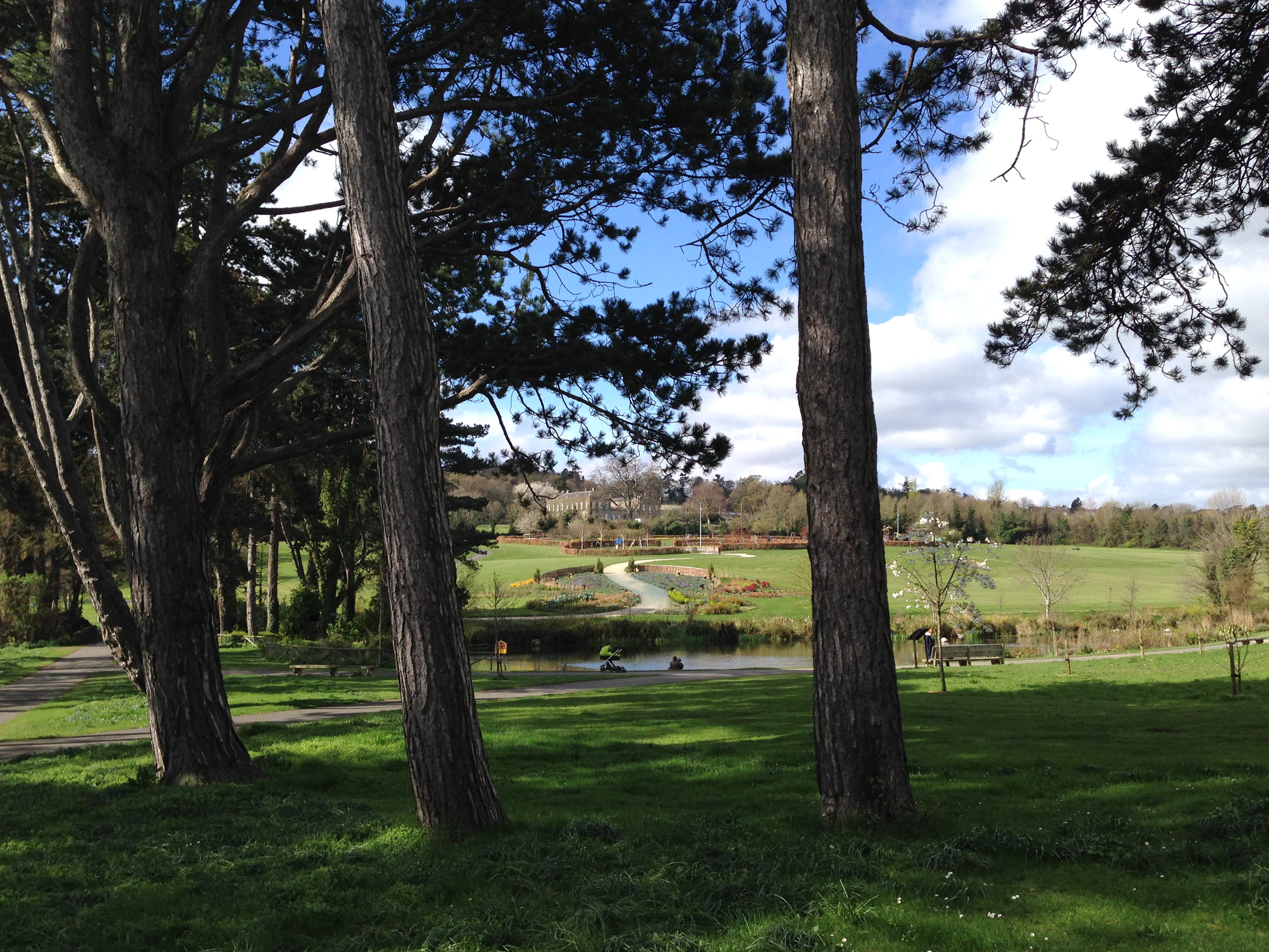
Away from the centre of things we discovered a little gem: Cabinteely Park. This publicly accessible amenity spans 45 hectares and provides city dwellers with walks, woodland, playground and cafe. It was once the estate of the Earls of Clare and now belongs to the local council. The ‘big house’ itself still stands and is undergoing slow restoration. The park is within minutes of where we are staying, and provides us with evening walks in the sunshine – and breakfast treats.

City Amenity: Cabinteely Park

City Amenity: Cabinteely Park

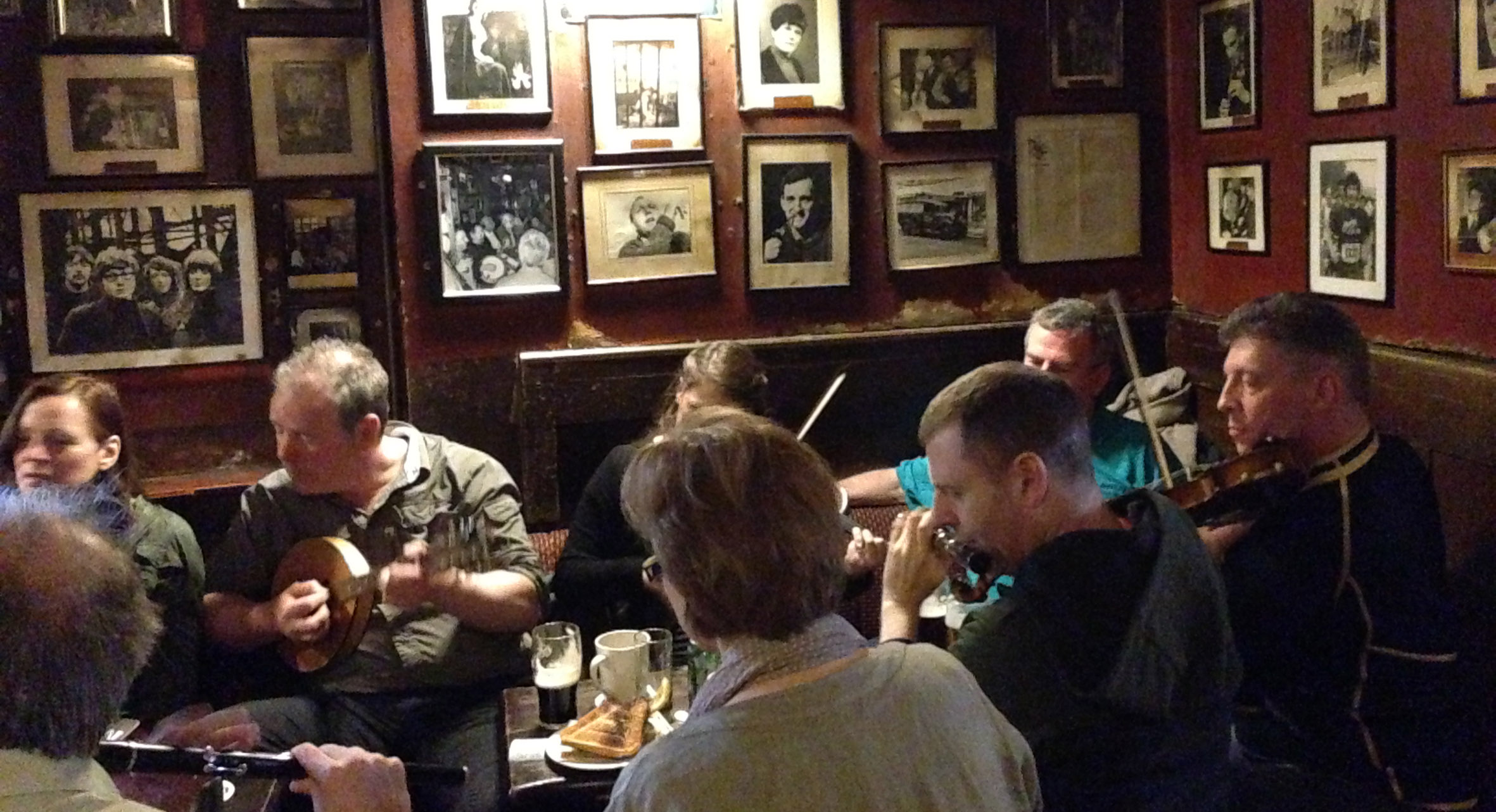
Being an Irish city, the music sessions are good. We went to O’Donoghue’s pub on Friday lunchtime and found 18 musicians gathered: fiddles, concertinas, flutes – and even a bagpipes played by a Scottish visitor.

Trad Session at O'Donoghue's

Trad Session at O’Donoghue’s

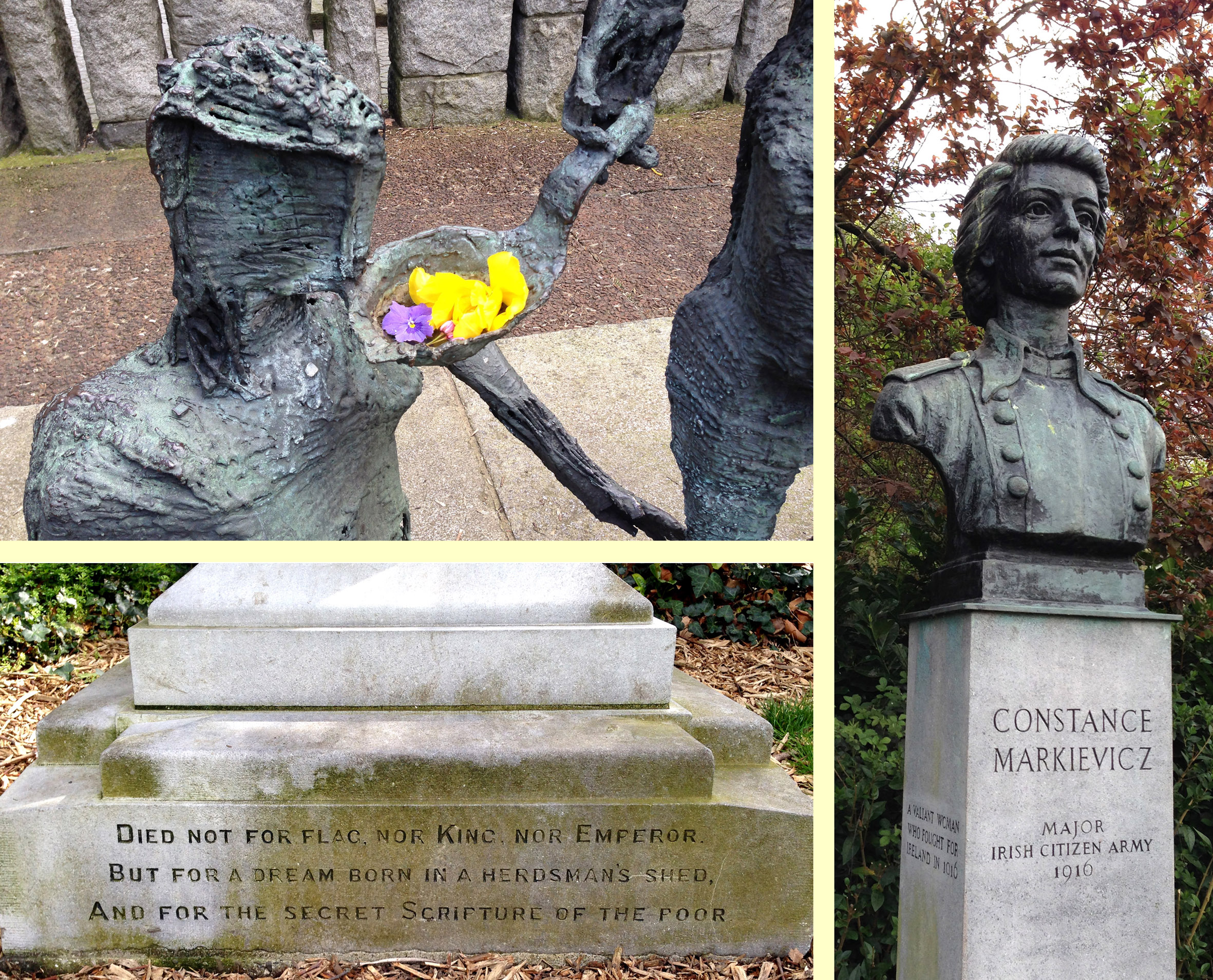
In the heart of Dublin City is St Stephen’s Green – which presents a collection  of statues of various Irish figures who are known to the world through the arts: Oscar Wilde, W B Yeats, James Joyce et al, but also nationalists who fought for the cause of Irish independence.

Remembering Irish History in St Stepen's Green

Remembering Irish History in St Stephen’s Green

At present the media is full of the state visit of the President of Ireland to Britain: it can only be a good thing that the two nations should become closer, and it’s great to hear the pretty universal enthusiasm for it from this side of the Irish Sea. So while this new era of better relations is taking off, I am dismayed to read of the rise of nationalistic right wing politics in Britain itself: could these lunatic press-inspired extremists really derail Britain’s place in the European Union? Will common sense ultimately prevail? I can only look on from the shores of a very firmly European country and hope.

Dublin Doorway

Dublin Doorway


Whiddy Island

Whiddy Island from Sheeps Head

Whiddy Island from Sheep’s Head

On a sunny Sunday in March, we were lucky to find out about a guided tour around Whiddy Island and enthusiastically signed up. Our guide, Tim O’Leary, runs the ferry to the island and its only pub, the Bank House. He is a native Islander and extremely knowledgeable about the island’s history, traditions, stories, flora and fauna. 

Off to Whiddy Island on a beautiful day in March

Off to Whiddy Island on a beautiful day in March

It was a gorgeous day for a tramp – a good thing as it’s a six mile walk – and the weather allowed us to drink in the glorious views and to stand at various spots listening to Tim as he shared stories of life on the island.

Whiddy Island Graveyard

Whiddy Island Graveyard

In the graveyard he told us about the island tradition of burial: a coffin has to be lifted from the boat at a particular quay and laid on a special coffin rock. From there it is shouldered uphill to the burial ground by four men of the same last name as the deceased. Nothing but human power can be used on the long uphill climb, or to dig the grave or conduct any part of the service. “We will carry this tradition on,” he said, “as long as we can.” The burial ground itself is part of an ancient ecclesiastical site and commands views across the island.

View out to Bantry Bay from the Island high point

View out to Bantry Bay from the Island high point

We learned that many island families made a good living in times past from fishing and fish processing, and it still an important part of the economy, although now mussel beds have replaced fishing lines and ‘pilchard palaces.’

Tim shows us the 'hairy rope' used to grow mussels. Mussel beds ring the Island.

Tim shows us the ‘hairy rope’ used to grow mussels. Mussel beds ring the Island.

The land was famous for being fertile and one historical document talks about the earliest potatoes always being grown on Whiddy. All this activity supported up to 800 people but like many places in West Cork the population was decimated by the Great Famine. Now, fewer than 30 people live here year round.

The Island can no longer support a school

The Island can no longer support a school

We walked up to the remains of O’Sullivan Beare’s castle, which functioned more as a prison than a dwelling as it housed those who needed to be ‘encouraged’ to pay the taxes he imposed for fishing rights. We explored the area that had once been a thriving American Air Force base for a brief period at the end of World War I – nothing remains except acres of concrete and memories of the vibrant life that the service personnel brought to this small community. Other defensive structures exist on the island too – several ‘batteries’  with huge guns were built after the French invasion of 1796 but alas they are too unsafe to visit.

O'Sullivan Beare's stronghold

O’Sullivan Beare’s stronghold

The west end of the island contains enormous tanks that now house the Irish national oil reserves. It was built as a Gulf Oil terminal in the late 60s and was the scene of a horrifying accident in 1979 when an explosion sank a French tanker, the Betelgeuse, and 50 people lost their lives. The enormous tanks, behind their barbed wire barriers, loom darkly against the landscape, a permanent reminder of this awful tragedy.

The oil tanks at the west end of the Island

The oil tanks at the west end of the Island

Take the ferry across to Whiddy Island any time and hike around the hills and the beaches. But if you can, catch one of Tim’s guided walks, and finish with a well-deserved pint in the Bank House at the end of the day.

There's nothing like a guided tour with Tim!

There’s nothing like a guided tour with Tim!

One thing, though…when Tim sat in this desk back in the day, his teacher forgot to teach him about distances. So just take it with a grain of salt when he tells you there’s “only another half mile to go.”

desk

A note on the West Cork Speak Competition! Deadline extended to the end of next week. Only one entry so far, so don’t be shy and get those conversations in!