Adare Manor

When studying architecture (fifty years ago!) I had little time for what was then generally termed the Victorian Gothic style. It seemed to me derivative, dark and fussy. Now, half a century on, I am suddenly a convert – and all because of a visit we made to Adare Manor: surely one of Ireland’s leading five star hotels, but also the finest embodiment of Neo Gothic attributes that I have come across in any building to date.

The settlement of Adare, in County Limerick, is a bit of a traffic bottleneck waiting to be sorted out – by a much yearned-for bypass which is likely to take a few years to complete. Once in the village, however, you will find a magical and slightly surreal place with its clusters of picturesque thatched cottages, pubs and restaurants, art galleries, antiques vendors and the greatest concentration of fashion shops and boutiques outside of any city in Ireland (probably). But when it comes to hospitality and architecture, then Adare Manor itself beats all contenders.

From the superbly landscaped gardens (top – there are 840 sweeping acres on the estate), through to elegant interiors (the drawing-room, centre, is a prime example), the mansion is on a grand scale and very much reflects, today, the spirit in which it was reincarnated in the 1830s (lower – the Great Hall) by the splendidly monikered incumbents of that time: Windham Wyndham-Quin, 2nd Earl of Dunraven and Mount-Earl and his wife Lady Caroline Wyndham, heiress of Dunraven Castle, Glamorgan, Gloucestershire.

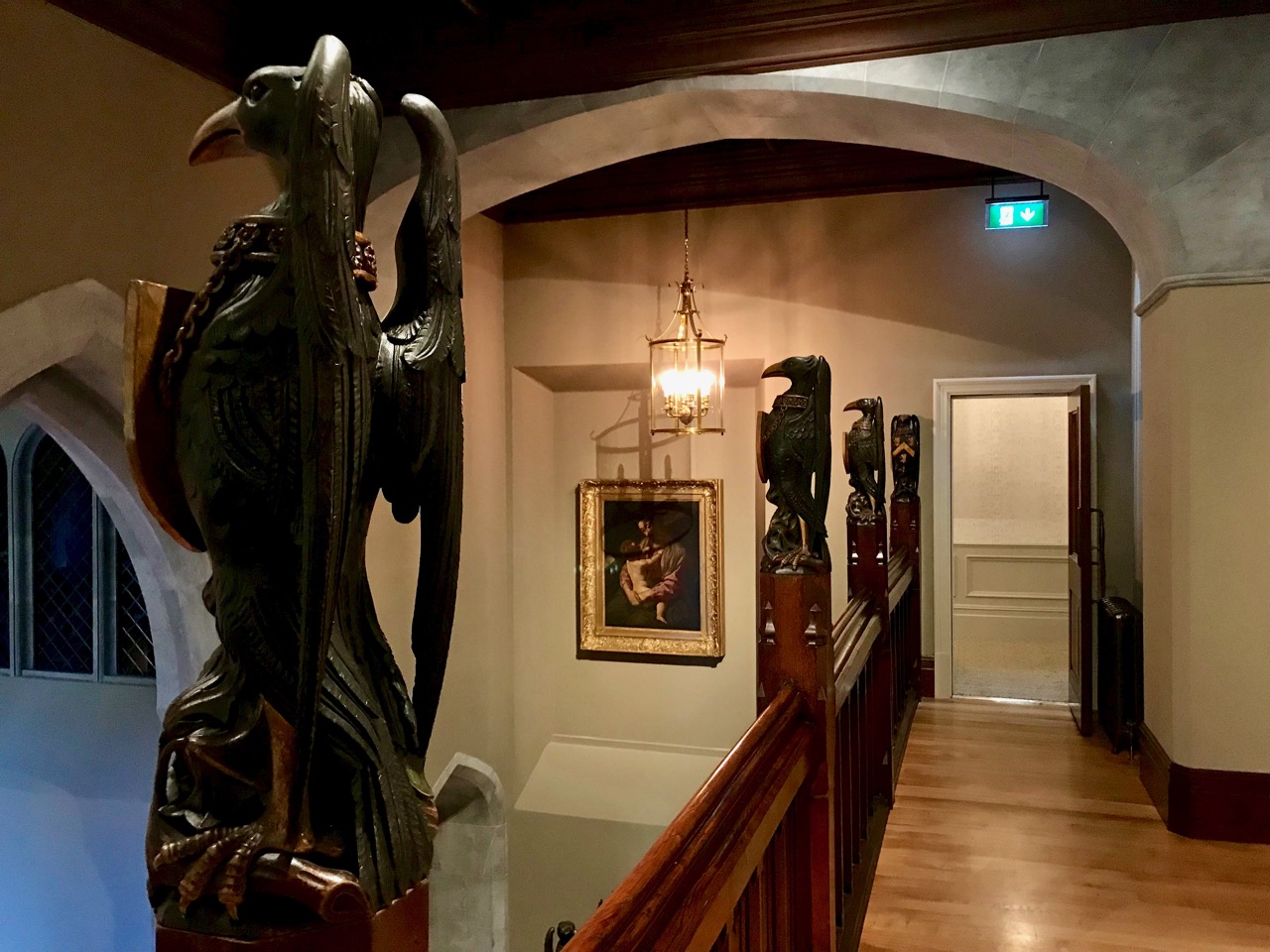
The Manor House as remodelled by the Second Earl is a riot (Dunraven ravens, above). Known to have always actively pursued outdoor life, riding, hunting and sports, it is said that Windham was laid low by an acute attack of gout. Lady Caroline encouraged him to channel his frustrated energies into a building project: to modernise and enlarge their modest Georgian residence. The Earl rose to the challenge and embraced the exuberance of the fashionable Gothic Revival style of architecture.

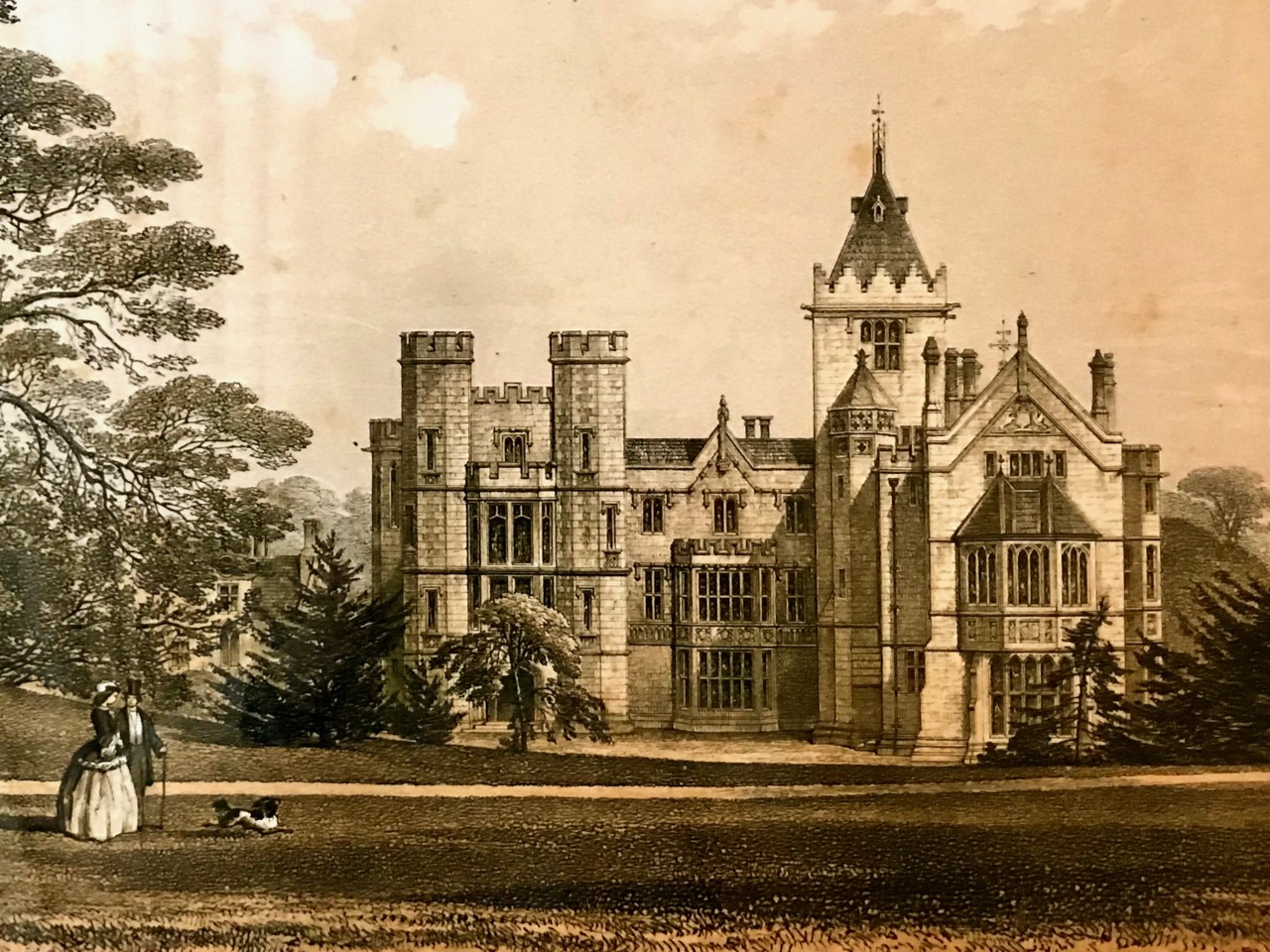
Adare House in the 18th century (top) and its transformation by the 2nd Earl (lower – a 19th century engraving). Clearly funds were not a problem, as a stone plaque on the south elevation attests (one of many texts embedded in the refurbishment of the fabric):

…This goodly house was erected by Windham Henry Earl of Dunraven and Caroline his Countess without borrowing selling or leaving a debt AD MDCCCL…

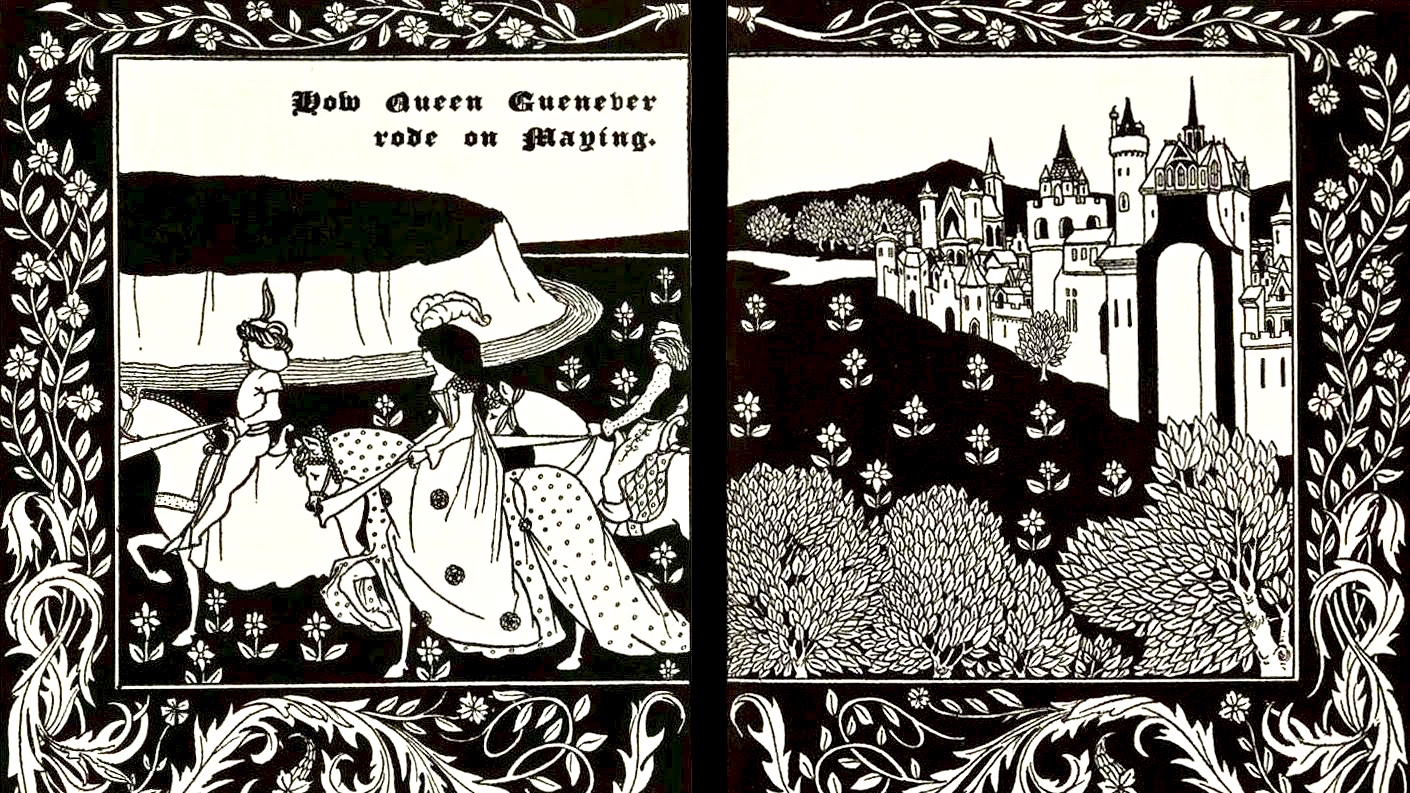
Inspiration for the architectural elements came from an early 19th century romantic revival of interest in all things medieval: particular a perception of the trappings of chivalry: knights in armour, courtly love, stately homes, heraldry, jousting and country pursuits (you’ll see in Finola’s post that we indulged in some of those!). As the Victorian era progressed in the British Islands, these ideals evolved through art – the high point being the Pre-Raphaelite movement – and literature, as espoused in Malory’s Morte D’Arthur, for example, with its interpretation and embellishments by Tennyson and Beardsely:

In respect of architecture, the 2nd Earl was ahead of his time in pursuing medieval themes and must, surely, have been endowed with a good sense of humour. Lady Caroline always loyally stated that all the ideas in the remodelled house were Windham’s; however, we know that the ‘Gothic architects’ James and George Pain were involved, as were Philip Charles Hardwick and Augustus Pugin, in a project that spanned three decades.

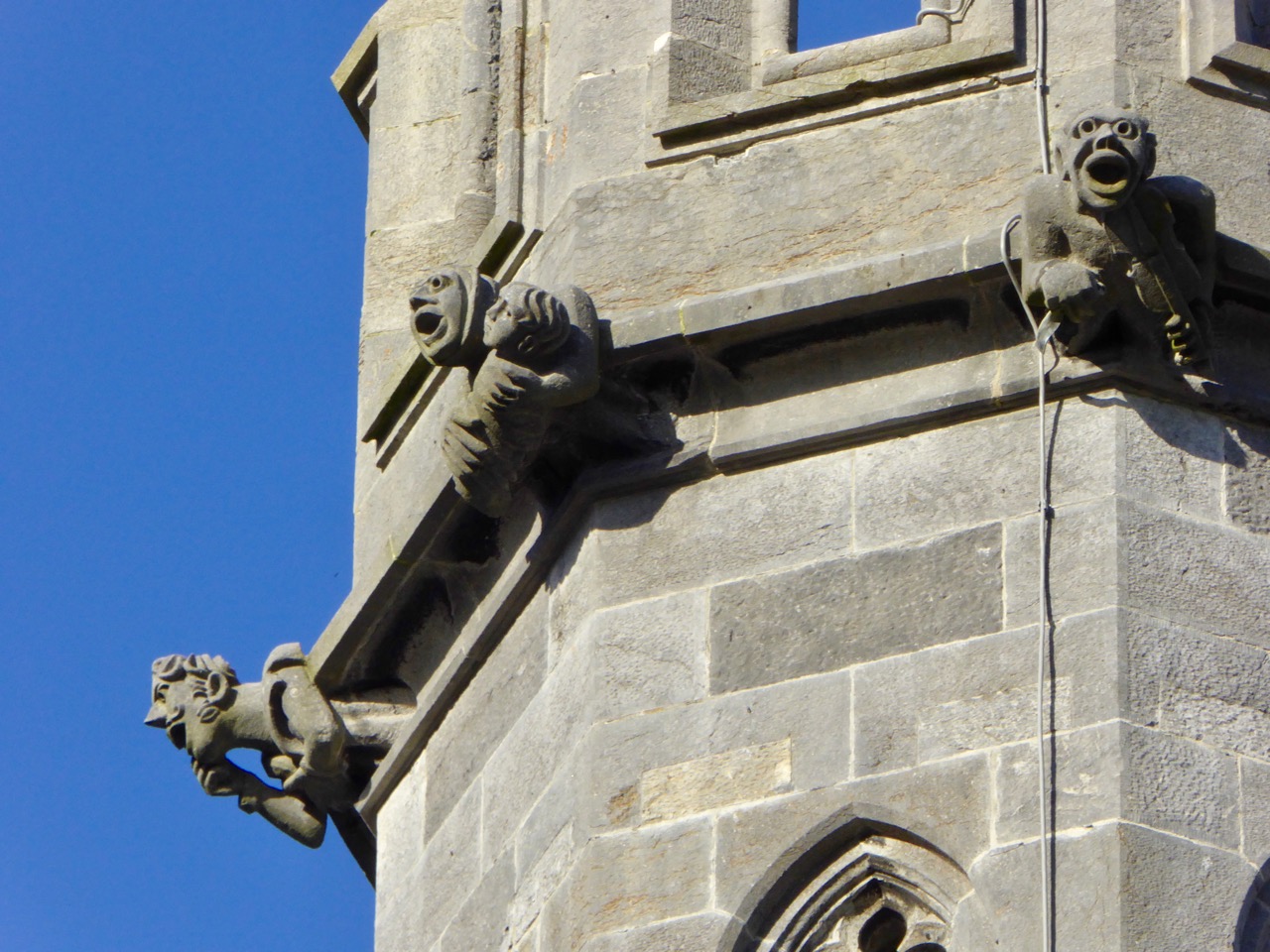
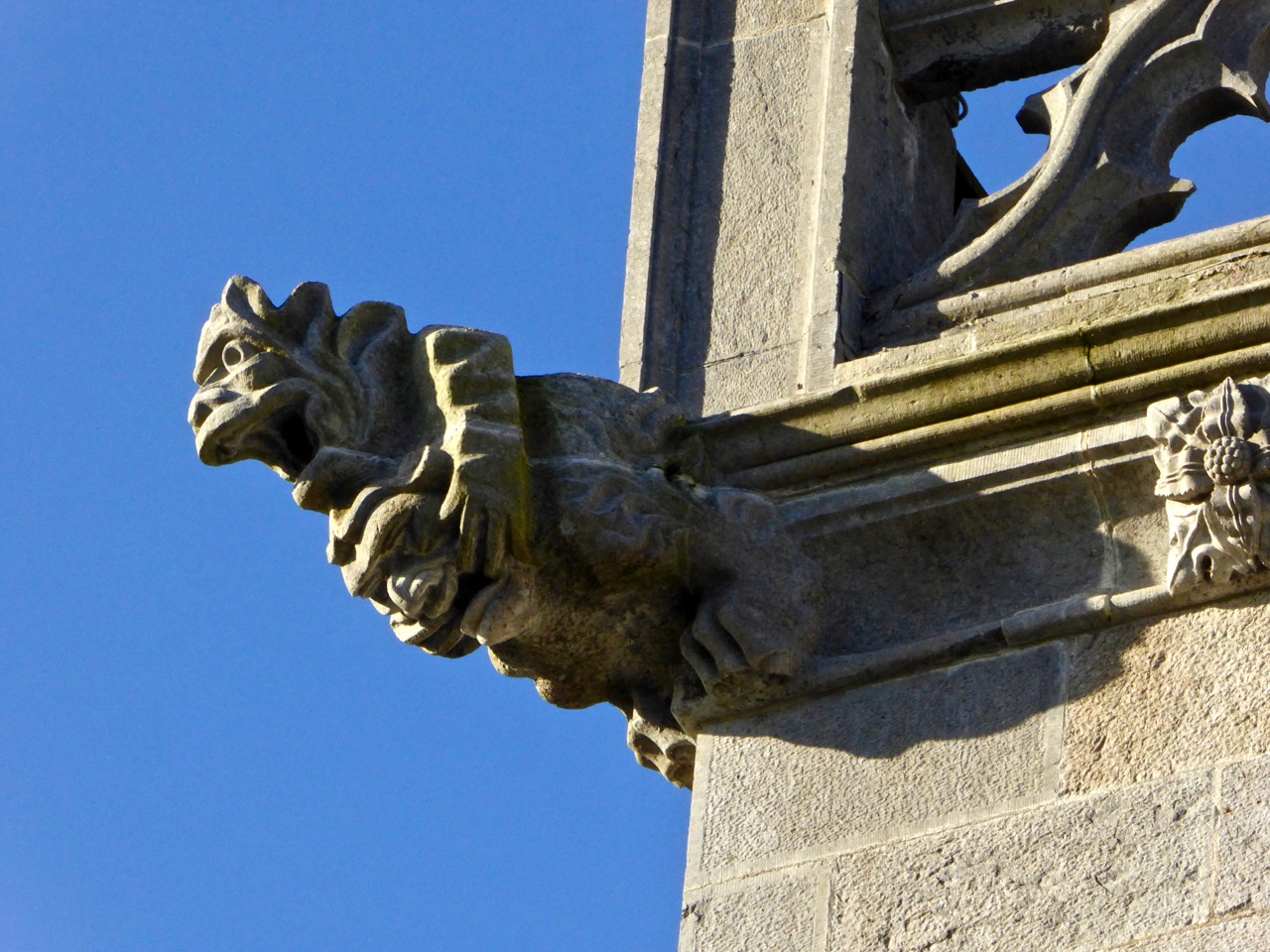
You can see from this one small corner of the Manor the richness and quantity of detailing that was incorporated into the architecture, both inside and out. The 2nd Earl must have dreamed up or approved of all the themes which are well worth studying at length. Here are only a few of the gargoyles which attracted our eyes:

The 1897 photograph, above, shows the carriages of the Duke and Duchess of York at the entrance to Adare Manor. The Duke became George V in 1910. Everyone who comes to the Manor has to enter through a magnificent ‘Romanesque’ doorway (eat your heart out, Finola!) – whether royalty, like the party above, or mere mortals like us, who treated ourselves to a stay to celebrate our wedding anniversary. Have a look at the detailing on the architraves:

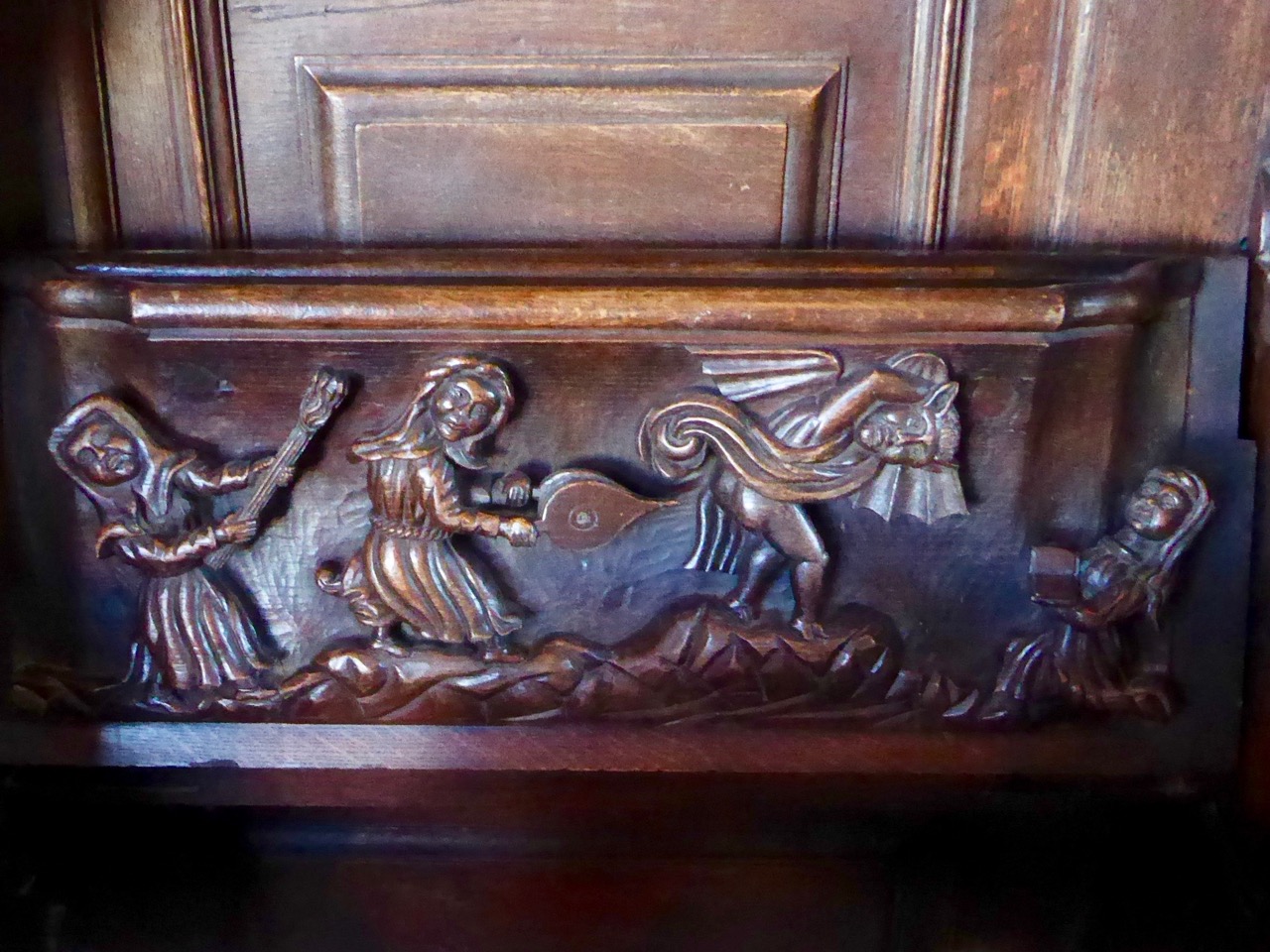
The craftsmen stonemasons of Adare were kept very busy – and fully employed – throughout the building period, which encompassed the worst years of the Great Famine. As were the woodcarvers. One room in the Manor – the Long Gallery – spans the whole width of the house: 40m long and 8m high. It’s now the ‘informal’ dining room. It has a magnificent array of carving, some – the choir seats – brought in from Flanders and dating from the 17th century (see the enigmatic example in the first photograph below), but most purpose-made locally for the new Manor. Each one tells a story. We need to go back again and spend more time there (please) just to even get a glimpse of all of them. By the way, if you want to see real medieval carving, have a look at this post of mine, from the West meets West series.
Lady Caroline was just as industrious as the Earl in contributing to the project and in creating employment through the famine. She established a School of Needlework to develop marketable skills and opportunities for local women: some of the work of the School graces the walls of the Manor. In fact, the work of local craftspeople is prominent throughout the interior of the building. Below left is the Long Gallery, showing off decorative work on the ceiling, tapestries and stained glass. On the right is a carved stone figure that looks down on guests in the Great Hall.

All of the above is just a taster for the wealth of architectural delights that awaits future visitors to this hotel. We were among the first: the Manor re-opened after a full two-year refurbishment and extension the week before we took our stay there. We can confirm that the standard of this establishment is among the highest that we have come across in all our travels in Ireland. Every detail has been thought out: rooms are spacious and warm; beds are large and comfortable; all mod cons are incorporated – right down to a switch beside the bed which opens or closes the curtains! The food excels – and we have yet to sample the full restaurant facilities. Above all, the service is faultless, welcoming, attentive and personal. Amongst the new features is a ballroom, which would make the ultimate wedding venue, built in a style which fully compliments the character of the original architecture:
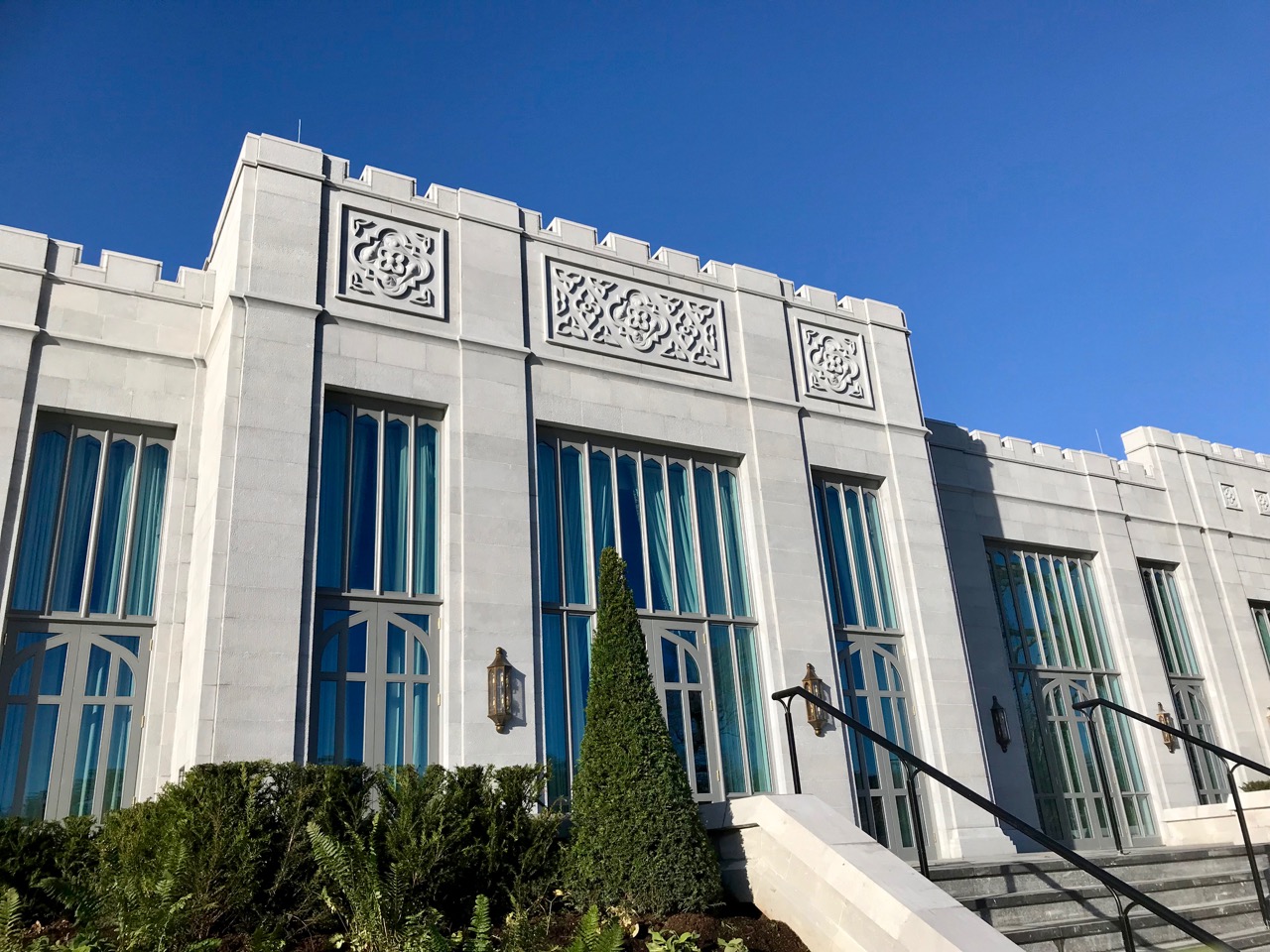
Flamboyant, exuberant, playful, grand… I will run out of epithets, and superlatives. I was just – delighted – by Adare Manor, and we feel privileged that we can still appreciate the aesthetic  wit which the Earl and Lady Caroline brought to the house, and which has been extended by subsequent generations: the last Wyndham-Quin to inhabit the property – the 7th Earl of Dunraven and Mount-Earl – moved out in 1982. Lady Caroline should have the last word: she wrote this in her 1856 book Memorials of Adare Manor

This charming spot was my home of unclouded happiness for forty years: may Heaven’s choicest blessings be poured with equal abundance on its present and future possessors!
Falconry Fantasy

I’ve waited a whole life for this – the chance to be a falconer, if only for a moment.

Ever since I read T H White’s The Once and Future King, it’s been a fantasy of mine to interact with one of those magnificent hunting birds that he described so well. A couple of weeks ago, at Adare Manor, Robert and I got a chance to finally live that dream – yes, he read the same book and loved it just as much as I had. T H White was a falconer himself, although not a very successful one. The treat was part of a couple of days stay at Adare Manor – Robert’s post describes this fascinating place in wonderful detail.

This falcon is happier and calmer with his hood on

Our falconer at Adare Manor was Susan Kirwan, one of the team at Adare Country Pursuits. What she doesn’t know about birds would fit on a postcard. She trained her first bird, a jackdaw, at the age of nine, and was hooked. Now she shares her knowledge and her love of birds with those of us who have admired from afar but have never had an opportunity to get up close.

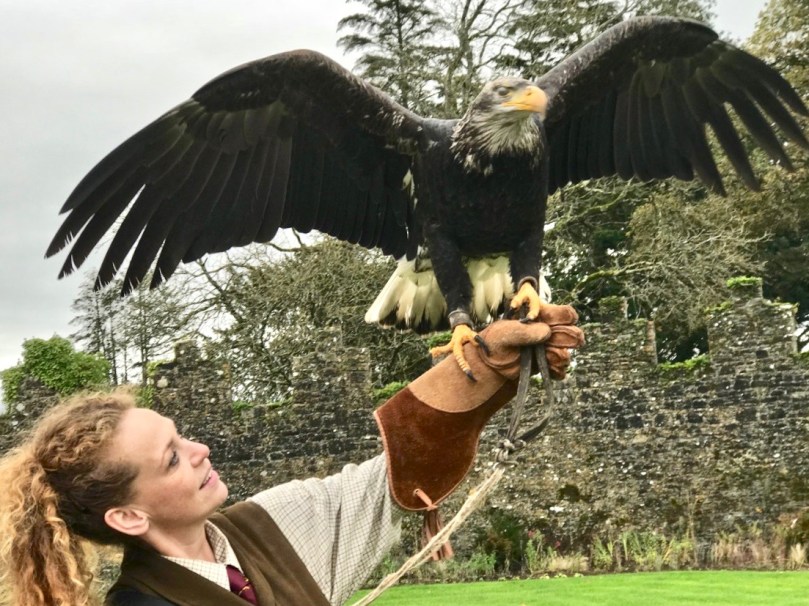
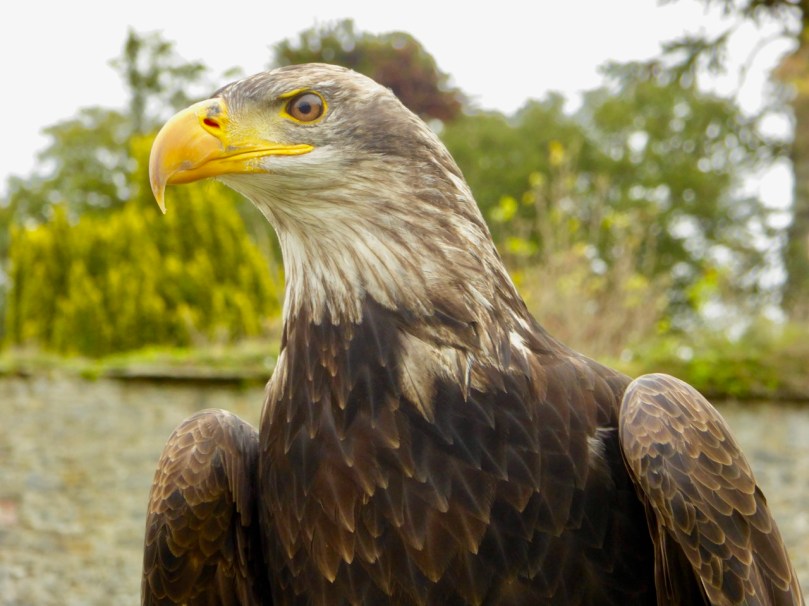
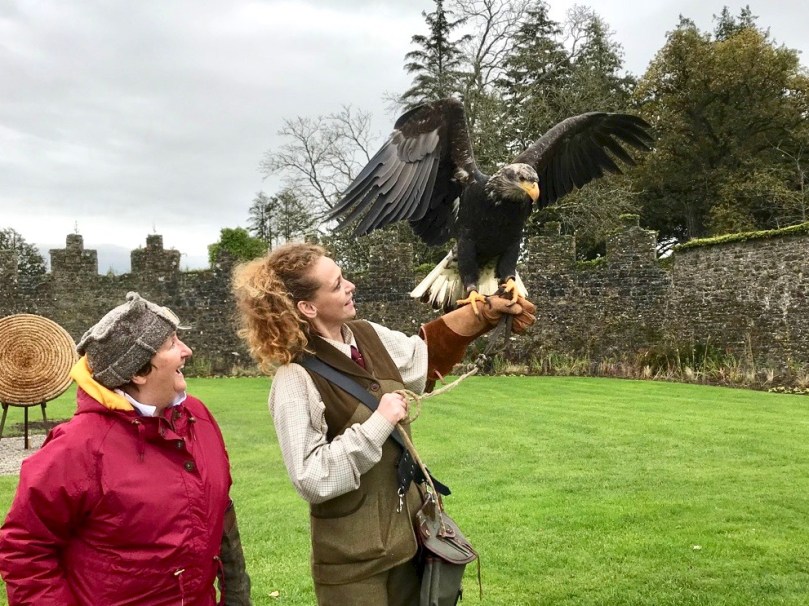
Susan has Saoirse, the American Bald Eagle, show off her wings

She spent the morning with us, handling each bird in turn and giving us an education on each one – habitat, habits, hunting style, personality, peculiarities, nutrition, feathers, weight – it was in-depth and fascinating. There wasn’t a question we asked that she couldn’t answer. She has spent her life studying and living with these birds.

All of the birds wore jesses (ankle leathers) and Susan showed us how to hold our gauntlets and our fingers to secure a bird once on the glove. She encouraged us to speak in a calm voice and not to betray nervousness – birds are excellent at picking up on human emotions.

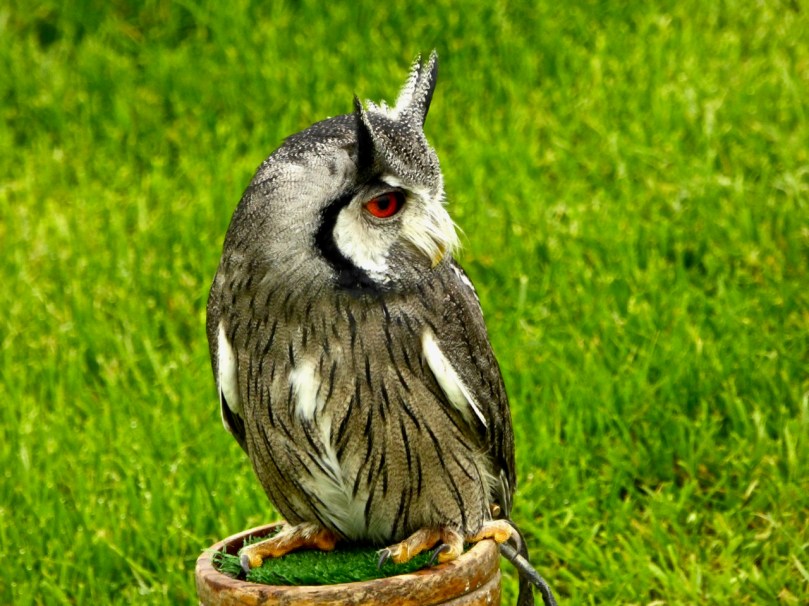
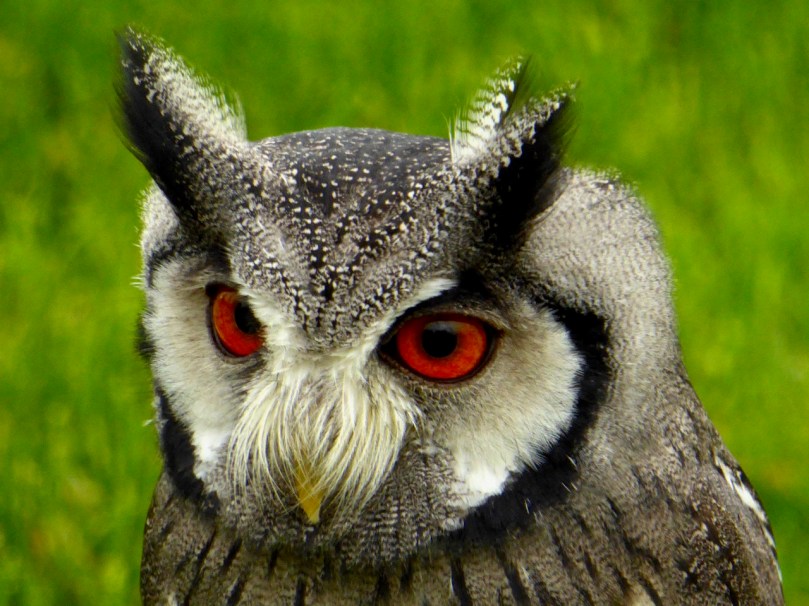
Tiny, the White Faced Scopes Owl, awaits her turn with us

Some of the birds were trained to fly from perch to perch, attached to a ‘creance’ or long line. Each has a optimal weight for flying and it’s essential to keep it there, so weighing and inspecting is part of the daily routine. Food must be as close as possible to what they would eat in the wild, to preserve the level of roughage and protein. Falconry, especially when you keep several birds, is a full-time job.

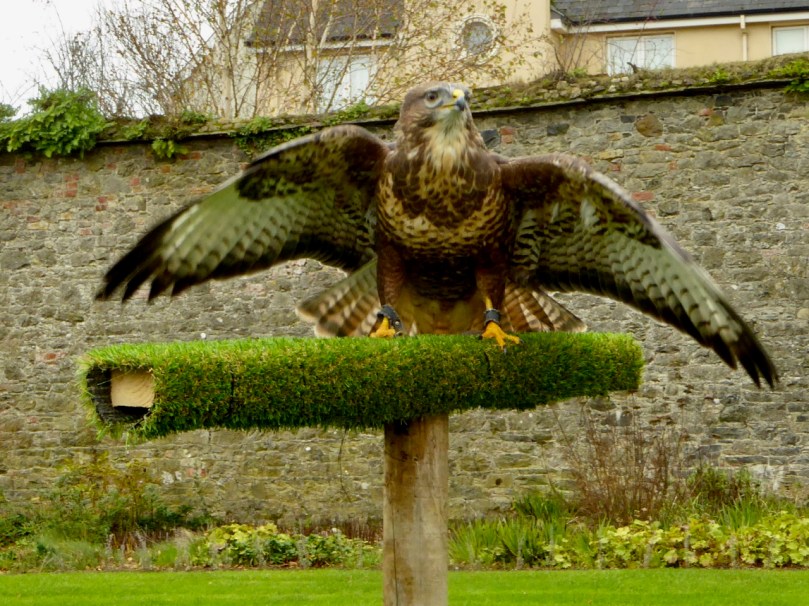
Caesar is a Common Buzzard, which is a native species in Ireland

Owls, although excellent hunters for themselves, don’t make the greatest falconry hunters. However, they are often brought to Susan as motherless chicks and she becomes their parent, as they imprint readily on a human. Susan told us that the Harry Potter series started a trend among some young people of capturing owls ‘to train’ but of course this is almost impossible for an amateur, so that is how some birds have come to her aviary.

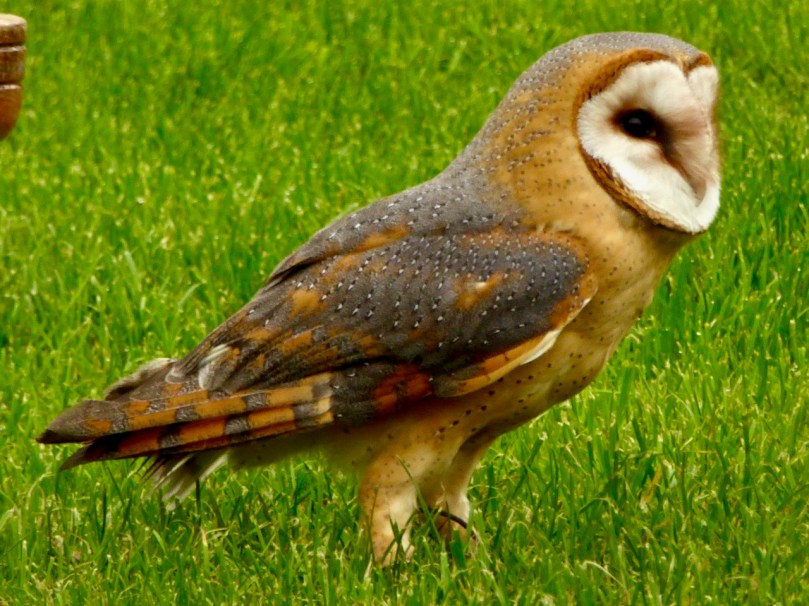
Noddy, a Dark Breasted Barn Own, has beautiful feathers and colouring

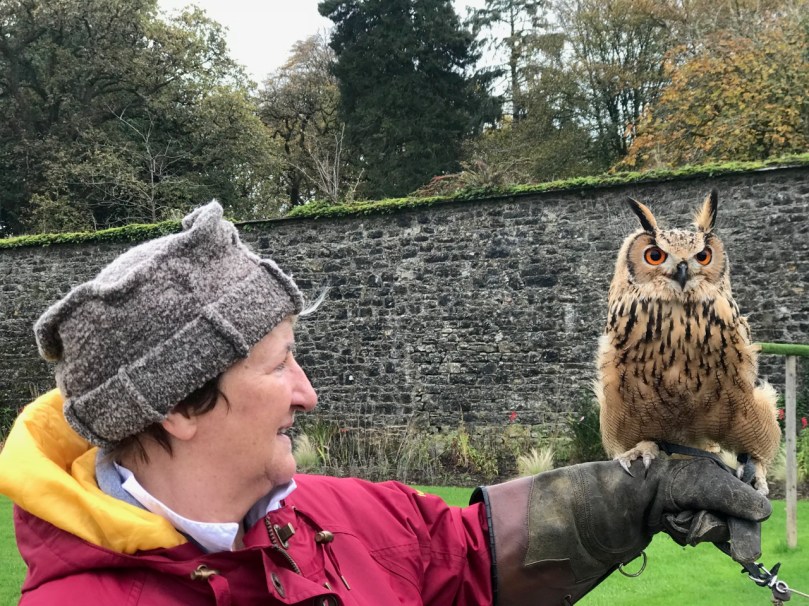
Oscar, a Eurasian Eagle Owl, has a good old ruffle

Raising an imprinted bird involves a particular set of skills and deep knowledge of the species. Susan is a certified falconer and has taken all the courses she can find to develop her skills. It was obvious, in the way she talked to and handled her birds how much she loved them.

Top: I’m obviously a ‘natural’ at this! Bottom: Well, maybe not quite yet

It was a thrill to be so close to a bald eagle. Living in Canada, I had many opportunities to observe these magnificent creatures in the wild, but I had never seen one as close up as I did at Adare. Saoirse is not quite four yet, and it takes a full four years for a bald eagle to mature and to grow both the white head and the white tail. Saoirse’s tail was there, but her head was at the salt-and-pepper stage that women of my age can relate to.

The Harris Hawk – ours was called Felix – is considered the easiest hunting bird to train because of its laid-back attitude to life and its natural ability to interact with humans. The highlight of our session came when Susan let Felix loose to fly to a high perch, and then called him down to land on our glove.

What a feeling! This IS a wild bird – Susan affixed a locator transmitter to its leg before we started so that if Felix took it into his head to fly away she could track him through the woods. She described how a falconer would track a bird before locators were used – it involved standing very still and tuning in to the sounds of the forest. Other birds would react to the sudden appearance of a hawk or falcon and the falconer would follow the sound-clues to his bird.

I learned that Oscar’s tufts aren’t his ears and that they don’t always stand up like this

We were extremely lucky to have Susan and her birds all to ourselves that morning – not sure how often that happens! But if you get a chance, don’t pass up an opportunity like this. It’s a once-in-a-lifetime experience. Thank you, Susan – you’ve made some old T H White fans very happy!

See you again, Tiny!

The Gap of Dunloe

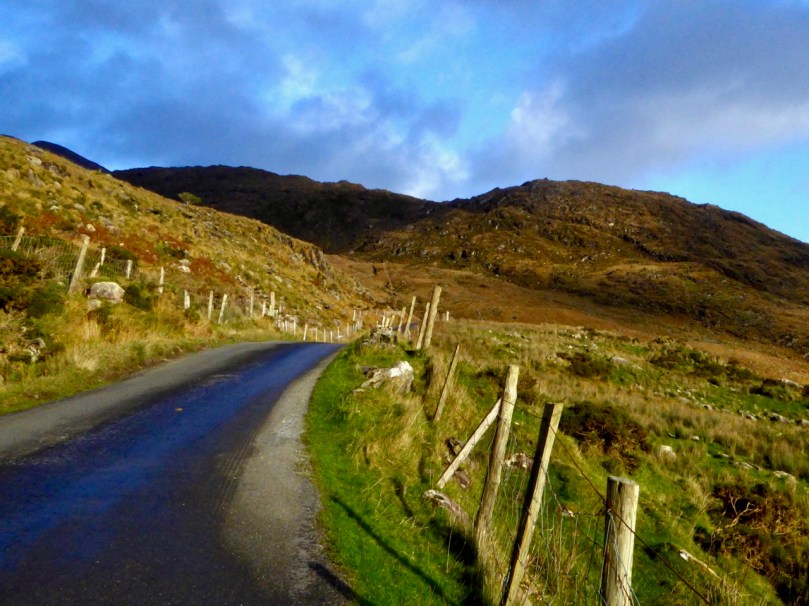
It’s one of Ireland’s, and Kerry’s, premier tourist experiences, but I think it’s at its best when tourist season is over and winter foliage dominates the landscape. Pure winter light mixed with the occasional shower – that combination brings out the the kind of colours that stop me in my tracks. From Killarney, the way to the Gap is west from the town on the N72 to Killorglin – just look for the signs.

From the Wishing Bridge

Driving through the Gap of Dunloe is not recommended at any time except winter, and even then caution is advised. That’s because the traditional way of travelling through the gap is by jaunting car, on horseback, on foot, or by bicycle and cars can be a dangerous and unwanted addition. And those – the on-foot or by horseback options – are the best ways of seeing it. If you have a hankering to experience it for yourself, just Google Gap of Dunloe and all the options will present themselves.

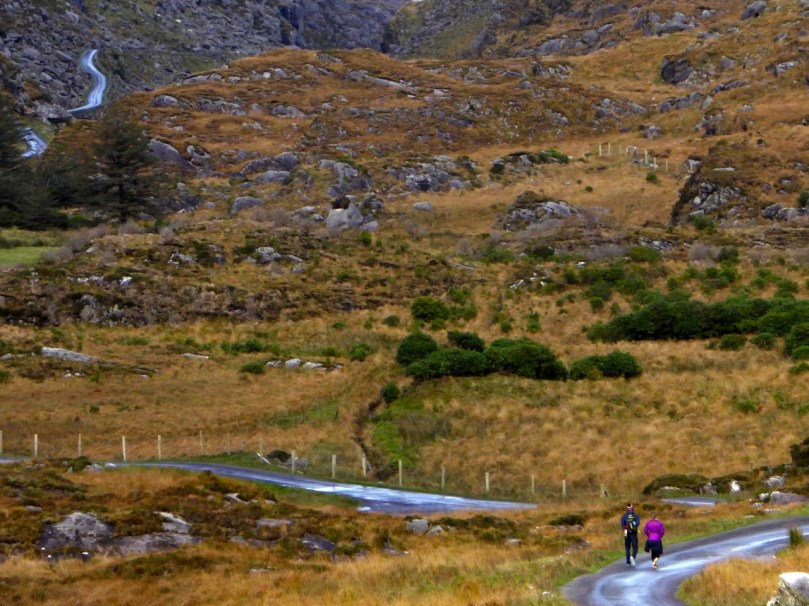
This couple from Germany had walked from the Black Valley

Robert and I have driven it twice now, each time in winter, and each time he has dropped me off to walk at my own pace, camera in hand, and picked me up where he can find a lay-by.  We did it earlier this week, having ascertained that sunshine was a possibility (about the best that can be forecast this time of year), and we hit it lucky.

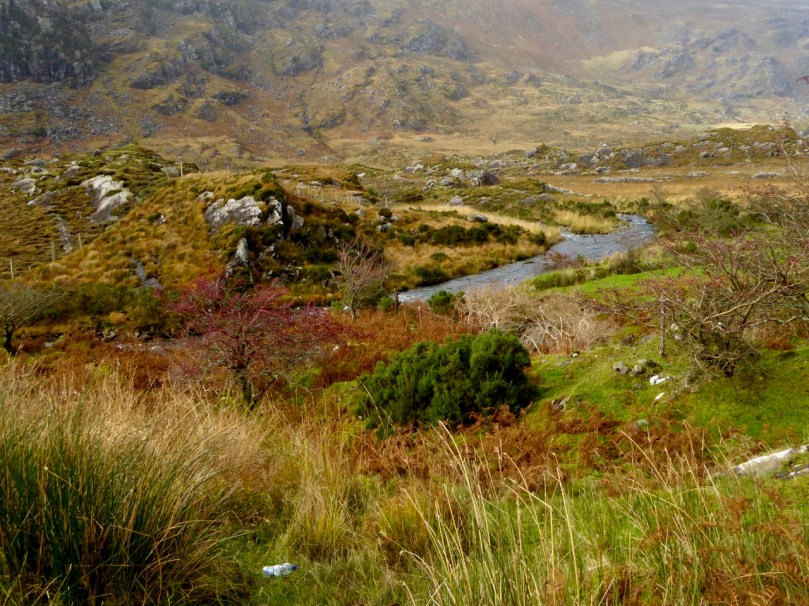
A river runs through it

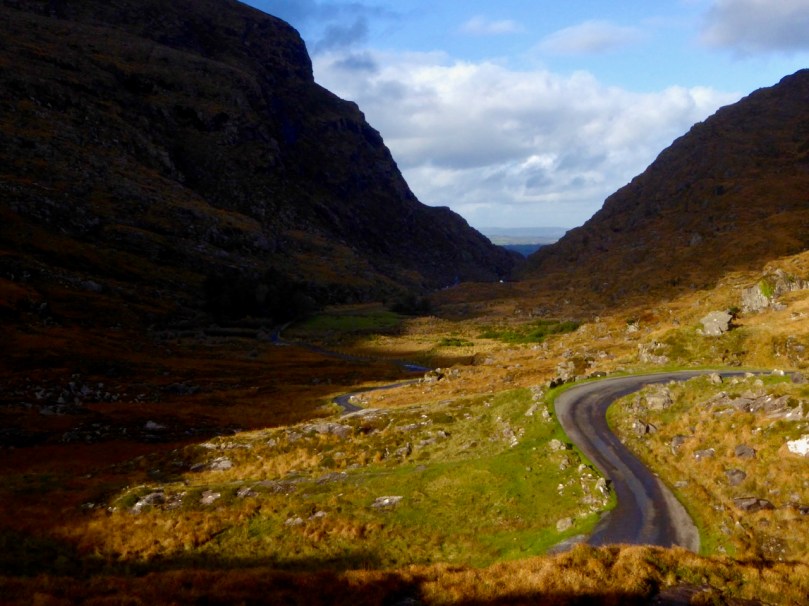
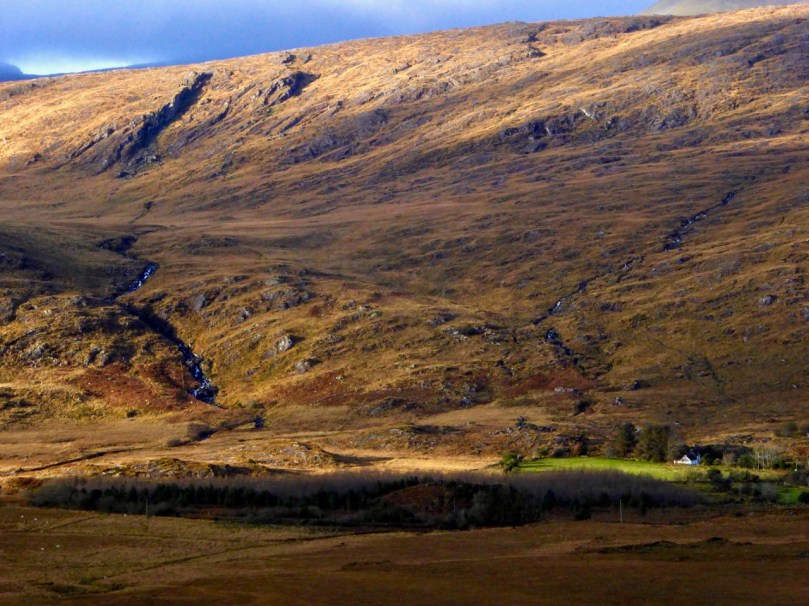
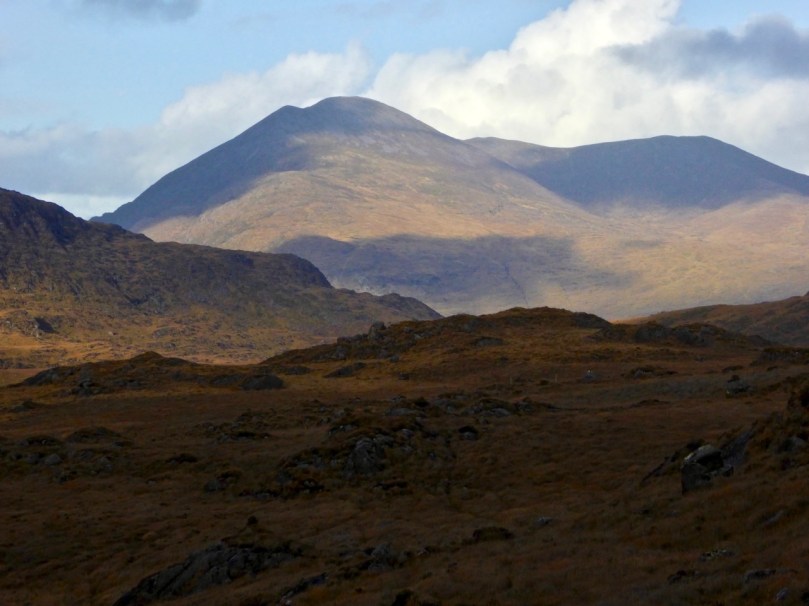
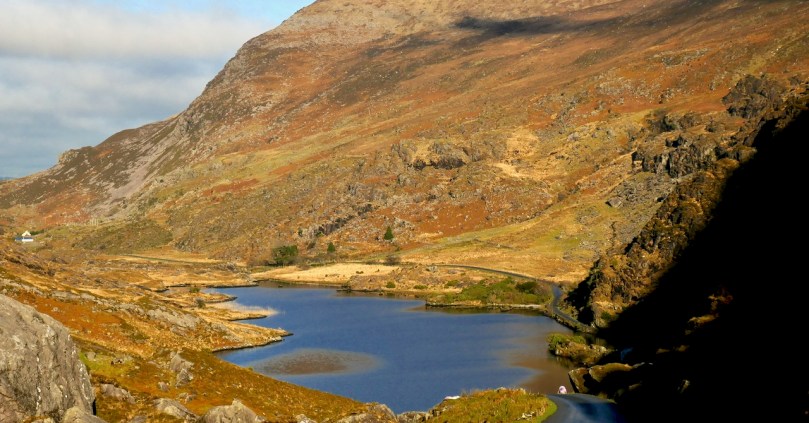
The Gap is a deep glaciated valley, running north/south between MacGillycuddy’s Reeks and the Purple Mountain – can’t lose with a description that starts off like that! The road runs along the Loe River, which empties eventually into the Laune and thence into Lough Leane, the largest of the Lakes of Killarney.

Auger Lake

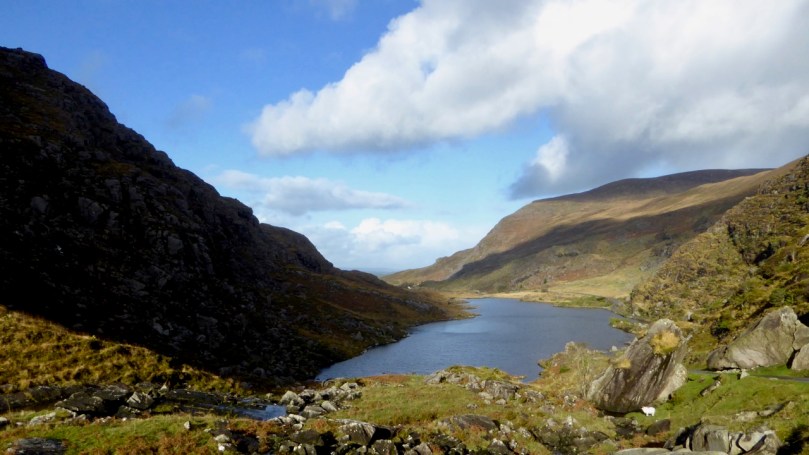
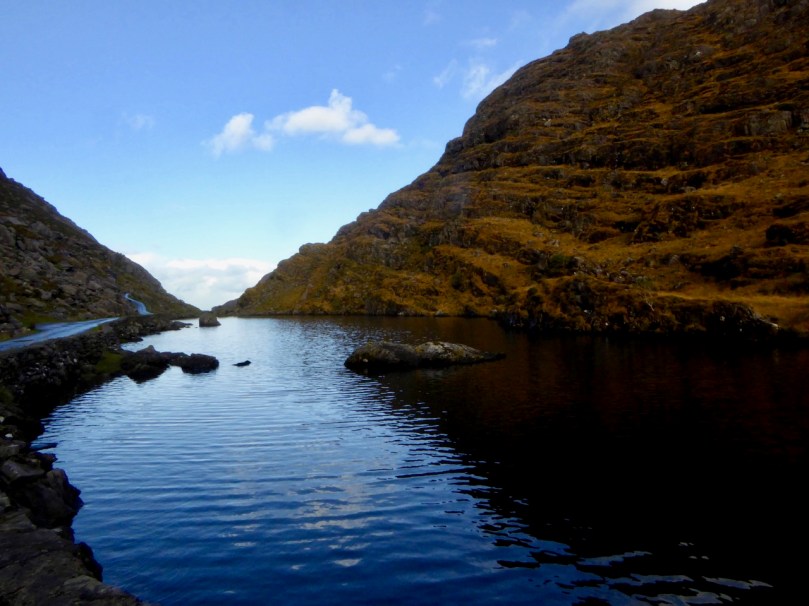
Several lakes lie along the course of the river – Black Lake, Cushvally, Auger Lake and Black Lough. The road switches from the west side of the lakes to the east side as you go along, and then back again. The first bridge you cross is the Wishing Bridge – tradition has it that wishes made on this bridge always come true. My highly scientific testing of this assertion confirms the truth of it.

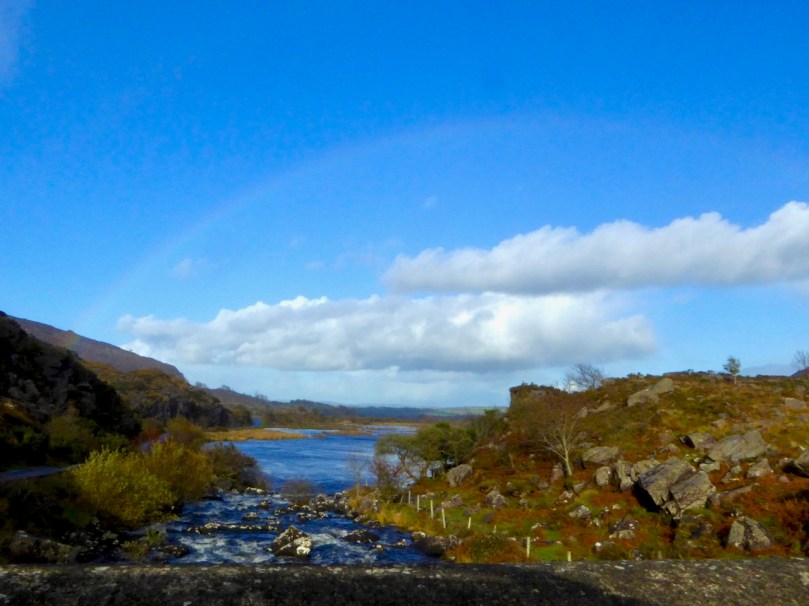
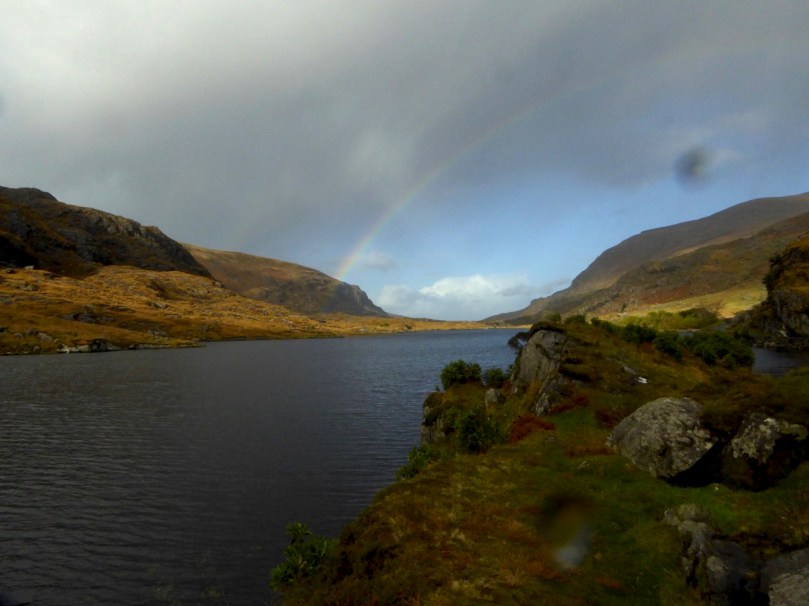
This is Ireland, of course, so no matter how blue the sky you have to expect that it can rain at any moment. True to form, the top of the valley filled with cloud and before I could blink I, and my camera, were being, er, moisturised. The compensation? A rainbow to the north, spanning the Gap.

Is there a hint of a second rainbow? And oops – drops on the lens

The rain didn’t last long – just enough to ensure the air was filled with lots of droplets and vapour to lend extra luminescence to the air – the colours always seem at their most sparkly after a shower.

Black Lough – no need to wonder how that name was earned

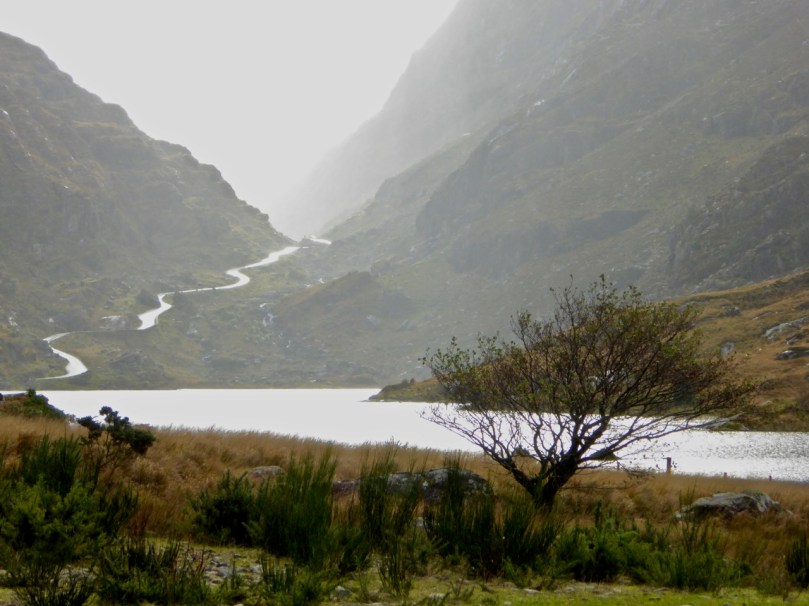
It was a steep walk to the top of the Gap, and it was hard to keep going when every bend brought fresh temptation to stop and take more photographs as the light shifted and shimmered. The photograph at the top of this post was taken from the highest point.

The Black Valley

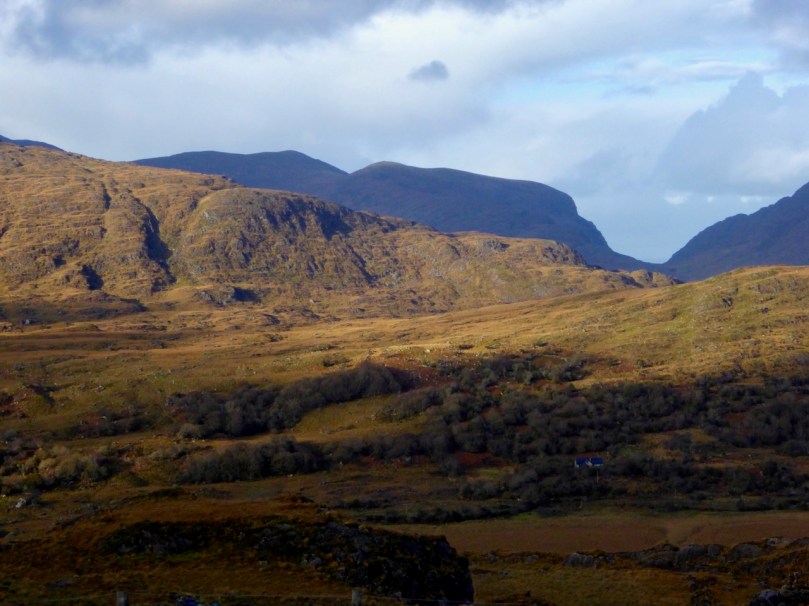
Once over the top, the Black Valley opens up before you. This is a walker’s paradise, but also a community, with small farms dotted here and there, a church and a school – surely one of the remotest in Ireland. The landscape softens slightly from the craggy steepness of Dunloe to more rounded valleys and mountains.

You have a choice now to carry on West along the interior of the Iveragh Peninsula, but we had to head for home so we joined the N71 at Moll’s Gap where a welcome coffee awaited in the excellent Avoca Cafe.

A road through the Black Valley

Next time, I think we will do this by the traditional horse-drawn method, and return to Killarney by boat from Lord Bandon’s Cottage. Perhaps even in the summer – I wonder how it will look then.

Looking back at the Gap of Dunloe from Moll’s Gap

Update: We did it again in January 2020 and once again were blessed with a great day for it:

More on Martinmas

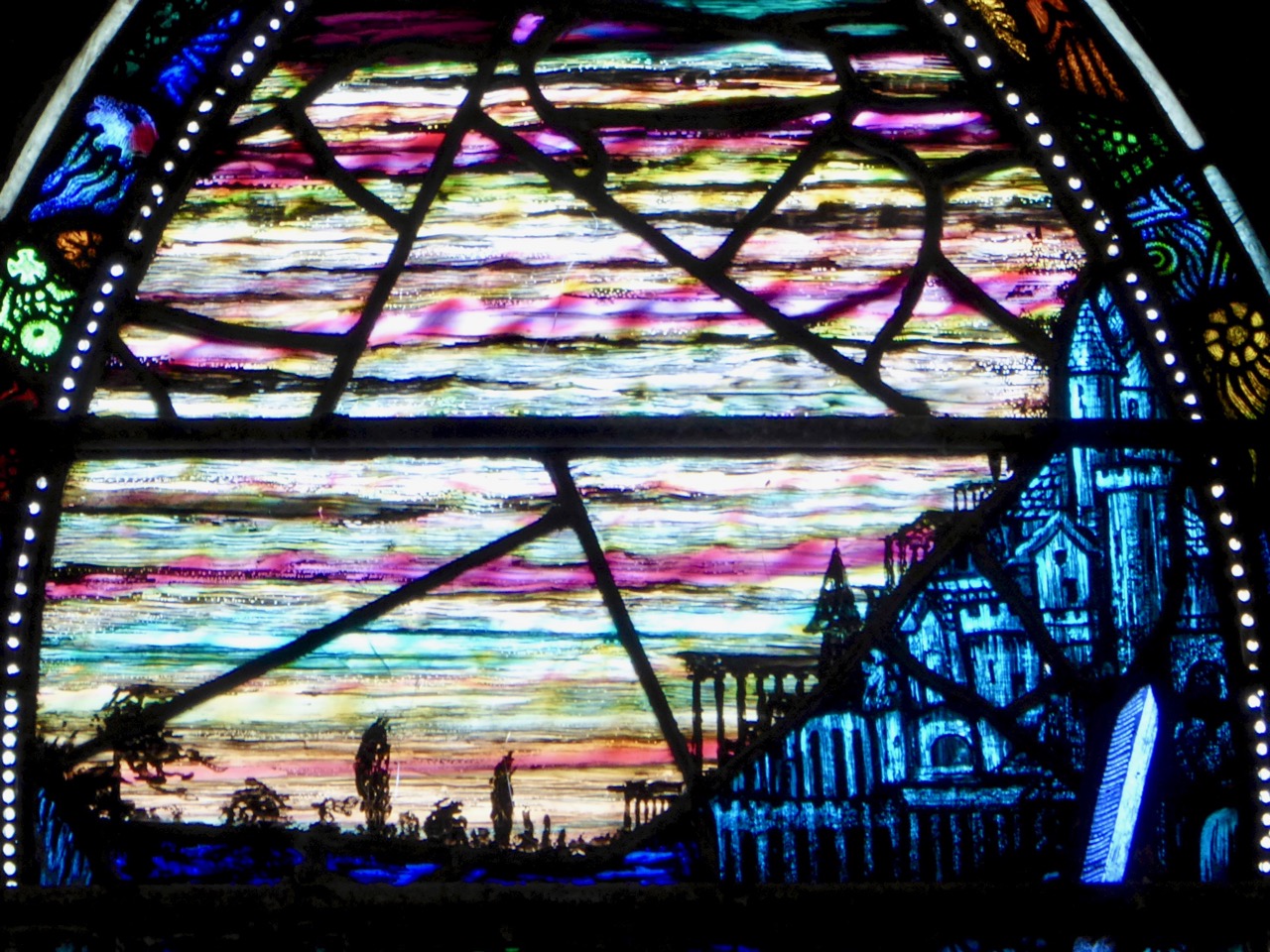
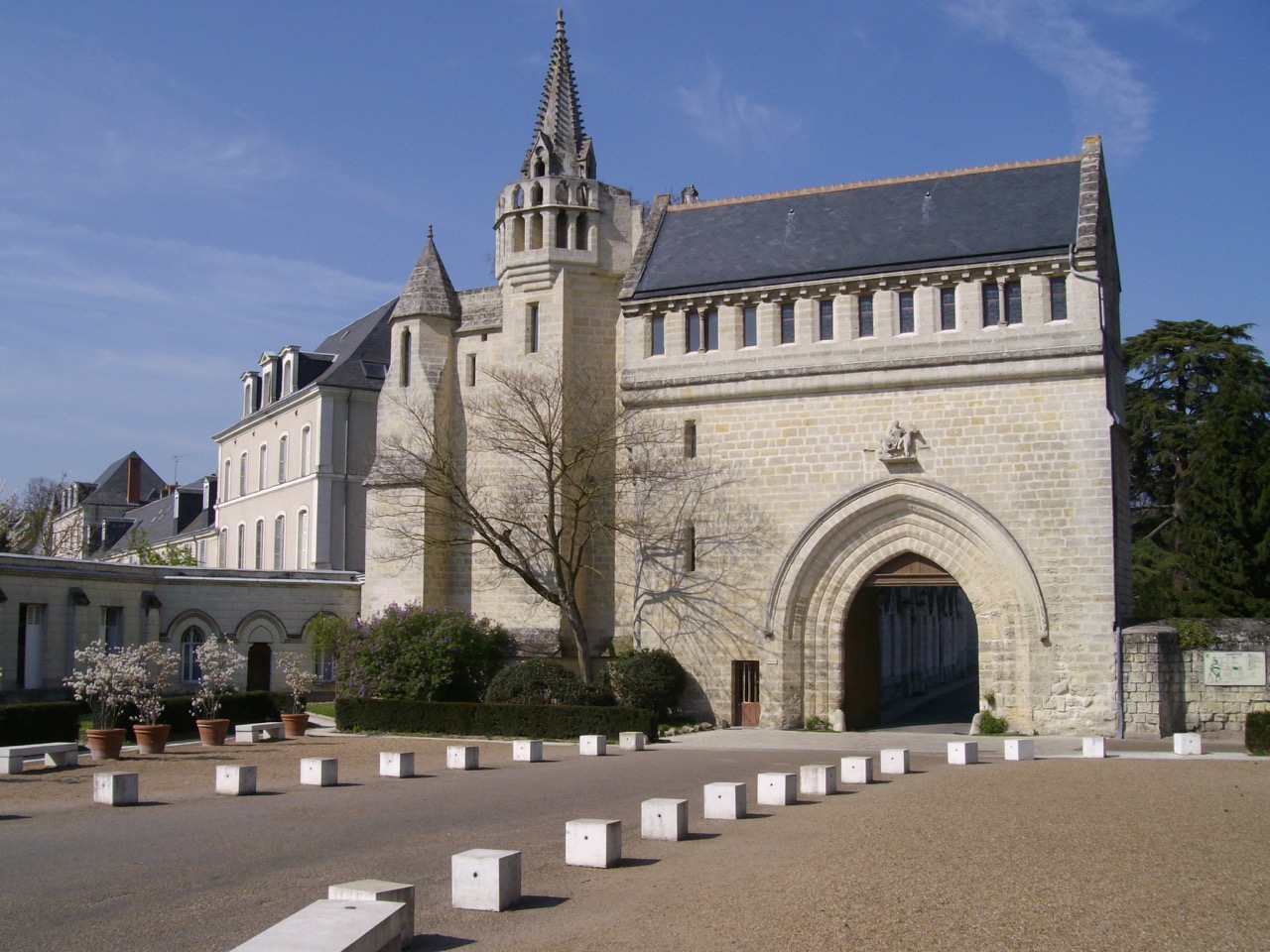
Today – November 11 – is Martinmas. That’s the feast day of St Martin of Tours: the picture above is Harry Clarke’s representation of the city of Tours, which we can see in St Barrahane’s Church, Castletownshend, here in West Cork. St Martin was a saint of Hungarian origin who founded a monastery in Marmoutier, in north-eastern France in 372. As far as we know, he never visited Ireland, yet he is widely celebrated here… Why?

Marmoutier Abbey, near the city of Tours (photo from Wikimedia Commons)

Well, one reason could be that St Martin was the sister of St Patrick’s mother, Conchessa. Or, perhaps he was her uncle – we don’t have definitive records from that time, but we do have plenty of stories. The one everyone seems to know about St Martin is that he came across a naked beggar while travelling in the middle of winter. He immediately split his cloak in two and gave half to the beggar. That night he had a dream in which Jesus told him that it was he who had received the gift of the cloak from Martin. From then on Martin determined to spread Christianity wherever he went.

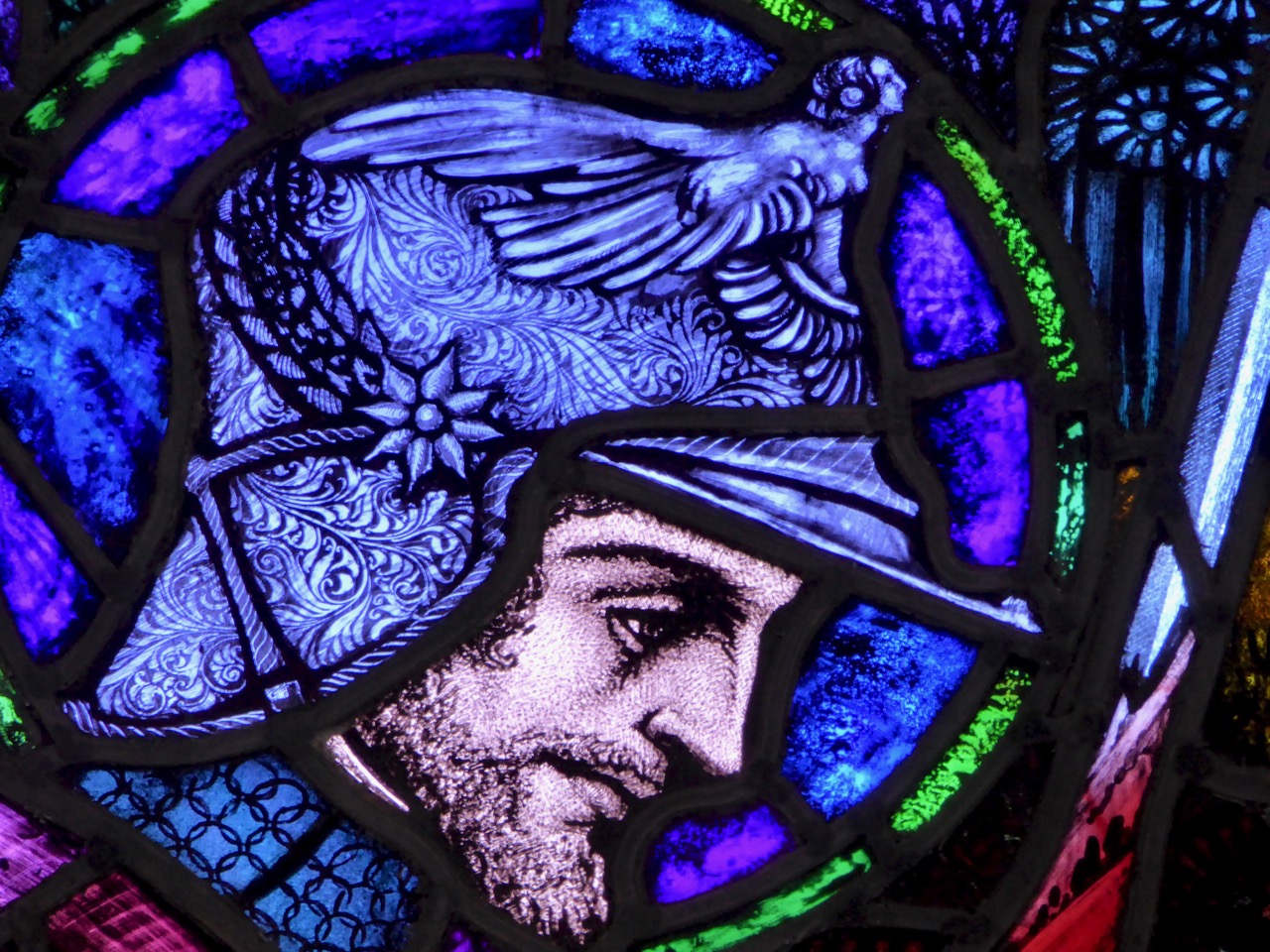
Here is St Martin, depicted in Harry Clarke’s Castletownshend window. Finola tells the full and fascinating story of this wonderful window here. He is depicted as a soldier, and is the patron saint of soldiers. Confusingly, he is also the patron saint of conscientious objectors! In fact, he was the first recorded conscientious objector as he became converted to Christianity while he was serving in the Roman Army. Because of his beliefs he refused to fight but – to prove he was not a coward – he was prepared to go into battle unarmed and stand between the opposing parties in the name of Jesus. Miraculously, on the eve of the battle an armistice was declared. Martin was given a discharge and was able to pursue his calling. Eventually he was made Bishop of Tours and founded his Abbey across the River Loire.
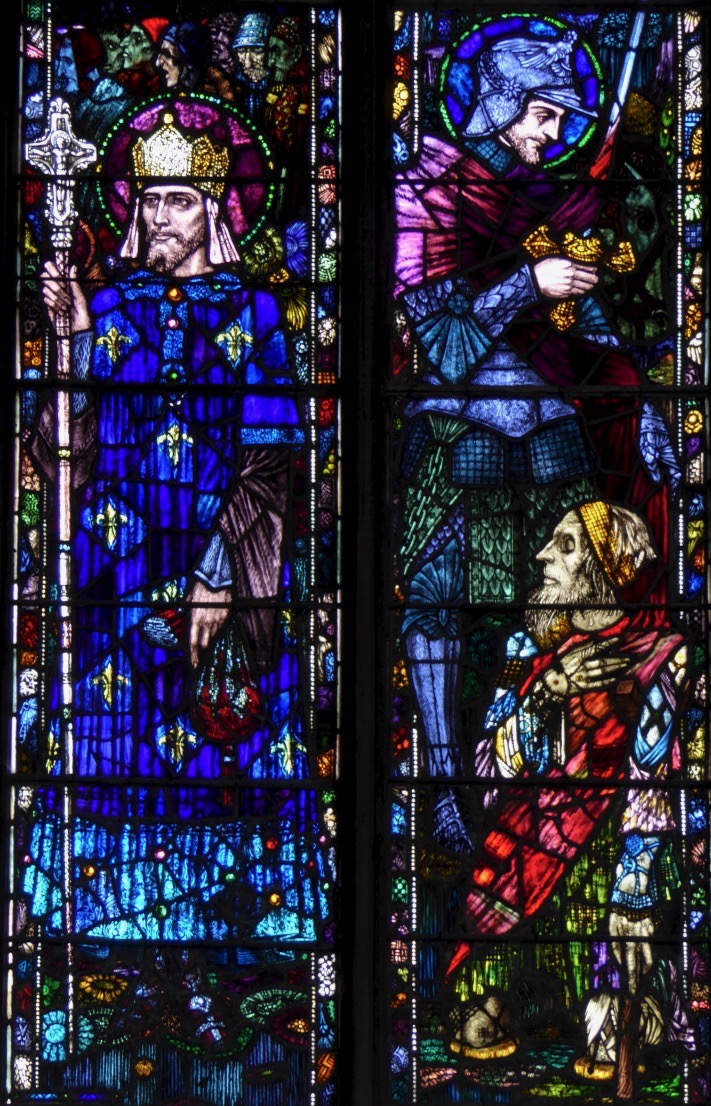
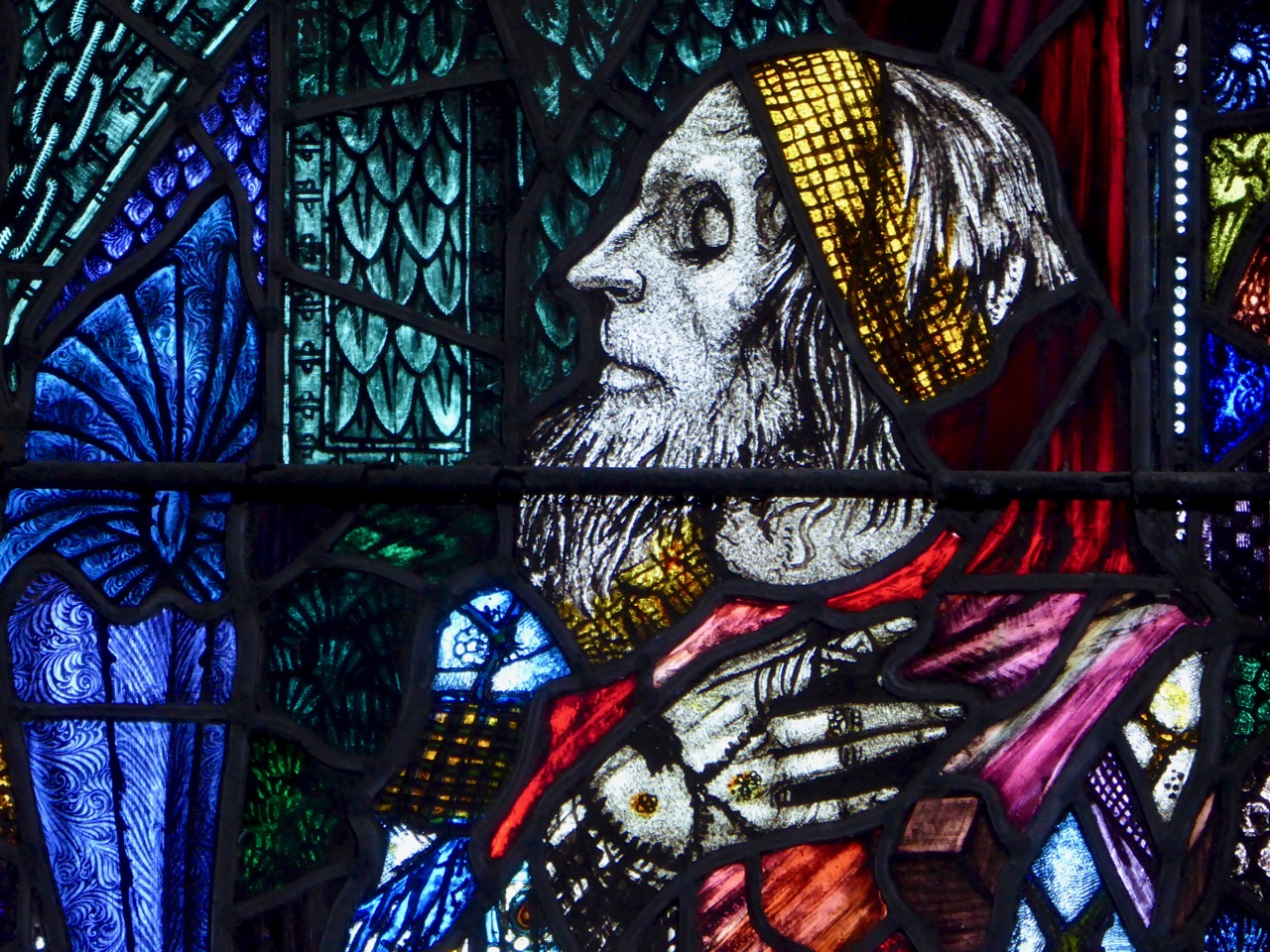
This is the beggar who received the gift of St Martin’s cloak – also from the Harry Clarke window. Here in Ireland there were once many customs associated with Martinmas. I set out some of these in a previous post a few years ago. For me, the most interesting is that no wheel should be turned on St Martin’s feast day. This is because the saint met his death by falling under a mill wheel. Below are two of ten 14th century frescoes from the San Martino Chapel in Assissi, setting out the stories of the saint: these depict his death and his funeral.

In County Londonderry, Northern Ireland, St Columba founded a church in the sixth century and named it after St Martin: Díseart Mhartain or ‘Hermitage of Martin’. Fascinating that this European saint should have such a following in Ireland: I found at least four churches dedicated to him in the Republic. One thing I touched on in my earlier post was the custom of killing a goose or cockerel on the day and sprinkling its blood in the four corners of the house to ensure well-being for the next year. I have since found that it is correct to say ...In onóir do Dhia agus do Mháirtin… while doing this (In the Honour of God and St Martin). I hope I’m not too late to wish you a good Martinmas! And I’m leaving you with the full image of the Harry Clarke window…

Journey into Purgatory

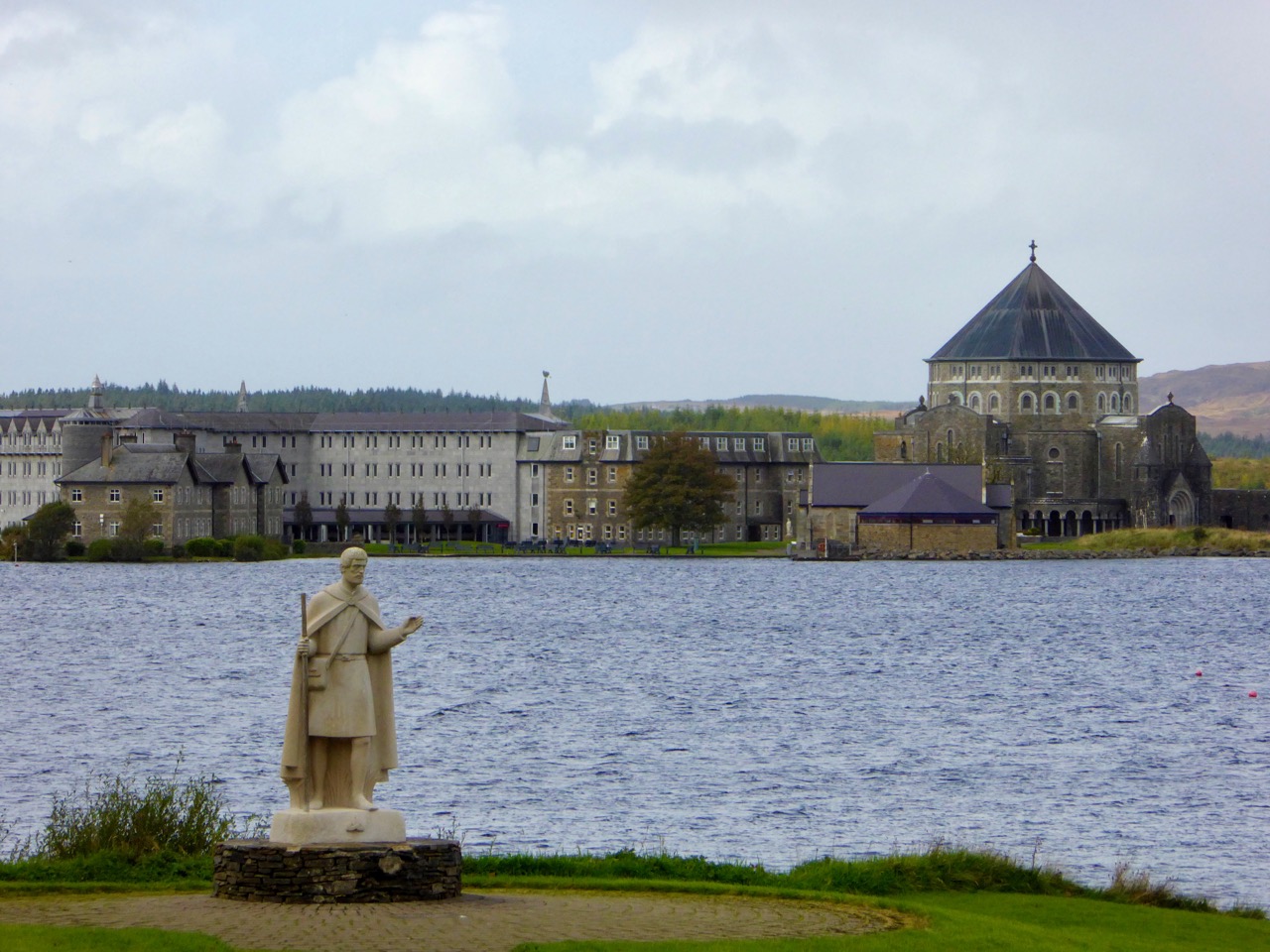
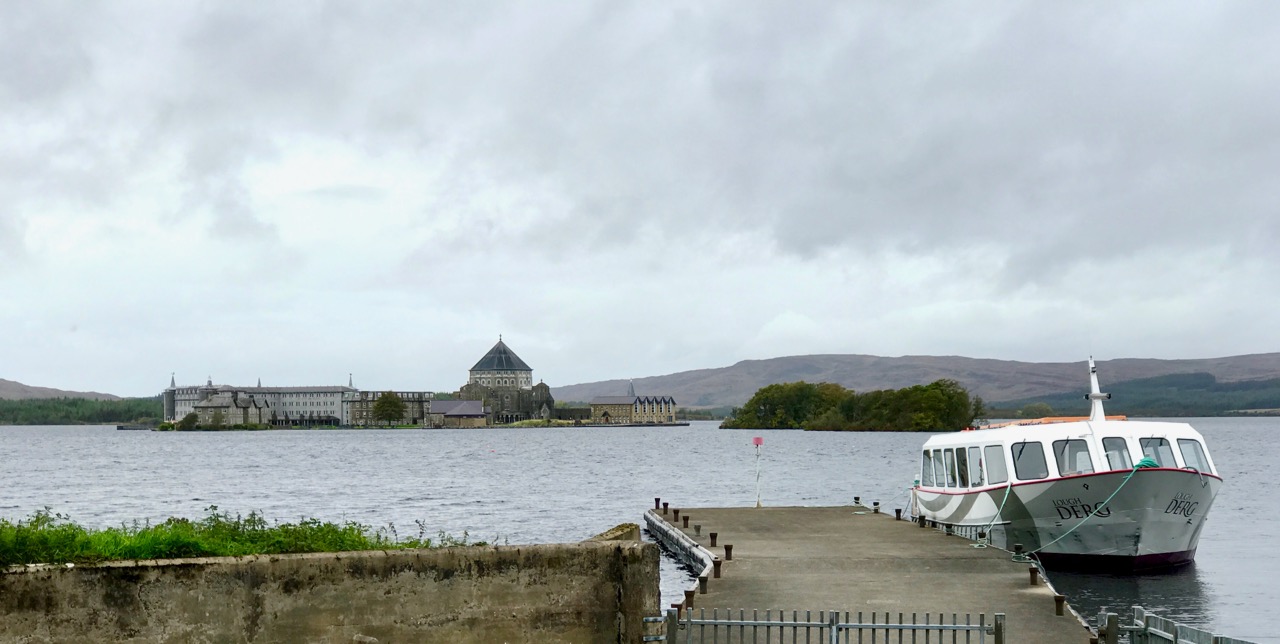
I was excited to be travelling to one of Ireland’s oldest – and most important – pilgrimage sites. Finola studies stained glass windows and their artists, and she knew that some particularly impressive Harry Clarke windows can be seen in the Basilica on Station Island, Lough Derg, in County Donegal. The roof of the Basilica, completed in 1931, towers over the island in the picture above, taken from the quay at Ballymacavany. Finola obtained special permission for us to visit the island to view and photograph the windows, after the main pilgrimage season was over: her account of them will appear in Roaringwater Journal in the near future.

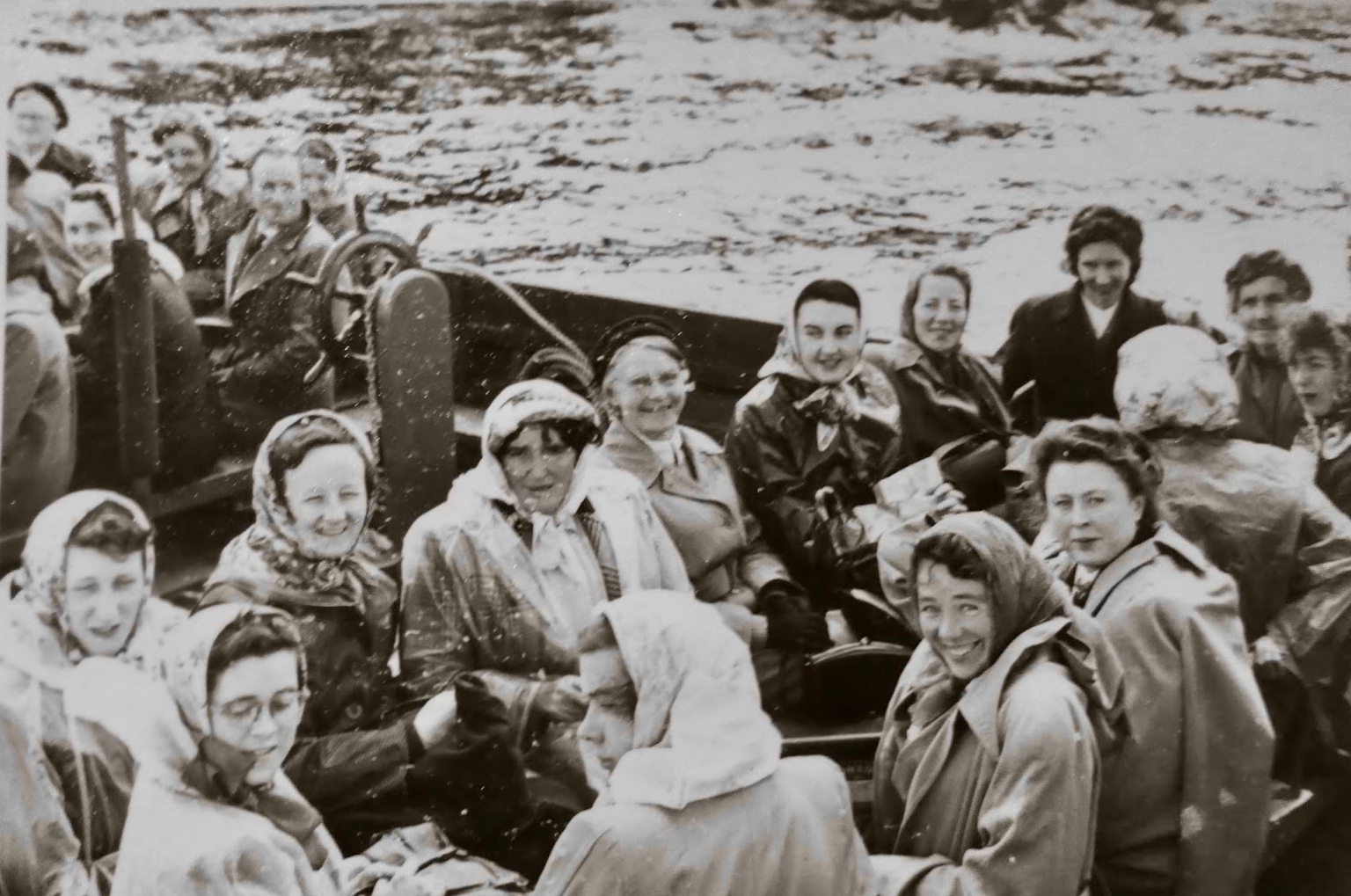
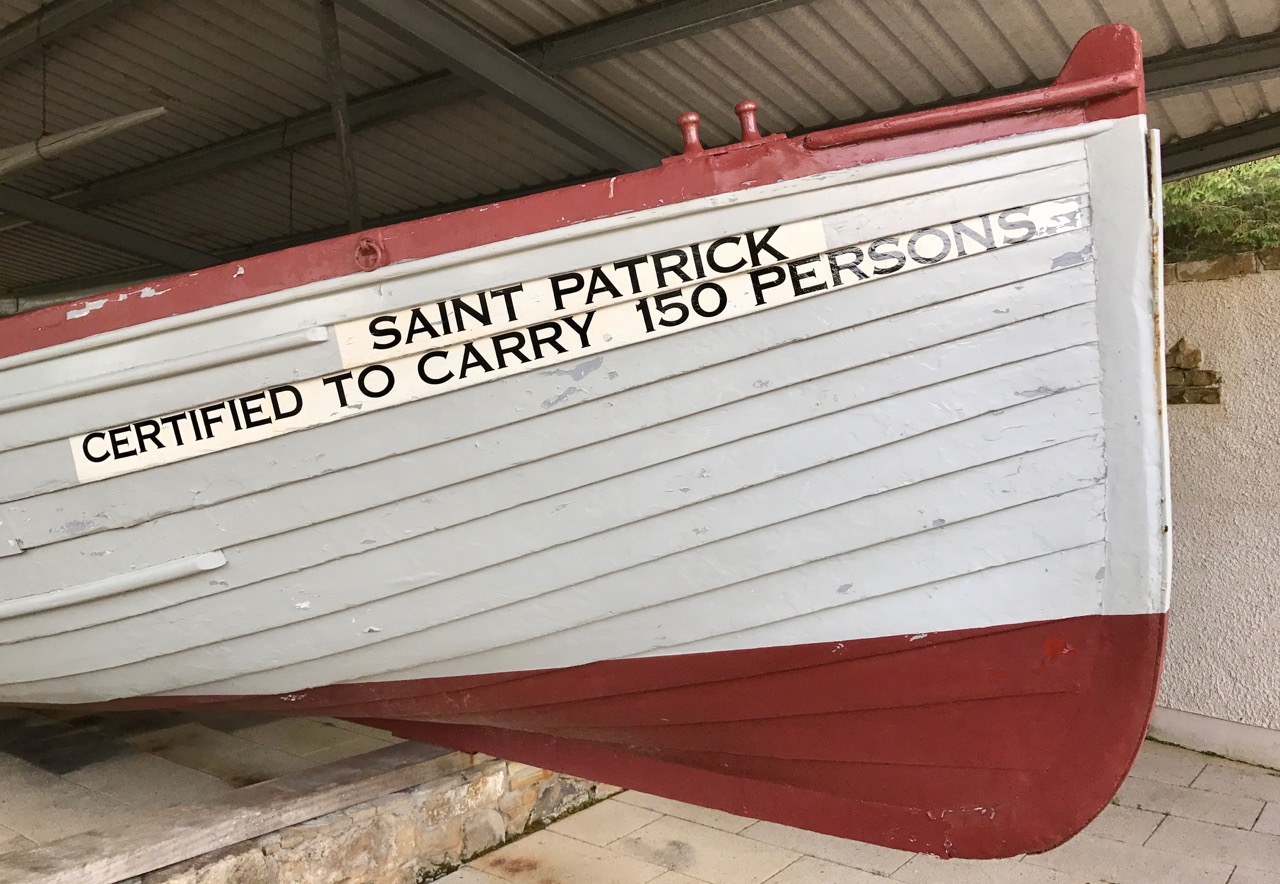
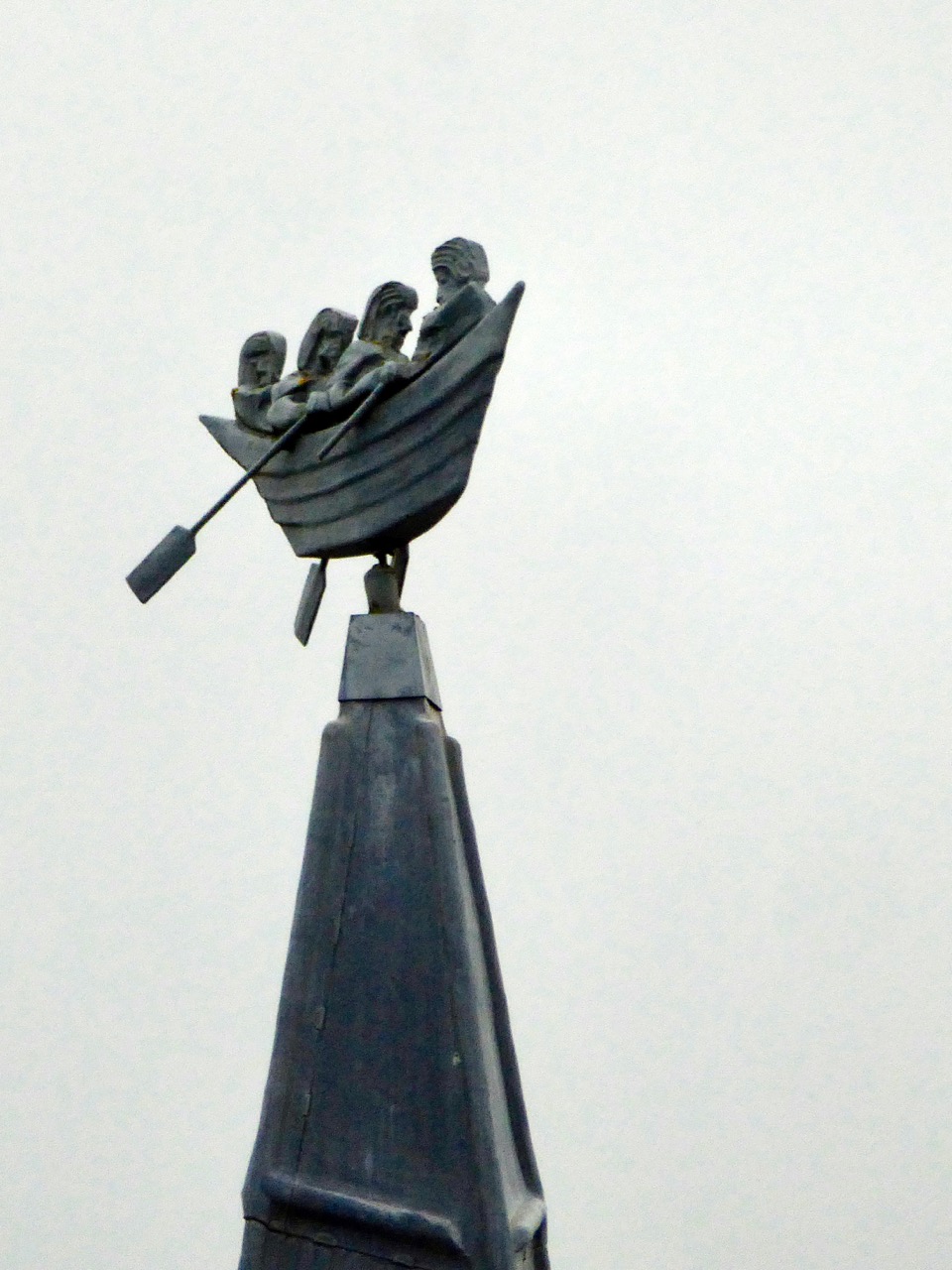
It’s salutary to learn how many people and families we know have taken part in the pilgrimage at Station Island. It’s a particularly austere experience, involving a three day cycle of prayer and liturgies, bare-footed and with very little food or sleep. Finola’s father undertook the pilgrimage in the 1950s: the photograph above was taken at around that time, when pilgrims were ferried over in large open boats once rowed by eight oarsmen and subsequently motorised. One of these historic boats is kept on display at Ballymacavany (below). Nowadays the journey is made in a modern covered launch, as seen in the header photo.

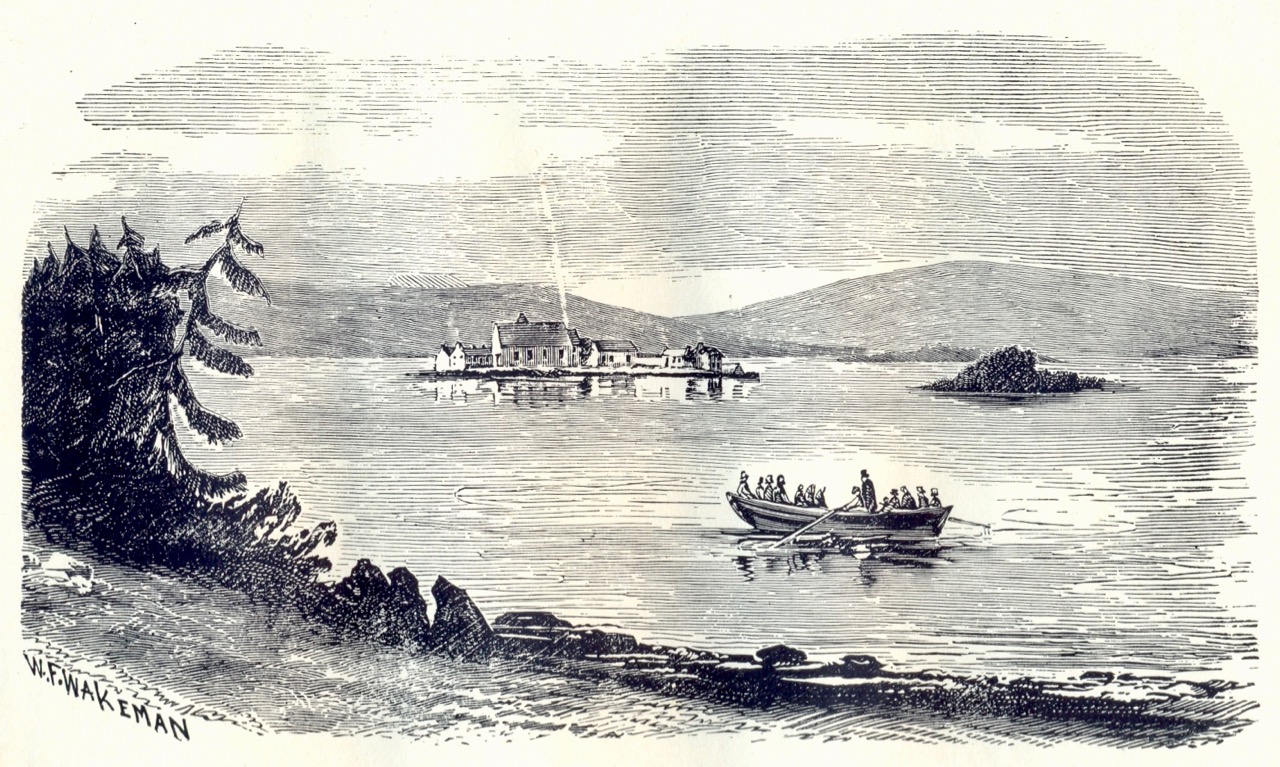
Records of the number of pilgrims who travelled to Station Island have only existed in comparatively recent times. The peak seems to have been just prior to the famine around 1846, when over 30,000 went there in one season. The drawing above is by William Frederick Wakeman, who was a draughtsman with the Ordnance Survey of Ireland, and was probably made at that time. Through the twentieth century numbers seldom fell below 10,000 pilgrims each season, but in many years was considerably more. This news item from the RTE Archives demonstrates the strength of the pilgrimage in the year 2000.

The island’s long history takes us back to the time of St Patrick. Despairing at the arduousness of persuading the Irish people to accept his Christian teachings he appealed to God to help. The story is admirably recounted by Dr Peter Harbison, Honorary Academic Editor in the Royal Irish Academy:

…St Patrick … was having difficulty convincing the pagan Irish of the 5th century of the truth of his teaching about heaven and hell; they were not prepared to believe him unless one of them had experienced it for themselves. To assist Patrick in his mission … Christ showed Patrick a dark pit in a deserted place and told him that whoever would enter the pit for a day and a night would be purged of his sins for the rest of his life. In the course of those twenty four hours, he would experience both the torments of the wicked and the delights of the blessed. St Patrick immediately had a church built, which he handed over to the Augustinian canons (who did not come to Ireland until the 12th century), locked the entrance to the pit and entrusted the key to the canons, so that no one would enter rashly without permission. Already during the lifetime of St Patrick a number of Irish entered the pit and were converted as a result of what they had seen. Thus the pit got the name of St Patrick’s Purgatory…

(from Pilgrimage in Ireland: the Monuments and the People by Peter Harbison, Barrie & Jenkins, 1991)

The entrance to this cave is on Station Island, and is the reason for the enduring popularity of the pilgrimage, which has persisted there for over 1500 years. In the medieval illustrations above, the gateway into Purgatory can be seen on the right, while on the left is a knight – Owein – whose terrifying adventures in the cave in medieval times have been written about in many languages: a summary can be found here.

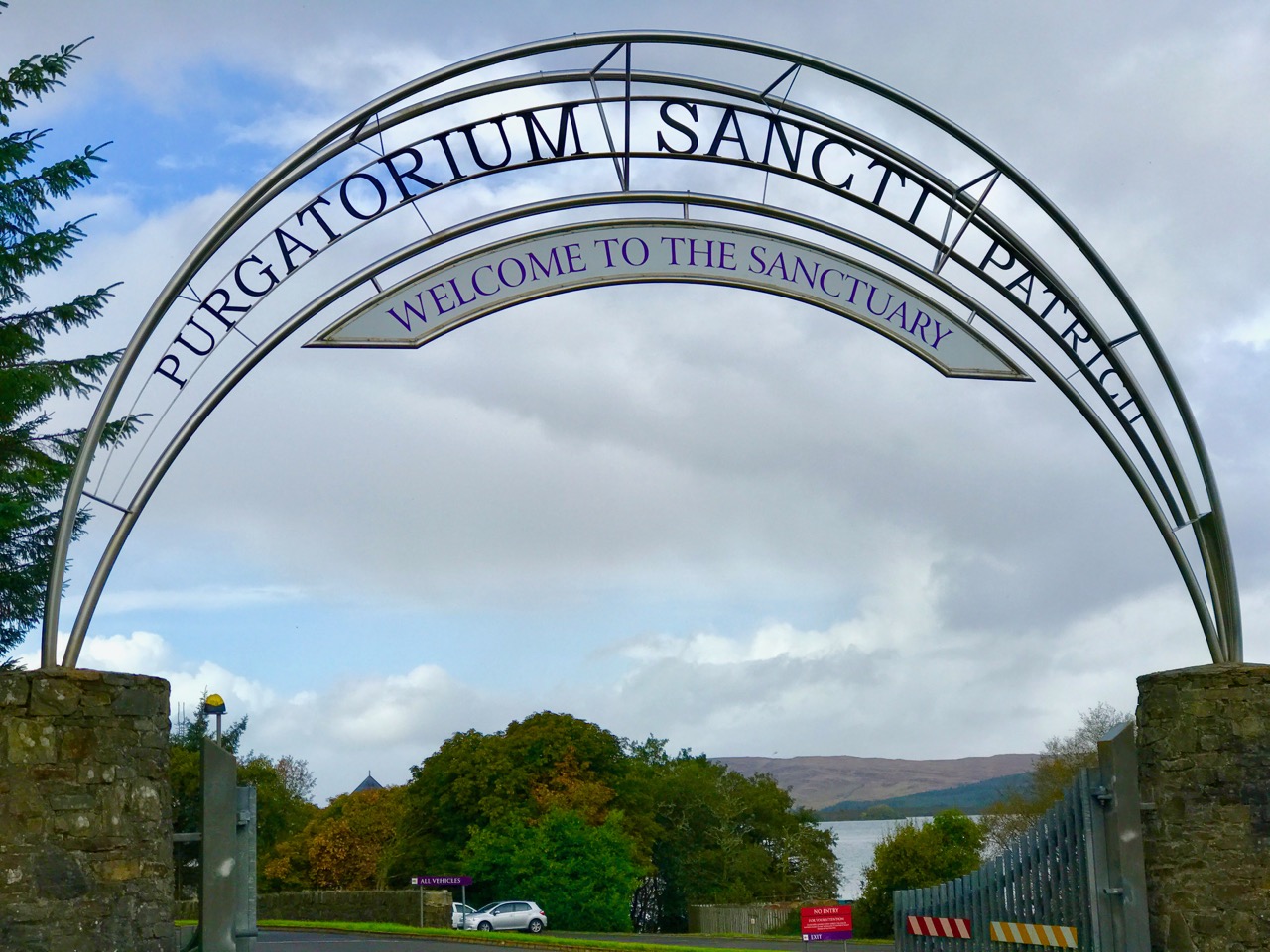
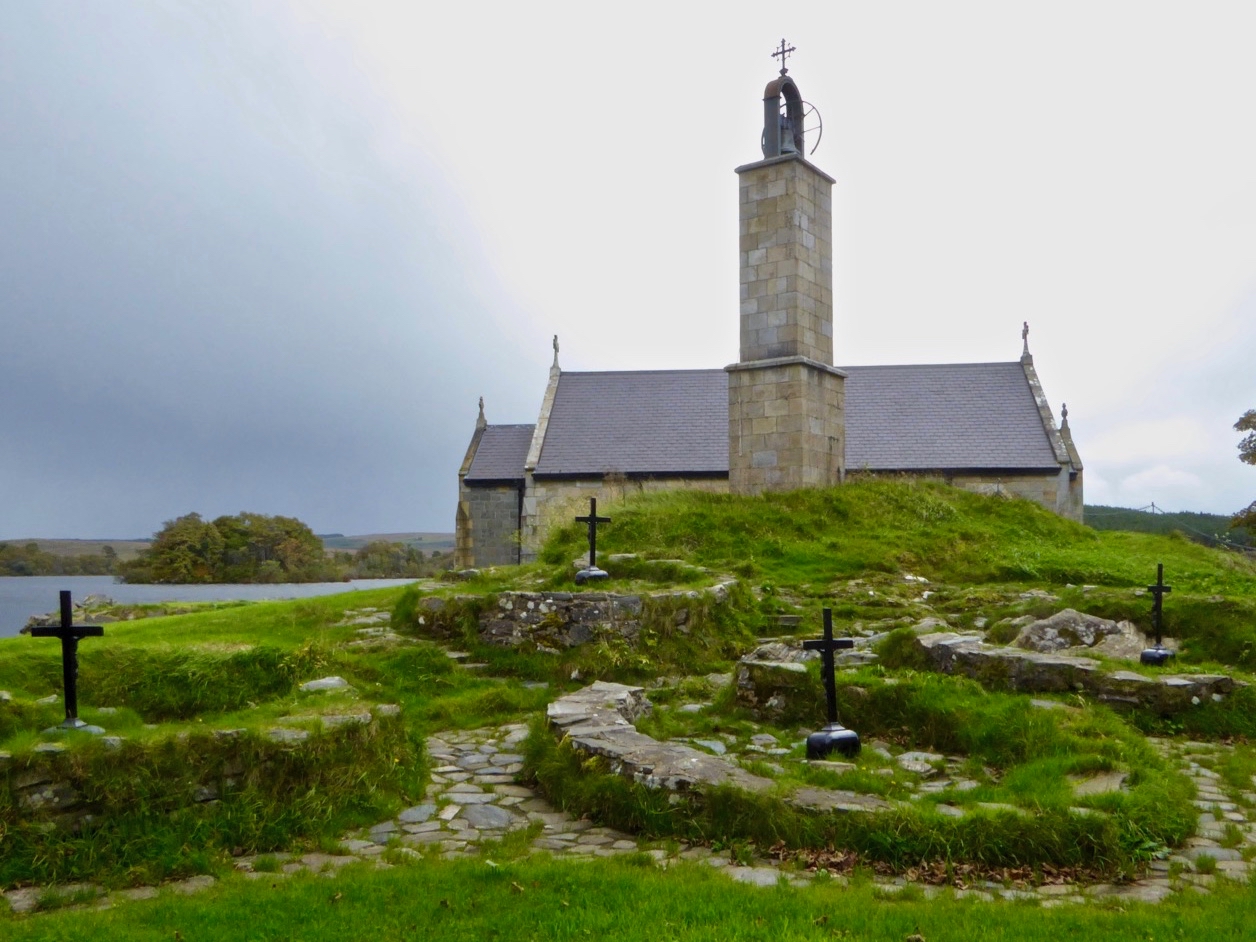
St Patrick’s Purgatory: the name is over the entrance at the reception centre at Ballymacavany, the point of departure for Station Island. The cave which marks the entrance into Purgatory was permanently sealed up in October 1632 when the pilgrimage was suppressed by order of the Privy Council for Ireland; in the same year the Anglican Bishop of Clogher, James Spottiswoode, personally supervised the destruction of everything on the island. Later, in 1704, an Act of Parliament imposed a fine of 10 shillings or a public whipping …as a penalty for going to such places of pilgrimage… The site of the cave entrance lies under the bell tower, seen above. In front are the penitential beds where pilgrims perform rounds to this day. It is thought that these formations are the remains of monks’ cells or ‘beehive huts’.

On the left is a map of Station Island by Thomas Carve, dated 1666. The words Caverna Purgatory, centre left, show the site of the cave entrance. In spite of the efforts of the Penal Laws to suppress the observances, pilgrimages have continued unabated. Above right is a photograph from the Lawrence Collection, dated 1903, showing pilgrims about to embark for the island.

A young St Patrick portrayed as a pilgrim stands in front of the island: the Basilica is on the right. This view indicates the huge development  of the island since its complete destruction in the 18th century and shows the facilities provided for the many thousands who have come here over the generations.

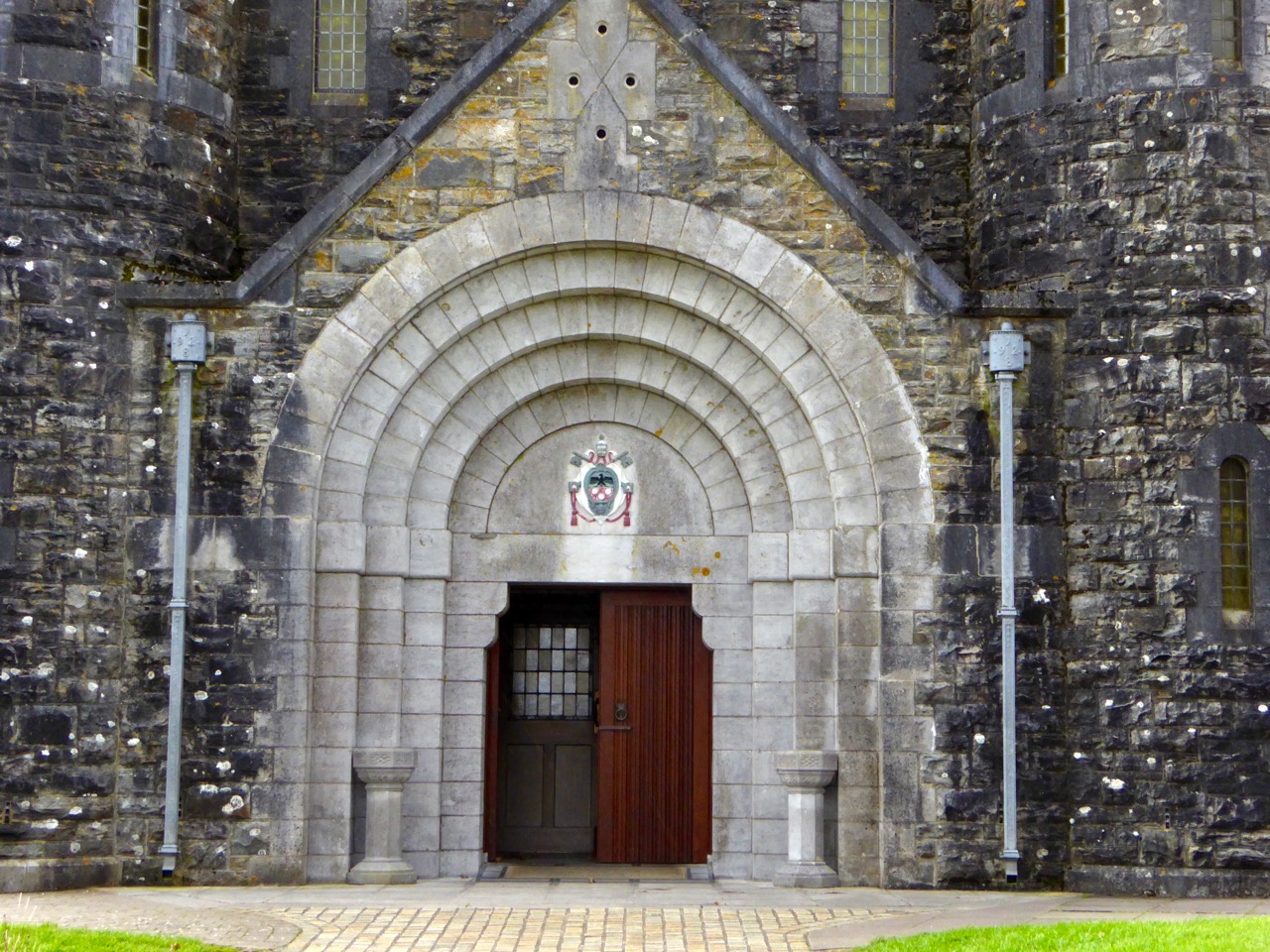
The Basilica is the focus of the pilgrimages today: it was formally consecrated in 1931. The entrance door is a modern interpretation of Romanesque architecture, while the tabernacle is an impressive example of fine bronze work.

Ireland’s great poets and writers have visited St Patrick’s Purgatory, and have responded to the experience:

Donnchadh Mór Ó Dálaigh (1244) “Chief in Ireland for poetry”:

Truagh mo thuras ar loch dearg
a Rí na gceall is na gclog
do chaoineadh do chneadh’s do
chréacht
‘s nach faghaim déar thar mo rosg.

(Sad is my pilgrimage to Lough Derg, O King of the cells and bells; I came to mourn your sufferings and wounds, but no tear will cross my eye)

Patrick Kavanagh:

Lough Derg, St. Patrick’s Purgatory in Donegal,
Christendom’s purge. Heretical
Around the edges: the centre’s hard
As the commonplace of a flamboyant bard.
The twentieth century blows across it now
But deeply it has kept an ancient vow.

W B Yeats:

Round Lough Derg’s holy island I went upon the stones,
I prayed at all the Stations upon my marrow-bones,
And there I found an old man beside me, nothing would he say
But fol de rol de rolly O.

Most impressive of all, perhaps, is Seamus Heaney whose moving contemplations took him back through his life experiences and produced twelve memorable poems in a volume entitled Station Island:

How well I know that fountain, filling, running,
although it is the night.
That eternal fountain, hidden away,
I know its haven and its secrecy
although it is the night.
But not its source because it does not have one,
which is all sources’ source and origin
although it is the night.
I know no sounding-line can find its bottom,
nobody ford or plumb its deepest fathom
although it is the night.
And its current so in flood it overspills
to water hell and heaven all peoples
although it is the night.
And the current that is generated there,
as far as it wills to, it can flow that far
although it is the night.

Finally, here’s a contemporary journalist’s view, well worth the read!


Kilcoe Studios – Dedication and Passion

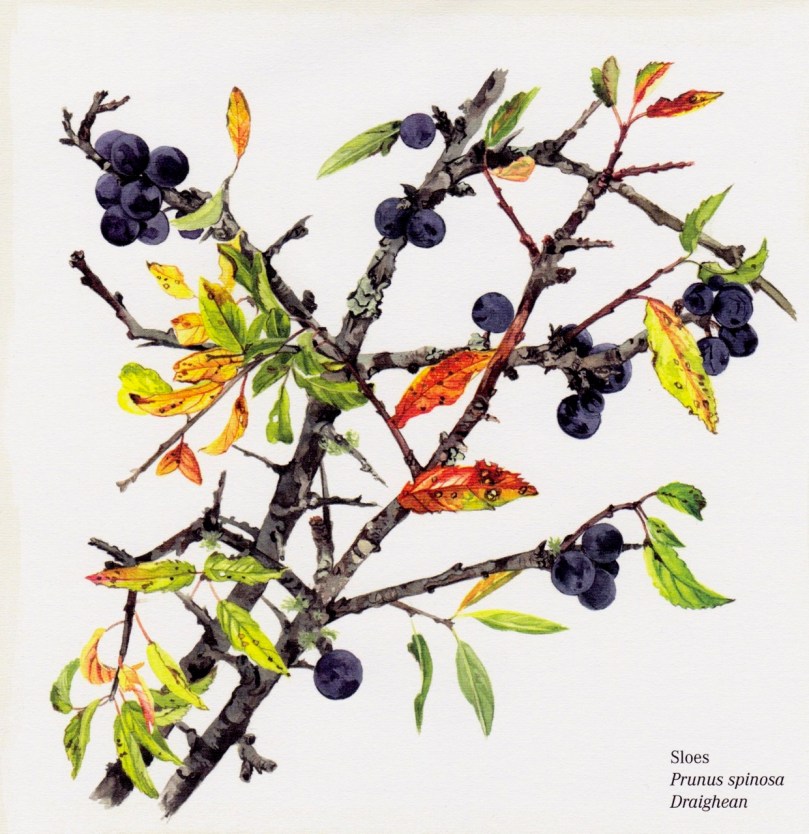
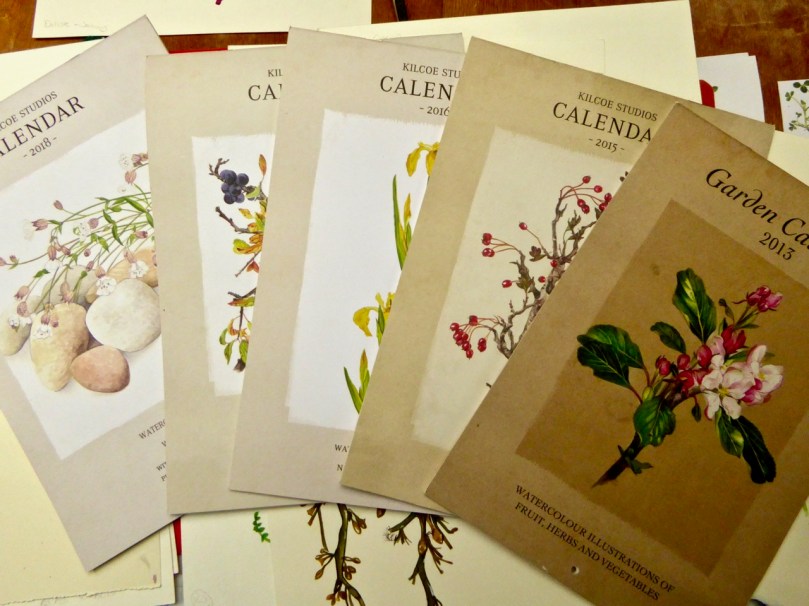
Every year I’ve pounced on the Kilcoe Studios calendars as soon as they come out, and bought their exquisite cards. Recently I met their creator, Sonia Caldwell and discovered that the studio is quite close to me. I told Sonia that I’ve long been an admirer of her work and asked if I could visit her in her studio and talk to her about her inspirations. In the process I discovered a dedicated and hard-working artist and sculptor and a fellow wildflower lover. *

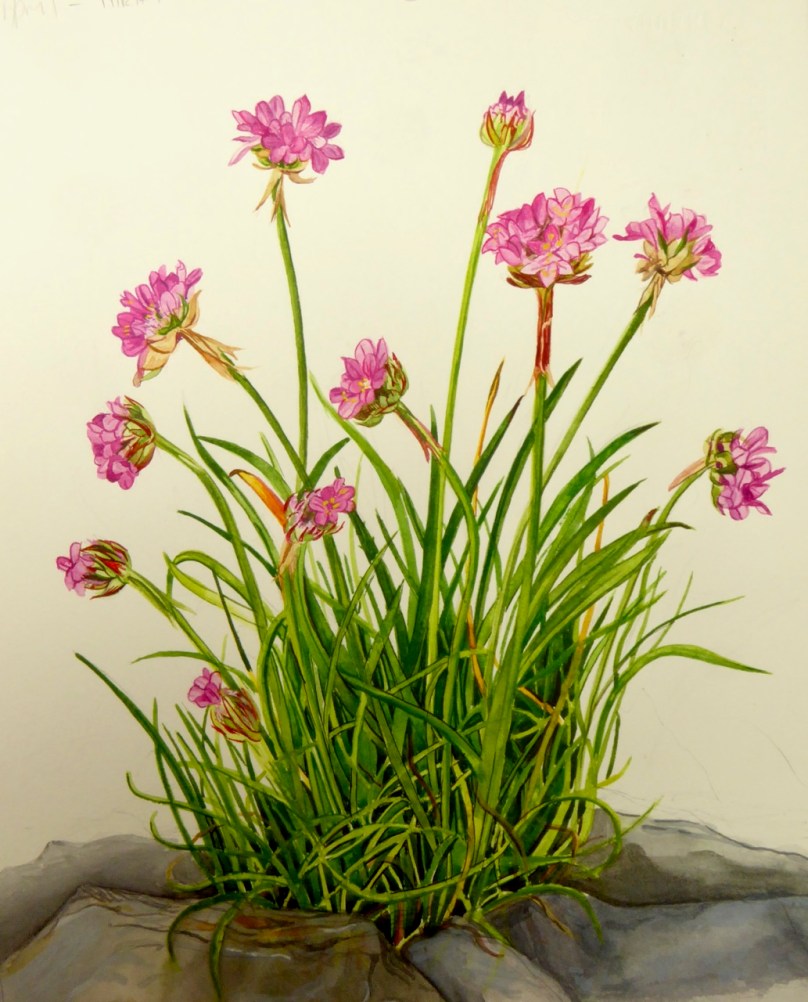
Thrift, or Sea Pinks

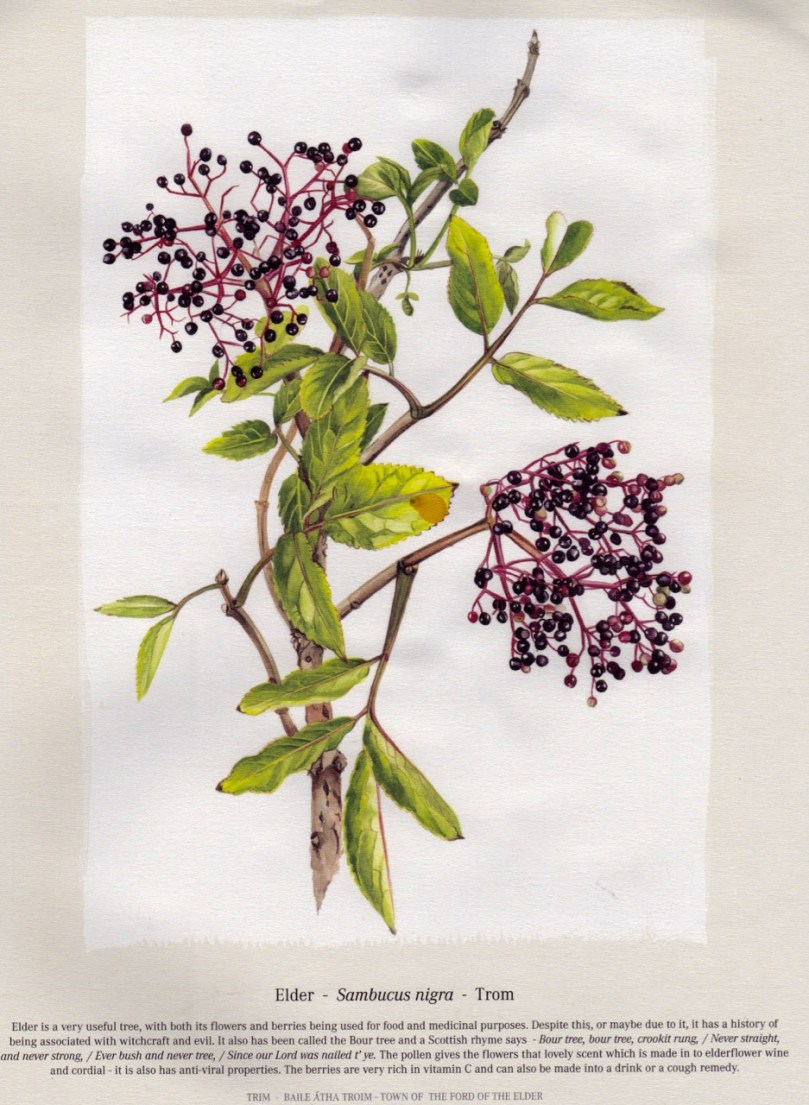
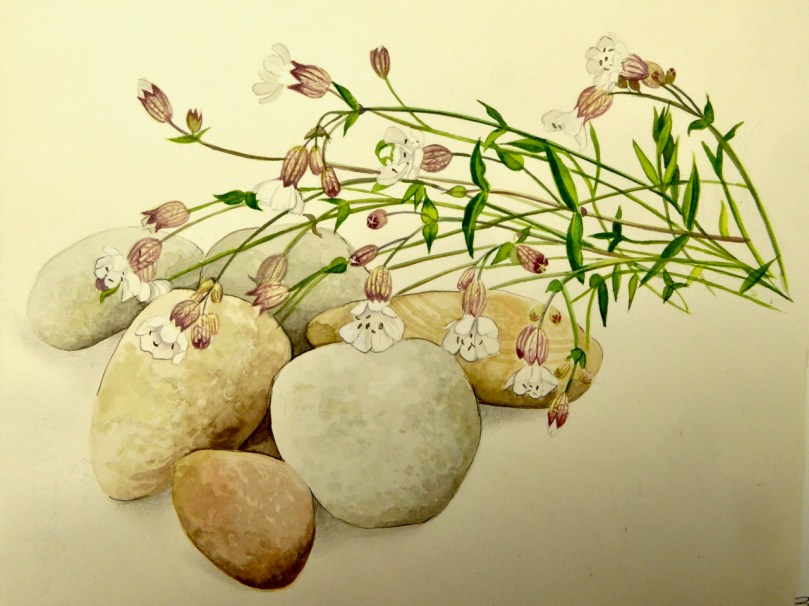
Sonia’s botanical artwork is meticulous and yet avoids mere illustration. Her colours are delicate but true and she insists on live models – you just can’t get the detail you need from a photograph, she asserts.

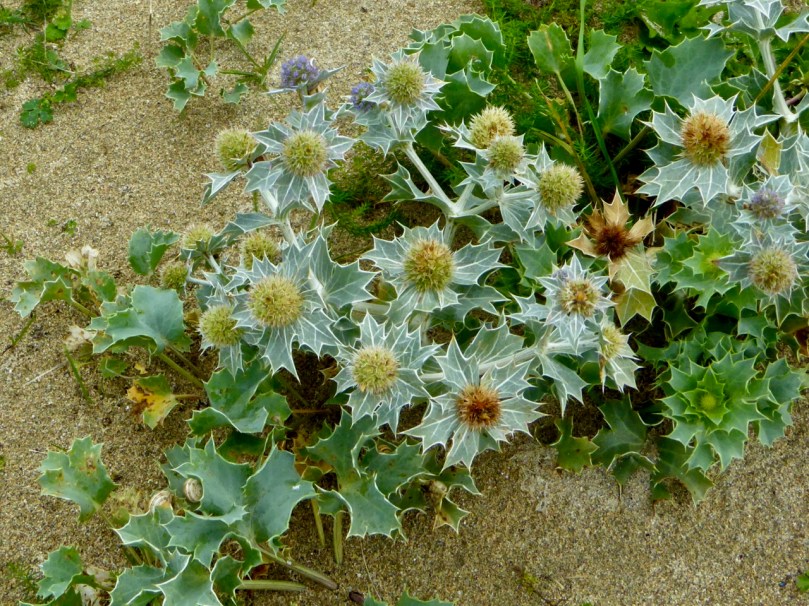
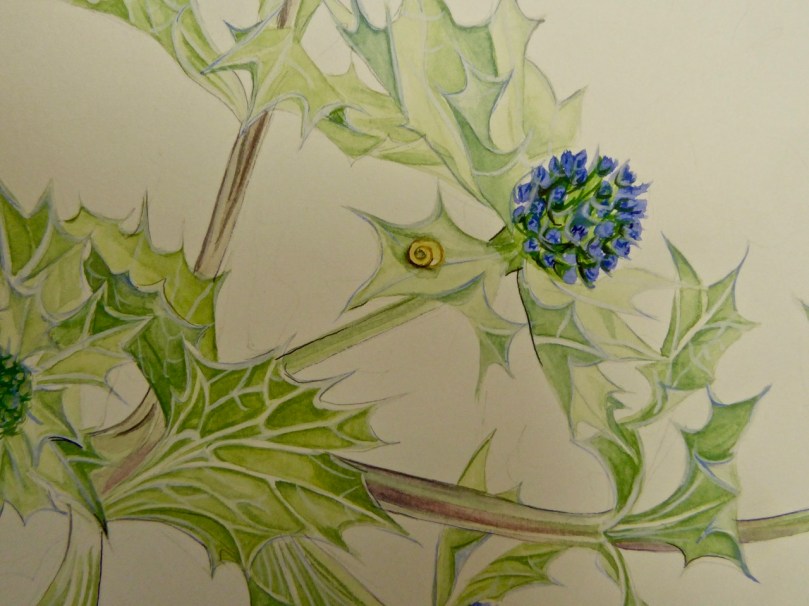
Sea-holly: my own photograph, and a detail from one of Sonia’s paintings

But it’s more than that – she researches each flower, tree, shrub, berry, fruit and provides information on folklore, herbal uses, Irish names and their meanings, and other little titbits of information.

She collaborated with the marvellous Pilgrim’s Restaurant of Rosscarbery for the latest (2018) calendar. We’ve eaten there a couple of times and been blown away by their approach to food – simple, fresh, delicious, and often with foraged ingredients. I’m still living on the memory of their blackberry and meadowsweet sorbet. So with this calendar not only are you getting Sonia’s wonderful botanical prints but recipes from the Pilgrim’s chefs as well.

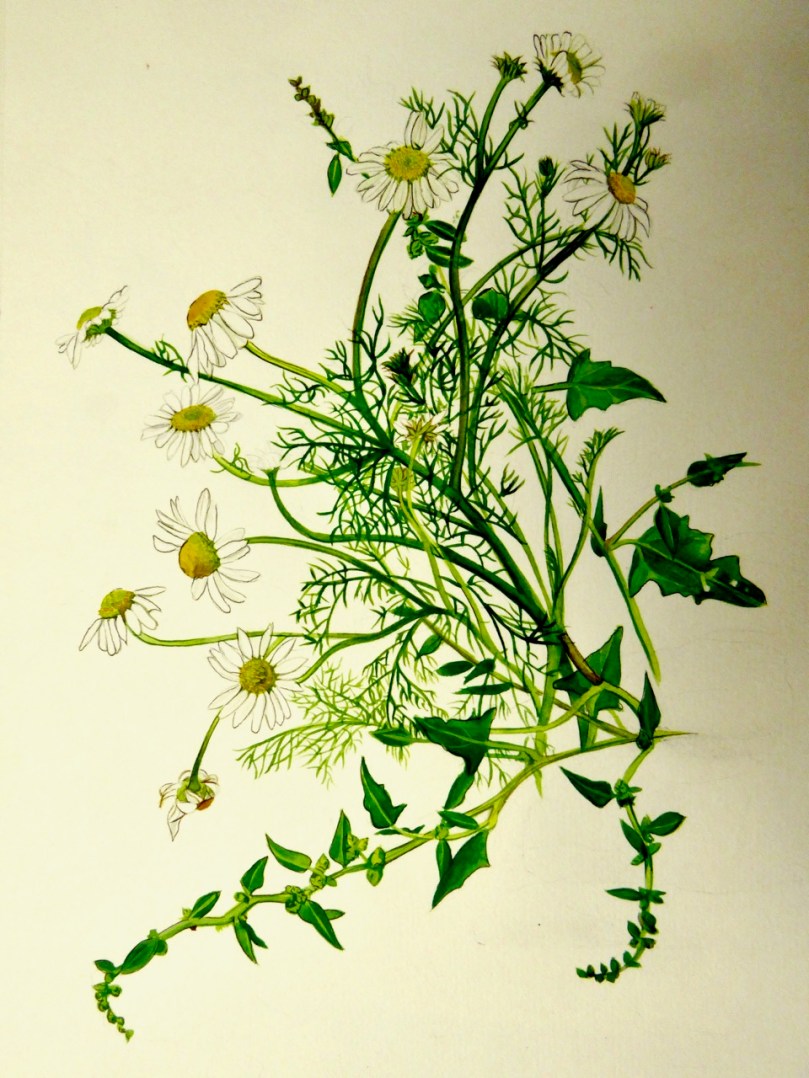
This is Sea Mayweed and Orache intertwined. Pilgrim’s recommends a one-minute steaming for the Orache, and pairing it with white fish (like hake), new potatoes and a cream sauce. You can also mix it with other “tidal greens” such as rock samphire, sea aster, and sea beet.

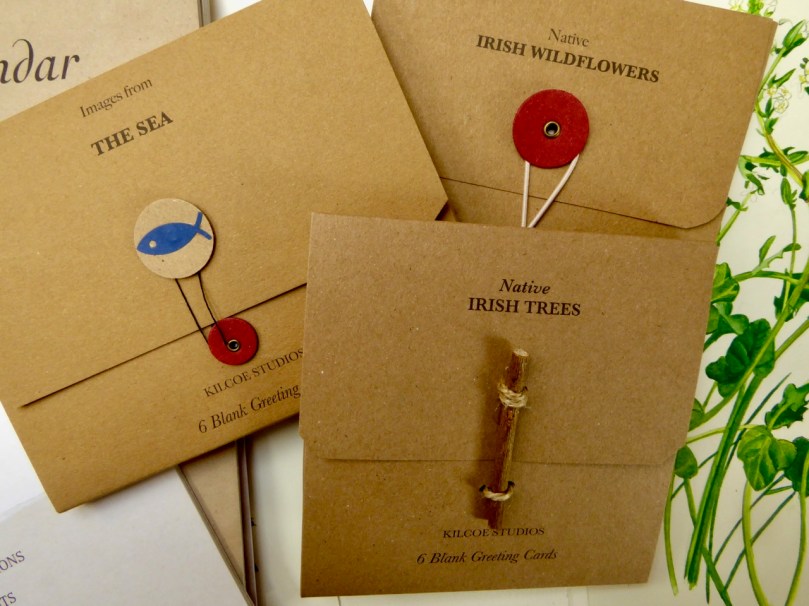
The painstaking drawings she lovingly creates for her calendars also go into her cards. That’s great, because they should outlive their ‘year’. The card packaging is a work of art in itself – I’ve given many a set as a gift.

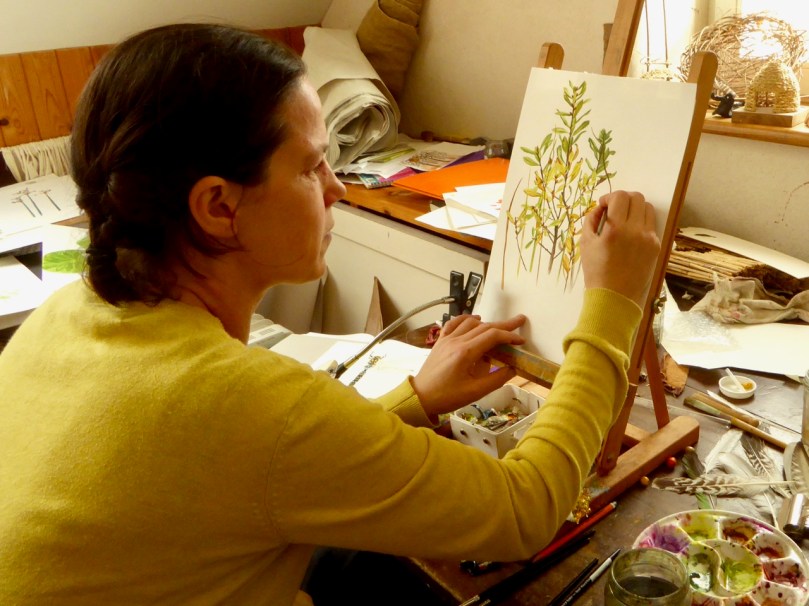
Because I’ve spent so many hours myself photographing wildflowers I know what goes into identifying, researching, and then reproducing each one, but only on a superficial level compared to the kind of attention each one gets from Sonia. Watching her getting the colour of each leaf exactly as she saw it was illuminating, and humbling.

Sonia sells her work in various stores throughout Ireland, but you can also order from her online shop. There’s still time to get those 2018 calendars!
Sea Campion – the front cover illustration for the 2018 calendar

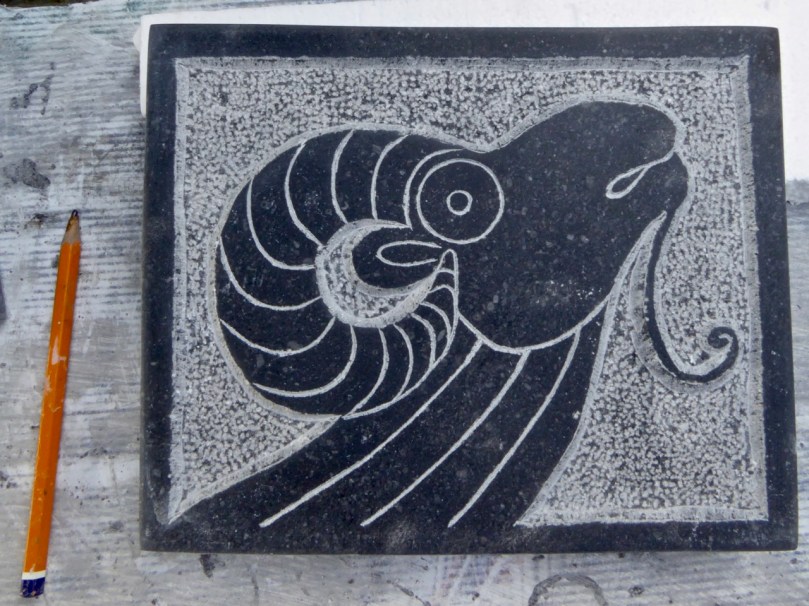
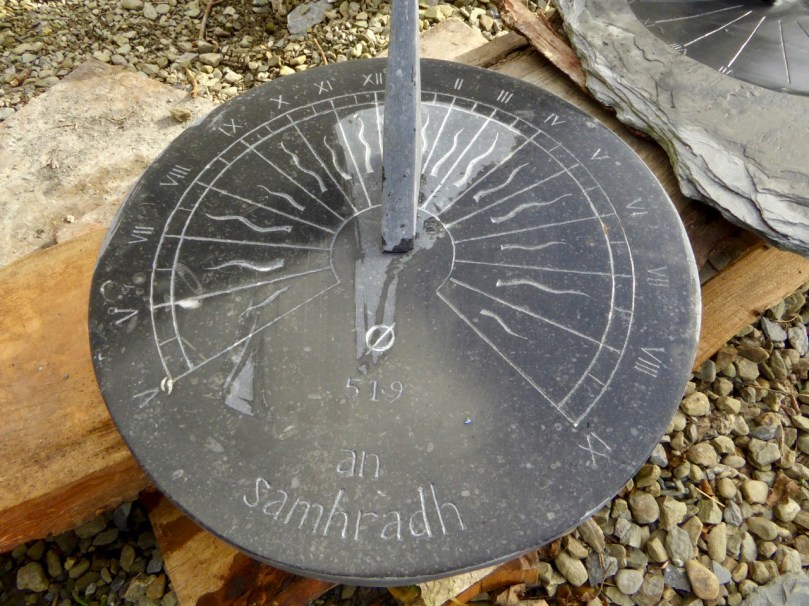
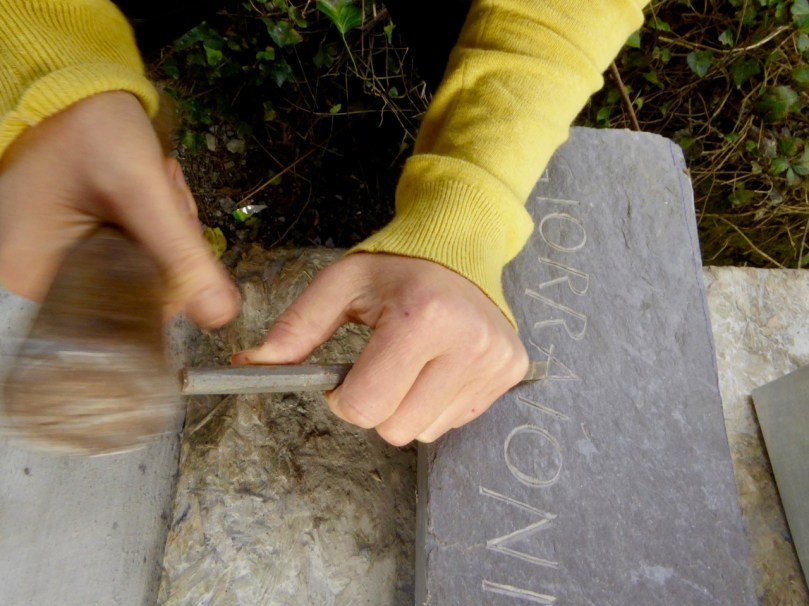
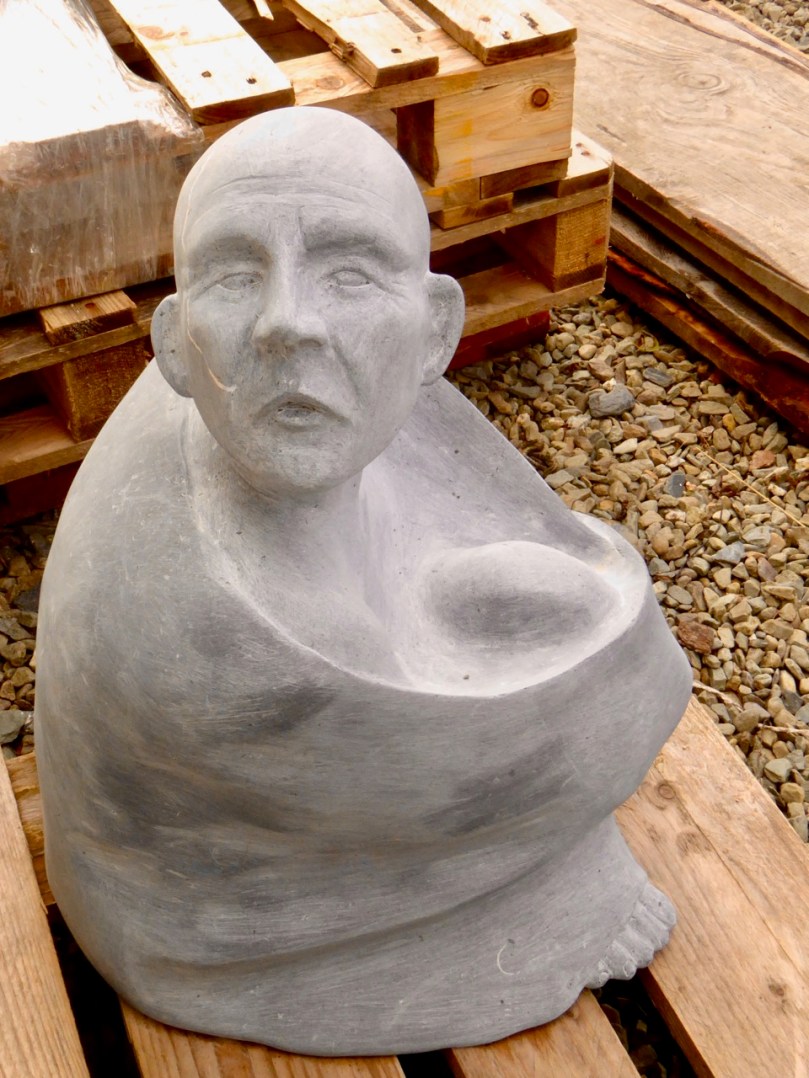
Although I was aware that Sonia was also an accomplished sculptor, I was unprepared for what I found in her studio. She works in stone, on both a small and large scale. She makes beautiful bowls, sundials and plaques as smaller, more affordable pieces, and they are popular buys at the summer markets. 

But her passion is her figurative work. These are large-scale carvings, mostly in Kilkenny limestone, which she polishes to a beautiful finish using finer and finer grades of sandpaper. It’s physically demanding work, but I get the impression that when she’s engaged in it, she’s lost to time, and indeed to everything except what’s under her chisel.

Her work has a quality to it that I can only call ‘questing.’ The eyes look far away, seeking answers to some great question. In one case, they are blindfolded, forcing the quester to look inward. The bodies fold in on themselves, or on one another, or are rigid, as if acting as mere plinths for the imagination or the brain

It’s powerful stuff, and left me wondering why artists such as Sonia face such difficulties in the market place. Sculpture, I now understand, is much harder to sell than paintings. You can see a range of Sonia’s sculpture on her separate artist’s website. She has exhibited widely.

Sonia works with her husband, Eamon Quinn, a master joiner. Take a look at his beautifully-crafted furniture on their website. It’s inspiring to spend time with someone like Sonia, someone so dedicated and talented and committed. The good news is that, even if you don’t happen to live near her, you can still enjoy her art every day of the year.

*All the images of Sonia’s work are used with her permission. Please respect intellectual property issues and copyright for all the artwork in this blog post.