Mary Mary

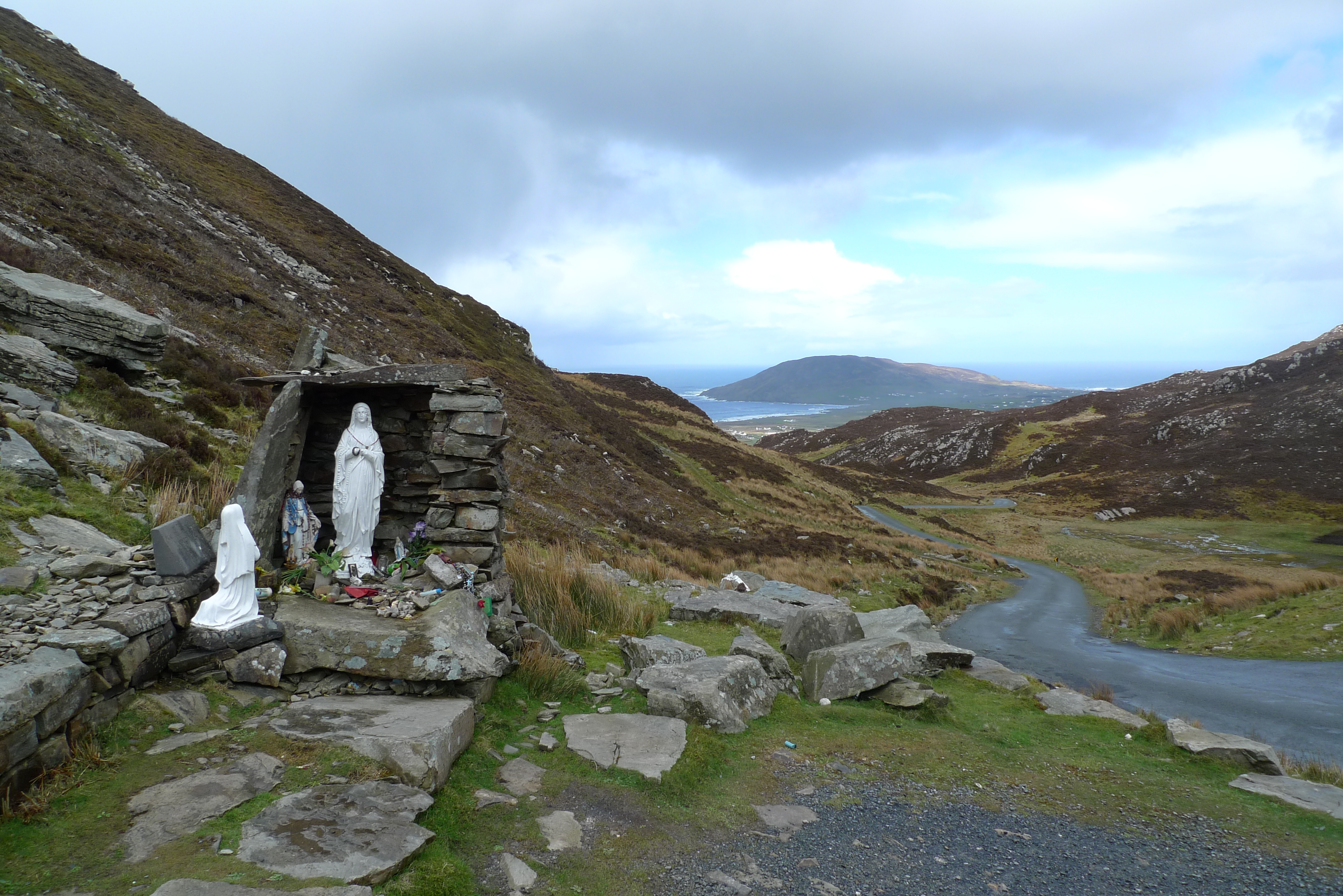
Roadside Shrine in Donegal
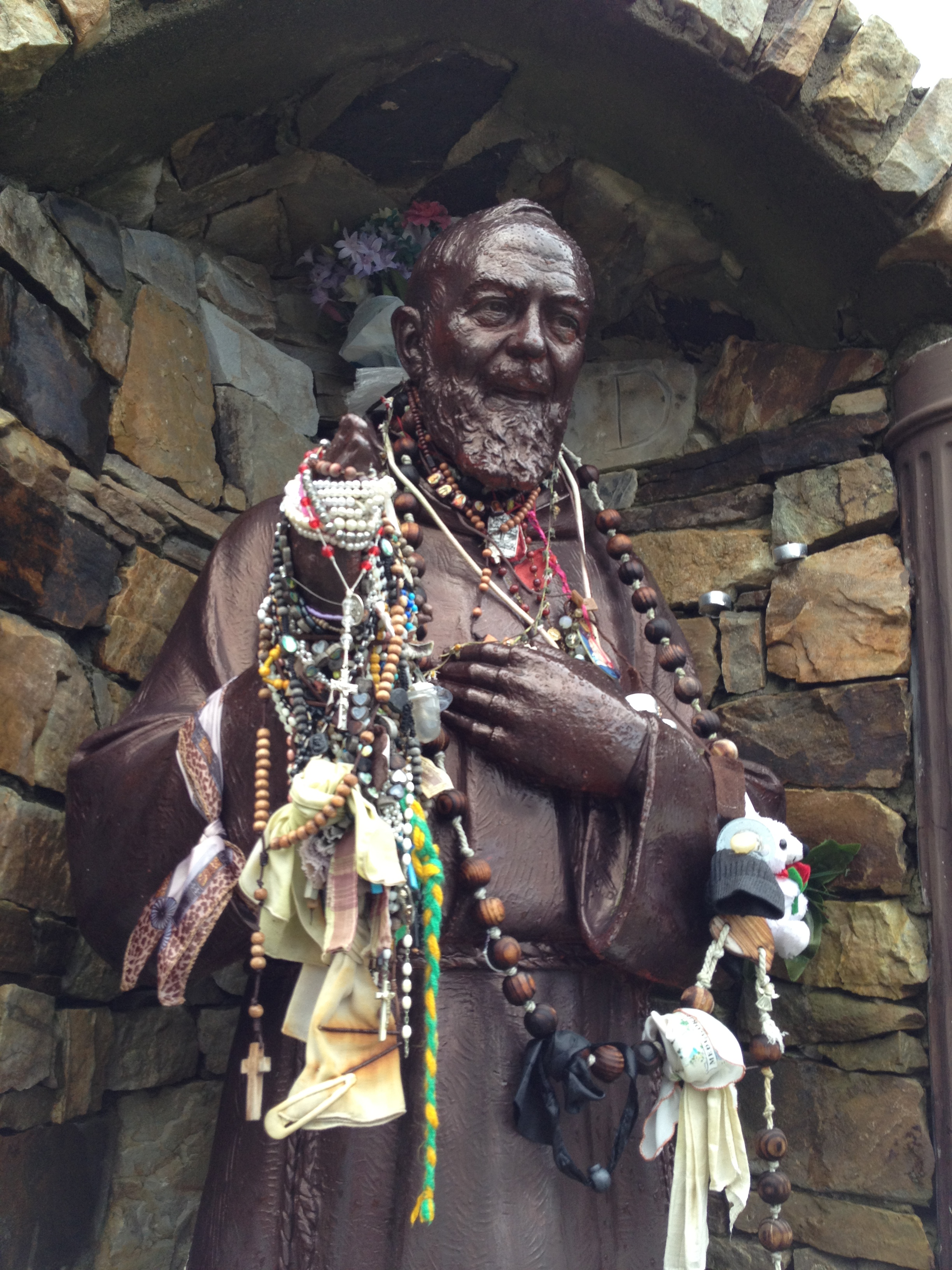
Roadside Shrine in Donegal

St Columcille

St Columcille

On our drives, it has become a game to be the first to spot a shrine and yell out “Grotto!” They are everywhere. While some are standards of Christian iconography (Calvary groupings, crosses) and others venerate local saints, the vast majority are Marian and based on the apparition of the Virgin Mary to Bernadette of Lourdes. In 1954, at the height of Catholic fervour in Ireland, the Vatican declared a Marian Year – a year of special devotion to Mary. Ireland embraced this with great enthusiasm and suddenly the countryside was decorated with statues (like the Pieta on the Sheep’s Head) and every community sported a Lourdes grotto. Ireland at that time was poverty-stricken so it is particularly striking that when the Irish had nothing – there were few cars, no modern conveniences, little spare money – parishes managed to put together enough to erect devotional shrines.
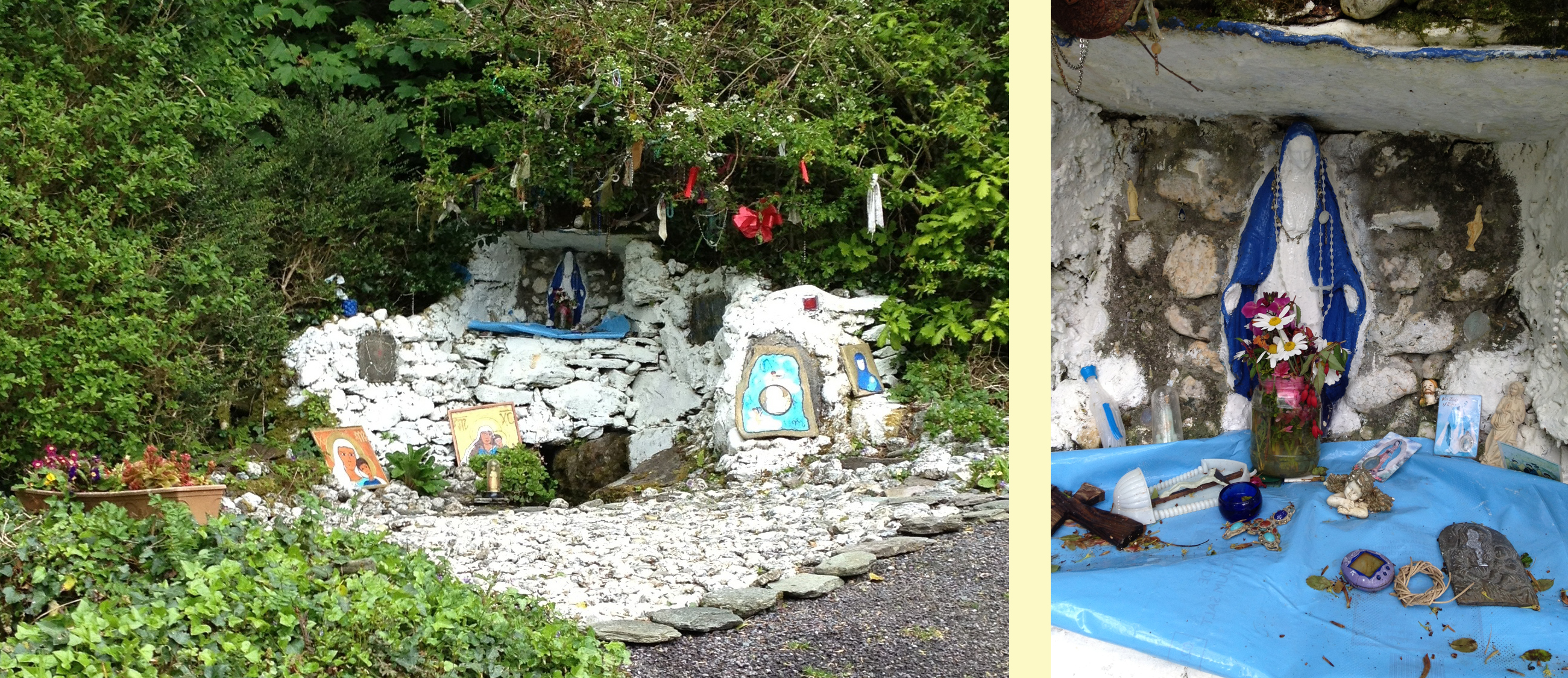
Holy Well

Holy Well and close up

The best ones, of course, are the  rustic shrines you stumble across on a drive or a walk. Sometimes an ancient holy well will have been ‘Marianised’ by the addition of a small carving or rosary beads, or a summit or mountain gap will have a simple rocky structure to house a statue. Pilgrims or passers-by leave small tokens either as a mark of respect or to support a special intention.

Ballinspittle: The Moving Statue

Ballinspittle: The Moving Statue

There is an elaborate grotto near here in Ballinspittle. In the mid 1980s the country was galvanized by reports that the statue of Mary had been seen to move. Pilgrims flocked to the site, overwhelming the small town of Ballinspittle for a while. The 80’s were very different from the 50’s: many of the older generation believed, and still do, while others had lost that simple devotion that characterised earlier times and the apparition was greeted by many with a scepticism that would have been unknown in the 50’s.

When I was a schoolgirl, we were arrayed in veils for a walk down through the school grounds every day in May to visit the grotto. Hands folded in prayer, we sang

“Oh Mary we crown thee with blossoms today, Queen of the angels and Queen of the May.”

The tradition of choosing a young girl to be May Queen to preside over spring festivals is common to many cultures and probably pre-dates Christianity. In Ireland, as we often see, this tradition has become Christianised. The ubiquity of Marian images here is yet another aspect of the rich fabric of Irish culture.
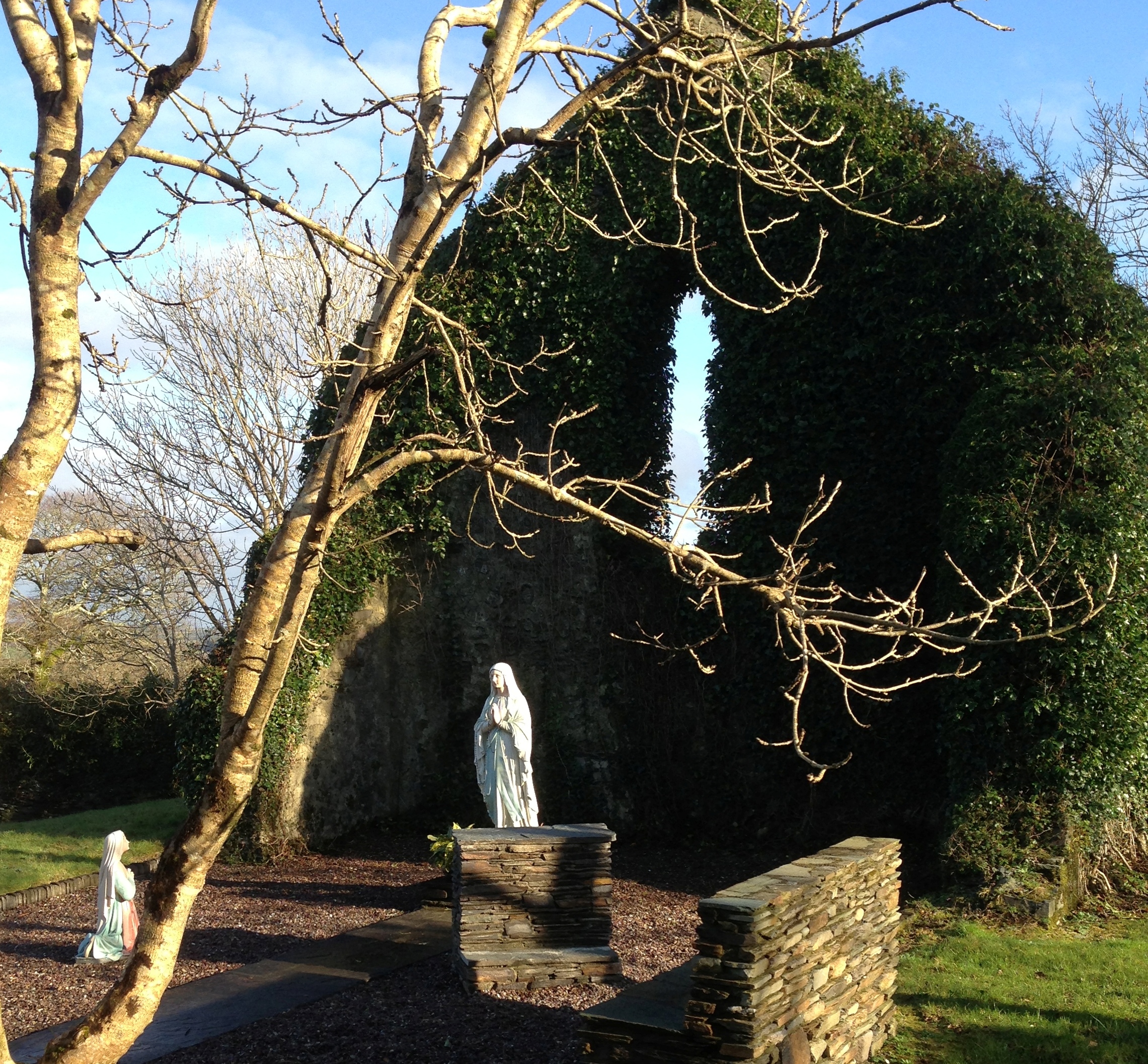
Ruined church, converted to a grotto
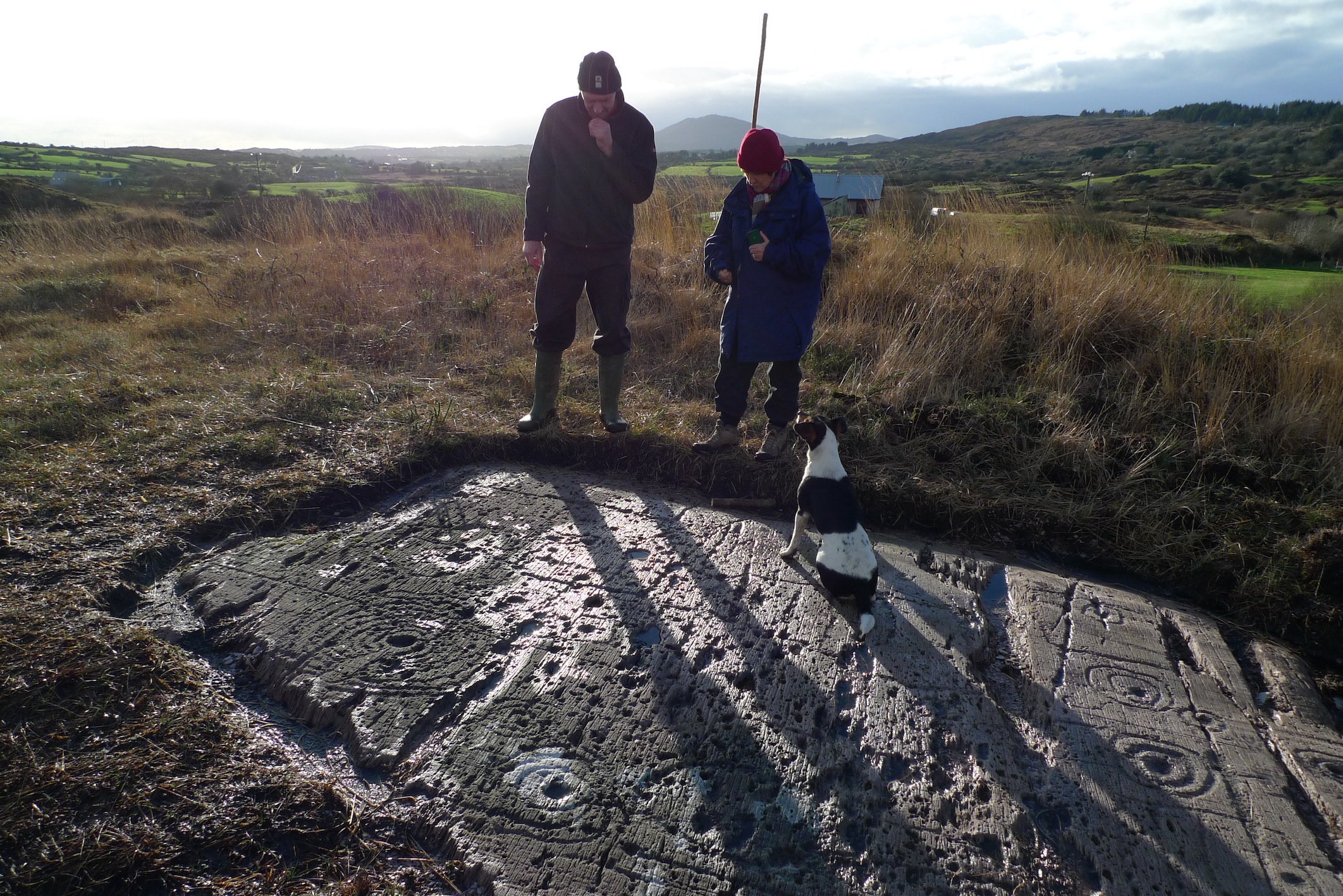
Enigma

gary, Finola and Furry friend contemplate the Enigma

Gary, Finola and Furry Friend contemplate the Enigma

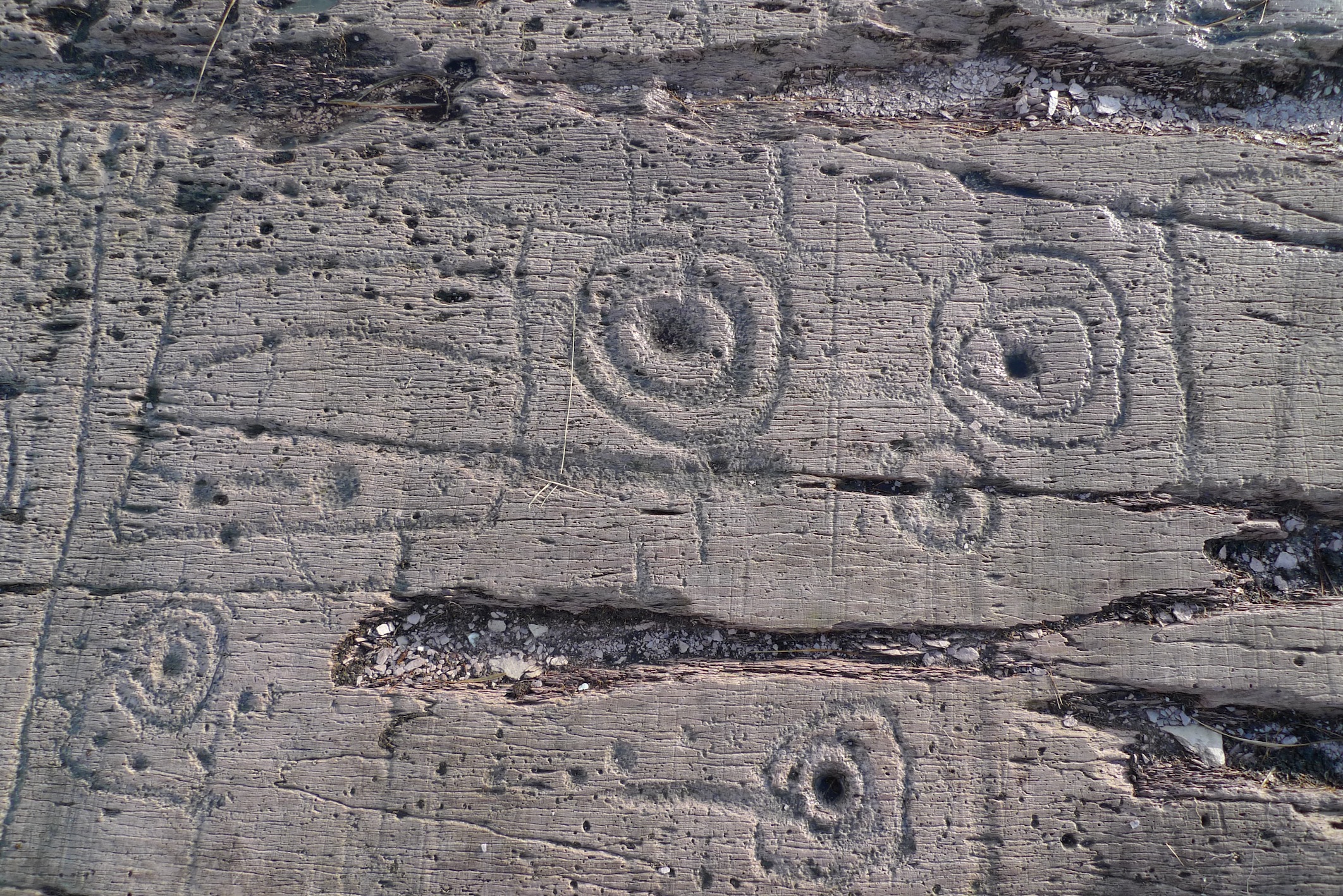
We went to look at an exciting new Rock Art discovery, in the hills between Ballydehob and Bantry: wild country. The man who uncovered it – Gary Cox – lives close by, and became familiar with the terrain through walking his dogs over the land every day. He noticed in passing a small piece of exposed rock, just a few centimetres square, on which it was possible to make out a couple of curved lines. Intrigued, he began to carefully pull back the moss and gorse to expose a secret which had lain hidden from view for hundreds – perhaps thousands – of years.

L1080544

The Derreennaclogh panel is one of the finest and most intriguing pieces of Rock Art that we have seen in West Cork. Because the surface has (until now) been largely protected from direct contact with the weather, the carvings are pristinely visible, especially on a good bright day. On the rocks at Ballybane West – just over the hill – the designs are so weathered that you can go there day after day and never make them out, unless the shadows from a low sun are just right.

details

Details from the Derreenaclogh motifs

Current thinking suggests that all the Rock Art in ireland is Bronze Age – between four and five thousand years old: it’s breathtaking to think that we are looking at such ancient depictions of …. what? There’s the enigma: we have no idea – there are cup marks, circles, lines, even squares and waves on this newly revealed one: very unusual. Theories abound, of course: sun, moon, stars, maps, calendars – I’m sure someone has suggested they are flying saucers! We’ve written more on this in previous posts, and of the prolific appearance of rock carvings on the whole Atlantic facing coast from Scandinavia down through Scotland, Britain, Ireland, Brittany, Spain and Portugal. There are variations but the same symbols or motifs occur over and over. But here – on our doorstep – are some of the most unusual shapes to challenge our imaginations.

pukas

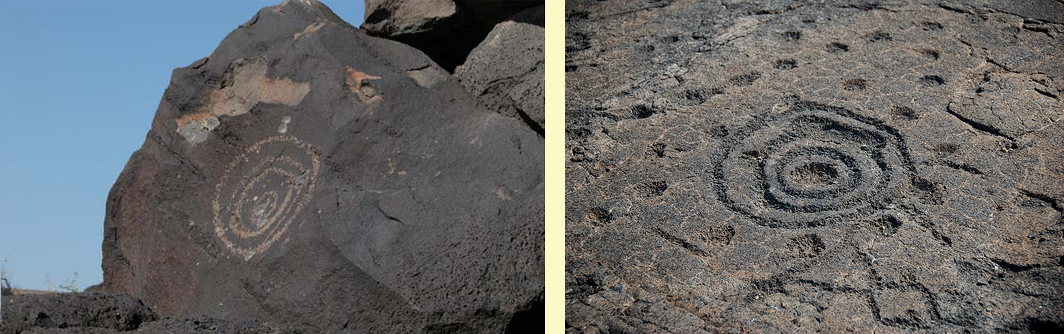
I have been extending my researches to petroglyph cultures beyond our own roots. I was intrigued to find some images from New Mexico – strikingly similar to our rock art – and Hawaii. In the latter place there are numerous circular depressions, around 50mm in diameter, interspersed with lines and circles. On our rocks in West Cork cup marks are also widespread – one of the most common images. They are also surrounded by concentric circles: at Derreennaclogh there is one cup mark with eight concentric circles around it – that’s more than we’ve seen on any other site.

Boca Negra Canyon Petroglyphs

Petroglyphs from New Mexico (left) and Hawaii (right)

There is folklore attached to the Hawaiian cup marks: local historians explain that these holes are called ‘Puka’. When a child was born a Puka would be carved in the lava stone. The new baby’s ‘Piko’ – umbilical cord – would be placed in the Puka to wish blessings upon the child for a long and prosperous life. In Hawaii and New Mexico the carvings are reckoned to be between 500 and 1,000 years old – much younger than our Rock Art. But here’s more food for thought: in Irish there’s also a word ‘Púka’ or ‘Pooka’ – sometimes a Fairy, or a shapeshifting spirit which can appear as a Hare or a Horse with dark fur. If a human can jump on the back of the Horse he will be given a wild ride but will probably be thrown off. Legend says that Brian Boru – the High King of Ireland – was the only man who could truly ride the Púka – by using a bridle incorporating three hairs of the Púka’s tail.

Ból an bhóthair

bowling

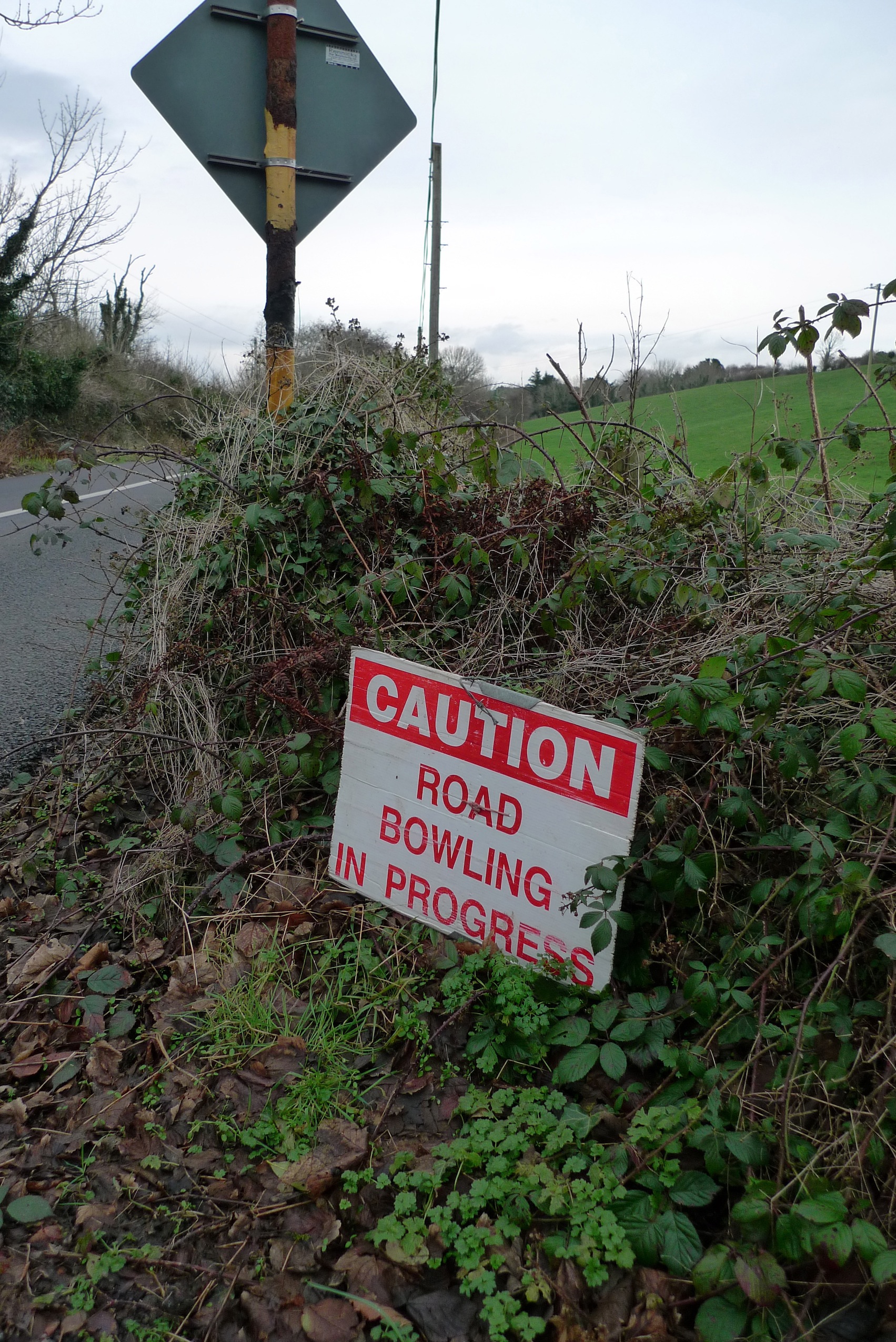
A damp, grey, Sunday afternoon seemed as good a time as any to find out about a strong West Cork tradition – Road Bowling – the title of this post is the Irish for that. I had come across this ancient sport on a previous visit to Ireland and was intrigued. Friends enlightened me that it was a traditional local pastime which has spread to Armagh and, through emigration, to London and the United States – while other versions of the game exist in Holland and Germany. But the county of Cork – and particularly our western part of the county – is its true home.

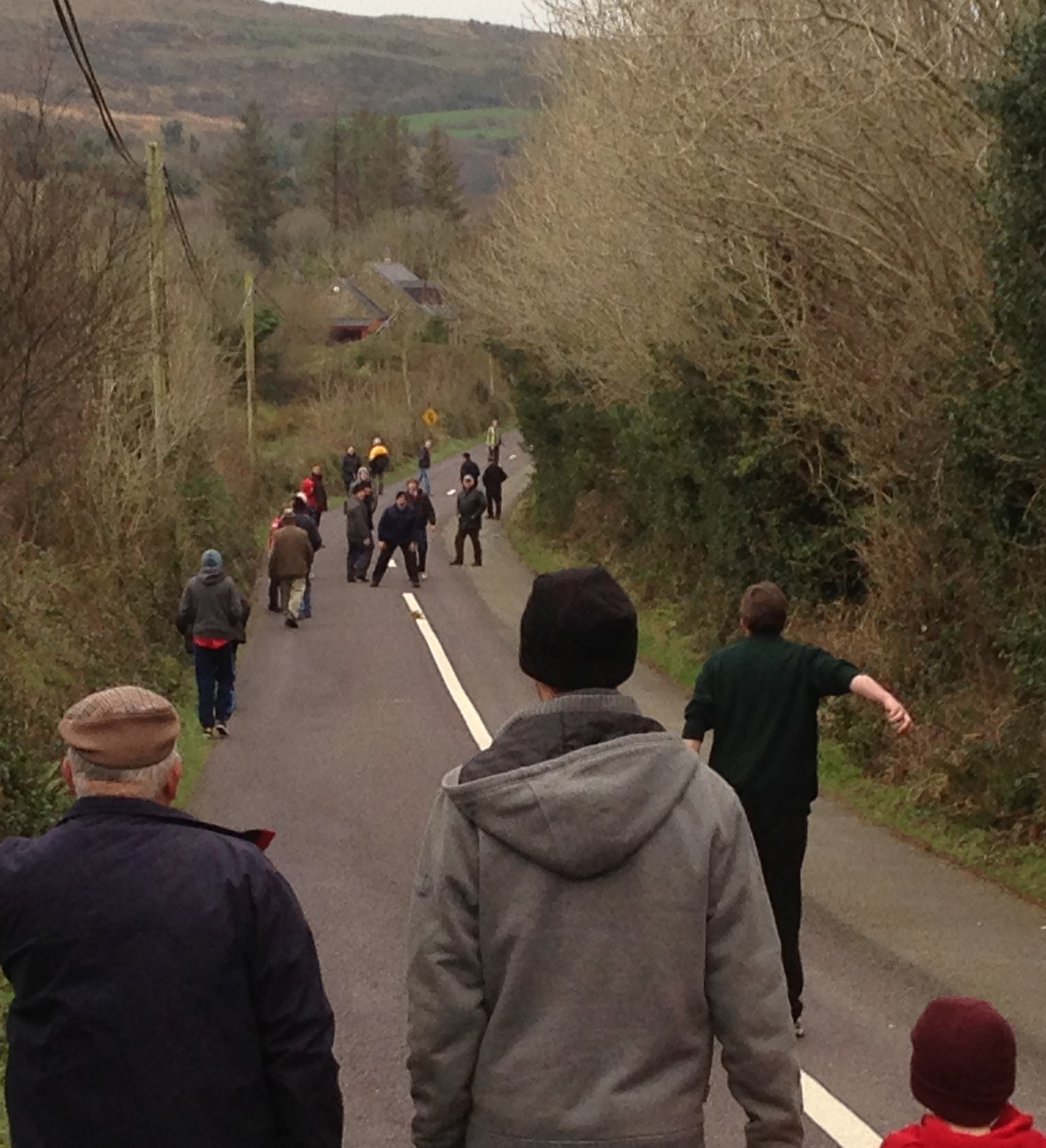
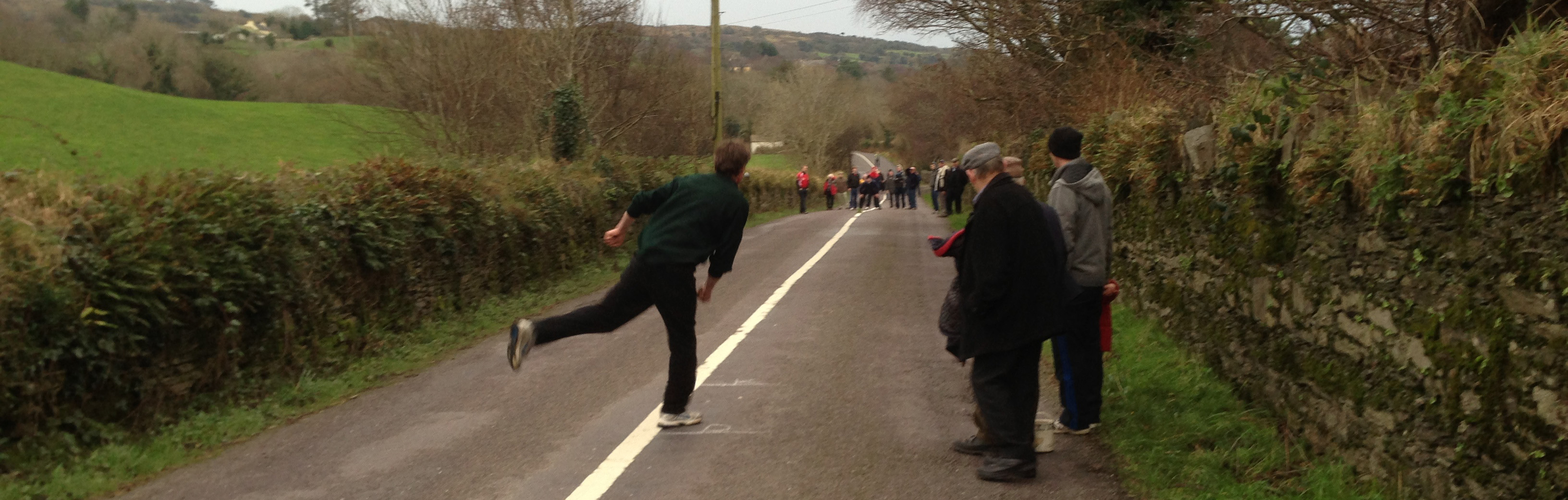
bowling2A notable merit of the sport is that it requires absolutely minimal equipment and facilities: an iron ball (or ‘bullet’) weighing 800 grams and 18cm in circumference (note: Ireland is fully up to date with its metrification – miles and ounces have vanished along with the old Irish punt or pound) and about 4 kilometeres of public road. That’s all, apart from a stick of chalk. The road can be anywhere: it’s good if there are some hills and bends. Today I watched a game on the Road out of Durrus going towards Schull. It’s fairly well used (although, as this is Ireland and a Sunday, there’s probably one car passing through every five minutes), but the traffic always gives way to the bowlers.

The object is to throw the iron ball along the road. There are two players – or two teams – in each match, and the match involves one journey along the road in one direction, each player having his own ball. There’s usually another match when the crowd returns along the same route. The winning player or team is the one that reaches the end of the course with the fewest ‘throws’. To throw a player runs up to a chalk mark and, using an underarm swing, propels the ball as far as possible. Regardless of whether or not the ball has hit a wall or drain or whatever, the next chalk mark is made at the point that the ball has stopped moving. There are all sorts of techniques, but nothing – it seems – breaks any rules, unless the player’s foot steps over the chalk mark before the ball has left his hand. And I’m not sure whether anyone is actually watching out for that, as the whole crowd, including the players, spend the entire time engaged in conversation; although this is interspersed at times with shouts of encouragement – or perhaps discouragement, and loud comments on how poor that particular throw was. I was guided through the process by friendly members of the gathering (many of whom suggested that I should have a go myself) and they also assured me that an essential part of the fun was ‘money changing hands’ – a gamble on the match, or on individual throws. Everything seemed so chaotic and informal that I couldn’t work out how this all went on.

bowling3

I was interested to see a tuft of grass (a ‘sot’) pulled out of the hedgerow and placed on the road at the point which the thrower should aim for in order to get the best ‘line’. And I was told that a helper known as a ‘road shower’ advises the thrower as to the best trajectory. ‘Shower’ here rhymes with ‘blower’. And – I should have said at the outset – ‘bowl’ actually rhymes with ‘howl’. But the West Cork accents I heard this afternoon were so strong that I only picked up every third or fourth word…

I returned a little wiser about another ingredient of life in West Cork.

bowling8

Staff of Life

2013-01-07 15.43.02

We got the most incredible Christmas present from Noah, Robert’s son! It was a day of learning to bake bread at the Firehouse Bakery on Heir (or Hare) Island, about a 20 minutes drive from Ard Glas. While Robert had some experience of baking with yeast, I had none, and considered myself yeast-phobic.

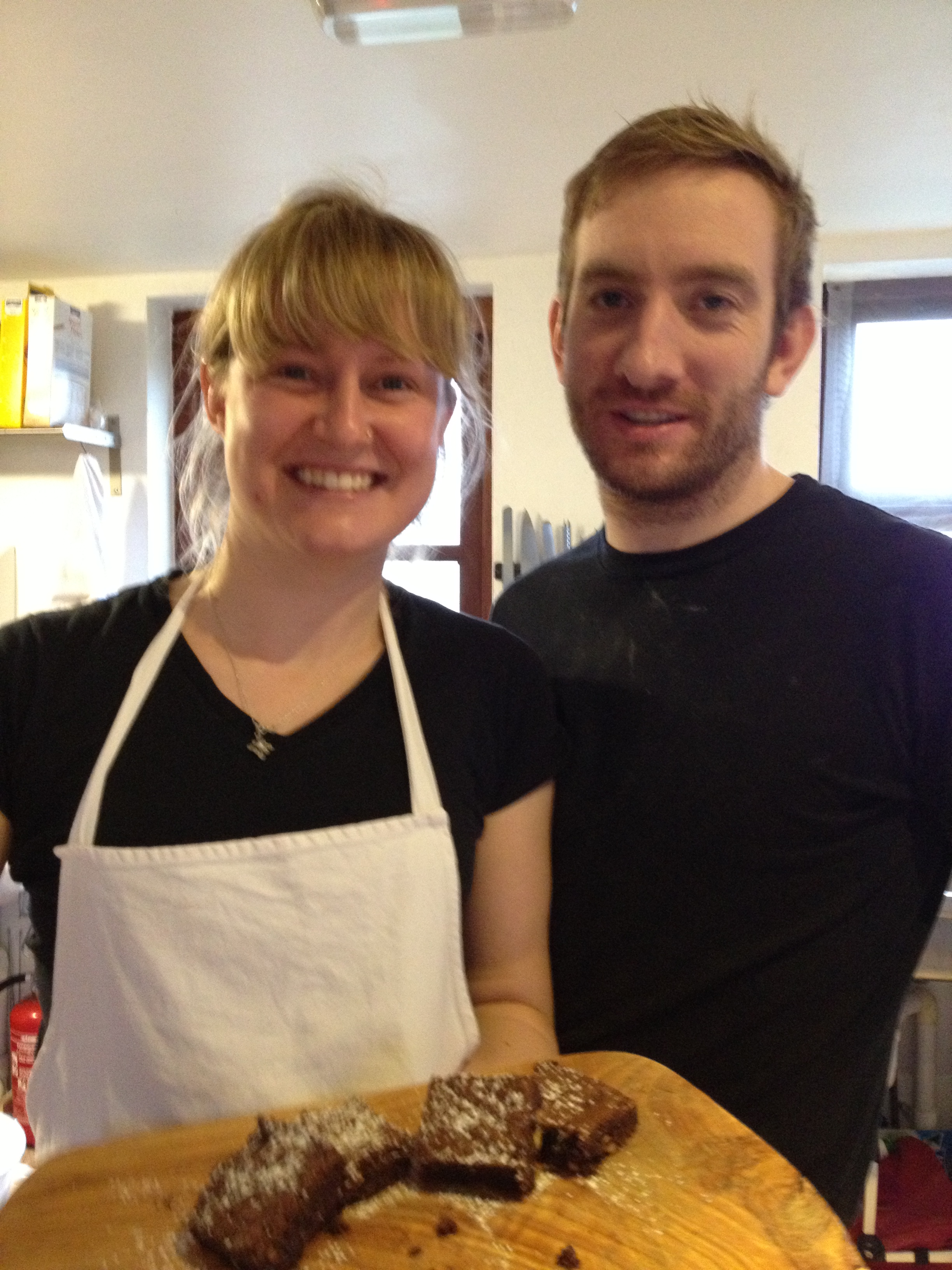
Laura and Patrick

Laura and Patrick

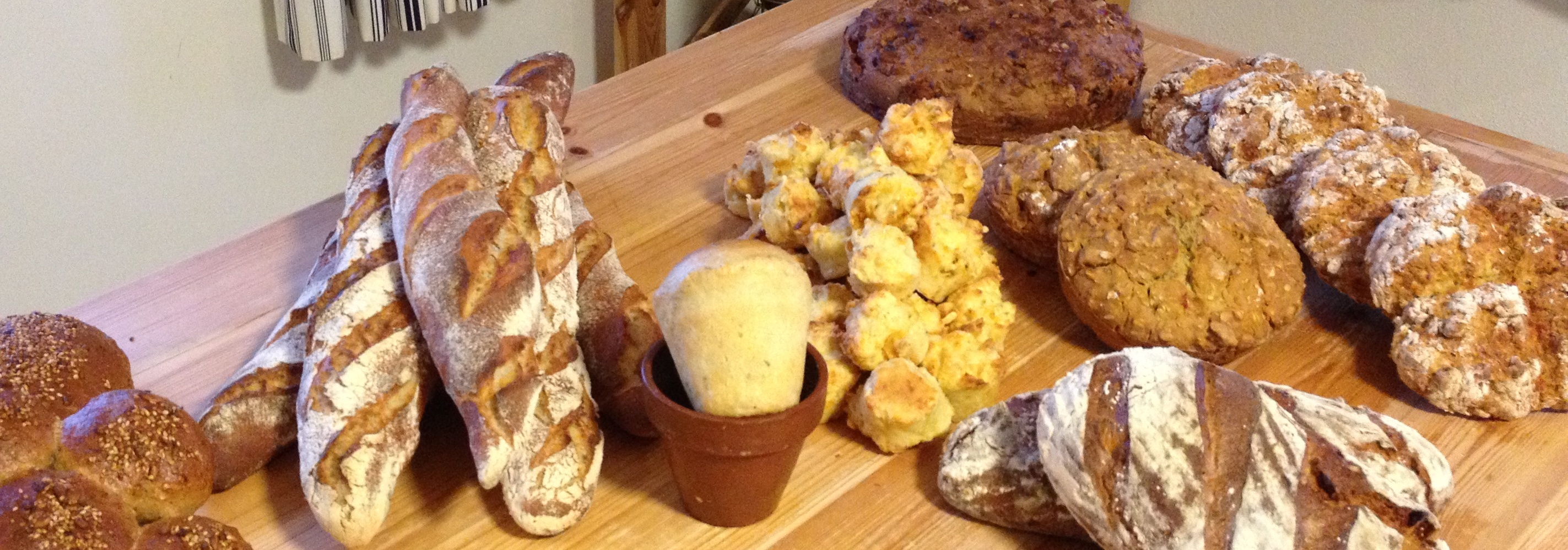
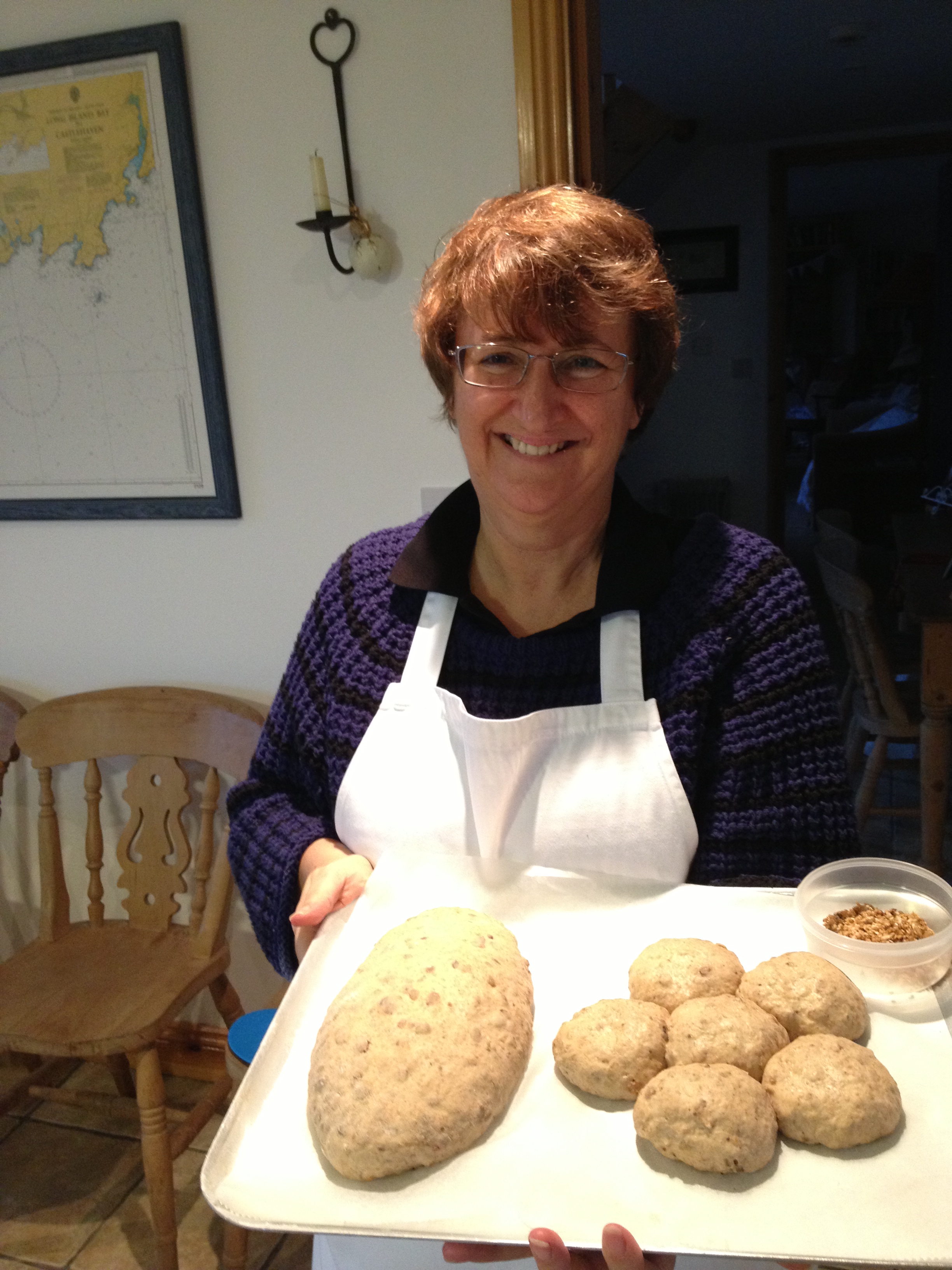
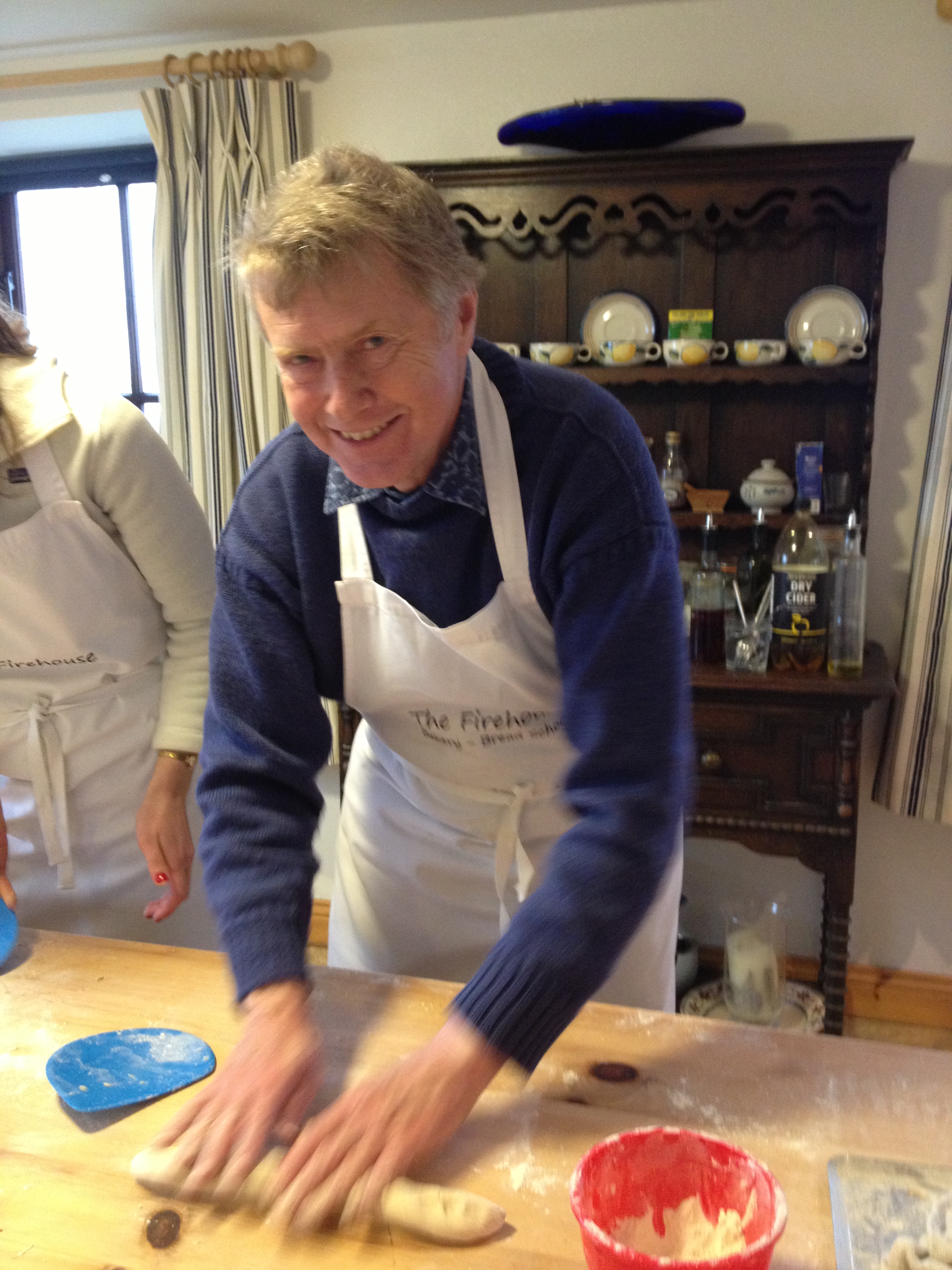
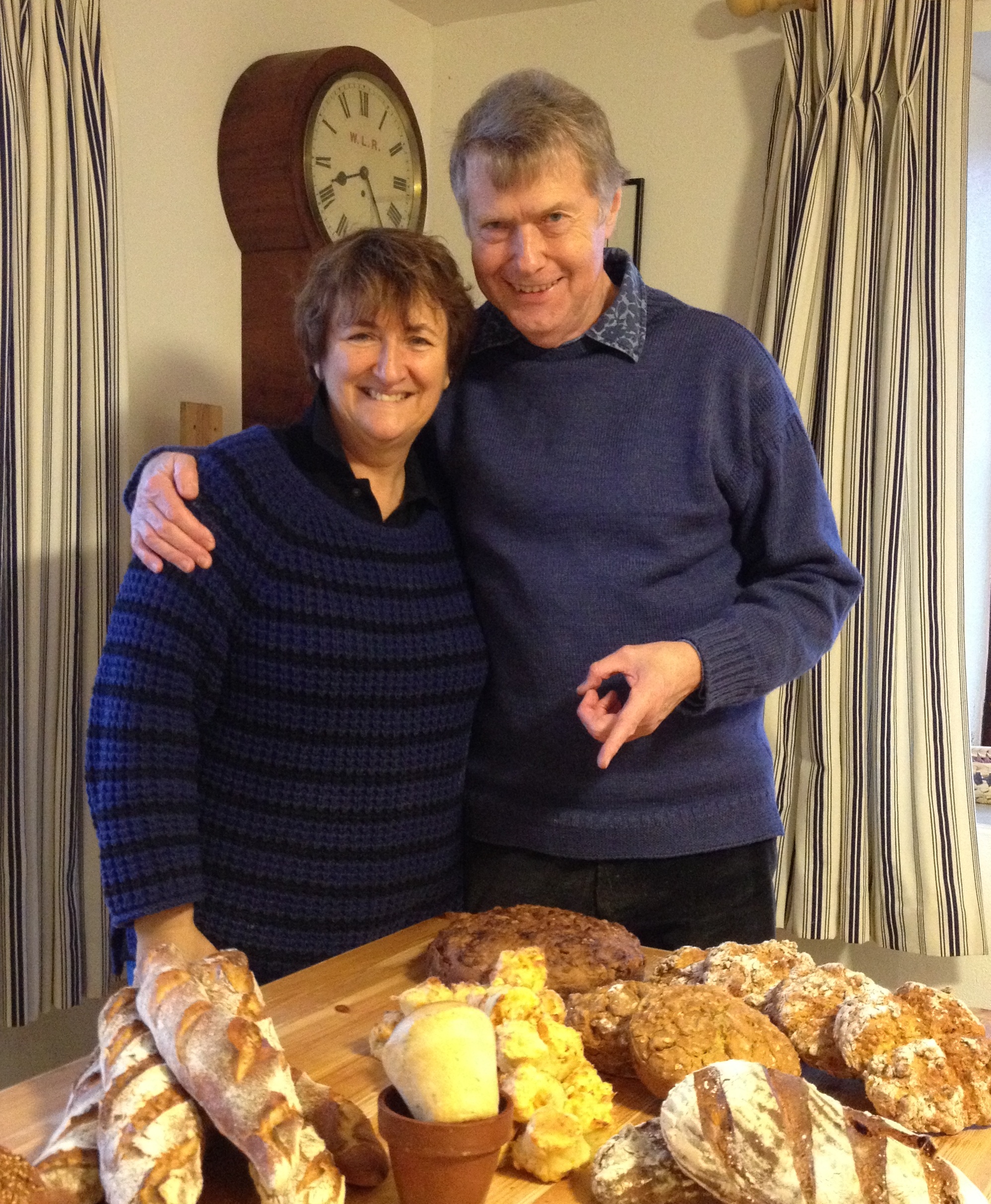
Our day started at 10:00AM with the short ferry ride to the  Island. We were picked up by Laura who drove us back to the house/school/bakery and plied us with coffee and brownies to get us in the mood. The baker/instructor is Patrick, who ran his own bakery in Bath, England, and has written the inspirational “The Bread Revolution” with his bakery partner. He plunged us right into the process by introducing his four students to our bowl of sourdough, explaining what is was and how it worked. Then it was all mixing and kneading and scraping until we had a loose ball of dough which was set aside to prove while we got on with the next project – in my case a granary ‘bloomer’ and pull-apart buns and in Robert’s some baguettes.

We moved on from there to muffins, flowerpot bread, orange cake, brownies, cookies and soda bread. I thought I was on more solid ground with whole wheat soda bread but this was soda with a twist – each of us made a different version. We made thyme, mustard and cheddar; apple and cider with caraway; honey, blue cheese and walnuts; and roast butternut squash and cheddar and each version took different shapes, including mini-muffin shapes.

Ms. Bloomer

Ms. Bloomer

IMG_1176

Patrick at the Fire Oven

M. Baguette

M. Baguette

All our bread was baked in Patrick’s custom-built outdoor oven, heated by burning logs inside it. At the end of the day we sat around a table eating Laura’s excellent soup and pasta – she had been cooking away all day as we were baking – with samples of our own bread. We divided all the bread between the four of us and headed back to the ferry. We have a freezer full of bread, a sense of accomplishment, and memories of a warm and friendly learning atmosphere. What I don’t have? Yeast-phobia!

2013-01-07 15.43.35

Beyond the Pale

rosbrin3

‘The Pale’ was an expression first noted down in the early 15th Century to describe the ‘safe’ area around Dublin which was kept fortified and garrisoned by the English monarchs of the time. When we last looked into Irish history [my post: here] Henry II had brought the Norman knights into Ireland and in due course they settled and assimilated with the local populations, in spite of The Statute of Kilkenny which, in 1366 decreed that inter-marriage between English settlers and Irish natives was forbidden. It also forbade the settlers using the Irish language and adopting Irish modes of dress or other customs. In reality such laws were impracticable, unworkable and largely ignored.

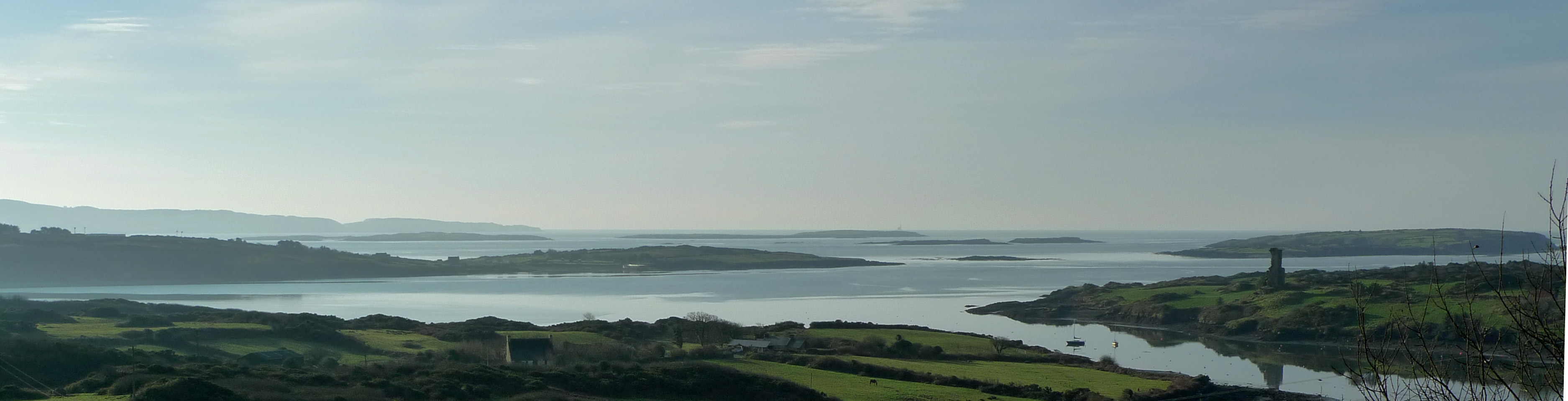
Ireland_1450To be ‘outside the Pale’ meant to be outside a safe zone. Down here in West Cork we are a very long way ‘outside the Pale’ – a map shows West Cork and Kerry in 1450 as an isolated area in the south west of the island surrounded by Hiberno-Norman Earls and Lords. In that time there were local factions protecting their interests by building castles and fortified tower houses all along the wild and rugged coastline.  I have referred to castles a few times in my previous posts: Rosbrin, just around the corner from Ard Glas – home of The Scholar Prince Finian O’Mahon and a great centre of learning in the Sixteenth Century; another O’Mahony castle at Drumnea – close to the Bardic School – and the place where the two sons of the King of Spain were drowned and turned into swans. Opposite us is Kilcoe Castle, superbly restored from a completely ruined condition by Jeremy Irons [have a look inside it here]: this was a castle of the McCarthy clan. Further to the east are the remains of a number of O’Driscoll castles.

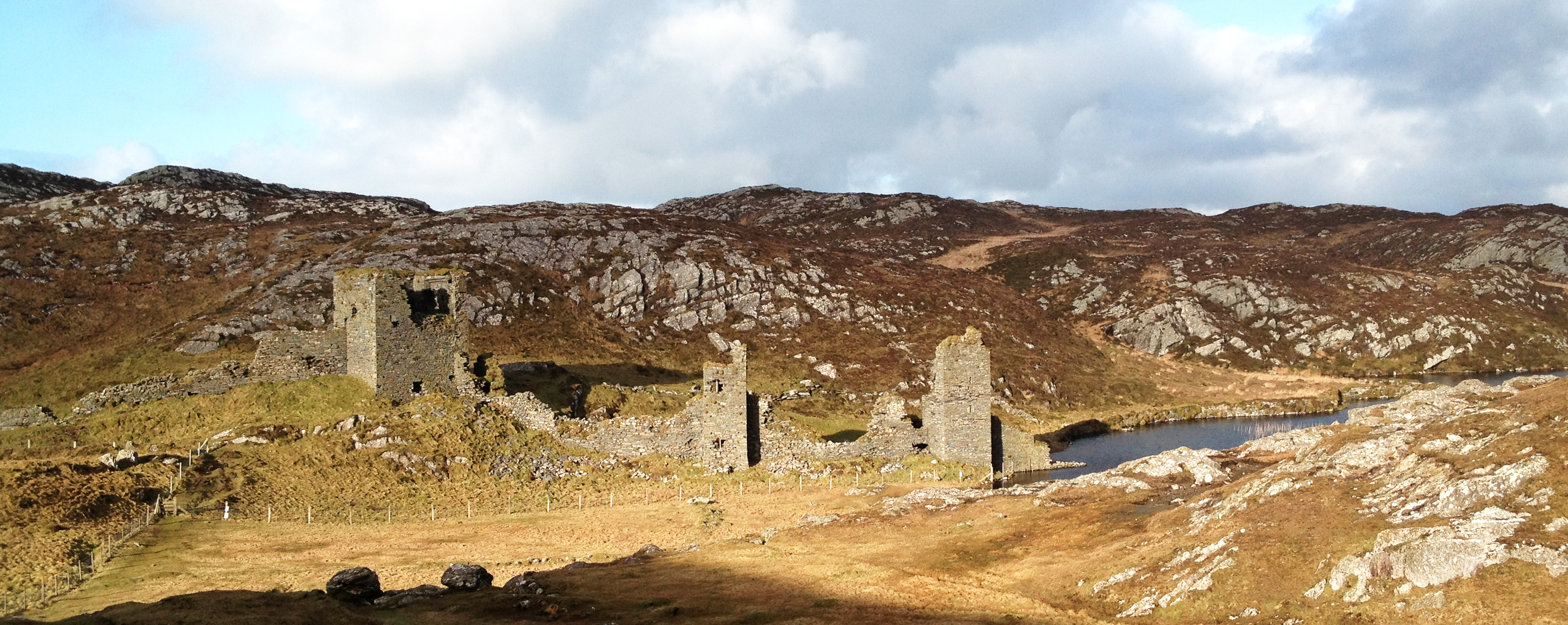
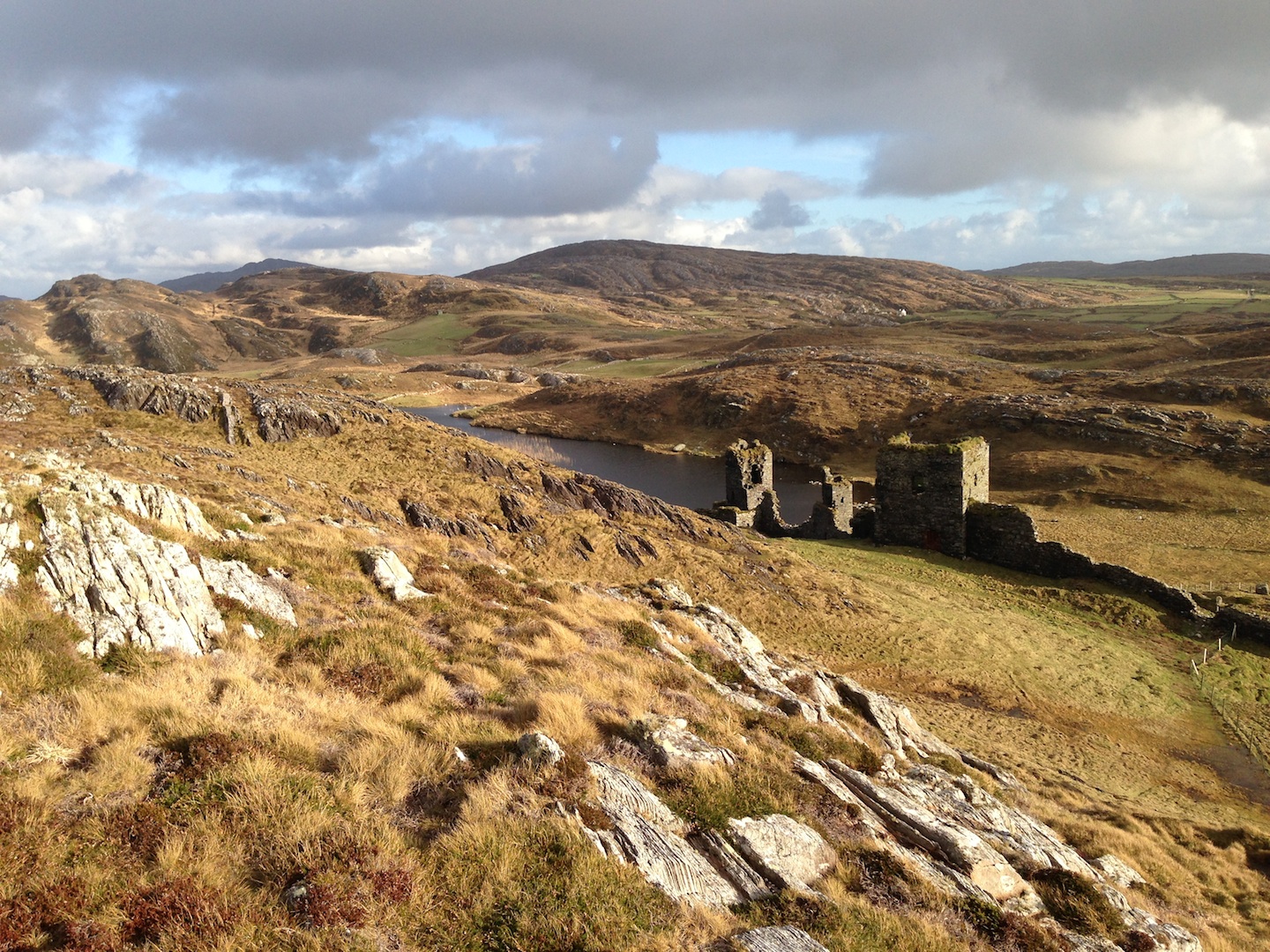
On a crystal clear day last week Finola and I went out to find the remotest of all the West Cork castles: Dunlough. This structure sits on a lonely promontory at the tip of the Mizen Peninsula – Ireland’s most south westerly point. We travelled as far as the snaking lane would take us, then headed on foot across the fields and past the farmhouses that were the end of the civilised world here. Eventually we were clambering over an isolated and untamed landscape of rock outcrops with the Atlantic roaring below us. Our first sighting of Dunlough as we pulled ourselves up to the top of a ridge and looked over was breathtakingly dramatic.

view

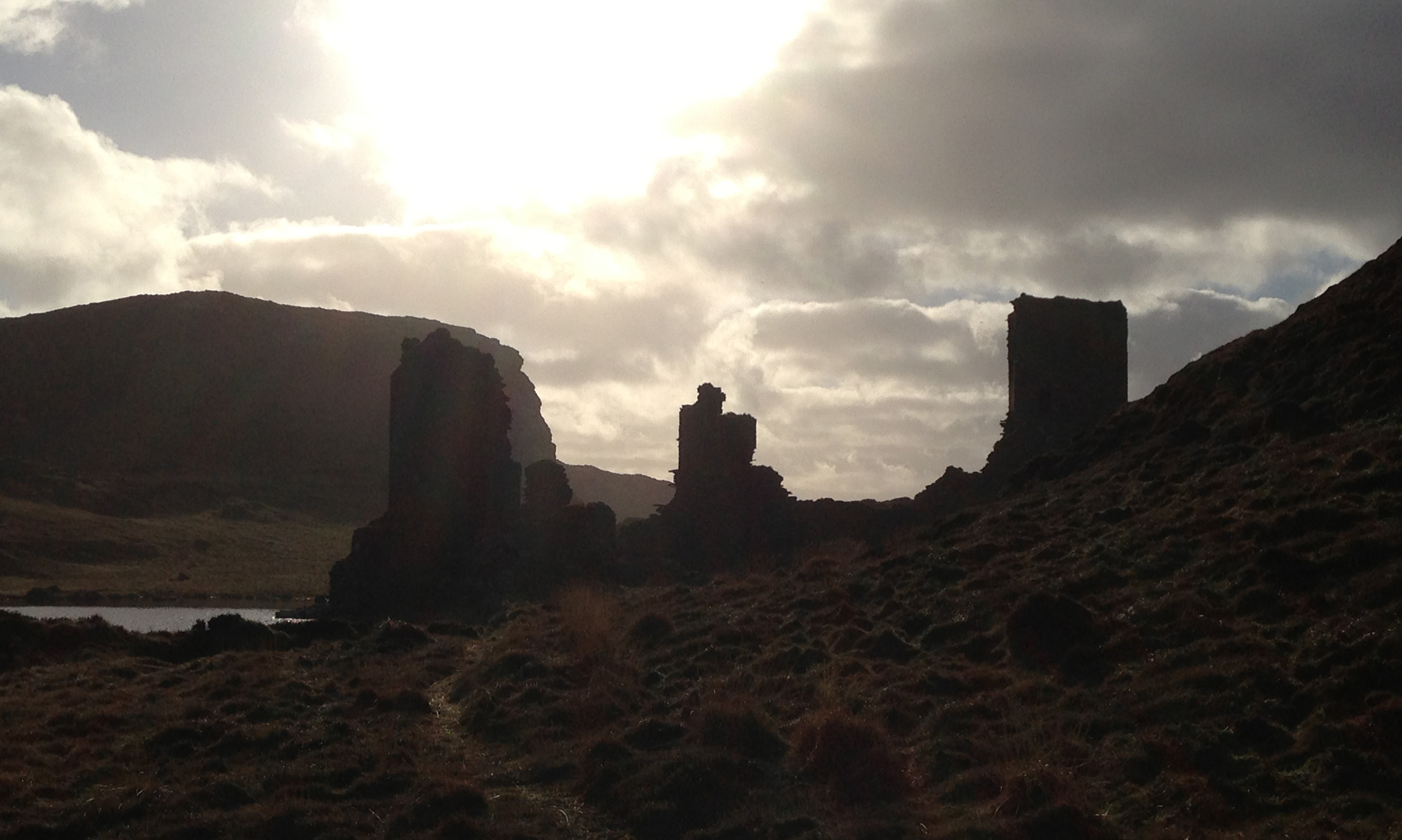
The promontory – in earlier times the site of an Iron Age fort – is known as ‘Three Castle Head’, because of the O’Mahony structure which was now presented to us: there are three square towers or keeps linked by enclosing walls. The castle was founded in 1207 and is  built entirely of dry stone masonry. It is remarkable how much of this still stands after 800 years of facing up to the prevailing weather. There is also an artificial freshwater lake beside the walls, probably established at the same time as the buildings, to provide drinking water for the inhabitants and their cattle and – perhaps – a stock of freshwater fish.

3cast

In its time the castle must have supported and sheltered a sizeable population. Today – and for us – it seems one of the most beautiful and lonely places on earth. We walked in awe around the ruins and watched a large flock of Black Backed Gulls foraging on the lake. Perhaps they are the spirits of those who lived their lives out in that extraordinary wilderness?

3castlehead

Remembering

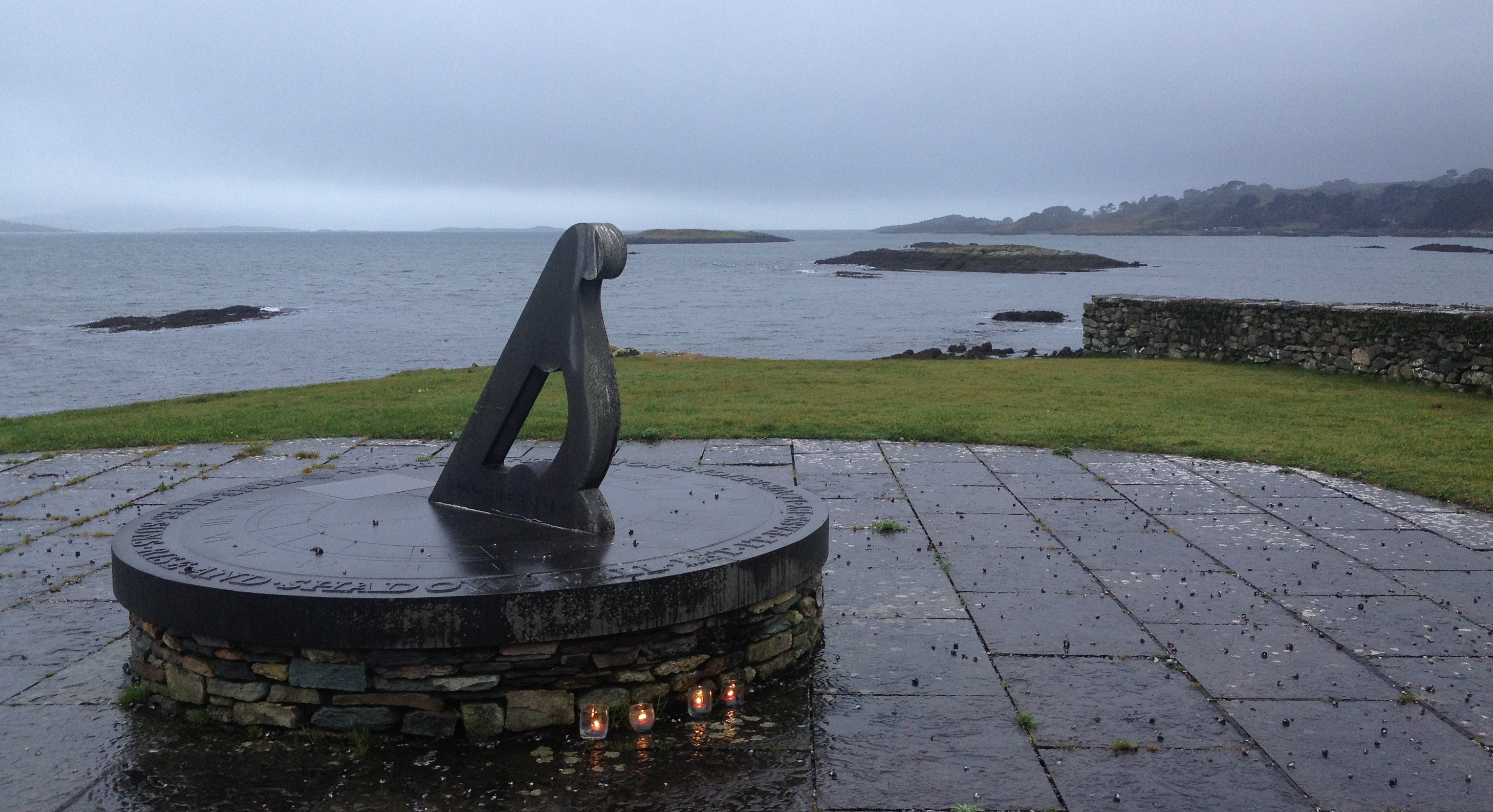
Air India Disaster Memorial site, Ahakista, Sheep's Head, West Cork

Air India Disaster Memorial site, Ahakista, Sheep’s Head, West Cork

On the 23rd of June, 1985, Air India flight 182, en route from Montreal to New Delhi, exploded in mid-air off the coast of West Cork. All souls on board were lost – 329 children, women and men, of whom 268 were Canadians. The bomb originated in Vancouver and was the work of Sikh extremists. The perpetrators have never been convicted, leaving the families of the victims, almost 30 years later, with no sense of justice and closure.

L1080257The Air India bombing is very much a living story still in Canada and especially in Vancouver, where the chief suspects live and where the trials of those suspects were held – trials that went horribly awry and which resulted in acquittals. I have seen heartbreaking interviews with family members – people who lost parents, brothers, sisters, children – speaking of their long search for the truth and their despair at the incompetence of the prosecution process. In one moving piece, a son said (I paraphrase from memory), “We have been let down by the government of Canada. We have been let down by the government of India. The only people who have never let us down are the people of West Cork in Ireland.”

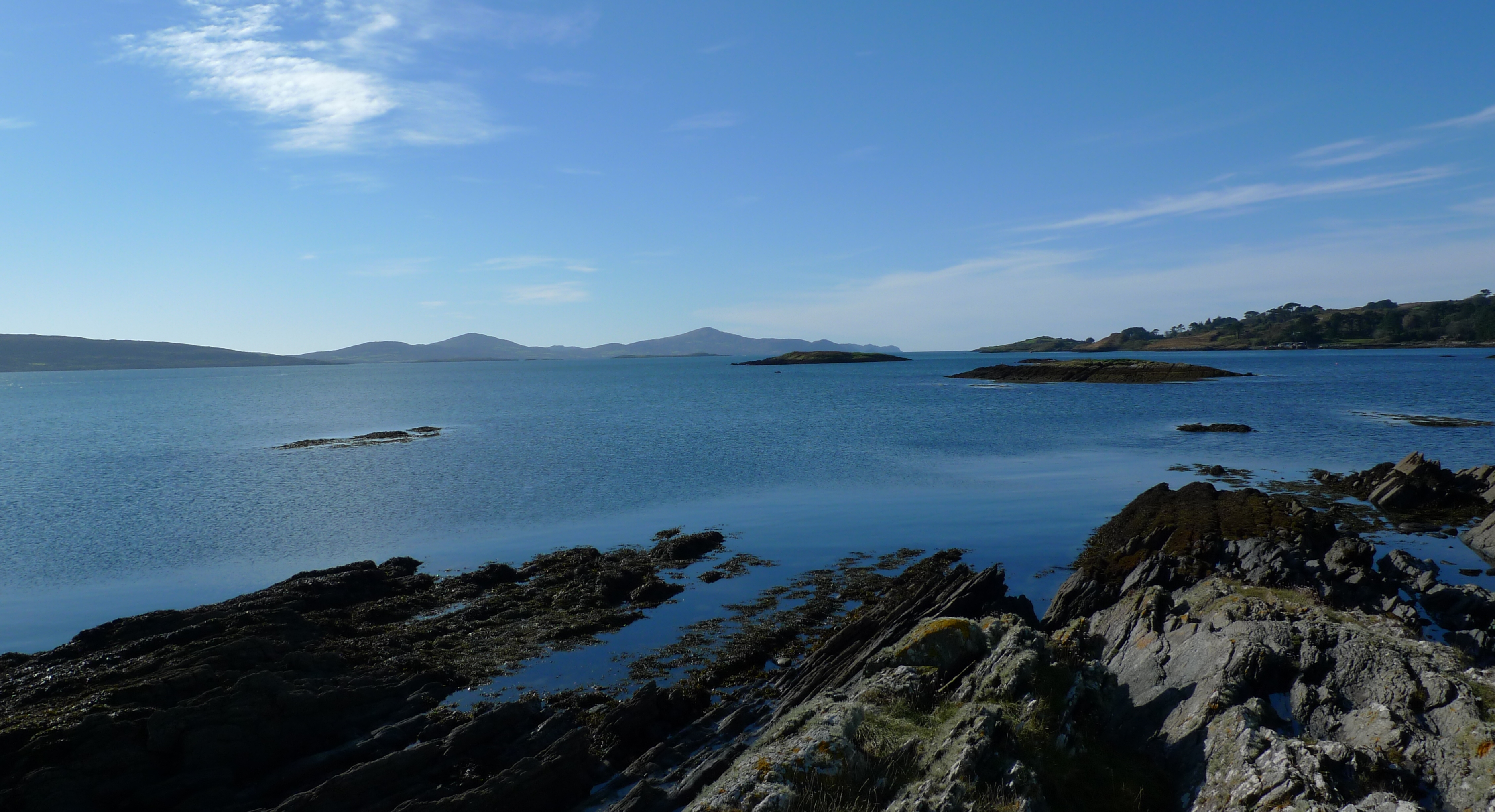
Many West Cork people were involved in recovering the bodies and collecting what washed up on shore. They were intensely affected by the plight of the families and by their wish for a memorial – a place of focus where they could gather to remember their dear ones. The people of Cork purchased a site at Ahakista, on the rugged and remote Sheep’s Head Peninsula, and built that memorial. Every year on June 23rd they host a remembrance ceremony. It is a place of unearthly beauty and the memorial is heart-rending in its design. Oriented towards the wild coast, a large sundial marks the moment when the plane went down. Around the dial are these words:

L1080258Time flies

Suns rise

And shadows fall

Let it pass by

Love reigns forever

Over all.

Today, on a grey and mizzling day, Robert and I travelled here to remember those we have loved and lost, ensuring that Ahakista will remain for us an enduring place of peace and memory.

2013-01-06 15.15.13