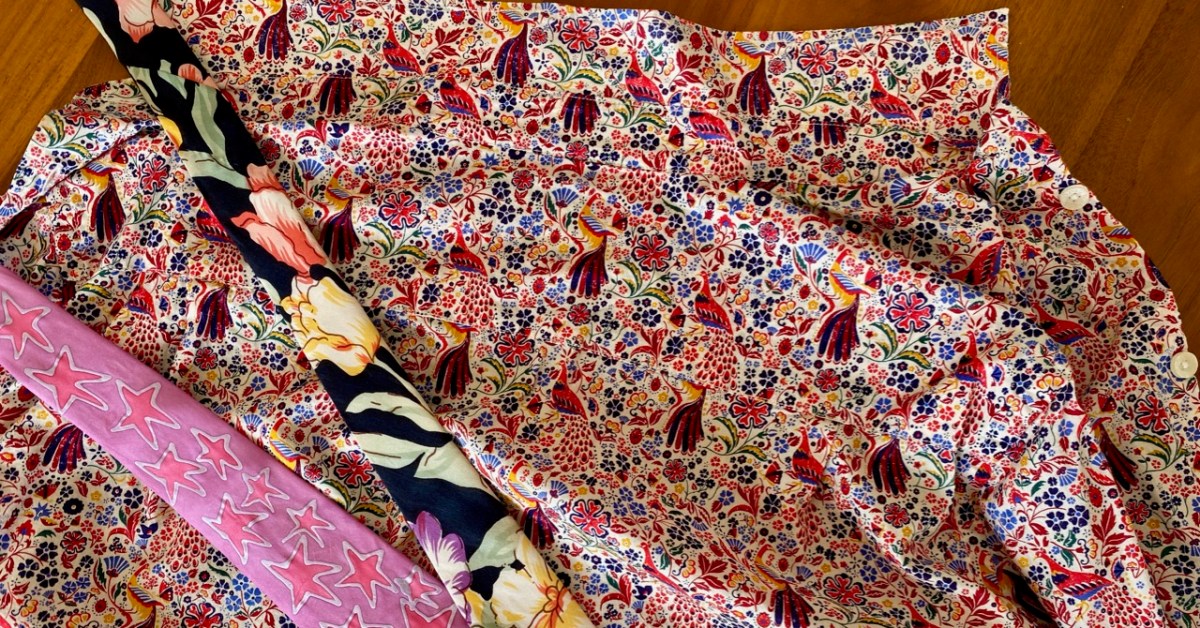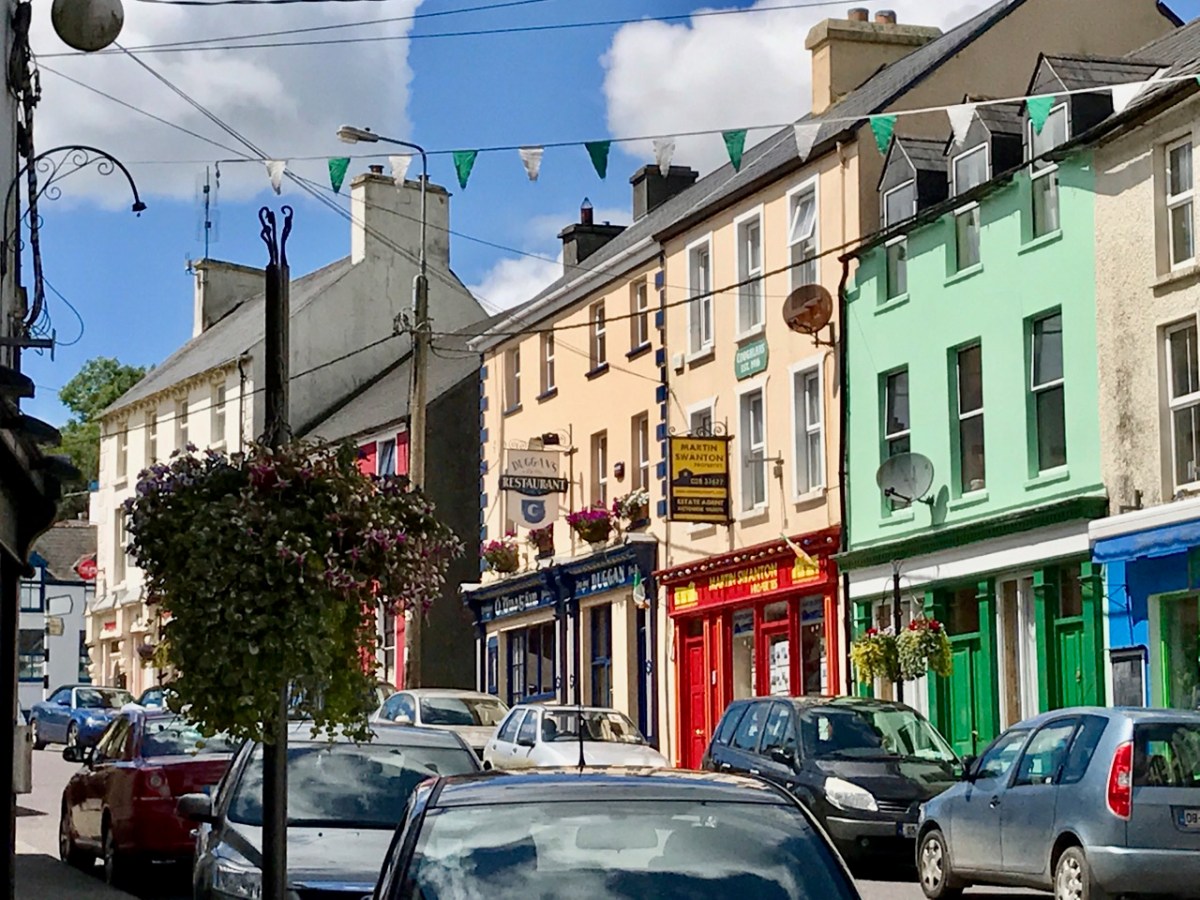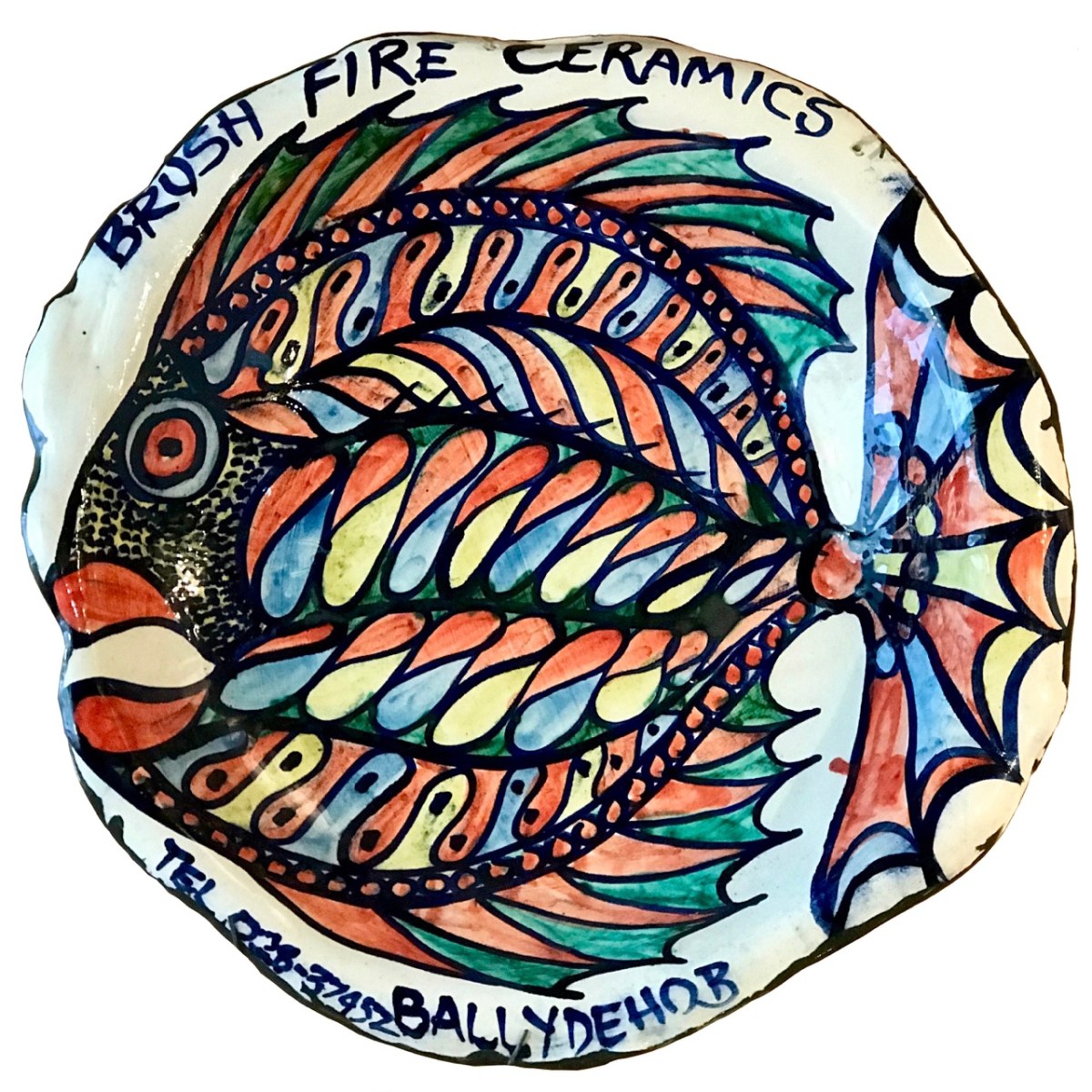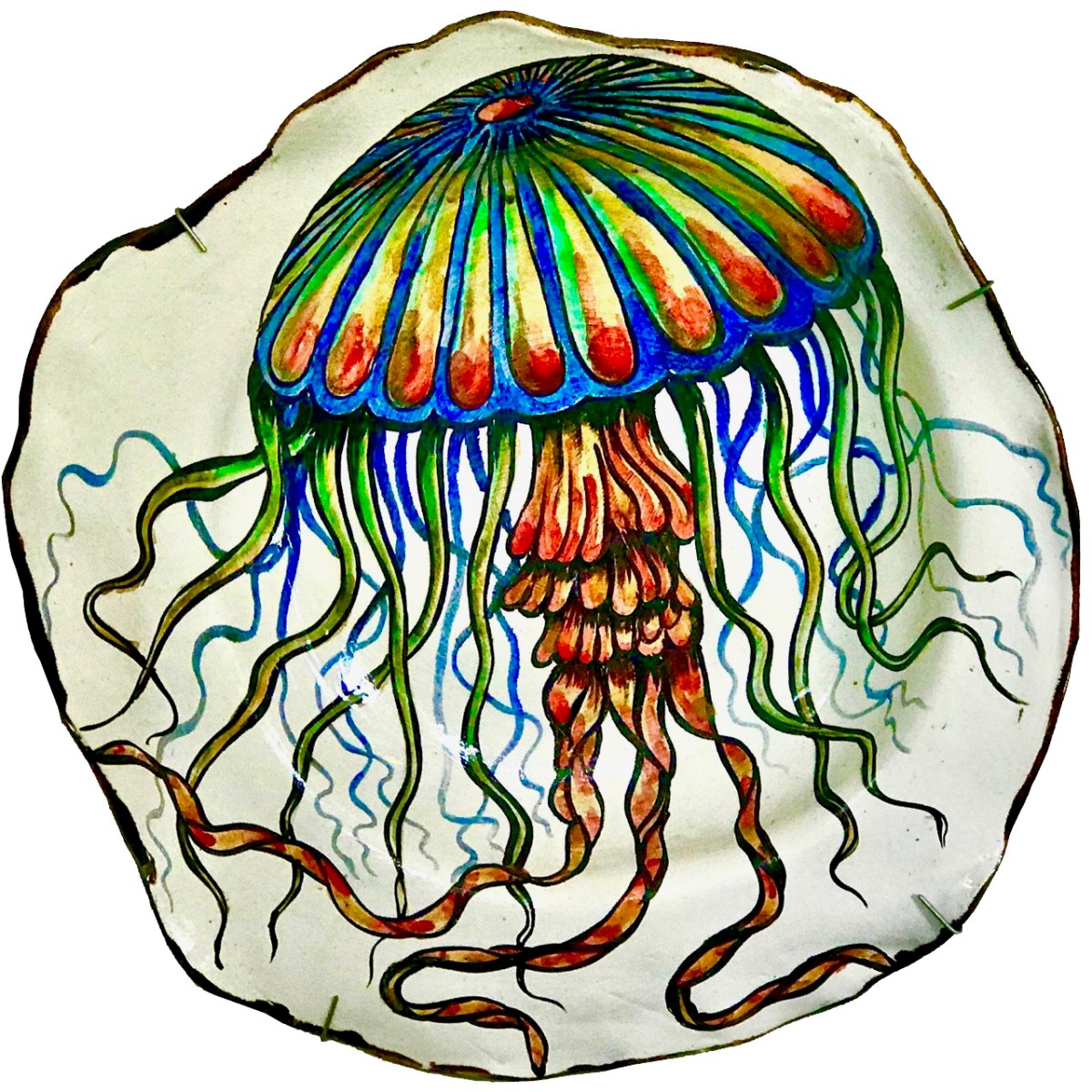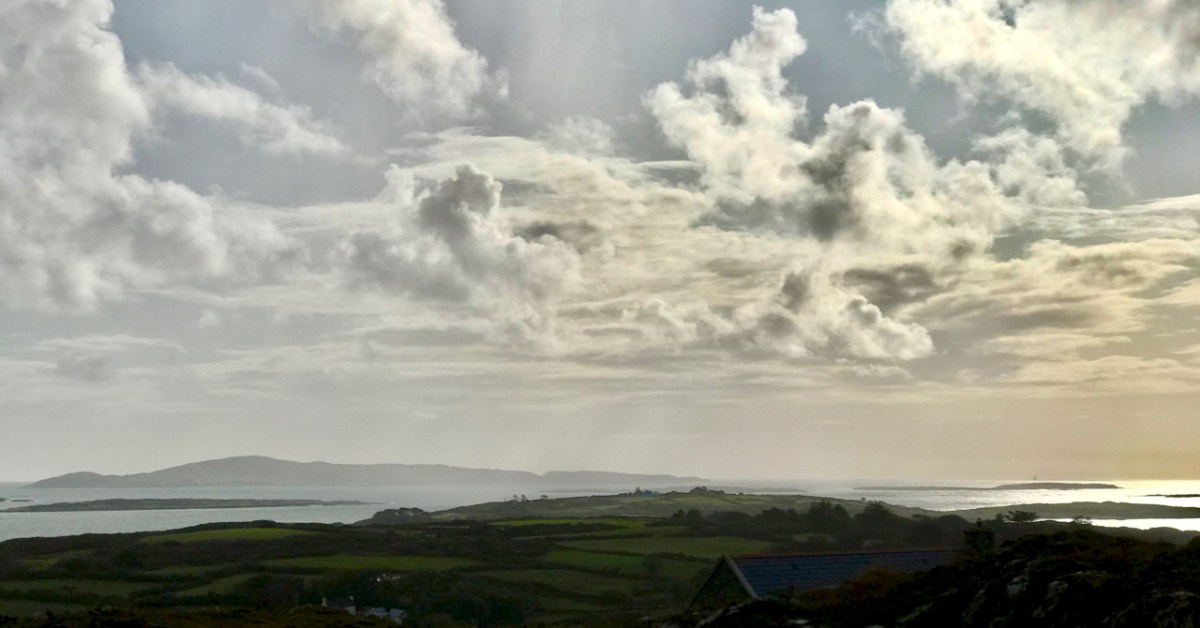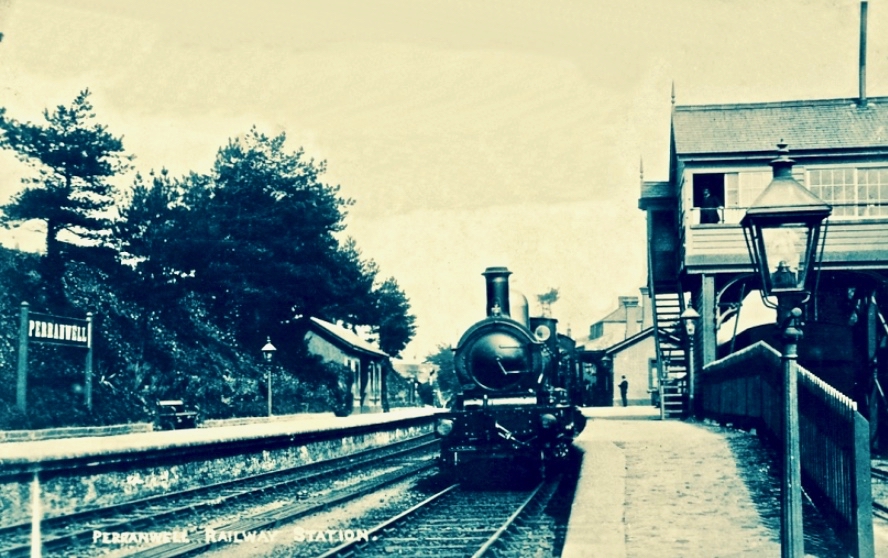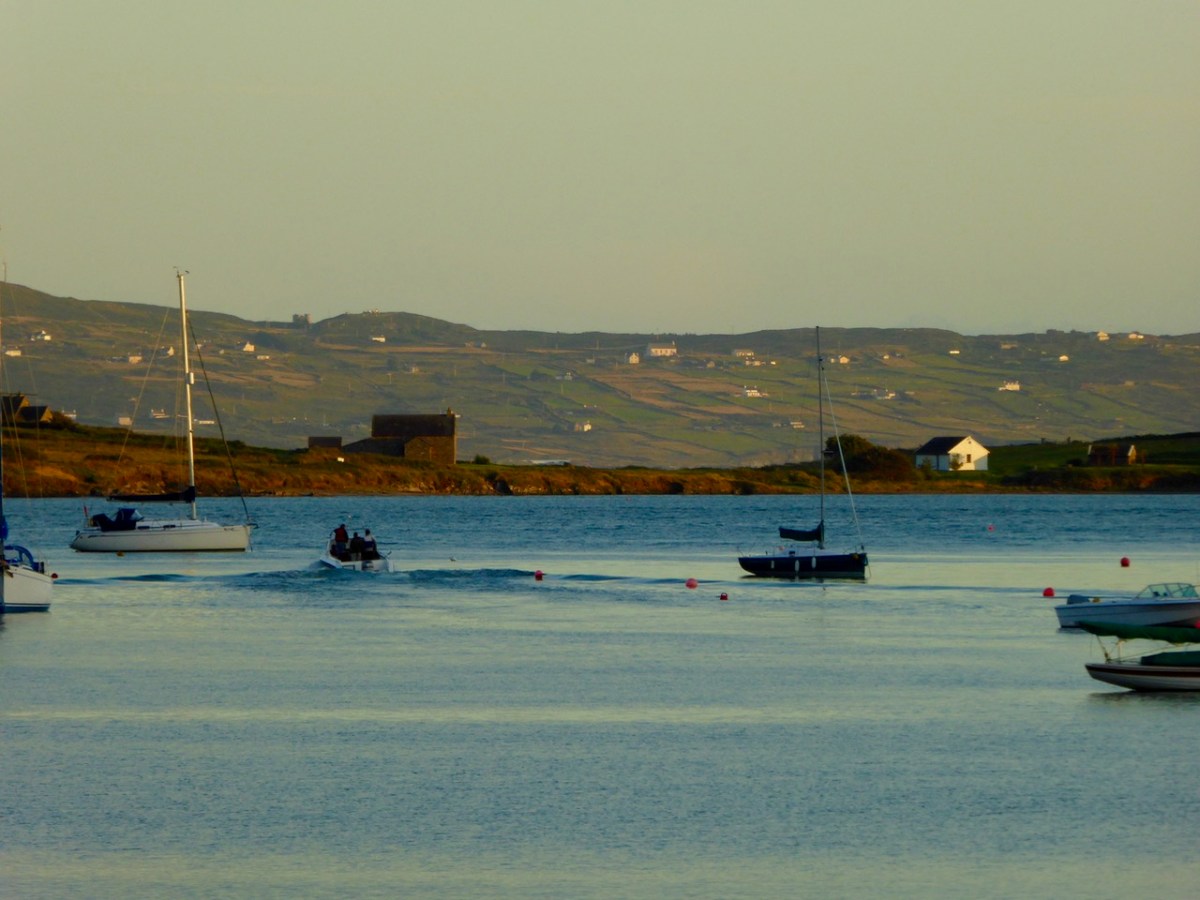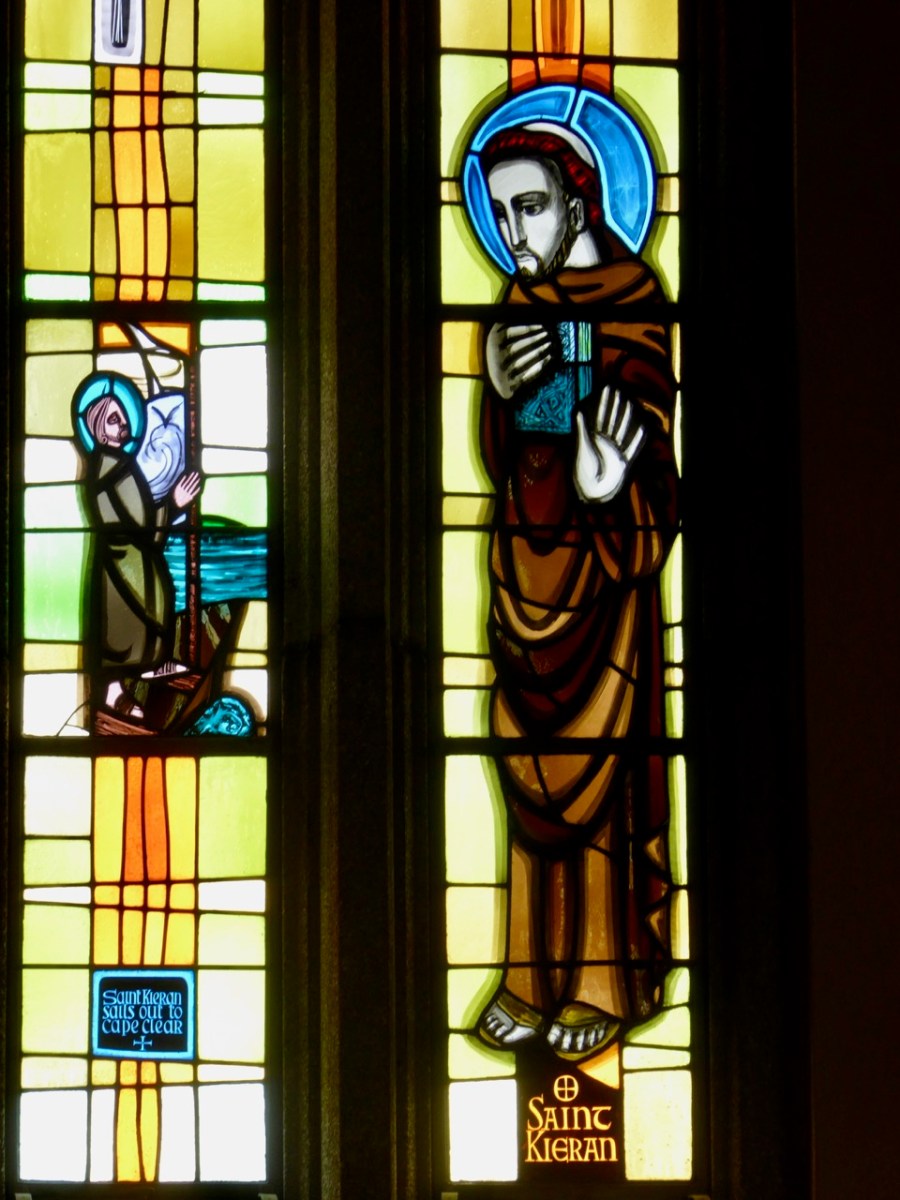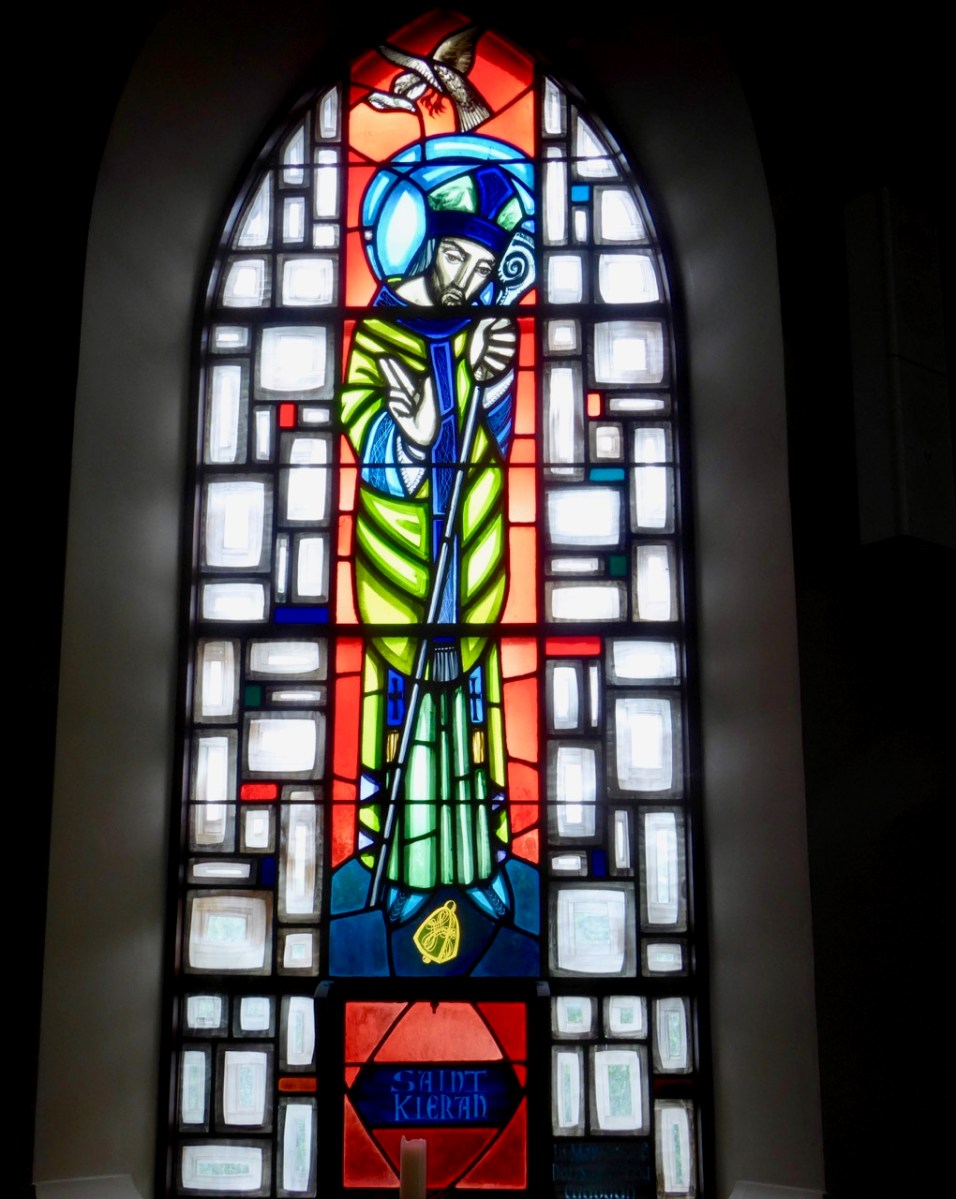
We were saddened to hear recently of the death of Leda May. Hers was a familiar face in Ballydehob, where she lived for many decades. Her little pottery studio on The Parade has always been a landmark in the village:
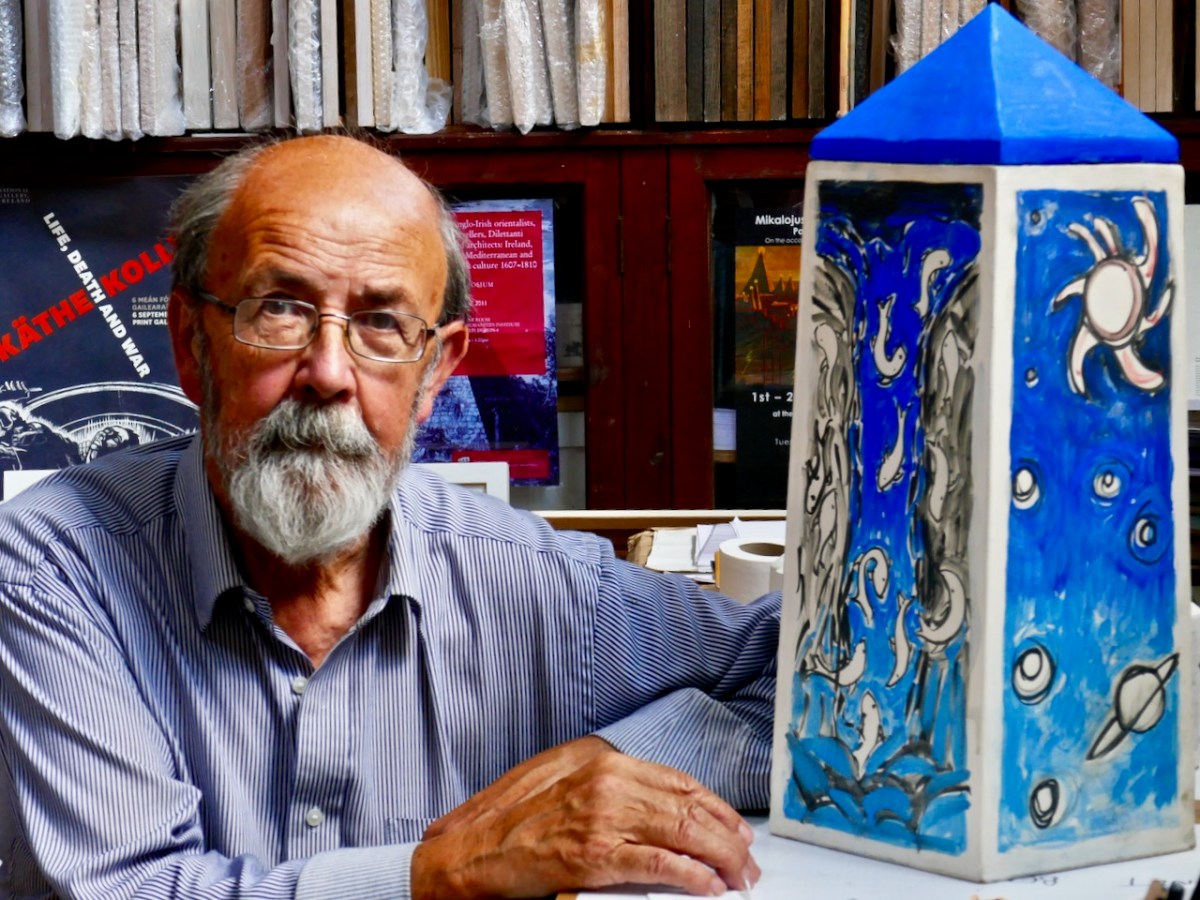
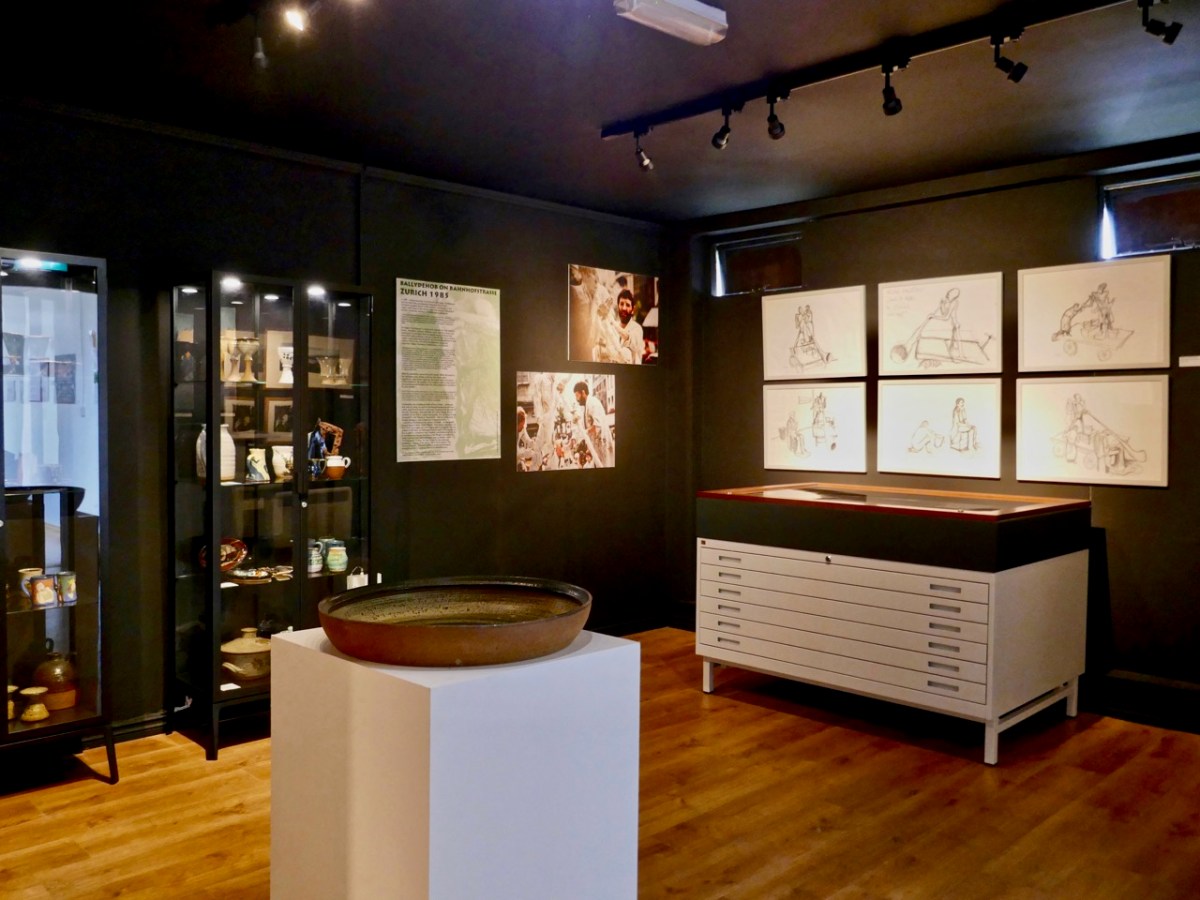
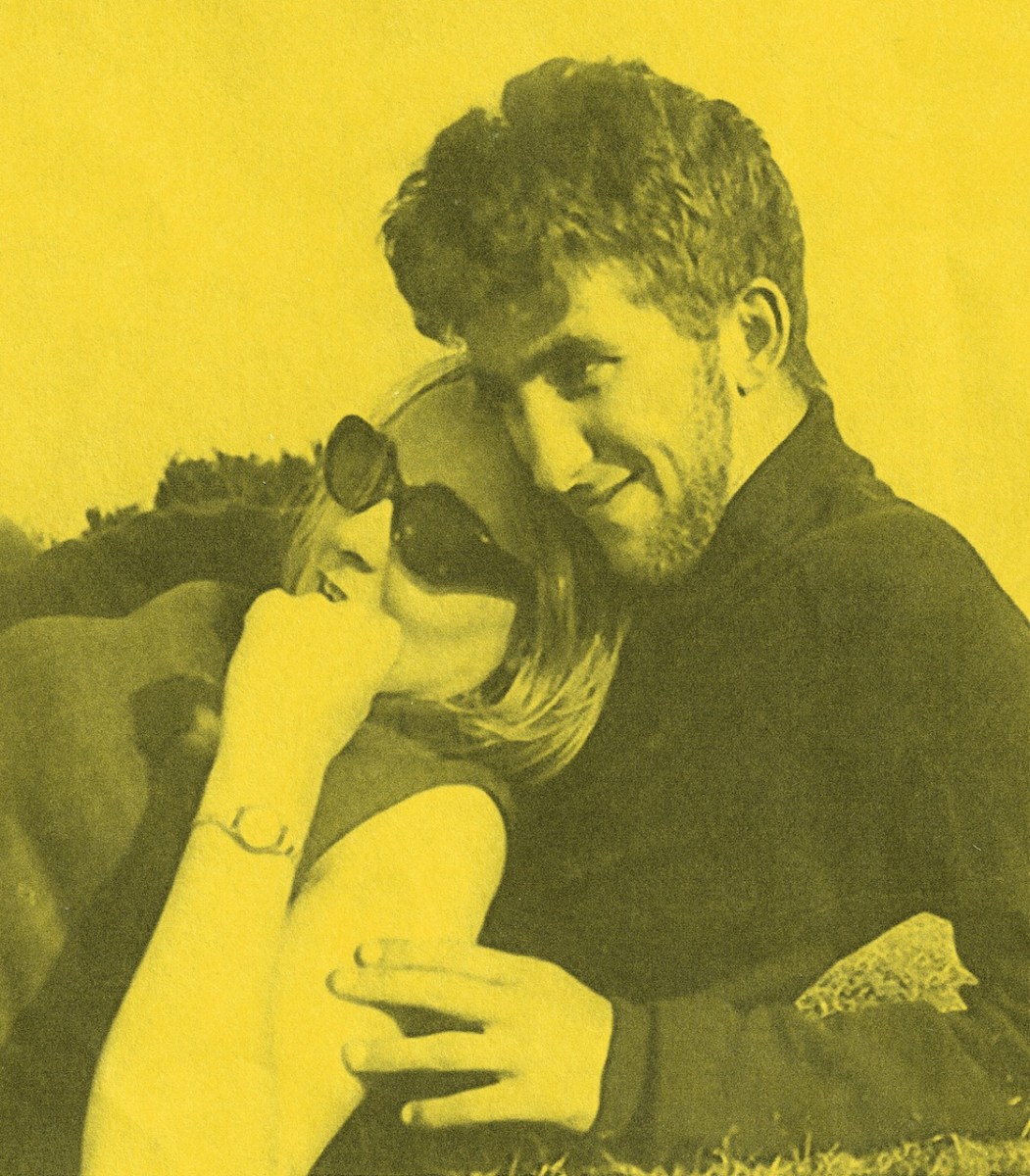
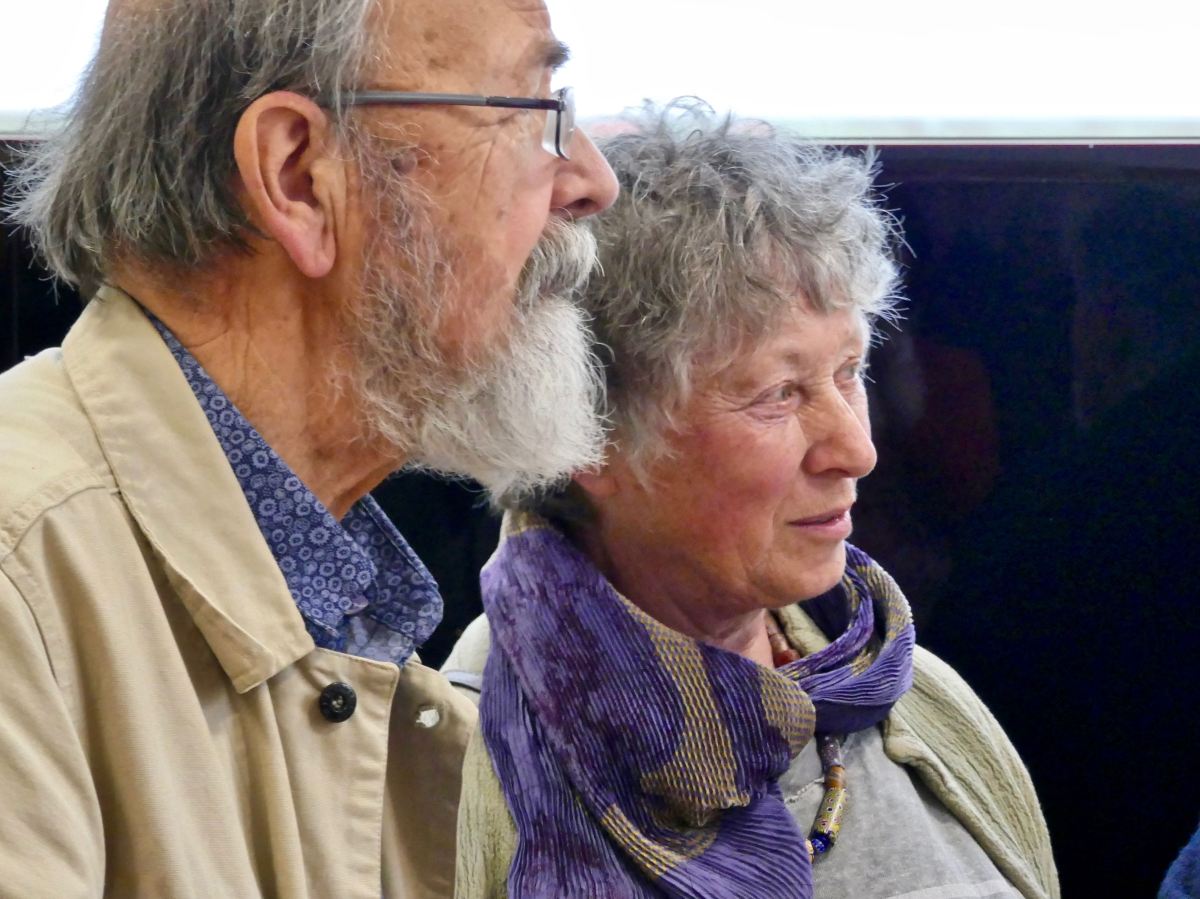
Above – Brian Lalor and Leda May in the Ballydehob Arts Museum, 2019. Leda continued to work until her recent illness, and her blue porcelain ware is familiar to many of us in and around the community.
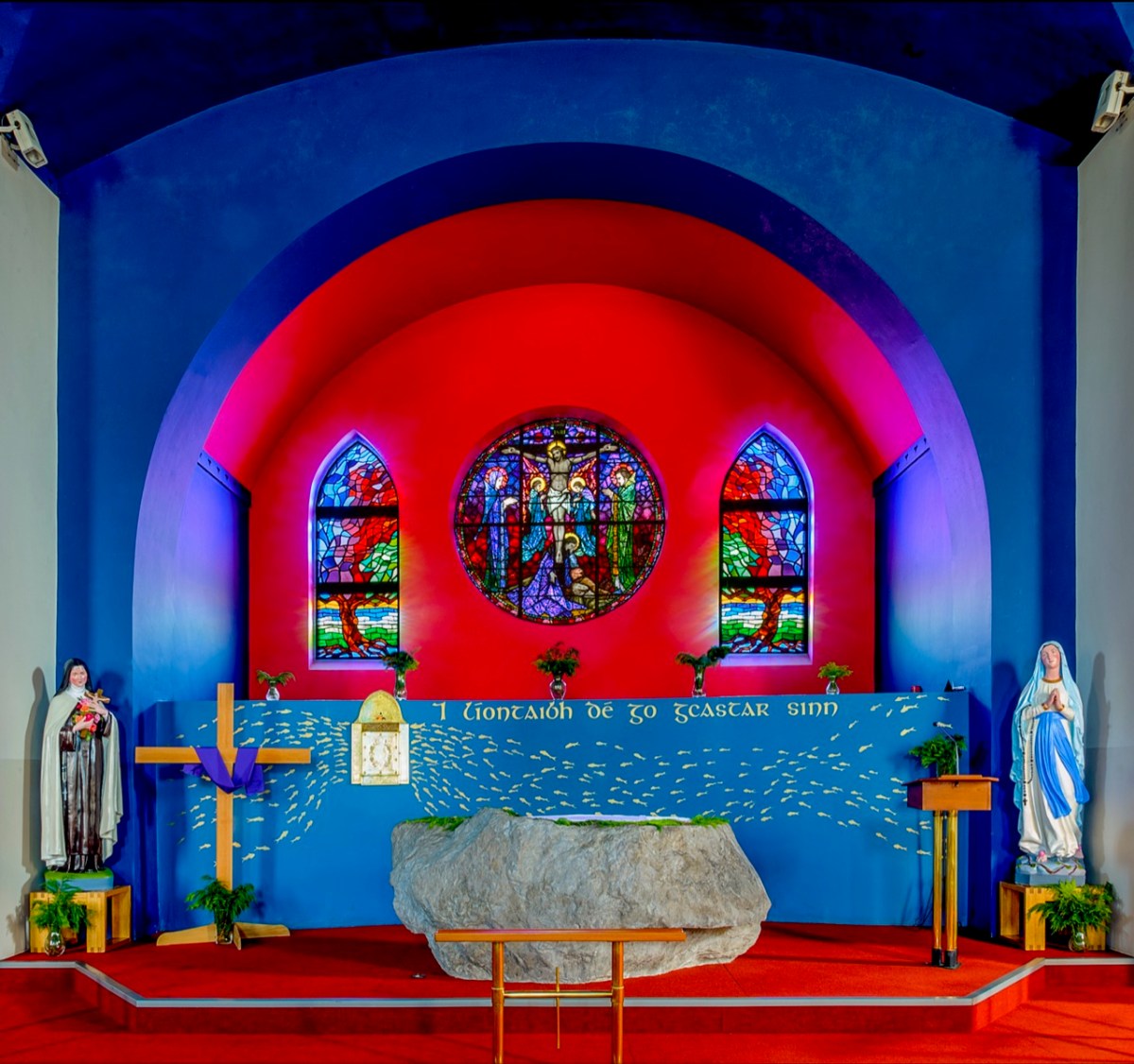
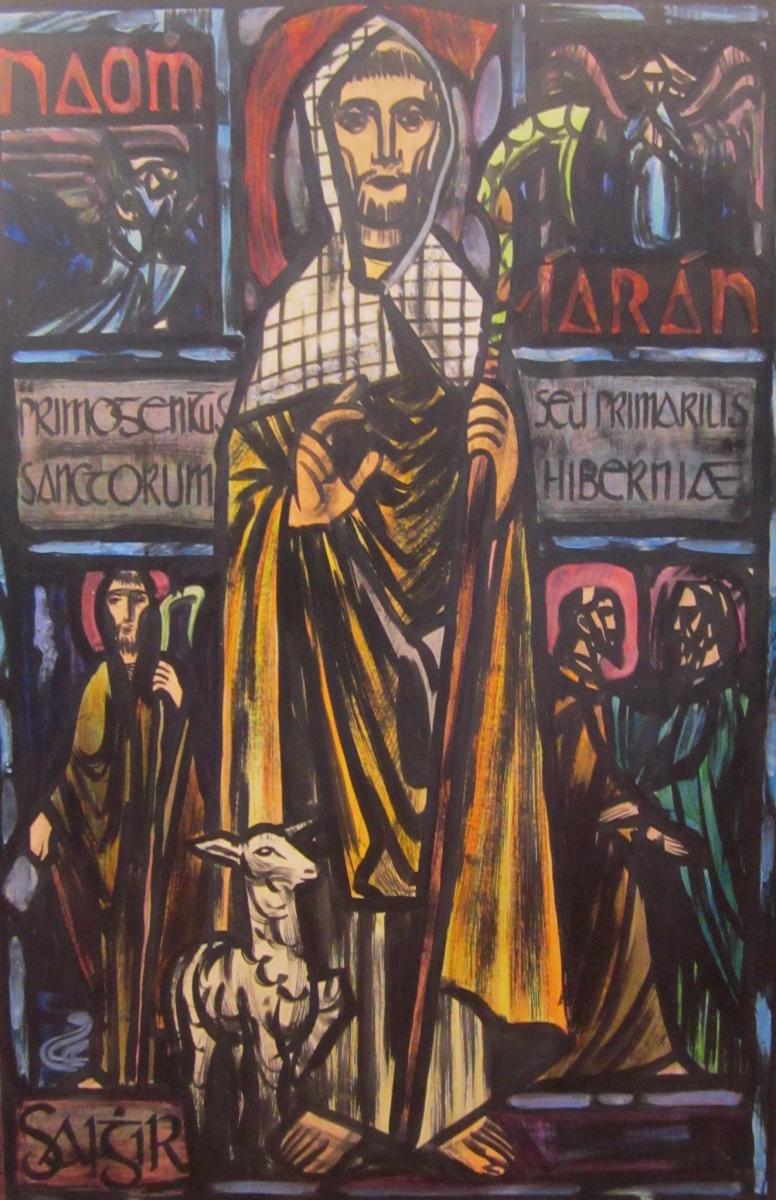
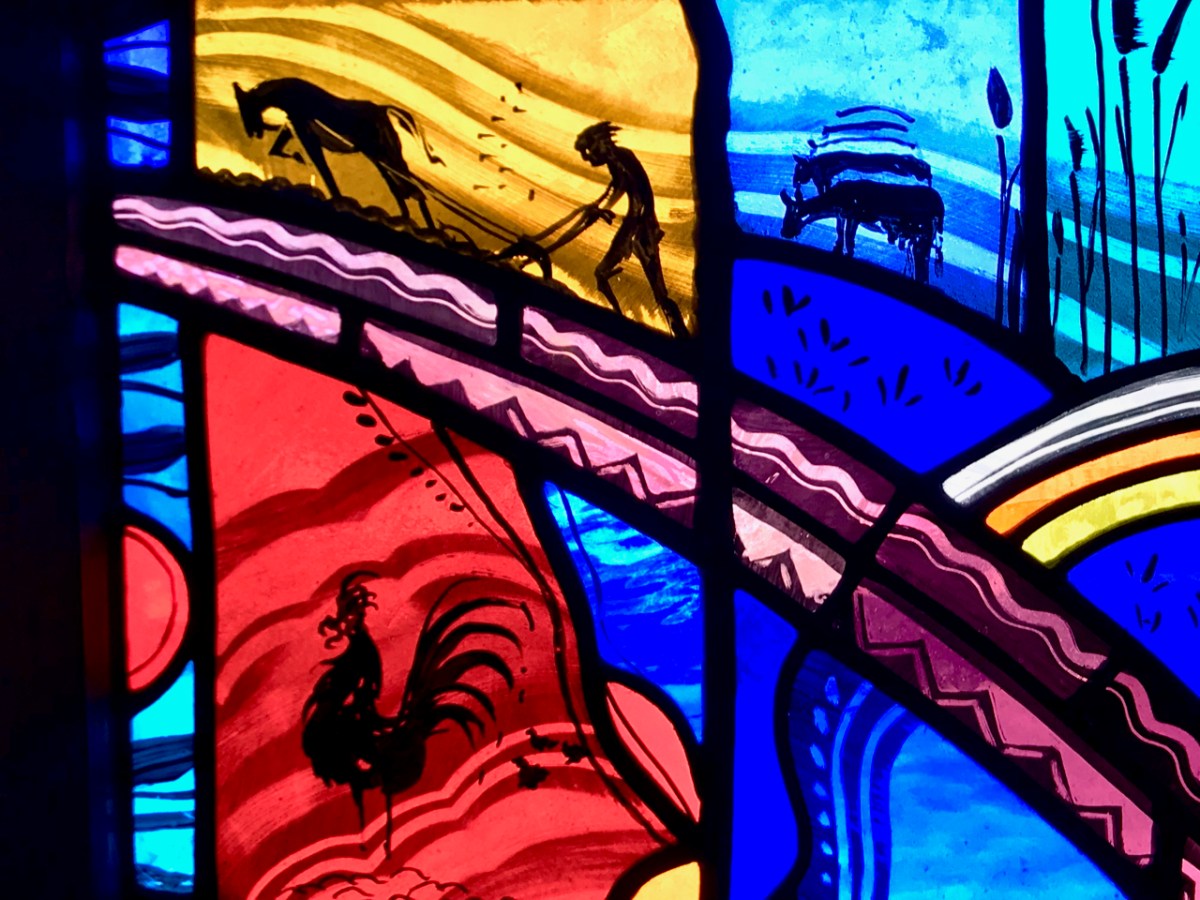
A documentary about Leda – ‘The Elephant & The Dandelion’, directed by Martin Daley, was made in 2015 – and is available to view here. Leda May was born in London, grew up in Suffolk, and studied ceramics at Hornsea College of Art in the 1960s. She was also drawn to the medium of stained glass which gave her the opportunity to create with colour. Here are two of her glass pieces (reproduced from the documentary film with thanks to the crew):
Leda was at first attracted to the culture and landscapes of India, but in due course Leda and her husband Bob set out in a converted ambulance ‘to visit all the potters in Ireland’, and arrived in West Cork in the late 60s, meeting Christa Reichel at Gurteenakilla. Christa encouraged them to set up their own pottery behind the Flower House: this was known as Luba Studios.
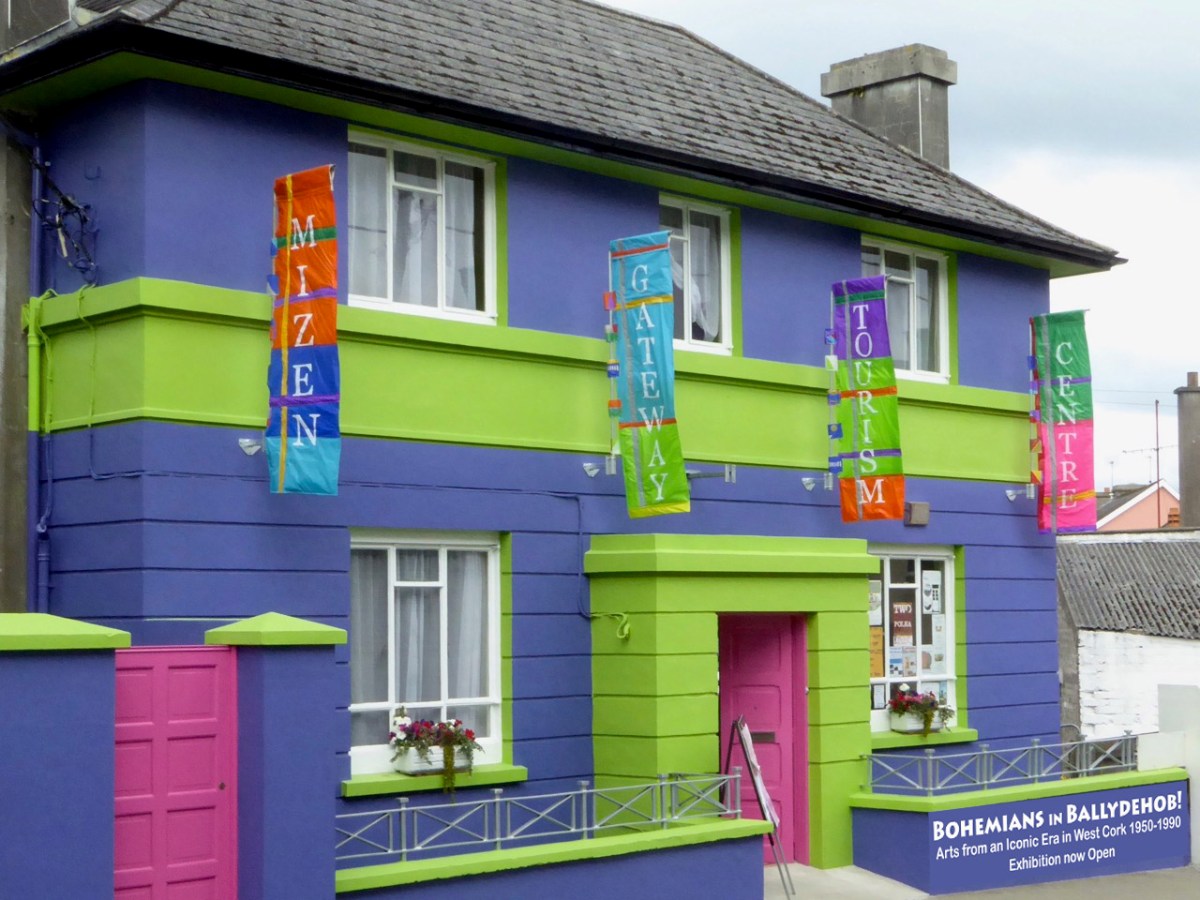
When the Ballydehob Arts Museum opened in 2018, Leda was among the West Cork artists celebrated, and she was always a supporter of the Museum, which has put on several exhibitions to date. The Museum is sited within Bank House, a colourful building owned and run by the community.
This dresser in a household within our village displays several examples of Leda’s work – and other works by Ballydehob’s creative community of artists:
We wish Leda farewell, knowing she has left behind her a legacy of original work which will always be appreciated. But she will principally be remembered as a gentle spirit and talented artist within her community.
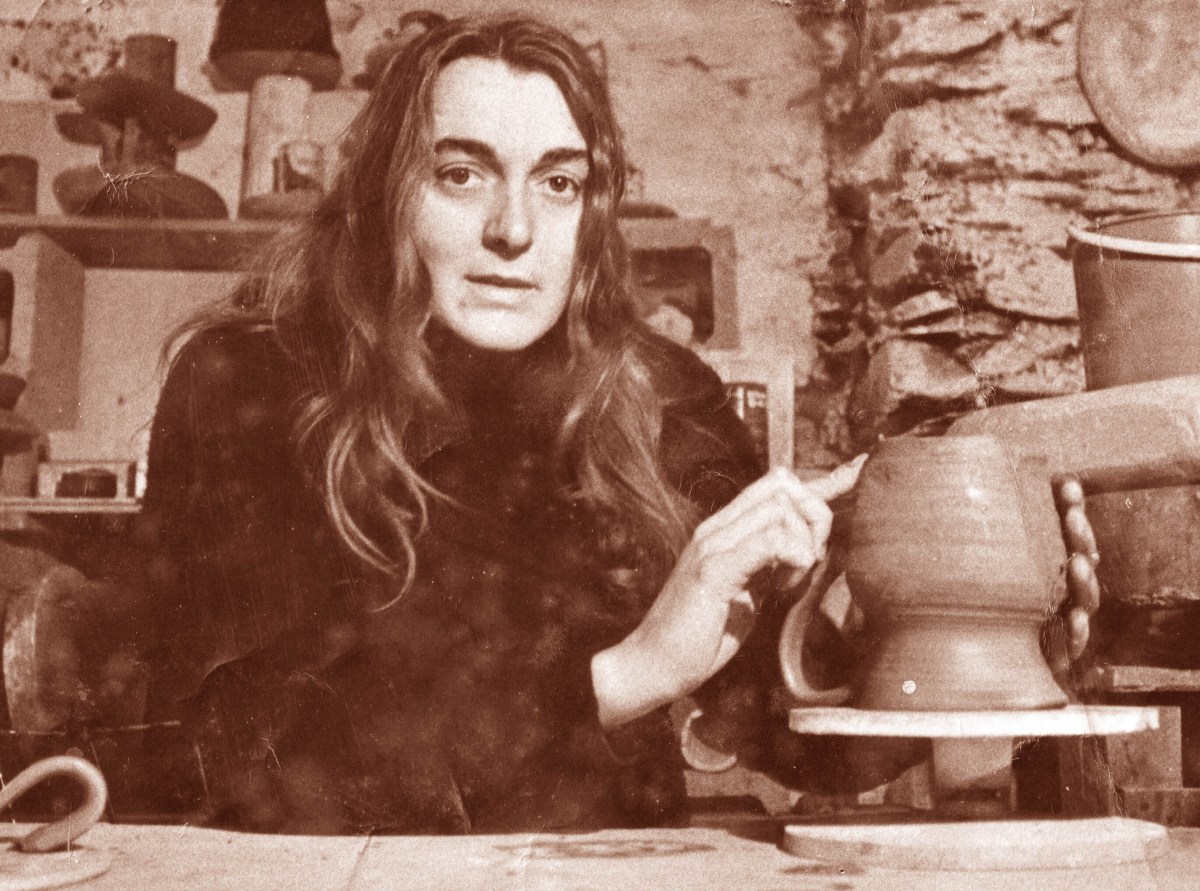
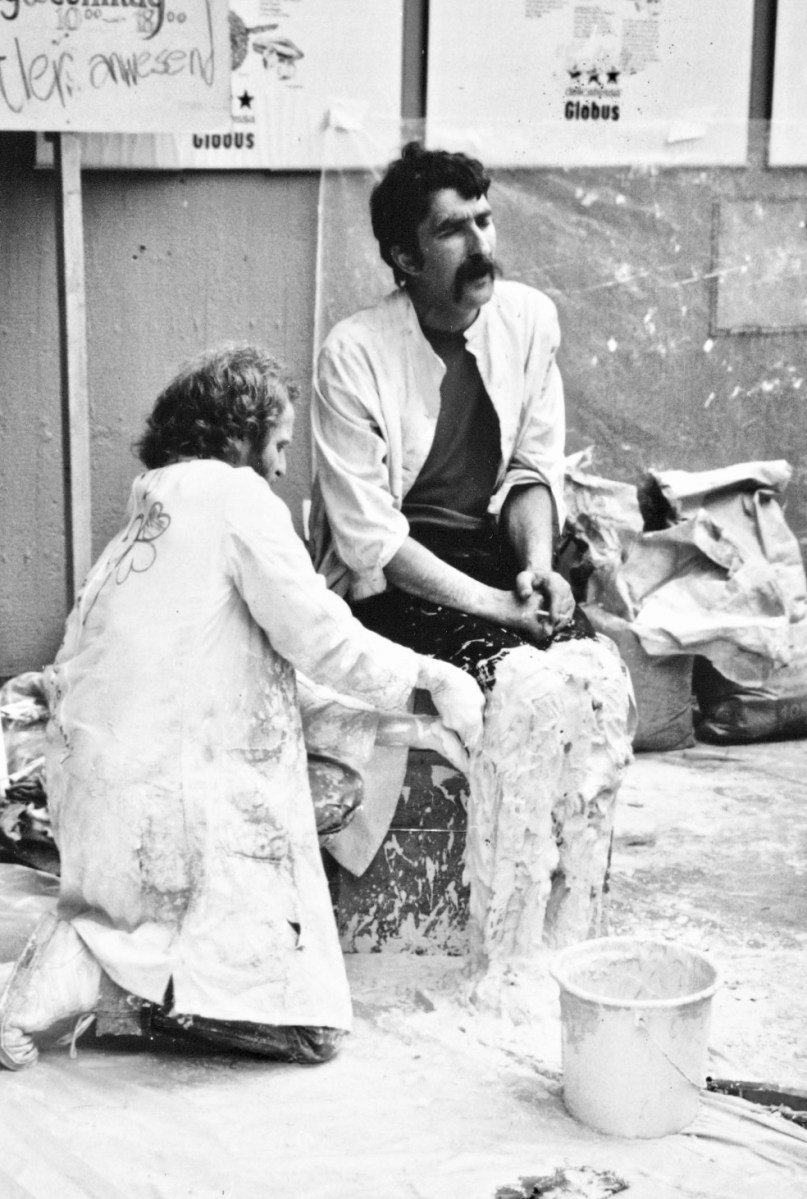
Leda May at her wheel in Ballydehob in 1980. A retrospective of Leda’s work is currently being prepared and will be shown this year in the Blue House Gallery, Schull between Friday 28 April and Wednesday 17 May.
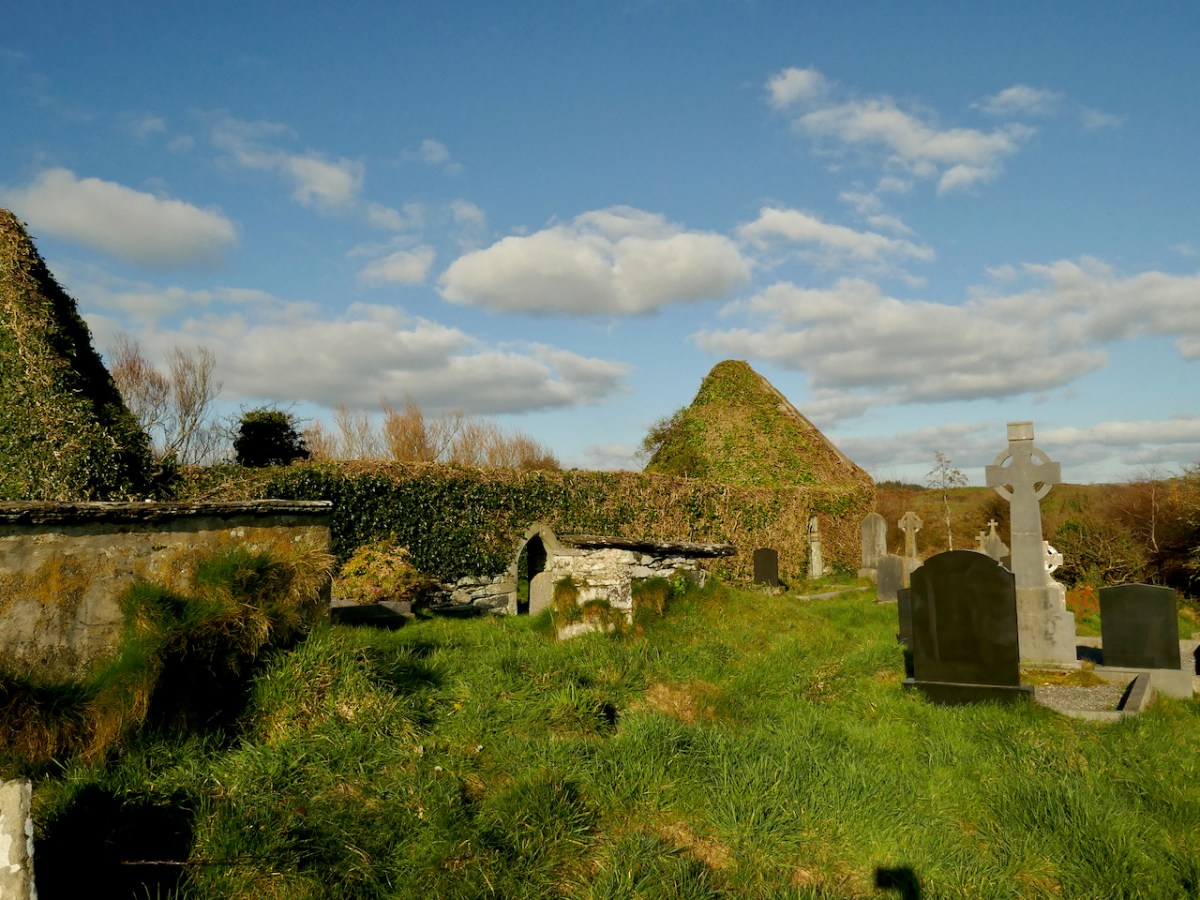
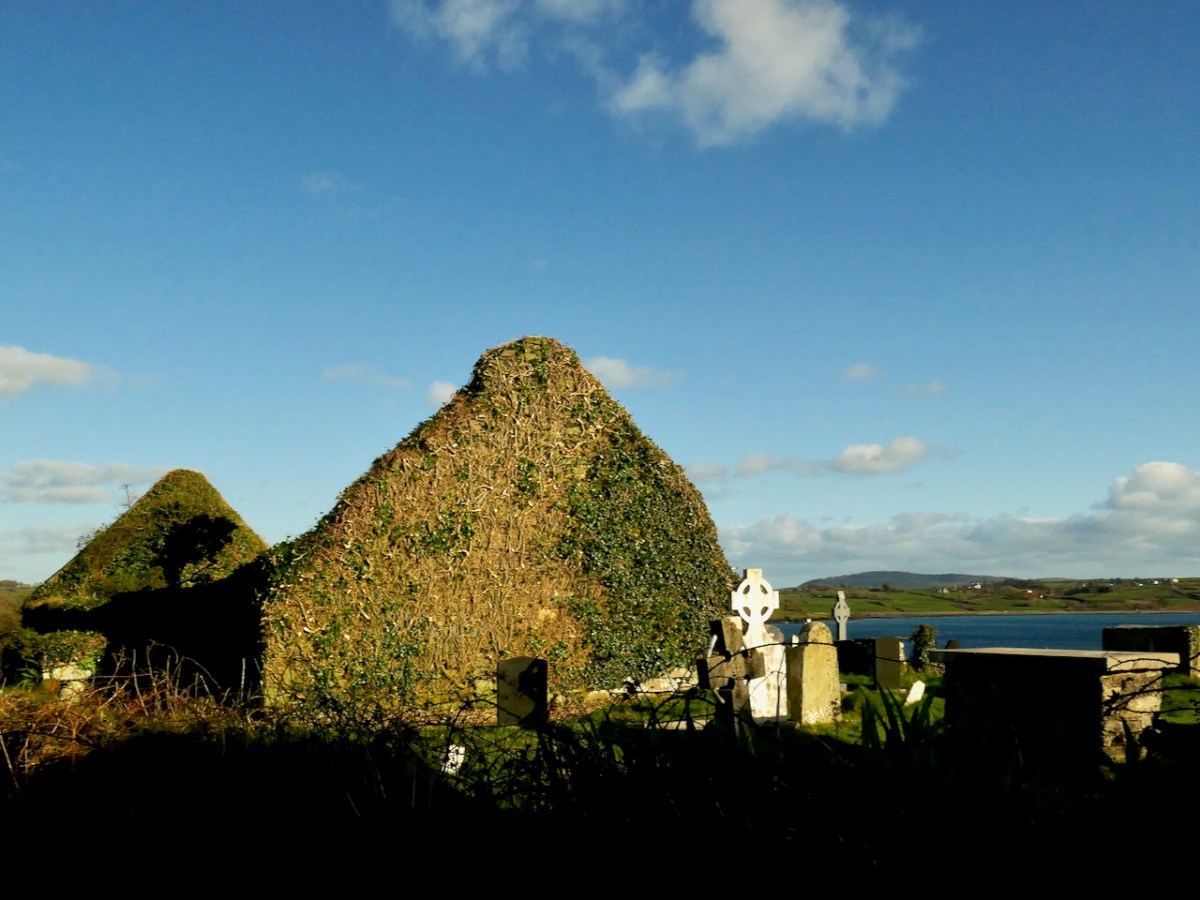
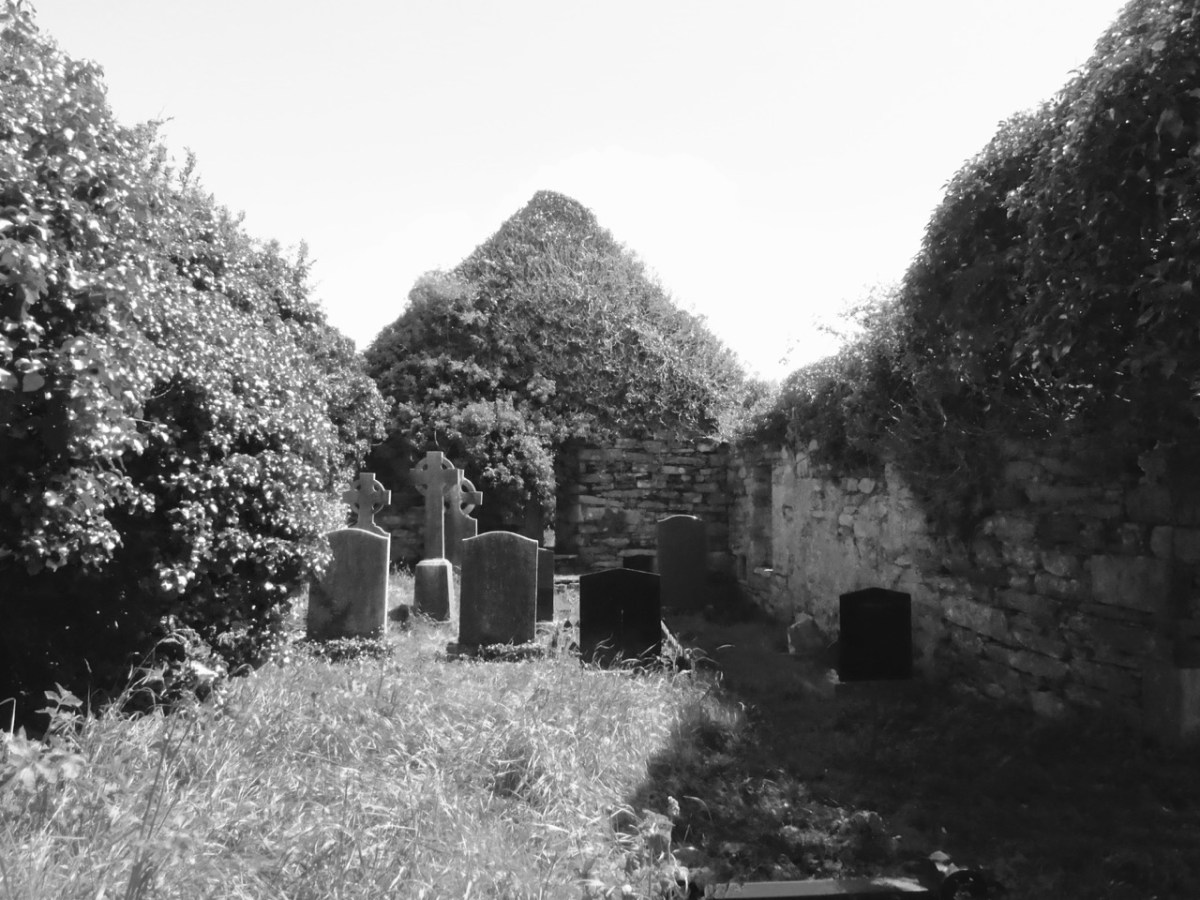
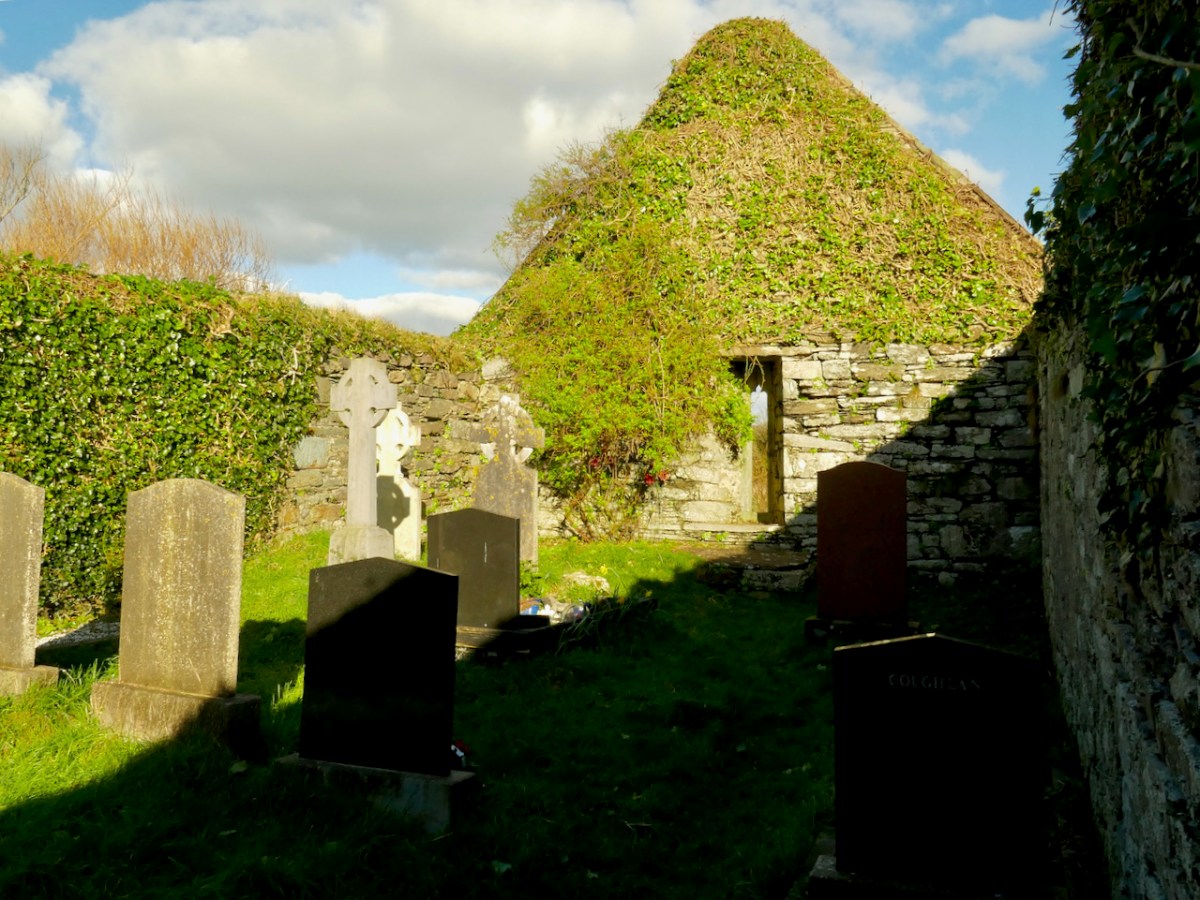
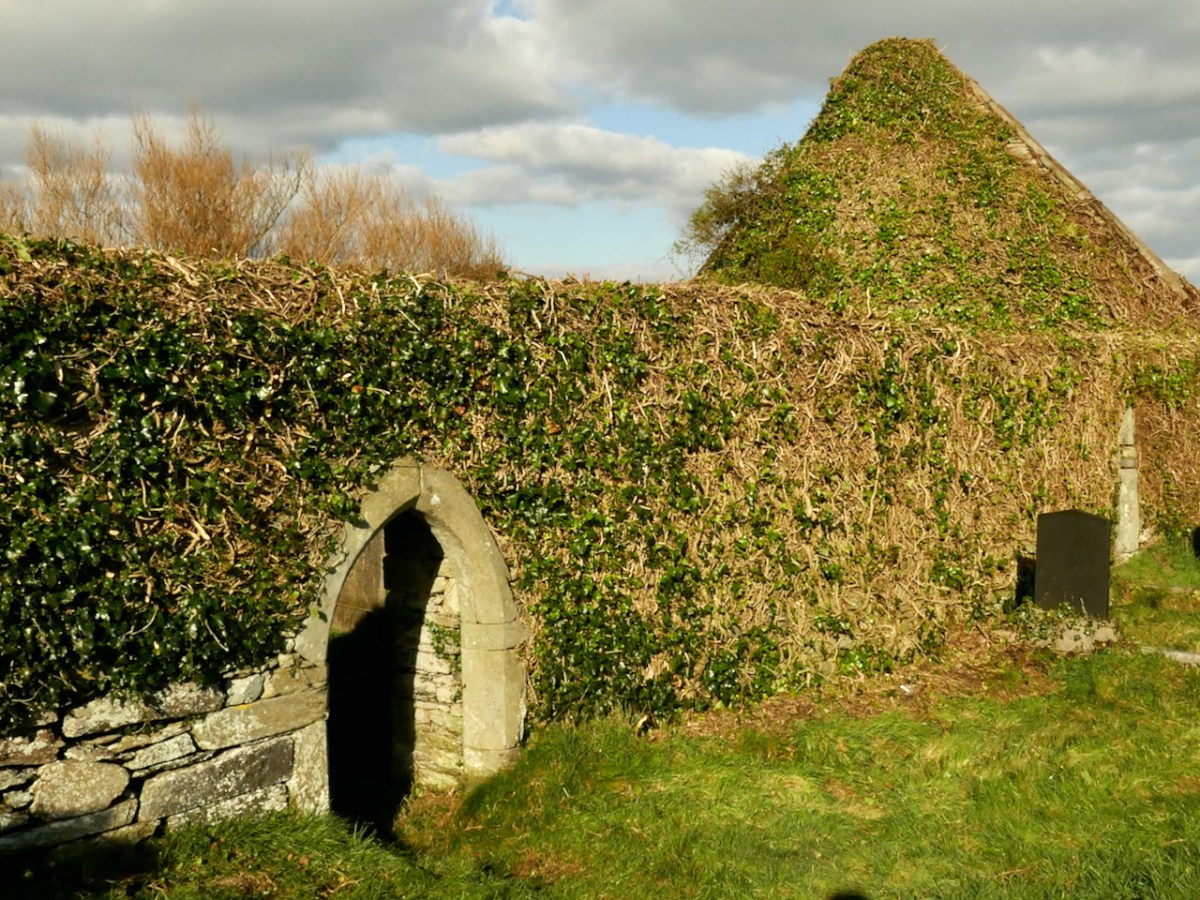
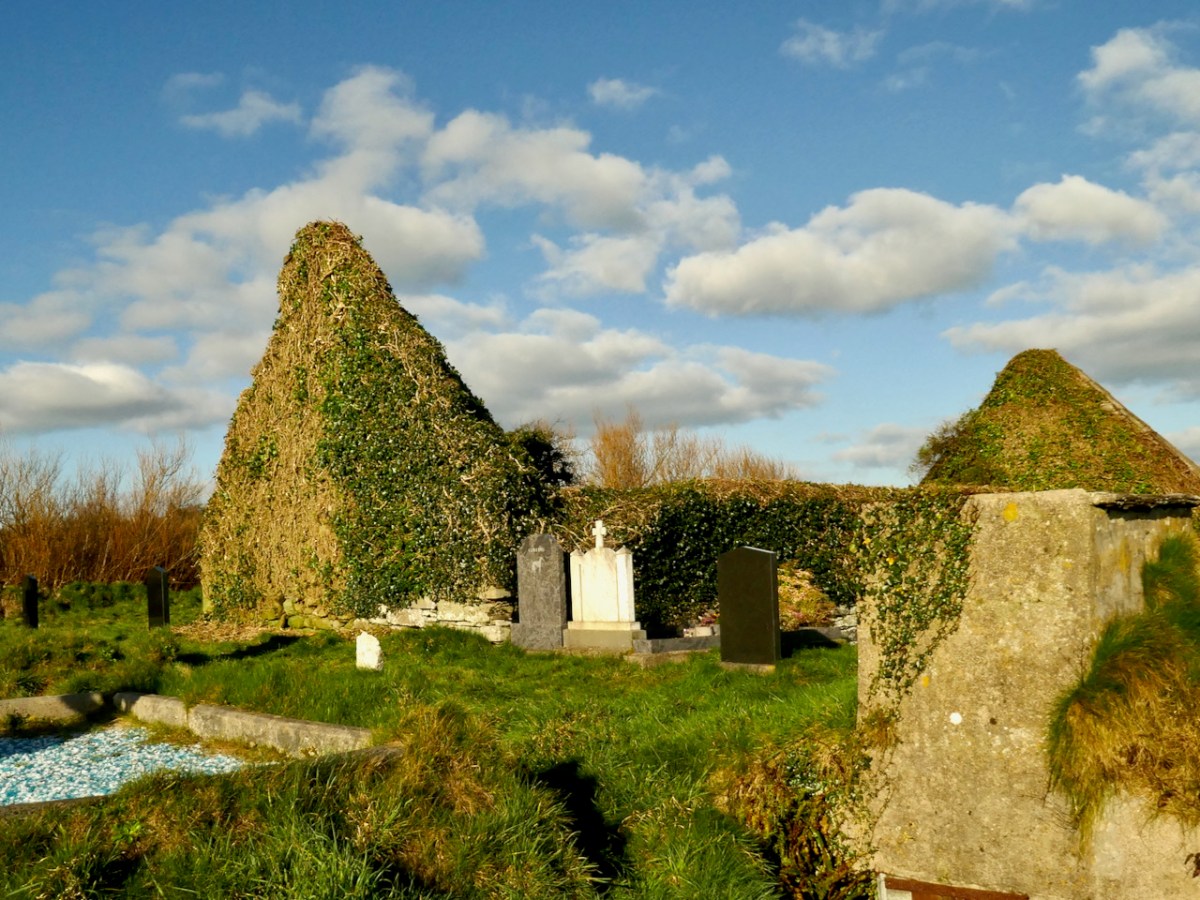
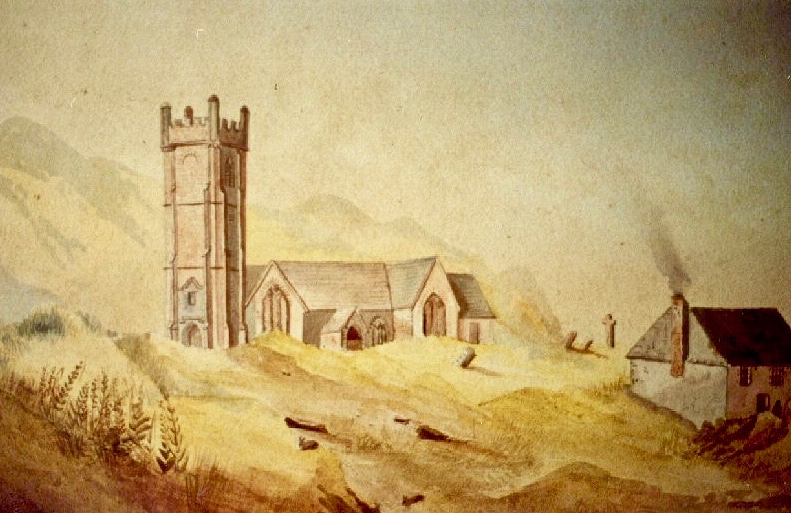
This beautiful medieval church sits on the shores of Roaringwater Bay, close to Kilcoe Castle. It was in danger of destruction by ivy but is being rescued – more on that in a minute. This (below) is what it looked like up to recently.
Kilcoe is the Church of Cóch – but who was St Cóch? For information we turn, as always, to what has become the bible for anyone interested in Irish Saints, the magnificent A Dictionary of Irish Saints by Pádraig Ó Riain. According to Ó Riain, the great St Ciarán (of Cape Clear and also of Seirkieran in Ossory), always spent Christmas here, with his foster mother, Cóch. Little is known of Cóch, except that she was of the people of the Corca Laoighdhe, with whom Ciarán also had a close association. She may have given her name also to Kilcock in Kildare. Her feast day is June 29th.
If the church was indeed founded by St Cóch, then there must have been a centre of worship here from very early Christian times, since typically a church grew up around the relics of a venerated and holy man or woman. Whatever the form of the original church, nothing survives of it now. Take a look at my post Mizen Magic 23: Croagh Cove, for what might have been there in, say, the 6th to the 10th centuries.
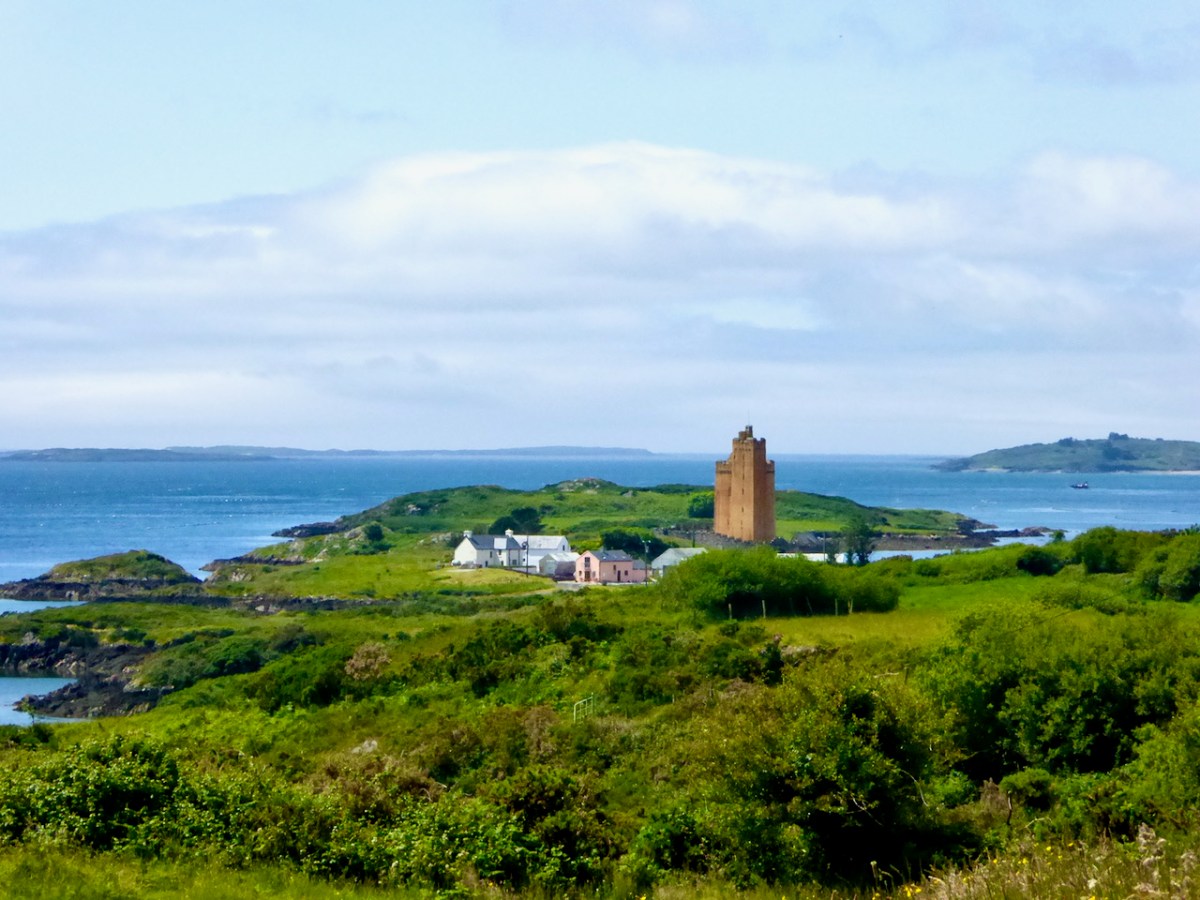
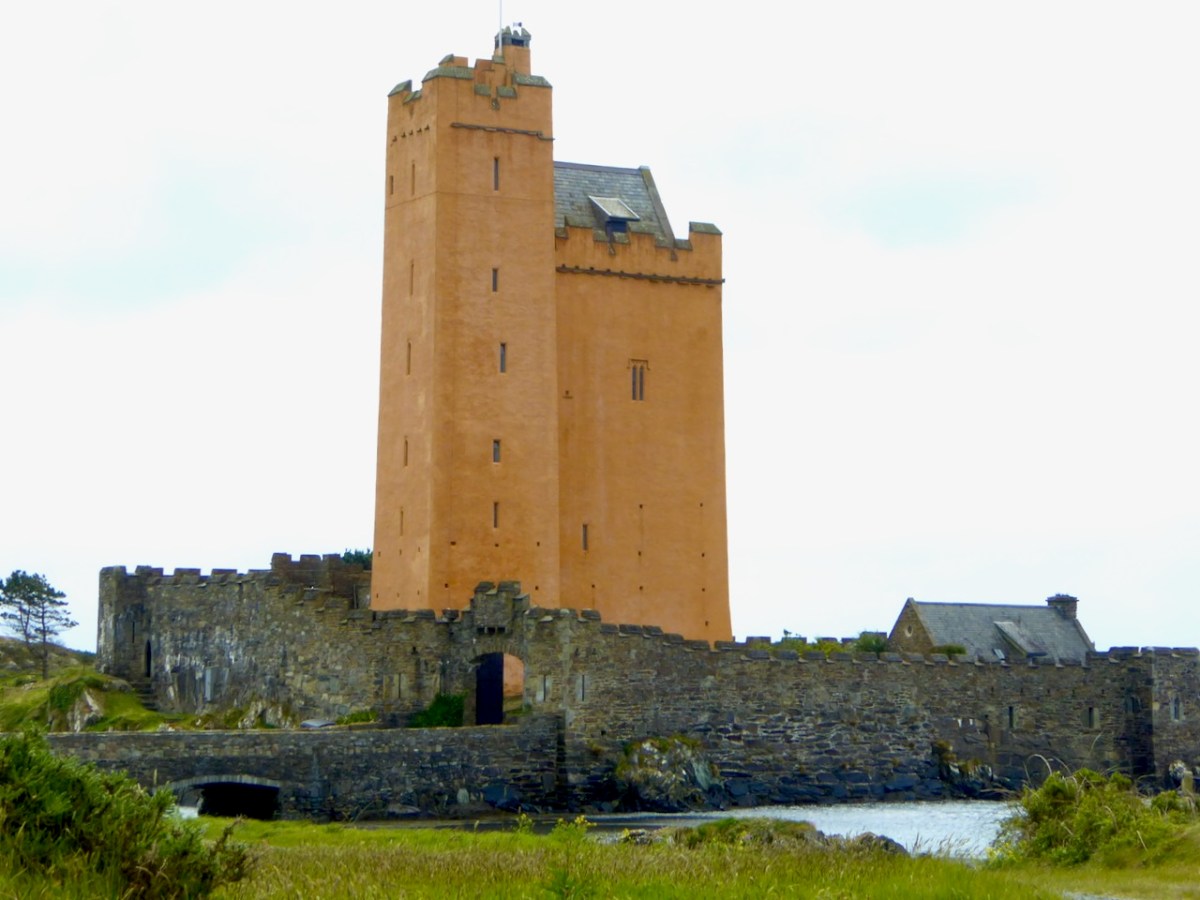
Note also the proximity of the Church to Kilcoe Castle – a stronghold of the McCarthys, now magnificently restored by Jeremy Irons. It was normal for lords and chiefs to have ecclesiastical foundations close by, on land they had ceded for that purpose. The monks made sure that the lord’s soul would be saved by ceaselessly praying for him, and his endowment of the monastery or church gained him many indulgences, shortening his time in Purgatory.
Around the core of the original church was a burial ground, with burials placed on a hierarchical basis closer to or farther from the church. The bones or relics of the founding saint were often under or immediately beside the church, with the most coveted spots going to high-ranking individuals.* The association of ancient churches with burial grounds continued through the ages. Only in more recent times have modern cemeteries been established on new ground not associated with churches.
The Parish system did not evolve until the 12th century and parish churches were often simply an evolution of the older monastic church, occupying the same ground and with a continuation of the burial practice. What we see now at Kilcoe is a parish church, and although it may be based on a much older site, the architectural remains are solidly gothic, and probably 15th century – the same style of architecture we see in Kilcoe Castle. We can imagine the head of the McCarthy family of Kilcoe Castle crossing the drawbridge to hear mass or confess his sins in the little church under his patronage.
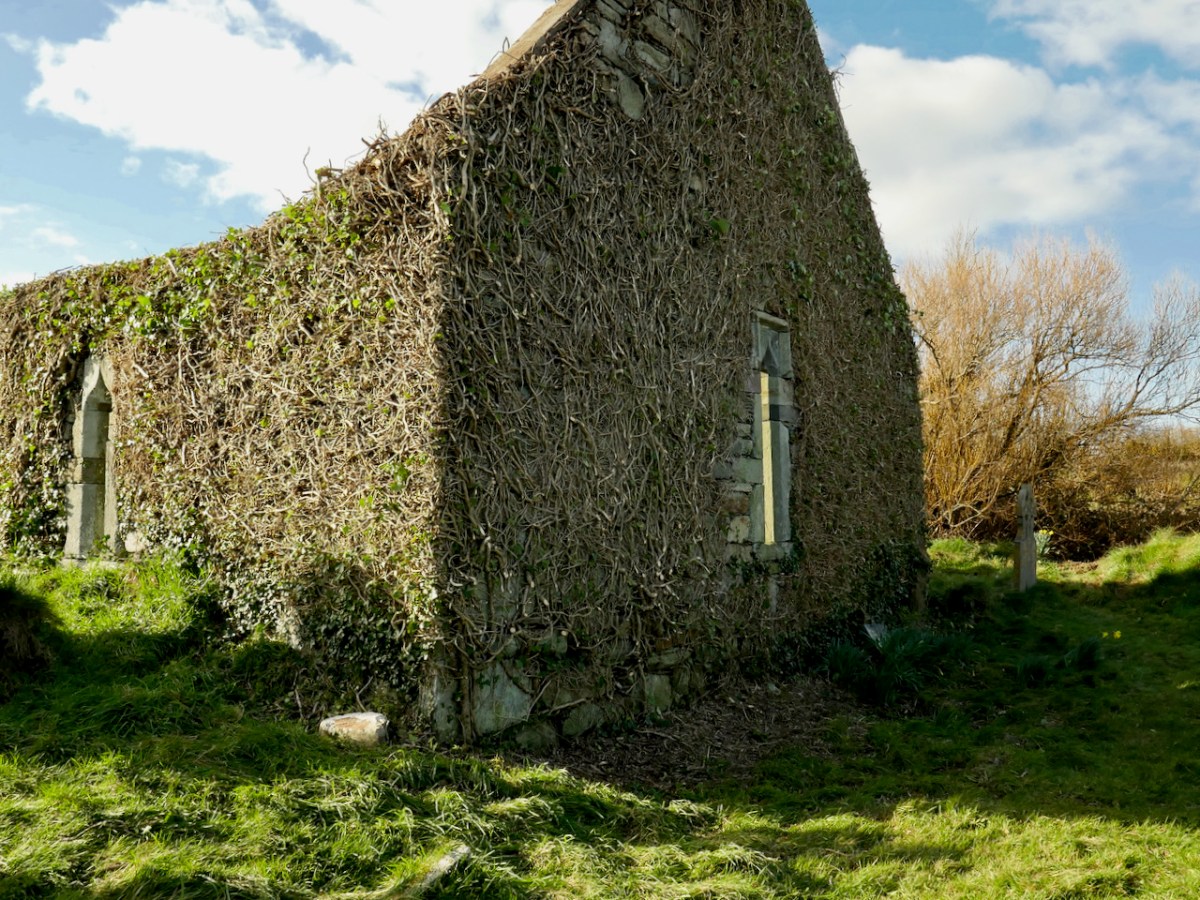
In recent years, the church has become more and more buried in ivy. You can see the condition of the exterior in the second photograph of this post, and of the interior of it (above) in a post I did way back in 2015, A Tale of Four Churches. Worried by the deteriorating condition a group of local people raised funds through Go Fund Me for an assessment by a conservation engineer. That report is a detailed survey of every aspect of the church and makes numerous recommendations for remediation. From the report:
The church is in fair condition with its walls and main architectural features largely intact. However, the substantial ivy canopy and embedded ivy stems are damaging the masonry and, without intervention, there is likely to be significant loss of historic fabric in the short to medium term.
The ivy canopy on all walls should be reduced immediately by cutting back the ivy to the wall face. This should be preceded by an ecological assessment which may impact the timing and scope of the vegetation control measures (unless advised otherwise by the ecologist, cutting back of vegetation should be carried out between September 1st and February 28th). The ivy should not be treated with herbicide or removed unless conservation work can be carried out shortly after treatment and removal.
Kilcoe Church Condition Report John Kelly (conservation accredited engineer) David Kelly Partnership. Oct 2022**
When we visited yesterday we were thrilled to see that this work is underway, following best practice as advised by the conservation report. Although we are not sure of the details, it appears that the church itself is in private ownership, and that the landowner may be the one who has undertaken this work at their own expense. (Happy to receive further correction or confirmation of this, in order to direct appreciation appropriately.)
And – now that this work is underway, the church is rising like a phoenix and once again it is possible to see the major features of this fine and important piece of our heritage.
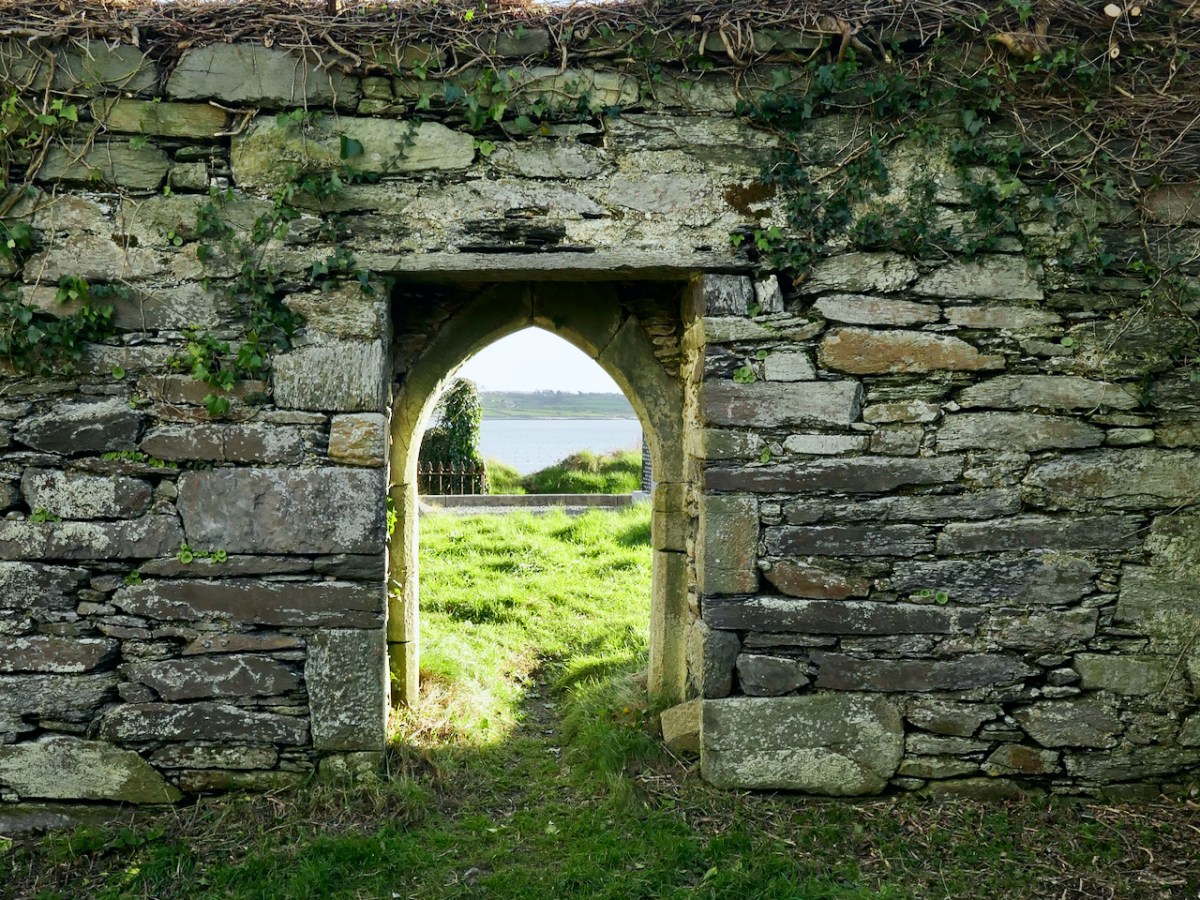
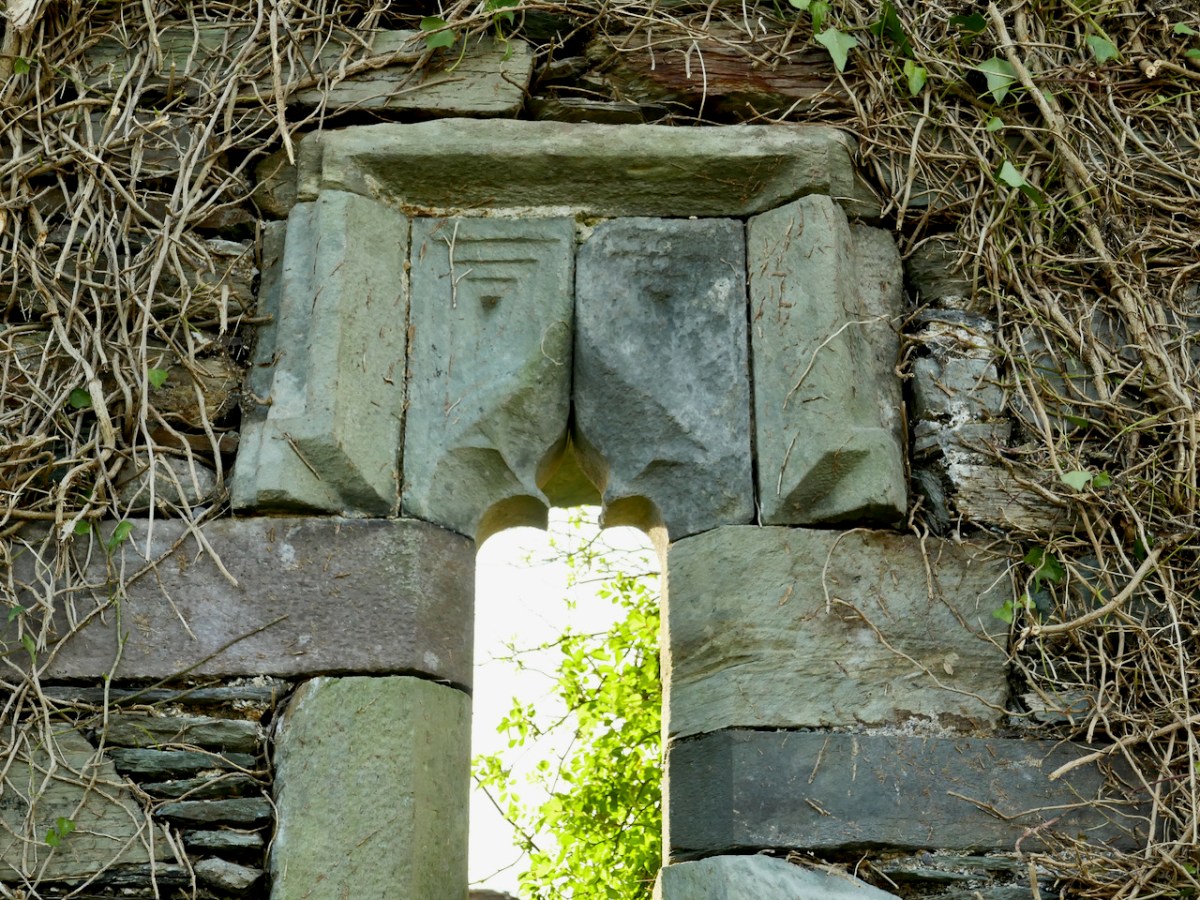
The church is a simple rectangle. The chancel, containing the remains of an altar table, is at the east end, and there is one doorway in the south wall. While this entrance, when viewed from inside, is a straight opening with a plain lintel, from the outside it is totally different – finely carved stone provides a graceful arched surround.
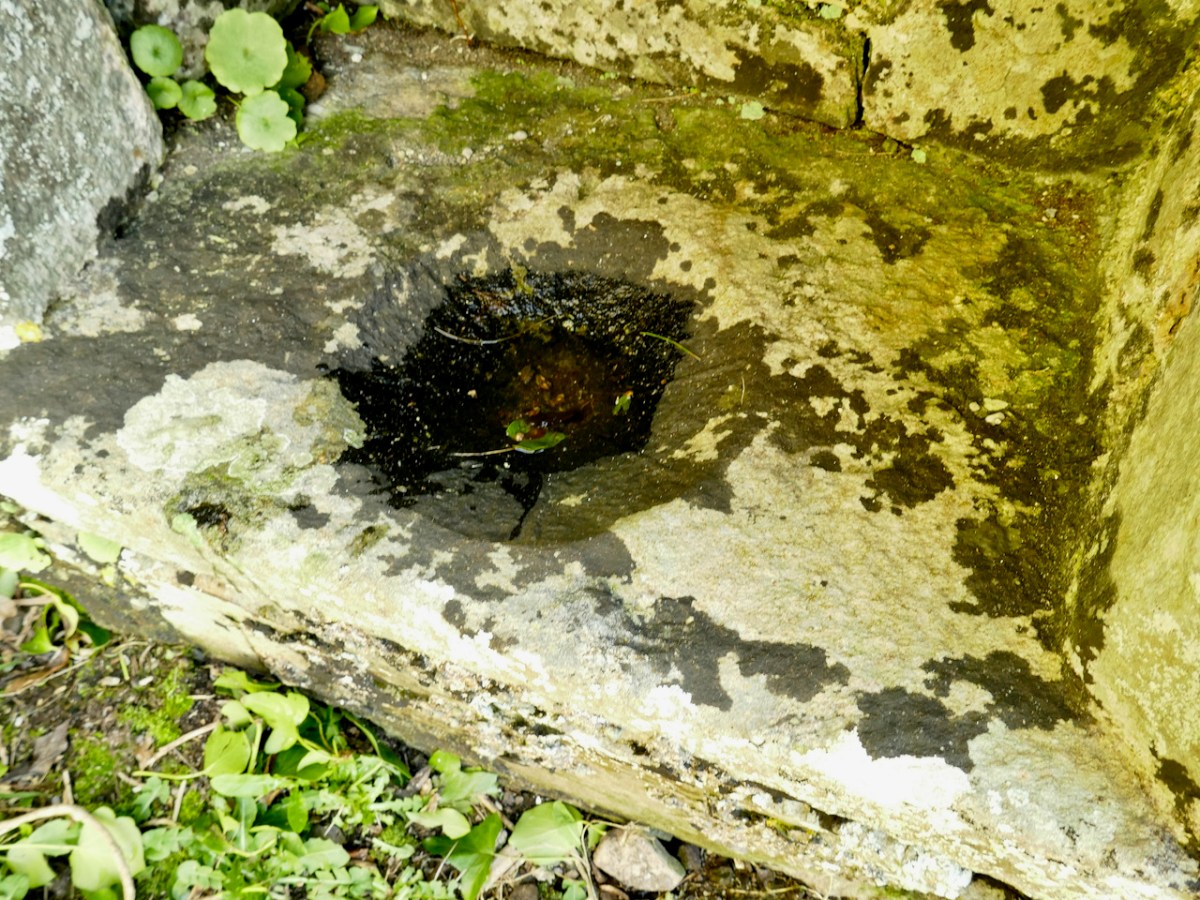
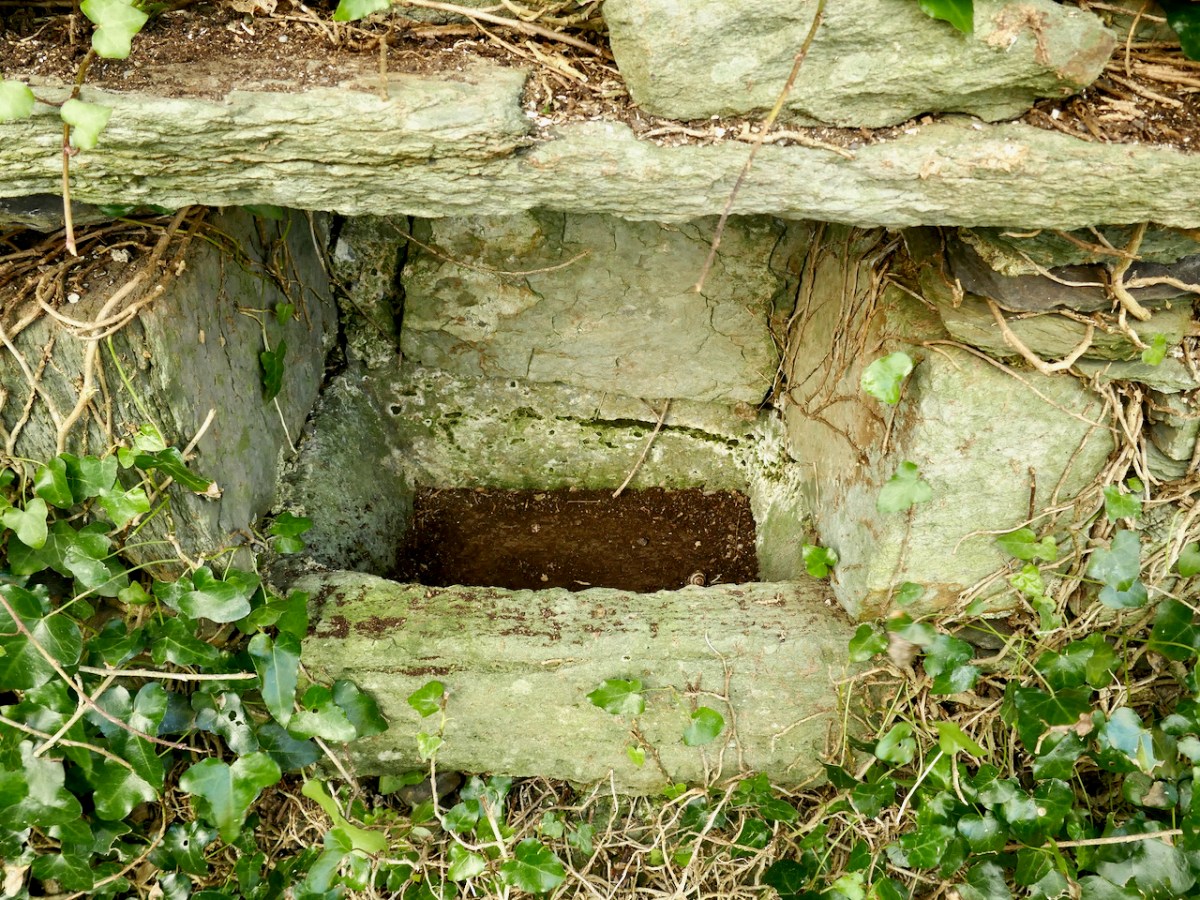
Two ‘basins’ are set into the walls, as are two stone ‘cabinets.’ The basin on the south wall is a piscina, in which vessels were washed, and has a carved bowl, although it is hard to make out under under a cover of dark lichen.
The basin in the north wall is more visible now that some of the ivy has been cut back. It may have been a baptismal font.
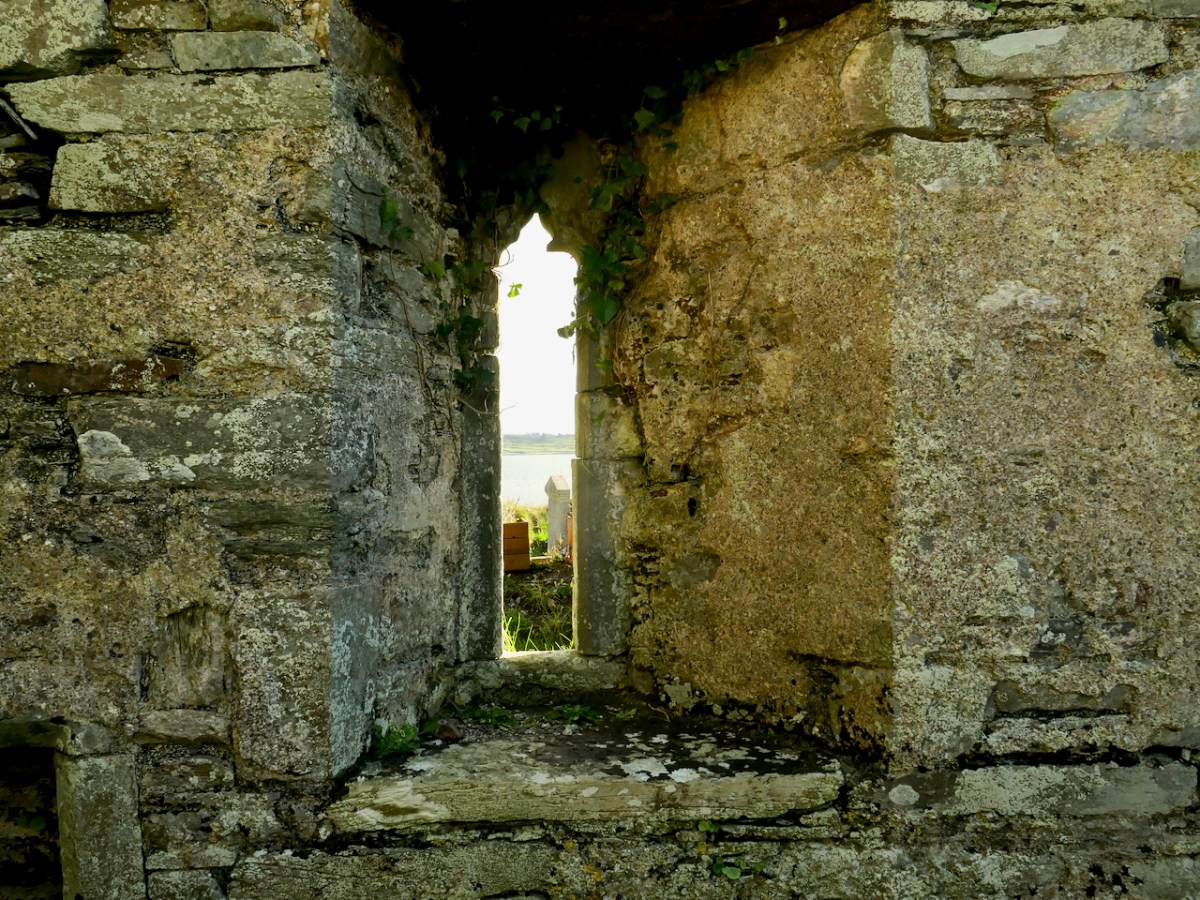
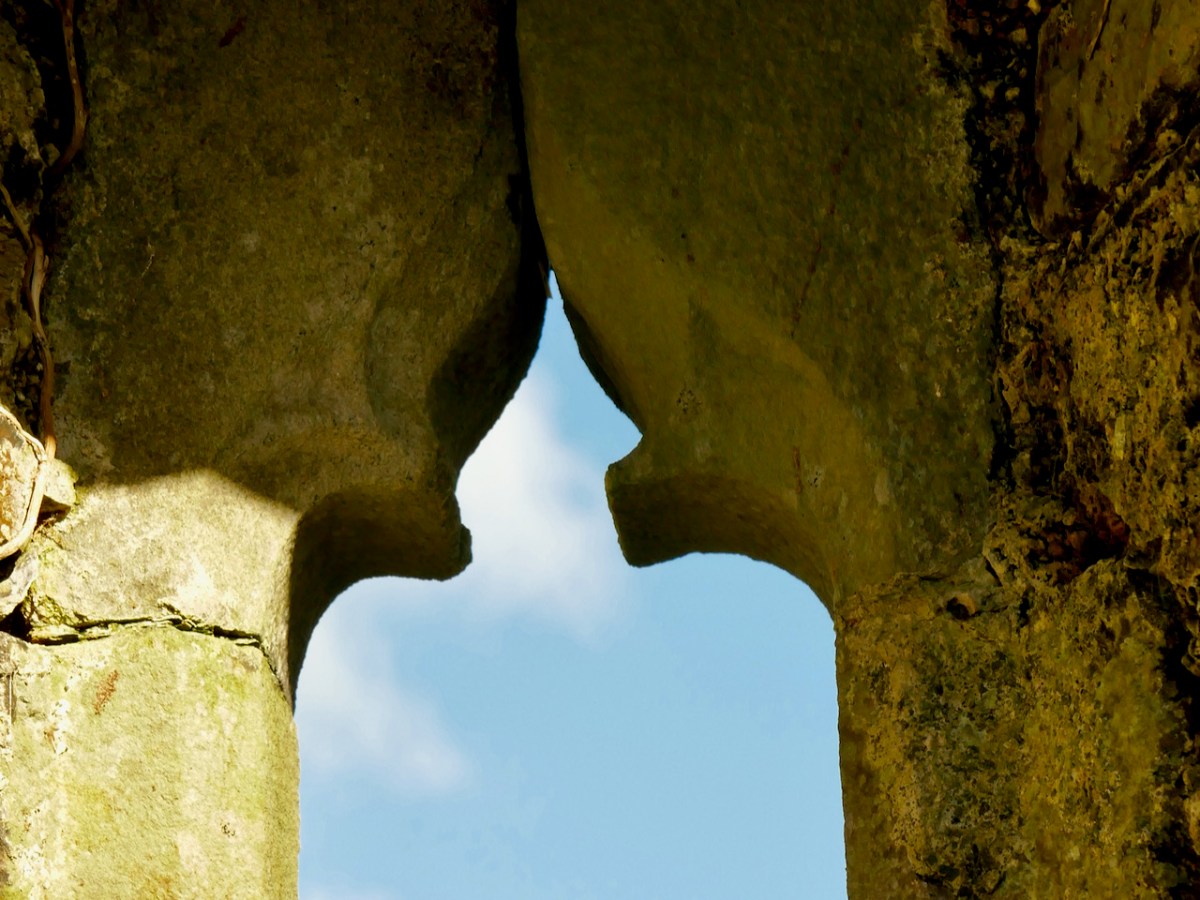
There are two fine gothic windows, tall and slim, with carved ogival heads. The window is the south wall is now visible inside and out. It seems to have an asymmetrical splay, designed to let more light in. For a similar window – and indeed for more on what this church may have looked like – go to my post Mizen Magic 19: Church of the Angels.
The window at the east end, behind the altar, was particularly worrying, as ivy was threatening to get between the cracks and break it apart. It looks so much better now, and on the outside the hood mouldings can once again be admired.
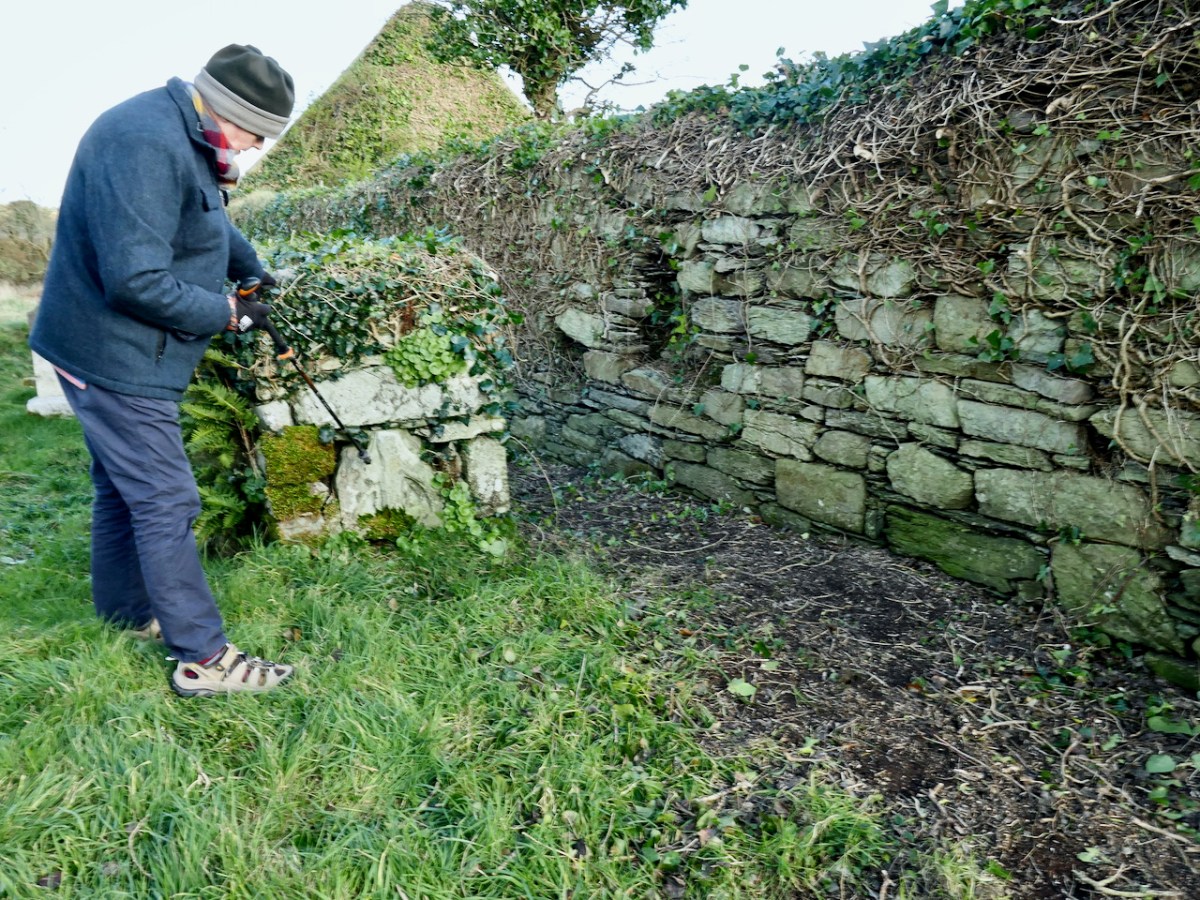
The north wall of the church, outside, is a good place to see how the ivy has been carefully clipped. There’s an old chest tomb here which incorporates what might be the top of another gothic window – further exploration of this tomb is recommended in the report.
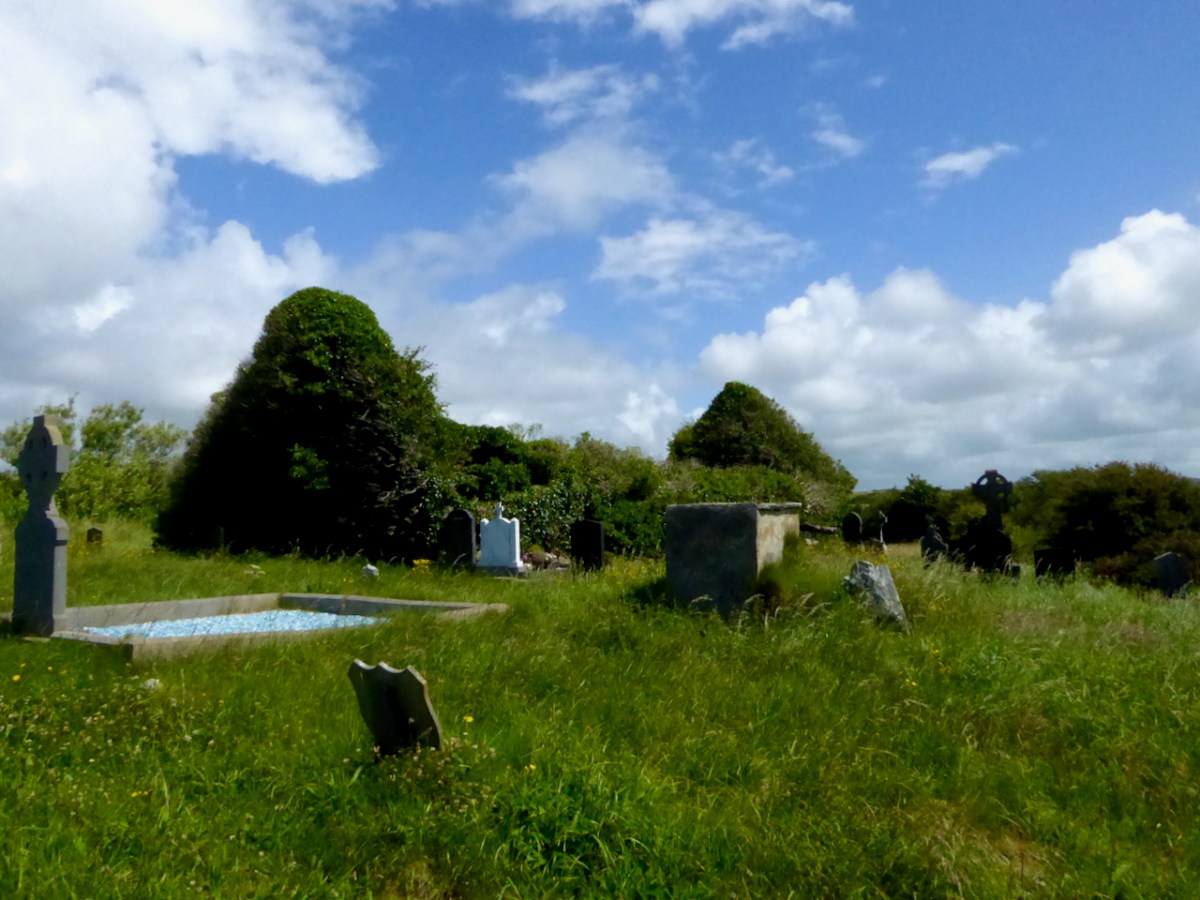
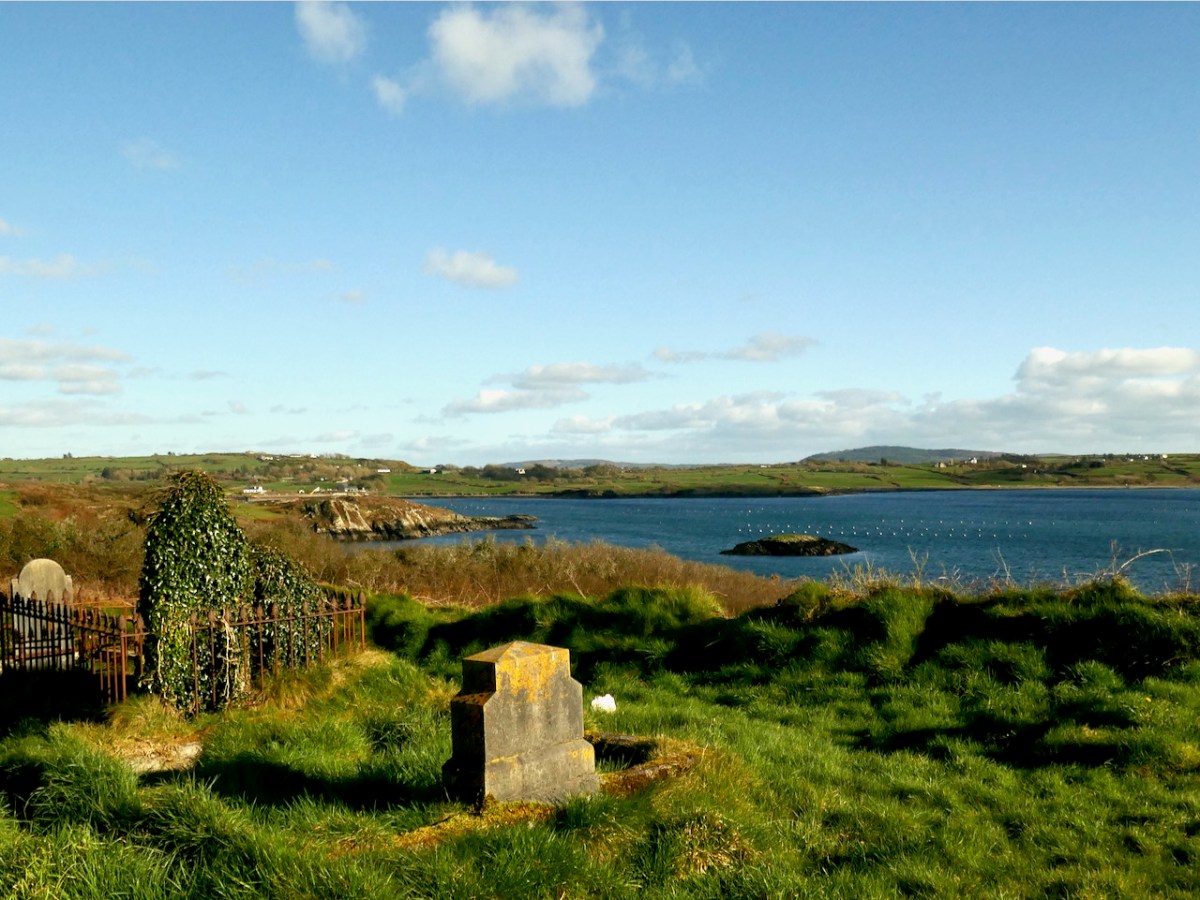
There is much more work to be done on Kilcoe Church, but what has happened so far is terrific and very encouraging. Compare the photo below with the second one in the post. They were taken from about the same place – and look at the difference! On behalf of all of us in West Cork, huge appreciation must go to everyone involved in the efforts to preserve it for posterity.
One last comment is that this church is a listed National Monument, so future work needs to be done in consultation with them.
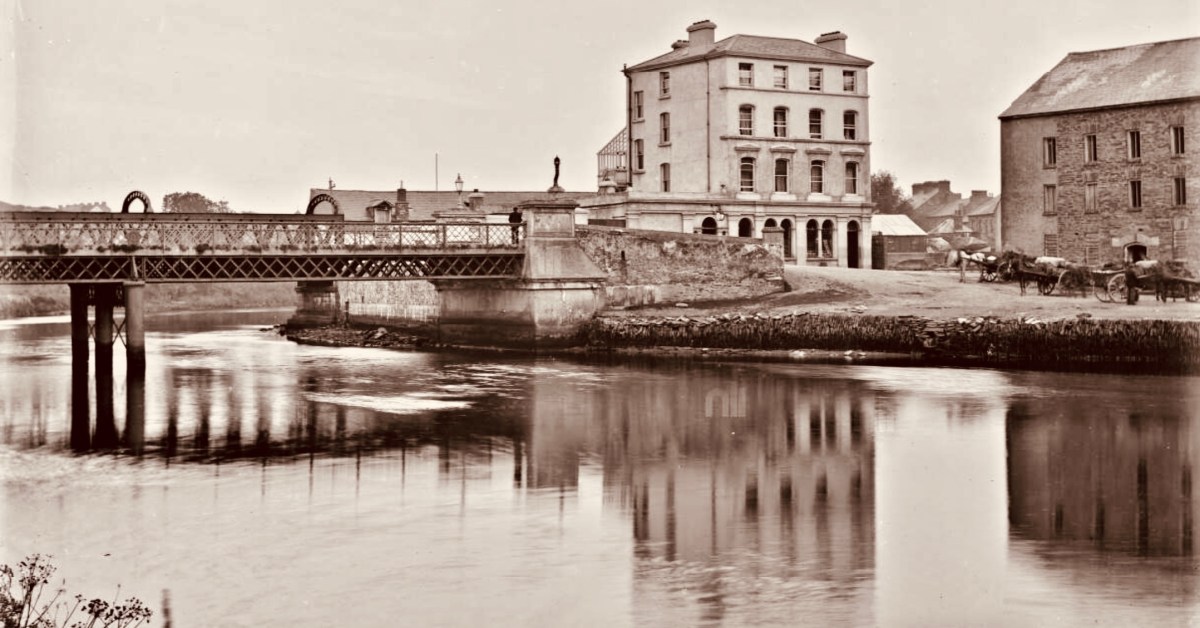
This photo of the West Cork Hotel beside the Ilen River, Skibbereen (courtesy of the NLI Lawrence Collection) captures a moment in time. It was taken in the very early 20th century – probably before 1910. Clearly seen are the hotel itself – opened in 1902 – the old iron road bridge which was superseded in 1964, and the railway bridge behind it carrying the line to Baltimore (which was opened in May 1893). That bridge still exists, of course, although the line closed in 1961. To the right of the photo is the Old Steam Mill, originally constructed as a flour mill by Thomas Marmion in the 1830s. This building stands on Steam Mill Quay.
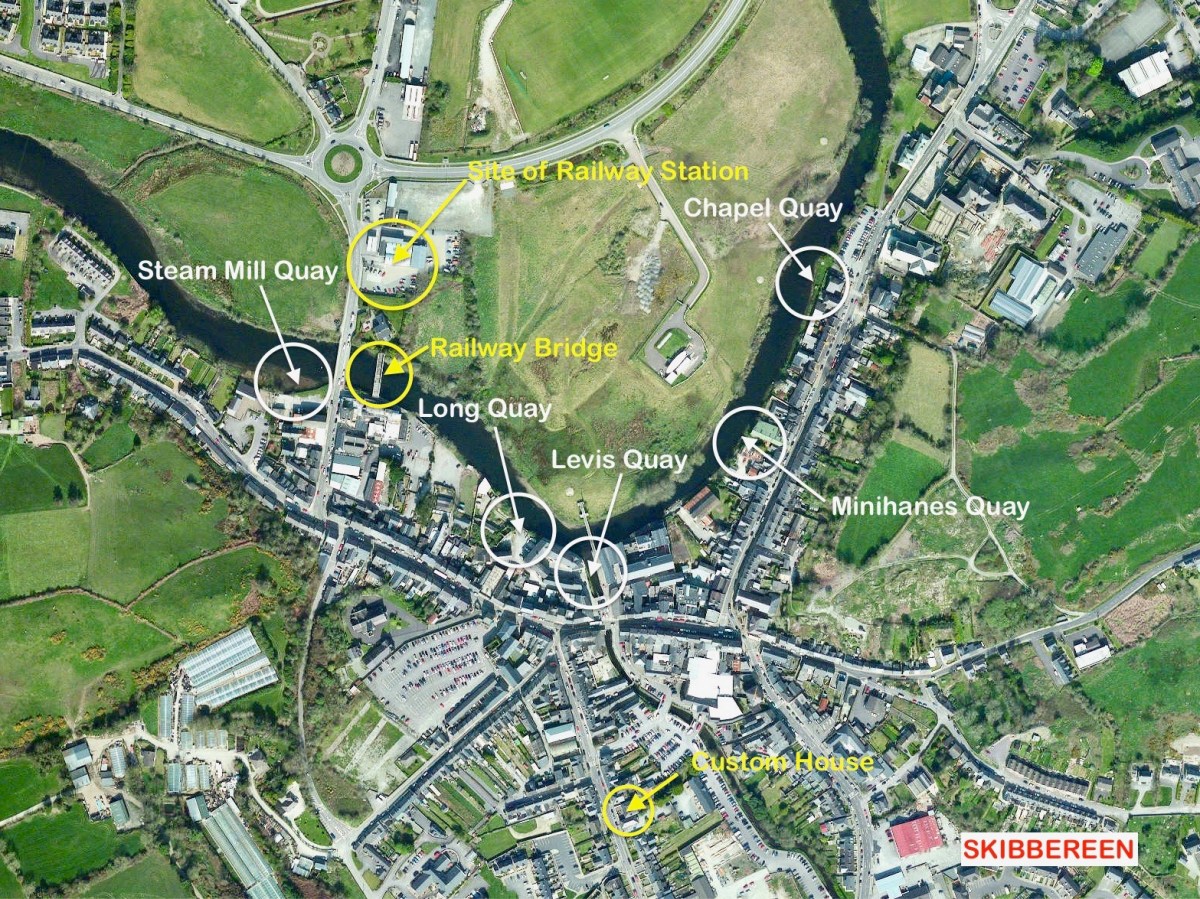
The Irish name for this town, an Sciobairín, is said to mean a small inlet for docking boats. Steam Mill Quay is the first of five quays which served the town, suggesting a period when the river itself (tidal to just north of the town) was the life blood of the community:
. . . Skibbereen was a settlement served by water. The River Ilen is tidal and in the early 19th century boats of up to 200 tons could navigate to Oldcourt, within two miles of the town centre. From there goods were transferred into ‘lighters’ (unpowered barges) and then brought into the quays where there were warehouses and a Custom House. Now, sadly, Skibbereen’s waterfront is a bit neglected and its active past shipping history is no longer obvious. Five historic quays have been identified along the river: Steam Mill Quay, Long Quay, Levis Quay, Minihane’s Quay and Chapel Quay . . .
Roaringwater Journal
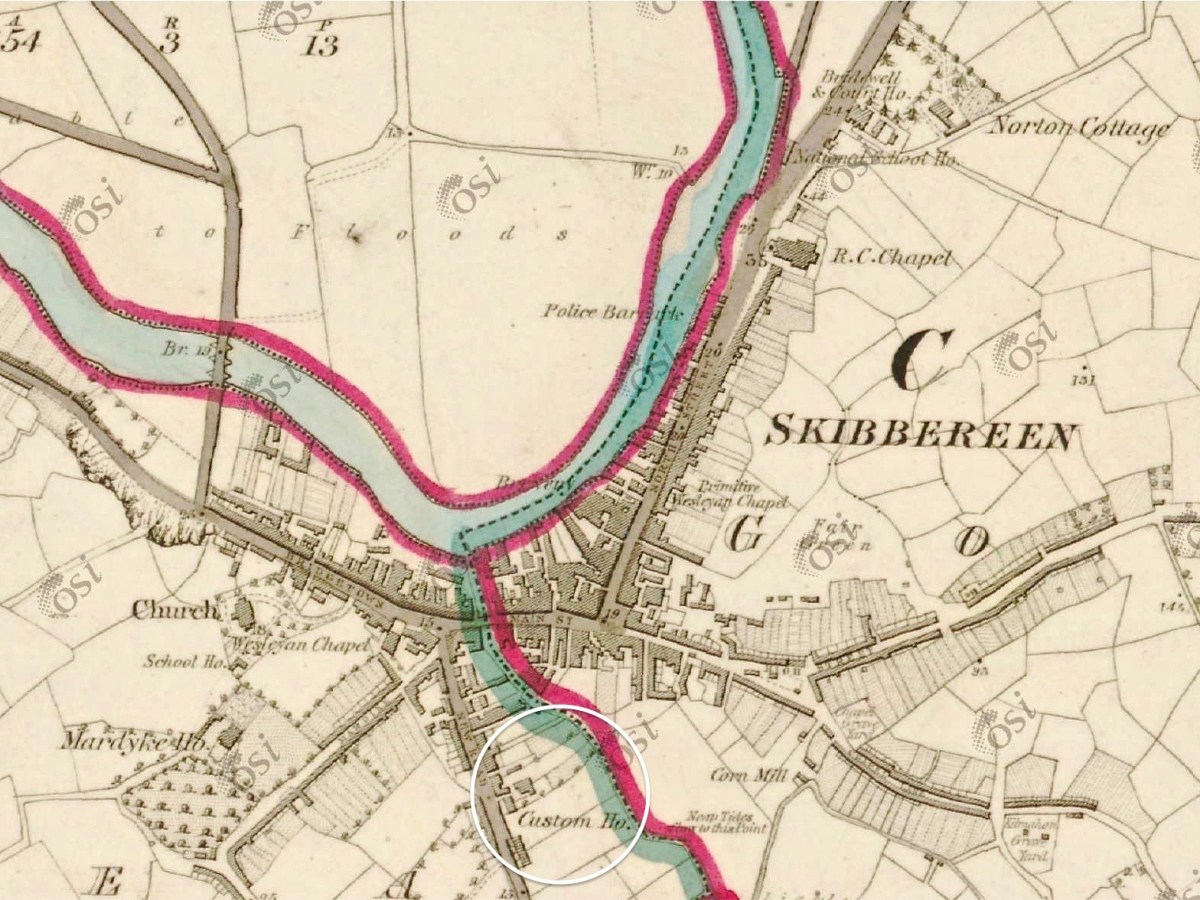
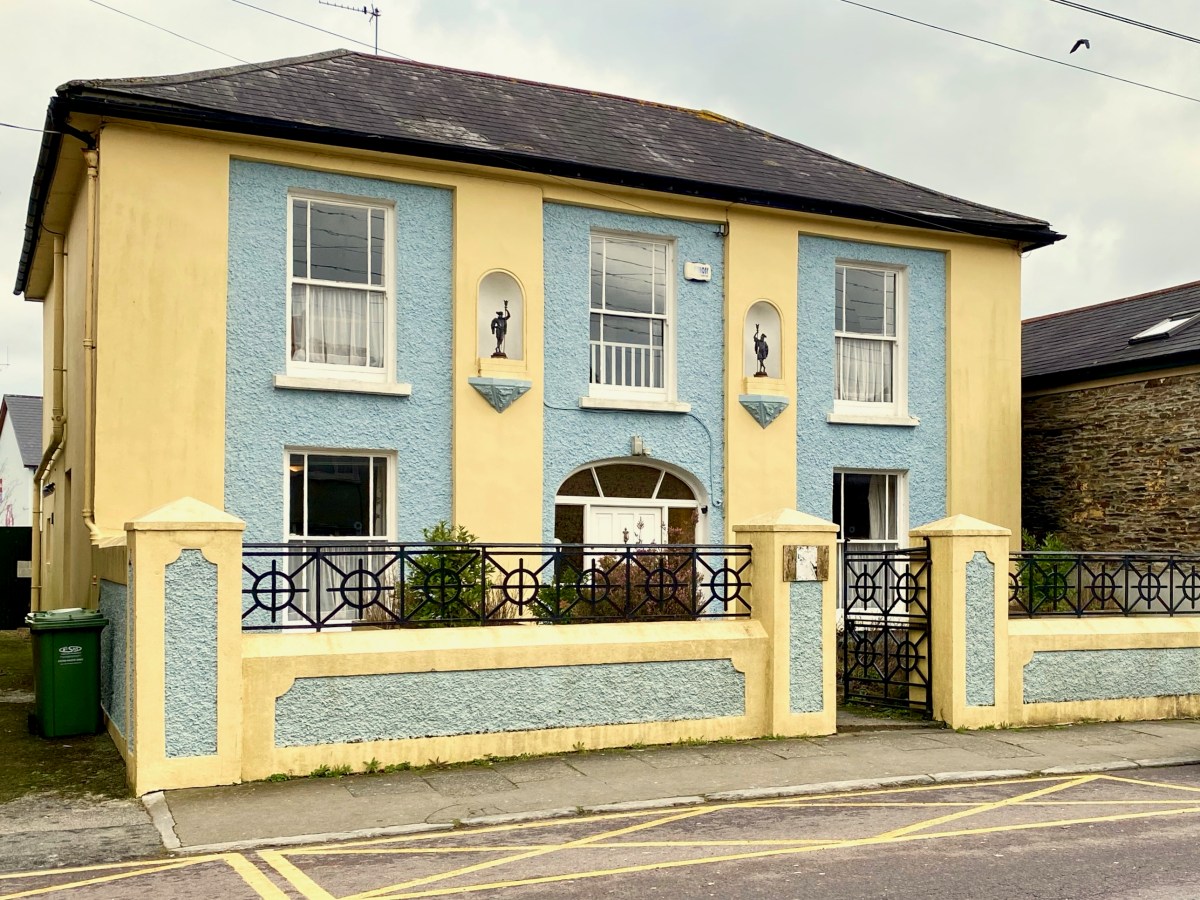
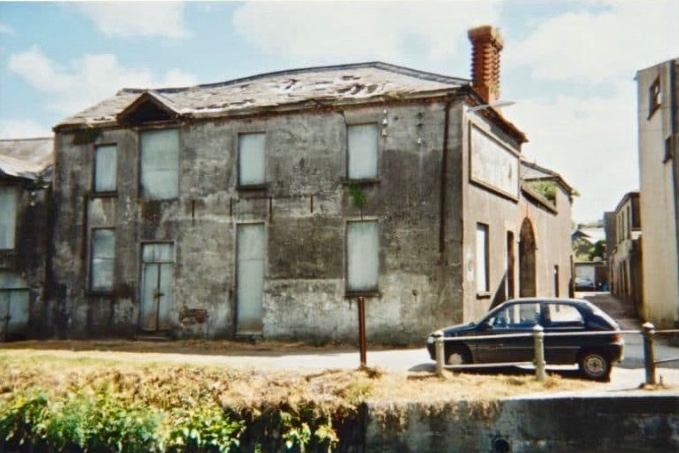
Here is the Custom House – now a private residence on Townshend Street. The first edition of the OS map (above the photo) marks the location. It’s a fine building, clearly of some standing, with its decorative niches and curved fanlight. The existence of this building in the town emphasises the historic significance of importation and trading of commodities, probably primarily by water transport, to Skibbereen when it was operating. I was surprised to find that Hansard – the official record of the actions of the British Parliament – has one entry pertaining to the Skibbereen Custom House. From it we learn that its business was transferred to Bantry in 1890, and that this was a cause of concern to some of the townspeople and local fishermen:
. . . DR KENNY (Cork, S) I beg to ask the Secretary to the Treasury whether he is aware that owing to the transference of the Custom House from Skibbereen to Bantry very great inconvenience and injury are caused to the Baltimore fishing industry; whether, according to existing Customs arrangements in Skibbereen. the Deputy Officer of Customs in that town is unable to give permission for the discharge of cargoes of ice absolutely essential for the preservation of the fish caught by the Baltimore fishermen, and also that it is impossible for him to obtain permission by telegraph from Bantry to do so, and whether, in consequence, steamers for conveying the fish have to wait at Baltimore the arrival from Bantry, 24 miles distant, of the Superintendent of Customs; and whether he will take steps to have abated the inconvenience complained of, by restoring the Custom House to the Skibbereen district?
Hansard record of Commons Sitting 08 May 1890 § 469
There is a further record giving the response by the then Secretary to the Treasury: it lacks sympathy!
. . . Mr. JACKSON (Leeds, N) I am informed that it is not the fact that very great inconvenience and injury have been caused to the Baltimore fishing industry through the transference of the principal Customs Offices for the Port of Skibbereen from Skibbereen to Bantry. The Board of Customs have ascertained that no delay has been caused by this change in the discharge of any vessels, nor need any delay or inconvenience be occasioned thereby, as the Officer of Customs still stationed at Skibbereen is now empowered to deal with any Customs business, there or at Baltimore, that may require attention, under exactly the same conditions as were in force previous to the change referred to. No occasion has, therefore, arisen for making any alterations in the. present arrangements . . .
Hansard record of Commons Sitting 08 May 1890 § 470
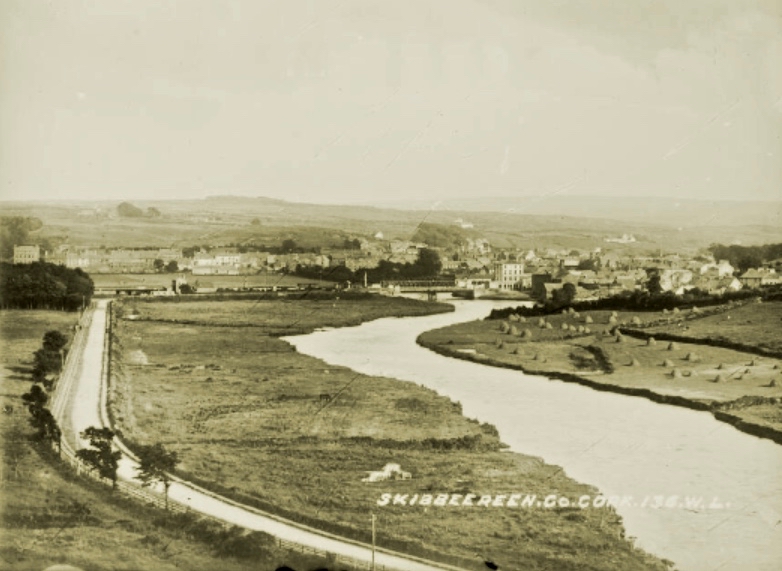
Here’s a distant view of Skibbereen from the west, probably taken in the early 20th century (courtesy of the NLI Lawrence Collection). On the left, the roadway (today’s N71 going from the town towards Ballydehob) has the track of the Schull railway (or – more properly – ‘tramway’) on its verge. The old bridge into town and the West Cork Hotel are visible, as they are in the header picture. What is noticeable is that there is no sign of any navigation of the Ilen River. I have looked carefully through over 200 early photographs of the town and it is the case that none shows any river craft. Hence my title today (and I apologise for taking a long time to get to this) The Elusive Lighters. We have no detailed records of any boats that used the river, and the quays, except that they were shallow-drafted unpowered barges. The term ‘lighters’ usually refers to ‘dumb’ boats (unpowered) used to offload cargoes from ships and transfer these to quays further inland. How were the Ilen boats built, and what did they look like?
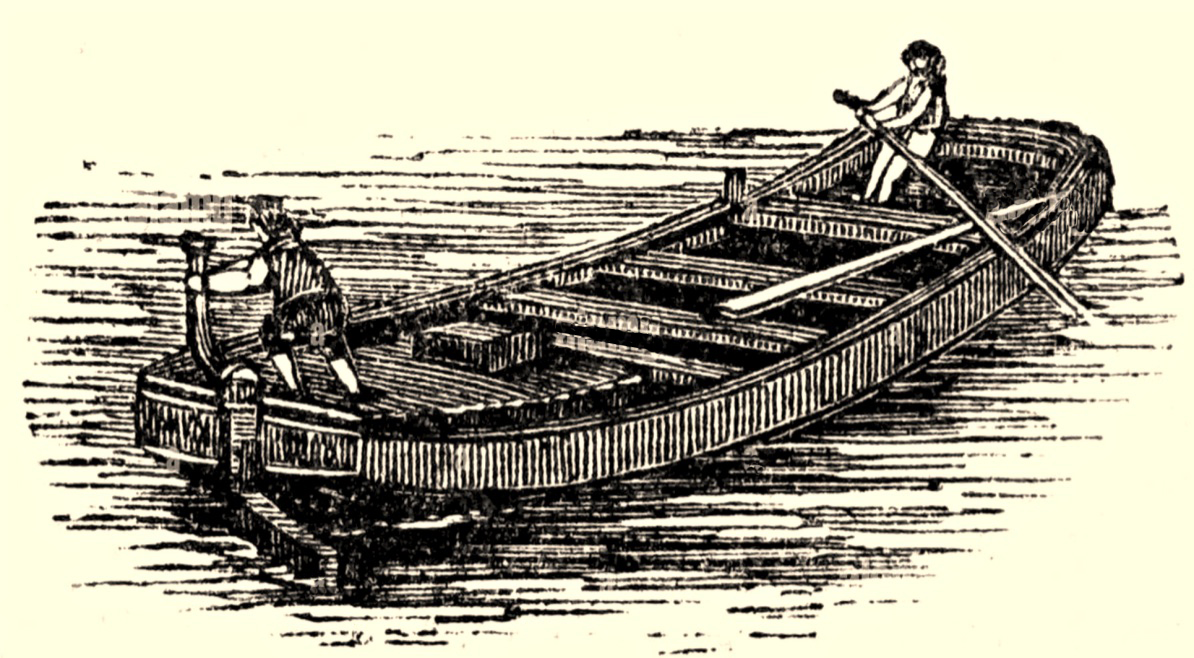
Here’s a guess – something I found in an old engraving (not from anywhere in West Cork). The boat is being ‘poled’ or swept along by a figure with a large oar, while a ‘steerer’ handles the helm. It would almost certainly have been built from timber. After a coaster, steamer or sailing ship arrived and moored at Oldcourt, the cargo would have been offloaded to the lighter, which would have to await a rising tide before setting out for Skibbereen. The return journey would have to be carried out when the tide was falling.
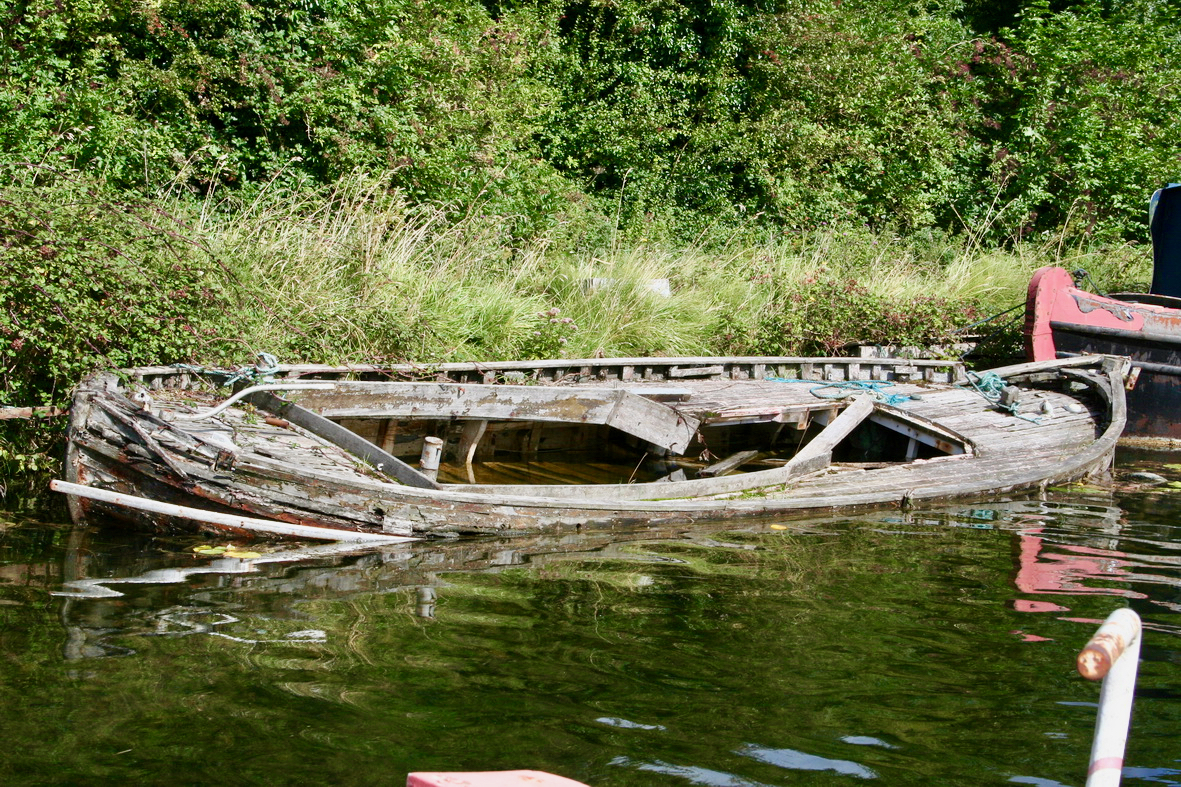
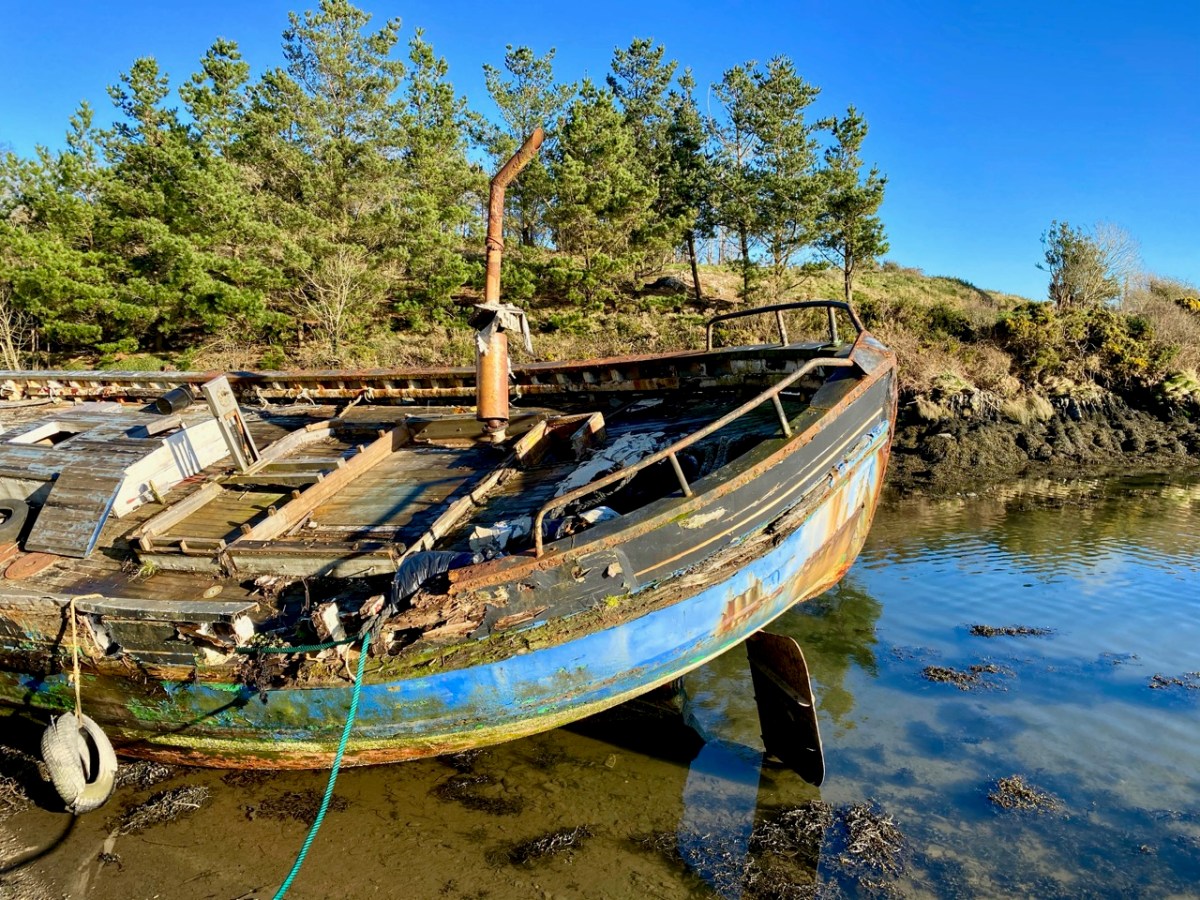
It would be great to find the remains of such a boat on the Ilen, but very little would survive of a working craft dating back over a century and a half. The wreck above is on the River Barrow Navigation at Lowtown. Here’s another old wooden boat which lay beside the tidal Ilen itself a few years ago: it may still be there!
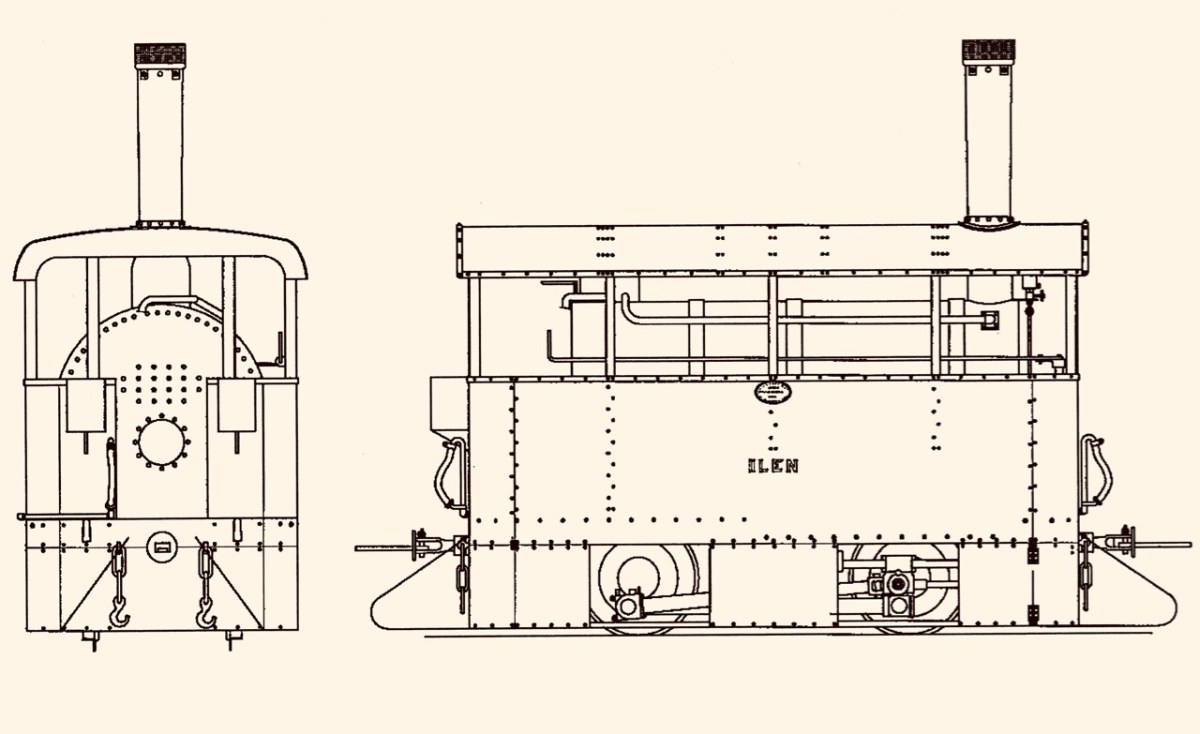
While my nostalgic soul would like to think that some trace might remain of the old Ilen boats and the quays that they served, I know that is unlikely. River traffic on the tidal Ilen would have been in its hey-day in the early part of the 19th century and would have been affected by the sufferings of the Great Famine which heavily hit Skibbereen. After some recovery, the arrival of the railway line from Cork in 1877 ensured that river trade could no longer survive: it’s ironic, perhaps, that the first locomotive on the Skibbereen to Schull tramway was named Ilen.
This post is the latest of a series that studies the full length and history of the Ilen River. Previous posts can be found here: Sweet Ilen : Sweet Ilen – Part 2 : Sweet Ilen – Part 3 : Sweet Ilen – Part 4 : Sweet Ilen – Part 5 : Sweet Ilen – Part 6 : Sweet Ilen – Part 7. Volume 18 of the Skibbereen Historical Journal (2022) includes an article Sweet Ilen – the story of a river: Part 1 – Source to Tide penned by myself. This is to be joined by a second part in this year’s Journal. Look out for it!
My collections of signs, posters and visual images expands all the time. If I see something quirky, I can’t resist a photo. I share these with you every so often. Today’s selection comes from far and wide: mainly here in Ireland (principally West Cork) with the odd stray from outside. I will only explain something if I feel an image demands it. The example above – from our own Ballydehob – certainly doesn’t, but the one below, which I also came across today in our little village, probably does.
It’s a straw doll representing St Brigid. Often also known as Brídeóg, ‘Breedhoge‘ or ‘Biddy‘, it was once common to see these made to celebrate spring (which traditionally begins on her day, February 1st). This year Ireland has its first ever St Brigid’s bank holiday (tomorrow), to balance out St Patrick’s Day which we have always celebrated around his own feast, March 17th.
Let’s get back to signs. Wouldn’t you expect that one might visit a holy well for health reasons?
This surviving poster in Bray, Co Wicklow, somewhat irreverently makes light of the Bloody Sunday events of 1920. I can’t help being amused by the little insertion underneath Up To 5,000 Male ExtrasRequired – “Women Welcome Dressed in Male Clothing”.
An impressive Christmas tree, built by the artistic fishermen of Greystones, Co Wicklow.
A long way from West Cork, we found this sculpture in False Creek, Vancouver last autumn. Titled “The Proud Youth,” the six metre high figure was created by Chinese sculptor Chen Wenling.
. . . Simple and truthful, this work creates a direct communication between man and nature, and initiates a sincere conversation between people and society. The cheeky expression and arresting pose are a celebratory call to the audiences, inviting them to embrace their inner child . . .
Vancouver Biennale
This may seem out of place, but we visited a Van Gogh exhibition while in Dublin recently. Described as an ‘Immersive Experience’ it is quite mind-blowing and we recommend the immersion if you are in the area.
We’ll finish today with some shopfronts decorated for Christmas: in Dublin, and back in picturesque Ballydehob.
Arklow, Co Wicklow, had a ‘first’ for Ireland: the first offshore wind-farm installation in the country, and the first in the world to employ wind turbines rated over 3 MW. Phase 1 of the project, commissioned in June 2004, consists of seven GE 3.6-megawatt generators. The total output of 25.2MW seemed good at the time but the improvements in technology since it was constructed are considerable. A second phase, currently being planned, aims to achieve an export capacity of up to 800MW.
. . . The new technology was funded largely by the Germans and came in at a cost of around £500,000. The two wind-powered generators stand fifty feet above the top of the island and provide 30 kW each from the turning of their 12.5-meter blades. The National Board for Science and Technology claims that this new technology is the first of its type in the world as it integrates wind generation with diesel generators and battery storage creating a complete power supply . . .
RTÉ Archives
(Top) another still from the RTÉ news piece, and (above) aerial view of the site. The masts and turbines are still in place today, although they have been disused since the island was connected to the mainland for electricity supply via a subsea cable in 1996. (Below) we photographed the surviving turbines on the island in 2016.
Wind power goes back a very long way, of course. Here (above) are some very picturesque ancient examples from La Mancha, in Spain. Here’s another (below) – Pitstone Windmill in England: an interesting composition with newer technologies in the background.
Compare technologies old and new (below)!
In West Cork we are no strangers to the more recent developments in this expanding field, although at present all land based. The scale and form of the machinery is, of course, increasing apace. These examples are on the hills close by us:
But it’s the vast resource of our relatively benign coastal waters that offers the most for the country’s still young wind-power industry. There’s a further example being planned in County Wicklow: the Codling Bank Wind Park scheme. Currently in the consultation stages, it is hoped that construction will be completed in late 2028. 73 turbines are planned, to be sited on the shallow Codling Bank, some 20km out in the Irish Sea. This project – the largest so far in this country – has the potential to power 1.2 million homes using natural resources. It will also provide welcome employment for a large work force. And – in my eyes – an elegant contribution to the marine environment. Well done, Ireland!
Photomontage of the Codling Bank Wind Park seen from the shore at Greystones. Thank you to http://www.codlingwindpark.ie for the dynamic illustrations.
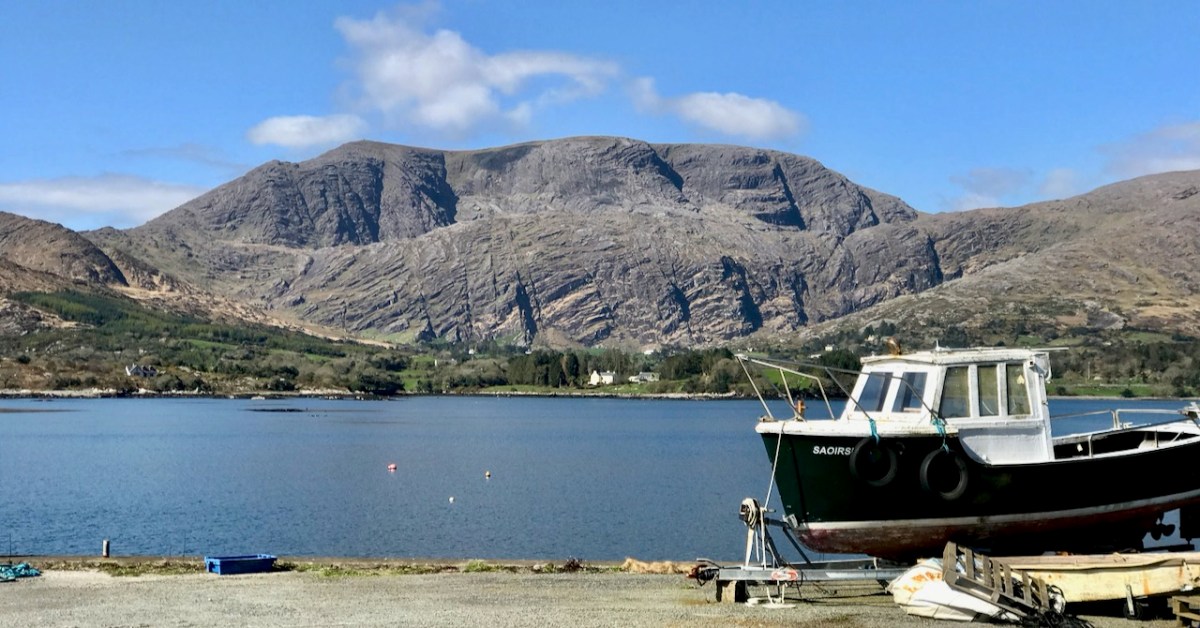
It’s midwinter here on the shores of Roaringwater Bay. It brings hard frosts (above – Rossbrin), clear days and spectacular skies – we caught the one below in 2020:
Winter is the time of the Cailleach.
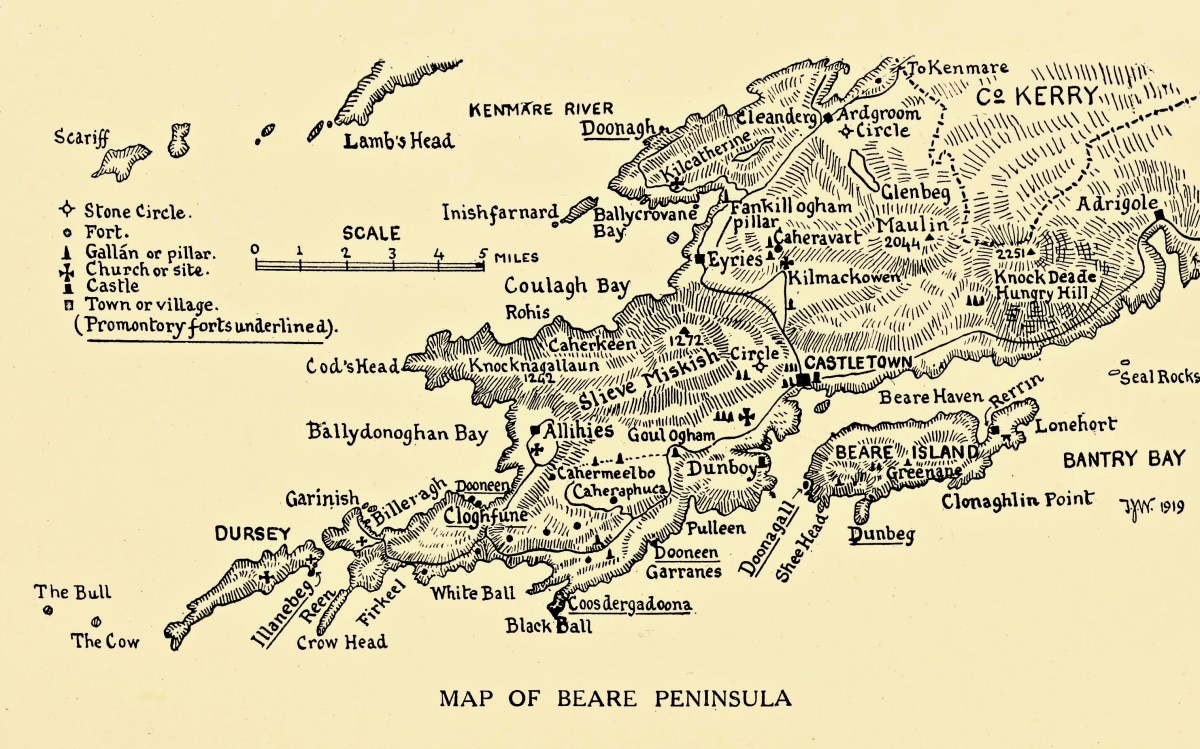
. . . The Cailleach is the goddess of the winter months and is said to control the weather and the winds as well as the length and harshness of winter. Depicted as a veiled hag or an old crone, with one eye and deathly pale skin, she is said to have a bow-legged leaping gait, striding across mountains with a power to shape and transform the landscapes as rocks fall from her gathered apron . . . The Cailleach, or the Hag, has been feared and revered across Celtic cultures in Ireland, Scotland and the Isle of Man, for hundreds of years. She is called Beira in Scotland, and has strong associations with the Beara Peninsula in Ireland, which straddles County Cork and County Kerry . . .
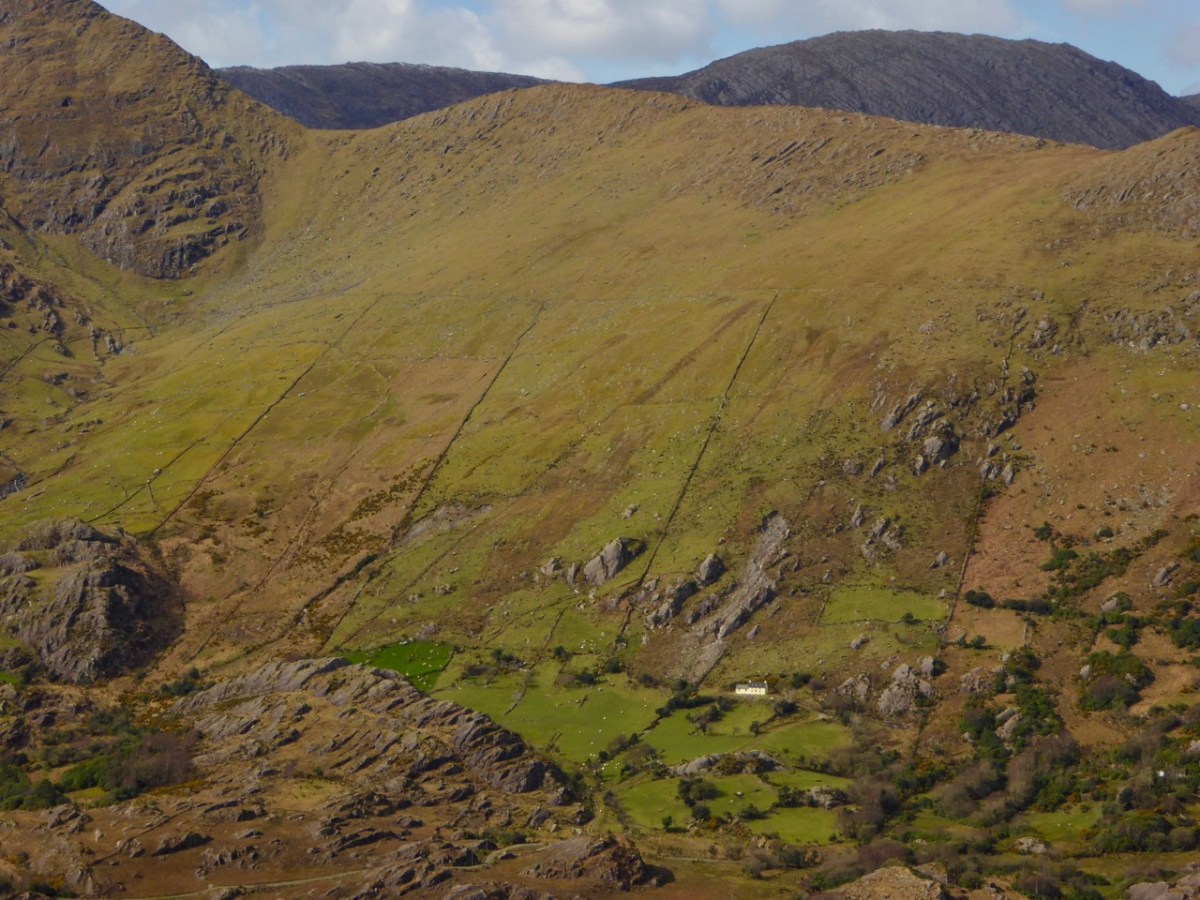
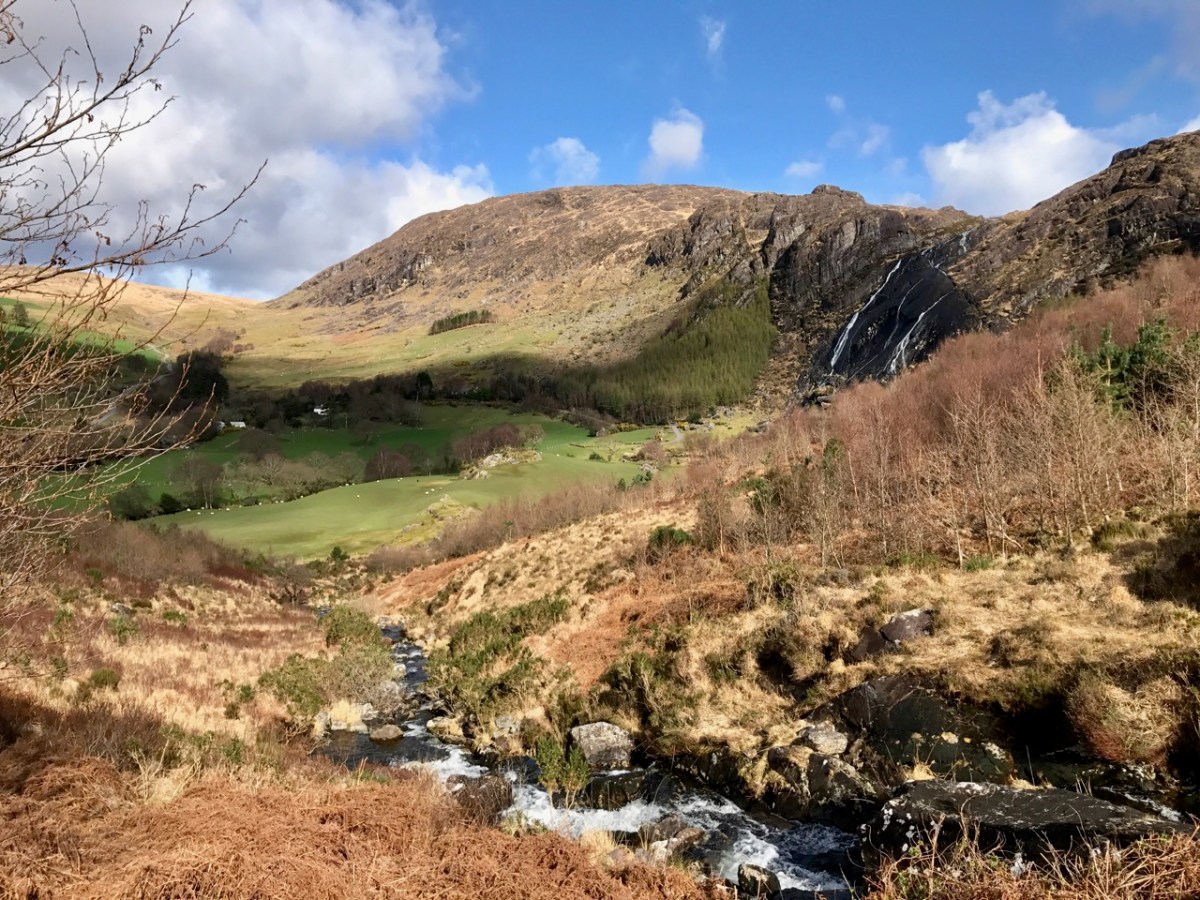
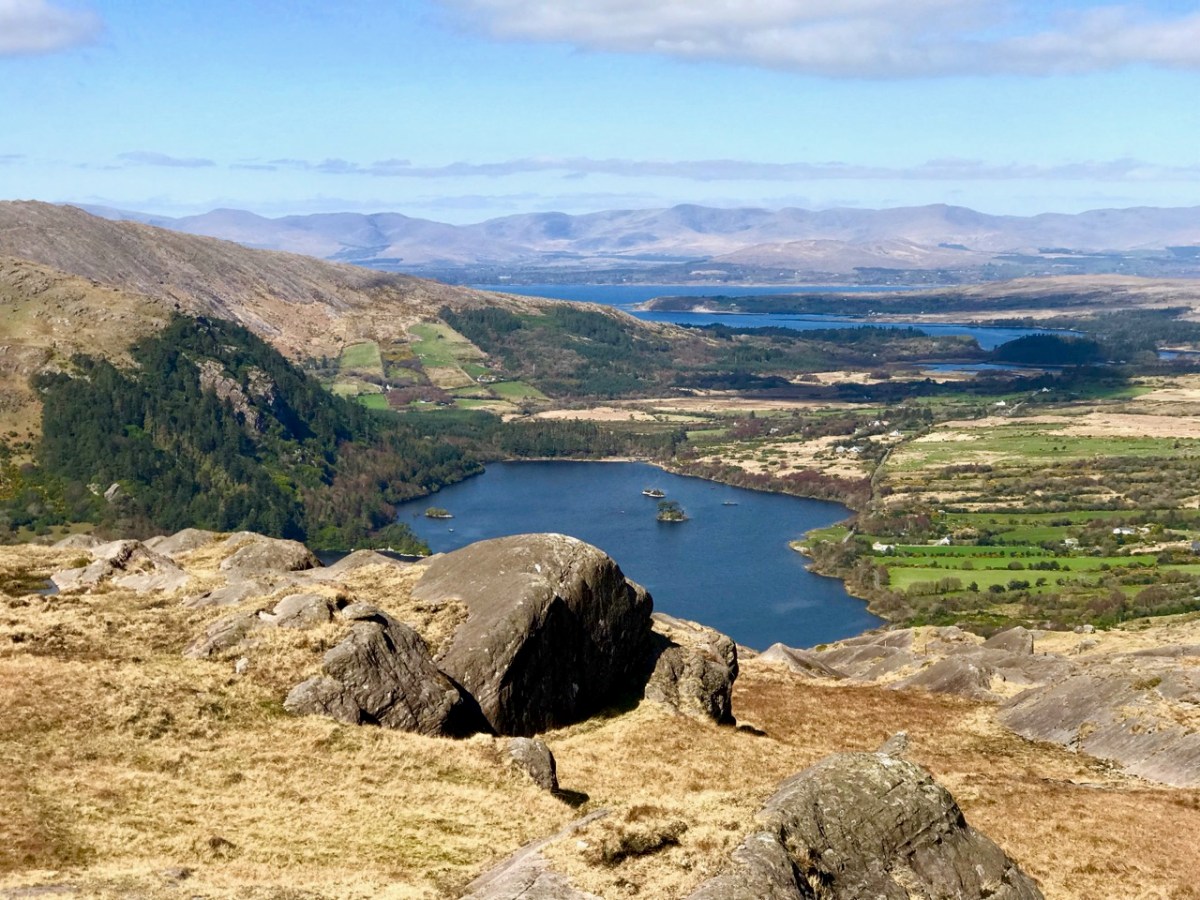
The Hag of Beara petrified in Hag Rock (above): she forever looks out across the Beara. Below – this is the Hag’s permanent view over her landscape.
Lest there be any doubt about the Hag’s longevity, this is instructive:
. . . There is a tale of a wandering friar and his scribe who came to the old woman’s house. He inquired as to her great age, which he had heard stories of. She replied that she didn’t know, but that every year she killed an ox and made soup from the bones—and perhaps they could gauge her age by the number of ox bones thrown up in the attic. The young scribe climbed the ladder and threw the bones down one by one for the friar to count. The friar duly made a mark on his paper for each bone, and a great pile of bones grew until he had run out of paper. He called up to the young scribe, who replied that he had not even cleared one corner of the pile of bones, such was the great age of the Cailleach . . .
Above – The Wailing Woman (courtesy of Ronan Mac Giollapharaic) – dramatically depicts another Hag rock, overlooking the Skelligs on the Iveragh Peninsula, Co Kerry. It is a given that Cailleach is one of Ireland’s most ancient inhabitants. Even older, in fact, than Cessair, Noah’s grand-daughter, who we know arrived on our own West Cork shores some five thousand years ago. With her in her Bronze Age crew were her father – Bith – and Fionntán, together with ‘a large company of women’ whose combined purpose was to repopulate the world after the Great Flood.
. . . Legend has it that Fintan the Wise of the hundred lives accompanied Noah’s granddaughter, Cessair, to Ireland before the great Biblical flood. He thought himself the first to set foot on the island but found Cailleach living there, and could see she was far more ancient than himself. He is said to have asked of her, “Are you the one, the grandmother who ate the apples in the beginning?” but received no answer . . .
The Cailleach rules over the the dead of Winter (above – Rossbrin Cove in that time). If you research the Schools Folklore Collection you will find over 830 entries referring to her: many are recorded in Irish.
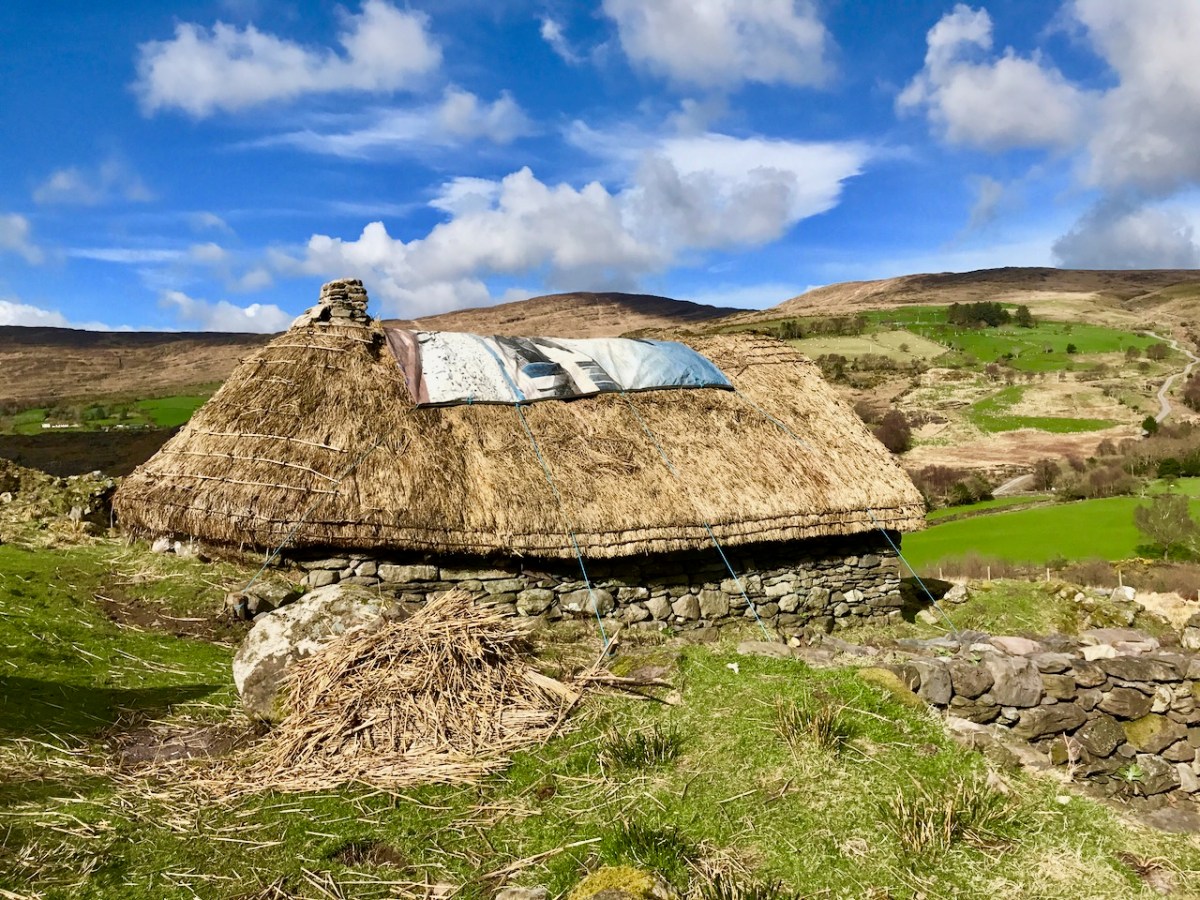
. . . An Cailleach Béarach according to tradition was supposed to be a witch who is believed to have erected most of the round towers and castles in this country. Tradition tells us that she built each of those buildings with three pocketfulls of stones. As well as being a famous builder, she is believed to have been a great mower. At the time of her death, it is said, she was 121 years and one day . . .
. . . The Cailleach Béarach started one day mowing with a score of men. The men led off & she took up the rear. After an hour’s work, she caught up to the man who was last and mowed off his legs from above the ankles. She continued the work until she caught up to the man who was second last & she cut off his legs also. This procedure continued until all the men but one had their legs cut off. At this stage, they went to their dinner . . .
The most frequently occurring references to the Cailleach are her feats in sculpting the landscape. Many features in the west of Ireland are attributed to her work.
. . . There is a hill in this locality called Keash Hill. Caves at the back of this hill are still pointed out as places where giants lived. Nearby there is a hollow with a flag flooring which is called the “Giants’ Table” and likely it is here they cooked and eat their food. Running parallel to this hill and at the back of it is a place called “Dun Ui Bhéara” where the Cailleach Bhéara is supposed to have lived. Old people tell stories of a fight between the Cailleach Béara and one of the giants. He stood on the summit of the hill and fired stones down at her. She lifted stones and earth and fired them up at him. The stones that reached the top of the hill form a “cairn” which is still to be seen. The place from which they were taken formed a small lake which remains to the present day. Some time ago if children were bold their mothers threatened to tell Cailleach Bhéara and immediately they got quiet. She was able to walk across Lough Arrow and the waters at their deepest part just reached her arm pit . . .
SCHOOLS FOLKLORE COLLECTION – INFORMANT MR James Benson, Kesh, Co Sligo
. . . When the Summer came the Cailleach Bhéara drove the bull out to the grassy parts of Béara. One day when the bull was being driven out, he heard a cow lowing in Kerry, so he started off towards her. The Cailleach went ahead of him, but he jumped into the tide and started to swim for Kerry. The Cailleach struck him with her wand and as she was doing it, the bull called the cow, and her calf with him, and they form the Bull, Cow, and Calf rocks now . . .
Finally, we must not overlook a poem written by Pádraig Pearse, one of the leaders of the Easter Rising in 1916. Pearse was executed on May 3 in that year – aged 36 – for his part in this ‘rebellion’. In this photograph, Pearse can be seen reading the oration at the funeral of the Fenian Jeremiah O’Donovan Rossa on 1 August 1915. I am completing this post with the words of Mise Éire, written by Pearse in 1912.
Mise Éire: Sine mé ná an Chailleach Bhéarra
Mór mo ghlóir: Mé a rug Cú Chulainn cróga.
Mór mo náir: Mo chlann féin a dhíol a máthair.
Mór mo phian: Bithnaimhde do mo shíorchiapadh.
Mór mo bhrón: D’éag an dream inar chuireas dóchas.
Mise Éire: Uaigní mé ná an Chailleach Bhéarra.
I am Ireland: I am older than the Hag of Beara.
Great my glory: I who bore brave Cú Chulainn.
Great my shame: My own children that sold their mother.
Great my pain: My irreconcilable enemies who harass me continually.
Great my sorrow: That crowd, in whom I placed my trust, decayed.
I am Ireland: I am lonelier than the Hag of Beara.
Welcome to the UCD Library Cultural Heritage Collections blog. Discover and explore the historical treasures housed within our Archives, Special Collections, National Folklore Collection and Digital Library