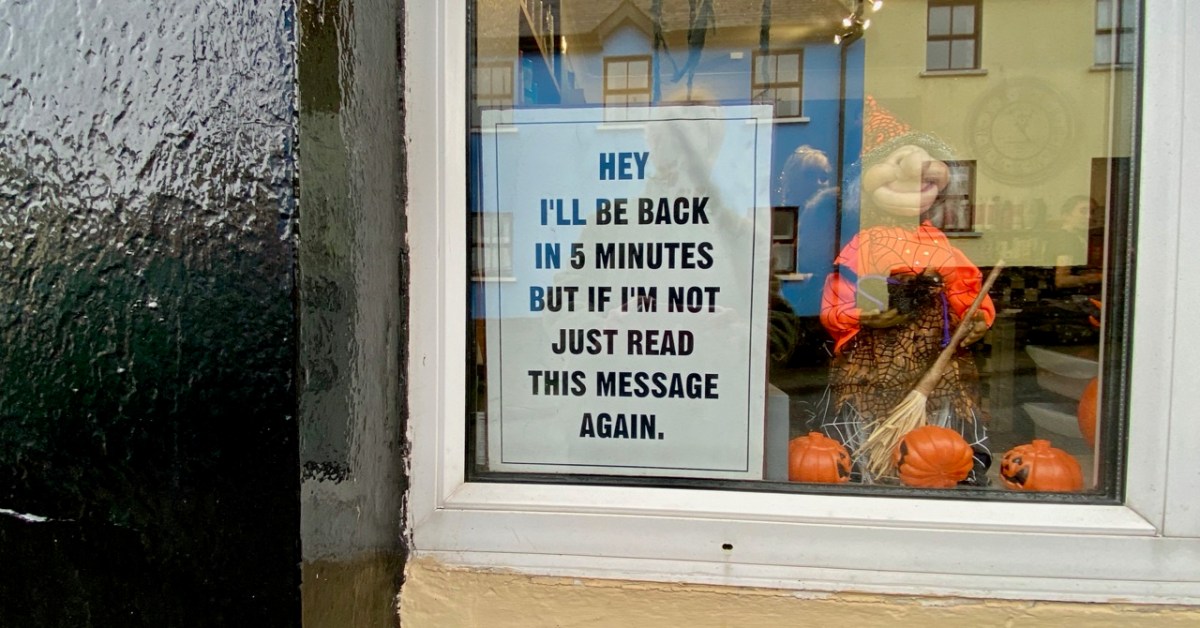
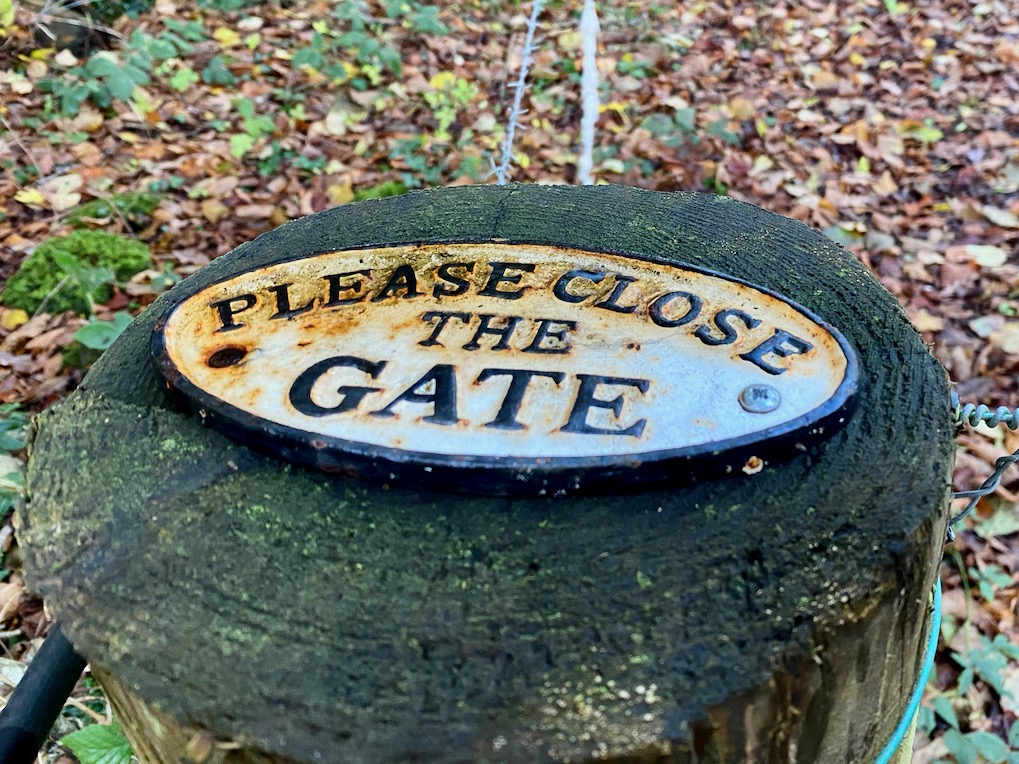
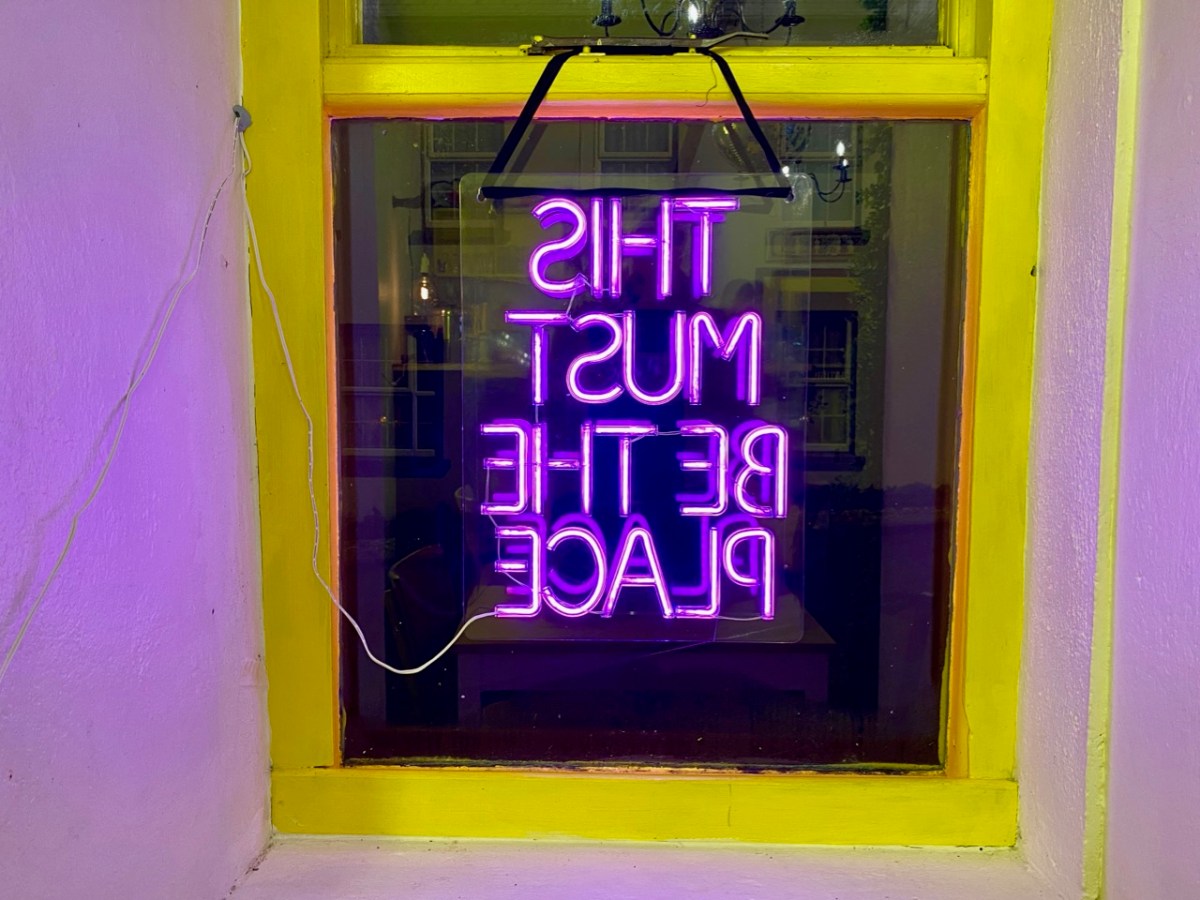
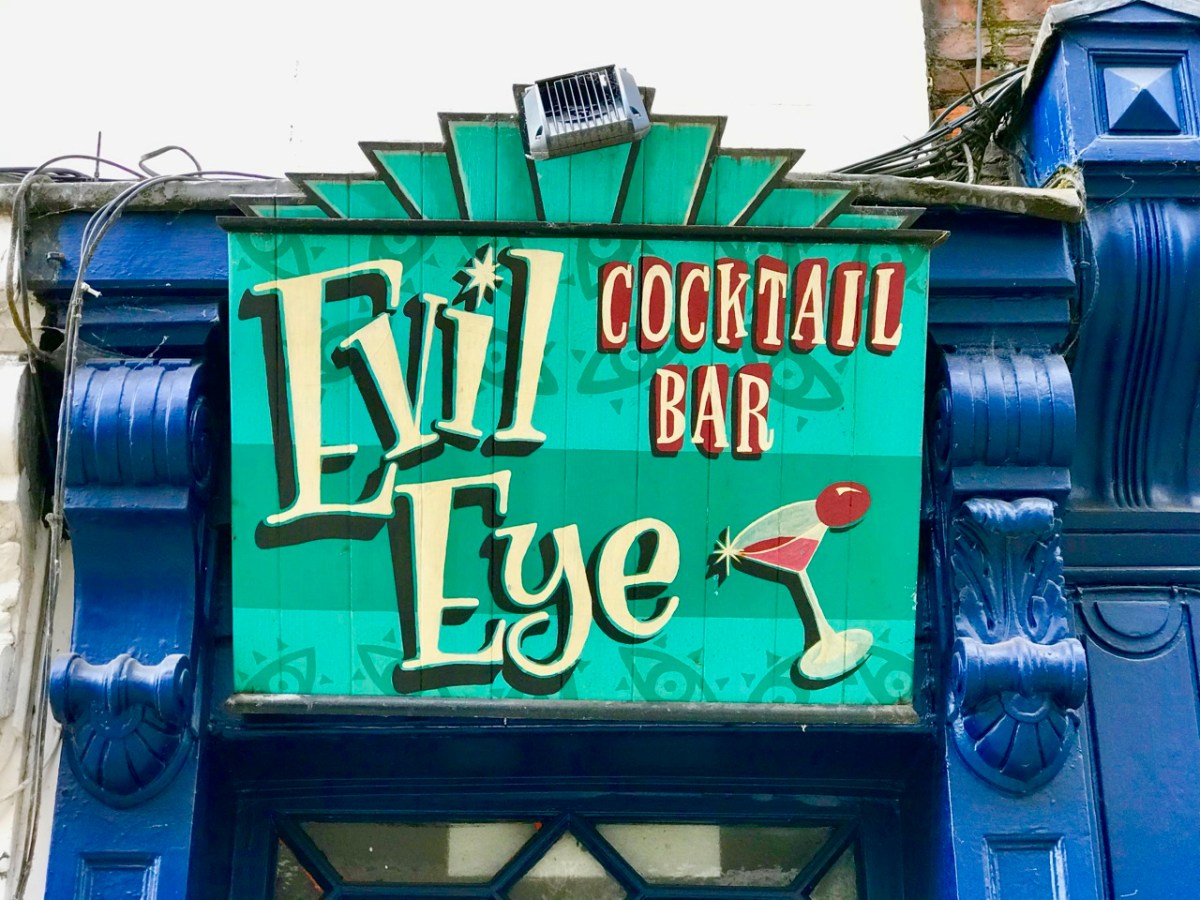
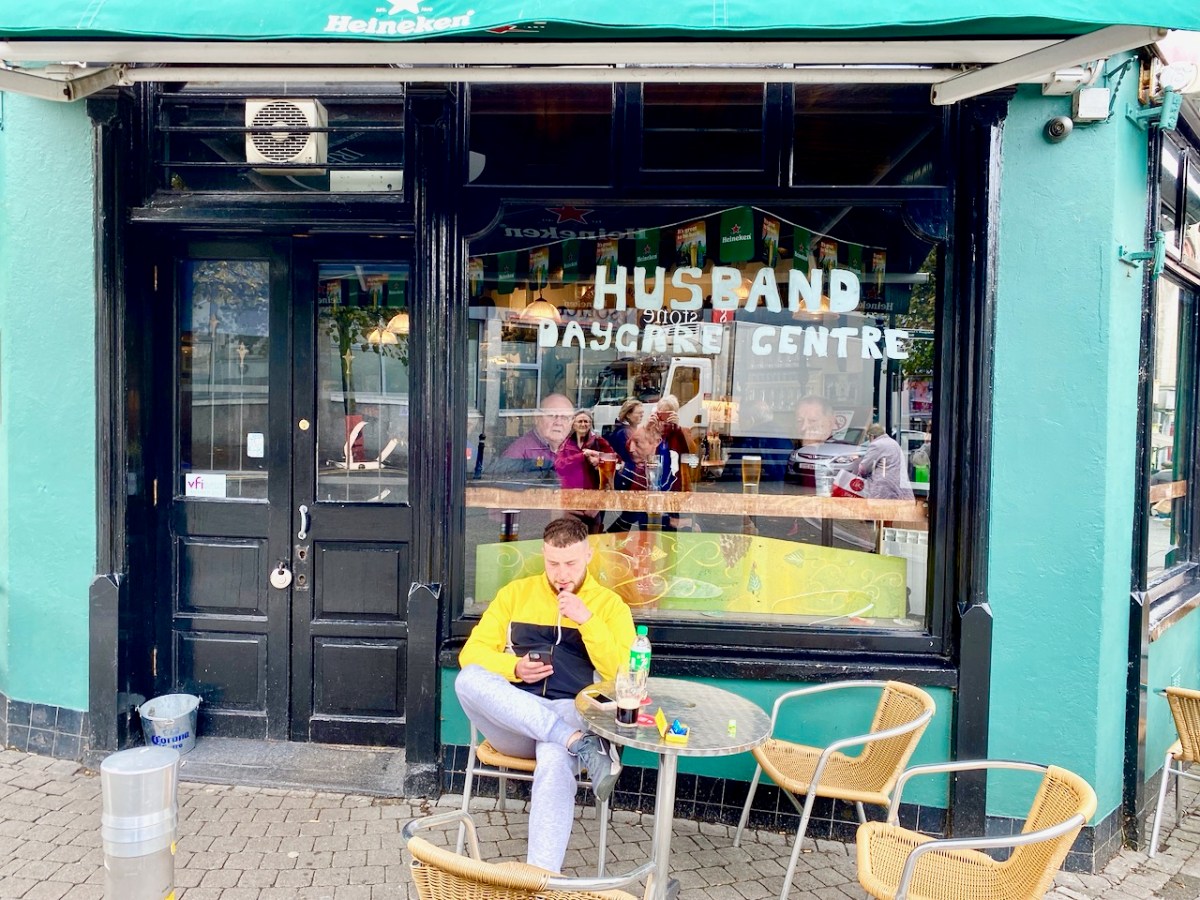
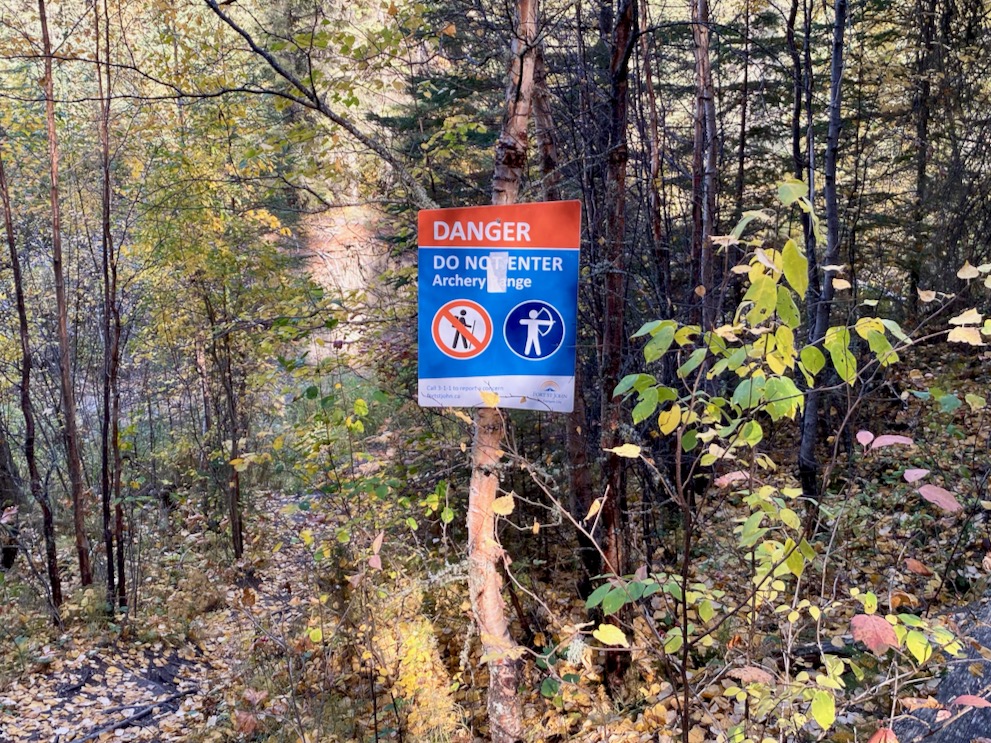
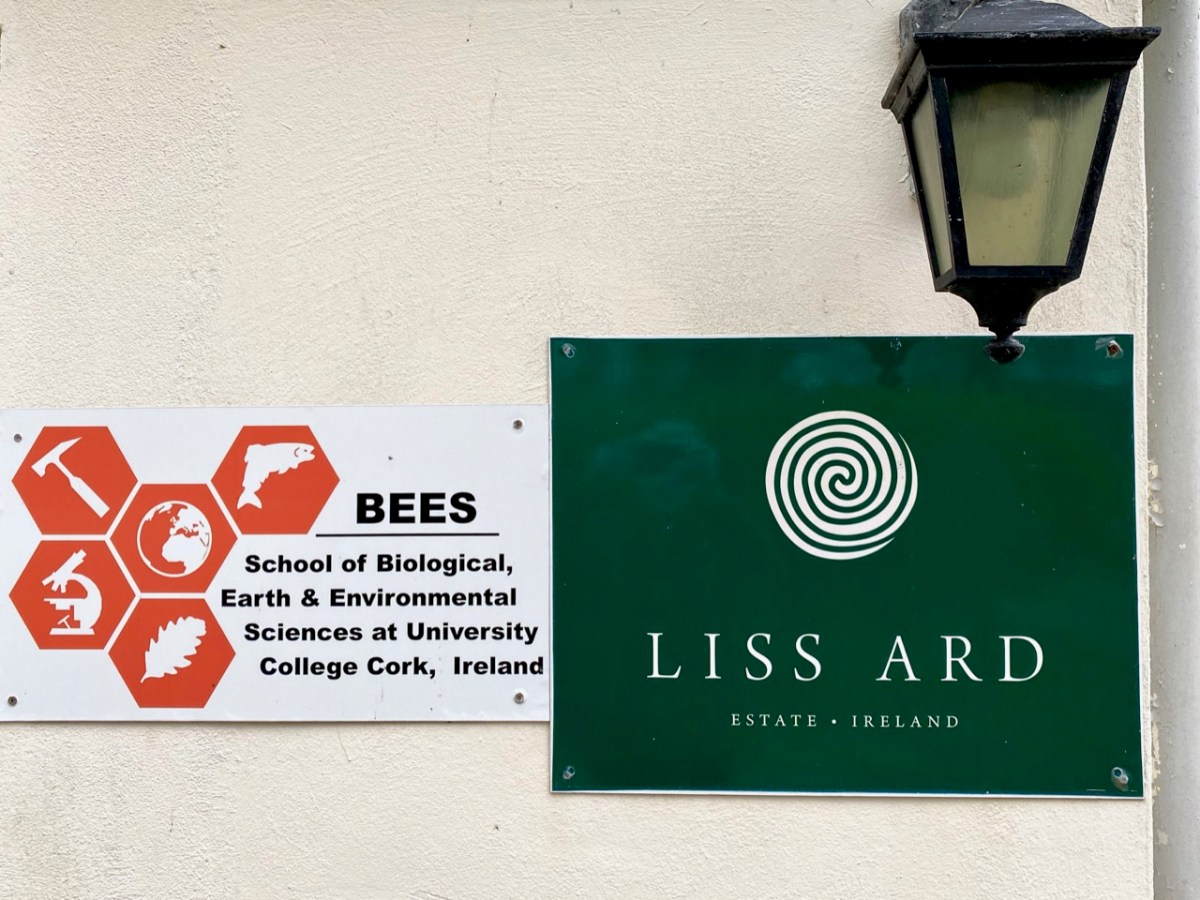
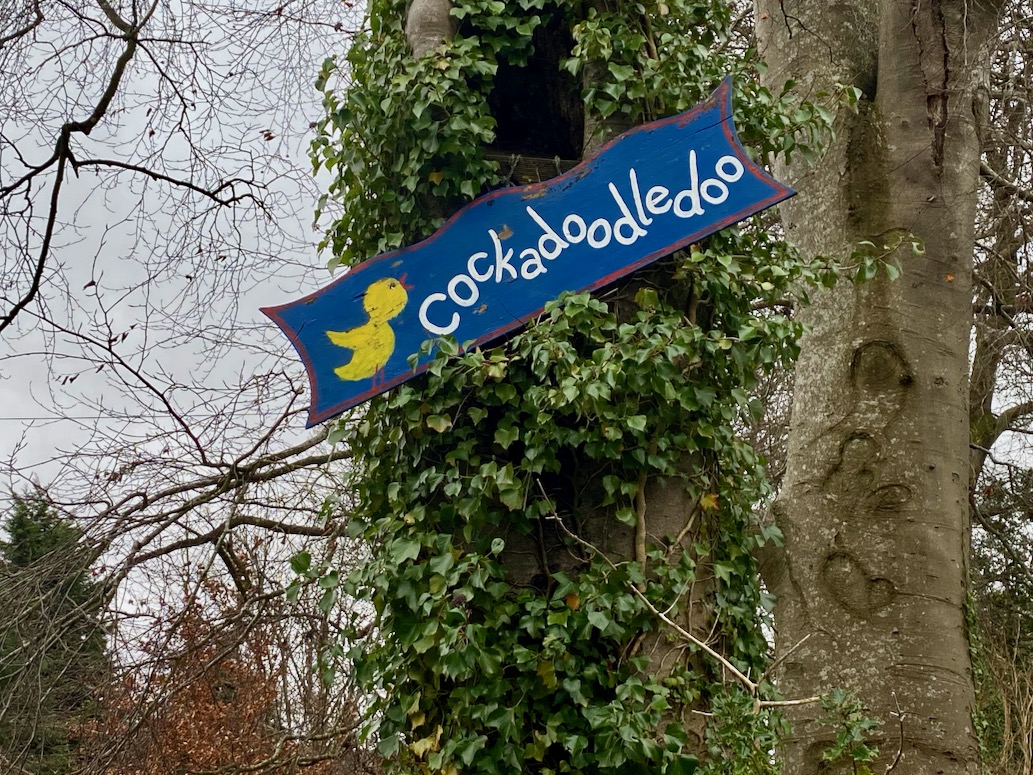
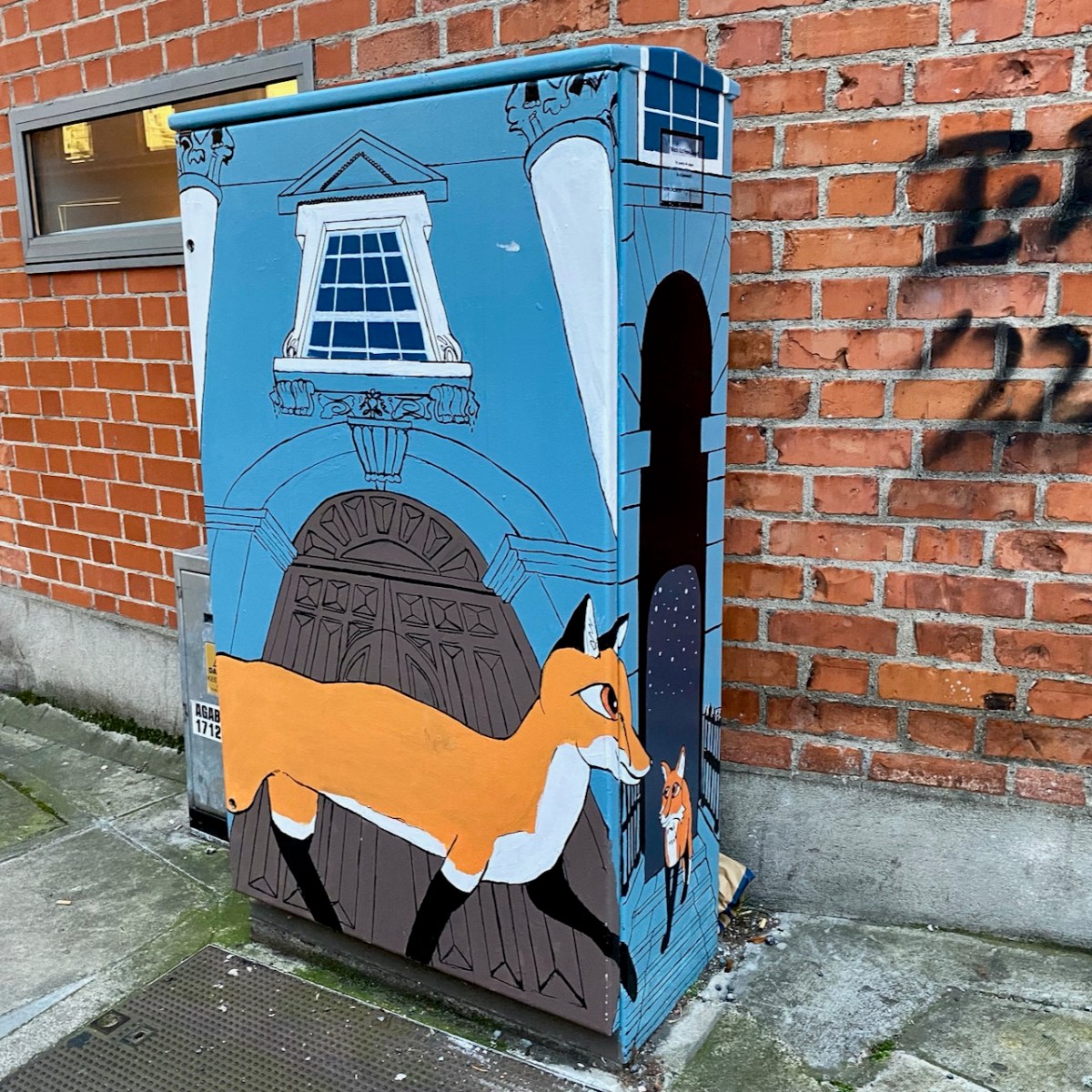
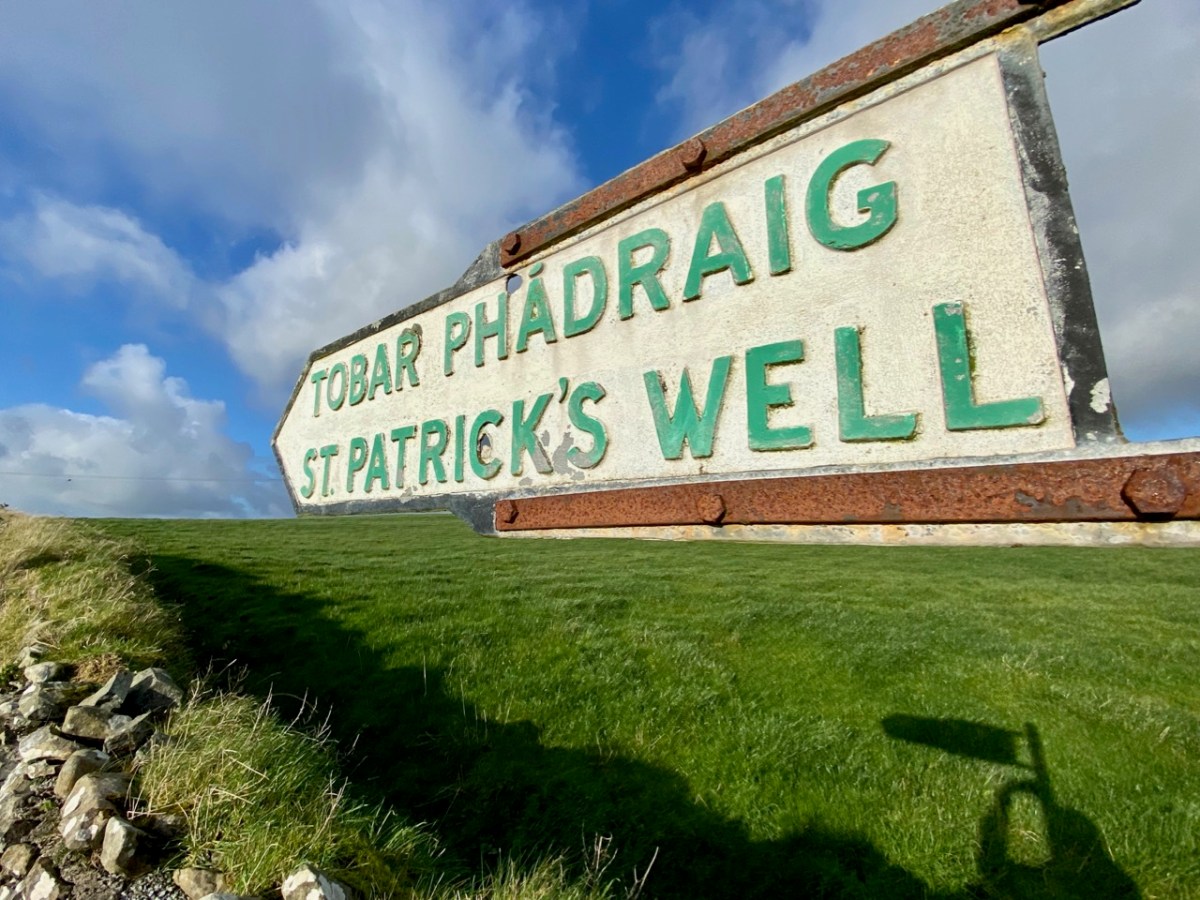
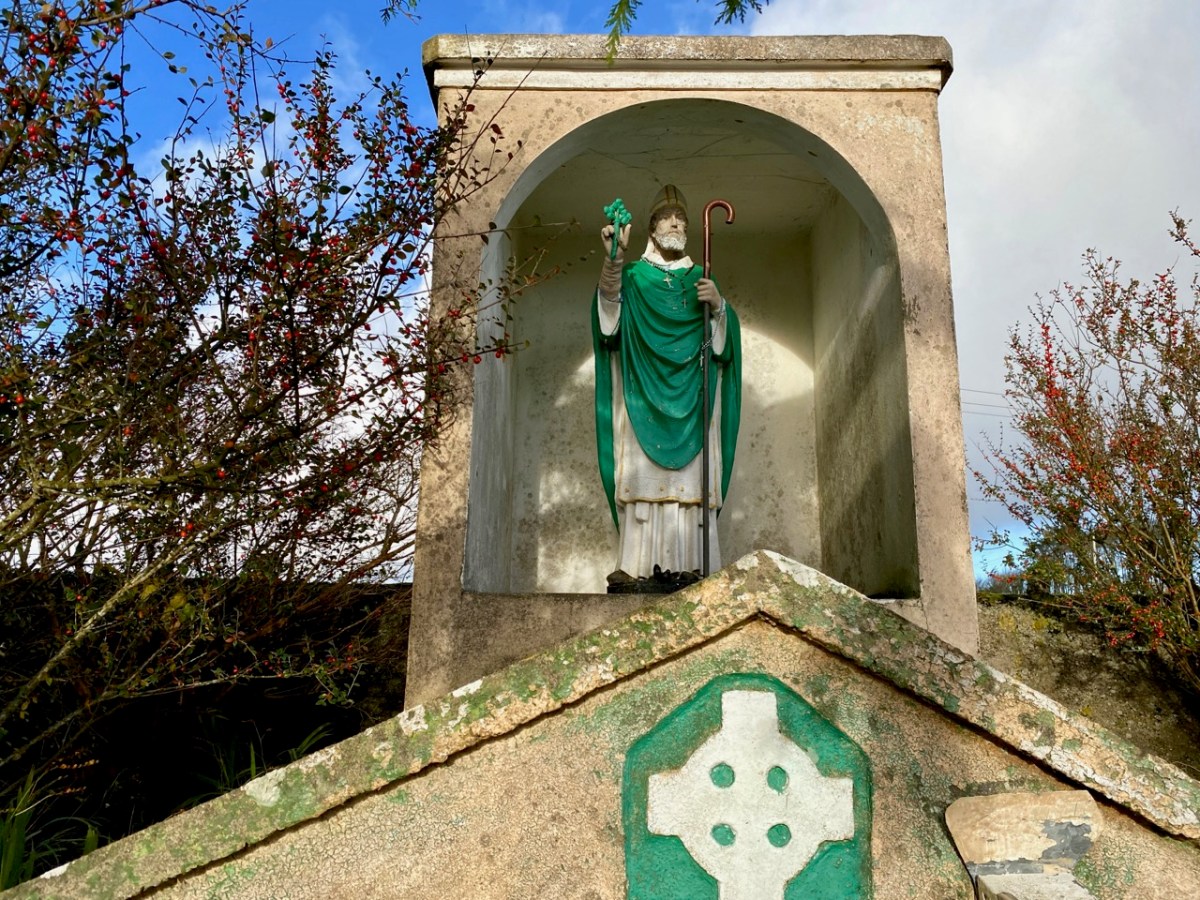
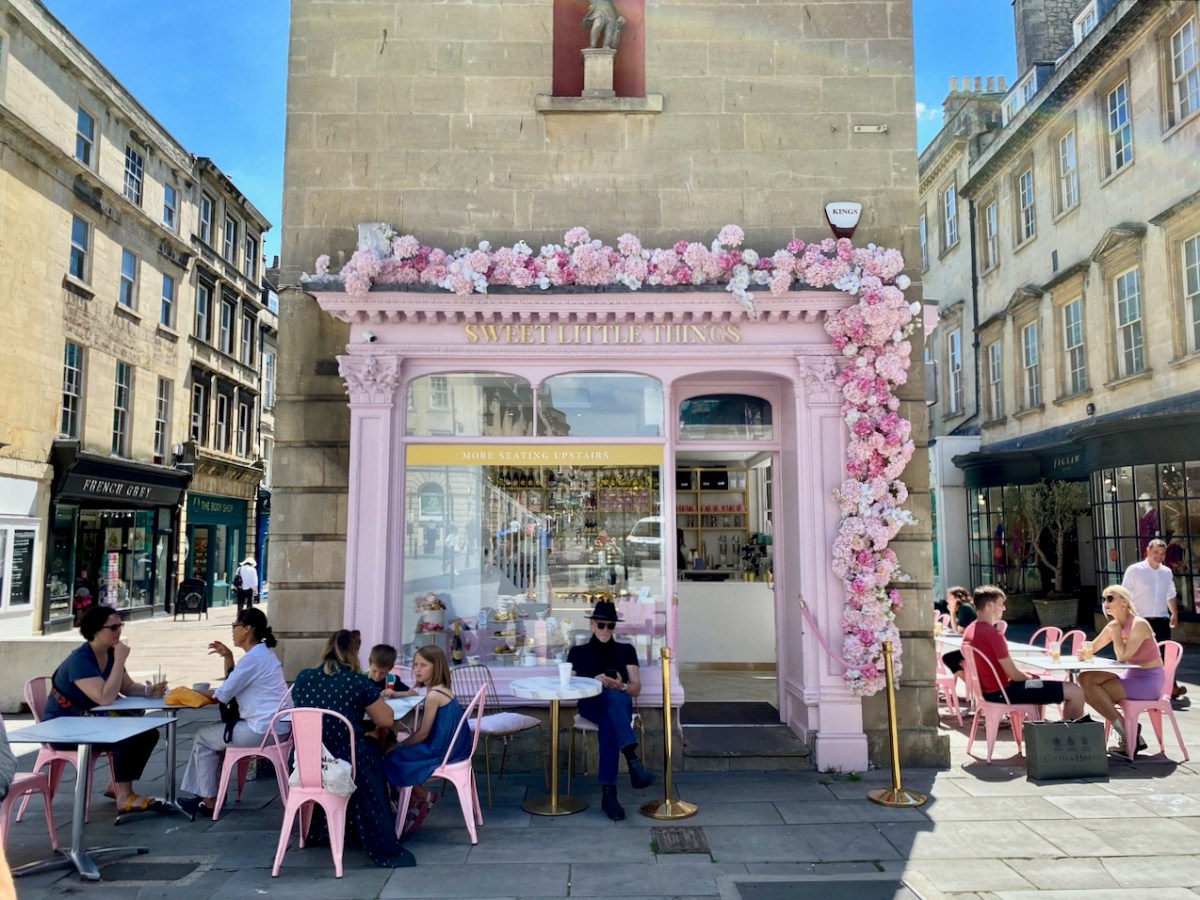
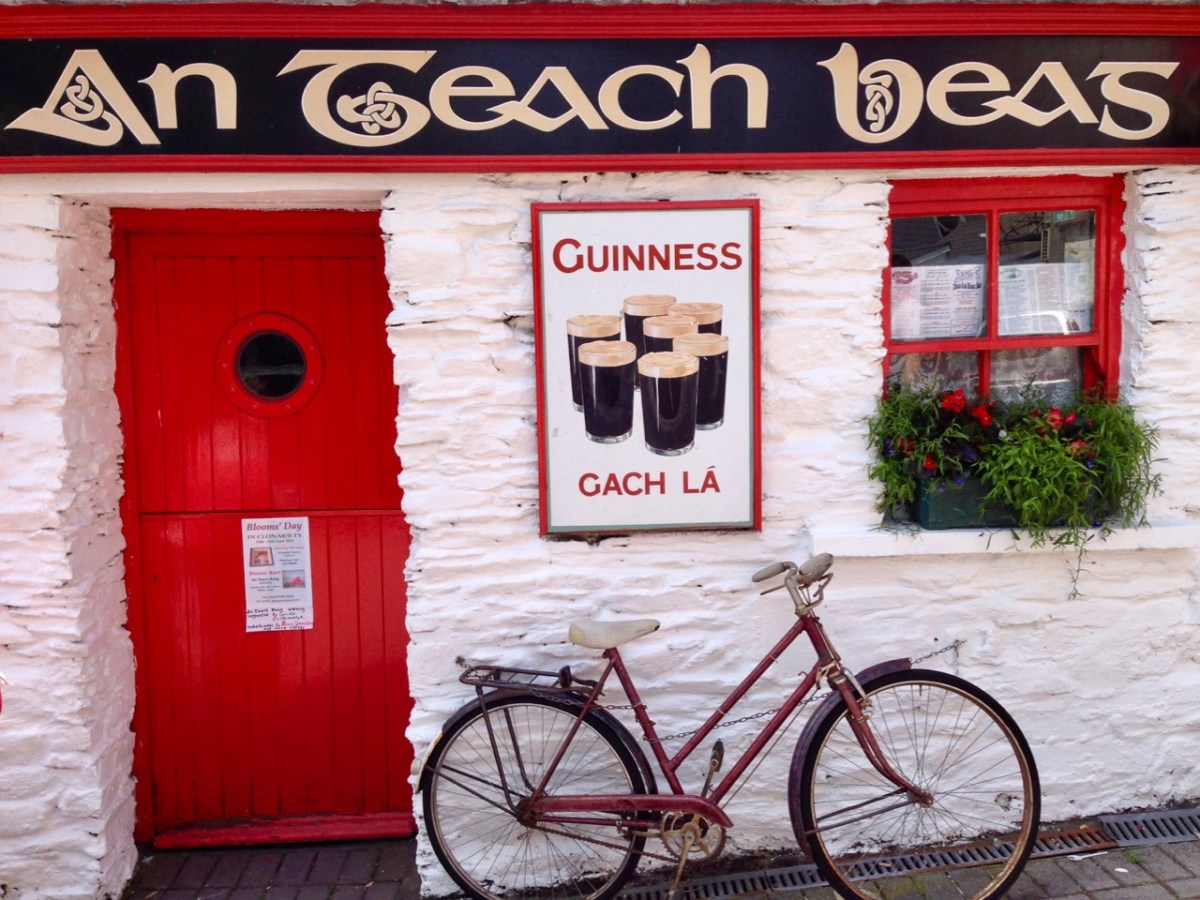
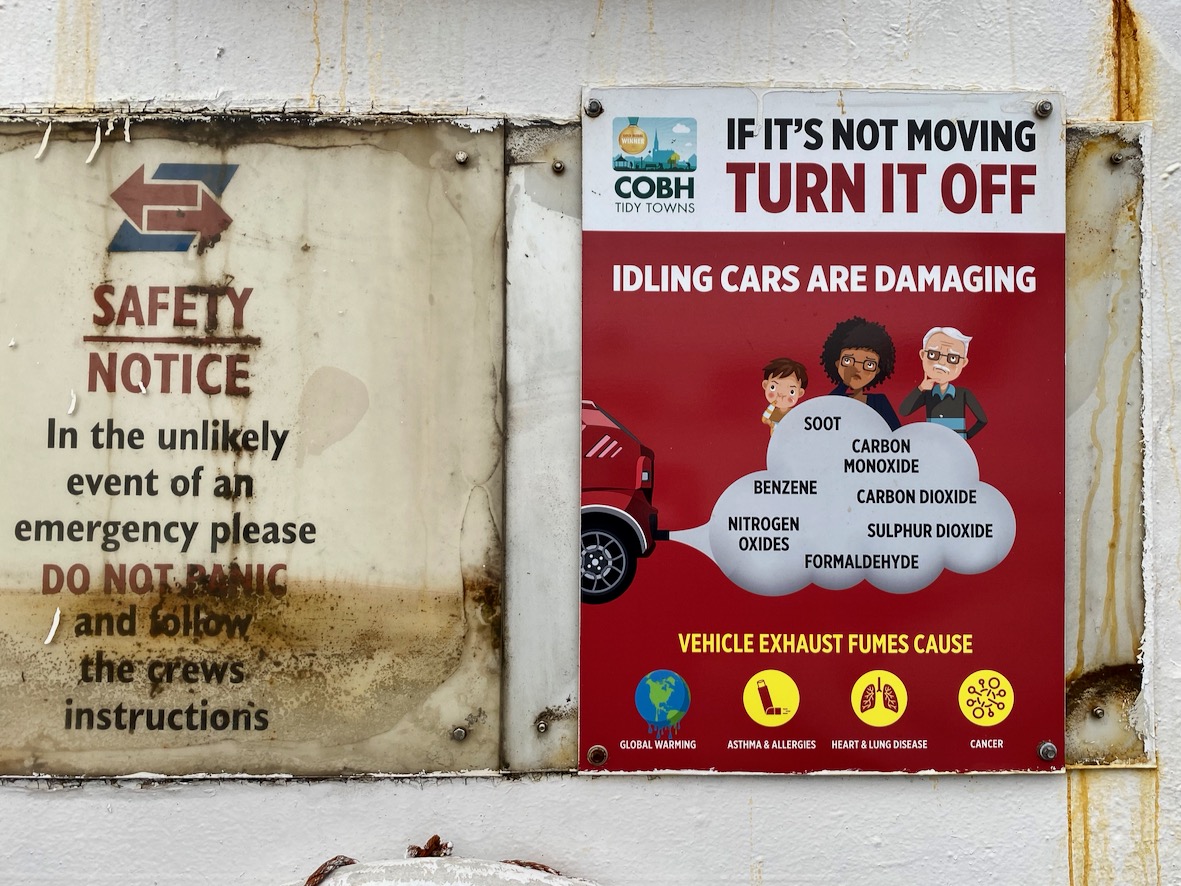
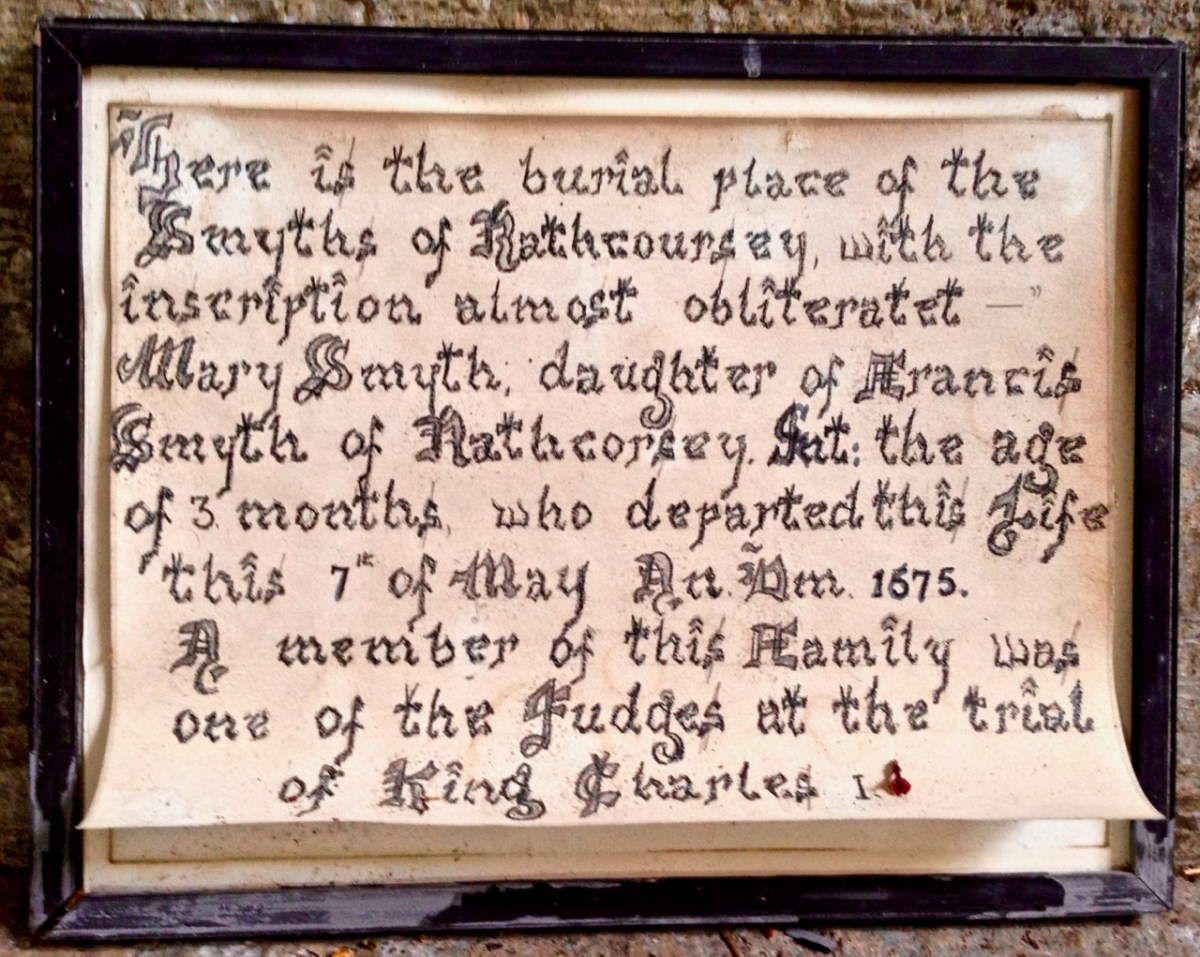
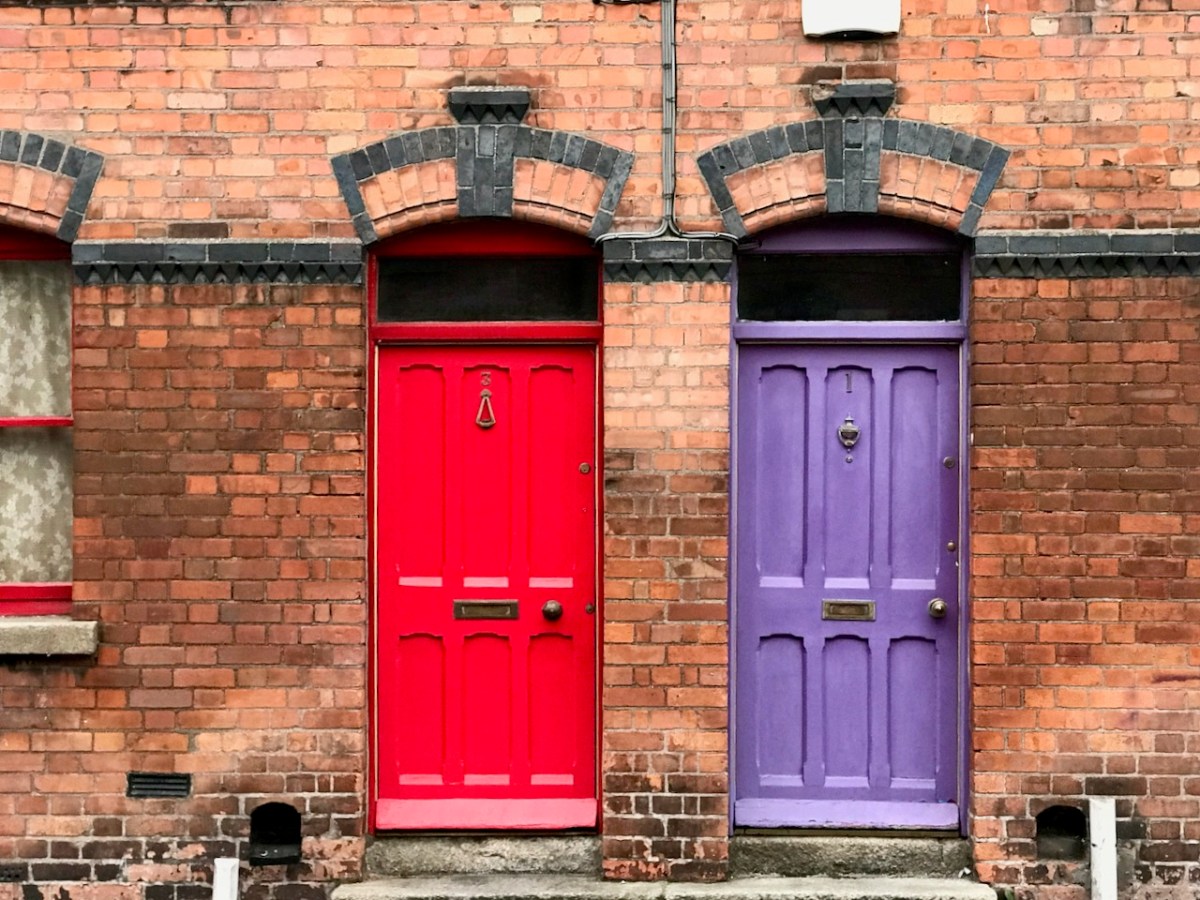
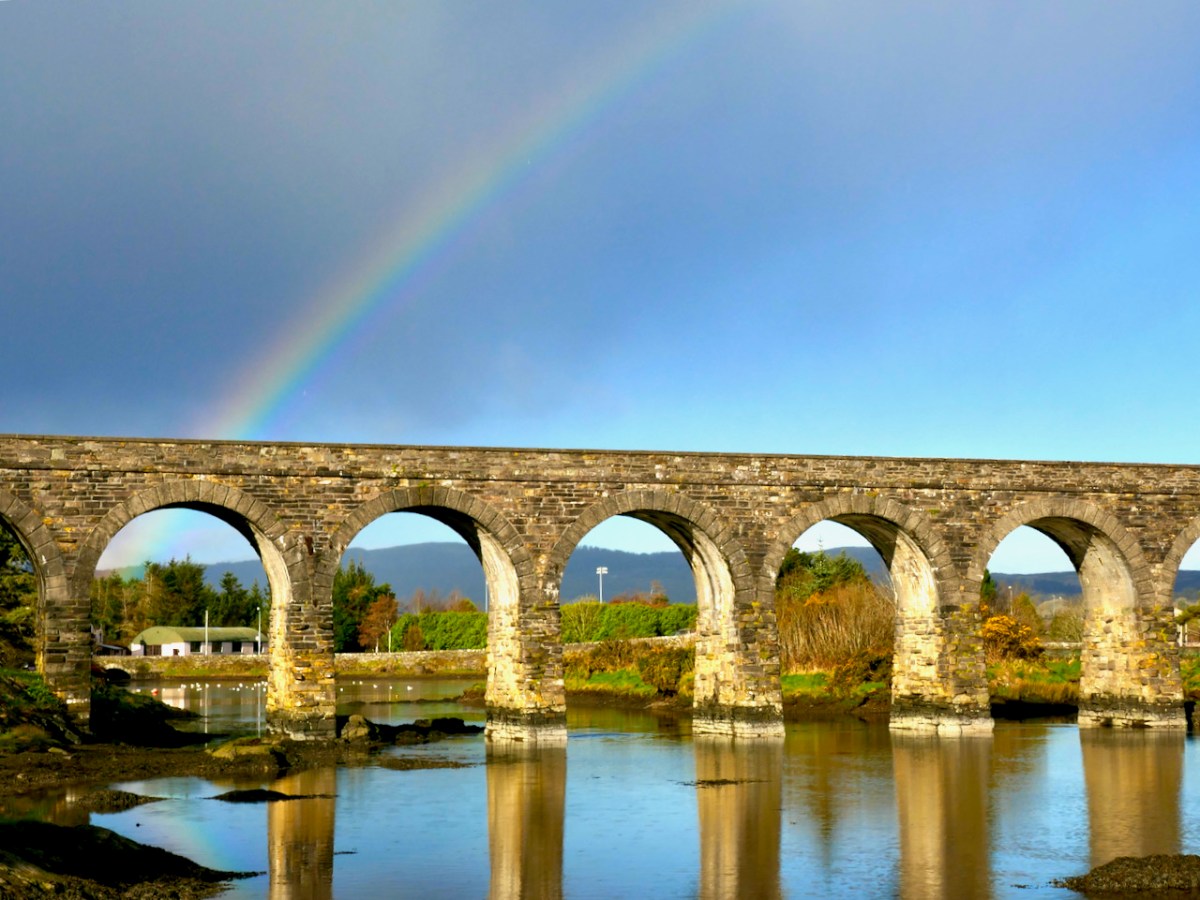
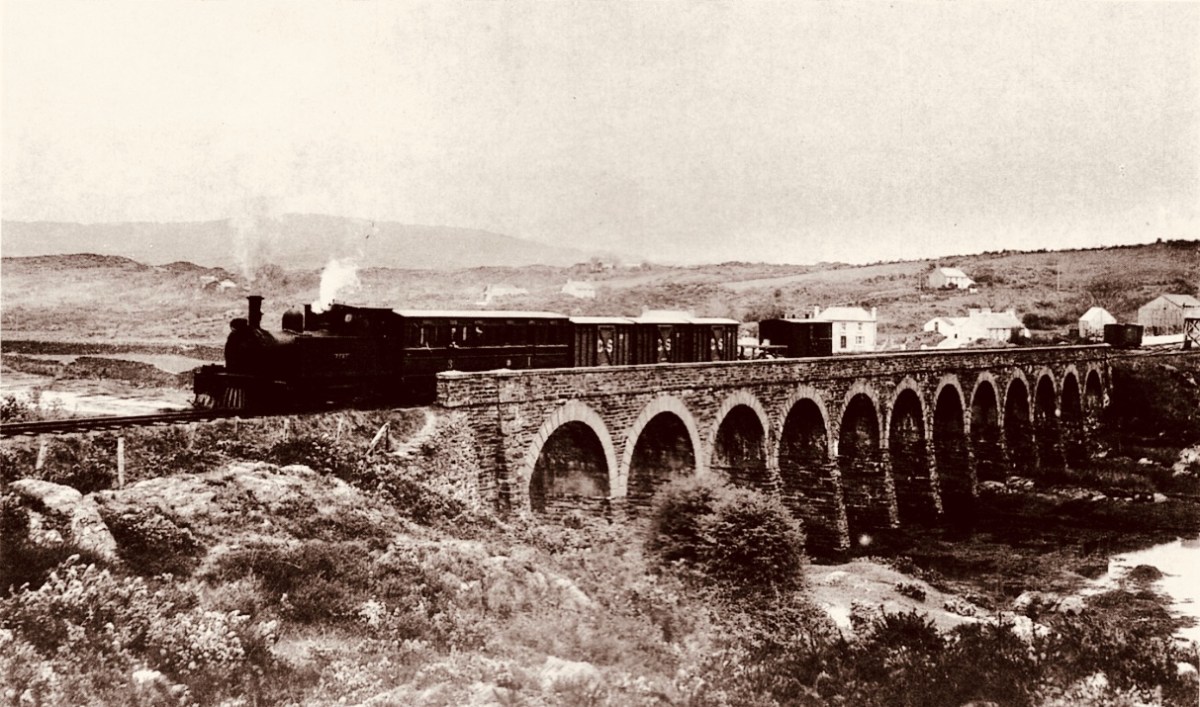
My collections of signs, posters and visual images expands all the time. If I see something quirky, I can’t resist a photo. I share these with you every so often. Today’s selection comes from far and wide: mainly here in Ireland (principally West Cork) with the odd stray from outside. I will only explain something if I feel an image demands it. The example above – from our own Ballydehob – certainly doesn’t, but the one below, which I also came across today in our little village, probably does.
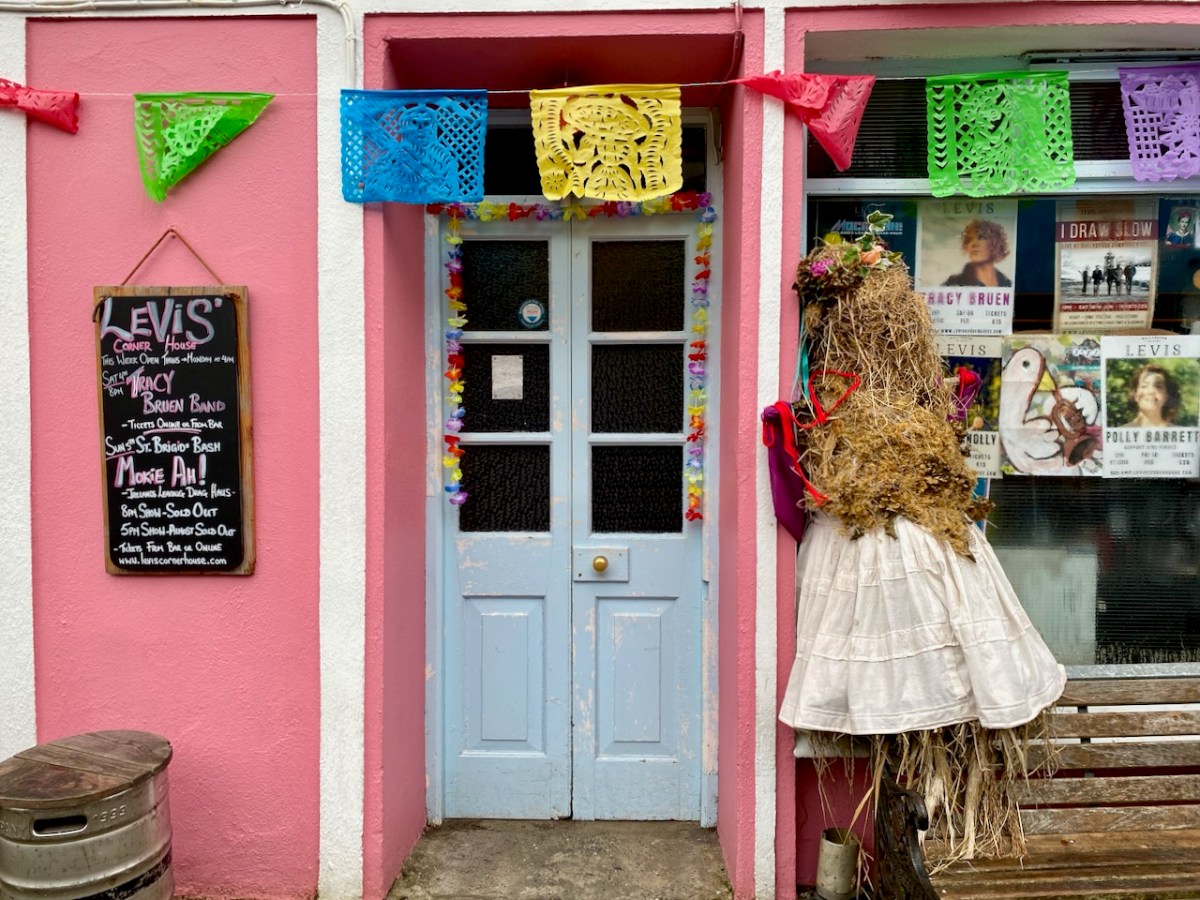
It’s a straw doll representing St Brigid. Often also known as Brídeóg, ‘Breedhoge‘ or ‘Biddy‘, it was once common to see these made to celebrate spring (which traditionally begins on her day, February 1st). This year Ireland has its first ever St Brigid’s bank holiday (tomorrow), to balance out St Patrick’s Day which we have always celebrated around his own feast, March 17th.
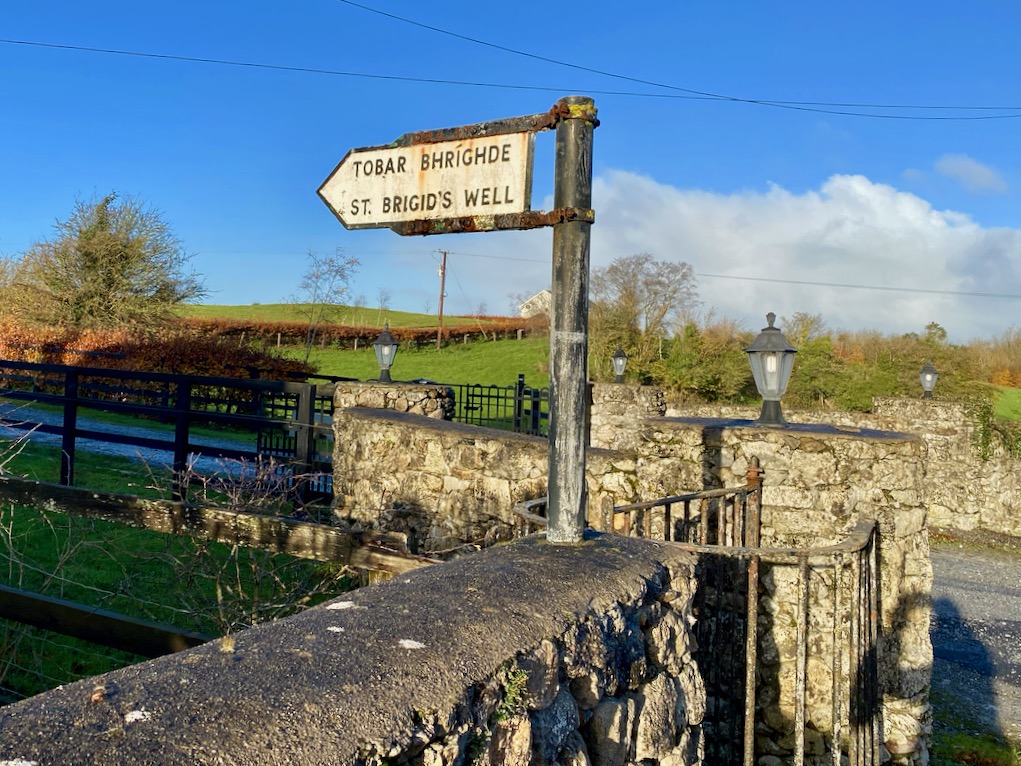
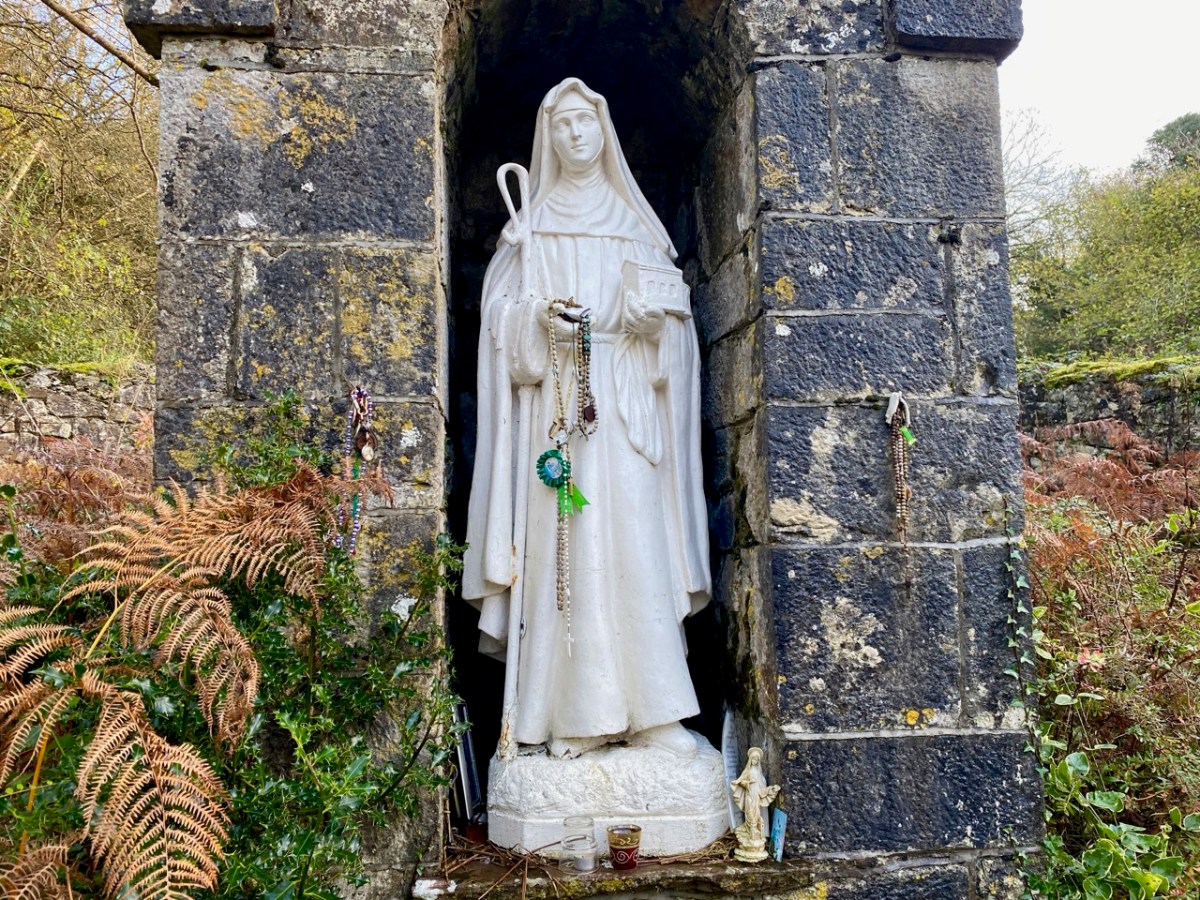
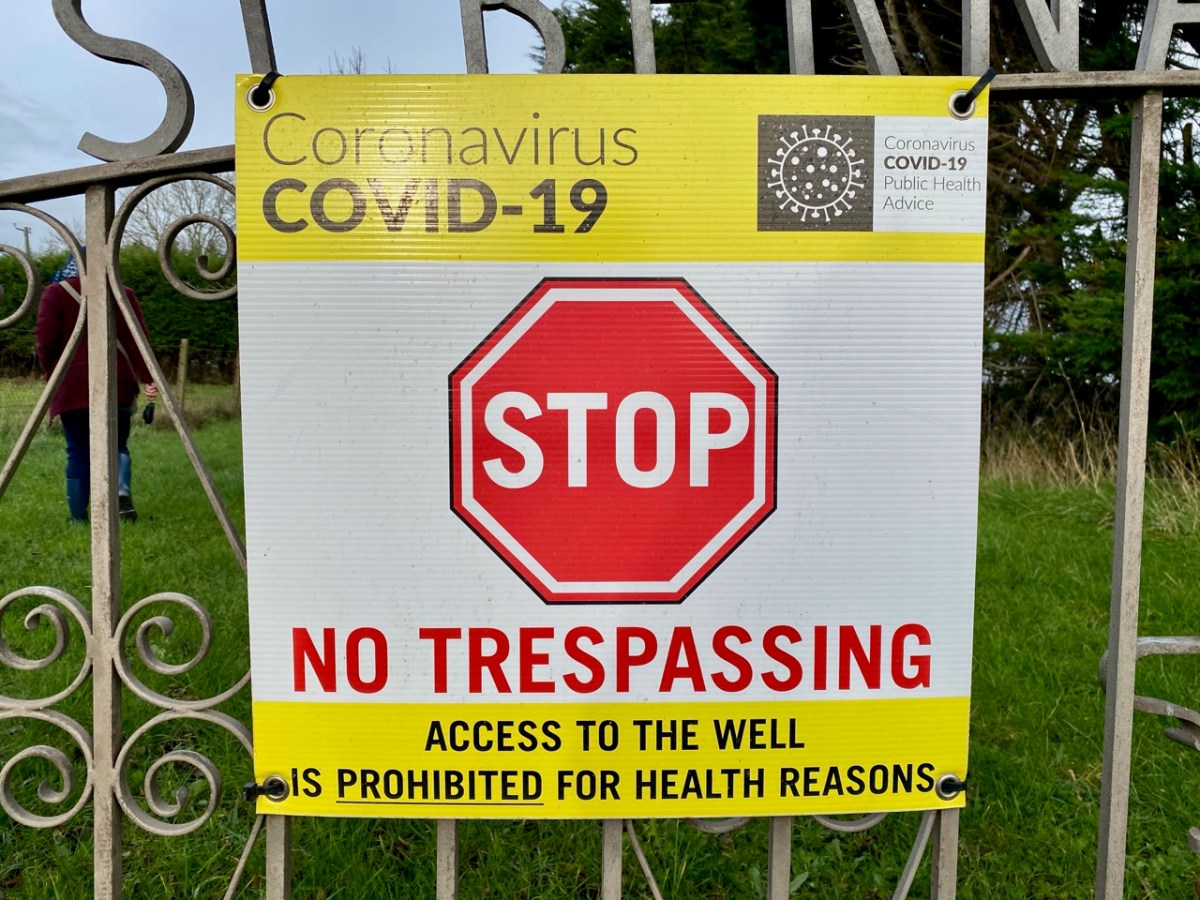
Let’s get back to signs. Wouldn’t you expect that one might visit a holy well for health reasons?
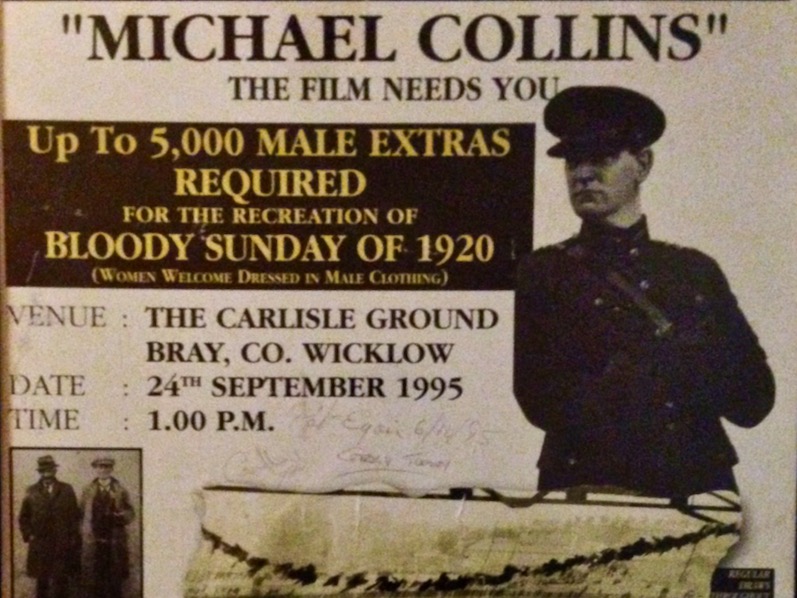
This surviving poster in Bray, Co Wicklow, somewhat irreverently makes light of the Bloody Sunday events of 1920. I can’t help being amused by the little insertion underneath Up To 5,000 Male ExtrasRequired – “Women Welcome Dressed in Male Clothing”.
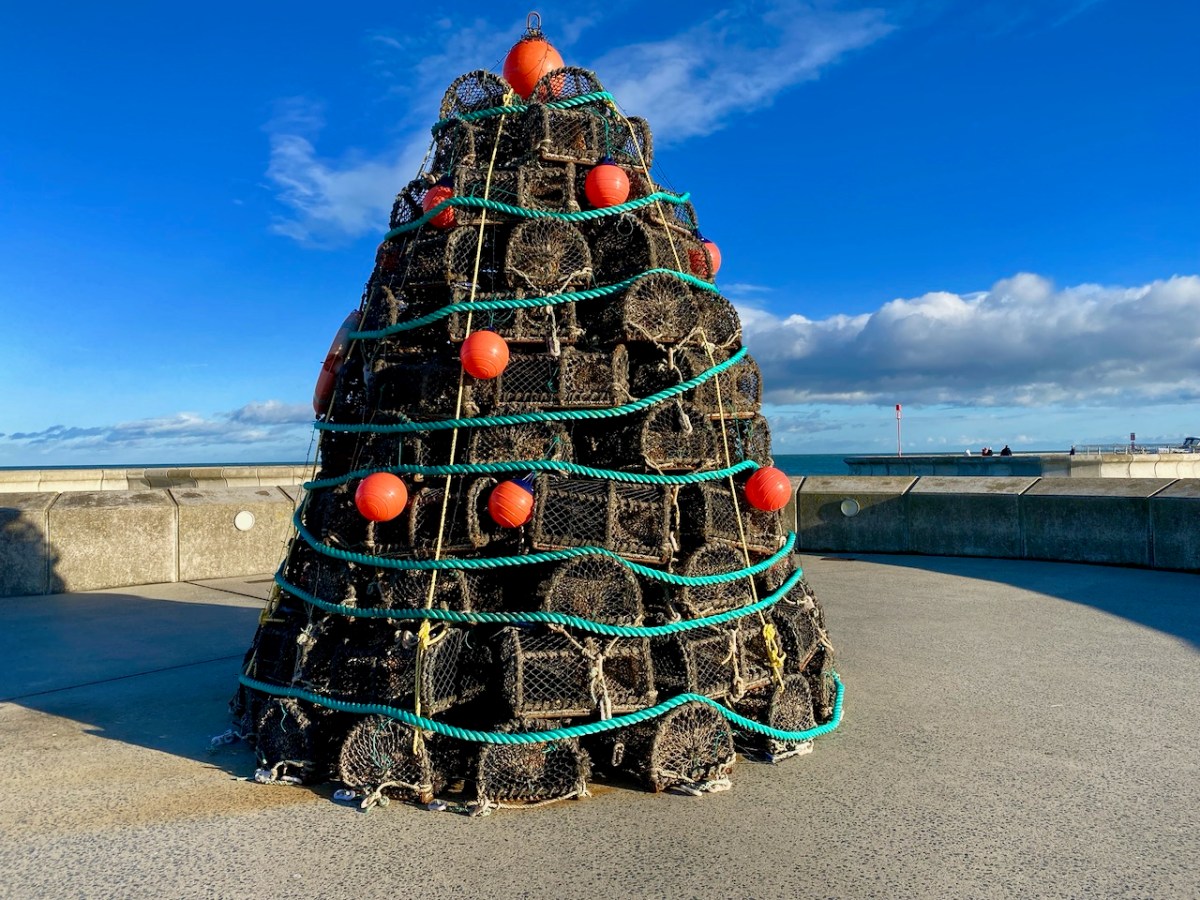
An impressive Christmas tree, built by the artistic fishermen of Greystones, Co Wicklow.
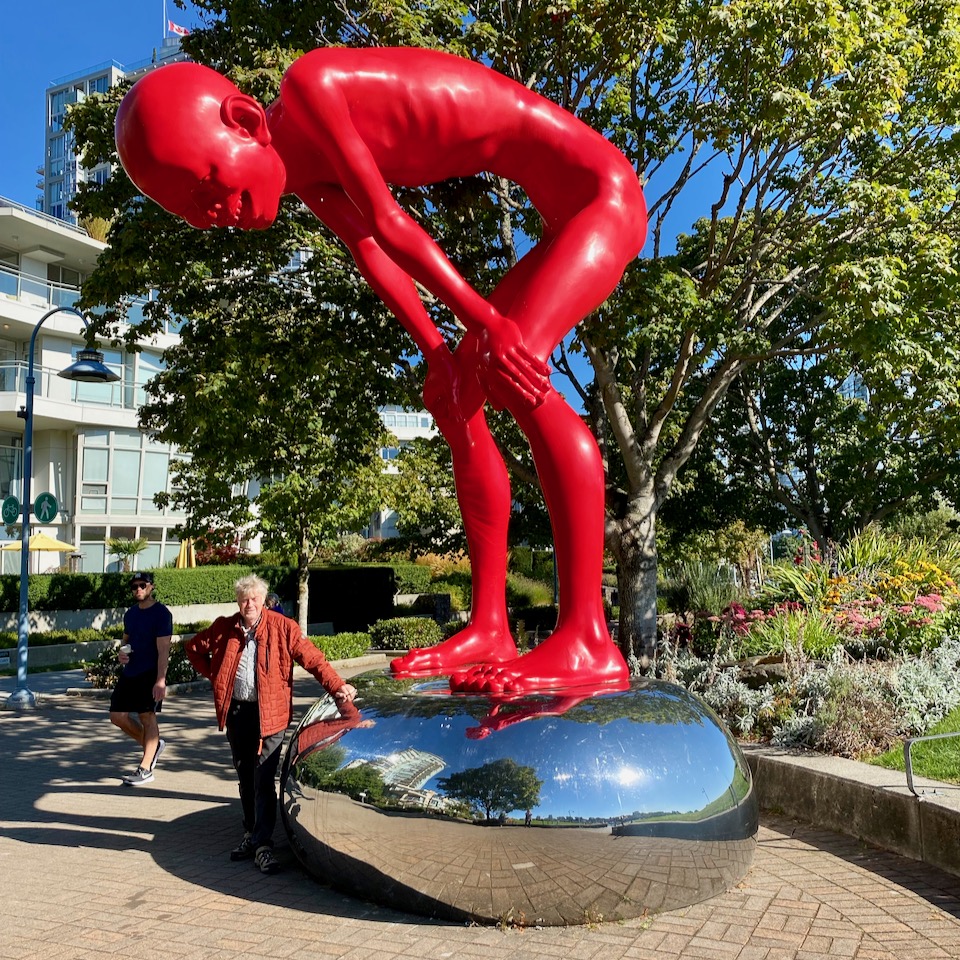
A long way from West Cork, we found this sculpture in False Creek, Vancouver last autumn. Titled “The Proud Youth,” the six metre high figure was created by Chinese sculptor Chen Wenling.
. . . Simple and truthful, this work creates a direct communication between man and nature, and initiates a sincere conversation between people and society. The cheeky expression and arresting pose are a celebratory call to the audiences, inviting them to embrace their inner child . . .
Vancouver Biennale
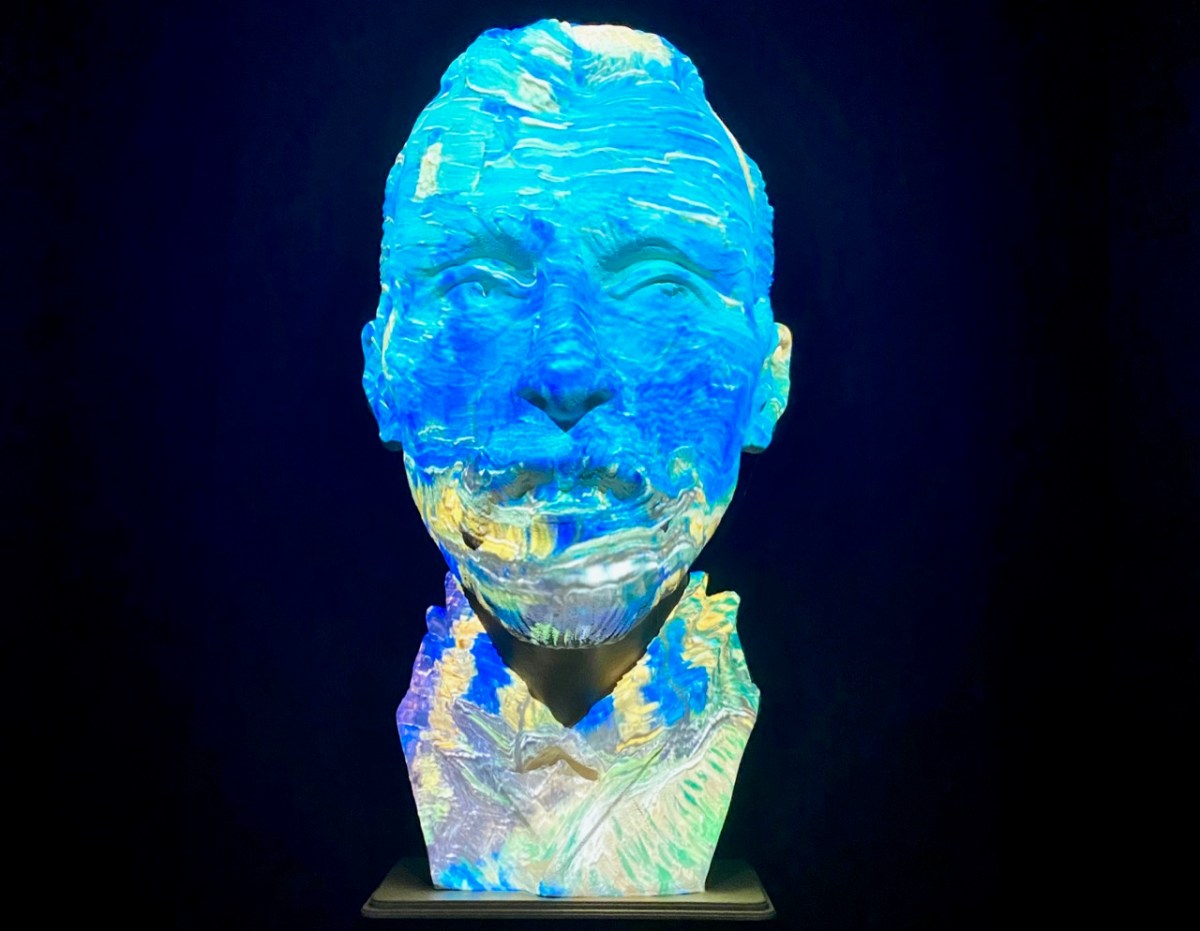
This may seem out of place, but we visited a Van Gogh exhibition while in Dublin recently. Described as an ‘Immersive Experience’ it is quite mind-blowing and we recommend the immersion if you are in the area.
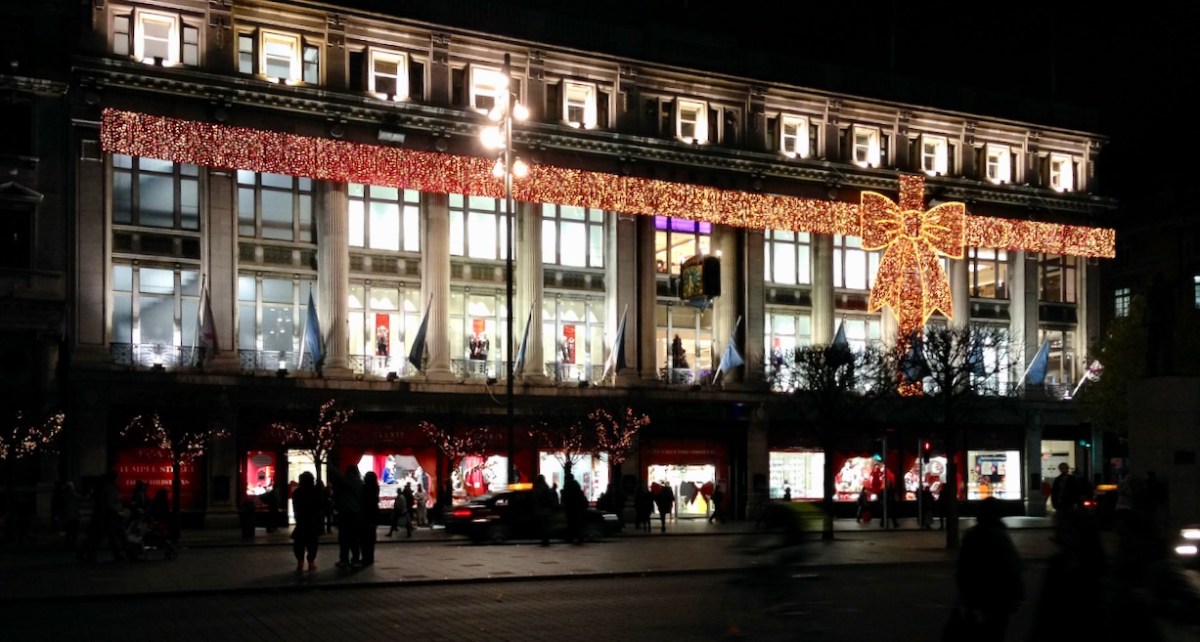
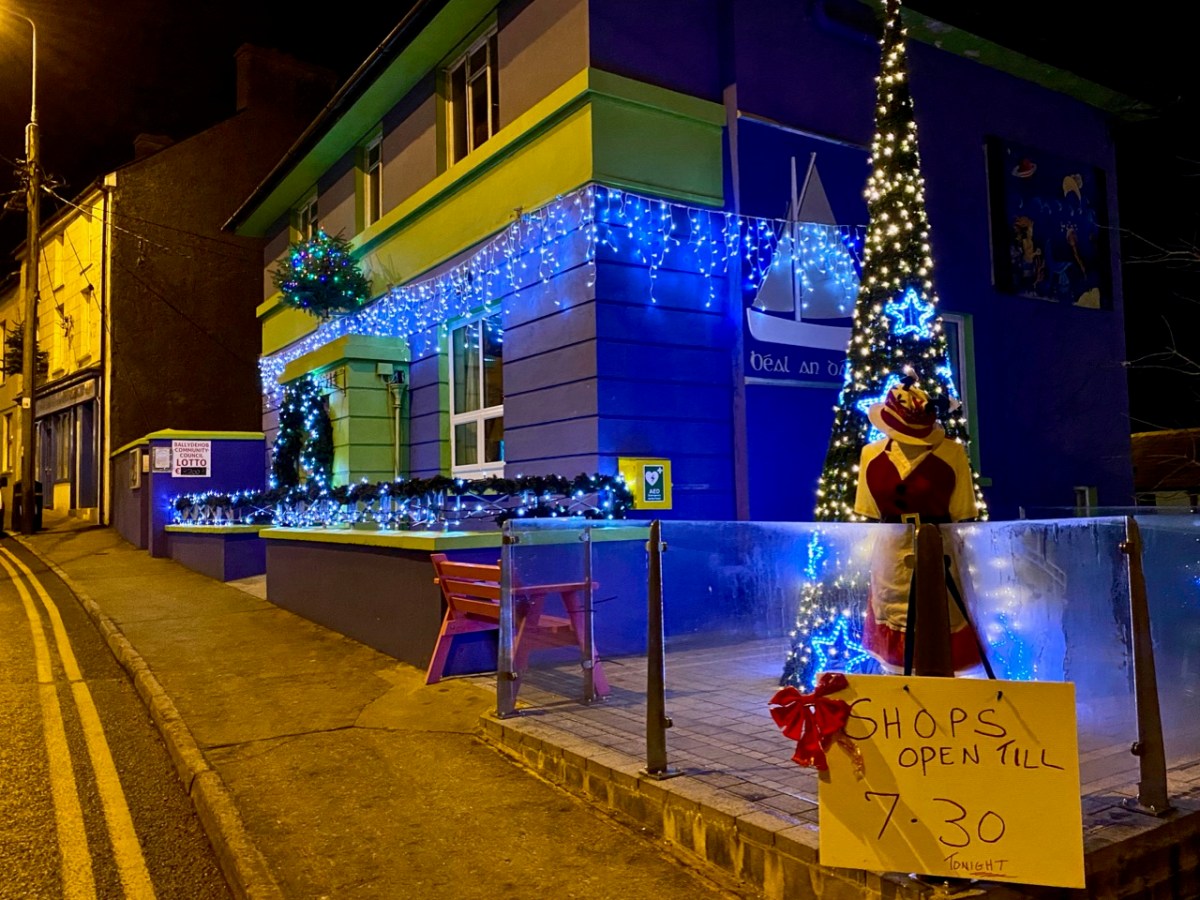
We’ll finish today with some shopfronts decorated for Christmas: in Dublin, and back in picturesque Ballydehob.
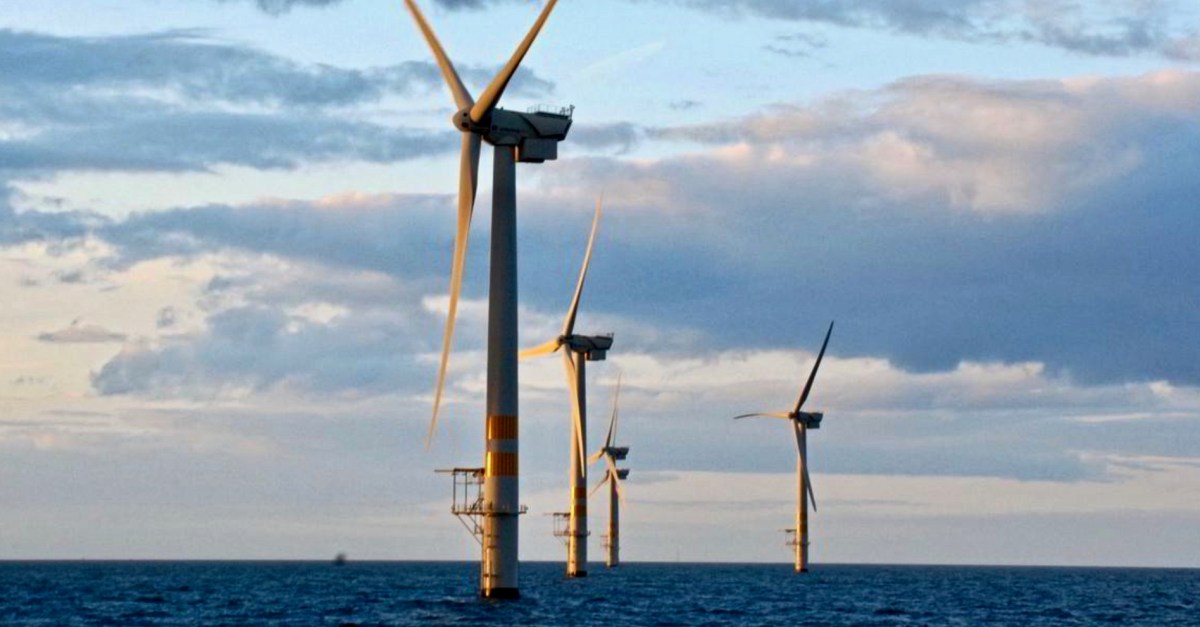
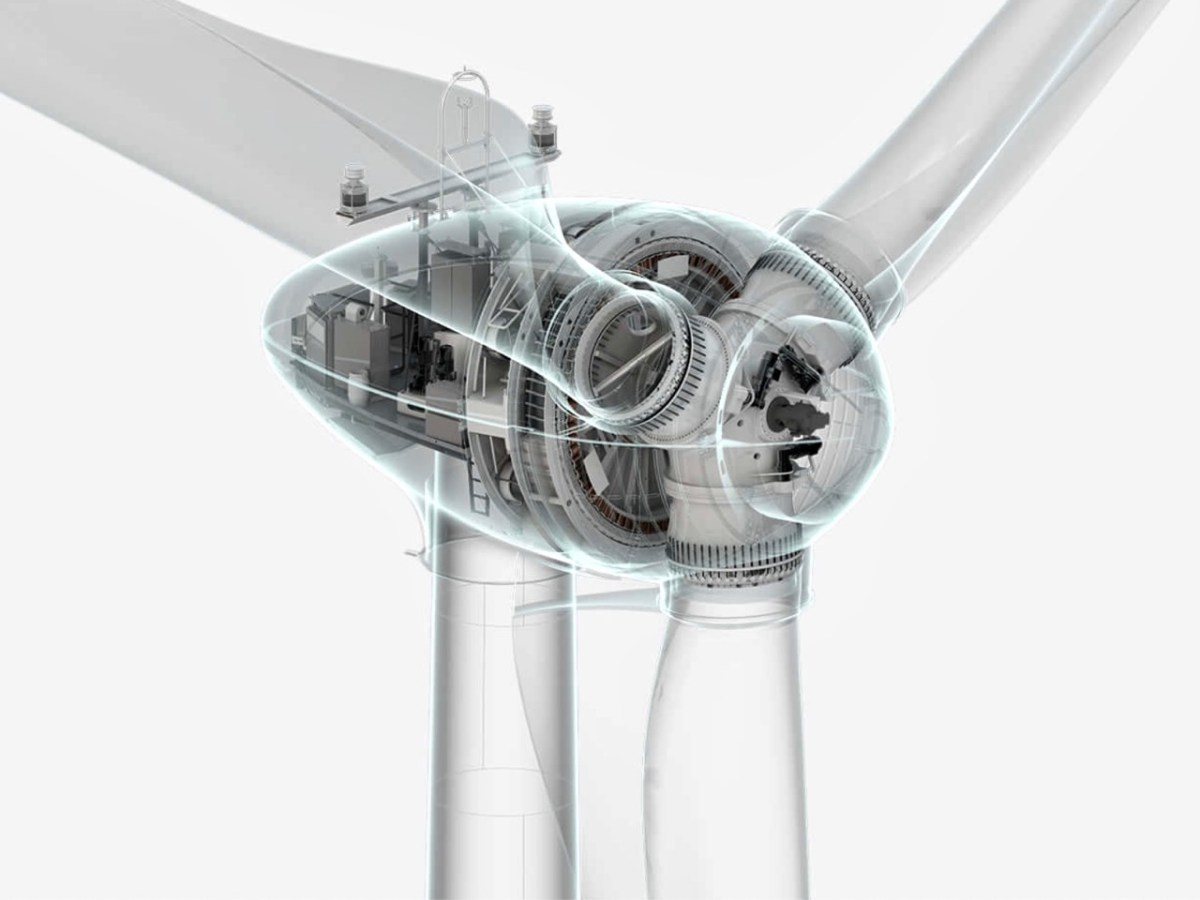
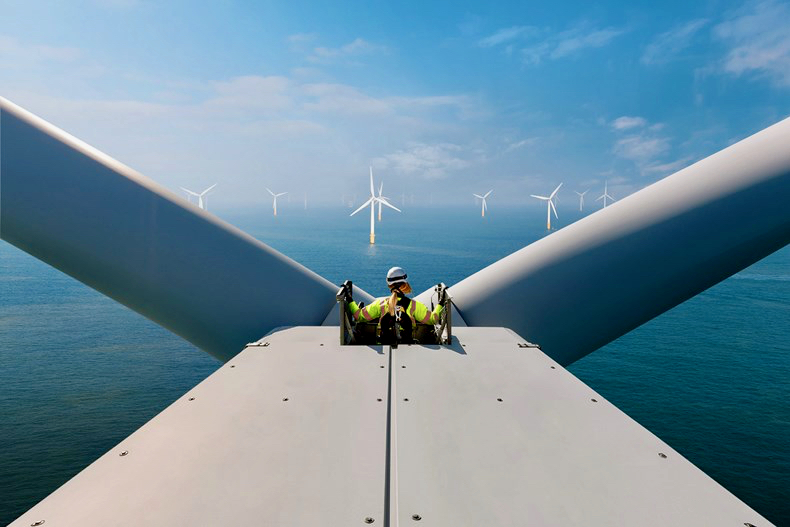
Arklow, Co Wicklow, had a ‘first’ for Ireland: the first offshore wind-farm installation in the country, and the first in the world to employ wind turbines rated over 3 MW. Phase 1 of the project, commissioned in June 2004, consists of seven GE 3.6-megawatt generators. The total output of 25.2MW seemed good at the time but the improvements in technology since it was constructed are considerable. A second phase, currently being planned, aims to achieve an export capacity of up to 800MW.
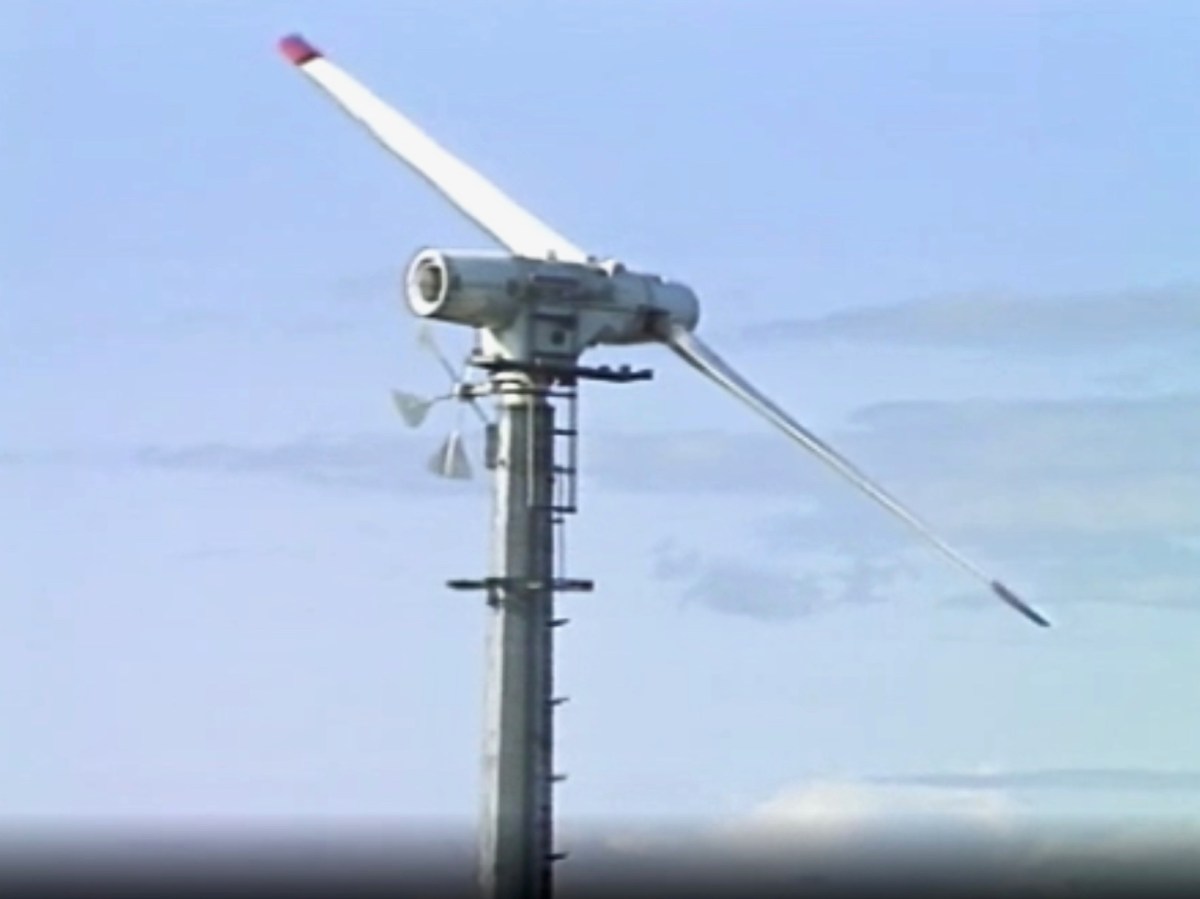
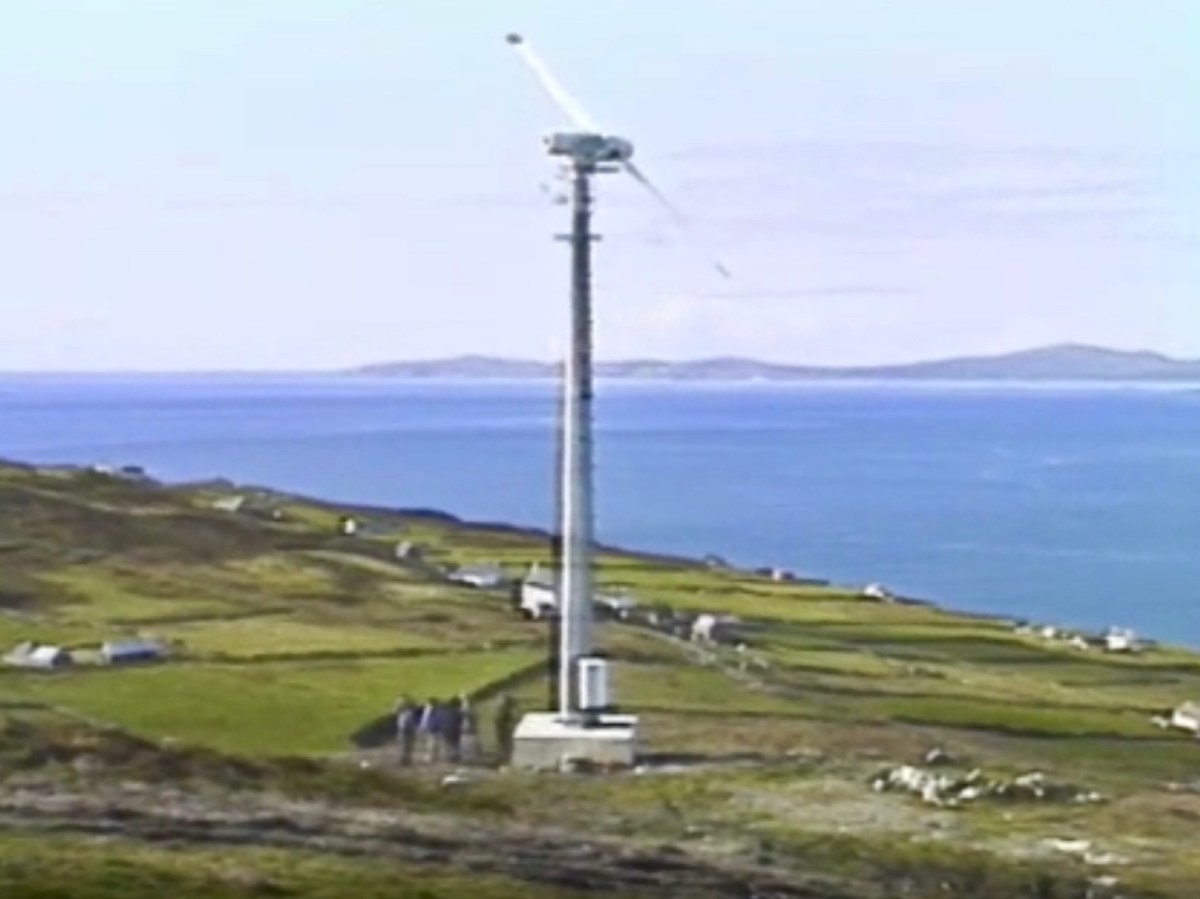
. . . The new technology was funded largely by the Germans and came in at a cost of around £500,000. The two wind-powered generators stand fifty feet above the top of the island and provide 30 kW each from the turning of their 12.5-meter blades. The National Board for Science and Technology claims that this new technology is the first of its type in the world as it integrates wind generation with diesel generators and battery storage creating a complete power supply . . .
RTÉ Archives
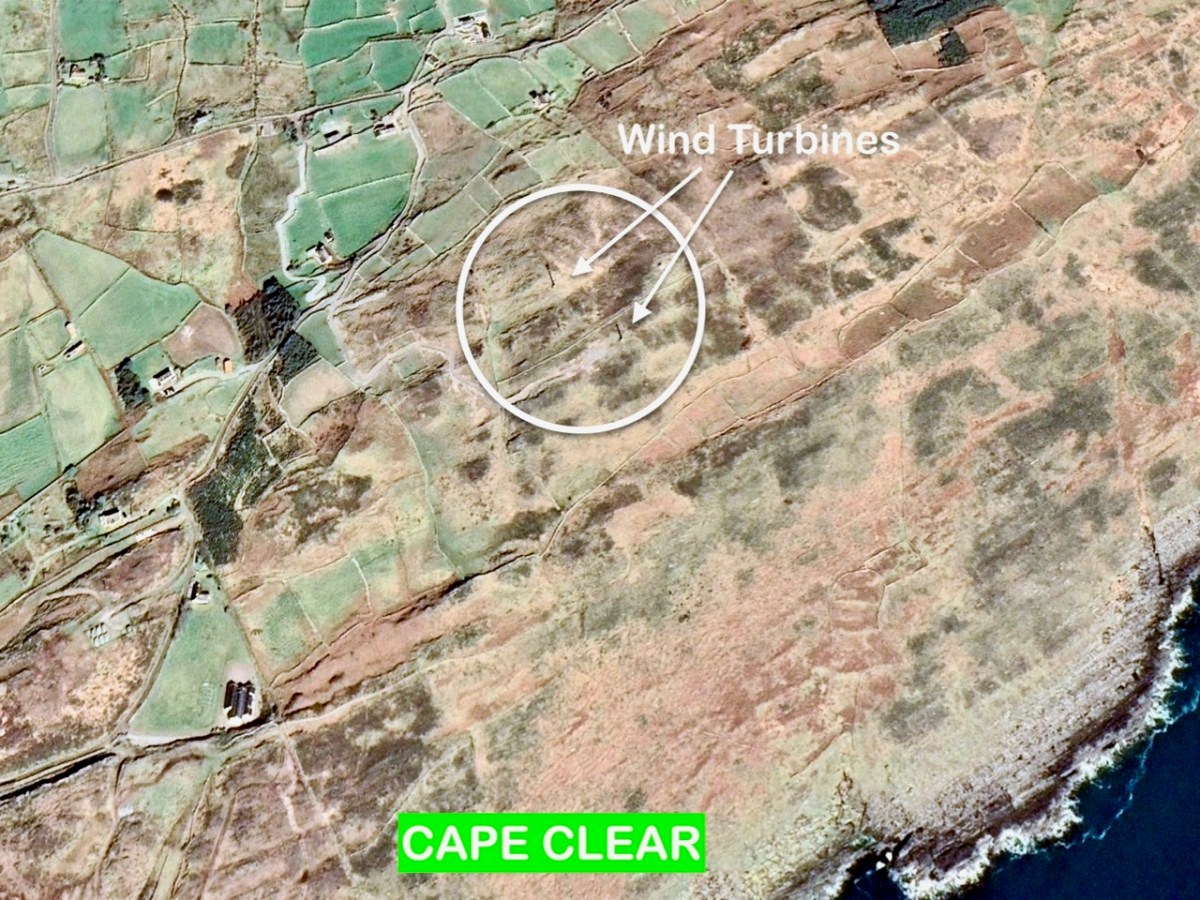
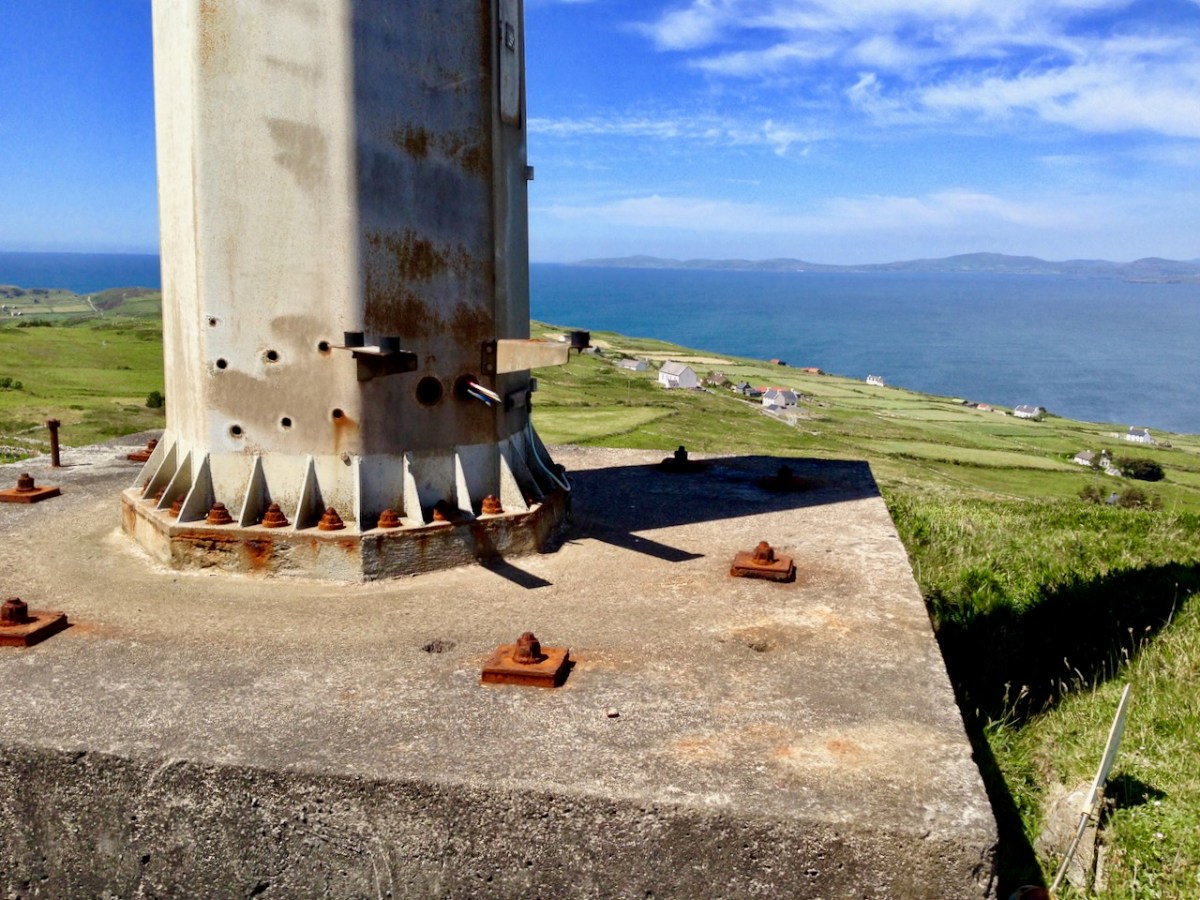
(Top) another still from the RTÉ news piece, and (above) aerial view of the site. The masts and turbines are still in place today, although they have been disused since the island was connected to the mainland for electricity supply via a subsea cable in 1996. (Below) we photographed the surviving turbines on the island in 2016.
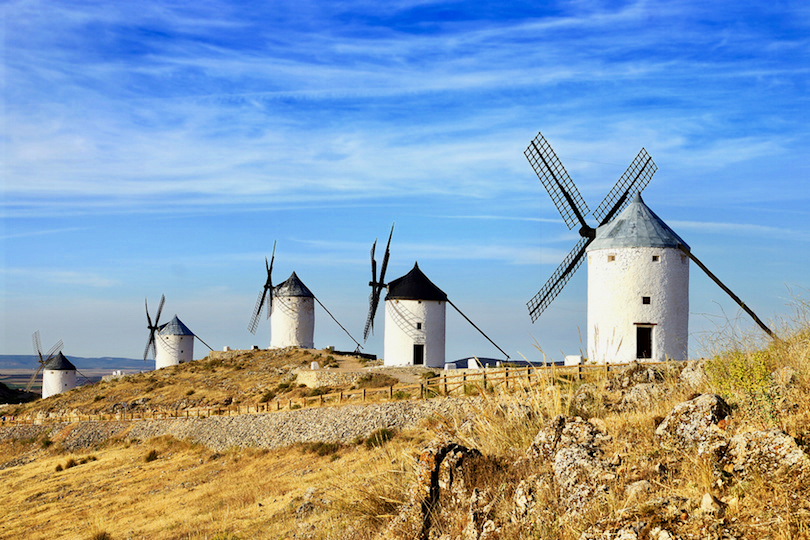
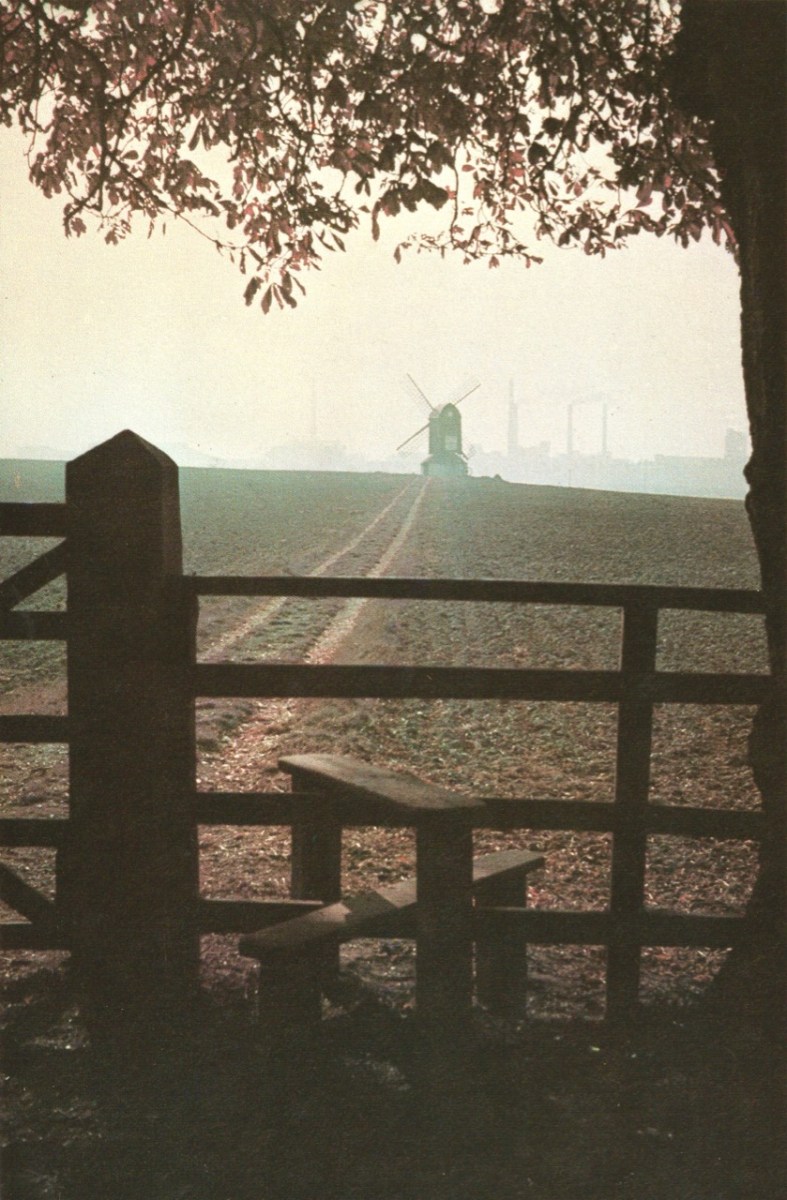
Wind power goes back a very long way, of course. Here (above) are some very picturesque ancient examples from La Mancha, in Spain. Here’s another (below) – Pitstone Windmill in England: an interesting composition with newer technologies in the background.
Compare technologies old and new (below)!
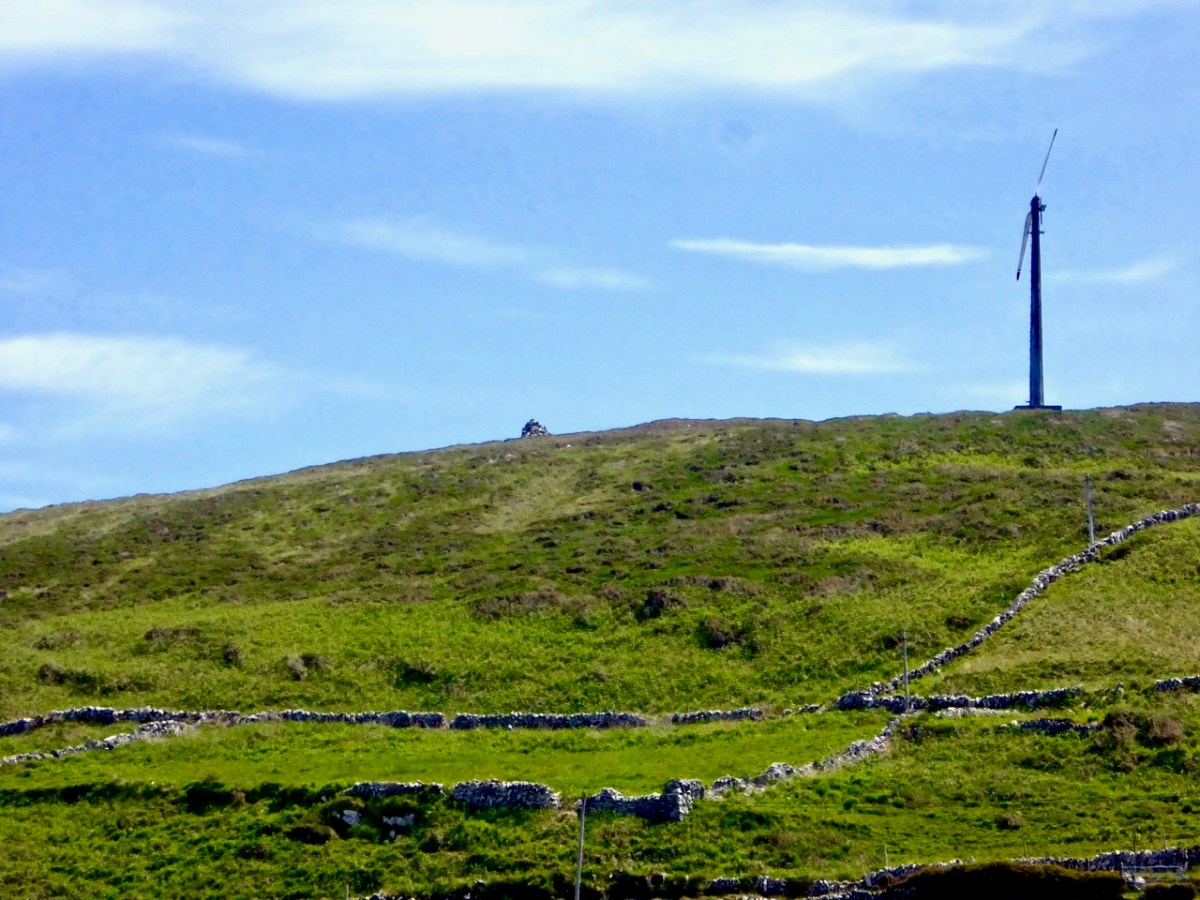
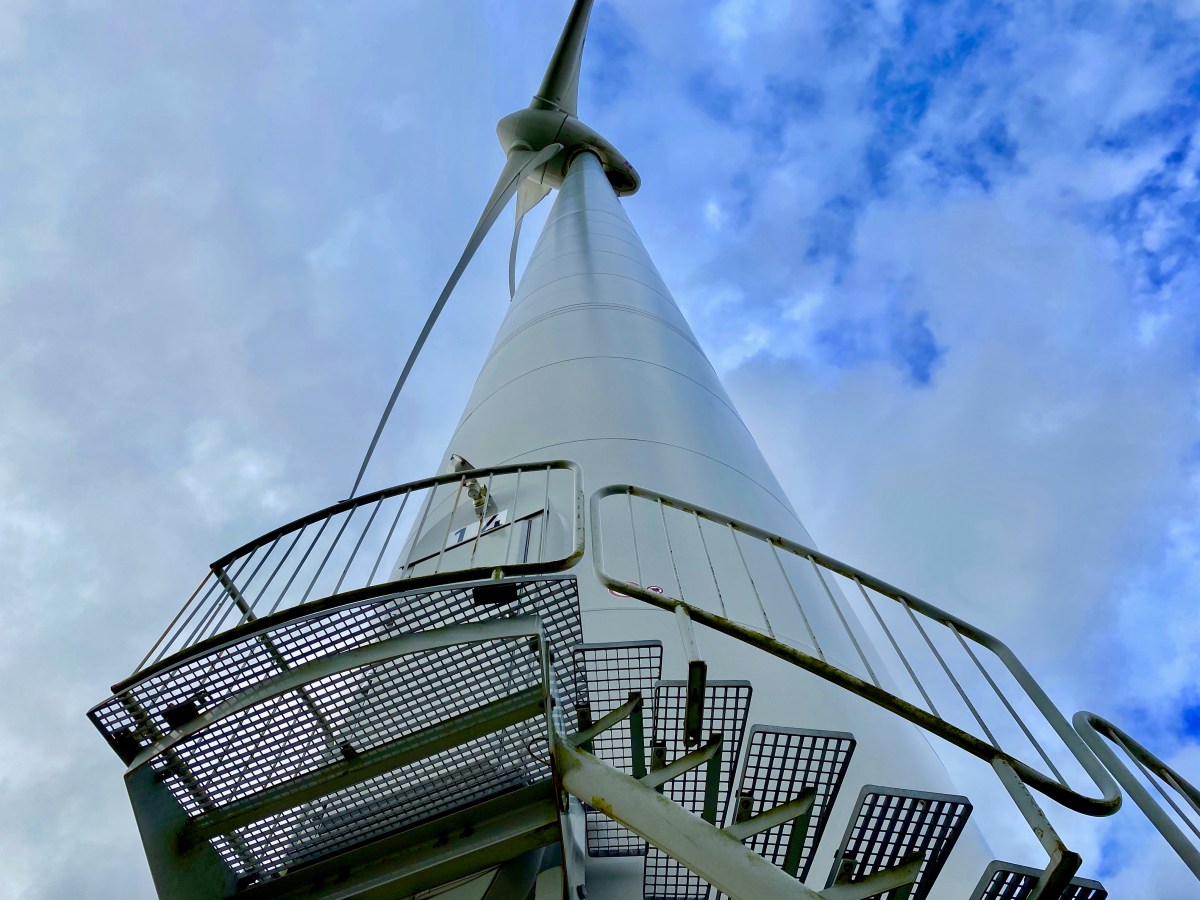
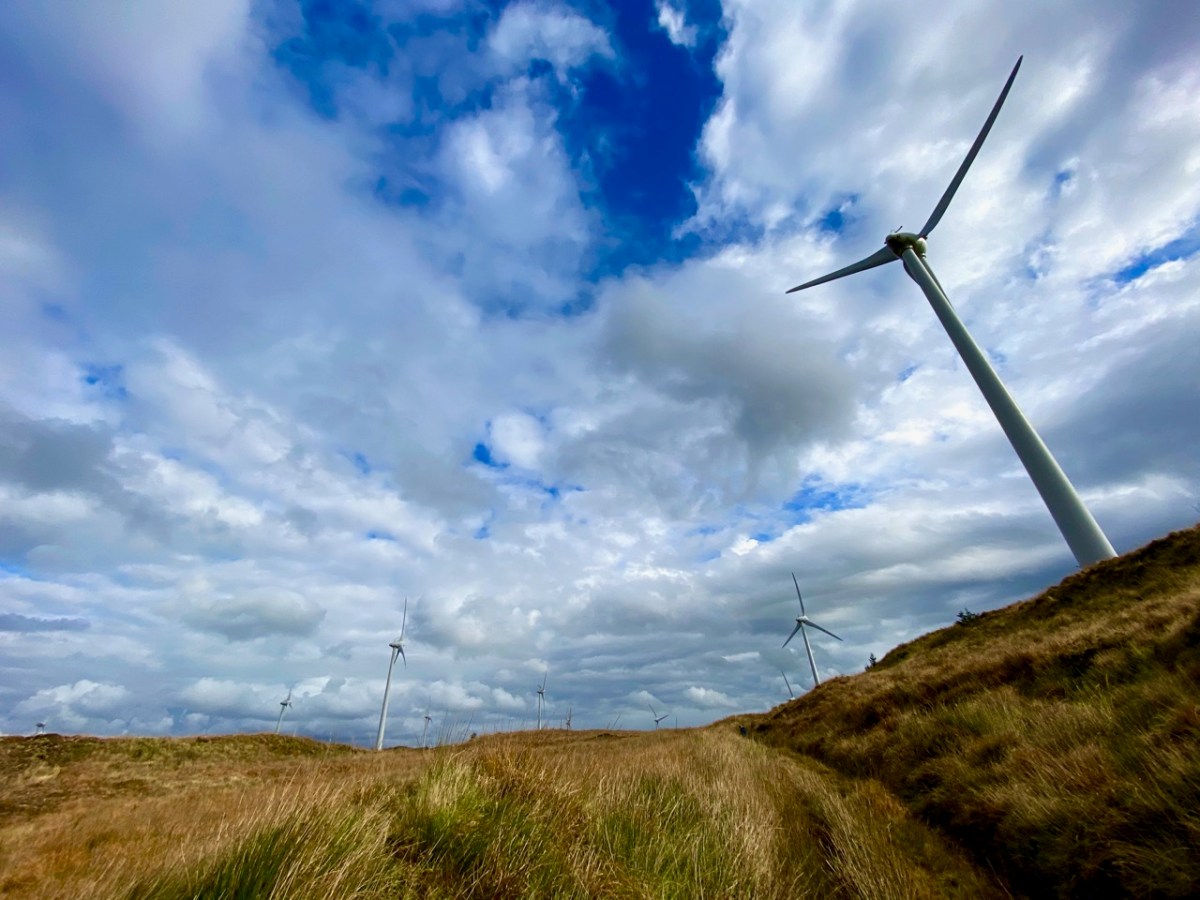
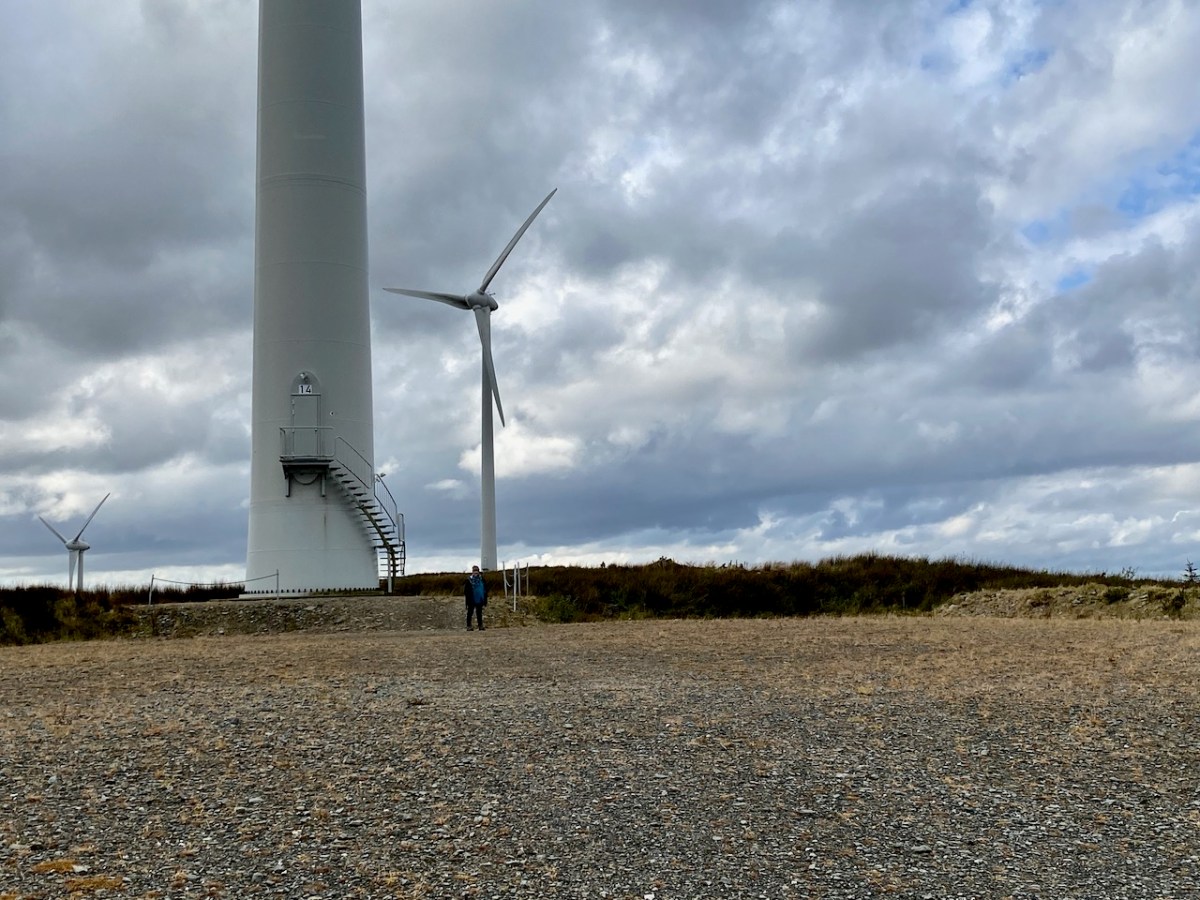
In West Cork we are no strangers to the more recent developments in this expanding field, although at present all land based. The scale and form of the machinery is, of course, increasing apace. These examples are on the hills close by us:
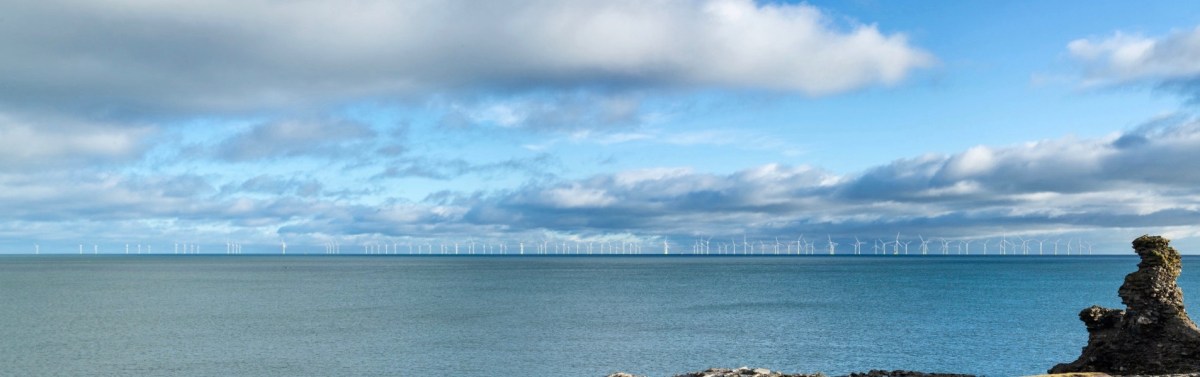
But it’s the vast resource of our relatively benign coastal waters that offers the most for the country’s still young wind-power industry. There’s a further example being planned in County Wicklow: the Codling Bank Wind Park scheme. Currently in the consultation stages, it is hoped that construction will be completed in late 2028. 73 turbines are planned, to be sited on the shallow Codling Bank, some 20km out in the Irish Sea. This project – the largest so far in this country – has the potential to power 1.2 million homes using natural resources. It will also provide welcome employment for a large work force. And – in my eyes – an elegant contribution to the marine environment. Well done, Ireland!
Photomontage of the Codling Bank Wind Park seen from the shore at Greystones. Thank you to http://www.codlingwindpark.ie for the dynamic illustrations.
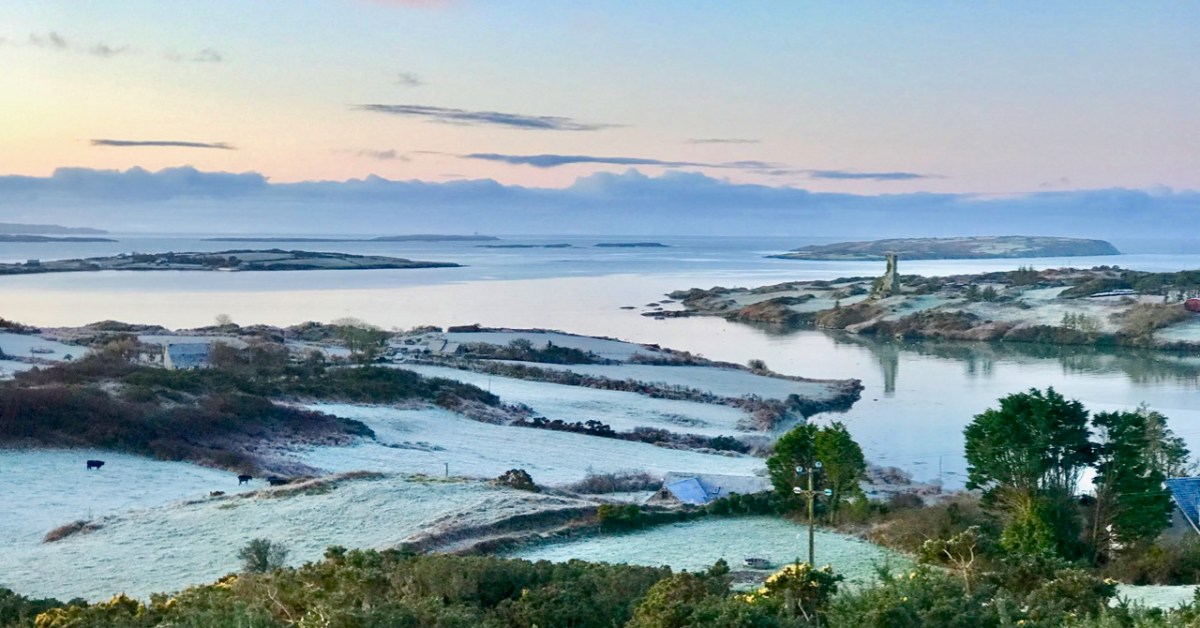
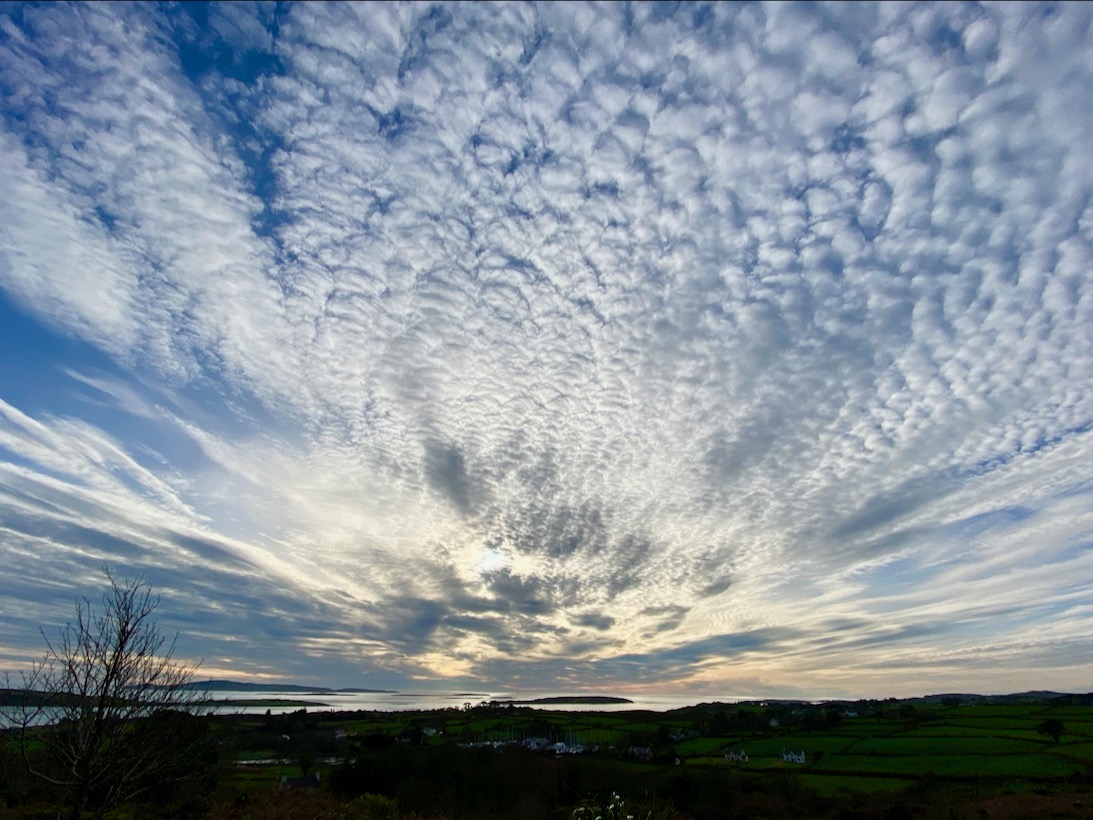
It’s midwinter here on the shores of Roaringwater Bay. It brings hard frosts (above – Rossbrin), clear days and spectacular skies – we caught the one below in 2020:
Winter is the time of the Cailleach.
. . . The Cailleach is the goddess of the winter months and is said to control the weather and the winds as well as the length and harshness of winter. Depicted as a veiled hag or an old crone, with one eye and deathly pale skin, she is said to have a bow-legged leaping gait, striding across mountains with a power to shape and transform the landscapes as rocks fall from her gathered apron . . . The Cailleach, or the Hag, has been feared and revered across Celtic cultures in Ireland, Scotland and the Isle of Man, for hundreds of years. She is called Beira in Scotland, and has strong associations with the Beara Peninsula in Ireland, which straddles County Cork and County Kerry . . .
The Hag of Beara petrified in Hag Rock (above): she forever looks out across the Beara. Below – this is the Hag’s permanent view over her landscape.
Lest there be any doubt about the Hag’s longevity, this is instructive:
. . . There is a tale of a wandering friar and his scribe who came to the old woman’s house. He inquired as to her great age, which he had heard stories of. She replied that she didn’t know, but that every year she killed an ox and made soup from the bones—and perhaps they could gauge her age by the number of ox bones thrown up in the attic. The young scribe climbed the ladder and threw the bones down one by one for the friar to count. The friar duly made a mark on his paper for each bone, and a great pile of bones grew until he had run out of paper. He called up to the young scribe, who replied that he had not even cleared one corner of the pile of bones, such was the great age of the Cailleach . . .
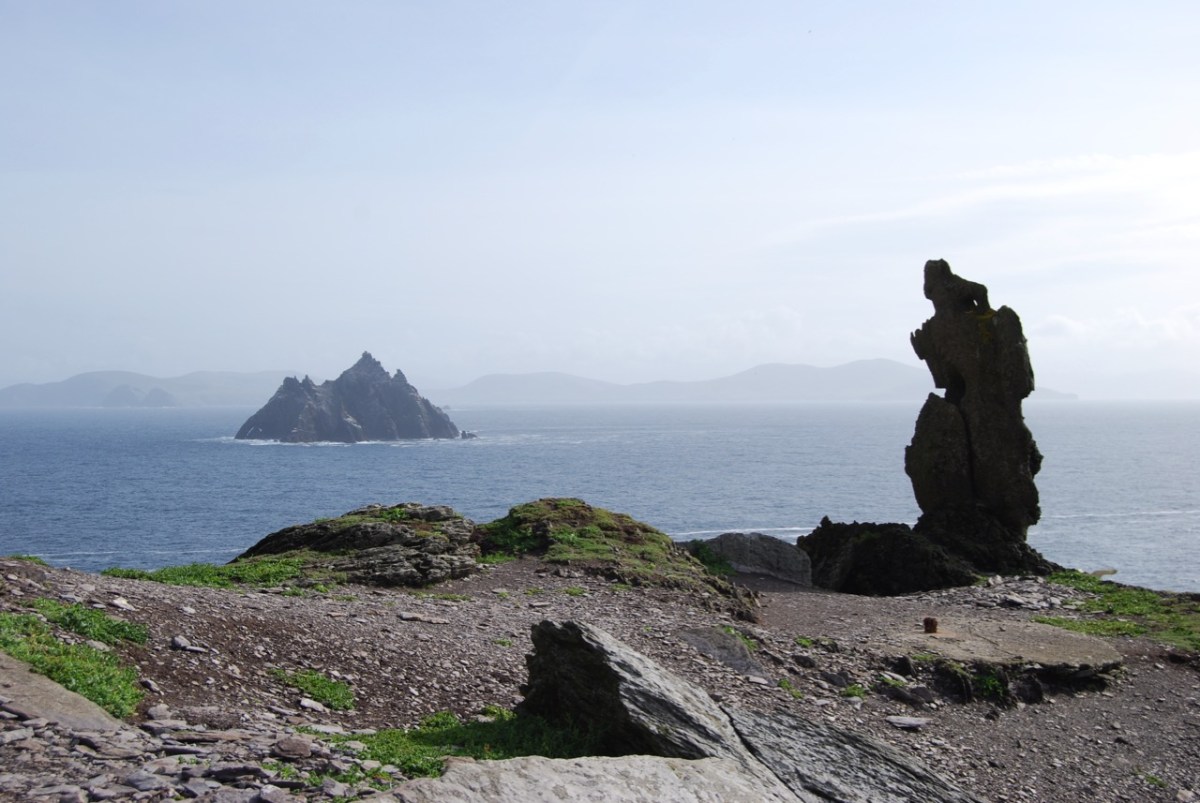
Above – The Wailing Woman (courtesy of Ronan Mac Giollapharaic) – dramatically depicts another Hag rock, overlooking the Skelligs on the Iveragh Peninsula, Co Kerry. It is a given that Cailleach is one of Ireland’s most ancient inhabitants. Even older, in fact, than Cessair, Noah’s grand-daughter, who we know arrived on our own West Cork shores some five thousand years ago. With her in her Bronze Age crew were her father – Bith – and Fionntán, together with ‘a large company of women’ whose combined purpose was to repopulate the world after the Great Flood.
. . . Legend has it that Fintan the Wise of the hundred lives accompanied Noah’s granddaughter, Cessair, to Ireland before the great Biblical flood. He thought himself the first to set foot on the island but found Cailleach living there, and could see she was far more ancient than himself. He is said to have asked of her, “Are you the one, the grandmother who ate the apples in the beginning?” but received no answer . . .
The Cailleach rules over the the dead of Winter (above – Rossbrin Cove in that time). If you research the Schools Folklore Collection you will find over 830 entries referring to her: many are recorded in Irish.
. . . An Cailleach Béarach according to tradition was supposed to be a witch who is believed to have erected most of the round towers and castles in this country. Tradition tells us that she built each of those buildings with three pocketfulls of stones. As well as being a famous builder, she is believed to have been a great mower. At the time of her death, it is said, she was 121 years and one day . . .
. . . The Cailleach Béarach started one day mowing with a score of men. The men led off & she took up the rear. After an hour’s work, she caught up to the man who was last and mowed off his legs from above the ankles. She continued the work until she caught up to the man who was second last & she cut off his legs also. This procedure continued until all the men but one had their legs cut off. At this stage, they went to their dinner . . .
The most frequently occurring references to the Cailleach are her feats in sculpting the landscape. Many features in the west of Ireland are attributed to her work.
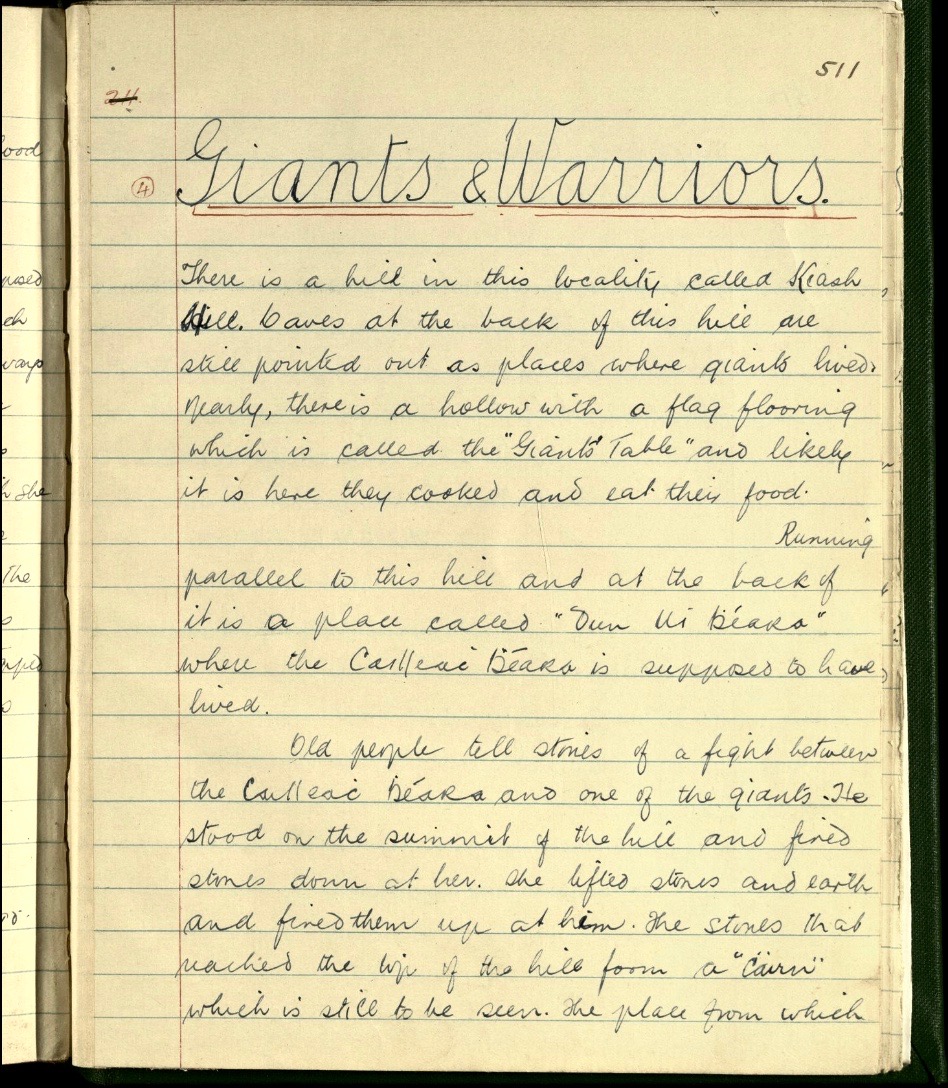
. . . There is a hill in this locality called Keash Hill. Caves at the back of this hill are still pointed out as places where giants lived. Nearby there is a hollow with a flag flooring which is called the “Giants’ Table” and likely it is here they cooked and eat their food. Running parallel to this hill and at the back of it is a place called “Dun Ui Bhéara” where the Cailleach Bhéara is supposed to have lived. Old people tell stories of a fight between the Cailleach Béara and one of the giants. He stood on the summit of the hill and fired stones down at her. She lifted stones and earth and fired them up at him. The stones that reached the top of the hill form a “cairn” which is still to be seen. The place from which they were taken formed a small lake which remains to the present day. Some time ago if children were bold their mothers threatened to tell Cailleach Bhéara and immediately they got quiet. She was able to walk across Lough Arrow and the waters at their deepest part just reached her arm pit . . .
SCHOOLS FOLKLORE COLLECTION – INFORMANT MR James Benson, Kesh, Co Sligo
. . . When the Summer came the Cailleach Bhéara drove the bull out to the grassy parts of Béara. One day when the bull was being driven out, he heard a cow lowing in Kerry, so he started off towards her. The Cailleach went ahead of him, but he jumped into the tide and started to swim for Kerry. The Cailleach struck him with her wand and as she was doing it, the bull called the cow, and her calf with him, and they form the Bull, Cow, and Calf rocks now . . .
Finally, we must not overlook a poem written by Pádraig Pearse, one of the leaders of the Easter Rising in 1916. Pearse was executed on May 3 in that year – aged 36 – for his part in this ‘rebellion’. In this photograph, Pearse can be seen reading the oration at the funeral of the Fenian Jeremiah O’Donovan Rossa on 1 August 1915. I am completing this post with the words of Mise Éire, written by Pearse in 1912.
Mise Éire: Sine mé ná an Chailleach Bhéarra
Mór mo ghlóir: Mé a rug Cú Chulainn cróga.
Mór mo náir: Mo chlann féin a dhíol a máthair.
Mór mo phian: Bithnaimhde do mo shíorchiapadh.
Mór mo bhrón: D’éag an dream inar chuireas dóchas.
Mise Éire: Uaigní mé ná an Chailleach Bhéarra.
I am Ireland: I am older than the Hag of Beara.
Great my glory: I who bore brave Cú Chulainn.
Great my shame: My own children that sold their mother.
Great my pain: My irreconcilable enemies who harass me continually.
Great my sorrow: That crowd, in whom I placed my trust, decayed.
I am Ireland: I am lonelier than the Hag of Beara.
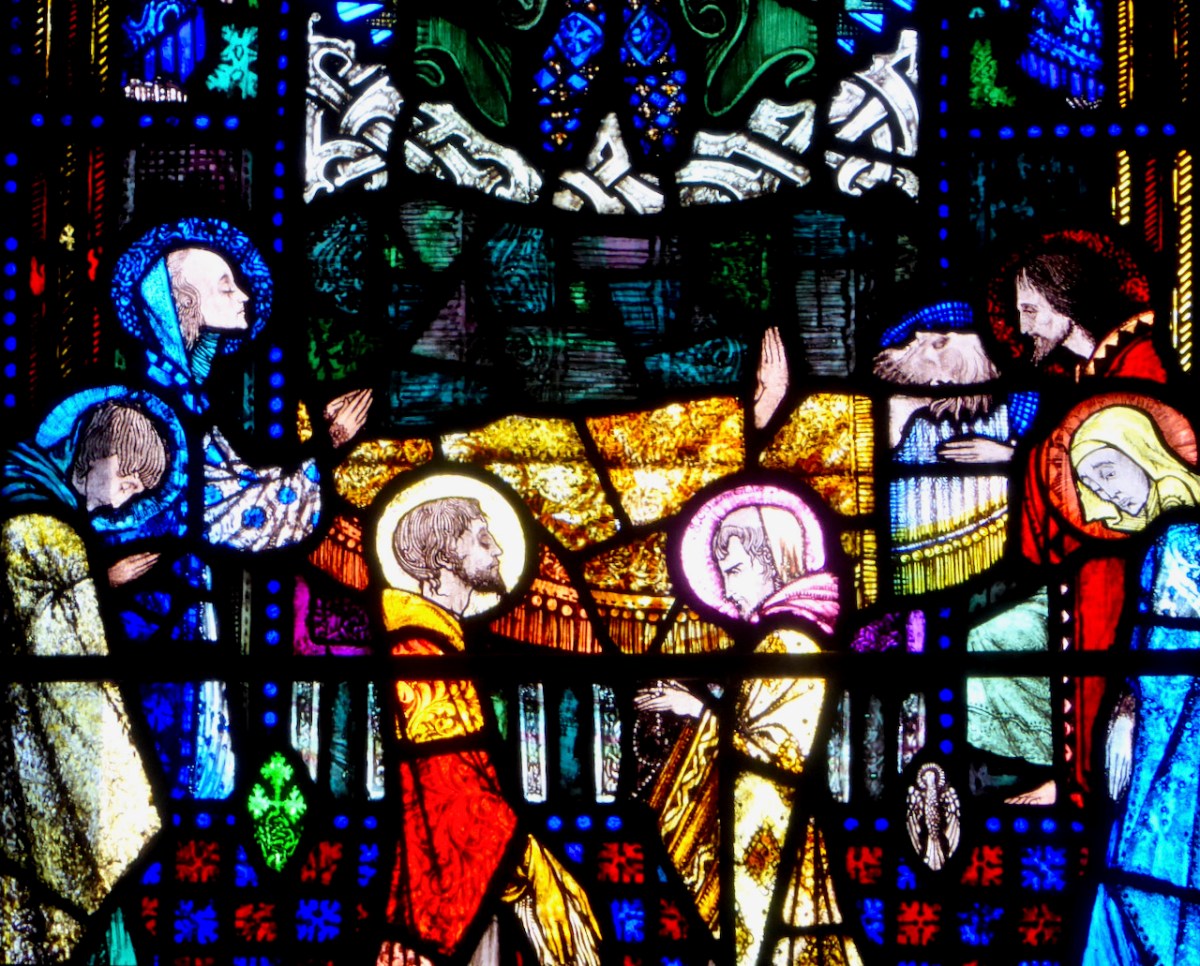
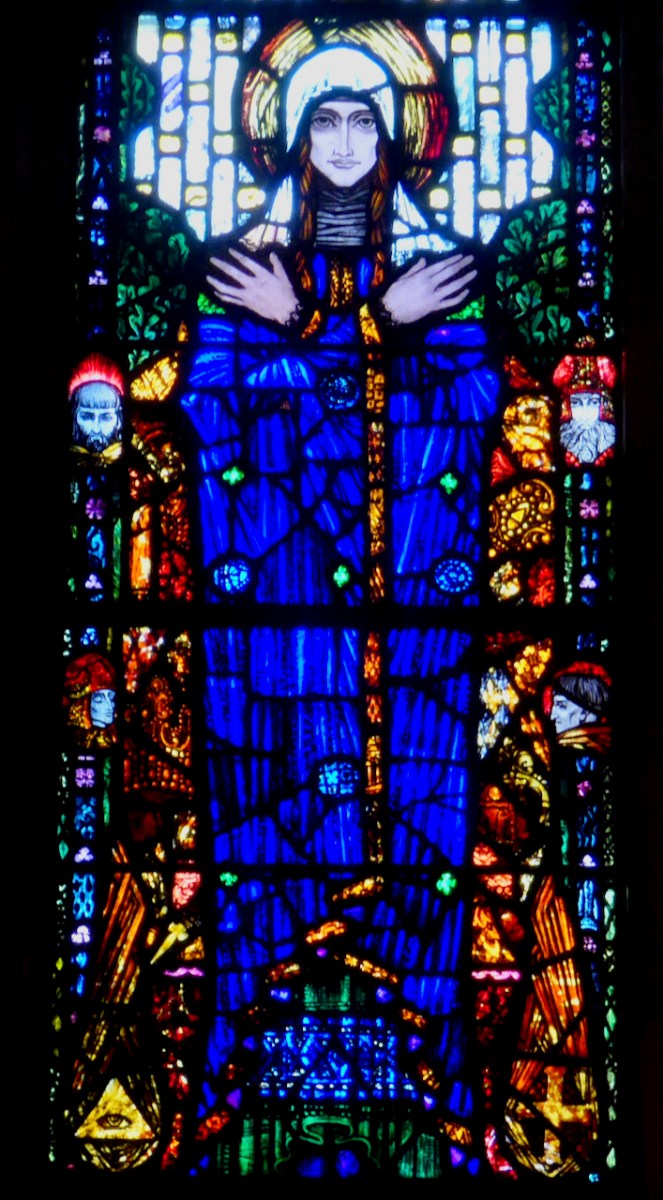
St Barrahane’s Church of Ireland in Castletownshend, West Cork, is unique in many ways and a national treasure, not least because of its three Harry Clarke stained glass windows. I have written about the St Luke window and also about the St Louis/St Martin window. Both are gems. But for some reason I have not yet properly written about the East Window and it seems fitting to start that post now, since Harry Clarke died 92 years ago this week at the all-too-young age of 41.
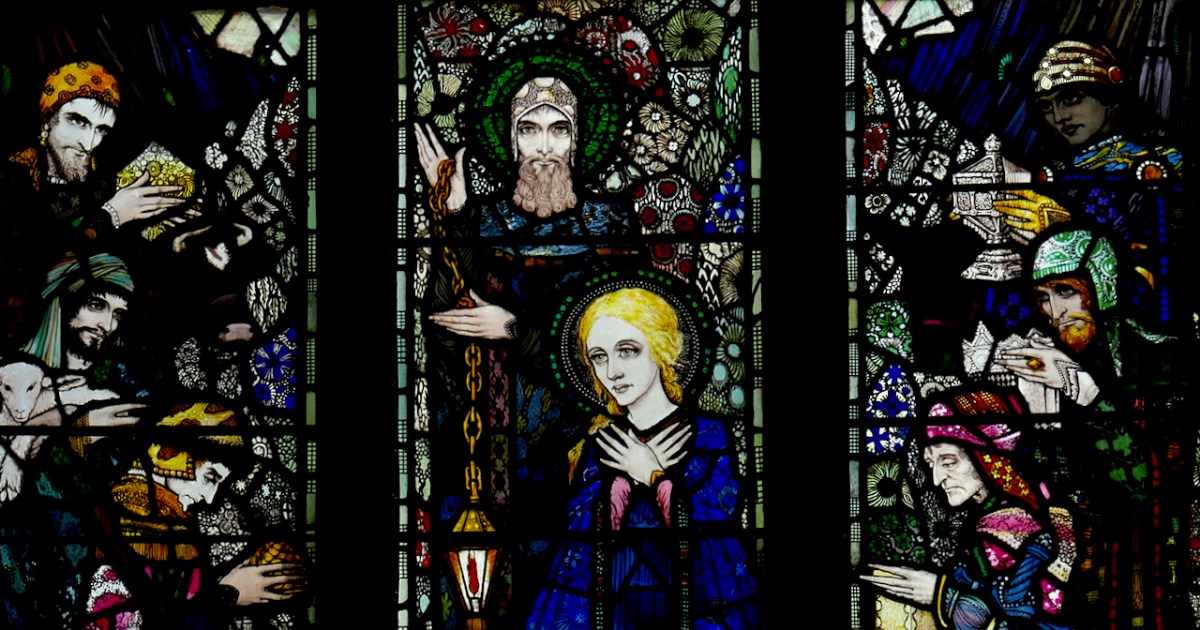
The East Window, the largest part of which comprises a nativity scene, was one of the first commissions Harry received after he burst on the scene in 1916 with his series of saints for the newly opened Hiberno-Romanesque Arts and Crafts masterpiece that was the Honan Chapel at University College Cork. That’s a small detail from his Joseph window for the Honan, below.
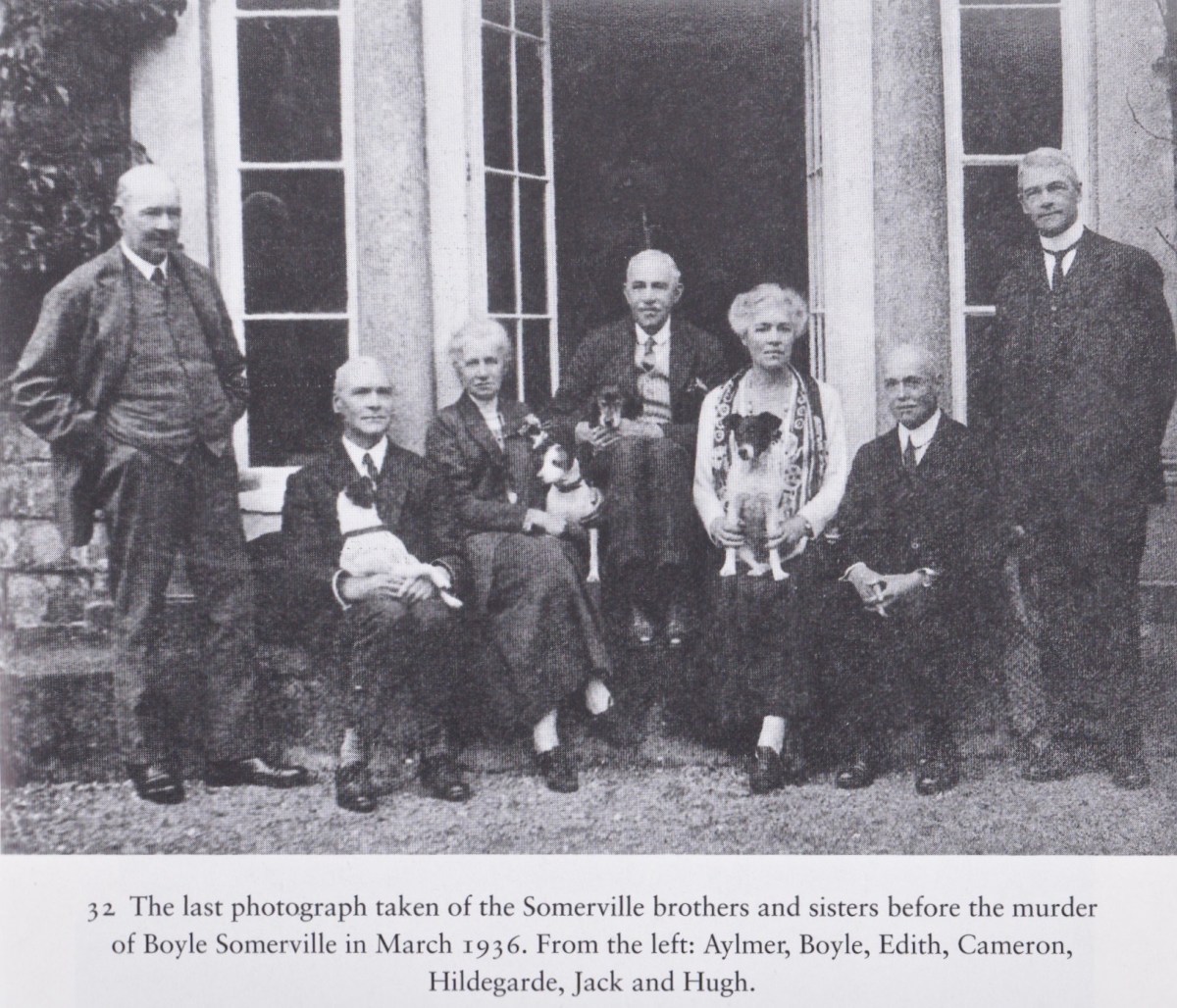
The Somerville siblings had been planning for a long time to commission a new window to honour their grandparents, the existing one being hideous and gloomy. In 1907 they had requested a new design from the Manchester firm of Walter J Pearce, but had not followed up with a commission. Besides her intense dislike of the ‘Berlin Woolwork’ (as the family called the despised stained glass) Edith Somerville thought the window openings themselves too long and narrow and felt they should be shortened to produce a more pleasing proportion for a stained glass scene. However, none of the schemes progressed beyond the Somerville siblings procuring permission from the church committee to remove and sell the offending window and replace it with a more suitable memorial to their grandparents.
This illustration is from Somerville and Ross: A Biography by Maurice Collis.
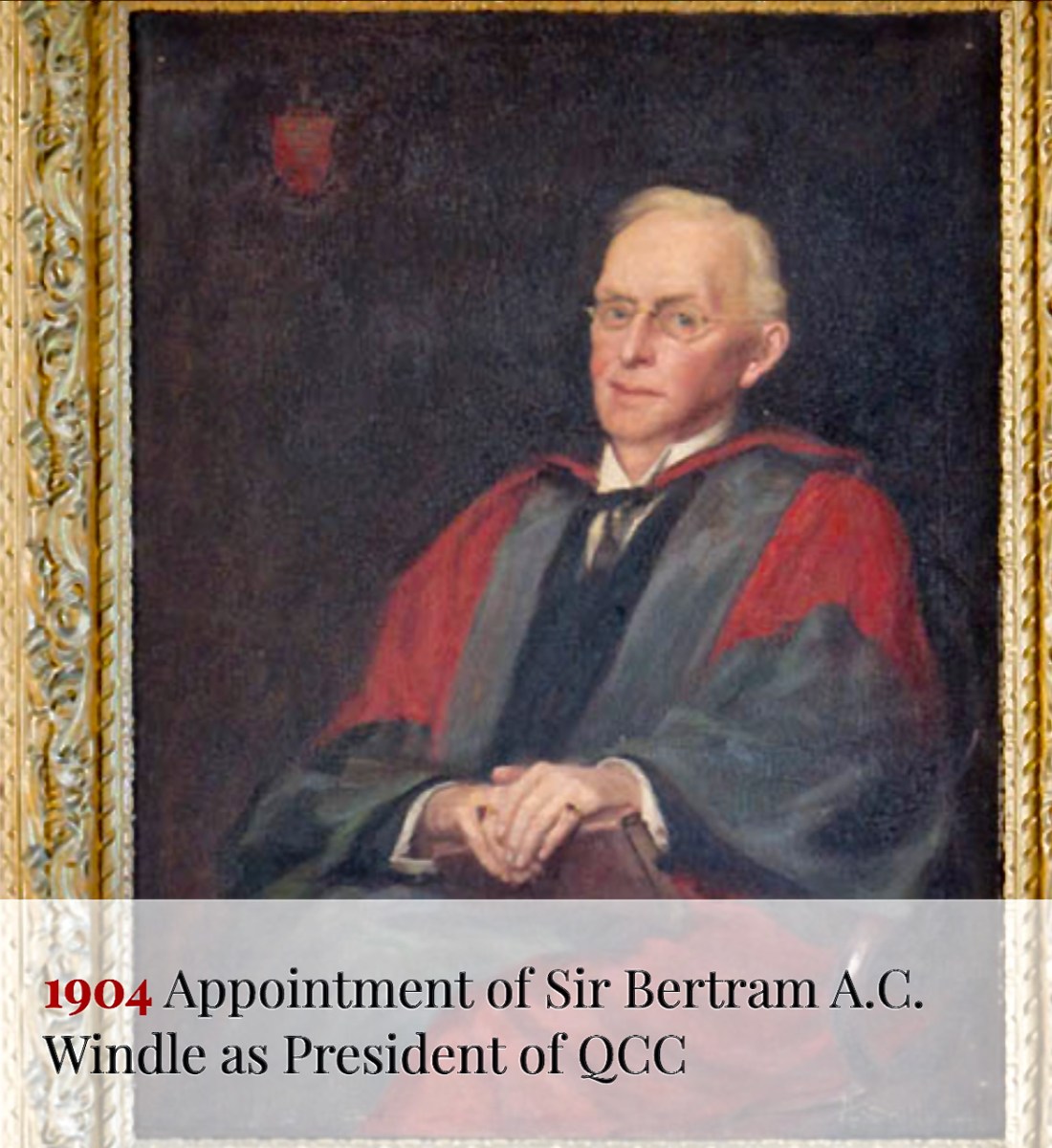
On January 14th 1917 Cameron, the oldest of the family and hence the one who had to have final approval over expenditures like this, went to see “Bertie’s windows”. Sir Bertram Windle was the President of University College Cork and a first cousin to the Somervilles (below, captured from the UCC website). He had worked with Sir John O’Connell to actualise the Honan Bequest which resulted in the building of the Honan Chapel with the inclusion of stained glass windows by An Túr Gloine and by Harry Clarke.
Cameron records in his diary:
Bertie took me to see his jewel of a chapel – quite the best modern building I have seen – & the windows – all but one – very good & some – the Clarke windows- supremely lovely. I have never seen such glass except in 14th century windows – the whole chapel simple & lovely nothing mean or tawdry […] After luncheon went again to the Chapel for another look at the windows.
The Edith OEnone Somerville archive in Drishane : a catalogue and an evaluative essay / by Otto Rauchbauer
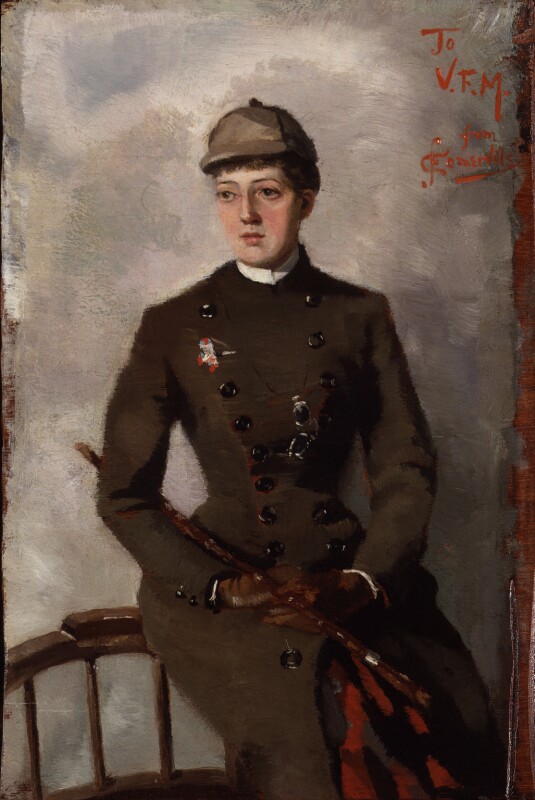
Edith Somerville got up to see the windows for herself in March. Edith was already an established writer and artist, who had studied in France and was familiar with modern art movements. At that point in her life she was slowly coming to herself again, after a period of intense mourning on the death in 1915 of her beloved cousin and collaborator, Violet Martin with whom she had written a series of highly successful novels and stories under the name Somerville and Ross.
Violet Florence Martin, in an 1886 portrait by Edith Somerville, from the National Portrait Gallery, used under license
Her own artistic knowledge and sensibilities are evident in her reaction to the windows. She wrote to Cameron:
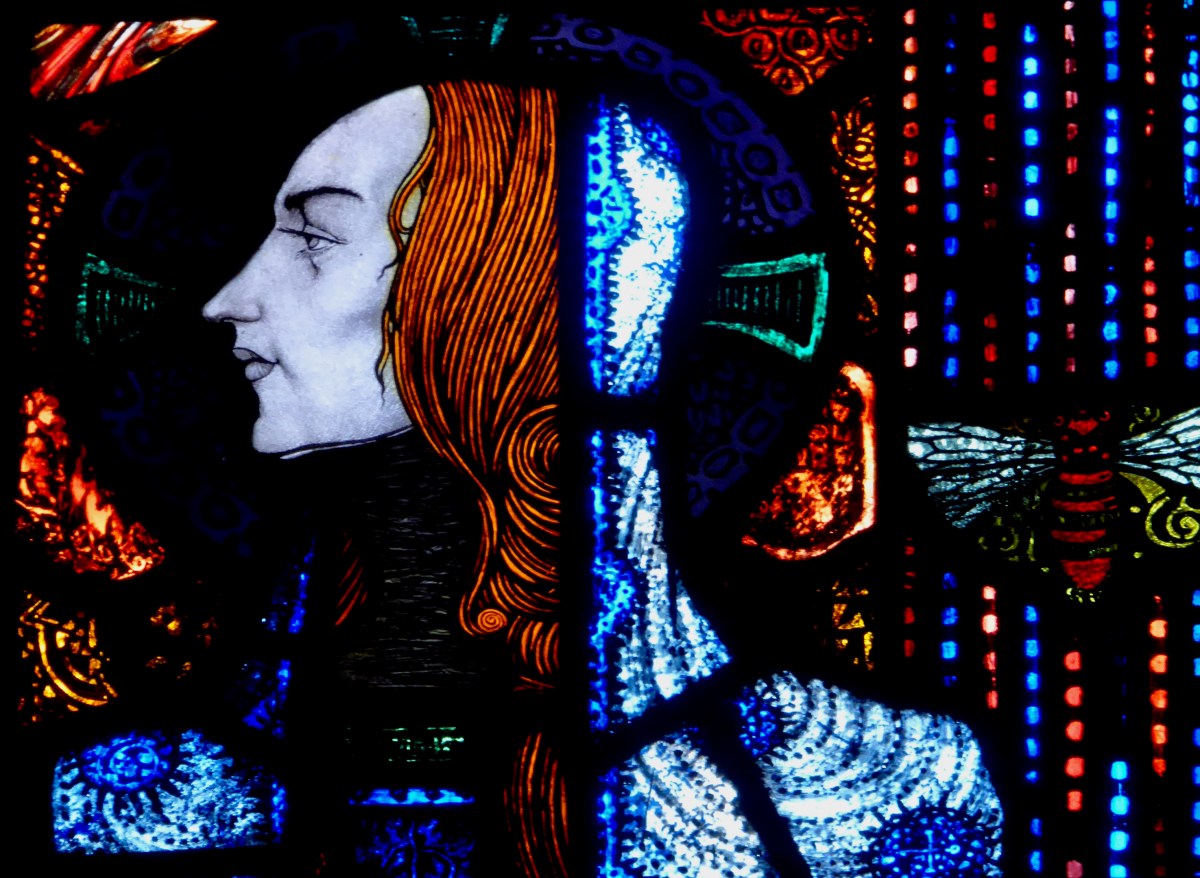
They certainly are very wonderful in colour, & some of them beautiful in all respects. I preferred the Western three-light window [Brigid, Patrick and Columcille] & I almost disliked the blue one, & the Aubrey Beardsley female face [Gobnait] thought horrible; so modern and conventionally unconventional. The green western light was lovely and a nice design, I like 2 of the left side ones (Brigid and Patrick]. I thought the eastern Purser window just moderate (i.e. not among high class tho’ much better than average). There is to me a slight faint of coarseness in Clerke’s [sic] work. Not much finesse, though the actual glass has a quality of burning and furious brilliance that I have never seen anywhere else. The blue robe, for instance, hits your eye like a living flame or a blast of wind. Perfectly amazing, but not quite pleasant. I can rave about some of his qualities with anyone, but I am not quite a whole-hogger. However, I expect he will be artist enough to adapt his work to the church & to realise how to get harmony into it. His windows have a kind of hellish splendour – in a chapel dedicated to the Infernal Deities they would be exactly right, gorgeous and sinful. . . If that young man. . . went mad it would not surprise me, but I hope he won’t before he does our window for us.
The Edith OEnone Somerville archive in Drishane : a catalogue and an evaluative essay / by Otto Rauchbauer
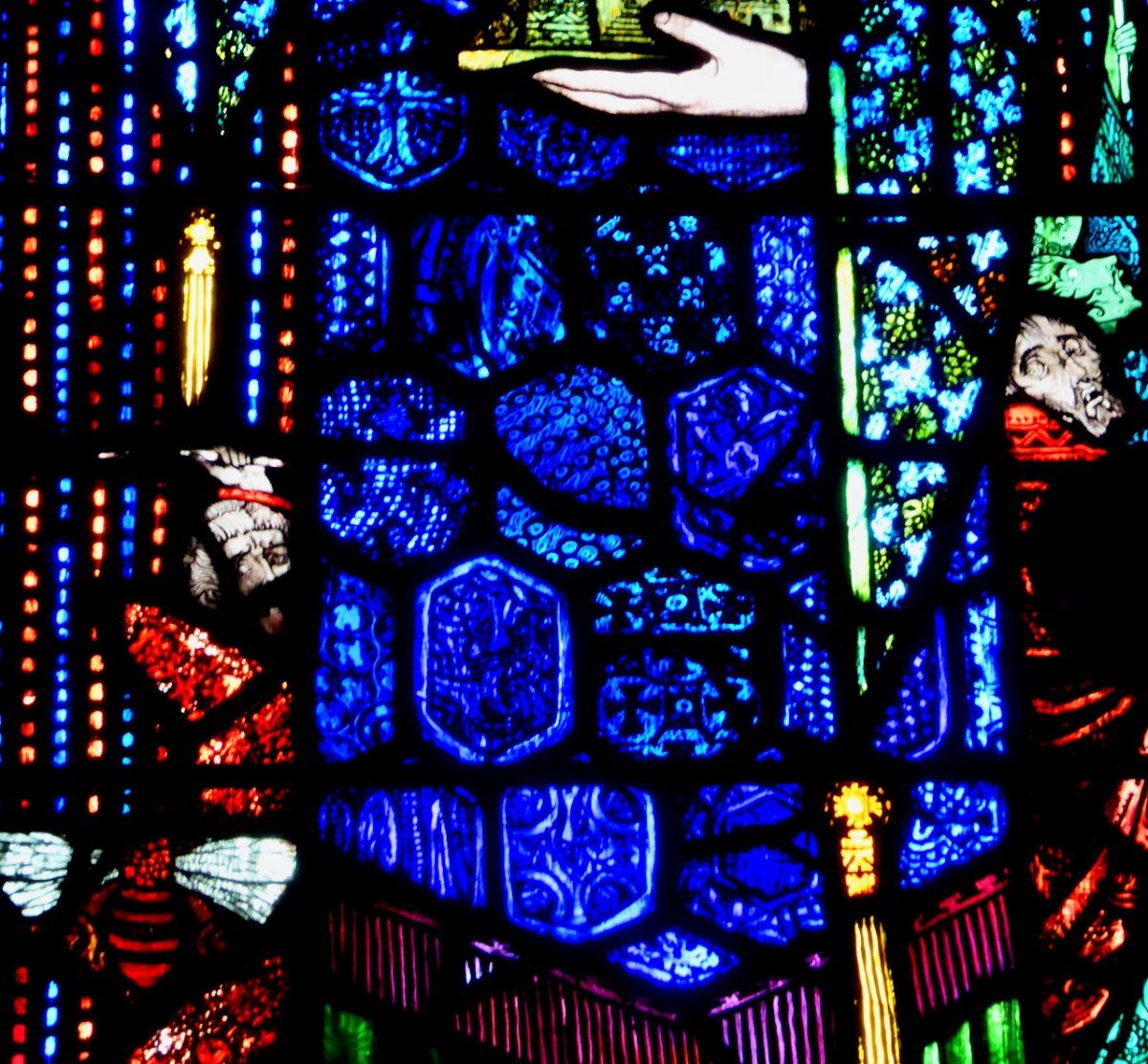
Was it St Ita’s blue robe (above) that struck Edith so forcefully – like a living flame or a blast of wind – ? Or was it perhaps, the one worn by Gobnait, patron saint of beekeepers, cleverly worked out as a series of honeycomb shapes (below). In either case, this deep blue was one of Harry’s hallmarks – he went to great lengths to procure good blue glass.
We can unpack a lot in Edith’s letter to Cameron. For a start, it seems that Cameron had already decided, no doubt influenced by Bertie, that Harry Clarke was the artist who should do the East Window. Edith’s reaction, while often credited with being the deciding factor in choosing Clarke, was after the fact, and both more moderate and more judicious than Cameron’s. Her comments are enough to make me wonder, if the decisions had been hers to make, whether Harry would have been engaged. She was insistent, in a further letter to Cameron, that something more of ‘harmony’ and less of intensity than the Honan windows (as exemplified by his Gobnait portrait, below) would be appropriate for Castletownshend. In fact, shortly after seeing Harry’s work at the Honan, it seems that Cameron had deputed their cousin Egerton Coghill (see my post about Egerton and the St Luke window) to approach Harry, whom he appears to have known personally, but after that initial meeting, it was Edith who took charge of the process. This made sense since Cameron was not living in Castletownshend at that time, but in London. Things moved quickly – even before she had seen his work for herself, she had sent him a tracing of the East window (perhaps one that had been prepared for the proposed Pearce commission) and thereafter it was she who communicated with Harry.
He responded to getting the tracing in a letter of Feb 1, 1917.*
Thank you for your letter and tracing of the East window of Castlehaven Church. I clearly understand your ideas about shortening the existing window but I hesitate to support your doing so until I see the church – I like long openings and the window may only look out of scale by being filled with inferior glass – I do think you would be unwise to make the three openings into two if you are going to have single figures and not subjects or a subject. Were the existing window or openings left I would have room to put small subjects from the lives of the selected saints at the top and bottom of each opening – were the windows shortened I would have room for the figure only. I am judging from the tracing and cannot tell until I saw the actual window with the light etc – the trees may present difficulties.
The approximate cost of filling the existing window with single figures and small subjects – figures to be of S Brigid S Finbarr and Barrahane will be £315 and if it were shortened by 3‘6“ the cost will be – £252.
I will be in Cork in the early spring and if it were convenient to you, could meet you at Castlehaven Church –
If you are anxious to place the commission at once I will go down any day next week (after Tuesday) that you suggest.
I do my work from start to finish myself and so take longer then is generally expected over a window – Your window would take about six months and could be started on a date mutually agreed-upon should I have the pleasure of doing it –
I greatly appreciate your asking me about the work
Letter from Harry Clarke to Edith Somerville, Somerville Archives, Drishane House
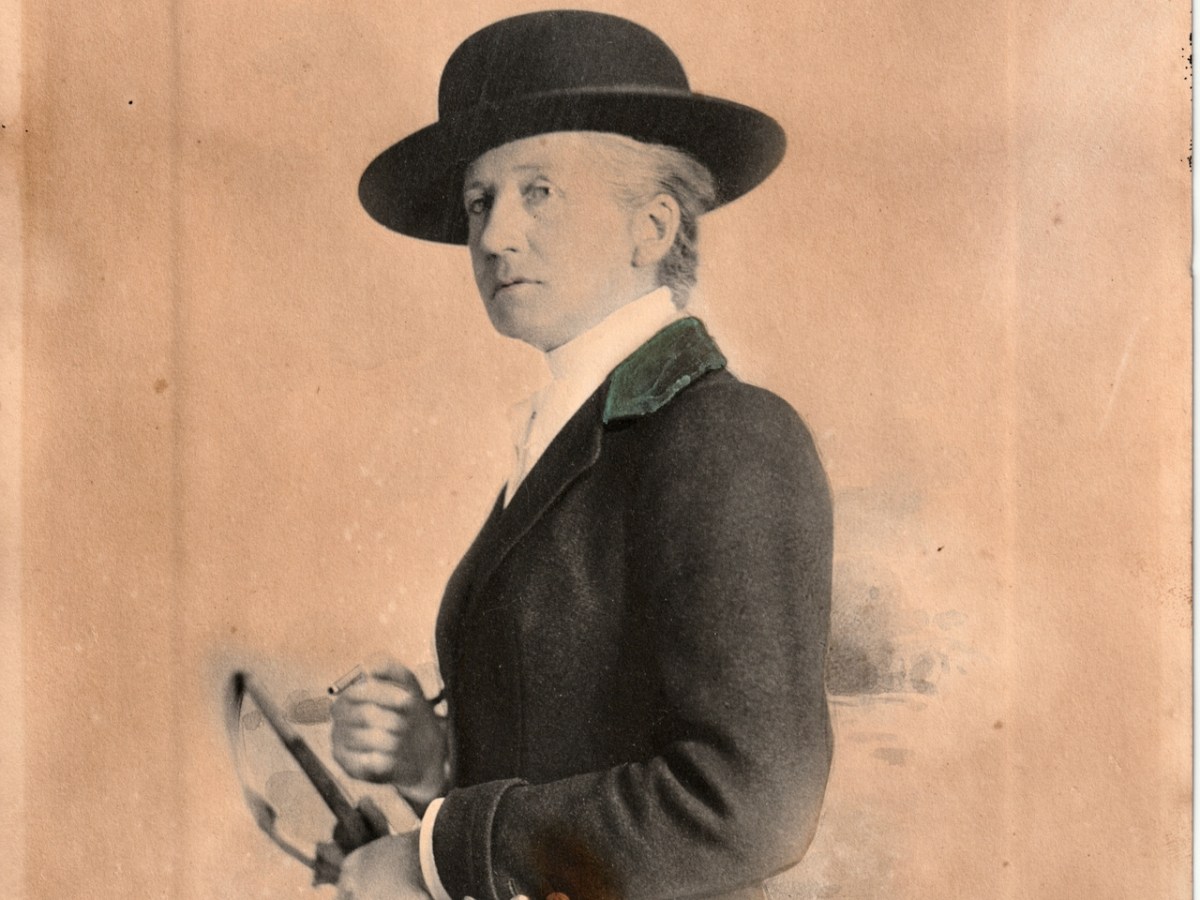
Harry did indeed come to Castletownshend – a diary entry records it was April 4 and he stayed to lunch, although another source says that he stayed overnight and that Edith found him shy but liked him enormously. At this time, Edith was nearing 60, (dressed as Master of the Fox Hounds, below) whereas Harry was 27. She referred to him as ‘our window boy’ in a subsequent letter to Cameron.
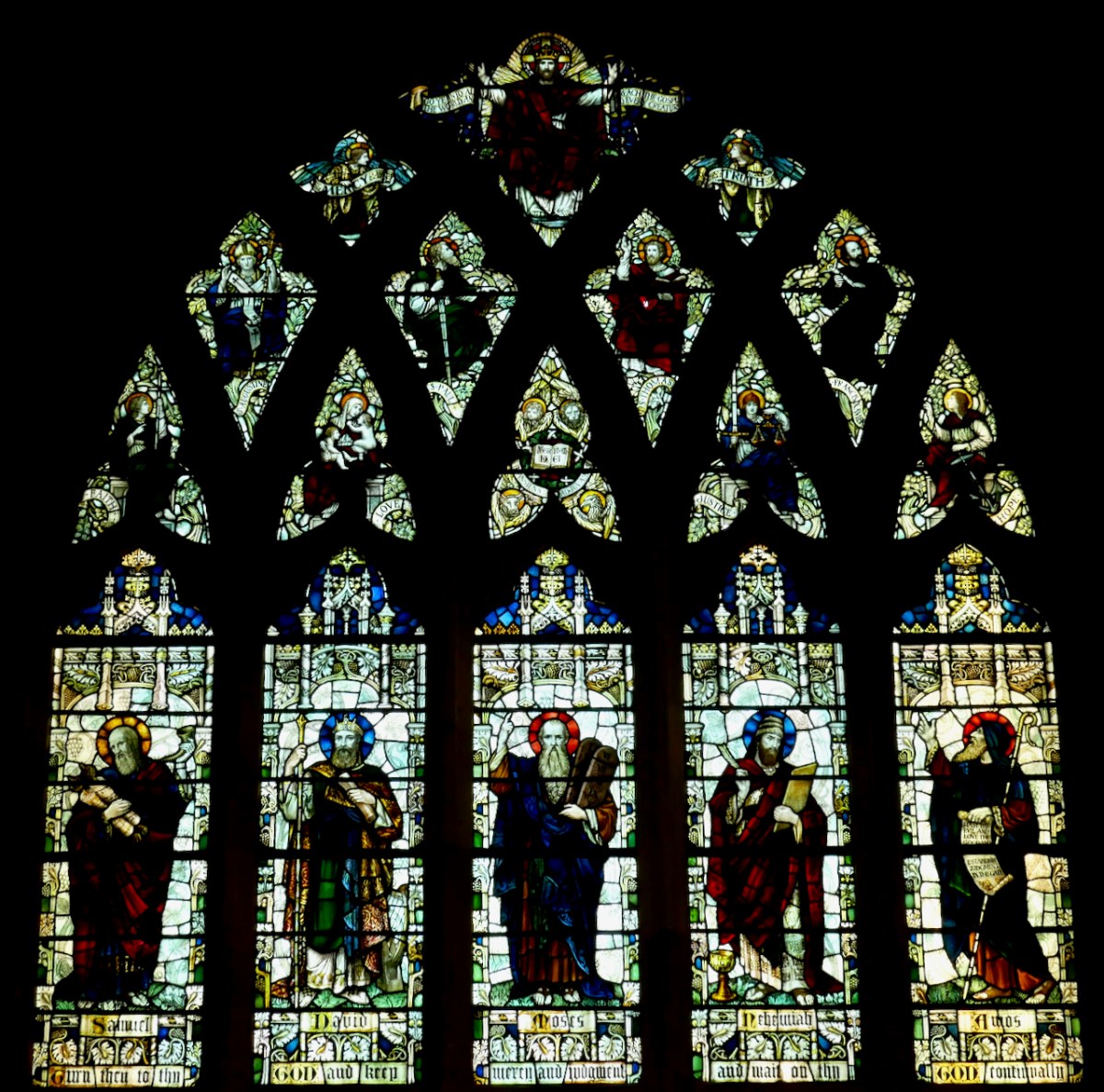
The letter refers to the dimensions of the window – Harry didn’t mind the shape at all – “I like long openings.” But Edith, very much the painter, had been taken by the more horizontal orientation of windows she had seen in Exeter Cathedral, such as the Old Testament window below) and really wanted to change the windows by making them shorter and perhaps even cutting them down to two-lights. As we will see, she realised part of this ambition, but not all.
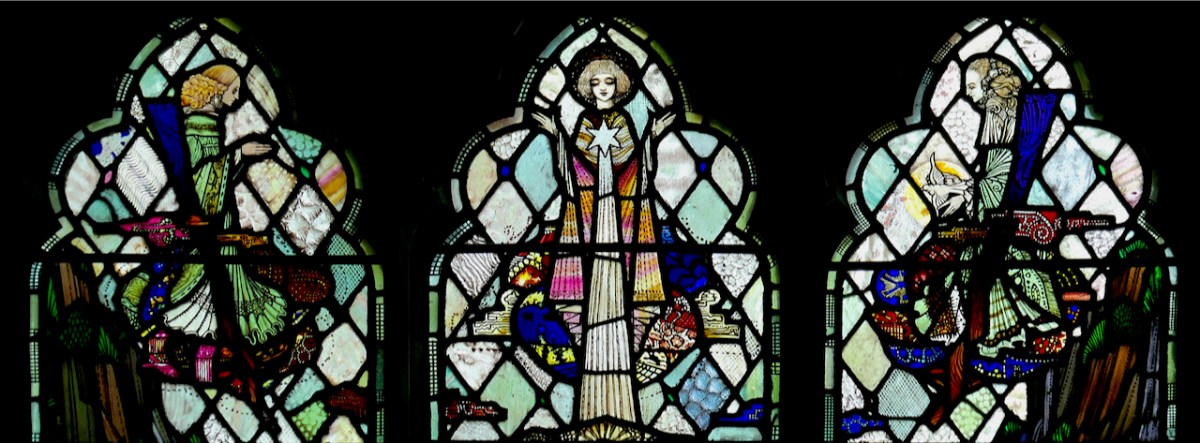
Although the decision that Harry was to do the window was now made, that’s not to say that all went smoothly from this point on. Edith had a hard time being decisive about the iconography she wanted (St Finbarr didn’t make the final cut), and at one point Cameron managed to lose Harry’s design for the window and she had to ask him to do it again. Also, there was the matter of cost, and how the rest of the family felt about it all. We’ll get into all that in the next post, as well as the elements of the window that Harry designed. Here’s a sneak preview.
*I have to record here my debt of gratitude to Thomas Somerville and the Somerville Archives, for permission to view and quote from letters from Harry Clarke to Edith Somerville and from Edith to Cameron. It is an enormous privilege (and quite a thrill) to have original material to work from.
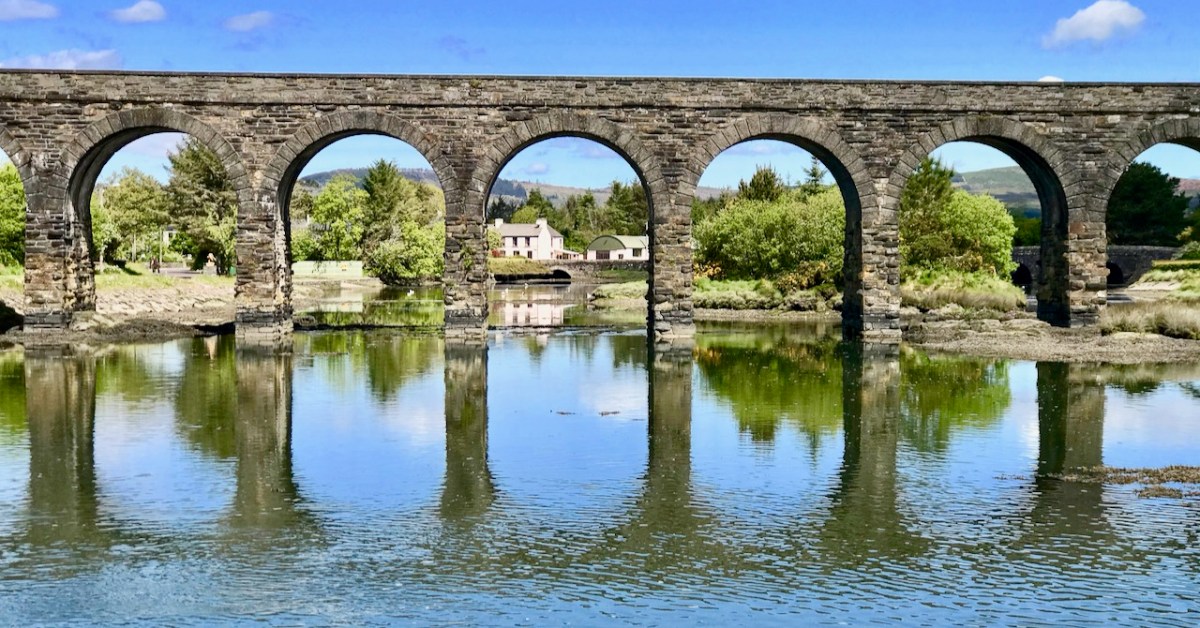
Last week’s post The Twelve Arches of Ballydehob proved a most popular subject. Ballydehob’s railway viaduct – dating from the late nineteenth century can’t be ignored. It was fairly easy to put together another dozen pics of the structure, making a good Christmas Day theme to take your minds off turkey and stuffing!
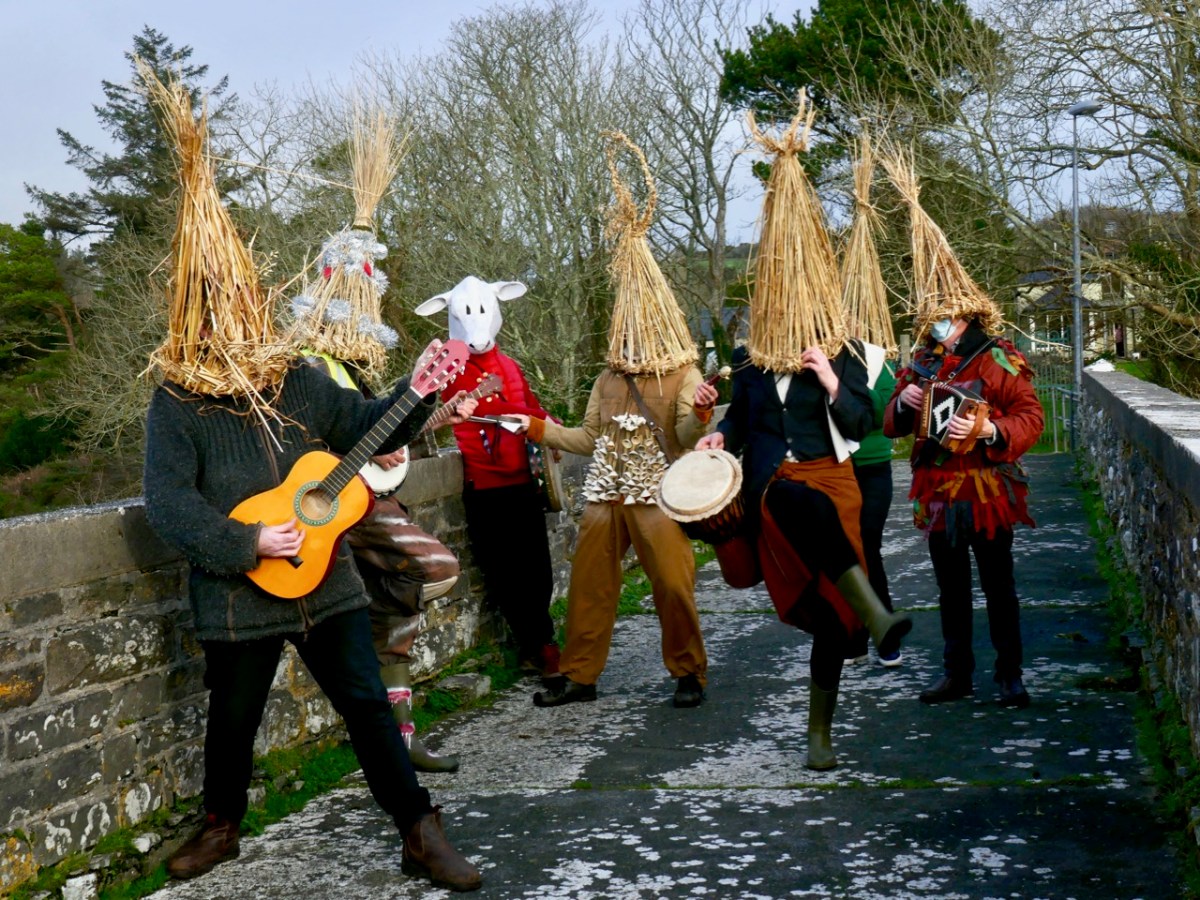
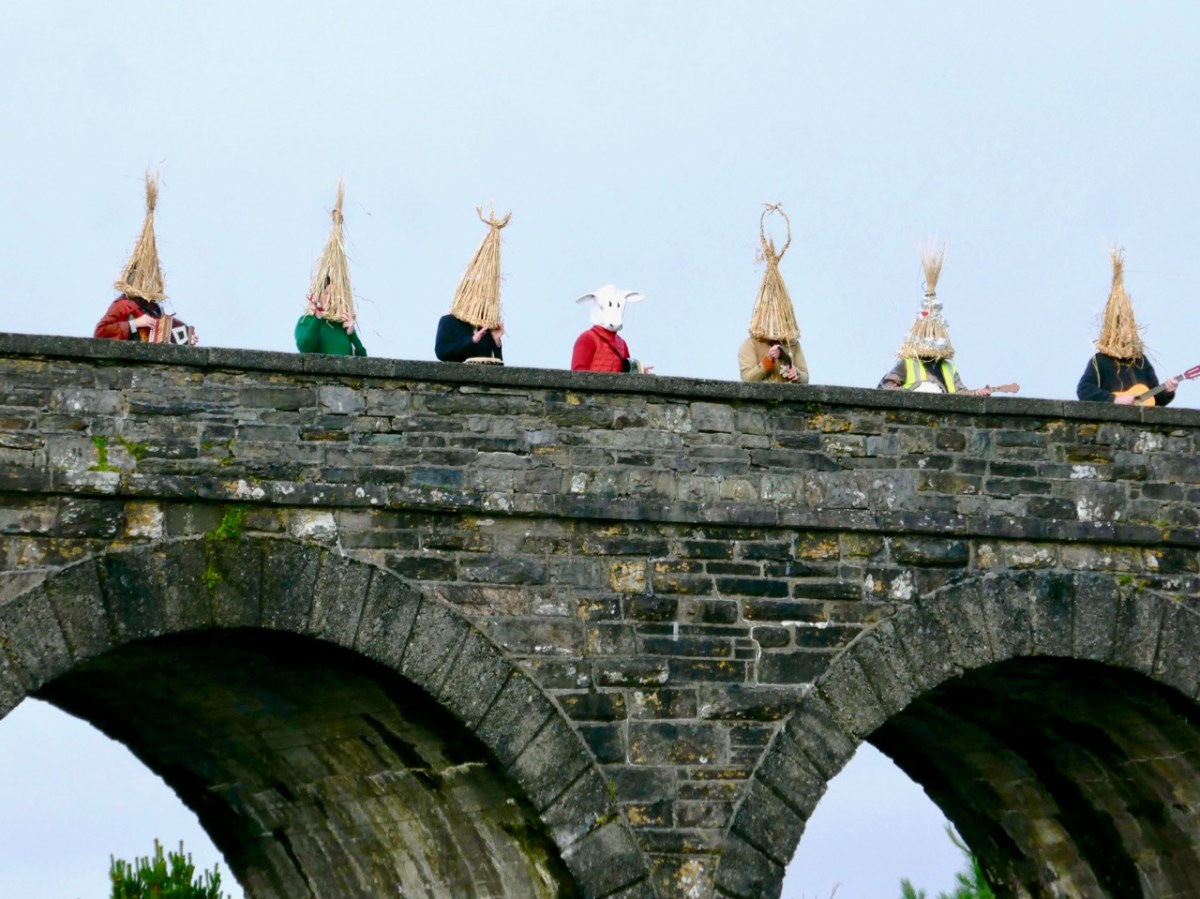
As we have lived not too far from the viaduct over the last ten years, we have seen it – and photographed it – in many of its moods. And it’s a constant backdrop, of course, to life in our West Cork village. Below – here it is, supporting a very ancient tradition, on St Stephen’s Day (that’s me on the right!):
“No Wrens Were Harmed in the Making of this Post!” That was the title of my RWJ article on the Wren Day festivities in Ballydehob in 2019 – pre-Covid. It was great to be out and about in the village, echoing a custom which has been passed from generation to generation. When I grew up in England I joined in the Mummers’ tradition there: I followed it for much of a lifetime, and even now can recite the whole play without a prompt… “Here comes I, Bold Trim Tram: Left hand, press gang – press all you bold fellows to sea…”
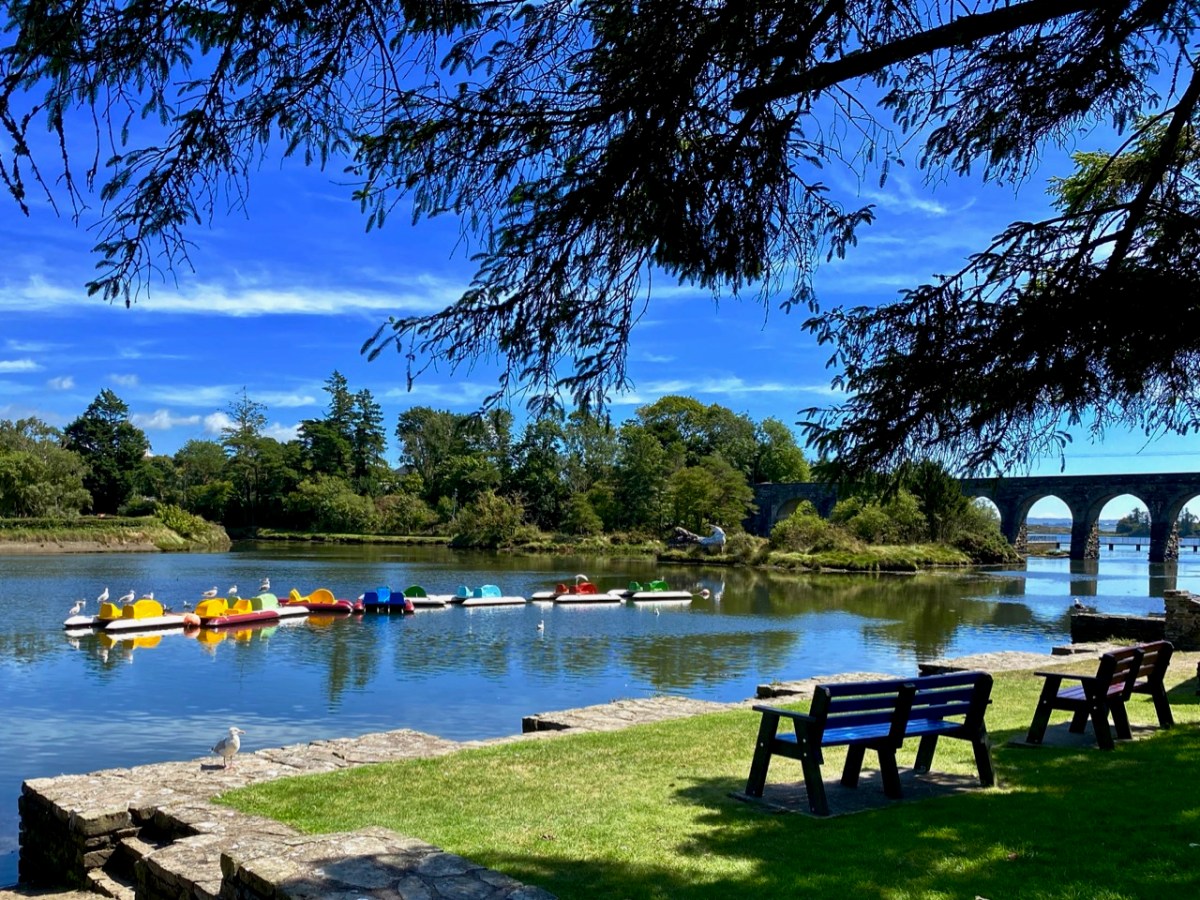
Something else which could do with a revival is the Pedalo tradition. Pedalos were brought out of storage for an unique occasion in the summer – a project named Inbhear, an art installation by Muireann Levis. Here is own my post about it.
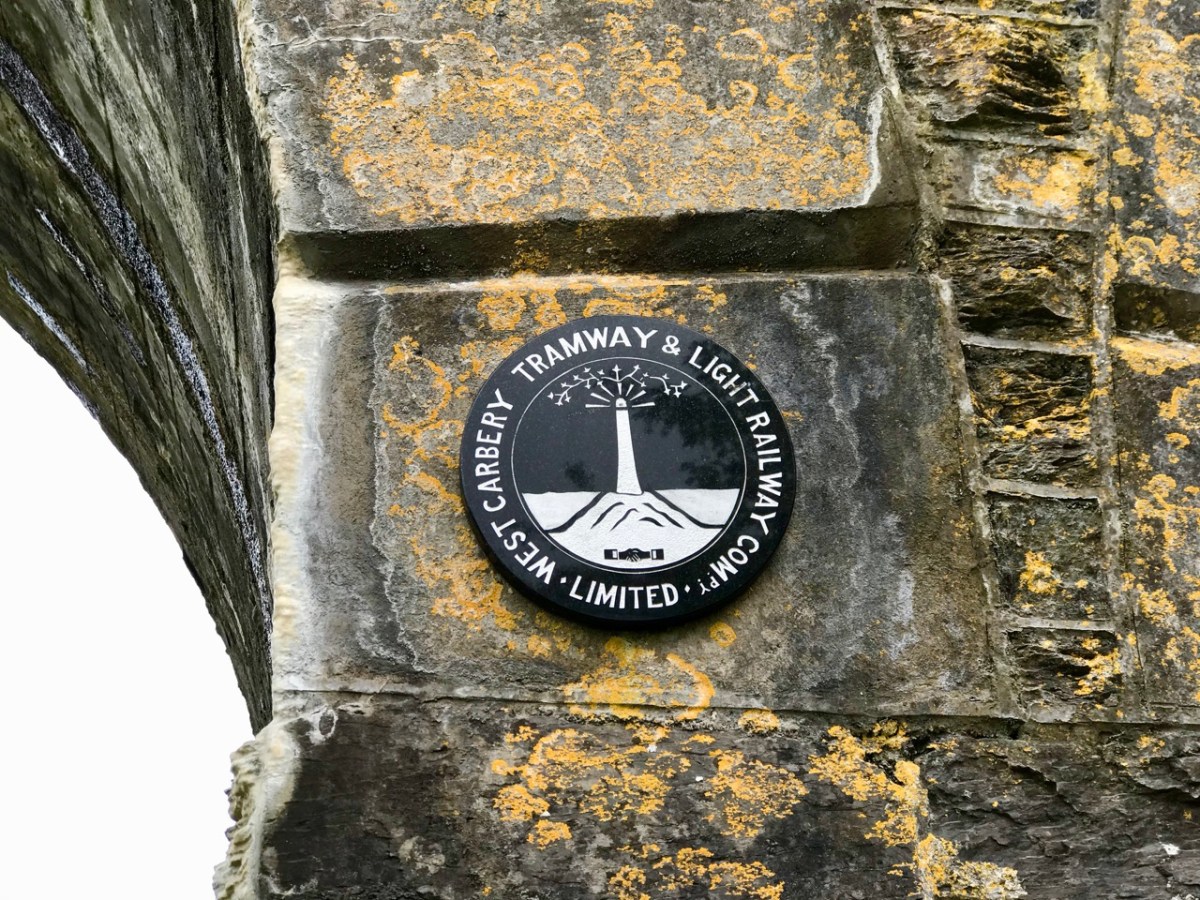
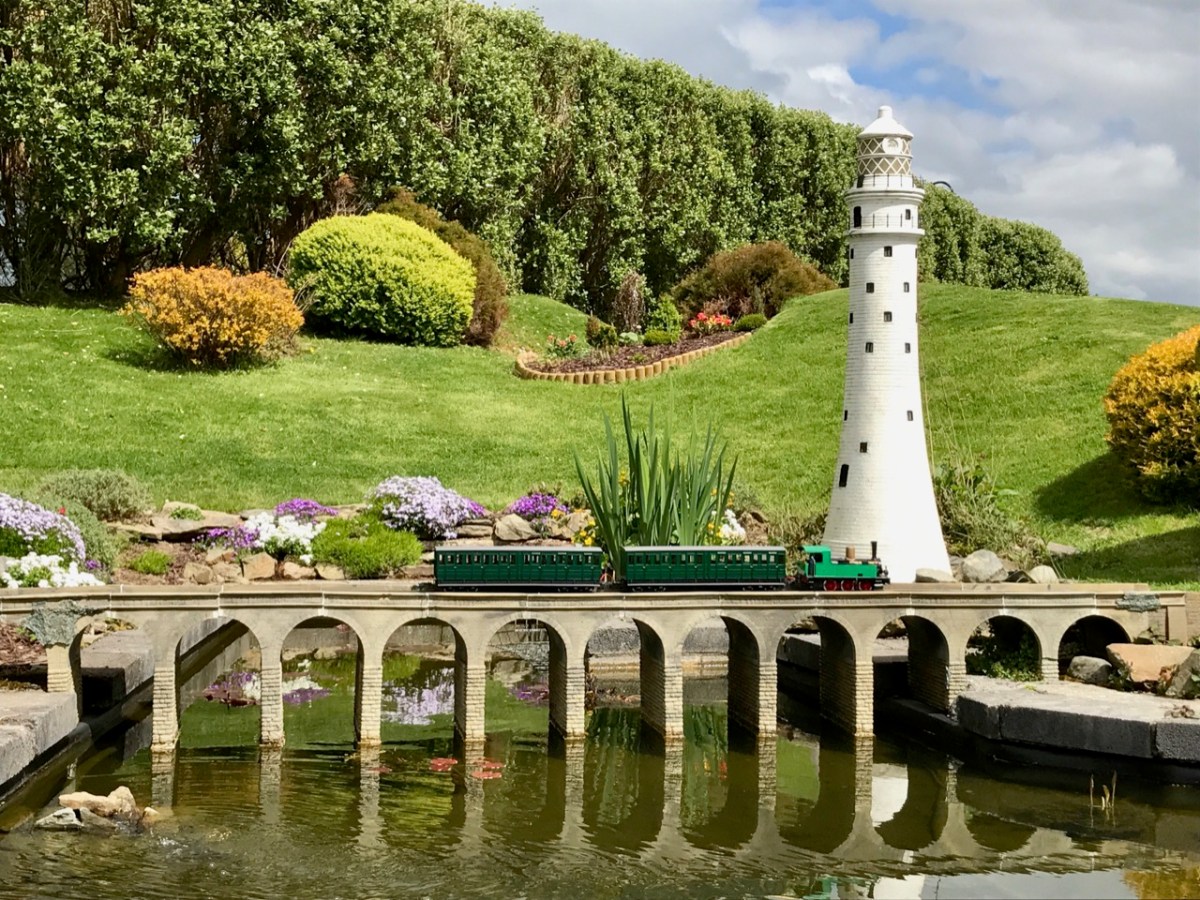
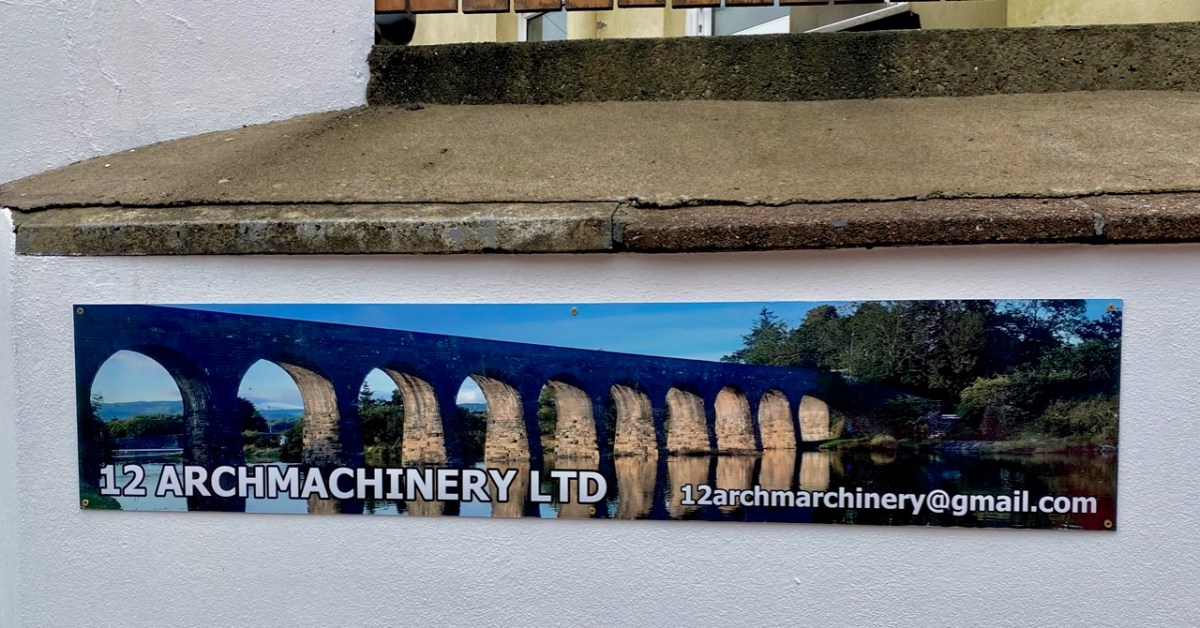
I was pleased to have this photo of the viaduct in my collection. If the scale looks a little wobbly it could be because this – and the train – are models sited at the West Cork Model Railway Village at Clonakilty. Below – a local company, in Ballydehob, has chosen to use the bridge in its title.
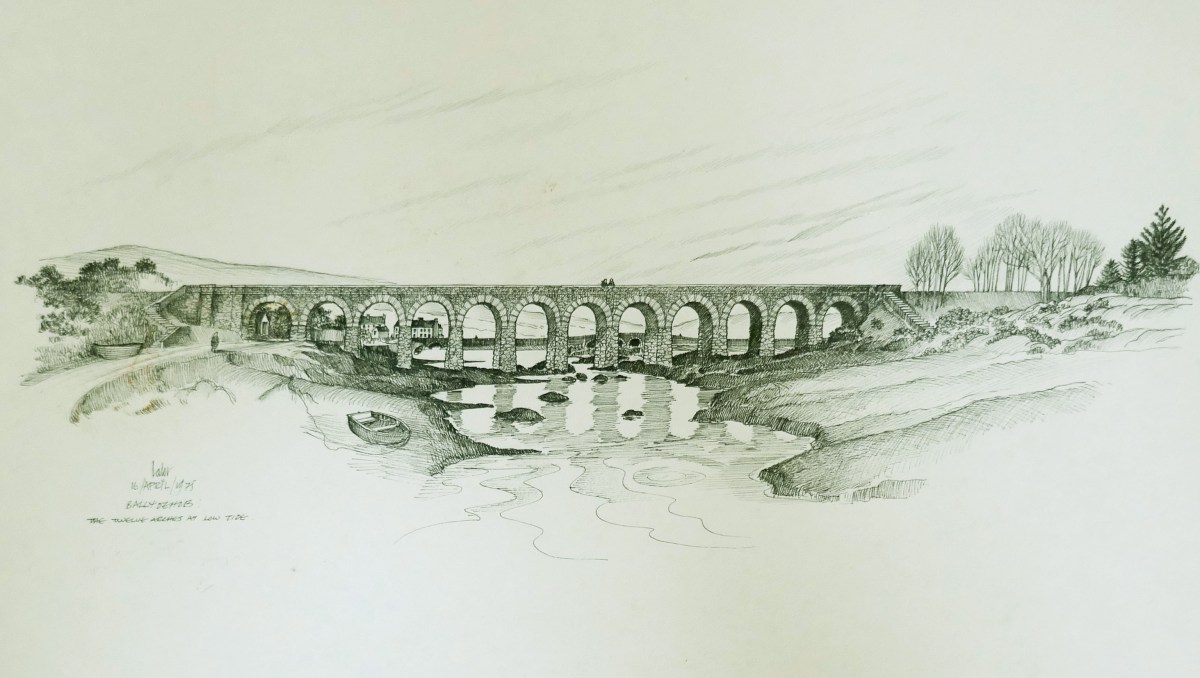
We showed you some of Brian Lalor’s work last week. Here’s another of his drawings. It is dated 1975: he tells me he has plenty more viaduct pics if I write another post in the future.
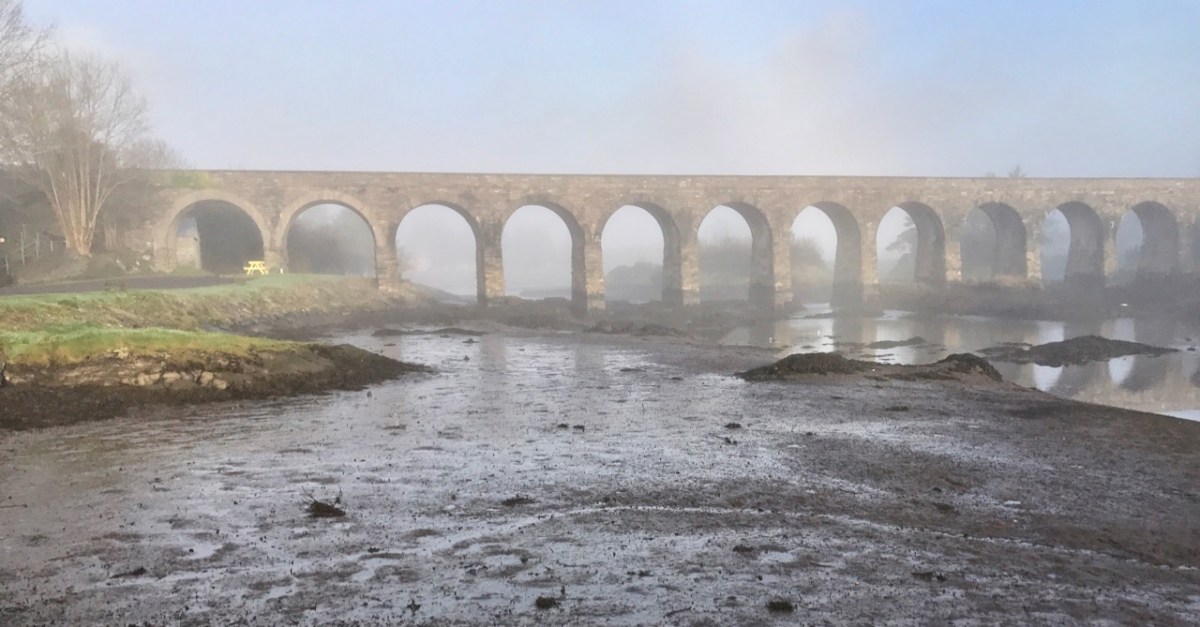
Atmospherics a-plenty: we have them all the time in Ballydehob. We do live in one of this world’s most inspiring places… Have a very good and atmospheric Christmas, everyone! And – safe journeying if you are out and about.
Welcome to the UCD Library Cultural Heritage Collections blog. Discover and explore the historical treasures housed within our Archives, Special Collections, National Folklore Collection and Digital Library