O’Donovan Rossa – the First Terrorist?

Fiery Rossa

The world was shocked this week by appalling acts of terror. Terrorism is rightly and universally condemned in modern Ireland – and yet this year we celebrated the centenary of the death of a man whom many, including his fellow patriots, denounced as a terrorist in his lifetime while others hailed as a hero.

Our American and Canadian readers might be surprised at how relevant his story is to their own countries.
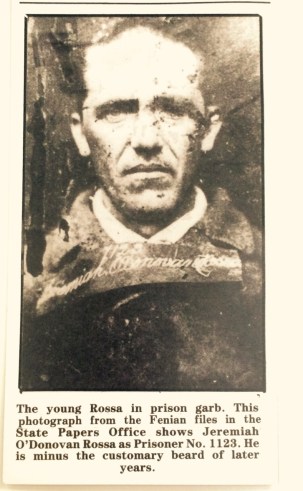
Rossa Prisoner

I write of course of Jeremiah O’Donovan Rossa of Skibbereen, the ‘Unrepentant Fenian’, whose state burial in 1915 was the occasion of a fiery speech by Patrick Pearse that is commonly seen as a catalyst to the 1916 Rising. In March Back in Time I introduced him and wrote about the awful background that turned him into a revolutionary – the death of his father from famine fever and his family’s eviction and departure from Ireland. To the end he refused to call the cataclysmic events of 1845 to 1850 a famine: there was no shortage of food, he pointed out, just a shortage of humanity. It fired in him a lifelong hatred of British rule which hardened through terrible treatment in prison and which he brought with him to exile in America, where he and his fellow Fenians were accorded a hero’s welcome.
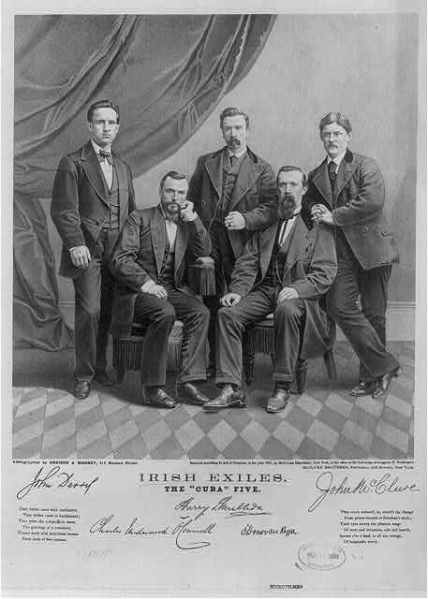
The Cuba Five were so named for the ship that brought them to America. Courtsey Library of Congress

The Cuba Five were so named for the ship that brought them to America. Courtsey Library of Congress

The Fenian brotherhood Rossa joined in America in 1870 had organised several raids on Canadian communities during the 1860s and early 70s. All were unsuccessful, but resulted in loss of life and a worsening of relationships between Canada and America, seen as harbouring and tolerating Fenian activity. The raids involved hundreds of Fenians, many of them battle-hardened veterans of the American Civil War. (For more on the Irish in the American Civil War – the numbers and the stories will amaze you – see Damian Shiels’ meticulously researched blog and website.)

According to this article on the Fenian Raids:

Ironically, though they did nothing to advance the cause of Irish independence, the 1866 Fenian raids and the inept efforts of the Canadian militia to repulse them helped to galvanize support for the Confederation of Canada in 1867. Some historians have argued that the affair tipped the final votes of reluctant Maritime provinces in favour of the collective security of nationhood, making Ridgeway the “battle that made Canada.”

Fenian Raid on Canada

The Battle of Ridgeway, courtesy Library of Congess

Embracing this militaristic approach, Rossa became as notorious an extremist in America as in Ireland. He founded a newspaper, The United Irishman, to propagate his views and raise funds for his infamous skirmishing fund. This fund, in fact, was to pay for a bombing campaign carried out in Britain from 1881 to 1885, causing injuries and deaths (to civilians, including children) – and real terror.

One of the exhibits in Skibbereen this summer consisted of newpaper clippings from American newspapers about Rossa, amply testifying to his notoriety. The top right clipping consists of snippets about Well Known People – Rossa is listed alongside William Morris, Geronimo and the Csar Of Russia

In many ways O’Donovan Rossa encapsulates a central dissonance at the heart of Irish History: he was a passionate patriot who believed in armed struggle, while many of his contemporaries espoused a pacifist (see Michael Davitt as a prime example – he referred to Rossa as O’Donovan Assa) or parliamentary approach and saw Rossa’s campaign of violence as undermining their objectives. Now, in 21st Century Ireland, we are faced with the dilemma of how to deal with historical figures who are both important markers in the struggle for independence and echoes of a violent past many no longer wish to glorify.
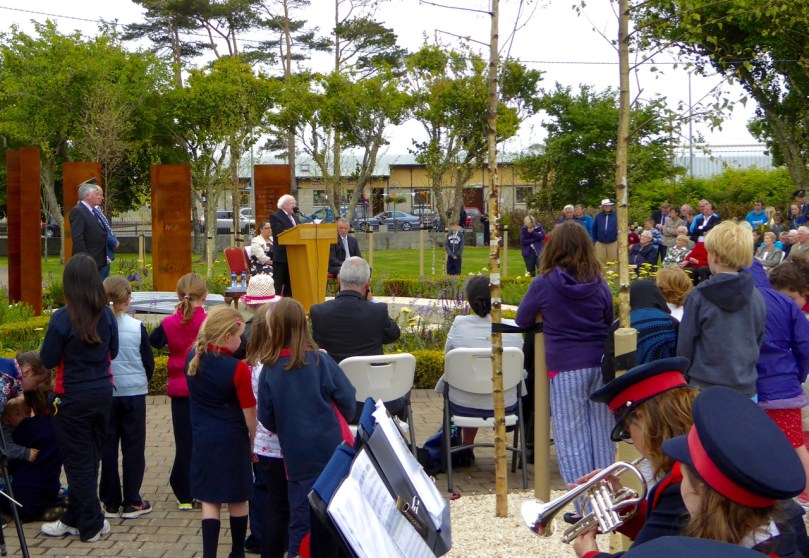
The President of Ireland, Michael D Higgins opened O'Donovan Rossa Park in Skibbereen

The President of Ireland, Michael D Higgins opened O’Donovan Rossa Park in Skibbereen

In Skibbereen this summer Rossa was celebrated in several ways. We attended not just the March, but a play, two exhibitions, a lecture, and the grand opening of a refurbished park in Rossa’s honour by Michael D Higgins, the President of Ireland. In Dublin his 1915 state funeral and graveside oration were given a full scale re-enactment, attended by the President, the Prime Minister (Taoiseach) and many dignitaries.
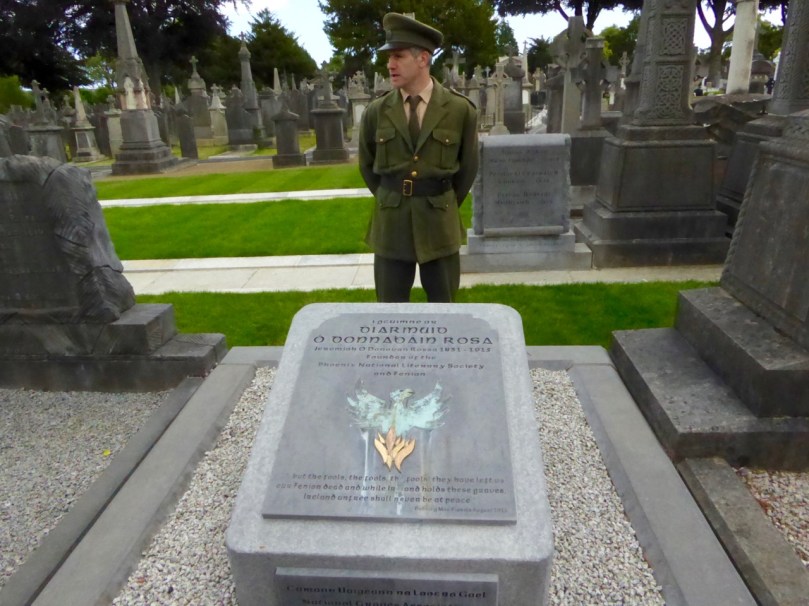
We toured Glasnevin Cemetary on Dublin this summer. The tour included a re-enactment of Patric Pearse's oration at the grave of O'Donovan Rossa

We toured Glasnevin Cemetary on Dublin this summer. The tour included a recital of Patrick Pearse’s oration at the grave of O’Donovan Rossa

To give you a flavour for how Rossa is revered as a hero watch this YouTube clip – the ultra-nationalist ballad features Pathé News footage of the actual funeral.

But not everyone felt that it was appropriate for the Irish government to underwrite such commemorations. This was expressed well by the historian, Carla King writing to the Irish Times. She summed up thus:

…while O’Donovan Rossa is a figure for whom we can feel some pity, his philosophy, with its commitment to mindless and counter-productive violence, launched a tradition of which we should be ashamed.

Another historian, Marie Coleman wrote:

It was unclear whether the focus of the event was Rossa himself or the significance of the funeral as signifying the rejuvenation of republicanism as a precursor to the Easter Rising. If the former, the State’s endorsement of an archaic form of irredentist Irish nationalism will sit uncomfortably with many in 21st-century Ireland and with unionist opinion in Northern Ireland.
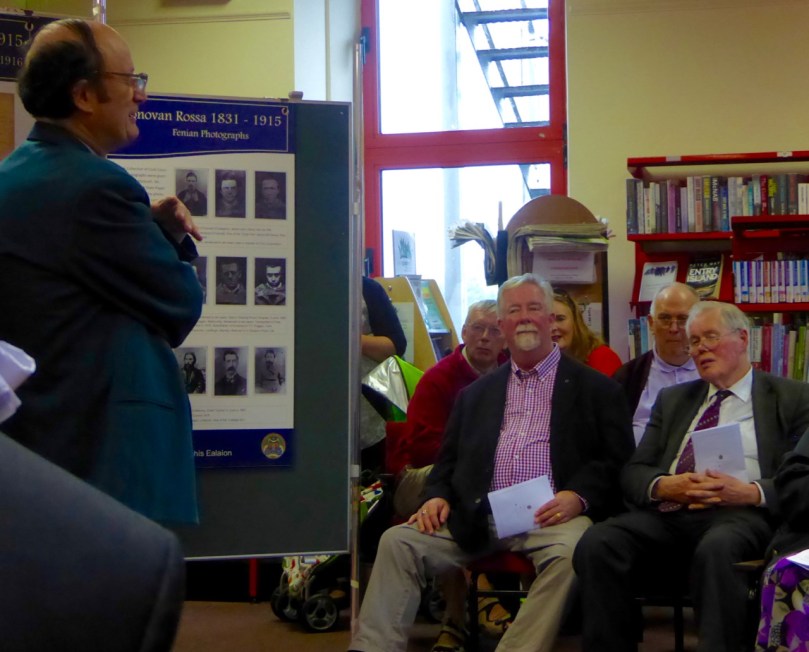
Another exhibition opening - this one at the Skibbereen Library

Another exhibition opening – this one at the Skibbereen Library

Like many Irish people growing up in the 50s and 60s I was brought up on stories of the epic Fight for Irish Freedom, although in my family’s case it was also complicated by ancestry on both sides of the divide. In that narrative, Rossa was one in a long line of heroic freedom fighters. To dig a little deeper still into the story of O’Donovan Rossa, I went looking for signs of the man himself around Skibbereen and found them in some surprising places.  My next post will relate to Rossa’s time in Skibbereen and the legacy he left in this West Cork town.
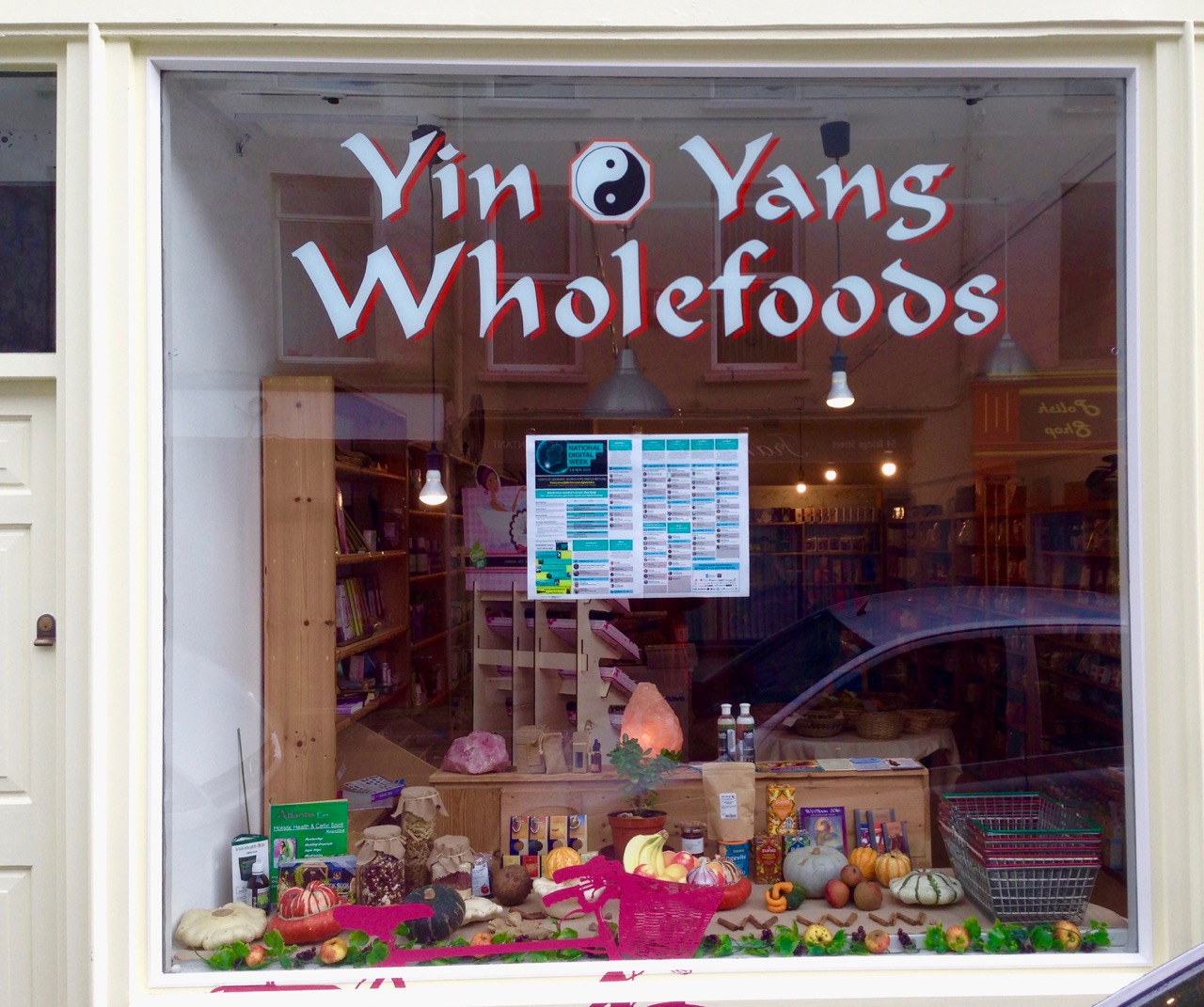
Digital Skibbereen!

The Digital Week programme has appeared all over town...
The Digital Week programme has appeared all over town…

Who has ever heard of Percy Ludgate? And who would have thought that a man born in 1883 in a little West Cork town was a computer pioneer?

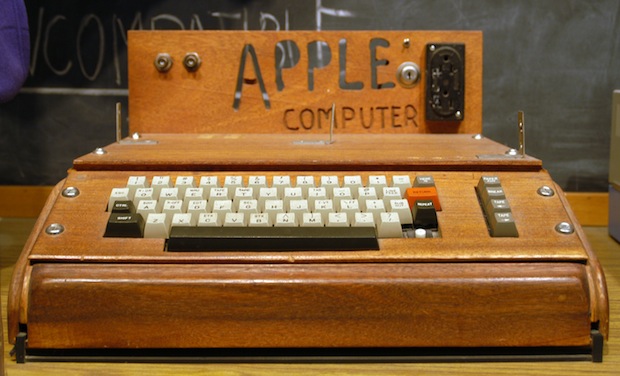
apple_i_computer620
Early ‘computing’ – Percy Ludgate (top left); a conjectural diagram of his invention; the Schicard calculator (known as Napier’s Bones), arguably the first mechanical calculator and created in 1623; the very first Apple computer (above)

In Skibbereen, now, everyone knows about him – because he has given his name to a new initiative which has swept the town. And – breaking news – National Digital Week has just taken over this modest community, doubling its population for a few days and bringing innovation and promise of much needed life and work opportunities.
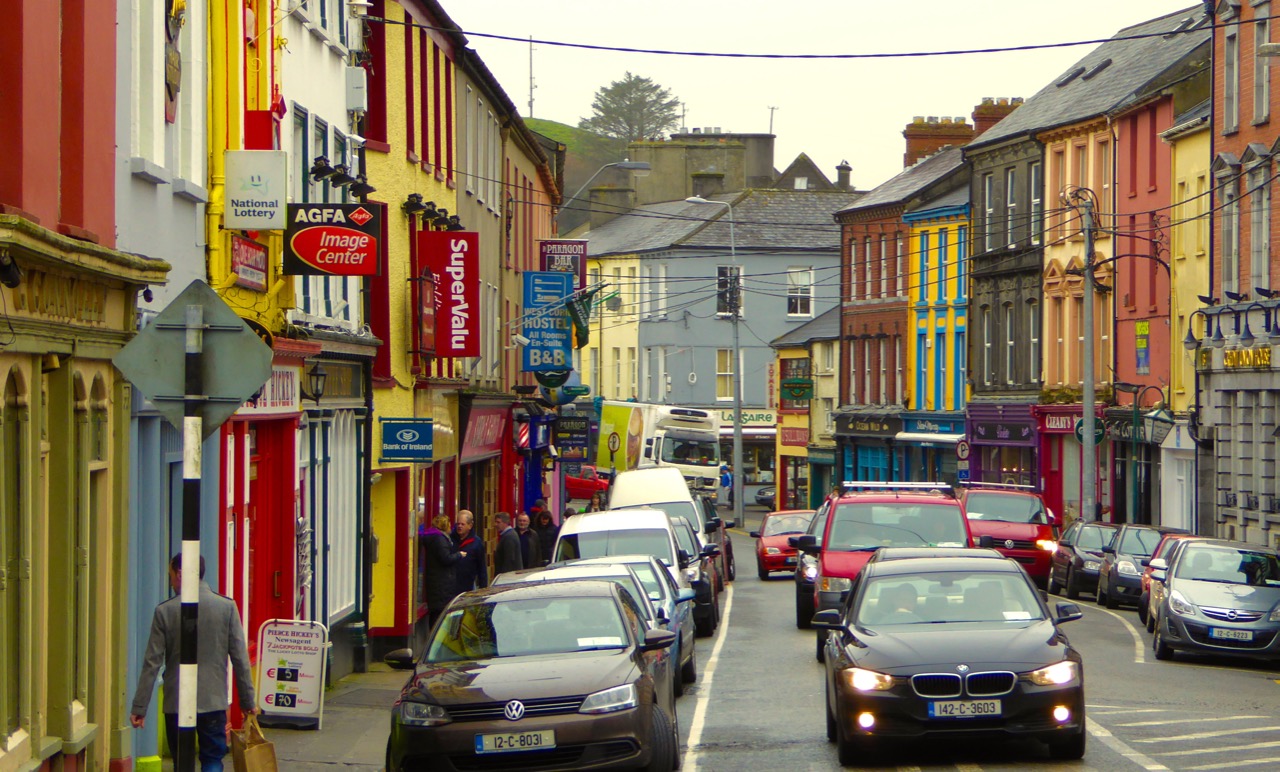
Skibb busy street

21st century Skibbereen

Skibbereen has become one of the first towns in Ireland outside Dublin to create for itself a ‘Digital Hub’: a centre where businesses will have access to high-speed fibre broadband – something which is long overdue in rural Ireland. We all remember the promises rolled out in the Celtic Tiger years that every last corner of the island would be given access to state-of-the-art phone and internet connection so that businesses could operate competitively from small communities, thus ensuring their economic survival… Well, two decades later, this ‘last corner’ here in Cappaghglass is still waiting: our broadband is always slow and ‘down’ as often as it is ‘up’, and a mobile phone signal is non-existent – politicians take note, please! And this is not uncommon in all the remoter fringes of this land.

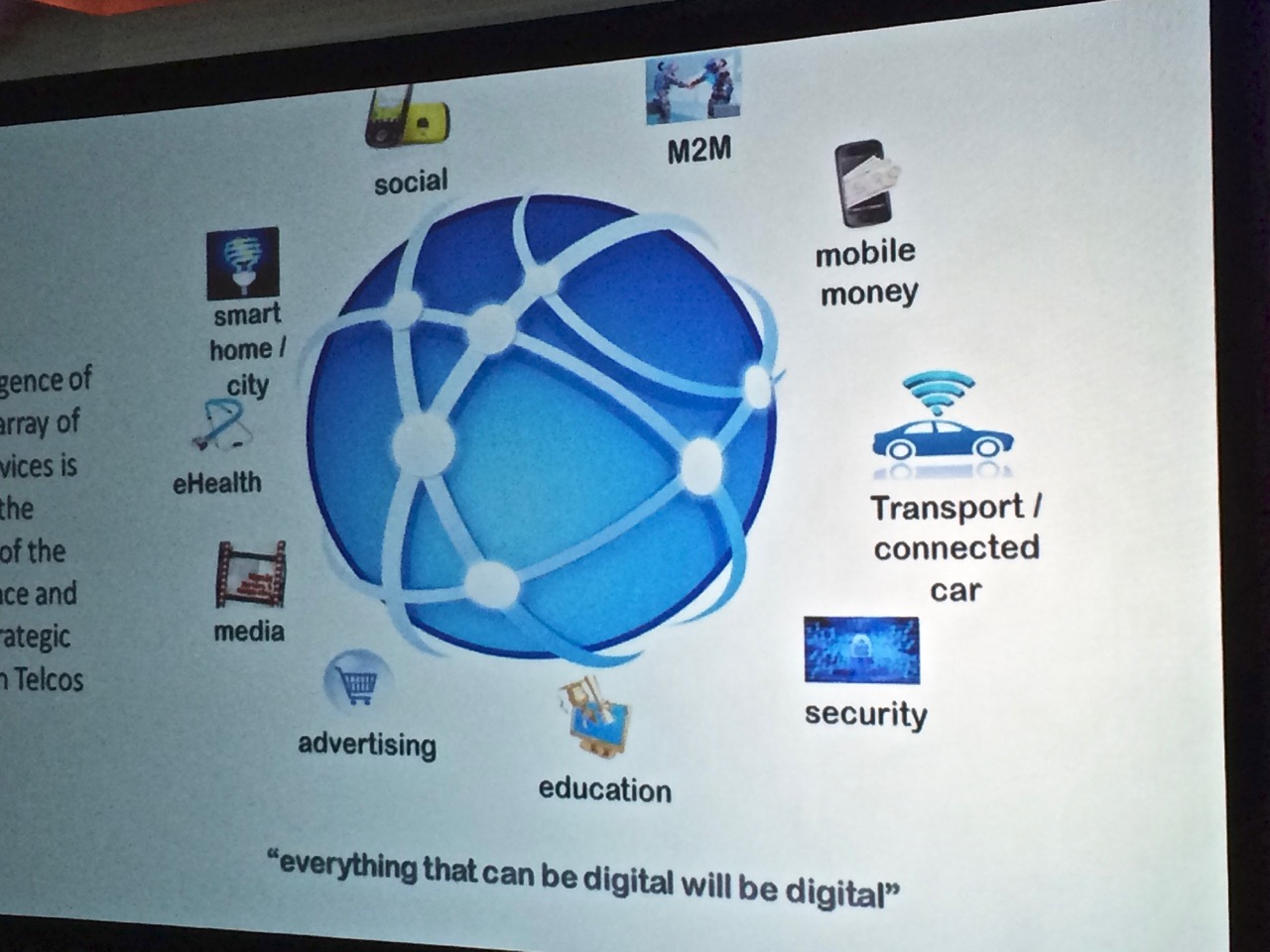
Everything that can be digital

All the more reason to applaud the initiatives now happening in Skibbereen. It’s only twenty minutes up the road from Cappaghglass, so perhaps there is hope that once real high-speed connectivity reaches that town some of its potency may dribble down the lines to us…

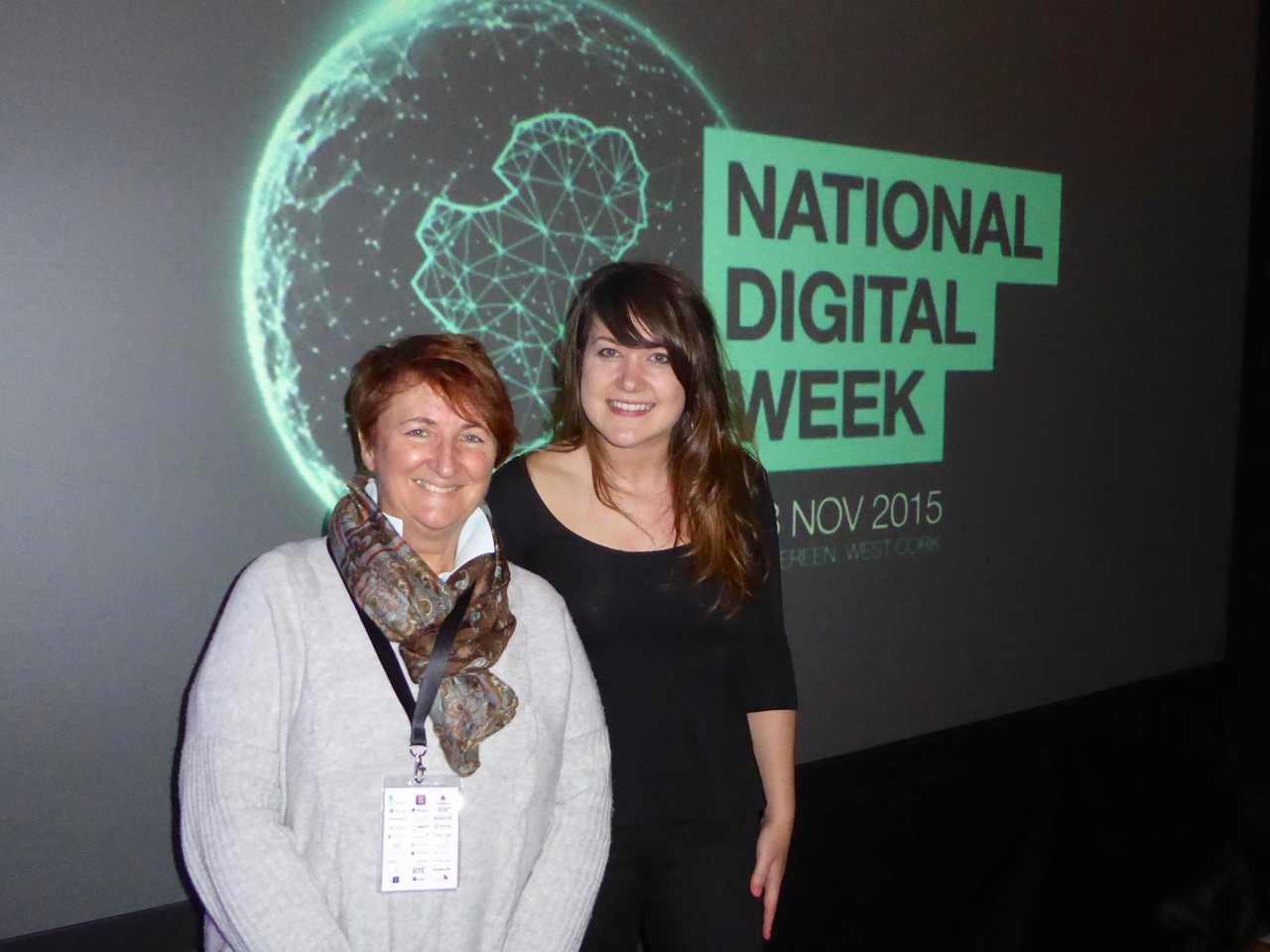
Finola and

Finola was particularly impressed that there was a day dedicated to female leaders in digital media – women who are ‘making the impossible possible’... Here Finola is mentored by Denise Brown, an Account Manager at Google

Skibbereen’s initiative is being led by local businessmen and women who want their own families – and the whole younger generation now growing up in rural Ireland – to have the opportunity of a viable working future without having to migrate to the cities or abroad – which is currently the norm. And they have no doubts that the future is digital; it is possible to run any sort of business nowadays online, and to compete in national and international markets from anywhere in the world, provided that the place is digitally ‘connected’.

Robert and Giacomo

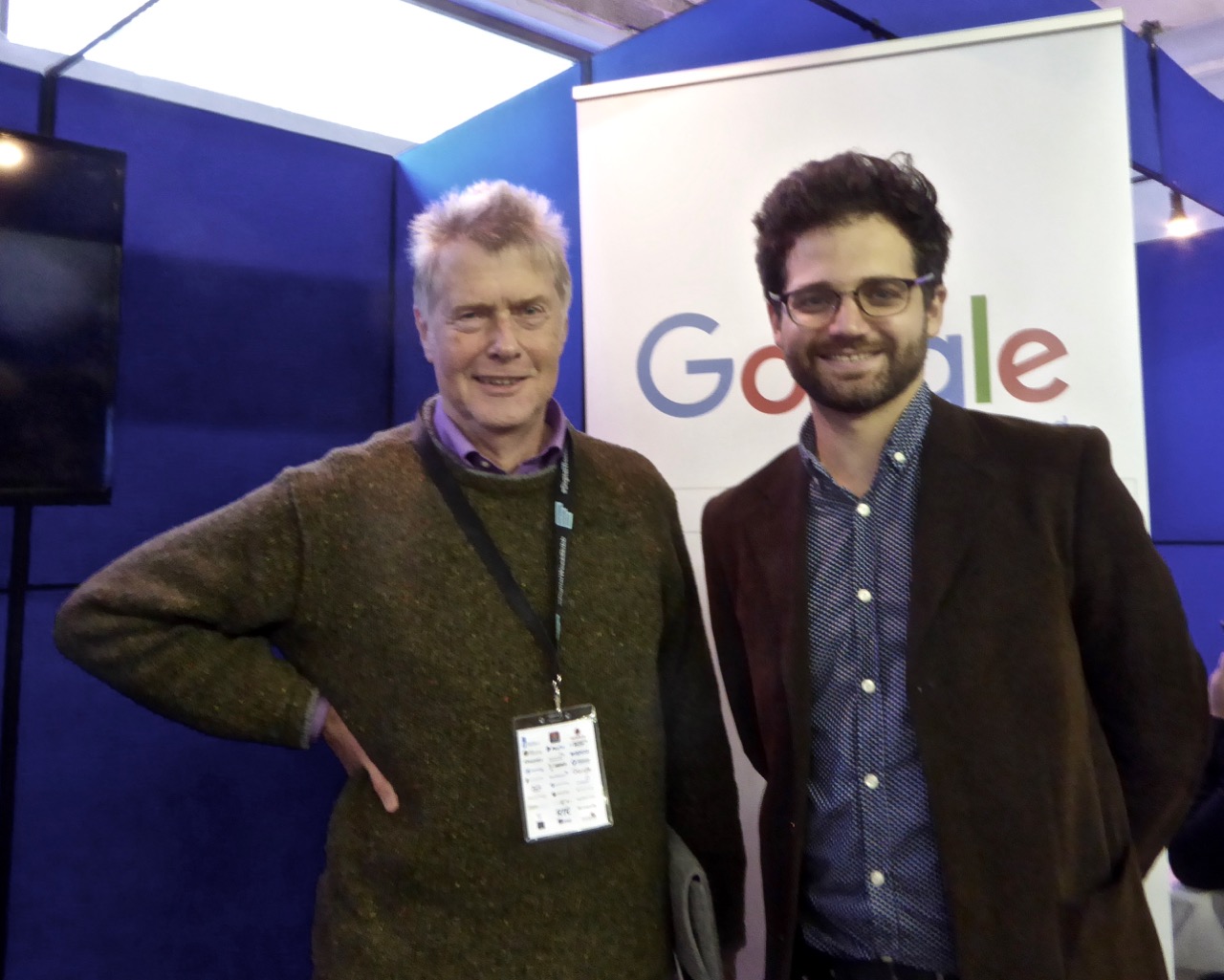
Robert at a one-to-one clinic with Google’s Giacomo Gnecchi-Ruscone

Ireland has a long-running association with the digital world, probably for the very same reason that it’s now important for communities in rural Ireland to embrace it: we are a very small country with a tiny population trying to survive and make our mark in the huge world economy. Giants like Apple and Google have long had a big presence in the Irish Republic – partly because they get good tax deals but also because Ireland’s working community has made itself good at being digital.

google dublin

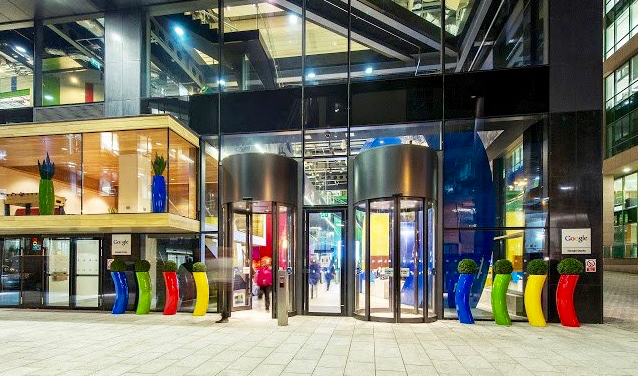
Google has a huge presence in Ireland: the Dublin office

Skibbereen’s John Field comes from a family which has made its mark on the town: the local central supermarket – still always called ‘Fields’ – thrives because it focusses on local producers and also provides a very good friendly shopping experience. John believes that West Cork producers are central to the new ‘Irish food culture’. Now he is a prime mover in the digital initiative and has donated a premises – that used to be the town’s bakery (one of the oldest in Ireland) – as the first Digital Hub to be fitted out. By chance (or not!) this premises is just around the corner from where computer pioneer Percy Ludgate was born.

img2.thejournal

A digital image of Field’s old bakery converted to the new Hub

Percy Ludgate was convinced of the importance of mathematical computing devices, and came up with his own design for an ‘analytical machine’ in 1909. He was well respected and lectured universities and learned societies in the early part of the twentieth century. He knew the work of Englishman Charles Babbage (1791-1871) who had built programmable calculating machines using a system of punched cards. Ludgate took a different approach: his design had all the elements of a modern computer – data storage, programmable data input, a printer, and an ‘operating system’. In theory, Ludgate’s automated engine would multiply two 20-digit numbers in under 10 seconds, and take two minutes to determine the logarithm of a number. It would also solve algebraic equations and geometric problems. It was to be powered by an electric motor, and the device would be ‘portable’ – a cube measuring about two feet on each side. Sadly, Ludgate did not live long enough to complete a prototype: he died from pneumonia at the age of 39. It’s great, though, that this whole 21st century digital project carries his name.

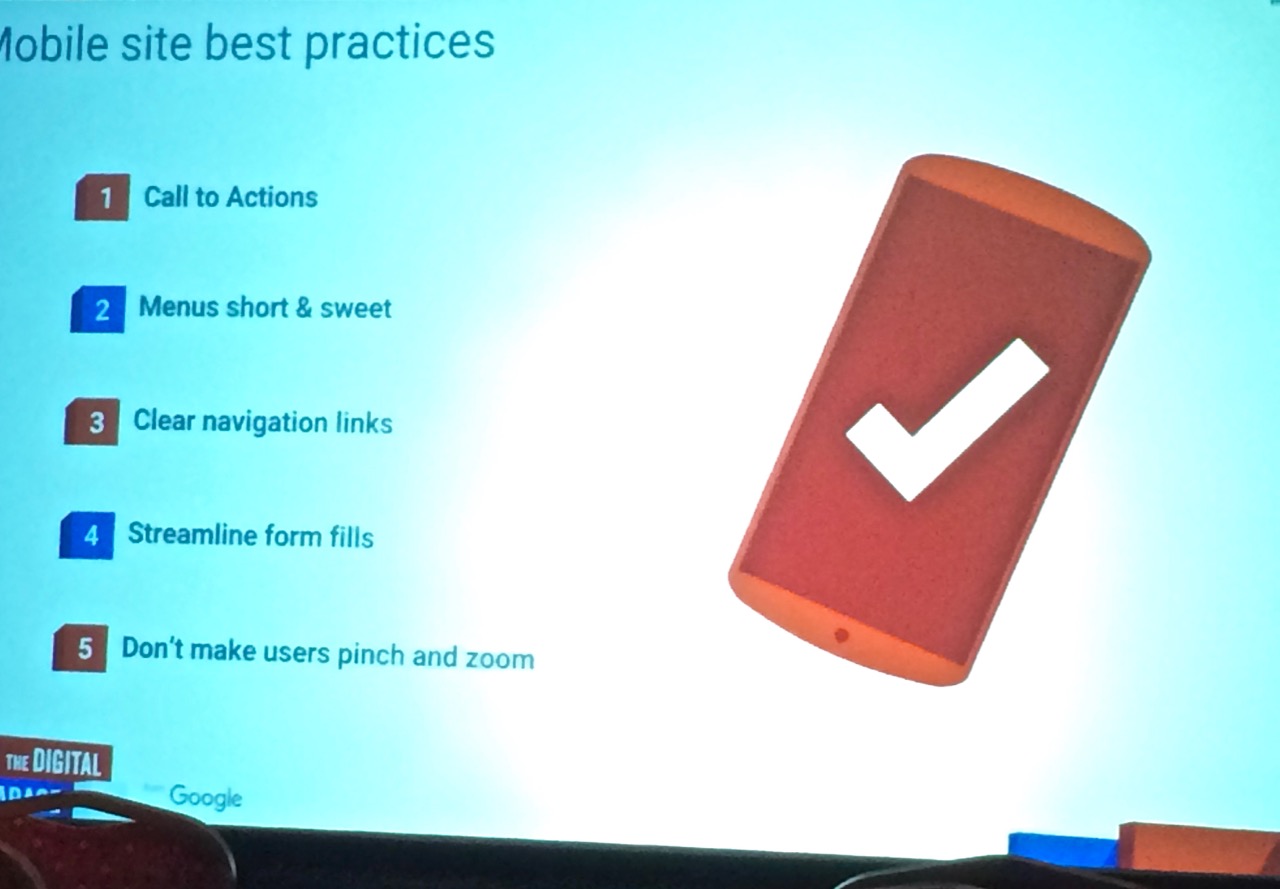
Mobile best practice

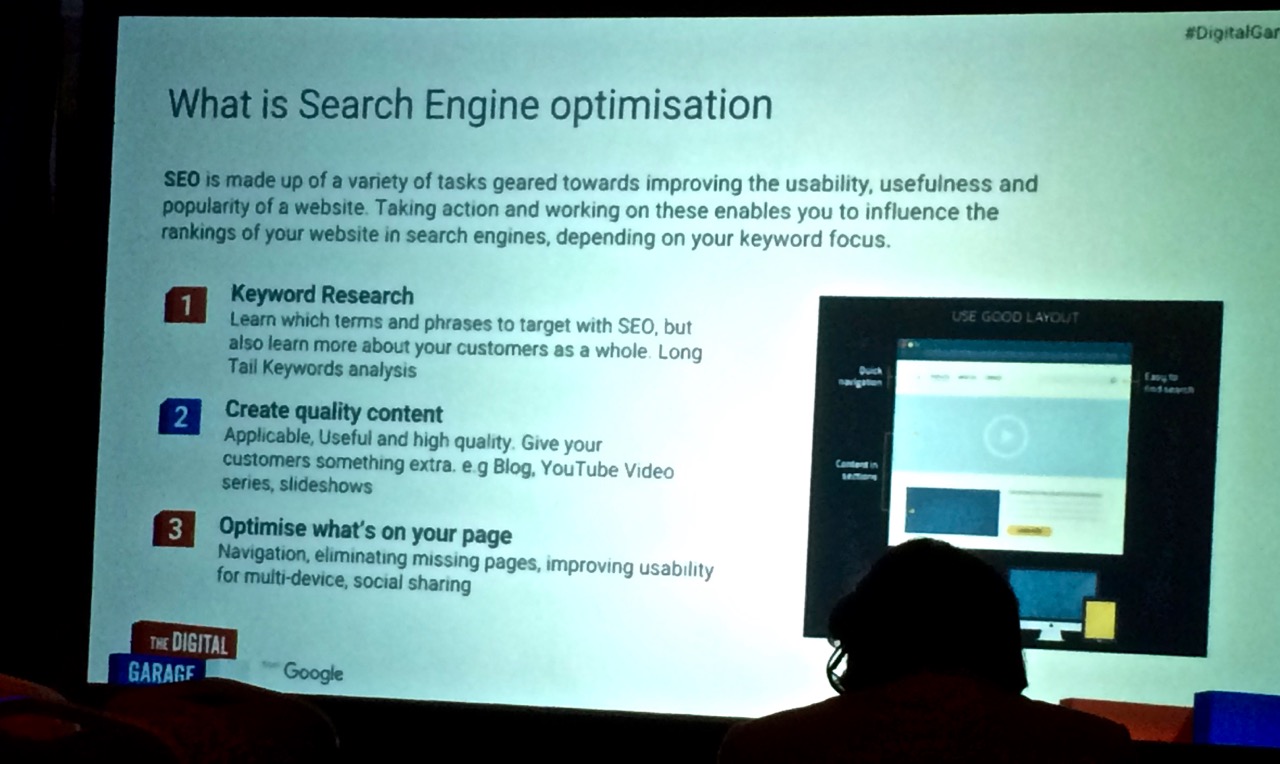
Last week’s venture involved a series of conferences and workshops designed to introduce anyone who wanted to attend to the concept of the Digital Hub – and to give insights into how the use of the superspeed technology could benefit all businesses. We attended – partly because we wanted to be in the know on the whole venture – but also because we could see how it would help us in producing this blog – and in getting it seen by more people! As with any business, it’s important if you have something to promote (in our case) or to sell (in the case of a producer), you need to know how to get your message across in the most accessible and attractive way. You also need to know that the message is getting to where you want it to be. This is where ‘Analytics’ come in. We already knew it was possible to see how many people were reading our blog and – more or less – where they came from. Now we have discovered that it’s possible to analyse a whole lot more about where our work is reaching, and who looks at what and for how long. This could be sen as frightening, I suppose, in a ‘Big Brother’ context, but it’s all anonymous and – in the end – it’s all just data. Anyone in commerce nowadays who has a command of that data will be best placed to make sure that their own business will offer what the markets seem to be looking for – and that’s what a thriving economy is all about.

SEO

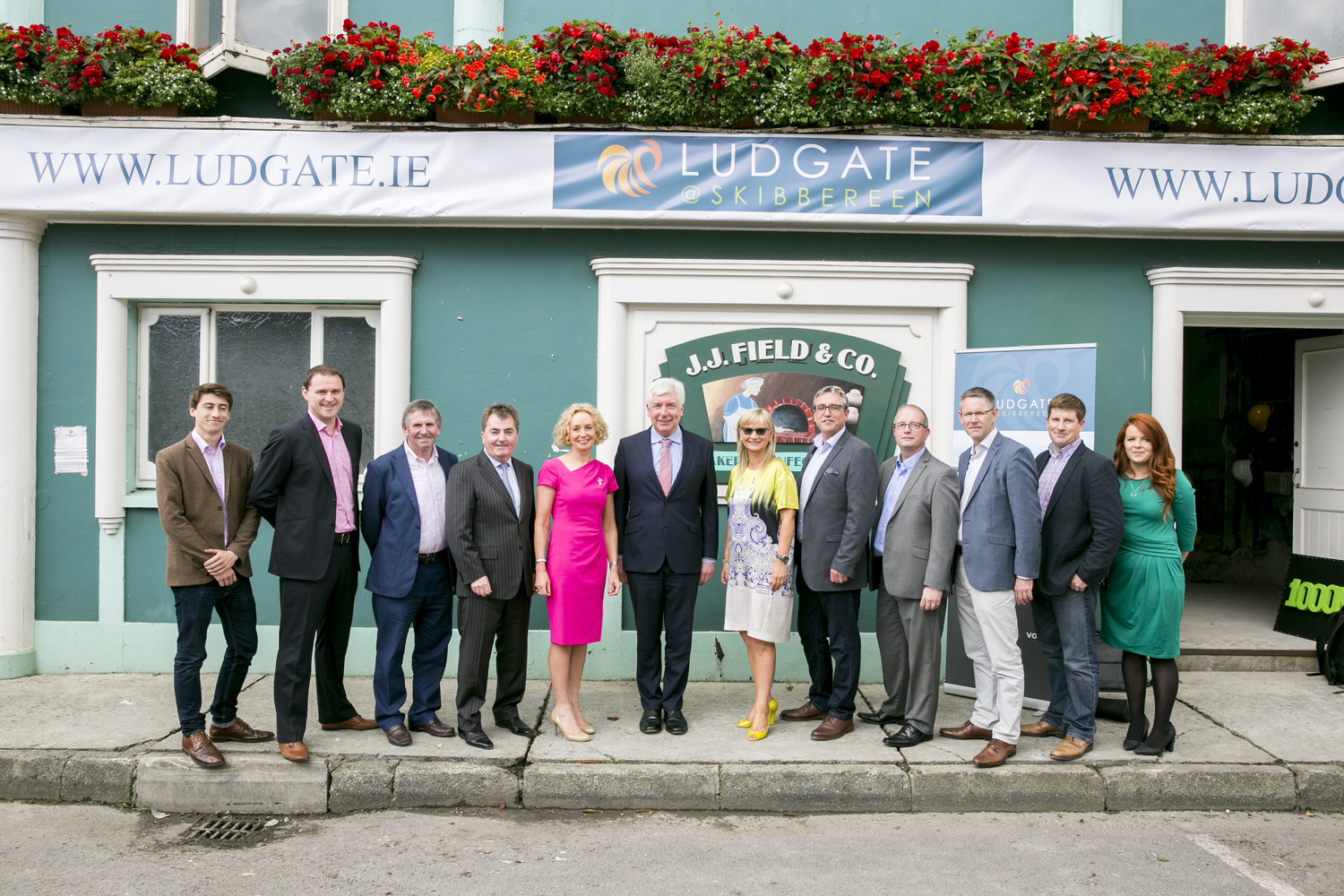
A special mention has to be made of the many young people involved in this venture. In the digital world it seems that it’s the youth who are mentoring the not-so-young! Think – who are the most computer-savvy members of your family? Important faces here include Project Director Gráinne Dwyer and Corporate Development Director Callum Donnelly, seen here (far right and far left) with the rest of the team at the launch of the Ludgate Centre:

NO REPRO FEE Pictured at the 'sod turning' launch of the Skibbereen's Ludgate Hub at the old fields bakery on Friday 7th August 2015 Picture: Emma Jervis Photography
The ‘sod turning’ launch of Skibbereen’s Ludgate Hub at the old Field’s Bakery, August 2015 (Emma Jervis Photography)

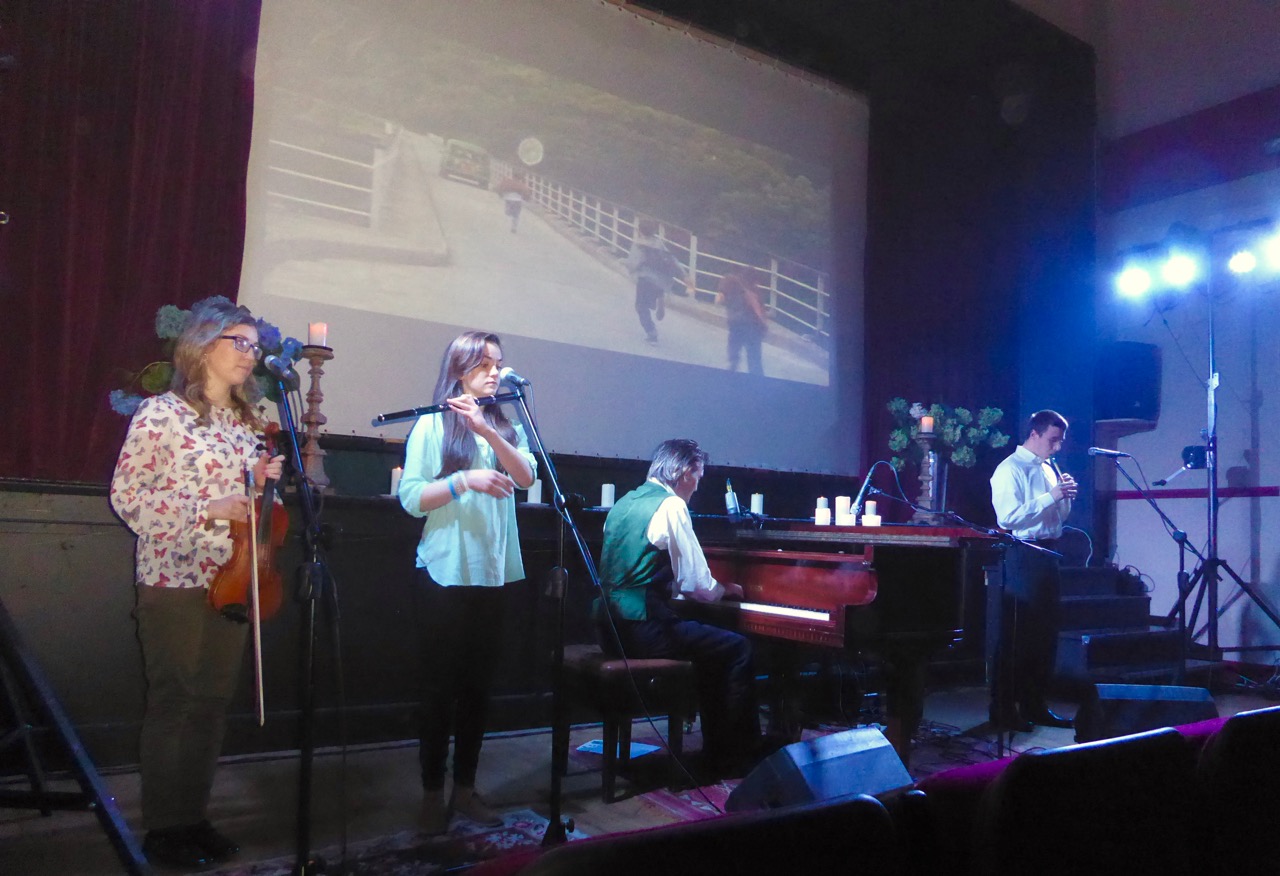
One of the many great things about Ireland is that there’s always a creative side and a human side to every venture. So – after every day’s lecture sessions and masterclasses – it was time for relaxation and social activities. Skibbereen came up trumps, thanks in no small measure to one of the town’s most treasured human assets – Declan McCarthy. Declan runs the world-renowned Baltimore Fiddle Fair every year and also organises a whole raft of first class musical events in West Cork: with the help of many others during Digital Week he ensured the smooth running of quite outstanding evenings to turn minds away from digital matters. On the first night we had Jessie Kennedy’s Carbery Songs; then, on Friday, what could have been more inspiring than an evening in the Skibbereen Town Hall with our favourite traditional music makers Martin Hayes, Dennis Cahill and Kevin Burke? And this fabulous concert was broadcast live online right across the world! The following evening we were royally entertained again, this time by Sacha Puttnam, son of the renowned film maker Lord David Puttnam (remember Chariots of Fire – The Mission – the Killing Fields – Midnight Express?). Both Puttnams live here in West Cork (why would they live anywhere else?), and Sacha – ably accompanied by some local young musicians – gave us some superb renderings of film music from his father’s movies on the Skibbereen Town Hall grand piano (which, incidentally, was donated to the town by the family, having been played previously in 10 Downing Street amongst other venues). Behind it – on the big screen – we could watch stills from the movies – and there were orchestral accompaniments all synchronised digitally: again, everything was broadcast live to the world over the internet.

Puttnam and friends

Worldwide web broadcasts from Skibbereen: Burke, Hayes and Cahill (above) and Sacha Puttnam and friends (below) – anyone recognise the scene from War of the Buttons?

David Puttnam (below), who holds the honorary title Digital Champion for Ireland, is the chair of Atticus Education, an online education company based in Ireland which delivers interactive seminars on film and a variety of other subjects to educational institutions around the world. The Puttnam involvement in Skibbereen’s pioneering digital venture is therefore most apt.

imgBannerHome2

Keynote statement from Ludgate@Skibbereen: Digital will negate the conventional disadvantages of working and living outside cities; creating real jobs, real commerce while real people enjoy the superior lifestyle option of living in rural Ireland.

apple-logo11-248x300

Oldcourt

red hull

…At Oldcourt a boat-building yard flourished within the walls of an old O’Driscoll castle overlooking the pier and river. Schooners and steamships used to anchor at this spot, the highest point they could travel up the river. Here their cargoes of coal and other supplies were unloaded and placed on specially built lighters with a small draught that would be poled along a further sluggish turn or two upstream to the pier at Skibbereen. In this way cargoes of cattle were brought up by islanders to be sold at the market… (description of the townland of Oldcourt from The Coast of West Cork by Peter Somerville-Large 1974)

gentle Ilen

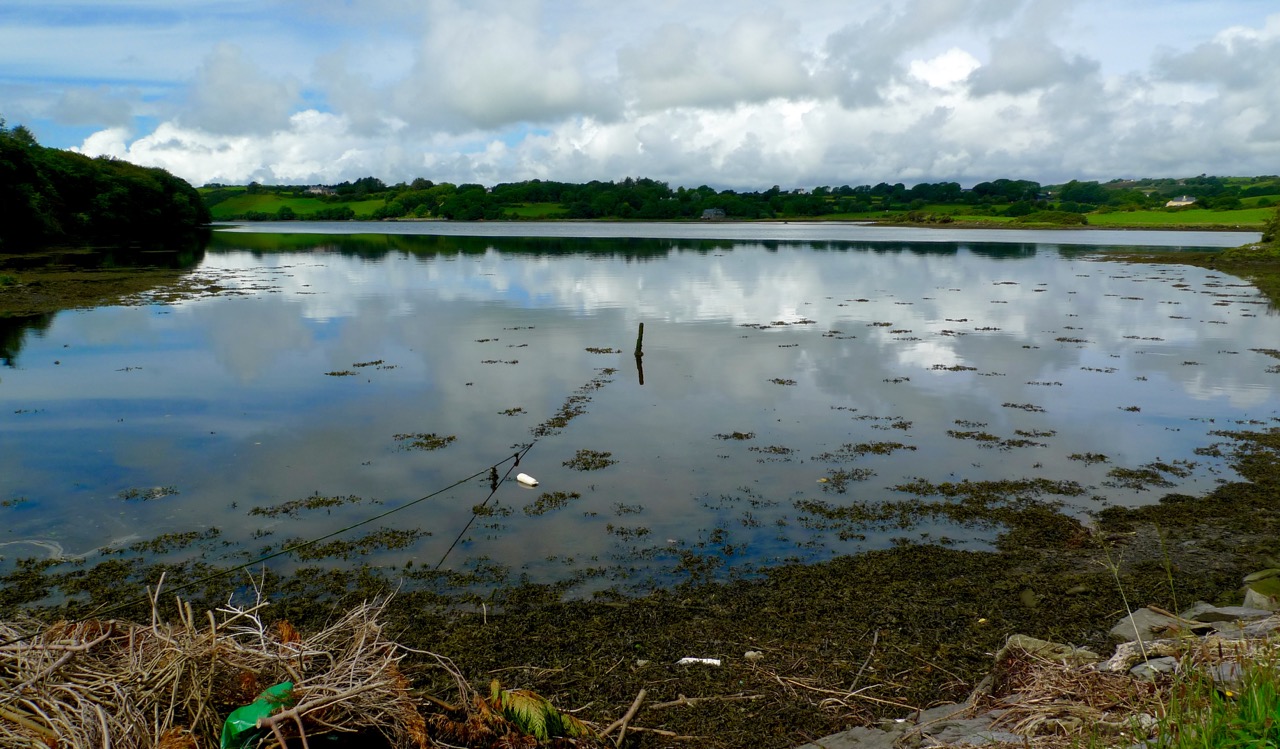
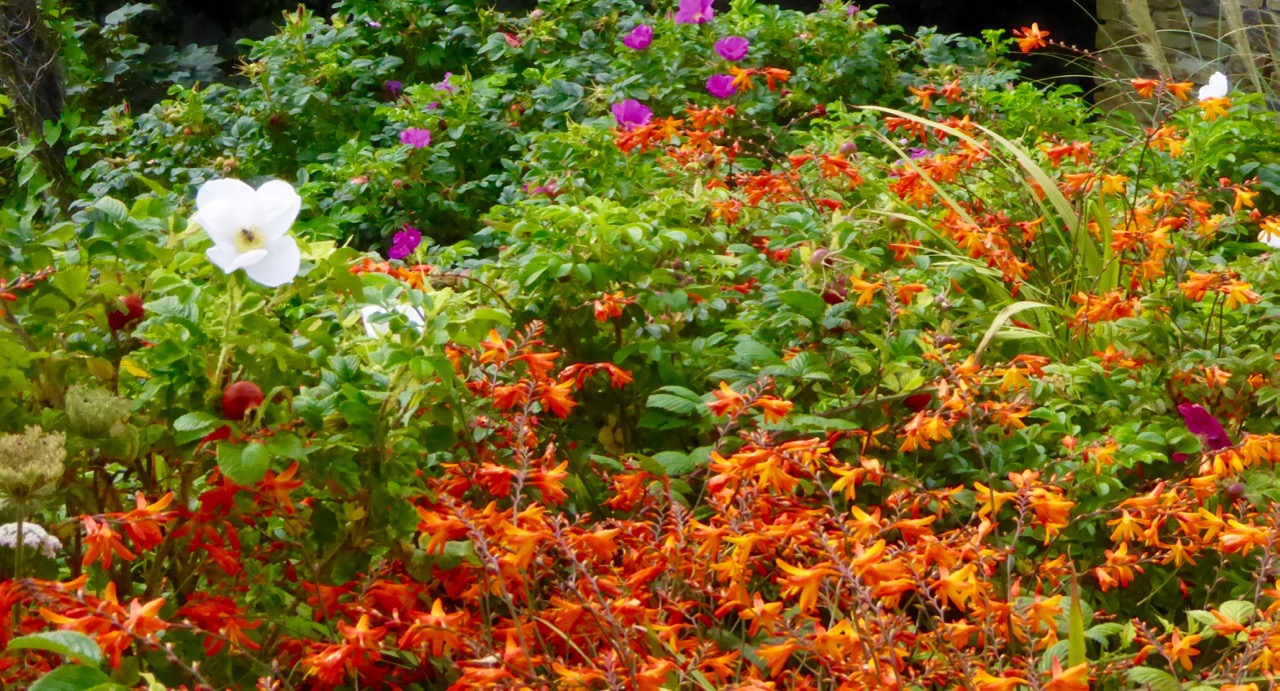
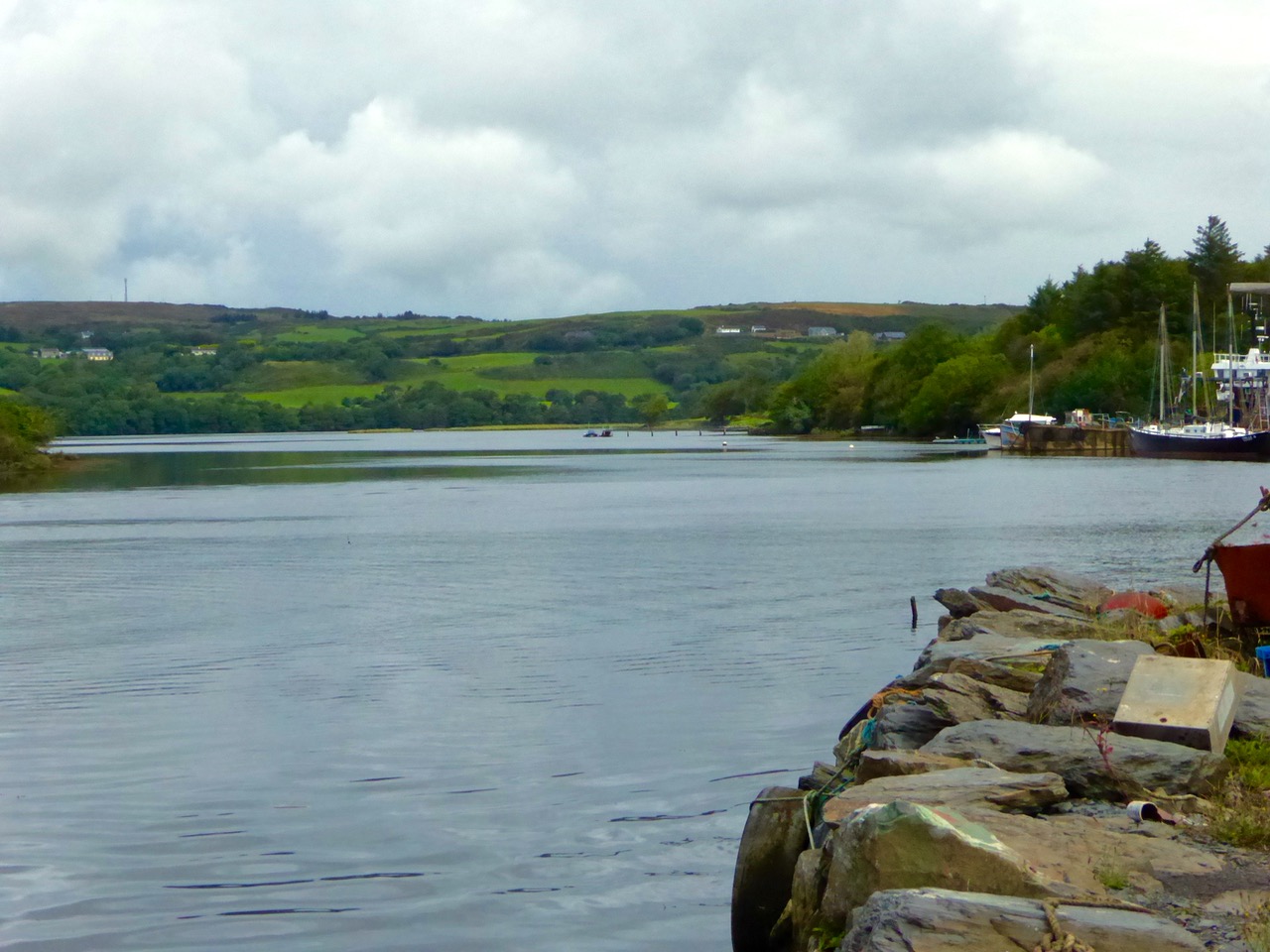
The tidal River Ilen making its lazy way out to Roaringwater Bay on a late summer evening has a melancholy beauty: it is wide and slow and – mid tide – is a perfect mirror to the sky. The sounds of Oystercatchers and Curlews coming over the water always bring thoughts of autumn: the harvest is ready to cut, the verges are brilliantly orange with the montbretia and the hedges purple-red and weighed down with fuscia.

Montbretia

wide river

We went down to Oldcourt to seek out history and atmosphere. We knew that it had once been a transport hub for the transhipments of goods and we wanted to see what might be visible from those earlier times. It was the river Ilen (pronounced eye-len) that gave birth to Skibbereen following a pirate raid on Baltimore in 1631. According to Skibbereen historian Gerald O’Brien …in the wake of the shock of that – the most daring pirate raid mounted against Britain or Ireland – a small number of survivors rowed upstream to resettle in the safety of the Ilen Valley. The role of this river-borne migration from Baltimore [was] a factor in the foundation of Skibbereen… (Journal of the Skibbereen and District Historical Society, Vol 7, p 91).

reflections

beyond the bridge

rust

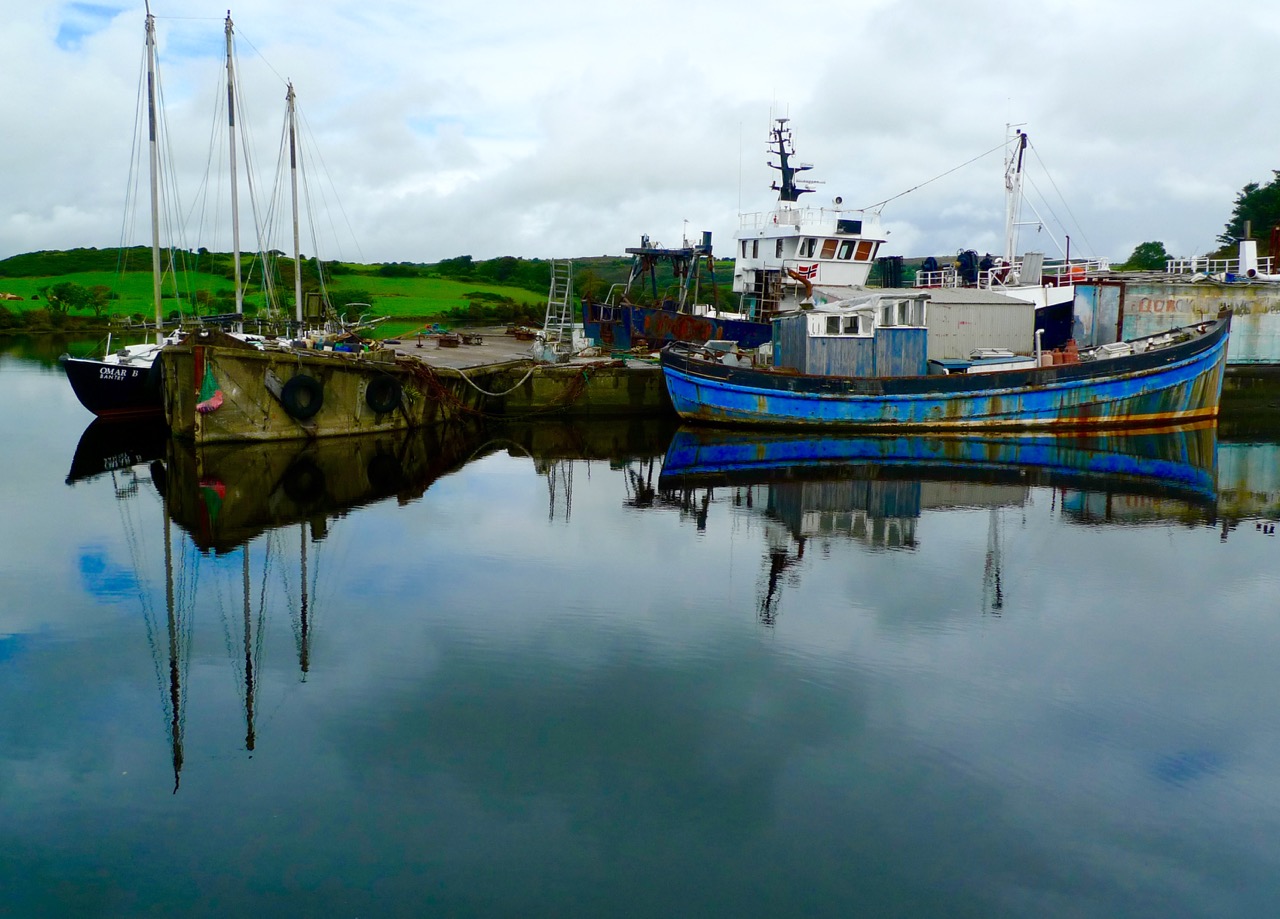
We found atmosphere a-plenty. On the upstream side of the wide inlet where the transhipment quays were sited is a streamlined modern boatyard where sleek yachts are wintered and serviced while, opposite and downstream, is a far more eclectic establishment surrounding and embracing the remains of the medieval castle and bawn: this is Hegarty’s‘…one of Ireland’s last surviving traditional boatyards…’

birdie in circle

Our aim was to search for the old quay and the medieval buildings which had been part of the castle demesne, but we were fascinated to pick our way through boats of all kinds – classic, sailing, fishing, ferrying – and boat paraphernalia: here an old decapitated wheelhouse, there a collection of masts, everywhere ropes and tackle…

green ropes

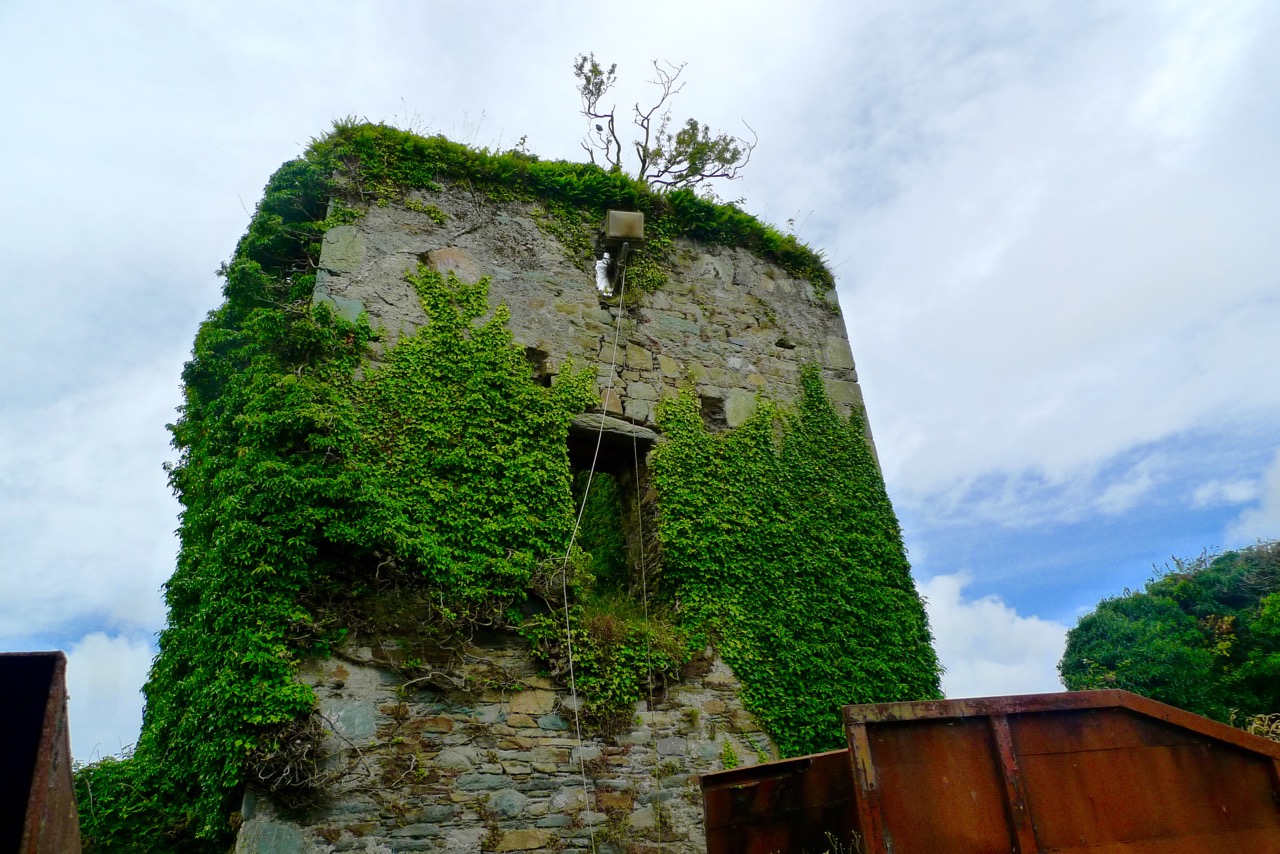
Oldcourt Castle is a tower house standing four storeys high but originally at least one storey higher, once surrounded by a bawn, some ruins of which remain. It was an O’Driscoll clan castle, probably dating from the 15th century, and was captured by English forces after the Battle of Kinsale in 1601.

Old Court Castle

Ilen and Castle

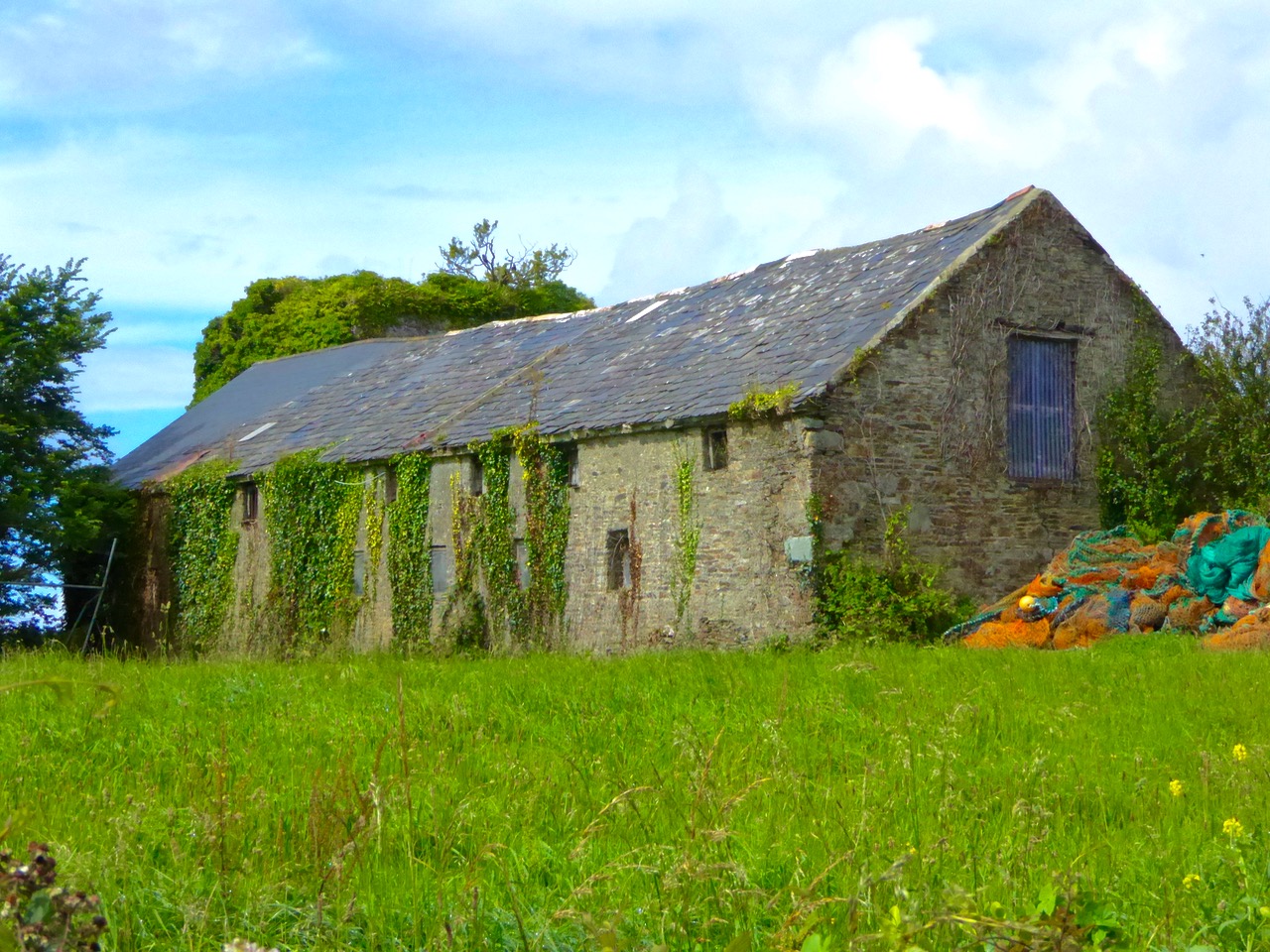
Part of the castle bawn was used as a grain store up to comparatively modern times: now it houses a fascinating boat restoration. The story begins with Connor O’Brien (1880-1952) whose ketch, the Saoirse, took him on a circumnavigation of the world between 1923 and 1925. On this journey he stopped off at Port Stanley in the Falkland Islands. The islanders were so impressed at the way the Saoirse rode the waves that they asked O’Brien to arrange the building of a similar boat. This was the Ilen, named after the river and estuary and registered at the port of Skibbereen in February 1926. She was 56 feet in length overall with a beam of 14 feet and a displacement of 45 tonnes. Connor set sail in August 1926 from Cape Clear, arriving at Port Stanley in January 1927 where he handed it over to the new owners, The Falkland Islands Company, in exchange for £1,500. There she remained until the early 1990s, carrying cargoes of stores, mail, passengers and sheep. Limerick man Gary McMahon found it abandoned on one of the islands and determined that it should return to its homeland for restoration. There was great excitement when he sailed the ketch back into Baltimore in 1998.  The refitting of this eighty-two year old vessel in the old bawn at Hegarty’s, Oldcourt, is now the centre of an educational project allowing people to experience first-hand the ancient skills of wooden boat building.grain store

ilenframesThe old grain store – formerly part of the Castle bawn – now houses the restoration project of the AK Ilen (above – courtesy of Roeboats)

Such a hive of activity at OIdcourt today… Echoes of busy days gone by when the schooners were arriving with their cargoes bound for the growing town of Skibbereen.

Ilen postage stamp

West Cork Creates

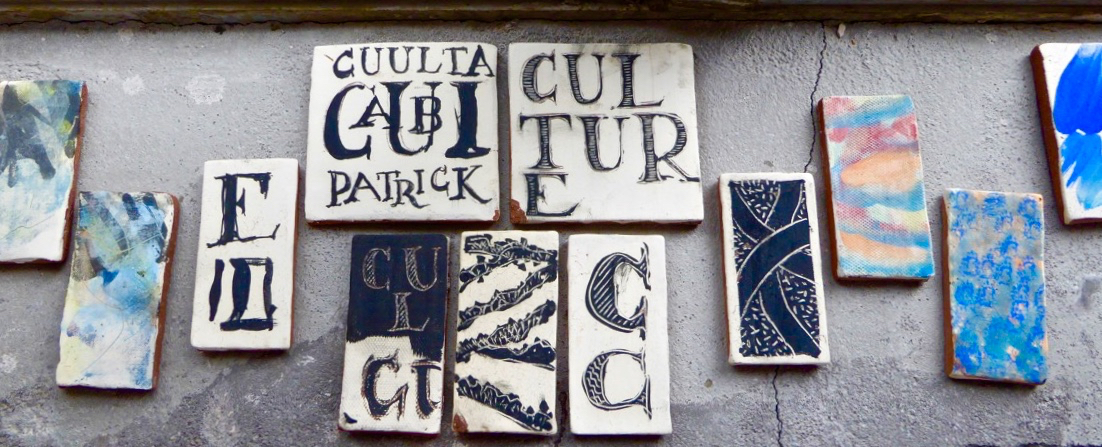
We were bowled over by the latest exhibition to open in Skibbereen on Saturday: West Cork Creates. It shows collaborations between local craftspeople, visual artists, photographers and designers – combining their skills and expertise to produce exciting, original work.

test pieces

Top picture – The Great West Cork Obelisk (see below) is featured by the entrance to the gallery; above – fired test pieces from the obelisk project

Here’s a riddle: what’s the difference between an artist and a craftsperson? If you have a definitive answer please tell me, because this is a debate that will last forever… Grayson Perry contributes to the discussion in this Guardian piece, starting provocatively with:

…I see the craft world as a kind of lagoon and the art world in general as the ocean. Some artists shelter in this lagoon, because their imagination isn’t robust enough to go out into the wider sea…

Grayson Perry makes pots, so is he an artist? Well, presumably the British art establishment thought so as they gave him the Turner Prize in 2003, the first time it had gone to a ‘ceramic artist’.

More from the obelisk project and – right – Brian Lalor, one of its creators

Where does that leave us? Is someone who makes flowerpots an artist, because a flowerpot might be an attractive object? Where do you place something like the Book of Kells? It’s a functional object – the four Gospels lavishly illuminated – created in medieval times by many different hands. Yet it’s unique, overflowing with stunning visual images, beautiful and priceless. It’s a wonderful example of collaboration between the functional craft of the scribes who penned the texts and the minds of the (undoubted) artists who produced the decorations around those texts: perhaps they were the same hands.

Left – metamorphosis of two of Alison Ospina’s Greenwood chairs and – right – Dee Forbes, President and Managing Director of Discovery International, formally opening the exhibition

What about Finola’s subject for today, Harry Clarke – artist or craftsman? Stained glass is not ostensibly functional (except, perhaps to change the quality of the light coming through a window) yet the making of it is a craft requiring a lengthy apprenticeship and a garnered knowledge of specific materials and their use. I have no doubts: walk into St Barrahane’s Church, Castletownshend, and be dazzled by the Clarke windows there. They are inspired: true art. Harry Clarke designed and made these windows, so he was artist and craftsman rolled into one.

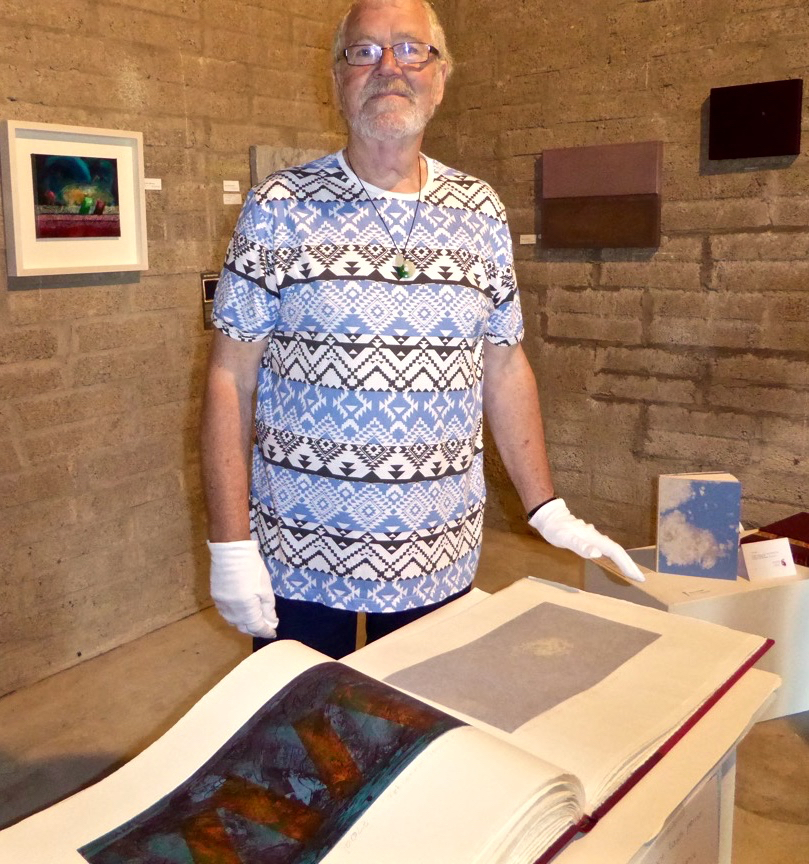
book of printsArtist and printmaker Coilin Murray with The Big Book

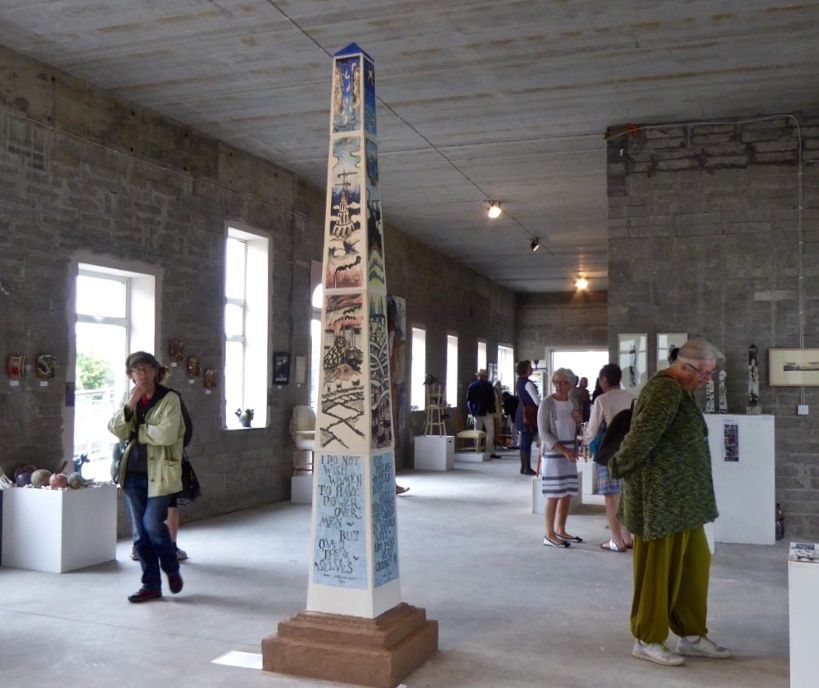
For me West Cork Creates (part of the Taste of West Cork Food Festival) demonstrates conclusively that you can’t differentiate between art and crafts. As you enter the gallery you are immediately presented with an iconic piece – The Great West Cork  Obelisk – which stands almost three metres high. It is a collaboration between two minds and two sets of hands: Brian Lalor and Jim Turner. Brian we have met before in the pages of our blog: he is a true polymath. He writes (prolifically), he produces art (prolifically), he has been an architect and an archaeologist. Jim is a ceramic sculptor of renown. Egyptian ‘obelisks’ are commemorative monuments of the Pharaohs and they usually carry a lengthy inscription praising the deeds of some significant individual.
obelisk in context

The Great West Cork Obelisk

This one is constructed from four terracotta sections made by Jim in his Clonakilty studio and fired in a specially constructed kiln. The base inscriptions are all quotations, two from social philosophers and two from writers, all concerned with the state of society. Brian’s images derive from these, from the contemporary world and from the local environment. The artists’ statement says: Obelisks may be the new round towers of the landscape… (remember that Brian has written the standard work on Ireland’s medieval round towers). I agree: I’d love to see this work prominently displayed in a public place locally – and many more like it. The obelisk absorbed our attention for a good half an hour, delaying us from moving on to the rest of the exhibition: it’s a show stopper!

Alison Ospina and – right – one of her Greenwood stools painted by Etain Hickey 

There are chairs and stools: functional objects to be sat upon. But you’d think twice about sitting on these. They are initially examples of the work of Alison Ospina who uses coppiced hazel to make distinctive seating, but they have been transformed by others (painter, sculptor and felt maker) into works of art which will primarily be looked at and appreciated.

for sale

The gallery space includes a sales area where you can buy the work of the participating exhibitors

There are thirteen collaborations in the exhibition including stone sculptor and furniture maker; metal sculpture and photography; basketmaker and visual artist; painter and felt maker; painter and boatbuilder; cutler and jeweller, all based or working within West Cork… This is just a taster – we have to go back and catch up on the other genres and artists and perhaps write a further blog post. The exhibition runs for five weeks from 8 August to 10 September at Levis’s Quay in the centre of Skibbereen, and is open from Mondays to Saturdays between 11am and 6pm. Be sure to get there – you won’t be disappointed: watch out for the gallery talks, too.

Sculptor Helen Walsh collaborates with photographer Rohan Reilly

Once you have seen the exhibition, you might like to comment and add your contribution to the artist / craftsperson debate.

wooden sun

Umha Aois

spearhead

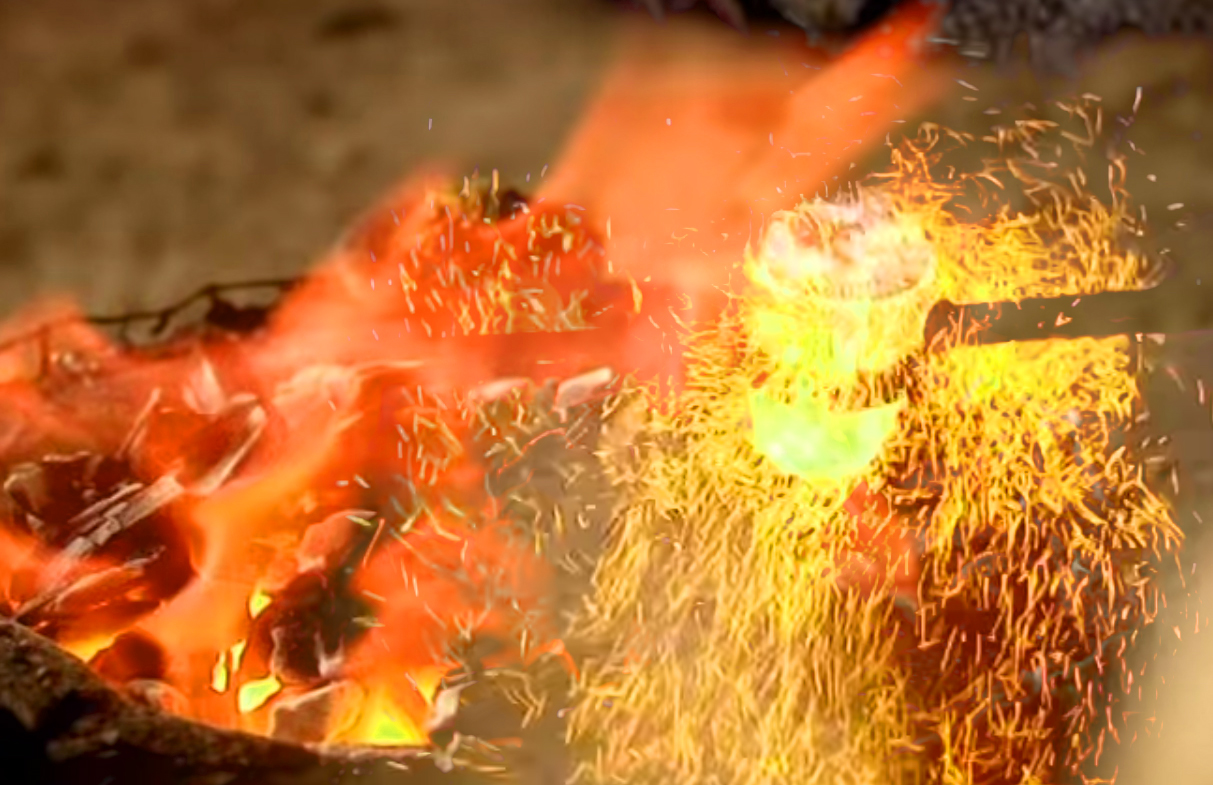
There’s a magic to the working of metal: you can pick this up when you are doing it, or when you are watching others do it. It could be the arcane transformation of rough nuggets of ore, first into liquid and then into beautiful solid objects that inspires that impression – or perhaps it’s because the senses are battered by the fierce heat, the molten rivulets, the streaming sparks, the incessant hammering, the sheer excitement… It’s no wonder that our ancestors embraced the emerging technologies hundreds of generation ago, and created spectacular objects which, today, we place in our museums and venerate.

sparking

Umha Aois are artists and sculptors working as ‘experimental archaeologists’ who have been in Skibbereen this week as part of the Skibberen Arts Festival. They use Bronze Age metal working techniques to produce replicas of ancient tools, weapons and musical instruments and also contemporary art objects. We went to their workshops set up in the grounds of Liss Ard House and met Holger Lönze – a locally based sculptor – James Hayes from Bray and their colleagues who are researching and using stone and clay moulds, ‘lost wax’ processes and charcoal pit-furnaces.

Robert holding a recently cast bronze bell, while Finola tries out an adze

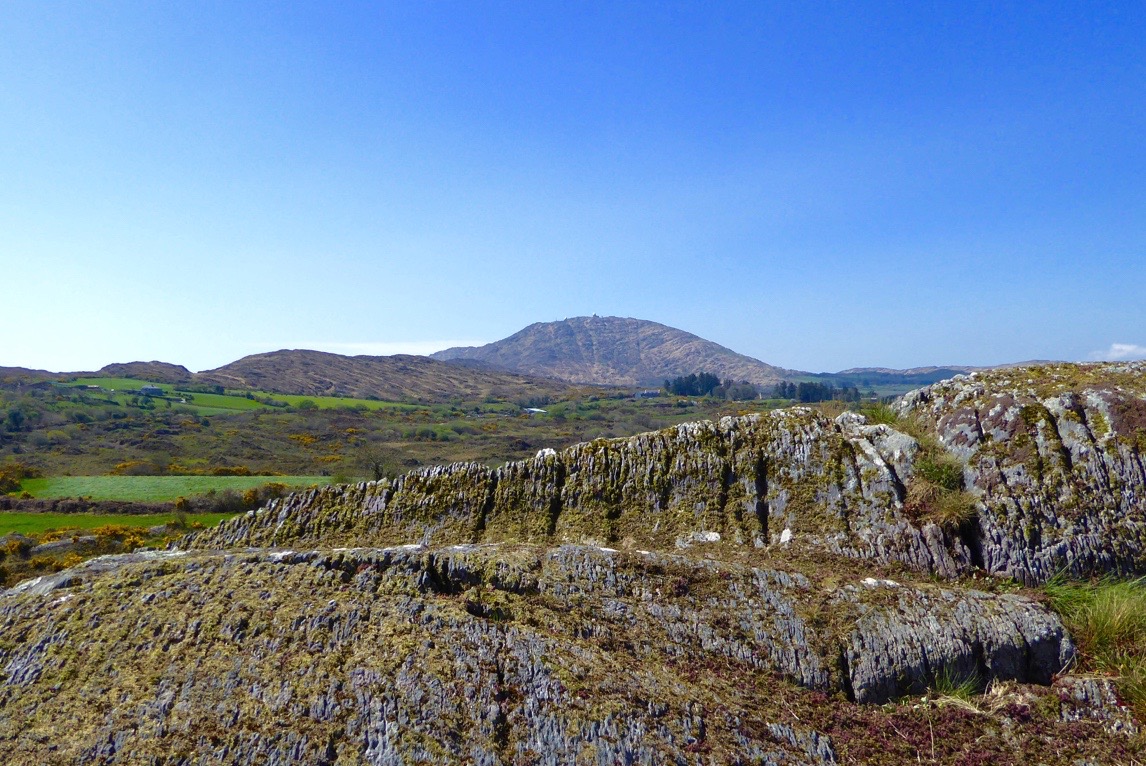
It’s very appropriate that we should be looking at Bronze Age metalwork in our own corner of West Cork as we are in the shadow of Mount Gabriel, site of substantial copper mine workings probably dating from some three and a half thousand years ago. A number of Bronze Age mines have been found on the Mizen Peninsula: it must have been a significant local activity and source of trade. It has of course continued almost up to the present day; our own townland of Cappaghglass saw considerable copper extraction during the nineteenth century.

copper mountain

Copper Mountain – on Mount Gabriel can be found the sites of 32 separate workings dating from 1700 – 1400 BC, but there is no evidence of smelting or metalworking in the same vicinity: perhaps the ‘magic’ of the process required it to be carried out in more secret places?

Back to the Umha Aois project (it’s pronounced oowah eesh and means Bronze Age): we saw pieces in various stages of production, including axe heads, adze heads and spear heads, cast from stone moulds. They are elegant objects, especially when they have been polished to a gleaming finish.

axe heads

Bronze axe head, showing the mould used to cast it

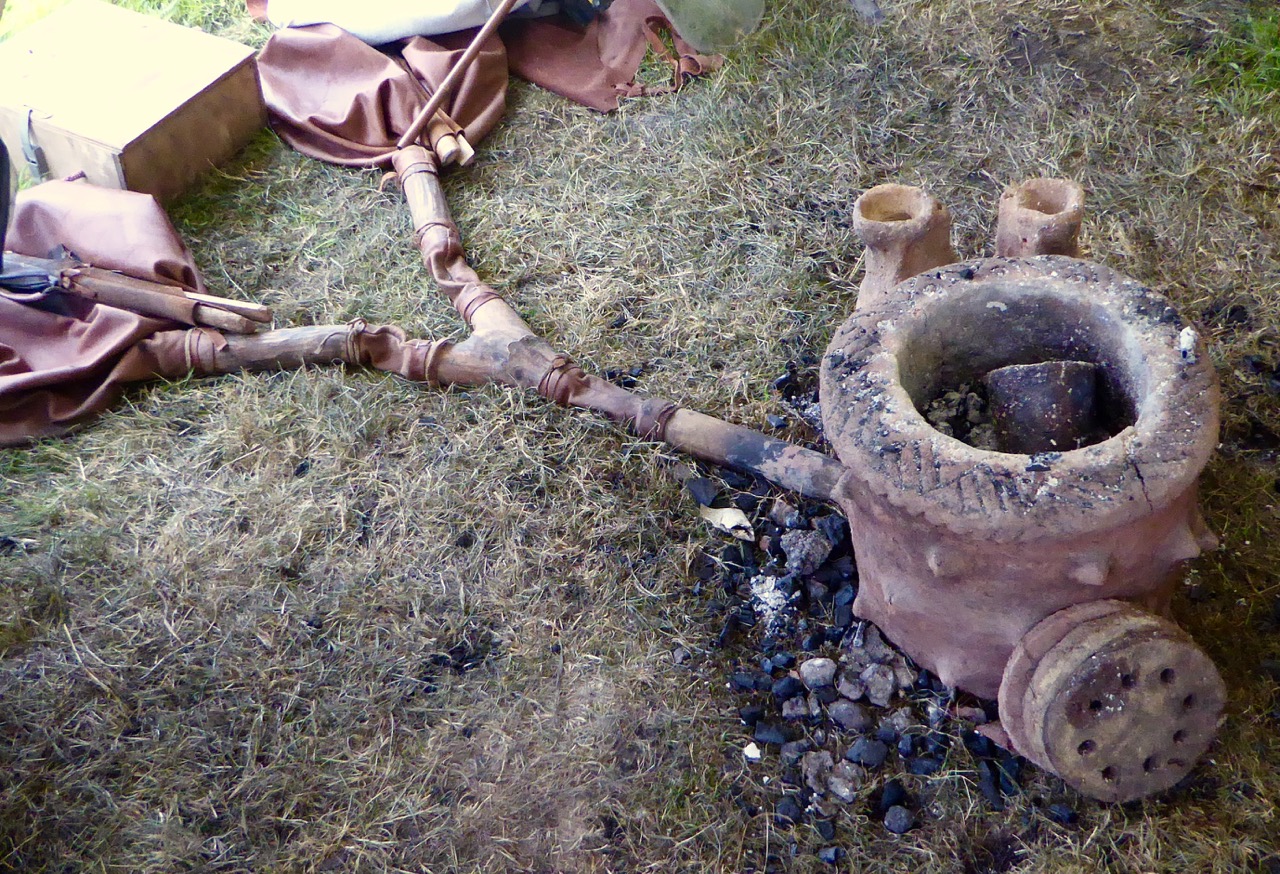
The group was using pit furnaces which they had constructed on site. These consisted of basin shaped depressions in the ground lined with clay, and pipework of clay running from two sets of bellows. The clay pits were filled with charcoal and fired to a high temperature to convert the ore in the crucibles to a molten state.

empty furnace

Top – the principle components of a Bronze Age pit furnace; below left – crucible being heated; below right – the bellows in action

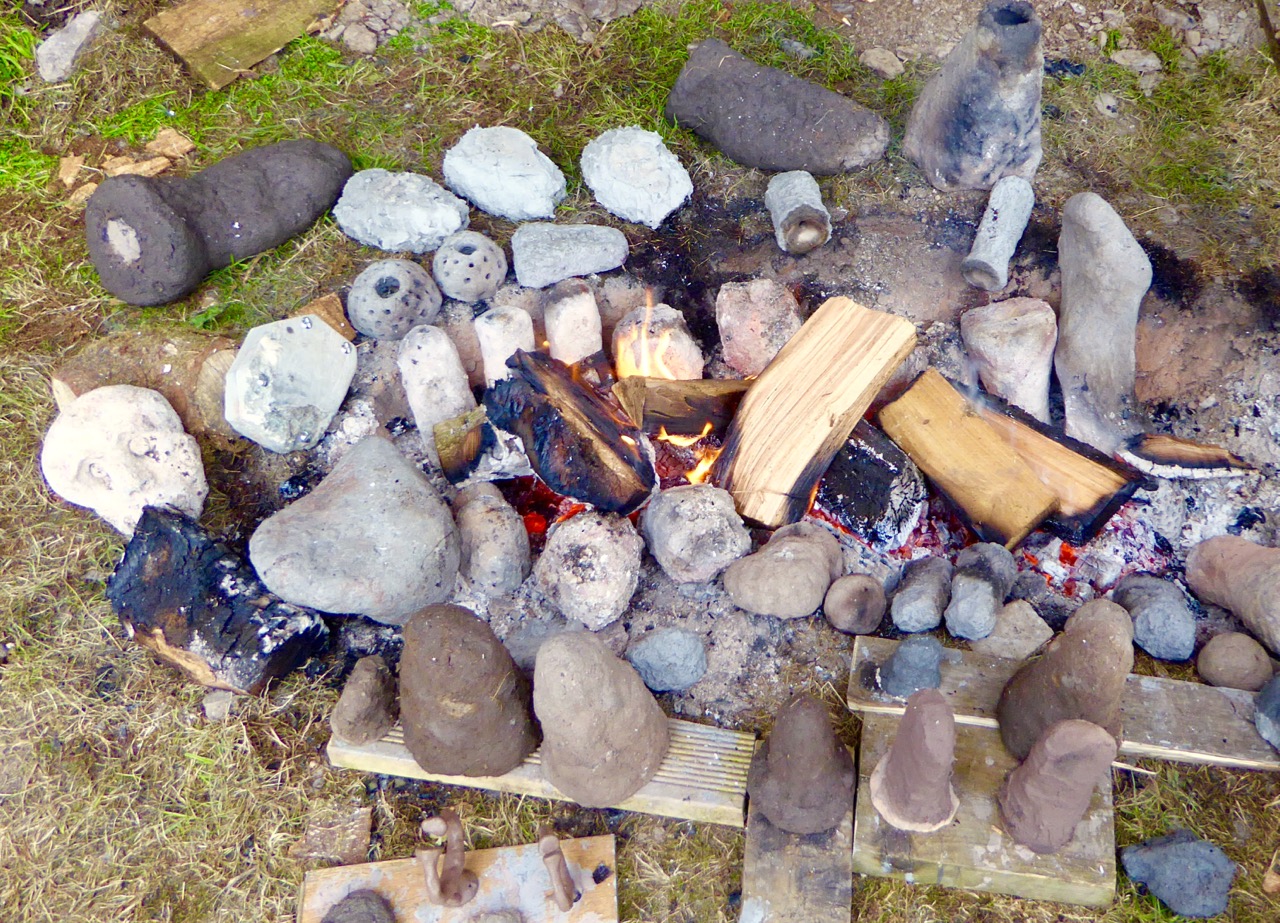
In another shelter we were also shown the ‘lost wax’ process: small objects were shaped in wax and then encased in clay. The wax was melted, leaving a mould in the clay cavity which was then filled with molten metal. Once hardened, the clay moulds are broken apart; the copper or bronze objects are then finished and polished. Here is a BBC video that demonstrates these techniques. There are incredible examples of this type of worked metal in the National Museum in Dublin, including some in gold – thousands of years old and yet so elegant and sophisticated.

melting out the waxClay moulds used in the ‘lost wax’ process

Holger has also made a Bronze Age musical instrument, which he demonstrated for us. The pattern is based on ‘trumpets’ which have been found in Europe, the finest being the Loughnashade trumpet, discovered during drainage works at the site of a former lake in County Armagh. Holger’s trumpet is a bronze cast: some finds have been made from curved and rivetted sheets of bronze. Here is a link to a recording of the sound made by a similar reconstructed instrument.

Holger Lönze conjuring up ancient music!

By exploring techniques, lifestyles and behaviour of our forebears through practical application, experimental archaeologists such as Umha Aois help us to understand that people who lived in the Bronze Age were not intellectually ‘primitive’ as was once thought; they have passed down to us their own aesthetic appreciation of art, music and their highly developed knowledge of sciences that enabled them to construct the complex megalithic monuments – and enigmatic Rock Art – which are yet beyond our own understanding.

Experimental archaeology in the walled garden at Liss Ard

Our ancestors left behind rugged stone monuments, landscapes which have shaped the pattern of our countryside, and sublimely beautiful objects: magic to our eyes and senses.

This Bronze Age gold disc – now in the National Museum, Dublin – was found at Sparrograda, Ballydehob:

sparrograda disc

March Back in Time

Jeremiah O'Donovan Rossa at the head of the Demonstration. Photo © Ian Flavin, used with permission.

Jeremiah O’Donovan Rossa at the head of the Demonstration. Photo © Ian Flavin, used with permission

100 years ago this month all Ireland was galvanised by the news that Jeremiah O’Donovan Rossa’s body was to be brought from New York to be buried in Ireland. As an acknowledged leader of the Fenian movement, he was as infamous in America and Canada as he was revered in Ireland, and his funeral was one of the largest ever seen in Dublin. 

Rossa, born in 1831, grew up near Rosscarbery and experienced the dreadful time of the Great Famine, watching his father’s death and his family’s eviction. Left alone in Skibbereen while his mother and siblings emigrated, he made a life for himself as a shopkeeper, all the time growing in his hatred of tyranny and nurturing revolutionary thoughts. He founded the Phoenix Society in Skibbereen which, although called a literary society, advocated ‘force of arms’ as a means of liberation from British rule.

It was during this period, in 1863, that he organised a demonstration in Skibbereen in support of Poland. There were many analogies between Ireland and Poland at that time: Poland was ruled by Tsarist Russia, which had imposed the Russian language on the Poles, closed universities and Catholic churches and dealt ruthlessly with resistance. The march was a barely-concealed act of sedition, of course, watched closely by the police.

Polish Contingent in national costume

Polish contingent in national costume

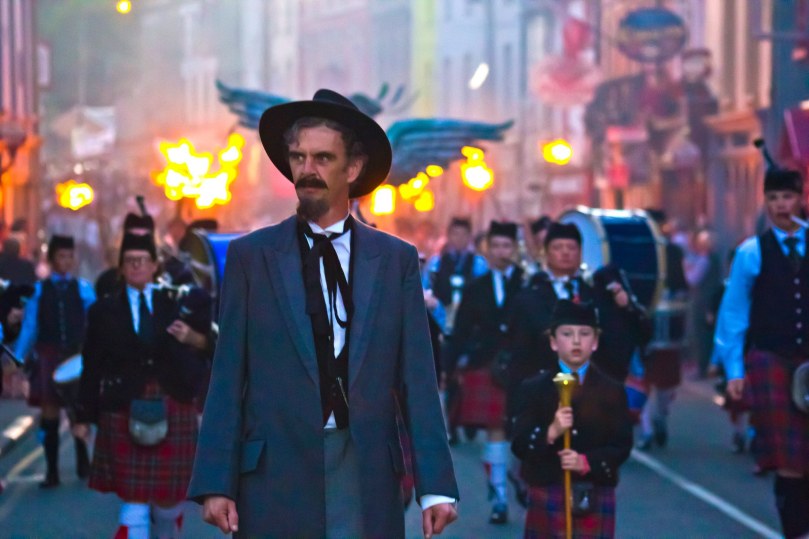
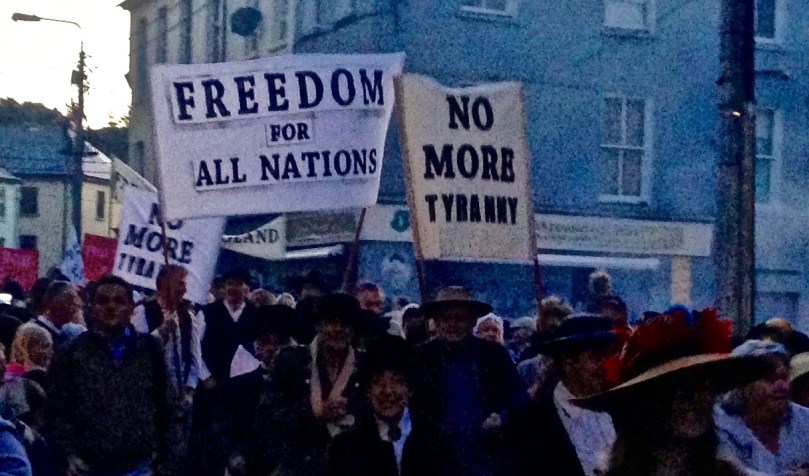
This week, as part of the launch of the annual Arts Festival, Skibbereen re-enacted that demonstration – and it was thrilling! Declan McCarthy (of Baltimore Fiddle Fair fame) took the role of Rossa, ably abetted by members of the Kilmeen Drama Group and the Skibbereen Theatre Society

Banners

Everyone who could manage it was dressed in period costume, shop windows put on special displays, and the streets were closed to all but pedestrian and horse-drawn traffic.

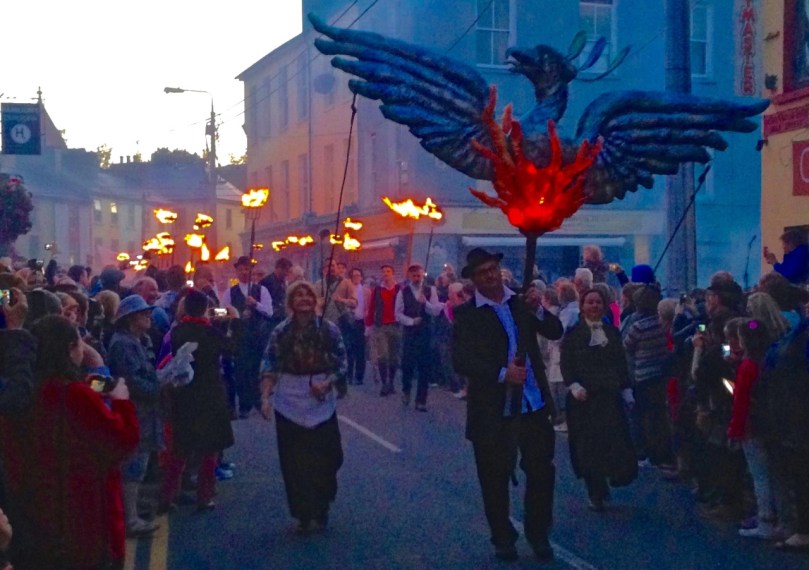
Phoenix out front

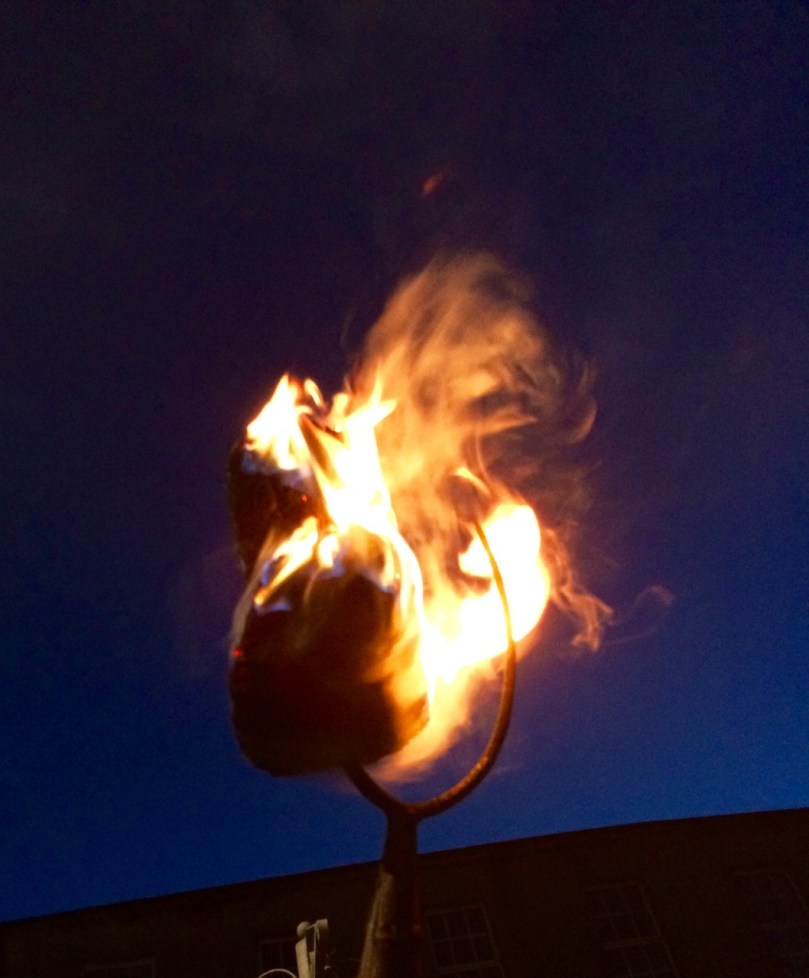
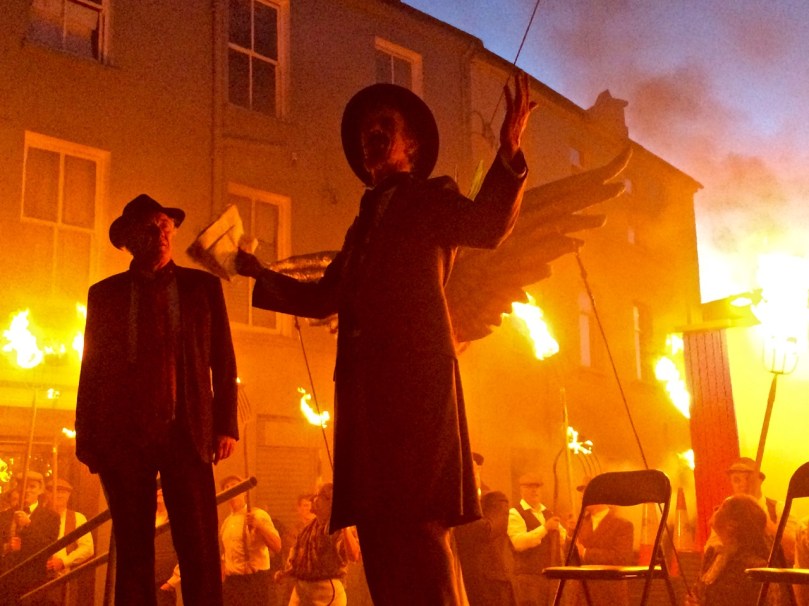
The demonstrators paraded through town when night fell, lit by flaming turf torches and led by Rossa and an enormous Phoenix Society emblem. A contingent of Poles had come from Cork and marched in costume. Banners were hoisted and a pipe band played The Minstrel Boy.

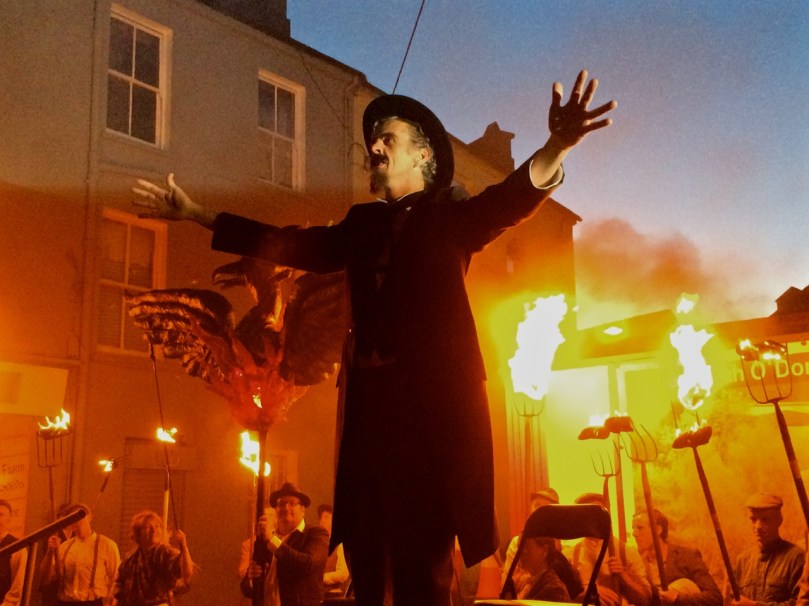
Finally, lit by the flaming torches, Rossa ascended the platform and delivered a fiery speech about tyranny and illegal occupation, punctuated by cheers from the crowd.

Firebrand Speech

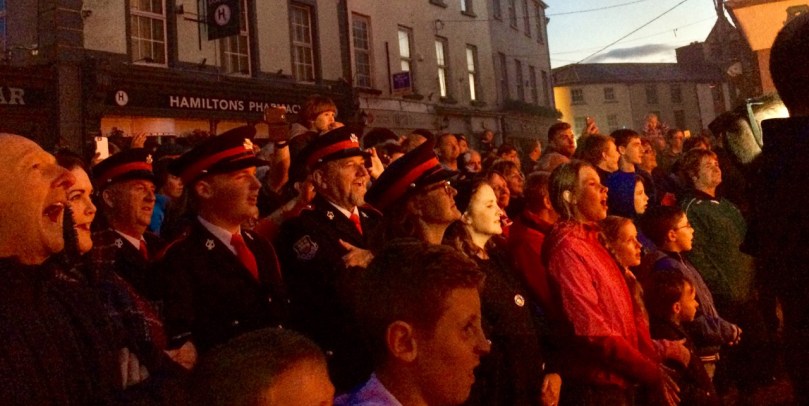
The atmosphere was incredible. We were transported back to 1860s Skibbereen, surrounded by threatening policemen, firebrand revolutionaries and Victorian citizens, all getting into the spirit of the times.

AudienceIt was the high point (although not the culmination yet) of two months of Rossa commemorations in West Cork which has included lectures, a play, a walking tour, exhibitions and the unveiling of new monuments in several places including the impressive Skibbereen installation inaugurated by President Higgins.

Rossa and torch bearers

More about Rossa in a future post, including his three wives and 18 children, his Fenian career and his connection to events in Canada. To end, a link to one of the classic Fenian songs, Down by the Glenside.

Pitchfork torch