A Grand Job!

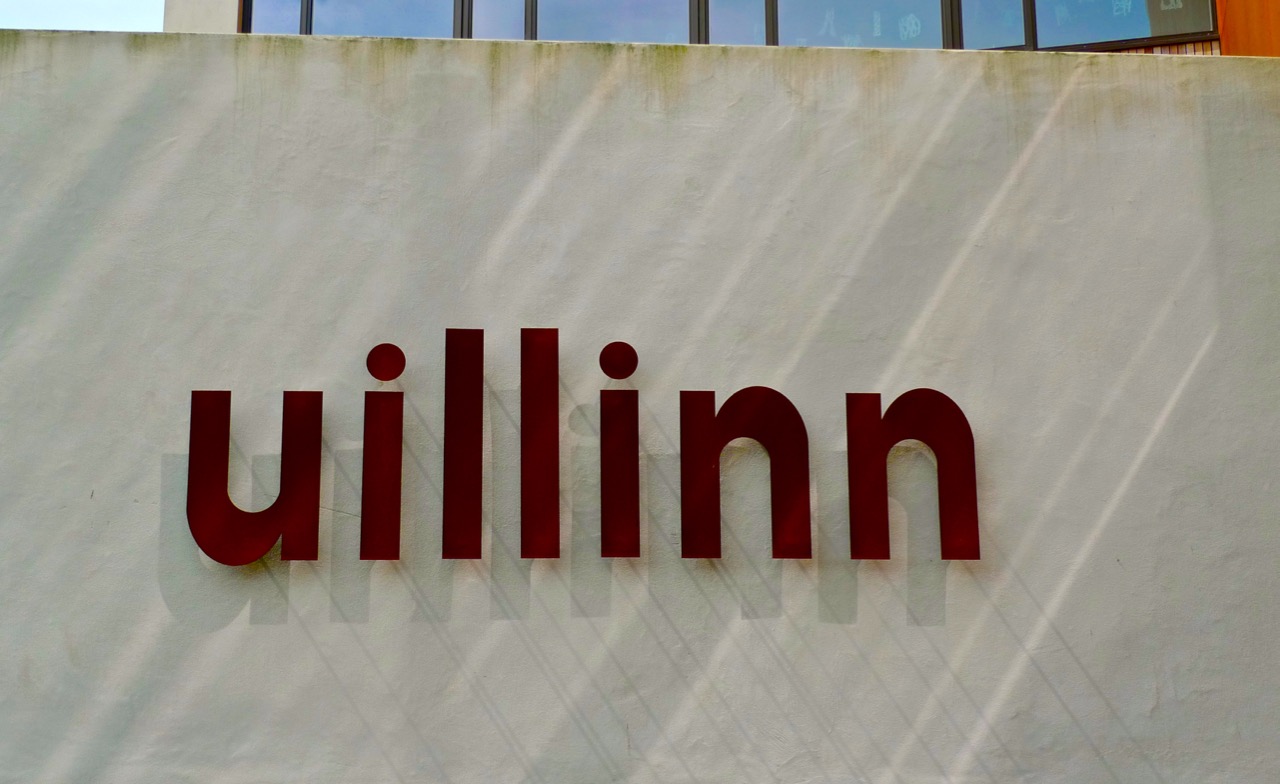
uillinn name

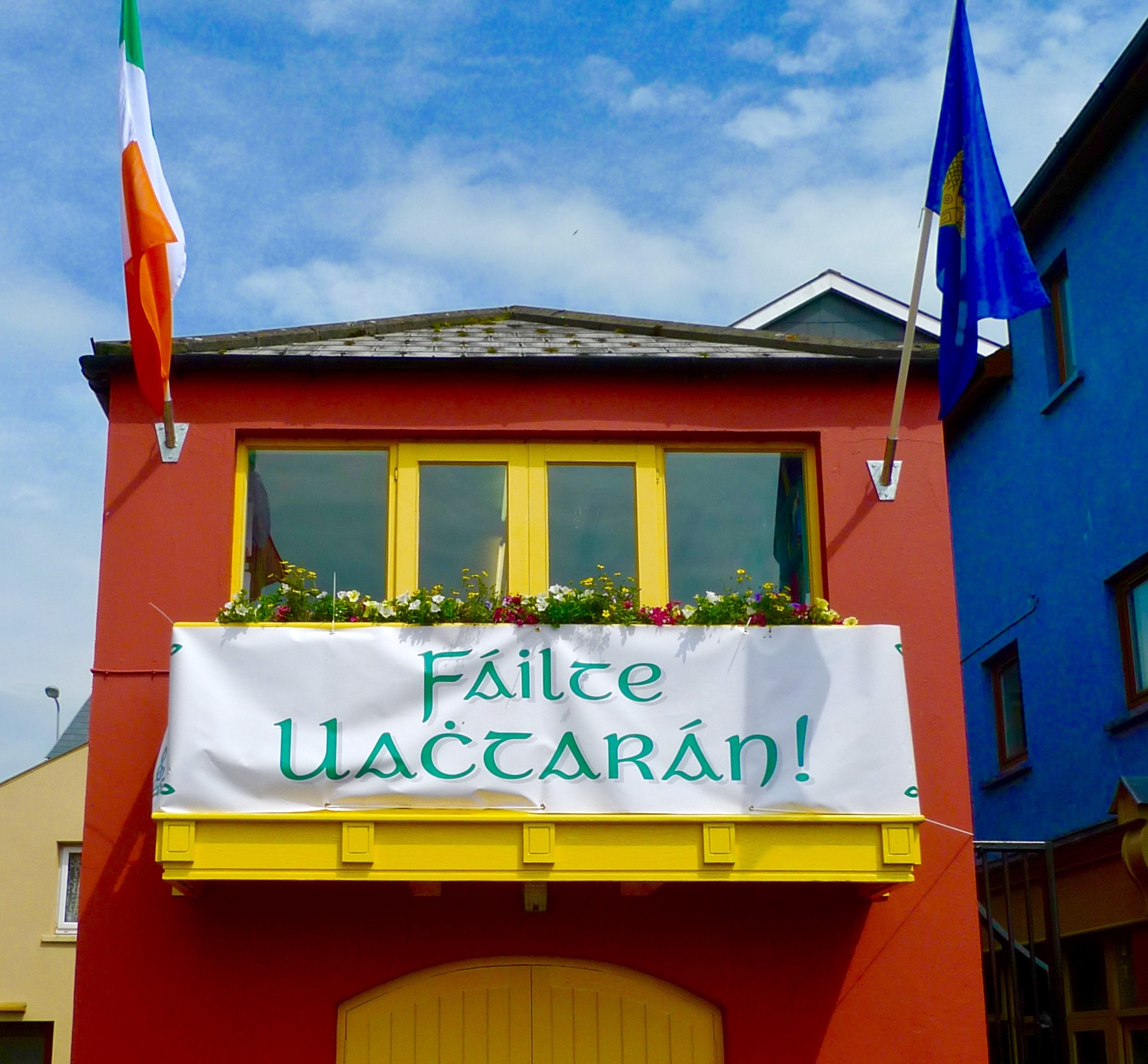
Here’s a riddle: what’s the connection between rusty steel and the President of Ireland? The answer – Skibbereen! Skibbereen on a summer afternoon in June, in fact…

Welcome, President!

Welcome, President!

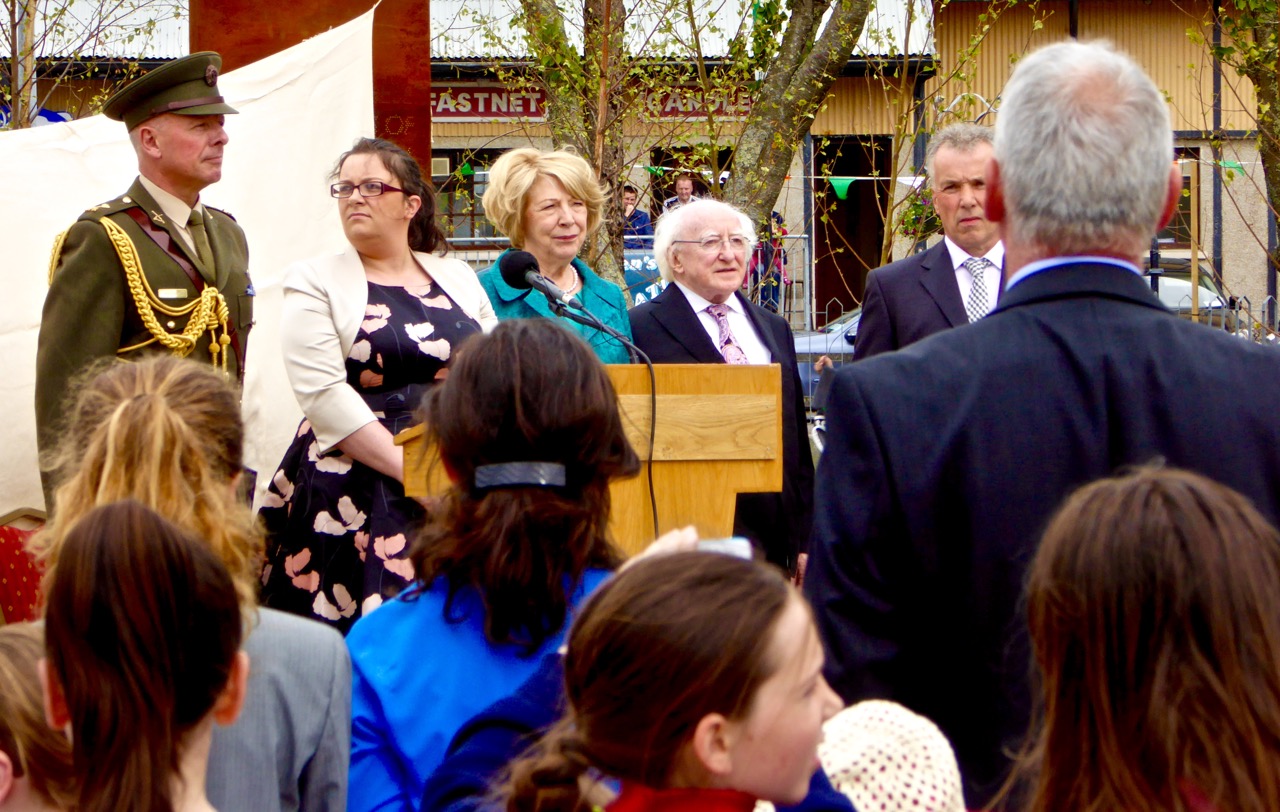
This week the President was in West Cork and on Thursday he came to Skibbereen. Before I lived in Ireland I was pretty ignorant as to the role the President plays in the life of the Republic. It’s not a political position – nothing like the American President, for example: although officially ‘head of state’ the Irish President has no powers – the executive running of the country is entirely in the hands of the government. Instead, the President of Ireland – Uachtarán na hÉireann – acts mainly in a ceremonial capacity and is very visible in civic life. There are always buildings to be opened, institutions to be founded, statues to be unveiled, speeches to be made, important visitors to be hosted… 

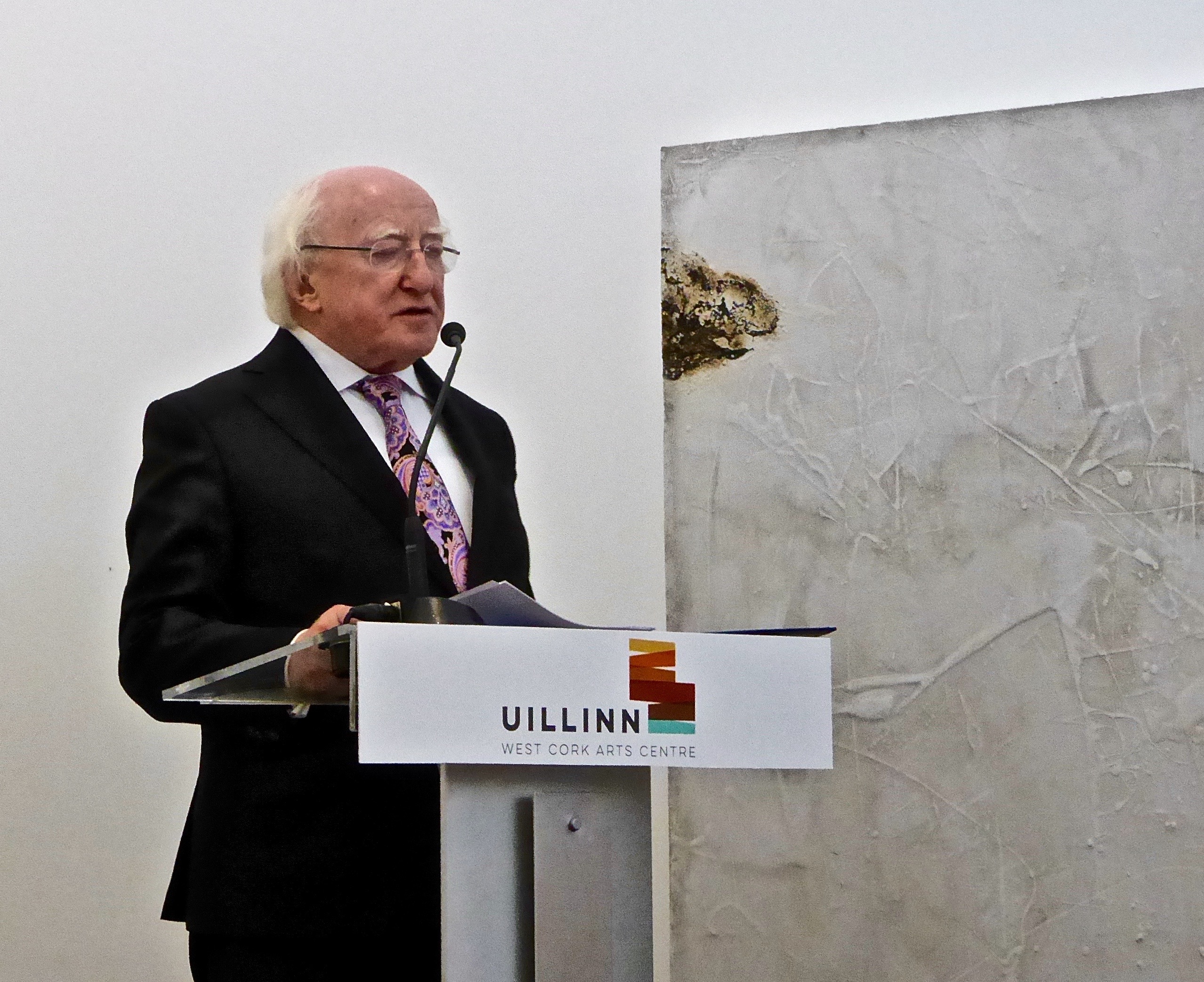
President Michael D Higgins formally opening Skibbereen's new Arts Centre

President Michael D Higgins formally opening Skibbereen’s new Arts Centre

Presidents can either be chosen by popular consensus or elected by a vote of all Irish citizens. Michael D Higgins was elected in October 2011 and his tenancy will run for seven years. Following this he can serve a further term if he and the people so wish. A Limerick man, Michael D (as he is usually known) is well liked: he’s had an impressive career in public life – academic, lecturer, professor, politician, poet, sociologist, author and broadcaster. He served as Minister for Arts, Culture and the Gaeltacht and was President of the Labour Party for many years. He is the first Irish President to have made a state visit to the UK.

His first appointment in Skibbereen was to open Uillinn – West Cork’s new Arts Centre: that’s where the rusty steel comes in – partly… Regular readers of this blog will know all about this building. It was controversial while under construction, mainly because of the Cor-Ten steel cladding to its prominent five storey tower. Cor-Ten or ‘weathering steel’ is a material consisting of alloys which encourage a rust-like patination on exposure to weather, forming a fully protective coating over a number of years. In fact, the weathering process takes about as long as one term of office of an Irish President! I know many people disagree (although I think some are coming round…), but I find the ‘rusty’ finish very attractive, and I like the fact that the appearance keeps on changing in an organic way.

I was impressed with Michael D’s speech: he’s an enthusiast for all the arts and emphasised how important this modern building is – not just for Skibbereen but for the whole of West Cork. The site – right in the centre of town – had been a bakery for generations, and the President pointed out the analogy between the essentials of bread, fundamental food for the body, and the arts – food for the soul.

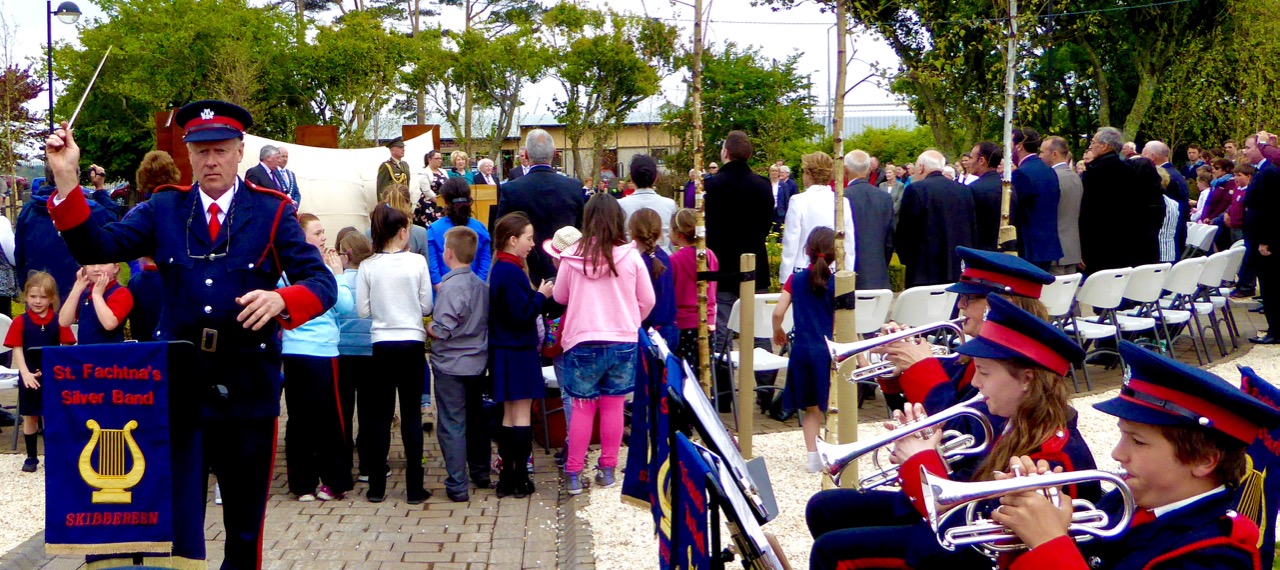
'Presidential Salute' in the O'Donovan Rossa Memorial Park

‘Presidential Salute’ in the O’Donovan Rossa Memorial Park

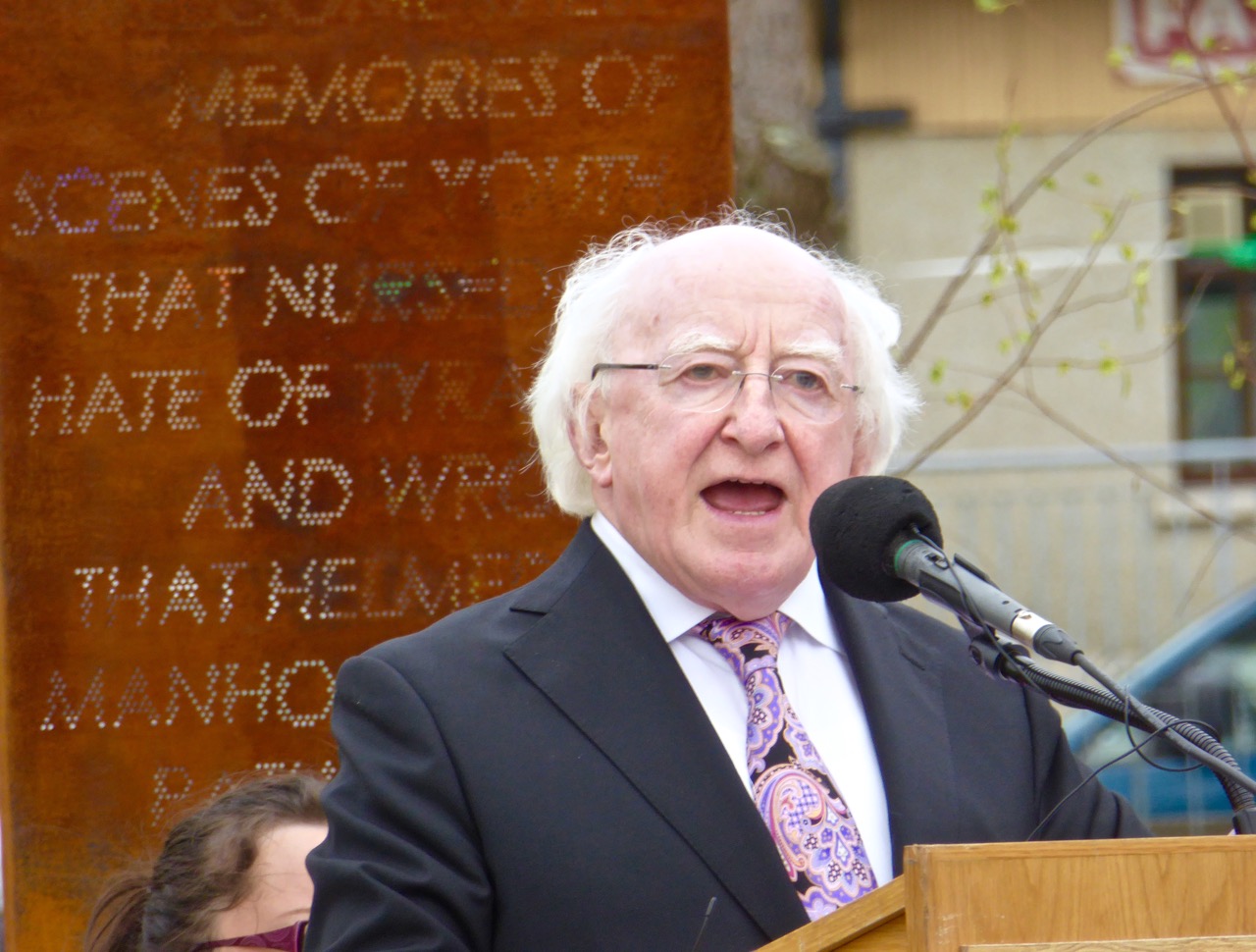
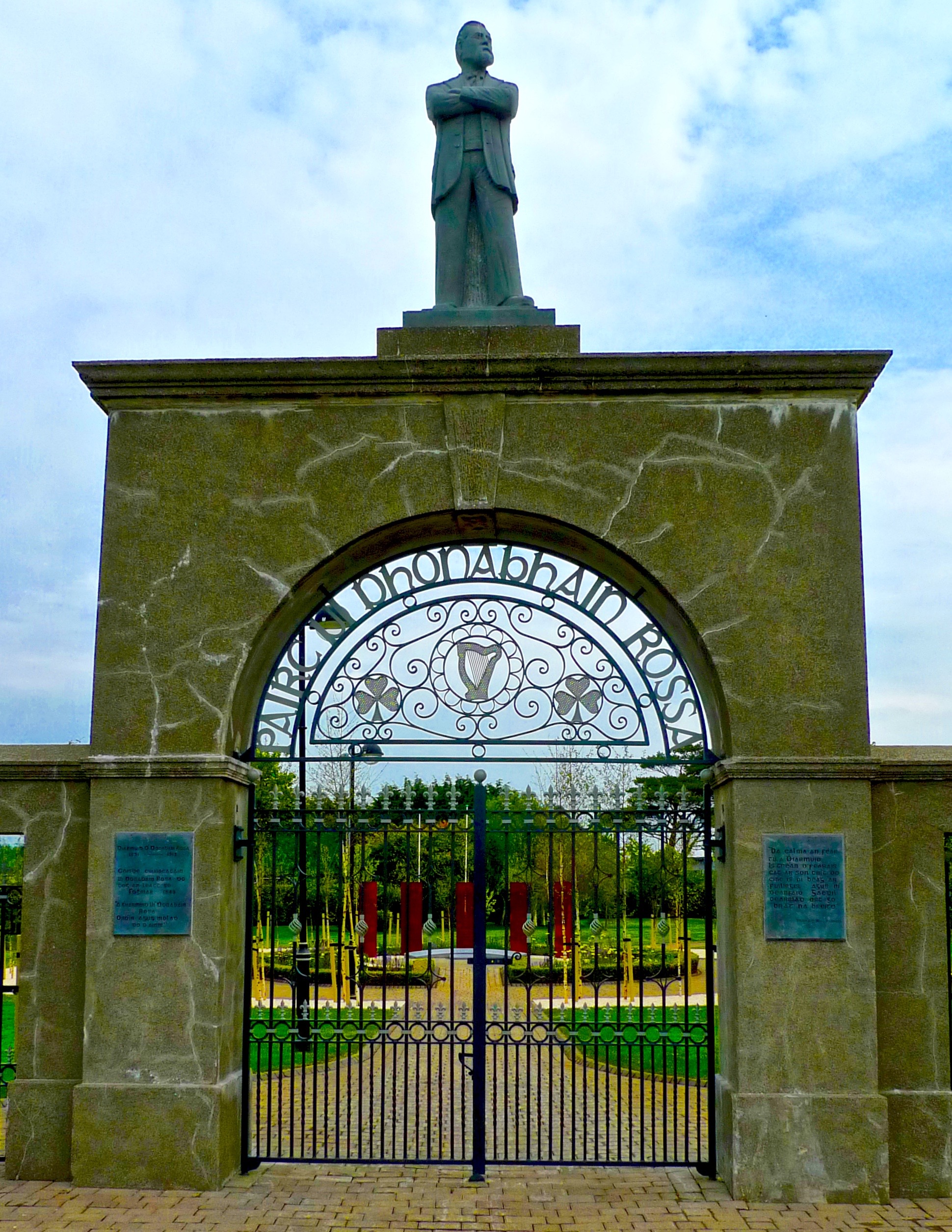
Next item on the afternoon’s agenda was a visit to the park: the President was to unveil a new memorial to Jeremiah O’Donovan Rossa – a local hero who had links with Skibbereen. Finola has mentioned him previously and is currently working on a post about him: July this year marks the centenary of his death. O’Donovan Rossa fought for Ireland’s freedom, just as Michael Davitt did (I wrote about him last week). The President gave a passionate speech emphasising the debt that the Ireland of today owes to those campaigners of yesterday, and I was pleased to hear him mention Davitt specifically.

Ready for the unveiling...

Ready for the unveiling…

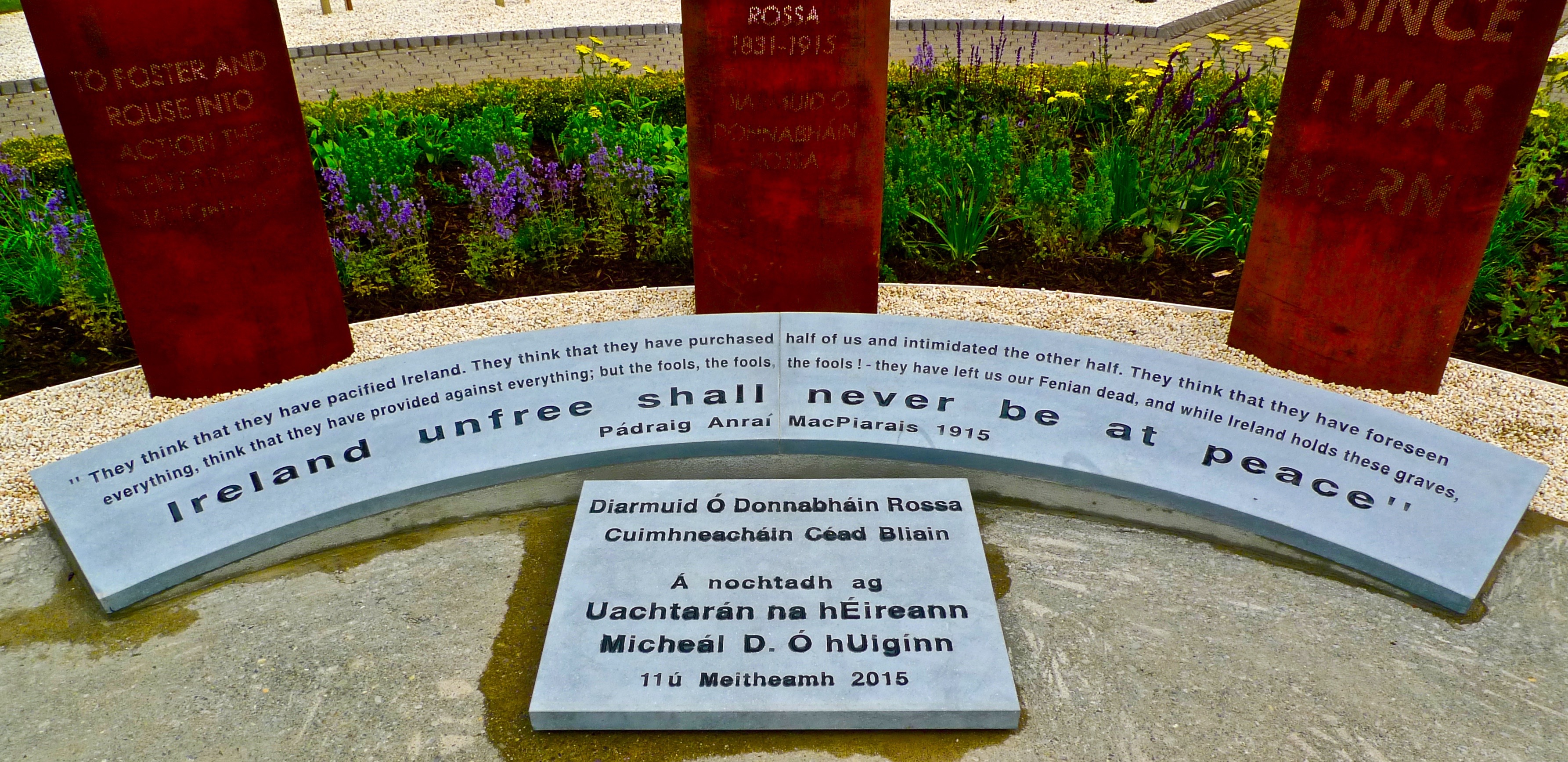
New commemorative sculpture in Skibbereen's O'Donovan Rossa Memorial Park

New commemorative sculpture in Skibbereen’s O’Donovan Rossa Memorial Park

I think the new memorial is a great piece of modern commemorative art: it’s rusty steel again! Five columns are placed in the centre of a garden, each telling something of the hero’s story. You have to work to see all the images: they are made by perforating the ‘weathering steel’ sheets. It’s very effective because it can’t be ignored – you just have to stop and work it all out. I commend the artist – but nowhere can I find any mention of who that is! I’m still searching…**

President Higgins speaks out with passion about freedom fighter Jeremiah O'Donovan Rossa

President Higgins speaks out with passion about Ireland’s freedom fighter Jeremiah O’Donovan Rossa

Michael D is a fluent speaker in Irish. He slipped easily between English and Irish while giving his orations – and made it sound so simple! The sun almost shone, the crowds were in good spirits, and the Band played. The rusty steel was looking good. All in all, the visit of Ireland’s President to Skibbereen was a grand job

gate

We have now heard from Graepels Perforators in Kinsale letting us know more about the monument. Here is their message: We worked with Giulia Vallone (now Senior Architect at Capital Projects Implementation Unit CPIU) and Orla Higgins (Cork County Council Architect) to create the memorial. We teamed up with Cork County council to create it.

A Carnivore in West Cork

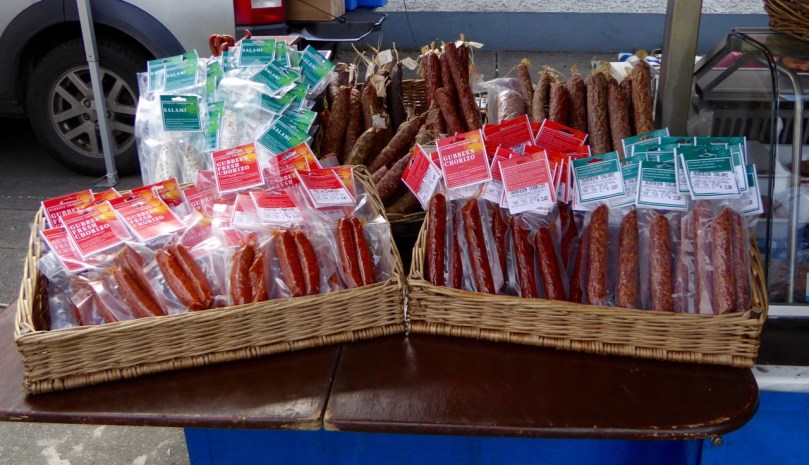
Gubbeen's Chorizo and Salami

Gubbeen’s Chorizo and Salami

Why am I writing about meat?

Well, for starters, Robert and I are omnivores. Given that I do eat meat (walk away now, all my vegetarian friends!) I want it to be good quality and tasty. I want to know where it comes from and how it was raised. Living in a large Canadian city, I was aware that here and there there was a butcher shop – either an old-fashioned hanging-on-for-dear-life shop in a traditional neighbourhood, a stall in one of the large markets, or latterly a smart shiny artisan establishment staffed by trendy young men in striped aprons. But, like everyone else, I didn’t have time to drive across town to seek out places like this and just bought my meat in the supermarket.

One of the things that surprised me, coming back to live in small-town Ireland, was that butcher shops are alive and well and thriving still – even if there is also a large supermarket in the town.

They are a friendly lot, these butchers. They love to offer advice on how to cook the meat you’re buying, or to give suggestions for dinner. They will cut a piece exactly as you want (wafer thin for stroganoff) or disappear into the back and reappear with a huge haunch because you want something that isn’t on display (shanks, with the marrow intact), or trim every last ounce of fat off a joint. “Years ago,” one butcher told me, “all cuts were sold with bone and fat. But, sure, you have to move with the times.”

Over the years there have been lots of exposés and scandals about the provenance of meat sold in Europe (horse meat, anybody?) and concerns about foot-and-mouth and other diseases, but our local butchers know the source of all the meat they sell, down to the farm it came from, or the herd. “It’s from our own farms,” one butcher told me, indicating an area north of Skibbereen where contented cattle spend their days in lush green fields.

Micheál Daly of Skibbereen - the meat comes from their own farms

Micheál Daly of Skibbereen – Daly’s meat comes from their own farms

“We get our lamb from out by Fohorlagh” said another. We know the cattle spend their lives grazing on rich grasses – we are surrounded by them in Nead an Iolair – and we think that’s the secret to the taste. We don’t want to eat meat that’s been factory bred and fed.

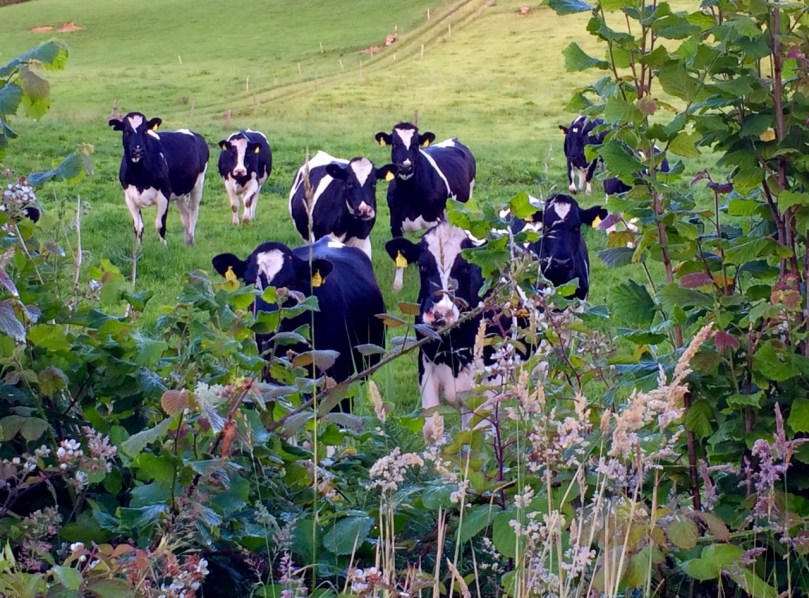
Happy cattle in the field next door

Happy cattle in the field next door to us

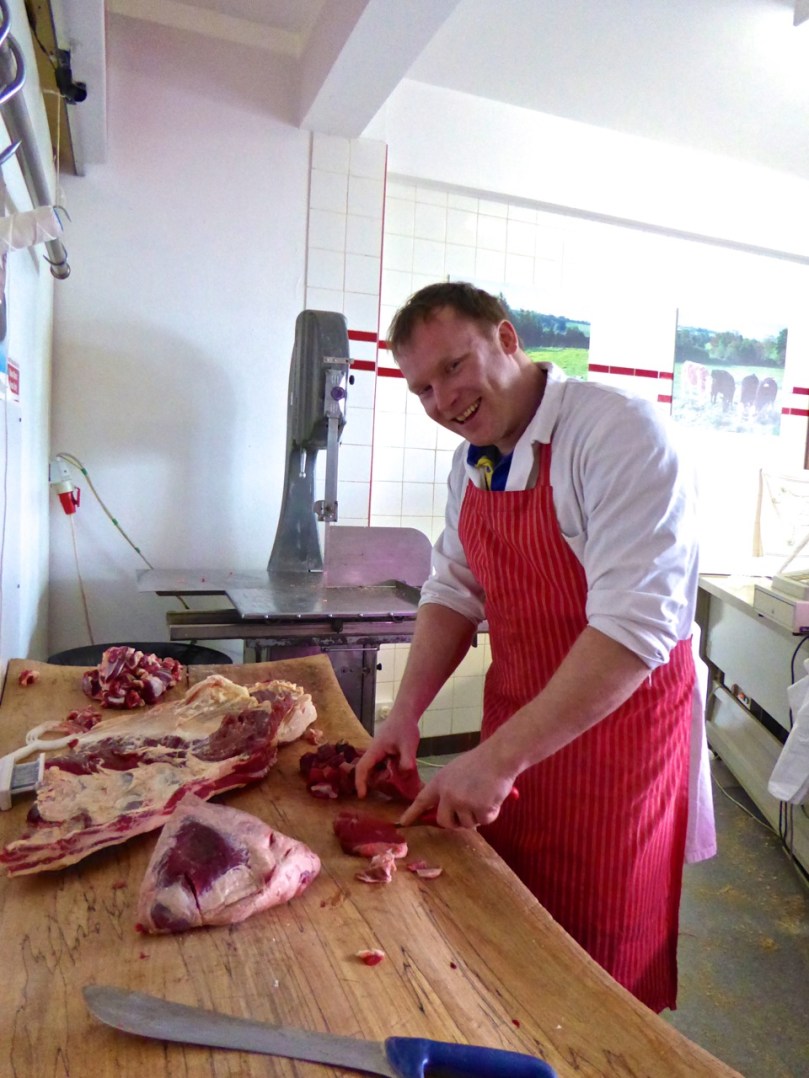
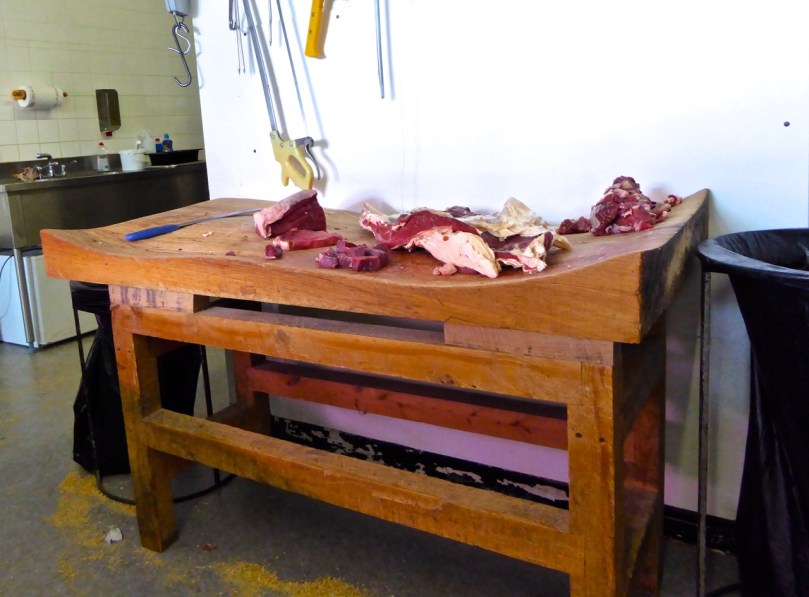
Most of the local butchers work on well-worn wooden butcher blocks. I’m fascinated by these – they seem like such old technology and indeed some have switched to dense plastic blocks. But the ones who still use the wooden ones tell me that lots of research has been done on them and that they are as safe as or safer than plastic.

John Barry, our local butcher in Schull, working at his 40 year old butcher's block

John Barry, our local butcher in Schull, working at his 40 year old butcher’s block

Time worn beauty

Time worn beauty

As our readers know, the food scene in West Cork is terrific. At our Saturday market in Skibbereen we have a great choice of artisan meat products. We get our breakfast sausages from Frank Krawczyk – he was a charcuterie pioneer here before any of us knew the meaning of the words.

The fabulous West Coast Pies is our go-to resource for pork pies, scotch eggs, gourmet dinner pies (chicken and leek, beef bourguignon) and wonderful salmon quiches. They do lots of vegetarian stuff too. Paul is so insistent on the quality of his pork that he has decided to raise his own and is now an organic pig farmer on top of everything else.

Paul Phillips of West Cork Pies

Paul Phillips of West Cork Pies

We met Avril Allshire of Rosscarbery Recipes at a recent concert, serving her uber-delicious black pudding swirls. We loved them so much she told us where to find the recipe and so we made up a batch ourselves. Yummers! (And I am not normally a black pudding fan.)

And of course there’s Gubbeen! They’ve been making cheeses forever, award-winning and delectable, and built a smokehouse to produce a smoked version of their famous farmhouse cheese. From there, Fingal Ferguson has produced an array of chorizo and salamis that are firm favourites with all the locals. We buy his bacon and hams – we always cook an enormous one at Christmas and have to book it weeks in advance.

Read about Gubbeen’s food philosophy on their website – it might be the most profound expression of the importance of real food you will find anywhere.

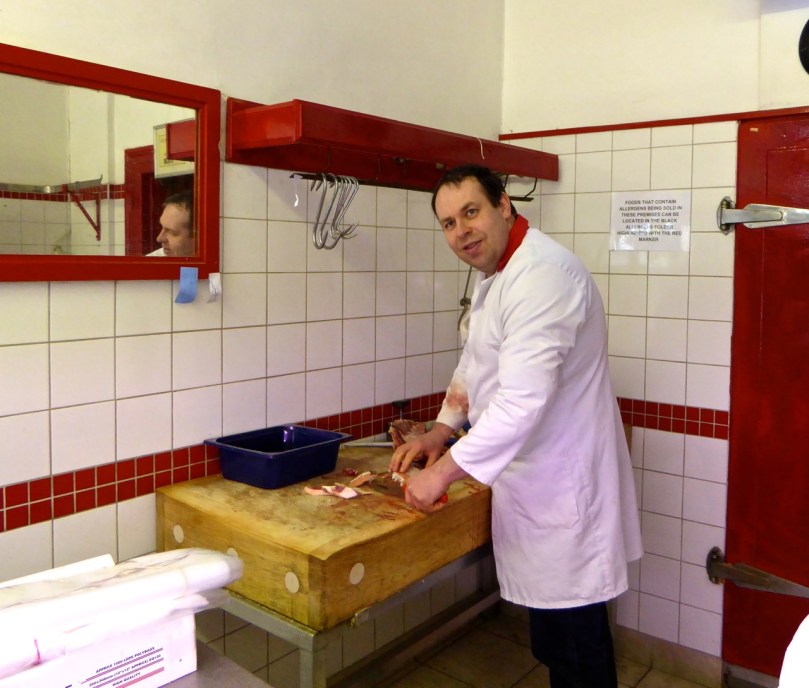
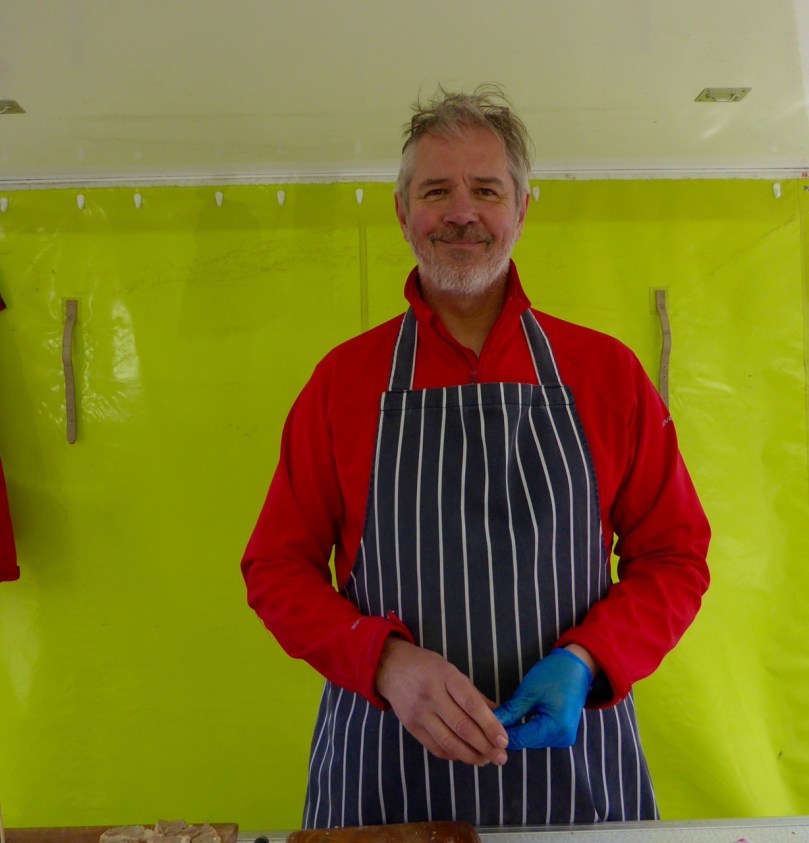
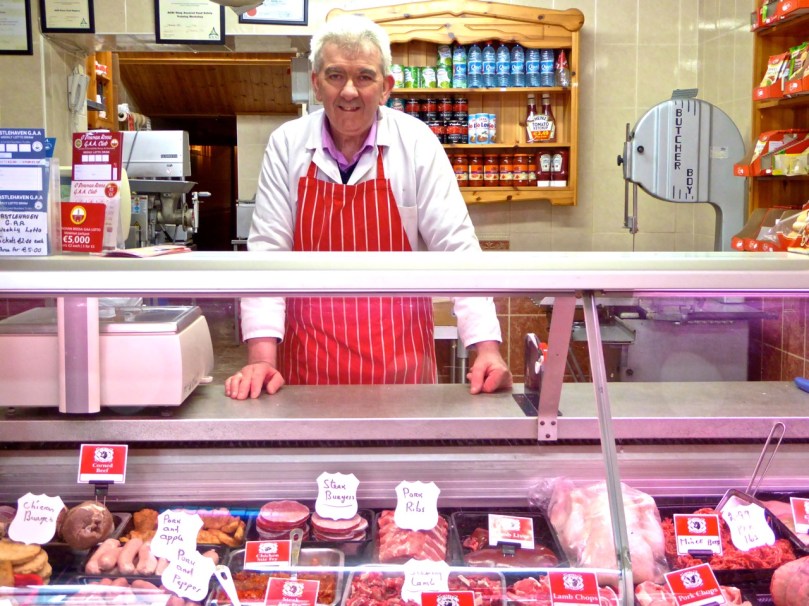
Andy O'Sullivan of Skibbereen. He's been a butcher all his life and says the 5 year apprenticeship offers excellent training.

Andy O’Sullivan of Skibbereen. He’s been a butcher all his life and says the 5 year apprenticeship offers excellent training


An Extra Lick of Paint

Old vet clinic, Schull

Old vet clinic, Schull

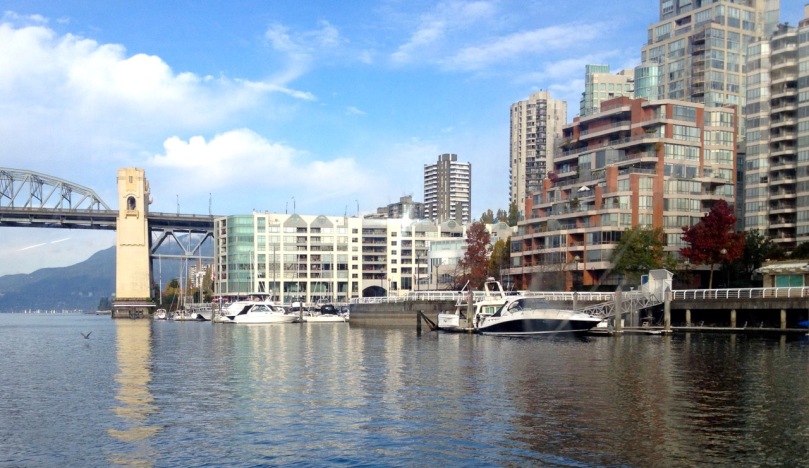
I used to live in Vancouver, on Canada’s west coast. It’s a beautiful city by any standards: gleaming high-rises, miles of seaside walkway, and snow-capped mountains lending a dramatic backdrop. I loved it, but when I looked through my window mostly what I saw was concrete and steel – and no colour! I had to escape up into the mountains or out to the Fraser Valley to get in contact with nature and feed my soul.

Where I used to live

Where I used to live

Where I live now

Where I live now

In West Cork, my soul is fed every day, every time I look out the window of our house, every time I stroll through our village of Ballydehob. That’s down to our rural setting, of course, and the magnificent scenery, but a huge part of it is about colour. I’m a colour person, I guess: I respond to it and crave it. I can certainly appreciate a quiet tasteful palate of greys or beiges, or any of the million variations of off-white when I see them. But left to my own devices I’d quickly have a chunk of candy apple red in there, or chairs the colour of daffodils, or a wall in a vivid pink. As Lady Gaga says, I was born that way.

Why is that woman taking my picture?

Why is that woman taking my picture?

And so I find living in rural Ireland a constant source of delight and inspiration. No country was ever this green, surely! Now the gorse is starting to bloom, turning the hillsides into a blaze of yellow. And every few kilometres along the road is another village or town full of colourful houses competing with each other for my attention. But before we get to the villages, here are some glimpses of houses just off the main roads as you drive those kilometres.

A Lick of Paint mainly featured houses out in the countryside, but for this post I wanted to show you some of my favourite houses in our nearby towns and villages: Ballydehob, Bantry, Skibbereen and Schull.

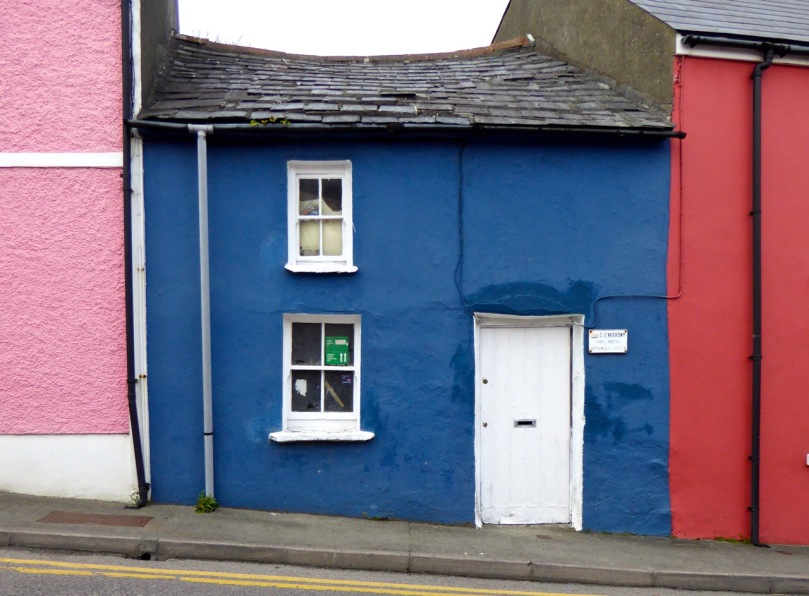
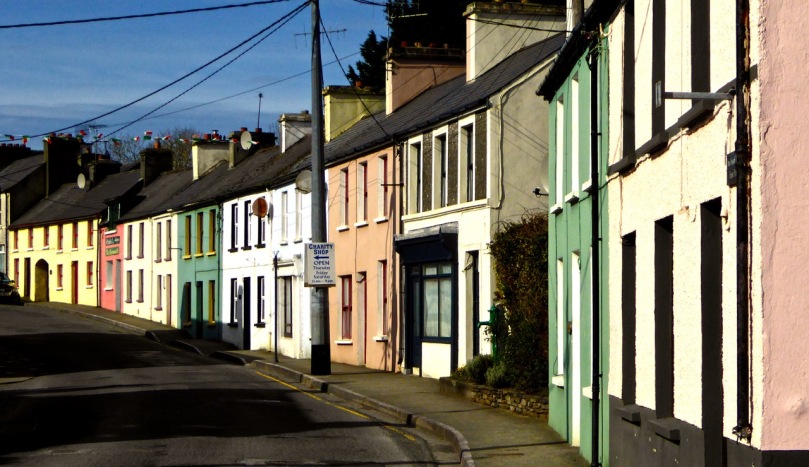
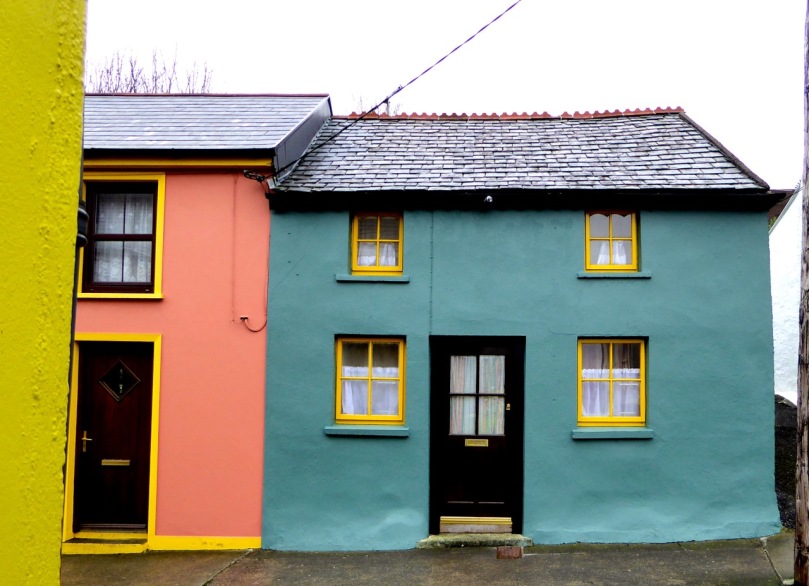
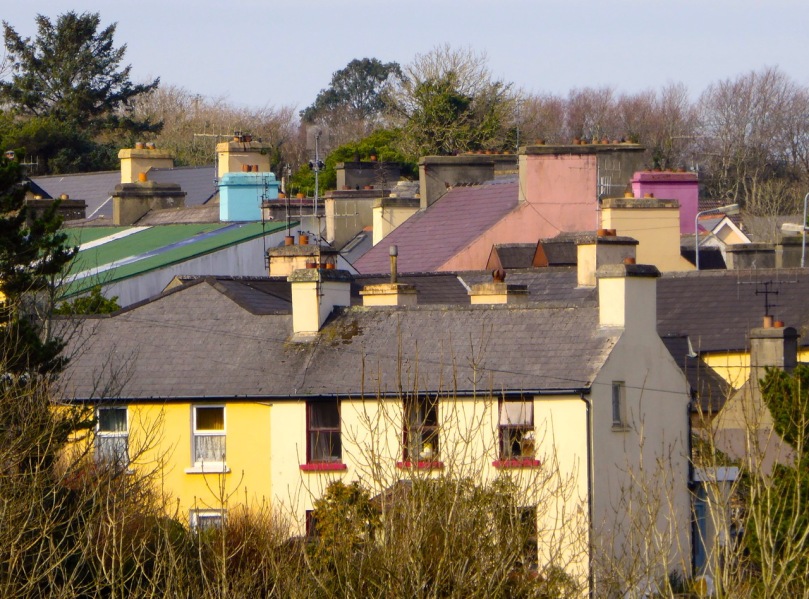
On the outskirts there are new estates of identical houses, of course, all painted in identical shades of cream. But in the steep and windy streets behind the shops you find little old terraced houses lovingly done up, the walls, doors and windows all in contrasting hues and with knife-edge divisions of colour between neighbours.

Skibb town house 2

Skibbereen townhouse

It can be like walking through a giant Rubik’s Cube (ok, that dates me) or one of those kaleidoscope tubes.

In his book, West of West, published in 1990, Brian Lalor captures my own experience growing up in a sea of grey. He says:

The nineteenth-century photographs of villages and farms show an unrelieved grimness of stone, cement and clay. Whitewash relieves this picture, though frequently this rendering has degenerated into a leprous greyness indicative of neither hope no prosperity. Colour has a symbolic relationship with the state of economics in rural Ireland. The last 20 years have seen the introduction of modern synthetics, bringing vivid tones not previously to be found here. Affluence and the EC have brought, as to the Aegean, a flight from the spartan virtues of white and cream…

Whatever the reason – prosperity, a sense of fun, a wish to lighten the spirits, the influence of the Tidy Towns Competition, an affinity with the colours of the wildflowers in the hedgerows, competition with the neighbours, the need to describe how to identify a house when street numbers are confusing or absent – I am grateful for it. It’s one of the things that makes rural Ireland unique and charming – and it feeds my soul.

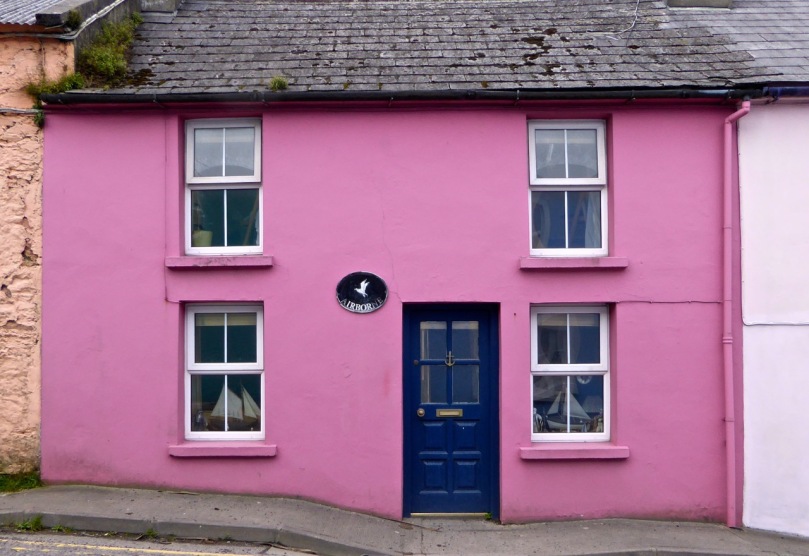
Airborne, Schull

Airborne, Schull

The Gables of Ballydehob

The Gables of Ballydehob


From Skibbereen to the Moon Part 2: Ellen and Aubrey Clerke

Ellen

In my post From Skibbereen to the Moon I wrote about the Clerke family of Skibbereen, but particularly about Agnes, who became one of the foremost astronomers and science writers of her day. But Agnes was one of a trio of remarkable siblings, each of who distinguished themselves as intellects and writers and I wanted to learn more about her sister, Ellen, and her brother, Aubrey. In the process, I came up with questions that reach into the heart of Skibbereen, and Irish, history.

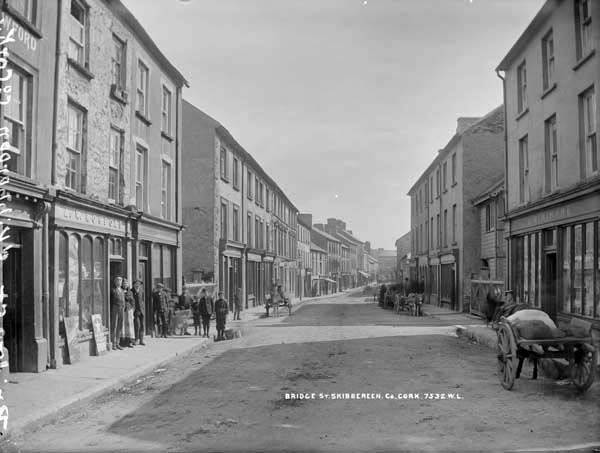
Bridge Street, Skibbereen

Bridge Street, Skibbereen

But first – the Clerke (pronounced Clark) family: all three siblings grew up in Skibbereen, above the bank that their father managed. They lived through the Famine: John Clerke was one of the subscribers to the soup kitchen relief effort. After moving away in 1861, and apart from the years the women spent in Italy, the family lived together for the rest of their lives.

It was, by all accounts, an harmonious and supportive household. The three were devoted to their parents and they encouraged and nurtured each other’s scientific and literary pursuits. Aubrey coached Agnes in mathematics when she needed to move to a higher level of understanding in her astronomy studies, and the siblings accompanied each other to the various astronomical and geographical societies that each belonged to. Ellen was the stronger of the two sisters (Agnes’s health was poor from childhood) and also the more social. According to Lady Huggins account, she played the guitar and sang well, she liked to ride and she “pulled a good oar.”
Fable and Song

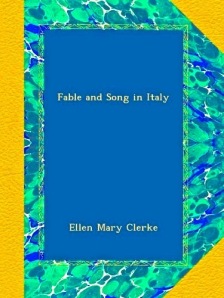
While Agnes wrote mainly (although not exclusively) about astronomy, Ellen was more literary in her leanings, publishing extensively in the areas of poetry and criticism and writing in three (at least) languages. The book for which she should be most justly remembered is Fable and Song in Italy. Ellen’s objectives with this book were twofold: to trace the influences on popular Italian song and to to introduce English readers to Italian verse. In order to do this she must have possessed an encyclopaedic knowledge of the great Italian poets and the ability to translate Italian verse to English verse. This had to be an incredibly difficult undertaking, not least because she was translating archaic Italian into a more contemporary language (that is, of her own time) in order that the “beauties” of the verse would not be “disguised by the obsoleteness of the language.” She begins in the Renaissance with the Fifteenth Century Boiardo, author of Orlando Innamorato, a classic of European chivalric literature. Her account of the piece Charlemagne’s Tournament from Orlando is complete with the story itself, discursive asides about the numerous characters and translations of selected verses.

From Fable and Song in Itlay

From Fable and Song in Italy, Ellen’s best work

She moves on to Boccacio, author of the Decameron. Crediting him with “giving the metrical romance an established place in literature” she asserts that he “supplied the poetry of the future with its main outlet of expression…” She provides many pieces of translation and compares his verbose style to Chaucer’s (an admirer of Boccacio) more succinct phrasings, tracing the influences of the Italian on the English poet with great skill and using numerous illustrations. She has a chapter on The Hercules Saga and on the verse letters of the poet Ariosto; she describes the potent roles played by Dante and Petrarch in Italian verse; she works her way through a chapter on  Italian Folk Songs to finish with a discourse on Manzoni and Modern RomanticismIt’s a tour de force, showing a strong intellect operating at the height of its powers. But it’s also fascinating in that, as a devout Catholic with a Victoria sensibility, she deals with the sometimes hot and overblown romantic verse in a calm and often wryly humorous way, noting for example that despite all the chivalry and elevation of romantic love, Ariosto’s real estimation of women was evidently “very low,” as he  “alternates between raillery and panegyric.”
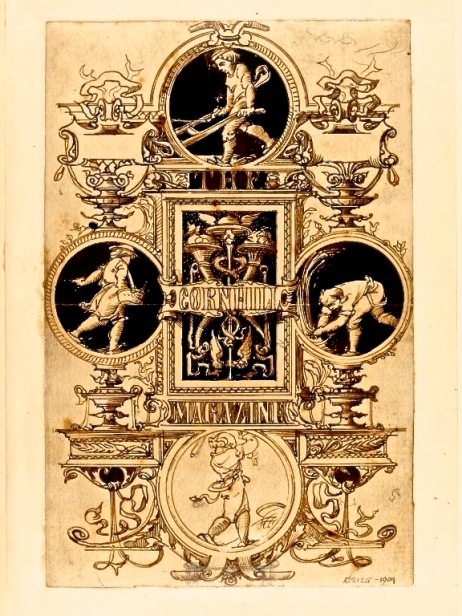
Everyone who was anyone wrote for he Famous Cornhill Magazine

Everyone who was anyone wrote for the Famous Cornhill Magazine

Ellen wrote for various magazines, especially The Tablet (a Catholic periodical which she also helped to edit), the Cornhill Magazine and the Dublin Review (another influential Catholic journal, actually published in London). Although she never reached the stature of Agnes in astronomy, she was likewise interested in that subject and wrote two monographs on Jupiter and on Venus. A review of Jupiter and his Systems calls it a “capital little pamphlet” (it was 40 pages) and says it presents “a complete popular account of our present information regarding this planet and its satellites…in an interesting and straightforward way, equally removed from dullness and from the faintest traces of “smart writing.”” She wrote literary studies in German and she studied Arabic to the extent of using original Arabic texts in her research. She was a highly regarded member of the Manchester Geographical Society (which admitted women!). One of her pieces for them was about Australian aborigines which was described as a “striking refutation of the generally held belief about them”. Another one of her journalistic essays was about the dock labourers strike of 1889 in which she displayed her understanding of economics, her insistence on factual information (she used extensive statistics) and her empathy for low paid workers and their families, although in general her politics were conservative.
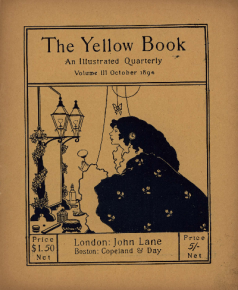
Cover by Aubrey Beardsley, Poem by Ellen Clerke

Cover, Aubrey Beardsley. Poem, Ellen Clerke

Ellen’s venture into fiction was not, alas, as well received as her journalism and science writing. Just before she died she published her only novel, Flowers of Fire. I have found a single review, which pans it. “This story is interesting,” it states, “as proving that neither Polish conspiracies nor Neapolitan courtships can fill the dreary void left in a novel by the absence of men and women…[The characters] are distinguished from each other only by some external badge, such as yellow hair or a hot temper, and by the single hard black line that marks off the good characters from the bad.”

I couldn’t find the text of Ellen’s novel online, but I did come across a poem she translated from French, with the same title. It was published in The Yellow Book – a very smart quarterly with cover designs by Aubrey Beardsley. I have appended the poem to the bottom of this post. 

Aubrey St John Clerke, like his sisters, was brilliant. He won gold medals at Trinity in Mathematics and in Science and was awarded a “studentship” of £100 per year – “the highest honour obtainable at the Degree examination.” Although trained as a scientist, he chose to make his career in law, in which profession he became a specialist in land and property law and wrote books on the land law and conveyancing and articles for magazines, such as one for the Dublin Review of 1880 on ‘The Land Question and Law Reform.’ 

These books and articles on buying and selling land were more than simple treatises on conveyancing: they were a significant contribution to Irish and British law, since a series of Land Acts, beginning in 1870 were passed, designed to transfer the ownership of property from the large landowners to the Irish people who lived and worked on it. Each Act improved on the one before, but all were complex and there were no precedents to depend on. But Aubrey did not confine himself to law and wrote on other topics too. At one point, in 1878, all three Clerke siblings were in print. According to Mary Brück’s biography of Agnes, Aubrey’s contribution was a piece in the Quarterly Review “on a political question in which he showed himself a staunch Unionist and Anglophile.”

It’s interesting to note, in this regard, that when the Clerkes lived in Skibbereen, in the Bank House on Bridge Street, O’Donovan Rossa, the Fenian leader, was running a business further up the same street. Did John Clerke, in his capacity as the Bank Manager, have dealings with Rossa (who ran into financial difficulties with his seed business)? How did the conservative Clerkes feel about the Phoenix National and Literary Society that Rossa founded with the aim of liberating Ireland ‘by force of arms.’ How usual or unusual was it for staunch Catholics, such as the Clerke siblings, to be committed unionists and anglophiles? How would Aubrey feel, do you think, if he knew that the other memorial plaque on Bridge Street is to honour the memory of a Fenian? 

Redcliffe Square, home to the Clerkes in London

Redcliffe Square, home to the Clerkes in London

Agnes and Ellen died within months of each other. Aubrey was the youngest of the family and the last to survive, living on alone in the grand house in London, becoming in the end reclusive. I can find no photograph of him or of his father: in this family it is the women who are most remembered. To his credit, Aubrey never seemed to resent that, remaining proud of and devoted to his two extraordinary sisters always.


Flowers of Fire

A Translation, by Ellen M. Clerke

FOR ages since the age of Chaos passed,

Flame shot in torrents from this crater pyre,

And the red plume of the volcano’s ire

Higher than Chimborazo’s crown was cast.

No sound awakes the summit, voiceless, vast,

The bird now sips where rained the ashes dire,

The soil is moveless, and Earth’s blood on fire,

The lava—hardening—gives it peace at last.

But, crowning effort of the fires of old,

Close by the gaping jaws, for ever cold,

Gleaming ‘mid rocks that crumble in the gloom,

As with a thunderclap in hush profound,

‘Mid golden dust of pollen hurled around,

The burning cactus blazes into bloom.

Raw Material

The art of building: West Cork Arts Centre on opening day

The art of building: West Cork Arts Centre on opening day

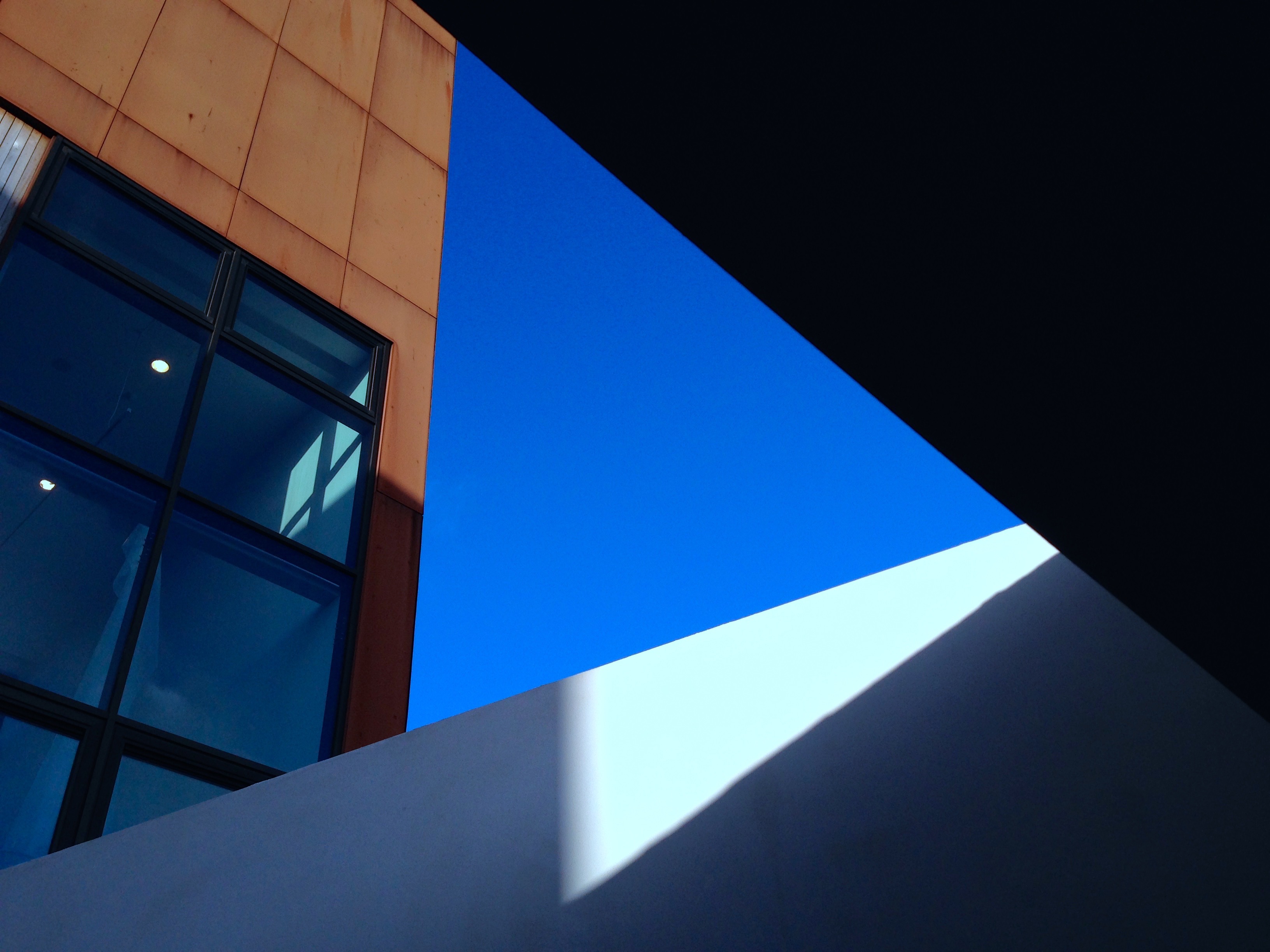
On the last day of January (traditionally the last day of winter and St Brigid’s Eve) the new West Cork Arts Centre opened its first exhibition in Skibbereen. We have taken a great interest in this building during its construction: the very strong architecture has aroused a lot of negative comment in the community, but now that it is virtually complete the general view of it seems to be mellowing a little. For my pennyworth this bold, modern insertion into the townscape has provided Skibbereen with a new visual focus and with great potential for a successful future.

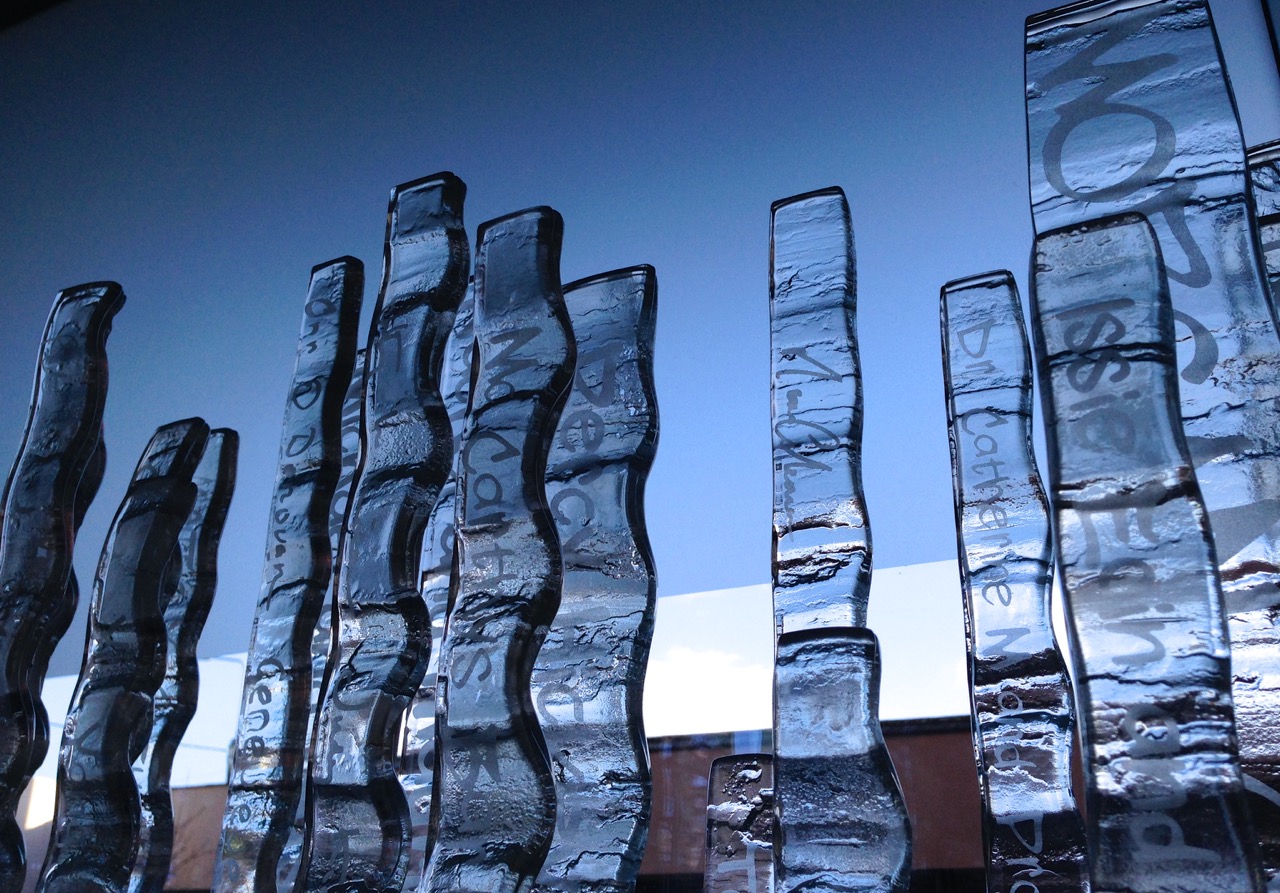
A specially commissioned glass sculpture by Michael Ray graces the entrance hall, and incorporates the names of sponsors of the building

A specially commissioned glass sculpture by Michael Ray graces the entrance hall, and incorporates the signatures of sponsors of the building

The name of this new building is Uillinn – it means ‘elbow’, a reference to the angled plan of the building and its cantilevered location over a bend in the Caol Stream that snakes through the town’s back yard. Dublin based Architects Donaghy and Dimond won the international design competition in 2009: have a look at their plans for the building here.

One of the exhibits is titled ‘Flying Colours’ and is a project by the West Cork Education Centre in collaboration with local Primary School children: stairways and circulation spaces in the new centre are alive with colour and creativity. How wonderful that these children can feel they have played such a significant part in this new venture.

The fabric of the building is lively and well considered

The fabric of the building is lively and well considered

This building simmers with potential: the gallery spaces and facilities are impressive and architectural elements are well detailed. Skibbereen has been given a high quality civic building that will last for generations: it’s now got to be used creatively.

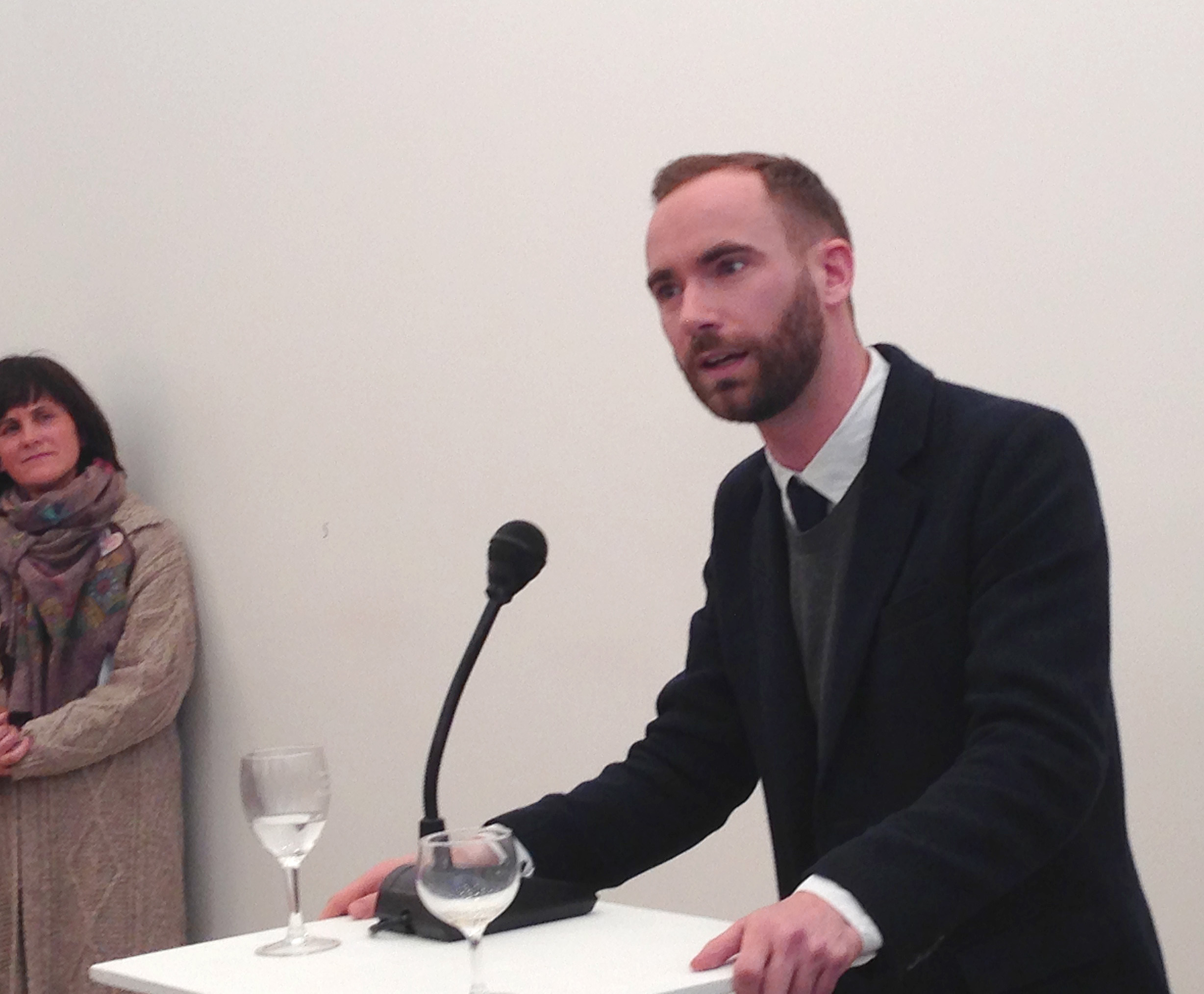
Sam Thorne

Sam Thorne

It’s no coincidence that one of the speaking guests at the opening was Sam Thorne, artistic director of the Tate St Ives Gallery in Cornwall. Comparison between West Cornwall and West Cork is inevitable: both regions have a history of attracting artists because of the very particular light that comes from close proximity to the Atlantic coastline. Also, artists have been drawn to these places because of enduring lifestyles that are simple, basic and close to nature. Thorne made the perhaps surprising statement that West Cork is home to more artists per capita than both Paris and London.

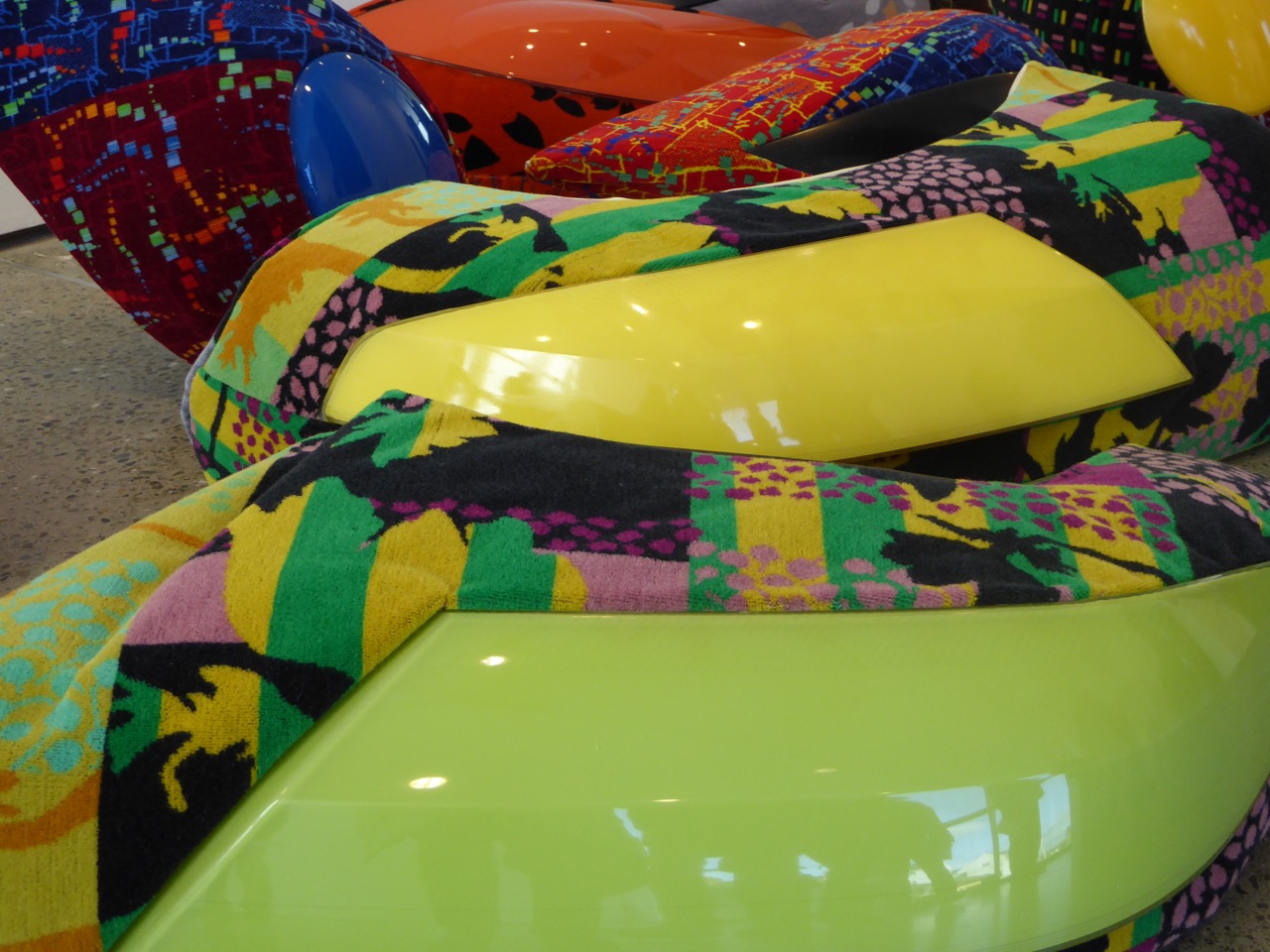
'Blinkers' - Angela Fulcher 2015

‘Blinkers’ – Angela Fulcher 2015

Sam Thorne said that having a community of artists contributes all kinds of different aspects to a region. One of the simple ones is tourism. “That’s been a really important thing in St Ives over the past two decades,” he said. “The gallery contributes £11m (€14.6m) every year to the local economy in St Ives – three times that which was anticipated when the gallery opened… So there’s a very real powerful impact that having artists there, having art there, creates for the community.” He added that the St Ives Gallery now needs to extend its buildings and anticipates over £80m coming into the local coffers over the next few years.
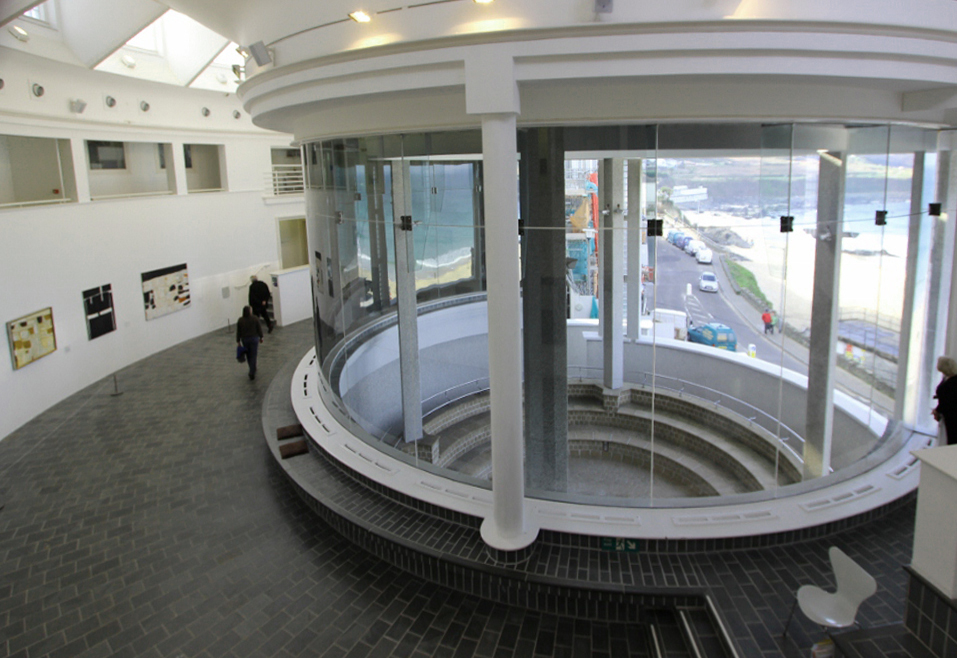
tate

Phenomenal success: the Tate Gallery, St Ives, Cornwall

I spent many years in Cornwall and watched the development of the Tate Gallery in St Ives. It has become a year-round tourist destination: in all seasons – and in all weathers – the streets of the little town are crowded with visitors who are, of course, using the local shops, b + bs and restaurants. It has also created problems: overloaded car parks, strained infrastructure. But surely this is better than closed shops and failing businesses?

Of course, Skibbereen is not St Ives – and our Arts Centre doesn’t have the backing of a body like the Tate, with its enormous resources of historical art. But there are great possibilities nevertheless: Ireland has a wonderful art heritage, much of which is seldom seen outside of the big city galleries. And there are strong links between Irish artists and Britain which could be delved into. Think of the Newlyn School artists – Alexander Stanhope Forbes and Norman Garstin were both Irish; Cornwall was also home to Breon O’Casey and Tony O’Malley. Other artists moved from Cornwall to the west of Ireland, including Nancy Wynne-Jones, Conor Fallon and – mentioned above – Michael Ray.

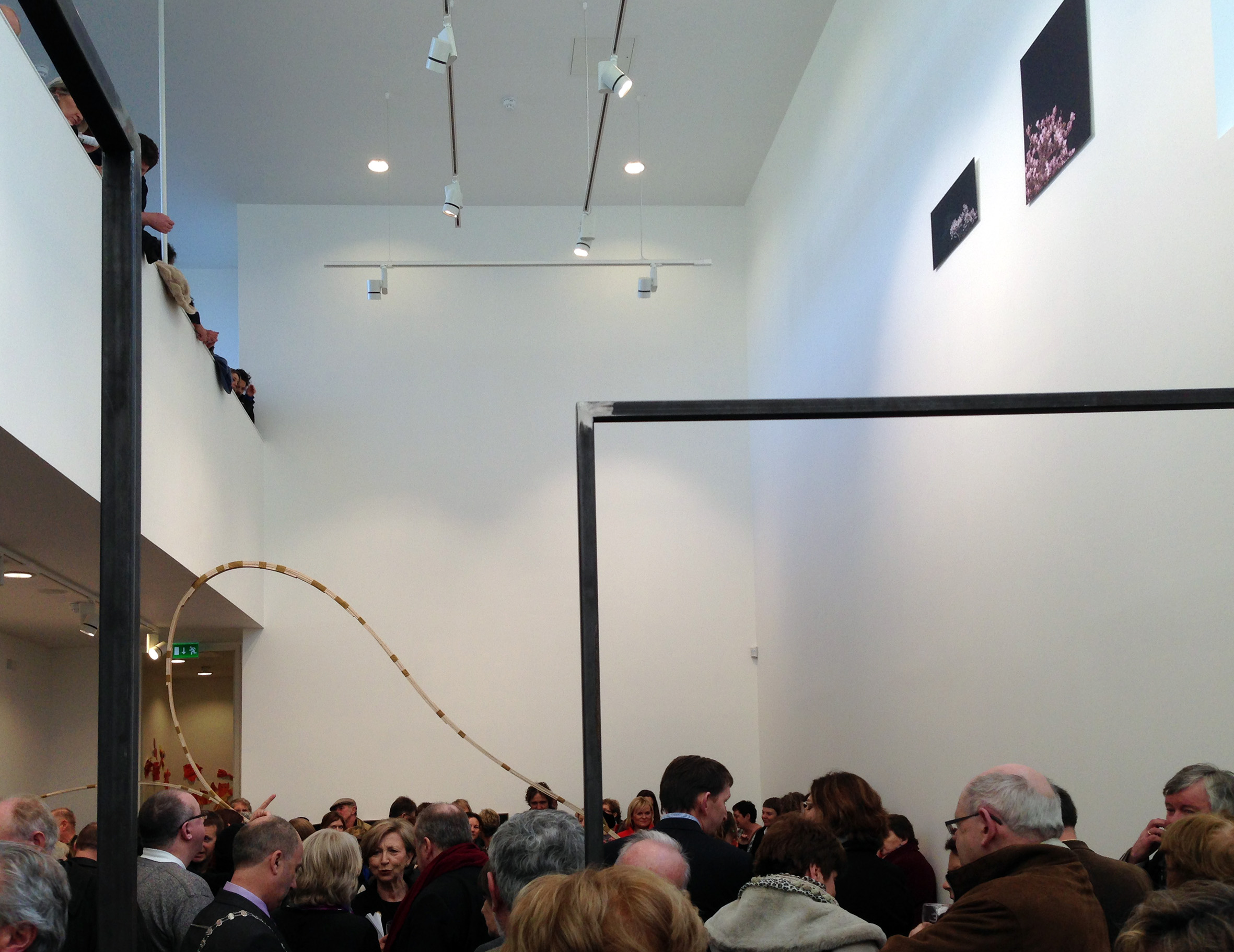
Impressive gallery spaces call for dynamic works

Impressive gallery spaces call for dynamic works

The St Ives Tate works so well because it is able to show the ‘big names’ – but it also encourages young and local artists, whose output often interacts with the historically established works. There is no reason why the Skibbereen centre couldn’t build on similar links: wouldn’t it be wonderful if we could see paintings by the likes of Jack B Yeats, Paul Henry, Sara Purser or Daniel Maclise on our doorstep – complimented, of course, by the very best of home grown talent? The ‘big names’ would be the crowd-pullers – at least initially: these are the building blocks for forging a lasting reputation.

headphones on

Works in progress: the centre contains studios and workshops

The new building still awaits its official opening: this will happen in the summer and the President of Ireland – Michael D Higgins – will have that honour: a scoop for Skibbereen! The Board of the West Cork Arts Centre – and the sponsors and donors – have moved mountains to realise the vision of this building. Now it’s down to creativity and dynamism from the team – and to enthusiasm and encouragement from us, the visitors, whose support is vital to this building’s future success.

quirky

From Skibbereen to the Moon: Agnes Mary Clerke

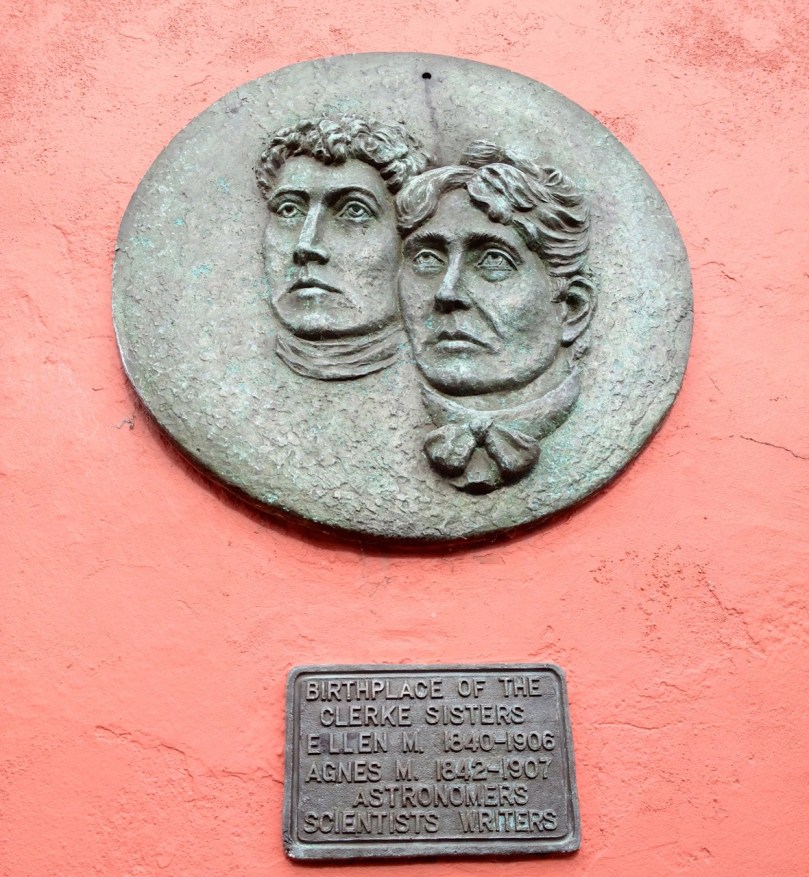
Commemorative plaque in SkibbereenCommemorative plaque in Skibbereen

NOTE: I have rewritten this post and substantially updated it. See, from Sept 2023, Storm Agnes: Agnes Clerke of Skibbereen and Nineteenth Century Astronomy.

What follows is the original post, from 2015.

Wandering around Skibbereen, I came across a plaque on a once-imposing pink building – it showed two women, the Clerke sisters, who had grown up in the house. Intrigued, I searched for more information and what I found astonished me.

Agnes, Ellen and Aubrey Clerke, the offspring of John William Clerke (who managed the bank located on the ground floor) and Catherine Mary Deasy, were all brilliant, scholarly and published writers, each in their own fields. The Clerke (Protestant) and the Deasy (Catholic) families had long and solid histories in West Cork and lived through the awful famine period of Skibbereen during which they were said to be benevolent (see Paddy Leahy’s piece in The Journal of the Skibbereen and District Historical Society, Vol 7, 2011 for more on John and Catherine). John had been educated in Trinity and the children grew up in the 1840s and 50s with access to their father’s extensive library, his telescope and his chemistry experiments. The telescope, according to Mary Brück’s biography, was equipped with a chronograph for timing the transits of stars across the meridian. With this arrangement Clerke was able to provide a time service for the town of Skibbereen, which was as yet unconnected to the outer world by either railway or telegraph.
Bridge Street, Skibbereen, 19th Century. National Library CollectionBridge Street, Skibbereen, 19th Century. National Library Collection

The sisters were tutored by their mother to a high proficiency in music, Latin and Greek. (Catherine played Irish music on the harp and retained her ability to entertain well into her 80s.) Insatiably curious, they devoured knowledge and by 15 Agnes had already begun to write a history of astronomy – a book that would later count as her magnum opus. While Ellen and Aubrey distinguished themselves mainly (although not exclusively) in literature and law, Agnes went on to become one of the foremost science writers of her day. Devoted to each other, none of the siblings ever married and the family lived together in harmony and supported each other’s endeavours to the end.

Living in Italy for ten years, Agnes and Ellen studied extensively in the excellent libraries in Rome and Florence, becoming proficient in several languages and going to primary sources to research their interests. Thereafter, the family settled in London. Although she started off with a wide range of topics, Agnes over time concentrated on writing about astronomy. Her first published pieces (one about Copernicus, the other about the Mafia!) appeared in the Edinburgh Review in 1873. This was the equivalent, as Perry O’Donovan points out in an essay for the Skibbereen and District Historical Society Journal (Vol 9, 2013), of an unknown writer today being published in the New Yorker.

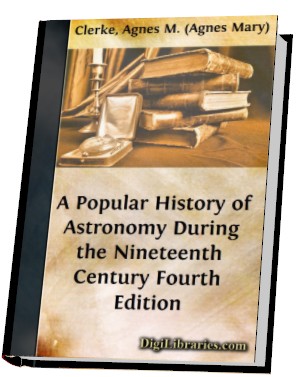
History of A 4th edition

The depth and scope of Agnes’s scholarship is awe-inspiring. To read through her History of Astronomy during the Nineteenth Century (available online through Project Gutenberg) is to see a brilliant mind at work. Her purpose in writing it was to embody an attempt to enable the ordinary reader to follow, with intelligent interest, the course of modern astronomical inquiries, and to realize (so far as it can at present be realized) the full effect of the comprehensive change in the whole aspect, purposes, and methods of celestial science introduced by the momentous discovery of spectrum analysis. This IS the rocket science of her generation, encompassing chemistry, physics, mathematics, history of scientific thought, cosmology, the most up to date observation and measurement techniques – in short, the disciplines that made up the emerging science of astrophysics.

Take a look, for example, at the headings for her Chapter IV: Chemistry of Prominences—Study of their Forms—Two Classes—Photographs and Spectrographs of Prominences—Their Distribution—Structure of the Chromosphere—Spectroscopic Measurement of Radial Movements—Spectroscopic Determination of Solar Rotation—Velocities of Transport in the Sun—Lockyer’s Theory of Dissociation—Solar Constituents—Oxygen Absorption in Solar Spectrum. Looks pretty frightening for a non-scientist, doesn’t it? And yet, this book was one of the best-sellers of the day. Agnes had a unique ability to absorb and compile knowledge and then to lay it out for the non-specialist. (I got through the first chapter with little difficulty.) She is rightly credited as the founder of what is called today Popular Science. Her books (she wrote many more) and articles sold well and she made a good living from her writing.

However, she was a woman, and a non-practitioner (that is, she didn’t work in an observatory, although she spent time in one) and many in the predominantly male science establishment of Victorian Britain were sceptical of her knowledge and resentful at her success. But as they read what she wrote most were won over by her erudition and her ability to present their complex findings to a wide audience. Although she was a member of the British Astronomical Association, as a woman she was ineligible to be a member of the prestigious Royal Astronomical Society and had to call in favours to be allowed access to their library. But eventually even that bastion of male scientific privilege was forced to acknowledge her achievements and appointed her and her great friend Lady Margaret Huggins (another Irish astronomer) as honorary members.

The Clerke CraterThe Clerke Crater

Recently, however, Agnes has been paid a high honour. A crater on the moon, near the Apollo 17 landing site, has been named the Clerke Crater by the International Astronomical Union.

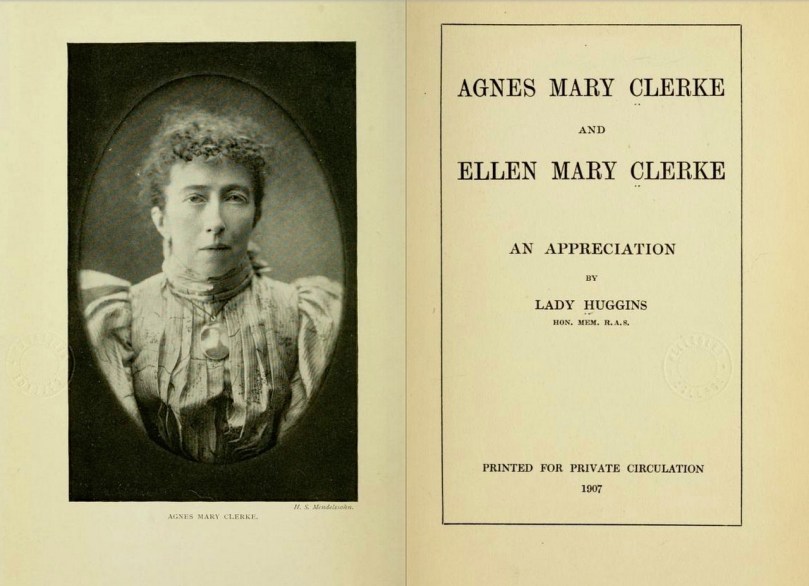
Huggins memoirHuggins memoir

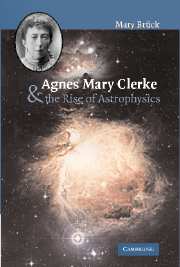
Margaret Huggins penned a small memoir about Agnes and Ellen Clerke after their deaths. However the real authority on Agnes’s life and scholarship was Mary Brück, a fellow astronomer, yet another Irish woman (from Meath) and author of Agnes Mary Clerke and the Rise of Astrophysics. 

Brück biographyBrück biography

Of Agnes, she said: This remarkable woman, educated solely within her own family and through her own private studies, not only kept abreast of astronomical progress world-wide but also had a genuine understanding of the matters on which she reported and the gift of communicating them through her fluent and prolific writings. Her books – in particular her Popular History of Astronomy during the Nineteenth Century, first published in 1885 and reprinted over almost twenty years – are treasured by historians and by amateur lovers of astronomy alike as sources of reliable and enjoyable information on that period.

I loved her description of Agnes at the height of her powers: Agnes Clerke in her sixties had become a sort of mother figure among astronomers, tactful, kind, helpful.

Ellen and Aubrey deserve their own posts (now written, see From Skibbereen to the Moon Part 2: Ellen and Aubrey Clerke). However, it does seem apt to close this piece on Agnes with a quote from one of Ellen’s poems, Night’s Soliloquy:

                                …are not hidden things

Reveal’d to science when with piercing sight

She looks beneath the shadow of my wings

To fathom space and sound the infinite?