Tiny Ireland

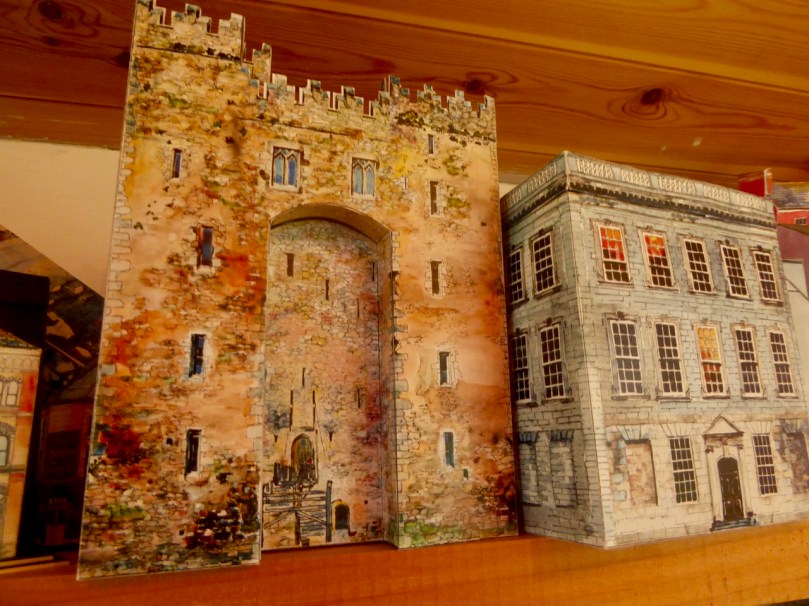
Bunratty Castle

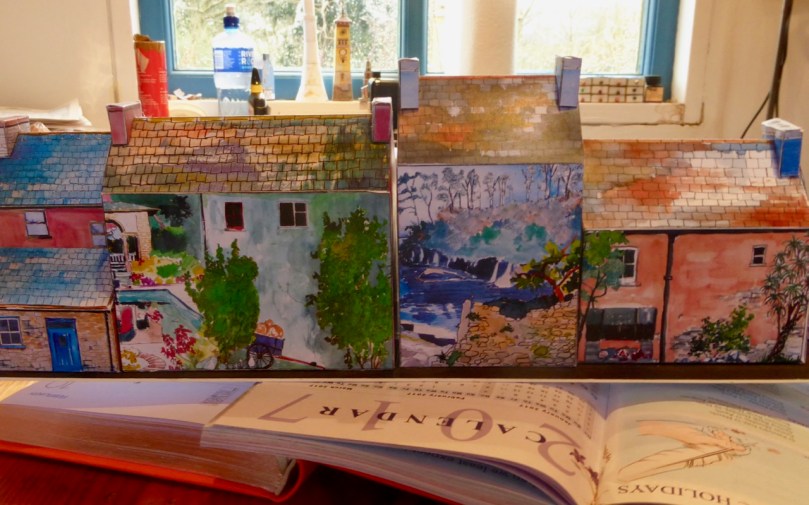
If you live around here or have visited Ireland you’ve seen them in all the best gift shops: Tiny Ireland – those intriguing paper models of Irish buildings and towns that make the perfect gift.

Top photograph: Bunratty Castle. Above: Skibbereen, the model and the real thing, and Tiny Cobh

They say that a true craftsperson makes it look easy. But this week we visited Tiny Ireland in her studio and found out first hand just how much talent and research and imagination goes into every single detail.

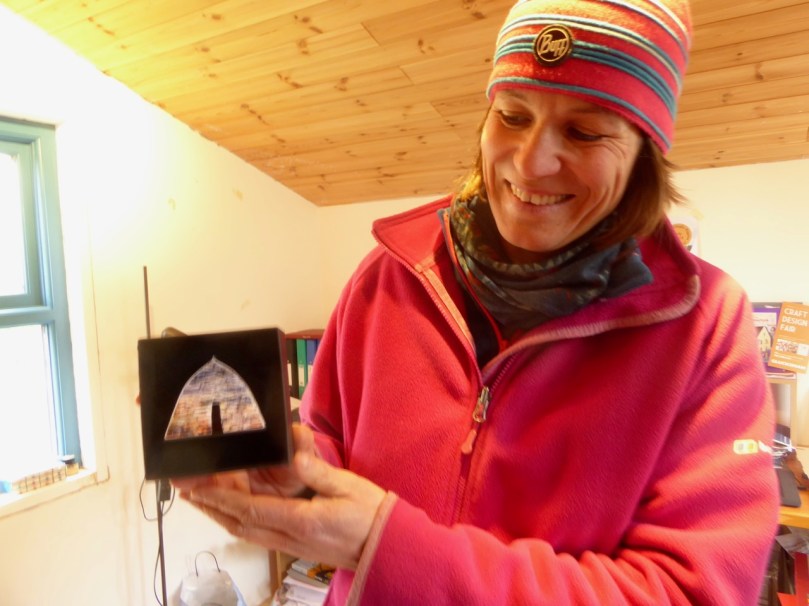
Anke with boxed Gallarus

Anke shows us her Tiny Gallarus

And who is Tiny Ireland? Meet Anke Eckardt. She’s lived here in West Cork since she was a little girl, plays a mean tin whistle, is an artist, a master joiner and boat builder and joint owner with Rui of West Cork Boats. The idea for Tiny Ireland came to her when she made some paper models with and for her son Fionn to complement his train set. That was ten years ago. She has been making models ever since, but devoting herself seriously to it for the last five years.

Designer at work – Anke in her studio. Full marks for anyone who can guess the pub she’s working on.

Anke starts with familiarising herself with the town or village. She wanders round with her camera, talks to everyone, gets a feel for the place, and then does extensive research on the history of the area. In the case of West Cork, like any other native she already knows every inch of it – the stories, the atmosphere, the iconic buildings, the colours and contours of the landscape. She tries to capture that same sense of place wherever she goes.

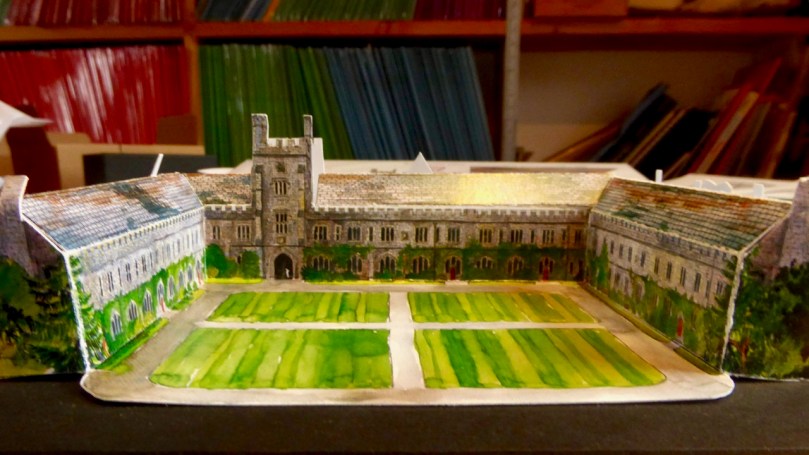
UCC

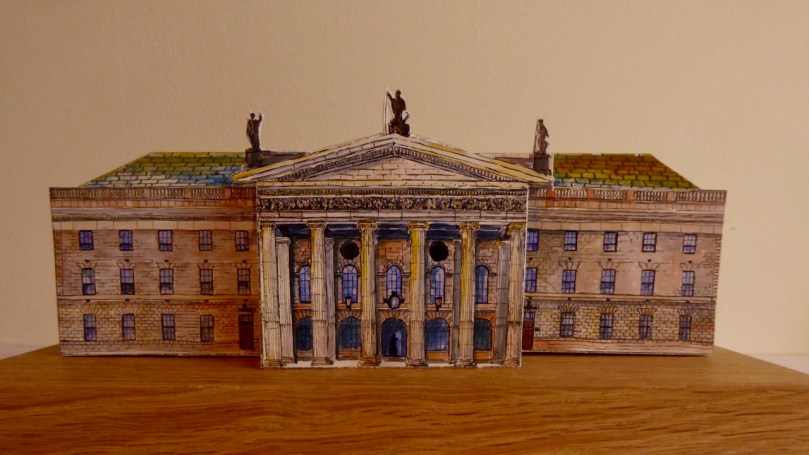
GPOTop: Both Anke and I went to University College Cork and the Quad holds a special place in our hearts. Bottom: Anke’s contribution to the 1916 commemorations – the General Post Office in Dublin

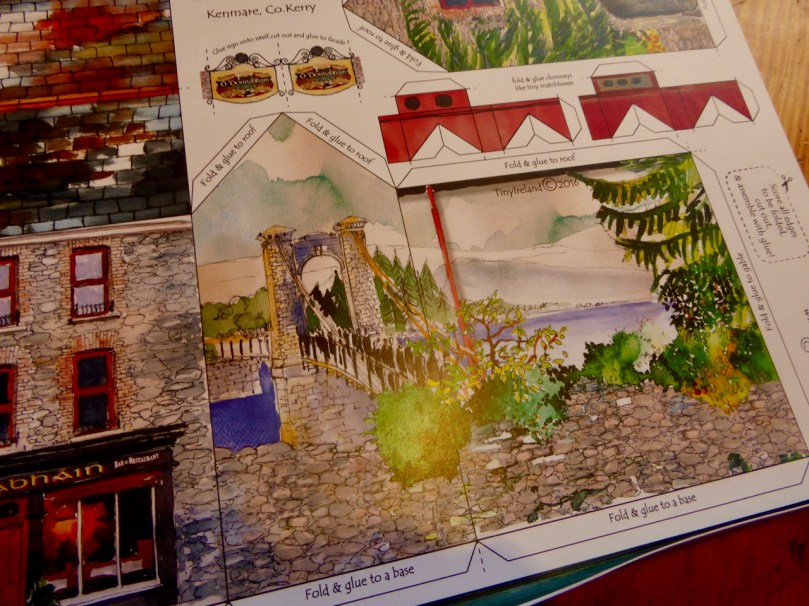
Back in the studio she decides on which buildings to use and starts drawing and painting and figuring out what should go where on the model and what extra details to include. Each building occupies one sheet in the kit. Anke wants each sheet to be a beautiful object in itself, to be poured over before you even start the scoring and cutting process. Can you imagine the cleverness it takes to construct even one building? Add to that all the little details that go into making it unique and contributing to its cultural and geographic character.

Glucksman Gallery in box

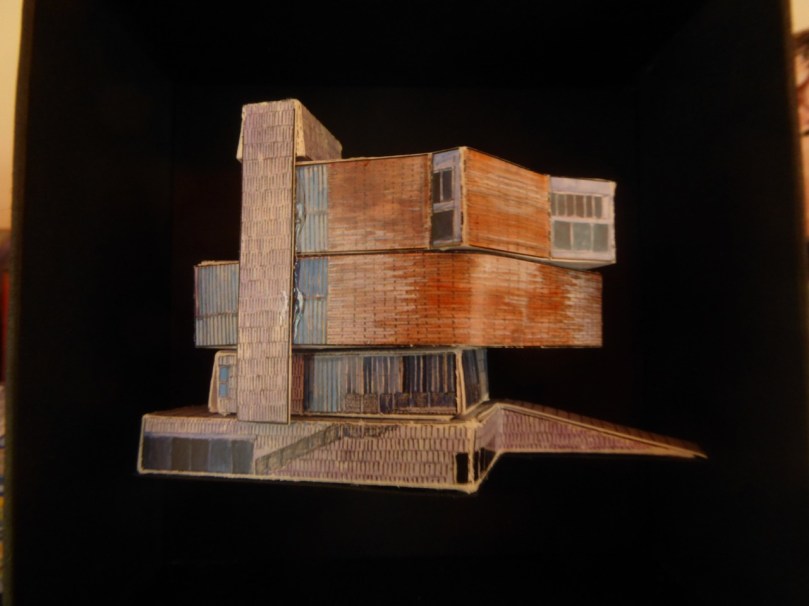
Not just traditional buildings! Here is the ultra-modern Glucksman Gallery at UCC

We came home with a Tiny Kenmare kit so that we could experience the assembly process first hand. Not only was this great fun but it gave us additional insights into both the craft of model making and the lovely additional details that Anke has inserted into each piece – details that extend the model into little bits of history.

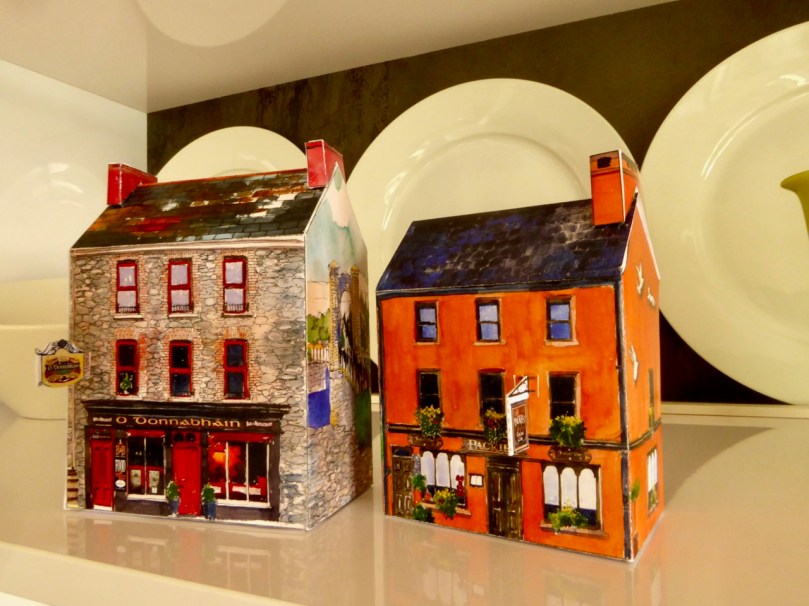
Robert assembles Packie’s Pub

The second Kenmare building we assembled was O’Donnabháin’s pub and guest house (pronounce it O Dunn-eh-vawn’s). Look around the side – Anke has added the image of a funeral coming over a suspension bridge. Curious, I looked up what this was all about and found that Kenmare did indeed have the first suspension bridge ever built in Ireland – read an amusing account of its history here – and that the funeral was a real one, that of an IRA man murdered by the Black and Tans in 1921.

Kenmare Funeral

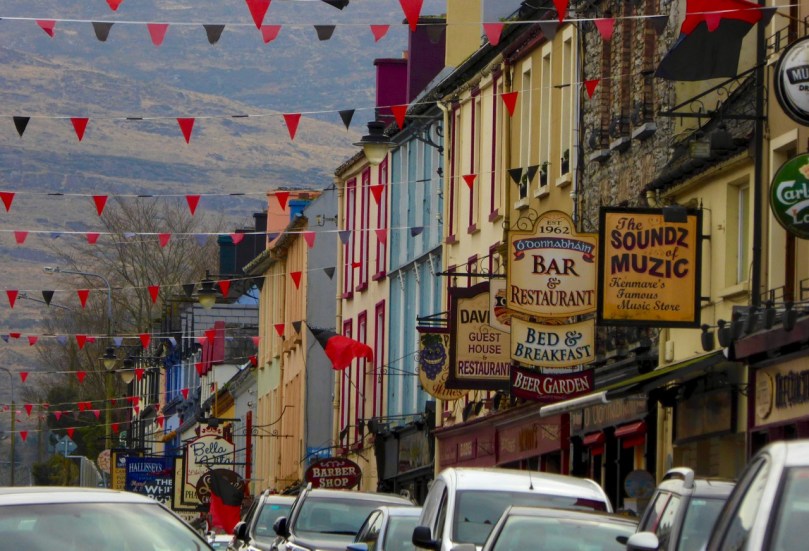
On the shelfKenmare is as scenic and colourful as any town anywhere has a right to be. It’s a great shopping town too, with wonderful cafes and pubs, and right on the justly-famed Ring of Kerry.

Colourful Kenmare 1

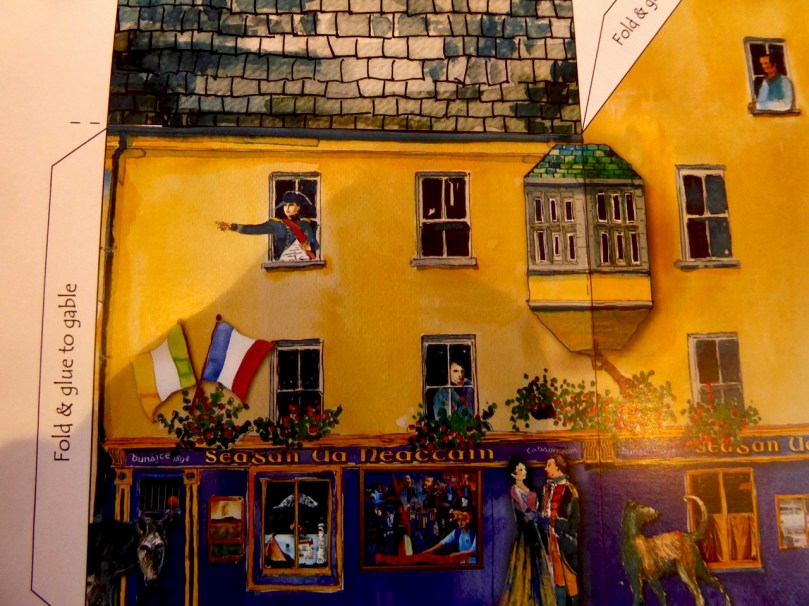
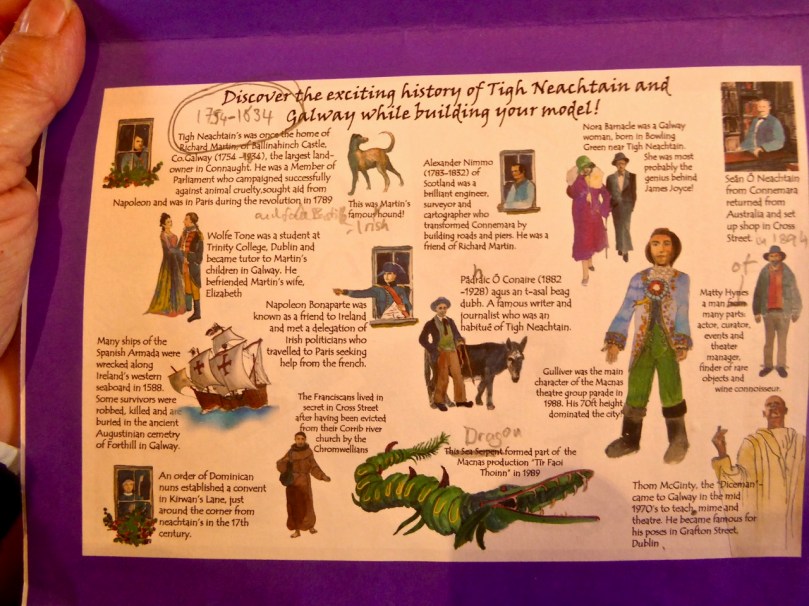
Every model Anke makes is unique and delightful. Individual pubs, shops, castles, etc are often made at the request of the owner. Here’s one for Tigh Neachtain in Galway. Anke showed us a draft of the Explanation sheet that goes with it. It’s an object lesson in how one building can encompass the story of a town. Richard Martin, by the way, is better known to history as Humanity Dick.

Tig Neachtain

Tig Neachtain ExplanationFor tourists, Tiny Ireland models make the perfect gift, light and packable and chock full of the real Ireland. For all of us, making one engages us in a creative act that comes out of the rich imagination and artistic talent of Anke Eckardt.

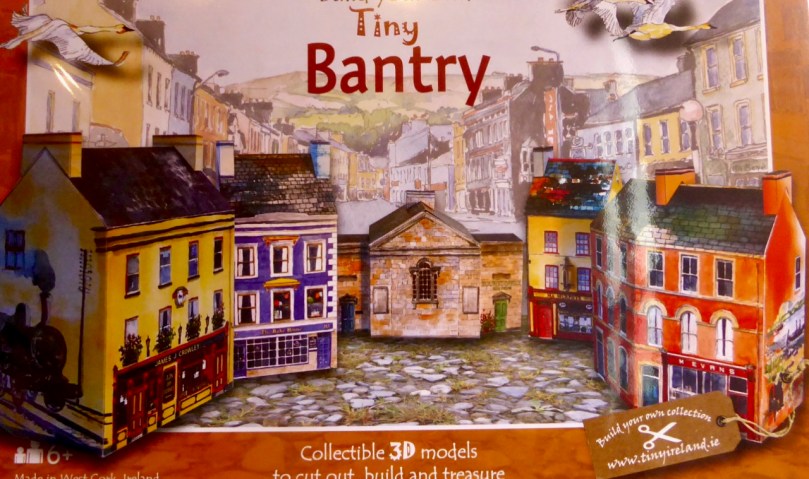
Tiny Bantry

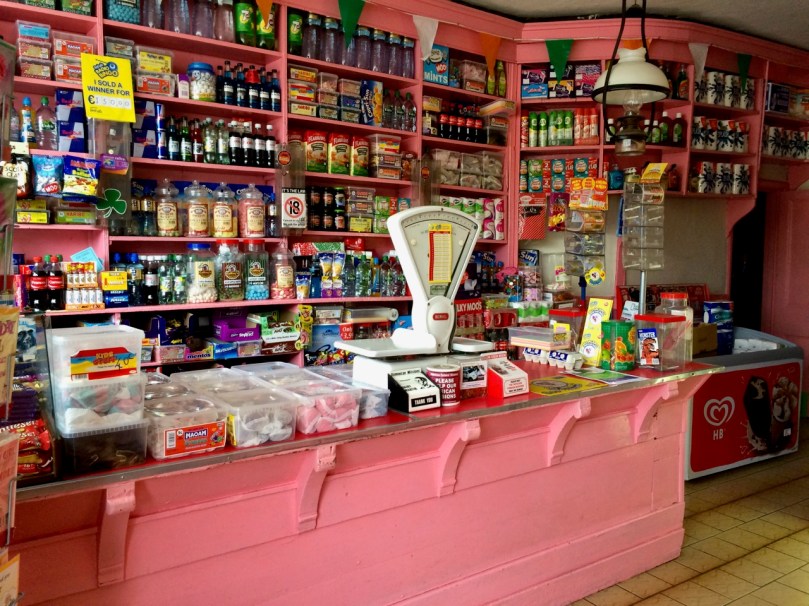
Evans InteriorTiny Bantry – note Miss Evans traditional shop on the right. Here’s what it’s like inside. For more on this and other traditional Irish shops, see Shopping for Memories

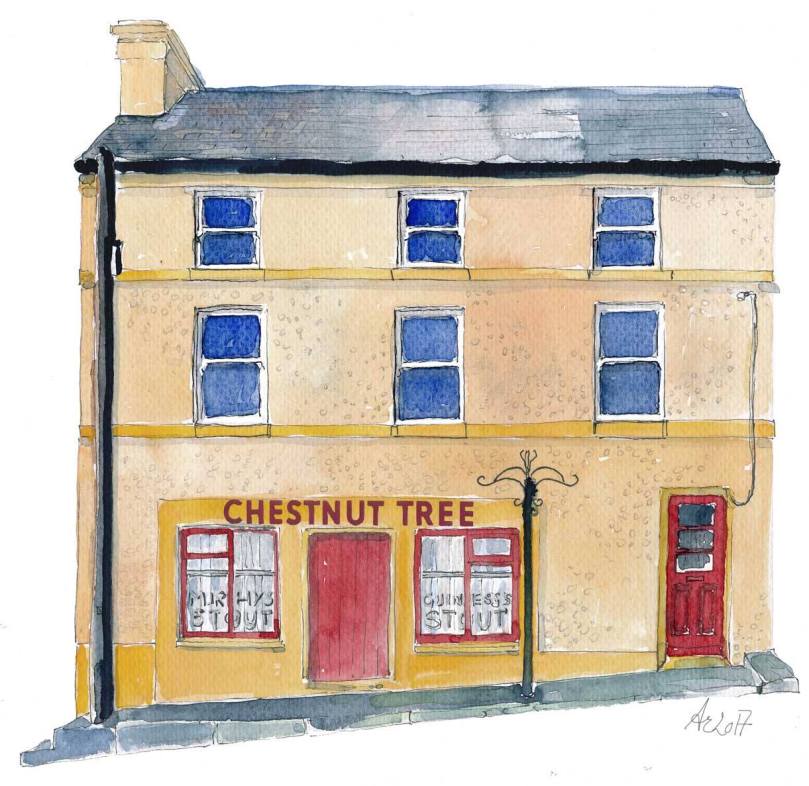
And it’s not just models. Recently Anke has started to produce charming watercolours of the traditional shops and pubs she loves. We in Ballydehob have loved her posts on our wonderful old shopfronts. Here’s an example – Just drive down our main street and you can’t miss The Chestnut Tree.

chestnut-tree

Happy cutting and glueing!

Around the back

Scissors Cut Paper Wrap Stone – a Review

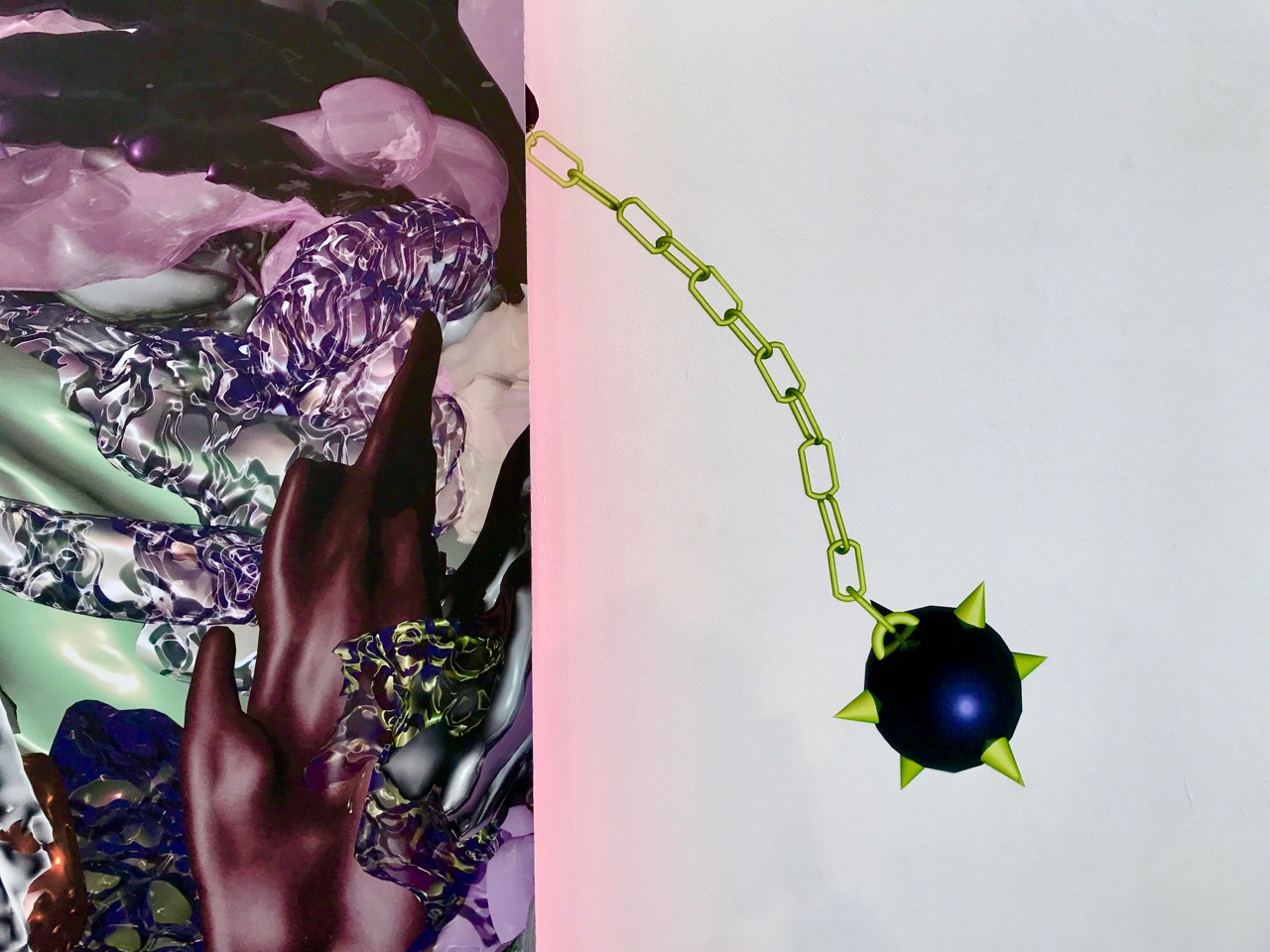
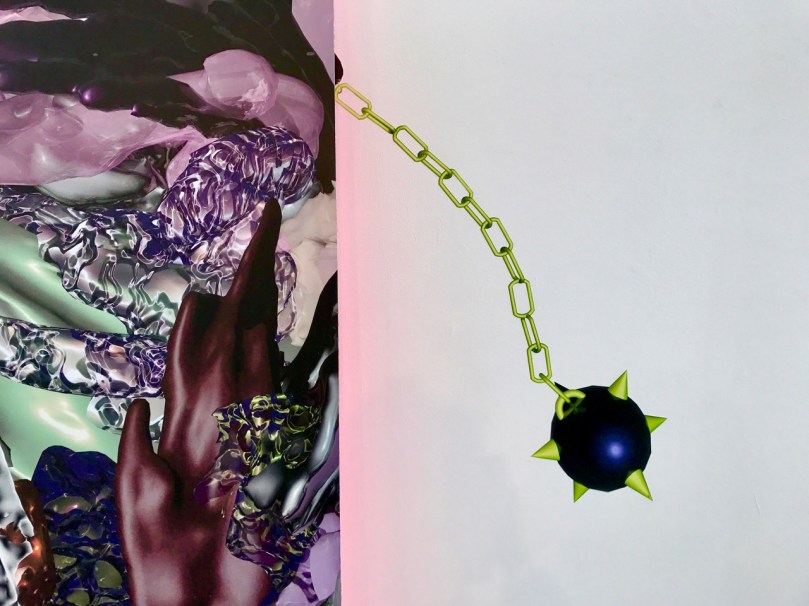
ball graphic

The current exhibition at Uillinn, the West Cork Arts Centre gallery in Skibbereen, is a ‘must’ for anyone interested in contemporary artistic expression – but be aware it’s challenging. Having seen the exhibition being assembled before the opening I decided that I would visit it twice – firstly without giving myself any prior knowledge of the subject matter – and then once more, following a gallery tour led by Alison Cronin of Uillinn and a gallery talk by Jennifer Mehigan, one of the participating artists.
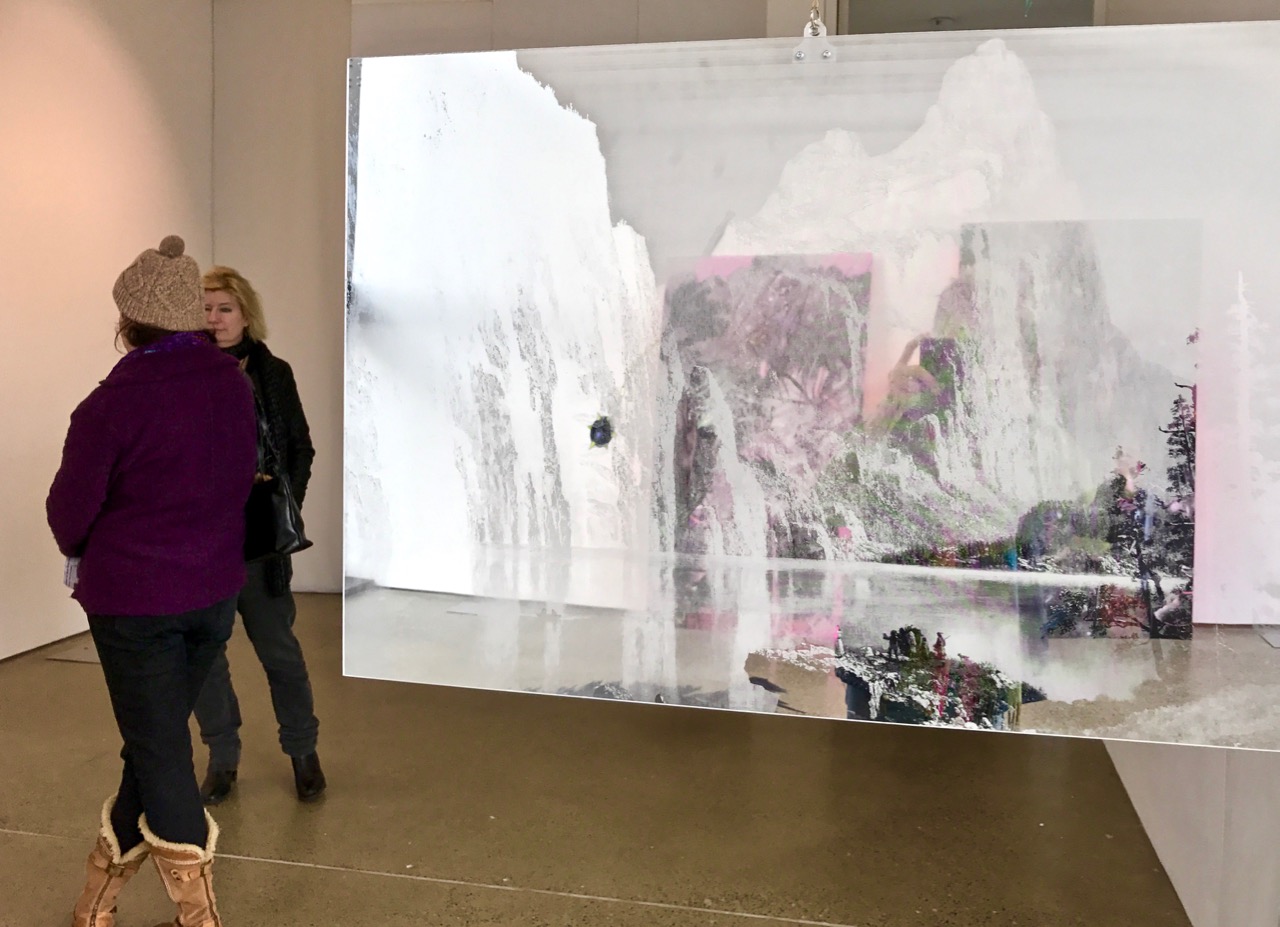
large reflection

I’m very concerned, nowadays, by how ‘art’ is presented, especially ‘art’ which seems divorced from traditional expectations (painted pictures, sculptures etc). I’m fine with all fresh forms of art – and frequently excited by them – but I sometimes wonder whether our artists think about their communication with us… Do they feel that the work should in every way be self-explanatory (we will come away fully informed just by looking at, taking in and understanding the work) – or should their sometimes complex ideas and presentations be explained by accompanying texts, gallery tours, catalogues etc? So I tend to approach every new exhibition with an open mind, hoping for clarity but – firstly – looking for impact from the work. I suppose, at my age, I still think of ‘art’ as being something which should initially stir me, excite me or overwhelm me just through the visual sense: I’m perfectly happy to stand back and look through complex layers of understanding (if necessary) to find the reason for the existence of the artwork, provided it has initially given me that excitement – or whatever emotion – because it will then have drawn me in and made me curious. Some contemporary exhibitions do leave me flat and unstimulated (not many!) and then I have no desire to probe them any further: for me they have failed, but that’s only me, I know. Ultimately, ‘art’ is probably the most subjective of cultural expressions. And that’s all good!
spectators 3

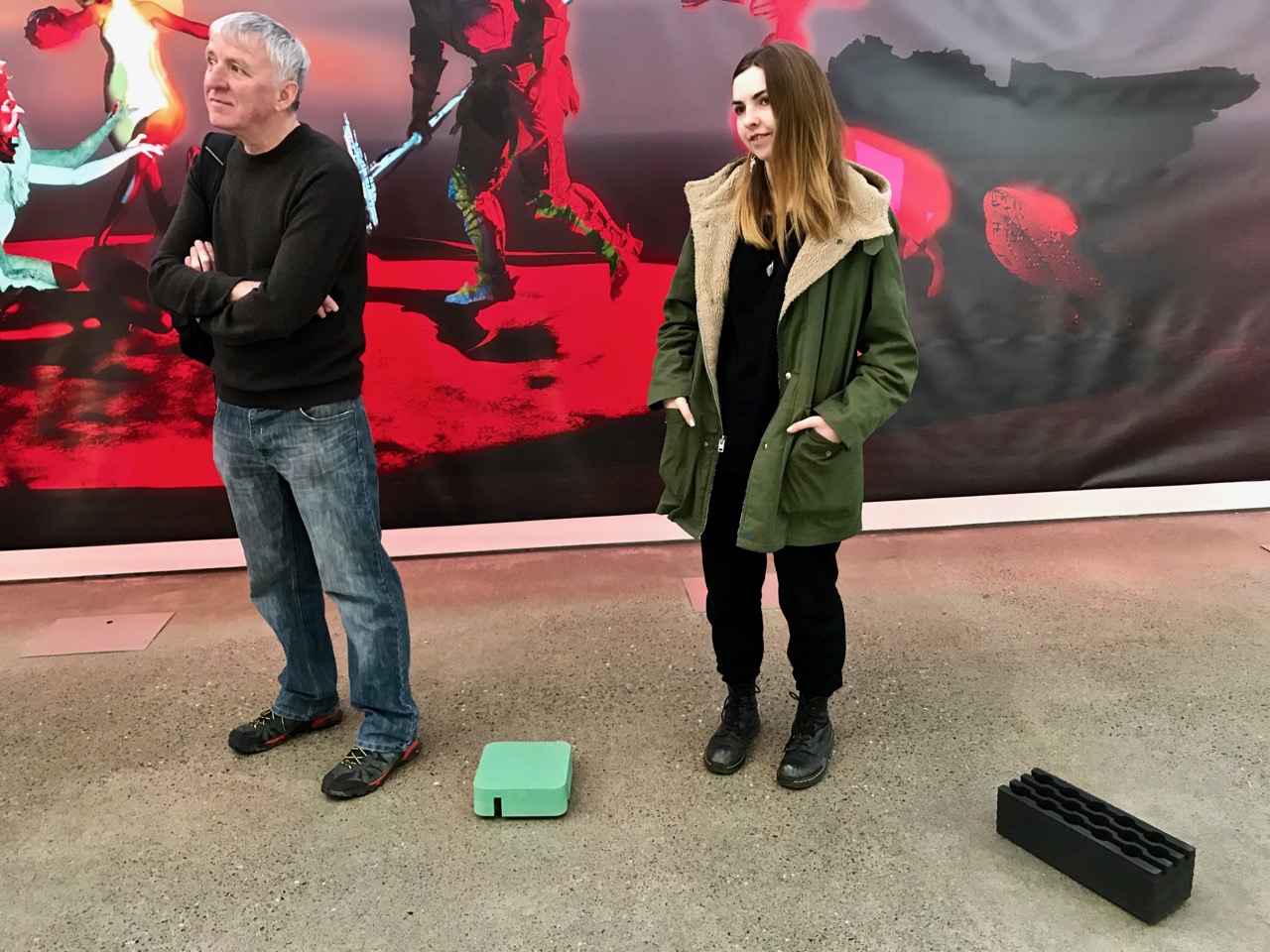
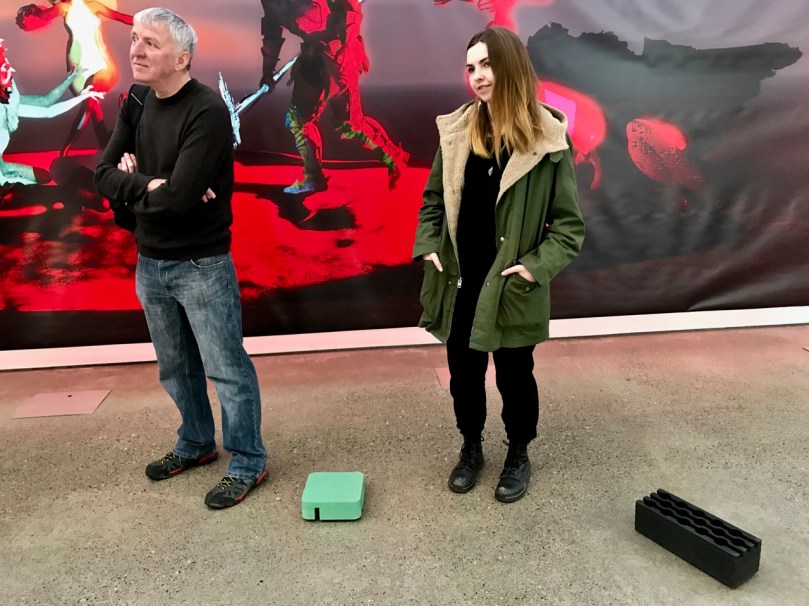
John Russell’s huge backlit print – and two of Eva Fàbregas’s beasts that move around the gallery floor, apparently with a life of their own! 

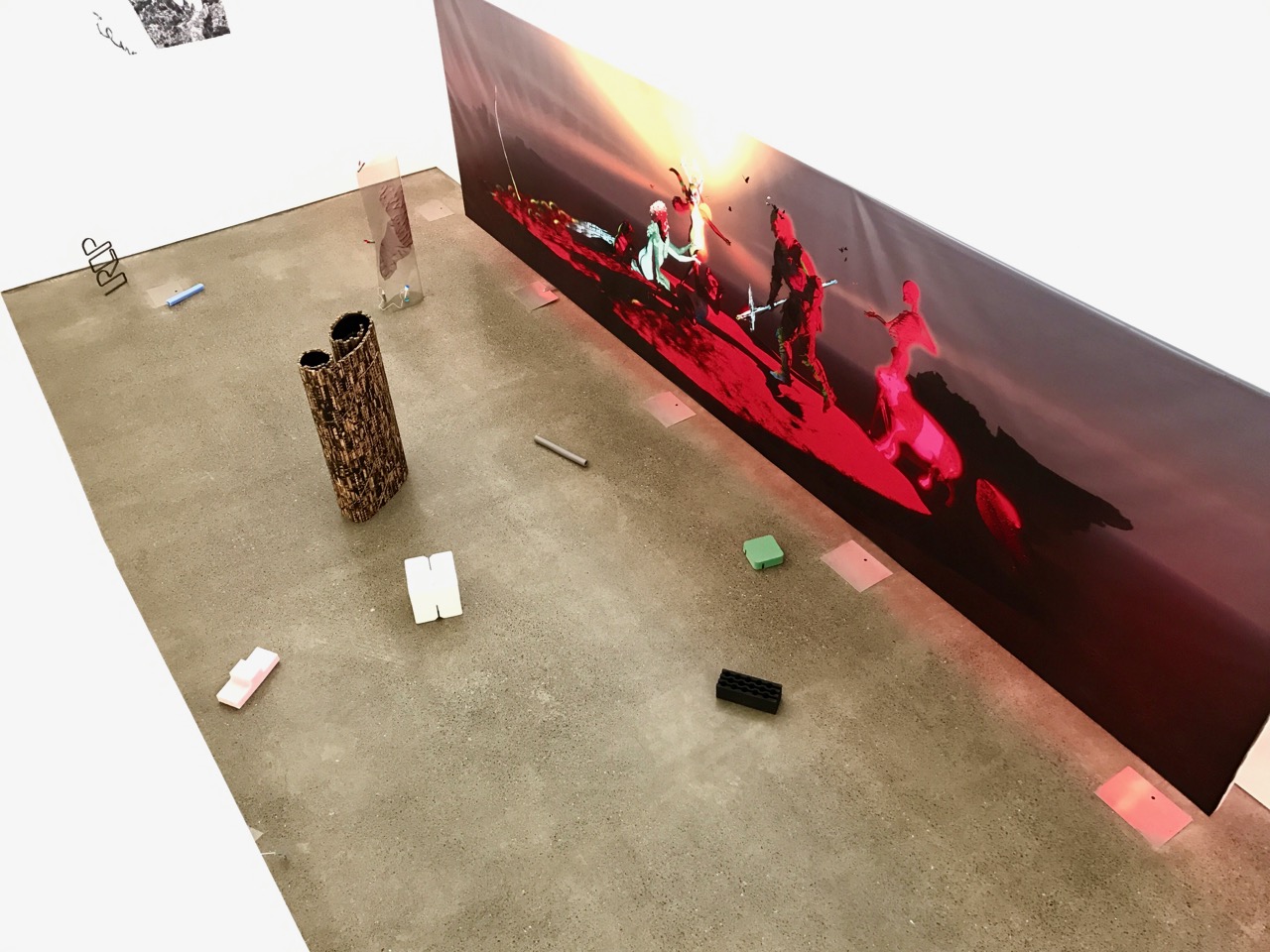
So – how did I react to my initial, completely unguided, tour of Scissors Cut Paper Wrap Stone? I’m pleased to say that I was stimulated – and positively so. I’m always attracted visually by large scale, colour, and things out of the ordinary: that gives you some clues! There are certainly unexpected experiences here. You walk into the first gallery and are hit with a huge print vibrating off the wall, its boundaries emphasised by coloured light behind it. It’s a riot of red – half-human and half- beast figures in a sort of Star Wars tableaux. But then, once you have taken that in you realise that the floor is alive – crawling with more strange beasts that look as though they have had another life as something mundane and practical and are now reincarnated to follow you around the gallery – perhaps to threaten you. What are they? Gallery assistant Kevin enlightened me when he came in to dismantle and repair the mechanics of one of these errant aliens: they are all made from packaging materials fitted with electric motors, and their trajectories across the gallery floor are completely random, referencing, perhaps, their previous lives travelling unsung and unrewarded all around the world. It’s funny how we give life to inanimate (but in this case animate) objects that appeal to us: perhaps it’s a jump back to childhood days when we made things from cereal packets and egg boxes but were then convinced that we had breathed existence into the monsters, dragons, spaceships, princesses (maybe) that we produced. Talking to the gallery staff I was fascinated to hear that some visitors were absolutely convinced that these pieces of mobile packing were imbued with very sophisticated artificial intelligence and really did follow them around and confront them! Remember, this was still before I had any knowledge of the intentions or stimuli behind the exhibits.
balcony capture

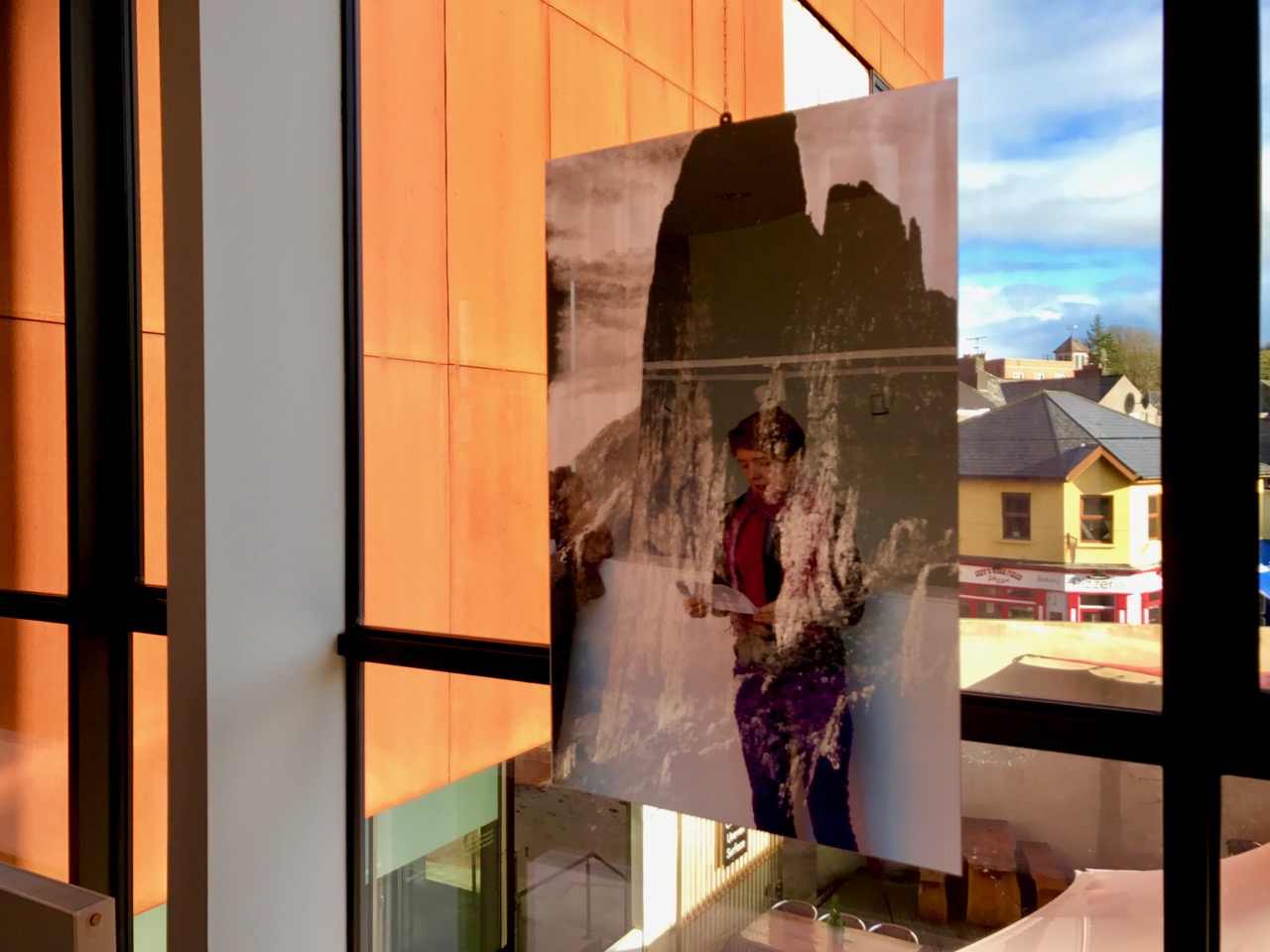
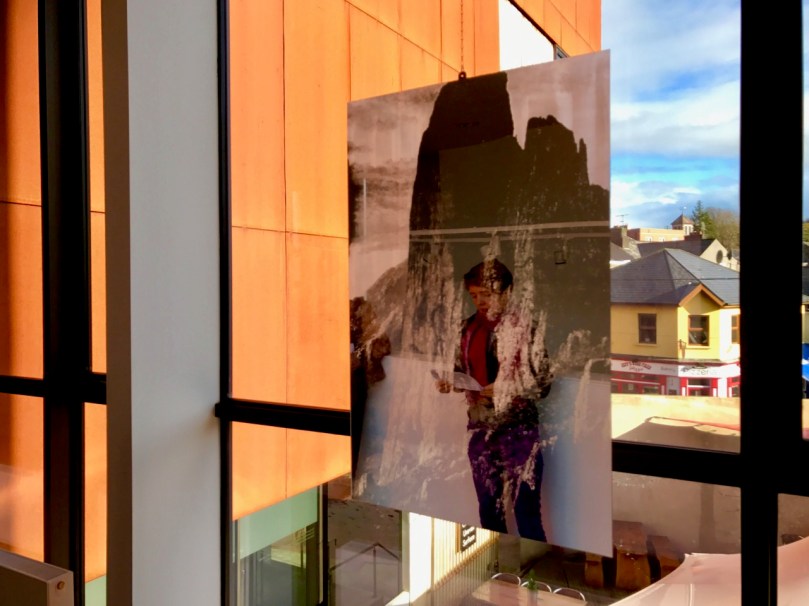
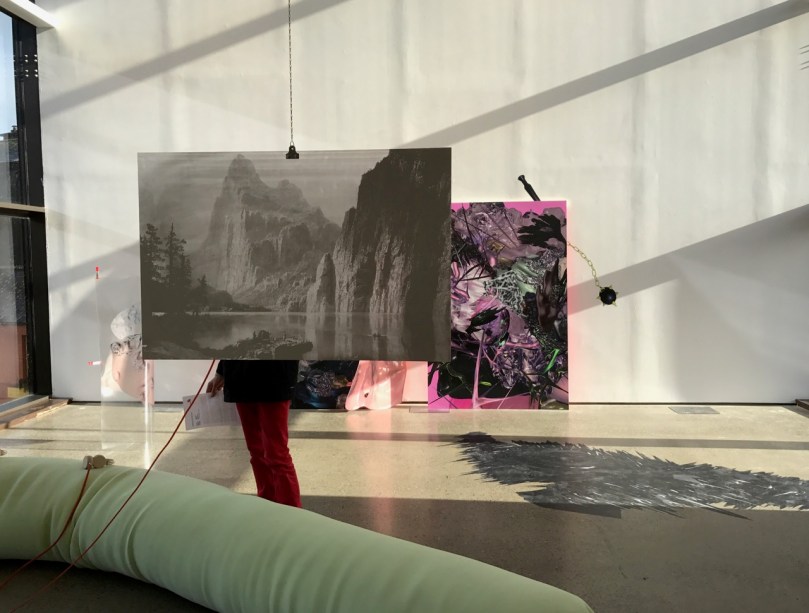
Moving upstairs to the second gallery I found the walkway obstructed by rotating panels of some material (was it glass?) that seemed to be engraved with semi transparent images: they looked like iconic landscape scenes. As I watched, I realised that at certain points in their spinning I was able to see through them, but at the same time also see reflections on their surfaces – of me, of the gallery, of the view through the windows… I liked these very much, and the dymanic nature of their movement and the unpredictable refractions and reflections. I was keen to know how their conception fitted into what I had seen previously downstairs, but I couldn’t guess.

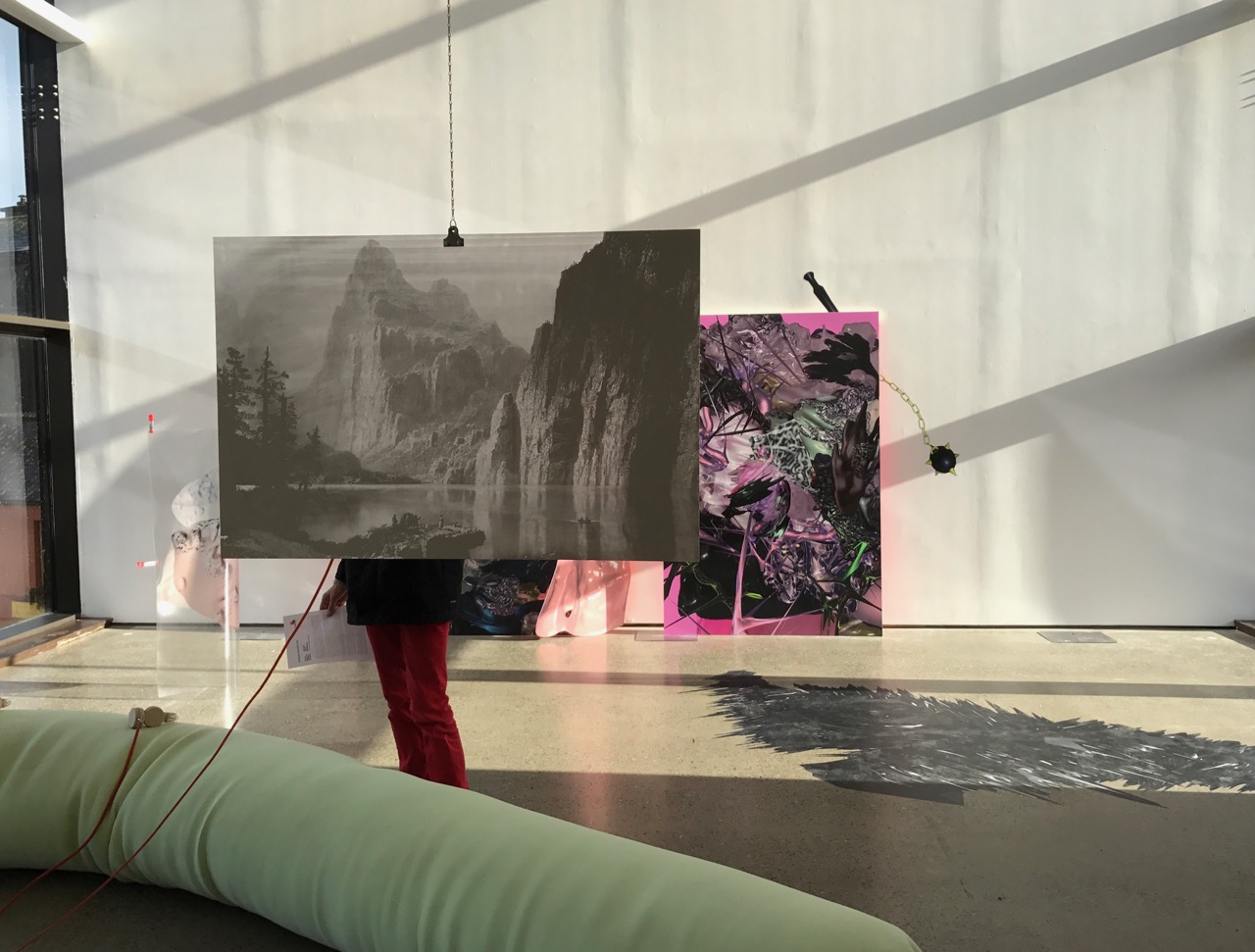
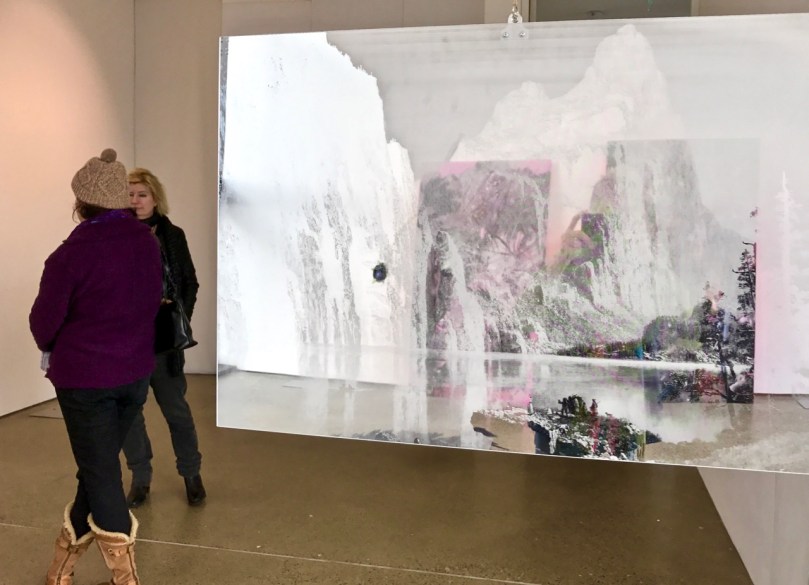
The spinning panels – ‘Orphan Transposition’ – are by Alan Butler and feature acrylic panels laser-etched with images of Yosemite National Park: they also have an intentionally accidental life of their own through the changing surface reflections

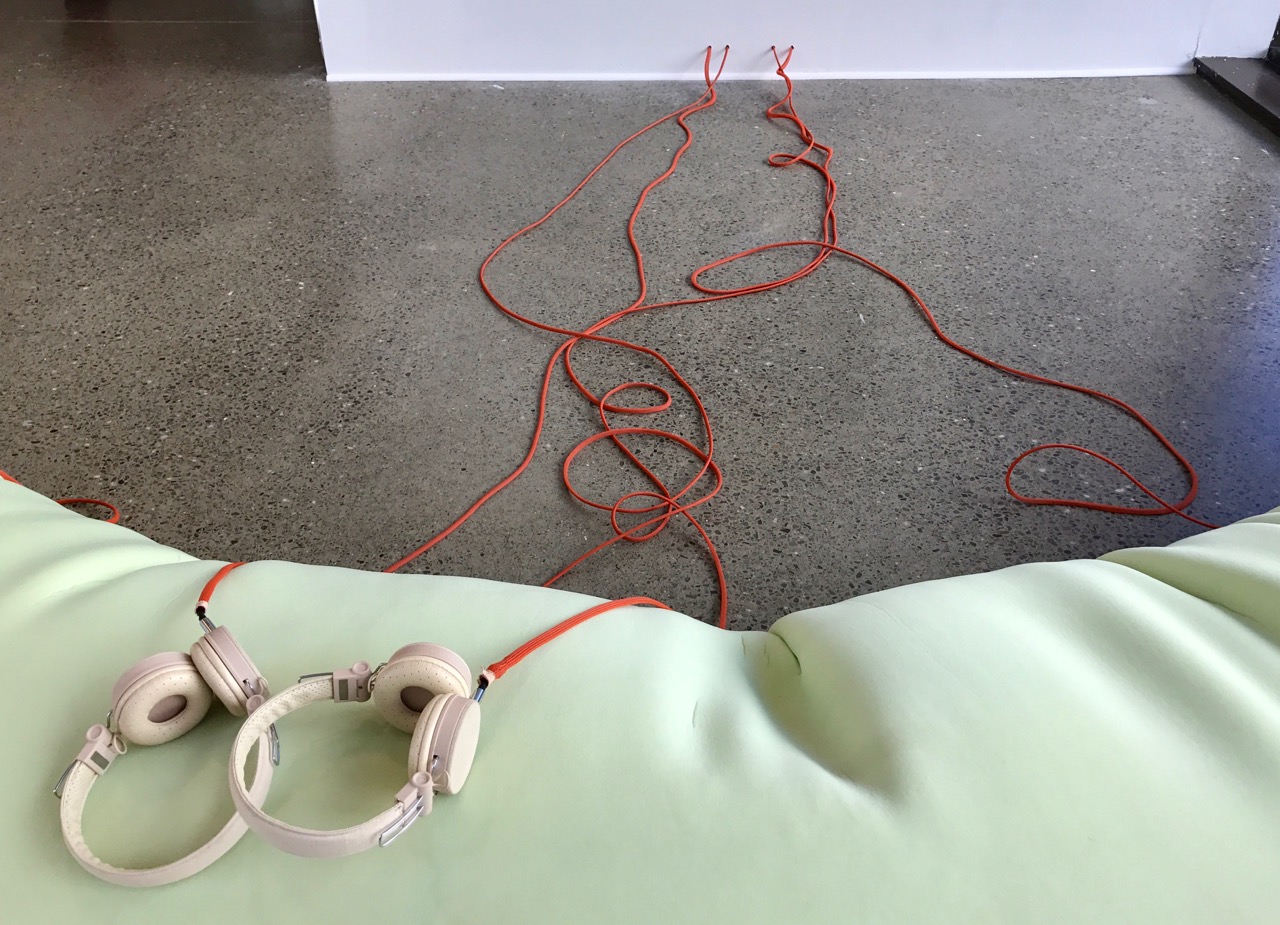
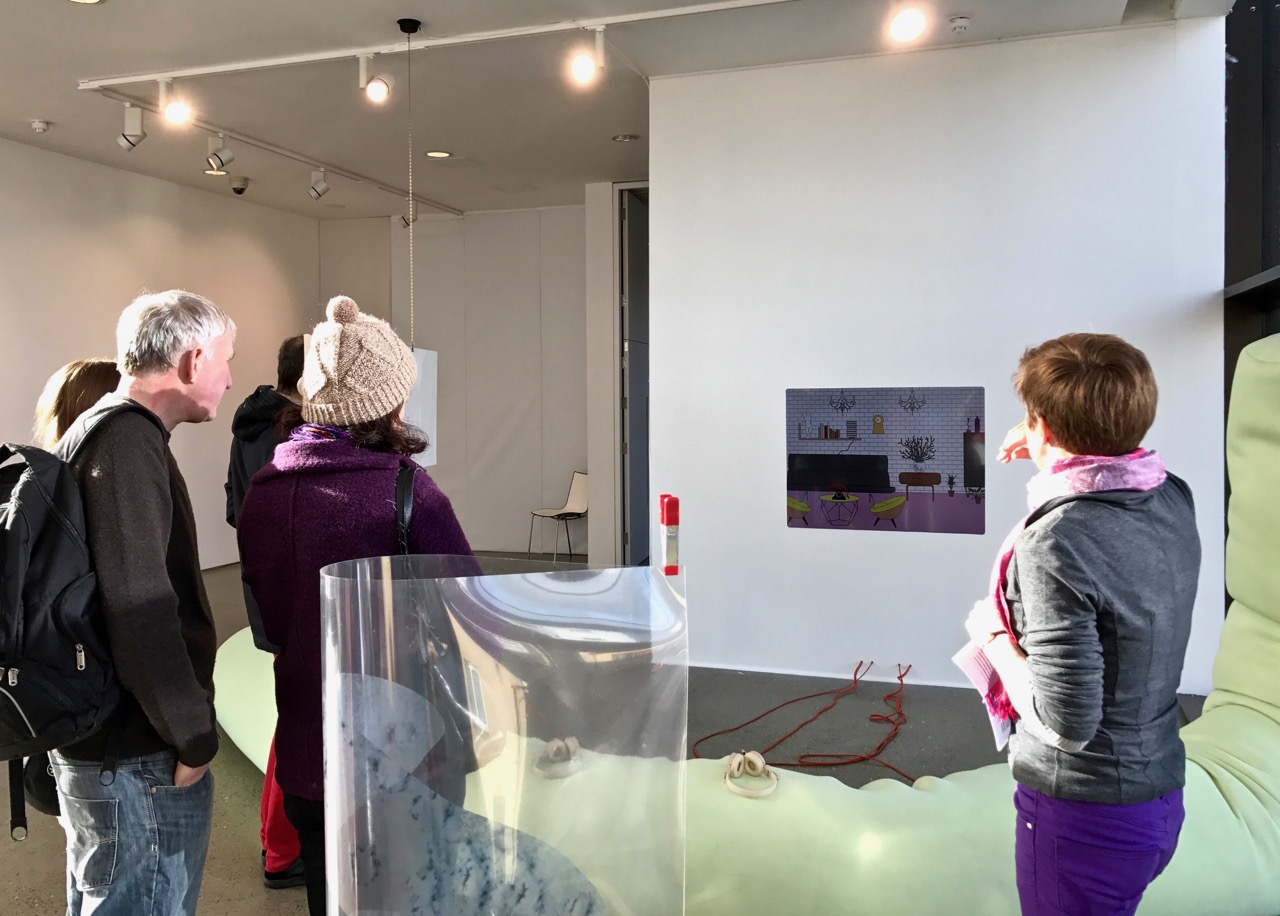
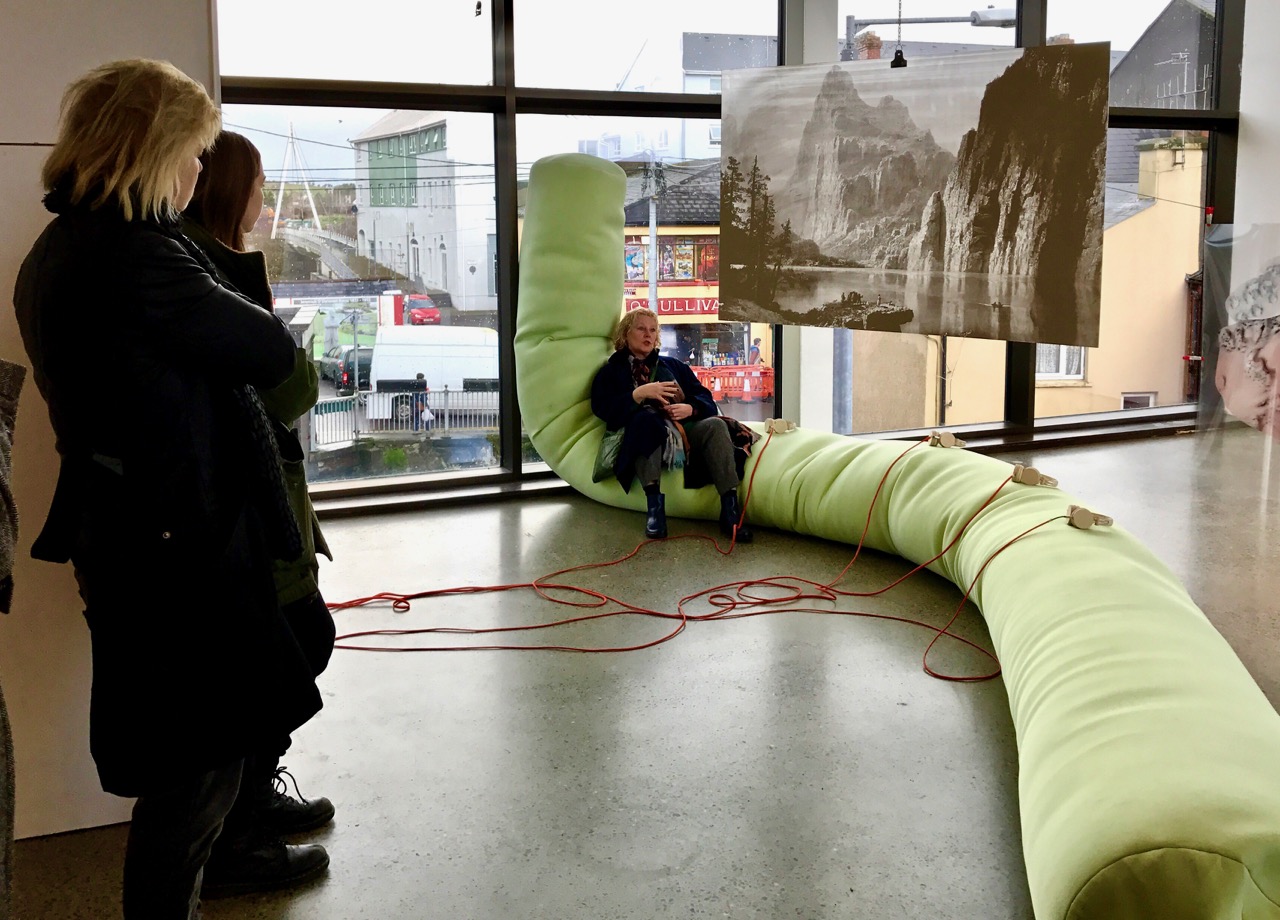
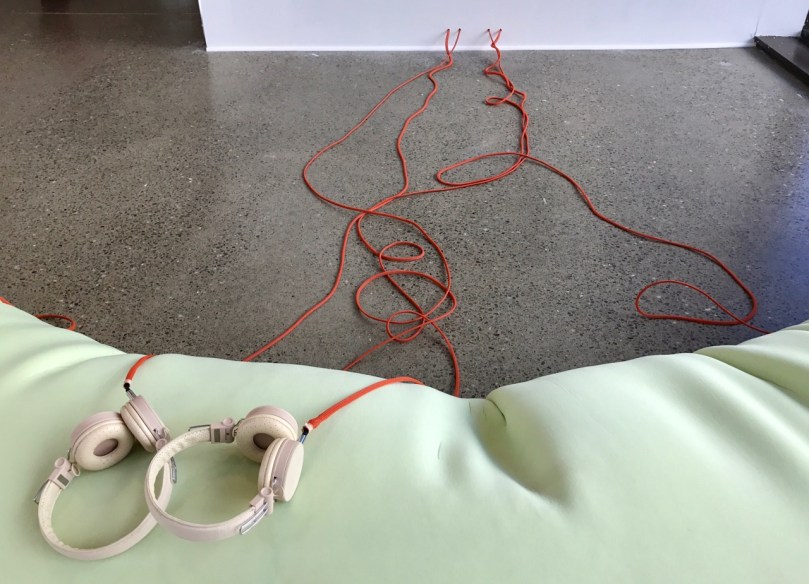
The second gallery held more surprises – and delights. Approaching through a narrow corridor I could see layers: more big, colourful panels on the far wall, more hanging, spinning sheets of opaque transparency, and a very contrasting soft, organic shape seeming to slither across the floor. As I came closer I realised that this shape was not slithering – or moving at all, disappointingly: it was a way of seating people in front of a screen, and was linked in to an array of very funky ‘designer’ headphones (white) by a jumble of thick, red chords.
upper gallery close

phones and cables 2

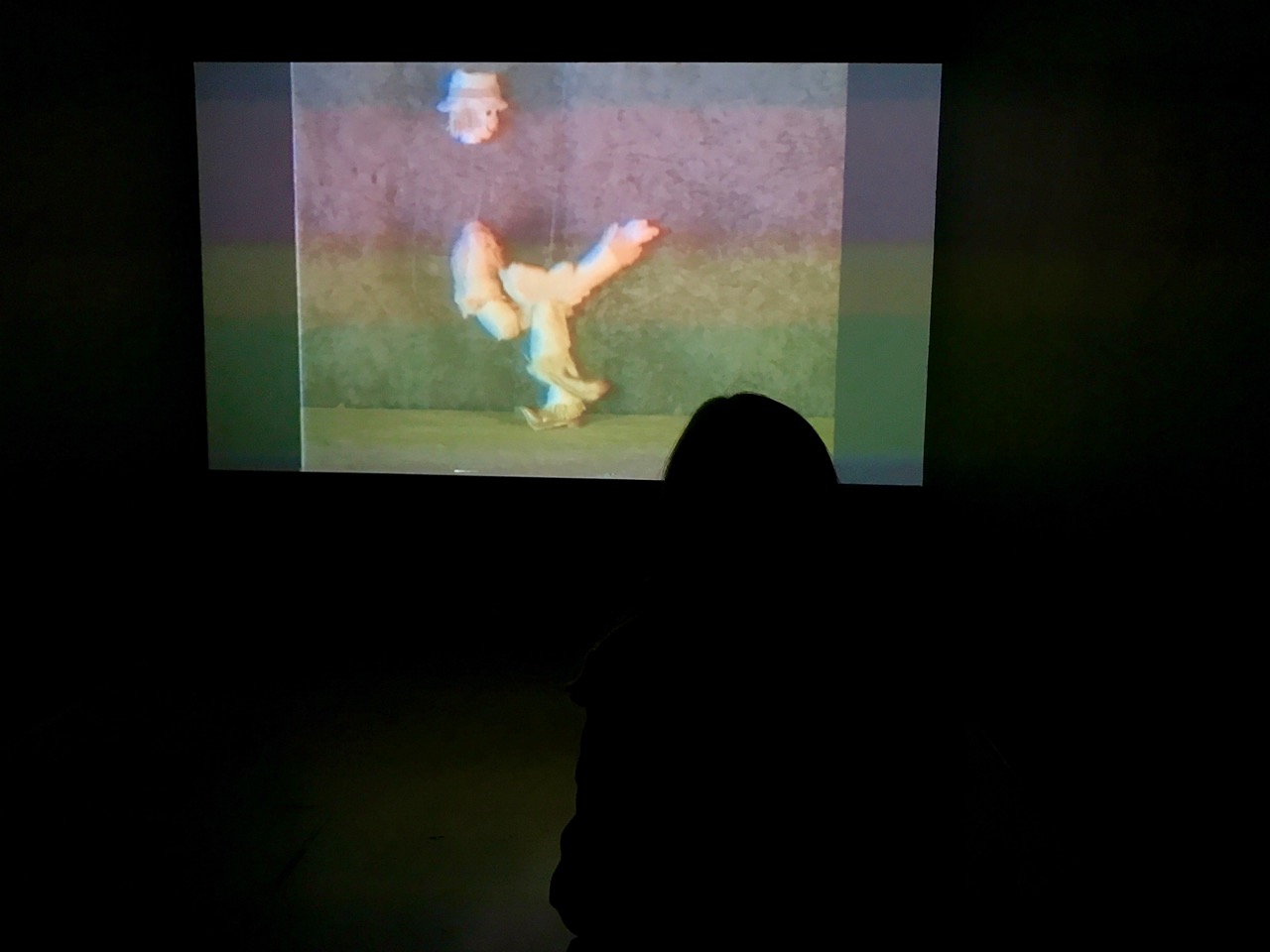
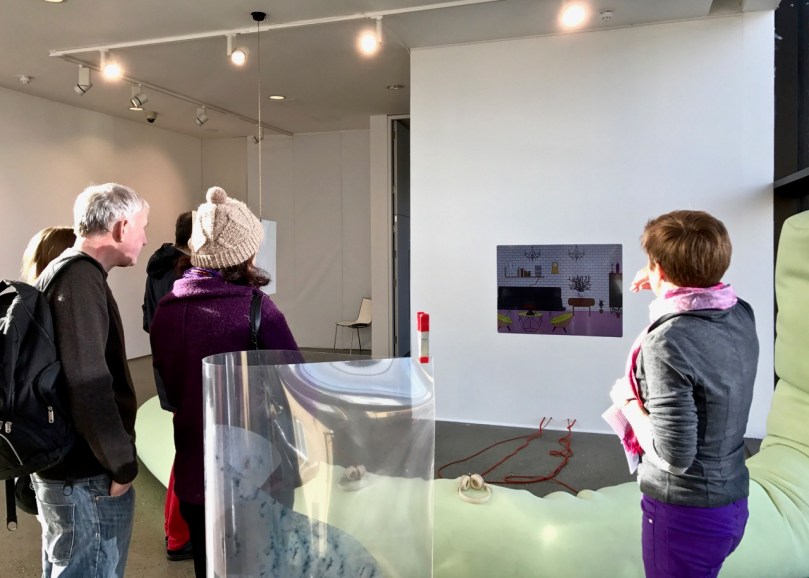
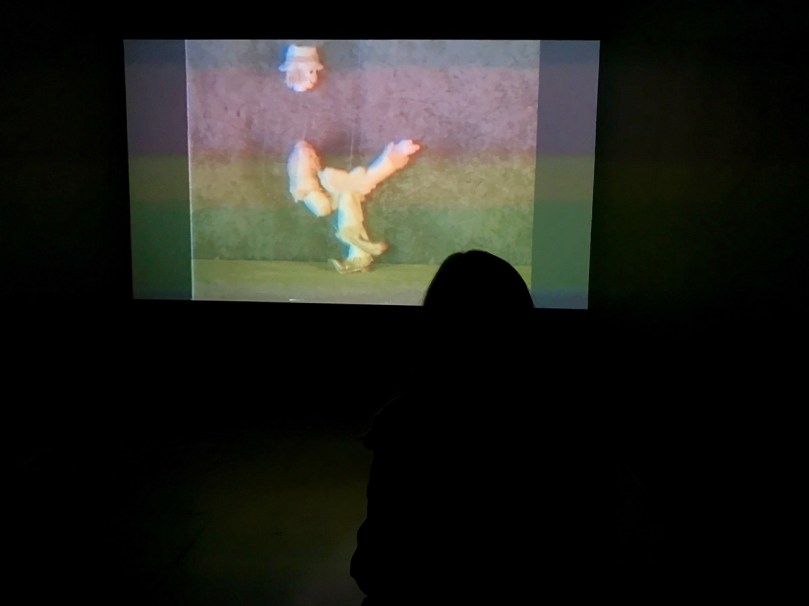
I sat and watched the ‘show’ – and listened to clunky music and a strange commentary – and then realised I was completely out of my depth! I had no clue what was going on. My attempt to experience the exhibition without any preparation or foreknowledge had failed. This applied to all the other work in the upper gallery also: superb large graphics on the walls and floors, printed acrylic sheets suspended on smart steel stands, and, in a darkened cubicle, a film of puppets which reminded me completely of ‘Bill and Ben the Flowerpot Men’! Now, how many of you remember them, dear readers? I don’t suppose any of the contributing artists are of my generation – so, is that pure coincidence? Anyway, I could not feel a sense of connection between the exhibits: but I liked the experiencing of them, nevertheless.
okea projection

puppet show

Upper – Eva Fàbregas’s The Role of Unintended Consequences (Sofa Compact) – which can be enjoyed on the comfort of a squishy serpentine furniture sculpture – and, lower – puppets feature in Andrew Norman Wilson’s Reality Models

It all began to come together and make sense when I took the gallery tour and artist talk (having first read an accompanying written commentary). Wonderful!  The title of the exhibition – Scissors Cut Paper Wrap Stone – which I only knew as a childhood game (and one which I played with my own children) is also the title of a science fiction novella written by Ian McDonald (from Belfast) in 1994. It’s evidently something of an iconic work for those who follow the genre (I don’t particularly, although I have read a little sci-fi). I now know that the participating artists were asked to familiarise themselves with the book and respond to it in a way which they feel comments on our present times: there was no collaboration as such between the artists on the overall exhibition (as I understand), but the curators have put the work together in a way that does begin to set out a narrative.
digital panels

In the optional (€12) catalogue that accompanies the show, Alissa Kleist & Matt Packer (the curators) write an introduction. I was struck by this paragraph:

…From an artistic perspective, Scissors Cut Paper Wrap Stone [ie the book] can be read as a wishful fantasy of artistic power. It describes visual art without recourse to the systems of academic analysis and understanding that have defined the art-history books for the past century and more; instead it promises an encounter with art that frees the ‘rapture’ that Jean-Francois Lyotard describes as being harboured within art itself: an art that hits us straight to the core of our physical being…
cow pic 3

Wow! isn’t that what I was trying to say about my approach to new exhibitions – looking for impact from the work, being stirred, excited or overwhelmed before having any understanding of it? It’s a wonderful way of putting it: …the ‘rapture’ harboured within art itself… Suddenly, I realise that I’ve approached this exhibition exactly as the curators would want me to: first I have the visceral experience, then comes the understanding! Or is it that I have now walked into the exhibition and become a part of it?

Back to the book (via the catalogue):

…In the book, McDonald tells the story of a young student, Ethan Ring, who develops the ability to create digital images that bypass rational thought and control the mind of the viewer…

I’m worrying now – am I being controlled by the digital images in the exhibition?

…Ethan develops a technology of ‘fracters’ – mind-controlling images that have the power to heal, cause pain, induce tears or ecstasy. The utopian promise of this image technology is short-lived as Ethan finds himself blackmailed into employment by the ‘Public Relations’ department of the ‘European Common Security Secretariat’, who demand that he uses the fracters for the purposes of interrogation and assassination, as and when they require…

This is frightening stuff. The book was written in 1994 but in our own time we are suddenly being confronted by concepts of ‘fake reality’ – and aren’t we shocked by governments who seem to be veering off into nonsensical directions, apparently against the wishes of the public majority? Suddenly, I’m seeing an uncanny relevance which these artists – inspired by the concept of the book – have made to our own predicaments. From the catalogue again:

…In a way that is typical of the cyberpunk genre of science fiction, Scissors Cut Paper Wrap Stone is written with the strategy of combining prosaic everyday miseries with the ‘cognitive estrangement’ of a world that has been accelerated beyond our control…
cow stuff

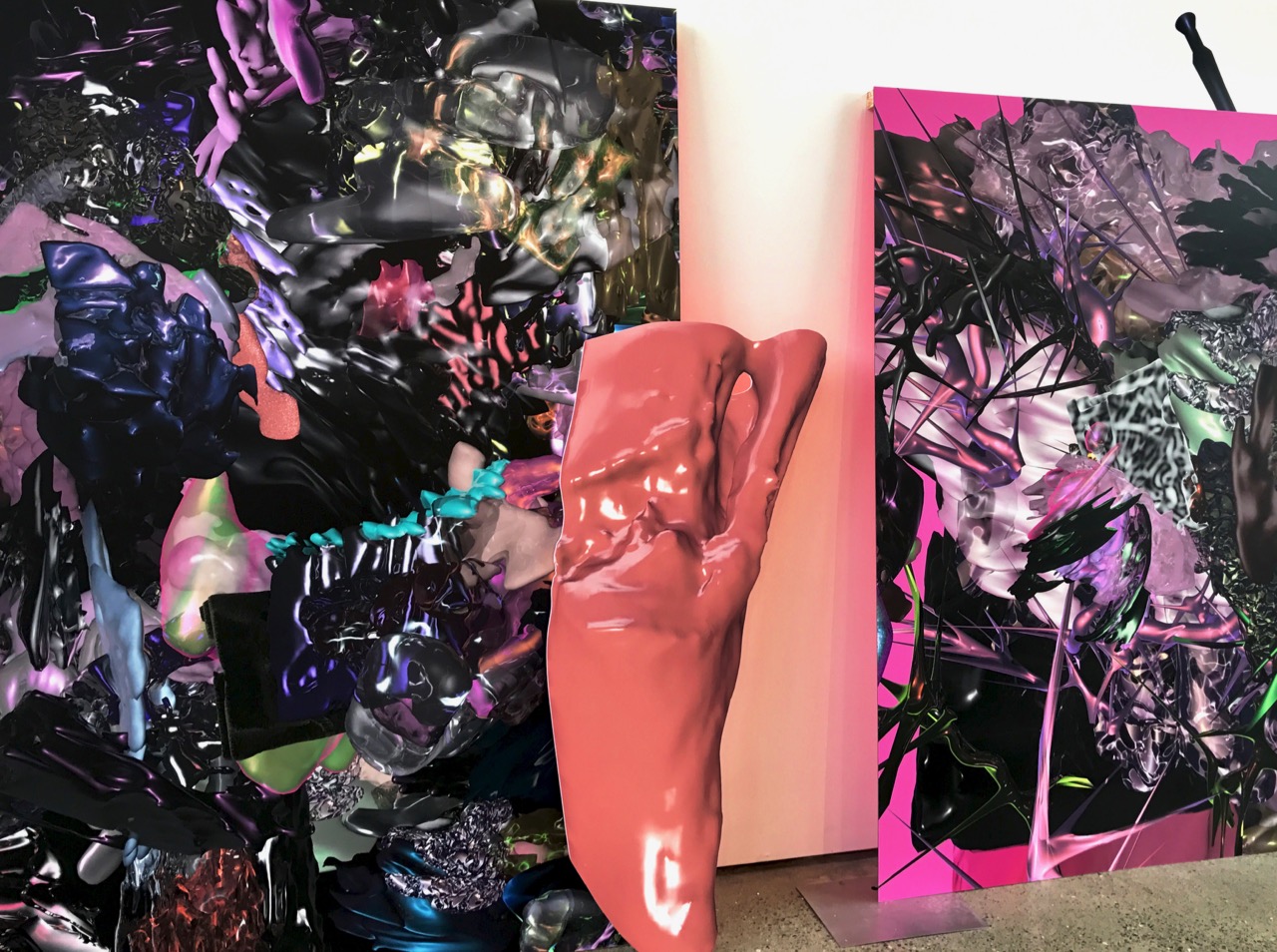
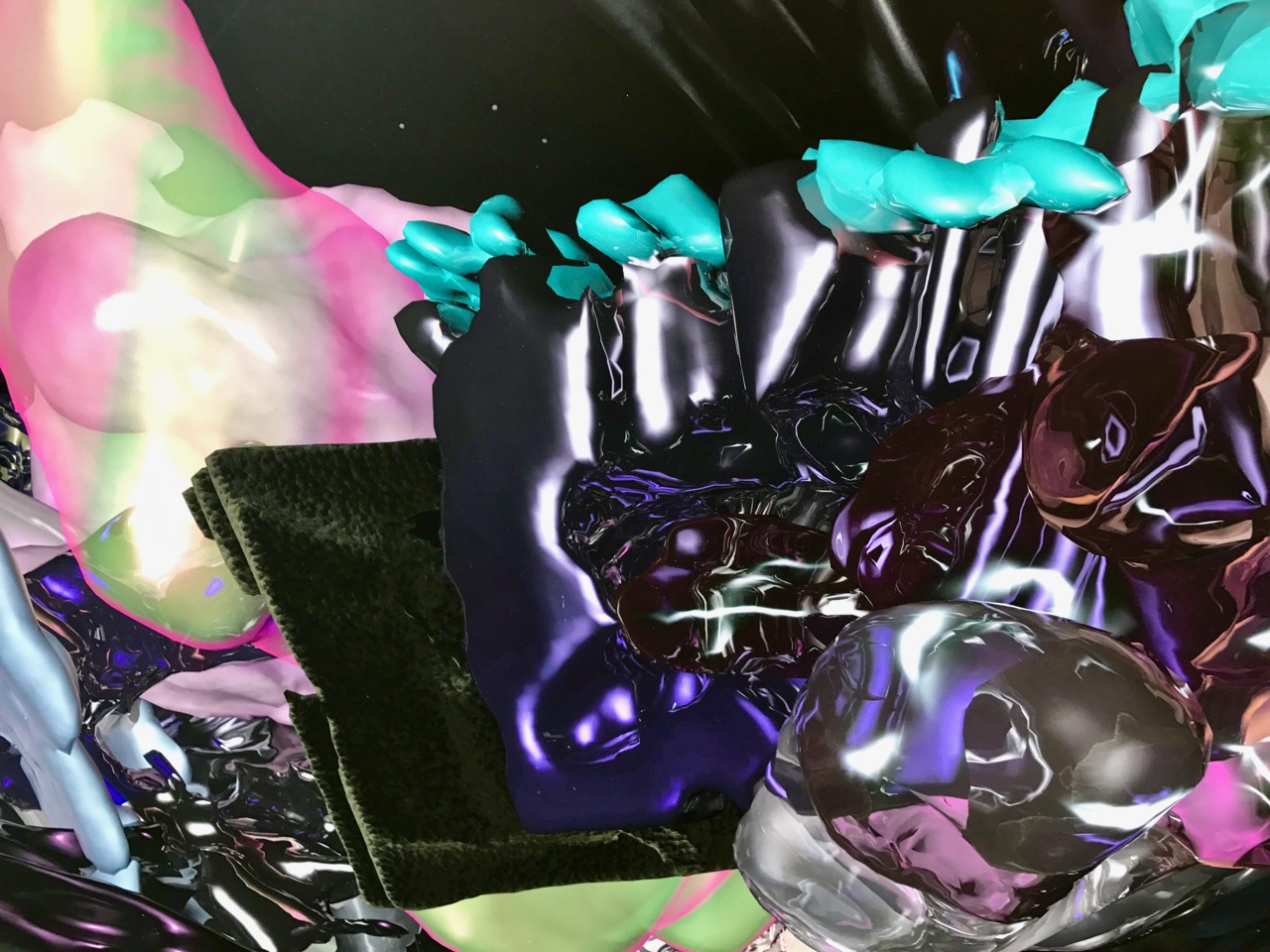
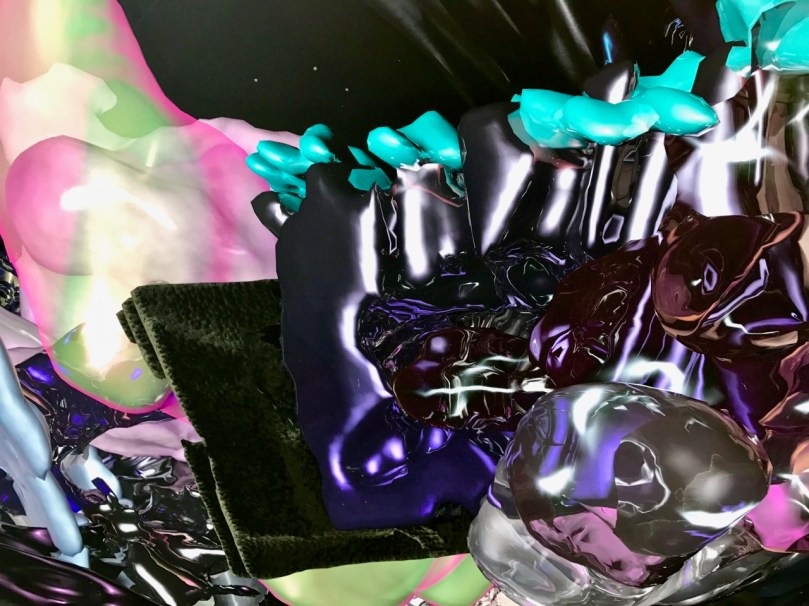
A detail from one of Jennifer Mehigan’s stunning prints made from collages of three-dimensional digitally generated models: this one illustrates the Bovine Spongiform Encephalopathy virus – better known as Mad Cow Disease

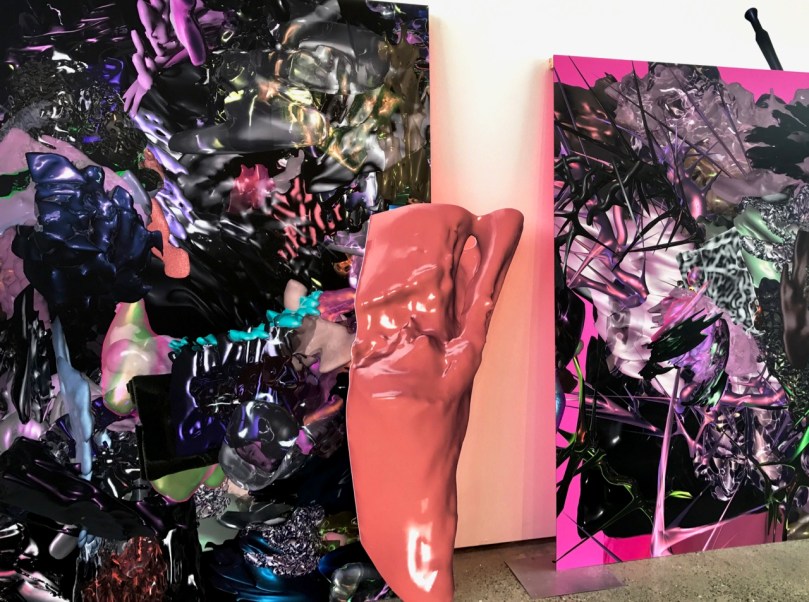
Lastly, I should mention the gallery talk by Jennifer Mehigan. She has only been involved in the Uillinn, Skibbereen, iteration of this show. Knowing that now, I think the overall exhibition will have been considerably poorer without her contribution. I think my strongest instant reactions (rapture?) have been to her large digitally produced panels. Now that she has explained their conception I am even more impressed. She asked us to consider the cow…

The cow is an unnatural beast. Human intervention keeps it permanently fertile so that it produces food for us. It gives us its milk: it dies for us. But also – again through human intervention – it eats itself. This generates the Bovine Spongiform Encephalopathy virus – better known as Mad Cow Disease. This kills humans. Be afraid…

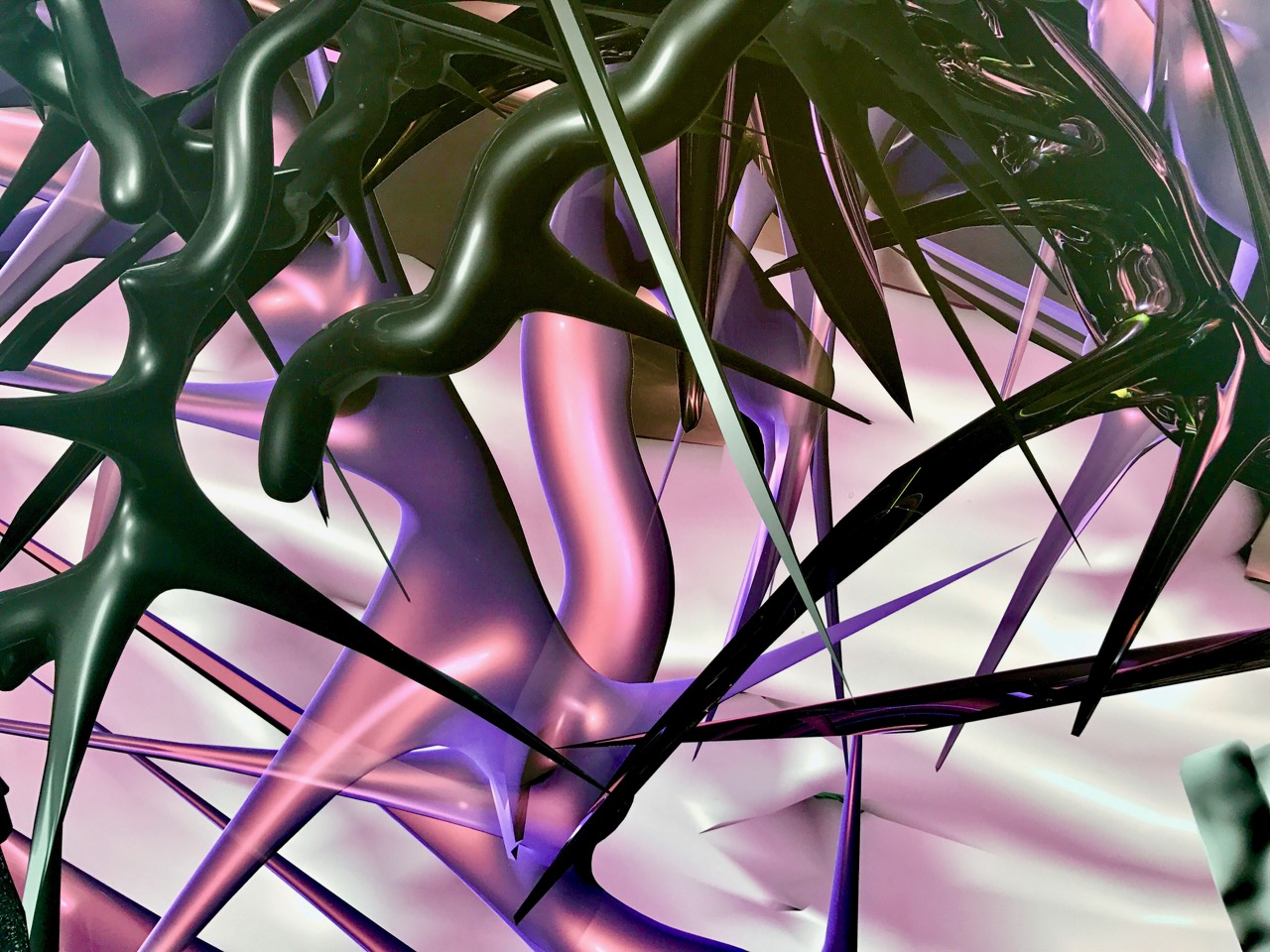
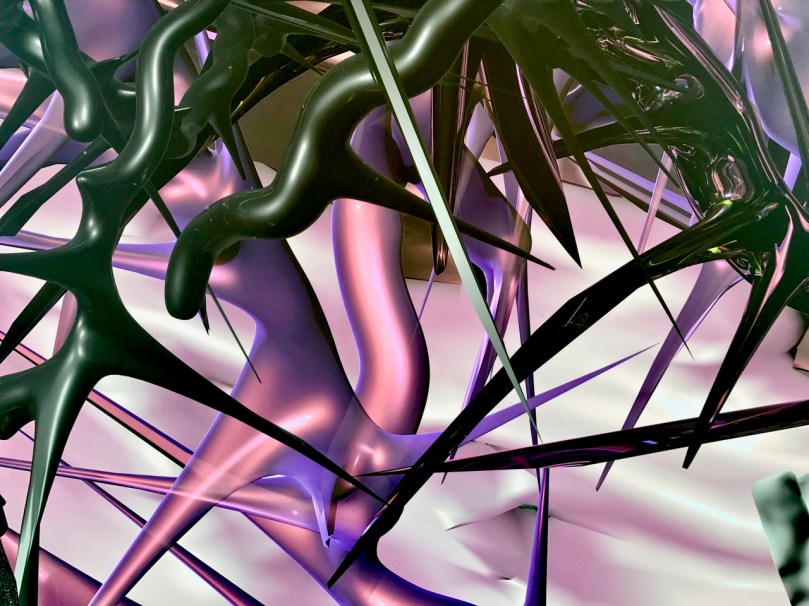
Jennifer’s gorgeous panels are made using a highly complex technology – 3 dimensional modelling software. With this software she has constructed a cow’s stomach, bacteria found inside the human gut, the mad cow disease virus, and Drombeg Stone Circle (that’s the link to human intelligence). She’s put all these things together into bizarre, visually stunning collages and presented them to us as compelling two-dimensional images leaning up against the end wall in Uillinn where they sparkle and shine in the sunlight: we are seeing the fracters and, behind them, the government departments who are manipulating world perceptions of reality.
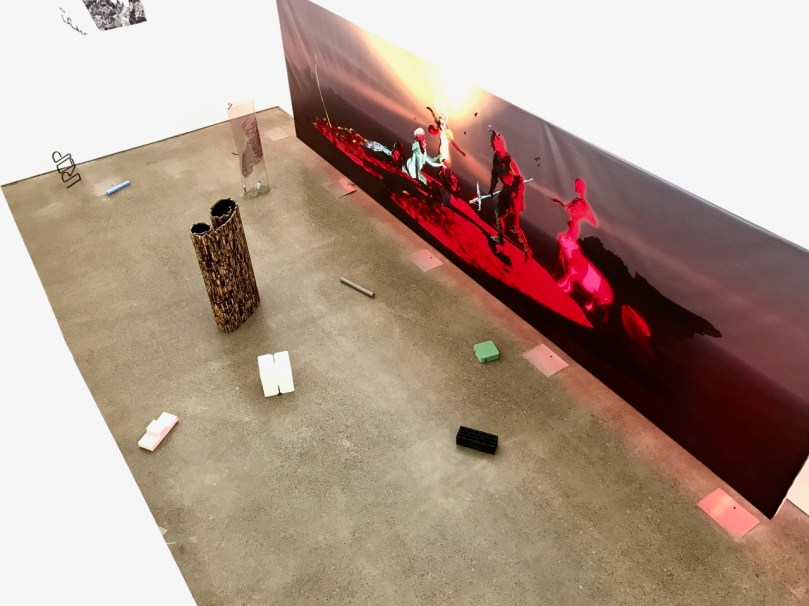
from above

Powerful images from a strong exhibition. Step beyond the images and we see power – or a commentary on power. Statements are being made here – perhaps subversively – about the world in which we live today. That’s great – that’s art.
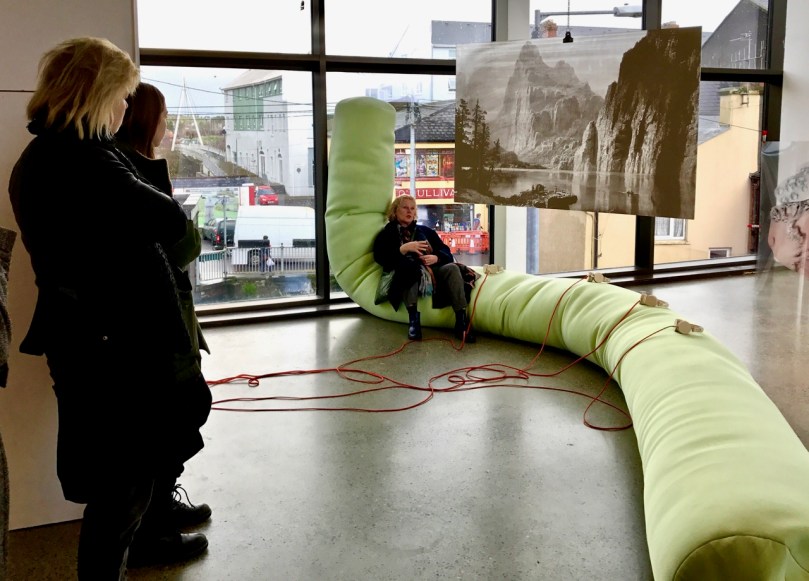
resting

The exhibiting artists are: Alan Butler, Pakui Hardware, Jennifer Mehigan, Andrew Norman Wilson, Clawson & Ward, Eva Fàbregas, John Russell

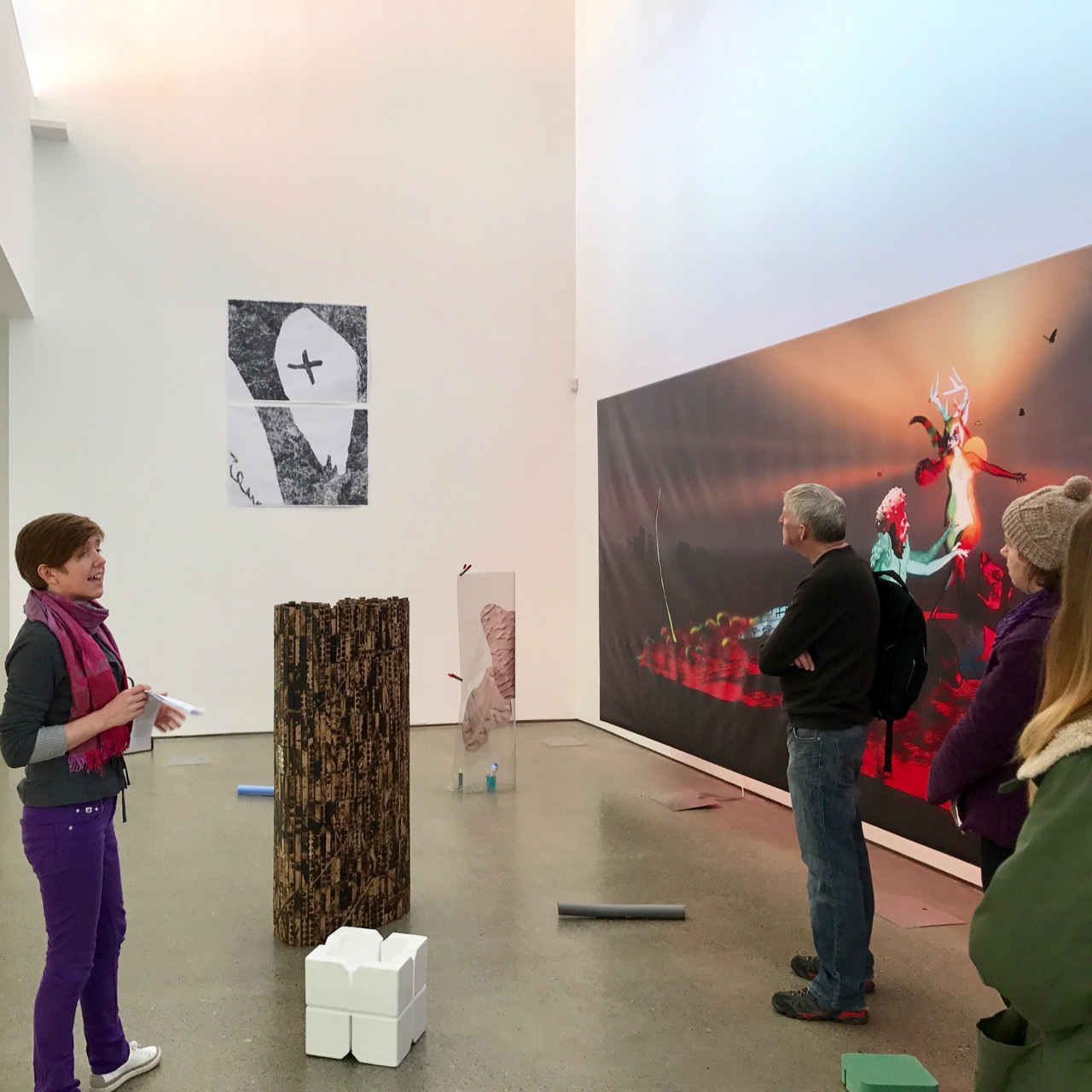
Scissors Cut Paper Wrap Stone is on at Uillinn, Skibbereen until 25 February 2017. The gallery is open Mondays to Saturdays from 10.00am to 4.45pm: there are guided gallery tours on selected Saturday mornings – check with Uillinn: enlightening and well worth attending! Here’s Alison Cronin in action:
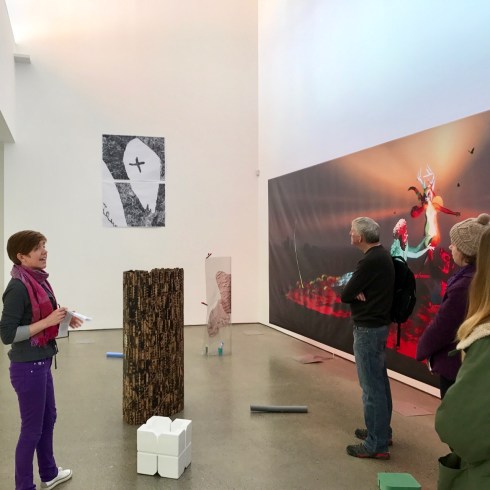
in the gallery

Tech is Cool and Content is King

NDW16 Discussion

As  we were last year, Robert and I have emerged from our National Digital Week experience inspired and affirmed and, OK, perhaps just a tiny bit daunted.

Mobile Only World

Affirmed? Because even though we are Boomers and the world seems to be run increasingly by and for Millennials, we’re comfortable with most of the technology we need to cope with our progressively digitised daily lives and to produce a weekly blog.

Daunted? At what’s ahead of us: the Internet of Things where everything is connected; augmented reality where a pair of glasses will supply additional information about anything we desire; the gameification of internet experiences; and increased reliance on high quality video.

Work to do

Looks like we have work to do!

Inspired? Because the takeaway message was so encouraging for people like us who create and produce content week after week – you can have the highest, whiz-bang technology in the world but it’s all a means to an end – and that end is to tell a story.

Humans have an innate social and psychological need for stories and a hunger for knowledge – that message was at the core of much of what we heard on the day we attended, even if the sessions had names like Innovation and Creative Thinking or Perspectives and Insights from an Irish Start Up.
FF with Alan Duggan

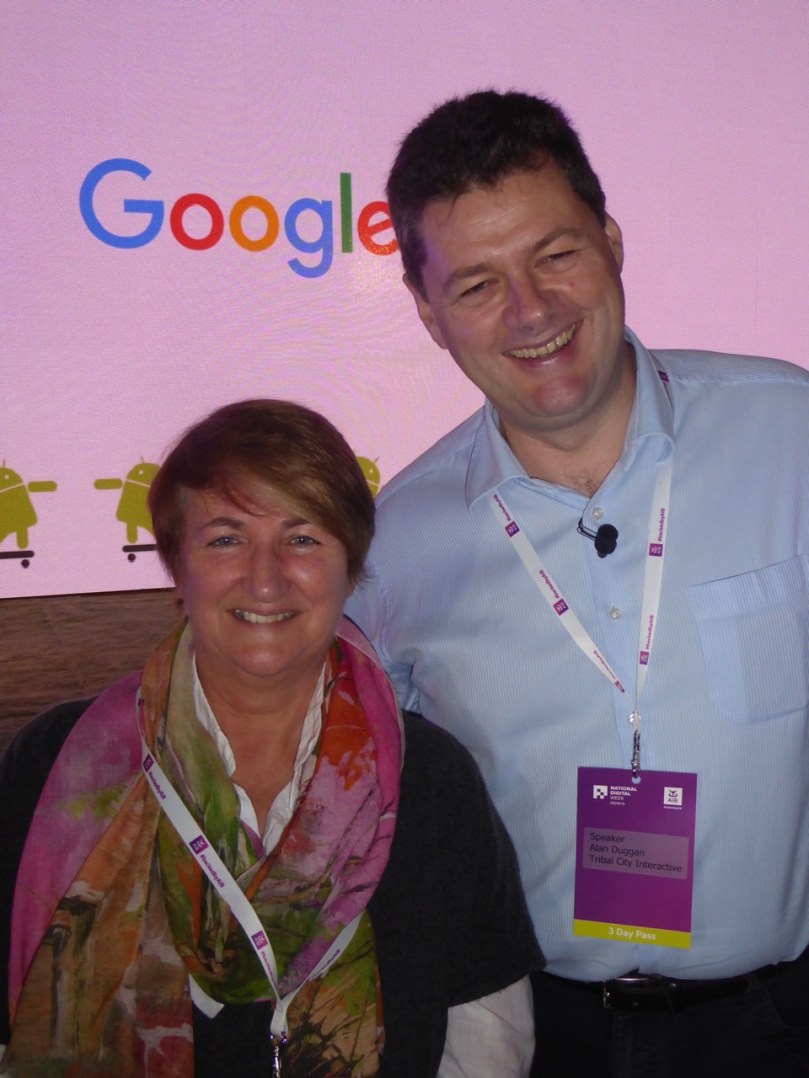
Finola with Alan Duggan of Tribal City Interactive, based in Galway

The Irish Start Up under discussion is a group called Tribal City Interactive and they are developing a new game called Runes of Aran. The thing is, it’s all based on Irish mythology, straight from the Leabhar Gabhála, or the Book of Invasions, which tells the story of the successive waves of people who came to Ireland. (See Robert’s post First Foot for more about the Irish origin tale told in the Leabhar Gabhála.) And the game is going to be stunning! Here’s the premise:

A storm has been raging for days.  Navigation is impossible, your ship is being inexorably pulled towards a mysterious island at the edge of the world.  It is a place which exists in the stories of all mariners; it is a place to be shunned.  It is Aran.

The ship is finally dashed ashore at the foot of huge towering cliffs.  Only you get off the ship alive, crawling ashore into a surprisingly calm bay. The cliffs form an impenetrable barrier, except for a cave that frames a massive doorway composed of two tall blue stones, capped by an even larger lintel piece. Standing in the doorway is an old man, dressed in a long grey tunic.  He is Amergin the Bard, and he waits patiently for you.

Amergin explains an old magic has pulled you to this place and now you are trapped, doomed to spend the rest of your days on this lost island. Unless…

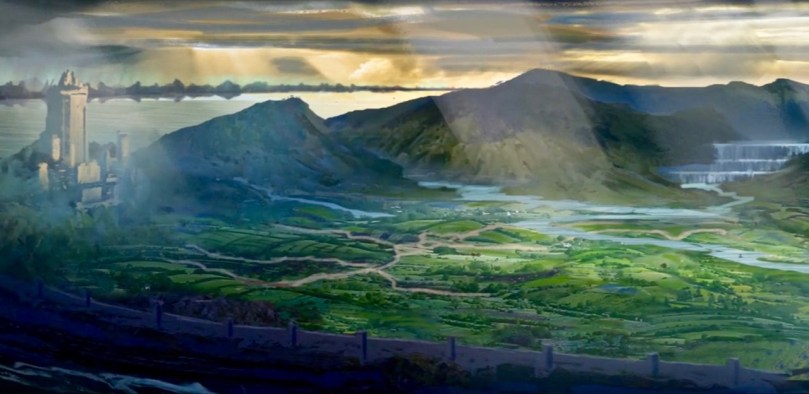
Runes of Aran still

This is a still from Runes of Aran, taken from their concept video – now take a look at the video

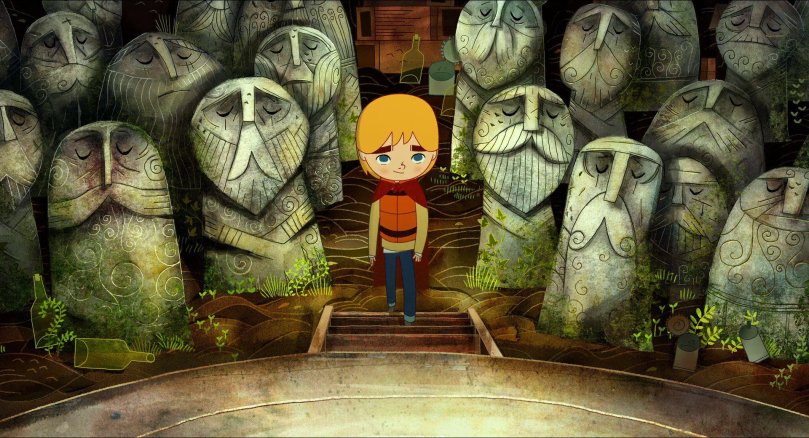
We were also excited to see Cartoon Saloon here, talking about their projects. We love their animated films: The Secret of Kells and The Song of the Sea are both based on Irish legends and myths and both were nominated for major international awards. The Song of the Sea also uses imagery directly inspired by prehistoric Irish art. Just look at this screenshot – it manages to combine Boa Island figures with Newgrange-type spirals.

song-of-the-sea

Google has a massive presence in Ireland and Google folk were here in droves. We had booked a one-to-one session in their Digital Garage, where Karl gave us excellent advice (and food for thought) on how to really look at our website and what we might consider doing a little differently.

RH and Karl, Digital Garage

I’ve only given you a tiny flavour of National Digital Week. We met all kinds of people here, from CEOs to hot-shot young programmers to visionary developers to people just like us, working on the fringes of technology and wanting to learn. And all of this in the heart of West Cork.

The old Lady’s Well Brewery repurposed as the Google Digital Garage

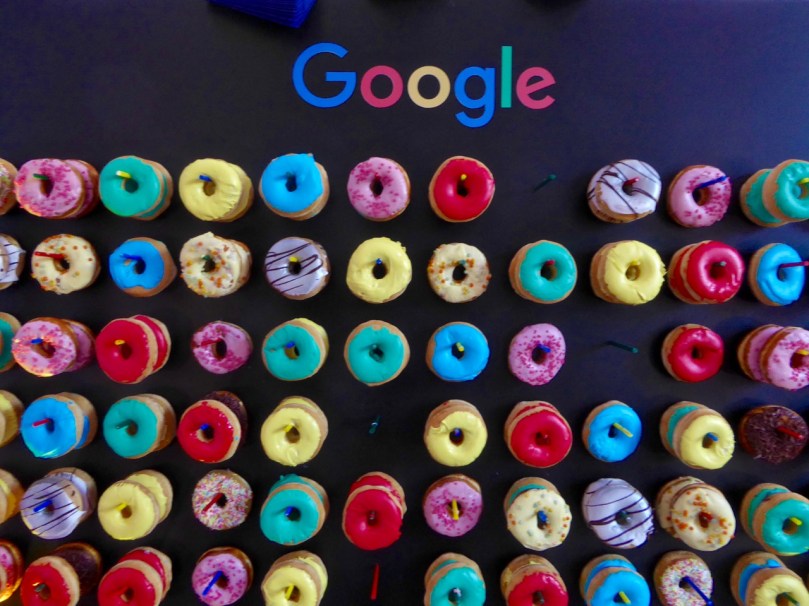
A massive vote of appreciation to the dynamic young people who run the Ludgate Hub in Skibbereen and who organise this conference- what an amazing job they do. Next year, come and experience it for yourself. Oh – and don’t miss the Wall of Donuts!

Donuts

Gary, Paul, and Nana’s Soup

Rowers Return

Two local lads, from Lisheen down the road, have stolen the hearts of everyone in West Cork. Everyone in Ireland, actually, and beyond.

On the stand

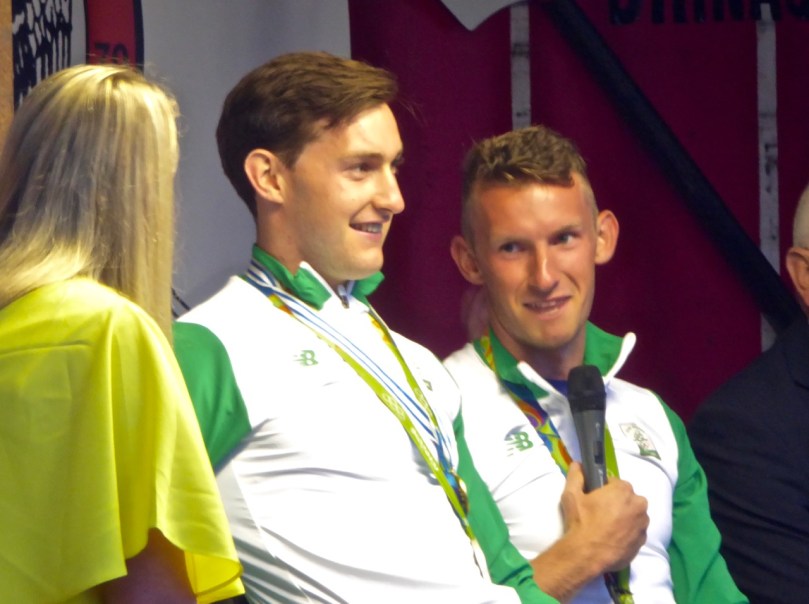
Gary and Paul rode the open-topped bus into Skibbereen on Monday night and then spoke from the stage at Fairfield

Gary and Paul O’Donovan won a silver medal in Rio in their rowing pairs class. They row for the Skibbereen Rowing Club, a local club that punches way above its weight in national and international competitions. The coach credited with that is the brilliant, but mono-syllabic, Dominic Casey. Taking Gary and Paul under his wing, he turned them into the hard-working athletes they are.

MUM AND NANA

In  the window on the left, the boys’ mother, Trish O’Donovan, and their grandmother (Nana), Mary Doab

Their parents’ devotion was sterling. Eoghan Harris’s Independent interview with their Mother, Trish, is perhaps one of the most revealing pieces of journalism about the O’Donovan Brothers phenomenon and what it takes to support an Olympian.

Waiting for the Open-Topped Bus

Gary and Paul are also dream interviewees – every sentence is a sound bite, delivered in pure West Cork accents, with artless but articulate insouciance. Their interviews are now the stuff of legend – but if you haven’t already seen them, take a look at this one done before the final race. What shines through, and makes them so endearing, is that they take their training, but not themselves, seriously.

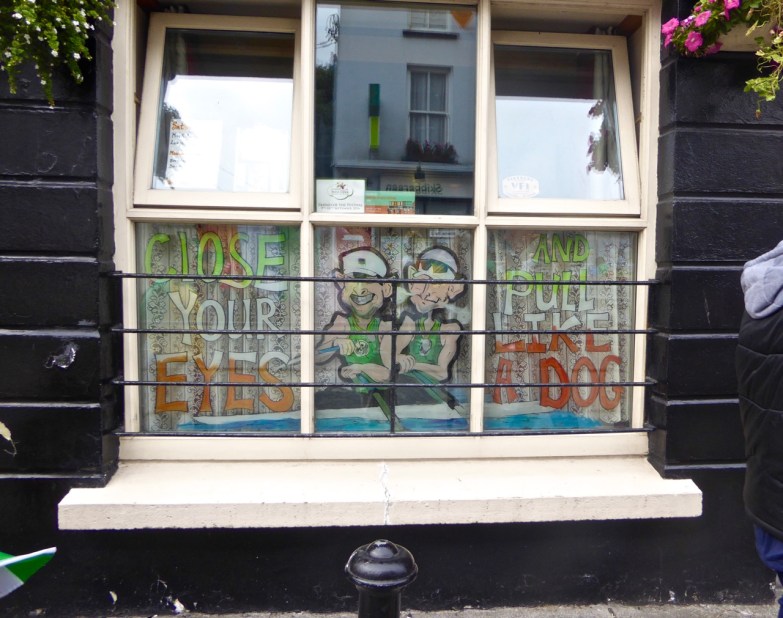
Pub Window

Above: Left, Stella and Hugh sporting their ‘occasion wear’; Right, this young man let me take his photo in his Shteak and Spuds shirt. Below: Many of the Skibbereen merchants had decorated their windows

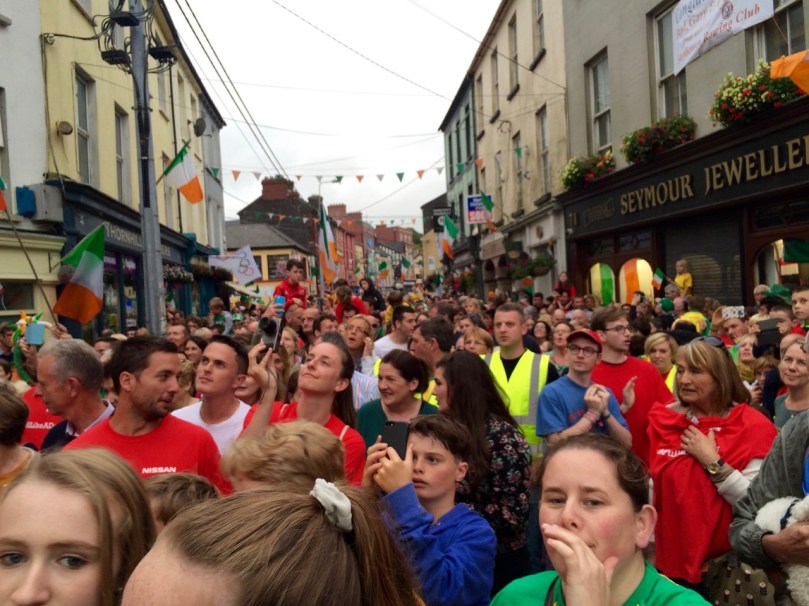
The classic quotes have already been immortalised and the T-shirts have been selling like hot cakes in Skibbereen. The night of their homecoming it seemed like the whole of West Cork turned up to welcome them, including us! It was great fun to be there, in the streets, waiting for the open-topped bus, and then to see them on the stage, with Dominic Casey, so obviously having the time of their lives.

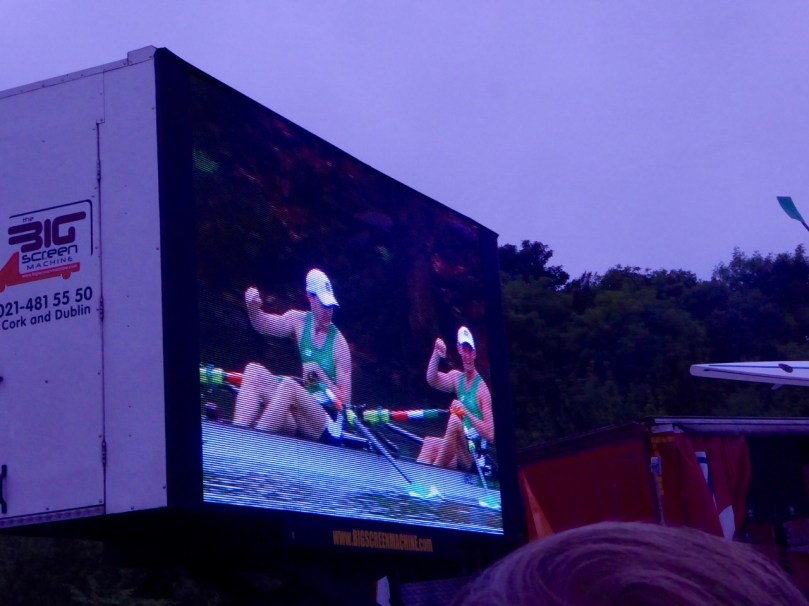
Replay

We, thousands of us, re-lived their big moment on an enormous screen in the Skibbereen Fairfield

Someone who came in for special praise in one of their interviews was the boys’ grandmother – their Nana (the first of the interviews on this page). Coming in cold and hungry from rowing, they gratefully wolfed down her home-made soup and ‘brown cake.’ Here in West Cork when we talk about a ‘cake of bread’ – what we mean is that solid round mass of white or brown home-made soda bread that is one of the staples of our diets, and that tourists have come to love.

Following the Bus

It  seemed like the whole of West Cork turned out to greet them

In honour of Gary and Paul and their Nana, and using only locally grown and organic vegetables purchased at Levis’s of Ballydehob Wednesday Farmers’ Market, here is my recipe for Nana’s Soup. It’s vegetarian and gluten-free – and totally delicious! Serve with a wedge of brown bread if gluten is OK for you. (I’ve become more sensitised to gluten issues recently as a dear little niece has been diagnosed with coeliac disease.) 

Levis market

Local growers sell their fresh vegetables at Levis’s pub in Ballydehob on Wednesday mornings

NANA’S SOUP: THE RECIPE

Vegetables: I used kabocha squash, onions, carrots, parsnips, potatoes and green beans, but you can use any robust vegetables that are in season.

Other ingredients: 1 can organic tomatoes, tapioca starch, vegetable stock (I used Marigold Swiss Veg Bouillon, but Knorr Veg Stock Pot is also gluten-free)), fresh or dried herbs.

Cut the squash in half, scoop out the seeds and roast in a hot oven for about 20 minutes. Leave to cool. Once cool, scoop out the flesh of the squash and chop roughly.

Peel and roughly chop the onions, potatoes, carrots and parsnips. Top and tail the green beans and cut in half or thirds. Chop the herbs (I used parsley sage, oregano and fennel from my garden, but any combination that suits you is fine).

Sweat the onions over medium heat in butter or olive oil until translucent. Over the onions, scatter about 2tbs of tapioca starch (this make it gluten-free, but if gluten is not a problem, just use flour) and stir until well mixed and starting to thicken. Pour in a can of organic tomatoes, the herbs, and a cup or two of vegetable stock. Stir until well mixed, then add all the vegetables. Bring to a boil, then turn down and simmer for at least an hour, preferably two or even three.

Soup and brown cake

After a bowl of this, you too can Pull Like a Dog!

Gary and Paul aren’t intimidated by a ‘bit of wind’. This is why – Skibbereen Rowing Club is on the beautiful , and breezy, Ilen River

Summer Markets

Long Island

Our West Cork markets – Skibbereen, Bantry and Schull – are thriving. Each has a distinct character and all of them are fun for wandering, browsing and buying.

Top right: A basket of scotch eggs from West Cork Pies; bottom left: April Danann from Rebel Foods

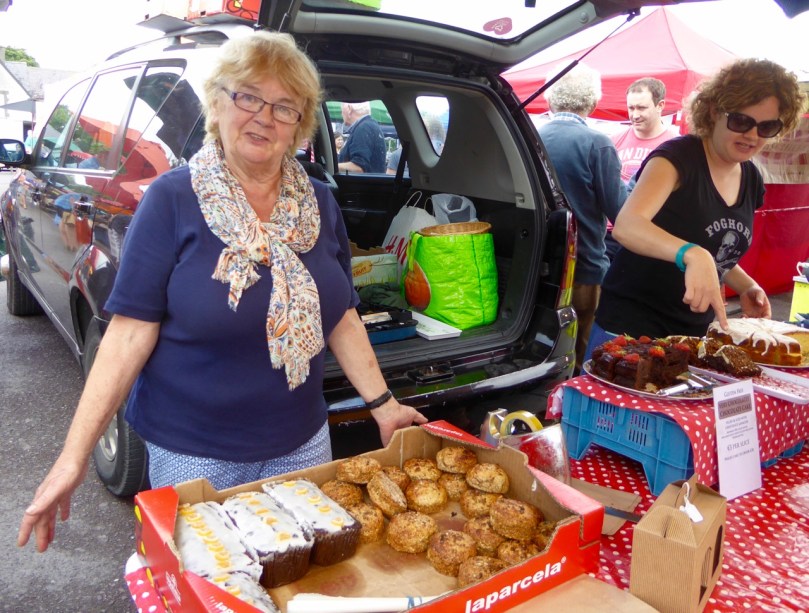
Skibbereen Market on Saturday mornings has become the iconic foodie market of West Cork. Everyone goes – it’s a social occasion as much as a shopping trip. Yesterday, Darina Allen of Ballymaloe breezed through when I was chatting with Eithne McCarthy, and rumour had it that Saoirse Ronan had been spotted earlier.

Eithne

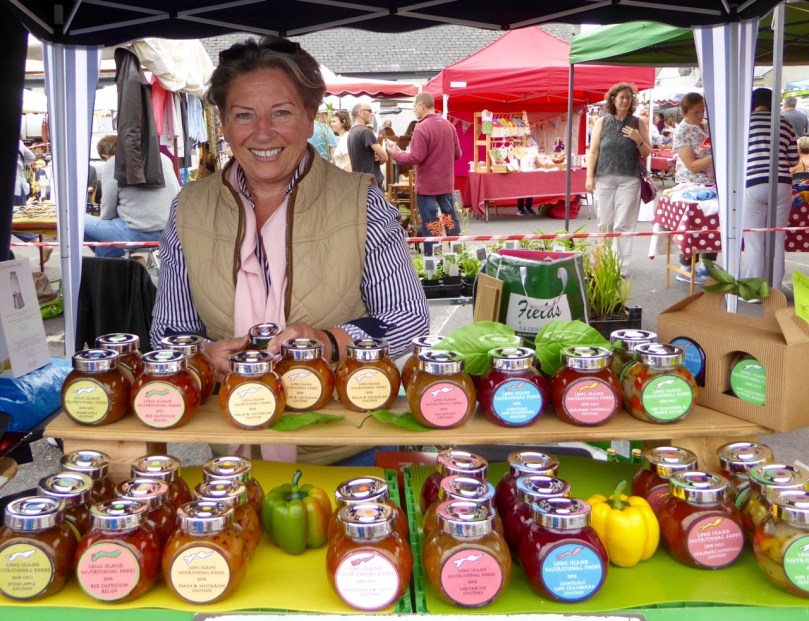
Everybody loves Eithne McCarthy’s home made cakes, breads, jams and chutneys.

There’s music and coffee and crepes and bean burgers and sausages and cupcakes and scotch eggs and anything else you can happily munch on as you wander.

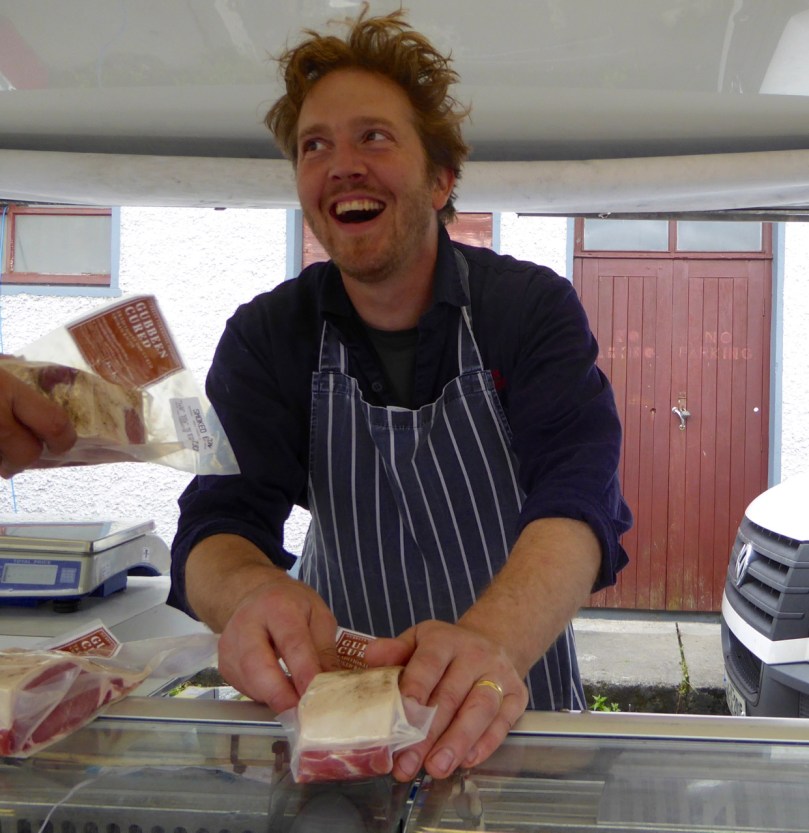
Many stall are devoted to locally produced and artisan foods. Perhaps the best known is Gubbeen, famous for cheese and smoked meats, but not far behind is West Cork Pies, Brown Envelope Seeds, April Danann’s Rebel Foods (wild, foraged and fermented), and Union Hall Smoked Fish.

Fingal

Top: Fingal Ferguson of Gubbeen; Lower left: Union Hall Smoked Fish; Lower Right; Madeline McKeever of Brown Envelope Seeds

But there’s also a whole array of stalls selling chocolates, baked goods, chutneys and pickles, free range eggs and the hens who lay them, vegetables, honey, vinegars, sausages, quiches, berries, olives, seaweeds, and more cheese.

It’s not just food, of course. There are flowers and bedding plants, wooden chairs, magic wands, dolls, jewellery, wool, carved bowls, antiques, books, junk, and yes, knitted tea cosies.

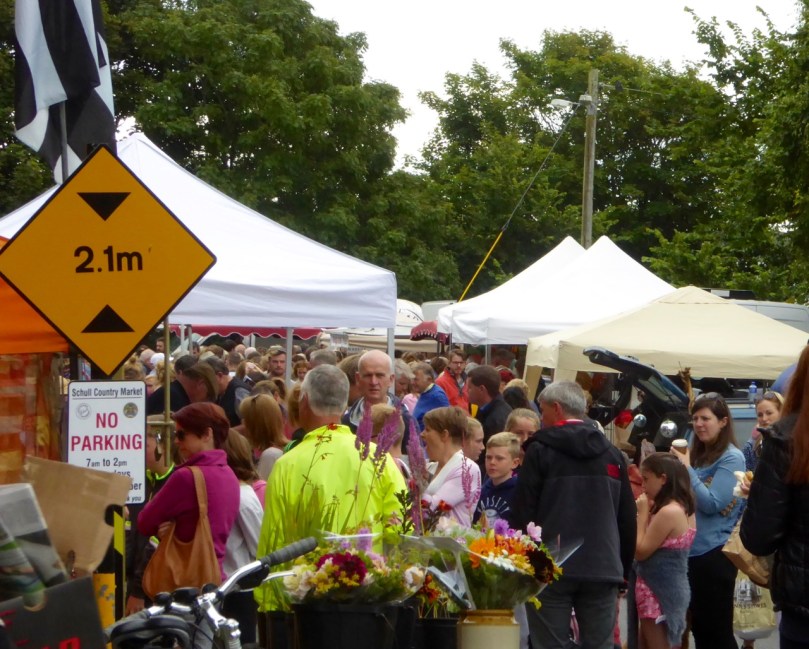
The Schull market is much smaller but has many of the same stalls. Schull is the quintessential tourist town – heaving in the summer – and the market here goes from Easter to October. It’s on Sunday mornings and has a lovely, casual, local vibe, with people dropping down after mass and everyone getting caught up on the latest news.

Schull Crowds

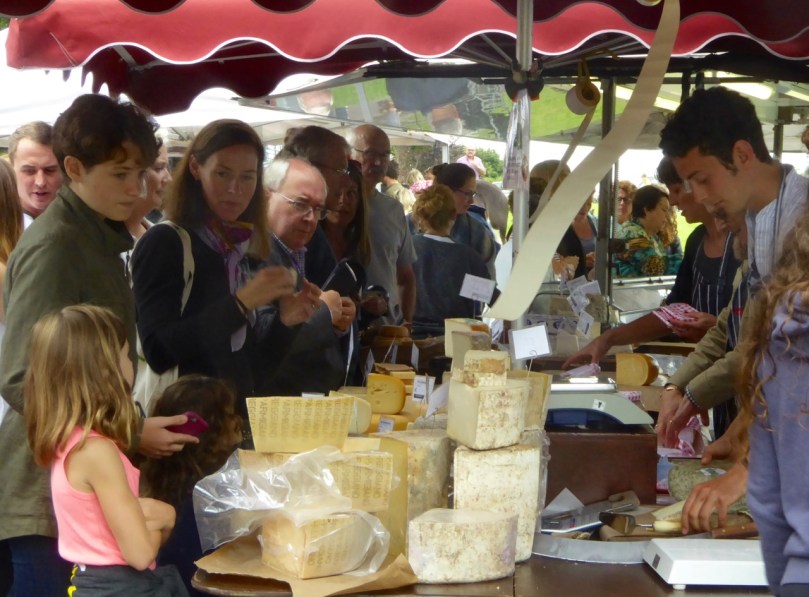
Like Skibbereen, it’s madly busy, so expect to queue and just enjoy the ambience and the music.

Cheese Queue

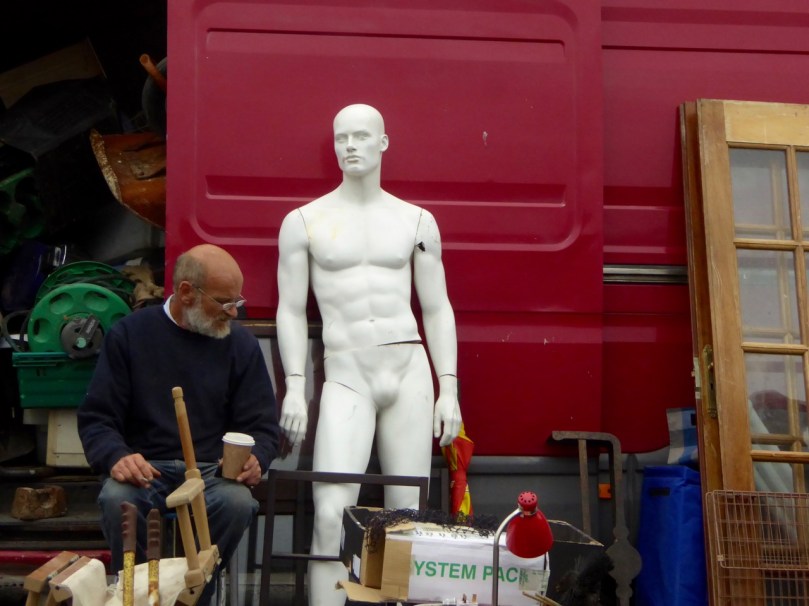
Bantry, on Friday mornings, is the largest market. Although there are some of the same food stalls, it seems to attract different vendors than the other two. This is the market where people shop for second hand goods, curios and collectibles, tools, carpets, clothing, work boots, trees and shrubs, and Michael Collins posters.

Bantry Market

A visit to West Cork wouldn’t be complete without making a trip to the market. Heck – make it to all three of them!

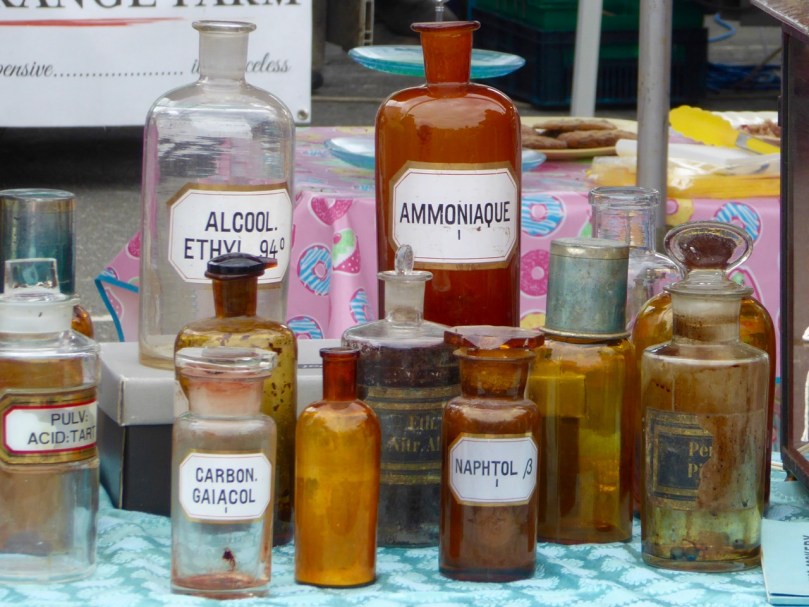
Vials

Skibbereen – Ireland’s First Gigabit Town!

Ludgate poster

On Friday, the Ludgate Hub in Skibbereen was officially launched.

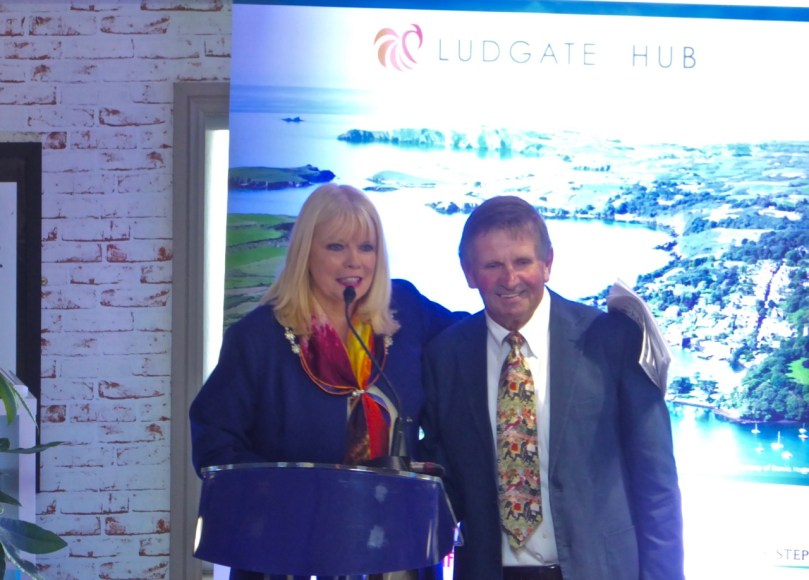
Minister and Field

Mary Mitchell O’Connor, Minister of Jobs, Enterprise and Innovation, and John Field of the Ludgate Board

We’ve been watching the progress of this wonderful initiative since last November when we attended the National Digital Week in Skibbereen. Robert wrote then about Percy Ludgate, the re-discovered computer pioneer, and about the plans for the Ludgate Hub. This week, those plans fell into place and gave Skibbereen the distinction of being Ireland’s first 1Gigabit town.Minister's Speech

The Hub was declared open by Mary Mitchell O’Connor, Minister of Jobs, Enterprise and Innovation, in front of a capacity crowd that included representatives from some of the e-commerce giants operating in Ireland, such as Google, Vodaphone, Glen Dimplex, and Siro. The cheering section also included many local faces we recognised, all there to celebrate this initiative: John and Sally McKenna, the Skibbereen Heritage Centre, a couple of bishops, our local political representatives, Dee Forbes (newly appointed director of RTE, who’s on the Board), and Lord David Puttnam, Ireland’s Digital Champion, who never misses an opportunity to support West Cork.Board

Lots of people spoke, everyone enthusiastically, about the boon this building would be to Skibbereen. But to my mind, the speech of the day was the one given by John Field. John is the Director of Field’s Supermarket, a beloved and respected local institution. The Ludgate Building was the former Field’s bakery. Although the grocery business was established about 150 years ago, the Field family has been running it since 1935. They are committed to stocking the best of locally produced food and indeed they have a fantastic collection of artisan and locally grown produce that is second to none.

Old and new technology

Before it was Field’s bakery, the building was a cinema: the projector is a nod to its historic past

John’s words were simple and direct – we already have excellent local business, but we need to attract and retain more entrepreneurs and young families to West Cork. We can’t do that unless we can provide the most up-to-date technology, and nowadays that means the highest possible broadband speeds. The Ludgate Hub provides exactly that  – a 1000MG fibre-optic connection, to be exact. Lightning speed! They provide single and group work spaces, state-of-the-art video conference rooms that can utilise Google Hangouts, and a variety of meeting and presentation facilities.

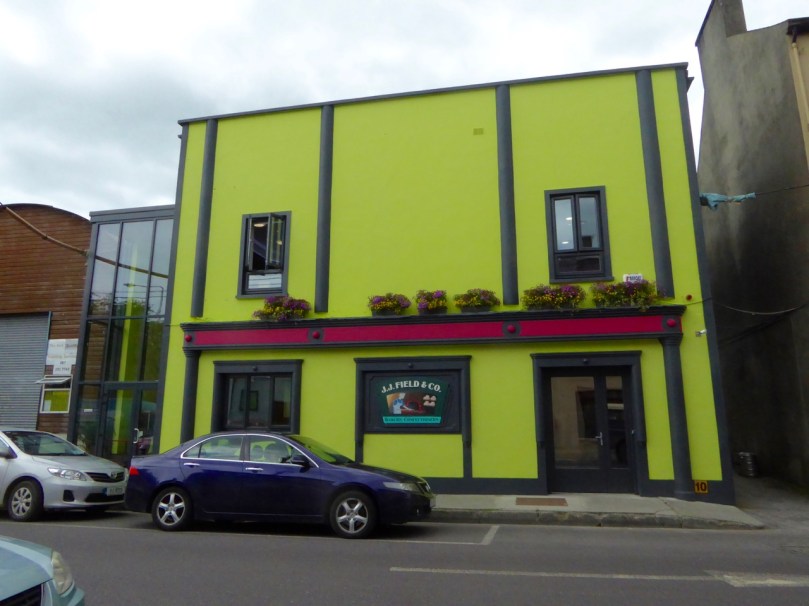
Ludgate front

You can’t miss the Ludgate Hub! Below: the colourful entrance, with an informal meeting space above it; Grainne Dwyer, the Hub Project Director, and Robert chat in the coffee room

We attended a talk by the photographer John Minihan in the Hub earlier this week, where we had a first-hand demonstration of the kind of digital presentations possible now (enormous screens that you touch to advance!) and we hope to use a hot desk ourselves in the future, as we develop our ability to produce 3D images of rock art. The local Coderdojo club has been welcomed into the Hub – their Facebook page has a great image of the kids working on a Minecraft project in one of the conference rooms.

Clockwise from top left: Oliver Farrell (Chairman & Co-Founder of Vilicom and a Board member) shows us the desk area; John Minihane, photographer, gives a presentation during the Skibbereen Arts Festival; an informal seating area beside the servers; a conference room;

The building itself is inviting and colourful – in the best West Cork tradition. The staff is young and helpful and energetic. If you’ve ever wanted to live in West Cork (and who wouldn’t!), but needed excellent connectivity, wait no more. Come on down, meet the Ludgate folks, and drive by some of those properties you’ve been drooling over on those online property sites.

Bill Brown

At the opening we met Bill Brown. Bill has a security firm with offices in Belfast, Naas and London but manages to live in West Cork using the Ludgate Hub to provide the connectivity he needs to his business

Oh, and sign up for National Digital Week. Yes, they’re doing it again, in November!

Below: Percy Ludgate beams benignly down on visitors to the Hub

Percy

Gigabit town