An Irish Shakespeare?

rea druid

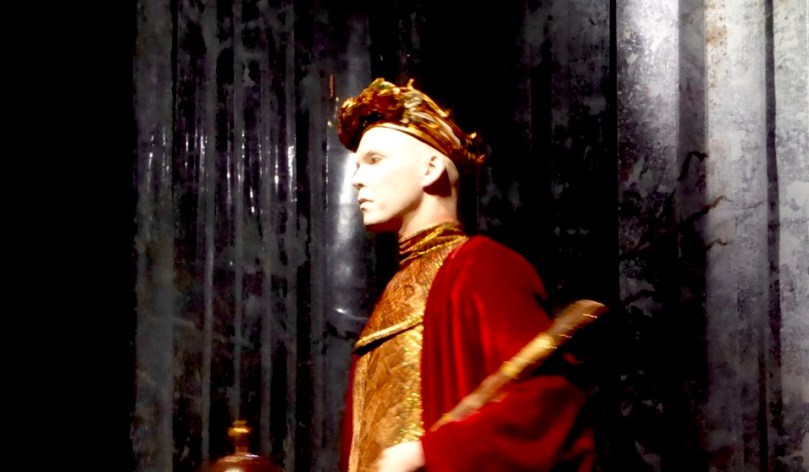
Marty Rea giving a stunning performance in Skibbereen as Richard II in Druid Theatre Company’s tour of Shakespeare’s ‘History Plays’

This week we commemorate the 400th anniversary of Shakespeare’s death which occurred on his birthday, 23rd April, in 1616. He was 52. At least, that’s the received wisdom. It’s quite convenient that the two most important events in his life have the same date – we only have the one to remember – and it’s very apposite that this date should also be St George’s Day: St George is thought of as patron saint of England, and Shakespeare is thought of as the greatest writer in the English language – and partly responsible for the flowering of the Elizabethan Age of Enlightenment.
elizabeth

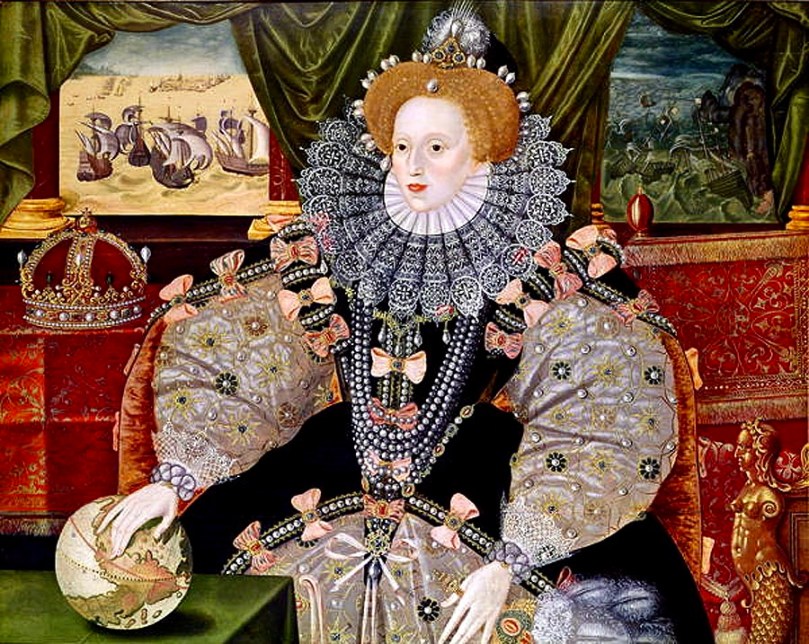
Queen of England and Ireland – the ‘Armada Portrait’ 1588. This painting of Elizabeth I, sometimes attributed to George Gower, is full of symbolism which Shakespeare would have recognised: pearls imply purity, the pomegranate prosperity, the mermaid  ‘the potential destructive nature of females’, and the ruff is shown as a sun halo to depict the ‘Sun Queen’. The paintings show the power of the Navy and its defeat of the Spanish Armada

But isn’t all this a little too convenient? If we believe the history books Shakespeare was a simple soul who was born in rural Warwickshire, the son of a glover who had fallen on hard times. Shakespeare attended the local grammar school, where he would have had a limited classical education. At 18 he married Anne Hathaway, 8 years his senior, and their daughter Susanna was born shortly afterwards. Then he disappeared from the records, re-emerging in London in 1592 where he was described in a pamphlet by Robert Greene as an ‘upstart crow’ flapping his poetic wings. Thereafter he was known as an actor, playwright and theatre promoter, returning to his birthplace to retire and leaving us with the legacy of 38 plays and 154 sonnets. His will bequeathed his ‘second best bed’ to his wife and his estate to his children.
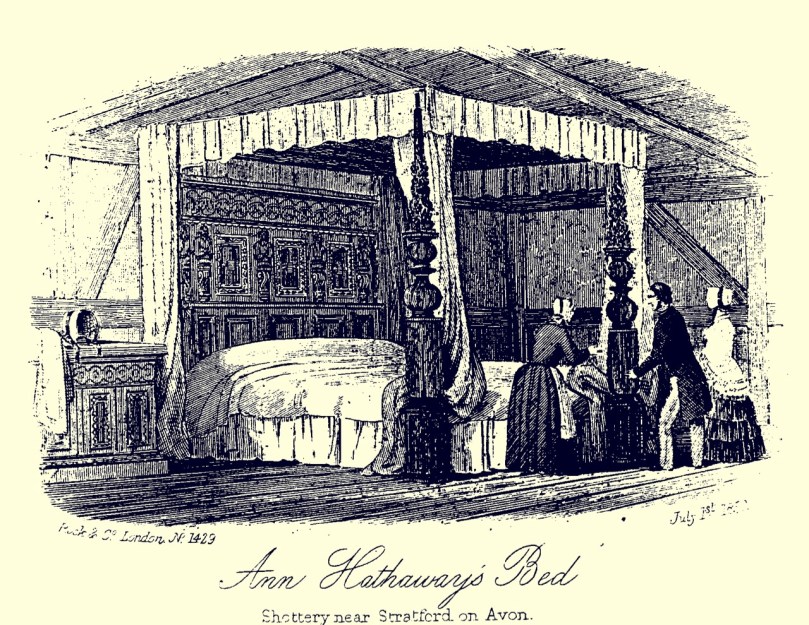
second best bed

Was William Shakespeare a real person? Probably – there are quite a few records of his professional life: but the rumour mill is full of suggestions that he was not the author of his plays! As Ireland is a renowned land of poets and bards, I felt sure that, somewhere, I would find a notion that this particular ‘bard’ had Irish connections… I was right!
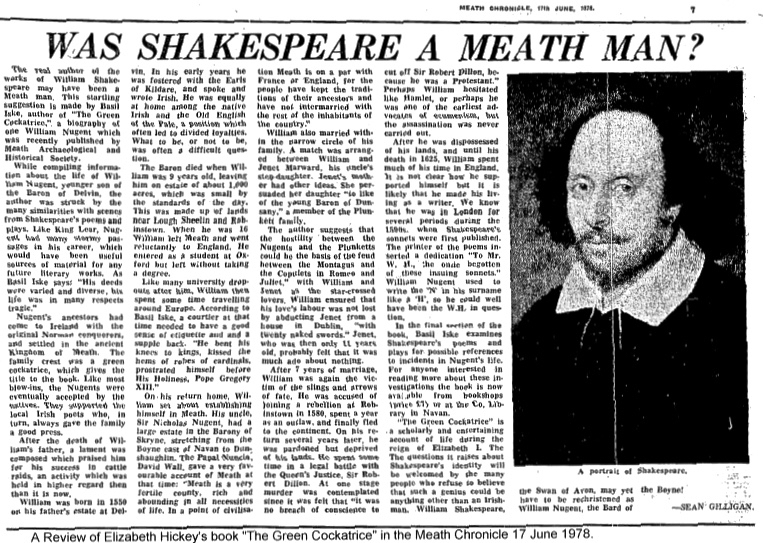
meath chronicle

Elizabeth Hickey (1917 – 1999) was a well-known Meath historian and author who lived at Skryne Castle near Tara. Her most famous work is The Green Cockatrice, originally published in 1978 under the pseudonym Basil Iske. In this she traces the career of William Nugent, Baron of Skryne, who lived from 1550 to 1625. According to Hickey Nugent is a very likely candidate for the authorship of Shakespeare’s plays as he ‘…led a life which gave him insights into the kind of political, religious, military, legal and international diplomatic intrigues that populate Shakespeare’s works. For example, he was imprisoned by the state for opposing the cess in Ireland in the 1570s, and he rebelled in 1581, losing a number of supporters to the hangman’s noose and causing him to flee into exile, first into Scotland, then France and Italy – locations which are prominent in Shakespeare’s works. During his exile he met most of the great European leaders, including the Pope, the kings of Spain, France and Scotland, and was involved in Europe-wide planning for an invasion of England…’

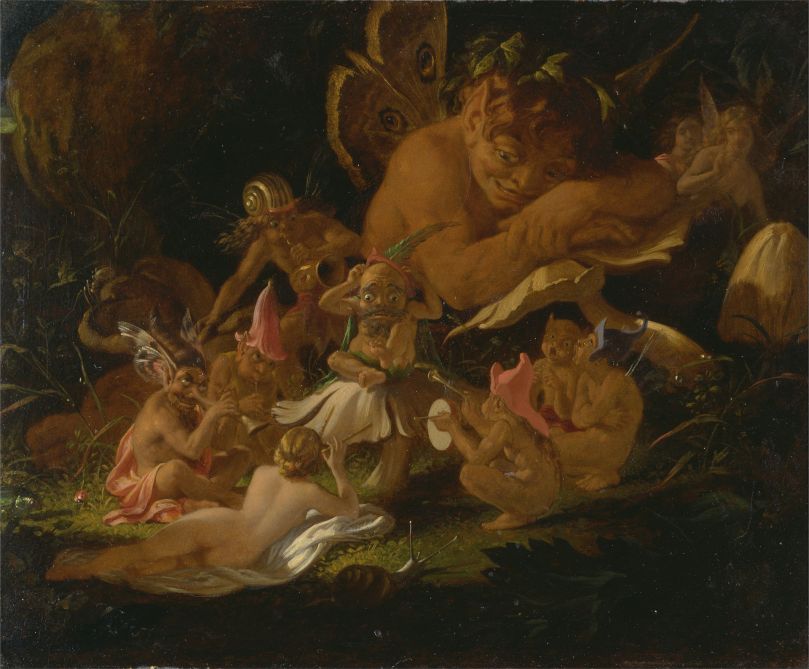
Other scholars have suggested that the language use by Shakespeare is, at times, more akin to the English spoken in Ireland in Elizabethan times. One quotes Shakespeare’s character Puck as deriving from the Irish Púca, although the name is also said to have an old English origin. Similarly, Queen Mab  (fairy queen in Romeo and Juliet) is said to derive from Queen Maeve, spelt in Old Irish script as ‘Mab’.
1920px-Joseph_Noel_Paton_-_Puck_and_Fairies,_from_-A_Midsummer_Night's_Dream-_-_Google_Art_Project

Puck and Fairies, from A Midsummer Night’s Dream, Joseph Noel Paton, c1850

I was intrigued to come across a tradition that Shakespeare composed Hamlet while visiting his friend John Dowland at Dalkey near Dublin, and that the account of the shore of Elsinore is actually based on Coliemore Harbour in Dalkey. There is even a house called ‘Elsinore’ in Dalkey: it dates from 1840. There is also in Dalkey a mosaic plaque to Dowland designed by Sarah Purser.
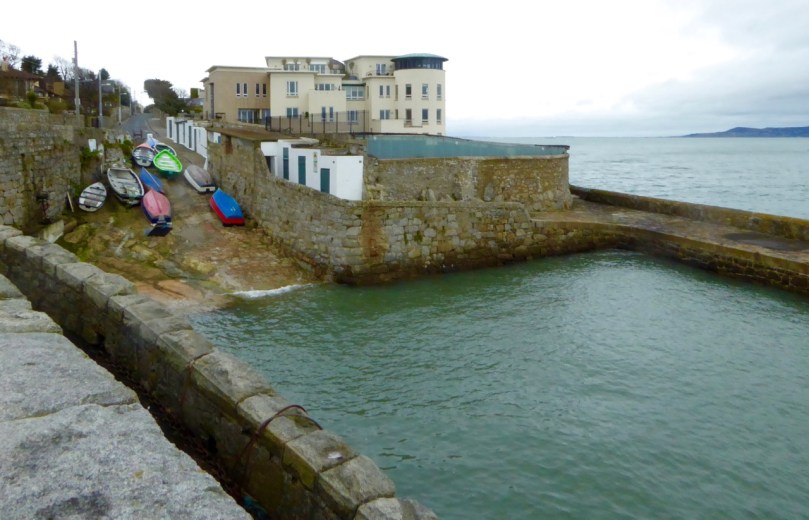
ColiemoreColiemore Harbour in Dalkey – does it look like Elsinore?

If you have an hour or so to spare you might have a go at reading Shakespeare was Irish – I kid you not… in Indymedia Ireland – it’s tongue in cheek but very comprehensive. Tempting though it is to pursue the idea that the man himself might have been Irish, it may be best to move on to consider Shakespeare’s influence today in Ireland. There can’t be a professional theatre company here that hasn’t put on some of the plays at various times. Many productions have received international acclaim: we were fortunate to attend the marathon staging of the ‘History Plays’ by the Druid Company from Galway in Skibbereen last year – four plays in seven hours, including a break for supper. After Skibbereen the tour went to New York where it received rave reviews. We were pleased to hear that the production ‘stole the show’ in the Irish Times Theatre Awards this year, wining in five categories. Later, we chanced to meet Thomas Conway, the dramaturg for the production: he told us it had taken eight years to craft the performance!
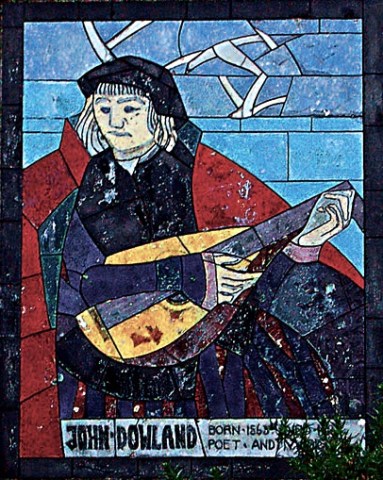
purser dowland

Happy Birthday from West Cork, William…
Say Cheese!

Cheese Bundle

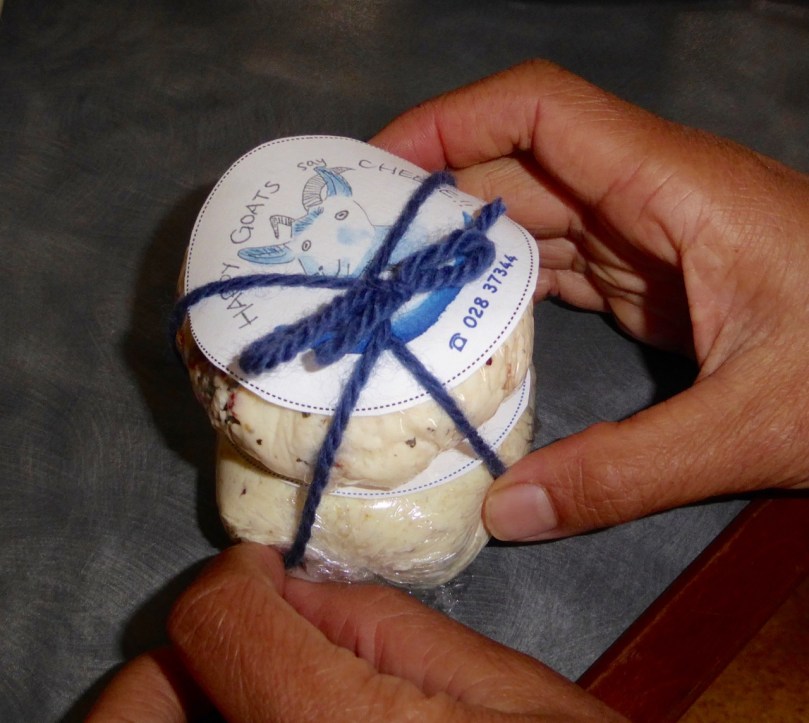
Goats Cheese, that is: creamy, delicious – and home-made! Goats cheese is what I made today at our friend and neighbour Nick’s Rossbrin Permaculture Farm on the shores of Roaringwater Bay. The ingredients? Happy goats, a couple of ingenious WWOOFers and eager students.

Nick and Goats 2

Nick bringing the goats home in the evening

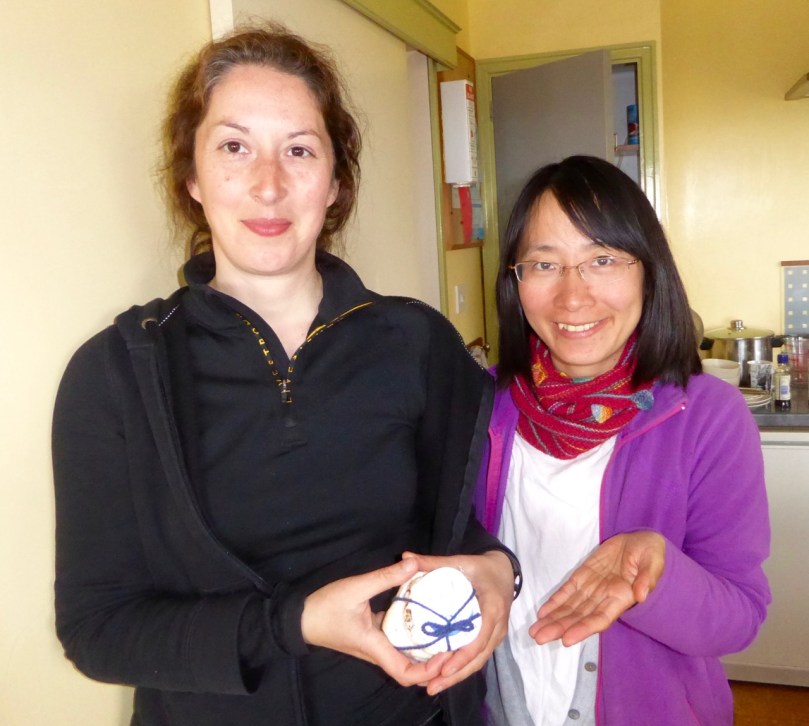
Nick has a smallholding and tries to be as ecologically sensitive, environmentally friendly and sustainable as possible. His WWOOFers seem to like the place and some stay for extended periods or keep coming back. (For those of our readers who are not familiar with the concept of WWOOFing – take a look at the WWOOF Ireland website.) Jasmine from Taiwan has become a keen forager and cheesemaker, and Helene from France loves to experiment with natural flavours. Recently there was a Slow Food event on the farm (wild garlic pesto – forage and make) which we couldn’t attend, so when this opportunity came up I jumped at the chance to sign up to learn how to make goats cheese.

Helene and Jasmine

Helene and Jasmine – cheese makers extraordinaire!

I had this idea that cheese was a long slow process involving ageing in caves and something called rennet so I was intrigued that we would make and take away goats cheese in one afternoon.

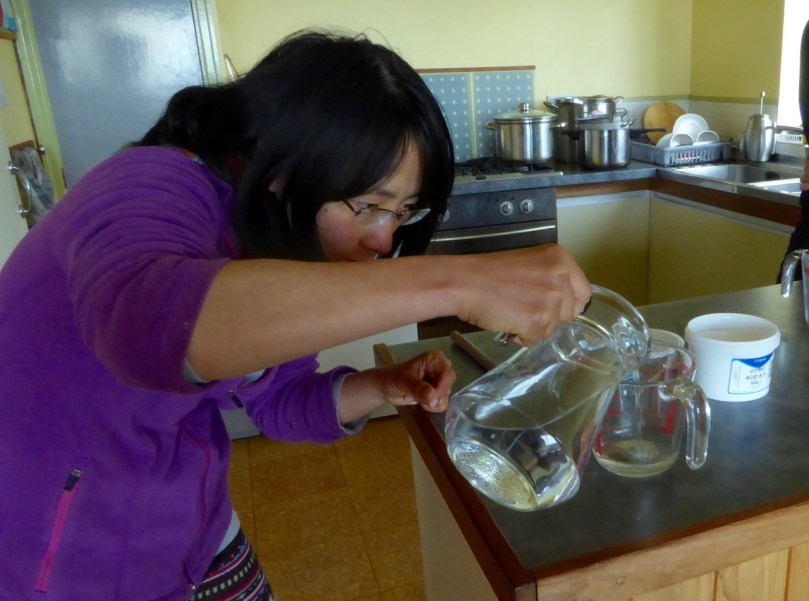
Diluting the citric acid

Jasmine dissolves the citric acid – available in any pharmacy

Jasmine and Helene had milked the goats that morning so the milk was fresh, although it can also be a few days old – the older the milk the stronger the distinctive chèvre taste. We started by adding dissolved citric acid to the milk, drop by drop, and stirring, while it sat on a moderate heat. The idea is to add the citric acid very slowly while the temperature rises to 180-190F. This process pasteurises the milk and starts the process of making curds.

Left: Jasmine and Helene and students Manon, Bríd and Maria. Right: adding the citric acid drop by drop and patiently stirring

Once it has reached the proper temperature the milk is allowed to cool a little then poured into cheesecloth-lined colanders to separate the curds and the whey. Since the next step is to let it drip slowly through the cheesecloth, we enjoyed some tea and cake and then we took ourselves off for a wander around Nick’s farm.

Julian straining

Through the cheeseclothUpper: Julian strains the heated milk. Lower: left to drain

We walked down to Jasmine’s seaweed-gathering beach and made a quick inspection of Nick’s ingenious vegetable island. Why grow vegetables on an island? Easy – no rabbits and no slugs! Nick practices Hügelkultur on this plot.

Once back in the kitchen we inspected the cheese and saw that the whey had drained away to our satisfaction. To continue the process we tied the cheesecloth up to make a ball and suspended the cheese over pots for a while longer.

All tied up

During the next wait period Jasmine and Helene showed us how to make seaweed appetisers. Jasmine had harvested sugar kelp and sea spaghetti that morning and together we made seaweed crisps and sea-spaghetti bruschetta. It sounds a bit weird, I know, but honestly, they were delicious.

Jasmine had washed the sugar kelp and hung it out to dry along with the other washing. The recipe for the crisps and bruschetta is at the end of the post

By then, we were ready to finish the cheese. First we added a little salt and then decided on the flavouring. On Helene’s advice we selected cumin and mustard for one and sundried tomatoes and basil for the other. A little tasting, a final lesson in wrapping, and we were done!

I love goats cheese and have several favourite recipes so I’ll be trying out a couple this week. It’s going to feel really good to casually drop into the conversation that, oh yes – I made it myself. And if that’s not totally and strictly true, I’m sure none of you will tell on me. Right?

Recipes

Moongazy Pie

Ready for cooling 2

Moongazy Pie – an original Roaringwater Journal recipe

Each year around this time we look forward to the annual Cornish Invasion – a group of men and women from Cornwall who come on a cultural exchange to sing and tell stories around West Cork. Some are old friends of Robert’s and we inevitably end up in pubs, singing and playing our hearts out until all hours.

A Cornish Quartet

A Cornish Quartet in O’Donovan’s Hotel, Clonakilty

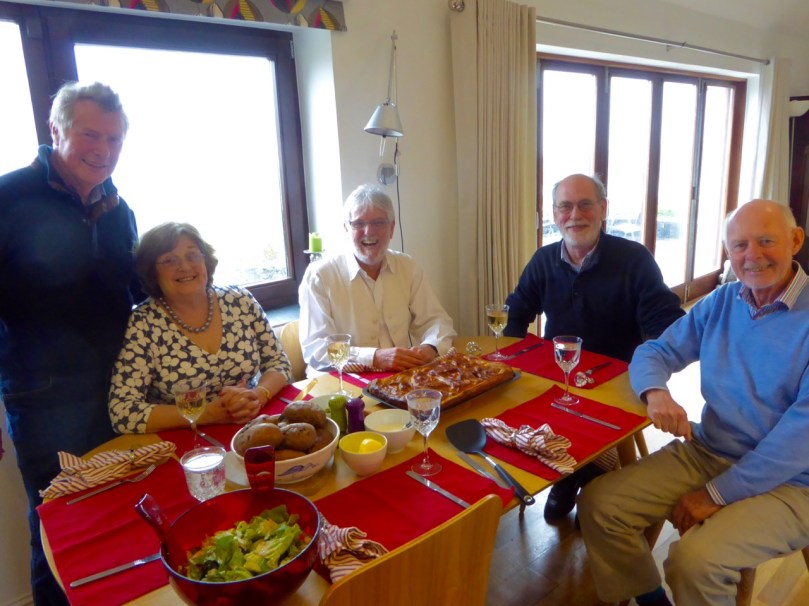
This year we managed to get a couple of them and their Irish hosts to sit still long enough to eat dinner with us. To celebrate the theme of our Irish/Cornish friendship, we made a special dish – Moongazy Pie.

Dinner Group

Robert, Majella O’Callaghan, Jonathan Ball, Nick Blood, Brendan O’Callaghan

Have you heard of the famous Cornish dish, Stargazy Pie? It’s an arresting looking dish, with pilchards’ heads peeking out of a pastry crust as if gazing at the stars. Of course, there’s a whole legend to go with it and lots of traditions.

stargazy

Photo from http://www.jusrol.co.uk/pastry-recipes/stargazy-pie/

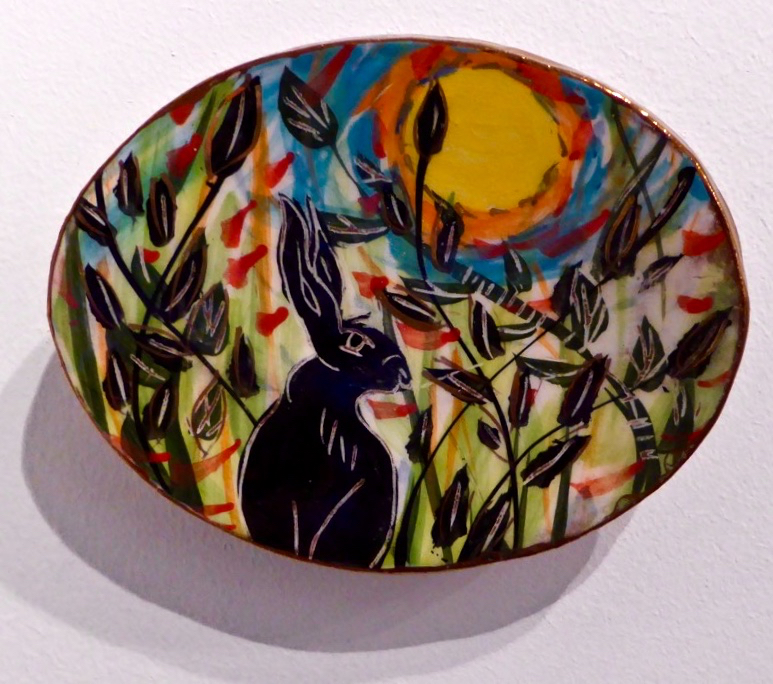
Regular readers will know by now that Robert is a hare fanatic. (In fact, he thinks he is a hare, but don’t tell him I told you that.) What better way to combine his Cornish heritage and his hare obsession than with the symbol of the moon-gazing hare – one of the classic, universal images with which we associate hares.

oval

One of Etain Hickey’s wonderful moon gazing hares

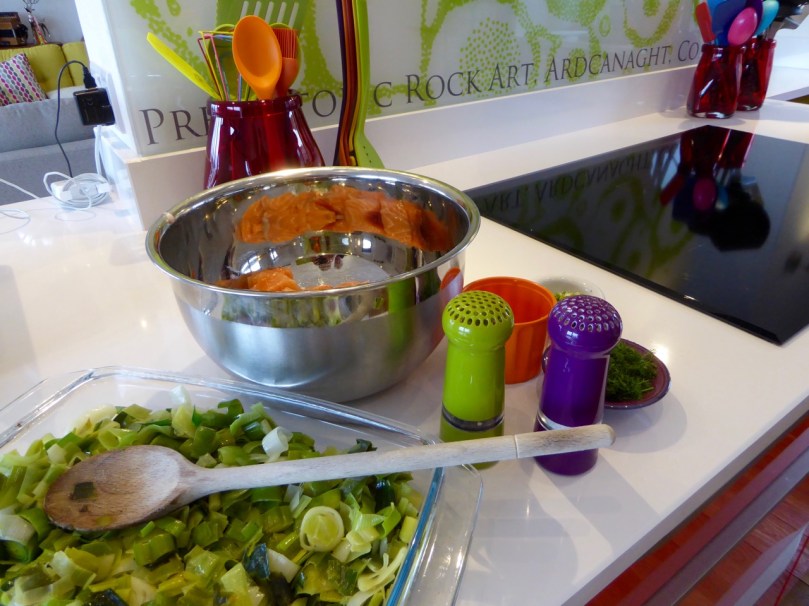
So here is the recipe we devised! I’m not sure who likes pilchards (not me!) so don’t worry, there isn’t a pilchard in sight – just beautiful salmon and lots of leeks. Although this is an easy recipe give yourself time to make it, as part of the process involves cooling the ingredients and then the pie itself before baking. It’s a great dish to make in the morning for a Sunday lunch, or in the early afternoon for dinner.

Ingredients

MOONGAZY PIE

6 leeks

2 tbs butter

A side of salmon (1 – 1.5k/2.5 – 3.5lbs), skinned and boned (we got our fishmonger to do this for us).

A large handful of fennel fronds (I happen to have this in the garden and I love the aniseedy aroma  but you can substitute fresh dill)

Freshly grated zest and juice of one lime

1 large egg

1 tablespoon water

2 packs ready-made puff pastry sheets – You’ll need about 900g/2lbs in total.

PREPARE

Take the puff pastry from the fridge so it will be at room temperature when you are ready to roll it out.

Wash the leeks very well, making sure to separate the leaves and hunt for that pesky soil that lurks between them. Drain them, pat them dry and cut them into rounds approx half inch or 1.5cm long. Sauté the leeks in butter over moderate heat, stirring, until tender, about 20 minutes. Set aside to cool.

Zest and juice the lime.

Cut off the coarser stalks from the fennel (or dill) and chop the fronds finely.

Cut salmon into pieces – about 2”/5cm square.

Once the leeks are cool, mix the leeks, salmon, lime zest and juice and fennel/dill in a bowl.

Whisk together egg and water to make an egg wash.

Dust a baking tray with floor. A 35 x 25 x 2cm (14″ x 10″ x 1”) works well.

Filling the pie

ASSEMBLE

On a lightly floured surface with a lightly floured rolling pin roll 1 puff pastry sheet (about 300g /10oz) to fit the baking tray with some overhang. Once rolled, transfer it to the tray. Roll a second sheet the same size. Mound the salmon mixture on to the pastry in the tray and spread carefully to fill the tray. Brush the edges with some egg wash and drape the second sheet over top. Roll the edge of the bottom sheet over the edge of the top sheet to form a seal and press it down all the way around with the tines of a fork.

Roll out a third sheet of pastry. Use a plate or saucer to cut out the moon shape. For the hare, we found a suitable silhouette on the internet and Robert used the printer to make one the right size to use as a template. There are various ways you can do this – make it your own, as long as you use the image of a hare gazing at the moon.

Cut four steam vents on top and brush all over with the remaining egg wash. Then cool the pie in the fridge for at least an hour and up to 3.

BAKE

Preheat oven to 205C OR 400F.

Bake pie in middle of oven until pastry is golden brown, about 30 minutes.

Ta Da!

Tide’s Further Out!

cove gray day“Donn Fírinne was in the clouds last evening – today would be bad…” Donn Fírinne was a Munster fairy-king always connected with weather omens: …the people said that Donn collected the clouds on his hill (Cnoc Fírinne, Co Limerick) and held them there for a short while to warn of approaching rain, and from the reliability of this sign came his name, Donn of Truth… (from The Festival of Lughnasa, Máire MacNeill, University College Dublin 2008)
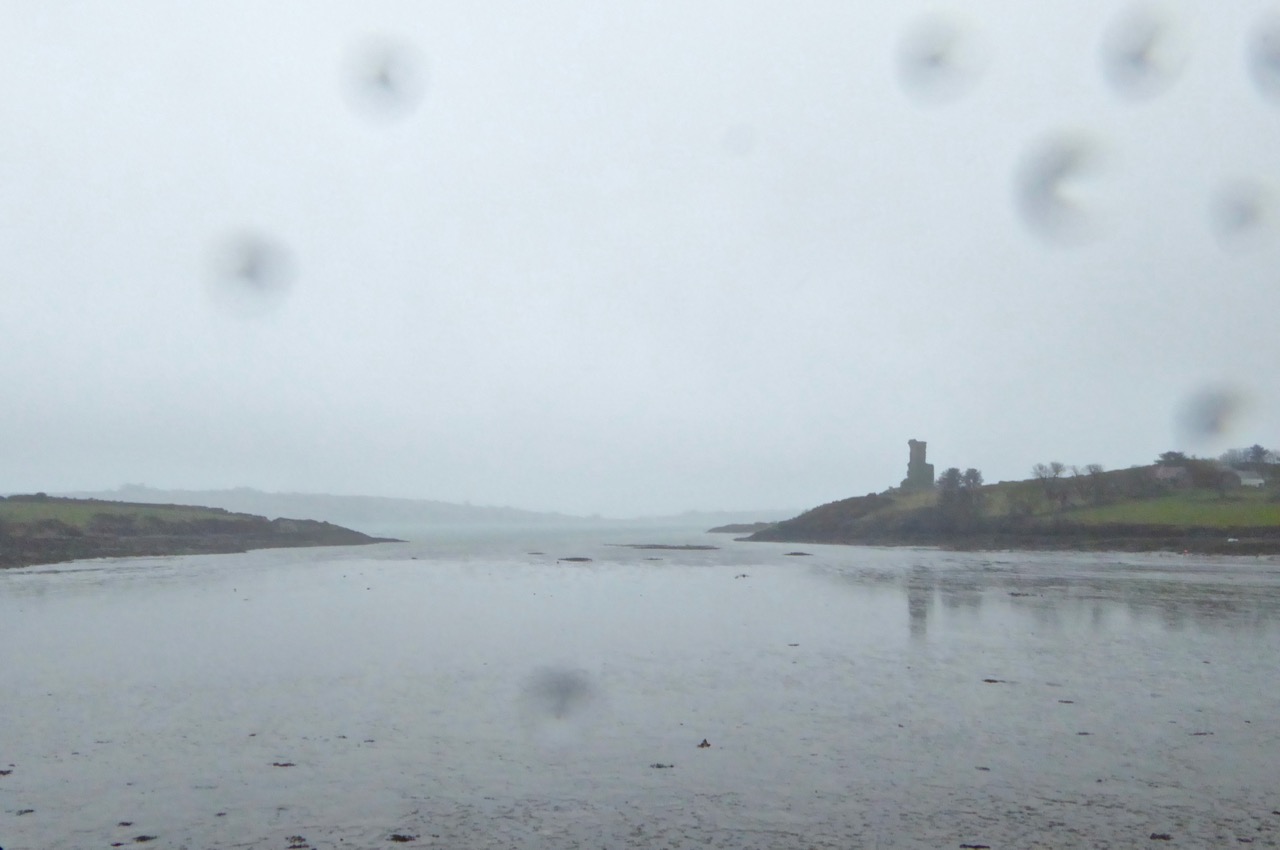
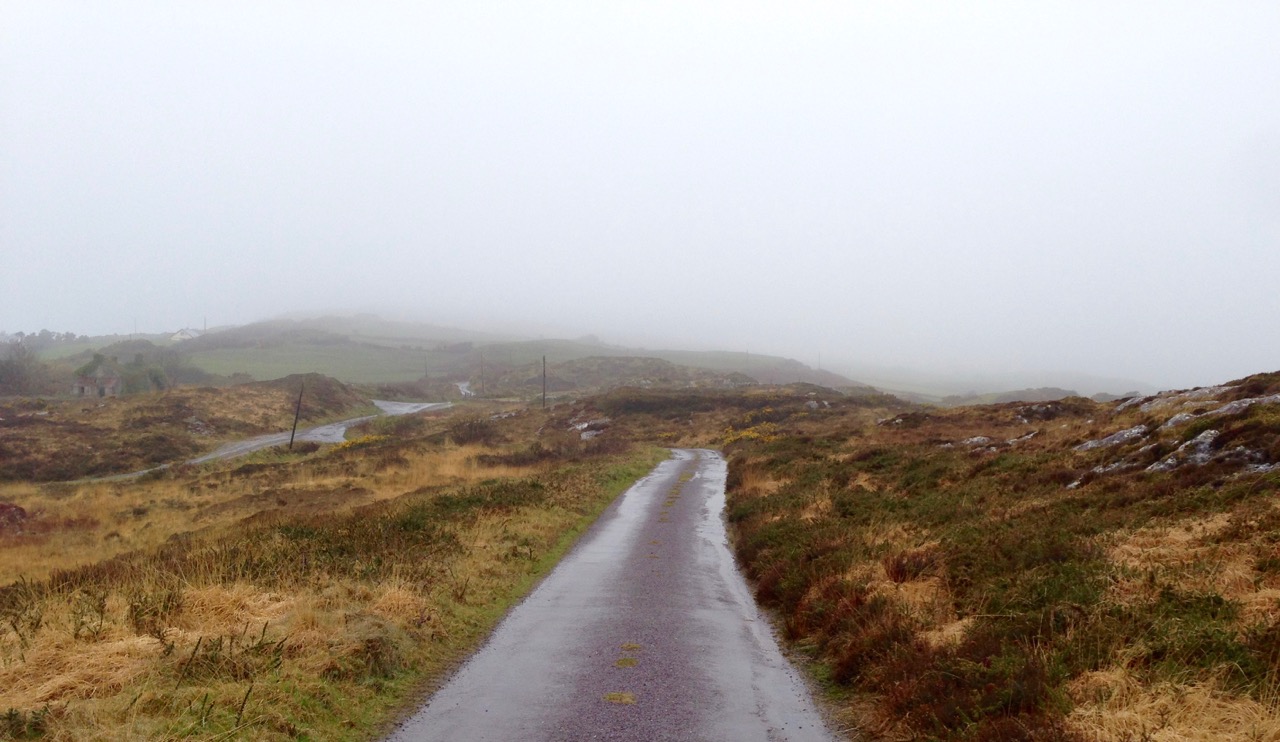
Only a month ago I wrote a post about a very low tide: I hadn’t realised that we were heading for an exceptional event, the lowest tide of the century! So I felt that our readers deserved to have this circumstance recorded as well, even though it involved braving what was probably the least hospitable weather that the spring has come up with so far! I should have taken notice of the omens from Donn, but instead I went out into the cold, pervading rain.

high road gray day

Out into the weather: the high road at Cappaghglass at its wettest

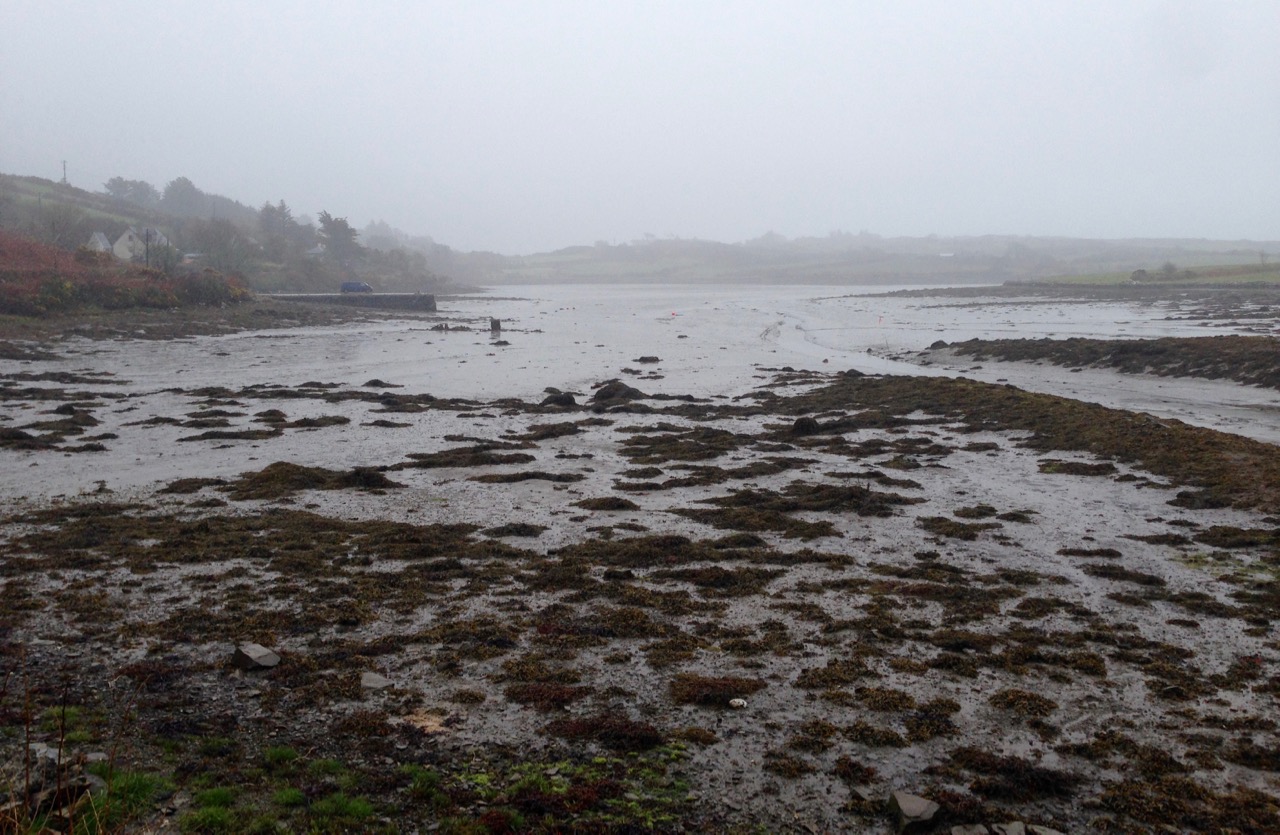
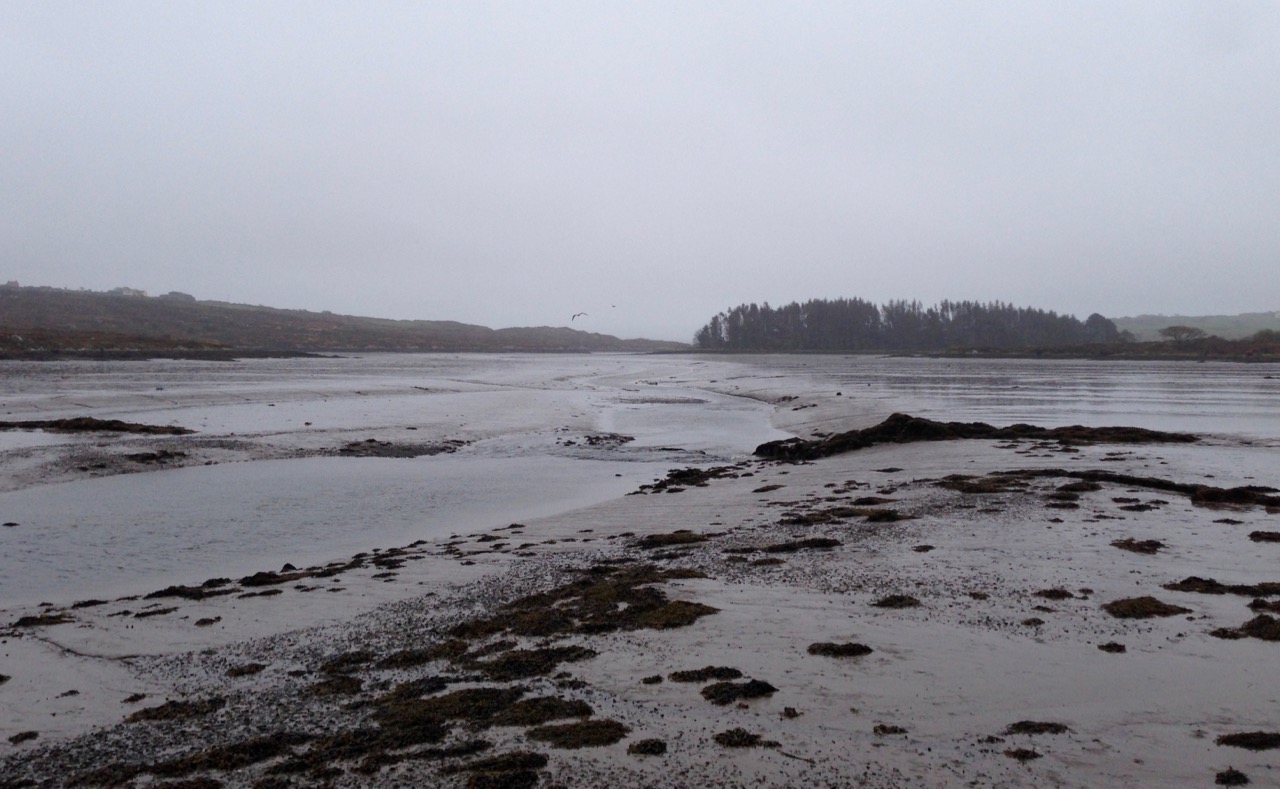
The day was last Thursday, 7th April, and the tide prediction was a low of 0.00, just after noon. 0.00! You can’t get much lower than that. But we have to remember that  tide predictions are just that – predictions. It’s a bit like weather forecasting – there are so many factors which can affect the outcome. Tides can vary from the predictions because of winds, atmospheric pressure, even the salinity and temperature of the sea, evidently. However, although I can’t vouch for the 0.00 (wouldn’t that mean that the sea was empty?) I can confidently state that the shoreline had receded further than I’ve ever seen it before.

ballydehob bay gray day

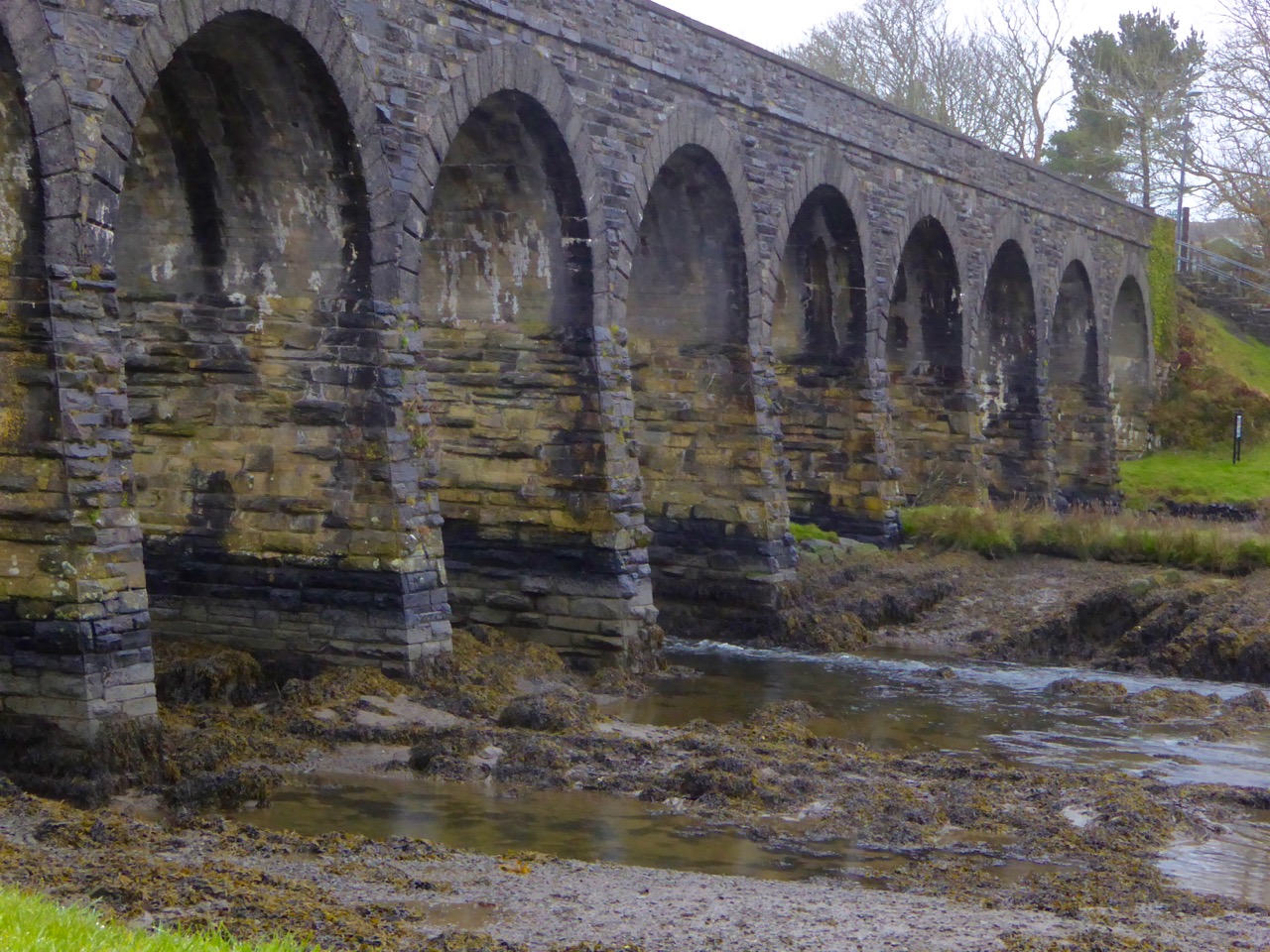
12 arch low tide 2

Top: Ballydehob Bay just a mud flat – Bottom: the 12-arched bridge has lost its river

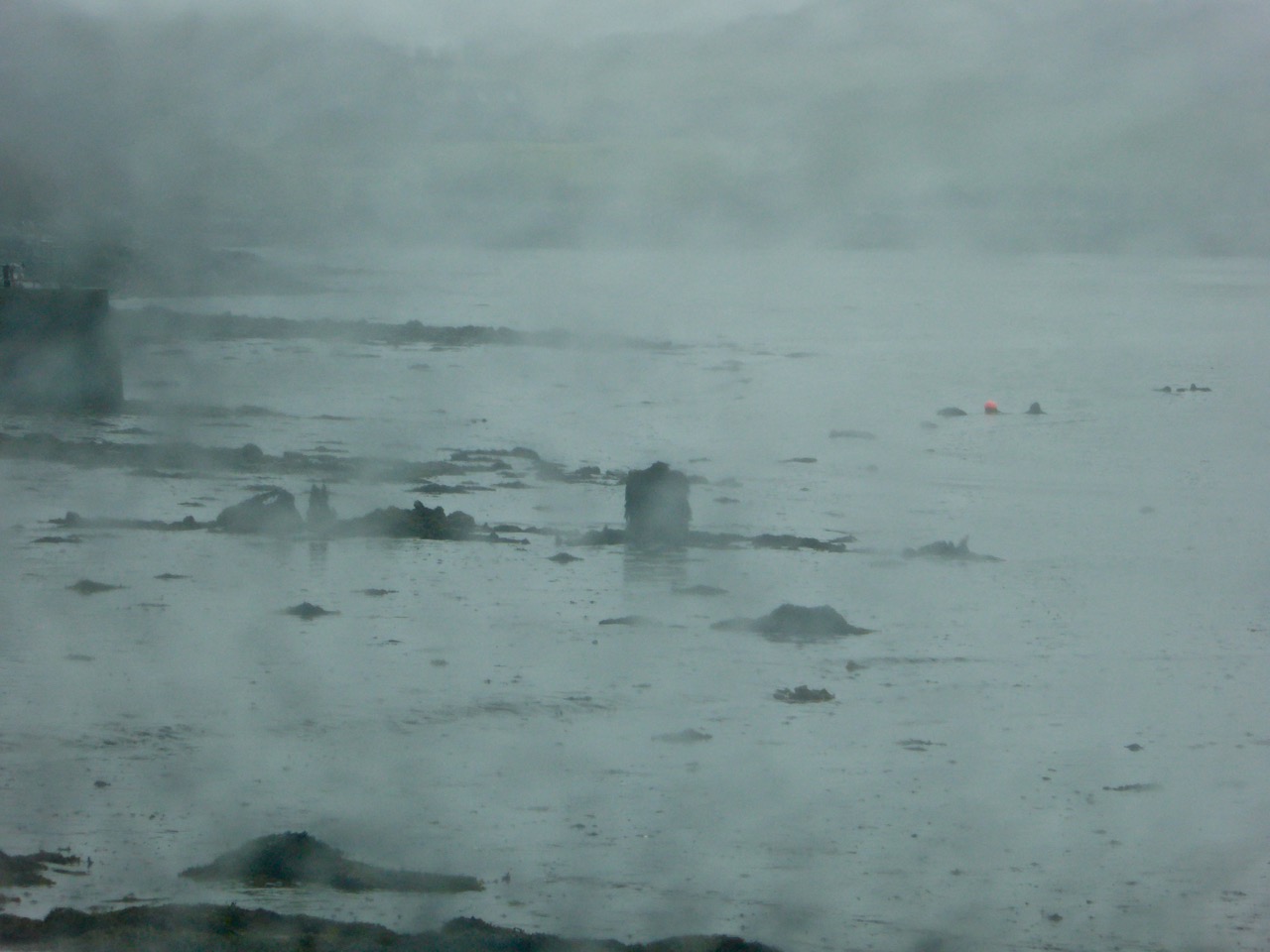
I followed the coastline all the way from Ballydehob Bay to our own Rossbrin Cove. Sure enough, whenever you could glimpse the sea, it wasn’t to be seen! But that might have had something to do with the all encompassing fog that had descended.

Sunken wreck

Is it a wreck? Or some debris discarded in the Cove?

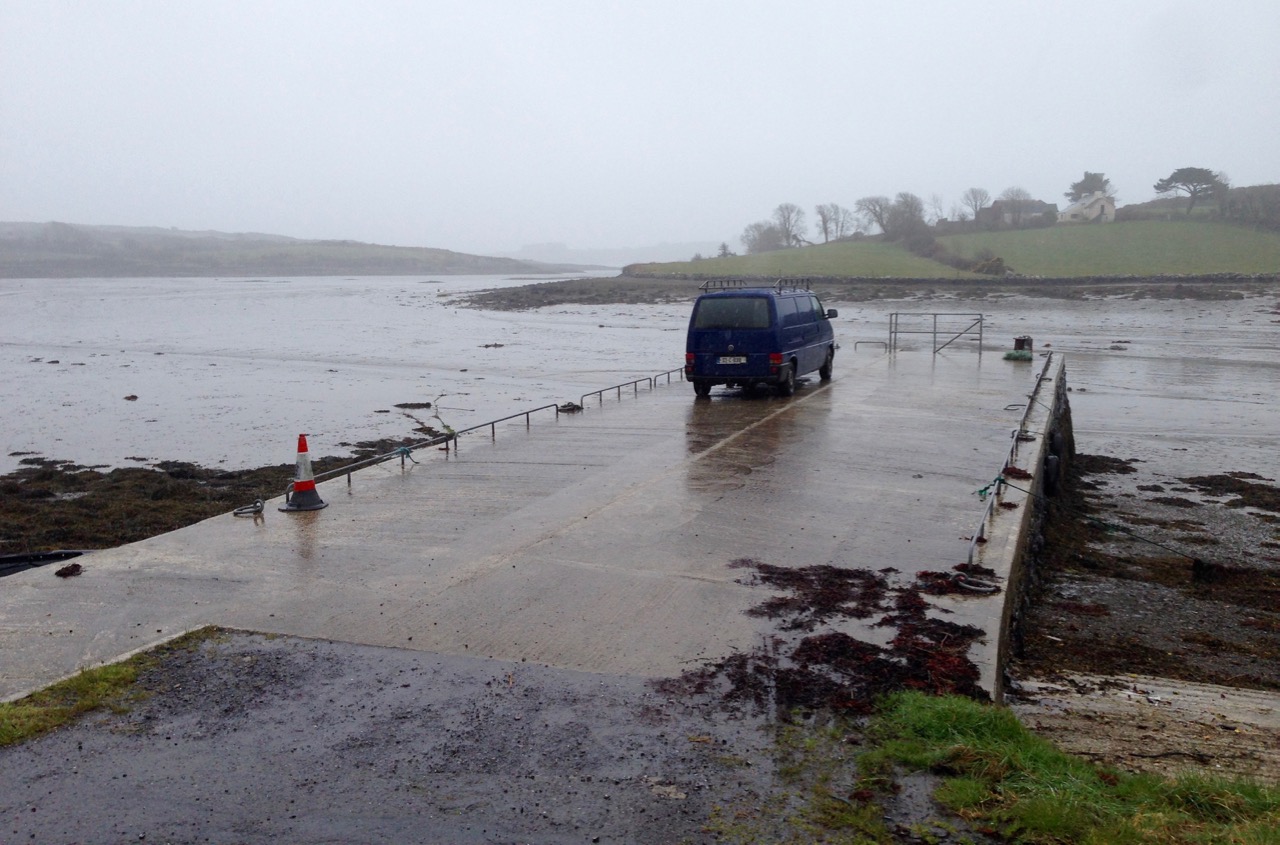
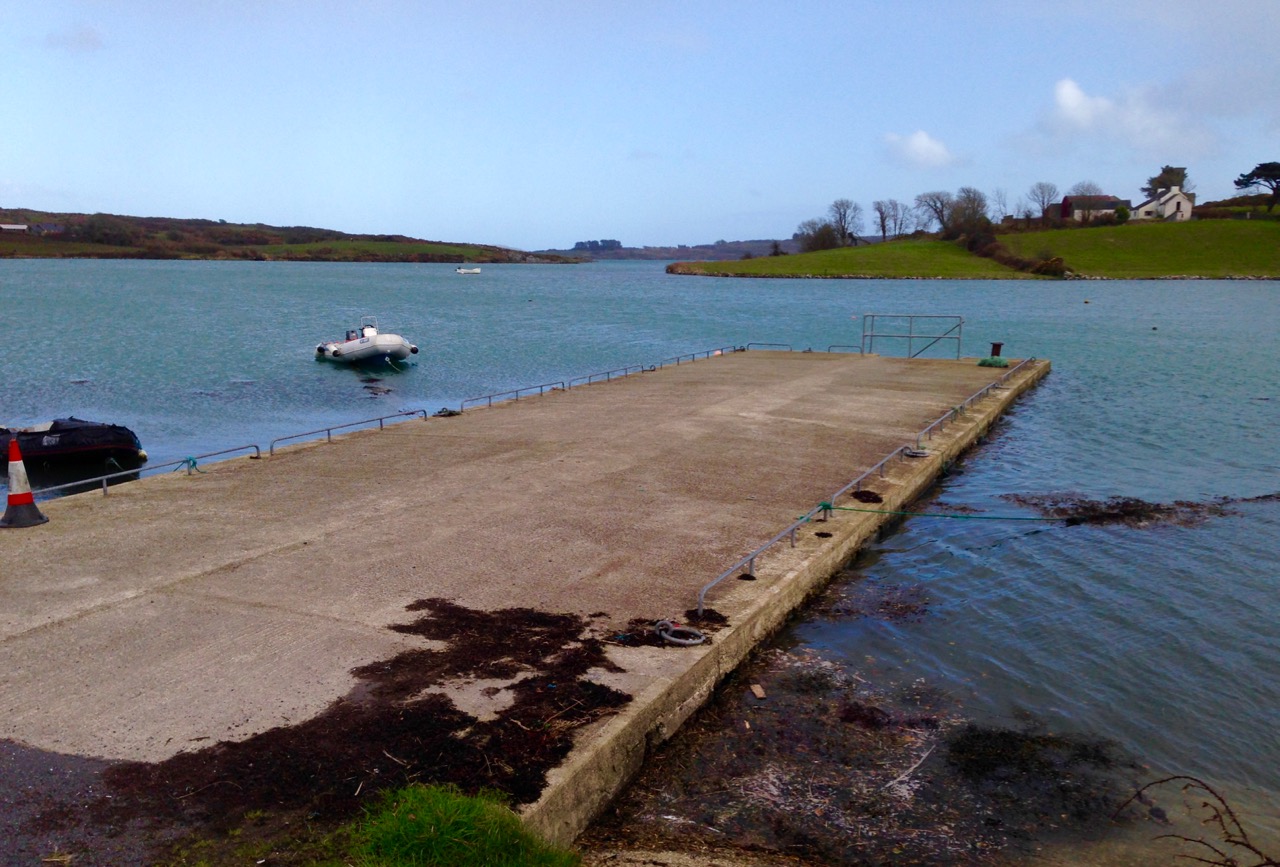
The modern quay in Rossbrin Cove seemed stranded and pointless, but Fineen O’Mahony’s tower house still managed to catch a reflection as the tide began to turn.

the quay gray day

Rossbring through rain

Rossbrin Castle – Fineen O’Mahony’s tower house – seen through a spotted lens

Of course, what goes down has to come up and – in the evening – I ventured out again to see the ‘high’ of 3.30.

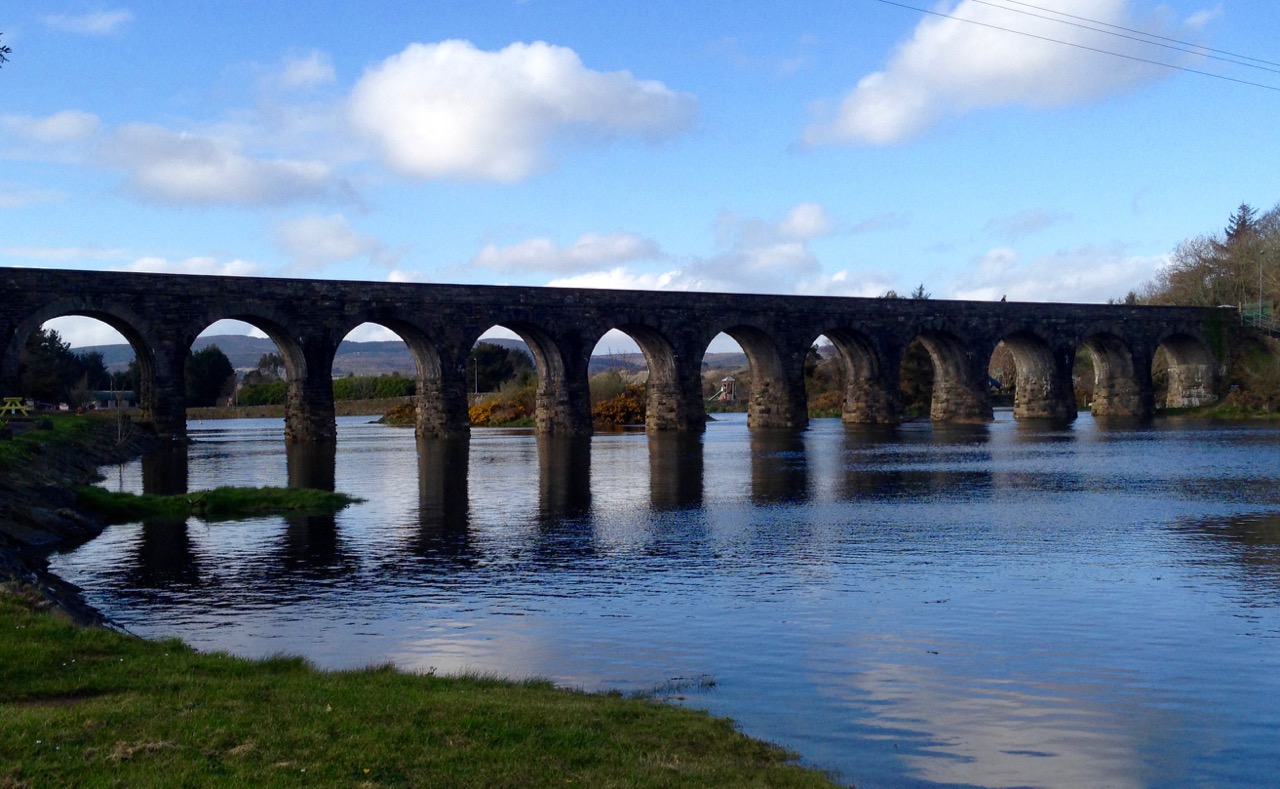
high tide 12 arched bridge

rosbrin pier high tide
Evening high water in Ballydehob (top) and at the quay in Rossbrin (below) – note the improvement in the weather!

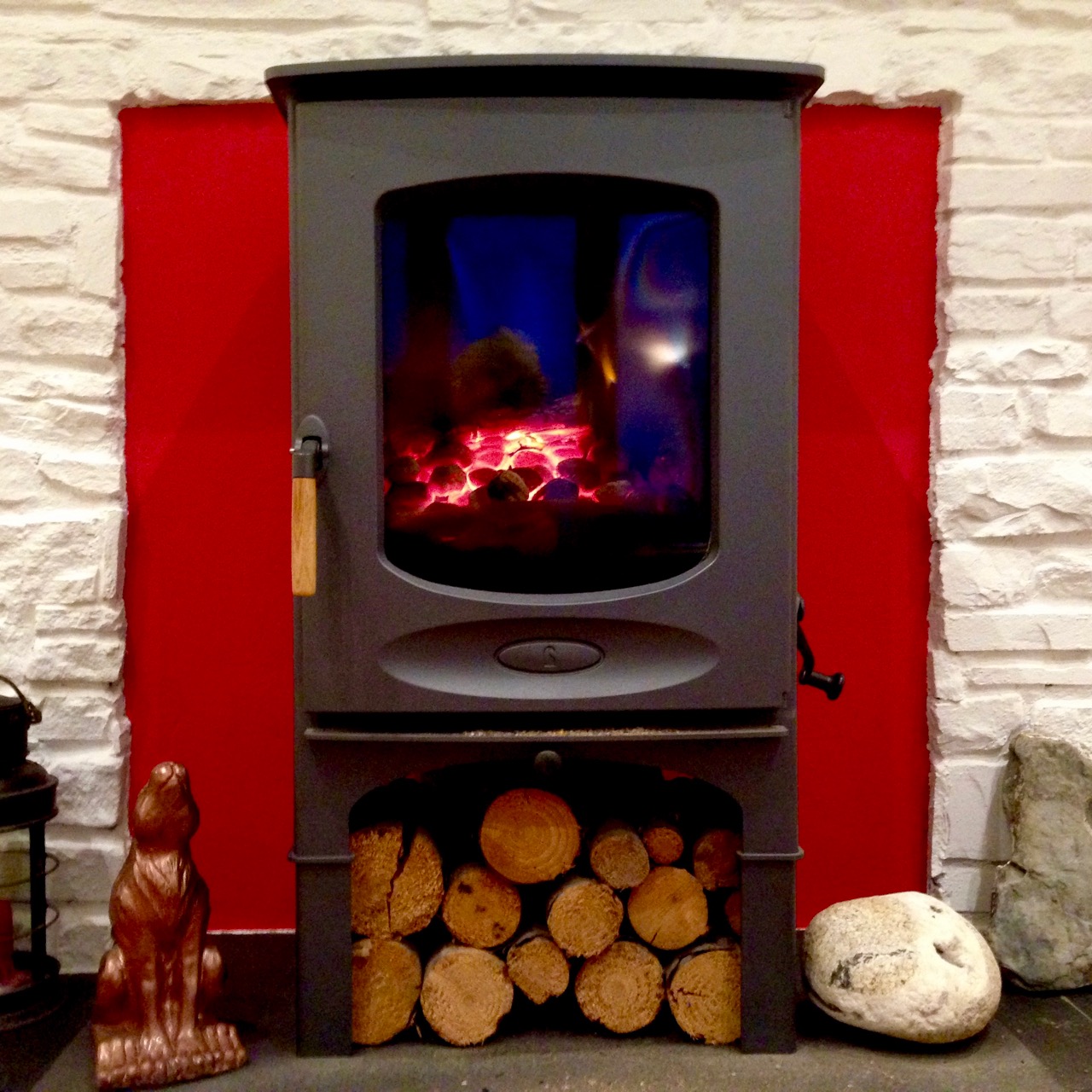
This is Ireland, so the day that was in it had changed completely with the tide: now we enjoyed clear blue skies and (watery) sunshine. Walking the shoreline was a pleasure! To be honest, you have to find your pleasure here from taking to the trails whatever the weather (as many of our occasionally bedraggled visitors might testify). It’s fine, as long as you have a good fire in the hearth to come home to…

the road to julian's house

Above – when the tide goes up, the road to Julian’s house goes under! Below – a hot fire to come home to…

hot fire

Lilian

Lilian Roberts Finlay

Lilian Roberts Finlay, the novelist and short-story writer, was brilliant, complicated, fascinating, infuriating, mendacious and beautiful. She was also my mother. She wrote all her life although she didn’t start to publish until her 70s. I recommend her book of short stories, The Bona Fide Husband, and her first novel, Always in My Mind (after that, things went downhill). Old copies are still available through Amazon.

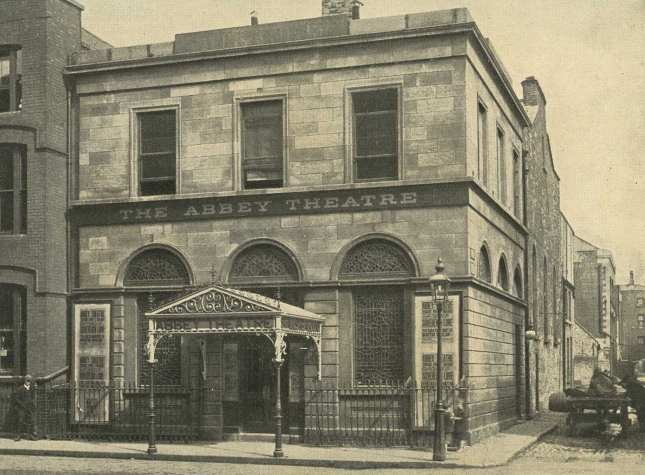
Old Abbey Theatre

The original Abbey Theatre , which was destroyed by fire in in 1951. The Abbey School of Acting was housed in the Peacock Theatre, an annex to the main theatre

Lilian died, aged 96, in 2011. Because her books have been out of print for a long time I was surprised when a Google search turned up a very recent reference to Always in My Mind. Intrigued, I logged on to a blog called Chasing Aideen, written by Ciara O’Dowd Conway. Ciara researches and writes (beautifully) about women in the early days of the Abbey Theatre, Ireland’s famous national theatre. She had been delighted to discover passages in the novel that described the narrator’s experiences as a student in the Abbey School of Acting, since the women she researches had been associated with that period (the 1930s) of the Abbey Theatre and the Abbey School as influential and pioneering actors, teachers and directors.

Riders To The Sea still

Shelagh Richards, Sarah Allgood and Ria Mooney in a 1937 film of Riders To The Sea by J M Synge

As part of the 1916 centenary celebrations the Abbey Theatre, last year, announced its 2016 year long programme. When the programme revealed how scandalously underrepresented women were as writers and directors, it created a furore. Almost overnight the WTF/Waking the Feminists movement came together to work for gender equality in Irish theatre. An exhilarating meeting in November galvanised a powerful new direction for Irish theatre women and they haven’t looked back since.

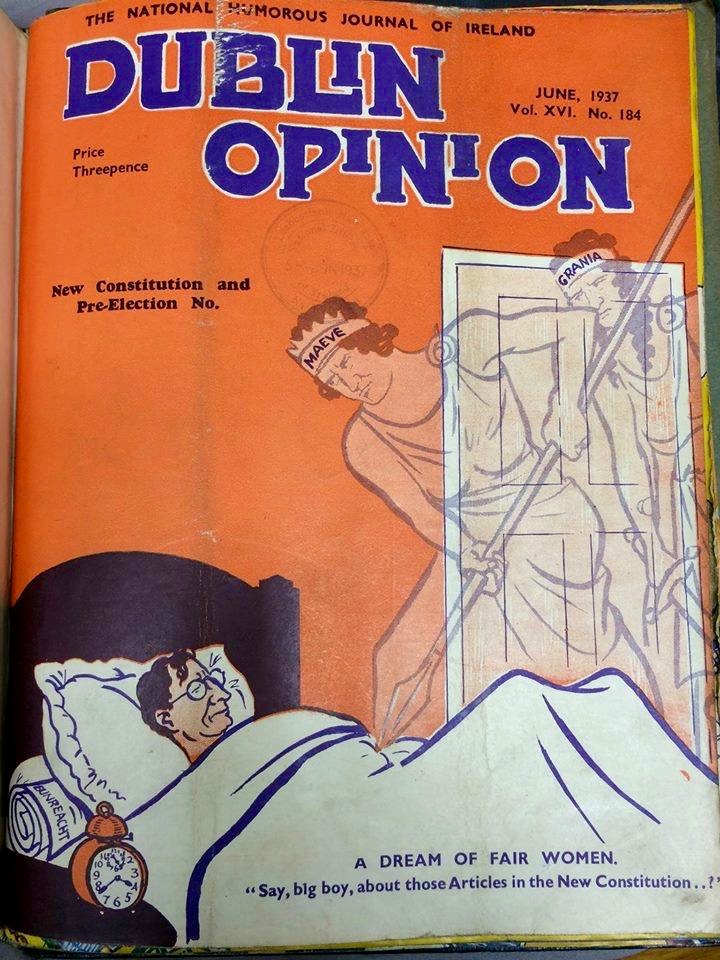
Dublin Opinion cover, 1916, De Valera, Irish women, constitution

This 1937 cover of Dublin Opinion, a satirical magazine, shows the ancient and powerful women of Ireland haunting De Valera’s dreams. While women had fought for Irish freedom and while the 1916 Declaration of Independence promised equality for all citizens, the Constitution assigned women to a ‘special role in the home’

For Ciara it was all too reminiscent of the challenges that had faced her ‘girls’ in the 30s and 40s. Was it really still going on, 80 years later? She wrote a piece on the WTF website – sorry, this is no longer available, but it helped me to understand her reaction and her decision to use her website as her own personal contribution to Waking the Feminists.

Lilian 1937

Lilian, about the time she studied at the Abbey School of Acting

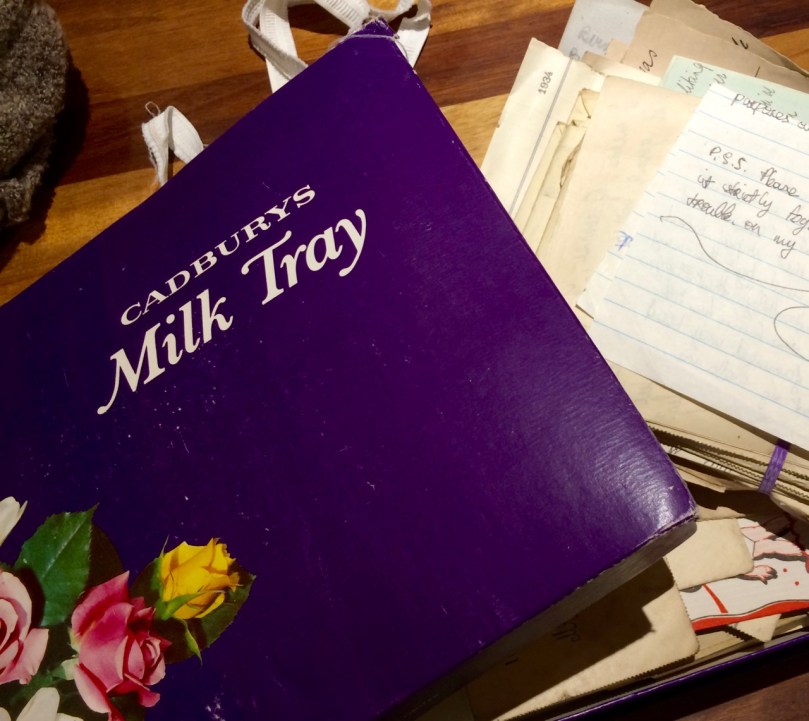
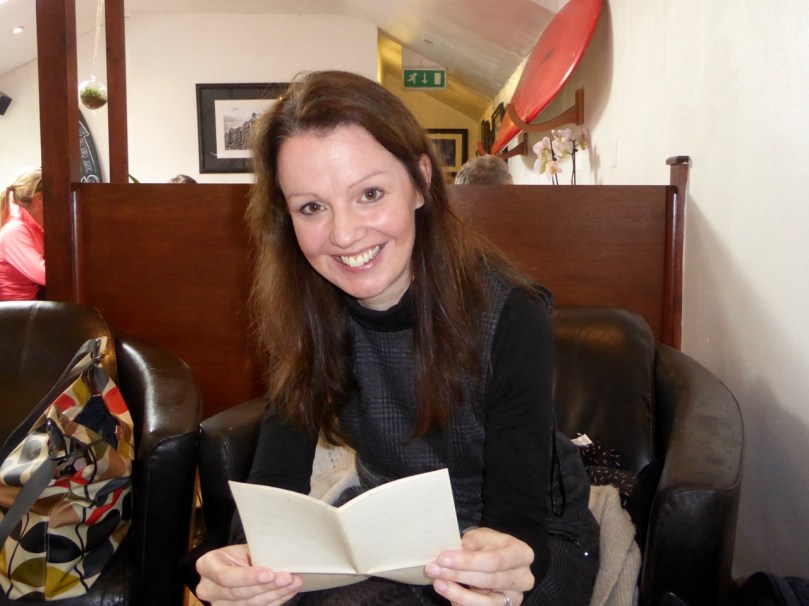
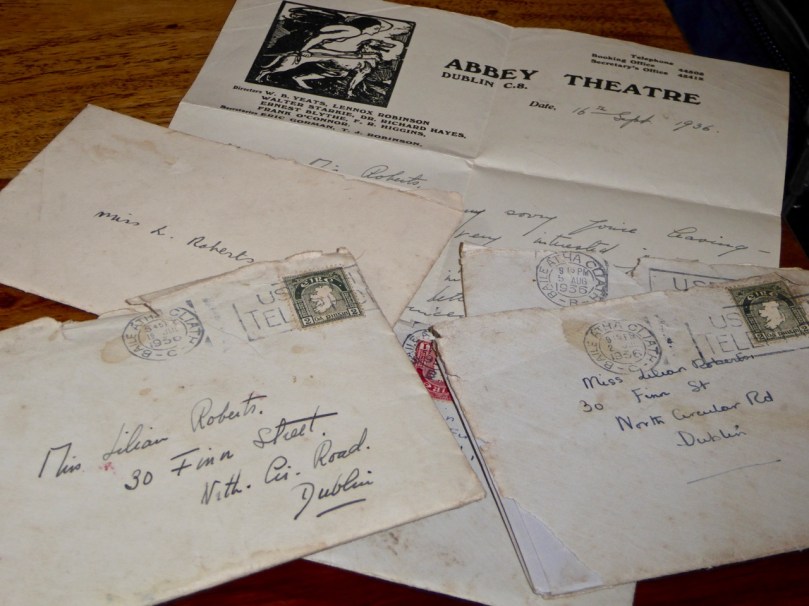
Back to Lilian. When I read Ciara’s blog piece, I contacted her to say that we had some letters from my mother’s Abbey School of Acting days that might be of interest to her. Not only that, I was able to put her in touch with Ria Mooney’s niece, a friend of mine who lives in Vancouver. Ciara and Robert and I met over coffee  in Dalkey last week and yes, the letters in the old chocolate box turned out to be grist to the mill for Ciara.

Chocolate Box

She has written a couple of posts already about them, and there are more in the works. She writes in an expressive and entertaining style, so why don’t we let her take up the tale from here? I’ve put a link so you can leave Roaringwater Journal at the end of this post and head on over to Chasing Aideen

Ciara and letter

Ciara has her first read of a long letter from Ria Mooney to Lilian

But come back when you’re finished and tell me what you thought of it all. If you want to know more about Lilian, you can read obituaries here, and here.  Just don’t believe everything you read – my mother specialised in fiction, after all.

Lilian letters

The precious letters, written 80 years, now scanned and ready for study by Ciara

OK, off you go. Read this one first, and click on ‘next post’ at the end to continue (or click here).

And next week, I’ll get back to writing about West Cork…

Fourknocks – the Little Giant

Interior

For our own Easter Monday celebration – while staying in Dublin – we took a trip out to Fourknocks. This is a decorated chambered cairn within the Boyne Valley complex, but very much a ‘little brother’ to the better known attractions of Newgrange, Knowth and Dowth.

key

Only in Ireland would you be instructed to travel a mile down the road to pick up the key to a 5,000 year old monument (leaving a 20 Euro deposit for its safe return) and let yourself in by unlocking a heavy steel door that guards the way into the passage… But don’t be put off: it’s so well worth the effort. With luck you will be the only visitors and you will have the place to yourself – apart from the sheep families who share the field with Fourknocks. The name probably means ‘The Cold Hills’ – that’s the translation of the Irish Fuair Cnoc

sheep

Fourknocks was unknown to archaeologists until a chance conversation in 1949, when a woman making a visit to Newgrange mentioned, “there are mounds like this on my uncle’s farm…” The site was then explored and excavated by Archaeologist P J (Paddy) Hartnett in the early 1950s. You can read the full excavation report* online, by signing on to JSTOR. Like all the Boyne Valley Neolithic monuments, the mound had collapsed inwards and the dig involved removing layers of earth and fallen stone, analysing the spoil material and working out how the original structure had been put together. It’s methodical, scientific – and pretty dry reading! However, I couldn’t help being completely entranced as I imagined spectacular carved stones gradually being revealed, unexpected artefacts being turned up, and the unusual dimensions of the central chamber being realised.

excavationdiagram

P J Hartnett’s excavation diagram – from his report published in 1957

This ‘pear shaped’ central chamber measures 41.92 sq metres in area, considerably bigger than those at Newgrange (16.50), Knowth (20.21) and Dowth (15.21). However, the mound itself is relatively small – a ‘pimple’ on the hillside with a diameter of only 19 metres (Newgrange has a diameter of 85 metres). Yet, when you stand on top of Fourknocks, you understand its significance – there are panoramic views in every direction over countryside, ocean and mountains. You might expect to see the other Boyne Valley monuments but in fact they are hidden by a ridge, so this one enjoys splendid isolation in every respect.

Pan 2

Pan 4

Pan 5

P1210637

Cardinal Points: panoramic views in all directions from the mound of Fourknocks

Something else that’s unusual about Fourknocks is the way it has been reconstructed. Restoration of Archaeological structures has often been controversial. In Ireland the most notable example is Newgrange itself: Professor Michael J O’Kelly, who was in charge of the works there from 1962 to 1975, imagined that large numbers of white quartz stones which were found in and around the collapsed mound could have been used to face the entrance wall and duly designed the reconstructed passage tomb around this premise. He was (and still is) criticised for this ‘leap of faith’ – but, for me, the result is entirely justified: whether or not the original structure did look like this is perhaps irrelevant, as it has bequeathed to us such a visually iconic and powerful symbol of Neolithic Ireland…

Above and left: the great passage grave of Newgrange before excavation, Right: the iconic face of the restored monument today (image courtesy of Our Irish Heritage)

At Fourknocks the excavations did not prove that the chamber was ever roofed over. Certainly there was stone corbelling to suggest that this might have been attempted, but it is unlikely that the large span of the central court could have been enclosed in this way with the available technology, and the weight of the number of stones. However, complete enclosure is likely to have been a necessity, and a central post hole – which would have accommodated a large timber pillar – was found: Hartnett suggests that the roof covering was completed using light timber rafters and thatch. Rather than simulate this, a solution has been employed which is entirely modern – but, in fact, as imaginative as O’Kelly’s ideas at Newgrange: a reinforced concrete shell roof has been cast completley around and above the excavated structure. So what we see today as the ‘mound’ is a concrete dome which has been turfed over.

Open Door: the entrance to Fourknocks chamber outside and inside

But this 1950s innovation is far cleverer than it might seem. Cast into the new shell are holes and slits which project limited shafts of daylight into the otherwise unlit chamber. Each shaft has been carefully orientated to cast natural light on to one of the spectacular examples of megalithic art which are the showstoppers of this monument.

zaggy

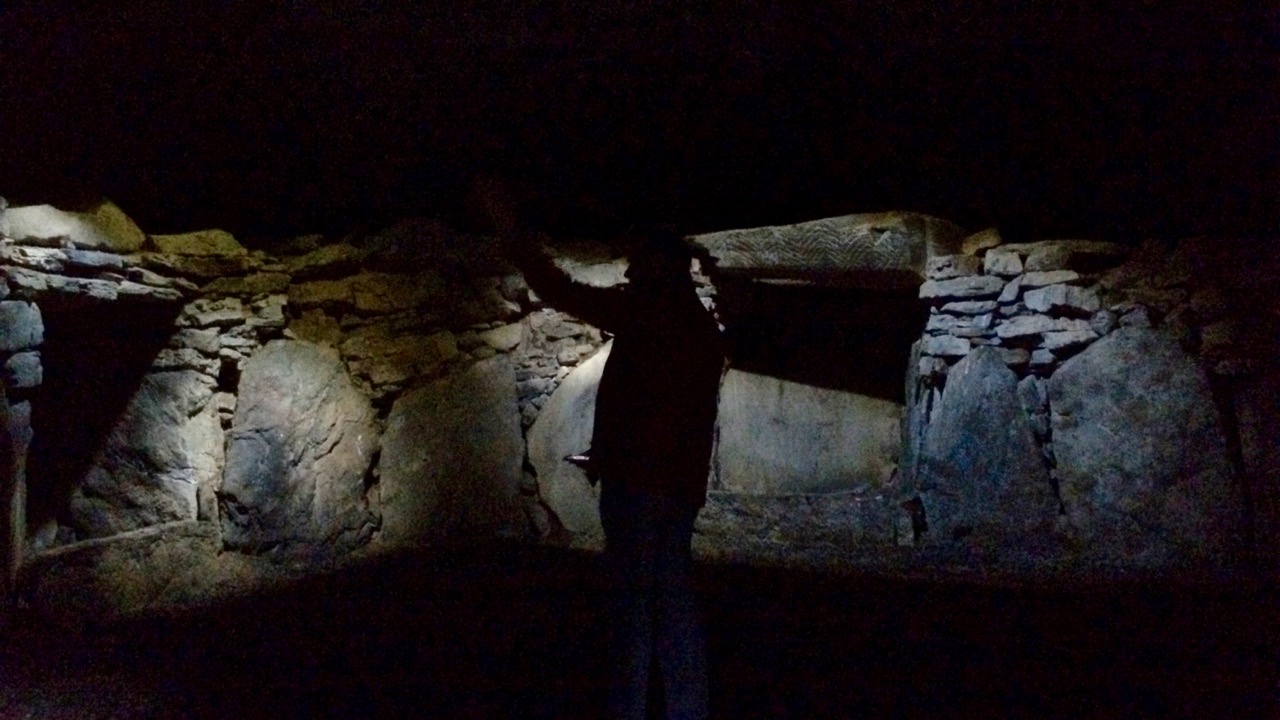
To properly experience the unique adventure of Fourknocks, go inside and – be brave – shut the heavy door behind you. Immediately you are in darkness, and disoriented. But wait: as your eyes adjust, the chamber comes alive.

zigs

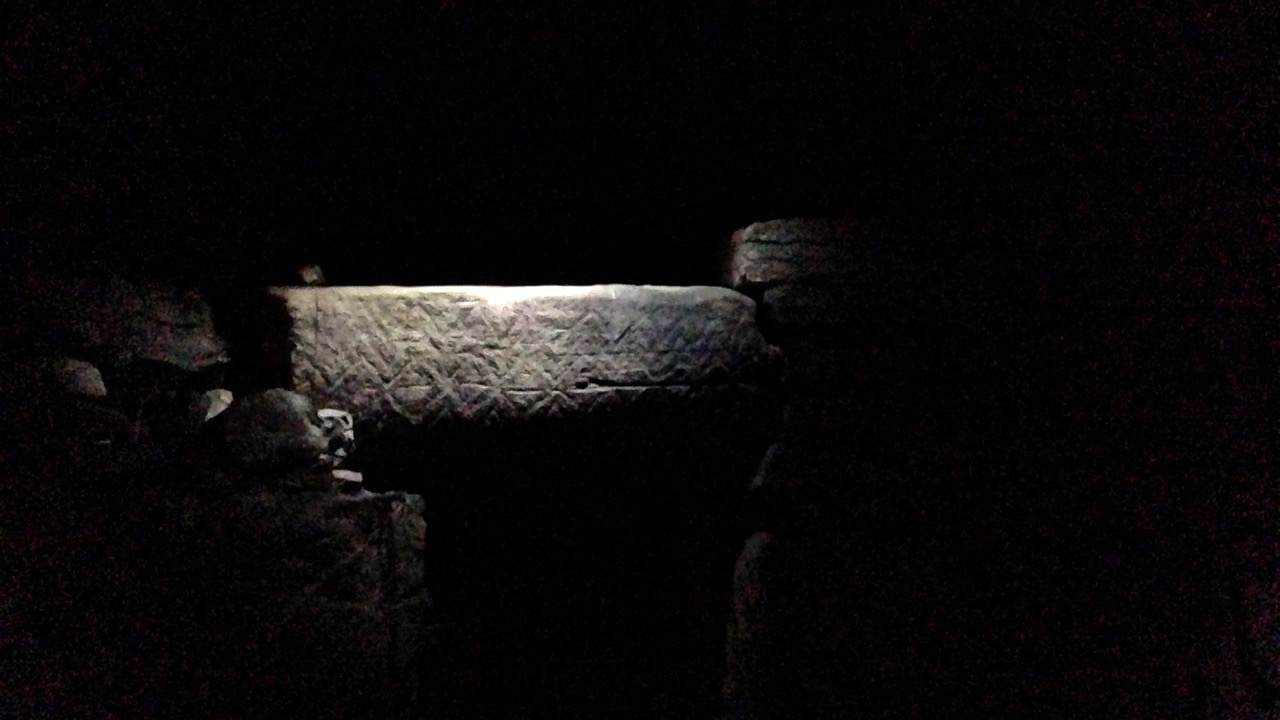
The subtle shafts of daylight filtering through the roof perforations focus on their targets and, gradually, you realise that you have entered a gallery of startling images – images made by our ancestors thousands of years ago…

concentric

As Rock Art enthusiasts, our particular interests lie in the cupmarks, concentric circles and other carvings found on outcrops and boulders dispersed over the Irish (and British) landscape: it’s fascinating and intriguing – but should we call it Art? Perhaps those marks have been made as signposts, to define territory, or to provide information to passing visitors – we just don’t know. But, with the carvings at the Boyne Valley monuments there can be no doubt: their purpose is to startle, impress and delight – Art, with a capital A! Fourknocks is such a good example of megalithic or passage grave art, not because of its quantity or complexity (you’ll find far more elsewhere) – but because of the context: the fact that you can stand there on your own and be startled, impressed and delighted – without the intervention of artificial lights, interpretation centres or display boards. It’s just you and the Neolithic mind in there.

Chambers 3

Fourknocks, the Newgrange complex, Loughcrew, Carrowkeel: there is even a passage tomb in our view from Nead an Iolair – over on Cape Clear Island and it produced a fine example of megalithic art, now in the Cork Public Museum. What were they for? In spite of being sometimes called passage graves or passage tombs we can’t assume necessarily that interment was their primary purpose, although significant human remains were found at Fourknocks, including cremations, skulls and bone fragments. Many of these are dated much later than the main structure – Bronze Age rather than Neolithic – suggesting a continuing use of and respect for the monuments over long periods of time. I hope we always retain that respect: the risk of the unsupervised access that we can enjoy at Fourknocks is a vulnerability of the site. Sadly, there is graffiti apparent on some of the stones, although this may be historic.

two sided

I could find no trace of folklore, legends or stories relating to Fourknocks. This is unusual for an ancient site in Ireland. Perhaps it’s because the place was lost to all but very local human memory for so long. Apart from the restored mound there appears to be either two or three other disturbed earthworks close by but not accessible – could this be the origin of ‘four’ cnocs (hills)?

effect 1

not a face

For more excellent photographs of this monument have a look at Ken William’s work in Shadows and Stones. If you are passing this way – as we were – perhaps on your journey to see the marvels of Brú na Bóinne, don’t hesitate to look out this wonder of the megalithic world- it’s a little giant!

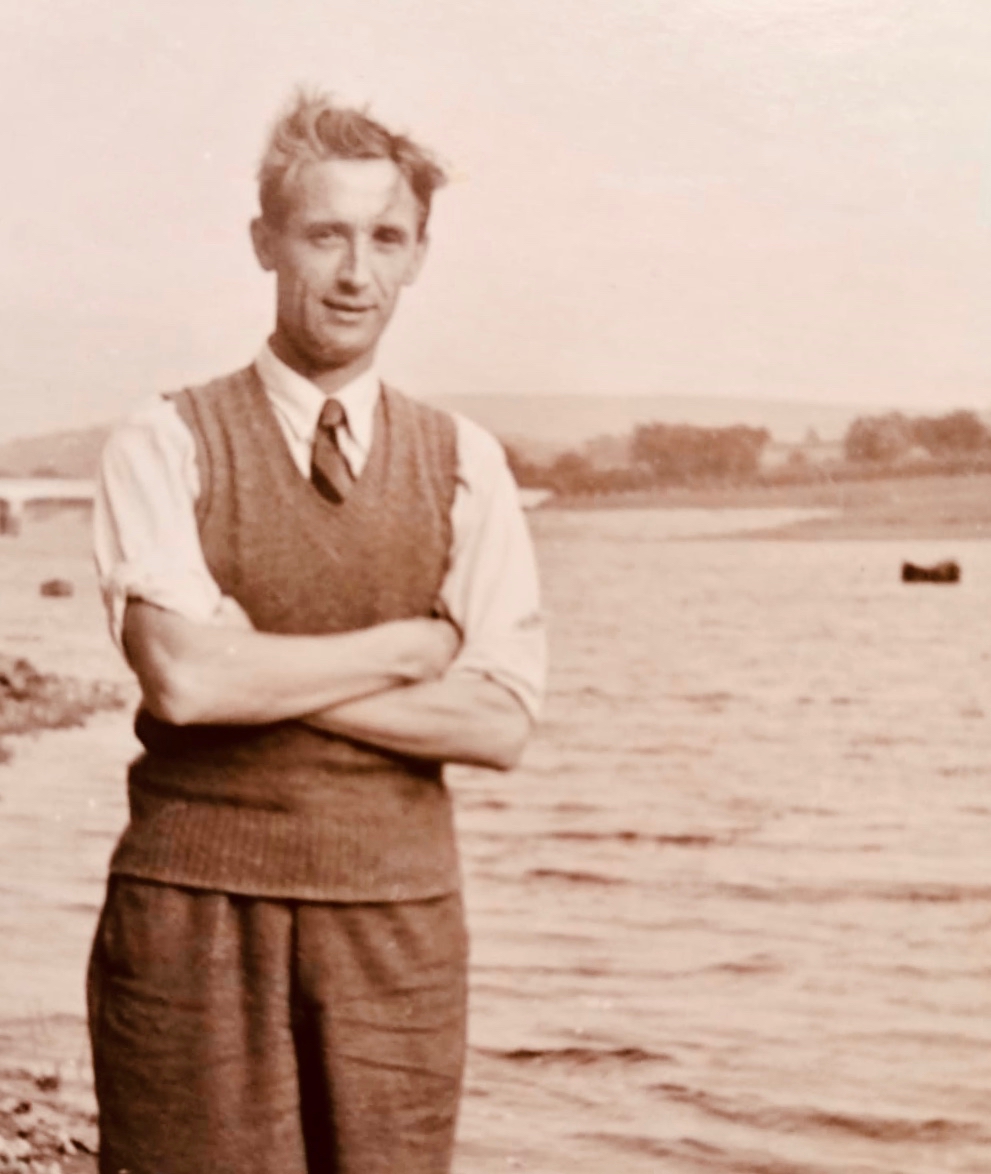
Below: P J Hartnett, a photograph taken at around the time of  the excavation of Fourknocks, 1950s. Many thanks to his grand-daughter, Dee McMahon, for providing this and further historical information

Excavation of a Passage Grave at Fourknocks, Co Meath: P J Hartnett – Proceedings of the Royal Irish Academy. Section C: Archaeology, Celtic Studies, History, Linguistics, Literature Vol 58 (1956/1957), pp 197-277