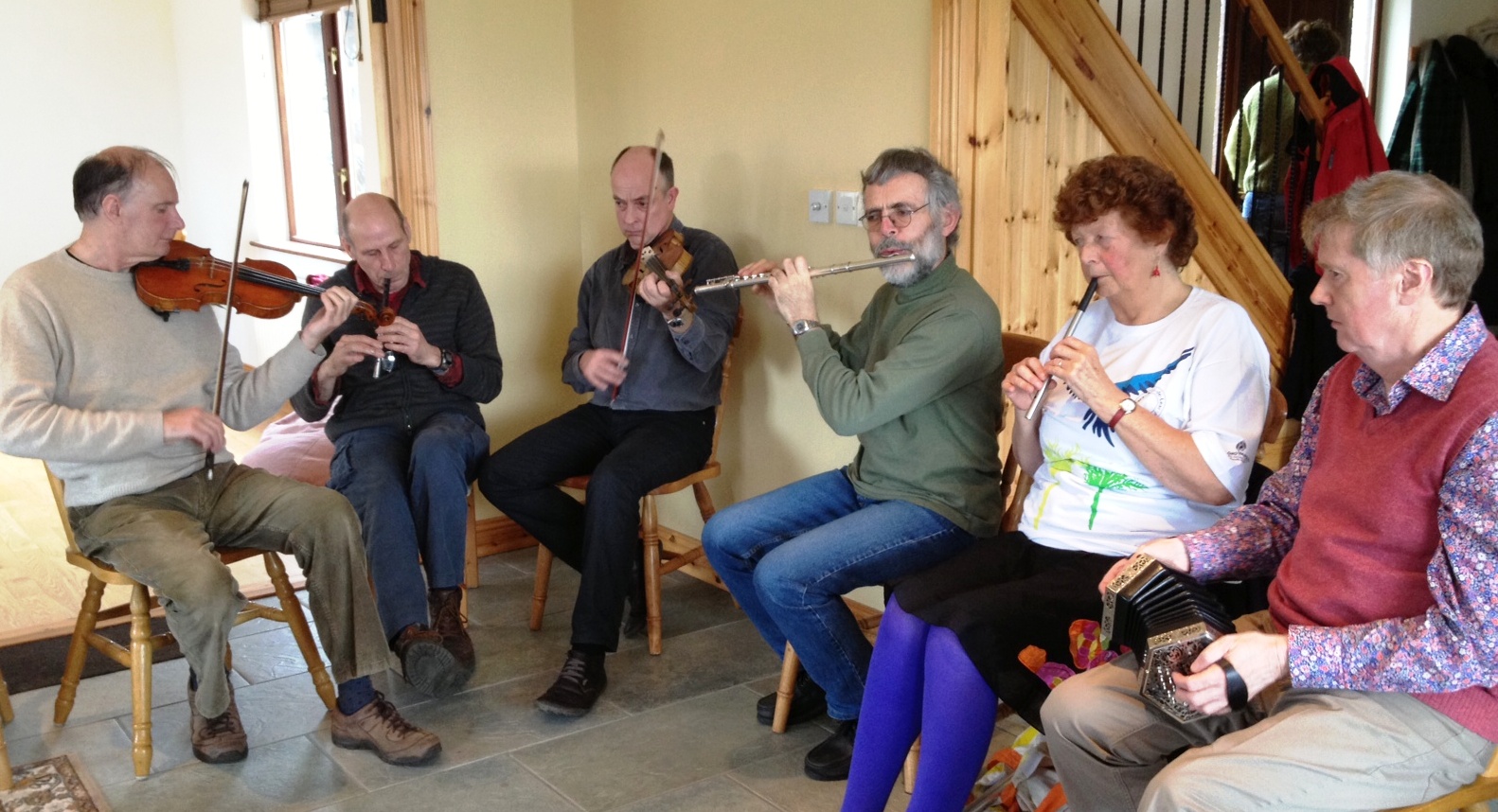
Craic agus Ceol

Let's Make Music!

Let’s Make Music!

First the Drink, Then the Story – this is the legend above Rosies’s pub in Ballydehob. In that spirit, we hosted a brunch at Ard Glas today for about 25 people. It was to say goodbye for a while to all of the wonderful people we have met since coming to live in West Cork and to thank them for their friendship.

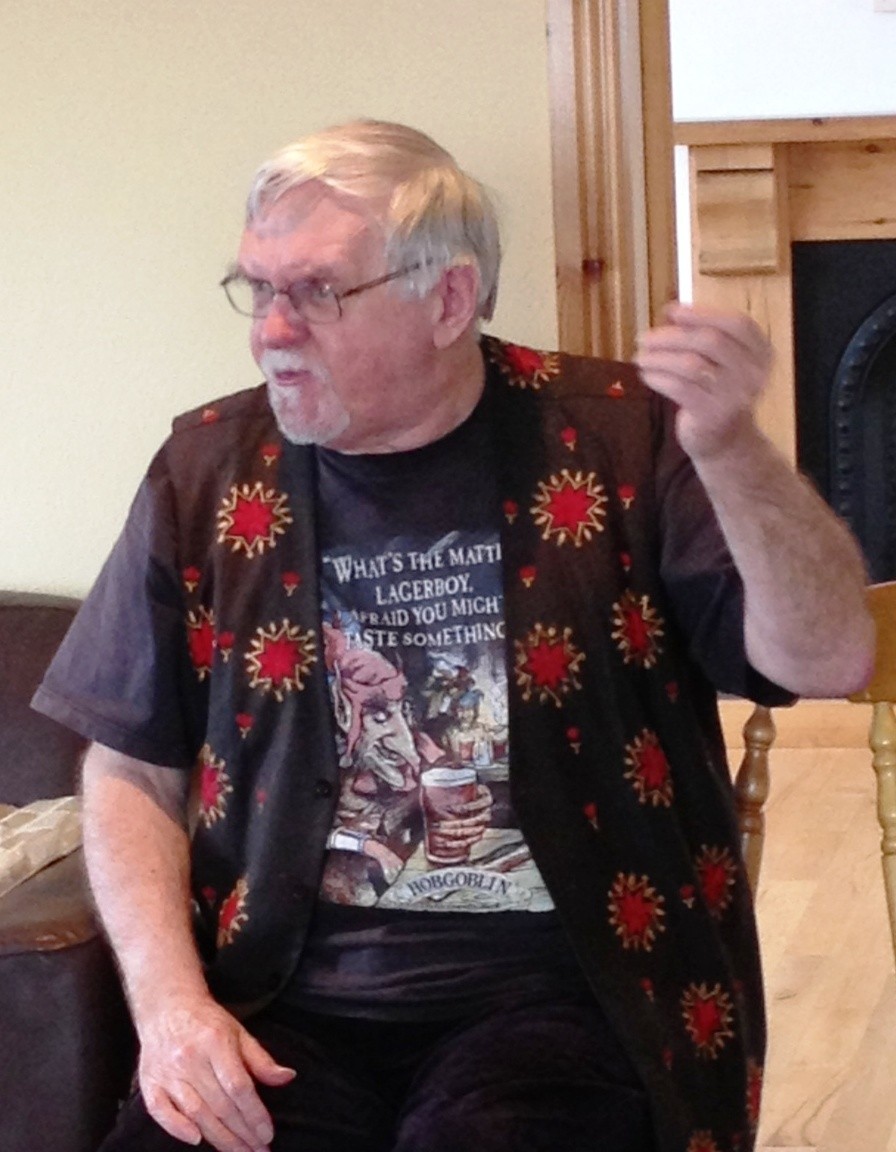
Michael tells a Dartmoor Story

Michael tells a Dartmoor Story

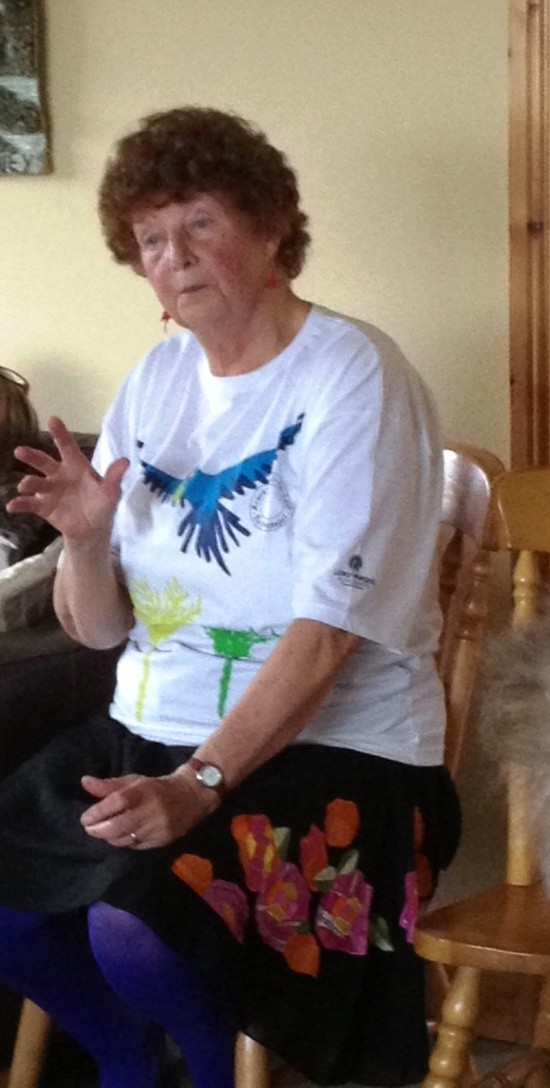
Gillian tells The Beekeper and the Hare

Gillian tells The Beekeper and the Hare

Friends of Robert’s, Michael and Wendy Dacre of Raven Tales, are in Ireland and have come to stay for a few days. They are professional storytellers, with a wide repertoire of stories and songs from around the world, and we took advantage of their visit, and of our friends among the session musicians we have met, to bill this as a Stories and Music Brunch.

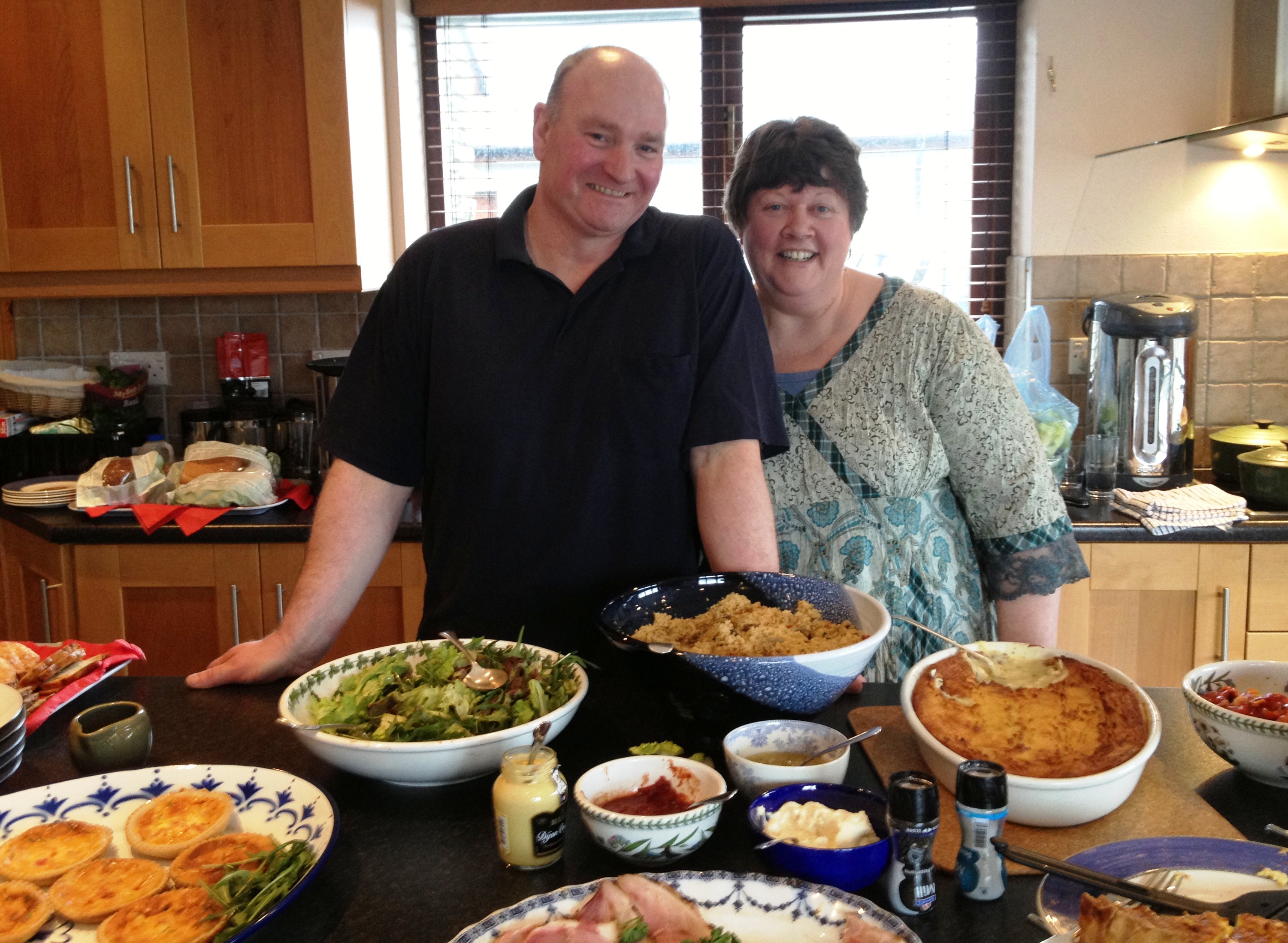
The food was fantastic, thanks to our wonderful catering team of Jo and Bob O’Toole, and when everyone had eaten and drunk their fill we started on the music and the stories.

We listened, wrapt, we tapped our toes, we sang along, and of course we talked and laughed and ate and drank the afternoon away.

You can read Amanda’s take on the afternoon here.

Jo and Bob, our wonderful caterers

Jo and Bob, our wonderful caterering team

Ghosts of the Past

An abandoned village slowly returns to the bog

An abandoned village slowly returns to the bog

Amanda, Bardic School

Amanda, Bardic School

Amanda and Peter Clarke were our hosts yesterday for a Sheep’s Head Day. They know the peninsula intimately and were able to take us to places we would never have found on our own. They also love it: they have made their lives in Ahakista in a beautiful old farmhouse with a productive garden, and between them manage several projects that are great local resources.

We have written about the Sheep’s Head Peninsula in previous posts. It’s a wild and beautiful place, criss-crossed by a network of world-class marked trails, and full of prehistoric and historic sites. Part of our tour took in the Bardic School, about which Robert wrote in his Kings and Poets piece. But mostly what we saw was new to us: an impressive stone circle and a stone alignment, a lonely and moving famine graveyard, the remains of a pre-famine village, and finally a holy well and mass rock site.

The stone circle is probably the recumbent type, in which two tall portal stone stand opposite a stone with its longest axis parallel to the earth. The sightline from the portals over the recumbent stone is often focused on a solstice sunrise. Stone alignments in this area tend to be three to five stones in a row and may also be part of the solar and lunar observatory system that is characteristic of many Neolithic and Bronze Age monuments.

2013-03-02 11.04.30

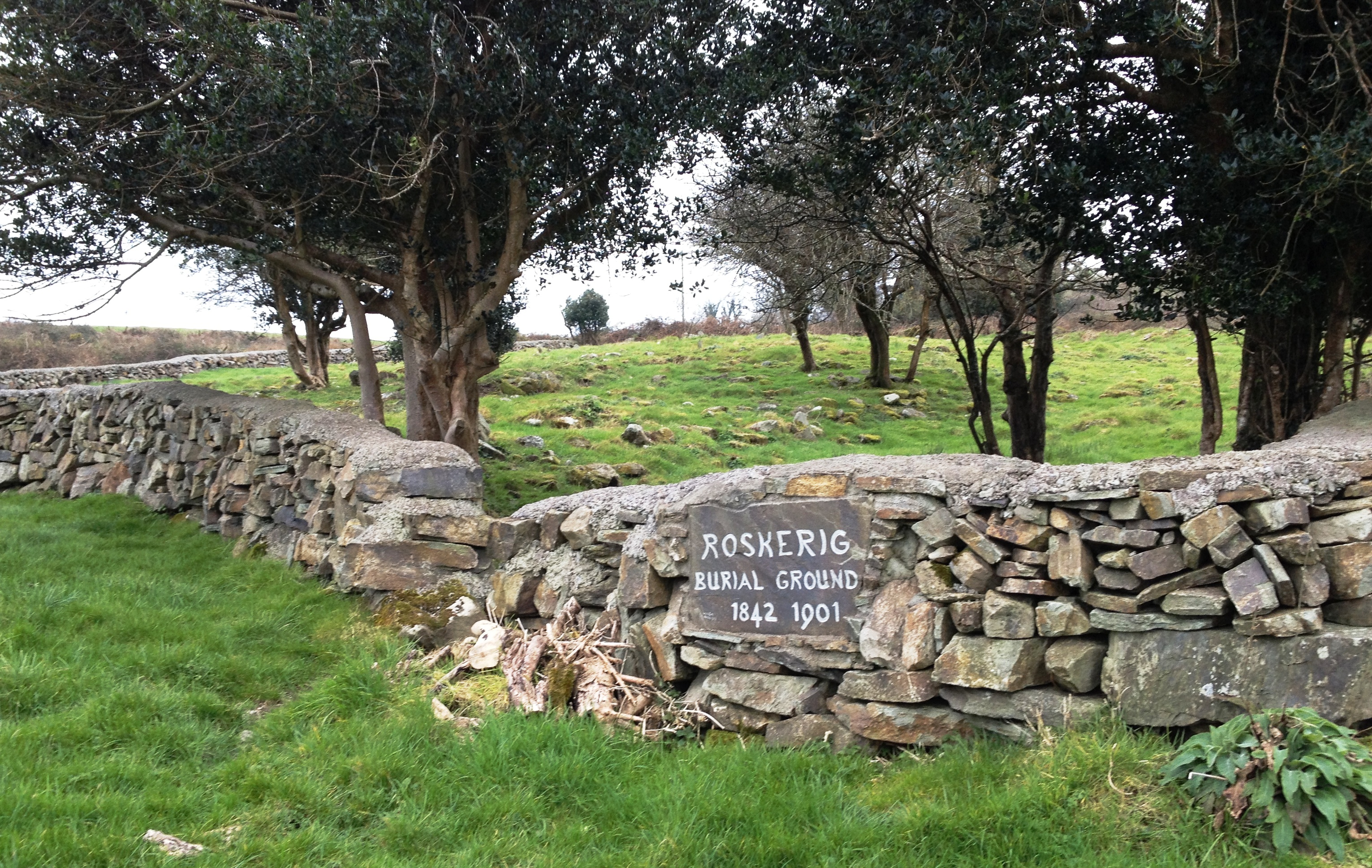
Ireland before 1845 had a population of 8 million people. Over a million died of starvation and disease and another million emigrated in the period of the Great Famine, from 1845 to 1852. West Cork was one of the epicentres of the disaster. It is still alive in the folk memory of the people and we saw two graphic reminders of it on our tour. The first was the Roskerig burial ground. Although stones were scattered around the graveyard, not a single inscription was visible, as if it had been hastily used in a chaotic time and then forgotten. The second reminder was the remains of a long-abandoned village, now slowly returning to the bog.

2013-03-02 11.23.39

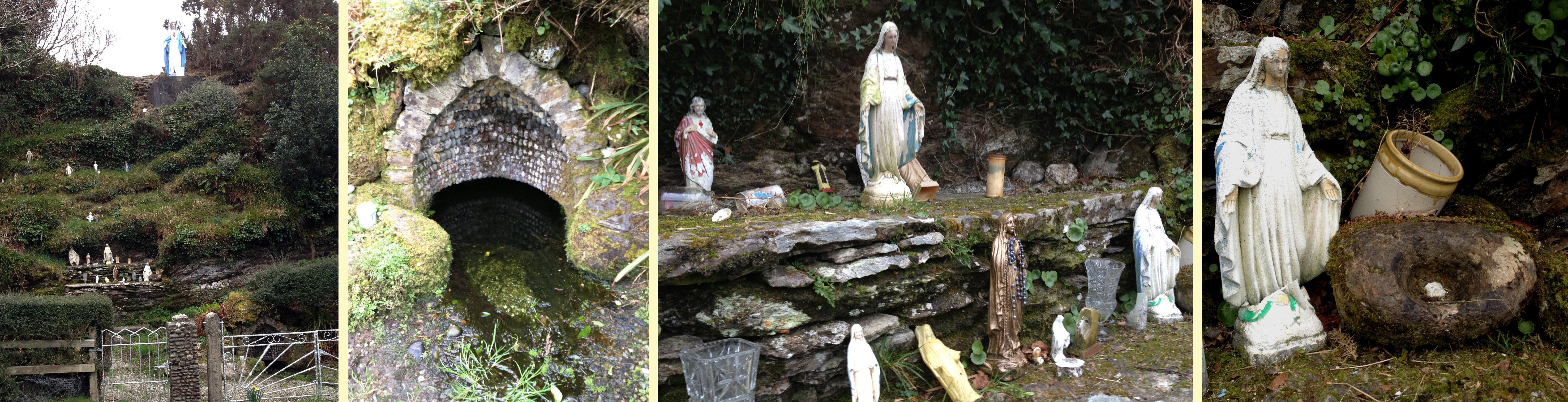
The holy well and mass rock are dedicated to Mary and are adorned with multiple images of her. The well is still in use and credited with miracle cures. The mass rock, where a crowd would gather outdoors in the days of the Penal Laws that outlawed Catholicism, to hear mass, is well preserved. When the Redcoats got wind that a mass was in progress and came to arrest the priest, Mary threw up a thick mist around the area to confuse the soldiers and allow the priest to escape. In acknowledgement, we deposited our coins in the well and said a prayer for something close to our hearts.

well

Road Trotting

watching

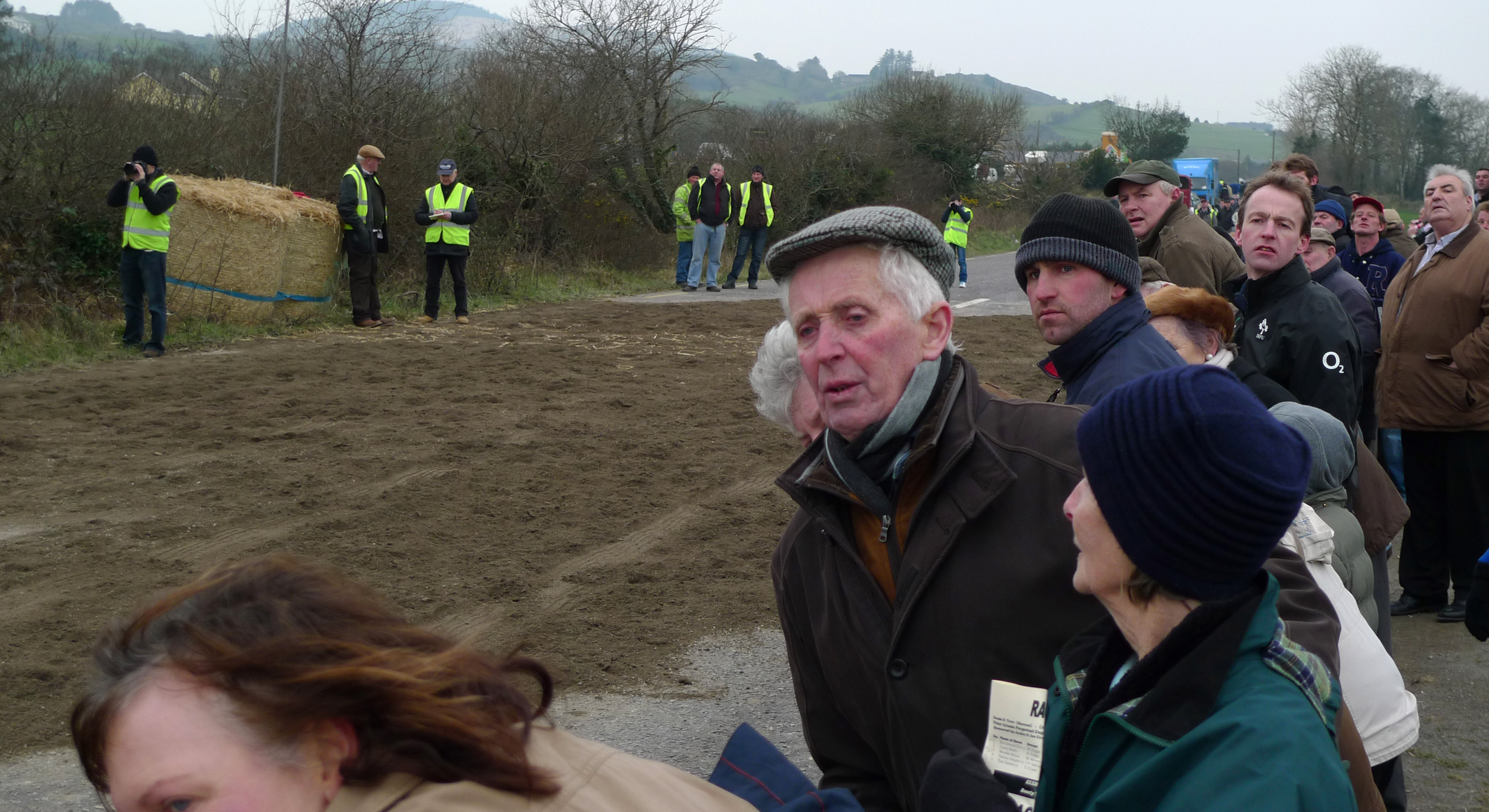
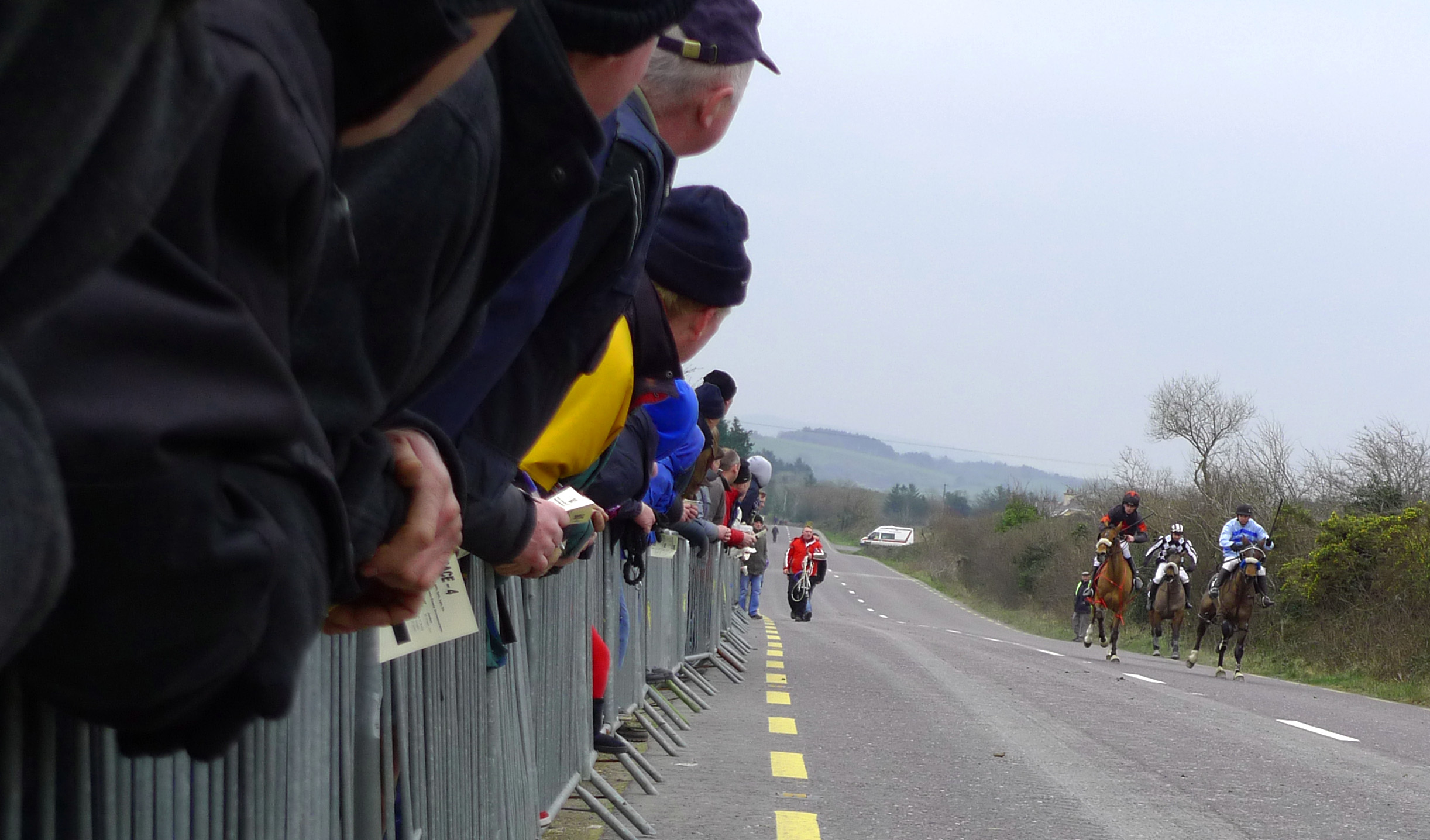
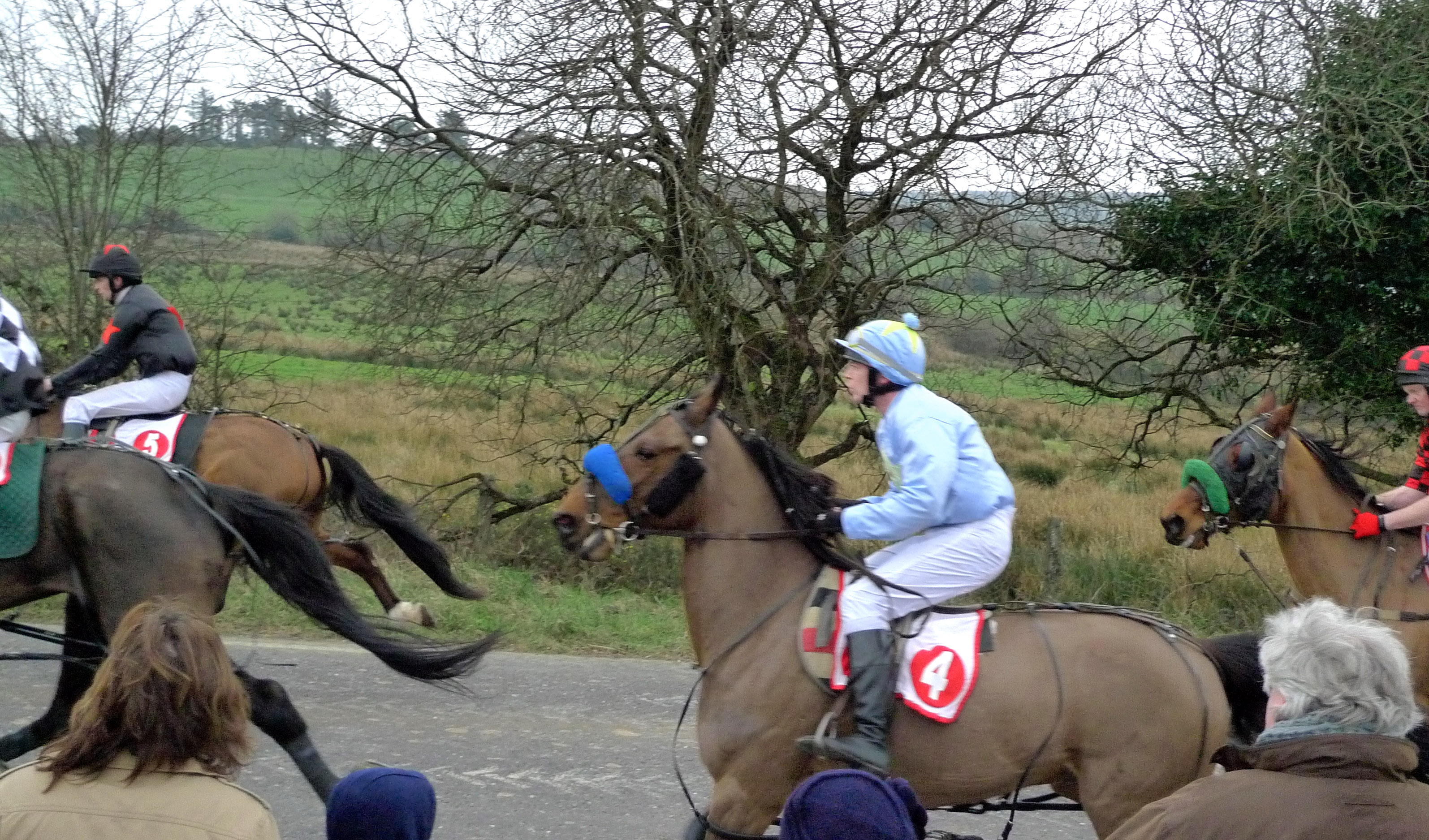
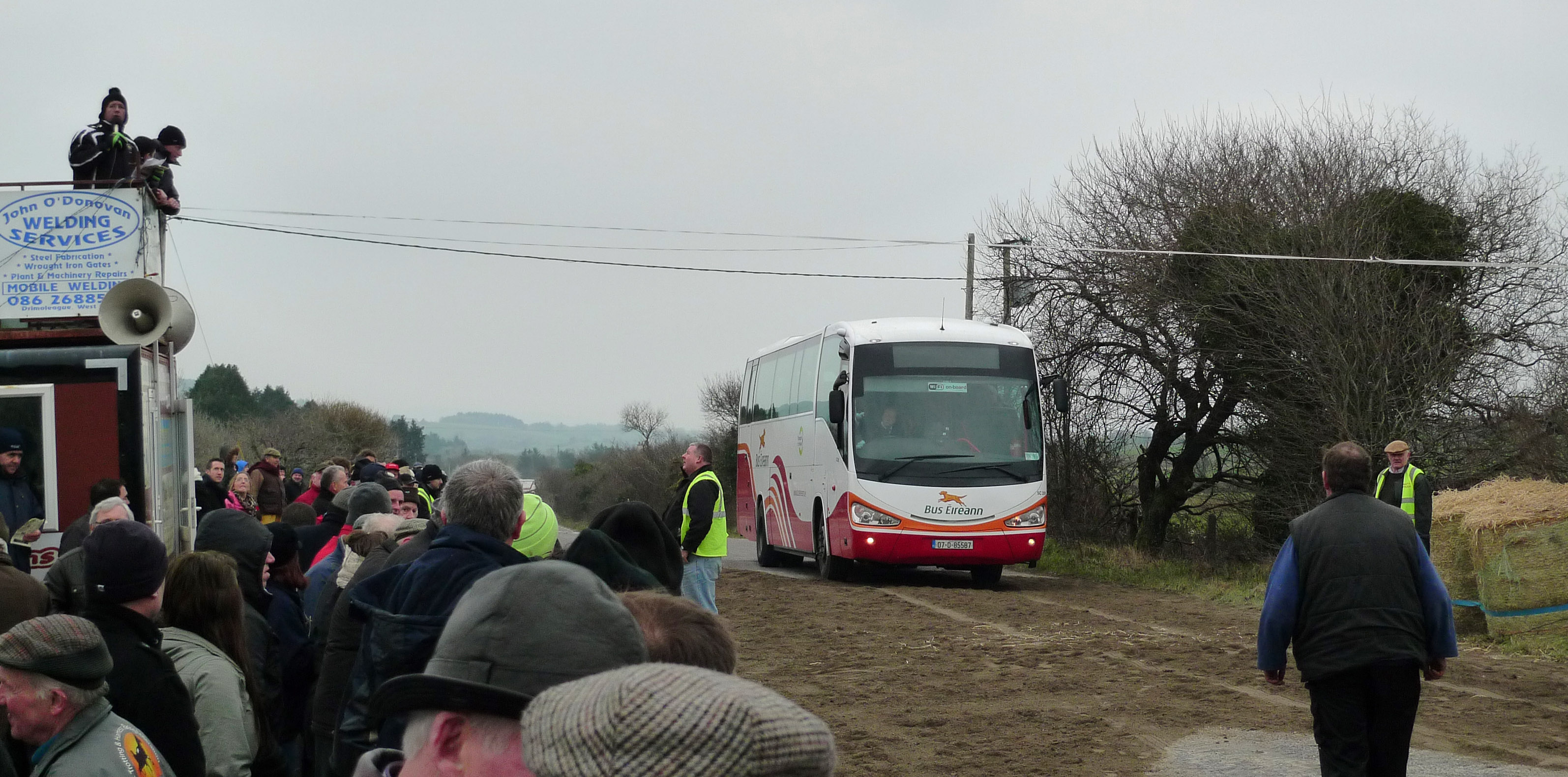
I constantly admire the Irish ability to make great sport and entertainment out of minimal resources. A case in point was the Road Bowling which I described in a previous post and a further example is our Sunday afternoon spent at The Races: not in a big grandstand at a famous course, but at a closed-off section of the R586 – the main highway connecting Bantry to Drimoleague and Cork. Through traffic takes second place, having to negotiate a diversion of narrow, bendy lanes in order to allow The Racing to use a half mile long section of fairly straight and level road (horse racing in Ireland is still measured in ‘miles’). Except when the Cork – Bantry bus comes through, when everything has to stop and move over.

crowds

spectators

start

Horse racing goes back thousands of years, and the Irish have always been good at it: Irish trainers, horses and jockeys dominate many of the big events in Britain. I was fascinated to learn that it is a non-sectarian sport in Ireland: it is governed in the Republic and in Northern Ireland by one body: Rásaíocht Capall Éireann.  The British Horse Racing Authority has no jurisdiction in the North.

triple

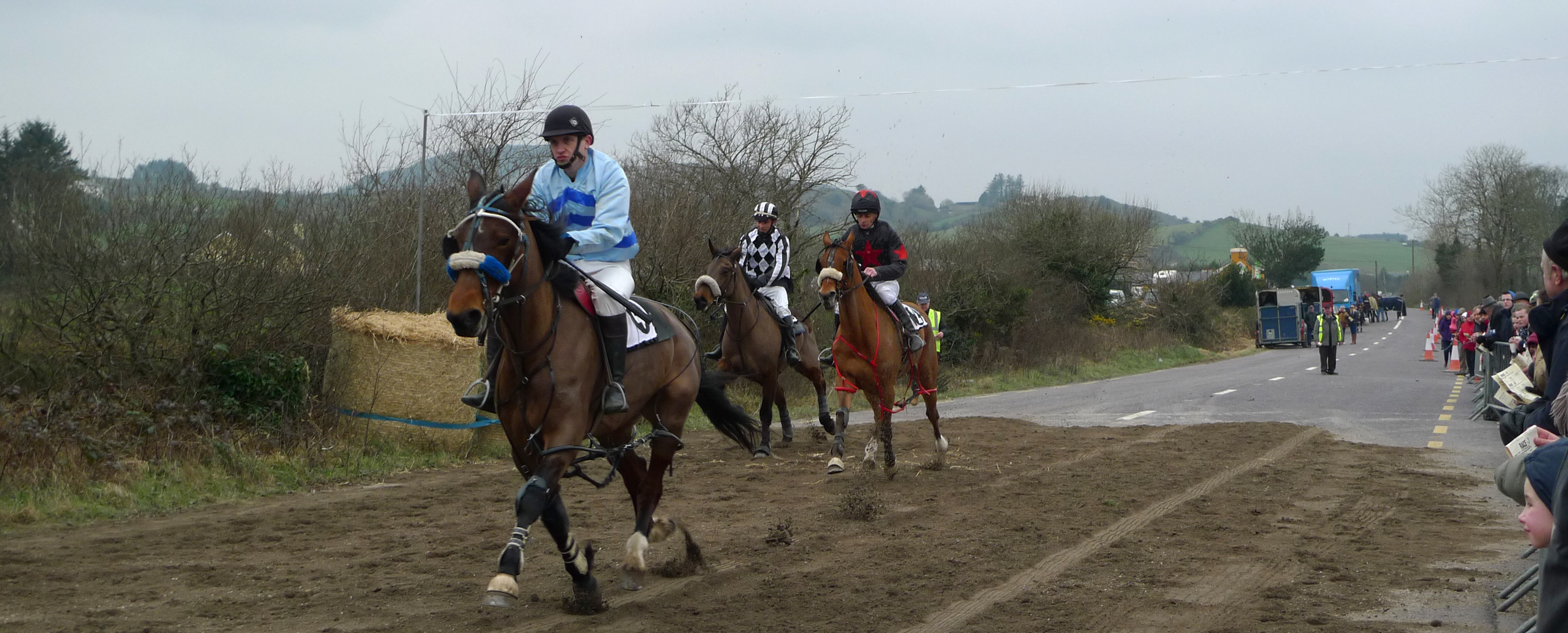
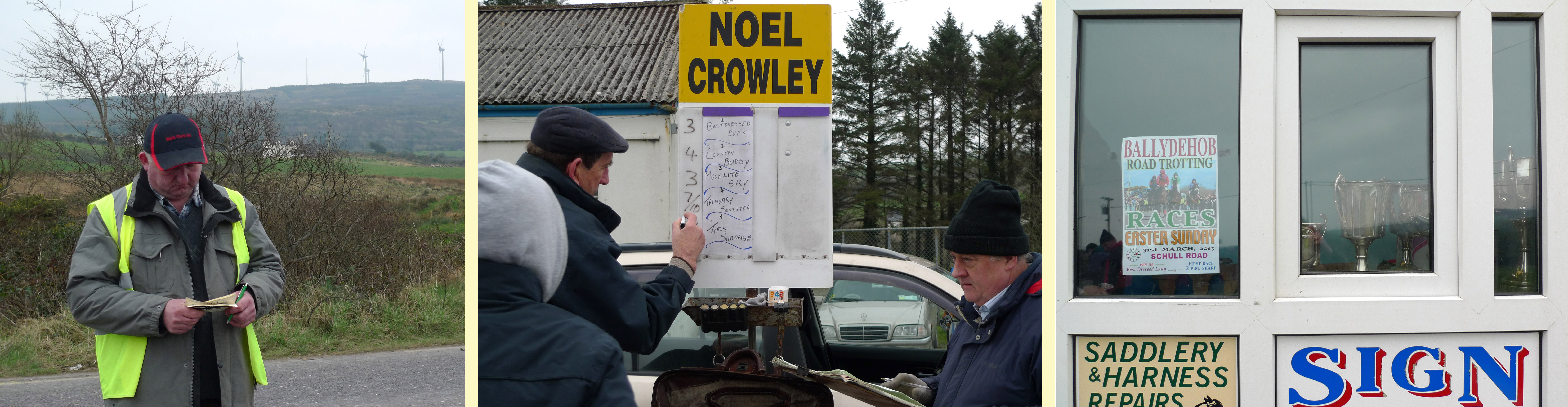
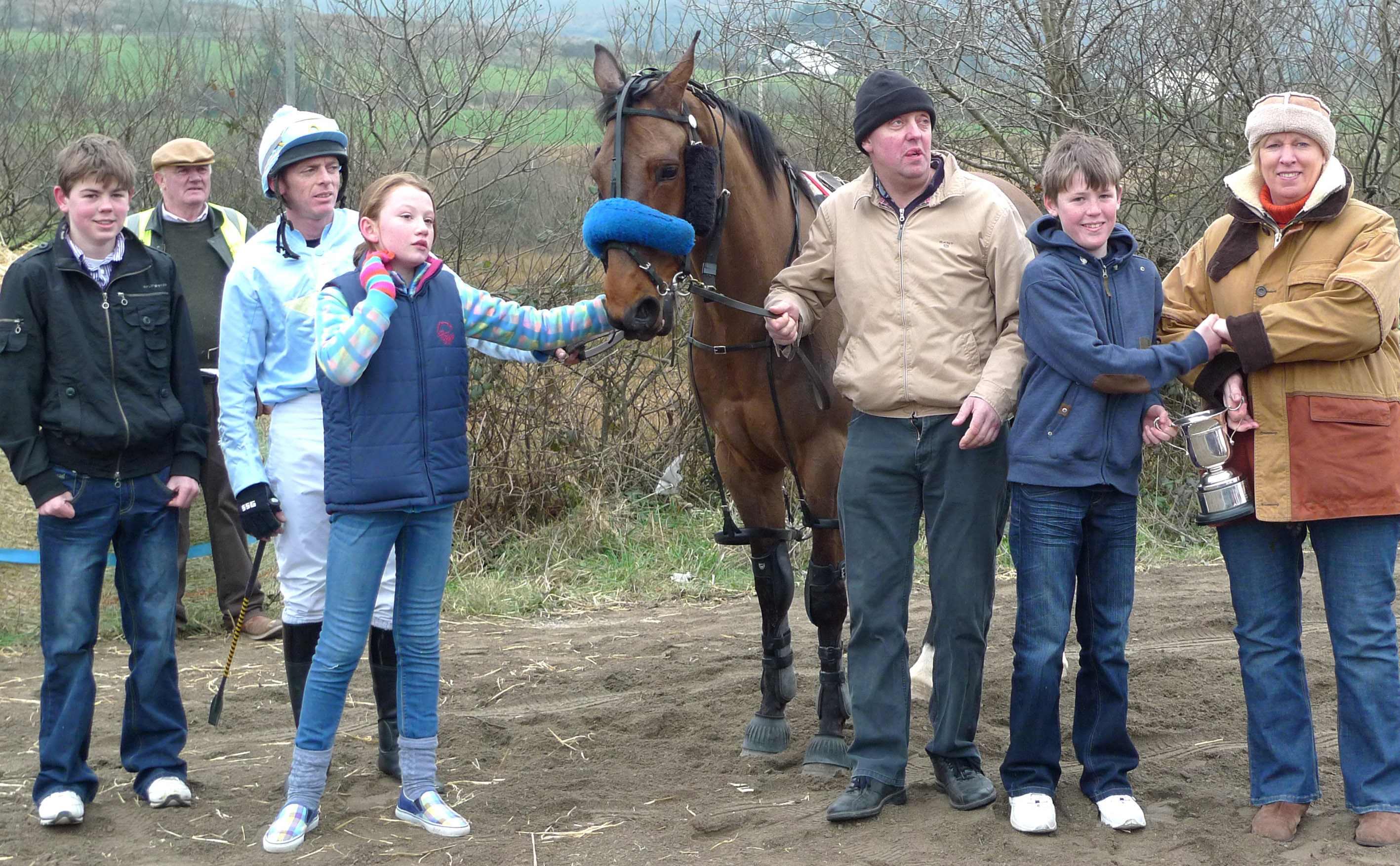
Today we were watching Road Trotting. It has all the spectacle of the sport: beautifully groomed animals with whimsical names, jockeys in outfits of all colours bearing stripes, chequers and stars – and bookmakers. But it’s all very local and approachable: no dressing up or flowery hats. As usual, everyone there is busy catching up with the gossip, but are always ready to have a friendly chat with strangers like us. The animals are ‘standardbred’, developed especially for both Trotting and Harness Racing (the latter involves a two wheeled trolley – also called a Sulky – being pulled along behind to carry the jockey – akin to chariot racing!); and, just to add more confusion, there are two types of ‘standardbred’: Trotters and Pacers. Trotters have the more natural movement: a diagonal gait in which the left front and right rear legs move in unison, as do the right front and left rear. Pacers, on the other hand, move the legs on one side of their body in tandem: left front and rear, and right front and rear. However, they need to be helped in maintaining their gait by wearing plastic loops called hobbles, which keep their legs moving in synchronisation. They are also especially shod to allow them to race on hard road surfaces without wear or injury. Hope that’s all clear…

judge

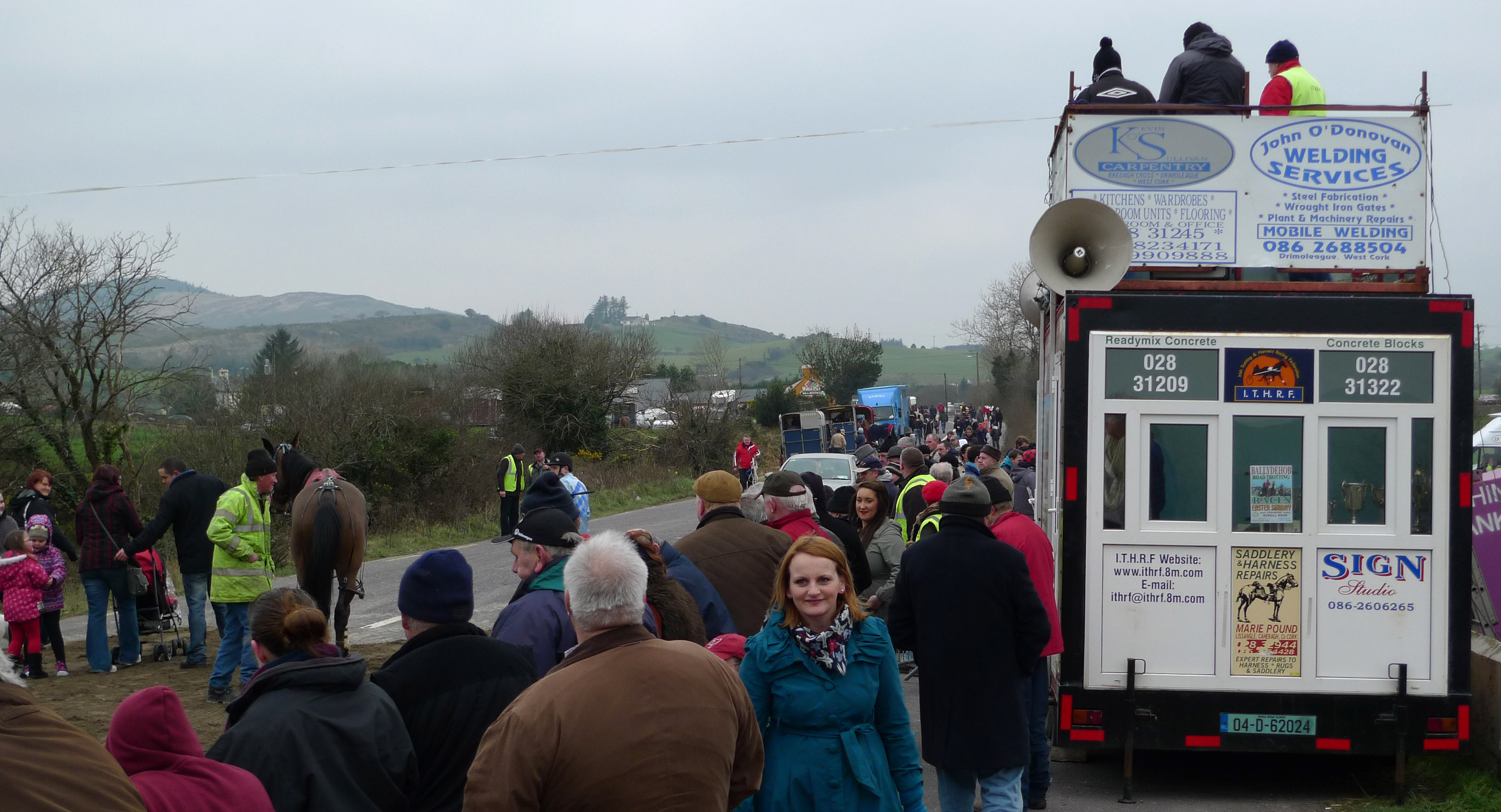
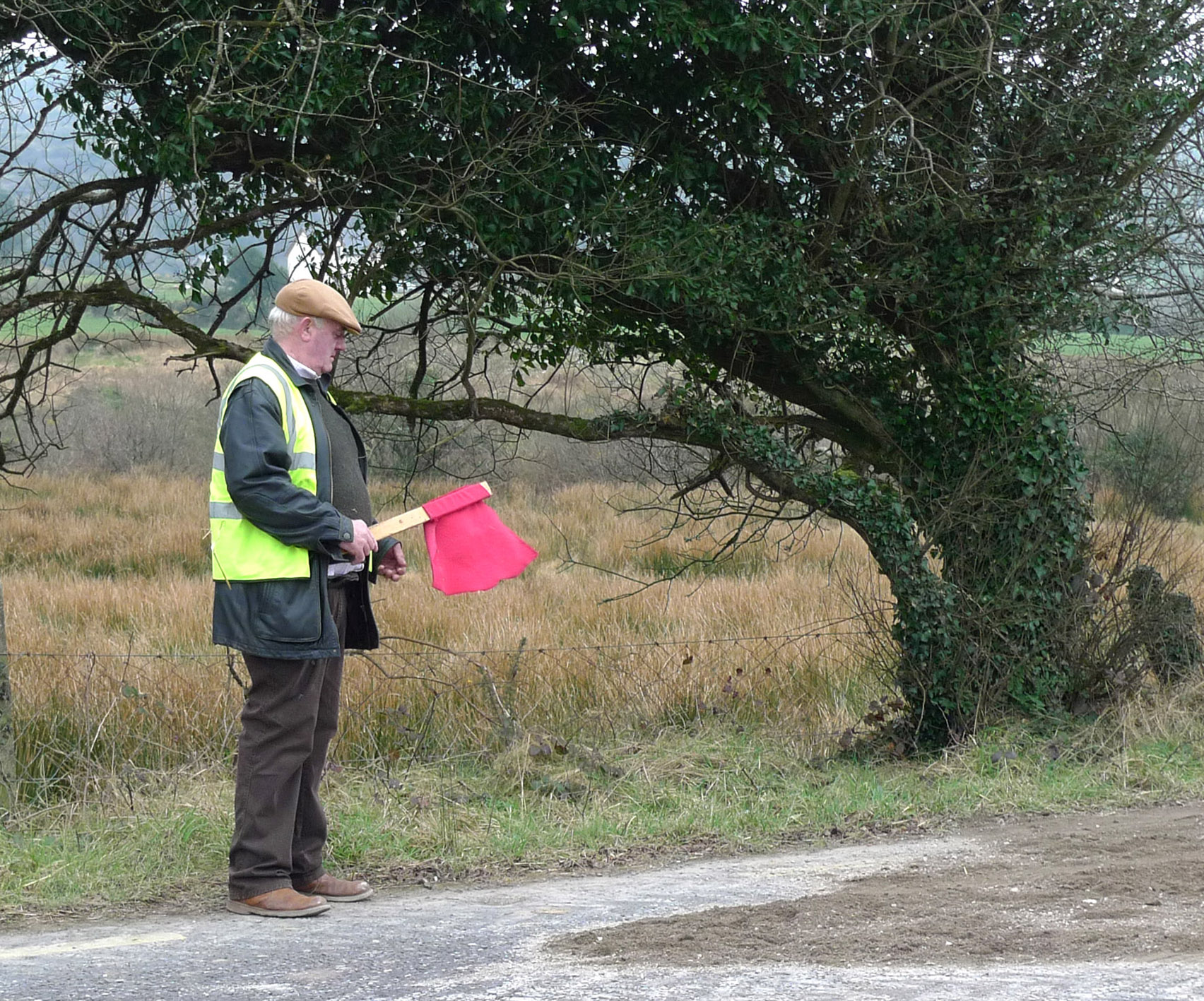
The proceedings were controlled at a trailer from which a commentary was broadcast through a pair of loudspeakers. Cups for the presentation after each race were handed out through the door, while a man in a yellow jacket and a white flag was responsible for starting each race – a tricky affair, as horses and riders were seldom in one place at the same time, and didn’t stand still in any case. Another man had a red flag, and I believe his job was to signal a faulty start. All the spectators congregated at one end of the half mile stretch of road, so we only saw the start and finish of each race. Races were either over one mile or two, and at either end of the course all the riders had to make a 360 degree turn around some large bales of straw. All this looked rather chaotic.

race

presentation

The beginning of March has brought a very cold spell, and our hands and feet were suffering by the time the modest crowd began to disperse. Today’s event has given me a taste for the Sport of Kings, and I’m on the lookout now for some Harness Racing.

bus

Make way!

Uisce Beatha

fishy

Ireland is an island – a fairly small one. There’s a lot of water surrounding it (3,500 miles of coastline) and coming out of the sky. This abundance of water has shaped the natural landscape and coloured it emerald green. Not surprisingly, traditional life, history, culture and folklore in this country are imbued with watery references.

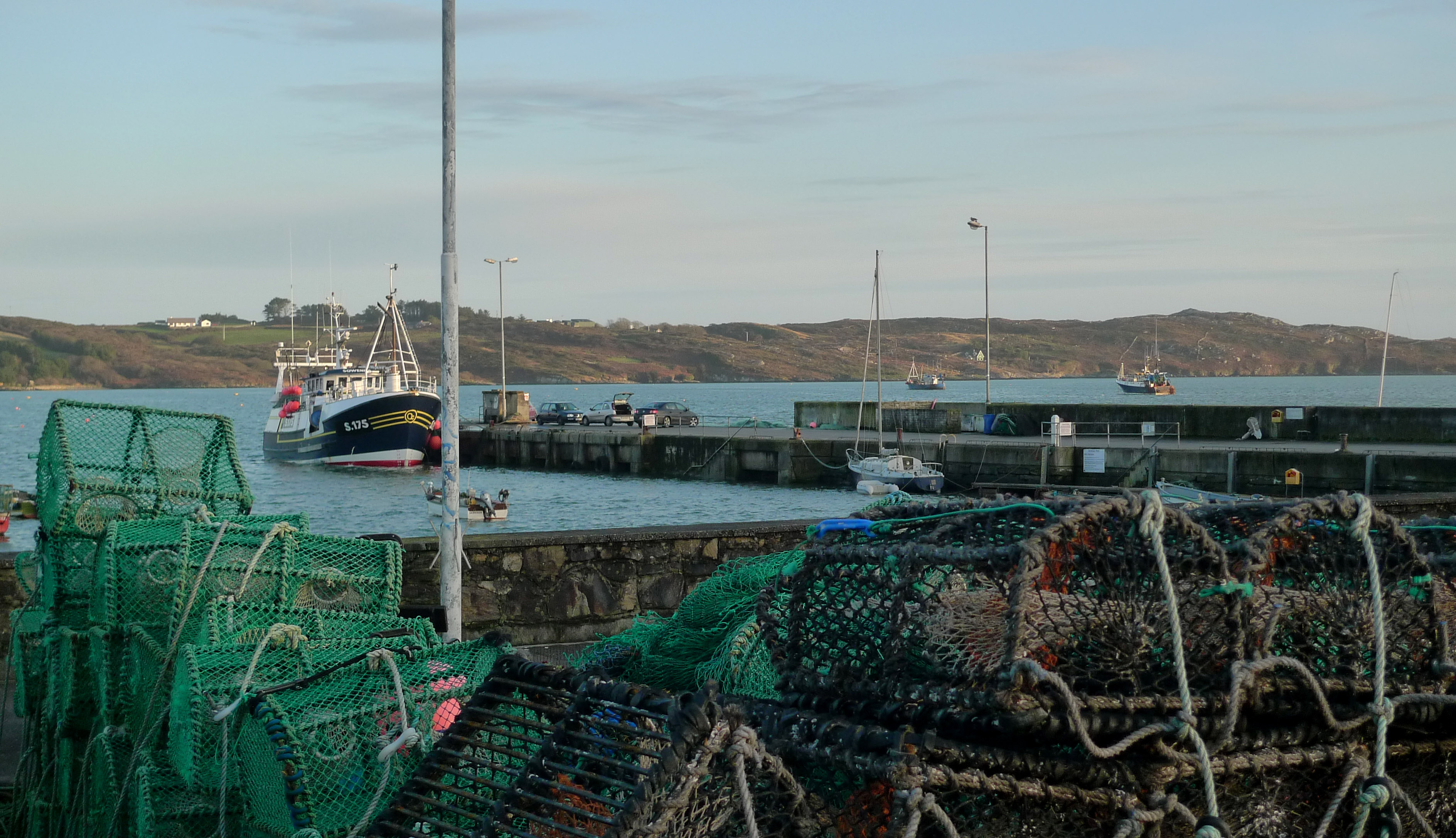
Schull Pier

Schull Pier

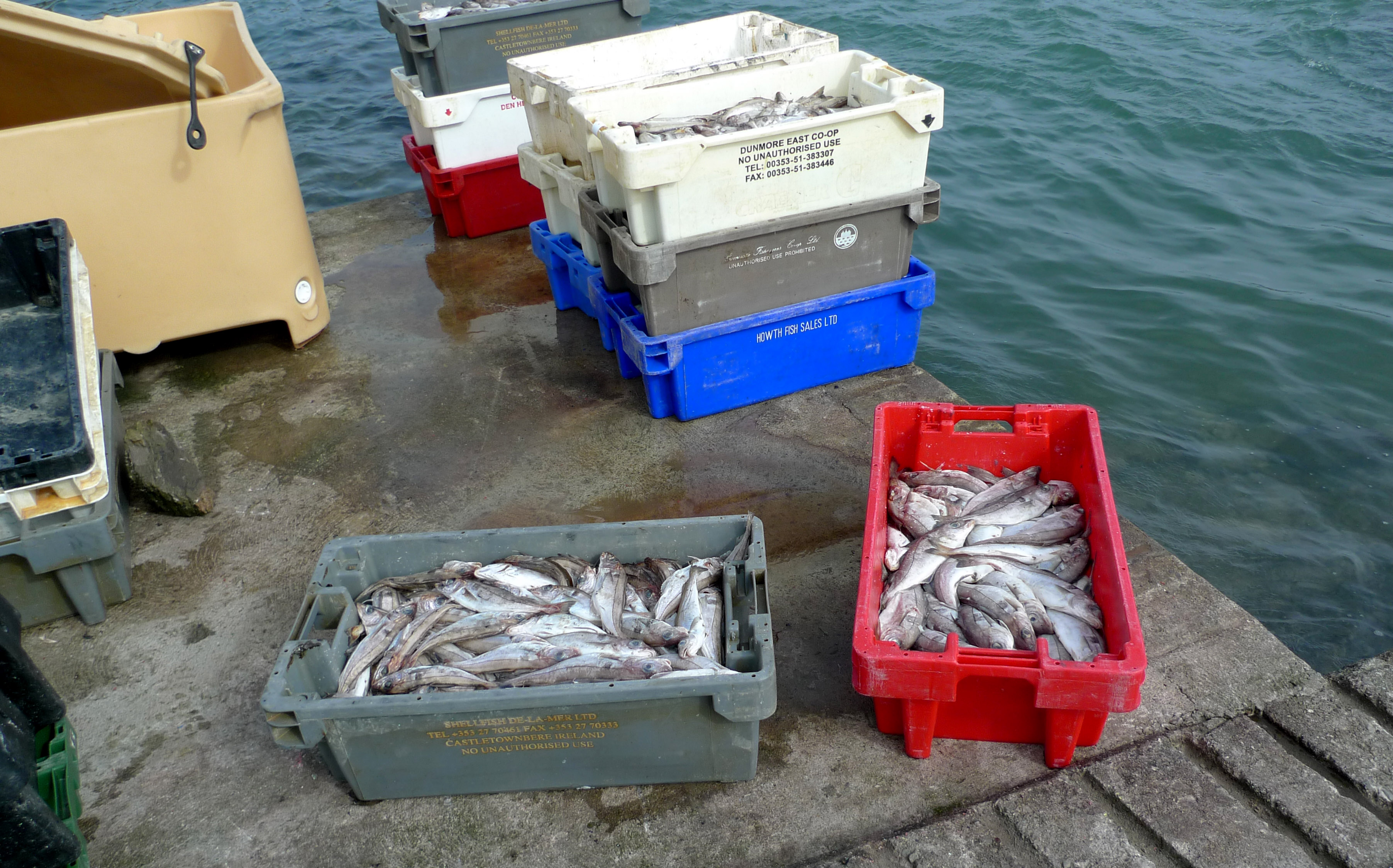
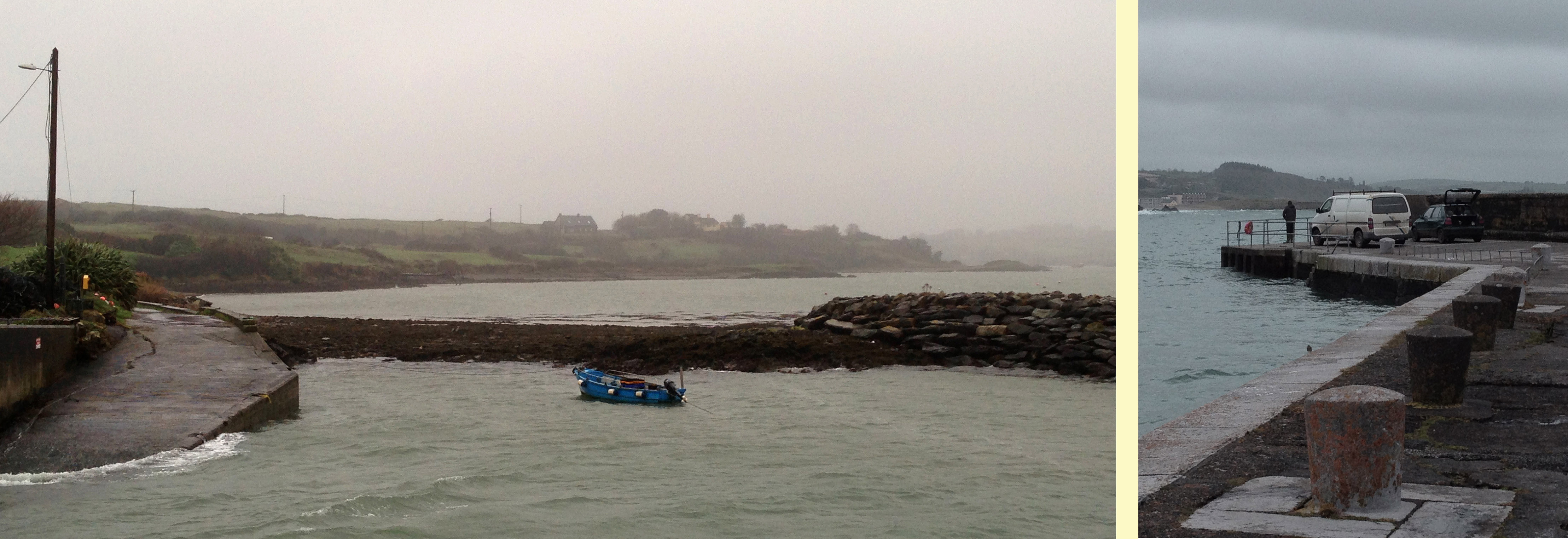
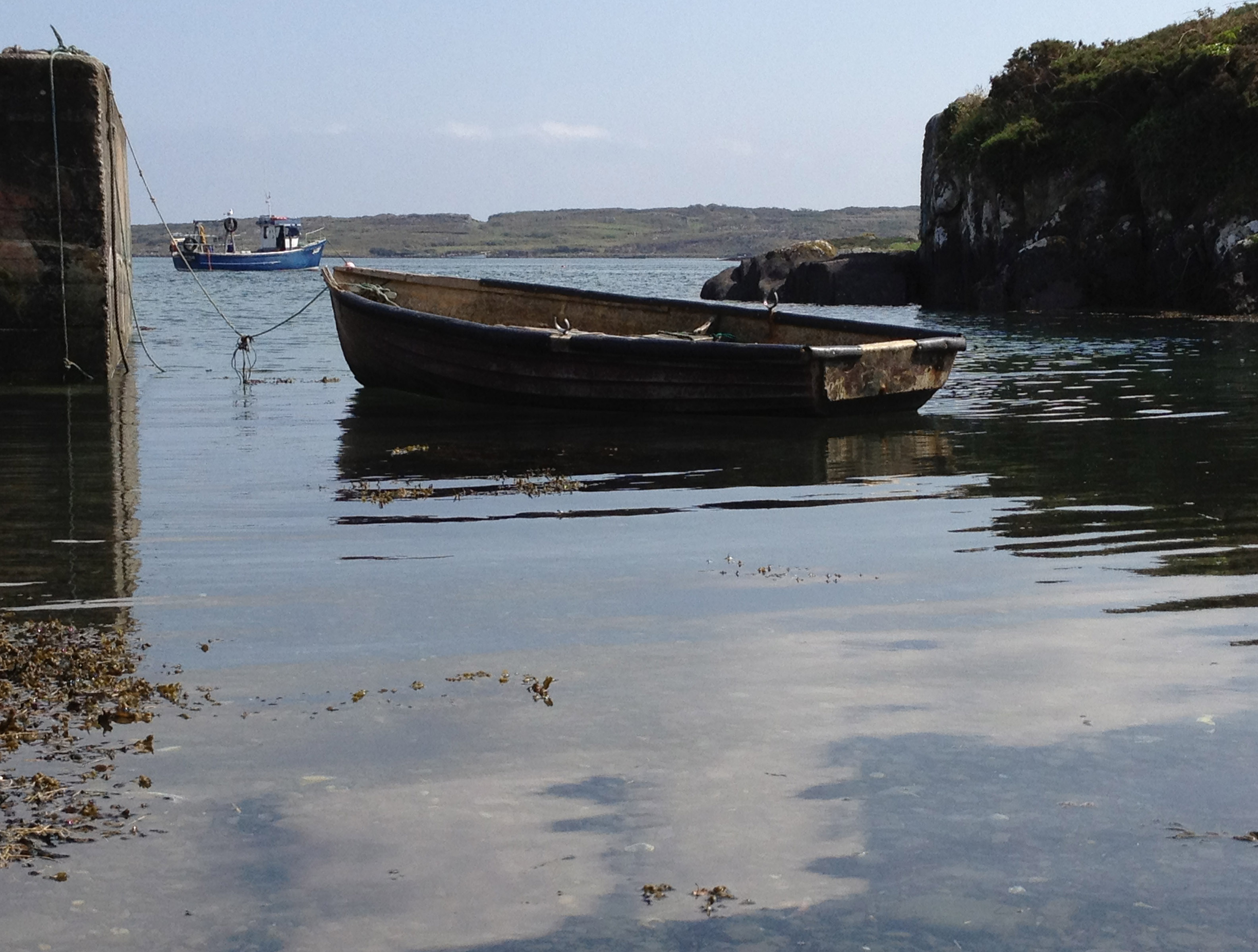
Down here in West Cork you are never more than a mile or two from the sea: it has historically provided defence, sustenance, isolation and wealth. When the O’Mahony and O’Driscoll clans ruled here in the fifteenth and sixteenth centuries it was recorded that more than 500 large fishing boats from France, Spain, and Portugal were constantly harvesting the fish shoals off the Mizen. Each chieftain’s income from the foreign ships surpassed £1,000 annually by way of fishing rights, harbour dues and protection money (that’s about 3,000 cows in trading terms in those days). Today you can still see evidence that the bays, inlets and islands have long provided income and a means of transport to the local communities: there are small piers everywhere. There’s an ancient one – ruined but still visible – just below us at Ard Glas, and an hour’s walk along the water would take in half a dozen others mostly still maintained in good order and regularly used.

cunnamore-roscarberry

Piers at Cunnamore and Roscarberry

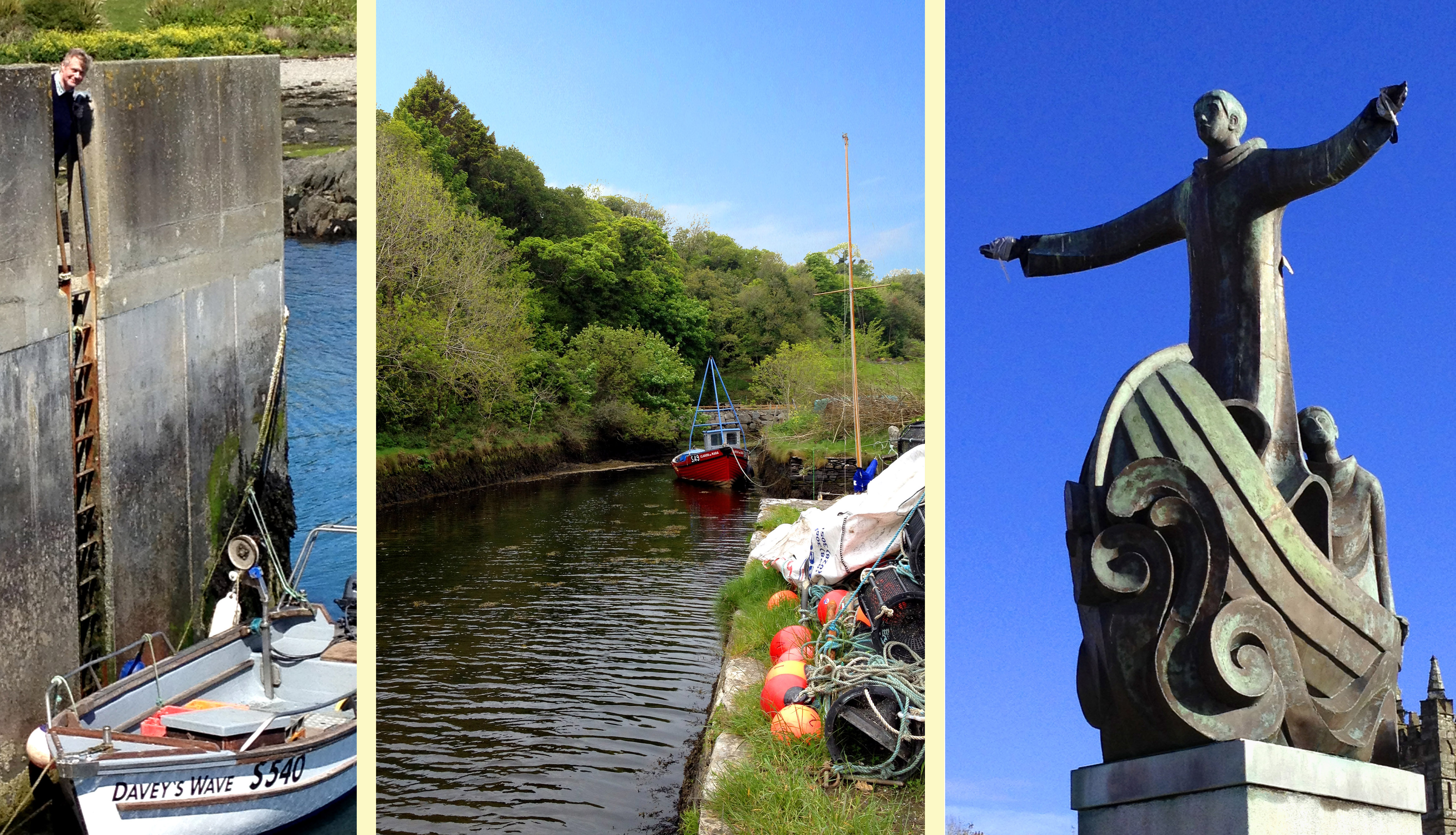
When we go up to the market in Bantry on a Friday morning to get our own fish fresh from the local quays we pass by the statue of St Brendan the Navigator. In the sixth century Brendan set out with forty other monks in a little boat to find the Island of Paradise; instead, they discovered America, returning after seven years to tell of their many adventures with sea monsters, miraculous islands and sirens. In the 1970s Tim Severin recreated Brendan’s twin masted boat using Irish ash and oak lashed together with two miles of leather thong and wrapped with 49 traditionally tanned ox hides sealed with wool grease. In this he sailed for a year via the Hebrides and Iceland to reach Newfoundland, thus proving that the legend could have been based on fact.

Colla Pier, Roaringwater Pier and St Brendan

Colla Pier, Roaringwater Pier and St Brendan

The 'lost' pier at Bealaclare

The ‘lost’ pier at Bealaclare

In 2010 two fishermen found a small canoe in the Boyne River. It’s reckoned to be 5,000 years old and may have carried stone for the building of the great passage tomb at Newgrange (that predates the Pyramids). That boat is only 3 metres long, but another canoe discovered in 1901 in Co Galway is even older and much bigger: 15 metres long, hollowed out from the trunk of a single oak tree that was over 2 metres in diameter: something that couldn’t be found in Ireland today. It probably had outriggers and could have been used to bring tin from Cornwall to mix with the locally mined copper, enabling the Bronze Age to take off. Fascinating.

Bronze Age Canoe

Bronze Age Canoe

Every day we look out over the water, and on all our walks we have glorious views over the bays, the Celtic Sea and the Atlantic. That’s a constant in our lives that I don’t think we could ever do without.

Oh – by the way: Uisce Beatha (pronounced Ish-kah Baahaa) – that translates literally as Water of Life – and, in Ireland, also as ‘Whisky’.

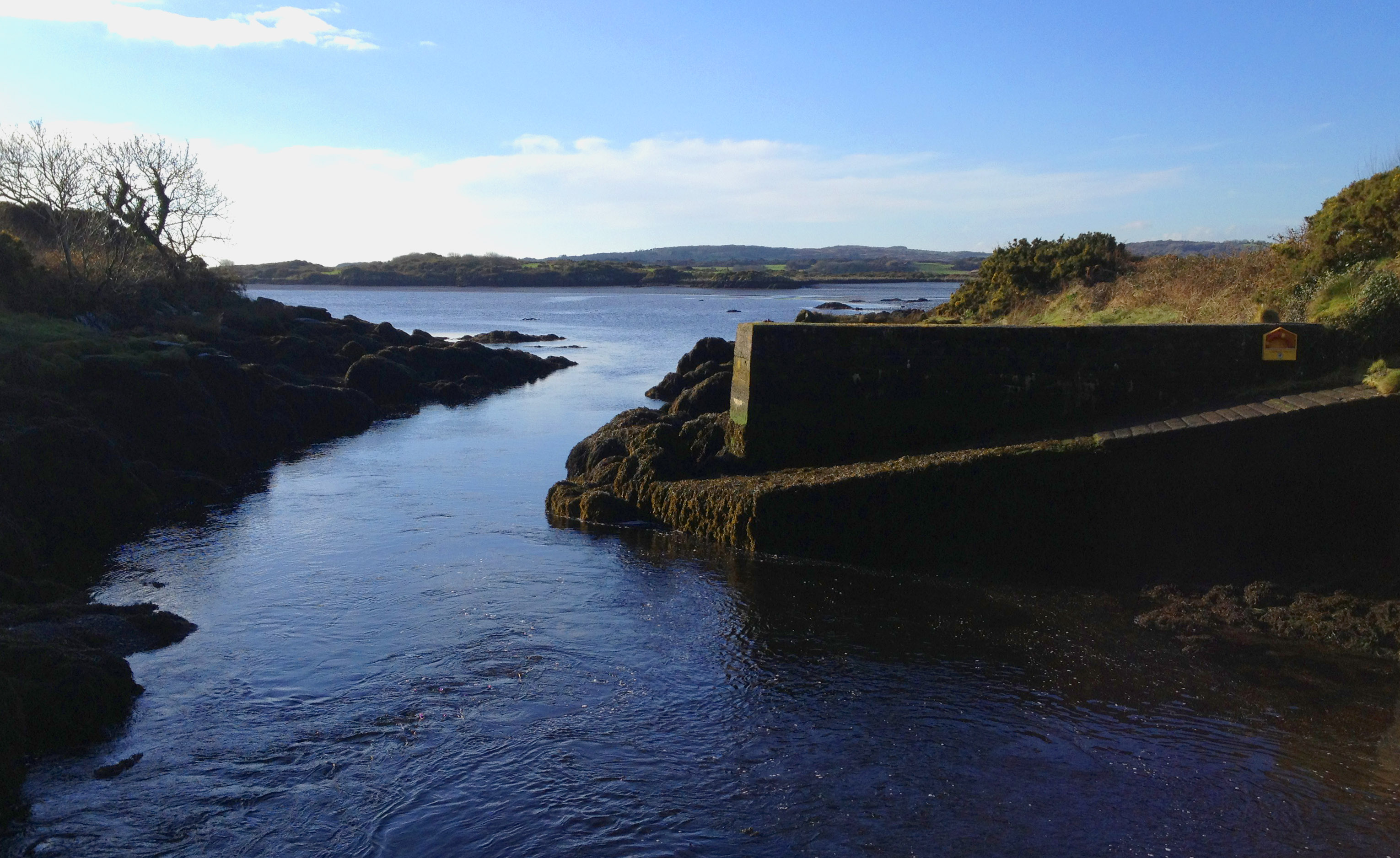
Turk Head Pier

Turk Head Pier

Buckets of Culture

Željko Lučić as Rigoletto. Photo by Metropolitan Opera

Željko Lučić as Rigoletto. Photo by Metropolitan Opera

-What we love about being here – the scenery, the history, the people, the hiking, the markets, the food, the opera…

-What? The opera?

-Yes, and the theatre. And very good cinema too.

-Wait – seriously? I thought you were there to get back to nature?

-Well, er, yes, but…

-But?

-West Cork is also a Mecca for artists of all kinds – musicians, actors, painters, poets, photographers – and part of being here is taking advantage of cultural events. As one local told me last year, “if it’s culture you’re after, we have buckets of it.”

-Oh, OK…tell us all about it, then.

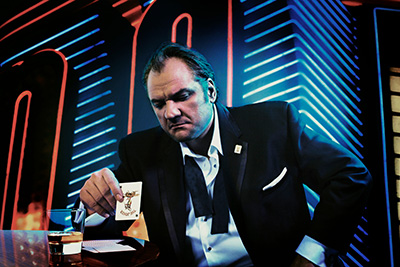
The weekend started with a trip to Cork to stay overnight with my cousin and to go to the Metropolitan Opera Live Broadcast of Rigoletto. This was a stylish production with the action moved to 1960’s Las Vegas and the singers modelling themselves on Rat Pack characters. The Duke of Mantua made a wonderful fist of Old Blue Eyes, and Marilyn Munro made an appearance as Ceprano’s wife. The singing was glorious, with the German soprano Diana Damrau as a transcendent Gilda and Željko Lučić suitably tortured and barrel-voiced as Rigoletto.

The following day we visited a friend in his beautiful and very modern house in Kinsale, ate a huge Sunday lunch and then got into The Music, with Alastair on the fiddle and Robert on his melodeon.
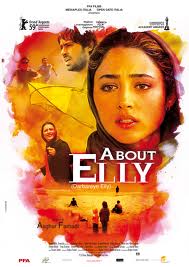
about EllyThe Cinemax in Bantry has all the latest releases and comfortable seating. They run an Arthouse Tuesday and this week we saw ‘About Elly’ by the Iranian Director, Asghar Farhadi. I had seen his movie ‘A Separation’ and was struck then, as I was now, by how much these films challenge our stereotypes of Iran. This one featured an ensemble cast of outstanding actors as young professionals from Tehran. The plot revolves around the disappearance of one of the group during an outing to the Caspian Sea, and the disintegration of cohesion as white lies and deceptions are compounded and revealed. The exploration of the dynamics of man-woman relationships was particularly riveting in what is apparently a time of transition between traditional and modern notions of gender roles.
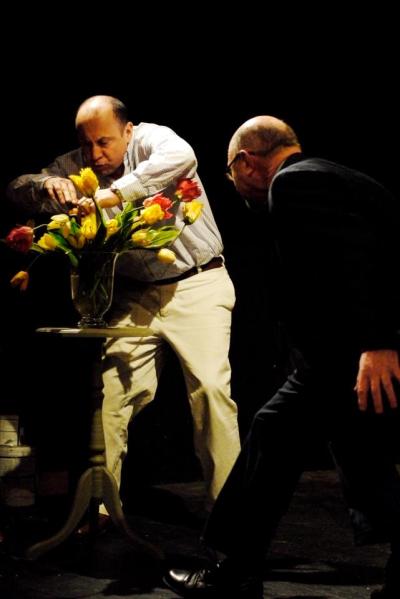
Photo from Schull Drama Group Facebook Page

Photo from Schull Drama Group Facebook Page

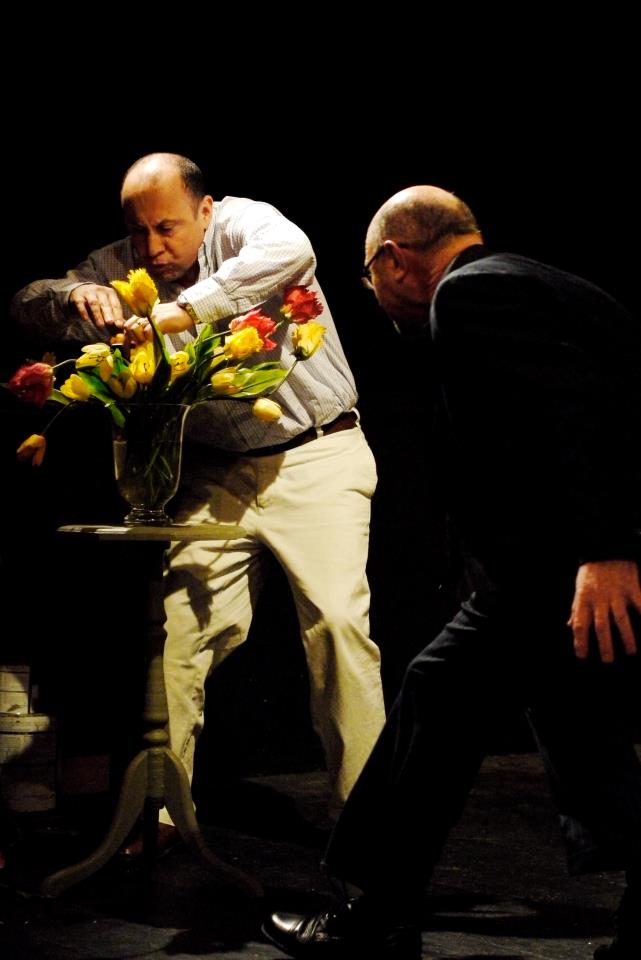
On Friday night we attended the Schull Drama Group’s production of The God of Carnage, a play by French actor and playwright, Yazmina Reza. This is the same company of players that was responsible for the broad comedy and slapstick of the traditional pantomime we had seen in January and this comedy/drama was a testament to the depth of their talent. Two couples, Veronique and Michel and Annette and Alain, meet to discuss a contretemps between their sons. Their plan to do this in a civilized manner, over coffee and clafoutis, quickly descends into chaos, as accusation and counter-accusation reveal the fault lines of each marriage and the assumptions and veneers of middle-class privilege.
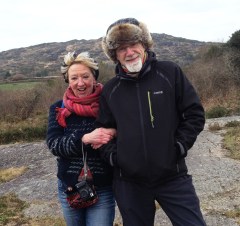
Amanda and Peter on our Rock Art Day

Amanda and Peter on our Rock Art Day

Finally, Saturday saw us in the company of two new friends, Amanda and Peter Clarke on a Rock Art Day of tramping through the countryside. Peter and Amanda are the talented couple behind two websites: Sheep’s Head Routes and Sheep’s Head Places, both invaluable resources for exploring this part of West Cork. Amanda is also a keen photographer with a wonderful eye. You can read her description of our day, and view more of her beautiful photography at her Blipfoto site.

Half-Term Break

2013-02-14 14.11.07

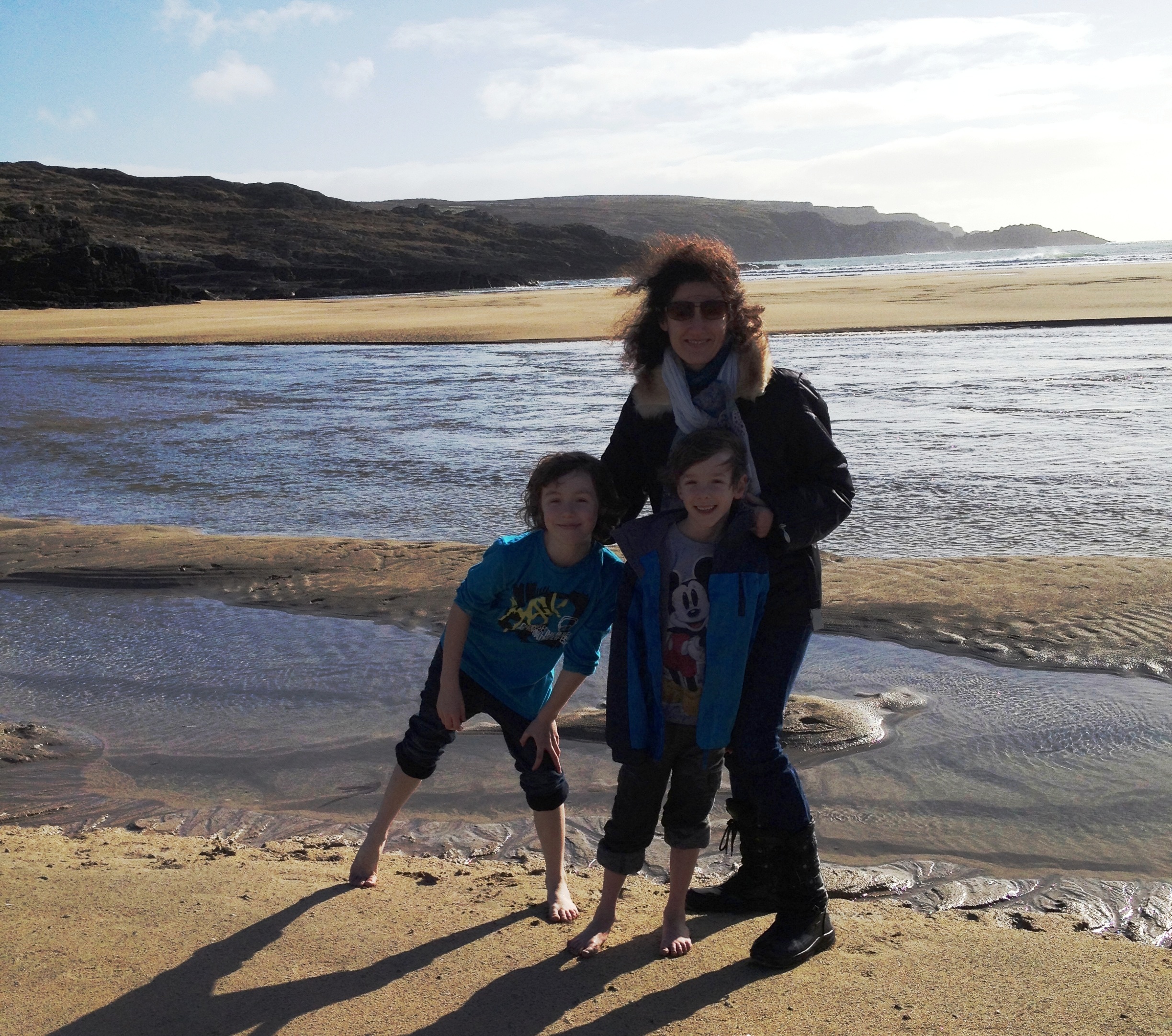
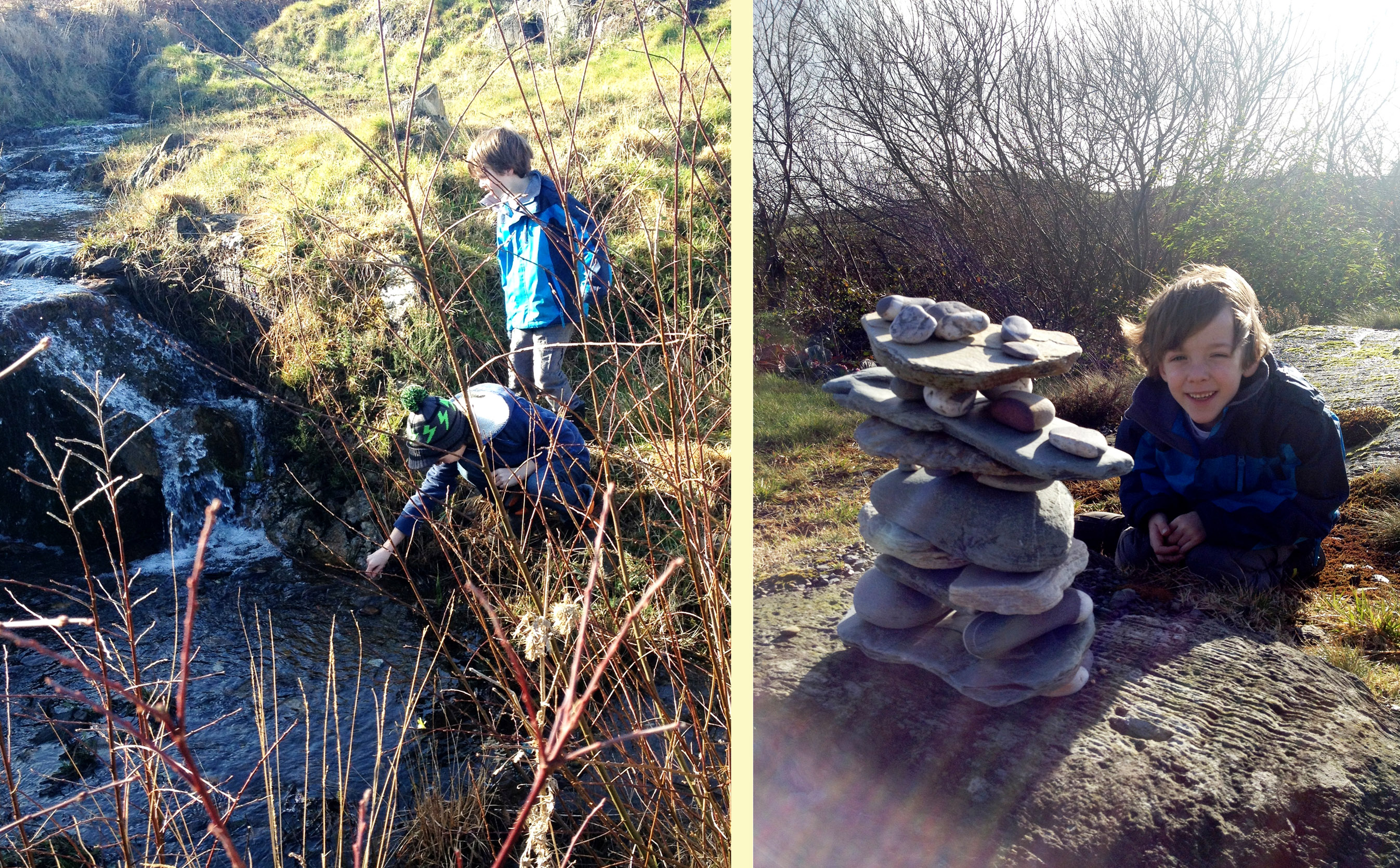
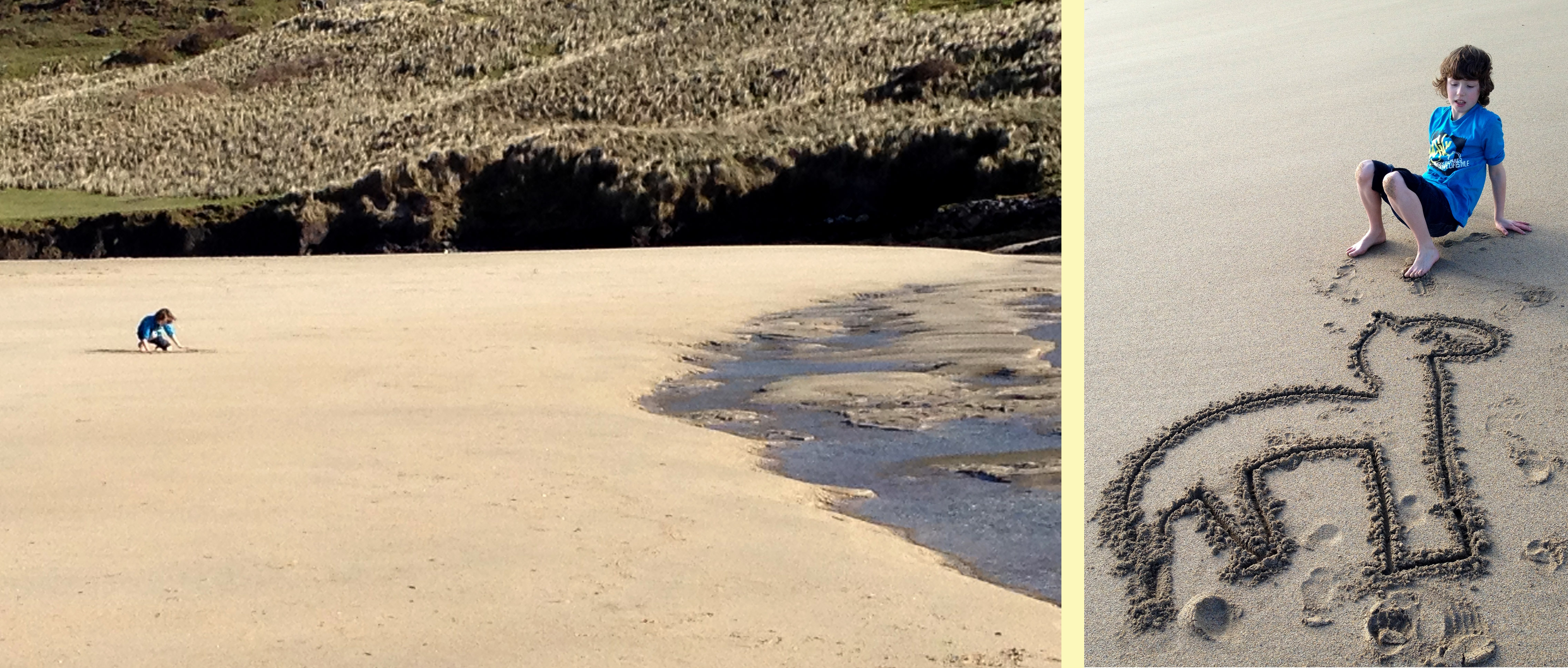
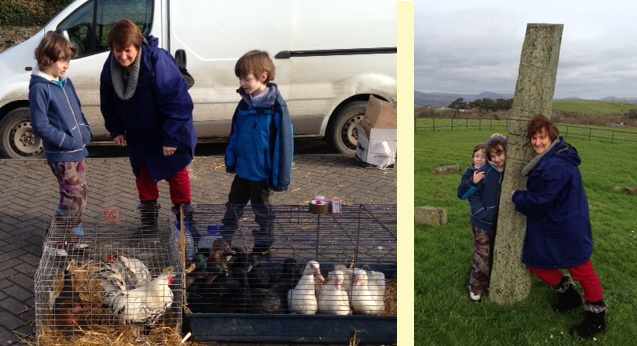
This being their half-term, my sister arrived for a few days’ visit with her two children – Ava, 8, and Hugo, 6.  But half-term is not scheduled this week in all parts of the country – and particularly, it is not scheduled for here. This means that organised activities for children are not up and running, and local amenities suitable for children are all shut for the winter. But no problem! All you need is a dram of sunshine, a beach, a market, a stream, and a couple of imaginative youngsters.

In the garden at Ard Glas.

In the garden at Ard Glas

Barleycove Beach, mid-February.

Barleycove Beach, mid-February

Bantry Market and Never Too Early to introduce them to archaeology.

Bantry Market and Never Too Early to introduce them to archaeology

They went back to Dublin yesterday and we miss them already!