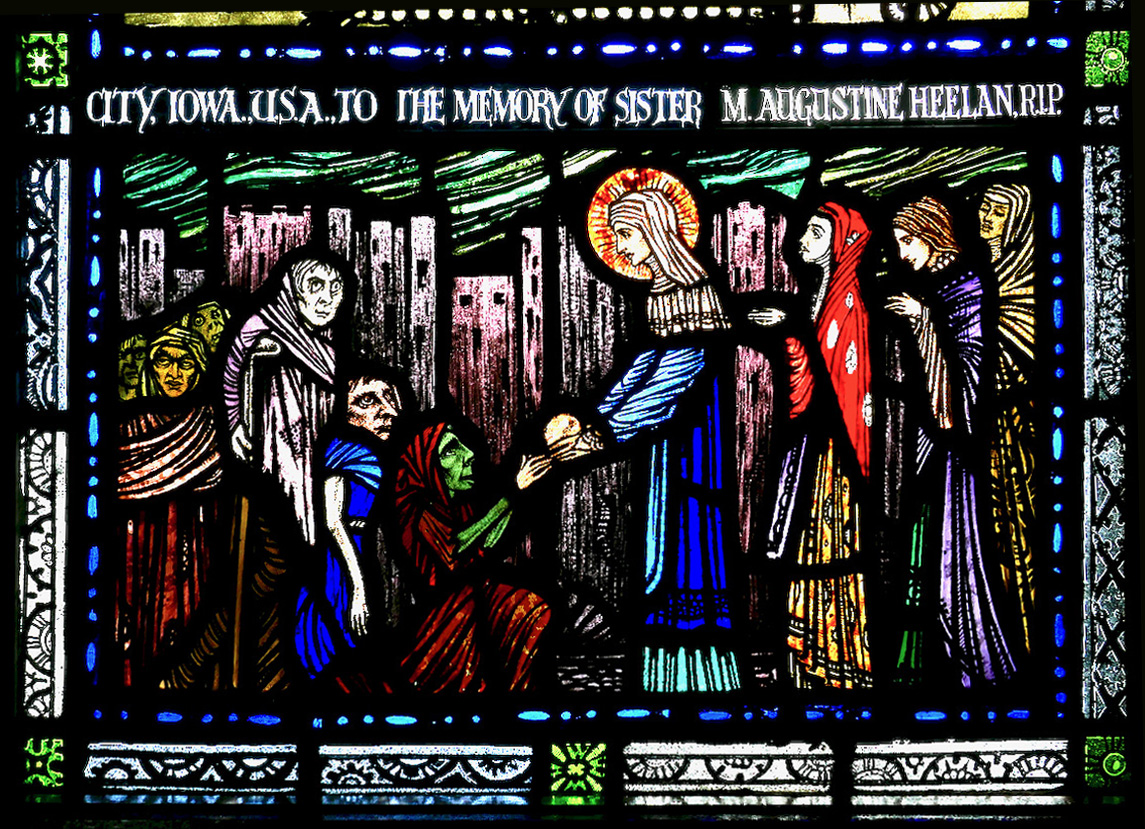
Open-Air Galleries: Eighteenth-Century Folk Art at Bahana Whaley

In his book Here Lyeth: The 18th-century headstones of Wicklow, the archaeologist Christiaan Corlett says 

There are. . . more examples of 18th-century art and sculpture in our graveyards today than in any gallery or archive. They do not belong to formal schools of art. Instead, they represent an important and fascinating tradition that can best be termed folk art. 
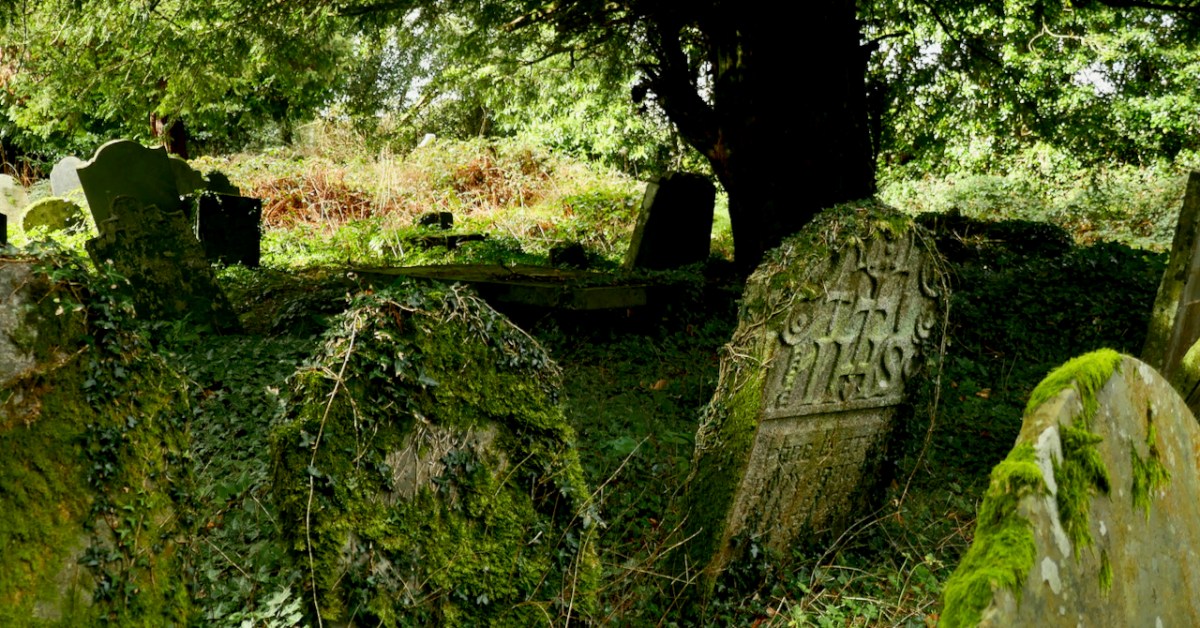
Christiaan develops his theme thus:

Like other forms of art, these headstones were privately commissioned. However, unlike many other forms of 18th-century Irish art, these sculptures were intended for display in a public space. Nowhere else are there so many examples of public art from 18th-century Ireland. Yet, no other forms of 18th-century Irish art have been so poorly documented and so grossly ignored and undervalued. 
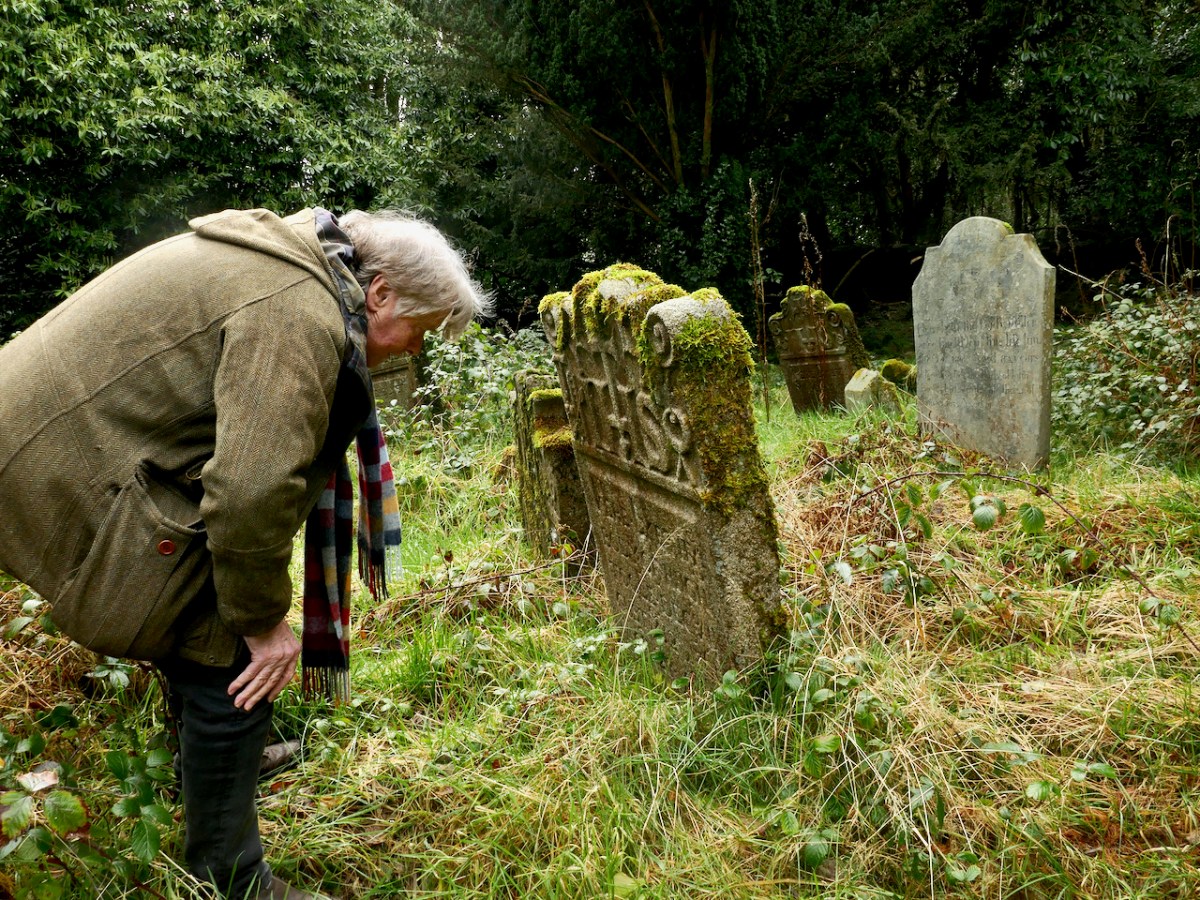
Setting out to redress this situation, Chris has documented many of the headstones in old graveyards across Wicklow. While primarily focussed on the carvings and inscriptions as examples of folk art, he points out that the graveyards are also open-air archives of historical documents, not on paper, but on stone preserving genealogical information as well as reflecting some of the social issues of the period.
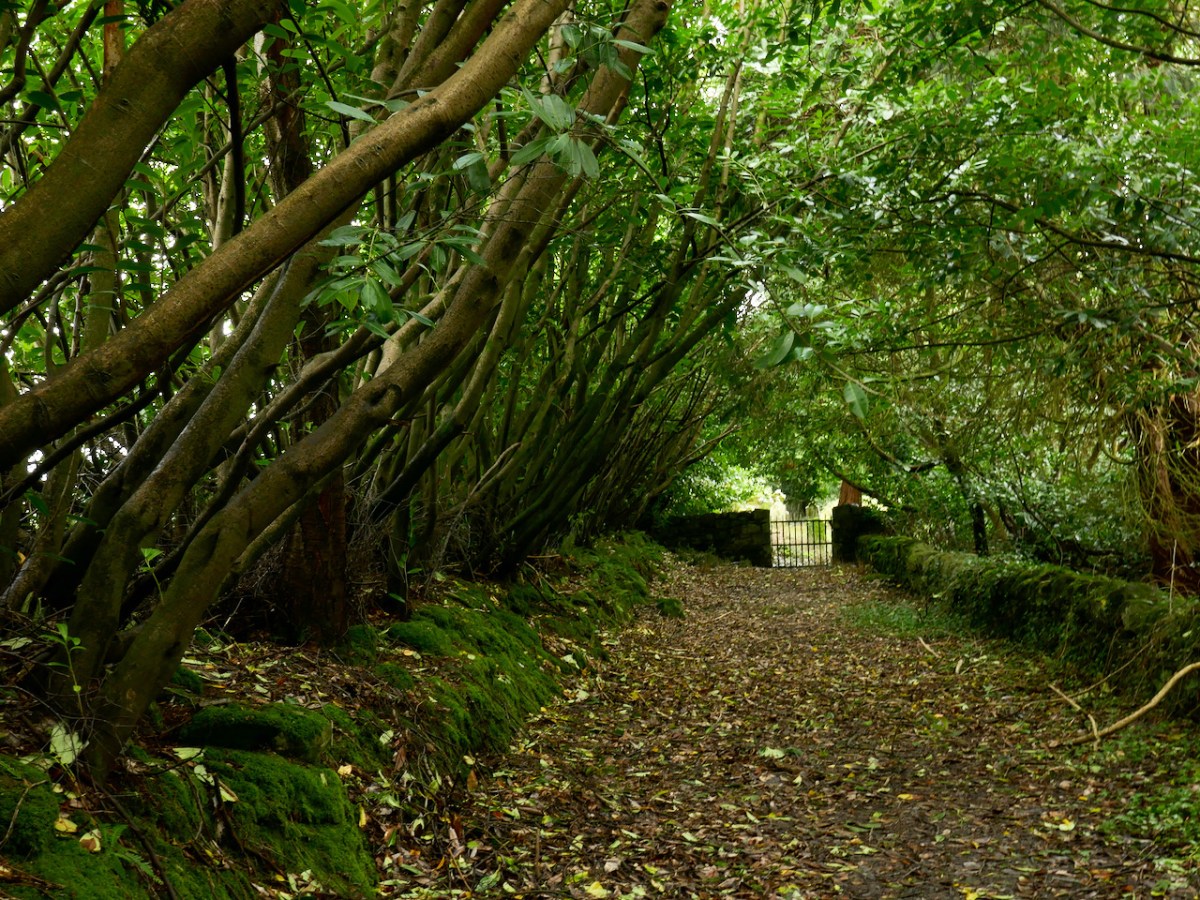
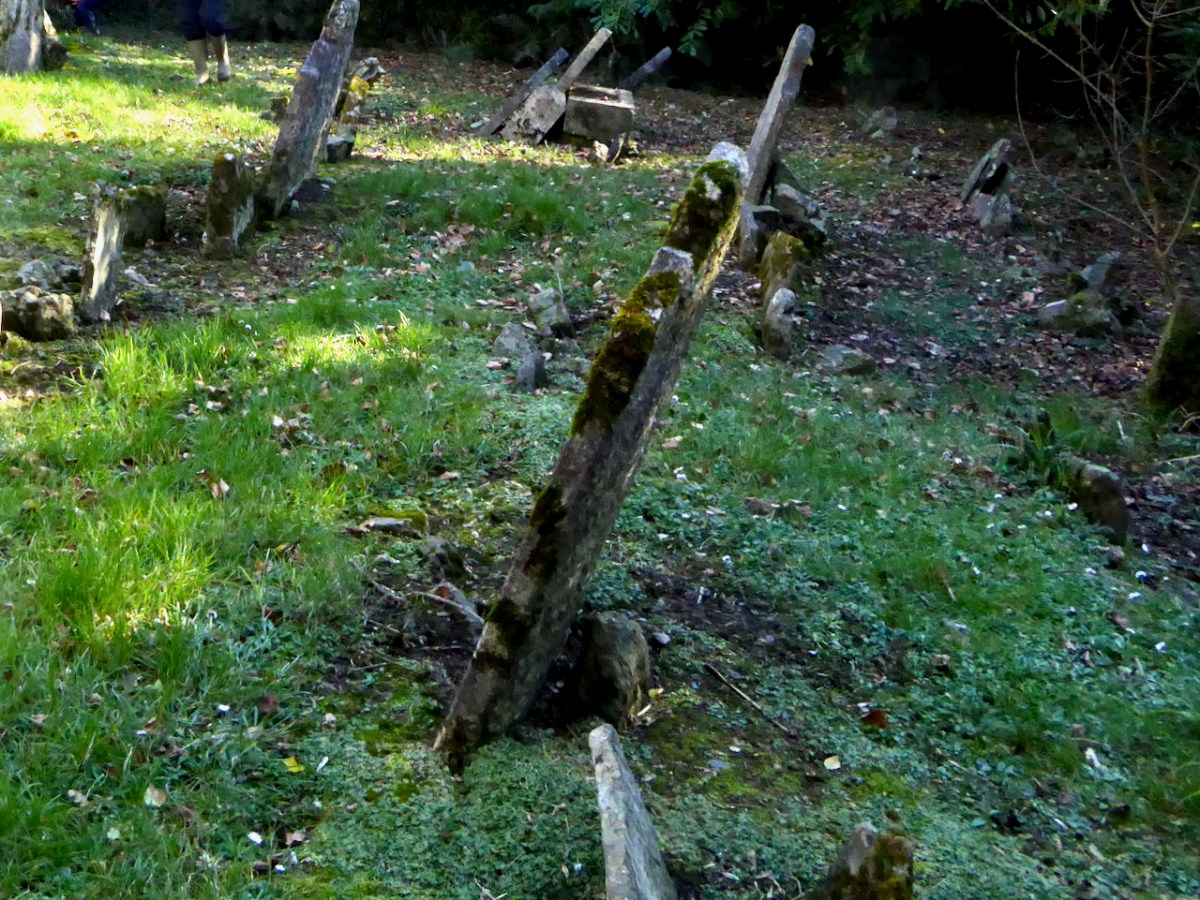
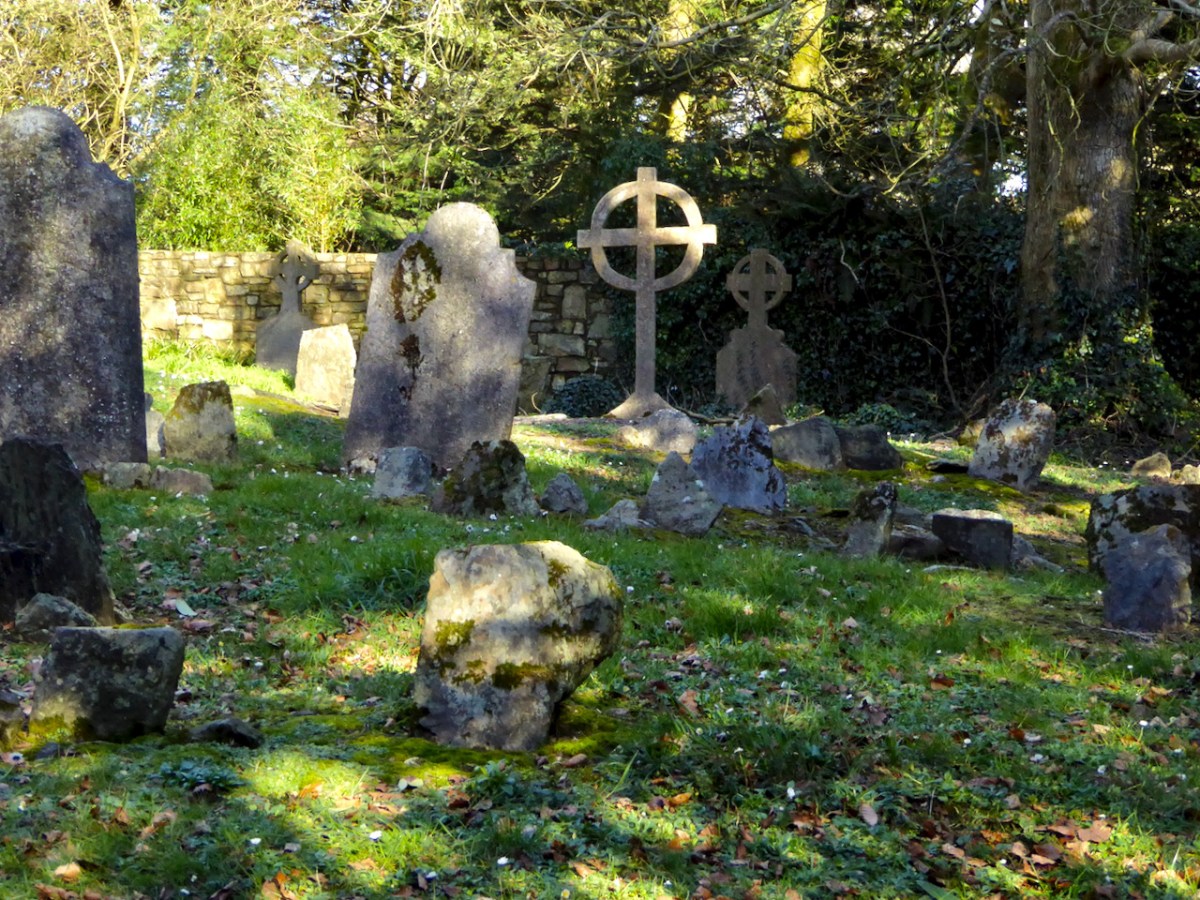
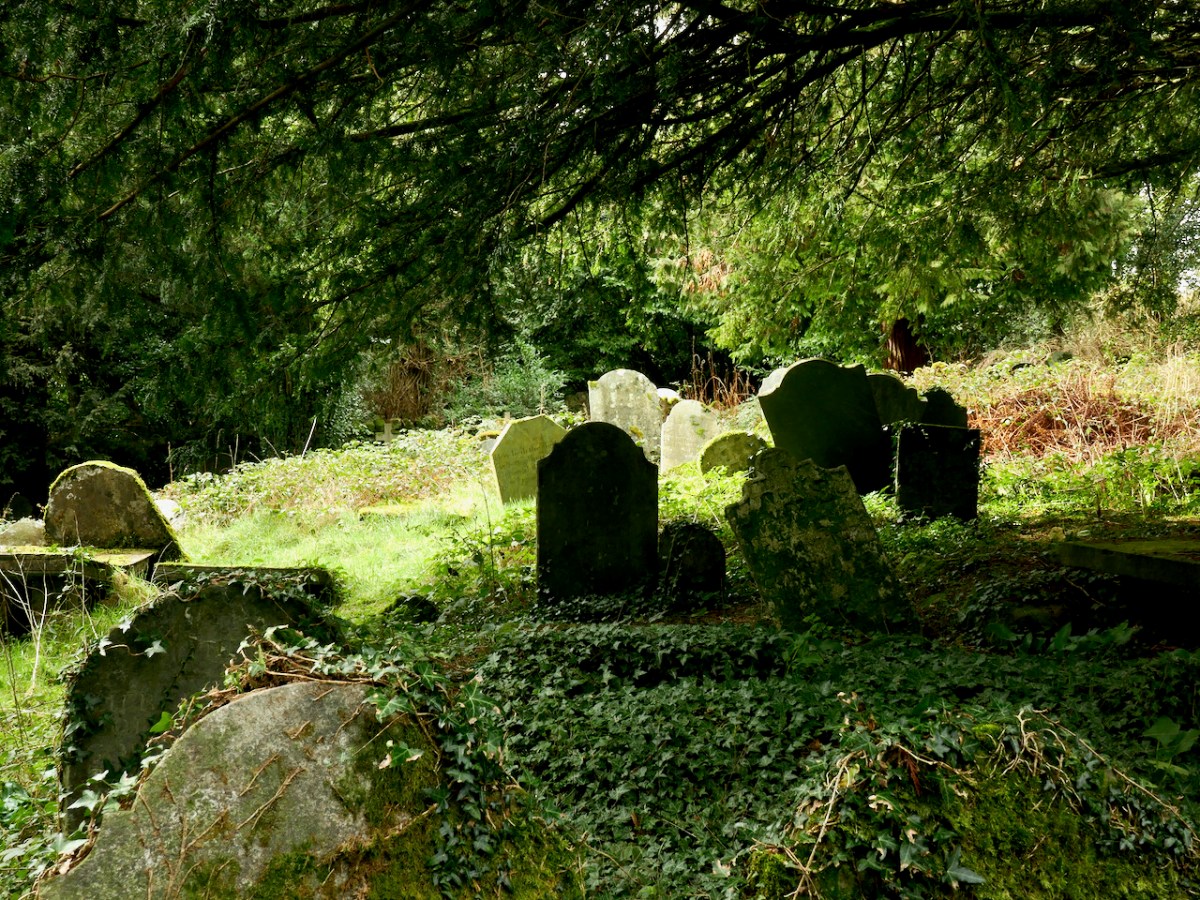
Recently, we decided to visit one of the many graveyards Chris has documented in his book, and on Chris’s recommendation we chose Bahana Whaley. It’s associated with the ruins of Whaley Abbey, which was once the seat of the notorious Whaleys, mentioned in Robert’s post about the Hell Fire Club. Today, this is a green and mossy site, as befitting a place whose name means abounding in birch trees. It was a fine soft spring day and the graveyards was as silent as the -er- tomb but speaking volumes about the people who lived and died in this place  – a true open-air archive and gallery.
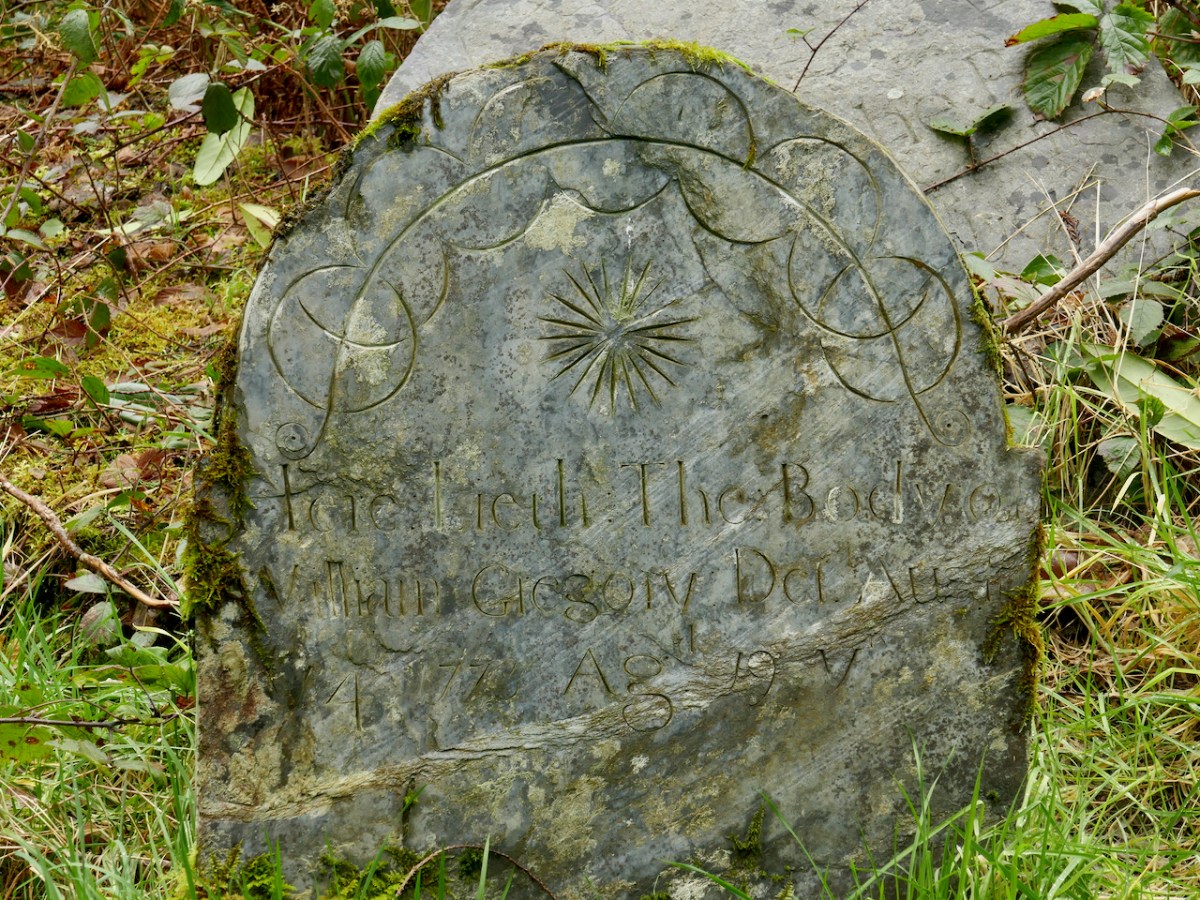
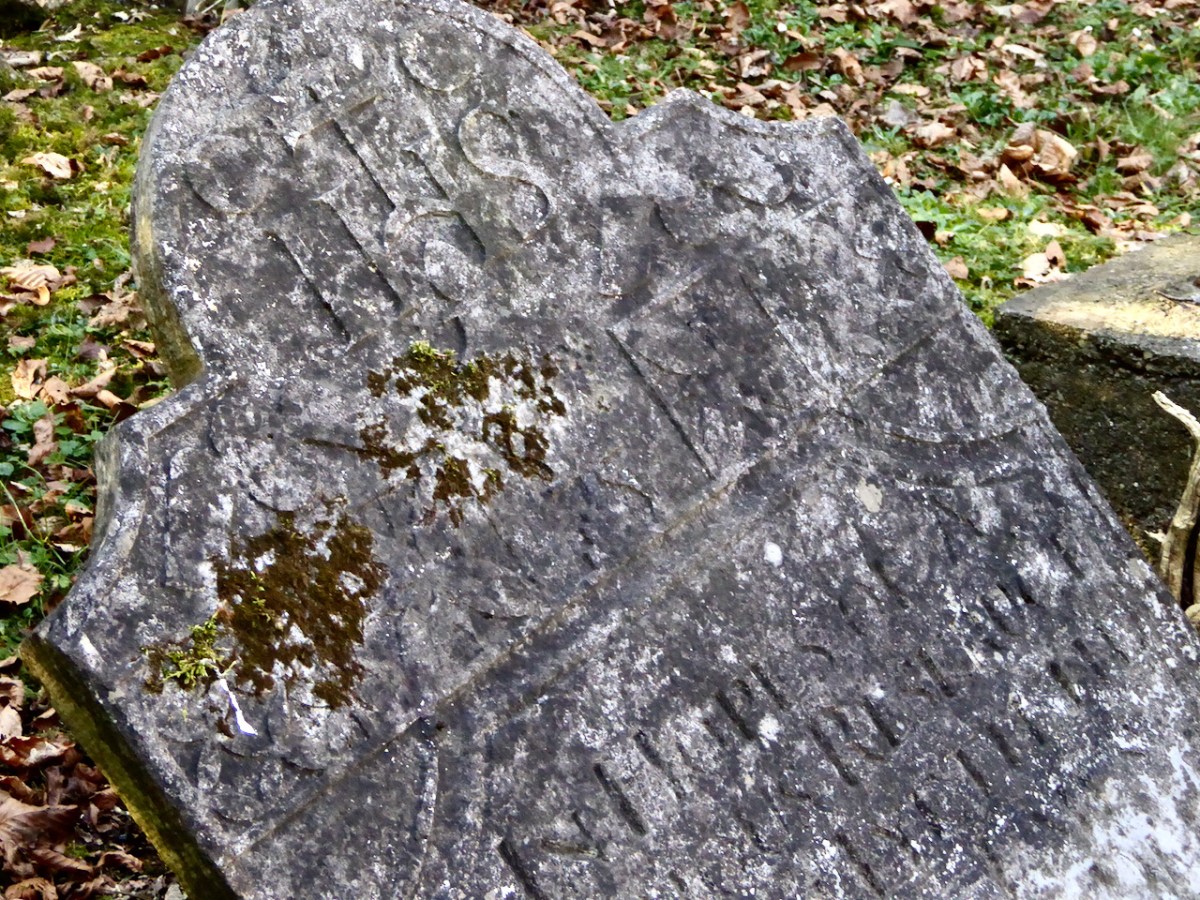
There are several fine example in Bahana Whaley of the group that Chris calls The Purple Slate Headstones. The most numerous type in Wicklow, they tend to use Roman capitals for their inscriptions, with dots used for word-spacing, and confine any ornament to sunbursts and garlands. A typical example of the decoration if not the script was carved for William Gregory in 1778 (above).
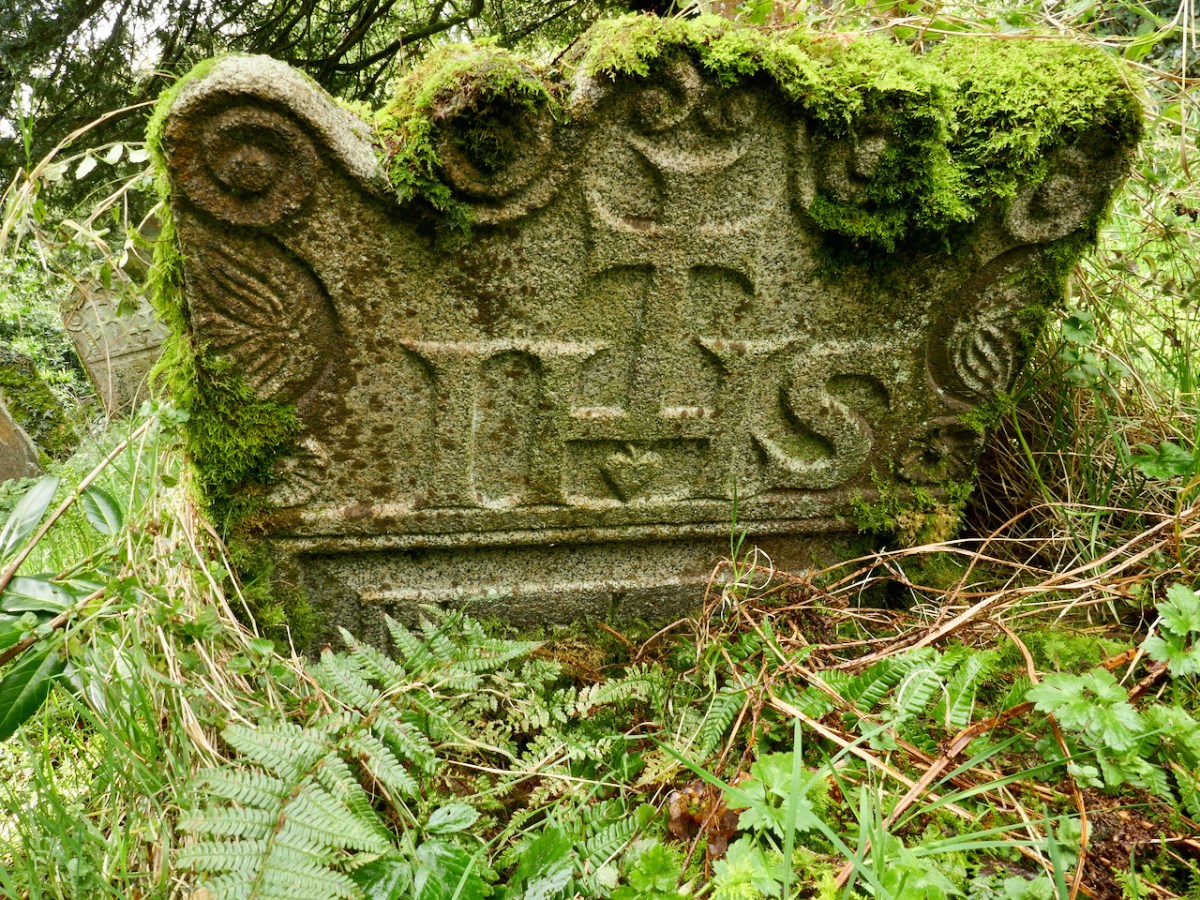
Another group well represented at Bahana Whaley are the Aughrim Granite Headstones, all produced from the same workshop. Because granite is hard and coarse-grained, it does not lend itself to finely detailed carving, but it’s long-lasting and solid so has weathered well. The ubiquitous IHS, a ‘christogram’ that stands for the name of Jesus, dominates the top panel of the headstone, with the inscription below in a frame. Often, within the IHS, there is a cross running through the centre of the H, with expanded finials and heart below it.
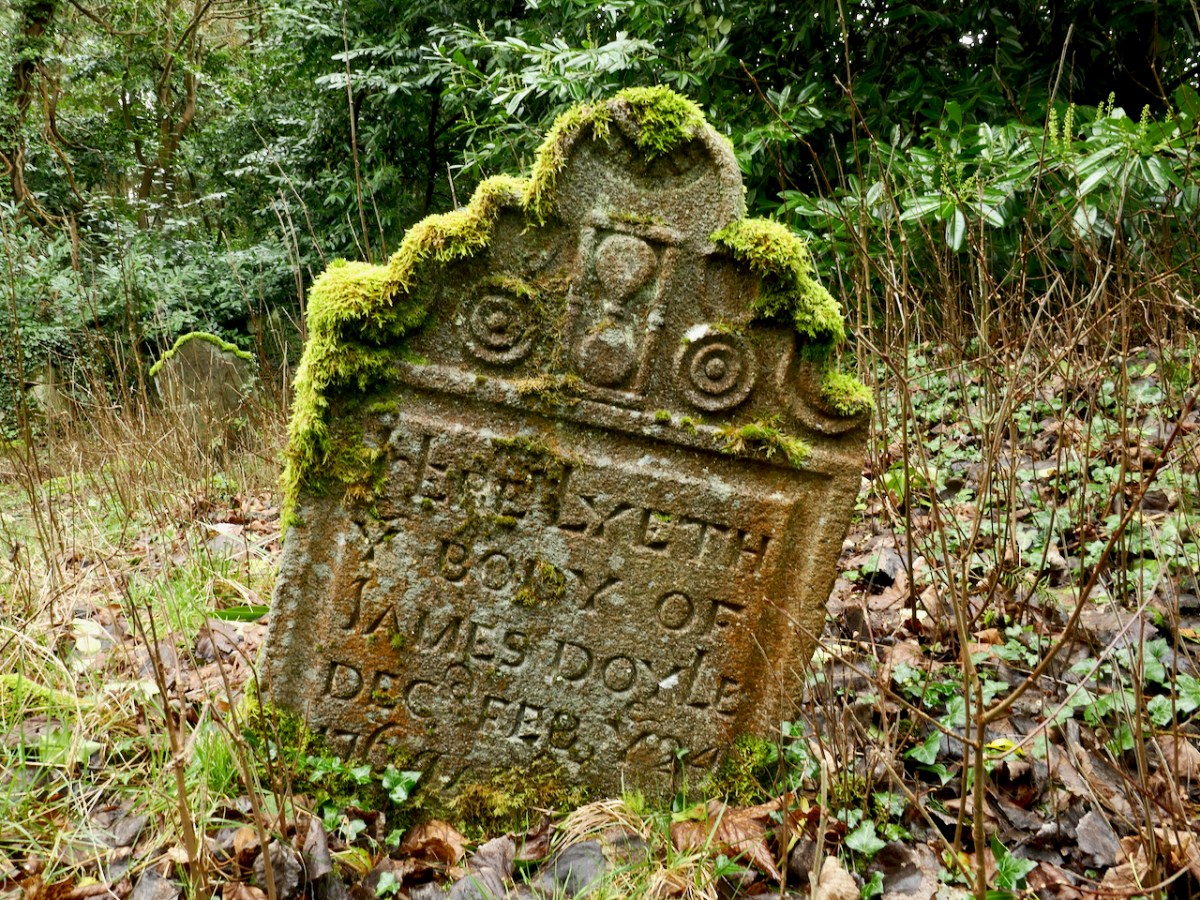
We saw one instance where the IHS symbol had been replaced with an hourglass – a reminder that time runs out on us all eventually, as it did for James Doyle in 1764.
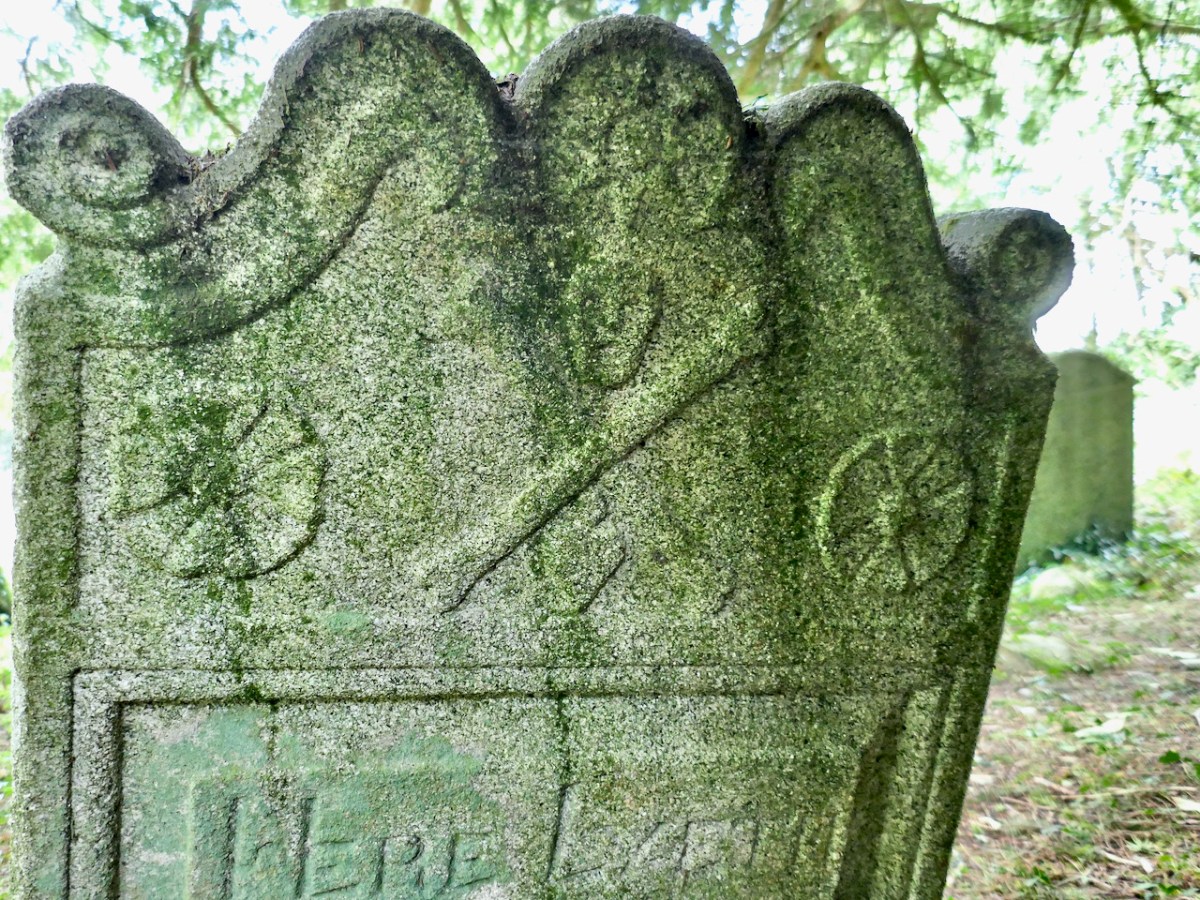
In another granite headstone the symbol used was the skull and crossbones. This harks back to the cadaver tombs of the 16th and earlier centuries, where skeletons were carved, sometimes with worms eating their intestines, as a powerful memento mori that all of us, rich or poor, come to this in the end. It is not, as a gravedigger once told us, a sign that a pirate is buried in that grave. The Arthur under this set of skull and crossbones was probably a well-to-do and pious farmer.
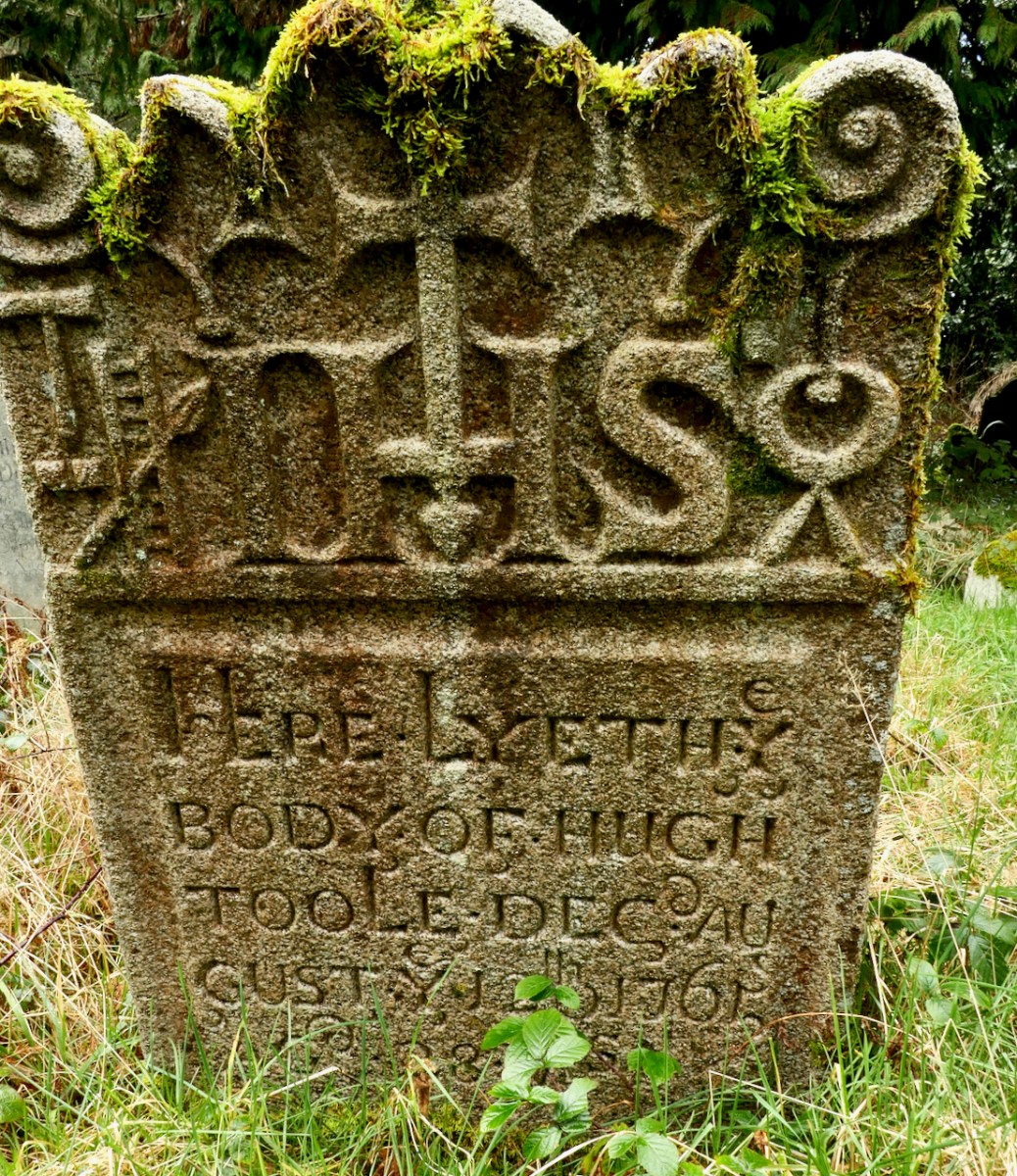
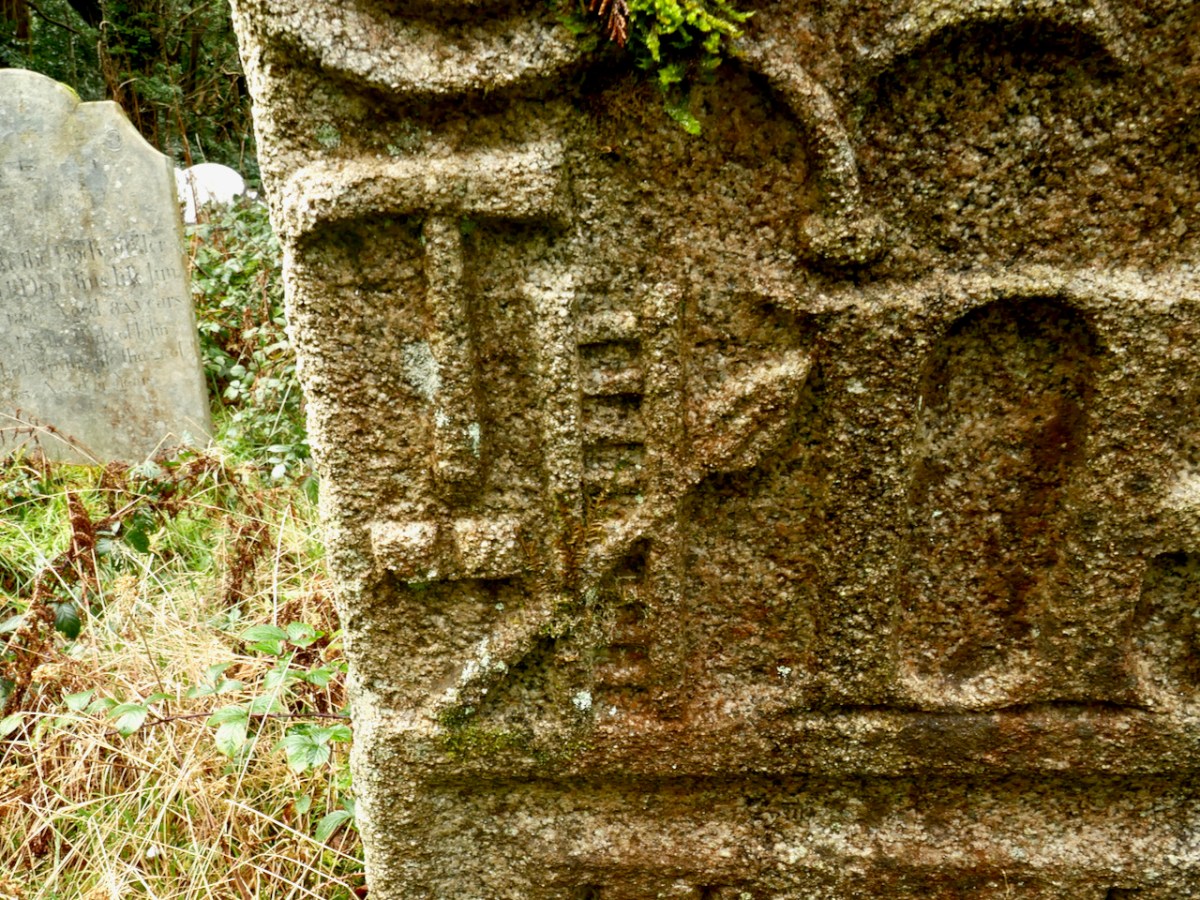
Often in Wicklow graveyards, the IHS is surrounded with Instruments of the Passion. These are the tools that were used to torture Jesus, to nail him to the cross and take him down and to gamble over his clothes. You can find a full list here. In Hugh Toole’s 1765 headstone (above) you can see, reading from left to right, hammer, dice, ladder, spear, nails and pincers (used to extract the nails).
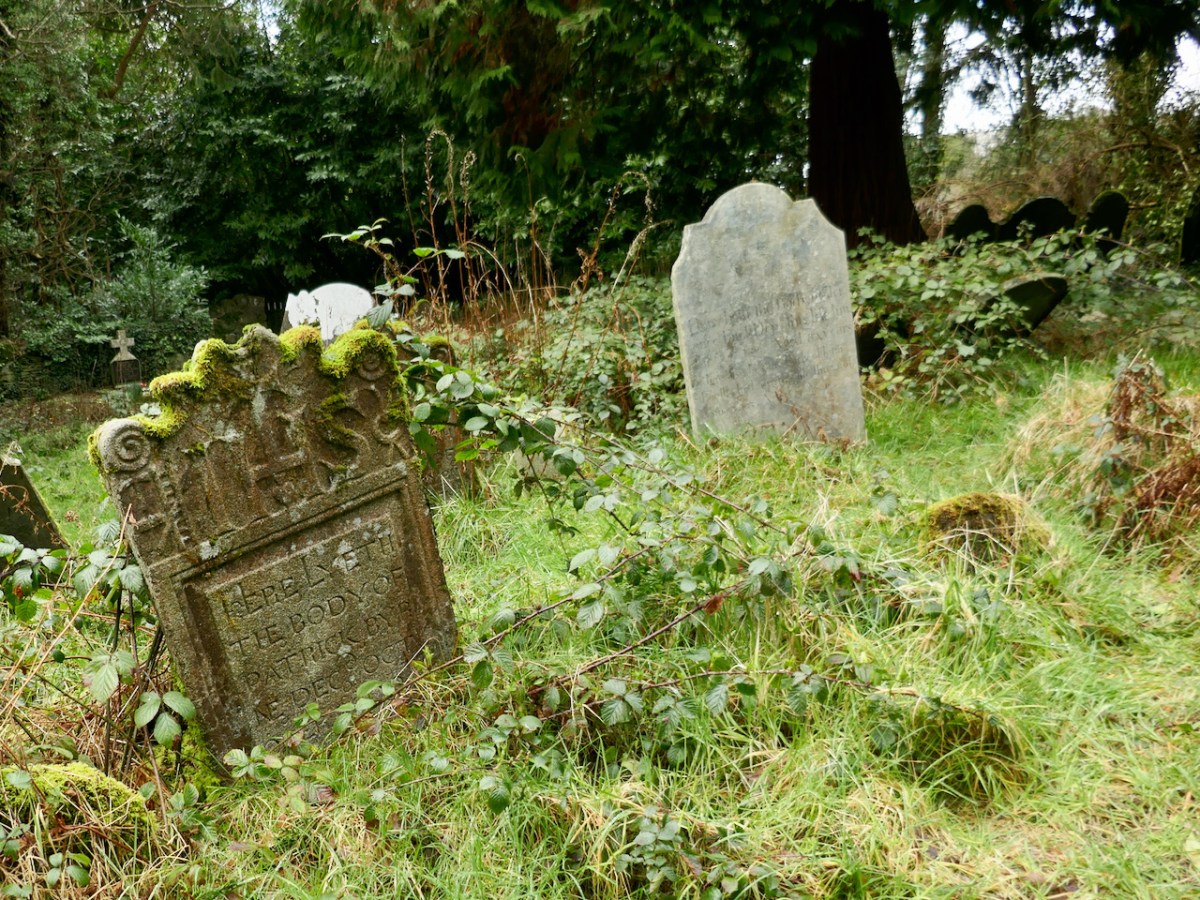
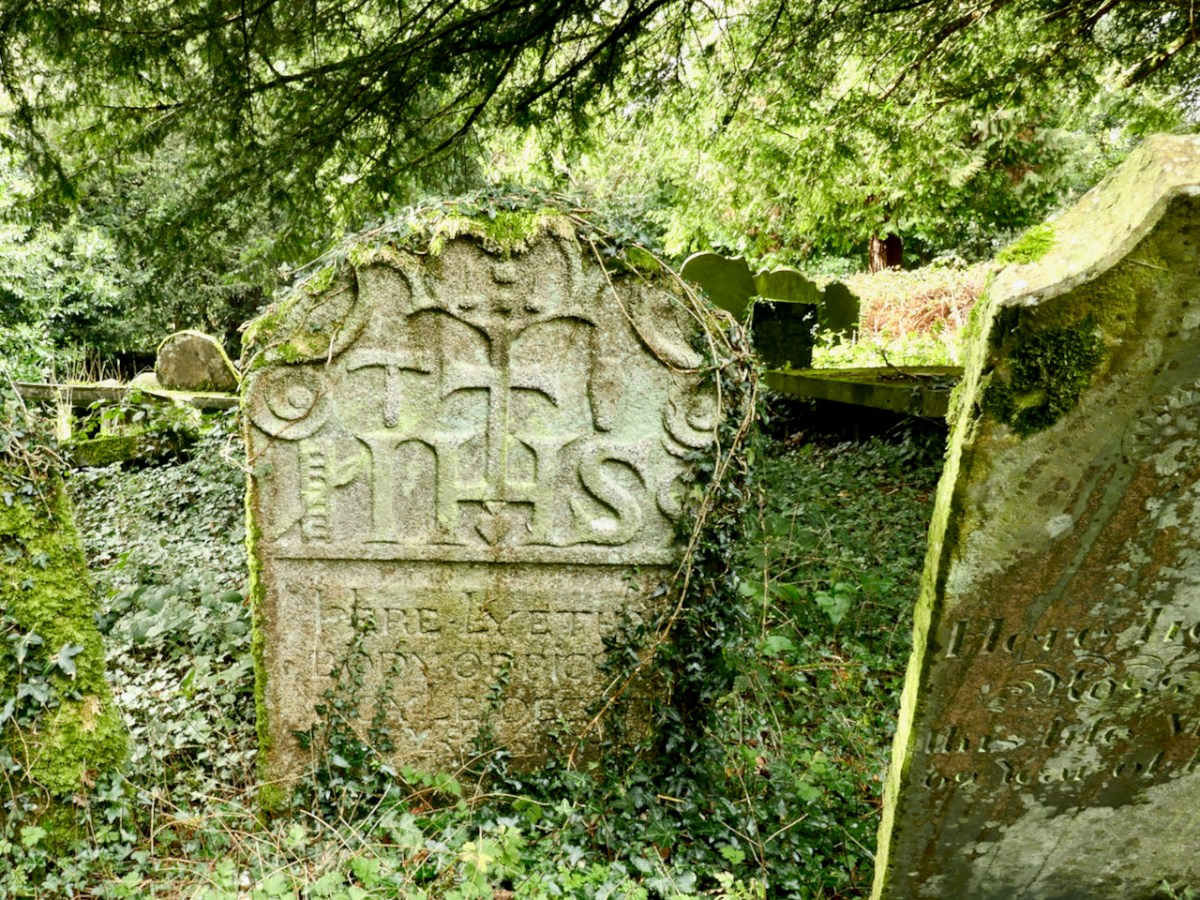
Patrick Byrne’s headstone is almost identical, while the one below has fewer Instruments, including one which might be a flail.
One of the foremost carvers of his day was Denis Cullen. He lived in Monaseed, Co Wexford, and carved on greenstone. He specialised in depictions of the crucifixion. Chris has studied his headstones from earlier to later and says his skill noticeably improved over time. It helps, of course, that he signed his work. We stumbled across Cullen’s work in Kilcoole about five years ago and were very taken with it then. 
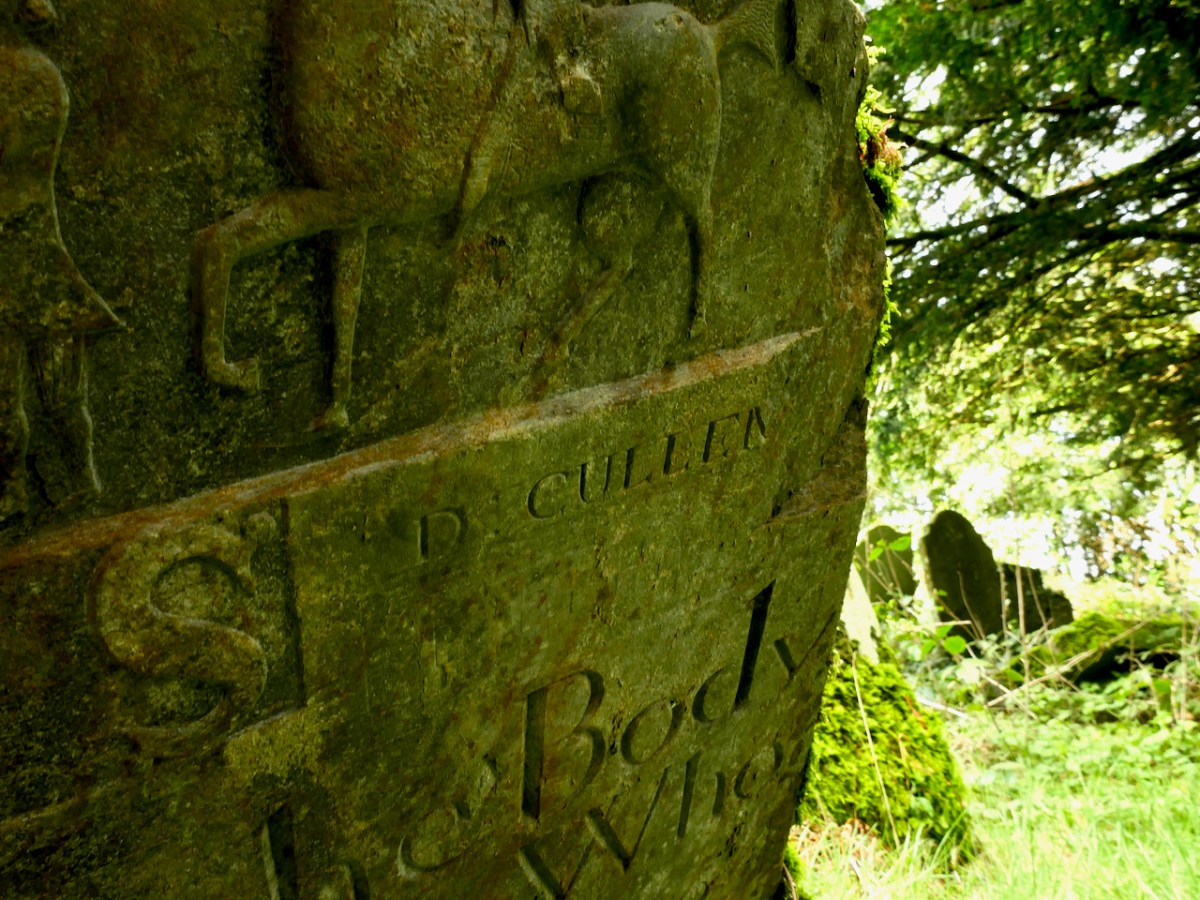
The crucifixion occupies the top portion of the headstone. The inscription, more ornate than that used in either the Purple Slate or Aughrim Granite headstones, is in the unframed portion below. But Cullen’s real achievement was his figurative crucifixion scenes. 
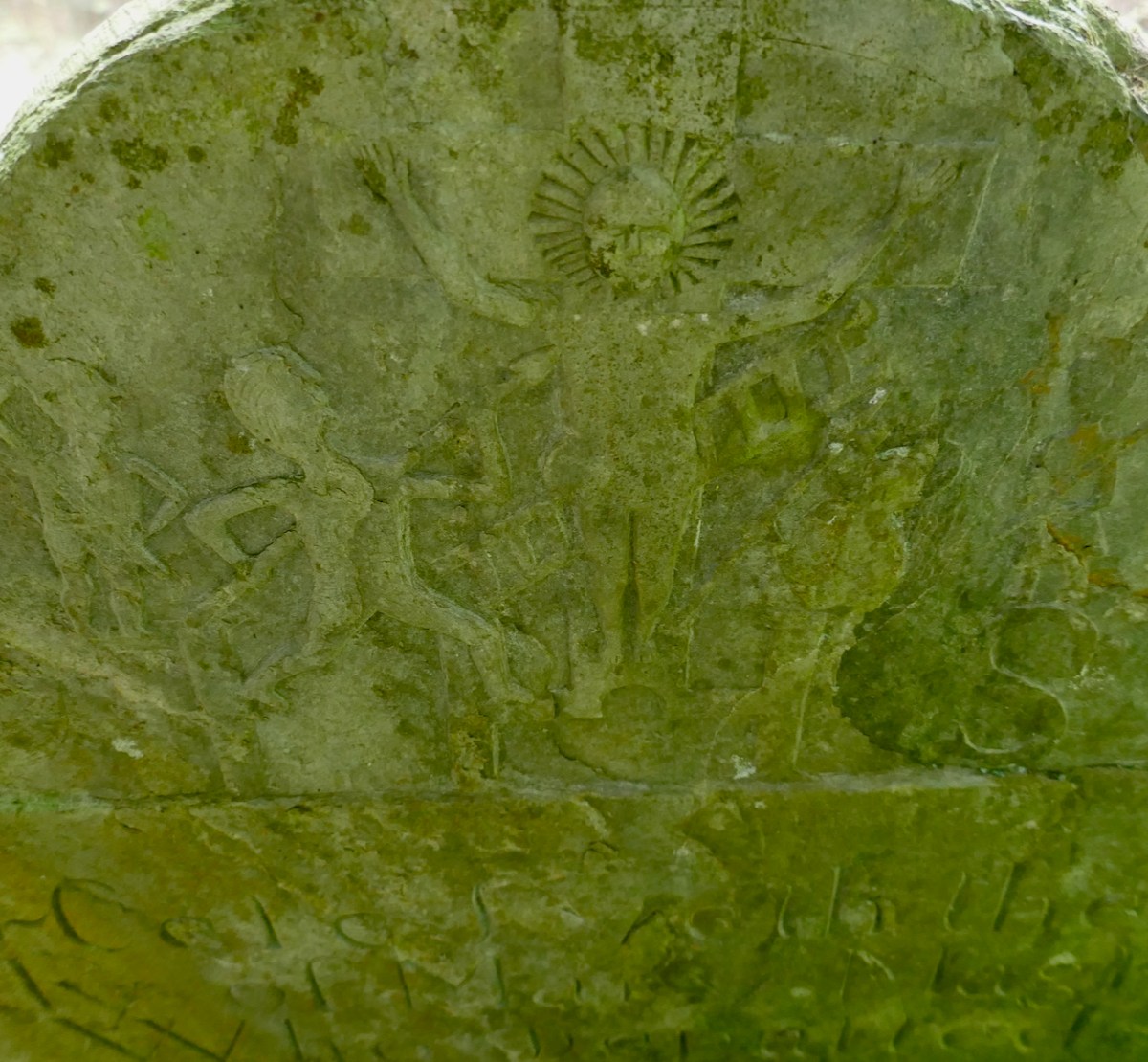
One of his earlier examples can be seen at Bahana Whaley, carved for Mary Magrah who died in 1765 (above). Although very worn, you can see that it was carved in relief. His scenes are invariably carved in relief, whereas his script is incised.
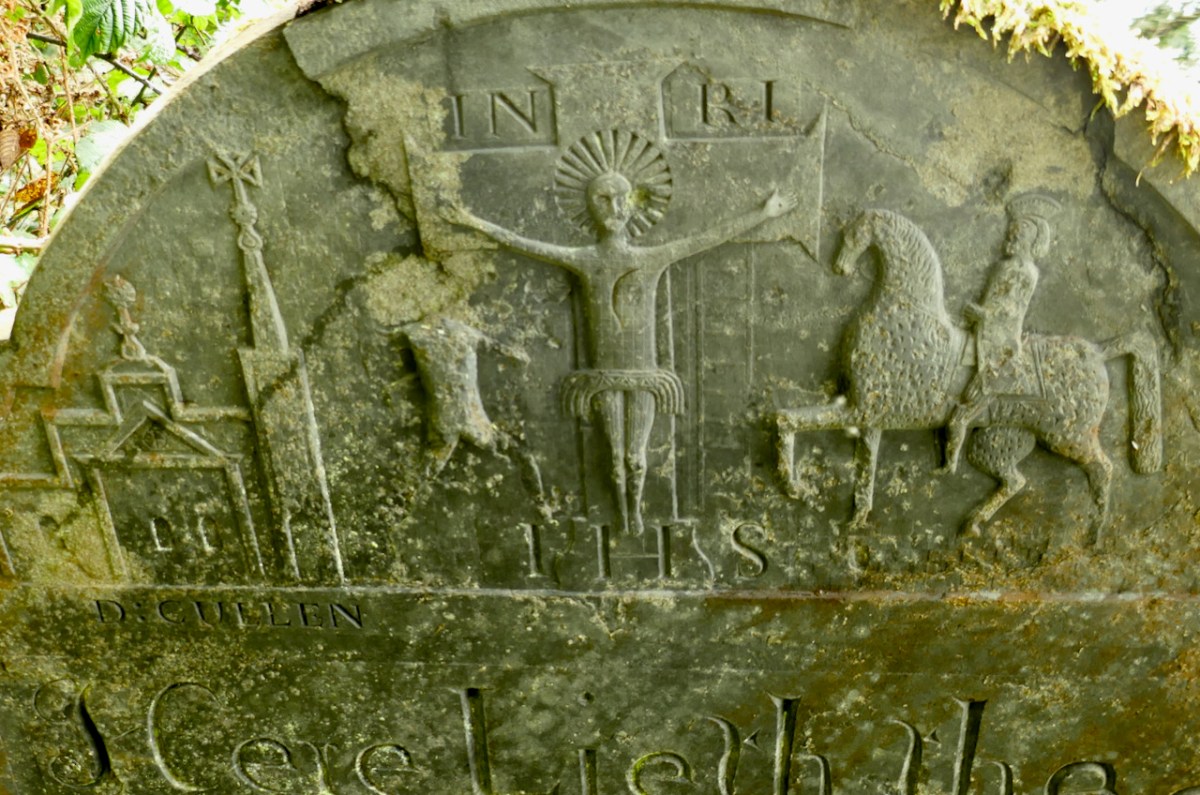
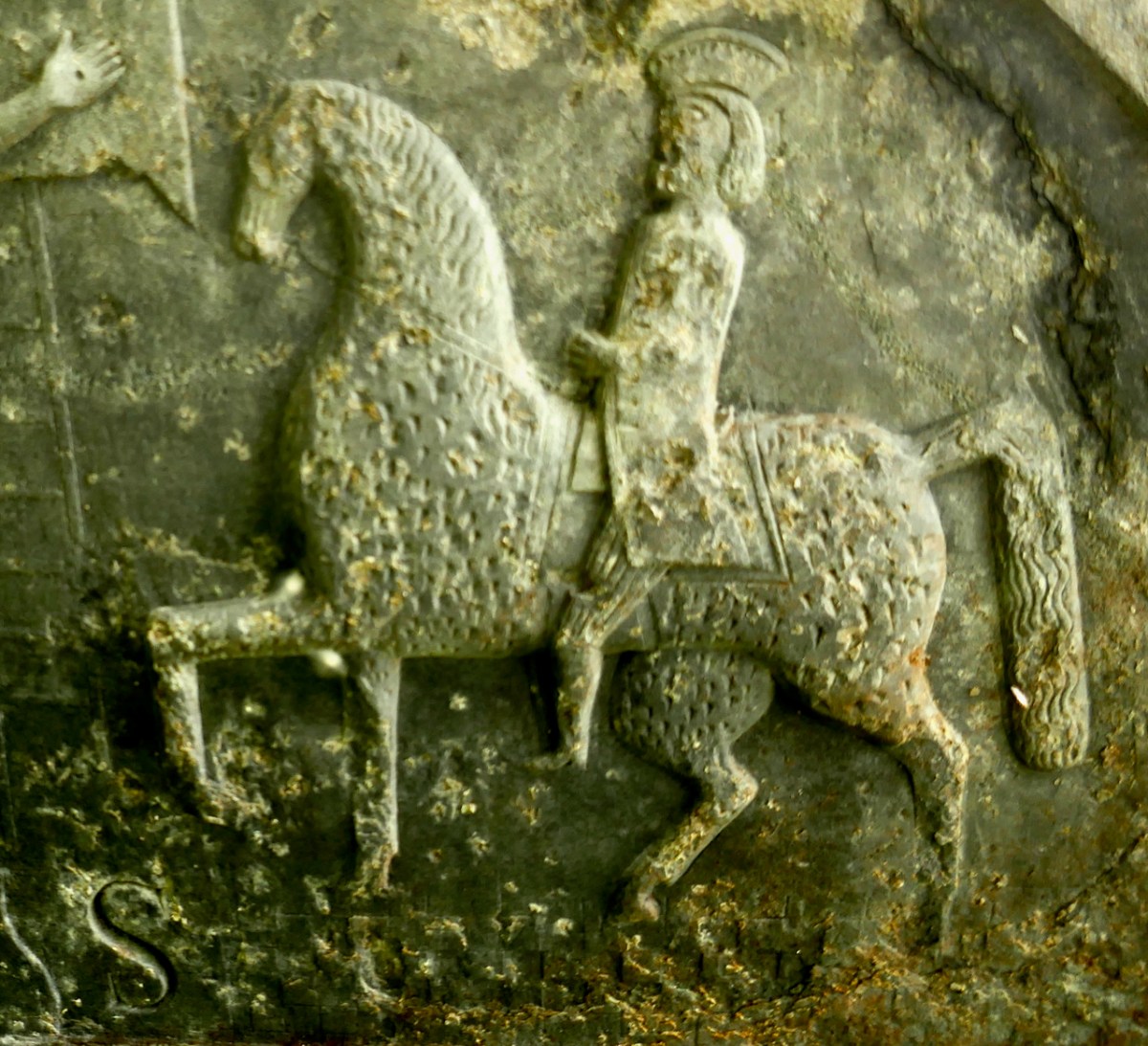
Edward Byrne’s headstone (he died in 1778) is better preserved (above and below) and also more detailed. It shows a crucifixion scene with a mounted soldier on one side and a church on the other.
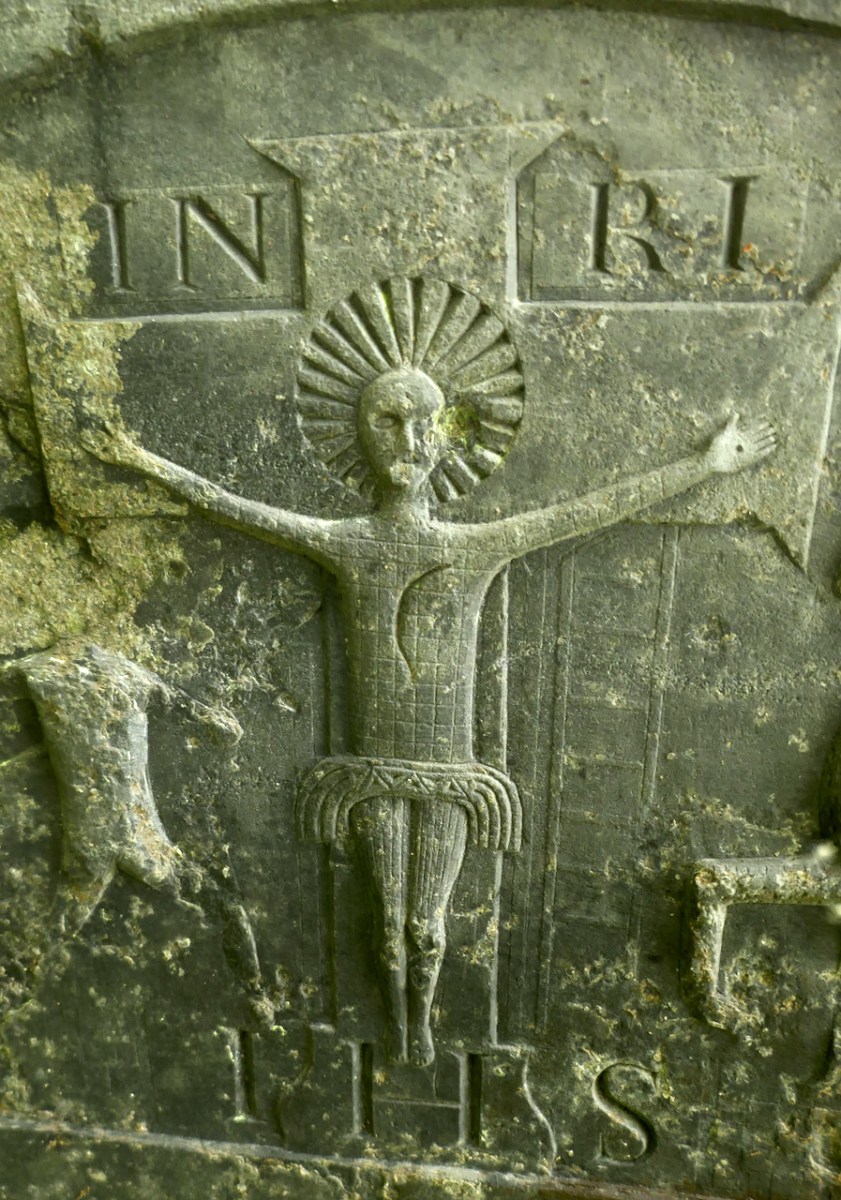
Christ hangs upon the cross, his only covering a loincloth. A soldier with the spear (partially obliterated) is to his right, while to his left is a ladder in very low relief, and a soldier on horseback. The horse is a high-stepping creature with a proud head and tail held high. On his back is a man in a frock coat and (I think) a tri-corn hat. Chris says about the horseman, 

He is not a biblical figure and, without any obvious parallels, appears to have been invented by Cullen himself. The horseman is always shown in 18th-century military or yeomanry costume and is placed on the right hand of the cross (i.e. on Christ’s left). The horse itself is always depicted as if on parade, and the tail is sometimes cropped.
When John Graham died in 1784 his family commissioned a similar headstone from Cullen (below). In this one, instead of a church, two more soldiers stand, holding pikes. There are no remaining instruments of the passion, apart from the spear held by the soldier to his right, and a faint ladder running diagonally behind the crucifix. 
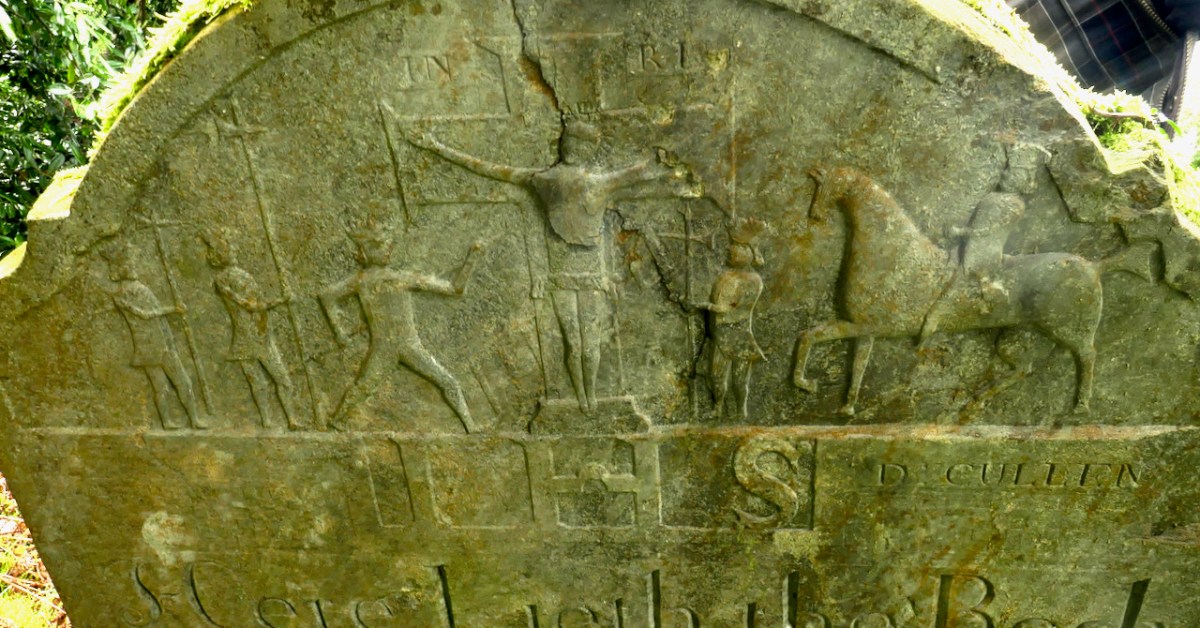
There is no attempt in Cullen’s crucifixion scenes at an interpretation of what dress may have been like in biblical times – no Roman centurions, for example. This makes them important examples of eighteenth-century figure carvings.
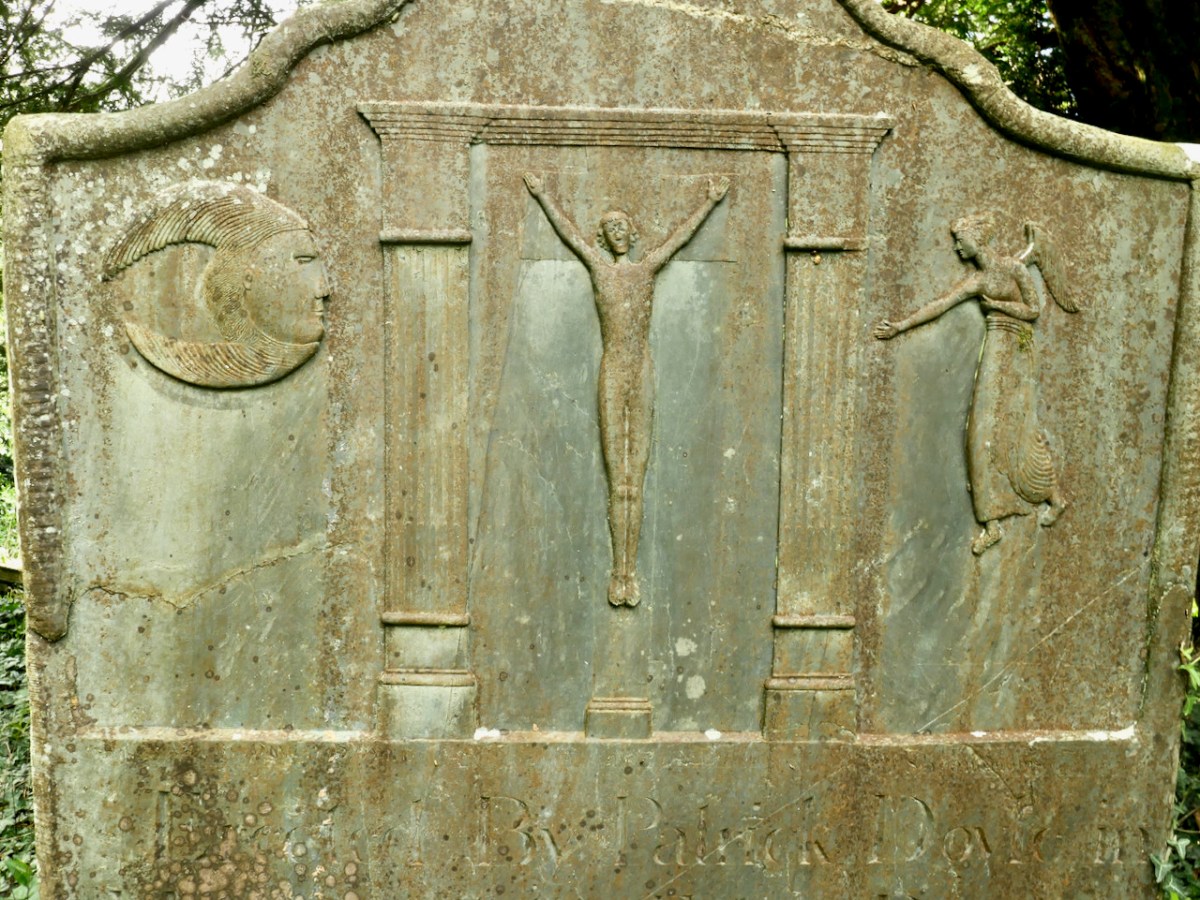
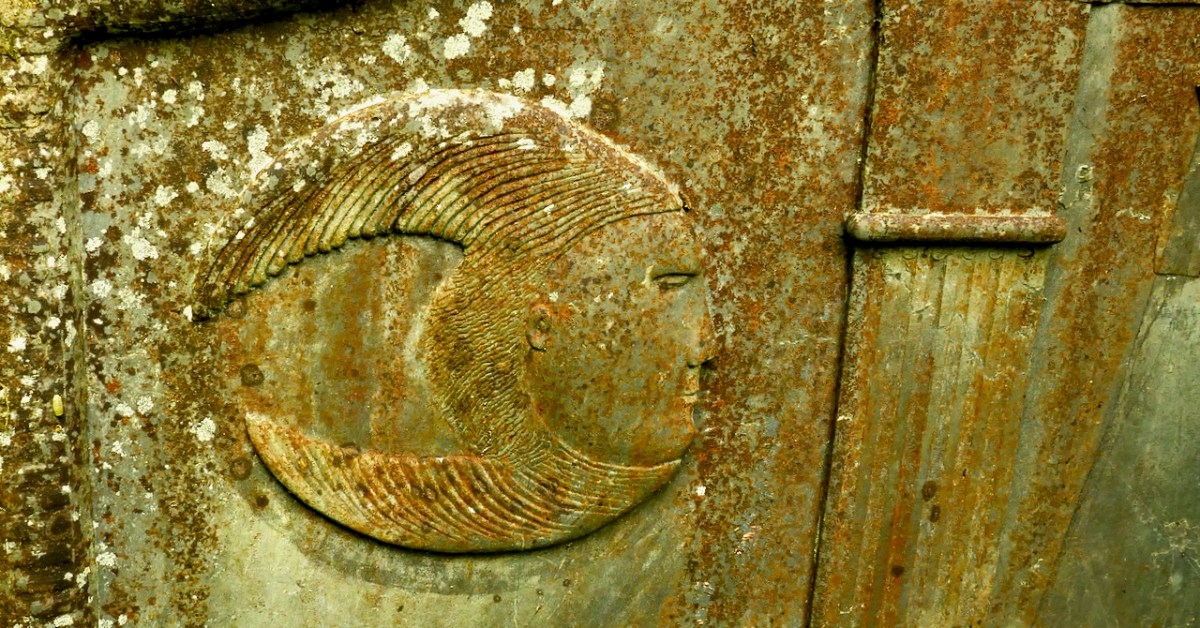
I can’t resist one final example from Bahana Whaley (above). It’s actually nineteenth century, dating from 1808 and is by a carver named David Doyle. Although the central figure is the crucified Christ, he is portrayed in high relief between two classical columns, with an angel to his left and and moon to his right – the moon is my lead photograph in this post. The carvings show a real advance in quality and sophistication as we progress into the nineteenth century.
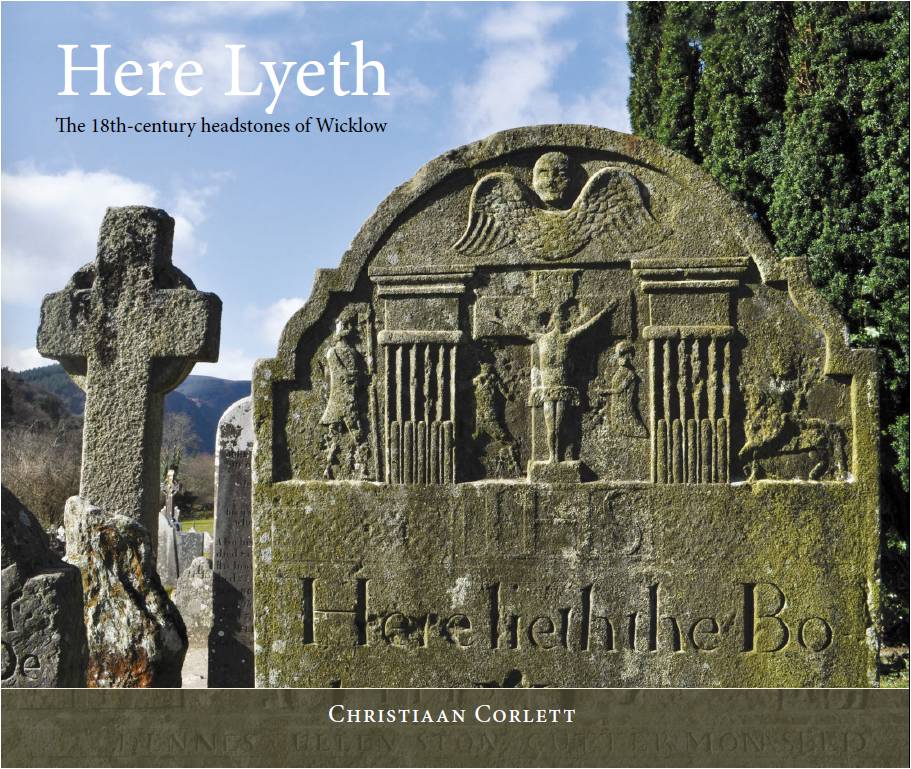
I have only shown a sample of what we found at Bahana Whaley. It will pay re-visiting, as will the many graveyards documented in Chris’s marvellous book. There are few graveyards like this in Cork, so it is special for us that we get to wander in these atmospheric open-air galleries with Chris Corlett’s research to guide us. If you want to do the same, you can order the book from County Wicklow Heritage.
The House Style: William Dowling and the Harry Clarke Studios

In the years before he died (in 1931), as he was ill and overburdened with commissions, Harry Clarke came to rely on a stable of brilliant young assistants in his studios. Austin Molloy, Kathleen Quigly, Millicent Girling, George Stephen Walsh, Philip Deegan, Richard King, William Dowling and others were all trained by Harry to execute his designs according to his exacting standards. This post is about the work of one of those artists, William Dowling.

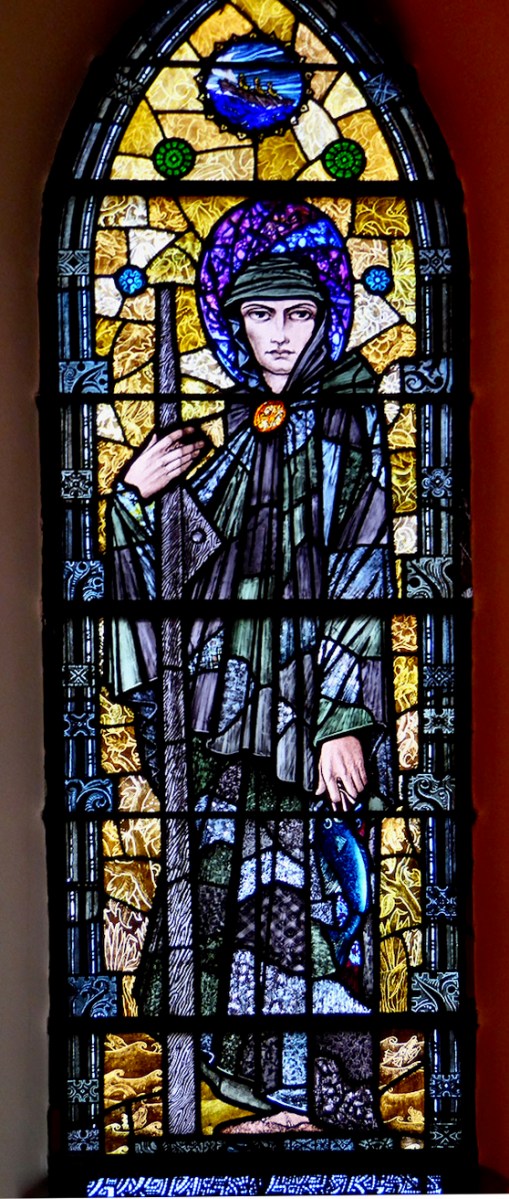
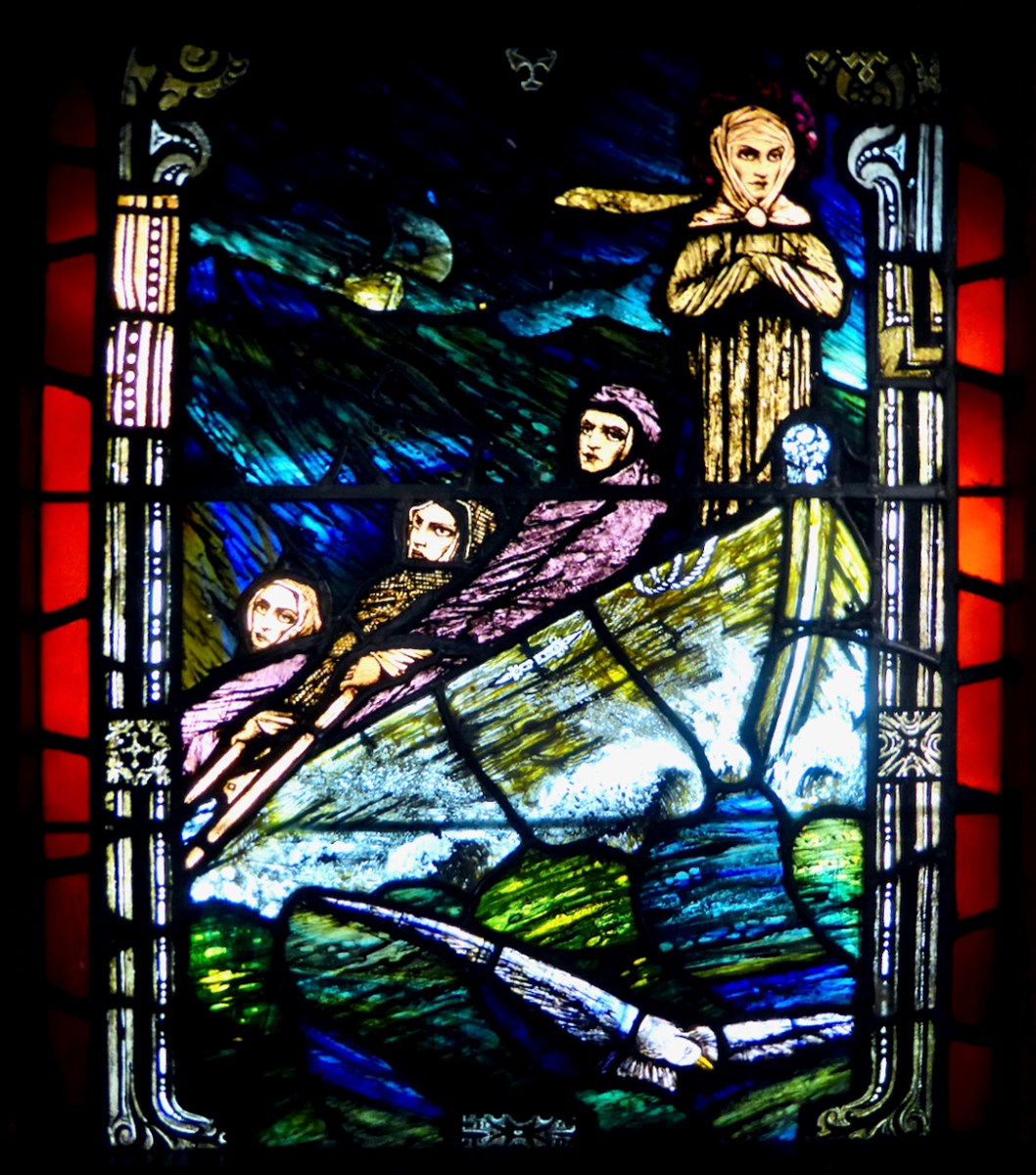
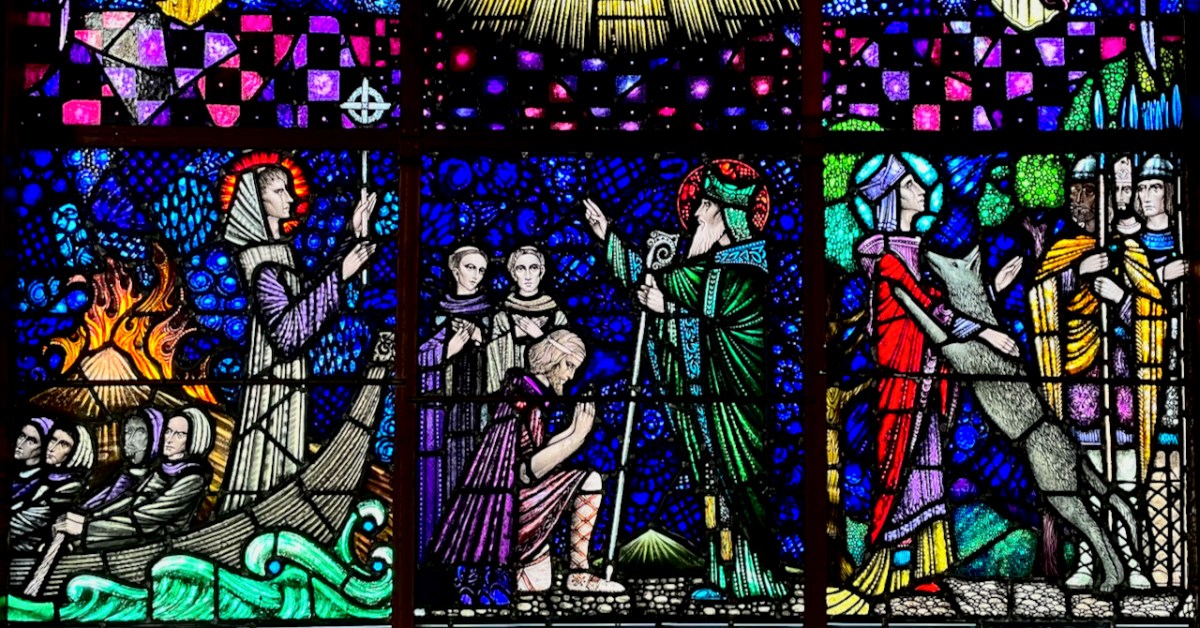
As I explained in my Harry Clarke Quiz post, according to Nicola Gordon Bowe’s classification scheme,  a stained glass window can be labelled a Harry Clarke if it was designed and executed entirely by him, if it was designed and partially executed by him (A), or if it was designed by him and the execution was done under his close supervision (B).  An excellent example of this is the Tullamore St Brendan window (above and below). This is one of Harry’s (B) windows: he designed it but it was executed by William Dowling in 1928 under Harry’s close supervision. Compare it to the St Brendan in my lead image, which was done by Dowling for Knockainey Church in Limerick in 1939.

This is the predella (lowest panel) of the Tullamore Brendan window. When the window was relocated from Rathfarnham, the predella was separated from the main window and is now backlit, in a dark corner.

Harry researched his subjects extensively and ensured that anyone working on his windows did too. Paul Donnelly*, in his fascinating essay Legacy and Identity: Harry Clarke, William Dowling and the Harry Clarke Studios (in Harry Clarke and Artistic Visions of the New Irish State) tells how he sent his apprentice, William Dowling, off to the National Library to read all that was available on his subject when he was working on the Rathfarnham windows. He would come by every day to deliver encouragement – his assistants all adored him and although he was demanding he was also supportive and kind.

While the three Tullamore windows (originally in Rathfarnham) are credited to Harry Clarke, all the other windows in this post are credited to William Dowling

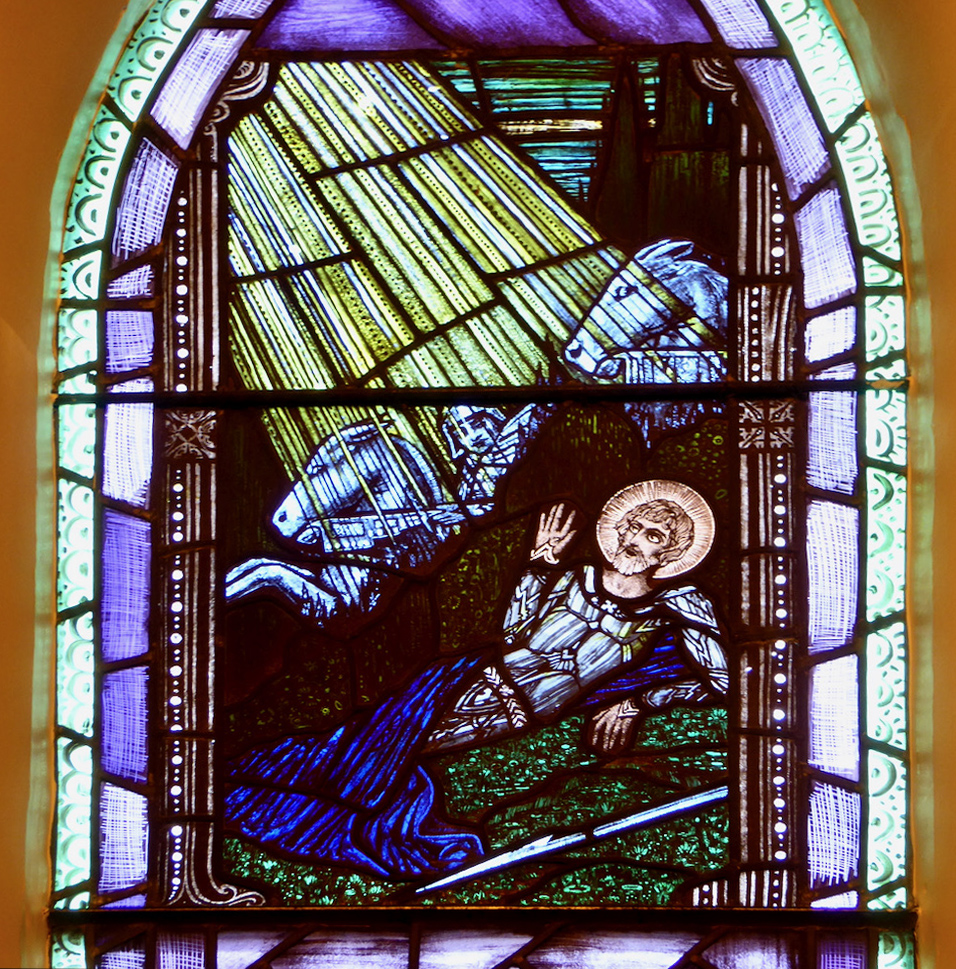
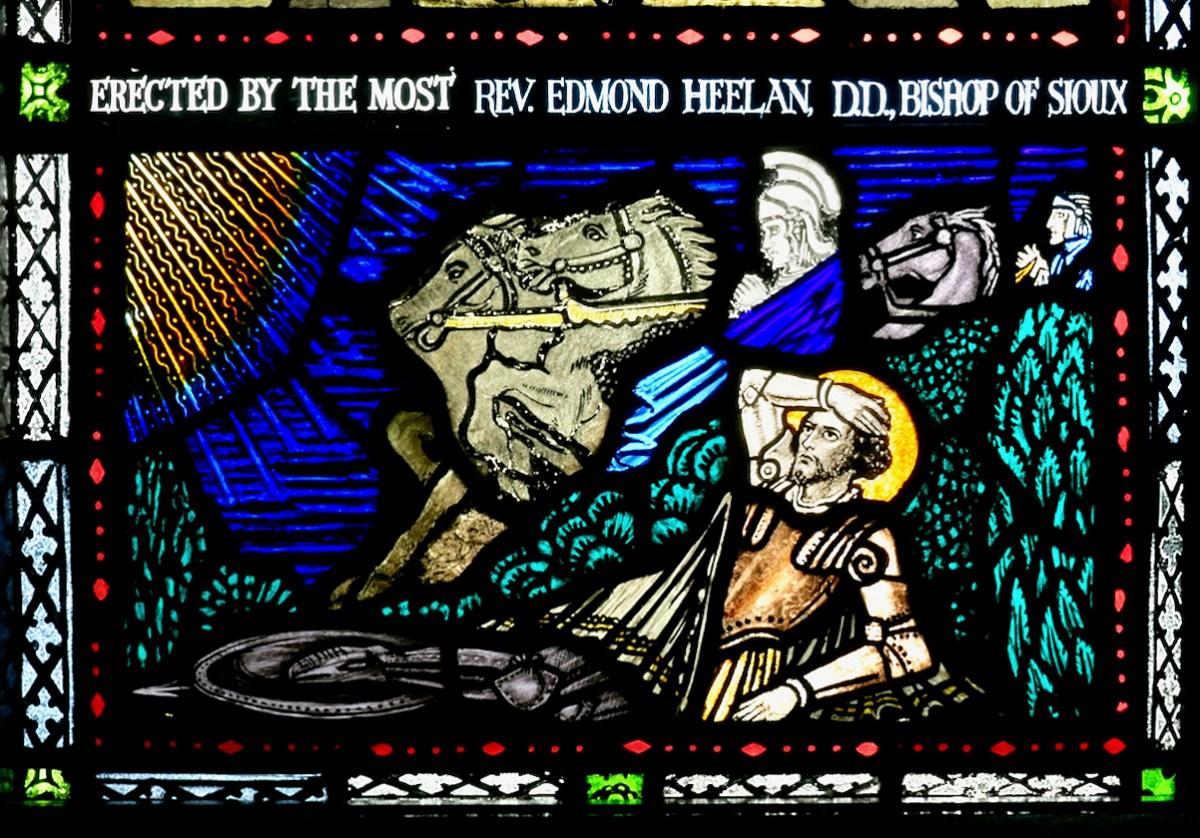
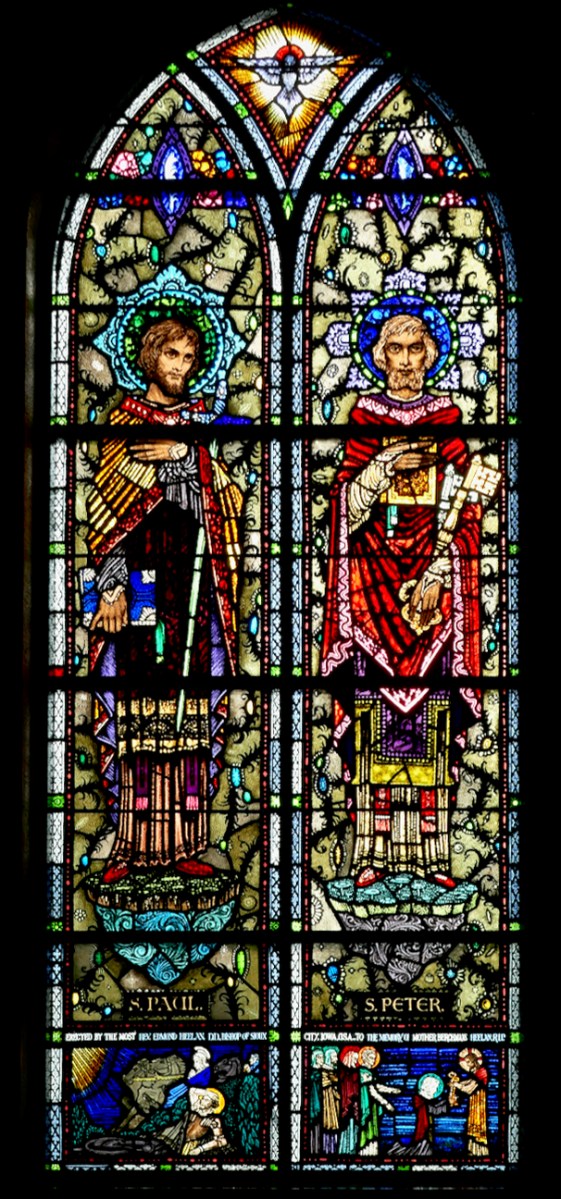
William (everyone called him Willie) Dowling was recommended to Harry by Austin Molloy, who was his teacher at the Dublin Metropolitan School of Art. Having himself worked with Harry, Molloy recognised the special talent that Willie brought to his painting, a talent that he felt would be well used at Harry’s studio. Willie probably worked on this one (above) too – it’s the predella of the St Paul window now in Tullamore. You can see that it is the inspiration for the predella of a St Paul window from Knockainey in Co Limerick (below), done in 1930 while Harry was in Davos. The full Peter and Paul window is below that one.
How right Molloy was! Not only did Harry come to rely on him greatly while still alive, but Willie was one of the group of artists (along with Richard King) who stayed on after Harry’s death in 1931, filling the many outstanding commissions still on the books and the new ones that continued to pour in. He eventually took over as manager when Richard King left in 1940, while continuing also as chief designer, and stayed until the Studio closed in the 1970s.

Peter and Paul from Knockainey Church in Limerick, dating to 1930

From the moment he arrived at the Studio in 1927 Dowling was committed to Harry’s style. As Paul Donnelly puts it, 

Dowling worked with Clarke, learning the craft of making stained glass according to his standards and design aesthetic. He had the benefit of Harry Clarke’s direct instruction for more than a year before ill-health force Clarke to seek medical treatment in Switzerland.

. . .In his role as principal designer, Dowling was charged with delivering work which was derived from the distinctive artistic legacy left by Harry Clarke. Dowling wrote that the aim of Clarke Studios was to ‘avoid the mundane and commonplace. That was the ideal of Harry Clarke and one which we have done our very best to follow.’

Paul Donnelly, Biographical Sketch of William Dowling
Gazetteer of Irish Stained Glass
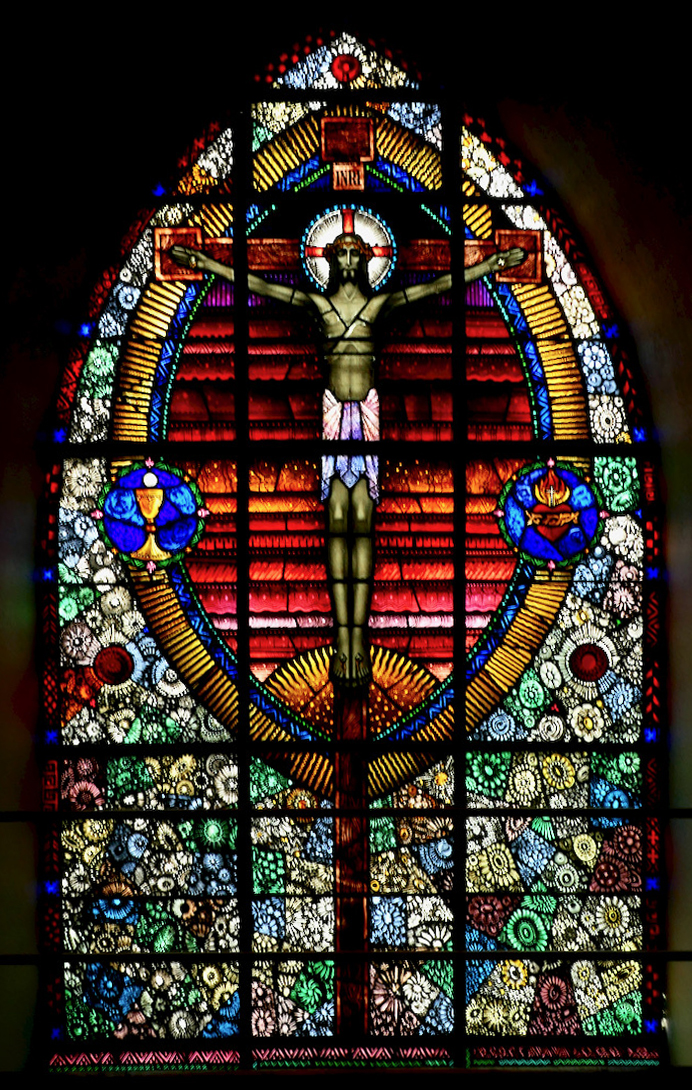
Christ Crucified, Patrickswell, Co Limerick, by William Dowling, 1943. This window is above the balcony and is a brilliant example of the mixture of figurative and non-figurative elements, specially designed for the space it occupies

After Harry’s death the demand for Clarke-style windows was relentless and the studios delivered. Well into the 40s they were still producing windows that, to the untrained eye, looked very like ‘a Harry Clarke.’ During that time, the quality of the glass, the art and the workmanship was superb and the busy studios were exporting their windows world-wide. 

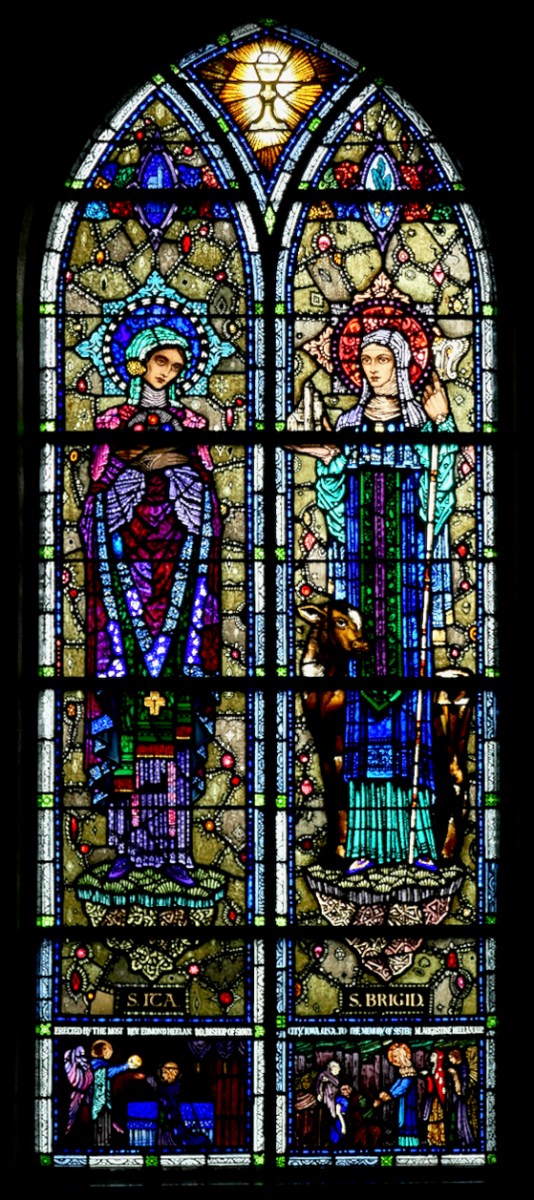
Ita and Brigid, Knockainey, 1930. The predella panels are below.

Then, and for many years to come, the Harry Clarke Studios did not allow individual artists to sign their work – all windows were signed Clarke or Clarke Studios. Strict adherence to the House Style and refusal to allow signatures, while understandable as marketing decisions, had several unfortunate consequences.

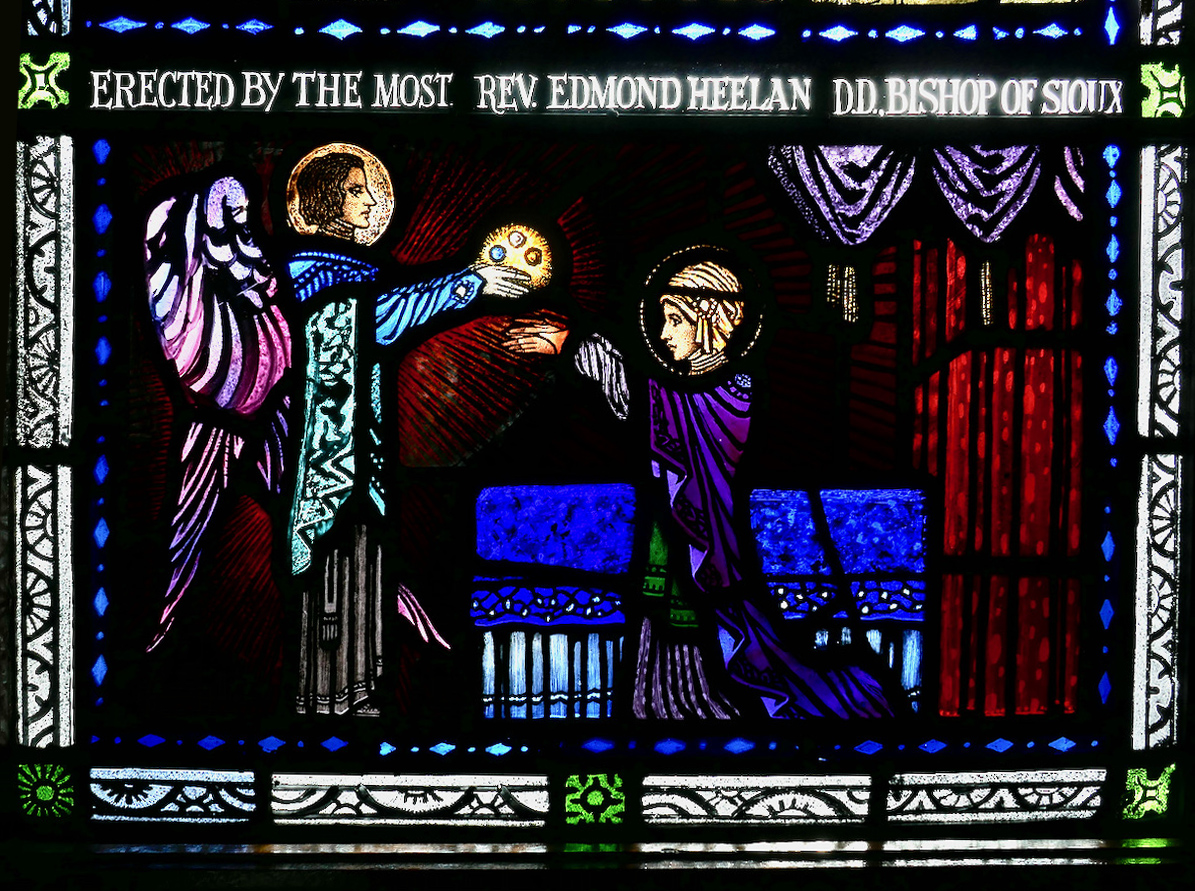
The predella panels from the Ita and Brigid windows. Upper: The vision of St Ita, in which an angel appeared to her in a dream, offering her three glowing gens, representing the Father, Son and Holy Spirit. Lower: St Brigid looking after the people of Kildare- the figures on the left are clearly inspired by, as Nicola Gordon Bowe puts it “Harry’s unique ability to depict the gruesome, macabre and palsied in an exquisite manner.”

First of all, it is difficult to identify individual artists with their work, and this includes Dowling himself. Herculean efforts, though, by Ruth Sheehy and Paul Donnelly have allowed us to acknowledge in some cases the work of Richard King, William Dowling, and occasionally others (such as Charles Simmonds and Terry Clarke, Harry’s nephew).

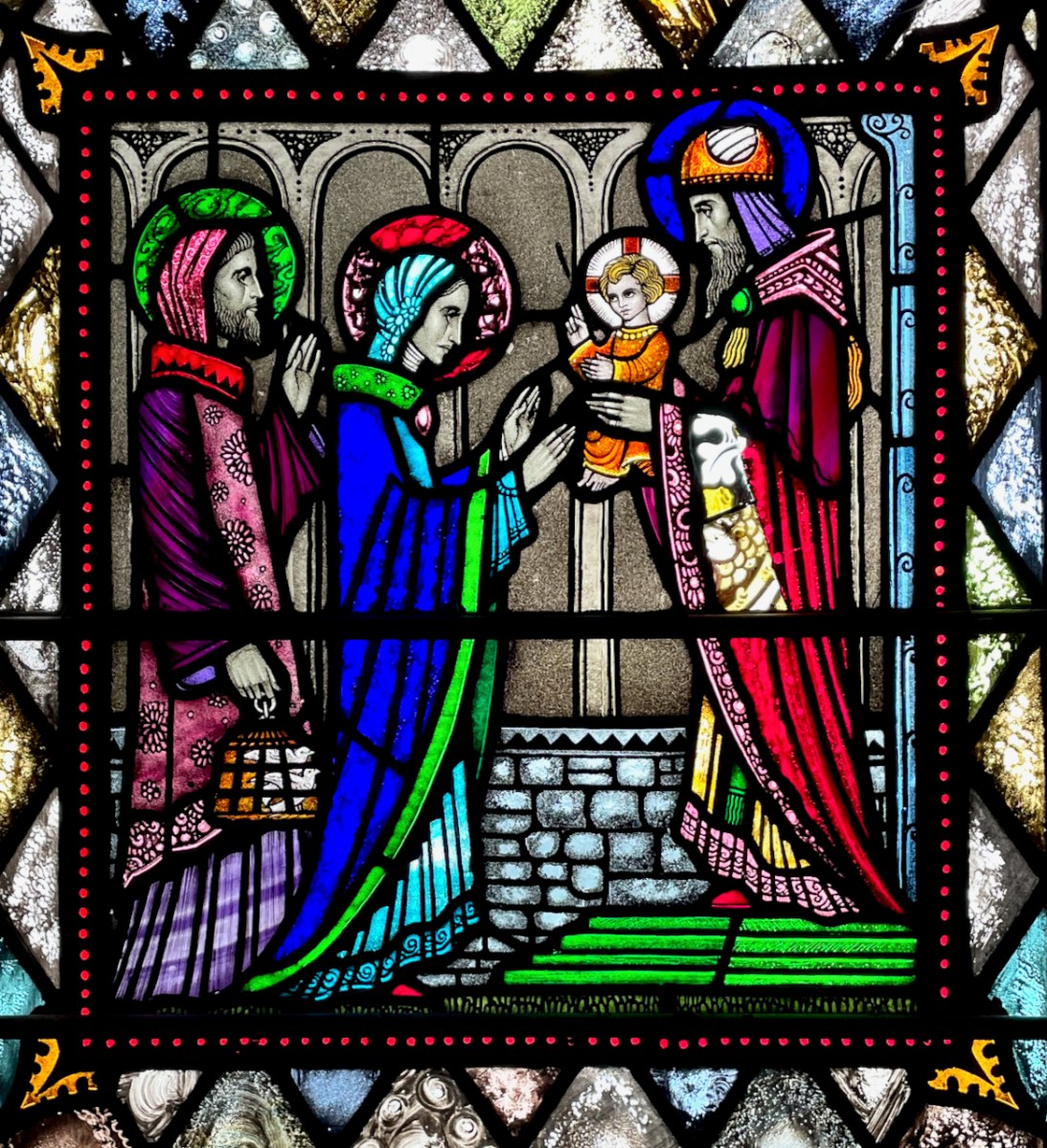
The Presentation, Patrickswell, 1943. By this time the style was becoming less ornate. This window might remind you of the Dowling windows Robert showed in his post about the Seamus Murphy church in Cork, which dated to 1945

Secondly, the lack of clarity caused by all windows being labelled simply Clarke Studios causes enormous confusion about what is a true Harry Clarke, versus a Harry Clarke Studio. See my Quiz posts (the Quiz and The Answers) for more on this. If I had a euro for every time I have seen a window falsely claiming to be a Harry Clarke, I would be wealthy by now. Conversely, those who buy stained glass  panels labelled “Harry Clarke” when they are manifestly not by the master himself, might be poorer.

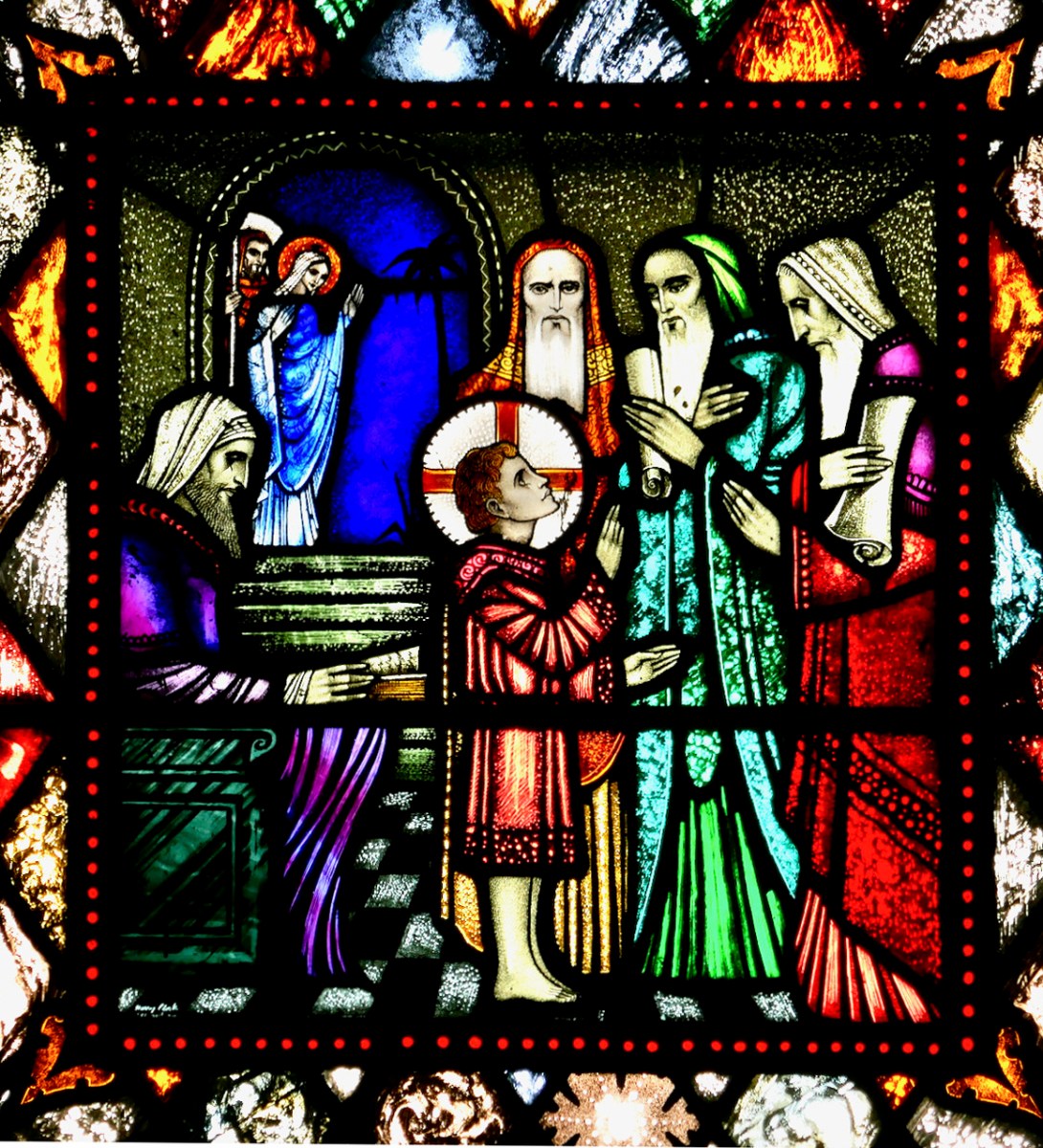
Jesus Found in the Temple (or Christ Among the Doctors), Patrickswell, 1943

Thirdly, the policy caused some artists, in frustration, to leave. While it is possible that they had other motivations as well, both Richard King and George Stephen Walsh left to go out on their own, eventually shaking off the constrictions of the house style to follow their own artistic visions under their own names.

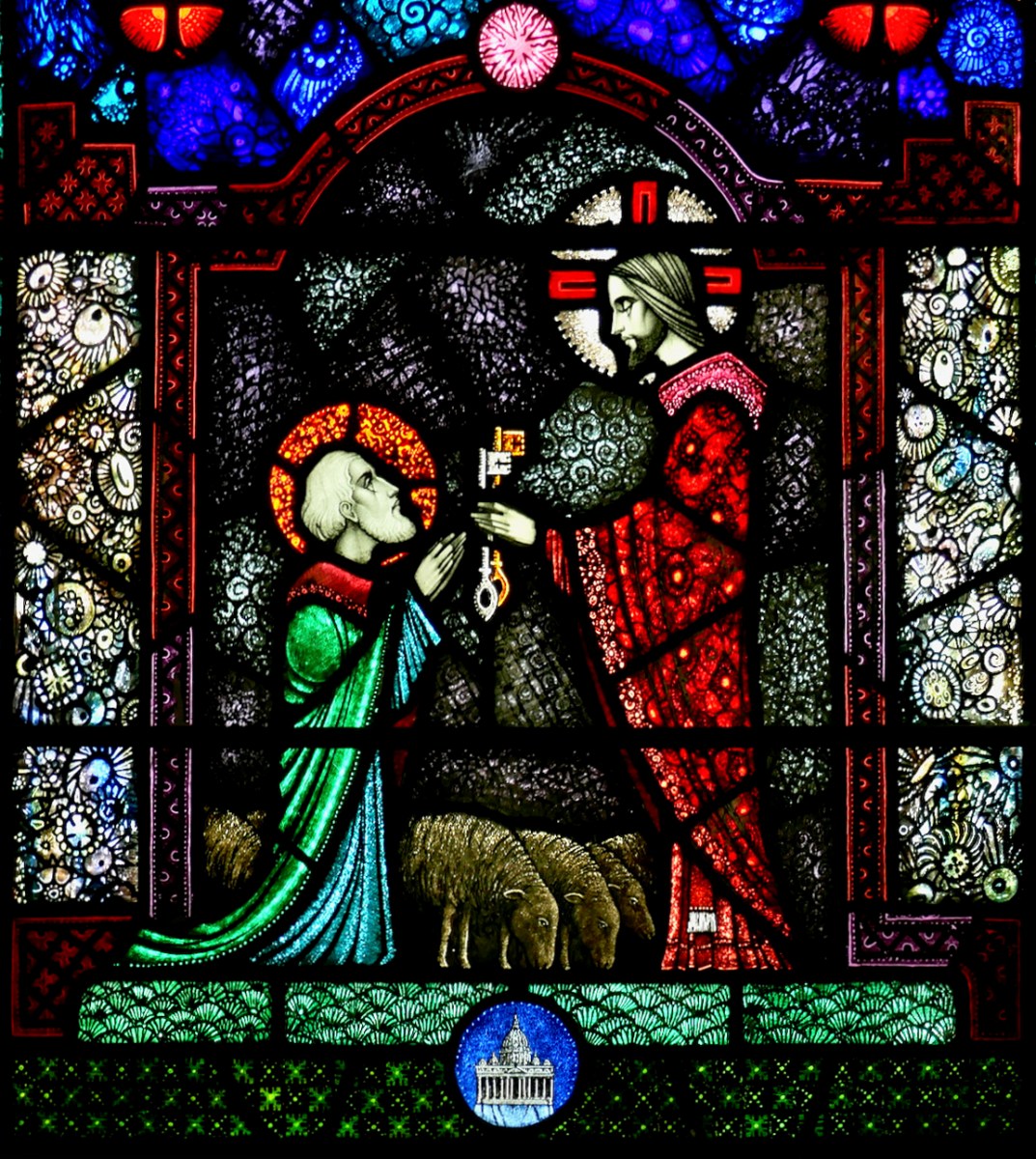
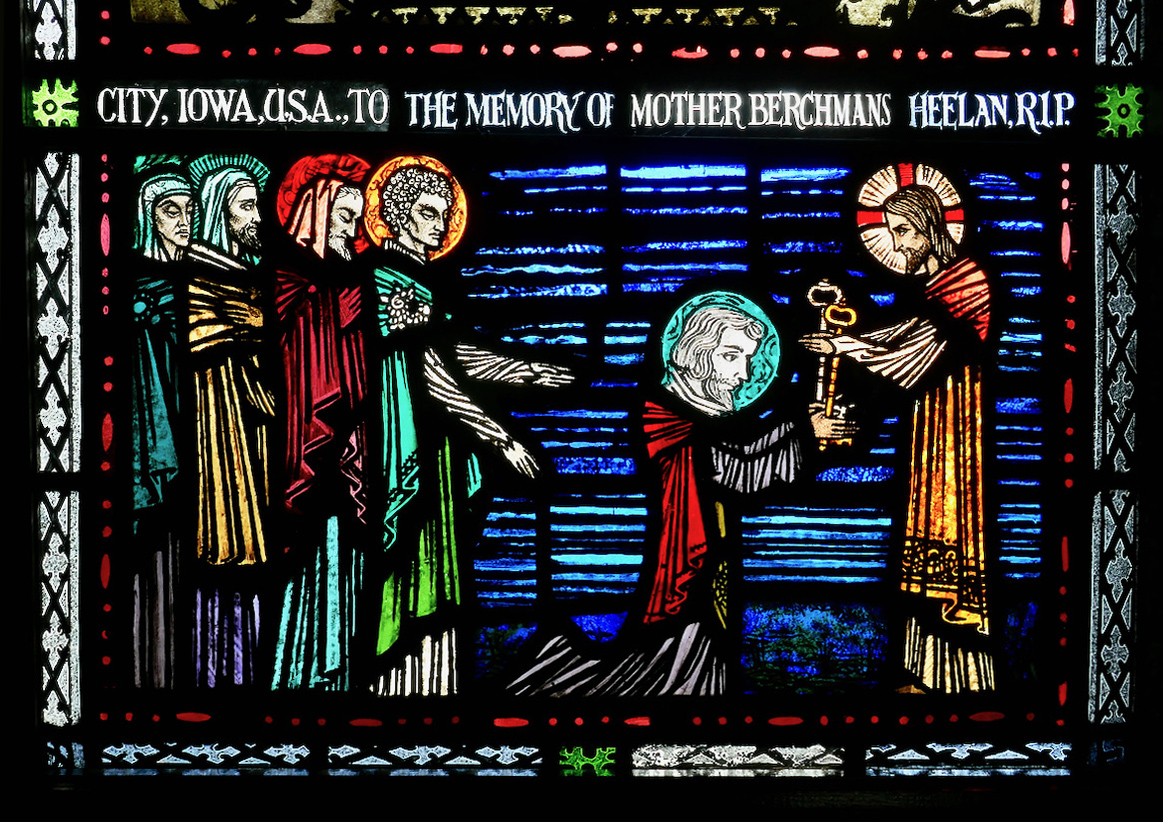
Two version of Peter receiving his keys. Upper from Patrickswell, 1940 and lower from Knockainey, 1930

Finally, all artists deserve credit for their work. William Dowling is a case in point – while he spent many years producing windows in the House Style, they were not simply imitations, copies or reproductions of Harry’s designs. Willie brought his own genius to each window and when you’ve seen several you begin to recognise his stamp – the way he does faces, for example, or how he loves cascading folds of drapery, or his clever juxtaposition of Harry’s dark ‘floral ornamentation’ device (known as FO’s by assistants, or even as Fried Onions) with bright figurative scenes, such as in the Patrickswell Crucifixion, further up.

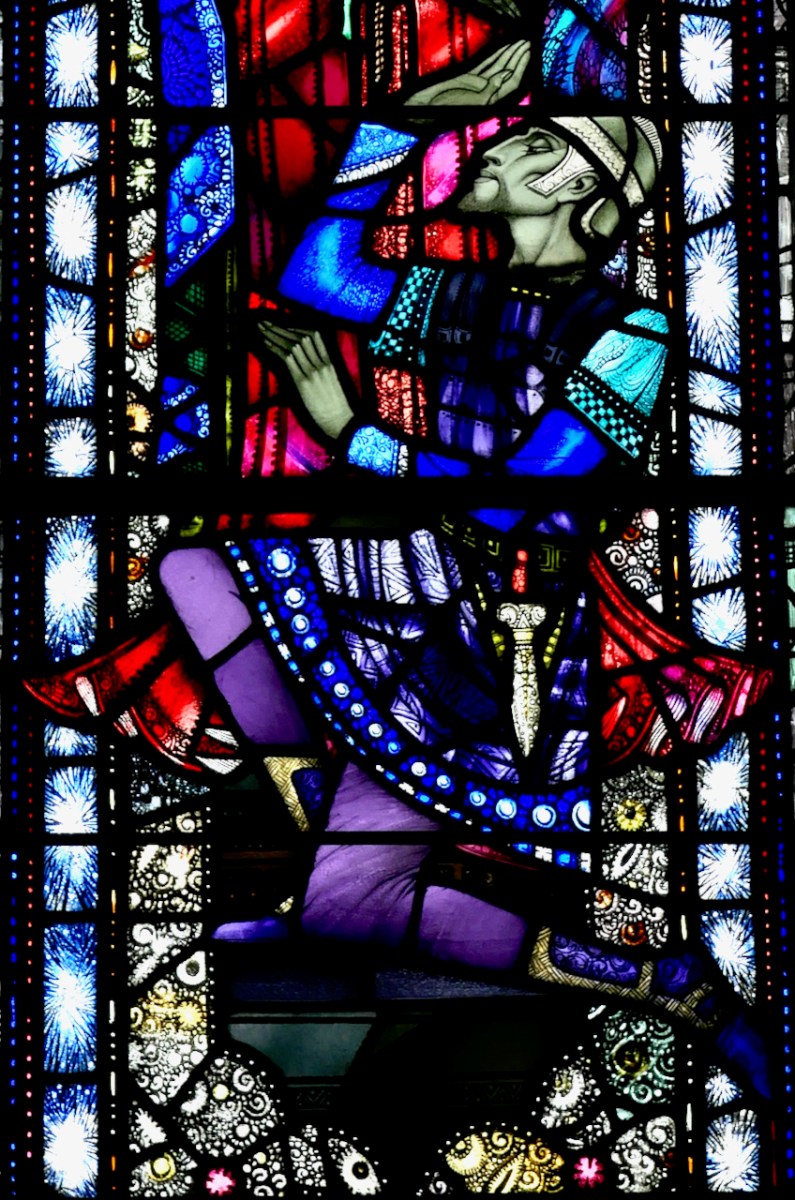
Above is a detail from one of Dowling’s Mysteries of the Rosary windows in the Dominican Convent in Wicklow, done in 1938. This is a mocking soldier from a Christ Condemned window and it comes from Dowling’s own artistic imagination, not from a Harry Clarke design

I recently visited two William Dowling Churches in Limerick, Patrickswell and Knockainey, and I have mainly used images from these two churches to illustrate this post, along with a few from the wonderful Mysteries of the Rosary windows by him in the Dominican Convent in Wicklow which date from 1938/39. The windows in Knockainey were done for an older church in the 30s and 40s and then relocated to the new church in 1973. While relocating windows is not always successful (Tullamore is a case in point), in this case the relocated windows (with two minor exceptions) create a startlingly beautiful interior, and an interesting counterpoint to their modern surrounds. The Patrickswell windows are original to the building, dating from 1940 to 1943, although an awkward balcony obscures some of them to the detriment of the overall effect. I, and my companions, were bowled over by these two churches – it felt like we were stepping inside a glowing gallery full of stunning artworks.

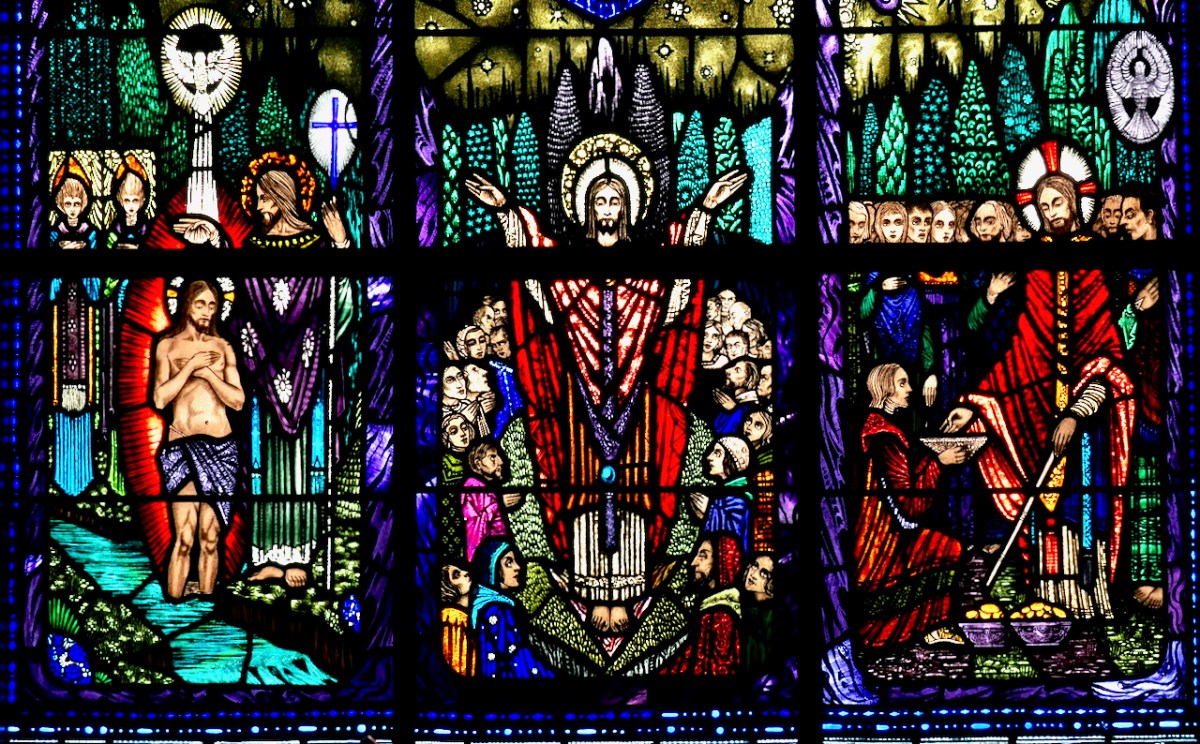
The predella from the large Christ the King window in Knockainey (1931) showing three scenes from the Life of Christ

Willie continued to manage the studios right until it closed in 1973. In the end, the Studio’s adherence to the House Style meant that its stained glass, once so in-demand, was seen as not really evolving with the times. Other artists with more modern aesthetics started to win commissions from architects looking to build contemporary churches that fitted post-Vatican II liturgical changes. Ironically, by the 60s and 70s Willie had started to design (and sign!) windows with a very different look to the House Style. His later output could form another post, but for now I wanted to concentrate on the early House Style period.

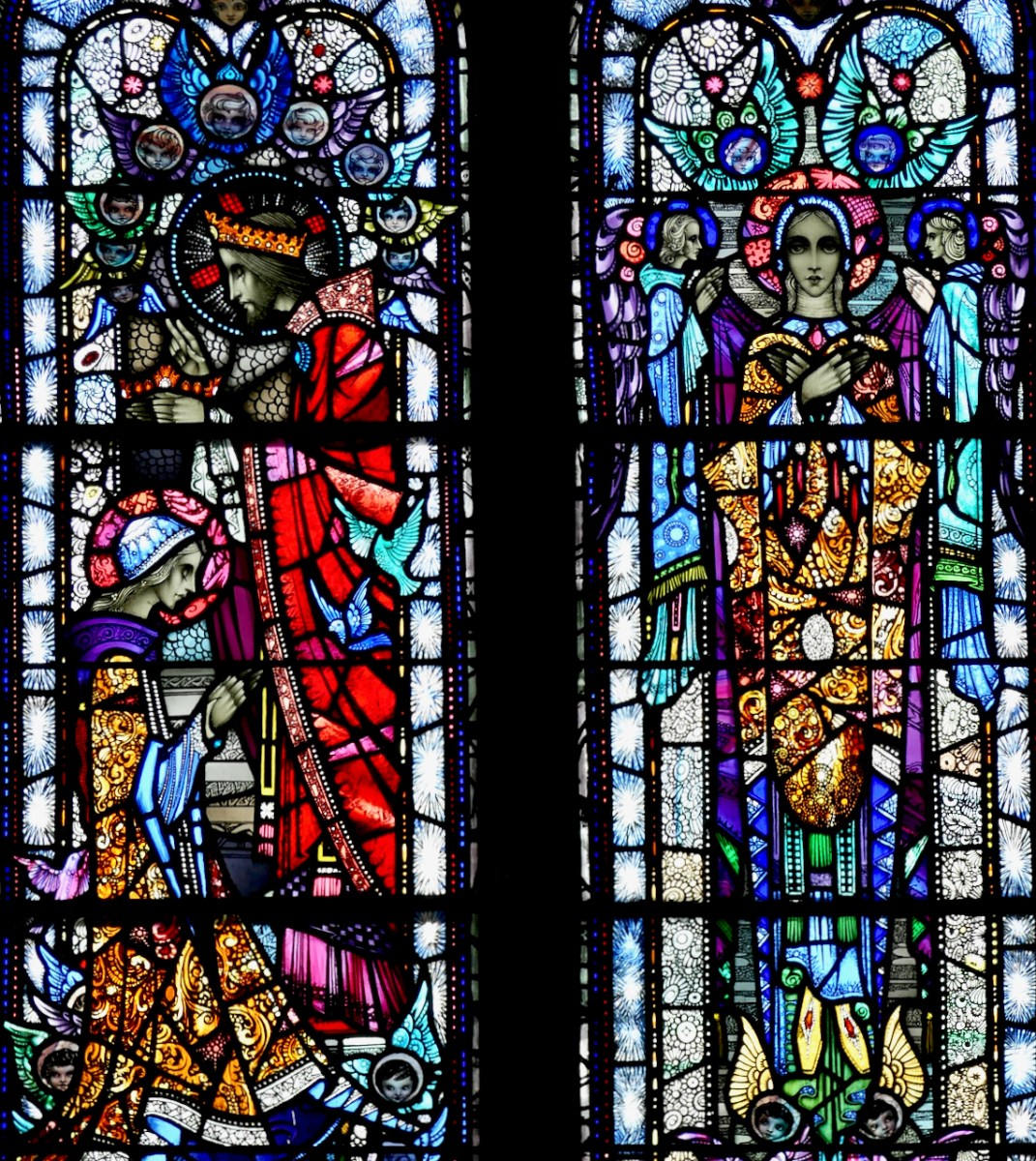
The 4th and 5th Glorious Mysteries from the Dominican Convent in Wicklow, The Crowning of Our Lady as Queen of Heaven and the Assumption. 1938/39

I want to finish with some personal memories of Willie Dowling. He lived until 1980 and he is remembered fondly by Etain and Veronique Clarke, Harry’s granddaughters. “He was a very lovely man,” Veronique told me, “Soft spoken and shy. Always dressed in his suit with a dressy wool coat and scarf. I believe he wore a fedora as well.” He was patient and kind (a bit like Harry) and he never minded them around the studio. Etain says “I remember going into the glass room with him – It was right by his office at the studios. He was pointing out to me how much antique glass was in there. French and German I remember particularly. Incredible colour, and textures. Handmade glass, so beautiful!” It was his dedication they both remembered, and how he helped their father, David, to keep the Studios running as long as possible.

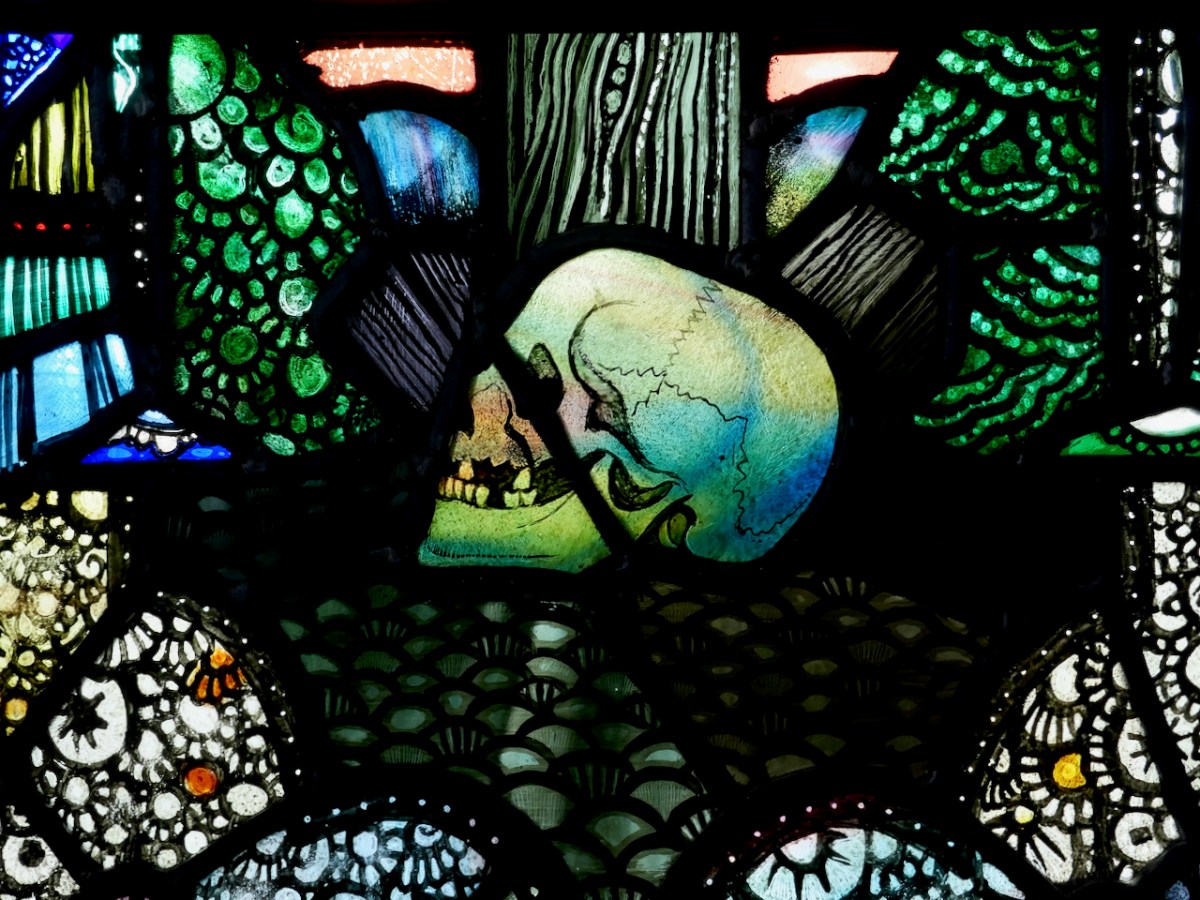
This is a tiny detail from a crucifixion window in Wicklow, showing Willie’s mastery of technique: achieving the multiple colours in the skull calls for extraordinary skill

* I am indebted to the scholarship of Paul Donnelly for this post. Paul has conducted in-depth investigation into the work of the Harry Clarke Studios and has identified many windows in the Gazetteer of Irish Stained Glass based on his research. Thank you, Paul for your erudition and generosity.

Grange – Ireland’s Largest Stone Circle

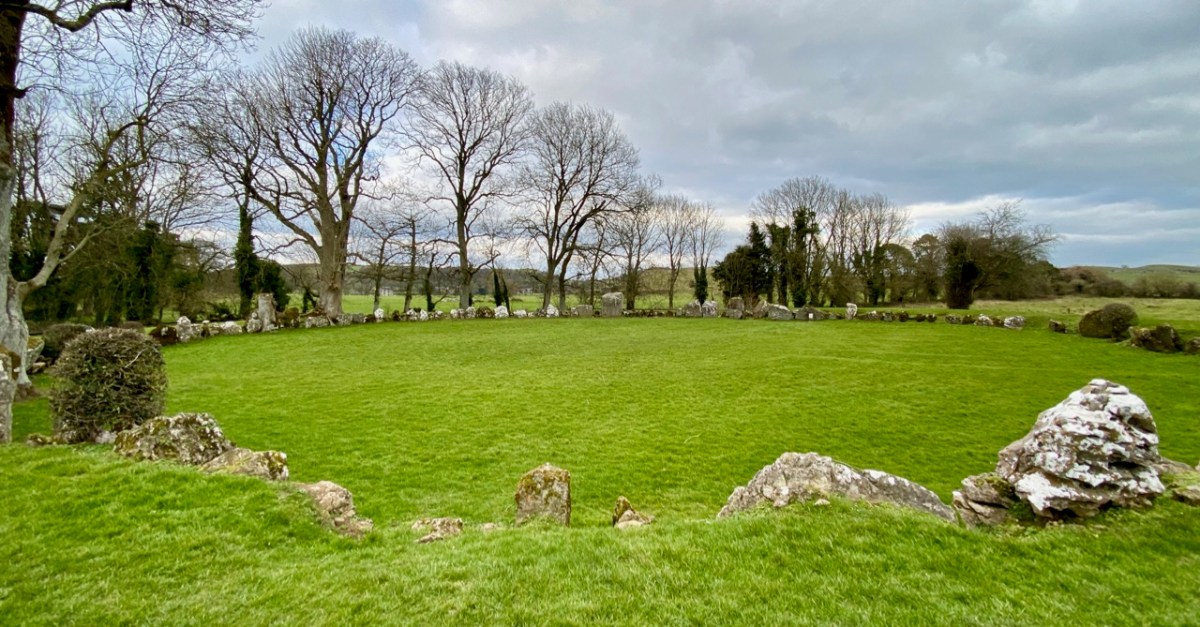
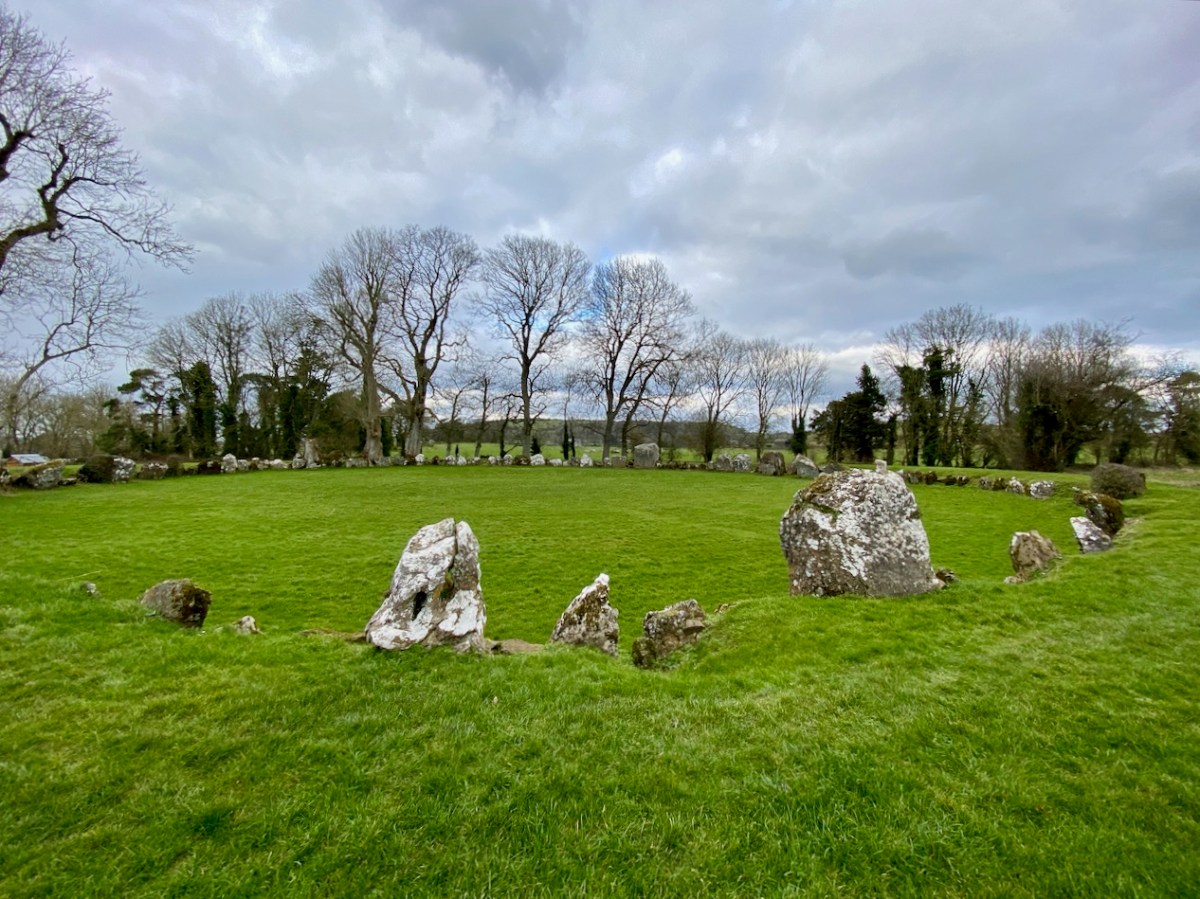
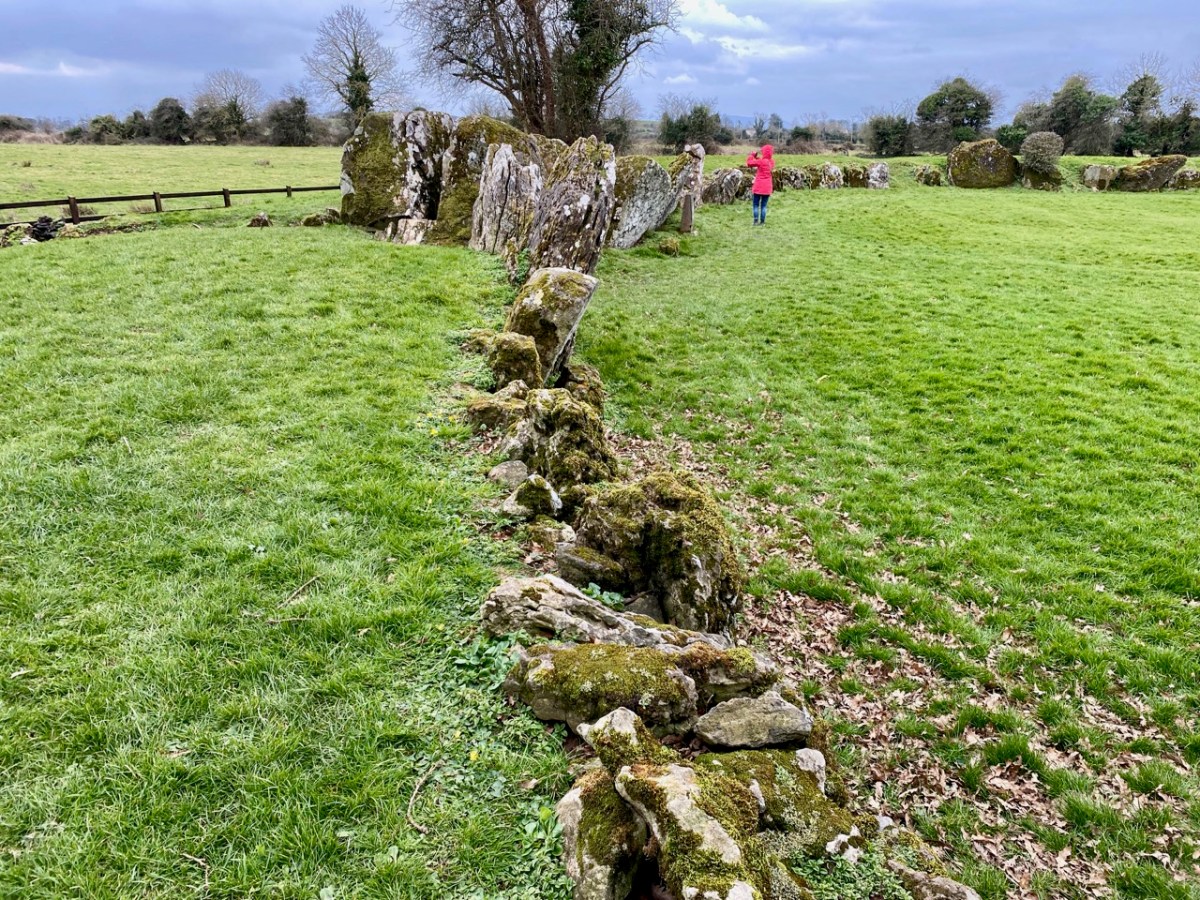
If you are travelling through County Limerick, you shouldn’t miss a visit to Ireland’s largest stone circle: Grange, near the Lough Gur complex. There are 113 stones in this circle today, generally standing close by each other (‘contiguous’) and thus unlike the majority of the circle monuments in Ireland, where individual stones are separated.

The great circular arena which these stones define is also on a platform raised (in the present day) about 600mm above the surrounding land. Excavations which took place between 1939 and 1954 (S P Ó Ríordáin 1951) and subsequent radiocarbon dating indicate a construction date just short of 3,000 BC, which makes the circle one of the oldest in Ireland.

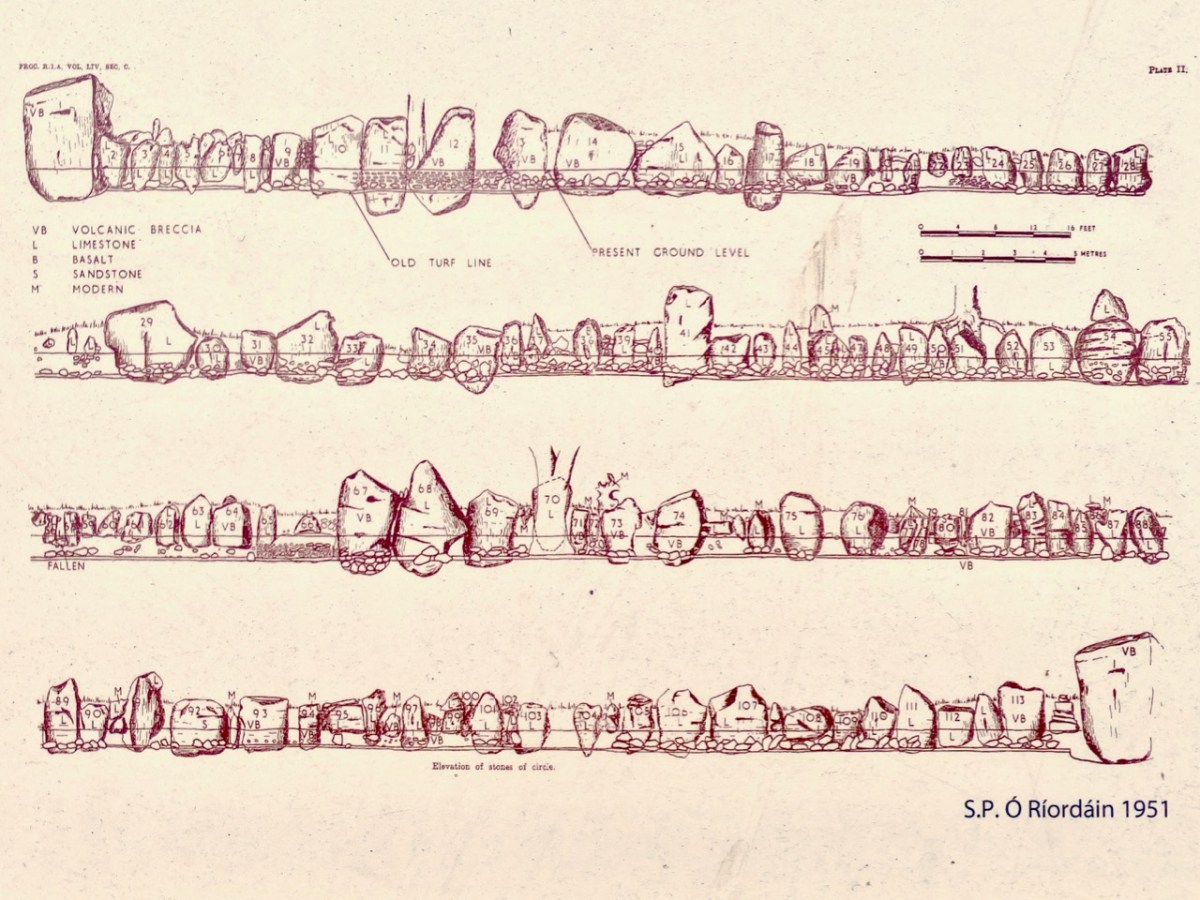
The internal diameter of this circle (a ring drawn around the inner faces of the stones) measures approximately 45.5 metres. Here is Ó Ríordáin’s drawings of the elevations of the stones:

Finola bravely stands against the largest stone in the circle, which is traditionally named Rannach Crom Dubh. The meaning is not clear; Crom suggests ‘bent, crooked, or stooped’, while Dubh means ‘black or dark one’. Rannach can mean ‘open-handed’, which could imply a trading connection. This stone is said to weigh over 40 tonnes and was brought to this spot from three kilometres away. Interestingly, some say that this stone marks the ceremonial entrance into the circle and is aligned with the sunrise on the 1st of August, known as Lughnasadh, the day that marks the beginning of the harvest in Ireland. In fact, there are many orientations that can be given to this circle. This article by Ken Williams explores some possibilities here.

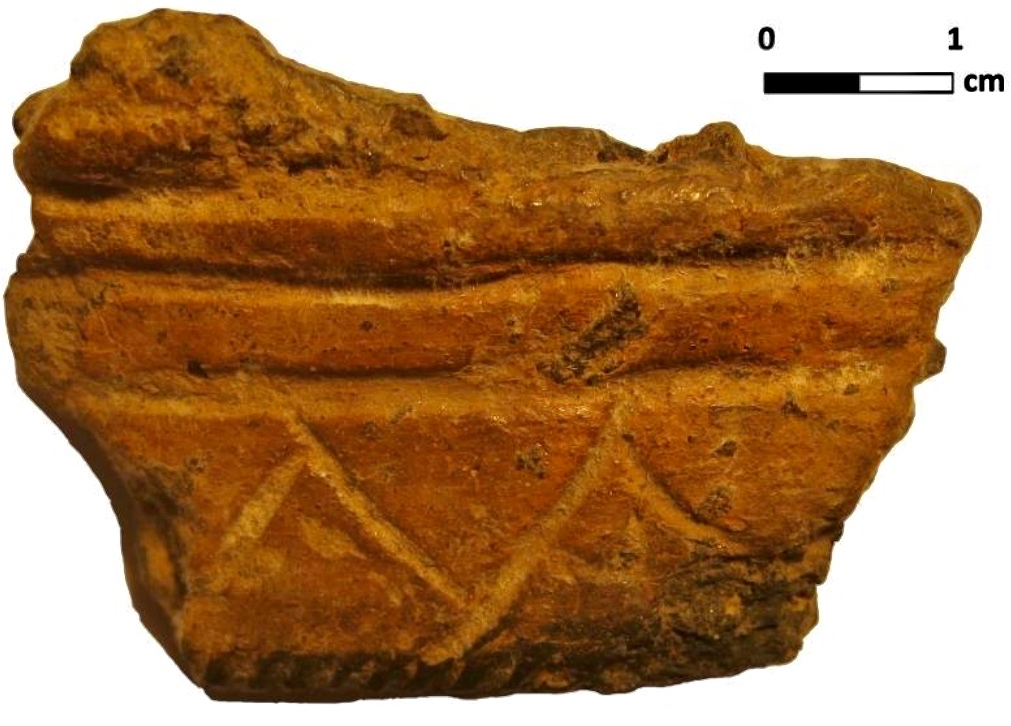
This Beaker pottery sherd was found and recorded by Ó Ríordáin. It is one of a great number of such remains to be found at the site. One commentator made the suggestion that . . . The breaking of Beaker pots against the standing stones seems to have been part of a ceremony . . . Can we trace the more modern tradition of breaking wine glasses after a toast to such an early origin? It’s said to bring luck and happiness in some cultures. This would, of course, imply that the great circle was a celebratory feasting site.

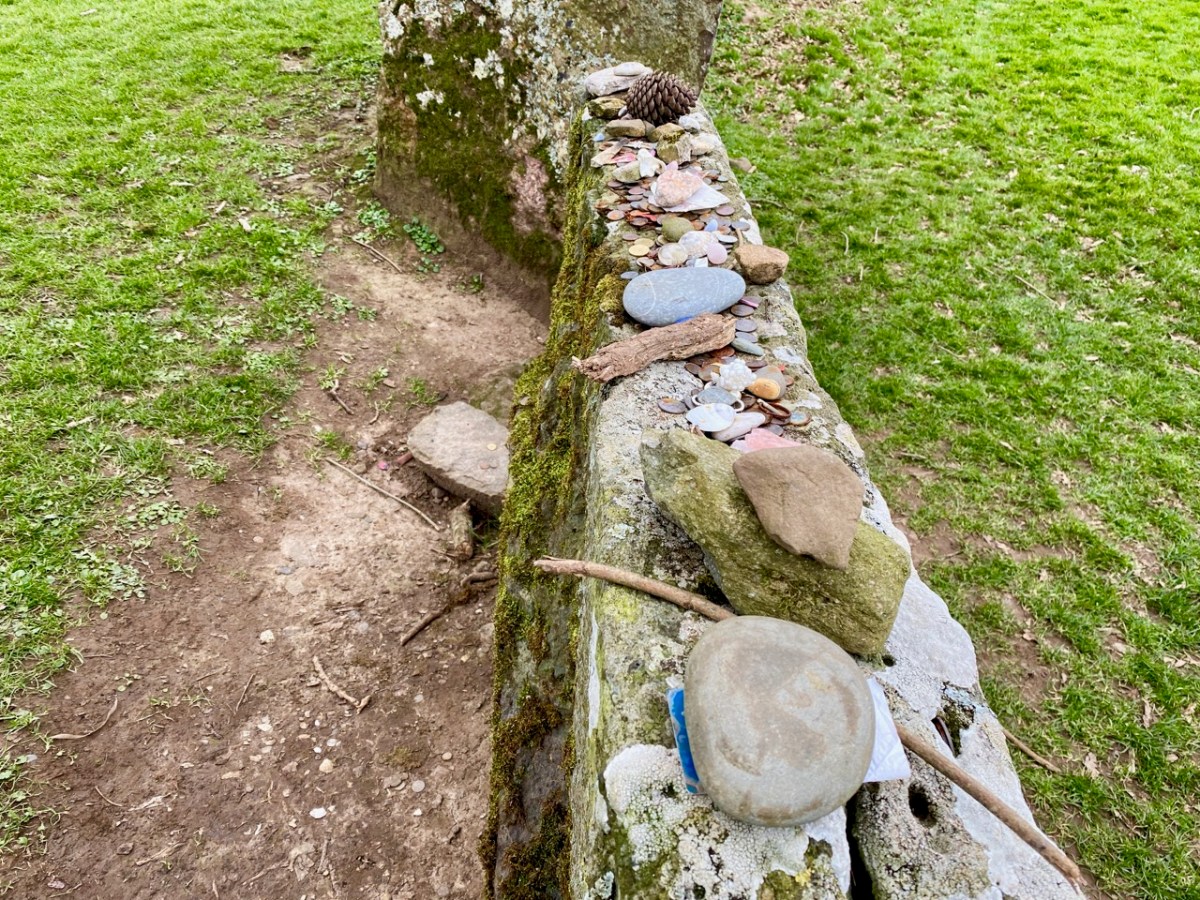
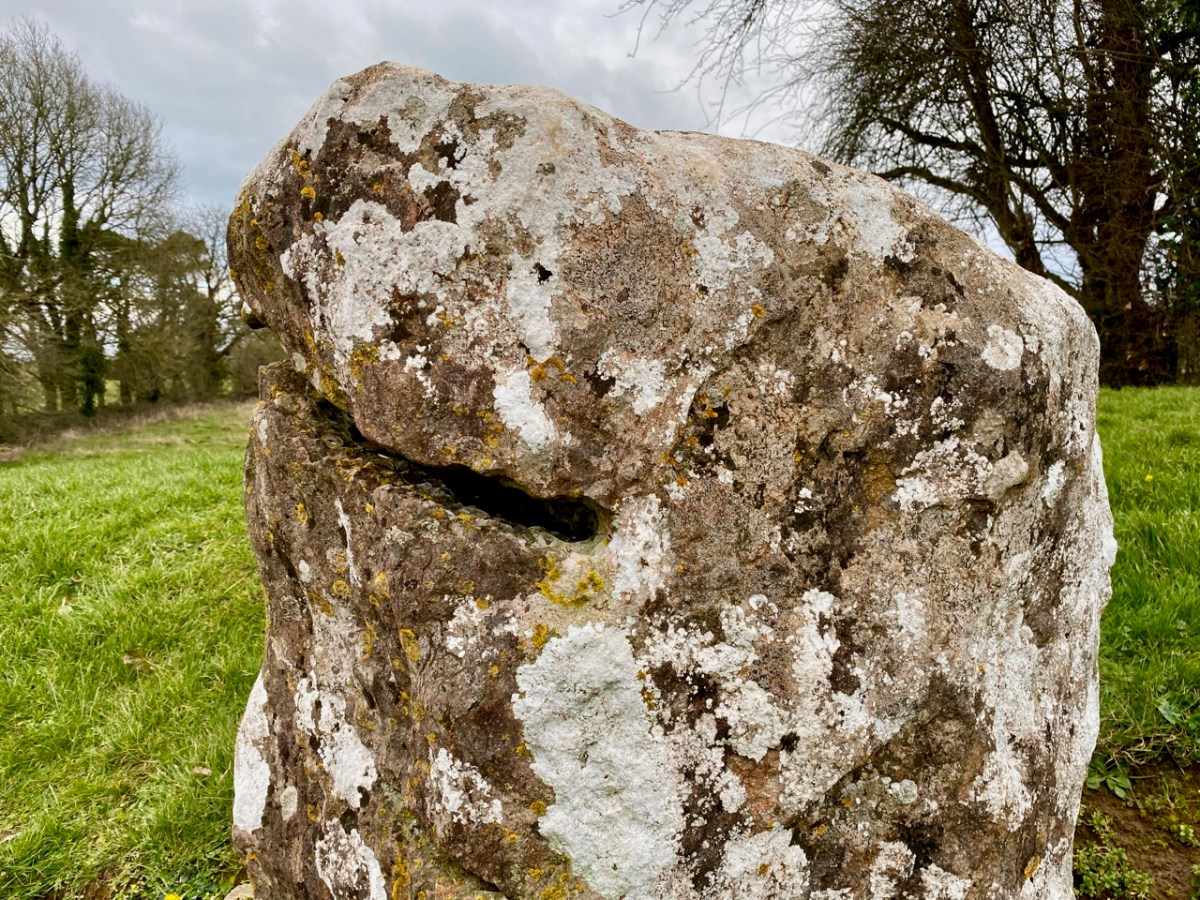
There is evidence today that visitors feel compelled to leave offerings at the site: coins, small stones, beads, and other ephemera. The examples above are adjacent to Rannach Crom Dubh, while below is one of the standing stones in the circle that appears to have been deliberately cut, or slotted, at some time in its history. Today, coins are deposited within this slot.

My own feeling about this site is that it is an arena where people gathered to feast and celebrate. An ancient ‘circus’ perhaps? Ken Williams analyses the possibilities of archeo-astronomical alignments in his article, mentioning our West Cork friend Vice-Admiral Boyle Somerville, whose detailed work we have investigated, here.

The features of this site are fascinating and provide much food for thought, especially when seen through the eyes of archaeologists. Of course, we want to know who conceived this monument, and who was in charge of the human power and organisation that was required to erect it. There won’t be a simple answer to this: it’s likely that many generations were responsible and that there were numerous incarnations over time. That’s what is so fascinating about ancient history: if only we had a time machine!

There are traces of other, smaller, stone circles close by this one, but I was intrigued to read in one of the accounts of this site that there was previously a further – even larger – circle nearby, and this has vanished altogether. I have to ask: how could such a massive structure disappear completely? Legend gives us an answer: it was supposedly stolen by Merlin and brought over to England to create Stonehenge!

Blasket through the Lens

Great Blasket, one of the islands in the parish of Dún Chaoin (Dunquin) off the west coast of Kerry, was the home and life-blood of a tenacious population of Irish families for many hundred years. One of these families – the Ferriters – claim that they controlled the islands as far back as the 13th century and had established a castle there. Whoever lived there had to be tough: the terrain is wild and there is little shelter. Nevertheless, the islanders clung to their territory, and their numbers expanded in the early 19th century when Lord Ventry of Dingle evicted many of his tenants from their holdings and those who left found island life – hard though it was – preferable to persecution.

We are fortunate that, during the early twentieth century, Great Blasket was visited by curious tourists and anthropologists. Among them was Robin Flower, who became Deputy-Keeper of Manuscripts in the British Museum from 1929 to 1944. He had many credits to his name, including Member of the Royal Irish Academy, Doctor of Literature of the National University of Ireland and also of Dublin University. Flower became the historian of the Blaskets, which he ‘immortalised’ through his lectures and writings – and many visits. To the people of the Great Blasket he was playfully known as ‘Bláithin’ – Little Flower – which he considered a great honour. I will write more on Robin Flower in a future post, but concentrate here on some of the photographs of island life which were recorded by likeminded researchers in the first half of the twentieth century. After 1954 there was nothing to record: life on the island, three miles from the mainland and involving an often treacherous crossing, became untenable. The whole remaining population was evacuated in that year, leaving their cottages and settlements to the ruinous ravages of the wild Atlantic gales.

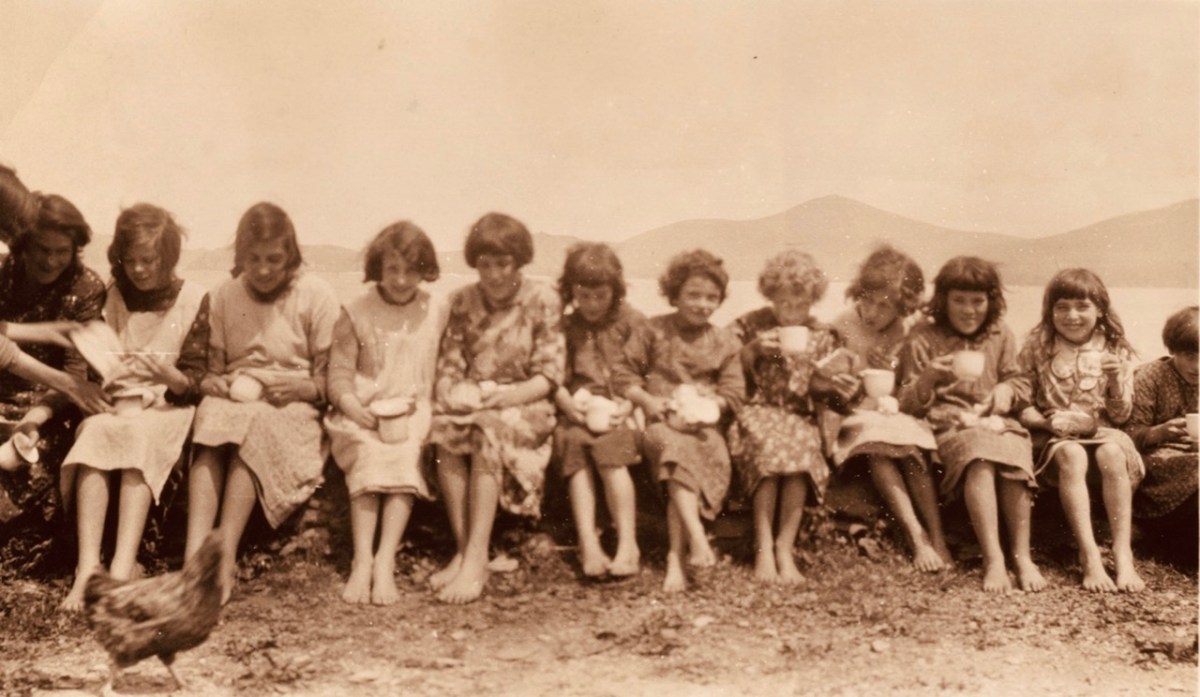
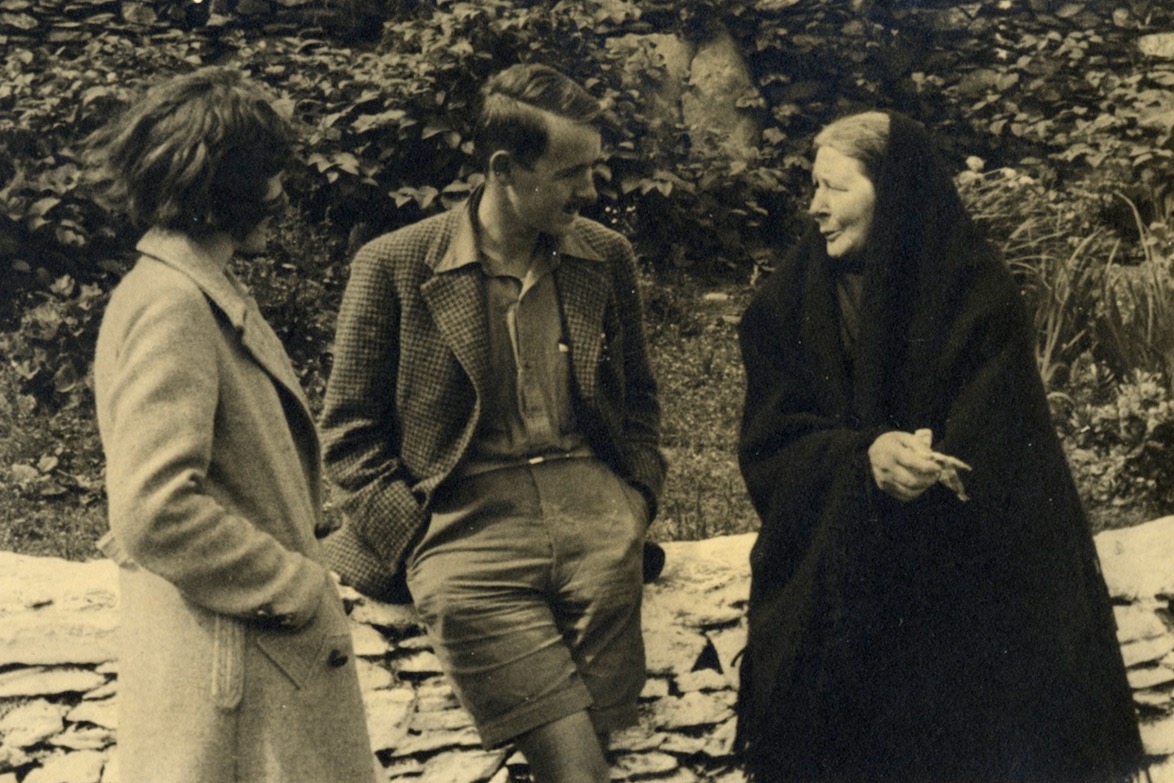
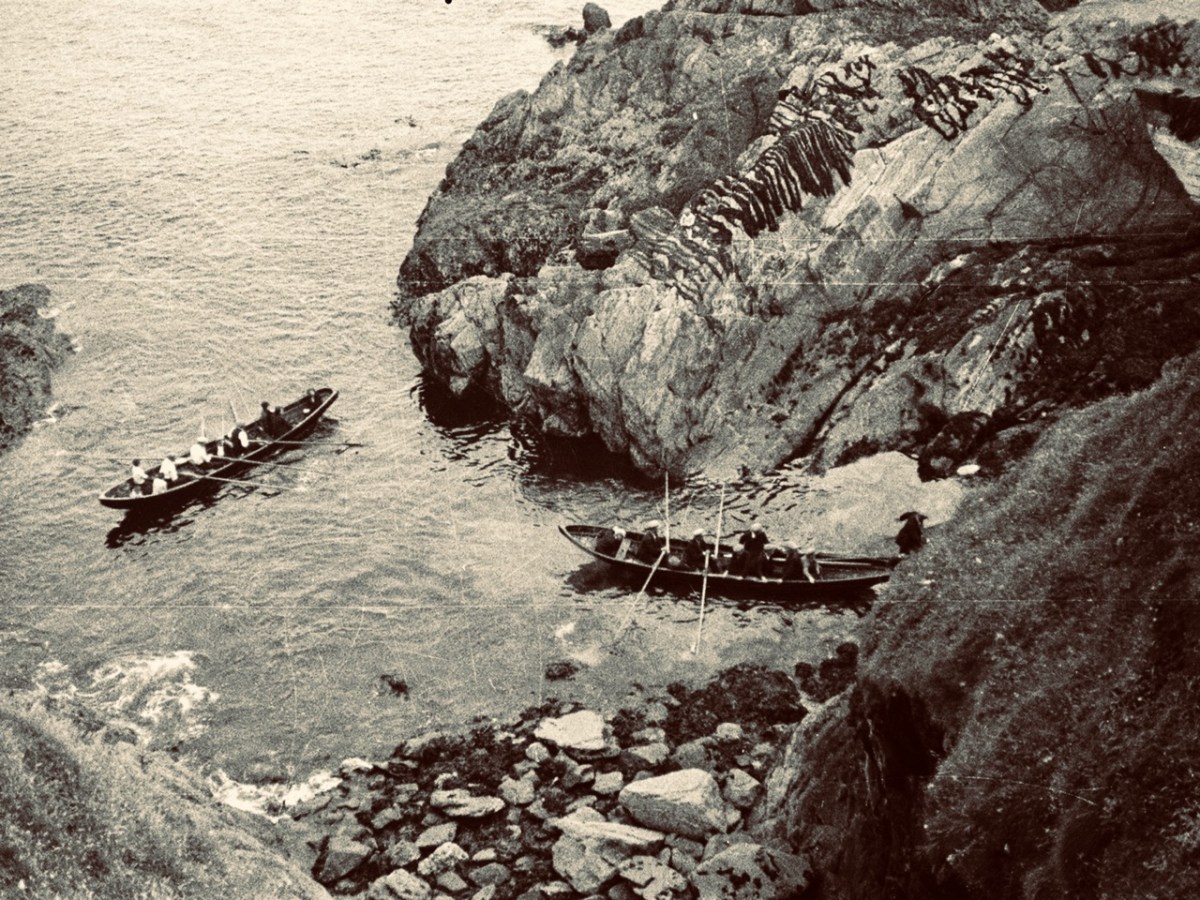
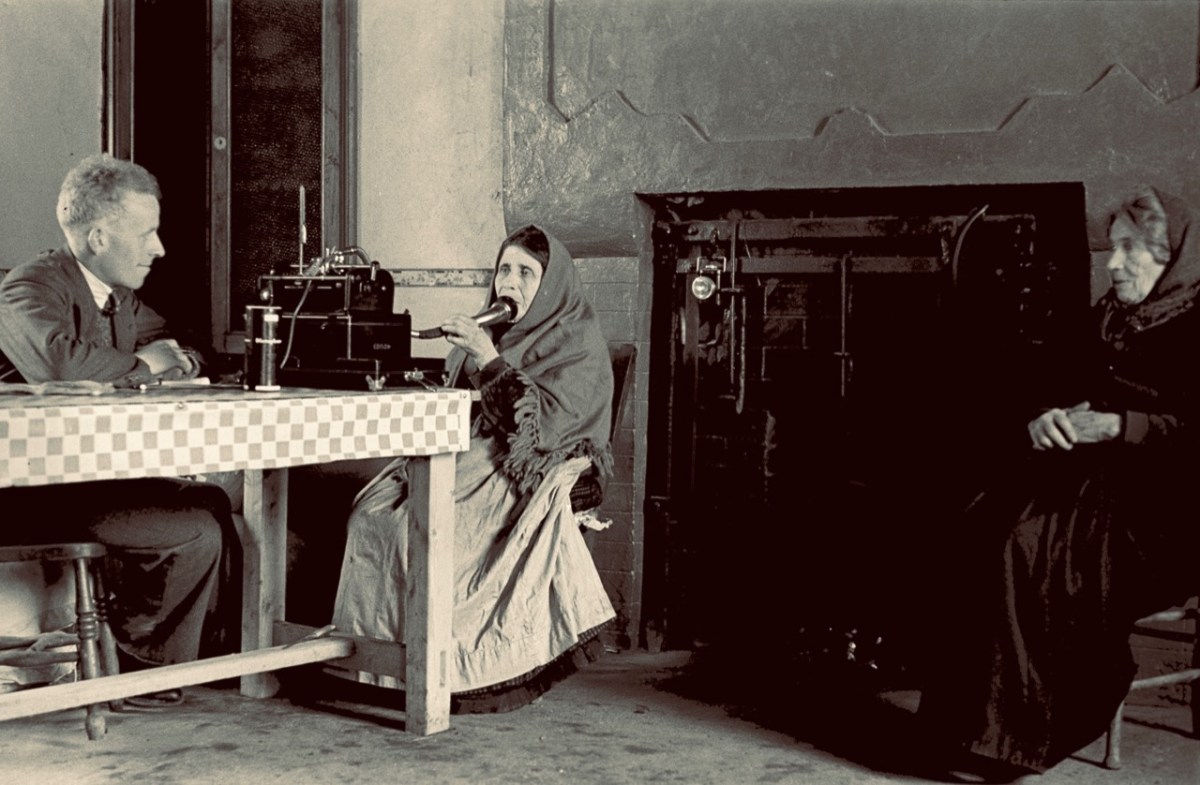
The header picture is a wonderful statement of youth and vigour: island children photographed outside their school in 1932 by Thomas Waddicor. I can’t find anything about this man, but a lot of his work appears in the Dúchas Photographic Collection which was established in the 1930s, so I am assuming he was an active collector and researcher himself. The second picture is by our old friend Tomás Ó Muircheartach, who also spent time on the Blaskets in the 1930s. You will find more about him here. It shows the Blasket men in their fishing curraughs below the craggy rocks of the island. The pic above is also by Muircheartach, and shows Cáit Ruiséal and Máire Ruiséal being interviewed by a follklore collector at their fireside in 1942. I am not sure where this interview took place.

This photograph is also by Thomas Waddicor and dates from 1932. The caption given in the Dúchas Photographic Collection is interesting, if not entirely enlightening: Man, Great Blasket Island: Buffer, note stuffed peaked cap – an island custom.

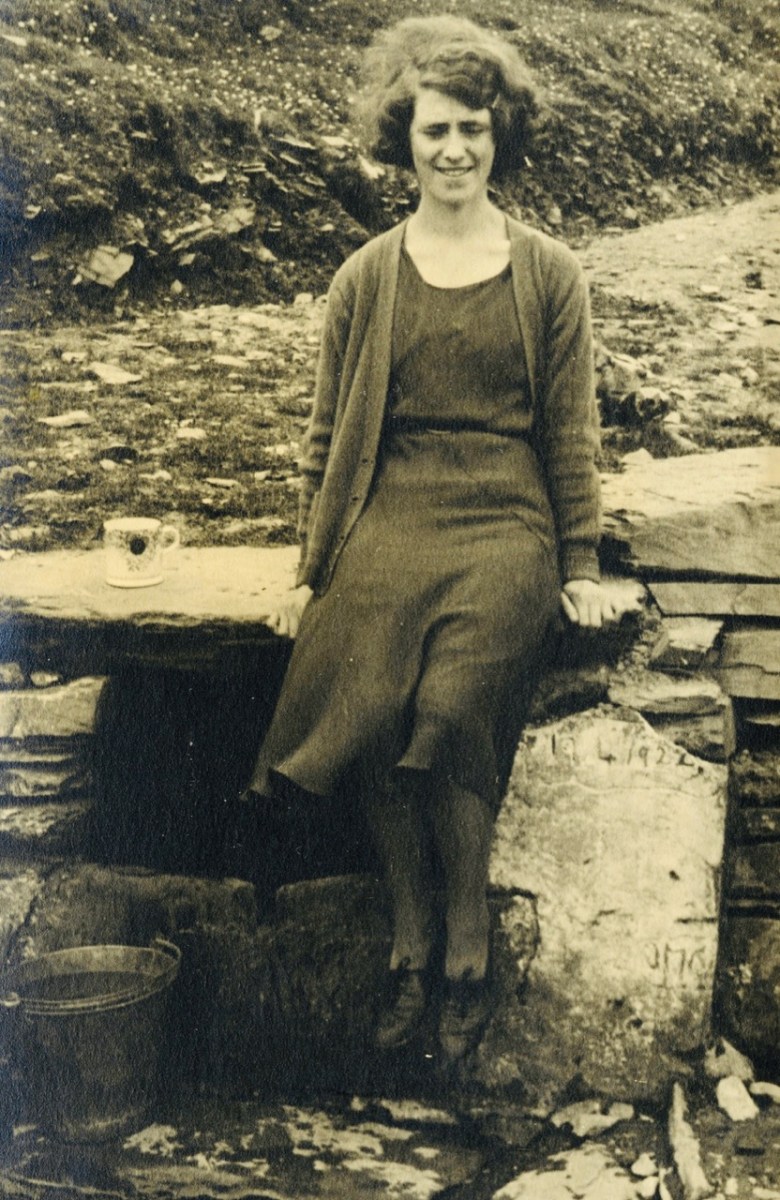
Another from Waddicor, also 1932: Cáit at the Well. I think what strikes me most of all is how real and alive these people are – they certainly don’t seem in any way downtrodden or in danger of extinction: perhaps it’s just because they are ‘posing’ for the camera. But it’s salutary to think that they were only on the island for another generation or so.

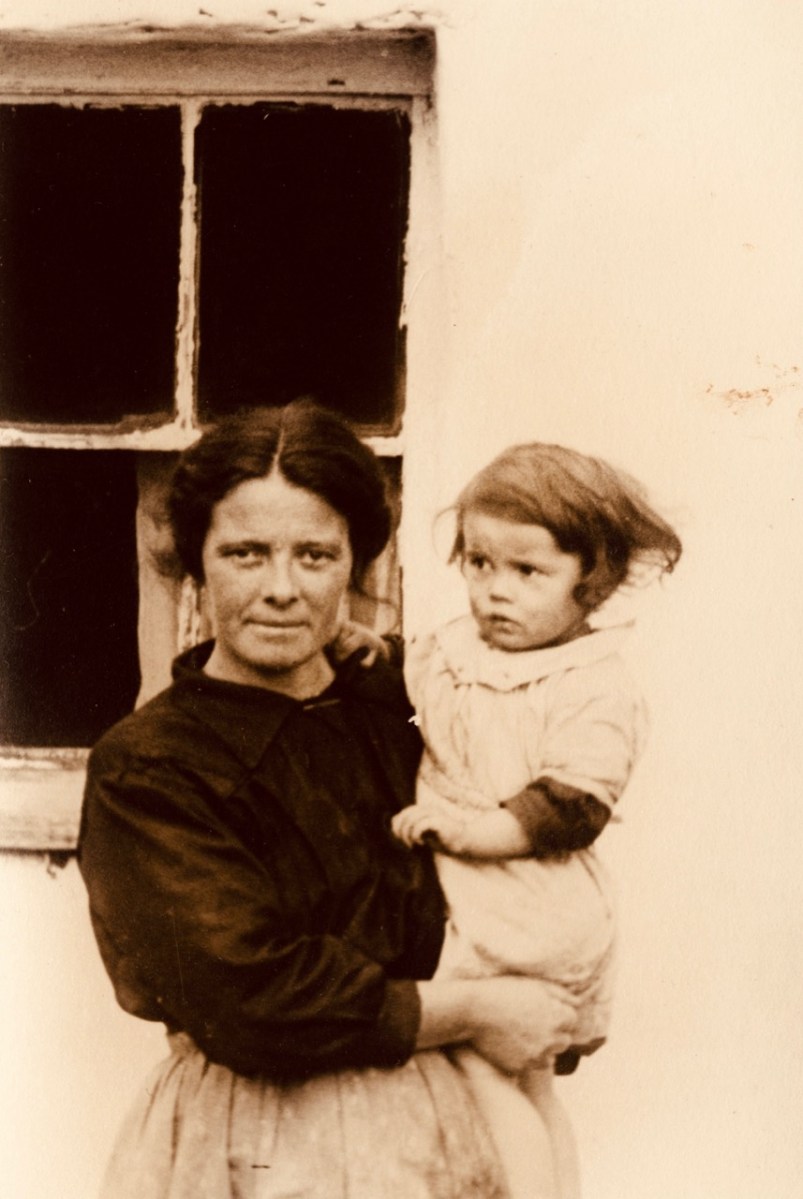
These two photographs (above) are also by Thomas Waddicor and also from 1932. The top one is the ‘Wife and child of Séan the King’, and the lower is ‘Children of Séan the King’. We have a bit of a conundrum here as the last ‘King’ of the Blasket Islands passed away in 1929 (according to this Irish Times article). As Waddicor left behind no photograph of the ‘King’ himself, we have to assume that the lady in the upper photograph was a widow.

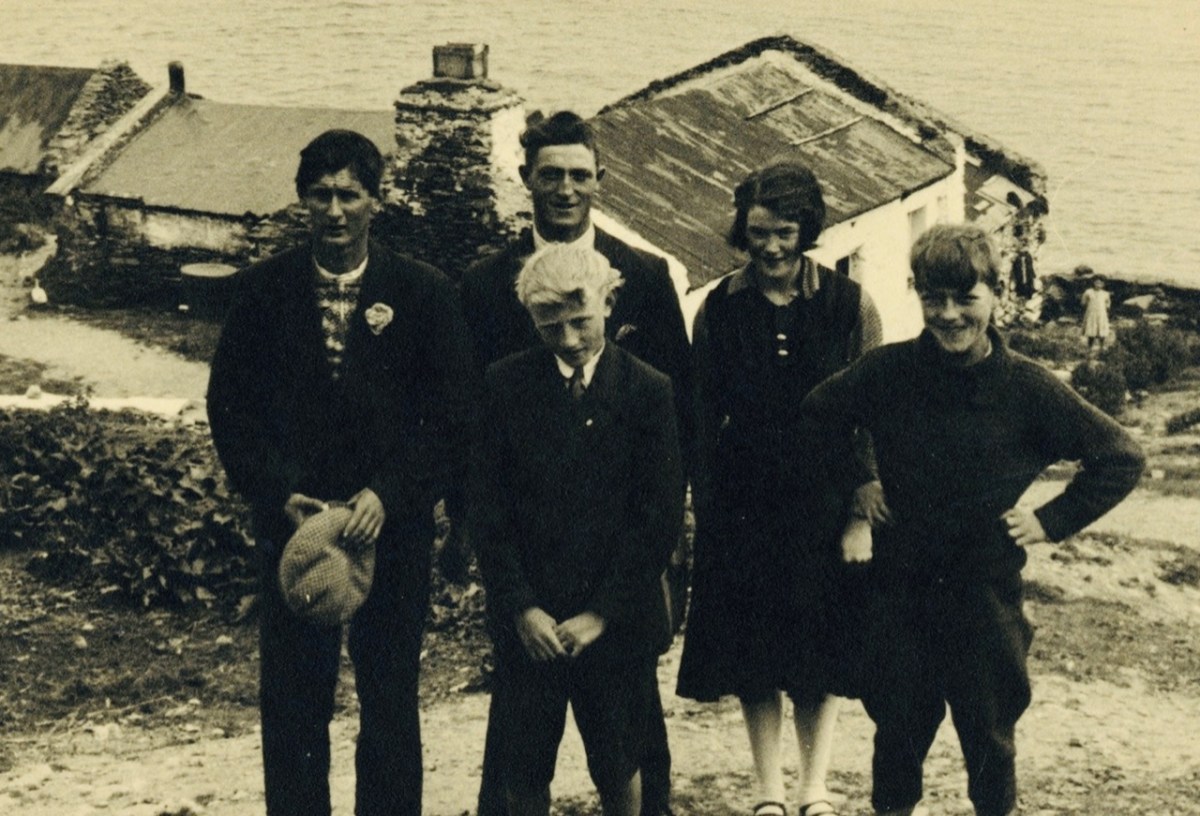
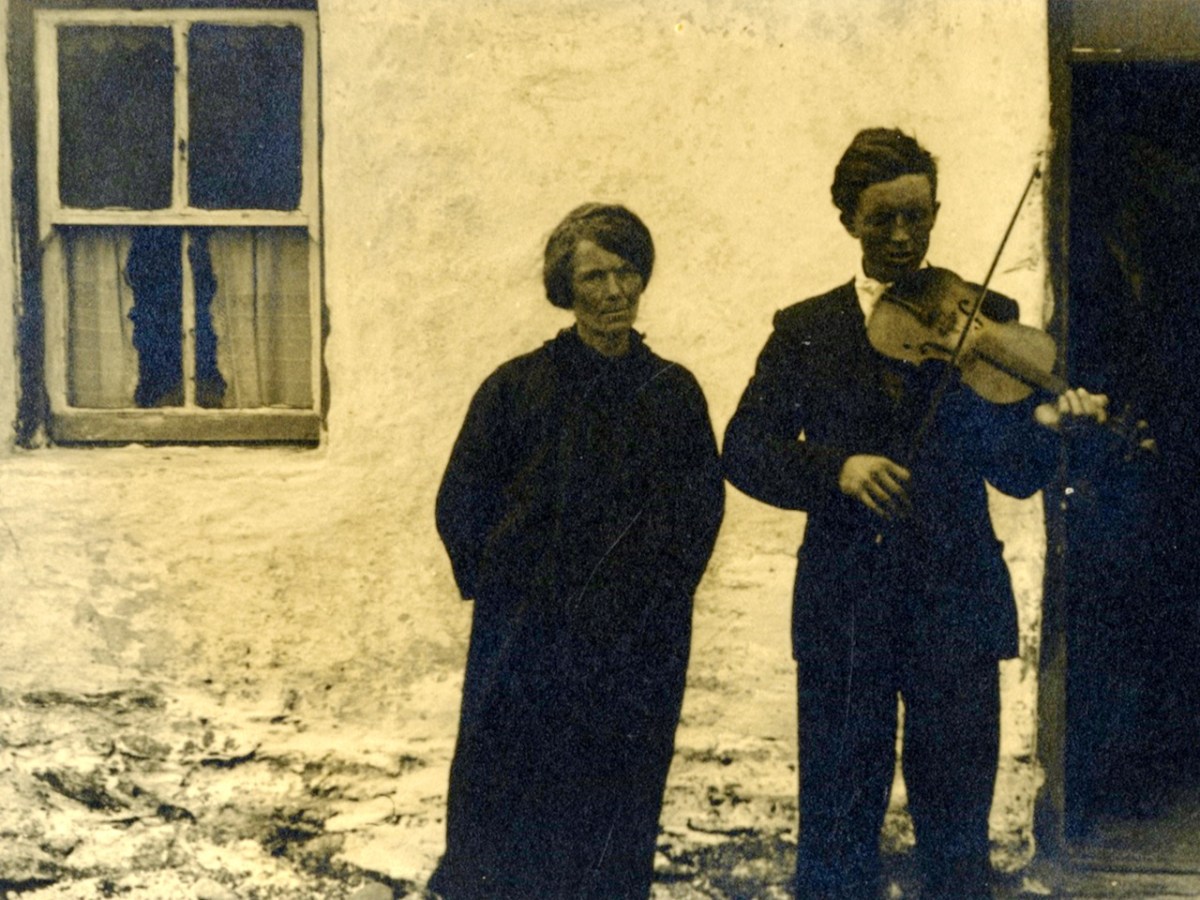
More ‘family’ photographs: the upper of the three is titled ‘Eilis and Brighid’; the centre is just given as ‘Family’, while the lower is ‘Fiddler and Woman’. All are by Waddicor from 1932.

This wonderful lady is also anonymous: sadly we can only know her by the title – ‘Great Blasket Woman’. Again, Waddicor 1932 – and, once more, she seems so full of life!

This is a picture of the Great Blasket Island School. We have some further information: while the folklorists and recorders were visiting the island in 1932, the older schoolchildren decided to interview each other about local customs and lore to mimic the visitors!

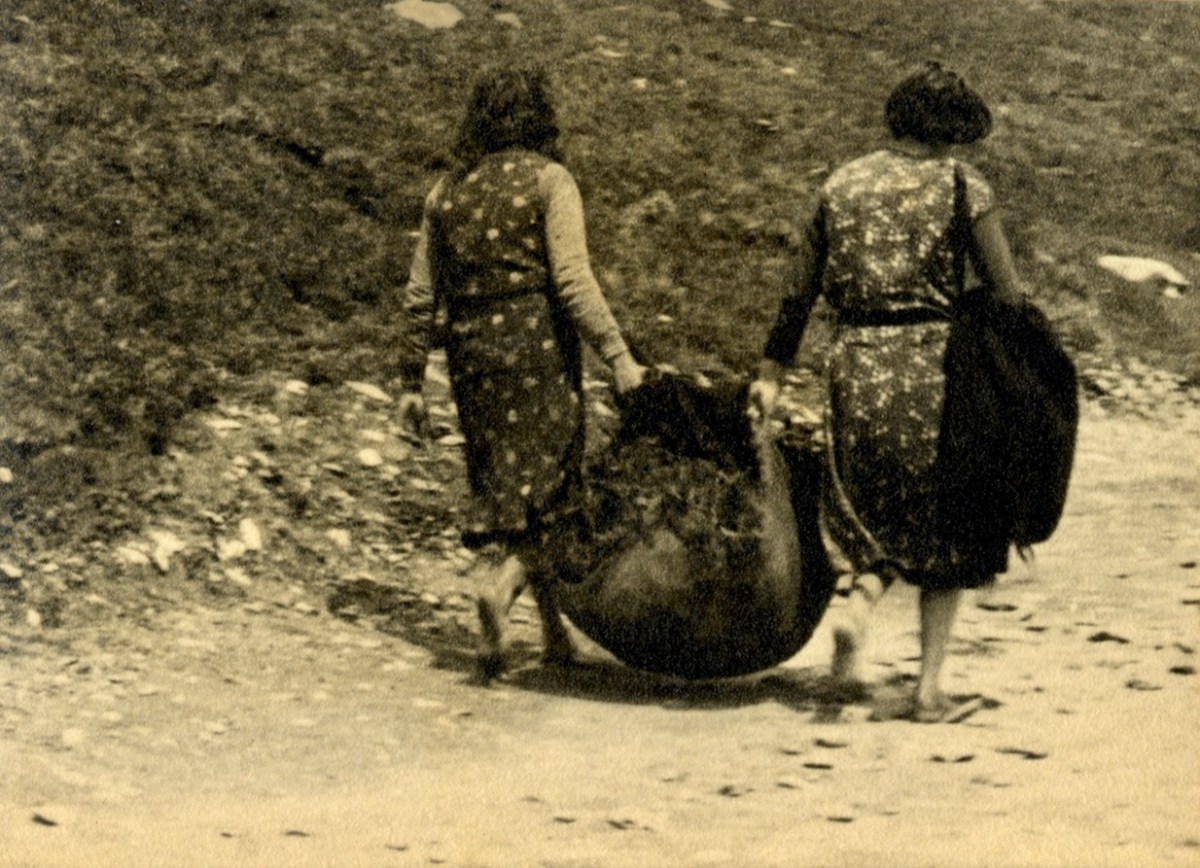
Further unnamed portraits: upper ‘Two Women Great Blasket’ and lower ‘Two Women gathering Heather’. From the Waddicor collection, 1932.

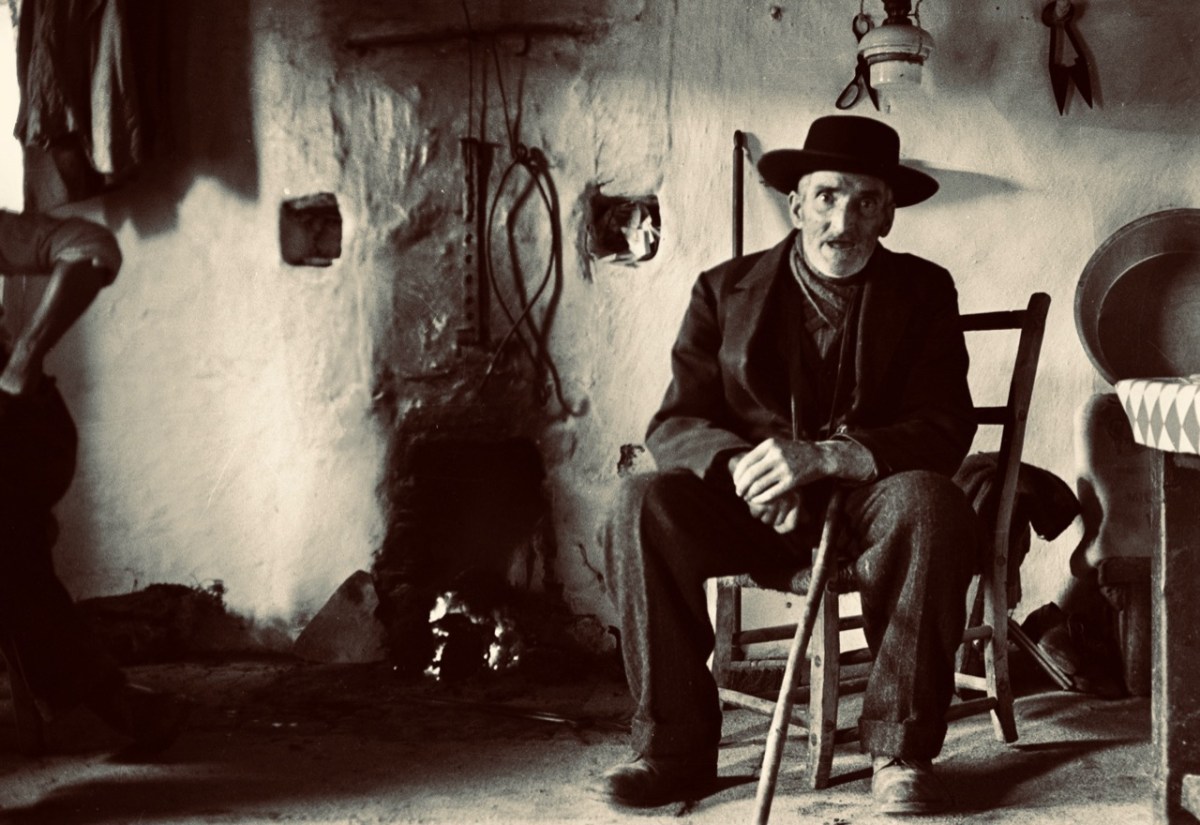
We’ll finish off with a few classics. This is Tomas O Criomhthain and it’s a photo from Muircheartach. Better known to us as Tomas O’Crohan, author of the classic book about the Blaskets:

. . . Tomas O’Crohan was born on the Great Blasket Island in 1865 and died there in 1937, a great master of his native Irish. He shared to the full the perilous life of a primitive community, yet possessed a shrewd and humorous detachment that enabled him to observe and describe the world. His book is a valuable description of a new vanished way of life; his sole purpose in writing it was in his own words, ‘to set down the character of the people about me so that some record of us might live after us, for the like of us will never be again’ . . .

The Islandman Book Review

We can’t discuss the Blaskets without mentioning Peig. That’s her, above, with folklorist Kenneth Jackson, taken by Thomas Waddicor in 1932. Peig Sayers was by all accounts a formidable lady but was also described by folklorist Seán Ó Súilleabháin, archivist for the Irish Folklore Commission, as ‘one of the greatest woman storytellers of recent times’. Peig was born in 1873 and died in 1958. She therefore experienced the abandonment of the island, although she had moved away from it in 1942. She was also not born on the island, but in Dunquin, Kerry, She married Pádraig Ó Guithín, a native islander, in 1892 and had eleven children, six of whom survived into adulthood. Sayers is most famous for her autobiography Peig, but also for folklore and stories which have been collected from her.

Finally, this an image of the Loganim Achive entry for Great Blasket Island, written in 1954.

I am grateful to the National Folklore Collection UCD for the use of the Thomas Waddicor images. It’s an incredible resource: this is just a small selection of the hundreds of images which have been archived

Mizen Magic 23: Croagh Cove

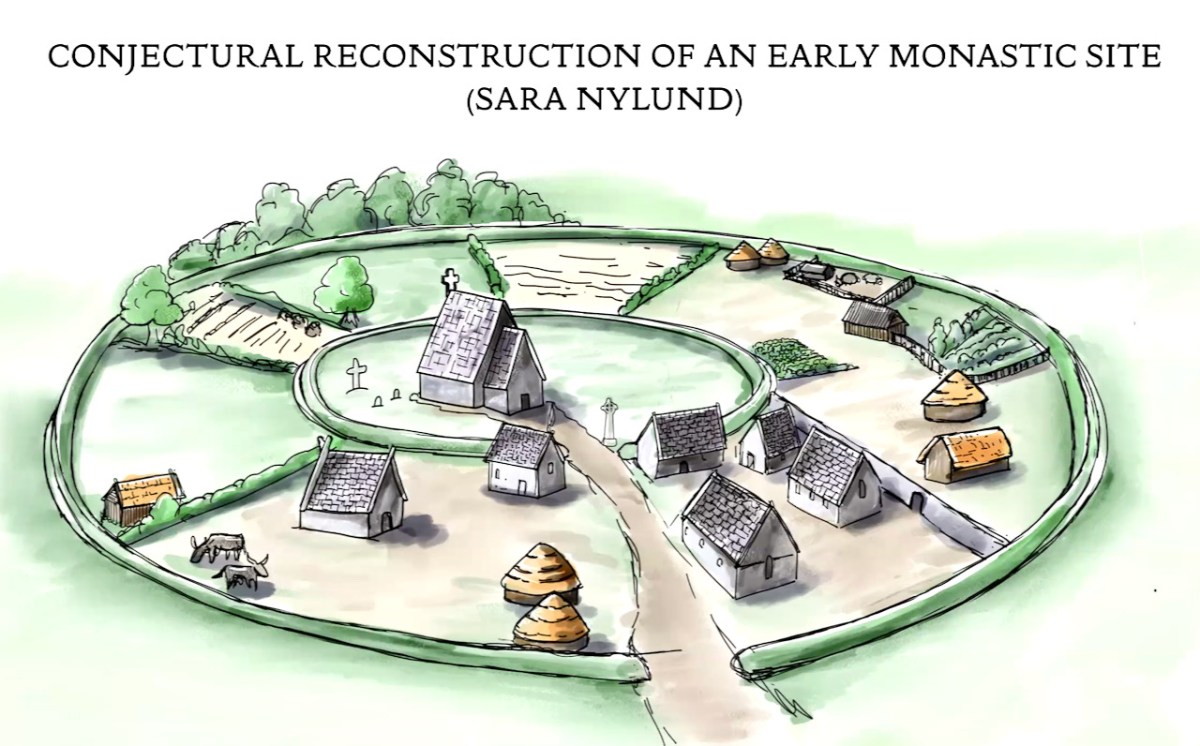
Many thanks to Sara Nylund for her wonderful reconstruction drawing of an early ecclesiastical site

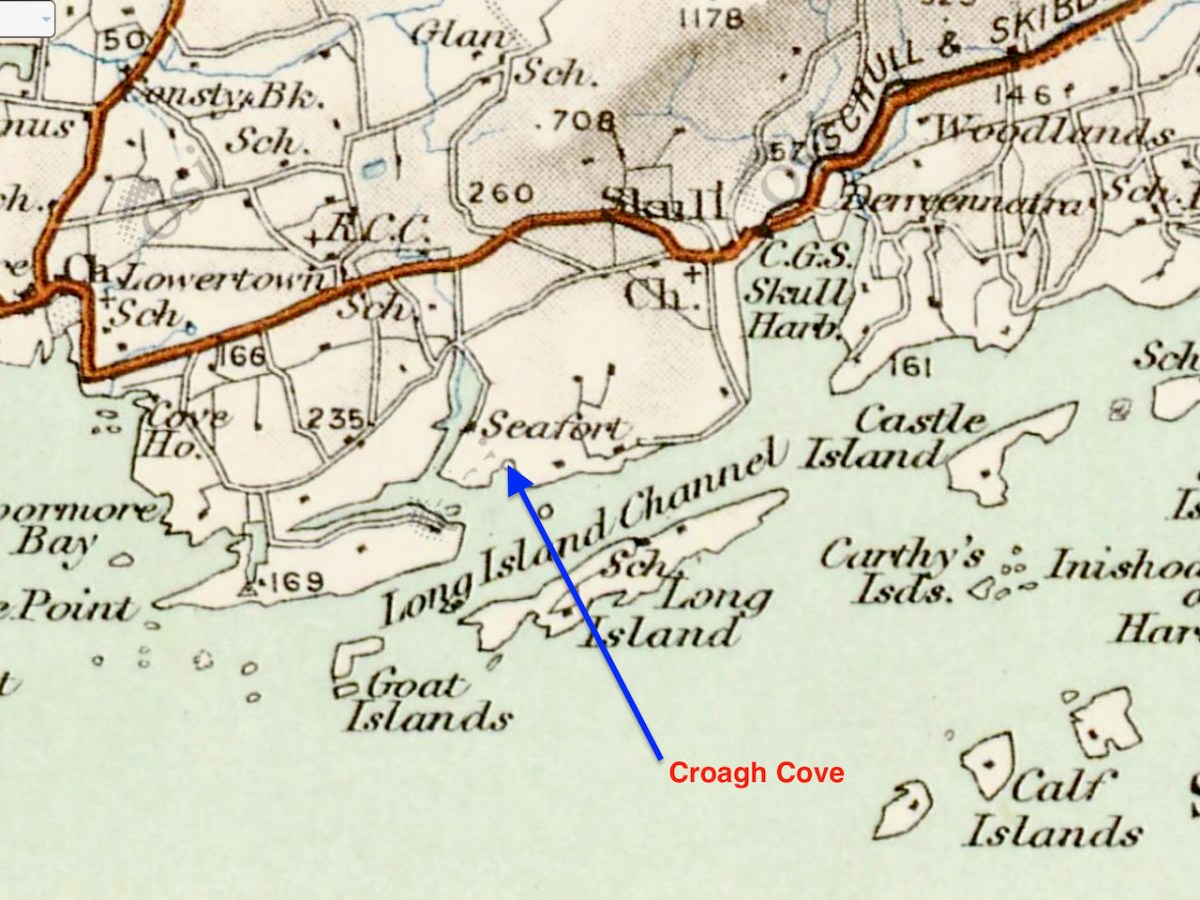
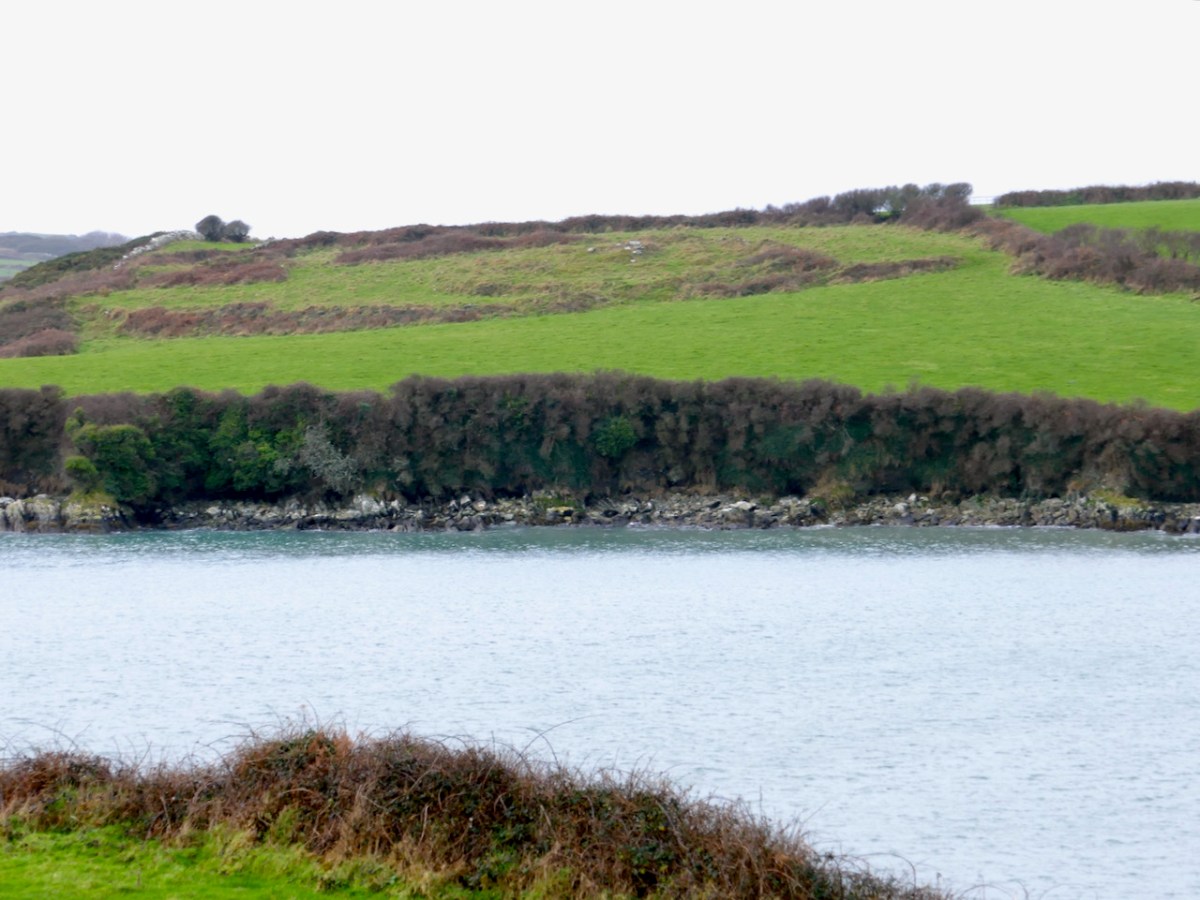
A couple of years ago, confined to explorations within 5km, Robert wrote about Croagh Bay (pronounced locally as Crew Bay). Recently our friends Donagh and Tamsin enticed us back to take a closer look at the eastern part of the Bay – Croagh Cove (Crew Cove). 

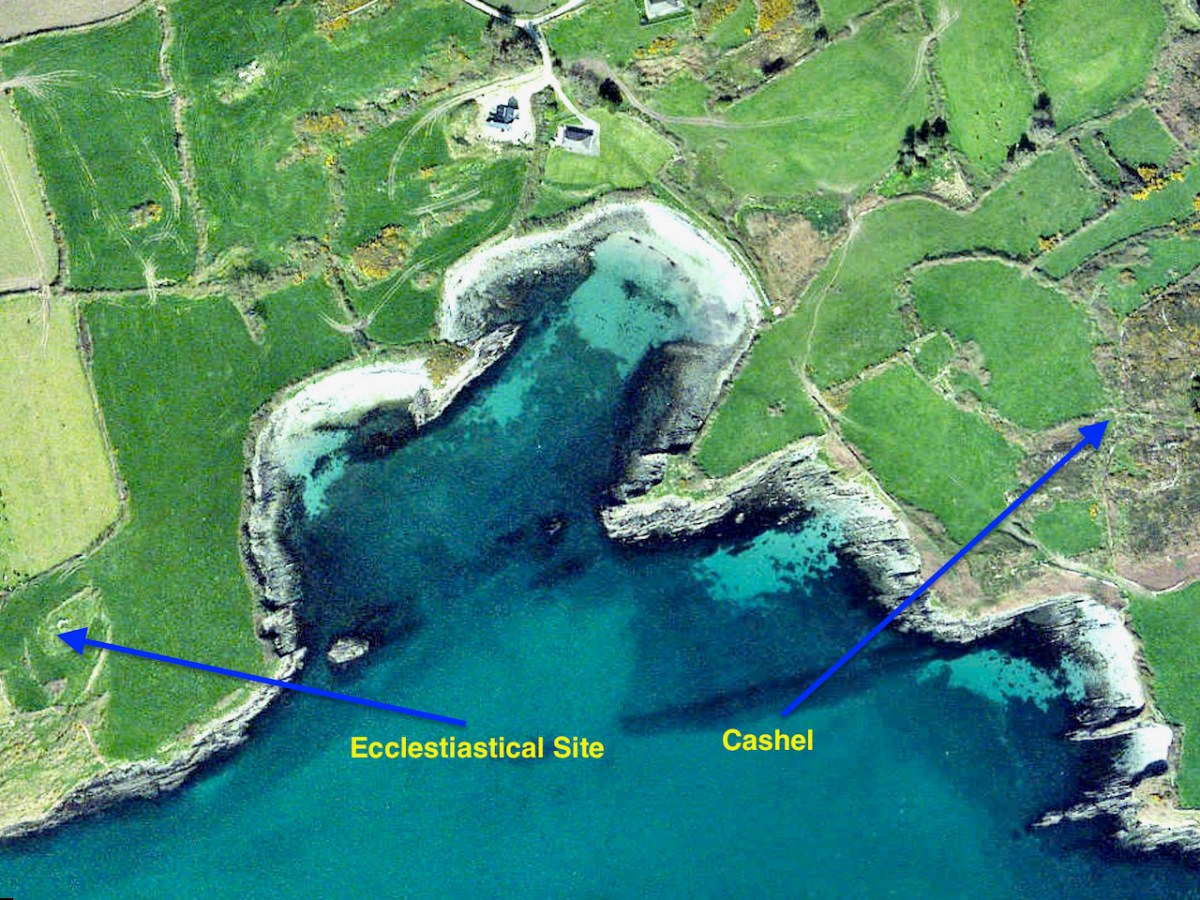
What intrigued us about this place and why we were eager to visit (apart from Donagh’s world-class coffee) was a place marked on the map as an ‘ecclesiastical enclosure.’ There aren’t a lot of those on the Mizen, although there may be more early ecclesiastical sites than have been identified and recorded. Kilbrown (see my post Mizen Mud), Cove and Kilbronogue are the only others so far.

What establishes a site as a likely ‘early ecclesiastical enclosure?’

The Irish church was dominated by scattered rural monasteries from the sixth century onwards. These were surrounded by large enclosures (varying in diameter from 40 a.m. to 400 M), often circular or oval in plan, and usually far more extensive than the surviving graveyards. In some cases the original bank, fosse or stone wall survives but more often the line of the monastic enclosure (or vallum) is indicated by curving field boundaries, roadways or a laneways. As well as the church and graveyard, these enclosures contained the dwellings, outhouses and workshops of a community, sometimes approaching the size of a town. Because the buildings were constructed of wood nothing survives above ground today; the graveyard often contains the ruin of a mediaeval church. In some cases the surviving burial ground has no inscribed headstones but was used for the burial of unbaptised children during the last few centuries. Bullaun stones and cross-inscribed stones are often found on early church sites while holy wells may be situated close by and retain the name of the saint anciently associated with the site. Unfortunately little of the history of the early church in West Cork has survived and the earliest reference to many of these sites is as late as the 12th century.

The Archaeological Inventory of County Cork, Vol I, West Cork. P 271

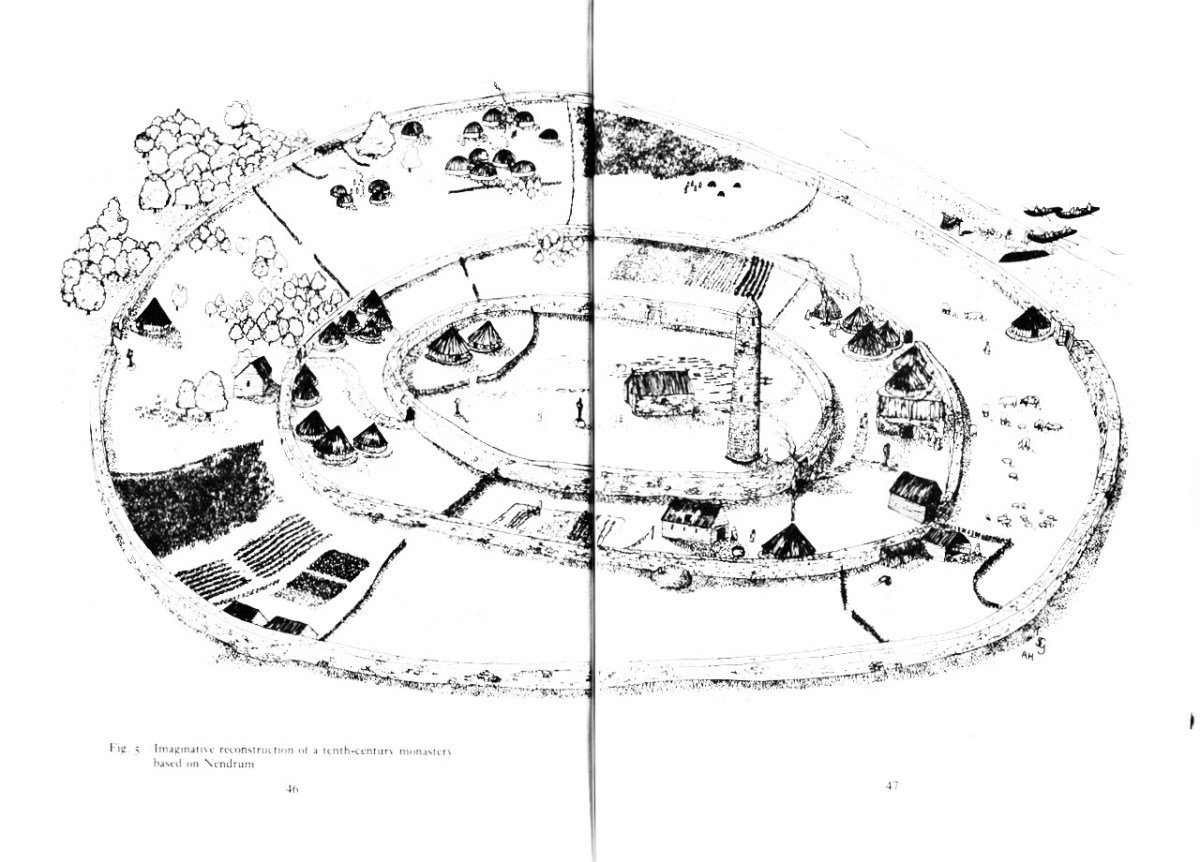
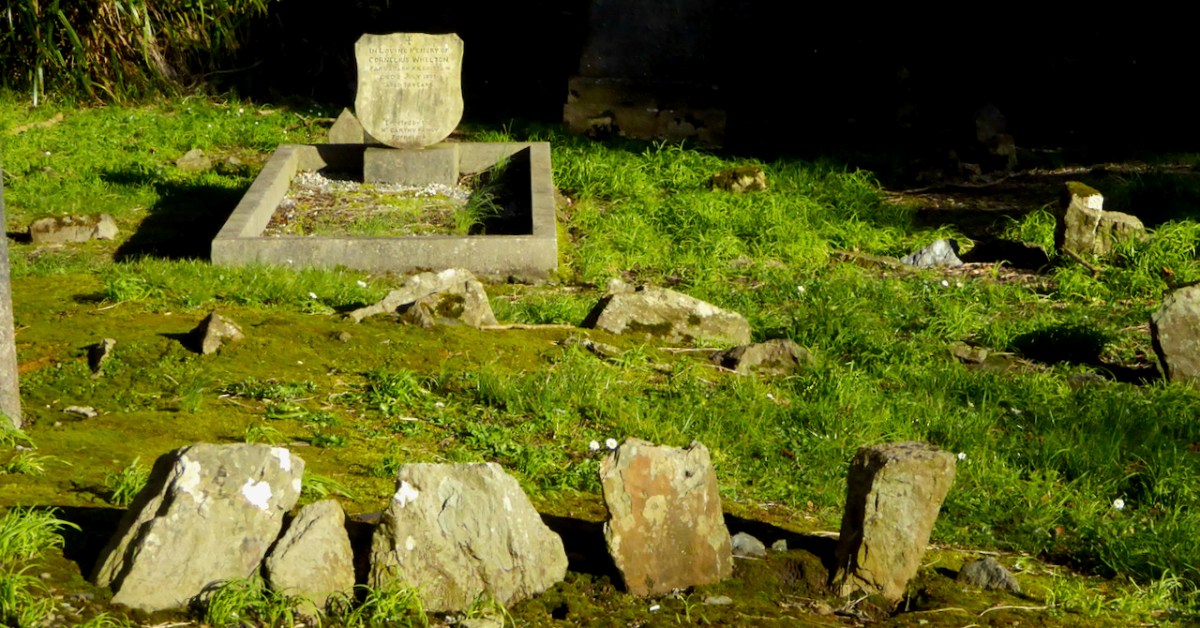
So, as you can see, not much normally survives on the surface but a tell-tale sign is a circular or oval enclosure, or (often) two concentric enclosures, with the barely-discernible signs of buildings inside. (Readers may remember the above illustration from my post on Ardpatrick – no sign of a round tower at Croagh, though!).) The memory of these places as once-sacred seems to be retained locally, and led to their use as Cillíní, or Children’s burial grounds in the past. See my post Unknown Souls for more about Cillíní – ‘the loneliest places on earth.’ Thus – small uninscribed headstones peeking out through the grass is an indication that this may be a cillín, and in turn perhaps something more ancient yet.

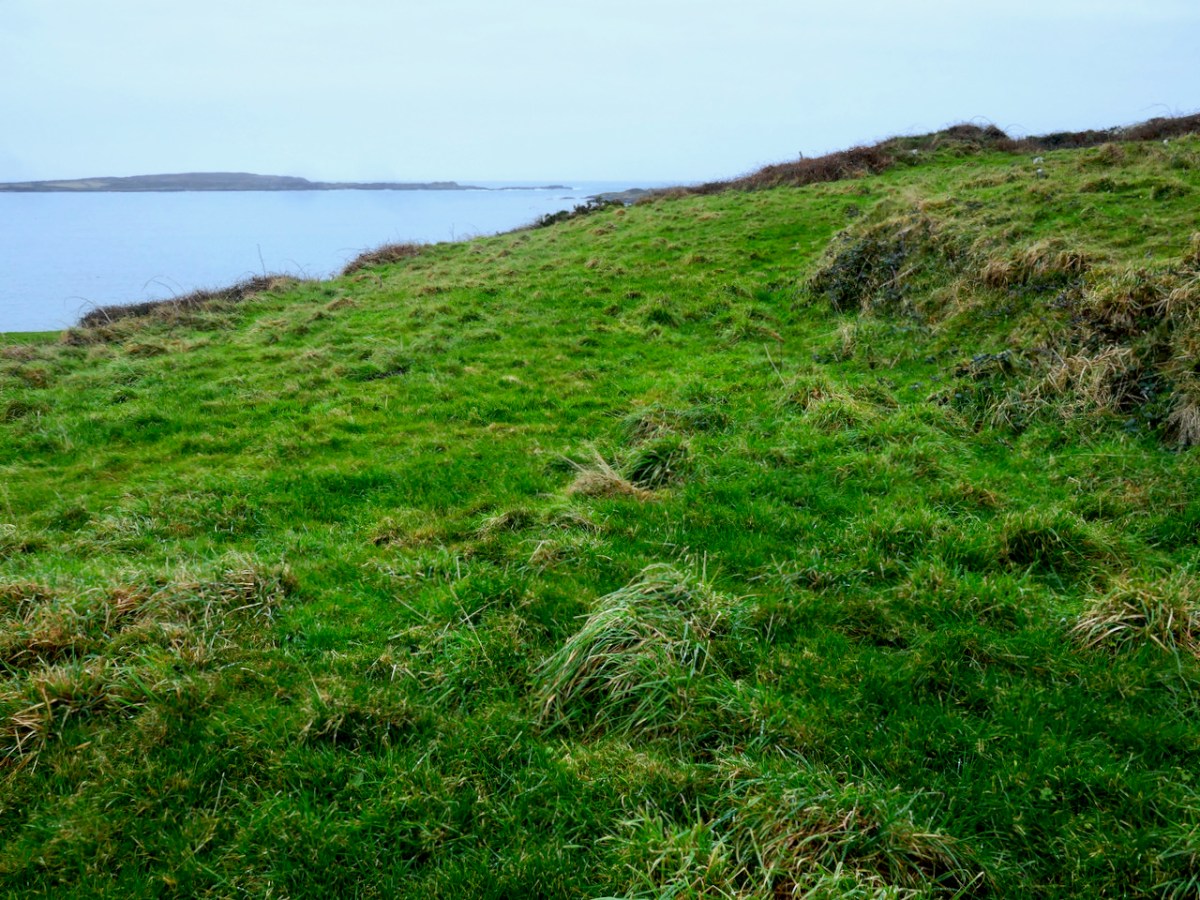
The original site may have been carved out of the hillside – the flattening process leaving a sharp-edged bank on the sea-ward side (above and below). This reminded us of the similar bank we found at the possible ‘Scoil Mhuire’ site that Robert reported on in his post Schull – Delving into History

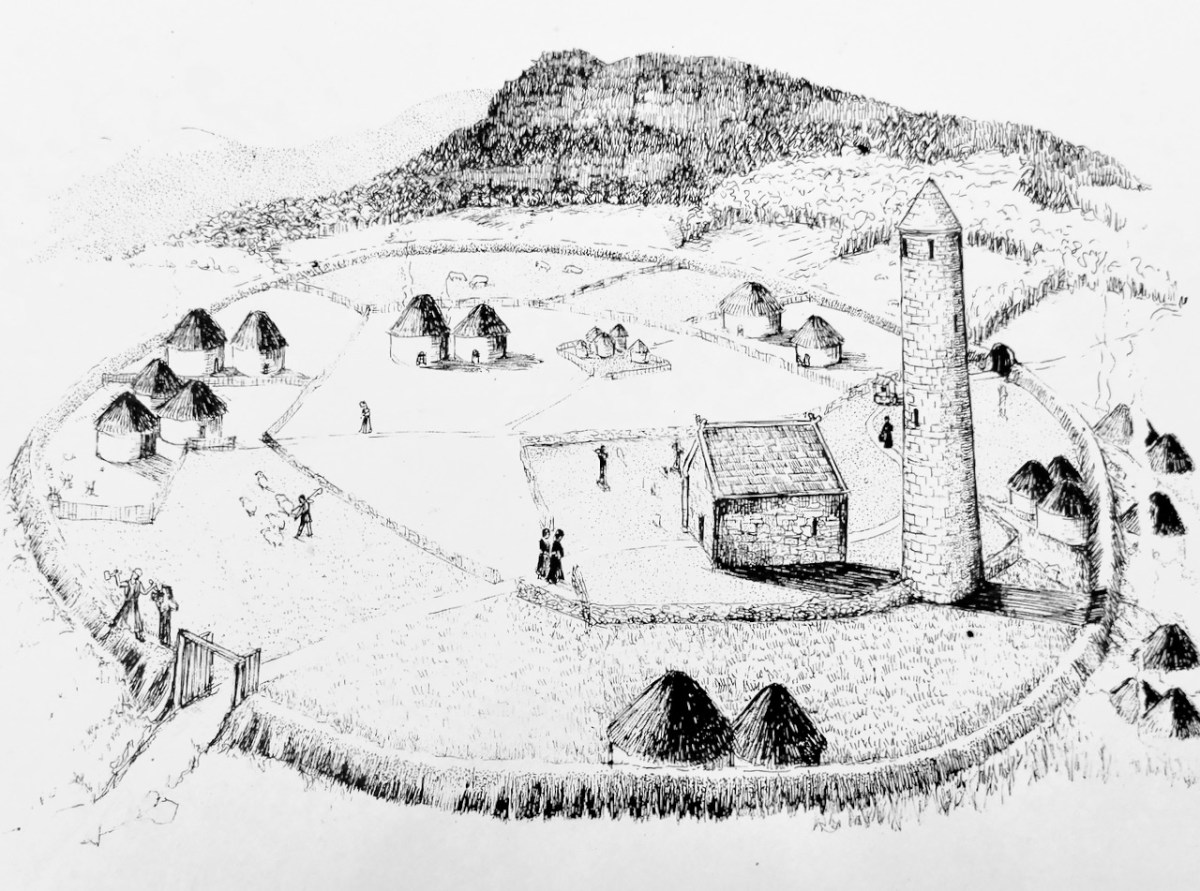
What would such a site have looked like? They varied enormously in size – for example Glenadalough in Wicklow and Kells in Meath would both have been monastic cities. Most, however, and especially in remote places, would have been small religious foundations in which there would be a central church surrounded by an inner wall, and houses and gardens for the monks surrounded by an outer wall. 

Nendrum in Co Down shows what a monastic settlement considerably larger than Croagh might have looked like. The Illustration is from The Modern Traveller to the Early Irish Church by Kathleen Hughes and Ann Hamlin

The word reilig (pronounced rellig) is the Irish word for graveyard and it comes from the word for relic. Early sites like this were assumed to have had a founding saint, who gave his or her name to the site. Kilbrown, for example, would be the church of Brón, and he would have been buried on the site – hence the ‘relic’ association. Kilcoe was named for a saintly nun, St Coch. The echoes of the cult of those saints would have remained alive through the centuries in the names of townlands and holy wells.

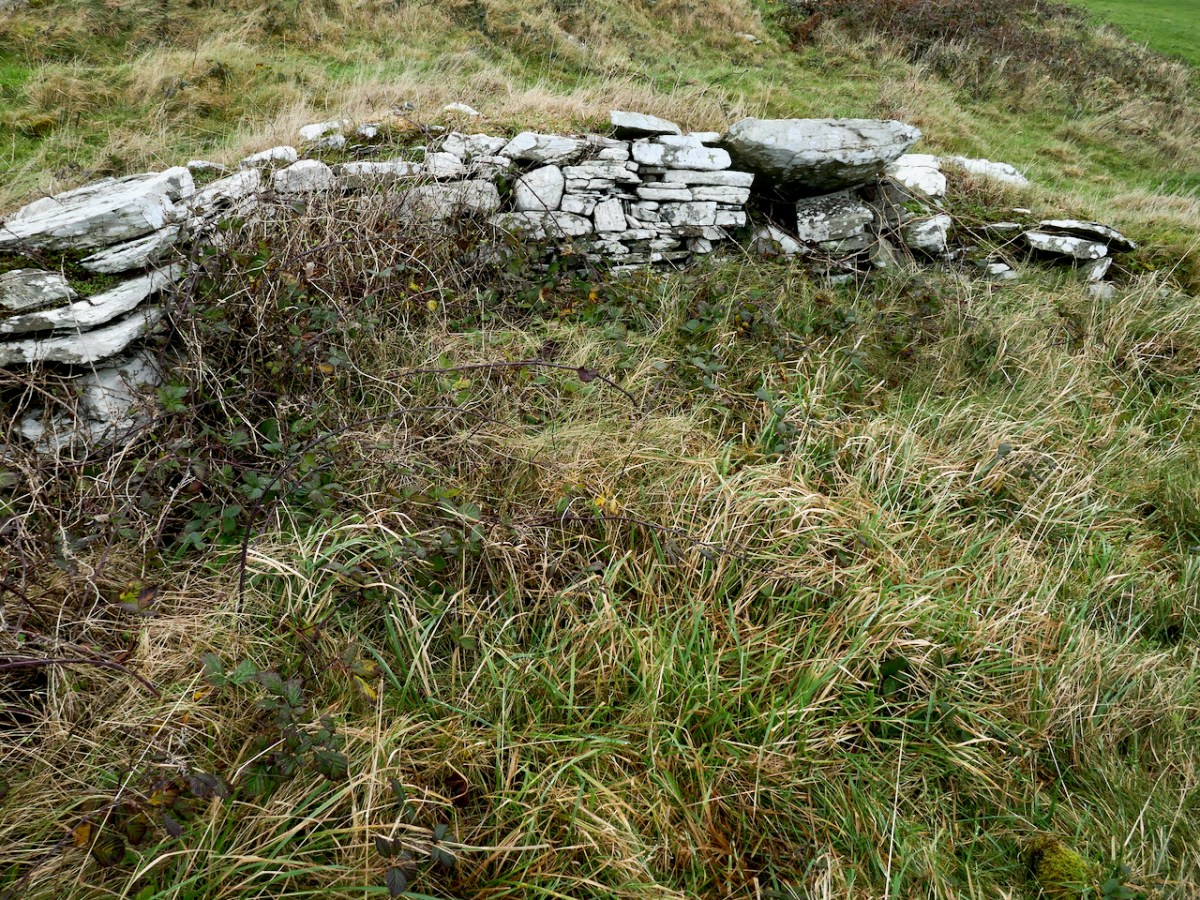
Possible remains of church at Croagh

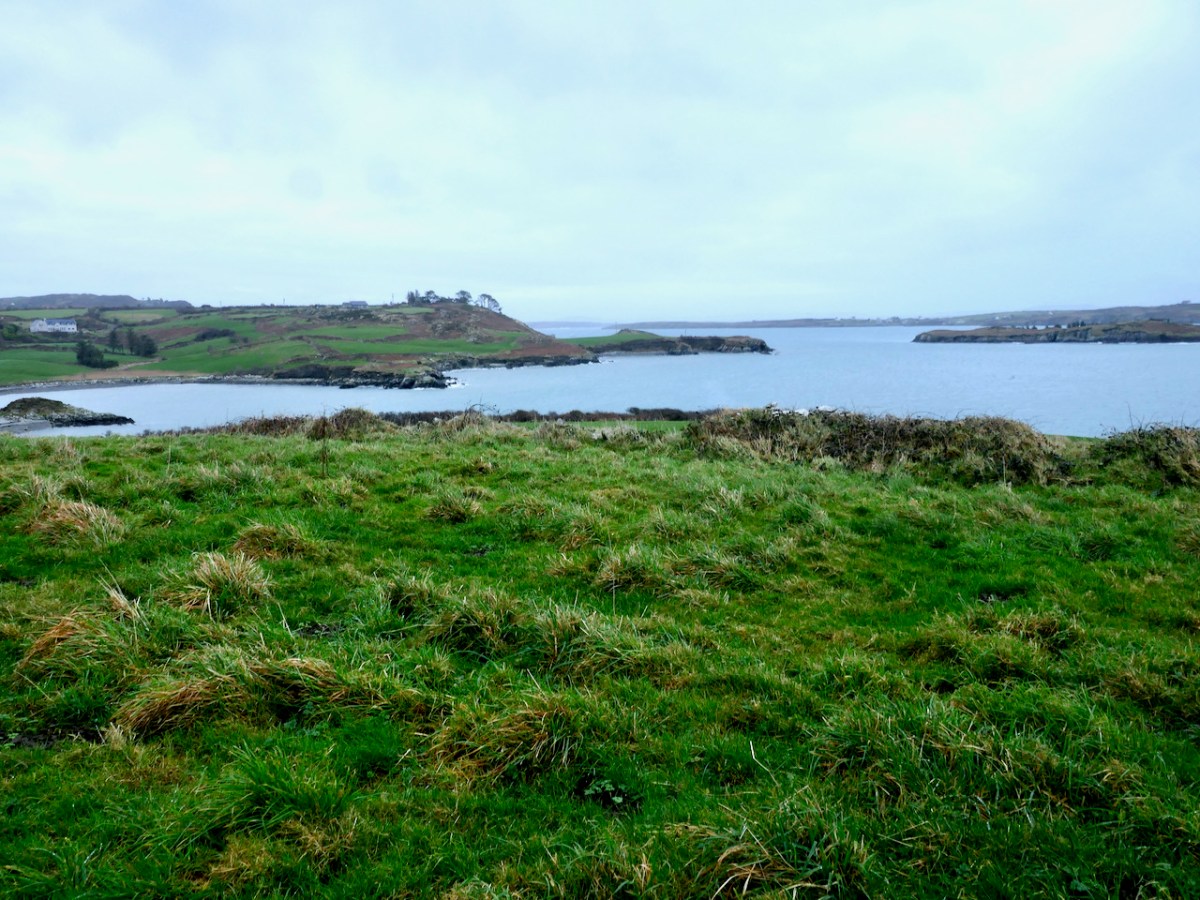
The name Croagh, however, is based not on a saint’s name but on the Irish word for a ‘stack’ and may refer to the gentle hill that rises up from the water. It was, and remains, an almost perfect spot to establish a peaceful settlement based around hard work and prayer. There’s a lovely little beach below, so transport and travel was easy by water. It’s in a sheltered haven protected from storms by Long Island off the cost, and from it there’s a good view out to sea (below) so the monks could see Vikings or other raiders coming.

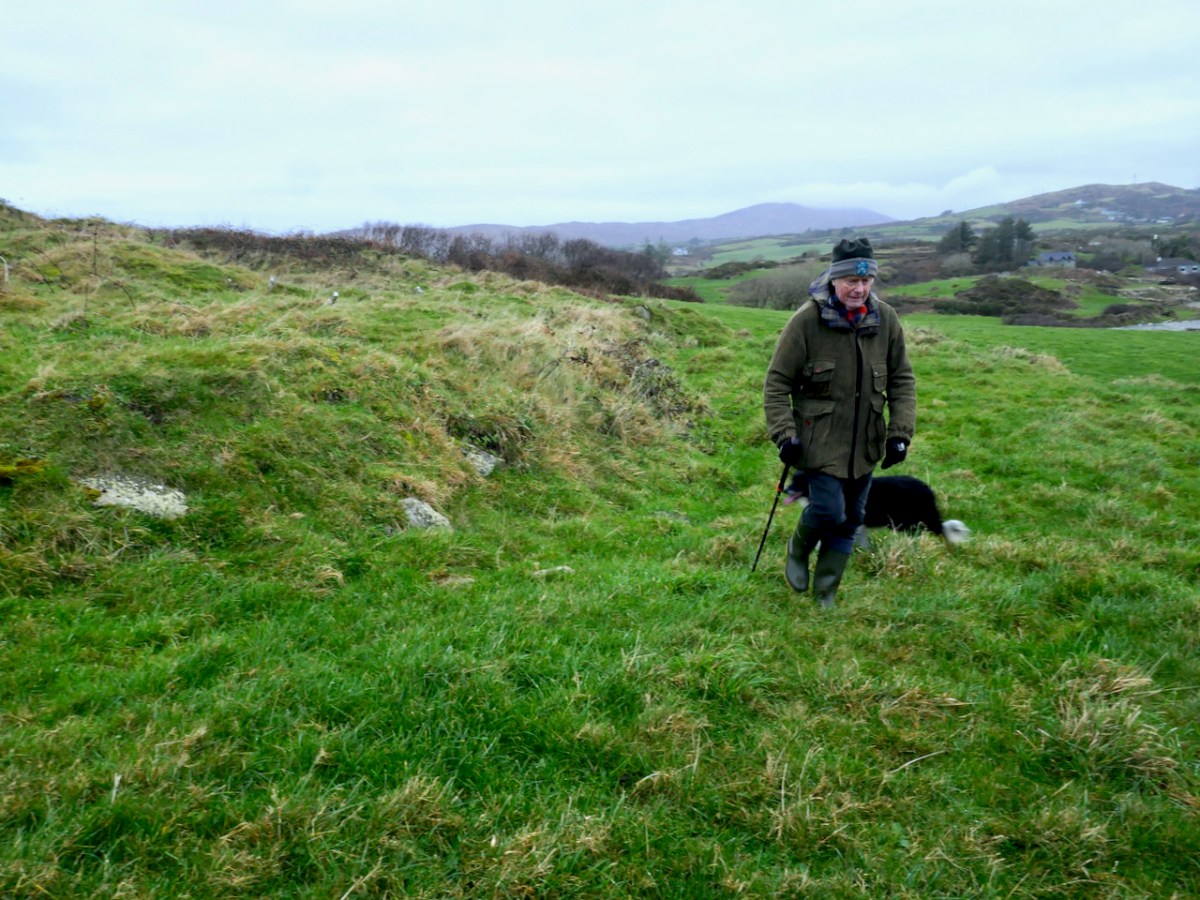
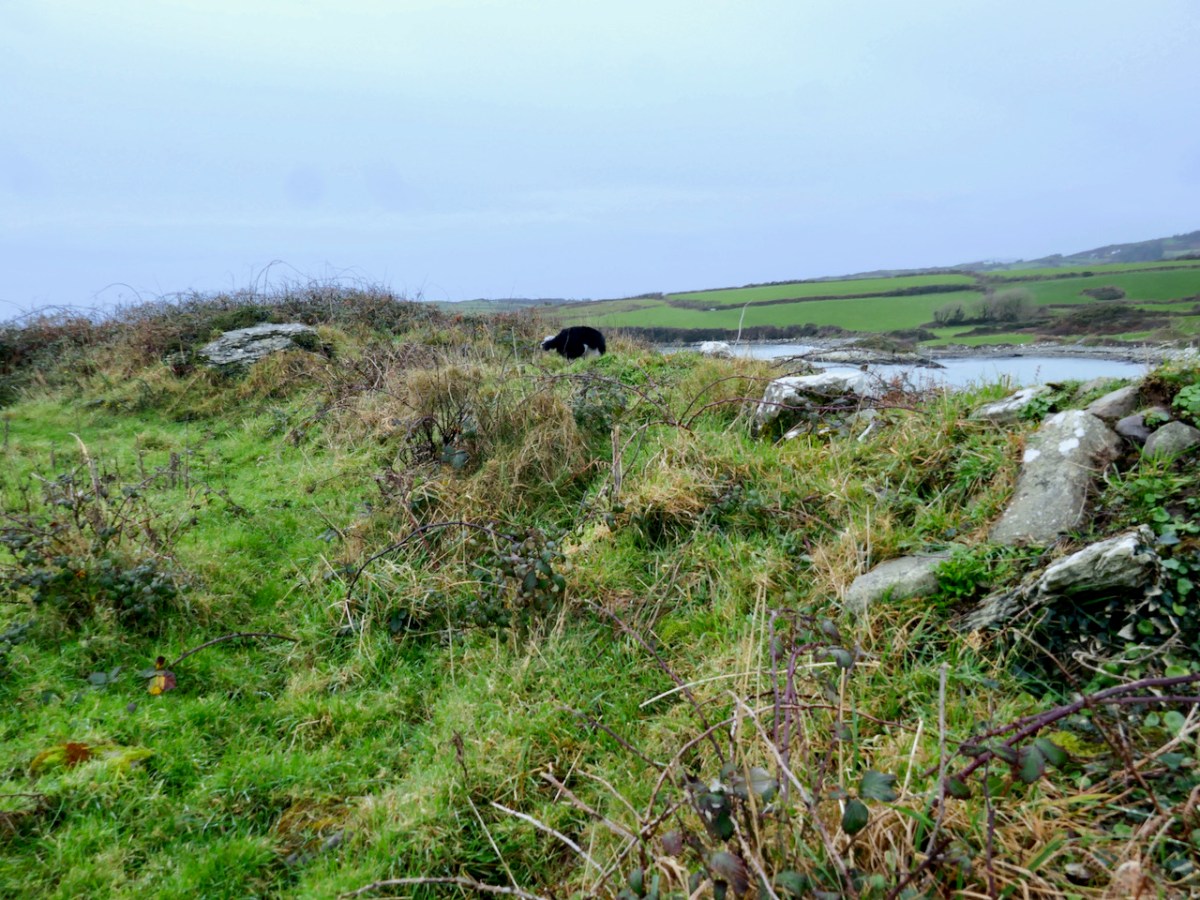
And right across the Cove there’s a ring fort – a cashel, in fact, since it looks like the walls were made of stone (below). It’s a classic – on elevated ground with commanding views all around, out to sea and to the low hills behind. Puzzlingly, this cashel is not recorded by National Monuments. It’s overgrown by bracken so may not have been obvious at the time of the survey. 

This juxtaposition, across the cove from each other, of an early-medieval monastic settlement and a fortified residence, leads to speculation as to the relationship between the two. Was the monastery endowed by the local chief, committing the monks to say prayers for his eternal soul in exchange for land and protection? This is certainly a familiar pattern from the later medieval period. 

View of the ecclesiastical site from the cashel

This is just a tiny corner of the Mizen. There is much more of interest in this small townland but for today I wanted to focus on these early-medieval sites. In their ruins lie clues to a distant but vibrant past.

Even Cromwell Spared the Graveyards

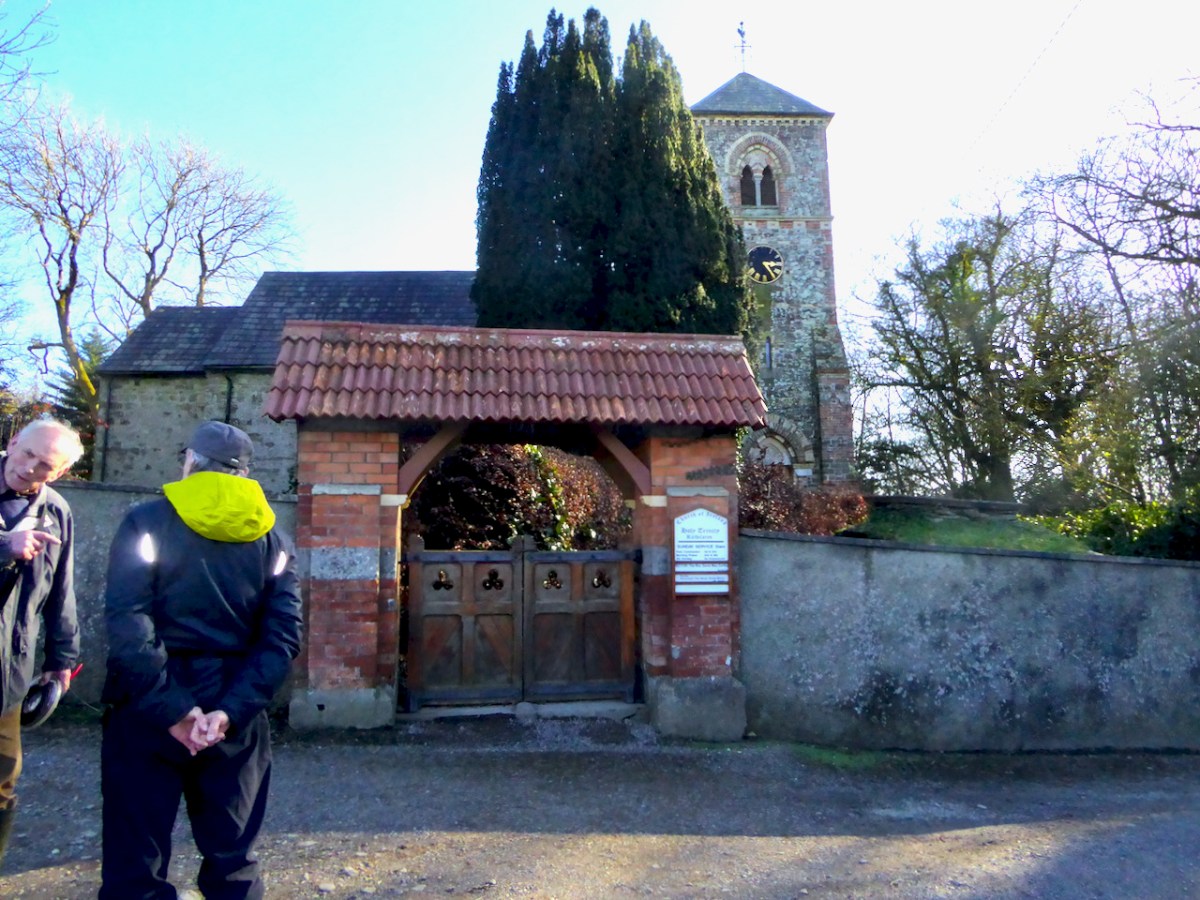
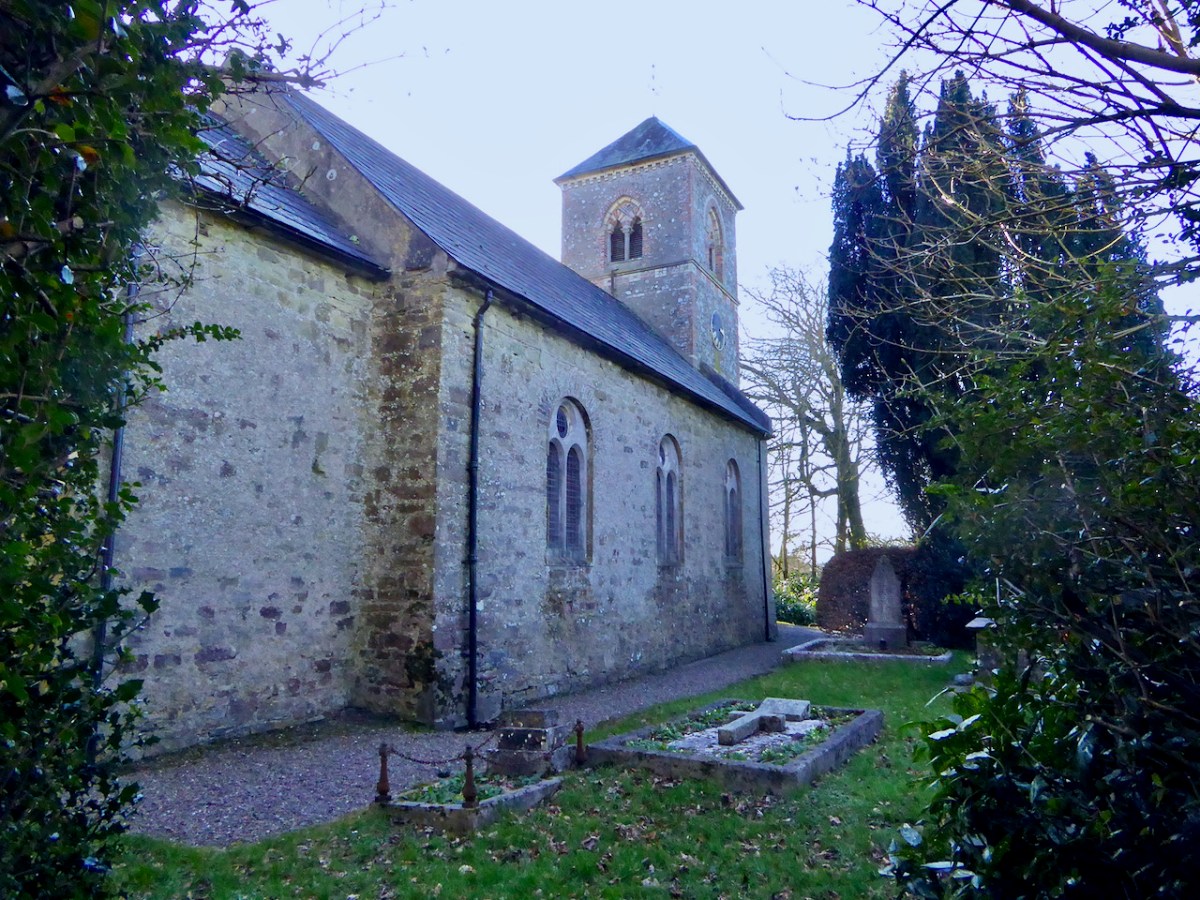
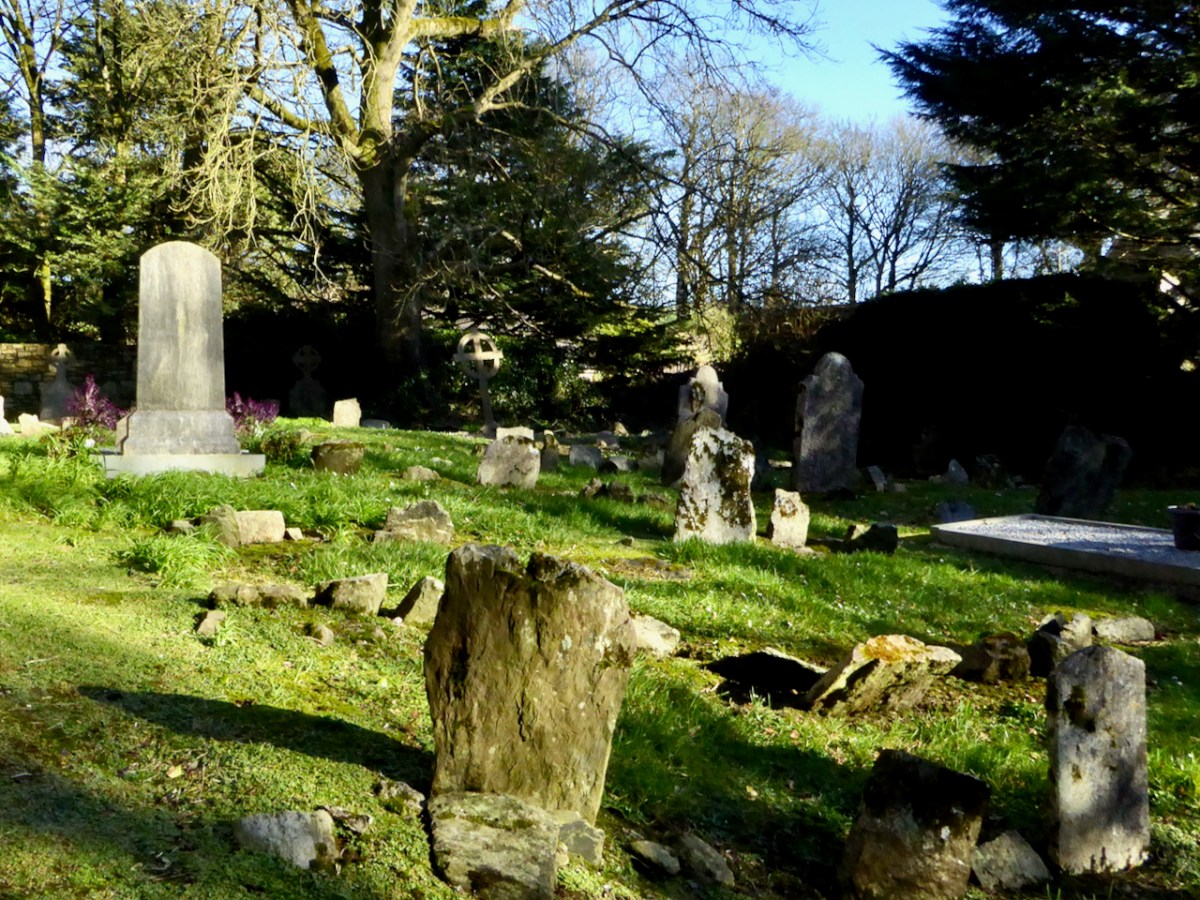
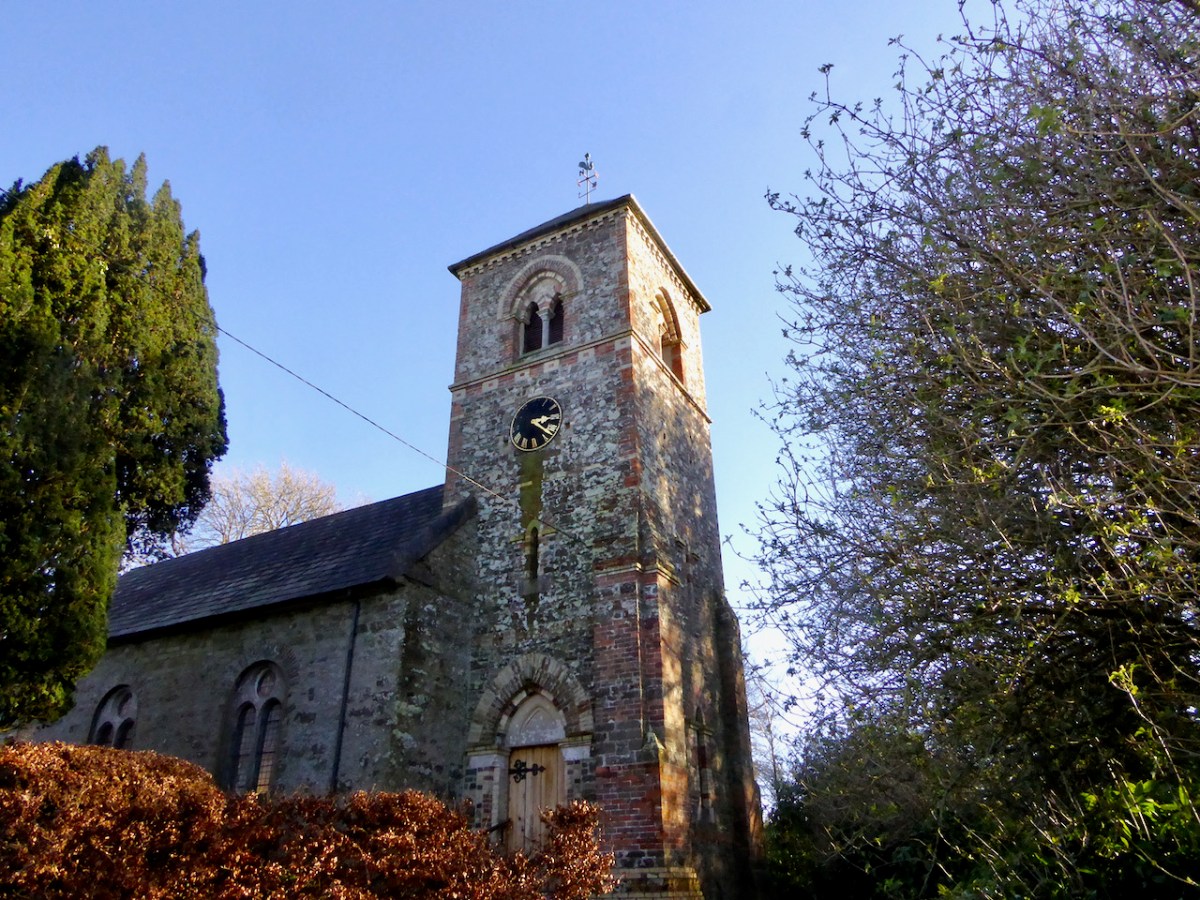
There’s a lovely old Church of Ireland church in Rathclaren, between Timoleague and Kilbrittain in West Cork, surrounded by a graveyard. Nowadays, little disturbs the tranquil space, and it’s hard to imagine that a proposal to close this graveyard for reasons of sanitation and overcrowding once created an enormous controversy that pitched Catholics against Protestants, neighbour against neighbour. My attention was caught when the marvellous West Cork History posted about this recently – a huge thank you to Pat!

The lych-gate at the entry to the church is an unusual feature in Ireland, but adds to its overall picturesque appearance

It was all reported with gusto in the Examiner and the Southern Star (which I accessed through that indispensable resource, the Irish Newspaper Archives). The facts of the matter were that Canon Powell, the Church of Ireland Rector, wished to close the graveyard to further burials, claiming that there was a putrid smell and that people came and buried their deceased family members ‘willy nilly’ with little regard for the depth of the grave or the previous occupants.  He was supported by Dr Shorten, a medical man and one of his parishioners, who conducted an inspection. 

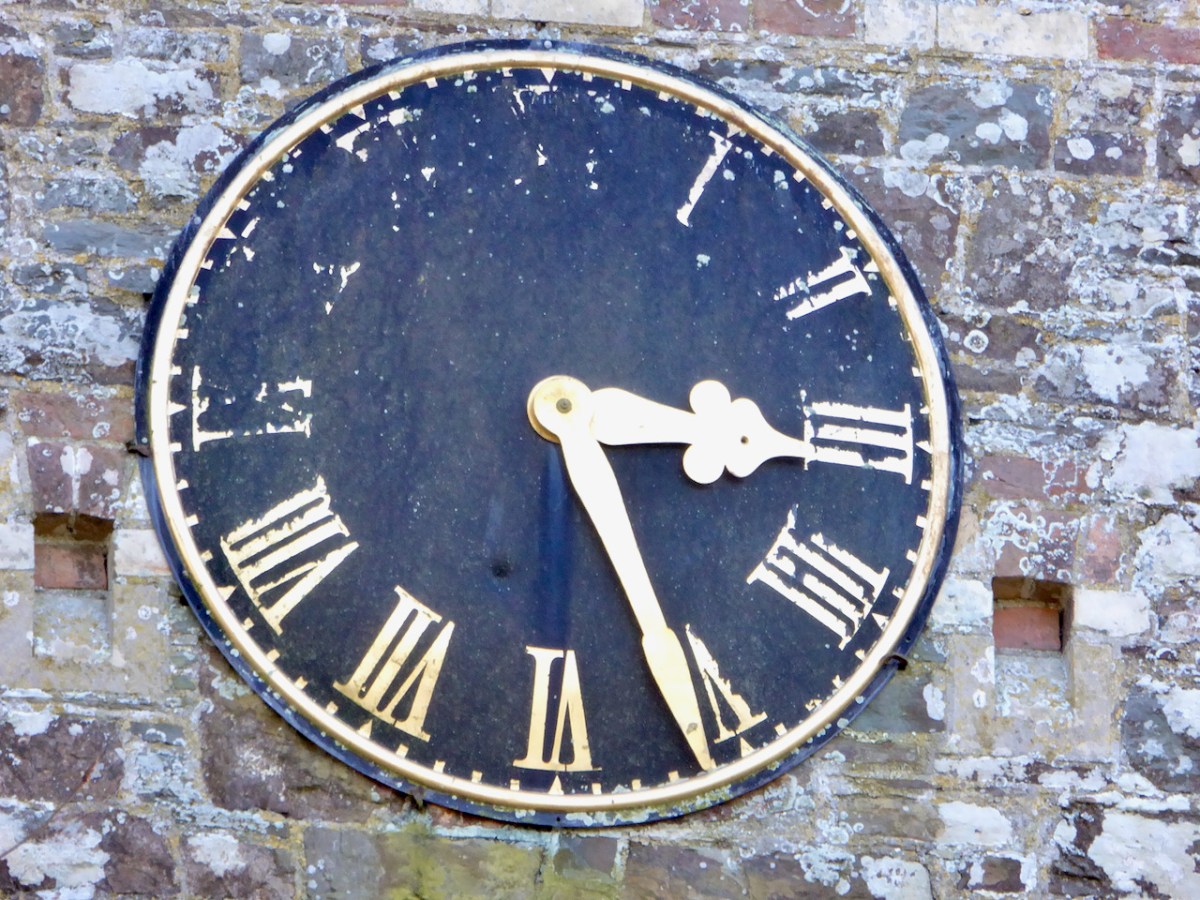
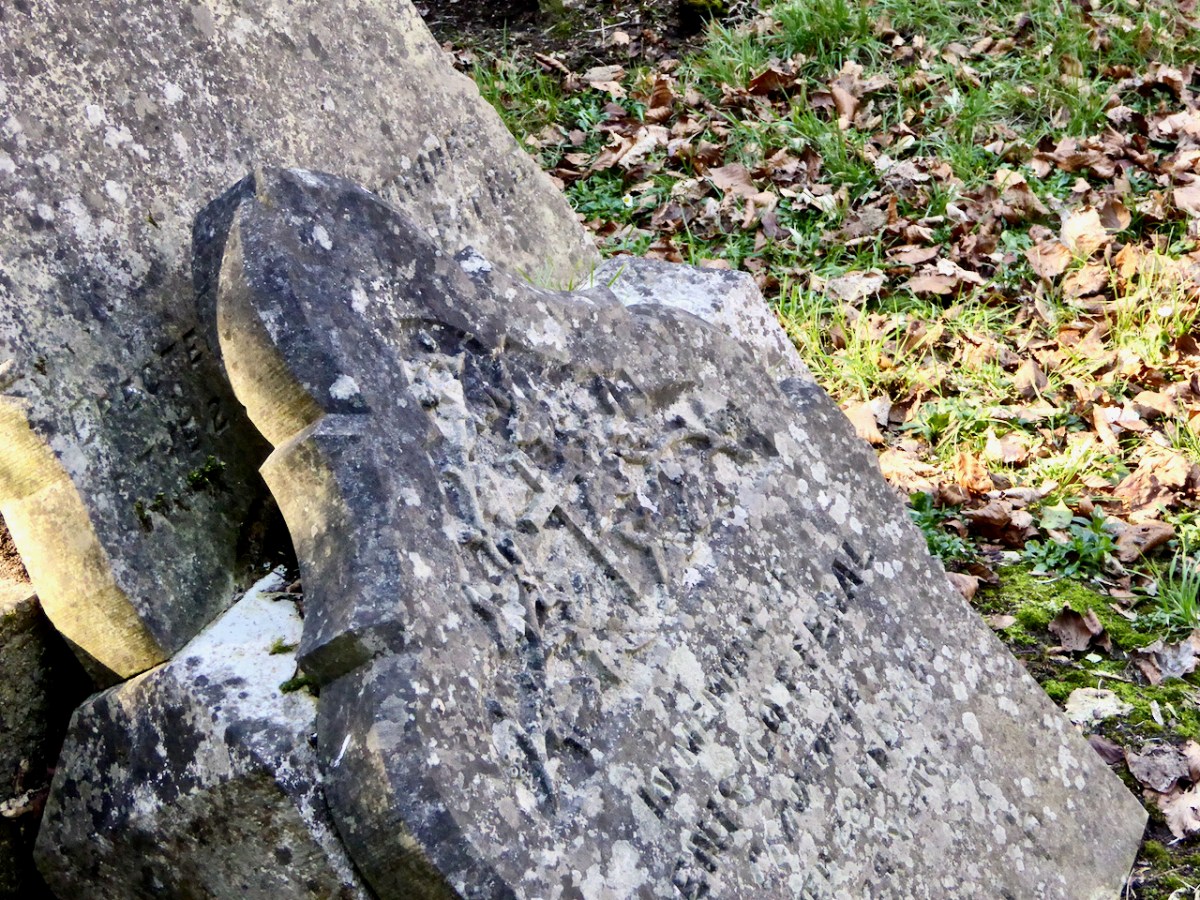
The clock face has an indent – we were told by a local resident that there was an IRA ambush here during the War of Independence and that this is a bullet hole

Now if there’s one thing we know in Ireland it’s that there is a reverence for graves and burial places. This is not new and when word reached the Catholics who had rights of burial in the graveyard, or whose family members were buried in it, there was uproar. 

A little background – the graveyard was owned and managed by the Church of Ireland, as were many old graveyards in Ireland. When the Church of Ireland was established, after the Reformation, all church property passed into the hands of the Protestants, to be administered by the local Rector. Everyone, Protestant or Catholic, had to apply for approval for a grave to be dug. Catholics resented this hugely – these had been their churches and their sacred sites, and the memory of their loss and the outlawing of their religion was long and bitter.

The turn of the twentieth century, when the Rathclaren row erupted, was a time of growing nationalistic confidence. Speeches stoking long-held resentments were common. Having been downtrodden for centuries, many Catholics were now fervently embracing aspirations to Home Rule, flocking to Irish language classes, and reading stories of their glorious past as a Land of Saints and Scholars, as well as studying the long history of suppression and colonisation. Somehow, the threat to close Rathclaren graveyard encapsulated for them all that was wrong with the Ireland of 1899. 

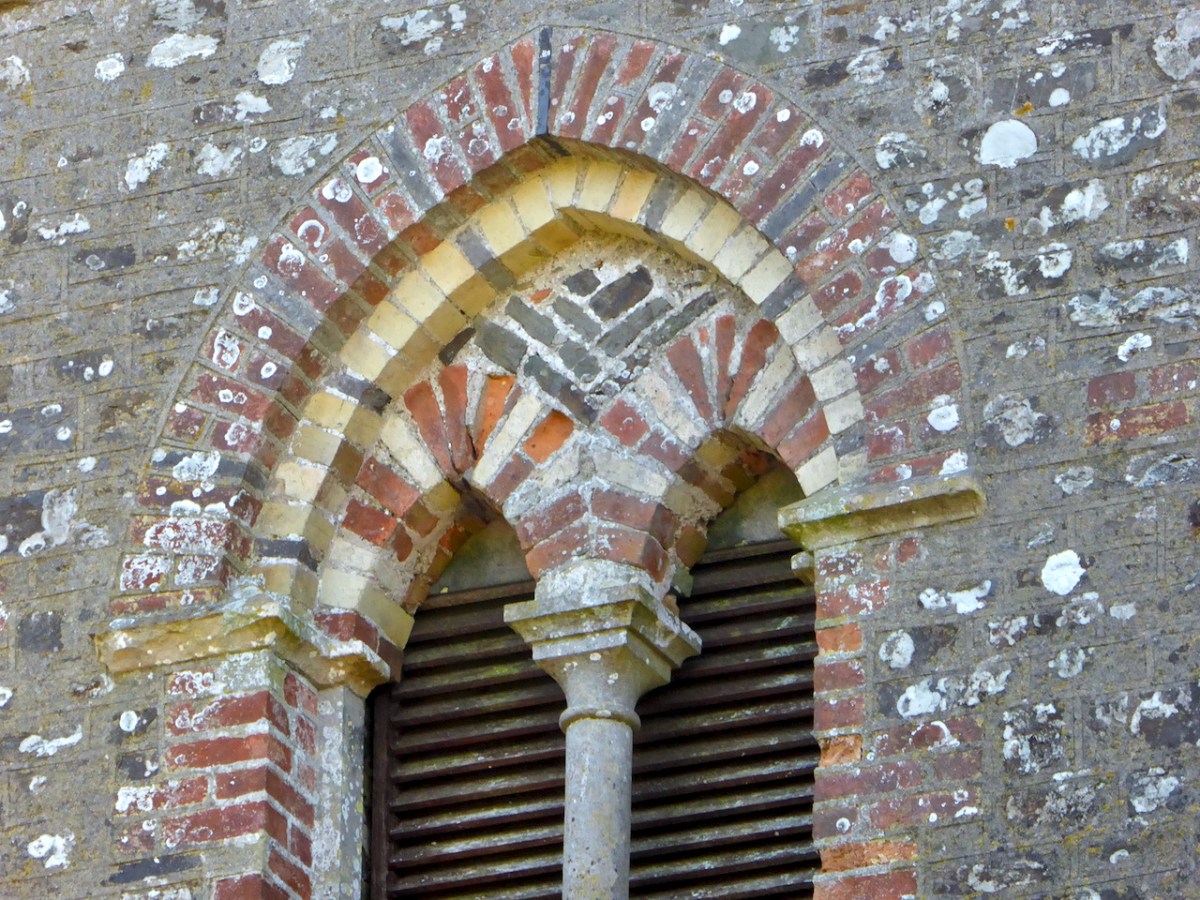
The church is hundreds of years old but was reconstructed several times. The attractive red brick detail was added in the mid nineteenth century

There were claims and counter claims, all gleefully reported by the newspapers: that the graveyard was full – that there was still lots of room in it; that it was unsanitary and smelly – that the smell was coming from a drain in the Canon’s garden outside the walls; that Catholics dug up old graves with scant regard for public health – that the Canon allowed Protestant burials but denied Catholic interments.

I want to give you a flavour, using select quotes, of a huge public meeting held at the Graveyard on July 31, 1900. The Irish Examiner reported it in full under the title Indignation Meeting. The crowd enthusiastically cheered all the speakers, but ‘groaned’ loudly when Canon Powell drove by in his trap.

The Chairman, who was received with cheers, said although their forefathers met for many a serious purpose they never had to meet for such a purpose as they were assembled there that day for (hear, hear). Although their forefathers were hunted and persecuted, yet the enemy never interfered with their burying places, as they were doing now. It was for the people gathered there to say that that ancient burial ground would not be closed without an effort being made to prevent it: and it would be kept open as long as they had power in their arms to do so (loud cheers). If their forefathers lived they would never allow it to be closed; they would see their own blood run down that hill first (cheers). There were good and true men yet, and they would show by their actions in connection with this matter that there were no unworthy descendants of these sires. There was no use in one or two trying to fight this cause: all the people should stand together. He was sure they would do their part, and they would not be beaten without a hard struggle (cheers).

He could make no better comparison between the state of the graveyard than the comparison between the populous and depopulated parts of the country. Travel through the country, and part of it would be found thickly inhabited, but again there would be found parts of it deserted, turned into cattle ranches and sheep walks, parts where the people had been driven forth to make room for the sheep and the bullocks (groans for the evictor). They would find in the Ireland of the past places where the people had been banished – places in which they had drawn the milk from a fond mother’s breast, and had been bred and reared; in those places, too, could be seen the ruins of the homesteads.

In the days of the past, when the people were oppressed, and when the country was ruined and depopulated; when the people were subject to the most cruel laws and torturous persecutions that any people could be subject to. . . when the people lived continuously in the midst of gloom and tyrannical rulers, it was not known that those who interfered with the land of the living had ever interfered with the land of the dead (loud cheers). The only consolation our fathers had in those oppressed times was that they could claim one spot, at all events, just as much as the biggest man in the land, and that was the spot where their friends and ancestors were buried in the graveyards of Ireland (cheers). If we went further back, when this country was put to the sword by Cromwell, and the people were driven from the four provinces. . .When the people were driven to hell or Connaught. . .but I am sure there are few of the Irish race who were driven into Connaught now in hell but I am not going to say what became of Cromwell (cheers). At any rate, we don’t hear at all that Cromwell ever interfered with the graves of the dead in Ireland.

Though Cromwell spared the graveyards of Ireland, as did other tyrants who oppressed the people, I say here to-day that they dare not face the people possessed of life – the living Irish. 

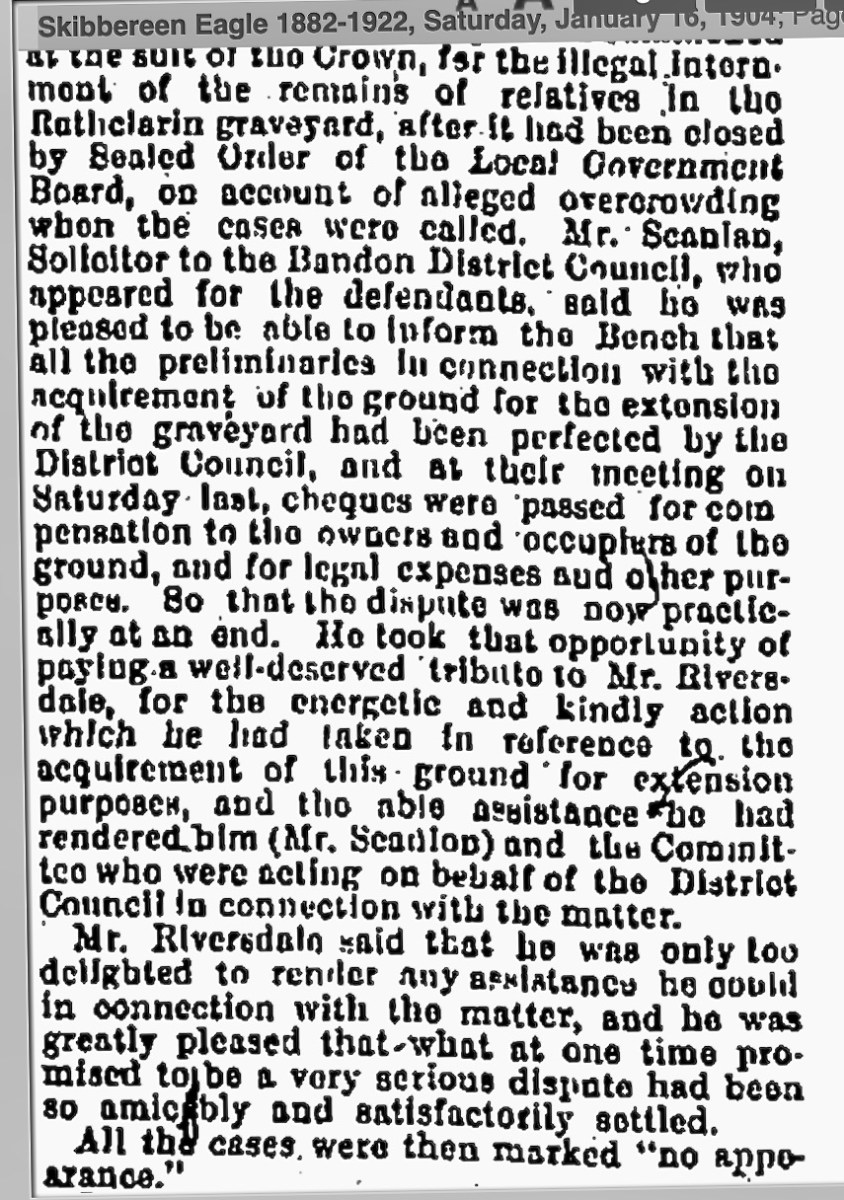
There was much more in this vein at the meeting. Eventually there was a board of inquiry, a proposal was made to buy extra land for an extension of the graveyard and after some missteps this was eventually accomplished. In the meantime, local people carried on burying their dead in defiance of the court order not to, but the police seemed happy to drop charges if they could – see this report from as late as 1904, when the matter was finally declared resolved.

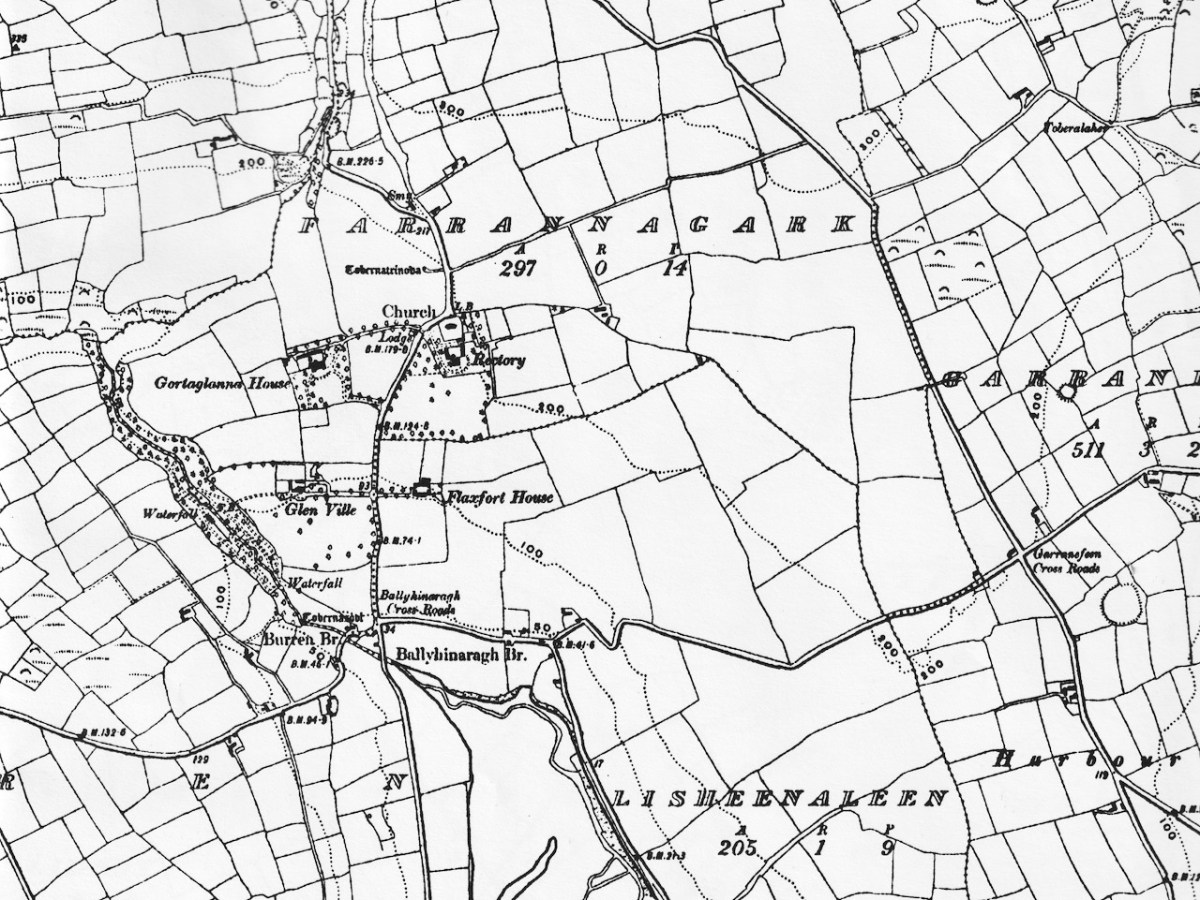
Besides the post on West Cork History, a friend has just now gifted us a set of old OS maps for this area (thank you Noel!). They are large scale and date from 1900 – and here is Rathclaren, clearly showing the church and graveyard as of that date.

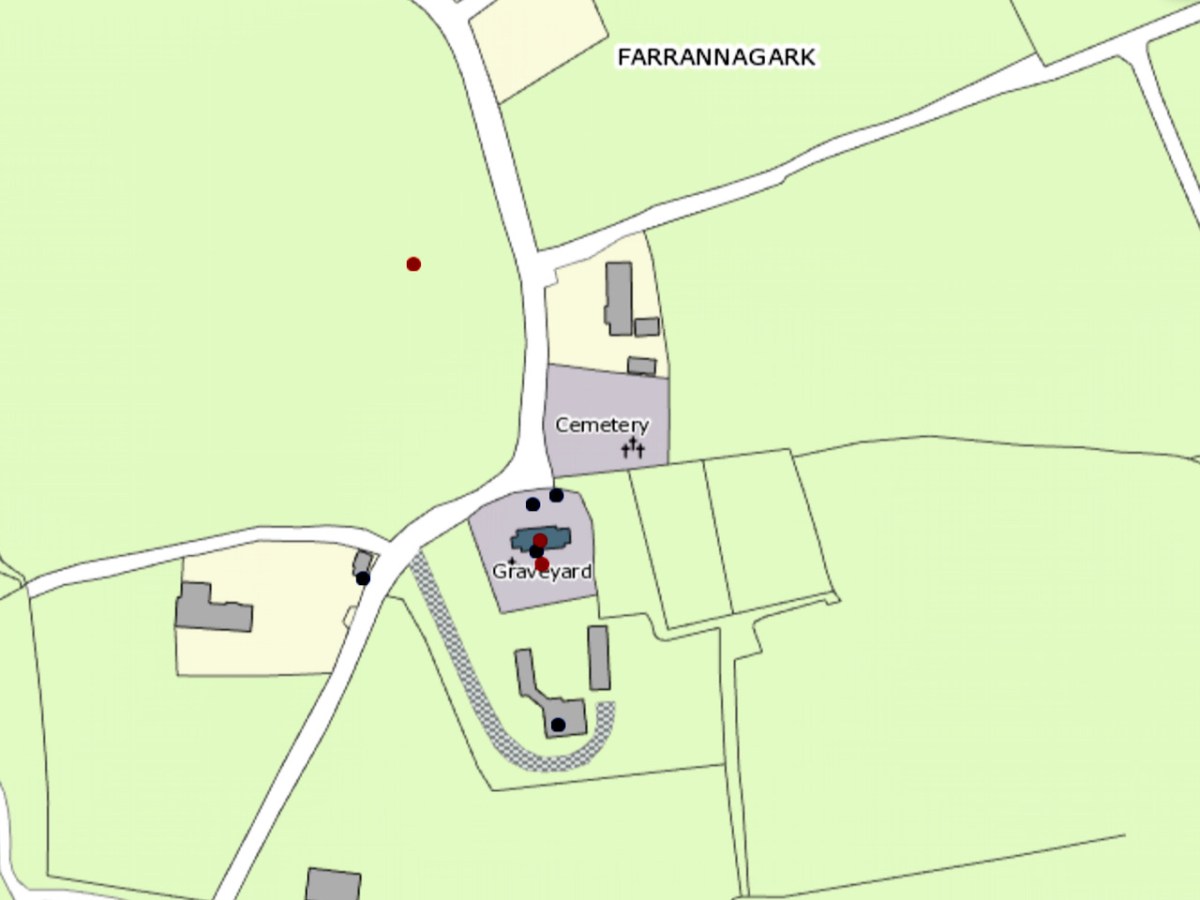
However, today there is an addition to the map in the form of a new ‘cemetery’ just to the north of the church. On the Ordnance Survey and the Archaeological maps of Ireland the term ‘Graveyard is defined thus: The burial area around a church. These date from the medieval period (5th-16th centuries) onwards. However, the terms ‘Burial Ground’ and ‘Cemetery” are reserved for An area of ground, set apart for the burial of the dead, not associated with a church. In this case the word cemetery is used to denote a modern burial area which was not originally associated with the church.

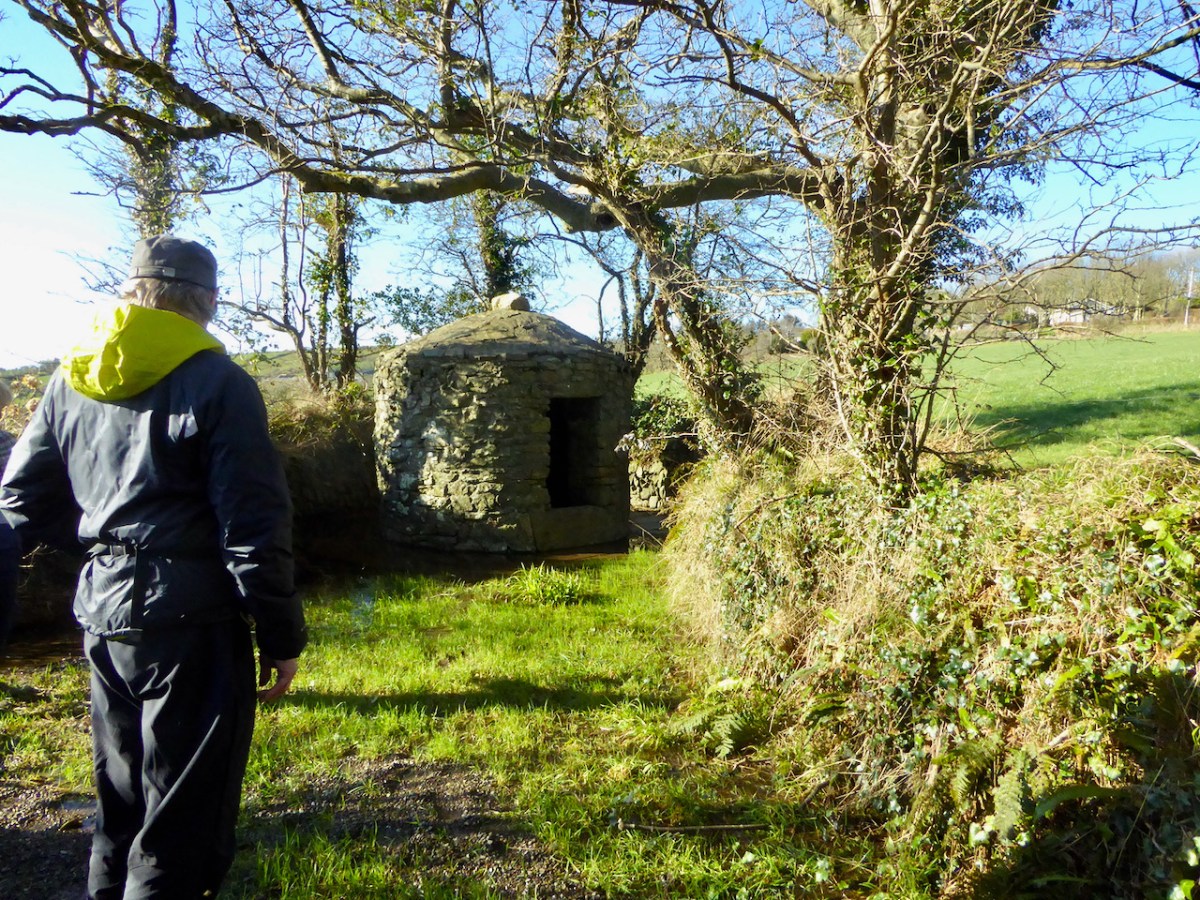
Today, this peaceful and beautiful spot seems as if it could never have witnessed any kind of upheaval. Along the road stands the Trinity Holy Well (below, labelled as Tobarnatrinoda on the historic map), still cared for by the community. Both the graveyard and the cemetery are visited by those for whom the history of tumultuous resistance to ‘the oppressor’ has faded and indeed has been mostly forgotten. On the whole, that’s a good thing.