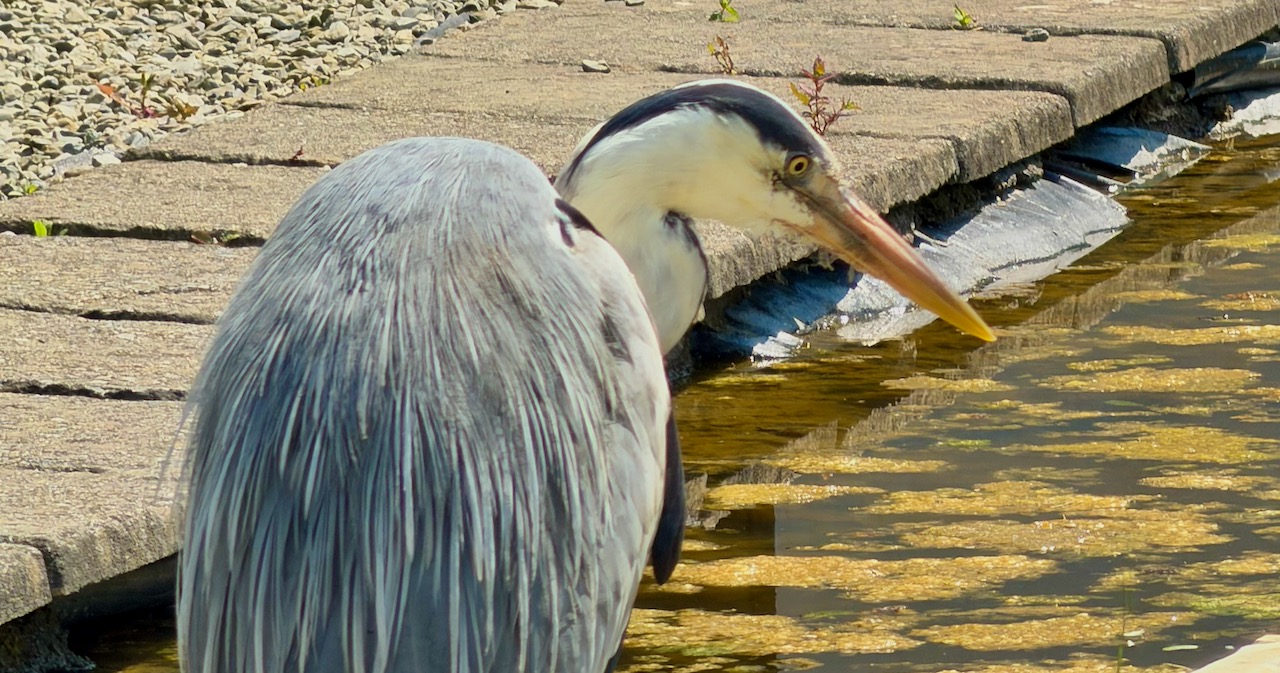
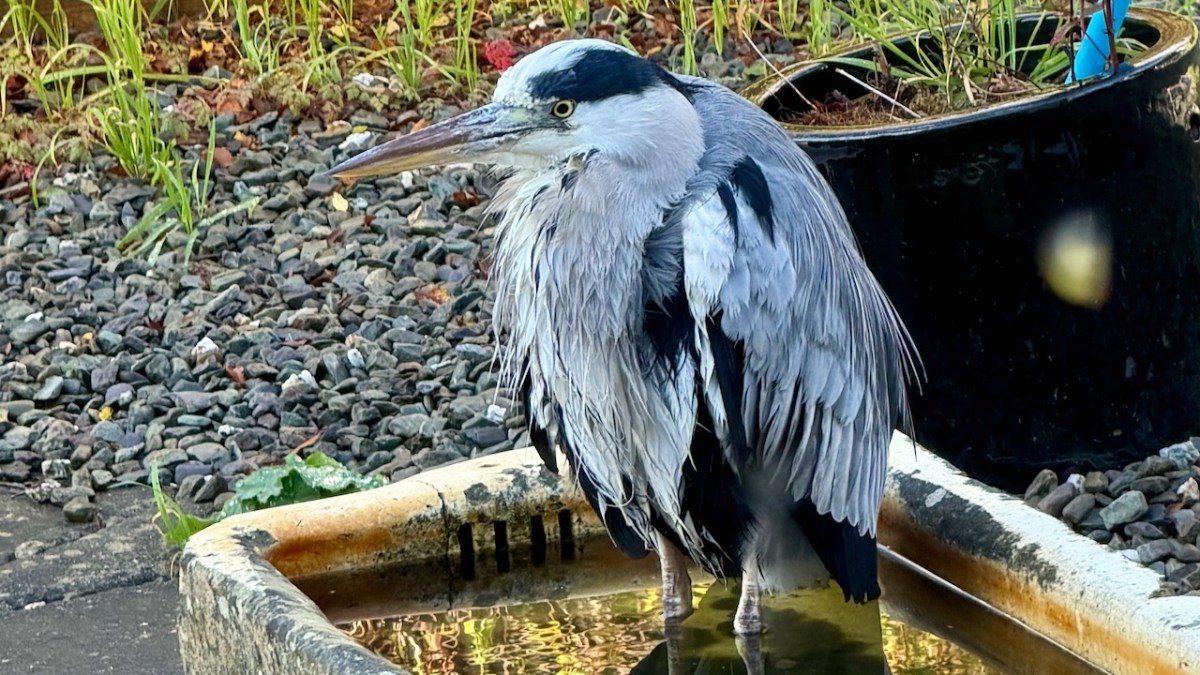
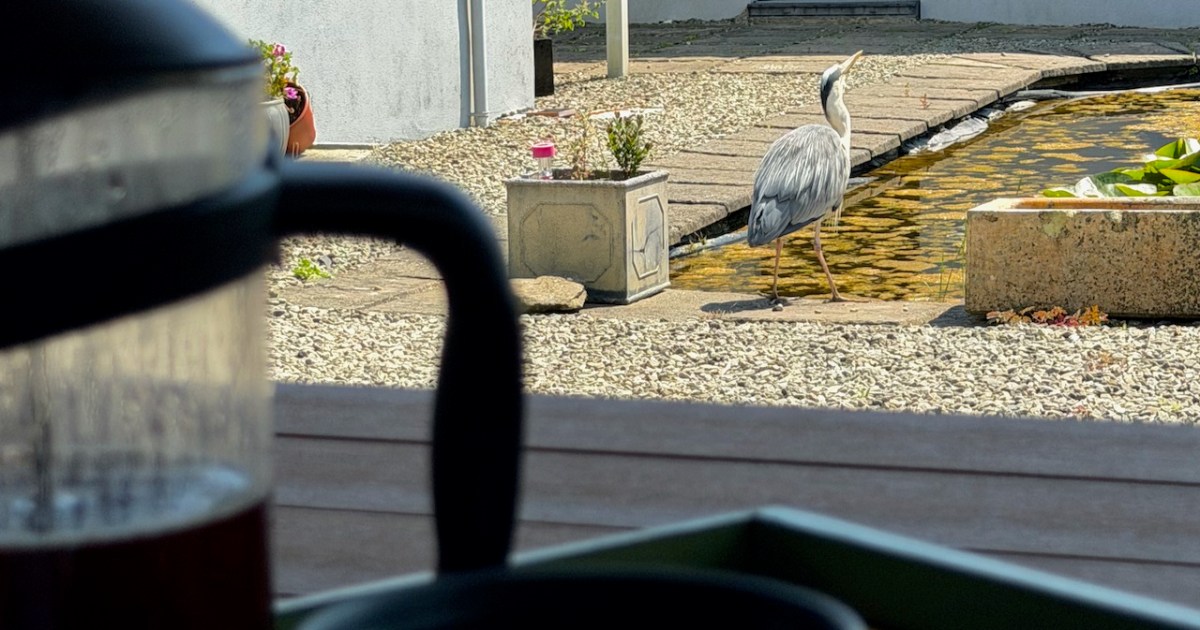
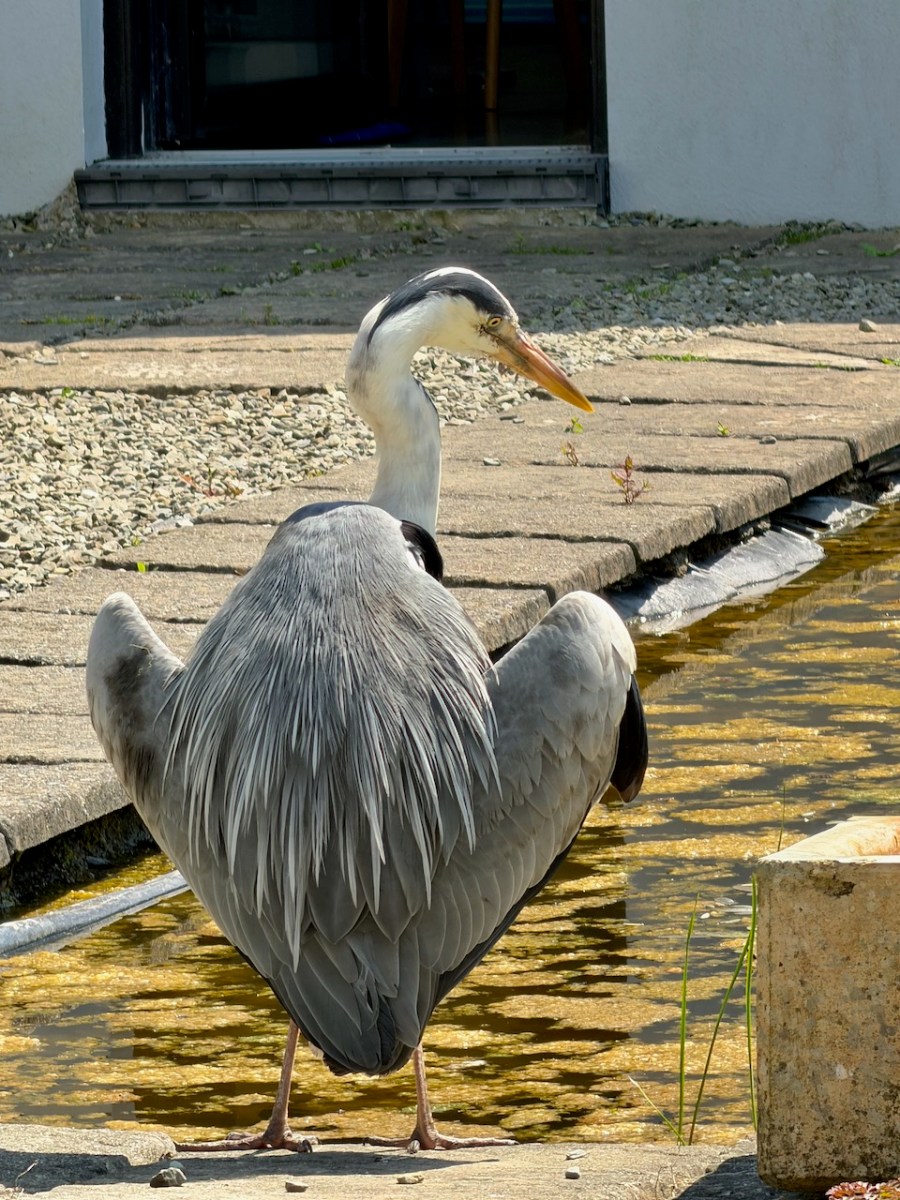
I have a heron! As regular readers know I have moved into Schull, and my garden has a pond. Since the summer, Francis Heron has been a regular visitor. Why the name Francis? I’ll explain that one in a bit, but first a little about Irish Herons.
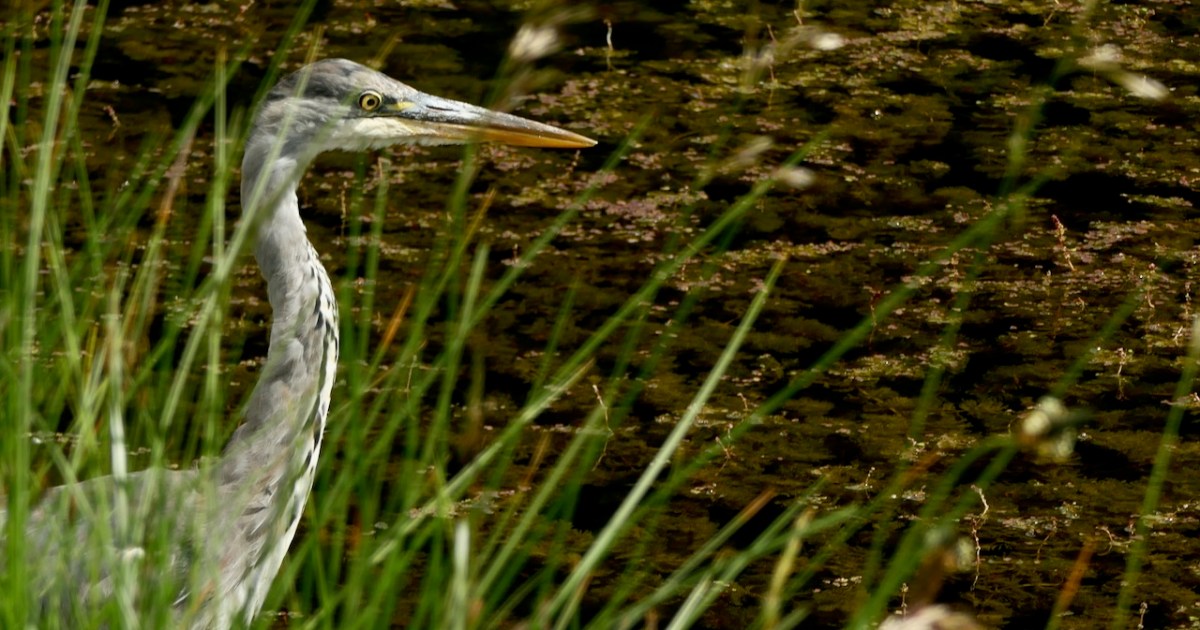
The Irish Heron is the Grey Heron (Ardea cinerea for the purists) and it is one of our most recognisable birds, as well as our most watchable. I am sure we have all had the same experience of standing transfixed, as we watch a heron slowly picking its way along the bank on those bamboo legs, regal head poised to catch the slightest sign, and then that lightning movement as the head darts into the water and comes up with something to eat.
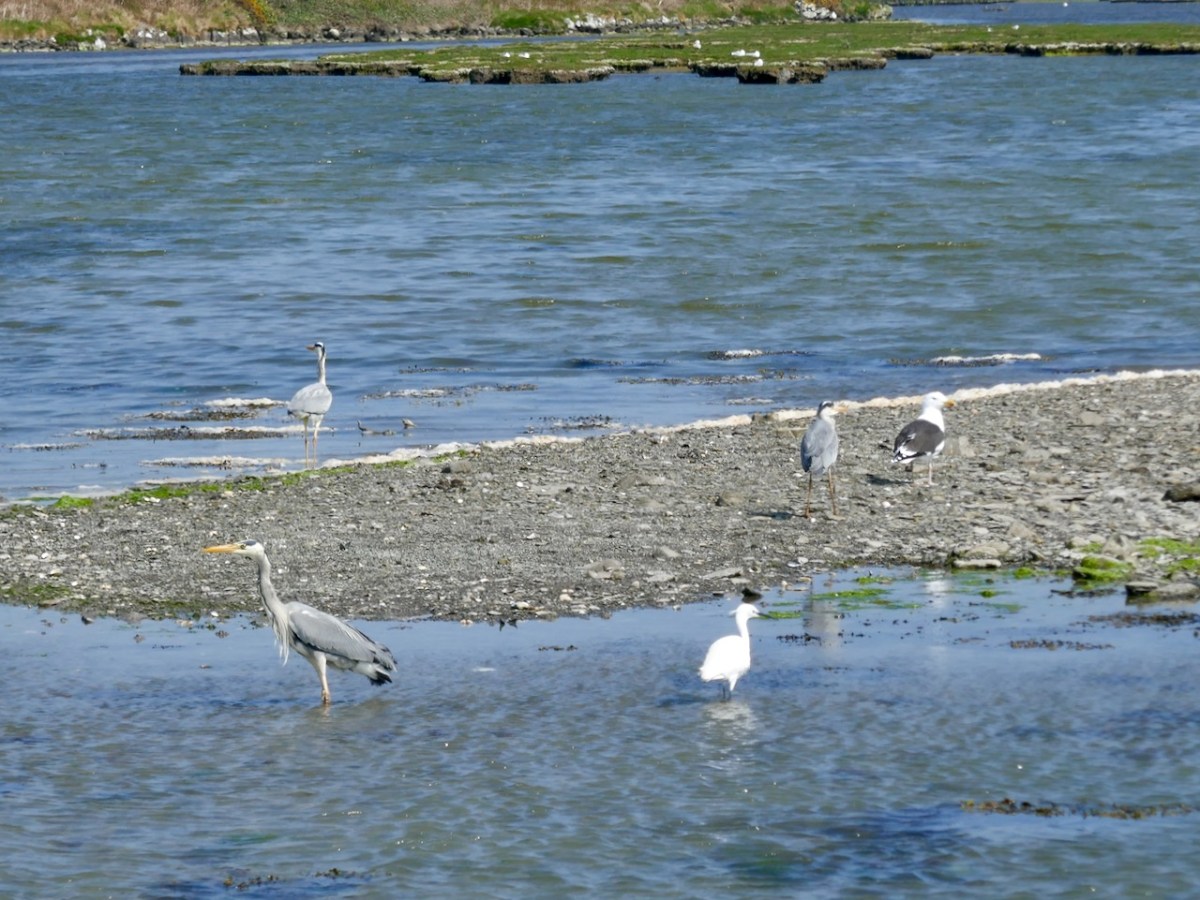
You never see it far from water. The Irish name is Corr réisc, or Marsh Crane, although sometimes you see it as Corr éisc, or Fish Crane. Cranes were common in Ireland in the past: they may have gone extinct as long ago as 1500 or as recently as 1700. The wonderful book, Corr Scéal (Crane Notions)* by Lorcán Ó Tuathail, points out that, while cranes were hunted and eaten, their extinction is puzzling. Ó Tuathail also educates us about the name – Corr means both a heron and a crane and in many places in Ireland the word crane is used commonly for a heron. By the way, the good news is that a breeding pair of cranes seems to have successfully planted themselves in the midlands.
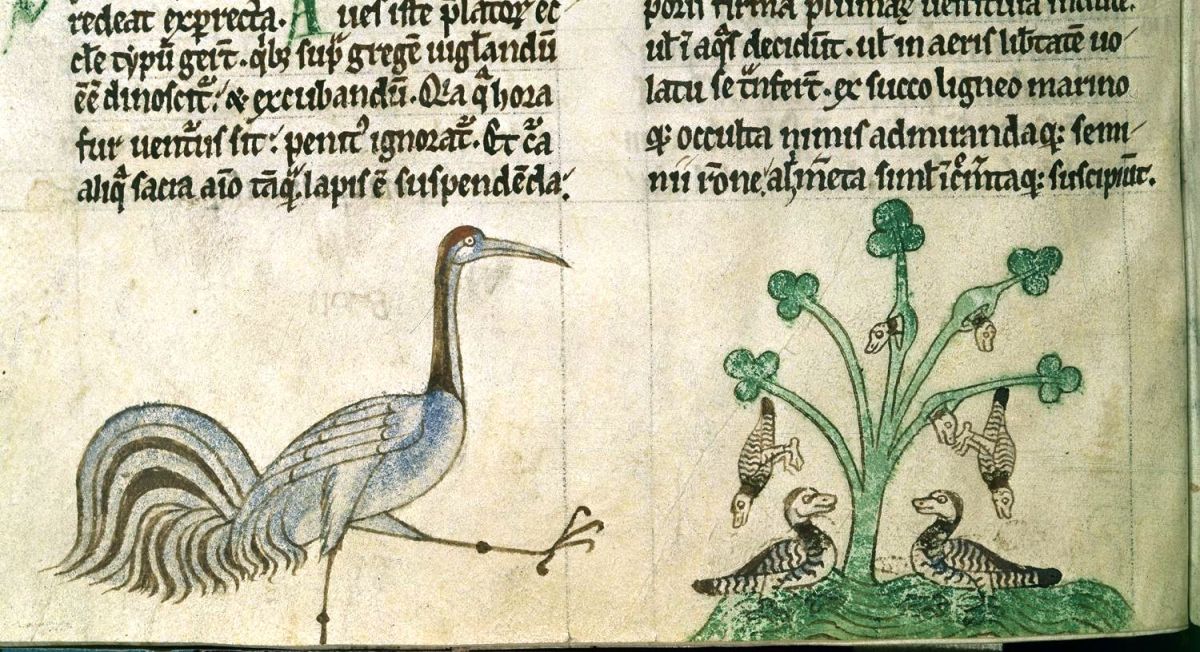
Gerald of Wales included an illustration of one in his 12th century manuscript. According to Giraldus (based on a motif going back to Pliny) they stood on one leg and held a stone in the other. If they nodded off the dropping of the stone would wake them up. Above is his image and one of barnacle geese.
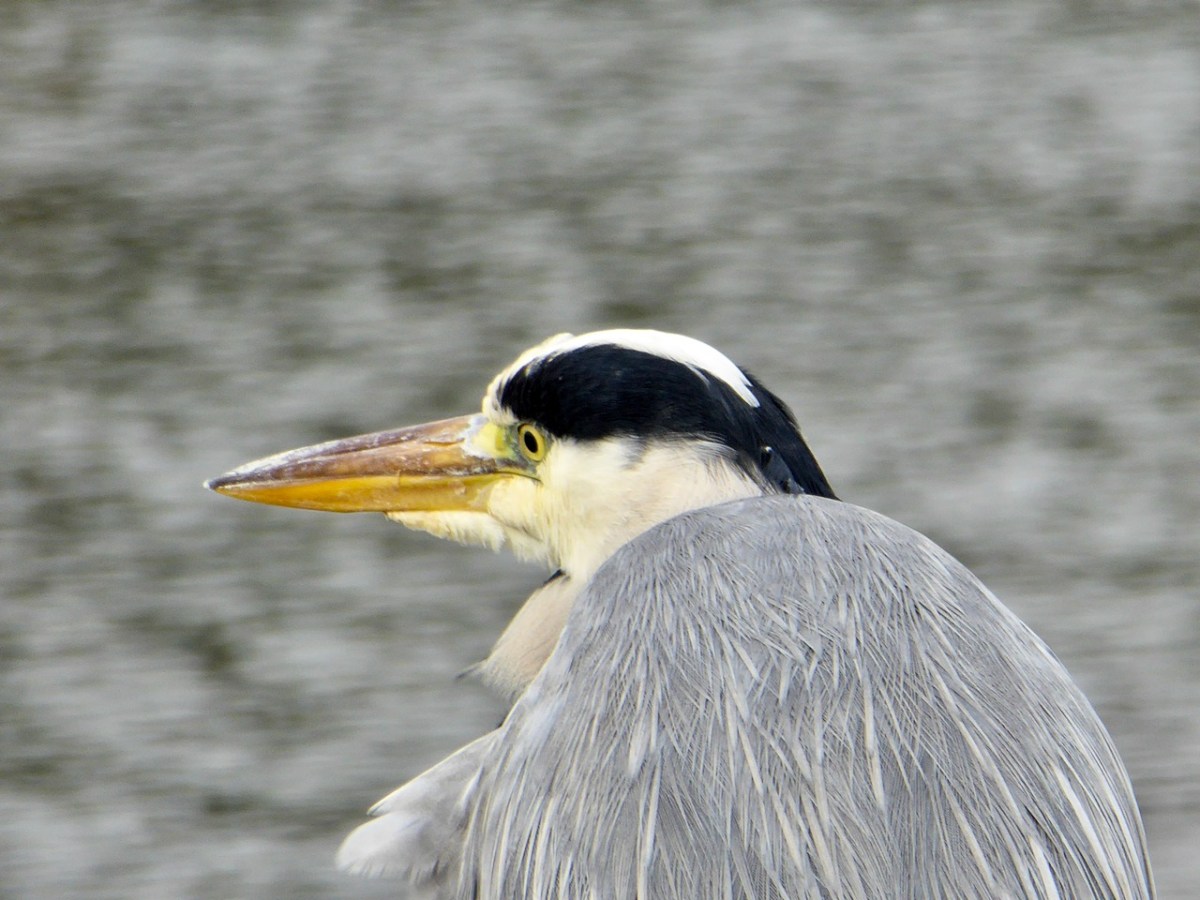
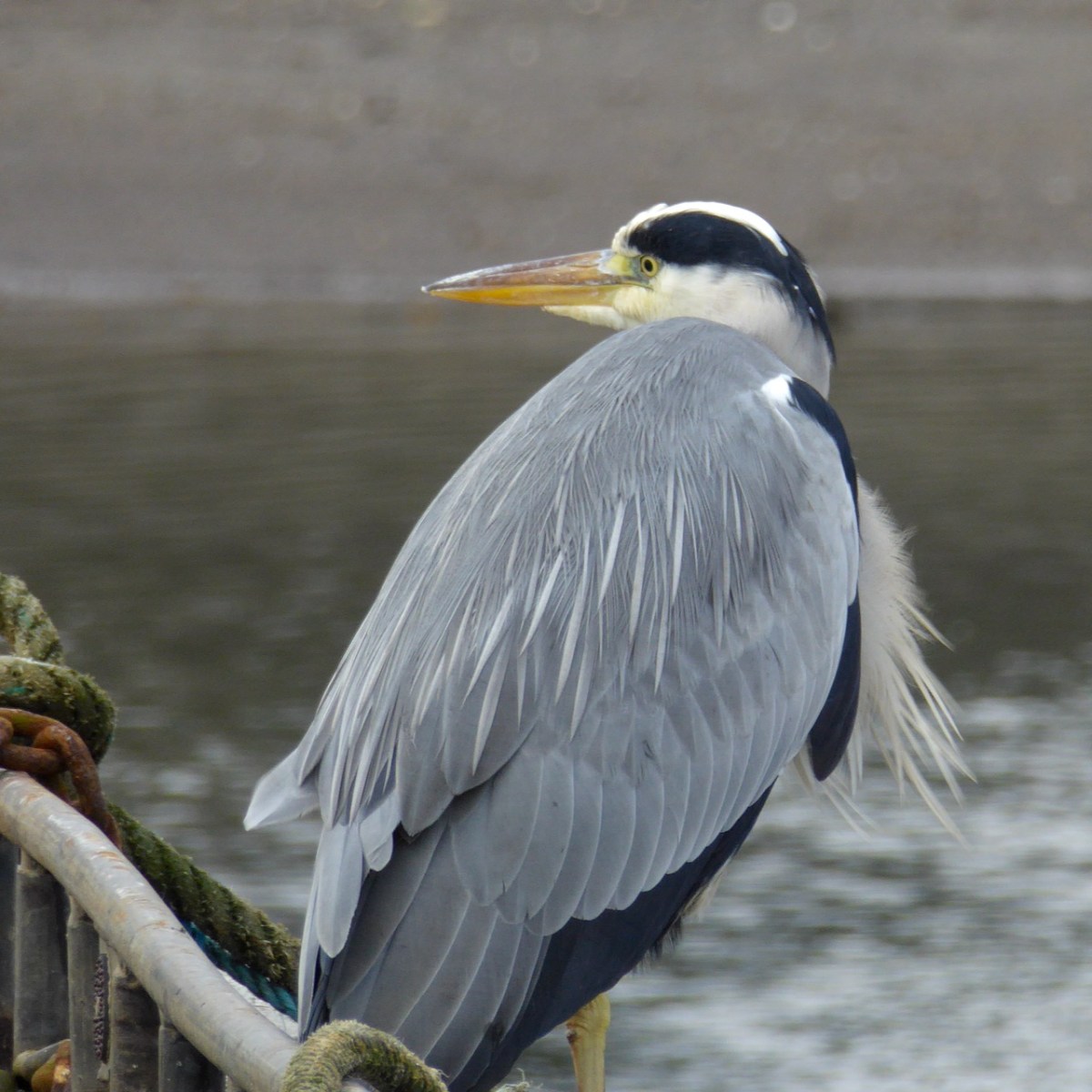
Herons are the subject of much folklore in Ireland. Niall Mac Coitir’s book, Ireland’s Birds, has chapters on both the crane and the heron as he tries to navigate his way through the tangle of folklore and mythology that may relate to one or the other. Herons are traditionally associated with the weather – there are all kind of ways they alert us to coming rain, or good weather, by flying south or north or flying low. He tells us that heron fat was considered a good cure for the old rheumatics, but only if the heron had been killed on a full moon.
Mac Coitir reasons that an association with St Colmcille was that of a heron, rather than a crane. Here’s the story -and don’t be shocked by the saint’s meanness – remember, Saints Behaving Badly is a common trope of Irish hagiography.
Colmcille had arrived in Ireland from Scotland to attend the convention of Drum Ceat, hosted by King Aodh. Aodh’s wife told her son Conall not to show any irreverence to the ‘crane-cleric’ or his company, and in retaliation the saint turned the queen and her handmaid (who had conveyed the news) into herons. The two herons were fated to stay at the Ford of Drum Ceat until Doom, and it was further said that, ever since then, the two birds were to be seen at the ford. This description of the two birds at the ford strongly suggests the traditional fishing activity of the Heron along rivers. The taunt about Colmcille being a ‘crane-cleric’ appears to mean that he was a harbinger or bringer of war, in a reference to a battle Colmcille was involved in starting, known as ‘the battle of the book’.
Niall Mac Coitir
Ireland’s Birds
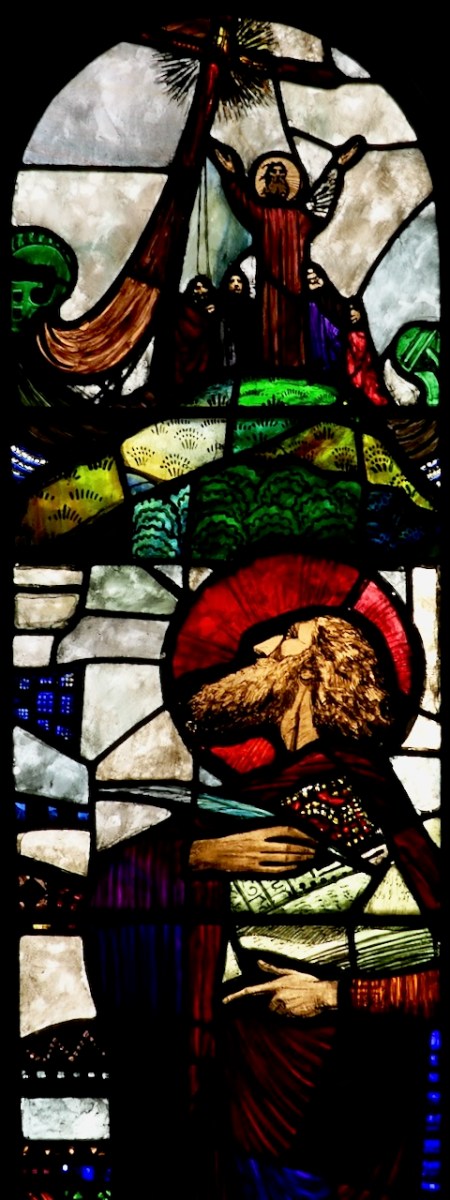
That’s Michael Healy’s striking Colmcille above – he’s holding the book that caused all the problems, and above that he’s exiling himself to Iona.
But I promised to explain the name I have given my heron – Francis Heron. It’s not exactly an intuitive matching, but there’s a personal history to it. You see, I spent a stretch of my youth working in fur trade history and archaeology in the far north of Canada (see my post Black Eagle of the North for more on this).
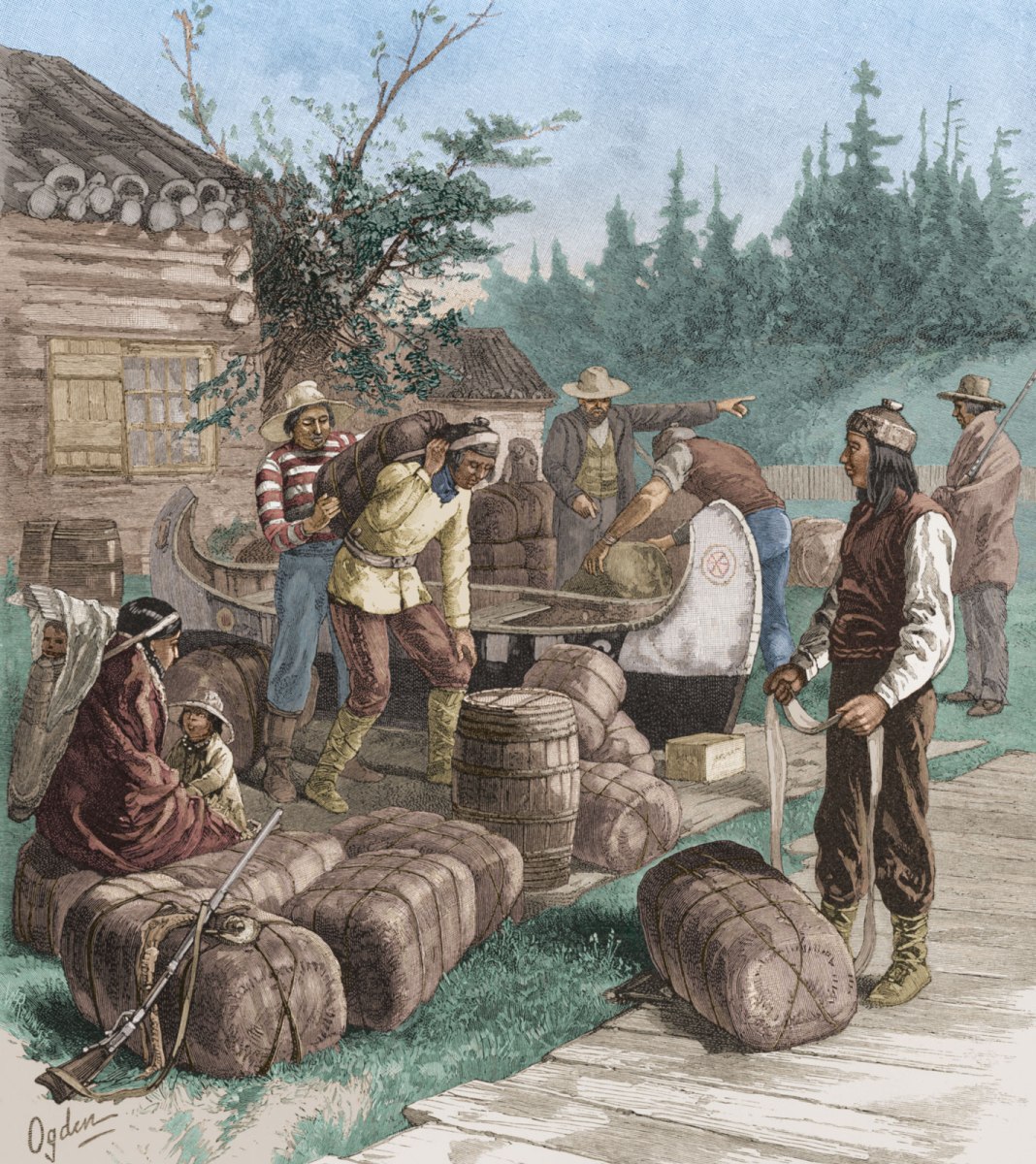
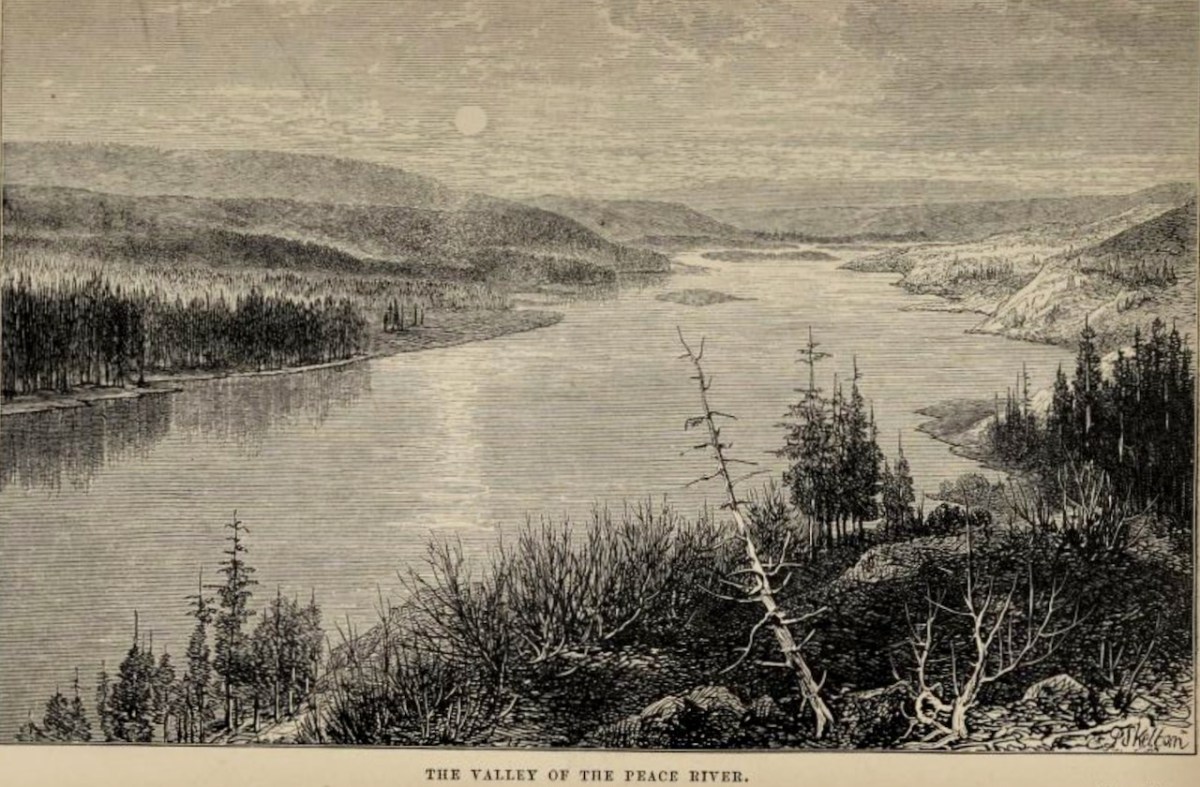
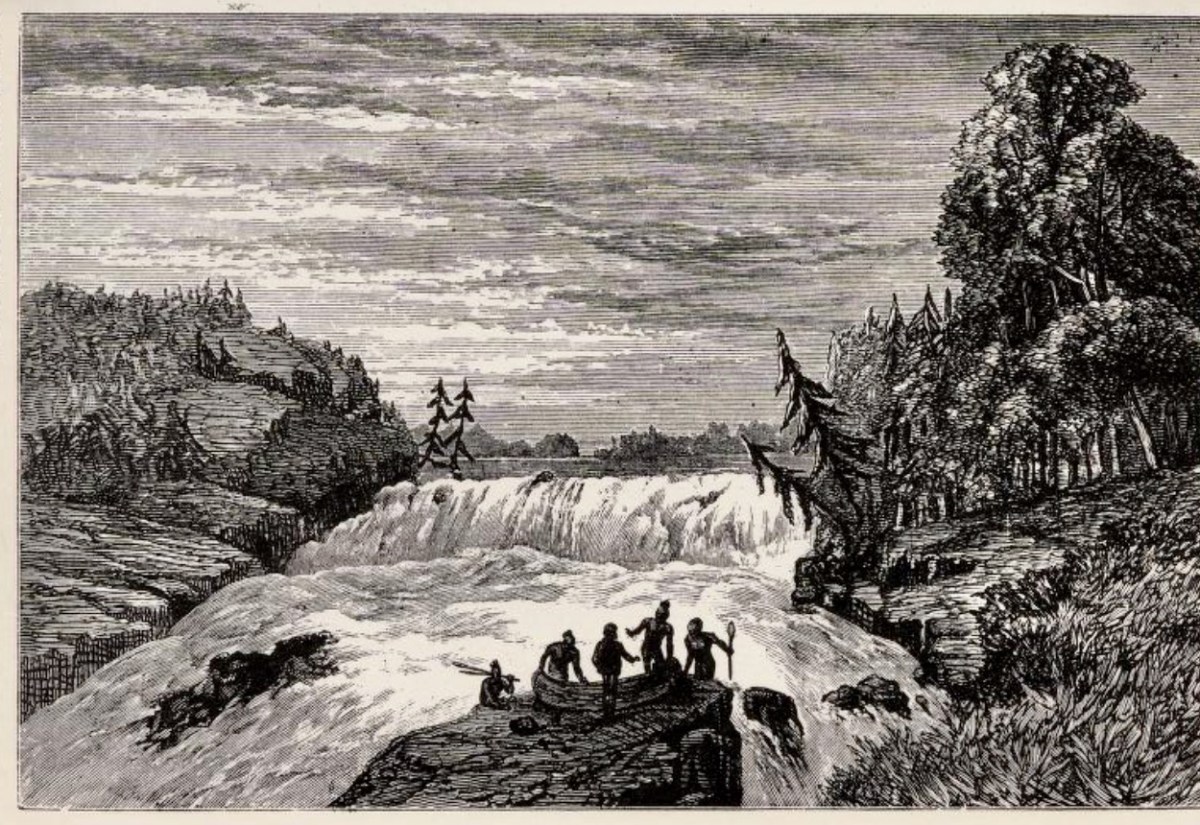
In the course of this I read a great deal about the history of the fur trade and of the Hudson’s Bay Co. Francis Heron was one of the fur traders who kept journals and who therefore was one of my primary sources. His eye-witness account of the Red River Flood that almost wiped out Fort Garry (ancestor of Winnipeg) is particularly valuable. Perhaps I also related to him because he was Irish, like the Black Eagle but unlike most of the other traders who were Scottish. He was born in Ramelton, Co Donegal, but he left when he was 16 and worked all his life in what is now Canada and the US. As he travelled along the river valleys (like the Peace River, below, from The Wild North Land, by William Francis Butler, another one of my favourite Irishmen) he would have seen many herons, although these were the Great Blue Herons, larger and a little bluer than mine. They are not easy to tell apart, actually, as I found myself in Canada, so Francis may have seen them as a reminder of home.
Although hard working and with a genuine concern for the indigenous people who came to trade, his reputation suffered in the end due, it seems, to too much quaffing from the rum supplies. Financially, though, he did fine – he returned to Ireland, bought a substantial house just outside Letterkenny and died there in his mid-40s.
My Francis Heron arrives silently – I look up from my coffee, and there he is. I try not to disturb him if I can. That’s not kindness on my part: I have seen what happens when a heron is startled and flies off suddenly – they leave a generous calling card splattered over everything. Among my Mennonite family in Canada they were known as Schietreiher, which politely translates as shit-heron. So far so good, he leaves as gracefully and silently as he arrived.
So now – my Francis friends (you know who you are) who perked up at the title – sorry, this is not in your honour, but you are welcome to come and see your almost-namesake any time. He will be here, looking impossibly picturesque, crunching his way through snails and complaining about the lack of fish in the pond.
*Thank you, Anne Harrington Reese for the loan of this great book – I still have it safe for you. It deserves its own post some day and it’s available here.

