Sugar Loaf

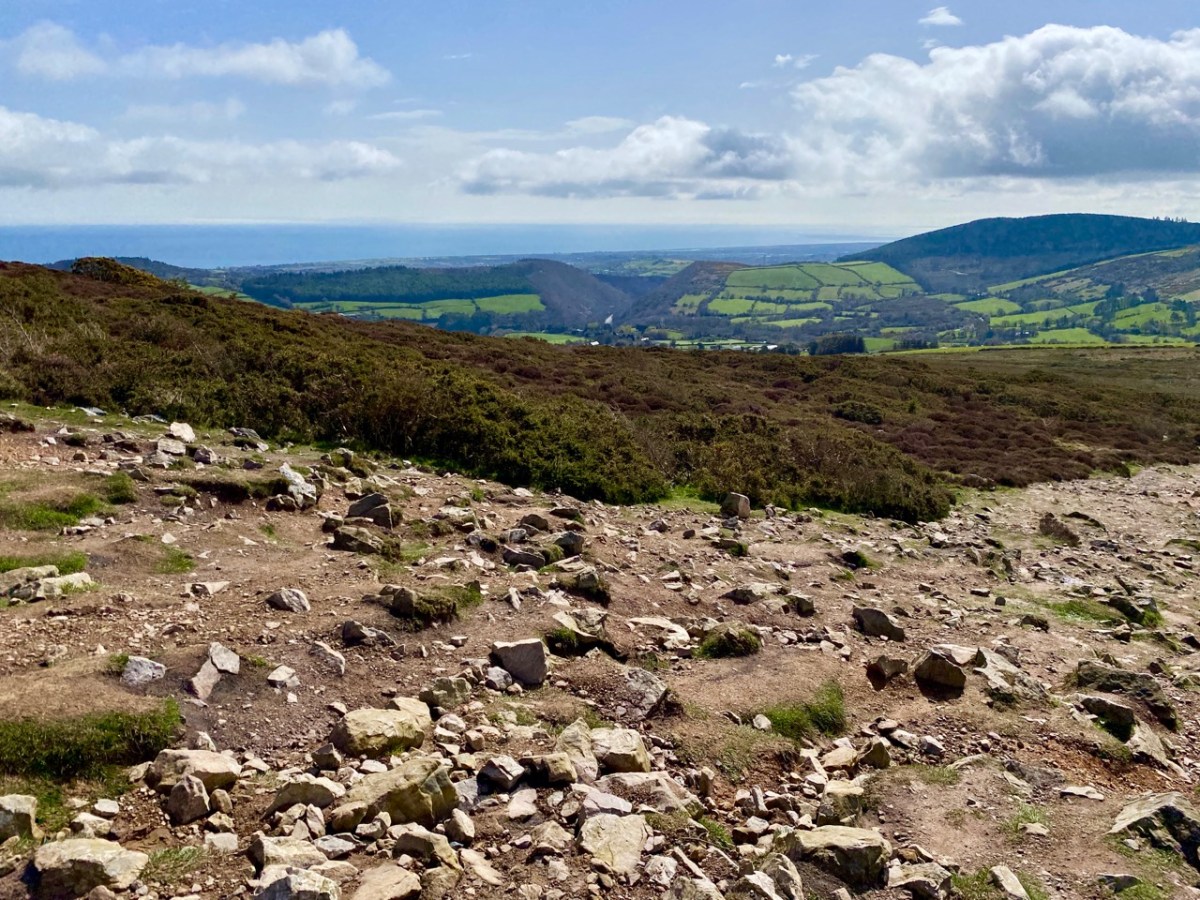
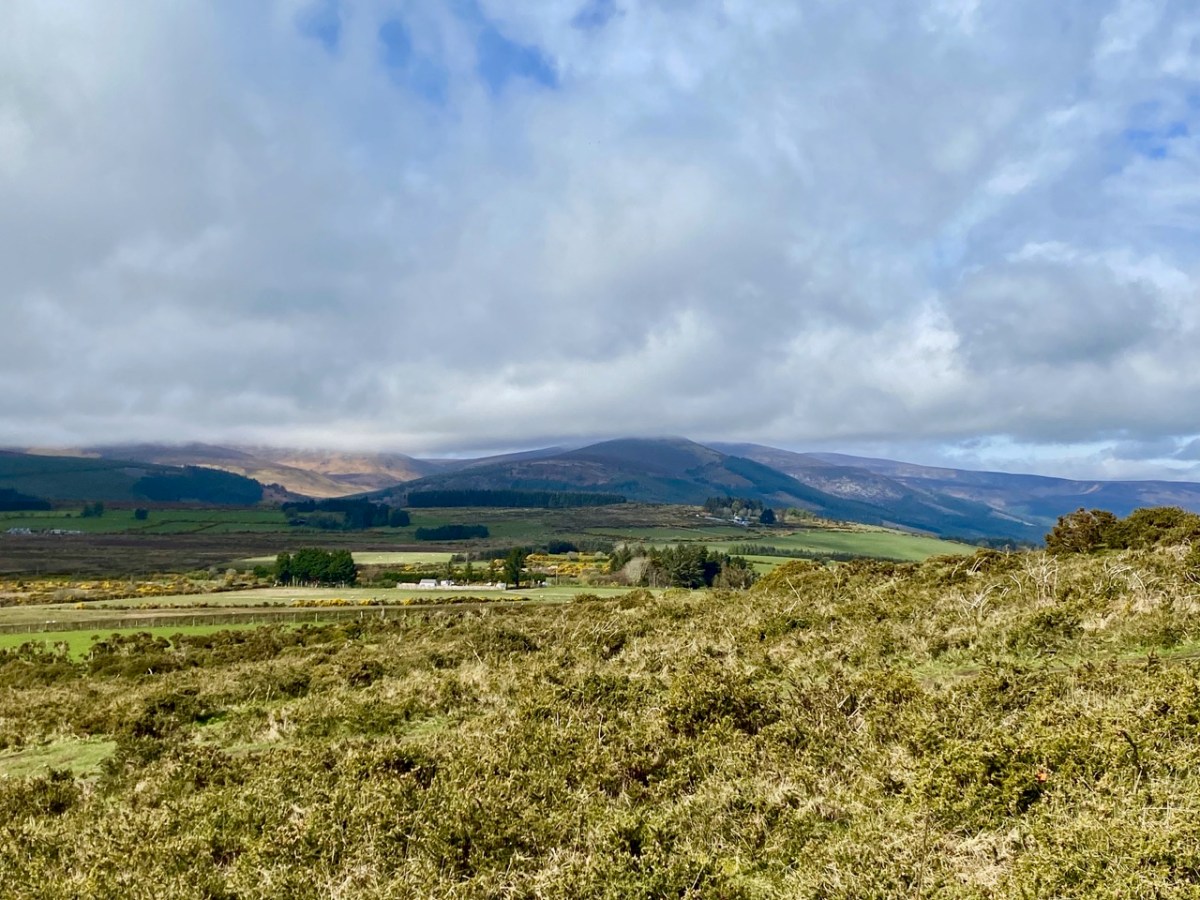
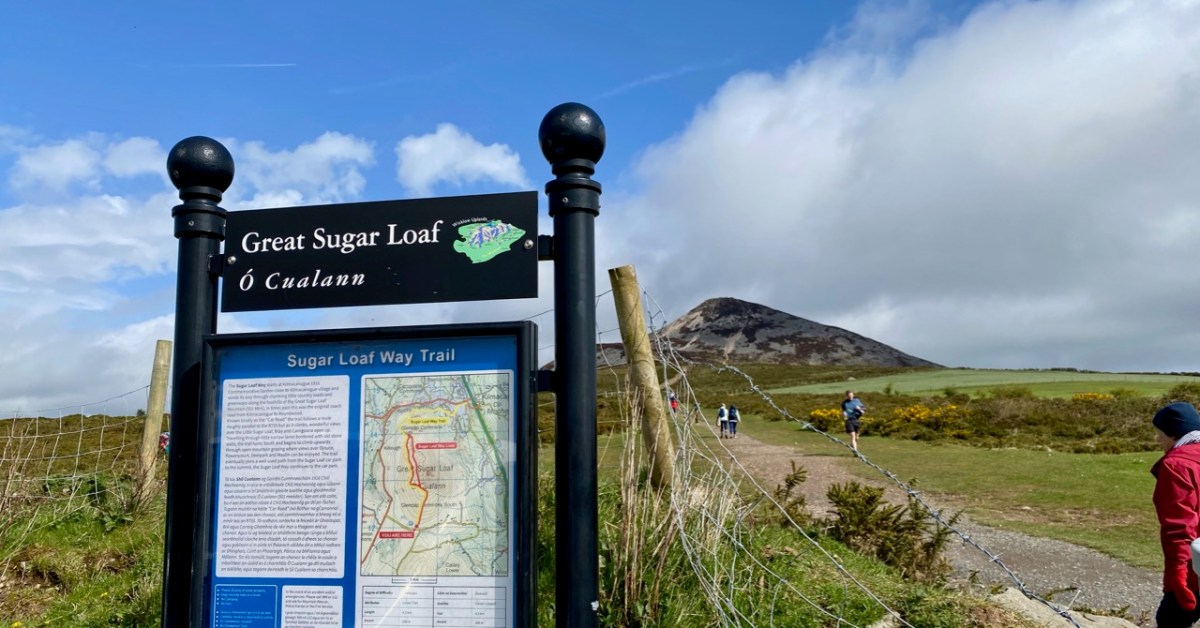
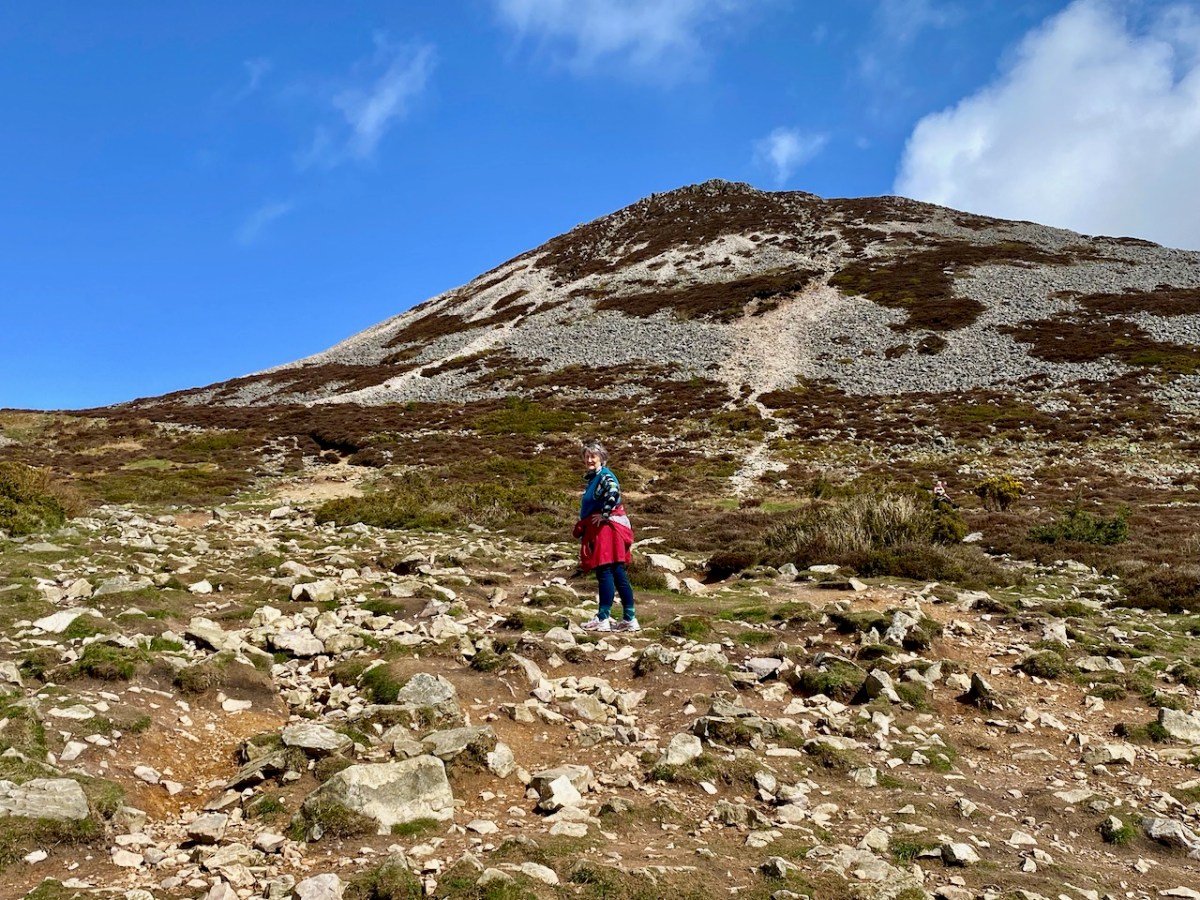
We were unexpectedly in County Wicklow, and had a day or two of sunshine. To take advantage of this, we found our way up to the Great Sugar Loaf, with every good intention of climbing to its peak – 501 metres above sea level. I’ll come clean and mention that the starting point for the walk is already halfway up this elevation – and also we didn’t make it all the way on this occasion, as we were heavily overdressed! Only yesterday we still seemed to be in the grip of a very harsh winter, so had assumed that gloves, scarves and thick jackets would be the order of the day. In fact, quite a few other climbers were clad in tee shirts and shorts…
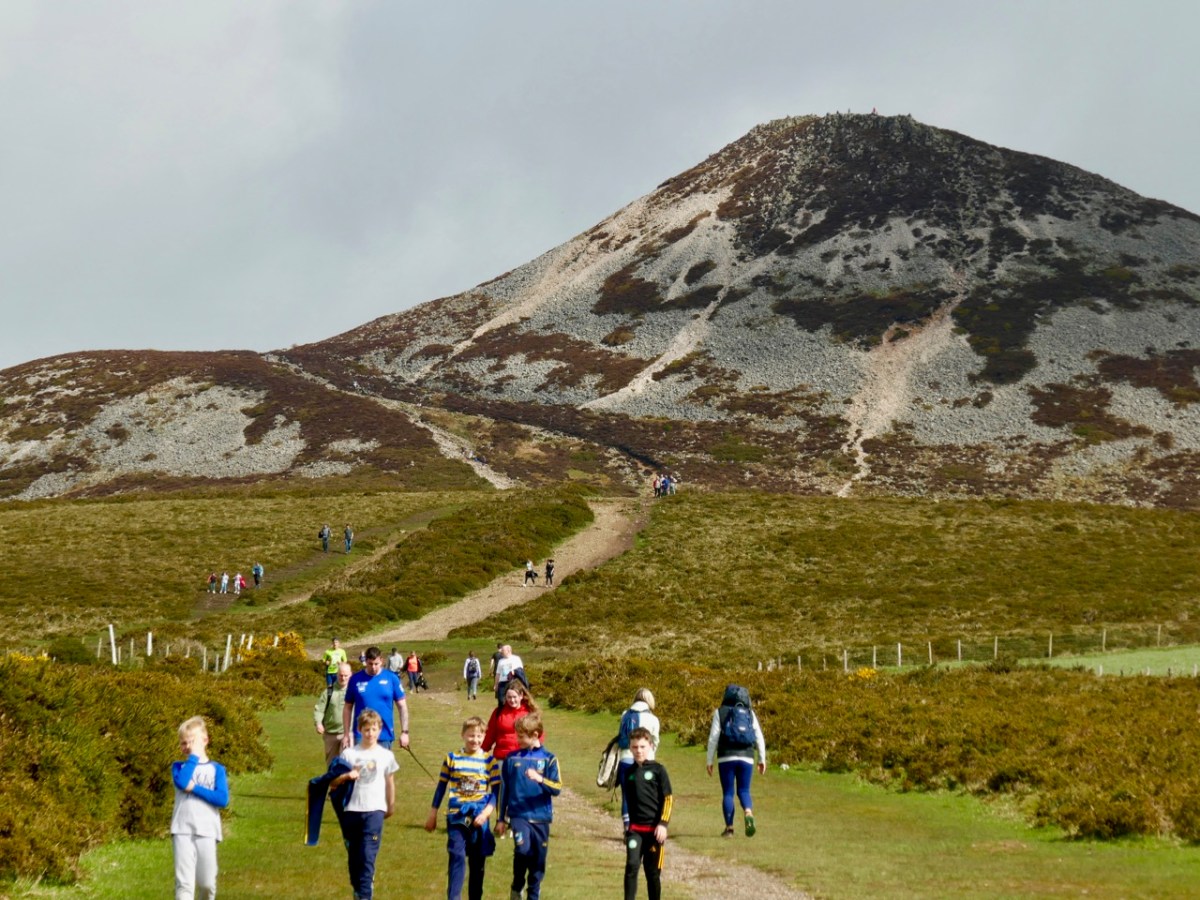
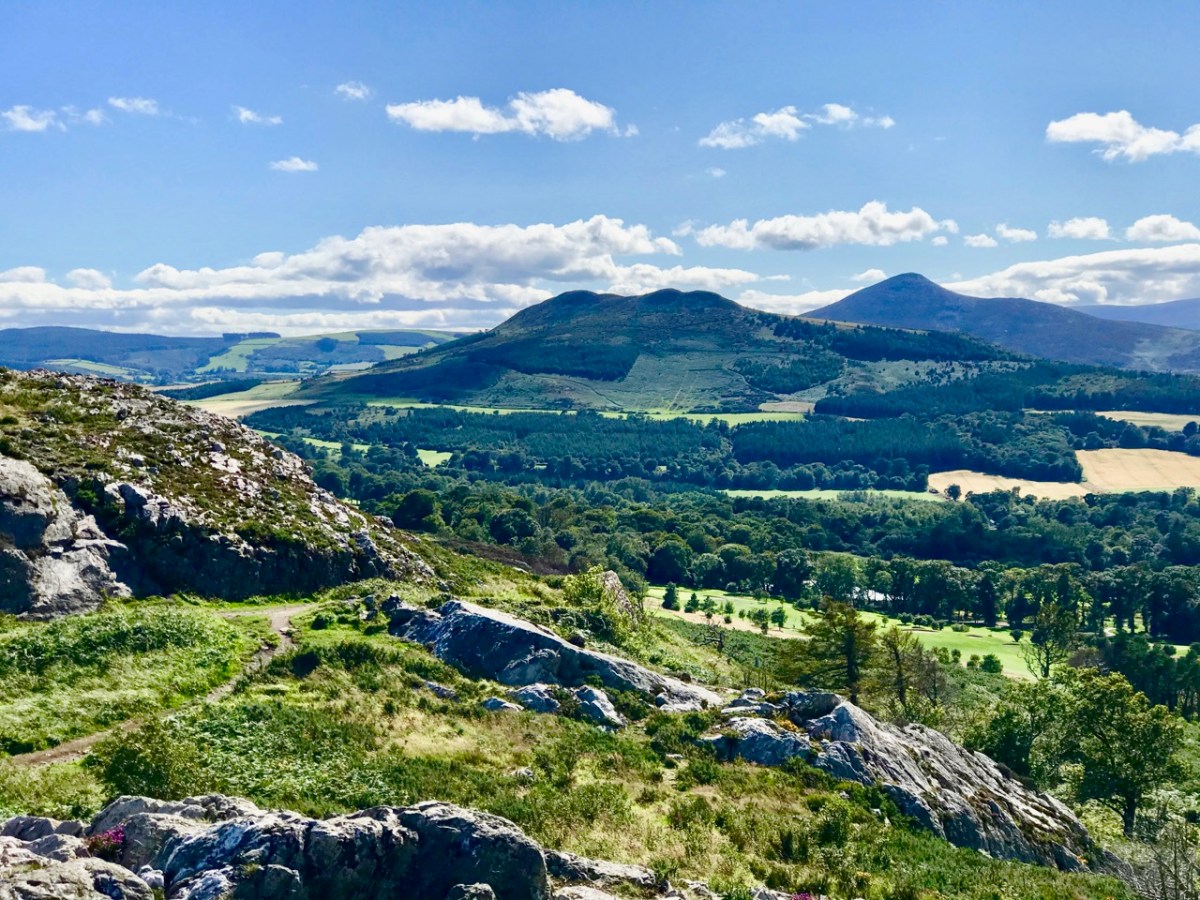
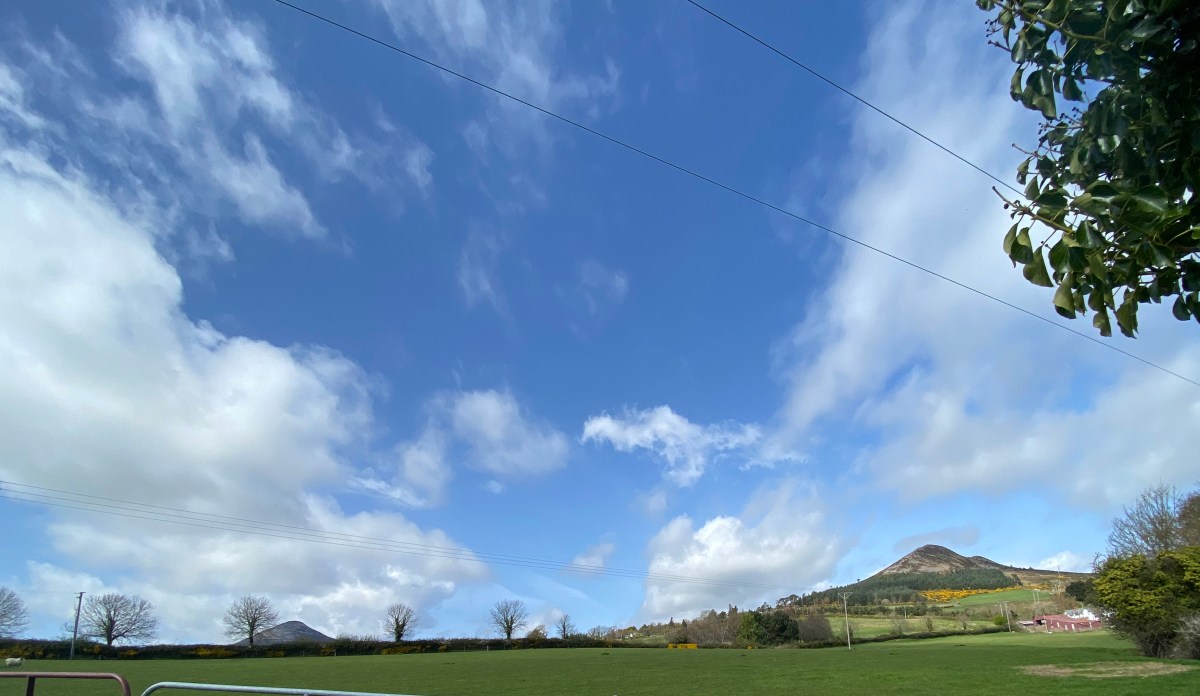
The upper view was taken on the path going up to the top – this morning. The lower view – taken a couple of years ago from Bray Head – gives a good impression of the Great Sugar Loaf (the furthest peak on the right) as the high point in a range, rather than a lone conical summit. There is also a Little Sugar Loaf which – in this view – is the high point in the central range in the photo. From other places, the ‘Little’ loaf also appears like a conical ‘peak’. Have a look at the pic below, where I have tried to show both ‘cones’ in the same view.
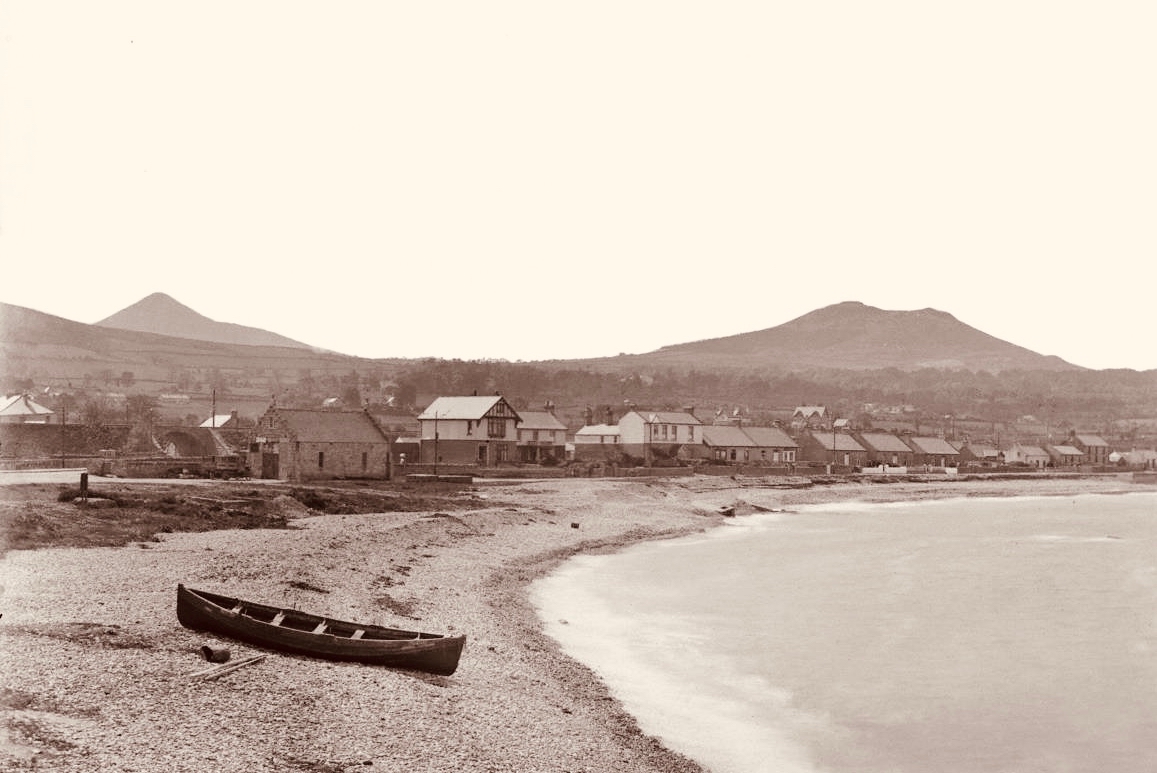
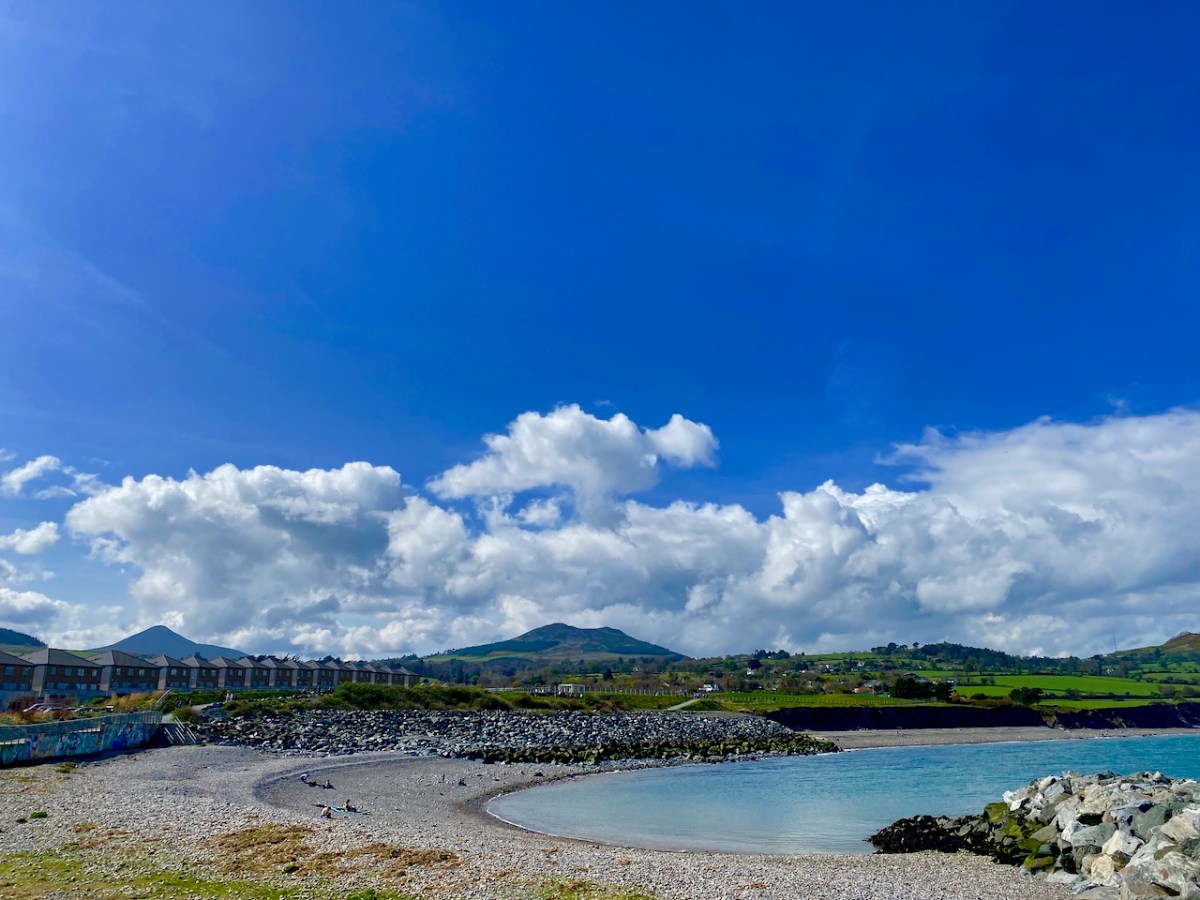
This photo, which dates from the early 1900s, is taken from the old beach in Greystones: the Little Sugar Loaf is over to the left, while the ‘Great’ one is at the left end of the further ridge (photo by William Alfred Green (1870–1958) – courtesy of Ulster Folk Museum). Below – the same view of the two ‘sugar loaves’ taken from the Marina, Greystones, today.
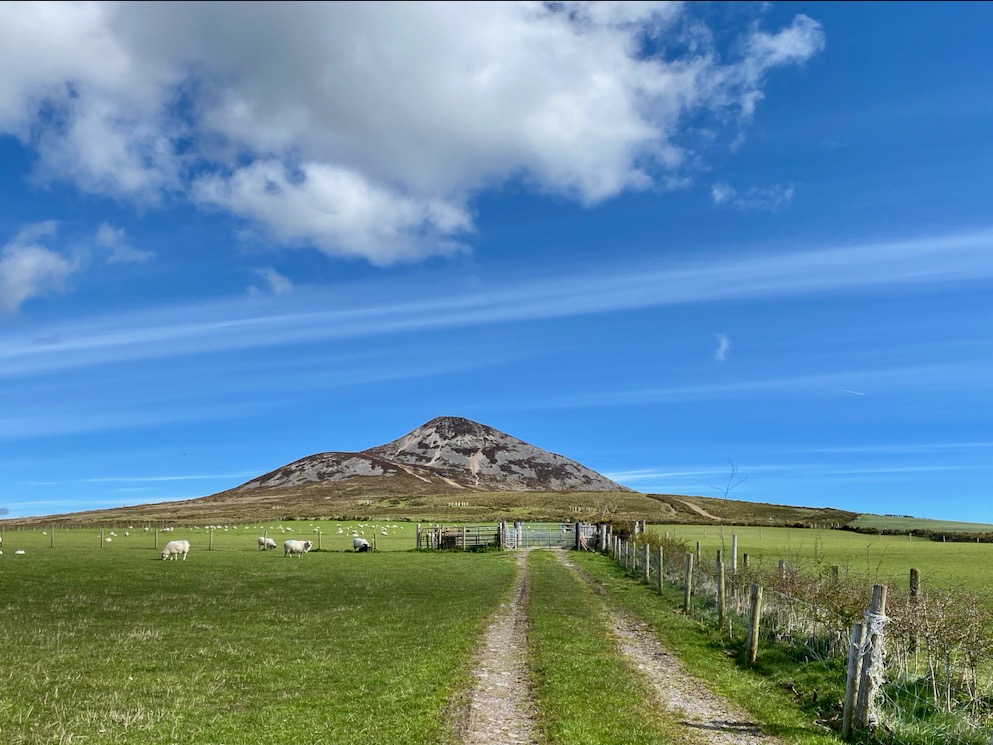
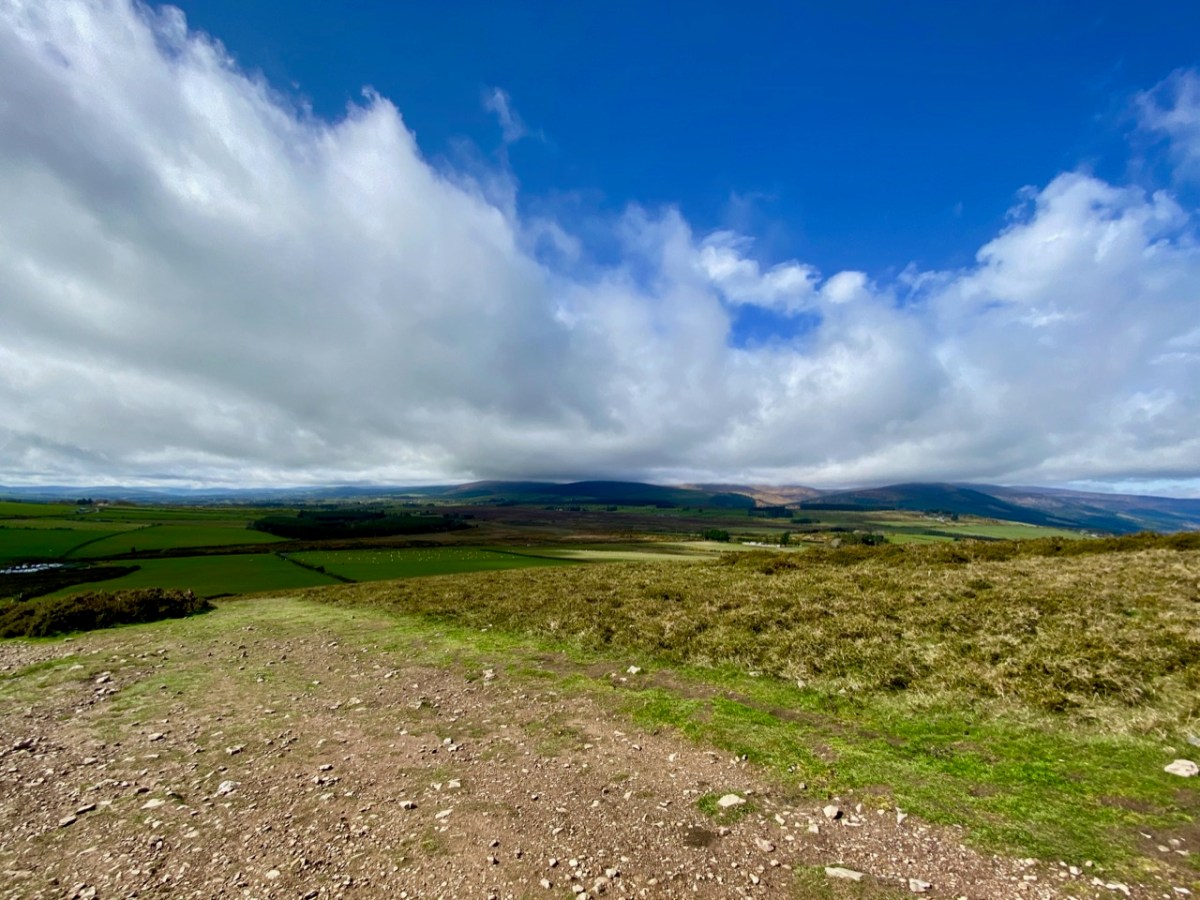
Here’s another view of the ‘Great’ loaf, with further pics of today’s adventures below, including the prospects from on the hill:
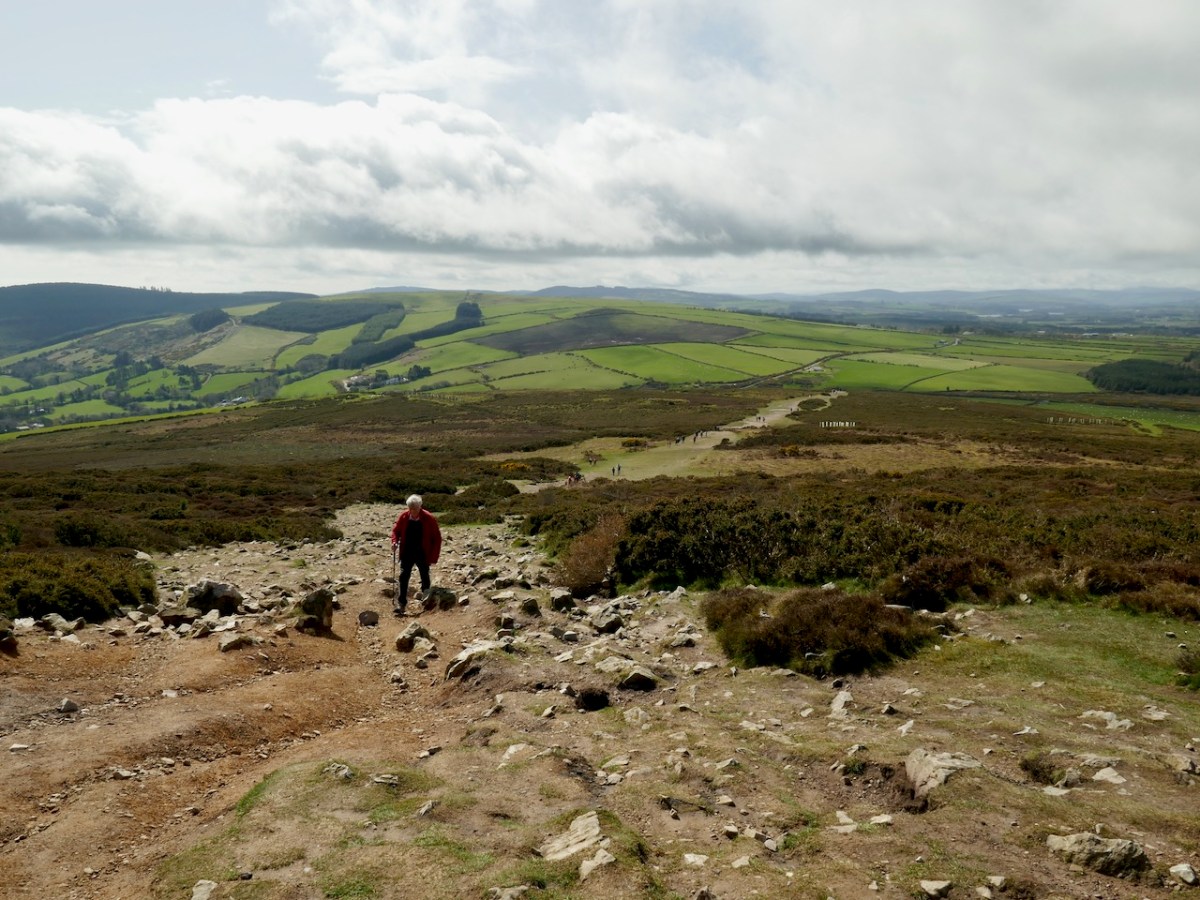
The area deserves considerable further exploration. The extracts below are from the Schools Folklore Collection, recorded in the 1930s: valuable commentary and memories collected from local inhabitants.

. . . If we were to visit Kilmacanogue over a hundred years ago it would present to us a very different appearance from what it does now. Our journey would be by the end of the Sugar Loaf Hotel of today, up the school lane, turning west for about a quarter of a mile and crossing the present day Rocky Valley road and following in a south-western direction along the foot of Sugar Loaf mountain. On our left was a church (in Brerton’s Garden) but not even the ruins of this remain. It is said the monks fled from this church in the Penal days, burying behind them their gold chalice, which still lies hidden in the field still know as the Church field. The road leading from Kilmacanogue to Kilmurry (now known as the Old Road) was the Coach Road between Dublin and Wexford. At the Kilmurry end there is a plot of ground about one acre known as Kilmurry Green which is believed to have been an old burial ground. The lane leading off from this road to the present main road near Kilmurry Dispensary locally known as Connolly’s Lane is supposed to have been lined with houses. The field on the North side of this lane (now in the possession of Miss Powell) is called the Street Field which indicates that a village must have been there at one time. The south part of Kilmurry Green contains the sites of two buildings – the stones, are still to be seen there, which marked the foundation of the gable. Traces of graves remain, though the place has not been used as a burying ground within any person’s memory . . .

Schools folklore Collection Kilmacanogue, Bray
Teacher: Caitlín Ní Chuinneáin
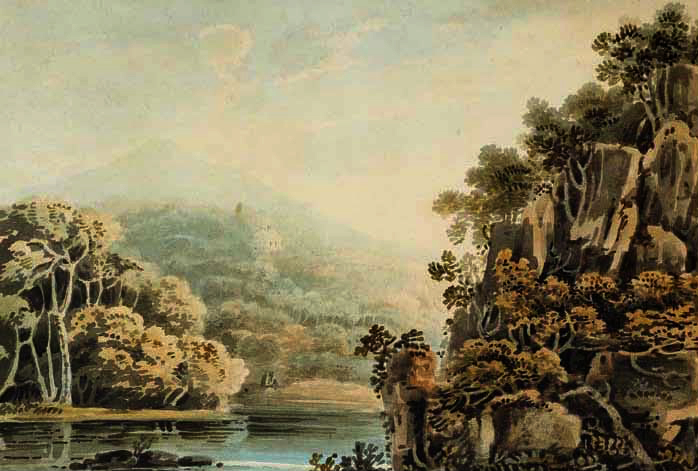
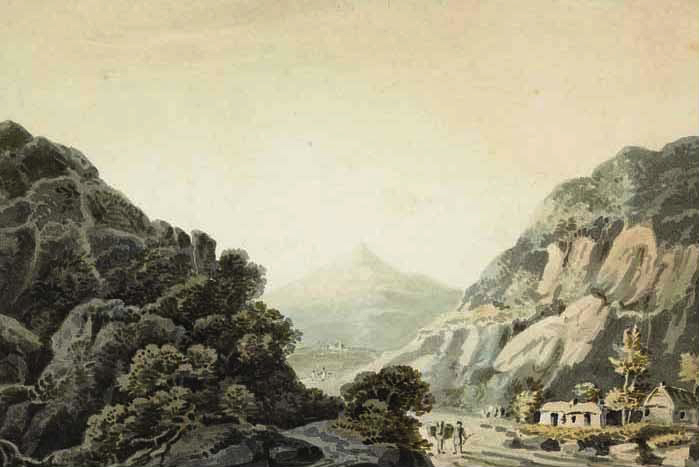
The Great Sugarloaf was a popular subject for artists. Examples are these watercolours: from Views of Bray and the Sugarloaf, County Wicklow, circa 1820 John Henry Campbell (1757-1828) – Whytes.ie. Back to the Schools Folklore Collection: we were particularly interested in the mentions of Red Lane, where there was evidently once a church, burial ground and holy well: it is said that none of these are visible today, but we will pencil in some further visits to have a closer explore.

. . . At the Southern extremity of Kilmurry bordering on Calary are two ruins which are popularly called Leghteampall or the Monasteries. These ruins stand in two adjacent fields, separated by a narrow lane (Red Lane). They lie east and west of each other in the Kelly’s and Whelan’s land, that in the west forming a square of thirty two yards each way. On the south side stands an angle of ancient wall built of stones and mortar 4′ 2″ high 2′ 2″ thick. There is a clump of stones and thorns at the north side 30′ long by 12′ broad and 2’2′ in height. There is an ancient holly tree in full vigour at the south-east angle a cross is cut in the tree and funerals stopped here and recited the prayers for the dead. About thirty yards east of there are the traces of an ancient church. A few stones of irregular shape remain in the foundation of the south wall; the stones appear to have been carried away from the north side within a comparatively late period. A heap of stones and rubbish occupies the place of the western gable, along which lies a large shapeless lump of a stone, having at the top a rudely formed cavity 7″ deep and 9″ in diameter at top, narrowing gradually to the bottom. This was a holy water stoup, one of the rudest ecclesiastical antiquities. An ancient decayed ash tree stands on the north of the church and graves may be traced in several places around it, though it has not been used as a burying ground for a long time. About a furlong south west of this place is a holy well called Bride’s Well (in Chapman’s Lane) at which Patrons were held, but none was held there within the last forty years . . .

Schools folklore Collection Kilmacanogue, Bray
Teacher: Caitlín Ní Chuinneáin
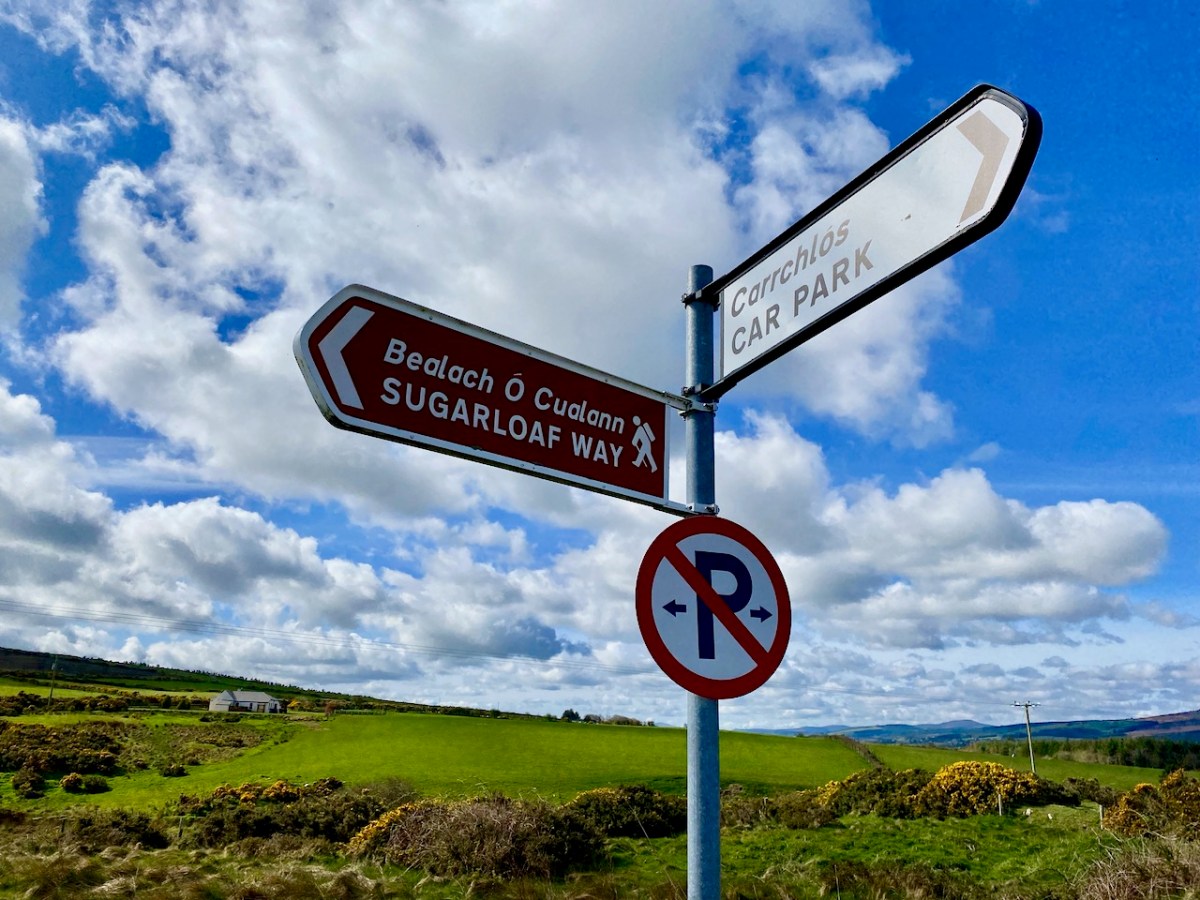
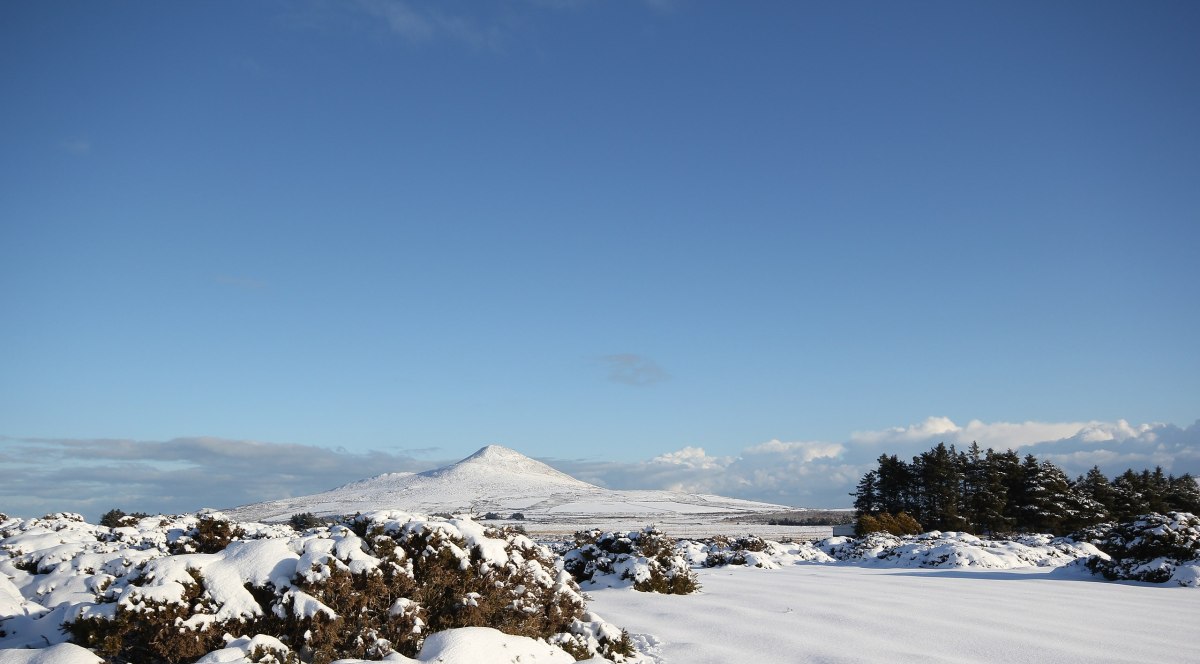
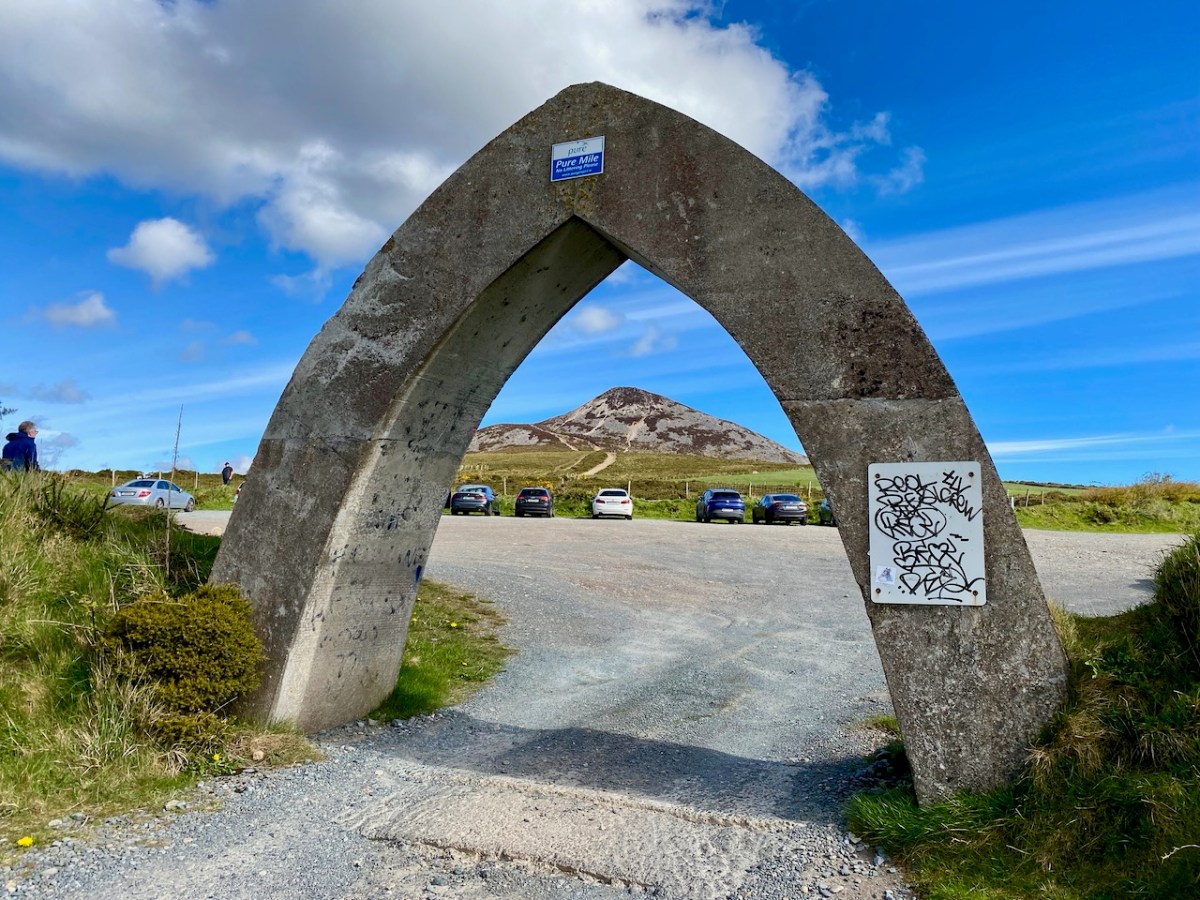
This winter scene is courtesy of Wiki Commons: we would like to visit at that time of the year, although the mountain may well not be hospitable then. Below – that’s the somewhat unusual gateway to the car-park at the Great Sugarloaf: take care when entering!
Sanctifying the Landscape: Holy Year Crosses in Ireland

In 1950 Pope Pius XII declared a Holy Year – and galvanised Ireland. It was the height of a certain time of Catholicism in Ireland – fervent, highly-organised, state-sanctioned – and the Pope’s decree was embraced with enthusiasm.*

First of all, what is a Holy Year? It’s a year of special devotion and penance, and a year in which, through following certain prescriptions, you can gain a Plenary Indulgence. Sounds a bit medieval, doesn’t it? But the concept of a Plenary Indulgence isn’t quite the same as the Cash-For-Forgiveness schemes that brought about the Reformation – you earn it, rather than buy it, and it gives you a Time Off For Good Behaviour Card to shorten your sojourn in Purgatory. As you can imagine, this is an attractive proposition for an ardent believer, steeped in all the ritual and dogma of Catholicism – and that described almost all of us in 1950s Ireland.

A wonderful short film about the 1950 Holy Year in Rome

The Holy Year itself involved many rituals. The Pope declared it open by knocking on the first of four Holy Doors in Rome and finished it by sealing up the door again at the end. Pius XII encouraged those who could to make a pilgrimage to Rome.

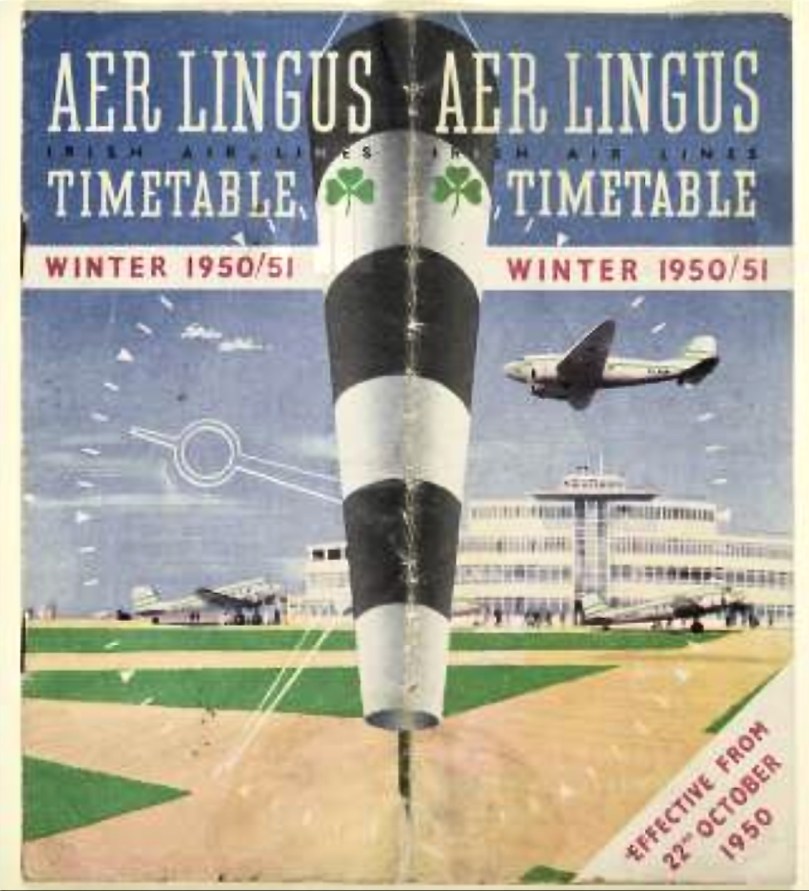
In response, Ireland mounted a National Pilgrimage, led by the President, Seán T O’Ceallaigh. Take a look at how British Pathé covered this event. Aer Lingus laid on specific flights: A special return fare of £54 from Dublin or Shannon to Rome, valid for 30 days will apply during the Holy Year. Passengers may travel via London, Paris or Amsterdam and may break their journey at any scheduled stopping place en route provided that the stopover is specified at the time of booking.

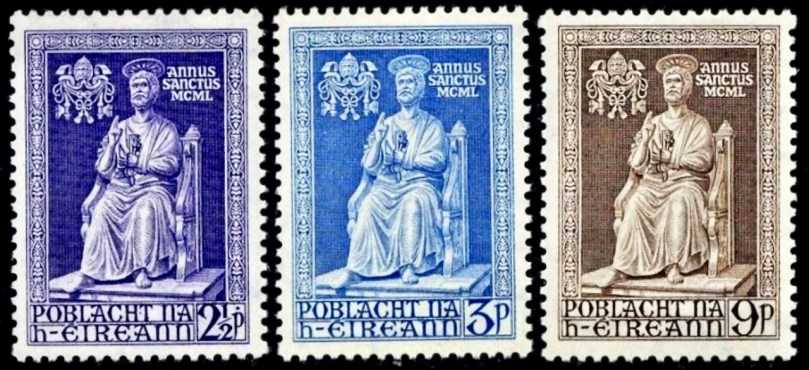
The Post Office issued a special Holy Year set of Stamps (above). The national radio station started its tradition of playing the Angelus every day – still going strong despite frequent calls for a more inclusive time marker. Everything about the official Government position telegraphed the statement – We are a Catholic Country.

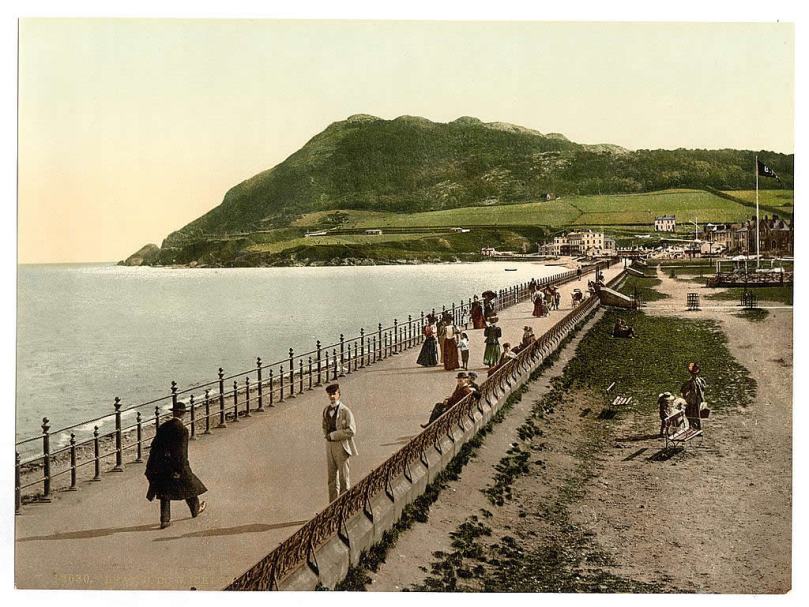
Edwardian Bray, Co Wicklow – the famous Promenade is there but no cross yet

But how did this ultra-Catholicism manifest itself in individual communities? Besides specially organised missions, sodalities, novenas and parades, many towns and villages decided to mark the year by erecting monuments. Somehow the notion of hilltop crosses became The Idea of the day – perhaps it was suggested by John Charles McQuaid as a suitable mark of respect. And all over Ireland plans got underway to erect tall crosses on top of the local prominent landmark.

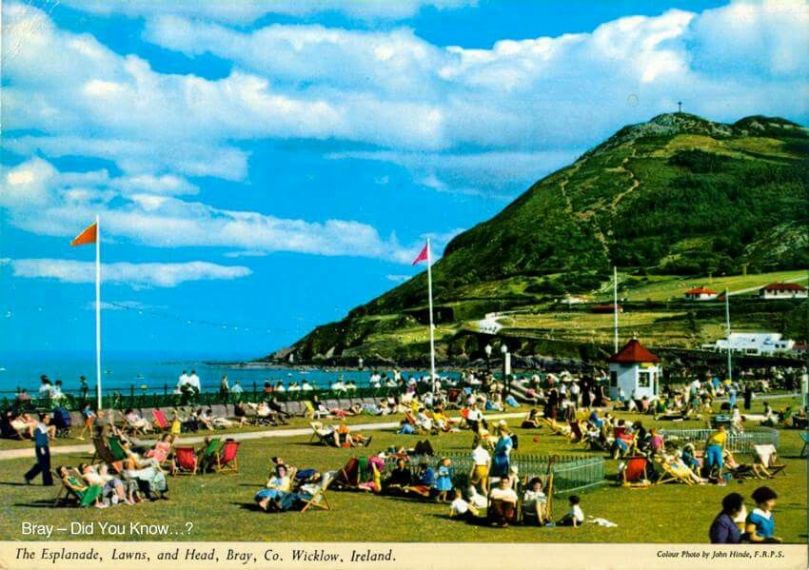
The Bray of my childhood, with the cross now in place, as it is today (Thanks to Bray – Did You Know…? Facebook Page)

Many (most?) of these 1950 crosses have survived and have become imbedded in our consciousness as a ‘natural’ (in the sense of ‘expected’) feature of our Irish landscape. Few today remember the impetus which led to their erection. At the time, there were fund-raising drives and committees and huge ceremonials attached to the actual situating of the crosses.

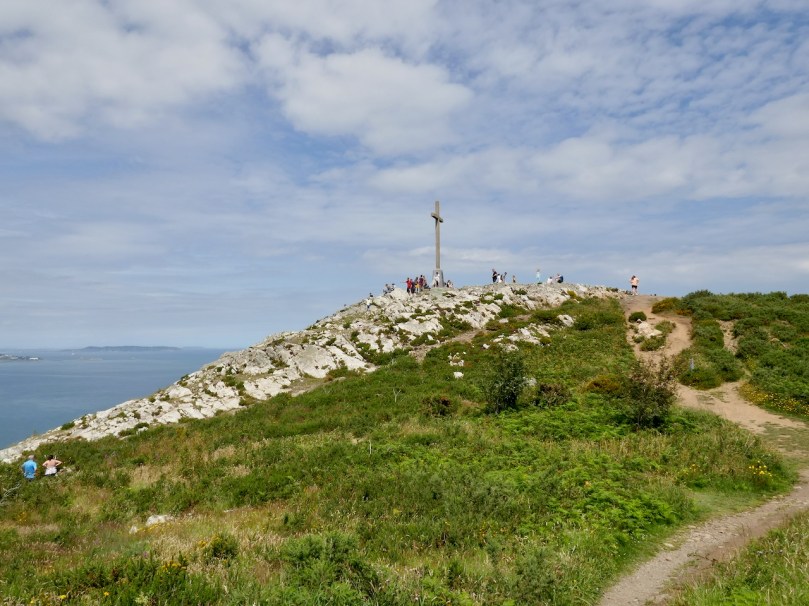
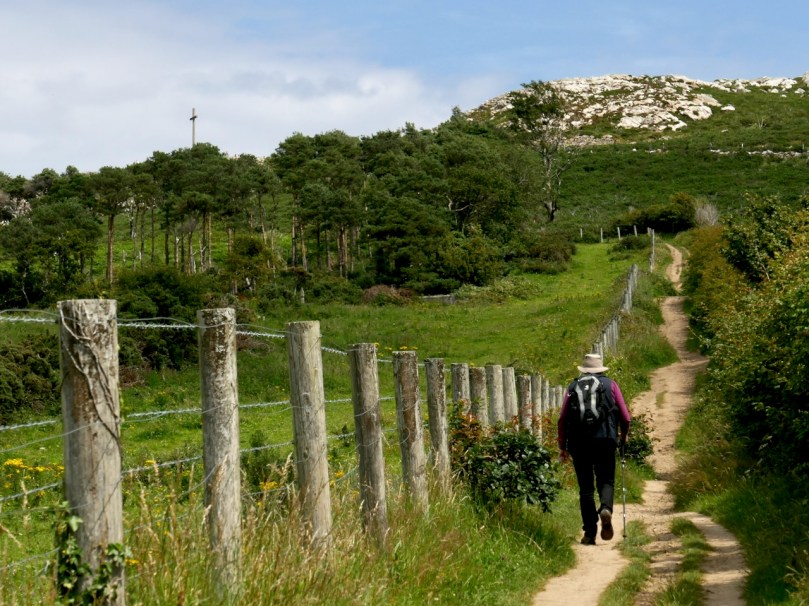
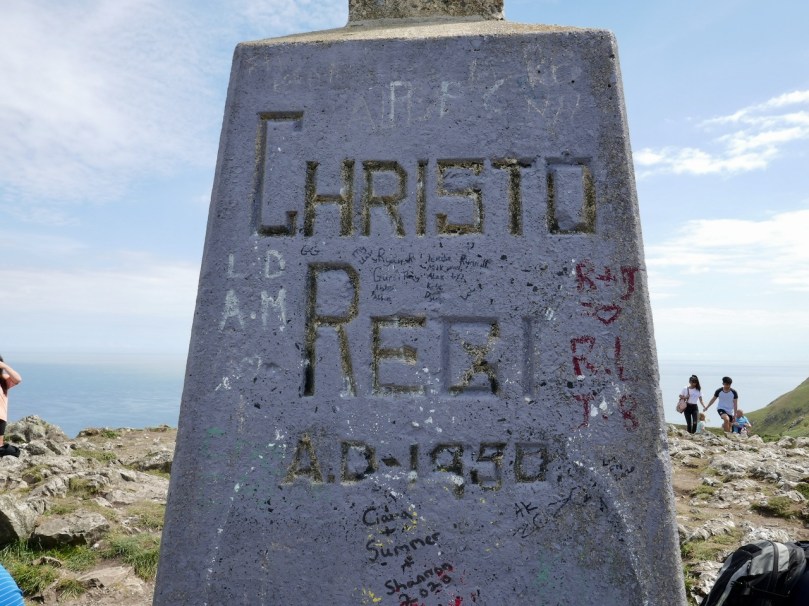
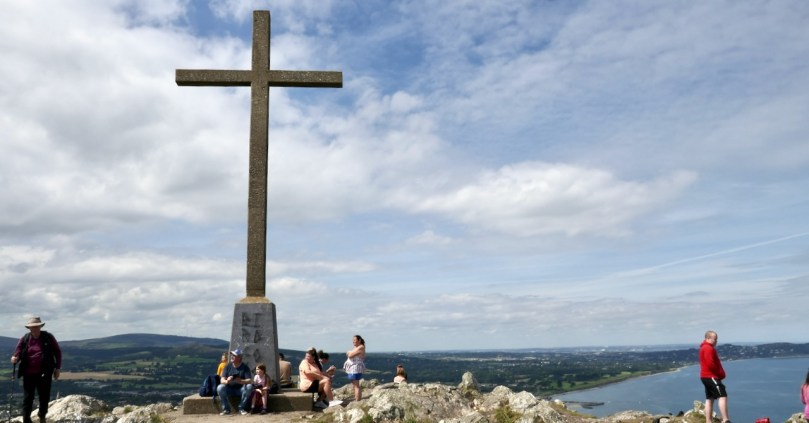
The Bray Head Cross: one of several routes up to it; the 1950 plinth; a popular spot

We have visited several of these crosses lately. I grew up in Bray and as anyone who has ever been there knows, the town is dominated by Bray Head, and Bray Head is dominated by its Holy Year Cross. It’s become the thing to do, to walk up to the cross – there are at least four ways up to it and they’re all spectacular. Sitting at the base of the cross enjoying a well-earned rest, we reminded ourselves that when it was erected over 5,000 people attended the blessing ceremony.

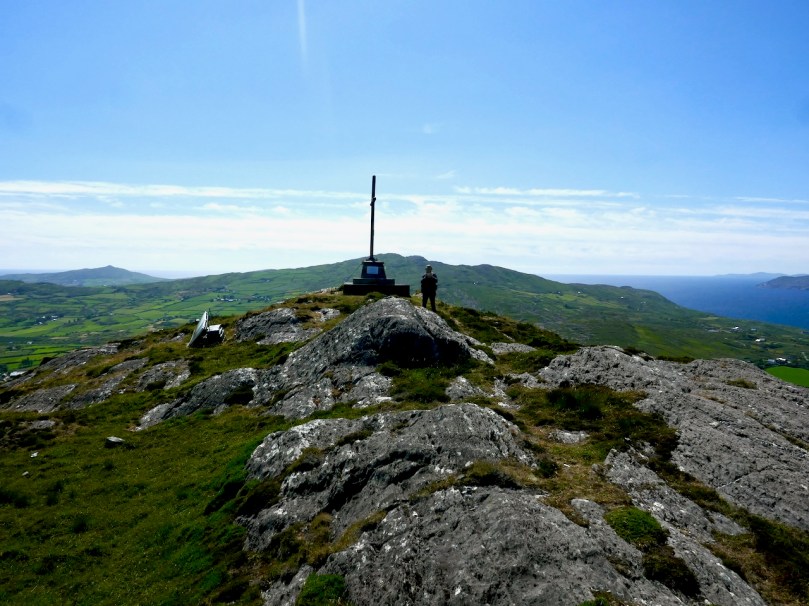
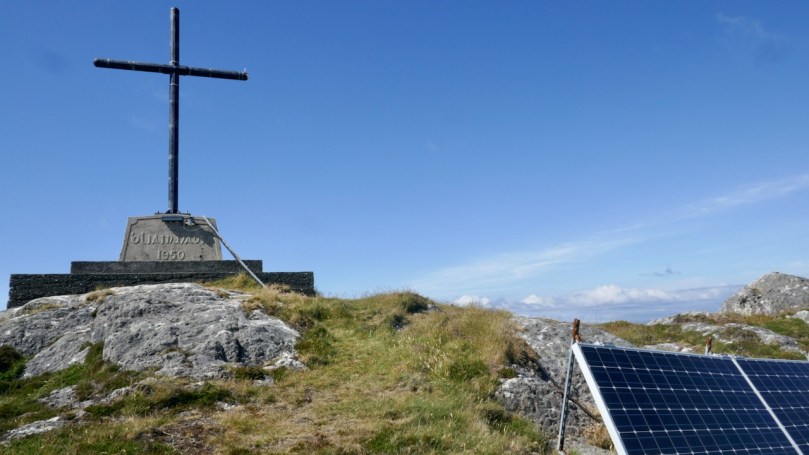
More recently, here in West Cork, we walked up to two crosses, the first at Knockaphuca on the Mizen (above and below). The Knockaphuca walk (it’s fantastic!) was the subject of Robert’s post a few weeks ago. The cross here is a replacement for the original wooden one that had rotted away, finally falling way back in 1968. The memory of the cross was still strong in the community, though, and the local GAA club conceived of a project to re-erect it in 2011 as a symbol of hope and re-assurance in these challenging times and a call to prayer in our hour of need. The challenging times was a reference to the global recession, which hit Ireland badly and ended the reign of the Celtic Tiger.

The volunteers took things a little further than they would have in 1950 and carried up with them an array of solar panels. Thus, this is a very modern re-incarnation of the traditional Holy Year Cross – a glow-in-the-dark model. They called it The Cross of Hope and as such it recalls the beacons that lighted many a weary sailor’s way into safe harbour.

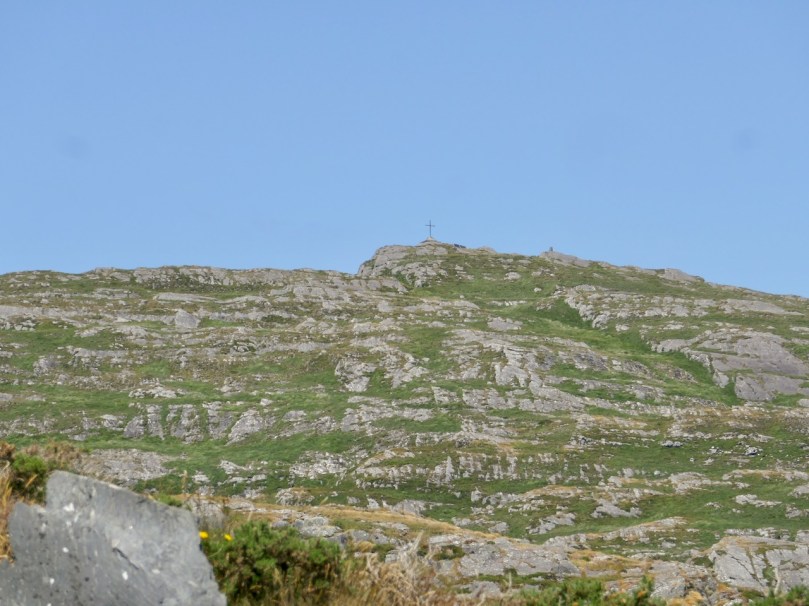
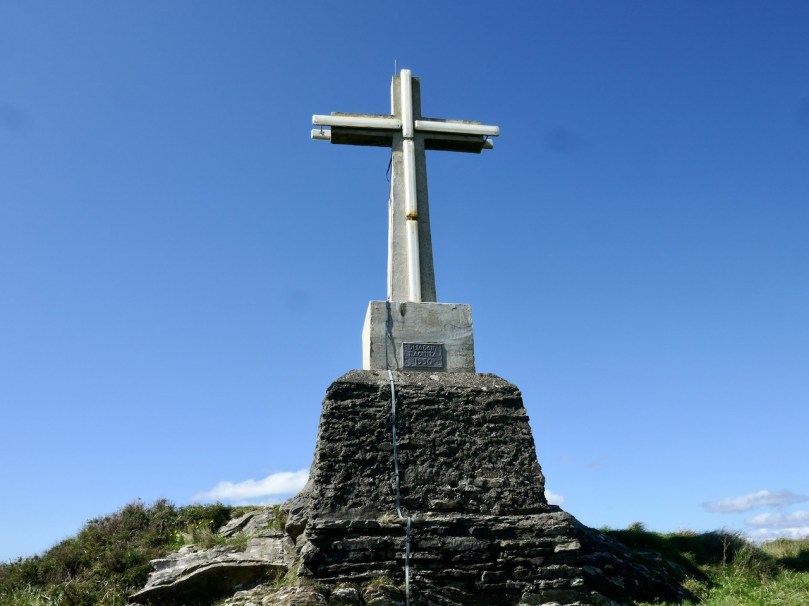
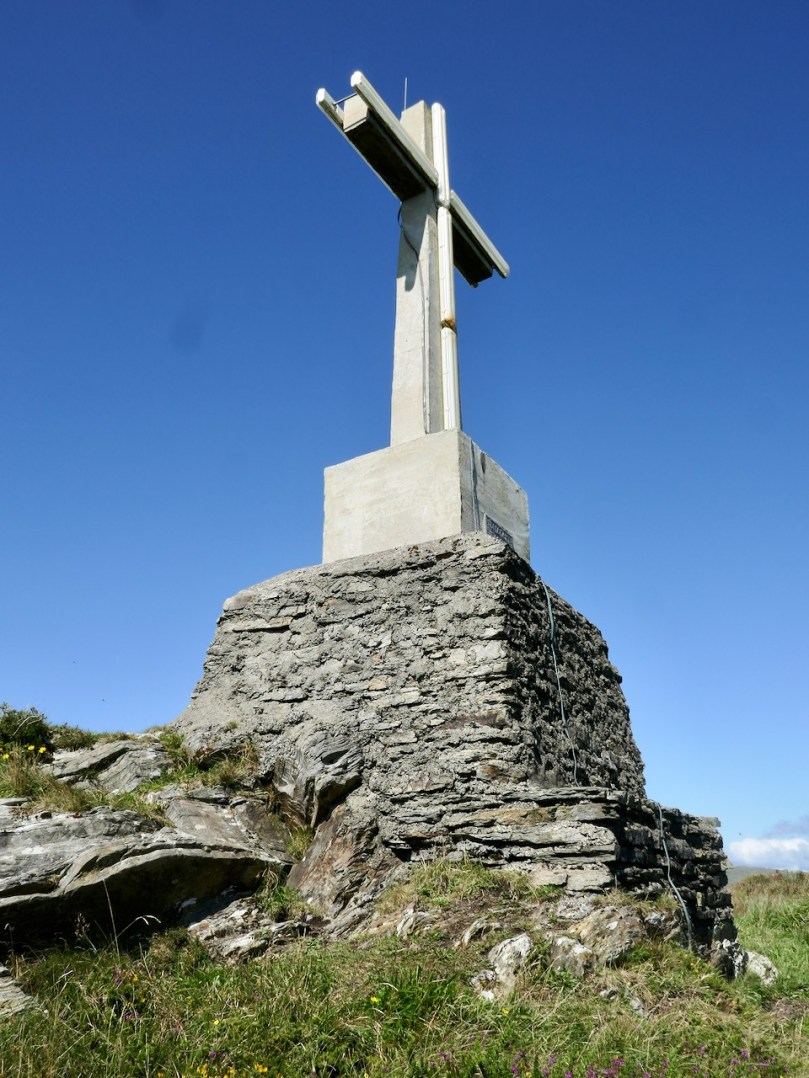
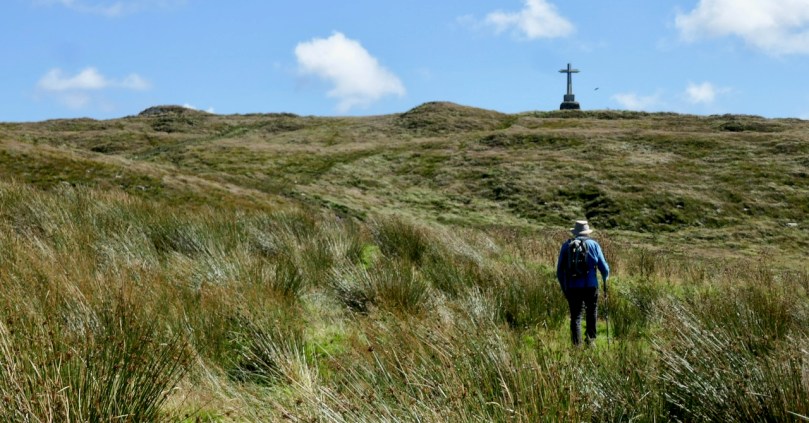
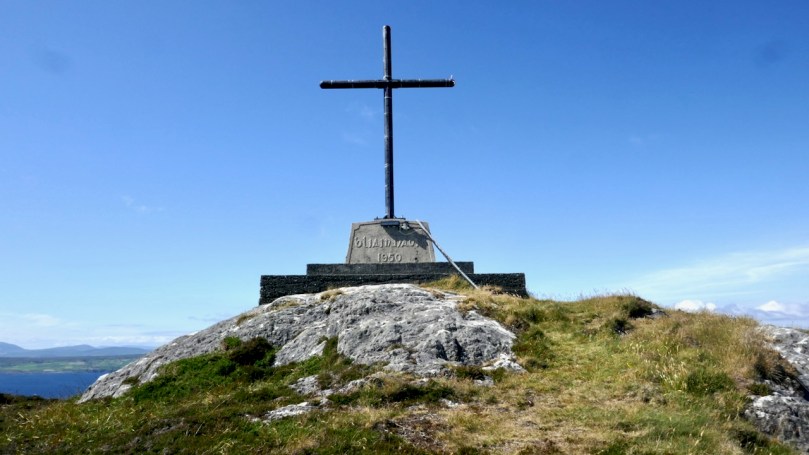
This week we walked up (above) to the cross on Dromore Hill. This one is clearly visible to anyone travelling between Drimoleague and Bantry, on a hill behind the village of Dromore. (Special thanks to Oliver Farrell and Bridget Threthewey for directions.)

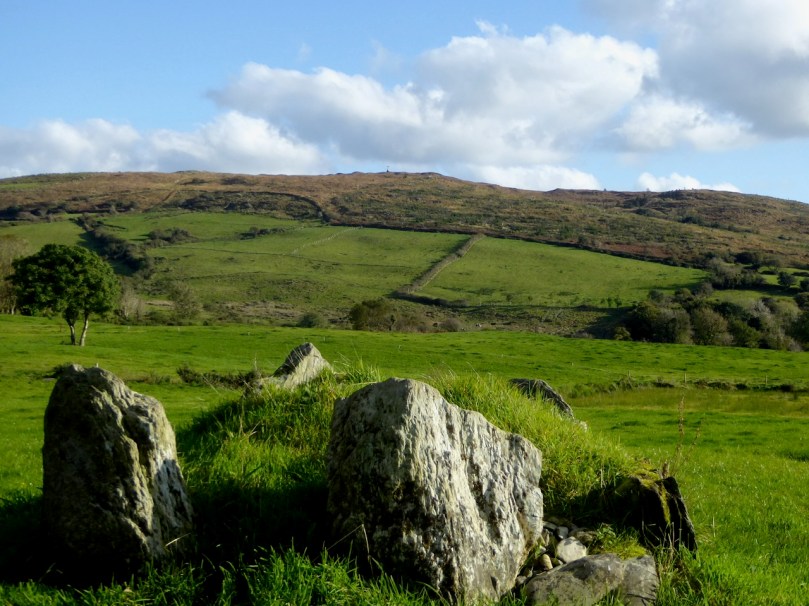
The cross is visible from many spots, including from this five-stone circle at Trawlebawn

It’s a lovely walk and the cross looks like it may be original, although it may also have been replaced. It is still a focus – most years the local parish of Caheragh organises a mass at the cross in August and it’s always well attended. It’s another one where lights have been added, this time in the form of fluorescent strips. We couldn’t figure out the power source though – electrical lines disappear into the ground. Very mysterious.

The cross with its 1950 Holy Year Plaque and a space for an altar for the annual mass

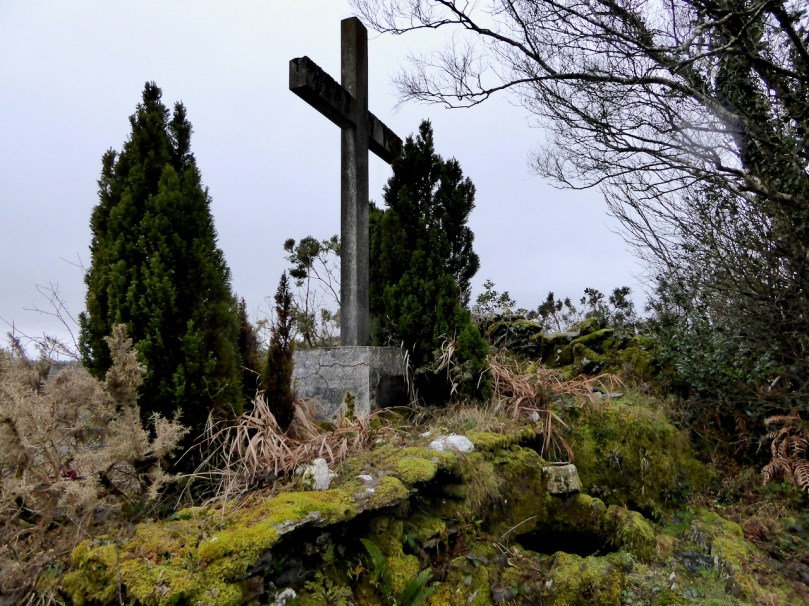
St Lachtan’s Holy Well is situated south of Ballyvourney and in 1950 a group of volunteers from the Ré na nDoiri branch of Muintur na Tíre decided to erect a cross on the well to mark the occasion. This one is not on a hill top – in fact it is quite hard to find, but the plaque, in Irish, confirms it as a Holy Year project.

St Lachtan’s Holy Well (the two bullaun stones below the cross) and its Holy Year Cross

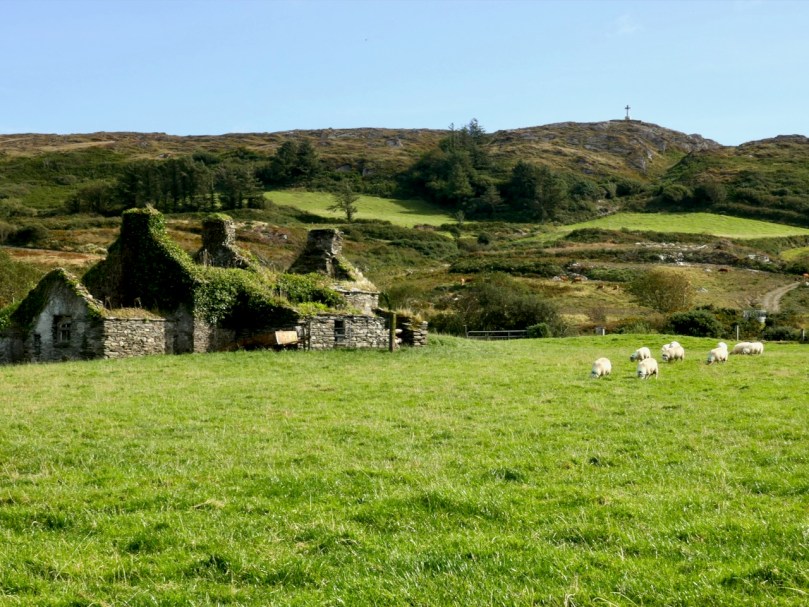
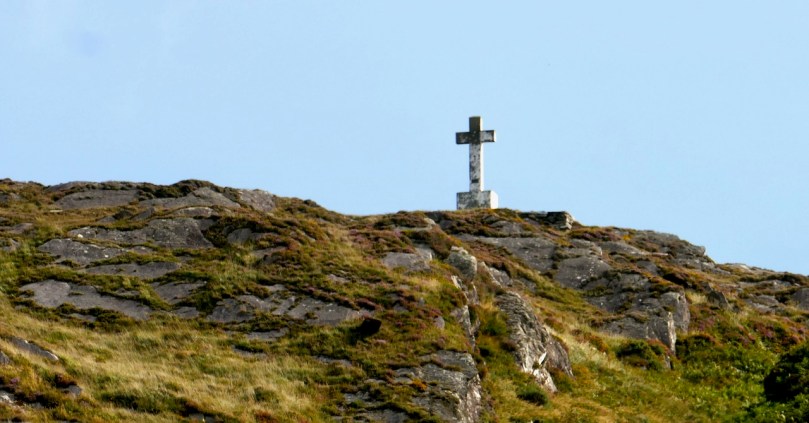
Our final local cross is one we haven’t been up to yet – a future project. It stands on a hill between between Skibbereen and Lough Hyne – I’m not sure what the townland name is, it looks like its on the boundaries of Gortshancrone, Booleybane and Curravalley.

If anyone local knows about it, or can tell us the best way up, we would love to hear it.

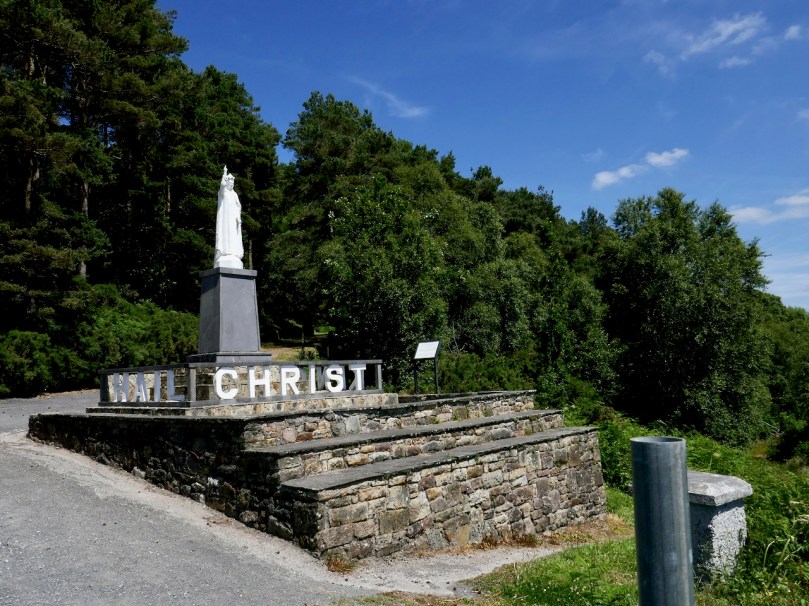
It wasn’t always a cross – the people of the beautiful Glen of Aherlow in Tipperary decided on a giant Christ the King statue (above). It’s visible for miles – the current one a 1975 replacement for the original and made by the same firm. According to the signage it depicts the hand of Christ the King, raised in blessing the Glen, its people, and all those who pass by.

However, crosses (that’s the one close to Skibbereen above) seem to be the most frequent choice to commemorate and mark the 1950 Holy Year. Do you have one close to where you live?  Have you been to it? Is it still in some form of use (for annual masses, say)? Is it valued by the community?

*There have been other Holy Years (officially they occur every 25 or every 50 years) but the only other Papal-decreed year of devotion that made the same kind of impact in Ireland was the Marian Year in 1954 – see our post Mary Mary for a quick description of the Lourdes Grottos that proliferated that year.

Aiming High!

There seems to be a thread going through our recent posts: my Mizen Mountains and Signal Tower projects take us to high places, and today Finola reports on her exploration of hilltop crosses dating from the 1950 Holy Year. Our travels have brought us to many peaks and pinnacles in and beyond West Cork. I must say there’s nowhere I would rather be than far away from the crowds up on an Irish eminence which – without fail – provides us with the most spectacular views across the topography of this greenest of all lands.

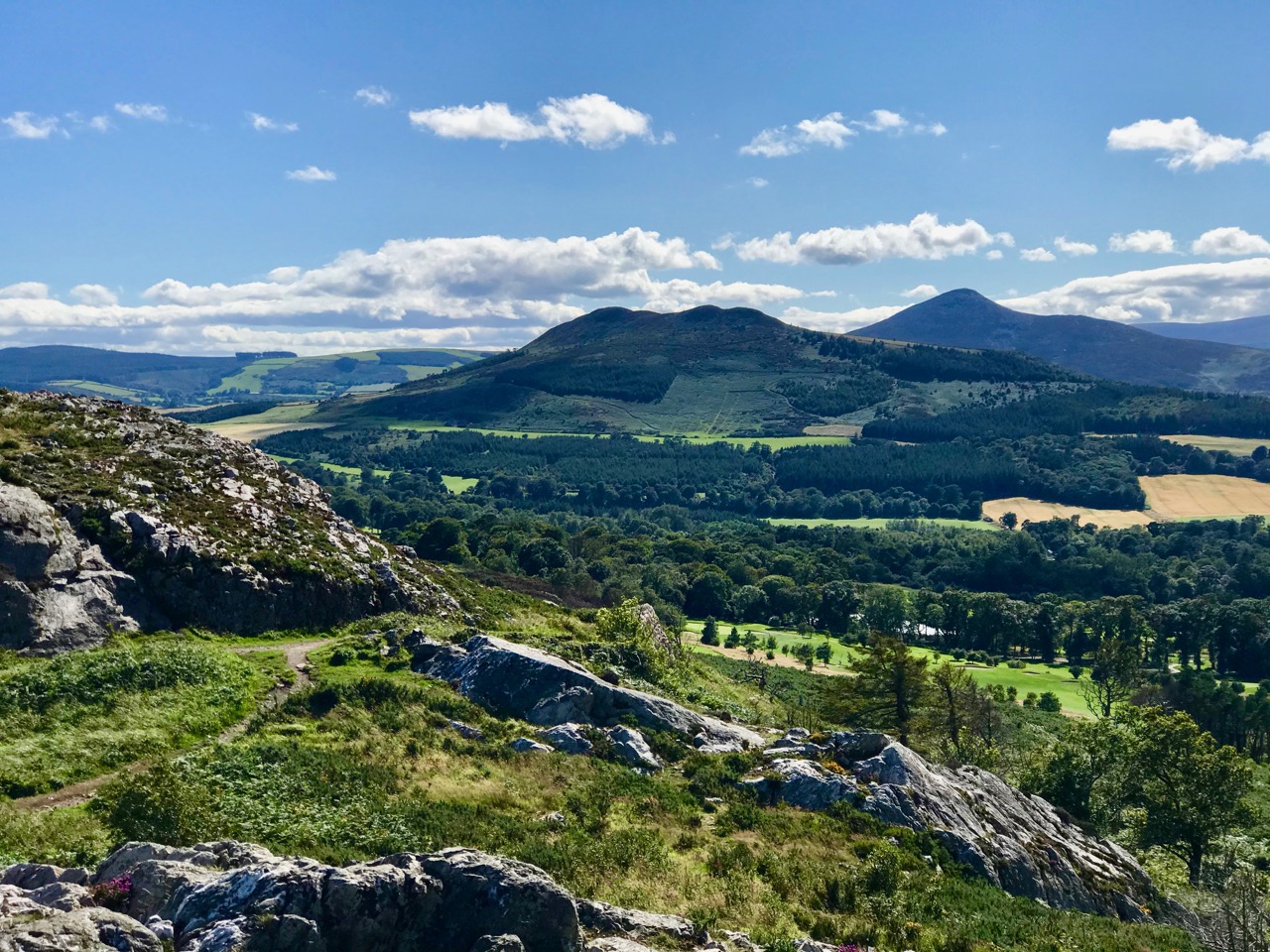
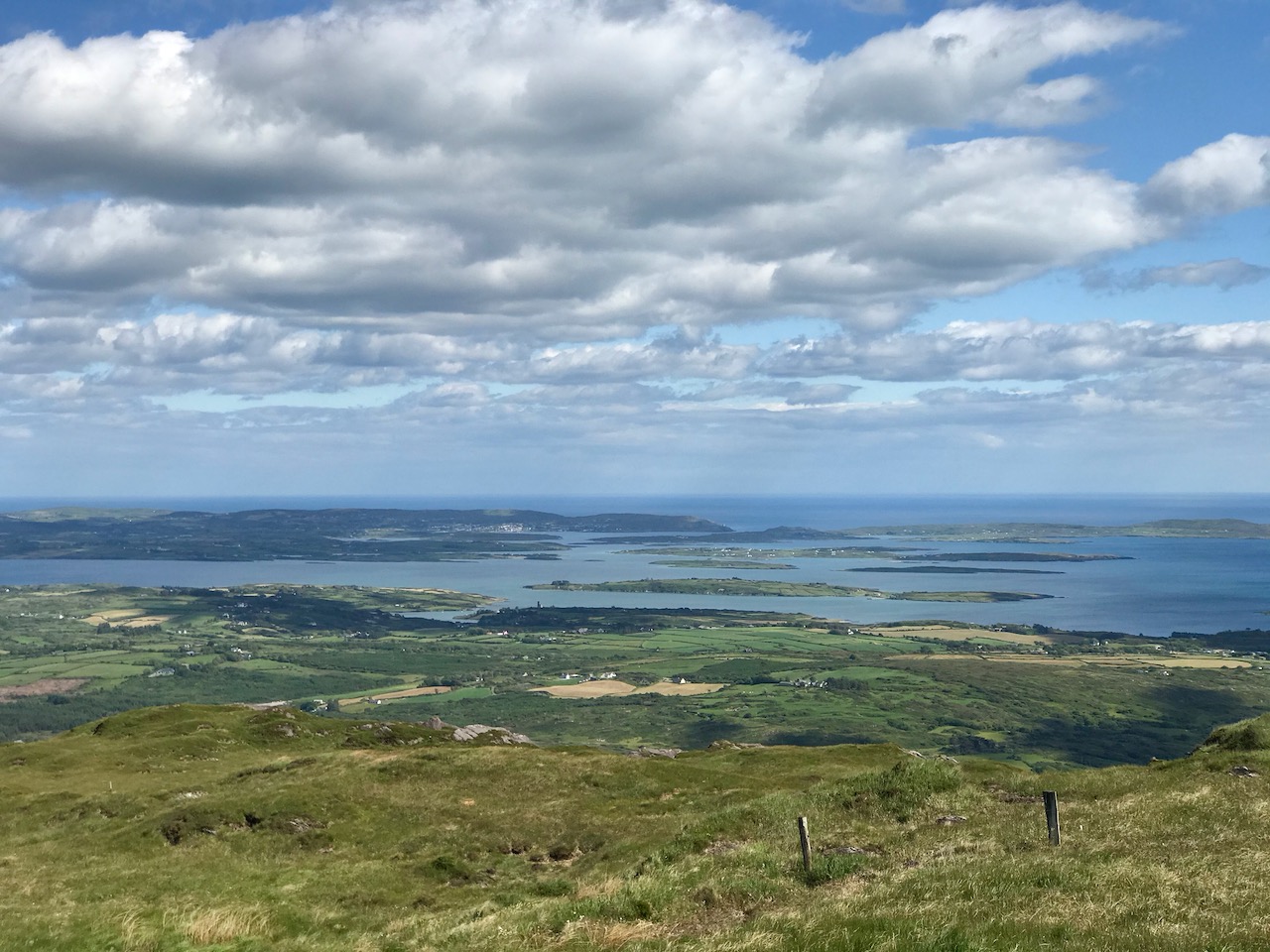
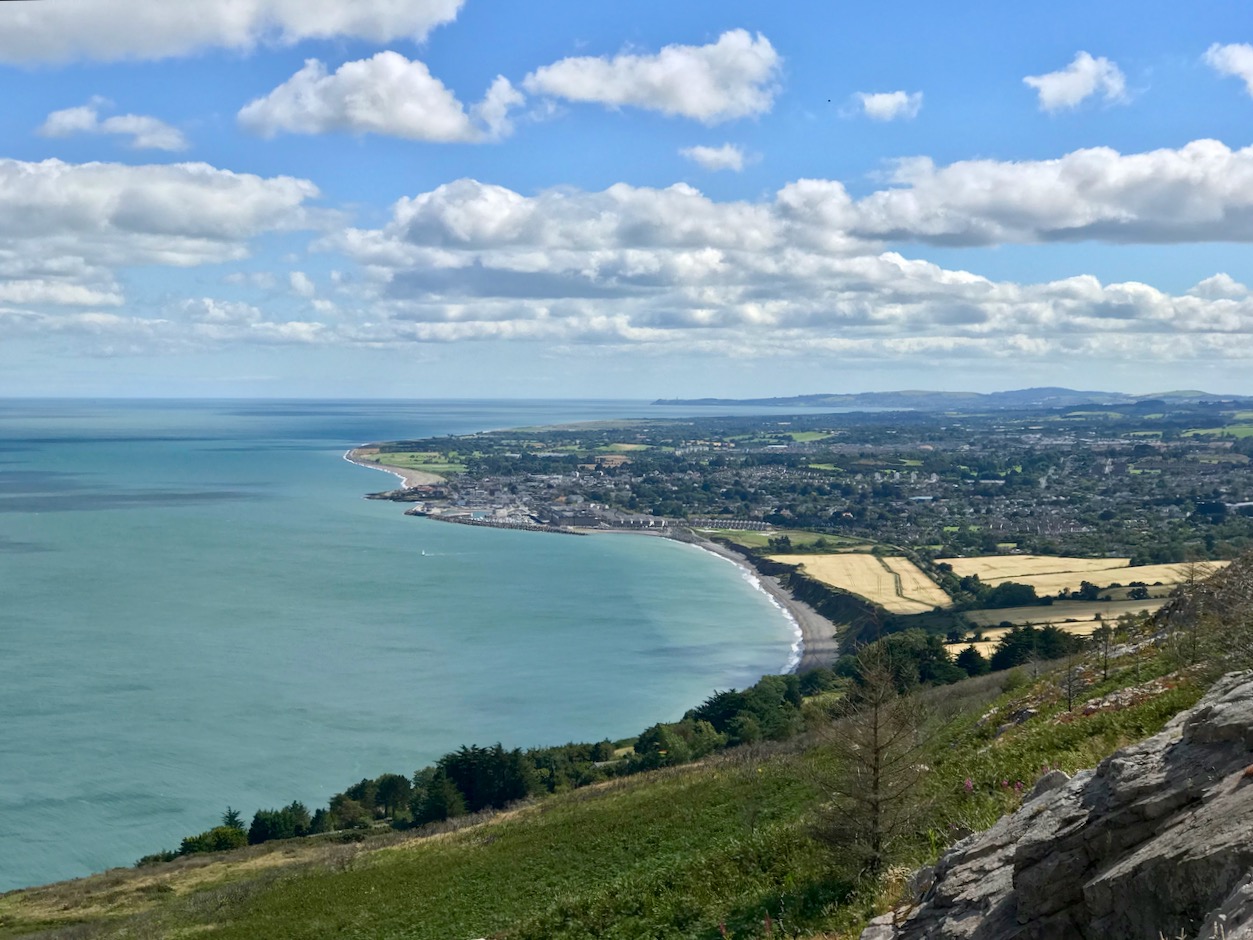
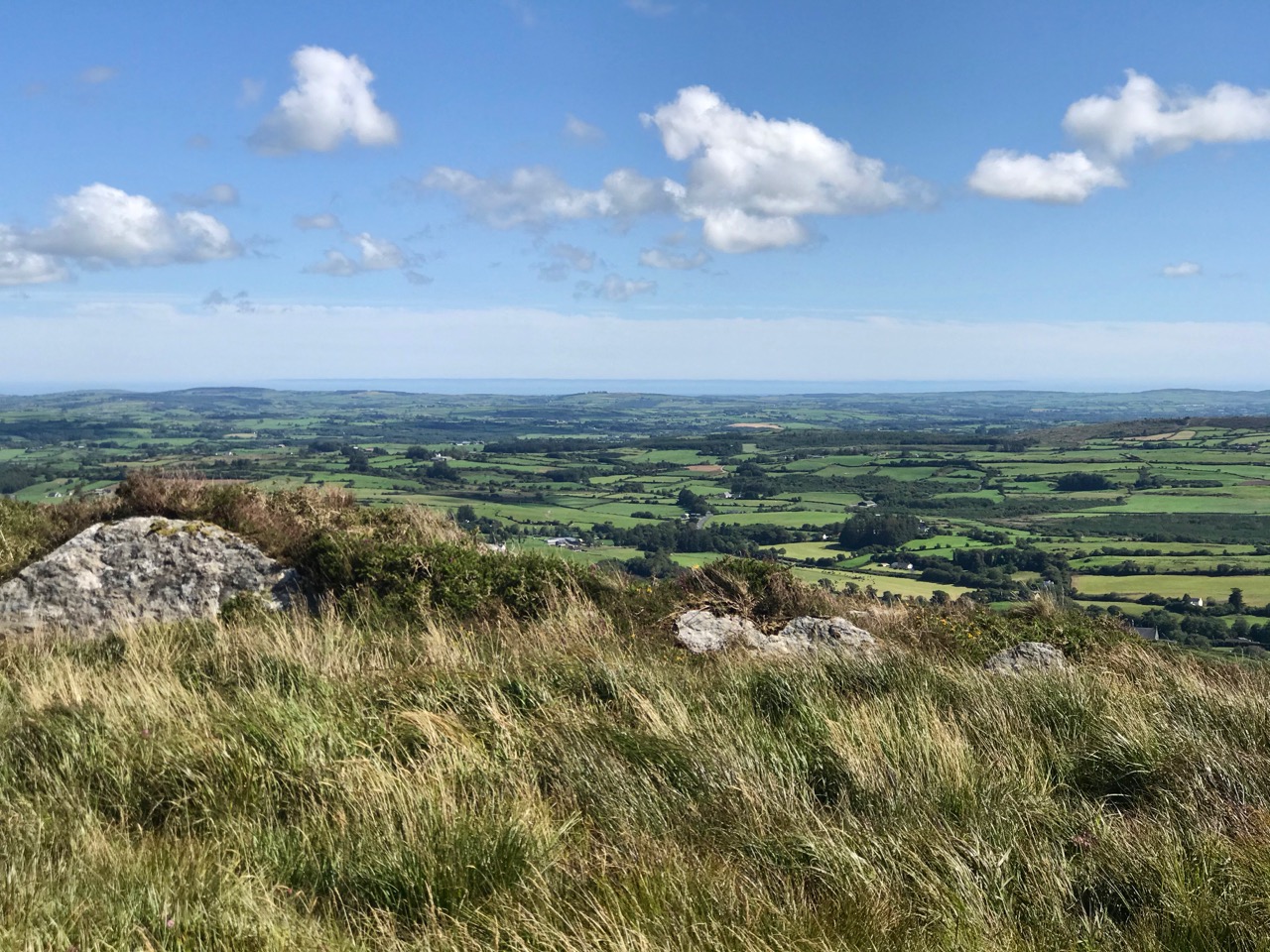
After lockdown restrictions were eased, we made a little trip up to County Wicklow to see family and friends, and took full advantage of the many trails that cross the granite outcrops between Bray and Greystones. The header picture looks south-west from Bray Head towards the Great Sugar Loaf, part of the Wicklow mountain range which, at 501 metres, is significantly higher than our own Mount Gabriel in West Cork at 404m, but which nevertheless provides this view (above) towards the coast of Roaringwater Bay, and looks out over Carbery’s 100 Isles.

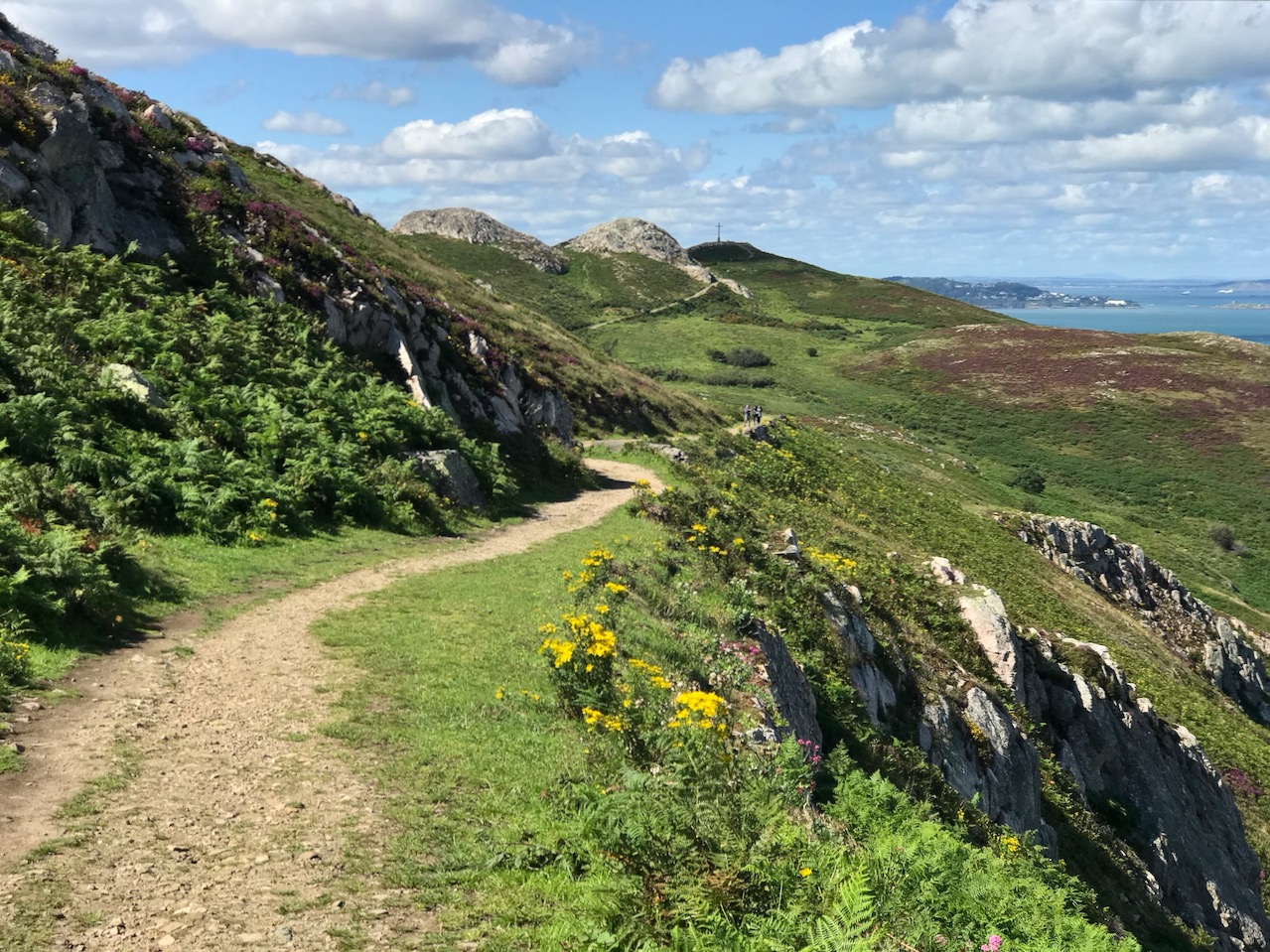
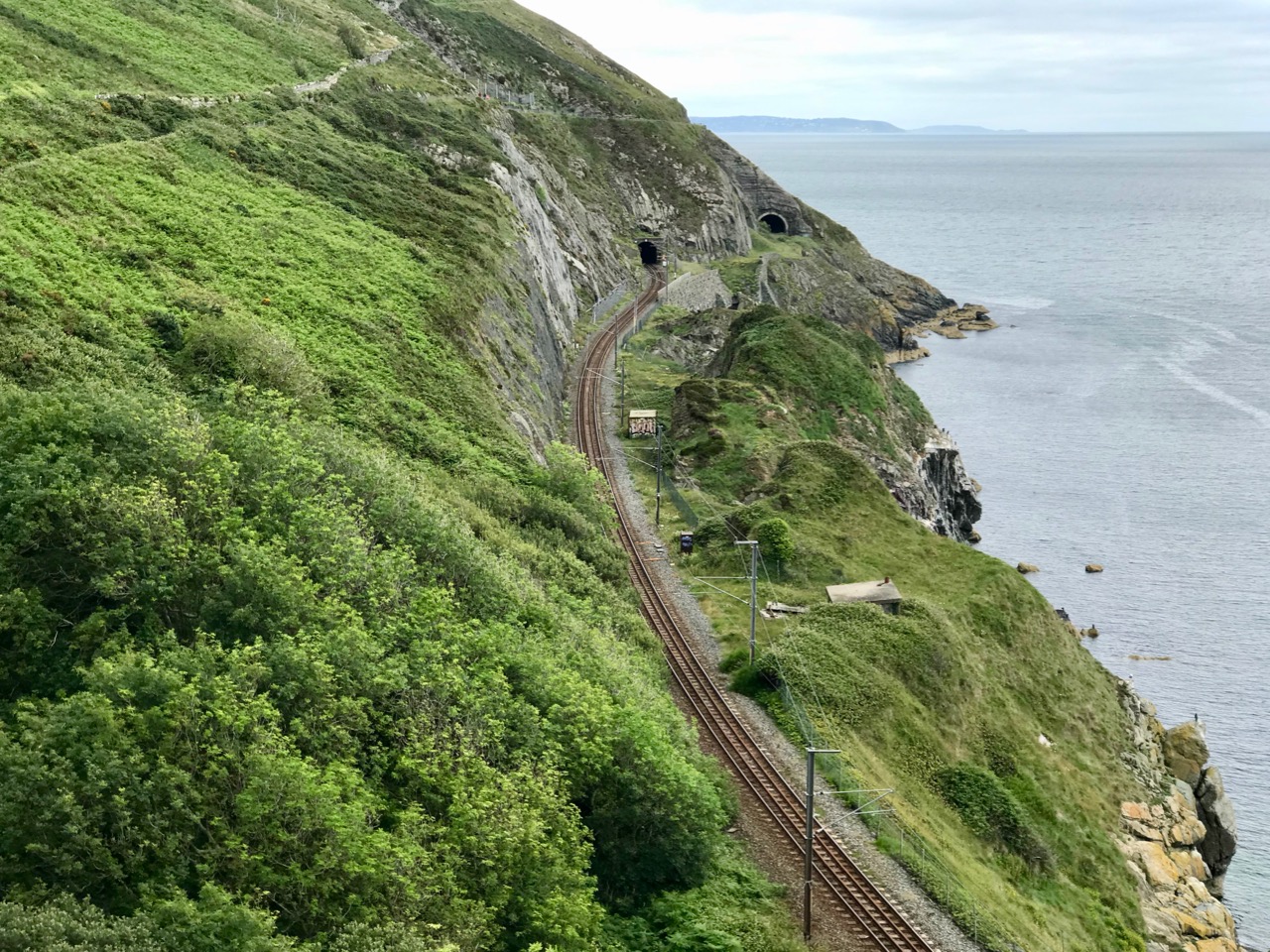
Travellers through Wicklow have, since ancient times, oriented themselves using the high peaks. Pilgrims going to the holy city of Glendalough and keeping to the coastline south out of Dublin might have followed the routes which, today, pass over Bray Head. A modern way of doing it, at least in part, is on the railway line that hugs the cliffs between Greystones and Bray – a feat of engineering laid out by Isambard Kingdom Brunel in the 1850s and surviving to this day, although it has had to be realigned six times because of erosion and rockfalls. It has even been described as one of the world’s most picturesque train journeys – something of an exaggeration, perhaps, but it’s well worth taking the trip if you are in the area. The photos above show (from upper) the public trail leading from Windgate up to the Bray Head Cross; the railway line seen from the cliff path that runs close to the route – note the abandoned tunnel on the far right; the view from Bray Head looking south to Greystones with Dunbur Head, south of Wicklow town, far beyond.

Back in West Cork we have no end of high places to choose from. Our latest escapade was a climb to the 1950 cross at Dromore, between Bantry and Drimoleague, which provides the two views above and this one, below, from which you can see the high peak of Gabriel in the distant west.

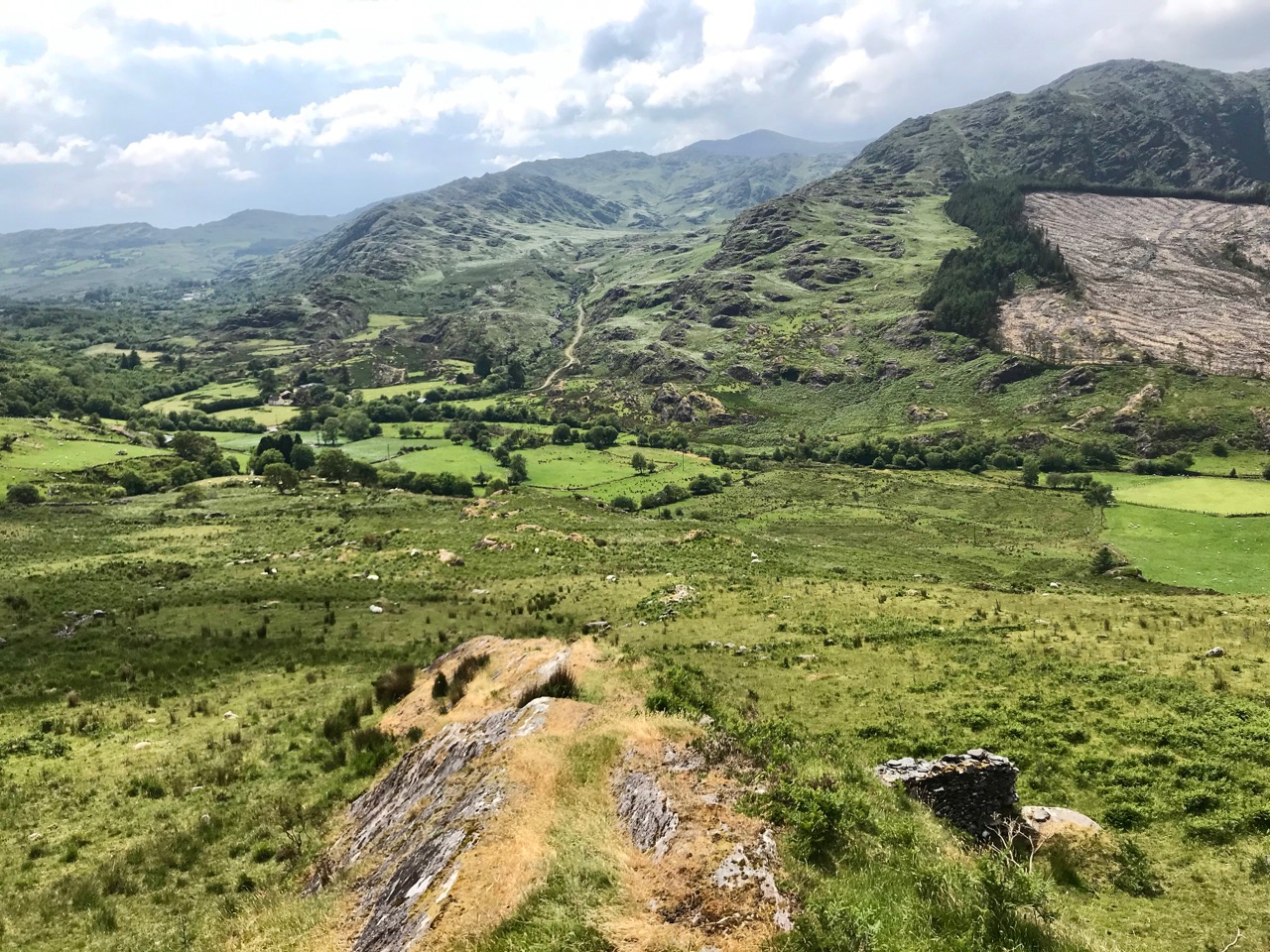
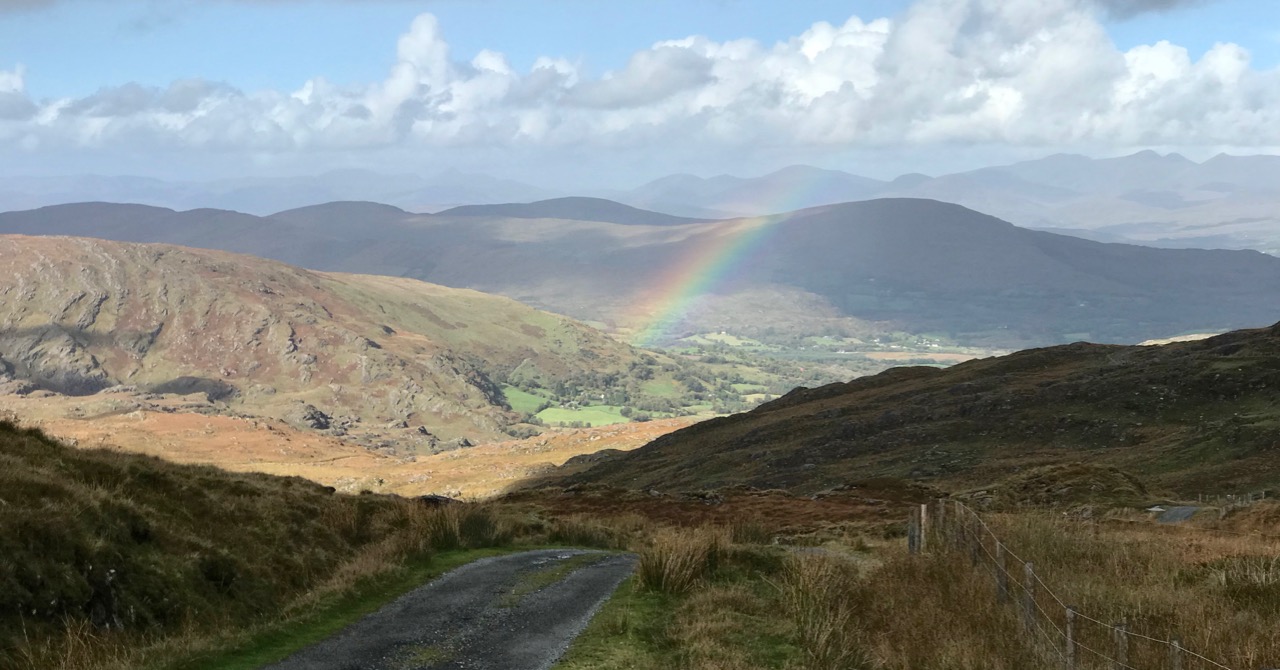
We have shared with you some of our favourite high journeys in our own part of the country, including the remarkable Borlin Valley road, which crosses the County border between Cork and Kerry:

Climbing to the summit of Knockaphuca gave us this striking view over the Mizen village of Goleen and out to the ‘Wild’ Atlantic beyond it:

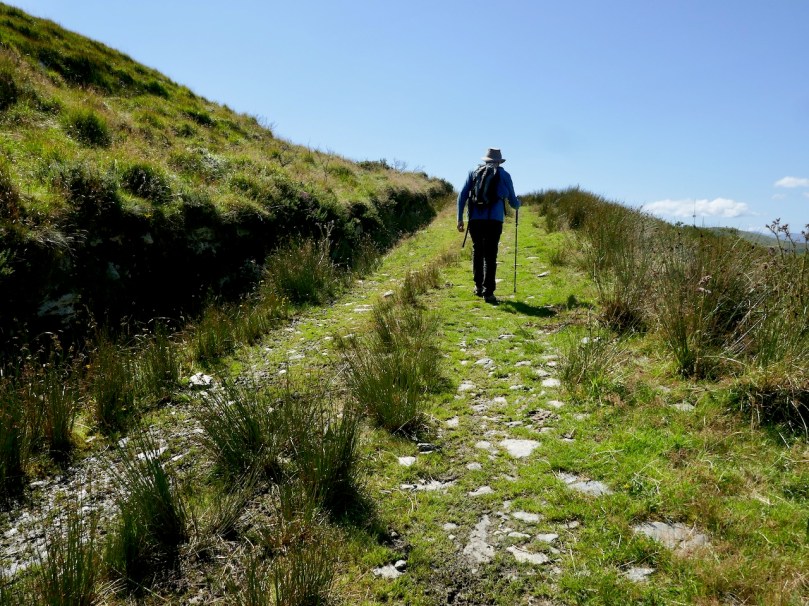
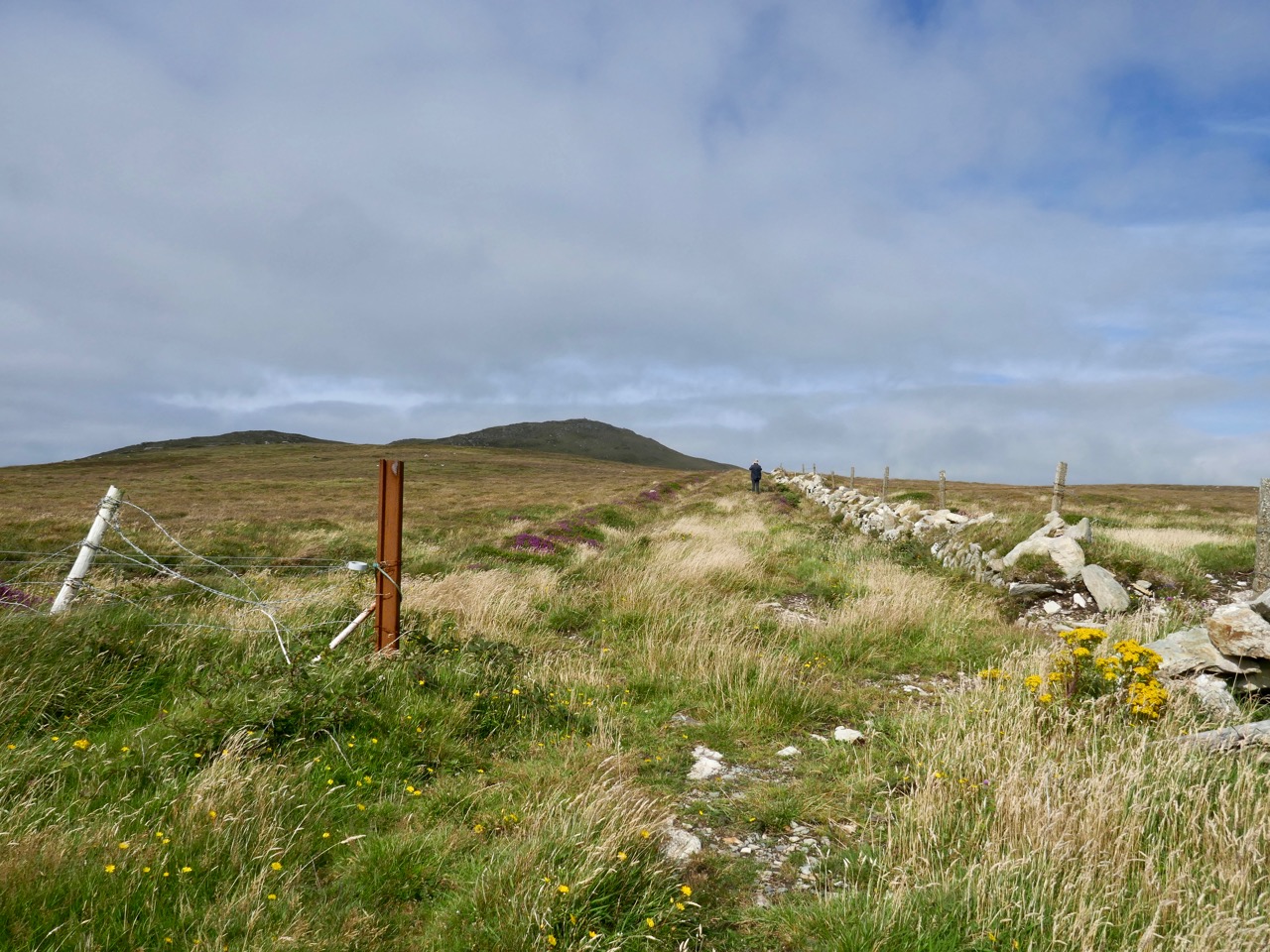
Heights still to be scaled: in the picture above I’m walking on a very old roadway which leads out to a ruined Napoleonic signal station perched right above Mizen Head. To my left is the distinctive Mizen Peak. Both sites will feature in future posts, and both reveal dramatic views over this western edge of the land.

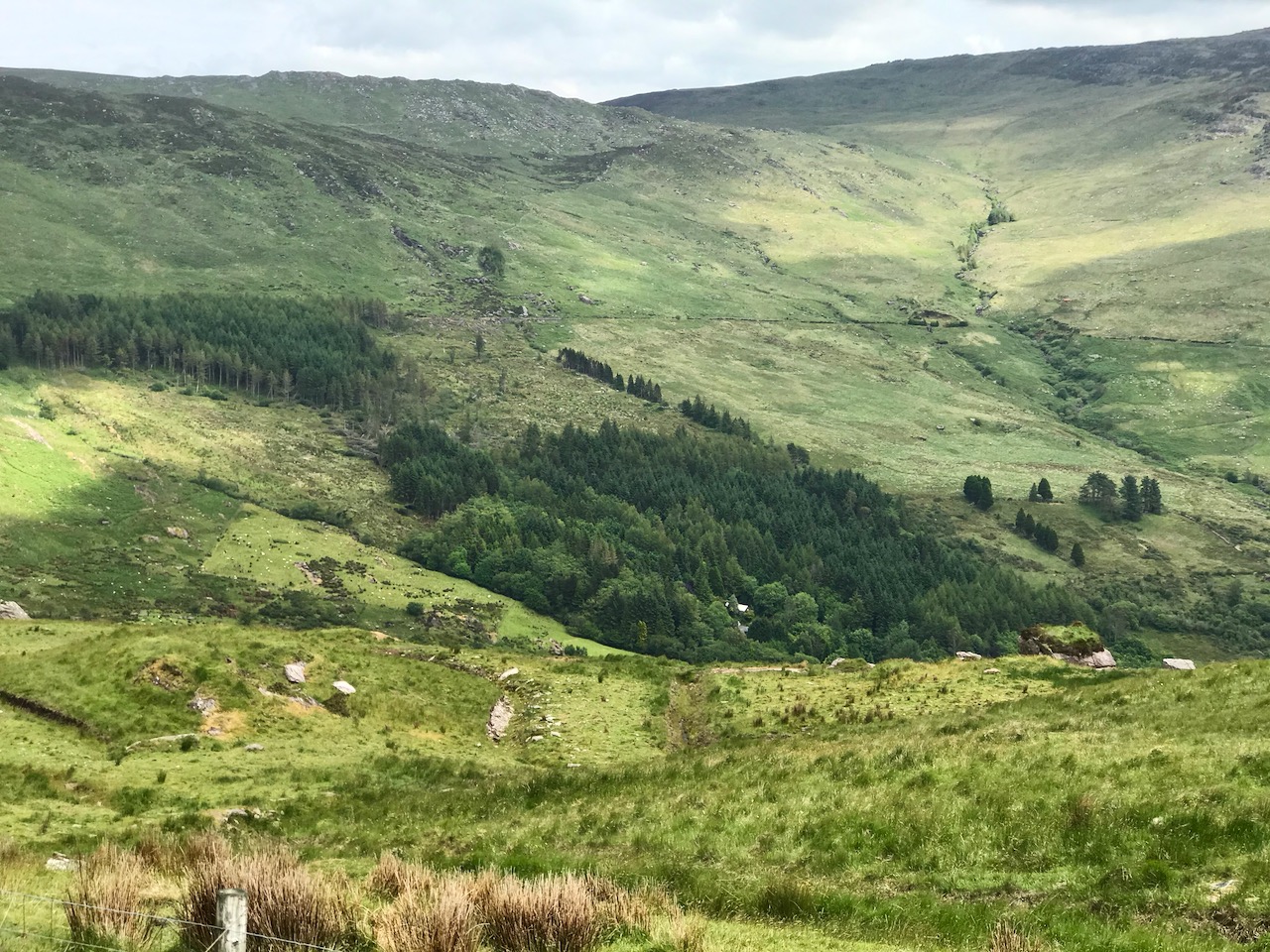
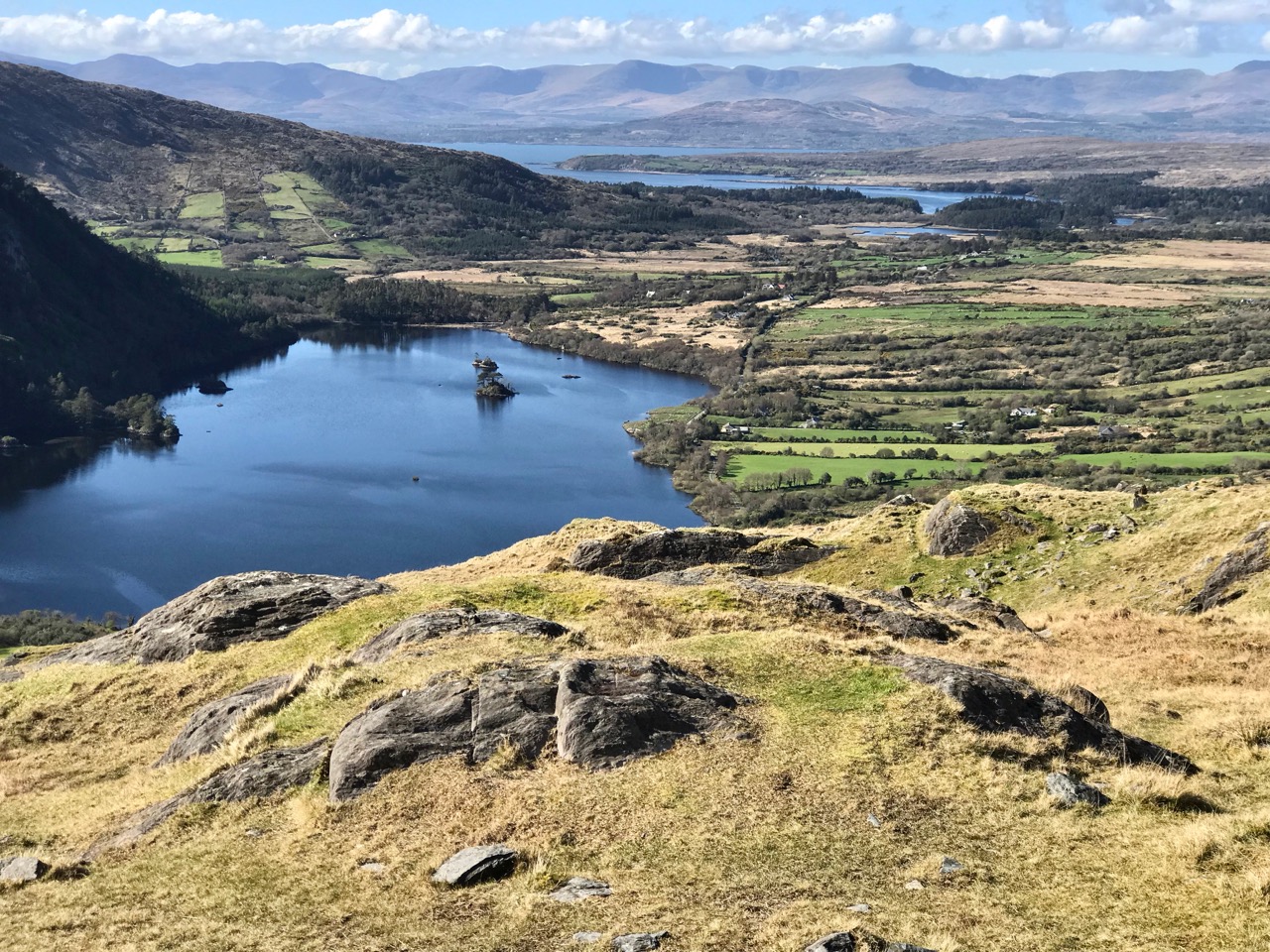
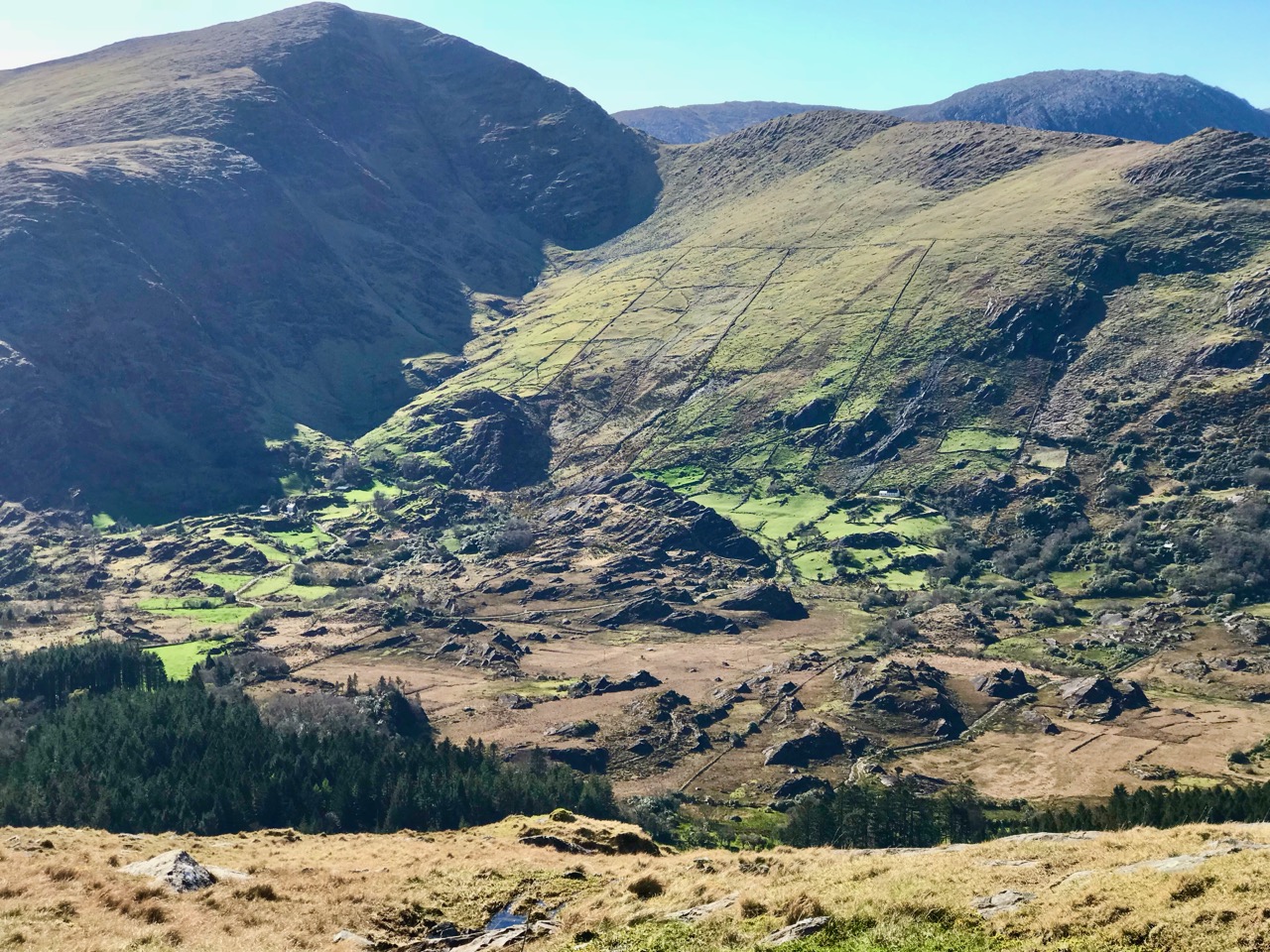
We couldn’t complete any account of high places in the west of Ireland without mention of one of our favourite destinations: the Beara Peninsula. Above is the view north from the top of the Healey Pass, looking into Kerry. Below is a dizzying view into the heart of the Beara: look at the farmsteads and cottages below the ancient field system, dwarfed by the power of the mountains.

We will continue to share with you our experiencing of the landscapes here, and not just the high places, of course. We have many years of exploring Ireland under our belts, and look forward to lots still to come.