Back to the Skeams: 81 Men Left the Island

Fishing was a huge part of how the islanders made a living and fed themselves and their families. For how this was conducted I am relying on Hester’s detailed account. She writes about her parents’ generation and also about her own – her husband, Patsy, also went fishing. I will use Hester’s words, from her memoir, Misty Memories, lightly edited for a bit of brevity.

Most of the men from the islands around went Lobster fishing every Summer. There were 27 lobster boats in Heir Island when I was ten years old and at school there. Each boat had a crew of three men. That meant that 81 men left the island from May to September and went to Kinsale and Cobh – a long journey along a rough coastline in very shallow sailing boats.
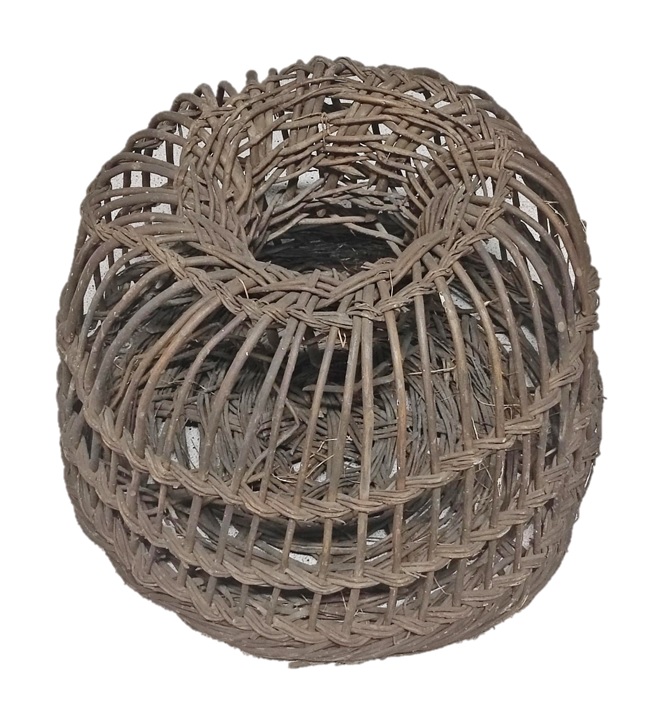
A traditional Heir Island Lobster Pot. © National Museum of Ireland*

Lobsters were caught in baited lobster pots, made of willow twigs and anchored in deep water. The men made the pots themselves during the winter months. Some were very skilled and others helped them – they worked as a team or ‘meitheal’ as it is called in Irish. They had special tools for the job and a sort of mould around which they wove the twigs so that the pots had the proper shape. Rowing for miles to the other islands and to the mainland to get enough twigs, they carried big bundles on their backs, often having to walk four or five miles back to the boat. 
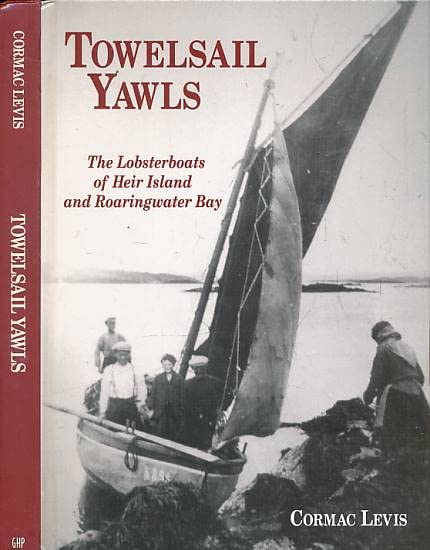
The authority on traditional Heir Island boats is Cormac Levis, and this book is a must for anyone interested in this topic. It is currently out of print but you might be able to find a copy online. Cormac is planning a second edition for 2026.

Lobster boats had three sails and the smallest one of these, called the ‘Towel Sail’, was used to make up a sleeping tent over the boat’s stem. Just as with the lobster pots, the men made the sails themselves. There was a lot of work in them and some of the men were really expert at it. Sails for the lobster boats and other bigger boats were made of canvas with a rope sewn firmly all around the edge. They made special eyelets across the sail to hold the reef cords so the sail could be made smaller in high wind. 
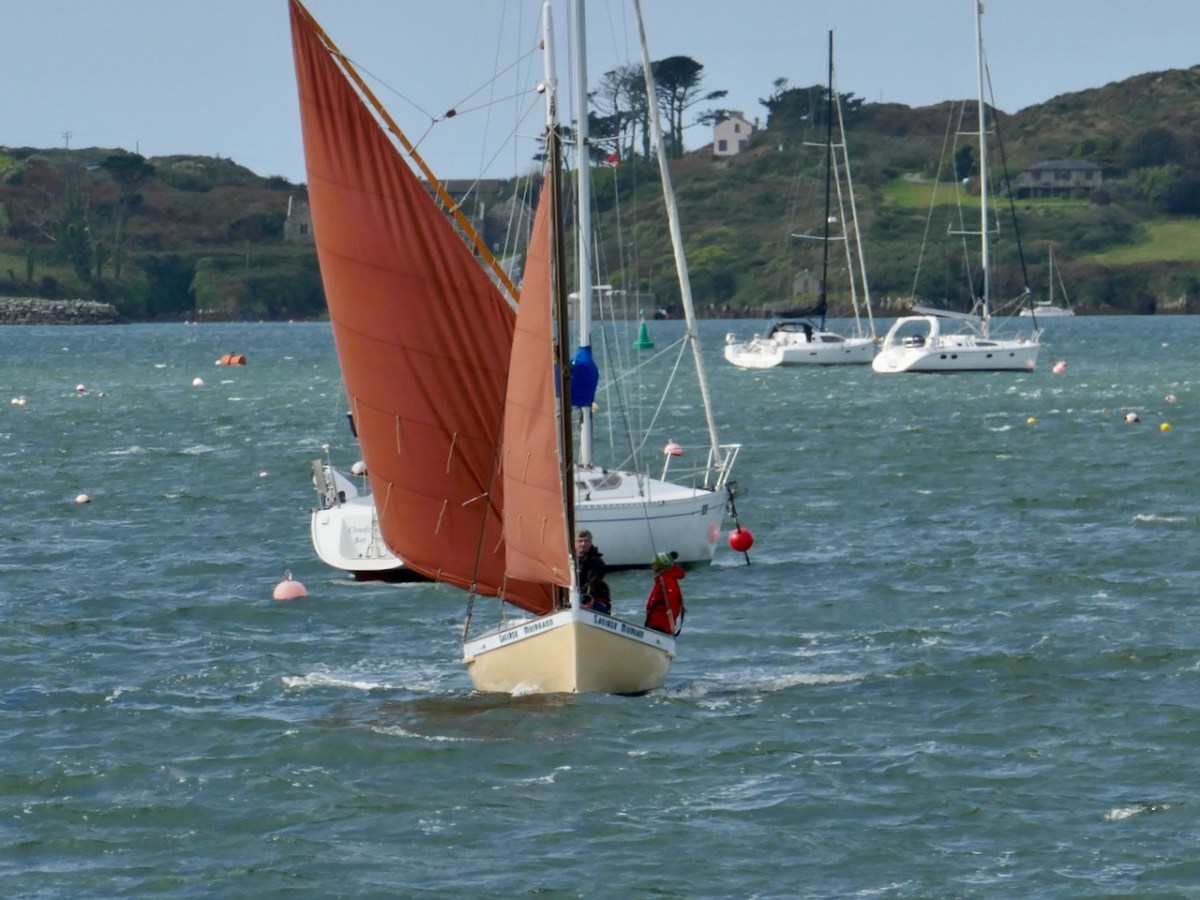
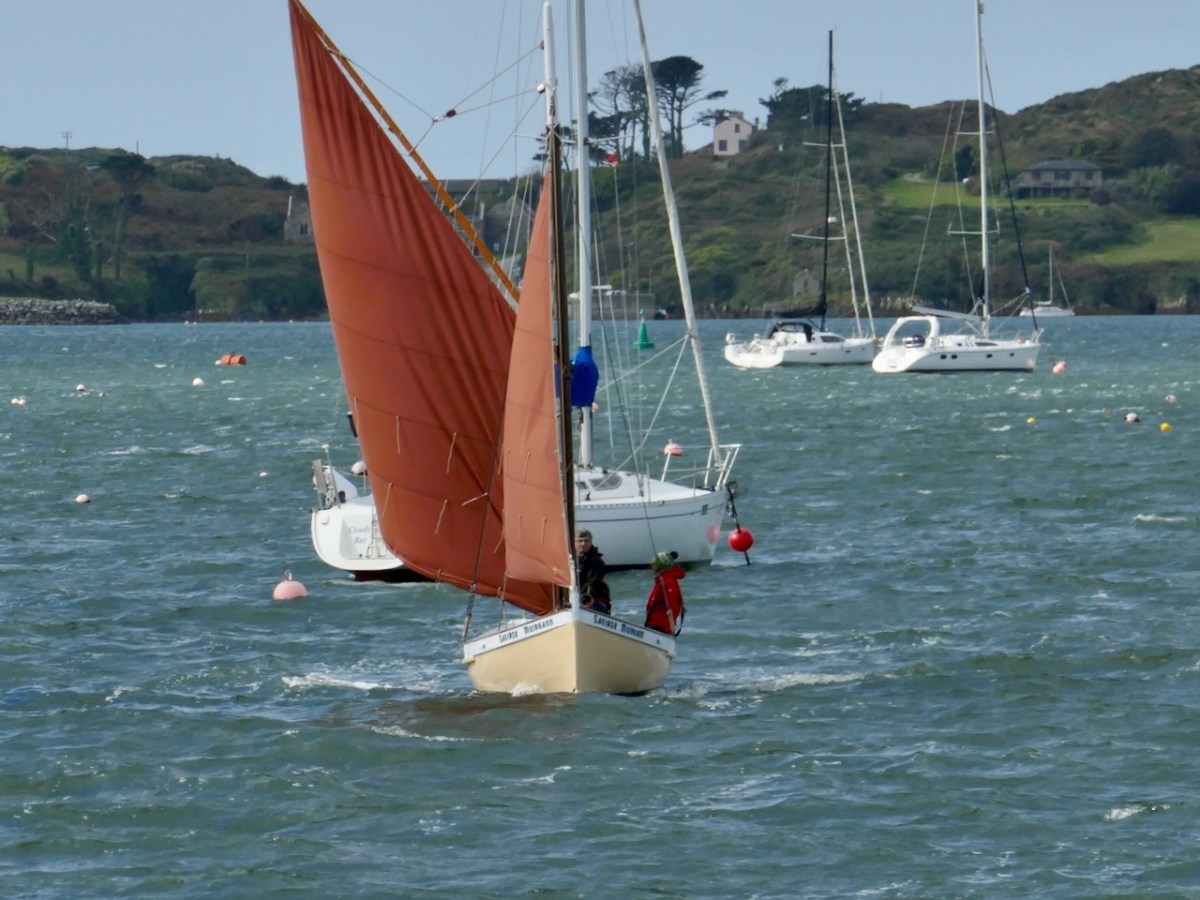
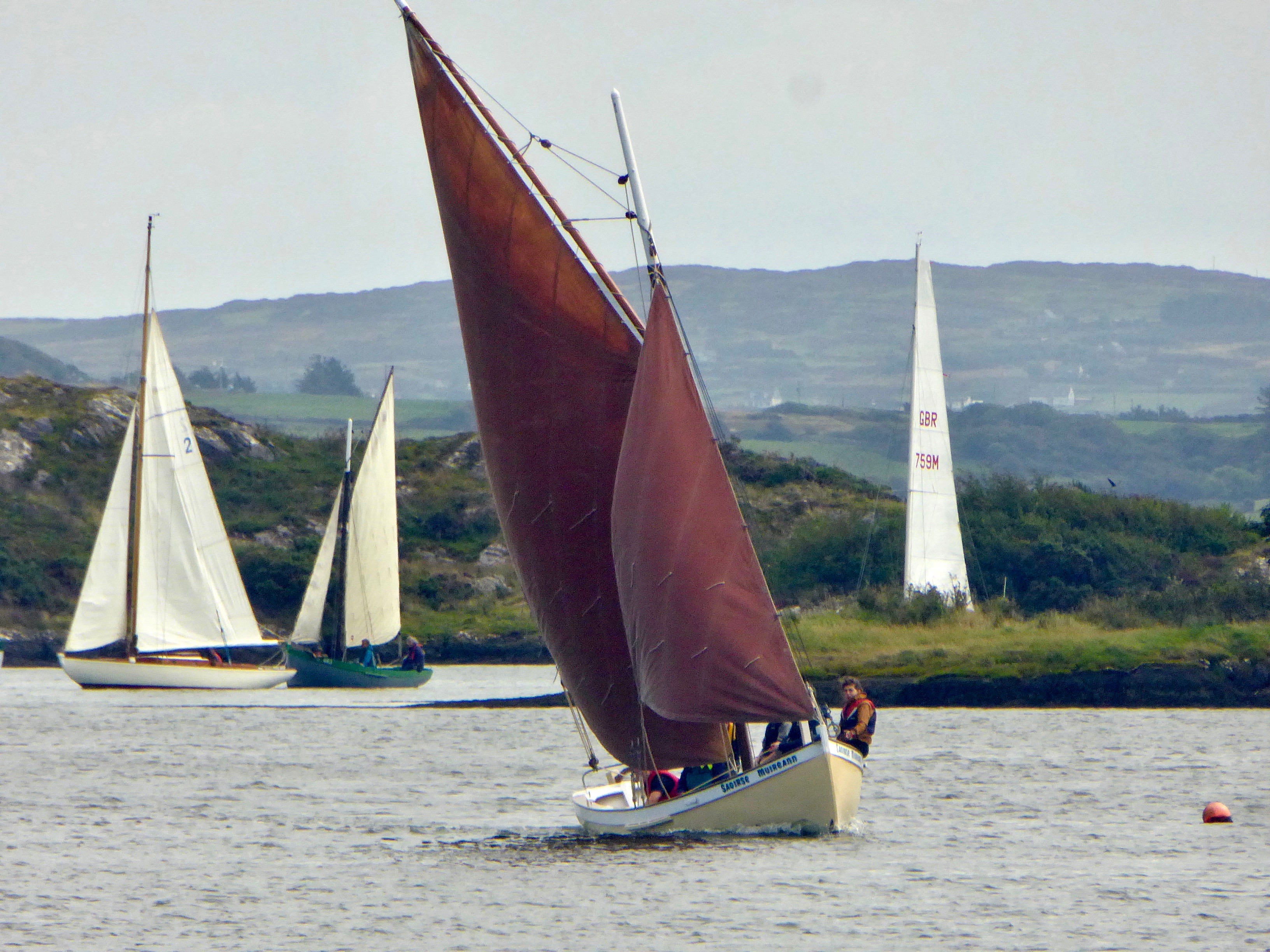
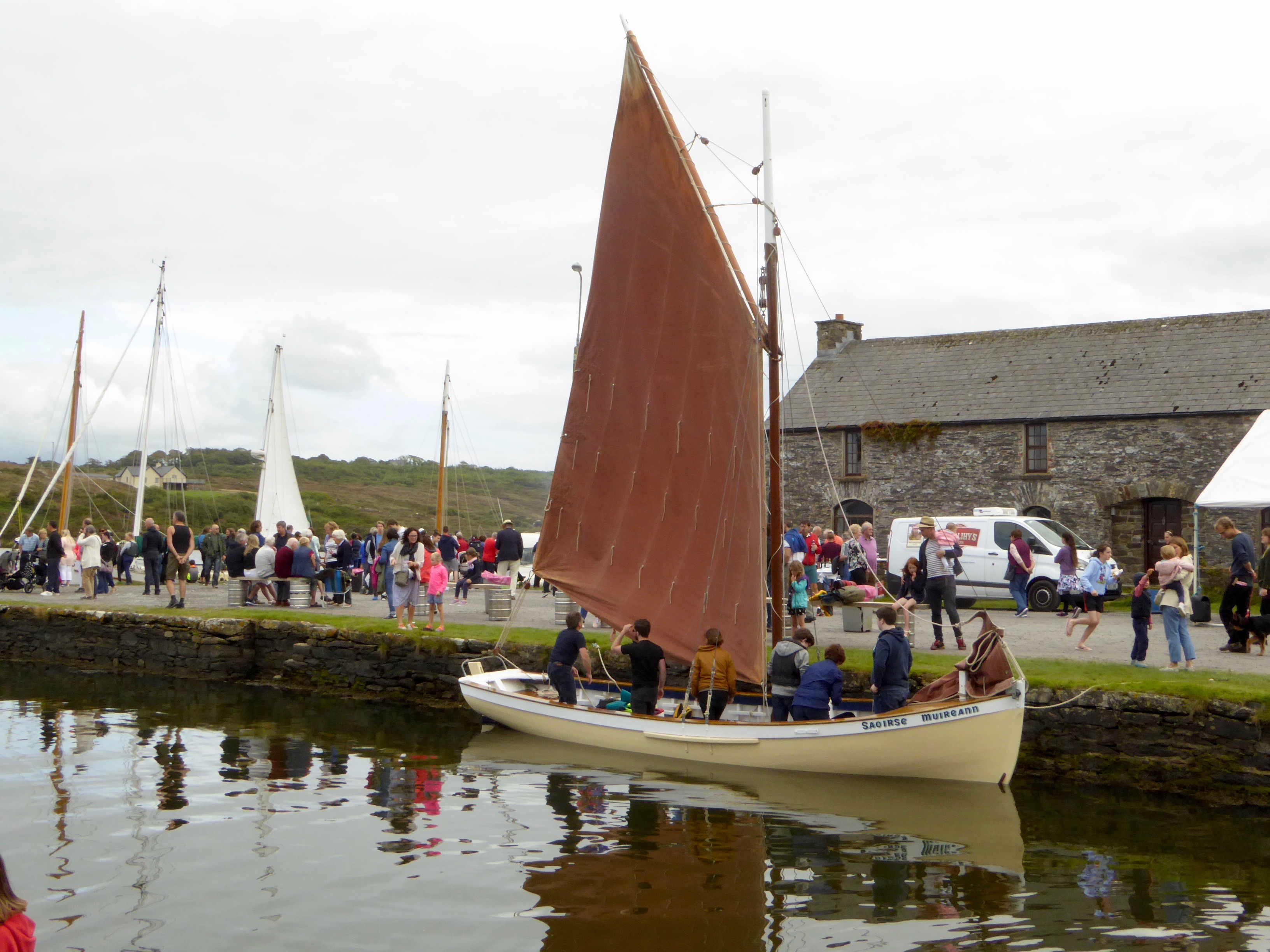
Cormac’s own boat, the Saoirse Muireann, is a traditional towelsail yawl, built at Hegarty’s boatyard

There were lots of preparations to be made for going lobster fishing. When pots and sails were right, the boats were filled with ballast and sunk in deep water for two weeks to close the seams after winter dry dock. Then they were taken up, painted inside and tarred outside. The three-man crew came together to put in the ‘pig-iron’ – slabs of iron for ballast to keep the boat from capsizing. They then put in the steer and the helm and a big anchor. Special ropes and stones were prepared to tie the pots deep in the fishing ground. They called these the ‘Killick rope and stone.’ Next, they added the utensils – a tin basin for washing and for making bread, pots, a kettle, tin plates and mugs. Foodstuffs, including the flour for making bread, were kept in the little cupboard built into the stem of the boat. Drinking water was stored in a ‘breaker’, a round wooden barrel that held a few gallons. They also brought potatoes and coal for the fire.
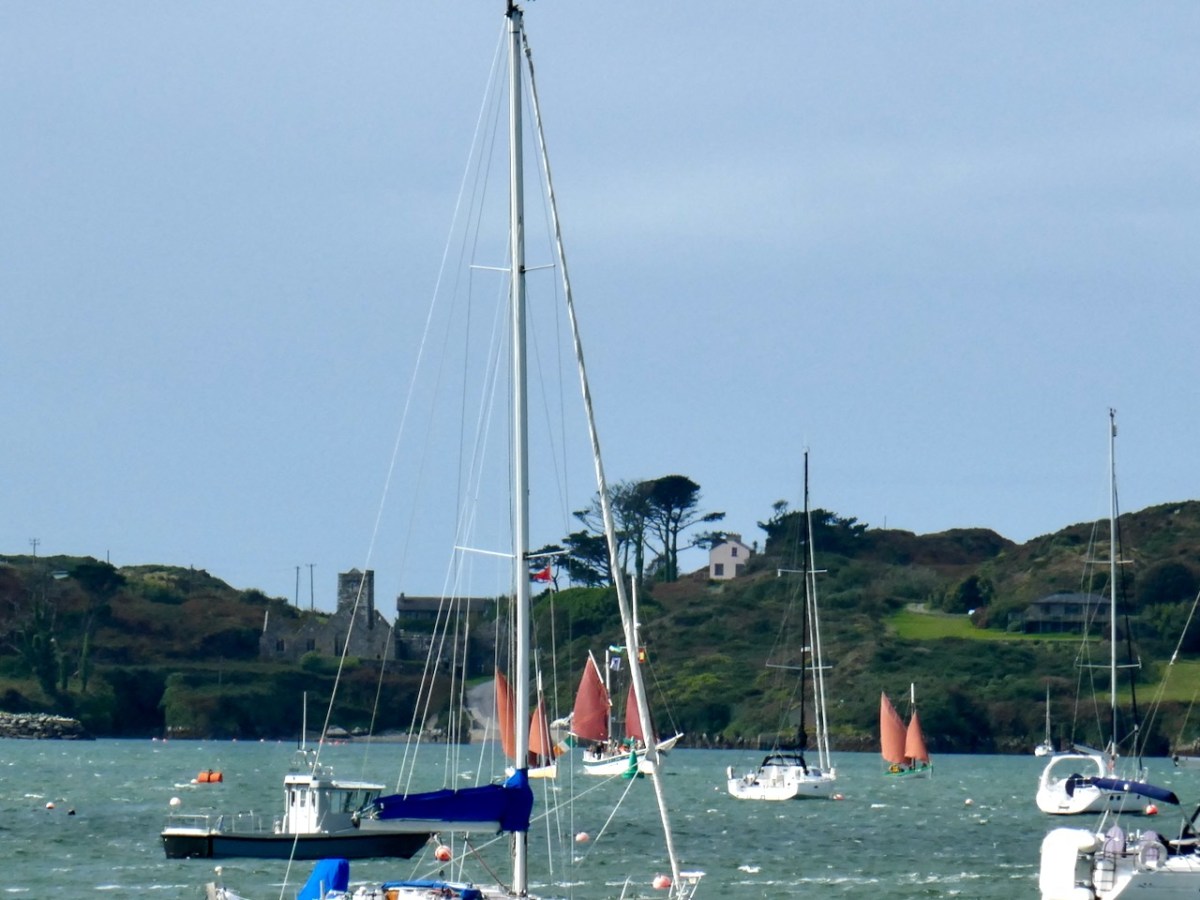
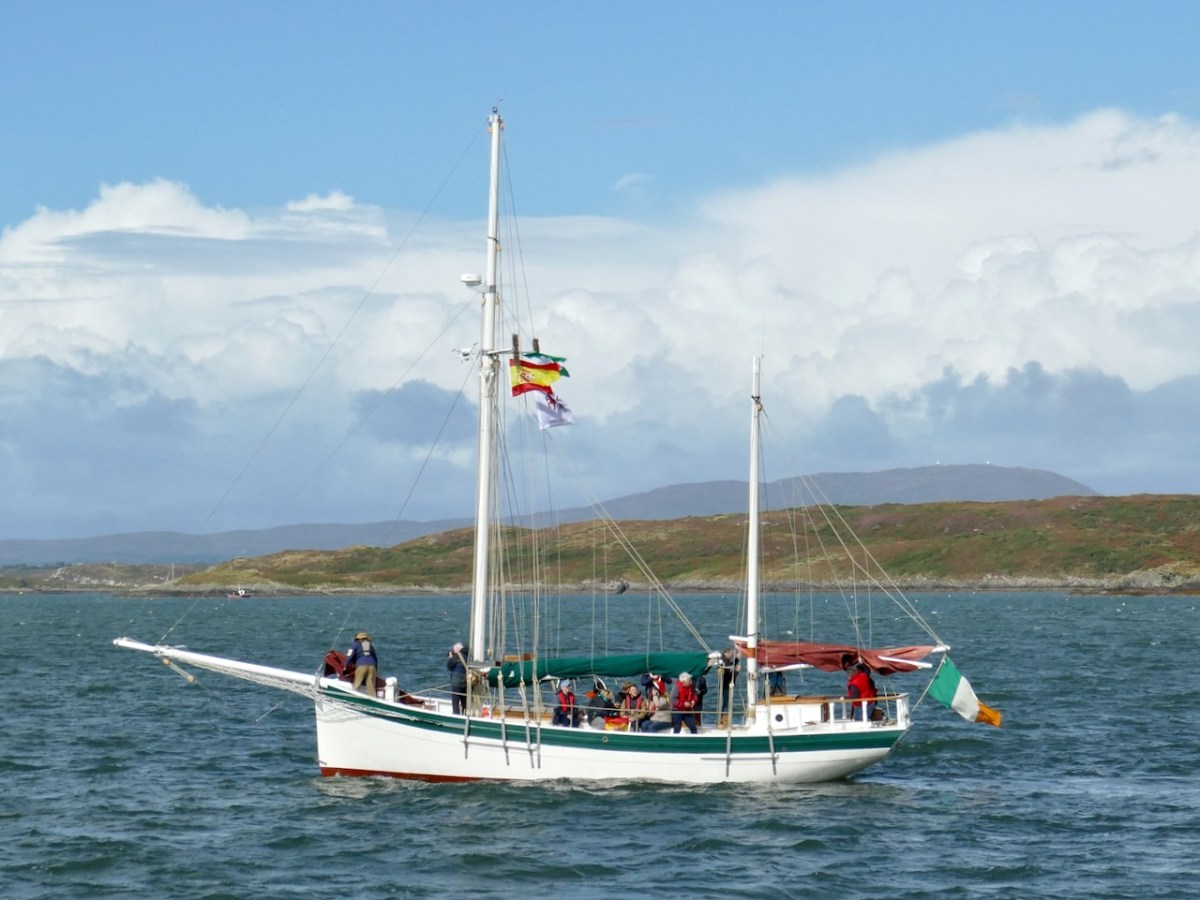
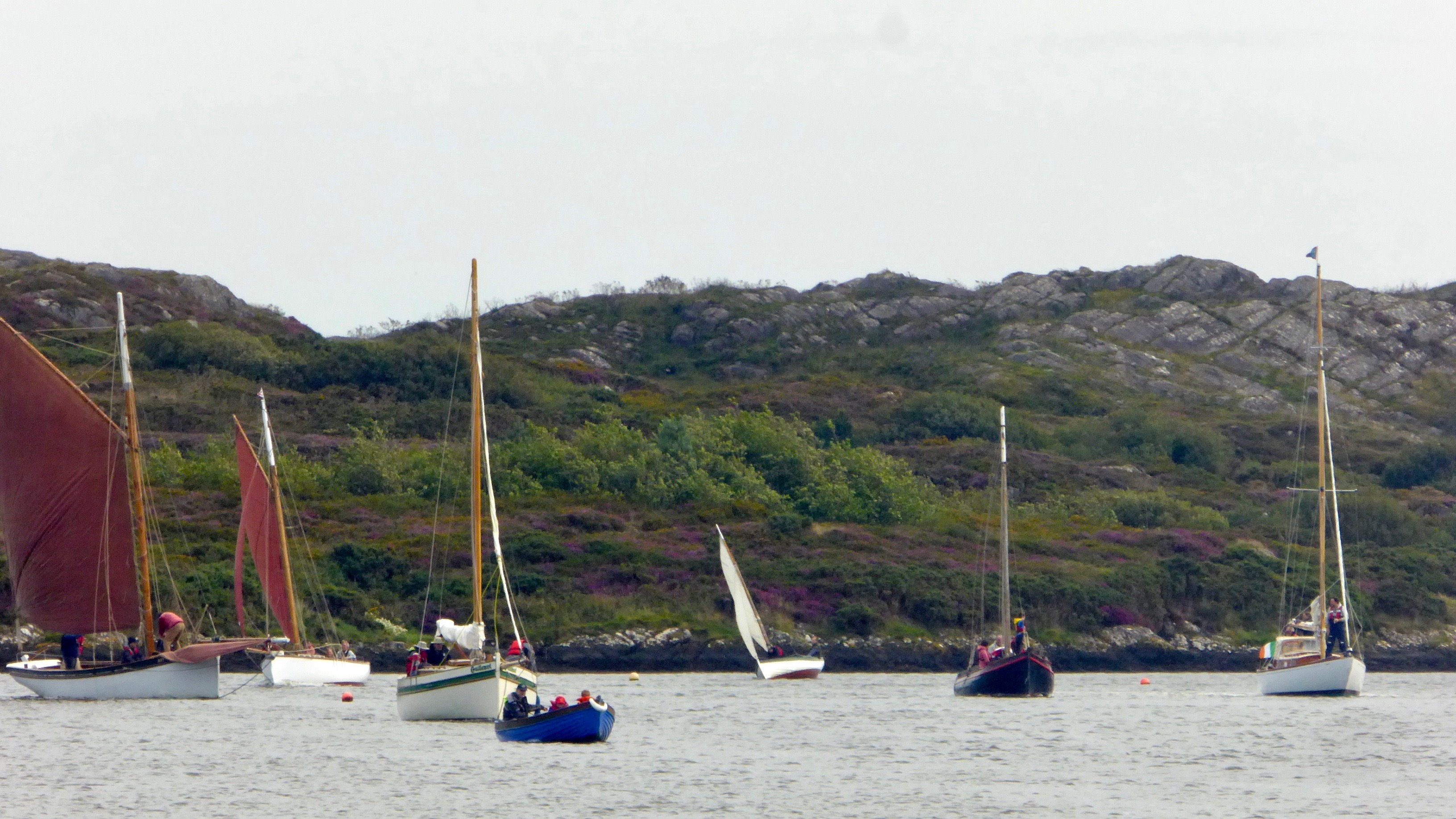
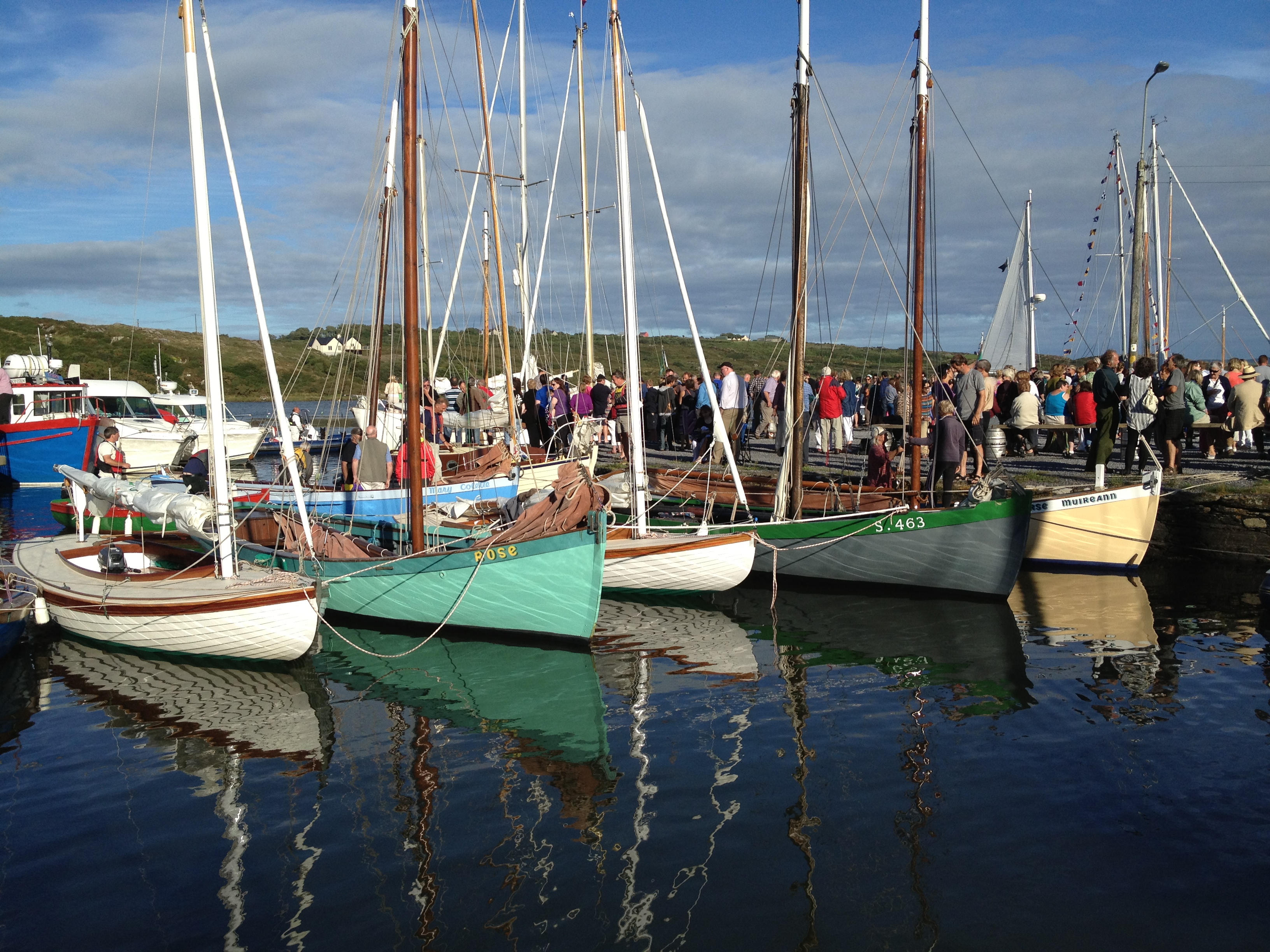
This photograph shows the relative size of the three boats used in the Heir Island fishery. Left to right is the Saoirse Muireann, the Saoirse and the Hanorah

They had an iron bastible pot they called ‘the oven’ to hold the coal fire. The set-up for the fire had to be very carefully and safely arranged. A thick piece of cast iron was placed on the thwart mid-way in the boat and the fire pot was put on top. All the cooking was done on this fire. A pig’s head, potatoes and vegetables were all boiled together in an aluminium bucket. They also cooked fish. One man was in charge of the bread-making. They made white soda bread – very thin cakes that baked quickly. Bits of soot sometimes got into the white flour and the bread would have black streaks in it.
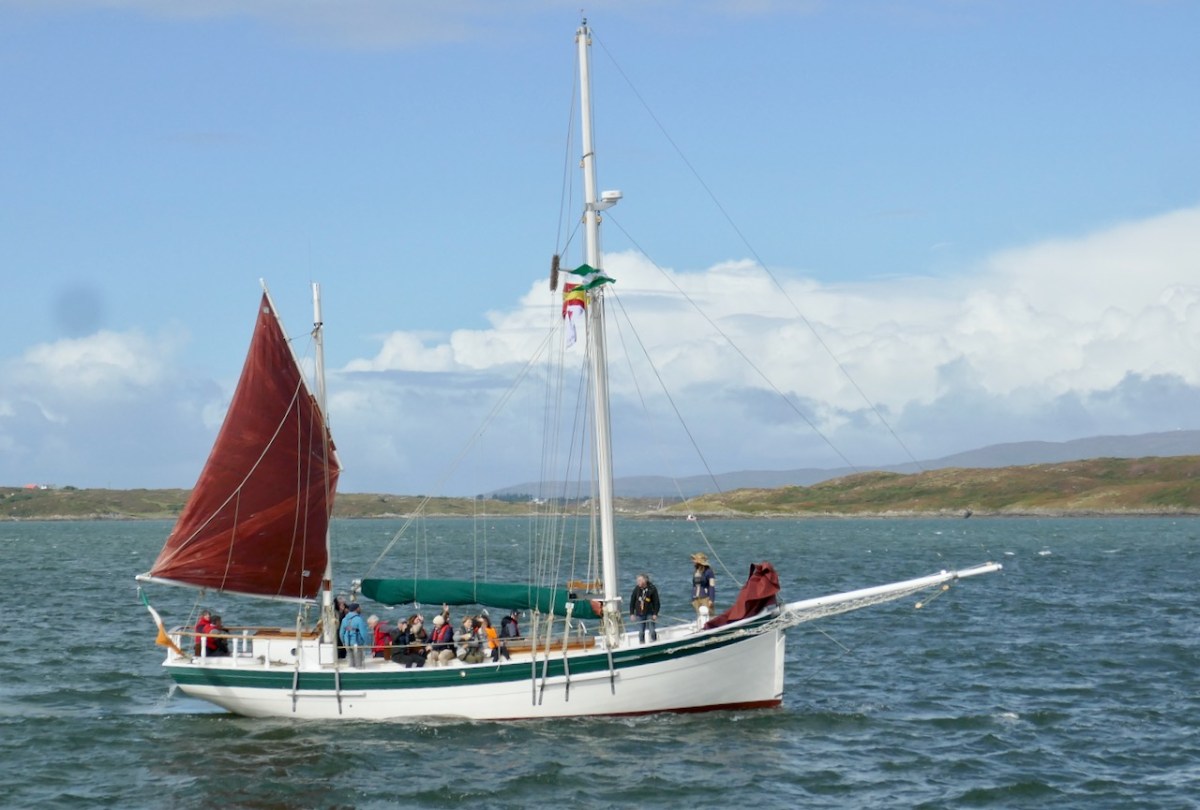
This is the largest of the boats. This is the fabled Saoirse, a replica of the boat sailed around the world by Conor O’Brien is 1923-25. It is a 42′ Ketch and the design was based on a traditional Roaringwater Bay fishing boat

There was smoke and soot everywhere and the men’s skin and clothes were black on their return home and took weeks to get clean again. The combination of soot, salt water and the hauling of ropes caused the skin of their hands to crack. Their ‘intensive care lotion’ was to ‘pee’ on their hands to toughen the skin. They all put on lots of weight during the lobster season and when they came home and their skin cleared of soot, they had a great healthy colour.
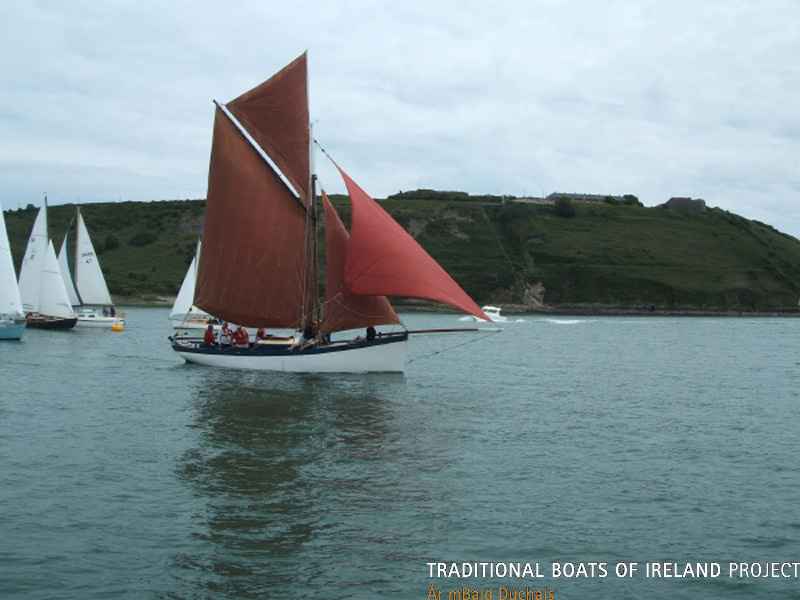
Joe says in his account In 1934, when I was thirteen, we got a boat built by Harry Skinner at Baltimore.This was a small light boat, not the boat above, but I am including this image as it is of a Skinner-built mackerel yawl. It’s from this source.

Washing and shaving were done by sitting the basin of water into the open end of a lobster pot to keep it steady. The same tin basin was used for everything – washing, shaving and making bread. Three towels had to do them for the whole time they were away and these towels were jet black when they came home. They wore flannel underwear – ‘the wrapper’ was a thick vest top with long sleeves and ‘the drawers’ were full length long-johns. The women made all these by hand from their own patterns. All the seams were sewn by hand – herringbone stitch to make sure they never ripped. The younger men didn’t like wearing this heavy underwear but they soon found they were so cold out at sea that they were glad to have them. Each man had three sets of underwear kept in a flour bag with their other clothes and a small bottle of Holy Water.
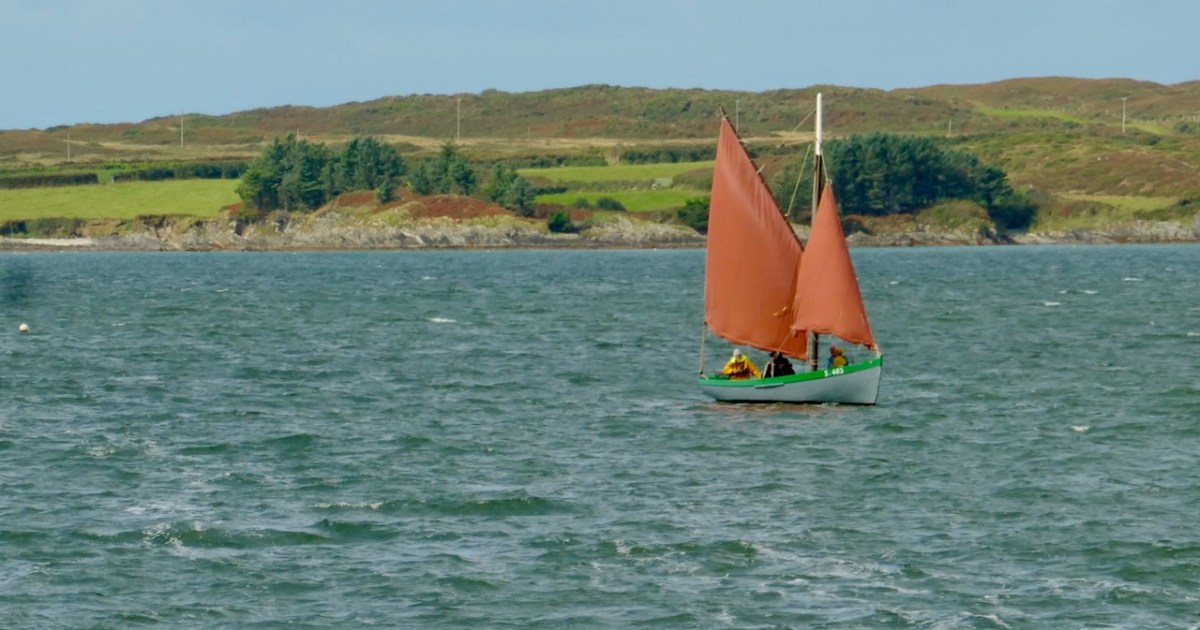
The Hanorah is another traditional boat built at Hegarty’s – this one was used for mackerel fishing

The lobster-men were really skilled at their job. They knew exactly where to get the lobsters and how to handle them without getting bitten when moving them from the pots to the storage basket. This basket had to be kept submerged under a buoy until they went ashore and sold their catch to buyers along the coast – lobsters had to be sold alive. 
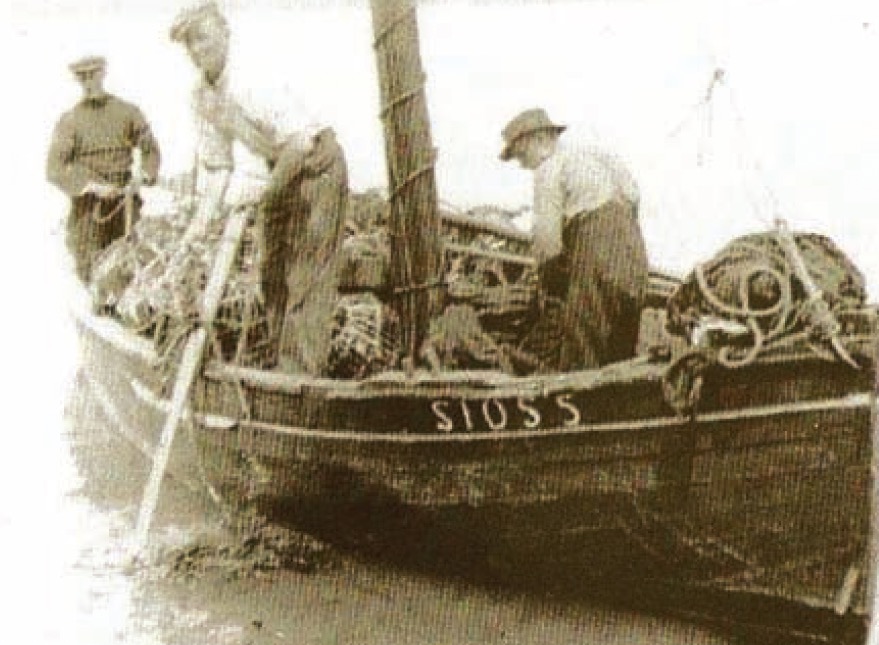
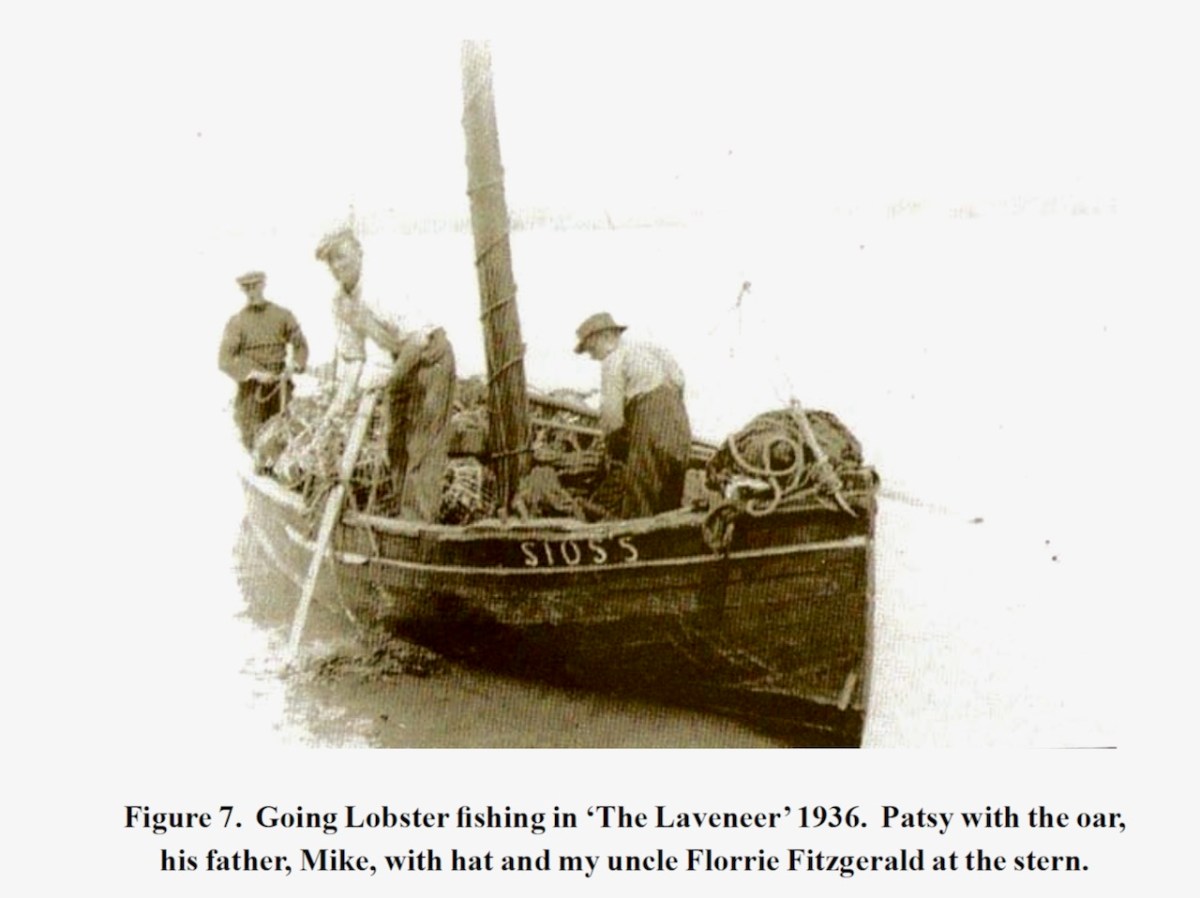
A closer image of the Laveneer loaded with lobster pots

The three men had to get on with each other in a very small space and co-operate together for their own safety. They said the Rosary together every evening and used their Holy Water to bless themselves, their boat and their pots. Patsy’s father, Mike O’Neill (called Mike, the Laveneer or Mike Mary Harte) was considered one of the best boatmen around. He was described in Heir Island as “the safest man going out the harbour mouth” (Baltimore Harbour).
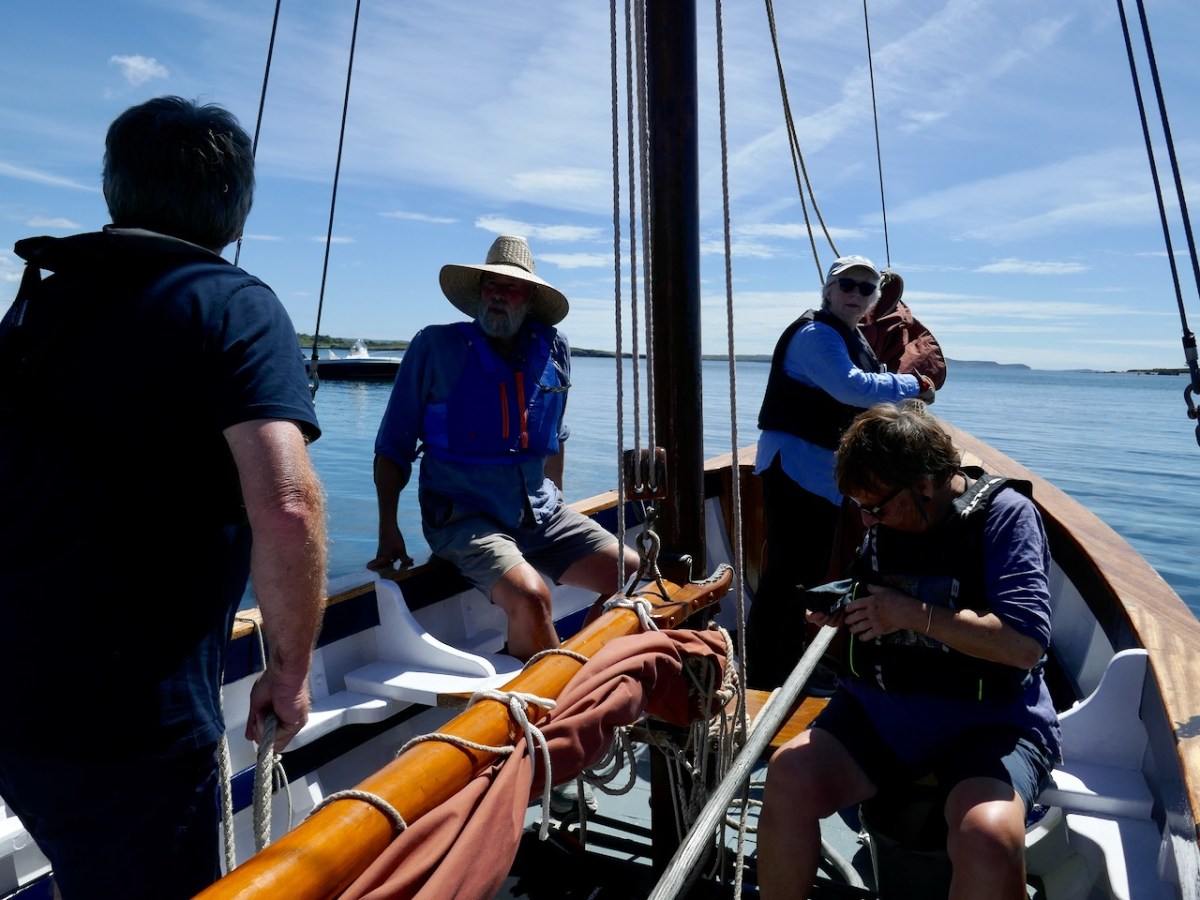
This is aboard Cormac’s Saoirse Muireann this summer – it will give you a feel for the kind of room we had in the boat

Hester’s memories above were of her father’s generation, but her husband, Patsy also went to sea when he needed to and it was an anxious time for Hester.
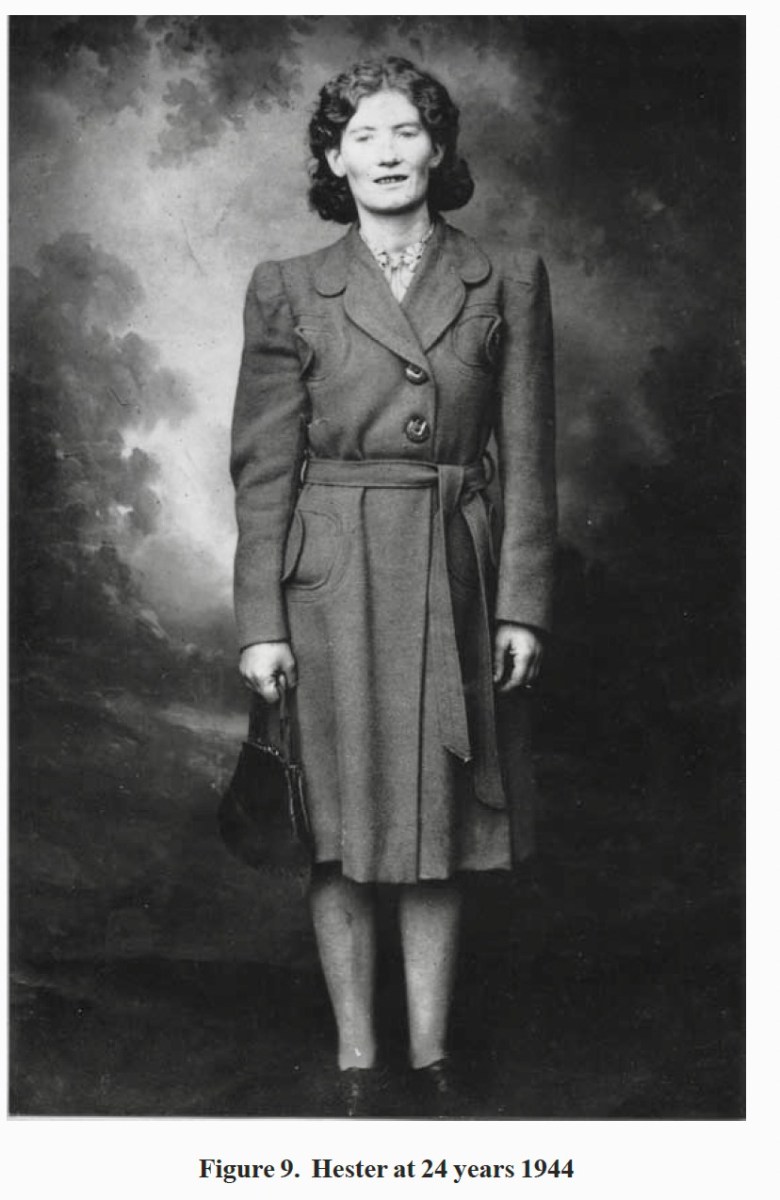
In the last few winters before we left Heir Island Patsy went herring fishing to Dunmore East in County Waterford. He went with a crew from Cape Clear in a small trawler called ‘The Radiance’. Herrings were in great demand in those days and when they had a week of good catches, he sent the money home in a registered letter. I tried to save some of it for the day when we might be able to get a place in the mainland. I remember how the children and I used to write letters to him and address them to ‘Boat Radiance’ c\o Dunmore East Post Office where he picked them up when they landed their catch, and wrote back to us. He could be away for up to three months in the depths of winter and I was always worried for his safety in the stormy seas on those cold winter nights.
It might be a while before I get back to Hester and Joe, but there is lots more to tell from their accounts on life on a small island in Roaringwater Bay
The Return of the Earls: The 2025 Crowley Clan Gathering

I spent Saturday in Baltimore celebrating, with dozens of Crowleys, a signal occasion. This celebration involved the iconic boat The Saoirse, exhaustive genealogical research, long lost cousins meeting for the first time in over 300 years, and a remembrance of a devastating episode in Irish History – the Flight of the Earls. 

Let’s start with the Flight of the Earls. The Battle of Kinsale in 1601, was the moment that marked the end of the power of the great Irish families and the end of the Gaelic way of life. Many heads of those families who had fought at the battle fled Ireland from Rathmullen in Donegal, heading for the continent, in 1607. Their names can be found in the lists of those who fought in the armies of Spain, France and the Austrian Empire, as well as, sometimes lightly disguised, as landowners, wine-growers and grandees in those countries.

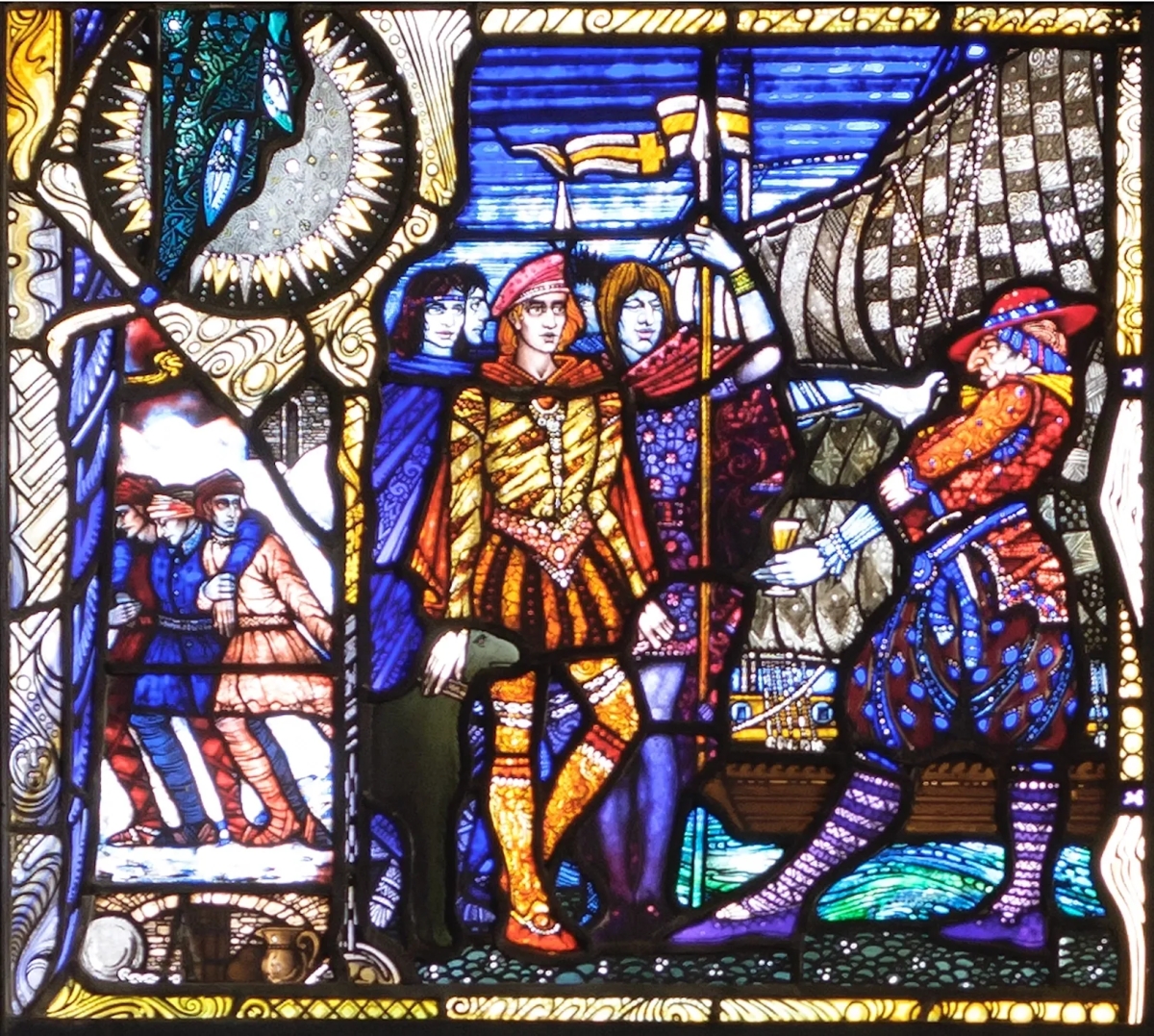
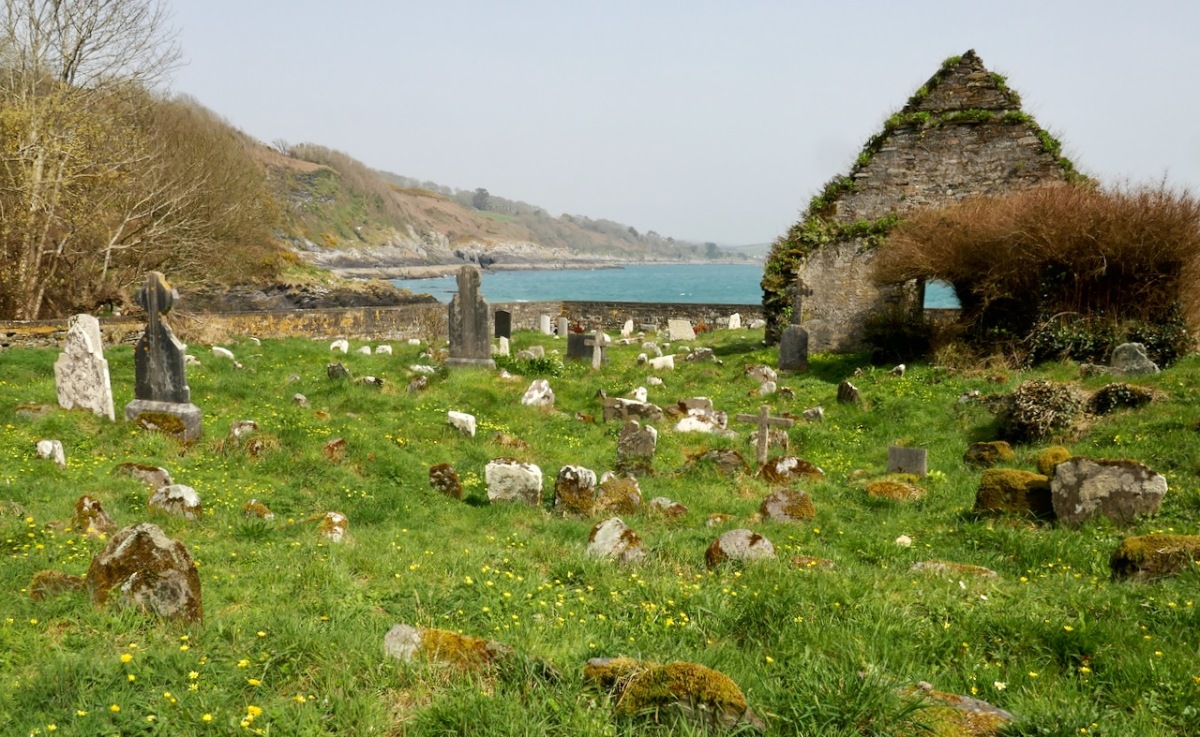
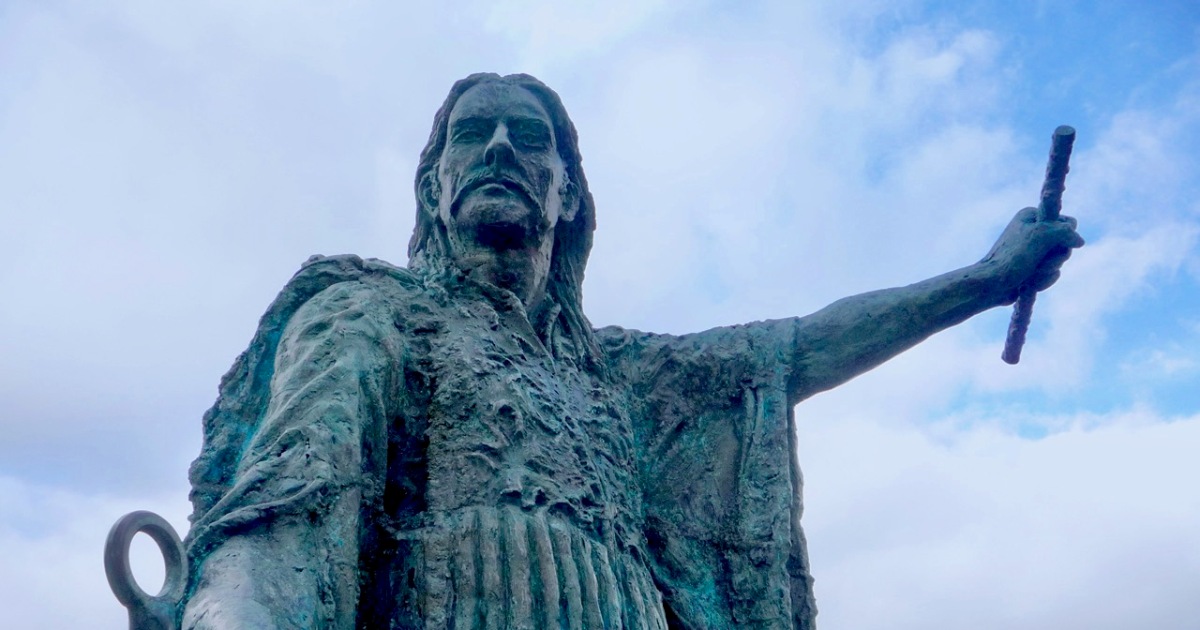
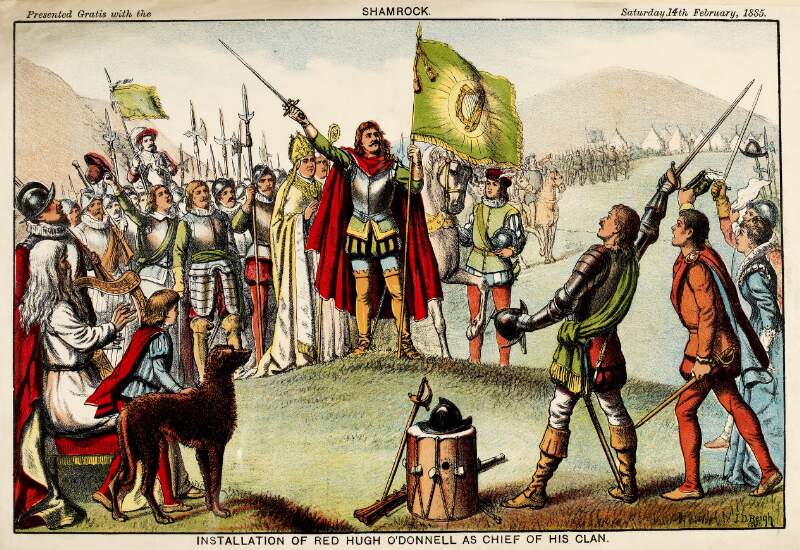
However, one of the leaders, Red Hugh O’Donnell of Donegal, set out earlier, on January 6th, 1602, and he sailed from nearby Castlehaven (below). You can find the whole story, told in a highly entertaining way, on the website of our old friend Gormú. That’s Richard King‘s rendition of Red Hugh, above, being offered a poison cup by a traitor, causing him to die in Spain (where his grave has recently been identified). My lead photograph is his statue, by Maurice Harron, in Donegal town and the cartoon is by John Dooley Reigh, from The Nation (I think). We in West Cork have never forgotten that this is a West Cork story and we feel we can claim Red Hugh as one of our own. This connects us in a special way to the whole saga of the Flight of the Earls.

That flight did not stop in 1607 – Irish men and women, clan chieftains, soldiers and peasants alike, continued to leave for the continent over the next centuries. 

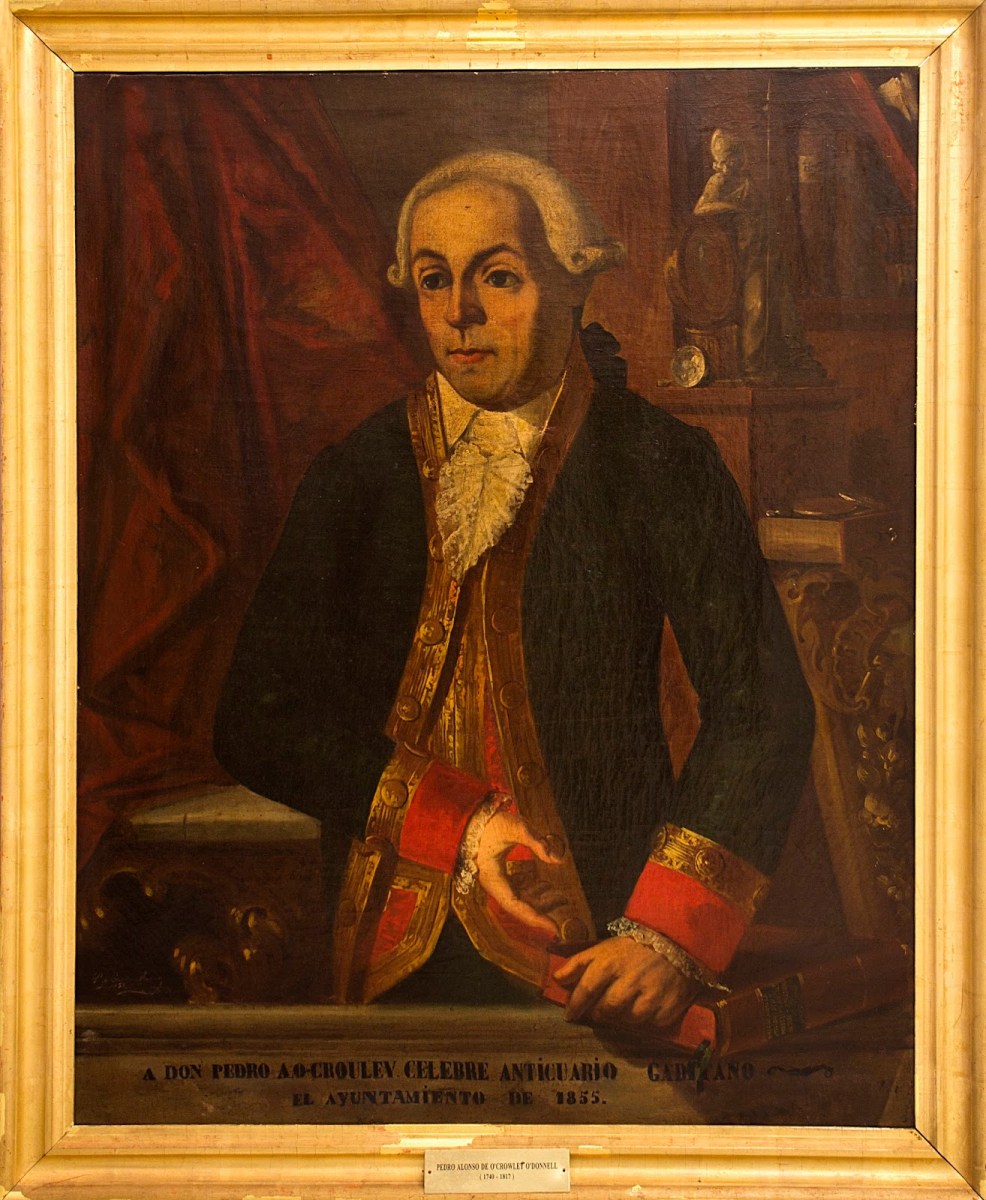
Among those who left were the parents of Don Pedro Alonso O’Crouley. Here are the details from the Crowley Clan website:

Pedro Alonso O’Crouley was born in Cadiz in 1740. Both his parents had emigrated from Ireland. His father Dermetrio (Diarmuid or Jeremiah) was from Limerick claiming descent from Cormac O’Crowley born in Carbery, Co. Cork in 1550. His mother was an O’Donnell from Bally Murphy in Co. Clare.

At nine years old he was sent to France where he got a classical education from the Augustinians at Senlis. He chose to follow a career as a merchant and got a licence for Veracruz and made his first journey to Mexico at the age of 24. Over the next ten years he repeated the journey several times and built up a large fortune from his trading business.

While in Mexico, or “New Spain” as it was called, he gathered every bit of information he could about the country and its history, geology, vegetation, animals, etc. and wrote up his findings in the “Idea compendiosa” – A description of the Kingdom of New Spain” in 1774.

After returning from Mexico O’Crowley stayed on in Cadiz pursuing his interests in antiquities and history. In 1794 he published a catalogue of his private collections called “Musaei o’croulanei”. It lists over 5,000 Greek and Roman coins and 200 paintings including works by Van Dyck, Rubens, Murillo, Velaquez, Zurbaran and Ribera. He also had many geological specimens he had gathered in New Spain.

Pedro remains very famous in Cadiz, where his house functions as a museum. And – there are descendants! In 2014 the Crowley website received a letter:

My name is José María Millán Fuentes, and I am a descendant of O’Crowley. I live in Cádiz, Spain, and I am doing work for the University of Málaga on my ancestors. I speak very badly English, but I have a lot of interest in the topic. I would like to help you, and that you also should help me. I have read in your web Antonio Castro, and also I descend from Pedro Alonso O’Crowley O’Donell and Adelaida Riquelme O’Crowley. I have a lot information about the family up to Pedro Alonso, but then everything fades away.

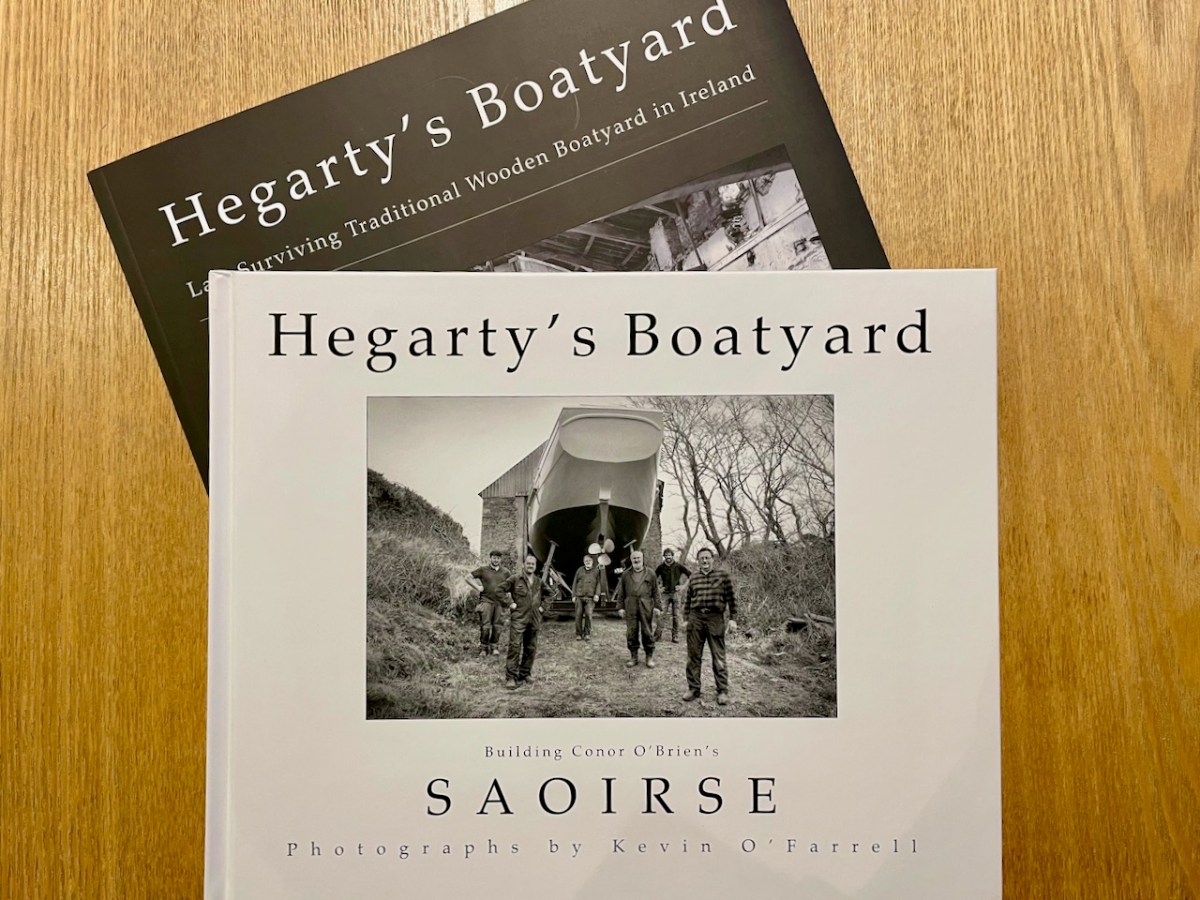
Eleven years later, José Maria is to be the guest of honour at the Crowley clan gathering. The committee discusses how best to make the most of this moment and comes up with a genius idea. He should arrive by sea, born into Baltimore on the iconic boat, the Saoirse. Read about the Saoirse here, and for true traditional wooden boat enthusiasts, you can buy Kevin O”Farrell’s brilliantly photographed book on its reconstruction in Hegarty’s boatyard. 

The Saoirse is a big, gaff-rigged yacht, the original version of which was built to sail around the world. It requires a great deal of skill to sail, and thus the task was entrusted to Liam Hegarty.

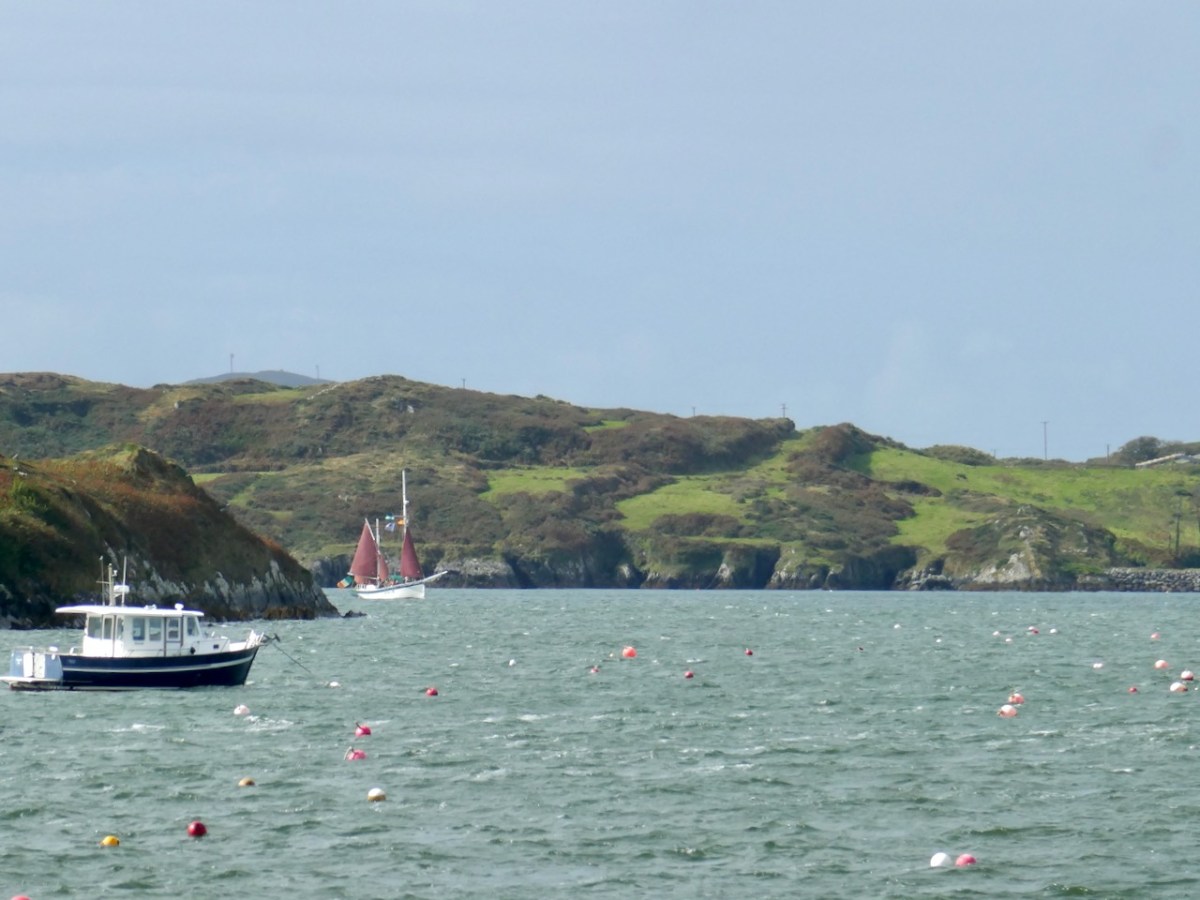
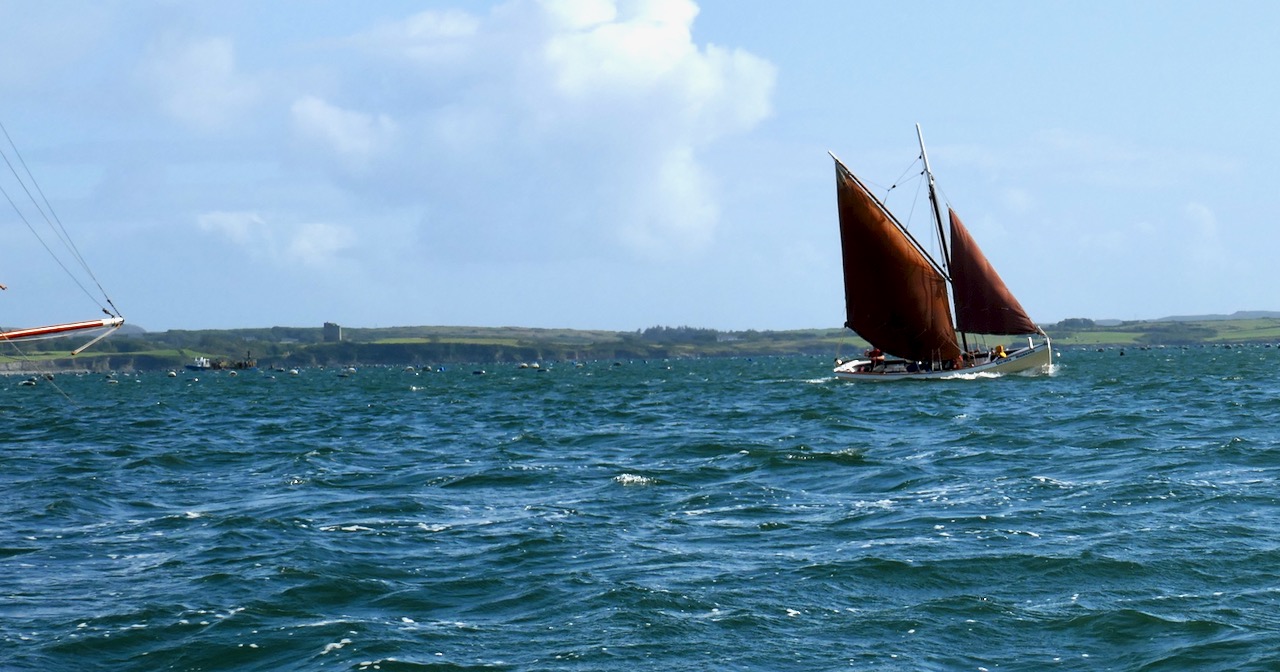
A flotilla of traditional wooden boats was to accompany her into the harbour but high winds scuppered that plan so in the end only two boats made up the guard of honour – Cormac Levis’s Saoirse Muireann (above) and Nigel Towse’s Honorah

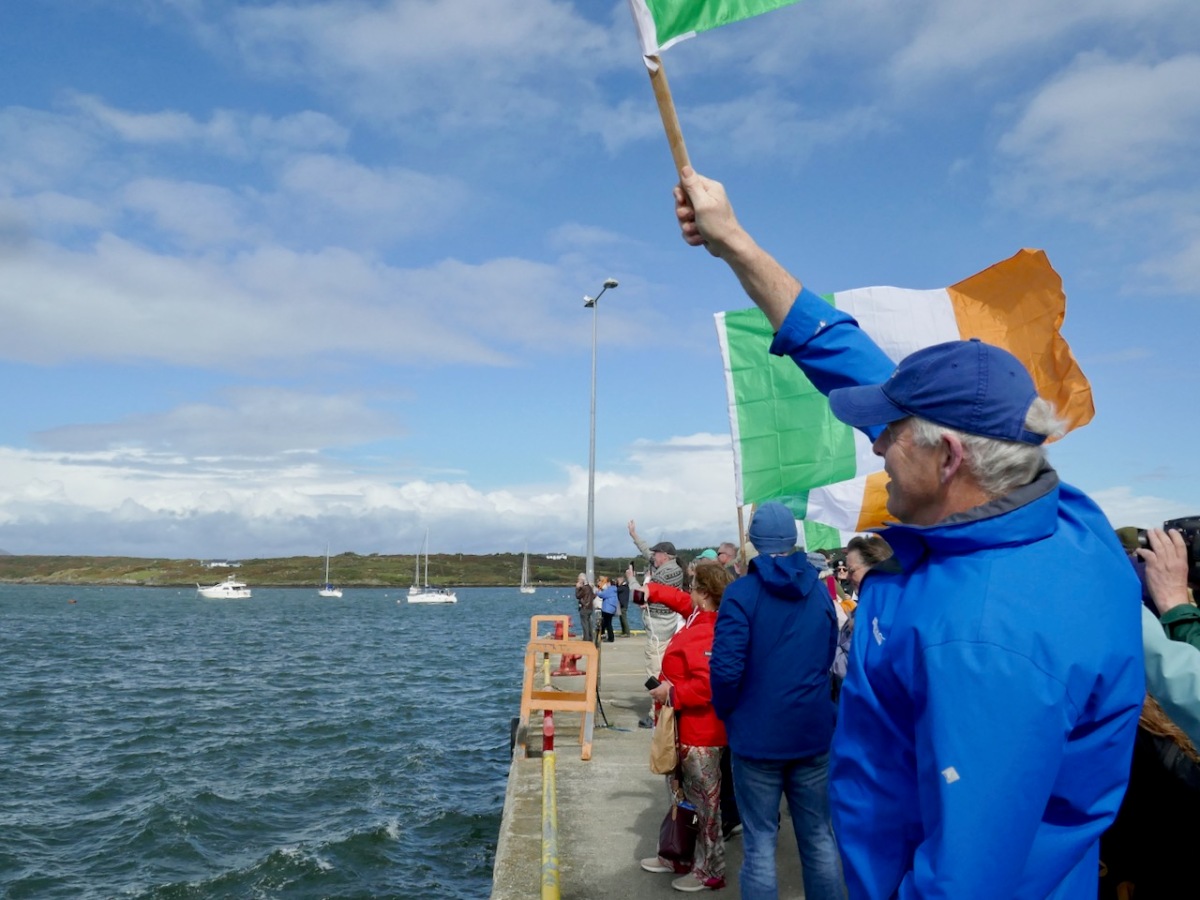
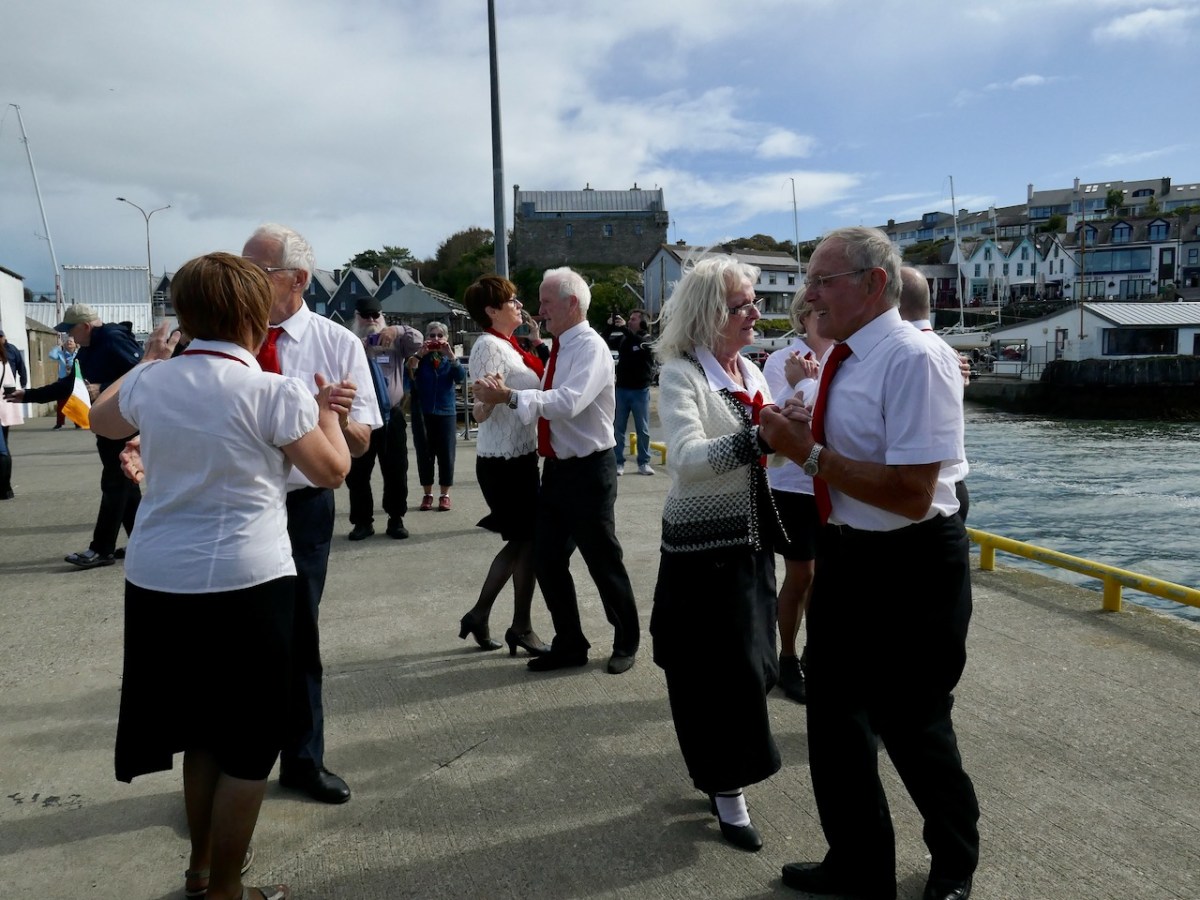
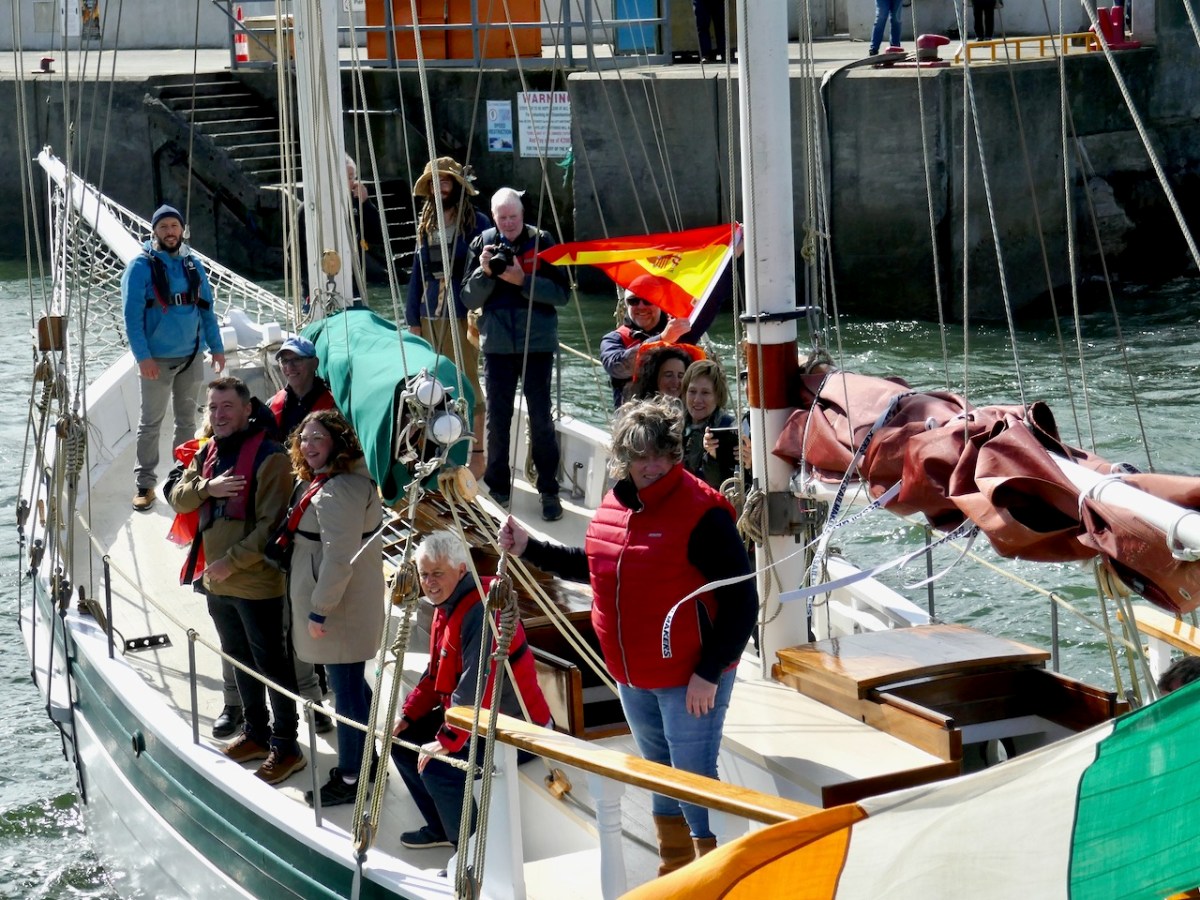
It was thrilling to see the Saoirse round the Beacon point and tack into Baltimore. I stood with a large contingent of Crowleys, waving flags and cheering, while a group of lively dancers set all our toes tapping.

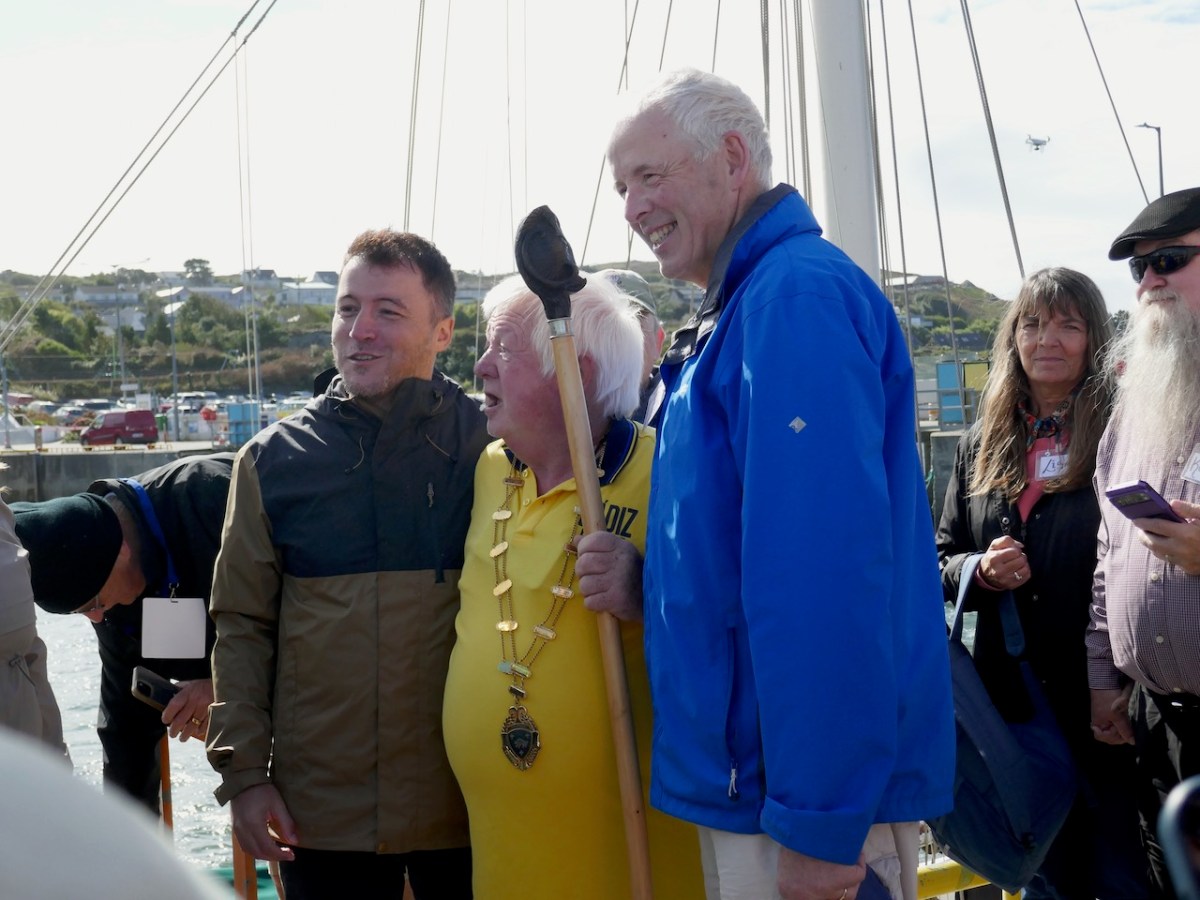
The most moving moment was when José María  climbed up the ladder to the pier, to be met with his 7th cousin, Kevin Crowley from Martinstown, Co Limerick, and enfolded in a welcoming embrace. The Clan Taoiseach, Larry Crowley gave a short, perfect speech. He said, and I paraphrase – José María, your ancestors fled Ireland 300 years ago. They were escaping from oppression, from poverty, from dispossession and from the consequences of resistance. But here we are now, all of us proud Europeans, standing shoulder to shoulder

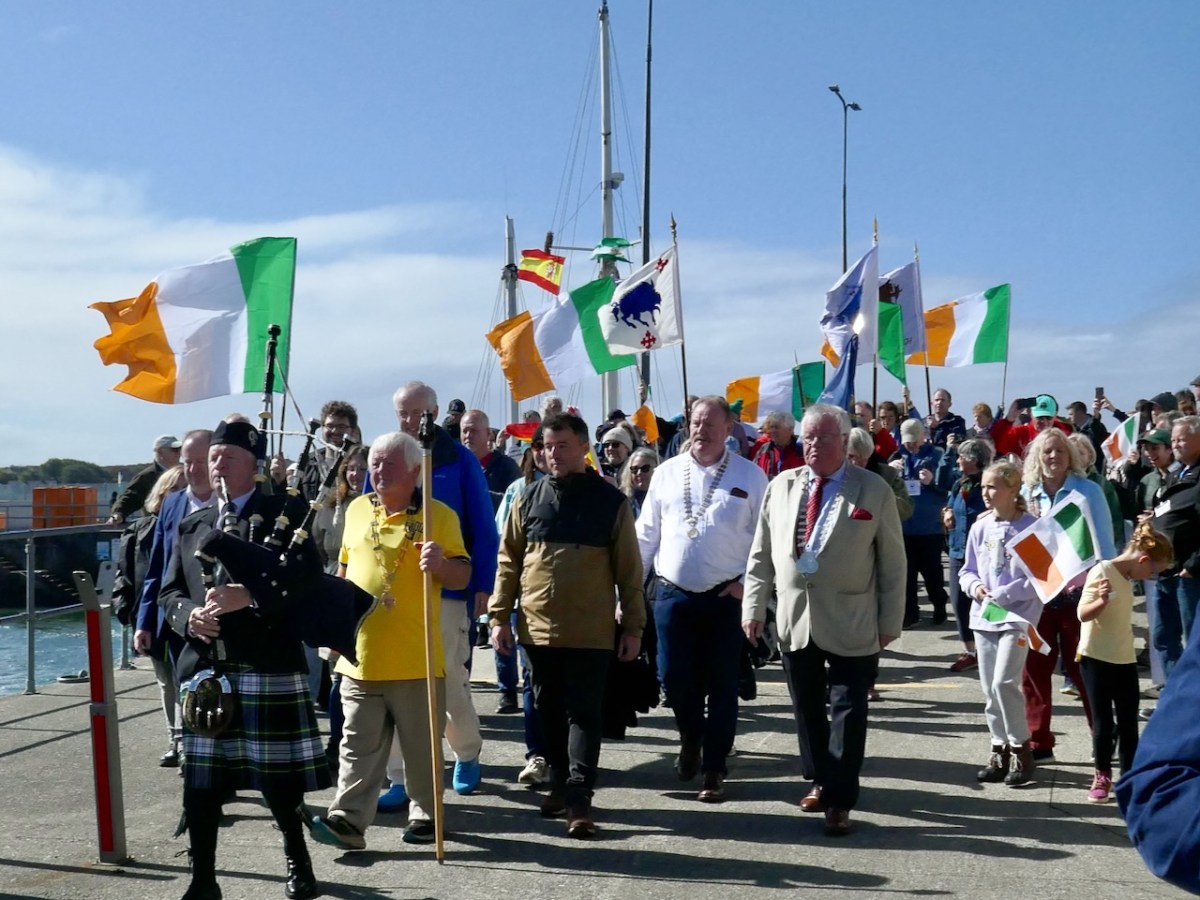
Led by a piper, we marched up to the village square.

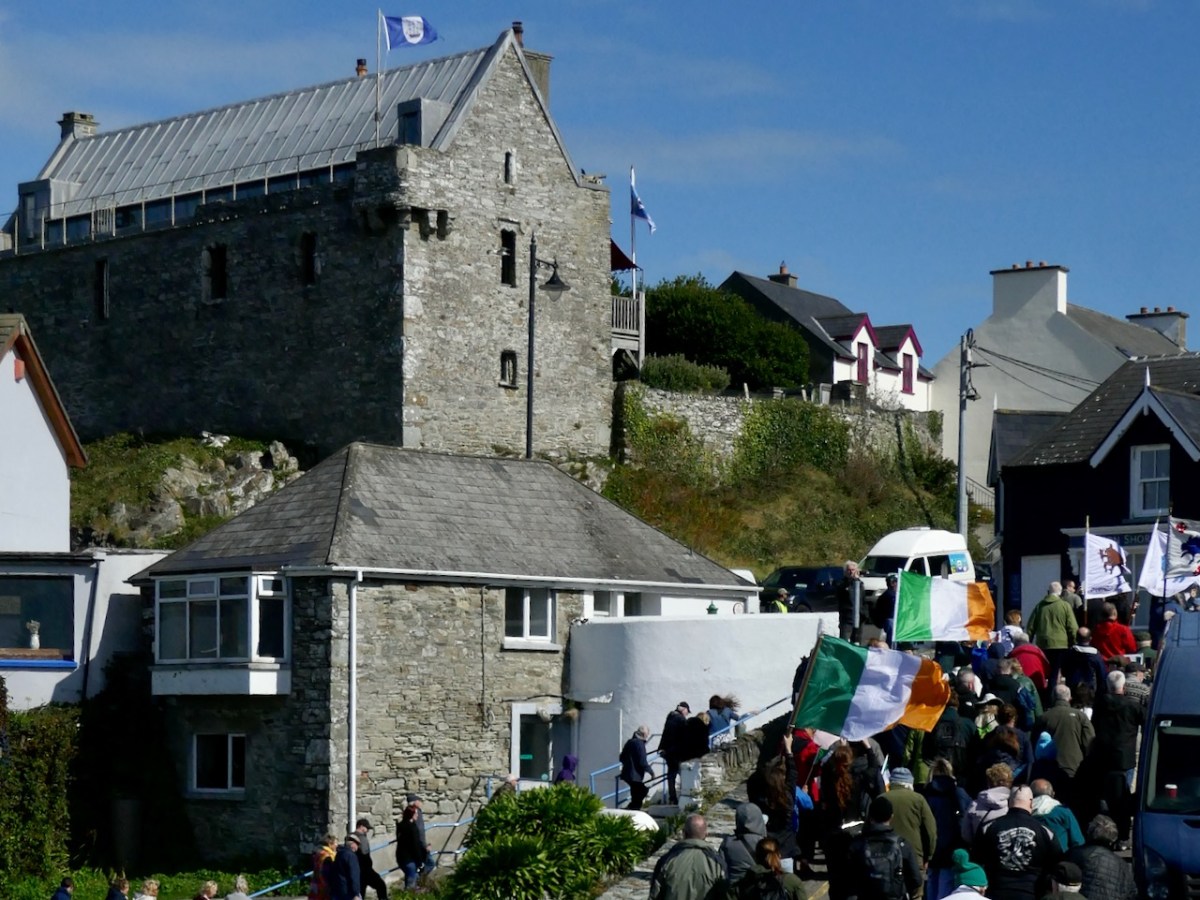
I was struck by the aptness of the Spanish flags passing under the walls of Baltimore Castle – a castle that, in its day serviced the vast Spanish fishing fleets that came for the pilchards and herring. The O’Driscolls became fabulously wealthy through that commerce, and forged alliances with the Spanish that came back to bite them in later years.

There were more speeches, including a masterful summing up of Baltimore’s history by William Casey, and then a squall had us running for cover. The Algiers Inn and other eateries in Baltimore served up a smashing array of sandwiches and soup. I chatted with New Zealand Crowleys and American Crowleys and Irish Crowleys – we all agreed that it had been a perfect Welcome Home.

I may not have all the details exactly right – corrections welcome from knowledgeable Crowleys. My special thanks to Charlie Crowley for inviting me along.

Cruinniú na mBád – the Boat Gathering

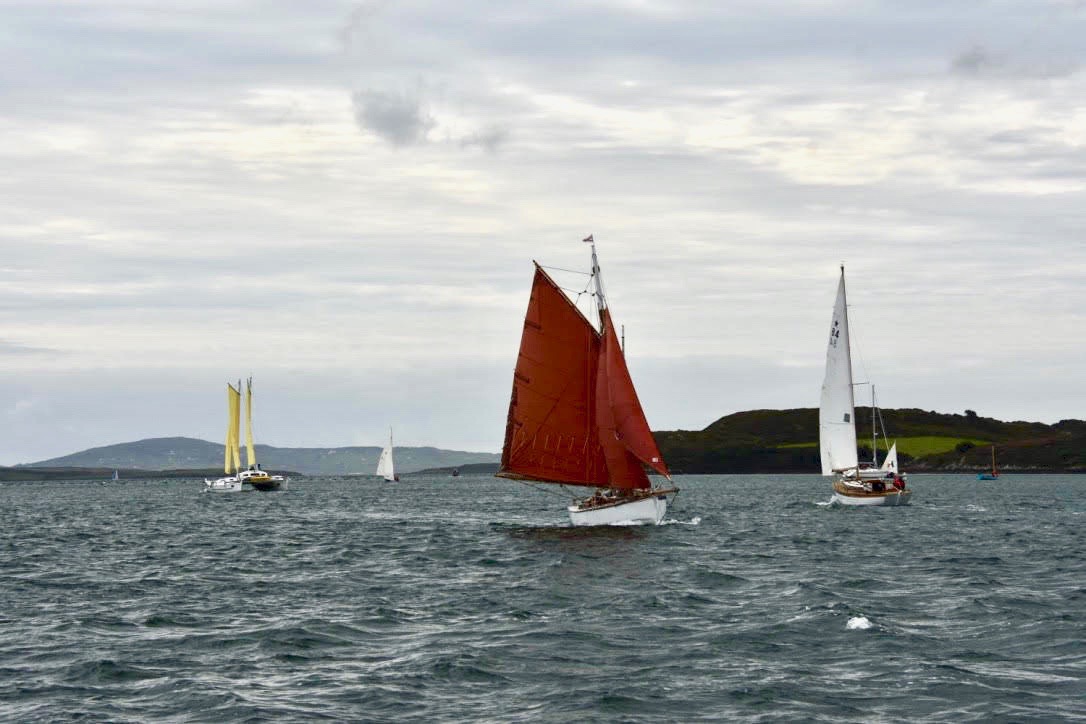
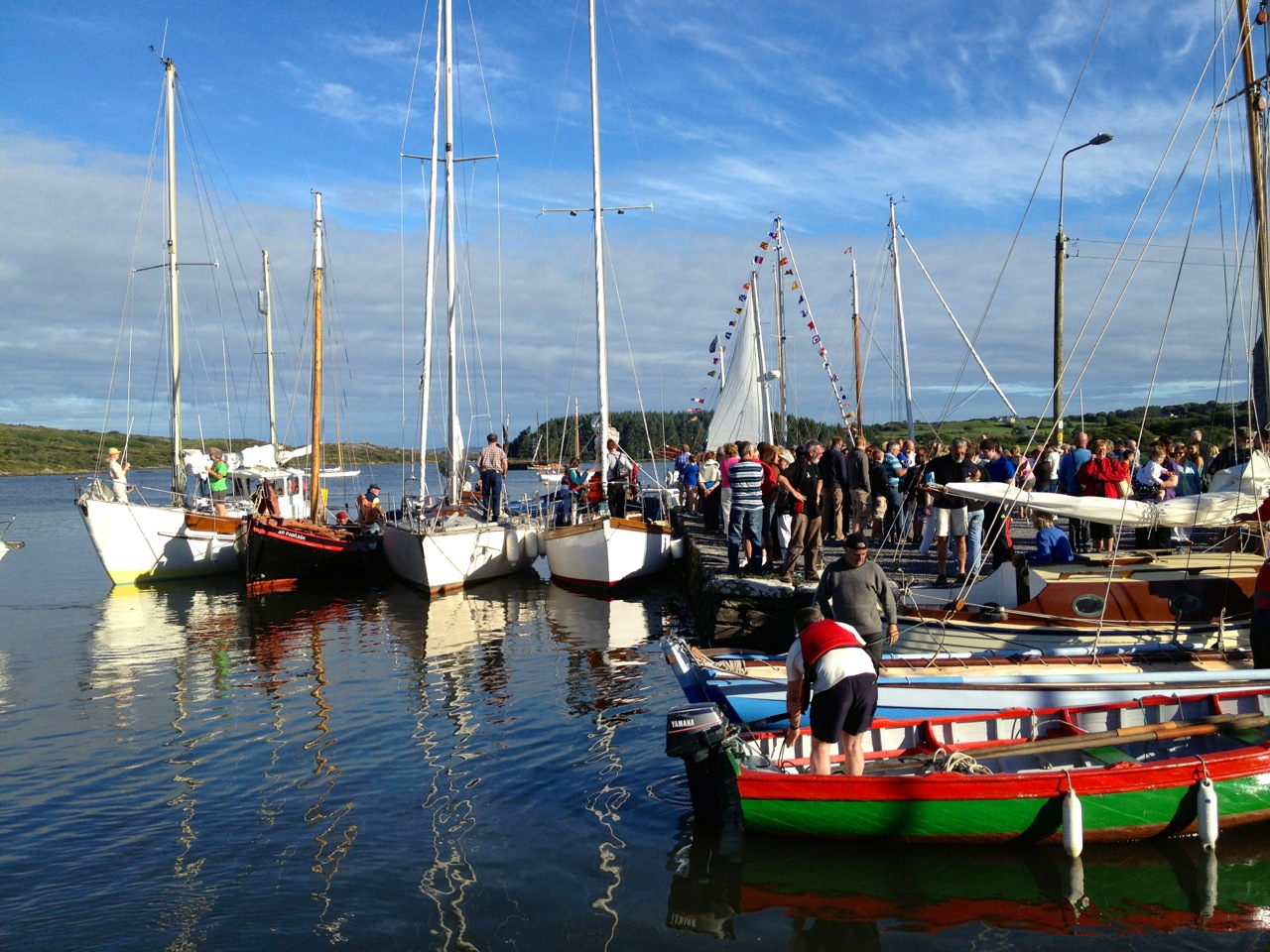
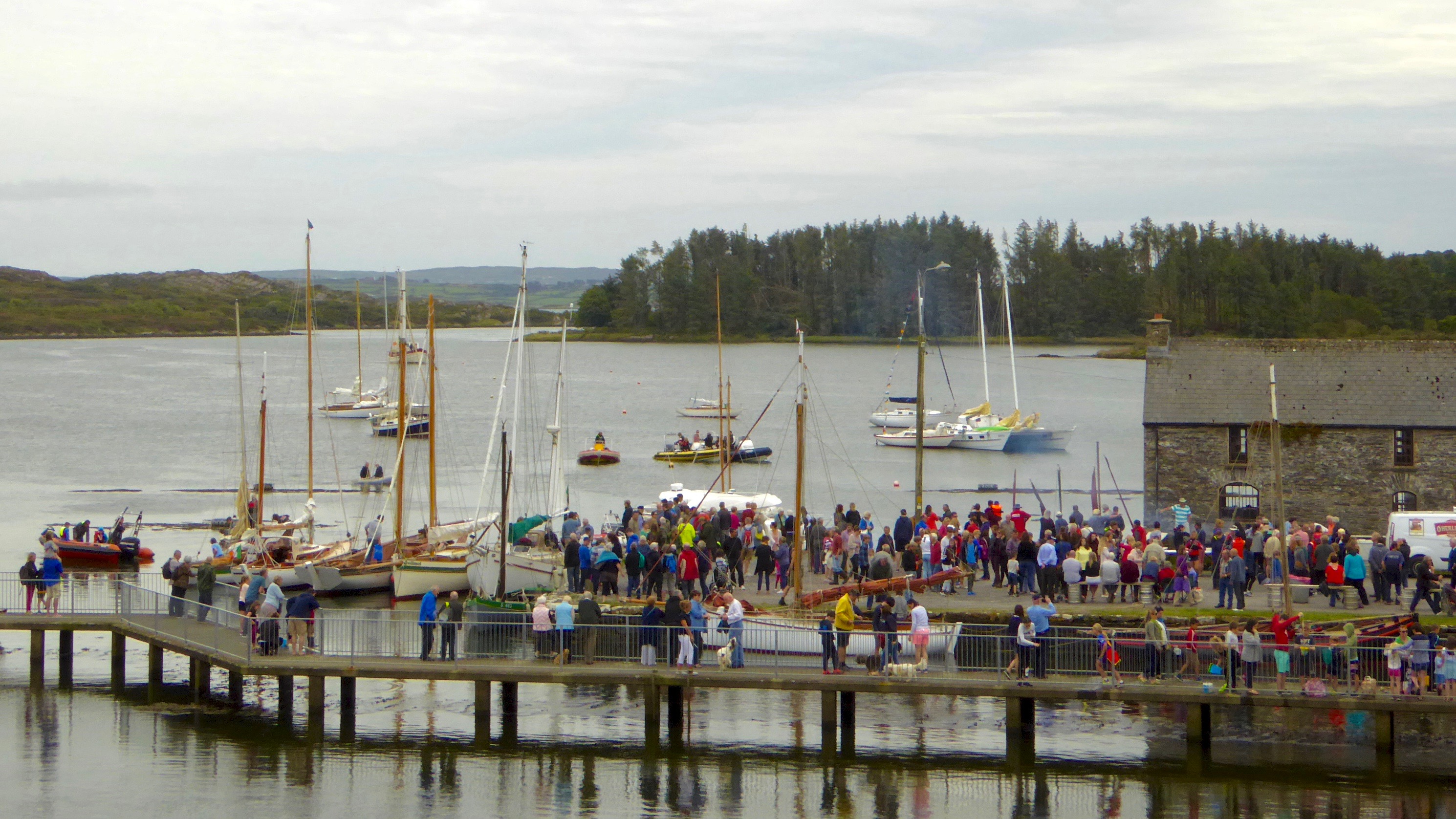
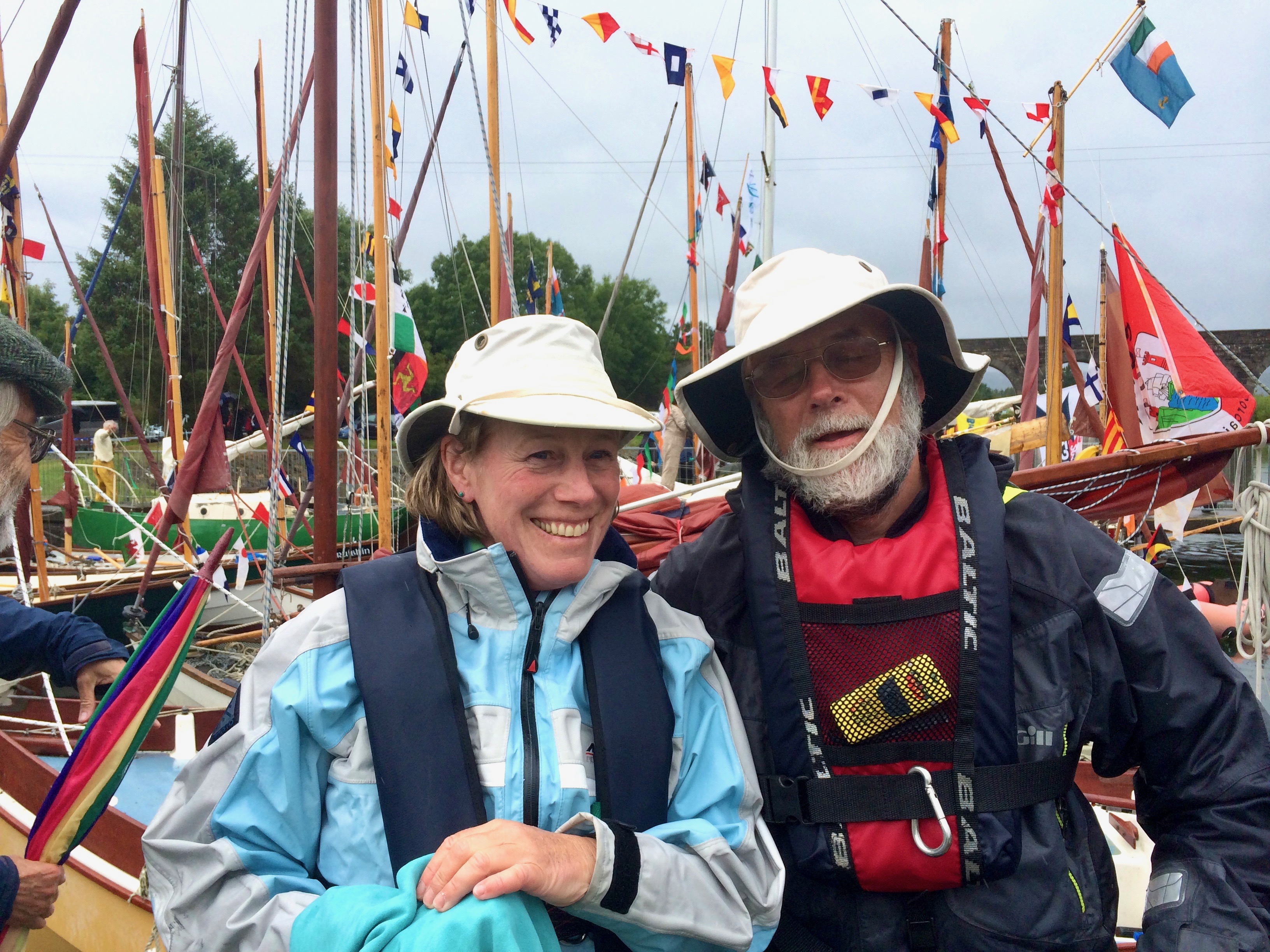
It only happens once a year! During Ballydehob’s Summer Festival traditional sailing boats gather in Roaringwater Bay and when the tide is right they sail up the shallow waters of Ballydehob Bay to the quay.*

This is a tidal estuary and normally not deep enough to be a reliable port of call for boats, especially those with keels. But during the high summer tides the waters become navigable, provided you time it right, and Ballydehob breaks out the band, fires up the barbecue and invites all sailors to the quay for a gathering like no other.

The Cruinniú na mBád (pronounced krinoo nuh mawd) is part of the village Summer Festival so from year to year it’s a real community affair. The vintage cars and tractors (my goodness there’s a lot of them in West Cork) parade behind a marching band to kick off the week of festivities. The week is filled with music in the pubs, guided walks around the village, charade competitions, and an evening of street sports where we cheer on the youngsters in the madcap turnip race and a completely socially irresponsible event involving chugging beer and pushing a wheelbarrow with an occupant (only in Ireland!).

Turnip races down the main street and crab fishing at the quay

On the weekend the whole village takes to the Pier. The kids compete for medals in crab fishing, there’s a “world famous duck race” (I have no photographs as it’s been cancelled due to bad weather so often), there are fireworks (when it’s dry enough) from the Twelve Arch Bridge, and we await the arrival of the Old Boats.

This year’s entertainment was the fabulous East coast Jazz Band. We catch up on the chat, and look out for one of our popular locals sailing in

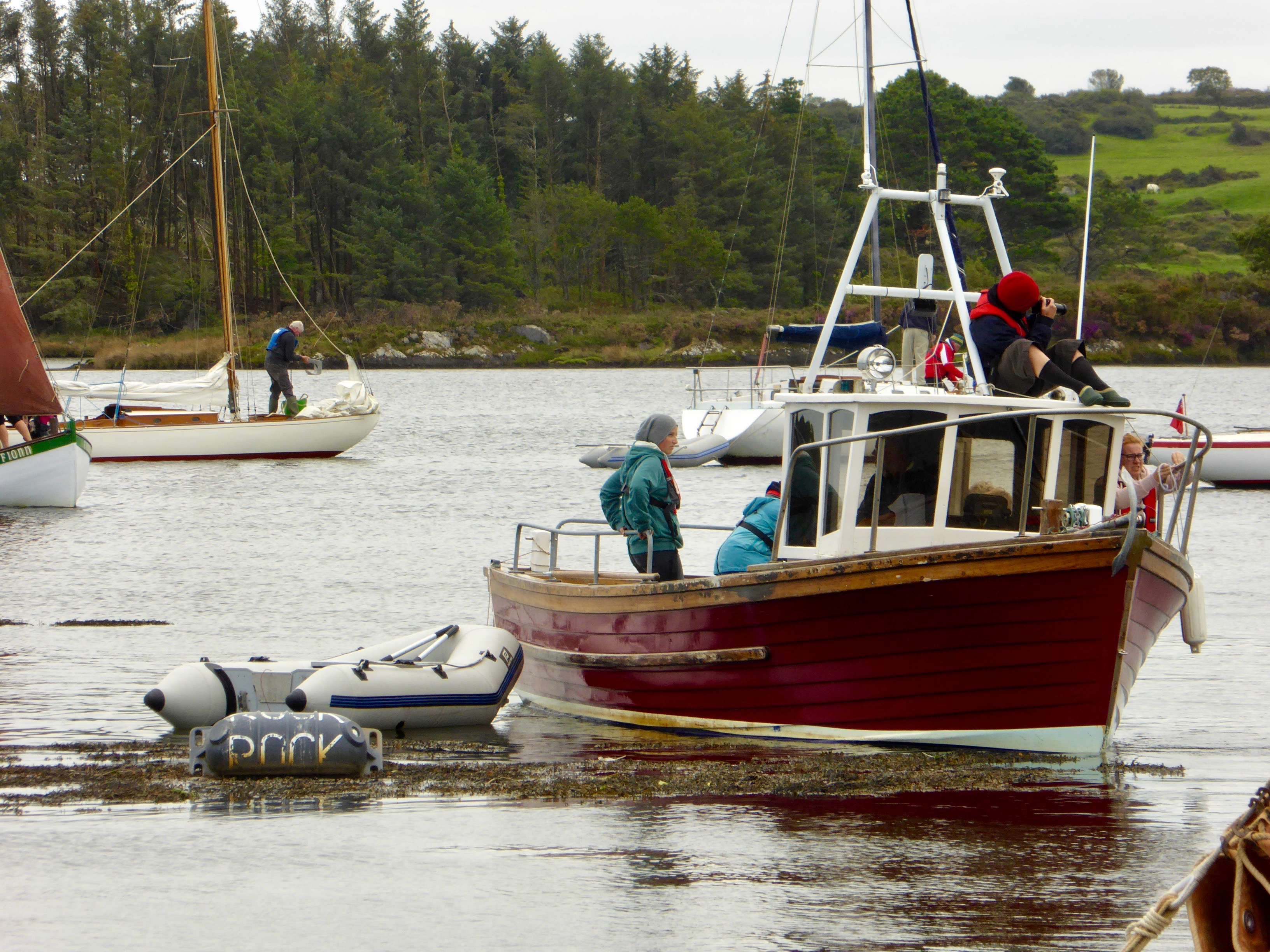
It’s an oddly emotional experience to see the boats appear, one by one, and round the bend into the last stretch to the quay. Emotional because this is essentially a re-enactment of what was commonplace in former days, when the quay at Ballydehob was a bustling hive of commerce. Bigger boats would anchor at the entrance to the Bay and lighters would haul the cargo to the quay.

Not all the boats are old – some have come just to be part of this unique gathering – but most are traditional and many of them have been lovingly restored. Some, like the Ette, have been rescued from extinction and reconstructed from crumbling derelicts by master boatbuilders Anke Eckardt and Rui Ferreira – check out their site for an illustrated guide to the slow and skilful processes involved.

Anke and Rui arrive in their Ette-class boat

At this year’s gathering Anke’s parent, Dietrich and Hildegard, our neighbours and friends, were there with their classic fishing boat, the Barracuda.

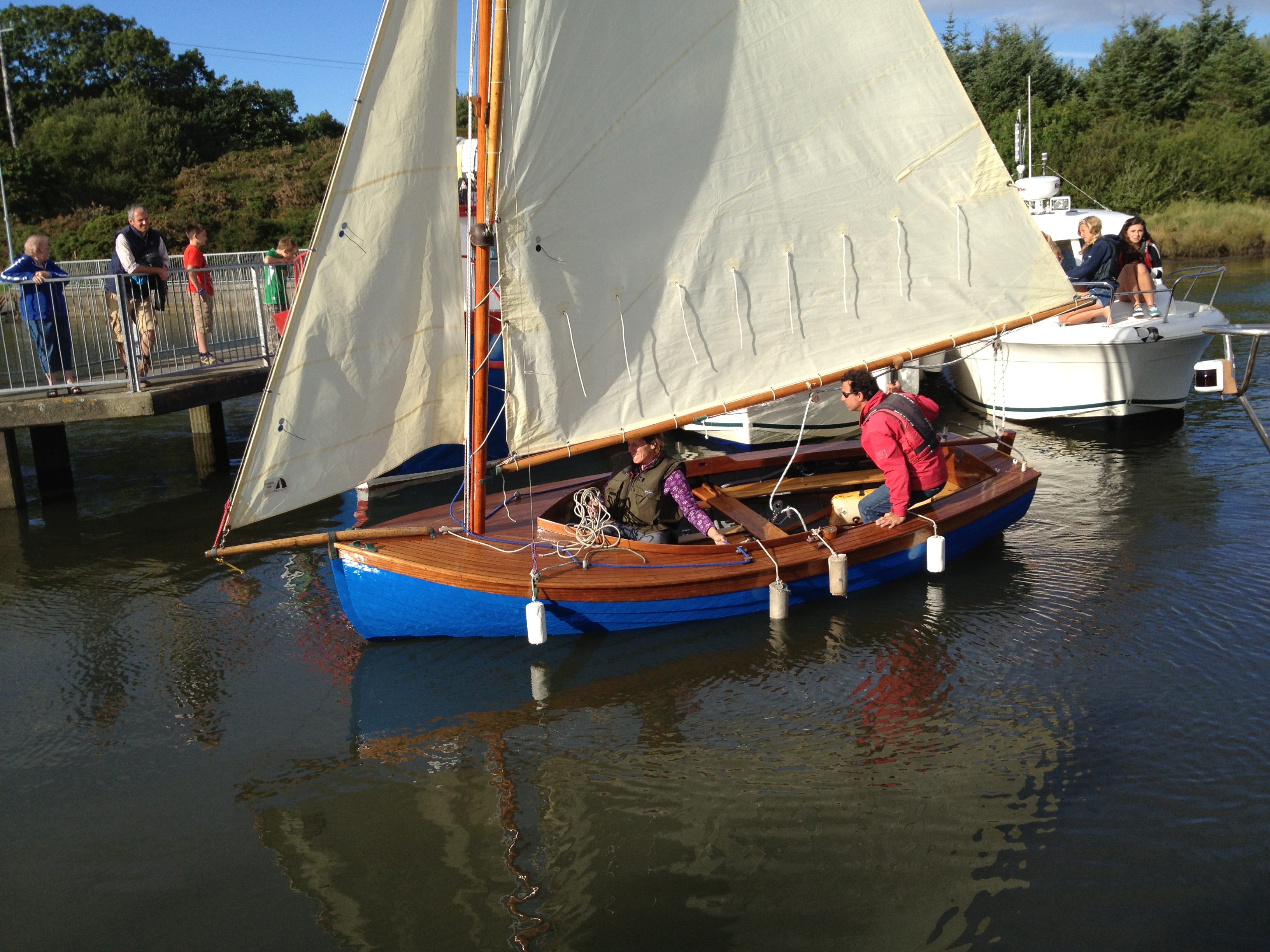
The whole Levis family sailed in on their beautiful Saoirse Muireann (seer-shuh mirren, Freedom of the Seas), a traditional Heir Island Lobster Boat. Cormac has written the book, literally, on these boats: Towelsail Yawls: The Lobsterboats of Heir Island and Roaringwater Bay. He started this gathering way back in 2004 and it’s been going strong ever since.

Saoirse Muireann coming in to dock. The term towel sail comes from the Irish word teabhal (pronounced towel) meaning shelter, as the sail could double as a kind of tent in wet weather.

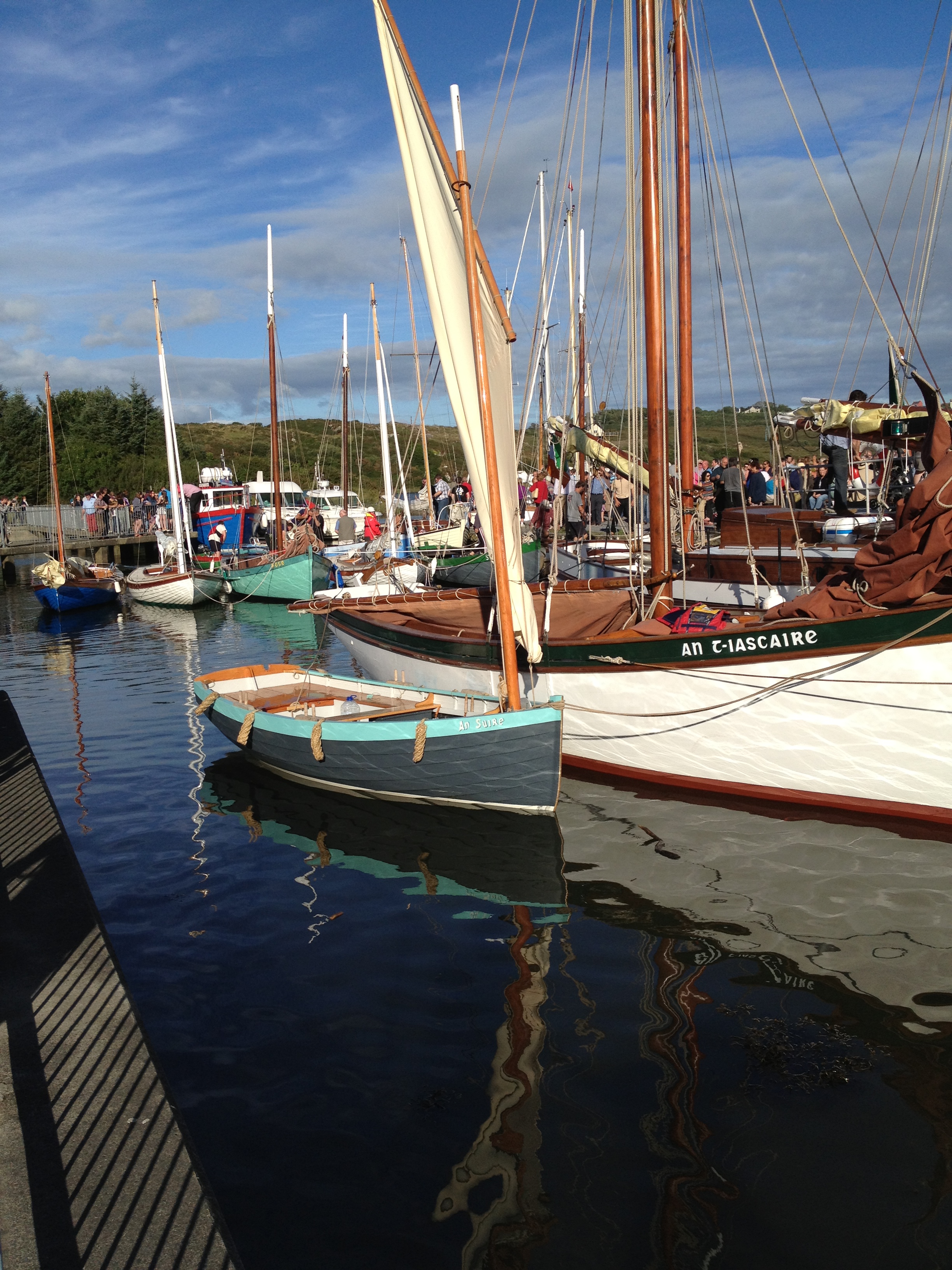
Another traditional boat was An tIascaire (on tee-skirruh, The Fisherman), a traditional mackerel yawl. Like many boats in these parts, this one has benefitted from the extraordinary knowledge of the boatbuilders at Hegarty’s Boatyard at Oldcourt – regular readers will remember Robert’s post about this wonderful place.

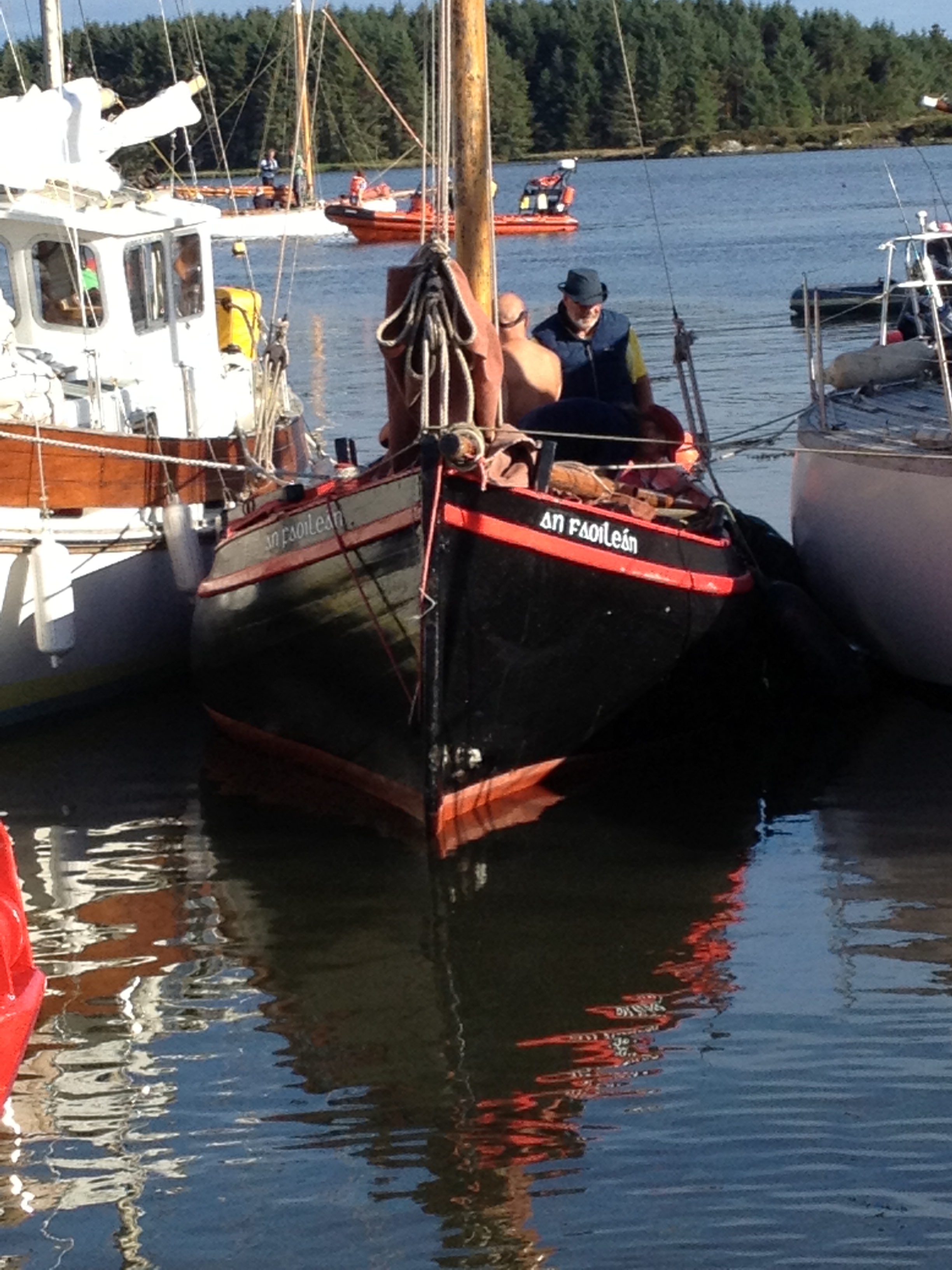
It’s also lovely to see a Galway Hooker, An Faoileán (on fwale-awn, the Seagull), participating – their black hulls and red sails are instantly recognisable. This one has quite a history – and reading it educated me as to the difference between sails that are gaffe-rigged, versus a traditional Irish rigging known as pucán-rigged (puck-awn). Of course all you sailors know this already, right?

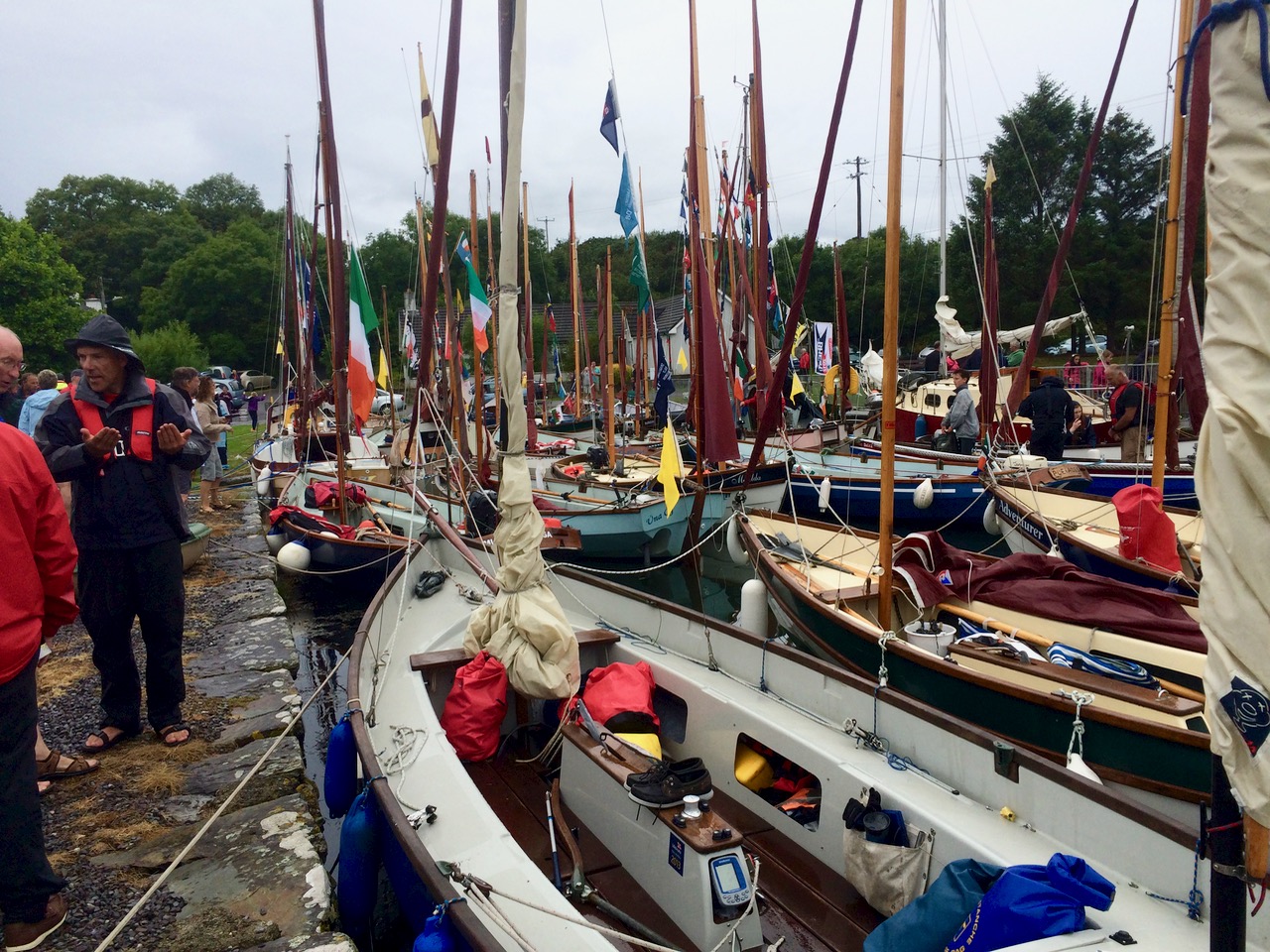
Our friend Jack O’Keefe organises a rally every couple of years for Drascombe Luggers and they joined the gathering en masse in 2014. Unlike 2013 it wasn’t the best of weather, but that did nothing to dampen the spirits of the sailors. It was lovely to be there on the dock to cheer them in.

The Drascombes raft up alongside. Jack O’Keefe and  keen sailor Sheena Jolley

It takes lots of sailing know-how to get up the Bay, but even more to manoeuvre into the tight spaces along the quay, or raft up alongside. By the time everyone’s there, they are rafted up four and five boats deep. 

Then it’s up on shore to partake of the music, the food and the friendly camaraderie that is so typical of both the boating community and the village of Ballydehob, until finally the word goes around that the ebb tide has started and it’s time to carefully push out and take to the seas again – until next year.

 I’ll finish with a video. Sit back and enjoy it, and think about the hundreds, no thousands, of years of history that is evoked by the sight of boats sailing up Ballydehob Bay.

*The photographs in this post are not all mine. Barney Whelan (friend and follower of Roaringwater Journal) was in one of the boats and sent me some taken on the water. Thank you, Barney! Some were shamelessly stolen from the Fastnet Trails Facebook Page, and are the work of the indefatigable Margaret McSweeney (great people shots – thank you, Margaret!). The video is by Tom Vaughan of Oakwood Aerial Photography – he makes West Cork look even more beautiful than it is (and that’s saying something) in his amazing drone footage. The rest of the photos are mine and were taken in 2013, ’14, ’16 and this year.

Oldcourt

red hull

…At Oldcourt a boat-building yard flourished within the walls of an old O’Driscoll castle overlooking the pier and river. Schooners and steamships used to anchor at this spot, the highest point they could travel up the river. Here their cargoes of coal and other supplies were unloaded and placed on specially built lighters with a small draught that would be poled along a further sluggish turn or two upstream to the pier at Skibbereen. In this way cargoes of cattle were brought up by islanders to be sold at the market… (description of the townland of Oldcourt from The Coast of West Cork by Peter Somerville-Large 1974)

gentle Ilen

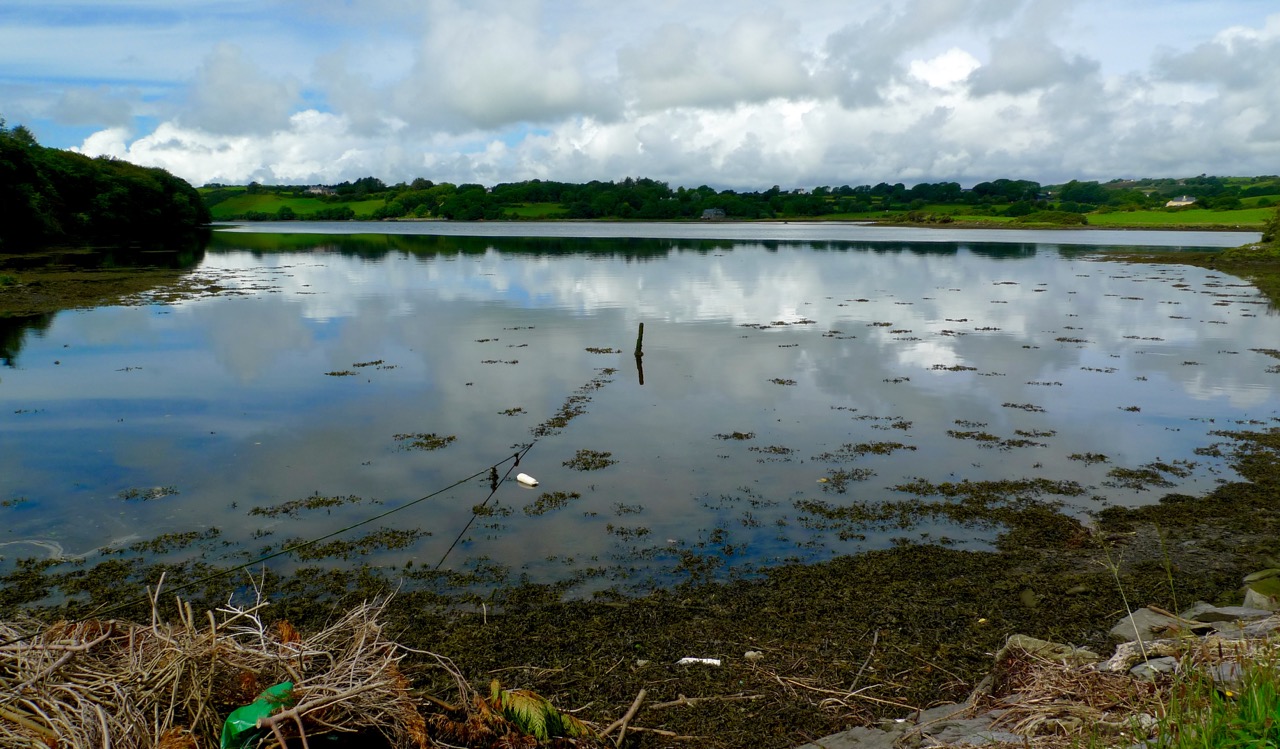
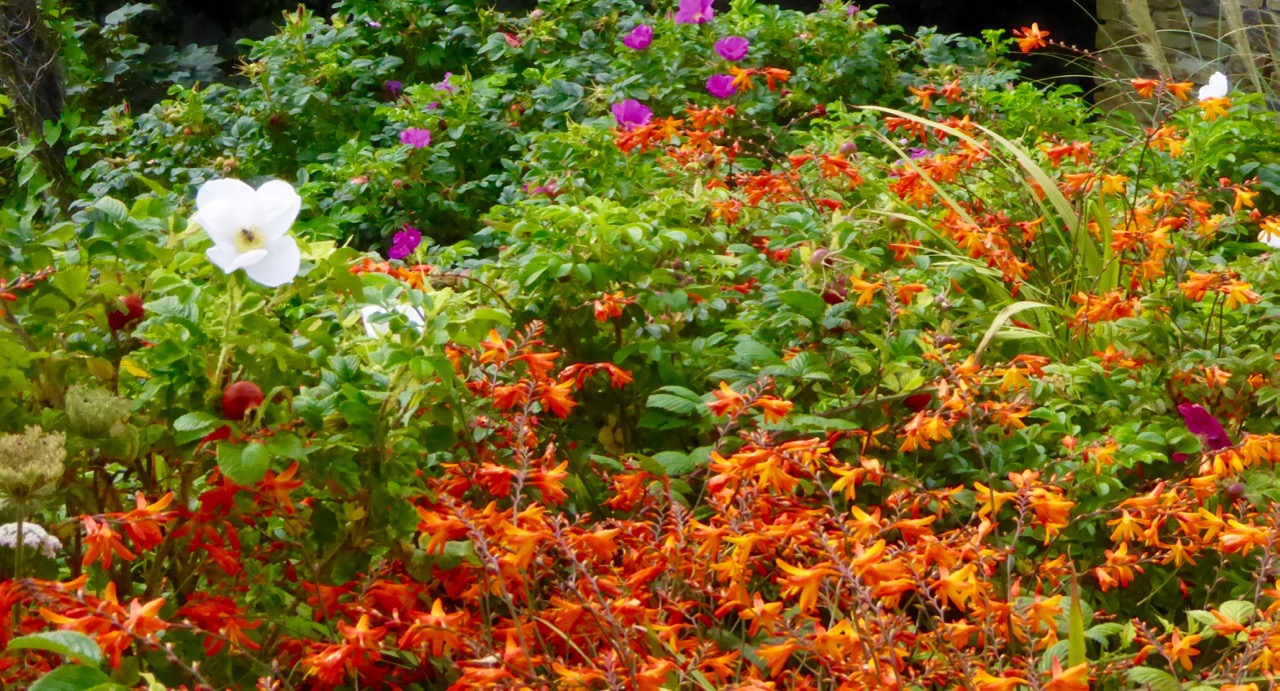
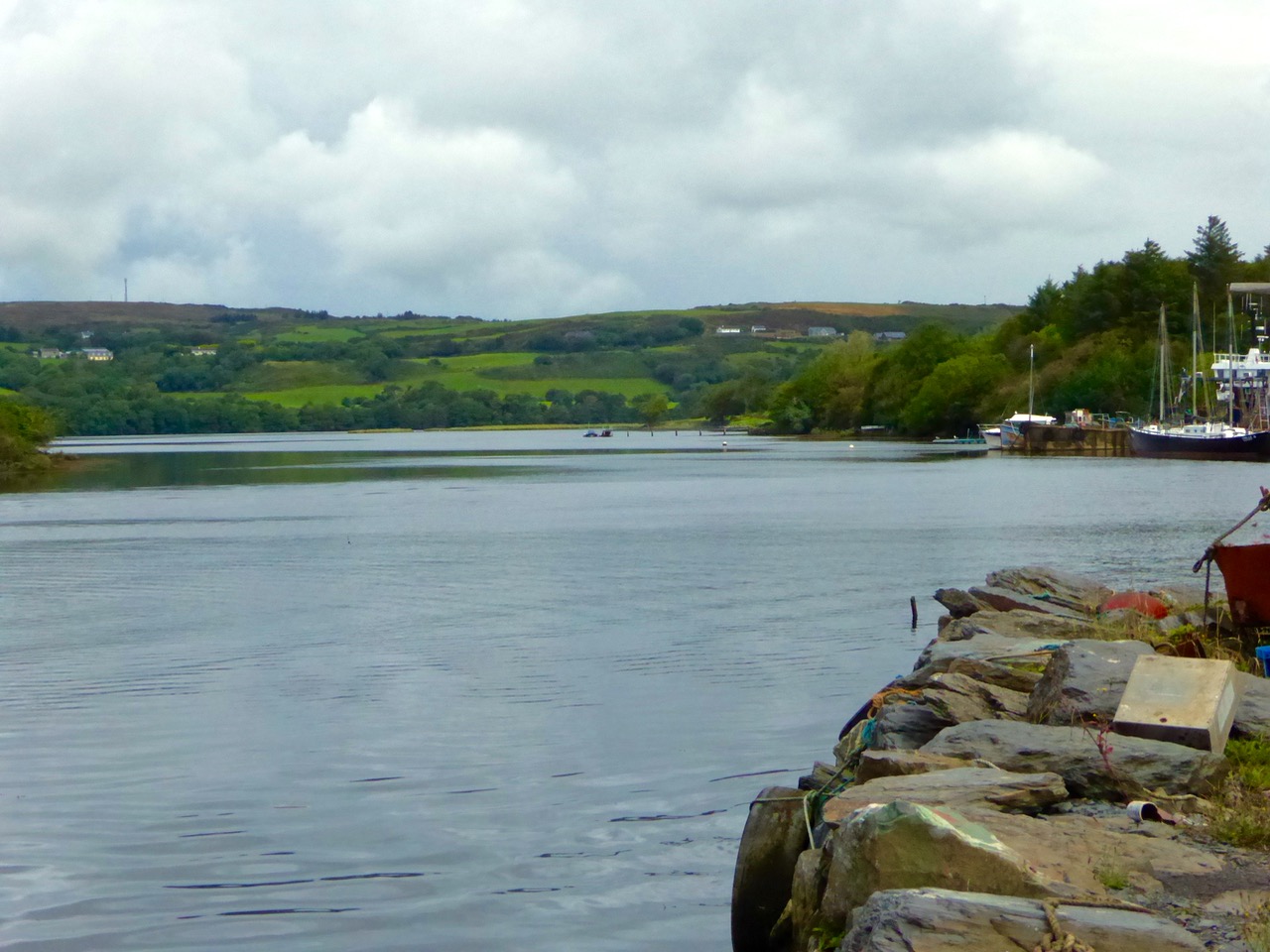
The tidal River Ilen making its lazy way out to Roaringwater Bay on a late summer evening has a melancholy beauty: it is wide and slow and – mid tide – is a perfect mirror to the sky. The sounds of Oystercatchers and Curlews coming over the water always bring thoughts of autumn: the harvest is ready to cut, the verges are brilliantly orange with the montbretia and the hedges purple-red and weighed down with fuscia.

Montbretia

wide river

We went down to Oldcourt to seek out history and atmosphere. We knew that it had once been a transport hub for the transhipments of goods and we wanted to see what might be visible from those earlier times. It was the river Ilen (pronounced eye-len) that gave birth to Skibbereen following a pirate raid on Baltimore in 1631. According to Skibbereen historian Gerald O’Brien …in the wake of the shock of that – the most daring pirate raid mounted against Britain or Ireland – a small number of survivors rowed upstream to resettle in the safety of the Ilen Valley. The role of this river-borne migration from Baltimore [was] a factor in the foundation of Skibbereen… (Journal of the Skibbereen and District Historical Society, Vol 7, p 91).

reflections

beyond the bridge

rust

We found atmosphere a-plenty. On the upstream side of the wide inlet where the transhipment quays were sited is a streamlined modern boatyard where sleek yachts are wintered and serviced while, opposite and downstream, is a far more eclectic establishment surrounding and embracing the remains of the medieval castle and bawn: this is Hegarty’s‘…one of Ireland’s last surviving traditional boatyards…’

birdie in circle

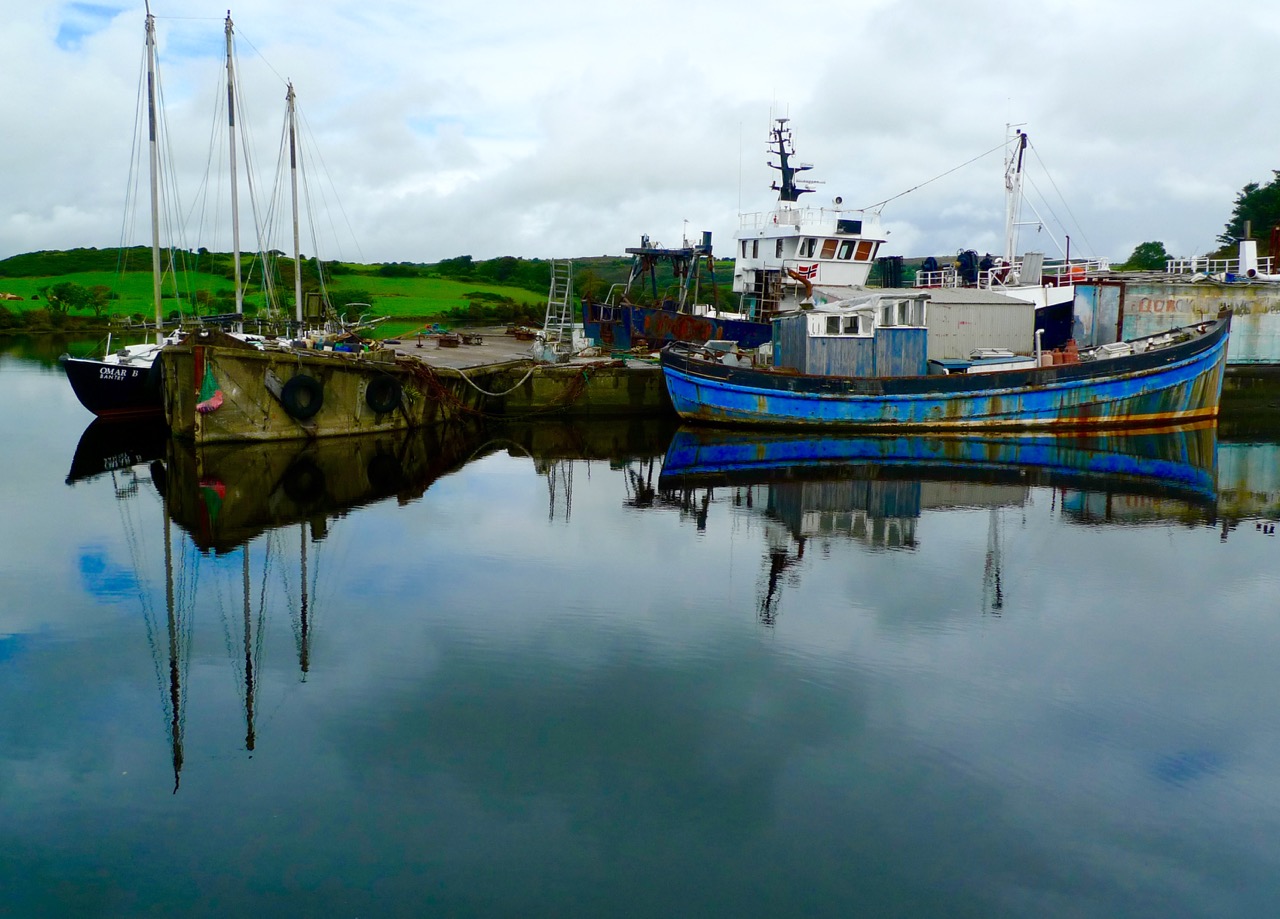
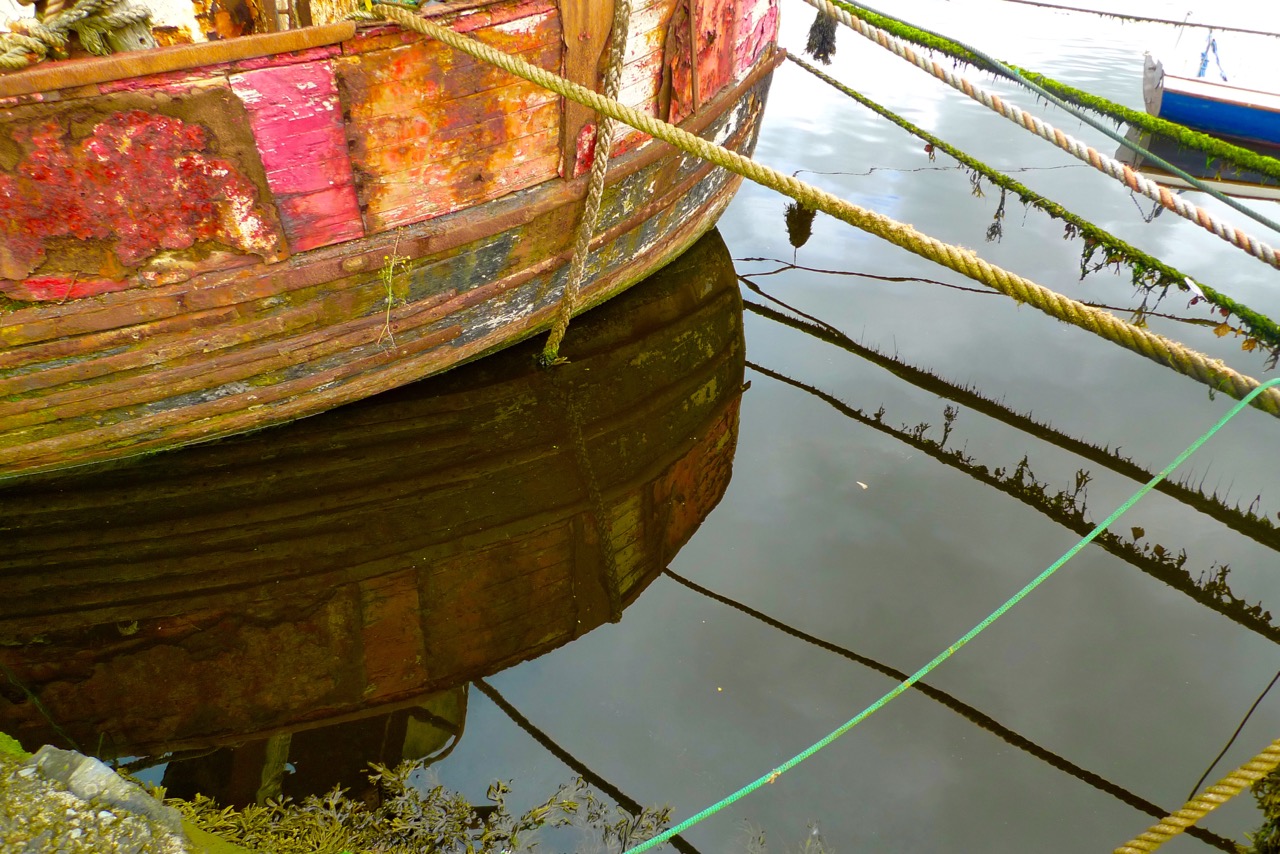
Our aim was to search for the old quay and the medieval buildings which had been part of the castle demesne, but we were fascinated to pick our way through boats of all kinds – classic, sailing, fishing, ferrying – and boat paraphernalia: here an old decapitated wheelhouse, there a collection of masts, everywhere ropes and tackle…
green ropes

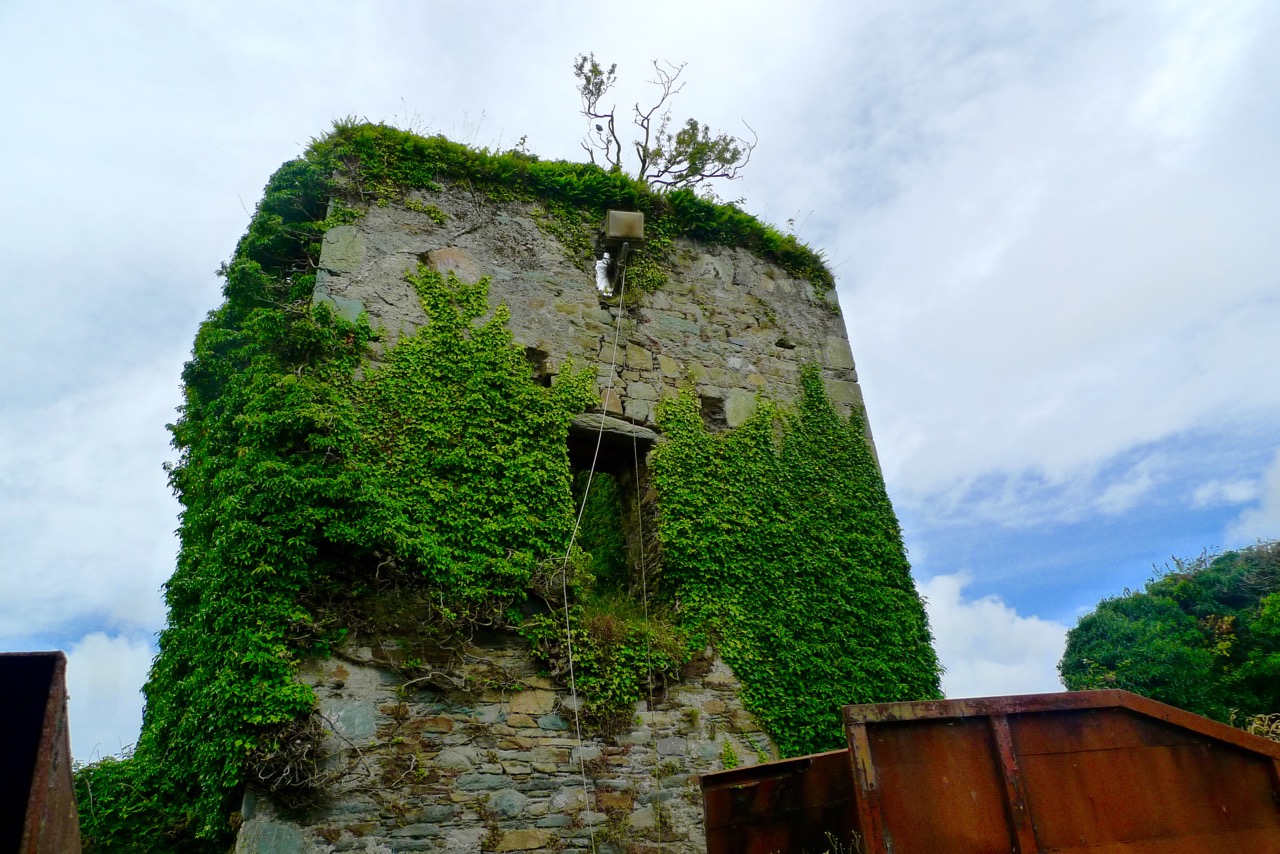
Oldcourt Castle is a tower house standing four storeys high but originally at least one storey higher, once surrounded by a bawn, some ruins of which remain. It was an O’Driscoll clan castle, probably dating from the 15th century, and was captured by English forces after the Battle of Kinsale in 1601.

Old Court Castle

Ilen and Castle

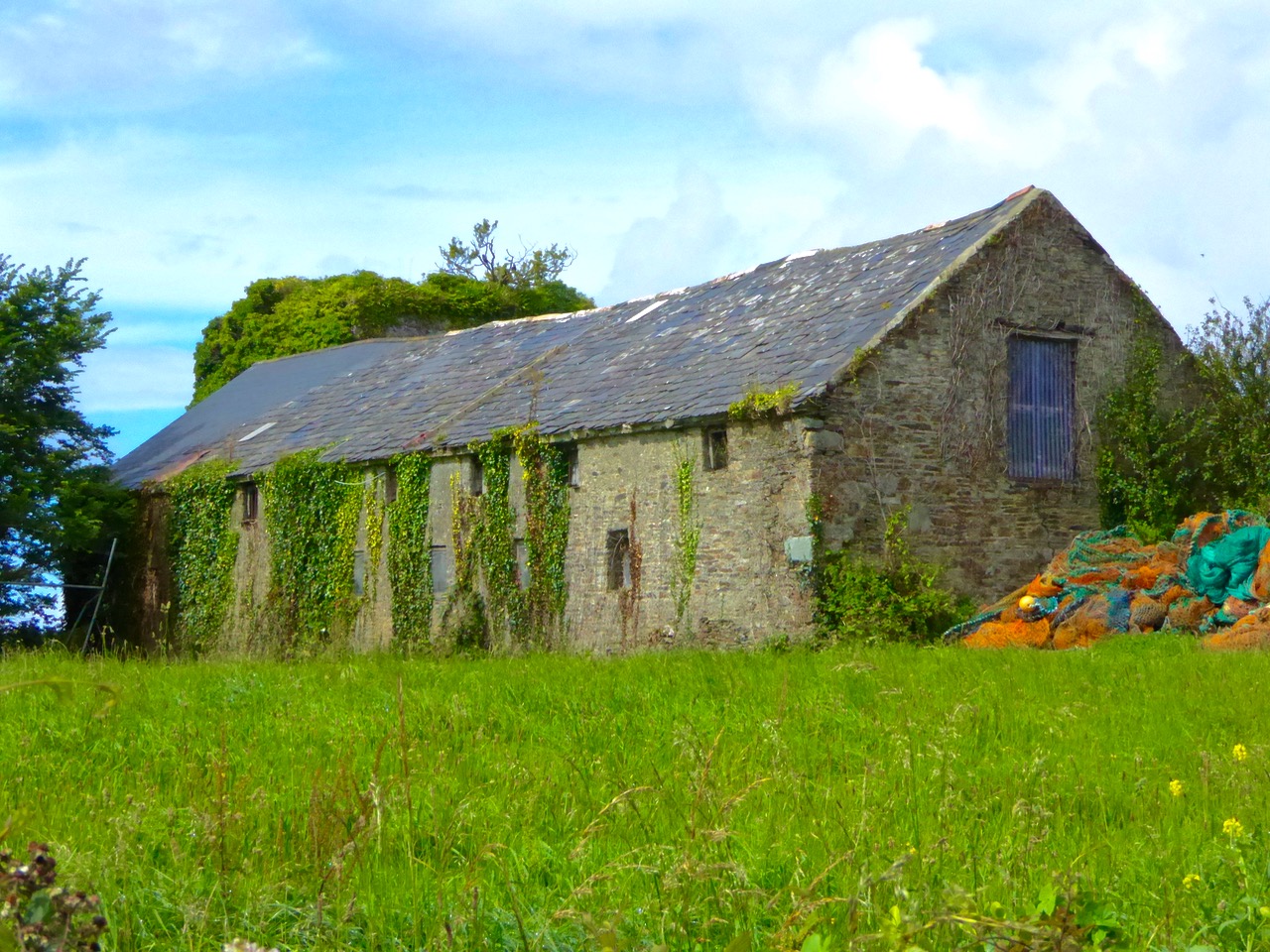
Part of the castle bawn was used as a grain store up to comparatively modern times: now it houses a fascinating boat restoration. The story begins with Connor O’Brien (1880-1952) whose ketch, the Saoirse, took him on a circumnavigation of the world between 1923 and 1925. On this journey he stopped off at Port Stanley in the Falkland Islands. The islanders were so impressed at the way the Saoirse rode the waves that they asked O’Brien to arrange the building of a similar boat. This was the Ilen, named after the river and estuary and registered at the port of Skibbereen in February 1926. She was 56 feet in length overall with a beam of 14 feet and a displacement of 45 tonnes. Connor set sail in August 1926 from Cape Clear, arriving at Port Stanley in January 1927 where he handed it over to the new owners, The Falkland Islands Company, in exchange for £1,500. There she remained until the early 1990s, carrying cargoes of stores, mail, passengers and sheep. Limerick man Gary McMahon found it abandoned on one of the islands and determined that it should return to its homeland for restoration. There was great excitement when he sailed the ketch back into Baltimore in 1998.  The refitting of this eighty-two year old vessel in the old bawn at Hegarty’s, Oldcourt, is now the centre of an educational project allowing people to experience first-hand the ancient skills of wooden boat building.grain store

ilenframesThe old grain store – formerly part of the Castle bawn – now houses the restoration project of the AK Ilen (above – courtesy of Roeboats)

Such a hive of activity at OIdcourt today… Echoes of busy days gone by when the schooners were arriving with their cargoes bound for the growing town of Skibbereen.

Ilen postage stamp