Charles Vallancey: A Colossus and his Collectanea

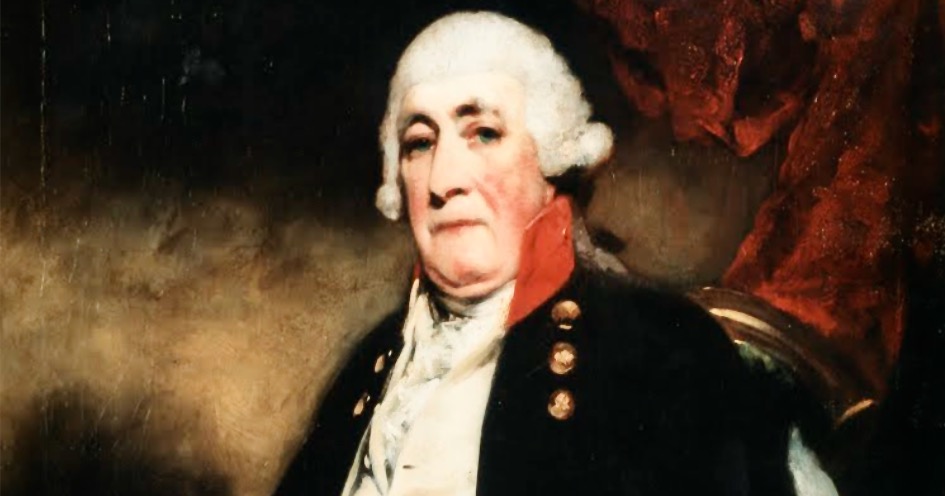
General Charles Vallancey, in the words of one of his biographers, ‘bestrode the world of Irish antiquarians for almost half a century.’ *
His origins are shrouded in mystery – although he is believed to have been born in Flanders to a French family, moved to England as a child, and attended Eton, there is no absolute proof of any of these facts of his early life. Even the date of his birth is contested – any time between 1720 and 1726. What is certain is that he joined the army, was posted to Ireland before 1760 as a military engineer, and spent the rest of his life, until his death in 1812, engaged with many aspects of Ireland, the country that one writer has called the great love of his life. Given that he had three wives (or maybe four) and twelve children (or maybe only 10, or maybe 15), that’s quite an assessment.
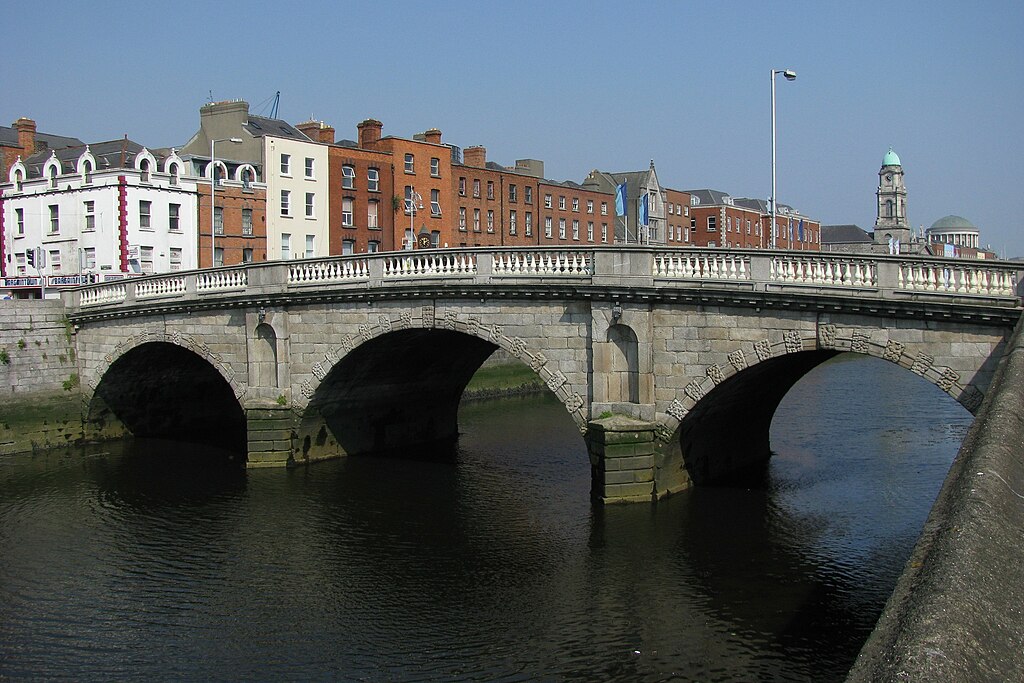
Dublin’s oldest bridge still in use, photo courtesy of Wikimedia Commons. It was designed by Vallancey and originally called the Queen’s Bridge, but re-labelled the Queen Maeve Bridge after independence, and eventually the Mellows Bridge

As a military engineer, Vallancey made real contributions: mapping and surveying large tracts of Ireland including the bogs and the canal systems; proposing a major transport route for Cork which, had it been realised, would have greatly aided trade and commerce in Ireland; building strong defences, such as on Spike Island; designing elegant bridges, and supervising the construction of an earlier version of the famous Dun Laoghaire Pier.
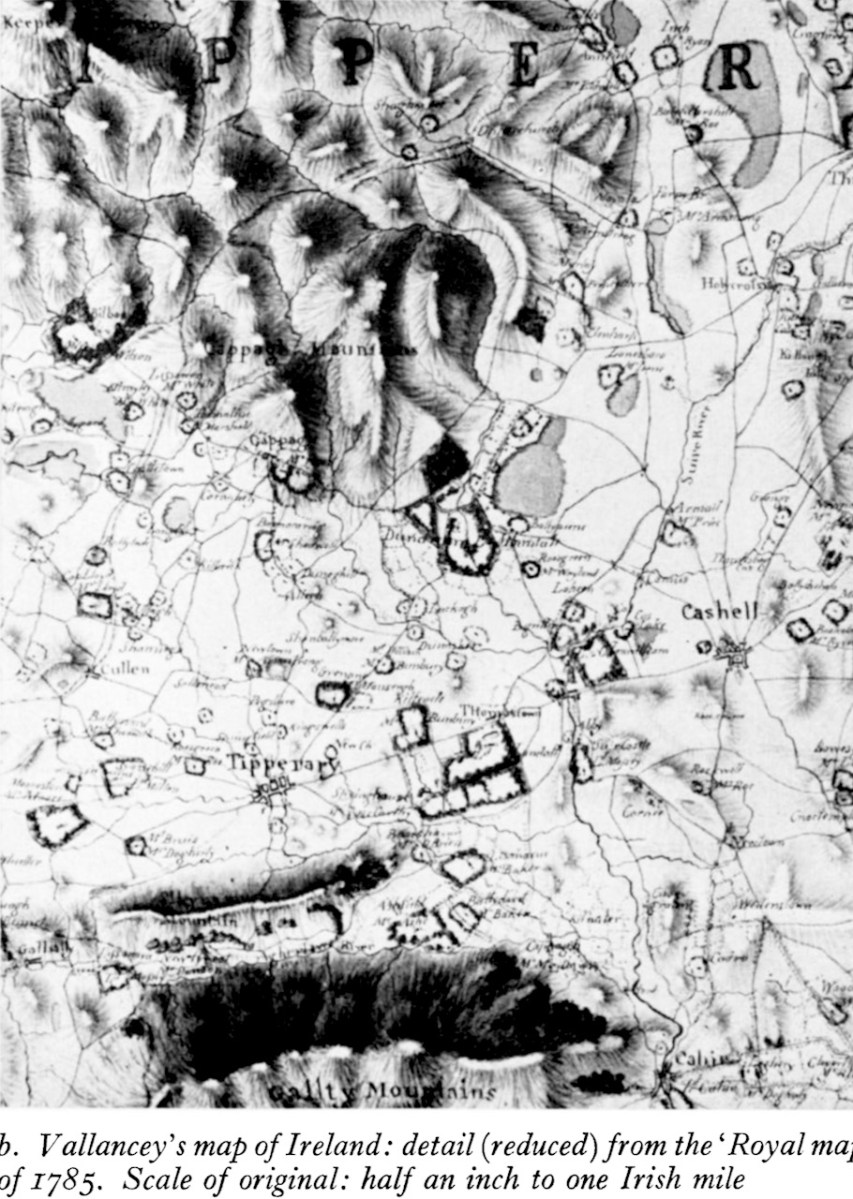
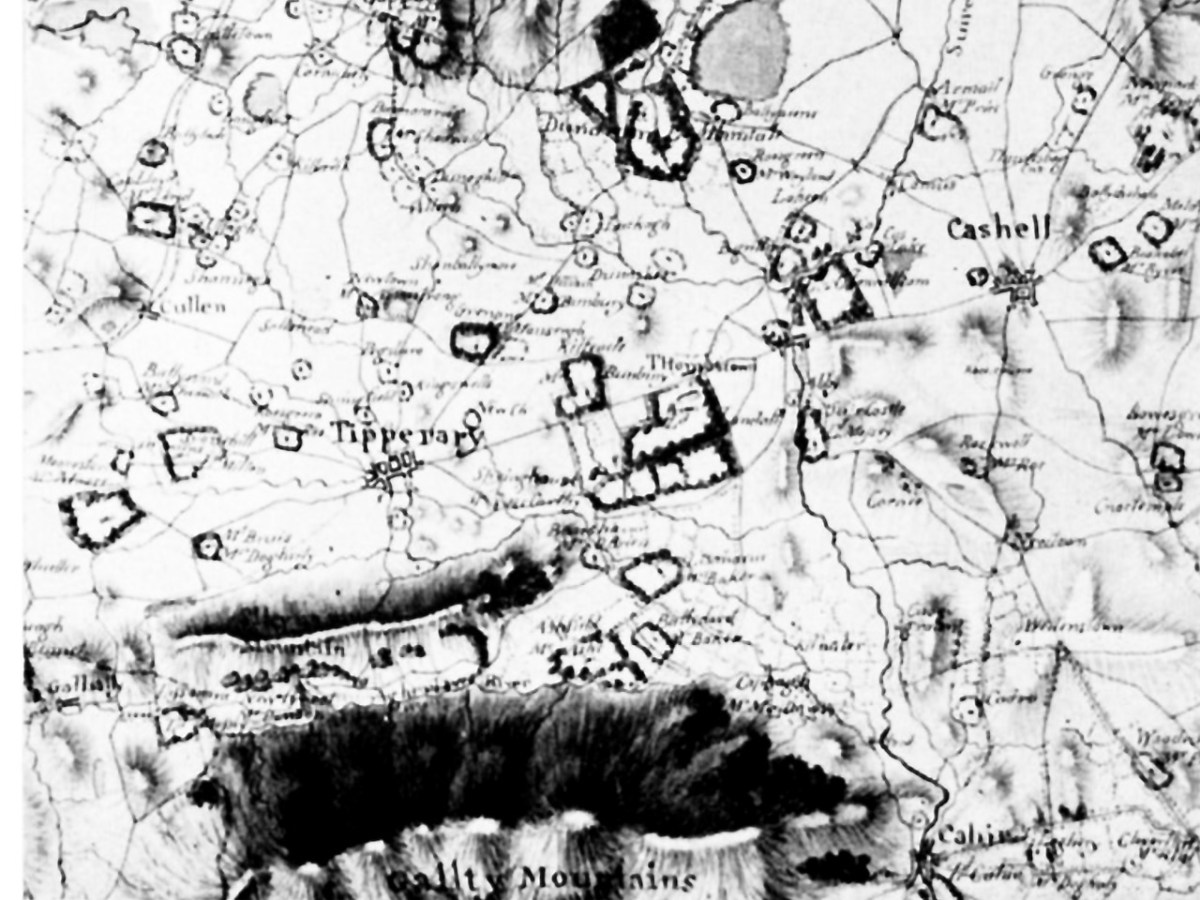
His cartographic achievements have been praised by experts – the extract above from a map of Tipperary is from Charles Vallancey and the Map of Ireland** by JH Andrews, our foremost cartographic historian who notes that Vallancey’s cartographic achievements were far from negligible. He made copies, in Paris, of the Down Survey Maps that had been lost to Ireland when they were captured by the French in 1707 en route from London to Dublin (unfortunately, those copies were destroyed in the Four Courts Fire of 1922).
But it was as an antiquarian that Vallancey made his greatest, and most controversial mark. He was a member, sometimes a founding member, of the serious societies of the time – the Dublin Society, the Royal Irish Academy and its important Committee of Antiquities, and the short-lived Hibernian Society of Antiquarians. Nevin tells us that at least three academic honours were conferred on Vallancey in the 1780s. He received an LLD from Dublin University in 1781 and became a Fellow of the Society of Antiquaries of London in 1784: he was elected a Fellow of the Royal Society in 1786. Even the French Academy of Belles-Lettres and Inscriptions honoured him.
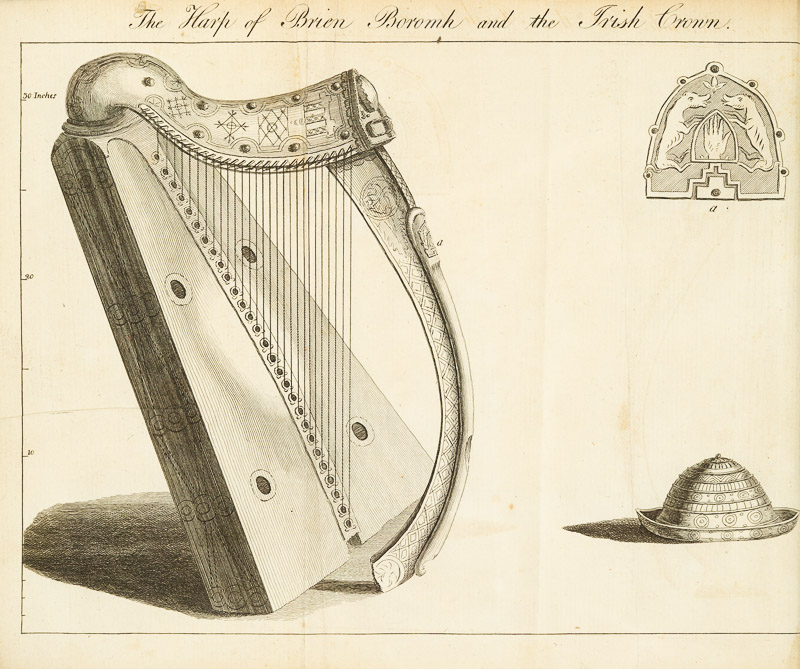
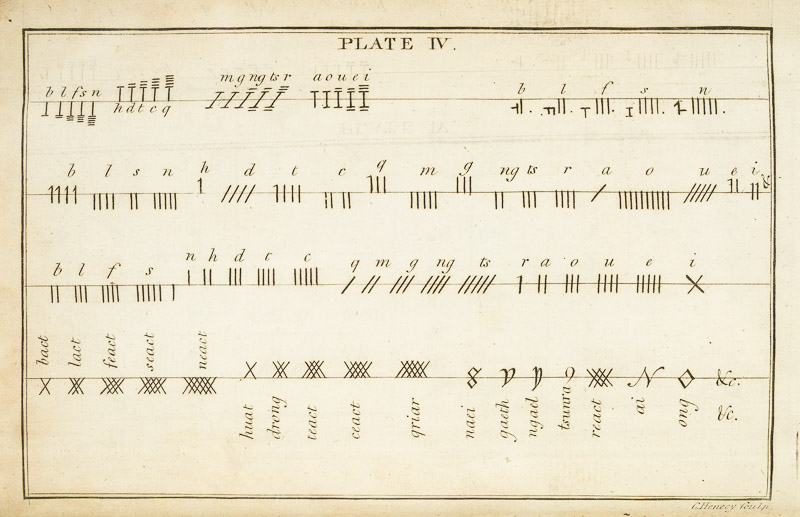
Unusually for the English and the landed classes living in Ireland at that time, he learned Irish. This allowed him to become familiar with the ancient manuscripts and annals which were being discovered and conserved at the time, and to translate some of them, including fragments of the Brehon Laws. It also led to his interest in Ogham, an alphabet used for inscriptions in stone in a form of Old Irish and he recorded examples of Ogham and reported on others.
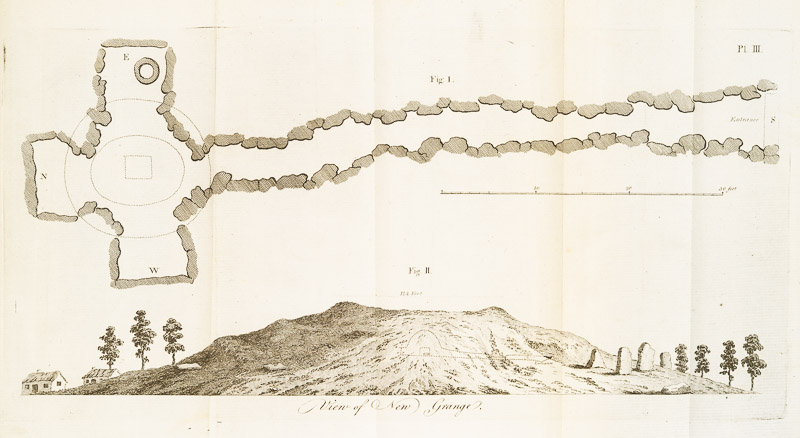
His interest in antiquities, fostered by his extensive travels around the Island,  led him to record and draw many, including early plans of Newgrange, and to support the efforts of others, including Beranger, and perhaps Bigari, to record them. In some cases, Vallancey’s drawings are the only early records we have of some monuments.
Most importantly, Vallancey, even if he didn’t always get it right, strove to establish for Ireland and the Irish, a noble heritage, far from the view of most Englishmen at the time of a benighted people speaking a savage tongue. In this, he prefigured the work of Petrie, Wilde, Windel and others to show how the Irish past, and incredible heritage of archaeology, language and mythology, could stand against that of any civilisation. 
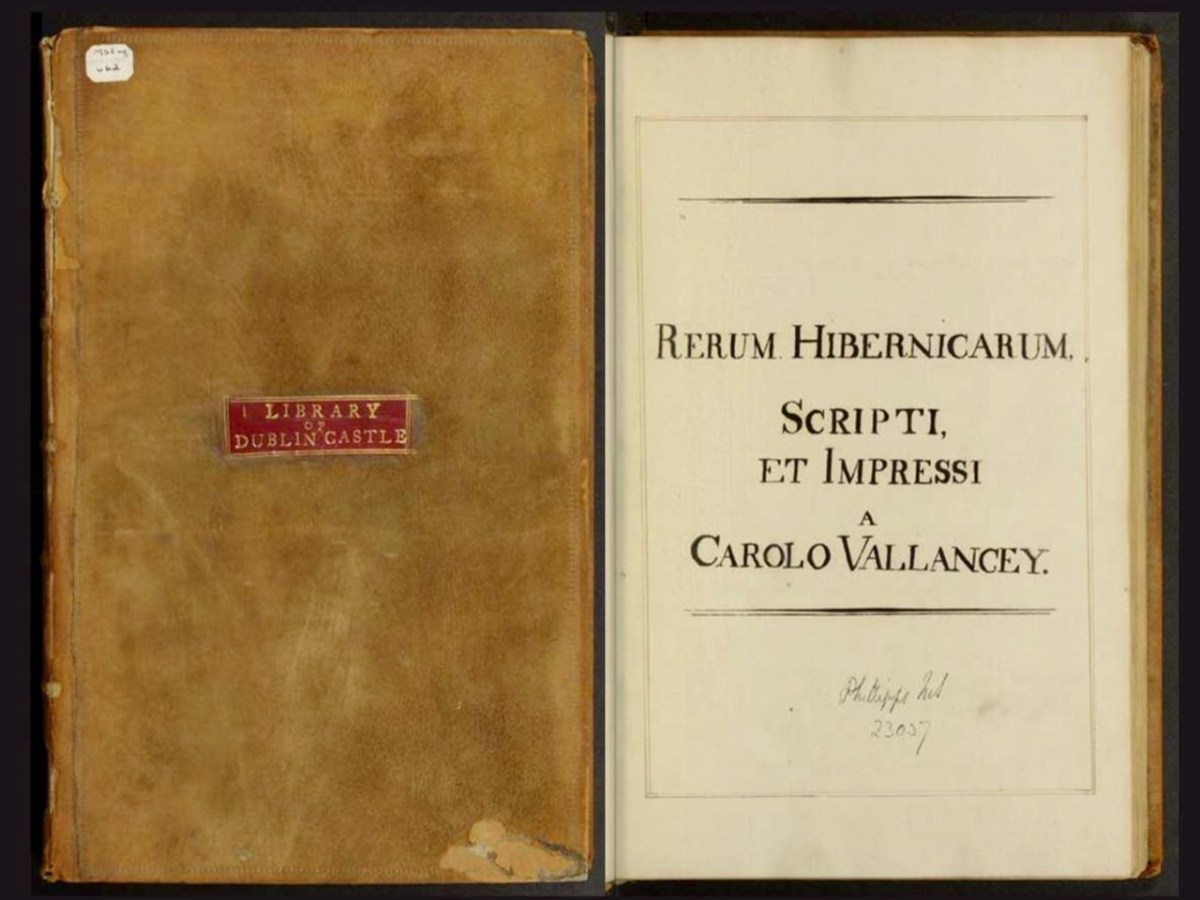
His least known but most important contribution to Irish scholarship was his Rerum Hibernicarum, Scripti, et Impressi. This is a handwritten

alphabetical list of material relating to Irish history divided into two sections; a list of manuscripts held in multiple archives and a supplementary list of printed works. The volume is undated, but as the most recent printed work cited is from 1777 the compilation was probably made shortly after this time.

Taking the long way home: the perambulations of Harvard MS Eng 662, Rerum Hibernicarum, Scripti et Impressi, by Charles Vallancey

Dr David Brown
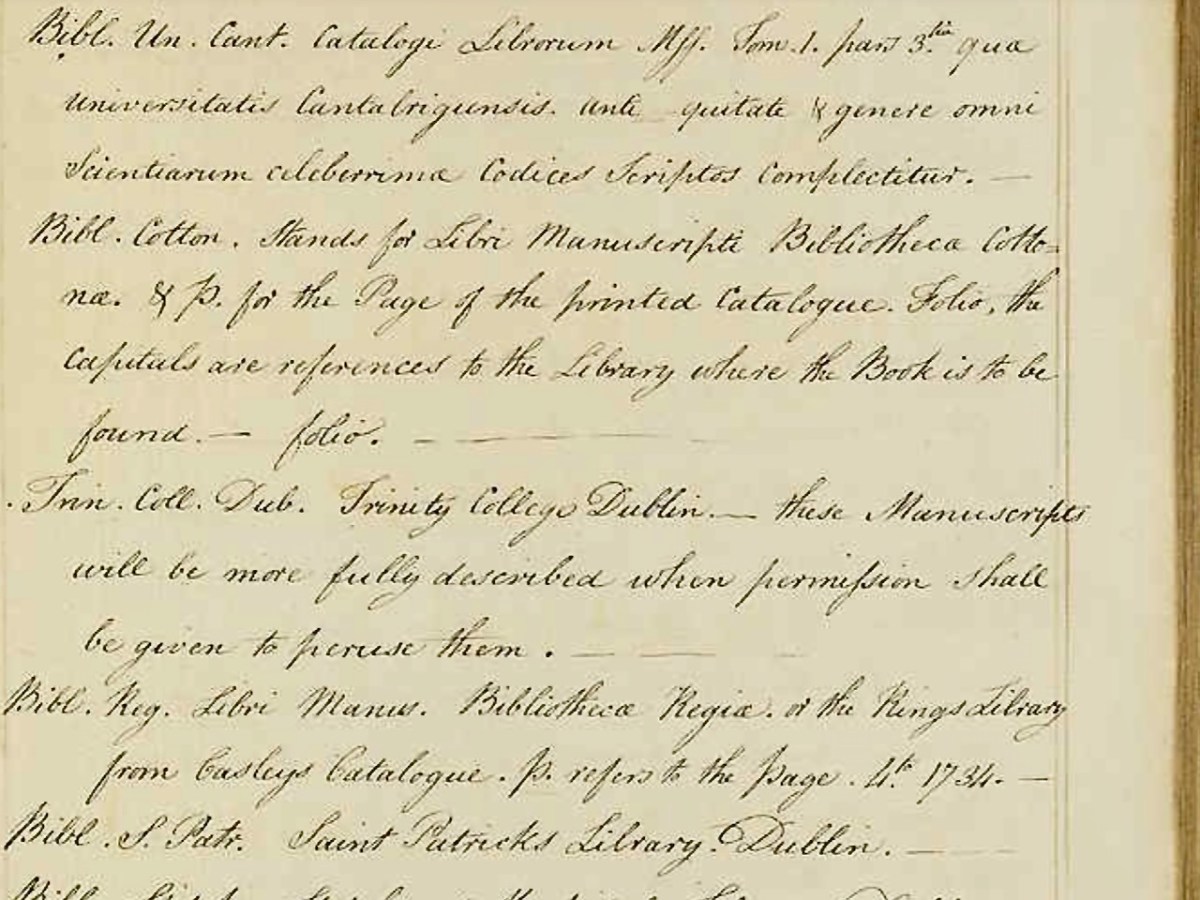
The Rerum Hibernicarum disappeared – it had an interesting journey, entertainingly told by David Brown in his essay for the Virtual Record Treasury of Ireland, in which a digital copy now resides. An incredibly valuable piece of research, it was the seminal book that initiated a more rigorous approach to Irish studies in the nineteenth century by providing sources for Irish manuscripts, folklore and language to the next generation of antiquarians. Brown says:

All four men, Larcom, Todd, O’Donovan and O’Curry, were committed members of the Royal Irish Academy, the institution Vallancey had co-founded in 1785. Together, this quartet placed Irish studies on a scientific basis and at the centre of Ireland’s main places of scholarship.

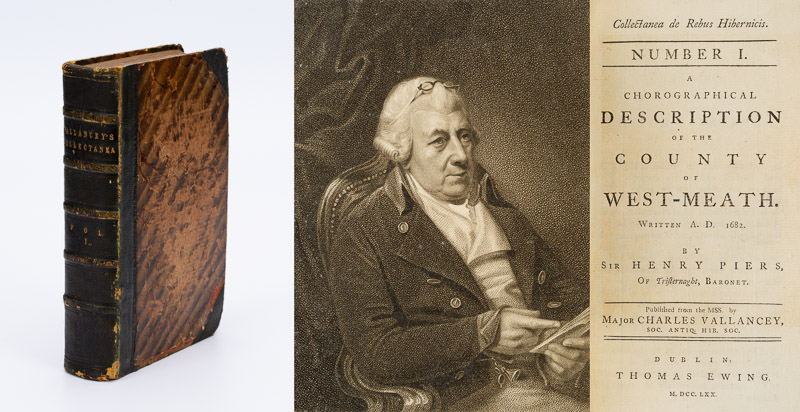
Vallancey’s best known work was his Collectanea de rebus hibernicis – Collection of Irish Matters. It is also his most complex and most characteristic – containing as it does a staggering variety of materials, much of it written by him. It contains work by others too, sometimes credited and sometimes presented as if written by Vallancey. He published it himself in limited editions, so that now it is very rare. 
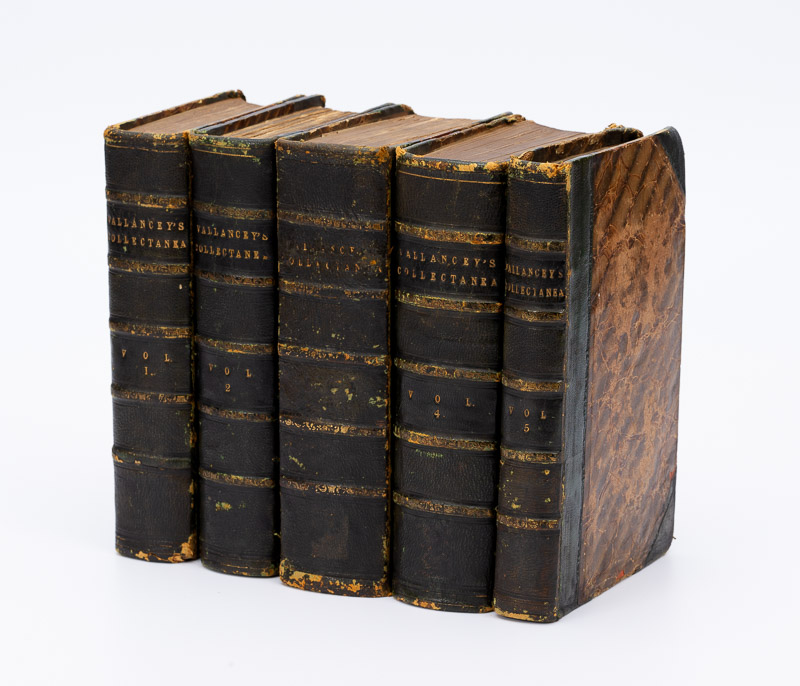
I am honoured to have been entrusted with a set to examine and write about, by Inanna Rare Books and have spent many happy hours browsing through the volumes. Reading it thus, from cover to cover, I began to see how enormously clever he was – and how obsessed, as he returns again and again to his favourite theme: that the Irish were a noble race descended from the ancient Phoenicians.
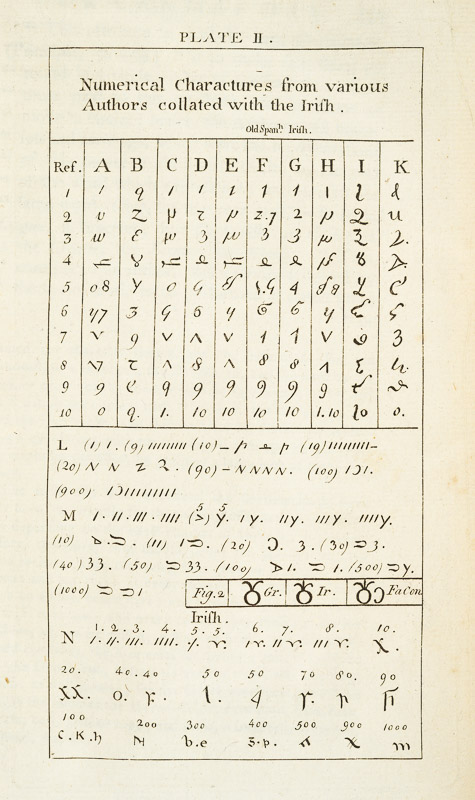
In this pursuit, Vallancey was not merely riding a personal hobby horse. In fact, he was very much in the mainstream of European intellectual thought. Vallancey believed that the Irish people were descended from the Scythians, Phoenicians, and Indians, and he used linguistic analysis, comparative mythology, and archaeological evidence to support his claims. In his essay, Phoenician Ireland: Charles Vallancey (1725–1812) and the Oriental Roots of Celtic Culture, Bernd Roling posits that Vallancey’s work, while ultimately based on speculation, reveals the powerful influence of ‘orientalizing’ models of history that were popular in the 17th and 18th centuries. He argues that Vallancey’s work is not simply a collection of outlandish ideas but rather a reflection of the enduring influence of ‘baroque’ antiquarianism and its commitment to finding connections between cultures and languages, even if these connections were ultimately based on speculation and incomplete understanding of the past.

Perhaps it was his enthusiasm for technology and the continuous journeys through Ireland required by his work that led Vallancey to find there the great love of his life of his life, namely Ireland herself. . . 

In the eighteenth century Ireland was not the centre of the world. It was a land dominated and exploited by England, with a rural population who were regarded as barbarians at best by the gentlemen at home in the clubs and coffee houses of England’s cities. For them, the native language of the Irish was no more than an incomprehensible squawking that needn’t be accorded any further significance. Would it not, then, be a magnificent surprise, almost a humbling of Anglophile arrogance, if the Irish turned out to be the descendants of the ancient Chaldees, Phoenicians, Scythians and Indians, the crowning jewel in a chain of heroic acts reaching back into a prehistory, which was able to supersede any other chain of historical events? Would it not be a wonder if the Land of Saints and Scholars, with its ancient monuments, poetry and songs, were the final record of a primordial European people whose wisdom united the learning of the whole ancient East?

Yes, indeed, Vallancey, himself a bit of an outsider, was consumed with the need for that humbling of Anglophile arrogance. Unfortunately, as with anyone blindly obsessed with a cause, and simultaneously lacking self-doubt, this led him into many false conclusions and leaps of imagination in his interpretations of how Irish Gaelic related to ancient and oriental languages. His philological arguments were thoroughly debunked, starting almost immediately upon publication. 
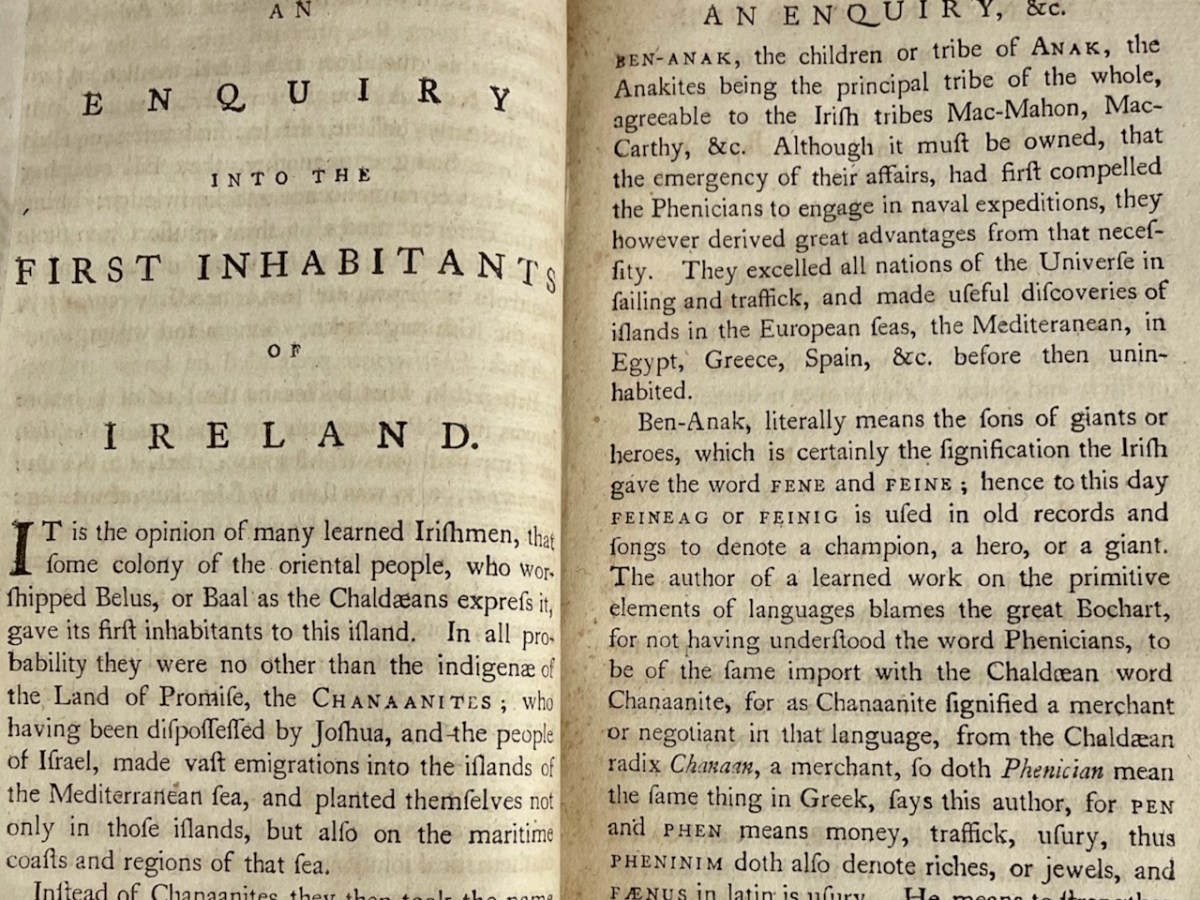
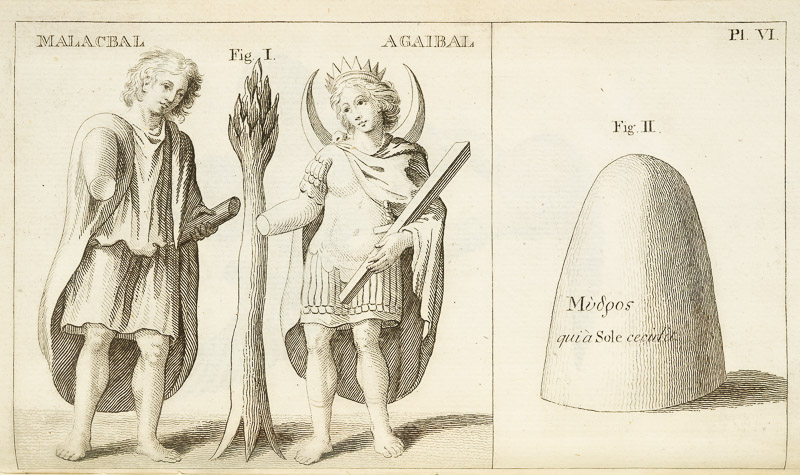
And it wasn’t just language – he had equally startling views about round towers, proposing that they were built by Scythians. He suggested that they were part of the “Scytho-Phoenician settlement of Ireland” and linked to ancient Chaldean religion. He drew on the work of other scholars to support his argument, citing the discovery of similar towers, called misgir or “fire towers,” in the Volga region formerly inhabited by the Bulgars. Vallancey also referenced Geoffrey Keating’s account of a druid named Midghe, who supposedly taught the Irish the use of fire during the third invasion by the followers of Nemed (from the Book of Invasions, a mythological origin story for Irish History). This association with fire, combined with the architectural similarities to the towers in the Volga region, led Vallancey to believe that the round towers served as observatories for an astral, or sun-worshipping, cult that had been brought to Ireland by the Phoenicians.
Similarly, with ogham, an early Irish script mainly found carved into standing stones, he argued that the word ogham itself was derived from Sanskrit, meaning ‘sacred or mysterious writing or language’ and pointed to the visual similarities between ogham and the Old Persian cuneiform script found at Persepolis as further evidence of an oriental connection. This view aligned with his broader theories about the druids as practitioners of a sophisticated astral cult with origins in Chaldea and connections to the Indian Brahmans
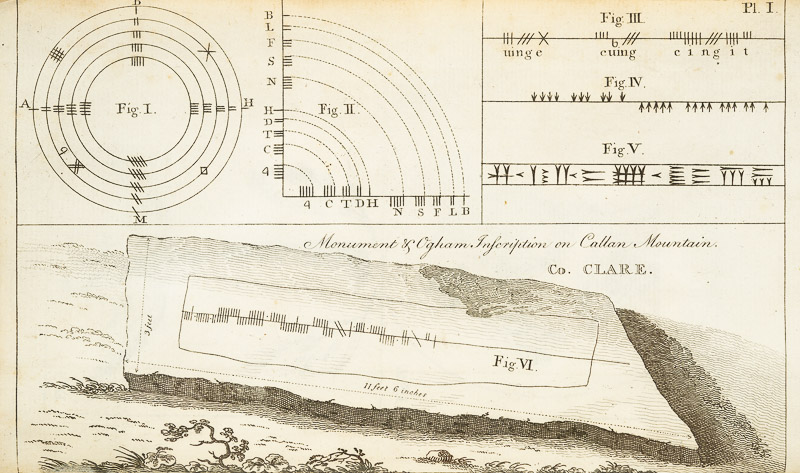
His research on ogham was extensive, including the study of ogham inscriptions and the publication of scholarly articles and drawings of ogham stones in his Collectanea de Rebus Hibernicis. Next week, we will take a deep dive into that Collectanea. Meanwhile, I’ll try to figure out how to pronounce that word correctly.
*General Charles Vallancey 1725-1812 by Monica Nevin. The Journal of the Royal Society of Antiquaries of Ireland , 1993, Vol. 123, pp. 19-58

** Charles Vallancey and the Map of Ireland, JH Andrews. The Geographical Journal, March 1966. Available here. Highly recommended if you want to know more about Vallancey as a map maker, which is slightly outside the scope of this series.

Becoming a Book Town: Skibbereen and Inanna Rare Books

This is the post that Robert was working on before he died. I have finished and edited it, keeping it in his voice to the best of my abilities. Finola

Ireland is rightly celebrated for its books – and their talented authors. You will find a thriving bookshop in many a modest Irish town. We are a nation of readers, it seems, and even when we are not reading much, we are buying books and loving books and  gifting books, and all the time developing our teetering pile of bedside books to dip into before sleep.

But it takes more than a good bookshop or two to deserve the title of a Book Town. According to the criteria, a town has to have ‘several’ books shops, and particularly shops that sell antiquarian and second-hand books. The only one we have been familiar with hitherto is in Sidney, BC, Canada, where Finola has spent many happy hours browsing among the treasures. 

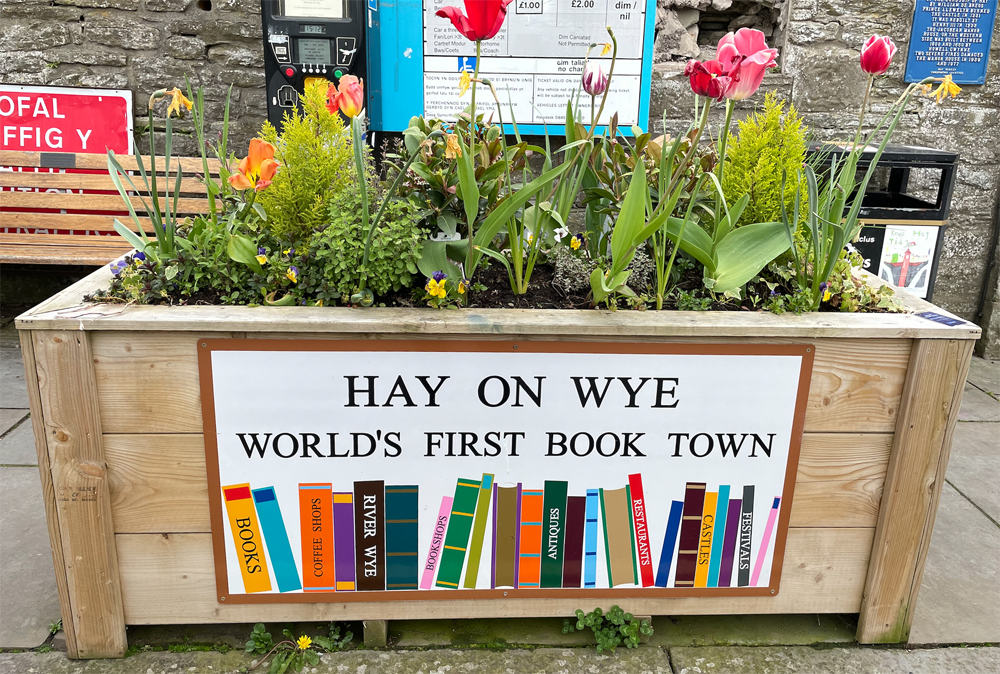
The Book Town model got its start in Haye-on-Wye in Wales (Image courtesy of the Curious Rambler) way back in the 60s and included, from the beginning, the idea that empty heritage buildings should be filled – with books! If you can add events – a festival, readings – or complementary business such as publishers or letterpress printers, all the better. 

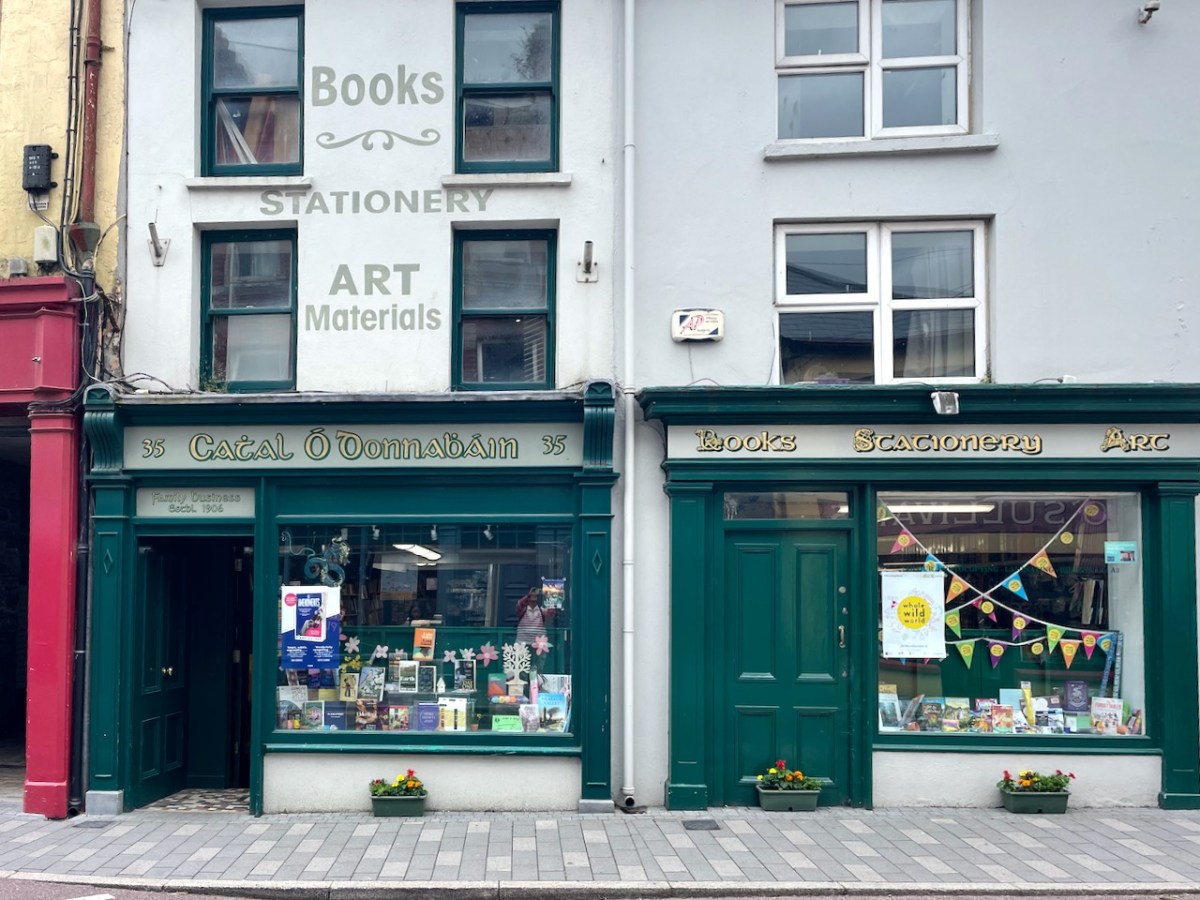
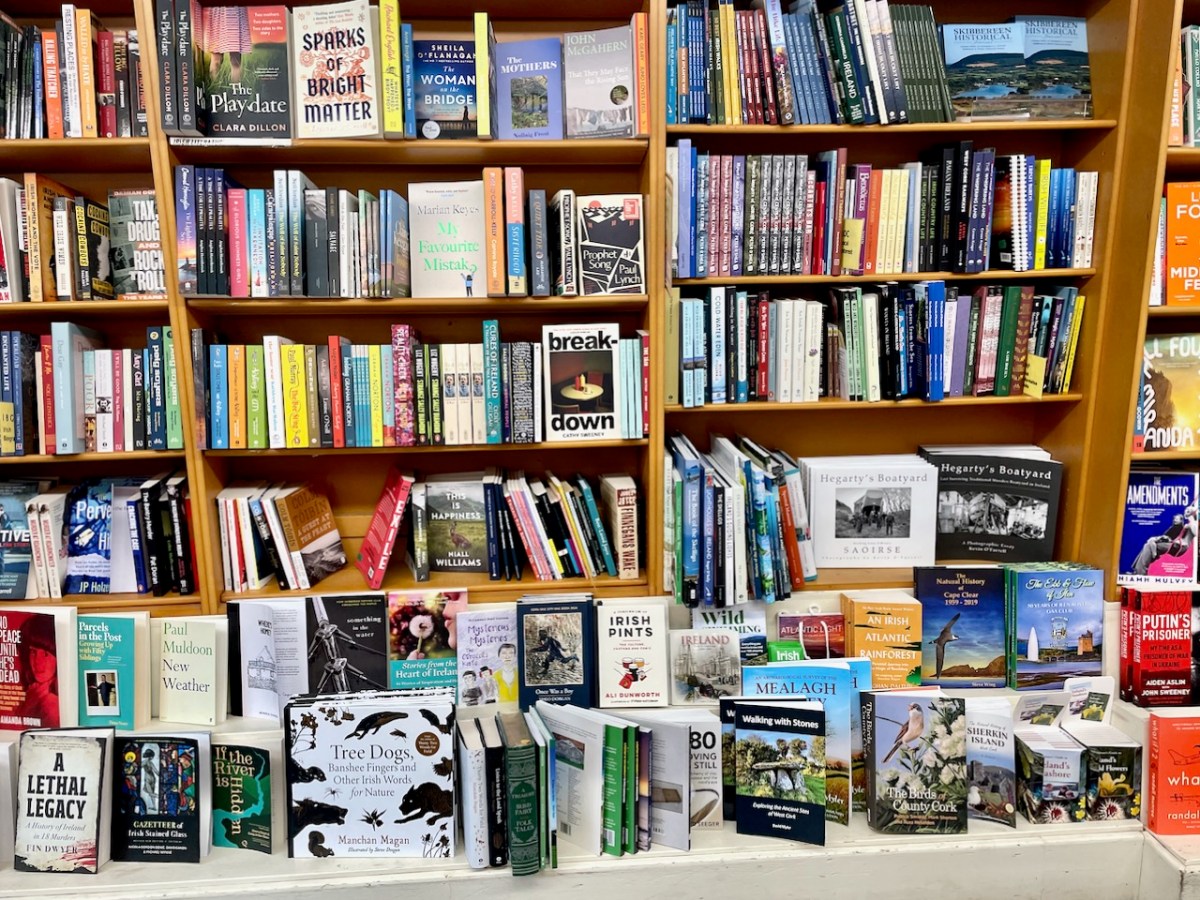
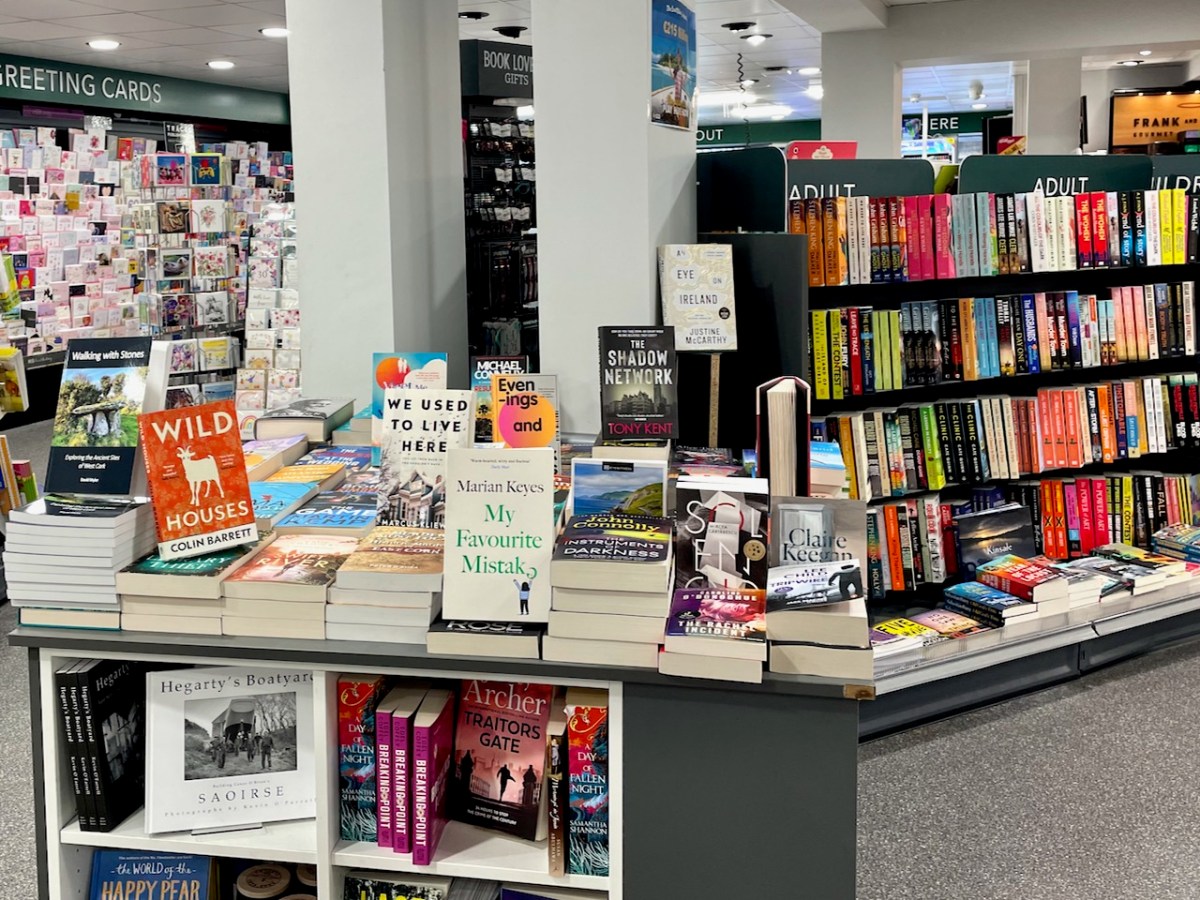
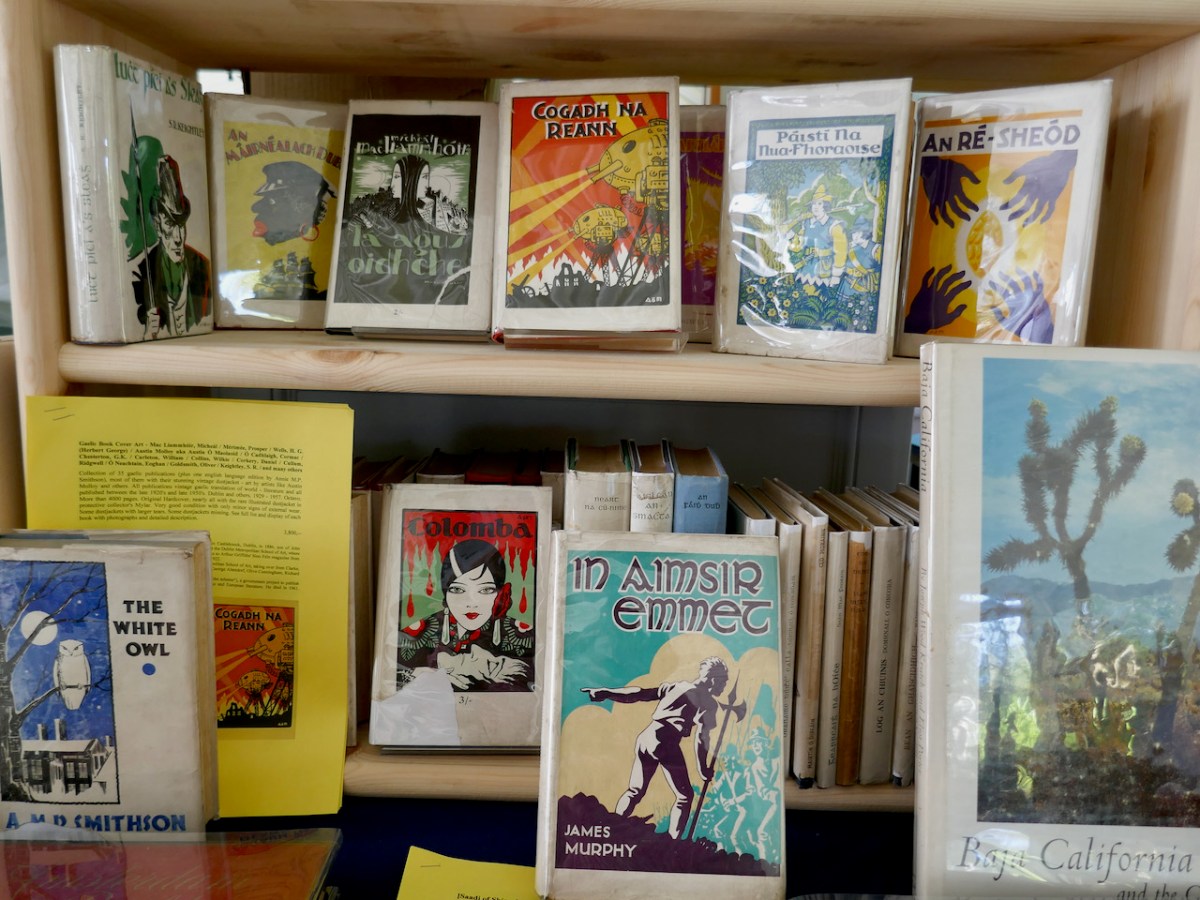
Skibbereen is well on its way to becoming a Book Town, mostly due to the efforts of Holger and Nicola Smyth and their family. Before we get to the Smyths, though, we have to talk about the other books stores and especially Cathal Ó’Donnabháin’s excellent store which supplies us with the best in local interest and contemporary books. In the photo below, taken this week, Finola and I are represented in three of the publications on the shelves. Can you spot which ones?
There’s usually an excellent selection of old books at the Charles Vivian stall at the Skibbereen market on Saturdays – they have a premises too, near Rosscarbery. Even our local SuperValu, Fields of Skibbereen, has done a major renovation and now incorporates a section selling books and periodicals. 
You can spot surprising finds, too, among the second-hand book sections of the town’s charity shops – I was tempted to curl up and spend an hour at this room at the Charity Shop for the wonderful Lisheens House.

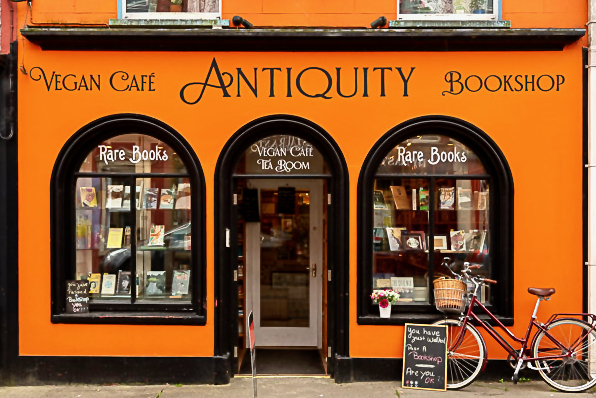
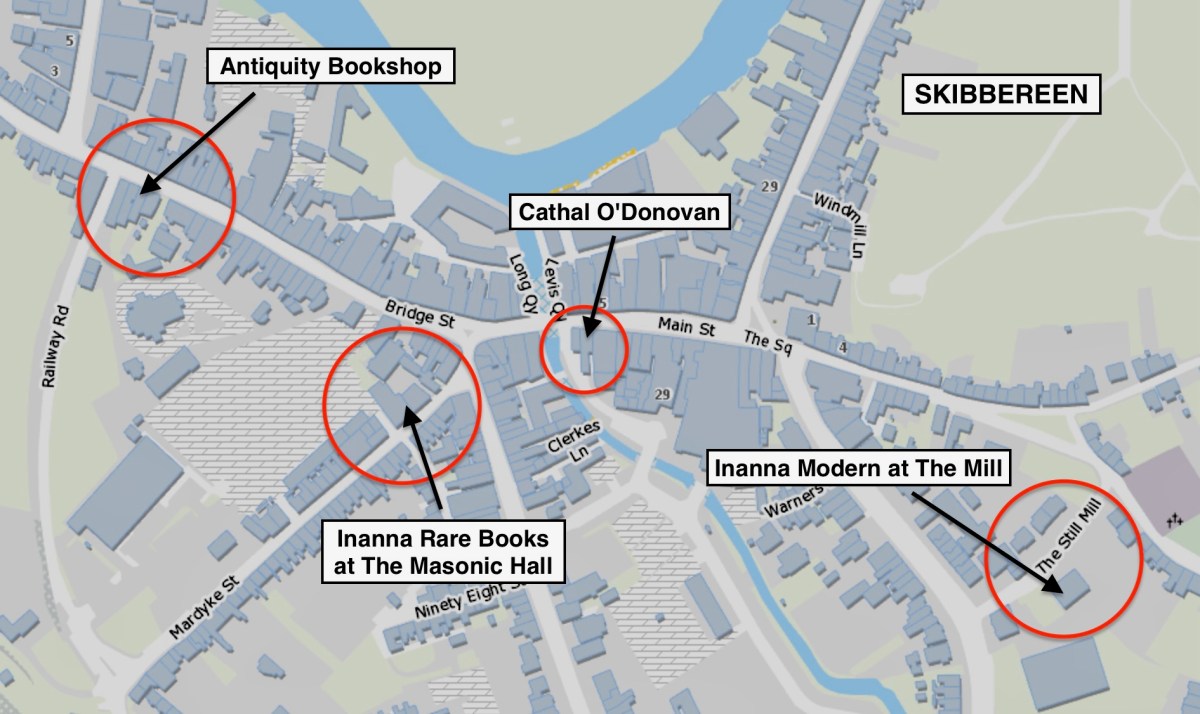
But Skibbereen is also fortunate to be a significant centre for rare and antiquarian books – and much more. What is now known as Antiquity (and might be more familiar to many as The Time Traveller’s Bookshop) is a great asset to all residents in the area. Not only is it “…the first All Vegan Cafe in West Cork…” but it offers a plant-based menu, a juice bar and good coffee – all to be enjoyed in the environment of well stocked shelves of fascinating secondhand books which can be browsed at leisure, and purchased. I can vouch for the excellence of the vegetarian stew!

Antiquity is run by Nicola Smyth and her son Junah. Nicola met with her husband Holger, 30 years ago and “…fell in love in front of Holger’s first bookshop…” They travelled in Europe for many years with their four children and many dogs, living in a world of rare books, before settling in West Cork in 2008 and opening The Time Traveller shop. Finola and I came across the Smyths and their books when we also settled in West Cork in 2012. If you had a look into our library at Nead an Iolair, you would see many volumes which have come from Holger and Nicola, especially classic Irish titles on history, archaeology and Irish art and literature.

The Smyths have never been folk to rest on their laurels. Over the last decade or so they have expanded their activities and their geography – experimenting with forays and pop-ups into Cork City, Kinsale and Westport, for example. The Westport shop is still open, under new ownership, as West Coast Rare Books. They have also added to their specialisations Manuscripts, Rare Maps of Ireland and the World, Original Art & Photography, Illustrated Books, Decorative Art, Etchings & Engravings, Lithographs, Botanical Illustration, and rare Vinyl from the 60s to the 90s, a selection of Rare 78’s, and Early Jazz, Rock & Pop albums. If this seems remarkably ambitious, well, it certainly is – and how lucky are we in West Cork to have these offerings right on our doorsteps?

I set out today [Robert was writing this in February] to explore a relatively new venture by Holger – Inanna. Let’s first look at the name: Inanna is a goddess. Worshipped in ancient Mesopotamia, her dates are around 3000 BC – about the same age as Brú na Bóinne, the Newgrange passage tomb, here in Ireland. She is well documented as the Queen of Heaven, and legends connect her with the creation of the cycle of the seasons. She is acknowledged as reigning over love, war, fertility, law and power.

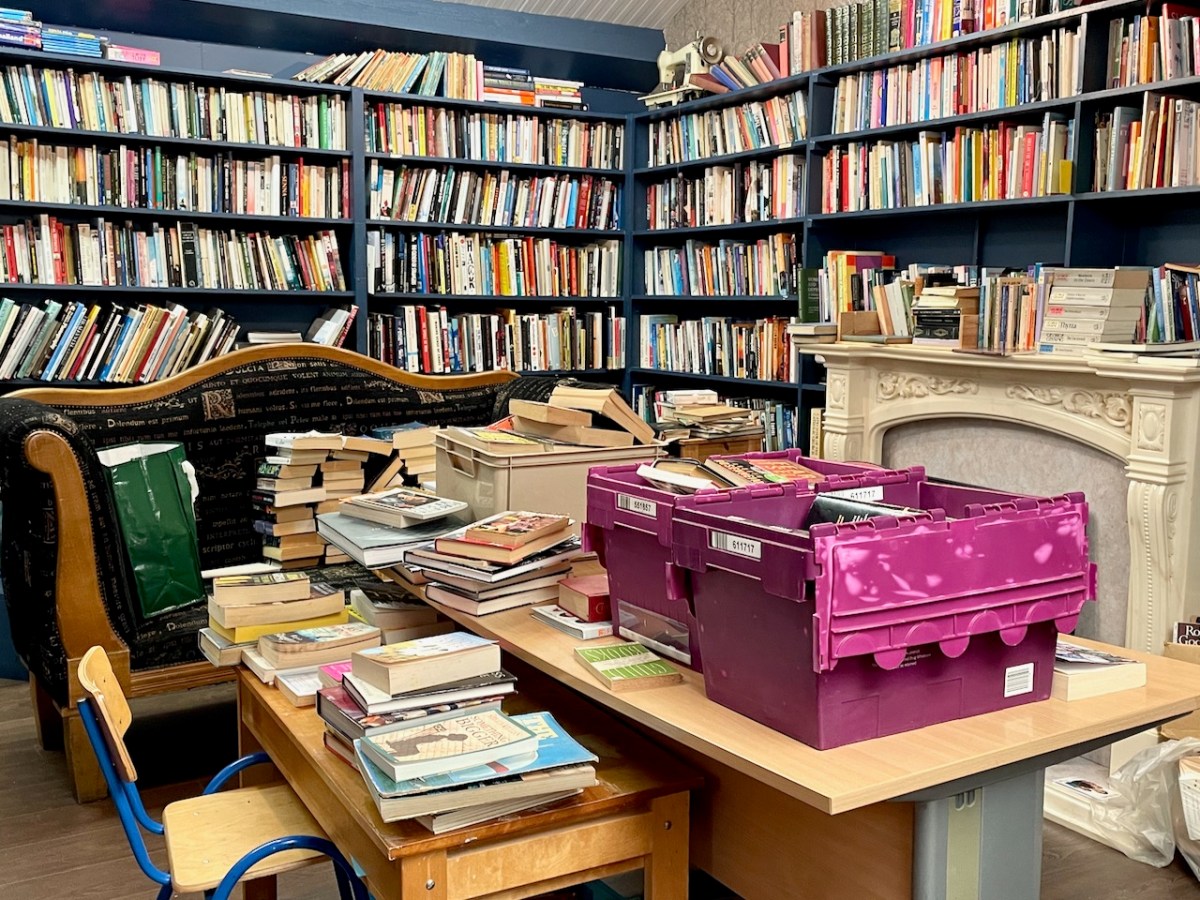
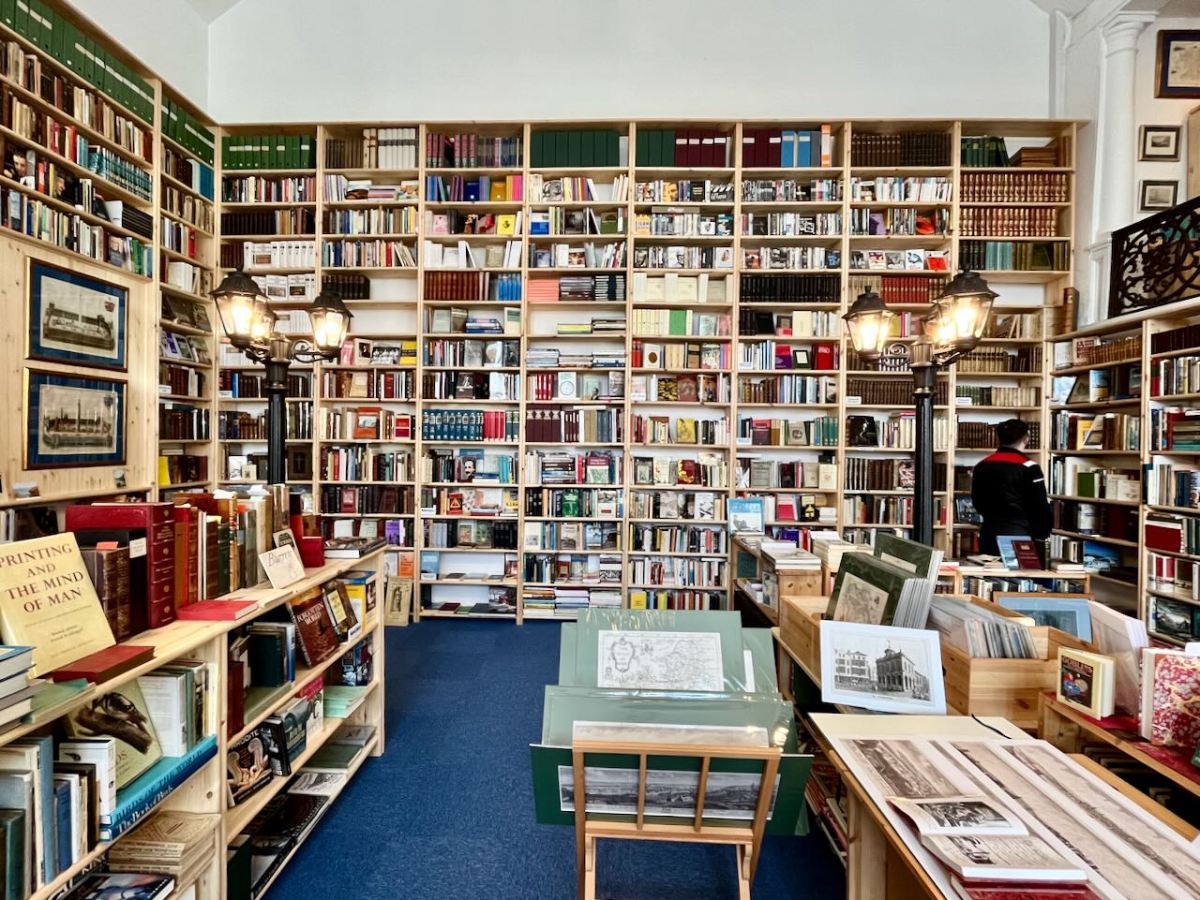
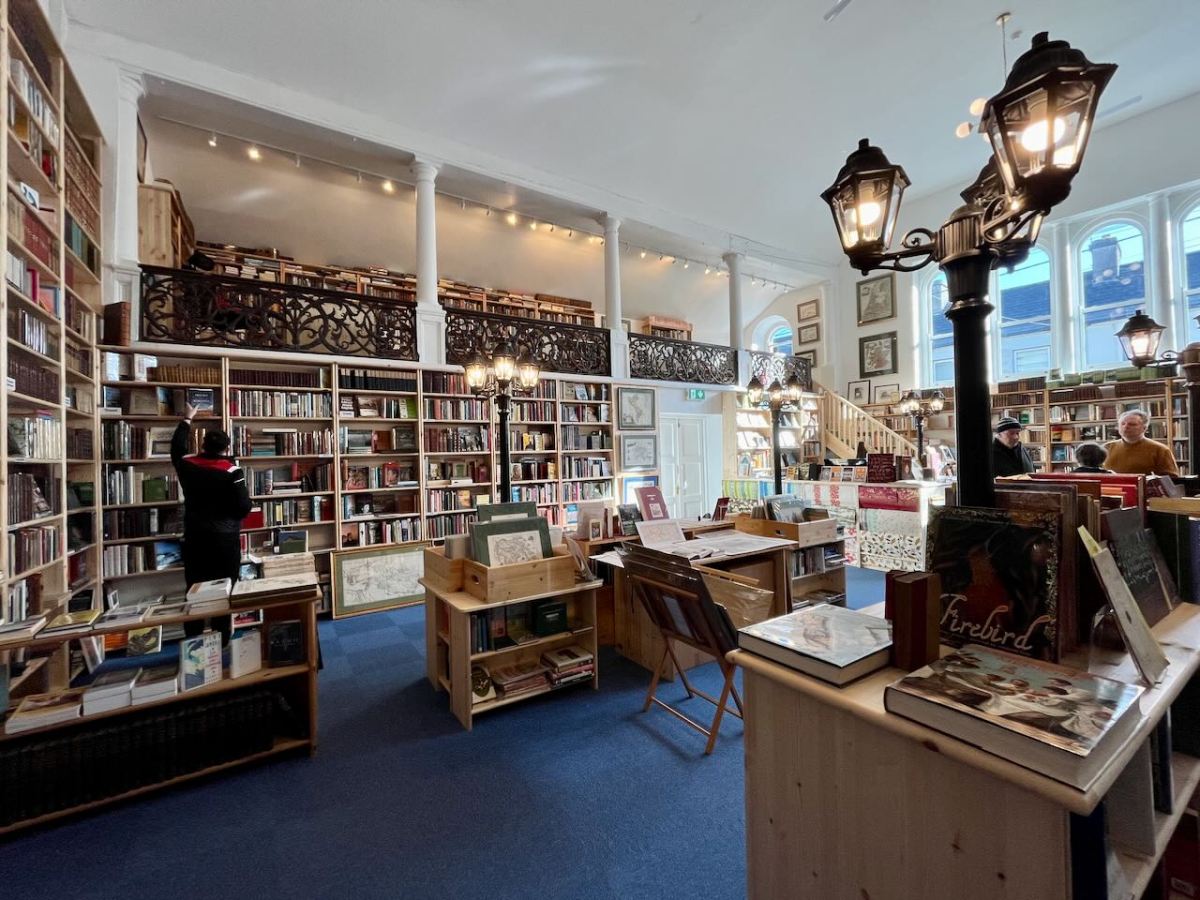
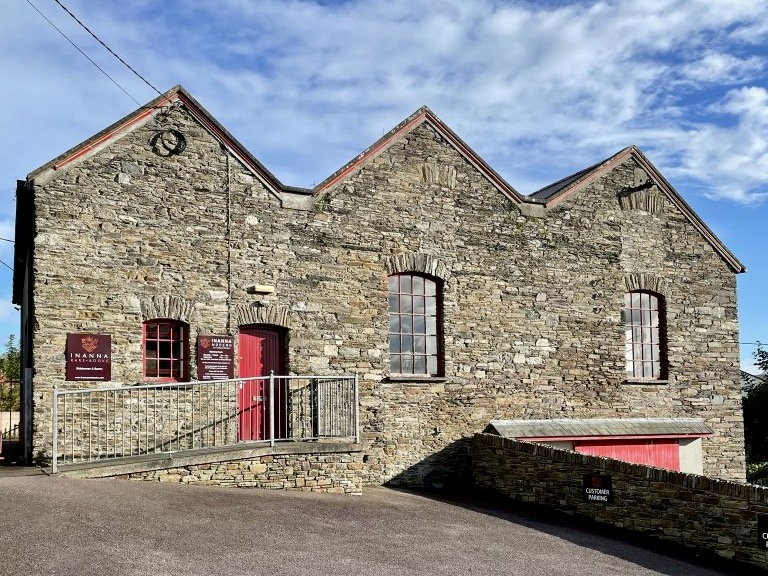
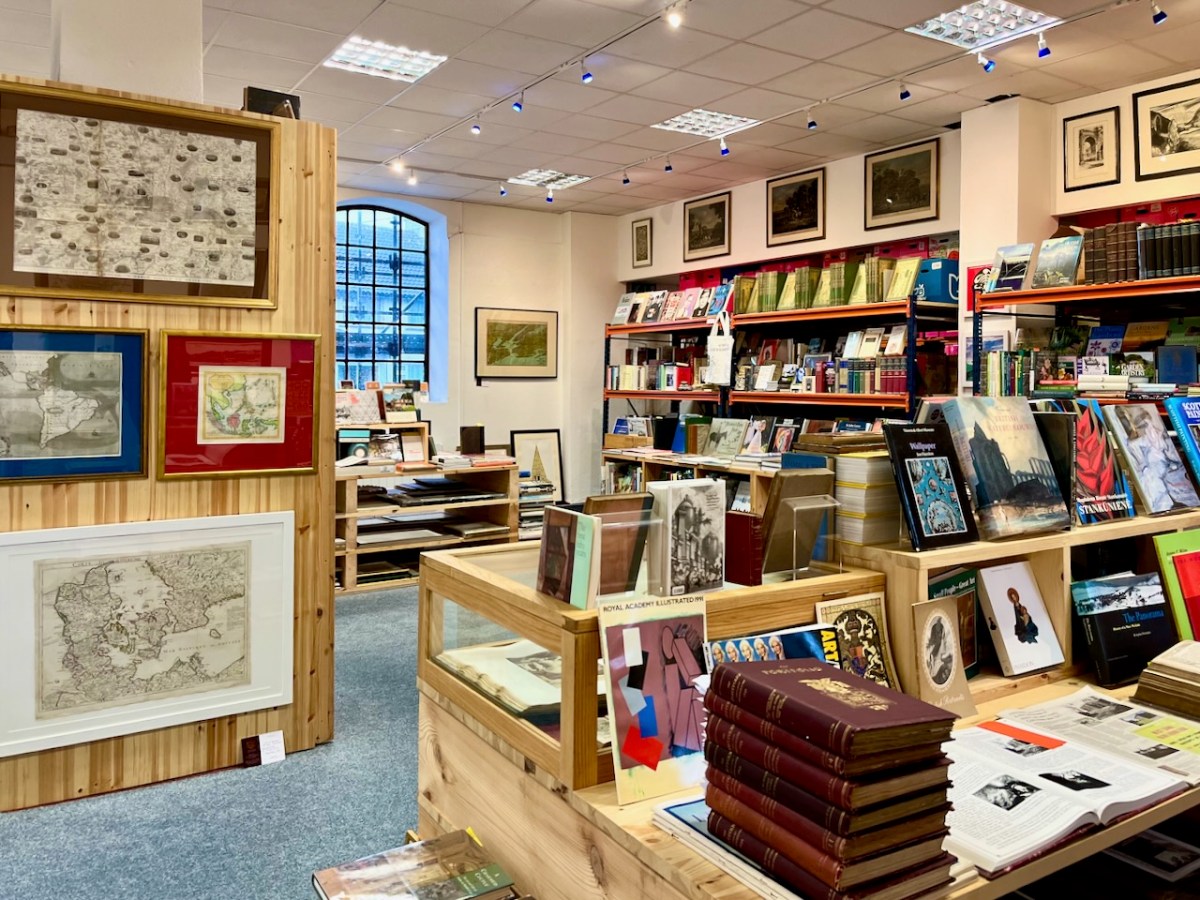
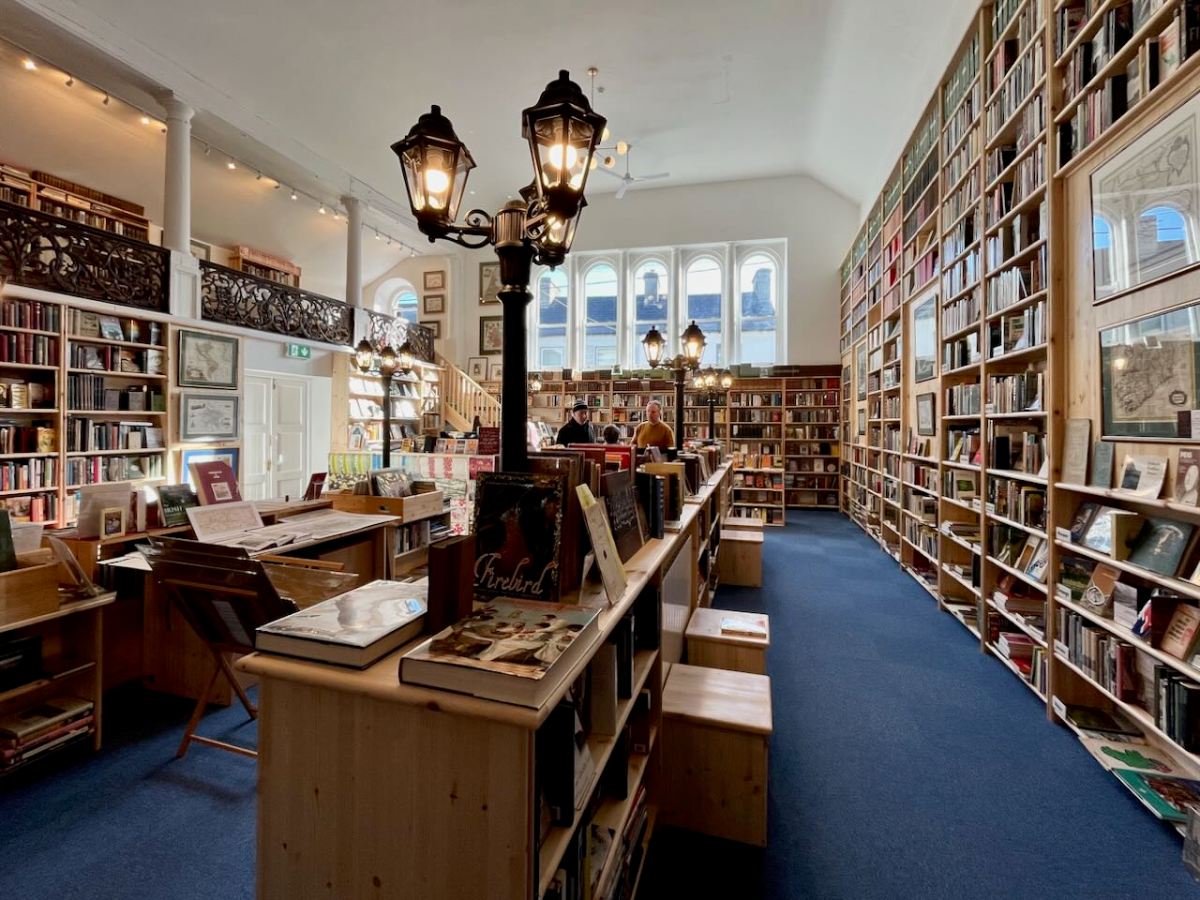
In keeping with the Book Town ethos of utilising historic buildings no longer in use, Inanna Rare Books is housed in the Masonic Hall – I can think of no better use for a building like this. It’s like walking into a grand Victorian library, with books stretching to the ceiling, a mezzanine with an elaborate wrought iron bannister, and the whole place flooded with light from the huge arched windows. 

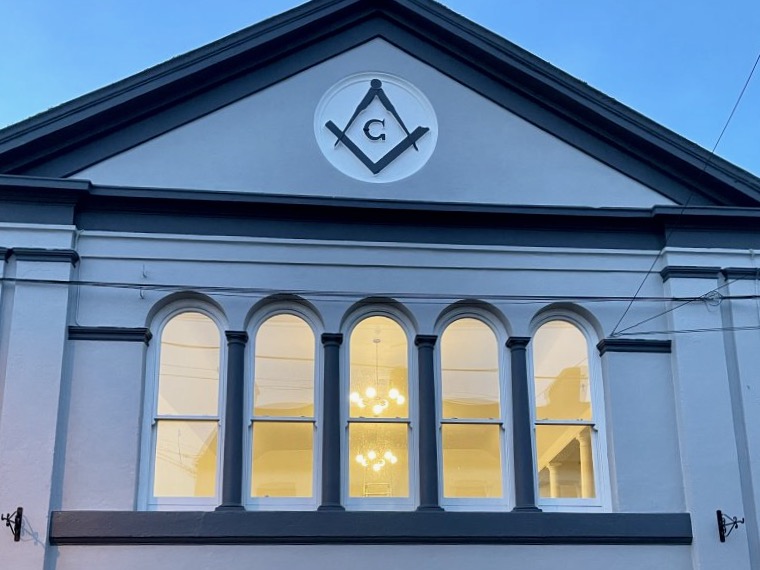
This striking edifice was built in 1863 as a lecture hall. Alas, the lectures didn’t thrive – although such public adult education efforts were very popular at the time – and it was sold after a few years to the Freemasons, and became a Masonic Hall, a meeting place for the masons and a centre for their ritual activities. Over time, their numbers dwindled, but the hall remained in good shape and retains most of its original features, including the timber sash windows.

Over 500 people visit this book store every month. Some travel from afar especially to see this glorious space and browse the collection. 

Holger and Nicola’s most recent store is the Still Mill, just off Market Street (above). This, as the name suggests, started off life as a distillery in the 19th century, becoming a grain mill in the 20th century. It had a mill wheel to drive the machinery – that wheel was later broken down and sold off for furniture-making. One of the town’s businessmen, Michael Thornhill, slept as a baby in a cradle made from the wood. 

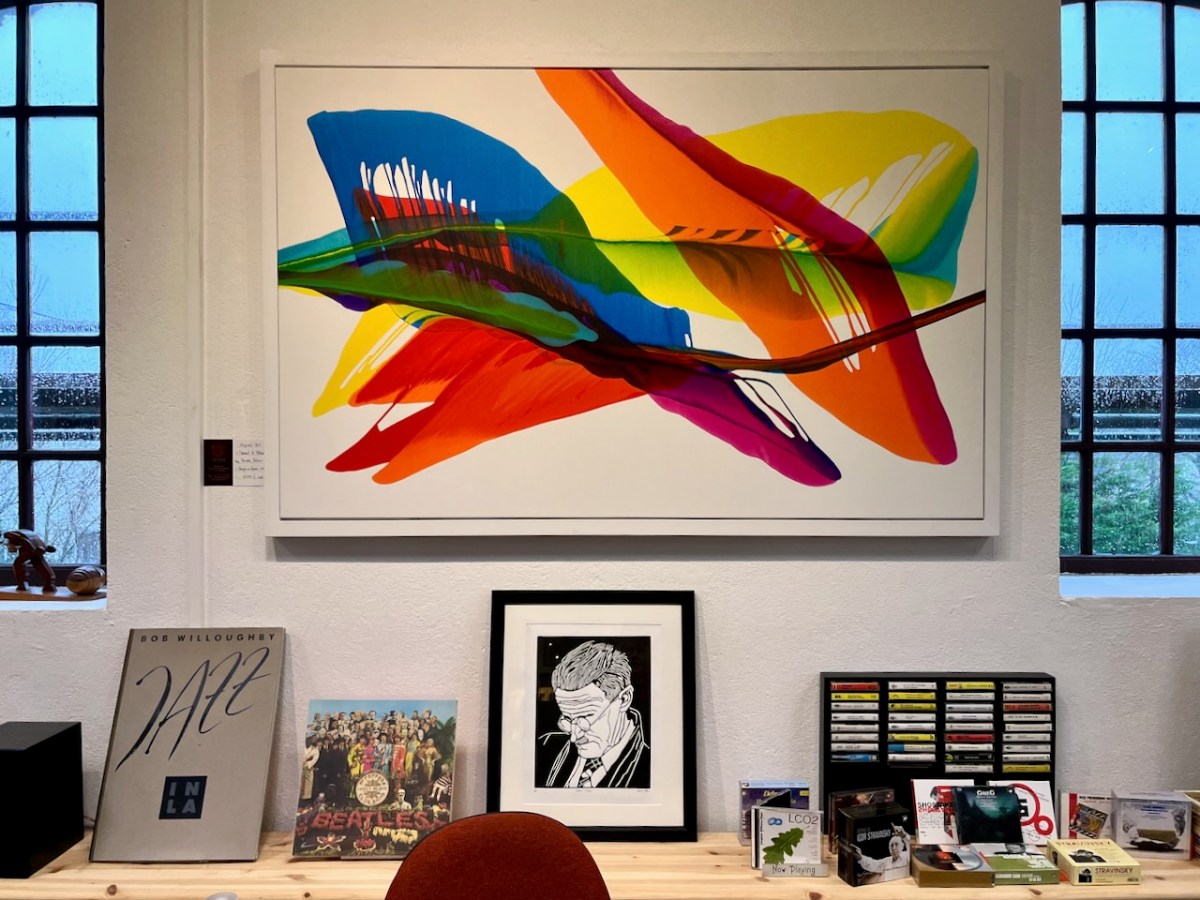
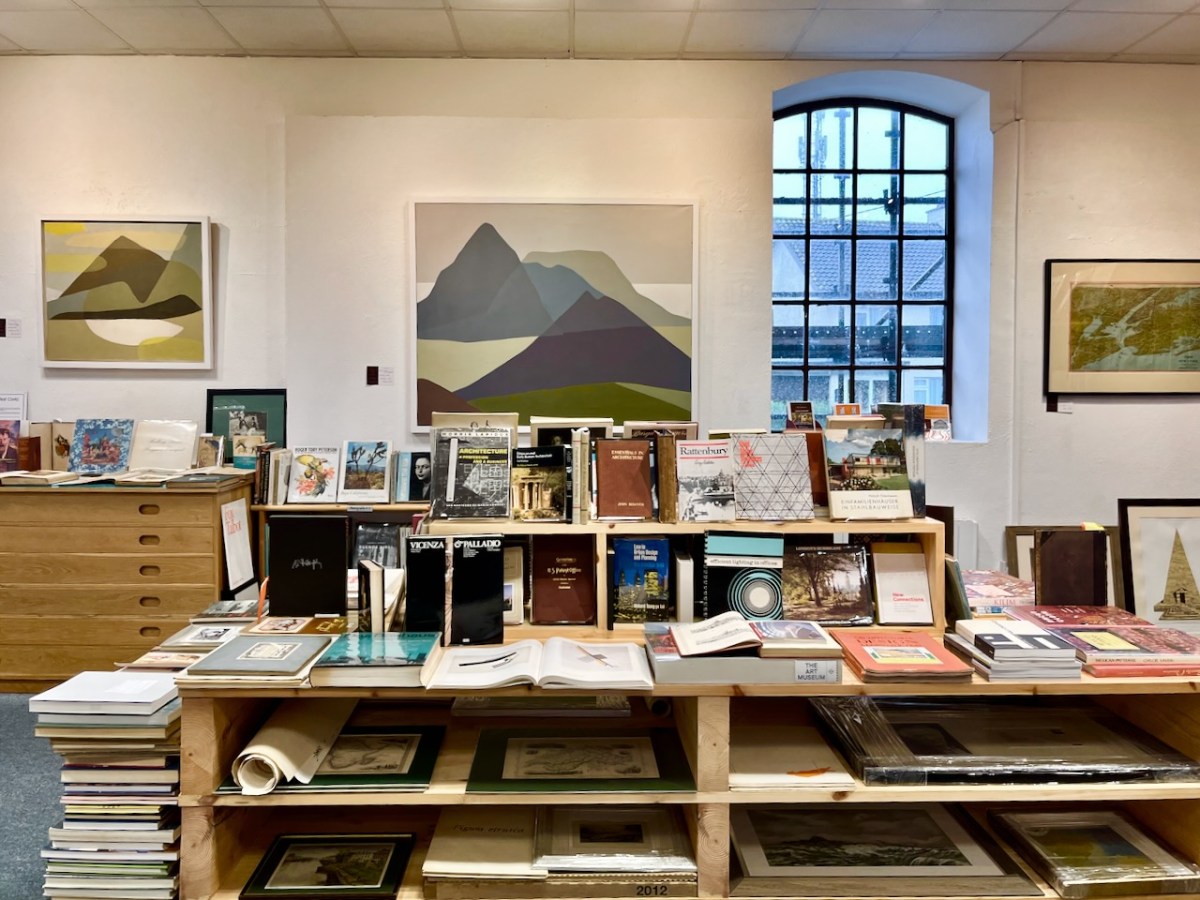
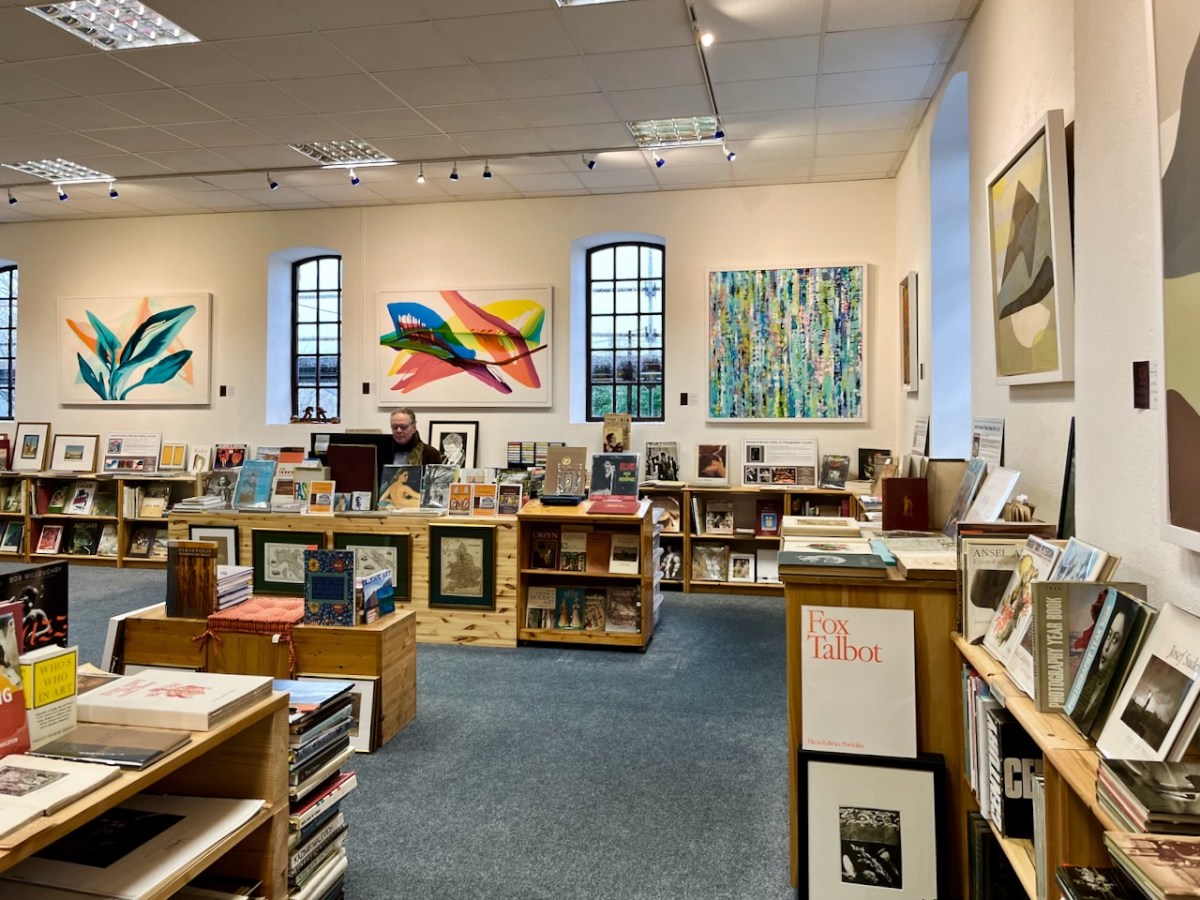
The heritage character of the building is obvious from the outside and stepping inside you are immediately struck by the stately character of the lofty ceilings and deeply-set windows – and how perfectly it suits a bookstore. The focus in this store, named Inanna Modern, is on art – art on the walls, art history and criticism on the shelves, photography, every conceivable form of art book. Holger represents, among others, a Canadian artist, Brooke Palmer, and his intense, colourful images provide a vibrant counterpoint to the lines of sober book covers.

Holger is passionate about using heritage buildings for such purposes. The best buildings in town, he asserts, often sit forlorn and neglected (see The Irish Aesthete for example after example) and what better way to revive them than with a business like this – a perfect match of form and function. Each of his landlords is totally supportive of his efforts, and together they hope to provide models of what is possible in any community. 

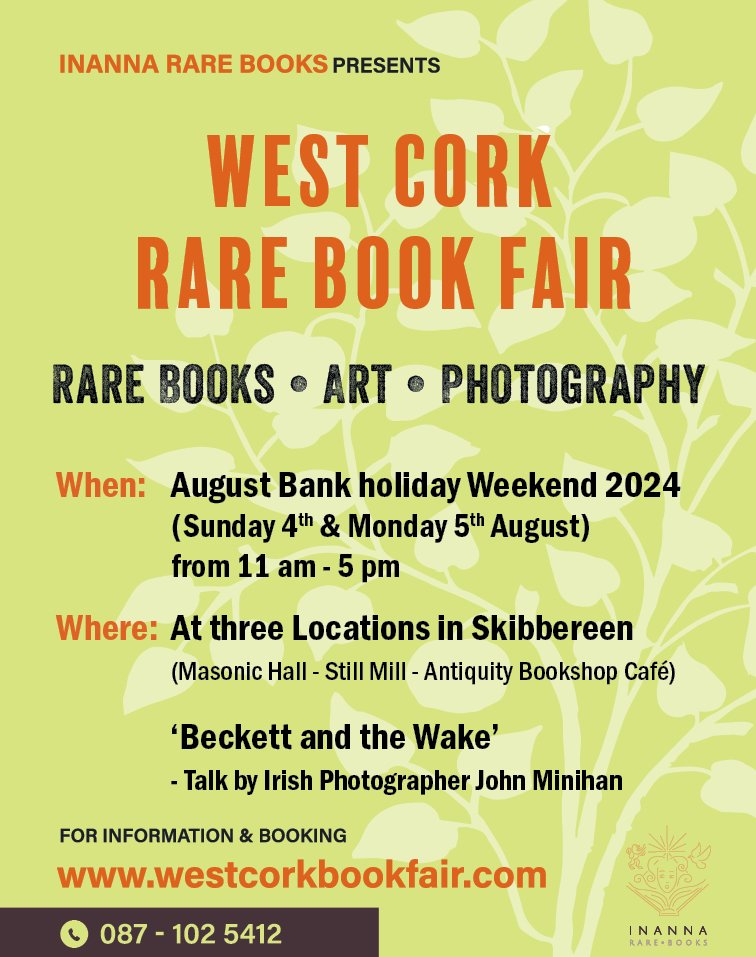
Reader, if you live in Ireland, you are only too familiar with what Holger is talking about – lovely old buildings crumbling and disregarded that, with some attention, could become energetic hubs of cultural activity and commerce. For a budding Book Town, spin-offs are important too. Holger organises the occasional book-related talks or readings and a yearly Rare Book Fair that will take place this year on August 4th and 5th. Meanwhile, for their artists, there was an exhibition at the marvellous Cnoc Bui Arts Centre.

You may not be familiar with the term Book Town – yet! But Skibbereen is well on its way to becoming a shining beacon for bibliophiles from all over the world, thanks mainly to the efforts of the Smyths. How wonderful it is to have people of vision and passion driving an economy for book-lovers, in one small Irish town. 

Feasts and Festivals

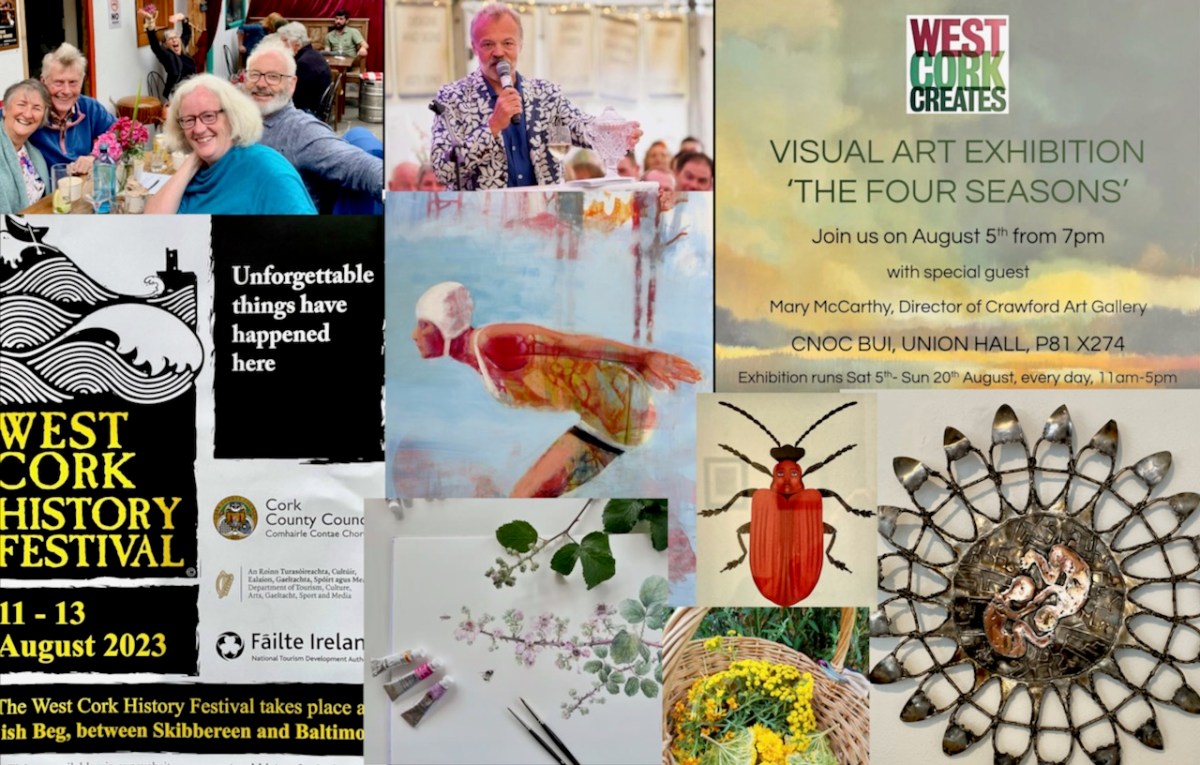
It’s August in West Cork and we’re going to need a holiday to recover! July was a blast – here are a few highlights – The West Cork Literary Festival (I was on stage at Future Forests as part of a joint Lit Fest and Ellen Hutchins Fest Seaweed and Sealing Wax presentation, to a large and enthusiastic audience; A Fusion Feast at Levis’s with good friends and cooked by Rob Krawczyk and, both with their own Award Winning Restaurants; the Launch of Holy Wells of Cork by Amanda Clarke; and a continuation of the high standards of exhibitions at The Blue House Gallery in Schull, with Oonagh Hurley, Catherine Weld and Shane O’Driscoll – including this rug designed by Shane and made by Ceadogán Rugmakers.

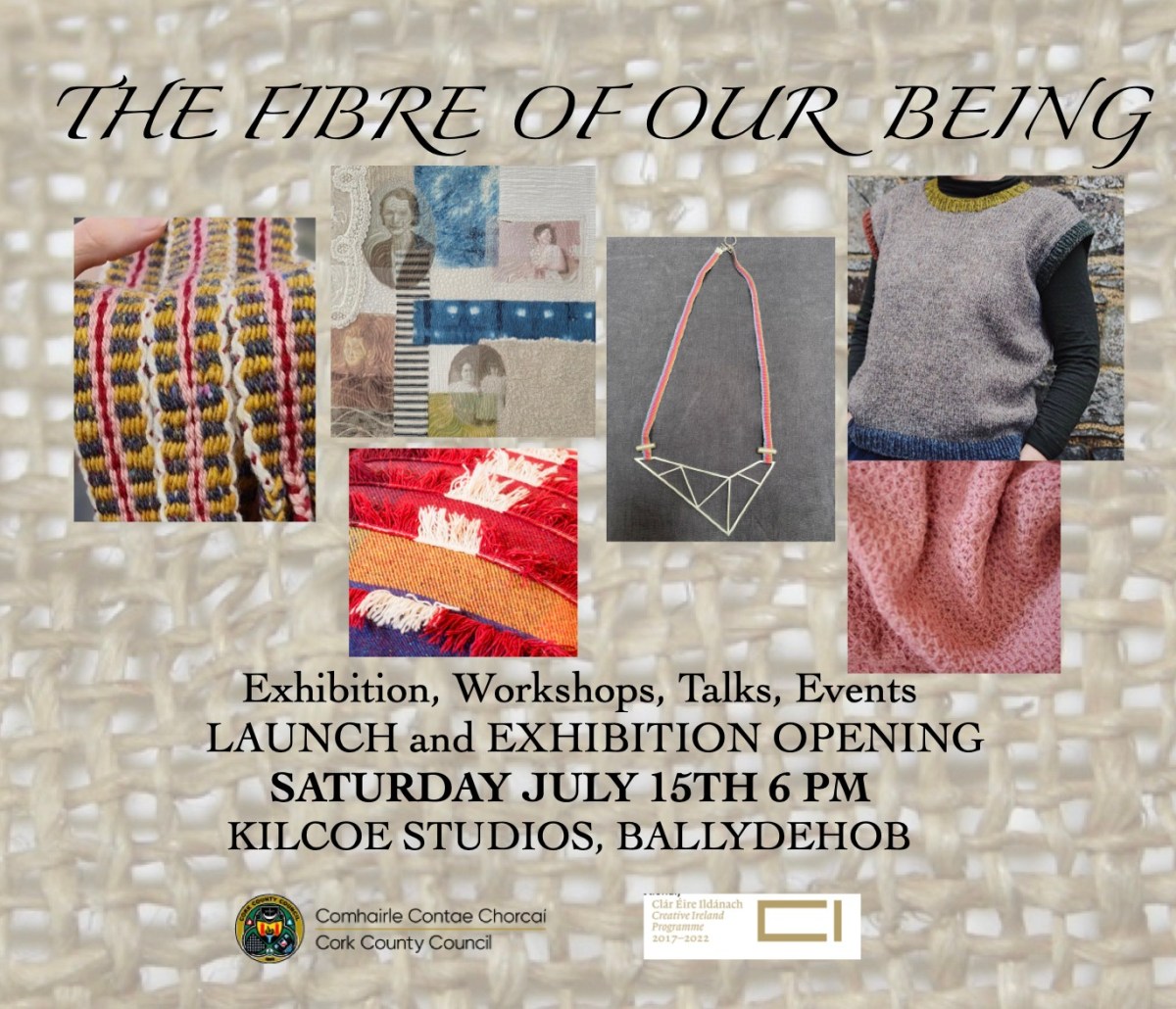
The wonderful Kilcoe Studios also organised an innovative series of events titled The Fibre of Our Being, “exploring contemporary textiles which draw on tradition to reinvigorate their process” and involving several different artists, including our friend and neighbour Liadain Aiken – see here for our post on Robert’s sweater.

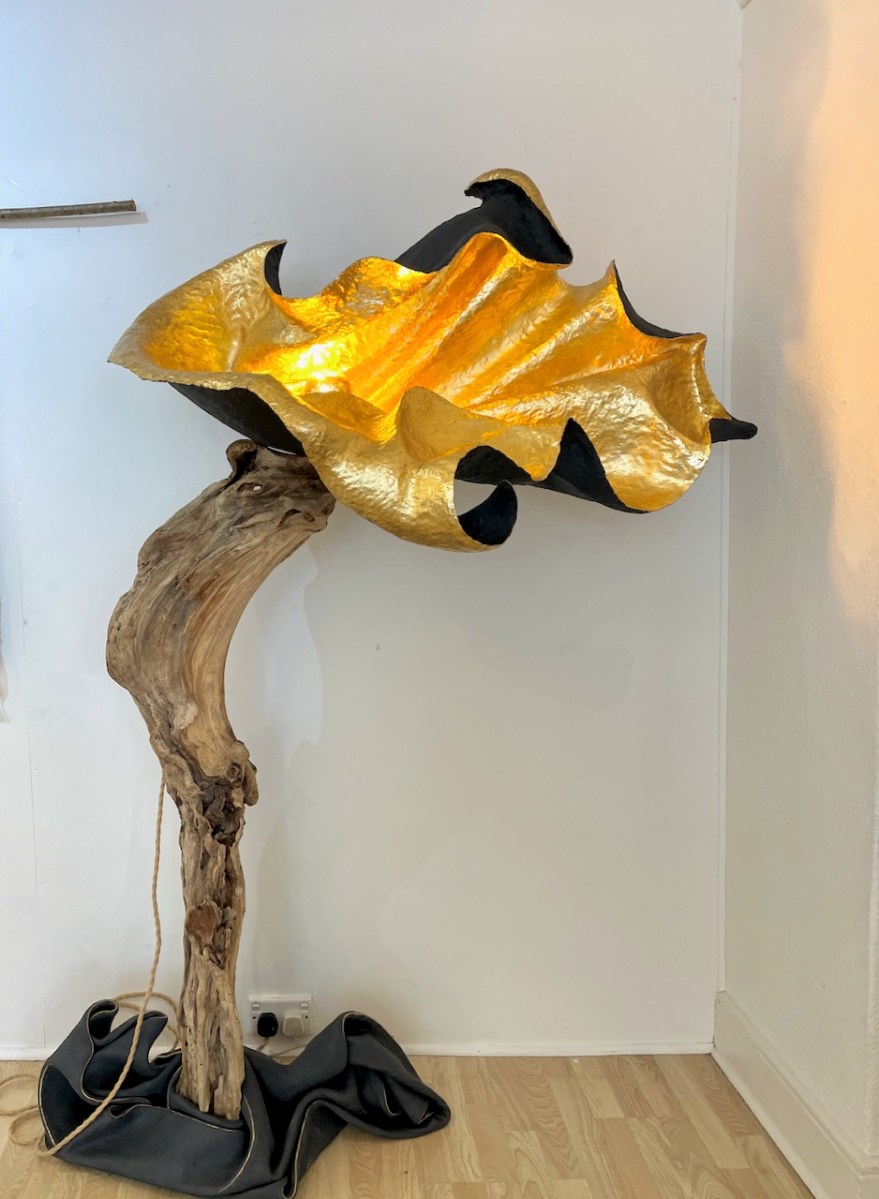
August started with the 10 Hands Exhibition at the Working Artists Studios. 10 Hands is the brainchild of Angela Brady, architect, film maker and craft historian. This year, the ten artists and makers have been joined by 6 more from the Working Artists Studios team, and the result is very impressive. Lots of variety here, and an exceptionally high calibre of vision and execution. I am craving one of the incredible standards lamps by Ania Surazynska – here’s one example. This artist is new to me, but I see a very, er, bright future for her. You heard it here first.

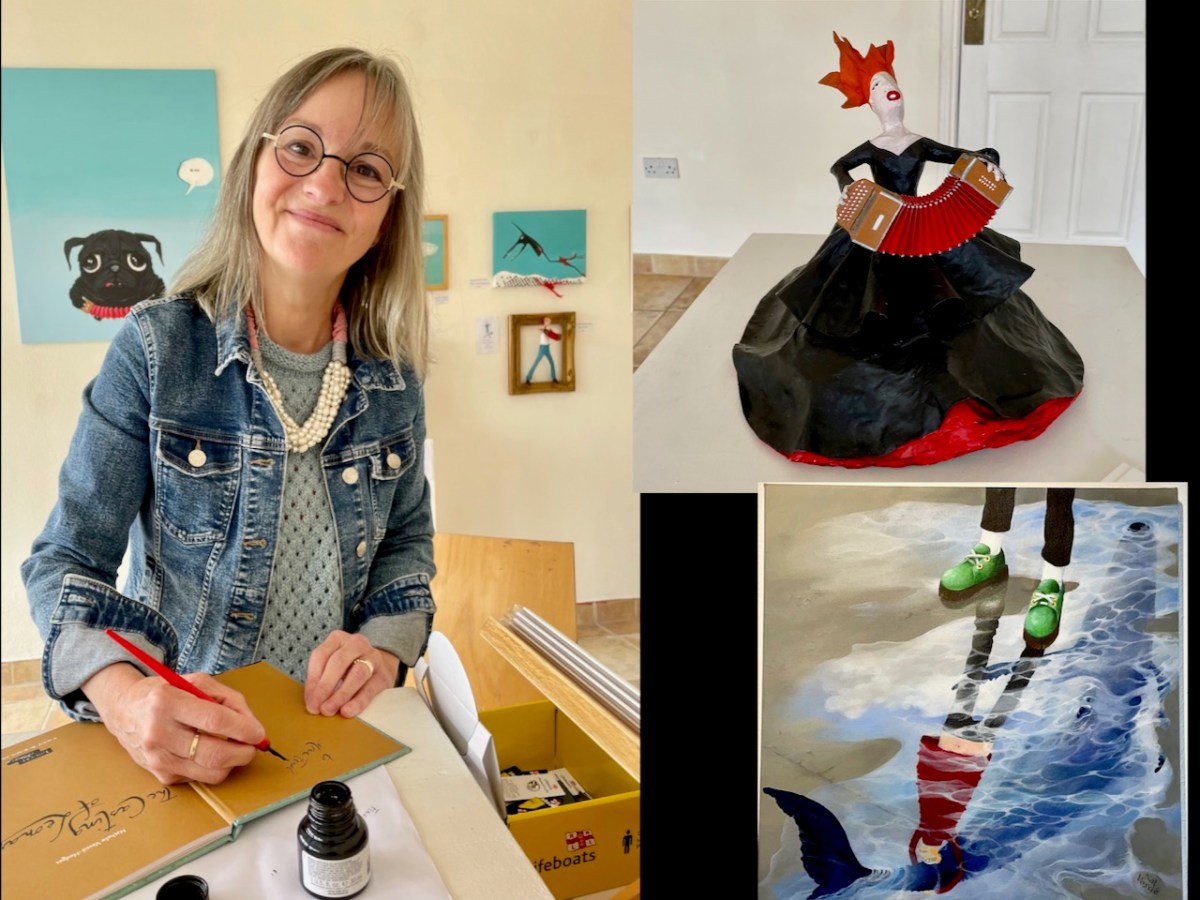
While we weren’t able to get to the opening last night, we are planning a trip out to Union Hall tomorrow for the annual and always-outstanding West Cork Creates Exhibition. This show has now moved to a marvellous new establishment, the Cnoc Buí Arts Centre. We visited last month and were delighted by the exhibition we found there, of sculptures, paintings and books by Nathalie Vessié-Hodges. Here she is signing one of her books for me (it was published by the Louvre!). A fairly recent blow-in to West Cork, I predict we will be seeing more of Nathalie.

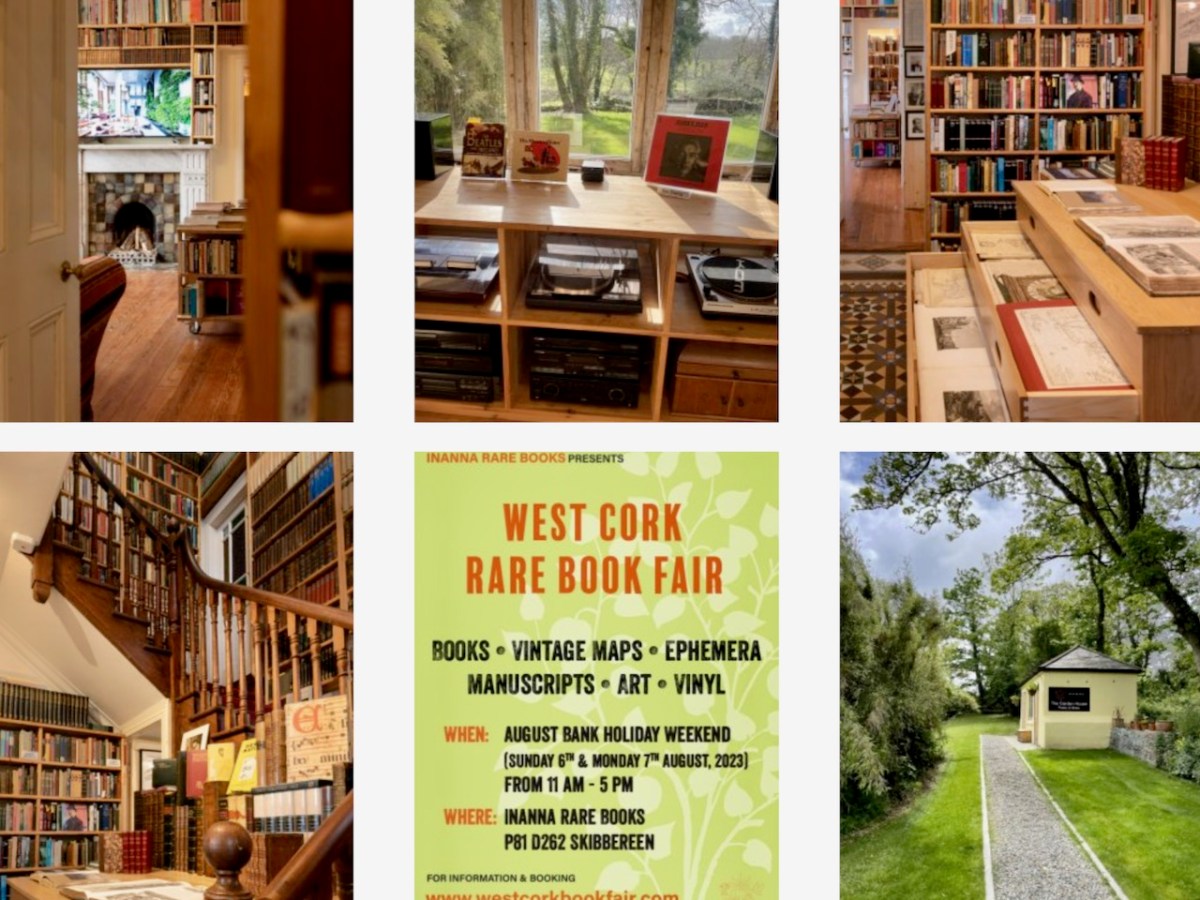
Also on our list for tomorrow is the West Cork Rare Book Fair – we attended last year at the lush Inish Beg Estate and this year it is being held at the home of Innana Rare Books just outside Skibbereen. Doesn’t this look inviting? (It’s a screenshot from the Innana website – thank you, Holger and Nicola!)

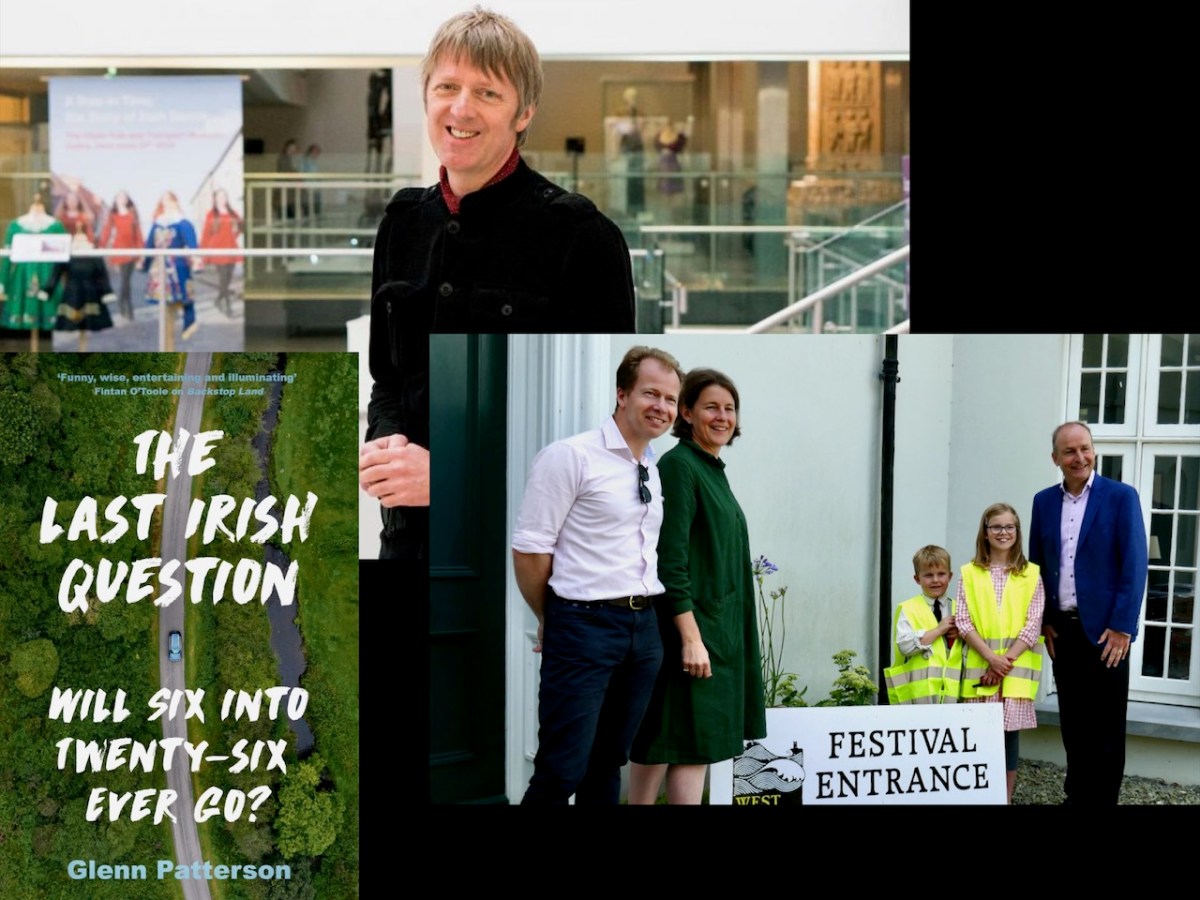
And then it’s right into the West Cork History Festival. Robert and I have organised the field trips, and we are looking forward to our own contribution to those – a tour of the historic Church of St Barrahane in Castletownshend. There are several other options – including walks and swims with Gormú, a walking tour of Ballydehob (oops -sold out!) and an historical Kayak trip through Castlehaven. The Program of Talks features leading academics and writers, and there’s a hot rumour that Micheál Martin will do the opening honours. I’m particularly looking forward to Friday night’s opening session with writer Glenn Patterson who will be in conversation about his latest book The Last Irish Question: Will Six into Twenty Six Ever Go? followed by a panel ruminating on what we have learned from the Decade of Centenaries about our past and our future.

For history buffs, you just can’t beat this Festival, this year in the magical surroundings of Inish Beg Estate. As soon as it’s over I will be hot-footing it to the events of the Ellen Hutchins Festival – a feast of delights for anyone even vaguely interested in the natural world, inspired by the life and work of Ireland’s first female botanist. I’ve signed up for several events – lots of them are free and many are suitable for children.

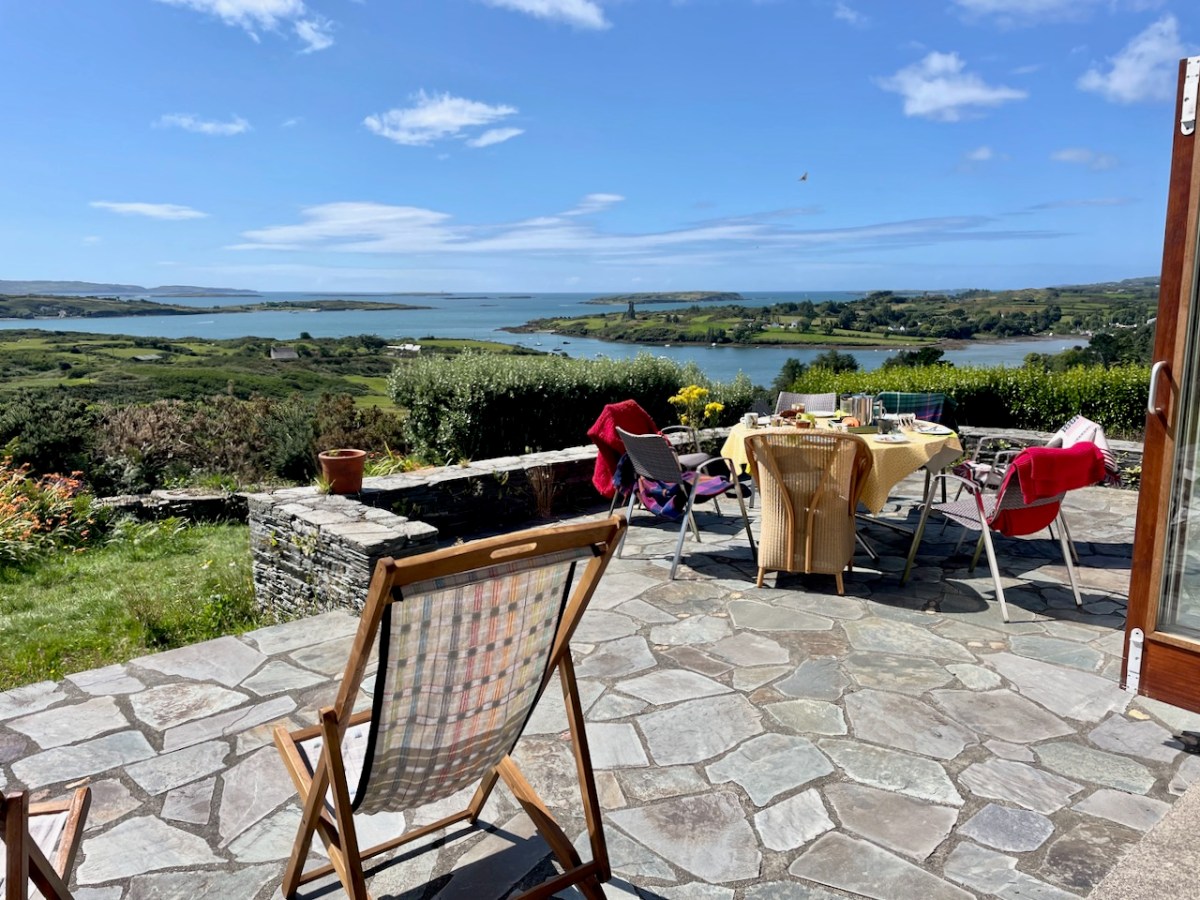
And once all that is over, I might just have to retire. Wait, what? I AM retired, I hear you say? Ah – so no excuse needed to do more of this – having leisurely lunches overlooking Roaringwater Bay?

Oh – you have another question? What’s Graham Norton doing in the top photo? That’s easy – he lives part time in Ahakista on the Sheep’s Head, and there he is, doing his stint as Quizmaster at the annual Ahakista Festival this weekend. We attended one year and it was predictably hilarious.

Boulders, Books, Boats and Bogs

I bet you can’t wait for more of me banging on about August in West Cork – so let’s get to it! Our week has involved all of the above, and I resisted the urge to add the word Bryophytes to the title. You’re welcome.

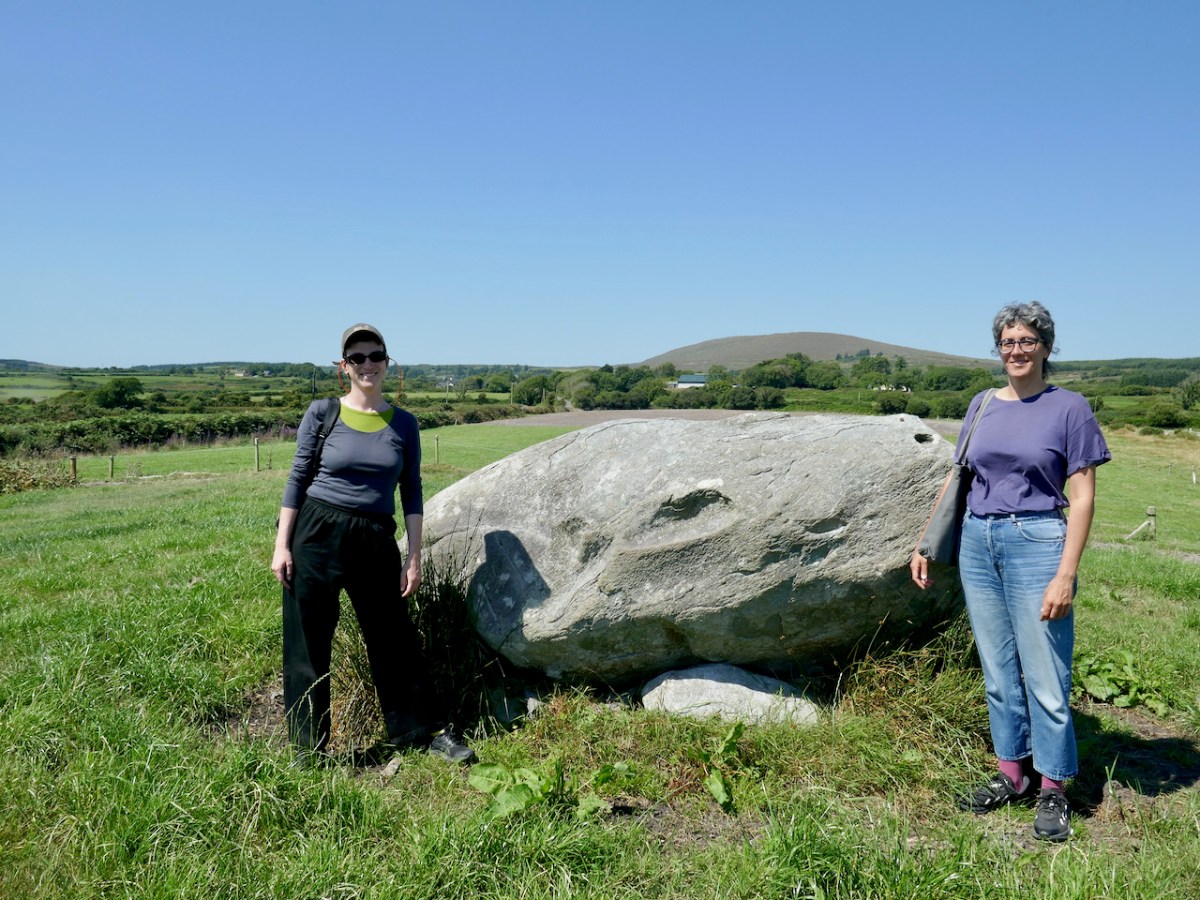
The boulders? Shorthand for Boulder Burials, just one of the ancient monuments we visited this week with Konstanza and Christiana, two of the artists in residence with the Crespo Foundation. They are both from Greece and collaborate on documentary and sound-based projects, and Konstanza is also an archaeologist. It was great fun to introduce them to some of our favourite sites on the Mizen, from rock art to wedge tombs, standing stone and boulder burials. 

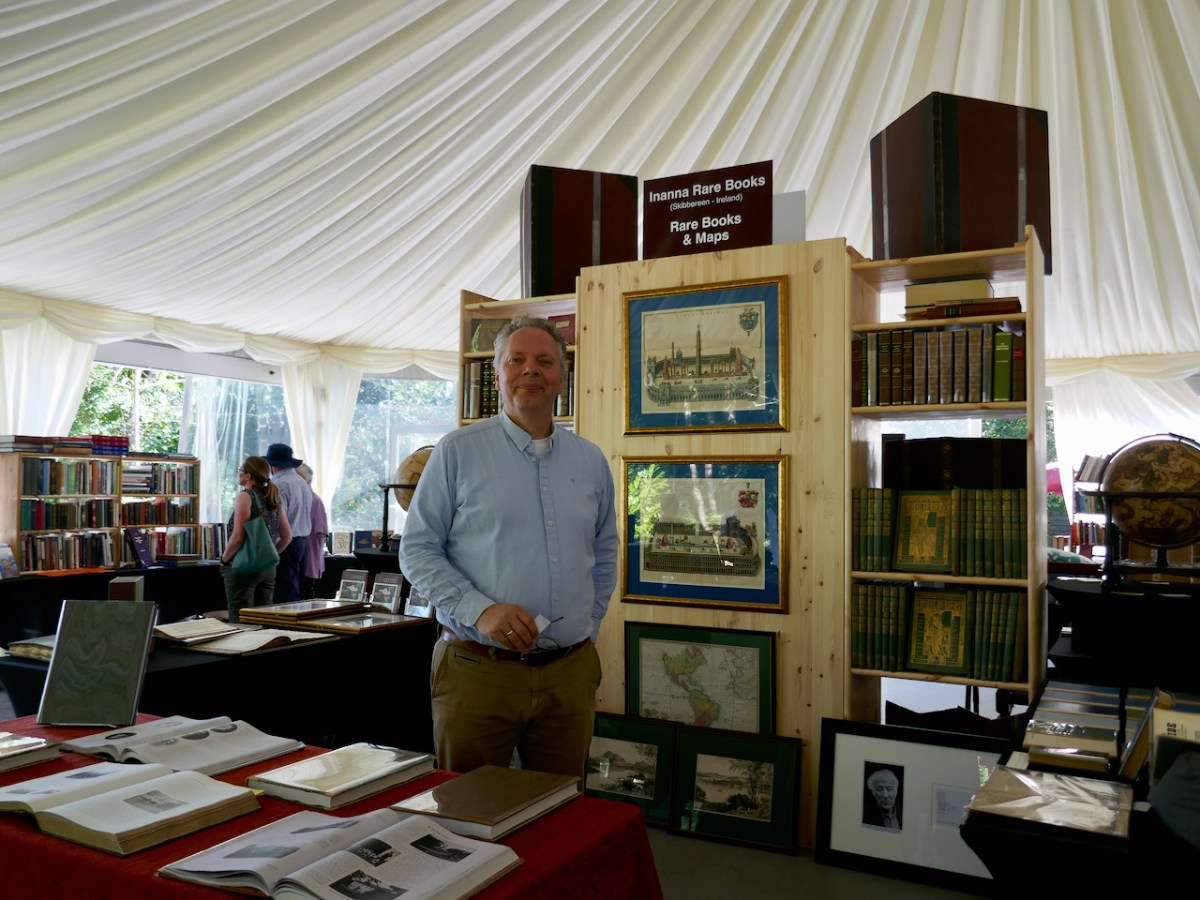
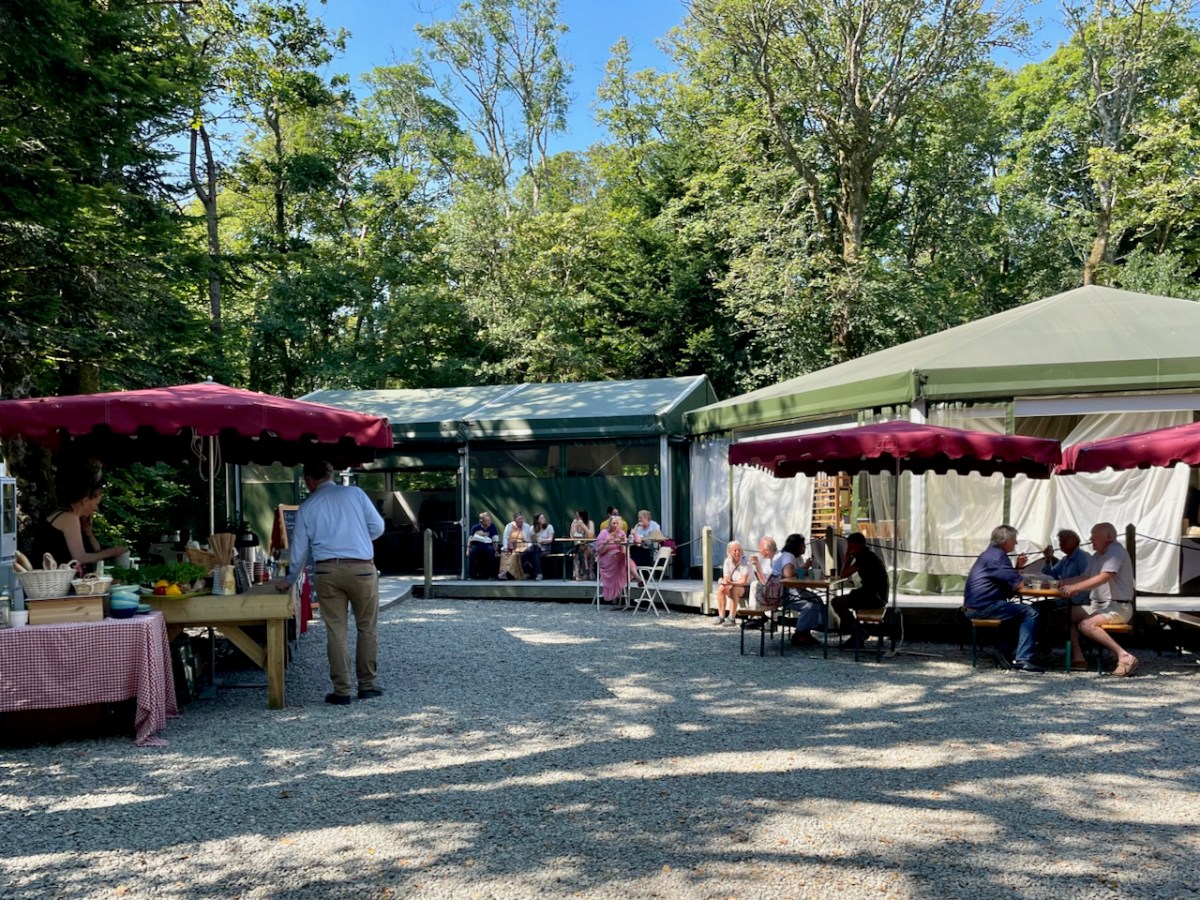
And then it was time for the Rare Book Fair, the brainchild of Holgar (below) and Nicola, who run, respectively, Inanna Rare Books and the Antiquity Bookshop and Plant-based Cafe. This is the inaugural fair and it took place out at the luscious Inish Beg Estate. 

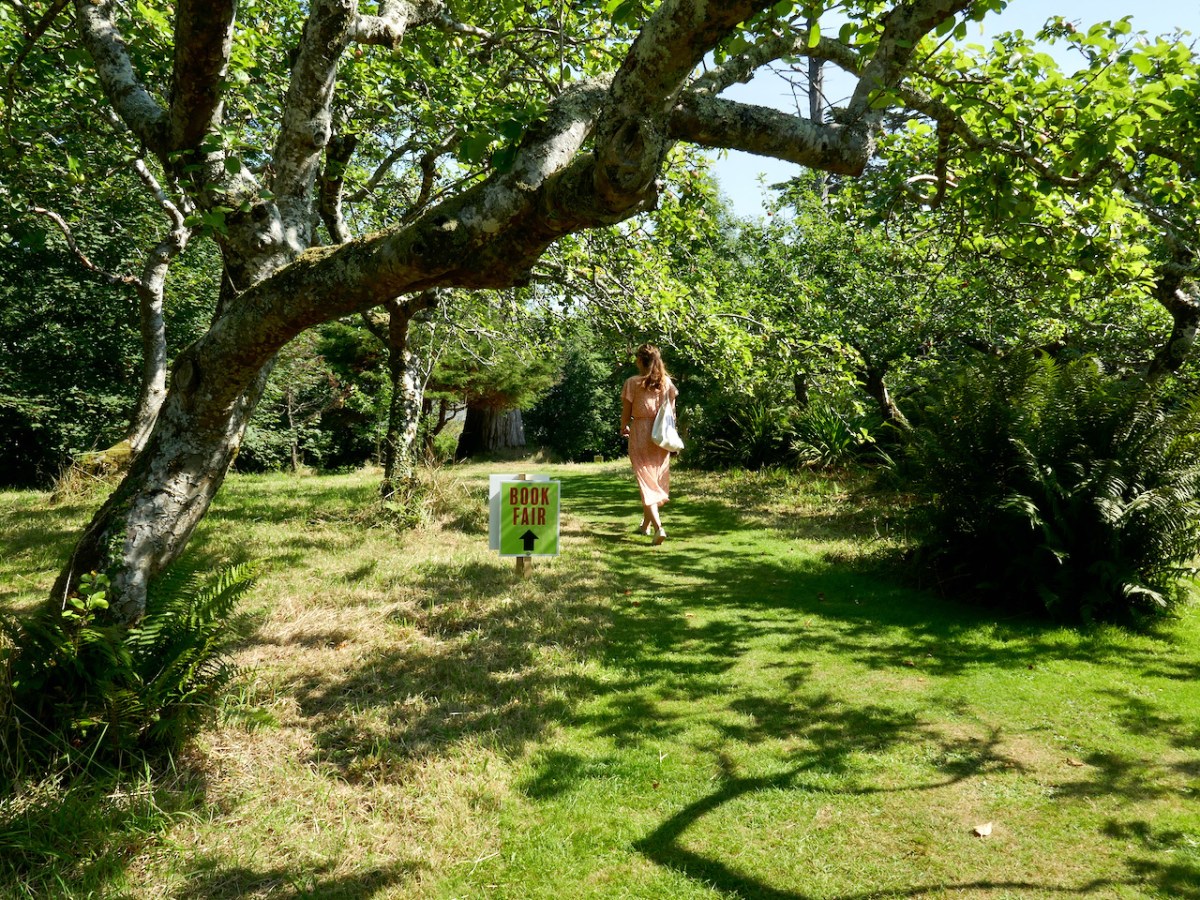
We love Inish Beg – nothing beats a good wander in the gardens and woods there – but even though we’ve been there several times, we were unprepared for the sheer magic of just getting to the book fair from the car park, all part of the experience.

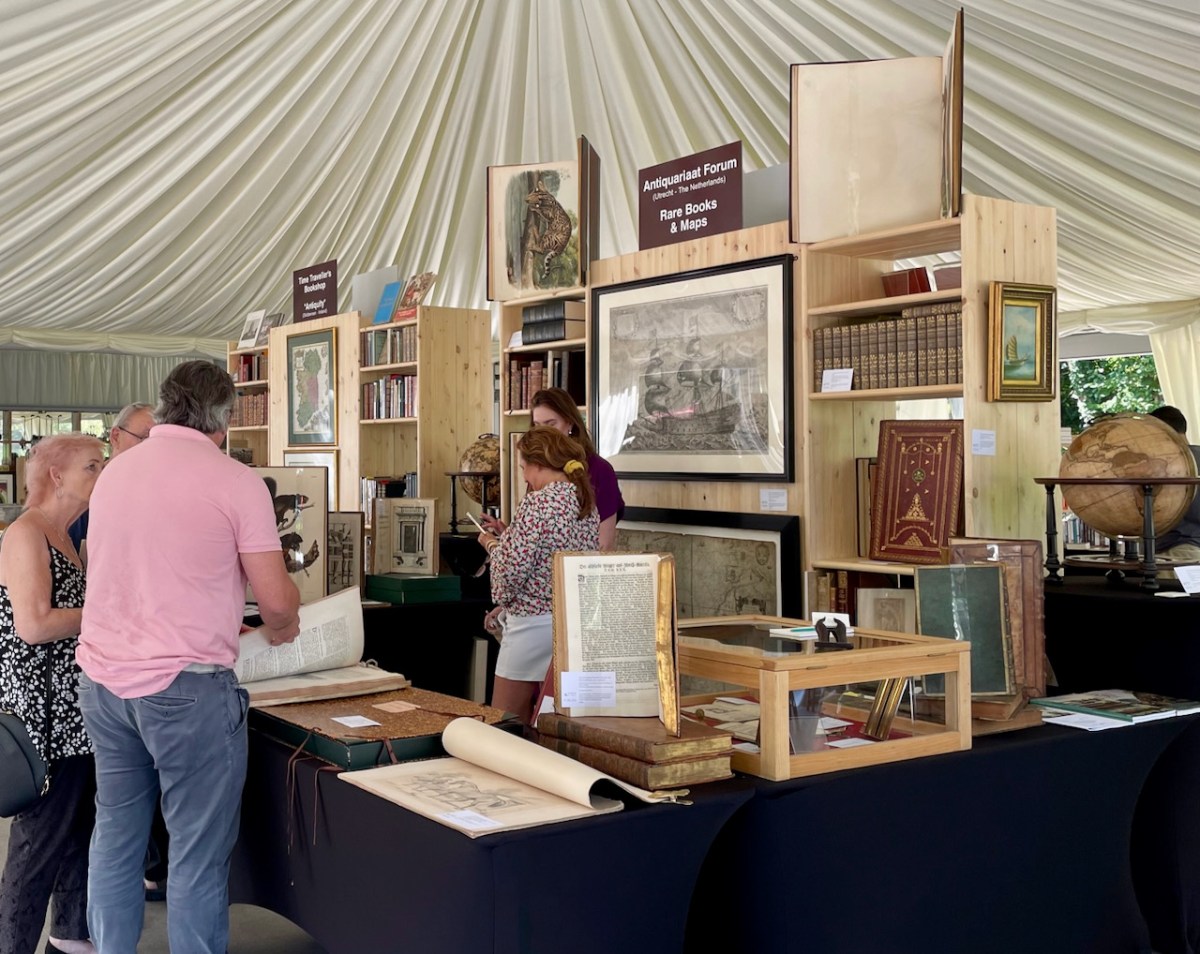
Of course we couldn’t come away without a few books, but the best part was just chatting to the booksellers – a passionate and knowledgeable group – and sitting outside sipping a cold drink and leafing through our purchases with other like-minded folk. Bliss!

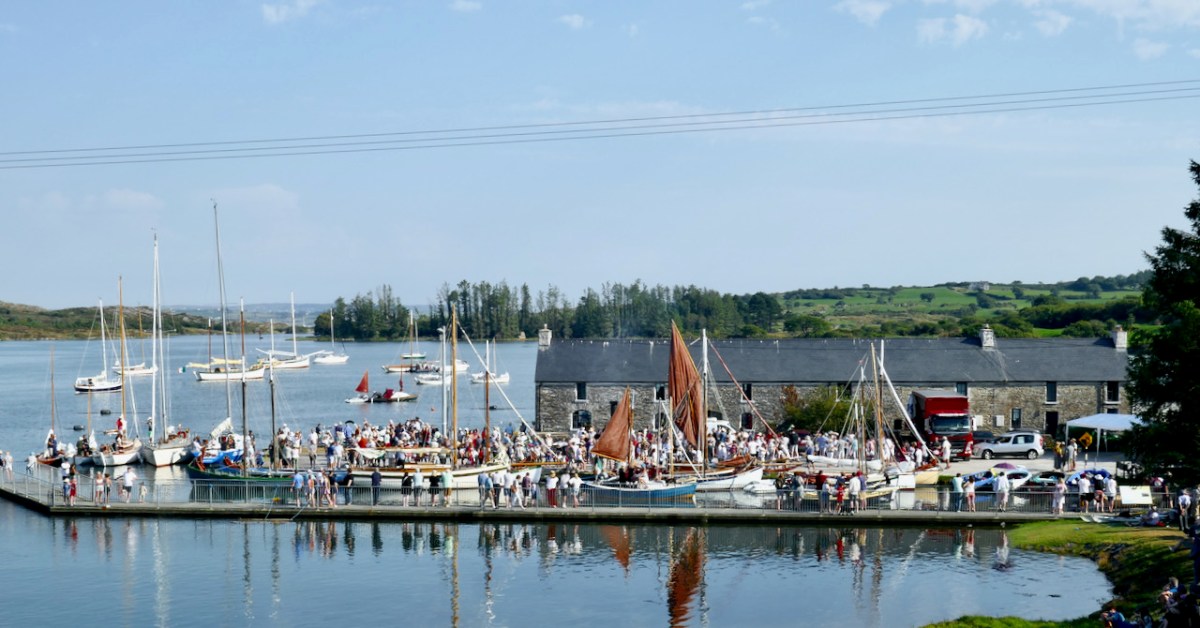
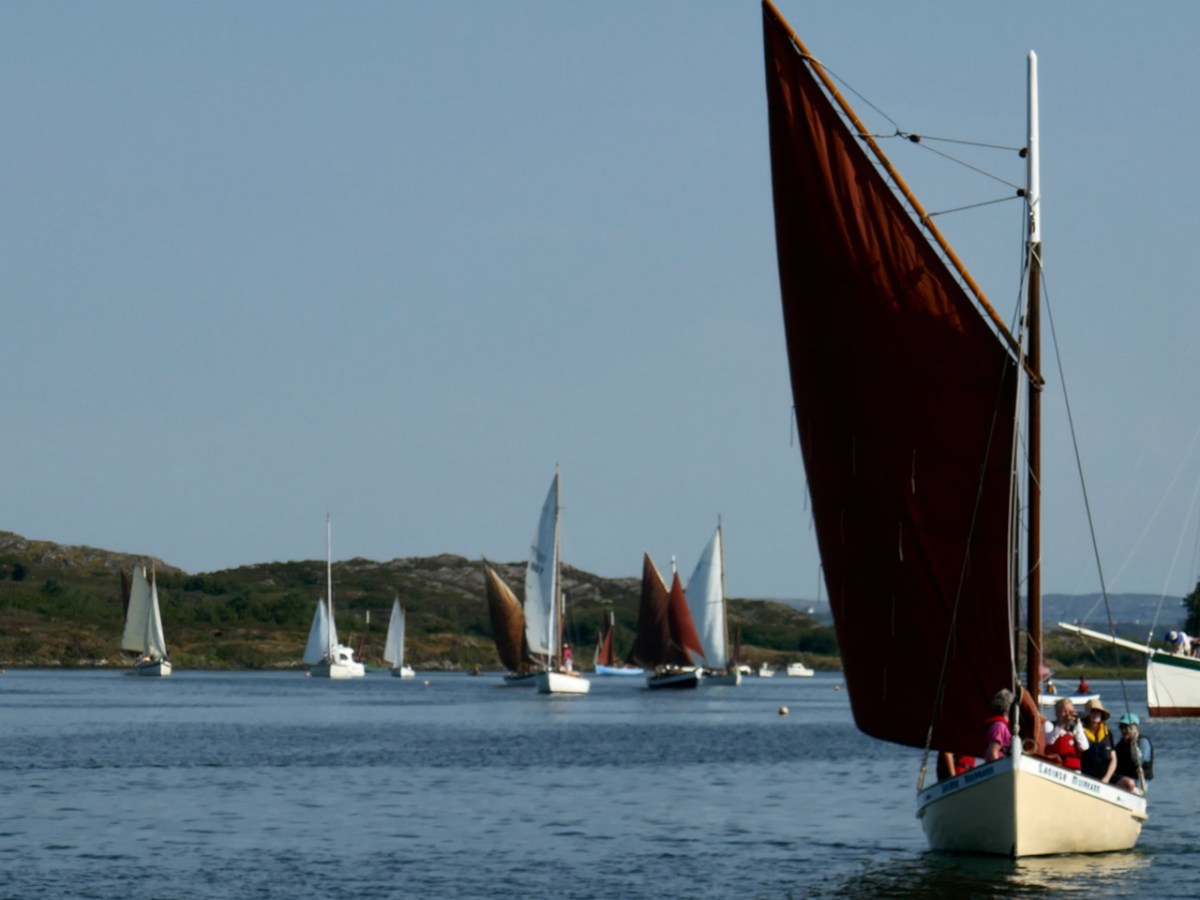
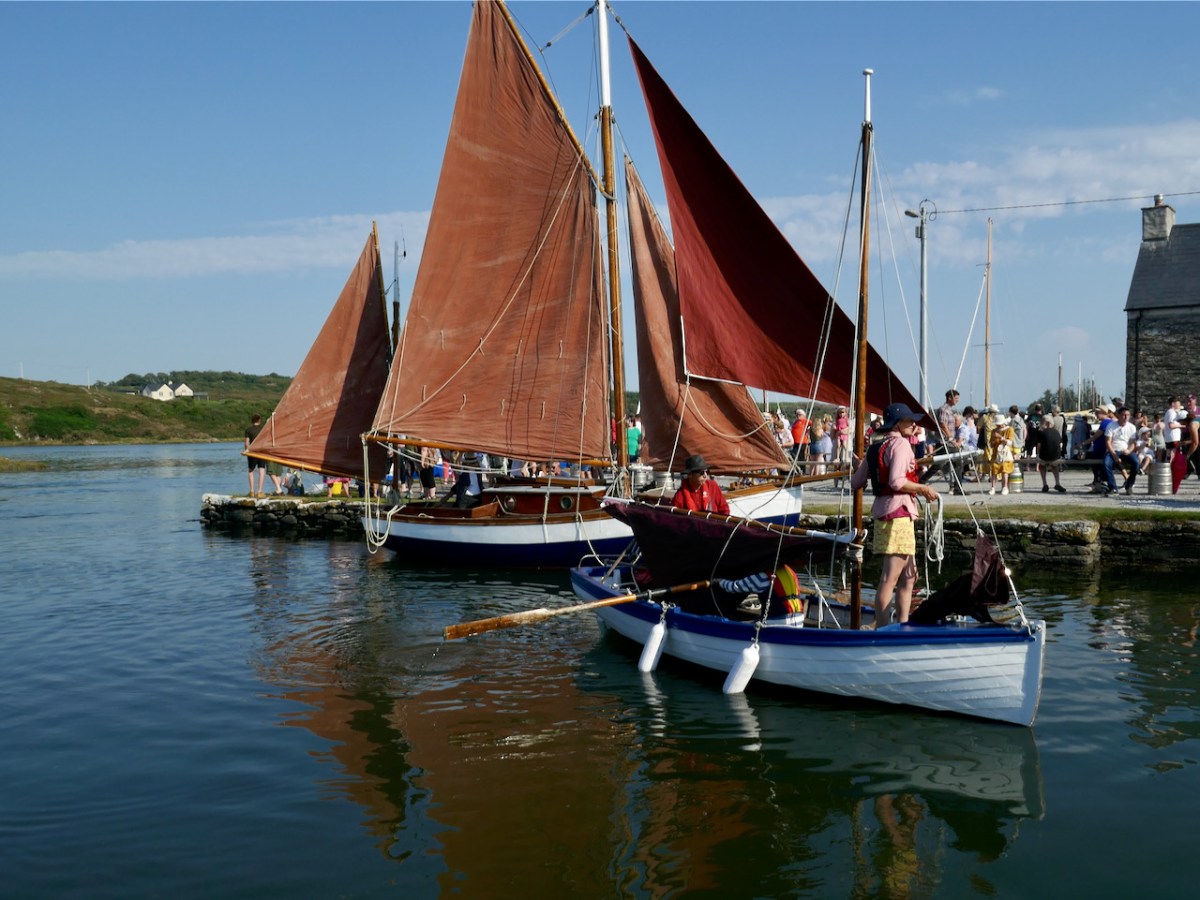
This book fair has the potential to become a very enjoyable permanent part of the West Cork Festival scene and I hope it does. On to Ballydehob and the annual Boat Gathering, or Cruinniú na mBád. Here’s my account of it in 2017 and in 2019 I had the wonderful experience of travelling in one of the boats with my friend Jack. 

This is just a fantastic community event. The whole village gathers on the quay, there’s music and burgers and the crack is mighty. But it’s the sight of the boats, in full sail, coming up the bay on the rising tide, that is the big draw and takes us back to the days when this was a common sight. 

And talking of boats and Ballydehob, we also took part in Inbhear, a sensory experience featuring the pedalos which used to be a common sight in Ballydehob Bay many years ago. Check out Robert’s post for his account of this – it was lovely.

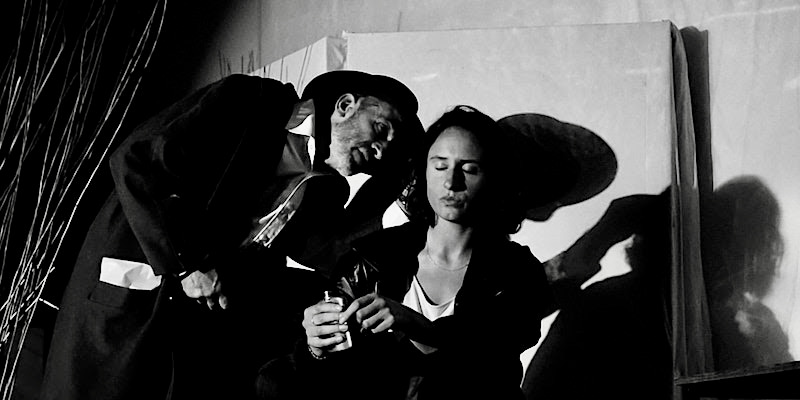
That leaves us with bogs . . . and the first of these was to attend, in the attractive surrounding of Glebe Gardens in Baltimore, a local production of By the Bog of Cats (above), a play by Marina Carr, loosely based on the Greek tragedy of Medea. This is a powerful, multi-layered and haunting story of betrayal, abandonment, longing and revenge. It debuted in the Abbey Theatre in 1998 and has had many international productions (think Broadway and West End) since then. The Director, Terri Leiber, elicited outstanding performances from her cast, and the standing ovation at the end of the evening was well-deserved.

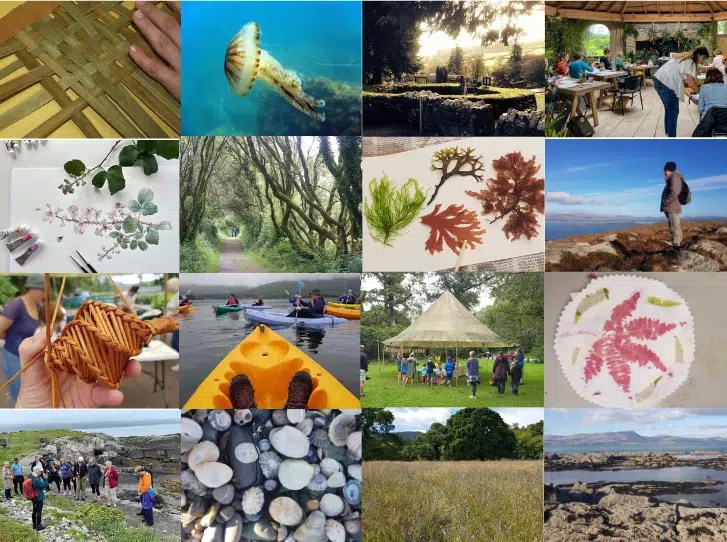
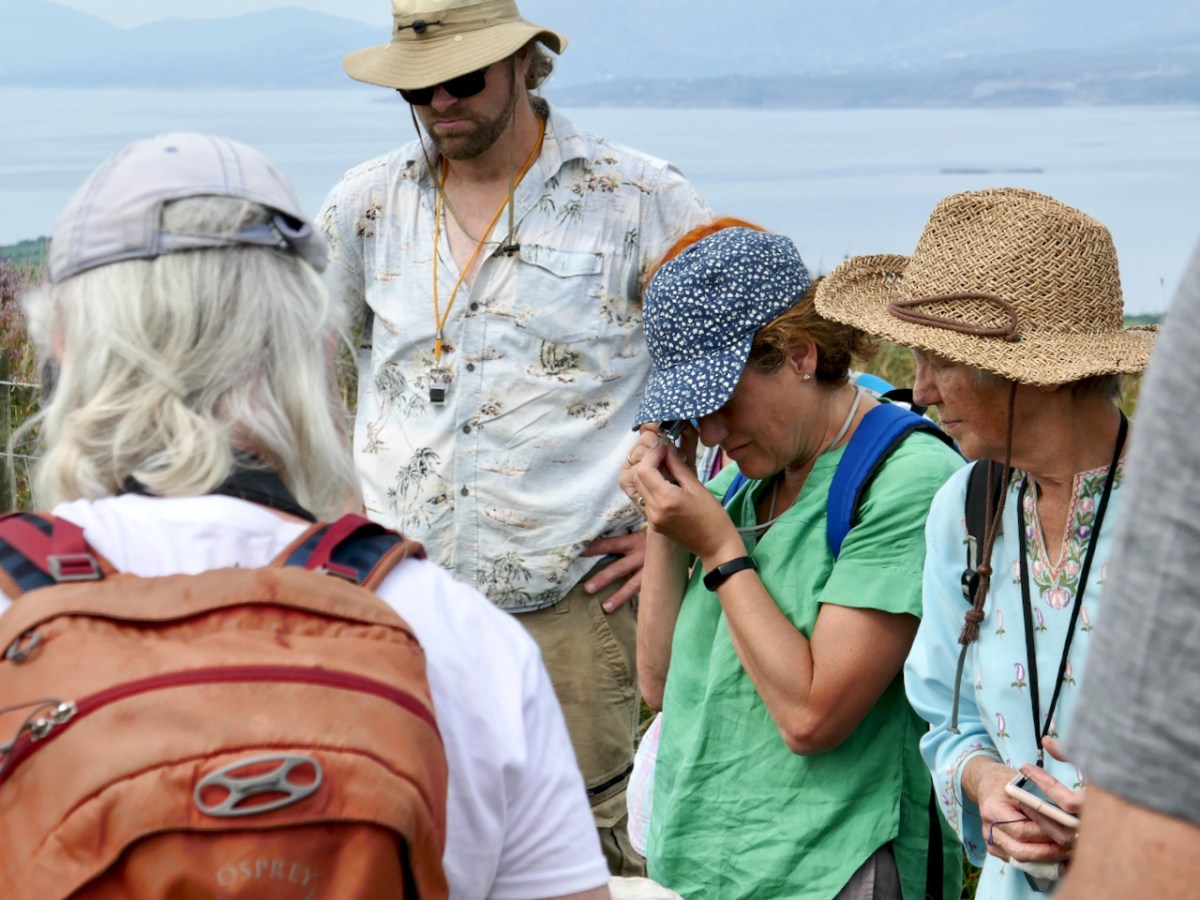
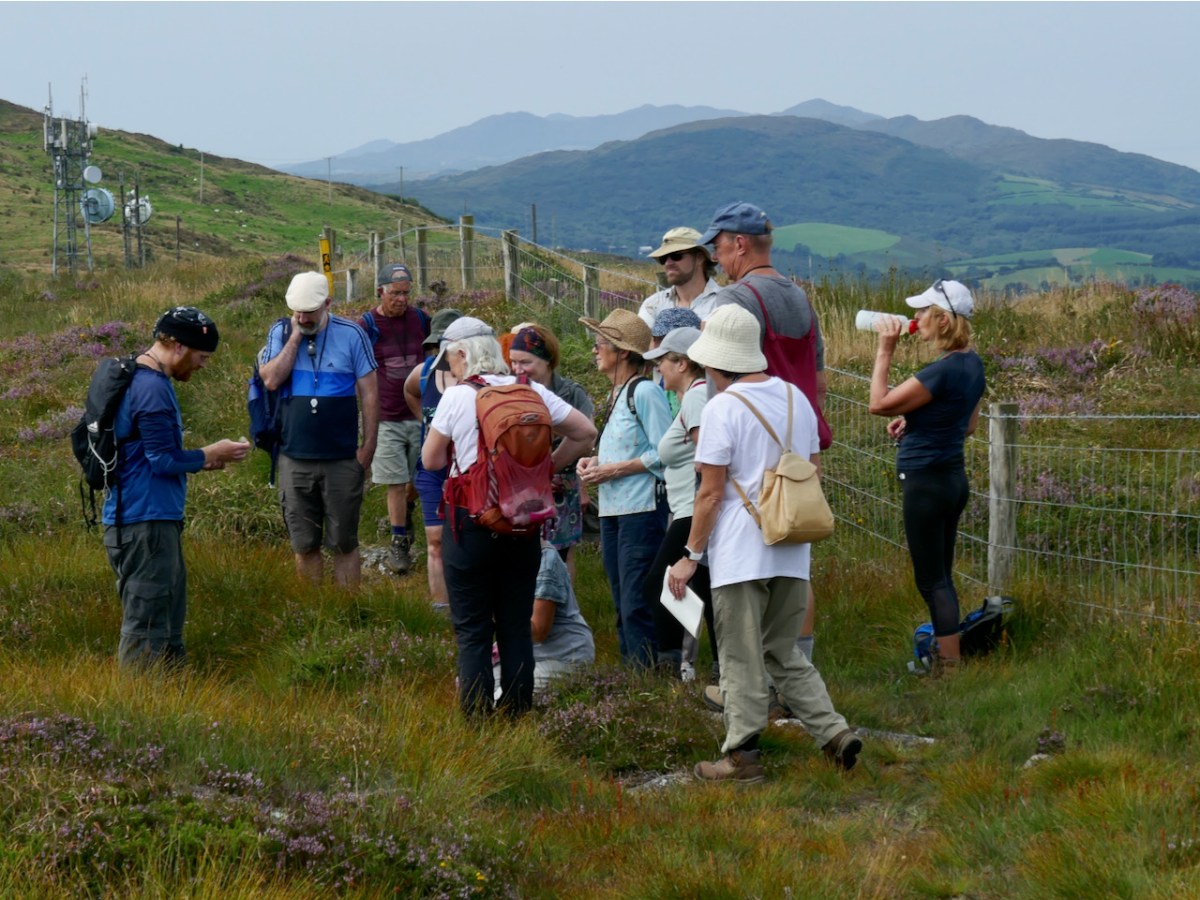
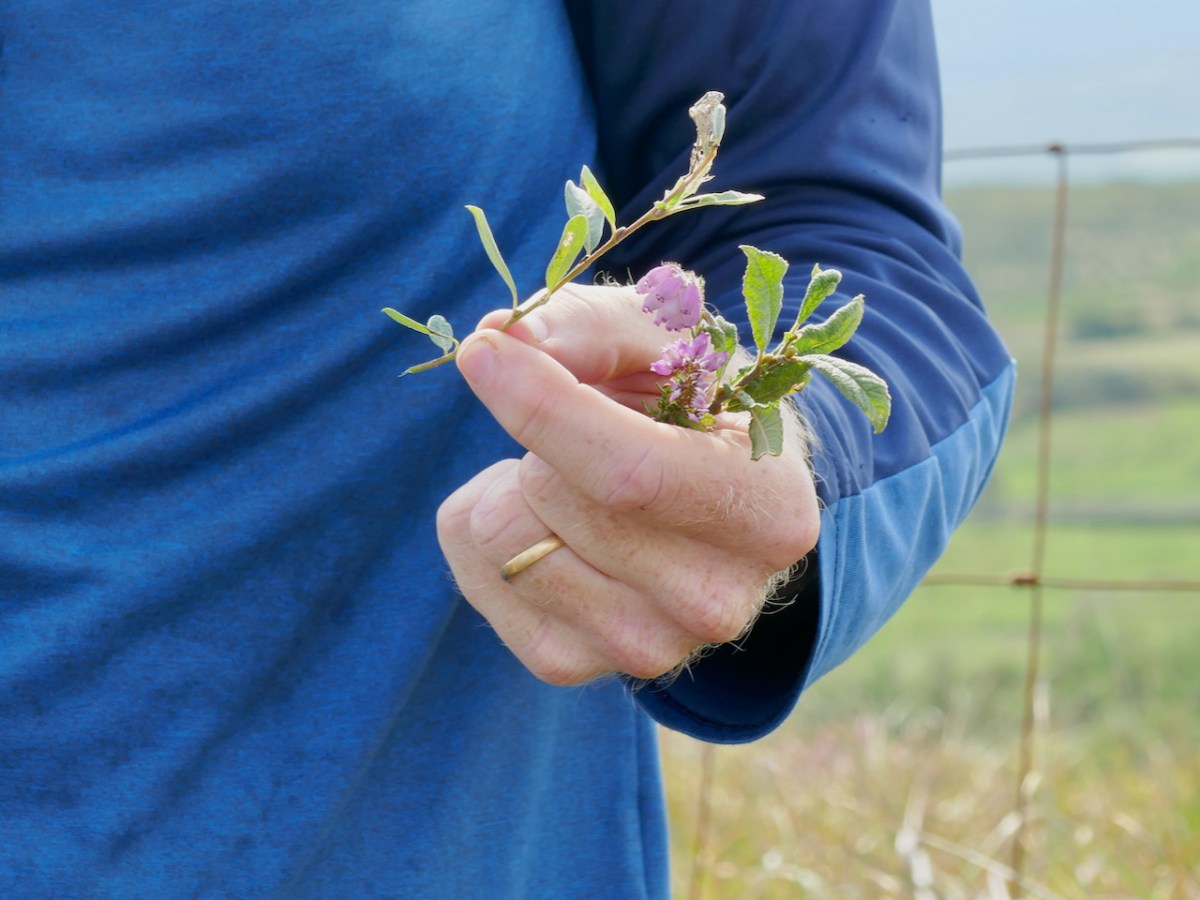
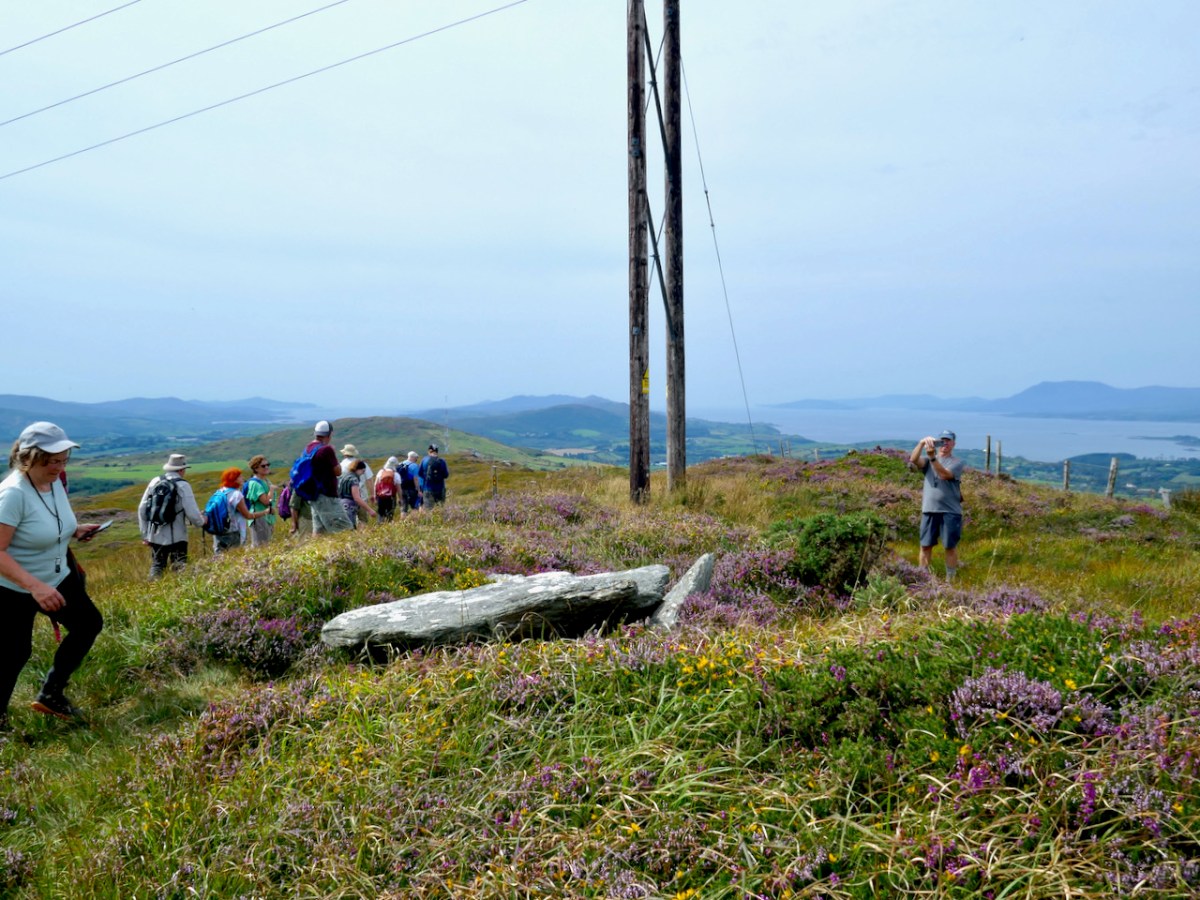
And the second bog? That was today, and although not the first event of the Ellen Hutchins Festival, it was the one that kicked it off for Robert, me and my sister, Aoibhinn, visiting from Dublin. Led by eminent botanist Rory Hodd, and provided with hand lenses, we tramped over the high land above Bantry, on a quest to understand more about heathland and boggy environments.

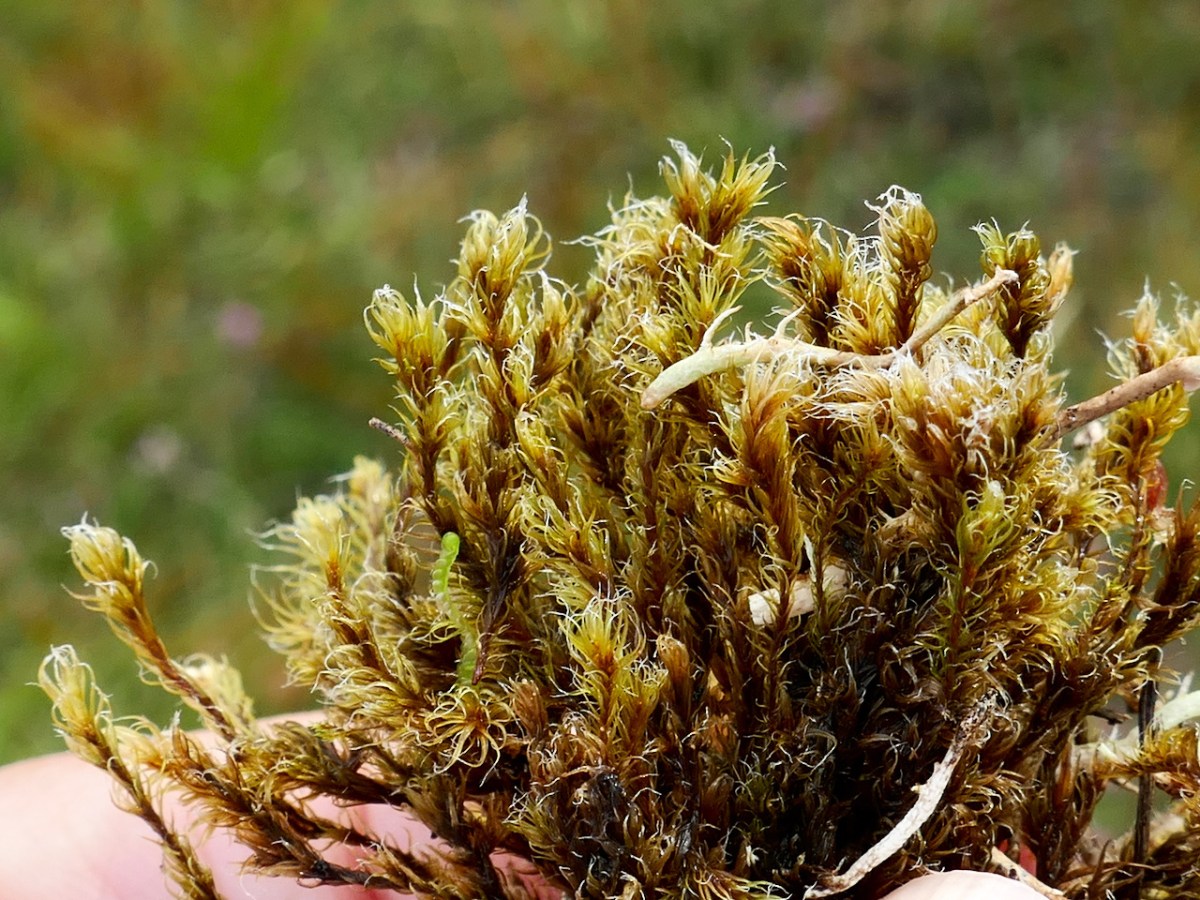
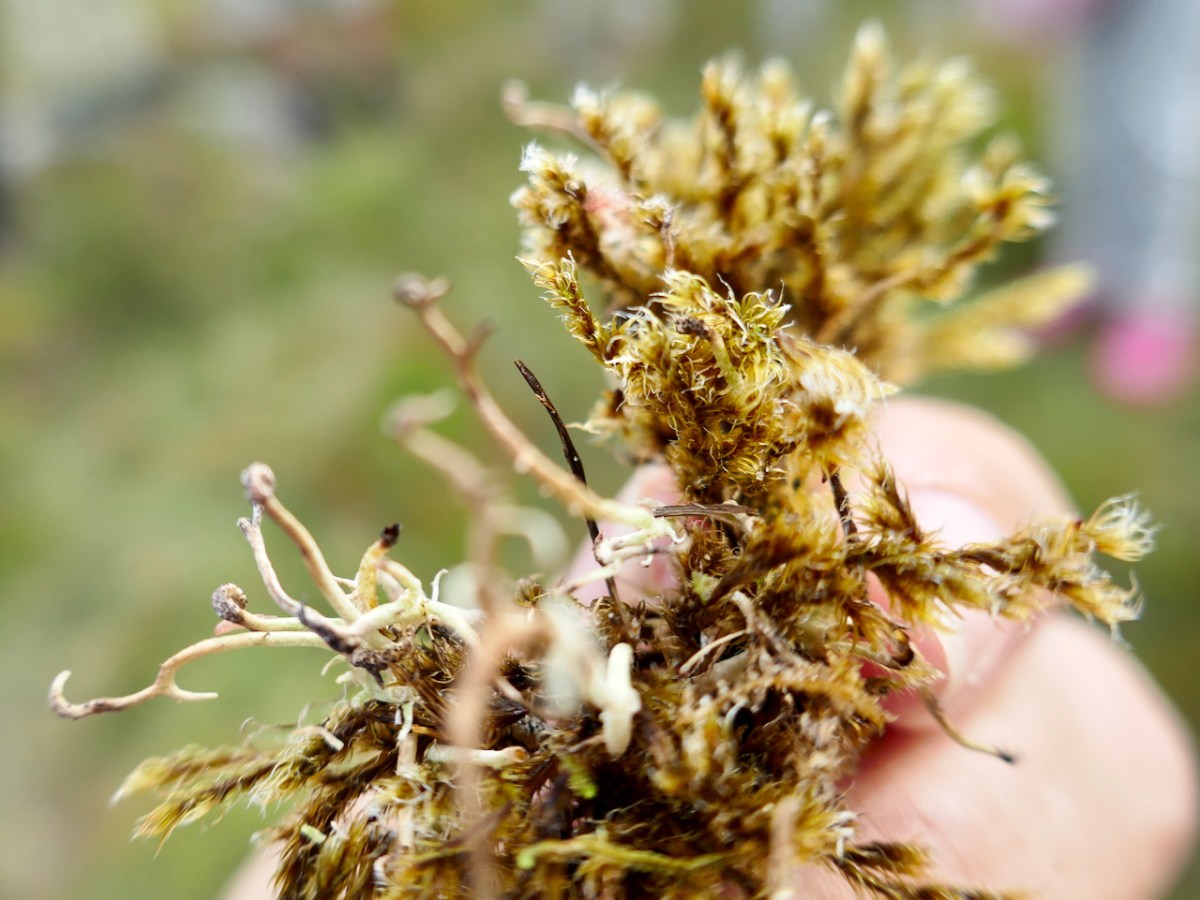
Rory is an acknowledged expert in this area, and it’s a real privilege to be on a walk with him. He knows everything, but manages to make it all accessible to the layperson. He explained how mosses, bryophytes, lichens, heathers and other plants interact to form the complex ecosystem that make up heathland and bogs.

I now know that ‘sedges have edges’ is not a reliable rule of thumb, and that the Purple Moor-grass that almost defines the winter bog landscape in West Cork (called Fionnán, or blond grass) actually decreases bio-diversity, and that one handful of plants can contain several different species of mosses (including invasive ones from New Zealand!) and liverworts!

And all of this in the most glorious landscape, with a view down all three peninsulas, the Mizen, Sheep’s Head, and the Beara, with a prehistoric wedge tomb at one of the high points (along with Ireland’s most unsympathetically located electricity pole) just to add some non-botanical interest.

The Ellen Hutchins Festival continues all week, and you can still get tickets to many events. The one I play a part in, as MC, is on Friday. It’s called Seaweed and Sealing Wax 2, and it charts the correspondence between Ellen and Dawson Turner, continuing from Part 1 last year. It’s free but you have to register. Hope to see you there – come and say hello.