Vallancey: the Collectanea, End of Vol I and Part of II

Remember I told you that Vallancey was not above publishing the work of others, and omitting the name of the author, thus giving the impression that he had written it?  Was this deliberate or not? Were the standards of plagiarism the same then as they are now?  He does give a kind of attribution in Vol II, below, but it’s not precise.
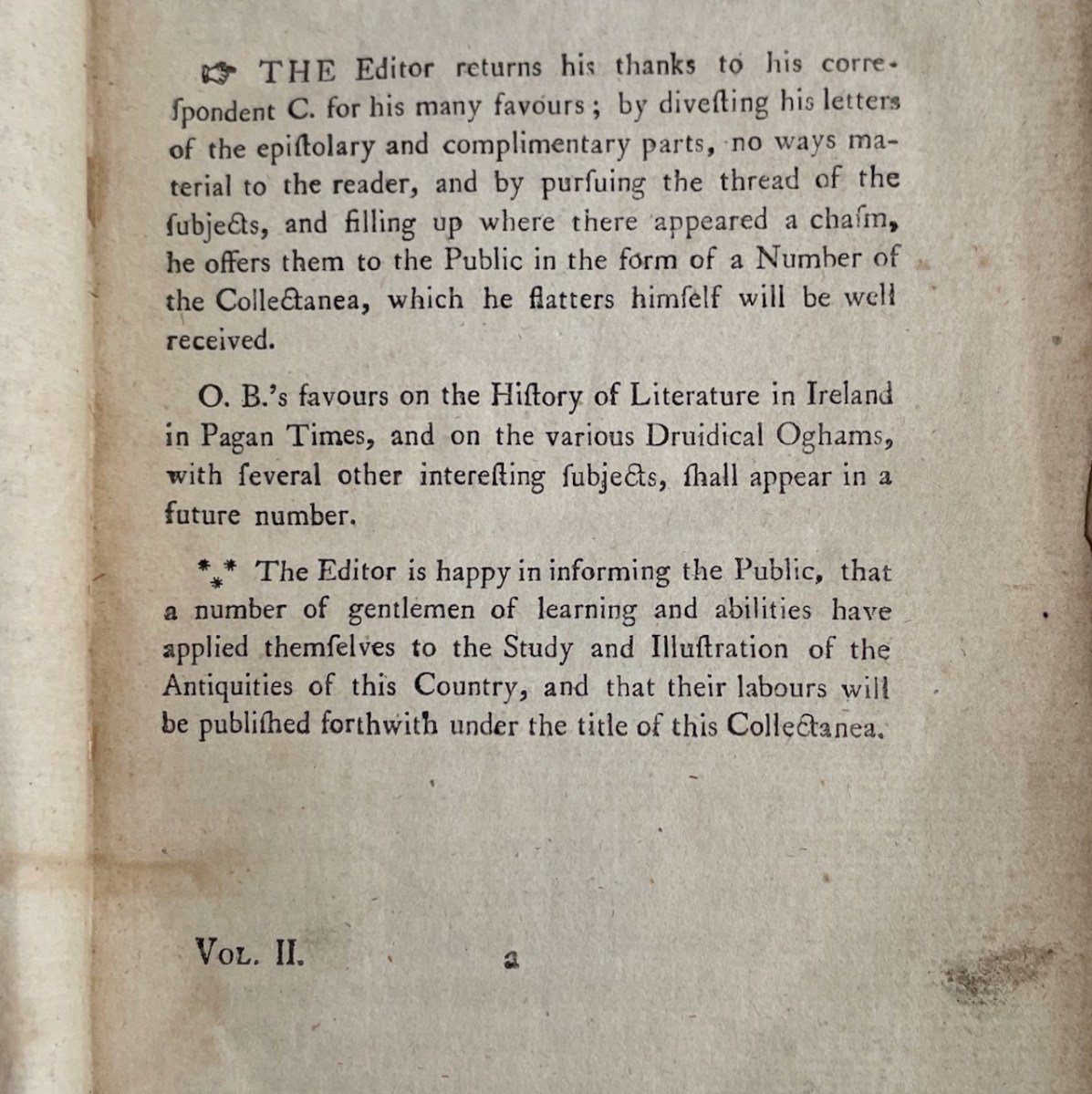
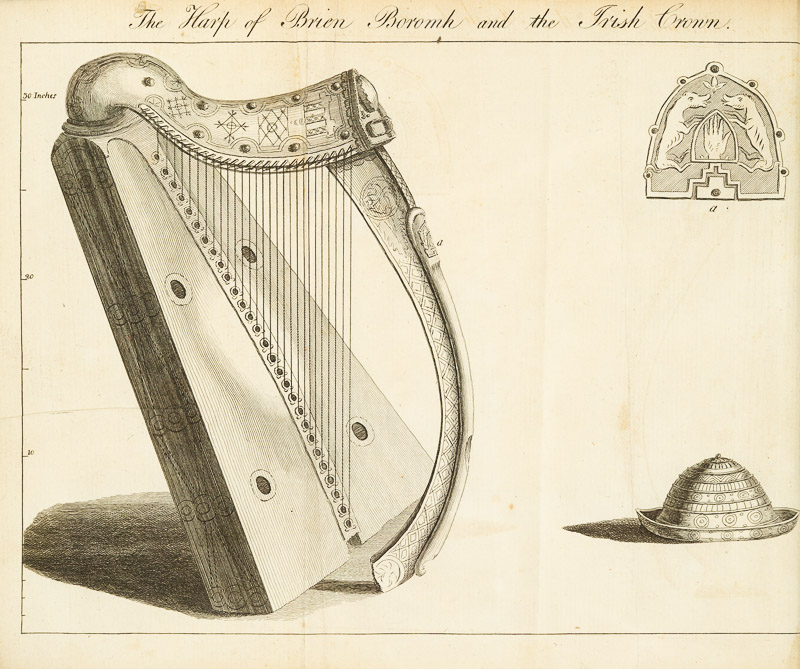
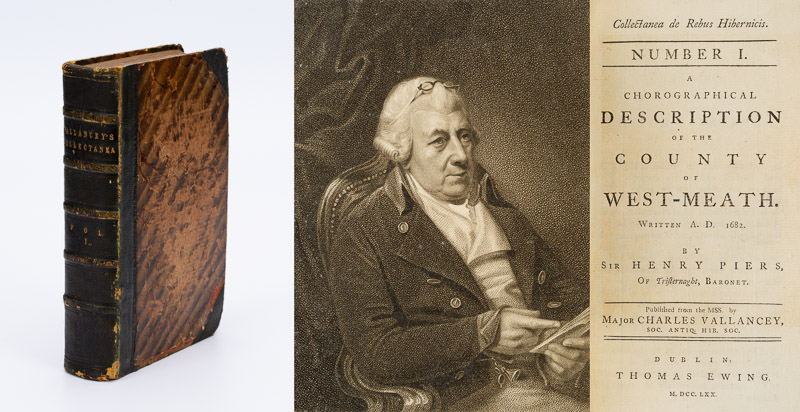
The second part of Vol I begins with just such a treatise: Dissertations on the National Customs and State laws of the Ancient Irish. However, although no author is given, implying this was Vallancey’s work, in fact it was written by John O’Brien, Catholic Bishop of Cloyne and Ross from 1747 to 1767, and originally titled A Critico-Historical Dissertation concerning the Antient Irish Laws, or National Customs, called Gavel-Kind, and Thanistry, or Senior Government. O’Brien was a considerable scholar, author of one of the earliest Irish-English Dictionaries (below). [Most of the illustrations in this blog post are not from the Collectanea.]
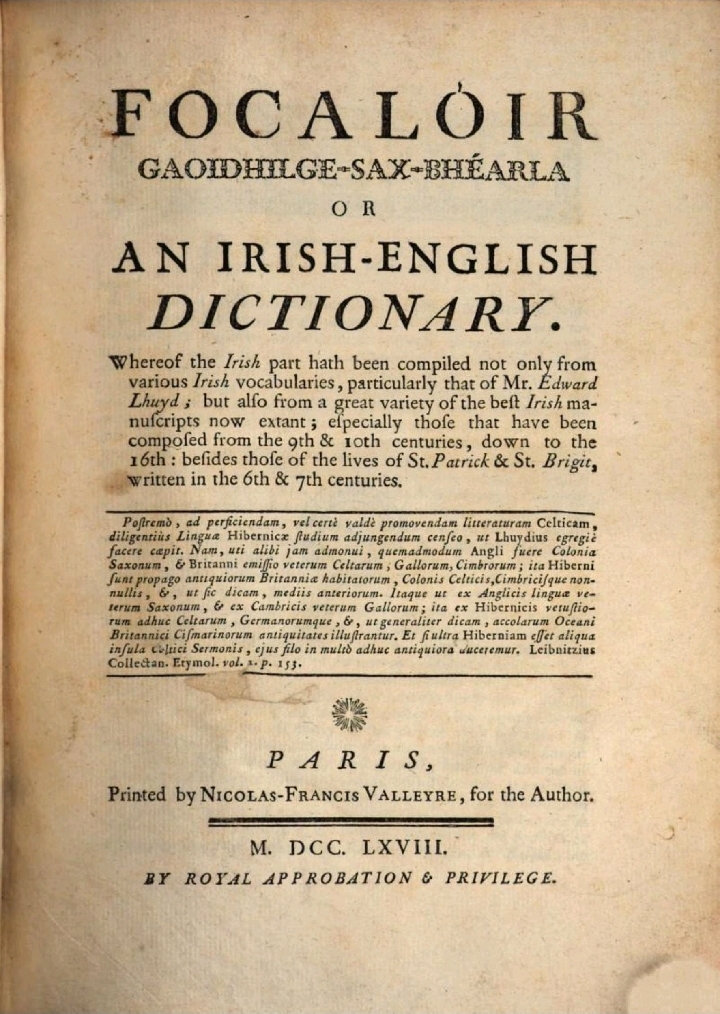
Although this is all about gavelkind – the Irish custom that dictated how land was divided between male heirs, the first section is devoted to how succession works in various countries (much talk about the Franks) and to the exclusion of daughters from succession and inheritance. Yes – those of you who think that women had more agency and autonomy in ancient Ireland than in other cultures, should bear in mind that this was a deeply patriarchal society. Here’s what O’Brien has to say about succession and property rights for women:

No inasmuch as I have treated the good old ladies of antient times with all the severity of the primitive maxims by excluding them from the enjoyment of all landed properties, it is fit and decent, that before I take my leave, I should provide for them otherwise in some becoming manner; their fortunes and natural establishments were not the less secure for such an exclusion, they were under no necessity of providing a marriage portion to attract courtiers, or satisfy husbands; on the contrary their husbands were obliged to portion and endow them according to the wise maxims of the primitive times, and without this condition they could obtain no female conforts. Women were therefore as earnestly courted and demanded in disinterested marriage in those days, as they are now haunted and in some countries run away with for their fortunes, more than for any conjugal affection. And hence we may assure ourselves the unfortuned good women of antient times found the marriage state much happier, then some of our modern ladies find it with all their thousands.

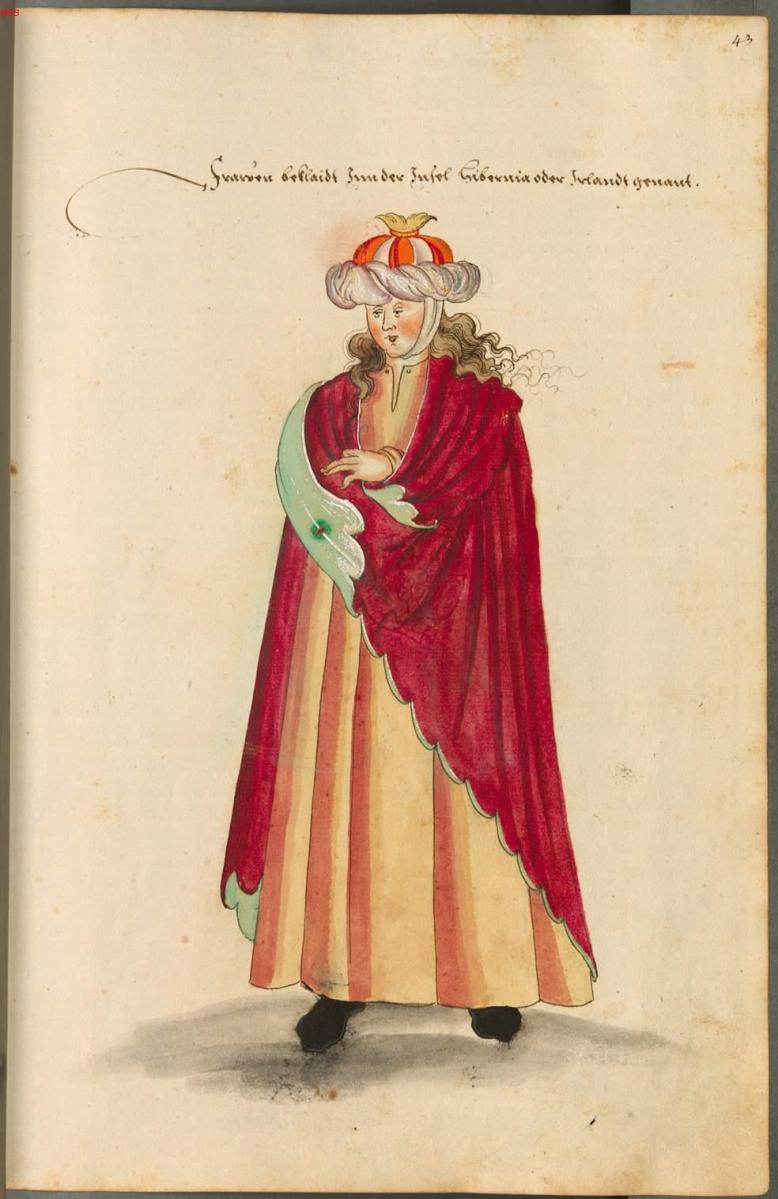
In short – the ladies, like the delightful one below*, should count themselves lucky!
He finally gets down to describing how gavel worked. Several forms existed but all consisted of dividing the property between sons or brothers. He asserts this was common in many countries – or antient lands – and also describes the practice of tanistry, whereby clan chiefs and their successors were chosen. Page after page is devoted to Scythians, Egyptians, Franks, Saxons, etc as precedents, showing it to be a common form of inheritance in the ancient world. This seems to be in service of counteracting the English prejudice agains it as barbarous and conflict-promoting. Clovis is mentioned, Gregory of Tours, the Visigoths and Vandals . . . O’Brien was obviously a man after Vallancey’s heart.
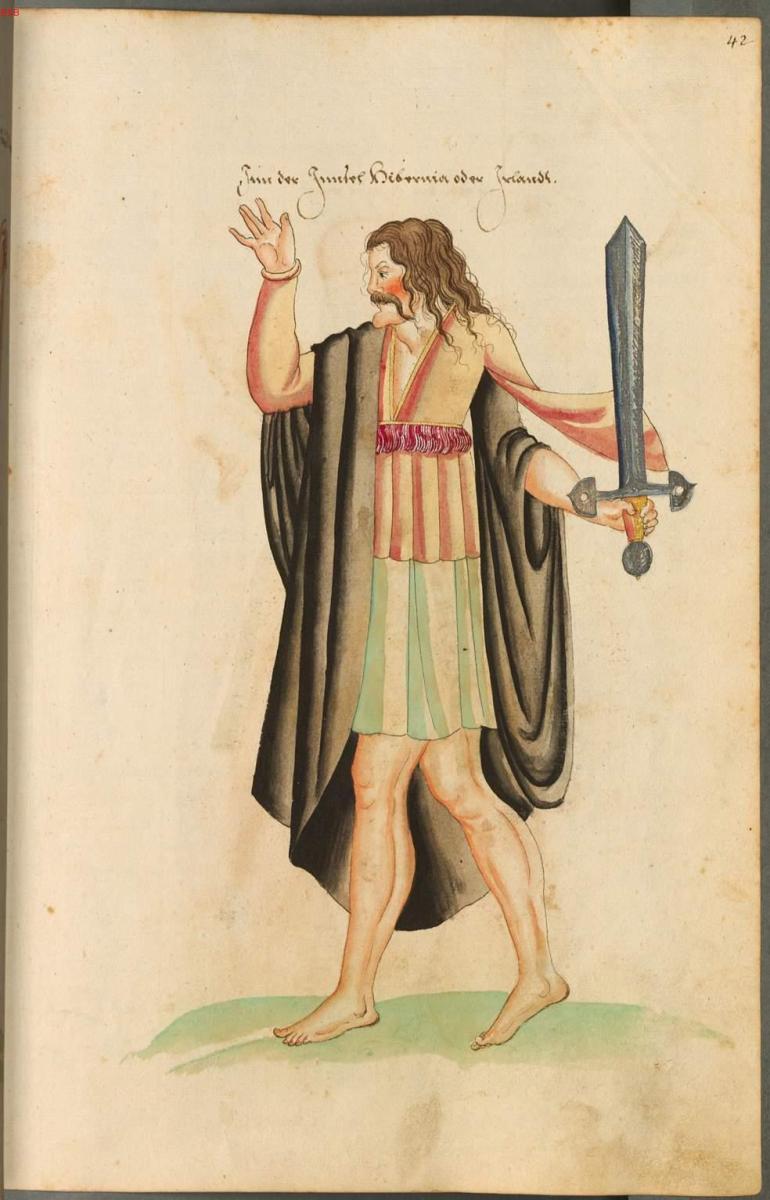
Chap 2 deals with all the tributes due to the king or chief (Above*) and his fiscal rights.  The king or chief was NOT king or chief until inaugurated. I was surprised to find that the traffic went both ways – the king bestowed gifts on the chiefs within his sphere of influence and received tribute from them in turn.
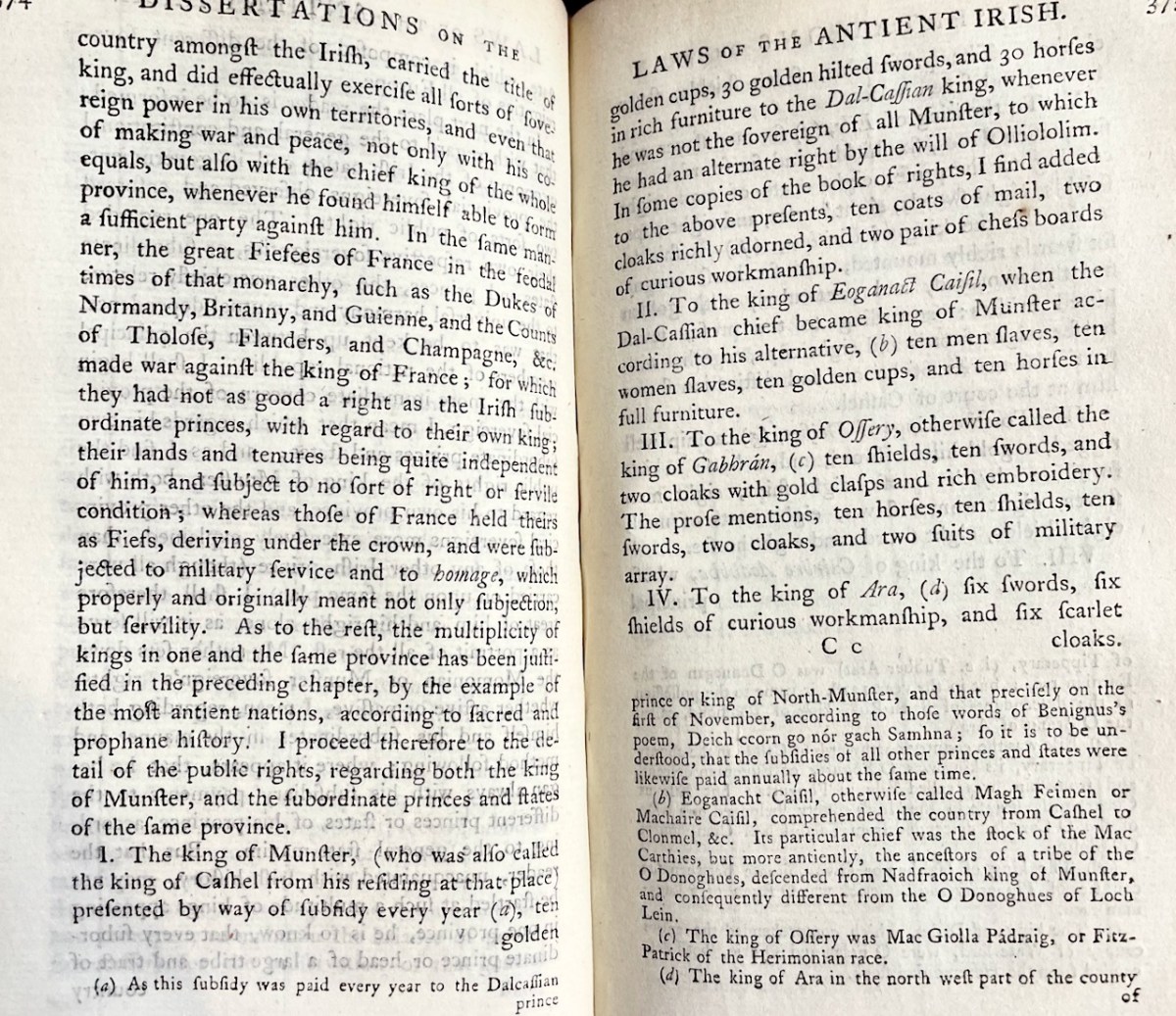
For example the King of Munster (or Cashel) paid to the Dal-Cassian king 

10 golden cups,  30 golden-hilted swords, 30 horses in rich furniture, 10 coats of mail, 2 cloaks richly adorned, 2 pairs of chess boards of curious workmanship

Another one mentions 

10 men slaves, 10 women slaves,10 golden cups, 10 horses in full furniture

The King of Cashel, in return, received from his subject chiefs large gifts of livestock – bullocks, milch cows, hogs, weathers and beehives, along with, for some reason, many cloaks, some specifically described as scarlet.
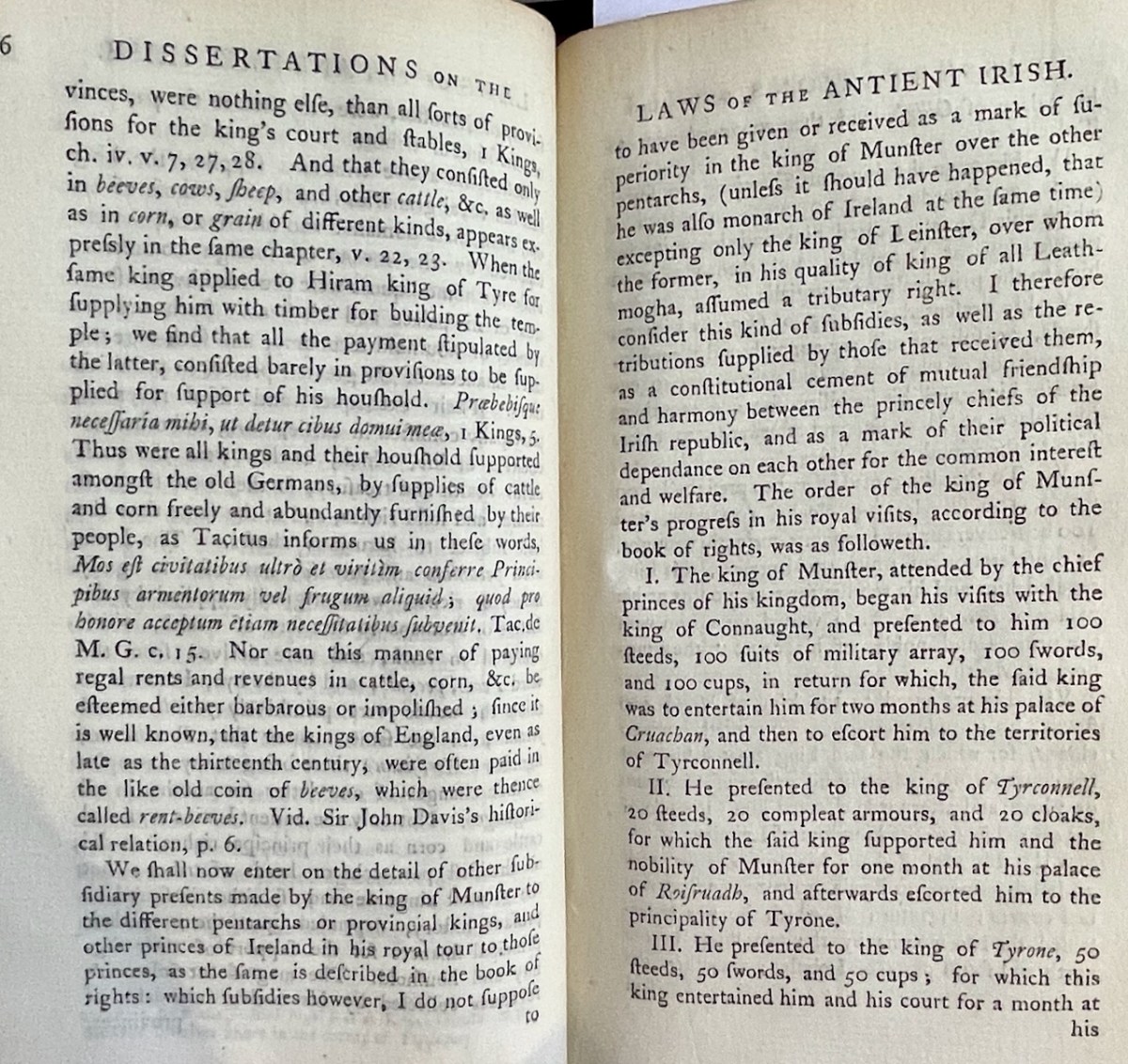
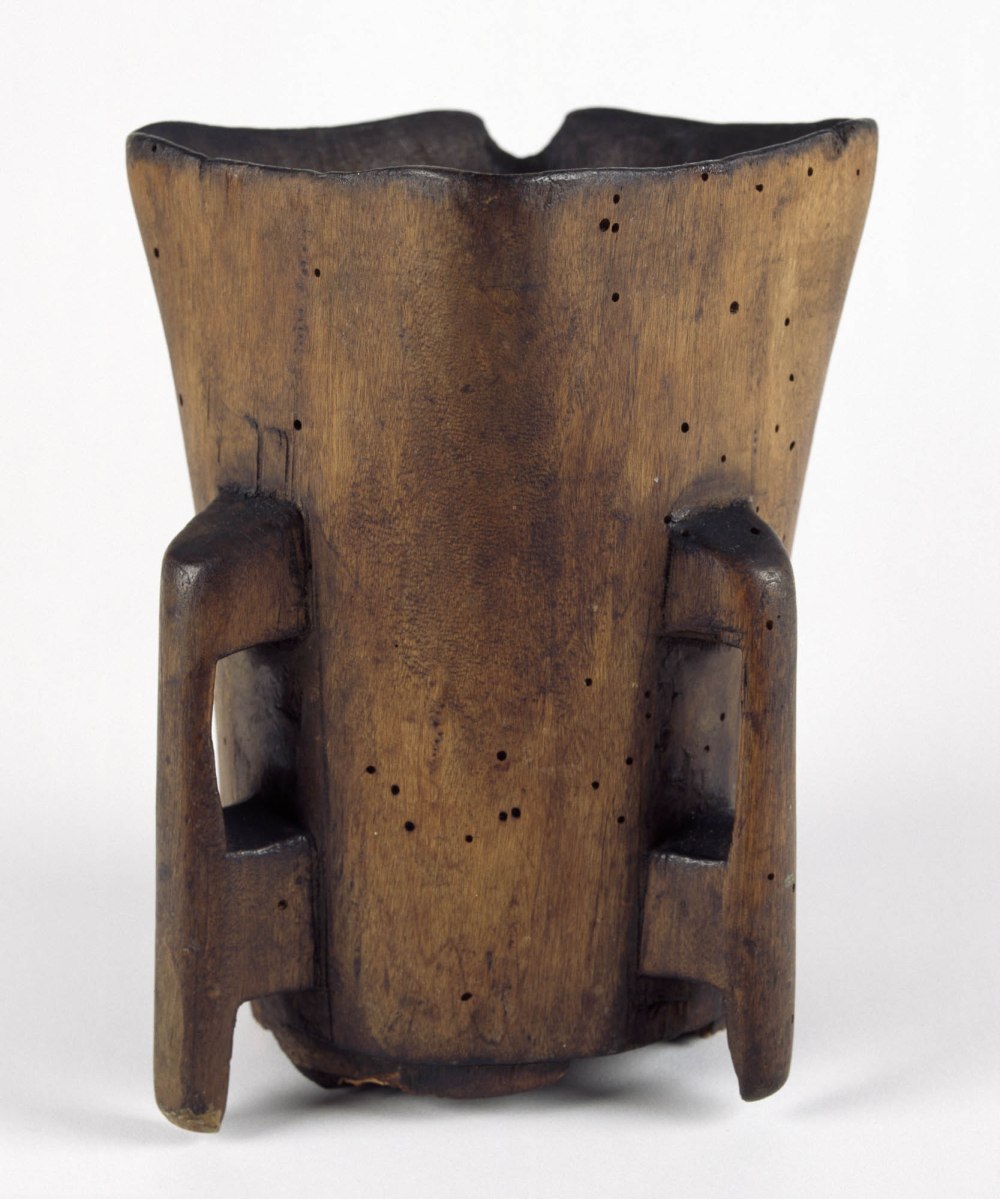
The King also paid visits to other kings, as a constitutional cement of mutual friendship and harmony between the princely chiefs of the Irish republic (sic), and as a mark of their political dependence on each other for the common interest and welfare. The photo above sets out some of those kingly visits and what was involved for the visitor and the host. Lots of mentions of cups – perhaps like this one from the Hunt Museum Collection?
The second part of this Treatise is essentially a history of the O’Brien’s of Munster, offered as an illustration  of the laws of Tanistry. It certainly offers many examples of conflict and treachery in the line of succession! And once again it wanders all over Europe and the ancient world as it traces the origin of the practice
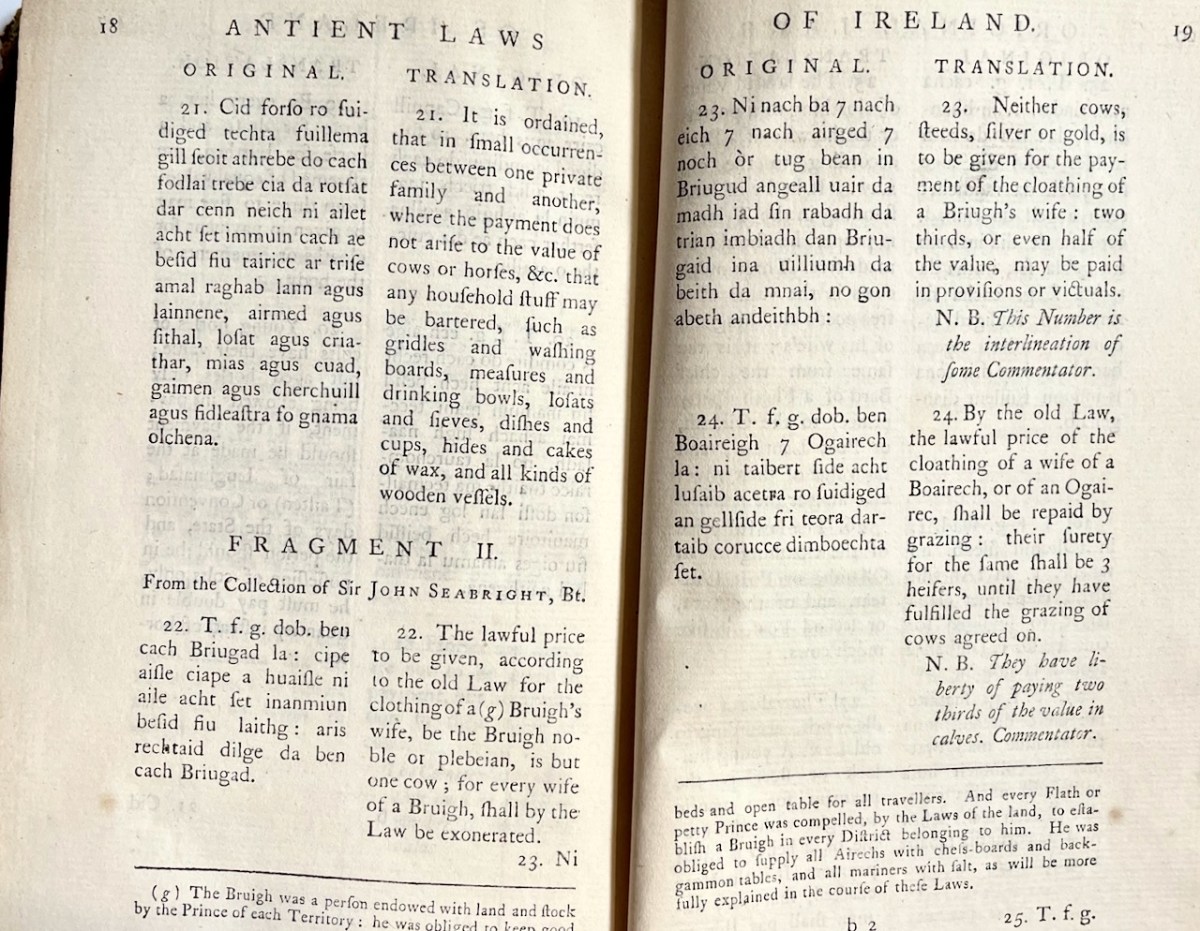
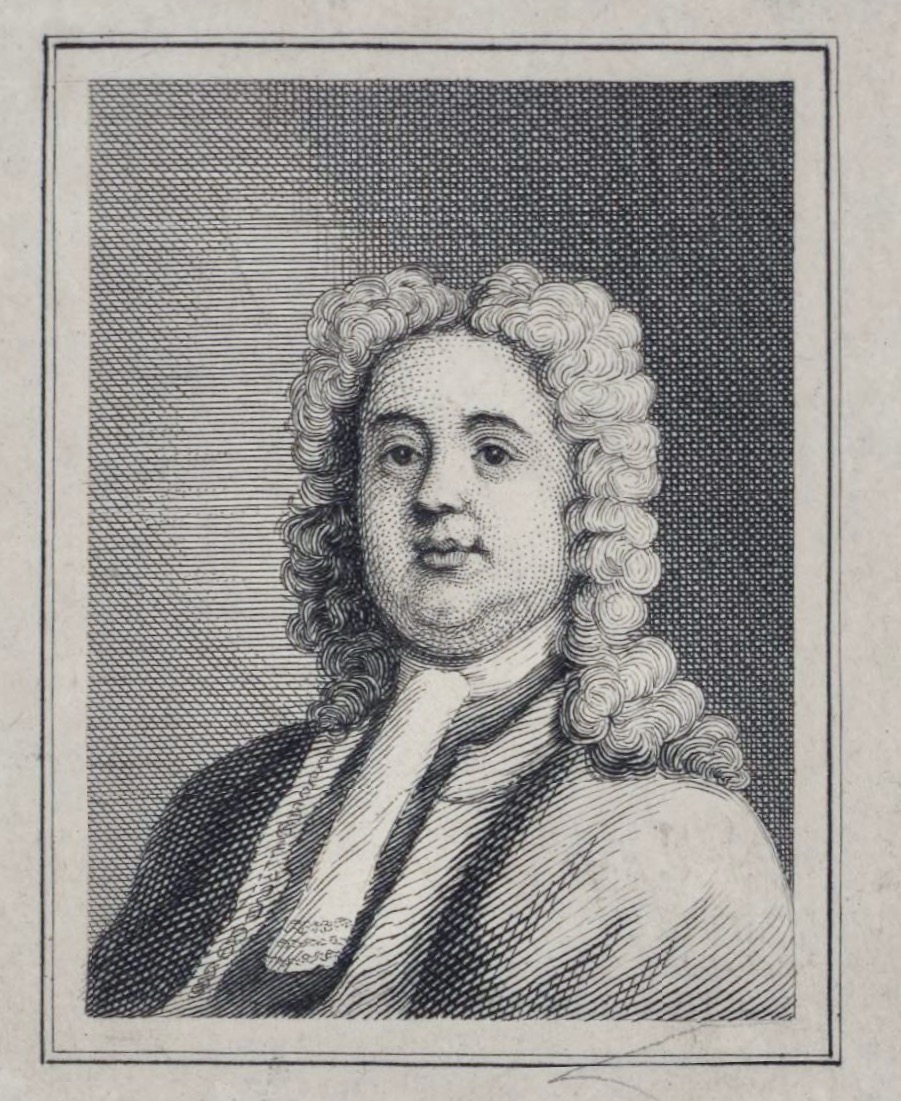
The final, and most interesting part of Vol 1 is about the Brehon Laws. This part indeed may have been by Vallancey. It consists of a number of fragments (above and below), originally collected by Edward Lhwyd (1660-17090, below) one of the earliest antiquaries to visit Ireland, document ancient sites and collect textual material.
The section consists of individual laws, mostly pertaining to the value and goods and therefore the fines that were to be levied if something was stolen. 
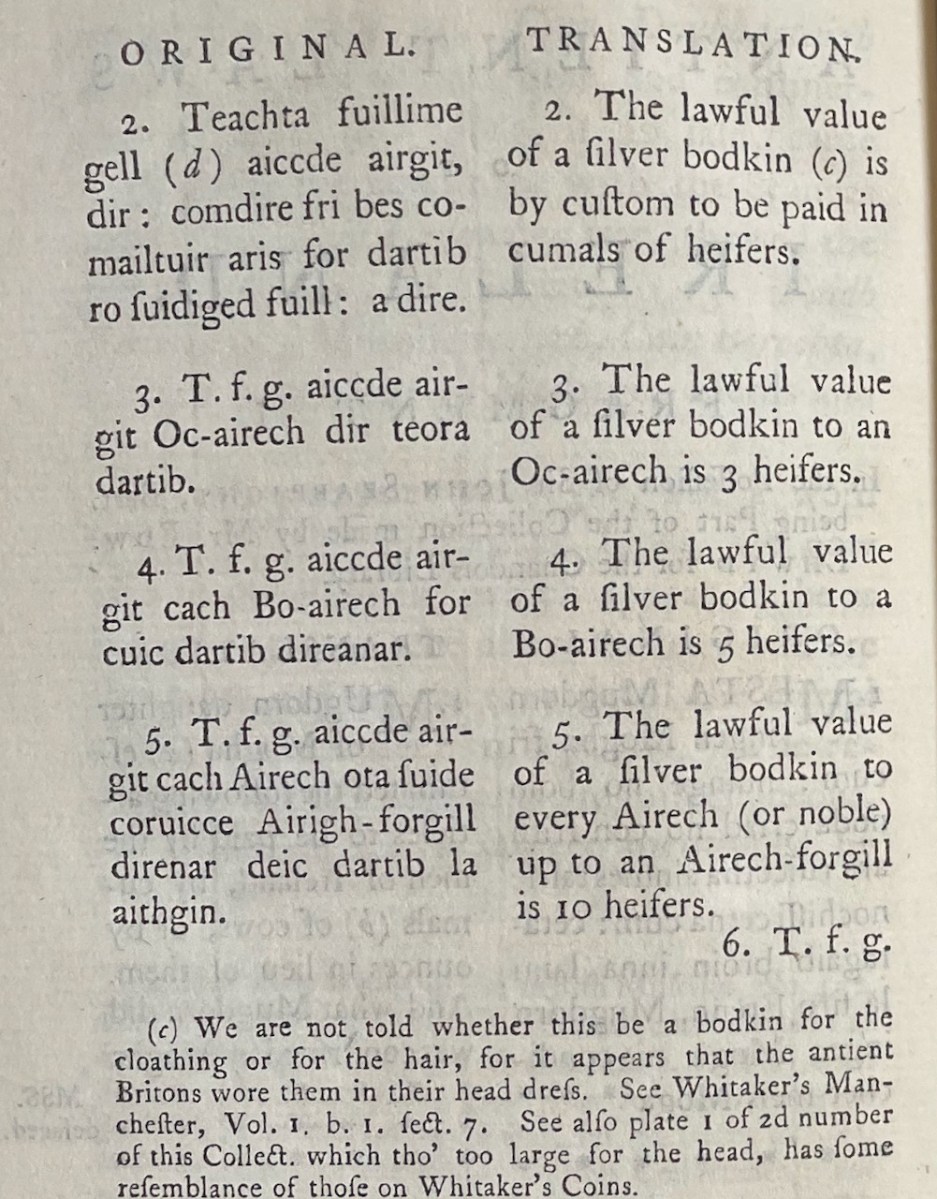
My favourites of these has to do with the value of the clothing of a poetess or the wife of a bard – three milk cows, apparently. However, if the clothing is embroidered the value goes up. For work properly done and completely finished, the reward is an ounce of silver. More is to be paid for extraordinary work in proportion. However, beware – if she be divorced for adultery this law is reversed and the woman must pay two thirds of the said value.
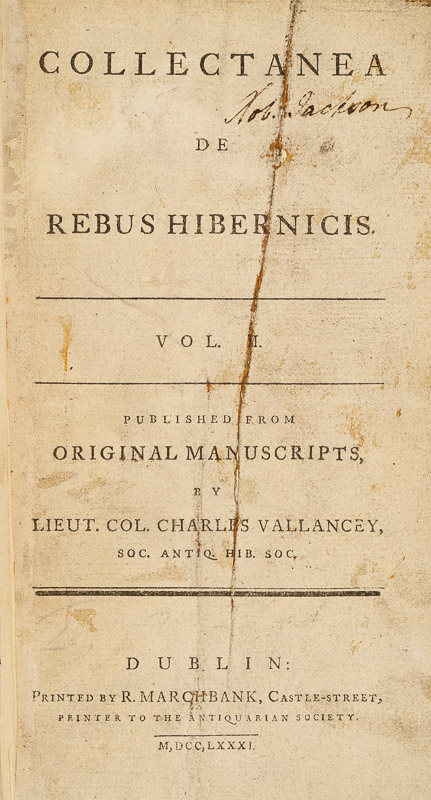
Having spent so much time on Vol 1, I am going to gallop, if I can, through Vol II. It starts with an essay called Brehon Laws and Gavel Kind Explained. This is mainly a  defence agains the accusation by English of ‘barbarous’ customs’ and dwells on obscure points of orthography, such as when the letter P was introduced to Irish. It also deals with more of the practice of gavelkind, the exclusion of women, where else it was practiced and uses the marvellous term Strongbonian for the Anglo Norman settlers. 

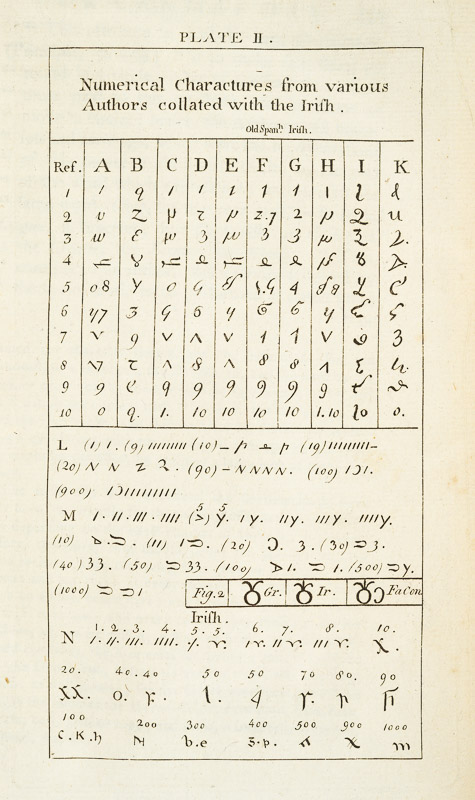
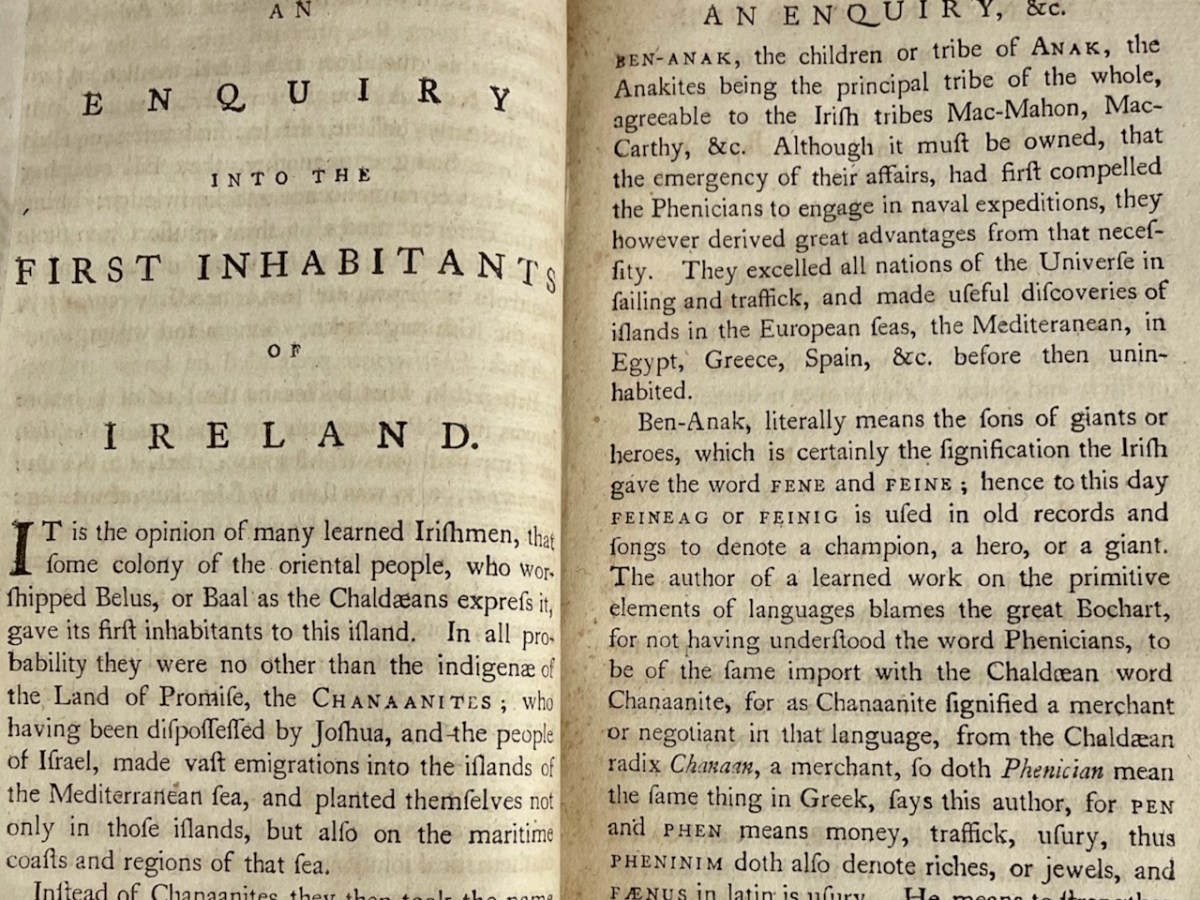
An Inquiry Into the First Inhabitants of Ireland follows. This is where Vallancey introduces his claim that the first Irish Irish were Phoenicians. I have dealt with this in the first post so I will not cover this in detail. 
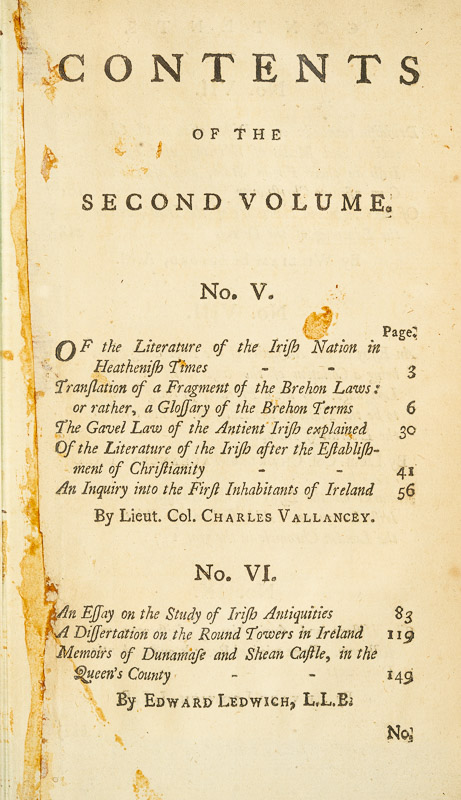
The next section was written by Edward Ledwich another of the early Irish antiquaries – see my post on the marvellous Monaincha for more about Ledwich. What’s fascinating about this is that Ledwich and Vallancey were subsequently at war with each other and Ledwich had views that were just as biased and erroneous as Vallancey’s.
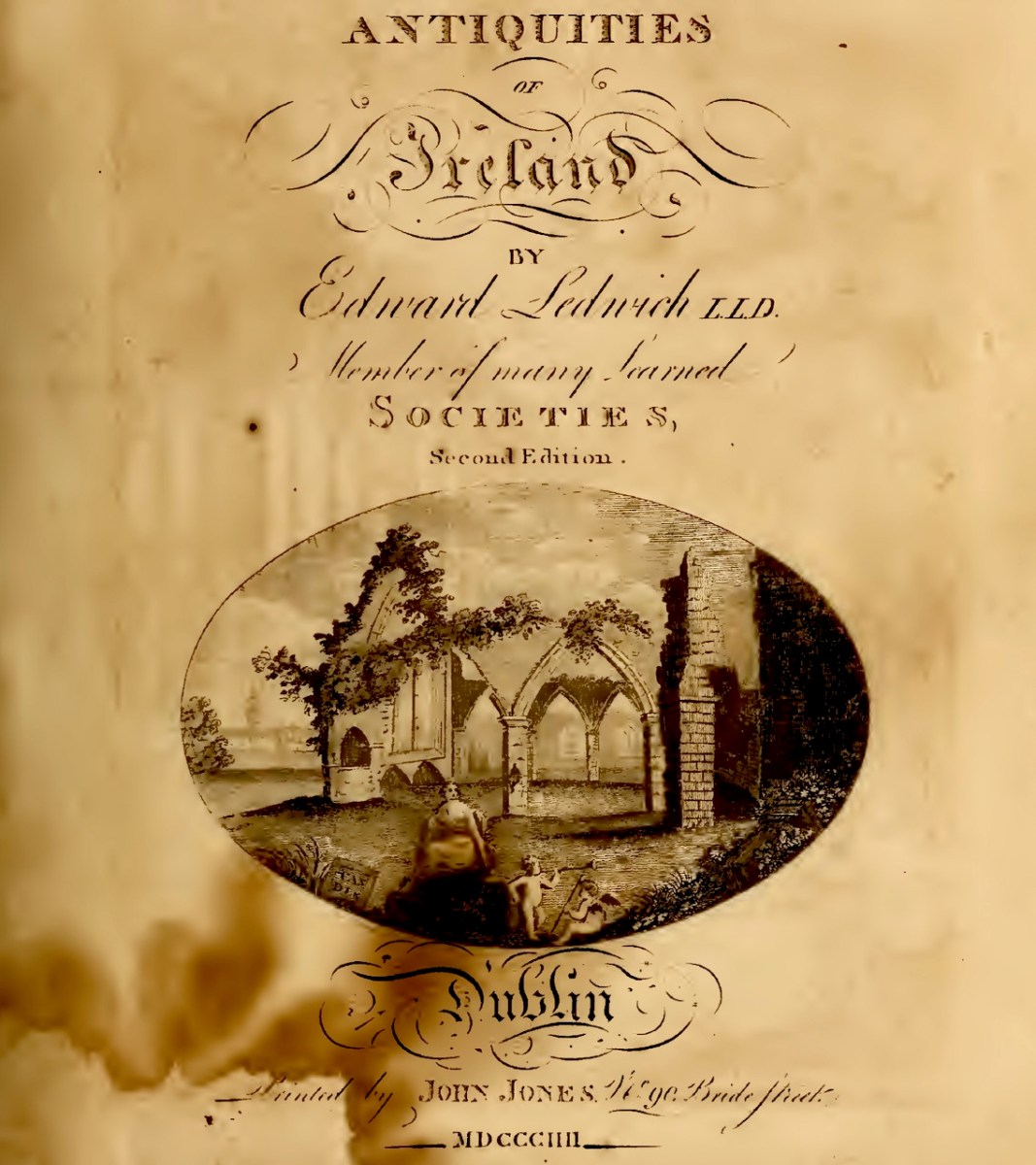
For more on Ledwich see the The Dictionary of Irish Biography entry, which has this to say:

Ledwich afterwards openly and very strongly opposed Vallancey’s views on ancient Irish history, particularly his beliefs about the Phoenician origins of the Irish people. Ledwich was convinced that the ancient Irish had been as barbarous as the scanty Greek and Roman descriptions suggested; that they originated in Scandinavia; and that English colonisation had brought to the island such civilisation as it had subsequently enjoyed. Both Vallancey and Ledwich, along with Charles O’Conor (qv) of Belanagare and William Burton Conyngham (qv), were founder members (1779) of the Hibernian Antiquarian Society, which collapsed in 1783 in the bitter disagreements between Vallancey and Ledwich.

The piece on round towers was written by Ledwich, (although these illustrations are from his later Antiquities of Ireland) presumably before the great falling out between the two men. Whereas Vallancey saw round towers as observatories for an astral, or sun-worshipping, cult that had been brought to Ireland by the Phoenicians, Ledwich believed that the round towers were Danish works. In fact, he was as obsessed with the Danes as Vallancey was with the Phoenicians. They were built, he says as ‘watch towers against the natives’, thus neatly upending the most common belief in Ireland about round towers – that they were watch towers against Viking Raids. (In fact they were bell towers, but that’s another story.) Here, Ledwich obliquely refers to Vallancey’s work that towers were erected by Phoenicians and says ‘this description is plainly the work of fancy’.
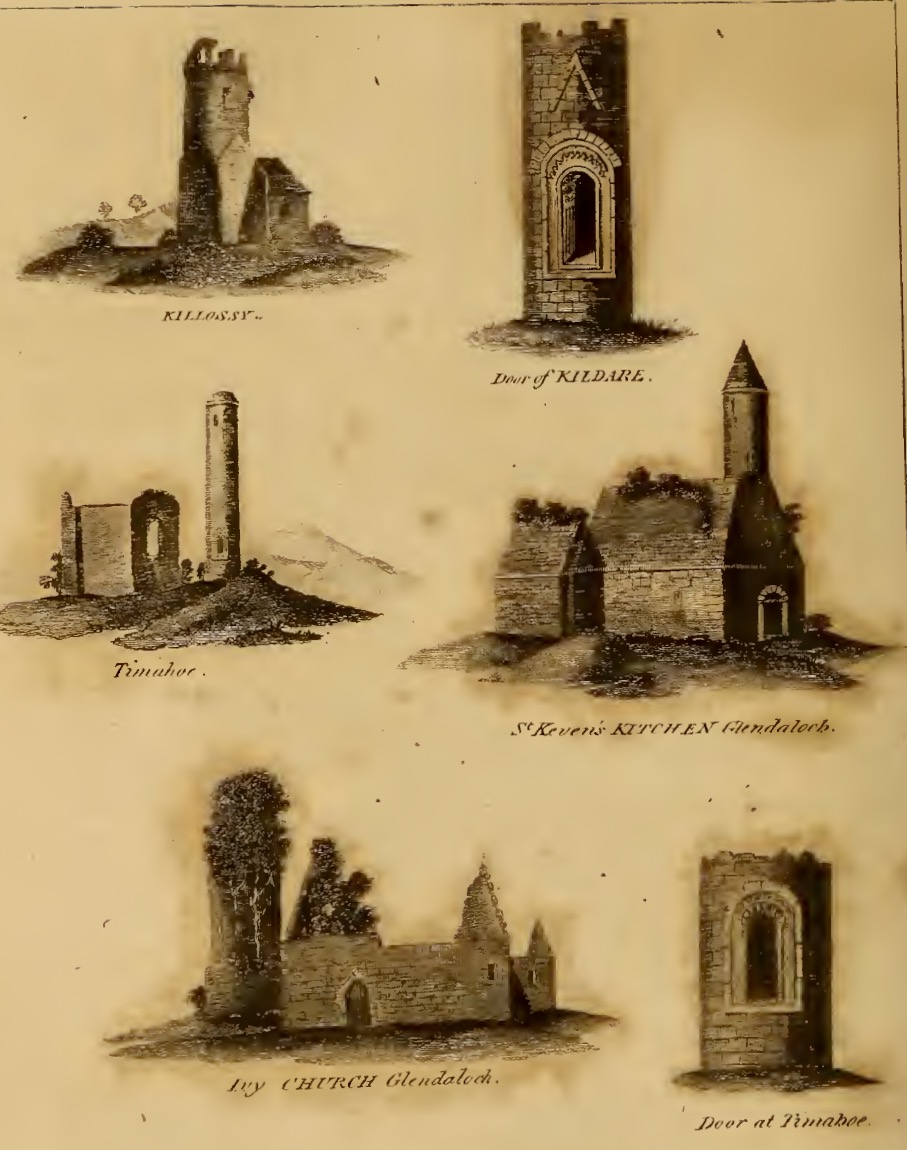
Ledwich was convinced that nothing of any architectural value could have been constructed by the Irish themselves. Reading his argument (and Vallancey’s) I was struck by how it foreshadows the pseudo-archaeolologists who claimed that big impressive monuments must be the work of superior races – people like Von Daniken in his Chariots of the Gods in the 60s who assigned them to aliens, or more recently the conspiracy theorist, inexplicably given a platform by Netflix, Graham Hancock. Hancock’s series Ancient Apocalypse tries to find a race of Ice Age people who must have constructed many of the ancient monuments (or even odd geographical features) around the world. Hancock (‘I’m just asking questions’) is a true inheritor of the nuttiness and hubris of both Vallancey and Ledwich. Later, Ledwich felt sufficiently incensed by Vallancey’s theories to say this, in his Antiquities of Ireland:
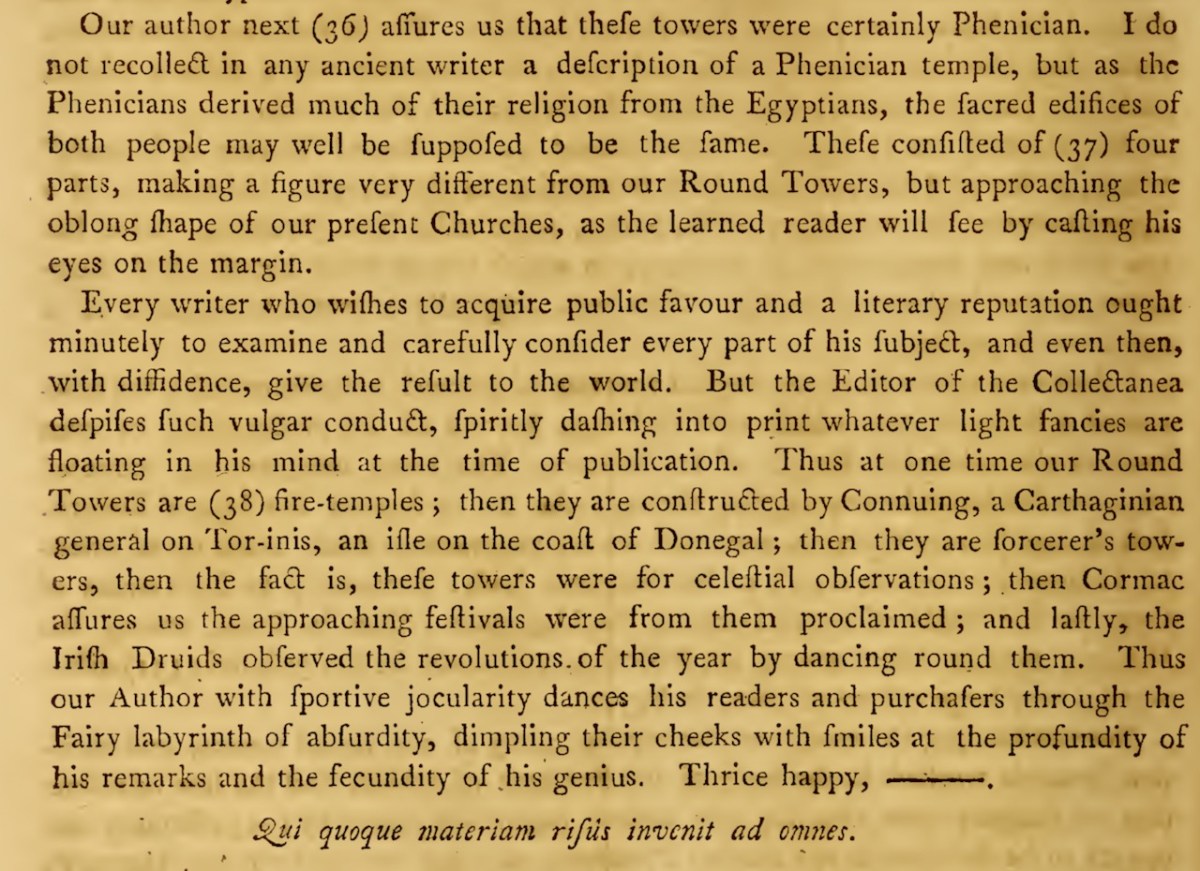
No wonder they were at war! Can anyone translate the Latin? I suspect it’s a further insult. I do absolve Vallancey, by the way, of the baser motivations visible in Ledwich and Hancock – that is, a racist and colonial ideology that sees indigenous people as incapable of building impressive monuments. No – Vallancey had no difficulty at all in promoting the ancient Irish as one of the great and noble races.

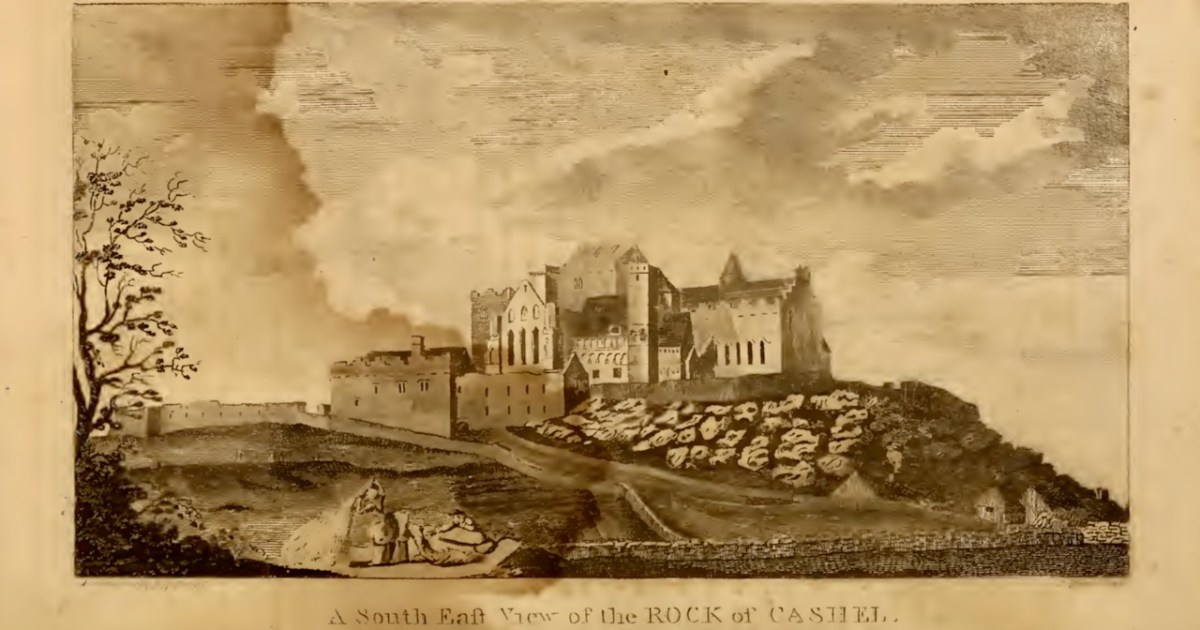
I’ll leave you with this view of Cashel from Ledwich’s Antiquities of Ireland. Despite all my best intentions of getting through several volumes, I am still only half way through Vol 2 of 5. Any suggestions, dear readers, on how I can wrap this up so that I can get my life back?
*Kostüme der Männer und Frauen in Augsburg und Nürnberg, Deutschland, Europa, Orient und Afrika available here.
Charles Vallancey: A Colossus and his Collectanea

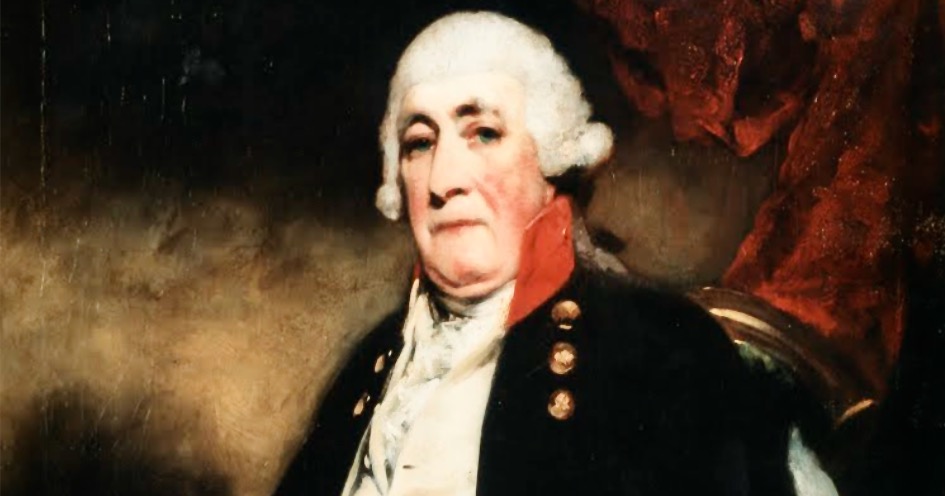
General Charles Vallancey, in the words of one of his biographers, ‘bestrode the world of Irish antiquarians for almost half a century.’ *

His origins are shrouded in mystery – although he is believed to have been born in Flanders to a French family, moved to England as a child, and attended Eton, there is no absolute proof of any of these facts of his early life. Even the date of his birth is contested – any time between 1720 and 1726. What is certain is that he joined the army, was posted to Ireland before 1760 as a military engineer, and spent the rest of his life, until his death in 1812, engaged with many aspects of Ireland, the country that one writer has called the great love of his life. Given that he had three wives (or maybe four) and twelve children (or maybe only 10, or maybe 15), that’s quite an assessment.

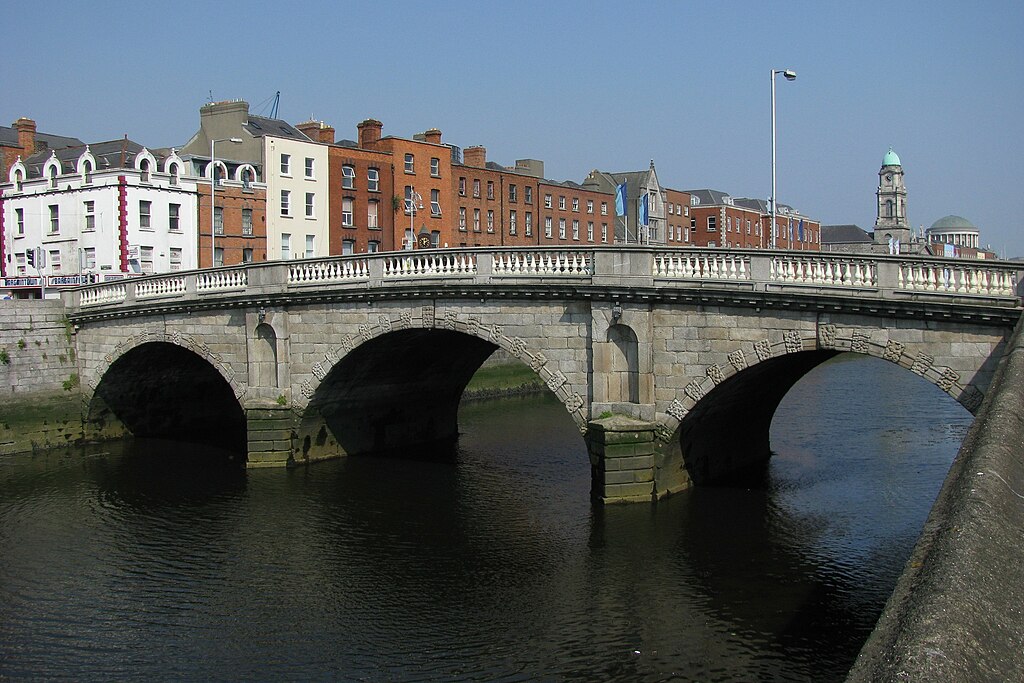
Dublin’s oldest bridge still in use, photo courtesy of Wikimedia Commons. It was designed by Vallancey and originally called the Queen’s Bridge, but re-labelled the Queen Maeve Bridge after independence, and eventually the Mellows Bridge

As a military engineer, Vallancey made real contributions: mapping and surveying large tracts of Ireland including the bogs and the canal systems; proposing a major transport route for Cork which, had it been realised, would have greatly aided trade and commerce in Ireland; building strong defences, such as on Spike Island; designing elegant bridges, and supervising the construction of an earlier version of the famous Dun Laoghaire Pier.

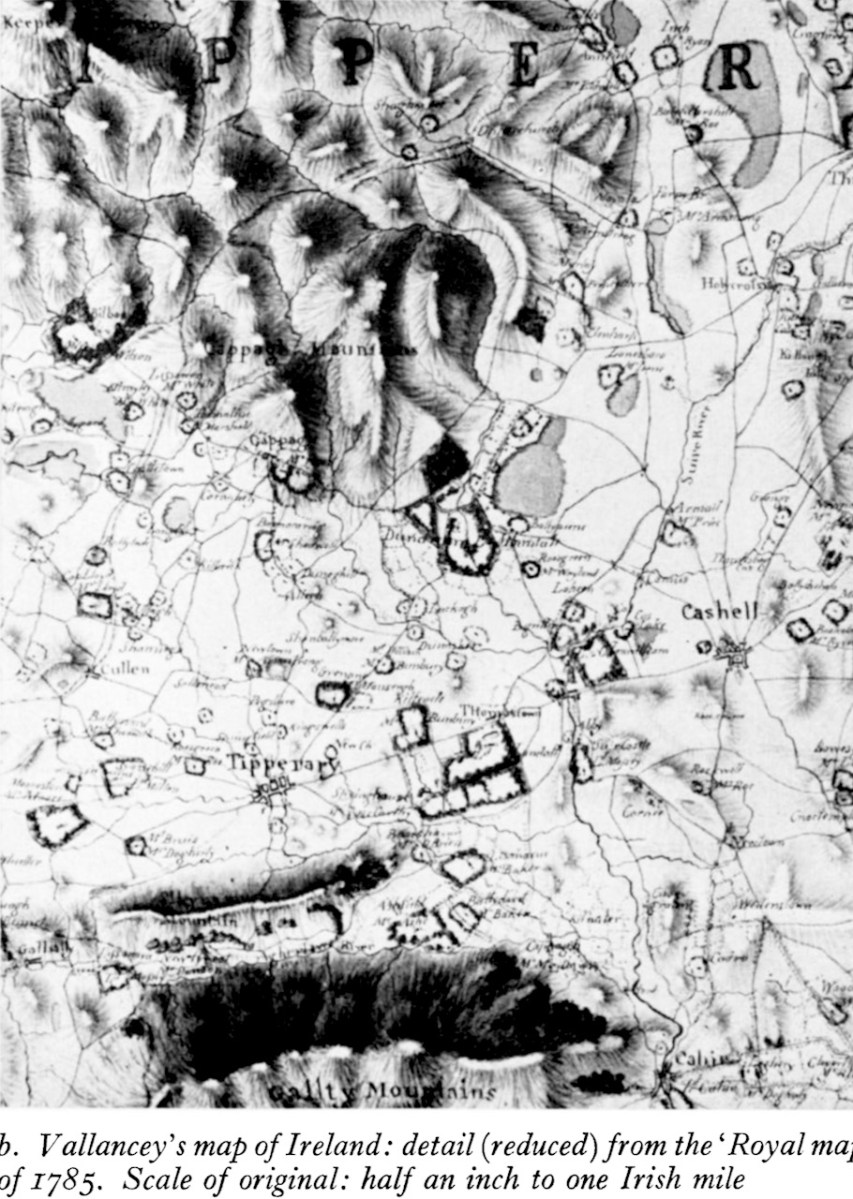
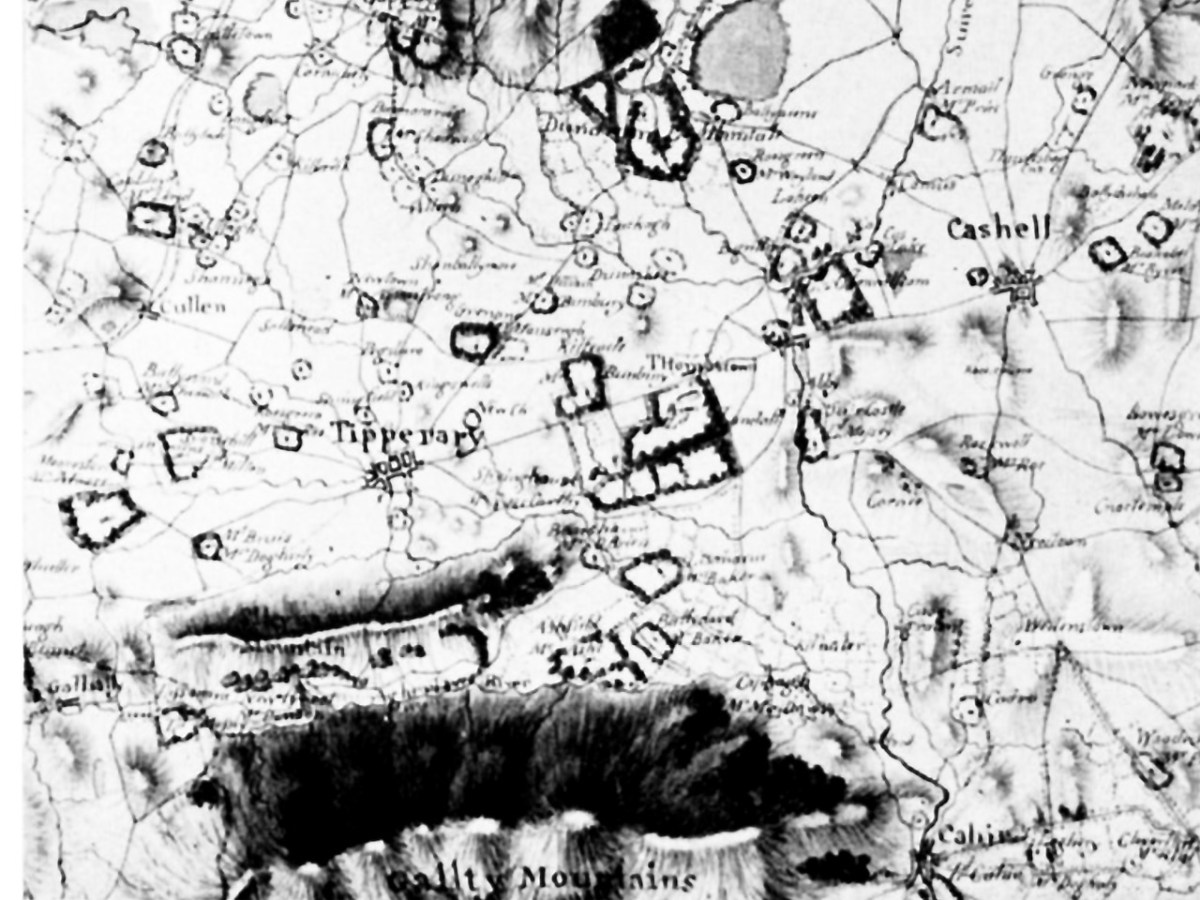
His cartographic achievements have been praised by experts – the extract above from a map of Tipperary is from Charles Vallancey and the Map of Ireland** by JH Andrews, our foremost cartographic historian who notes that Vallancey’s cartographic achievements were far from negligible. He made copies, in Paris, of the Down Survey Maps that had been lost to Ireland when they were captured by the French in 1707 en route from London to Dublin (unfortunately, those copies were destroyed in the Four Courts Fire of 1922).

But it was as an antiquarian that Vallancey made his greatest, and most controversial mark. He was a member, sometimes a founding member, of the serious societies of the time – the Dublin Society, the Royal Irish Academy and its important Committee of Antiquities, and the short-lived Hibernian Society of Antiquarians. Nevin tells us that at least three academic honours were conferred on Vallancey in the 1780s. He received an LLD from Dublin University in 1781 and became a Fellow of the Society of Antiquaries of London in 1784: he was elected a Fellow of the Royal Society in 1786. Even the French Academy of Belles-Lettres and Inscriptions honoured him.

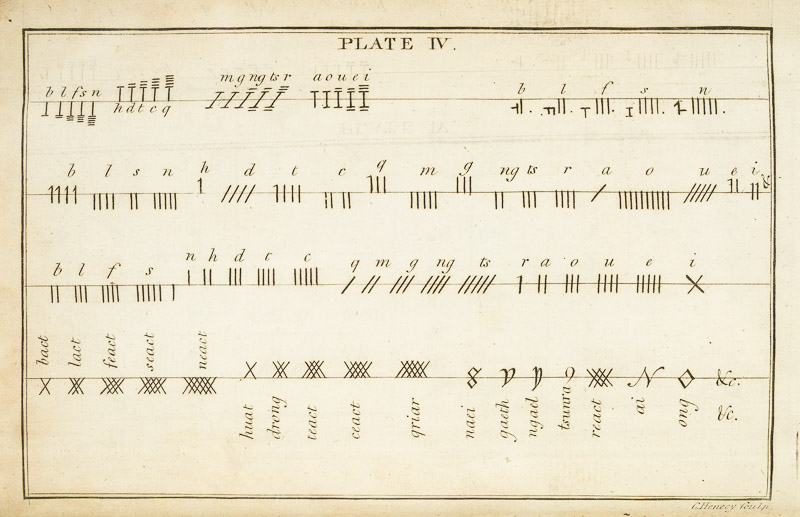
Unusually for the English and the landed classes living in Ireland at that time, he learned Irish. This allowed him to become familiar with the ancient manuscripts and annals which were being discovered and conserved at the time, and to translate some of them, including fragments of the Brehon Laws. It also led to his interest in Ogham, an alphabet used for inscriptions in stone in a form of Old Irish and he recorded examples of Ogham and reported on others.

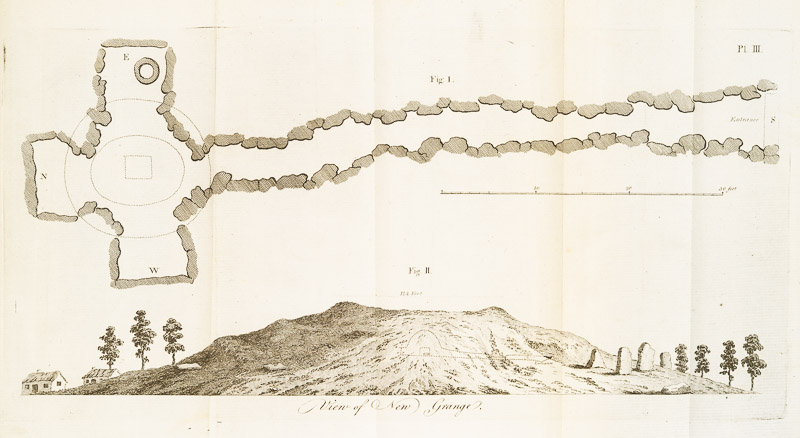
His interest in antiquities, fostered by his extensive travels around the Island,  led him to record and draw many, including early plans of Newgrange, and to support the efforts of others, including Beranger, and perhaps Bigari, to record them. In some cases, Vallancey’s drawings are the only early records we have of some monuments.

Most importantly, Vallancey, even if he didn’t always get it right, strove to establish for Ireland and the Irish, a noble heritage, far from the view of most Englishmen at the time of a benighted people speaking a savage tongue. In this, he prefigured the work of Petrie, Wilde, Windel and others to show how the Irish past, and incredible heritage of archaeology, language and mythology, could stand against that of any civilisation. 

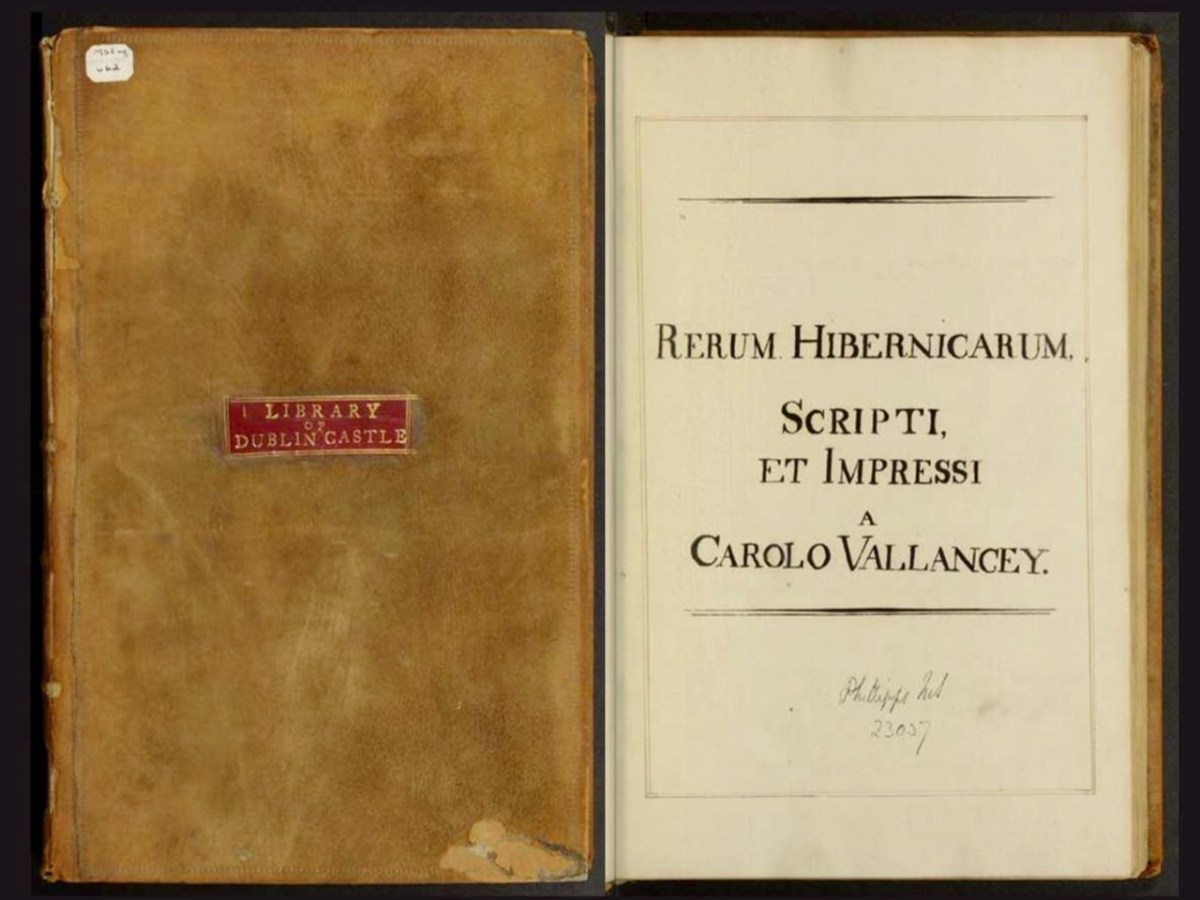
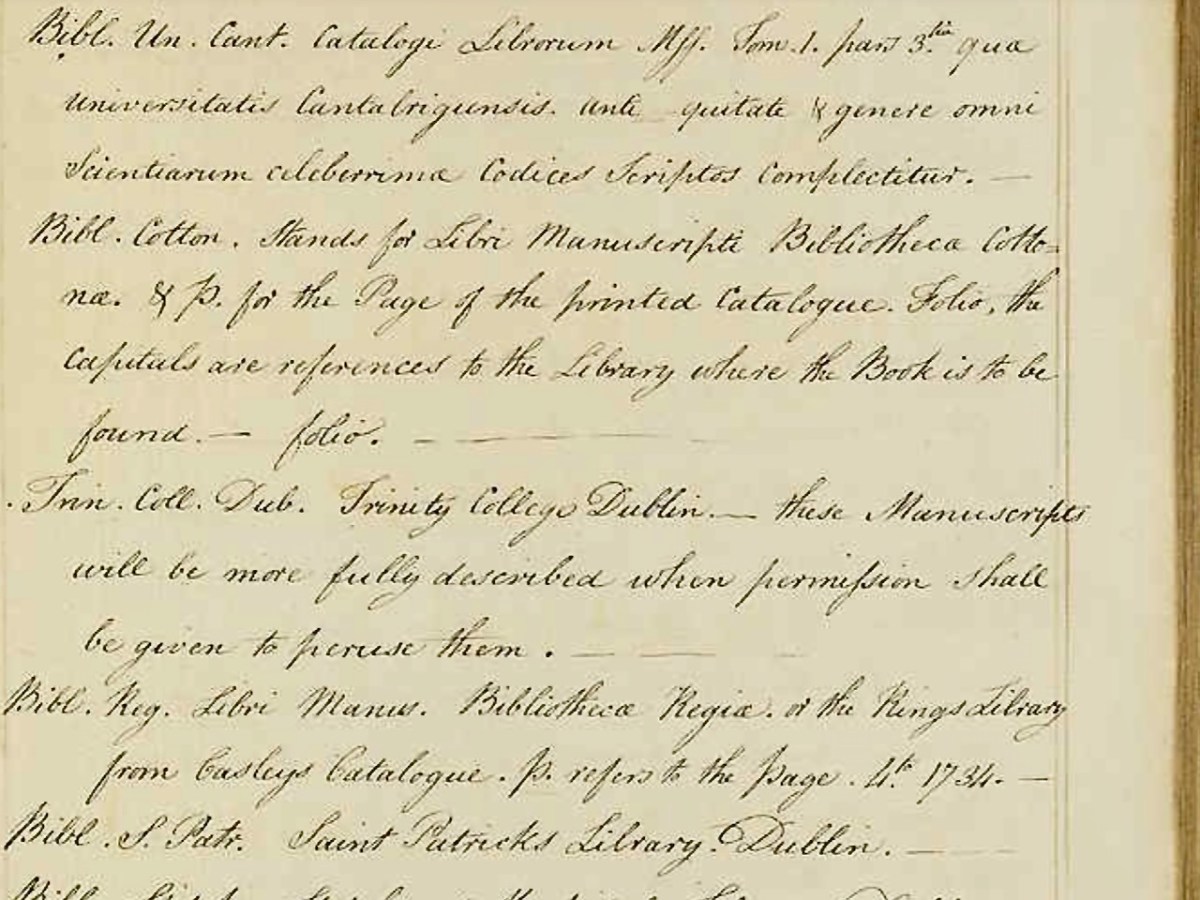
His least known but most important contribution to Irish scholarship was his Rerum Hibernicarum, Scripti, et Impressi. This is a handwritten

alphabetical list of material relating to Irish history divided into two sections; a list of manuscripts held in multiple archives and a supplementary list of printed works. The volume is undated, but as the most recent printed work cited is from 1777 the compilation was probably made shortly after this time.

Taking the long way home: the perambulations of Harvard MS Eng 662, Rerum Hibernicarum, Scripti et Impressi, by Charles Vallancey

Dr David Brown

The Rerum Hibernicarum disappeared – it had an interesting journey, entertainingly told by David Brown in his essay for the Virtual Record Treasury of Ireland, in which a digital copy now resides. An incredibly valuable piece of research, it was the seminal book that initiated a more rigorous approach to Irish studies in the nineteenth century by providing sources for Irish manuscripts, folklore and language to the next generation of antiquarians. Brown says:

All four men, Larcom, Todd, O’Donovan and O’Curry, were committed members of the Royal Irish Academy, the institution Vallancey had co-founded in 1785. Together, this quartet placed Irish studies on a scientific basis and at the centre of Ireland’s main places of scholarship.

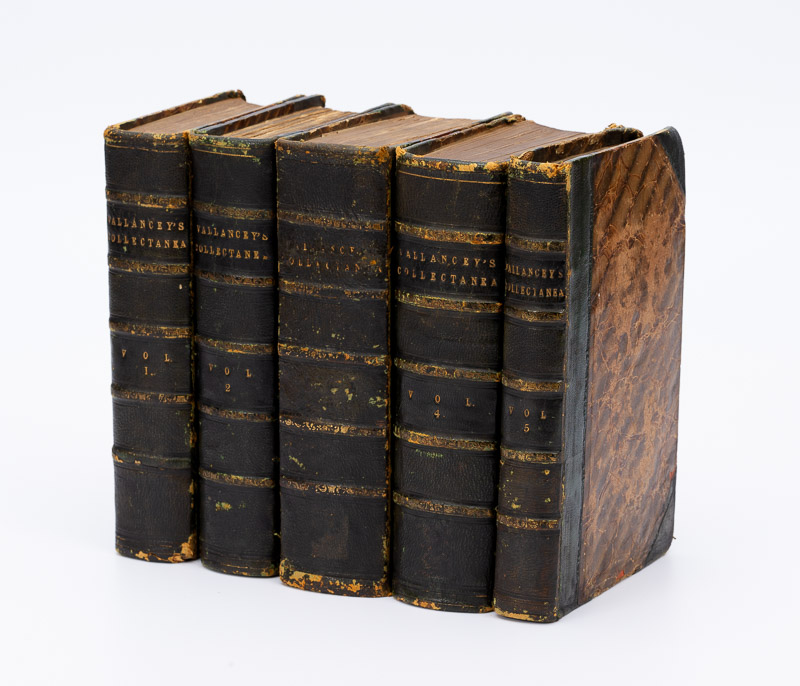
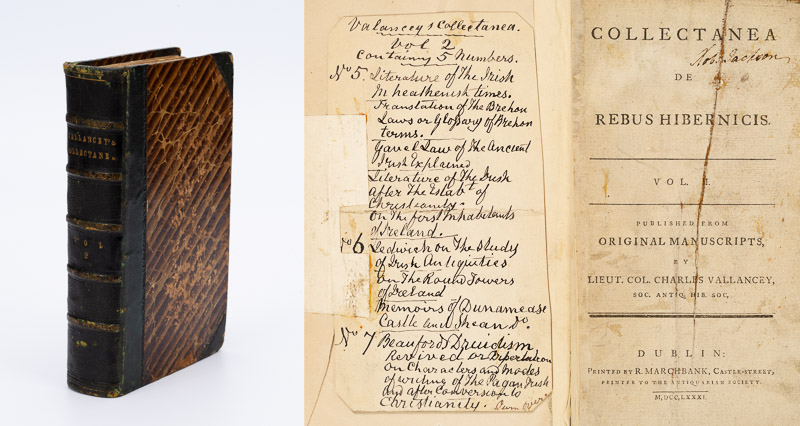
Vallancey’s best known work was his Collectanea de rebus hibernicis – Collection of Irish Matters. It is also his most complex and most characteristic – containing as it does a staggering variety of materials, much of it written by him. It contains work by others too, sometimes credited and sometimes presented as if written by Vallancey. He published it himself in limited editions, so that now it is very rare. 

I am honoured to have been entrusted with a set to examine and write about, by Inanna Rare Books and have spent many happy hours browsing through the volumes. Reading it thus, from cover to cover, I began to see how enormously clever he was – and how obsessed, as he returns again and again to his favourite theme: that the Irish were a noble race descended from the ancient Phoenicians.

In this pursuit, Vallancey was not merely riding a personal hobby horse. In fact, he was very much in the mainstream of European intellectual thought. Vallancey believed that the Irish people were descended from the Scythians, Phoenicians, and Indians, and he used linguistic analysis, comparative mythology, and archaeological evidence to support his claims. In his essay, Phoenician Ireland: Charles Vallancey (1725–1812) and the Oriental Roots of Celtic Culture, Bernd Roling posits that Vallancey’s work, while ultimately based on speculation, reveals the powerful influence of ‘orientalizing’ models of history that were popular in the 17th and 18th centuries. He argues that Vallancey’s work is not simply a collection of outlandish ideas but rather a reflection of the enduring influence of ‘baroque’ antiquarianism and its commitment to finding connections between cultures and languages, even if these connections were ultimately based on speculation and incomplete understanding of the past.

Perhaps it was his enthusiasm for technology and the continuous journeys through Ireland required by his work that led Vallancey to find there the great love of his life of his life, namely Ireland herself. . . 

In the eighteenth century Ireland was not the centre of the world. It was a land dominated and exploited by England, with a rural population who were regarded as barbarians at best by the gentlemen at home in the clubs and coffee houses of England’s cities. For them, the native language of the Irish was no more than an incomprehensible squawking that needn’t be accorded any further significance. Would it not, then, be a magnificent surprise, almost a humbling of Anglophile arrogance, if the Irish turned out to be the descendants of the ancient Chaldees, Phoenicians, Scythians and Indians, the crowning jewel in a chain of heroic acts reaching back into a prehistory, which was able to supersede any other chain of historical events? Would it not be a wonder if the Land of Saints and Scholars, with its ancient monuments, poetry and songs, were the final record of a primordial European people whose wisdom united the learning of the whole ancient East?

Yes, indeed, Vallancey, himself a bit of an outsider, was consumed with the need for that humbling of Anglophile arrogance. Unfortunately, as with anyone blindly obsessed with a cause, and simultaneously lacking self-doubt, this led him into many false conclusions and leaps of imagination in his interpretations of how Irish Gaelic related to ancient and oriental languages. His philological arguments were thoroughly debunked, starting almost immediately upon publication. 

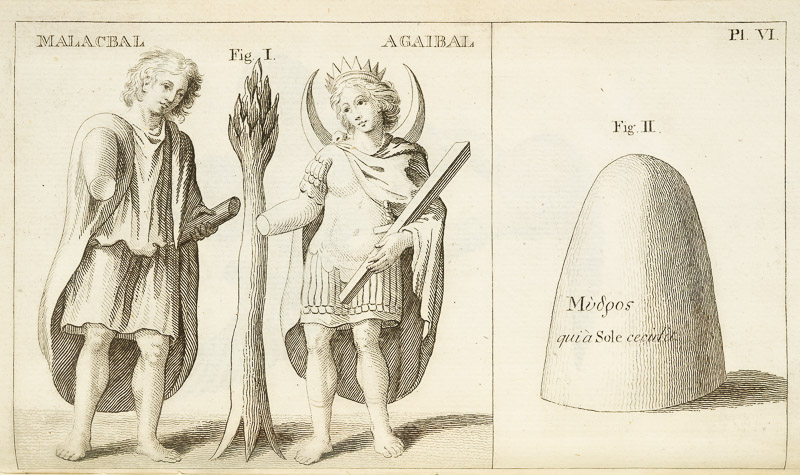
And it wasn’t just language – he had equally startling views about round towers, proposing that they were built by Scythians. He suggested that they were part of the “Scytho-Phoenician settlement of Ireland” and linked to ancient Chaldean religion. He drew on the work of other scholars to support his argument, citing the discovery of similar towers, called misgir or “fire towers,” in the Volga region formerly inhabited by the Bulgars. Vallancey also referenced Geoffrey Keating’s account of a druid named Midghe, who supposedly taught the Irish the use of fire during the third invasion by the followers of Nemed (from the Book of Invasions, a mythological origin story for Irish History). This association with fire, combined with the architectural similarities to the towers in the Volga region, led Vallancey to believe that the round towers served as observatories for an astral, or sun-worshipping, cult that had been brought to Ireland by the Phoenicians.

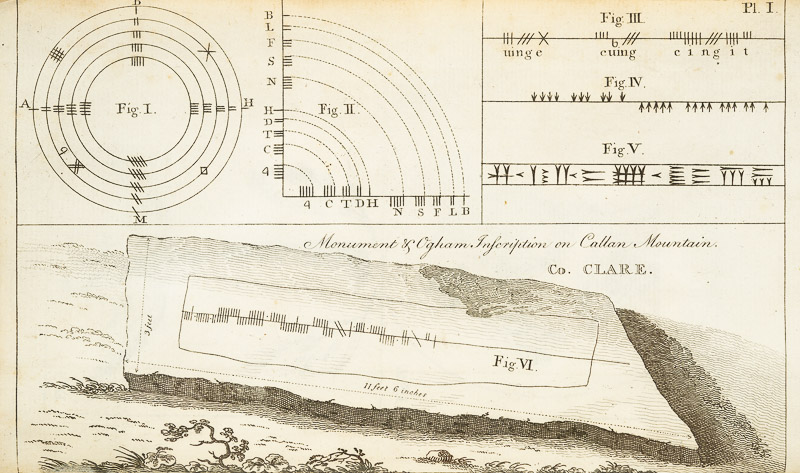
Similarly, with ogham, an early Irish script mainly found carved into standing stones, he argued that the word ogham itself was derived from Sanskrit, meaning ‘sacred or mysterious writing or language’ and pointed to the visual similarities between ogham and the Old Persian cuneiform script found at Persepolis as further evidence of an oriental connection. This view aligned with his broader theories about the druids as practitioners of a sophisticated astral cult with origins in Chaldea and connections to the Indian Brahmans

His research on ogham was extensive, including the study of ogham inscriptions and the publication of scholarly articles and drawings of ogham stones in his Collectanea de Rebus Hibernicis. Next week, we will take a deep dive into that Collectanea. Meanwhile, I’ll try to figure out how to pronounce that word correctly.

*General Charles Vallancey 1725-1812 by Monica Nevin. The Journal of the Royal Society of Antiquaries of Ireland , 1993, Vol. 123, pp. 19-58

** Charles Vallancey and the Map of Ireland, JH Andrews. The Geographical Journal, March 1966. Available here. Highly recommended if you want to know more about Vallancey as a map maker, which is slightly outside the scope of this series.
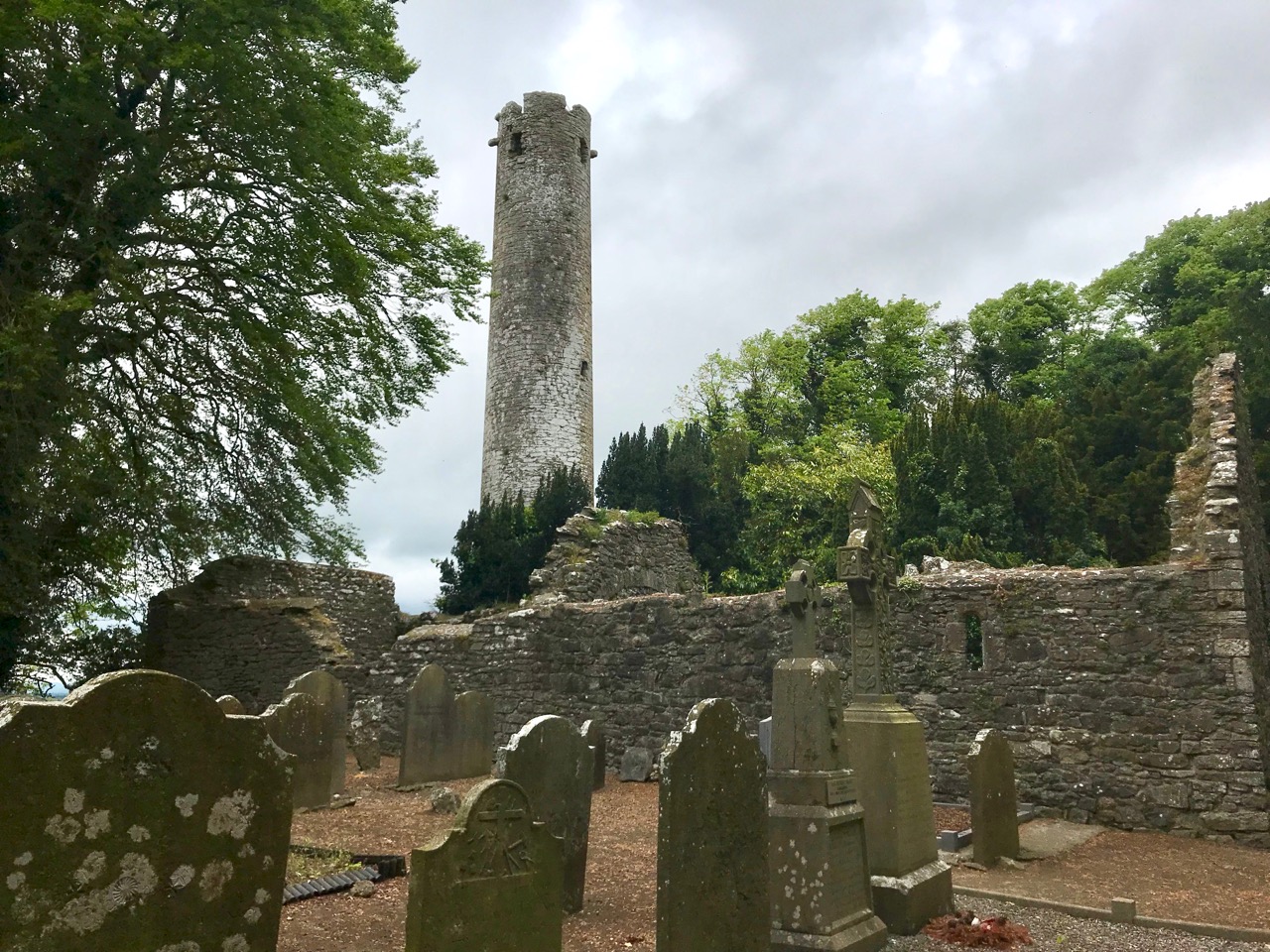
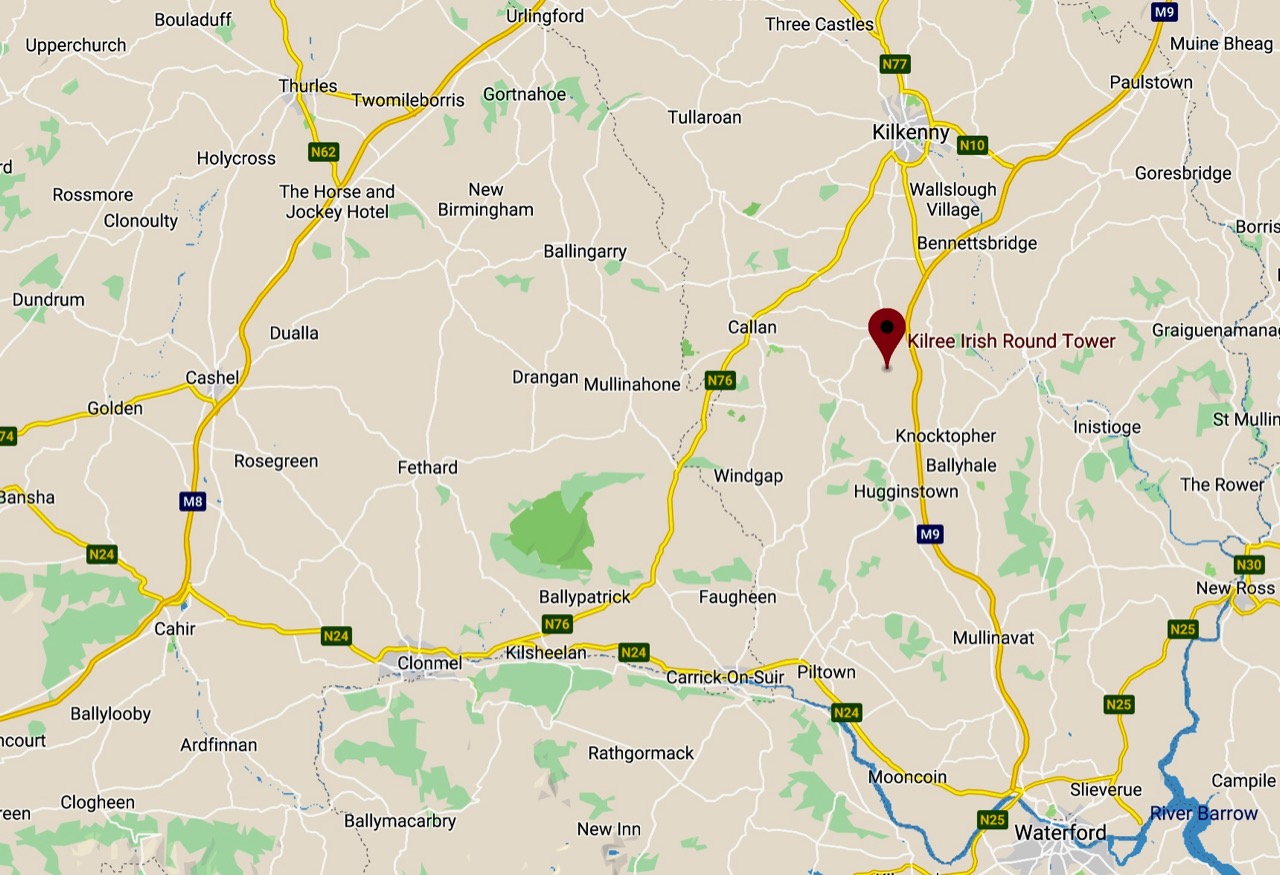
Off the M8 – Kilree Monastic Site

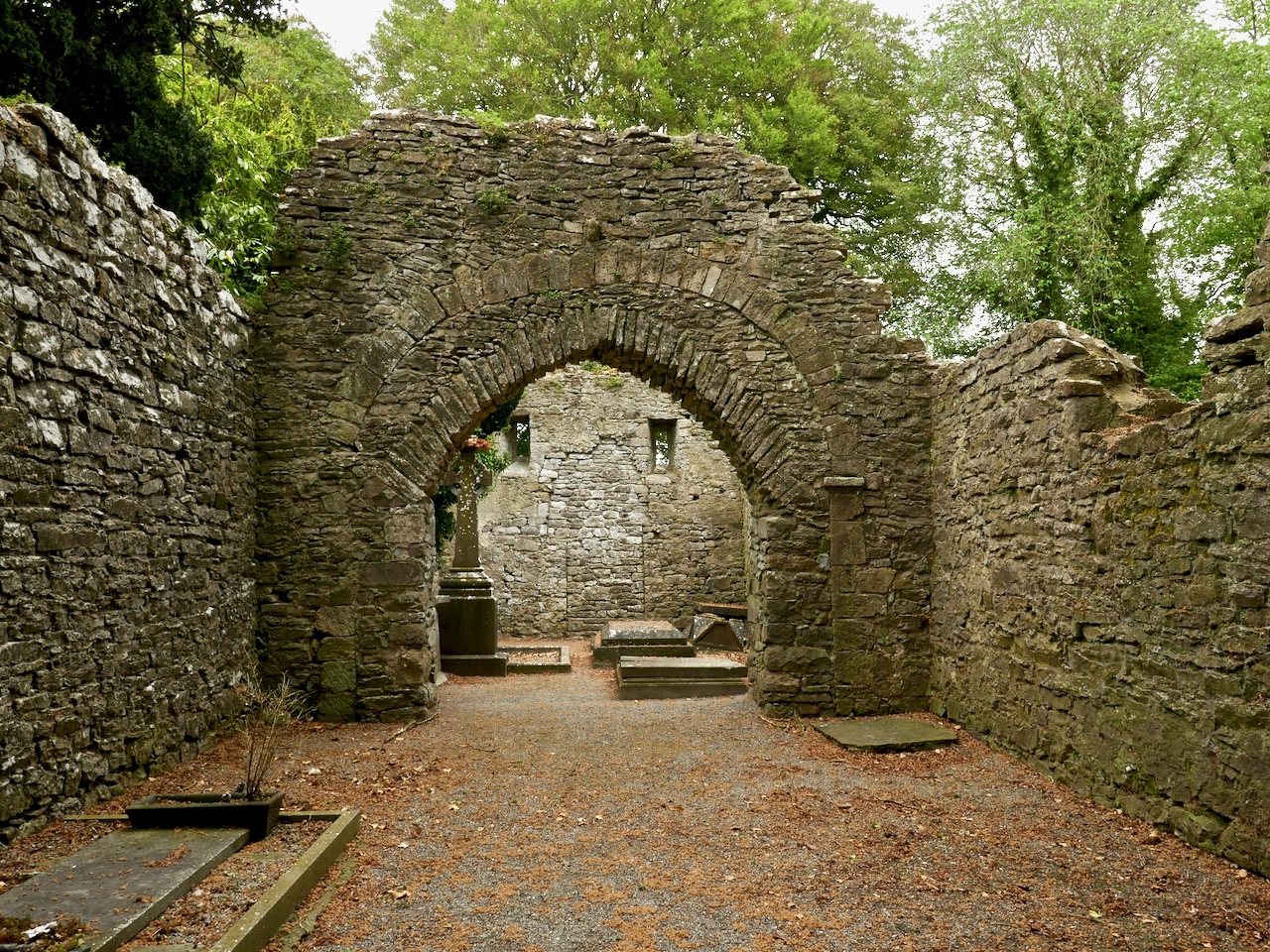
Kilree is possibly the most perfectly contained and atmospheric site you will visit in Ireland. I defy you not to be enchanted with its leafy depths, its air of antiquity, and evidence of continued use. (I would also vote for Monaincha in Tipperary, a site that deserves its own post one of these days).

When you’re travelling from Cork to Dublin it’s easy to leave the M8 at Cahir and travel cross-country to join the M9. There are numerous sites to visit if you take this option: most recently we have written about Fethard and its Medieval Walls, but we also did a post about Kells Priory a long time ago (The Hallowed Fortress) and it remains one of our favourite sites and one of the most impressive monastic sites in Ireland. And don’t go without your copy of Ireland’s Ancient East by Neil Jackman – it’s our constant companion and a great resource. It’s available on Amazon but why not patronise your favourite bookstore?

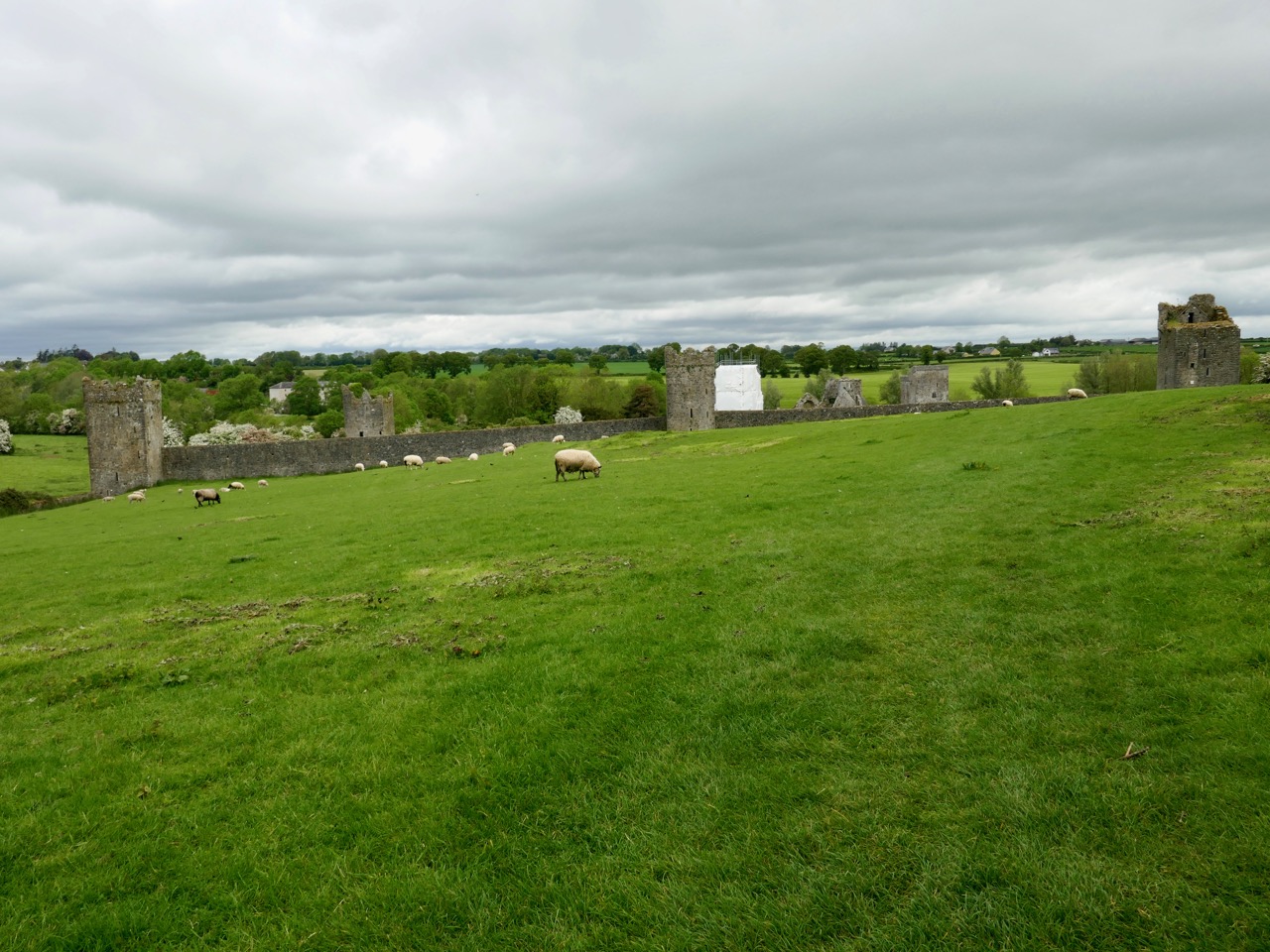
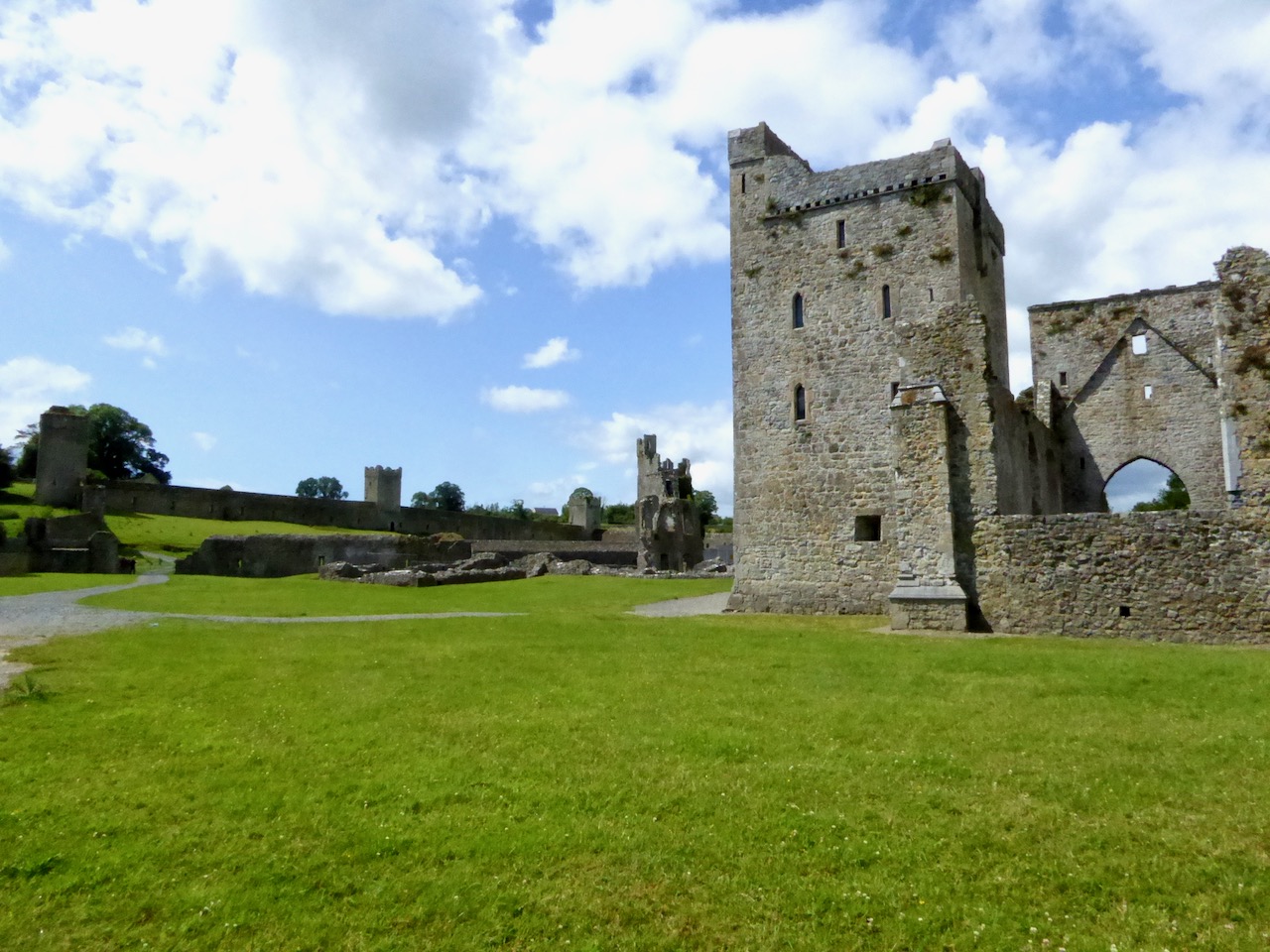
Kells Priory, just up the road from Kilree and one of Ireland’s most impressive religious complexes

It’s a great contrast to Kilree. If you haven’t been to Kells Priory yet, try to take them both in, in the same day. What you will see is a typical example of an Early Medieval Irish monastic site (Kilree) and an excellent example of a large 12th to fifteenth century Augustinian Priory built to withstand the turbulent history of Kilkenny in those centuries. The monks in Kilree were living the life of Irish monastics in a pattern set down in the 6th century, while the Augustinians were mainstream European clerics invited over by the Normans.

Inside Kells Priory

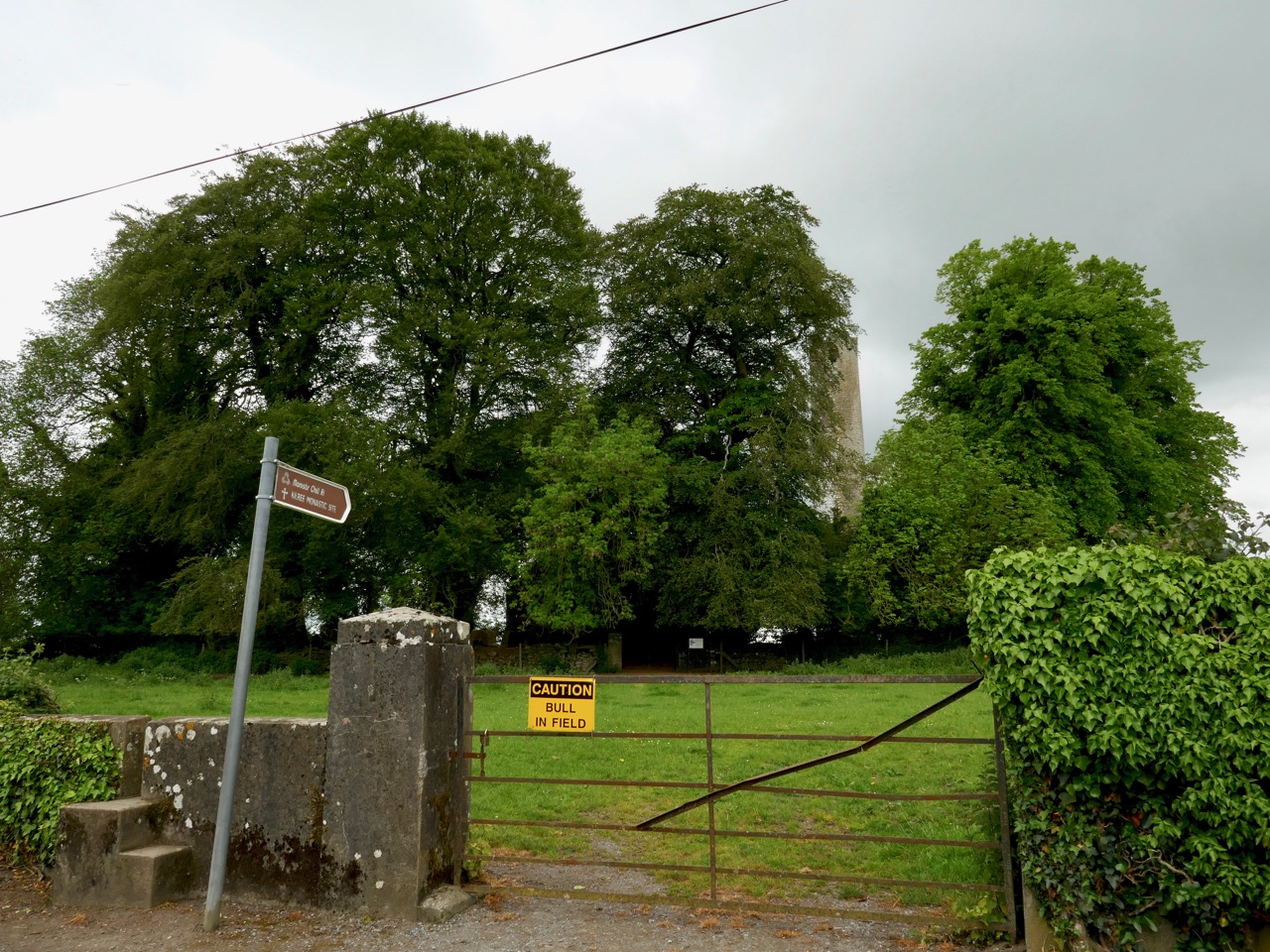
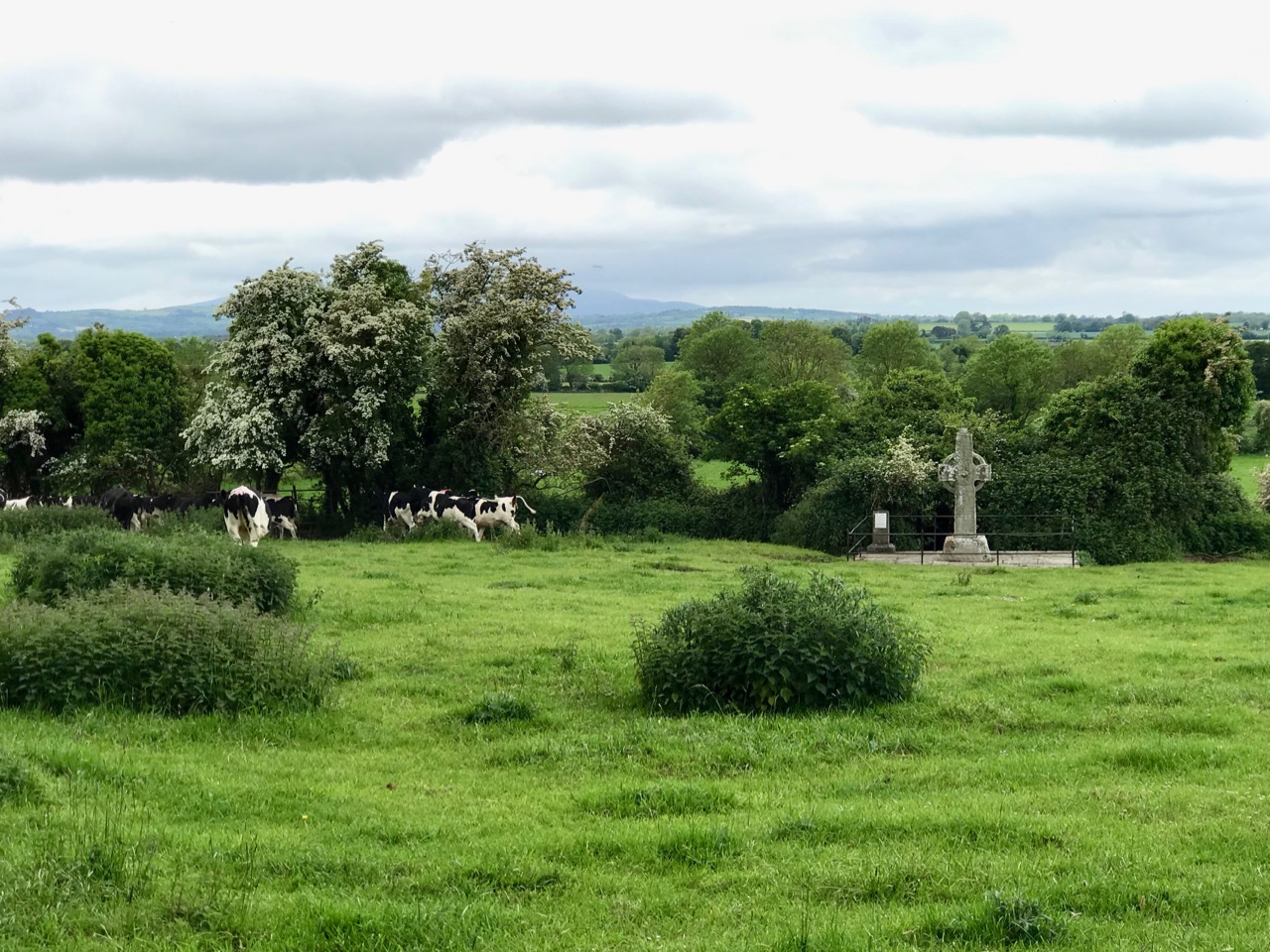
The other things about Kilree is that it’s unspoiled (except for one thing – I’ll get to that later) and in Ireland, that means that the farmer who owns the land is using it. There’s a Bull sign on the gate and indeed there he was, with all his frisky bullock friends. We thought our chances of crossing the field were slim, but two friendly ladies on horseback offered to draw the attention of the cattle away from us so off we dashed while they were distracted, not giving much thought to how we might get back again.

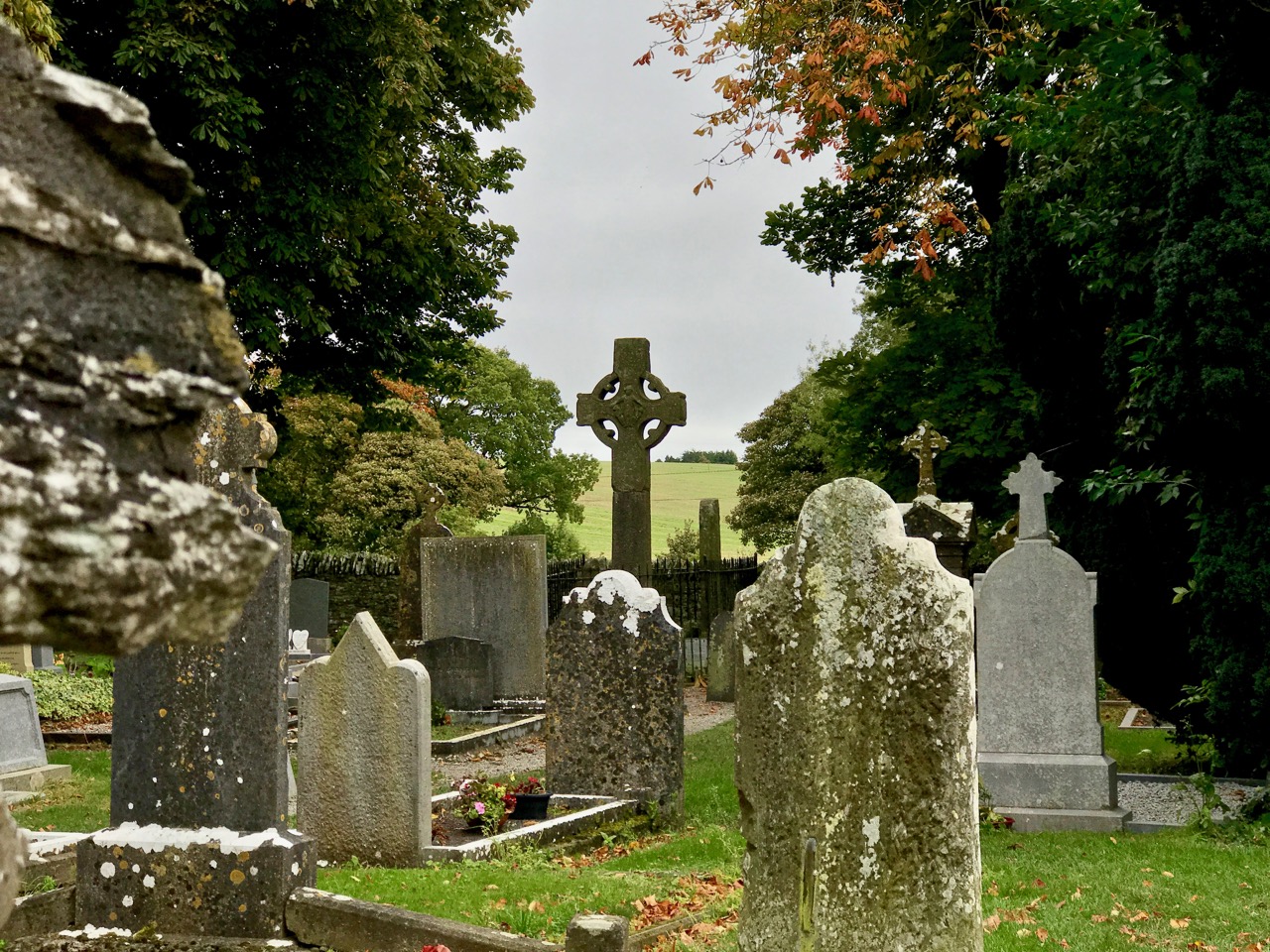
Having charged off down the field after the horses (which were on the other side of the hedge) the bullocks, followed at a dignified pace by the bull) ended up beside the high cross so we decided to leave well enough alone and not venture over to that quarter. A distant shot will have to suffice for this post, but you can see excellent images of this cross at the Irish High Crosses website, and we thank them for that since this is the closest we will get for the moment.

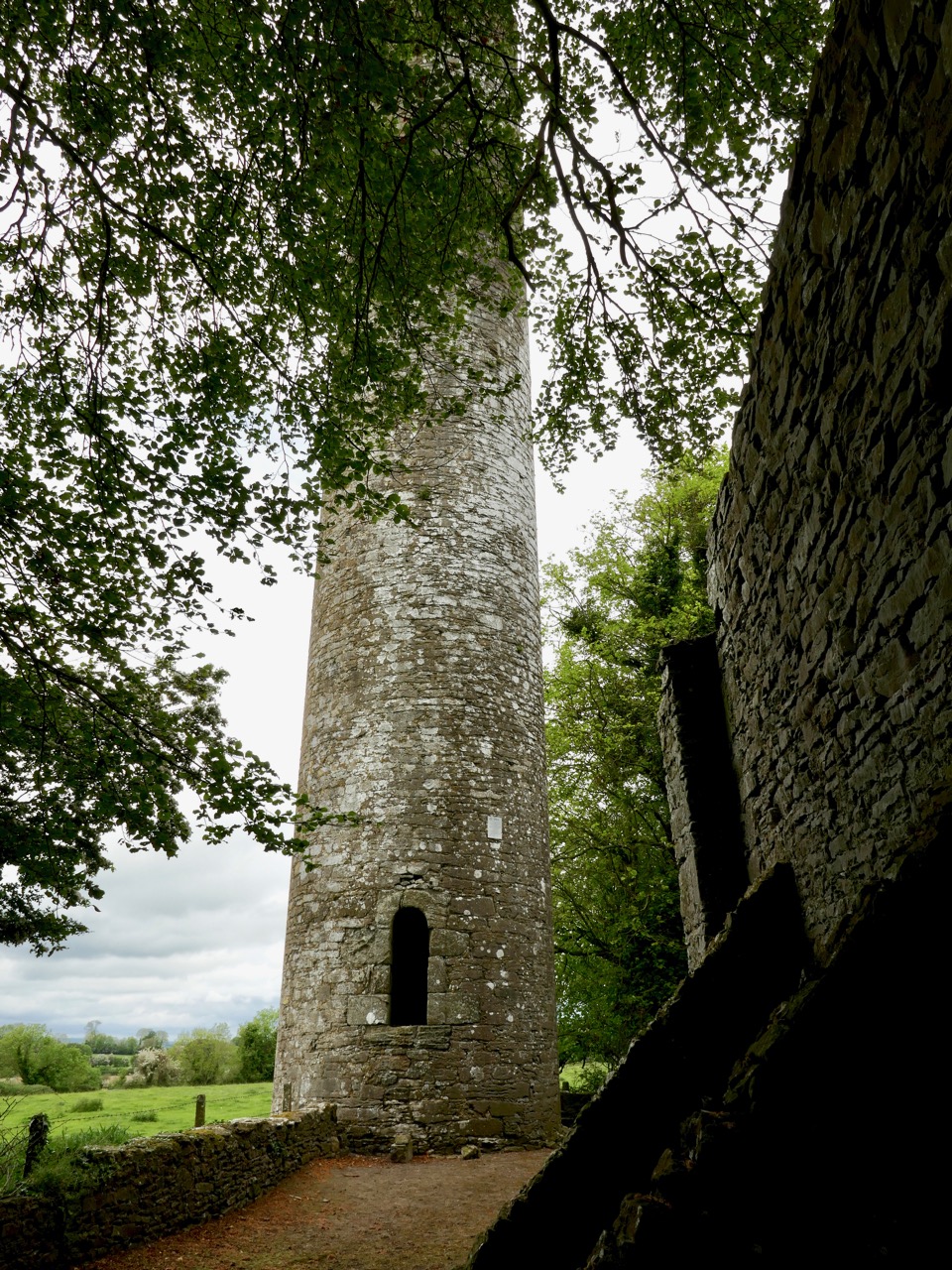
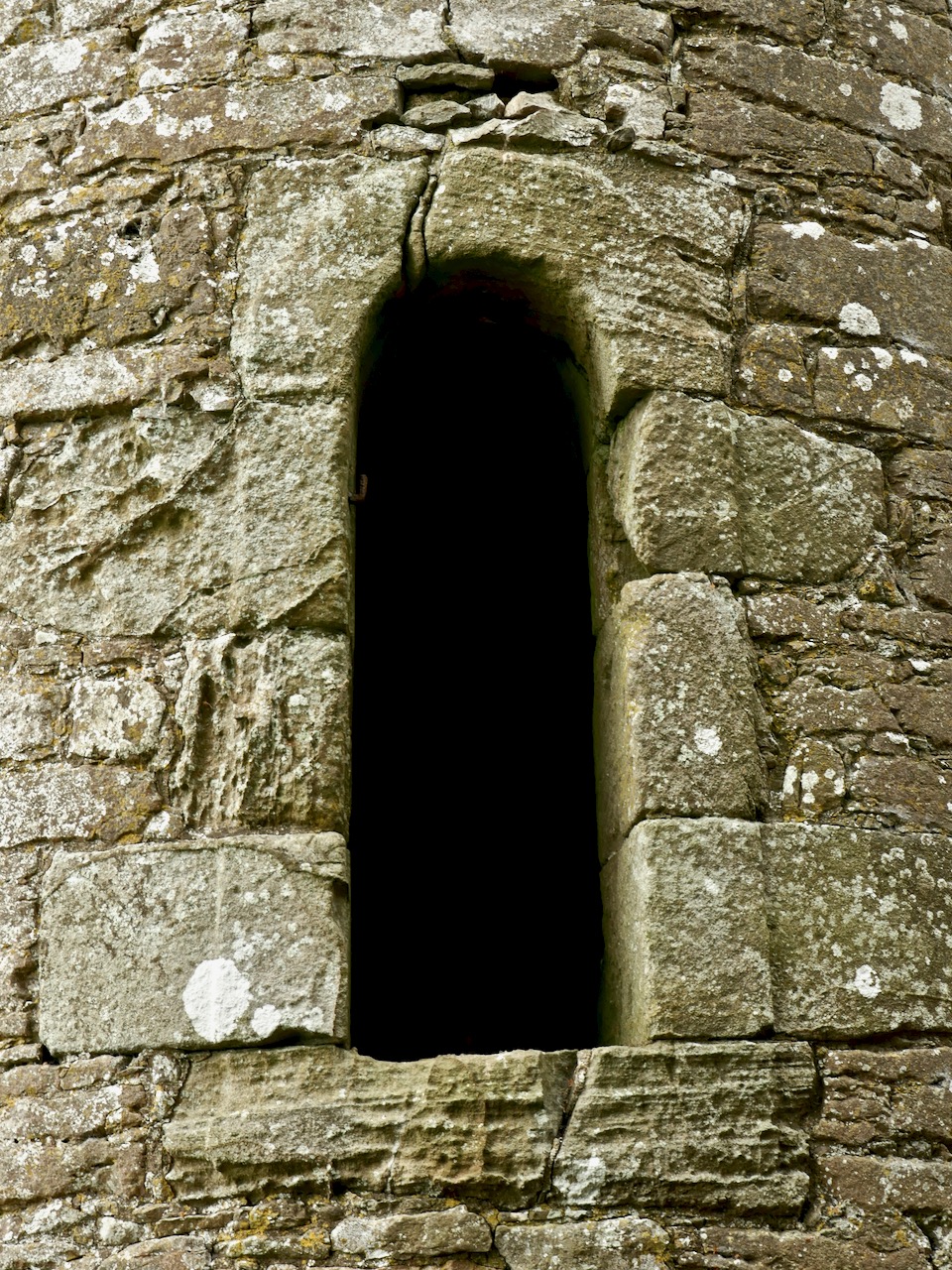
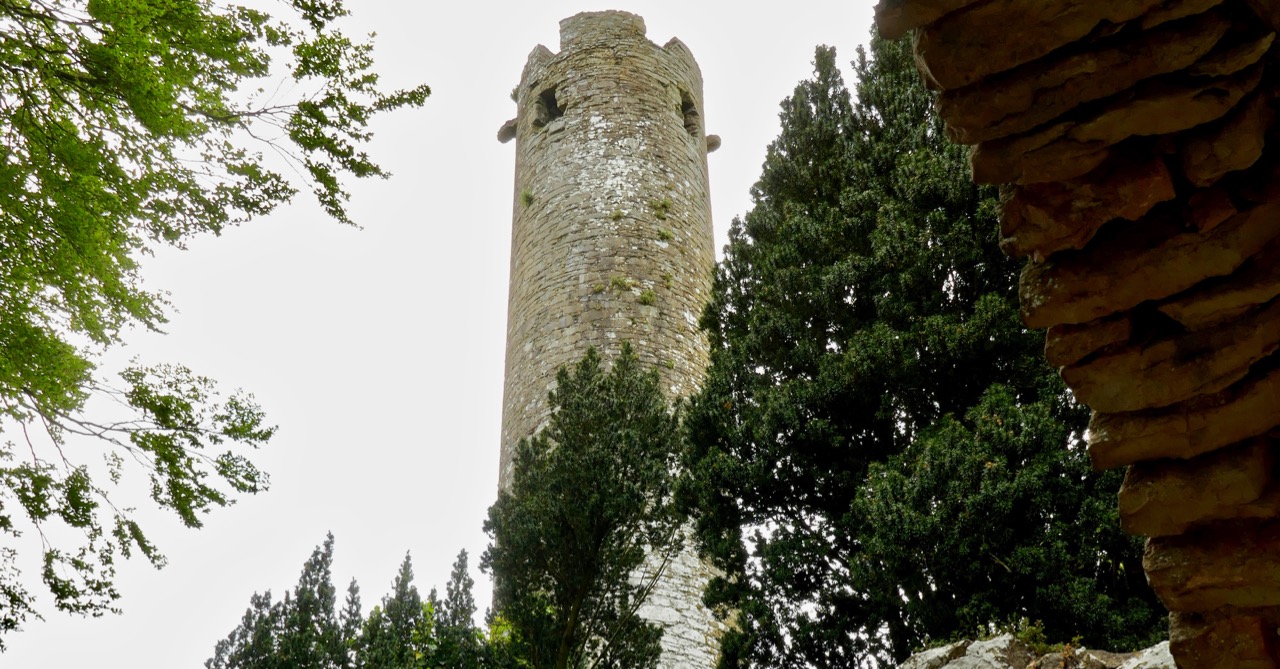
But there was so much to see within the monastic enclosure. First, the round tower – it is missing its conical cap but apart from that it’s complete and in good shape. Brian Lalor, in his book The Irish Round Tower, assigns it an 11th century date based partly on the simple doorway. The arch, he points out, has been cut from the soffit of a monolithic lintel which is now cracked.

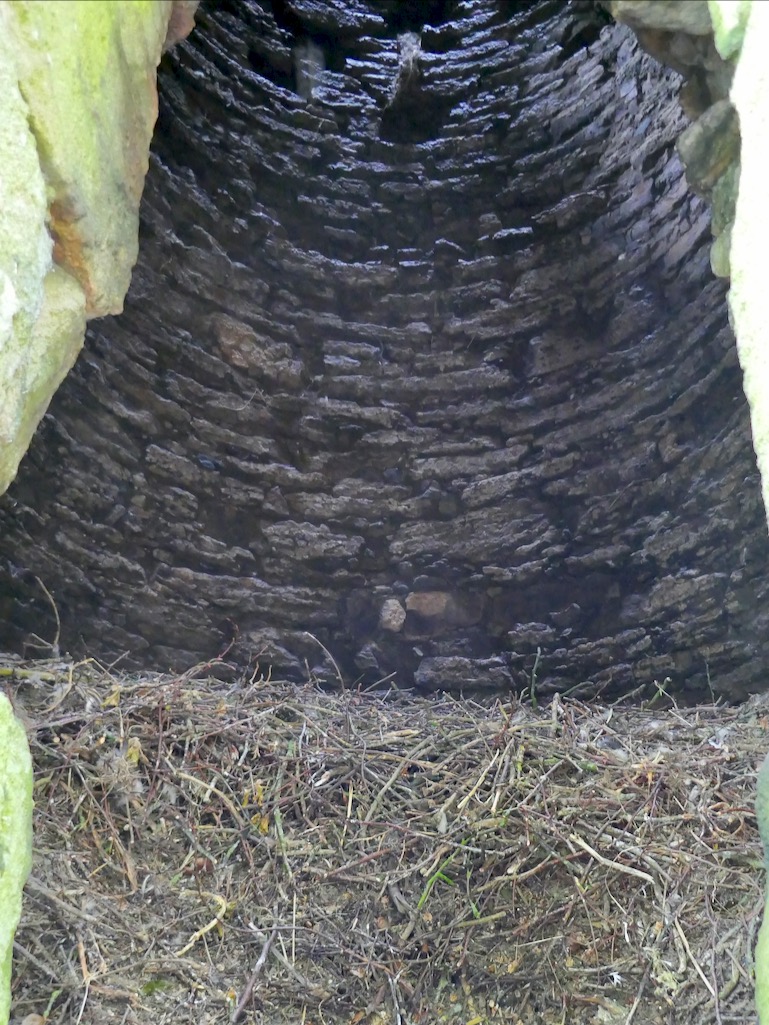
Crenellations were added to the top in later medieval times (you can see them in the first image) – the tower must have been renovated for some kind of defensive purpose at that time. When the Ordnance Survey folks came around in 1839 it was possible to climb to the top by means of rope ladders. There is no access now, apart from by the rooks and crows who have left evidence of their prodigious nest-building.

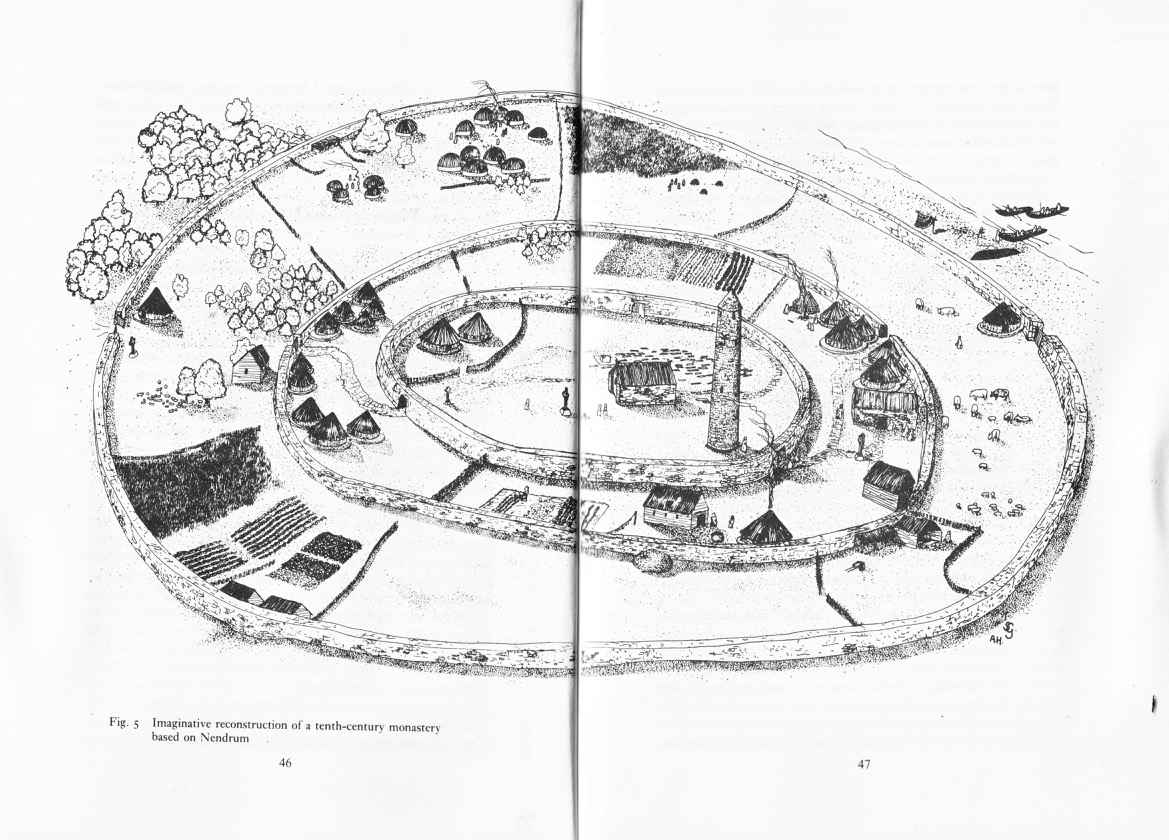
Lalor also points out that the round tower is perched on the circular boundary wall of an old churchyard which probably represents the position of the inner rampart of the monastic enclosure. What did such a monastic enclosure look like? I’ve used an illustration from a marvellous book called The Modern Traveller to the Early Irish Church, by Kathleen Hughes and Ann Hamlin (second edition, Four Courts Press, 1997). The site illustrated (Nendrum, County Down) was enclosed by three circular walls, a not-unusual configuration although one and two enclosing walls are also found. There is no real evidence left at Kilree for a second or third wall, but the location of the high cross indicates the likelihood of an outer wall.

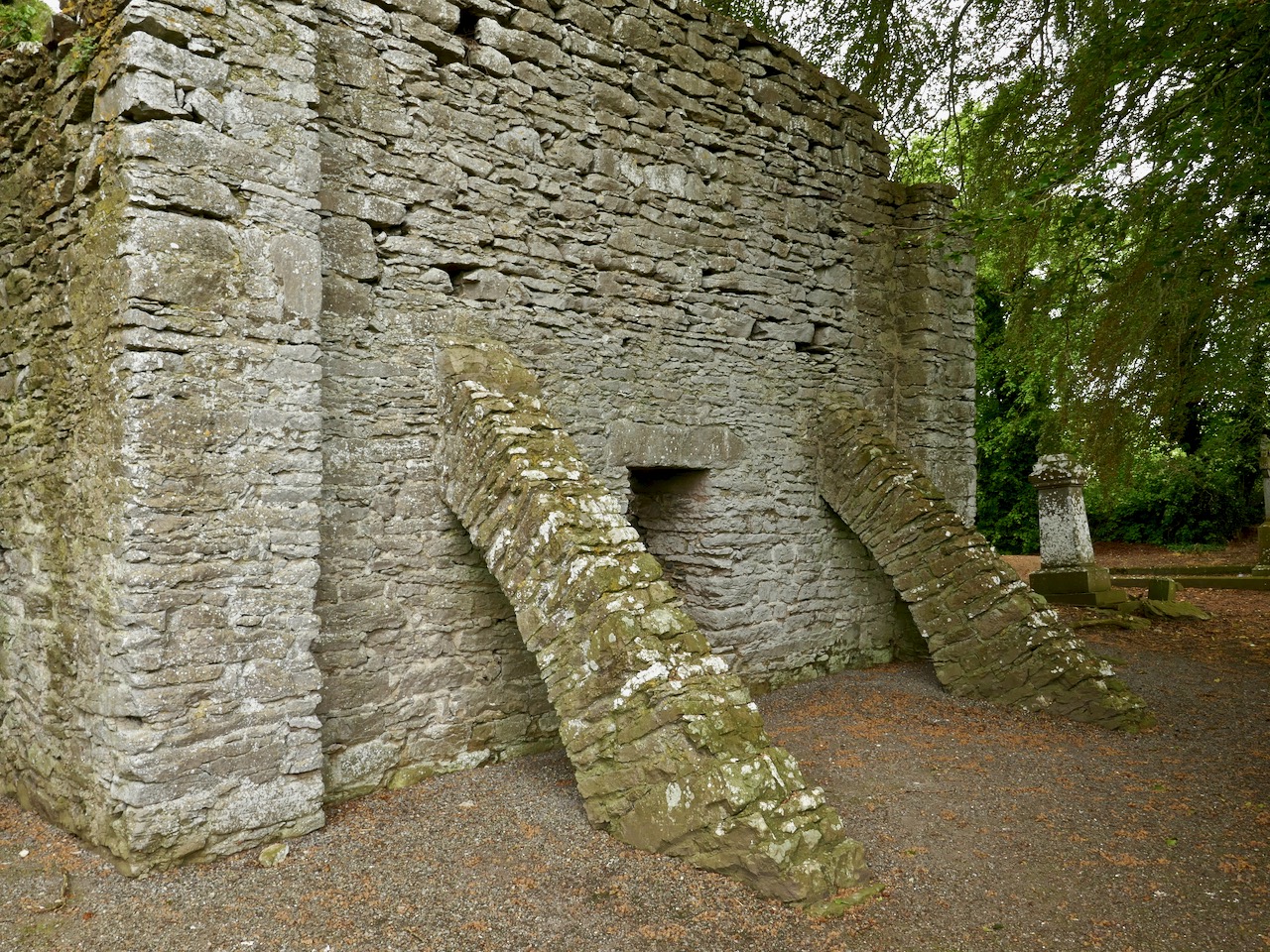
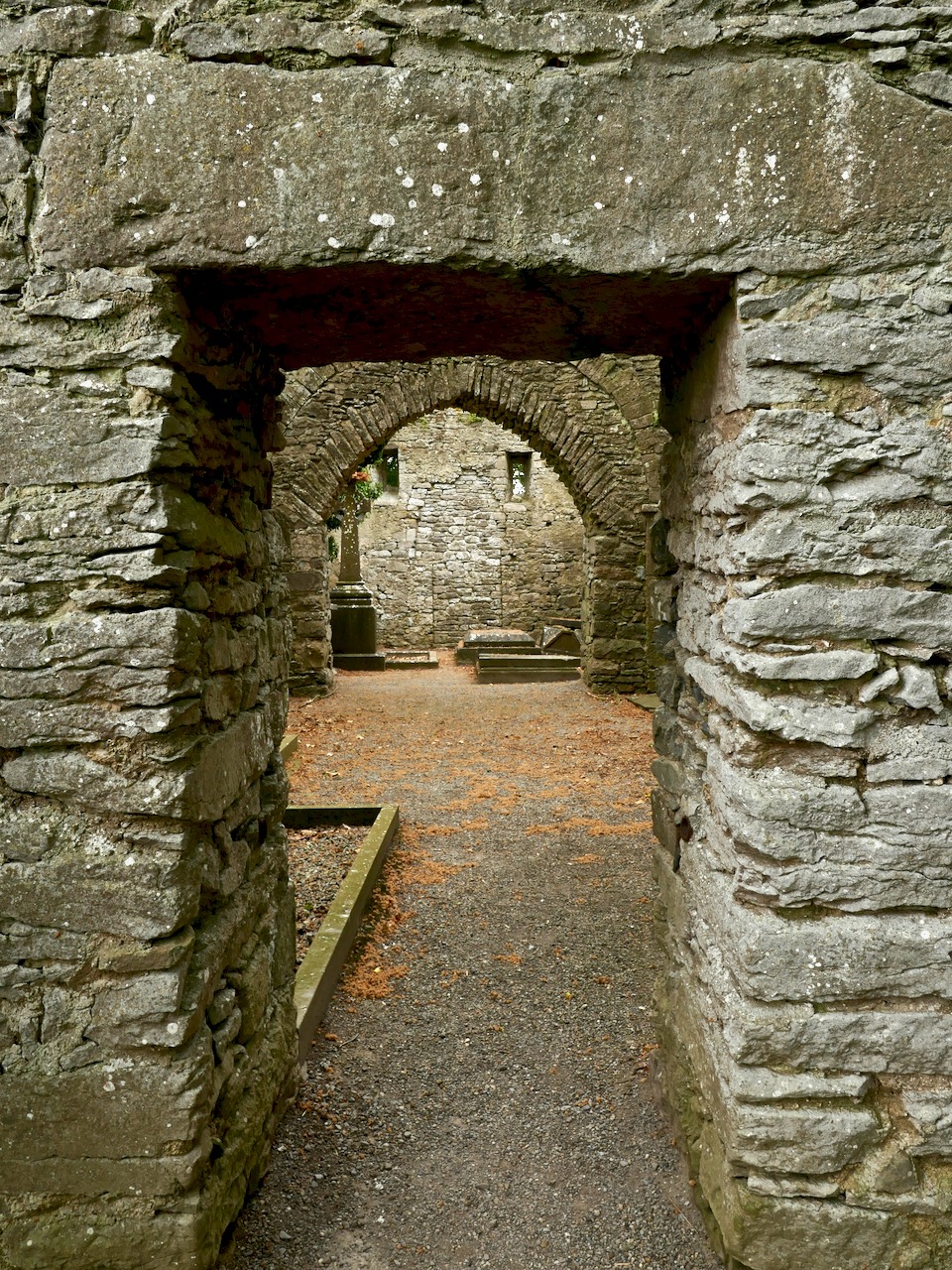
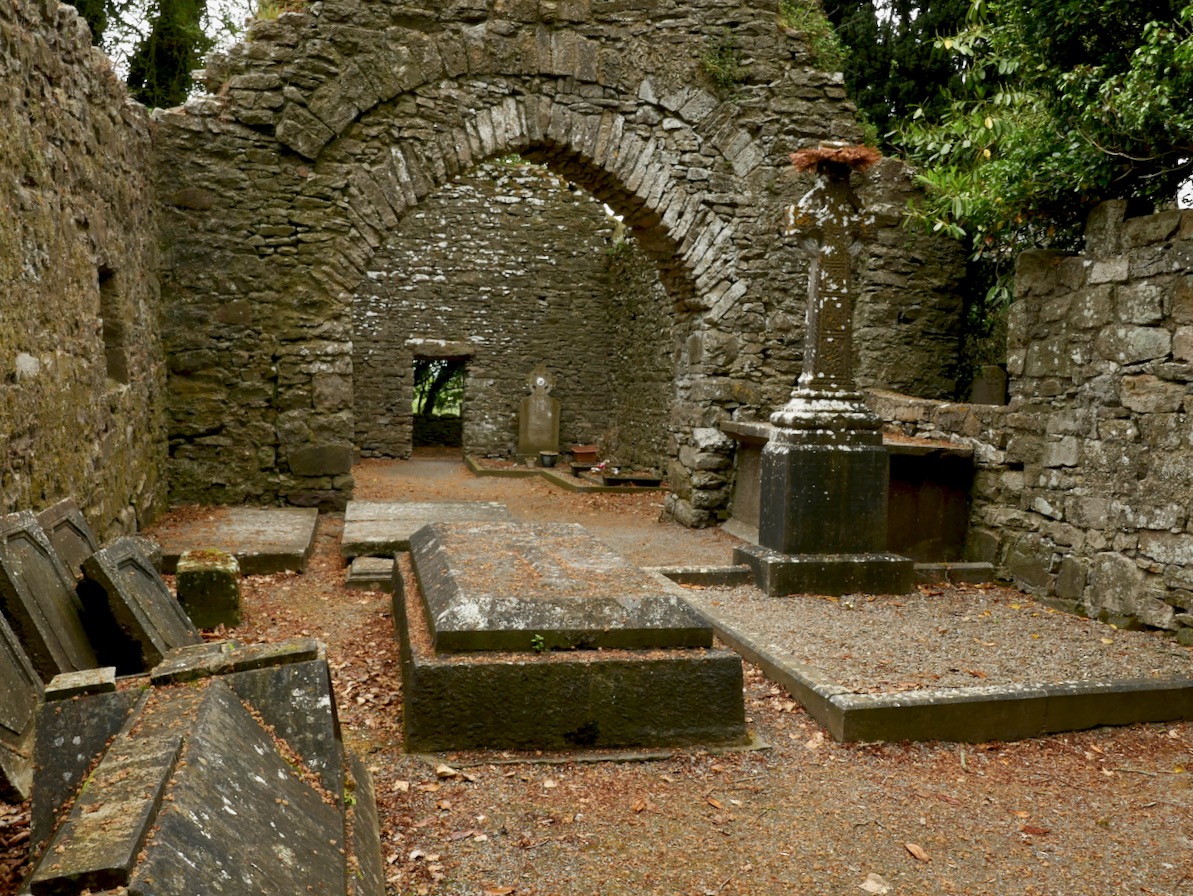
The church is of an early form, rectangular, with antae at either end. To understand how this fits in with the architecture of the period, see my post Irish Romanesque – an Introduction. The nave, or main part of the church probably dates to the 10th or 11th century, but a chancel was added later, probably in the 12th century, by means of an inexpert Romanesque arch, which eventually had to be shored up with an even more awkward-looking inner arch.

Upper: East wall with buttresses added in 1945; Lower: The earlier Romanesque arch is clearly visible above the later one

The whole place was repaired by the Office of Public Works in the 1940s and it was they who built the buttresses which have successfully kept the east wall from falling down.

Upper: Looking through the linteled doorway into the nave and the chancel beyond; Lower: Looking towards the nave from the chancel. The chest tomb is on the right

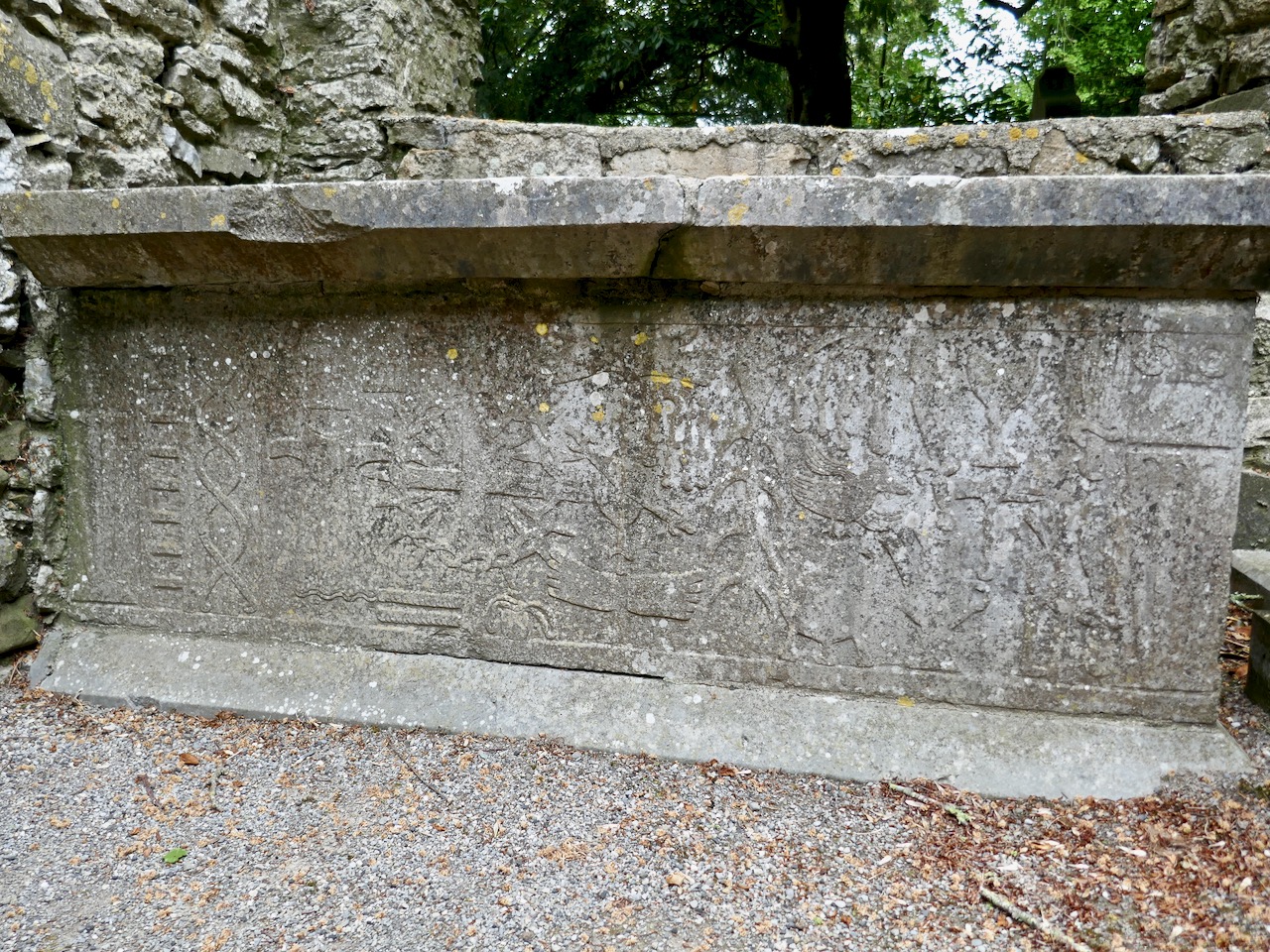
There are several thirteenth to fifteenth century cross slabs within the church but the seventeenth century chest tomb just inside the chancel is the most interesting.

It’s hard to decipher as it’s faded and covered in lichen, but here is the description of it taken from the National Monuments listing:

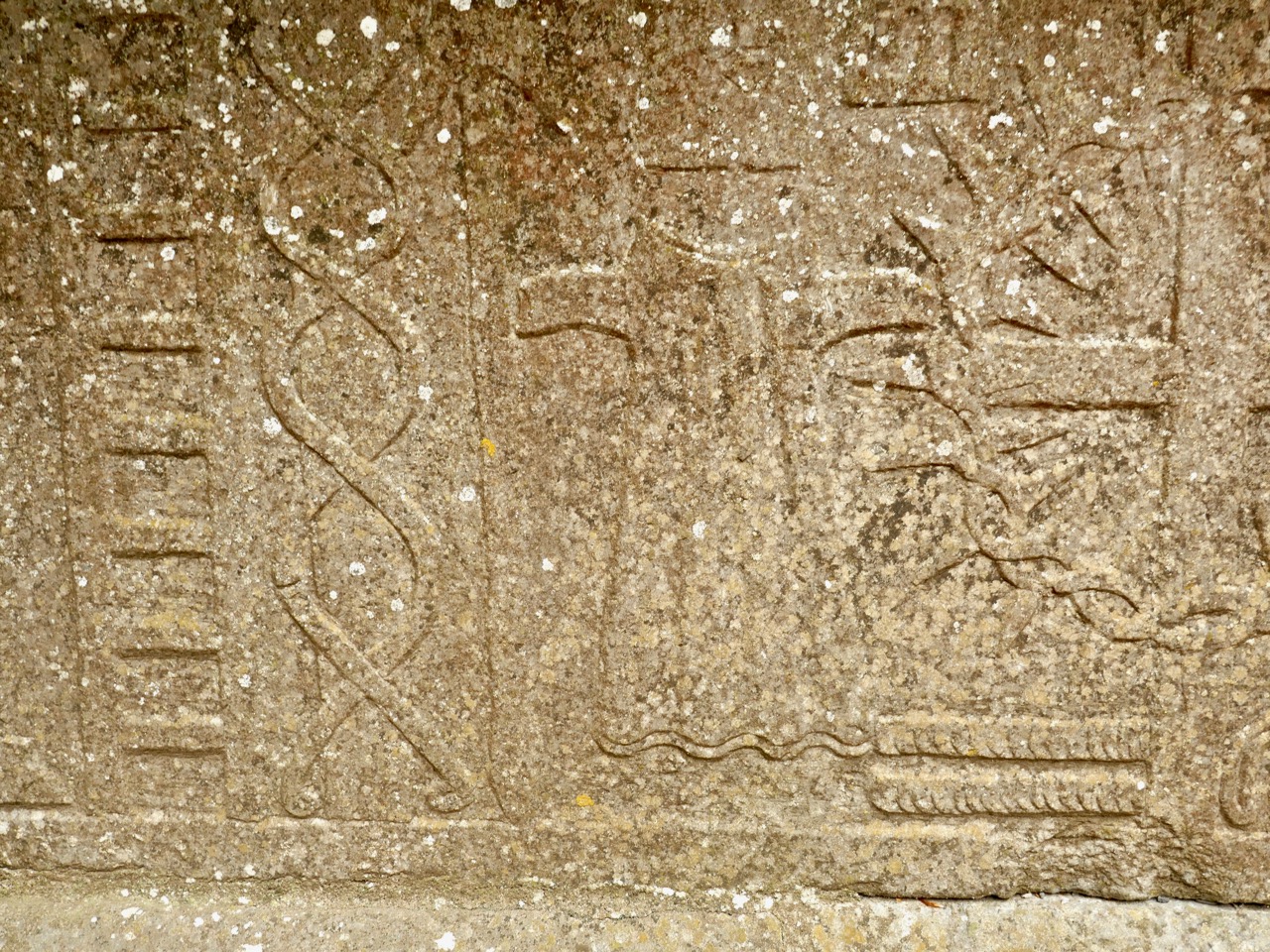
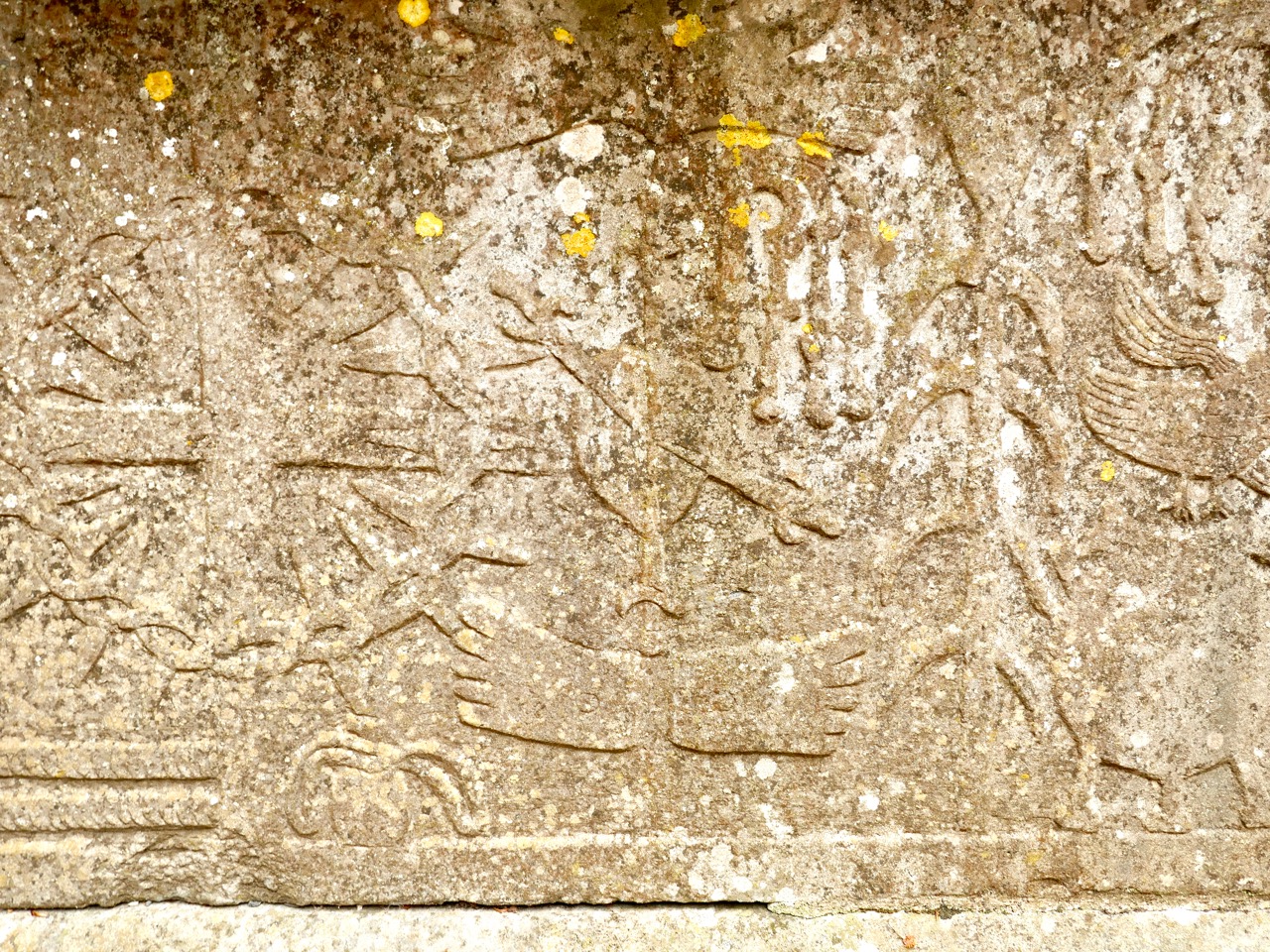
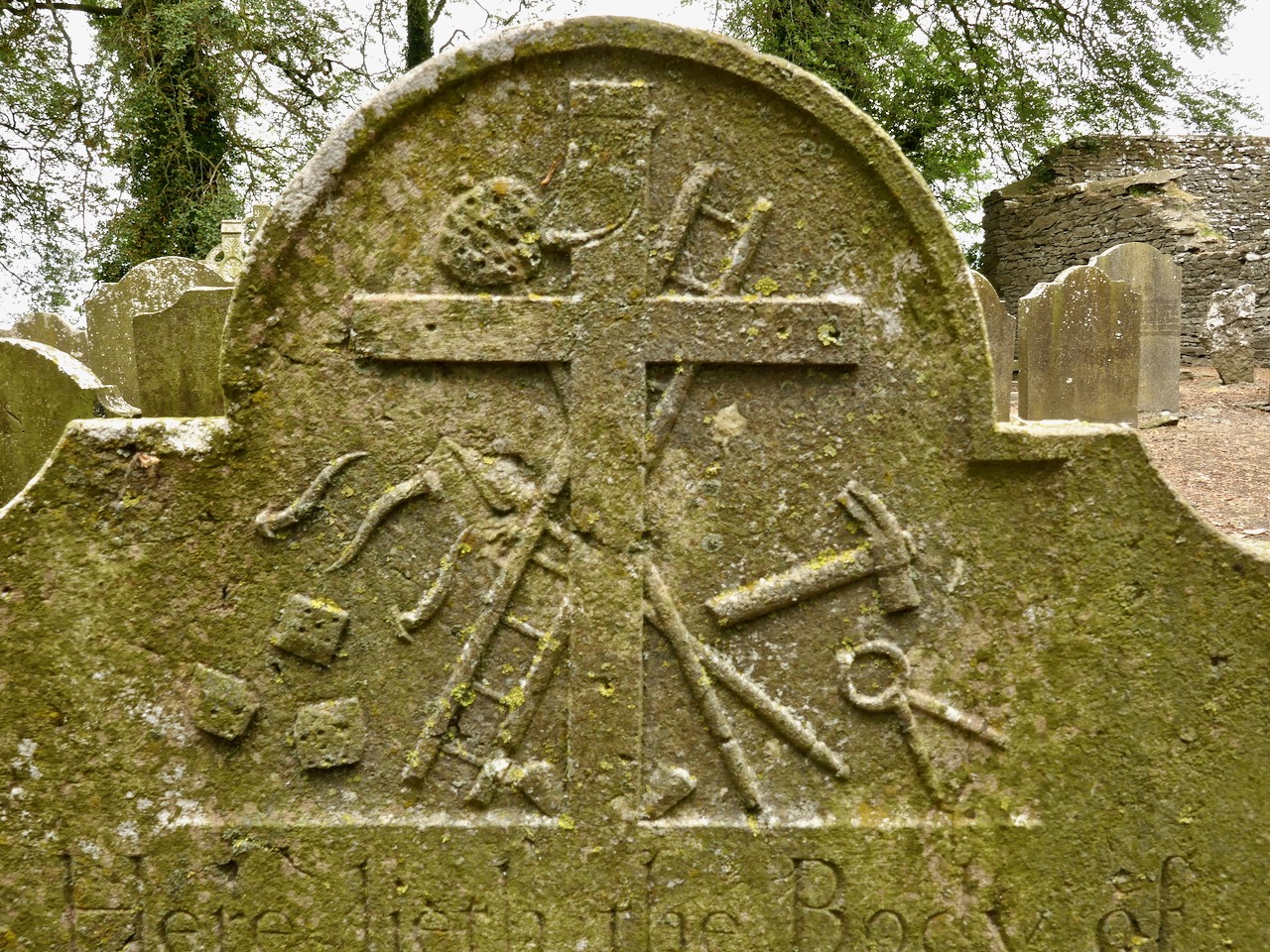
Latin inscription, in a margin around the edge of the upper slab, was transcribed by Carrigan as, ‘Hic jacet Dns. Richardus Comerford quondam de Danginmore qui obit [date left uncut] et Dna Joanna St. Leger uxor eis pia hospitalis et admodum in omnes misericors matron quae obit 4 die October A. 1622’ and translated as, ’Here lie Mr. Richard Comerford, formerly of Danganmore, who died [left blank] and Johanna St. Leger, his wife, a matron pious, hospitable, and charitable to all, who died Oct 4th, 1622’. The front slab. . . is decorated with the symbols of the Passion flanked with stylised fluted pillars which taper towards the base. The symbols from dexter to sinister include a ladder, entwined ropes, a spear, dice and a seamless garment, 30 pieces of silver and beside them a bag with two straps, a cross ringed with a crown of thorns, a heart pierced with nails and pierced hands and feet above and below this, a scourge on either side of a plant, a cock on a three-legged pot, a sword, a chalice, a hammer, and pincer holding 3 nails and two sheaves of wheat. 

Can you recognise the details from the NM description?

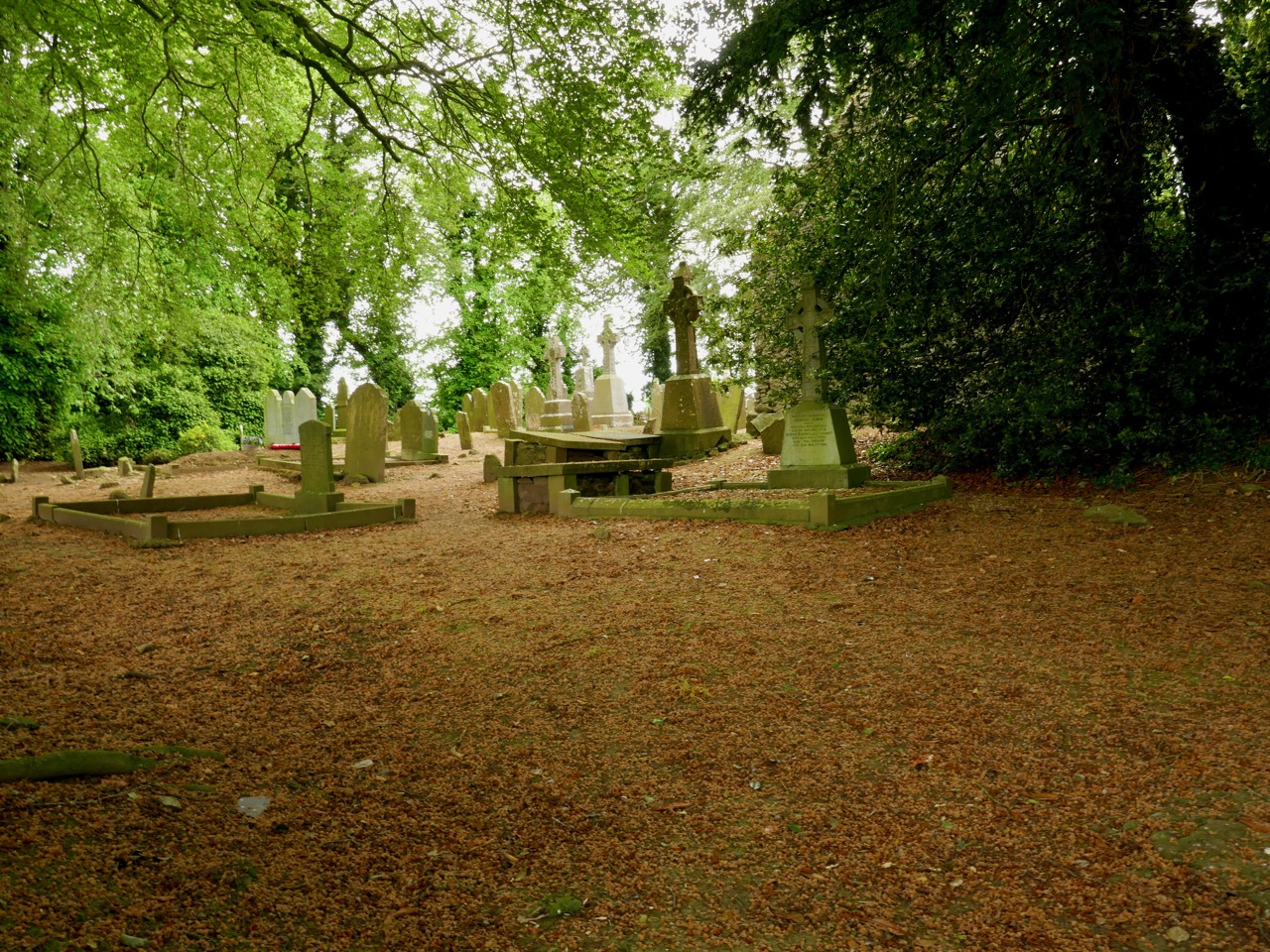
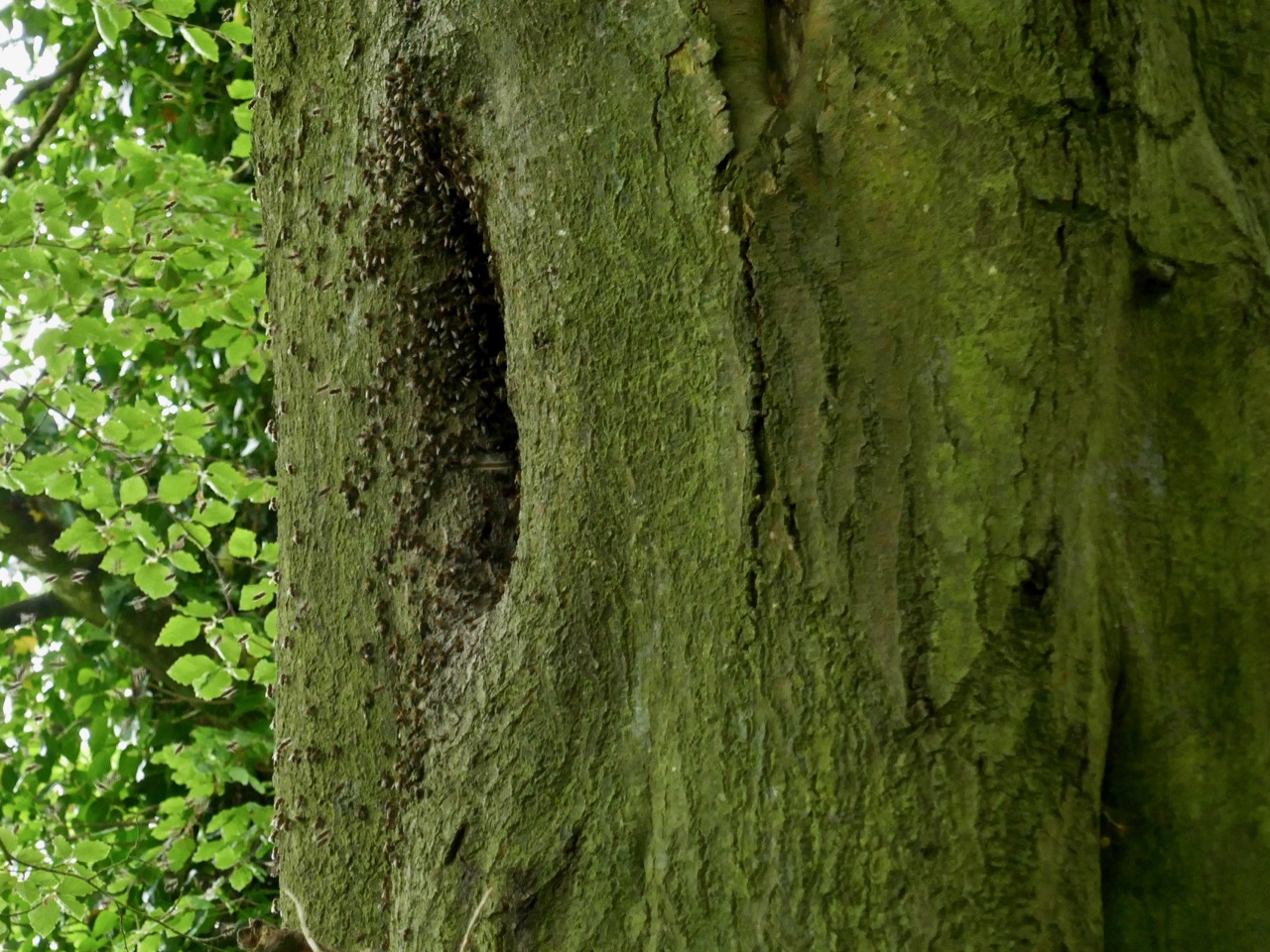
Outside the church, the graveyard is quiet and picturesque, but I couldn’t help noticing the absence of vegetation of any sort. Older photographs I have seen show a covering of grass, and I suspect that somebody has been in here with the Roundup – I told you I would get to the one problem I have with this site, and this is it. It may be historically and archaeologically fascinating and important, but the ground itself is a dead zone – no biodiversity here. And that’s a pity because there was a swarm of bees about to settle in one of the trees. They will have to look outside the site for pollen.
We saw many old gravestones, dating from the early eighteenth century and into the current day. But the one that caught my eye was this one – all the instruments of the passion clearly carved for John Brenan, who died in 1772. Can you recognise and name them all?

I know you’re wondering how we made it back across the field. Well fortunately, the cattle stayed over by the hight cross and we sneaked back across without attracting their attention. I can’t decide whether their presence added to the experience or not, but it certainly made it more exciting, even though we didn’t get to see the high cross up close. Kilrea is a very special place, I think. I am hoping that next time we go back the grass will have been allowed to grow again.

Viking Traces

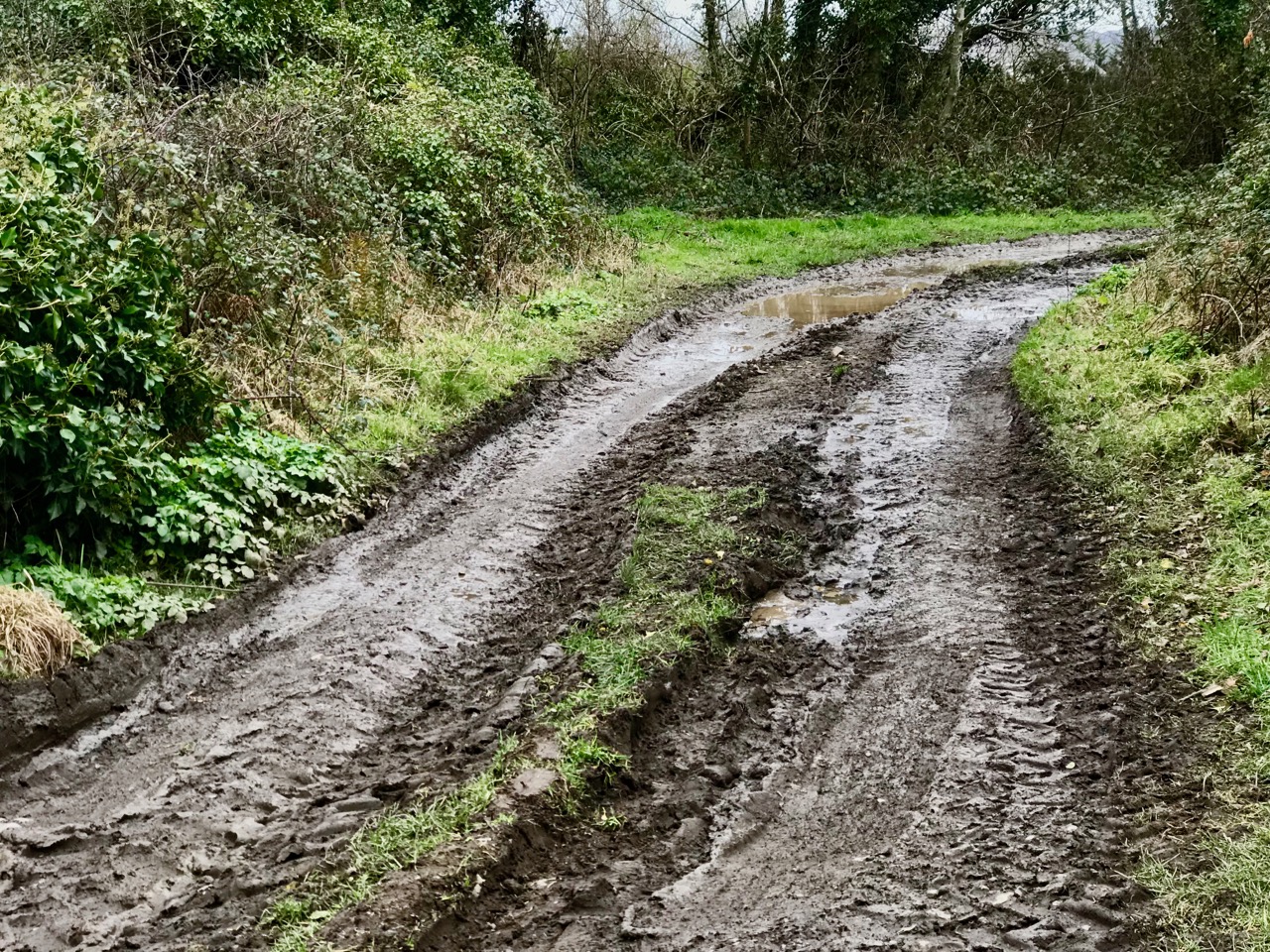
If you want to find some remote Irish history which is a long way off the beaten track, try the city of Dublin! Just a few minutes’ drive from the edge of this bustling metropolis (and down a long, rough and muddy farm track) is a collection of carved stones which have their roots in the time of the Vikings.

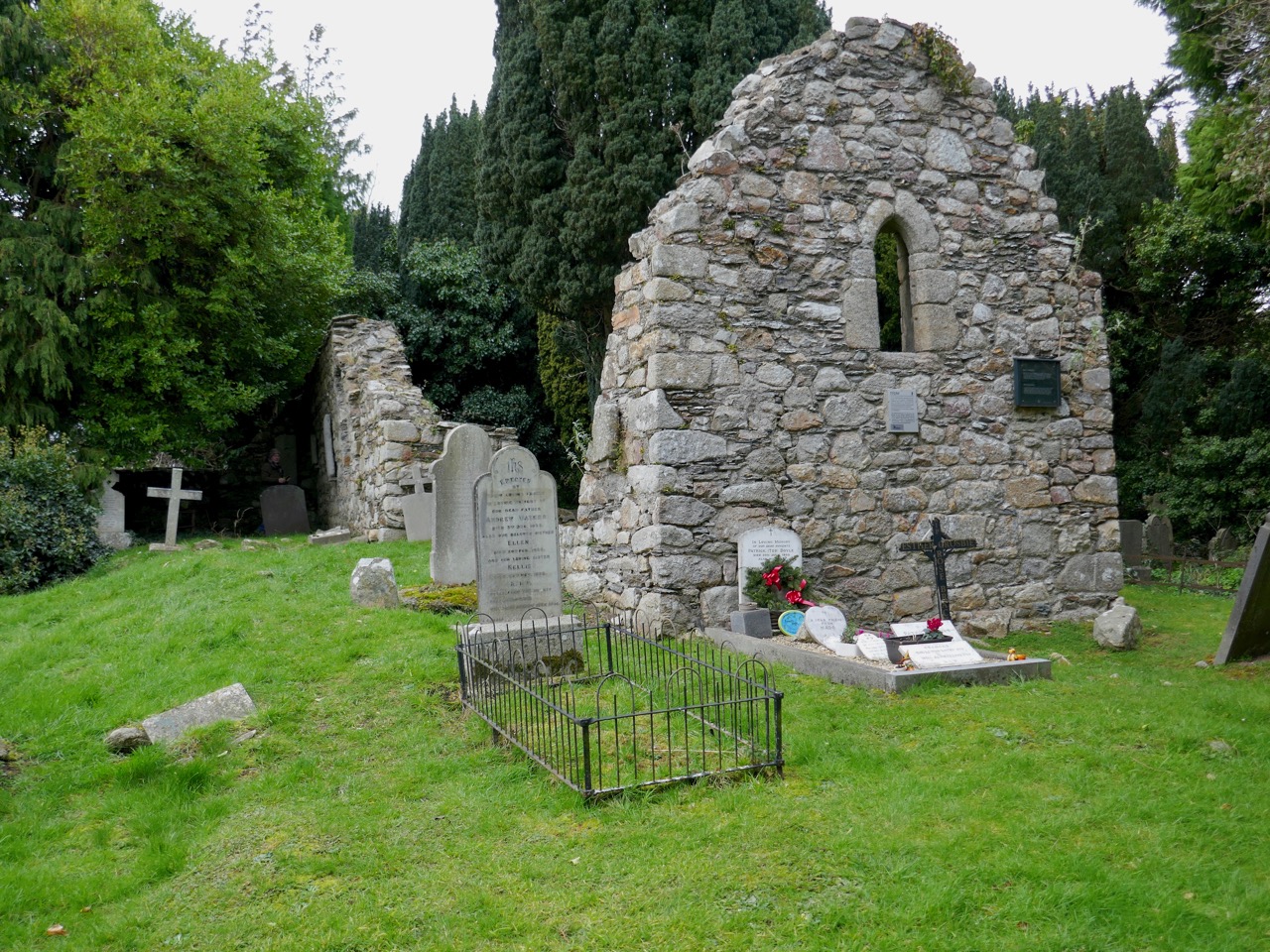
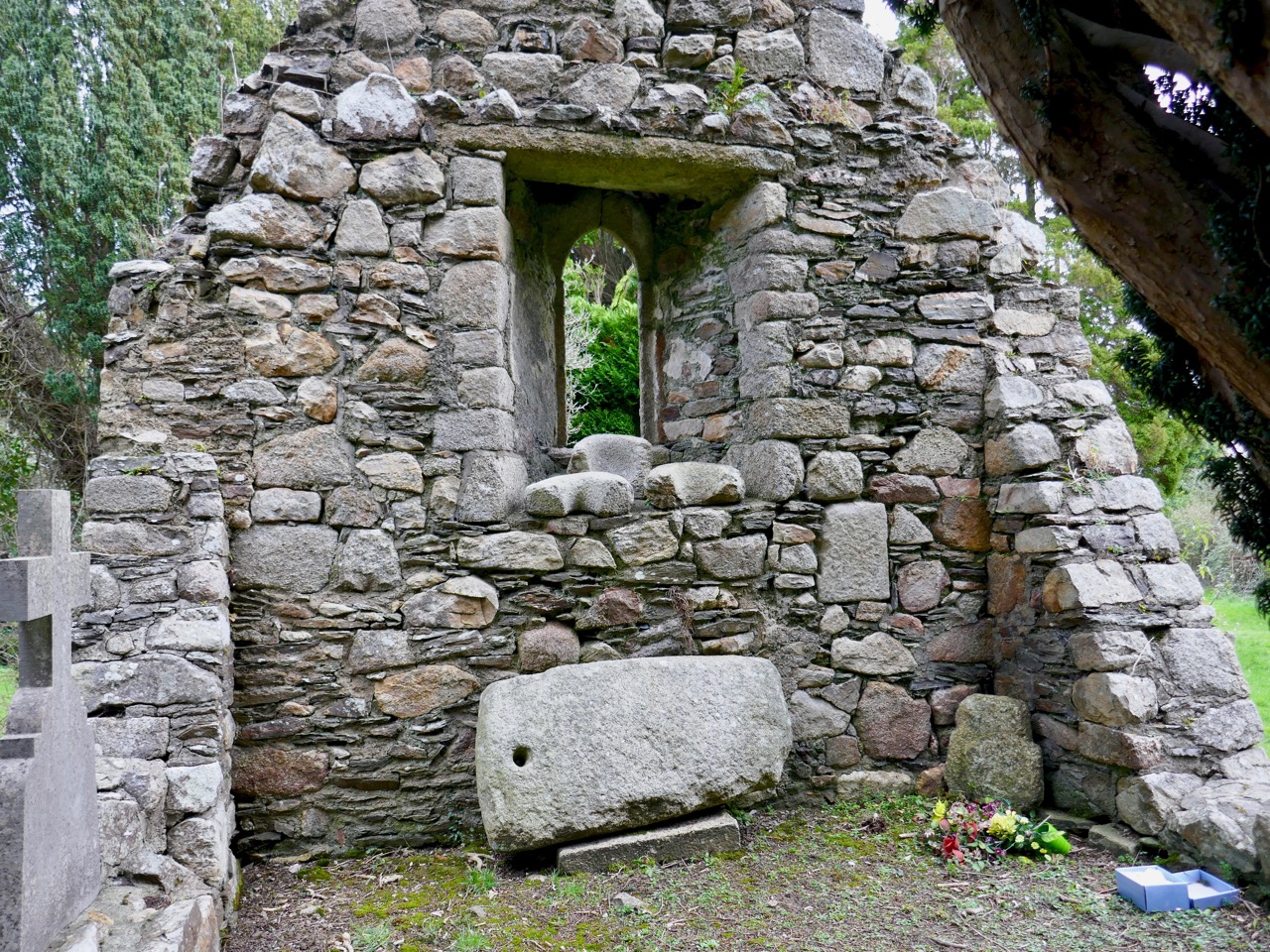
Here, in the barony of Rathdown, the remains of a small ruined church date from the twelfth century, but a monastic settlement was set up long before that by St Comgall of Bangor, who lived from 520 to about 600 AD. There is the stump of a round tower here, known locally as the Skull Hole, as bones from the surrounding graveyard were thrown in here. Some say, also, that it is actually the entrance to an underground tunnel going down to the coast: furthermore, a piper was once seen to enter the tunnel playing his pipes – but was never seen again!
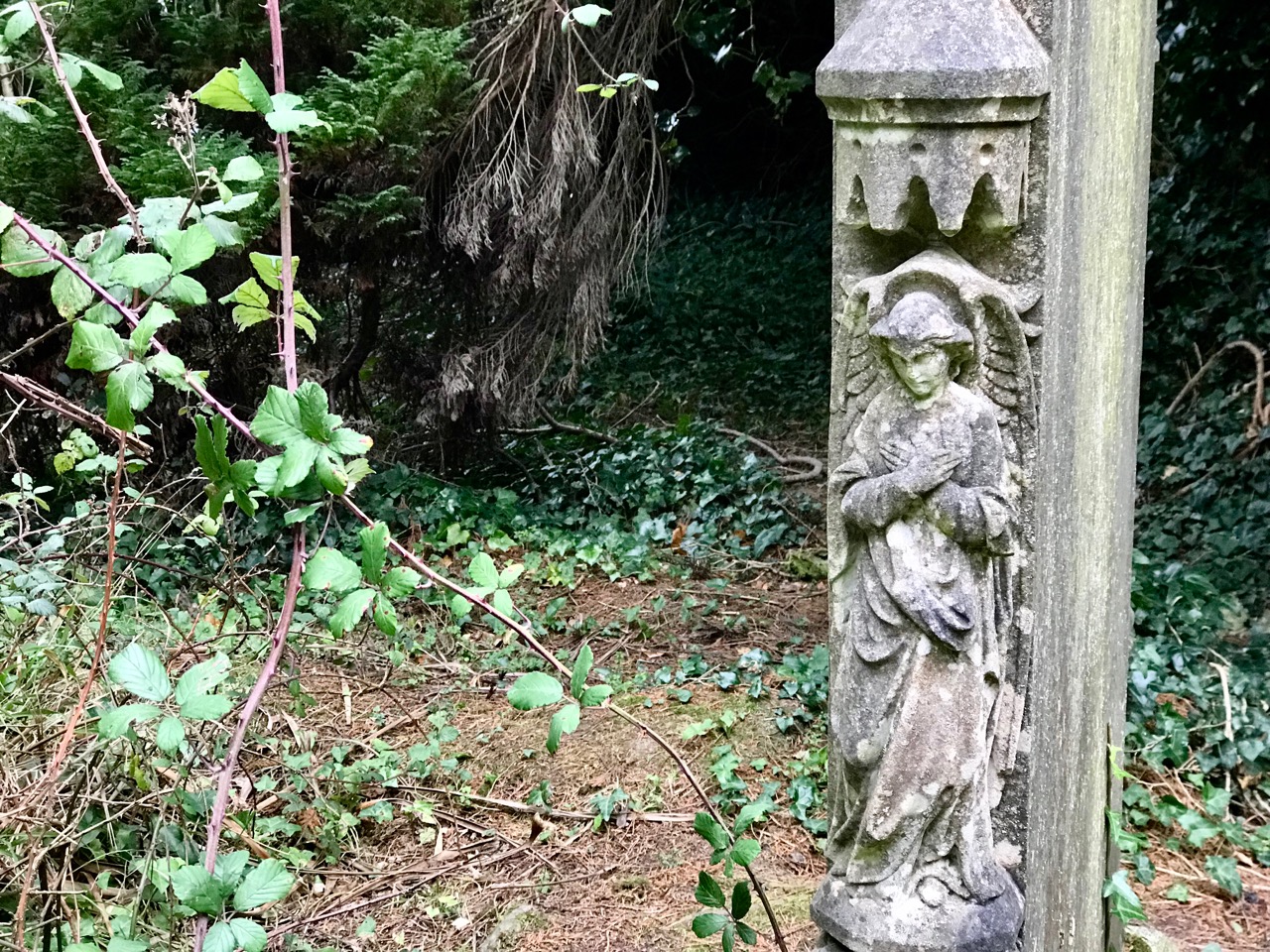
There is another piping tale connected with a nearby site: Puck’s Castle. A fairy piper is often seen jumping from rock to rock while also playing his pipes. We watched and listened, but in vain . . . Here are some of the noteworthy ‘modern’ gravestones in the cemetery at Rathmichael:

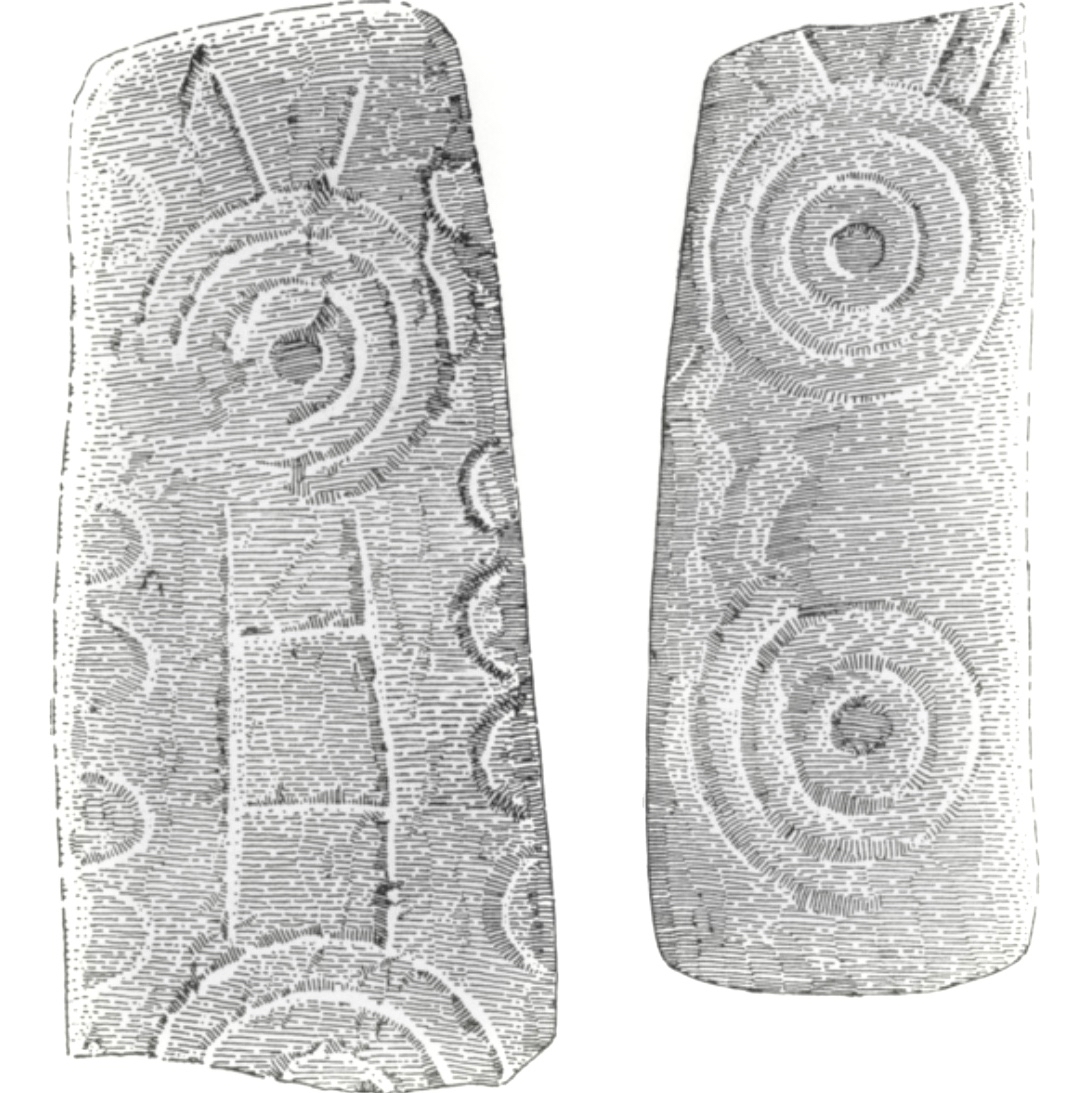
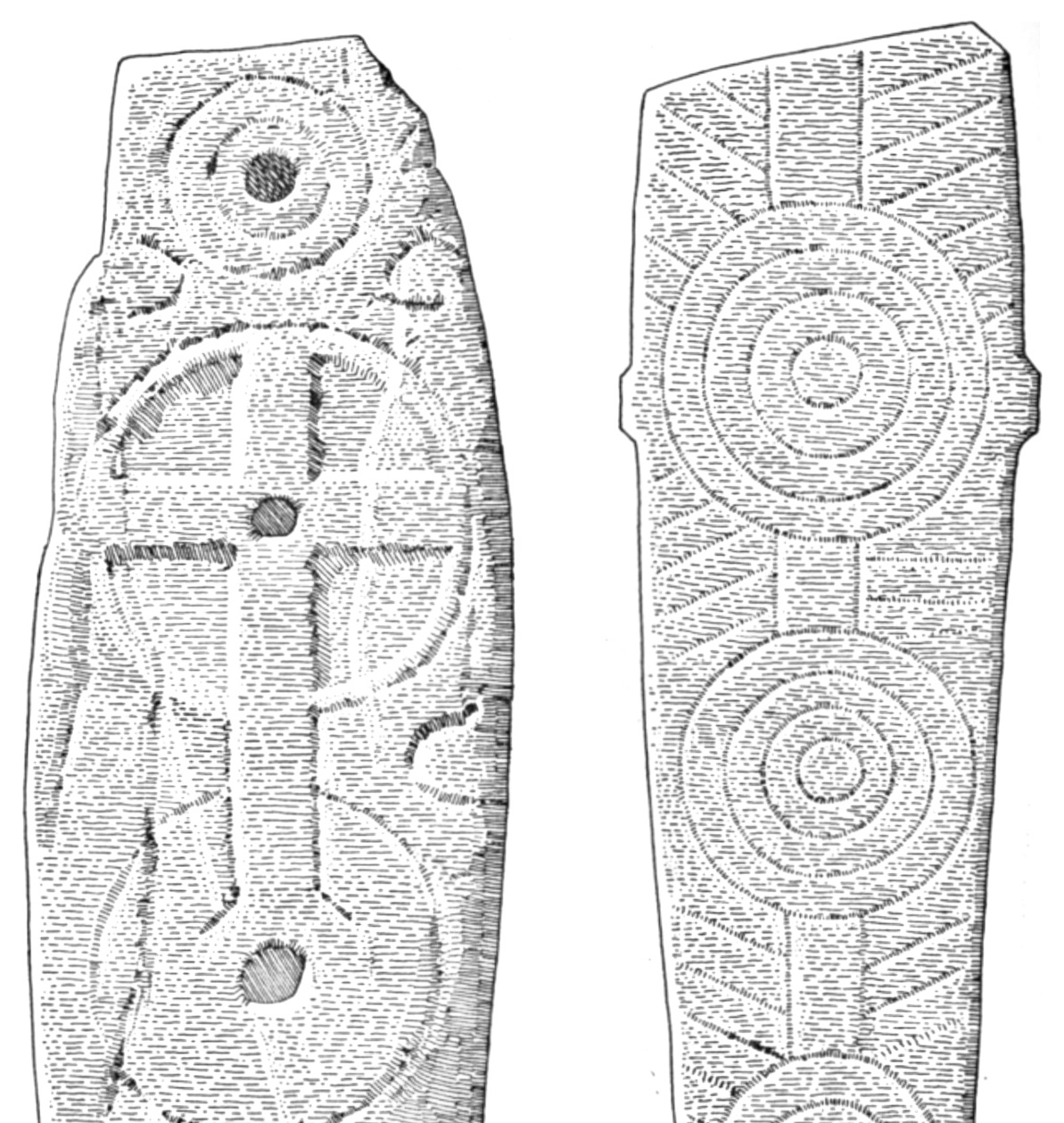
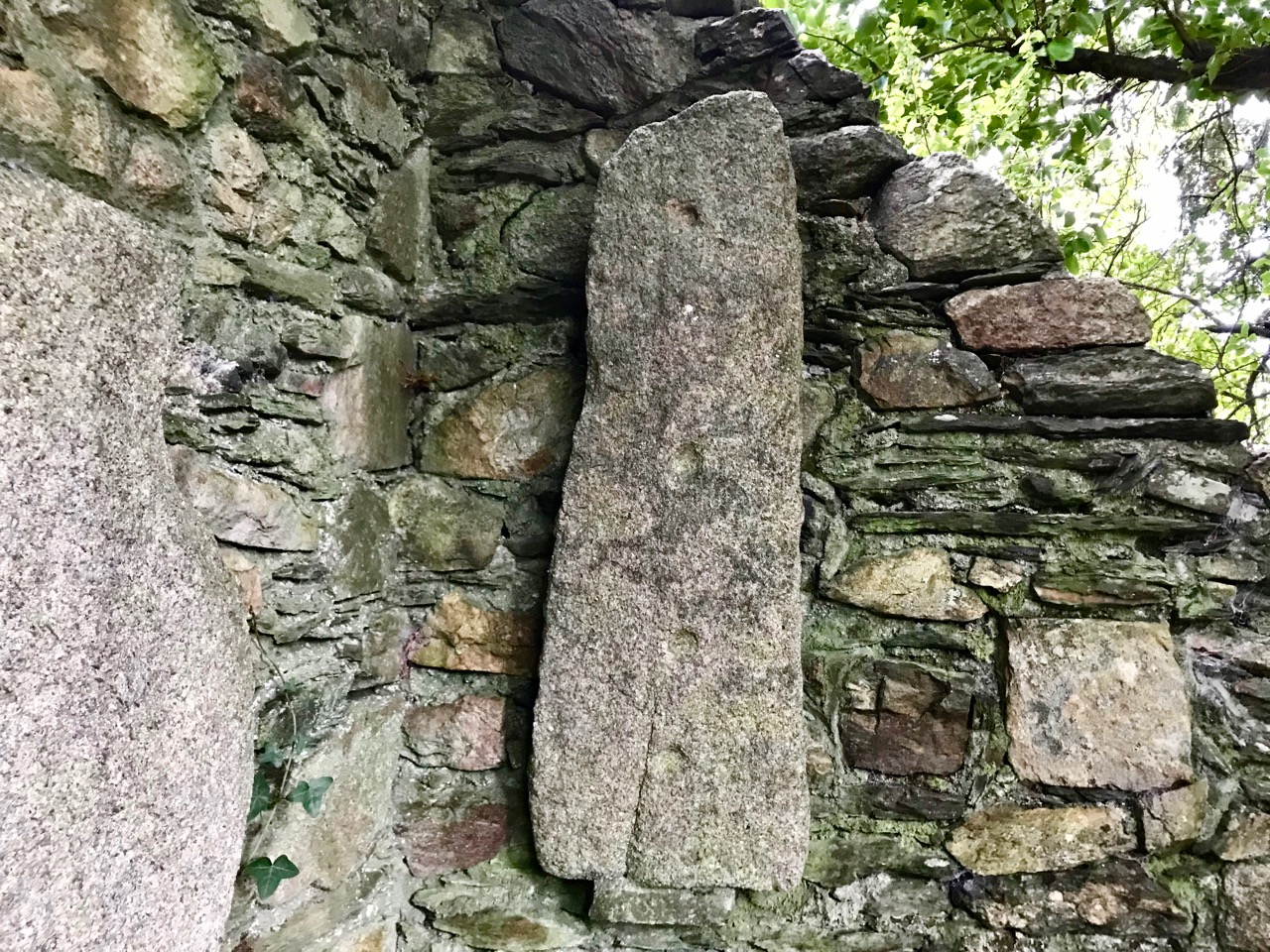
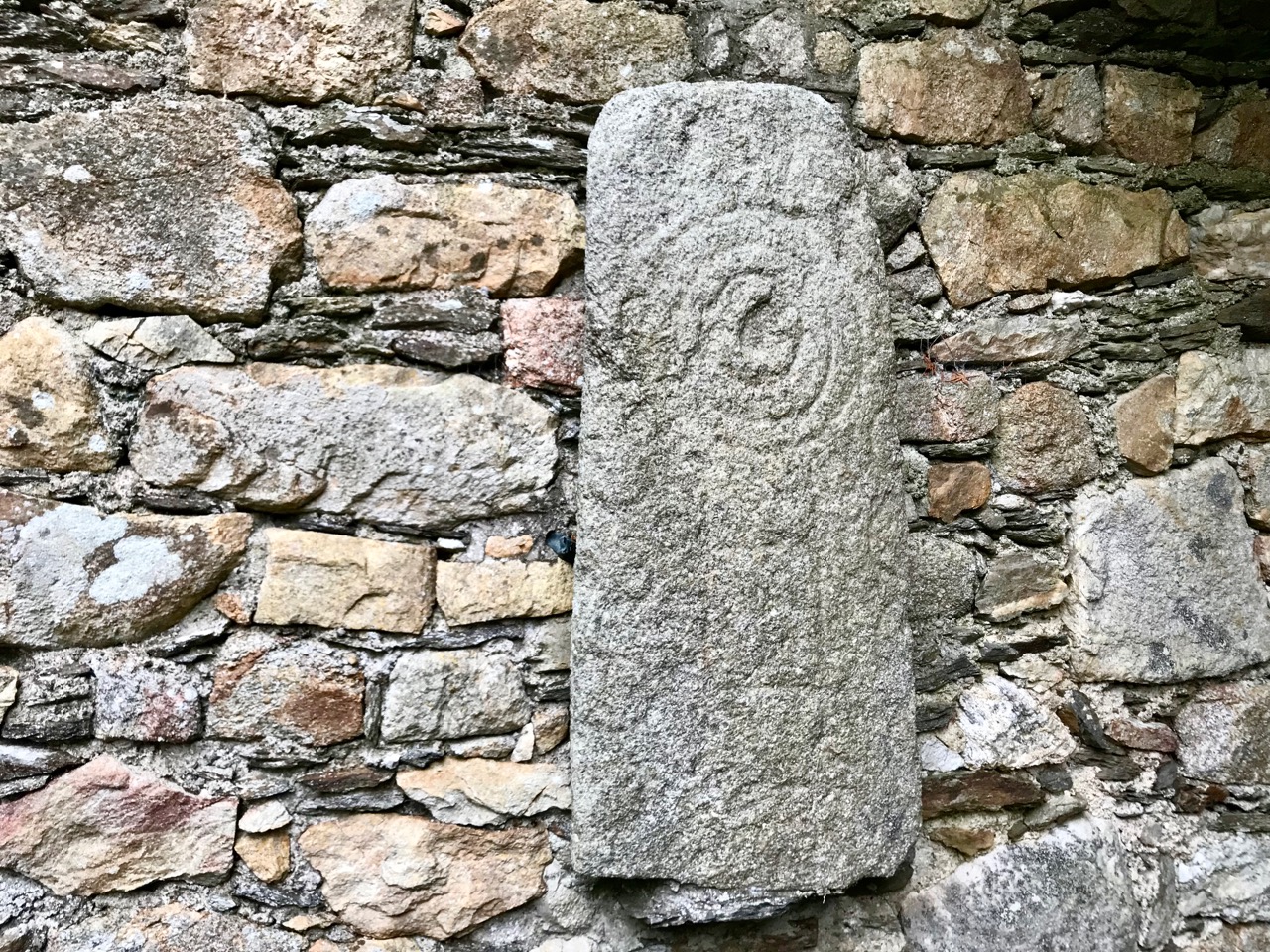
But the real treasure of the place are the carved stones which date from Viking times, and which are probably early Christian grave markers. They are generally known as The Rathdown Slabs. Some of these we would classify as ‘Cross Slabs’, even though, on some, the cup marks and concentric circles make us think of Prehistoric Rock Art. Well worn by time and weather we can still make out the various motifs – and we are fortunate to have good drawn records of these stones dating from a study carried out by Pádraig Ó hÉailidhe, a member of the Society of Antiquaries of Ireland, and published in volume 87 of the Journal of that Society in 1957.

Rathdown Slabs (top to bottom): 1 and 2; 8 and 9; 3 and 4 – as classified by P Ó hÉailidhe in his 1957 study

From around 850 AD we find mention of Norse names: Amláib (Olaf the White) arrived in Dublin in 853 and ruled jointly with Ímar (Norse Ívarr inn beinlausi – ‘Ivar the Boneless’). Amhláib was a Norwegian but Ímar may have been a Dane. Ímar is mentioned as ‘king of all the foreigners in Ireland’ at his death in 873. The grave slabs at Rathmichael probably date from the time when Viking settlements were established in the Dublin area, and – although we tend to think of the Vikings as plunderers of monasteries – it seems that they began to follow Christian practices once they settled in Ireland. 

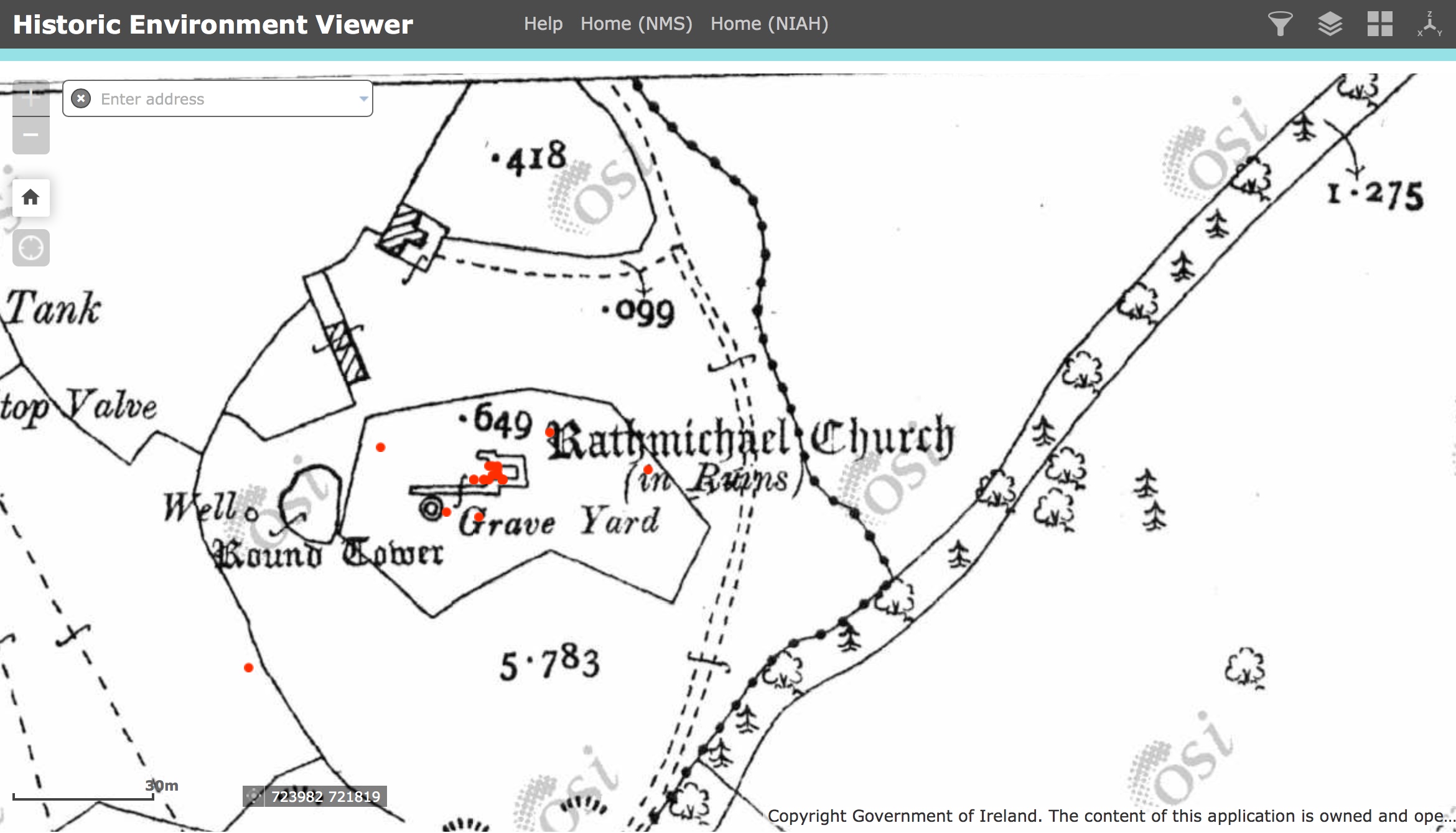
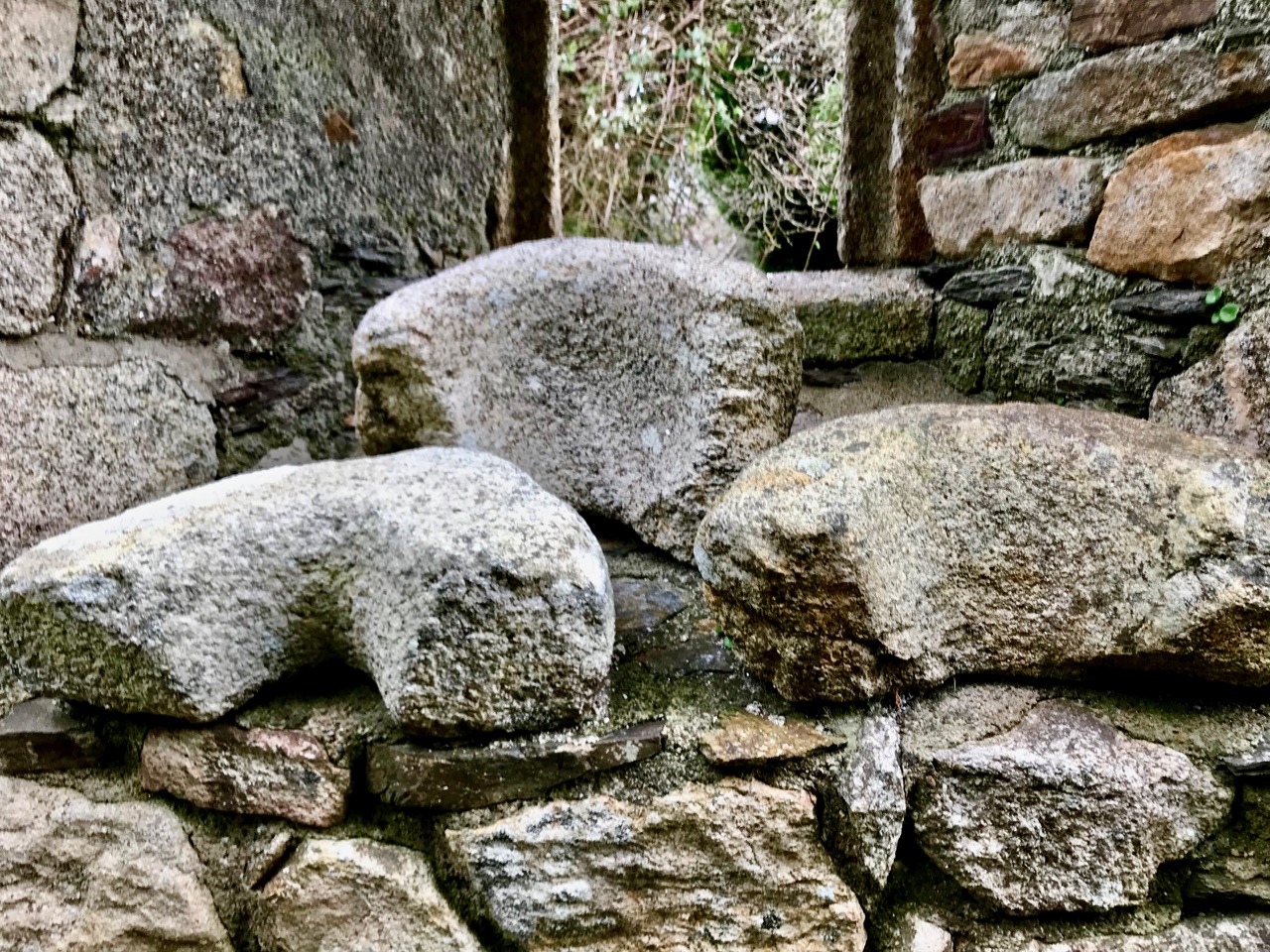
Top – Rathmichael Church with its round tower and Viking graves was established on an ancient Rath or fort, in fact one of the largest in the locality: you can see the probable circular outline of the fort in this extract from the National Monuments Service Archaeological Survey Database; middle – ruins of the medieval church at Rathmichael and, lower – fragments of Bullaun Stones at the church site

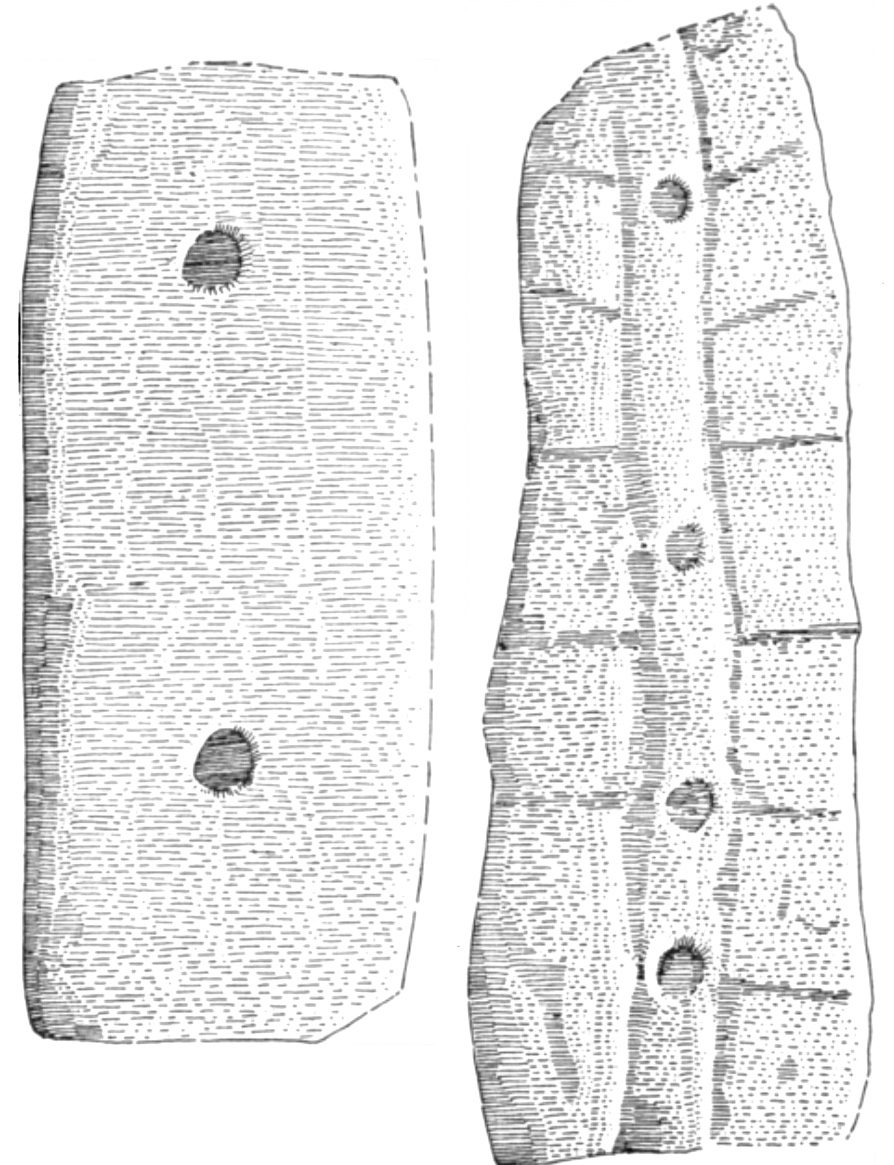
Other – probably related – inscribed slabs from the wider area are recorded by Pádraig Ó hÉailidhe (below): Dalkey Castle Heritage Centre displays one of the finest of them all (left), while the Tully Slab (right) is assumed to have come from another remote church ruin close by – however I cannot find any record of its current whereabouts. If anyone can throw light on this, please let us know.

Dalkey and Tully grave slabs – drawn by Pádraig Ó hÉailidhe, 1950s

I have used the drawings by Ó hÉailidhe because they are so clear: we visited the Rathmichael site this week and were struck by how faded much of the inscription seems to be. It could be that we were not seeing the carvings in a good, clear light. Worryingly, it may also be that the stones are suffering from accelerated weathering (much as our unprotected medieval high crosses appear to be) due to acid rain and pollution. You can see for yourselves by comparing the drawings above with our own photographs, a selection of which form the tailpiece of this post.

The Wonders of Monasterboice

In our recent journeys around Ireland we both had opportunities to indulge our particular interests. Among them, Finola was able to take in some fine examples of stained glass and Romanesque architecture, while I concentrated on the beautiful medieval carving of a number of Irish High Crosses, to add to the examples I have written about recently.

For any Irish High Cross enthusiasts (I suspect that there are many of you out there), Monasterboice in County Louth has to be on the list of ‘must see’ places. It was founded in the 5th century by Saint Buithe, a follower of St Patrick – the Irish Mainistir Bhuithe means Monastery of Buithe – and was an active and important Christian settlement through to the 12th century, when its importance was eclipsed by Mellifont. I found out that St Buithe ascended into Heaven by climbing a ladder that was lowered down to him for the purpose.

Left – a photograph of the great cross at Monasterboice – known as  Muiredach’s Cross – taken in 1905 and, right – the same west face seen today. Finola is there to show its true scale: remarkably it is 5.5m tall

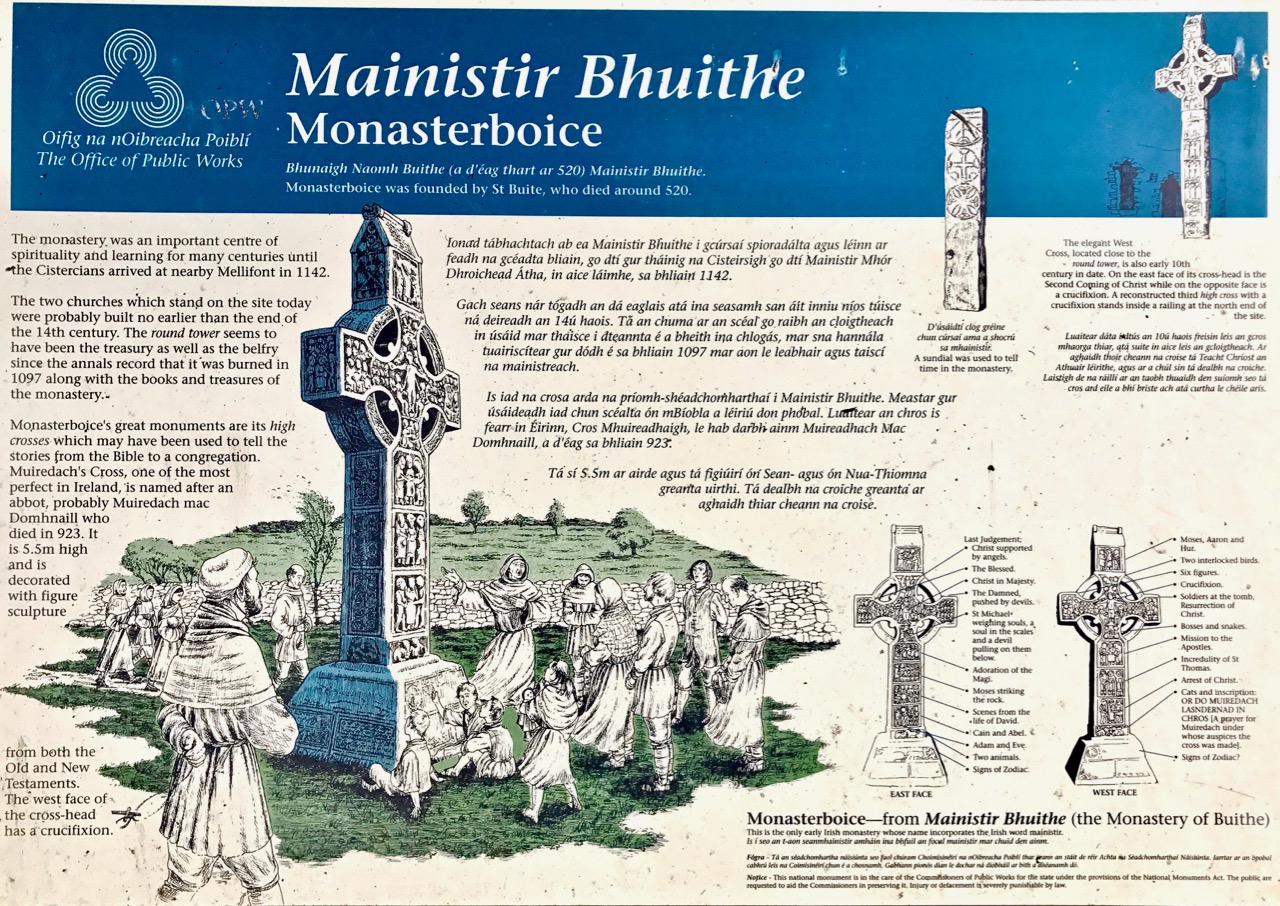
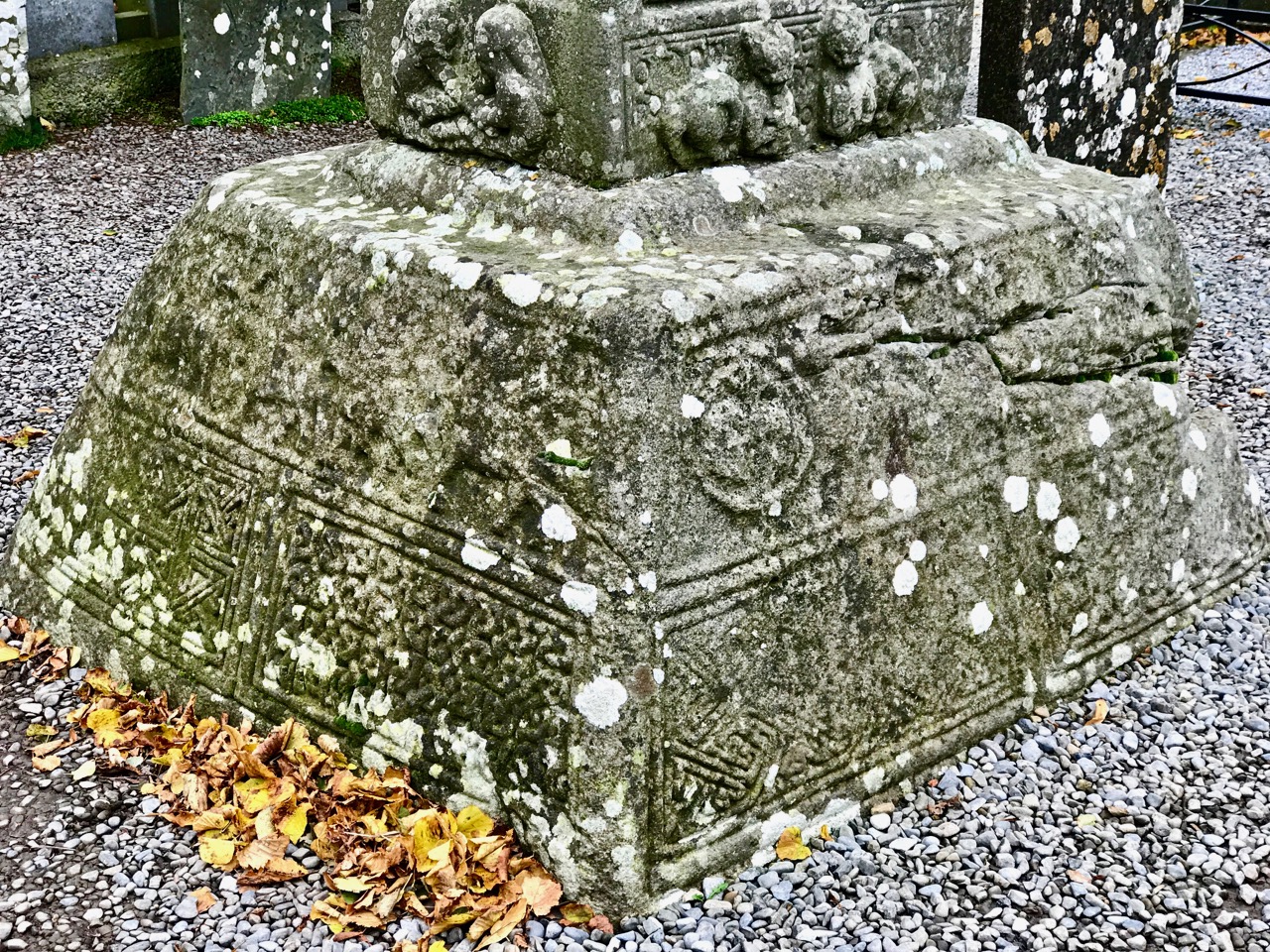
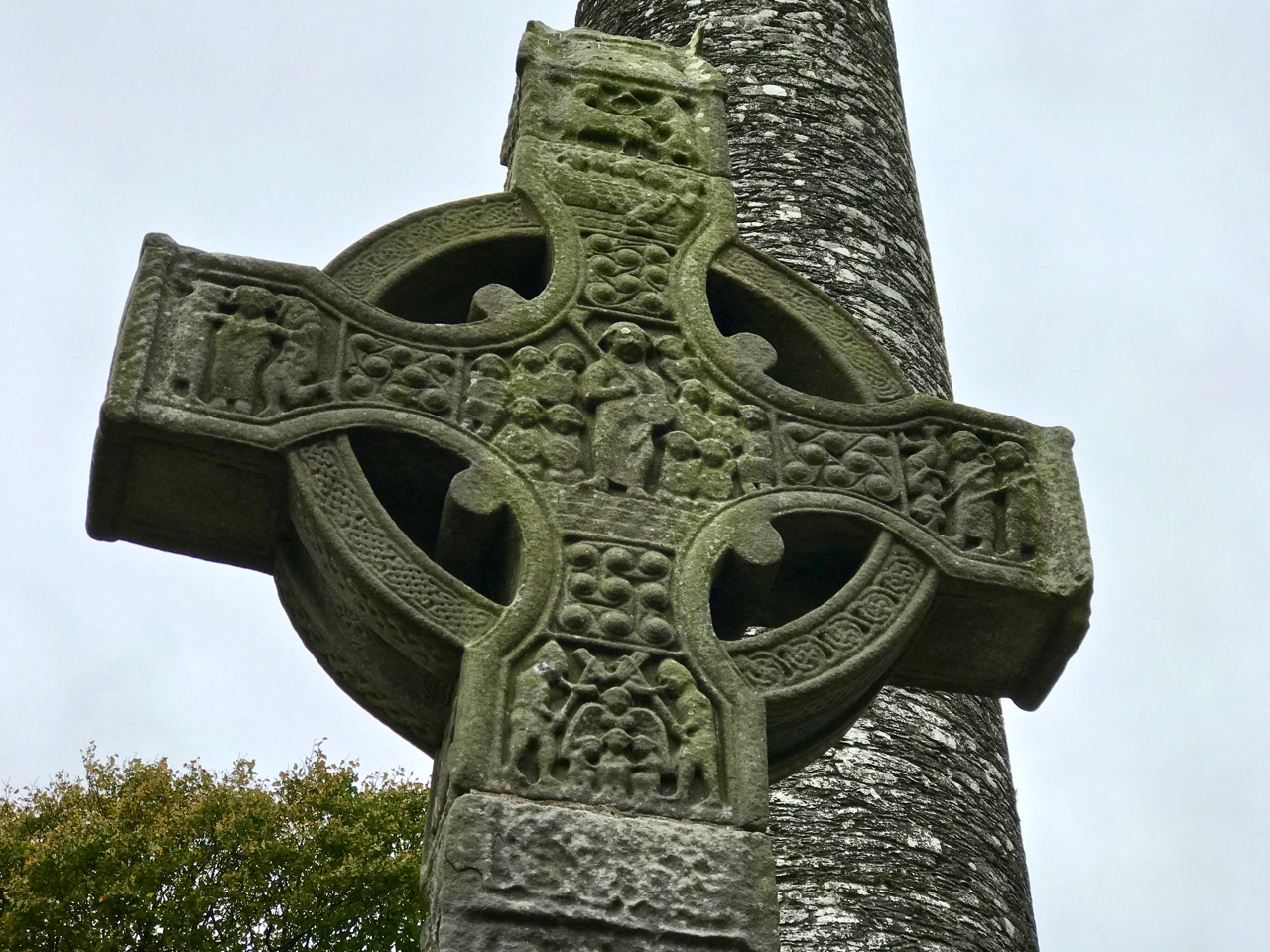
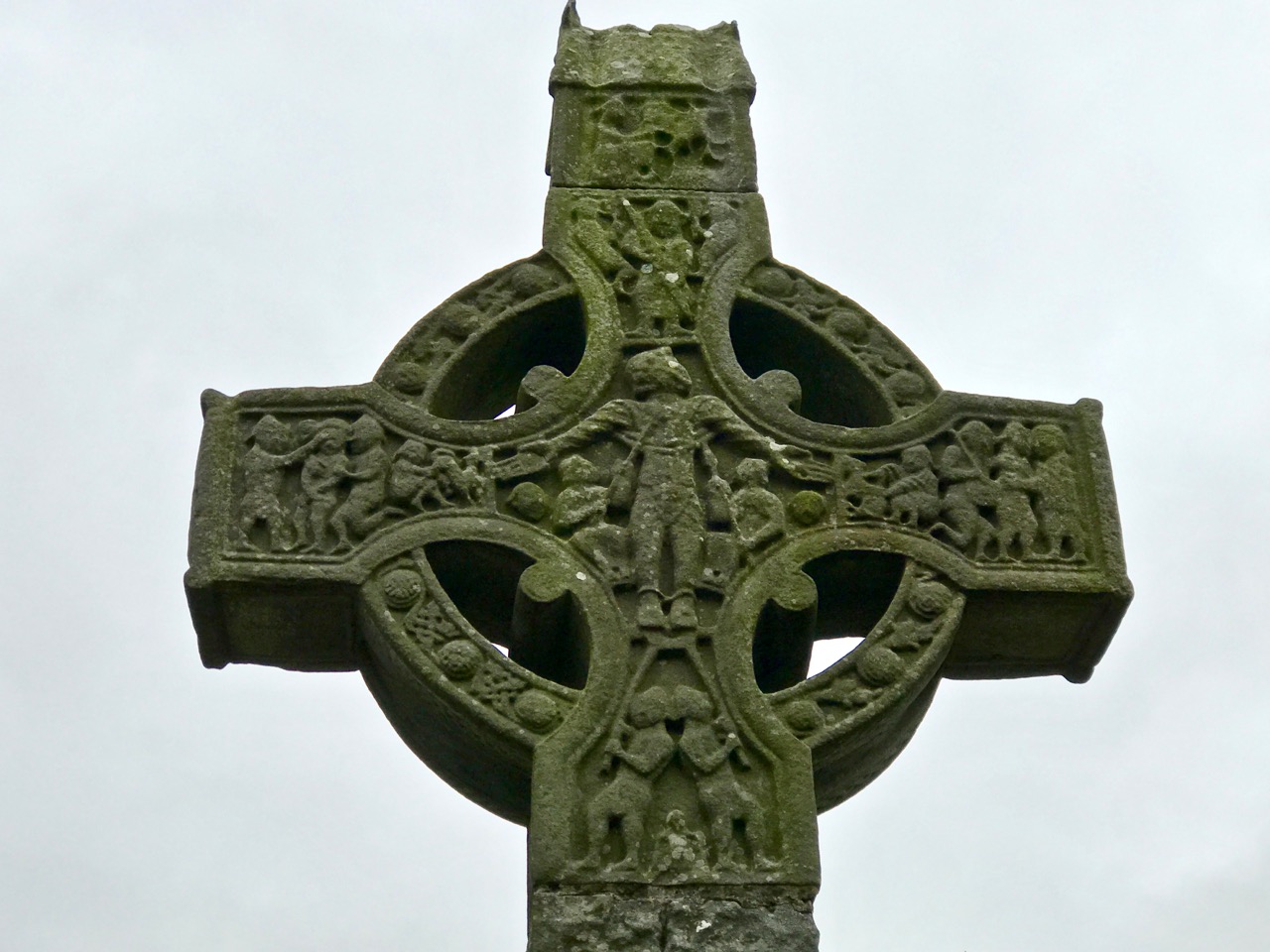
Muiredach mac Domhnaill, who died in 923, was an Abbot at Monasterboice. He is  credited with commissioning the great cross, shown above. It’s not quite the tallest high cross in Ireland, but it’s said to be the finest, probably because of its stature and remarkable state of preservation. The carved panels are all legible, and the biblical stories illustrated have all been identified. An inscription on the lower section of the cross shaft states: OR DU MUIREDACH LASNDERNAD IN CHROS – A prayer for Muiredach under whose auspices this cross was made. Confusingly there was also a king, Muiredach mac Cathail, who owned the lands on which the monastery was built. He died around 867, so it is possible that the cross was commissioned by him, or was made in commemoration of him, rather than by the Abbot.

The Office of Public Works has responsibility for overseeing the site at Monasterboice. The well produced information panel details the carvings on Muiredach’s Cross

A gallery of detailed carving work from Muiredach’s great cross: the subjects include Adam and Eve and Cain and Abel; Celtic knotwork; Moses striking the rock; the crucifixion and (header) nativity scene with the Magi. The lowest picture, above, shows the decorated base, which is shaped like a saint’s reliquary and the panel with two cats and the prayer for Muiredach

This wealth of medieval art is only part of the site’s wonders. There are two more complete High Crosses, fragments of other carvings and slabs, and a round tower. The Tall Cross or West Cross is the highest in Ireland, at nearly 7 metres. Because of its size it has the greatest number of carved panels of any Irish High Cross. However, these panels are suffering from weathering much more than Muiredach’s Cross, and their present state must raise concerns for all the carvings at Monasterboice. At other sites, crosses have been sheltered (Moone) or moved into buildings (Clonmacnoise, Durrow).

The Tall Cross (or West Cross) at Monasterboice; left – in context with the round tower beyond; right – an example of a badly weathered panel on the Tall Cross

Upper – the west face of the Tall Cross cross-wheel, which is in comparatively good condition, and lower – the east face. The number of scenes depicted on these panels alone is remarkable

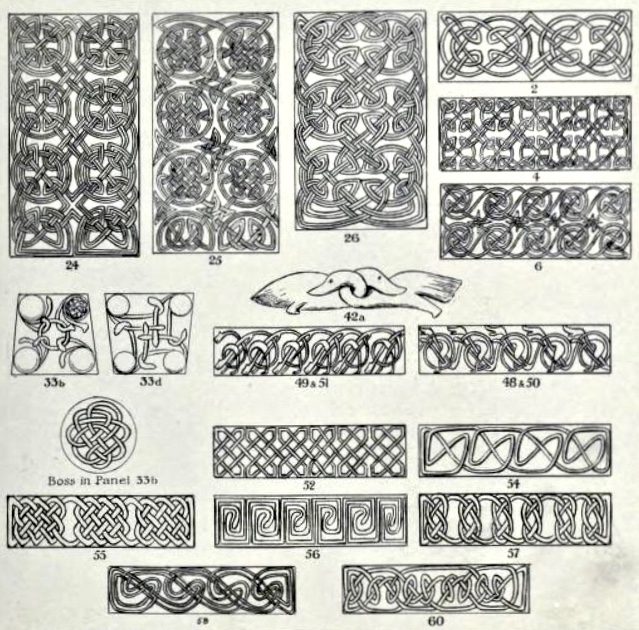
Carved panels on the Tall Cross at Monasterboice and – lower – a study of Celtic knotwork found on Irish High Crosses, taken from MUIREDACH – Abbot of Monasterboice 890-923 AD by R A S McAlister MA FSA, Dublin 1914

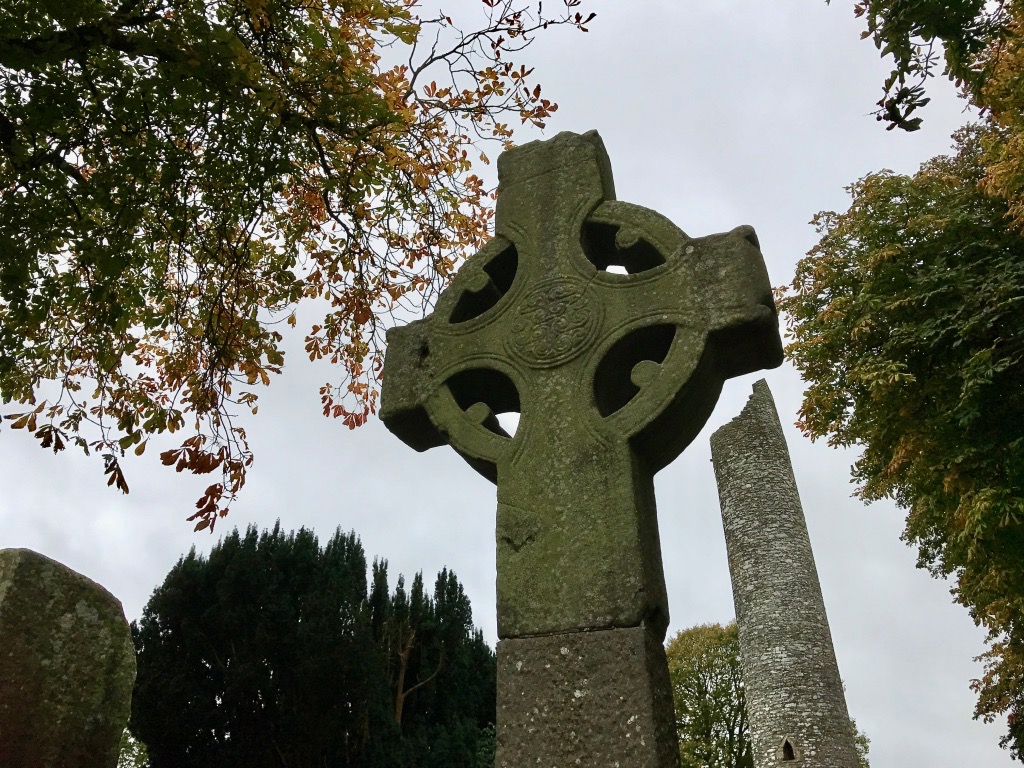
There is a third High Cross at Monasterboice, known as the North Cross. It is less spectacular, perhaps, than the large ones, and the carvings are comparatively minimal. Nevertheless, its modesty gives it a somewhat more refined character. Close to the North Cross are some fragments, including part of a medieval sundial – reminiscent of the one we saw at Kilmalkedar, County Kerry, earlier this year.

Upper – the North Cross with the round tower in the background; lower left – North Cross east face and, lower right – nearby fragment of a medieval sundial

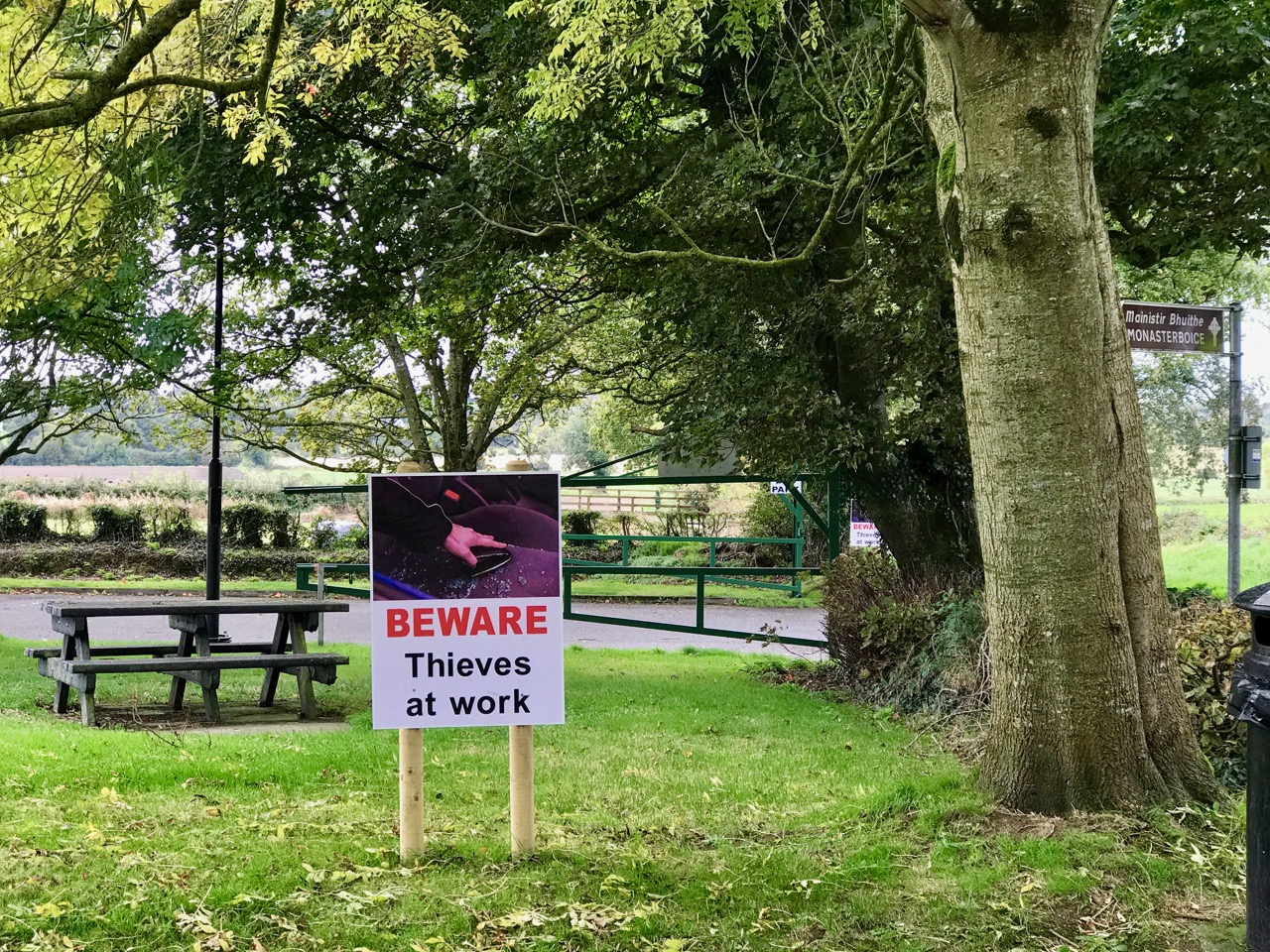
Monasterboice displays so many wonders. Yet, in some ways, it’s an uneasy site. It’s probably not helpful – but perhaps essential – that the parking area a little way off is rife with warnings about thieves, and broken glass is evident. There have also been reports of vandalism against the monuments themselves – emphasising their vulnerability. The place is of major importance: during the summer season the site is attended, and guides are available. We were there in early October, when no-one was around.

This site – and similar ones all across Ireland – are vitally important to the heritage of this country. The artefacts are irreplaceable, yet too little resource is given to protecting them – from weather and people. As we know from our forays into the world of Prehistoric Rock Art, stone carvings are fragile, and under-appreciated. There’s no obvious easy solution, apart from them being given higher status and priority by the empowered bodies such as the Office of Public Works. They, in turn, need to be given more support by the State, particularly in terms of funding: they do the best they can with very limited resources.

Cats on the base of Muiredach’s Cross, recorded  by McAlister in 1914:

Off The M8 and into Medieval Ireland

Twomileborris Castle

The drive from Cork to Dublin used to take four hours; now it takes two and a half on a speedy motorway. As you drive along, tantalising glimpses are offered of castles, a round tower, those brown signs that point to ancient monuments. If you’re not in a mad hurry, why not do some exploring? This post is about one stretch of the old road, running parallel to the motorway, where you can have a medieval experience, great coffee and cake, and rejoin the motorway when you’ve sated your curiosity. You can take a few hours and do everything on this list on one day, or you can do one or two each time you travel.

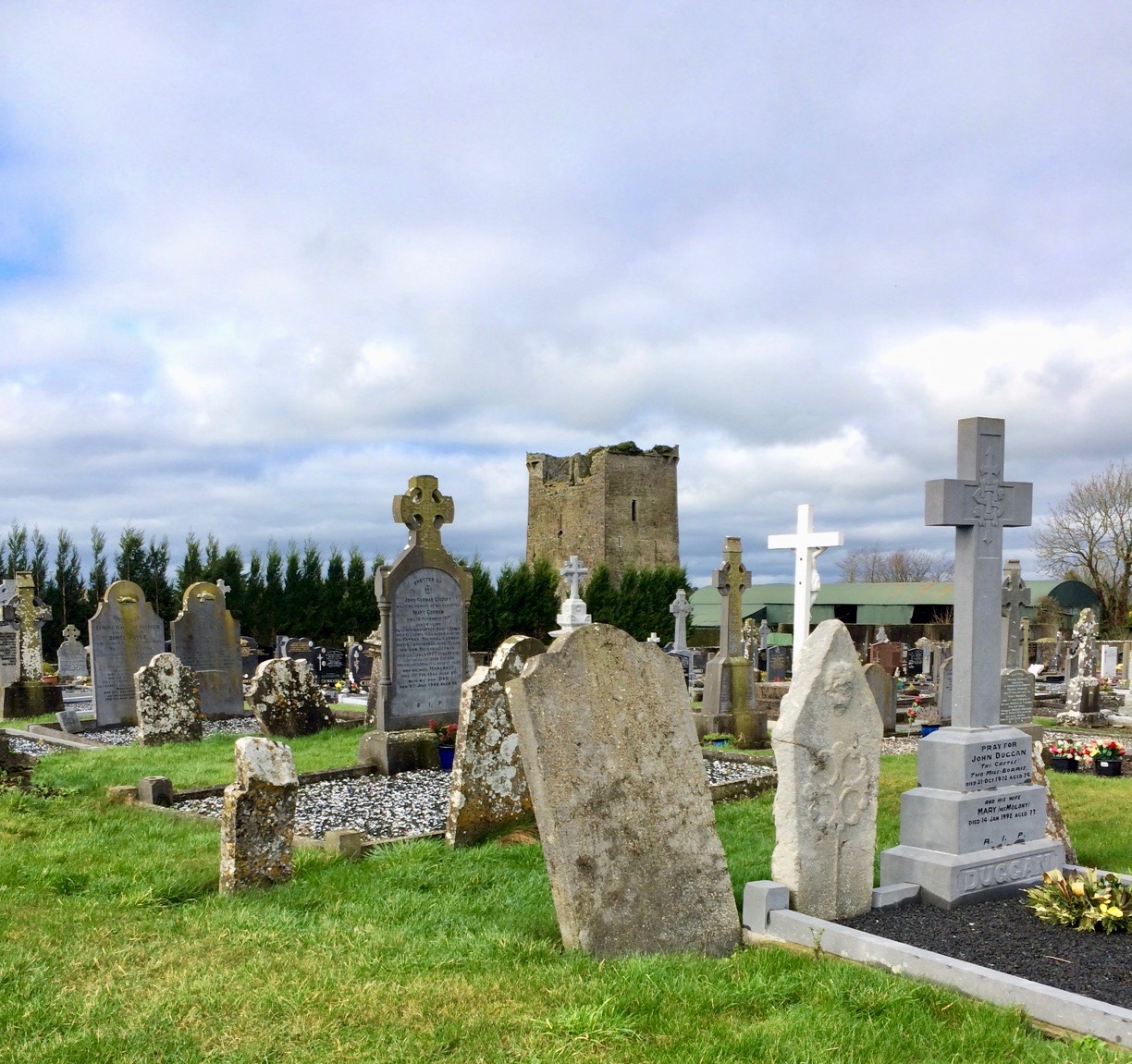
Twomileborris Gravslab and Castle

The castle and old graveyard at Twomileborris offer lots of opportunities for exploration. Above, the castle looms over the graveyard, but note the white gravemarker with the head above a stylised fleur de lys – similar to many such markers set into the floor of St Canice’s Cathedral. It’s much earlier than anything around it

I am assuming you are coming from Cork and are dying for a coffee about the time you see that turn-off for Horse and Jockey. The busiest spot in all Ireland, nevertheless we always find a corner on a comfy couch and relax with a coffee and goody before we continue. But don’t go back to the motorway – The Horse and Jockey Hotel is right on the old Cork to Dublin Road, now called the R639, so head north on it and go exploring. I’ll provide directions but a good map will come in handy, as will stout shoes for some of the sites.

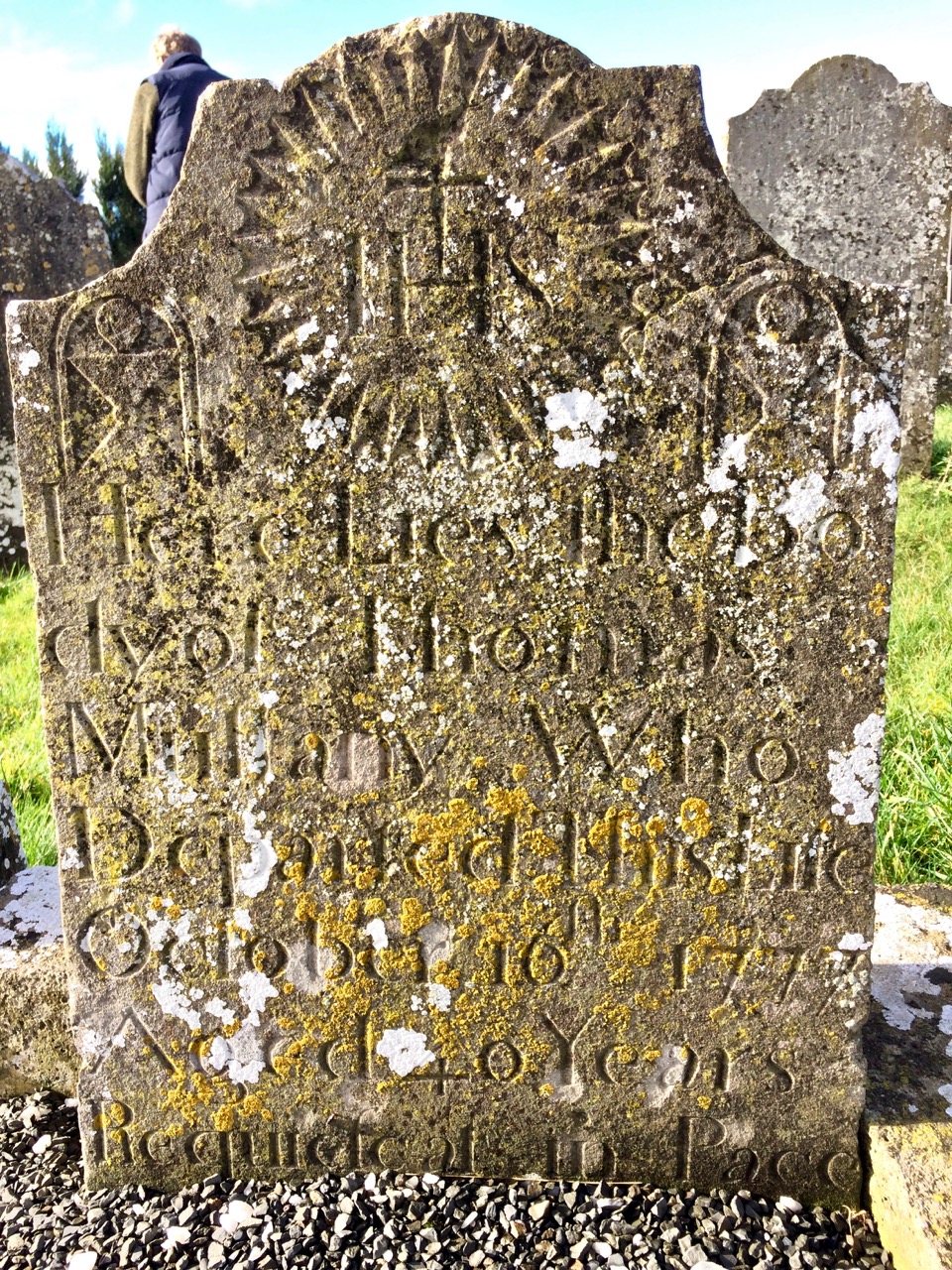
Two Mile Borris 1777 gravestone

A 1777 gravestone in the Twomileborris graveyard

First off – Twomileborris. You’ll see the sign just after Littleton and you’ll spot the castle as soon as you approach the village. Park just beyond the castle and take the path to the old graveyard – it affords good views of the castle, which is on private land. Head for the old part of the graveyard and have a good wander – you will find fine examples of gravestone that date back to the 18th century. As you leave, take a good look at the top of the castle and observe all the architectural features I’ve been telling you about in the Tower House posts. For this one, have a quick read of Tower House Tutorial Part 1.

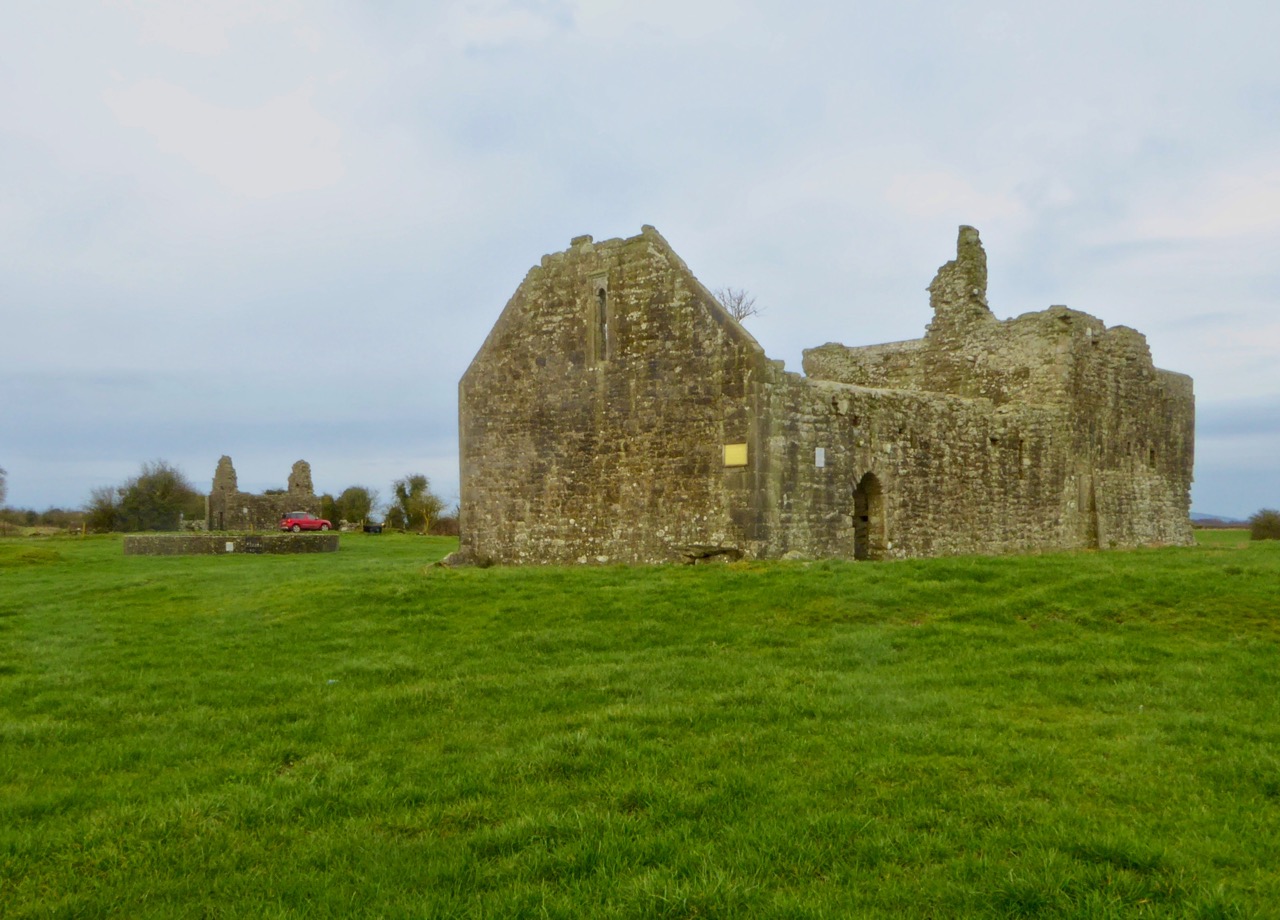
Liathmore churches

The churches at Liathmore. The round feature is a modern wall built around the stump of the round tower

Proceed through the village and you will rejoin the R639. Turn left and less than a kilometre down the road look for the National Monuments brown sign to Liathmore Churches and follow the signs to the site. This a complex site with early and later churches. The first, right beside the track, is one of those early-medieval churches with the projecting antae that Robert wrote about in Molaga of the Bees. It probably dates to the same period as the round tower – unfortunately there’s not much of this left, just a stump that was found during excavations.

Liathmore Early Medieval Church

The Early Medieval church (8th to 11th century) at Liathmore

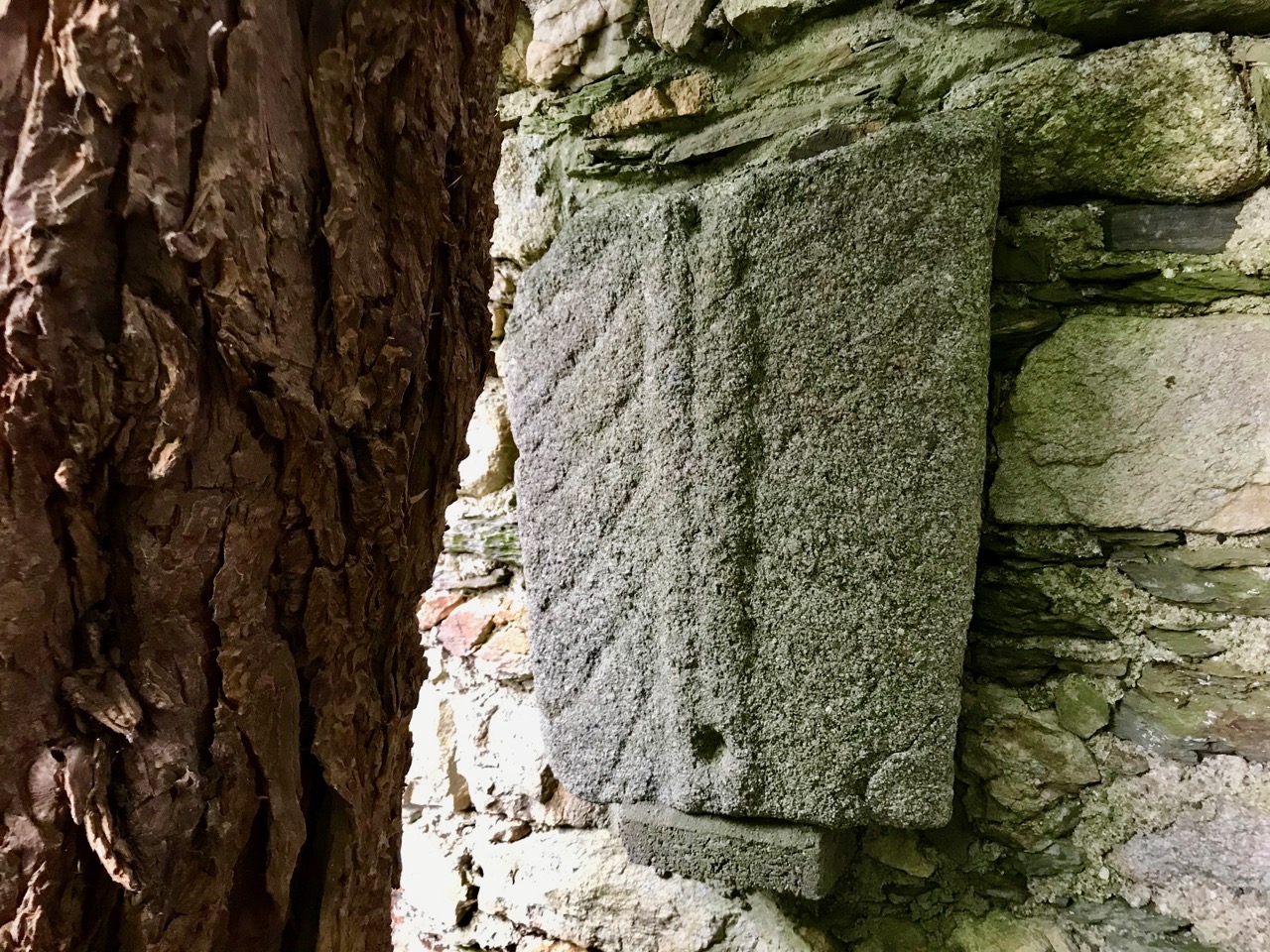
But as you head over to the later church look around the field at all the bumps and hollows and enclosures – you are looking at what was probably a medieval settlement, long deserted. The second church was built and modified and re-modified over several centuries. It has an intact vaulted chancel – the plaster work is extensive and still bears the marks of the wicker scaffolding that was used to build it. Here and there, inside and outside, carved pieces of stone have been inserted into doors, windows and walls. You can easily miss these so let your eye rest on each section of the building. The Sile na Gig is sideways in the door nearest the round tower.

At some time in the past, pieces of carved stone were inserted into walls and doorways. Here are two examples – the one on the left has a carved creature and the one on the right is a síle-na-gig. Below I have turned the photographs to facilitate viewing of the figures

Back on to the R639 now and continue north, though Urlingford and Johnstown and about a kilometre out of Johnstown take the left turn at the first crossroads. You’ll go across the M8, turn right and another kilometre or two will bring you to Grangefertagh Round Tower. It is clearly visible in the landscape so if you miss it just follow your nose until you get there.
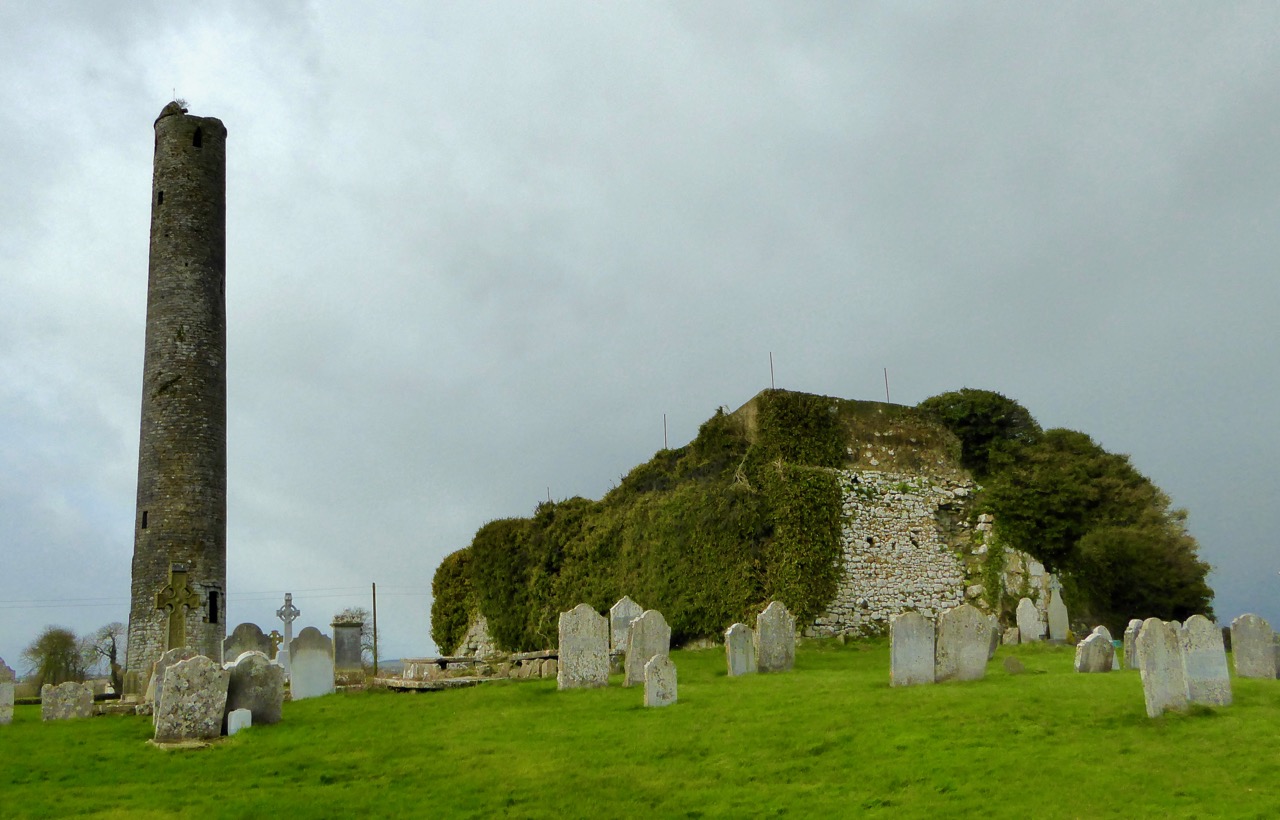
Grangefertagh round tower and church

Grangefertagh site is visible from the M8 – haven’t you always wanted to stop off and find it? Take a look at the church – what’s that modern-looking wall doing on top of it?

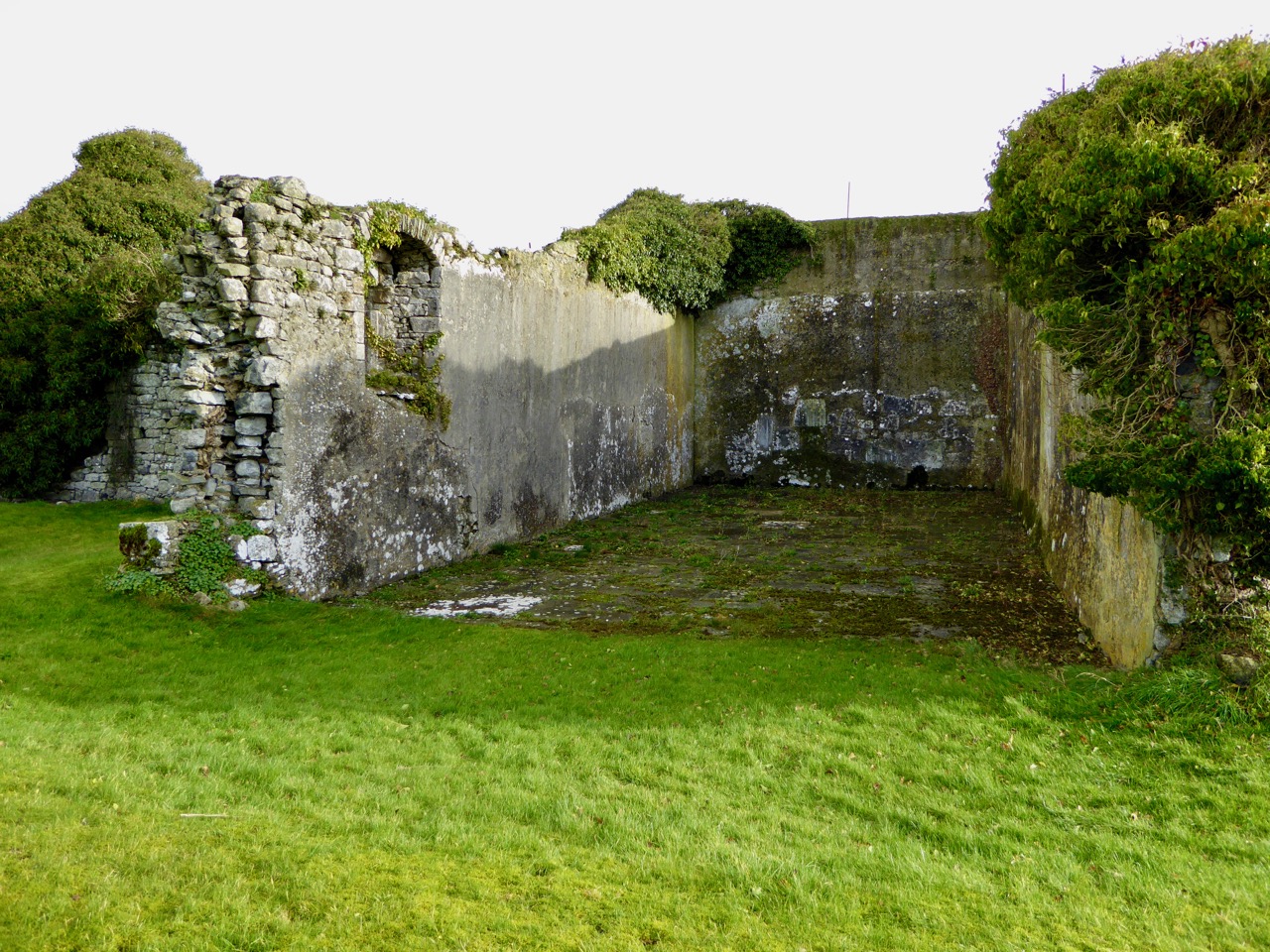
Once again, this is a site with multiple periods of occupation. You can’t climb the round tower, as you can in Kildare and Kilkenny but it’s nice to be able to get up close to one. Robert has a post on round towers, High Drama!, so have a quick read on your phone if you don’t already know all about them. Two aspects of this site are especially intriguing. The first is that, at some point in the past, the medieval church was turned into a handball alley! Hard to fathom how this could have happened, but no doubt the handball players who did it had great bad luck and never won a tournament.

Grangefertagh church and handball alley

The interior wall of the church has been rendered and old gravestones have been used to create a flatter wall. Outdoor handball alleys were once common but most are now disused and crumbling

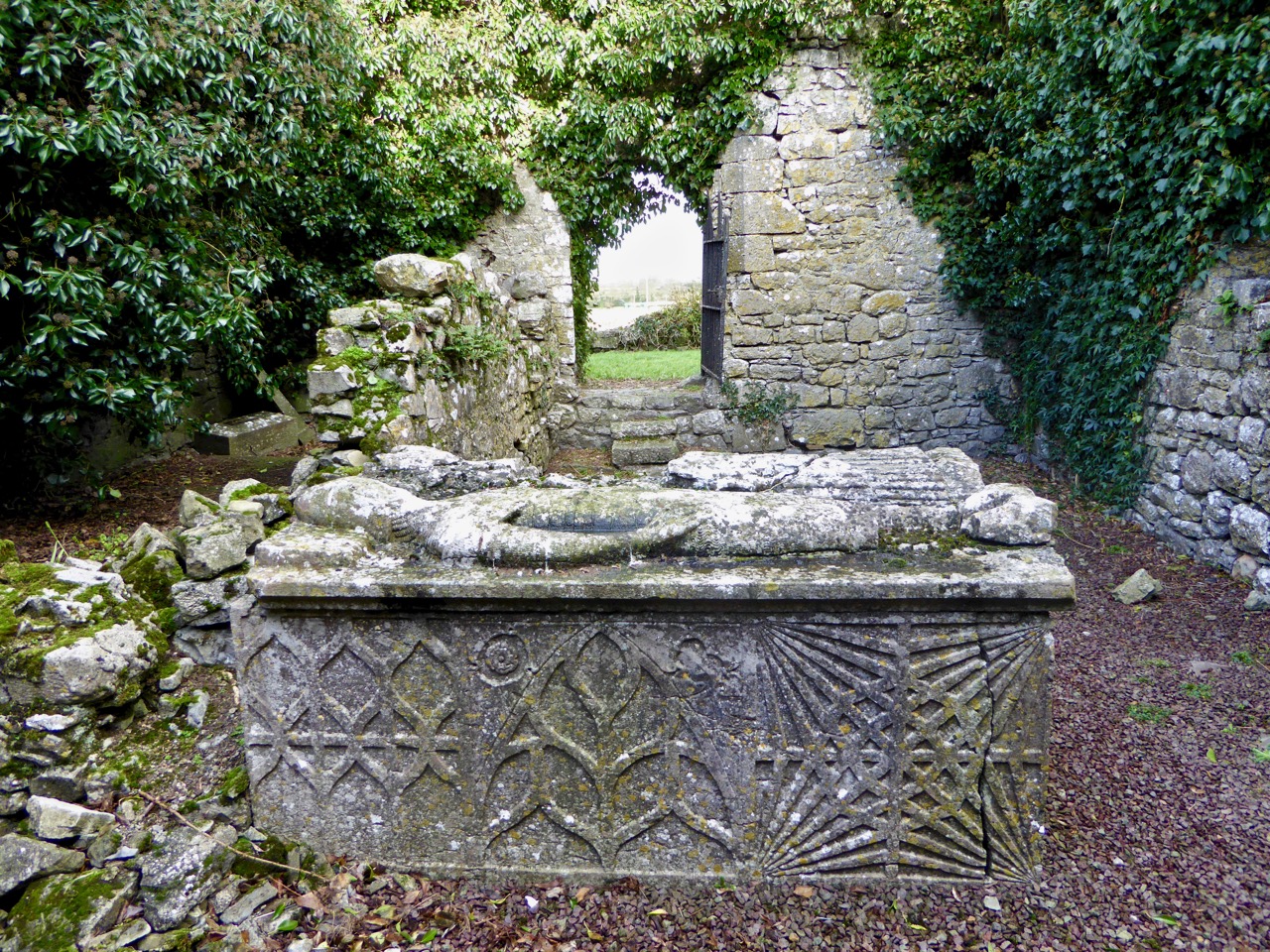
The second is the effigy tomb – these are relatively rare in Ireland this is a nice one, although the figures are weathered and lichen-covered. The tomb commemorates John Macgillapatrick, Brian his son and Honora, Brian’s wife and is dated to about 1537.

Grangefertagh effigy tomb

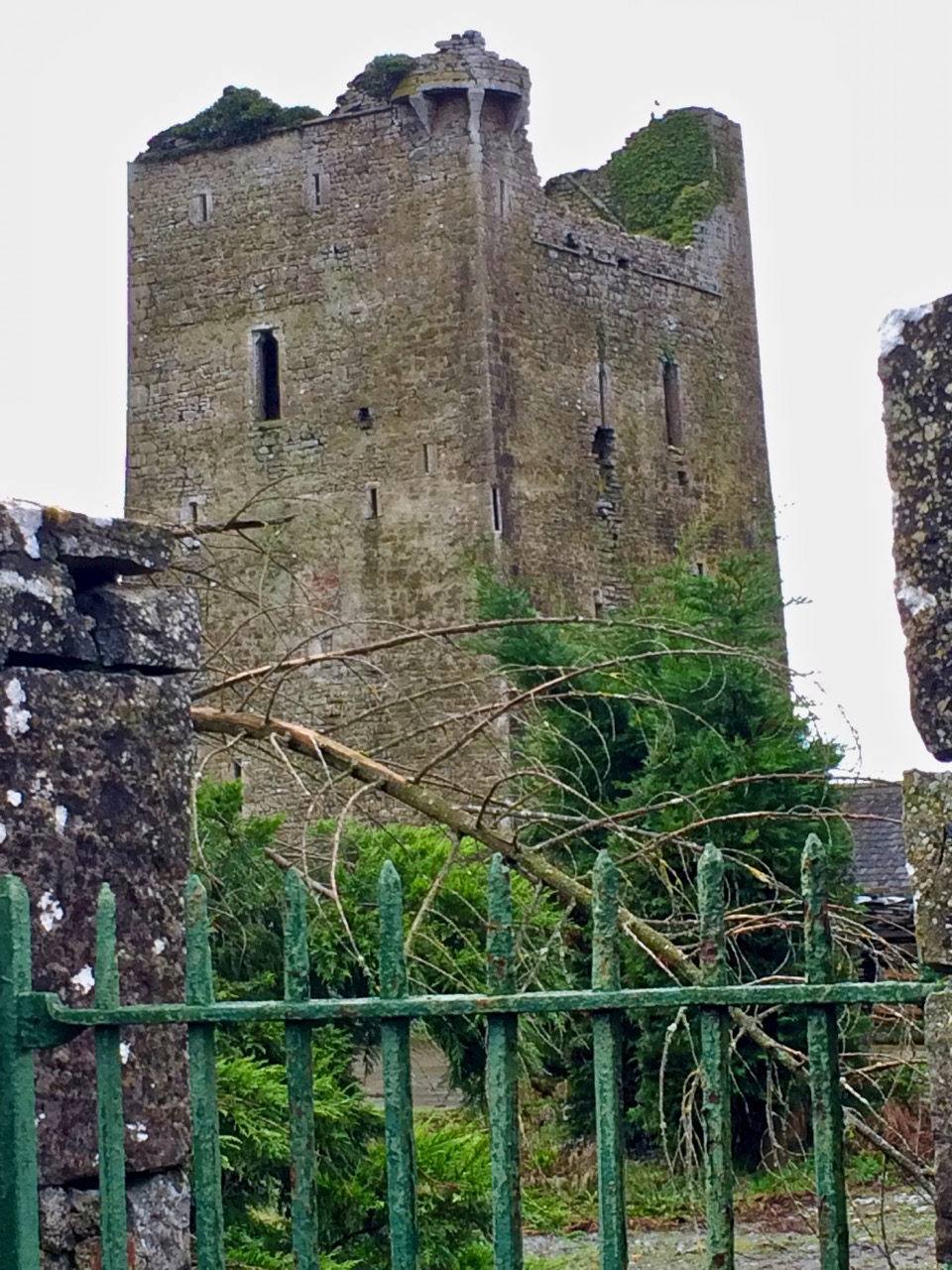
Right – we’re going to finish with a couple of castles, so turn right now and it will lead you back under the motorway to the R639 where you turn north again. After another kilometre or so you will see an imposing tower house on the right. You can drive up to the farm and observe this more closely. Since it’s on private property you must ask permission to go beyond the farm gate, but you’ll get a very good view from outside.

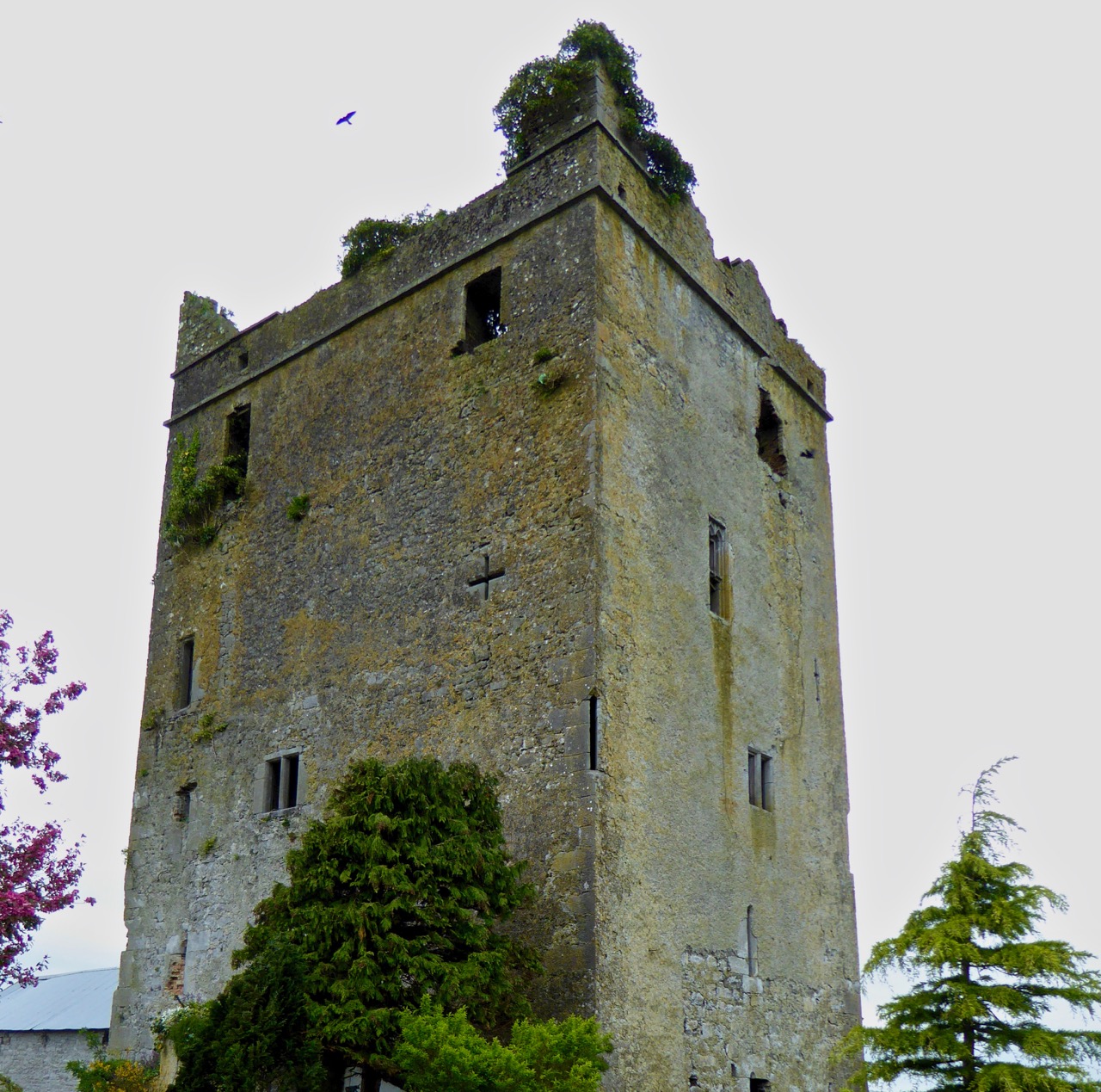
Glashare Tower House

Glashare Castle

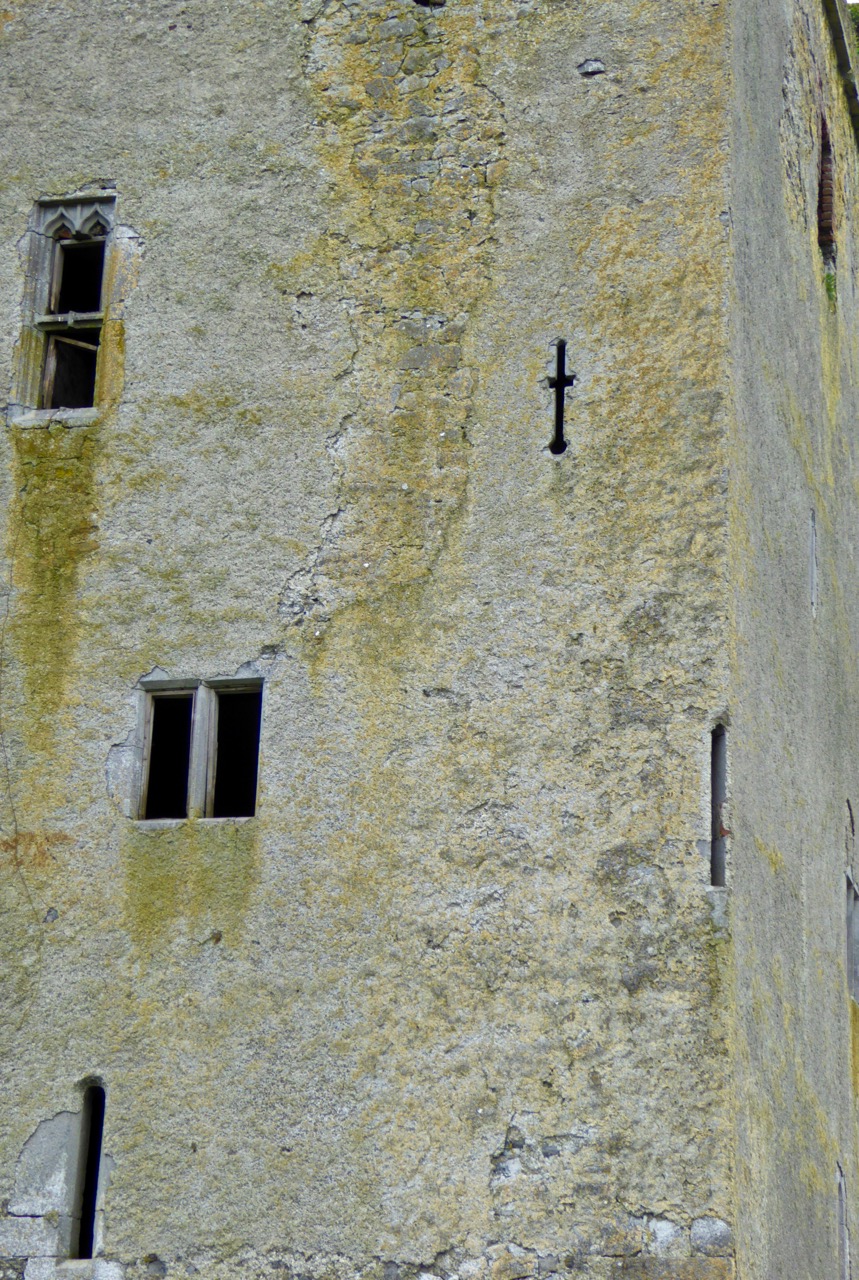
It’s remarkably intact and from your browsing of the Tower House Tutorial Part 1 you will be able to admire the loops – unusual corner loops in this one, as well as cross shaped loops. This castle has render on the outside, but how old the render is, or what material, I have not been able to ascertain.

Glashare Tower House windows and arrow slits and render

An amazing variety of opes – windows and loops

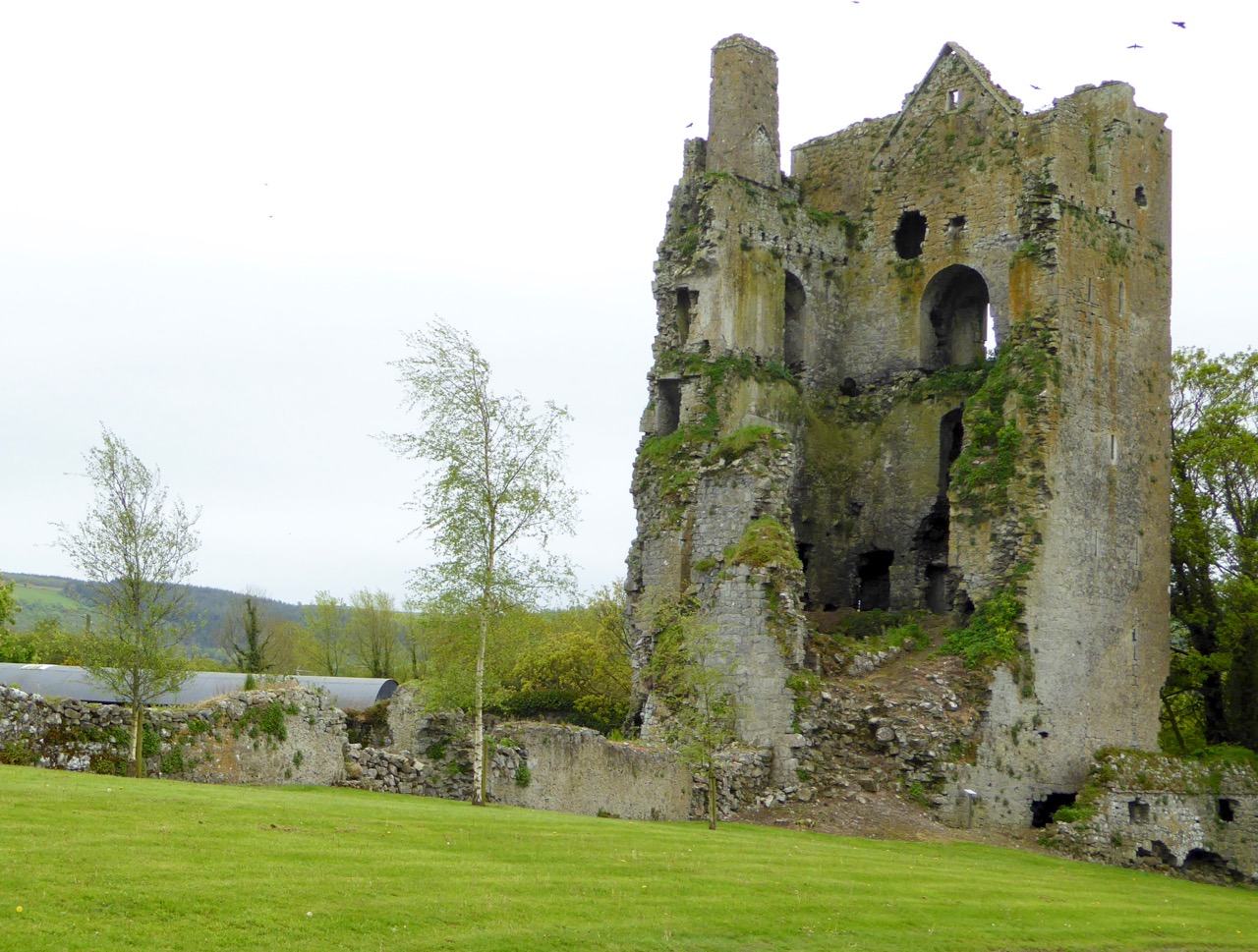
The final stop of this tour is Cullahill Castle – turn right at the small village of Cullahill, which is 4 or 5 km beyond Glashare. This one you can wander around. It was reputedly destroyed by Cromwellian cannon, and so you get a wonderful cross-section view of the interior. Tower House Tutorial, Part 2, will tell you exactly what you are looking at, or have a read of Illustrating the Tower House to see how JG O’Donoghue shows us exactly how the interior of a tower house would have been constructed and used.  You can rejoin the M8 by proceeding to Durrow and following the signs from there.
Cullohill later fireplace

Cullahill Castle – a unique opportunity to look at a cross-section of a tower house

For those of us who travel the M8 regularly it’s great to know that we can take a break along the way and catch up on our history and archaeology at the same time. Let us know if you deviate from the M8 to visit any of these sites, or if you have your own favourites along the motorway. 
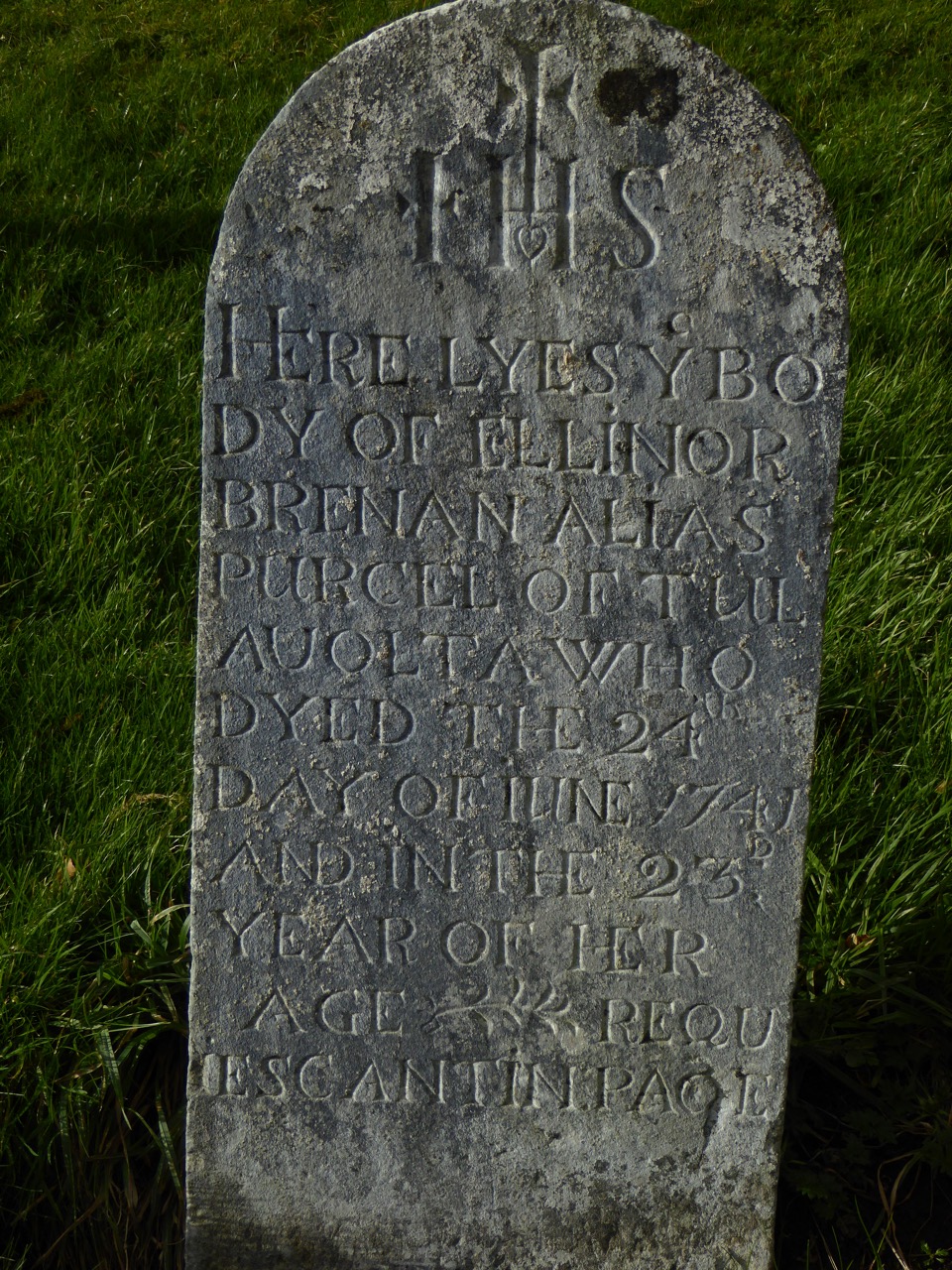
Grangefertagh 1741 graveslab

A gravestone from Grangefertagh