Becoming a Book Town: Skibbereen and Inanna Rare Books

This is the post that Robert was working on before he died. I have finished and edited it, keeping it in his voice to the best of my abilities. Finola
Ireland is rightly celebrated for its books – and their talented authors. You will find a thriving bookshop in many a modest Irish town. We are a nation of readers, it seems, and even when we are not reading much, we are buying books and loving books and  gifting books, and all the time developing our teetering pile of bedside books to dip into before sleep.
But it takes more than a good bookshop or two to deserve the title of a Book Town. According to the criteria, a town has to have ‘several’ books shops, and particularly shops that sell antiquarian and second-hand books. The only one we have been familiar with hitherto is in Sidney, BC, Canada, where Finola has spent many happy hours browsing among the treasures. 
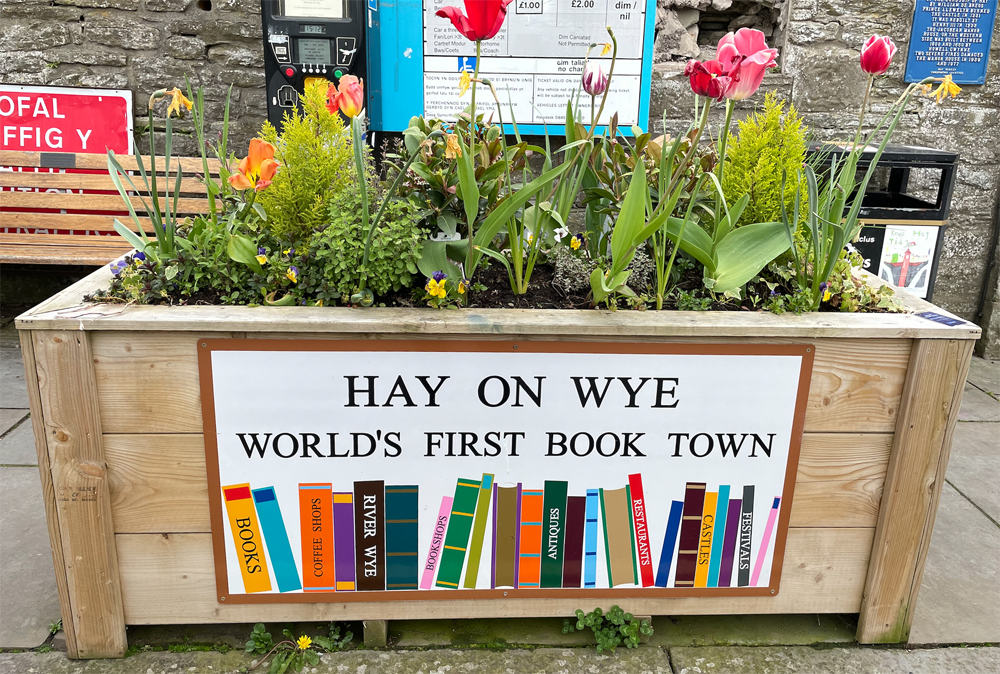
The Book Town model got its start in Haye-on-Wye in Wales (Image courtesy of the Curious Rambler) way back in the 60s and included, from the beginning, the idea that empty heritage buildings should be filled – with books! If you can add events – a festival, readings – or complementary business such as publishers or letterpress printers, all the better. 
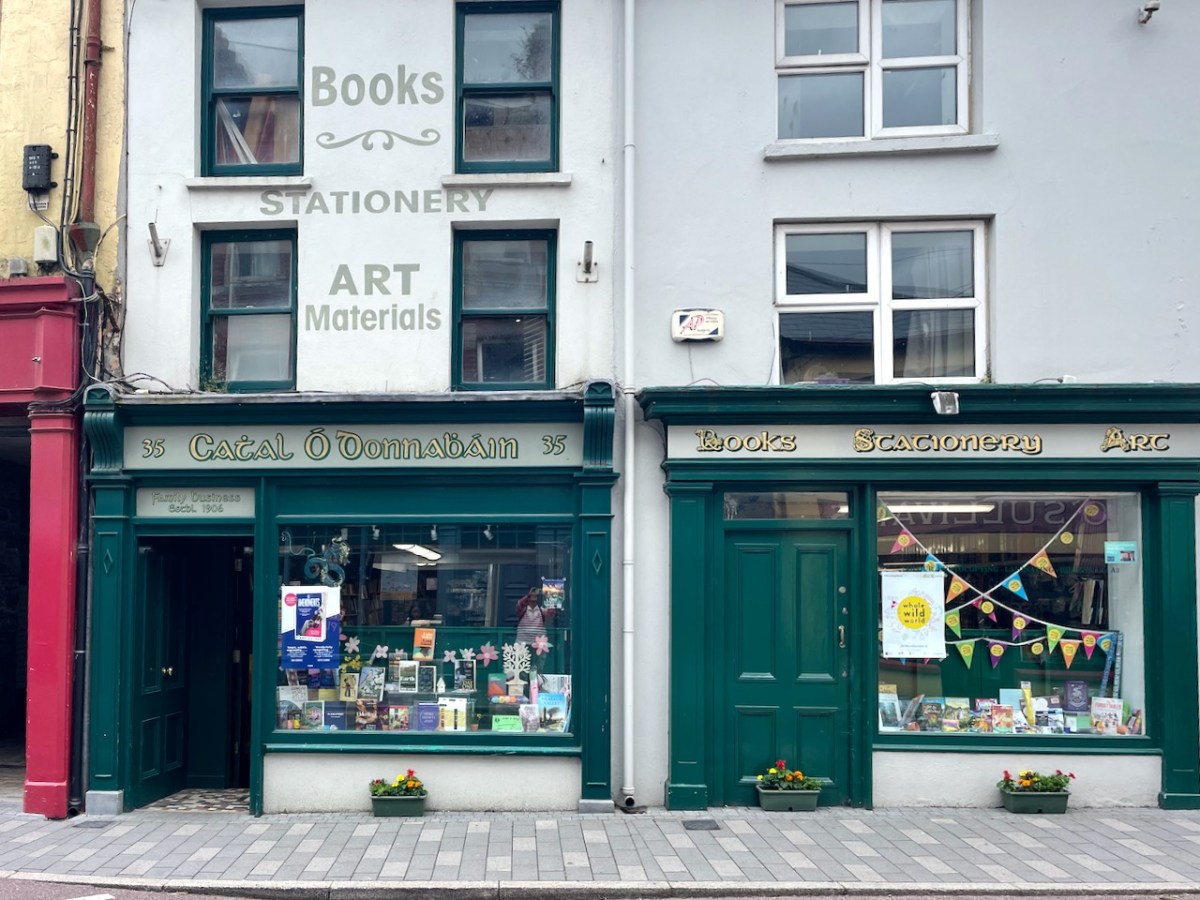
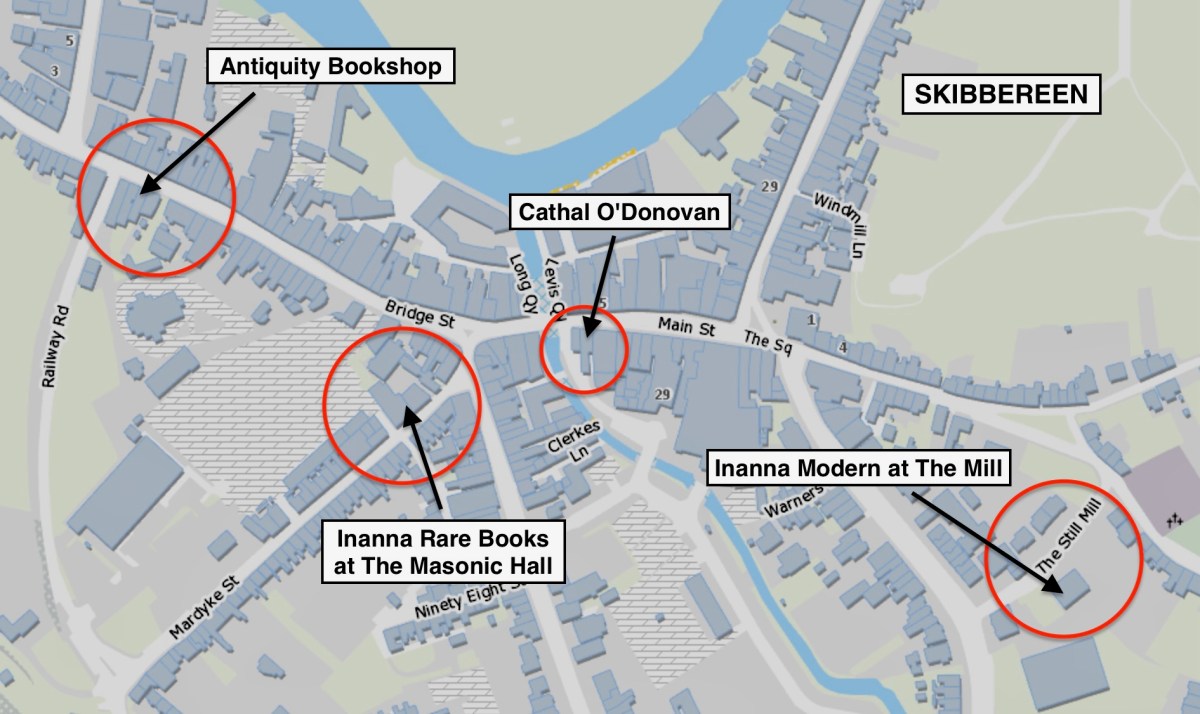
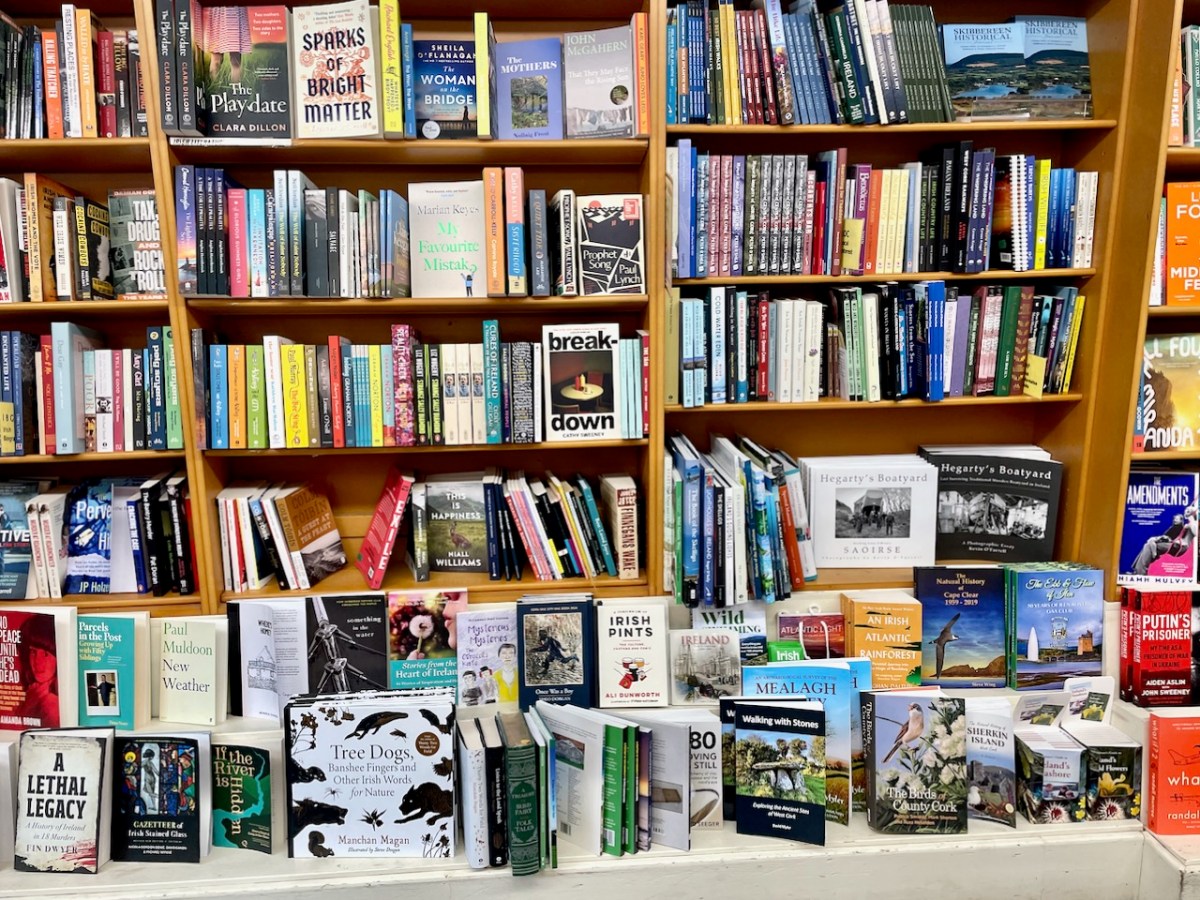
Skibbereen is well on its way to becoming a Book Town, mostly due to the efforts of Holger and Nicola Smyth and their family. Before we get to the Smyths, though, we have to talk about the other books stores and especially Cathal Ó’Donnabháin’s excellent store which supplies us with the best in local interest and contemporary books. In the photo below, taken this week, Finola and I are represented in three of the publications on the shelves. Can you spot which ones?
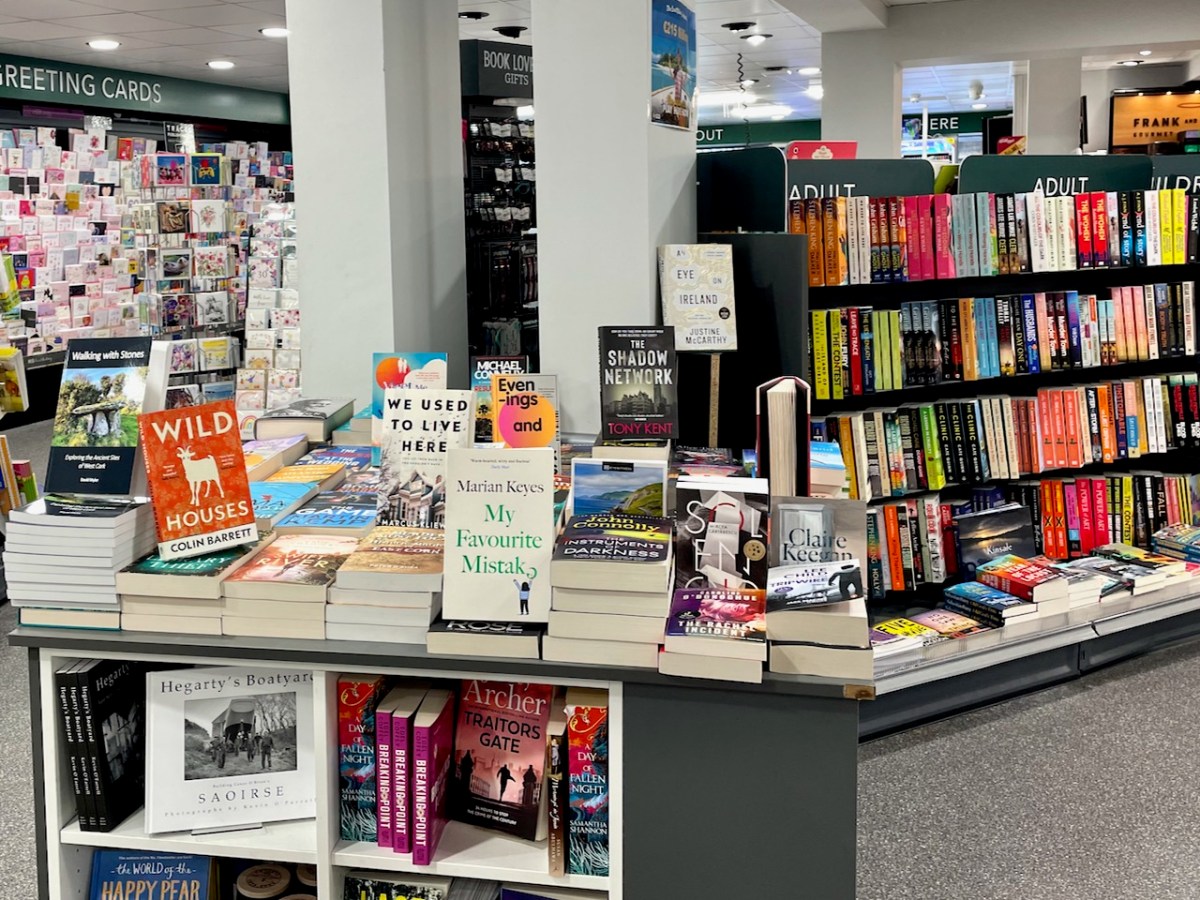
There’s usually an excellent selection of old books at the Charles Vivian stall at the Skibbereen market on Saturdays – they have a premises too, near Rosscarbery. Even our local SuperValu, Fields of Skibbereen, has done a major renovation and now incorporates a section selling books and periodicals. 
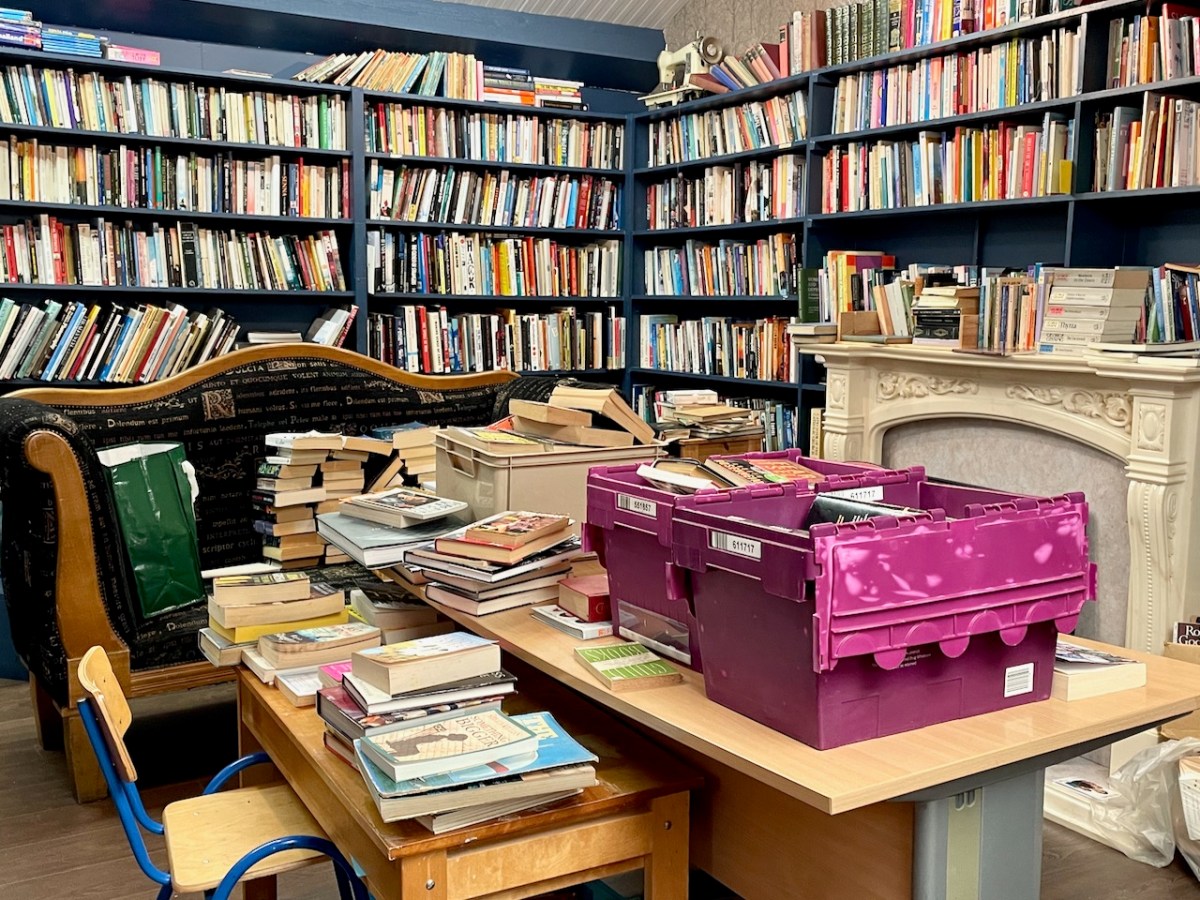
You can spot surprising finds, too, among the second-hand book sections of the town’s charity shops – I was tempted to curl up and spend an hour at this room at the Charity Shop for the wonderful Lisheens House.
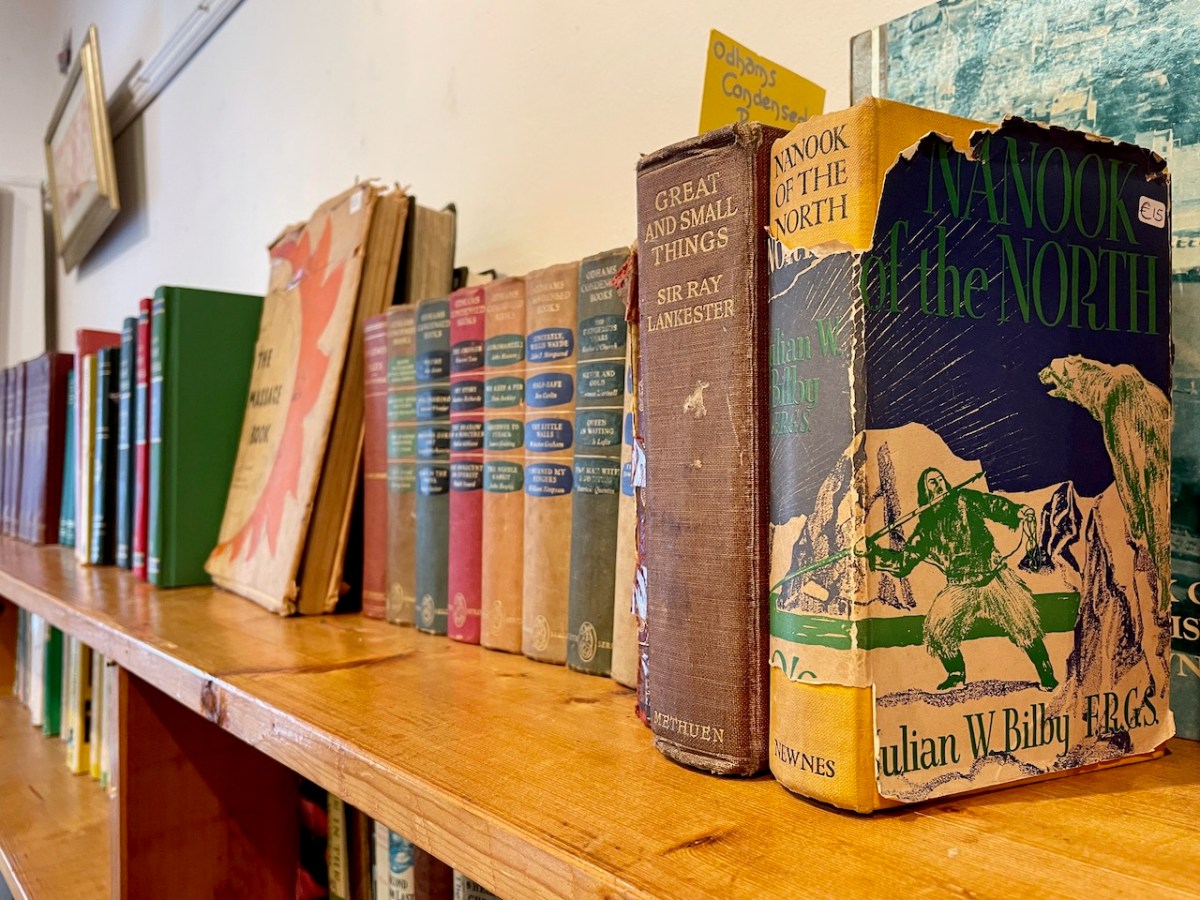
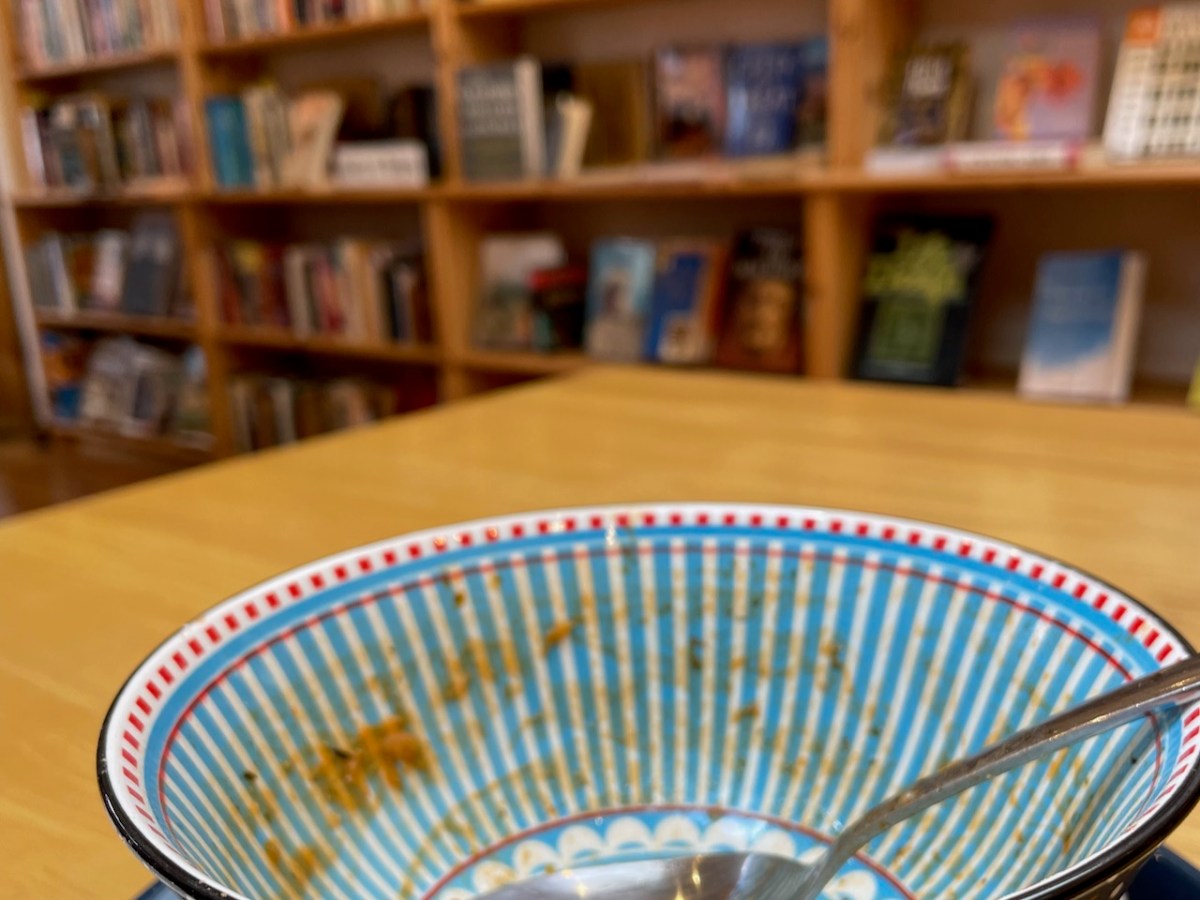
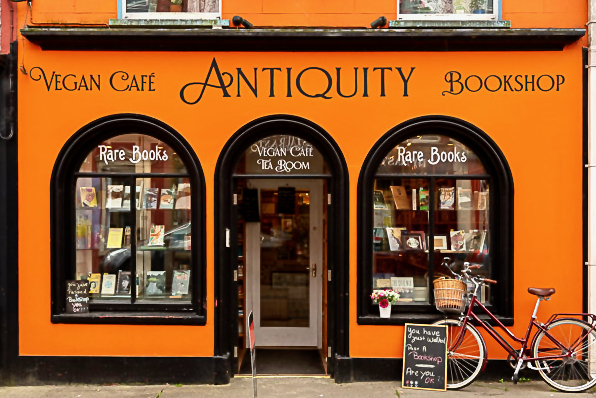
But Skibbereen is also fortunate to be a significant centre for rare and antiquarian books – and much more. What is now known as Antiquity (and might be more familiar to many as The Time Traveller’s Bookshop) is a great asset to all residents in the area. Not only is it “…the first All Vegan Cafe in West Cork…” but it offers a plant-based menu, a juice bar and good coffee – all to be enjoyed in the environment of well stocked shelves of fascinating secondhand books which can be browsed at leisure, and purchased. I can vouch for the excellence of the vegetarian stew!
Antiquity is run by Nicola Smyth and her son Junah. Nicola met with her husband Holger, 30 years ago and “…fell in love in front of Holger’s first bookshop…” They travelled in Europe for many years with their four children and many dogs, living in a world of rare books, before settling in West Cork in 2008 and opening The Time Traveller shop. Finola and I came across the Smyths and their books when we also settled in West Cork in 2012. If you had a look into our library at Nead an Iolair, you would see many volumes which have come from Holger and Nicola, especially classic Irish titles on history, archaeology and Irish art and literature.
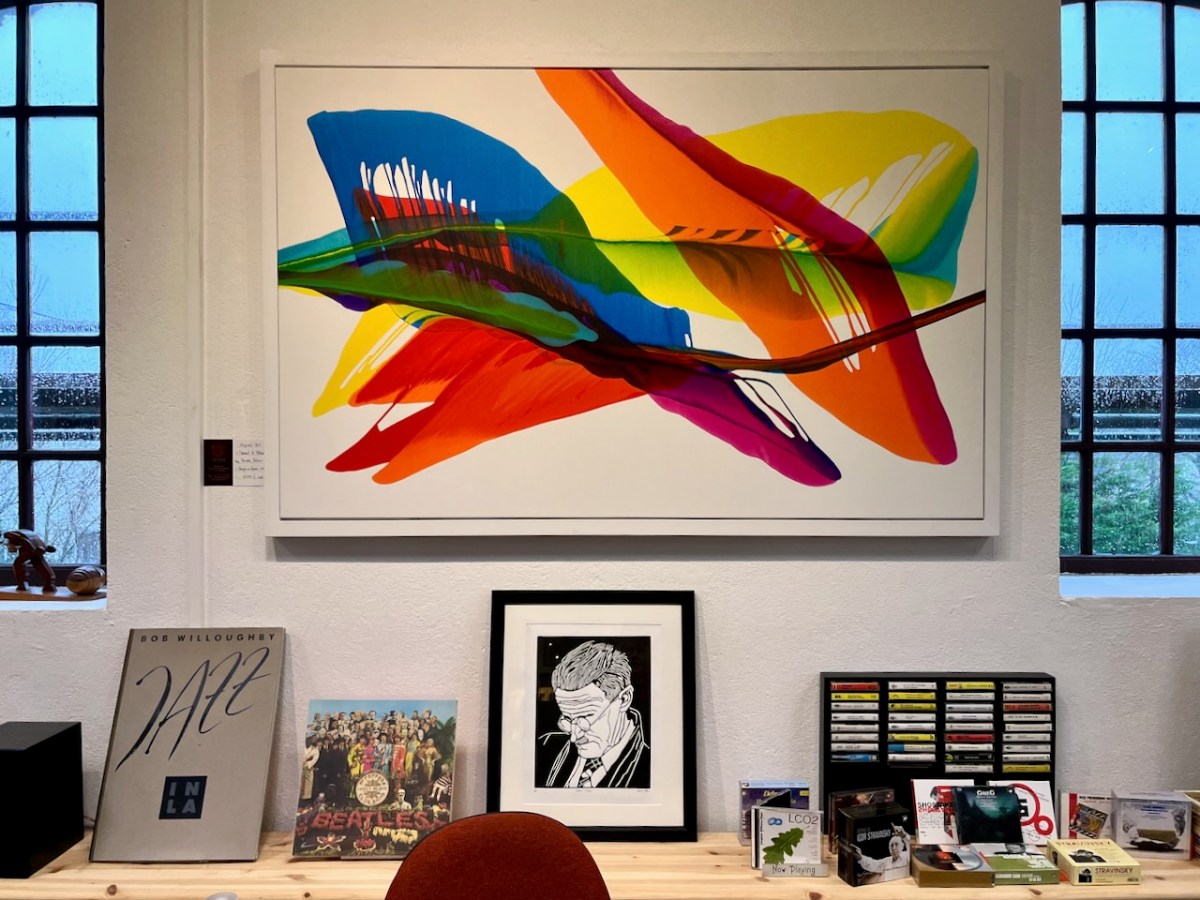
The Smyths have never been folk to rest on their laurels. Over the last decade or so they have expanded their activities and their geography – experimenting with forays and pop-ups into Cork City, Kinsale and Westport, for example. The Westport shop is still open, under new ownership, as West Coast Rare Books. They have also added to their specialisations Manuscripts, Rare Maps of Ireland and the World, Original Art & Photography, Illustrated Books, Decorative Art, Etchings & Engravings, Lithographs, Botanical Illustration, and rare Vinyl from the 60s to the 90s, a selection of Rare 78’s, and Early Jazz, Rock & Pop albums. If this seems remarkably ambitious, well, it certainly is – and how lucky are we in West Cork to have these offerings right on our doorsteps?
I set out today [Robert was writing this in February] to explore a relatively new venture by Holger – Inanna. Let’s first look at the name: Inanna is a goddess. Worshipped in ancient Mesopotamia, her dates are around 3000 BC – about the same age as Brú na Bóinne, the Newgrange passage tomb, here in Ireland. She is well documented as the Queen of Heaven, and legends connect her with the creation of the cycle of the seasons. She is acknowledged as reigning over love, war, fertility, law and power.
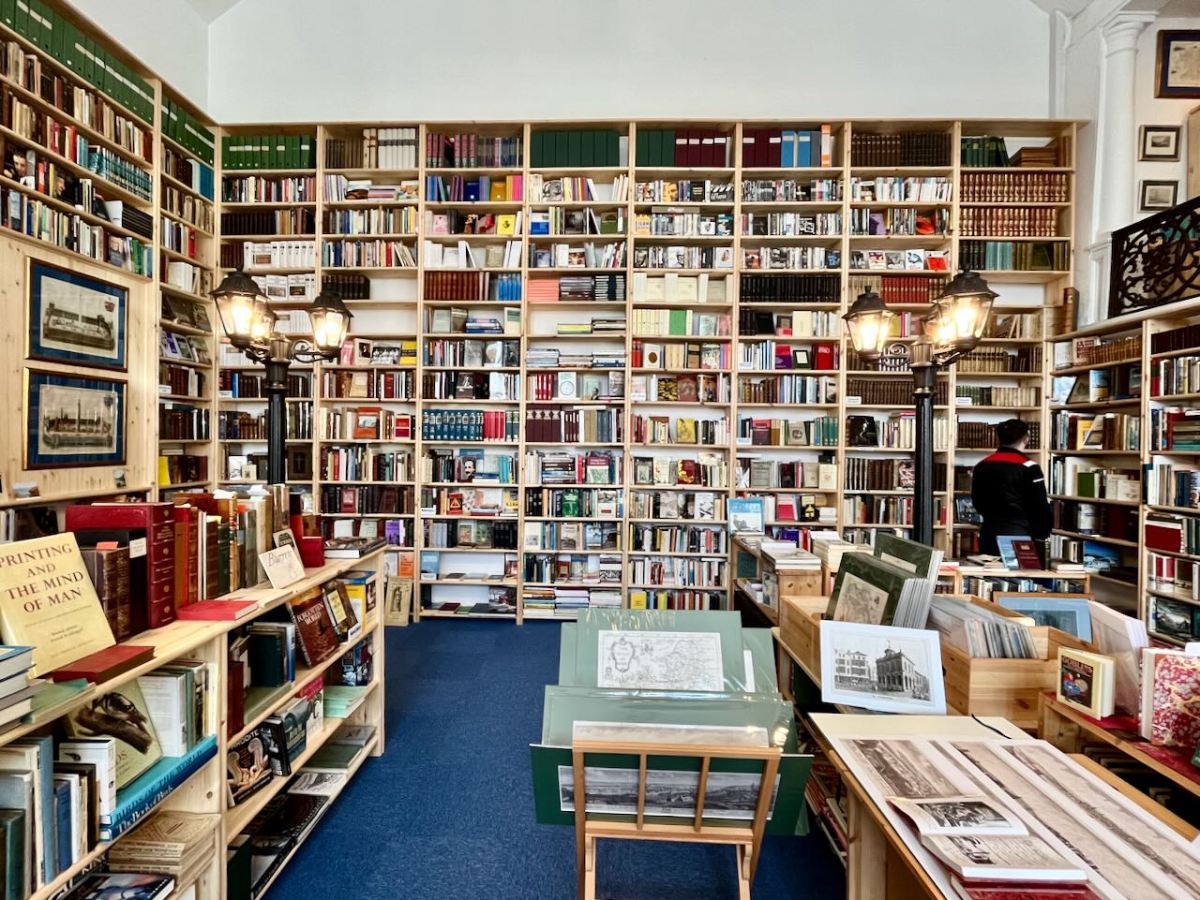
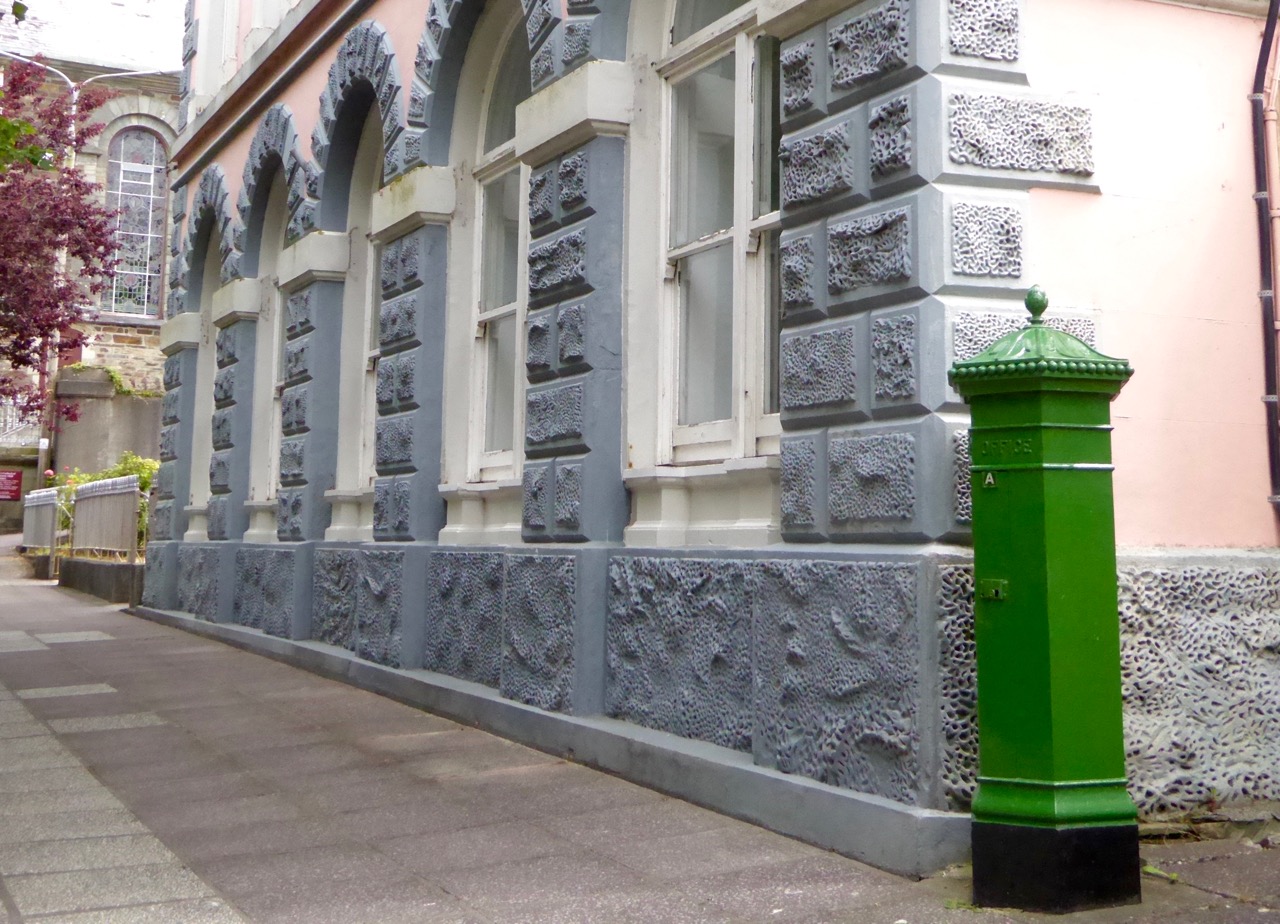
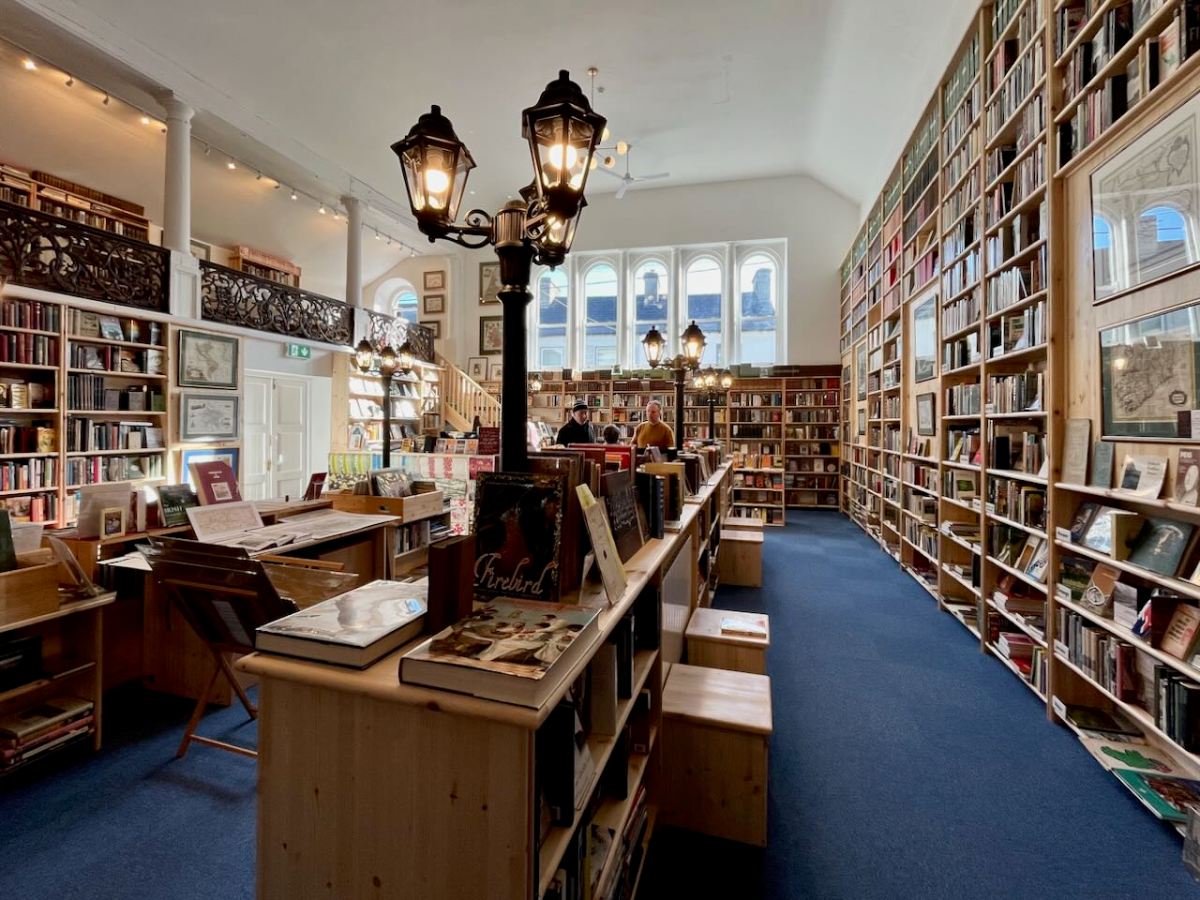
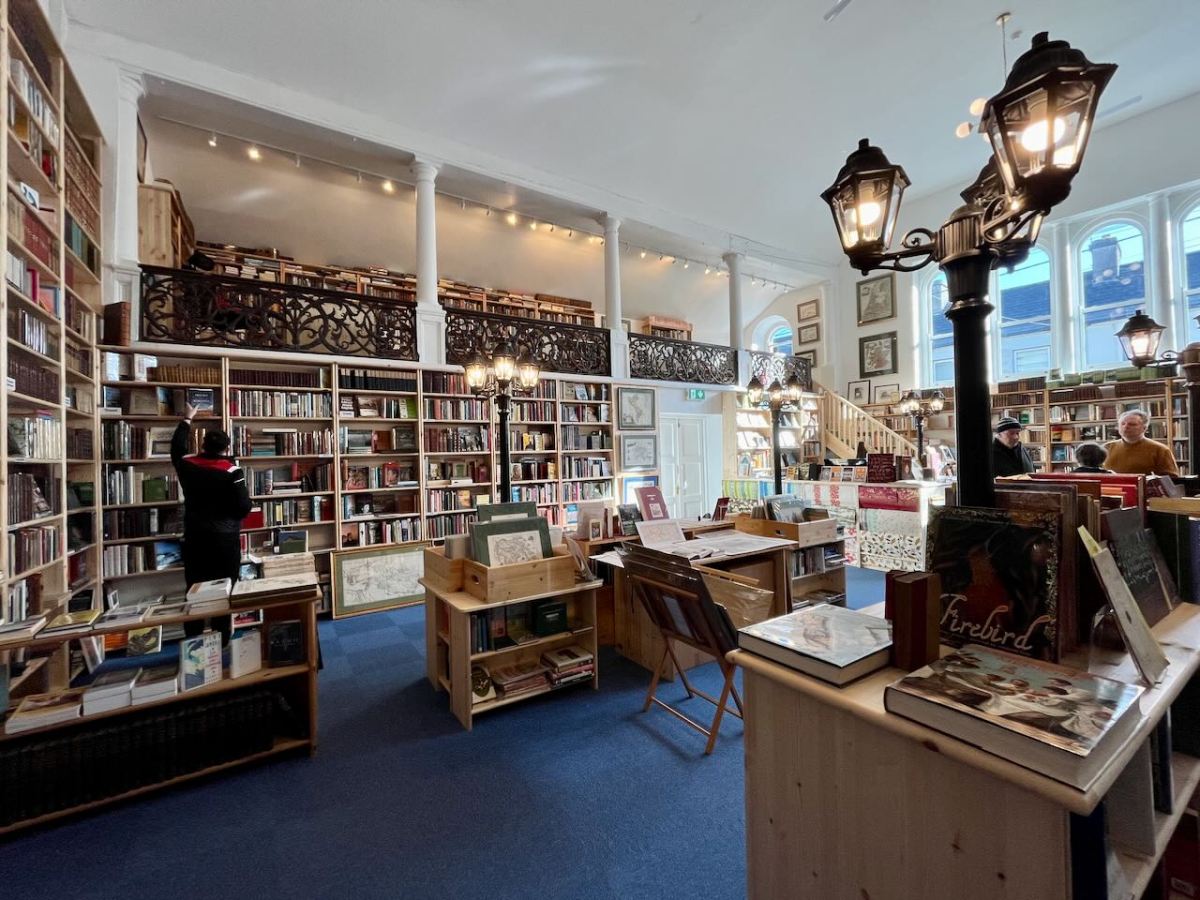
In keeping with the Book Town ethos of utilising historic buildings no longer in use, Inanna Rare Books is housed in the Masonic Hall – I can think of no better use for a building like this. It’s like walking into a grand Victorian library, with books stretching to the ceiling, a mezzanine with an elaborate wrought iron bannister, and the whole place flooded with light from the huge arched windows. 
This striking edifice was built in 1863 as a lecture hall. Alas, the lectures didn’t thrive – although such public adult education efforts were very popular at the time – and it was sold after a few years to the Freemasons, and became a Masonic Hall, a meeting place for the masons and a centre for their ritual activities. Over time, their numbers dwindled, but the hall remained in good shape and retains most of its original features, including the timber sash windows.
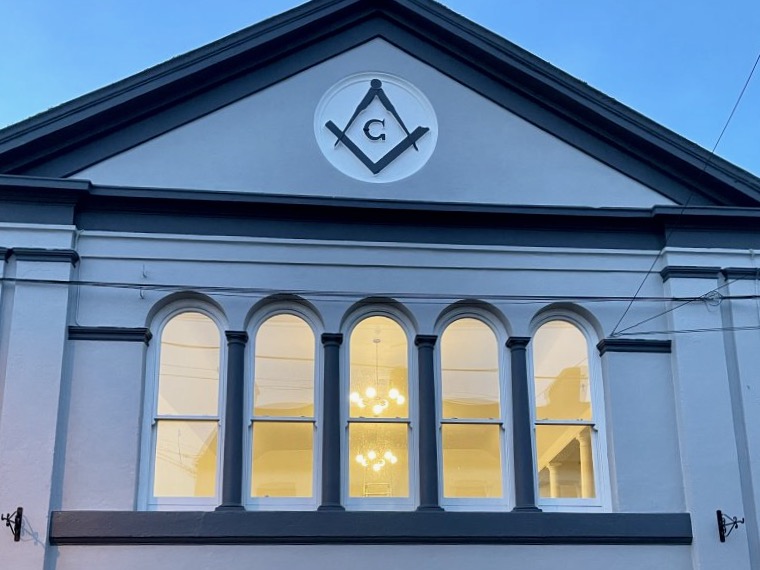
Over 500 people visit this book store every month. Some travel from afar especially to see this glorious space and browse the collection. 
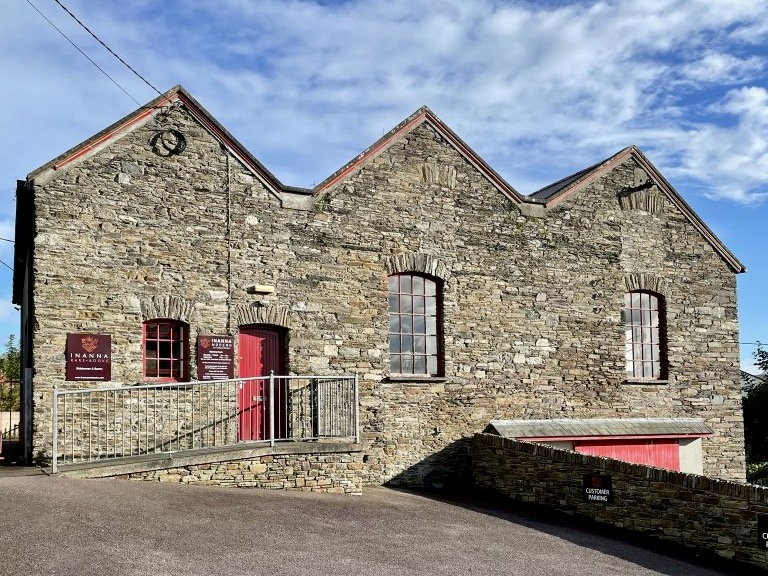
Holger and Nicola’s most recent store is the Still Mill, just off Market Street (above). This, as the name suggests, started off life as a distillery in the 19th century, becoming a grain mill in the 20th century. It had a mill wheel to drive the machinery – that wheel was later broken down and sold off for furniture-making. One of the town’s businessmen, Michael Thornhill, slept as a baby in a cradle made from the wood. 
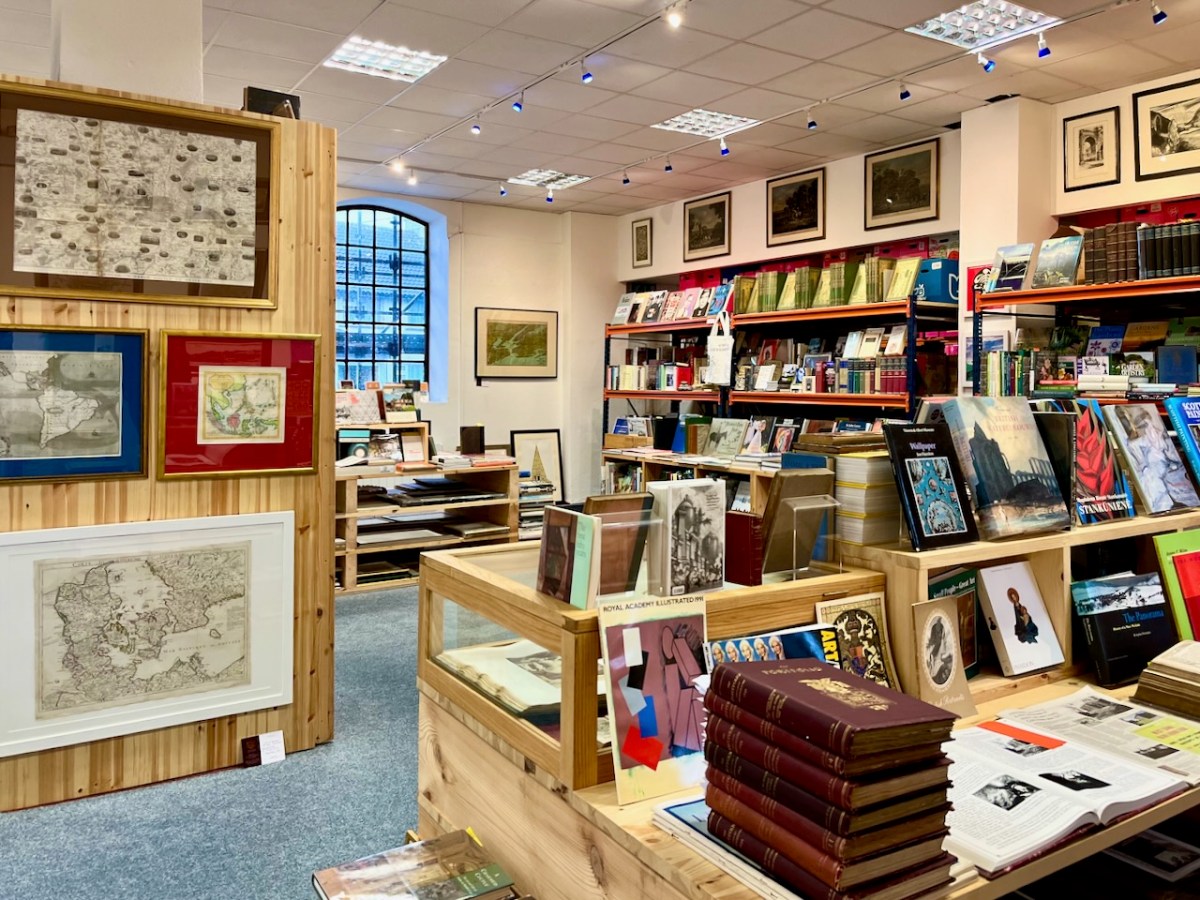
The heritage character of the building is obvious from the outside and stepping inside you are immediately struck by the stately character of the lofty ceilings and deeply-set windows – and how perfectly it suits a bookstore. The focus in this store, named Inanna Modern, is on art – art on the walls, art history and criticism on the shelves, photography, every conceivable form of art book. Holger represents, among others, a Canadian artist, Brooke Palmer, and his intense, colourful images provide a vibrant counterpoint to the lines of sober book covers.
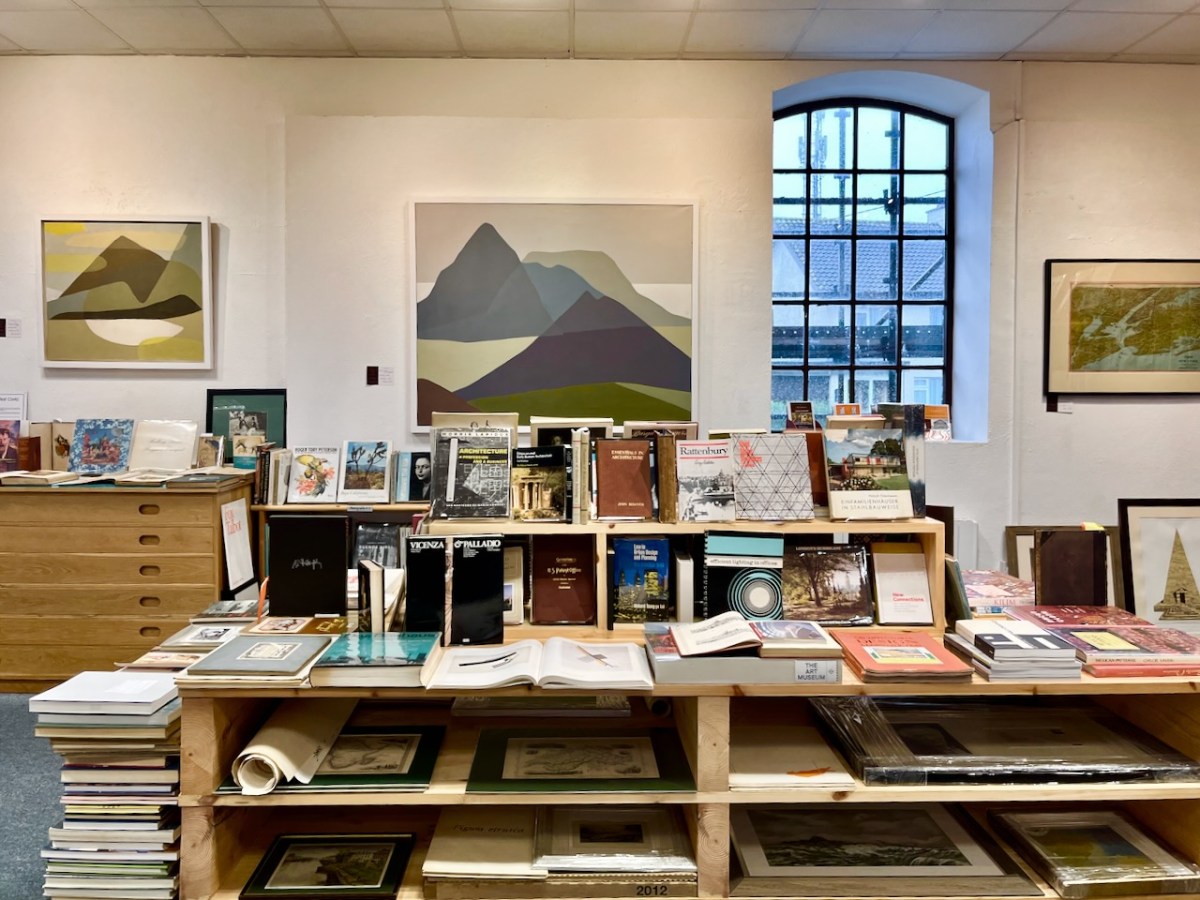
Holger is passionate about using heritage buildings for such purposes. The best buildings in town, he asserts, often sit forlorn and neglected (see The Irish Aesthete for example after example) and what better way to revive them than with a business like this – a perfect match of form and function. Each of his landlords is totally supportive of his efforts, and together they hope to provide models of what is possible in any community. 
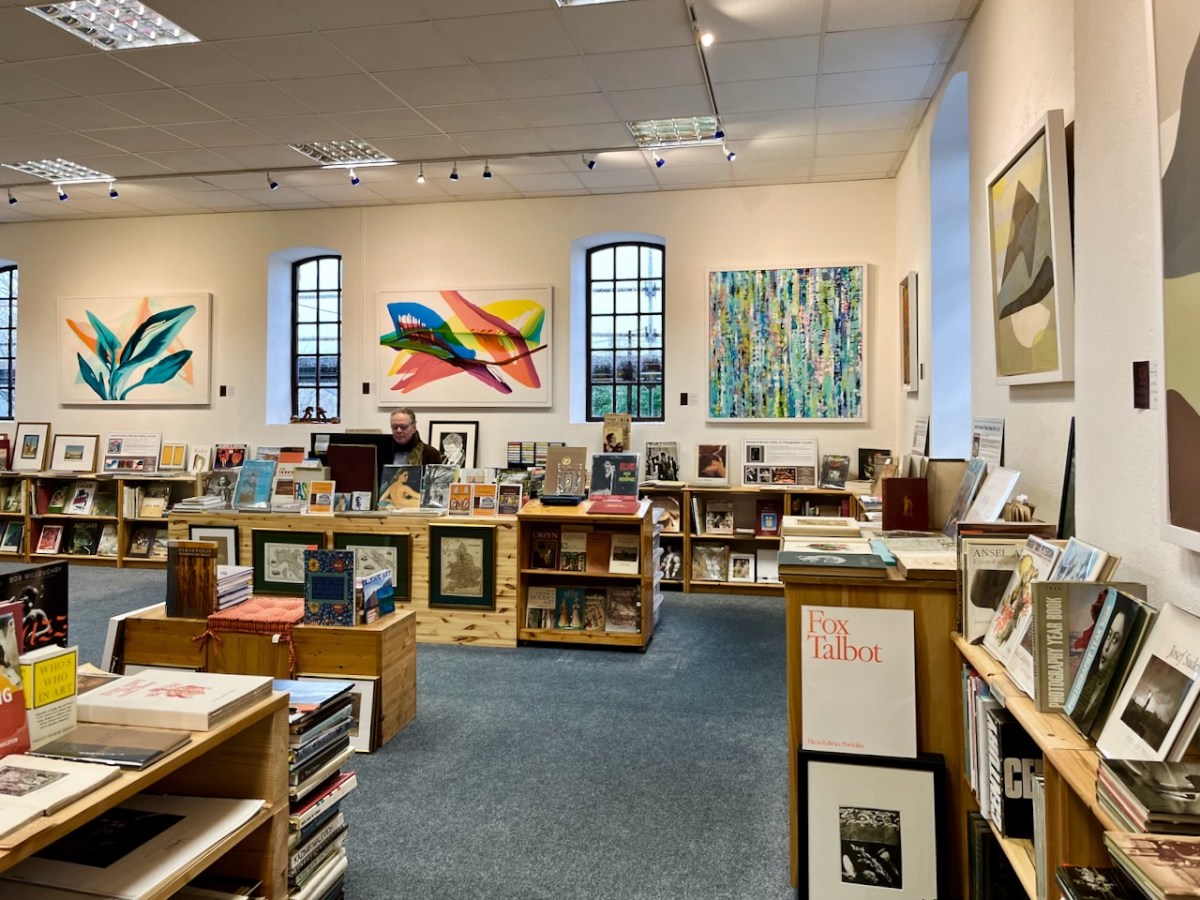
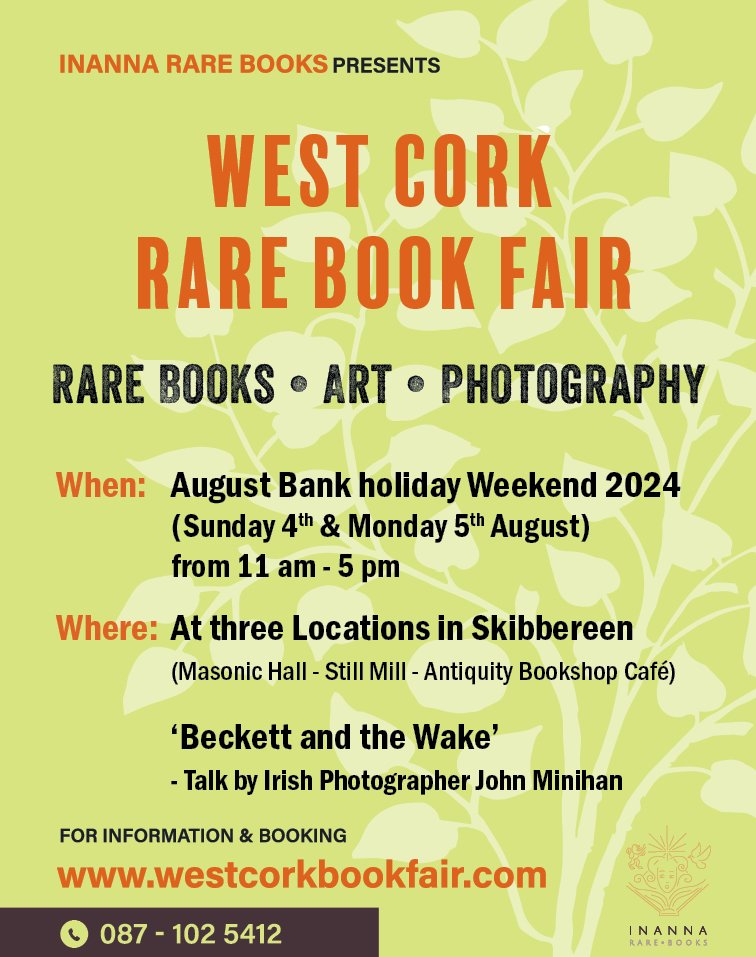
Reader, if you live in Ireland, you are only too familiar with what Holger is talking about – lovely old buildings crumbling and disregarded that, with some attention, could become energetic hubs of cultural activity and commerce. For a budding Book Town, spin-offs are important too. Holger organises the occasional book-related talks or readings and a yearly Rare Book Fair that will take place this year on August 4th and 5th. Meanwhile, for their artists, there was an exhibition at the marvellous Cnoc Bui Arts Centre.
You may not be familiar with the term Book Town – yet! But Skibbereen is well on its way to becoming a shining beacon for bibliophiles from all over the world, thanks mainly to the efforts of the Smyths. How wonderful it is to have people of vision and passion driving an economy for book-lovers, in one small Irish town. 
Storm Agnes: Agnes Clerke of Skibbereen and Nineteenth Century Astronomy

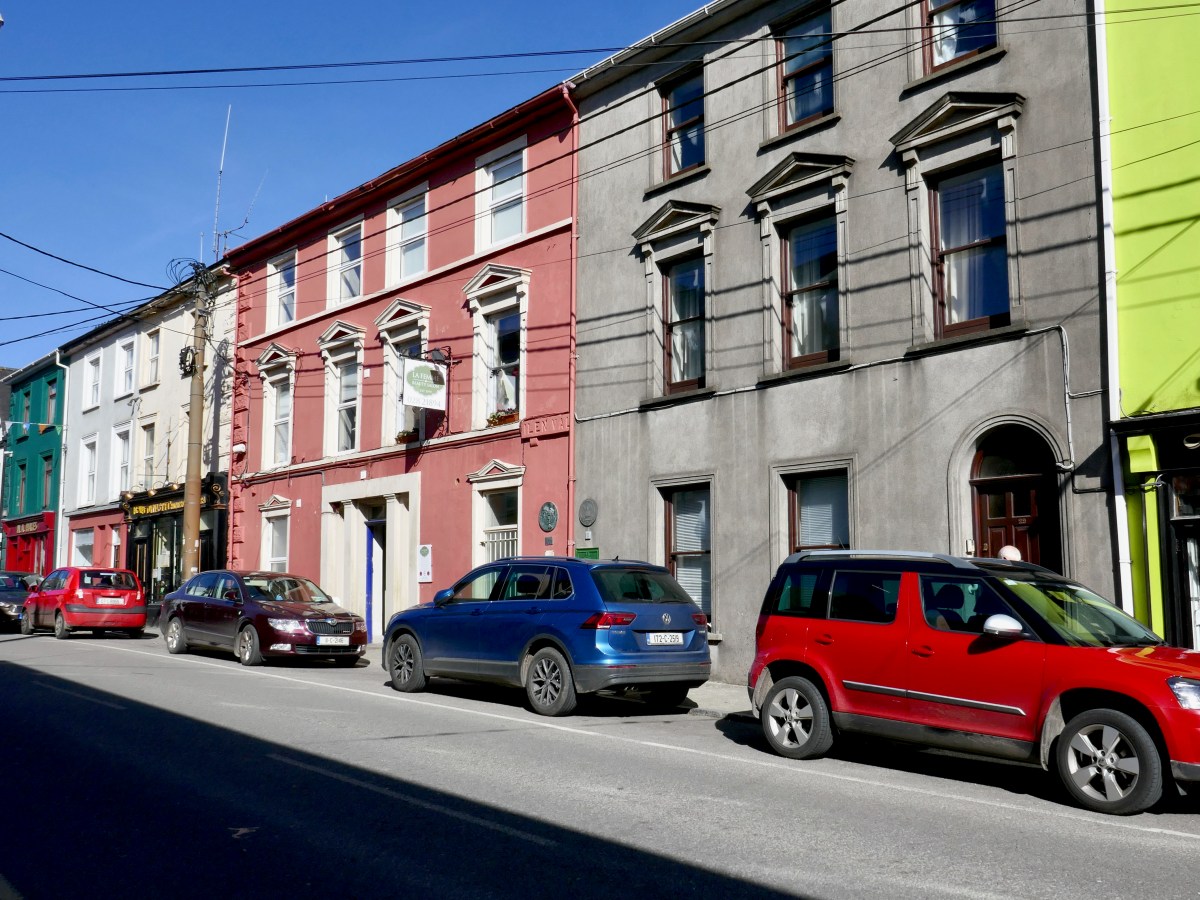
This week, I was thrilled to hear Met Éireann announcing that the first storm of this year will be called Storm Agnes, after Agnes Mary Clerke who grew up in Skibbereen (in the pink house, below) and went on to become the foremost science writer of her day and a distinguished astronomer. 

I’ve been writing and giving talks about Agnes since 2015, and it’s wonderful that she is becoming more of a household name now. Storm Agnes is especially fitting because she certainly shook up the Astrophysics establishment in her day, as a woman writing about what had traditionally been a man’s domain. The post that follows is a substantial re-writing of my 2015 post From Skibbereen to the Moon: Agnes Mary Clerke. I know a lot more about Agnes now than I did then. Mostly, that’s down to the work of Mary Bruck, a fellow astronomer, yet another Irish woman (from Meath) and author of Agnes Mary Clerke and the Rise of Astrophysics. 

West Cork is where Agnes grew up, with her parents, sister and brother. Agnes, Ellen and Aubrey were all brilliant, scholarly and published writers, each in their own fields. Their father, John William Clerke came from a long-established ‘Liberal Protestant’ family in Skibbereen – that’s John William’s own father, St John Clerke’s, grave in Skibbereen, above. At the time the children were young he was the manager of the Provincial Bank and the family lived above it.

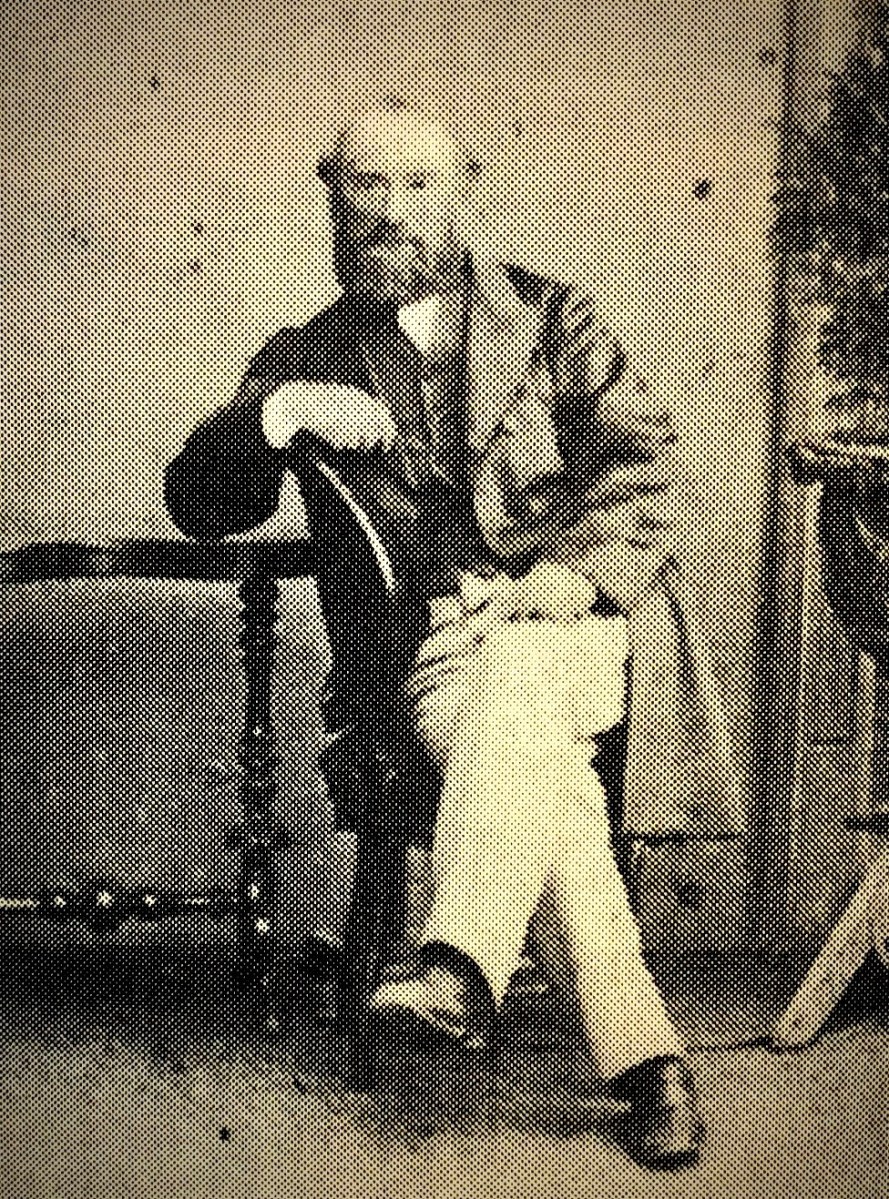
Agnes was born in 1842 and her young life was dominated by the awful tragedy of the Great Famine, which started in 1845 and blighted life in Skibbereen up to 1850 and beyond. John William (above) headed up relief efforts in Skibbereen during this awful time and was felled by Famine Fever himself, remaining critically ill for months.

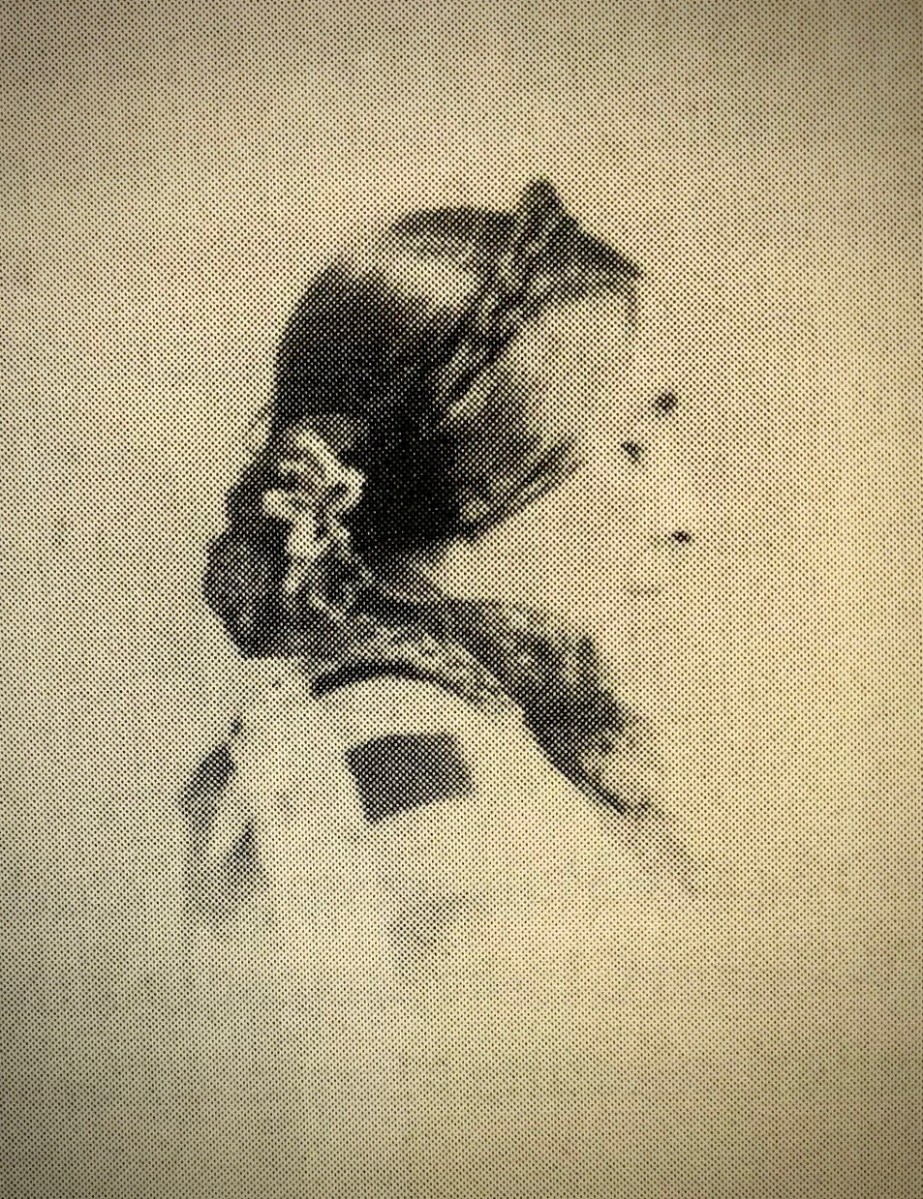
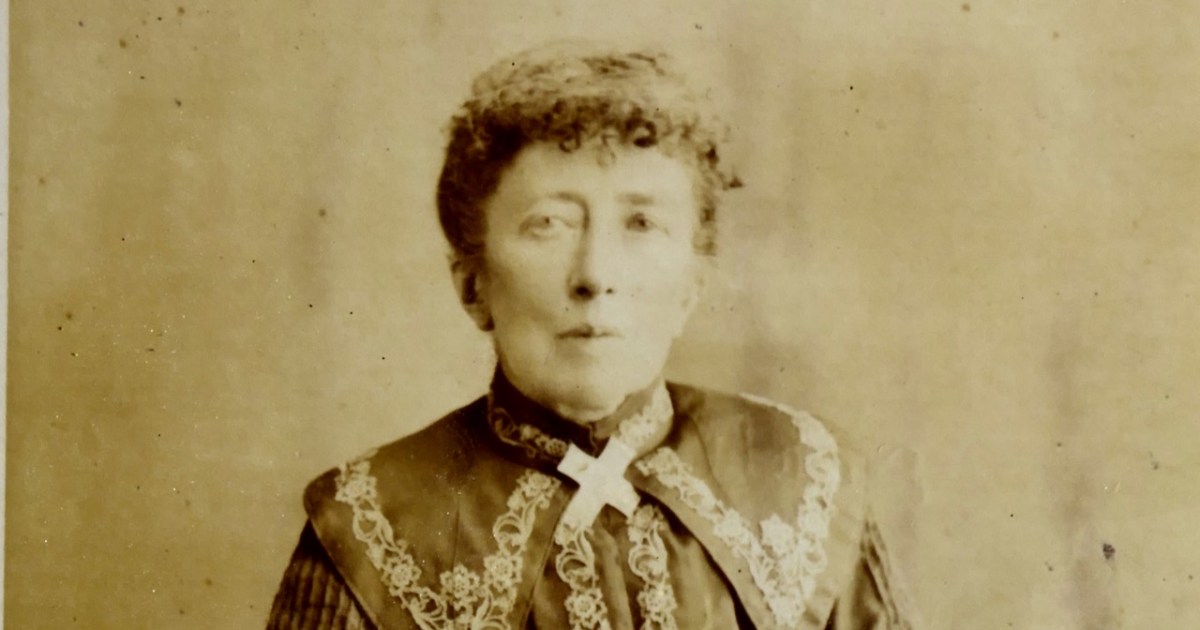
John had married Catherine Mary Deasy (above, in older age), the sister of his best friend at Trinity, Rickard Deasy, from a prosperous Catholic family in Clonakilty. Catherine had been well educated in the Cork Ursuline convent and was high-minded and musical. She tutored the children to a high proficiency in music, Latin and Greek. Catherine played Irish music on the harp and retained her ability to entertain well into her 80s. 

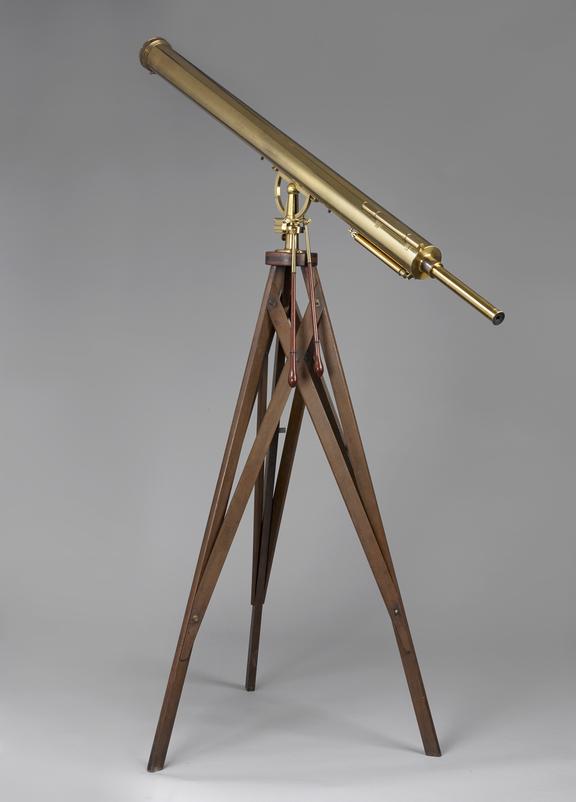
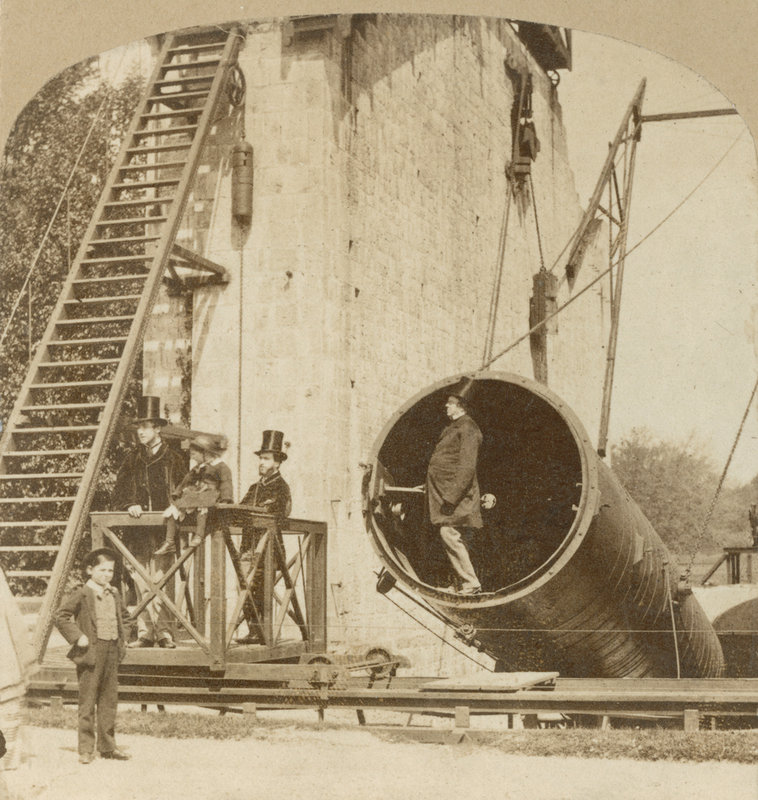
The children grew up in the 1840s and 50s with access to their father’s extensive library, his telescope (like the one above) and his chemistry experiments. The telescope, according to Mary Brück’s biography, was equipped with a chronograph for timing the transits of stars across the meridian. With this arrangement Clerke was able to provide a time service for the town of Skibbereen, which was as yet unconnected to the outer world by either railway or telegraph.

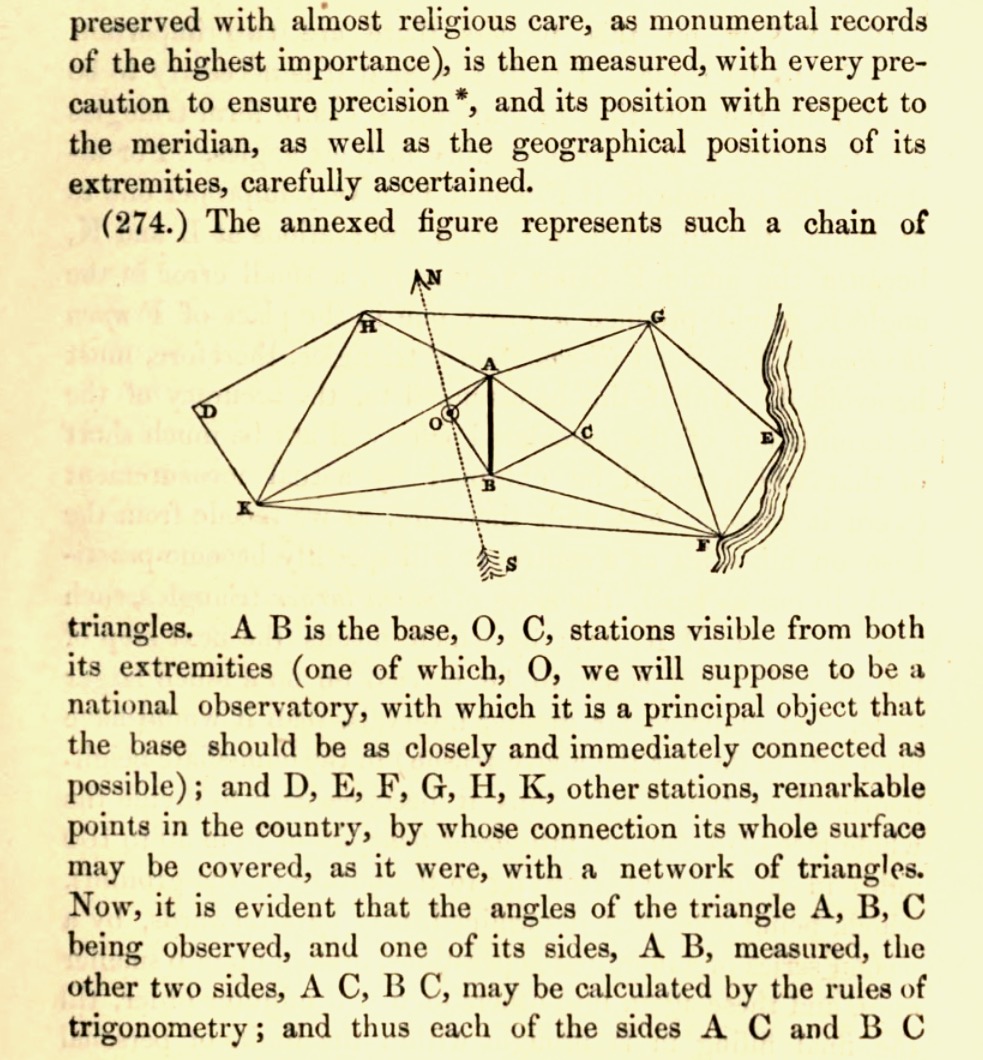
Insatiably curious, they devoured knowledge and by 15 Agnes had already begun to write a history of astronomy – a book that would later count as her magnum opus. By the age of 11, she had mastered John Herschel’s Outlines of Astronomy. (She was later to write the biography of Herschel’s father and aunt – still available for Kindle!). That’s a page from Outlines of Astronomy, below. To repeat – she was 11!

The family moved to Dublin when Agnes was 19 – her father had been appointed to a position by Rickard Deasy who was now Baron of the Exchequer Court. But her health was always delicate and her mother determined to move the two young women to a more salubrious climate. Starting with extended visits and then moving there, the Clerke women spent from 1867 to 1877 in Italy. 

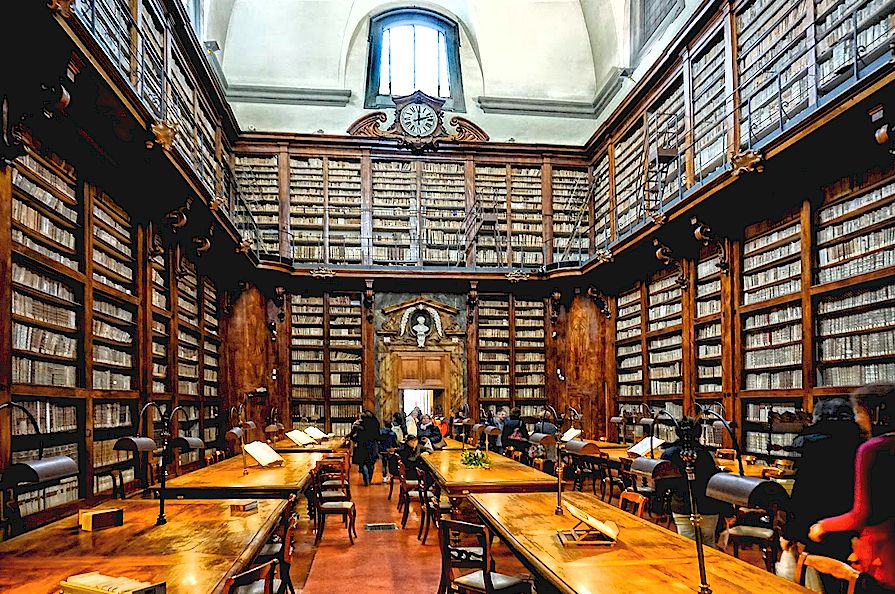
There, Agnes and Ellen, now in their 20s and early 30s, studied extensively in the excellent libraries in Rome and Florence (above), becoming proficient in several languages and going to primary sources to research their interests.

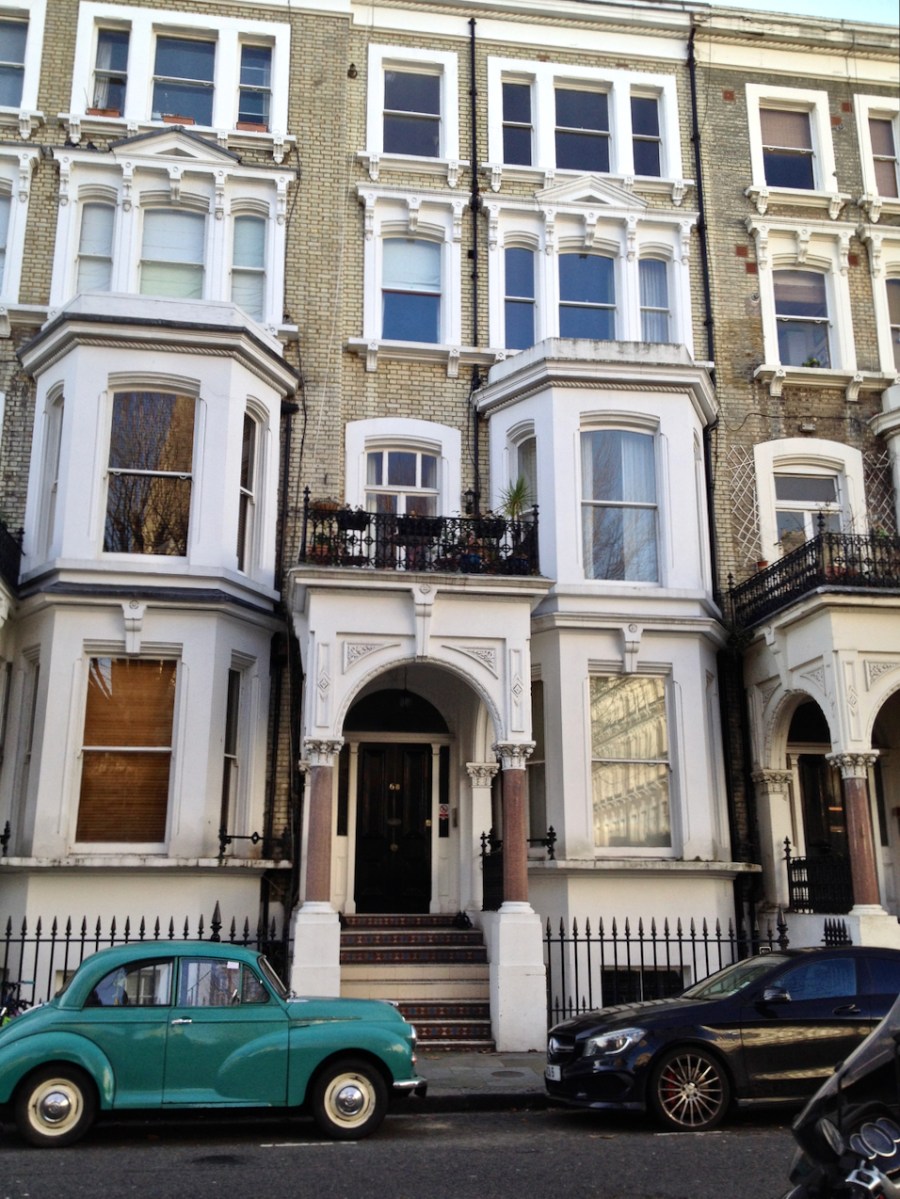
Thereafter, the family settled in London, at 68 Redcliffe Square (below). Devoted to each other, none of the siblings ever married and the family lived together in harmony and supported each other’s endeavours to the end.

Although she started off with a wide range of topics, Agnes over time concentrated on writing about astronomy. Her first published pieces (one about Copernicus, the other about the Mafia!) appeared in the Edinburgh Review in 1873. But her magnum opus, the book which brought her to the attention of the scientific community in England and the United States, was her History of Astronomy during the Nineteenth Century.

With it, she burst upon the scene in December 1885. She had spent four years writing it. It was an instant best seller – both to interested lay people and amateurs but also to serious students of astronomy, as one reviewer put it on account of its accuracy and the really remarkable skill with which the leading points on which our knowledge has been increased are seized upon and set forth. It sold out in two months and went to a second printing and an American edition. It has never been out of print since. It is still used as a text book and on lists of recommended readings. It went into four editions, each one a monumental task to update as findings came thick and fast. Illustrations only began with the second edition.

Now in her early 40s, the depth and scope of Agnes’s scholarship is awe-inspiring. To read through the book (available online through Project Gutenberg) is to see a brilliant mind at work. Her purpose in writing it was:

to embody an attempt to enable the ordinary reader to follow, with intelligent interest, the course of modern astronomical inquiries, and to realize (so far as it can at present be realized) the full effect of the comprehensive change in the whole aspect, purposes, and methods of celestial science introduced by the momentous discovery of spectrum analysis.

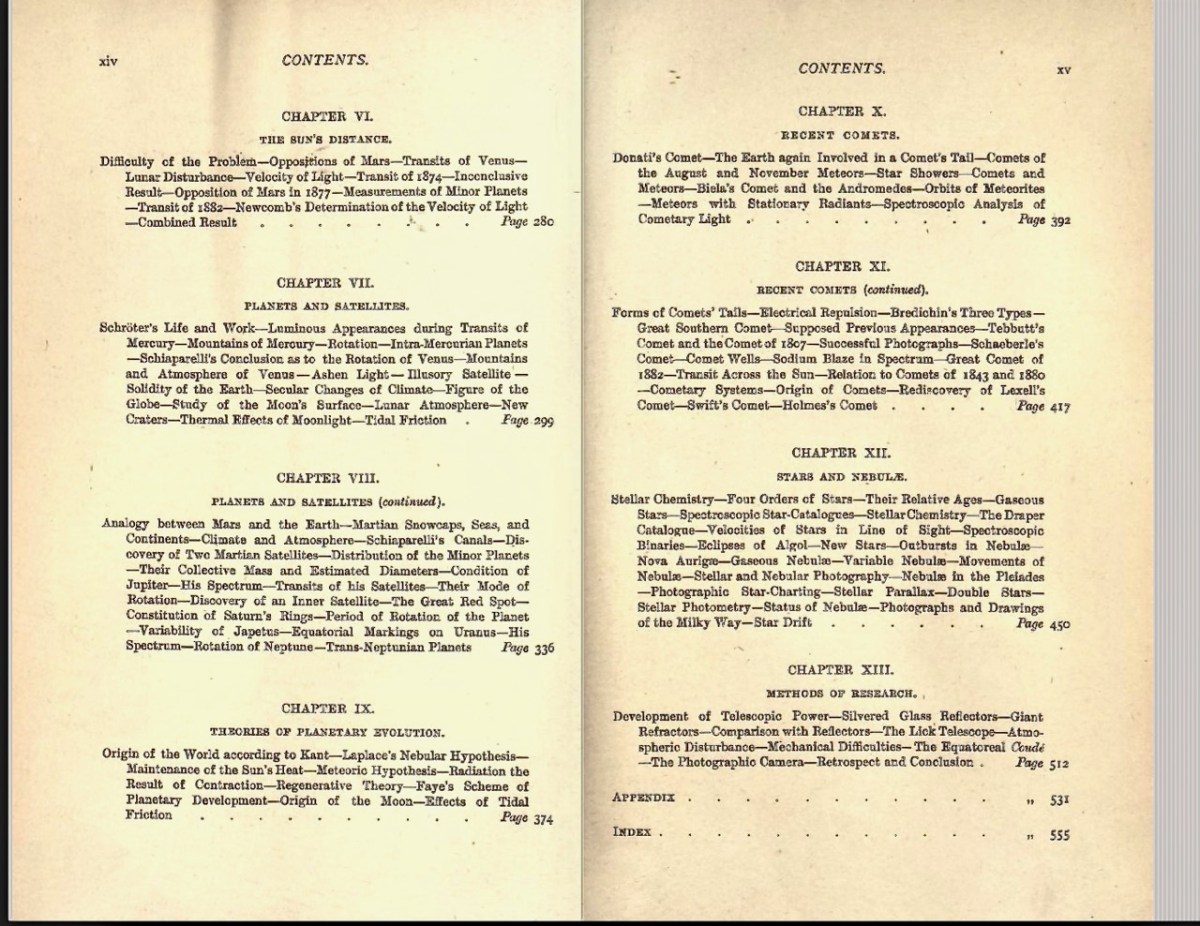
This IS the rocket science of her generation, encompassing chemistry, physics, mathematics, history of scientific thought, cosmology, the most up to date observation and measurement techniques – in short, the disciplines that made up the emerging science of astrophysics. Take a look, for example, at the headings for her Chapter IV: Chemistry of Prominences—Study of their Forms—Two Classes—Photographs and Spectrographs of Prominences—Their Distribution—Structure of the Chromosphere—Spectroscopic Measurement of Radial Movements—Spectroscopic Determination of Solar Rotation—Velocities of Transport in the Sun—Lockyer’s Theory of Dissociation—Solar Constituents—Oxygen Absorption in Solar Spectrum. Looks pretty frightening for a non-scientist, doesn’t it? And yet, this book was one of the best-sellers of the day. 

One of the huge advances in astronomy in the nineteenth century was the development of the spectroscope and Agnes’s book was the first widely-read description of its significance. A spectroscope disperses light over a much wider band than a simple prism. The pattern of colours, as well as black bands in the spectrum, all indicate the presence of certain elements. The composition of stars could now be studied for the first time.

Better optics was another huge advance. Lord Rosse of Birr Castle worked with Grubb (who had been at college with Aubrey) to develop the largest telescope then in existence, capable of analysing nebulae. Agnes has a chapter devoted to Rosse’s achievements. Agnes had a unique ability to absorb and compile knowledge and then to lay it out for the non-specialist. (I got through the first chapter with little difficulty.) She is rightly credited as the founder of what is called today Science Writing. Her books (she wrote many more) and articles sold well and she made a good living from her writing.

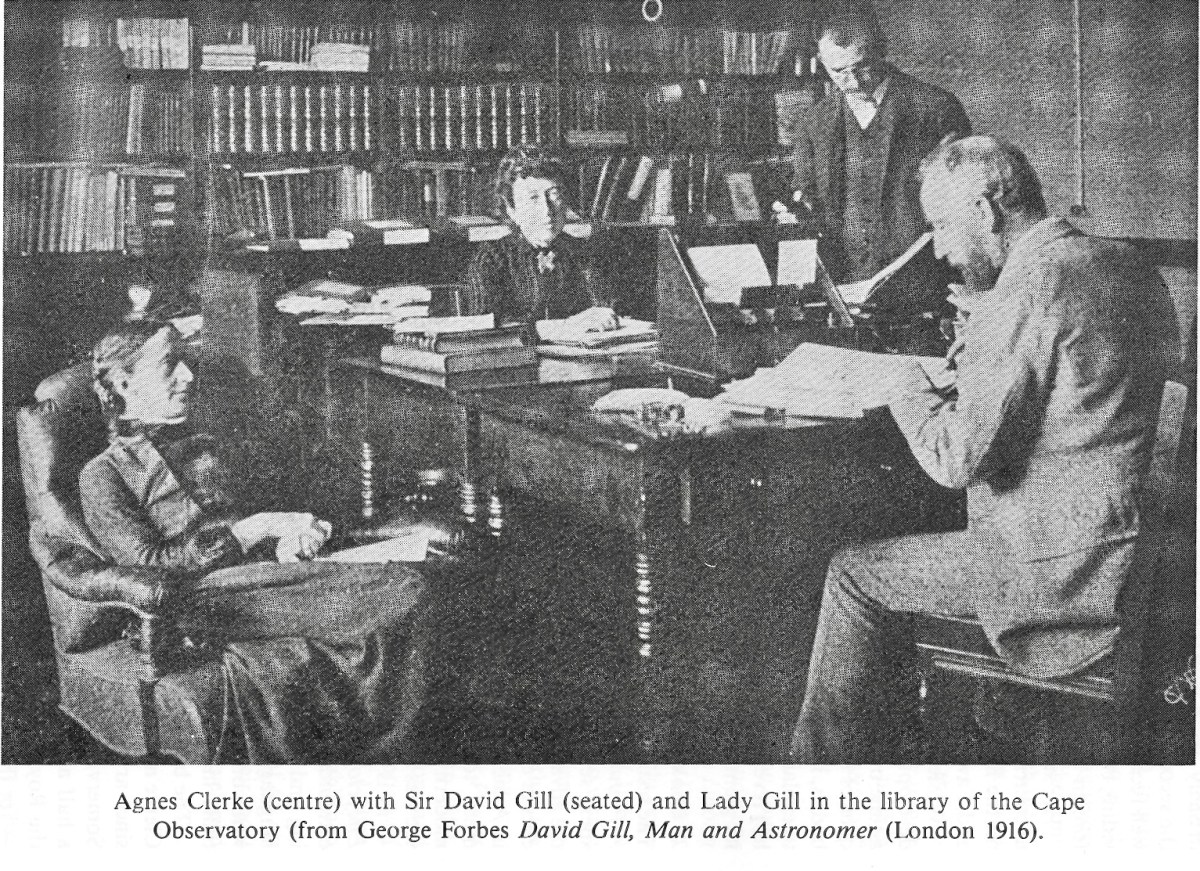
Successful as the book was, Agnes was a woman, and a non-practitioner (that is, she didn’t work in an observatory) and many in the predominantly male science establishment of Victorian Britain were sceptical of her knowledge and resentful at her success. One who was not was David Gill who invited her to spend time at his observatory in Cape Town. She went, had a marvellous time, and gained practical experience that enabled her to write with much more confidence on certain subjects afterwards.
But as they read what she wrote, scientists were won over by her erudition and her ability to present their complex findings to a wide audience. Although she was a member of the British Astronomical Association, as a woman she was ineligible to be a member of the prestigious Royal Astronomical Society and had to call in favours to be allowed access to their library. But eventually even that bastion of male scientific privilege was forced to acknowledge her achievements and appointed her and her great friend Lady Margaret Huggins (another Irish astronomer, below) as honorary members. Lady Huggins was also her biographer.

Besides her new editions of A History of Astronomy, Agnes wrote several other books on Astronomy and as a diversion took a break and wrote one about Greek Literature, Familiar Studies in Homer (she knew how to take it easy).

The foremost authority on Agnes’s life and scholarship was Mary Brück. Of Agnes, she said:

This remarkable woman, educated solely within her own family and through her own private studies, not only kept abreast of astronomical progress world-wide but also had a genuine understanding of the matters on which she reported and the gift of communicating them through her fluent and prolific writings. Her books – in particular her Popular History of Astronomy during the Nineteenth Century, first published in 1885 and reprinted over almost twenty years – are treasured by historians and by amateur lovers of astronomy alike as sources of reliable and enjoyable information on that period.

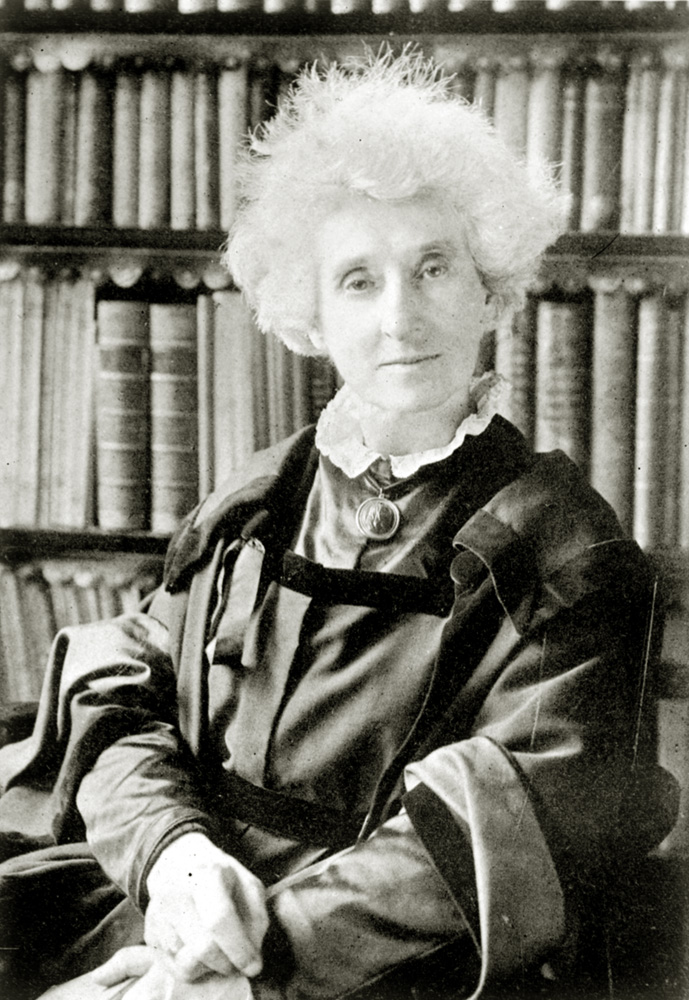
I loved her description of Agnes at the height of her powers: Agnes Clerke in her sixties had become a sort of mother figure among astronomers, tactful, kind, helpful. In one account, she was described at a scientific event surrounded by leading astronomers, genuinely keen to hear her opinion on some knotty point.

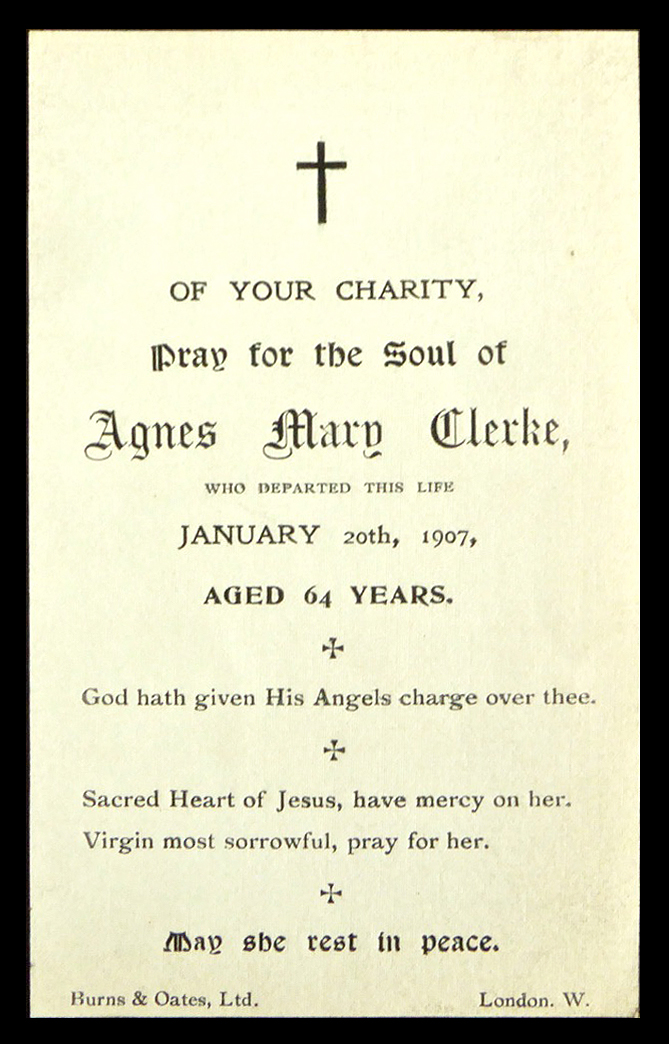
Agnes died in 1907, of the same flu that had carried off her beloved sister, Ellen, the year before. Aubrey lived on alone in the house in Redcliffe Square, the house where they had lived and worked and hosted many gatherings of eminent scientists and writers.

In 1981, Agnes was paid a high honour. A crater on the moon, near the Apollo 17 landing site, was named the Clerke Crater by the International Astronomical Union.

I have written about Ellen and Aubrey here. It seems apt to close this piece on Agnes with a quote from one of Ellen’s poems, Night’s Soliloquy:
                                …are not hidden things

Reveal’d to science when with piercing sight

She looks beneath the shadow of my wings

To fathom space and sound the infinite?

Thanks to:

Janice McClean for the photograph of the Clerke’s house at Redcliffe Square in London. Janice, a member of the British Astronomical Society, is endeavouring to secure an English Heritage blue plaque for the house.
Paddy Leahy, for his piece Sisters in Science: Agnes and Ellen Clerke in The Journal of the Skibbereen and District Historical Society, Vol 7, 2011
In his essay, “Agnes Mary Clerke and the Edinburgh Review,” for the Skibbereen and District Historical Society Journal (Vol 9, 2013), Perry O’Donovan points out that being accepted to write for the Edinburgh Review was the equivalent of an unknown writer today being published in the New Yorker.

Sweet Ilen

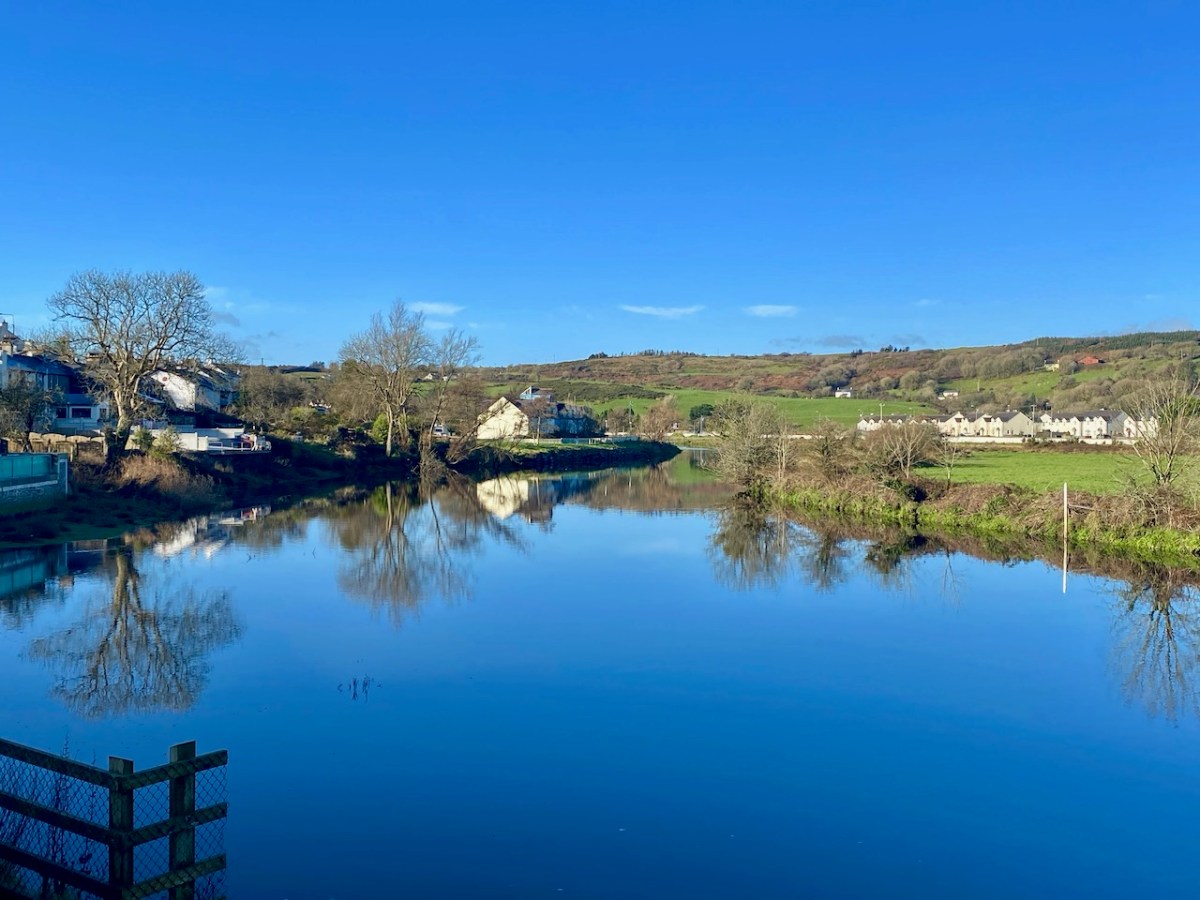
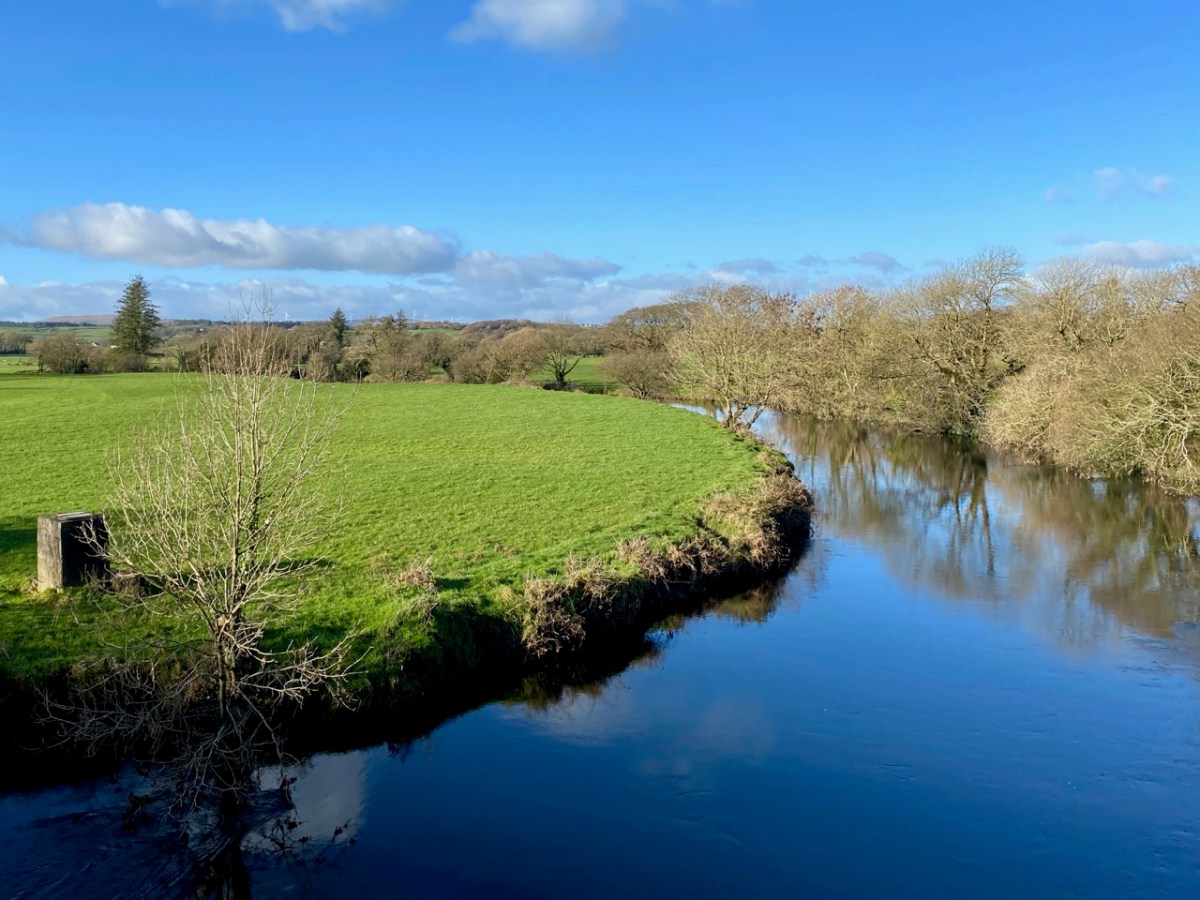
I wanted to explore the Ilen River: that’s pronounced eye-len, and it comes from the Gaelic An Aighlinn. ‘Aighlinn’ is an Irish name, the equivalent of Eileen in English, but it is also said to have a meaning when it relates to water: ‘the way that moonlight reflects on water . . .‘ We’ll keep a lookout for the moonlight, but our first expedition was carried out on a glorious late November day, absolutely calm and with clear, deep blue skies: the morning reflections were perfect.

The header and the picture above are both taken in Skibbereen, as good a place as any to begin our wanderings. The town is built on the river and was once a water transport hub: in the early 19th century boats of up to 200 tons could navigate to Oldcourt, within two miles of the town centre. From there goods were transferred into ‘lighters’ (unpowered barges) and then brought into the town where there were no less than five quays, warehouses and a Customs House. Unfortunately, low bridges now prevent navigation.

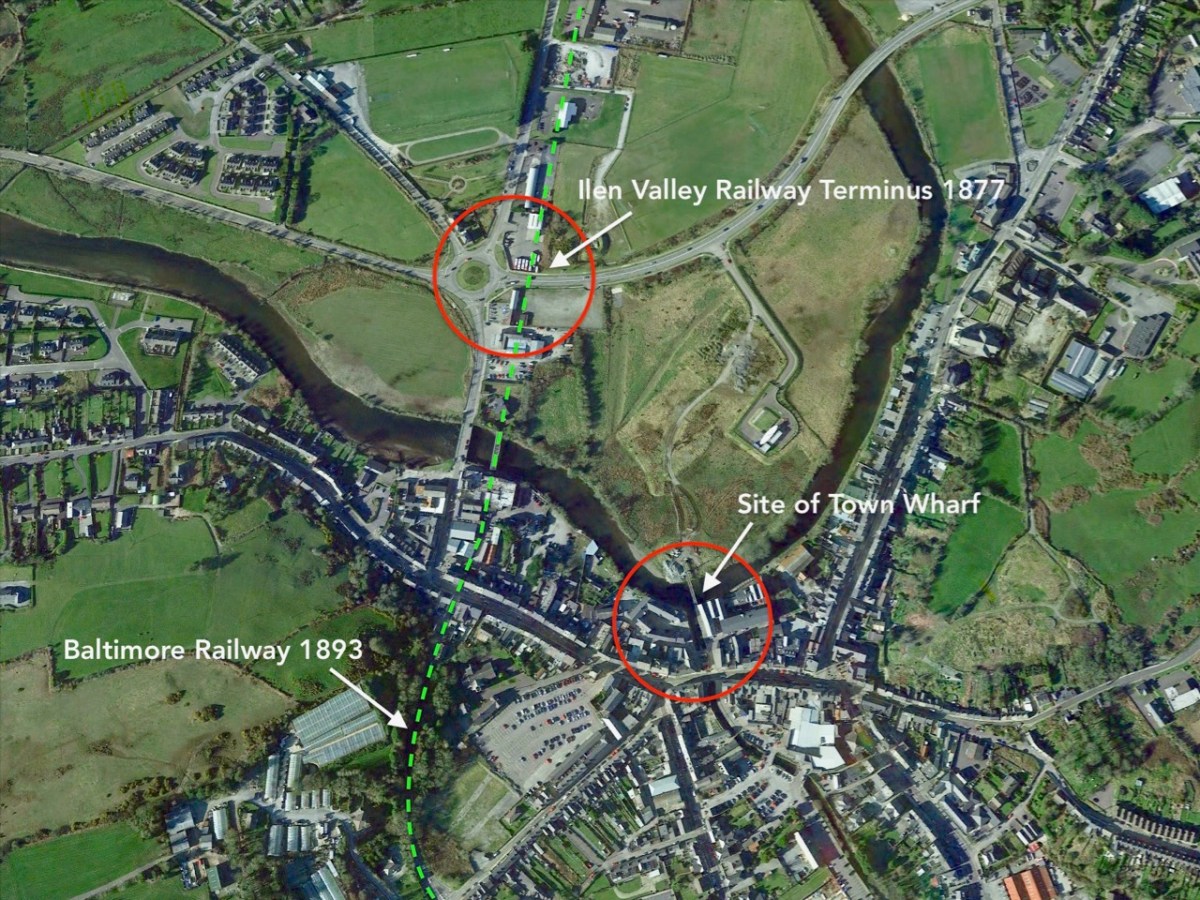
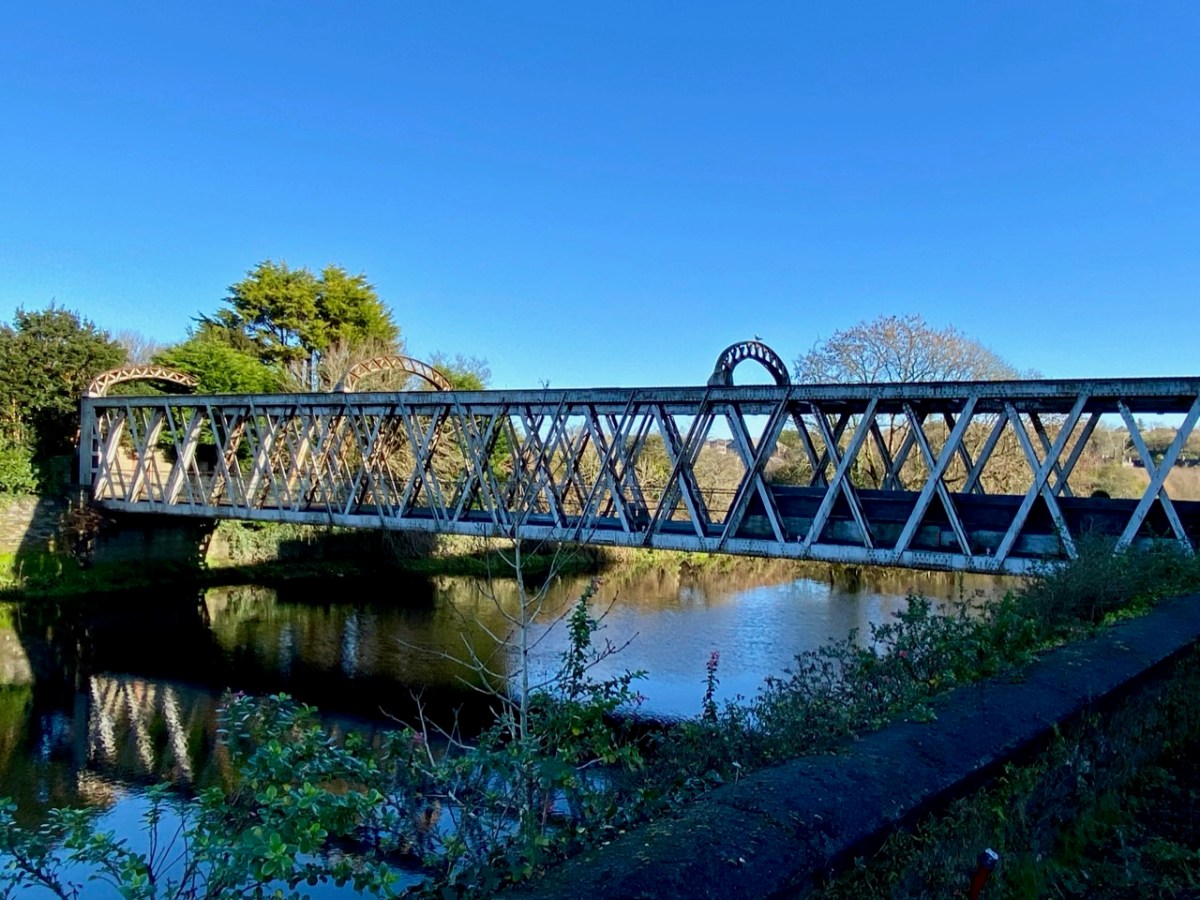
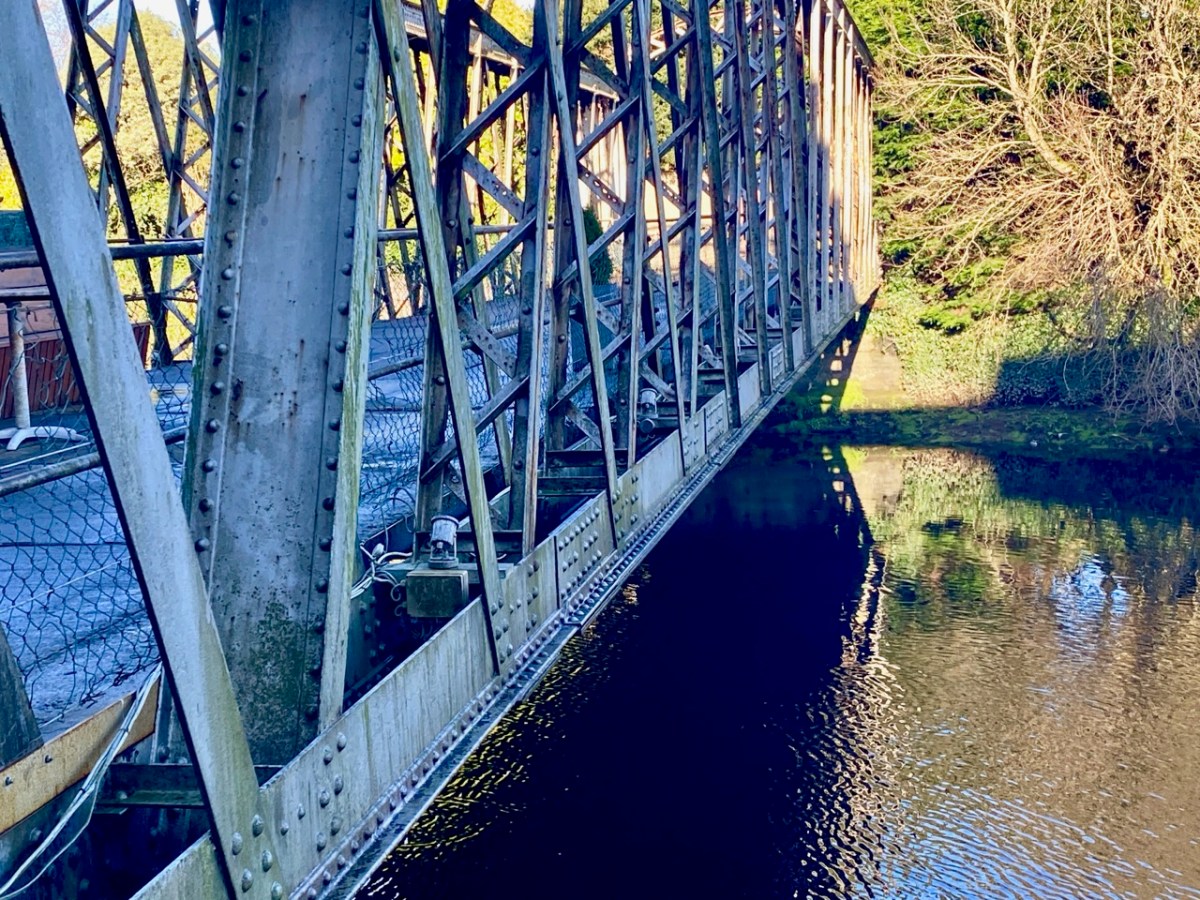
This aerial photograph dates from a few years ago, but it’s useful to show how Skibbereen has developed along the south bank of the river. At the Town Wharf, or Levis’ Quay, you can still see old stone steps leading down to the water’s edge, once a hive of activity with lighters loading and unloading. The nineteenth century brought engineering advances, with railway connection to Dunmanway, Bandon and Cork. The station – marked above as the ‘Ilen Valley Railway Terminus’ opened in 1877. Later, the Baltimore Extension Line continued south over a smart new steel bridge, built in 1892.

From Skibbereen there is plenty of the river to explore both south (to the estuary) and north. It’s our ambition – when travel restrictions ease – to find the source of the river on Mullaghmesha Mountain, which we could see in the far distance beyond Castle Donovan on our walk last week. That might have to wait anyway, as climbing that mountain is not recommended in the winter months because of rough conditions underfoot, but keep watching – we will get there!

The dancing of a mountain stream may be as entrancing as a ballet, but the quiet of an age-old river is like the slow turning of pages in a well-loved book . . .

Robert Gibbings – TILL I END MY SONG

One of our great heroes is Cork-born writer and illustrator Robert Gibbings. He was an explorer of rivers, making books of Cork’s River Lee, the Welsh Wye and – most famously – Sweet Thames Run Softly. In homage to him I’m calling these posts Sweet Ilen: I don’t think he will mind. Sadly, I haven’t his artistic talents but I’ll do my best with words and photographs.

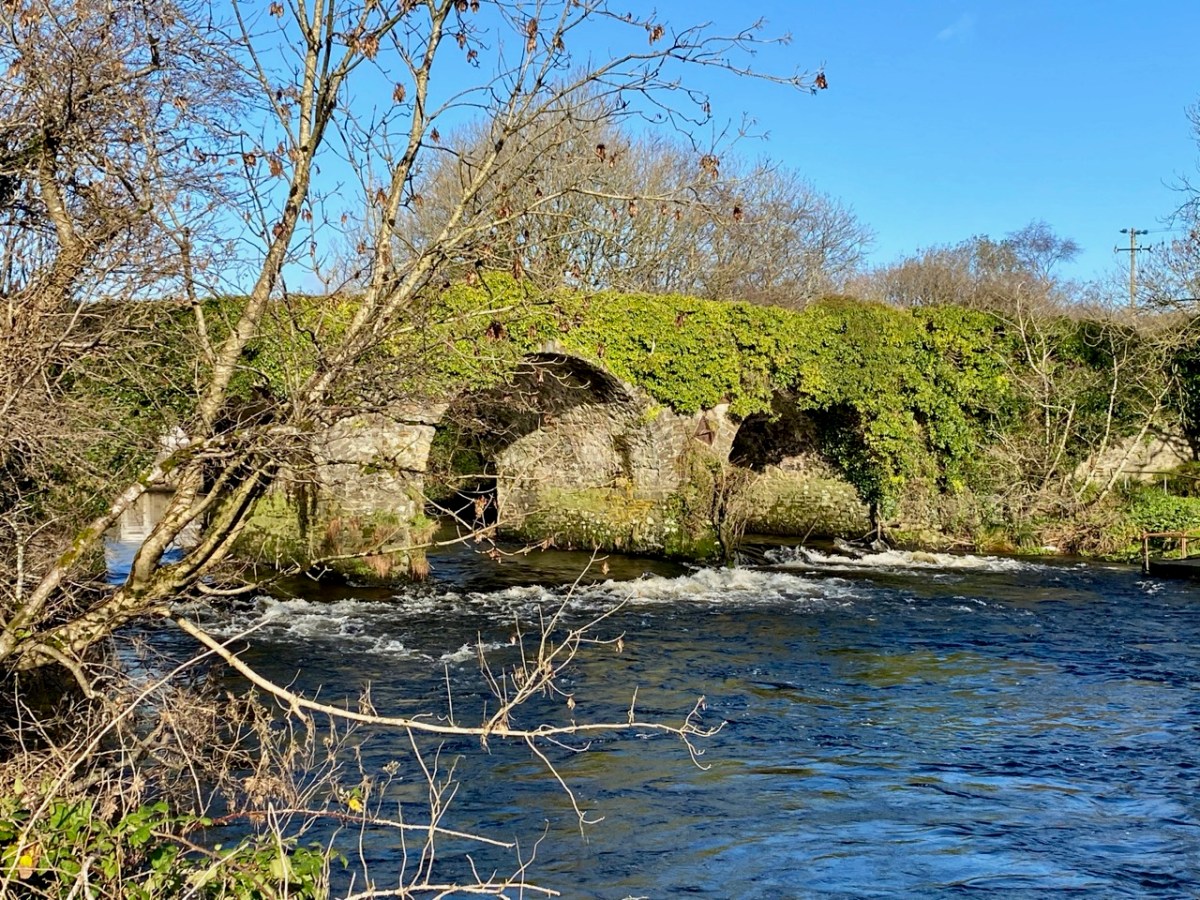
The upper picture looks from the West Cork Hotel upstream towards the town: the Town Wharf is just around the corner; the steps in the foreground mark the beginning of the Ilen River Blueway – you will embark here if you take a kayak trip down to Baltimore. Leaving Skibbereen behind, we soon realised that the Ilen is a secretive waterway: much of its course is hidden away and runs in quiet backwaters distant from habitation and modern life. It’s only at the crossing points like the one above, near Hollybrook, that the river briefly reveals itself to us, although anglers have private pathways known only to themselves: we caught tantalising glimpses of their occupancy through the tree cover on some remoter banks.

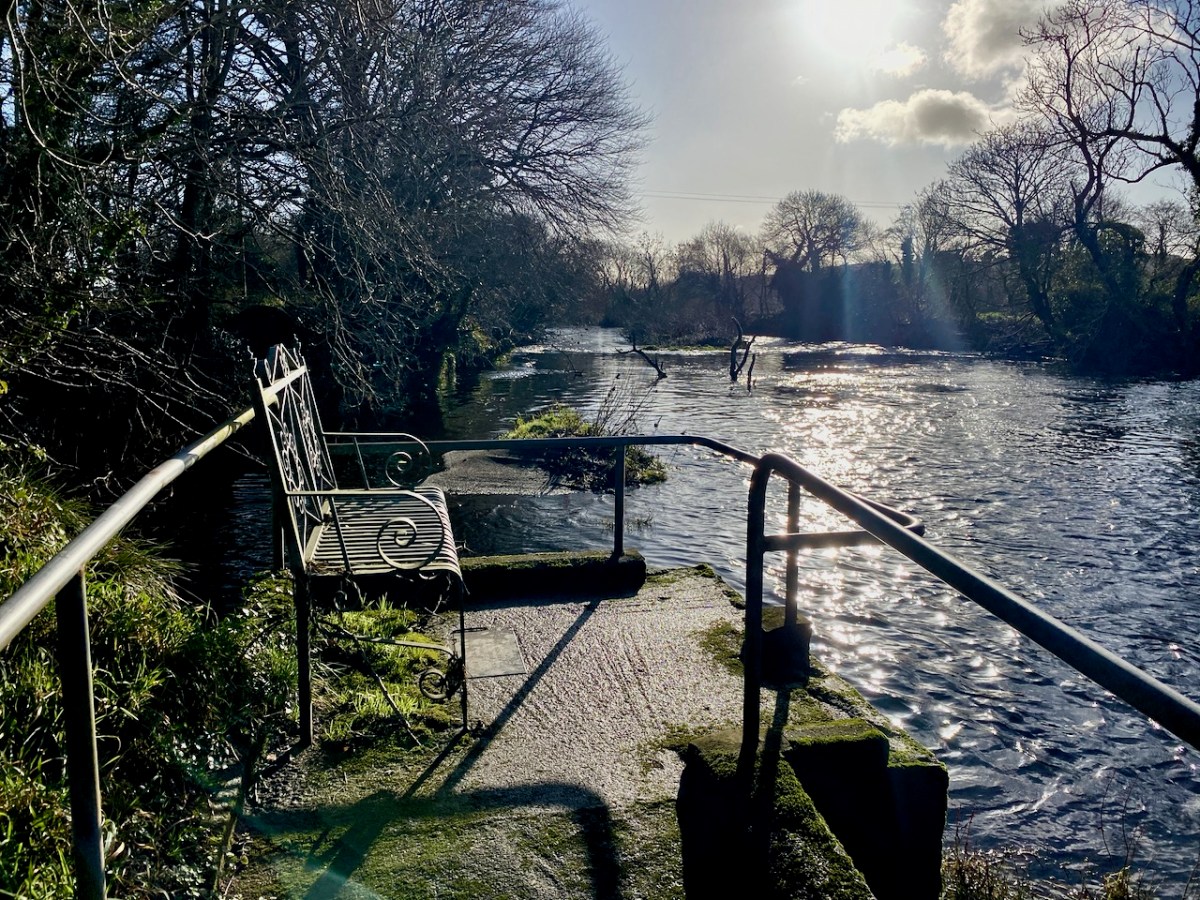
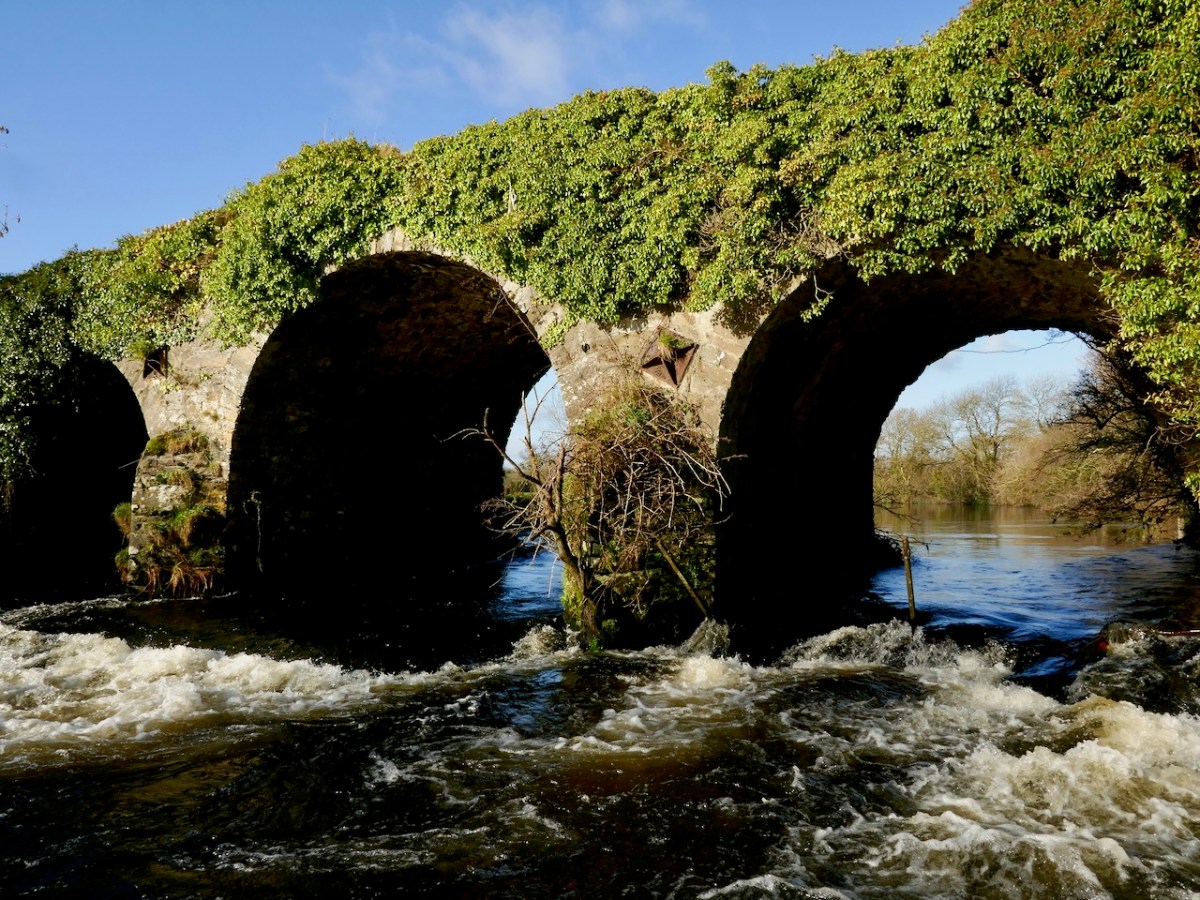
A well-placed seat with a view (upper picture) on the angler’s path below Ballyhilty Bridge. Close by (lower picture) is a small farm accommodation bridge which is also giving anglers access to the further bank. Ballyhilty bridge itself is a real discovery. It’s easy to drive over it without realising the substantial structure which carries the road:

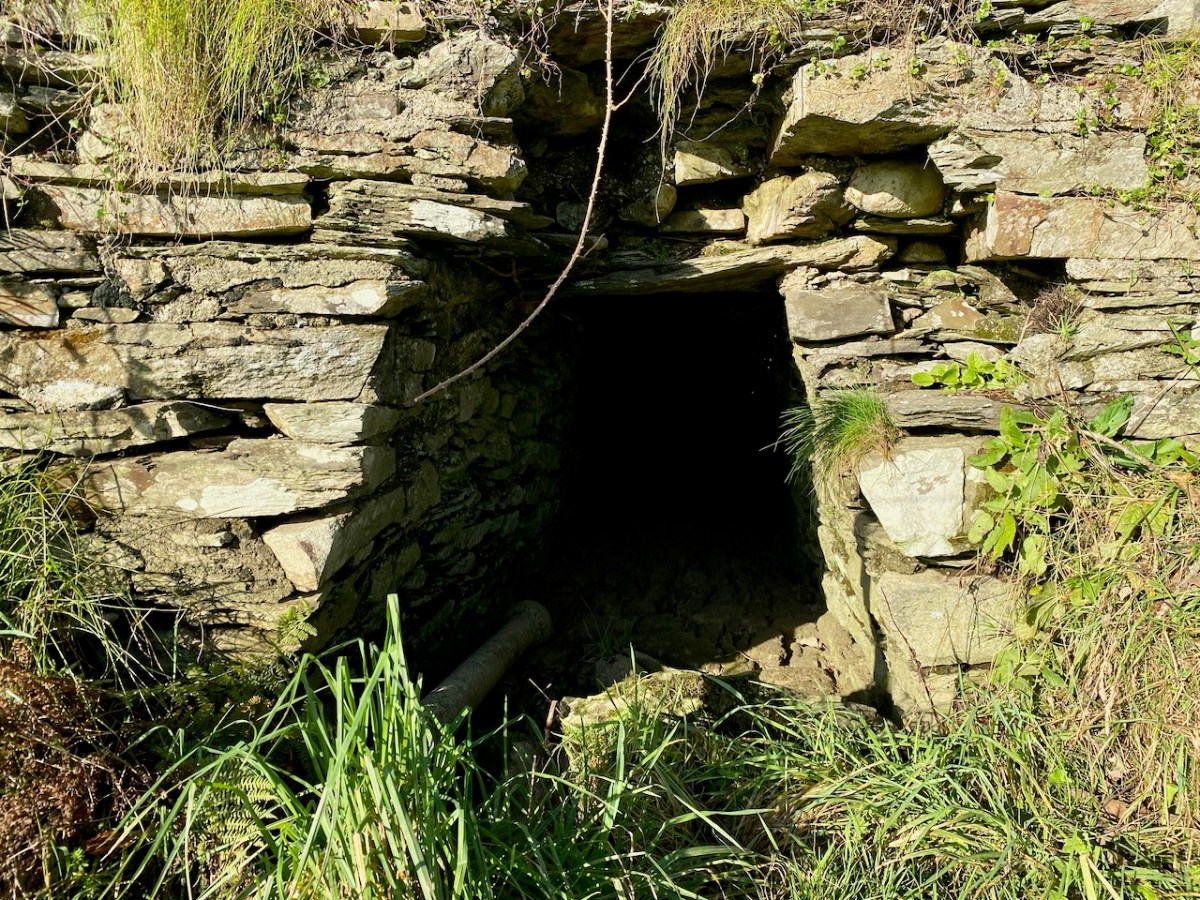
The only description I could find of this substantial structure is a record in the Archaeology Ireland National Monuments site which describes it as ‘a hump back three-arch road bridge over the Ilen River in the townland of Gortnamucklagh’. The parallel entry in the National Inventory of Architectural Heritage describes it as ‘bridge 1760 – 1800’, and says no more. But I think it worthy of detailed consideration: it’s a massive, dressed stone structure which has been reinforced with iron plates. The central opening is raised to a height which would almost lead us to think that it was once a navigation arch, although there are no records to support this. On the west side are some flood relief culverts of unusual construction:

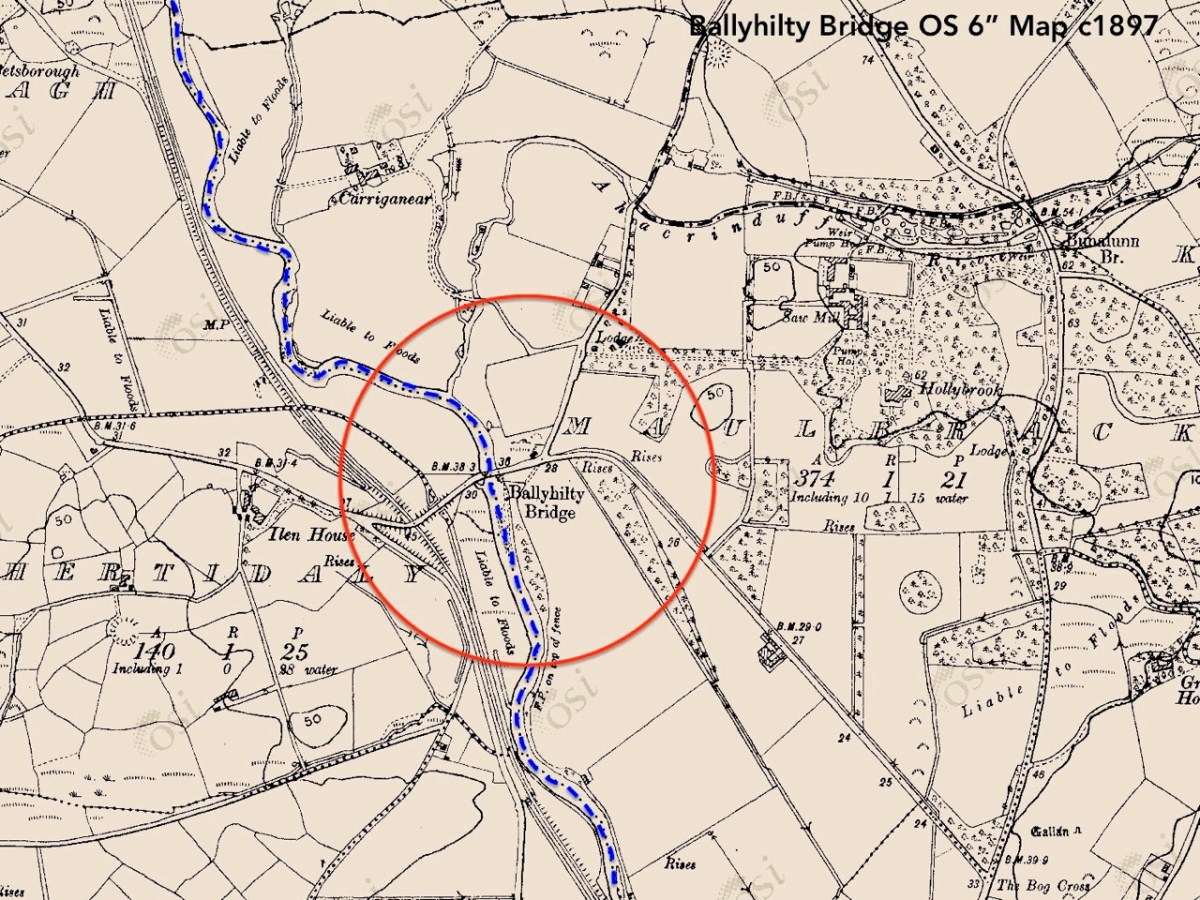
The form of these remind me of a bridge we encountered on the Fastnet Trails close to Toormore in 2018: here’s the post. At that time I pondered on how old the Toormore structure was likely to be. I’m asking myself the same question on this one. The early OS map might give us a clue:

This is from the late 19th century 25″ map: you can see the railway line on the west heading out of Skibbereen towards Drimoleague, where it met with the Cork, Bandon and Bantry lines. But on the east side of the river is a very large estate: Hollybrook, in the townland of Maulbrack. Hollybrook House has a long history, encompassing families such as The O’Donovan, Bechers and Townsends. Nowhere can I find a date for the original house (now replaced), but I have found this:

At the time of Griffith’s Valuation, John Beecher held two substantial properties in fee at Maulbrack. They were purchased in 1703 by Henry Beecher from the trustees for forfeited estates . . .

NUI GALWAY – CONNACHT AND MUNSTER LANDED ESTATES DATABASE

These properties were therefore in existence before 1703: it would be reasonable to assume their date could be well before this. I would suggest that the bridge at Ballyhilty was built in the 1600s, to ensure good access to the estate at Maulbrack. This would make it a truly historic structure, worthy of prominent commentary and protection.

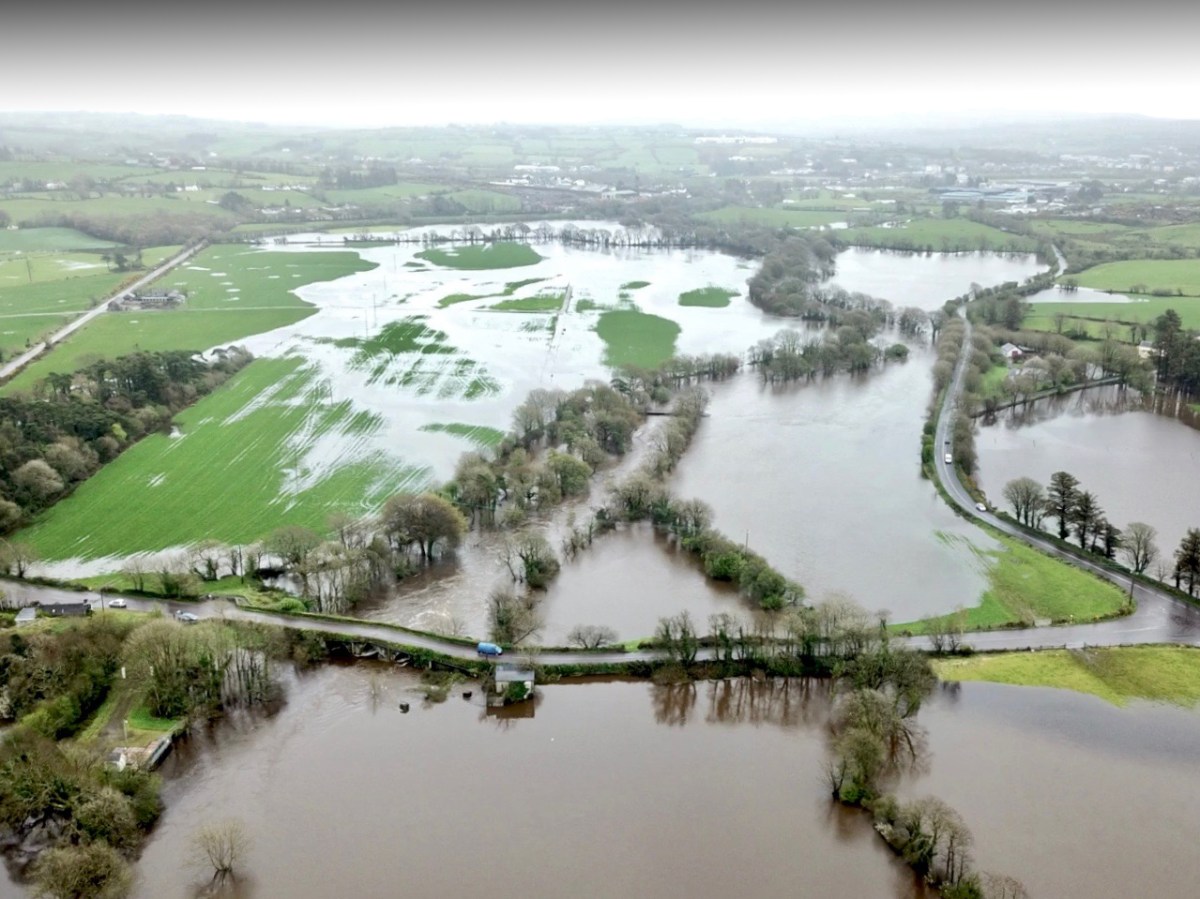
On such idyllic days for exploration it’s not always easy to remind ourselves of the power of this river: it’s no humble stream. Here’s a screenshot of a drone video by Garry Minihane Photography which shows this same stretch – at Ballyhilty – in full flood: the adjacent roads are set just high enough to be clear of all but the fiercest of deluges! Skibbereen is in the distance.

I’m thinking that the journey so far is sufficient for this week’s post; next time we will travel further north, penetrating even more into the uplands of the Ilen as we set our path towards the source. It’s not a huge river, only 34 km in total. It’s instructive for us that our West Cork terrain is quite small scale: within that 30-odd kilometres we have the contrast of a mountain stream falling from the high places and gathering enough tributaries to feed the tidal reaches which we also have yet to discover on our coasts.

William Trevor’s Skibbereen – “The Back of Beyond”

Yellow furniture vans – Nat Ross of Cork – carted your possessions off, through Cork itself, westward through the town that people call “Clonakilty God Help Us”, to Skibbereen, the back of beyond . . .

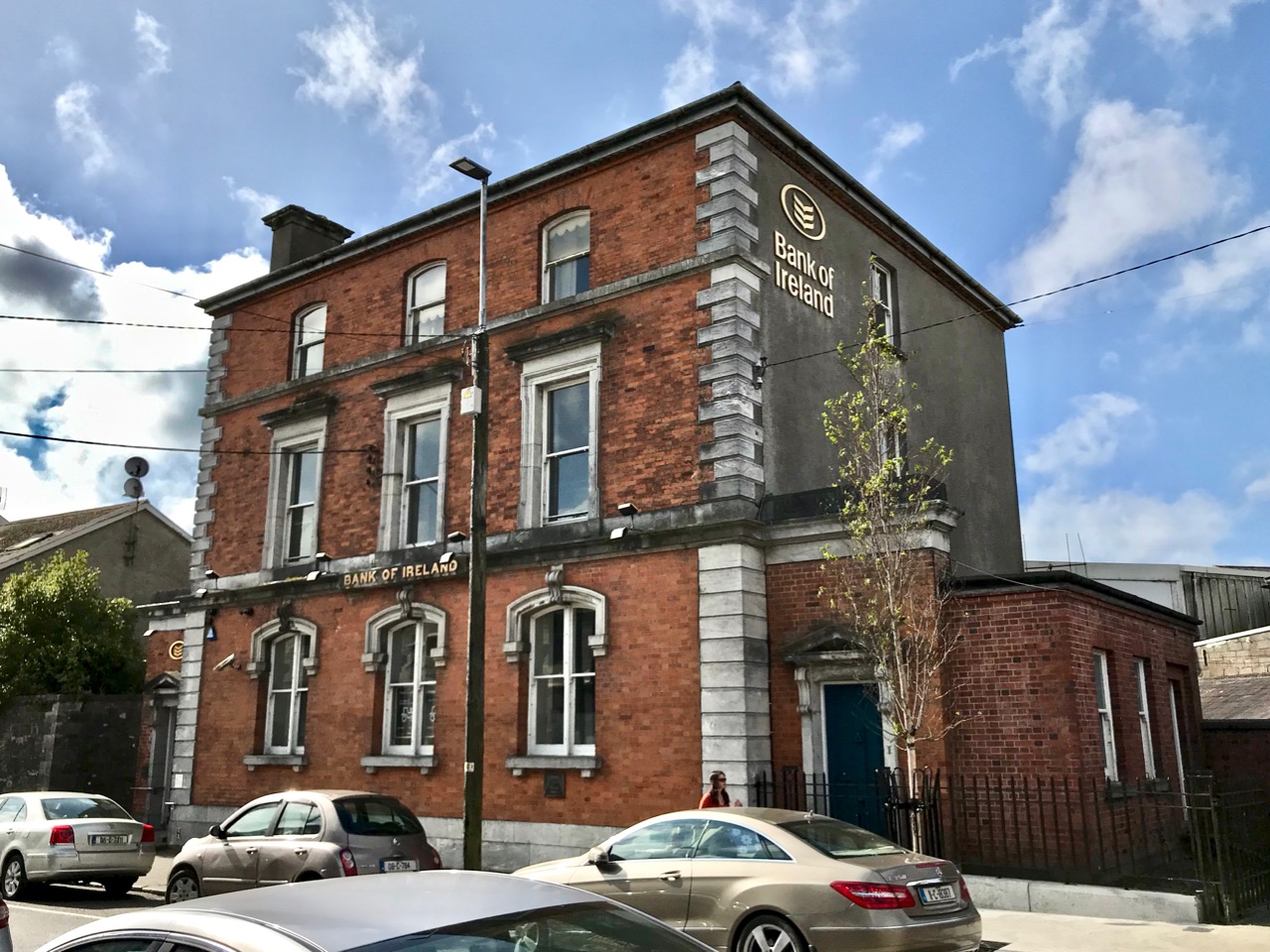
William Trevor, one of Ireland’s most celebrated writers of short stories and novels, grew up in Skibbereen. His father worked for the Bank of Ireland, and the family was frequently moved to pastures new, but Trevor’s memories of our own West Cork town are amongst his earliest, encompassing his first schooldays and all the traumas of that ‘learning experience’.

Where and when did my writing life begin? I suppose it was in a small schoolroom in Skibbereen when, as an alternative to parsing and analysis, I was occasionally required to compose six sentences on such random subjects as A Wet Afternoon or A Day in the Life of a Dog. I did my best, but even at seven I believe I probably guessed that there was more to words and what you did with them than recording rainfall or reporting that our smooth-haired fox terrier was infatuated by our cat . . .

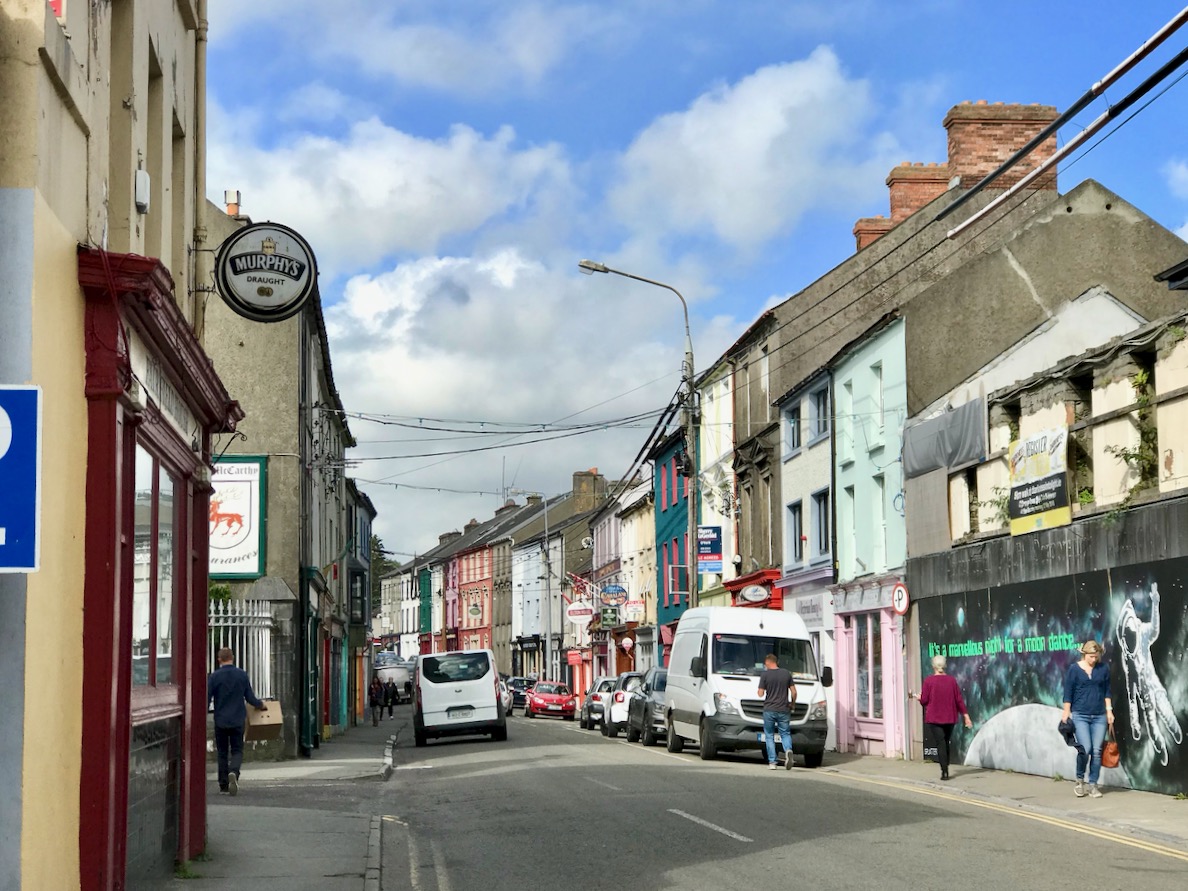
The way to school? Bridge Street, Skibbereen today. William Trevor’s family lived a mile and a half out of town, so we are not really sure what path his daily journey took

William Trevor was born in Mitchelstown, County Cork, in 1928, and moved to the town before he began to go to school, so he would have known what the Skibbereen of the 1930s looked like. He provides wonderfully descriptive word-pictures of his memories of the time in Excursions in the Real World, autobiographical sketches published in 1993 but now out of print. I have used some of his descriptions from this work and others from various sources – including a 2001 school exam paper – to make a narrative in his own words. I have illustrated this with some of my own present day images of the town, and some historic material. In fact I have as yet found no photographs from 1930s Skibb! But – reading between his lines (and, remember, he was renowned as a storyteller) – we can get a good feel for the place and those times.

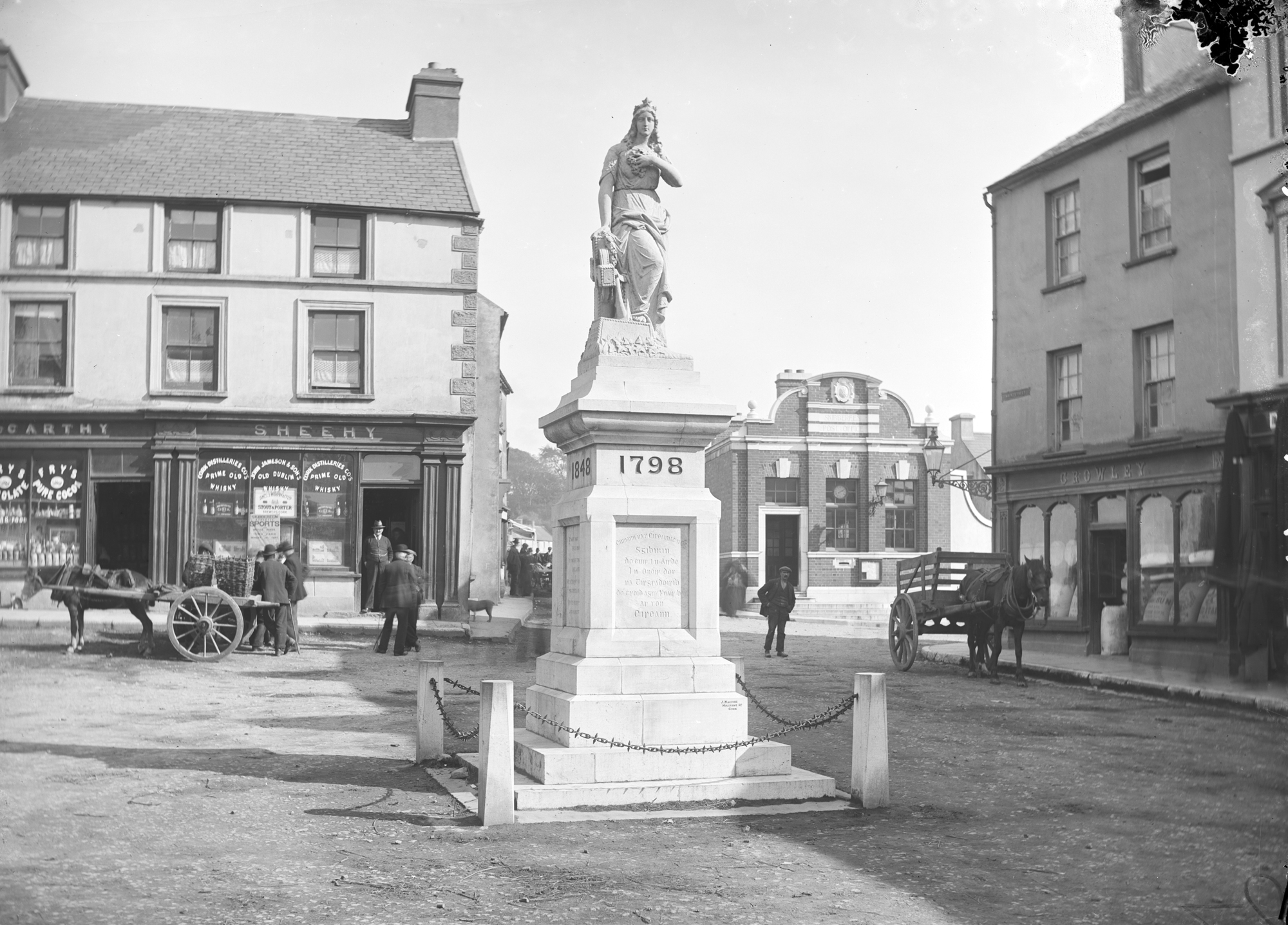
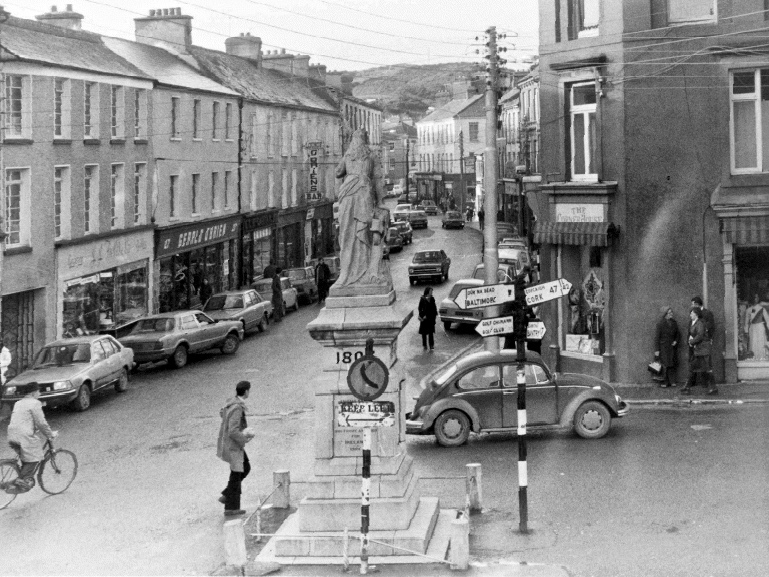
A bit too early for William Trevor . . . This photograph of the Square with the Maid of Erin statue was taken in 1912. It has in fact changed very little even in the present day: the statue has been moved backwards but the visible buildings (that’s the Post Office in the background) are recognisable, so this is a good picture of what the writer is likely to have seen

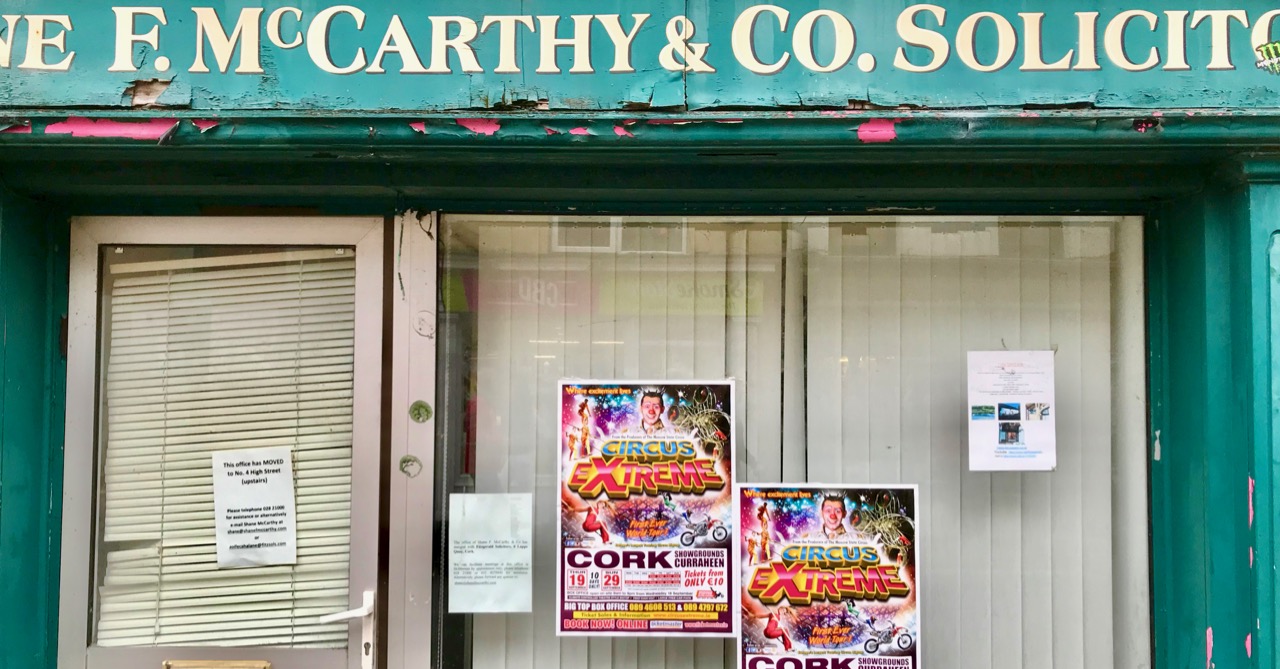
My world at that time was not extensive. There was memory, as far back as it would go, and the modest reality of Skibbereen, which afterwards became memory also. A mile and a half it was, the journey to school, past Driscoll’s sweetshop and Murphy’s Medical Hall, and Power’s drapery, where you could buy oilcloth as well as dresses. Pots of geraniums nestled among chops and ribs in butchers’ windows. A sunburnt poster advertised the arrival of Duffy’s Circus a year ago. Horses trudged slowly, carts laden with a single churn for the creamery. On fair-days, farmers stood stoically by their animals, hoping for the best; there was a smell of whiskey and sawdust and stout . . .

This photo of Main Street was taken before the Maid of Erin statue was moved – and while Skibereen’s main streets were two-way (and also while sign-posts were still in miles)- so it must be pre-1988

In the town’s approximate centre, where four streets meet, a grey woman still stands, a statue of the Maid of Erin. E O’Donovan, undertaker, still sells ice-cream and chocolate. The brass plate of Redmond O’Regan, solicitor, once awkwardly high, is now below eye-level. In the grocers’ shops the big-jawed West Cork women buy bread and sausages and tins of plums, but no longer wear the heavy black cloaks that made them seem like figures from another century. They still speak in the same West Cork lisp, a lingering careful voice, never in a hurry. I ask one if she could tell me the way to a house I half-remember. “Ah, I could tell you grand,” she replies. “It’s dead and buried, sir.”

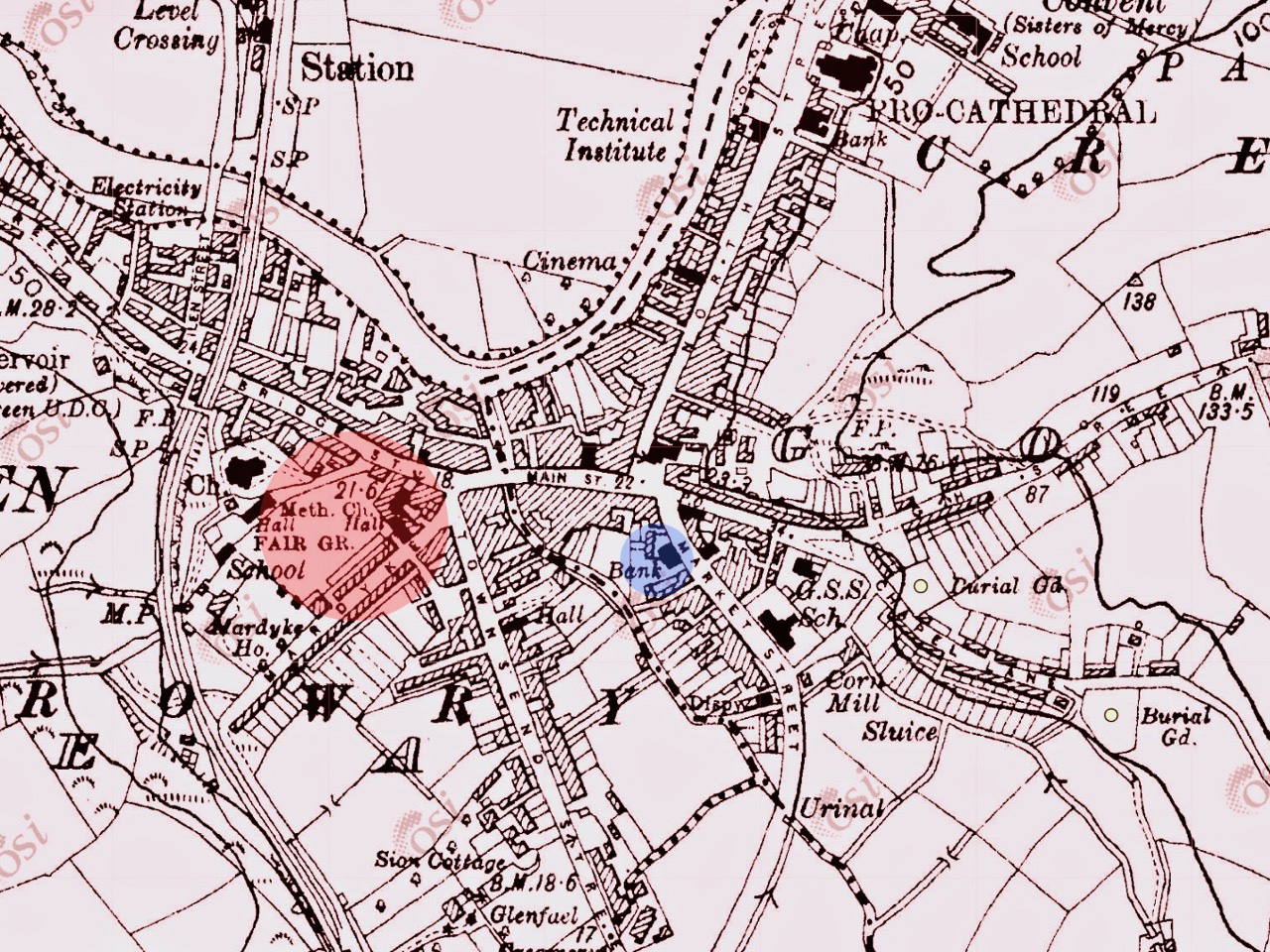
Extract from the 6″ Ordnance Survey map showing Skibbereen town centre during the first half of the twentieth century. The Station and railway to Baltimore can be seen on the left (it closed in 1961); the Bank of Ireland where Trevor’s father worked is outlined in blue, and Trevor went to a school that was ‘next to the Methodist Church’ – outlined in pink. Note the ‘Urinal’ usefully marked on the map!

You made the journey home again at three, the buying and selling over, the publican’s takings safely banked, the last of the dung sliding to the gutters. If you had money you spent it on liquorice pipes or stuff for making lemonade that was delicious if you ate it as it was. The daughters of Power’s drapery sometimes had money. But they were always far ahead, on bicycles because they were well-to-do. Or their mother drove them home in the Hillman car because of the dung.

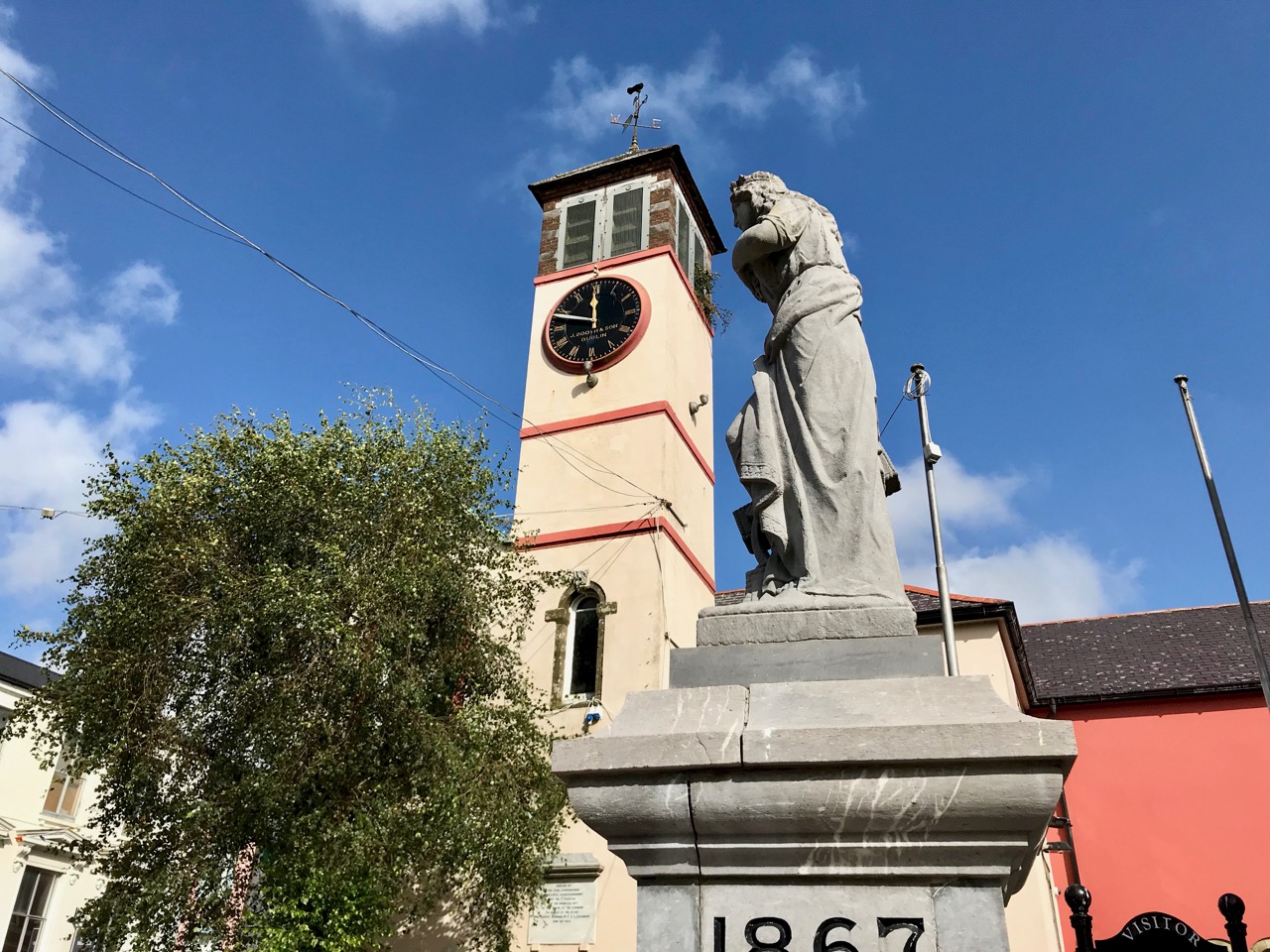
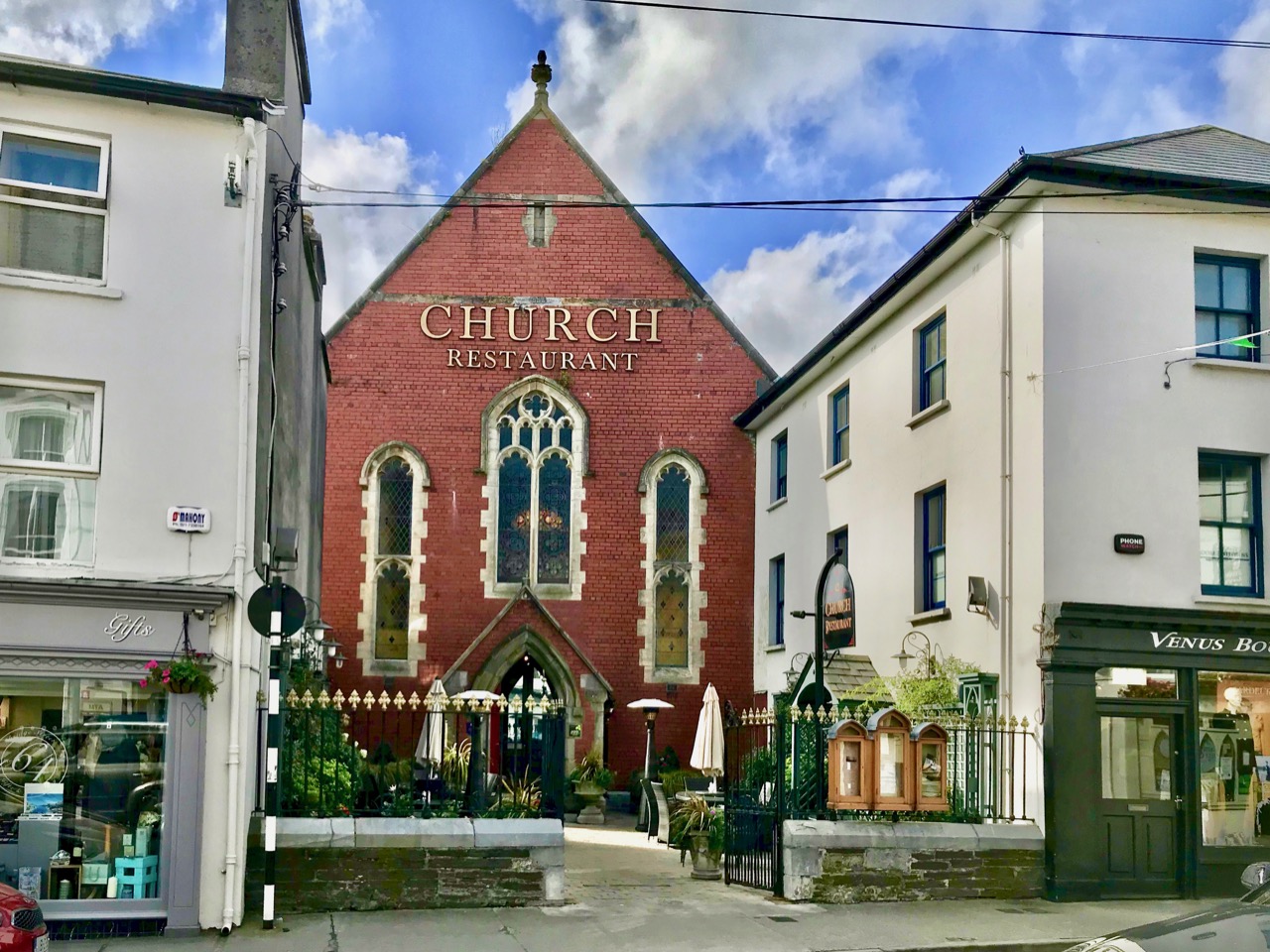
Upper – the Maid of Erin statue and the Town Hall clock tower, both familiar elements in the Sklibbereen streetscape, both in William Trevor’s time, and today. Lower – the facade of the Methodist Church still stands, although the building was converted to a restaurant in 2005. Trevor’s school adjoined the church, although we are not sure on which side

The door beside the Methodist church, once green, is purple. The church, small and red-brick, stands behind high iron railings and gates, with gravel in front of it. Beyond the door that used to be green is the dank passage that leads to Miss Willoughby’s schoolroom, where first I learnt that the world is not an easy-going place. Miss Willoughby was stern and young, in love with the cashier from the Provincial Bank. Like the church beside her schoolroom, she was a Methodist and there burnt in her breast an evangelical spirit which stated that we, her pupils, except for her chosen few, must somehow be made less wicked than we were. Her chosen few were angels of a kind, their handwriting blessed, their compositions a gift from God. I was not one of them . . .

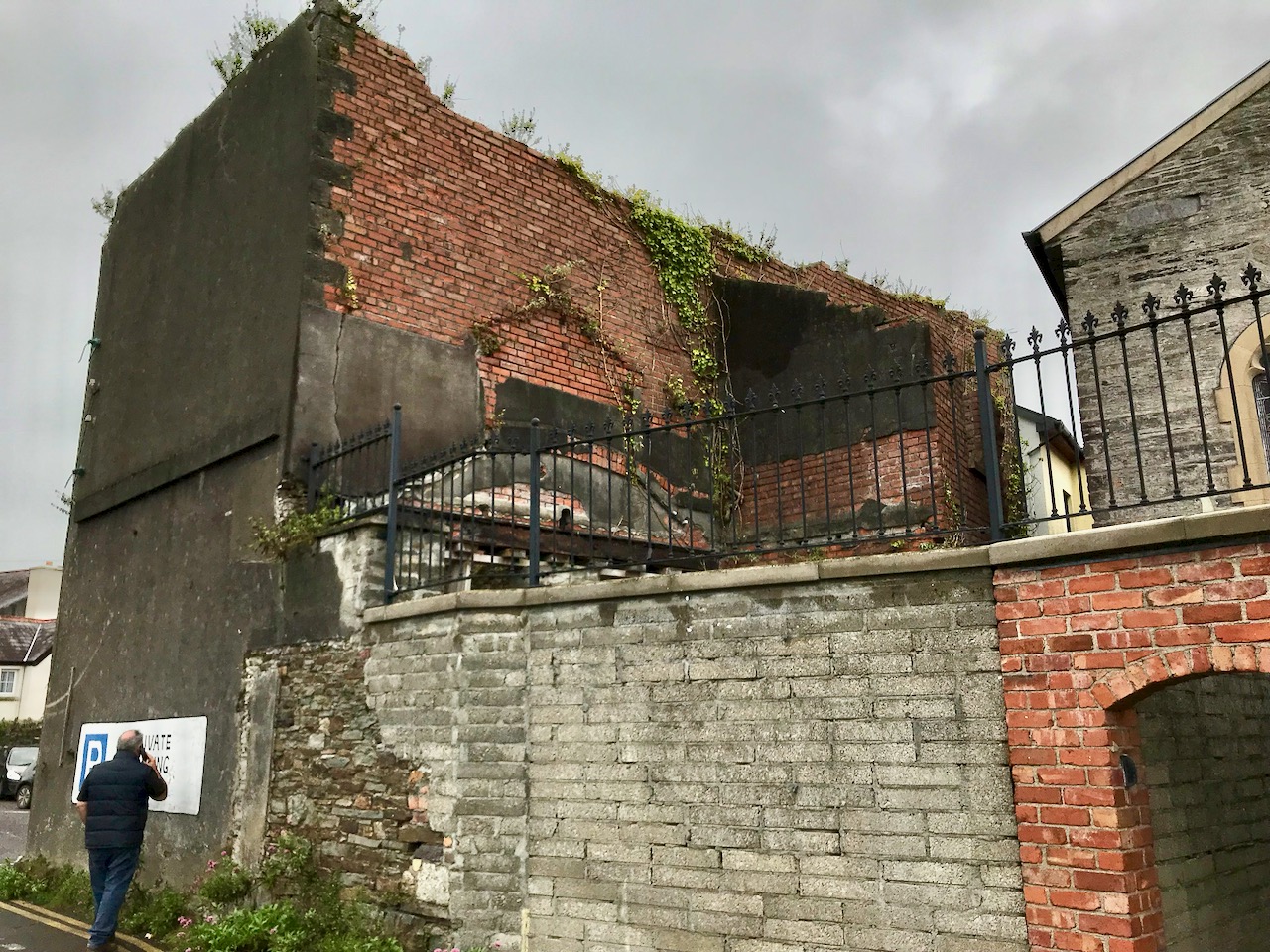
Upper – an anonymous building stands at the back of the former Methodist church – a possible site for Miss Willoughby’s school? Lower – the impressively gaunt Bank of Ireland building in Skibbereen – unchanged externally since William’s father worked there. Although we know that his father became a Bank Manager in his career, it probably wasn’t when he was in Skibbereen, otherwise William would have lived with the family in the rooms above the bank. Instead, we know that he walked a mile and a half to school in the town

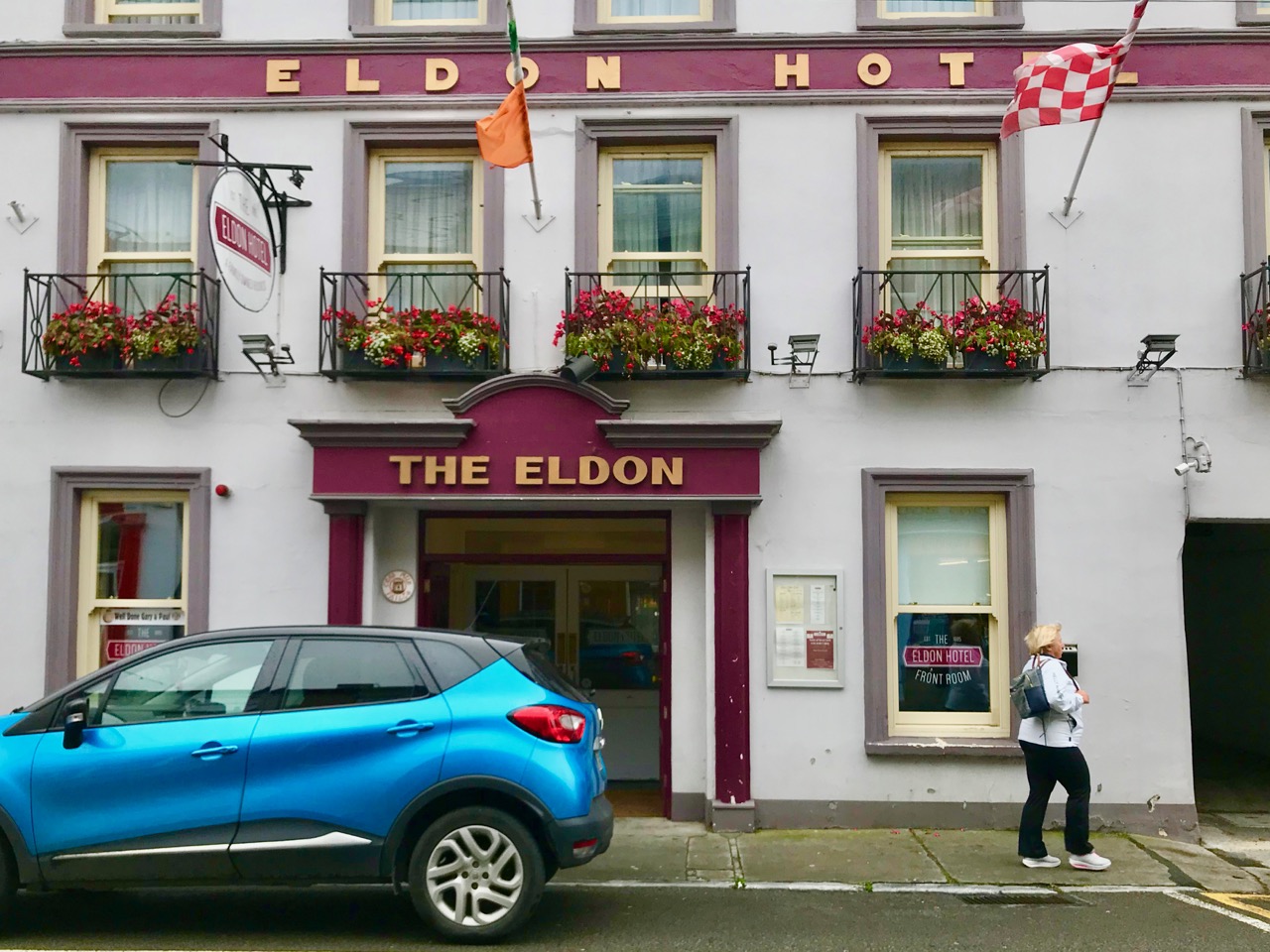
On the gravel in front of the red-brick church, I vividly recall Miss Willoughby. Terribly, she appears. Severe, and beautiful, she pedals against the wind on her huge black bicycle. ‘Someone laughed during prayers,’ her stern voice accuses, and you feel at once that it was you, although you know it wasn’t. V poor she writes in your headline book when you’ve done your best to reproduce, four times, perfectly, Pride goeth before destruction. As I stand on the gravel, her evangelical eyes seem again to dart over me without pleasure. Once I took the valves out of the tyres of her bicycle. Once I looked in her answer book. ‘Typical,’ her spectre says. ‘Typical, to come prying.’ I am late. I am stupid. I cannot write twenty sentences on A Day in the Life of an Old Shoe, I cannot do simple arithmetic or geography. I am always fighting with Jasper Swanton. I move swiftly on the gravel out on to the street and into the bar of the Eldon Hotel: in spectral form or otherwise, Miss Willoughby will not be there . . .

In Shannon’s grocery there is a man who breeds smooth-haired fox-terriers. He gave us one, a strange animal, infatuated by our cat. The man was tall and thin, and behind the counter now he’s only different because he’s old. Other faces, forgotten and now remembered, are different in that way too. But Barbara, the belle of Miss Willoughby’s schoolroom, eldest daughter of Power’s drapery, is nowhere to be found. She runs a café in the main street, I’d heard, with an exotic African name, where every morning at coffee-time she presides. Perhaps I dreamed it, for the café in the main street has no name at all, and trades mundanely in lunchtime fare of stewed meat and vegetables. I peer through the window, and through the diners seated at chromium-legged tables, but the soft-haired Barbara is not there. No figure stands there as gracious as the Lady of Shallott, no face recalls the nine-year-old beauty of Class III. Can she really be one of those hurrying women with trays? A man consuming turnips wags his head at me. A message in the window says someone has found a purse . . .

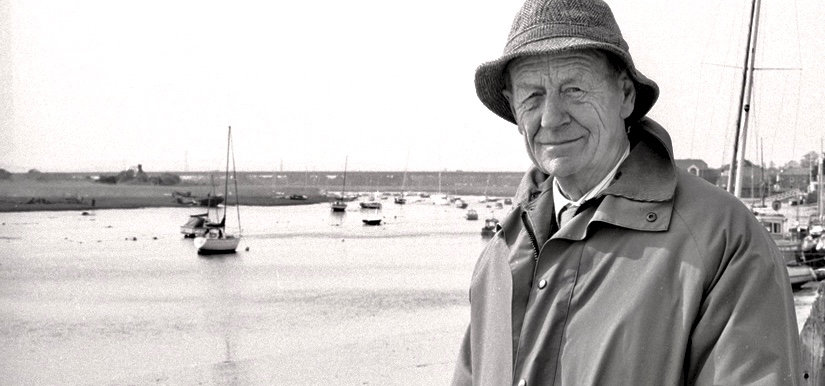
William Trevor, photographed by Jerry Bauer, Bauer (1934-2010), often called “the author’s photographer,” made portraits of an endless list of writers

Biographical note – William Trevor died on 20 November 2016, aged 88. His full name was William Trevor Cox, but he always wrote under ‘William Trevor’. Although his first career was as a sculptor he is known only for his considerable literature output: he had published fifteen novels, three novellas and twelve volumes of short stories, and he won numerous awards for his work. He described the Irish family he was born into as ‘lace curtain’ middle class Protestants. He left Ireland in 1954 and spent the rest of his life in England, settling near Crediton in Devon.

With thanks to Philip O’Regan and Skibbereen Heritage Centre for alerting me to William Trevor’s local connections

Illusions fall fast in the narrow streets of Skibbereen, as elsewhere they have fallen . . .

Hail the Mail

Rossbrin wall box

The first act of the Irish Free State after independence was to paint all the post boxes throughout the country green. It was a brilliant stroke – royal red replaced by emerald green in one of the most visible and ubiquitous symbols of national administration.

Penfold Skibb

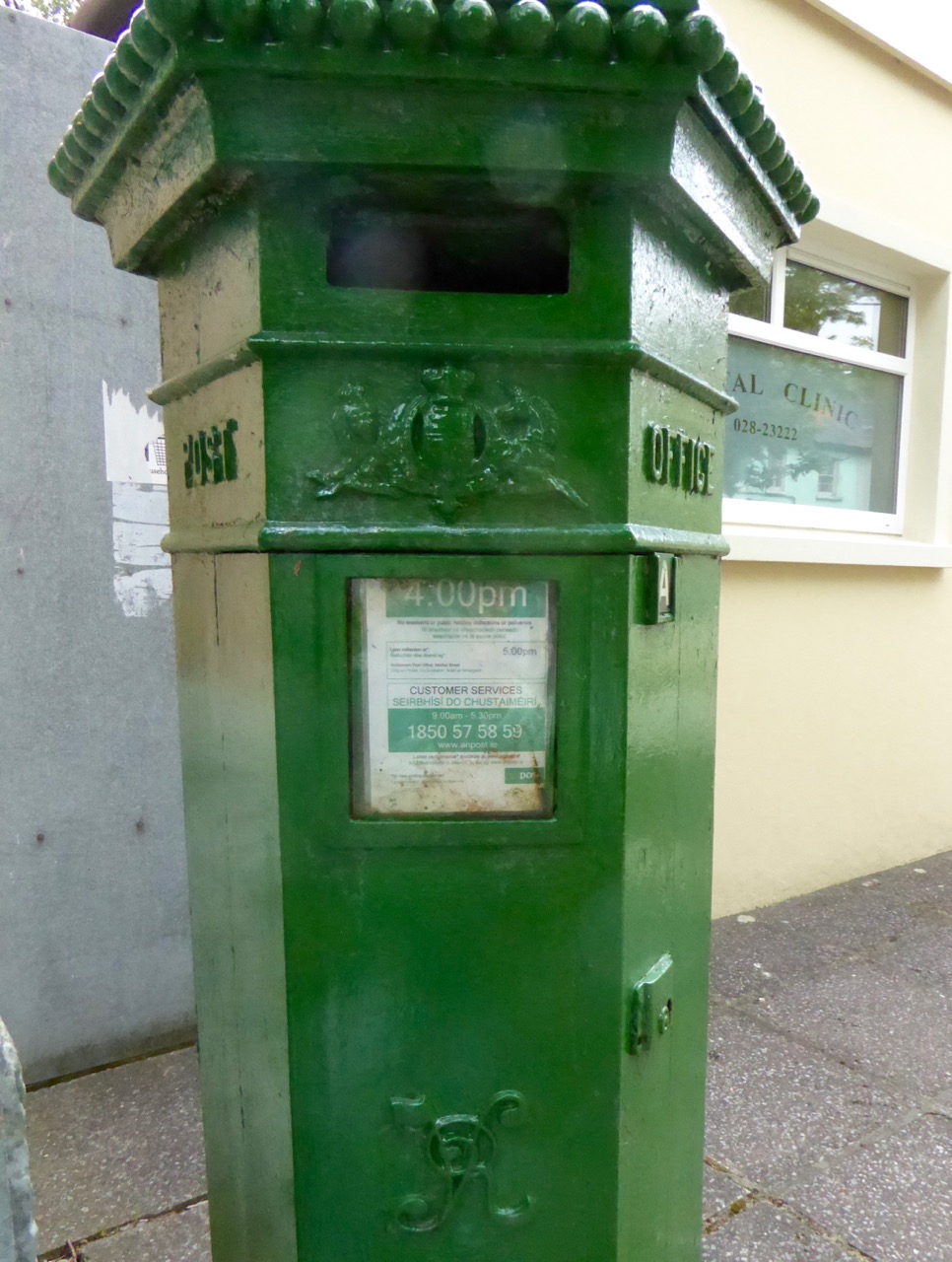
The Penfold post box in Skibbereen, one of only a handful left in Ireland

Ironically, the post boxes themselves did not change, so the royal insignias were simply over-painted by the new colour. The result was a charming mixture of tradition and adaptation that serves as an ongoing reminder of the history of Ireland and its institutions.

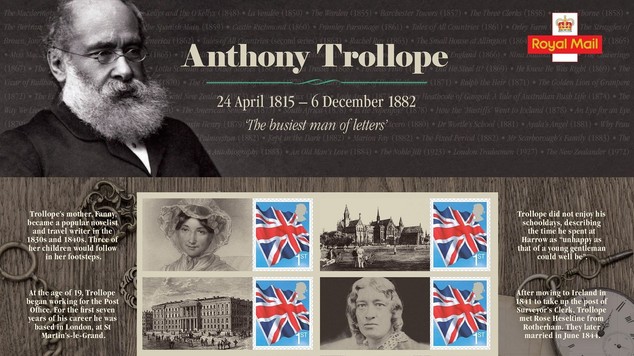
A commemorative sheet of stamps which are going on sale to mark 200 years since the birth of Anthony Trollope (Royal Mail/PA)

Special stamps issued by the Royal Mail in 2015 to celebrate the bicentenary of the birth of Anthony Trollope

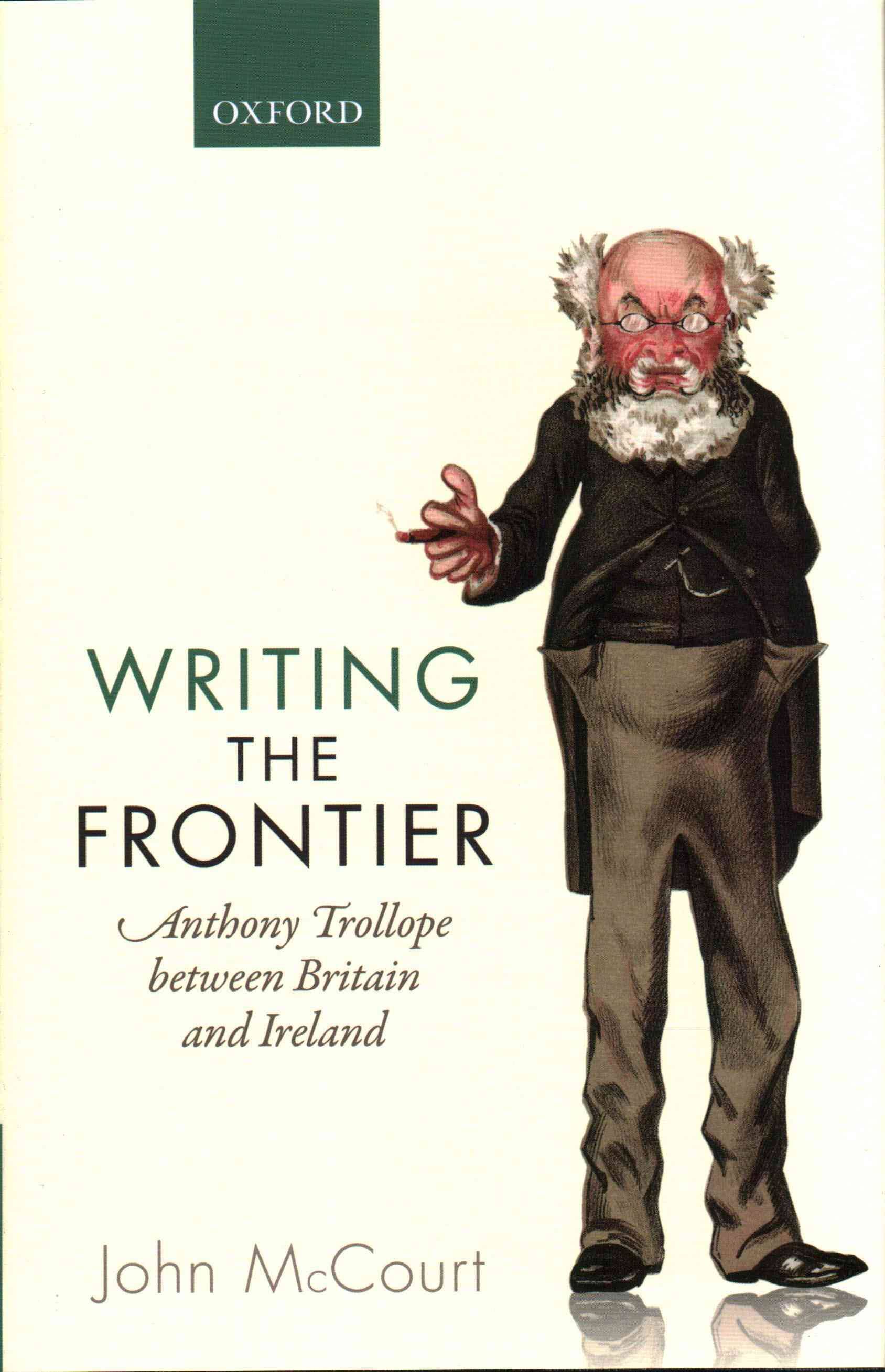
The first post boxes were introduced to Ireland in the 1850s by the novelist Anthony Trollope, then a Surveyor for the Post Office. Trollope was happy in Ireland and wrote several novels and stories set here, although they are not the works for which he is most remembered.

Trollope Book Cover

We don’t usually think of Anthony Trollope as an Irish novelist but he lived here for almost 20 years, spent working for the Post Office and writing

One of the earliest models for a free-standing post box came to be known as the Penfold, after its designer, J W Penfold. They were manufactured and deployed from 1866 to 1879 and very few have survived in Ireland to this day – only six are known and of these only three are still in operation. Skibbereen has one of those, and very fine it is: one hundred and fifty years old and still in daily use!

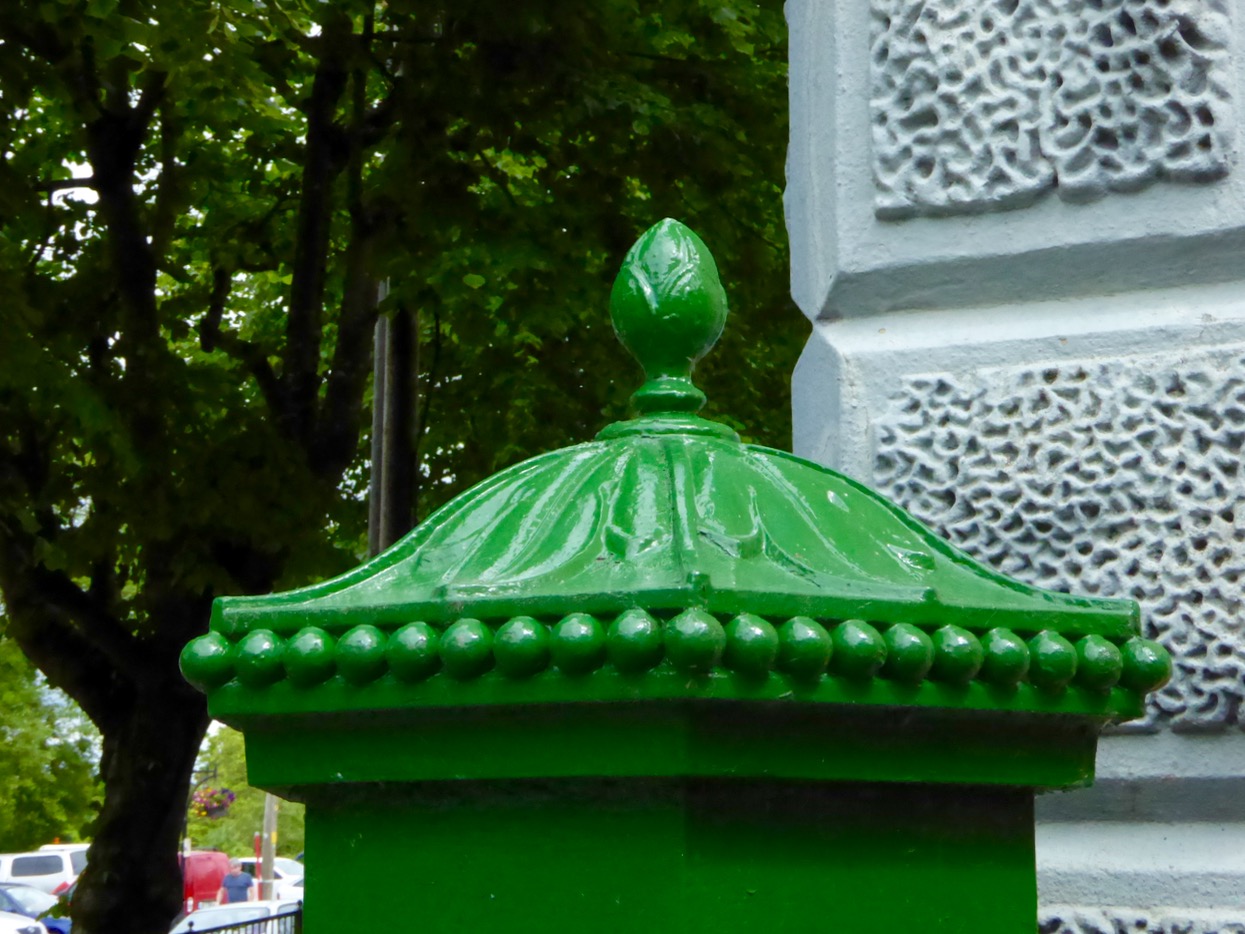
Penfold Acanthus Leaf

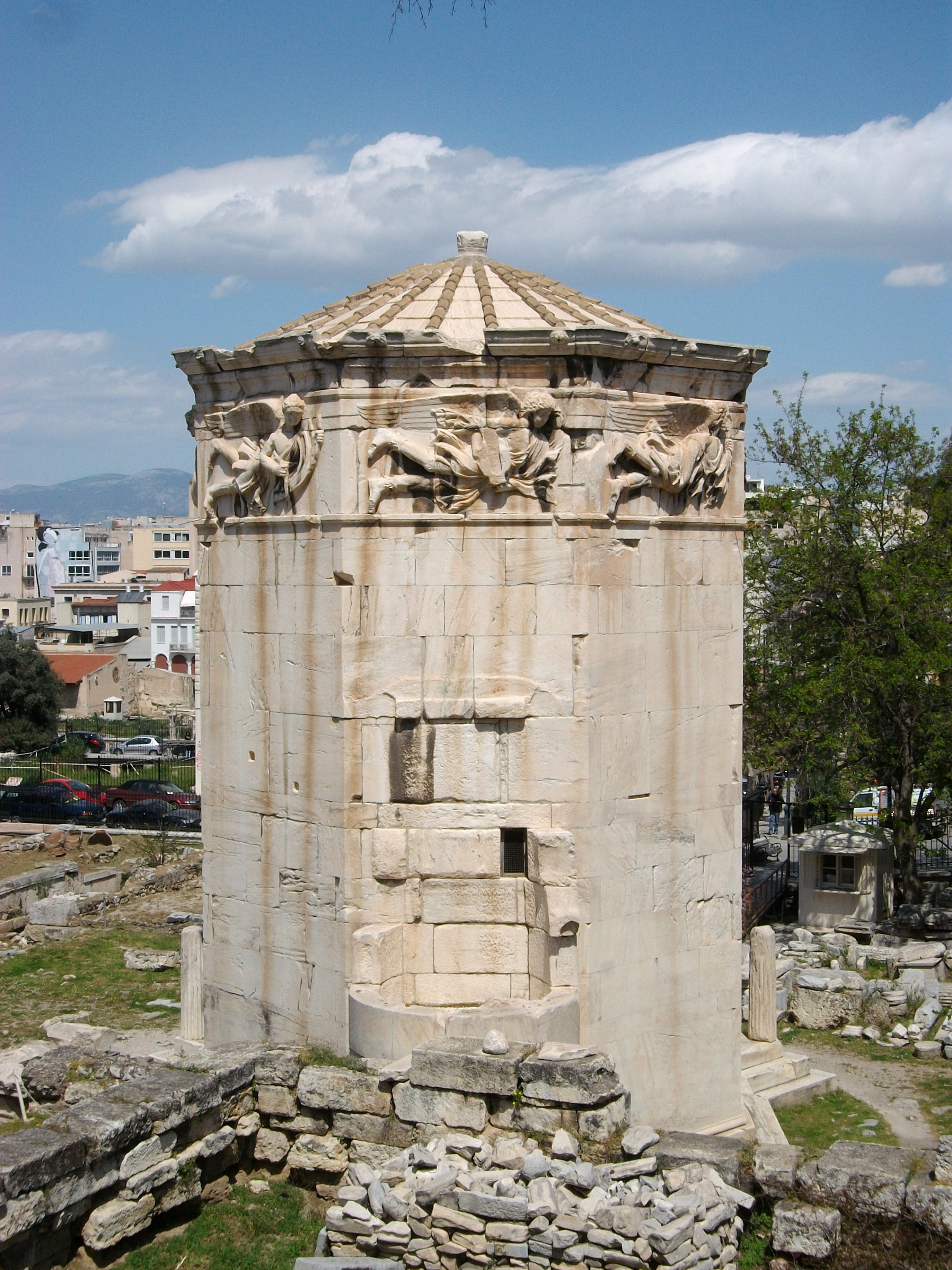
The hexagonal Penfold designed was apparently inspired by the Temple of the Winds in Athens (although the Temple is octagonal), with the addition of an acanthus leaf on the cap and a smart bud-shaped finial and beading.

BenQ Digital Camera

Photograph of the Temple of the Winds from Wikipedia

Our Skibbereen Penfold is in excellent condition: note the royal insignia and the entwined VR for Victoria Regina.

Penfold Skibb closer

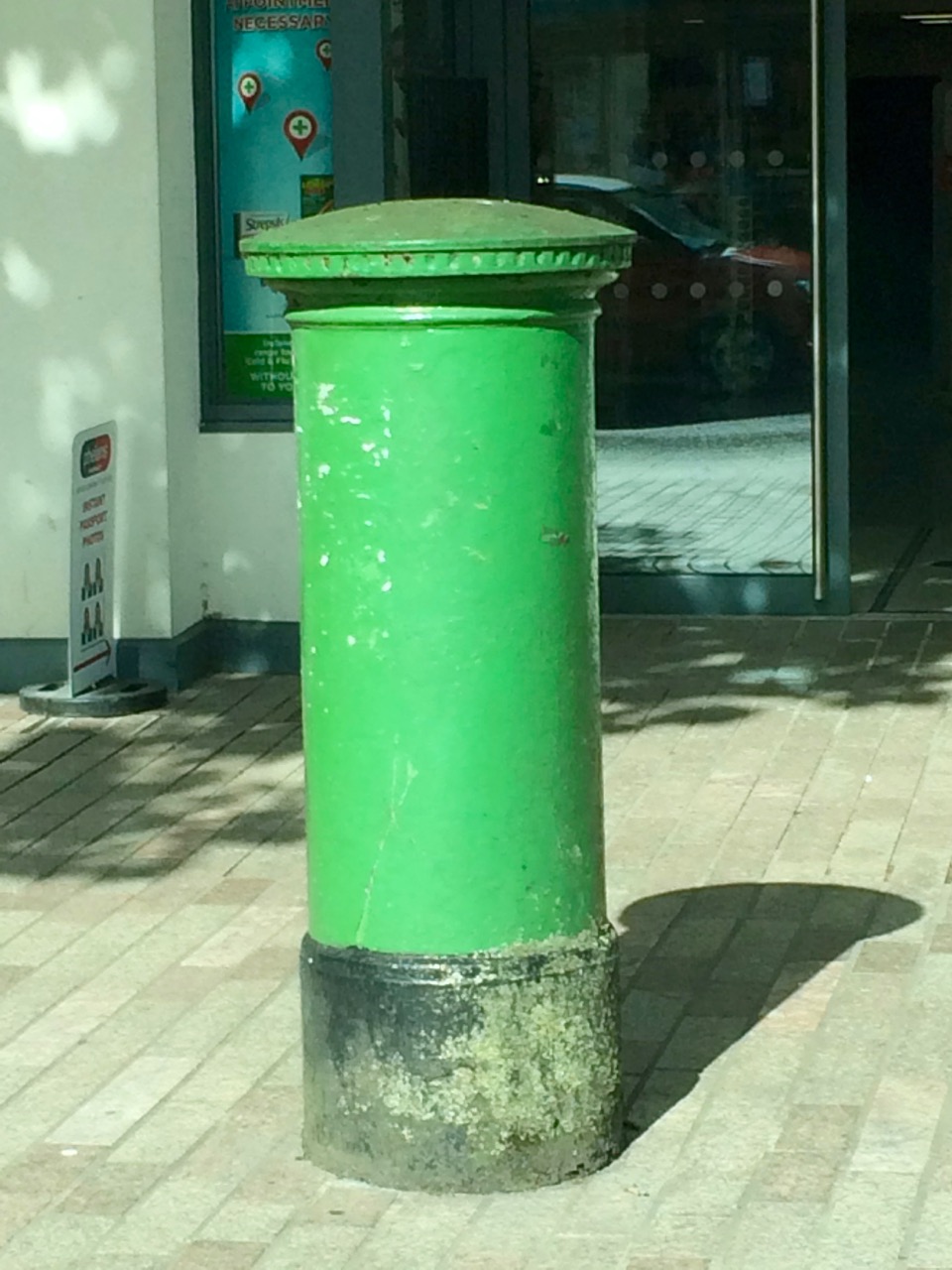
The Penfolds were replaced by round pillar boxes because there were too many complaints that the hexagonal design caused letters to stick. These cylindrical boxes can be seen everywhere in Ireland still, although mostly in towns and cities. The one below is on Grand Parade in Cork.

Cork Post box

Ferguson post box book

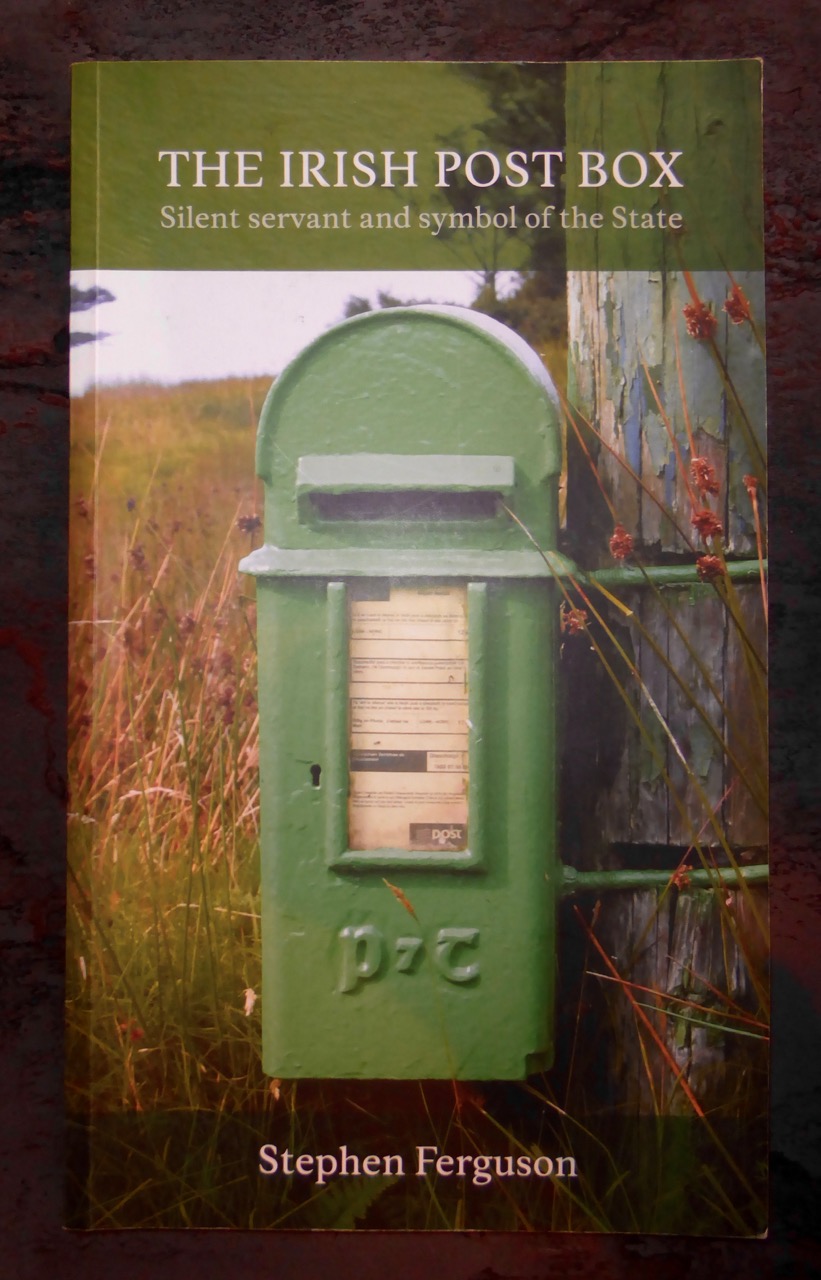
In his book The Irish Post Box, which I gratefully acknowledge as the source of much of the information in this blog post, Stephen Ferguson describes the three main types of post boxes that have been developed for use in Ireland: pillar, wall and lamp. In rural areas, such as West Cork, wall and lamp boxes are the most common forms I have encountered.

Skibb wall box

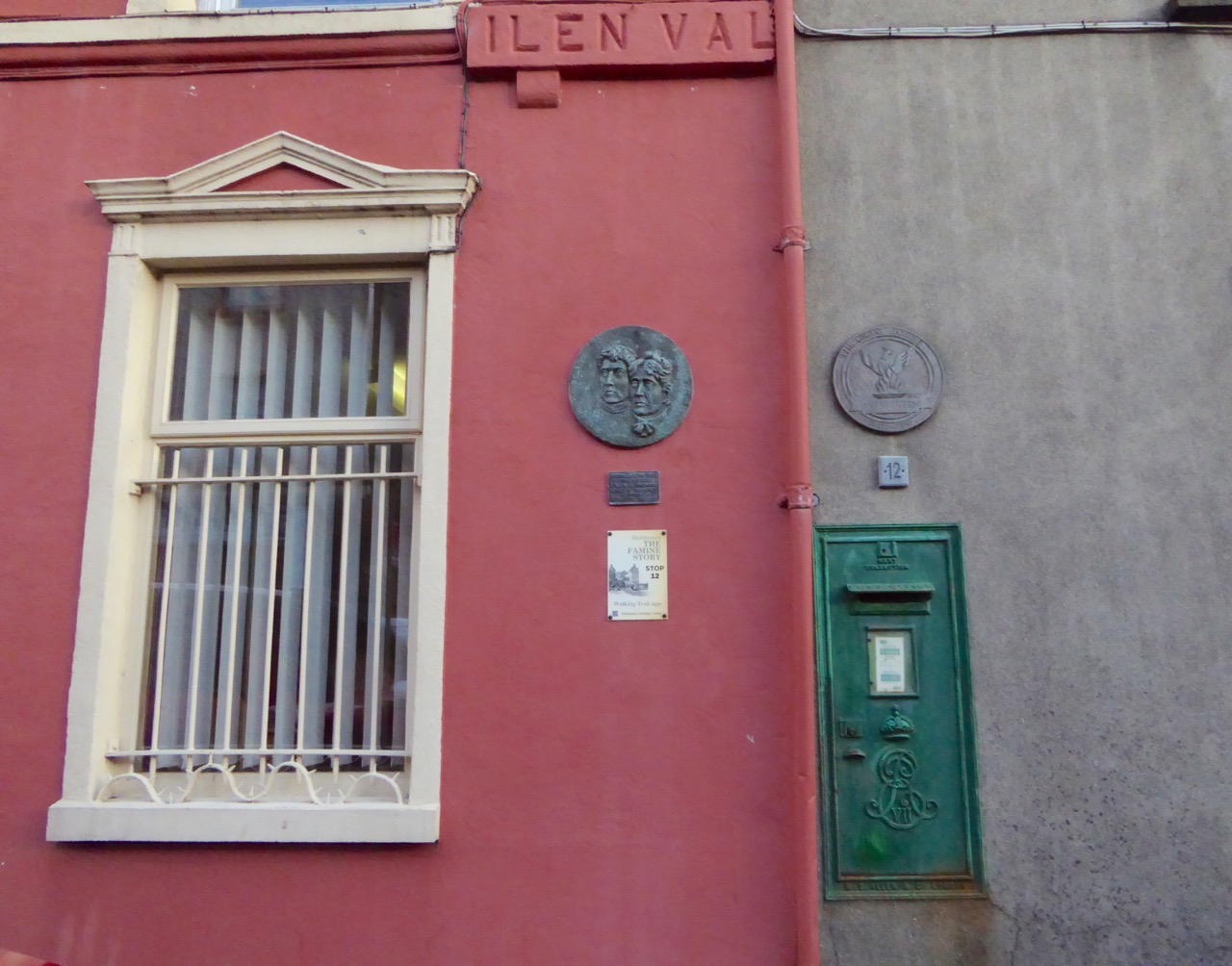
Here’s a representative wall box in Skibbereen. Interestingly, it’s part of a mini-complex of historical markers including the plaque to the Clerke sisters (see my posts From Skibbereen to the Moon Part 1 and Part 2 for more about these remarkable women and their family) and signs for the Skibbereen heritage walking trail, all mounted together on the wall of what was the main bank in Skibbereen during the Famine period.

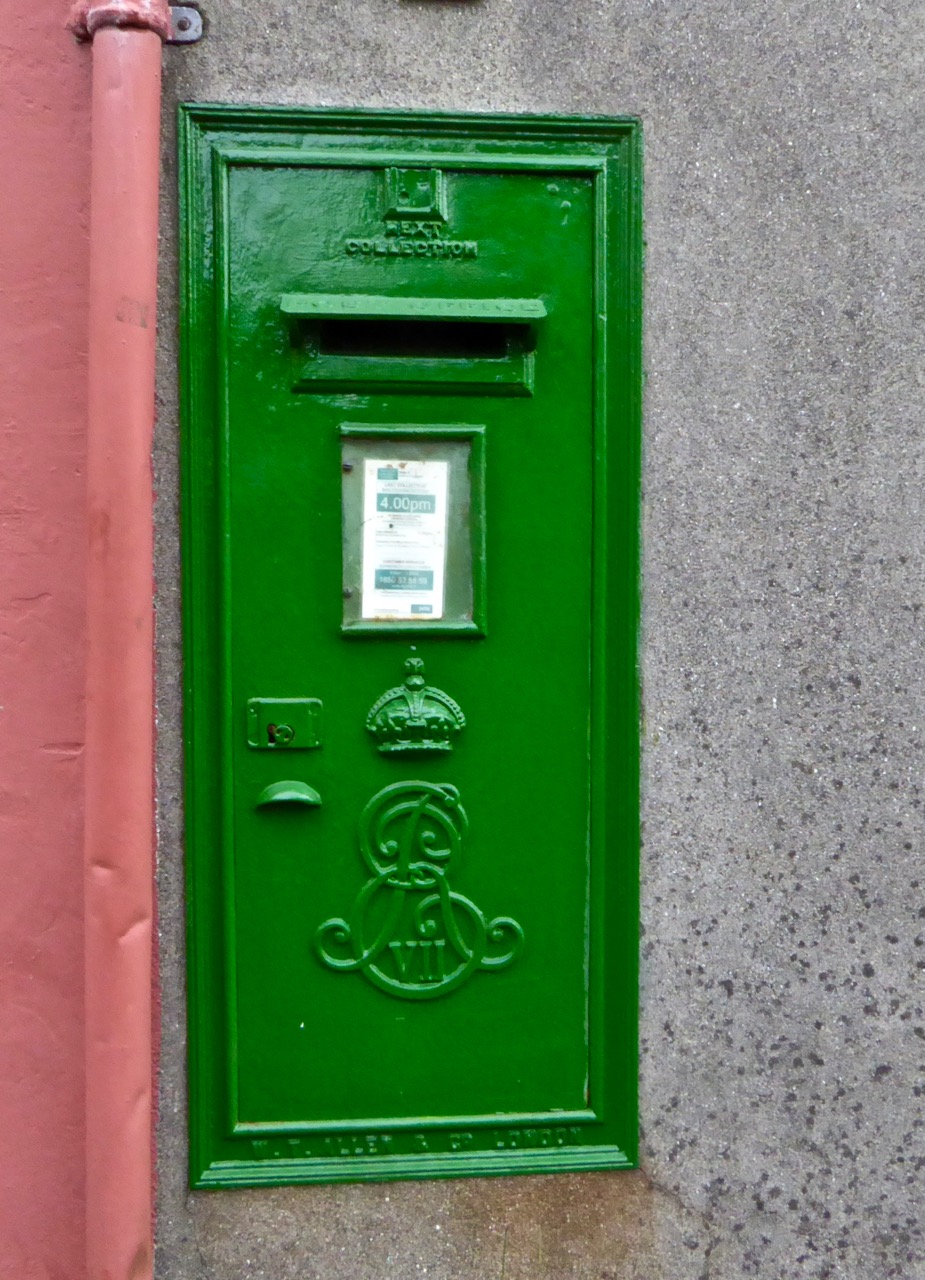
Skibb post box

The box was manufactured by W T Allen and Co of London and bears the ornately scrolled insignia  and crown of Edward the VII, which places it between 1901 to 1910.

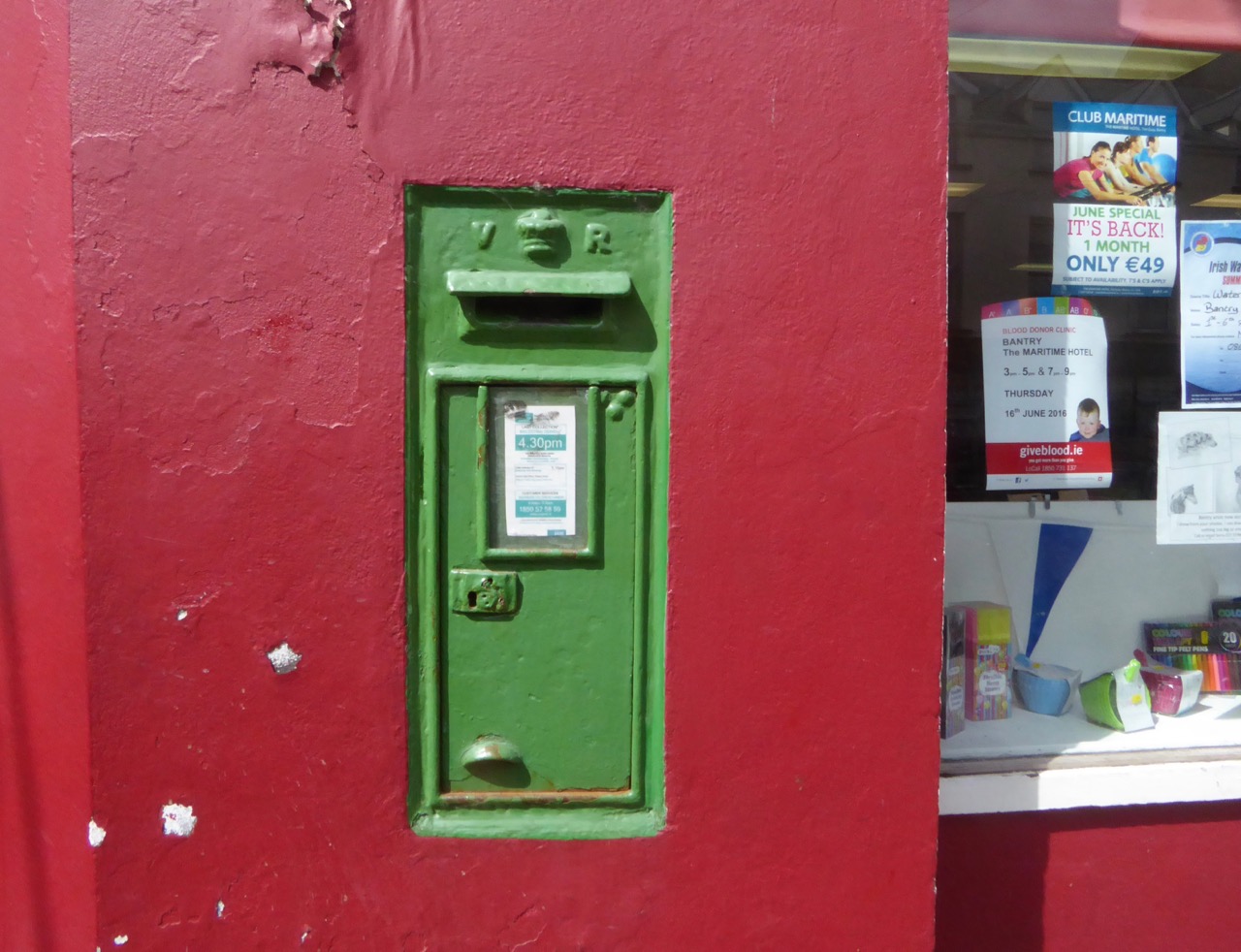
Bantry Wall Box

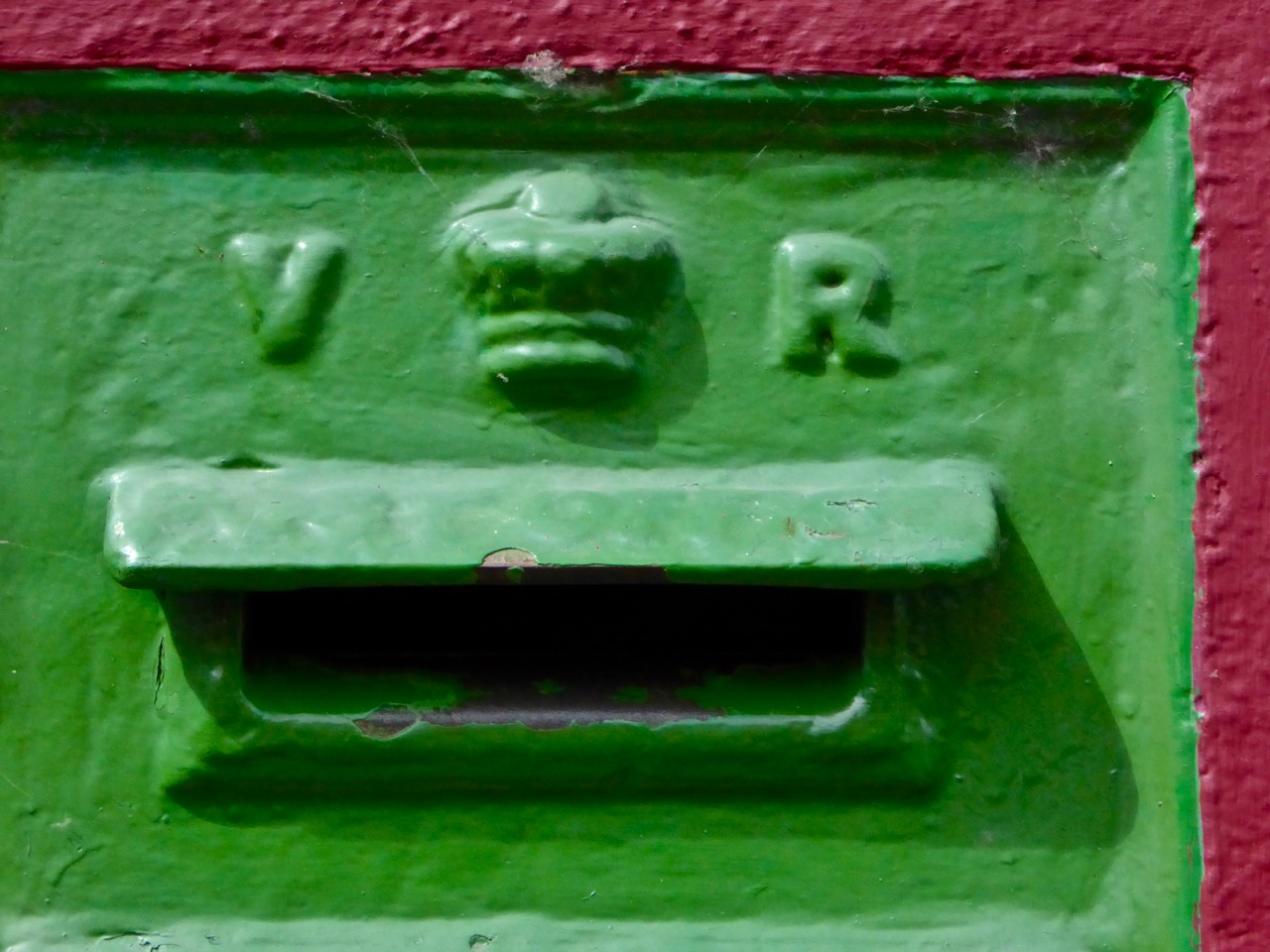
Here’s another nice one in Bantry, a Victorian one, although this time the VR lettering is simpler than on the Penfold. This one has been painted so often that the embossed POST OFFICE on the protective hood has almost disappeared under the layers.

Bantry Wall Box closer

Lamp boxes were designed for remote areas where a suitable wall might not be readily available. Ferguson explains: 

Lamp post boxes, based on a design used by the United States Postal Service, were first introduced in 1896 in London as a response to calls for more post boxes throughout the city. Affixed to a street lamp, the boxes were used at locations where the expense of a pillar or wall box could not be justified. In Ireland, however, they were often deployed in rural areas where, attached to a telegraph or specially erected pole by metal clips, they were very useful in extending postal collections to remote and sparsely populated regions. Tucked under hedges or used sometimes as a smaller version of a wall box, these post boxes were relatively cheap to make and easy to install and they symbolise…the extraordinary influence and reach of the Post Office as an institution at the height of its powers.

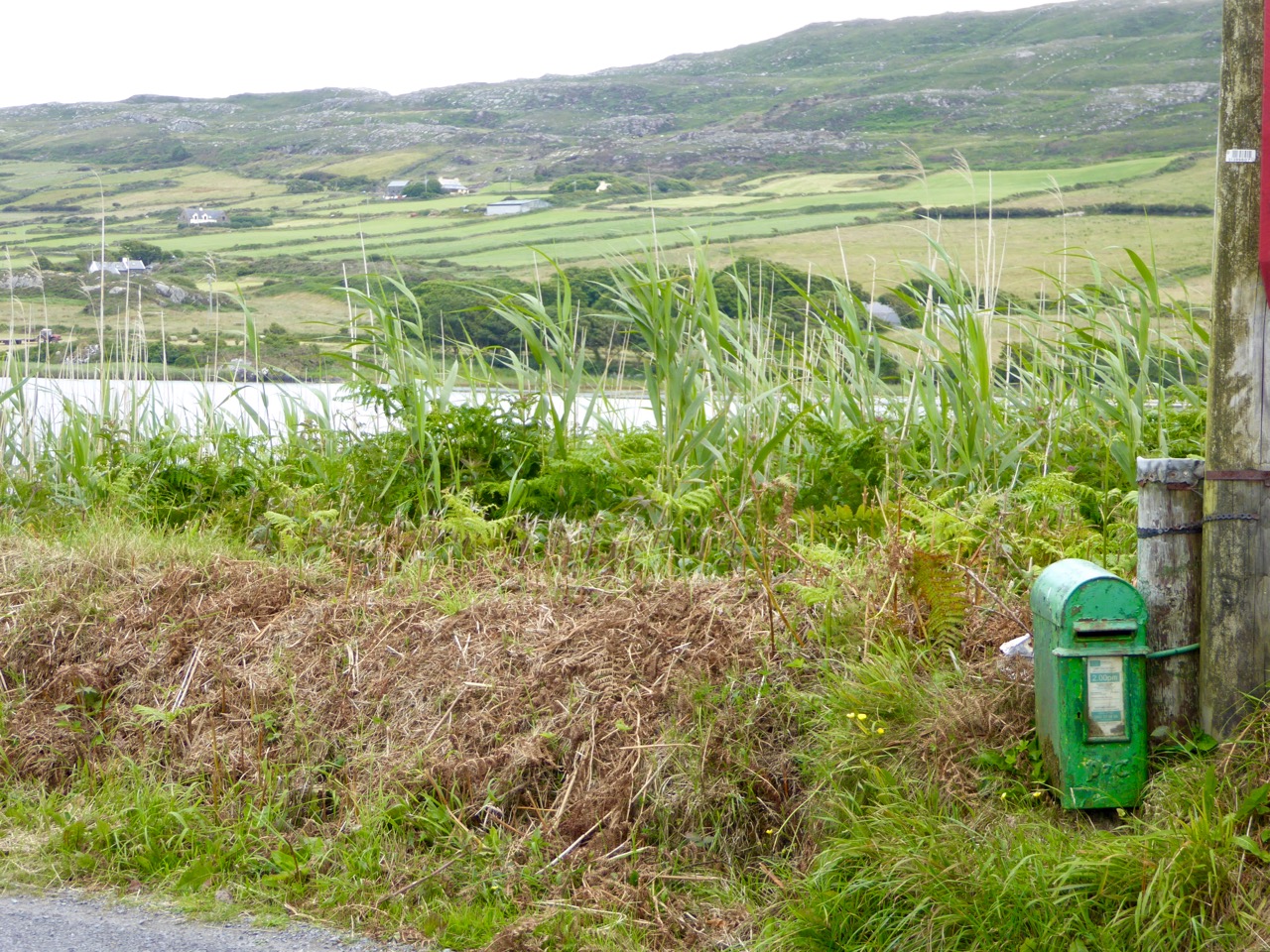
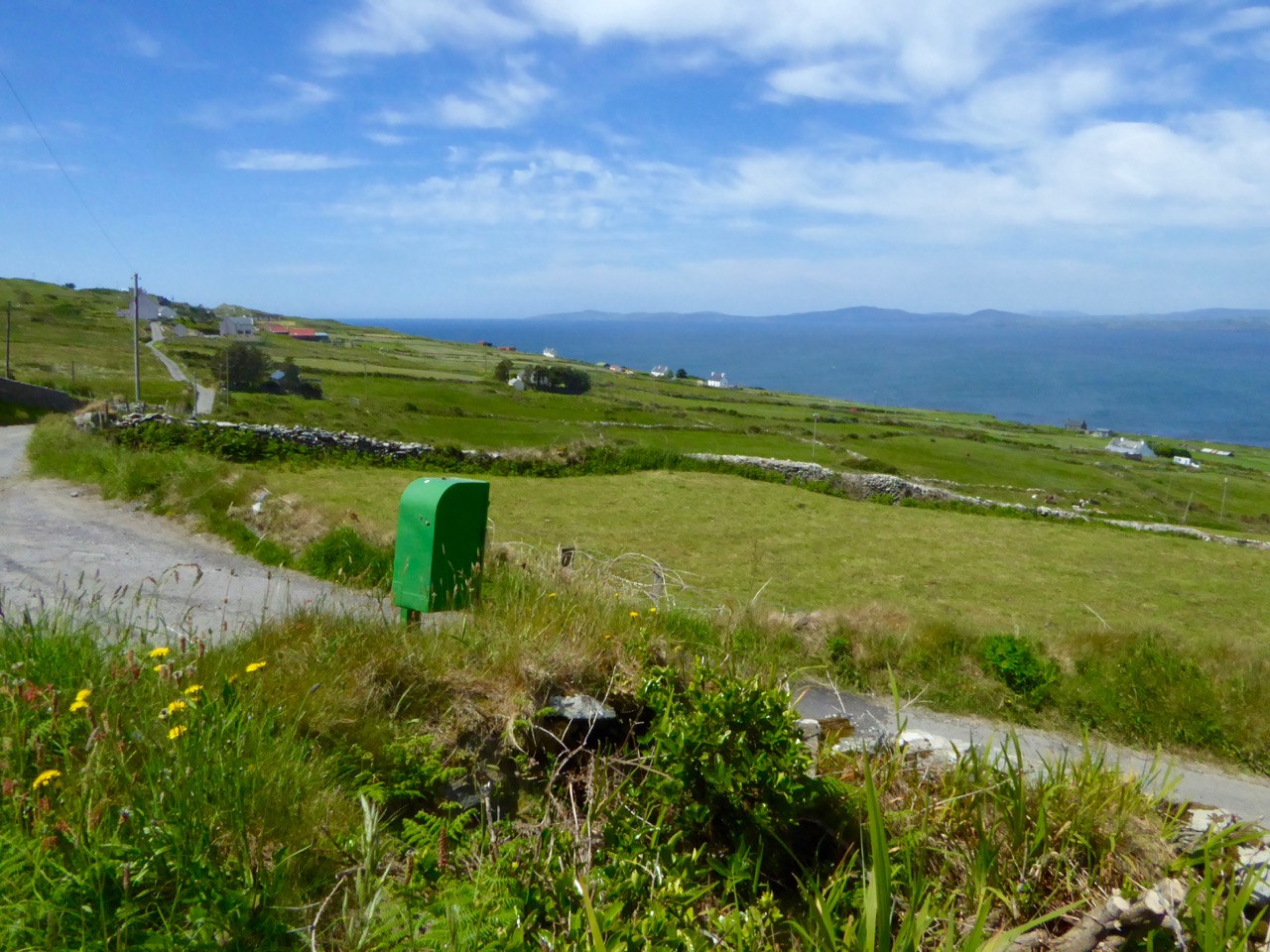
Post box near Barleycove

Driving or walking around rural Ireland, look out for ‘lamp’ boxes. Here’s one from the road near Barley Cove.

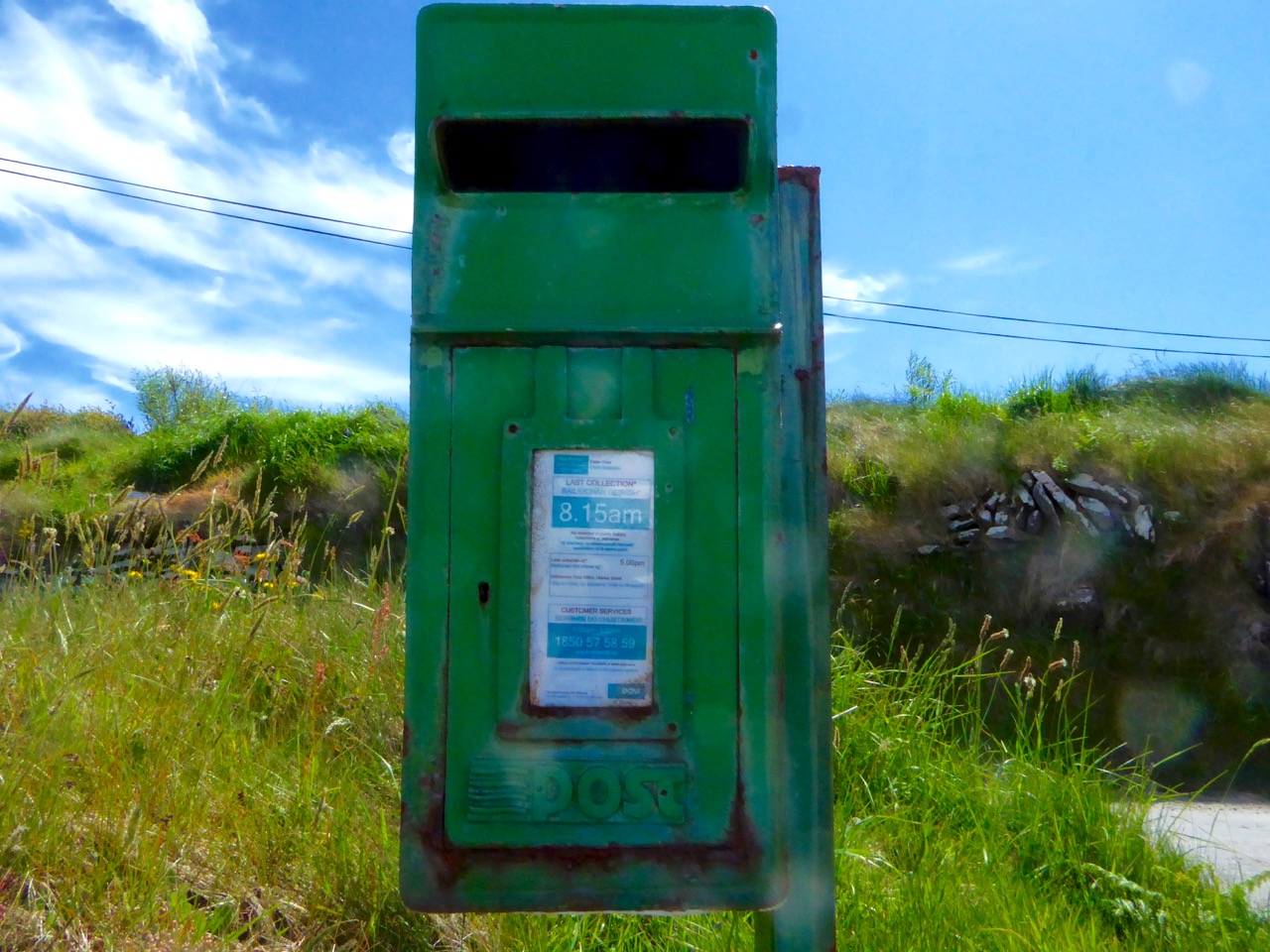
Pole Box near Barley Cove

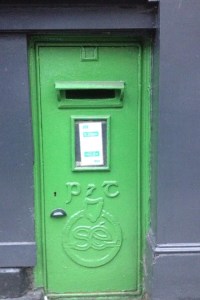
Post_Box_P_T_SE_Washington_Street__Cork.A closer inspection reveals this one bears the P & T logo that was in use between 1939 and 1984, before it was replaced by the brand ‘An Post’. Sometimes the old royal initials were ground off the boxes, or sometimes the doors were replaced with new ones bearing the P&T lettering, but it seems that considerations of cost (always paramount with the careful Post Office) allowed many to simply remain in place as they were. In the early years of the new state, some were embossed with the Saorstát Éireann logo (even sharing the door with a VR insignia) but that practice was relatively short lived and I have found no examples to it yet in West Cork. The website Irish Postal History has this example from Washington Street in Cork.

Most scenic postbox

On Cape  Clear – the most scenic post box in Ireland?

If no lamp post or suitable pole existed, a simple stake was erected to which a box could be attached. Cape Clear Island didn’t get electricity until the 1970s, so this post box (above and below) must predate the advent of poles. The logo, however, is that of An Post, which was established as the new brand in 1984. Perhaps the poles were only erected island-wide after the submarine cable was laid in the 1990s.

Cape Clear post box closer

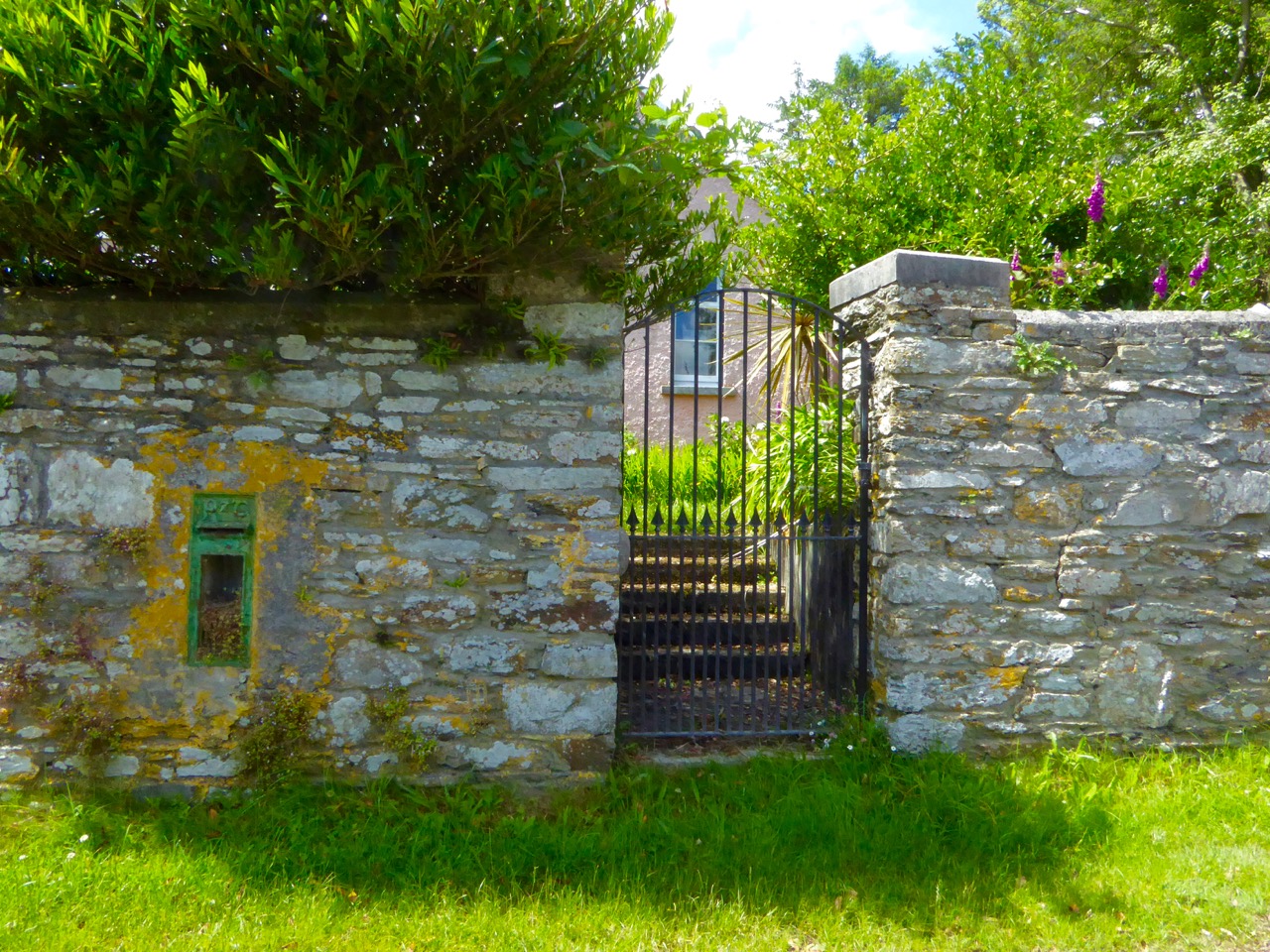
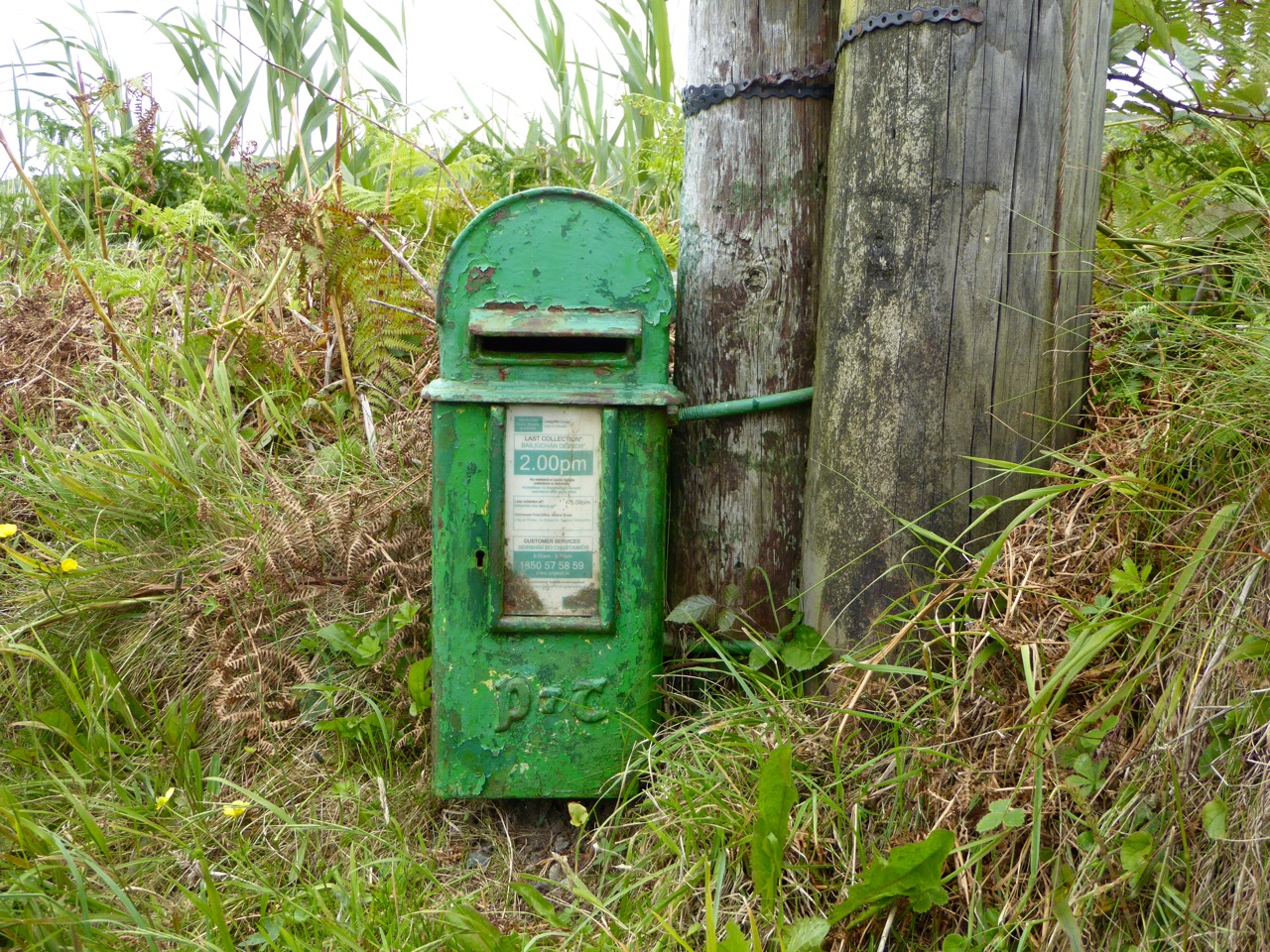
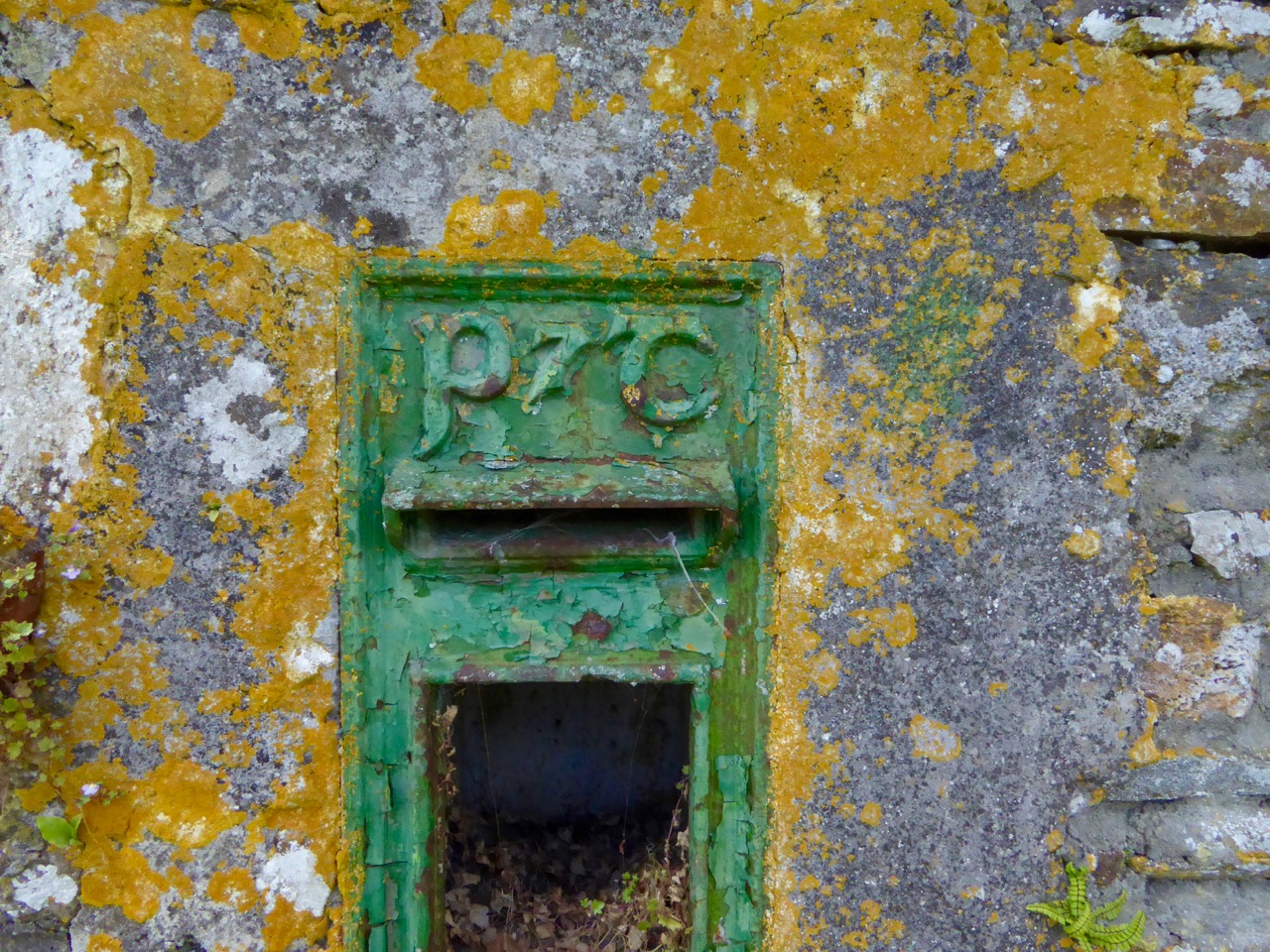
Not all mail boxes have been retained for active use – so what happens to them? Many simply remain in situ, as a picturesque reminder of times when we actually wrote to each other instead of texting or emailing. The one below at Rossbrin, near Ballydehob, was once attached to the wall outside the old schoolhouse. The first photograph at the start of today’s post shows its location.

Rossbring Wall box 3

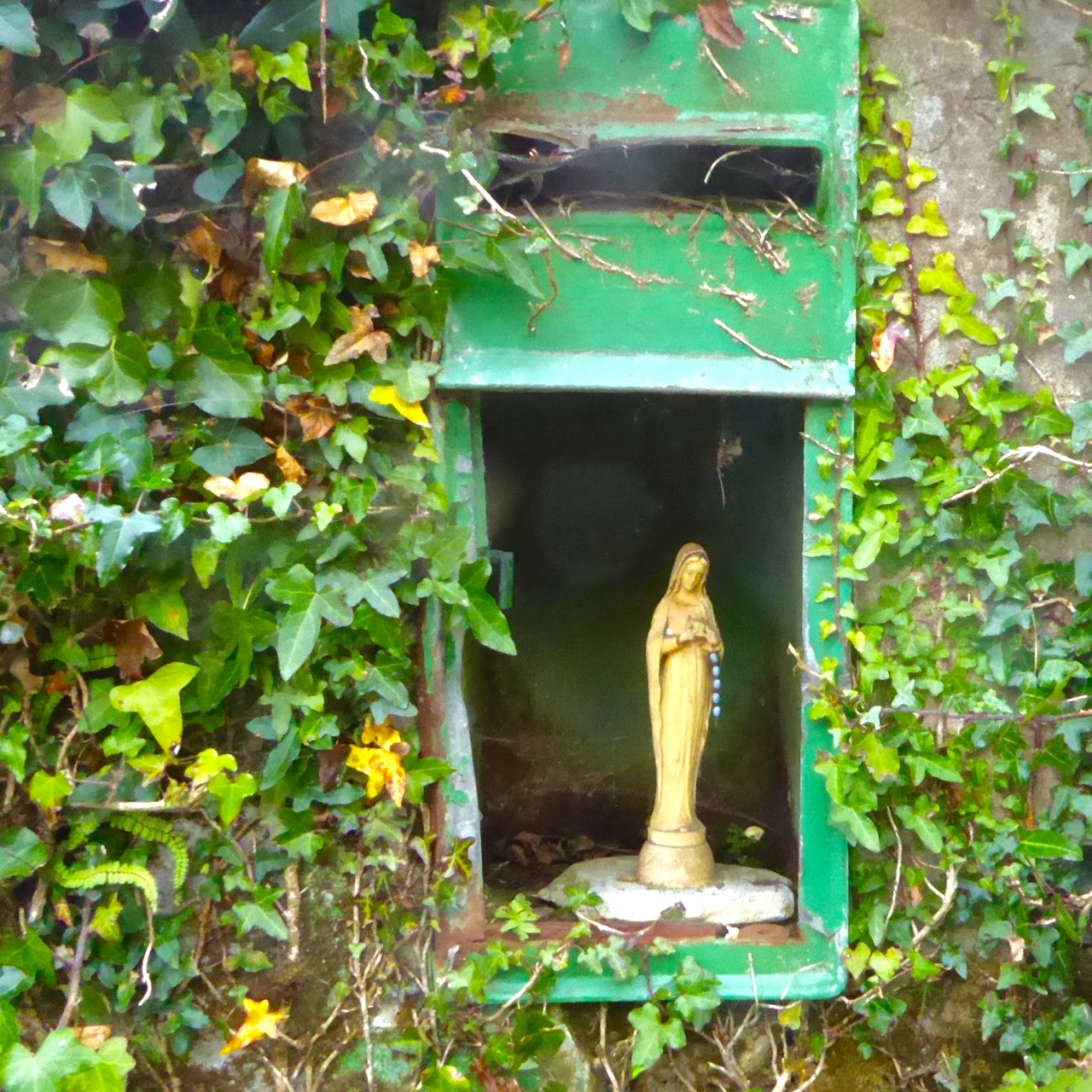
And this one, at Ahakista, has been repurposed as a wayside shrine.

repurposed

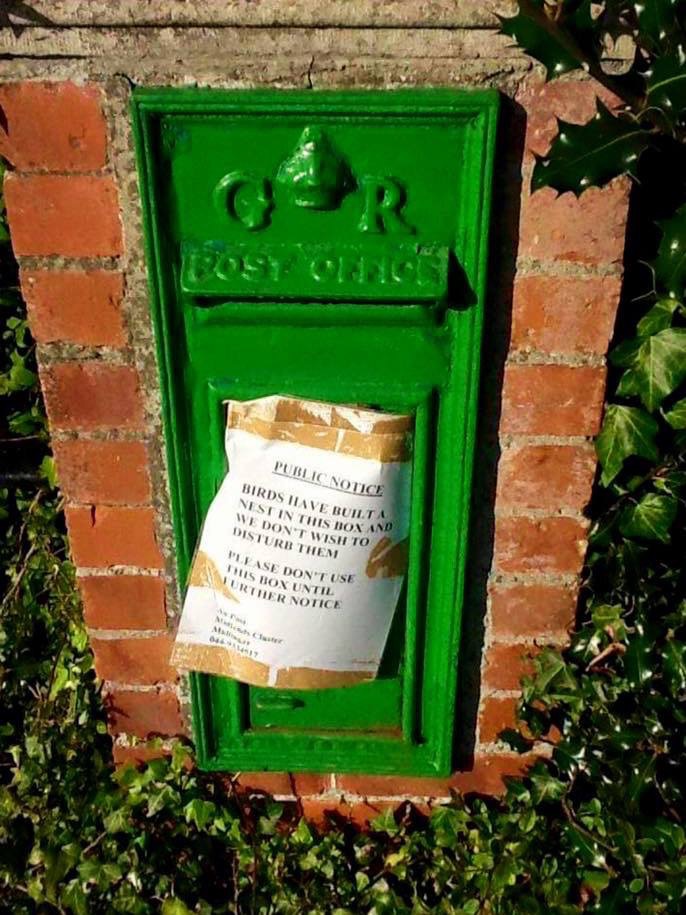
But even if it’s still in use, sometimes a mail boxes can’t be used for its real purpose, but has more important work to do! I don’t know where this last photograph was taken or whose work this is – it was widely circulated on the internet – but I would be happy to credit the photographer if I knew who it was. Delighted to have this also as an example of a post box from the reign of George V, 1910 to 1936.

Post box birds nest

Food Glorious Food

Taste of West Cork

There’s yet another festival on at the moment, and this one is a yummy one: A Taste of West Cork Food Festival. It will culminate next Sunday in a giant market that will take over the main street of Skibbereen, but in the meantime every day brings something new – a farm tour, cooking and fish-smoking demonstrations, walking and boating tours, tasting menus, and special dinners.

Finola and Regina

Finola and Regina

Today we attended a lecture by Regina Sexton, a brilliant writer, broadcaster and food historian. Under the title “Teaching the Poor to Cook in 1847,” Regina led us through the contents of what might have been one of the earliest ever Irish recipe books. Published by a member of the Northern Irish gentry, it instructed the Irish ‘Peasantry’ on how to cook the foods available at the time as substitutes for the potato, then in catastrophic failure due to blight. Revealing as a document of the social and political philosophy of its time, it was eerily poignant given the death toll occurring all around at the height of the Great Famine. I was keenly aware of our surroundings at Liss Ard House, once a mansion where people enjoyed a fine standard of living, while the town of Skibbereen, down the road, had been an epicentre of starvation.

Everything locally grown!

Everything locally grown!

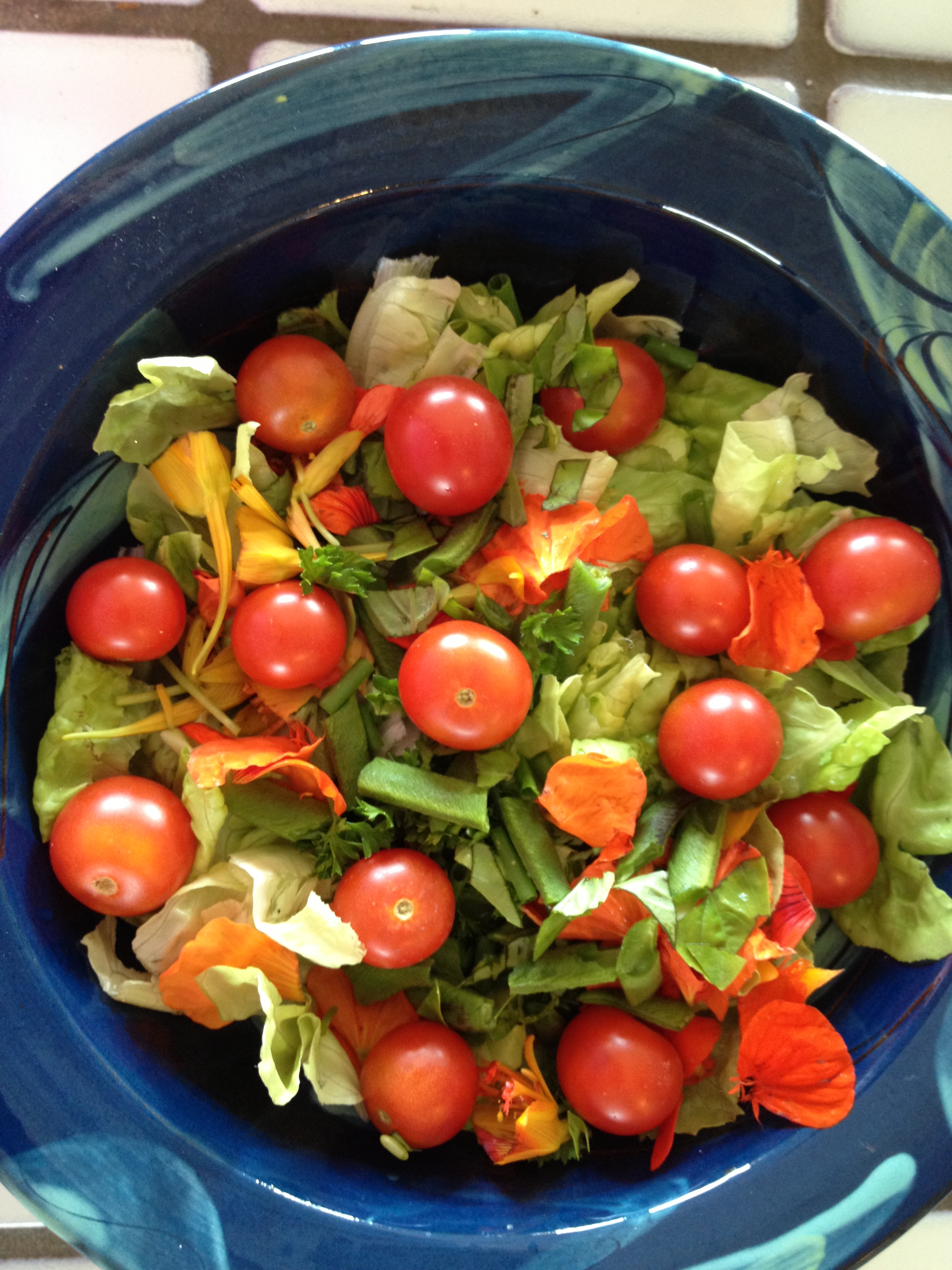
I have written before about West Cork Food (here and here): this really is Foodie Heaven, with fresh vegetables, artisan cheeses, homemade preserves and relishes, breads of every description and a wide variety of seafood and organic meats all readily available not only in the weekend markets but in local shops and supermarkets. To add to this, my friend and neighbour Hildegard has been generous with her garden and we have been enjoying fresh beans, zucchini and lettuce and flavouring dishes with her wonderful basil and savoury.

Robert and I love to eat breakfast out as a treat. On one recent foray I ordered boiled eggs and it brought me back to my childhood and time-honoured rituals. Lift the top off the egg with a spoon, drop in butter and salt and put the top back on. Cut your toast into fingers to dip into the buttery yolk. When you have finished your egg, turn it upside-down in the egg cup and present it to an unsuspecting sibling.

Breakfast in Skibbereen

Breakfast in Skibbereen