Dancing Cappaghglass

Cappaghglass by Emma Jervis 1

When you love the place you live in – really love it, in your bones and your heart, how do you express that? How do you convey to others the feeling of waking to the sun rising over Roaringwater Bay and sinking back into the sea behind Long Island after a day of sparkling colour and rural rhythms? How do you represent the sense of coming home after a lifetime of being an emigrant? How to talk about what persists of the Ireland of your youth and what has changed irrevocably, for better or ill?

Fields of Cappaghglass

The green fields of Cappaghglass in evening winter sunlight

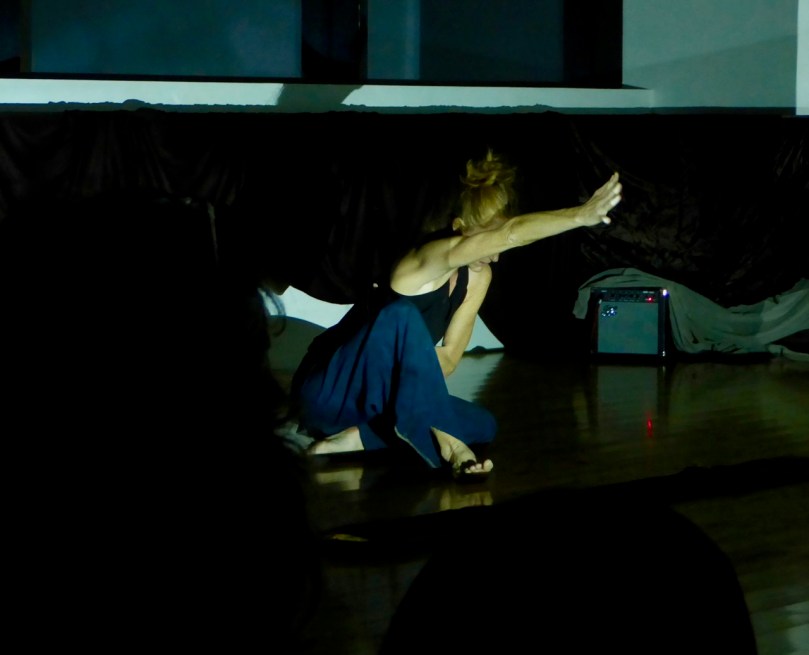
I suppose, like the Bee Gees I would turn to words, but Tara Brandel took on that challenge with Cappaghglass, her final piece of choreography and dance performance at the end of her two year residency at Uillinn, the West Cork Arts Centre.
Reaching

I’ve written about Tara’s dance performances before – her Bridge two years ago in Ballydehob left us speechless and profoundly moved. She has performed numerous pieces in the meantime as part of her Uillinn residency, sometimes solo and sometimes with her company, Chroí Glan. This dance has been gestating all that time.
Mining area

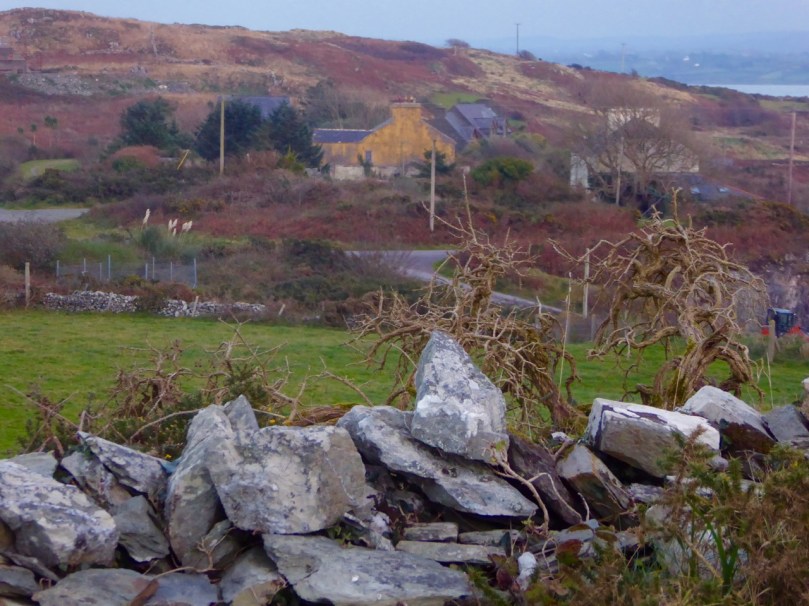
Mine houses and a fenced-off shaft – echoes of mining heritage

Cappaghglass*, where Tara lives and where we also are currently putting down roots, is undoubtedly beautiful, peaceful, pastoral and scenic. In the past it was also heavily industrial, with 400 tons of copper mined every year, and a population of several hundred people. It had a ‘Big House’ and a hotel: no traces remain of either. It had a dozen farms: now there are two. There are twenty homes in the townland – and another twenty holiday homes that remain empty most of the time.

Cappaghglass by Emma Jervis 2

I gratefully acknowledge Emma Jervis, whose photograph this is, along with the first one in the post

Tara danced it all for us. We watched as she explores her environment as a child, then takes the first tentative steps to leave. Buffeted by the world, she returns to the freedom and the green fields, and always the sea heaves in the background and the Fastnet Light turns on the horizon. She switches effortlessly, with a twitch of a scarf and body movements, from a young, then an old Irish woman to a Syrian refugee, inviting us to consider the experiences of displacement, migration, loss and belonging.
Road through Cappaghglass

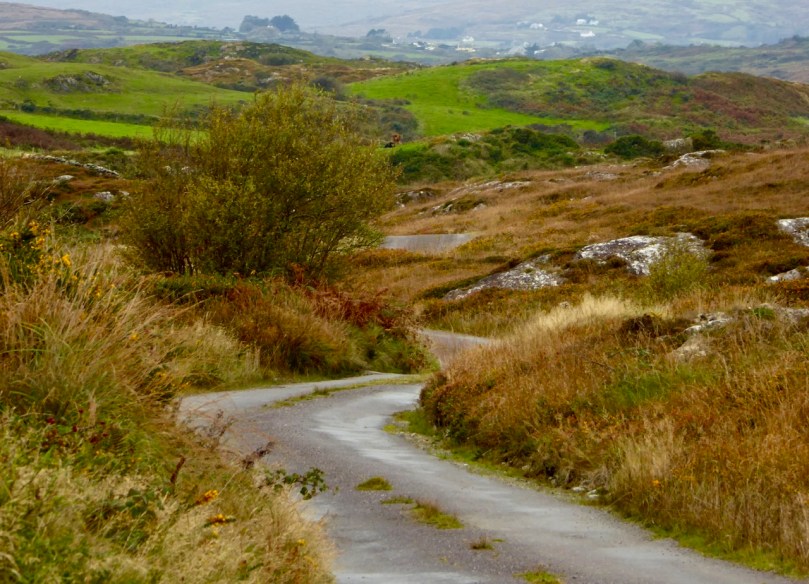
The high road through Cappaghglass

Her body speaks to us, but she also uses words and song. She sings – simple repetitive chants – and uses technology to loop the sound so it repeats. Then she records a further piece and then another, and so layers of sound start to build and this provides the music to which she dances.
Gorse Tree

Visual layers are added – projections on the wall of a map, the sea, waving grass, and finally the Fastnet Light.
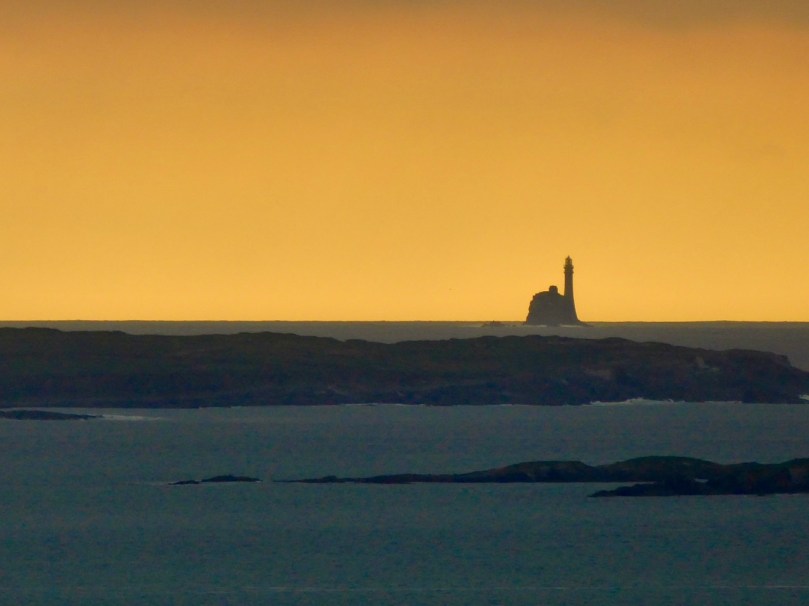
Fastnet in the sunset

Tara’s dancing is athletic and graceful. Her hands assume critical importance in conveying action and emotion. Clothing is donned and shed in a shorthand for identity.
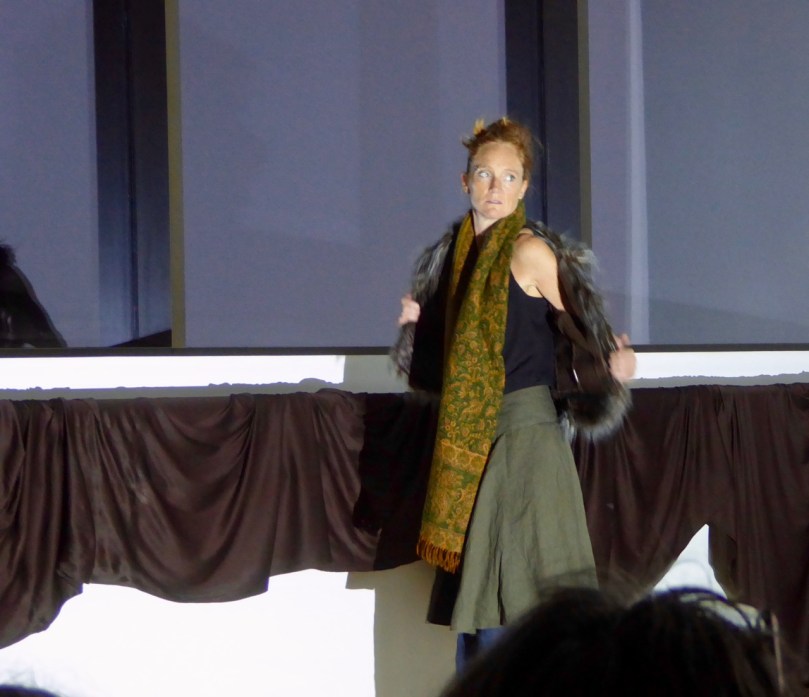
Clothing is used

In  a final brilliant move she approaches the barre, over which is draped heaps of material. Reaching into the mass of cloth she ties two lengths around her waist and moves towards us. It is then we understand, as the material slowly slides away from the barre and follows her in an enormous train, that this is Cappaghglass – the whole townland spread out behind her, claiming her, rooting her, her home, her place.

townland train

We  walked the townland today in the fading light of late afternoon and we saw it afresh. Like Tara, like so many people, we have experienced migration and displacement. But this is home now and we find it rare and precious.

Ruined ivy-clad houses and the traces of tiny fields hint at families for whom this was home

Only art has the ability to reach down into you and clutch at your soul and make you think and feel in ways you haven’t thought and felt before. Tara did that for us with her dance. We are grateful for her gift.
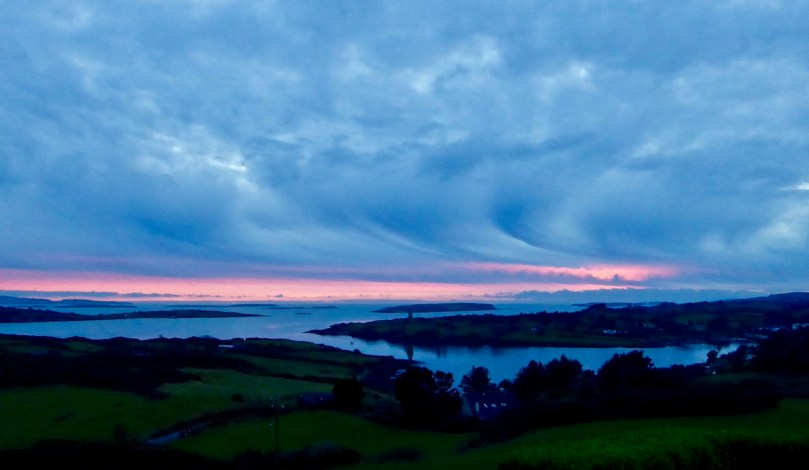
Cappaghglass sunset*Cappaghglass, in Irish pronounced cappa gloss = the Green Tillage Fields
A Bell for Bangor

Holg + Donagh 2

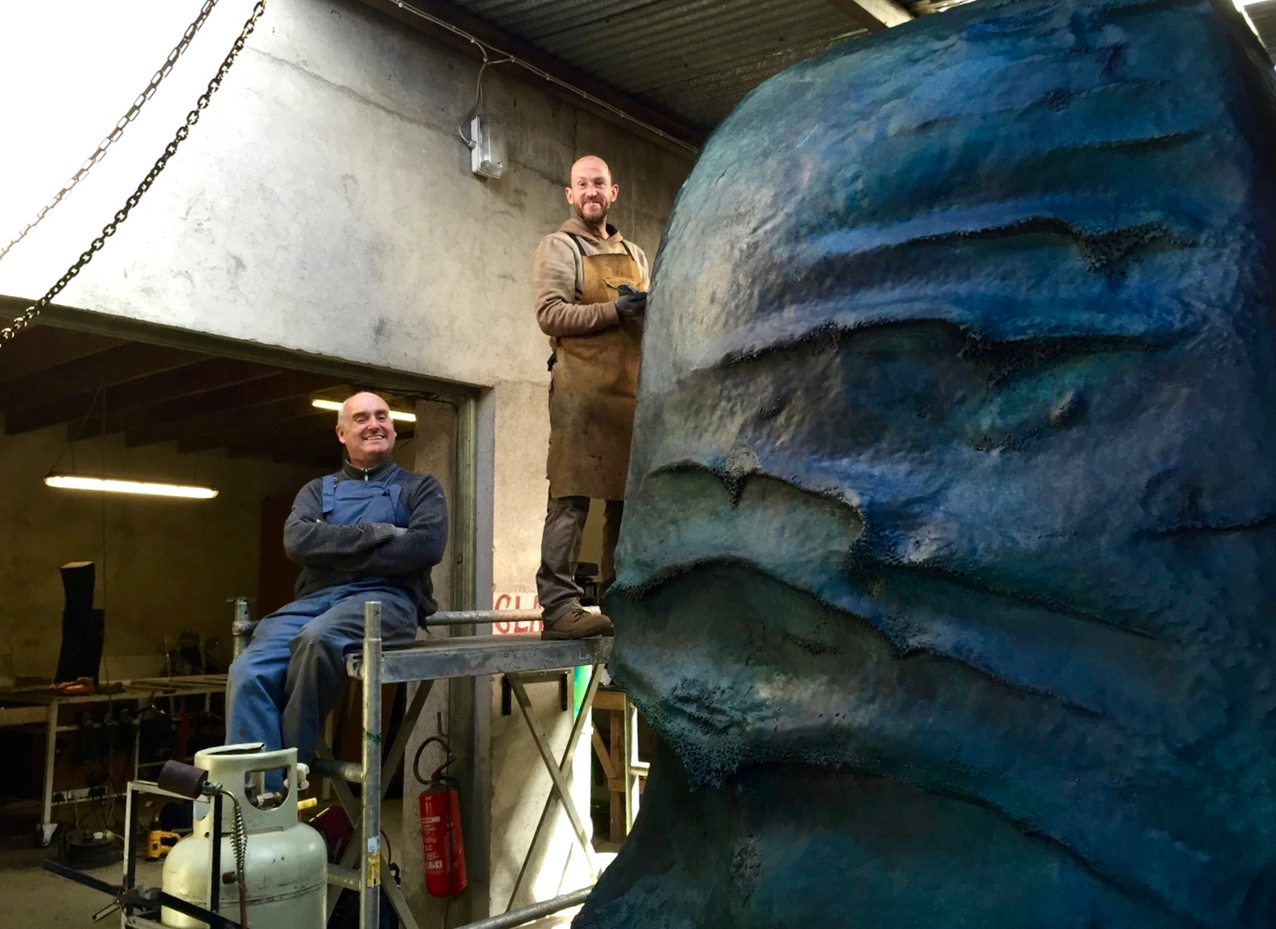
The man standing on the platform in the picture is Holger Lönze. You might remember him from Umha Aois, a post I put up last year about a group of artists and ‘experimental archaeologists’ who use Bronze Age metal working techniques to produce replicas of ancient tools, weapons and musical instruments. Holger – a sculptor – is a key member of that group: his workshop is in Schull and he has just completed a commission to make an enormous bell. You can see the project in progress on the right of the picture. On the left is Donagh Carey, another West Cork artist who worked on the casting.

Left: the original Bangor Bell – the inspiration for the new work – and, right: an early sketch design by Holger of the proposed bell sculpture

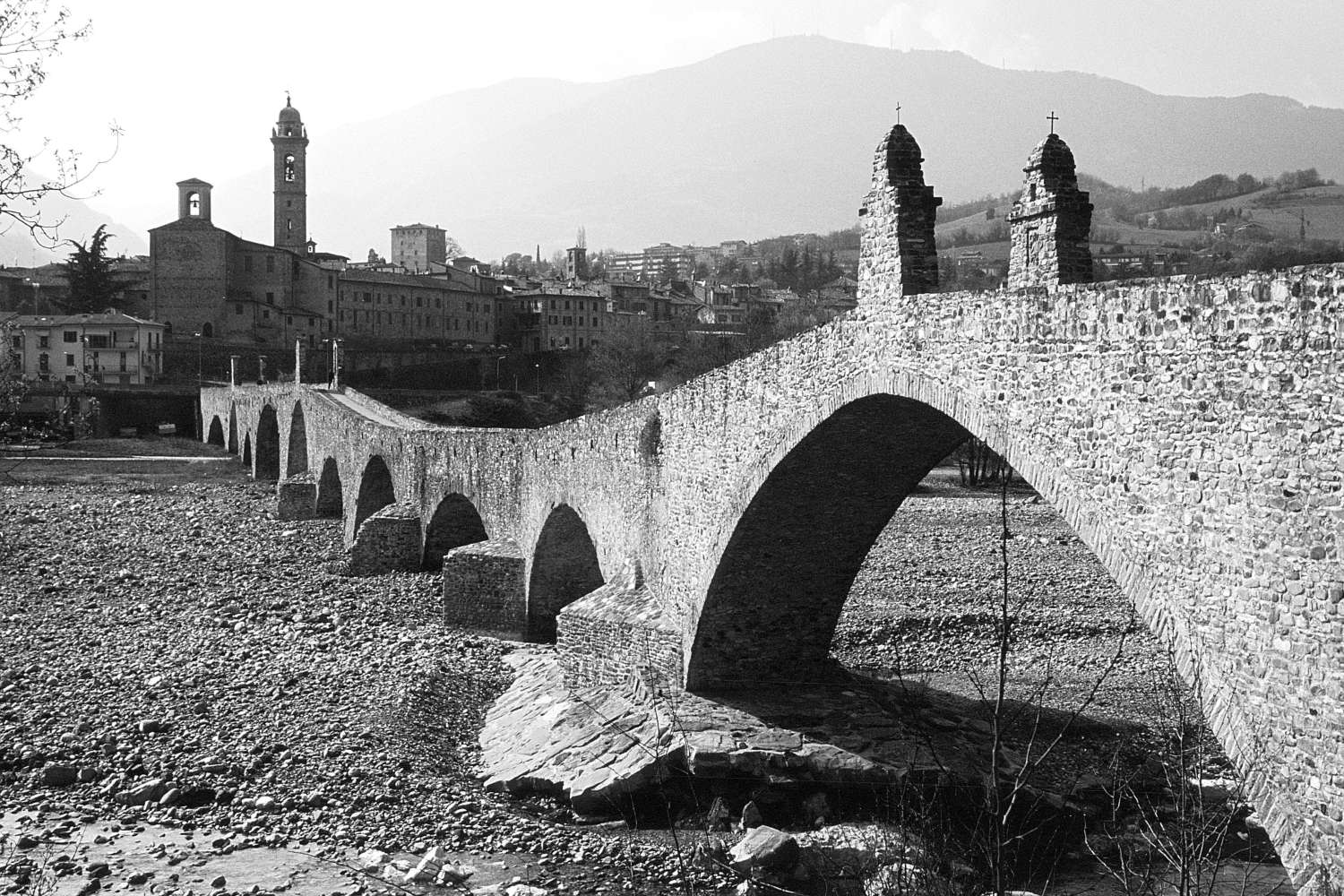
The story begins in the sixth century when Columbanus (the Latinised form of Columbán, meaning White Dove) was born in the Kingdom of Meath, now part of Leinster, Ireland, in 543. That’s about 50 years after the death (aged 120) of St Patrick. Patrick, of course, is the best known of the missionaries building up Christianity in Ireland, but he wasn’t Irish himself, having been born a Roman Briton. Columbanus was Irish, and he saw his mission as spreading Christianity from Ireland throughout the Continent of Europe. His mission was successful and St Columbanus is recognised in Europe as a founder of many monastic settlements during his travels in Gaul, Burgundy, the Alps and finally Italy where he established the great monastery at Bobbio, beside the River Trebbia. Columbanus died at Bobbio in 615 and his remains are buried in the crypt there.

Bobbio_bridge

The medieval bridge at Bobbio with St Columbanus’ great monastery beyond (photo by Herbert Ortner, Vienna, Austria)

There are great stories told about the life of Columbanus. When he walked in the woods, birds would land on his shoulders to be caressed, and squirrels ran down from the trees and nestled in the folds of his cowl. He is also said to have tamed a bear and trained it to pull the plough. Wolves would not harm him. He is usually depicted with a book and an Irish satchel, sometimes with sunbeams over his head. I’m not sure why but Columbanus is known as the patron saint of motorcyclists.

Saint Columbanus – left: depicted on a medieval fresco with book and sunbeams (note he is carrying a bell) and, right: sailing off to Europe with his companions

Getting back to West Cork and the bell: Columbanus travelled to Bangor, County Down – in the far north east of the island of Ireland – where he studied in the  Abbey until he was 40. A beautifully decorated bronze handbell was found near the Abbey by gravediggers in the 18th century; it is assumed to have been buried to keep it safe from Viking invaders in the 9th century. The Abbey is seen as the starting point for Columbanus’s missionary work in Europe and the bell (now in the North Down Museum) is associated with him, although unlikely to have been contemporary with his time there. Holger Lönze has always been fascinated by medieval bronze bells and has made replicas of many surviving examples. He cast a copy of the Bangor Abbey handbell using Medieval metalworking techniques in 2012, and the process is recorded in this video.

Holger’s full-sized replica of the Bangor Bell and (right) Holger in his studio explaining his techniques to Robert

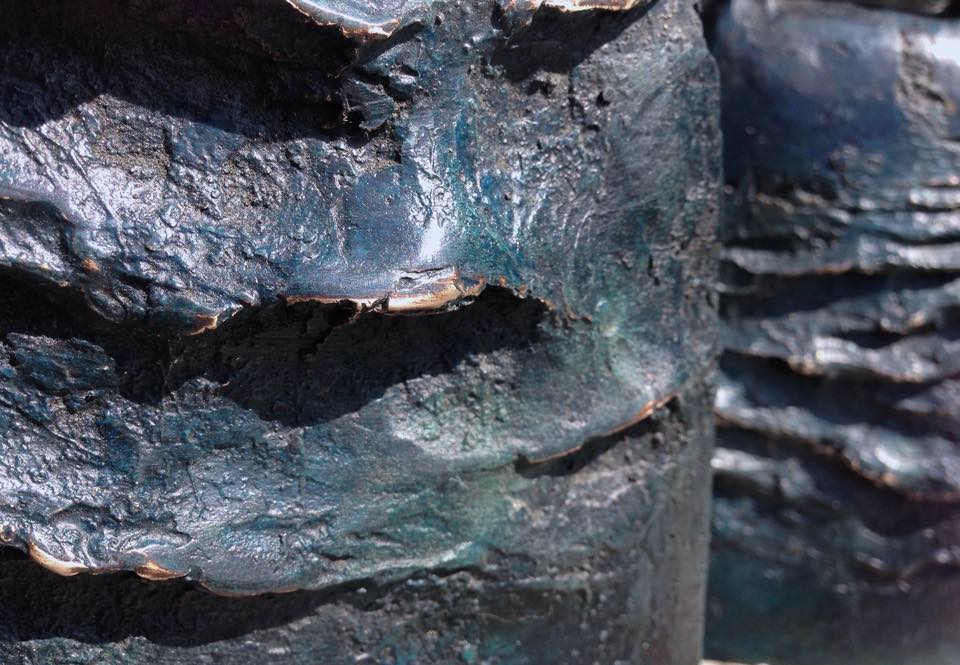
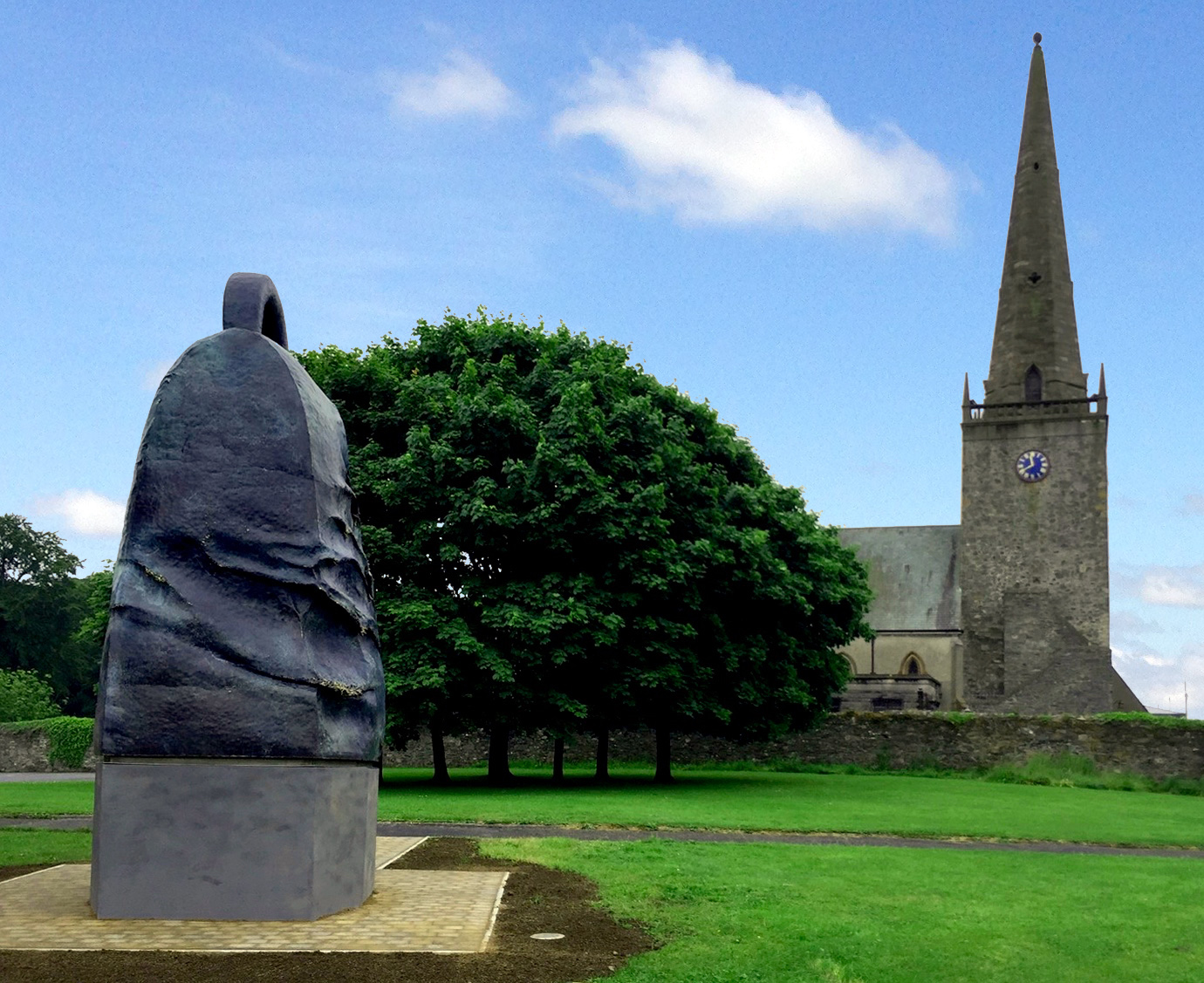
The new sculpture – titled Fluctus Angelorum (Wave of Angels) was commissioned by Ards and North Down Borough Council for Bangor Abbey  as one of a series of works inspired by the extraordinary achievements of Columbanus and his companions. Based on the proportions of the original bell, the surface of the sculpture is shaped like the surface of the ocean. The sea-blue patina and breaking waves are a metaphor for Columbanus’ remarkable sea voyage. The 4m high bell was fabricated in bronze plate in West Cork using the ancient repoussé process – by alternating annealing and hammering and finally welding. It took no less than 400,000 hammer blows to transform flat sheets of bronze into this piece of sculpture!
Bell surface

In the workshop: the surface of the 4m high bell reflects the surface of the ocean and (right) the inside of the great bell: it is mounted on a stone plinth and lit at night. Both bells and waves are striking metaphors to mark the Saint’s 1400 miles journey from Bangor to Bobbio – 1400 years ago

The medieval Bangor Bell didn’t have a clapper: it was carried around and hit with a hammer. Taking me back to my days as a percussionist, Holger allowed me to hit the giant bell… It made a mighty sound! From West Cork the bell travelled the whole length of Ireland, passing its 8th Century sister bells in Cashel, Co Meath and Bangor. It is now installed in the Abbey grounds and was formally unveiled on 13th June. The sculpture is not yet complete – Holger is making a number of smaller ‘satellite’ bells which will be set around it, but even on its own it is a most impressive sight: the largest bell ever made in Ireland.

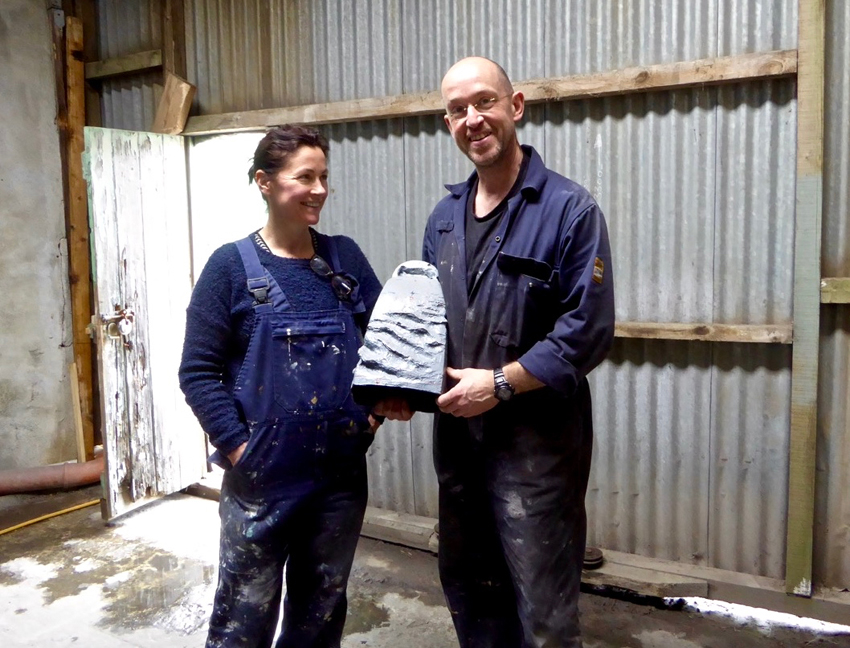
holger with bell

Artist Karen Hendy and Holger Lönze showing the maquette for the bell project in Schull and, below, the bell in its setting at Bangor Abbey

bangor context

I’m often repeating the message but there is no doubt that West Cork is the most creative place I have ever lived! All manner of culture flourishes here and we are privileged to live in a community where we can readily meet and appreciate the work of so many artists; and we have excellent galleries to showcase this work – The Blue House Gallery in Schull (next door to Holger’s workshop), Uillinn in Skibbereen, Catherine Hammond‘s excellent gallery, now also in Skibbereen and The Aisling Gallery in Ballydehob. We are spoiled!

With many thanks to Holger for allowing me to use some of his own images of the work progressing…

A Grand Job!

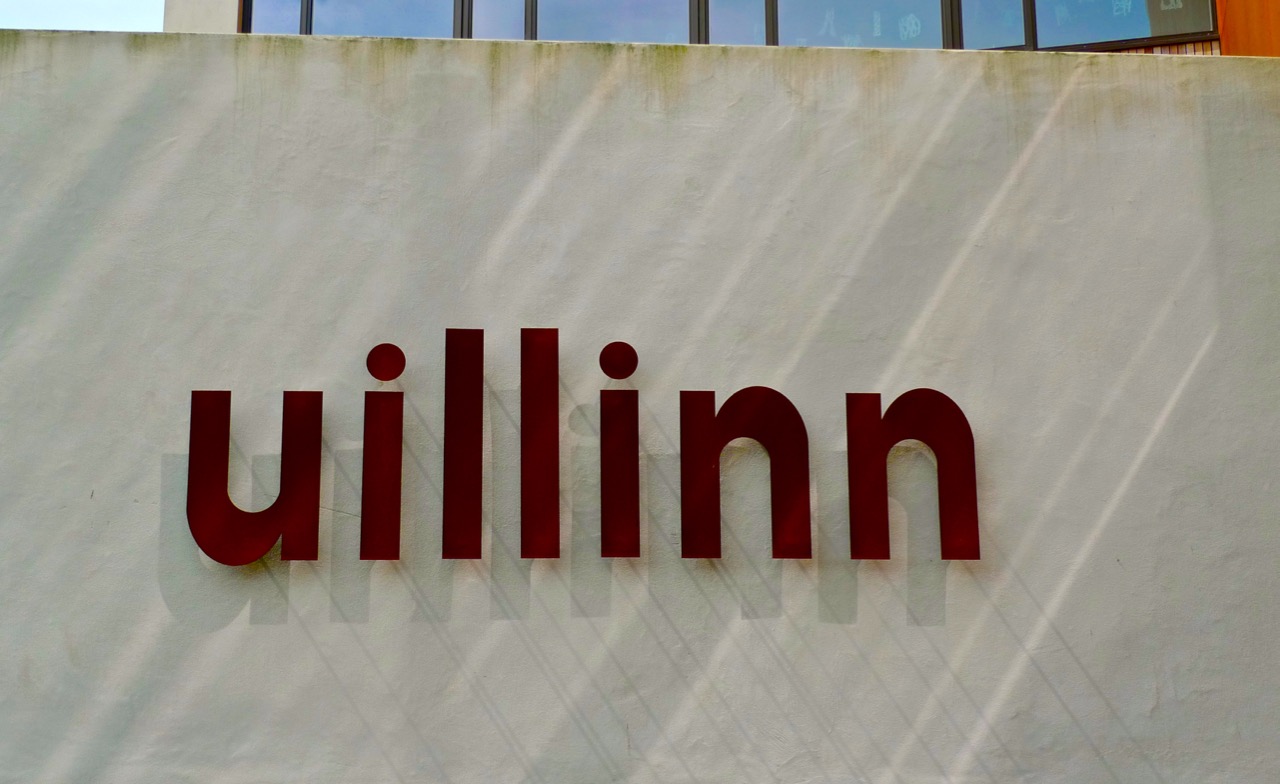
uillinn name

Here’s a riddle: what’s the connection between rusty steel and the President of Ireland? The answer – Skibbereen! Skibbereen on a summer afternoon in June, in fact…

Welcome, President!

Welcome, President!

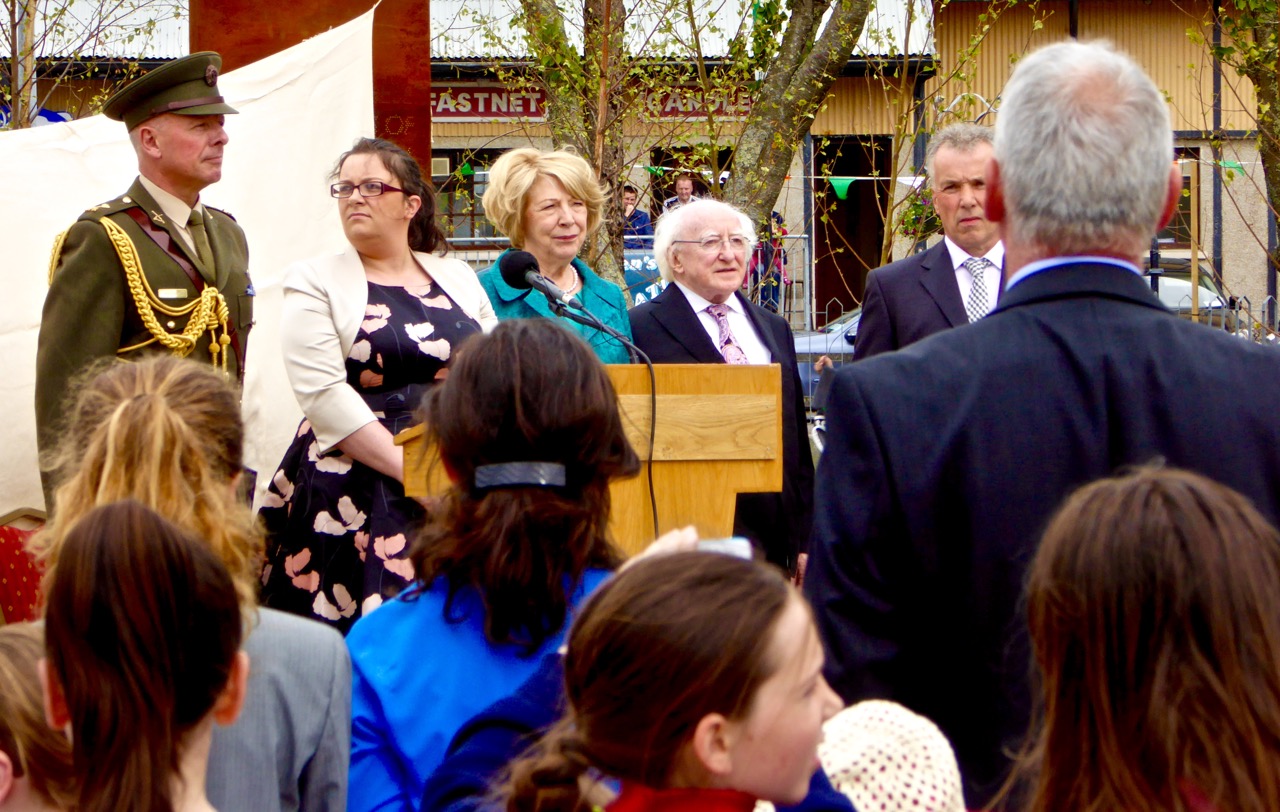
This week the President was in West Cork and on Thursday he came to Skibbereen. Before I lived in Ireland I was pretty ignorant as to the role the President plays in the life of the Republic. It’s not a political position – nothing like the American President, for example: although officially ‘head of state’ the Irish President has no powers – the executive running of the country is entirely in the hands of the government. Instead, the President of Ireland – Uachtarán na hÉireann – acts mainly in a ceremonial capacity and is very visible in civic life. There are always buildings to be opened, institutions to be founded, statues to be unveiled, speeches to be made, important visitors to be hosted… 

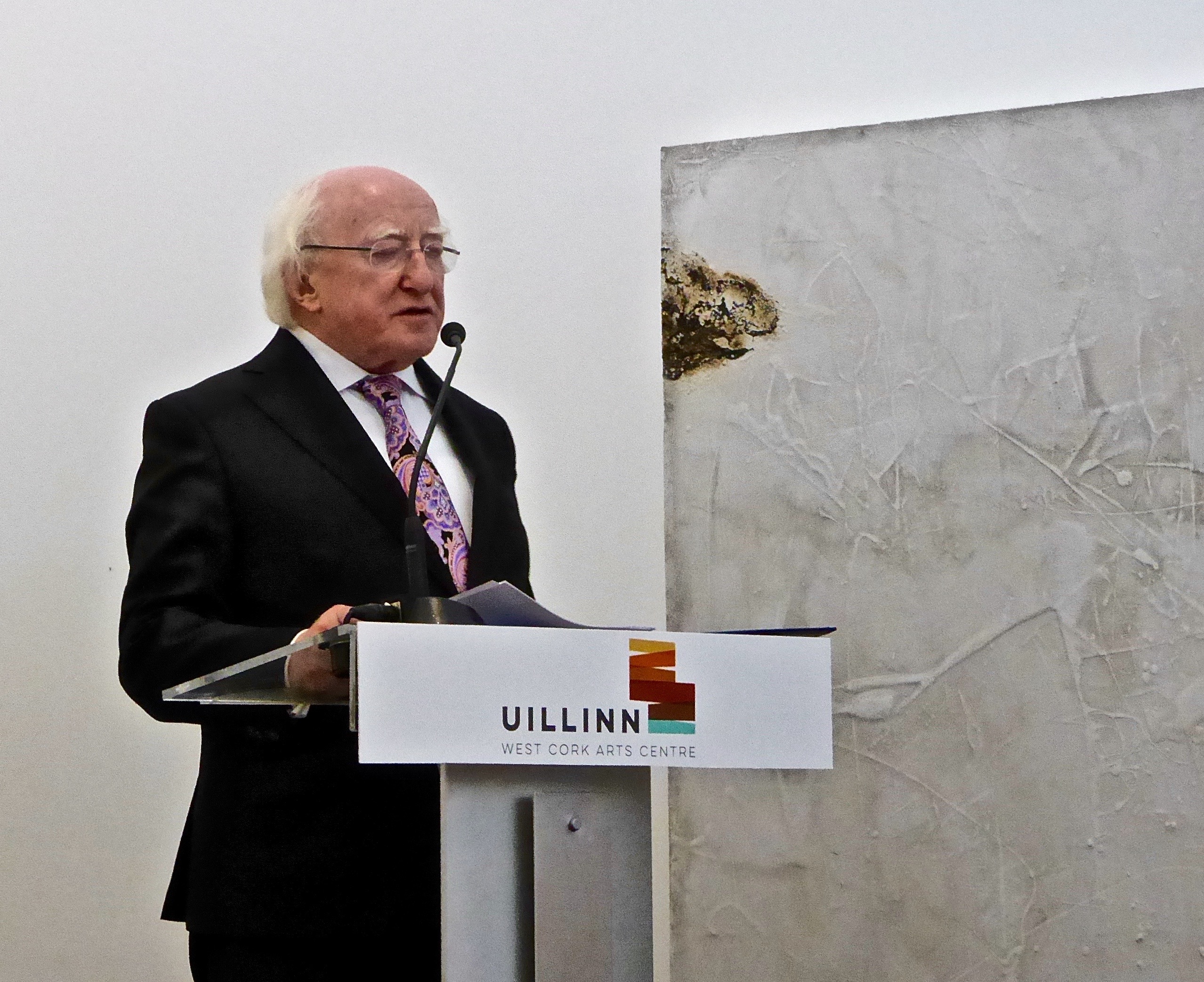
President Michael D Higgins formally opening Skibbereen's new Arts Centre

President Michael D Higgins formally opening Skibbereen’s new Arts Centre

Presidents can either be chosen by popular consensus or elected by a vote of all Irish citizens. Michael D Higgins was elected in October 2011 and his tenancy will run for seven years. Following this he can serve a further term if he and the people so wish. A Limerick man, Michael D (as he is usually known) is well liked: he’s had an impressive career in public life – academic, lecturer, professor, politician, poet, sociologist, author and broadcaster. He served as Minister for Arts, Culture and the Gaeltacht and was President of the Labour Party for many years. He is the first Irish President to have made a state visit to the UK.

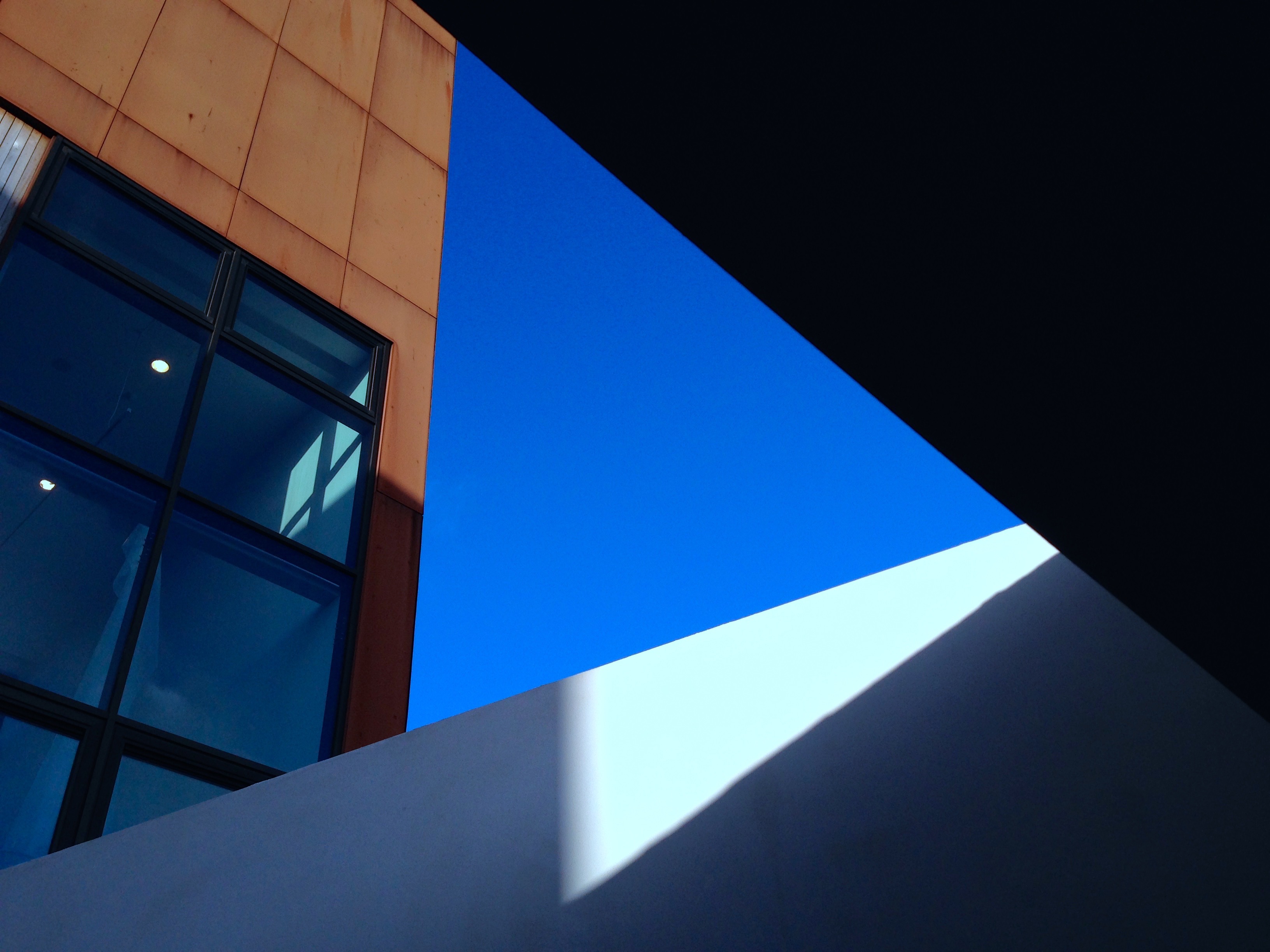
His first appointment in Skibbereen was to open Uillinn – West Cork’s new Arts Centre: that’s where the rusty steel comes in – partly… Regular readers of this blog will know all about this building. It was controversial while under construction, mainly because of the Cor-Ten steel cladding to its prominent five storey tower. Cor-Ten or ‘weathering steel’ is a material consisting of alloys which encourage a rust-like patination on exposure to weather, forming a fully protective coating over a number of years. In fact, the weathering process takes about as long as one term of office of an Irish President! I know many people disagree (although I think some are coming round…), but I find the ‘rusty’ finish very attractive, and I like the fact that the appearance keeps on changing in an organic way.

I was impressed with Michael D’s speech: he’s an enthusiast for all the arts and emphasised how important this modern building is – not just for Skibbereen but for the whole of West Cork. The site – right in the centre of town – had been a bakery for generations, and the President pointed out the analogy between the essentials of bread, fundamental food for the body, and the arts – food for the soul.

'Presidential Salute' in the O'Donovan Rossa Memorial Park

‘Presidential Salute’ in the O’Donovan Rossa Memorial Park

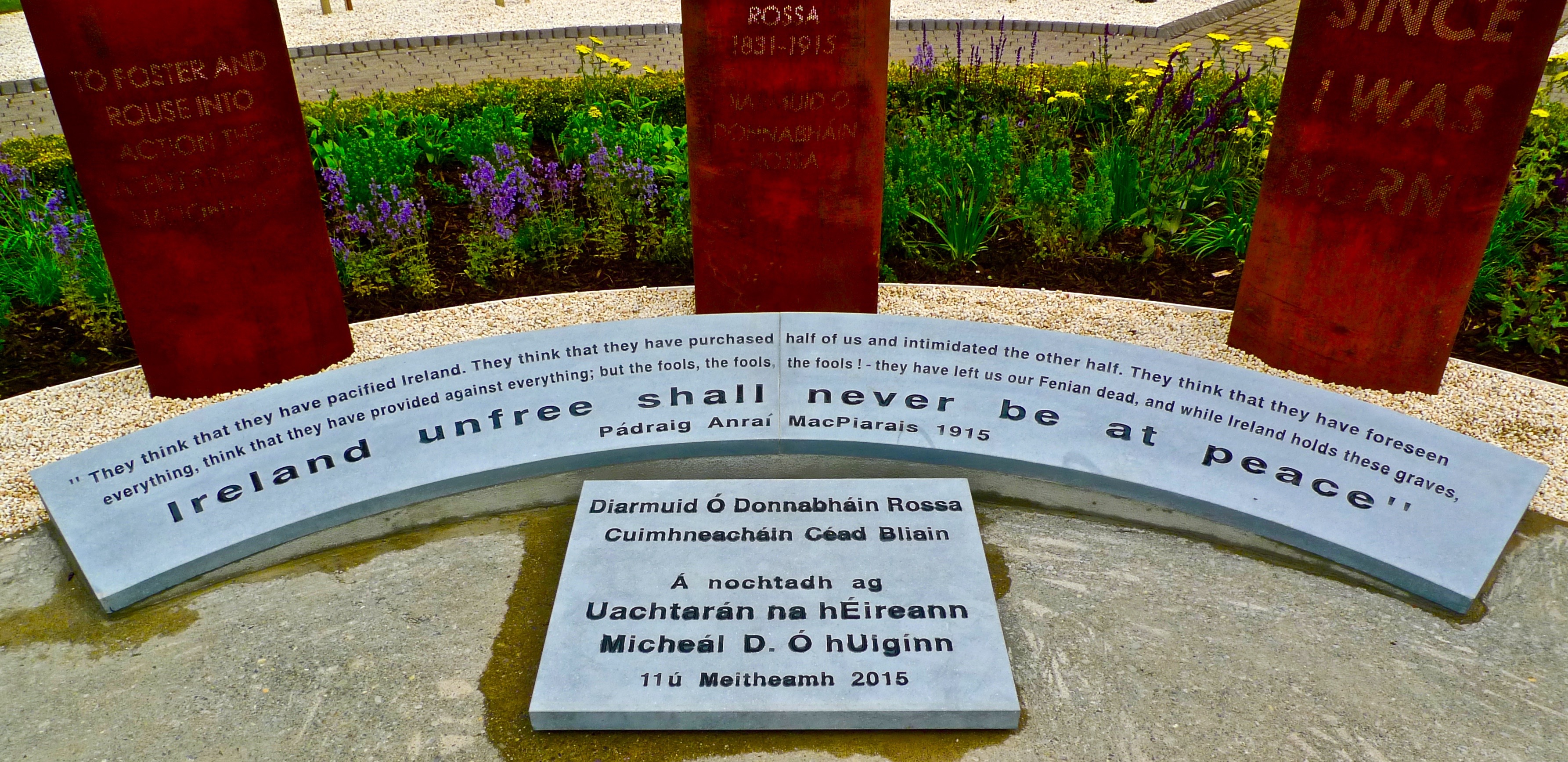
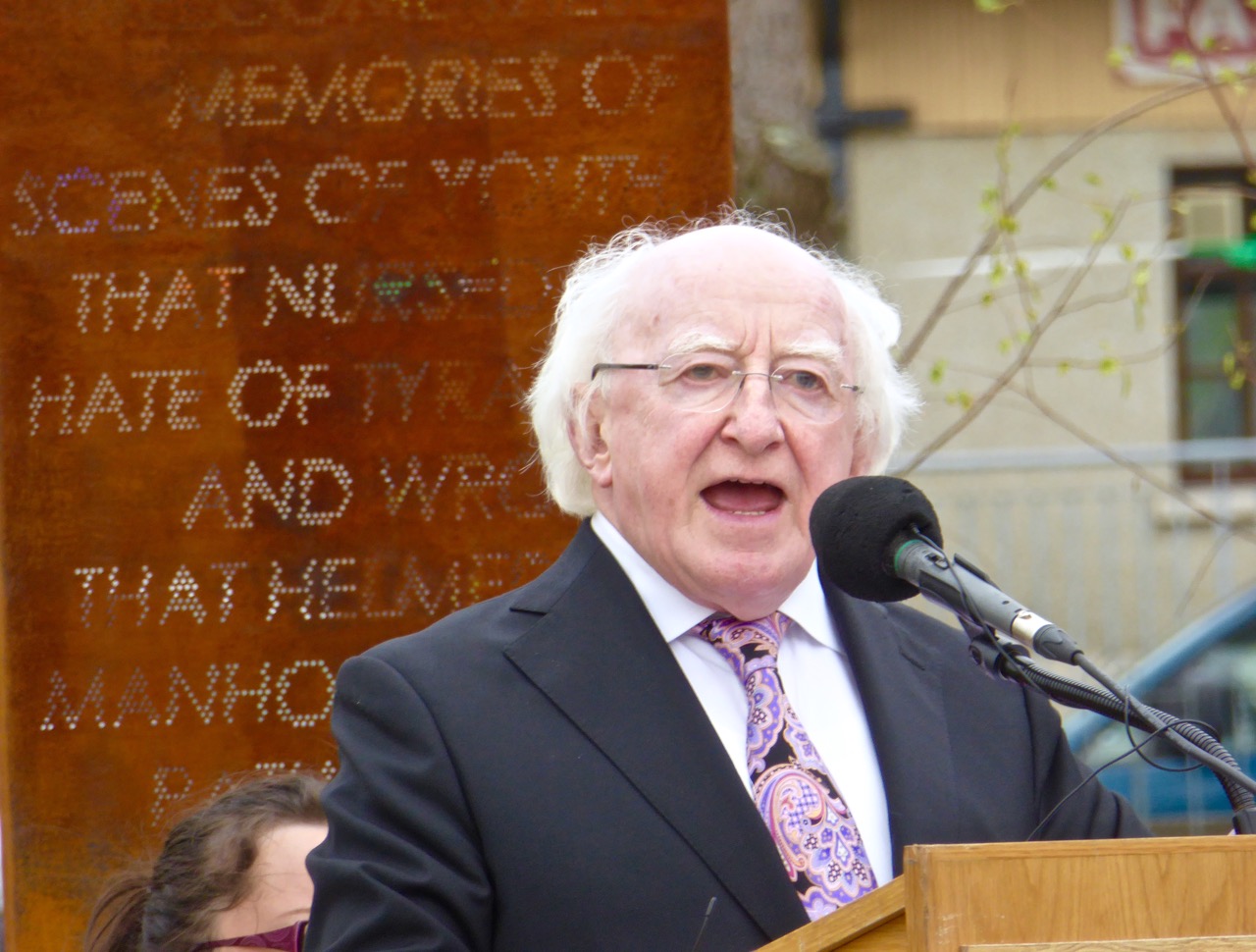
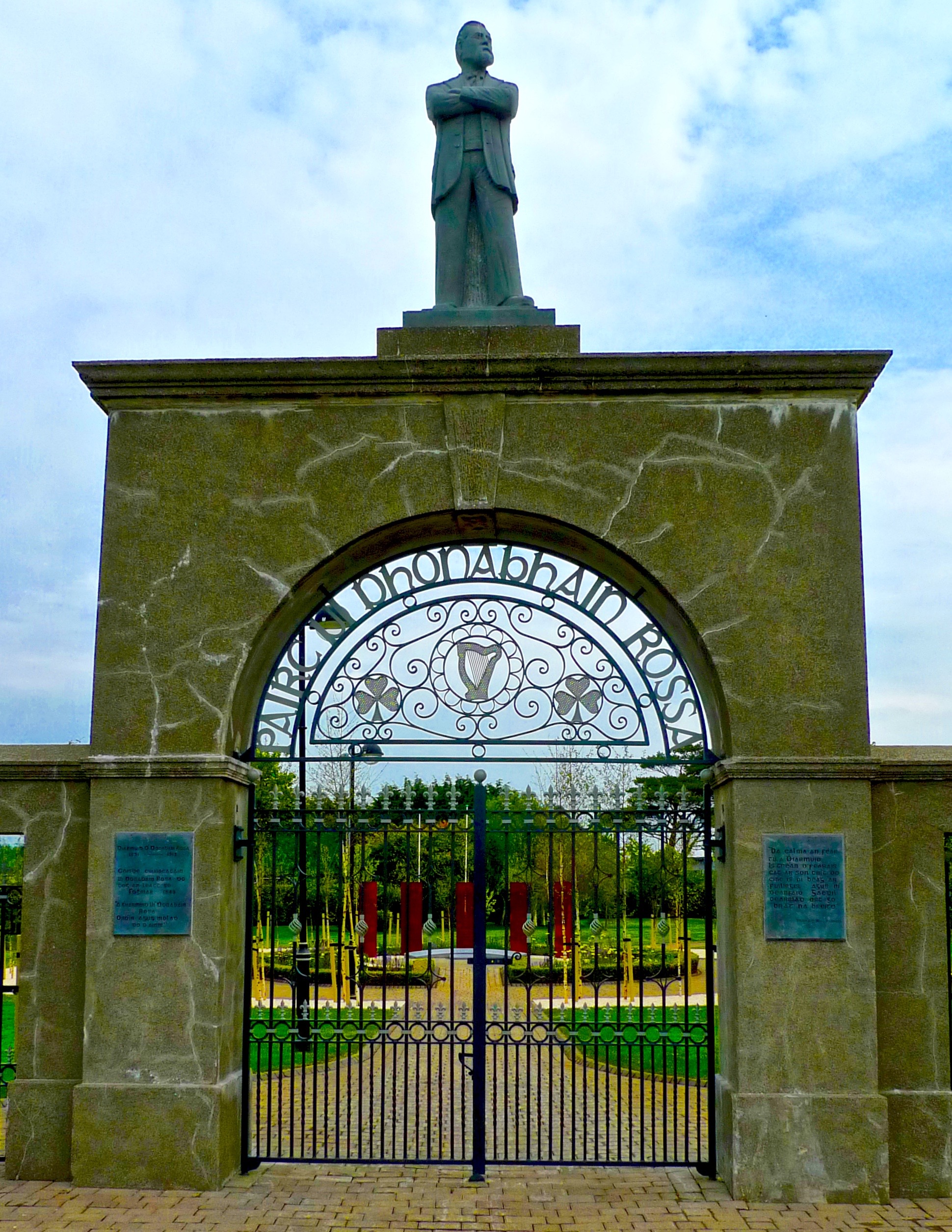
Next item on the afternoon’s agenda was a visit to the park: the President was to unveil a new memorial to Jeremiah O’Donovan Rossa – a local hero who had links with Skibbereen. Finola has mentioned him previously and is currently working on a post about him: July this year marks the centenary of his death. O’Donovan Rossa fought for Ireland’s freedom, just as Michael Davitt did (I wrote about him last week). The President gave a passionate speech emphasising the debt that the Ireland of today owes to those campaigners of yesterday, and I was pleased to hear him mention Davitt specifically.

Ready for the unveiling...

Ready for the unveiling…

New commemorative sculpture in Skibbereen's O'Donovan Rossa Memorial Park

New commemorative sculpture in Skibbereen’s O’Donovan Rossa Memorial Park

I think the new memorial is a great piece of modern commemorative art: it’s rusty steel again! Five columns are placed in the centre of a garden, each telling something of the hero’s story. You have to work to see all the images: they are made by perforating the ‘weathering steel’ sheets. It’s very effective because it can’t be ignored – you just have to stop and work it all out. I commend the artist – but nowhere can I find any mention of who that is! I’m still searching…**

President Higgins speaks out with passion about freedom fighter Jeremiah O'Donovan Rossa

President Higgins speaks out with passion about Ireland’s freedom fighter Jeremiah O’Donovan Rossa

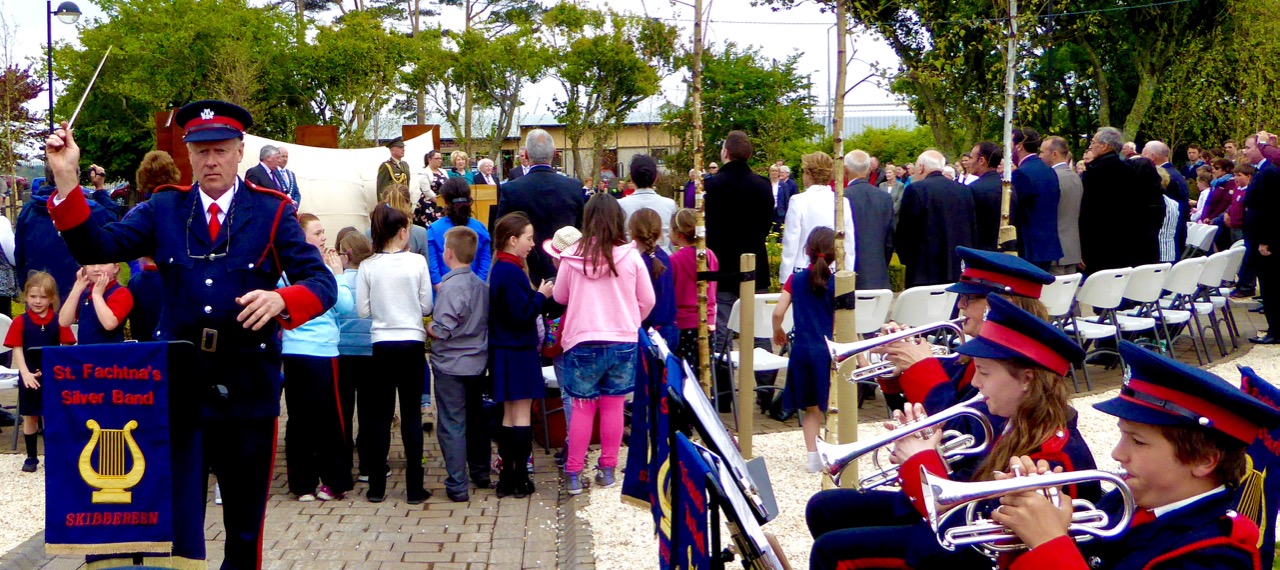
Michael D is a fluent speaker in Irish. He slipped easily between English and Irish while giving his orations – and made it sound so simple! The sun almost shone, the crowds were in good spirits, and the Band played. The rusty steel was looking good. All in all, the visit of Ireland’s President to Skibbereen was a grand job

gate

We have now heard from Graepels Perforators in Kinsale letting us know more about the monument. Here is their message: We worked with Giulia Vallone (now Senior Architect at Capital Projects Implementation Unit CPIU) and Orla Higgins (Cork County Council Architect) to create the memorial. We teamed up with Cork County council to create it.

Raw Material

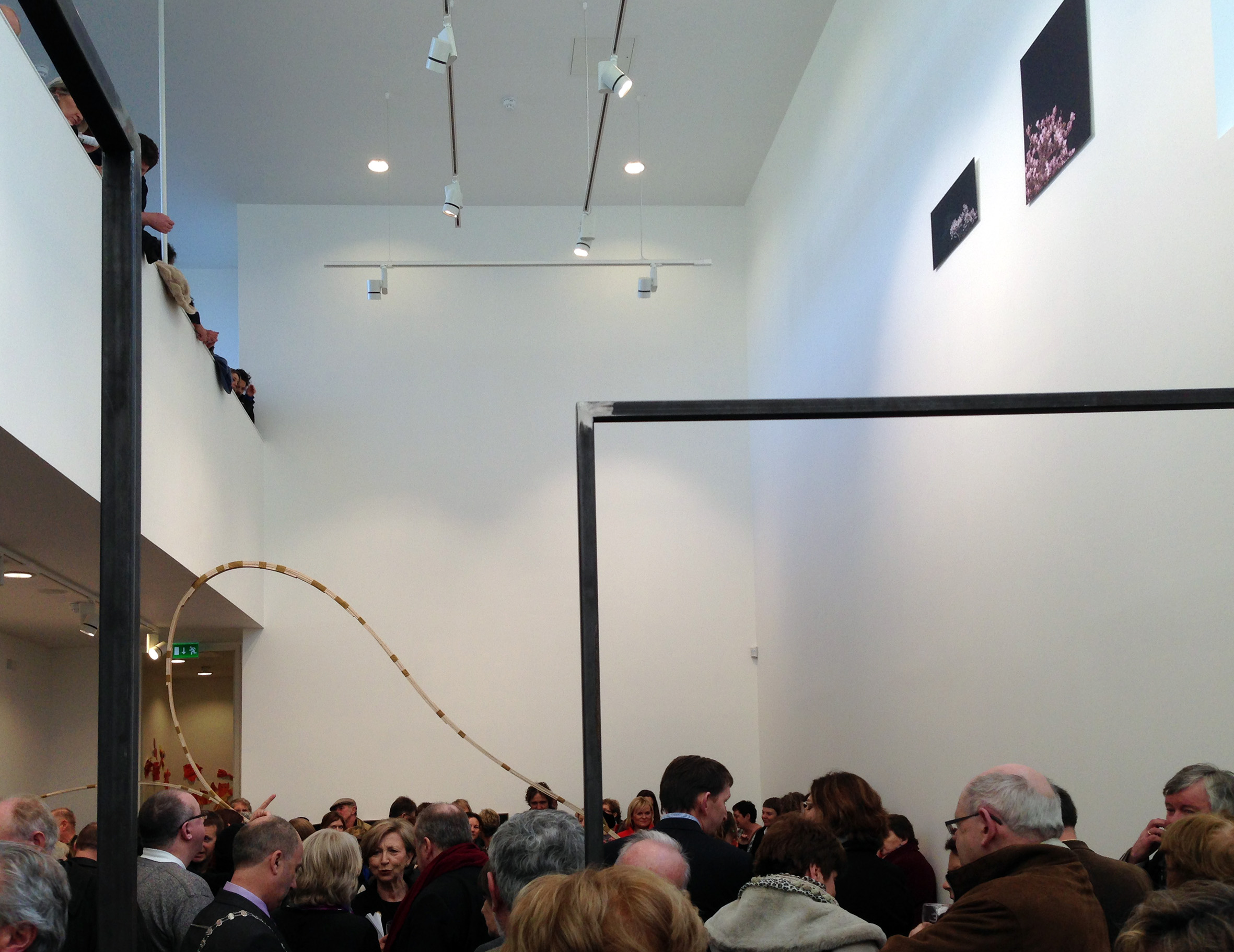
The art of building: West Cork Arts Centre on opening day

The art of building: West Cork Arts Centre on opening day

On the last day of January (traditionally the last day of winter and St Brigid’s Eve) the new West Cork Arts Centre opened its first exhibition in Skibbereen. We have taken a great interest in this building during its construction: the very strong architecture has aroused a lot of negative comment in the community, but now that it is virtually complete the general view of it seems to be mellowing a little. For my pennyworth this bold, modern insertion into the townscape has provided Skibbereen with a new visual focus and with great potential for a successful future.

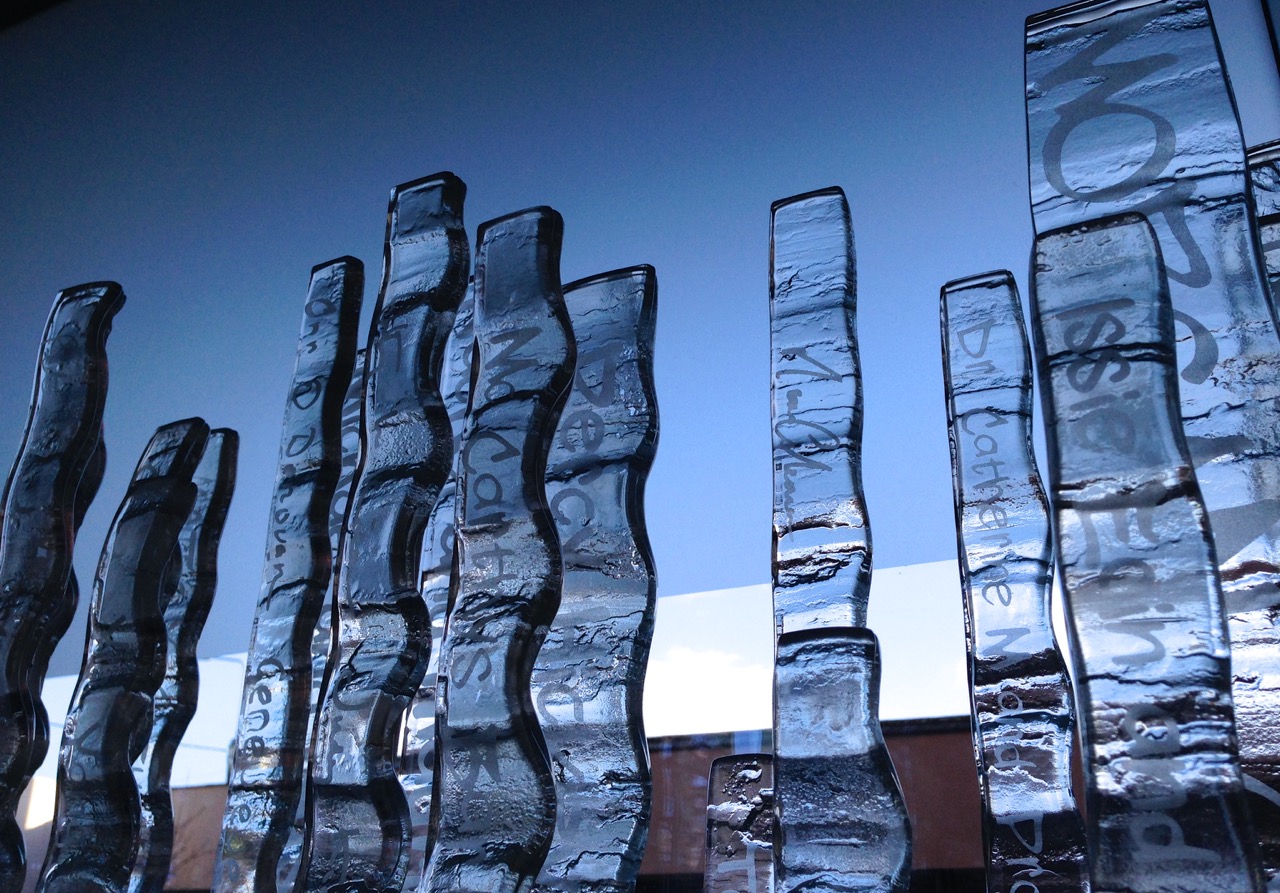
A specially commissioned glass sculpture by Michael Ray graces the entrance hall, and incorporates the names of sponsors of the building

A specially commissioned glass sculpture by Michael Ray graces the entrance hall, and incorporates the signatures of sponsors of the building

The name of this new building is Uillinn – it means ‘elbow’, a reference to the angled plan of the building and its cantilevered location over a bend in the Caol Stream that snakes through the town’s back yard. Dublin based Architects Donaghy and Dimond won the international design competition in 2009: have a look at their plans for the building here.

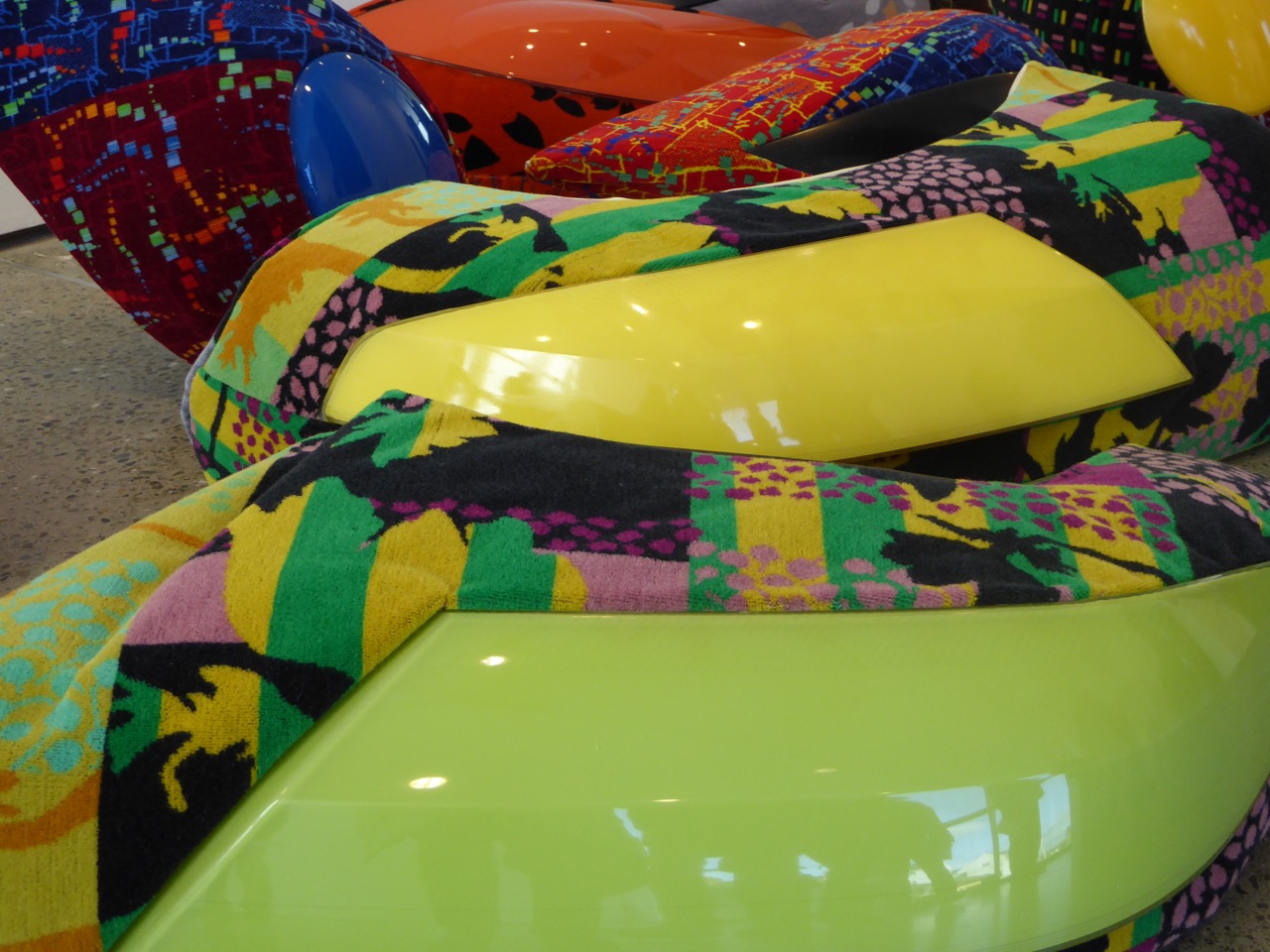
One of the exhibits is titled ‘Flying Colours’ and is a project by the West Cork Education Centre in collaboration with local Primary School children: stairways and circulation spaces in the new centre are alive with colour and creativity. How wonderful that these children can feel they have played such a significant part in this new venture.

The fabric of the building is lively and well considered

The fabric of the building is lively and well considered

This building simmers with potential: the gallery spaces and facilities are impressive and architectural elements are well detailed. Skibbereen has been given a high quality civic building that will last for generations: it’s now got to be used creatively.

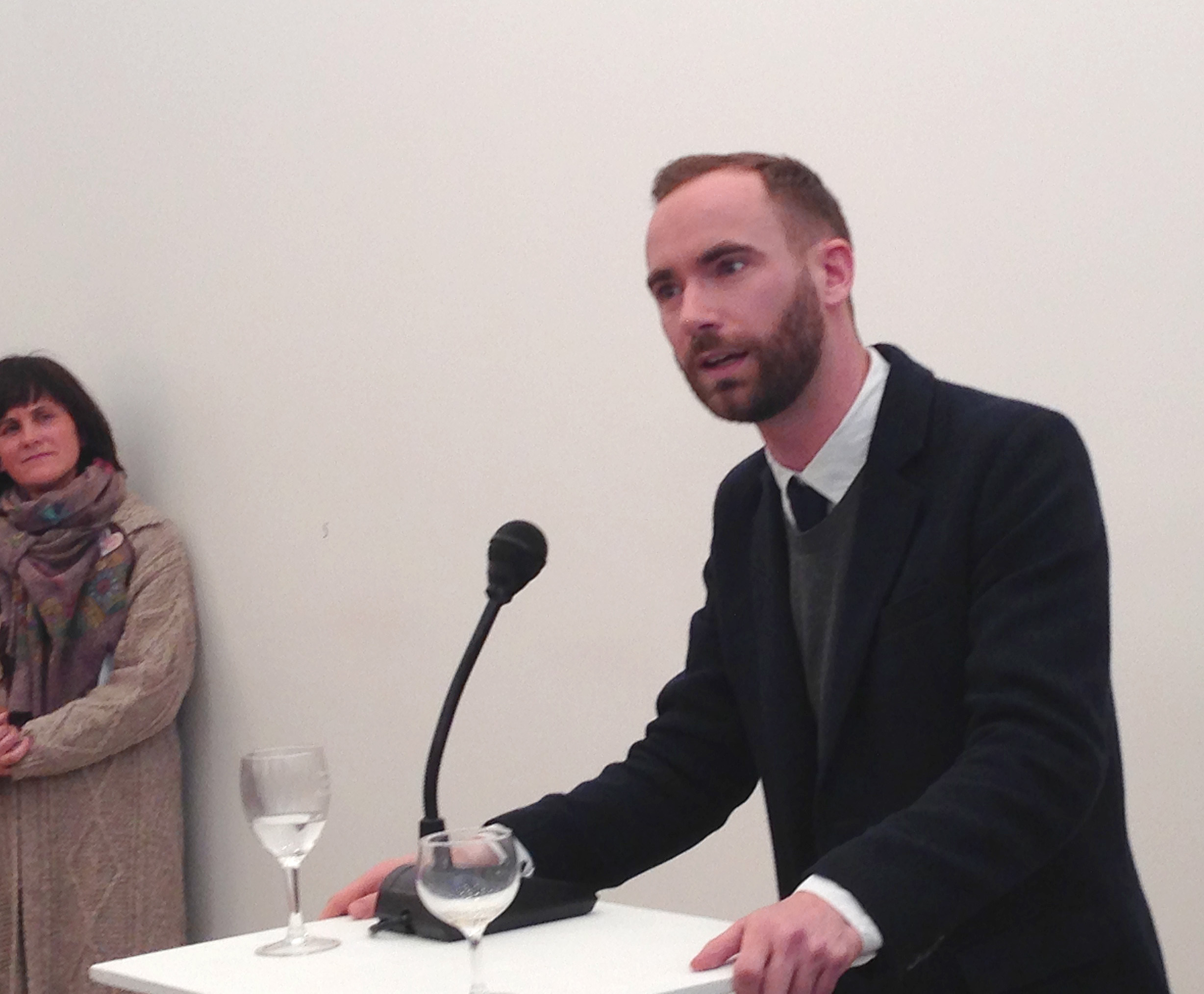
Sam Thorne

Sam Thorne

It’s no coincidence that one of the speaking guests at the opening was Sam Thorne, artistic director of the Tate St Ives Gallery in Cornwall. Comparison between West Cornwall and West Cork is inevitable: both regions have a history of attracting artists because of the very particular light that comes from close proximity to the Atlantic coastline. Also, artists have been drawn to these places because of enduring lifestyles that are simple, basic and close to nature. Thorne made the perhaps surprising statement that West Cork is home to more artists per capita than both Paris and London.

'Blinkers' - Angela Fulcher 2015

‘Blinkers’ – Angela Fulcher 2015

Sam Thorne said that having a community of artists contributes all kinds of different aspects to a region. One of the simple ones is tourism. “That’s been a really important thing in St Ives over the past two decades,” he said. “The gallery contributes £11m (€14.6m) every year to the local economy in St Ives – three times that which was anticipated when the gallery opened… So there’s a very real powerful impact that having artists there, having art there, creates for the community.” He added that the St Ives Gallery now needs to extend its buildings and anticipates over £80m coming into the local coffers over the next few years.

tate

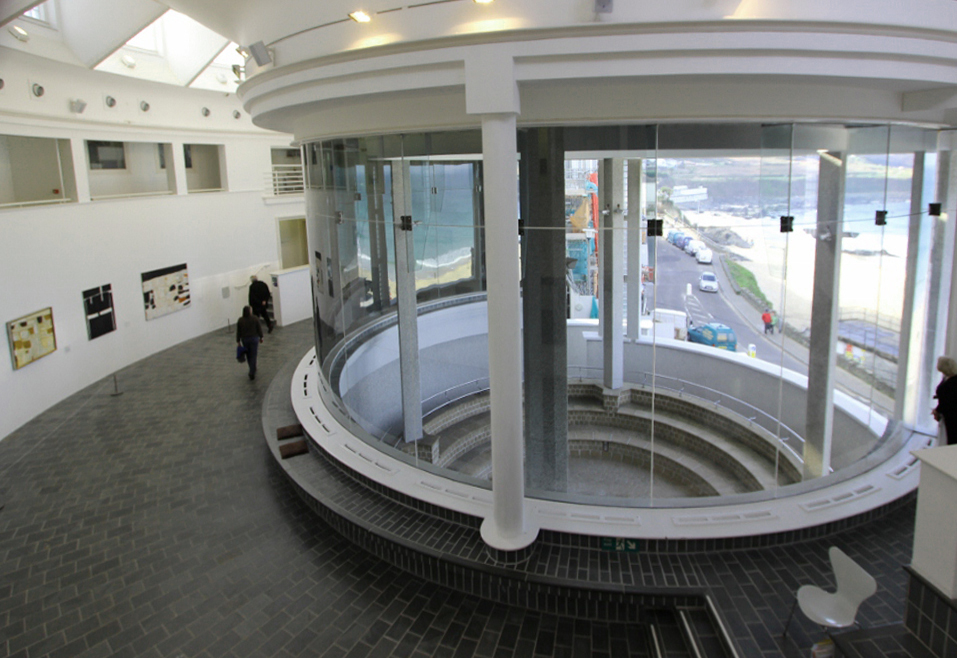
Phenomenal success: the Tate Gallery, St Ives, Cornwall

I spent many years in Cornwall and watched the development of the Tate Gallery in St Ives. It has become a year-round tourist destination: in all seasons – and in all weathers – the streets of the little town are crowded with visitors who are, of course, using the local shops, b + bs and restaurants. It has also created problems: overloaded car parks, strained infrastructure. But surely this is better than closed shops and failing businesses?

Of course, Skibbereen is not St Ives – and our Arts Centre doesn’t have the backing of a body like the Tate, with its enormous resources of historical art. But there are great possibilities nevertheless: Ireland has a wonderful art heritage, much of which is seldom seen outside of the big city galleries. And there are strong links between Irish artists and Britain which could be delved into. Think of the Newlyn School artists – Alexander Stanhope Forbes and Norman Garstin were both Irish; Cornwall was also home to Breon O’Casey and Tony O’Malley. Other artists moved from Cornwall to the west of Ireland, including Nancy Wynne-Jones, Conor Fallon and – mentioned above – Michael Ray.

Impressive gallery spaces call for dynamic works

Impressive gallery spaces call for dynamic works

The St Ives Tate works so well because it is able to show the ‘big names’ – but it also encourages young and local artists, whose output often interacts with the historically established works. There is no reason why the Skibbereen centre couldn’t build on similar links: wouldn’t it be wonderful if we could see paintings by the likes of Jack B Yeats, Paul Henry, Sara Purser or Daniel Maclise on our doorstep – complimented, of course, by the very best of home grown talent? The ‘big names’ would be the crowd-pullers – at least initially: these are the building blocks for forging a lasting reputation.

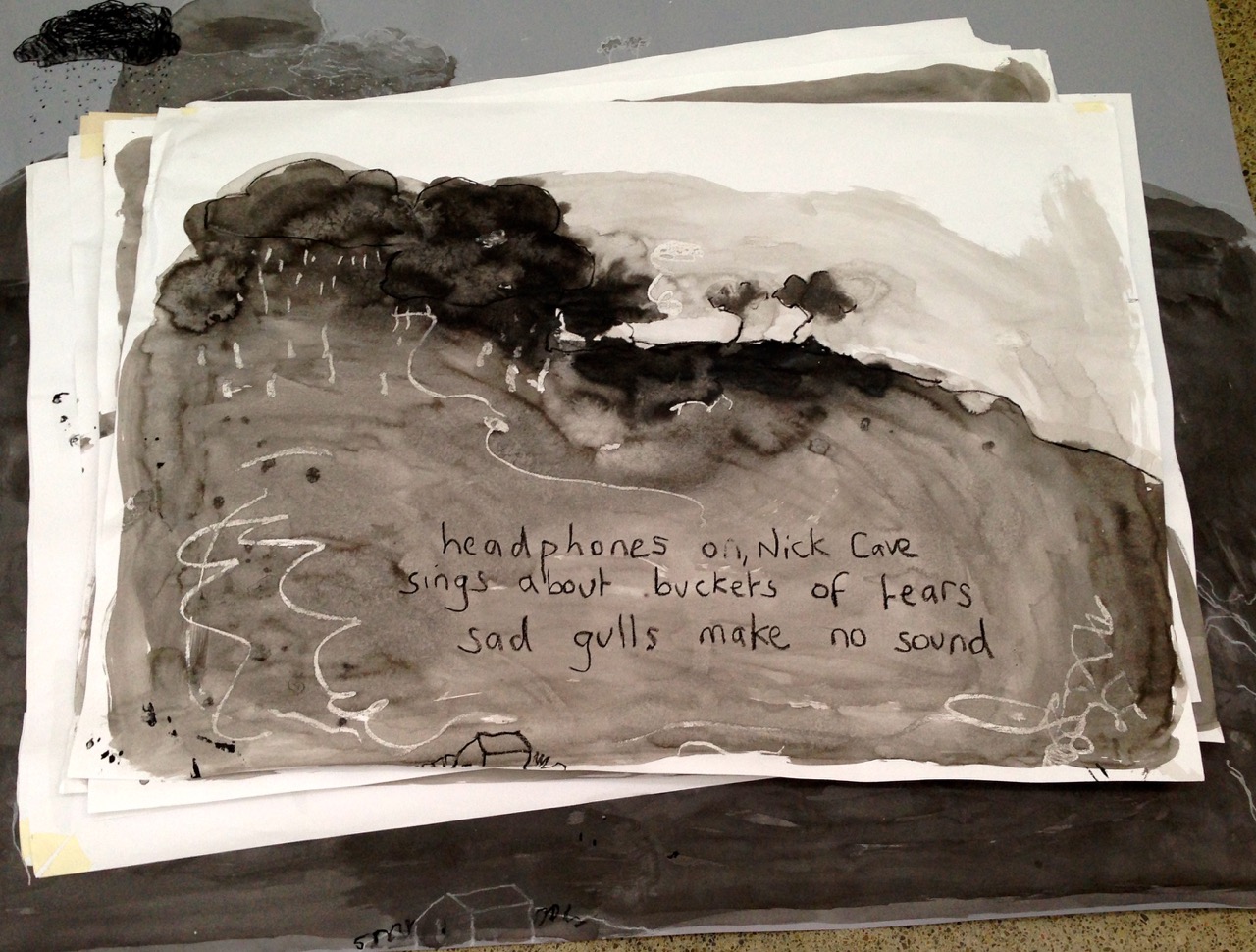
headphones on

Works in progress: the centre contains studios and workshops

The new building still awaits its official opening: this will happen in the summer and the President of Ireland – Michael D Higgins – will have that honour: a scoop for Skibbereen! The Board of the West Cork Arts Centre – and the sponsors and donors – have moved mountains to realise the vision of this building. Now it’s down to creativity and dynamism from the team – and to enthusiasm and encouragement from us, the visitors, whose support is vital to this building’s future success.

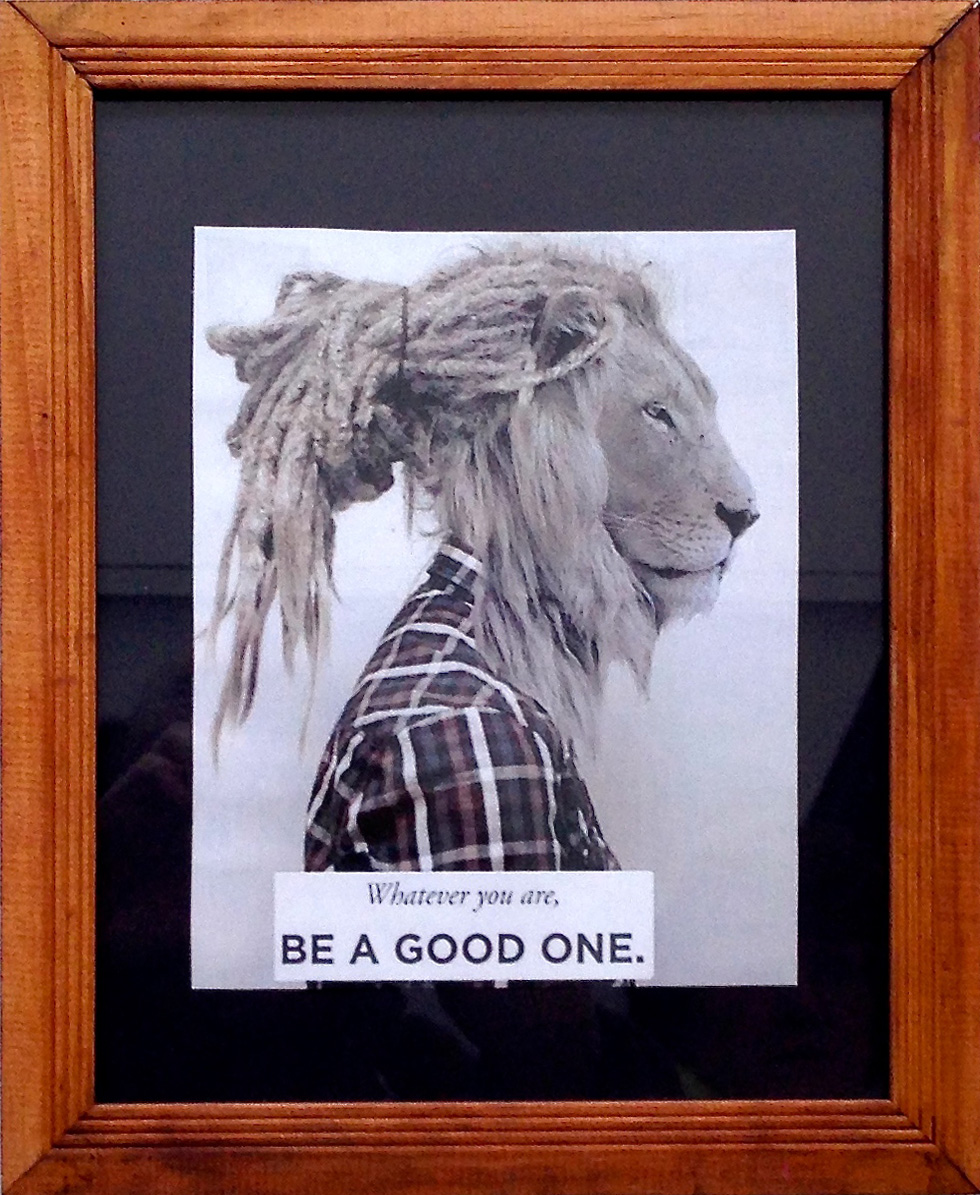
quirky