Biodiversity Ballydehob

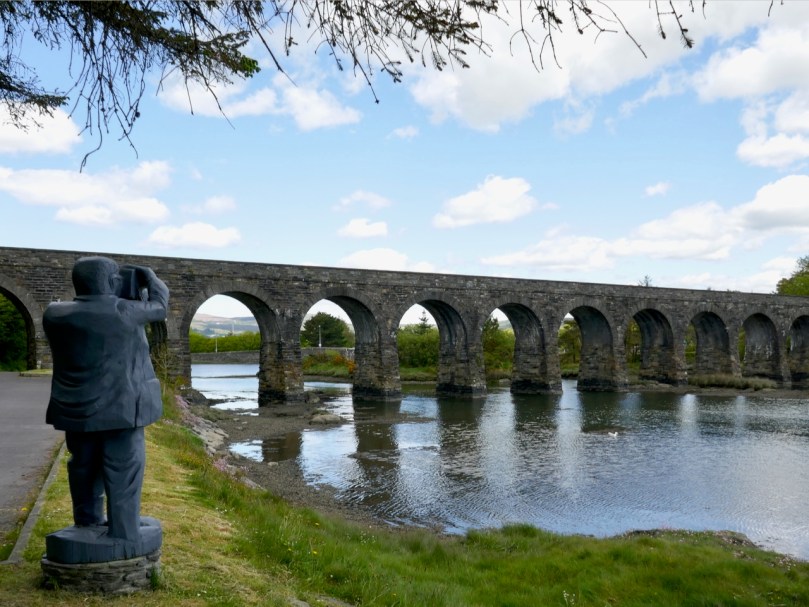
In the same way that strangers are friends you haven’t met yet, weeds are wildflowers you haven’t yet come to know and love. So come with me to the Ballydehob estuary and meet the dazzling array of wildflowers that call it home. That’s me, by the way, with my trusty camera, at the always-scenic Twelve-Arch Bridge. All the photos in this post were taken within 100 metres of the bridge, on the west side of the estuary.
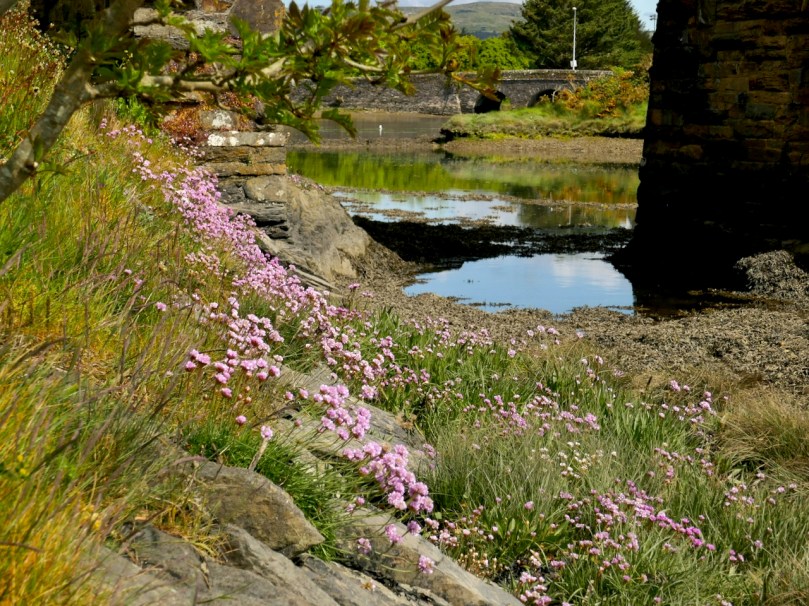
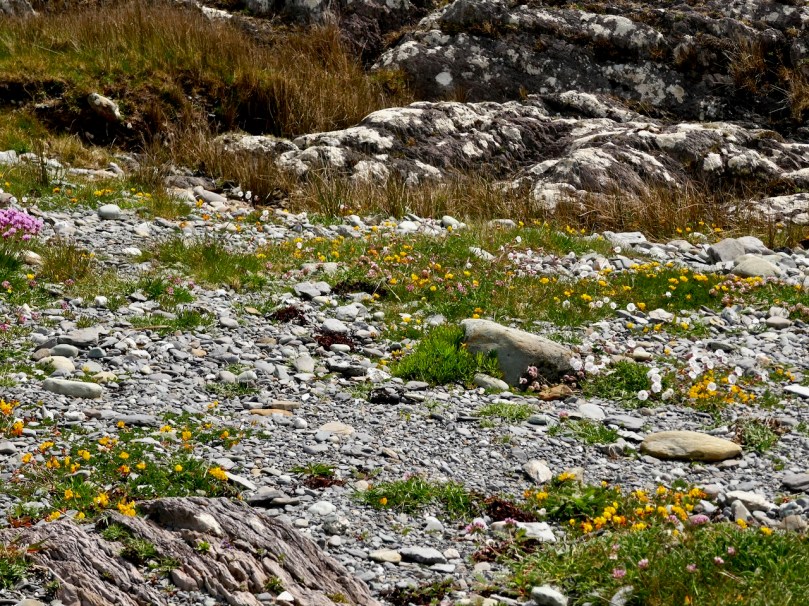
Thrift, or Sea-pinks, is the most visible flower at the moment, in pink drifts along the shore. There’s a lot more than Thrift in this photograph, but before we move on, let’s take a closer look at them.

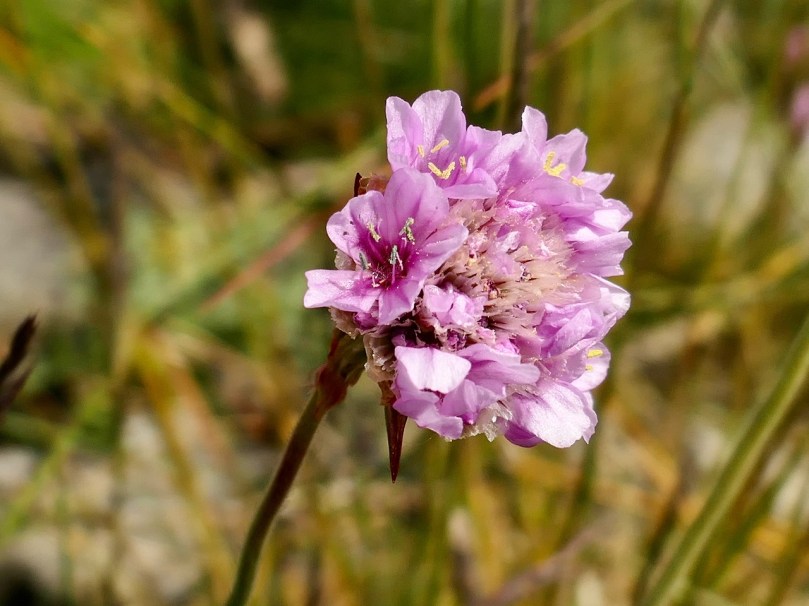
In Irish Thrift is called Rabhán (pronounced ravawn) and this word means an outburst, as in rabhán gáire, a sudden fit of laughing. Pretty apt, isn’t it, for a flower that is suddenly everywhere at this time of year. By ‘everywhere’ I mean all along the coast, although in Great Britain it is also found in a few mountainy places too.
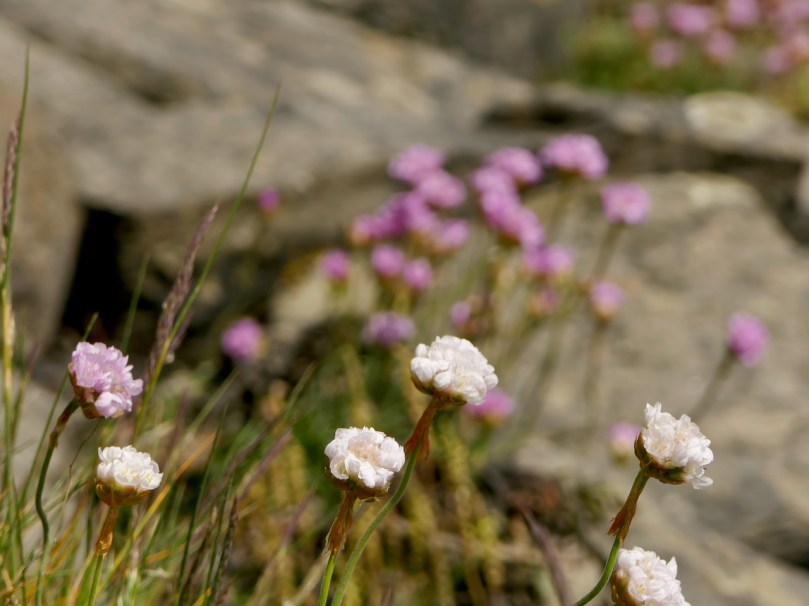
Ballydehob has some white Thrift too, fairly unusual. According to Niall MacCoitir in his wonderful Ireland’s Wild Plants, Thrift has many alternative folk-names, such as Lady’s Cushion, Sea Daisy, and Sea-July Flower.

As there is everywhere at this time of year, there’s lots of Ribwort Plantain (did you use it to play Soldiers as a kid?) but there’s also Buck’s-horn Plantain (above). The stalk and flower look very Plantain-like, but the leaves of the basal rosette are what give the plant its name – look at all those tines. In Irish the plantains are called Slánlús, which means health plant as they are used liberally in folk medicine. But be careful – in regards to Ribwort Plantain (below, with Oxeye Daisy and Cat’s-ear), Mac Coitir warns us, . . .while it could be used to cure many ailments, there was also a danger that if the wind changed wile you were collecting it, you would lose your mind.

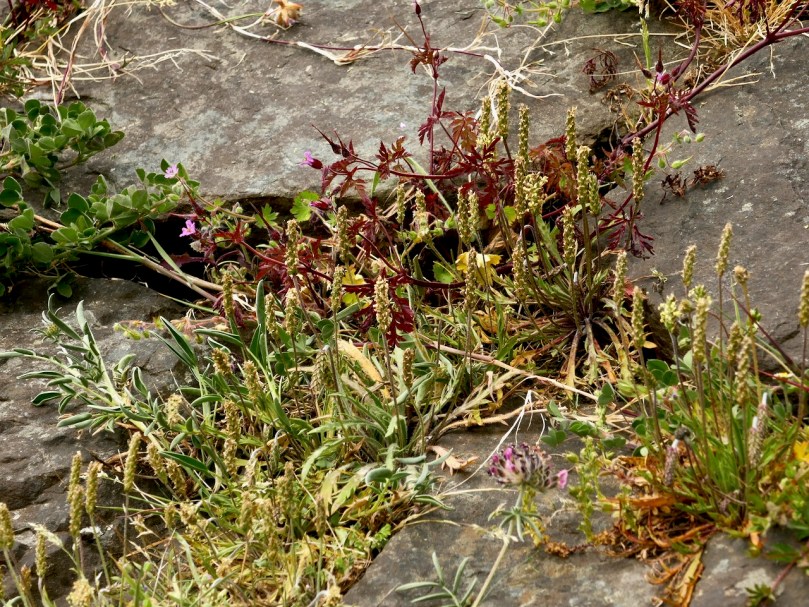
Here’s Buck’s-horn Plantain again (above), along with three different pink flowers – can you make them all out? I’ll talk about each one and then you can go back and look at his photo again and see if you can see them this time.

Here’s the first one, Dove’s-foot Crane’s-bill. The dove’s-foot comes from the shape of the leaf, and the crane’s-bill from the shape of the seed-pod – you can see both in this picture.
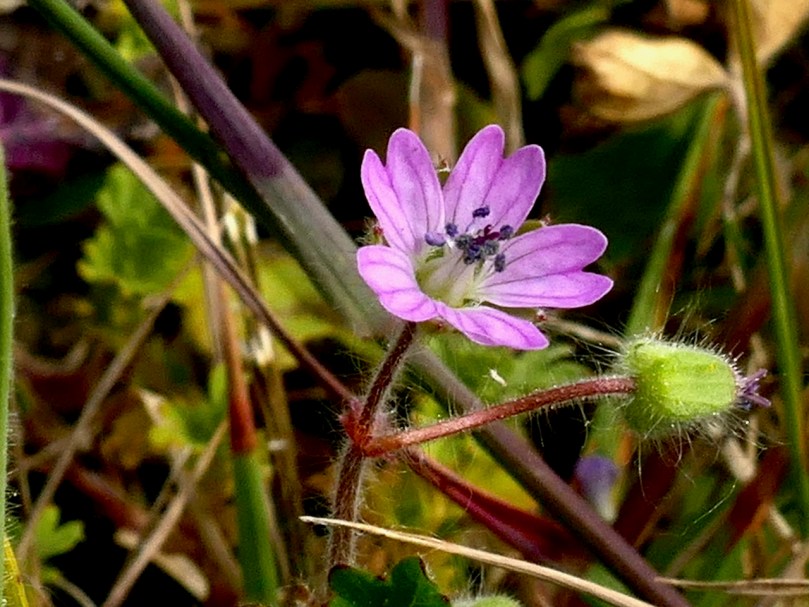
The flower is tiny and very sweet, deep pink with purple anthers. It’s a member of the Geranium family, and that makes it first-cousin to the next little pink flower, Herb Robert, below.
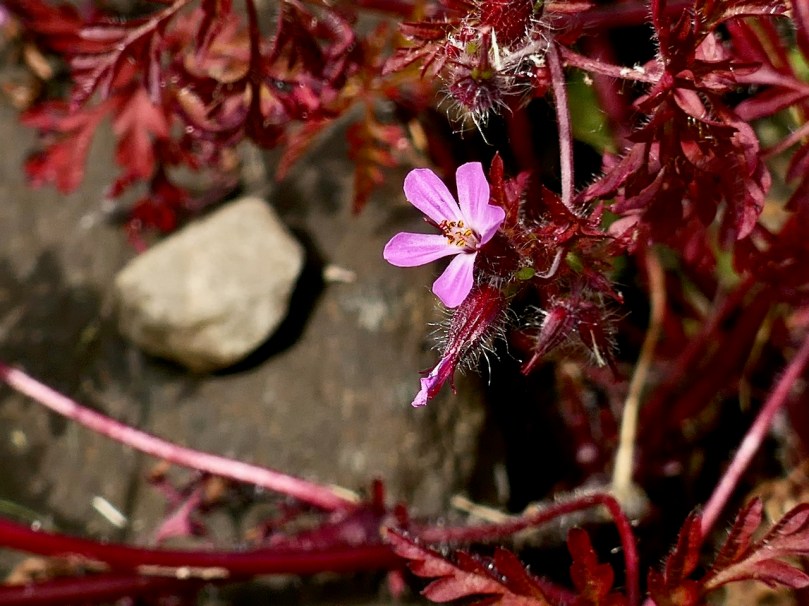
It’s one of my favourites, not just for its attractive flower, but for the leaves that turn a deep red as the plant matures. Himself, of course, is very pleased to have a plant named after him, although a more boring explanation could be that the Robert comes from the latin ruber, meaning red. It’s got lots of alternate names but my favourite Irish one is Eireaball Rí, means the King’s Tail. It’s another powerful herb, used traditionally to stop bleeding.
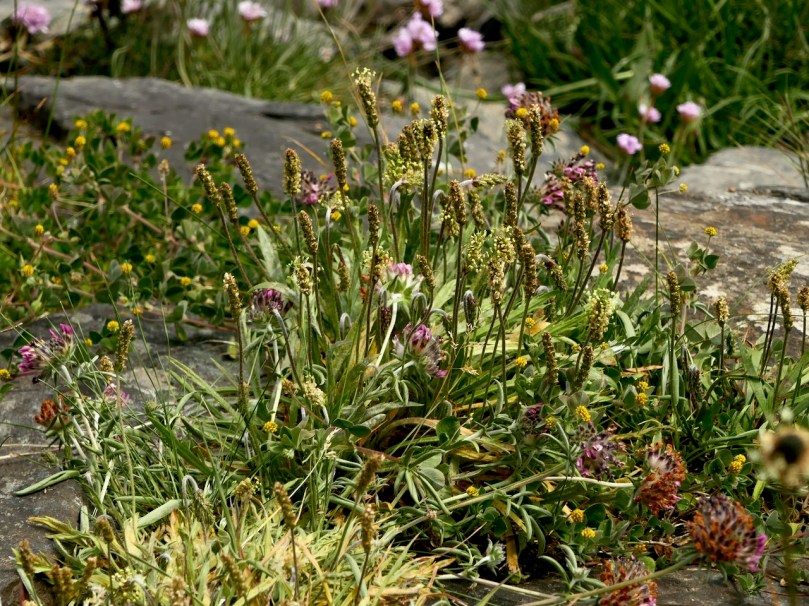
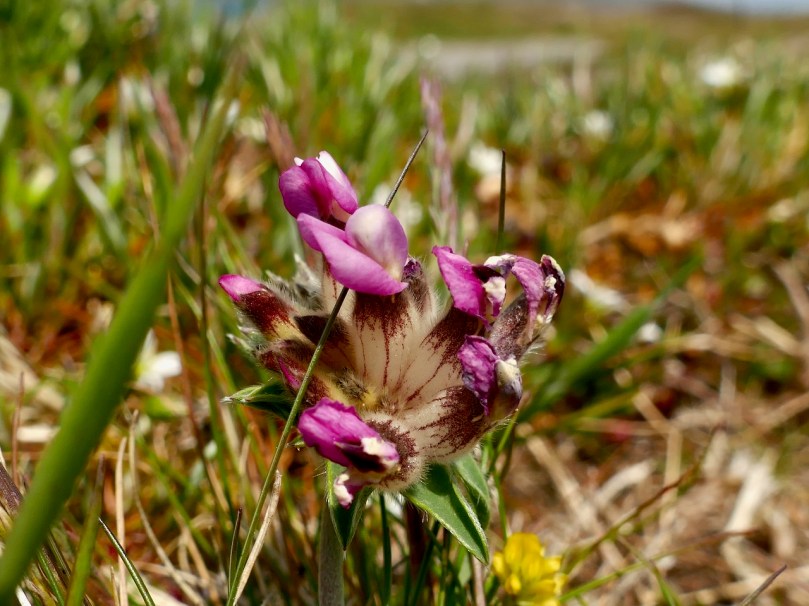
The last of the pink flowers is Kidney Vetch, although it also comes in other colours. It’s actually more common in yellow around here, but I have read that it can be orange, purple, or even pure white. In the photograph above it’s mixed in with the Buck’s-horn Plantain, but here it is on its own, below.

Kidney Vetch is a member of the Pea family but the funny thing about it is that each little pink petal is embedded in a tuft of what looks like cotton wool. It’s a bit otherworldly, but it makes it easy to identify. It’s also known as Lady’s-finger (or in Irish as Méara Muire, which translates as The Virgin’s Finger) and as Stanch, which comes from its reputation as being able to staunch blood flow.
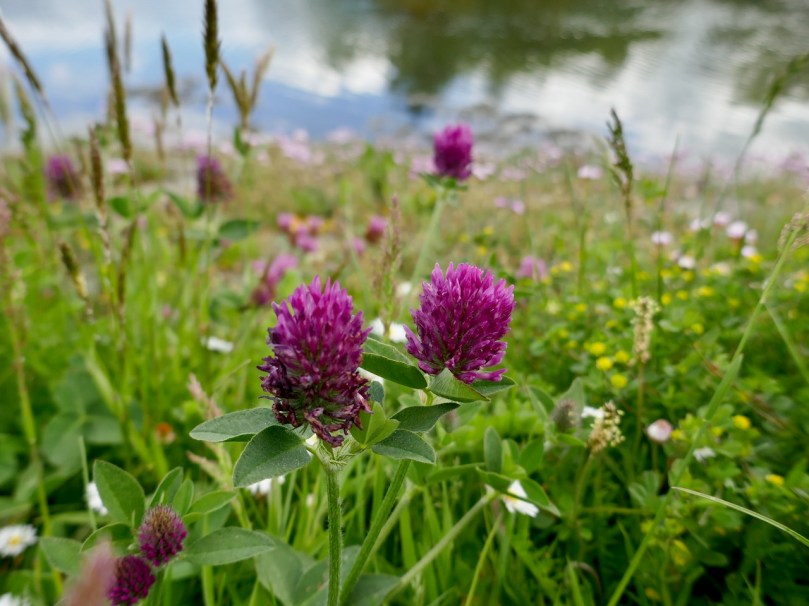
Another member of the Pea family is Red Clover, beloved for its nectar by bumble bees, which have longer tongues than honey bees and can get at the goodness.

This is one of those flowers that are so familiar we hardly notice them, but a really close look reveals a beautiful flower indeed. The leaves are the familiar shamrock shape, but much larger and often with pale patches, and another reason to look closely is to see if you can find a four-leaved clover, considered lucky all over the world. In Irish myth and legend the clover is a symbol of prosperity and the fertility of the land. Among Mac Coitir’s many examples is the story of St Brigid who decided to make her home in the Curragh of Kildare because when ‘she saw before her the delightful plain covered in clover blossom, she determined to offer it to the lord’.

Above is Trailing Tormentil. Although this is a widely-distributed plant in Ireland I haven’t seen a lot of it around here. In fact it’s much more common to see its first cousin, simply called Tormentil, especially on heath, among the heathers and gorse. Tormentil has only four petals on its yellow flowers, whereas Trailing Tormentil can have five, as in the patches I found along the estuary. The name seems to relate to its potency as a cure for stomach torments – the root was boiled in milk as a cure for colic. Add in a little wine and it was good for what ailed you. Add in some St John’s wort and it was a sleeping draught. This is reflected in the Irish name Néalfartach: néal has several meanings which can related to depression and to sleep.

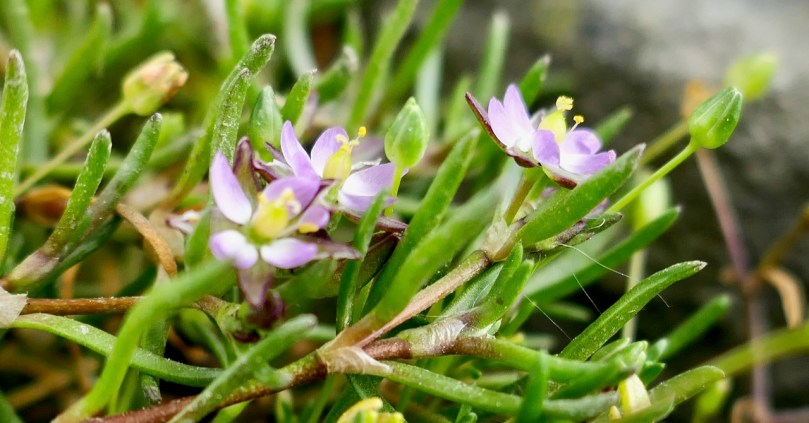
A very exciting find for me now (above) as it’s the first time I have seen it. Look how tiny it is – it’s very possible I’ve walked over it many times without noticing, especially as the old eyes aren’t what they used to be. It’s one of the Sea-spurreys (the others are Rock Sea-spurrey, Greater Sea-spurrey and Sand Spurrey, all of which are found in West Cork) but this one is Lesser Sea-spurrey.
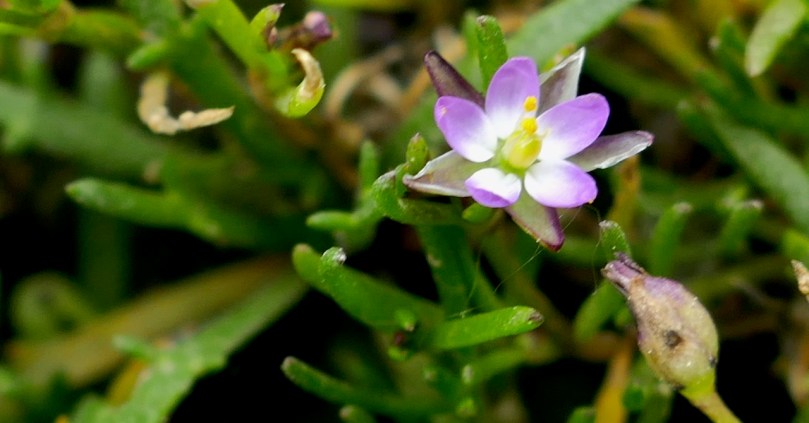
It’s very like Greater Sea-spurrey but several factors distinguish it – it’s tiny, the sepals are longer than the petals (see above) and it has far fewer stamens. The distribution of all the Sea-spurreys is coastal, as you would imagine, but strangely Lesser Sea-spurrey is also found all over Britain, inland as well as by the sea. In Ireland, it is only coastal. Is it weird to get this excited over a tiny plant? (Okay, don’t answer that.)

Moving right along, this is Cuckoo-flower – so called because it appears about the same time as the Cuckoo does. It’s also called Lady’s Smock and it can vary from pure white to a mauvey pink and if you look closely at the stems you might see tiny eggs – they are white when laid but turn orange with time. They are laid by the Orange-tip Butterfly and the larva feeds on the stem of the flower.
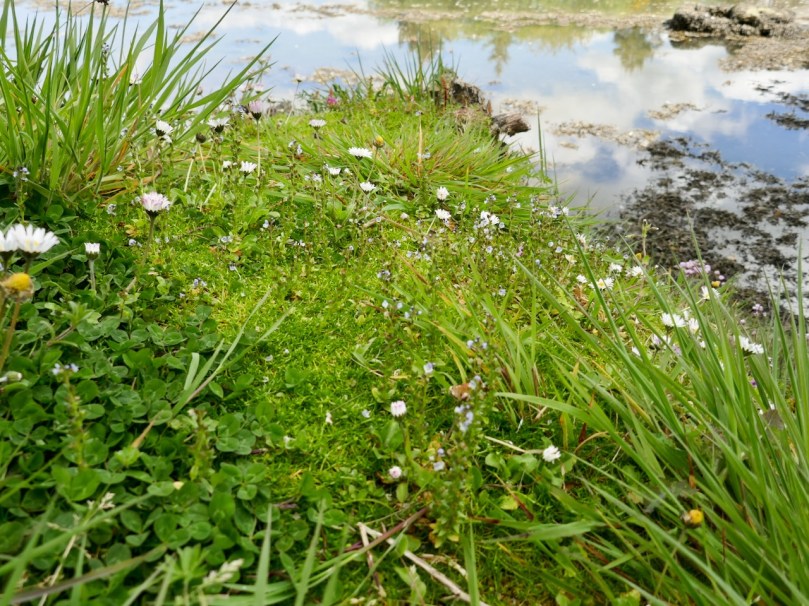
There’s a little patch of grass jutting out into the estuary and at first I thought it was just covered in daisies. Daisies are important little flowers for our pollinators too, but what caught my eye was smaller so I had to lie down to get close enough to see the little blue ones.
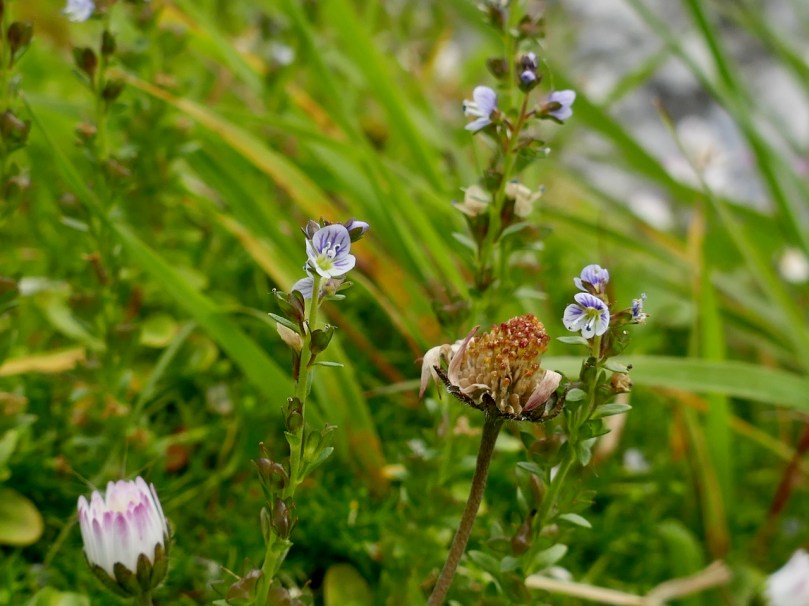
This is Thyme-leaved Speedwell, one of the many Speedwells you can find in West Cork, and one of the smallest ones. Right across the road is another one – much more visible. In fact, if your eye is caught by a flash of blue in the grass in West Cork, this is likely to be what’s causing it.
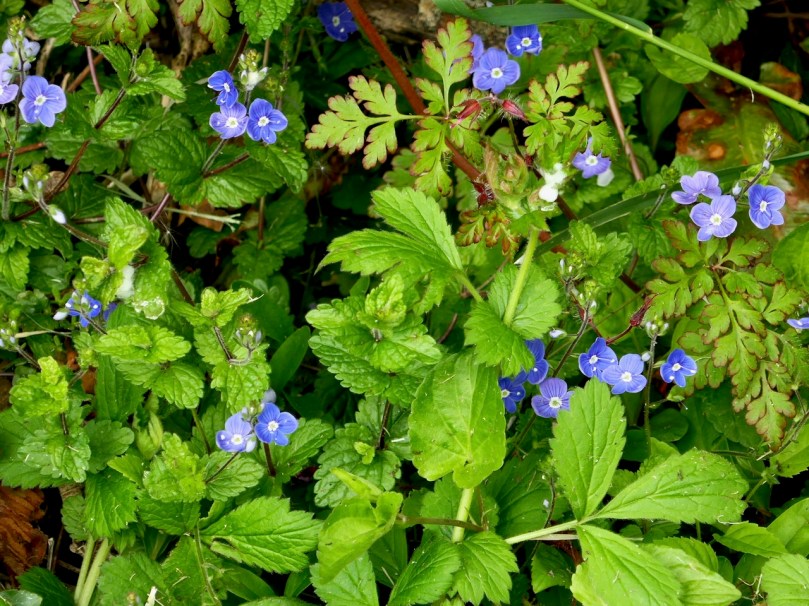
It’s Germander Speedwell – a closer look below. Speedwell looks a bit like a Forget-me-not but it doesn’t have the yellow centre and only has four petals to a Forget-me-not’s five.

It belongs to a different family too – the Veronica family, which includes the next flower, Ivy-leaved Toadflax, which I found growing all over the bridge pillar.

This is one opportunistic little plant – it will find a crack in a wall and dig right in. In fact, walls are its favourite habitat. Here’s what Zoë Devlin’s Wildflowers of Ireland (my go-to resource) has to say about this adaptable genius: The seed-planting mechanism of this plant is very clever indeed.  The flowers turn their heads to the sun until they have been fertilised at which stage they turn about towards the wall on which they are growing and in this way they plant or push the seeds into any little crevice possible on the wall. They also have very long roots which help them to hang on, like the Ivy for which they are named, and thereby ensure their survival.  This plant was introduced in the seventeenth century from the Mediterranean countries.

As Zoë says, it arrived here from the Mediterranean – but how? During the craze for importing marble from Italy, including marble statues, the plant hitched a ride, jumped ship once it got to Britain, and flourished from then on. Even though it’s not a native plant it’s adapted well to the Irish climate and has proven to be a good neighbour, unlike many other alien species.

Just glancing along the bank, it’s hard to take in how many plants are here, and what a variety there is. I will finish with a couple from across the road. First, the Hawthorn is now in full bloom.

It’s also known here as the Whitethorn and it comes into flower after its leaves have arrived and after the Blackthorn has faded. Beautiful – but considered to be very unlucky. Woe betide anyone cutting a Whitethorn or bringing its flowers or branches into the house – except in the month of May when it was customary on some counties to bring the flowers to the house, or even into it, to honour Mary (it’s the May Tree) or to ward off evil. That’s a bit confusing – it’s May now so should you gather some blossoms? Better to take no chances, I say, and leave it to bloom outside for all our enjoyment.
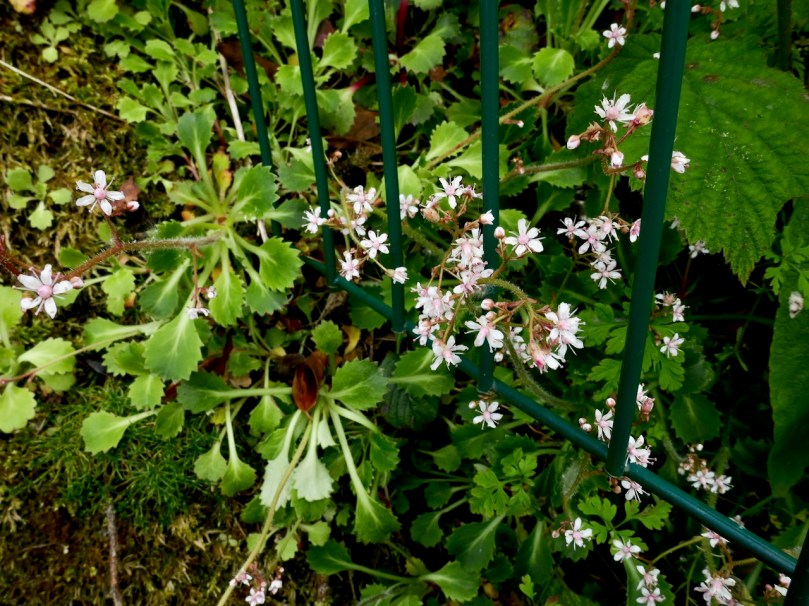
And what’s this I spy? It’s St Patrick’s Cabbage and you will only find this plant in southern or Western Ireland and in Spain and Portugal. Called the Lusitanian Flora, there is a group of plants who seem to have flown, as if by magic, across the Bay of Biscay, France and Britain, to land in West Cork, and this is one of them.

If you’re a gardener it might look familiar – the popular garden plant, London Pride, is a hybrid of this and another member of the Saxifrage family.

There’s more – lot’s more – but I’d better leave it at that (except I couldn’t resist that image of the Scarlet Pimpernel, above, with the Dove’s-foot Crane’s-bill). Here’s what I want you to take away from this post – with the exception of the Ivy-leaved Toadflax, which has been here for hundreds of years, every single one of the plants I have written about here is native. Every. Single. One. Why is that important? Because this is what a wildflower patch looks like and should look like. These are the flowers to which our native insects and pollinators have adapted over millennia and therefore these are the ones which are critical to our ecology here in Ireland.
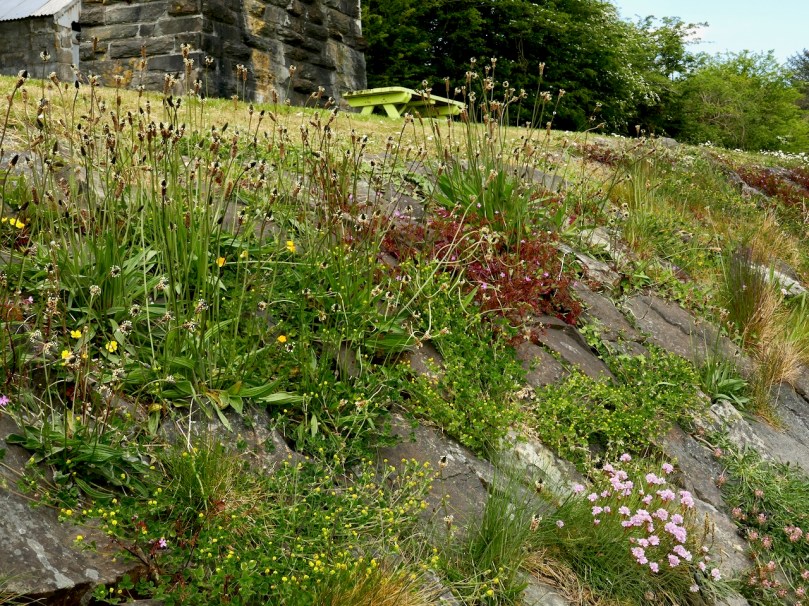
We’ve been fed images of colourful meadows full of poppies and cornflowers and told that’s what a wildflower meadow looks like – it’s not. THIS is what our pollinators need – a wide variety of native plants left undisturbed. It’s wonderful to see this in Ballydehob, but every village and town in Ireland has areas like this. Let’s make sure they flourish!
 

A Wildflower Year

2019 was a good year for the wildflower watcher. This January pine cone looks otherworldly, having lost the seeds along its length.

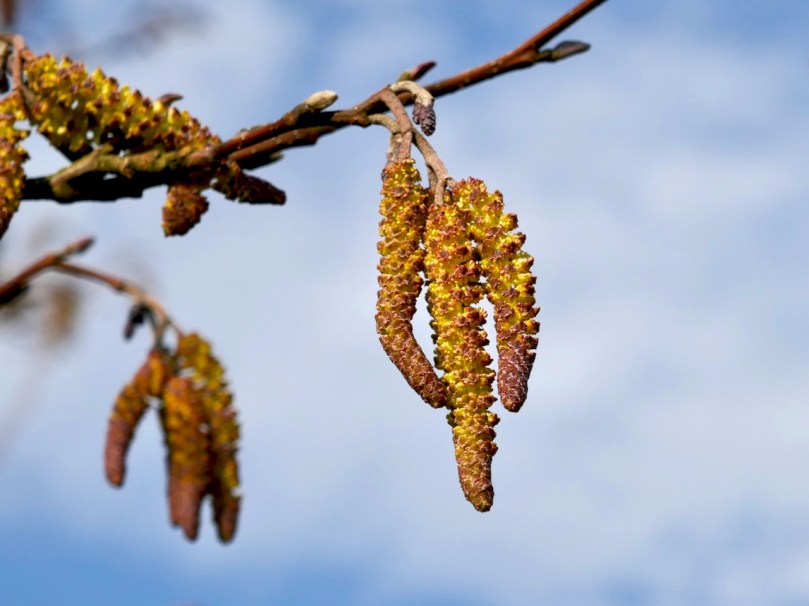
February – Alder Catkins

I run a Facebook Page called Wildflowers of West Cork. It’s on its winter break right now, but take a look at the photographs and you’ll see the amazing variety of flowers I have seen this year. For this post, I have chosen one photograph for each month that represents something for me about that month, or that brings back a memory of my year of wildflower observation. It’s a personal selection, a bit quirky perhaps.

January (first photo) and February (above) are all about the waiting, with hints of what’s to come peeping out every now and then.

March – Colt’s-foot

I was pleased to find these Colt’s-foot flowers in March, but not in West Cork. Although distribution maps show it as occurring here, I’ve actually not seen it here at all yet. Must look harder!

April – Early Dog-violet

I found this one in Kerry. You have to look closely to see the difference with the Common Dog-violet (which we have in abundance). Don’t worry – I didn’t pick it, I’m just holding it steady for the camera.

May – Yellow Rattle

I planted these myself from seeds ordered from Sandro Caffola at Design by Nature and I was thrilled to see them coming up, especially after a crowd of pigeons showed up to feast on the newly-sewn seeds. Yellow Rattle parasitises on grass, loosening the soil and creating bare patches. I’m trying to cultivate a wildflower meadow in one part of my garden and this is one of the recommended strategies for encouraging wild flowers to drift in and take root.

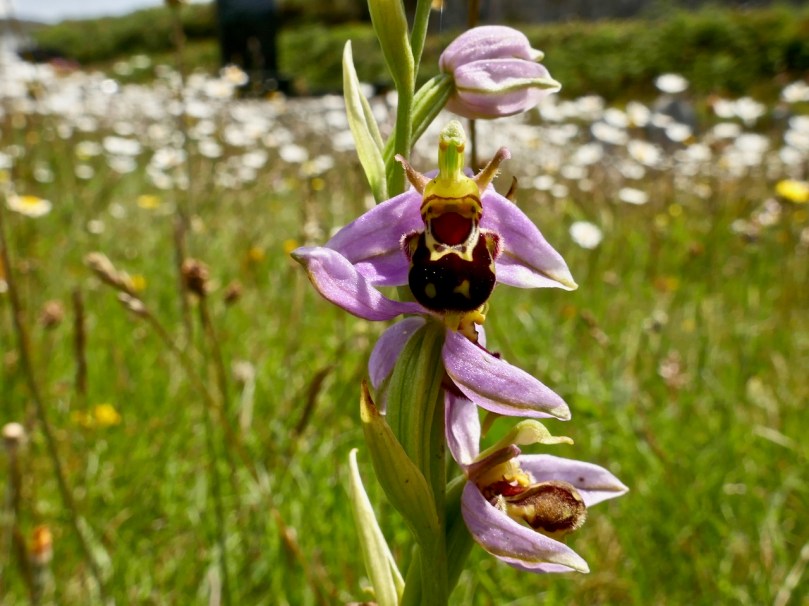
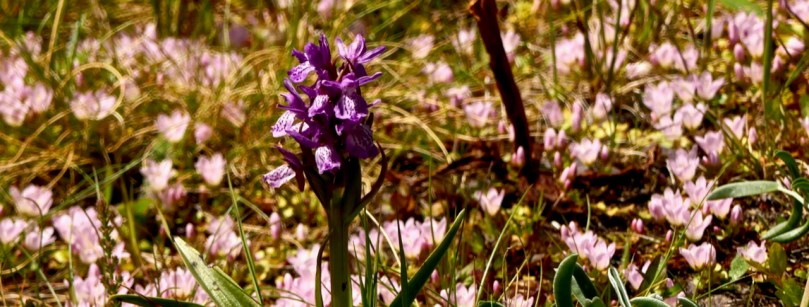
June – Bee Orchid

This is a spectacular and relatively rare native Orchid. Altar Church at Toormore on the Mizen was practising a Don’t Mow, Let it Grow philosophy in the spring and early summer, and all kinds of flowers were flourishing there, including this beauty.

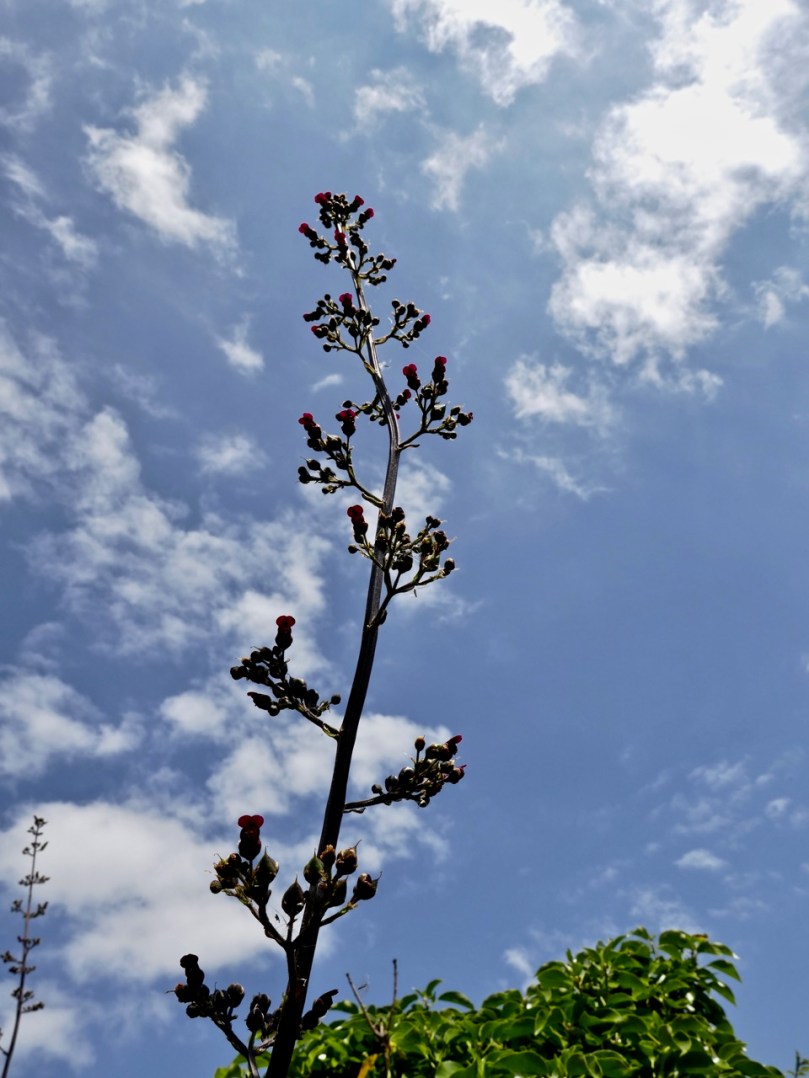
July – Figwort

This is such an easy-to-overlook plant – the red flower is tiny and unobtrusive and it’s only when you see it silhouetted against the sky like this that you realise how exotic it is. The tallest one I’ve seen towered over me.

August – Yellow-horned Poppy

I had a wonderful day on Long Island in August with my friend Damaris Lysaght, helping her do the annual count of this Poppy population. It grows on shingle beaches, but only in occasional locations around the coast, so it was a real privilege to be involved in monitoring such an important species. I had failed to find the Poppy in May when I took a reconnaissance trip to Long Island so I was thrilled to be with Damaris, the expert, on this occasion.

September – Wild Clary

Watching Damaris, I realised I had a lot to learn about counting wildflowers so I signed up for a day long monitoring workshop conducted by the botanist Paul Green for the Biodiversity Data Centre. It took place near Youghal and this was one of the flowers we counted. I really enjoyed the day – observing wildflowers is normally a very solitary activity for me so it was wonderful to hang out with simpatico folks and talk wildflowers all day.

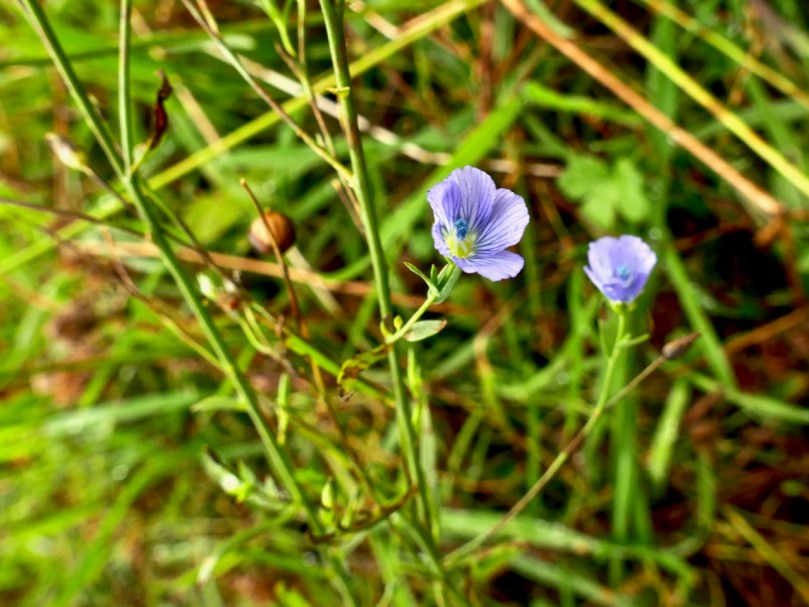
October – Flax

Once widely grown in Ireland for the linen industry, Flax now crops up here and there, often as a result of birds distributing seeds from feed mixes. We had walked cross-country to find a stone circle that day – I wasn’t expecting to see so much Flax in the final field, and wonder if it was sewn as part of a green manure mix.

November – Pixie-Cup Lichens

This was the year we discovered Lichens and Little Things in the Woods and ever since I’ve been keeping an eye out for them. I’ve discovered the rock faces in my own garden hosts quite a variety, including these tiny Cladonia that look like they’re ready for a fairy party.

December – Winter Heliotrope

Introduced into Ireland by Victorian beekeepers to provide winter nectar for bees, Winter Heliotrope has become invasive, covering the ground in large kidney-shaped leaves and leaving no room for native species. Nevertheless, they do introduce a welcome note of colour and scent in the depths of winter.

I leave you with another image from the Altar Graveyard – an Early Marsh Orchid (see comments below – I had mis-identified this as a Common Spotted Orchid – thanks, Paddy for, er, ‘spotting’ my error) growing in a sea of Bog Pimpernel. Here’s to another great year of Wildflower Watching!

Wildflowers of a West Cork June – a Musical Treat

A few years ago I set out to record as many West Cork wildflowers as I can. This is the kind of project that lasts a lifetime and it seems important as our environment is threatened on so many fronts. But it’s also a complete pleasure to wander our beautiful boreens, camera in hand, capturing what I can. This month I want to share with you a selection of images, all local and all taken in June 2019. So sit back, turn on the music and just enjoy.

This slideshow requires JavaScript.

One of our favourites pieces of music to go with the images – just click ‘start.’

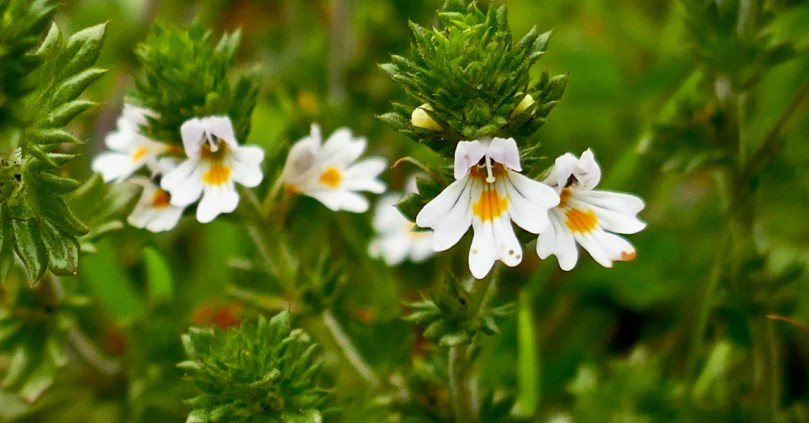
Eyebright

If you’re a wildflower fan you can follow our Wildflowers of West Cork page on Facebook. Go on – give it a Like!

Long Island Wildflowers – a Reconnaissance

Robert and I set off on Tuesday for Long Island and enjoyed everything about it. See his post Mizen Magic 15: Long Island for a full account of our day. One of Roaringwater Journal’s New Year Resolutions was to spend more time on the islands and this was an excellent start! I was there mainly to take a look at the wild flowers, with a view to leading a wildflower walk there later in the year. Do let me know if you’d be interested in coming along, in the comments section below.

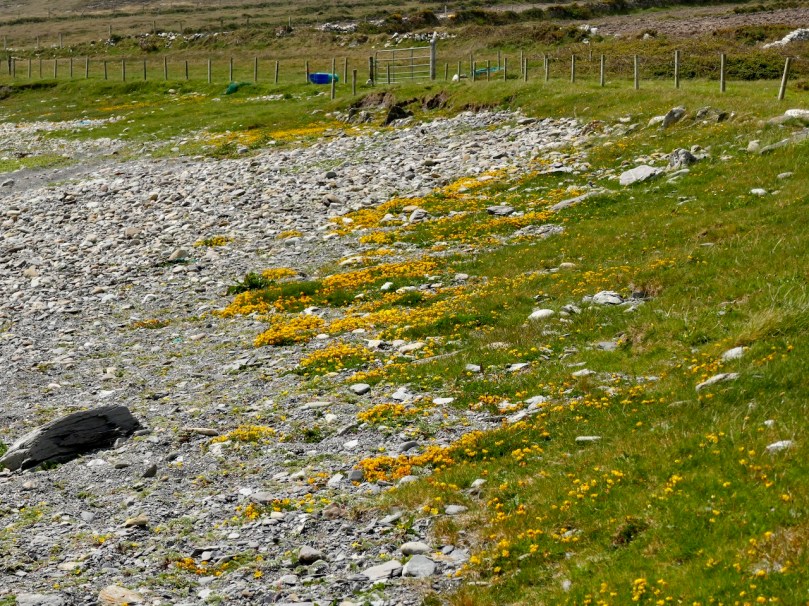
I’m used to seeing Bird-foot Trefoil in my garden, but here it’s spread to the stony beach and looks wonderful

Wildflowers come and go, so what I saw was a lovely selection of late spring and early summer blooms. I also got a feel for the character of the island and the habitats it hosts.

The maritime habitat was rich with Thrift, Trefoil, Kidney Vetch (also the lower photo) and Sea Campion

It would be lovely to be able to say that the island is pristine and free of invasive species, but alas we did see some Japanese Knotweed along the way. We are left scratching our heads as to how it manages to spread like that.

The uncultivated higher ground was particularly colourful, with Lousewort predominating. In this photograph you can also see the yellow of Tormentil and the pale flowers of Common Milkwort (see below for more on this Milkwort)

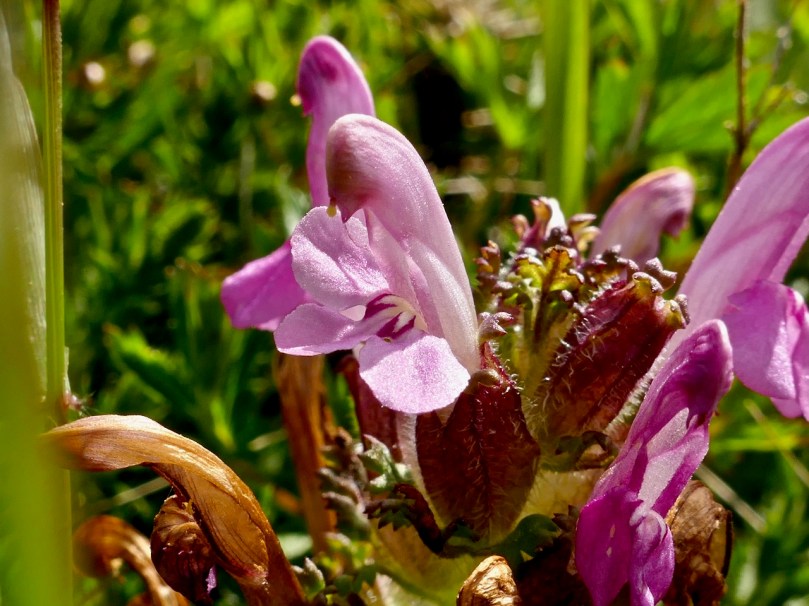
I don’t think I have ever seen such a profusion of Lousewort (below) anywhere else and this is one of the things that gives Long Island a particular colour at this time of year. It’s not a pretty name, for what is, in fact a beautiful little plant, but it was so called because it was believed that sheep got lice from eating it. This has never been proven, but the name stuck. Long Island, with its acres of damp moorland, provides the perfect habitat for Lousewort.

It’s also perfect for Tormentil and Common Milkwort (below). This last flower is tiny – you have to get your face up close to the grass to see it and it’s normally a deep purply-blue. However, on Long Island there were lots of very pale Milkwort, almost white. Although I knew that Milkwort came in pink and white, besides dark blue, I had only seen blue before this year. Now I have to find some pink!

The Yellow Iris (below), which most people call Flags, are in abundance in all the marshy areas, creating a colourful swath here and there. Up close, they are very dramatic. Here, it’s native and welcome, but in North America it has become invasive, choking waterways and displacing native plants.

A couple of unusual flowers to end with, beginning with Musk Stork’s-bill (below). I found this little beauty before in a graveyard in Rosscarbery but this is the first time I have seen it near where I live. It’s described as ‘probably introduced’ which means that it’s not native but has been here a long time.

The flowers of the Stork’s-bill look very like a Crane’s-bill, but the leaves are hairy and they have these funny spiky seed pods, both of which help in identification

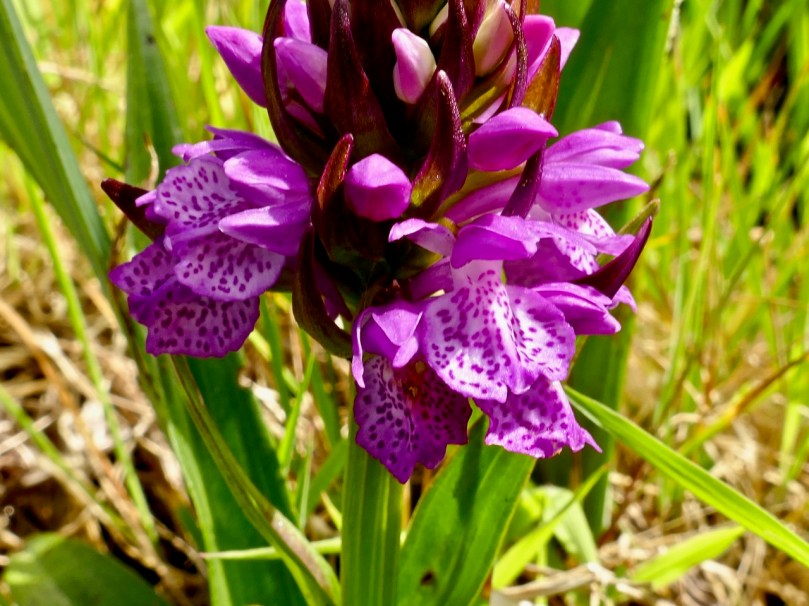
Finally – who can resist an orchid? There are several kinds of Marsh Orchid, but I think this one (above and below) is the Irish Marsh Orchid. We saw it before on Cape Clear, so it obviously loves islands! I was glad I had my hand lens with me, as this is best viewed close up.


Inish Beg Estate: Ancient Woods and New Discoveries

Craving a woodland walk, we took ourselves to Inish Beg this week – and found a lot more than bluebells!

This is a cillin, down beside the river. There are lots of stories associated with it

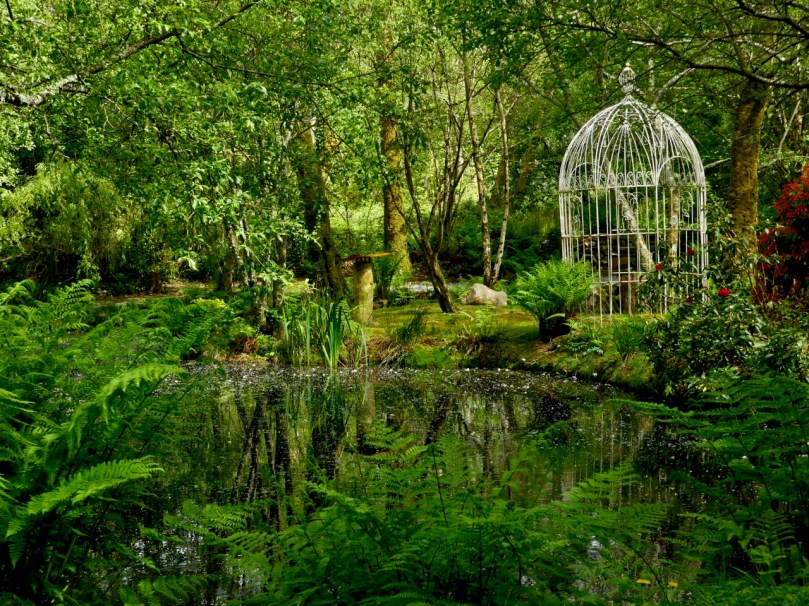
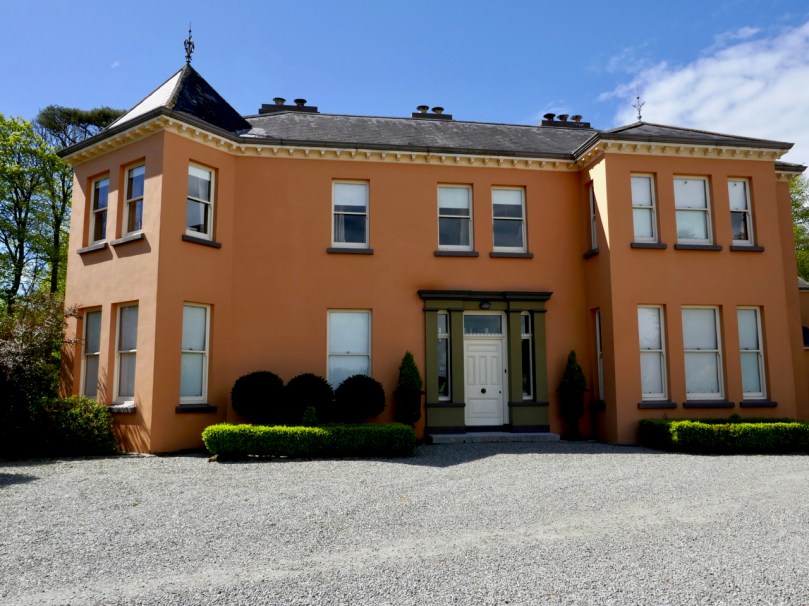
Inish Beg abounds in both the wild and the tame. That’s not such an easy balance to maintain and it’s a real tribute to the team on the ground that manages and nurtures the estate. Mostly, of course, it’s down to the vision and hard work of Paul and Georgiana Keane who bought the place in 1997 when it was crumbling and neglected. The house, Georgie told us, was close to collapse and had to be completely re-done – new roof, plumbing, electrics and a complete re-furbishment. It’s hard to believe now, when you see the beautiful place it has become.

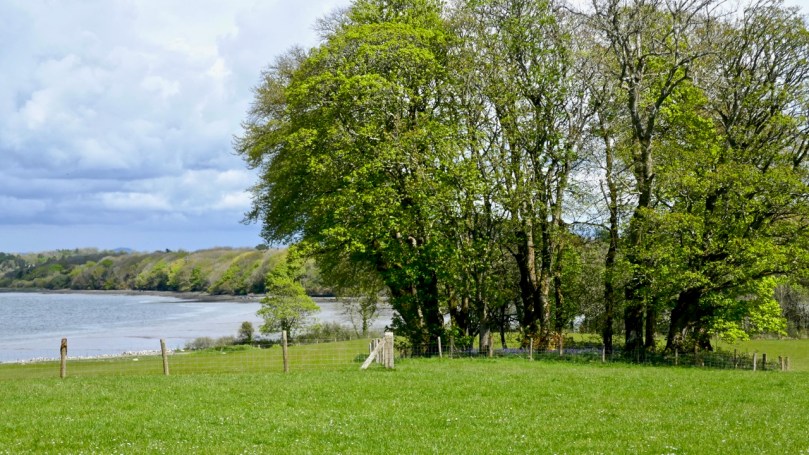
Paul and Georgie run it now as a hotel and wedding venue and it is totally set up for it. In fact it must be one of the most romantic venues in Ireland, ideally situated on an island on the Ilen River, accessible by an old stone bridge. It was originally O’Driscoll territory, but owned by the McCarthy family. When James Morrogh inherited it from a McCarthy relative in the 1830s he changed the family name to McCarthy Morragh – such stipulations were not unusual then.

In the 1890s the family built the grand house, and it is this house that is associated with its most famous inhabitant, Kay Summersby. A noted beauty, she was Eisenhower’s secretary in London during the war, and may (or may not) have had an affair with him.

She describes her early life at Inish Beg thus:

Our home, Inish Beg, was a somewhat run-down estate on a small but lovely emerald island in a river in County Cork. Our favourite pastime (I had a brother and three sisters) was to sail down that river four miles, to the Atlantic. There was a succession of governesses, hunts, spatting parents, riding in the fields and along the long avenue fringed with old trees . . . the usual pattern of life in that obsolete world.

The ‘usual pattern’ for some, perhaps – to me it sounds like a life of breathtaking privilege. However, like many such estates, it became difficult to sustain and by time the Keanes took it over it desperately needed their infusion of enthusiasm and capital. And what a magnificent job they have done with not only the house but the grounds as well.

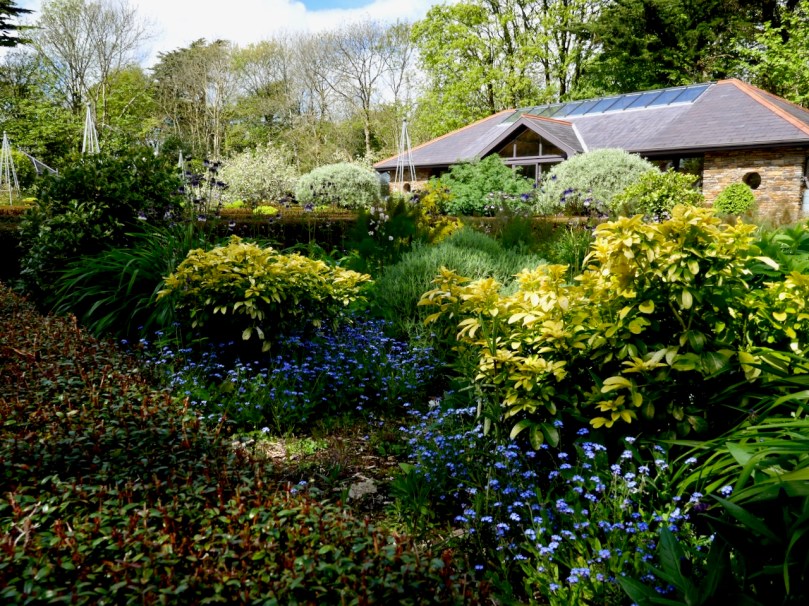
There’s a walled garden (above) that’s full of organic goodies for the estate kitchens, and also features an indoor swimming pool! Tony O’Mahony, the head gardener, practises an organic philosophy and does not feel the need to eliminate wildness from the garden, which results in a delightful mix of plant life.

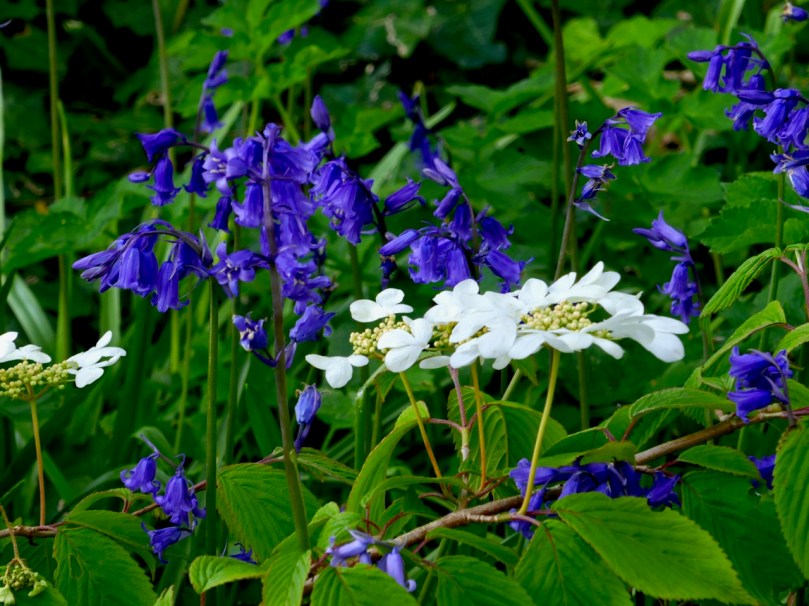
But we were here mainly for the woodland walks and we were certainly not disappointed. You could spend several hours wandering the trails here and right now the undergrowth is glorious. Bluebells were in abundance along with every wildflower that contributes to that colourful spring carpet that is so dear to our senses.

There are trails for the kids – pirates and a wildlife search are part of the system, as well as little fairy houses here and there.

There are lovely views (above) across the Ilen to the ruined church at Aughadown – burial place of the Tonsons that I wrote about in New Court Bridge – a Hidden Wonder. Surprisingly, beyond the church, you can see Mount Gabriel. I mention this because of its significance with our next find – a previously unrecorded cupmarked stone!

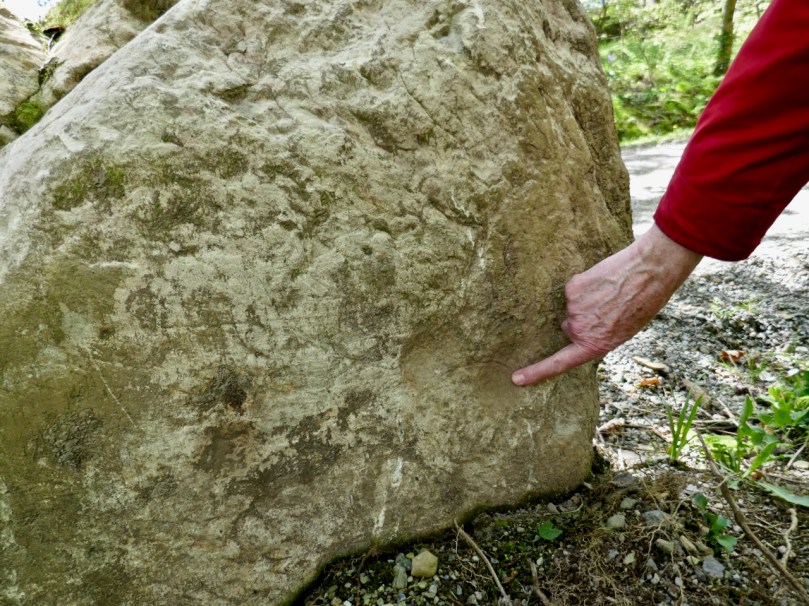
Regular readers know of our involvement with Prehistoric Rock Art – Neolithic or Bronze Age carvings on open air boulders and outcrops. The cupmark is the basic motif of all Irish Rock Art – a semi-spherical cup-shaped hollow (see more about Rock Art here and here and specifically about cupmarks here). Robert has an amazing eye for slight differences in rock surfaces and has developed a habit of examining every stone we come across for cupmarks. This time he struck gold! At least four cupmarks on the back of a stone along one of the trails.

We like to warn people that rock art can be a little underwhelming. I know these cupmarks don’t look like much, but they were probably carved several thousand years ago as part of a ritual we now know nothing about

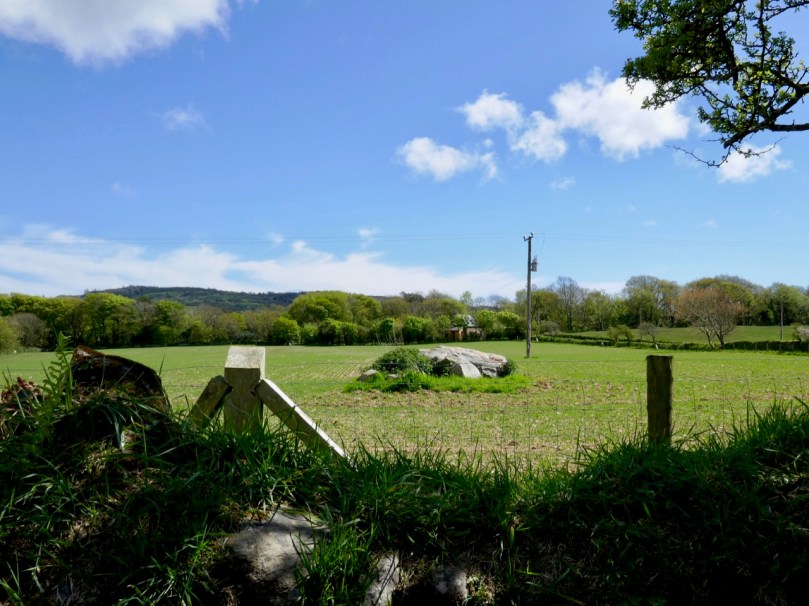
The stone has been moved there from somewhere on the estate and the Keanes will try to track down where this was. It’s always important to see a rock like this in its context, of corse, but we are also curious to know if Mount Gabriel was visible from the location, as it is from so many of our West Cork Rock Art sites. We will be returning to do a proper record and see if we can add more information to the story before we send it in to be included in the National Monuments database.

There’s also a boulder burial on the estate, visible as you are leaving. It’s a pretty tumbledown affair, but still recognisable, and we found cupmarks on the capstone too. These may be already recorded, but we will let National Monuments know in case they aren’t.

Fabulous woodland walks, my fill of wildflowers, lovely vistas across the Ilen – and a new archaeological find. Too much excitement for one day!

Bluebell Time in West Cork

What is it about a bluebell wood that re-charges the batteries and lifts the heart? Perhaps it’s that amazing blue carpet that stops us in our tracks: it’s so unlike anything else in our natural world.

Or maybe it’s the fact that it lasts only a little while that makes it special. Like Easter eggs or Christmas carols, we would get tired of them if they were always with us – it’s their brief seasonality that makes us look forward to them (OK, maybe the Christmas carols don’t appeal to everyone in the same way).

Lower: Bluebells and Three-cornered Garlic

Even when it’s bluebell time, as it is right now, it’s not always easy to find a bluebell wood, because we don’t have expansive deciduous forest cover here in West Cork. I love the bluebells that line the boreens in places, growing up the hedgebanks, but it’s not quite the same thing as a woodland carpet.

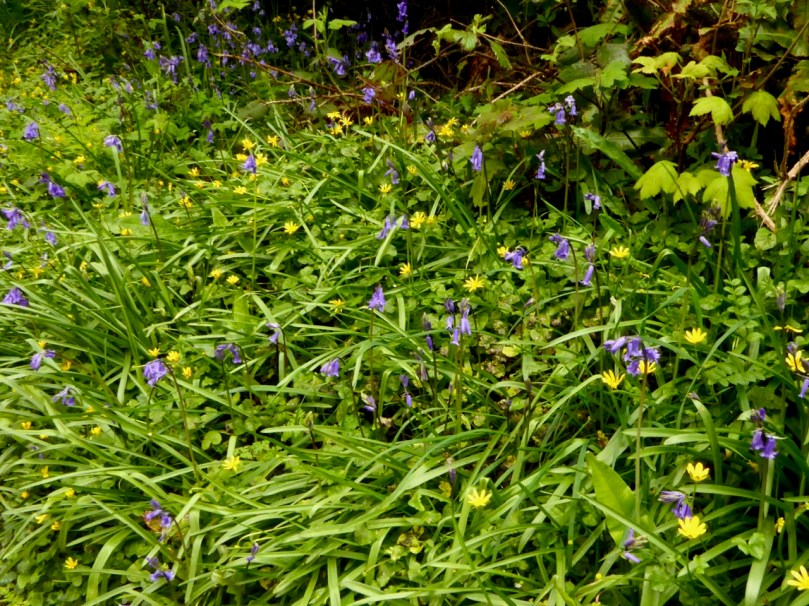
Bluebells and Celandine growing on the bank on one of my favourite boreens

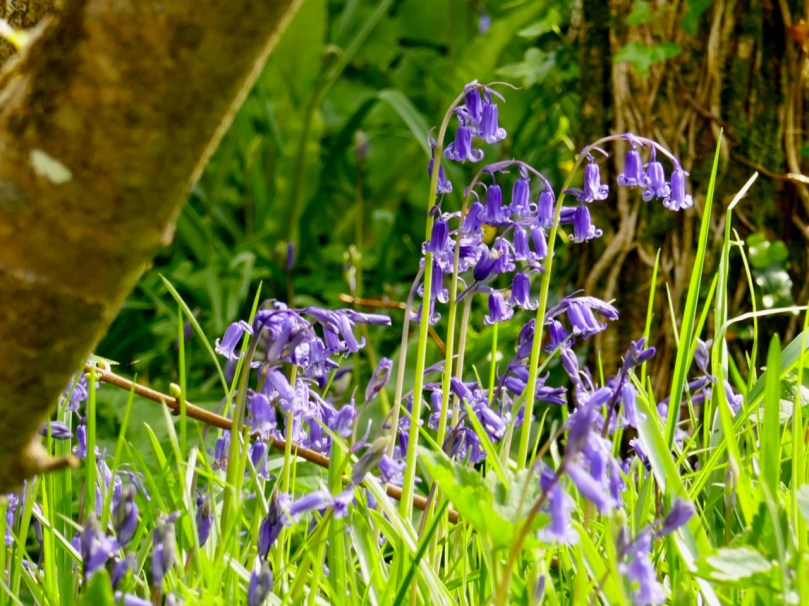
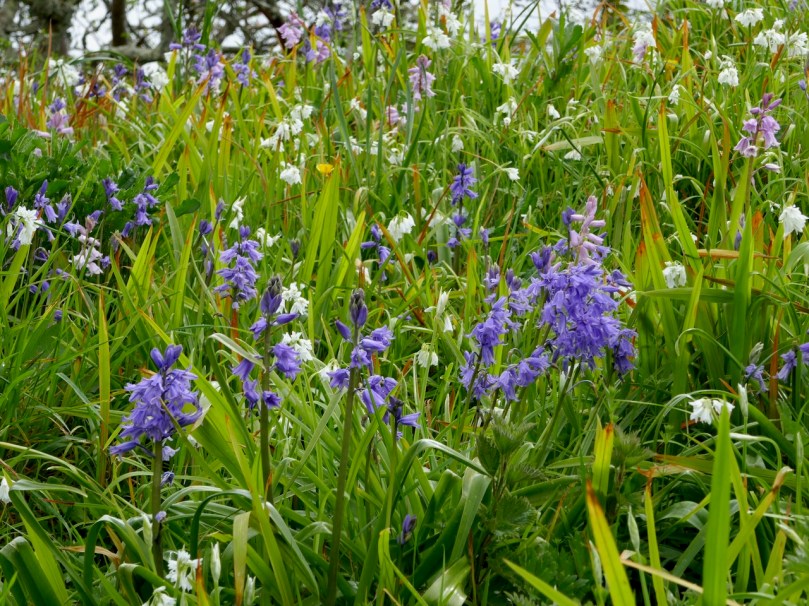
Let’s start with what a bluebell is – I’m talking here about our native bluebells (Bluebell/Hyacinthoides non-scripta. Or in Irish Coinnle corra, pronounced quinn-la curra). As you probably know, the imported Spanish Bluebell is everywhere now, and to add insult to injury has started to hybridise with our native Bluebell.

A garden near us has a lovely display of blue and pink Bluebells and Three-corned Garlic – unfortunately these are the non-native Spanish Bluebells, or possibly hybrids

Take a look at this excellent video from the Irish Wildlife Trust for a guide to how to distinguish between them.

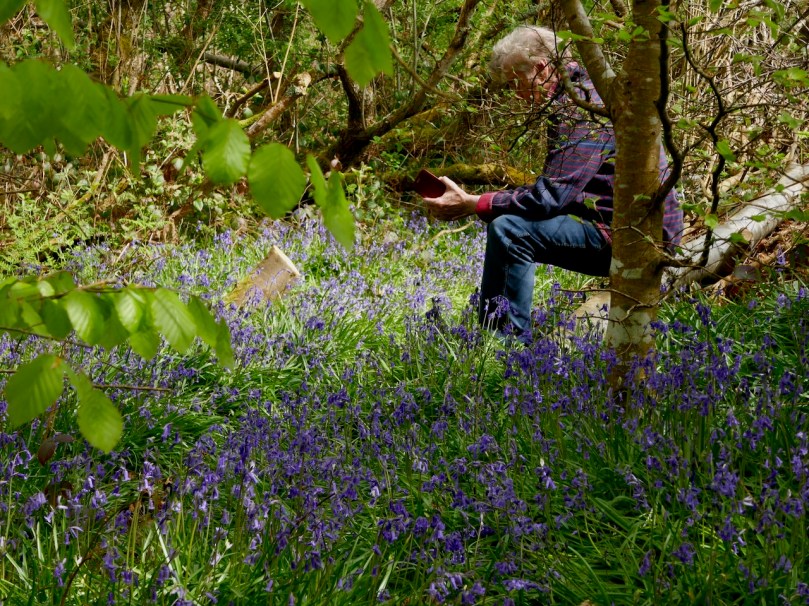
Fortunately, we still have lots of native bluebells and I was lucky this week to get permission to stroll in my friend, Nick’s, little wood, and also to take a walk with Robert and Gill up the hill behind Long Strand. For more about what we were after, see Robert’s post on the cross today.

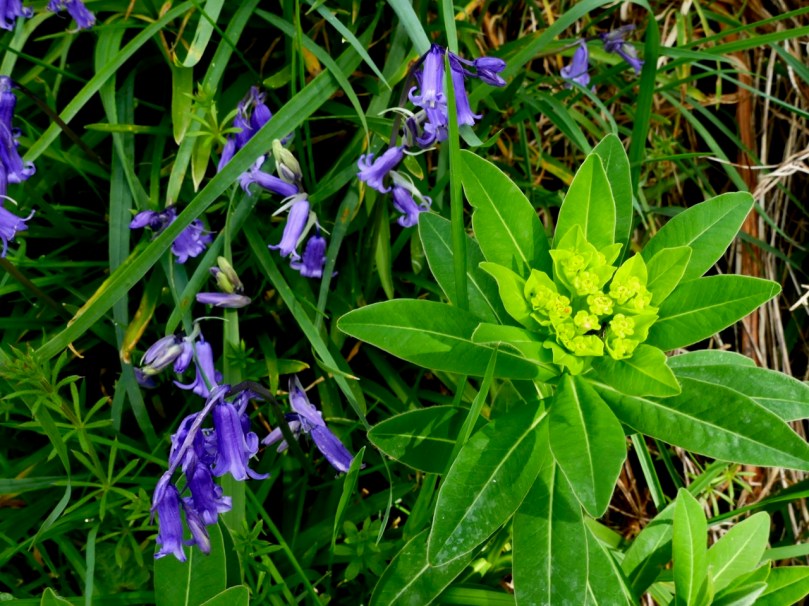
Upper: One of the little bridges over the stream. Lower: Bluebells and Irish Spurge

Nick’s little wood is down beside the sea on what was once an old homestead – you pick your way through a heritage orchard to get in there. It felt like an immense privilege to be the only ones there, to wander through the trees and over the tiny bridges.

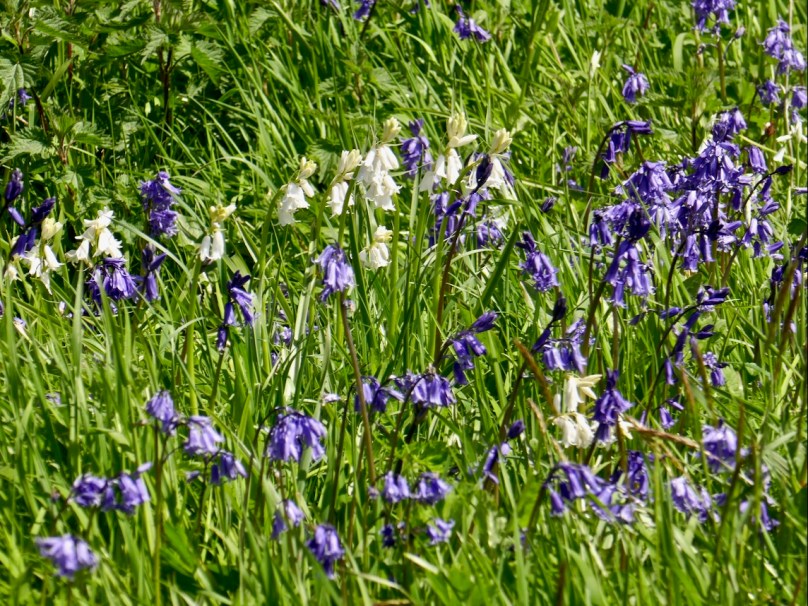
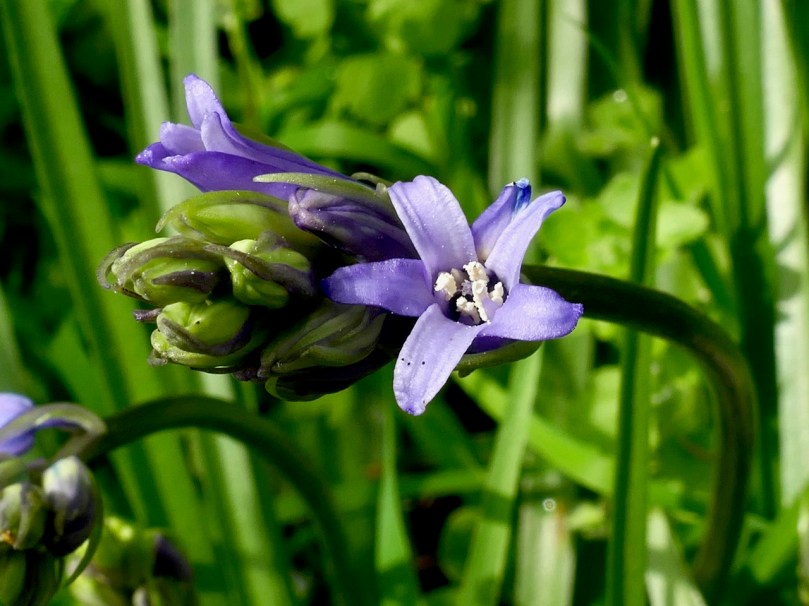
Upper: one of the way to recognise a native Bluebell is to look at the anthers – they’re white or cream-coloured. Lower: a spontaneous white Bluebell in among the blue ones. It happens

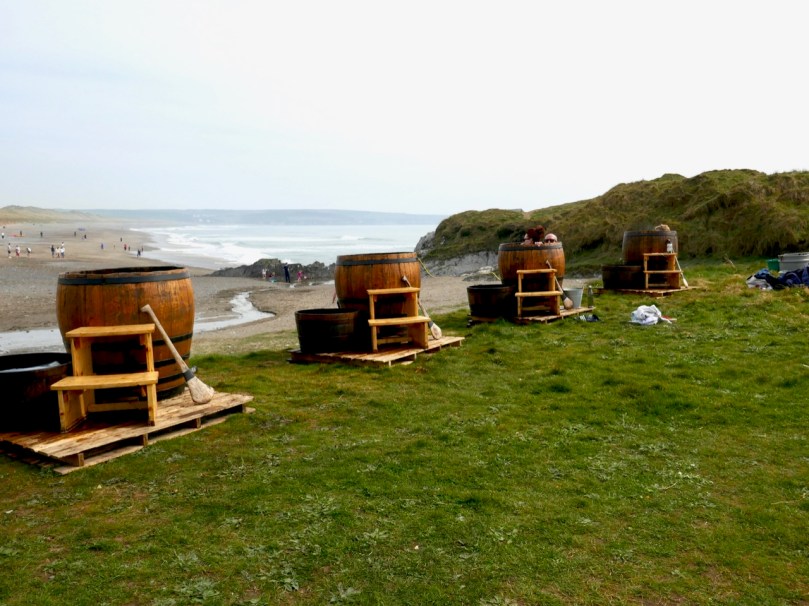
Yesterday, because Robert wanted to see Lady Carbery’s Cross, we walked up Croachna Hill, behind Long Strand, near Rosscarbery. The strand was heaving with swimmers, surfers and loungers, the coffee truck and restaurant were packed and the guy who does the Wild Atlantic Seaweed Baths was out – it all looked so festive and summery.

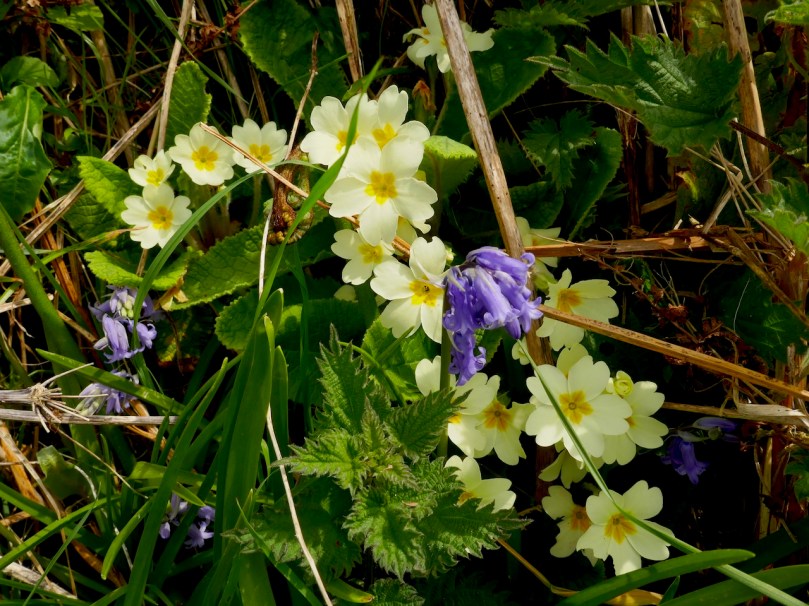
Primroses and Bluebells

The walk up the hill was awash with wild flowers, besides the ones I’ve illustrated here we saw Common Dog-violet, my first Ragged-Robin of the season, Yellow Pimpernel, Ribwort Plantain, Navelwort, Ground-ivy and Herb-Robert.

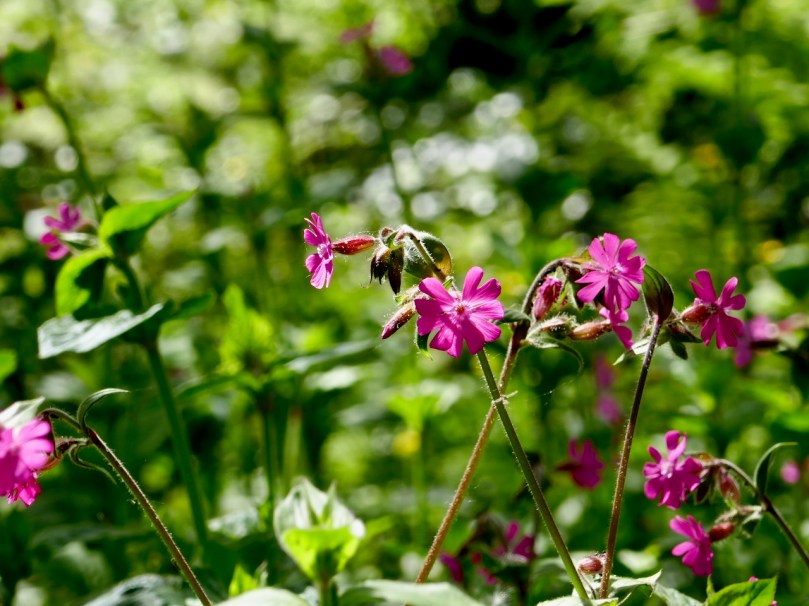
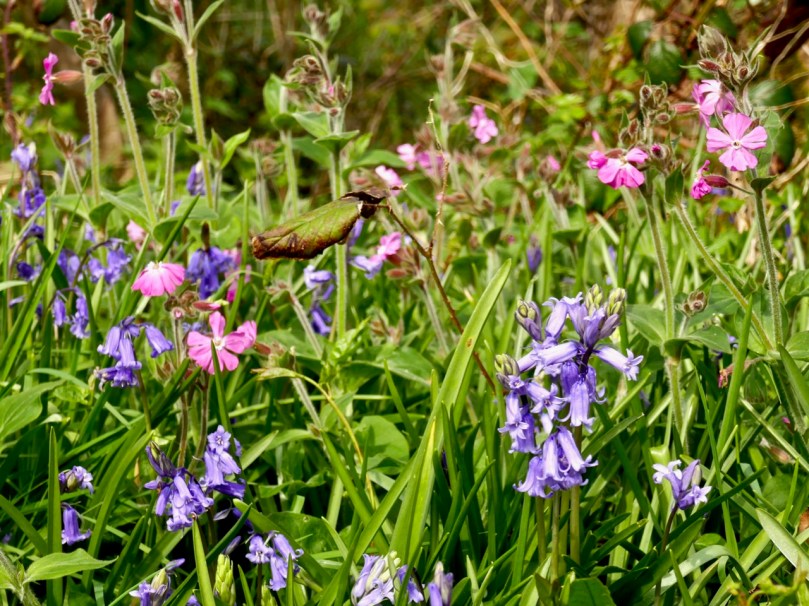
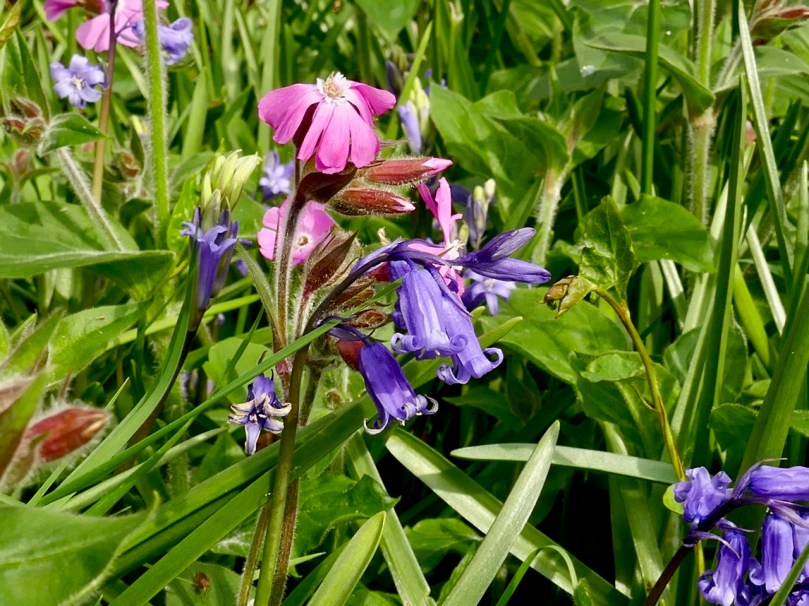
I’d never seen that combination of Bluebell and Red-campion before (above). It’s pretty spectacular, and a reminder that colours in nature always harmonise. Together with the yellow of Celandine and Buttercup, and the lovely woodsy smells, it was a sensuous experience.

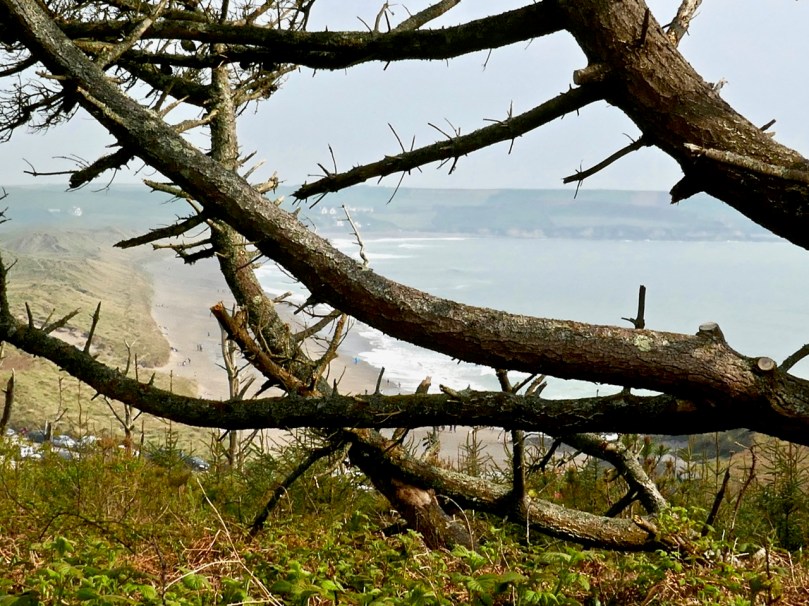
Upper: Looking back to Long Strand from Croachna Hill. Lower:  Bluebells, Celandine, Buttercup, and a lone Red Campion

Where are your favourite bluebell haunts, dear readers?