The Nativity in Stained Glass

Dear Readers – we know you aren’t all on Facebook, so this is for those of you who follow us on WordPress or other platforms. On our Facebook page, we’ve been running a series on The Nativity in Stained Glass in the lead up to Christmas, so here, in one post, are those photographs and text. All the windows are Irish and 20th century. Merry Christmas to you all!

This one is by George Walsh and it’s in Frankfield Grange Catholic Church in Cork. This scene is part of a larger window, the main scene depicting the Annunciation. More about George Walsh here.

Kevin Kelly was a long-time stained glass artist for Abbey Studios. He loved doing Nativity windows. This one is in Inchigeelagh, Co Cork and featured on a UNICEF Christmas Card. It’s worth taking a look at the detail – amazing for what’s quite a small window.
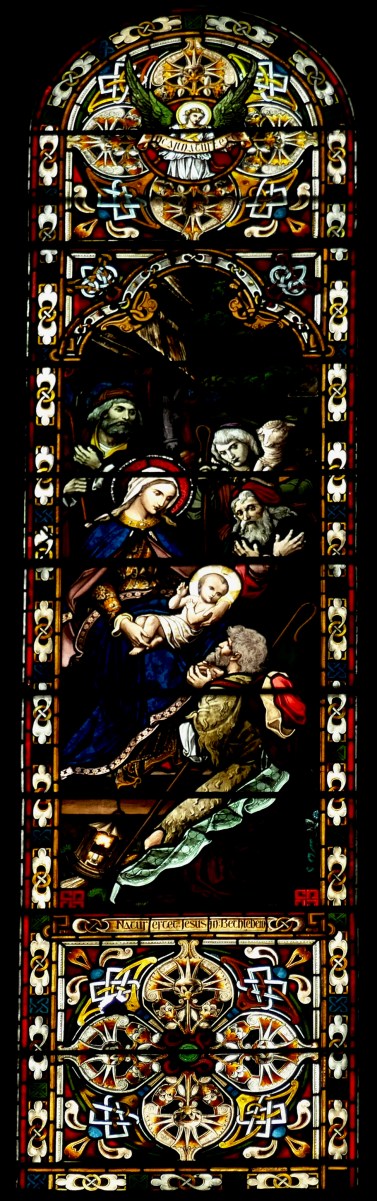
Our next Nativity in Stained Glass comes from St Carthage Catholic Church in Lismore and is the work of Watson’s of Youghal. While the figures are conventional, the ‘Celtic Revival’ decoration lifts this window far above the ordinary. Read more about Watsons and their mastery of this form, popular among Irish nationalists at the turn of the 20th century.

This beautiful Nativity window is in Mayfield, Cork, in the Church of Our Lady Crowned. The Murphy-Devitt Studios were a group of young, dedicated artist and designers, determined to bring something new to traditional stained glass. We think they succeeded magnificently.

This scene of the visit of the Magi is in Kilcoe Church of the Holy Rosary and is the work of Catherine O’Brien, the artist who worked longest in An Túr Gloine, the Arts and Crafts Stained Glass Co-operative founded by Sarah Purser and Edward Martyn to promote home-grown arts and craft in Ireland. This is a re-working of a previous window by O’Brien, proving that even Arts and Crafts practitioners were not above re-cycling.
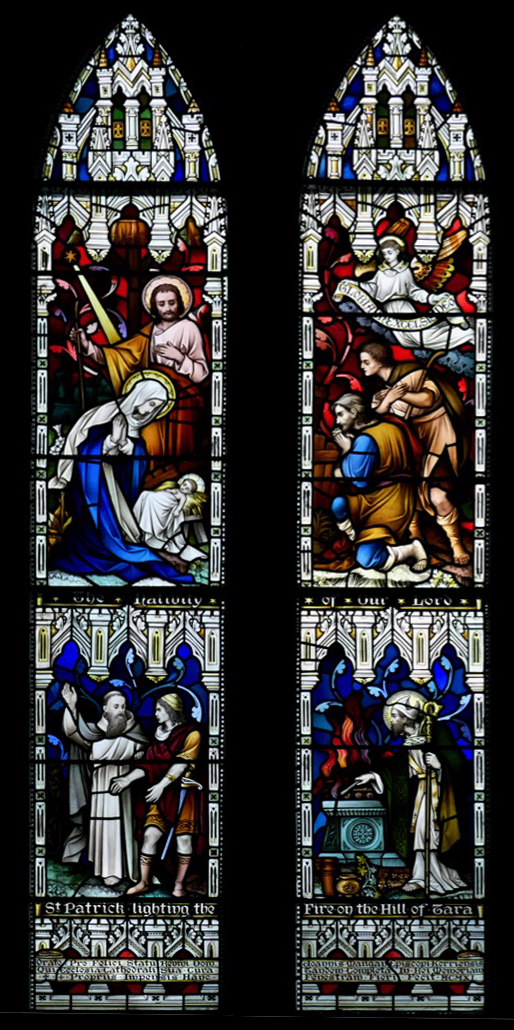
What does the Hill of Tara have to do with the Nativity?  In the Catholic Cathedral in Killarney are a whole set of windows that draw parallels between biblical scenes and Irish saints – all part of the push-pull between the Rome-centric internationalisation of the Irish church versus the desire of Irish congregations and clergy to see their own Irish and local saints depicted in their stained glass windows. In this case, the Nativity of Jesus is compared to the birth of Christianity in Ireland when St Patrick lit the Pascal Fire on the Hill of Slane (although the window says Tara, the story is that the high king saw the fire from the Hill of Tara). The windows are by Hardman, before they became Earleys.

The Dominican Convent in Wicklow town has a gorgeous series of windows – the Mysteries of the Rosary. They were done in the Harry Clarke Studios in 1938, several years after Harry’s death, but his influence is very evident. They were mostly designed and painted by William Dowling, but with much input from Richard King. To see if you know the difference between Harry Clarke and Harry Clarke Studios windows, take the quiz, or just cheat and go straight to the answers.

Patrick Pollen, although he grew up in England, made his stained glass career in Ireland. Having been bowled over by Evie Hone’s Eton windows he came to Dublin to work with her. Hone’s influence is readily apparent in these two panels, which form the predella (lowest section) of a window in St Michael’s church in Ballinasloe, Co Galway, dating to 1957. I haven’t written about Pollan (yet) but you can read about Evie Hone here.
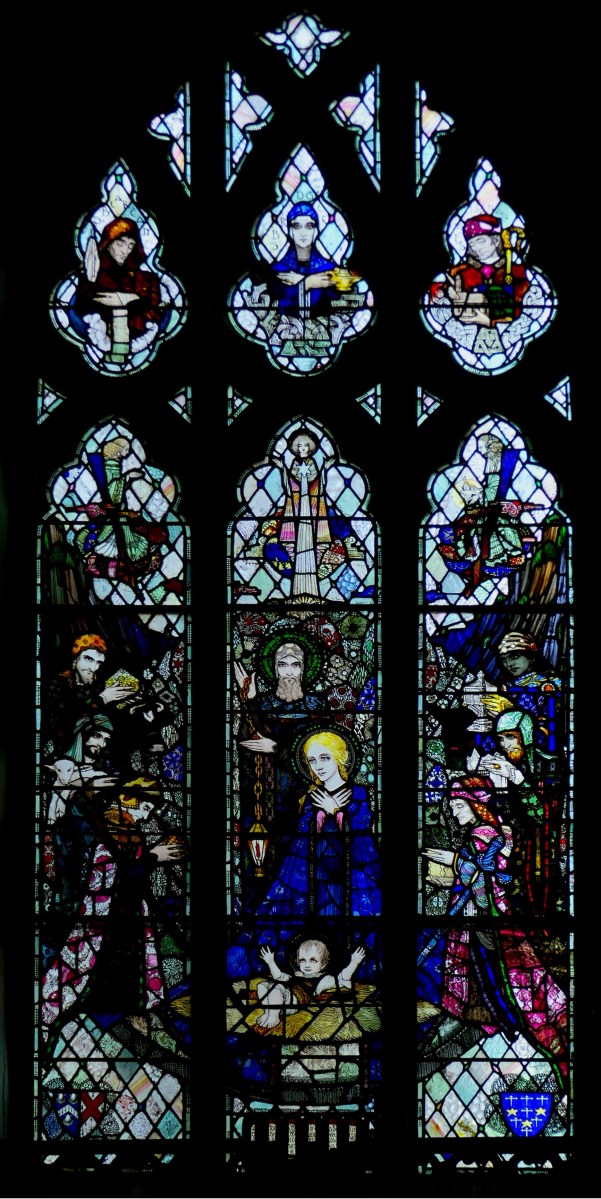
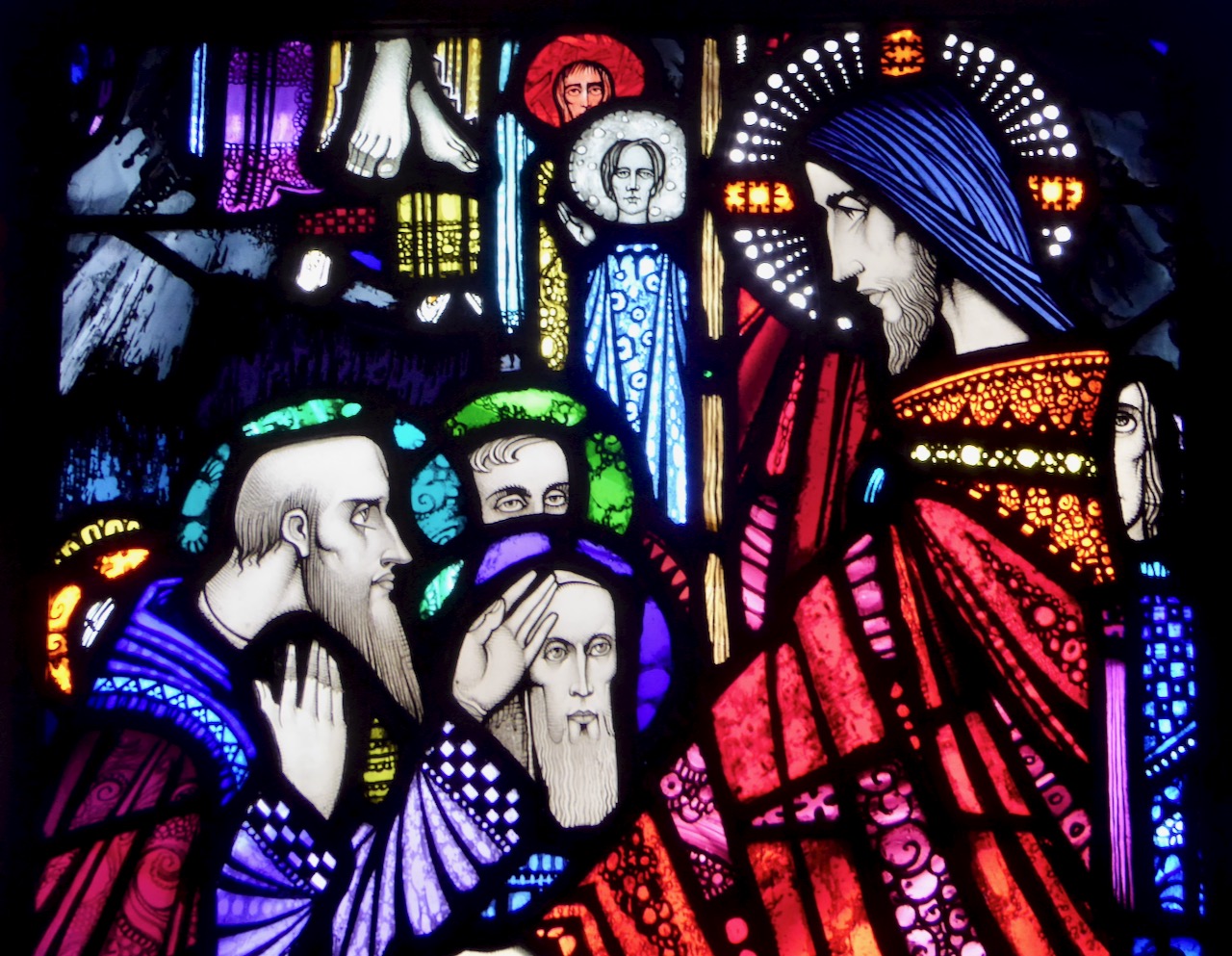
We’ve kept the best for last – the genius that is Harry Clarke. This is his Nativity Window, done in 1919 for Edith Somerville and her family, for the C of I Church of St Barrahane in Castletownshend, Co Cork. Lots more about Harry Clarke, Ireland’s greatest stained glass artist.
Painting With Light

What are we seeking right now? If social media is right, it’s distraction. But also beauty, comfort, reassurance… With that in mind, I have created a video slideshow of some of my favourite stained glass windows.

I could have used a totally different selection and perhaps I will do another one sometime. Meanwhile, this took me all day to do – learning how to do stuff like this seems to get harder as the years roll by. Funny how that works.

The music is Sí Beag Sí Mór by O’Carolan and it’s played beautifully by Susan Nares on the harp – thank you, Susie! Susie made this recording for Robert’s Swantonstown Sessions (have you checked in there yet?). The stained glass I’ve chosen is by Harry Clarke, George Walsh, Hubert McGoldrick, Murphy Devitt, Mayer of Munich, Joshua Clarke and Co., Thomas Denny, William Dowling, Richard King, Watsons of Youghal, and Earley and Co. For much more on Irish Stained Glass, including some of the artists I have chosen, have a glance over this page.

Here it is – I hope you enjoy it.

Top Ten West Cork Photographs of 2017

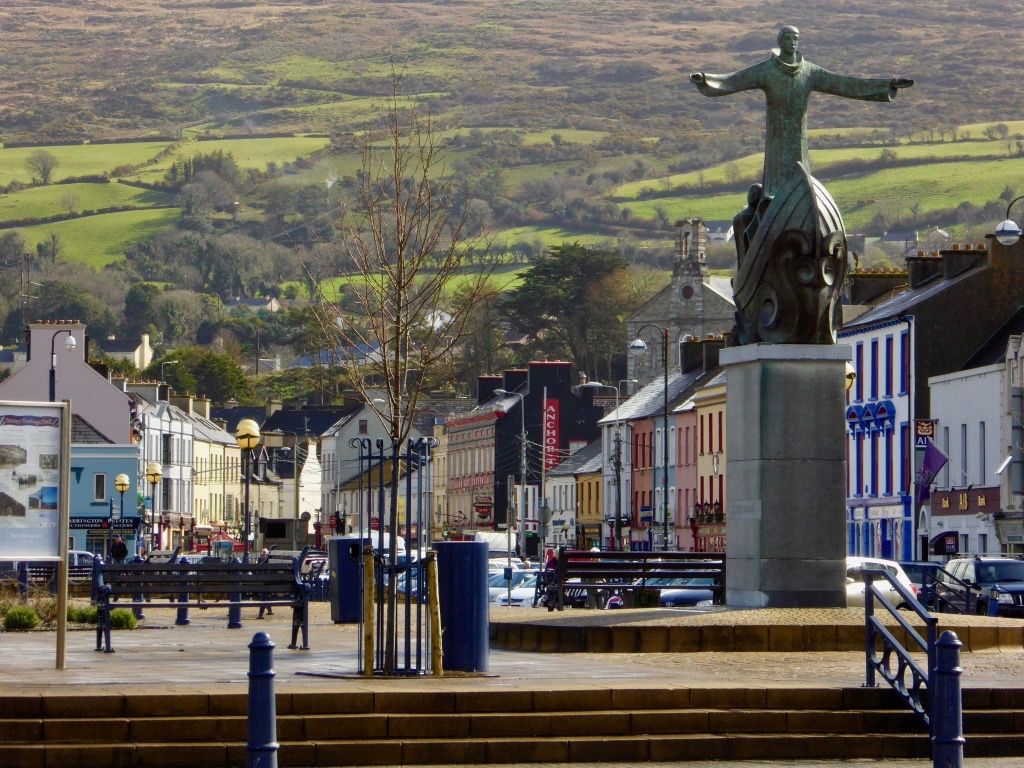
Every year we take a look at the Facebook photographs that you’ve liked or viewed or shared the most, and then edit them down to manageable proportions. Here’s our final selection for this year – we decided to stick to West Cork, and we’re starting off with Bantry, with that wonderful statue of Brendan the Navigator blessing us and inviting us into the town.

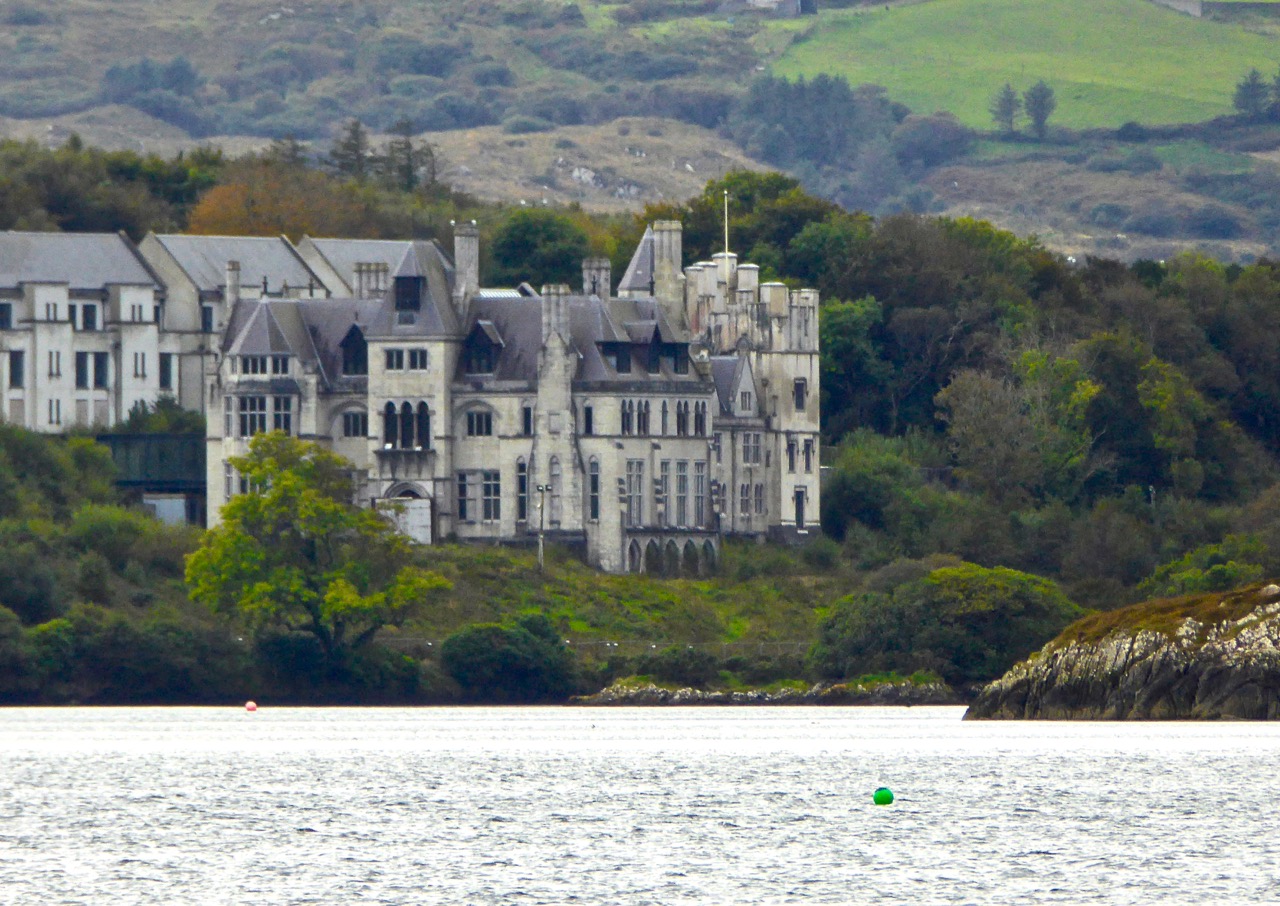
The photo this year that was most viewed and exclaimed over was our shot of Dunboy Castle (above), just outside Castletownbere. It’s a dramatic sight and an extraordinary story of the dream to build Ireland’s first six star hotel – a dream that came crashing down with the collapse of the Celtic Tiger economy in 2008. Perhaps one day a new team will take it on: meantime it sits forlornly behind barbed wire, a reminder of optimistic times.

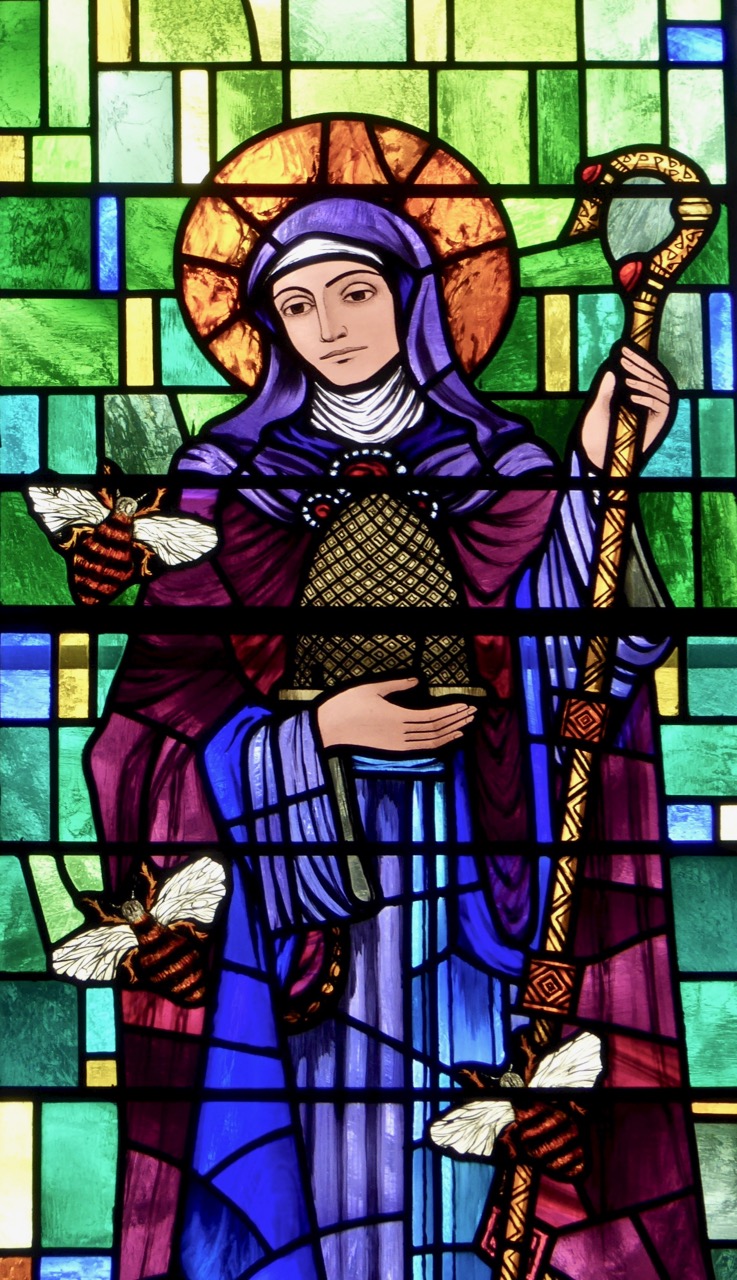
We were surprised by the instant appeal of our stained glass St Gobnait. Although a familiar saint her in West Cork, she is not universally known elsewhere. Perhaps it is her association with the bees that resonates with people now that bees everywhere are in danger. The image is of a window in Bantry Catholic church, probably the work of William Dowling.

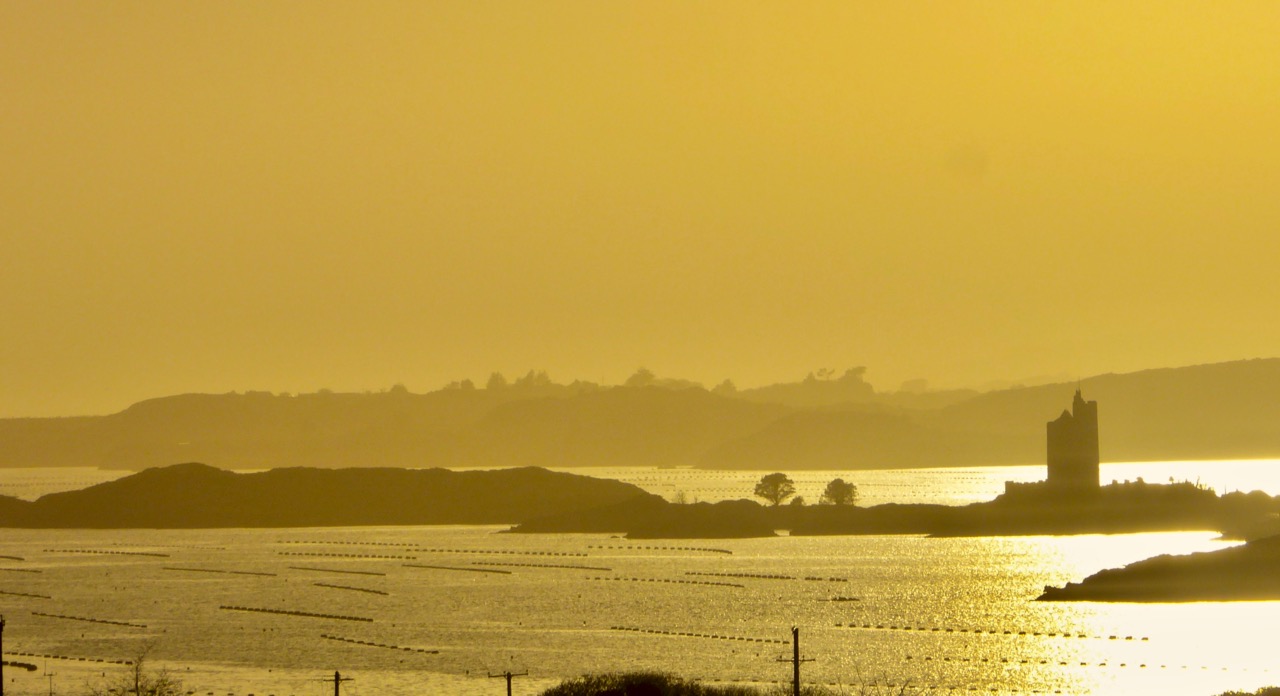
Kilcoe Castle seems to feature each year as it’s a firm favourite with us in West Cork. We were lucky to capture it at dusk on a hazy evening in March. It has been lovingly and magnificently restored by Jeremy Irons and if you’re curious to see inside, there are some interior images here.

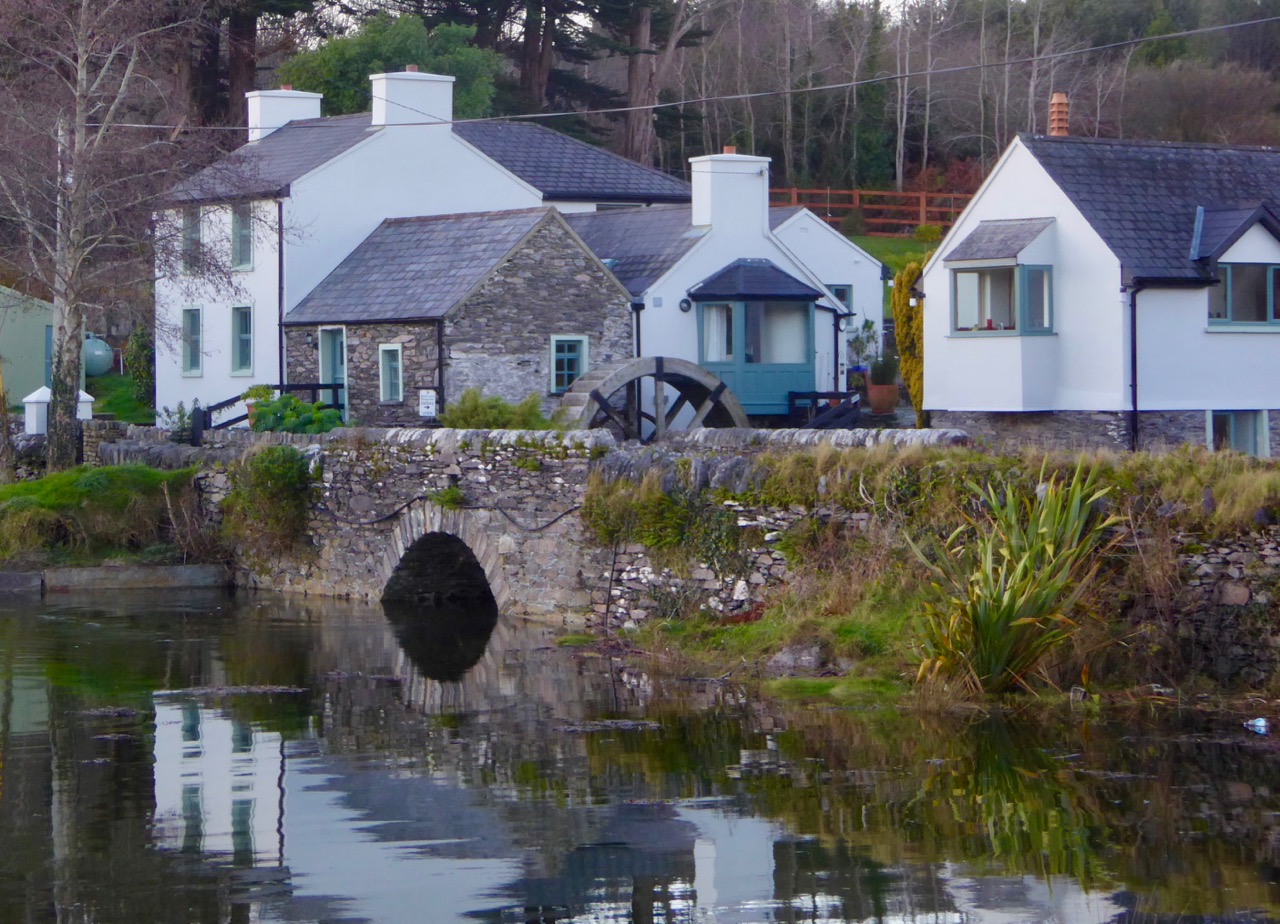
Our friend, and professional wildlife photographer, Sheena Jolley lives in this impossibly romantic old mill just outside of Schull. Her studio occupies the building on the right, while some of the workings of the old mill are still intact and conserved by Sheena. I suspect this photograph was so popular because many of us have a dream to dwell in a piece of living history like this.

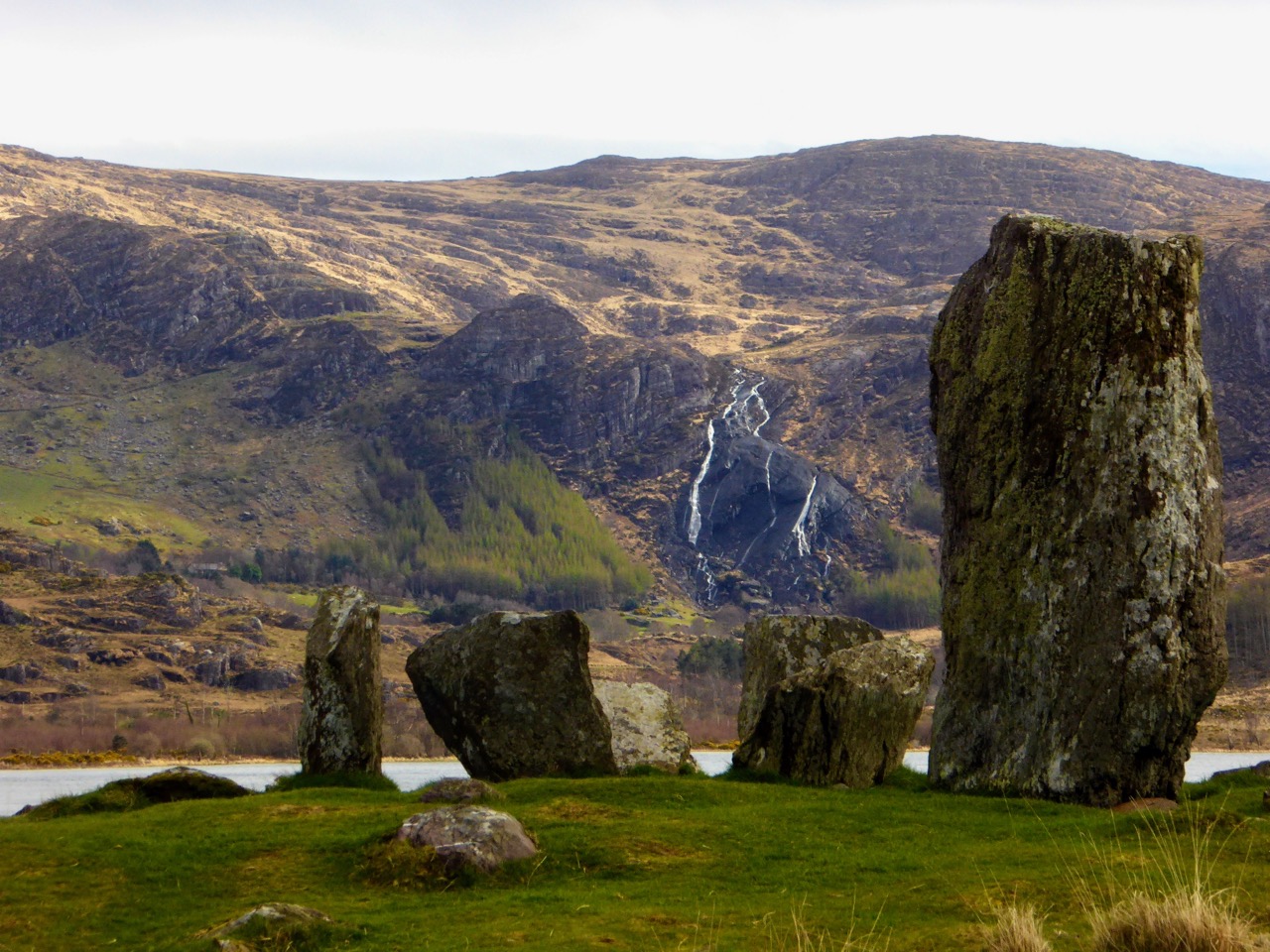
Uragh Stone Circle on the Beara Peninsula – I think we can all agree now it’s the stone circle with the best setting in Ireland. But it’s only one of the many feature of Gleninchaquin that makes this remote but accessible valley so richly enjoyable to visit.

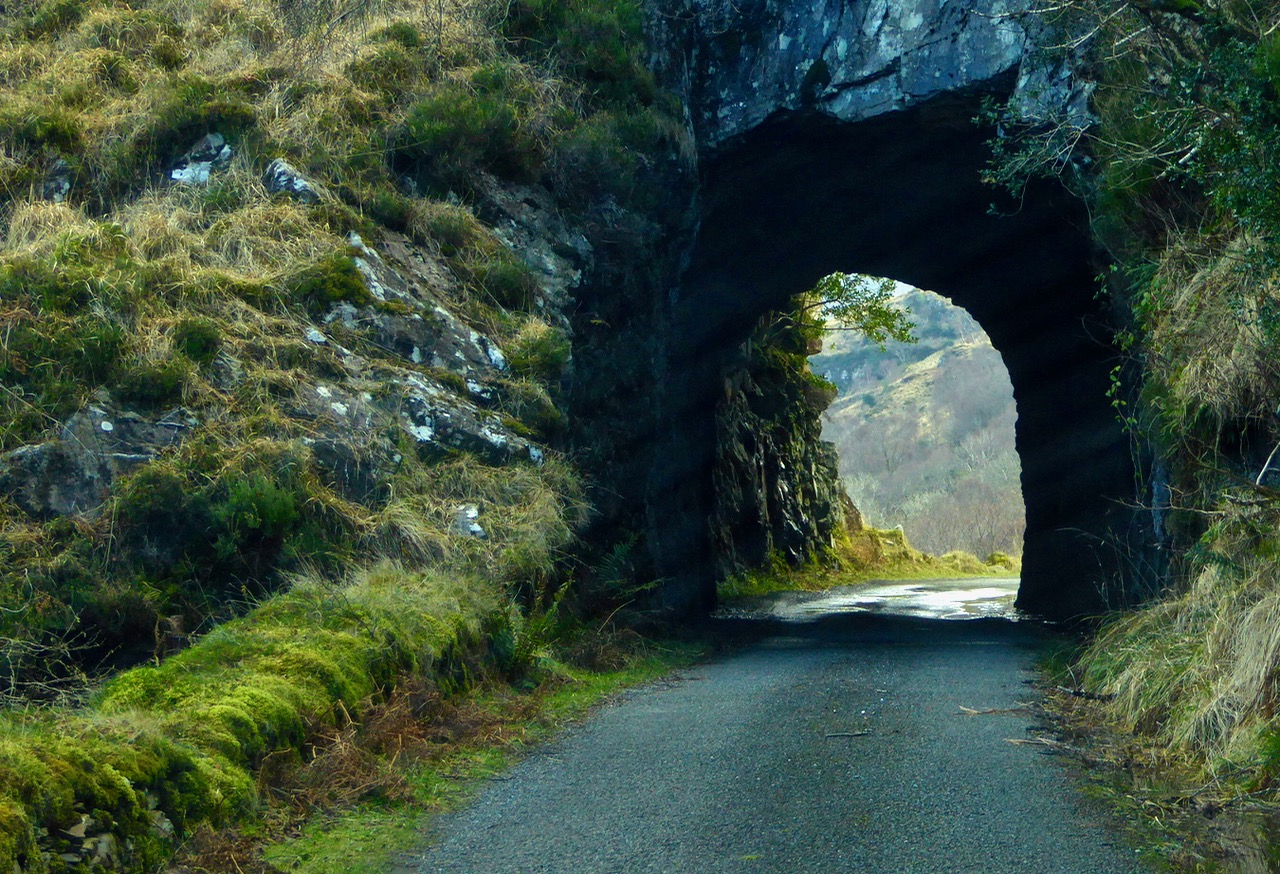
Everyone loves driving through the Caha Pass between Glengarriff and Kenmare – the scenery is spectacular and includes several tunnels

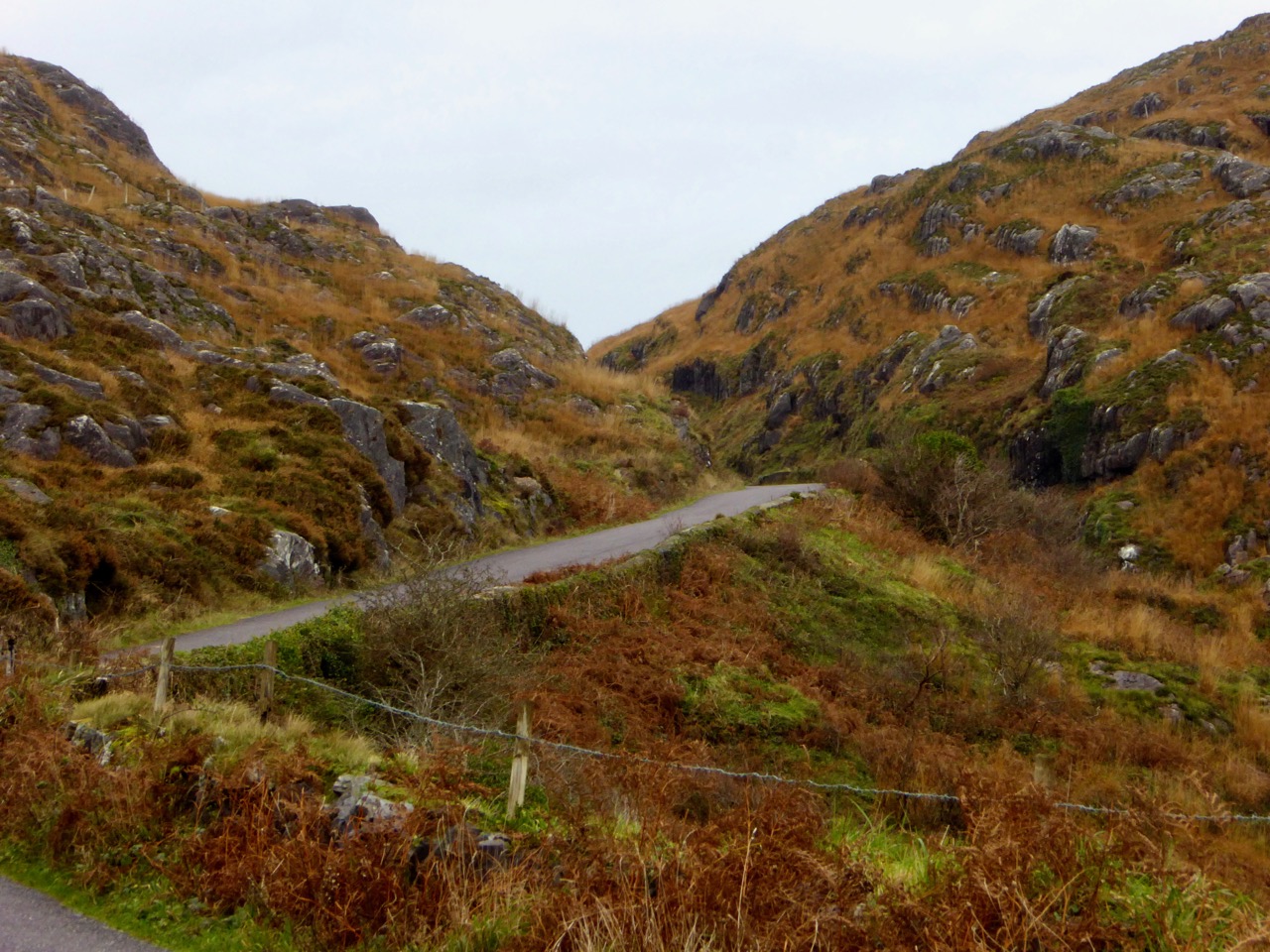
This image, of the Barnacleeve Gap above Schull, illustrates well the colours of West Cork in winter, when the bracken turns dark amber and the Purple Moor Grass (not purple at all) earns its Irish name of Fionnán, meaning blonde, while the grasses and mosses keep the lowest growth green.

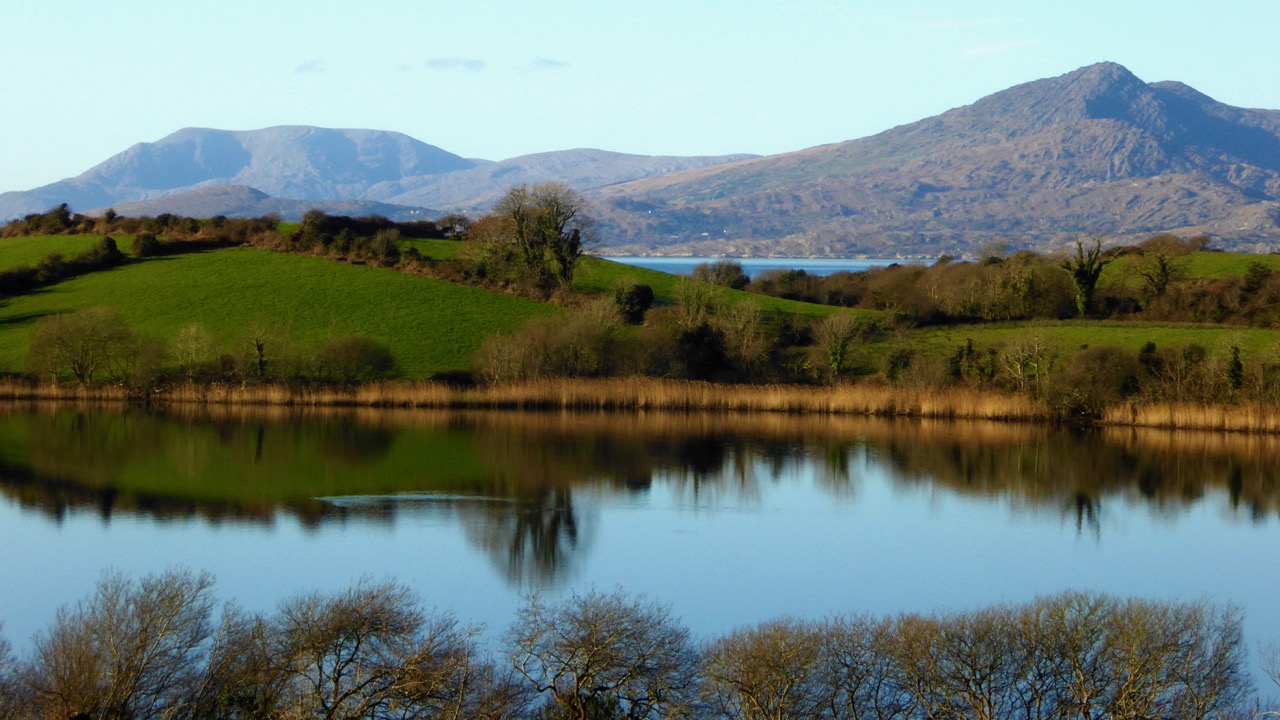
Another winter view, this time from across Reendonagan Lake, near Ballylickey, to the Sugarloaf Mountain on the Beara Peninsula.

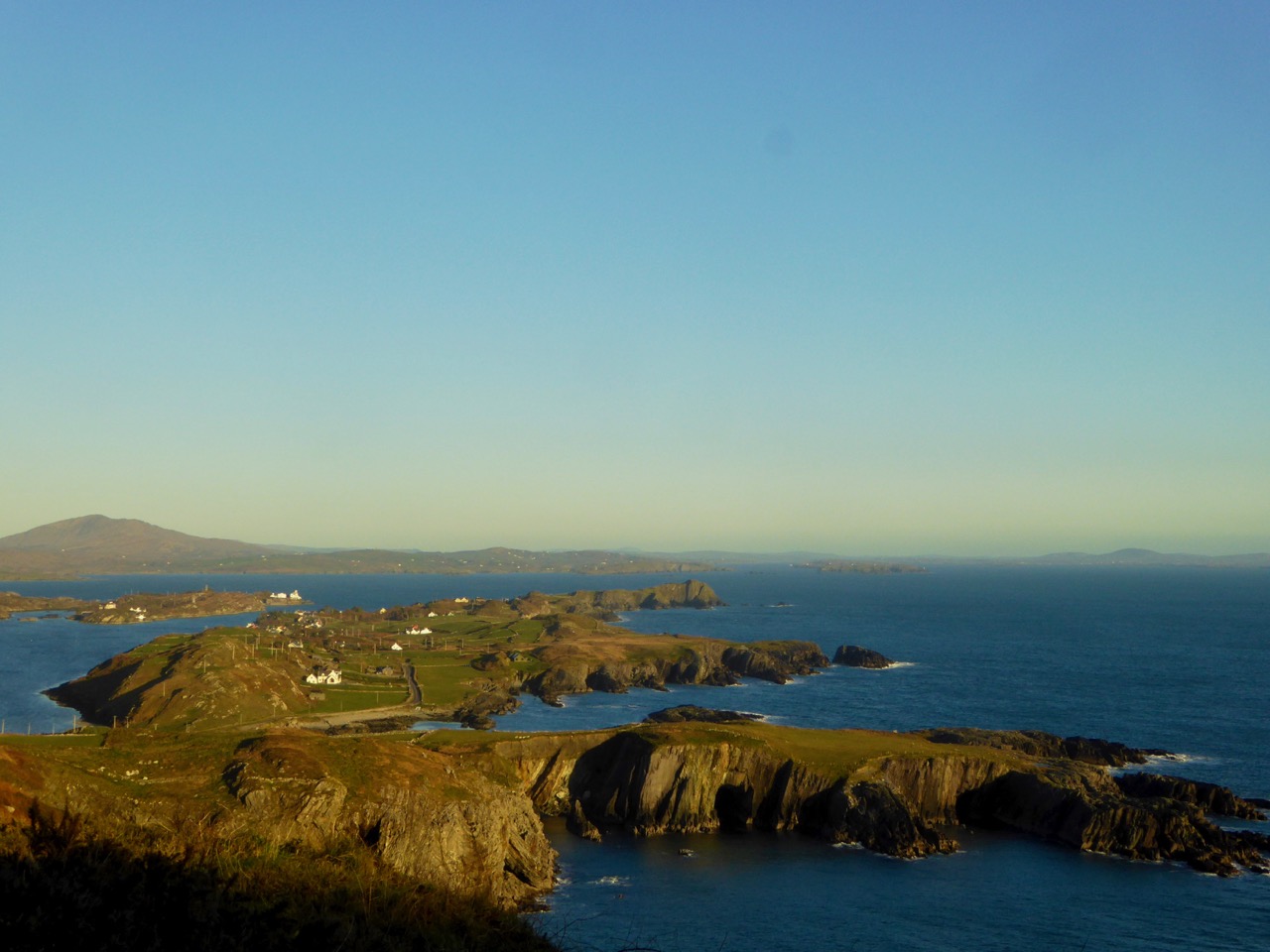
And finally a photograph that manages to capture much of the Mizen Peninsula, taken on Brow Head and looking towards Mount Gabriel in the distance, with the village of Crookhaven and the Rock Island lighthouse on the left. And yes, you’re right – another winter photograph.