Old Stones

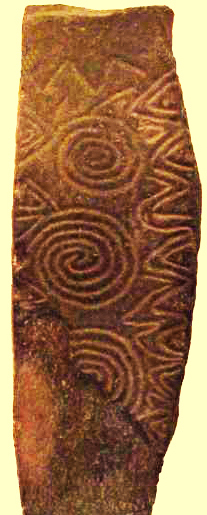
A classic piece of Rock Art - on display in Dublin's National Museum

A classic piece of Rock Art – on display in Dublin’s National Museum

As we enter October, we begin to look towards the dark part of our year – and to think of the Cailleach who, in these western parts of Munster, is known as The Hag of Beara: in early tales she is pictured as a prolific figure responsible for shaping the landscape by carrying huge stones in her apron and dropping them to form hills and outcrops, as well as ancient standing stones, circles and alignments. She is also seen wielding a great hammer with which she sculpts and refines her geological creations. She has had seven periods of youth, one after another, so that every man who lived with her came to die of old age. Her grandsons and great grandsons are so many that they make up entire tribes and races. She falls asleep on Bealtaine (May 1st) and wakes again on Samhain (November 1st) – we will be looking forward to the storms which will herald her coming. Until then she rests on a hillside overlooking Coulagh Bay, beyond Allihies on the remote Beara Peninsula, where her rocky incarnation depicts her as both a young maiden and an old crone.
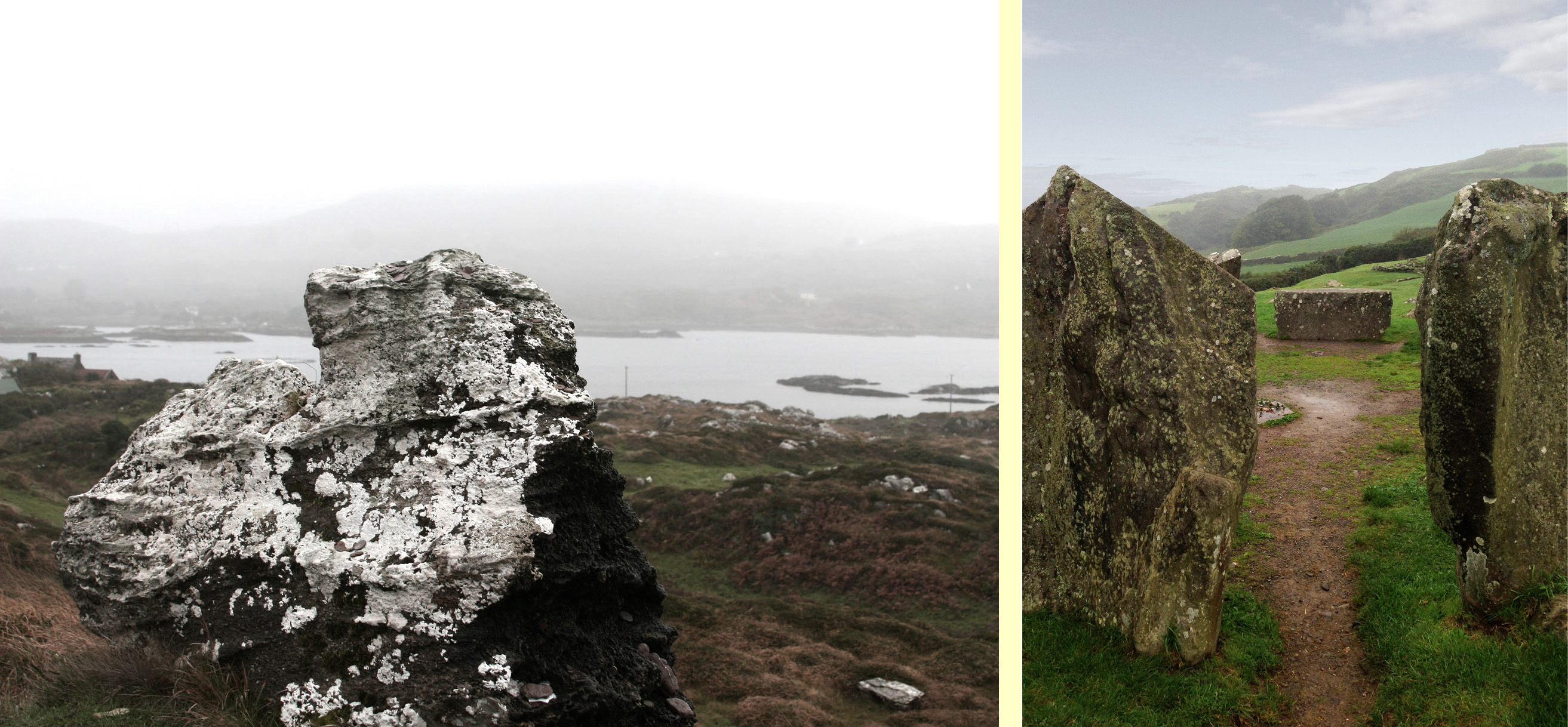
Monuments in the mist: The Hag of Beara and Drombeg Circle

Monuments in the mist: The Hag of Beara and Drombeg Circle

Ireland is stuck in a stream of warm air coming up from the tropics at the moment: this makes temperatures two or three degrees higher than the norm for early autumn, but also causes a damp landscape shrouded in fog: we have missed our view of the Fastnet for several days.
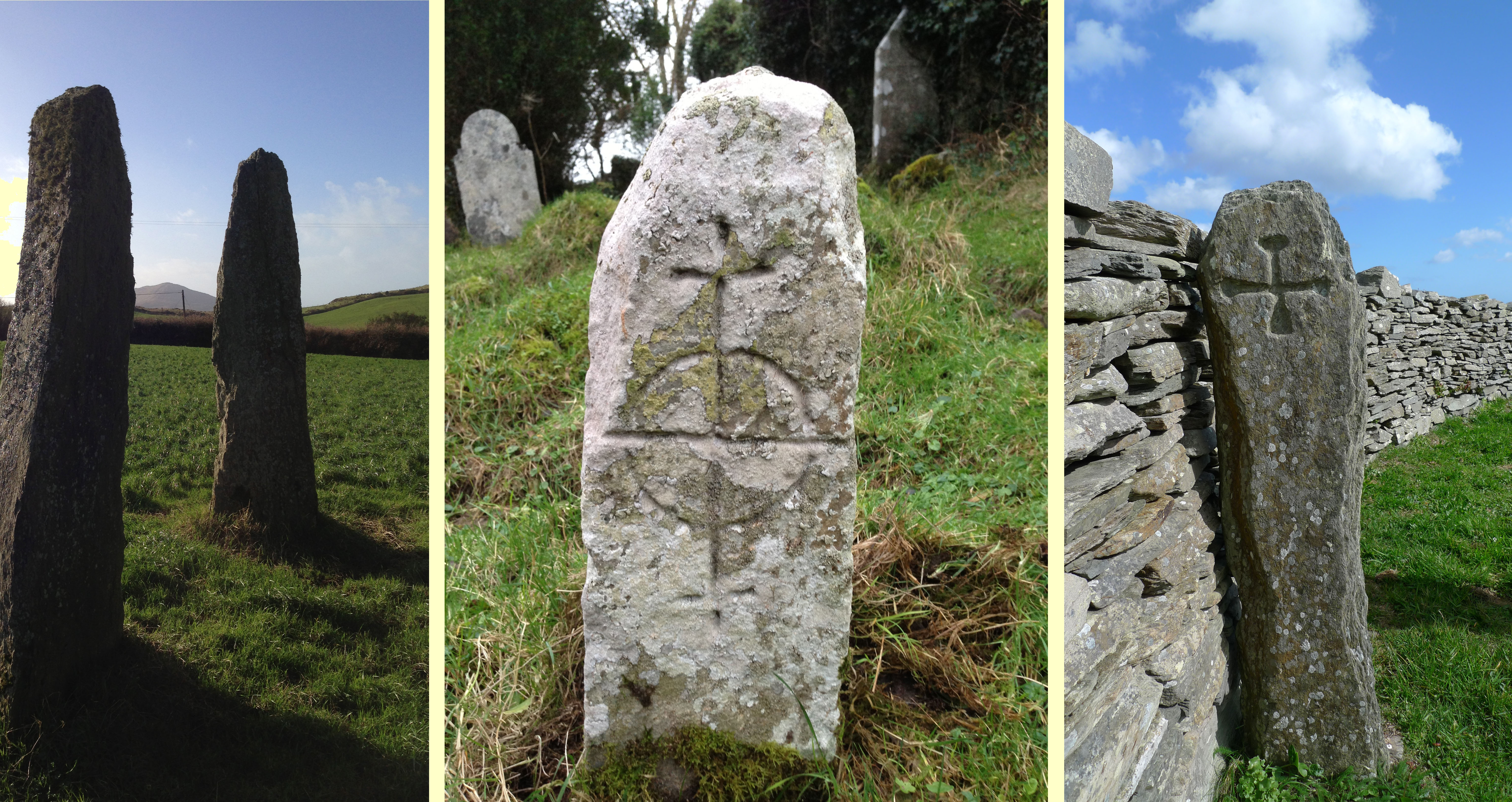
Standing stones

Some West Cork standing stones

The weather hasn’t hindered our exploration of Ireland’s old stones – the terrain created by the Hag. Yesterday we went to Drombeg Circle: a popular site for tourists. Many visitors will fail to notice the rock art carved on the recumbent stone that points out this megalithic monument’s alignment with the winter solstice. At the foot of another stone we found some enigmatic markings which I readily interpreted as a dancing Hare.
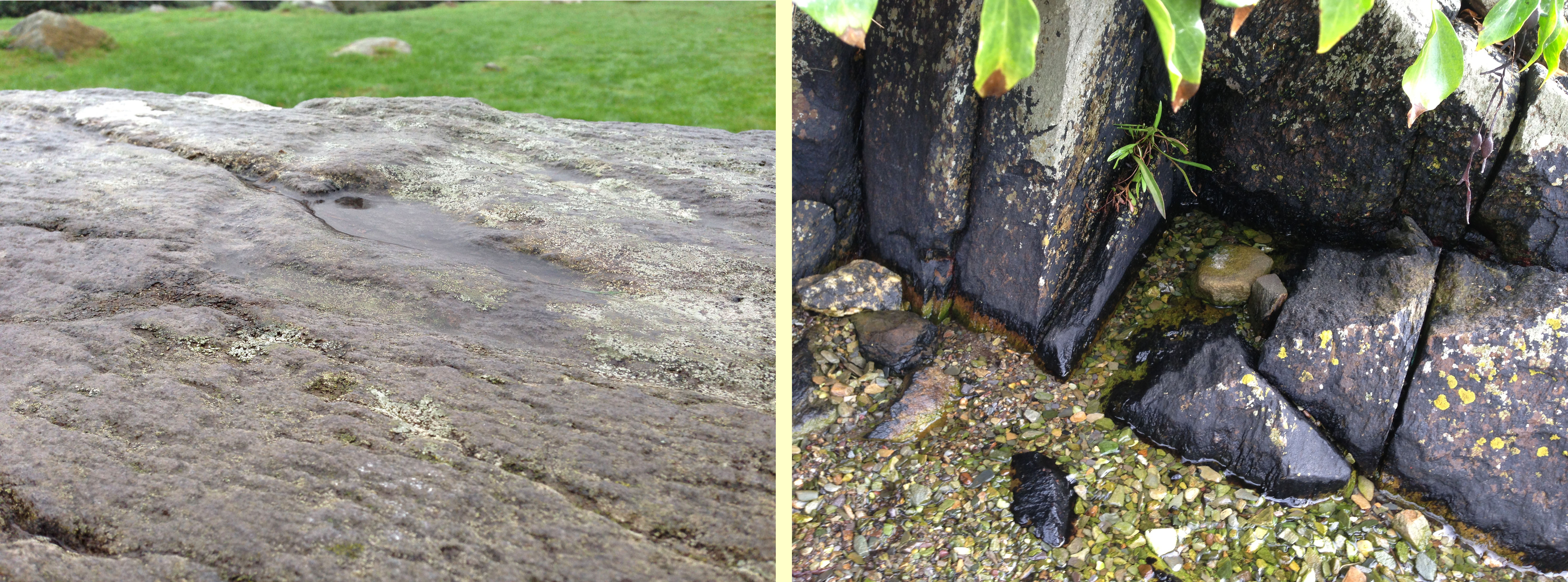
Drombeg Rock Art - and a mysterious Holy Well in Rossbrin Cove

Drombeg rock art – and a mysterious holy well in Rossbrin Cove

Bishops Luck - a megalithic close by Nead an Iolair: according to local legend, a

Bishop’s Luck – a megalith close by Nead an Iolair: according to local legend, a bishop is buried under this!

Ireland’s history is written in stone: the natural landscape; megalithic monuments; buildings – cottages, castles, farms, churches, lighthouses; every townland is rich in examples. Building material, track surfacing, grave marker and artists’ canvas (perhaps): stone has been a resource to aid human occupation for thousands of years.
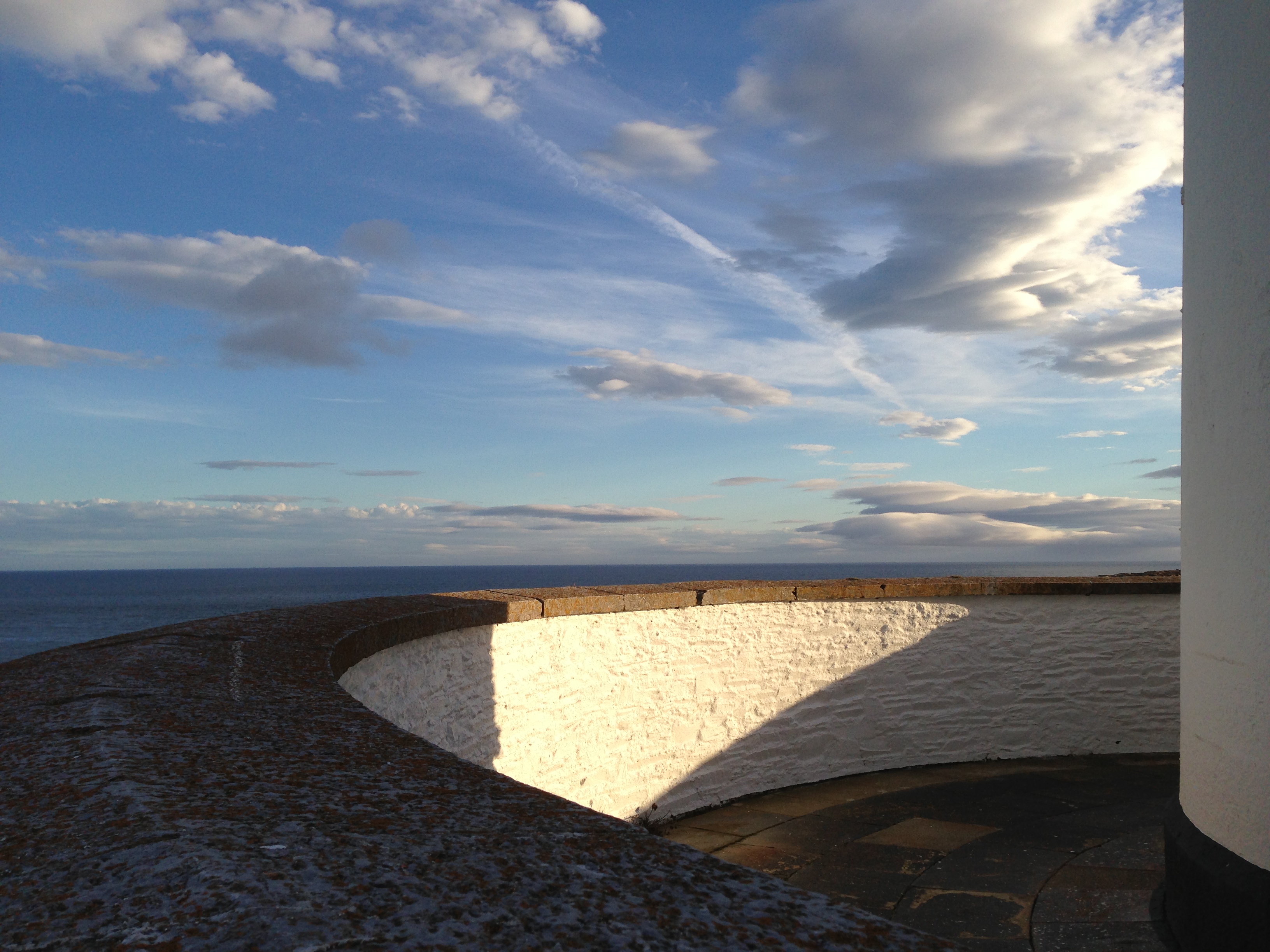
Stone in context: Galley Head Lighthouse
Stone in context: Galley Head Lighthouse

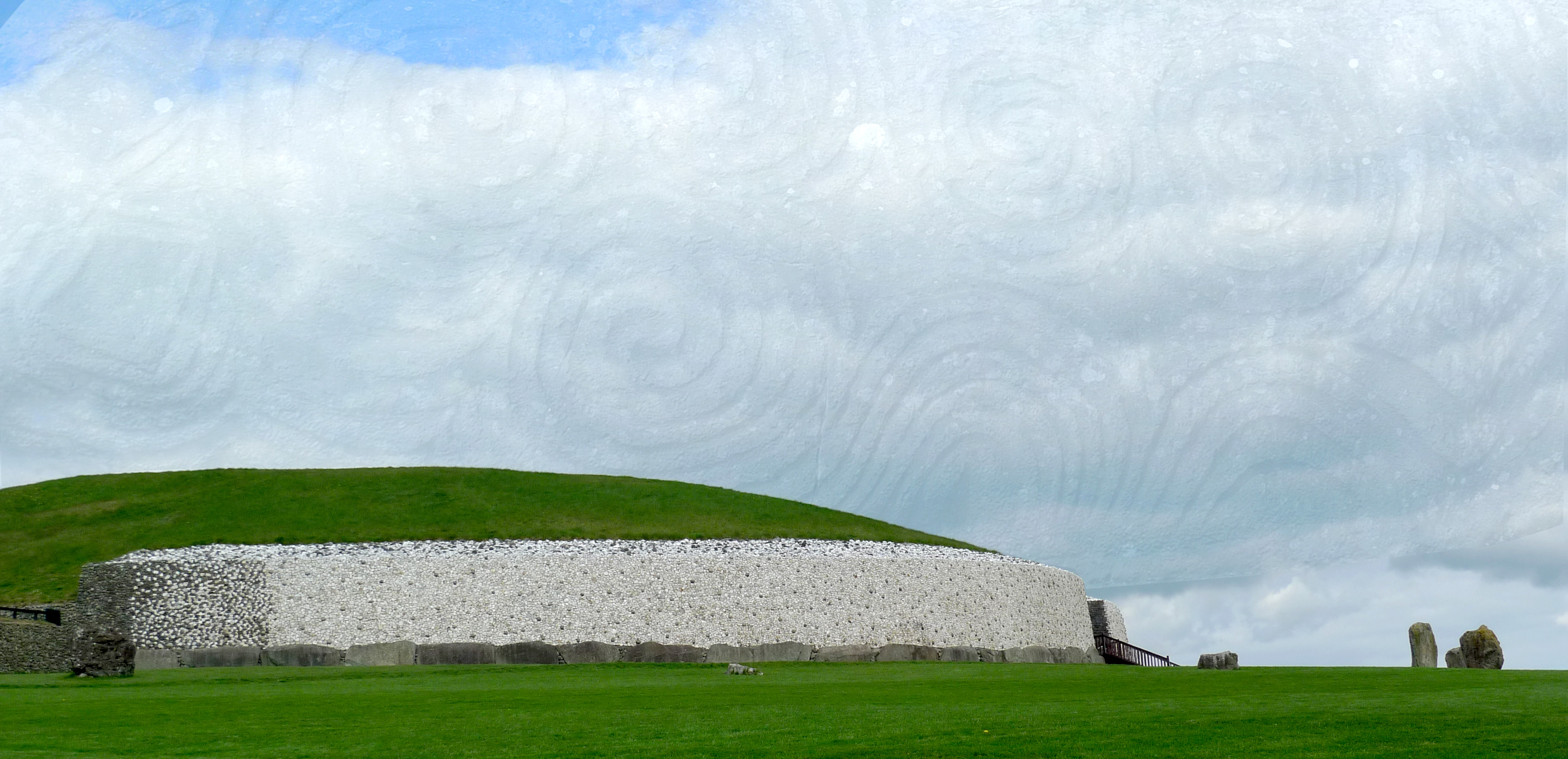
The ultimate stone monument - Newgrange Passage Grave, County Meath - the spectacular quartz facing is a conjectural reconstruction

The ultimate Neolithic stone monument – Newgrange Passage Grave, County Meath – the spectacular quartz facing is a conjectural reconstruction

Driven to Distraction

2013-09-24 10.15.34

Hello, Ladies!

Robert is switching his English car to be registered in Ireland and in order to be properly insured I should get an Irish driving licence. In Vancouver all of this (registering and insuring a car, getting a driver’s licence) is handled by the Insurance Corporation of BC (ICBC) – one stop shopping and very efficient. I was unprepared for the levels of bureaucracy involved in accomplishing the same things in Ireland. For anyone thinking of moving here, gird your loins for an obstacle course.

Breathe in!

Breathe in!

Registering Robert’s car is almost done, and here are the steps we have had to follow:

  1. To the VRT (Vehicle Registration and Taxing) office in Skibbereen. We find we are ‘importing’ the car so must first go to the Customs Office in Bantry (only open Friday mornings, make an appointment) with a long list of documents.
  2. To Bantry with all documentation. Customs officer copied everything and said to wait until we got relevant certificate in the mail, then make an appointment with the VRT to register the car.
  3. To Insurance agent in Skibbereen to apply for Irish insurance. This is where we learned that Robert’s English licence is fine, but I must get an Irish one. Robert must procure proof of no claims status from English insurer.
  4. Telephone calls to England requesting no claims document. Will be emailed to us straight away.
  5. Customs certificate arrives. Appointment made with VRT office. List of required documents exactly the same as we have already supplied to Customs even though it’s the same government department (Revenue). Back to VRT and receive car registration number. Registration certificate will arrive in mail.
  6. Back to Insurance office. No claims proof has not arrived, but charming Insurance agent manages to weasel enough information out of English insurance agent on the phone. Now insured in Ireland!
  7. Off to Garage that prints ‘Licence Plates While You Wait.’ They also sell us the double-sided tape with which the plates are attached and instruct us how to do it. Main direction for pulling off the old ones, “Don’t be frightened.”
  8. On to the internet, armed with registration number, to ‘Motor Tax Online’ to pay road tax. Although the tax is collected by the ‘local authority’ or county council, the payment system is operated by the Department of Transport, Tourism and Sport and it appears the tax can only be paid online or by travelling up to Cork (hour and a half). Tax discs to be attached to windshield (without which it is illegal to drive a car) will arrive in the mail.
  9. Once car registration certificate (see step 5 above) arrives in the mail, Robert can make appointment to have a mandatory NCT (National Car Test) to check the car for roadworthiness. This will take us back to the VRT office.

Whew! Got all that? That’s 5 different locations and 8 sessions: Customs, VRT X3, Insurance X2, License Place Printer, Tax Authority. Add to that the assembling of lots of paperwork (examples: original invoice for four year old car, proof of identity and residence, receipt for passage on the car ferry) and multiple phone calls to England…well, I think Robert deserves a medal for negotiating all that!

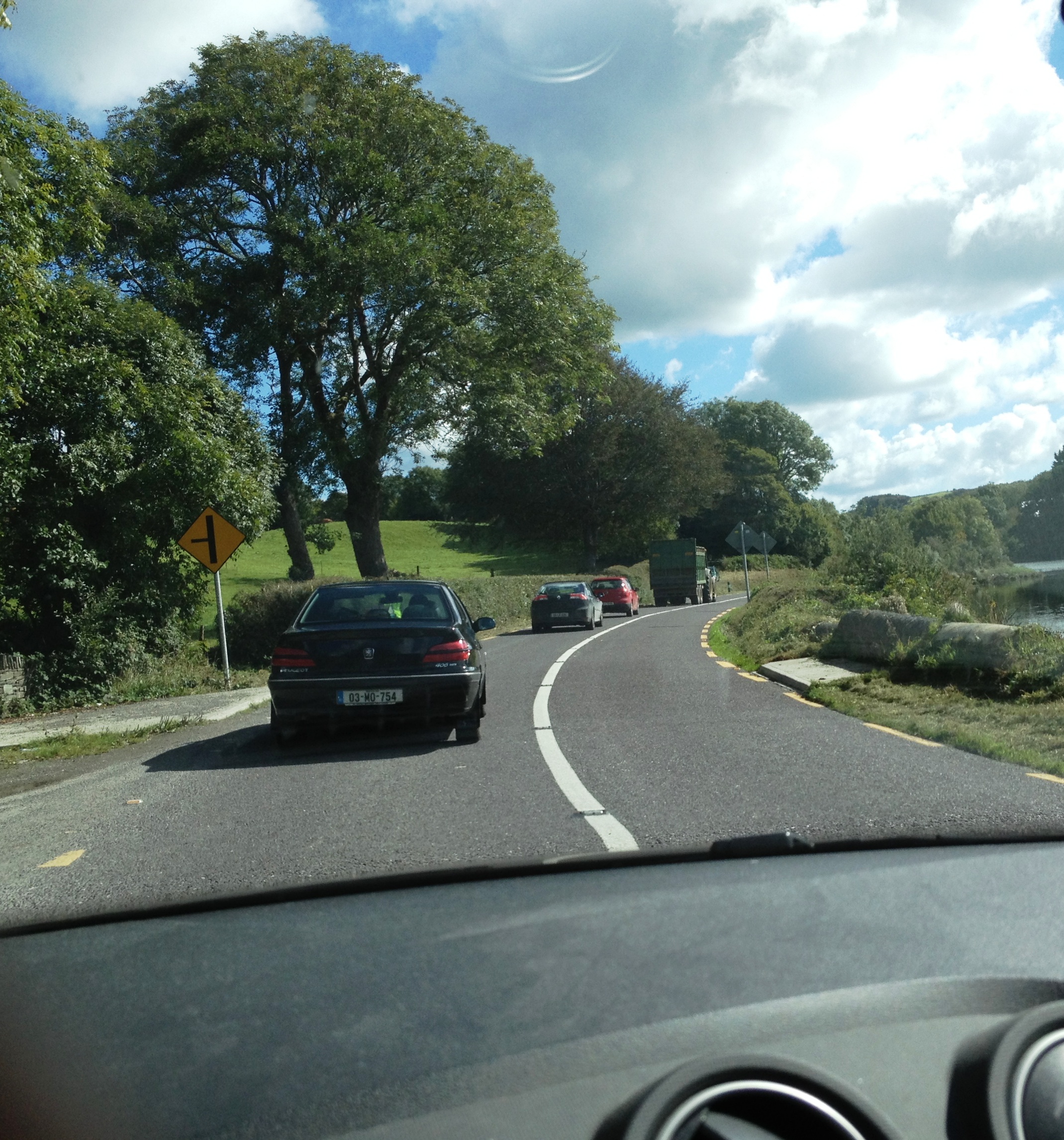
The speed limit? Tractor speed.

The speed limit? Tractor speed

Interestingly, half of the processes described here are administered within government and involve two different departments as well as county councils. The other half are privatised – insurance, license plates and the NCT are all managed outside government, thereby creating a smaller bureaucracy within government, but a much larger one from a consumer viewpoint with multiple steps, documentation requirements and agencies. The saving grace for the hapless car owner is the cheerful, helpful and friendly Irish people working in each agency. With their sympathetic smiles, their humour and their efficiency in the teeth of labyrinthine processes, they will get you through the whole painful business.

"Tis a grand road.

‘Tis a grand road

My turn next. Must get that Irish driving licence. I have been driving in Canada for 38 years, problem-free, so this can’t be a big deal, right? After all, anyone with a European licence, even from countries that drive on the right (most of them) can just trade in their licence for an Irish one.

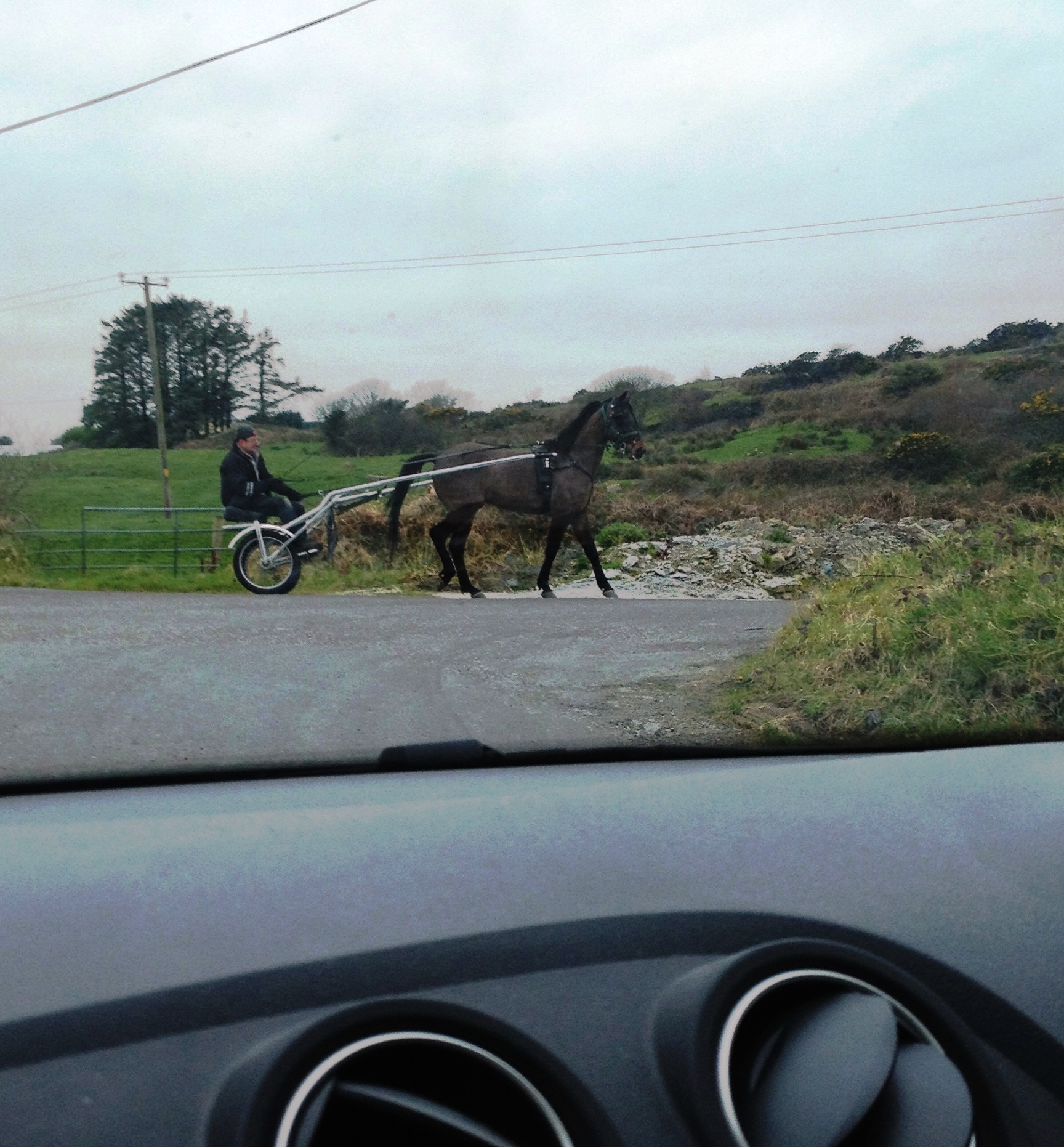
Whoa Nelly!

Whoa Nelly!

Can you predict, dear blog reader, given the tortuous route to registering a car, how straightforward this is going to be for me? A future post will reveal all. Meanwhile, I leave you with some pictures of driving conditions in West Cork.

The Great Hunger

2012-05-19 16.04.23

Skibbereen Heritage Centre

Skibbereen Heritage Centre

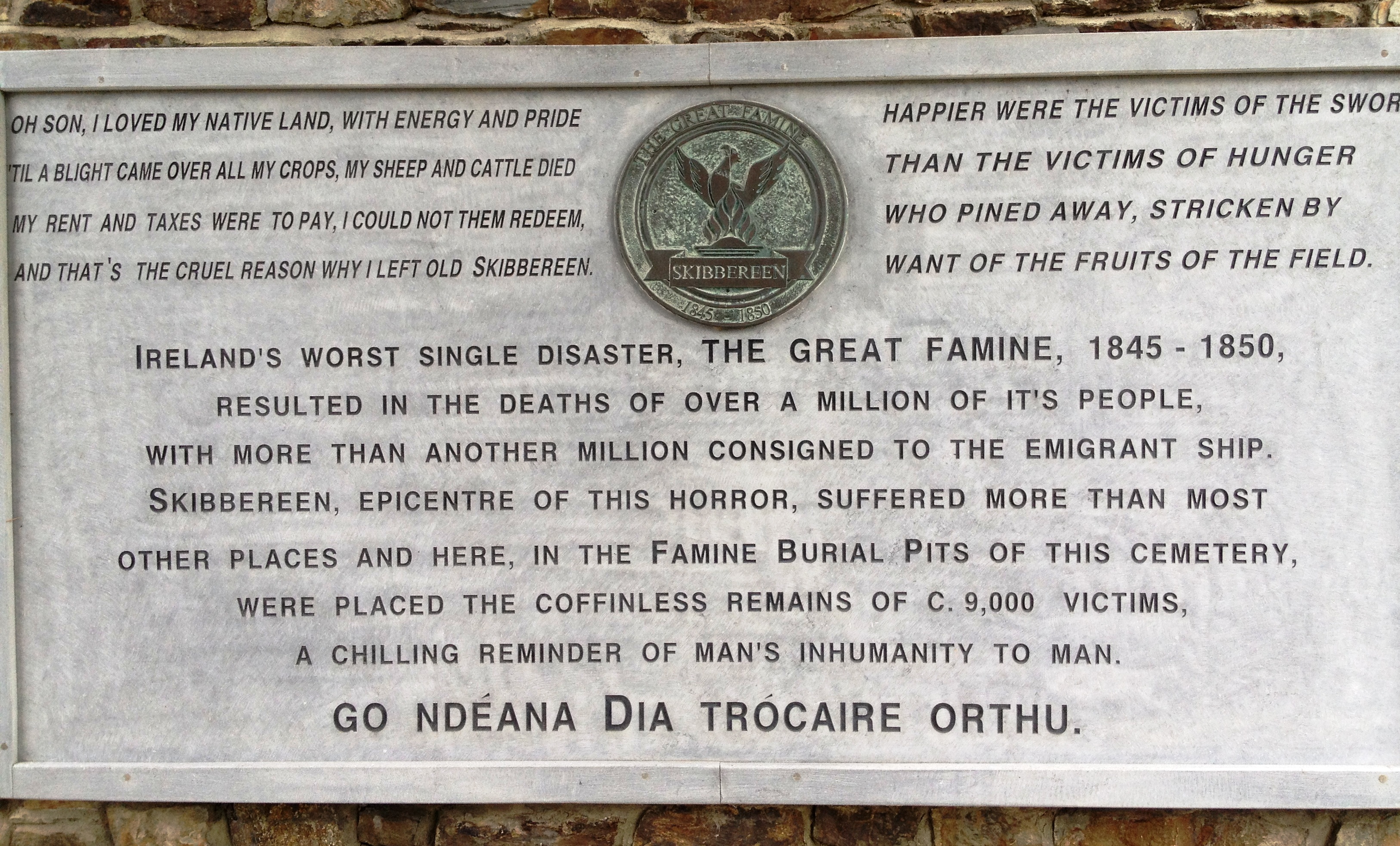
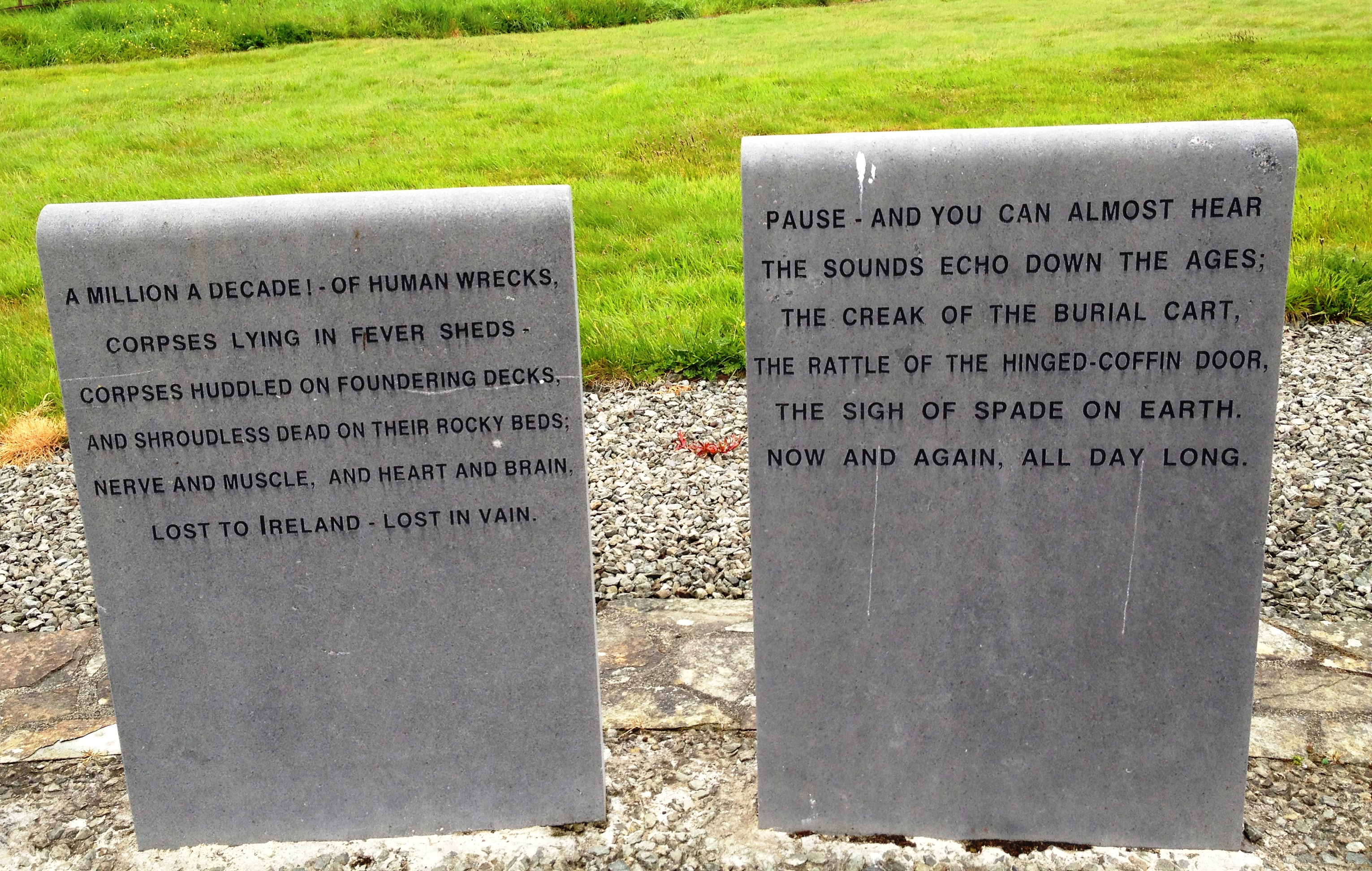
I have mentioned the Irish Famine in previous posts. West Cork and the area around Skibbereen in particular was greatly affected by this national disaster. In the period of the failure of the potato crop between 1845 and 1850 it is estimated that one in three people in this area died through starvation or disease. A million people perished in the island as a whole while another million emigrated. By the end of the nineteenth century the population of Ireland had halved, from just over 8 million to just over 4 million, as a traumatised race filled the Coffin Ships to America, Canada and Australia, or took the mail boats to Britain. This time in Irish history has left deep wounds in the Irish soul, and a legacy of distrust of Britain that fuelled much of the subsequent nationalistic fervour.

The Heritage Centre in Skibbereen has an excellent, if harrowing, Famine exhibition. Even more moving, perhaps, is the Abbeystrewry Graveyard, site of mass and unmarked graves of thousands of victims.

2012-05-19 16.02.27

In 1997 when events commemorating the 150th anniversary of the Famine were being planned new research turned up many previously unknown stories of the time. While most, understandably, turned on the wretchedness of the people and the political and social context, one small tale fired the imagination of the historian who discovered that the Chocktaw Indians of America had made what must have been for them an enormous donation to hunger relief. Having been deprived of their ancestral homeland, and with their population decimated by European diseases, this faraway people collected and sent $710 to the starving Irish. Since this discovery, a special relationship has been nurtured between the Chocktaw and the Irish.

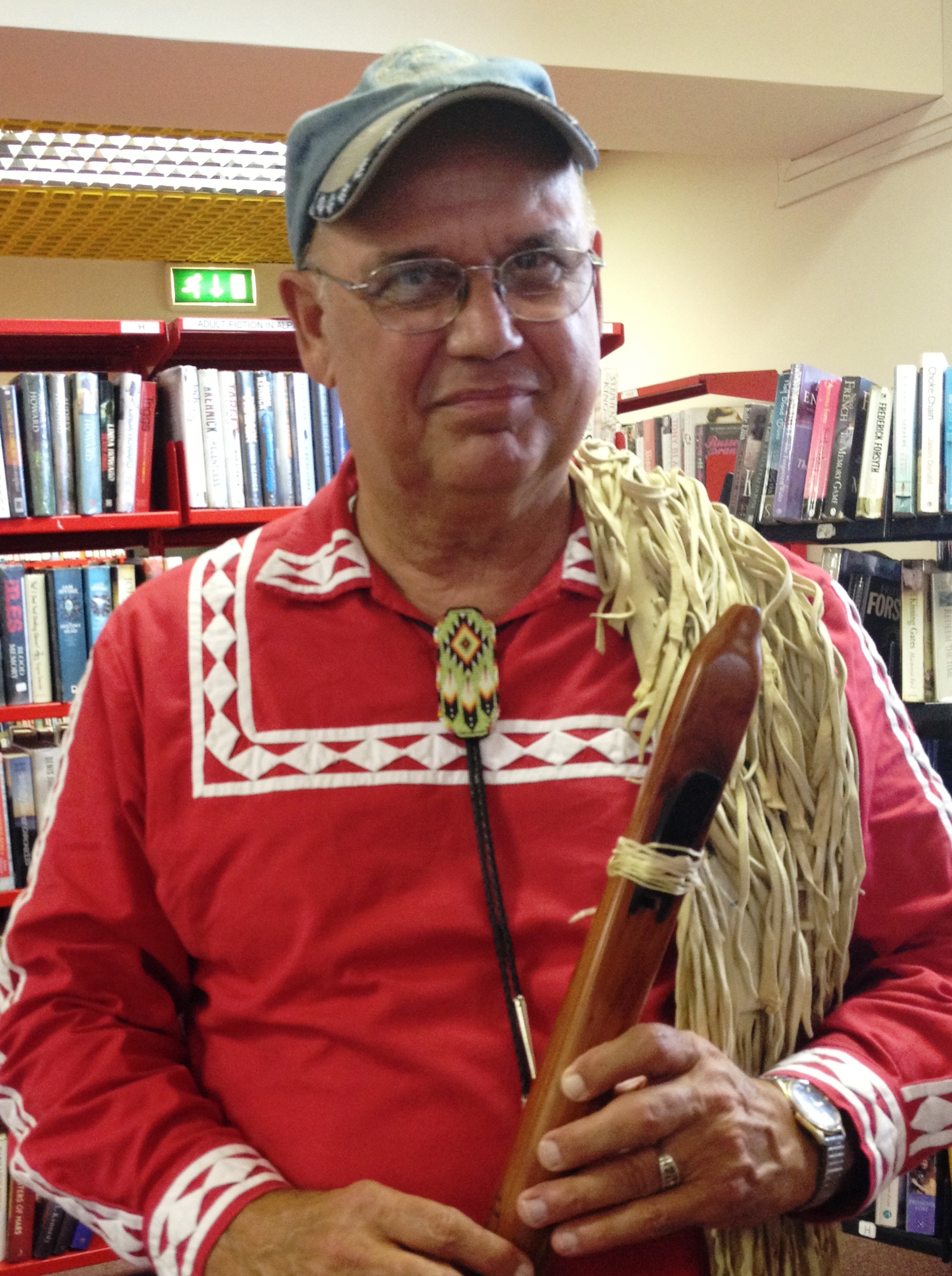
Tim Tingle, Chocktaw Story Teller

Tim Tingle, Chocktaw Story Teller

We were lucky, recently, to be present at a session by Tim Tingle, a Chocktaw writer and storyteller, in the Skibbereen library. Relaxed and humourous and with the aid of his drum he told us of his people and their relationship with the land and the animals. Slowly he drew us in to a deeper story from the time of the Chocktaw Trail of Tears: a story universal in its appeal and its humanity. His message: “Look ahead, keep moving forward.”

Mizen Magic

We’ve done several posts on the Sheep’s Head and the marked hiking trails that crisscross that peninsula. But we actually live on a different peninsula, The Mizen, and it is just as glorious and wild and beautiful.

Map of Mizen and Goleen

The road to the Mizen Head starts at Ballydehob, runs along the southern side of the peninsula through Schull and Toormore and on to Goleen and Crookhaven. At the far or western end are the beaches of Barley Cove and the Mizen Head Lighthouse and Visitor Centre. There are no villages on the northern side of the peninsula until you reach Durrus, which also marks the start of the Sheep’s Head Peninsula. It is bounded on the south by the waters and islands of Roaringwater Bay and on the north by Dunmanus Bay. The whole peninsula is rich in history and archaeology and we plan future posts about many aspects of life here.

For the moment, a flavour in photographs of what The Mizen landscape has in store for visitors.

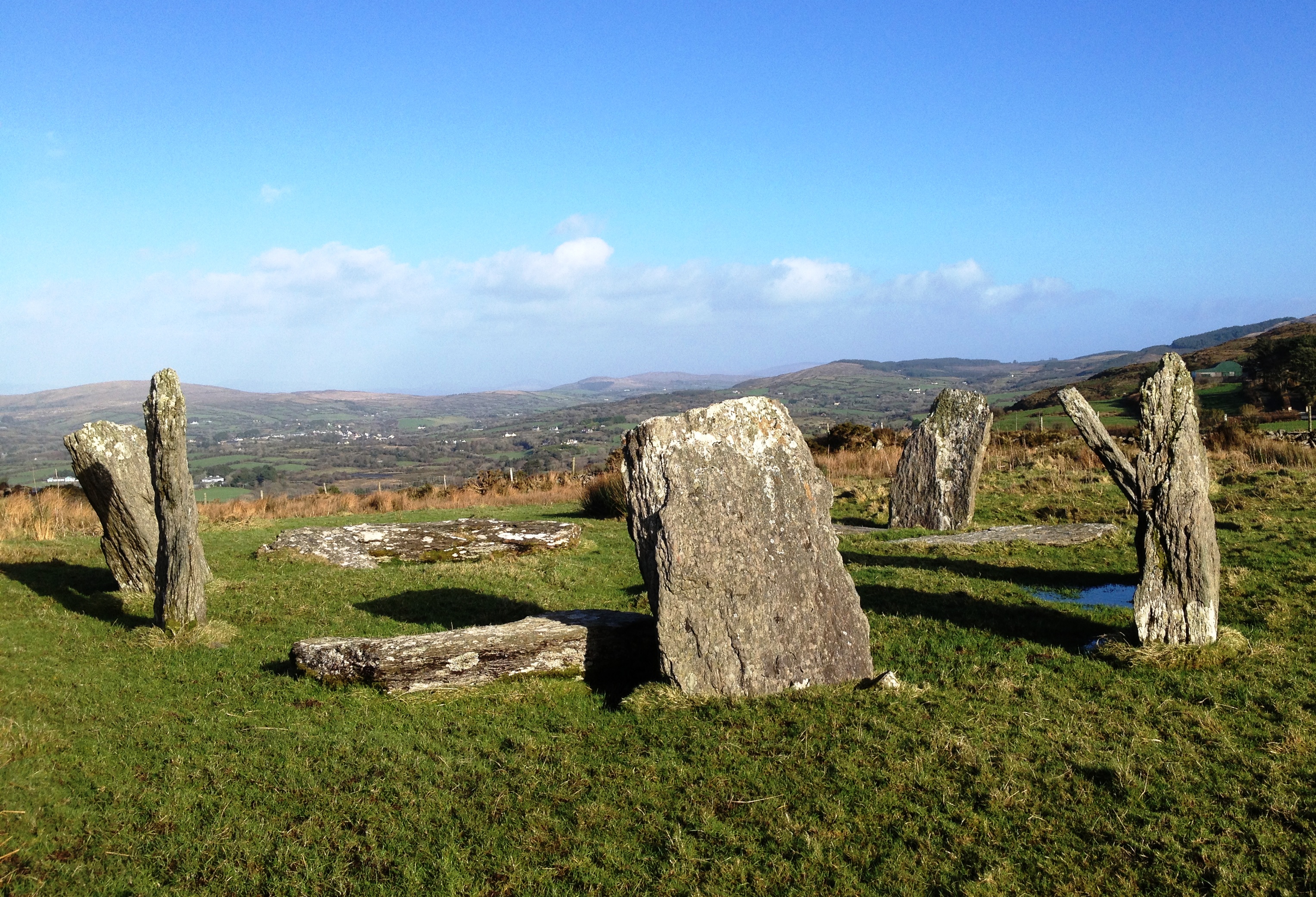
Dunbeacon Stone Circle

Dunbeacon Stone Circle

Ballyrisode Beach

Ballyrisode Beach

Dunmanus Bay

Dunmanus Bay

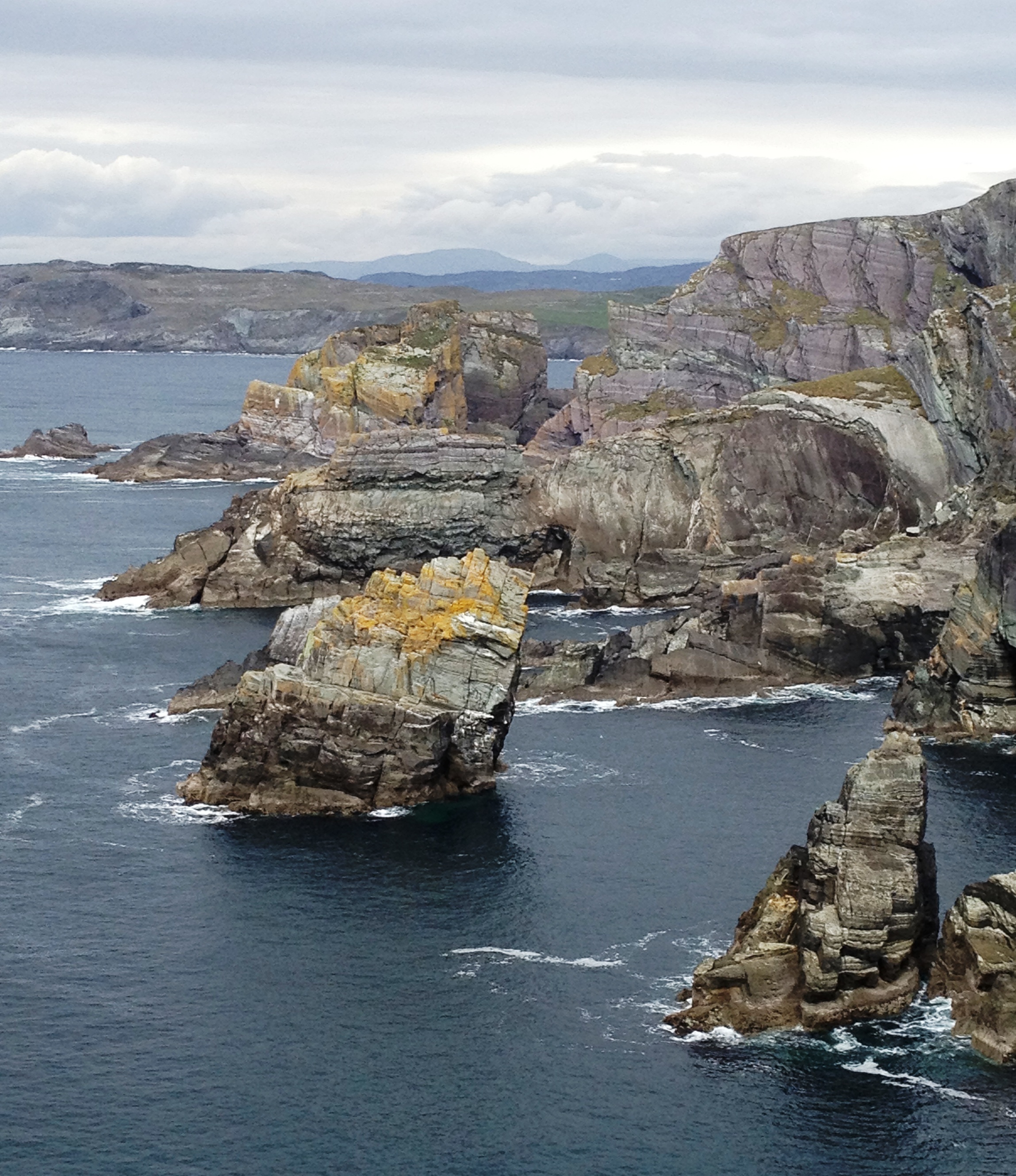
Mizen Head

Mizen Head

Dunmanus Harbour

Dunmanus Harbour

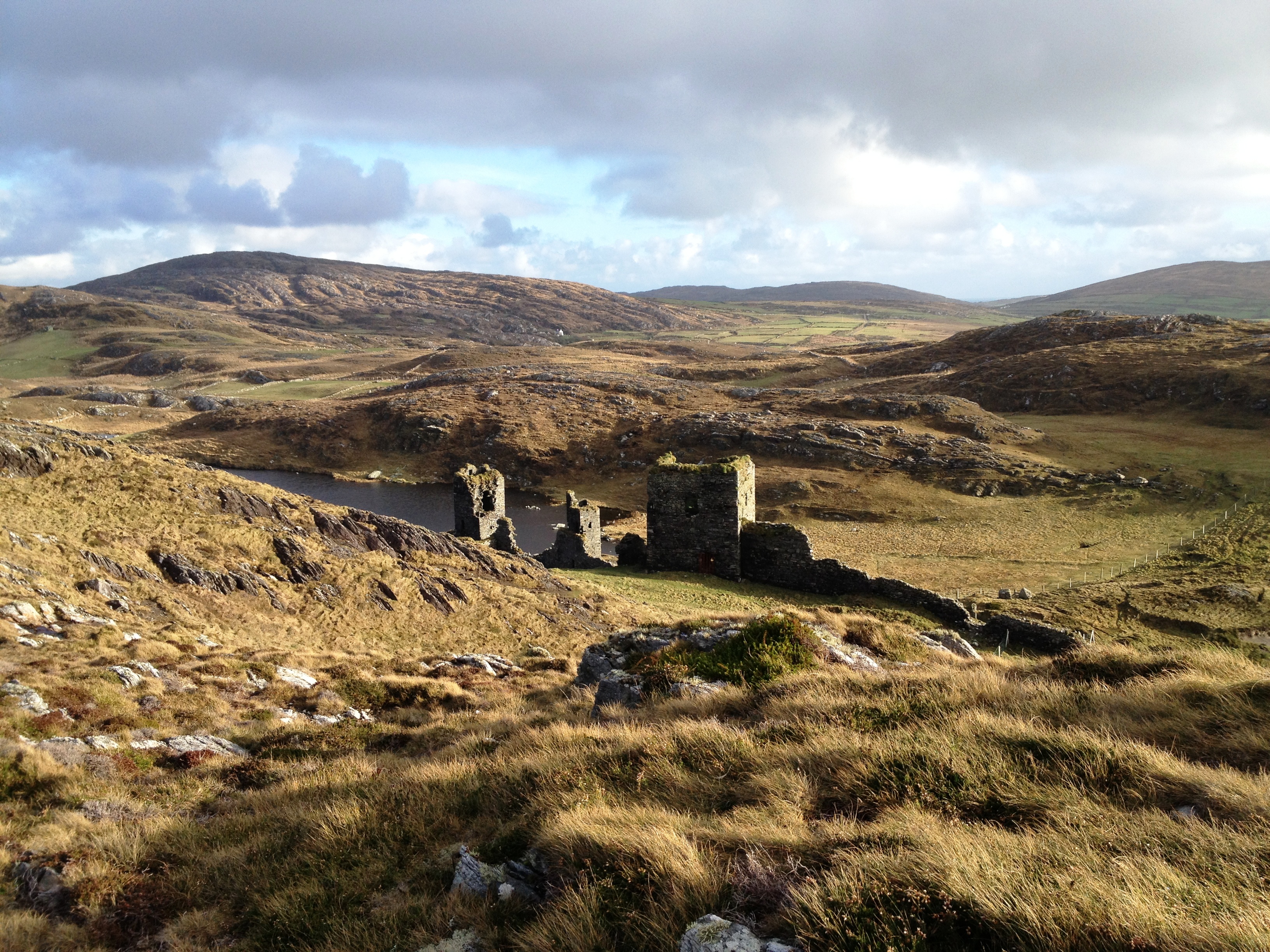
Three Castle Head

Three Castle Head

At Sea Level

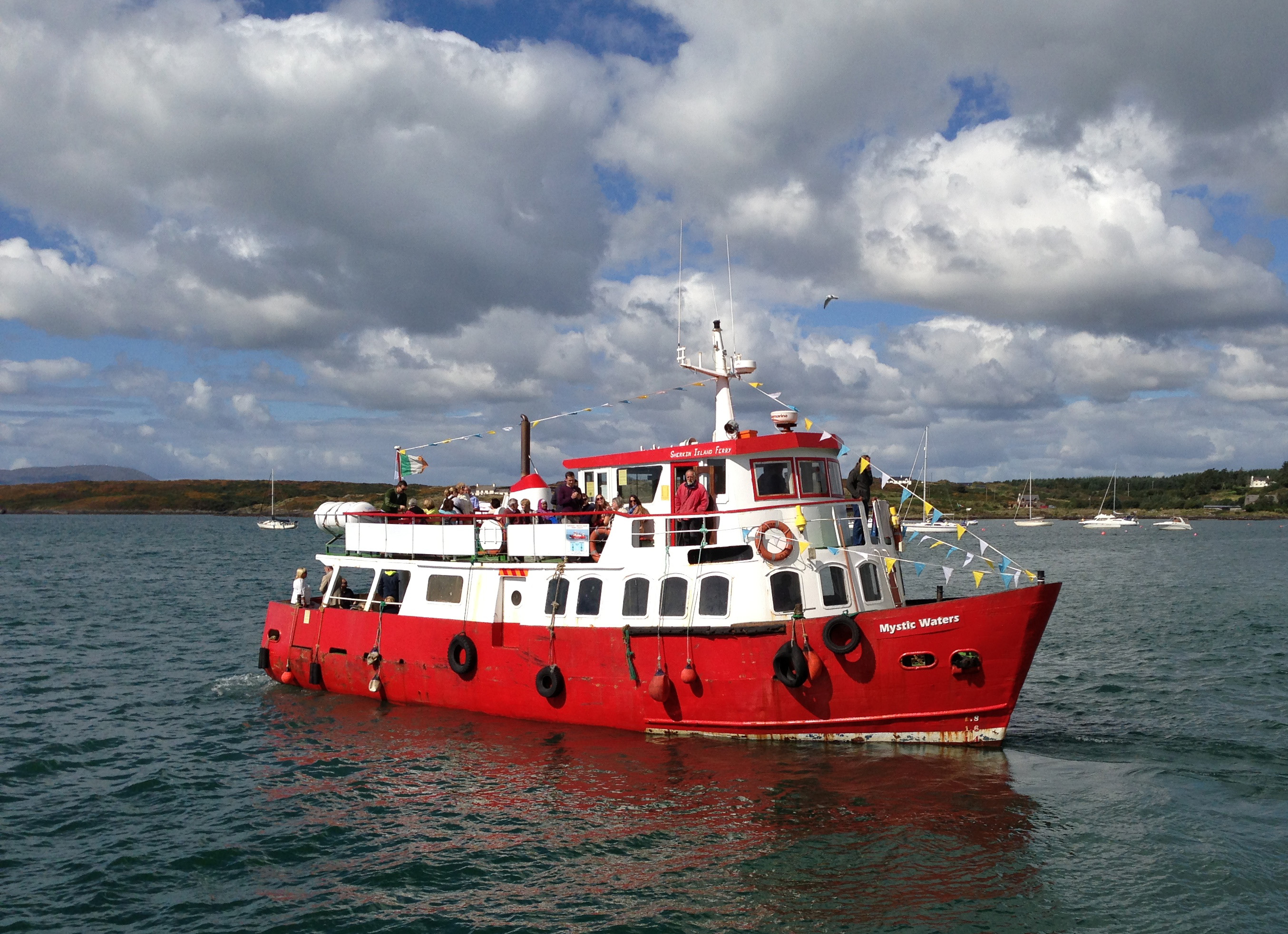
mysticwaters

THE SUMMER sun is falling soft on Carbery’s hundred isles,

The summer sun is gleaming still through Gabriel’s rough defiles;

Old Innisherkin’s crumbled fane looks like a moulting bird,

And in a calm and sleepy swell the ocean tide is heard…*

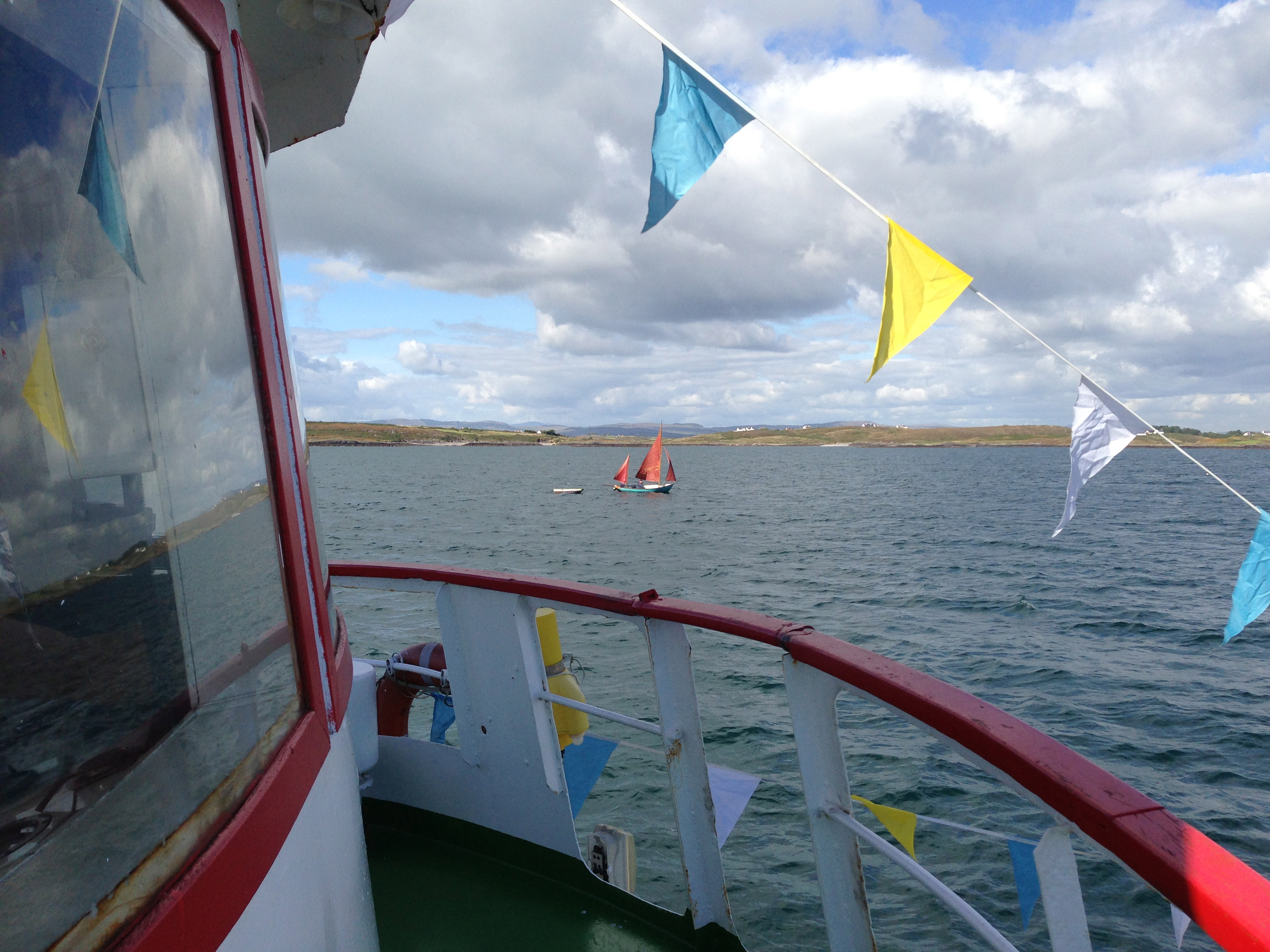
The little red boat that spends most of its days plying the ten minute crossing between the mainland and Sherkin island is occasionally let off its leash to go further afield and explore the Islands of Roaringwater Bay – ‘Carbery’s Hundred Isles’. We signed up for yesterday’s voyage: every day we look down over these waters from our nest up on the hill, and we welcomed the opportunity to explore our view from within it. This event was organised as part of the Taste of West Cork Food Festival, and we had the bonus of enjoying trays of good food and drink as we savoured the scenery.

carbery isles

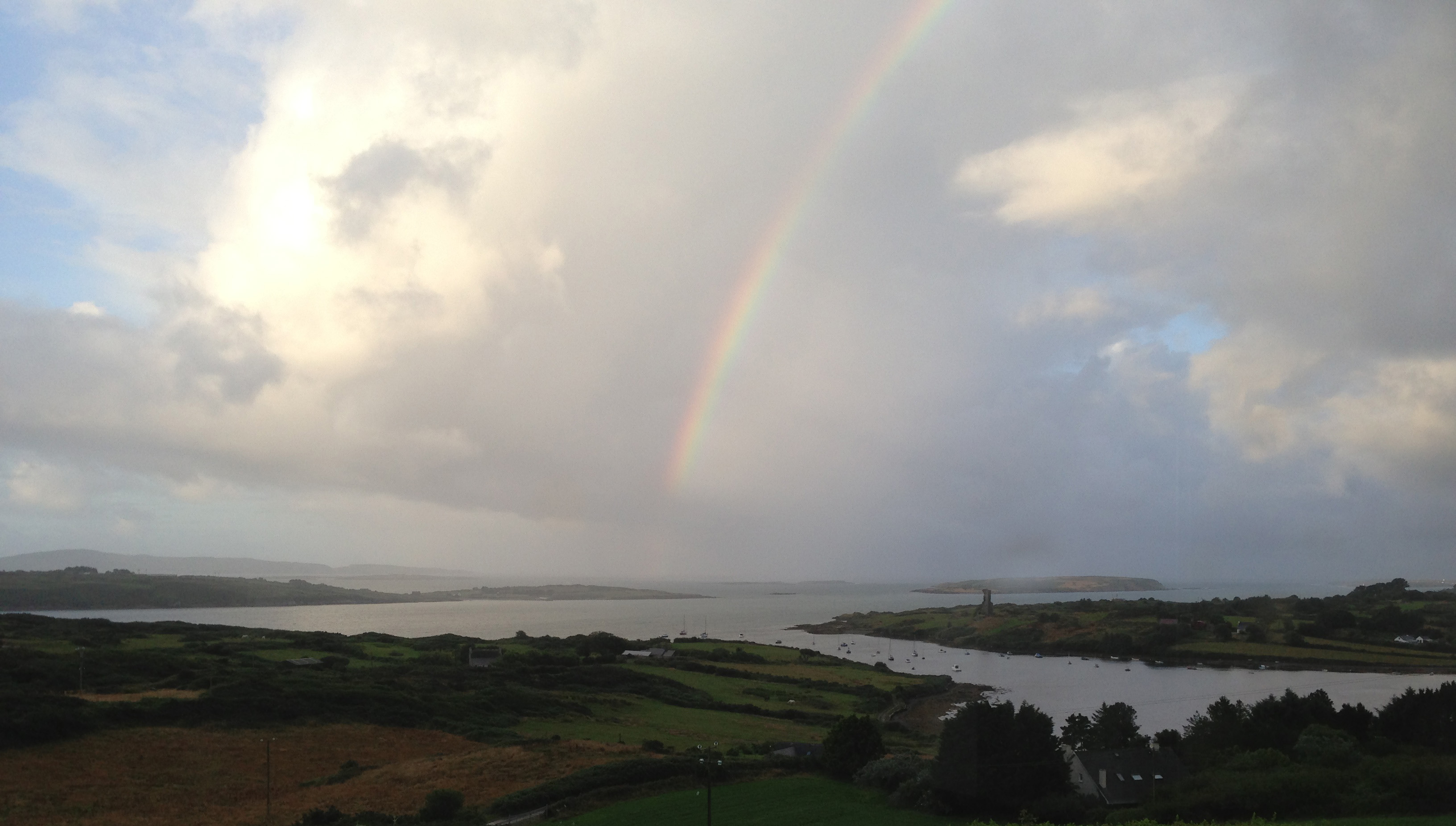
The late summer sun was certainly ‘falling soft’ as Mystic Waters pulled away from Baltimore. Perhaps it was the last of the summer sun as our view from Nead an Iolair today has gone! There’s not one island to be seen through the driving rain, and the Atlantic storm is sending our weather-vane spinning…

aboard

Some of the ‘Hundred Isles’ are little more than perches for gulls and cormorants, but a few are still inhabited – Clear, Sherkin, Hare and Long Island – while ruined evidence remains to show that many more have once supported small farmsteads – The Skeams, The Carthys, Calf Islands and Castle. Horse Island is the residence of one family – with plans to establish a distillery there.

A traditional Hare island lobster boat - sailing past Hare Island

A traditional Hare Island lobster boat – sailing past Hare Island

Middle Calf

Middle Calf

capeclearstone3We didn’t land on any of the islands yesterday: we hope to visit some in the future. My first goal is the Middle Calf – a Hare Haven! But we do need to catch up on some Rock Art. There are marked stones on Horse Island while Clear (an Irish speaking community – part of the Gealtacht) supports a Neolithic chambered tomb which once contained a remarkable artefact: a carved stone with spirals, lines and zigzags, much more akin to the decorated boulders of the Boyne Valley Culture than the cups and rings of West Cork and Kerry. The stone (now – sadly – removed to the Cork City Museum) was part of a passage grave sited on the highest point of the island. Like the huge Newgrange monuments, the passage here is aligned on a solstice sunrise. As we look out through the mist today it’s a sobering thought that a sophisticated, scientifically aware society resided on these remote islands over 5,000 years ago.

* This poem was written by Thomas Osbourne Davis (1814 – 1845) and records the Sack of Baltimore of 1631 when Barbary pirates raided the town and took over 100 residents into slavery.

Food Glorious Food

Taste of West Cork

There’s yet another festival on at the moment, and this one is a yummy one: A Taste of West Cork Food Festival. It will culminate next Sunday in a giant market that will take over the main street of Skibbereen, but in the meantime every day brings something new – a farm tour, cooking and fish-smoking demonstrations, walking and boating tours, tasting menus, and special dinners.

Finola and Regina

Finola and Regina

Today we attended a lecture by Regina Sexton, a brilliant writer, broadcaster and food historian. Under the title “Teaching the Poor to Cook in 1847,” Regina led us through the contents of what might have been one of the earliest ever Irish recipe books. Published by a member of the Northern Irish gentry, it instructed the Irish ‘Peasantry’ on how to cook the foods available at the time as substitutes for the potato, then in catastrophic failure due to blight. Revealing as a document of the social and political philosophy of its time, it was eerily poignant given the death toll occurring all around at the height of the Great Famine. I was keenly aware of our surroundings at Liss Ard House, once a mansion where people enjoyed a fine standard of living, while the town of Skibbereen, down the road, had been an epicentre of starvation.

Everything locally grown!

Everything locally grown!

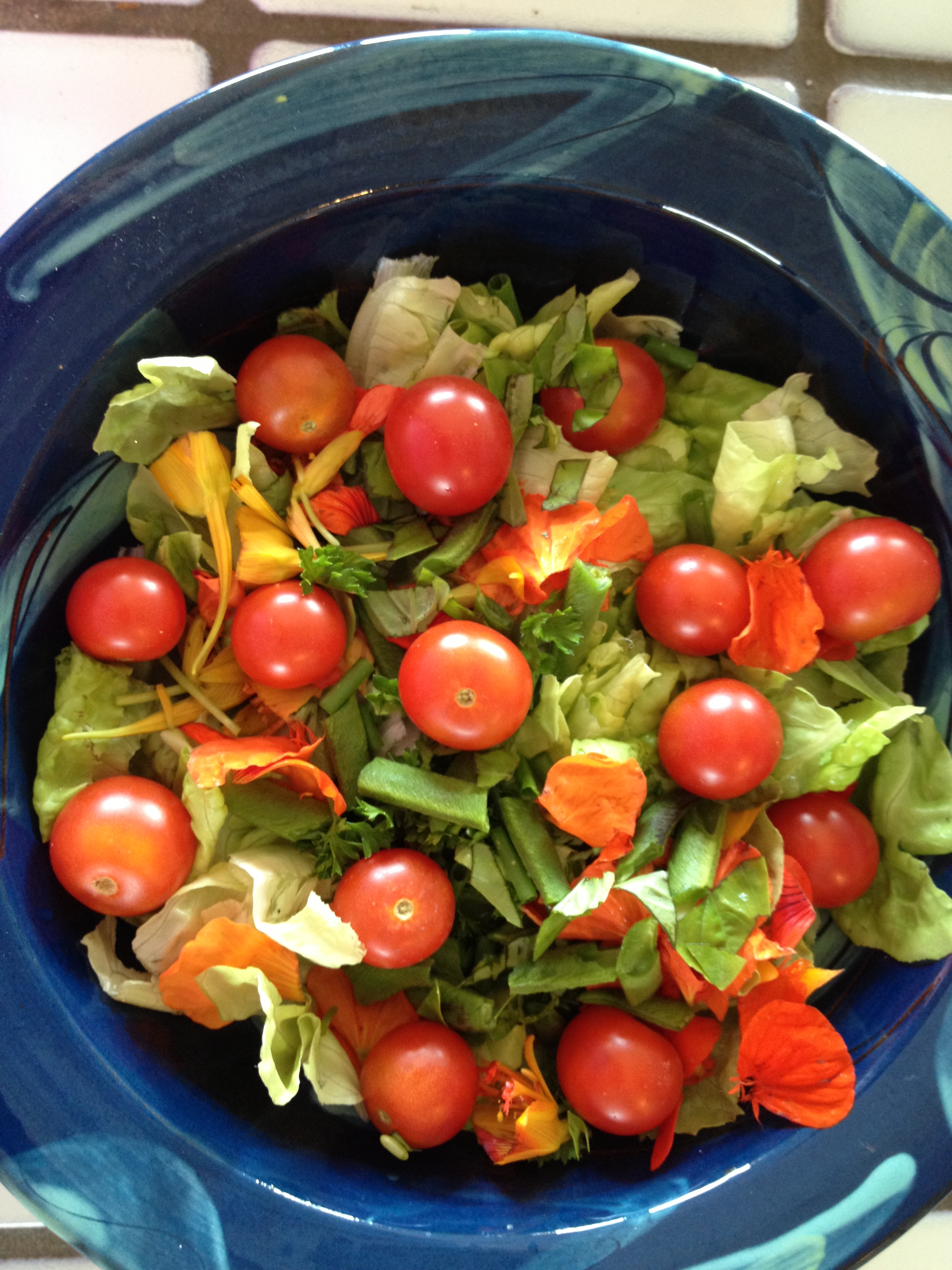
I have written before about West Cork Food (here and here): this really is Foodie Heaven, with fresh vegetables, artisan cheeses, homemade preserves and relishes, breads of every description and a wide variety of seafood and organic meats all readily available not only in the weekend markets but in local shops and supermarkets. To add to this, my friend and neighbour Hildegard has been generous with her garden and we have been enjoying fresh beans, zucchini and lettuce and flavouring dishes with her wonderful basil and savoury.

Robert and I love to eat breakfast out as a treat. On one recent foray I ordered boiled eggs and it brought me back to my childhood and time-honoured rituals. Lift the top off the egg with a spoon, drop in butter and salt and put the top back on. Cut your toast into fingers to dip into the buttery yolk. When you have finished your egg, turn it upside-down in the egg cup and present it to an unsuspecting sibling.

Breakfast in Skibbereen

Breakfast in Skibbereen