All in the Detail!

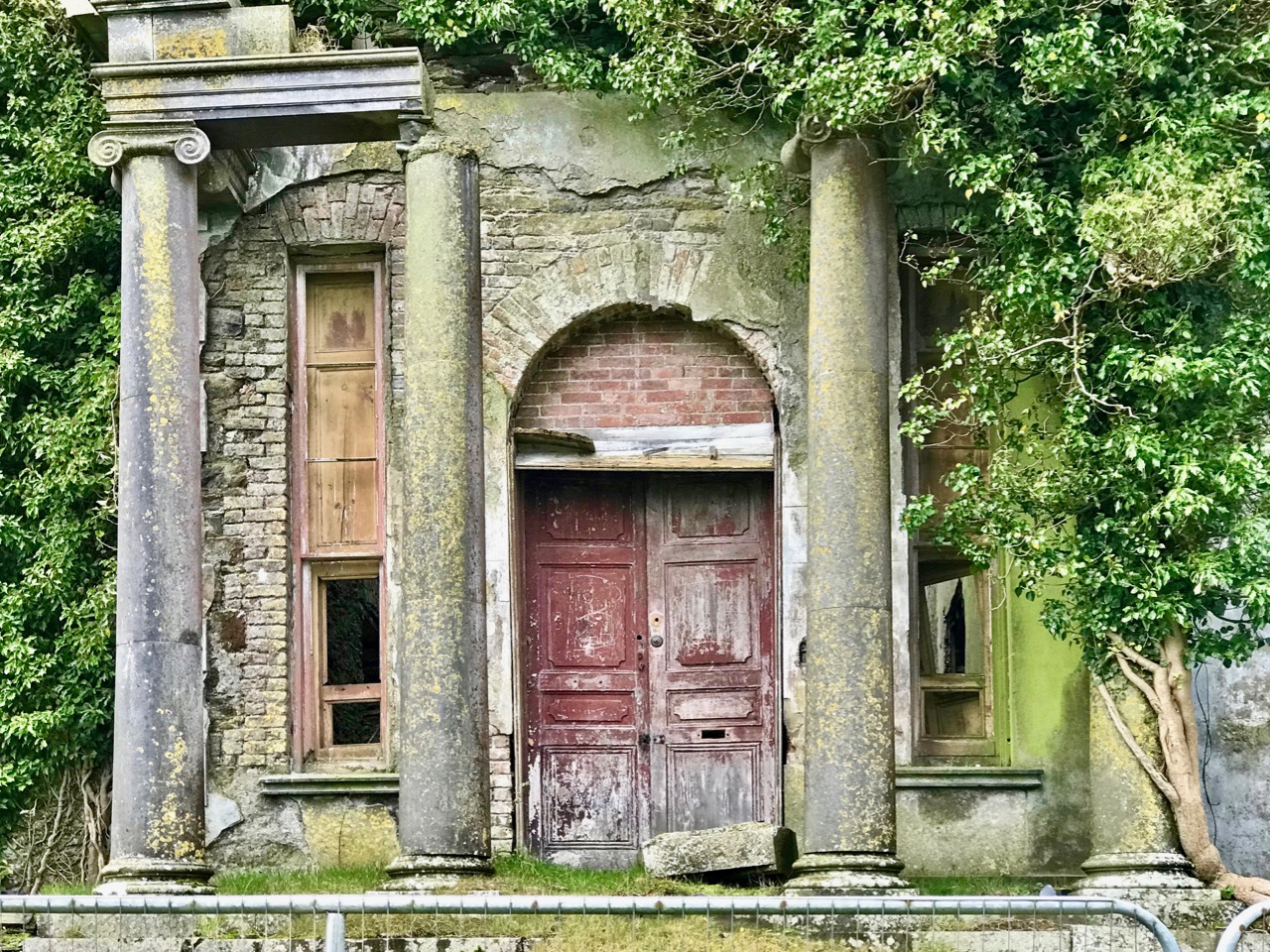
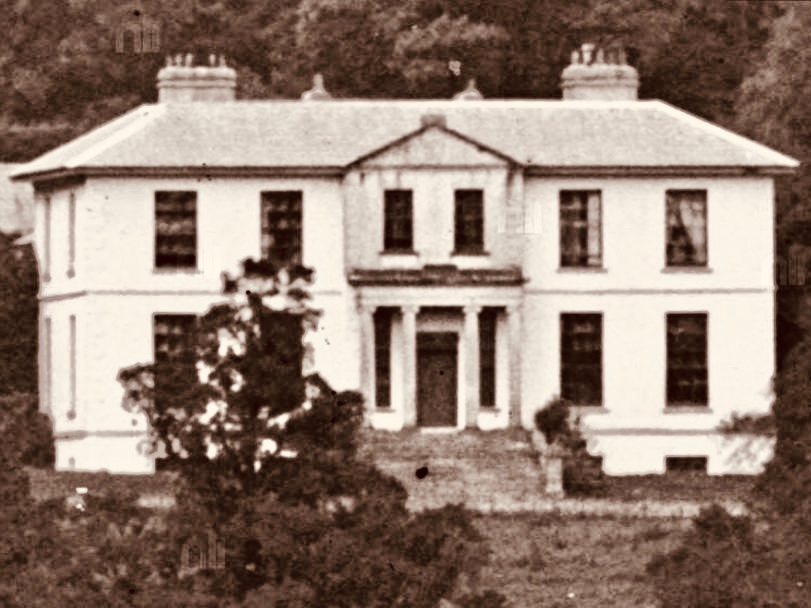
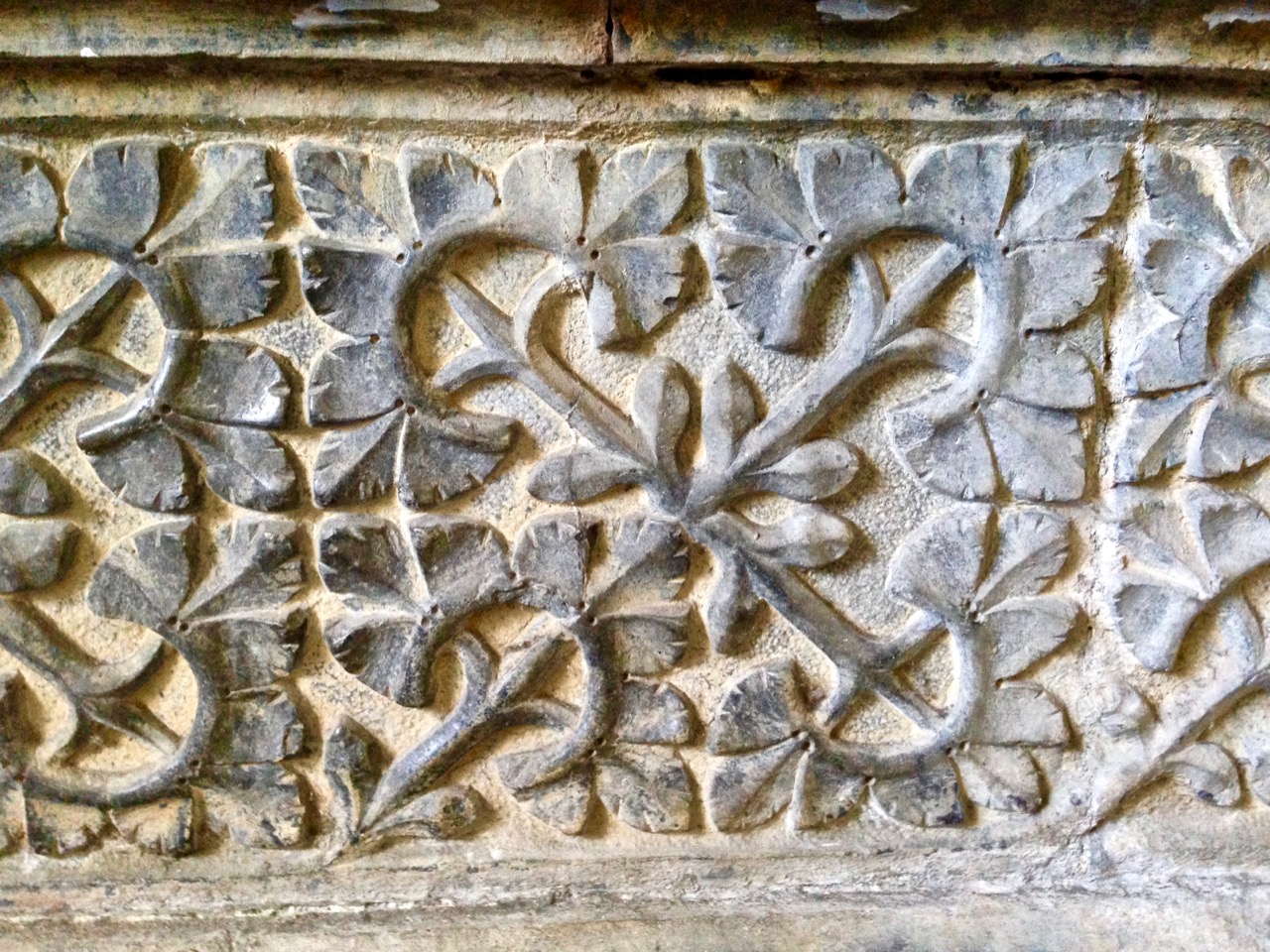
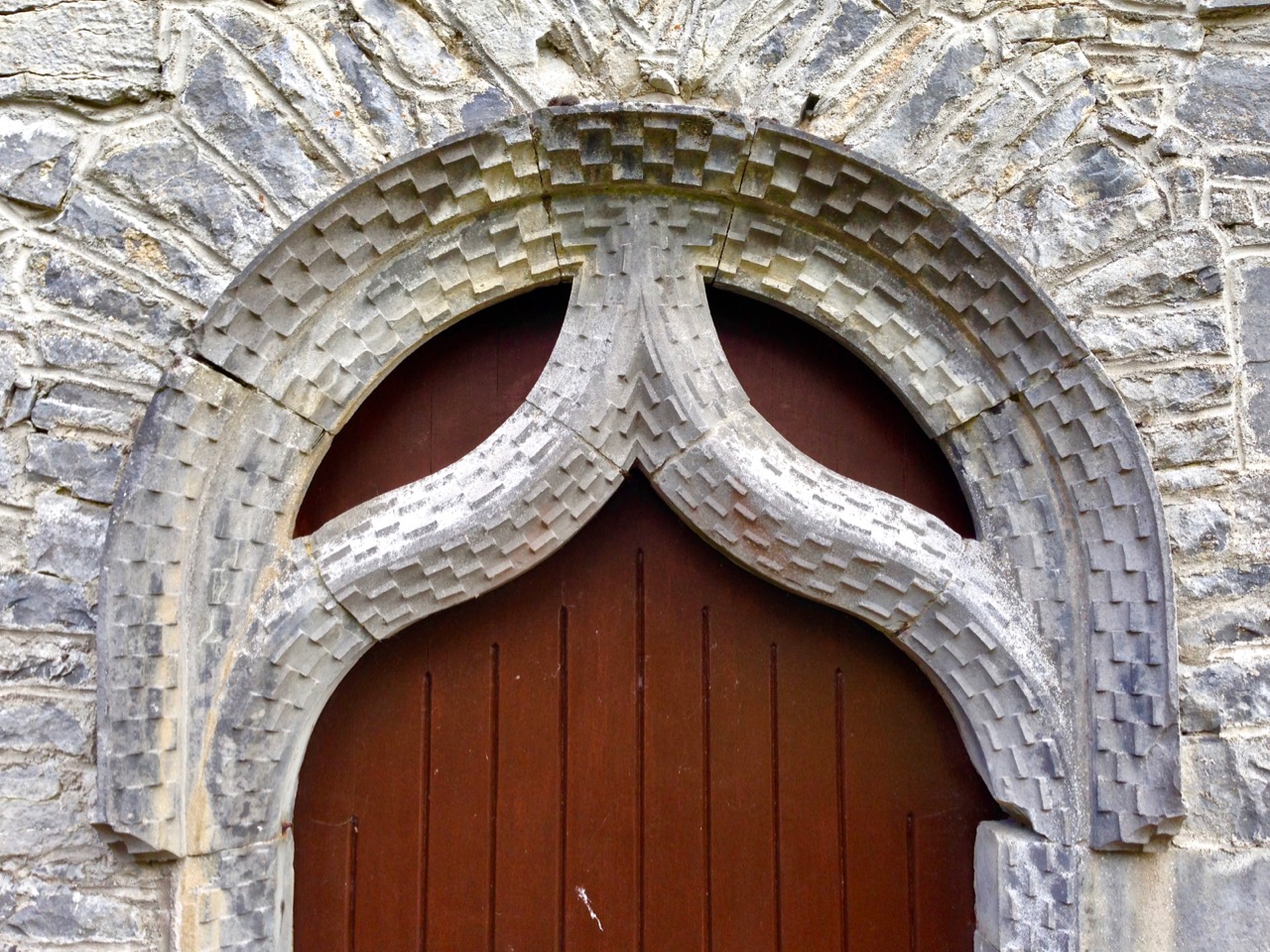
I wasn’t quite sure what to write about today as we, most of Europe, and much of the world is in the grip of a pandemic. At such a time perhaps there’s something to be said for retreating into the past. In this case, the past is our photographic archive, so I went back to 2014 (when we really started to explore the heart of Ireland) and looked specifically for images of an architectural nature: built structures and the fascination of their detailing. Things which have caught our eyes, such as the remains of Mount Leader House, Millstreet, County Cork (above). This classical structure was built in the 18th century as the seat of the Leader family; it then passed to the Pomeroys and – surprisingly – was lived in by that family up to the 1970s. Here’s a picture of it in happier times, probably the 1920s:

I don’t necessarily need to provide a commentary, or a location, for all these pictures. Coppinger’s Court, West Cork (above) is an easy one that many of you will be familiar with from our our past posts (which go back to 2013!); others might be a guessing exercise. Anyway, they all serve to show the diversity and span of history that exists in our small part of the world. Here’s to escapism!

A bit unfair to ask you to identify the location of this one (above)! I like it because of the visual rhythms that are provided by down-to-earth materials while – below – we don’t need to remind you how ancient some of Ireland’s surviving humanly-made features are. This tomb is in County Clare.

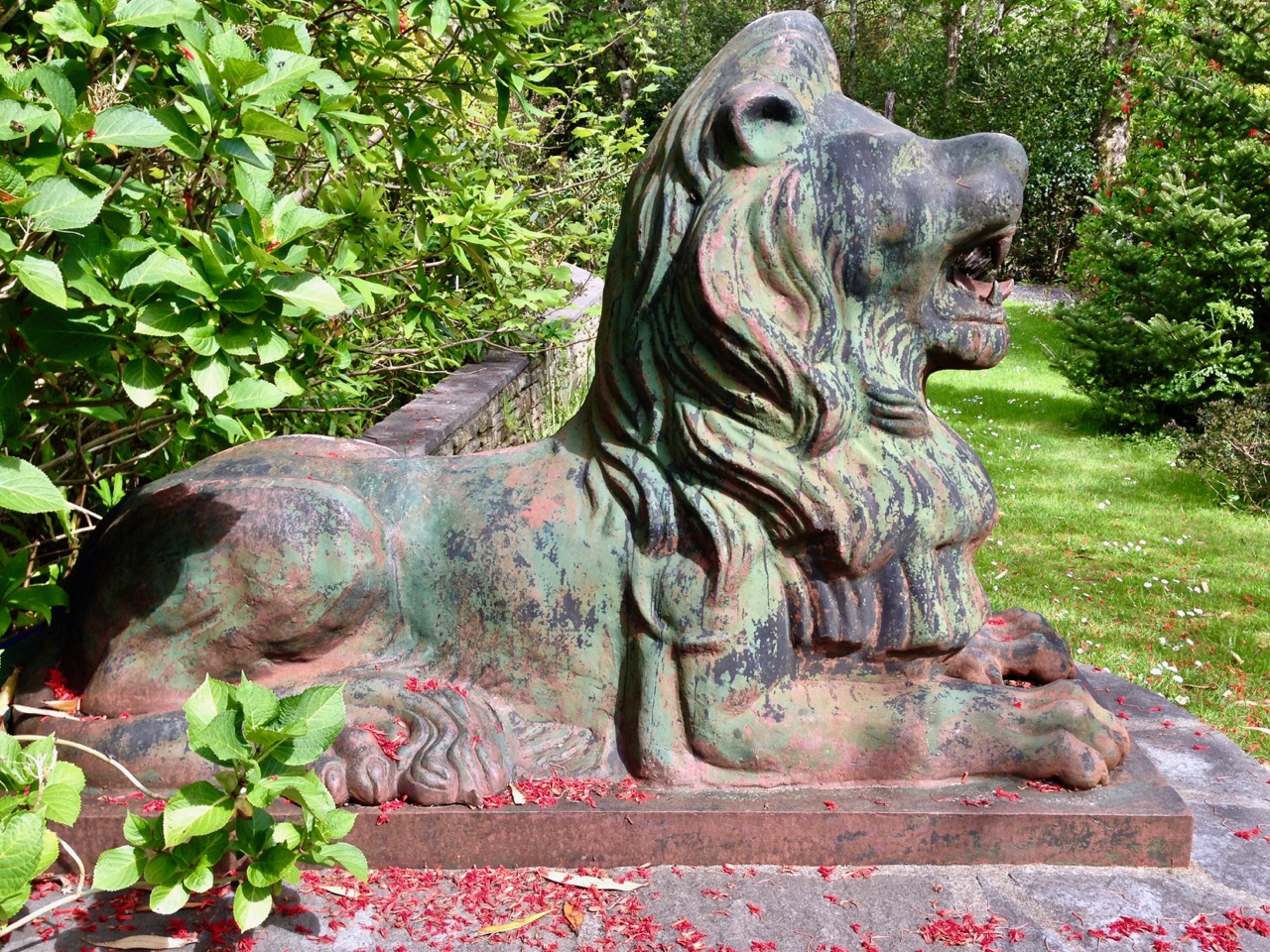
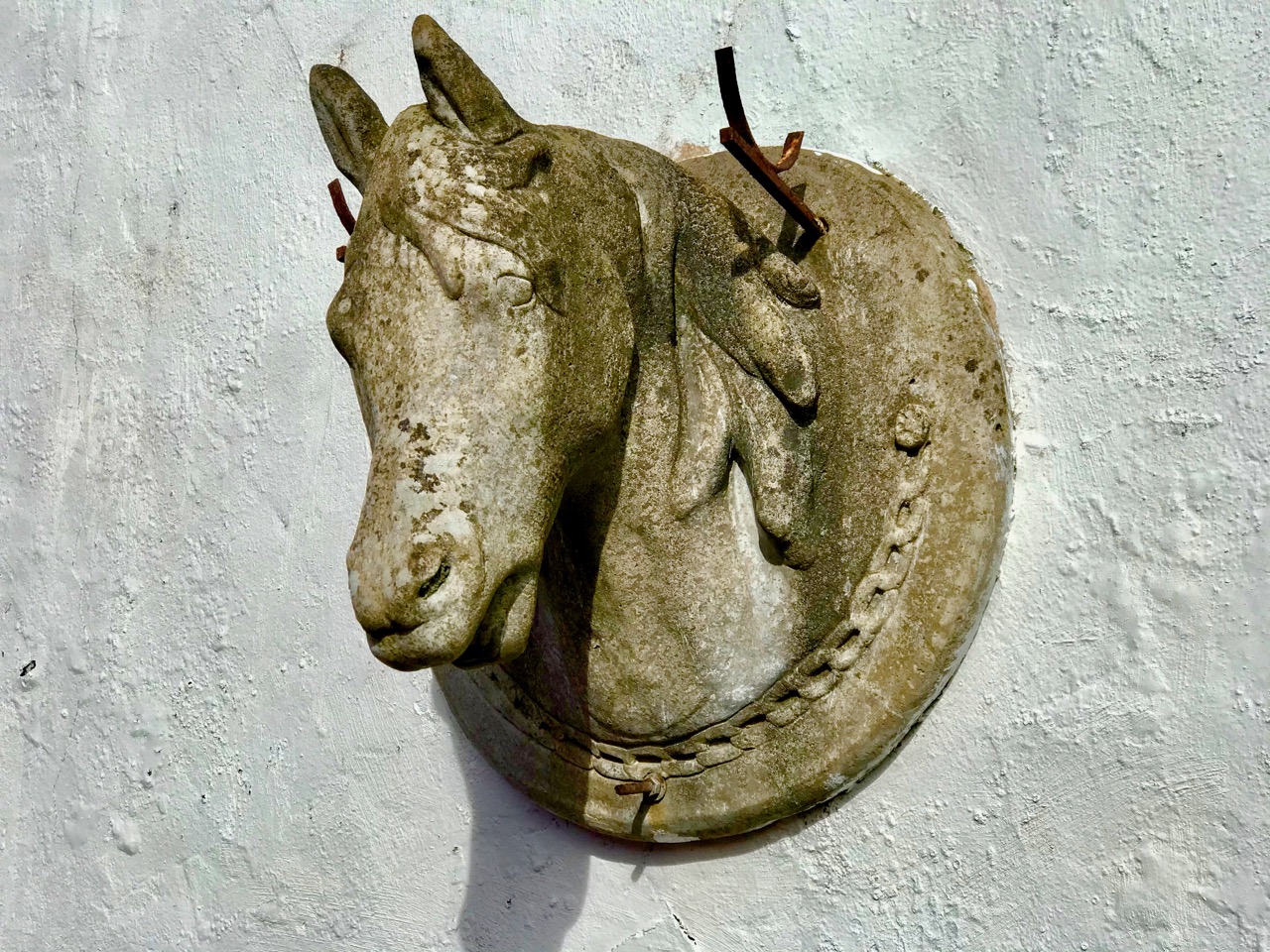
Younger monumental stonework is represented in the two images above, while (below) a magnificent lion is on guard in a West Cork garden.

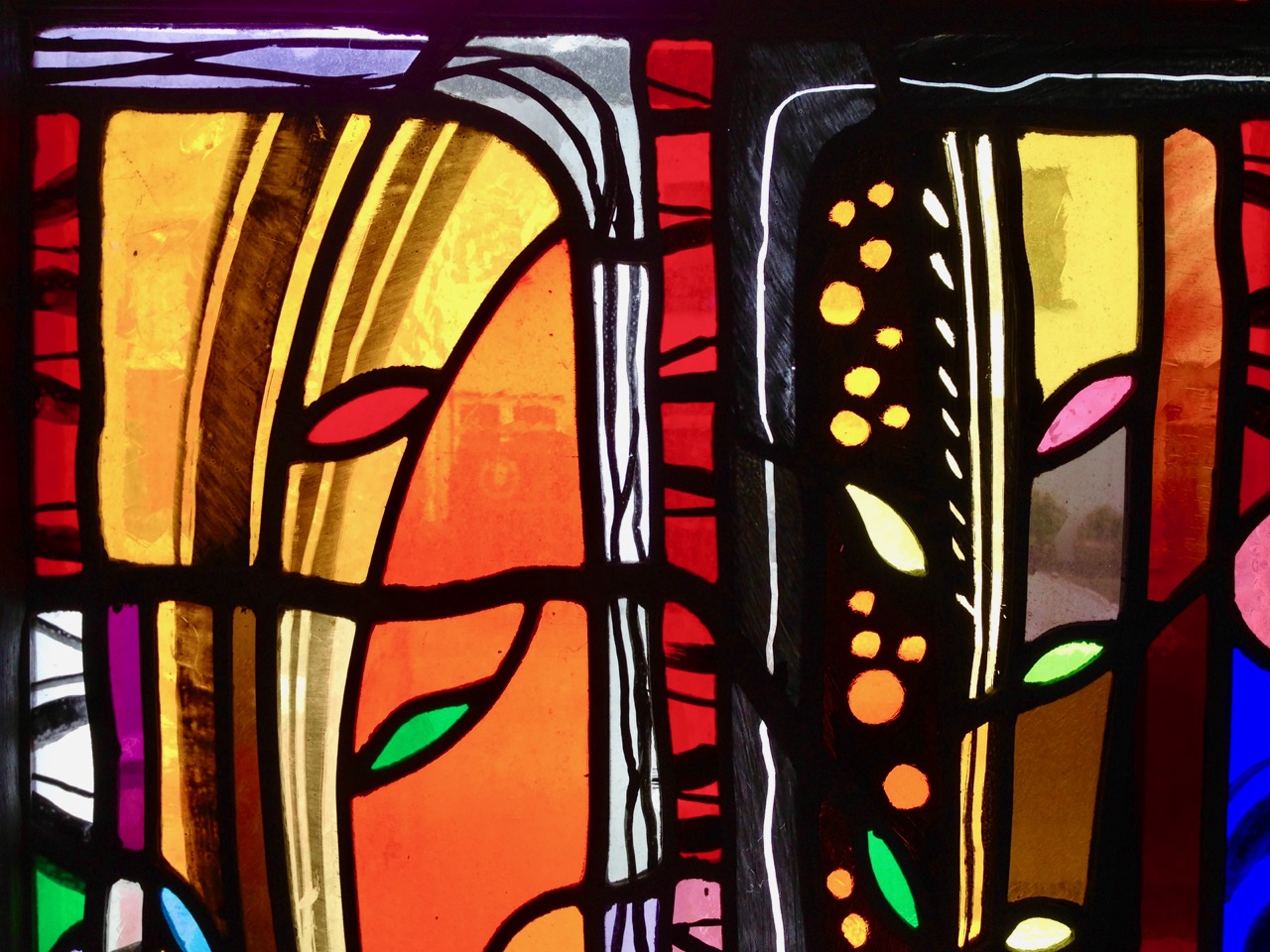
It was in 2014 that we first came across the work of George Walsh, our all-time favourite stained glass artist: this was in the Church of St Kentigern, Eyries, on the Beara Peninsula. The detail above is from that church. Finola has extensively researched George’s work and written on it.

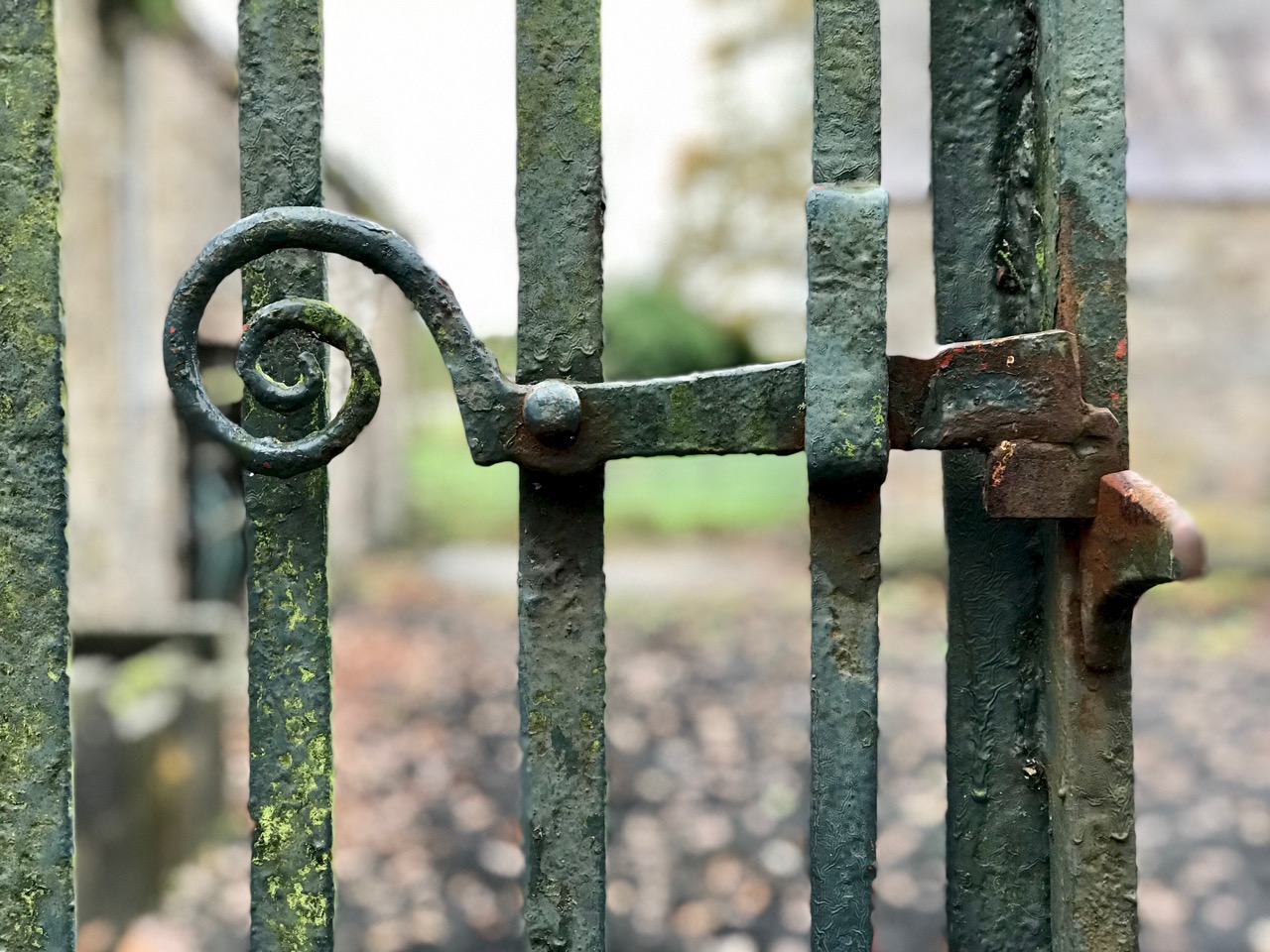
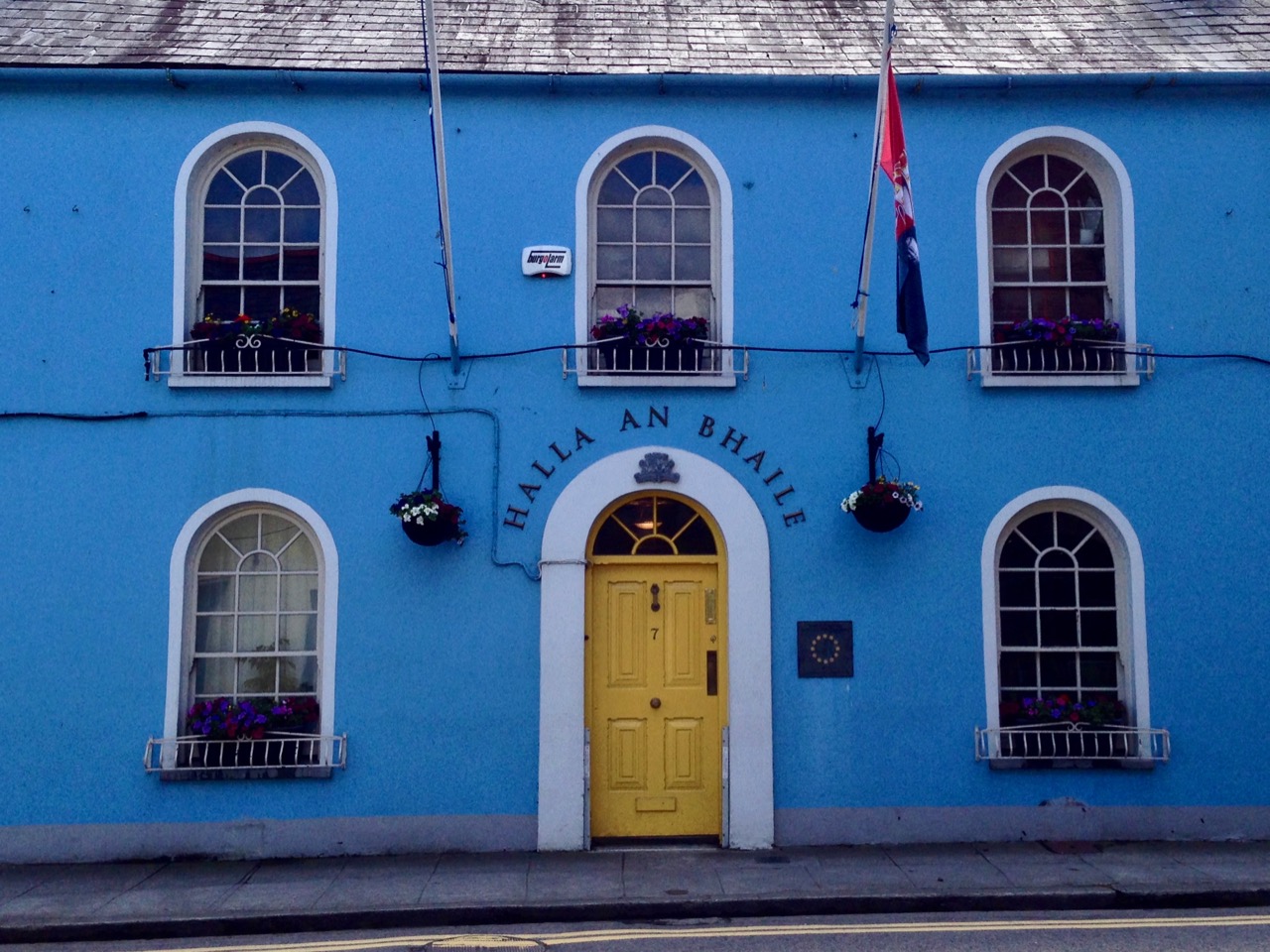
Contrasting ironwork details (above): natural weathering adds so much to the rich patina on materials like this. Contrasts below as well: I wonder if you know where these architectural facades are (or were in 2014).

And what about these two? West Cork followers will know at least one . . .

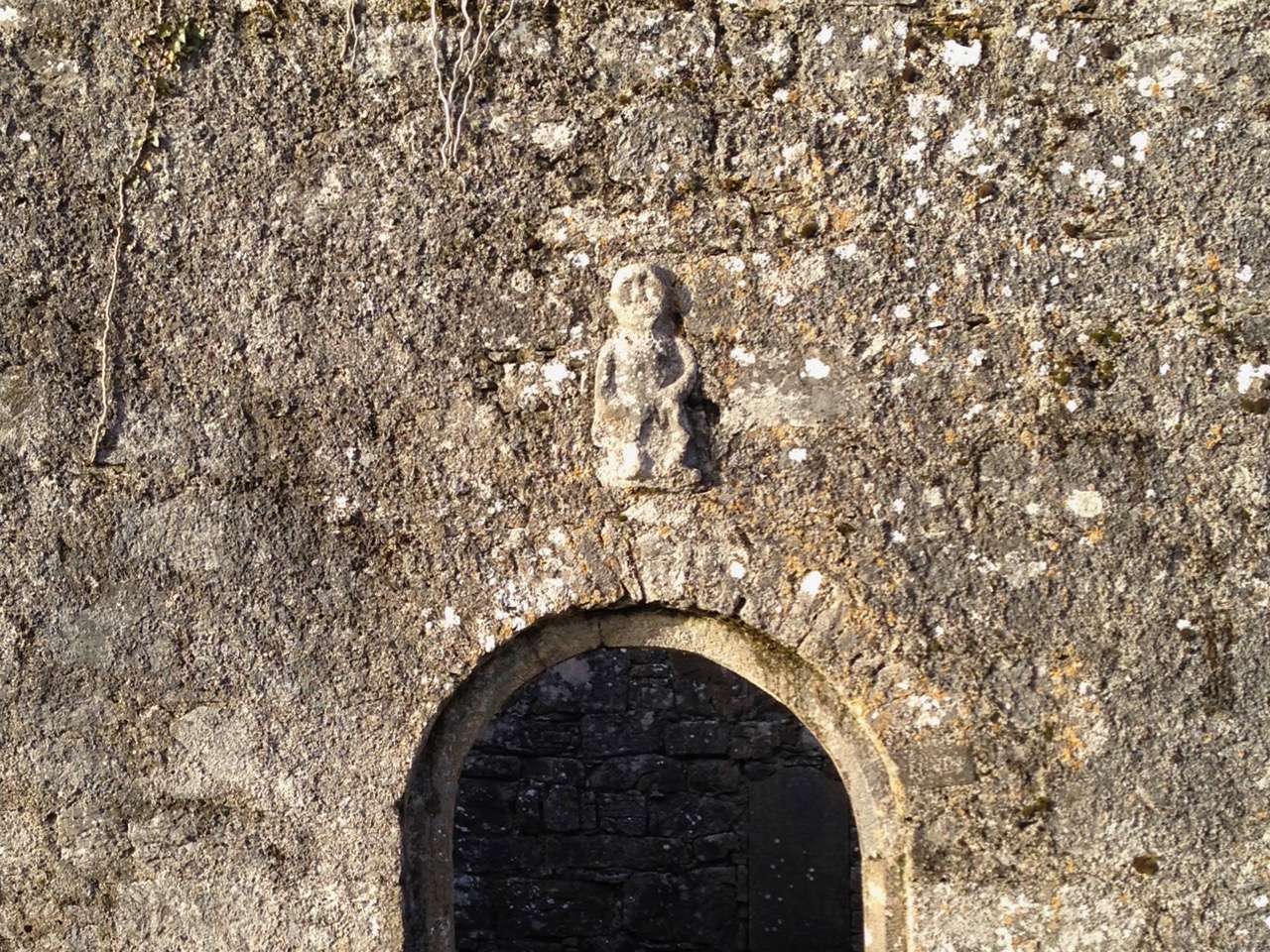
Here’s a Sheela; we’ve seen plenty of those in our travels. This one is in County Clare:

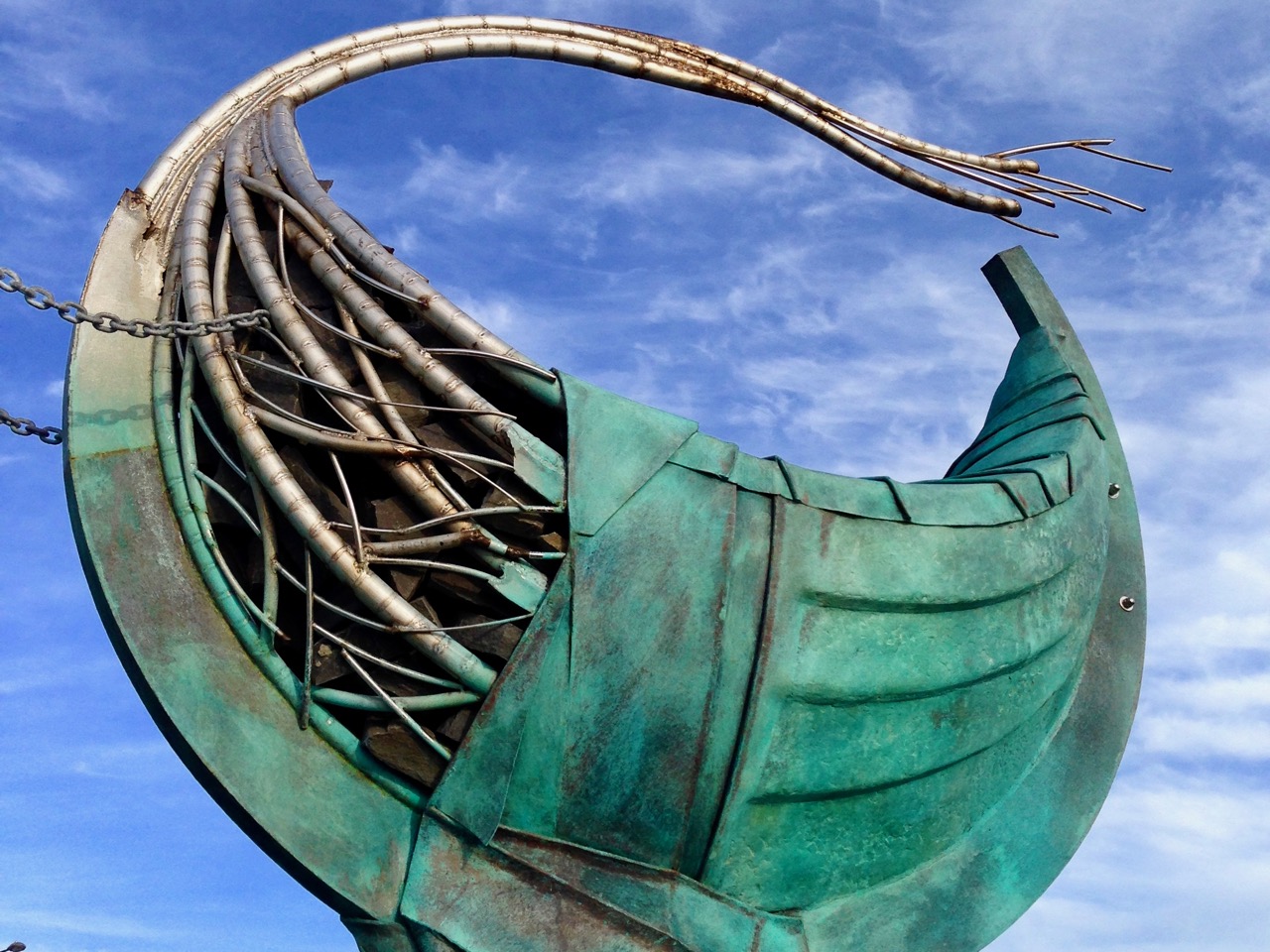
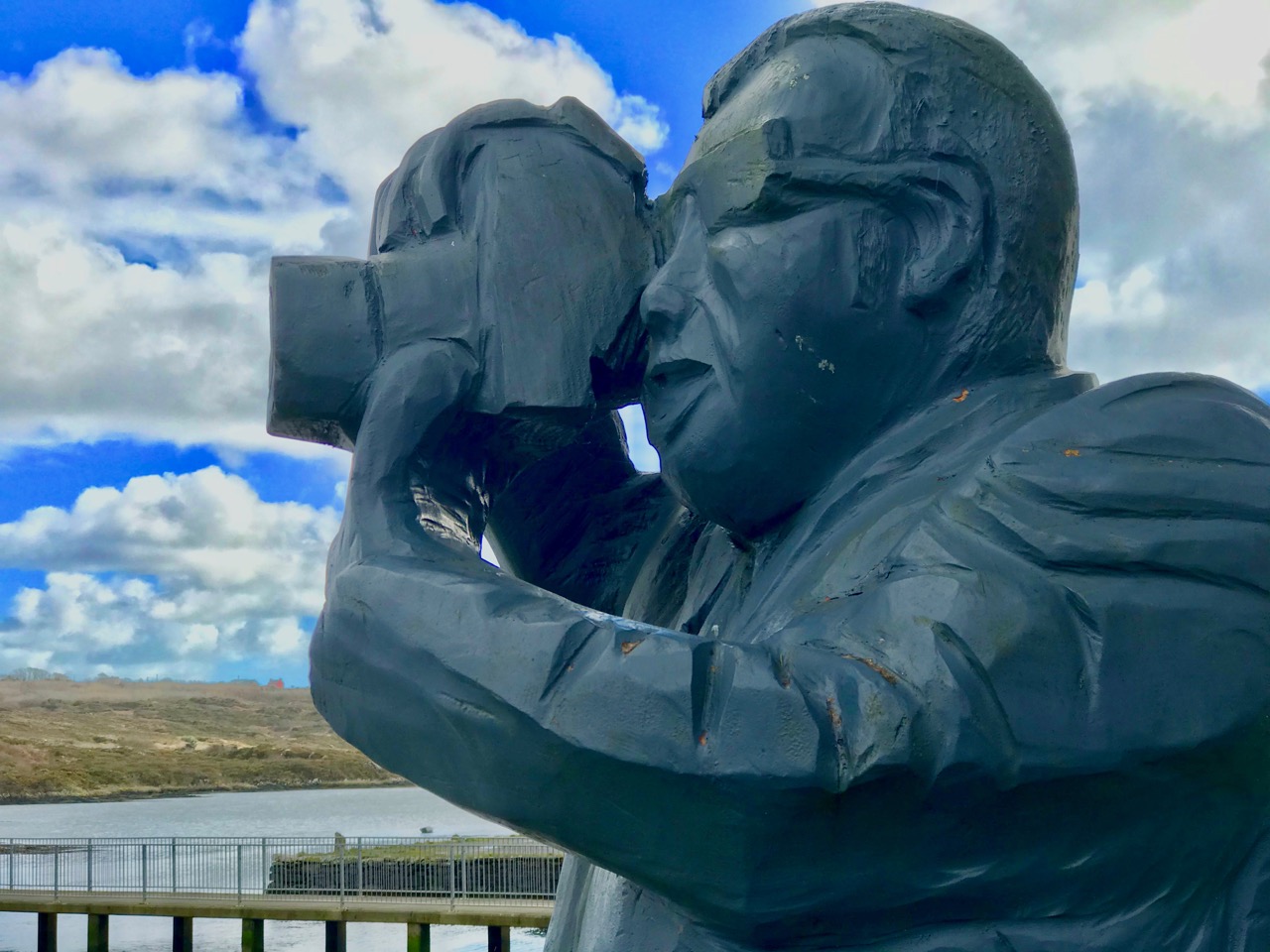
Let’s not forget contemporary interventions into our built environment. I find this one particularly exciting:

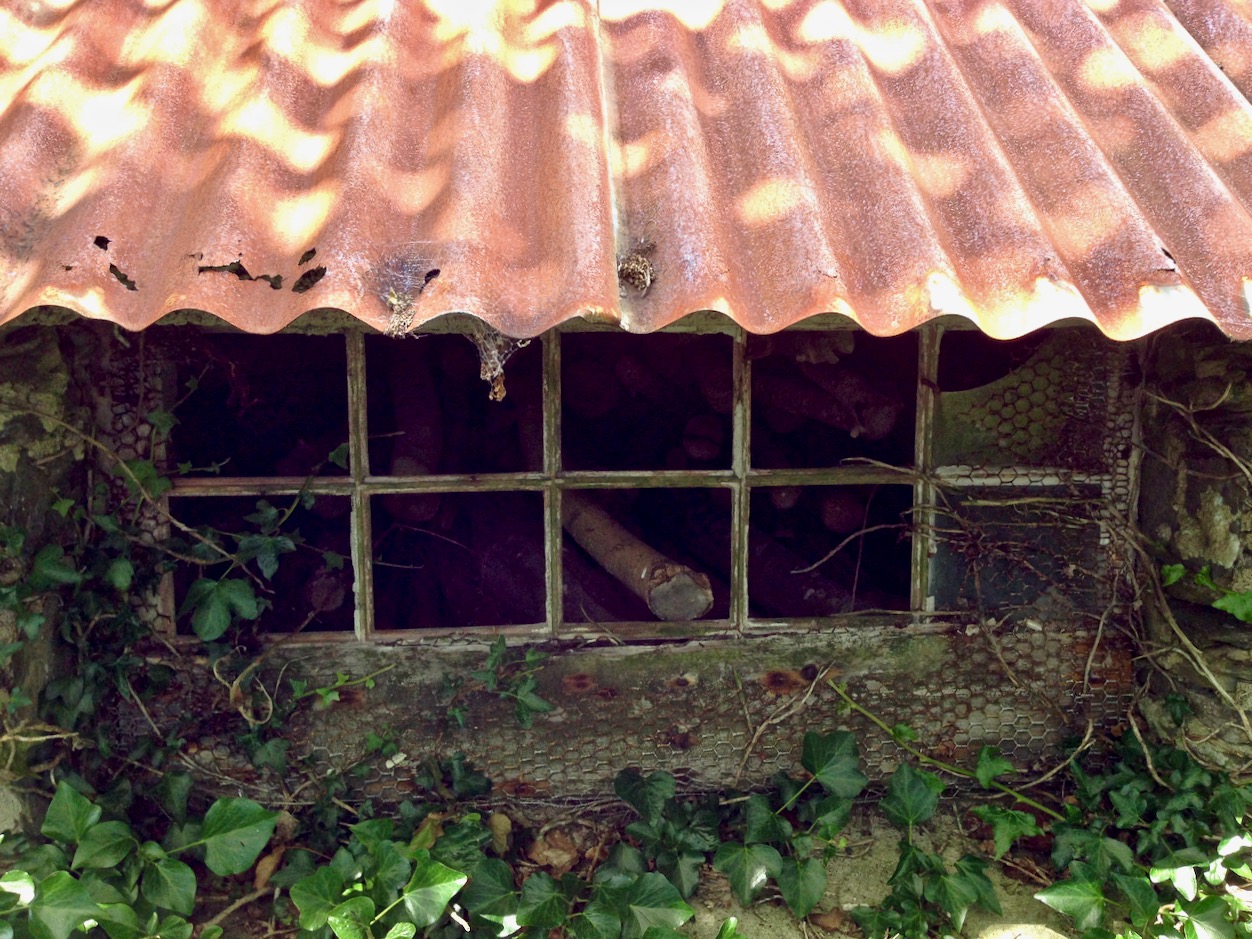
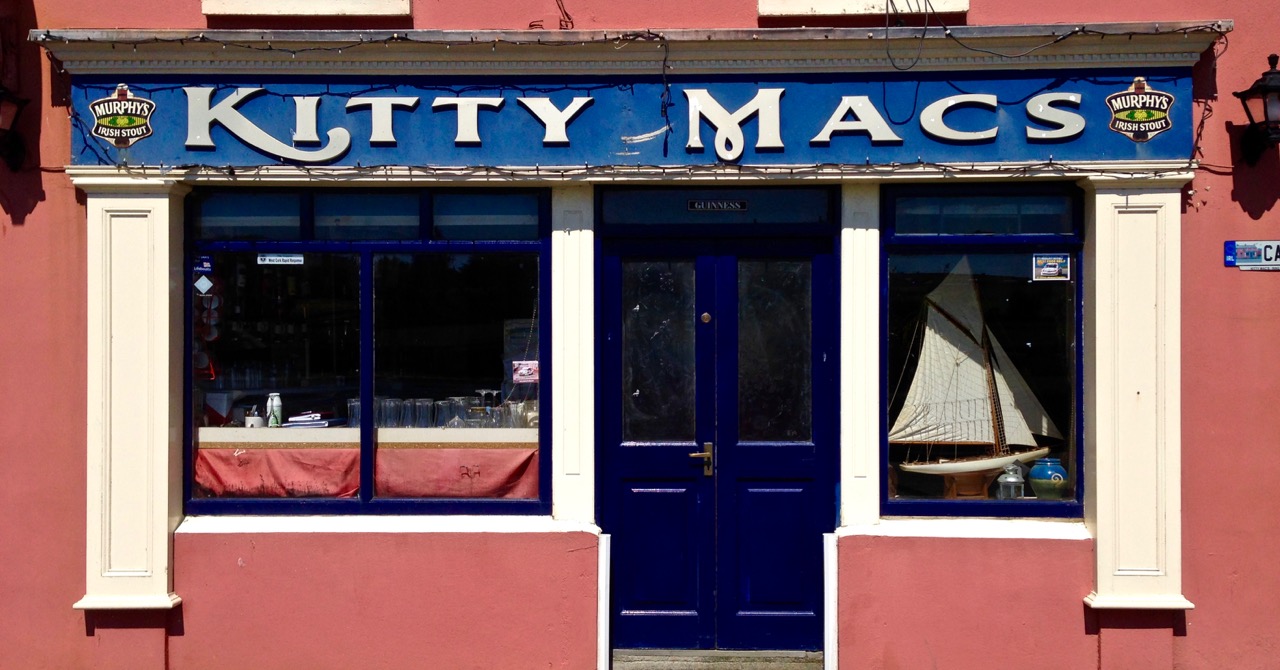
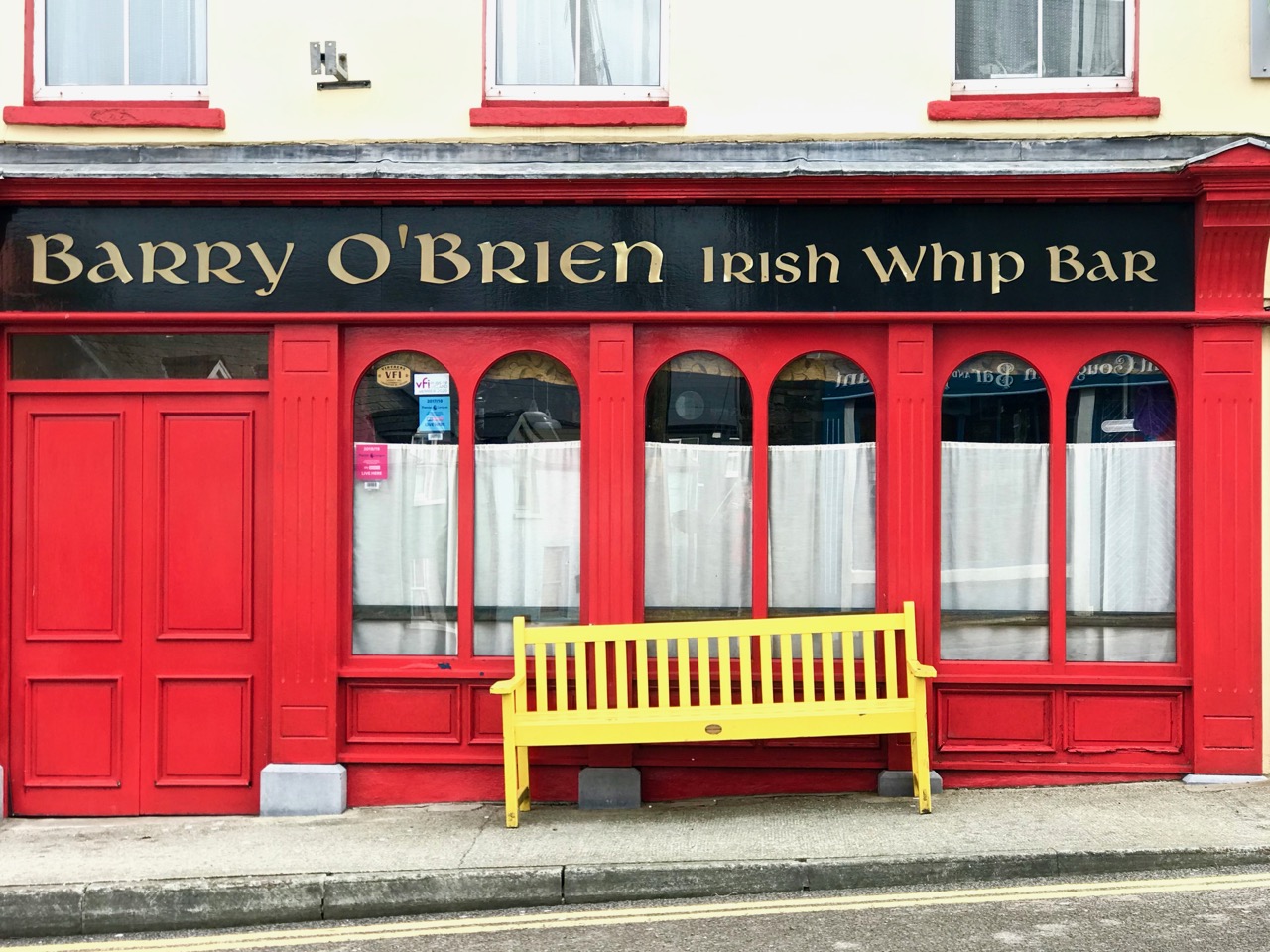
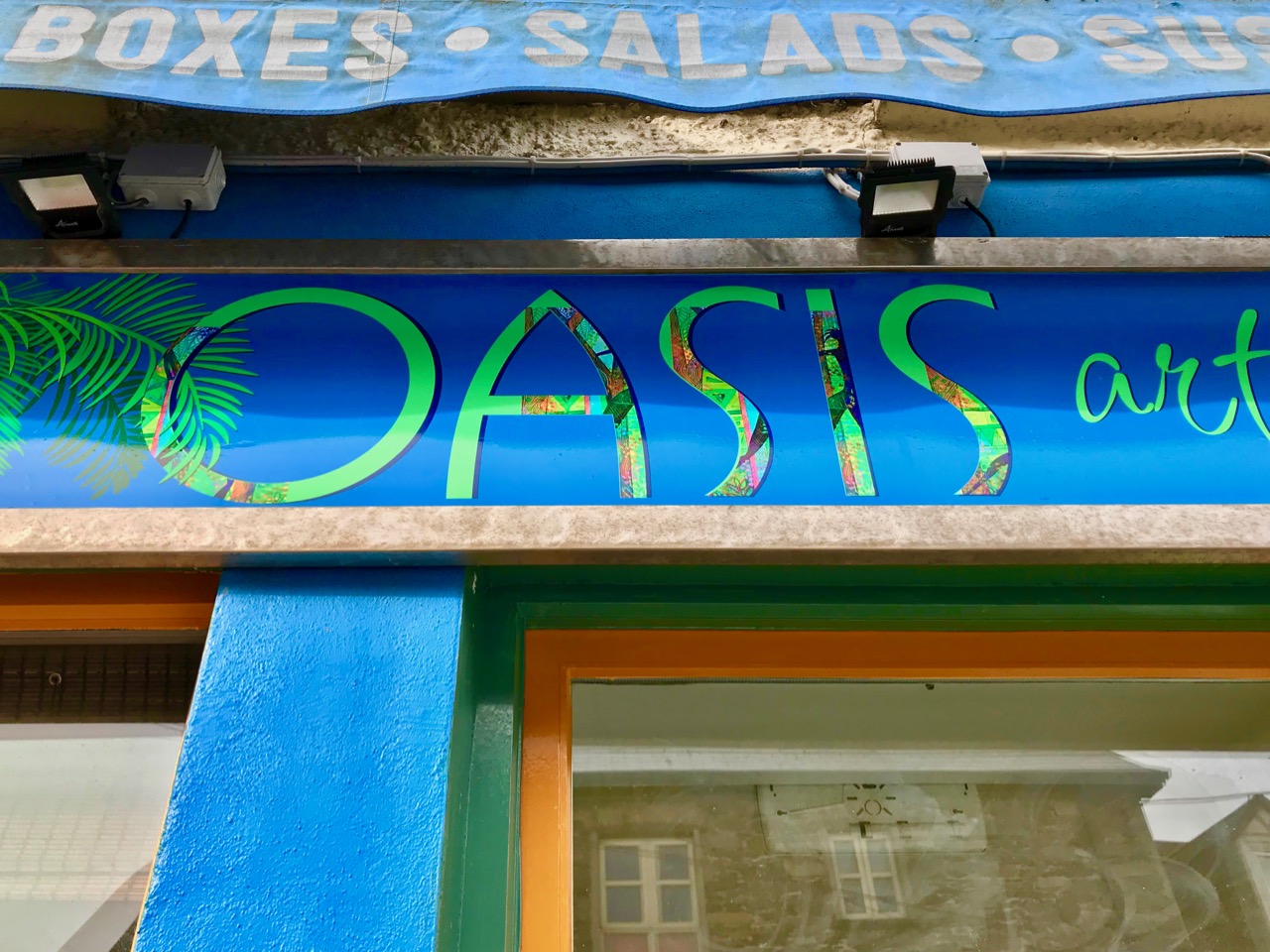
I also like images which have very little to say, but which are exercises in colour and composition: I’ll leave you with this. And – below it – the elevation of one of many very fine West Cork bars.

Aughadown – Church on the Ilen

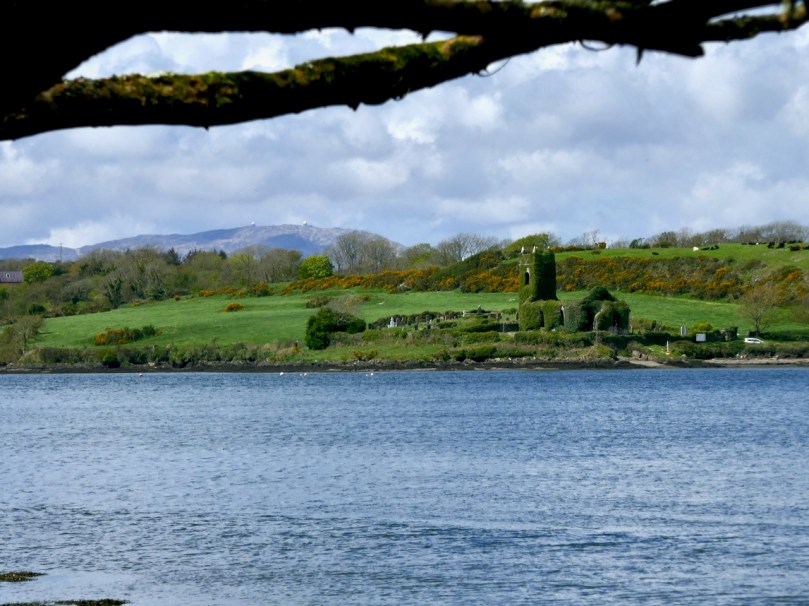
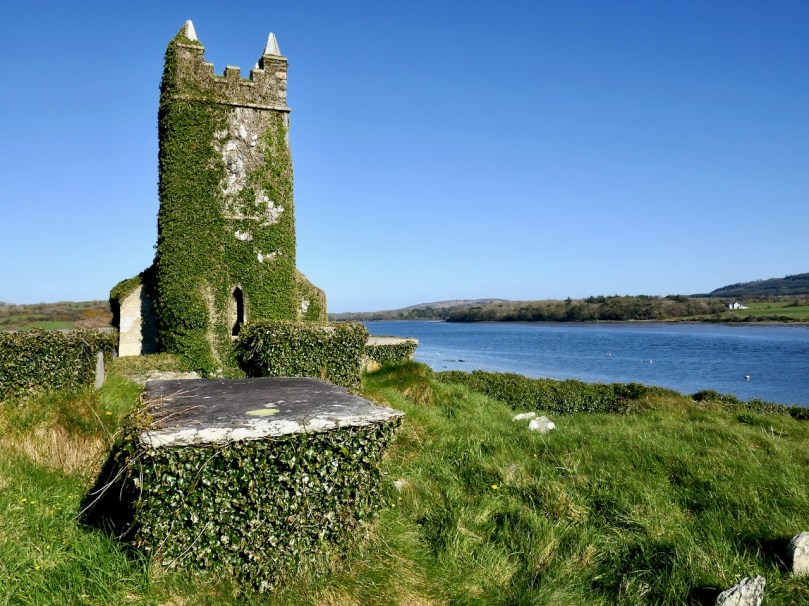
Surely one of the most picturesquely situated in Ireland, the early nineteenth century church at Aughadown on the Ilen is surrounded by a graveyard that tells the story of Irish and local history. Locals, by the way, use the pronunciation Affadown, and for the river, it’s Eye-len.

The church we see now dates from 1814, but there was an even older church on this spot once, of which no trace now remains. The 1814 church was no longer fit for purpose by the 1870s and was replaced in 1872 by the much larger St Matthias church, exactly a mile (1.6km) to the north along what is now the N71.

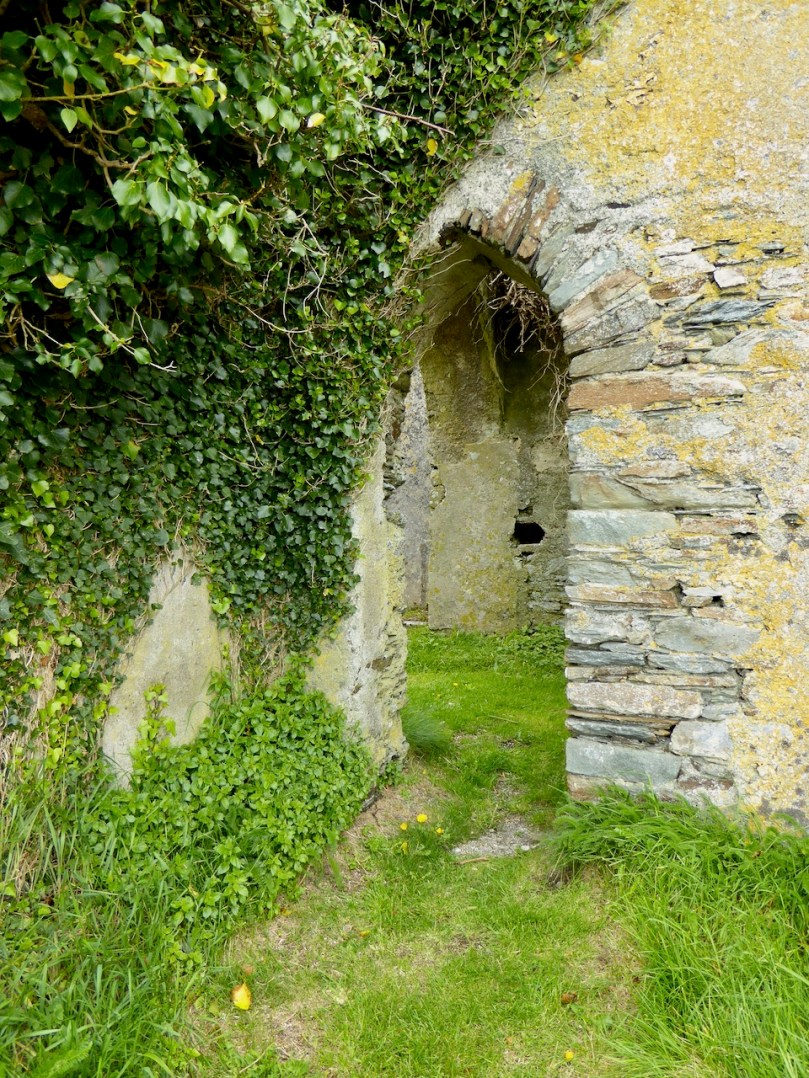
As the church fell into ruin it gradually accrued the ivy and the general air of dereliction that are the indispensable attributes of the romantic, greatly augmented by its charming siting on the banks of the Ilen river. Oxeye Daisies cover the graves in spring and summer, while Thrift flourishes along the banks. The outlines of the slate-hanging that would have kept the interior dry are still obvious on the outside walls – see the photo above.

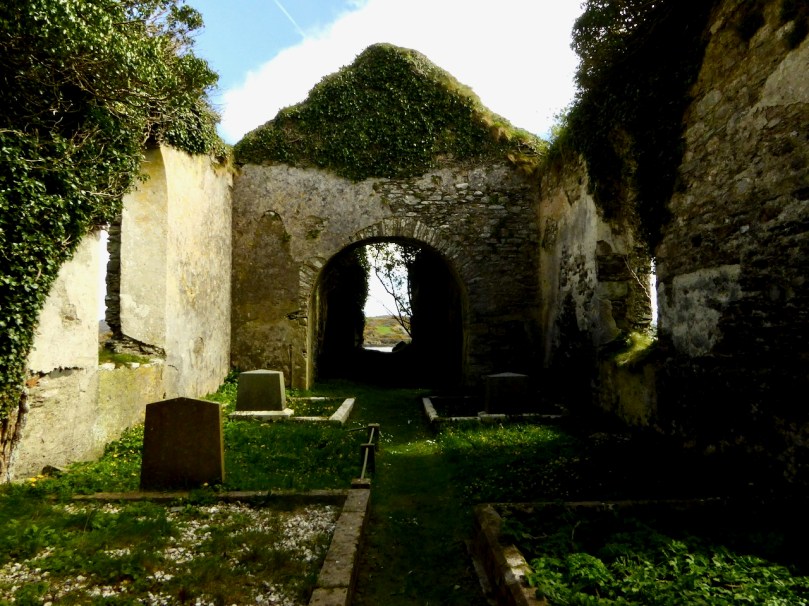
Inside, the church looks remarkably small by today’s standards and it’s easy to see how a congregation would have outgrown it over time. There are some unusual design features, such as round-headed arches and windows rather than the more common gothic ogees.

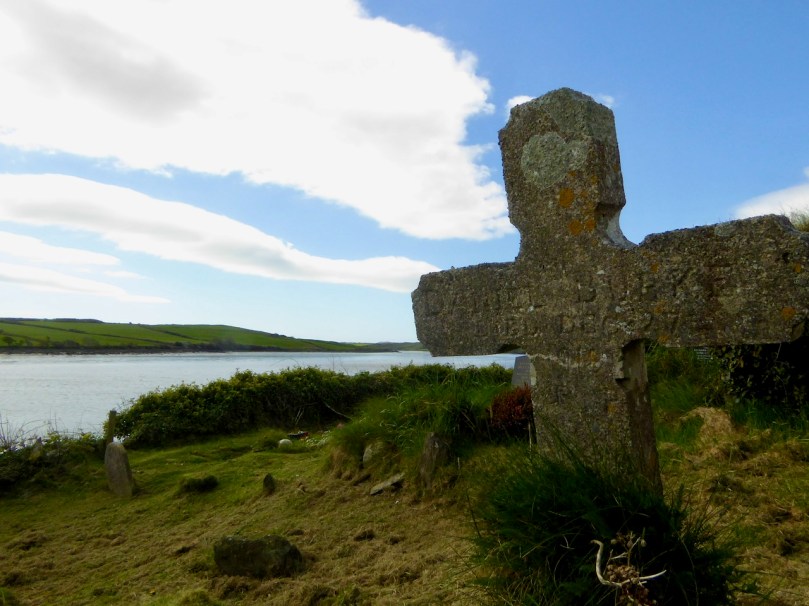
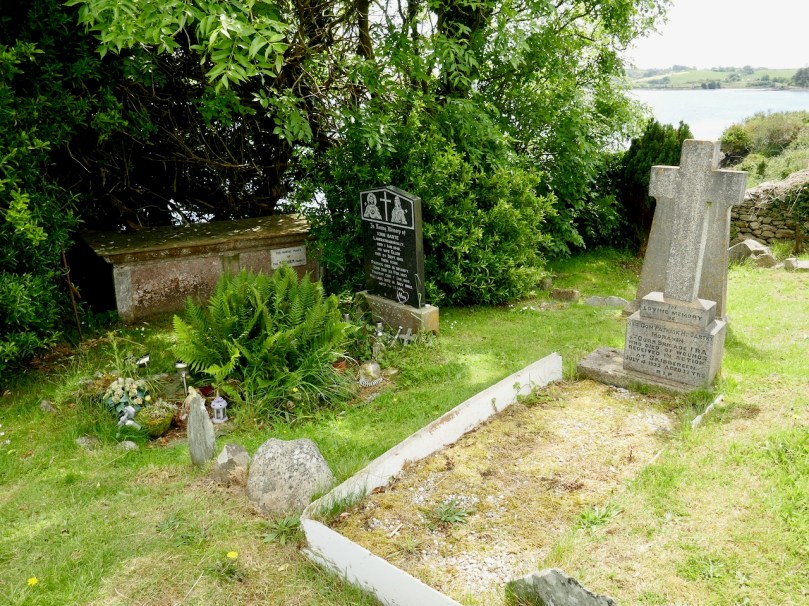
But it’s the graveyard that is the most fascinating part of this site. As the community graveyard of that place, it was used by all – Church of Ireland, Catholic and Dissenter. Plots seem to follow family lines, rather than, as in many West Cork graveyards, separate areas for Catholic and Protestant. As a result, there are some curious juxtapositions.

The graveyard has been surveyed and recorded by a volunteer group coordinated by the Skibbereen Heritage Centre. For a burial place as old and overgrown as this one, with faded or non-existent inscriptions, this was a herculean undertaking! But the good folks at the Skibb Heritage Centre seem to thrive on challenges like this. As they say themselves – they ‘get’ graveyards.

From their own website, here is an account of one of those ‘curious juxtapositions’:

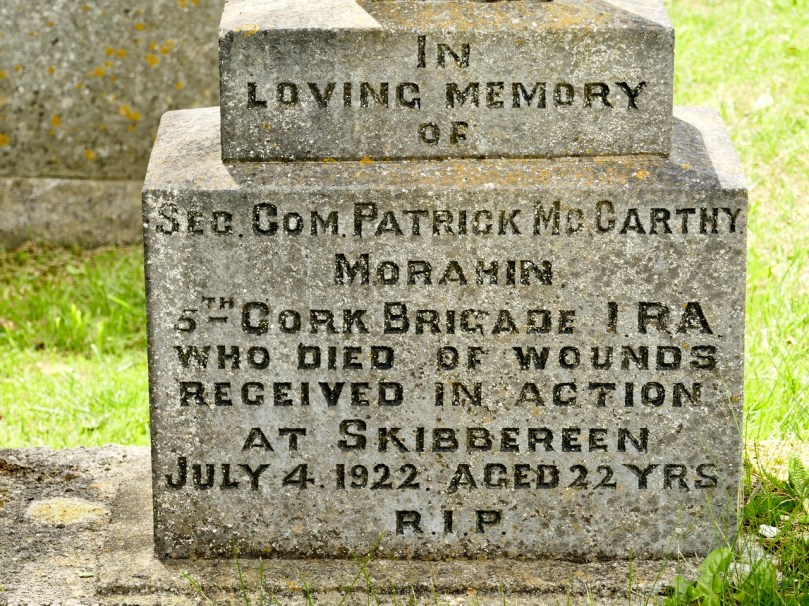
Among those buried at Aughadown is Patrick McCarthy of the 5th Cork Brigade of the IRA. He took part in the Kilmichael Ambush in 1920 and was shot during the Siege of Skibbereen in 1922, aged 22. It was said that a lit cigarette revealed his location to his assassin. A plaque now marks the spot where he was killed on the Windmill Rock in Skibbereen.

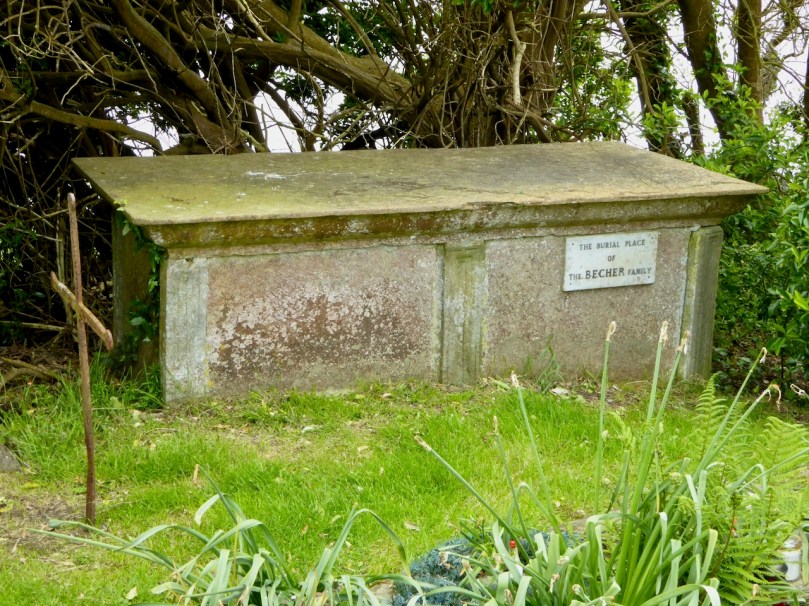
Very close to the Patrick McCarthy grave is the tomb is of the Bechers of Aughadown, once major landlords in the area. Buried in this plot is Colonel Thomas Becher who died in 1708 and served as aide-de-camp to King William of Orange at the Battle of the Boyne in 1690

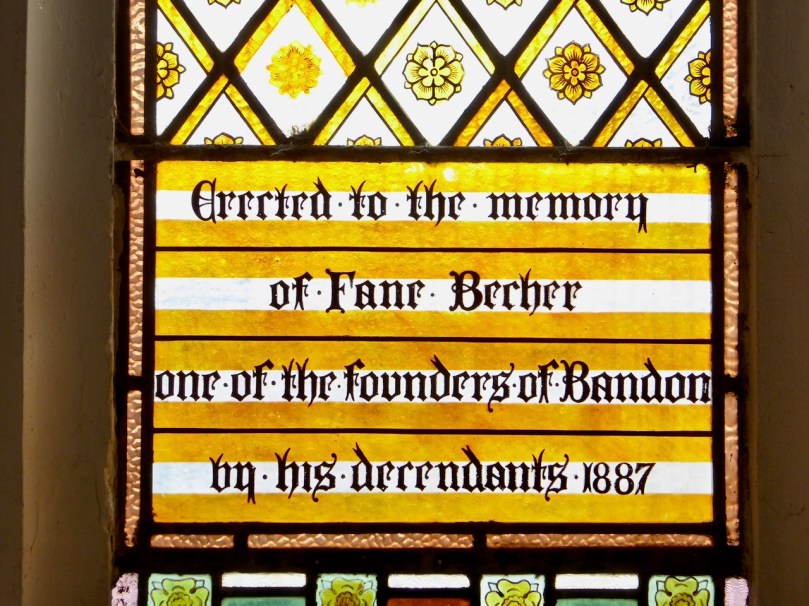
The Bechers were responsible for the fortified manor house at Aughadown that I reported on in Moving Up in Tudor Times. Descended from Fane Becher, one of the founders of Bandon, they intermarried with all the local families and the name Becher is familiar in other graveyards too – Castletownshend for example.

A detail from a memorial window in St Peter’s Church in Bandon

Here’s a lovely old headstone with a depiction of an angel playing a trumpet, although I can’t make out the inscription

Lionel Fleming is buried here – a man infamous for his conduct during the Famine, but so too is Dr Stephen Sweetnam, a dispensary doctor responsible for saving many lives during that terrible time.

The Tonson tomb in the foreground

The oldest recorded burial (although probably not the earliest) is that of Henry Tonson, about whom I wrote in my post New Court Bridge – a Hidden Wonder. It dates from 1703 and appears to be on slate, with an incised inscription that reads Here Lyes the body of Captn Henry Tonson who departed this life November the twenty fifth and in the thirtyeth seventh year of his age 1703.

A wander around this old church on a sunny day is rewarding. You’ll find yourself marvelling at the wildflower meadow while simultaneously seeking out old headstones and wondering about the lives of those buried here. Perhaps you might even arrive by boat, or kayak, as just outside the gate is a stopping place for the newly developed Ilen River Blueway.

However you arrive, you will leave – and I guarantee this – in a better mood.


The Day the Sun Came Out – in Ballydehob!

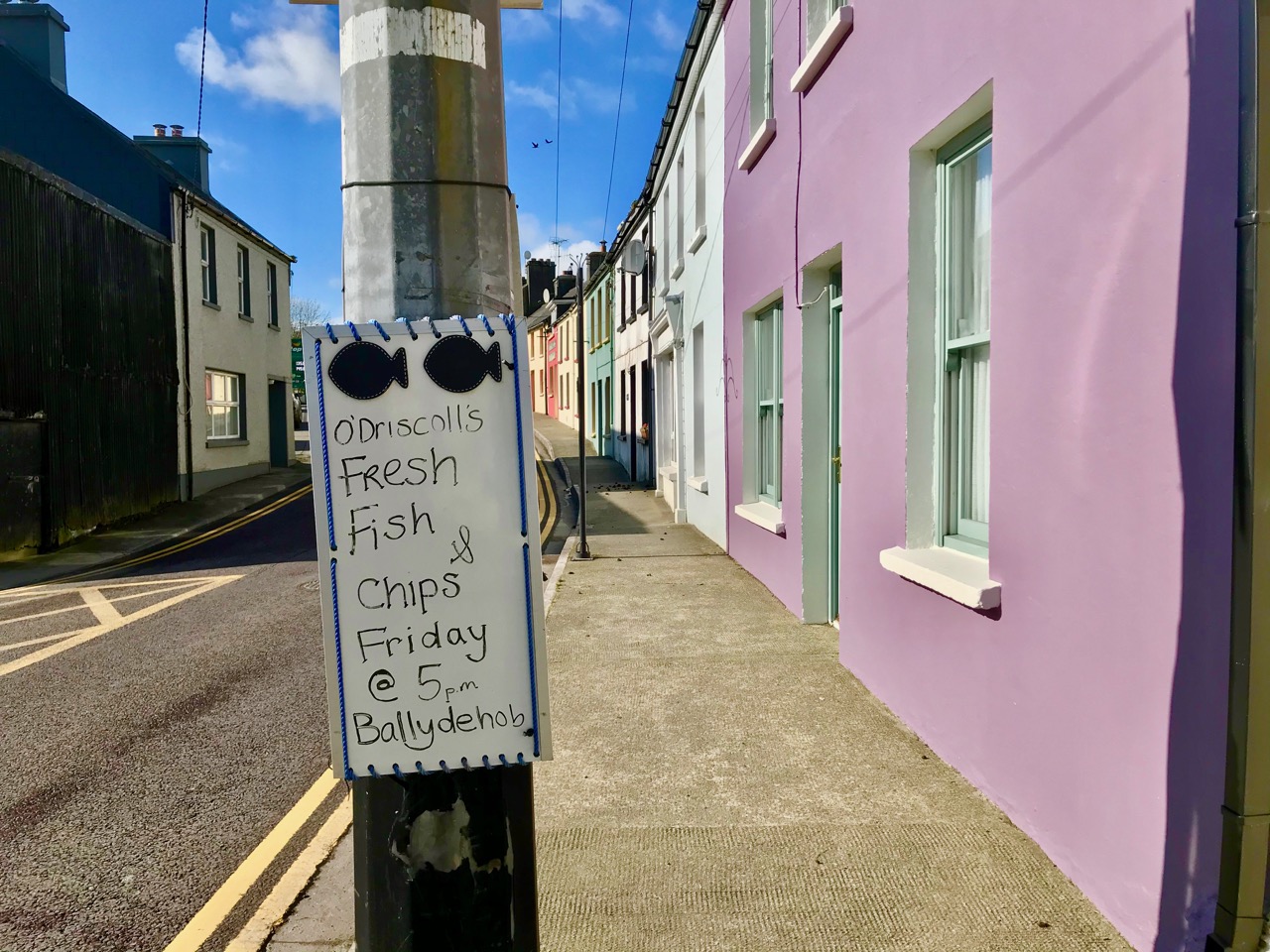
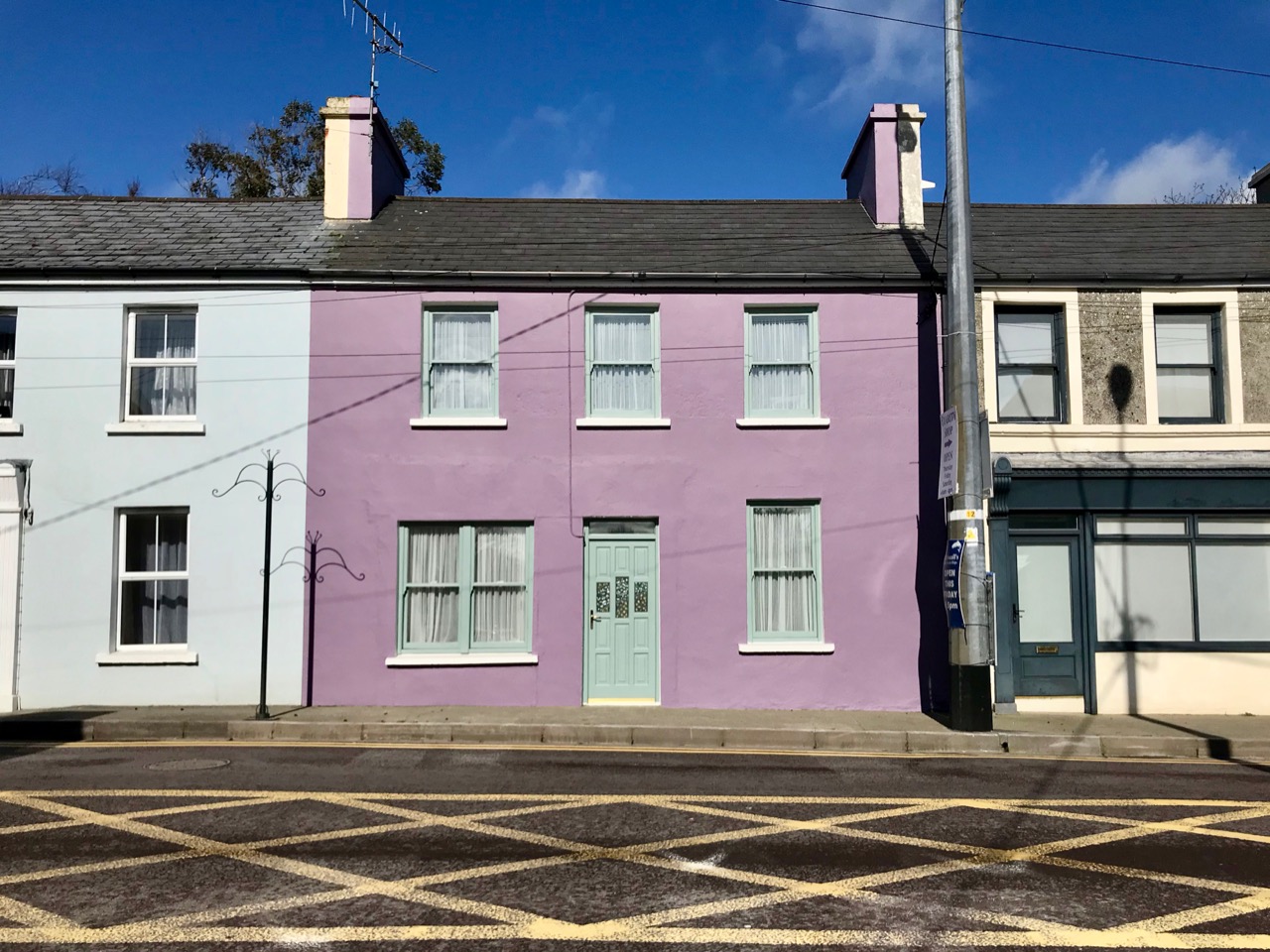
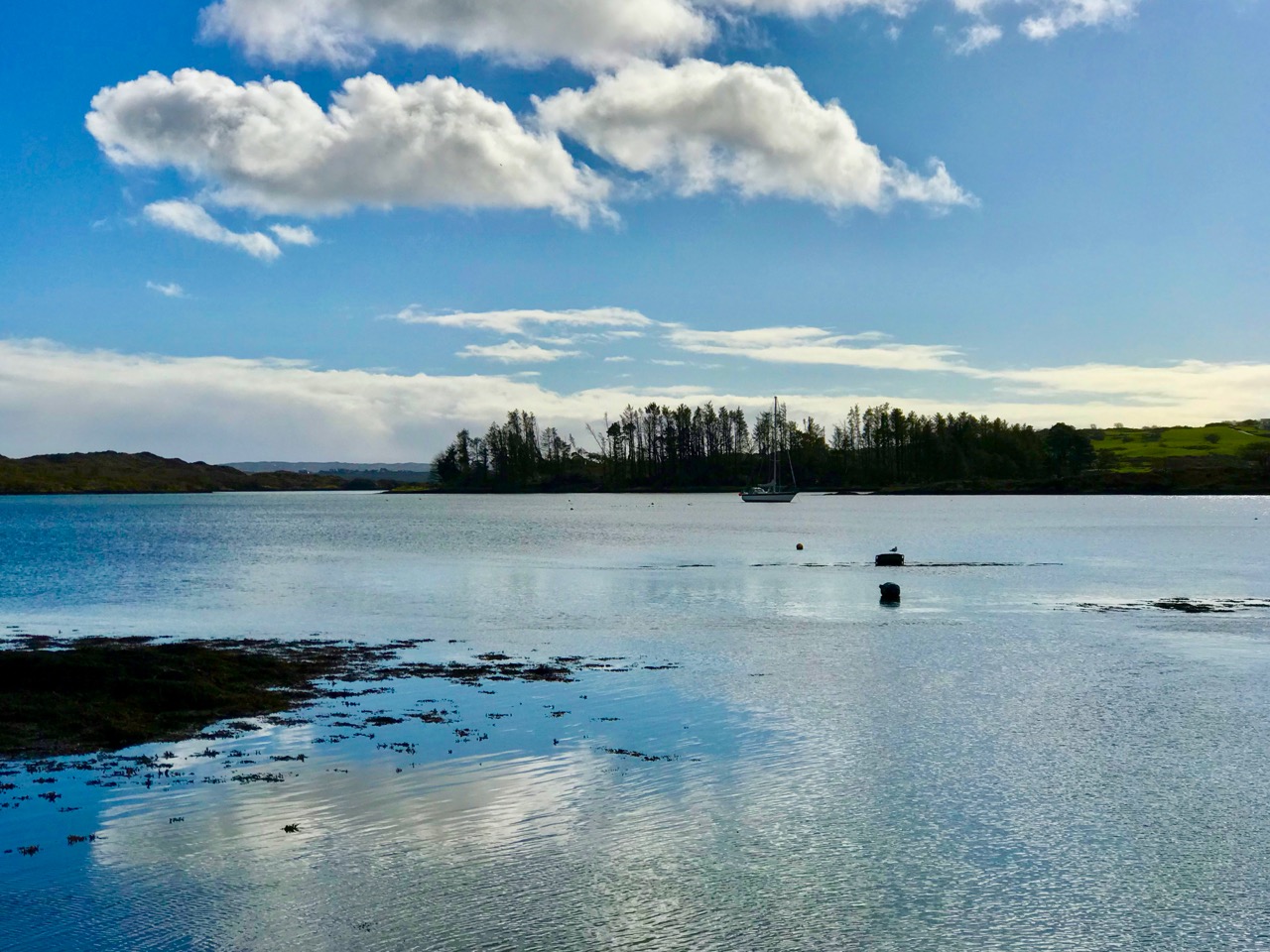
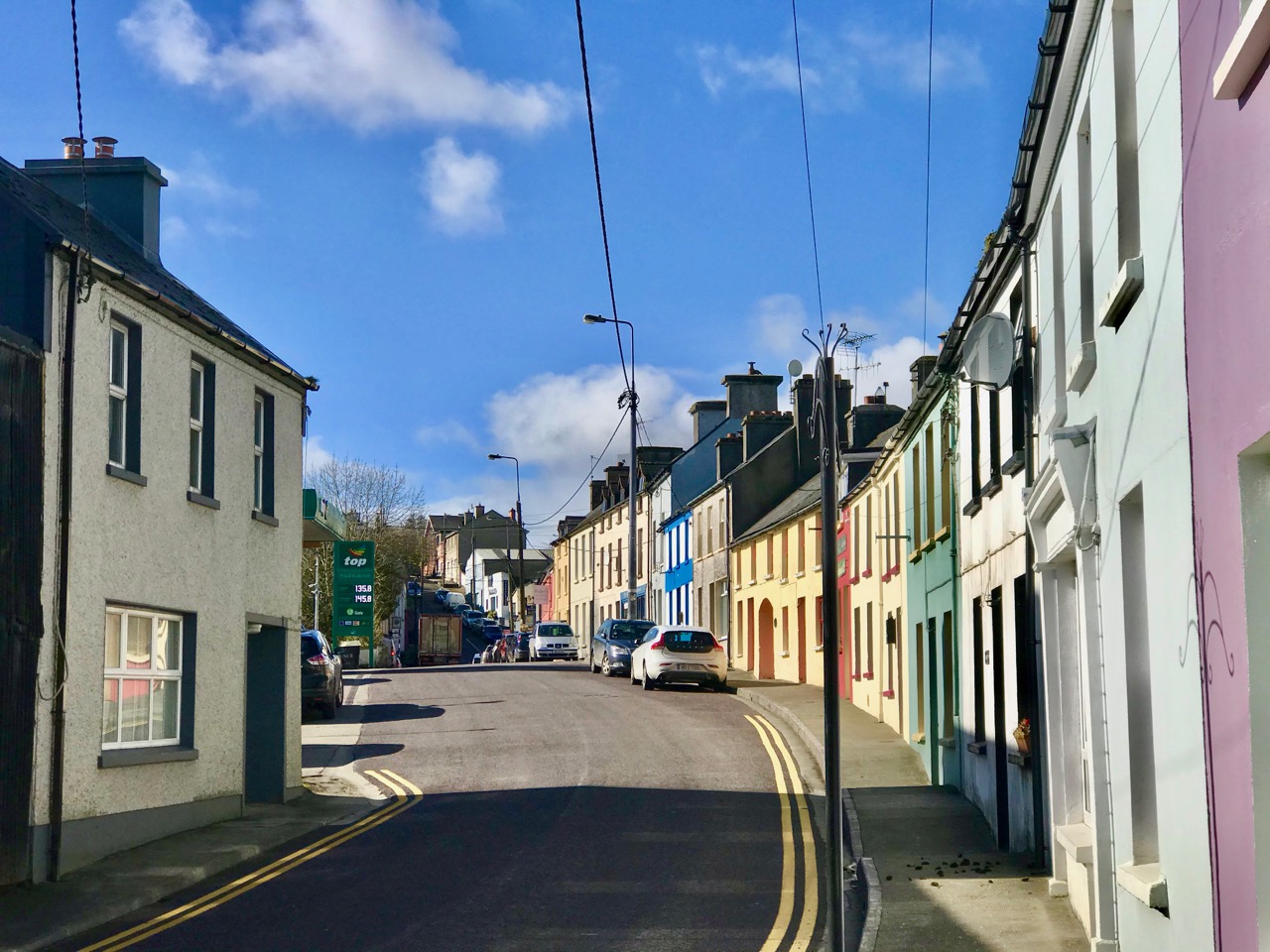
It always happens: you go through a ferocious winter of gales, floods and bitingly cold winds and then one day – probably not too long after St Brigid’s – you realise that spring is arriving! It happened this week, here in Ballydehob. Suddenly, the sun came out; the sky was deep blue and all the coloured houses, bars and shops lit up and made us remember what a wonderful place we live in.

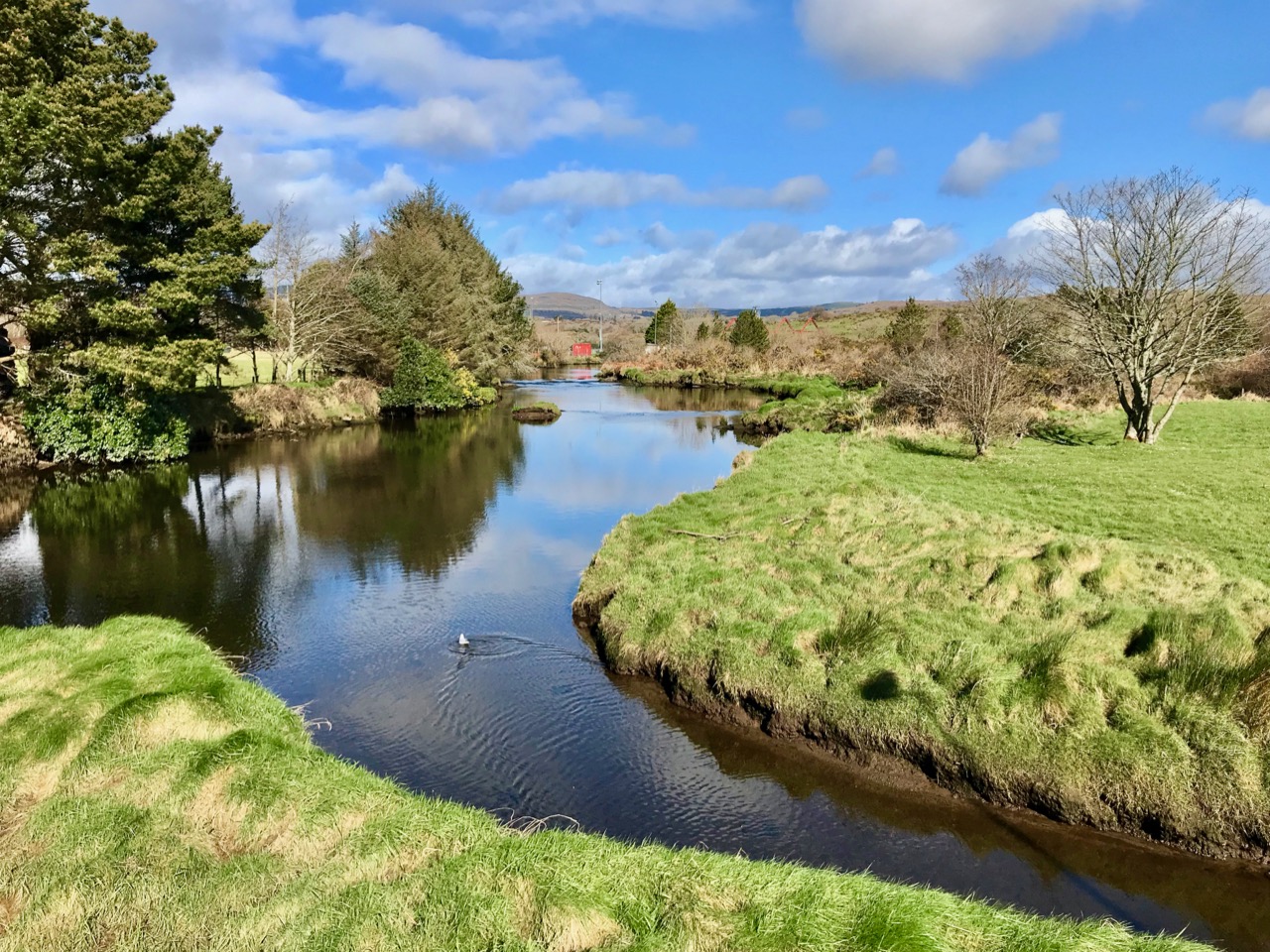
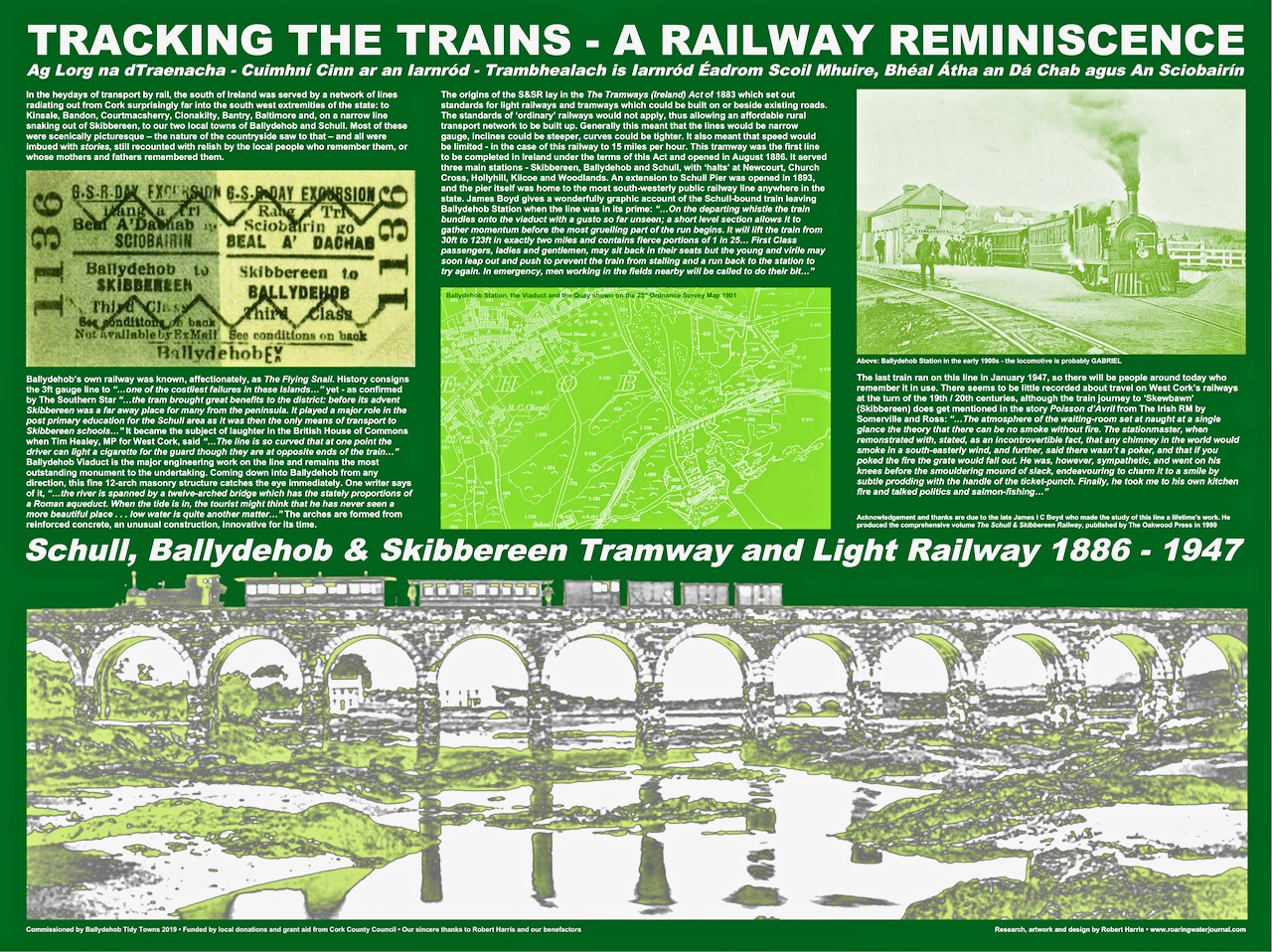
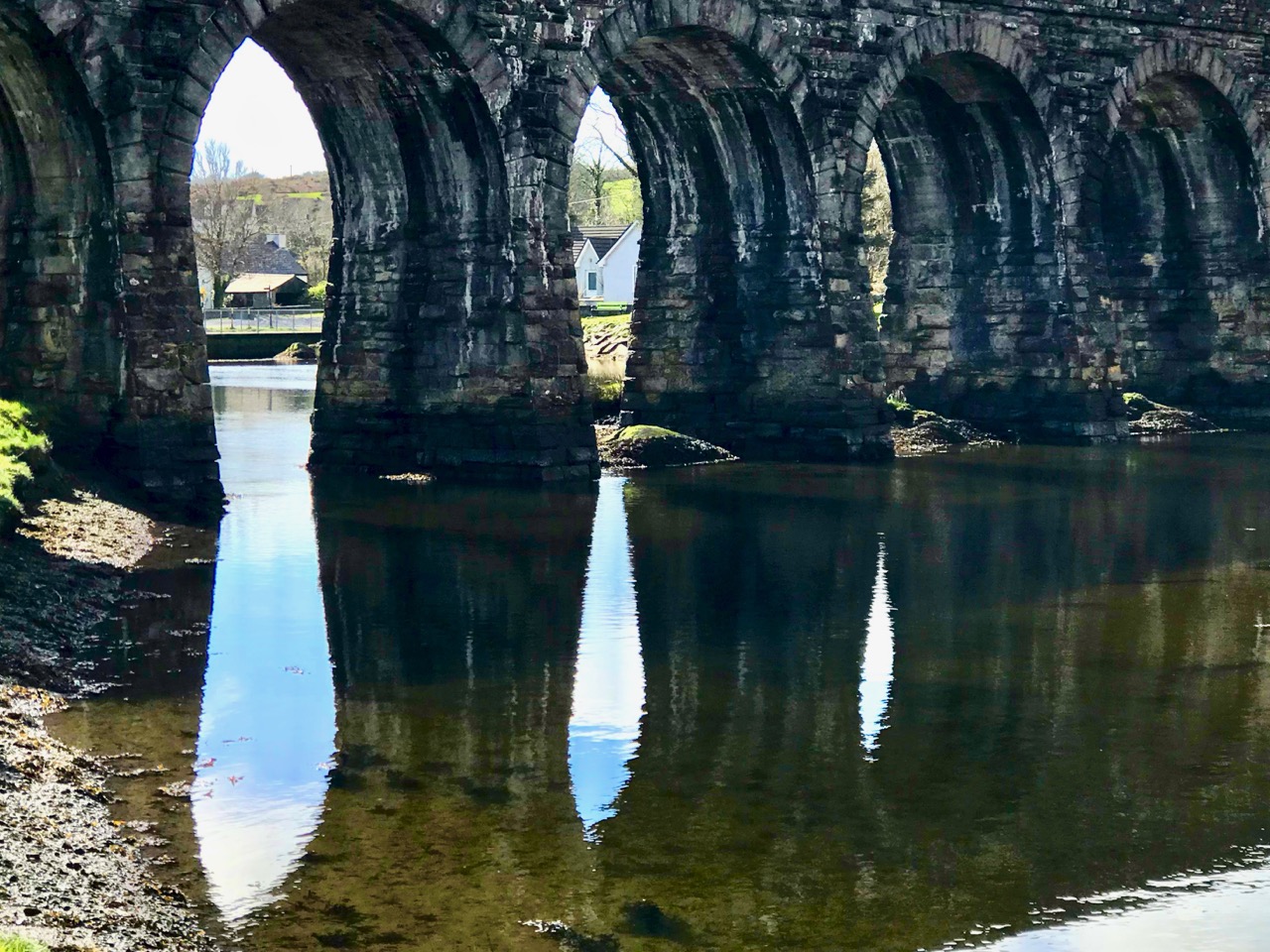
Ballydehob – that’s the name in Irish, above, on the gable of the community’s Bank House. A literal translation would be Town of the ford at the estuary of two rivers and, indeed, the Bawnakeane and Rathravane streams converge here before flowing out into Ballydehob Bay, once a hive of water-borne commerce with coasters, schooners, sand-boats, and punts and skiffs from the inhabited offshore islands arriving and leaving, while the tiny train puffed and rumbled across the viaduct on its way from Skibbereen to the Schull terminus.

When you feel the spring in the air for the first time, you begin to look anew at your surroundings. Shapes, reflections, the play of images on water: there’s such a difference as the ‘ordinary’ is changed through the quality of the light. That’s the freshness of annual renewal.

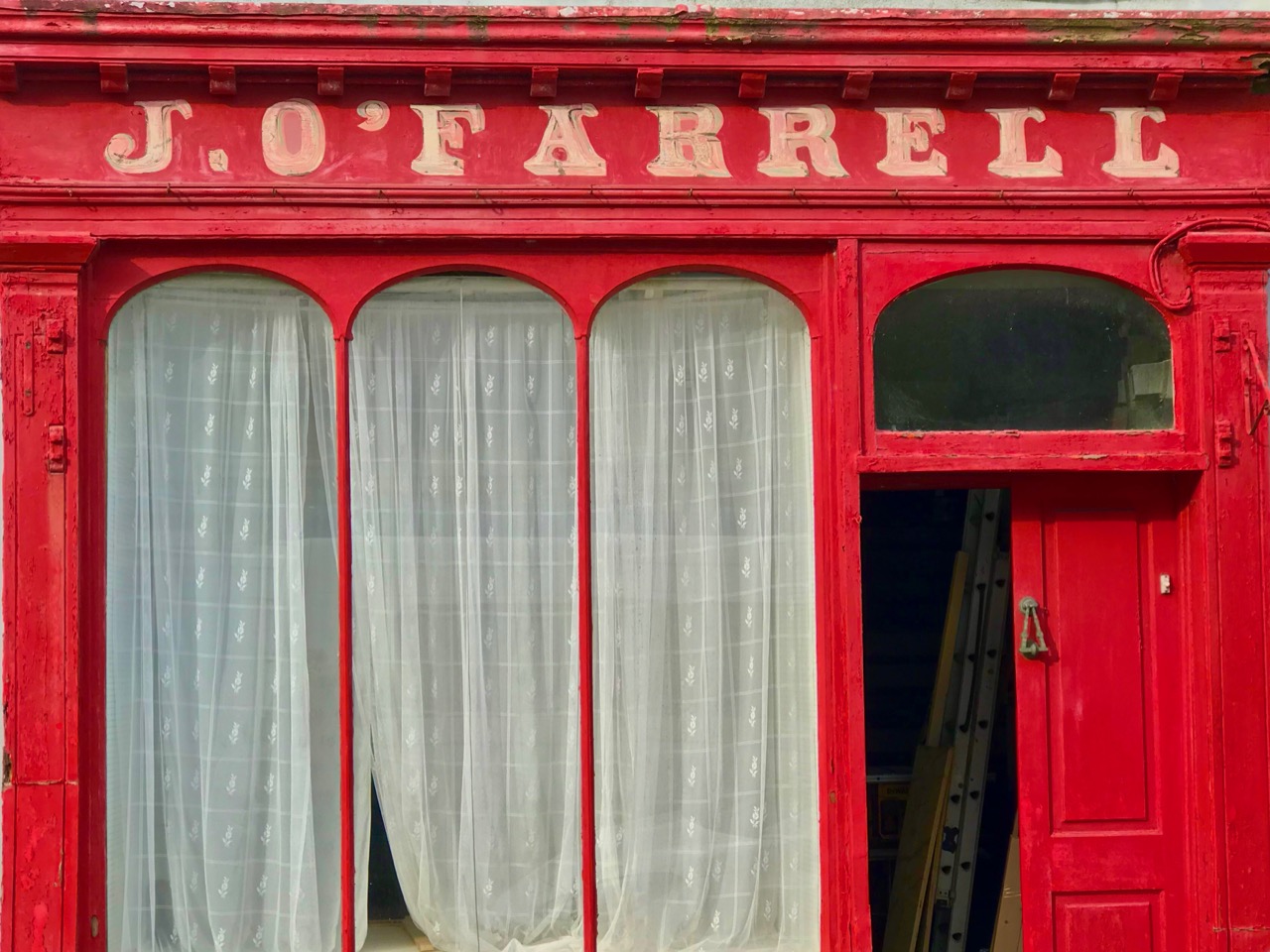
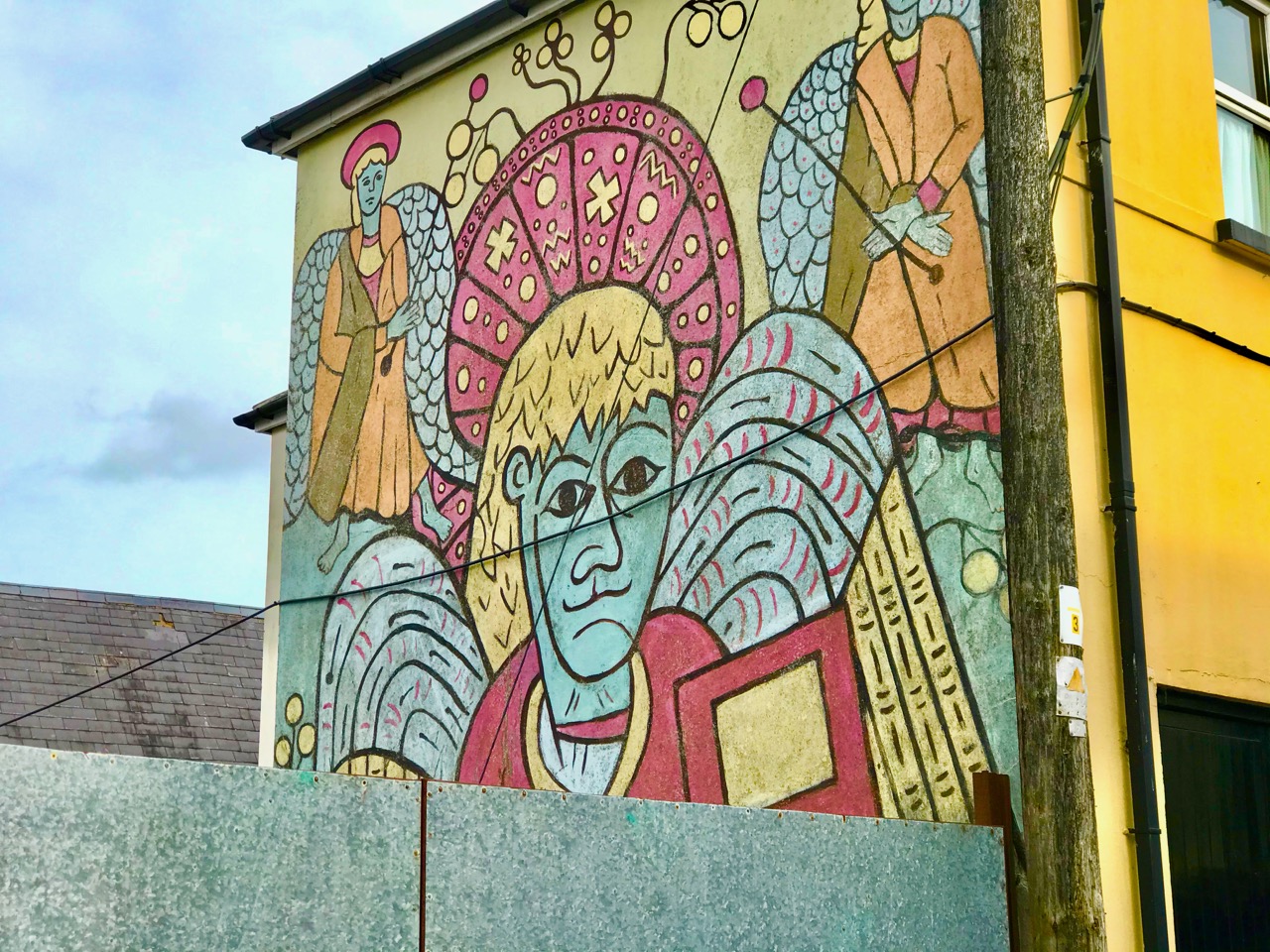
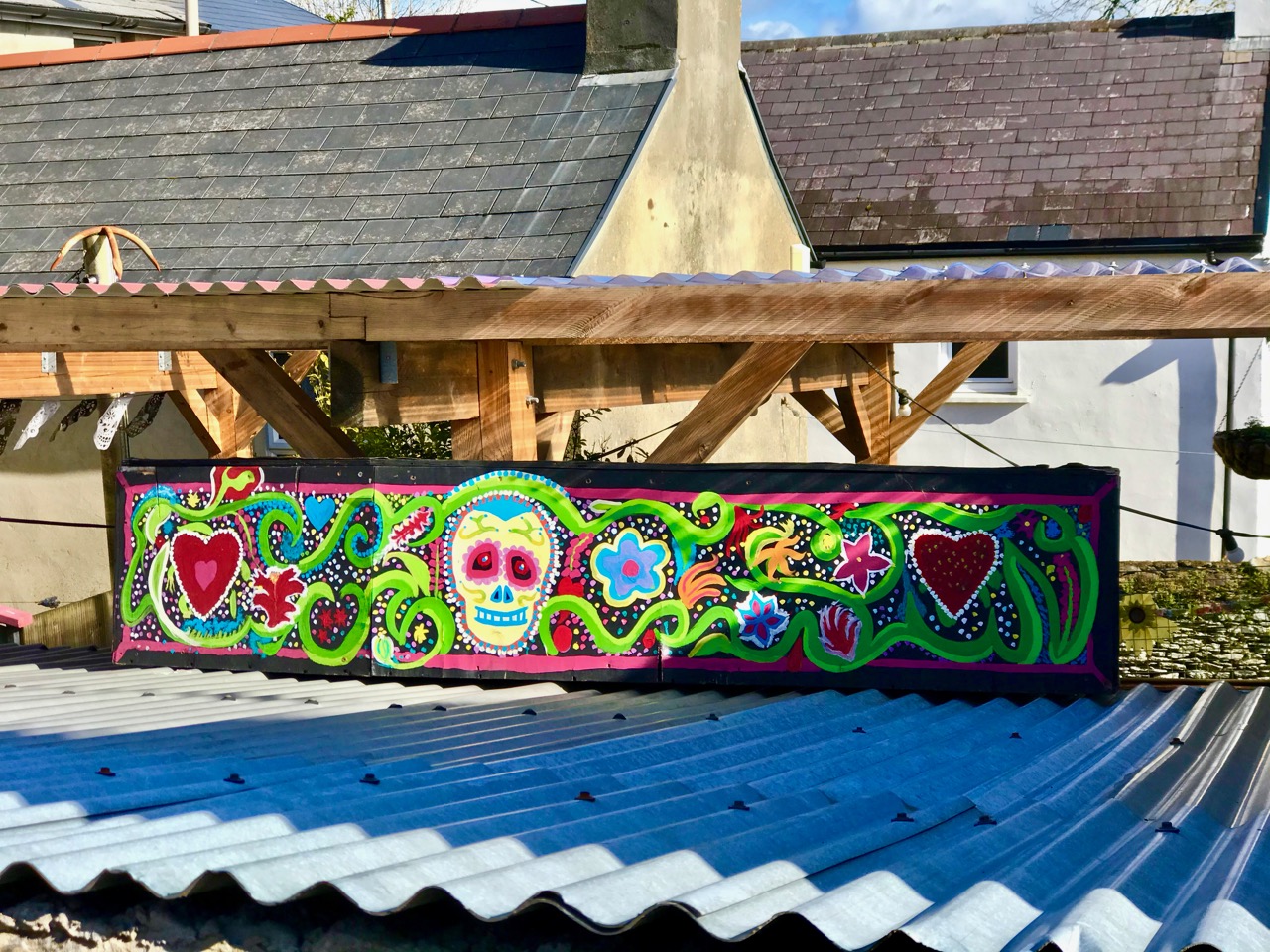
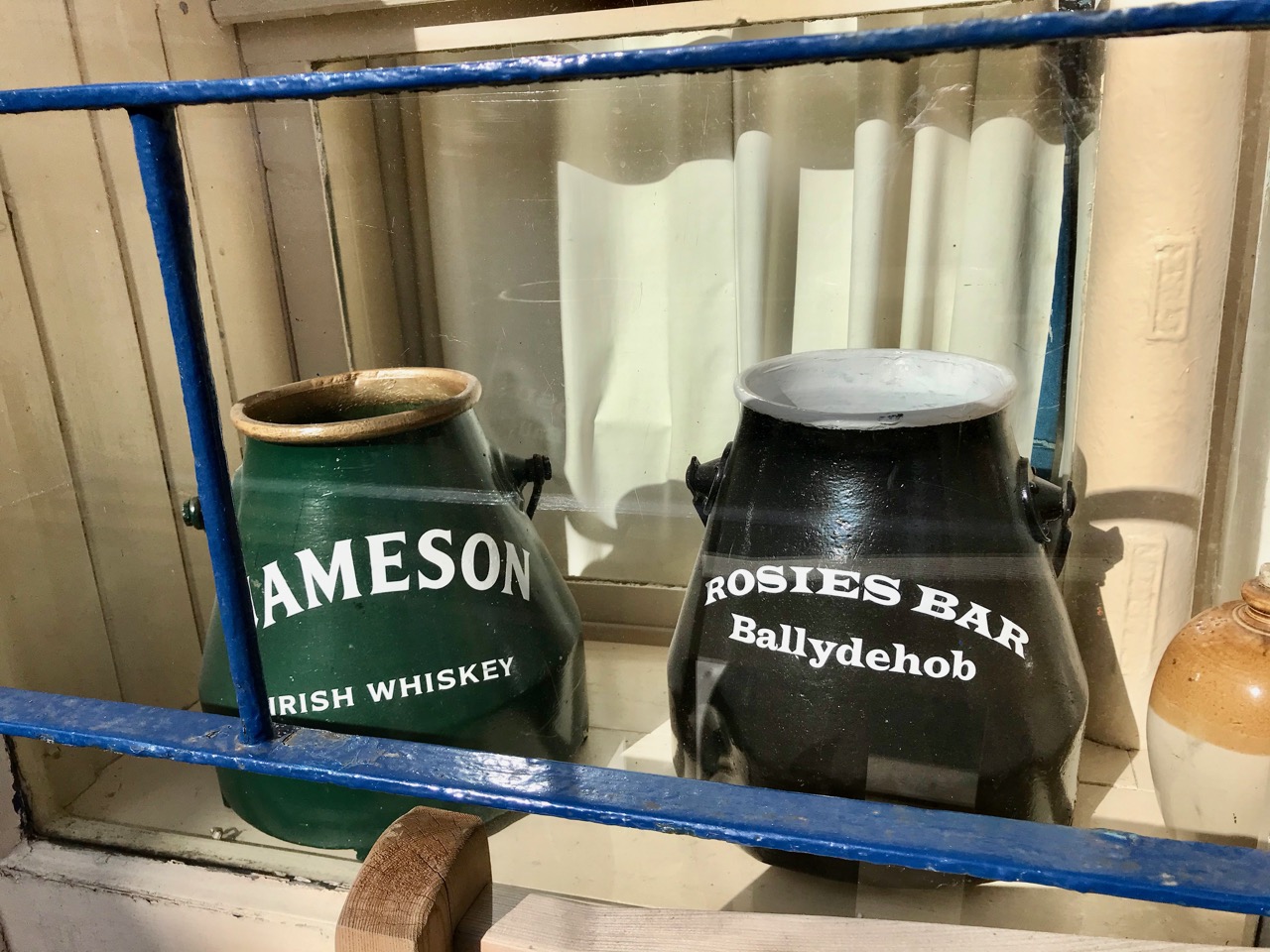
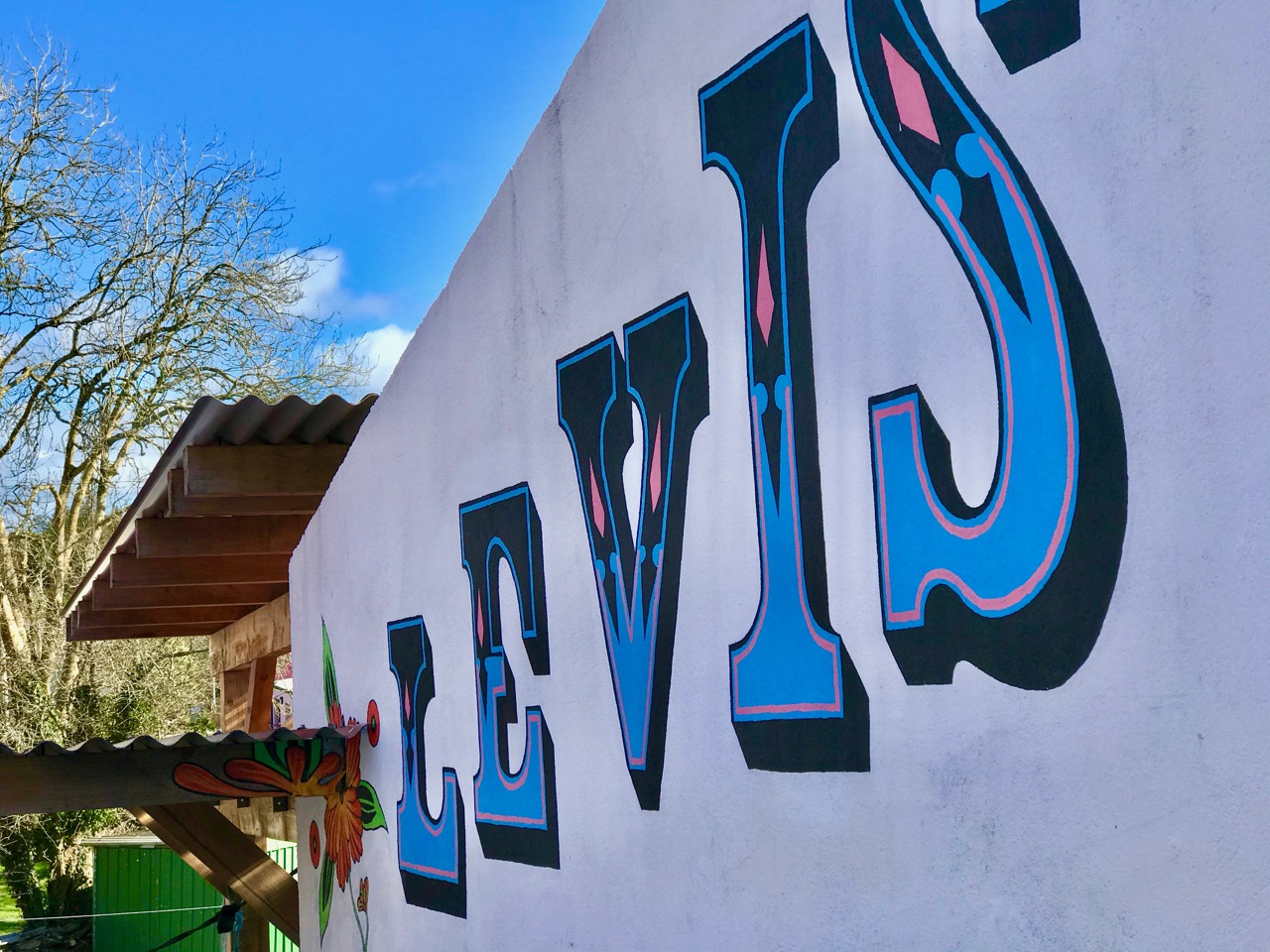
There are so many little details in the townscape that we can overlook, or just take for granted. Ballydehob has a long history of creativity, which is reflected in shop signs, decoration, window dressings. Take a stroll in the sunshine and see if you can find anything new!

You don’t have to wander far from home to welcome and experience the joys of a new spring. You will also find yourself looking forward to the seasons still to come, which will bring Ballydehob to life with its visitors, galleries, festivals and gatherings. Not to mention the hostelries which feed the body as well as the soul.

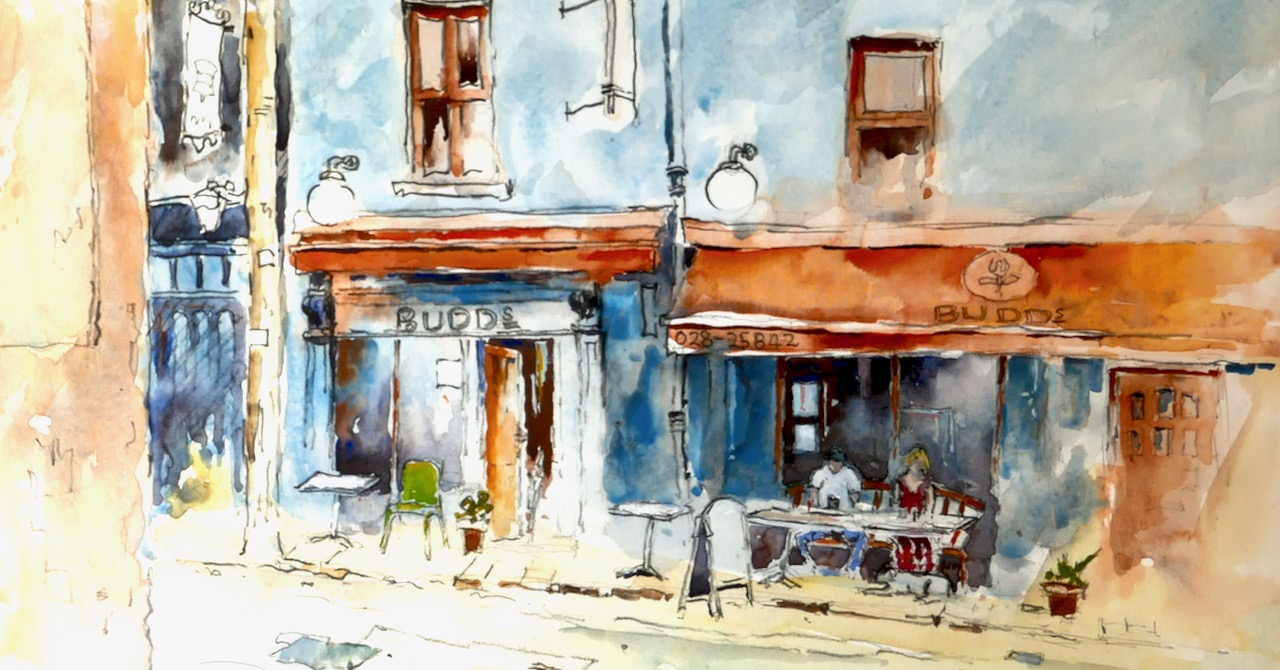
We are looking forward to many sunny days to come as the year warms up. Meanwhile, we can always revisit happy memories of our village life through our photographic archives. Thanks to Judi Whitton for the endpiece watercolour featuring our wonderful Budds, just turned five years old this weekend: congratulations to Jamie and his dedicated team!

A Medieval High Cross – Out of Place

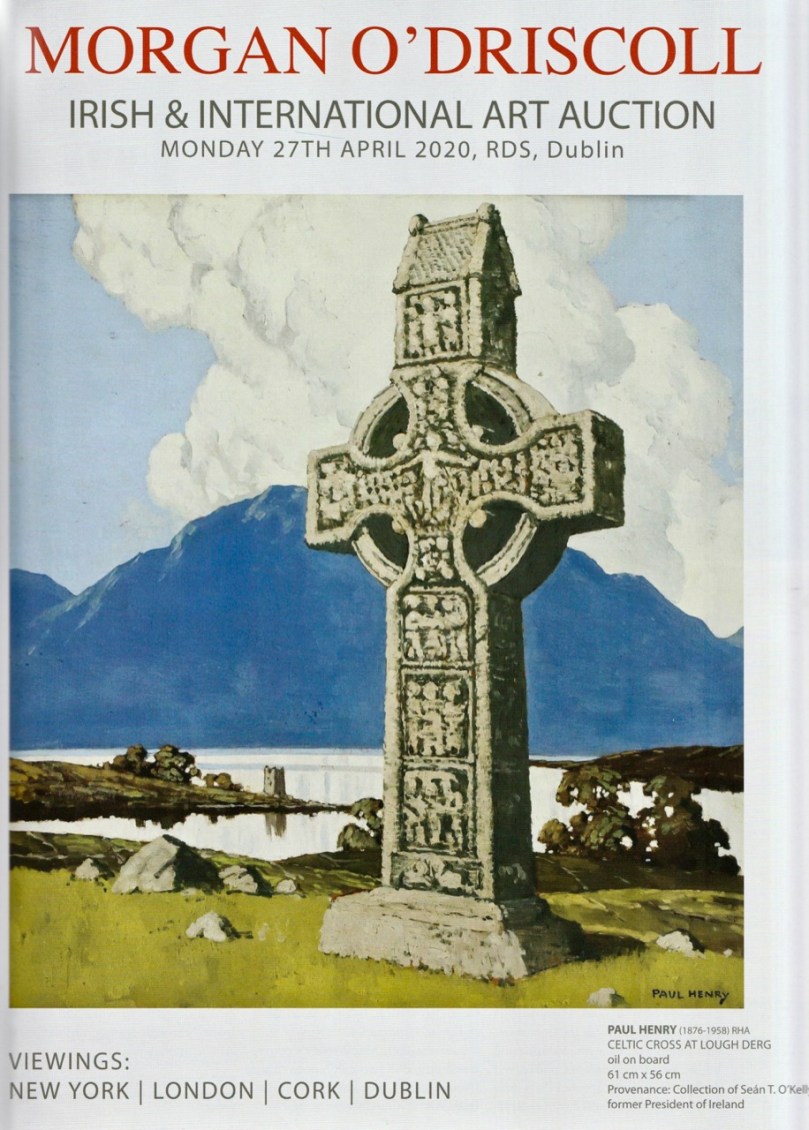
I was intrigued by this advertisement in the current edition of the Irish Arts Review (March – May 2020). Morgan O’Driscoll is based in Skibbereen, West Cork and specialises in Irish art. Paul Henry (1876 – 1958) fought an uphill battle in his own lifetime to get his work recognised. In 1911 Paul Henry and his wife Grace exhibited in Leinster Hall, Dublin. One critic commented that the Henrys: ‘ . . . seldom rise above the dead level of mediocrity and too often fall below it . . . ‘  In that exhibition was a work, The Potato Diggers: it didn’t sell until the 1930s. In 2013 it was included in a sale by James Adams & Sons, Dublin – and fetched €400,000! Just a decade ago, a Paul Henry might have been expected to sell for a few thousand – now, 40 years after his death, he’s a star!
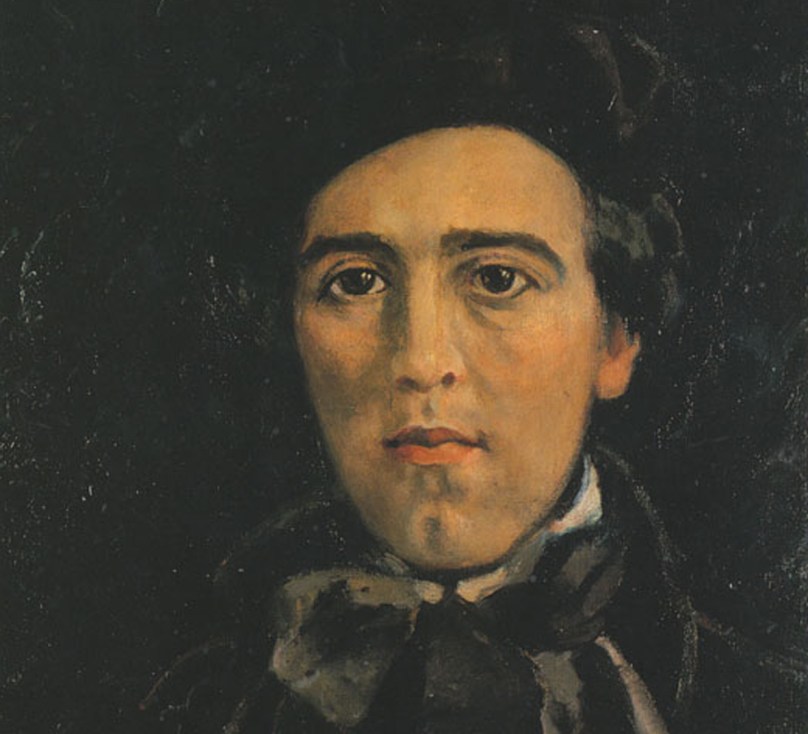
Paul Henry painted by his wife Grace in 1899

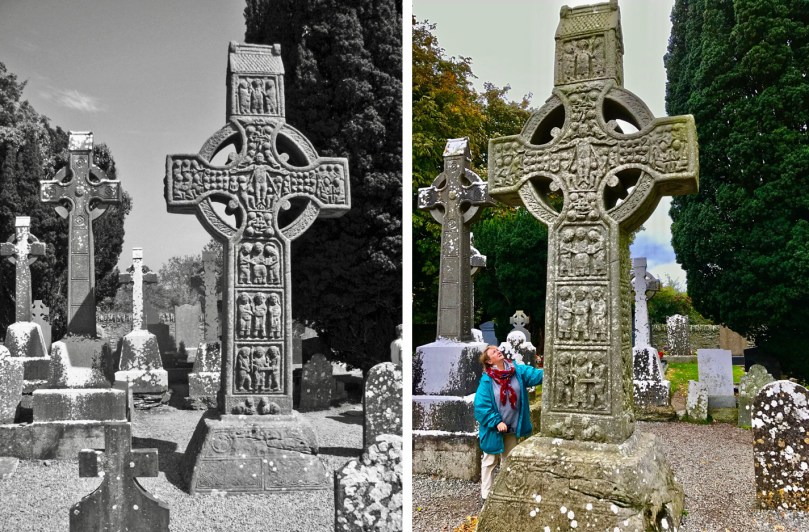
So why am I intrigued by the O’Driscoll advertisement? Take another look – the title of the painting is given as Celtic Cross at Lough Derg. I have taken an interest in Irish medieval High Crosses, and published a few articles on them in this Journal. In particular, this one – The Wonders of Monasterboice. Here’s a couple of photos from that post: the left one is an image of the west face of Muiredach’s Cross taken in the early years of the twentieth century – when the carving appears to be more clearly defined than it is today – and on the right is Finola, giving scale to the same cross just a couple of years ago. This cross – named after Abbot Muiredach mac Domhnaill, who died in 923AD – is one of the finest in the country, standing 5.5 metres tall.
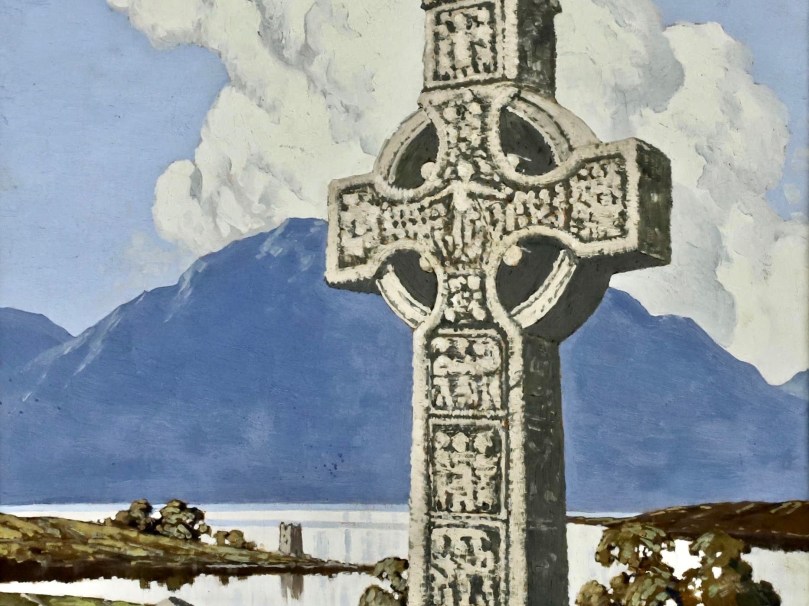
Looking at a detail from the Paul Henry painting (above), there is a remarkable similarity between the ‘Lough Derg’ cross and Muiredach’s Cross at Monasterboice. So – I hear you suggest – are they twins? Not exactly: in fact, through the medium of painting, one cross can be in two places at once! There is no ‘Celtic Cross’ at Lough Derg, so our artist has taken Muiredach’s Cross and placed it in his picture. Why?
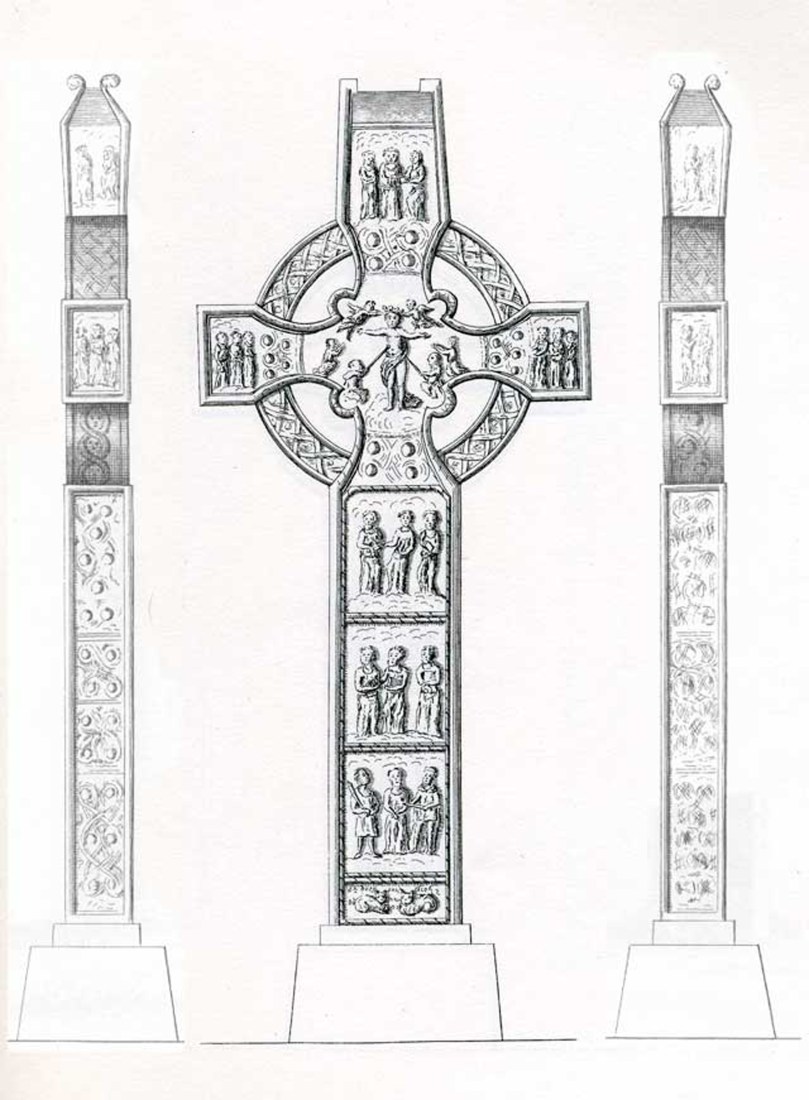
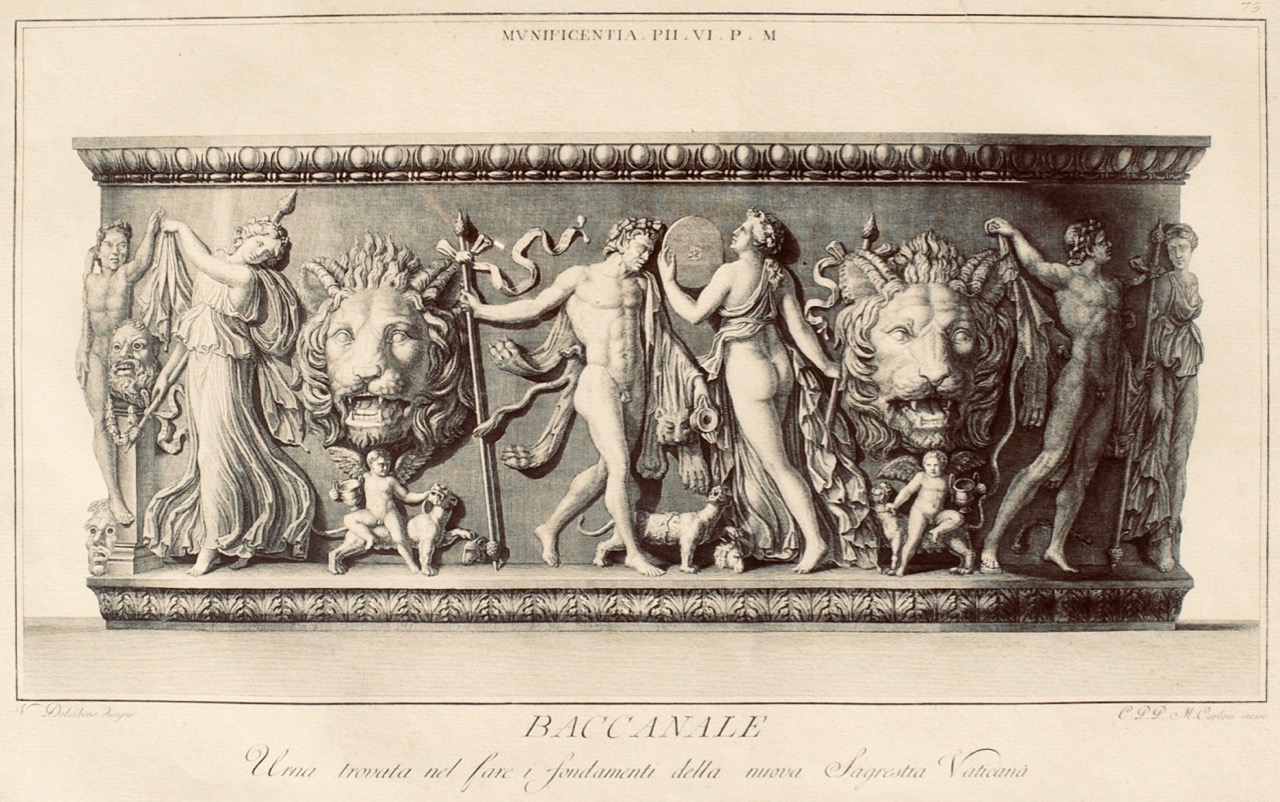
At this point I can’t resist showing you this antiquarian drawing of Muiredach’s Cross (above), probably dating from the eighteenth century, although I haven’t been able to find the author of it. It’s fascinating that all the elements of the cross are portrayed: the central figure in the roundel – presumably Christ – the various figures on the  panels above and below and on either side, and the two cats on the base looking very much like comfortable fireside moggies. But look how all the images have become stylised: medieval has been transported to Georgian neo-classical!
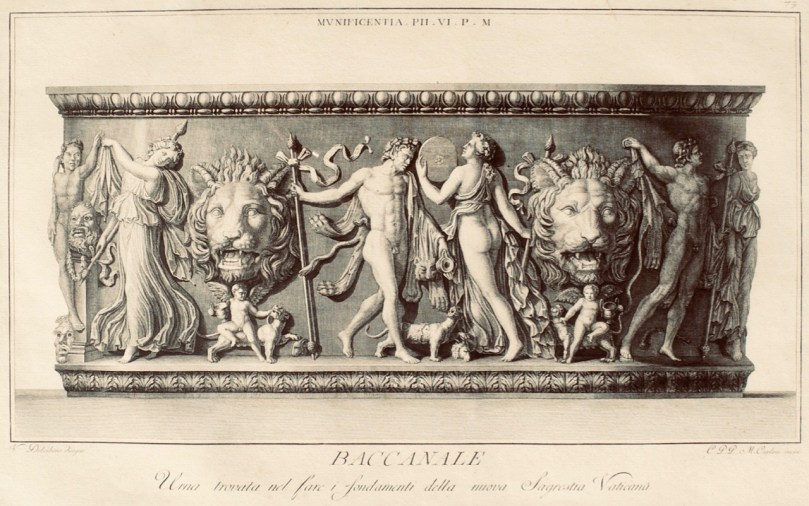
Baccanale – an example of a 1782 copperplate engraving by Marco Carloni, Rome

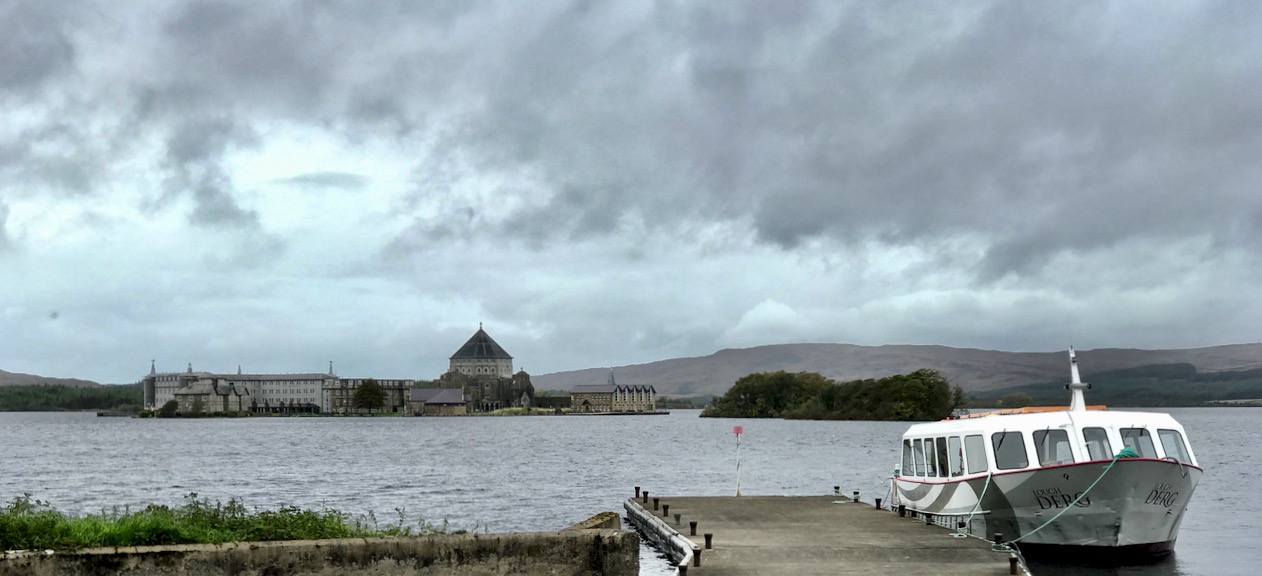
Before we explain Paul Henry’s stretching of the truth, let’s consider something else: there are a few Lough Dergs in the country, but the most famous – and the one most likely to be depicted by an artist who is showing off Ireland might be Saint Patrick’s Purgatory, which I covered in this post, also from two years ago.
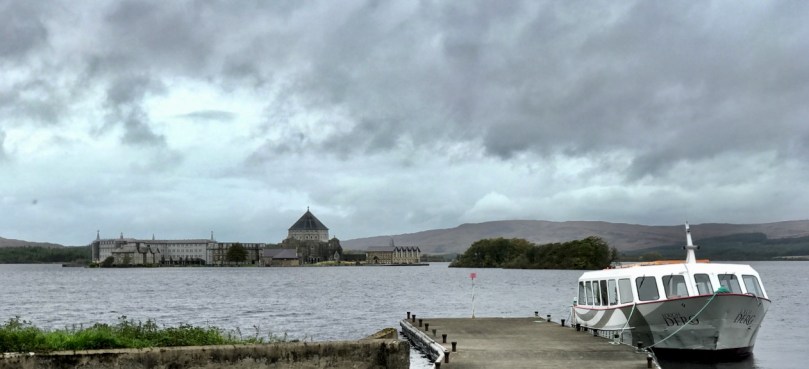
Lough Derg, showing the pilgrimage site of Station island, and the surrounding landscape

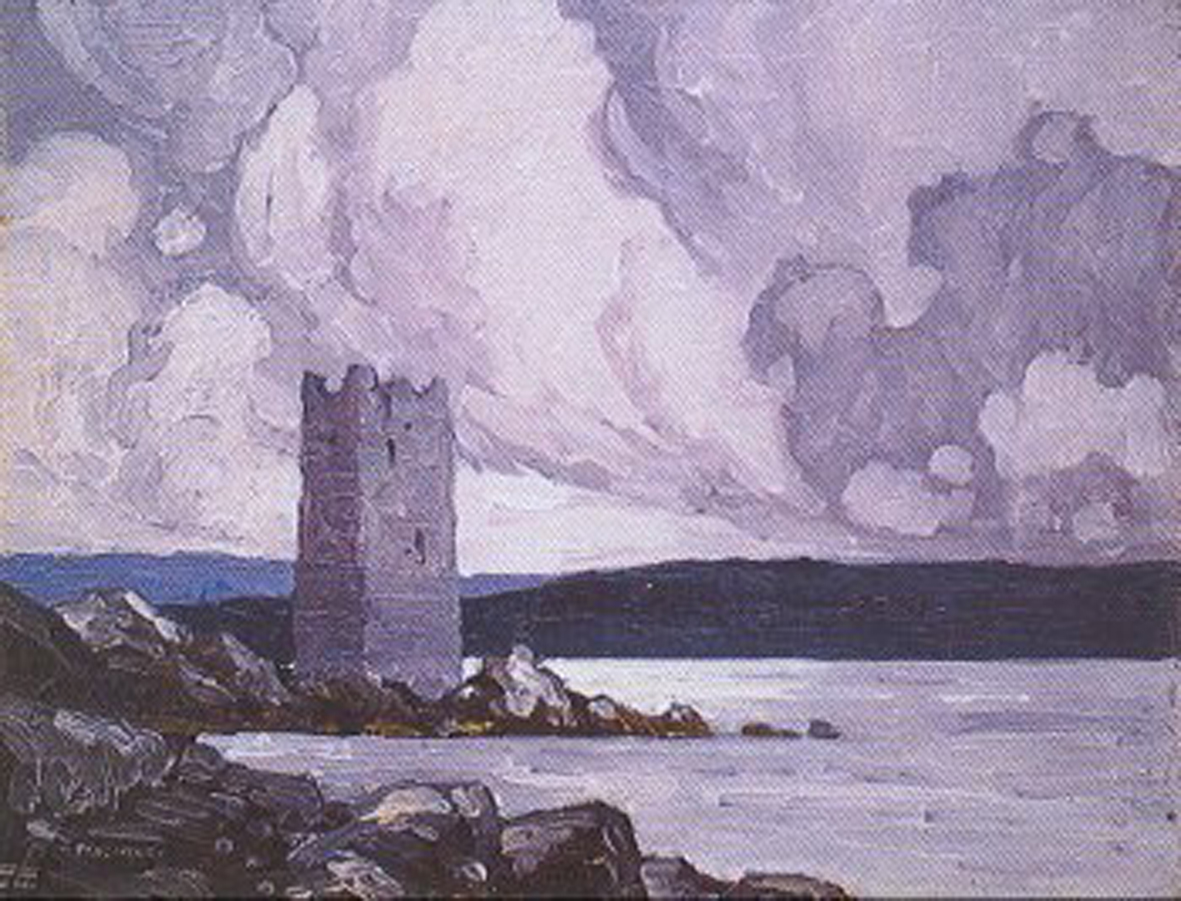
It’s a bit of a stretch of the imagination to see the setting of Lough Derg, with its fairly low-lying hills, in the background of Paul Henry’s painting. And where is that little tower house on the spit of land behind the ‘Celtic Cross’? Well – maybe it’s here:
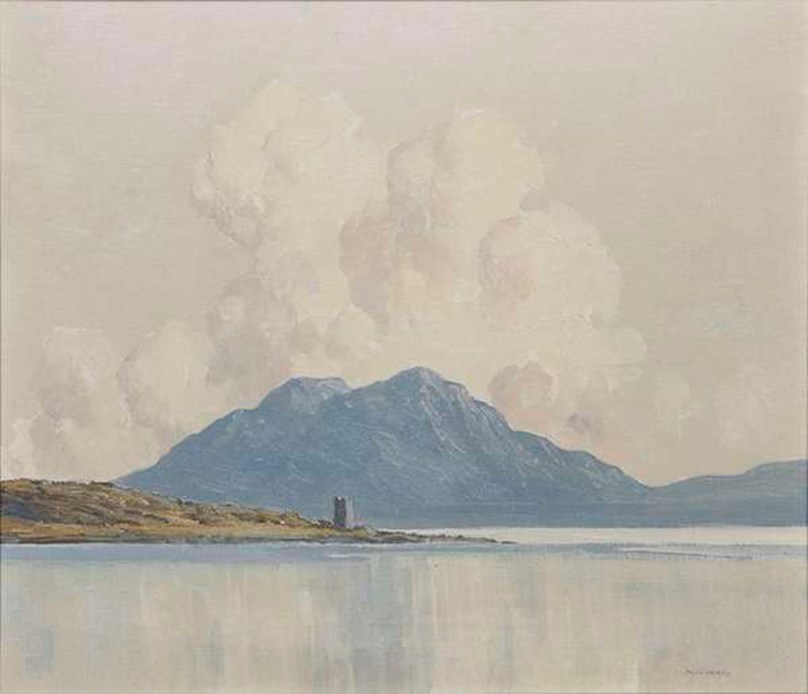
This painting by Paul Henry is known as Grace O’Malley’s Castle: it is picturesquely situated at Kildavnet, in the south-east corner of Achill Island, County Mayo, which Paul and Grace first visited in 1910. So inspired were they by the landscape and the apparently idyllic simple way of life that they remained on Achill for a decade. Here’s another view of the O’Malley castle by Paul Henry:
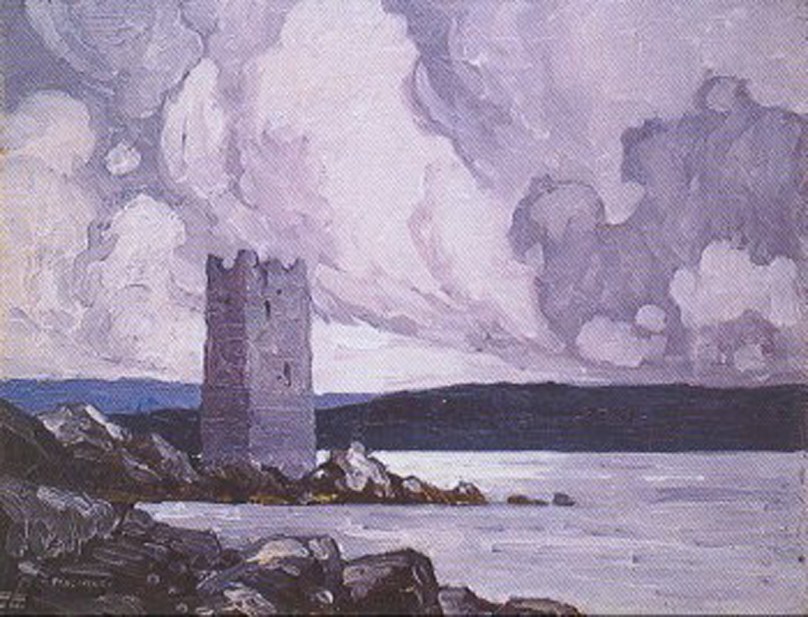
So the ‘Celtic Cross at Lough Derg’ is, in fact, a medieval high cross from Monasterboice, County Louth, and it is set against the stunning scenery of Achill, County Mayo. We can’t blame Morgan O’Driscoll (or anyone else who can be identified) for giving the painting a misleading name. It seems that originally the work was just titled ‘Celtic Cross’: here are some insights from Paul Henry’s biographer, Brian Kennedy, in the Irish Arts Review Yearbook 1989 / 1990 –

. . . Henry was egocentric and occasionally used artistic licence with historical facts in the same way he might have done in a painted composition . . .

. . . In 1917 the Irish Times thought he was developing a decorative treatment of the landscape whereby his imagery was not realistic but was symbolically Irish . . .

And the following is from Paul Henry: With a Catalogue of the Paintings, Drawings, Illustrations, by S B Kennedy, Paul HenryYale University Press, 2007: it tells us that the painting was clearly known as ‘Celtic Cross’ in 1924, and was in the collection of Seán T O’Kelly, Ireland’s second President (between  June 1945 and June 1959). When sold by Adams in 1984 the painting had acquired the additional wording . . . at Lough Derg . . .

. . . 611 Celtic Cross 1924. Oil on board 24 x 22 (61 x 56). Signed ‘PAUL HENRY’ . . .

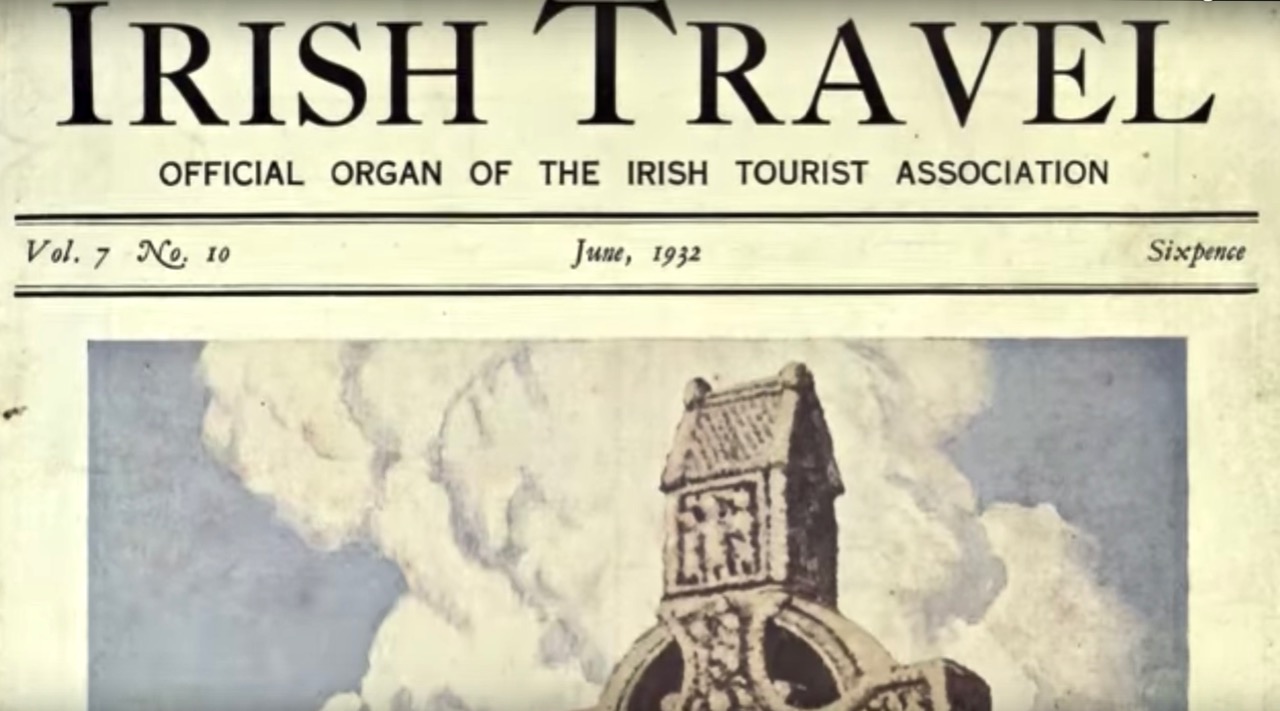
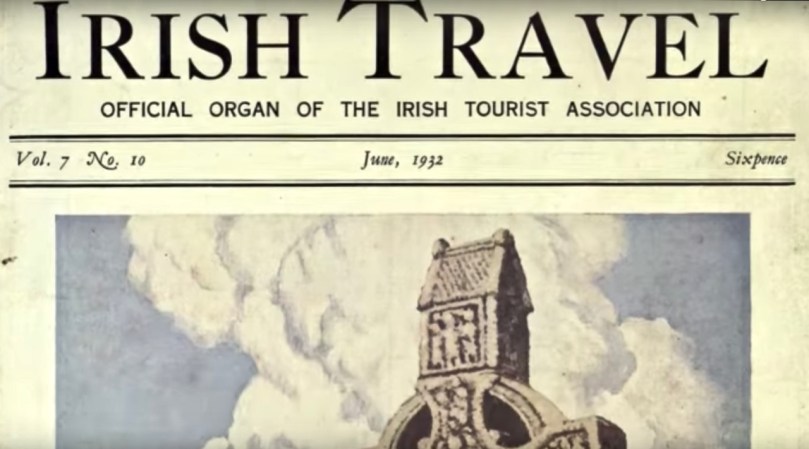
Private collection. Prov: Sean T O’Kelly; sale, Adams, Dublin 19 July 1984. Lot 86, as Celtic Cross at Lough Derg, repr. Irish Travel, vol 7, no 10, June 1937 repr. on front cover. Almost certainly a composite composition . . .
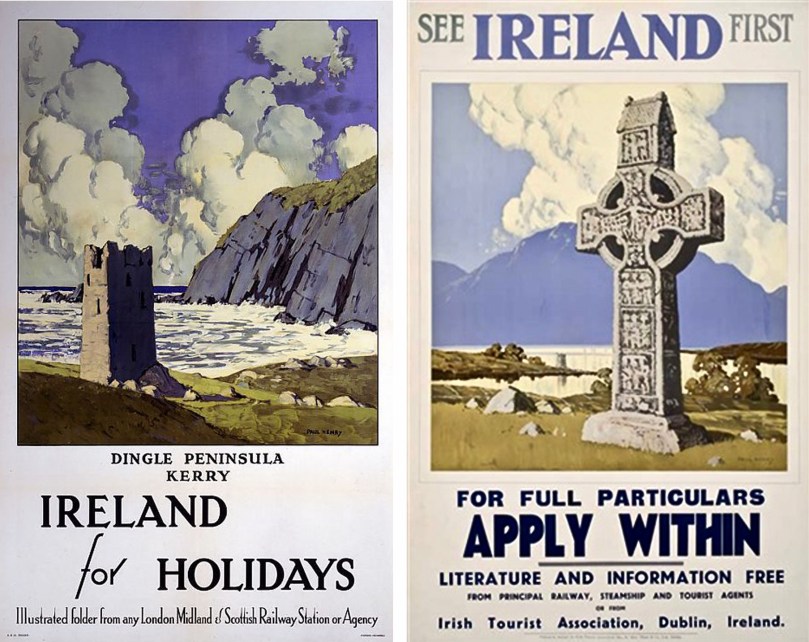
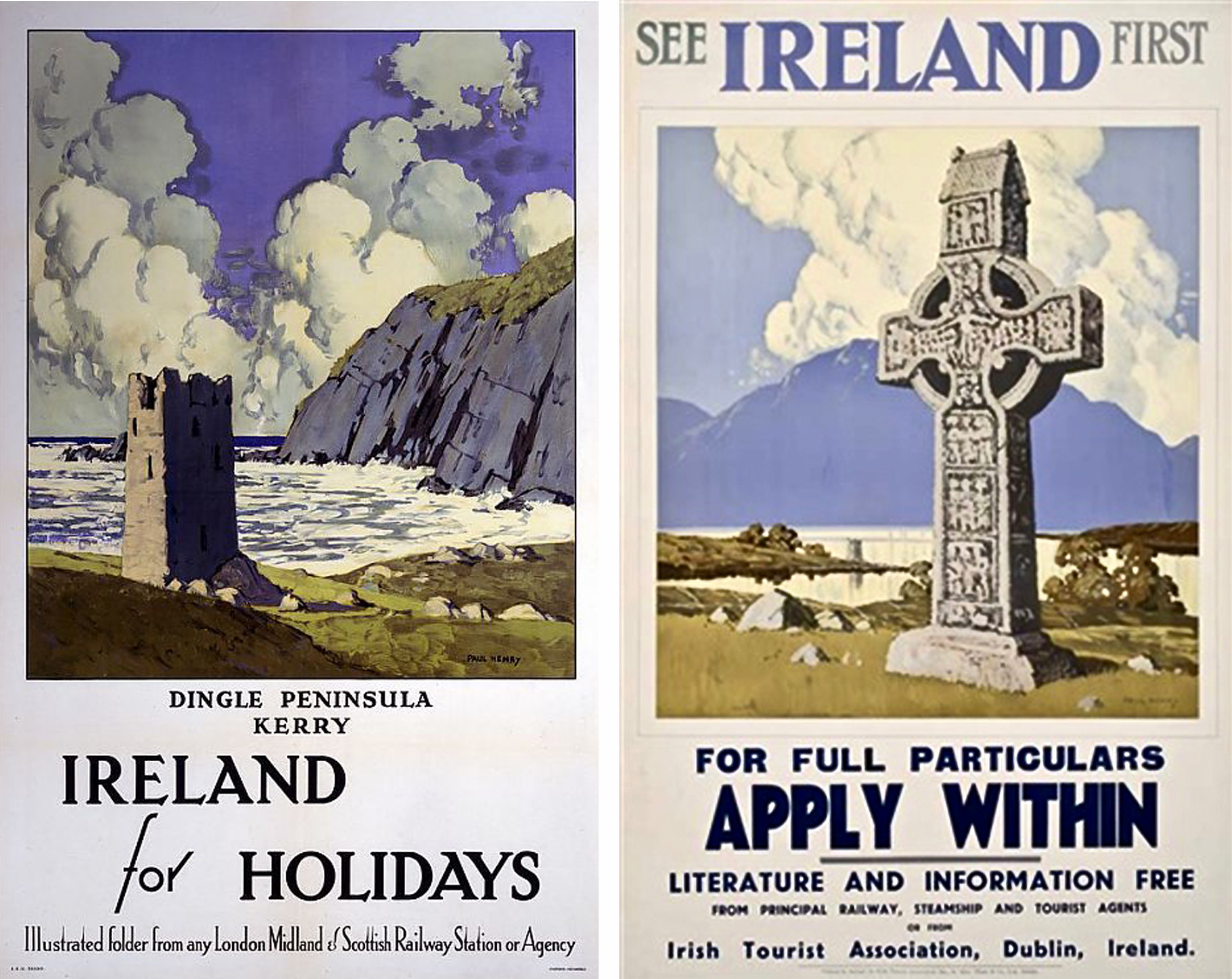
As with most artists – who need to earn a living – Paul Henry willingly accepted commissions. He was successful in selling ‘popular’ work to railway companies and the Irish Tourist Association (above – 1920s and 30s).
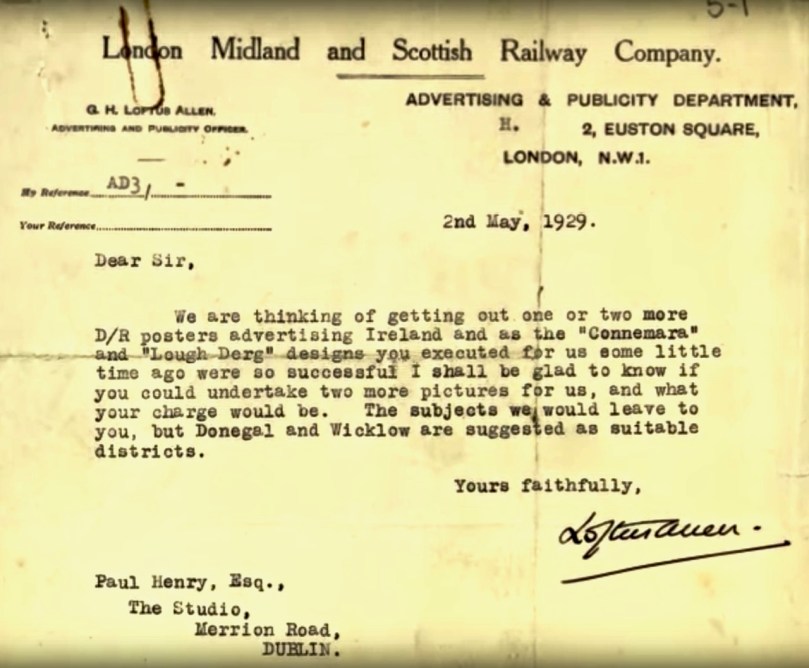
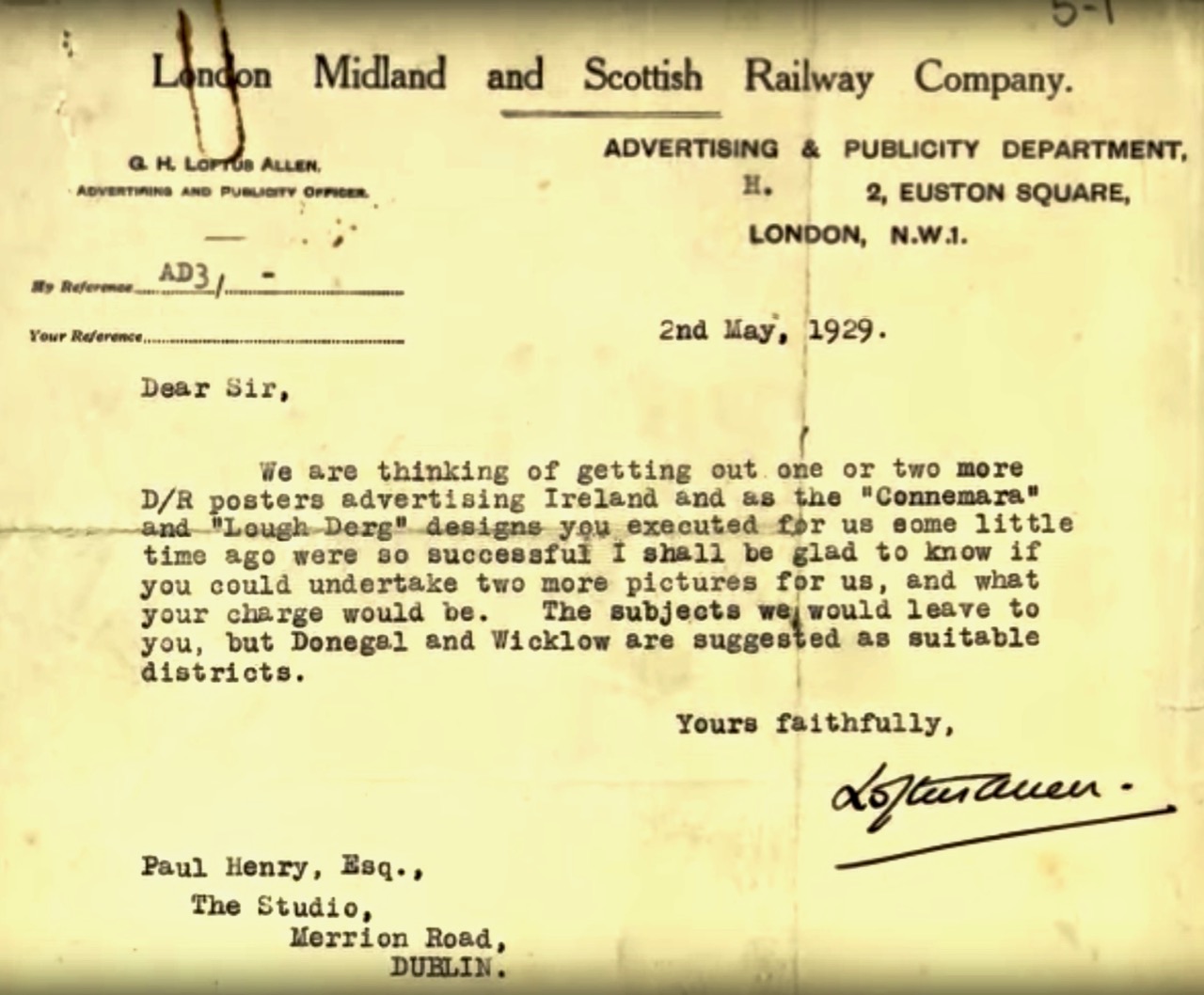
A “Lough Derg” design is mentioned in the Railway Company’s letter (above). Below is another – for British Railways: this is more likely to be the Lough Derg on the Shannon.

Has this helped to unravel the enigma of Paul Henry’s Celtic Cross at Lough Derg? Whether or not you are convinced, I’m sure you would like to have the painting hanging on your wall – me too! Although it would be so much better if it could go permanently into a public collection The sale is coming up in April . . .
 

Antiquarians Loved Glendalough

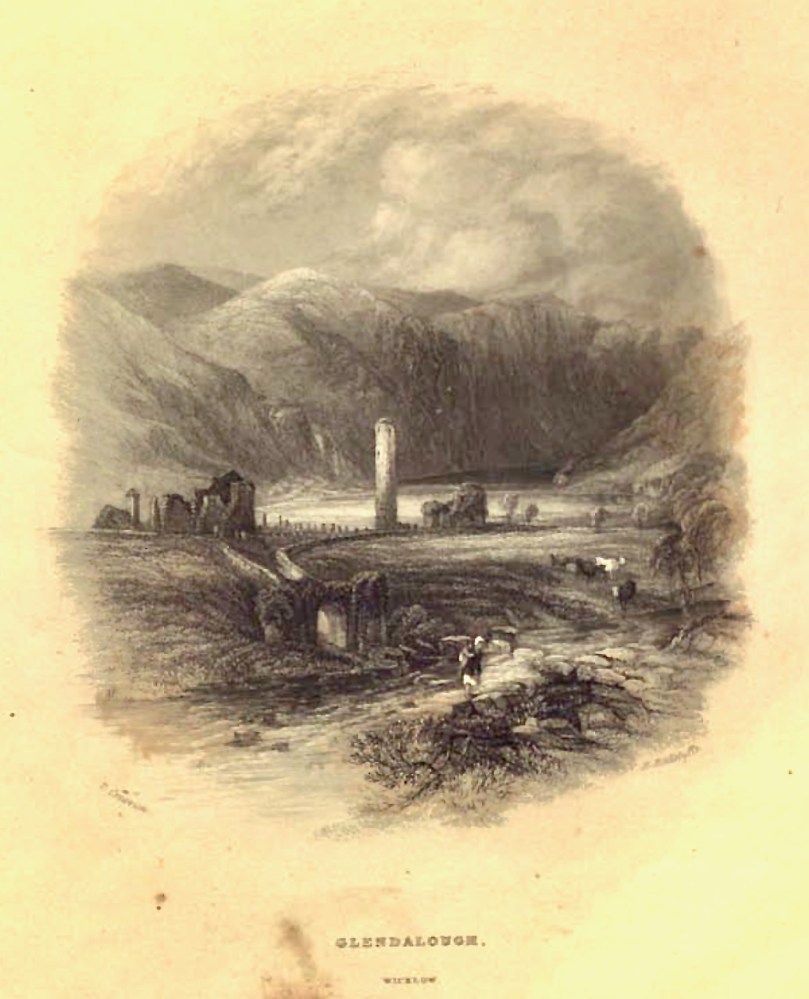
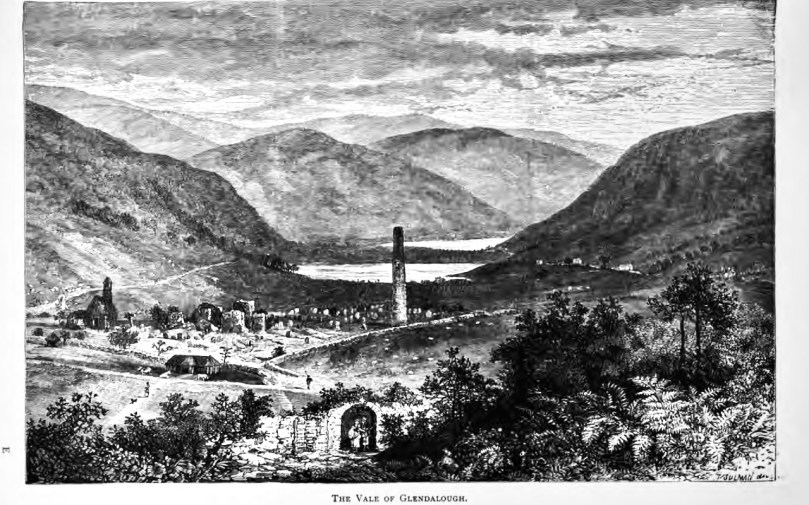
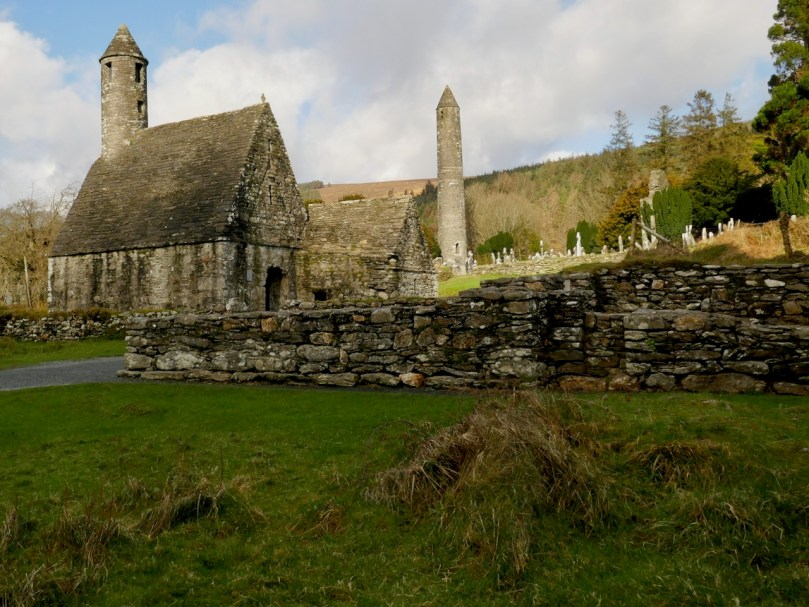
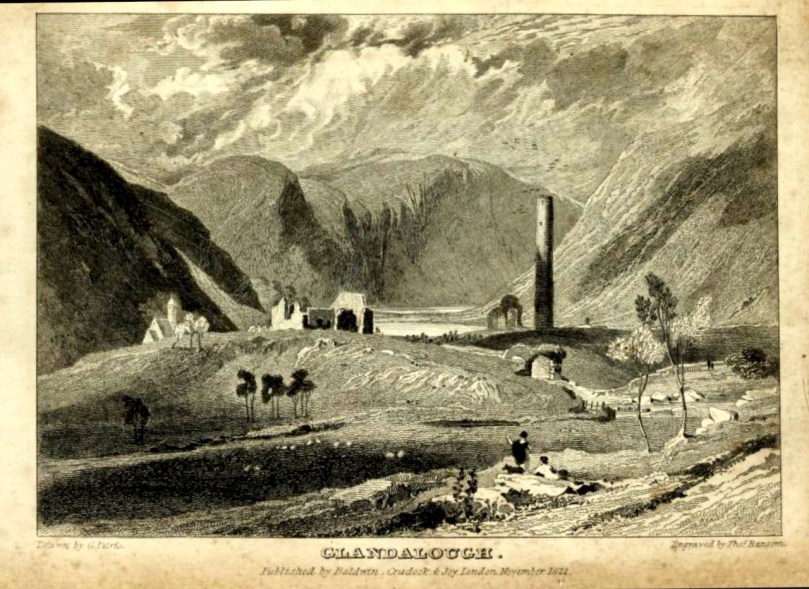
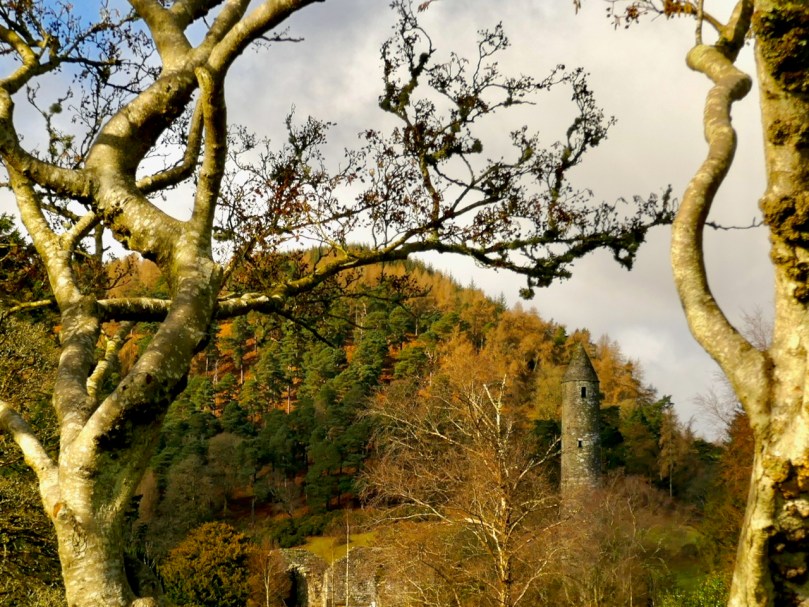
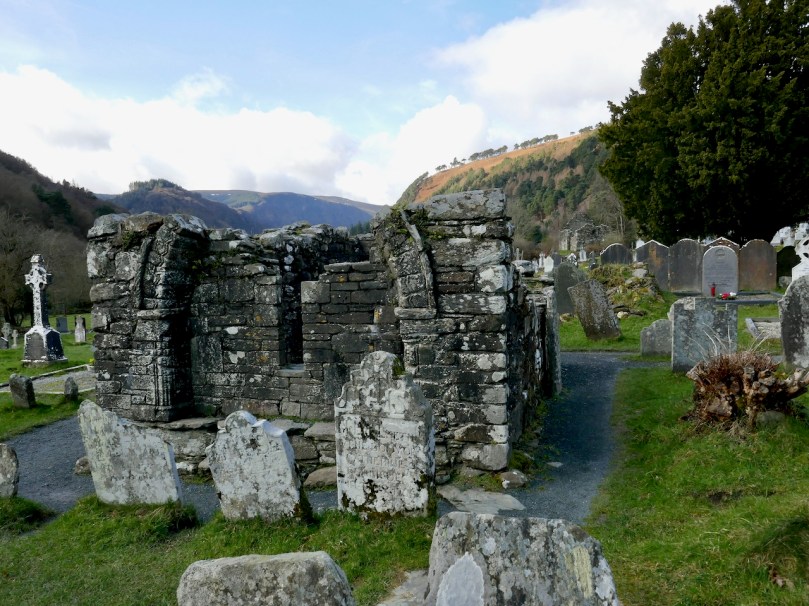
Researching a post on Romanesque architecture at Glendalough, I have come across so many depictions of Glendalough by tourists and antiquarians that I thought I would start by sharing some of these with you, by way of a general introduction to this outstanding heritage site. Situated in the heart of the Wicklow Mountains, the ecclesiastical settlement of Glendalough occupies one of the most beautiful valleys in Ireland and this combination of wild scenery and picturesque ruins made it a favourite of antiquarians, travellers and illustrators.

This illustration from Halls Tour of Ireland, Vol II, published in the early 1840s, concentrates less on architectural accuracy and more on an impression of romantic picturesqueness, although it does get the main features more or less right

Another view, this time by Lovett from his Irish Pictures of 1888

This is also a highly significant archaeological and historical site. I’ve been reading a most lucid and illuminating guide to it and I highly recommend it – Glendalough by Christiaan Corlett. Chris is an archaeologist with the National Monument Service and nobody knows this place better than he. Of the valley he says, Is there anywhere else in the Christian world that can boast so many churches and related buildings dating from before the year 1200 that have remained so intact?

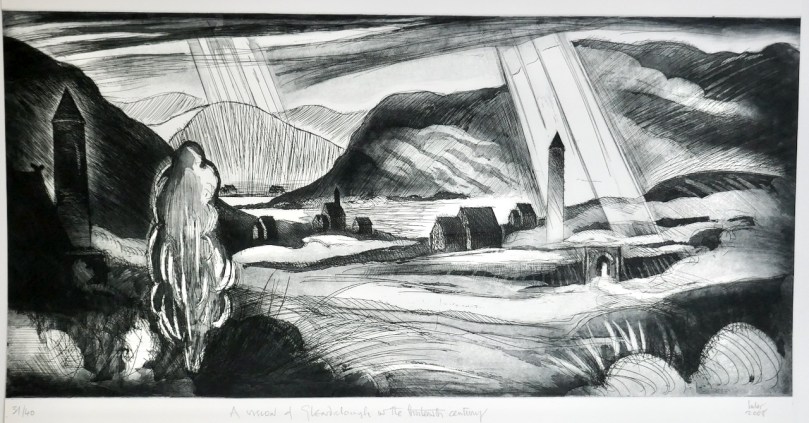
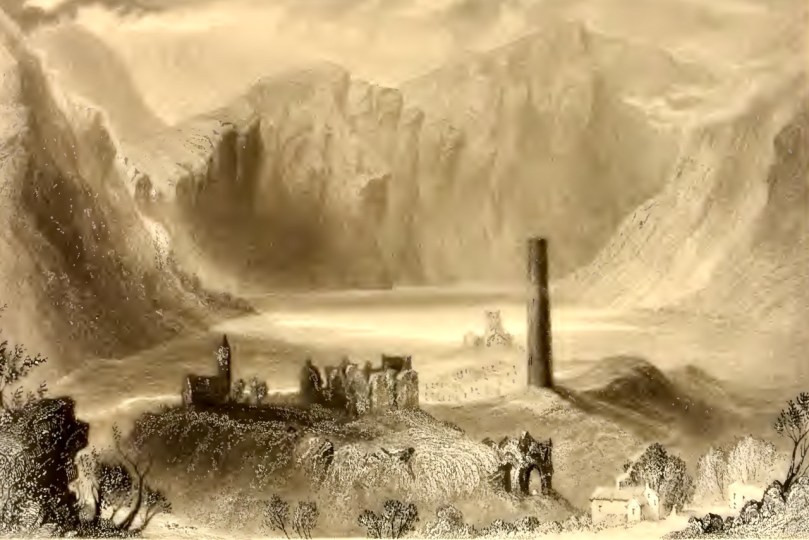
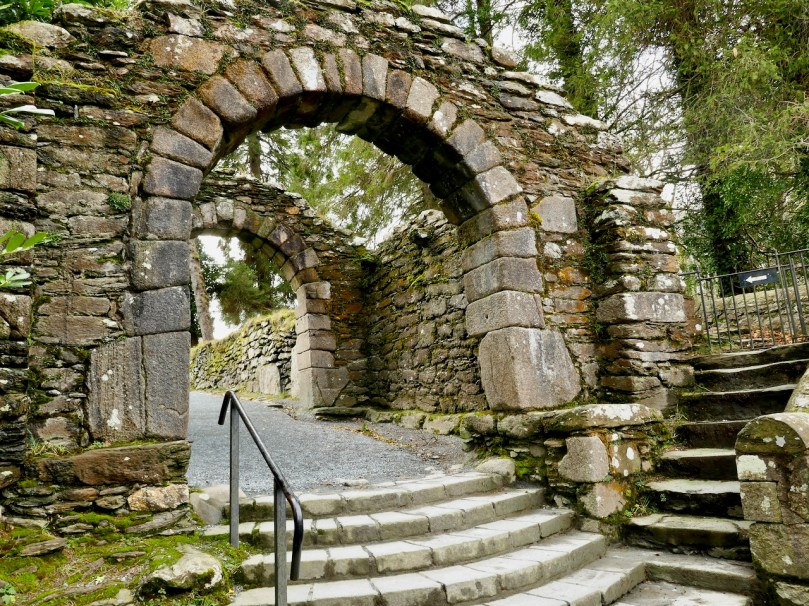
I’ve started this post with the most recent image, done in 2008 by our friend Brian Lalor, but in the style of an antiquarian drawing and showing the full scope of structures at Glendalough – eight churches and three towers – as the valley would have been seen in the thirteenth century. The round tower is the most prominent feature on the landscape – and the image that most visitors take away with them. It was, of course, originally a bell tower (although it may have served other functions) since the call to prayer was an important part of the monastic day. In the drawing directly above, done by W H Bartlett (see last week’s post about this wonderful illustrator) about the same time as the Hall’s Tour sketch, you can see that the round tower is roofless. Although once again Bartlett is careful to create a wildly romantic scene he also shows the principal structures, including the Gatehouse, which is pictured below as it is today.

Note the projections of the wall on either side of the arch – these features are known as antae and were typical of early church construction in Ireland. See my post Irish Romanesque – an Introduction for more on this topic

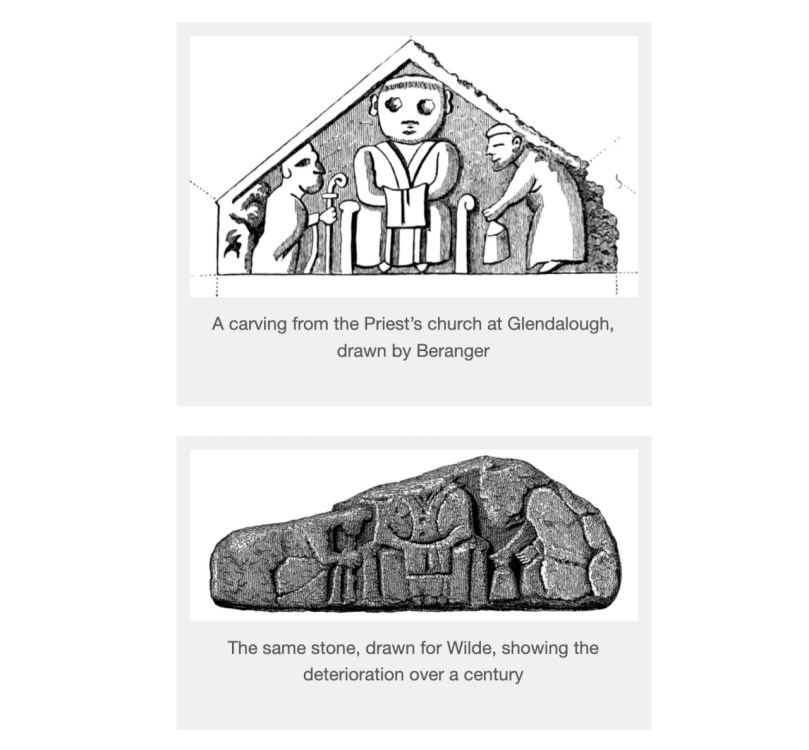
Of the two other bell towers, only the one atop St Kevin’s Church still exists. The other was similarly situated on Trinity Church but has since collapsed. But we do have evidence of it – see the final illustration in this post! Here we see why antiquarian drawings are so important. The ravages of time have taken their toll on the buildings and carvings at Glendalough: some have simply disintegrated away while some carvings recorded by these early illustrators have disappeared, presumably stolen.
St Kevin’s Church, the vestiges of St Ciaran’s Church (foreground), the Round Tower, and the east wall of the Cathedral

There’s another consideration too – the well-meaning rebuilding efforts of the Victorian period. As a consequence of the Disestablishment of the Church of Ireland which came into effect 150 years ago on Jan 1, 1871, responsibility for all the ancient ecclesiastical sites transferred from the Church of Ireland to the state, and from there to the Office of Public Works. An urgent need to conserve ruinous buildings combined with an enthusiastic approach to ‘reconstruction’ and improvement led to many monuments all over Ireland getting a make-over. As one of Ireland’s premier tourist destinations, then and now, Glendalough became the focus of such activity.
A Petrie engraving from 1827

Perhaps the most visible change was to the round tower, which was blessed with a brand new conical cap. The work was done carefully, using stones found at the site, and there is ample evidence that this was the original shape of the roof.

Some of the other reconstruction efforts may be less accurate, perhaps based more on conjecture than on evidence, but at least in the case of Glendalough the antiquarian drawings could provide some clues as to the condition of the monuments within the last 100 years, if not in their original state.

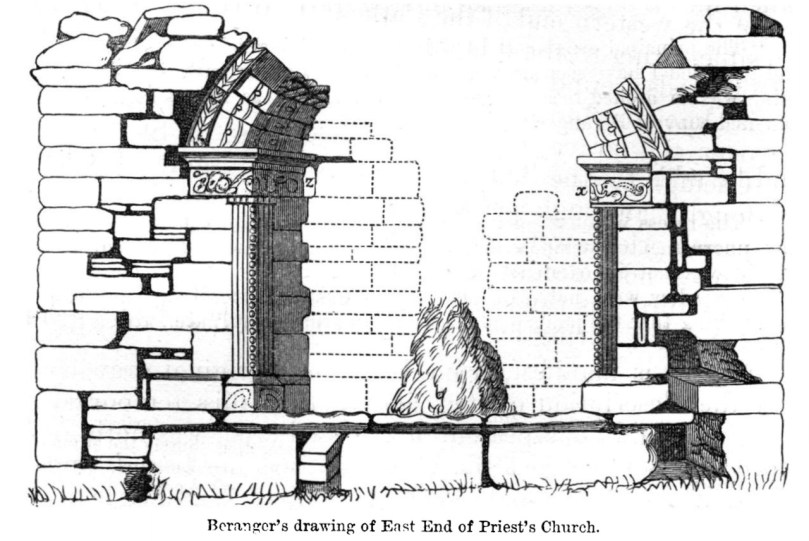
The Priests’ House (above) is a case in point. It had almost totally collapsed. As Corlett says, what can be seen today is a reconstruction carried out in the 1870s from the stones that survived among the rubble. This has presented a lot of problems for our attempts to understand the original nature of function of this building.

The Board of Works focused on the drawings of Gabriel Beranger from 1779 and rebuilt the elaborate romanesque arch as Beranger had depicted it. It remains somewhat controversial since it is highly unusual for such a feature to be on the outside of a building, although Corlett points out that its function may be related to the veneration of relics inside the chapel by pilgrims mounting the step to gaze through the small window.

Next time, I will concentrate on the architecture of Glendalough. It dates mostly from the 12th century and illustrates gloriously the persistence of traditional building designs from the early Irish church as well as the introduction of the Romanesque style with its arches and carvings. Some of the best examples are those that fewest people visit, so you may have a couple of surprises in store.

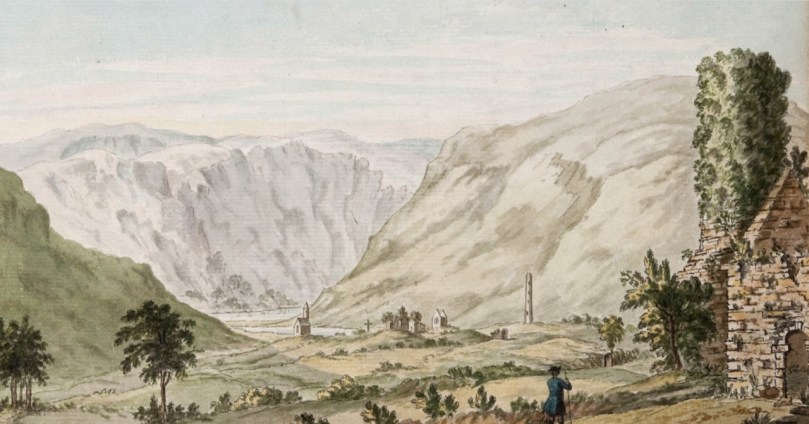
Beranger’s painting of Glendalough, done in the 1770s and showing the bell tower on Trinity Church, now gone