Marconi and Brow Head

WordPress, to my dismay, has now labelled all the content on this blog as ‘by Finola’. This is due to the necessity, for various reasons, of adjusting ‘ownership’ and management parameters. It’s a bit heartbreaking, though, as it’s no longer easily discernible which of the posts (approx half of the 1,132 posts so far) were written by Robert. So every now and then I thought it would be good to highlight one of his older posts. So here is his wonderful account, written originally in 2014, and titled In Search of Ghosts, of the spirits that haunt Brow Head.
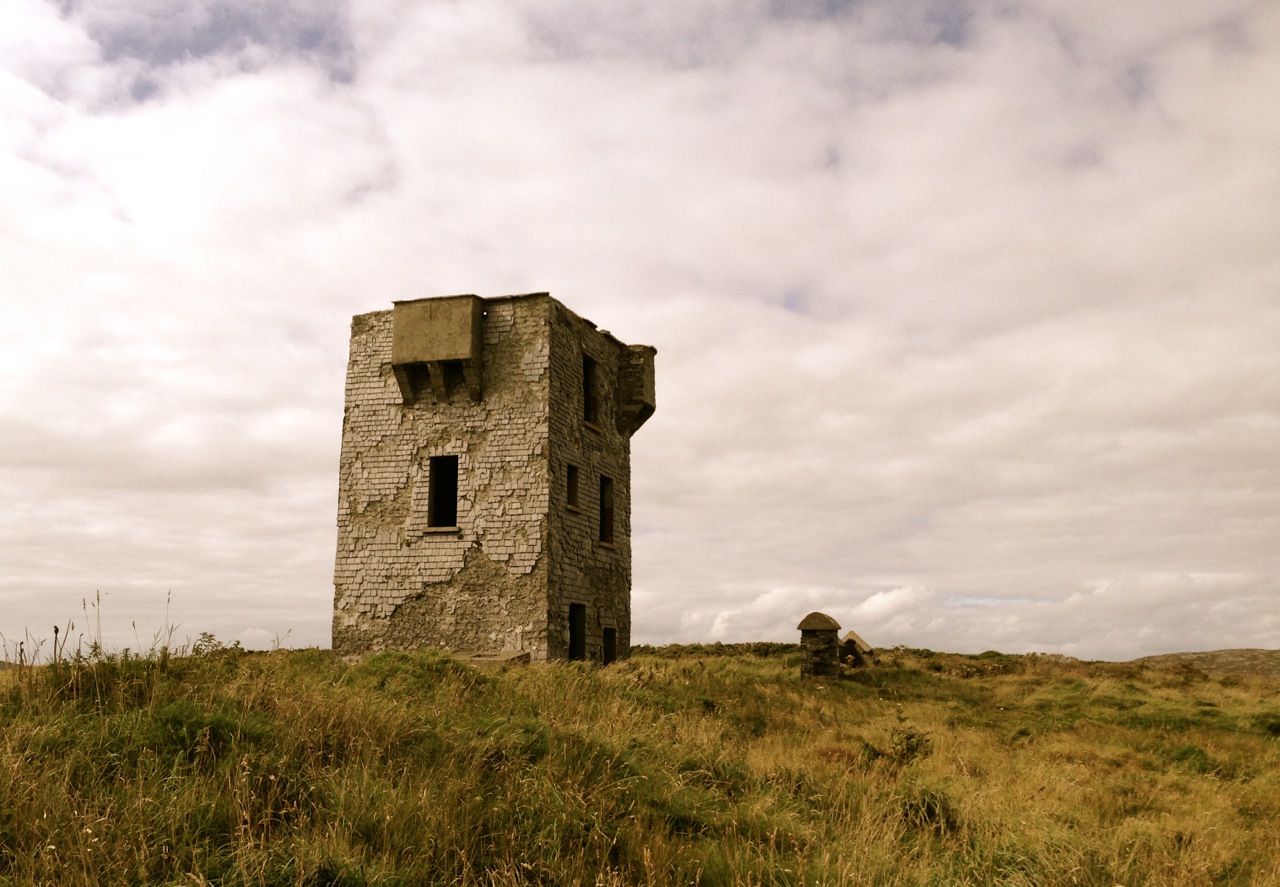
ruin

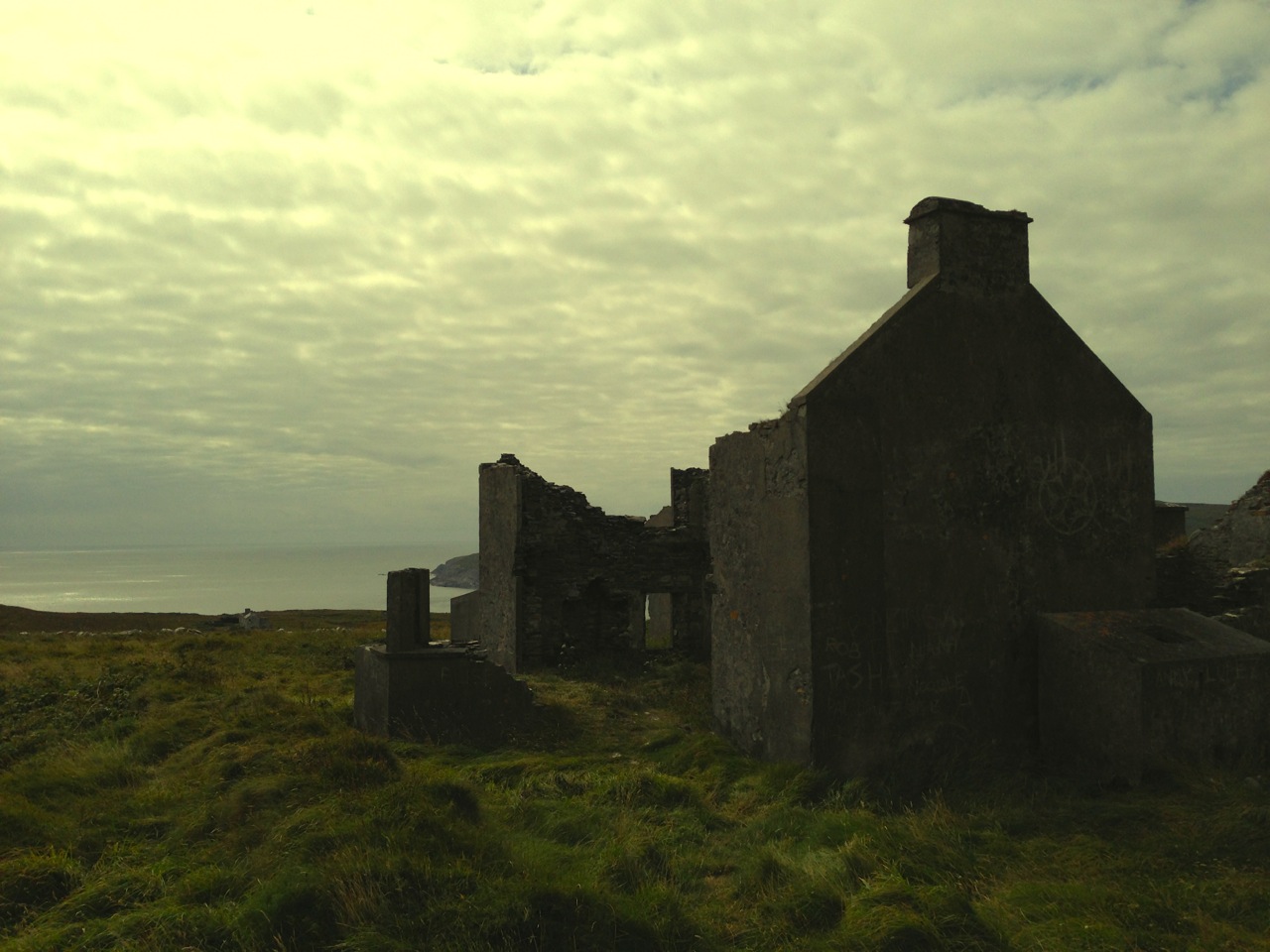
 Lonely and wild – Brow Head is the most southerly point on the mainland of Ireland. There are ghosts here: ghosts of ancient people who created the stone monuments, perhaps 5000 years ago, that are now inundated by every tide in the bay at Ballynaule below this Irish ‘Lands End’; ghosts of early farmers who began to lay out field boundaries criss-crossing this windswept promontory; ghosts of the defenders of an empire who feared a French invasion that never happened; ghosts of the prospectors who sunk two shafts – now barely protected by rusting wire – during the nineteenth century copper mining era; and, lastly, ghosts of the pioneers of our own digital age, represented in the brooding ruins that crown the hilltop here above West Cork’s remotest village, Crookhaven.*

Brow Head - haunt of ghosts
Brow Head – haunt of ghosts
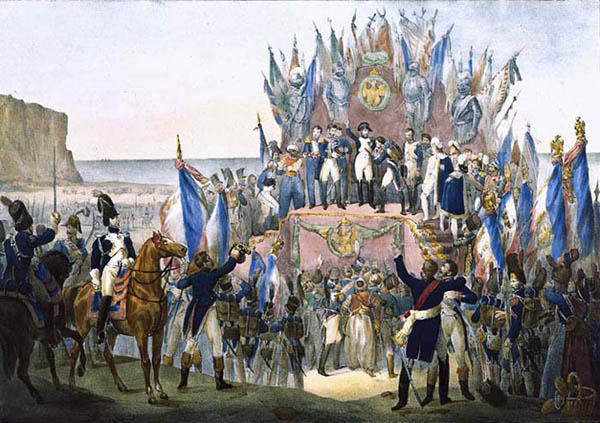
Charles Motte
Napoleon setting his sights on the British Empire 1804 (Charles Motte)
Facing up to Napoleon: Brow Head Signal Tower, built in 1804
Facing up to Napoleon: Brow Head Signal Tower, built in 1804 in anticipation of a French invasion

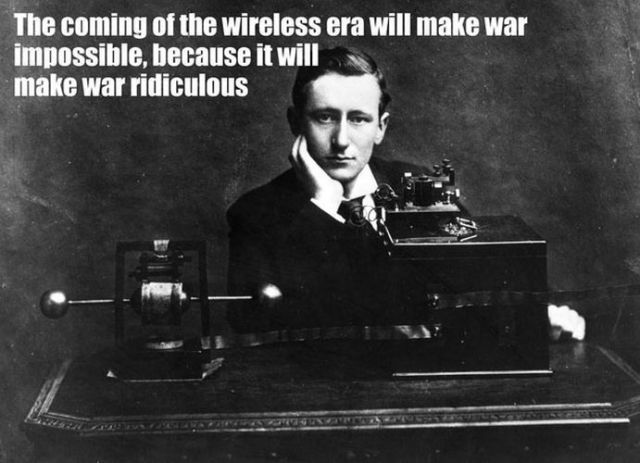
 We can be very specific about one ghost: Guglielmo Marconi – born at Bologna, Italy, on April 25, 1874 to Giuseppe Marconi, an Italian country gentleman, and Annie Jameson, daughter of Andrew Jameson of Daphne Castle, Enniscorthy, County Wexford, Ireland. The Jamesons were and are renowned distillers of Irish Whiskey. It’s reasonable to say that Marconi was an ‘Irish Italian’, and that heritage was reinforced when in 1905 he married Beatrice O’Brien, daughter of the 14th Baron Inchiquin. Marconi’s fame is that he pioneered the commercial application of electromagnetic waves – or Radio.
 

Marconi - wishful thinking!
Marconi – wishful thinking!

At the age of twenty one, Marconi was able to demonstrate to his father how, without any visible physical link (without wires), he could transmit dots and dashes through the rooms of their home in Pontecchio. “…When I started my first experiments with Hertzian waves…” he is quoted as saying, “…I could scarcely believe it is possible that their application to useful purposes could have escaped the notice of eminent scientists…” His parents used their influence to help him travel to England to meet the Engineer-in-Chief of the British Post Office with the result that in 1896 Marconi obtained the first ever patent in wireless telegraphy.
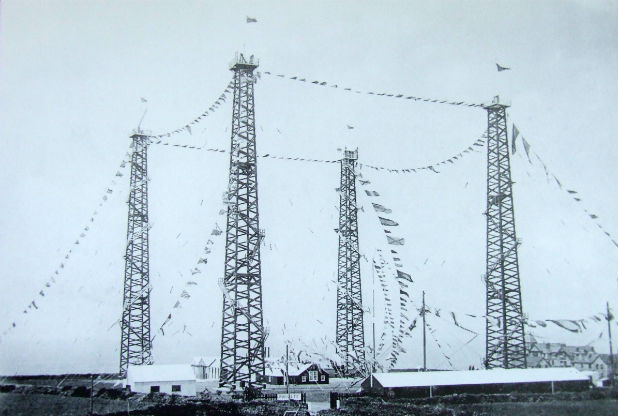
Signal Station at Poldhu, Cornwall, 1914

Marconi’s ambitions started in a room in Italy: by December 1901 he was able to send messages from Poldhu, Cornwall, to St John’s, Newfoundland, a distance of 2100 miles – an historic achievement. In his attempts to bridge the Atlantic with Radio waves he had explored the west coasts of Britain and Ireland for suitable telegraphic locations. One of his destinations was Crookhaven, which he visited many times – using the Flying Snail en route!

The Marconi Wireless Telegraph Station at Brow Head - exactly 100 years ago
The Marconi Wireless Telegraph Station at Brow Head – exactly 100 years ago

 Brow Head was one of a number of transmitting stations set up by Marconi and it got off to a flying start soon after opening in 1901 when, in the presence of Marconi himself, Morse signals were received from Poldhu, 225 miles away. The fact that the Atlantic gap was conquered only a few months after this shows the rapid pace of developments at that time.

Calling America...
Calling America…

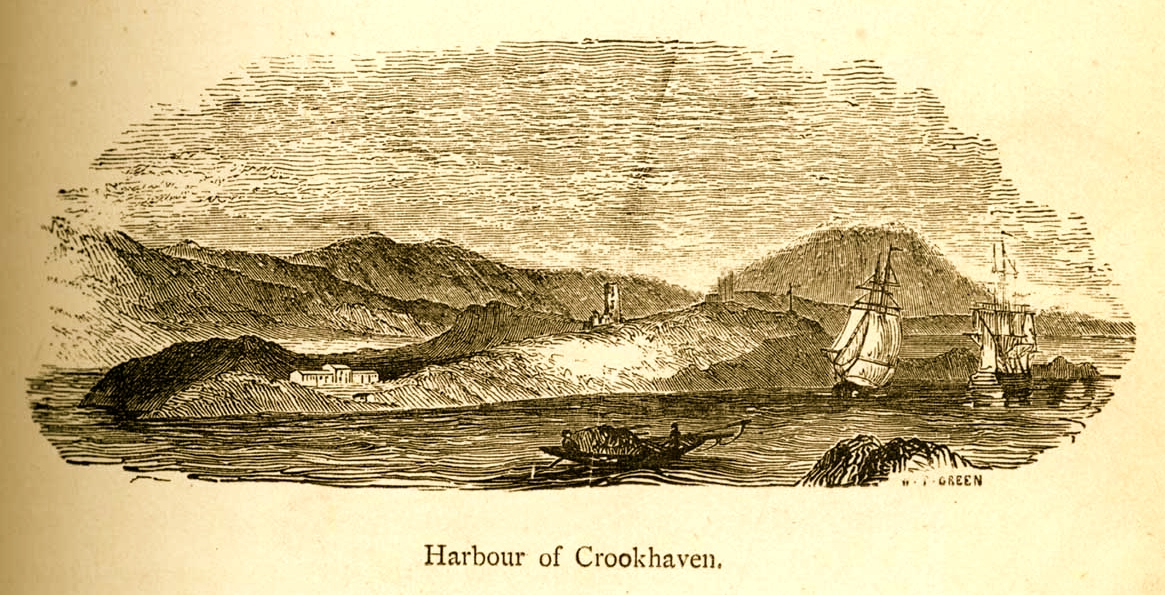
 The village of Crookhaven had long been the first and last port of call for ships going between Northern European ports and America. Over the centuries ships stocked up here with provisions before tackling the open sea. Because of this, the major shipping lines had agents here. Reuters and Lloyds had flag-signalling and semaphore equipment on Brow Head to communicate with the maritime traffic, superseded by the telegraph station. At the end of the 19th Century it was said that “…you could cross the harbour on the decks of boats…” Up to 700 people are reputed to have lived in the area at that time: now, Crookhaven has a permanent population of no more than 40. An article written by one of the telegraph operators in 1911 summarises:

…As Crookhaven is the first station with which the homeward bound American liners communicate it is naturally a busy station. By the aid of wireless all arrangements are made for the arrival of the ships, the landing and entraining of the passengers and mails, whilst hundreds of private messages to and from passengers are dealt with. Messages are also received from the Fastnet Lighthouse, which is fitted with wireless, reporting the passing of sailing ships and steamers. These messages are sent by vessels not fitted with wireless by means of signals to the Fastnet, thence by wireless to Crookhaven, whence they are forwarded to Lloyds and to the owners of the vessels…
Engraving by Mary Francis Cusack, 1875

 We have some first hand accounts of the workings of the signal station in its heyday from the handwritten log books of Arthur Nottage – for many years landlord of the Welcome Inn at Crookhaven – who died aged 90 in 1974. In 1904 he arrived in West Cork (from England) to work on a shift basis with one other man as Marconi telegrapher at Brow Head. Until 1914 he operated the Morse code apparatus with a salary – generous for the time – of £1 per week.
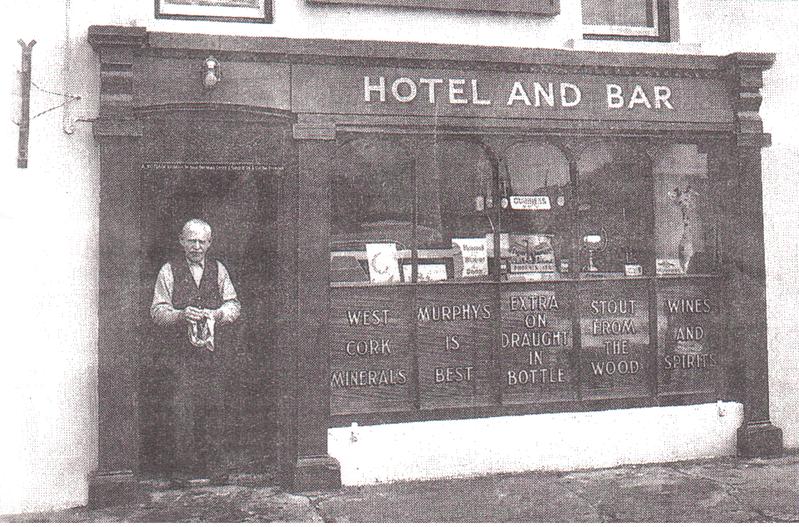
Arthur Nottage of Crookhaven

 A hundred years ago telegraphy had advanced to such a stage that it was no longer necessary for stations to operate close to the shipping lanes, and small, isolated sites such as Brow Head were closed down. Legend has it that in 1922 the Irregulars destroyed the buildings during the Civil War.
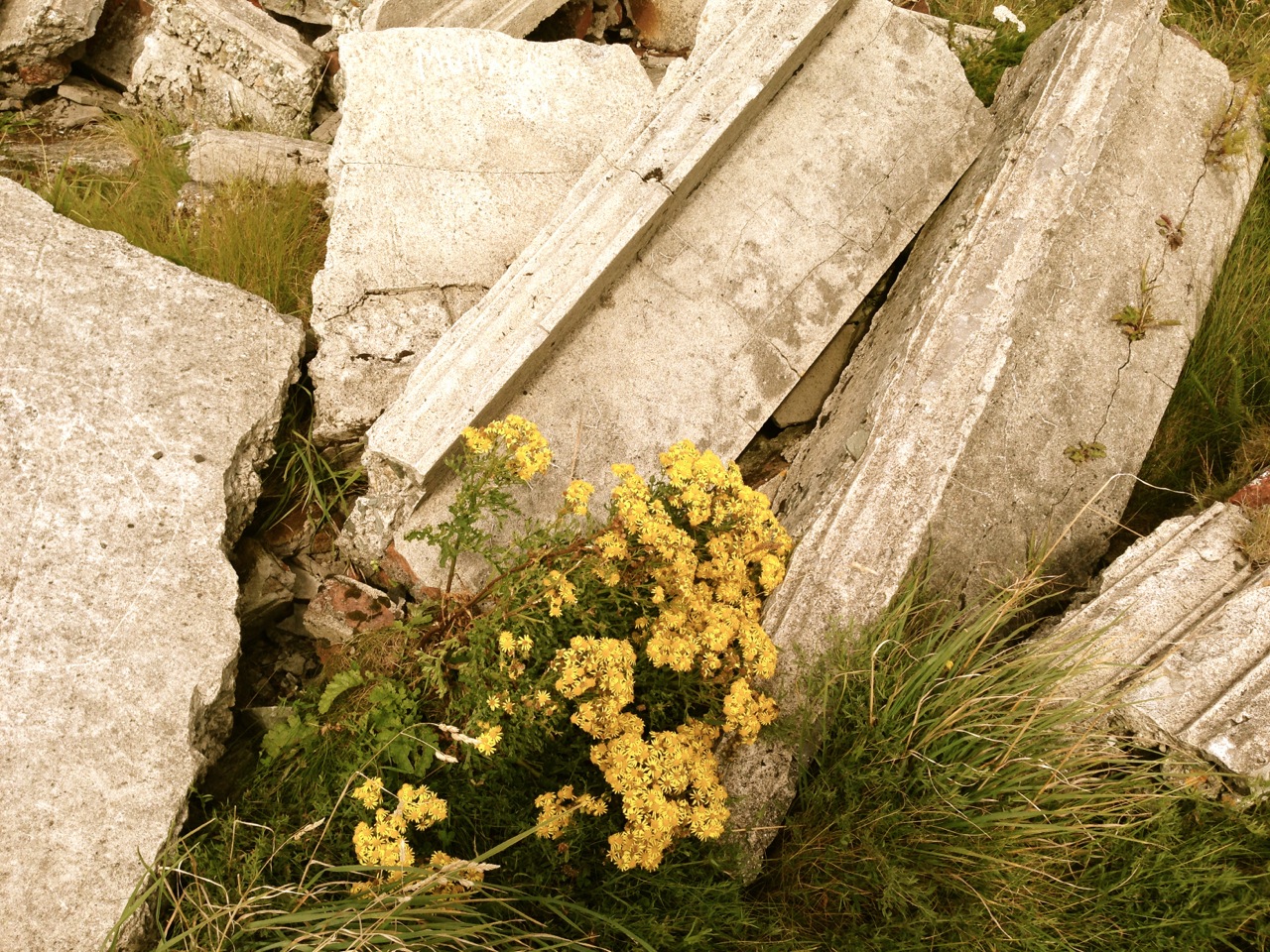
Becoming Archaeology: the ruins on Brow Head today
Becoming archaeology: the ruins on Brow Head today

 Finola and I have both been inspired by the landscape and atmosphere of this Atlantic frontier. It’s a place we will return to. All West Cork landscapes are impressive, but this is a place apart. If you want to feel at the end of the world, walk here: you won’t meet many others, even in the height of the visitor season. Perhaps that’s because it’s haunted – but in the best possible way. Like so much of Ireland the world has come here – a mark has been made – memories have been left behind. Now, you hear the ghosts in the ever-present currents of wind and surf.
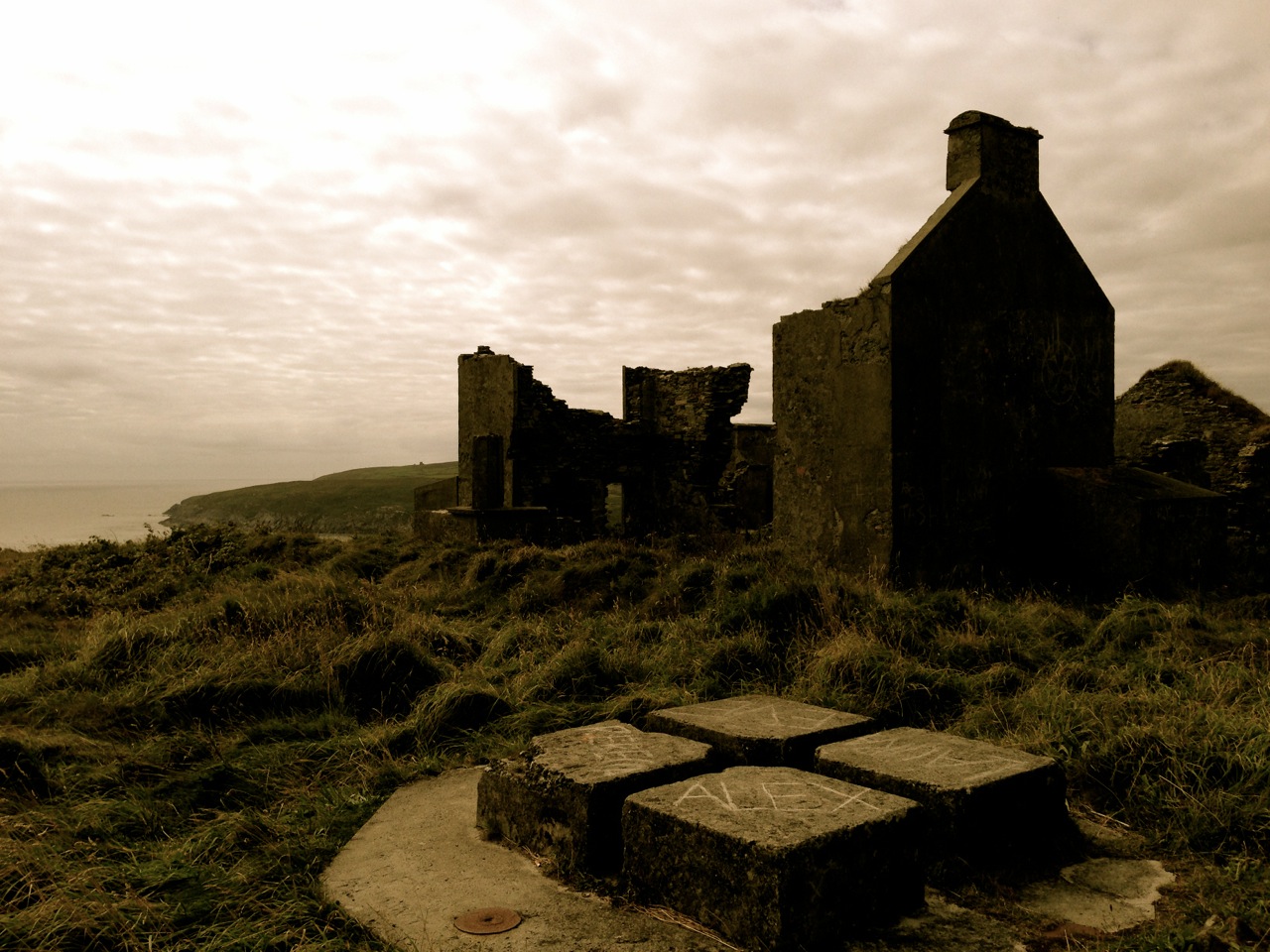
Base of Marconi's mast at Brow Head
Base of Marconi’s mast at Brow Head

 *I am grateful to Michael Sexton and the Mizen Journal (Number 3 1995) for many fascinating items on the Crookhaven Telegraph Station not recorded elsewhere.
Harry Clarke’s Brigid

Harry did several wonderful St Brigid windows, and included Brigid as a saint in larger scenes. There are also Brigid windows attributed to him that he actually didn’t do, but that’s a blog for another time. Today I want to give you a flavour of his take on Brigid, because this was a saint that must have been especially meaningful to him – his mother was a Brigid!

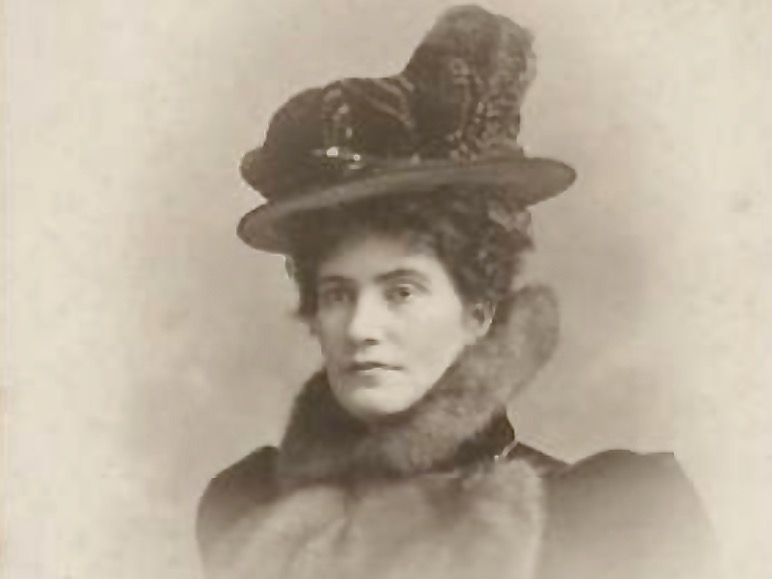
Brigid (sometimes given as Bridget) MacGonigal was born in Sligo and married Joshua Clarke, then an up-and-coming church decorator in Dublin and they had four children. Harry, their third child arrived in 1889. Brigid was never strong and died in Bray in August 1903, leaving her family bereft. Harry was 14 and that year marked the end of his schooling at Belvedere as he and his older brother Walter joined the family business to help run it. Harry was a sensitive child and it is likely that he missed and mourned his mother for many years. He also inherited her weak lungs and struggled, as she did, with his health.

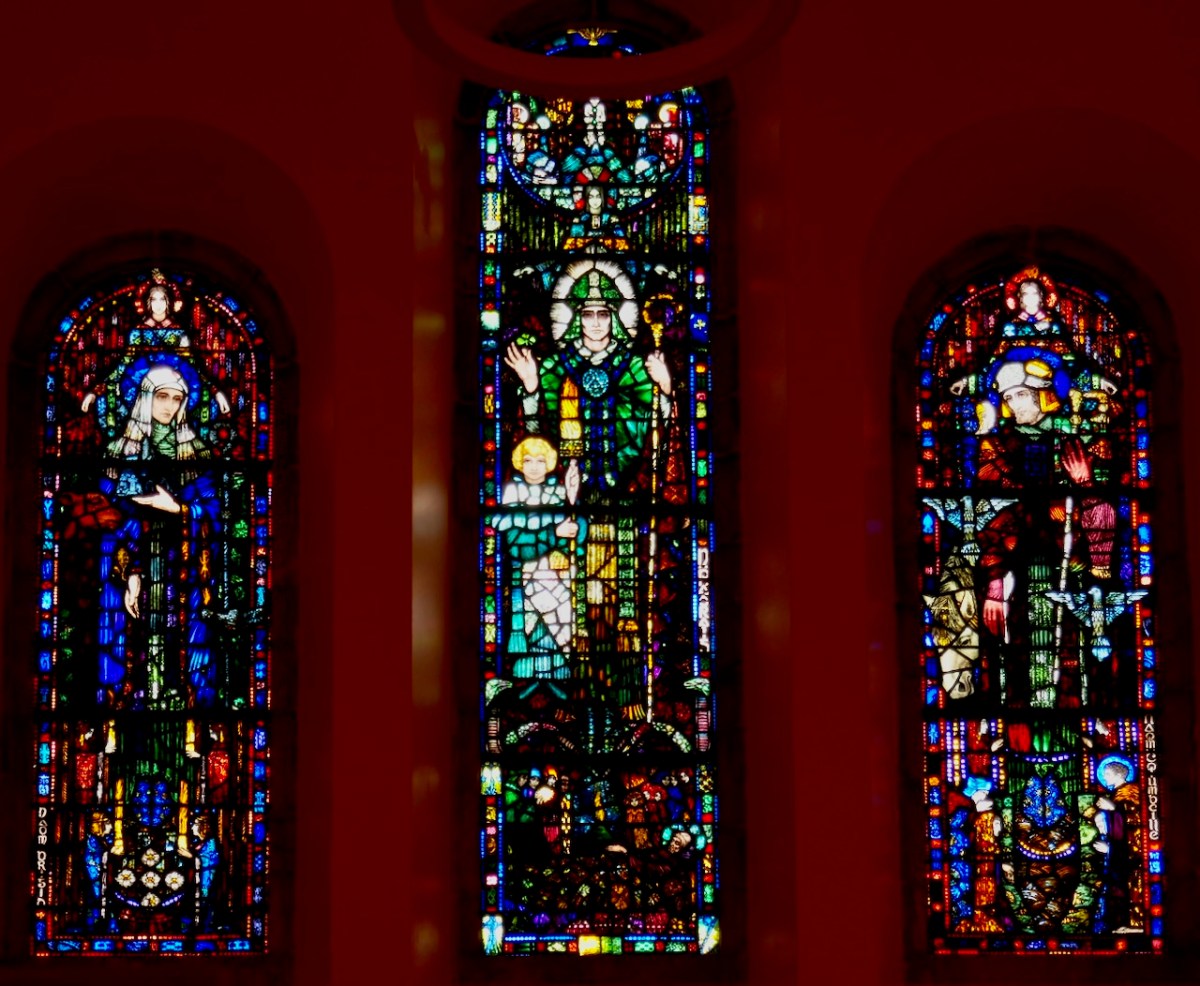
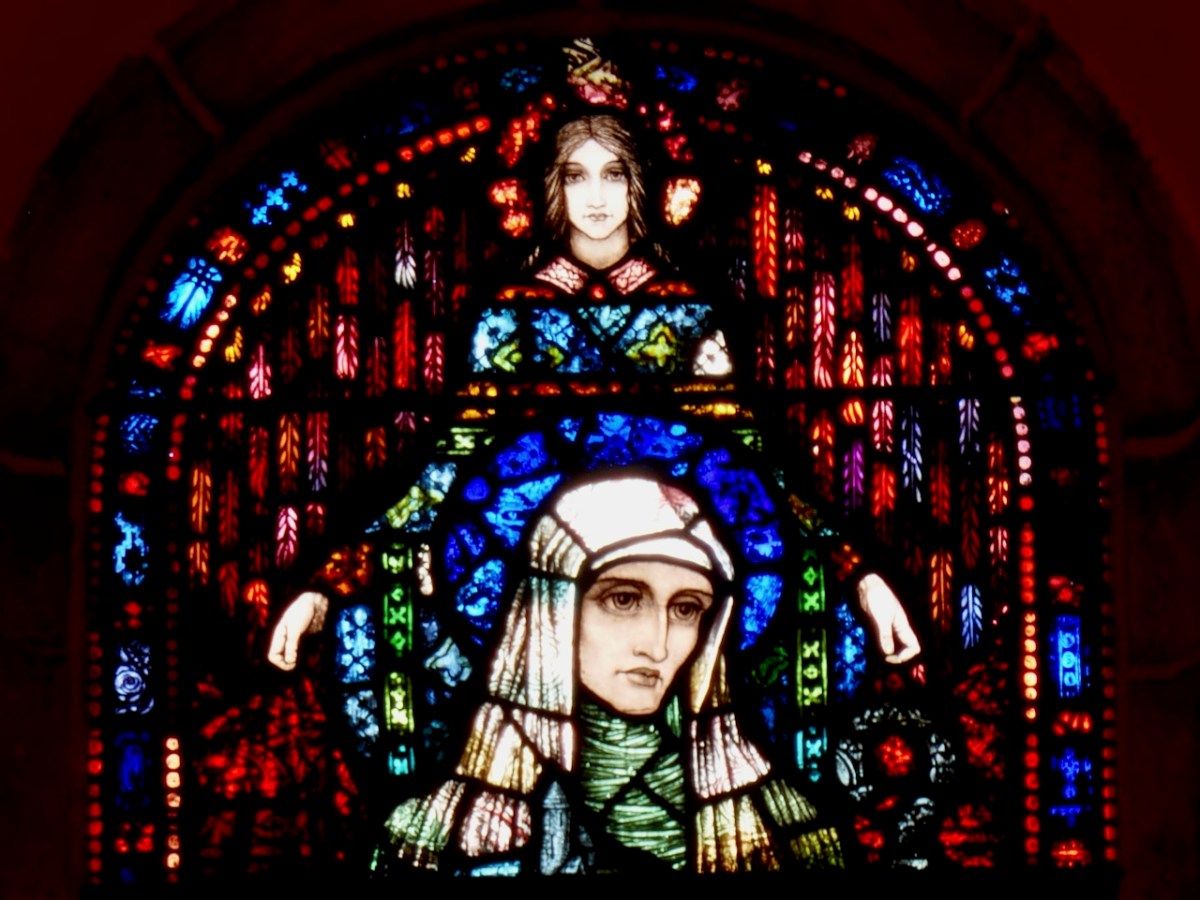
I will start with the place that launched Harry’s career, the Honan Chapel at University College Cork (I’ll finish with the one that is on my lead photo). And in fact it is his first windows for that Chapel – a three light, depicting Brigid, Patrick and Columcille, our three Patron Saints. This window is over the entrance, facing west, which, with Harry’s preference for dark colours and some internal lighting issues in the chapel, makes it hard to photograph.

Harry had completed a detailed sketch design for this window in 1914 (Nicole Gordon Bowe has an image of that design in her magnificent The Life and Work of Harry Clarke) and the window was made in 1915. There are a few differences between the sketch design and the finished window, but on the whole, the window is true to Harry’s original vision for it. His notes for the window refer to 

Top: The Angel with the cloth of heaven forming background

The Figure: With emblems – the church, the inextinguishable spiritual lamp – the calf and the oak.

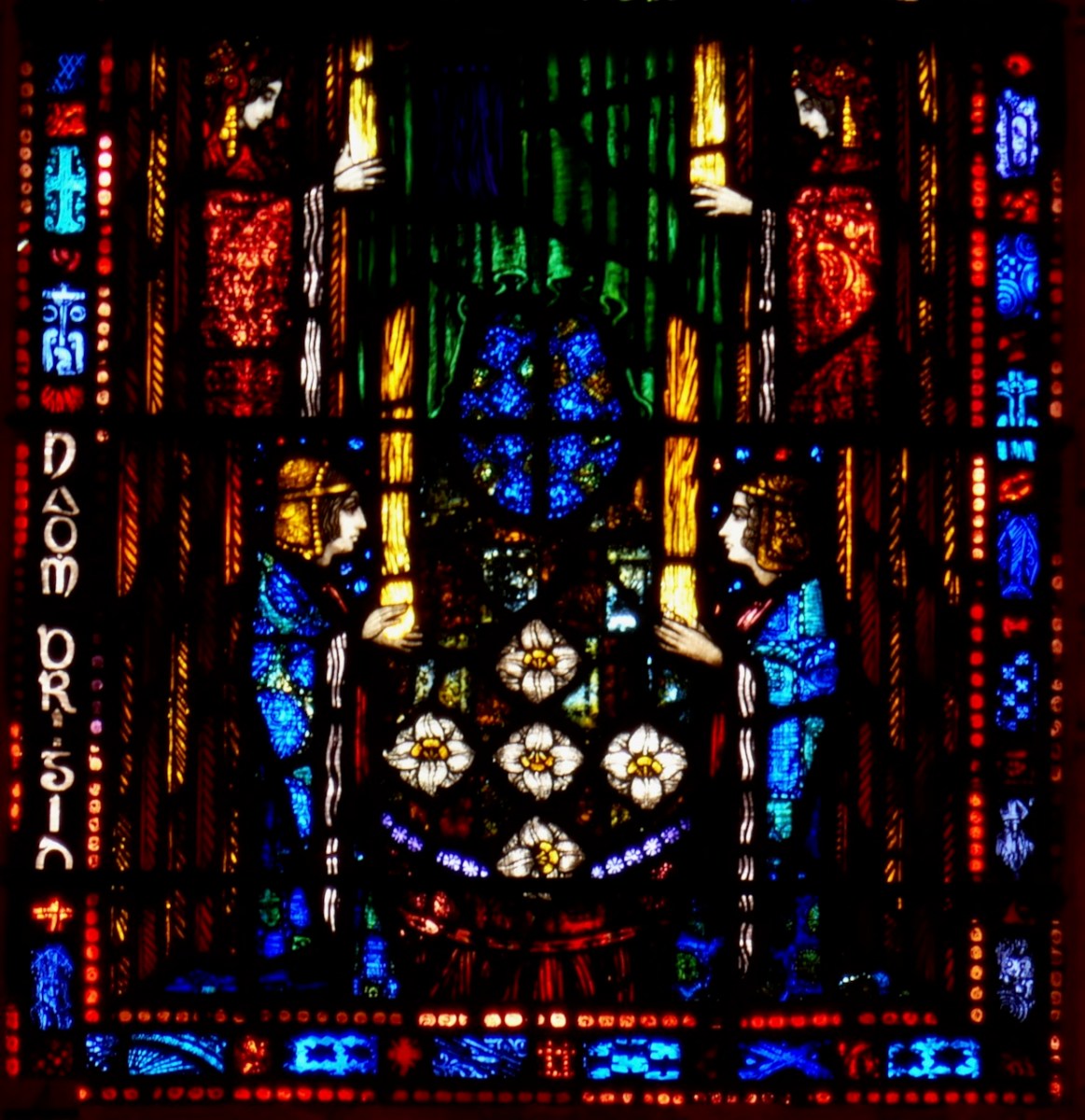
The Base: Are four angels carrying the prayers, prophesies, miracles and charities of St Brigid, also are shown the five lilies – she has been called the Mary of Ireland and these lilies symbolise the five provinces of Ireland over which she held spiritual control.

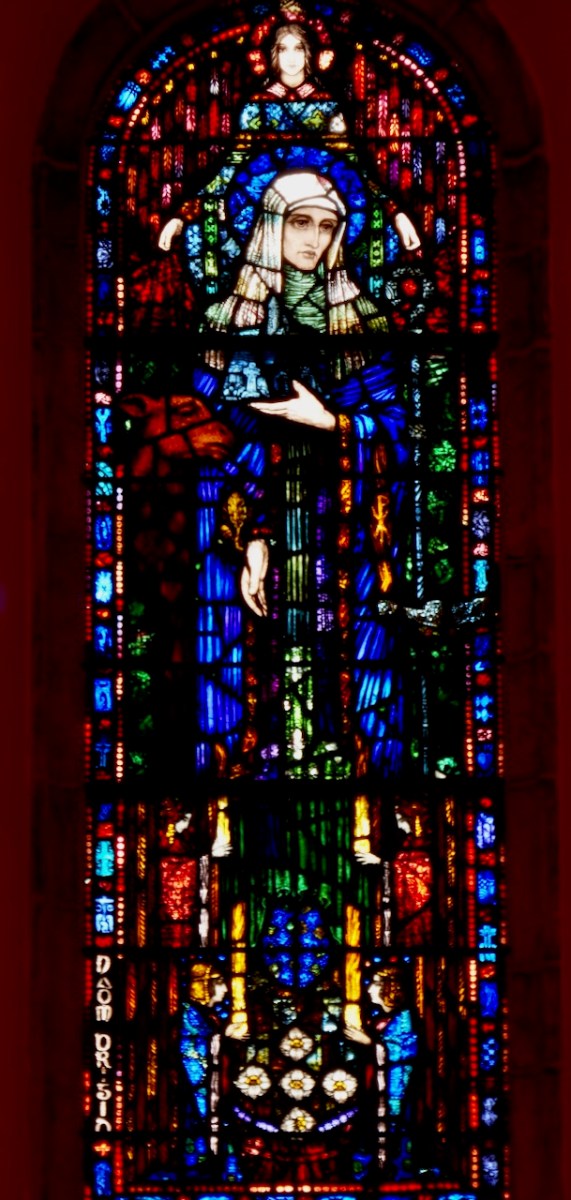
The cloth of heaven has been imagined as fronds in deeps reds, while St Brigid is shown as mature, wise and compassionate. She is holding a church which looks a lot like St Kevin’s Kitchen in Glendalough. In her other hand is a brown oak leaf, threaded through her fingers. The calf peers out from her right side. As befits a Mary of the Gael, she wears a deep blue robe. 

The predella (lowest section, above) shows four angels, but what they are carrying are torches – a reference to the spiritual lamp and the fire associated with Brigid. The symbols of the five provinces, recognisably lilies in the sketch design, have changed to another flower I can’t name. Note the tiny details, though – the crucifixion scene in the borders on the left and the right. The other detail to note here is that the fingers, of Brigid and the angels are ‘normal’ – Harry has not yet developed his signature long tapering fingers and pointed sleeves (among the idiosyncratic elements he called his “gadgets’).

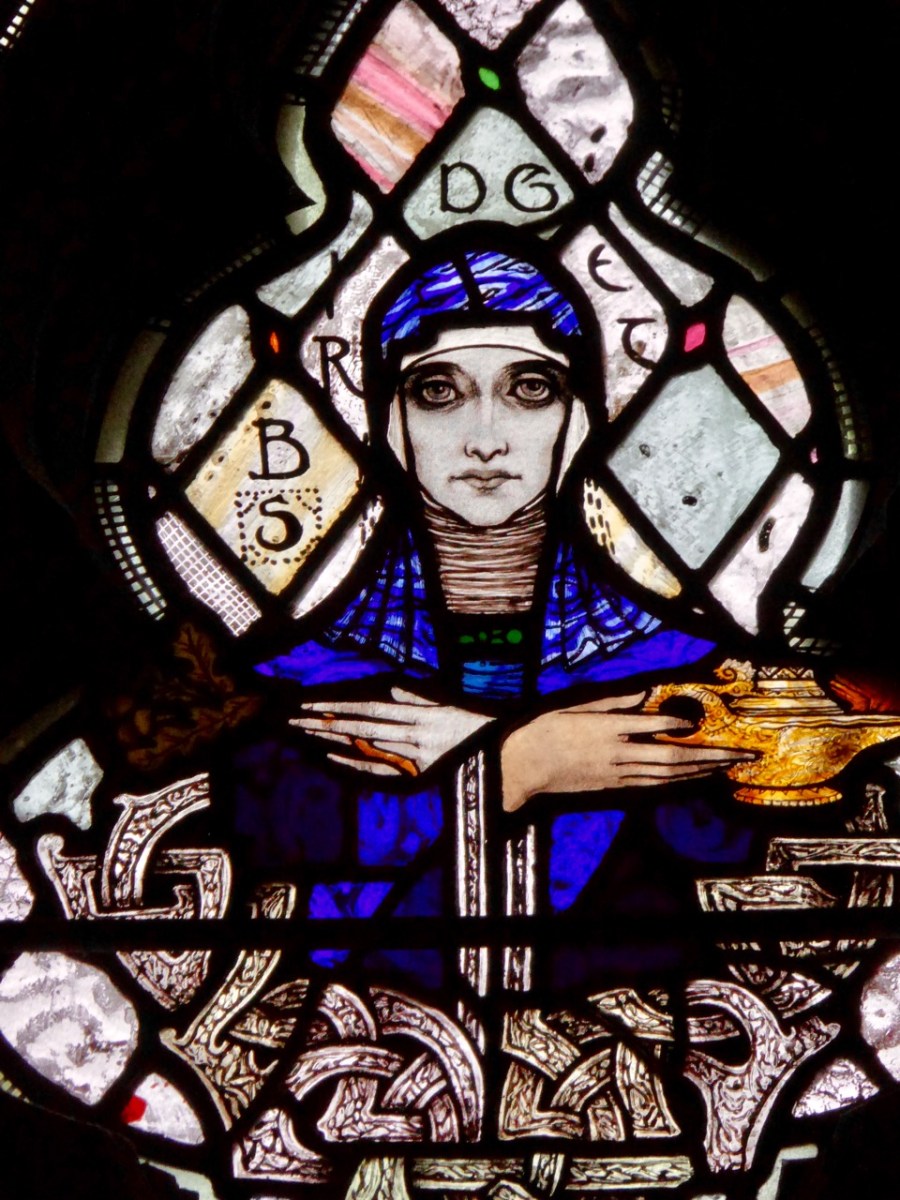
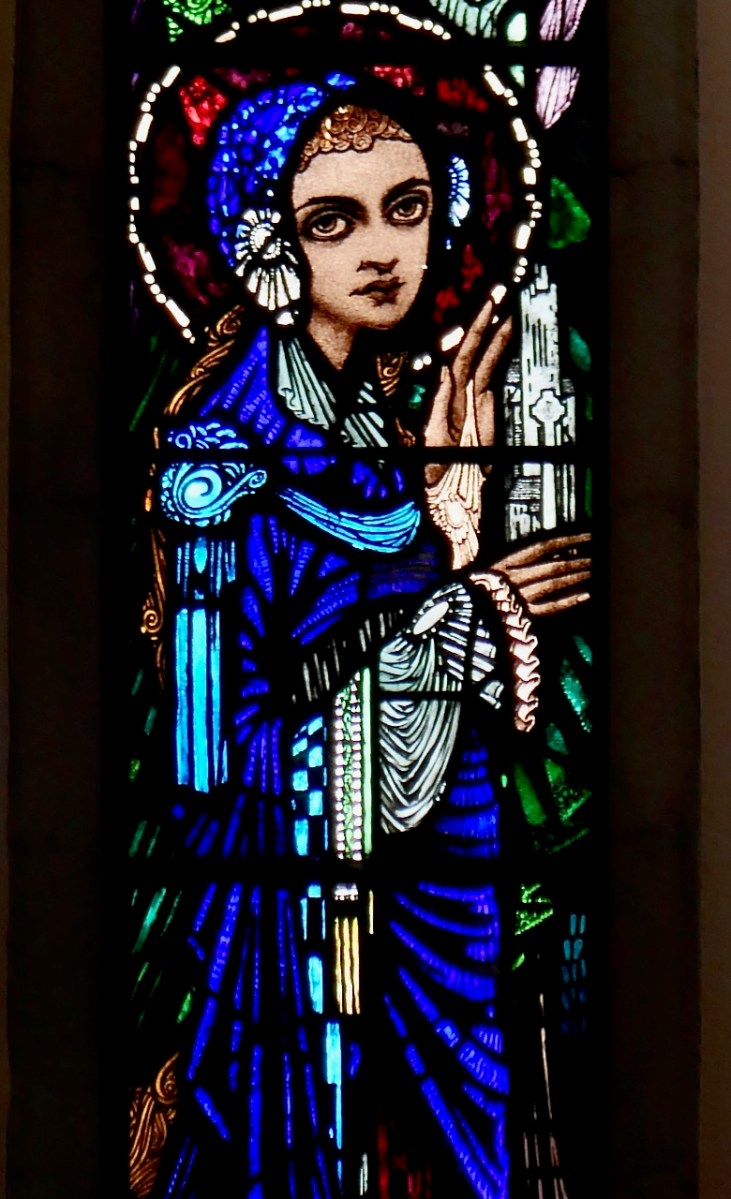
His next Brigid (above) was for the Nativity window in Castletownsend – I have written about that window extensively here so pop over and have a browse if you fancy. The Castletownsend Brigid, done in 1918, looks quite similar to the Honan Brigid and has the same oak leaf entwined in her fingers. The difference is that she is carrying the sacred lamp, has the Harry Clarke fingers, and is spelled S Bridget – the English version rather than the Irish Naomh Brighid of the Honan. [For non-Irish speaking readers – the small dot on top of consonants in Irish is now normally rendered as H – as in Briġid is now Brighid.]

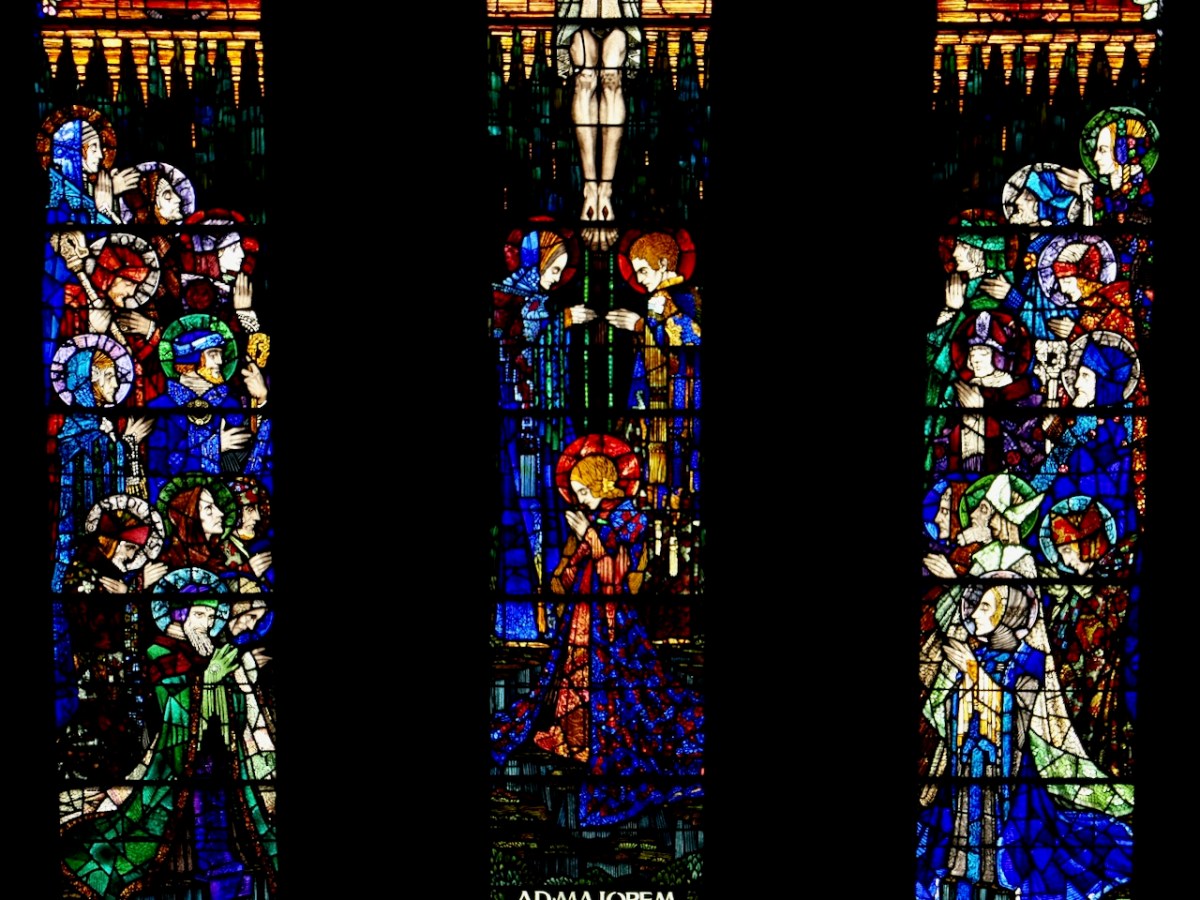
The next two windows, Terenure (above and below, details) from 1920 and Cloughjordan from 1924, show Brigid among a host of other saints. In Terenure the subject of the large window is The Crucifixion and the Adoration of the Cross by Irish Saints, and this is a large, three-light window behind the main altar. The saints are not all easy to identify, despite having their names in their haloes, but first and foremost among them are Patrick on the left and Brigid on the right.

Brigid is dressed in a blue robe which drapes on the ground around her, and has a golden trim to her sleeves.

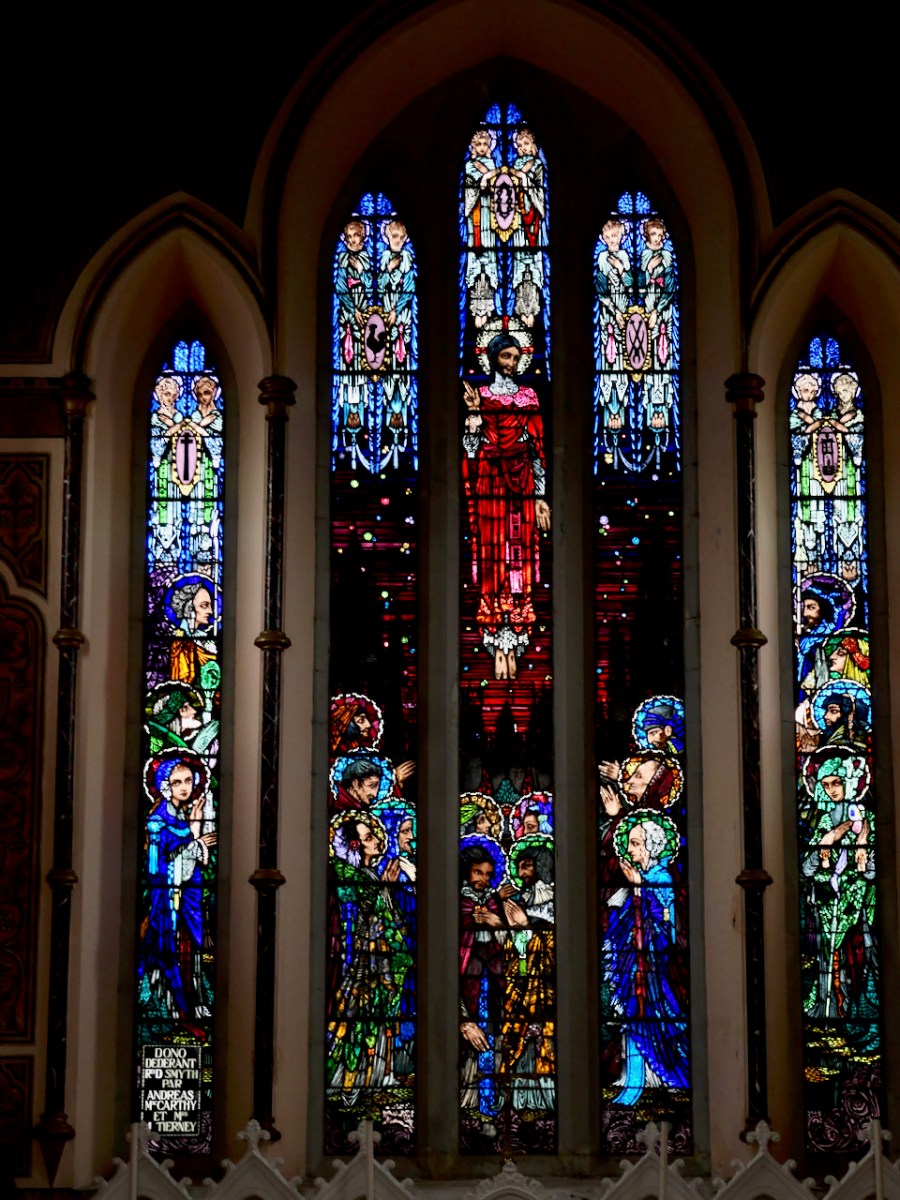
In St Michael and St John’s Church in Cloughjordan, Co Tipperary, the theme of the large, five-light, window is The Ascension with Irish Saints and St Michael and St James. Gordon Bowe designates this one a Harry Clarke (B). That means that this window was initially conceived and designed by him but executed by his studio under his close supervision. This is the first window we have come across, in this series, that is not wholly Harry’s own work, and this is a measure of how busy the Studios had become with Harry at the helm. 

As in Terenure, Brigid is here as one of the Irish saints. She is depicted as very young, wide-eyed, and carrying a church which now looks more medieval than Romanesque (neither would have been appropriate to her era) and is probably a nod to the Cathedral in Kildare.

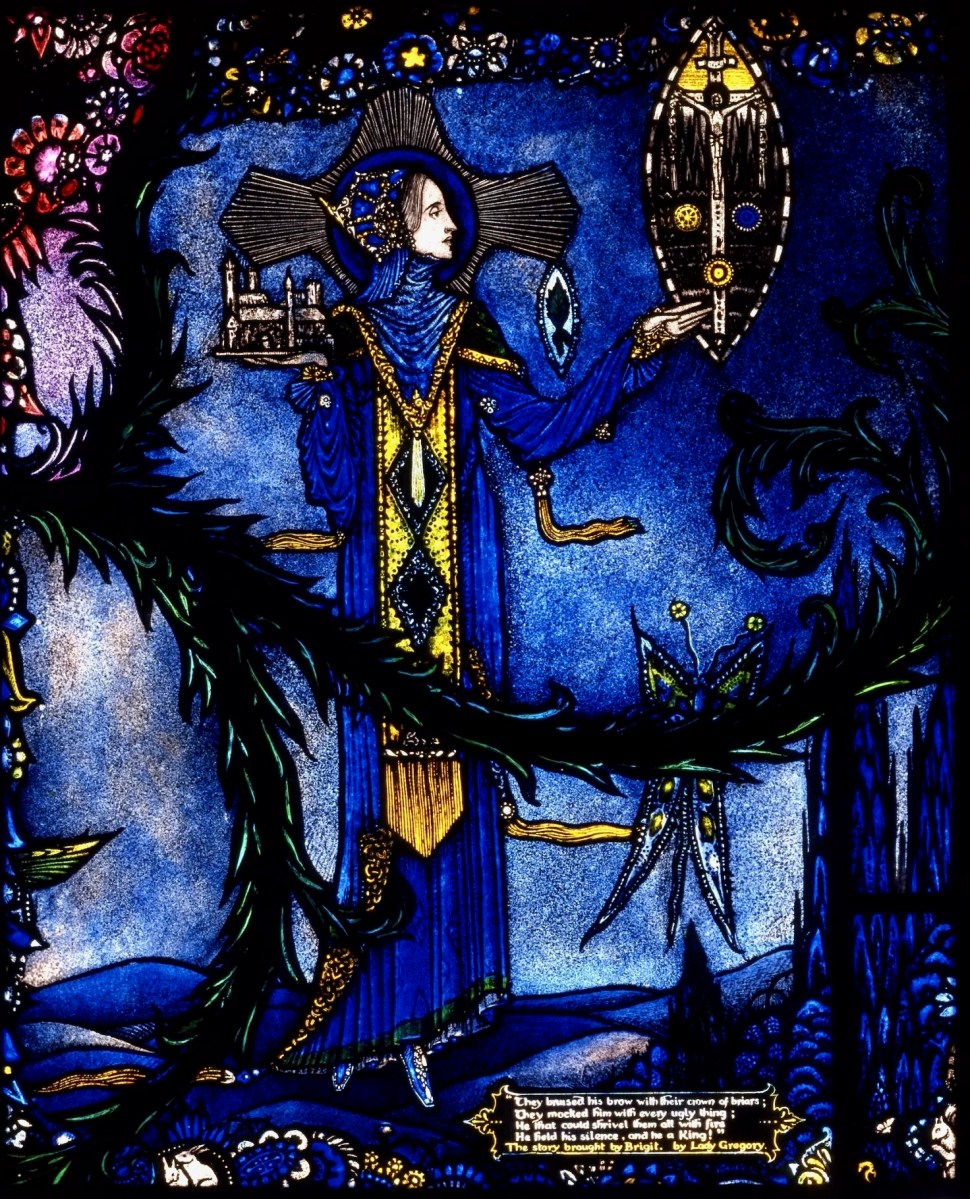
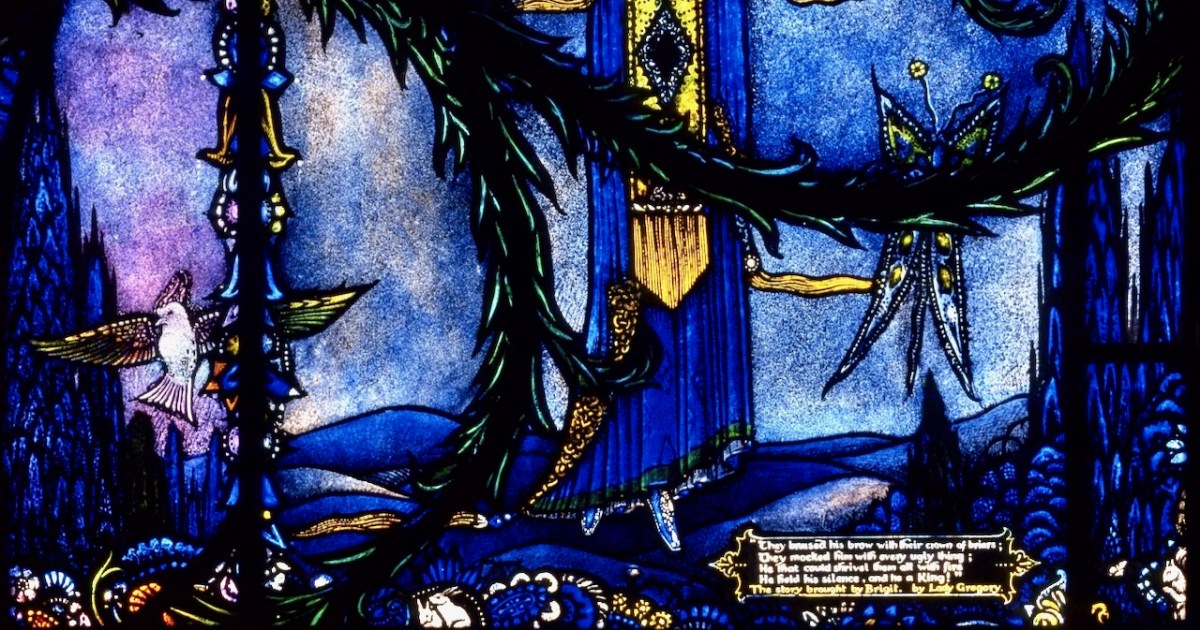
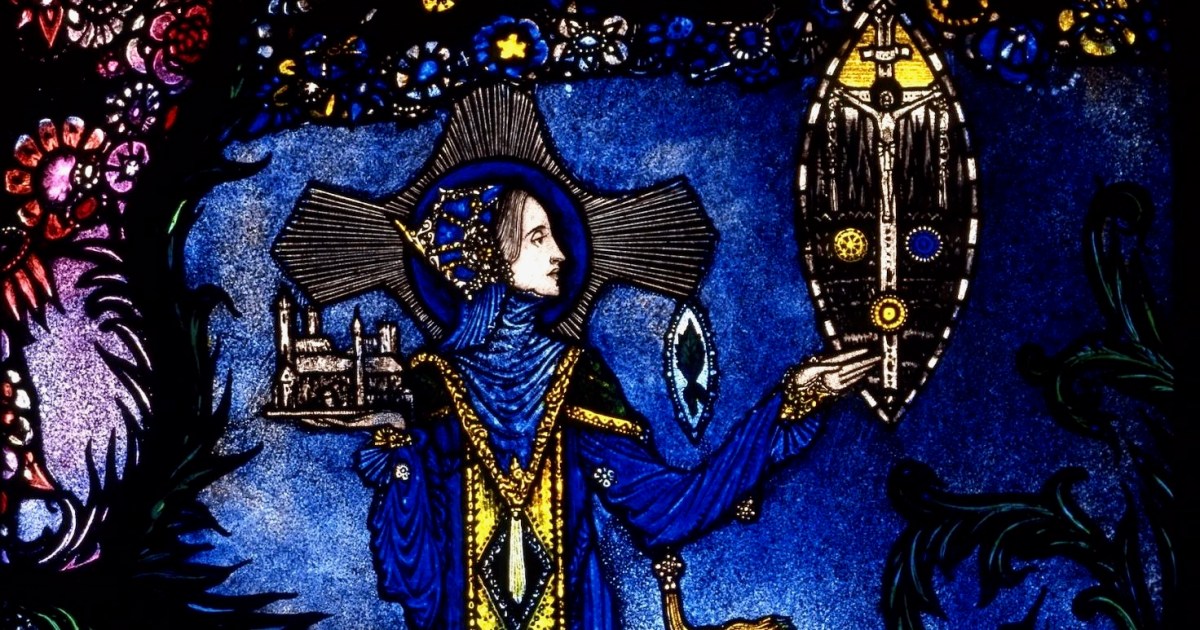
And so we come to the last Brigid that Harry ever did*. It is from the famous and controversial Geneva window, now in the Wolfsonian Museum in Miami. If you have not yet seen the marvellous documentary that Ardall O’Hanlon has made about this, I highly recommend you do. It’s available on the RTE Player as of this time of writing. The Brigid panel is among the less controversial images in the whole window. It’s based on a play by Lady Gregory called The Story Brought by Brigit. According to Marie T Mullan in her lovely book, Exiled from Ireland: Harry Clarke’s Geneva Window

The play is a passion play, but it is based on the legend, popular in Ireland and Scotland, that St Brigit was present at the birth and crucifixion of Jesus. Brigit mingles with the crowds from the time of Jesus’s triumphant entry into Jerusalem until after his death. She is a foreigner, observing and commenting. She tells people she is Jesus’s foster mother and brought Mary and Jesus to Ireland to escape Herod. . . The icon of Christ Crucified is a the vesica, a shape used often in art for a picture within a picture, and has the traditional beaded frame. Brigit is absorbed in the icon.

Note Brigid’s golden scapular and elaborate headdress. Also the stylised butterfly and the little woodland creatures in the scene.

I think that’s a good place to stop. Harry did another Brigid, for the Oblate Fathers in north Dublin’s Belcamp Hall. This is a sorry tale in which the buildings, once left by the priests were subject to appalling vandalism and the windows are in storage, and haven’t been seen for years. This is tragic. 

* Thanks to my friend Jack Zagar for the Photos of the Geneva Window.

Goodbye Éowin, Hello Herminia (or maybe Hugo)

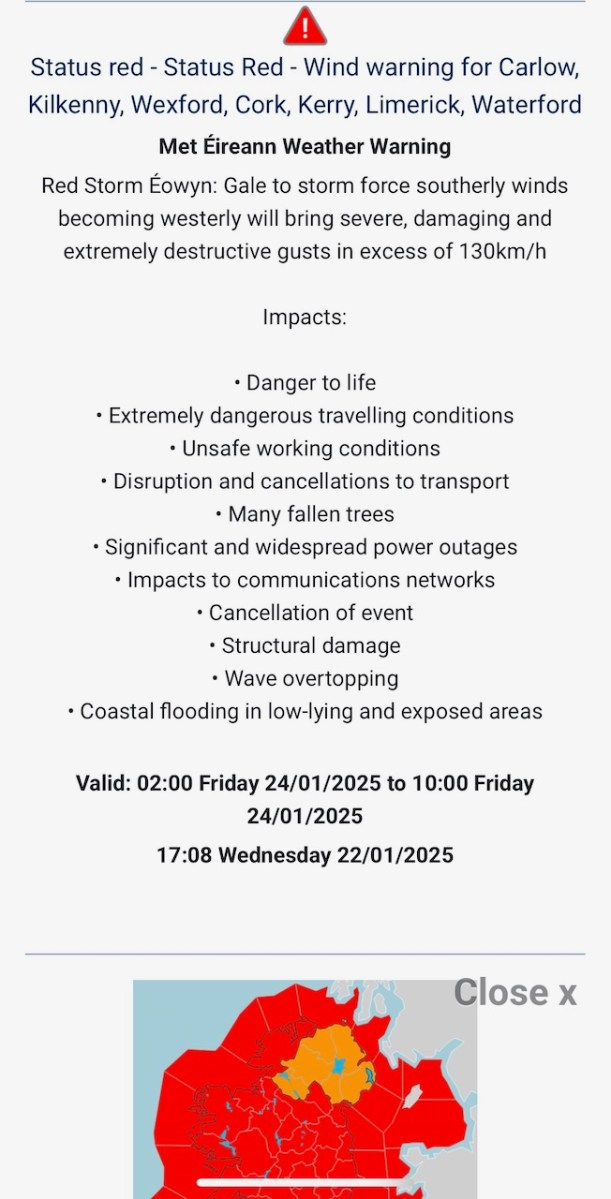
I’ve been without power for half a day and without internet (aaaargh!) for the last few days, finally restored last night. So this is a brief post and of course it has to be about the weather. This is what Storm Éowin (a character from Tolkien, apparently) looked like as it barrelled towards us across the Atlantic last Thursday night, packing winds of 147kmh.

Screenshot

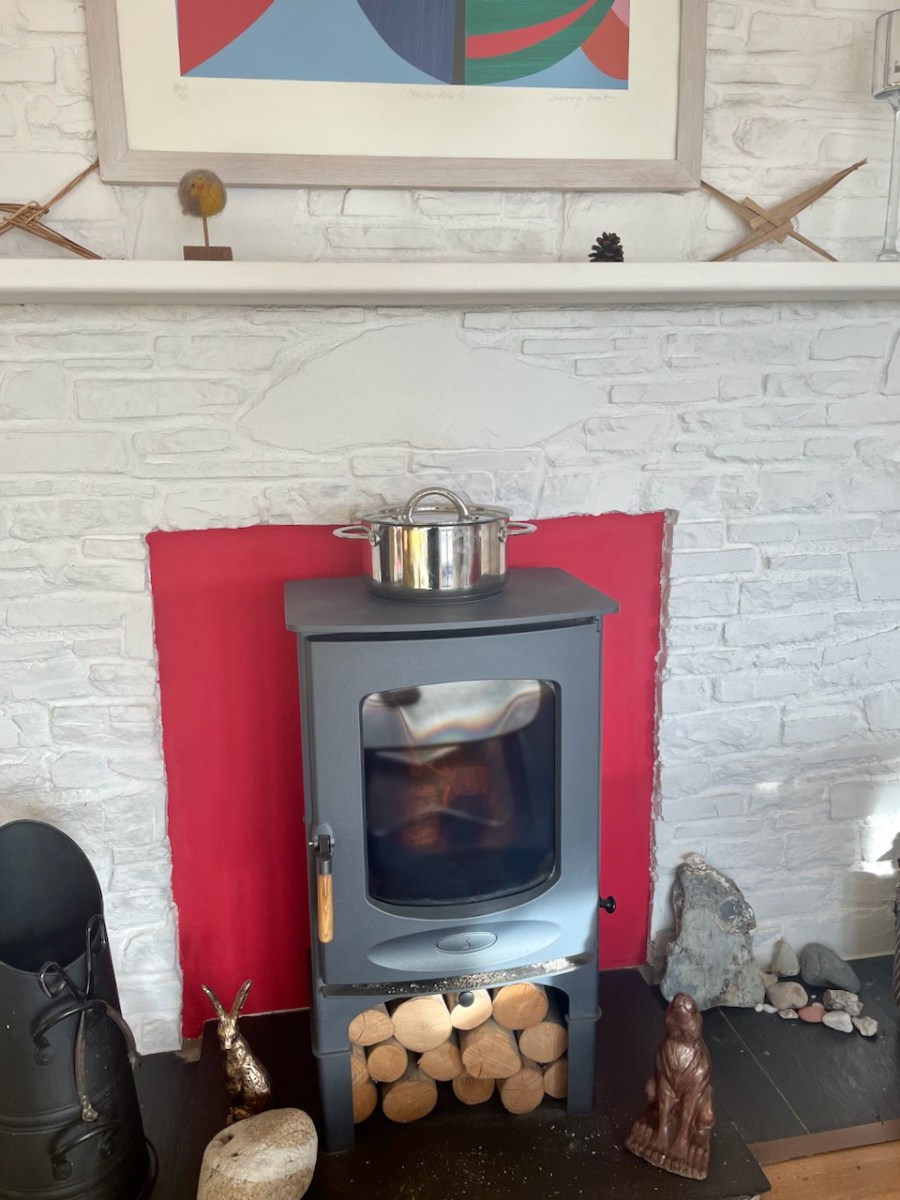
The whole country came to a standstill and I lay awake listening to the tiles rattle on the roof and various ominous crashings and bangings and thinking about my PV panels and how secure they are. I need not have worried – Éowin roared over us and did less damage around here than our most ferocious one ever, Storm Darwin. I hunkered down on Friday, boiling water on the wood stove – and even had neighbours over for coffee!

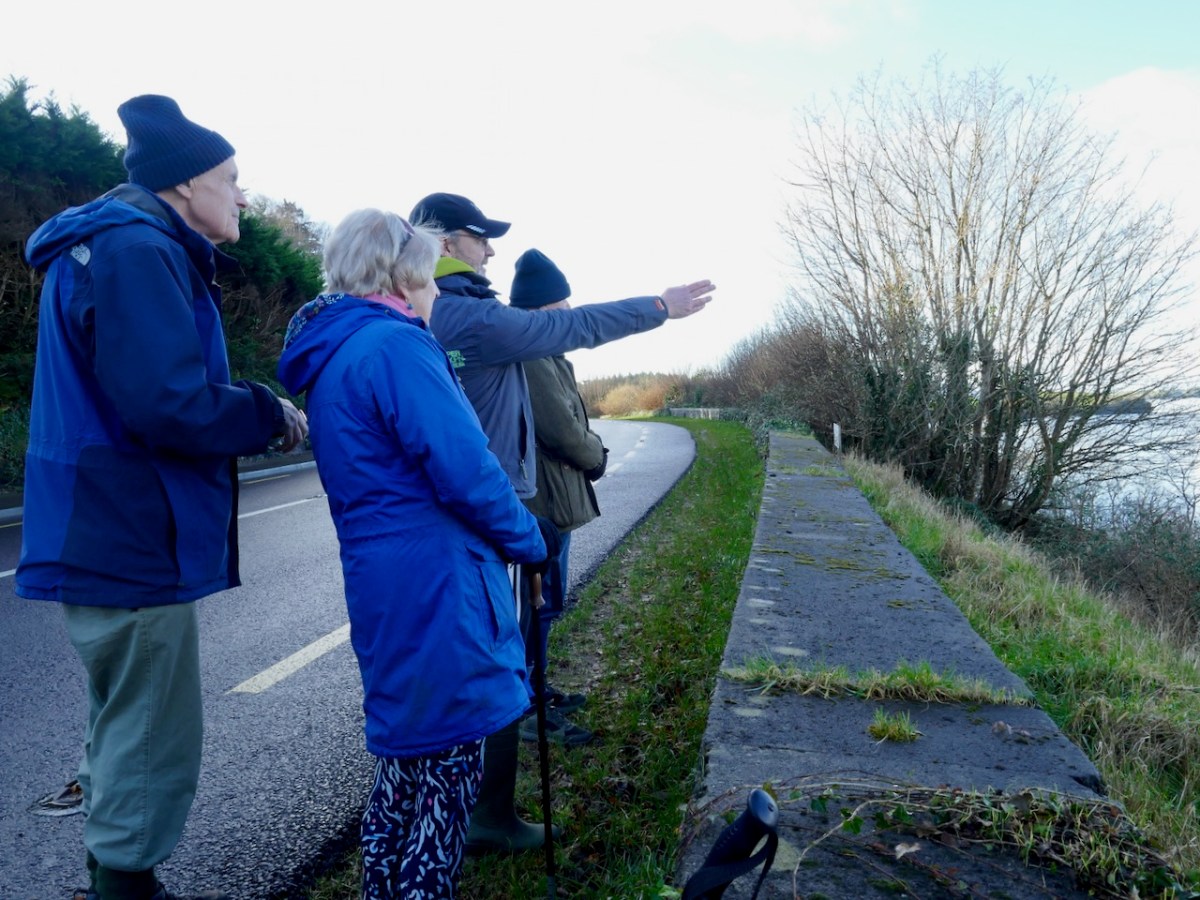
Some parts of the country got very badly hit indeed and are still without power and are coping with the damage, so we were comparatively lucky. And now it’s Sunday and Storm Herminia is hitting us – although inexplicably it’s also called Storm Hugo on the Met Éireann website, with a yellow warning already in place. To show you what it looks like outside, I am reposting a stop-motion video we made several years ago of how the weather sweeps across our view. This is a thirty minute session of Irish weather coming in to Roaringwater Bay compressed to thirty seconds, each frame being shot a second apart.

And now I will re-post the results of Storm Darwin – so far the worst storm we have experienced in our time here. The rest of this post dates from 2014:
Storm Darwin, 2014

By Rossbrin Cove, after Storm Darwin
Weather ap

We looked back recently and counted the number of posts both of us have done on the subject of the weather, and decided not to do any more on pain of boring our readership to death. But this week Met Eireann issued a rare Code Red warning and their direst predictions came true. The Southwest of Ireland was pounded by hurricane force winds, the like of which many people had never experienced before. Storm Darwin wreaked havoc in our corner of the world.

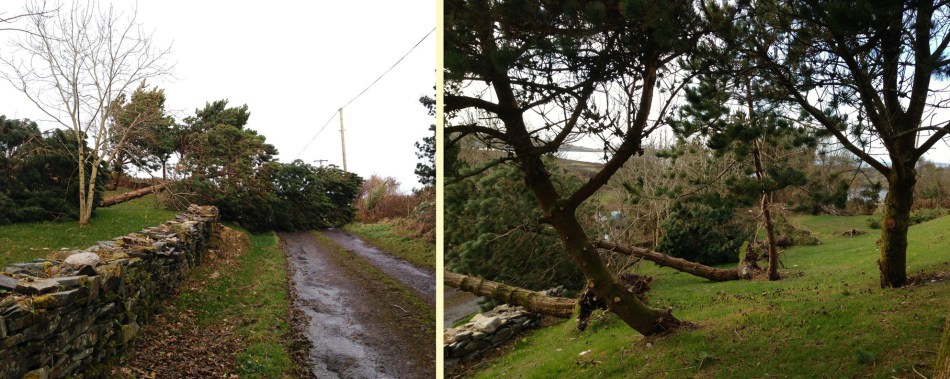
We were lucky! Our power was off for several hours, but our house is set up so we can still stay warm, run water, and cook. We lost a few more trees, including two that fell over the road, blocking access. Our terrific landscaper, Thomas, chainsawed them off so that at least cars could get by. Trees that came down in our neighbour’s property severed our telephone cable and we have been told that it could be ten days before this is fixed – so we have no landline and no internet. We use our cell phones to connect whenever we can in cafes in town or in friends’ houses, but reception has been spotty all week due to storm damage.

We're almost out of trees now in the haggard
We’re almost out of trees now in the haggard

Many of our neighbours have not been so fortunate and are still without power. For some this can also mean no water and no way to cook. The County Council has issued a warning to boil drinking water amid fears that water supplies have been contaminated. All over the countryside crews are out clearing away trees and restoring cables. Two young men were swept to their deaths by huge waves on the north side of the Sheep’s Head. Another man, part of a telephone repair crew, has died while working on the high wires. Roads and towns flooded although this time the storm surges did not coincide with high spring tides so the water damage was not as bad as it had been earlier in the year.

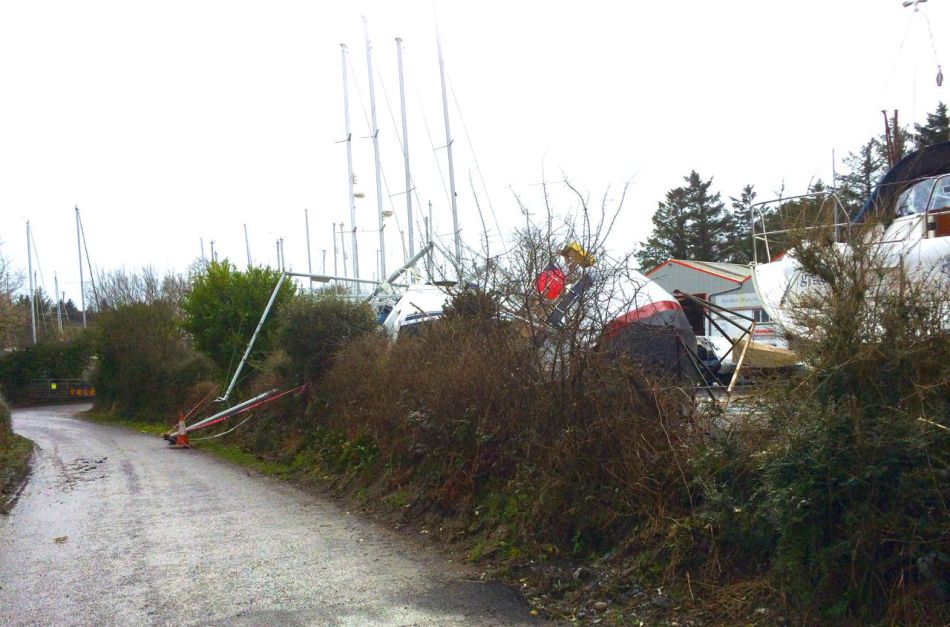
Boats blown down
Boats blown down

Saintly Soup: Maura Laverty’s Feasting Galore

I have long been a fan of Maura Laverty. I was delighted to receive as a Christmas present from my brother a copy of a book by her called Feasting Galore: Recipes and Food Lore from the Emerald Isle. For more on Maura Laverty, and as background to this post, it might be a good idea to go back now and read my post Kind Cooking.

Feasting Galore appears to have been a book written (or rather compiled, as it seems to have borrowed stories and recipes from her other books) especially for the American market (Emerald Isle in the title is a clue). One of those books, of course, was Full and Plenty and there’s great news, by the way for Maura fans – Mercier Press, who owns the publishing rights to Full and Plenty and currently has an abridged version available, is going to re-issue it in full later this year.* I’ll be lining up!

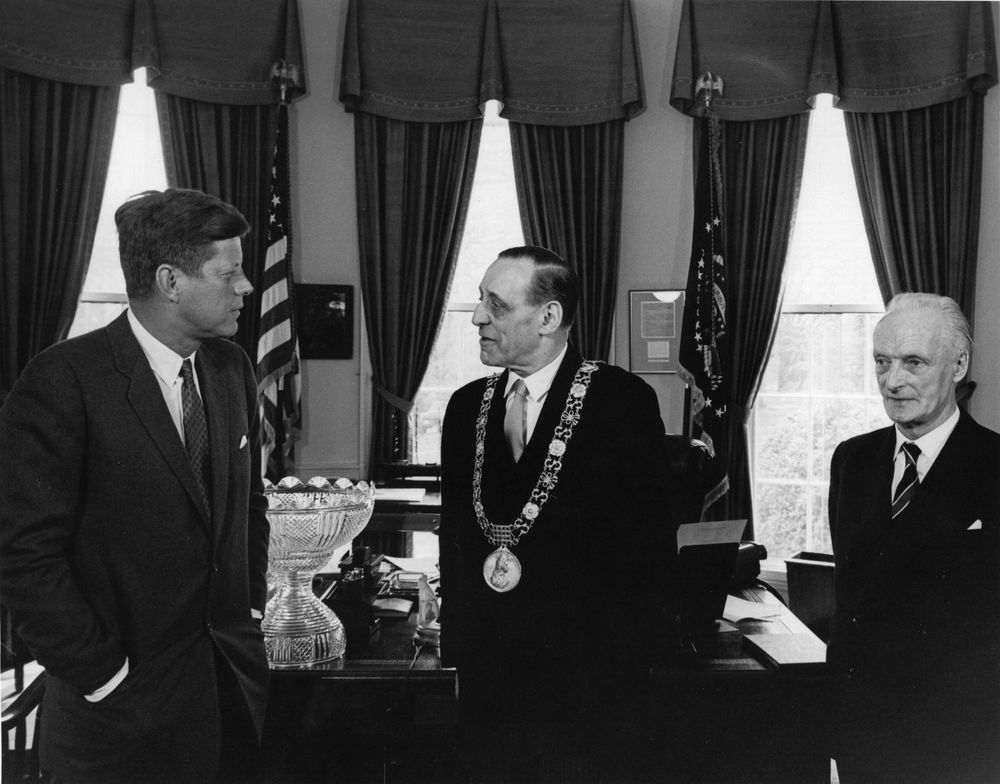
The forward to Feasting Galore is by Robert Briscoe, the Lord Mayor of Dublin in the 1950s and early 60s (below, with JFK on his state visit in 1963). In his remarks he comes up with the following startling claim, Her knowledge of Irish traditional cooking makes her a leader in this field, and this knowledge she has gained from a detailed study of the lives of the early Irish Saints which are our chief source of information concerning the domestic ways of the ancient Irish. Having read something of Bob Briscoe as he was universally known in Dublin, I can see his tongue firmly in his cheek here and his audience in mind. And having read the book, I see Maura laughing her way through the whole project.

Now, as my readers know, I love a good saint. Briscoe’s reference was irresistible and sent me searching through the book for all the saintly references. I found lots of them! Before I get to the Saints though, I thought you might like a rundown on some of the traditional Irish recipes we don’t hear much about nowadays. After reading the list you might feel there are good reasons for that.

Let’s start with the vegetables. We begin with Brandon Parslied Potatoes, and move on to Slieve na mBan Carrots before reaching Cauliflower Souse. This is followed by Haggerty, Leekie Manglam, Nettle Briseach, Pease Pudding, Potato Collops, and Potato Scrapple. And of course Braised Cabbage and Colcannon make an appearance along with Dulce Champ.

I think you’d have to agree that of all of these Leekie Manglam is the one that needs to be investigated. So here is the story as given by Maura Laverty.

Leeks have always occupied a favoured place in Irish cooking – and with good reason. Their popularity dates back to the days of Saint Patrick. One day, so the story goes, a Chieftain who was being driven out of his mind by his pregnant wife’s demands for leeks (then out of season), employed the Saint’s help. Saint Patrick took a few juicy rushes, blessed them, and turned them into leeks which immediately cured the unfortunate woman’s “longing sickness“ and brought peace to her harassed husband. There and then Saint Patrick ordained that any woman suffering from the “longing sickness“ (modern doctors call it “pica“ or “morbid craving“) should be cured if she ate any member of the onion family.

So now you know! And here is the recipe.

Ingredients: One third recipe for Lardy cakes, three large leeks, four slices streaky bacon, half cup breadcrumbs, quarter cup milk, pepper and salt to taste, one egg.e

Method: parboil the leeks, drain, and cut them into very thin slices, add the diced bacon, mix in crumbs, milk, and seasoning. Divide the pastry in two. Use half to line a pie plate. Fill with the leek mixture. Brush edges with water. Cover with a lid of pastry. Press edges firmly together and flute. Brush with beaten egg and bake 30 minutes in a 425° oven.

As with other traditional Irish cookbooks (see this post about Monica Sheridan for example) every piece of an animal is used. There are recipes for Brawn, Cock of the North, Coddled Coneen, Griskins, Haslett, Pig’s Cheek, Trotters, and Tripe. There’s a bewildering variety of jams, jellies, scented jellies, marmalades and chutneys.

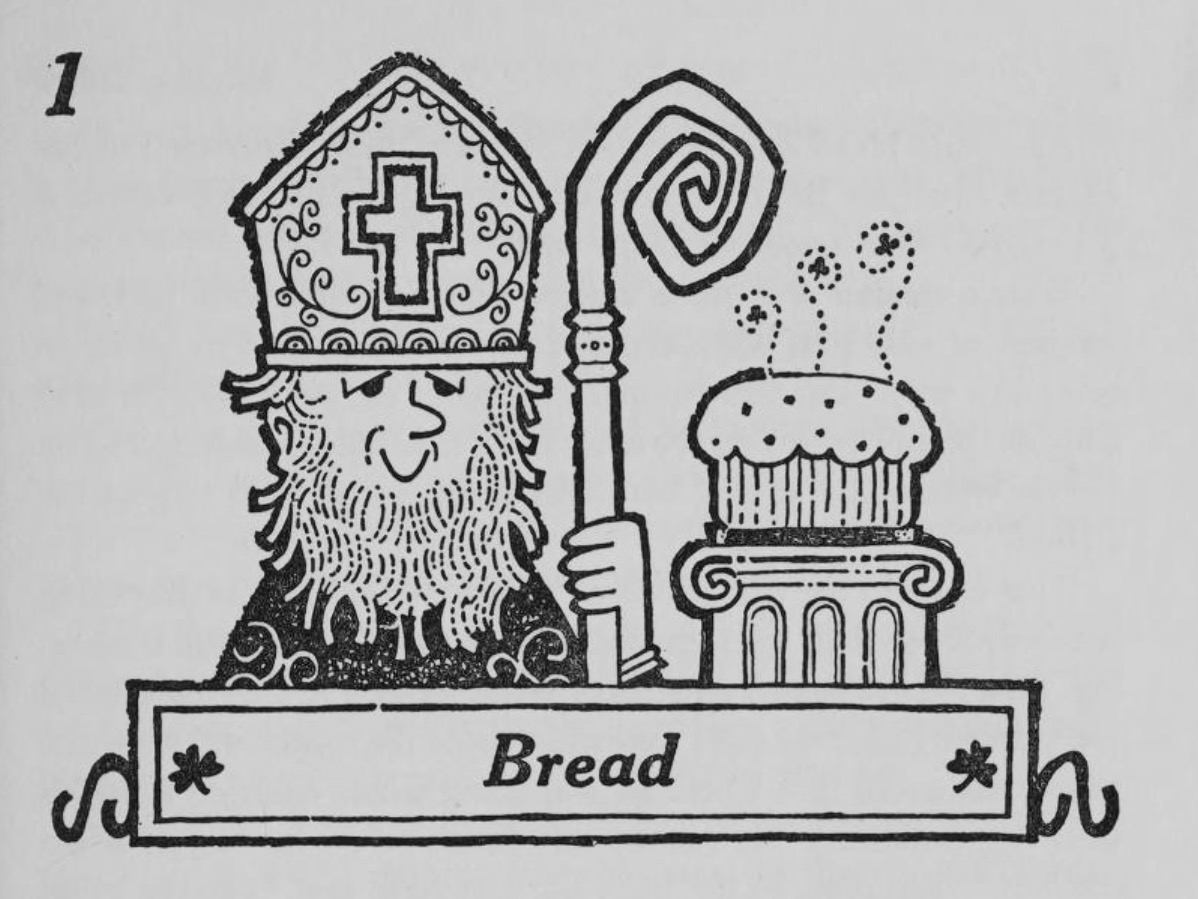
But what about the saints I hear you ask? Well, we’ve already had a taste of Saint Patrick so here’s one about Saint Columba and the recipe is for something called Brothchán Buidhe. Pronounced brohawn bwee, it means yellow broth, which is a savoury concoction of vegetable stock thickened with oatmeal and enriched with milk. It was, Laverty tells us, the favourite pottage of Saint Columba.

When Lent came around the Saint decided to mortify himself with ersatz broth, so he instructed his cook to put nothing into the broth pot except water and nettles, with a taste of salt on Sundays.

“Is nothing else to go into it, your reverence?” asked the cook in horror. “Nothing except what comes out of the potstick,” the Saint replied sternly.

This went on for two weeks. The Saint grew thinner and weaker, and the cook grew more and more worried. And then, all of a sudden, Saint Columbus started to put on weight again and the worried look left the cook’s face. The devoted lay brother had made himself a hollow potstick down which he poured milk and oatmeal. Thus he was able to preserve his master from starvation and himself from the horrible sins of disobedience and lies.

When questioned by the Saint he was able to assure him honestly that nothing went into the broth save what came out of the pot stick.

I will save you from the recipe because it looks very unappetising indeed and I can’t imagine anyone would want to make it for any reason.

The next Saint we encounter is Saint Keevóg, and he comes at the end of a version of the Children of Lir. For the complete and very sad story of the four children who were turned into swans by their wicked stepmother, you can read Robert‘s post here. Here’s Maura’s ending:
At long last the day came when they heard the mass bell of Saint Keevog. The four swans winged their way to the Saint’s little church where they were baptised. It is said that immediately after their baptism, their feathers fell from them and they reverted to human form, but incredibly aged and wrinkled.… And this story of the children of Lir explains why Swan, which was considered royal food elsewhere, is never mentioned in accounts of ancient Irish banquets. Until this day to kill a swan is an unforgivable sin in Ireland.

From poetry to pike is not such a long step, particularly when the pike is from Lake Derravara and is made into a poem of a dish in this way. 

This is followed for a recipe for Pike Derravara – a bit of a stretch perhaps. Keevog is St Mochaemóg, the founder of Liathmore monastery about which we wrote here. In Robert’s version he is called Saint Kemoc, a hermit who found them, four ancient, withered people.
Did the cookie, Maura Laverty asks us, come from Ireland? Here is her answer.
The first written mention of cookies occurs in the ancient Book of Lismore.

It seems that when Saint Patrick came to Ireland he found that Ogham – the only form of writing then known here – was the closely guarded secret of the Druids. Patrick in his wisdom realised that education was a necessary preliminary to conversion from paganism, and he introduced the Roman alphabet to the people to whom he was bringing the gifts of enlightenment and salvation.

In the book of Lismore we are told that the child who grew up to be Saint Columcille found difficulty in learning the alphabet. To encourage him his mother baked A-B-C cookies with which he was rewarded as he mastered letter after letter.

It is very probable that this sweet way of coaxing children to learn became common throughout Ireland. And I think it quite likely that it was introduced to America by Saint Brendan the Navigator who discovered the New World long before Columbus set foot there.

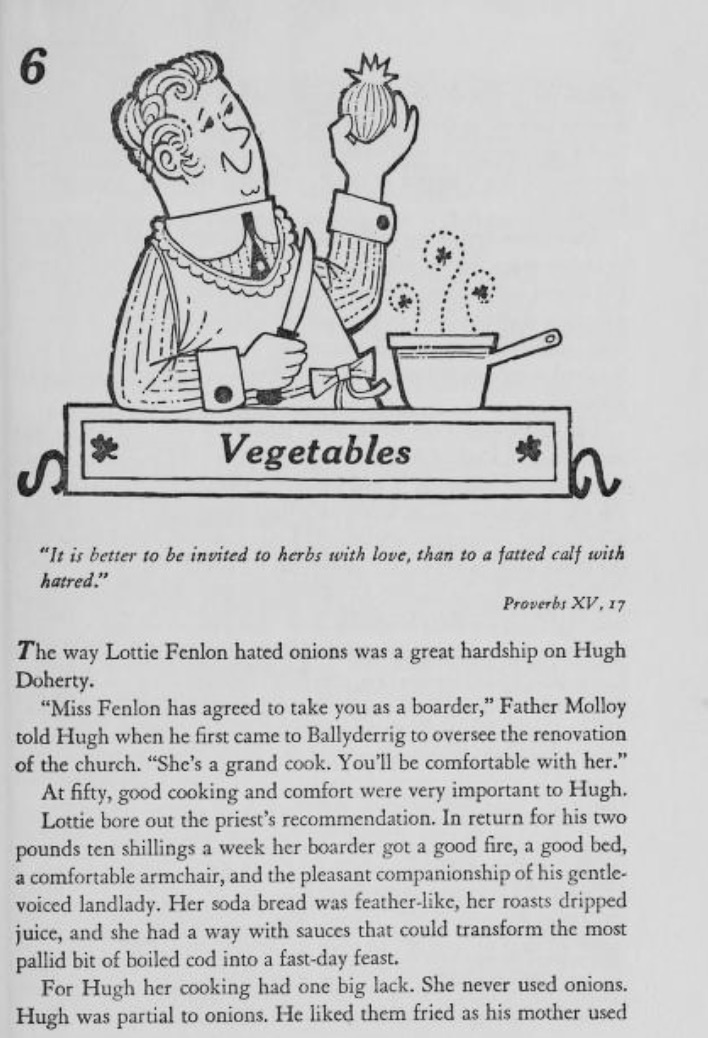
And so it goes on, over-the-top names and recipes designed to, er, feed every leprechaun-and-shamrock preconceived notion that Americans might have of the Irish. There’s a chapter on Fast-Day Feasts, and recipes for Convent Loaf and Nun’s Cake. I can only imagine the fun she had writing it. The illustrations, by Bill O’Gorman (I’ve found nothing about him – anyone?) also add to the chuckles – it’s hard to imagine a more stereotyped set of cartoons.

Each chapter is preceded by a story, mostly around the theme of food being the way to a man’s heart, and that age, girth or criminal records were no impediments to true love. I leave you with the one with which she introduces the vegetable chapter. 

Now, seeing as it’s the season that’s in it, I’m off to cook up some St Brigid’s broth.

*Many thanks to Mercier Press – although they do not claim rights for Feasting Galore, I appreciate that stories and recipes in it have been taken from Full and Plenty. Feasting Galore was issued by Hippocrene Books, but is no longer in their catalogue.

The Anglo-Normans in West Cork: Hiding in Plain Sight, Part 2

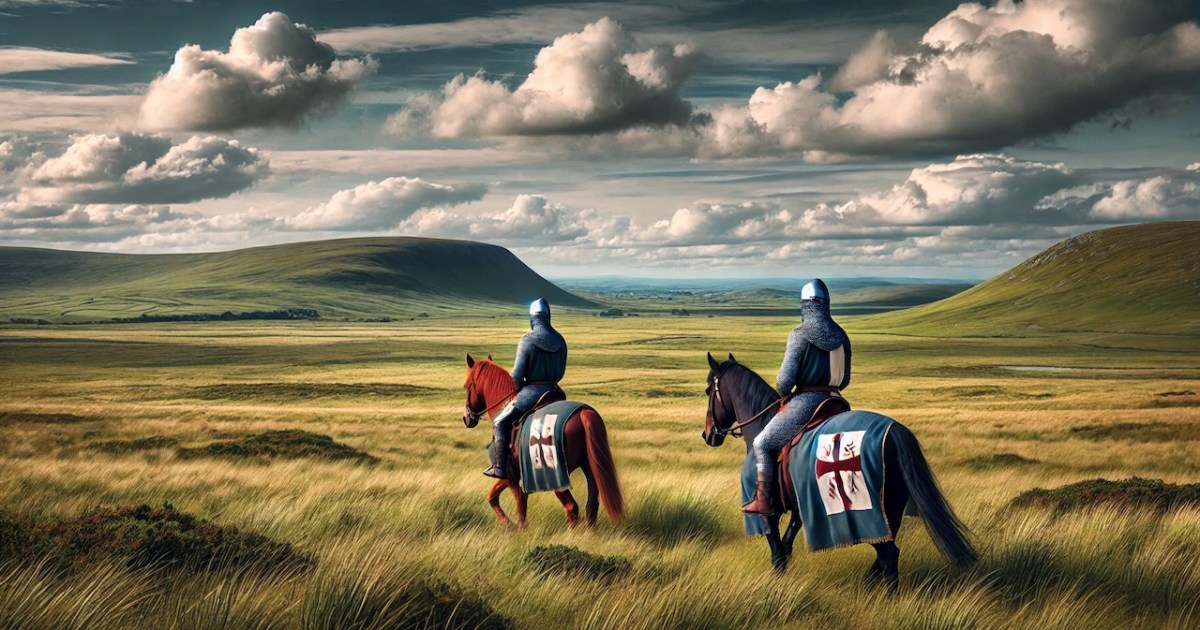
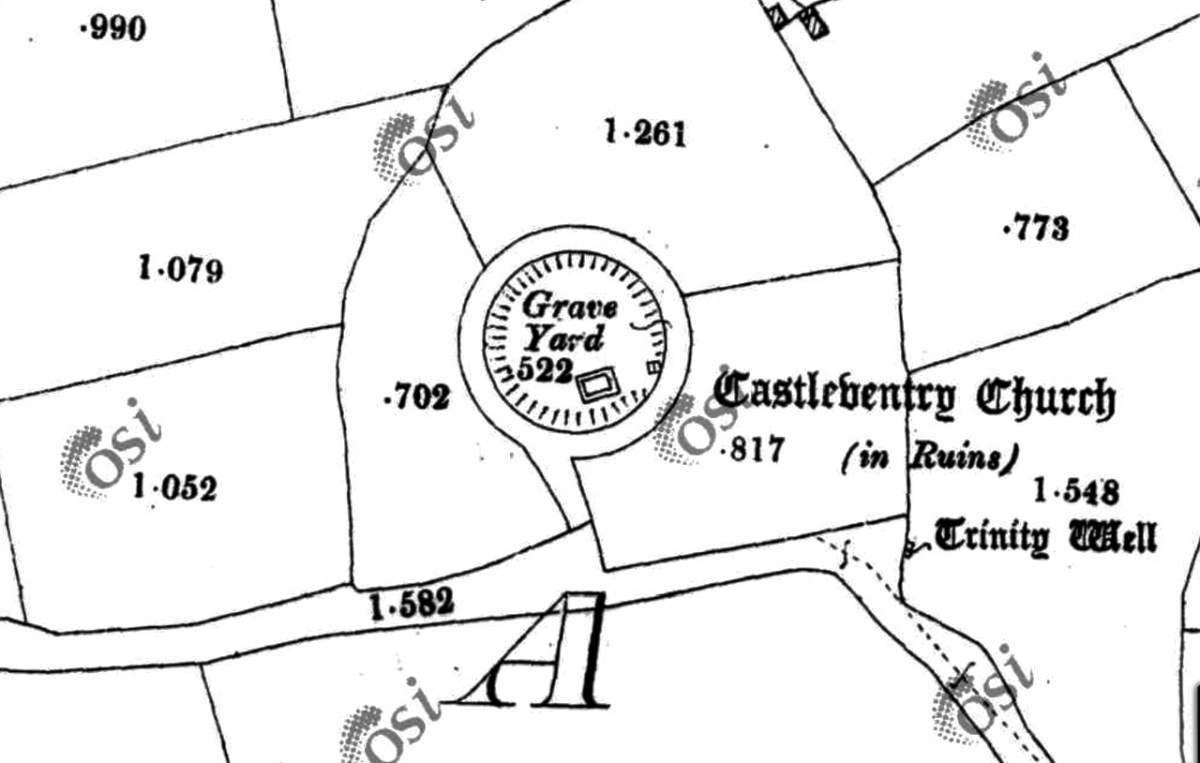
Last week we set out to figure why the Anglo-Normans are curiously absent from the archaeology of West Cork. I told you about our exploration of Castleventry, and how Con Manning immediately suspected this was not your average ringfort, and of course, eventually proclaimed it to be an Anglo-Norman ringwork. I am leading again with an AI-generated image – I am having fun playing around with DALL·E but am under no illusions about its historical accuracy!

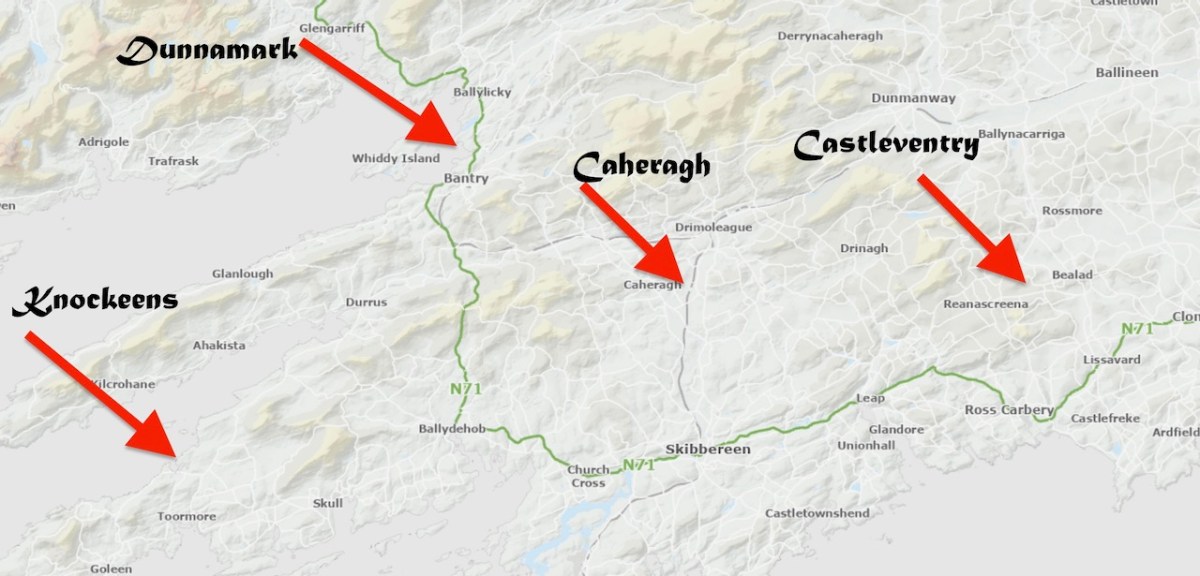
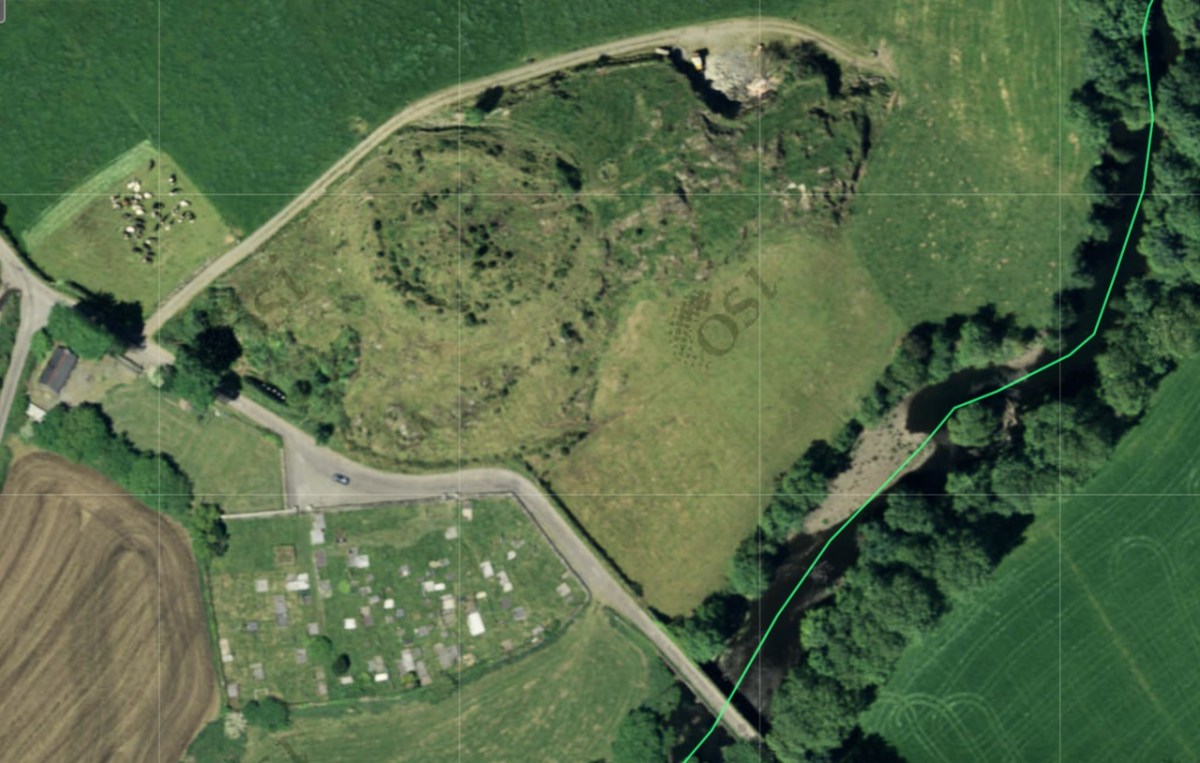
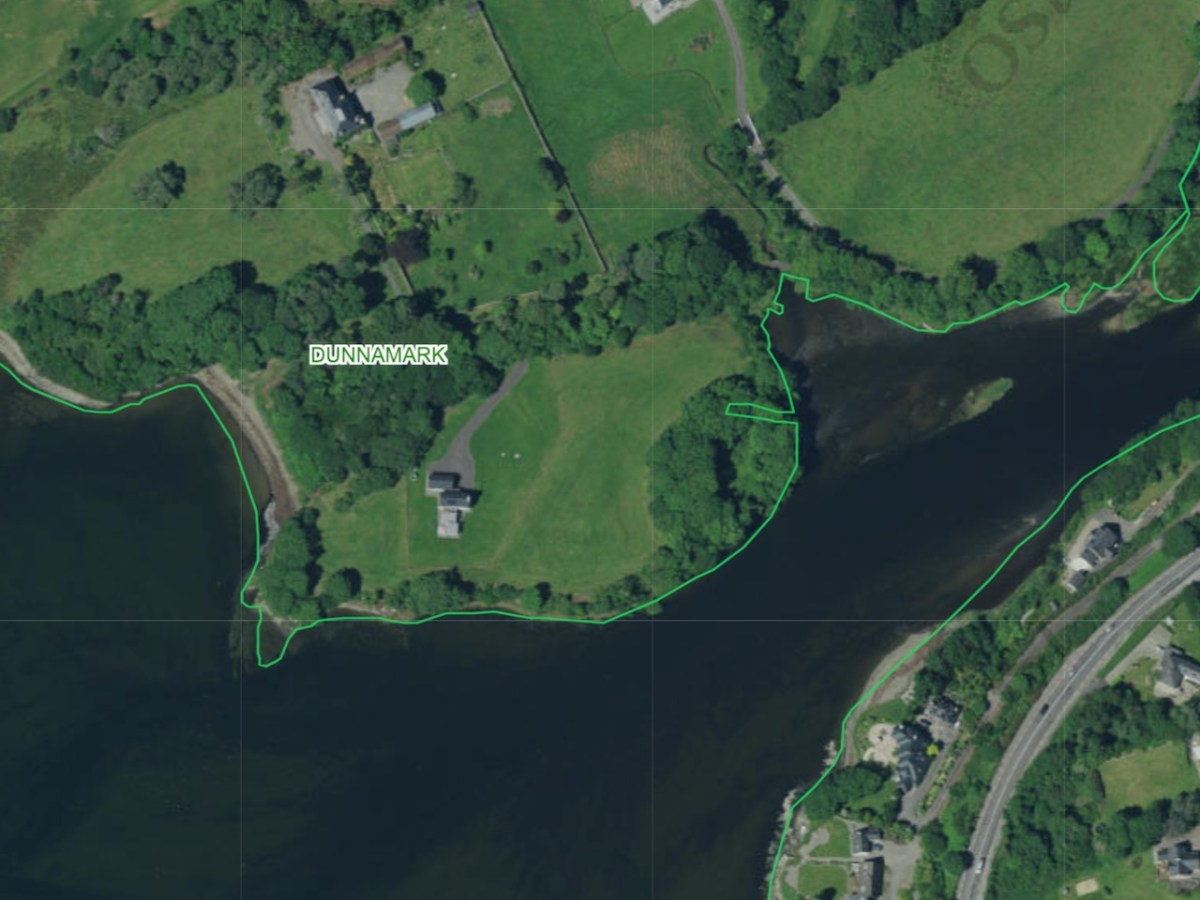
Our next site was courtesy of David Myler, author of the new Walking with Stones. He took us to see an intriguing site at Dunnamark, just outside Bantry. In his book, David also highlights the local convention that this is a Dane’s Fort – a common designation for all kinds of constructions around Ireland.

This was another of the sites identified by Dermot Twohig as an Anglo-Norman ringwork. In fact, Dermot said Dunamark is one of the best examples of a ring-work I have seen in either Britain or Ireland. Con concurred. In his book, David also highlights the local convention that this is a Dane’s Fort – a common designation for all kinds of constructions around Ireland.

This is another massive fortification, with very deep ditches and a high ‘platform’ as the interior of the fort.

In the National Monuments record it is labelled a ‘cliff-edge fort and is described thus:

Description: In tillage, on cliff edge, on E shore Bantry Bay. Roughly D-shaped area enclosed by earthen bank S->NNE, with external fosse; slightly convex cliff edge NNE->S. Possible souterrain (CO118-004002-) in interior.

In his article in Archaeology Ireland, Con points out that 

Dunnamark was a particularly important castle, having been one of two demesne manors of the Carews in West Cork, and the caput of the cantred of of Foniertheragh.

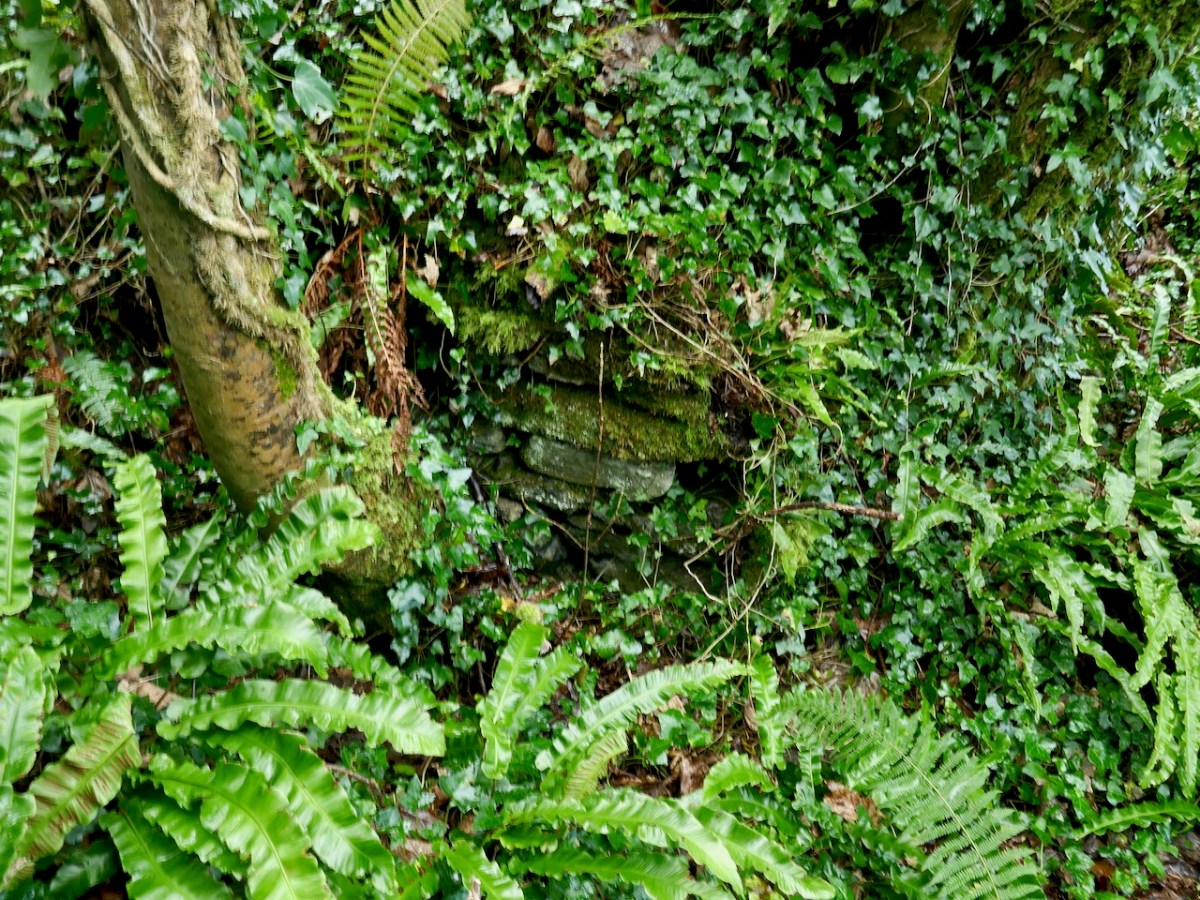
He also says that a low-level bit of a masonry set into the central mound and parallel with the entrance causeway might be part of the counter balance slots of a drawbridge. Here’s what Con was looking at – it takes a medieval archaeology specialist to recognise such an unpromising set of stones.

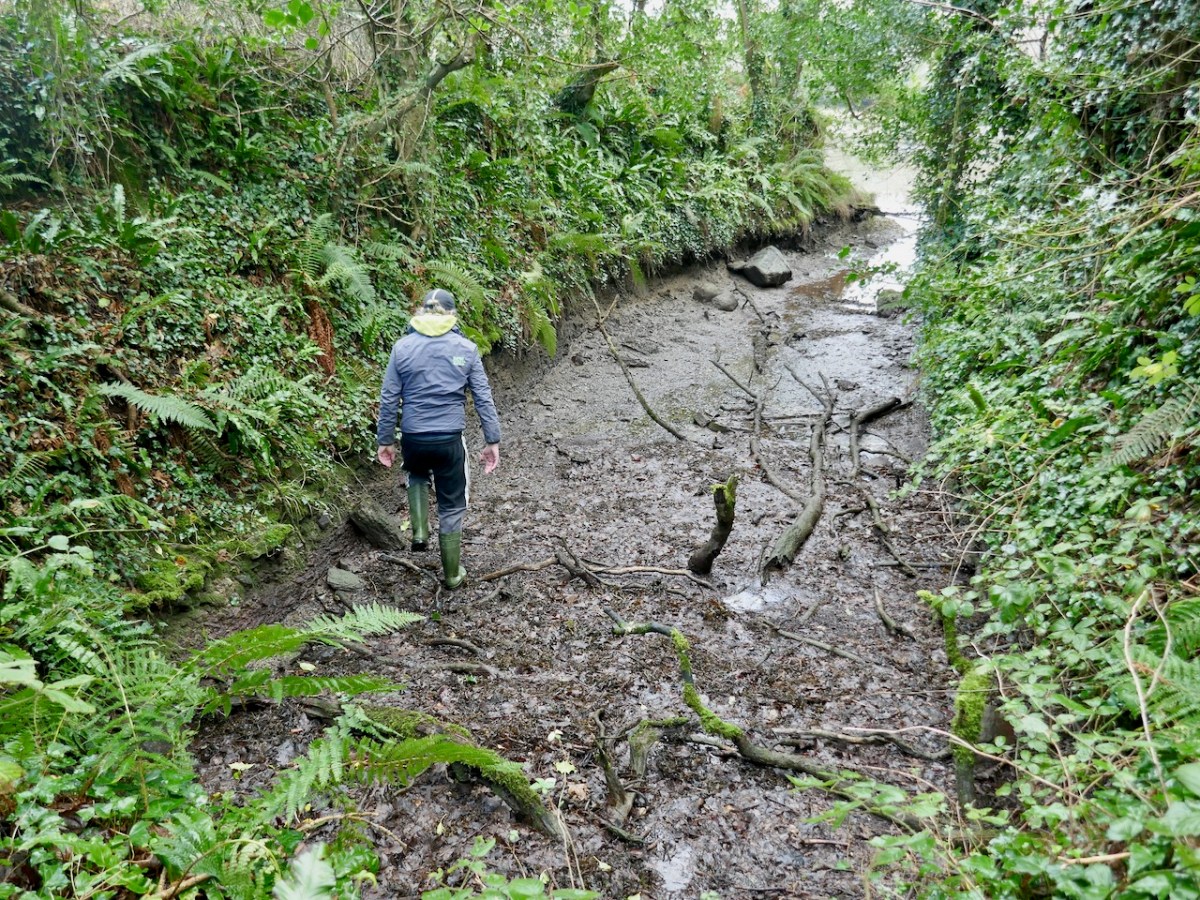
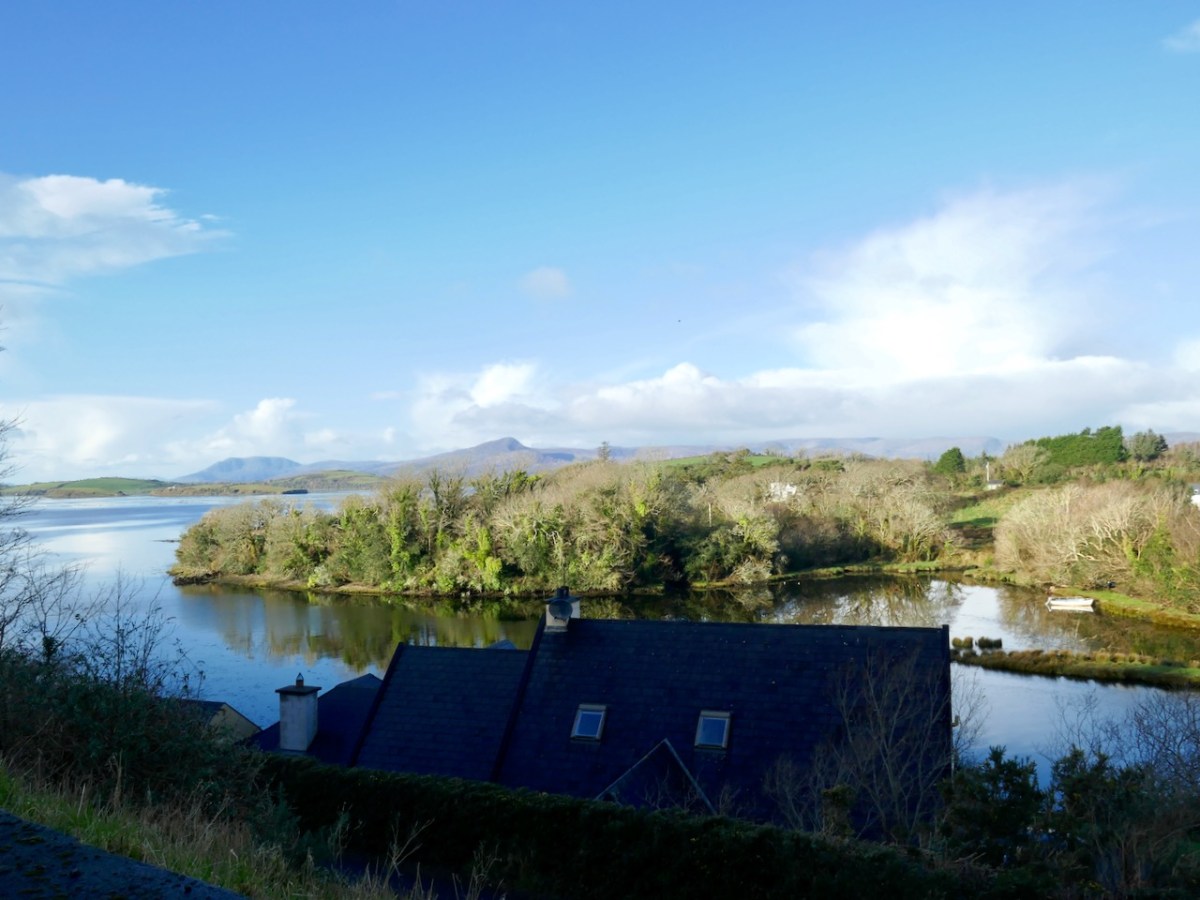
Another interesting feature of this site is the narrow channel riught beside the bank, which would have allowed small boats to come right up to the fort.

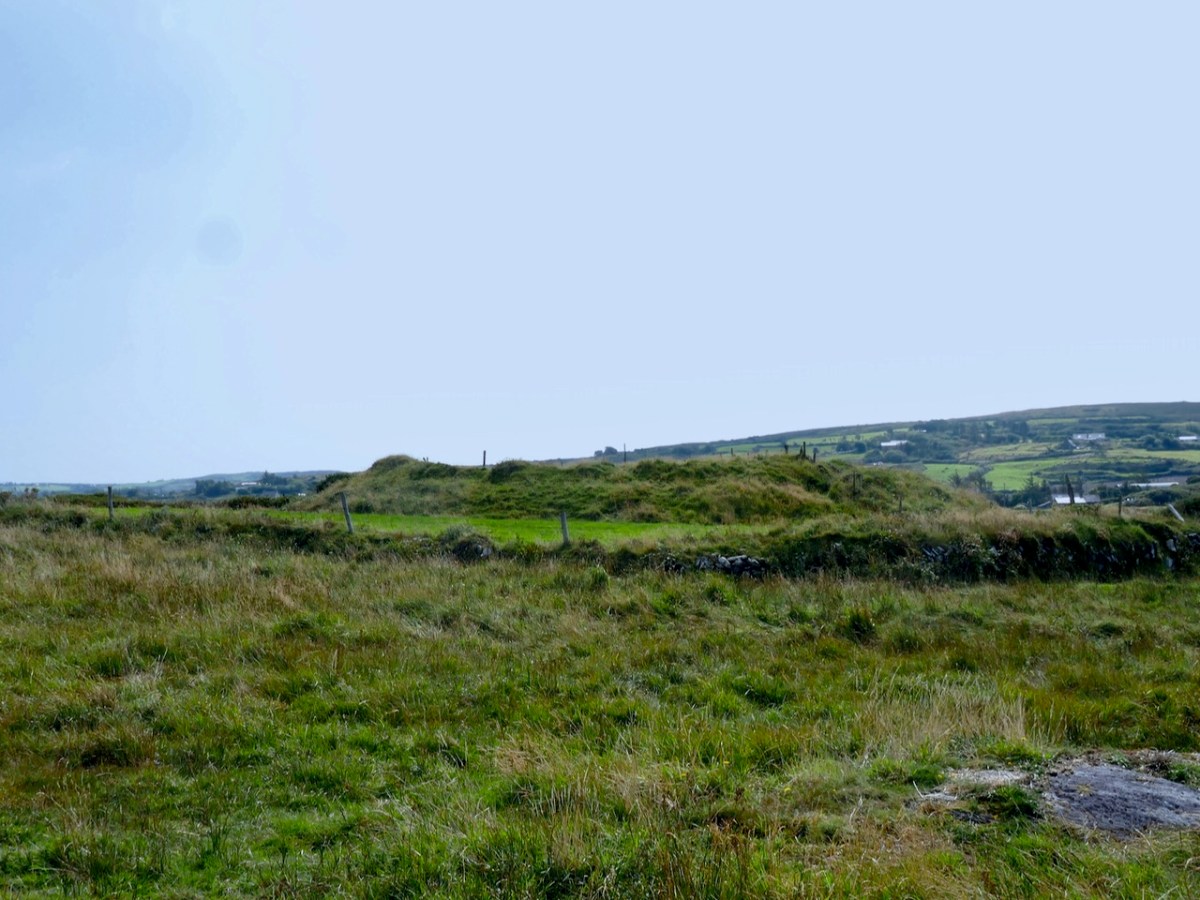
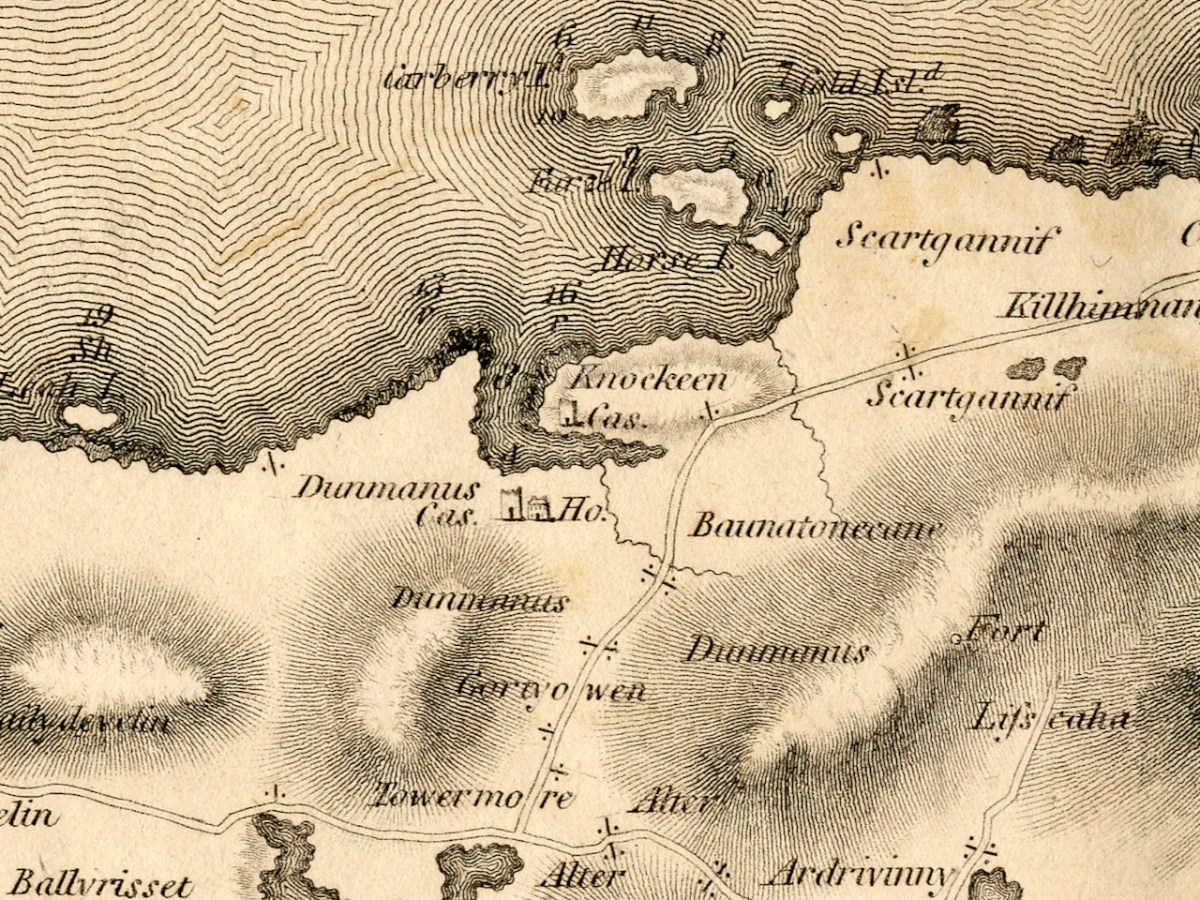
Our third site may be familiar with regular readers – it’s the site I described as the original Dunmanus Castle in my post Dunmanus Castle – the Cliff-Edge Fort. Go back and read that now and then come back here.

You will see that I was puzzled by it when I saw it and I was really pleased when Con confirmed on a subsequent visit that this could indeed be another Anglo-Norman ringwork. 

Interestingly, since I wrote that post I wrote about the Bath Map of Cork, which shows an actual castle – as complete as Dunmanus Castle, on the site!

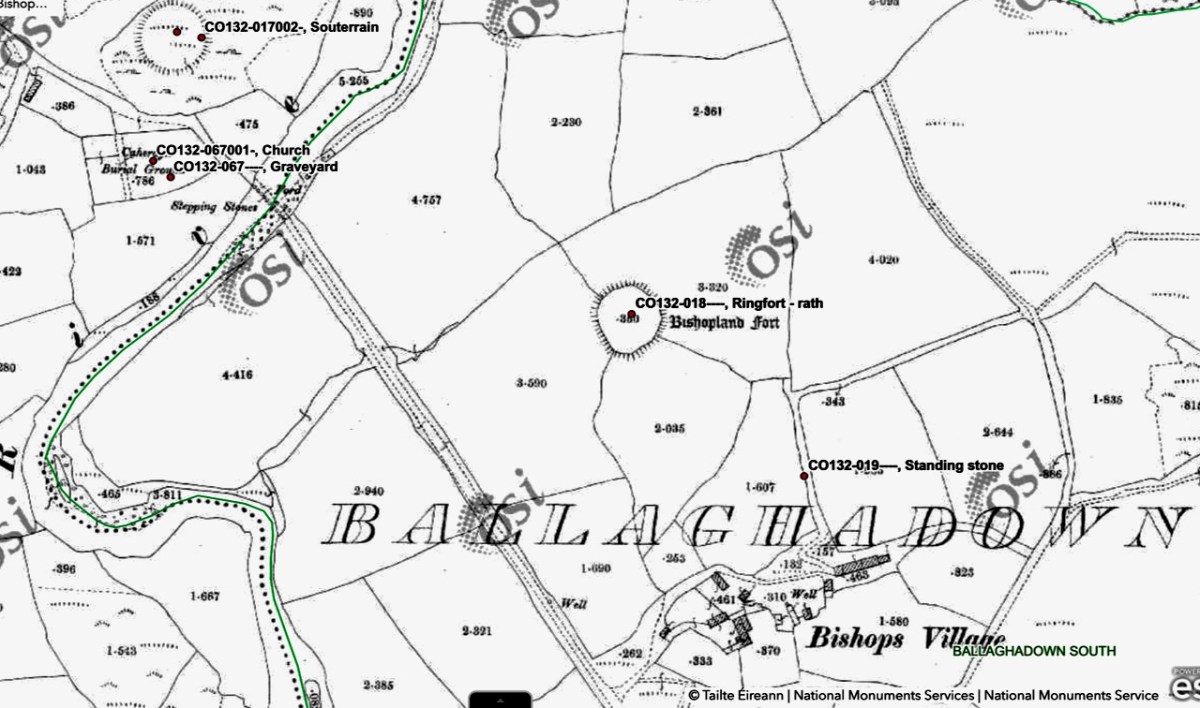
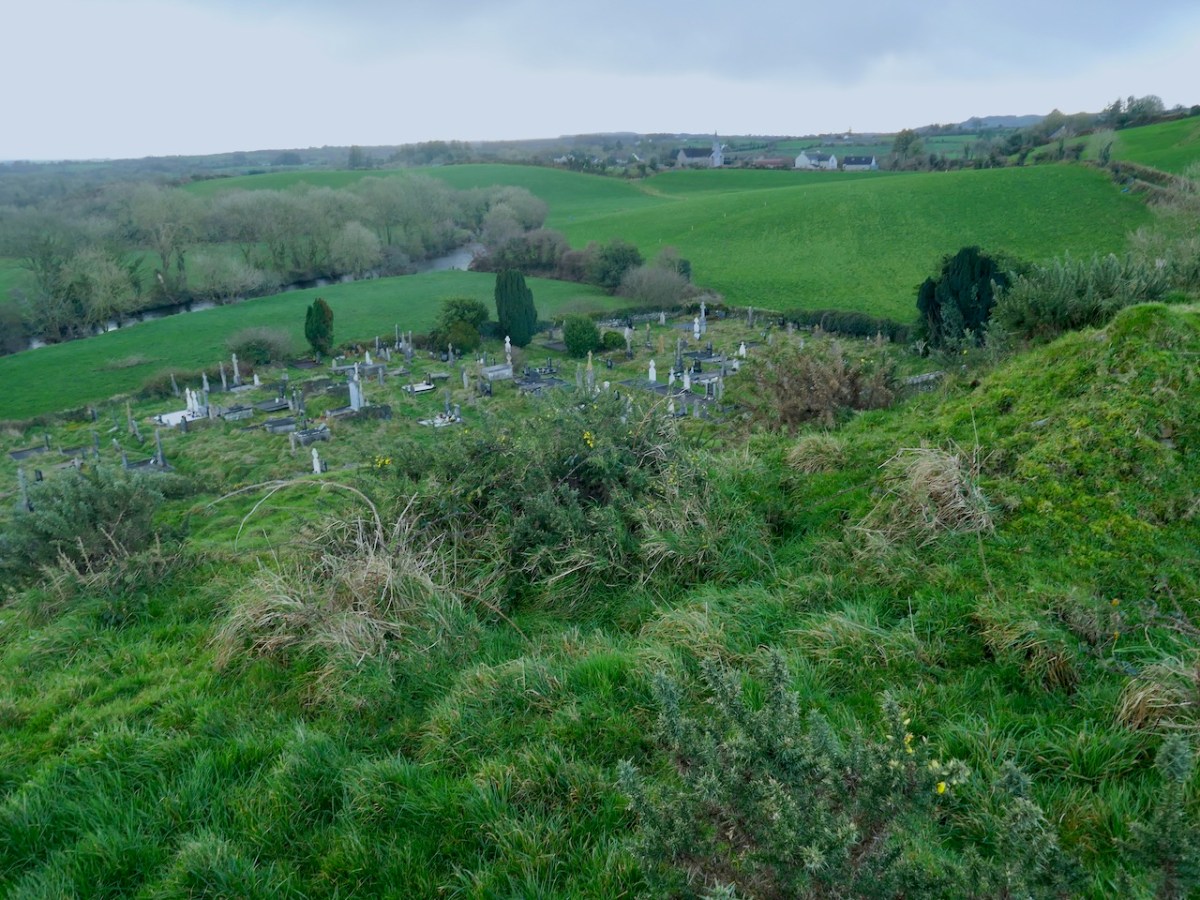
Our final site is at Caheragh, and this one is bit more speculative. A high knoll towers above the ruined church and its surrounding graveyard and on top of that hill is what has been labelled a ringfort. However, once again, it doesn’t quite feel right as a ringfort.

It has panoramic views across the surrounding countryside and sits on the middle of a medieval landscape that includes many ringforts, and an area known as Bishopsland, and the winding Ilen river. 

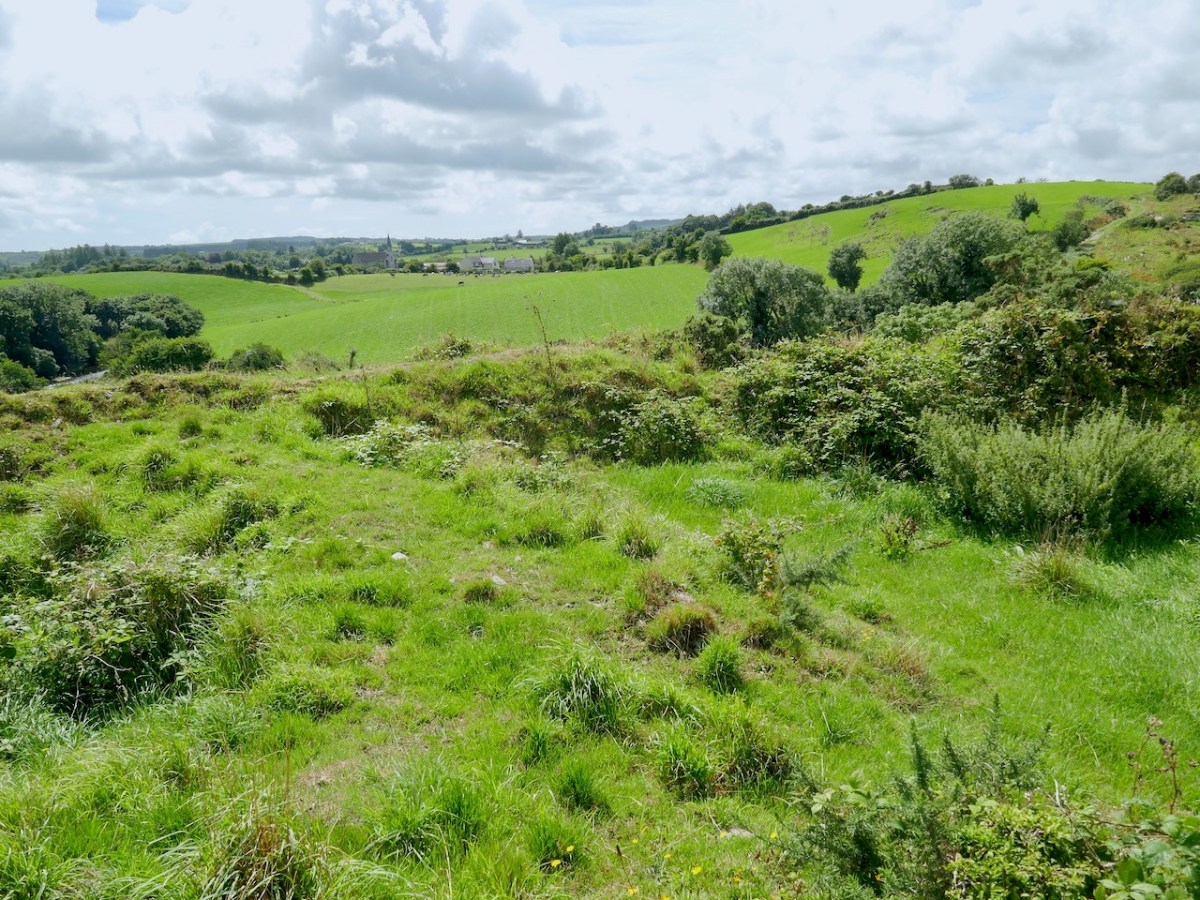
The fort on top has obvious remains of buildings, one of which may be what is left of a small tower.

The knoll, although natural, looks like a motte – why build one if you don’t have to? From the top you can see all the way over to Caheragh village.

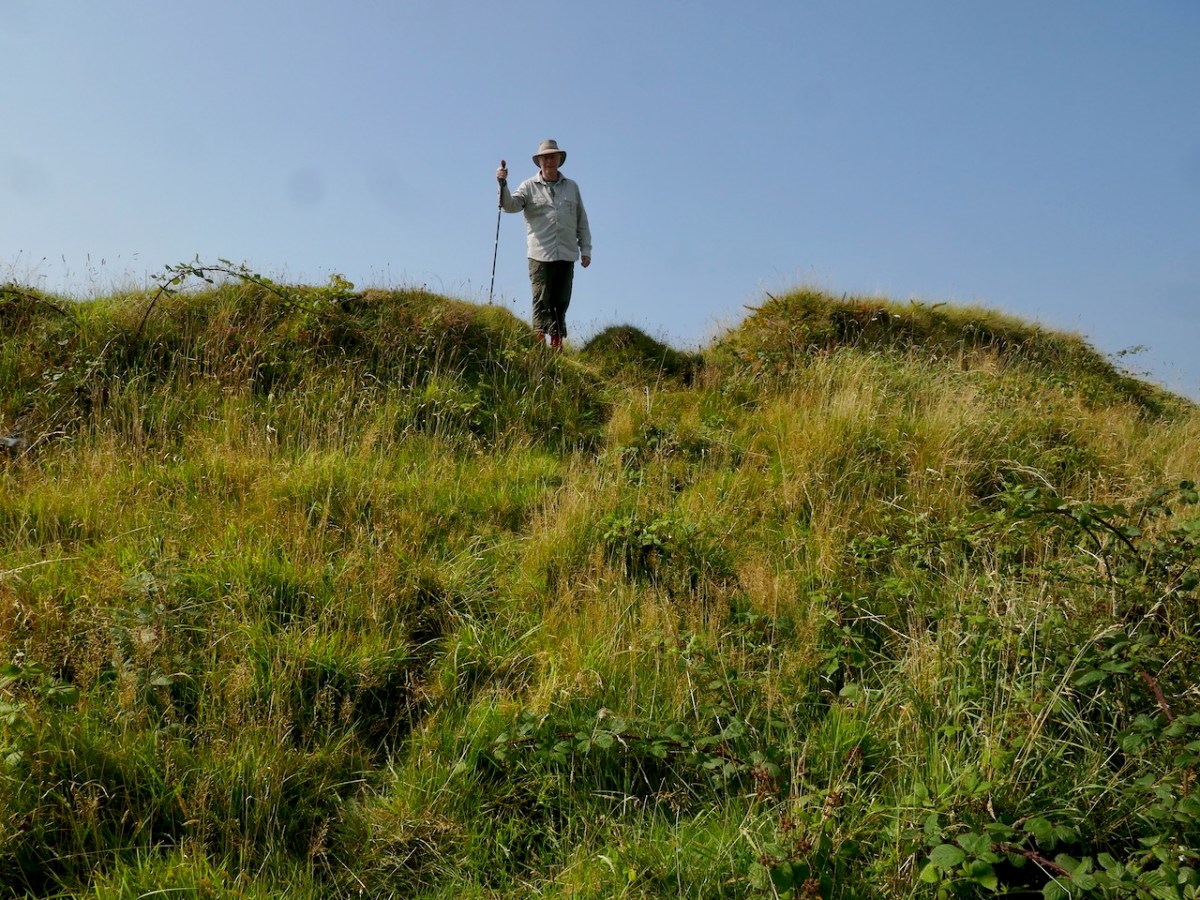
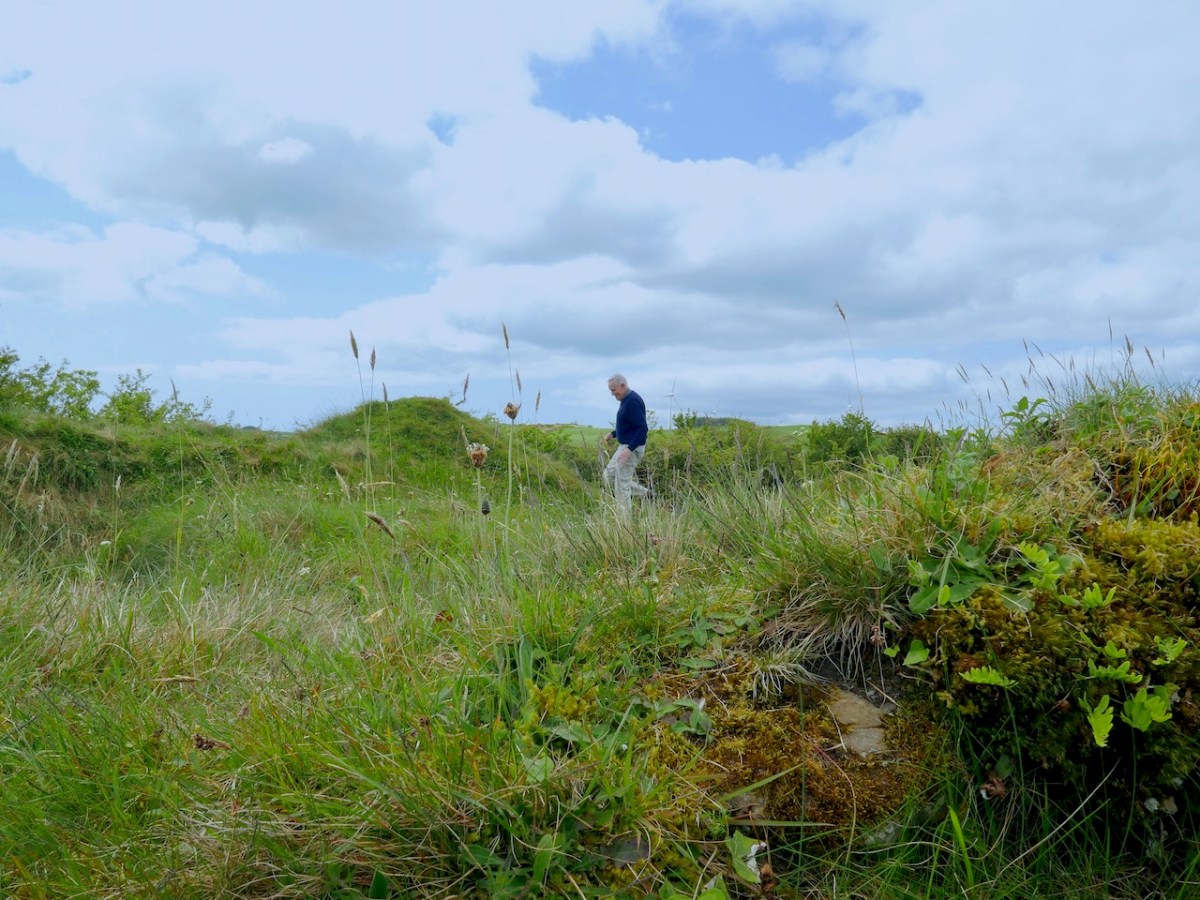
For me, the defining characteristics of these ringworks so far has been very much in accordance with what Grace Dennis-Toone laid out in her thesis – strong fortifications, situated strategically either with panoramic views or maritime location. But we know ringforts that are like that too. The extra factor for me is that they also seem like truncated mottes – raised platforms that fall short of the height needed for a motte, but still enough to dominate the landscape. Castleventry and Caheragh take advantage of natural elevations, while Knockeens and Dunnamark have constructed raised platforms within deep ditches. It may also have been that Knockeens was originally circular rather than D-shaped – see how much erosion has taken place there (below).

So – readers, do you have any other examples you suspect might fit the bill for an Anglo-Norman ringwork? It would help if it has some documentary evidence so get busy researching medieval manuscripts. No bother to you! I have already heard from one knowledgeable local, and hope to have another field soon trip in his area. We know they were here – between us, maybe we can re-write the text books for West Cork.

The Anglo-Normans in West Cork: Hiding in Plain Sight, Part 1

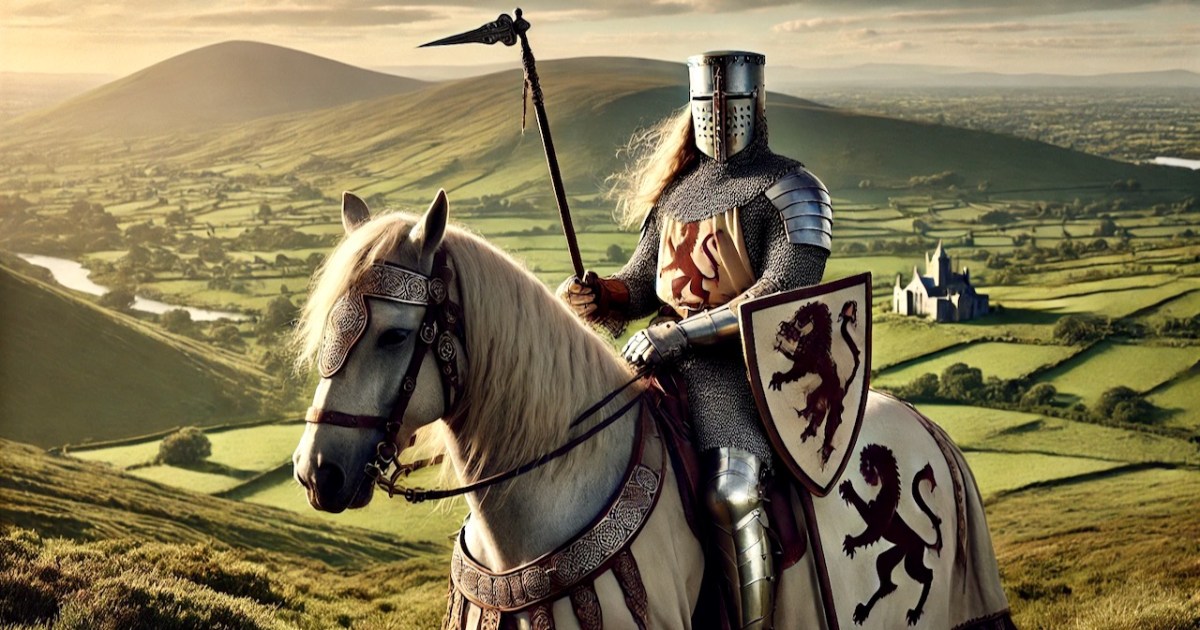
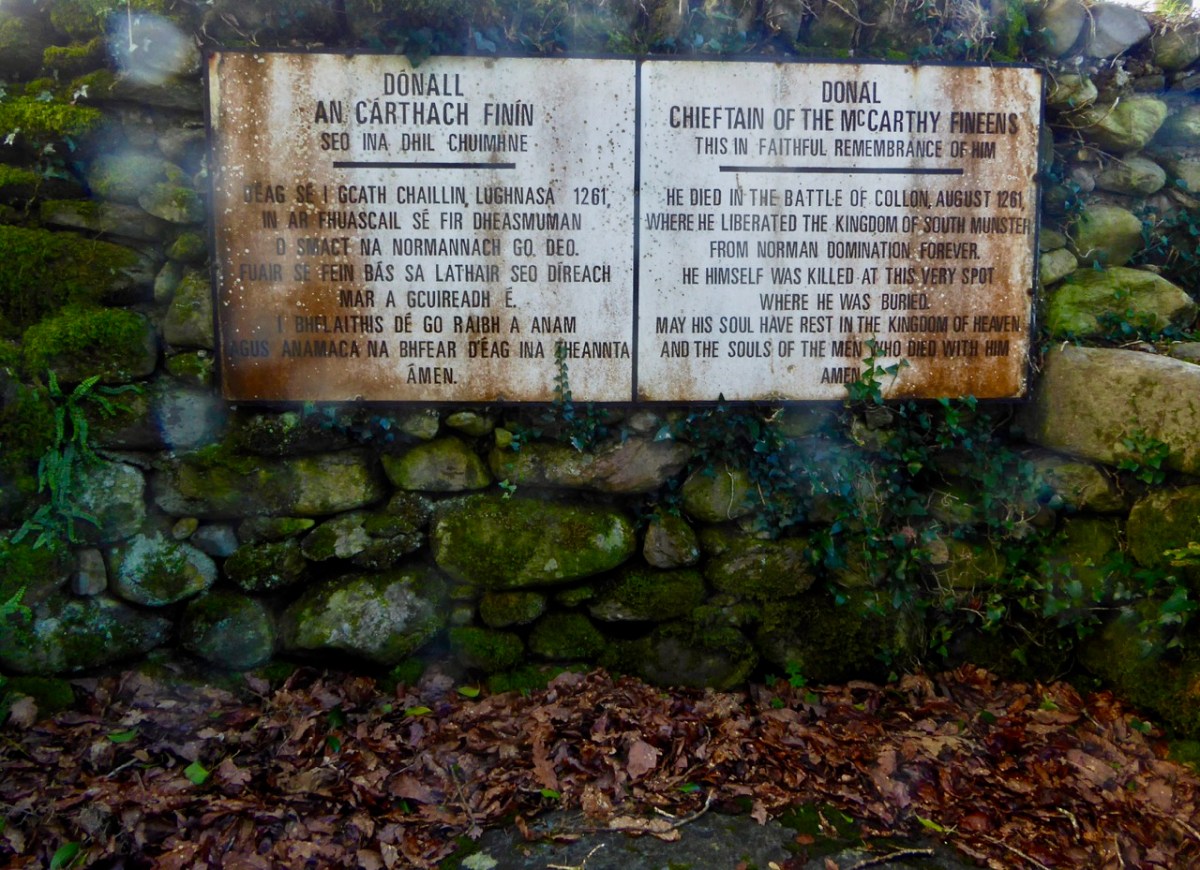
Here’s a nutshell of what I have always known about the Anglo-Normans in West Cork (cheesy and improbable image above courtesy of ChatGPT – DALL·E). After they landed in Ireland in 1169, it took them about 50 years to get to West Cork. Once here, they established some castles or fortifications and intermarried with the local families. This state of affairs lasted until 1261, when a combined army of Irish, led by Fineen McCarthy, defeated them at the Battle of Callan driving them out of West Cork and destroying all their castles. For more on the Battle of Callan, see the post Sliding into Kerry, from 2017, by Robert.

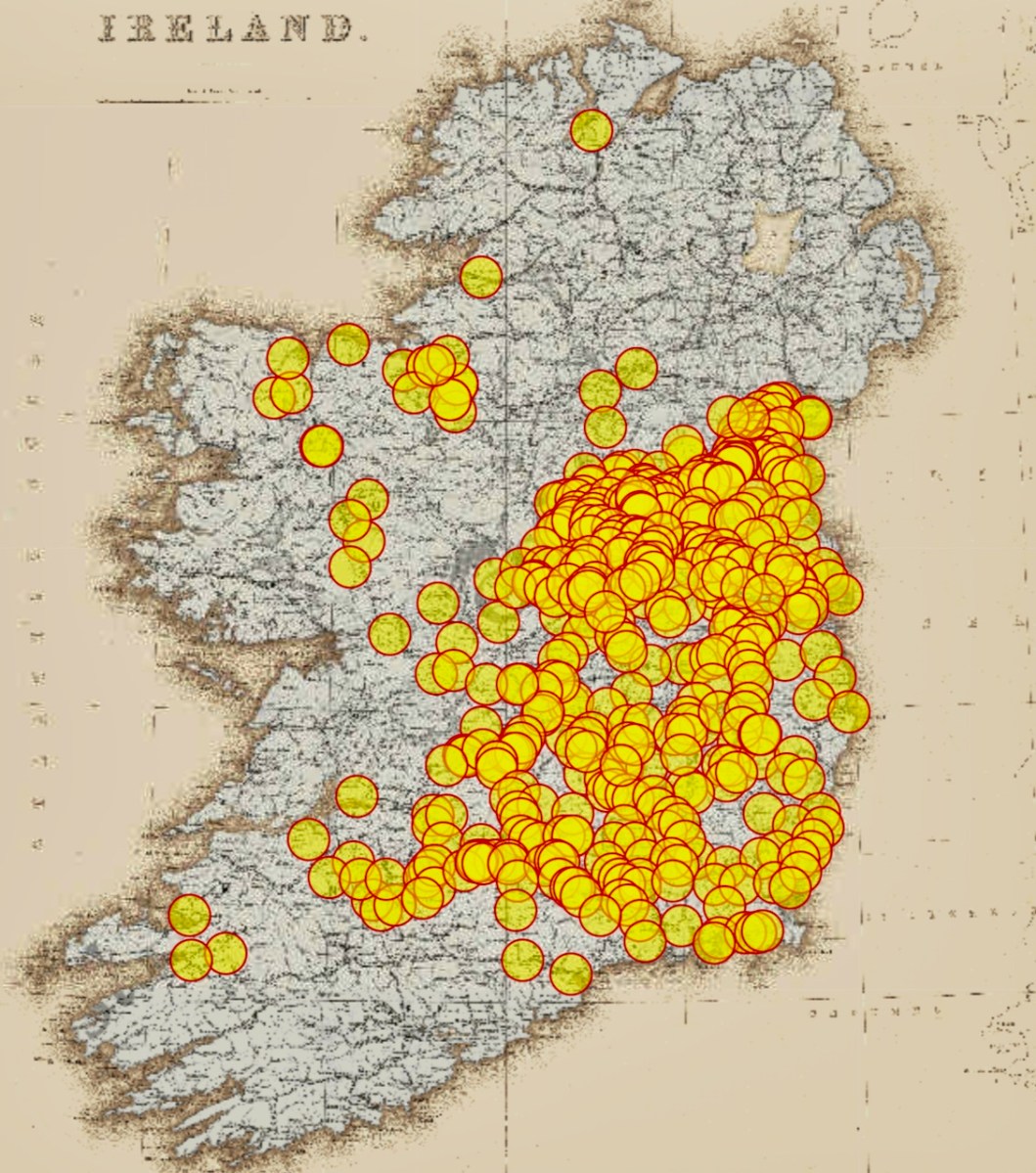
So is that why there is no trace to be found of the Anglo-Norman establishments in West Cork? In the rest of the country, at this early stage, they were mostly building motte and baileys, but there isn’t a single motte and bailey anywhere near West Cork – see the distribution map below, courtesy of National Monuments. And the masonry castles (or tower houses) we have were all built by the great Irish families. For a while I thought maybe Baltimore Castle was an Anglo-Norman building, but Eamonn Cotter has brought me up to speed on the excavation results and shown me it was much later.

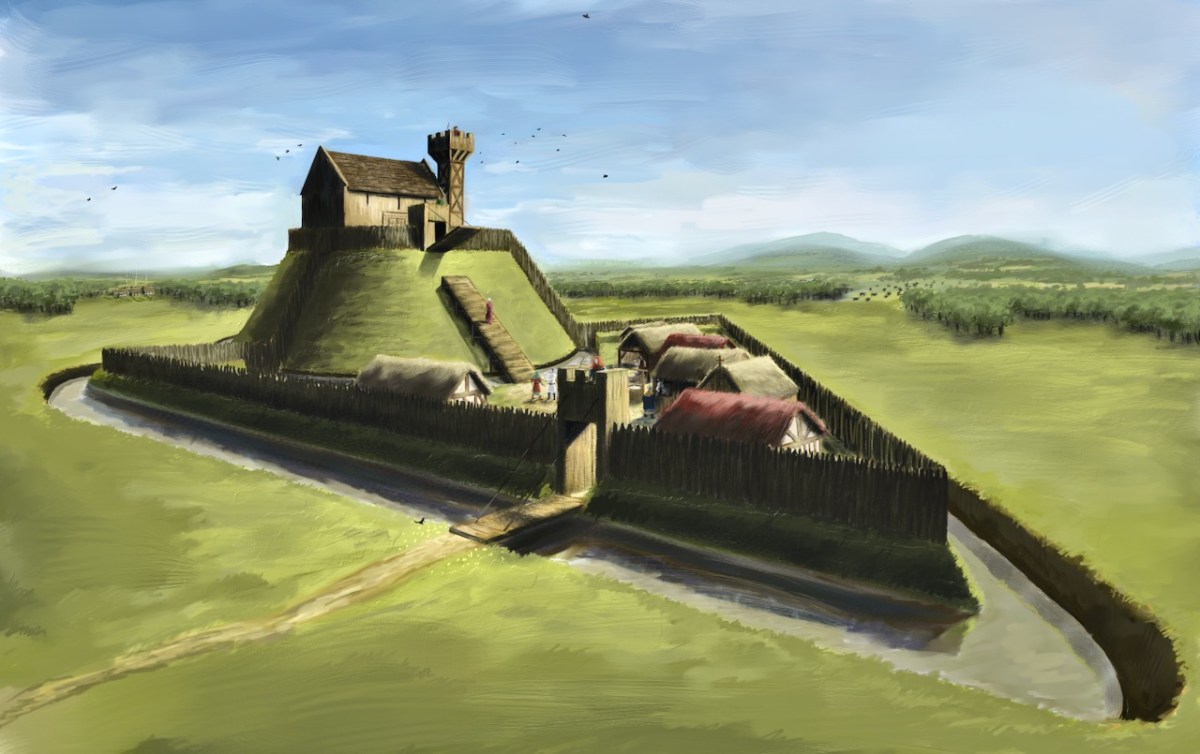
There is quite a bit of documentary evidence of their presence, though, including references to their ‘castles’ so it has always been a surprise that west Cork is not littered with mottes or ruined towers. Even given the tradition that they were all destroyed after the Battle of Callan, it is impossible to imagine that a motte could be obliterated from the landscape. They were substantial earthworks, as can be seen from the brilliant JG O’Donoghue‘s reconstruction drawing below.

It turns out we have been looking but not seeing – with some exceptions, archaeologists have not recognised Anglo-Norman structures when they saw them. The most notable exception was Dermot Twohig (a contemporary of mine at UCC in the early 70s) who, as early as 1978 described Norman ringworks in Cork. In the Bulletin of the Group for Irish Historical Settlement for 1978, buried within an annual conference report, Twohig reports:

Although I have not succeeded in inspecting, on the ground, all of the early Norman castles in Co. Cork, three of the sites I have examined – Dunamark (Dun na mBarc), Castleventry (Caislen na Gide) and Castlemore Barrett (Mourne/Ballynamona), can be classified as ring-work castles. Dunamark is one of the best examples of a ring-work I have seen in either Britain or Ireland. Castlemore Barrett had a hall-keep built within the ring-work c.1250, to which a tower-house was added in the fifteenth-century. Castleventry may have had a stone built gate-tower similar to the one at Castletobin, Co. Kilkenny. . . Further field-work and excavation will, I believe, demonstrate that the ring-work castles constituted a very significant element of fortification in the Norman conquest of Ireland.

I don’t know what happened, but Dermot’s analysis does not appear to have become part of what students were taught at UCC. Those students in turn became the mainstay of the Archaeological survey of the 1980s and they labelled Dunnamark (i’m using the OS spelling) a cliff-edge fort and Castleventry a ringfort. 

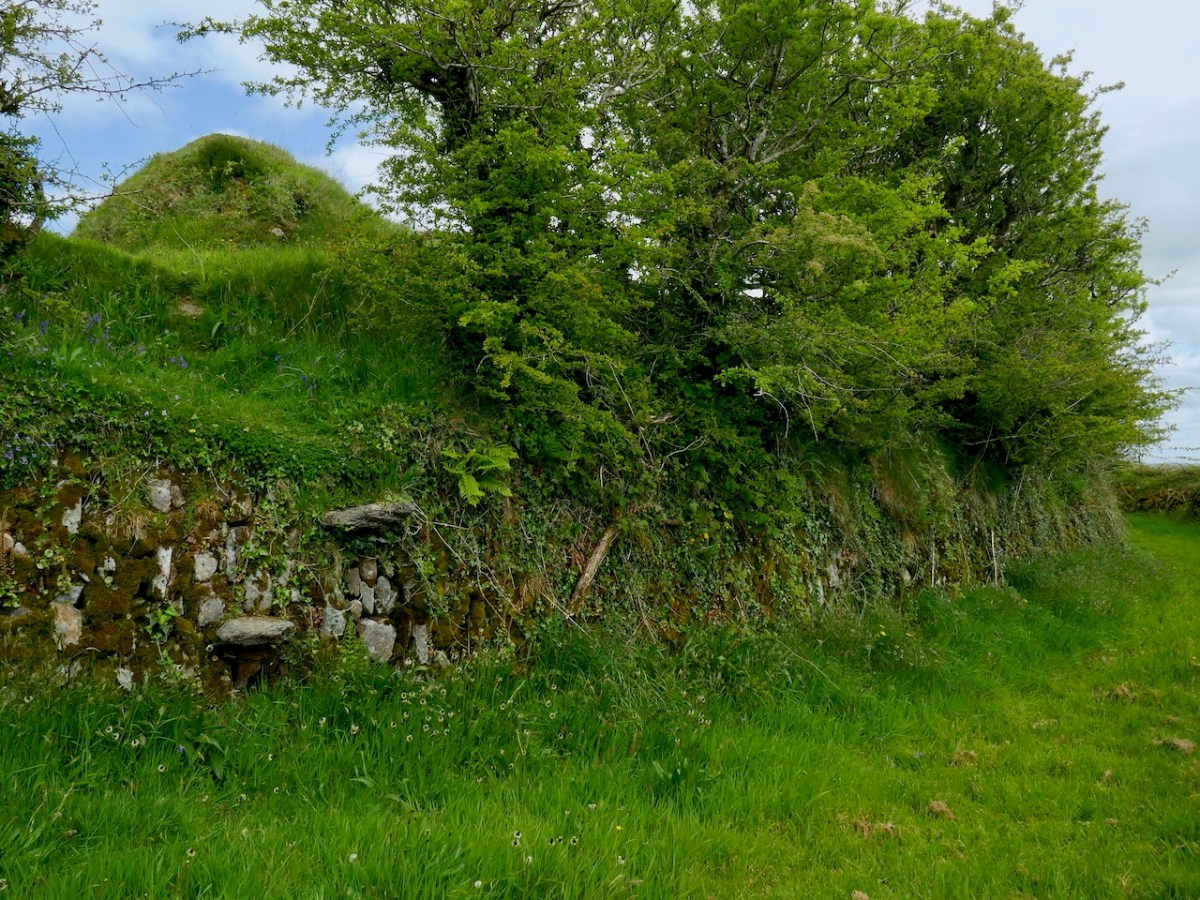
In fact, the very term ringwork (or ring-work, or ringwork castle) seems to have become an archaeological football, with some scholars asserting that we have no useful definition of its distinctive features and most of them are probably just ringforts, while others have championed the use of the term and tried to bring clarity to the debate.* in the heel of the hunt, it now seems likely that ringworks were indeed part of the system of land-claiming exercised by the Anglo-Normans, that they were usually larger and more solidly built than ringforts, and located strategically – near water or with commanding views. As you can see from the photograph below, the Castleventry banks are high, and were originally stone-faced.

In the course of 2023 and early 2024 Robert and I visited four locations with Con Manning, retired archaeologist with the National Monument Service and a recognised authority on Irish medieval archaeology. Con has now written about the four sites in the latest issue of Archaeology Ireland, naming them as Angle-Norman ringworks. The first is Castleventry, to which we were brought by local historians Dan O’Leary and Sean O’Donovan, and I wrote about our visit to that that one here. So go back now and read what we found there and how intrigued Con was by what he saw. This was the site that set him off on his investigations. 

The description of this site in the National Monuments record is as follows:

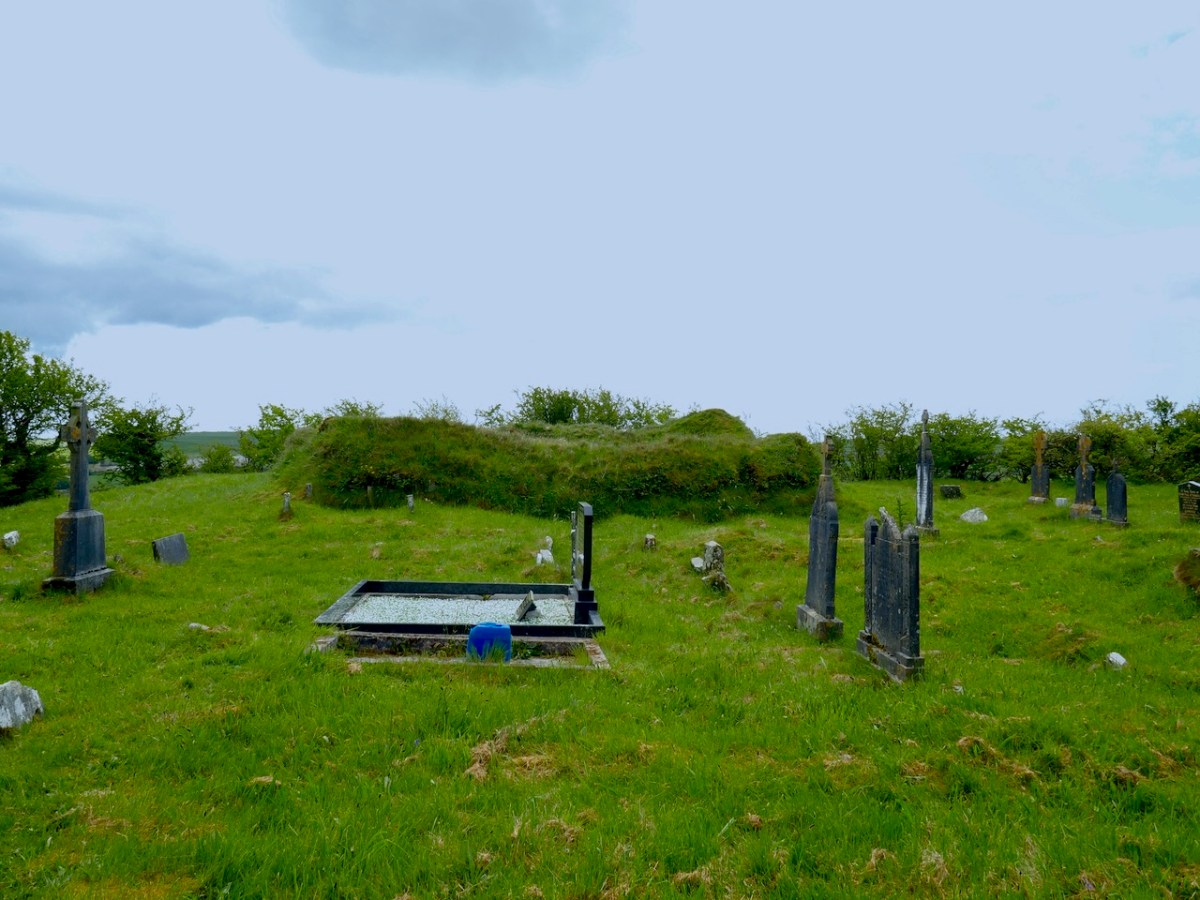
In pasture, atop knoll on E-facing slope. Circular, slightly raised area (32.6m N-S; 34.5m E-W) enclosed by two earthen banks, stone faced in parts, with intervening fosse. Break in inner bank to W, now blocked up; modern steps to E. Outer bank broken to W (Wth 3.5m), blocked up; S gap leads to laneway; modern break to NNW. Church (CO134-025004-), graveyard (CO134-025003-) and souterrain (CO134-025002-) in interior; second souterrain (CO134-089—) beside outer bank to E.

Recognising that not all readers have access to Archaeology Ireland, and with Con’s permission, I will tell you that he notes that after the Battle of Callan 

in that same year many of the castles of the colonists for burnt or destroyed. Two were mentioned in a single entry in the Annals of Inisfallen as follows: “the castle of Dún na mBarc, and Caislén na Gide also, were burned by Mac Carthaig and by the Desmumu.”. Caislén na Gide has been identified as Caisleán na Gaoithe or Castleventry. . . No likely site for this clearly important castle has to date been identified on the ground. 

After more information on the history of the site and its association with the Barrett and the Barry families, Con concludes, I have no doubt but that this monument is the castle of Castleventry, a substantial and impressive ringwork reusing an older ringfort.

Next week I will write about the other three sites (spoiler alert – one of them will be familiar to regular readers already) and come to conclusions about the evidence we’ve been missing for the presence of the Anglo-Normans in West Cork.

* I applaud particularly the work of Grace Dennis-Toone, Her thesis brings considerable rigour and analysis to the topic. When is a ringwork a ringwork? Identifying the ringwork castles of County Wexford with a view to reconsidering Irish ringwork classification.