“A Genius for Observation” – More from de La Tocnaye

In a previous post I introduced Frenchman Jacques-Louis of Bougrenet de La Tocnaye, an escapee from his homeland at the time of the Revolution, arriving in London on 29 December 1792. He settled for a time in Britain, where in 1795 he published an account of his perambulations through England and Scotland. This was sufficiently well received to encourage him to obtain letters of introduction and travel to Ireland to undertake a similar exploration, leading to a further volume: Promenade d’un Français dans l’Irlande, published (in French) in Dublin in 1797.

Header – The Market Womens’ March to Versailles  – de La Tocnaye was on the ‘wrong’ side during the upheaval of the Revolution which lasted from 1792 to 1802: for his own safety he exiled himself from France throughout that period, and spent his time exploring the British Isles. Above – The main road going west out of Dublin in 1783, much as it must have been in de La Tocnaye’s time: the ruin of Maynooth Castle, from Alexander Taylor’s map of County Kildare

Jacques-Louis said immodestly of himself that he had . . . a genius for observation . . . and his writings are invaluable to us as an account of down-to-earth aspects of normal life in Ireland in the late eighteenth century, although – as I pointed out in my previous post – the 1917 translator (John Stevenson) has diluted some of the more colourful descriptions which might have been considered indelicate – or even uninteresting – to the readers of his day.

Here is a wonderful composite engraving – by Charles Turner Warren (1762 – 1823) showing the major tourism sites in Ireland which would have been familiar during de La Tocnaye’s lifetime. They include: Rock of Cashel, Swords Round Tower, High Cross at Monasterboice, Giant’s Causeway and the Mountains of Killarney. Grateful thanks for this to the excellent Ireland Illustrated project from NUI Galway

Last time around, we sampled Wicklow, Wexford and Cork City depicted through de La Tocnaye’s eyes. After these experiences our writer moved west and touched the fringes of our own part of Cork County before travelling up country. Today, as a preamble to what I hope will be an enlightening series of posts on de La Tocnaye, I will touch on the day-to-day practicalities of reaching – and journeying through – Ireland in the late 1790s using his own text (via Stevenson), with the briefest interventions from me. It’s fascinating stuff!

More early Irish tourism: this engraving by W H Bartlett – titled Arrivée à Killarney, par la route de Kenmare illustrates today’s very popular Ring of Kerry section of the Wild Atlantic Way, seen through nineteenth century eyes. Another from the Ireland Illustrated project, NUI Galway

Some words on the modes of travel of the day: Jacques-Louis’ adventures in getting from England to Ireland, which included a brief sojourn in Wales –

. . .  at Carmarthen the inhabitants use for salmon fishing a boat, or rather a basket, covered with horse skin. They sit in the middle and preserve equilibrium very cleverly, and, fishing over, they carry the boat home with them, where it serves as a cradle for the children. The cemeteries also attracted my attention. Instead of filling them with an incongruous assortment of tombstones with ridiculous inscriptions, the relations of the lost cultivate on their graves flowers and plants, coming often to care for them, so that the cemeteries are more like gardens than homes of the dead. People practising such a custom must be of gentle manners, and I was very sorry that I could not live for a while among them. But I was on my way to Ireland, and hurried on to Milford Haven, an ugly hole in which the anxious traveller may eat up to his last penny while waiting for a favourable breeze. Three or four times we set sail, and as many times were we forced by the waves to return to port. On the fourth endeavour we stopped at Deal, a little village at the mouth of the bay, and there we stuck for eight long days. In the ordinary course of affairs, how impatiently I should have chafed at the delay, in spite of the sight of the large and beautiful bay and singular country! But chance had settled that I should engage a place in the same boat as that which was to carry an amiable Scotch family, and an Irishman who had served a long time in France, and I found myself in such good company that I began to fear, rather than to desire, a favourable wind. We made the crossing at last, and rather rapidly, for we reached the Irish coast within twenty-four hours . . .

Jacques-Louis described the salmon-fishing boats – or baskets – which he saw in Wales; here is a 1972 photograph of John and Will Davies of Cenarth – the last two legitimate coracle fishermen on the River Teifi. They are both using the single-arm method of propulsion – a means of gliding downstream in a controlled way. They carried their coracles and their fish home on their backs. Photo in the public domain from Wikipedia

One of the delights of de La Tocnaye’s writings is the information he furnishes us with on the incidentals of his journey, such as this on the ‘customs’ of the day;

. . . The customs officers claim tribute on both sides of the water, demanding from the passengers half a crown per head, for the permission to ship or disembark their luggage. One who refused to pay had his bag tumbled and turned over in a cruel manner. The price of the passage is exorbitant — a guinea and a half in the cabin — and the packet was far from being either comfortable or clean. I had chosen the route from motives of economy, and found the charges to mount to double those of the Holyhead route. We entered the river Suir, at the mouth of which is a strong castle seated on a rock jutting out into the sea. Mr Latin, who travelled in the boat, was kind enough to ask me to his house at Drumdouny, and so from the very first day I spent on Irish soil I had the good fortune to enjoy Irish kindness and hospitality . . .

Another traveller whose work we might explore in future posts was Arthur Young (1741 – 1820). In 1780 he published A Tour in Ireland, with general observations on the present state of that kingdom: made in the years 1776, 1777, and 1778. This illustration of an Irish cabin is from that volume, and is drawn by Young

Hospitality was not always so straightforward:

. . . I had not taken the trouble to calculate distances very carefully in starting, and now, late in the evening, I found myself still eight miles from my destination — and eight miles Irish count for something. It was past eleven o’clock when I arrived at the house where I expected to be received. The doors were locked, and to my distress I found that the owner, who had invited me to his house, was not at home. Further, that there was no inn nearer than four miles distant, and that on the side of Dublin which I had left. To go back on my way was a hateful idea — I preferred rather to go ten miles forward than four back — and so I went on. At half-past twelve I found myself in a village, its name unknown to me. Everybody seemed to be asleep ; however, at the last, I found a cabin with a light in the window, the dwelling of some poor labourers who had returned late from the city. I entered, asked for hospitality, and had placed before me immediately what was in the house. For rest I passed the night on a three-legged stool, my back leaning against the wall. This for the first day of my travels was not a very agreeable beginning, but I had to take troubles as they came. There was no need to wake me in the morning. At dawn of day all the animals in the cottage, sleeping pell-mell with their masters, acquainted me with the fact that the sun was up, and I rose from my stool and left this unfortunate house of want. How profitable this night would have been to me had I been always the favoured child of fortune! I would advise parents to force their children thus to pass several nights in their youth; it would be more advantageous to them than years at school. Really to have compassion on the poor, and to have a real desire to help them requires that they should be approached; the careless rich, who have never seen the poor near at hand, think of them with disgust and turn away their eyes from the sight of poverty . . .

A superbly atmospheric drawing by Daniel Maclise (1806 – 1870) – an illustration for John Barrow’s A Tour Around Ireland, published in 1836. Barrow wrote: . . . I had often anticipated, but I had now the full experience of, the misery of an Irish car in a storm; and I can, without hesitation, pronounce it to be the most wretched of all possible modes of conveyance; I certainly never was before so exposed to such drenching rain: McIntosh’s cloak, and the water-proof boots, which I purchased last year at Tronyem, totally gave way to the merciless storm with which I was so piteously pelted . . . On entering any of the cottages to take shelter, at times when the wind and rain was so bad as to render it difficult to get the poor animal onwards, the general remark was, ‘Dear, dear, what a day to be out in!’ 

I was delighted to find that de La Tocnaye travelled by canal in their heyday – or rather in the days when the Irish canal network was still being built: the Grand Canal took 47 years to construct, being finally completed in its entirety in 1804. (For more on Irish waterways see my Green & Silver posts here). One particular post includes an extract from a Trollope novel in which passenger travel on the Grand Canal is also described. Here is de La Tocnaye’s experience:

. . . As it was my intention to reach Dublin as quickly as possible, I took place in a coach to convey me to Gorey, where I expected to join the Cork mail. Unfortunately when this arrived every place was occupied, and I was left in this miserable village with no way of proceeding with my luggage except by hiring what they call a car. Their car is a species of low cart on wheels two feet in diameter, made out of one or two pieces of wood, attached to a great axle of wood or iron turning with them. This singular construction seems to be well fitted for carrying heavy loads, but not for the country work in which they are commonly employed. I take it to be a farmer’s invention. Having then made a bargain with a driver to take me six miles at the price of a post-chaise, I mounted beside my luggage. My man stopped at every public- house to drink or talk, leaving me in the middle of the road exposed to the rain. Two or three times I begged him, civilly, to proceed, but as he did not appear to pay the slightest attention to my requests, I commenced to repeat those eloquent compliments which one may learn about the docks and markets of London, and was pleased to see that I had, at last, impressed him, for I heard him say, when quitting some of his friends, ‘By, I’m sure he’s a gentleman for he swears most confoundedly.’ After this little lesson I had not the least trouble with my charioteer, but the rain, and some annoyances due to my position at the horse’s tail, put me in such bad humour that I vowed never again to expose myself to such discomfort. I stopped at Carlow, where there has been established recently a seminary for Catholic priests. This town is situated on the Barrow, which joins with the Grand Canal of Ireland. Wishing to see something of this waterway I went to Athy, from whence every day there is a service of public boats to Dublin. At the entrance to the village I was stopped by four or five persons who asked for charity — they explained that it was to be used to give decent burial to a poor wretch who had died of hunger. I replied that since he was dead he wanted nothing. This answer did not appear to satisfy them, and so I contributed to the funereal pomp, the occasion being, perhaps, the only one in which the poor fellow’s friends were interested in his concerns. The canal boats are very comfortable, being indeed very like those of Holland, but the cost here is nearly double. The one in which I travelled carried a large number of political talkers of the type known in France as mouchards. Seeing that I was a foreigner, one of them spoke to me several times on delicate and difficult matters affecting the Government. Fearing false interpretations I responded in ambiguous terms, and in the end found it politic to feign sleep — a very good way of getting out of such difficulties. The canal is a magnificent piece of work, crossing immense tracts of moor, where ten or twelve feet of peat have had to be removed before reaching earth in which the waterway could be cut. Several aqueducts have been necessary, one of them of really prodigious length and height . . .

Above – I was unable to find any contemporary illustrations of passengers travelling on the Irish canals, but the above is a fine – if fanciful – illustration of a Packet  [passenger] Boat in London in 1801, just after the Grand Junction Canal was opened (courtesy the Royal Borough of Kensington and Chelsea Libraries). Tailpiece – Whitworth Aqueduct carrying Ireland’s Royal Canal over the River Inny, Co Longford, photographed in 2016: the aqueduct was built between 1814 and 1817 at a cost of £5,000

Keep watching Roaringwater Journal for more snippets from de La Tocnaye’s travels!

Harry Clarke, Egerton Coghill and the St Luke Window in Castletownshend

Remarkably, there are three Harry Clarke stained glass windows in one small West Cork village – in St Barrahane’s Church of Ireland church, in Castletownshend. The smallest of the three windows is the St Luke, inset into the south wall of the chancel. It is a miniature masterpiece, designed with extraordinary attention to detail by Harry, and executed in his studio.

The iconography that was chosen was specific to the subject – St Luke as Patron Saint of Painters. That’s because this was a memorial window to Egerton Coghill – more correctly Sir Egerton Bushe Coghill, 5th Baronet Coghill.

Egerton Coghill, left, with his painting companion Herbert Baxter*

Egerton had grown up in Castletownshend, one of a large family of Coghills who lived in a rambling house called Glen Barrahane, and who seemed to be related in multiple ways to all the other families who lived in and around Castletownshend. His father (Sir John Jocelyn, one of Ireland’s earliest photographers) was the brother of Adelaide, who had married Thomas Henry Somerville, mother of the Somerville family that included (among others) Edith (see Stories and Stained Glass), Boyle (see Boyle Somerville: Ireland’s First Archaeoastronomer and Boyle’s Bealtaine), and Hildegard. Hildegard eventually married Egerton, her first cousin. To Edith and Boyle, therefore, Egerton was both first cousin and brother-in-law.

To Edith he was also a childhood playmate, a best friend and a great supporter and artistic mentor. In periods of distress for her he encouraged her to concentrate on her work – first art and then writing, and he loaned her money when the going got tough. Everyone loved him, it seems. He gave up a career in engineering to devote himself to painting and his limited private means allowed him to study abroad. When he and Hildegard fell in love their families were delighted, but they had to wait seven years to be able to afford to marry.

Egerton and Hildegard on their wedding day

As a painter, Egerton was strongly influenced by the Impressionists. He painted en plein air, drawn to landscape and to muted colours. He loved to capture the scenery around Castletownshend, or the village itself, as in this charming depiction of the main street.

The Mall from Malmaison (Courtesy of the Fitzwilliam Museum)

He was accomplished and well-known in his day, exhibiting widely and selling well. A scholarship at Oxford, for landscape painting, is named in his honour. Now, he seems to have faded from memory, and images of his paintings are hard to find online.

Field of Rye, Barbizon (Courtesy of the Ashmolean Museum)

Egerton’s older brother, Neville, was killed at the Battle of Isandlwana during the Zulu Wars – Robert has developed a talk on West Cork Links to the Zulu Wars and will no doubt write a post about Neville eventually. One of the windows in St Barrahane’s (not a Harry Clarke) is dedicated to his memory. When Neville died, Egerton inherited the title and moved back permanently to Castletownshend with Hildegard and his children. Egerton himself died unexpectedly in England in 1921 during the upheavals caused by the War of Independence at home in Ireland, so it was some time before his body could be brought back to St Barrahane’s for burial. According to Edith, The whole country came to the funeral, and all the men competed for the privilege of putting a shoulder to the coffin, for even a few steps.

When Edith and Hildegard were able to consider a permanent memorial for their beloved Egerton it was naturally to Harry Clarke that they turned. Edith had been entranced immediately by Harry’s work when she travelled up to Cork, on the advice of her brother Cameron, in 1916 to view the windows in the Honan Chapel. She wrote to Cameron afterwards to thank him. She was nothing short of stunned by Harry’s windows and “the quality of burning and furious brilliance that I have never seen anywhere else. . . his windows have a kind of hellish splendour”.

Edith in her Master of the Foxhounds habit, about the age she was when Egerton died

Since then, Edith had worked with Harry to install the Nativity window in 1918 (it was his first public commission) as a memorial to her grandparents, and again in 1921 on the Kendall Coghill window (Egerton’s bachelor-soldier uncle and a universal family favourite) about which I wrote in my post The Gift of Harry Clarke. She now asked him to take on this new commission, and Harry, who had known and liked Egerton, promised to pay special attention to this project.

St Luke, Patron Saint of Painters, is depicted with a palette and brushes, with the Madonna’s face appearing on the palette

The design he came up with is exquisite, and every detail is important. St Luke, perhaps better known to most of us as one of the four gospel writers, is also the Patron Saint of Painters. This is based on the tradition that he painted the first image of Mary, and that image became an early Christian icon. In Harry’s design, Luke holds a painter’s palette and brushes, and the image of Mary appears like a ghostly presence on the palette.

Luke, with St Cecelia to the left and St John, holding a chalice, to the right

Luke himself is a typical Harry creation, with his huge eyes, forked beard, and expression full of compassion. His right hand, with long tapered fingers and a sleeve point (Harry loved those), holds a brush. His hat and garments are elaborately rendered in blue, scarlet and purple. His sandals, thong style, are complex twists of leather straps.

Besides the Luke and the Madonna images, there are four other sacred figures in the window. One of the unique joys of this window is that you can get close enough to it to see these tiny figures clearly, since it is at eye level (it helps to be tall). The first, on the left side of the window is St Fidelio, dressed as a bishop (below). Although one author asserts that Egerton was born on St Fidelio’s name day, I have been unable to confirm that or to find any information at all about St Fidelio, but obviously this saint had meaning to Egerton, or to the Somerville sisters, or perhaps it was a reference to Egerton’s faithfulness. However, it could, like St Cecilia, be another musical reference, to Beethoven’s opera, Fidelio. In fact, most of the figures appear to relate to secular aspects of Egerton’s life, while thinly disguised as the kind of saintly images suitable for a church window. I can almost hear Harry, Edith and Hildegard chuckling over the choices, knowing that Egerton, who had his full share of boisterous Coghill humour, would thoroughly approve of the coded messages.

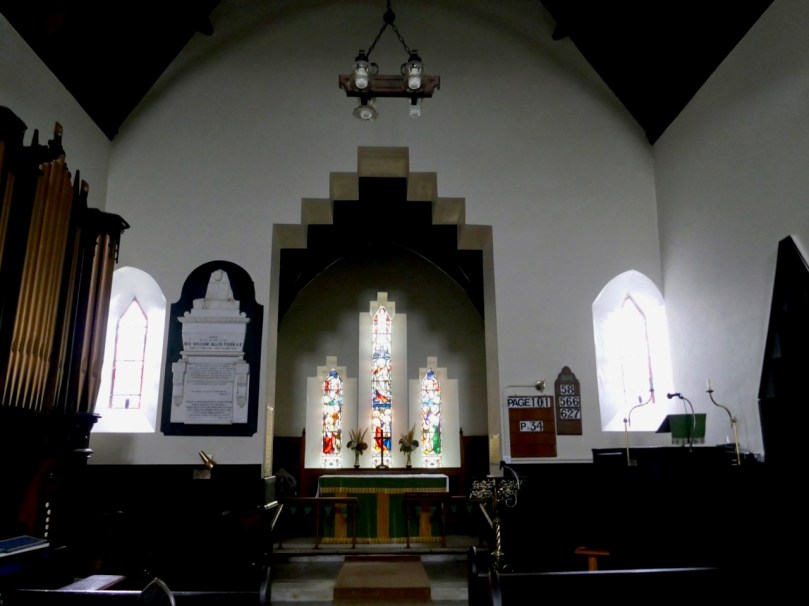
To the left of Luke’s shoulder is St Cecilia. Egerton loved music, had a fine voice, and performed happily in the musical theatre that was a staple of family life within the Castletownshend circle. Gilbert and Sullivan was a favourite. But this is also a nod to Edith – Cecilia is shown playing an organ while the organ that Edith played for over 50 years occupies the loft at the other end of the church (below).

Finally, at the top of the window, across from each other, are St John and St Barrahane. Barrahane, after whom the church is named (and who is pictured also in Harry’s nativity window in the same church) is the local saint, and the Coghill house was called Glen Barrahane in deference to that tradition. The tonsured monk is holding up a church (below). John was both his father’s and his grandfather’s (Baron Plunkett) name.

Egerton’s coat of arms, the dedication plaque, and Harry’s signature round out the window.

At this time, the Harry Clarke Studio was experiencing enormous demand for his work. To satisfy this demand he employed a group of highly talented artists and craftsmen, all of whom were trained to faithfully execute his designs, with Harry supervising closely. Thus it was with this window – most of it in fact was made while Harry was out of the country. The fact that he did not personally do most of the etching, staining and painting on this window does not in any way detract from its identification as a true Harry Clarke window – in every meaningful sense this was his creation and his signature indicates that he took full credit for the final product.

If you go to St Barrahane’s, make sure that you open the gate in the altar rails and go right up to the little window in the chancel. People have been known to miss it. It’s a unique opportunity to get nose-to-nose with a Harry Clarke. And when you do, spare a kind thought also for Egerton, a fellow artist, beloved by all who knew him, and honoured in this exquisite work of art.

*The four black and White photographs are from Edith Somerville: A Biography, by Gifford Lewis. I could find no copyright information on them so am assuming they are available for use, with gratitude to the author and publisher, Four Courts Press. The photograph of Edith as MFH is in my own possession.

How Well Do You Know West Cork?

1 Where was this taken?

We started a series this year on our Facebook Page that has proven to be very popular. We post a photograph of West Cork and ask our Friends if they can identify the place. It turns out that it is really hard to stump West Cork folk!

2 You know we love colourful houses, and this juxtaposition of green and pink is particularly eye-catching. Where would you see it?

So we thought we’d give our non-Facebooking readers a crack at this too. Of course, many of you are not from West Cork, so this is a post you can just sit back and enjoy.

3 This is a cross roads that’s made for dancing!

Some of the photos have featured in our posts, like the one above where Robert and I joined in the dancing at the crossroads. You may remember that post, although it was a while ago.

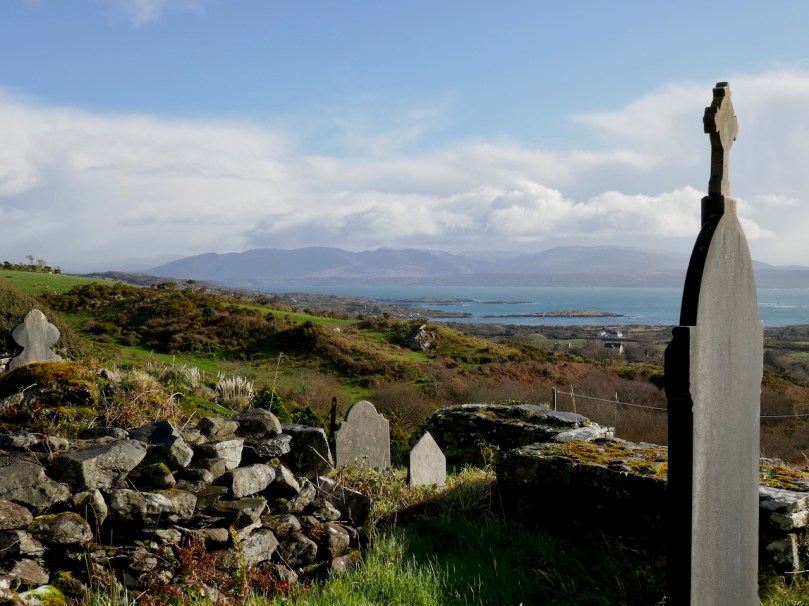
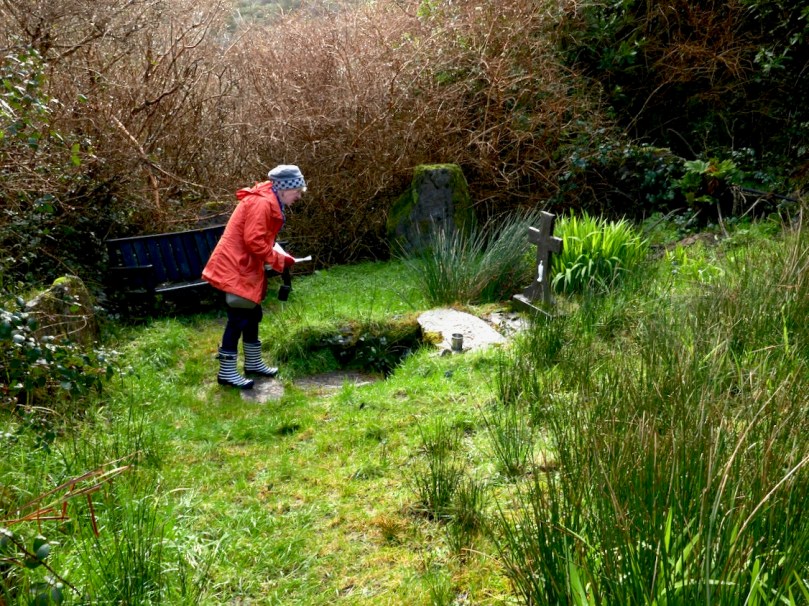
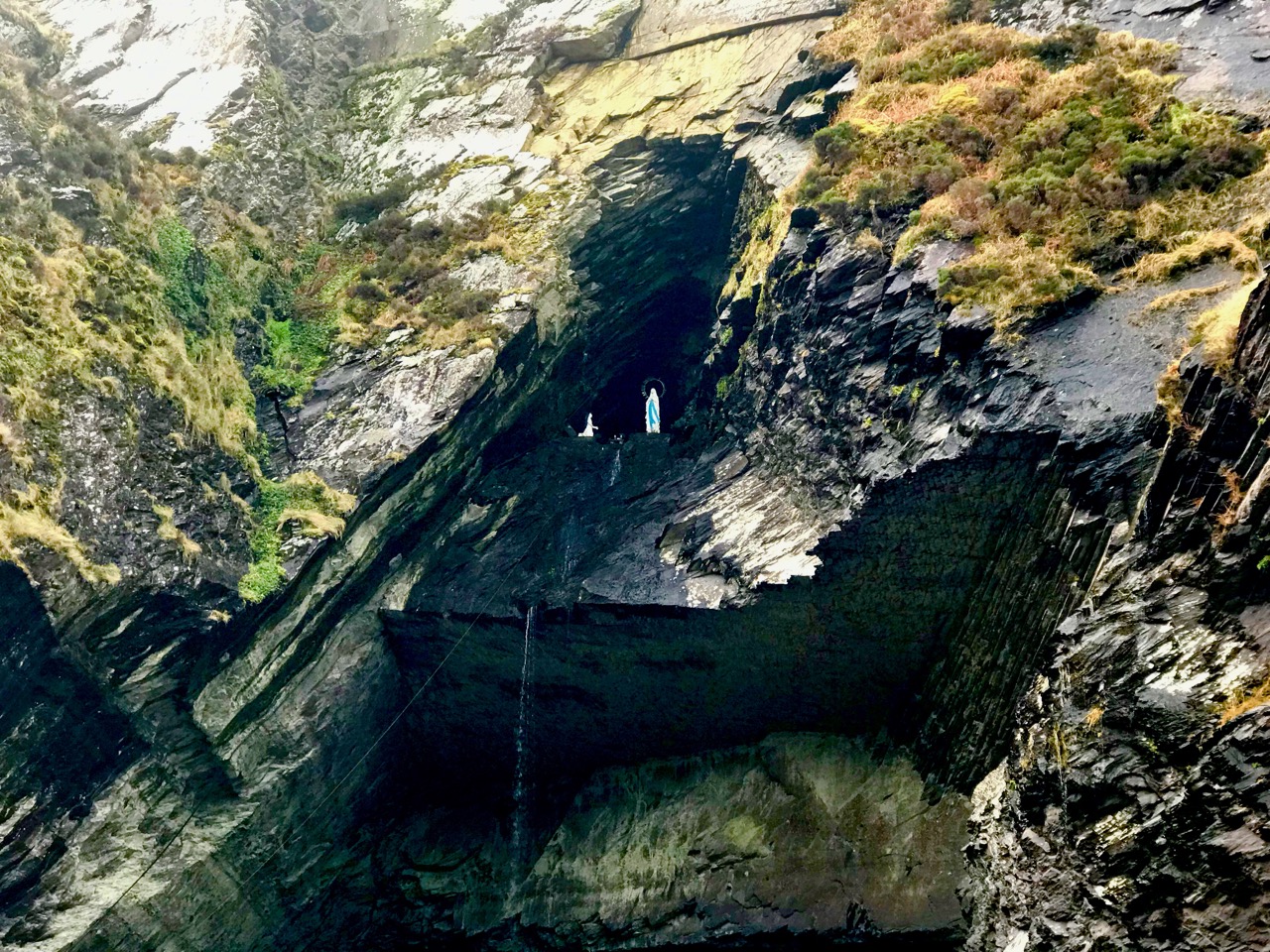
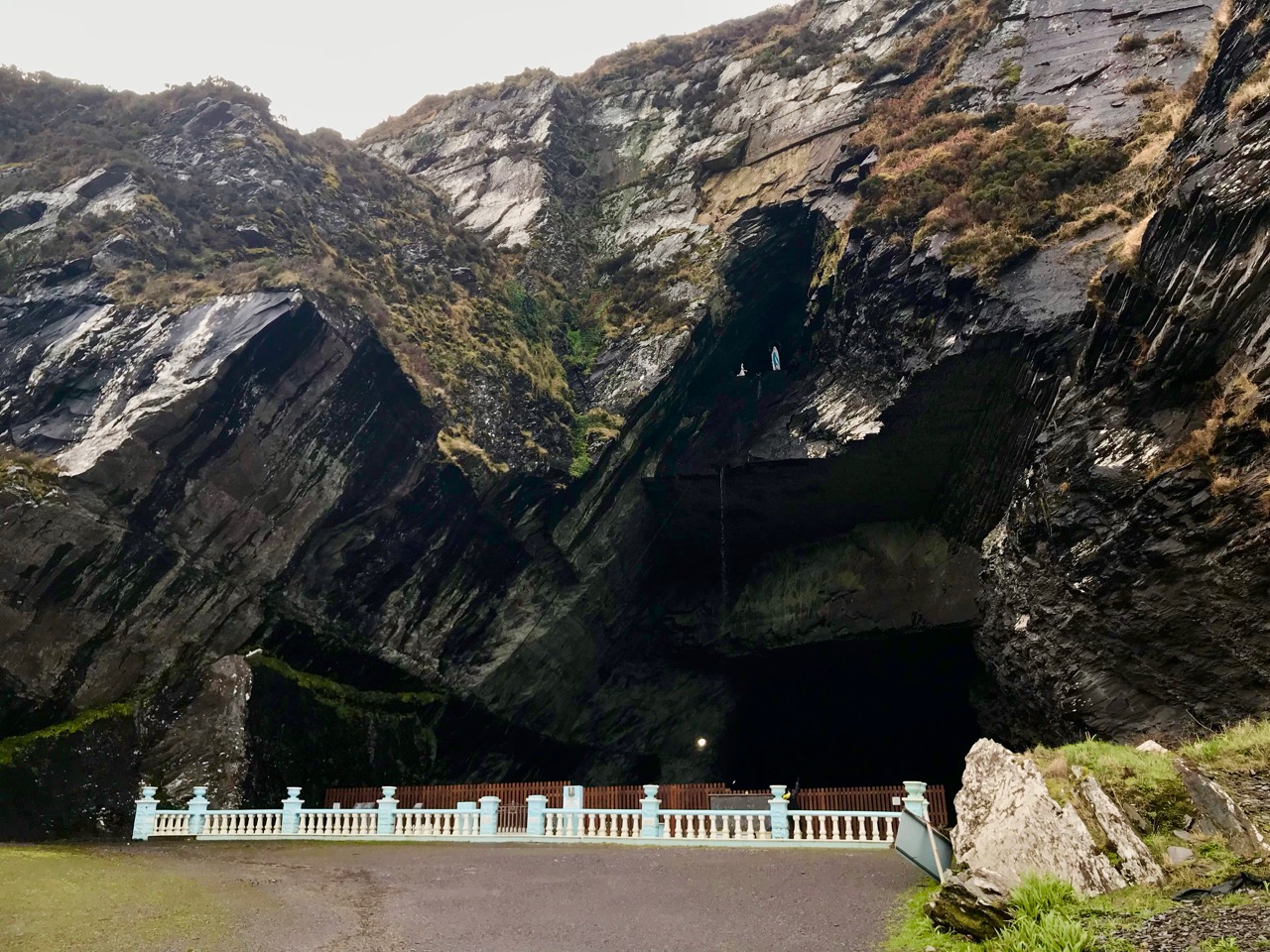
4 The statue is gazing down at a holy well site – but which one?

And where would we be without a holy well photograph, having shared so many of our adventures over the last few years with Amanda and Peter of Holy Wells of Cork? Amanda is nearing the end of her journey to visit every Cork well now, but is still managing to uncover all kinds of fascinating stuff about the wells she catalogues.

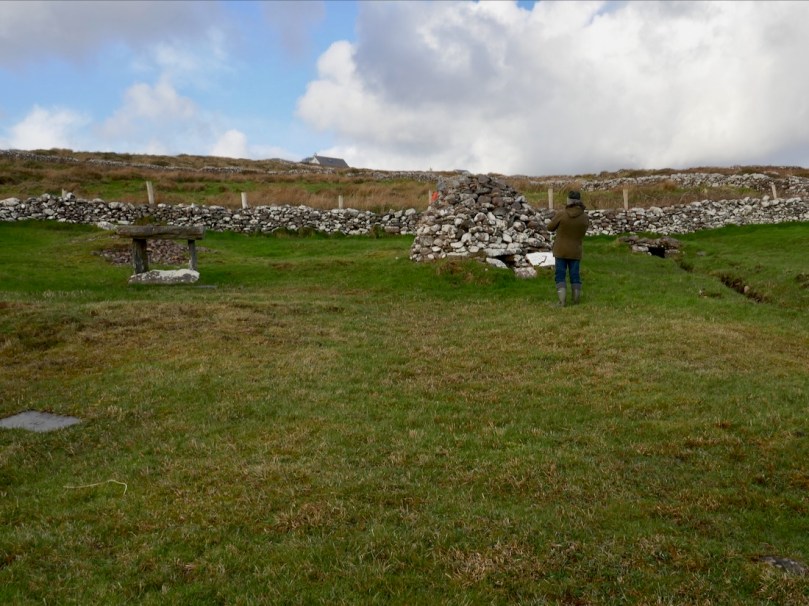
5 This is a wonderful ancient monument – do you know which one it is?

Archaeology has to feature, naturally, as it’s an ongoing preoccupation of ours. West Cork is rich in ancient sites and we have visited and written about so many of them, including the one above.

6 Taken from an iconic vantage point – can you identify it?

And you’re on the right track if you keep thinking ‘archaeology’ for the photograph above. This is a site you may have visited, even if you don’t live here full time.

7 A river runs through it – but where is this?
We aren’t used to looking at this side of the bridge above. In fact, you may not even know this is a bridge. Chances are, if you’ve been in West Cork, you’ve driven over and past this numerous times.

8 A lovely farm house in a remote valley. Recognise it?

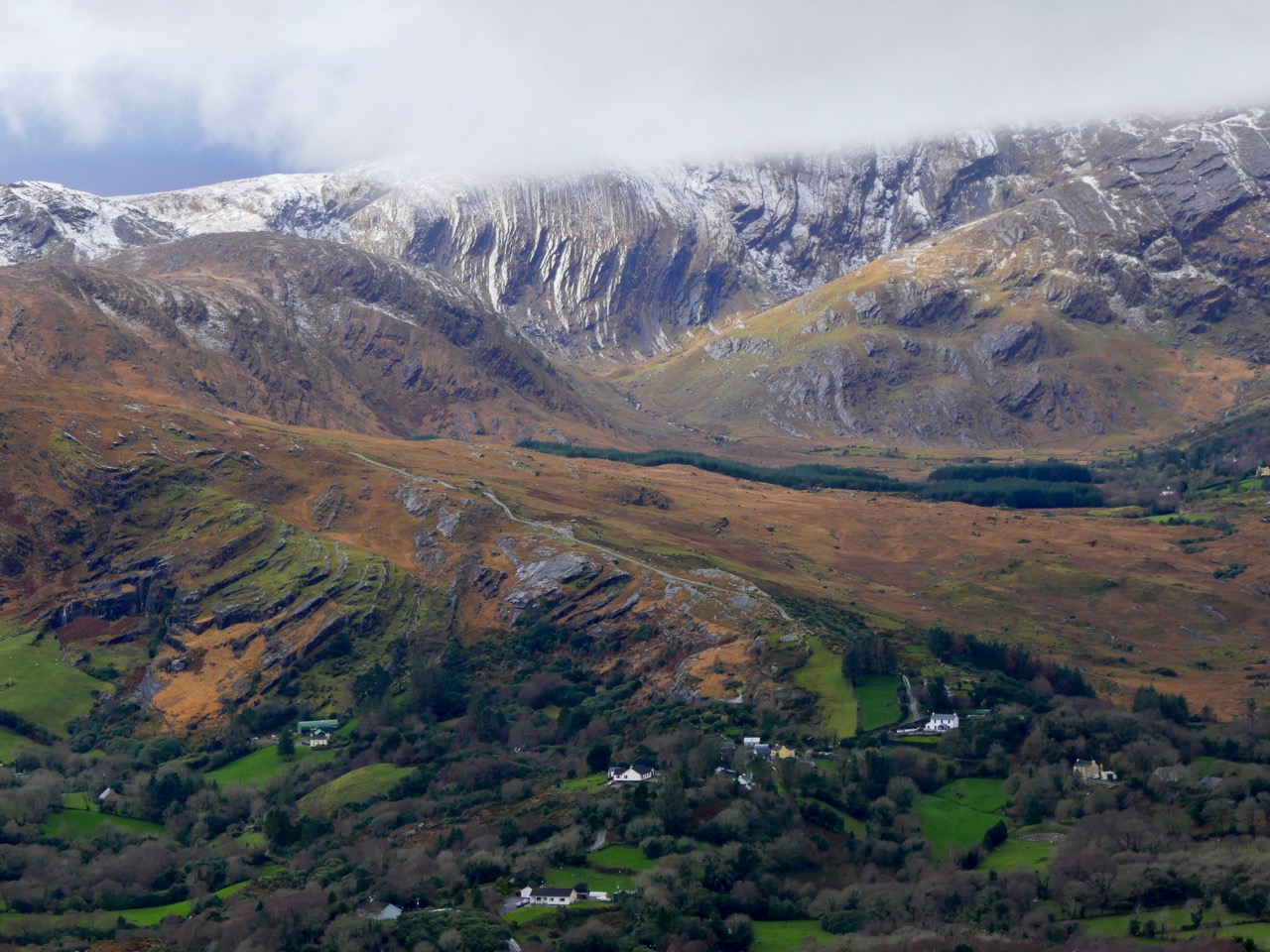
Mount Gabriel seems to pop up in many of our photographs, probably because it is so prominent on the landscape. And so it is in the one above – see the air traffic control domes (it may help to biggify)? But I’m willing to bet you won’t know where this shot was taken.

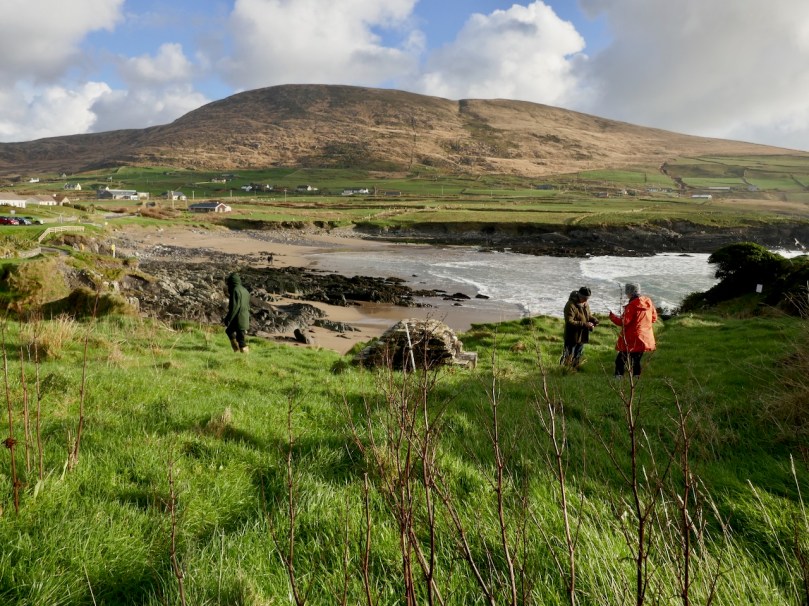
9 Which headland is our friend, Susan Byron, on?

I think you might know this one. If you’ve been there, it’s pretty much unforgettable. I think it’s one of the most beautiful places in Ireland – and that’s saying something.

10 Close to our hearts

And finally, a photograph of our own view from here at Roaringwater Journal International Headquarters, Nead an Iolair. From it, can you tell where we live, and what we are looking across to in this shot?

Leave your answers, or any comments you might have, in the comments section below, or if you like, on our Facebook page. Good luck, Dear Readers!

Nano Nagle – Lady of the Lantern

A Cork heroine: Nano Nagle was given the accolade ‘Ireland’s Greatest Woman’ by RTE in 2005, and at that time it was suggested that she would be a Nobel Prize winner if she were alive today. Why? Because she devoted her own adult life to helping – and educating – deprived Catholic families during the ‘Penal times’ in which she lived: she was born in 1718.

Header, tailpiece and above: images from the audio-visual display which can be seen in Nano Nagle Place, located on Douglas Street, Cork – only five minutes’ walk from the English Market

While Nano Nagle was actively agitating for – and lived to see – some relaxation of the laws against Catholics, particularly the repeals of 1778, she died in 1784 and it was not until 1791 that the Roman Catholic Relief Act saw some significant lessening of discrimination – although one of the sorest points, the continuing requirement for Catholics to pay tithes to the Established (Protestant) Church, was not fully overturned until the Irish Church Act of 1869.

Above – the landscaped gardens at Nano Nagle Place, Cork, are a city centre oasis, and contain Nano Nagle’s tomb and the graves of the sisters of the communities which carried out Nagle’s work from the mid eighteenth century onward

Nano herself seemed able to work ‘above the law’: she was born in Ballygriffin, near Mallow, County Cork into a wealthy family and experienced an idyllic childhood. The Penal Laws of that time meant that education for Catholics was not available in Ireland unless they were willing to attend Church of Ireland schools, and Irish Catholics were forbidden from travelling to the continent to be educated. Despite this, Nano was educated in France, where she experienced an epiphanic moment and determined to devote the rest of her life to the service of the poor back home in Ireland. 

Above – part of a painting in the Nano Nagle Room at Díseart Institute of Irish Spirituality and Culture (formerly the Presentation Convent) in Dingle, Co Kerry. The painting, by Eleanor Yates, shows the moment when Nano, travelling from a ball in Paris, sees pauper children suffering on the streets and realises that her life mission should be to care for and educate the poor

When Nano’s father and sister died, she moved to live with her brother’s family on Cove Street, Cork – now named Douglas Street. There she began to carry out her mission and opened a girls’ school around 1750 focussing on reading, writing, catechism and needlework. She had to work in secret as, under the Penal Laws, operating a Catholic school could result in imprisonment. 

Nano Nagle Place in Cork City incorporates some of the earliest buildings dating from the time of the Ursuline Sisters: the buildings have been restored and extended to form the present day Centre

Within ten years Nano was operating seven schools across the city of Cork, teaching both boys and girls. When her brother’s family moved to Bath, Nano took a small cottage on Cove Street. By day she visited each of her schools, and by night she visited the poor. This was dangerous work:  the city streets were neither lit nor properly policed. Nano travelled by the light of the lantern she carried, and she became known as ‘Miss Nagle, the Lady of the Lantern’.

Today there are displays in Nano Nagle Place showing some original artefacts from Nano’s time, including an early Convent accounts book and Nano’s cap

In 1771 Nano Nagle used a family inheritance to build a convent for the Ursuline sisters, a teaching order, whom she invited from France. The Ursuline Order, however, is ‘cloistered’ – unable to leave the convent and only able to teach within the convent. Thus,  to continue with her work in the schools she had set up all over Cork, Nano founded her own order – The Society for Charitable Instruction of the Sacred Heart – in 1775. The name was changed in 1791 to The Presentation Sisters, and there were from that time two religious communities both established by Nano Nagle, working side by side on Cove Lane (now Douglas Street), all living in mutual harmony and support, and continuing the mission of Nano Nagle across the world and into the present day.

Above – the death notice of Nano Nagle, and a recent water sculpture adjacent to her grave in Cork. Below – Nano’s gravestone and some graves of Sisters from the communities which were set up in Douglas Street

The Nano Nagle Heritage Centre has been established on Douglas Street and is open to all. It houses a very good visual presentation on the history of Cork in Nano’s time – and of Nano herself. It has beautiful landscaped gardens – quite a surprise in this urban setting – and Good Day Deli: a restaurant serving excellent food. Nano’s grave can be visited, and has recently been given a sculptural treatment which blends well with the historic buildings and graveyard of the early convent.

We are very grateful to Dr Danielle O’Donovan, Programme Manager of Nano Nagle Place, for personally showing us around the Centre and explaining its considerable historical significance

A Frenchman’s Walk Through Ireland

Cork City in the eighteenth century (represented above and below in Cork’s Nano Nagle Centre) had an unhealthy reputation, according to one commentator – Frenchman Jacques-Louis of Bougrenet de La Tocnaye – who travelled through Ireland in the 1790s and happily left us with some written descriptions of his journey.

Born into an ancient noble family in Nantes in 1767, de La Tocnaye fled the French Revolution in 1792 and self-exiled himself to idle London (his words). Then – armed with a sheaf of letters of introduction to people who might be useful along the way – he set out on a walking journey which lasted for ten years, through England, Scotland, Ireland and Scandinavia. Remarkably, he was able to get his writings published as he went along and we are fortunate to have some of them preserved, after a fashion, through a translation into English by John Stevenson in 1917 of Promenade d’un Français dans l’Irlande 1796 – 1797.

It is necessary to quote from the preamble set down by this translator before we embark on the writing itself. Apologies if you feel – as I do – we might be missing out on a few of the more colourful observations from de La Tocnaye on Ireland because of Stevenson’s reservations. The end result is of great interest to us nevertheless.

. . . A word about the author’s style. He has none. A well-educated man, at home in the highest circles of society, and doubtless a brilliant conversationalist, he is evidently unaccustomed to writing . . . Therefore, in the rendering, it has been necessary, at times, to convey what he intended to say rather than what is actually set down . . . 

. . . He has a weakness for using the swear words of the country of his sojourn, and uses them unnecessarily and unwarrantably. Second-hand matter, in the form of stories ‘ lifted ‘ from Irish authors, or antiquarian information inserted out of compliment to his friends, has been omitted as of no interest to the reader of to-day; and certain little sallies in the French manner, innocent enough, but which in English print might wear the air of indecencies, have been modified or suppressed. For the rest, the translation is as literal as a care for readability in English will allow . . .

. . . Travelling on foot over the island, east, south, west, north, his whole baggage in his pockets, in two silk stockings from which he had cut the feet, or in a handkerchief slung en sautoir on the end of a combined sword-stick and umbrella, which he said ‘made the girls laugh’ he got to the very heart of Irish life . . .

Sackville Street and Gardiner’s Mall, Dublin c1750. Attributed to Joseph Tudor 1695–1759. (courtesy National Gallery of Ireland)

De La Tocnaye’s writings on his travels in Ireland alone amount to 90,000 words! Today I am taking just a few extracts to give you a flavour of what life was like here in the late eighteenth century – seen through the eyes of one observer. I have no doubt that more of this journal will follow on these pages in time.

Leaving Dublin, de La Tocnaye made a stop in County Wicklow:

. . . Following the course of the stream which flows from the lake, I came to Glendalough, a word which means ‘the valley of the two lakes’. It is remarkable that there is not a single ancient name in this country which has not its special signification. The appropriateness here is evident, for there are really two lakes, which join at the portion of the valley called ‘The Seven Churches.’ It is here in this desert place that are to be found the most ancient remains of the devotion of past centuries, remains whose antiquity reaches back to the early ages of Christianity. St Kevin here founded a monastery in the third or fourth century of the Christian era, probably on the ruins of a temple of the Druids, who sought always the wildest places for the practice of their cult. This was for long a bishopric, but now it is united to that of Dublin. Here are still to be seen the ruins of seven churches, and one of those round towers of unknown origin which are so common in Ireland . . . 

High Cross at Glendalough

De La Tocnaye goes on to pronounce, at length, on round towers (and Irish pishogues):

. . . They are all alike, having a door fifteen or twenty feet from the ground, generally opening eastward, some narrow windows, and inside not the slightest remains of a staircase, unless this may be found in a few projecting stones which may have served to support floors in which there must have been trap doors to allow of passing from one to another by means of ladders. These towers are always found at some distance from a church, and entirely isolated . . . Whatever these ancient buildings may have been, the Irish have now for them the greatest possible veneration. They come here from afar for pilgrimages and penitences, and on the day of the Saint, which is June 3, they dance afterwards and amuse themselves until nightfall. In this sacred enclosure are to be found remedies for many ills. Have you a pain in your arm ? — it suffices to pass the limb through a hole worked in a stone, and you are free from your trouble. There is another stone on which for another ailment you shall rub your back, and another one against which you shall rub your head. And there is a pillar in the middle of the cemetery which, if you can embrace, will make you sure of your wife. The Saint’s Bed is a hole about six feet long, hollowed in the rock — a very special virtue belongs to it. It is only to be reached after much trouble in scaling a steep slope of the mountain above the lake, but whoever has enough strength and resolution to climb to it, and will lie down in it, is sure never to die in childbirth. Belief in this virtue makes a great number of wives, and of girls who hope to become wives, come here to pay their devotions . . . All this seemed to come in very fitly at the beginning of my travels. I pushed my arm through the hole in the stone. I rubbed my back against the rock which cures the troubles of the back, and my head against another, thus ensuring my health for the remainder of my journey. I even tried to embrace the pillar, but I cannot tell with what result. As to the Saint’s Bed, I thought there was little danger of my dying from the malady against which it insures, and therefore I did not climb . . .

Round tower at Glendalough

Returning to de La Tocnaye’s comment about Cork City:

. . . I arrived at Cork, the dullest and dirtiest town which can be imagined. The people met with are yawning, and one is stopped every minute by funerals, or hideous troops of beggars, or pigs which run the streets in hundreds, and yet this town is one of the richest and most commercial of Europe . . .

View of Cork 1760

. . . There is no town where there is so much needful to do to make the place agreeable to a great number of the poor inhabitants. The spirit of commerce and self-interest has laid hold of all branches of the administration. For example, it would be very easy to furnish the town with a public fountain, but the person or company which has the privilege of bringing water in pipes to the houses thinks that by the building of such a fountain there would be lost a number of guinea subscriptions. Therefore, in order that the avidity of an obscure individual should be satisfied, thirty thousand inhabitants must suffer . . . I have seen poor people obliged to collect the water falling from the roofs on a rainy day, or to take it even from the stream in the streets. All the time there is perhaps hardly a place which it would be so easy to supply with water as Cork, by reason of the heights which surround it. There is even a spring or fountain about a mile away, which is called Sunday’s Well, which appears to me to have sufficient water for the supply of a public fountain in the centre of the town . . . The dirt of the streets in the middle of the town is shameful, and as if that were not enough, it would seem as if it were wished to hinder the wind and the sun from drying the filth, for the two ends of the street are terminated by prisons, which close the way entirely and prevent the air from circulating . . .

Cork Prison 1831 – engraving by W J Bartlett

Lest the people of Cork be offended, today, by de La Tocnaye’s descriptions of yesterday, rest assured that he had similar reactions to other places. Take Wexford, for example:

. . . From here I proceeded to Wexford, and without wishing it harm, I may say that it is one of the ugliest and dirtiest towns in the whole of Ireland. The excessive exercise in which I had indulged, and to which I had not been accustomed for a long time, compelled me to remain here eight days with a fever . . .

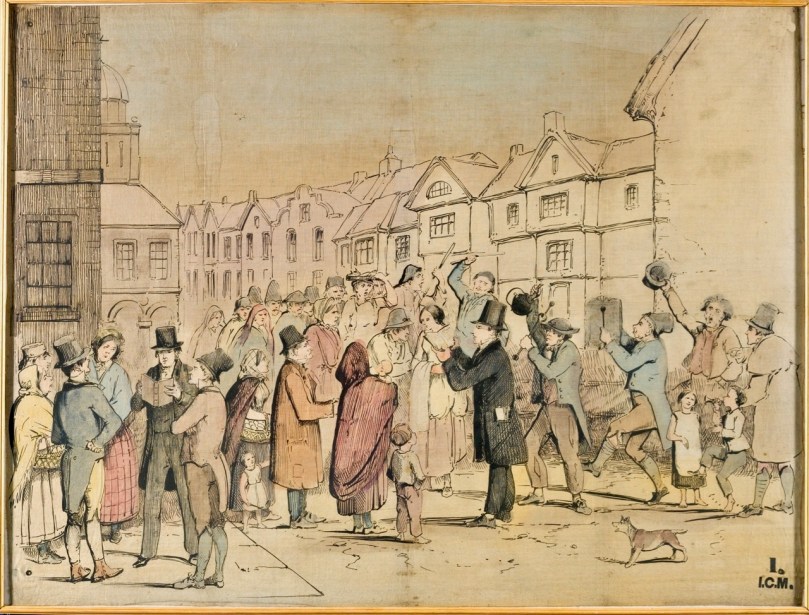
In spite of the title, this is a representation of Whiteboys from the 1780s. (courtesy National Library of Ireland)

That’s probably quite enough insults for one week! I have avidly ploughed through the writings of de La Tocnaye as he proceeded on his journey through Ireland, and there is much of considerable interest: we get from him a very good picture of life here two hundred years ago. Finola is writing today on the complexity of religious history in Ireland: I’ll close with a view from our French traveller:

. . . In every country of the world the peasant pays tithe with reluctance ; everywhere it is regarded as an onerous impost, prejudicial to the spread of cultivation, for the labourer is obliged to pay on the product of his industry. In Ireland it seems to me a more vexatious tax than elsewhere, for the great mass of the people being Catholic, it seems to them hard that they should be obliged to maintain a minister who is often the only Protestant in the parish, and who exacts his dues with rigour. Beyond the ordinary tithe he has a right, over nearly the whole of Ireland, to one-tenth of the milk of a cow, one-tenth of the eggs, and one-tenth of the vegetables of the gardens. One can easily understand that these conditions may be very severe when the minister exacts his dues in kind, and especially when it is considered that these poor miserable folk have, as well, to supply a subsistence for their own priests. They have often made complaints and claims in connection with this subject, and to these it was hardly possible to give attention without overturning the whole of the laws of the Establishment, as it is called; that is to say, the Established religion. From complaints and claims the peasants came to threats, and from threats to the execution of the things threatened. They assembled at night in great numbers in certain parts of Ireland, and in order that they might recognise each other safely, they wore their shirts outside their clothes, from whence came the name of White Boys. In this garb they overran the country, breaking the doors and gates of ministers’ houses, and if they could catch the cattle they mutilated them by cutting off their tails and ears. All the time they did no other violent act, and a traveller might have gone through the country with perfect security . . .

Tailpiece: Wexford Town in 1796 (courtesy Laurence Butler)

Saints and Soupers: the Story of Teampall na mBocht (Part 3, The Protestants – Tithes and the Second Reformation)

While the Church of Ireland was the Established Church in Ireland since the time of Henry VIII, it was not the only Protestant group operating in Ireland. Methodists, in particular, had won many converts since the days when John Wesley himself had come preaching (above). However, like Catholics, breakaway and Dissenter communities were disadvantaged in comparison to the Church of Ireland.

Bandon Methodist Church, established in 1821

This privileged position, while it came with all the advantages conferred by reliable revenues, political power and access to education, was also accompanied by the constant awareness of being a minority, often an unwelcome one, and by the decadence and laxity that generations of wealth can confer.

1864 Map of the Church of Ireland Dioceses

Dr Kenneth Milne, writing in The Church of Ireland: An Illustrated History (Published by Booklink, 2013) describes the situation thusly:

. . . plurality and non-residency came to be regarded as endemic. There is evidence that there were many faithful (and often impecunious) Church of Ireland clergy, but their existence has been somewhat masked by the prevalence of ambition and negligence among many others, particularly of the higher rank.

While it was to the bishops that one would have looked to remedy the situation, they themselves were frequently non-resident, at least for long periods, preferring the amenities of Dublin (or sometimes London and Bath, for most of the more remunerative sees were given by the crown to Englishmen as part of that great web of patronage that lay at the heart of government and was the norm). Such episcopal failings were by no means peculiar to the bishops and other dignitaries of the Church of Ireland, and were common throughout Europe, but what made the Irish episcopate more vulnerable to criticism was its remoteness (in more sense than one) from the great majority of the populations, and the fact that it drew it emoluments, often very considerable indeed, from lands to which its entitlement was often in dispute. In addition, it demanded tithes paid by a resentful population who, be they Roman Catholic or Dissenter, were also encumbered with contributing towards the support of the ministry of the Church to which they gave their fealty.

The Tithe Collector – collectors were employed on behalf of the clergy and were called Proctors. They took a cut, so there was a strong incentive to collect

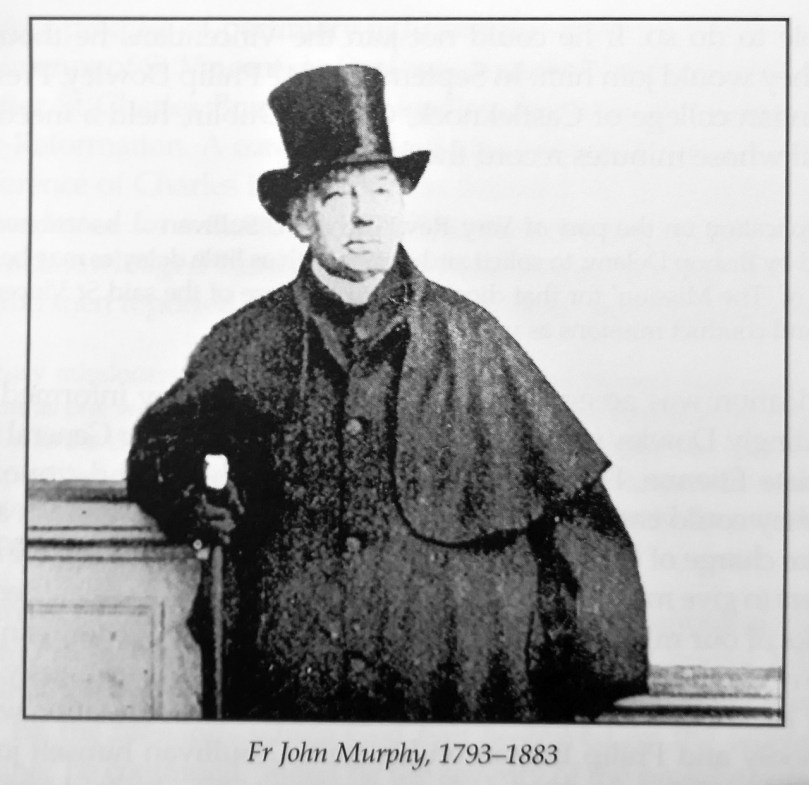
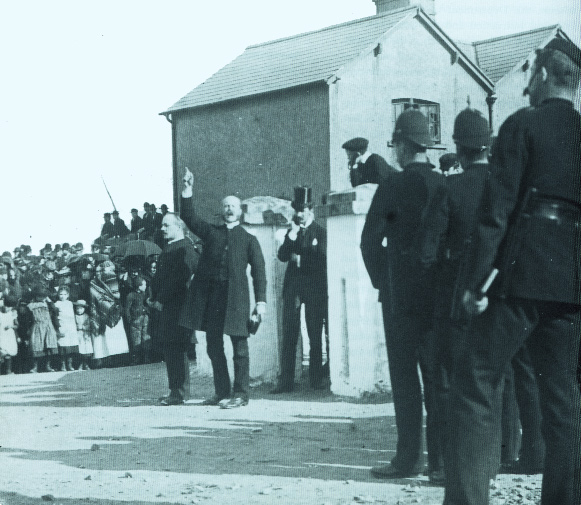
Catholic Emancipation in 1829 was followed by a period of intensified conflict over tithes, known as the Tithe Wars. (Tithes had been a source of great conflict forever – see Robert’s post for La Tocnaye’s observations about tithes in the 1790s.) A large anti-tithe meeting was held in Skibbereen in July 1832 and the speech made by Father Thomas Barry of Bantry was reported in full. Here are some extracts from it, reported by Richard Butler in his paper St Finbarr’s Catholic Church, Bantry: a history for Volume Three of the Journal of the Bantry Historical and Archaeological Society:

The Rev. Thomas Barry, P. P., in seconding [an anti-Tithe] resolution, announced himself as a mountaineer from Bantry, and was received with a cead mille failthe [sic], which was sufficient to affright all the proctors in the kingdom from their propriety. . . .

But (continued the Rev. Gentleman) . . . If to assist the people in their peaceful and constitutional efforts for the removal of grievances to hear the insolence of power in defence of the poor man’s rights, invariably to inculcate on the minds of my flock the most unhesitating obedience to the laws, and at the same time, to raise my voice boldly and fearlessly against injustice and oppression. If these constitute the crime of rebellion, then do I rejoice in acknowledging the justice of the charge. [tremendous cheering.]

. . . Some time since I commenced building a chapel in Bantry, which, owing to the poverty and privation of the people, I have been unable to finish, although thousands are extorted from them for the Parson and the Proctor – the Churchwarden applied to me for Church rates – I desired him to look at the Chapel, and there he would find my answer: he begged of me not to give bad example by refusing to pay, and I told him, that I was well convinced that the example which I gave in this instance was particularly edifying. – (great laughter and much cheering.) – The proctor came next, and threatened me with distraint for the amount of tithes with which he charged me, and which I must do him the justice to say he never previously demanded. I told him to commence as soon as he pleased; and so gratified did I feel at the honour which he intended for me, that I was resolved to make a holyday day for him (laughter and cheers.)

– The Rev. Gentleman sat down amidst the most enthusiastic cheering.

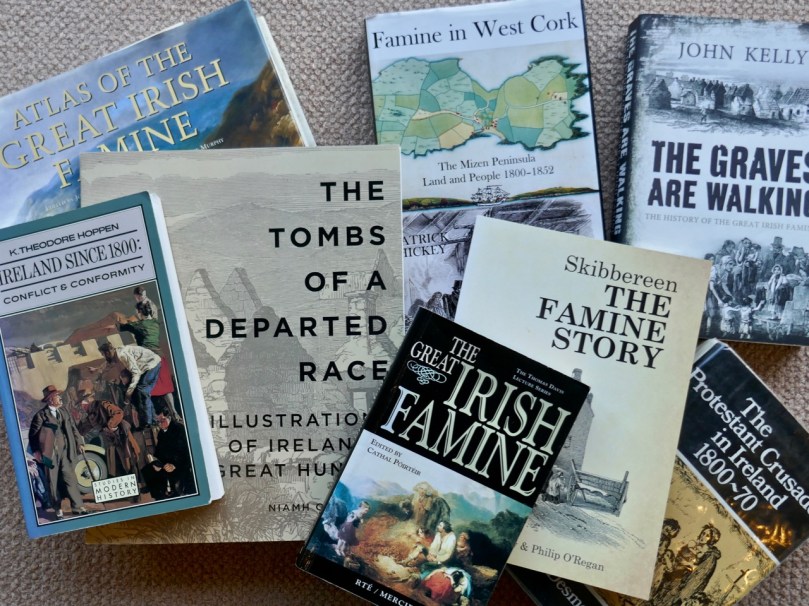
This meeting was but one in a series in West Cork throughout the 1830s. Patrick Hickey, in Famine in West Cork, reports on meetings in Bantry and at the foot of Mount Gabriel – meetings attended by thousands, each parish under the leadership of their priest. In Bantry, the various tradesmen of Bantry marched in procession, each trade with its own banners. On one side of the tailors’ banner was a portrait if Bishop Doyle with the inscription, ‘May our hatred of tithes be as lasting as our love for justice’ and on the other side a portrait of Daniel O’Connell. At the Mount Gabriel meeting a procession of boats came from the islands and the men of Muinter Bheara arrived under the command of Richard O’Donovan of Tullagh and many Protestants (including Methodists and the descendant of Huguenots) attended.

One of the most outspoken of the Church of Ireland community against the anti-tithe movement was Rev Robert Traill, Rector of Schull (above). In doing so he was following the example of his father, the Rev Anthony Traill, who had used a particularly brutal proctor, Joseph Baker, to collect his tithes, while he himself resided in Lisburn. Fearing, of course, the loss of his income, Rev Robert railed against the meetings, declaring that in doing so he waged war against Popery and its thousand forms of wickedness. When cholera broke out after one of the monster meetings he wrote that is was God’s punishment for the agitation stirred by the iniquity of these wicked priests. He had reason to be afraid – the rector of Timoleague had been murdered and throughout the country killings, assaults and riots had occurred. It was a challenging time to be a Church of Ireland rector. (Remember Rev Traill, by the way, and don’t cast him as a villain in this story – he will feature again for his heroic role during the famine – yet another twist in the complex role of the Protestant church in this part of Ireland.)

The battle at Carrickshock, Co Kilkenny (from Cassell’s Illustrated History of England). This confrontation over tithes resulted in several deaths and sent shock waves through the country

Eventually (see Part 2) the Tithe Wars eased, a compromise (if not a solution) was reached and outright protests ceased. Let us turn our attention now to what was happening within the Church of Ireland in matters of doctrine.

An enormous stained glass window in Holy Trinity Catholic Church in Cork is dedicated to Daniel O’Connell, The Liberator, by a grateful people

Latitudinarianism – lovely word, isn’t it? It refers to the live and let live philosophy that was generally adopted by Protestants in the 18th century. Actually a reaction against the Puritan insistence on a single form of Truth, it was sometimes called Broad Church and was a mode of thought that tolerated variations on thought and practise and sought to peacefully co-exist with other forms of worship. However, by the beginning of the nineteenth century, this emphasis on compromise and moderation was gradually being replaced with a new evangelical fervour, leading to a movement known as the Second Reformation.

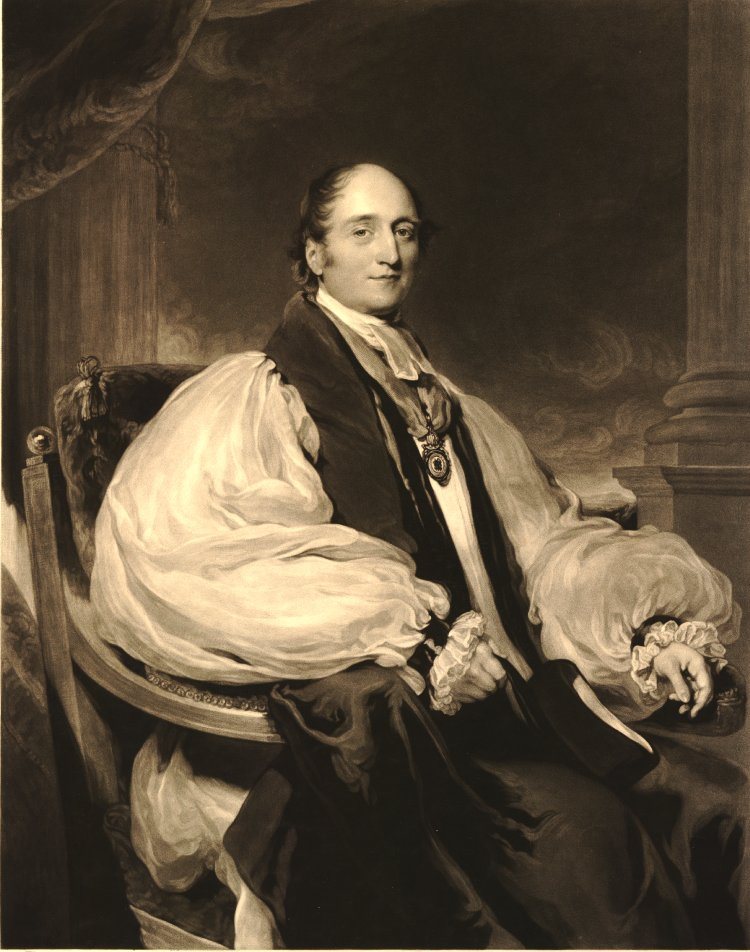
This movement, it is often said, was kick-started in Ireland by William Magee, Archbishop of Dublin and fervently committed to the Second Reformation. He gave a firebrand sermon upon his inauguration in 1822 in which he accused the Catholics and the Methodists thus:

. . . the one possessing a church without which we can call a religion, and the other possessing a religion without which we can call a church: the one so blindly enslaved as to suppose infallible ecclesiastical authority, as not to seek in the word of God a reason for the faith they possess; the other so confident in the infallibility of their individual judgment as to the reasons of their faith that they deem it their duty to resist all authority in matters of religion. We, my Brethren, are to keep free of both extremes, and holding the Scriptures as our great charge, whilst we maintain the liberty with which Christ has made us free, we are to submit ourselves to the authority to which he has made us subject.

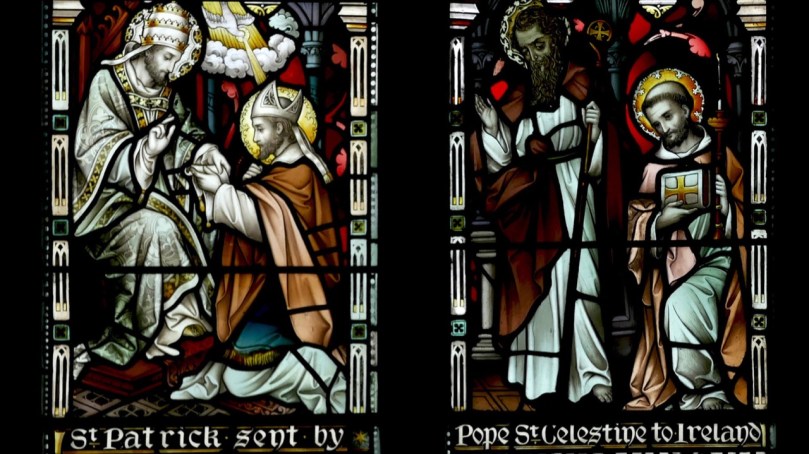
In this sermon, which created a furore at the time, he was essentially giving voice to prevailing Protestant opinion at the time regarding the other churches, and also to the claim of the Church of Ireland to be the only national church. It is important to note here that the Church of Ireland considered then, as it does to this day, that far from being an imported or imposed religion, it was, and remains the only true successor of the original faith of the Irish. This was first argued by James Ussher (portrait below by James Lely) in the seventeenth century.

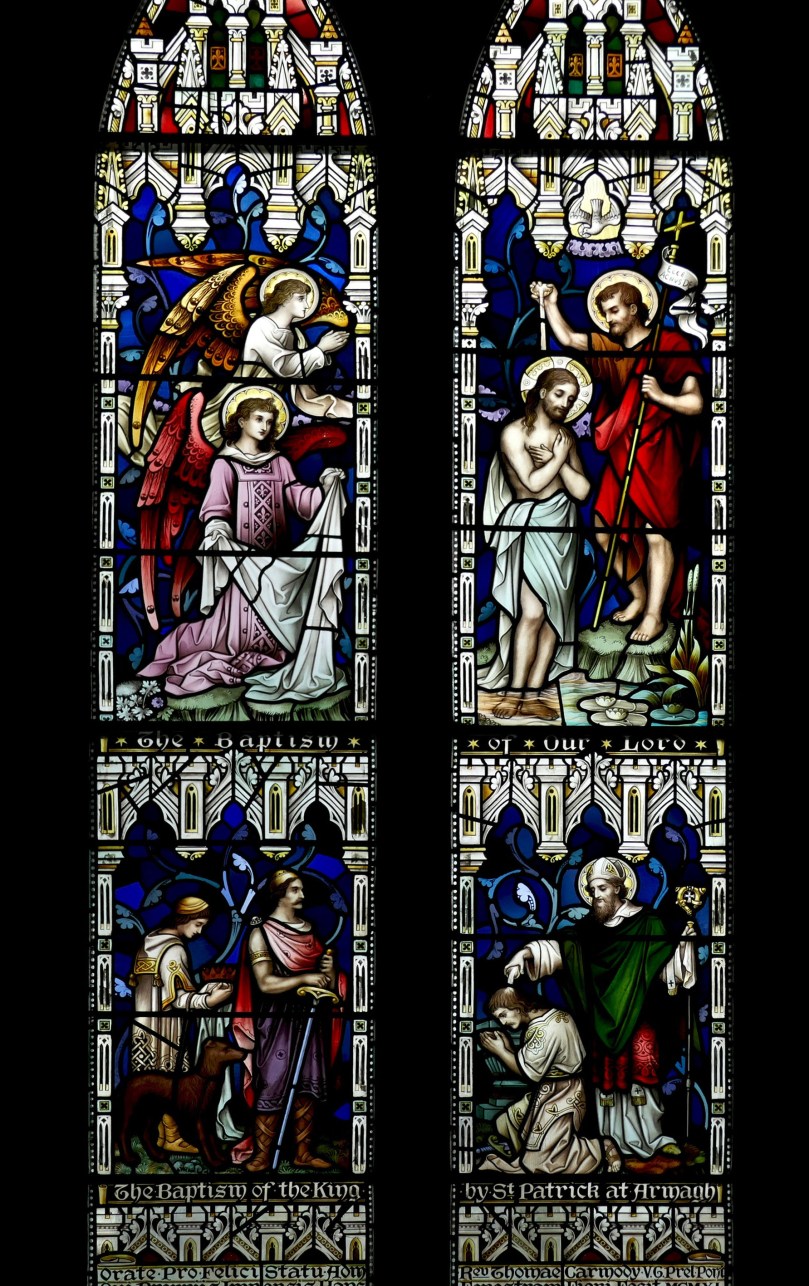
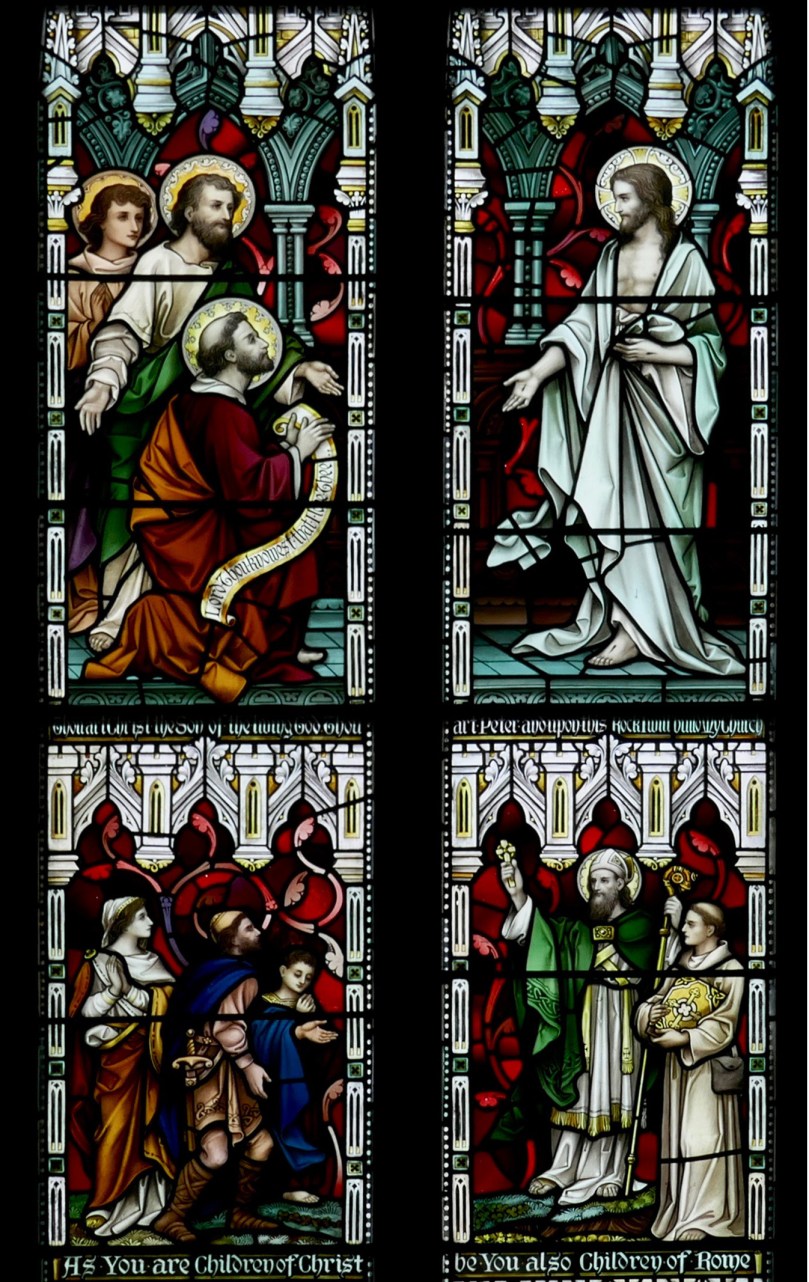
The Church of Ireland, Ussher said, was not created by Henry VIII, but that St Patrick was Protestant in his theology and that the real problem was the interference of the Pope. (Ussher, by the way, is the same prelate who established that the world is only 6000 years old, another statement that continues to resonate in fundamentalist circles – but that’s another story.) In this origin story, it was important to “rescue” the true Irish church from Rome and restore it to the vision of St Patrick. The current catechism on the St Patrick’s Cathedral website continues this tradition. To the question “Did the Church of Ireland begin at the Reformation?” the answer is “No – the Church of Ireland is that part of the Irish Church which was influenced by the Reformation, and has its origins on the early Celtic Church of St Patrick.”

William Magee Bishop of Dublin bust at TCD
William Magee bust in Trinity College

Magee’s assertions were sincerely held positions. Although a cultured and erudite man, and tolerant in many respects, he was violently opposed to Catholic Emancipation, seeing the conversion of Romanists to Protestantism as a far better option both for them and for the country. His sermon effectively marked the end of any leftover latitudinarian attitudes in Ireland and heralded the arrival of a new era for the church of Ireland, in which educational, evangelical and proselytising activities were seen as essential. Next week we will see what effect those activities had on the already deepening divide between Ireland’s faith communities in the pre-famine period.

St Patrick’s Cathedral, Dublin – along with the position of being the Established Church, all the ancient churches became the property of the Church of Ireland, including this one. Magee delivered his famous sermon here

This link will take you to the complete series, Part 1 to Part 7