Out in the Field

During the West Cork History Festival field trips, led by Roaringwater Journal last week, treats were in store. Many thanks to volunteers Jenny and Ray who worked hard to provide the refreshments (and who baked the scones!) on Friday’s ‘Art and The Great Famine’ excursion, which arrived at Reen Farm in time for tea.

Artist John Kelly‘s cows are abundant at his home at Reen, and the experience of the connections with this unique place and Famine times were admirably and sensitively presented by Siobhan Burke of West Cork Experiences (she’s on the left, facing the bronze tree, below).

The day included organised visits to the 110 Skibbereen Girls project at the old workhouse site in Skibbereen – where we were given a presentation by artist Toma McCullim – and a guided tour by West Cork Arts Centre’s Zenda Williams of the Coming Home – Art and The Great Hunger exhibition at Uillinn, followed by a visit to the mass famine graves in Abbeystrewery, where Philip O’Reagan of the Skibbereen Heritage Centre explained the site’s enormous significance. Just as well we had those scones to bolster us up!

On the previous day we began the ‘West Cork Archaeology’ tour at Knockdrum Fort, where – in benevolent weather – you get the most spectacular views (above). Finola talked about the Rock Art on the site, which takes it back in time perhaps 5,000 years, and she also explained about the alignment with the Bealtaine sunset discovered by Boyle Somerville, described here – and which we witnessed ourselves earlier this year (below).

Highlights of that day’s expedition also included an entertaining time at Castletownshend hosted by George Salter-Townshend (below, he’s leading us into the Castle which has been owned by his family since medieval times).

After more on archeoastronomy from Finola, at Drombeg Stone Circle (above), a further treat was in store at Castle Salem, near Rosscarbery, where we were given a tour and talk by its owner Peter Daly (below).

We were delighted to be given the opportunity to provide this ‘lead-in’ to the History Festival weekend itself which – as last year – was a roaring success. If you didn’t go to it, take a look at the festival programme, and see what you missed!

Because our time has been taken up with the festival we haven’t written any posts this weekend. Normal service will be resumed next week. I can’t resist finishing off with another look at John Kelly’s sculpture garden at Reen.

Countdown to West Cork History Festival 2018!

As last year, Roaringwater Journal is very involved in the marvellous upcoming West Cork History Festival. We are both on the organising committee and this year we are leading field trips and chairing sessions, and I am giving a paper (more on that below). The Festival will be held in Skibbereen this week – 16th to 19th of August.

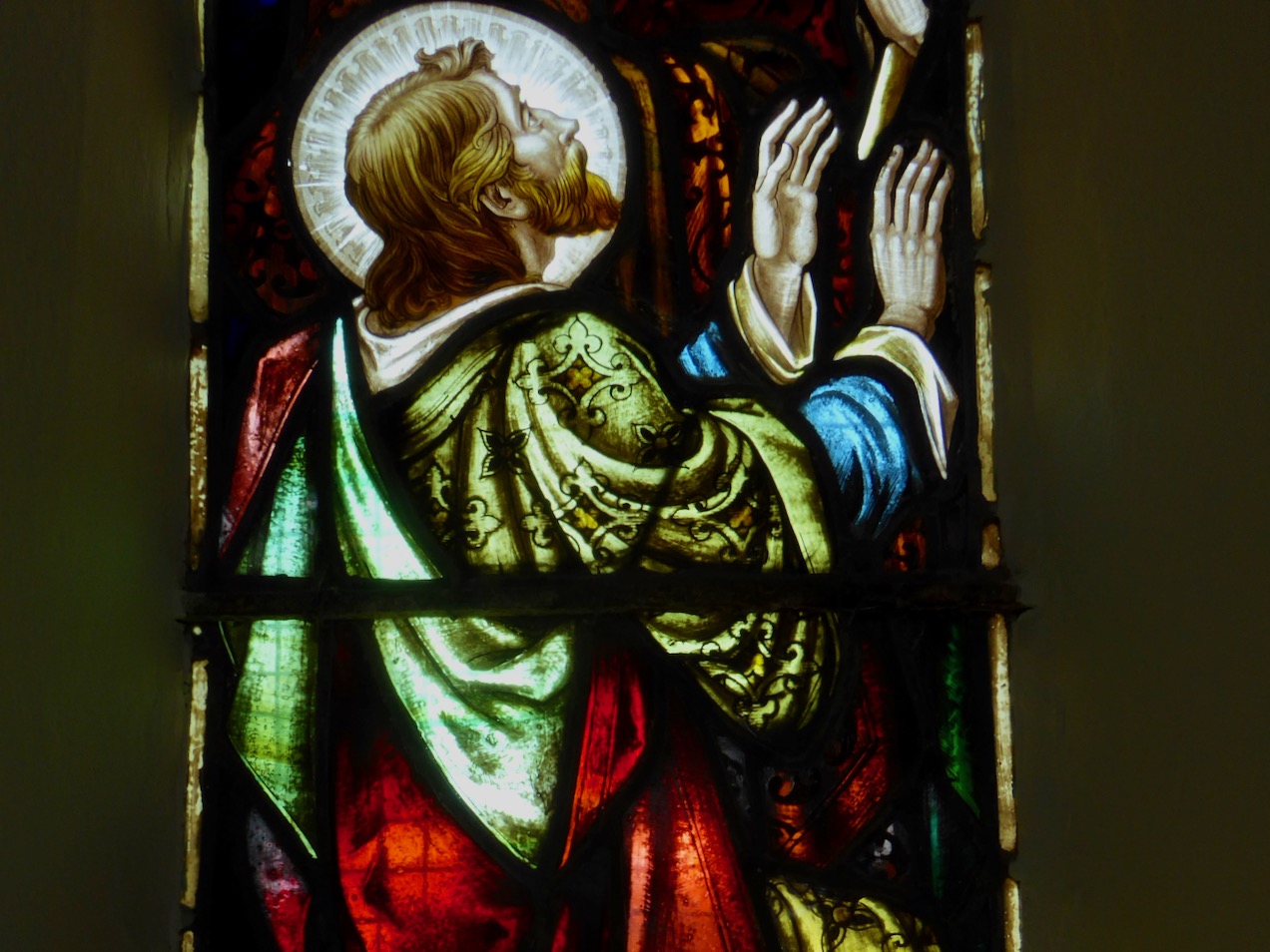
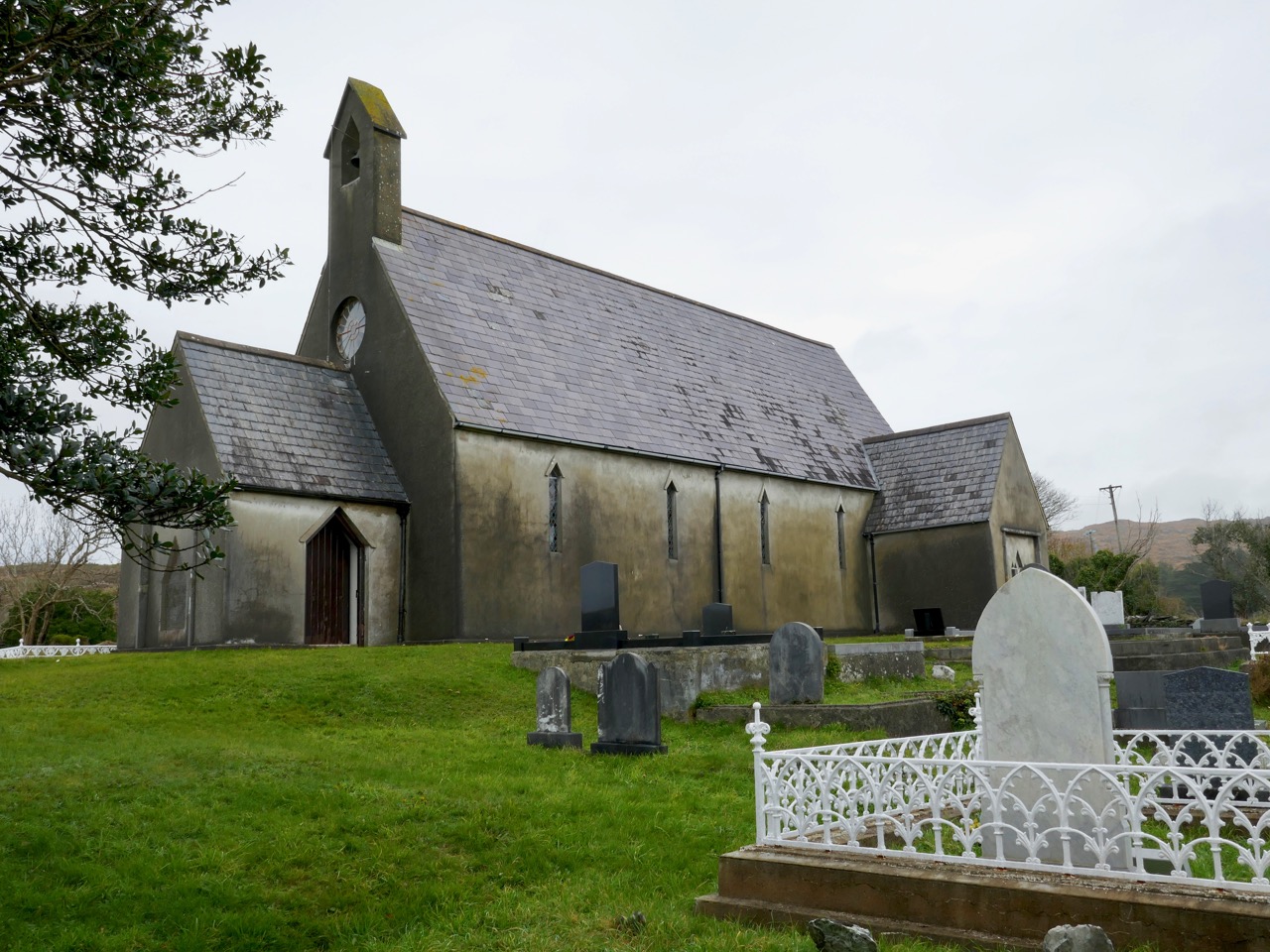
This is St Barrahane from Castletownshend. During the Thursday Field Trip we will be revealing his secret message

We haven’t had a lot to do with the detailed logistics or with the ultimate lineup of speakers – that is the purview of the Founders, Simon and Victoria Kingston. What a force they are! As you can imagine, organising a festival like this is an enormous amount of work and they do it while working full time, with two young children and a life lived between two countries – all while remaining cheerful, focussed, inventive and energetic. Here are Simon and Professor Roy Foster, our keynote speaker, talking last year about the upcoming festival.
Simon and Victoria are next door neighbours to the wonderful Liss Ard Estate. This place is dear to our heart as it’s where we were married, and they have been incredibly supportive of the festival, providing parking and accommodation.

While many of the speakers are academics and writers on the national scene, local historical societies are attending and volunteering and local experts have been persuaded to share their knowledge. The Skibbereen Heritage Centre is a big part of the festival this year, with both Terri Kearney and Philip O’Regan on the program, and William Casey giving a talk and launching a book.

Philip O’Regan of the Skibbereen Heritage Centre leads a walking tour of the historic town. Here he points out the building where O’Donovan Rossa founded his Phoenix Society, forerunner of the Fenians

We are looking forward to the field trips, a new addition this year and a popular one, given how quickly they booked up. Thursday’s focusses on archaeology and history and Friday’s on the Famine and Art.

Coppinger’s Court – these fortified mansions gradually replaced tower houses in the seventeenth century, during of the series of changes from Irish to Planter land ownership

The Festival aims to cover international, national and local themes and this year will, of course, focus partly on the events of 1918, with talks on WWI, Carson and Redmond, Women’s Suffrage and the great Flu epidemic. The Irish Revolutionary Period is the subject of several talks, by both academics and non-professionals, ranging from the hot topic last year, Protestants in West Cork, to the violence suffered by some women during that period.

Inspired by the Coming Home: Art and the Great Hunger exhibition currently running at Uillinn/West Cork Arts Centre, there is also a thread that looks at the intersection of art and history. It will be the main focus of Friday’s field trip, and run through sessions on Margaret Clarke, on Gothic art, on George du Noyer and most pointedly in the talk by Niamh O’Sullivan on the Coming Home Exhibition itself.

Stone Circle by George Victor du Noyer

We’re not forgetting the Medieval and Early Modern periods either. Dr David Edwards from UCC is recognised as an expert on Richard Boyle and on this period and his talk on Gaelic politics in the later Middle Ages should be fascinating. But never mind all that politics – what did people actually do back then, and what did they eat, before the advent of the potato?  Dr Susan Flavin is going to tell us that when she talks about ‘Food, Drink & Society in 16th century Ireland’.

Richard Boyle, Great Earl of Cork

Lots of local history too – on Cillíní (children’s burial grounds), women in the fishing industry, Sam Maguire and his memorial bells in Dunmanway, Pirates and treasure of the Coast of West Cork, and my own talk on Agnes Mary Clerke who grew up in Skibbereen during the famine and went on to become the most successful science-writer of her day, with a moon crater named in her honour.

Agnes Mary Clerke

That’s just a taster of the talks – there are lots more. And if that wasn’t enough, there are also film screenings, a concert by Jessie Kennedy based on the life of Lady Mary Carbery of Castle Freke, and a poetry reading by none other than Jeremy Irons! How can you resist that voice?

So if you don’t have your tickets yet, get them now. Yes, you’ll still be able to get them at the gate, but if you want to secure them now, do it online at this link.

Brabazon of Tara

Brabazon – that’s an unusual Irish family name that’s been around for very many generations. In fact, Finola’s maternal grandmother was one. A  Jacques le Brabazon was in the service of William the Conqueror in 1066 and the name is said to mean an inhabitant of the former province of Brabant, in Belgium. The current – 15th – Earl of Meath (of Killruddery, County Wicklow), John Anthony Brabazon, claims descent from Jacques. In 1534, Henry VIII sent Sir William Brabazon of Leicester to Ireland to serve as Vice-Treasurer – he founded the Wicklow dynasty. In the troubled Cromwellian times, another branch of the family settled firstly in Ballinasloe and then in Swinford, County Mayo. Earlier this year, Finola and I went up to Swinford for a family gathering and, for the occasion, I had to learn to play the two Planxty George Brabazon pieces by Turlough O’Carolan on my bosca ceol: here they are played – more appropriately – by a harp ensemble.

When I first learnt that the name had Irish connections I was fascinated, as I had known the word Brabazon from my early years in England and it’s one of those that is so striking, you just don’t forget it. I knew it in connection with an aeroplane – the Bristol Brabazon: it was the largest airliner ever built in Britain, something that impressed this four-year-old boy who saw it flying at the Farnborough Air Display in 1950. Not only was it large – it was elegant: my memory is of a gigantic all-silver bird, rising in a stately fashion over the crowds and disappearing into a blue sunlit sky. I demanded – and received – a model of it for a birthday or Christmas, sadly now gone the way of all such treasures. So, why the name? I didn’t know then – but I do now – that it was named after the grandly-styled Lieutenant-Colonel John Theodore Cuthbert Moore-Brabazon, 1st Baron Brabazon of Tara GBE MC PC, who in 1943 chaired the Brabazon Committee which planned to develop the post-war British aircraft industry – one product of which was the factory in Bristol which produced and housed the behemoth.

Header – The Bristol Brabazon landing at the 1950 Farnborough Air Display: I was in the watching crowd! Upper – an excellent short documentary on the life and death of the Brabazon Aeroplane project. Above –the enormous Assembly Hangar at Bristol which was constructed to allow the Brabazon aircraft to be built. Outside stands the incomplete fuselage.

Brabazon’s Committee correctly anticipated that there would be a major development of civil aviation following the war, particularly for trans-Atlantic crossings. The plane was designed with two decks and luxurious accommodation: each passenger was to have a space equivalent to the inside of a modern car! Consequently the Brabazon had room for only 100 passengers, even though it compares in size to a present day Airbus A380, which can accommodate from 600 to 800 passengers, depending on the configuration. This shows up the fact – which the Committee didn’t seem to anticipate – that air travel would become accessible to all, and not just to those who could afford luxury. Another innovation of the Brabazon was the use of eight engines buried in the wings, coupled in pairs driving four sets of contra-rotating propellers to give a very low noise level in the passenger cabins, again to achieve maximum comfort.

Passenger accommodation in the Bristol Brabazon: comforts also included a dining room, sleeping berths and a cinema

That’s probably enough of my obsession with beautiful but impractical aeroplanes. This one ‘didn’t take off’ in that the post-war world wasn’t ready for it: there weren’t long enough runways, service facilities etc. Having been airborne only for publicity events between Bristol, Farnborough, London and Paris, the whole project – and the plane – was scrapped in 1953.

Let’s go back to the man himself – John Moore-Brabazon. Although he spent most of his life in the UK he was a descendant through a female line of Edward Brabazon, 7th Earl of Meath. He wasn’t shy of publicity: here he is in 1909 in Kent making porcine aviation a reality. He fixed a wicker basket to a wing strut of his Voisin biplane and carefully strapped a pig into it. The basket had a hand written sign . . . I am the first pig to fly . . . Then he took the bemused animal for a journey of about 3.7 miles from Shellbeach, the Short Brothers airfield at Leysdown on the Isle of Sheppey. Brabazon’s family wealth had enabled him to learn to fly and to posses his own gliders and planes. He is noted as the first Briton to fly in Britain and, also in 1909, won the £1,000 prize offered by the Daily Mail for the first closed circuit of a mile in a British aeroplane. He was also the owner of the first pilot’s licence issued in the UK by the Royal Aero Club. In the First World War he was a pioneer of the Royal Flying Corps and had a leading role in the development of aerial photography. He also raced cars, together with Charles Rolls (of Rolls Royce fame) and was an unconventional yachtsman.

Apologies for the quality of this image, but it’s the only one available of Brabazon in 1930 with his gyro sail boat. Fiona Sinclair of the Amateur Yacht Research Society gives us the following information:

. . . this boat was adapted by John Brabazon in 1933. It is an autogyro, which means that the blades are not driving a propeller – the wind turbine is being used the same way as a sail. This is the earliest autogyro boat that I have found, and I think that we can safely credit Brabazon with the original concept of using the turbine force to drive a boat directly, since all the other people before him had only thought of using the turbine to drive a propellor. After all, the aircraft autogyro was only invented a couple of years earlier in 1930. This boat is called KESTREL, and the hull is an1896 Bembridge Redwing. This class has an unlimited sail plan – you can do whatever you like as long as the area is less that 200 sq ft. So Brabazon tried a whole lot of different sail rigs, including this one, which had a blade area of only 30 sq ft. King George V, who knew a lot about yachts, said “I have never seen a yacht sail so close to the wind”. . . Unfortunately, there was an accident in Cowes Harbour – Lord Brabazon shouted out “Let her go”, and his crew let go of the rotor instead of the boat, and then it could not be stopped, because the brake wasn’t strong enough. It was eventually stopped, after demolishing the next boat along. The moral of this tale is that you should be a bit more specific when giving instructions to your crew . . .

The boat was, and remains, dangerous but, as suggested above it was probably the first ever auto-gyro boat. The boat is currently in the collection of the Classic Boat Museum at East Cowes, Isle of Wight, and still ‘sails’.

A rather unexpected publicity item for Lord Brabazon of Tara – a fridge magnet base on a cigarette card image

Brabazon had a career in Parliament – both Commons and Lords, however he rather blotted his copybook when in 1942 he publicly expressed the hope that Germany and the Soviet Union, then engaged in the battle of Stalingrad, would destroy each other. Since the Soviet Union was fighting the war on the same side as Britain, the hope that it should be destroyed (though common in the Conservative Party) was unacceptable to the war effort, and Brabazon was forced to resign. His political affiliations were somewhat doubtful in any case as he had been associated with Oswald Mosley before the outbreak of war. Readers might remember my reporting on an Irish dimension to Oswald Mosley in an earlier post.

Left – Lord Brabazon wrote an autobiography in 1956; right – a portrait of Brabazon in his role of President of St Andrew’s Golf Club (Alfred Egerton Cooper – courtesy Royal Air Force Museum)

I haven’t mentioned other aspects of Brabazon’s sporting life: he excelled at golf and bobsledding. I found a curiosity in that he narrated the background track of an EP about British history in 1960. A reviewer has remarked:

. . . George Formby & Adolf Hitler on the same record, with Mussolini on backing harmonies apparently . . . A soundscape of the last century starting with the clip clop of a horse drawn cab and ending with the bleep bleep of Sputnik. In between the voices of Churchill, Hitler, Marie Lloyd, Caruso, Gracie Fields and Formby to name but a few. Commentary by Rt Hon Lord Brabazon of Tara whose fruity tones link one voice and sound effect to the next in a weird yet strangely comforting way . . .

An entertaining little taster – hopefully – about somebody who had Irish antecedents, but was essentially an English eccentric.

Bohemians in Ballydehob!

My first visit to Ballydehob wasn’t until around 1990. I remember being struck by how busy a place it was then – I only wish my memories from nearly 30 years ago were clearer. I now know, of course, that this vibrant little community has a history of being a cosmopolitan creative hub of the arts going right back to the middle of the last century. It’s a fascinating story, and Ballydehob is celebrating it by establishing an Arts Museum and permanent collection, with the first exhibition opening this week in Bank House: please come!

Above: two batiks by Nora Golden. Left – The Rock of the Rings (rock art at Ballybane West) and right – detail from a work depicting Loughcrew-type passage grave art. Nora and her partner, Christa Reichel were early arrivals on the arts scene in Ballydehob. In the 1960s Christa bought a farmhouse and set up the region’s first studio pottery in Gurteenakilla then, with Nora, opened the ‘Flower House’ in the centre of the town: you can see it illustrated in the exhibition flyer at the bottom of this post. All this is well documented in the excellent book by Alison Ospina (herself a talented furniture maker) ‘West Cork Inspires’ (Stobart Davies, 2011).

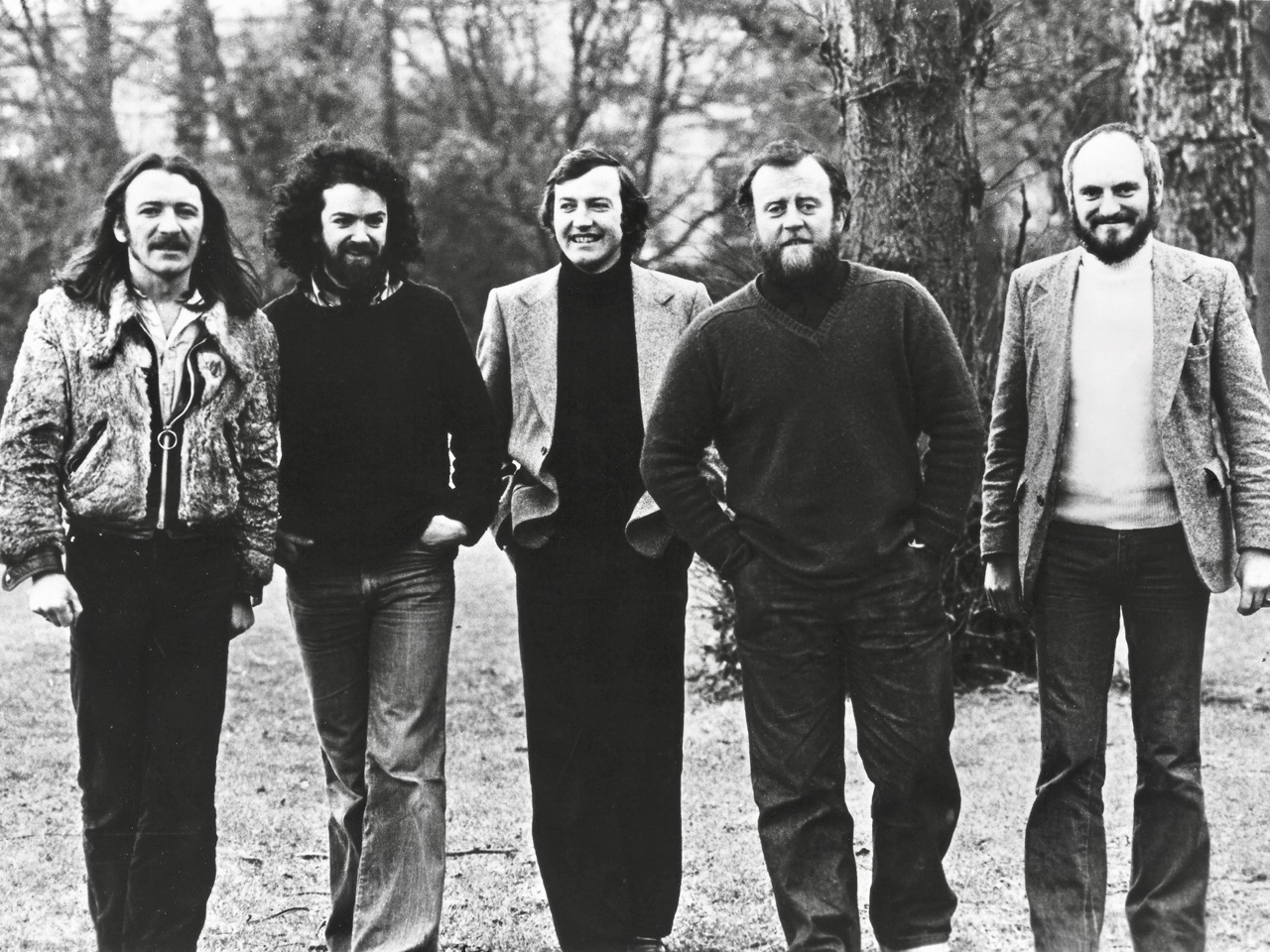
These denizens of 1970s Ballydehob are not a Heavy Metal band (to my knowledge) but in fact four important artists who had settled here: John Verling – artist, ceramicist and architect,  Pat Connor – ceramic sculptor, Brian Lalor – artist, writer and printmaker, and David Chechovich – watercolourist. They are wearing the uniform of the time. Here’s Brian Lalor in his studio today (photo by Finola) – you can certainly see the similarity . . .

Brian still lives near Ballydehob, and is the mastermind and Curator of the new collection. And, if you can begin to see it all fitting together, John Verling (on the left in the exhibition poster above) took over the Gurteenakilla Pottery with his wife Noelle and together they produced striking ceramics, examples of which are in the header photograph.

Gurteenakilla is lived in today by Angela Brady, an artist who works with fused glass. She is also an architect. And – she’s performing the most important task of opening the first exhibition in our new Arts Museum on Friday. Finola wrote about Angela and other artists who contributed to the 7 Hands show on the pier in Ballydehob two years ago: have a look at her post and see if you recognise any other names.

Beautiful stoneware goblets by Pat Connor, who is well represented in the collection. His maker’s mark is a memorable graphic. Another well known West Cork ceramicist represented here is Leda May, who with her husband Bob found Ballydehob in the late 1960s when they were invited by Christa Reichel to set up a pottery behind her own shop. Leda is still working in the area today, producing very fine painted porcelain ware (an example of which is shown below).

Above, from the exhibition – two earthenware mugs by Etain Hickey and Jim Turner, Rossmore Pottery 1983 and two Raku lustreware pieces by Jim Turner 1982. There are more stories to be told – to add to Alison’s comprehensive volume: the rise and fall of the Cork Craftsmans Guild, establishing the West Cork Arts Centre, exhibitions in far-flung places including Zurich, enigmatic repousee work – as yet we can’t trace its history . . . But all that is for another day, once the Ballydehob Arts Museum (BAM) is under way.

Below, posters by Brian Lalor and Repousee work by Shirley Day.

So here’s yet another reason to come to West Cork! This ‘taster’ exhibition starts on 10 August and continues through Heritage Week and Ballydehob’s Summer Festival until 26 August. We have to commend our Community Council in Ballydehob who are giving us the space in Bank House – right in the town centre (the former AIB Bank building) which they acquired for the permanent enjoyment of the local community. Also we have benefitted from Cork County Council who have given us a grant under the Creative Ireland Programme to help get the whole project off the ground. And most of all we have to thank local people who have freely donated pieces for the permanent collection – all will be acknowledged when the Museum is up and running.

Bohemians in Ballydehob! opens at 6pm on Friday 10th August at Bank House, Ballydehob

The Soul Expands with Beauty

We are so lucky to live in a place where the arts are valued as a necessary part of life and where we can attend art exhibitions, concerts, theatre, readings, film screenings. It all comes together every year at the Skibbereen Arts Festival. It somehow manages to combine fun, entertainment, wonder and beauty (like this West Cork seascape by Harriet Selka, above).

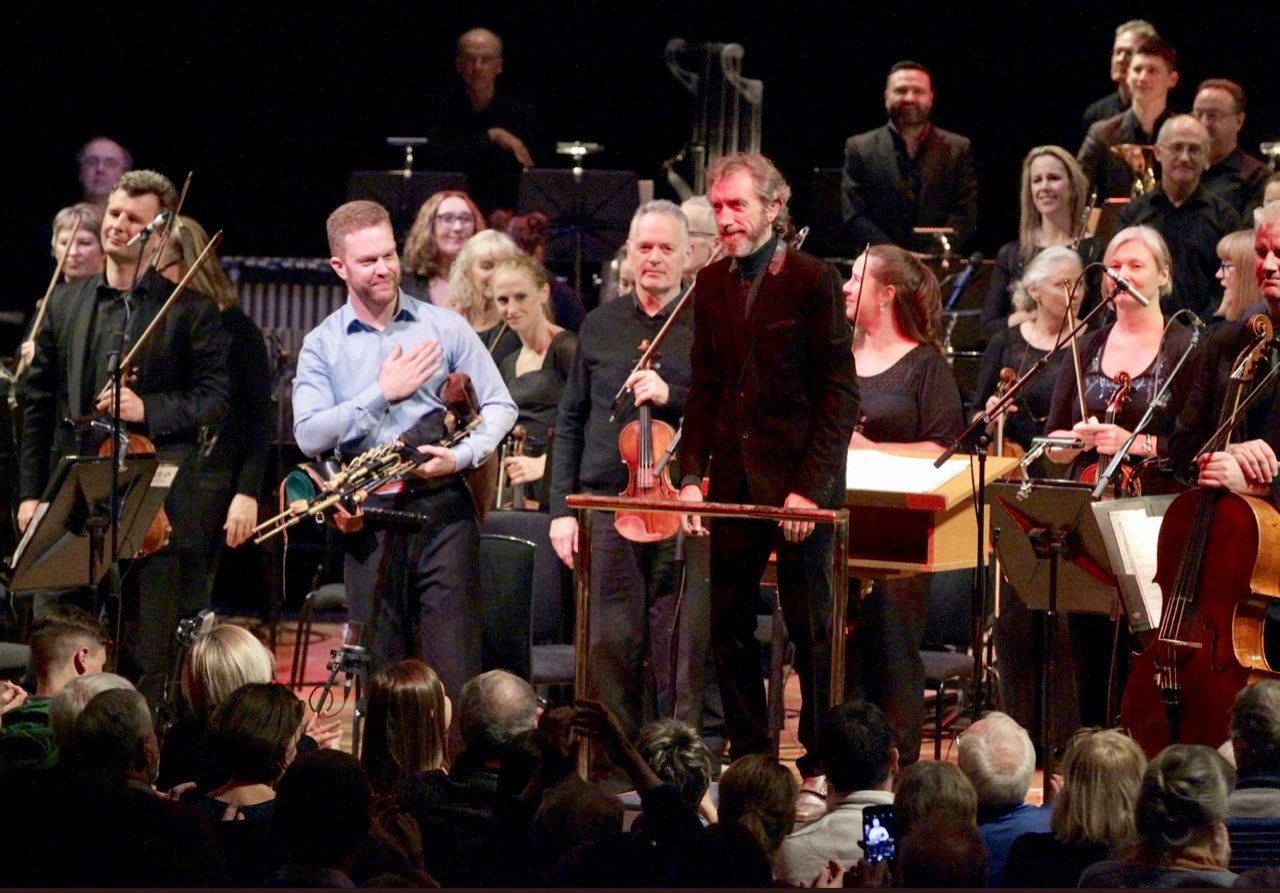
The Irish Memory Orchestra also enthralled us one evening – they play traditional and commissioned pieces entirely by memory.

Last time we wrote about this festival we said it was ‘hitting its stride’. This time the phrase that came to me was ‘it’s going from strength to strength.’ What a marvellous line up it was! You can see the whole program online and look at the sheer variety of experiences that we lucky West Cork folk got to pick from. A standout for us this year was the concert lineup, the art exhibitions and the poetry events.

Roseanne Cash and John Leventhal

It started off with Roseanne Cash, daughter of Johnny. You might think – what? Country Music? I know that’s not everyone’s taste, although I have a soft spot for it myself. But Roseanne sings a wonderful mix of Appalachian Folk, bluesy ballads and her own material along with the classics of country. She has a gorgeous voice and a husband accompanist and they both play a mean guitar. Here she is singing one of her father’s songs along with a touching tribute.

Skibbereeen was only her only other Irish stop besides Dublin and she came because of a line in Johhny’s song Forty Shades of Green (did you know her wrote that? I didn’t) that refers to Skibbereen. Watch him singing it at a concert in Dublin back in the days of Big Hair. It was Roseanne’s closing number, and predictably it brought the house down. She was in tears. We were in tears.

Something completely different a couple of nights later – The Chronicles of the Great Irish Famine is from the formidable talents of singer-songwriter Declan O’Rourke, backed up by an excellent group of musicians that includes John Sheahan of The Dubliners. Declan has been working on this song cycle for years. He describes it “an attempt to bring fresh air to an unhealed wound, and to remind the Irish people of what we have overcome.” There’s a good overview of the project here and you’ll witness Declan’s unique voice and engaging personality. The subject matter was tough – we are in the middle of a major Famine commemoration event here this summer and we are becoming more familiar every day with its horrifying stories. Having written about the Coming Home Exhibition and the 110 Skibbereen Girls Project already, we found this concert to be poignant and powerful.

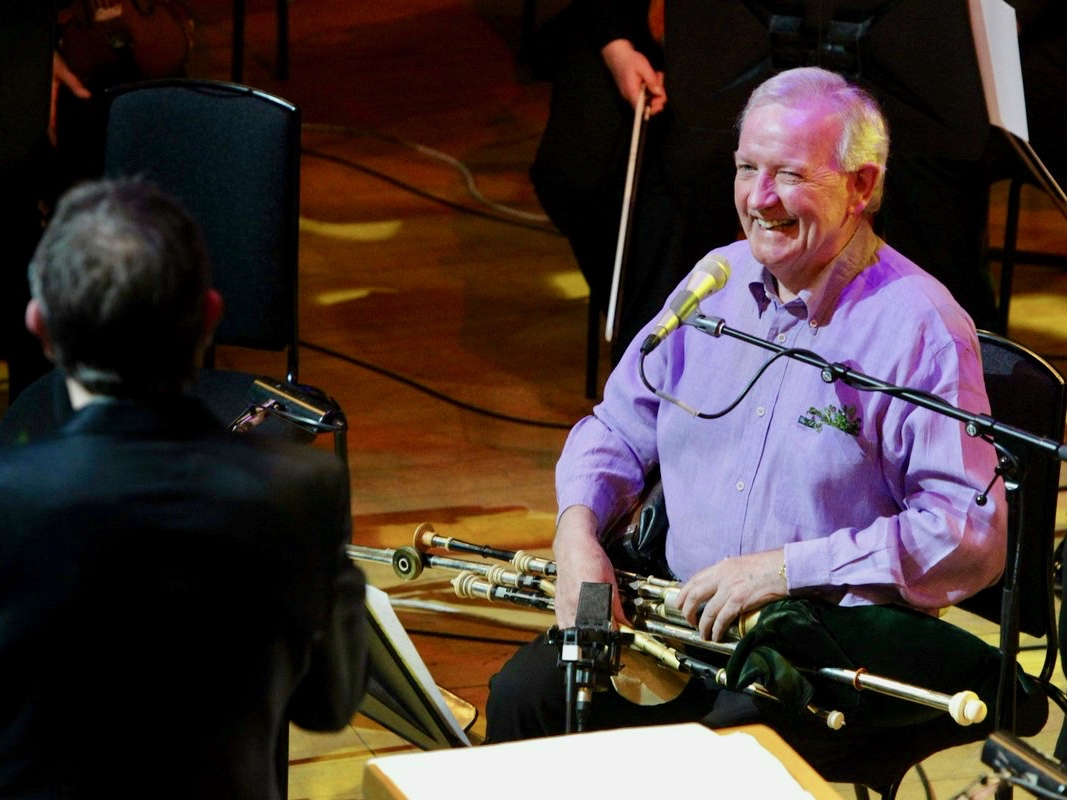
Lúnasa have long been recognised as one of the best Irish groups performing traditional music today and we’d been looking forward to this one very much. The bonus was the addition of Natalie Merchant as their special guest. I’ve been a fan for a long time and it was a great pleasure to see her in person. That voice! Take a listen.

She sang this one for us and Lúnasa transformed before our eyes into this amazing back up band. Imagine a version where instead of just guitars the harmonies are provided by a flute, an uillinn pipes, a fiddle, a guitar and a double bass. Magic.

Jim Turner’s ceramic pieces catch the eye at Anseo

We took a day to do the Art Trail. There’s a couple of large exhibitions including one curated by Catherine Hammond that Robert wrote about a couple of weeks ago. The other large show was called Anseo (on-shuh meaning ‘here’). Each artist was asked to write a statement addressing how he/she responds to living/being in West Cork and it was revelatory how different each one was – both the statement and the art.

Helen O’Keefe’s Neighbours – Long Island

But there were also hidden gems all over the place – in converted empty stores, in back rooms and unused office space. I enjoyed Sonia Bidwell’s quirky pieces constructed from fabric and found materials, upstairs in Lisheen’s House. Her Veronica is below.

School children had participated in a ‘City’ project where they explored design and architecture and built their own cities. It was fun and relevant and, in fact, mighty impressive what they had accomplished!

A local group of fabric artists, Wild Threads, had taken over a space near the supermarket to mount an exhibition of sea-themed work called ‘Littoral.’ As expressed in the program – ‘For some this means intimate vignettes of everyday views and for others it is the colourful explosions that Mother Nature throws at us.” It had never occurred to me that you can paint with fabric until I encountered the work of this group. It’s both a constraining and liberating medium, and the results were varied, imaginative and beautiful!

Piece by fabric artist Sam Healy

I can’t finish without a word on the poetry. While there were several events, the one that made the most impact on me was the launch of two new books by Pól Ó’Cólmáin and James Harpur. I’ve written about Pól before and used his poem in my post Pagan and Pure. This time it was a book, The Silence Unravelling, of Haiku and Tanka – just a few words to capture a moment, a feeling. I hope to use some of them in a future post – they’re brilliant. 

Pól Ó Colmáin – here not reciting his poetry but performing some of his songs

James Harpur is one of Ireland’s most distinguished poets. He’s a member of the Aosdána, an affiliation of artists whose election is based on a distinguished, creative and considerable body of work. He read from his new book The White Silhouette. Here is an extended quote from his Book Of Kells series of poems, this section dealing with Gerald of Wales, Geraldus Cambrensis, who comes to see the book.

Beauty is not so much a thing

as a moment, unrepeatable,

although the moment needs the thing

as a flame needs a wick

or images a page.

Or it’s a streak of lightning

connecting heaven to earth

whereby in a flash we breathe

the enormity of something Other

beyond our tiny grasping selves

and fill our lungs with it,

before the dark returns again.

The soul expands with beauty –

it cannot help itself; our task in life

is to prevent it shrinking back.

Janet Murren’s Creaky Stairs. I love her multi-layered atmospheric constructions

Keith Payne’s Early Marks

The Gallery in the Burren College of Art in Ballyvaughan, Co Clare, recently opened an extraordinary exhibition by Keith Payne – Early Marks is a summation of Keith’s own insights into the beginnings of art and the possible source of a prehistoric worldwide visual language.

Keith Payne (left) and friend

We worked closely with Keith on our Rock Art Exhibition – long-term readers will remember his enormous and colourful depiction of the rock art at Derreennaclogh which lent so much visual impact to the exhibition and it’s included in this show as well. In addition we have seen individual pieces from this collection in Schull’s Blue House Gallery shows so we knew his interest in early art of all kinds. But individual paintings and sculptures, impressive as they are, are one thing – an integrated vision is something entirely different.

Keith’s Derreennaclogh painting is on the right – but what are those antlers all about? You’ll have to check that out for yourselves

And that is what we get at the Burren show – Keith’s long preoccupation with archaeology, anthropology and early art come together in a stunning sequence of artworks that lead the viewer not just through time and space (he provides a ‘Genographic map of the Human Emergence’ that shows the location of the inspiration for each piece) but also into that part of the human psyche that has always striven to communicate through art.

Robert contemplates the Venus of Laussel (above) and filiform (scratched or incised designs) occur throughout the world

We don’t know, of course, what some of these Early Marks meant. On one canvas Keith shows how a piece of ochre from Blombos Cave in South Africa (below) was engraved with diagonal scratch marks over 75,000 years ago. Our brains leap to provide an interpretation of such marks – to the modern mind, they must mean something – a tally, perhaps, or a primitive alphabet. We will probably never know exactly, but what we can deduce from such early markings and from all of the art that Keith shows us is that symbolic intent was embedded in the human cultural experience from the earliest times.

Faithful as they are to their models – Keith depicts cave paintings, rock scribings, Irish rock art, masks, a Venus figure, finger flutings – these are not copies of the originals, but come also from Keith’s deep knowledge of prehistoric and primitive art and from his own aesthetic imagination.

Finger fluting – when fingers are used to make marks on soft clay deposits on cave walls. Torchlight moving across the wall would have given life and movement to the images

In a pair of paintings with almost 3D tactility he shows how two handaxes represent a startling continuity of technology – one comes from Olduvai Gorge and dates from one and half million years. The other comes from England and dates to about 400,000 years. But identical handaxes have been found in sites that date to 40,000 years. A useful tool and a reliable technology persisted over time and produced these beautiful objects that truly united form and function.

For Keith, early marks spring from the visionary state which was part of the everyday ethos of early humans. His exhibition notes talk about ‘animism’ – a belief that that all things animate and inanimate have an intention of their own where there is no boundary between the physical world and the spiritual or ‘Other’ world.

Physical and cultural evolution are underlying themes in the exhibition

Those of us privileged to be at the opening were struck, individually and collectively, by the continuity of the human imagination over time. Curiously, the works seem to bring us together as a species, reminding us of common threads woven through our collective consciousness over the millennia.

Title: When the Great Door Opens – Turn Left

Louise Janvier, an artist, art historian and lecturer, who opened the exhibition summed it up this way in her erudite remarks: The work has literally been brought out of the darkness and into the light to reveal the ‘Animism’ of thought and with antiquarian curiosity stir the imagination to further contemplate on the nature of being. . . We can receive the offering and experience the closeness of the ancient world then absorb it as a visionary gift.

I will leave you with a final example of this ‘visionary gift.’ In this piece, from the perspective of a hunter hiding in an enormous cavern Keith views a herd of Woolly Mammoth passing by the cave entrance. The mammoths are rendered in true cave-painting style, leading the viewer into all kinds of rumination about the nature of these early depictions.

A trip to the Burren is a great experience at any time – make it before September 7th and catch this wonderful exhibition!