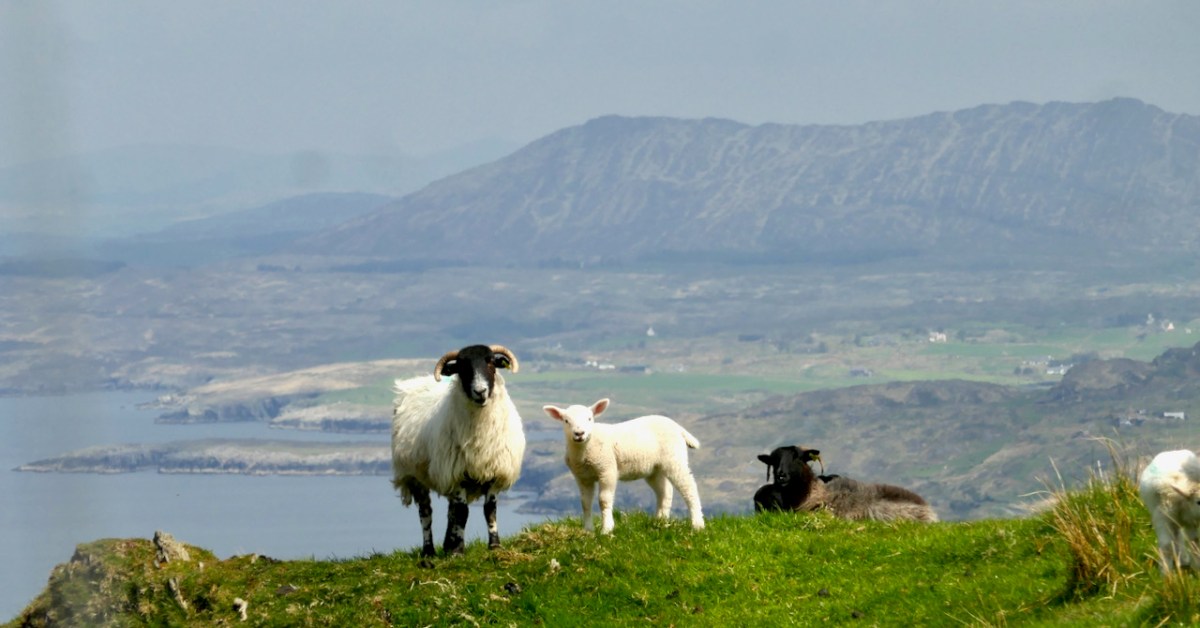
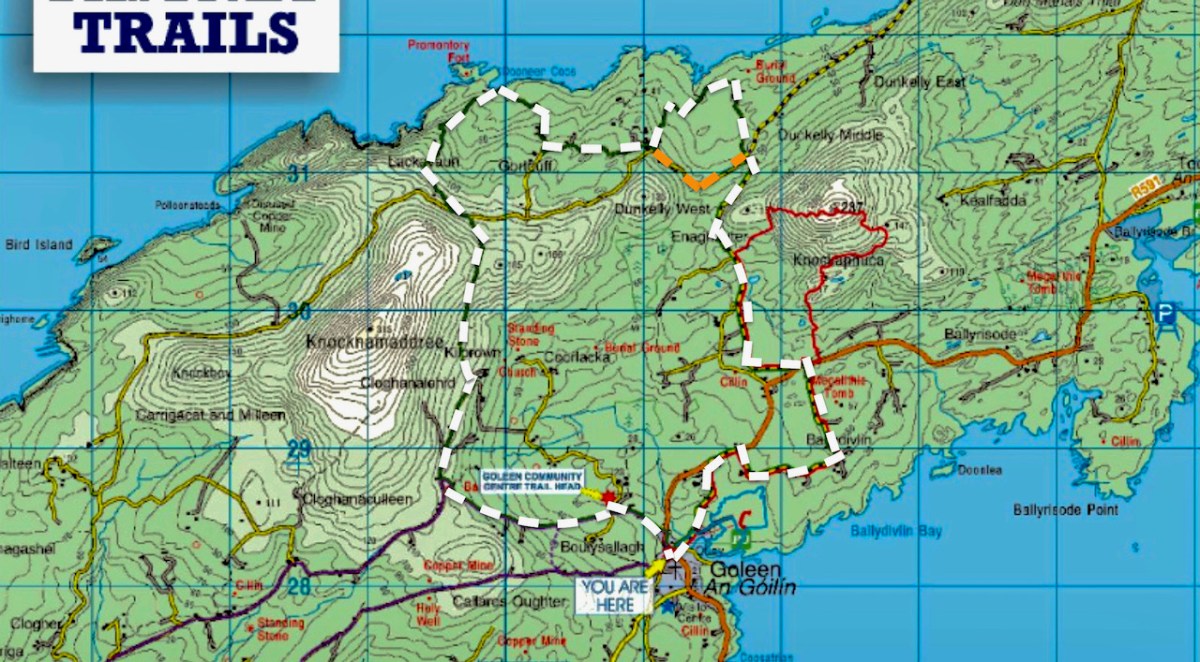
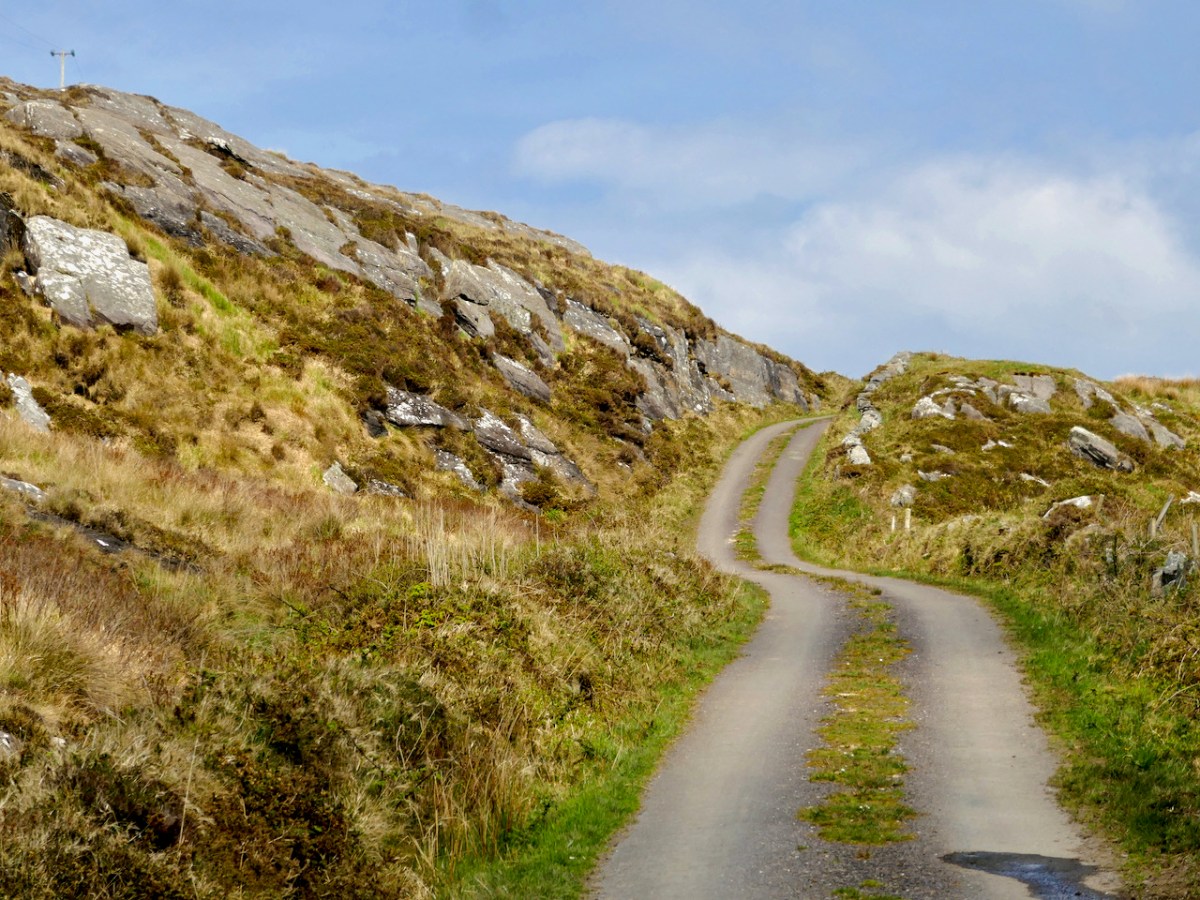
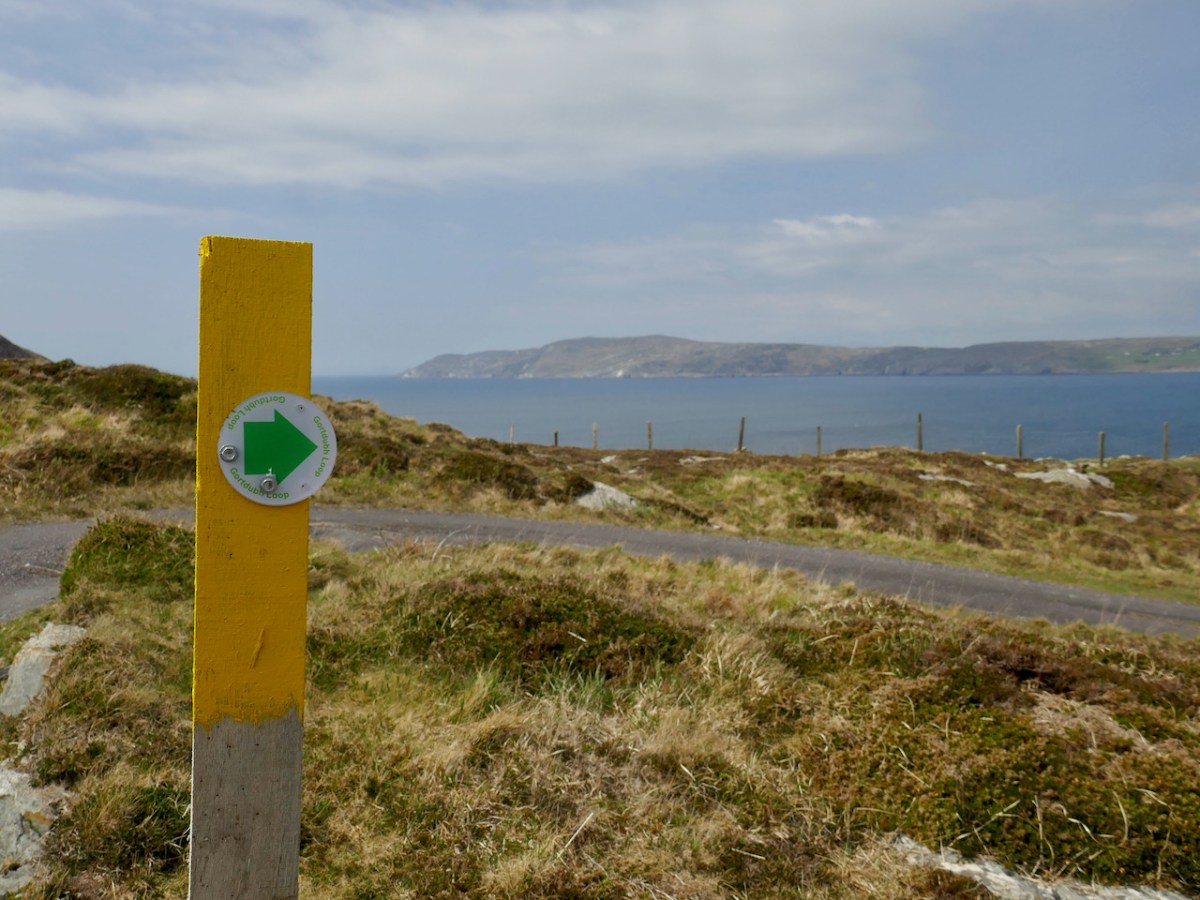
Ready for a longer walk? If yes – this one is 13.5km and has strenuous stretches. If not, don’t worry – there are lots of possibilities for doing parts of the walk, or for going with friends and leaving a car at strategic spots. We didn’t do it all at once, in case you get to thinking we are super-fit hikers. (The sad truth is we can’t be too far from a coffee shop.) As with all the Fastnet walks, keep dogs on leads – we did encounter both cattle and sheep on this walk, right on the road. There is a short stretch of ‘green road’ and although it’s well maintained, it might be muddy after rains, so good shoes are essential.
This loop takes you from Goleen on the south side of the Mizen right across the peninsula to the fabulously scenic north side. It skirts along the edges of the valley that runs between Knocknamaddree (Hill of the Dogs) to the west, and Knockaphuca (Hill of the Pooka, or Mischievous Spirit) to the east, rising to a maximum altitude of 180m (or about 600 feet). Most of the altitude is gained in the first half of the walk – so a packed lunch and water will be both welcome and needed if you’re doing the whole walk.
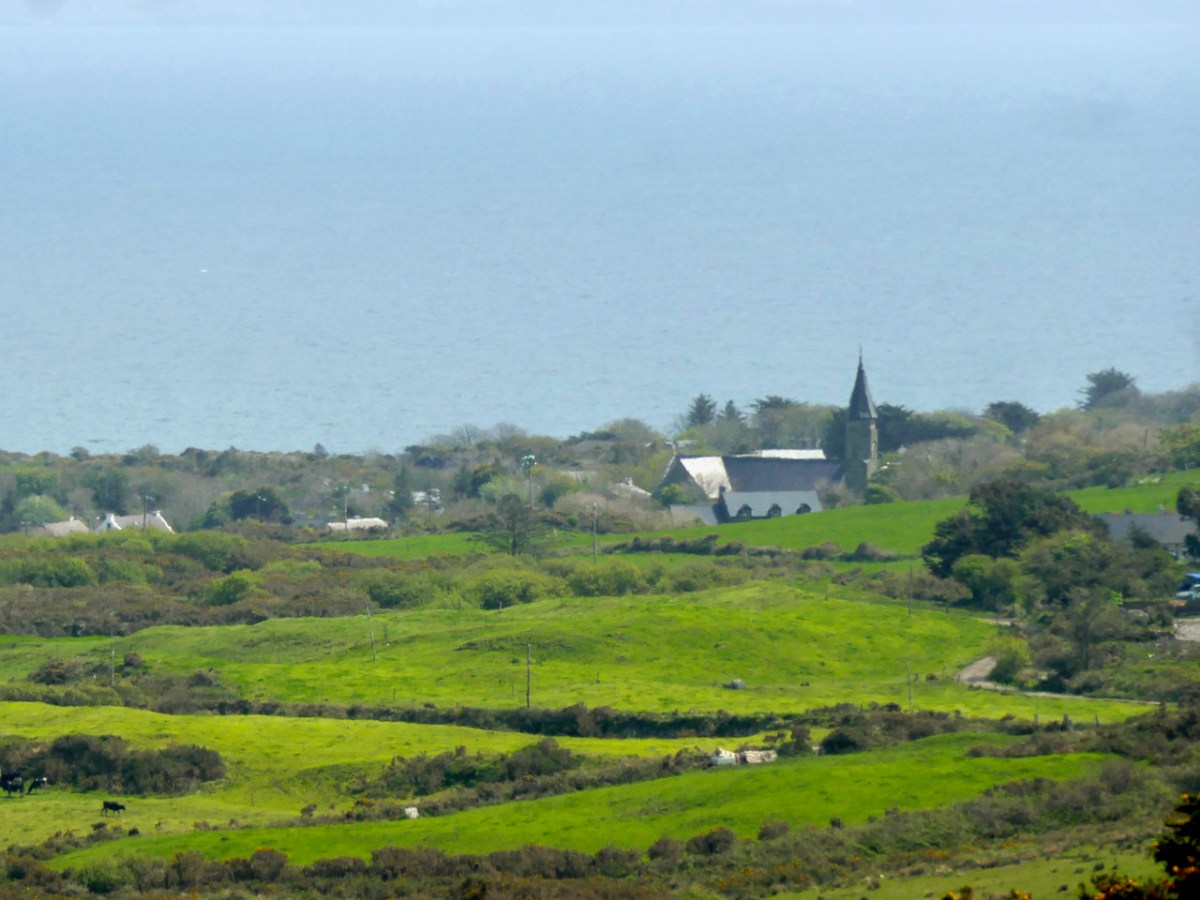
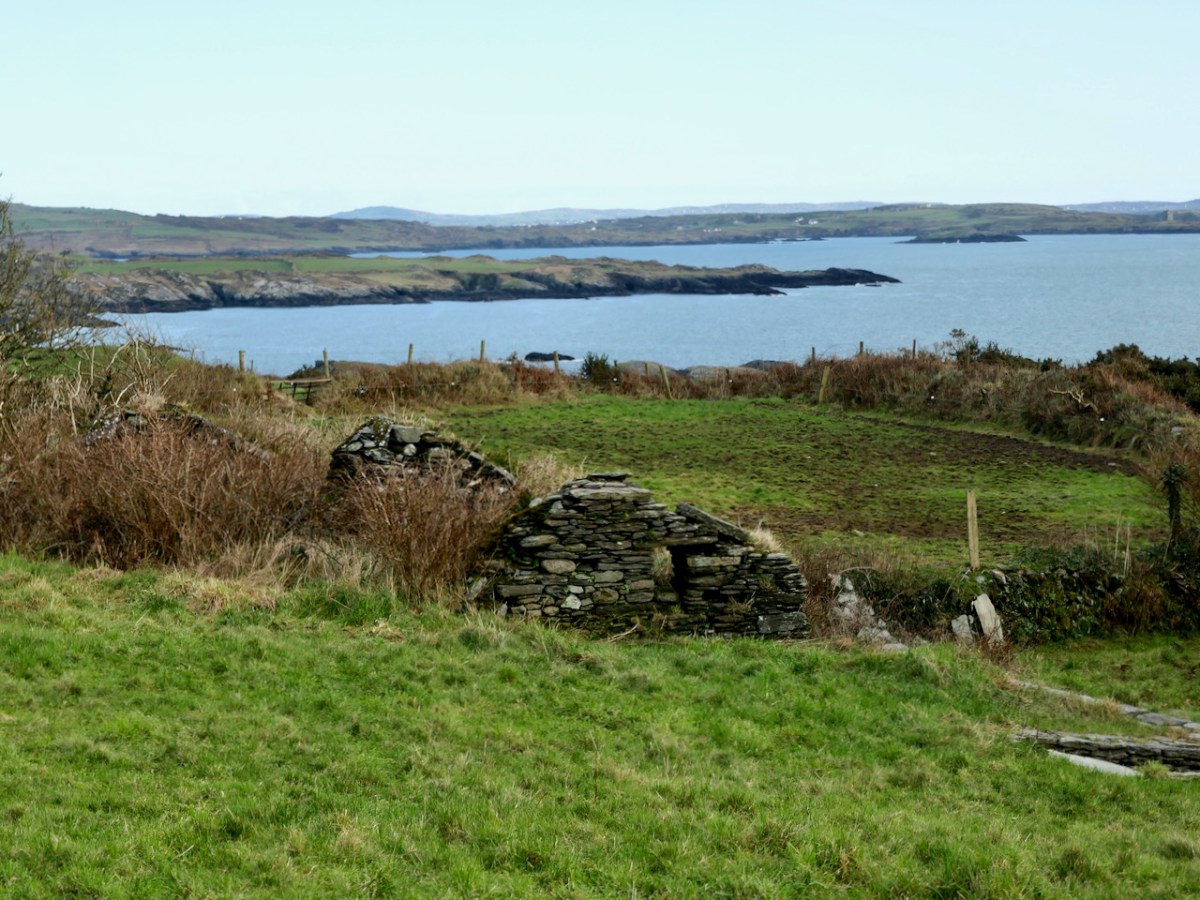
Set out from the Goleen Community Centre and the first part of the walk is shared with the Lissagriffin Loop – see our recent post on that walk. As you ascend, the views are immense – back to Goleen and across to Knockaphuca and Mount Gabriel beyond it.
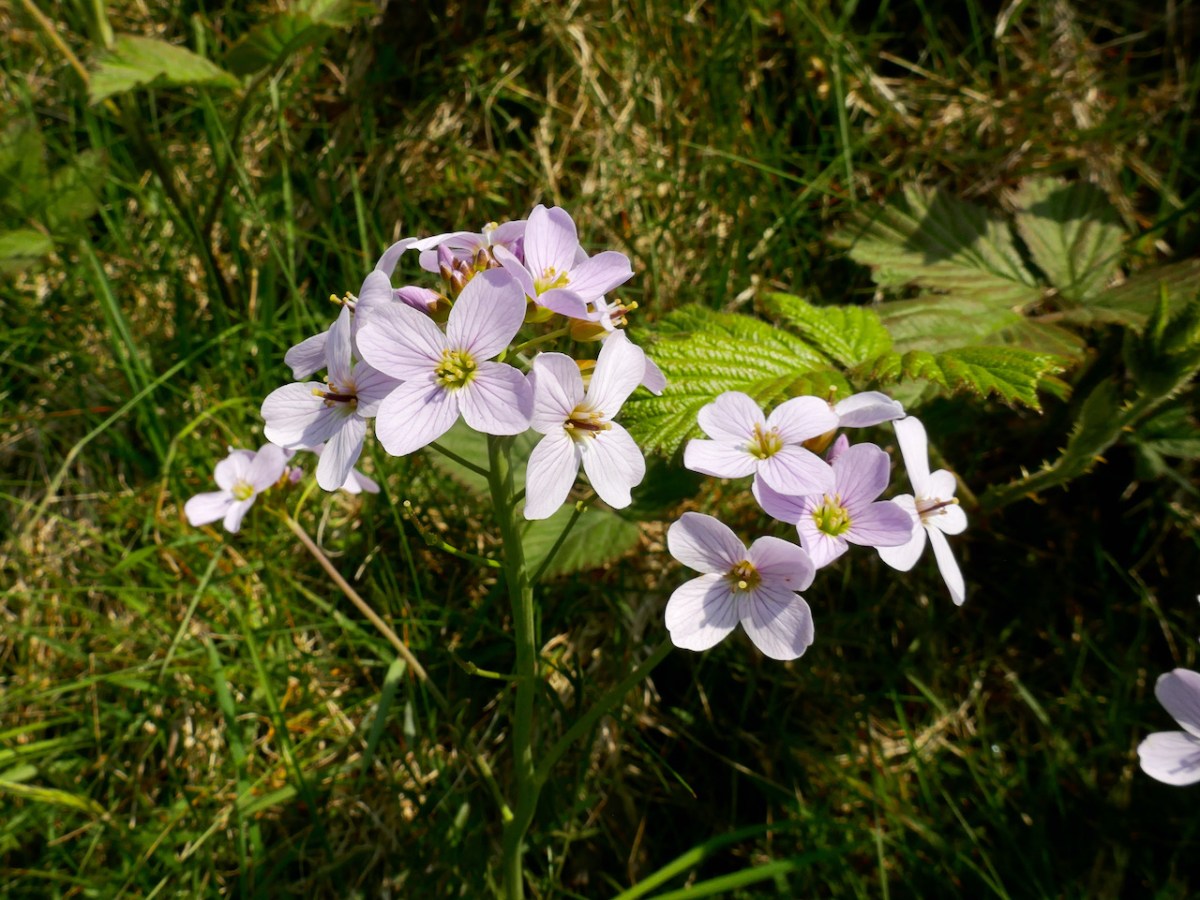
You’ll have to dig into your reserves of energy (or maybe have some chocolate) as you continue the climb. You are in true mountainy heathland now – look out for orchids in the spring and early summer, or Cuckooflower (below) in damp ditches.
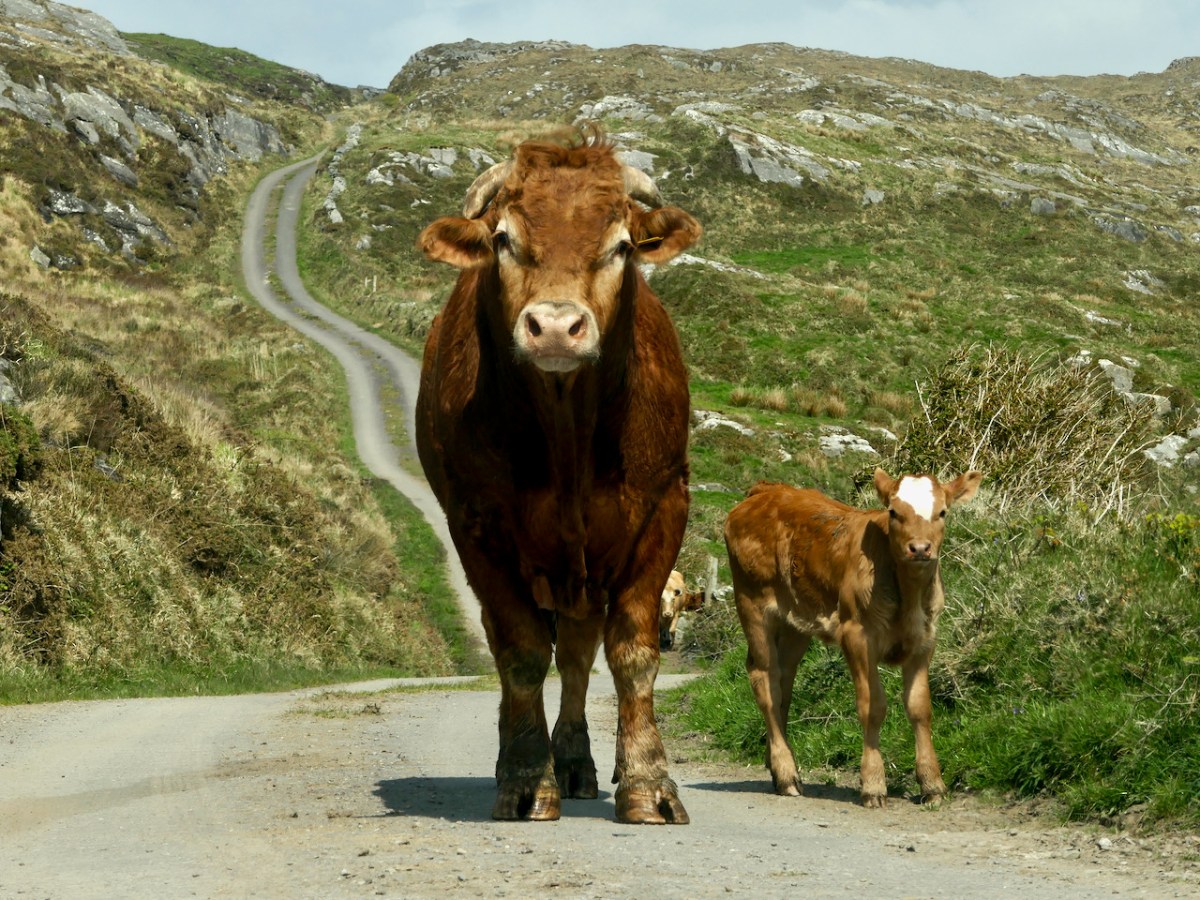
Watch out also for cattle on the road – we were startled by a line of plodding cattle coming towards us, and even more startled when we realised that one was a mighty fine bull. Fortunately, they turned into a field before we reached that spot, but there was no human around and the gates were open, so we can only assume we were simply in the wrong place at the wrong time as it is very unusual (although not unknown) to see cattle wandering like this.
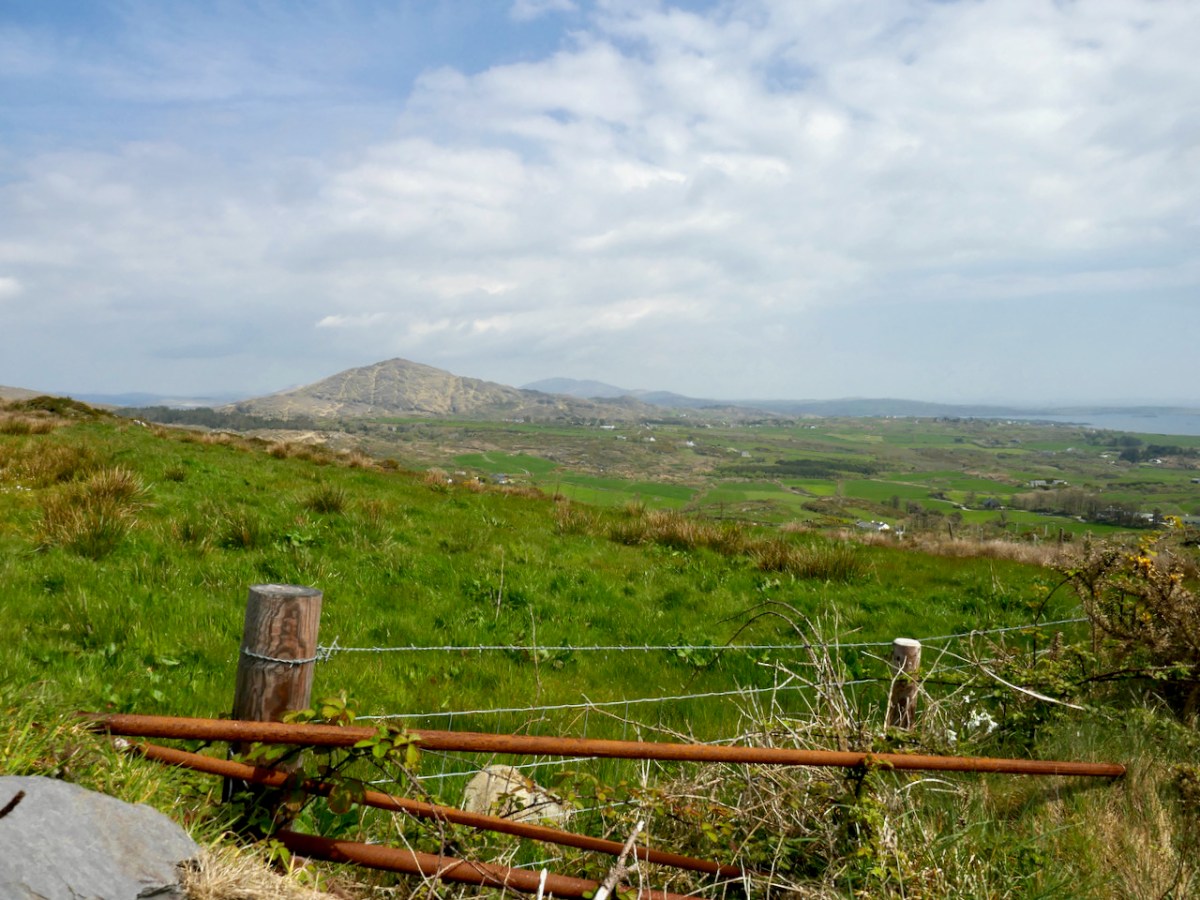
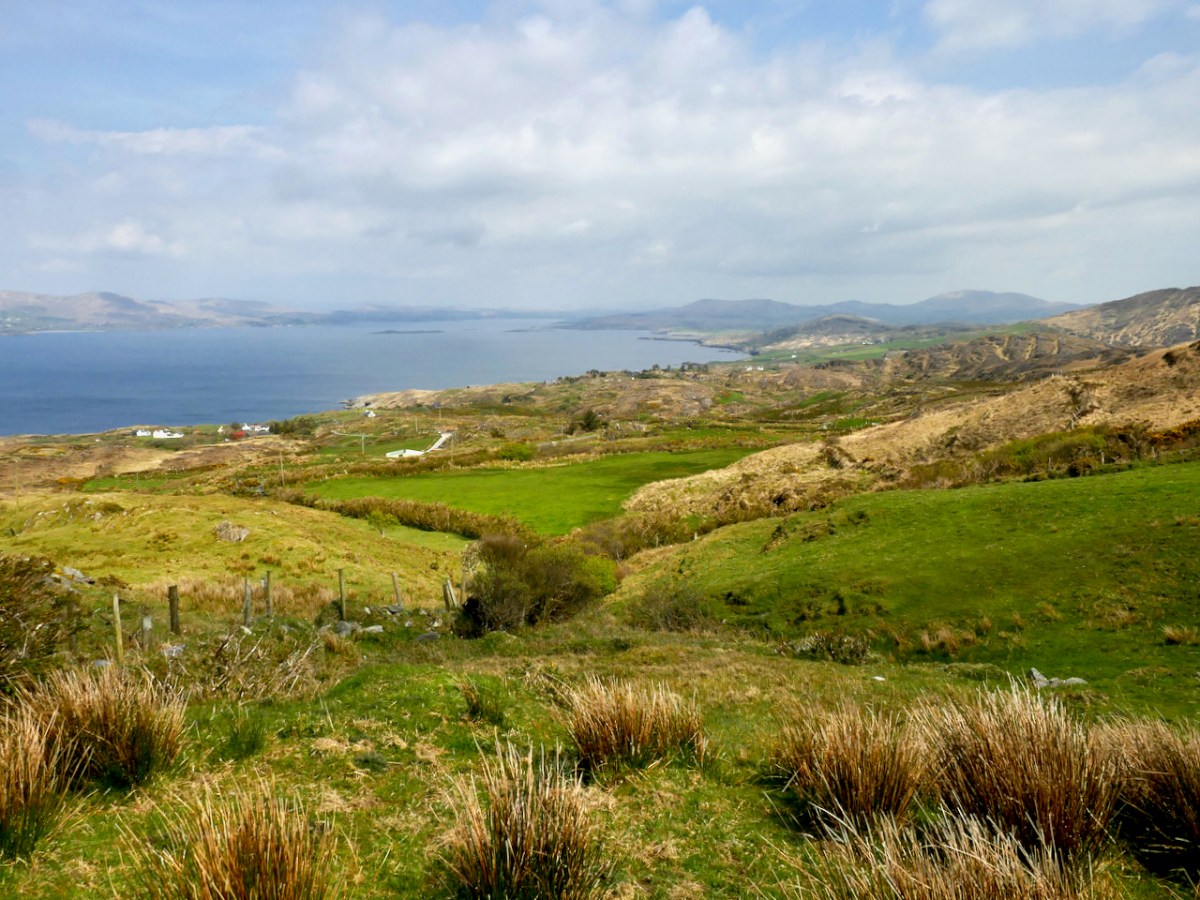
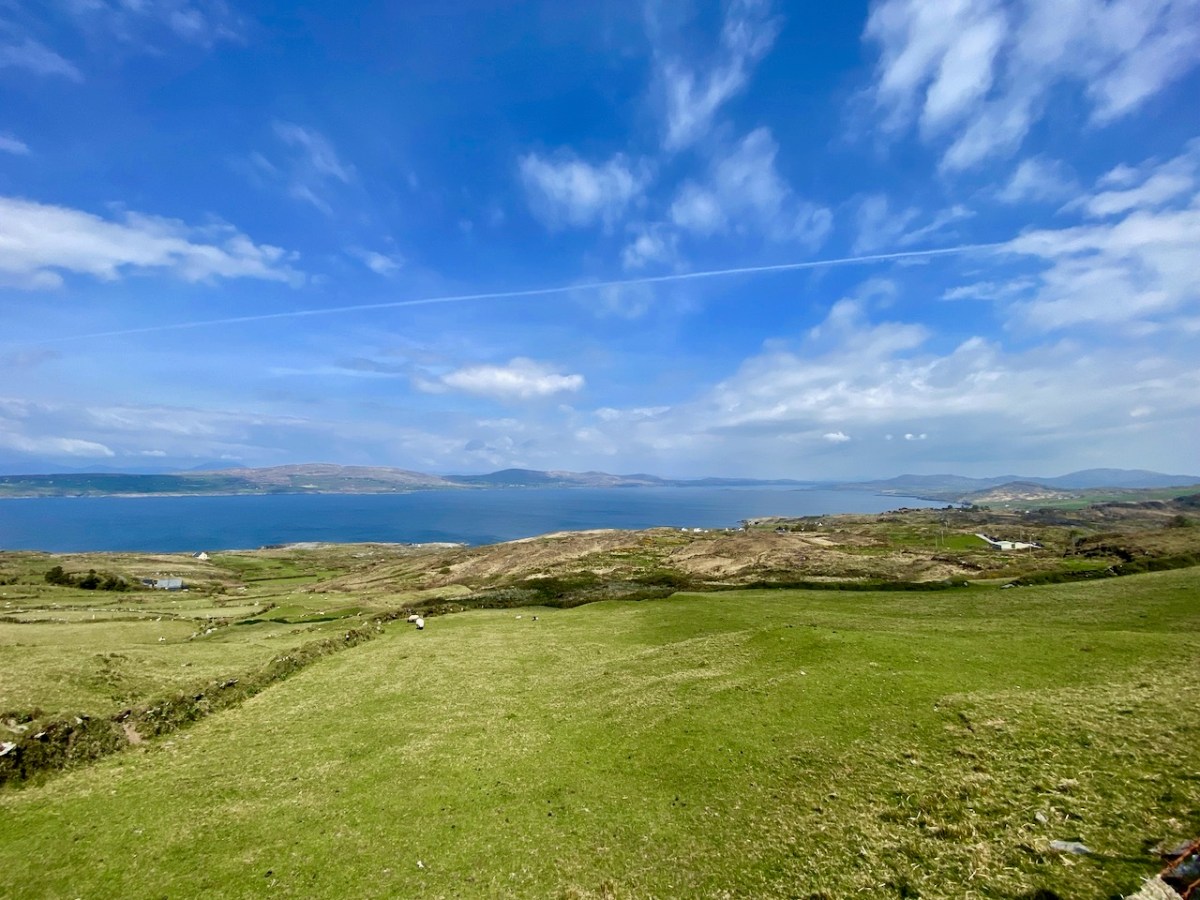
Coming over the top of the hill you have the whole of Dunmanus Bay in front of you and you can see clear up to the head of the bay, across to the Sheep’s Head, and to the Mountains of the Beara behind that. Have a nice sit down on some convenient boulder here – you deserve it – and just absorb that breathtaking sweep of land and sea.
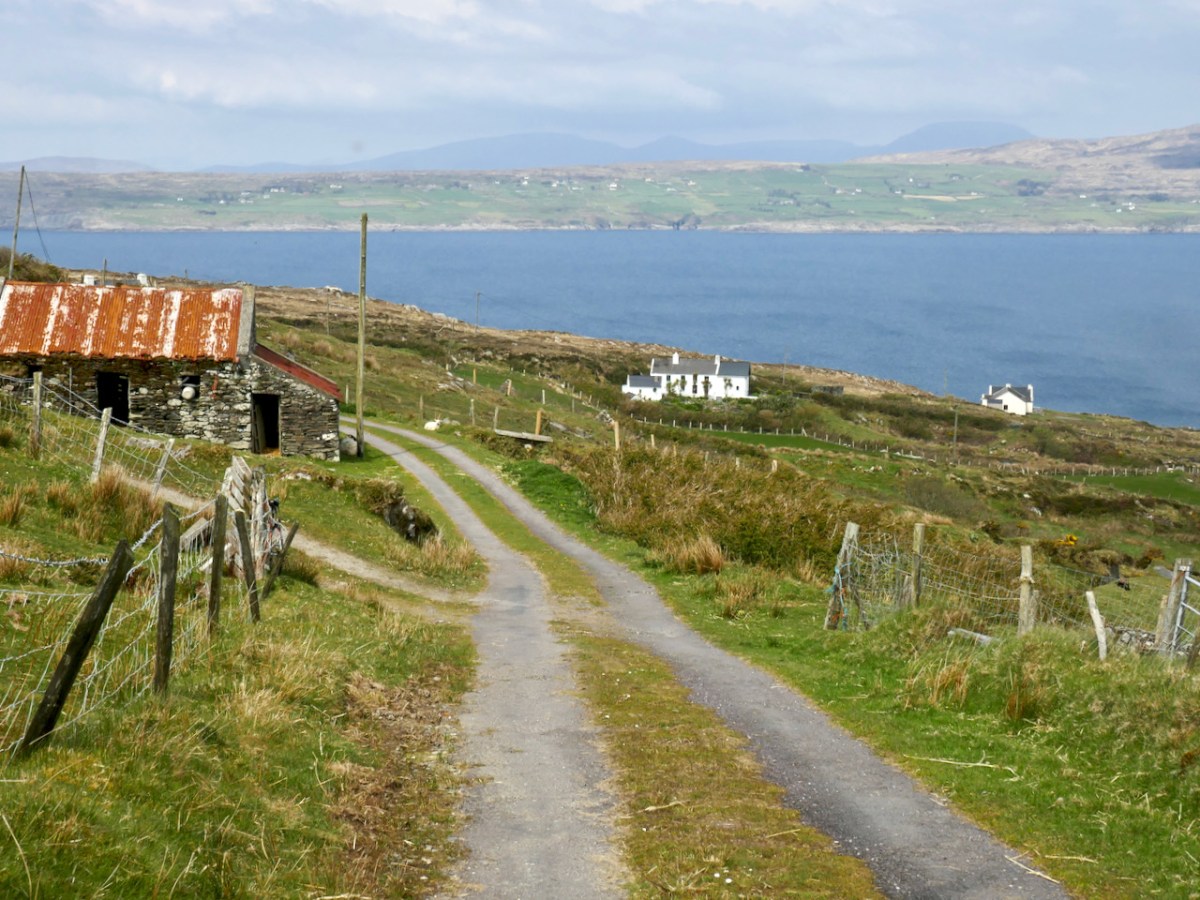
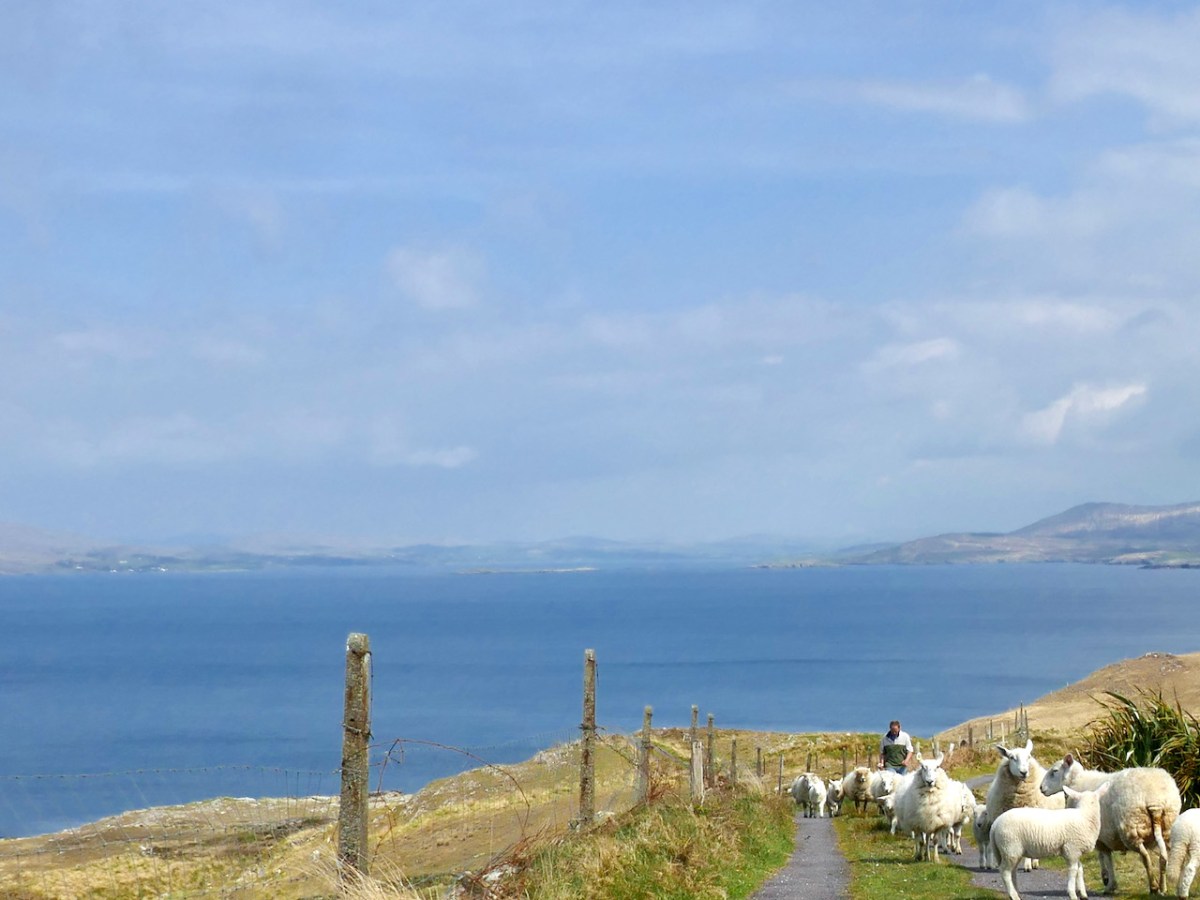
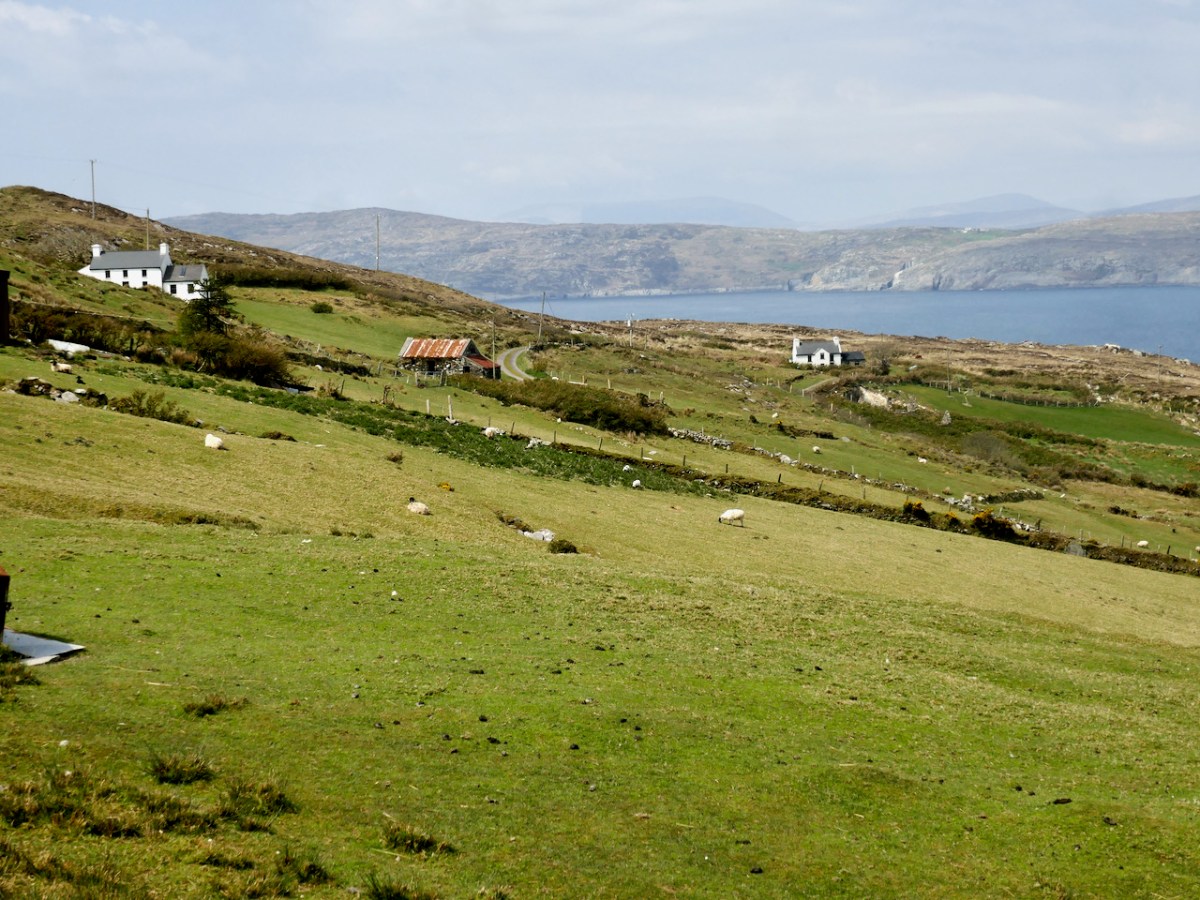
And talking of sea – you’re heading down now towards it, past picturesque stone farm buildings and beautifully renovated cottages until you arrive at Dooneen Coos (the Cove of the Little Fort). Along the way we ran into a shepherd moving his sheep up into higher ground, with the aid of the marvellously well-trained dogs that attend to their business but also like a good pat.
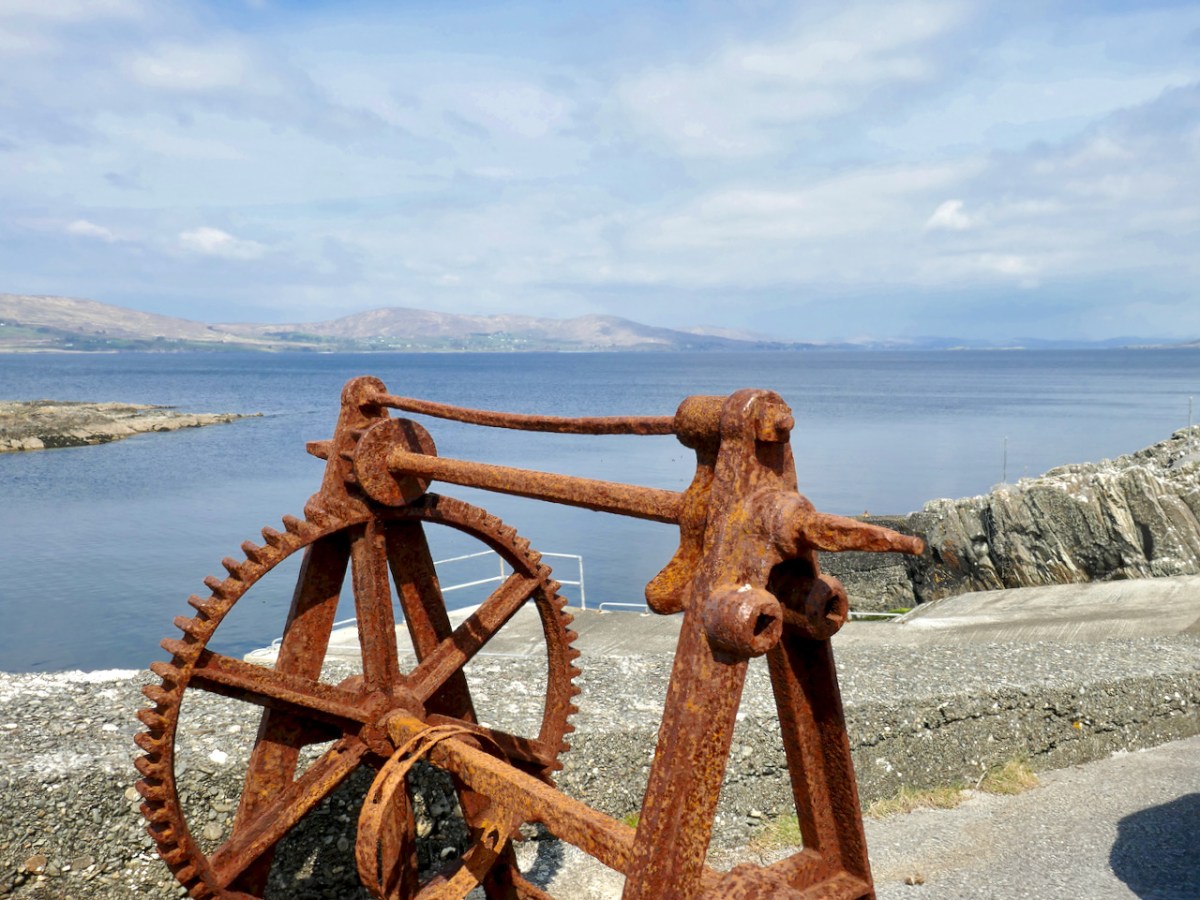
Dooneen Coos is a good spot for lunch – or even a swim if you’re that way inclined. it’s close to the peninsula we wrote about in our post Mizen Magic 23: Lackavaun and The Meallán so you can always take a side trip there if you wish. This might also be a good spot to leave a car if you’re not doing the whole loop on this occasion.
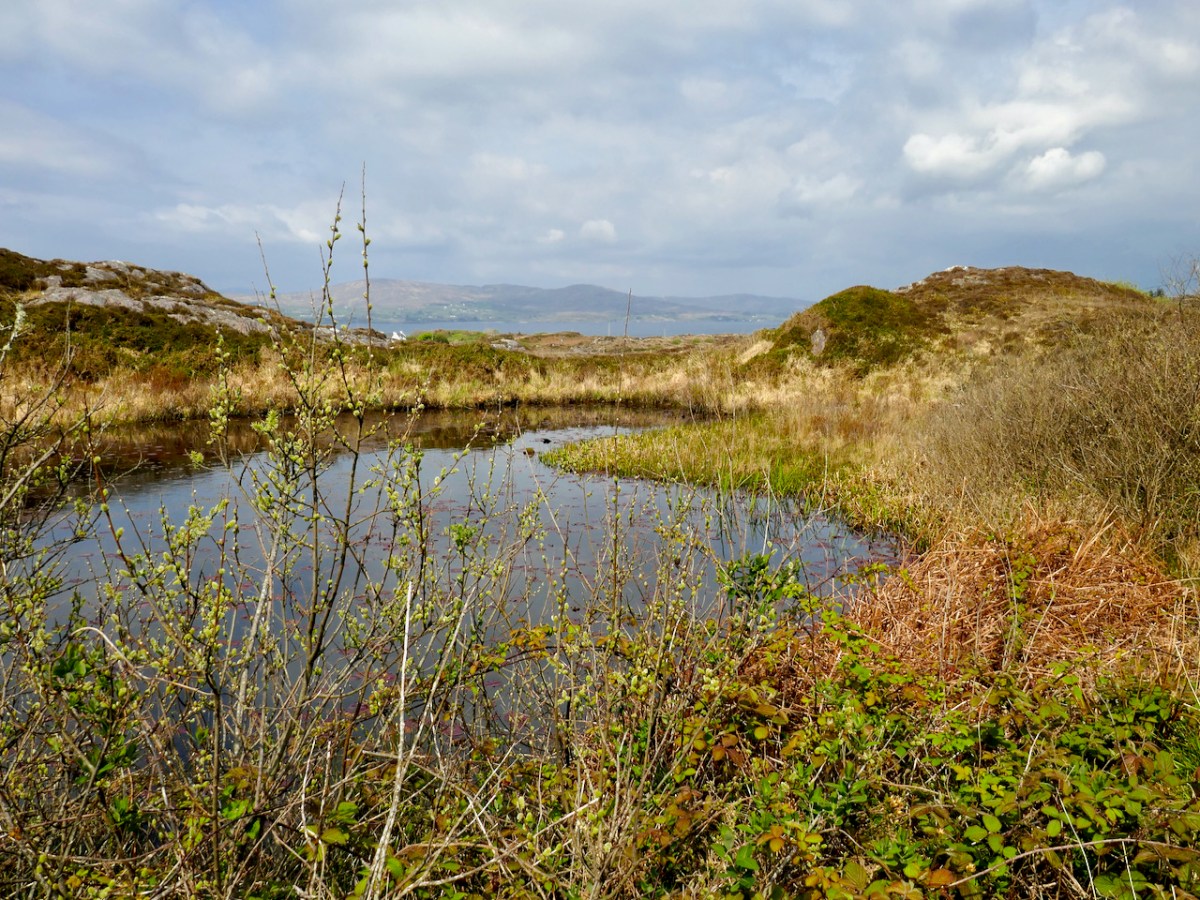
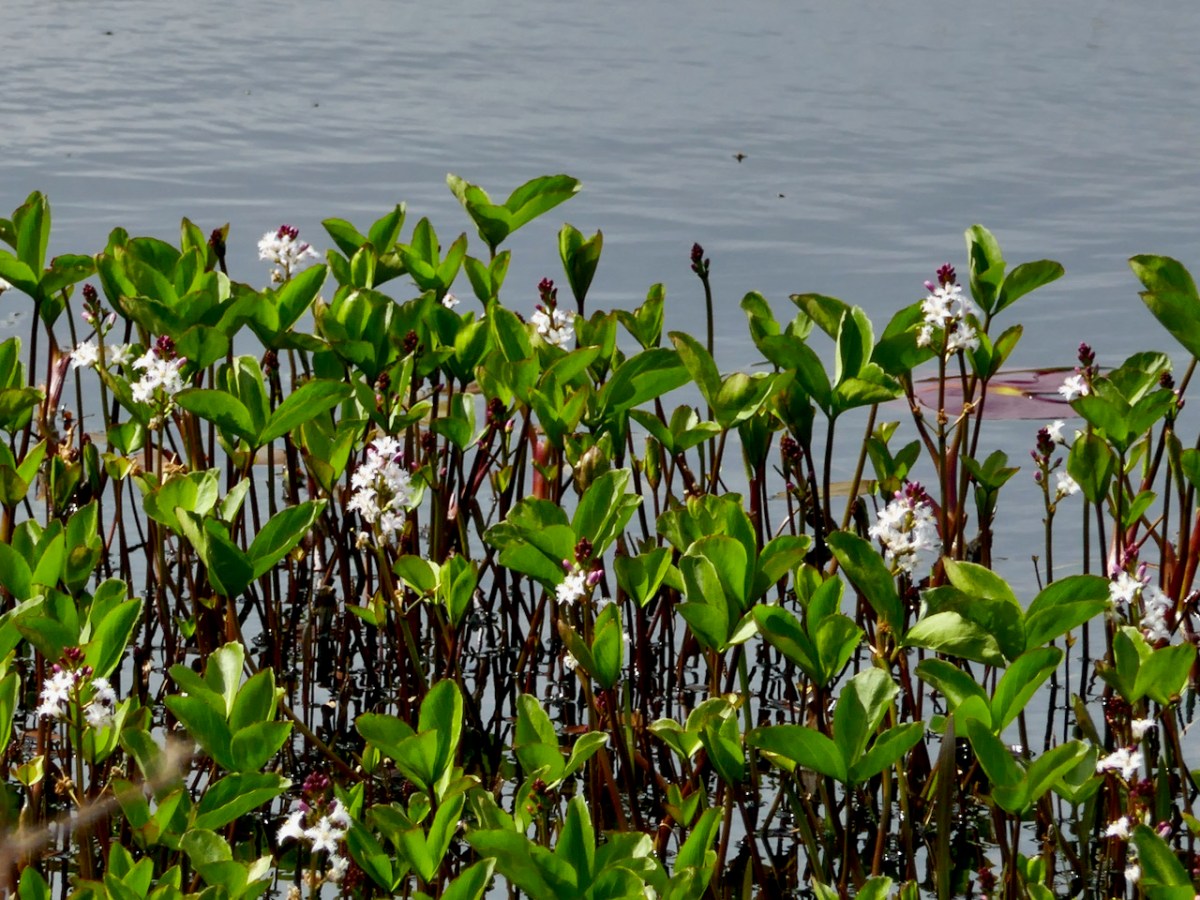
But if you’re carrying on, you’re now heading towards Dunkelly and the storied inlet known as Canty’s Cove. Read all about it here. Here, because we have been to Canty’s Cove lots, we took the short cut – marked in orange on the map. The compensation is that this stretch contains the remains of old ruined cabins and clacháns (hamlets) along the road, as well as a beautiful pond which, at the time of our visit was full of flowering Bogbean.
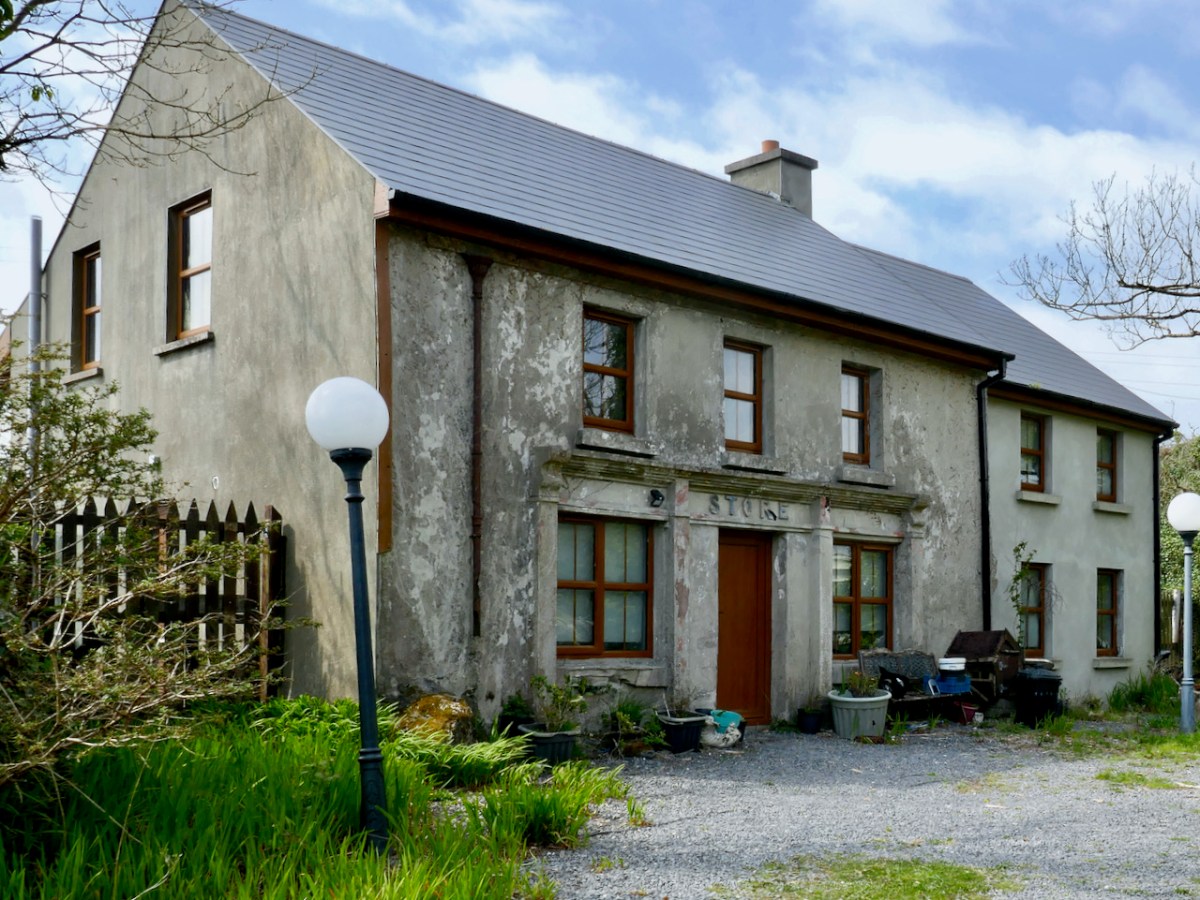
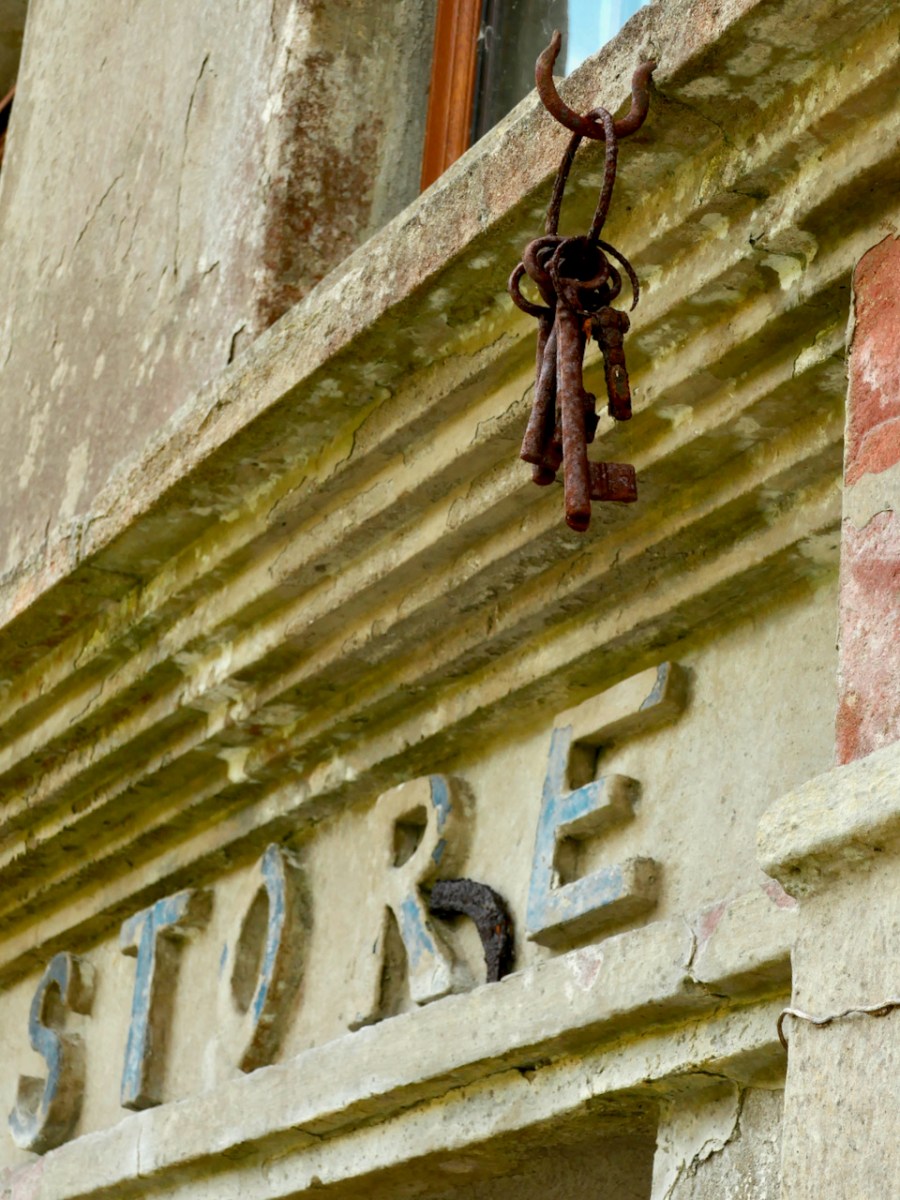
From Dunkelly the road turns back along the slopes of Knockaphuca and along the way there’s a bit of a surprise – an old store that once supplied necessities for the population of this area but which has not been viable for many years. No doubt local people have all kinds of memories and stories about this one. I was taken by the keys, still hanging above the door!
By now we were on the stretch of road that this loop shares with the Knockaphuca Walk and that’s a walk you HAVE to do, if you haven’t already. Possibly the jewel in the Fastnet Trails crown. Crossing the main Schull-Goleen road we head down to Ballydivlin.
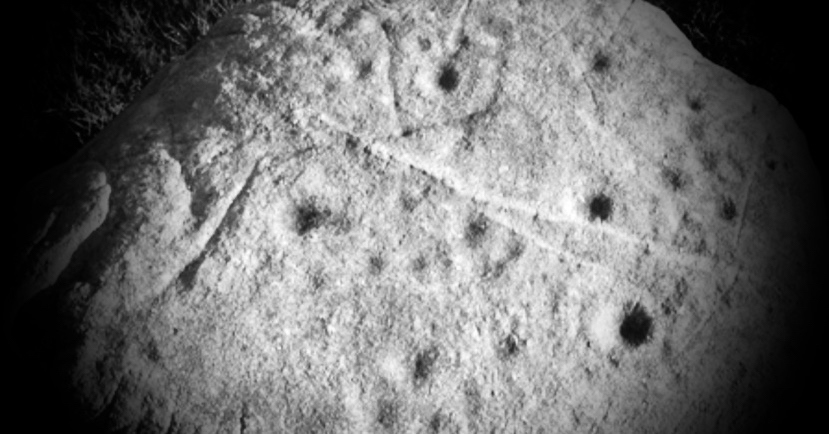
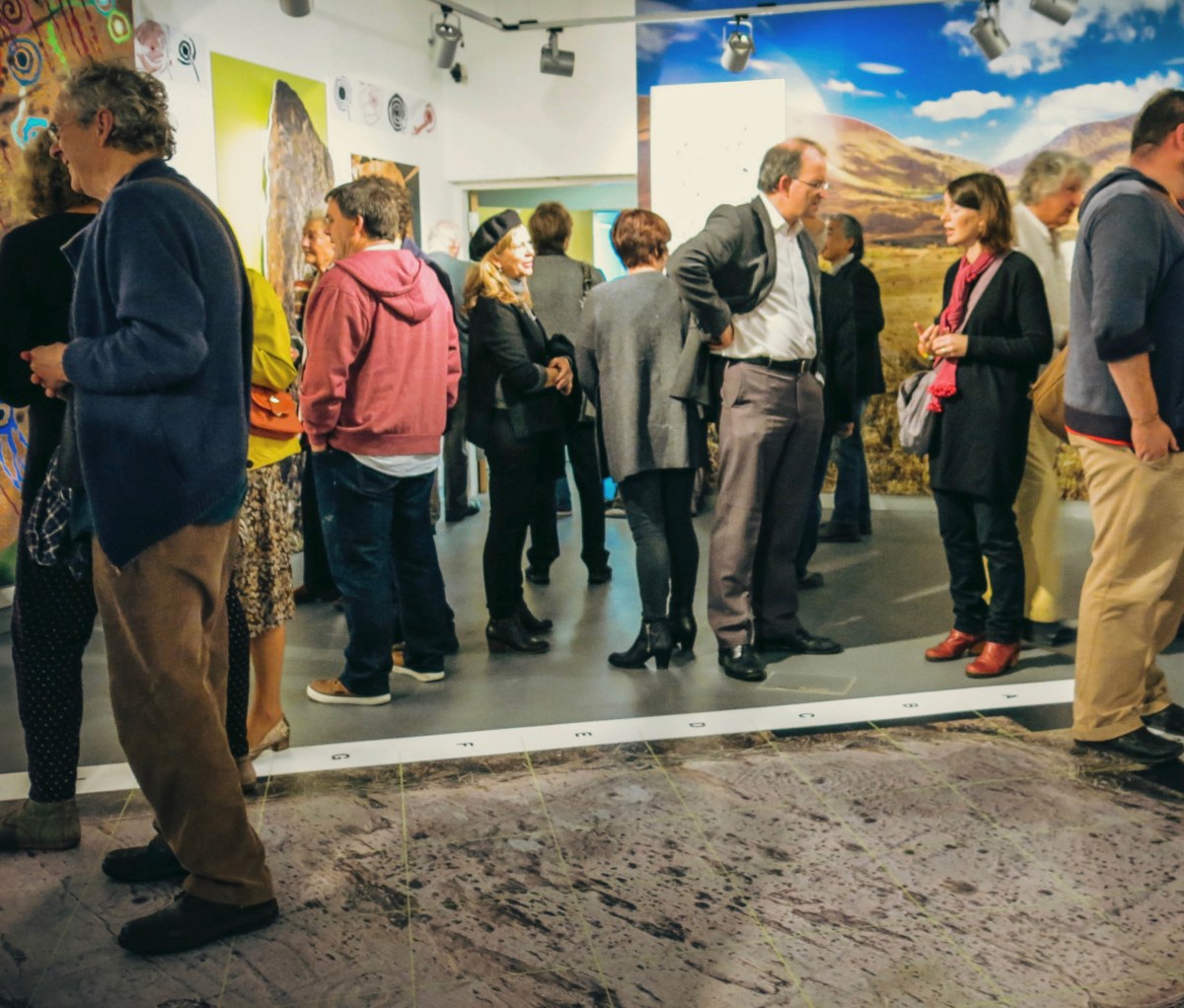
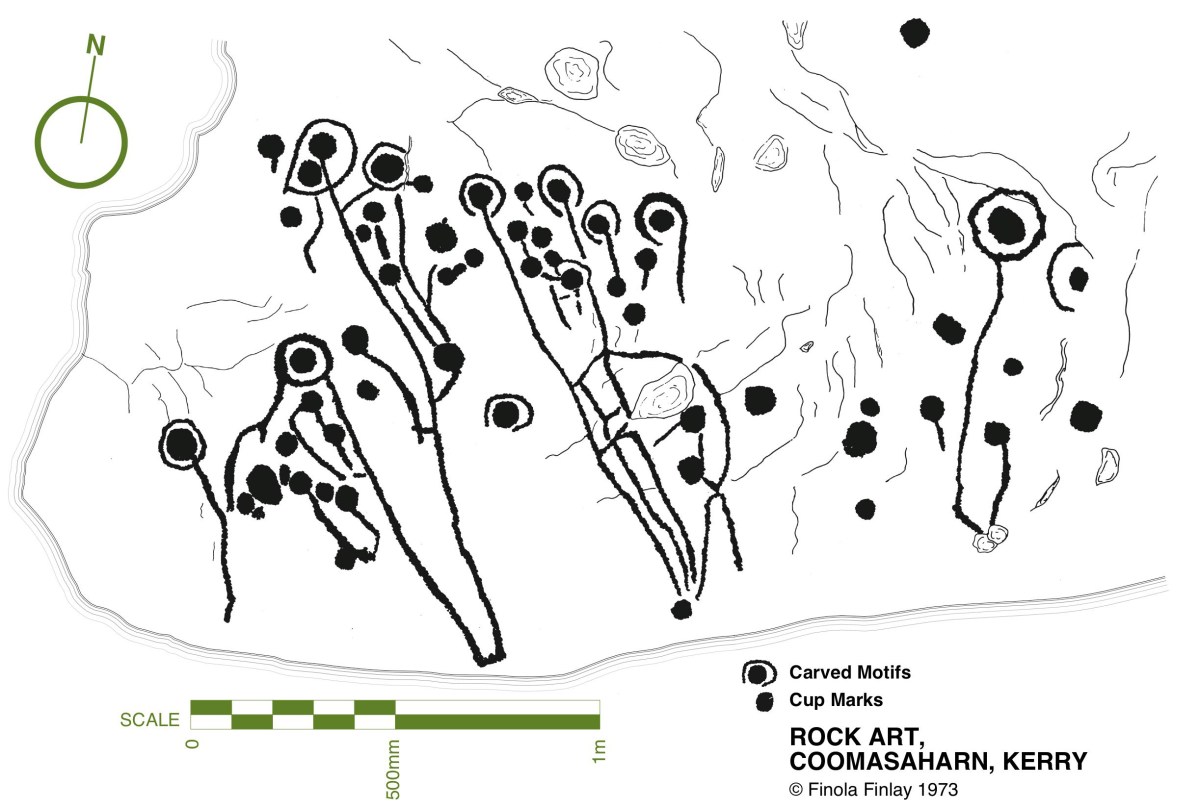
While writing this Journal over the years, Finola and I have included many examples of Prehistoric Rock Art, mainly on the west side of the country, in Cork and Kerry. Here is just one – you can find others through the search facility in the header. Finola’s UCC thesis from 1973 also concentrated on specimens from the southwest and her own drawings based on tracings direct from the rock surfaces provide a unique record of this form of prehistoric art. They have formed the basis of exhibitions which we have promoted over the years: here’s one from 2015.
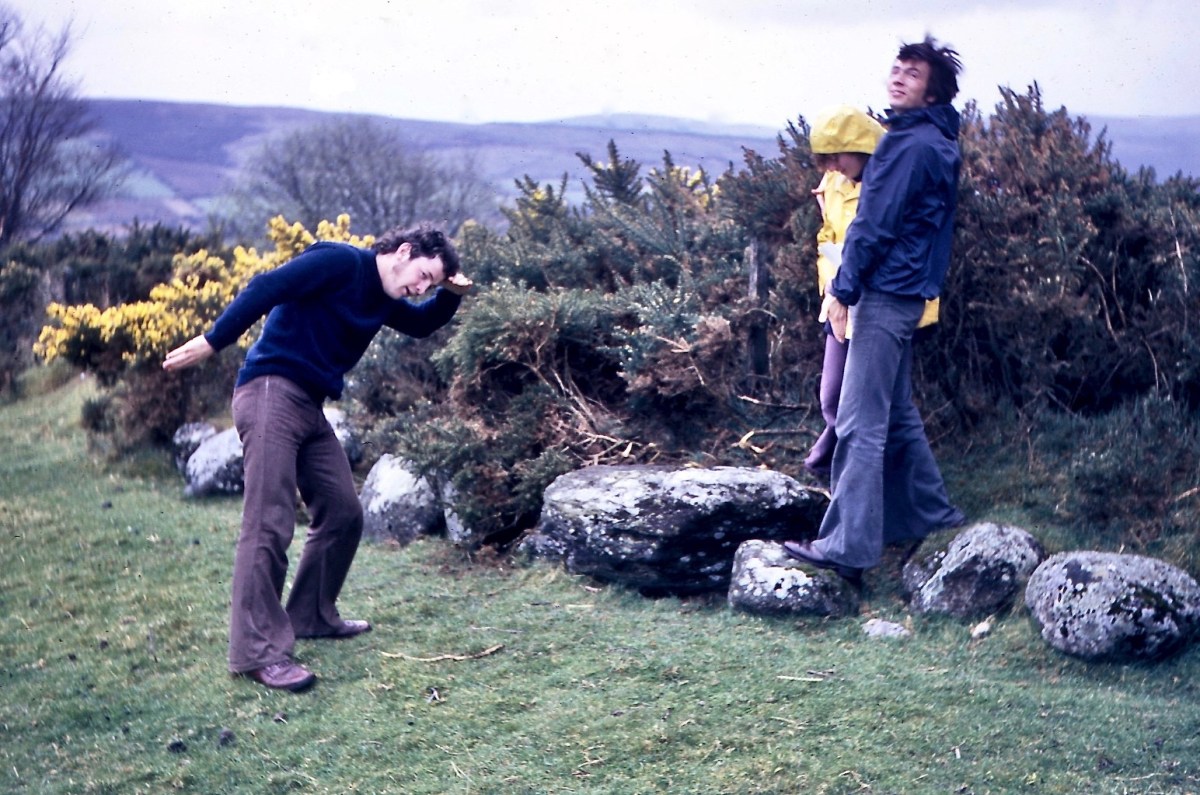
Upper: the opening of our Rock Art exhibition at Cork Public Museum , October 2015 and (lower) one of Finola’s drawings from 1973. Another area in Ireland which has a concentration of Rock Art is Wicklow. We have been spending a few days in that county, and decide to go and have a look for some examples there. Finola dug out from her archives a photo which she took in 1972 when she and some college friends visited a Wicklow site:
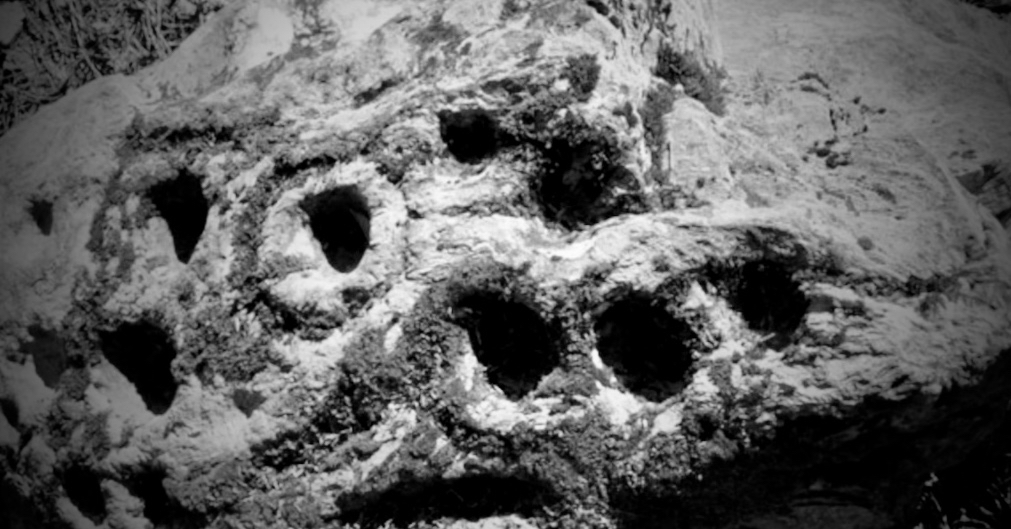
Could we find that particular rock again? Well, we think we did, but it has been moved in fairly recent times. Here it is in its new setting (we believe) – it’s not very propitious:
The present site is in the townland of Togher More, behind a fence lining a main road. The National Monuments record tells the story, which confirms that Finola’s earlier photograph was taken in the townland of Baltynanima:
. . . Class: Rock art (present location) Townland: TOGHER MORE Description: Found during ploughing c. 1.8m to the SW in Baltynanima and moved here in the mid 1980’s (see W1018-036—- for original location record). An irregular shaped schist boulder (L 1.3m; W 0.9m; T 0.5m) with 16 cup marks and the remains of another where the corner of the boulder appears to have come away. The four largest cups (diameters 10-12cm; depth c. 6cm) are enclosed by circles (max ext. diameter 20cm) formed by incised lines (widths 1.5-2cm; depths 1cm) with the exception of one which has only a semi circle incised line around it. The remaining 13 cups have diameters of 6-8cm and depths of 4-5cm. There are also three incised linear grooves (L 14- 22cm; W 4cm; D 2.5-3.5cm) visible on the stones surface. Described, photographed and drawn by Price on the 29th January 1933 . . .
National Monuments Record WI018-049
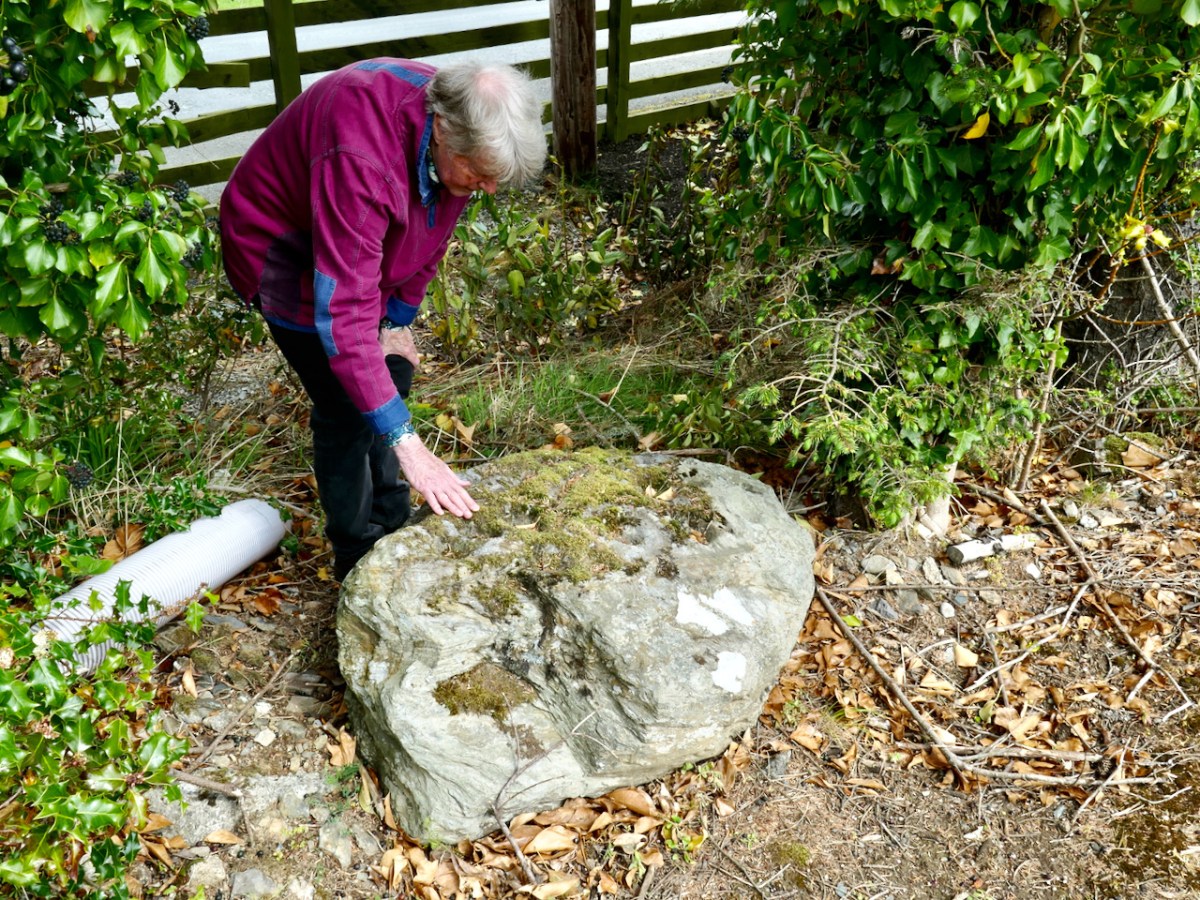
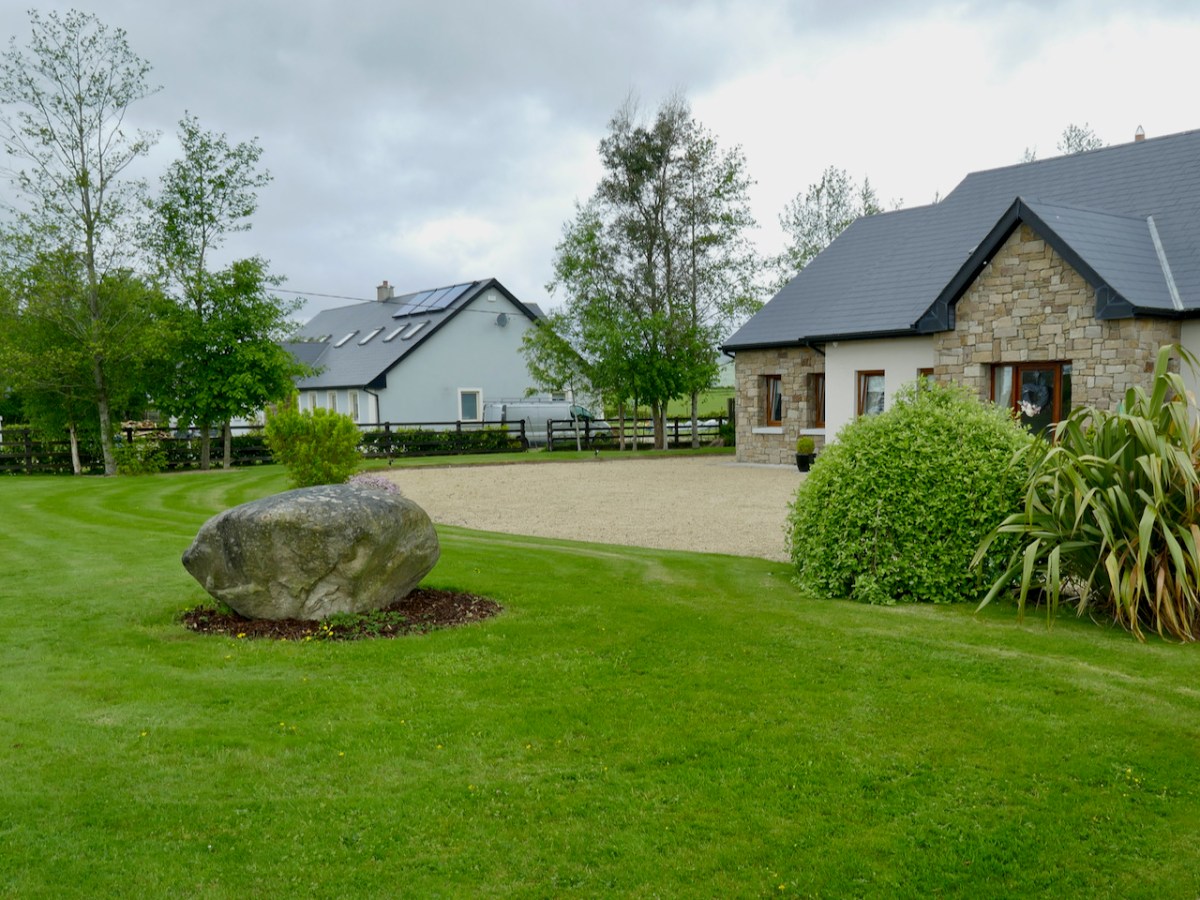
It’s not unusual to find that ‘portable’ stones with Rock Art on the surface are moved, usually to protect them if a site is to be developed. Here’s another example we found, in the townland of Knockrahen:
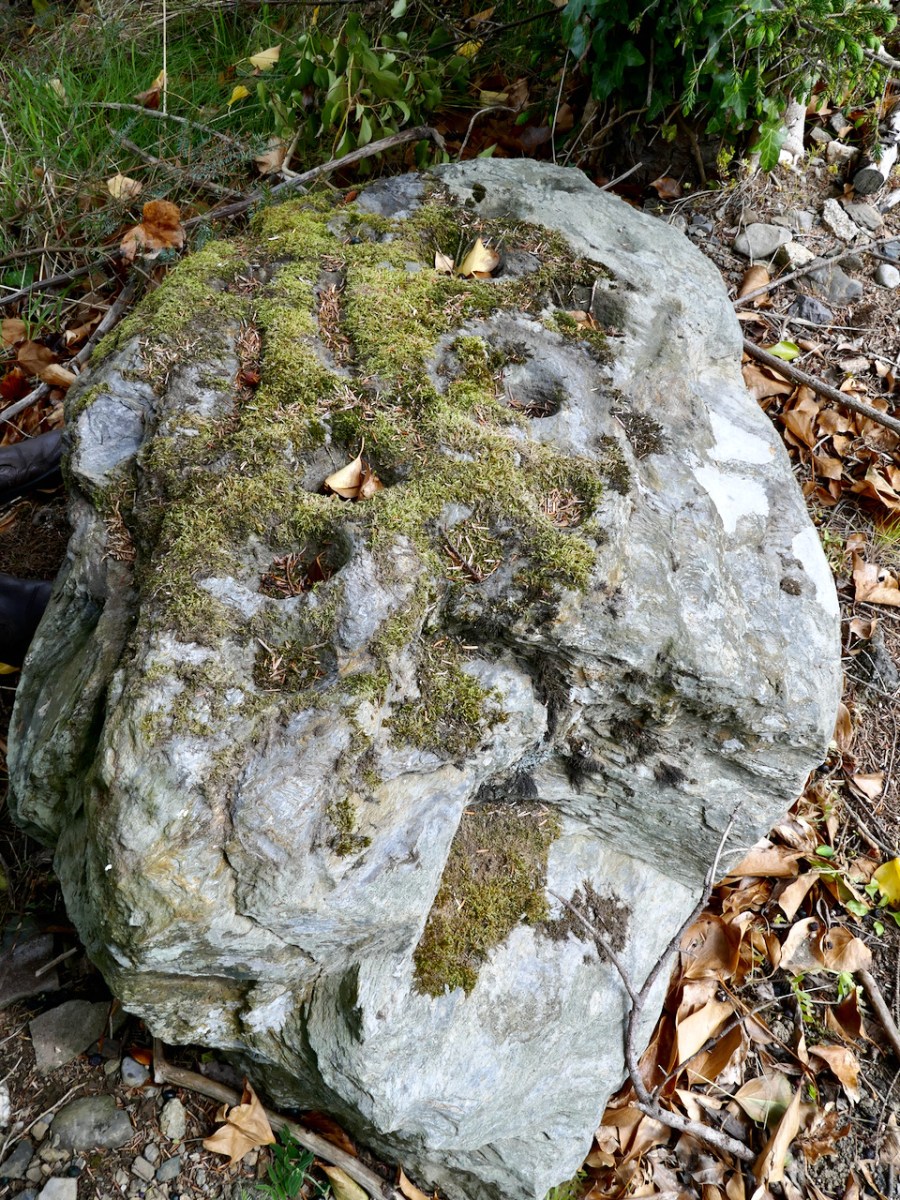
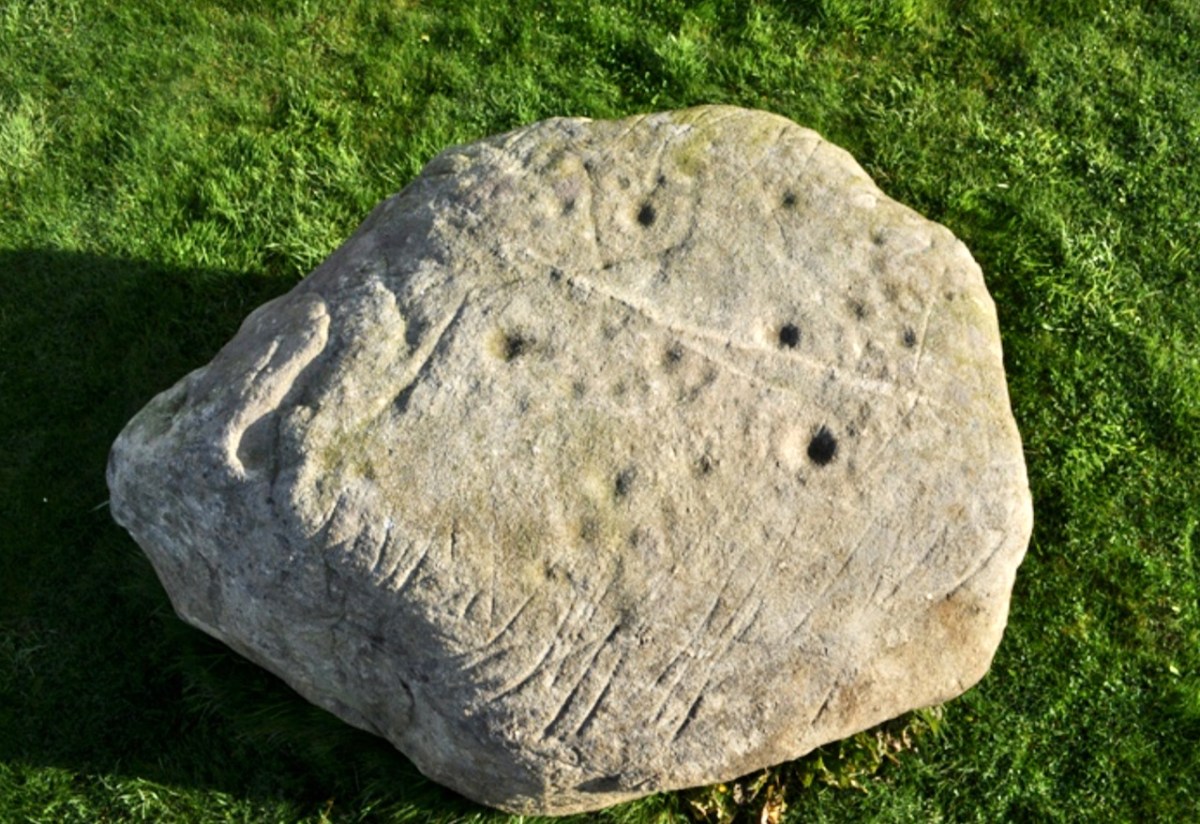
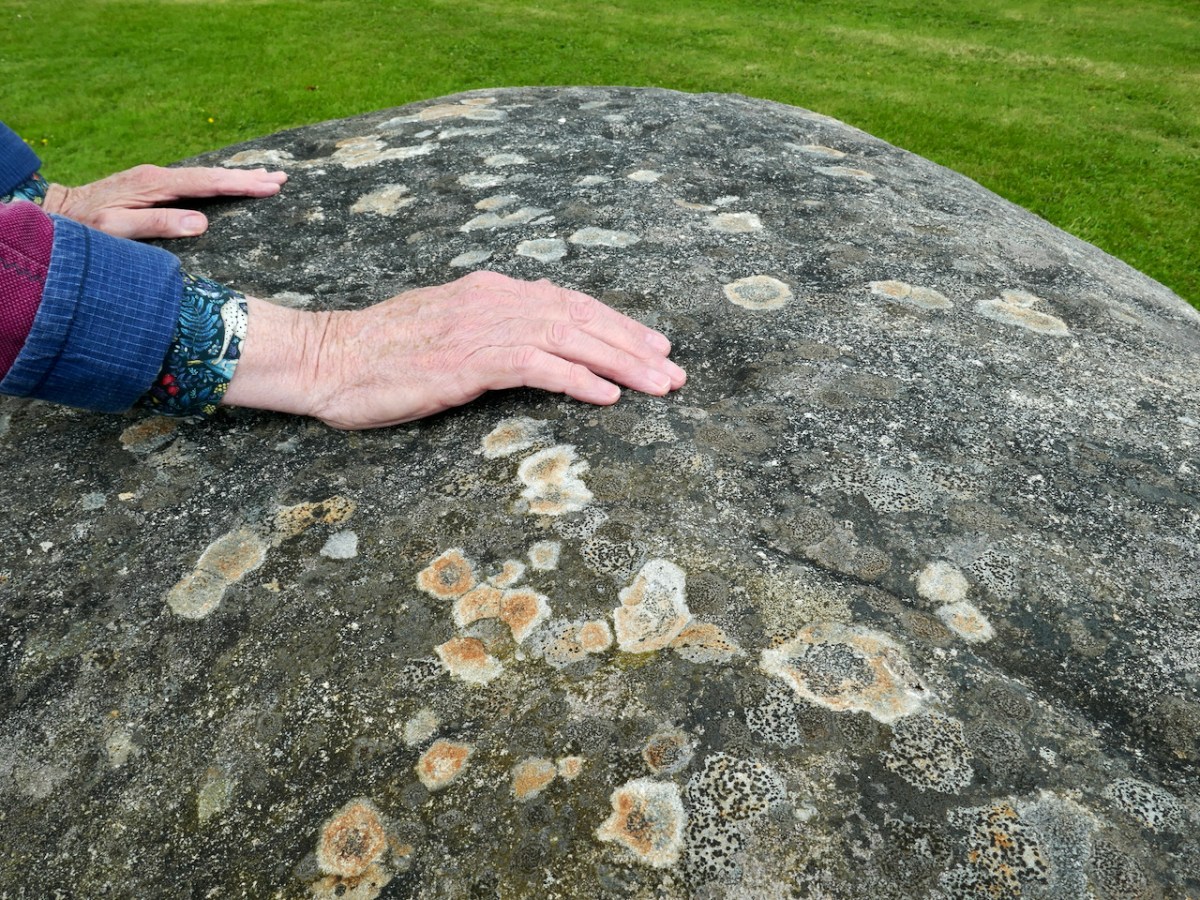
In this case the rock was found while the foundations were being dug for the house. The owner (with whom we spoke) noticed the markings and decided to keep it as a feature in her new garden. The photo below was taken by Chris Corlett for the National Monuments records. Thank you, Chris (and the NM), for allowing us to use this – and the detail on the header pic. Below Chris’s photo is Finola’s, with my hand in the shot to give it scale.
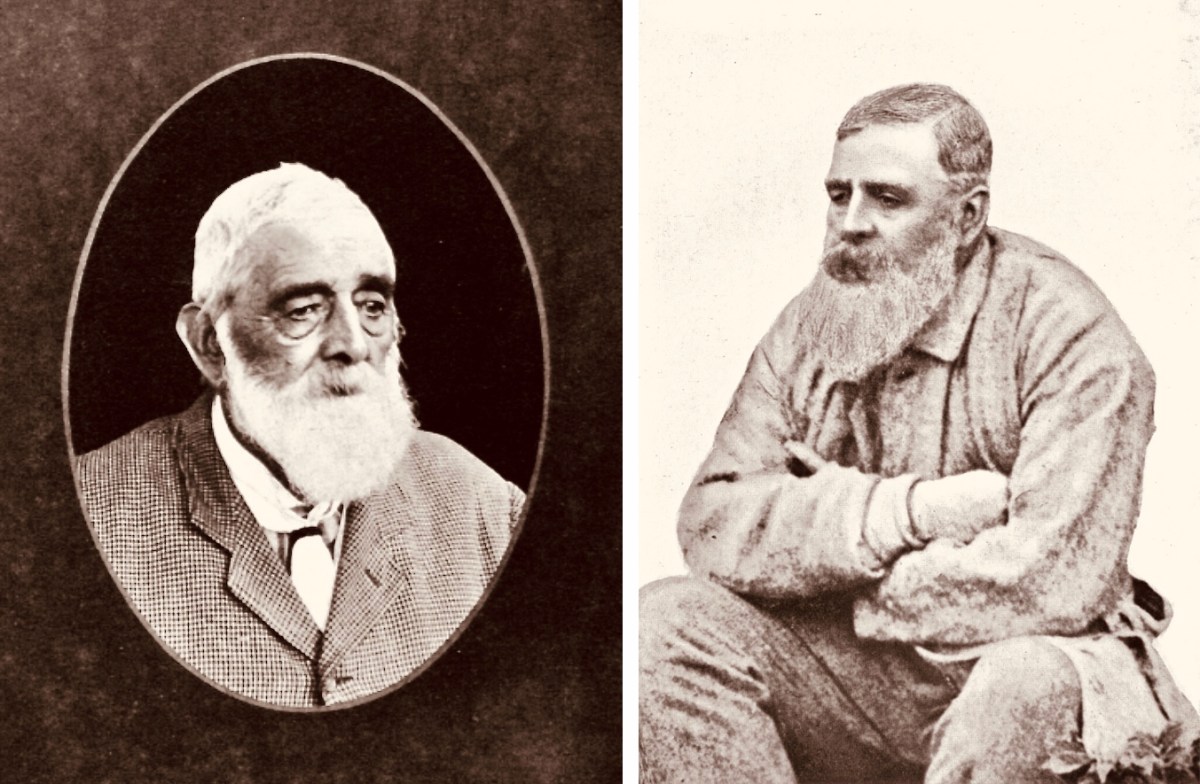
While out in Wicklow we noticed that many of the National Monument records of Rock Art are credited to George Henry Kinihan (1829 – 1908). He was a geologist who also had an interest in archaeology. His home was in Clontarf and he is buried in the Protestant churchyard in Avoca, Co Wicklow. He was involved in his lifetime in engineering works, particular railway construction, but was also a keen Rock Art enthusiast.
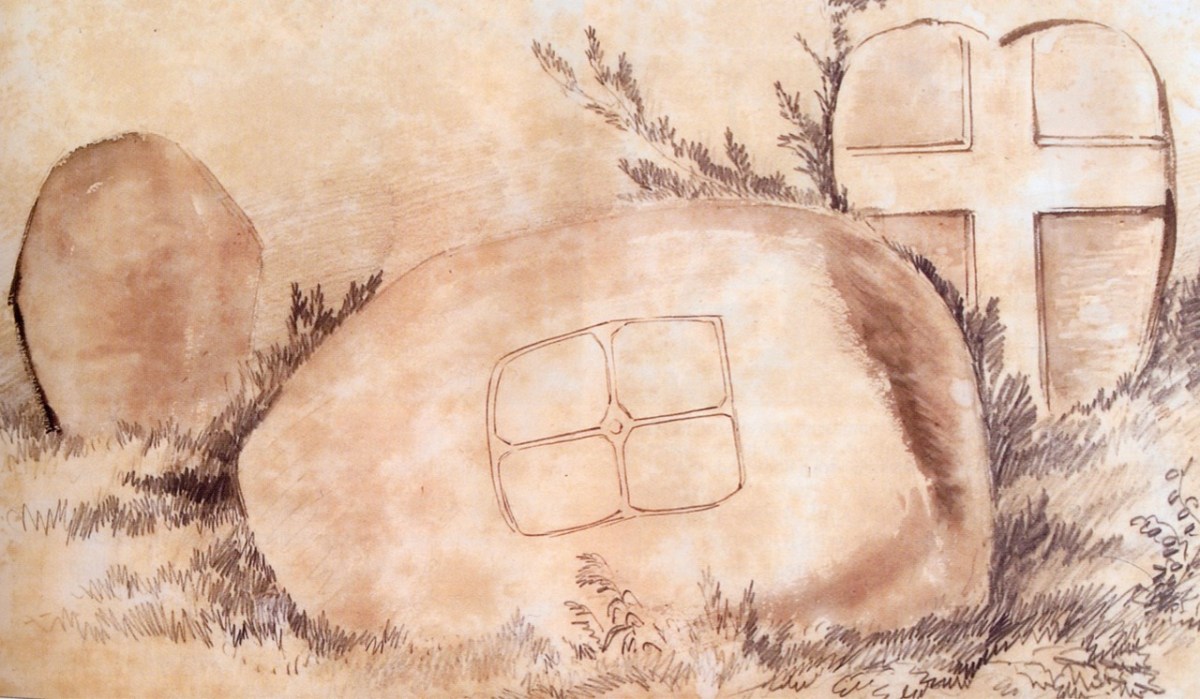
Two portraits of Kinihan: he was said to have been of ‘strong and massive build’. He spent some of his early years working under George du Noyer of the Irish Geological Survey – who shared with him an interest in antiquities in the landscape. Here is a du Noyer drawing of cross slabs in Co Wexford:
On du Noyer’s death in 1869, Kinihan was appointed District Surveyor of the Geological Survey, in charge of field work and mapping, and oversaw the completion of the One Inch Geological Map of Ireland. He also became President of The Royal Geological Society of Ireland in 1880. Now, here is a conundrum:
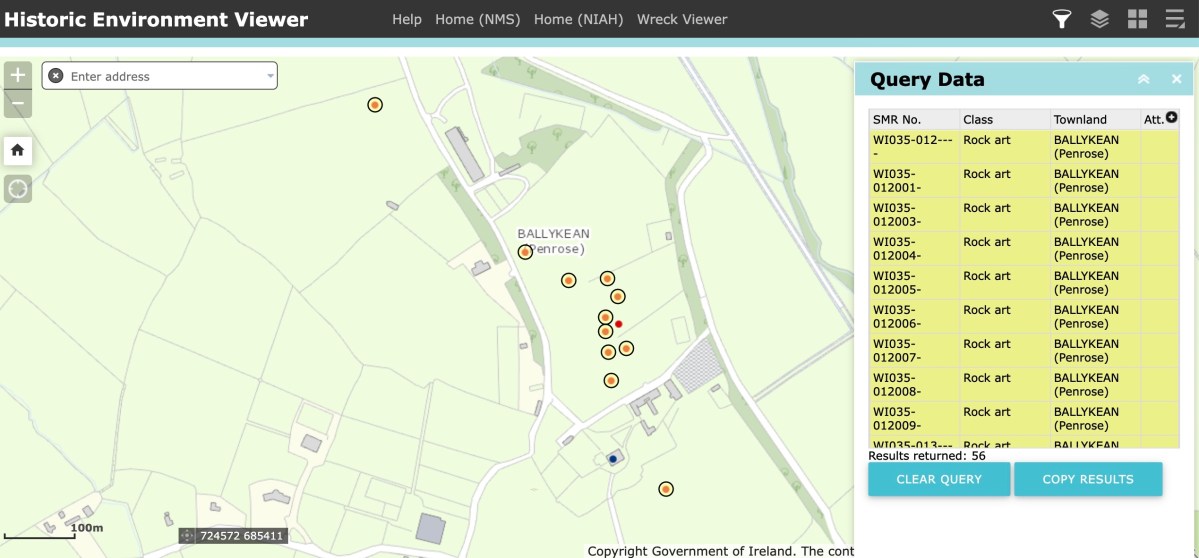
Here is part of the current Historic Monuments Viewer, showing the location of archaeological sites in Ballykean, Co Wicklow. All the yellow-and-red dots are recorded as Rock Art, discovered by Kinihan (there are 14 just in this small area of the townland). In every case, the site is described in detail, with numbers of cupmarks etc recorded. But also – in every case – the description concludes: ‘…The site indicated by Kinahan in 1884 was inspected in 1990, however this stone was not located…’ These are not the only instances in Co Wicklow where Rock Art found by Kinihan can no longer be traced. Does this mean that all these instances have now been destroyed or buried? Is it possible that this experienced archaeological enthusiast could have misinterpreted so many sites? It remains an adventure for us – another day – to go in search of some of these enigmatic examples to see if we re-establish the credibility of this Wicklow giant in this very particular specialism.
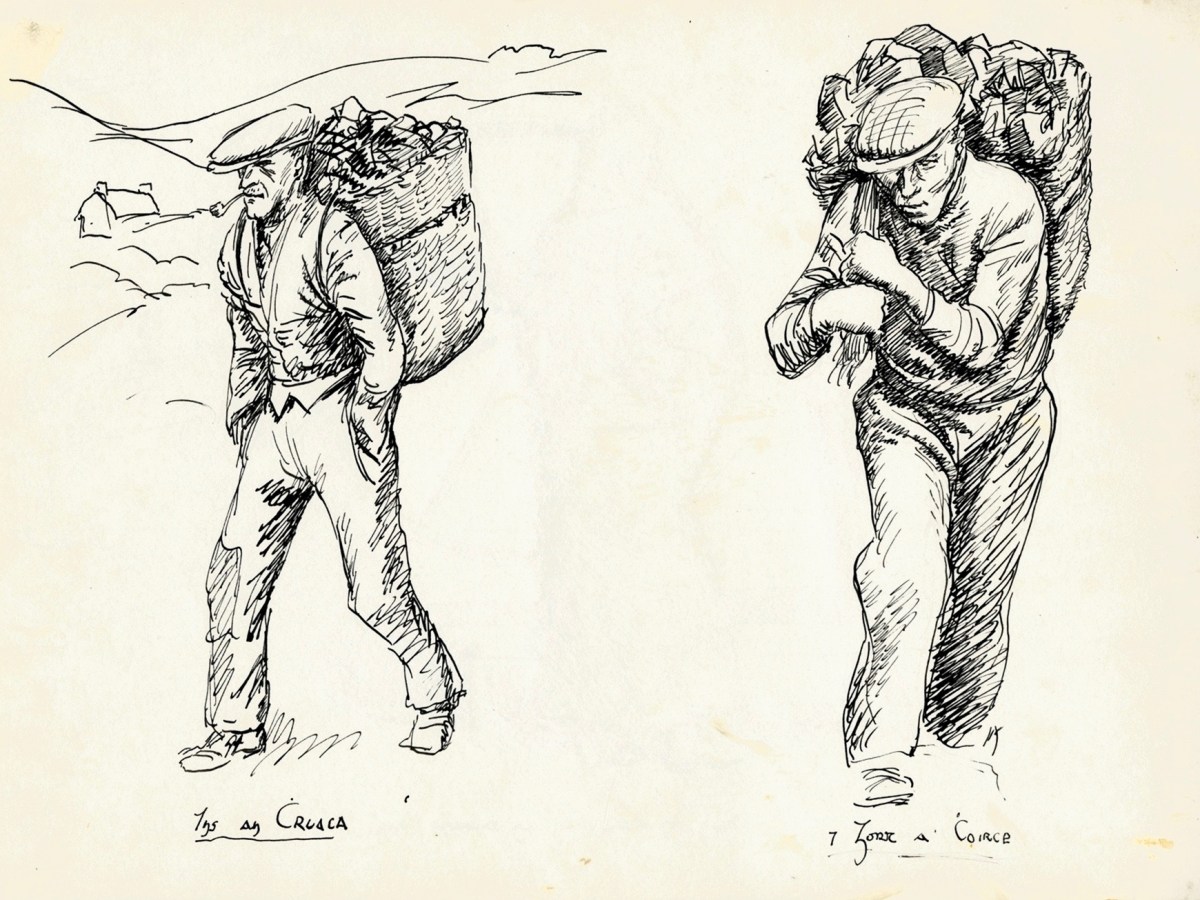
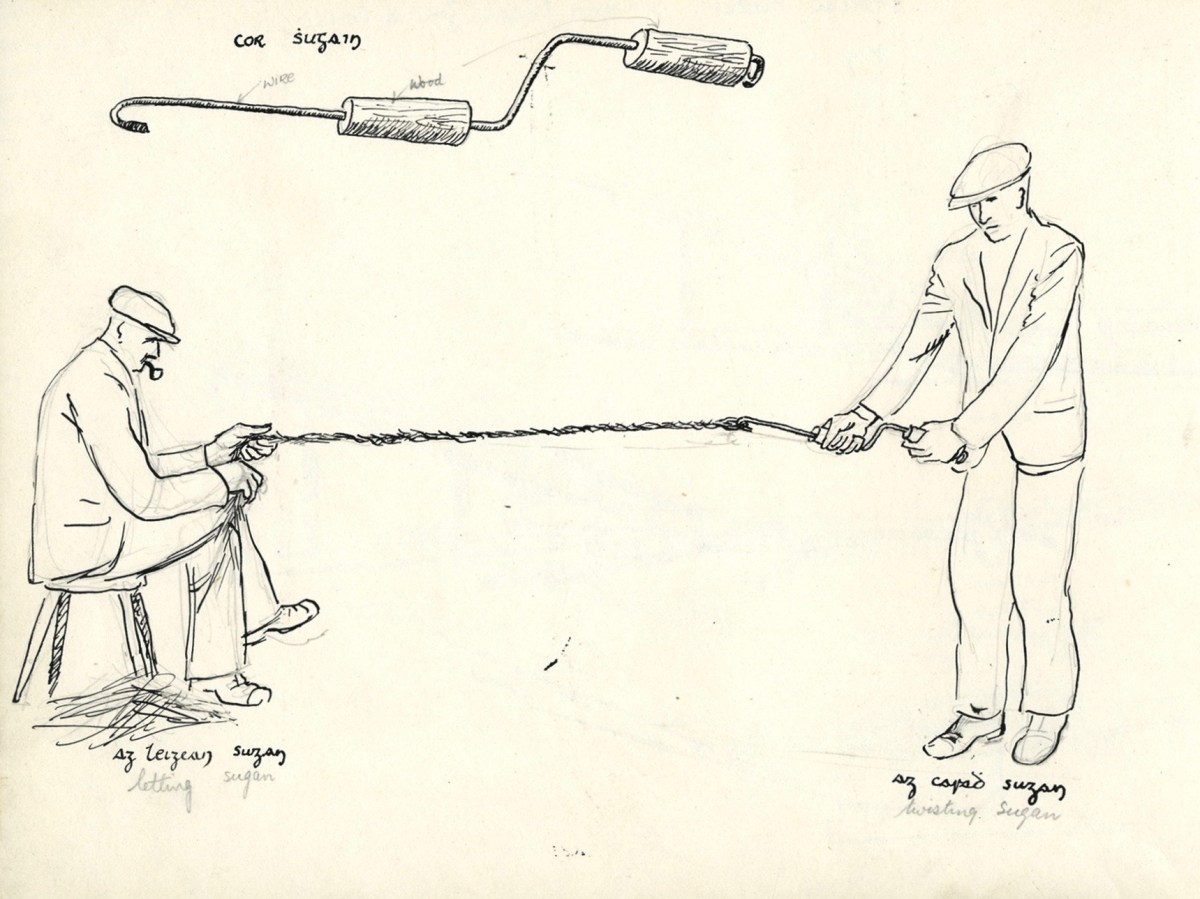
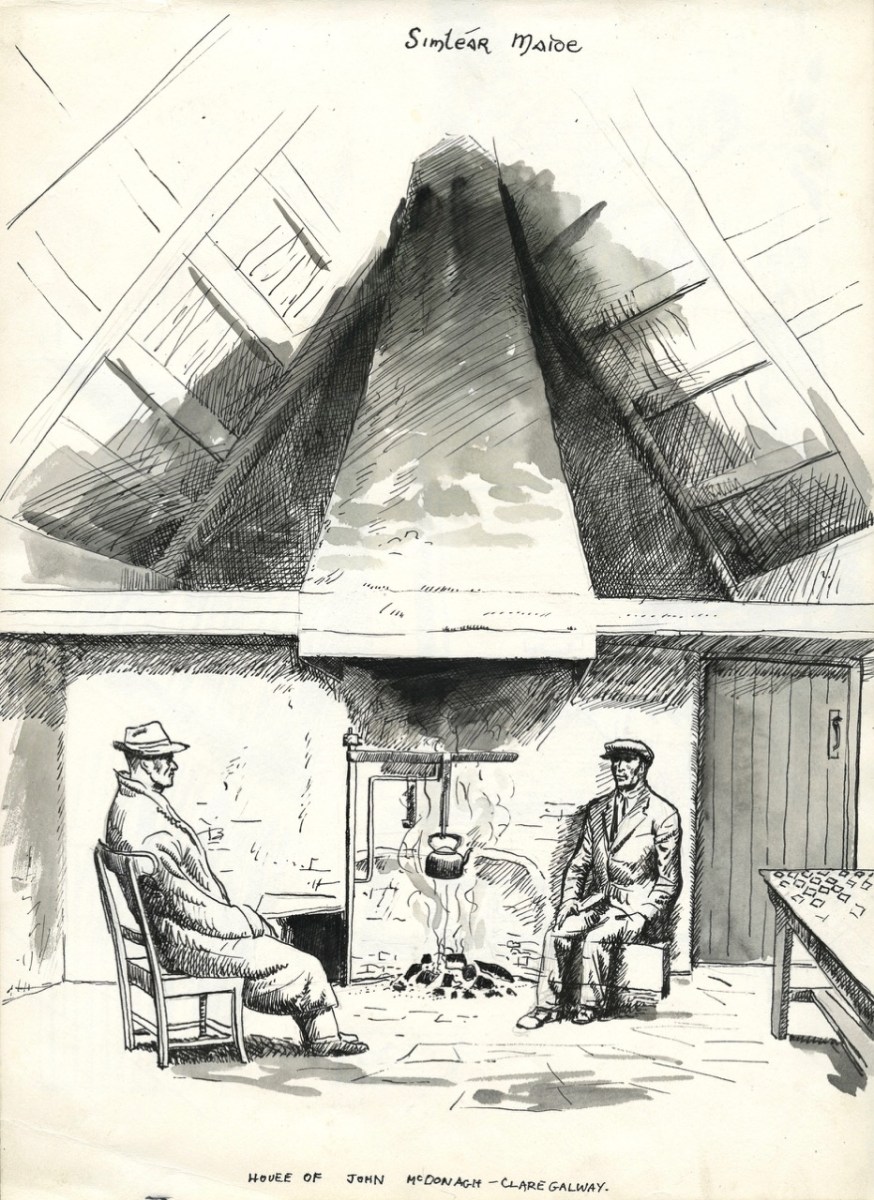
The Dúchas Collections (duchas.ie) are an invaluable resource for any of us interested in Ireland’s handed-down culture. Encompassing folklore, traditional ways of life, stories and visual images, the material is readily available on-line, and the archives are substantial and perfectly preserved, hopefully for all time. A recent find, for me, is the work of Simon Coleman, who was commissioned by the Irish Folklore Commission to accompany some of its collectors, and to visually record aspects of their work, in the mid twentieth century.
. . . Coleman was commissioned to travel in the company of full time folklore collectors, and to make drawings of local work practices and associated equipment, the traditionally built environments he encountered, as well as the diverse material culture evident in homes and communities of the day . . .
UCD Digital library, national Folklore Collection
The simple studies by Coleman, above – which portray alternative forms of transporting goods – abundantly describe visually a way of life which is vanished today. The Commission also employed photographers (and the Dúchas collections are also rich in these) but – in my view – there is an immediacy in these drawings which make them completely convincing: we are looking directly into Ireland’s past.
Have you ever heard of “Cad”? I hadn’t, until I looked into the work of Simon Coleman. The word in Irish is Caid, and it refers to a game which was played with sticks. There is a suggestion that it was a precursor to Gaelic football, although I am not convinced about this. In the version that Coleman recorded in 1959 in Inishmaan, Co Galway, the object of play was a short piece of stick, chamfered at both ends. This was hit by one of the players with a large, stout stick, making it fly into the air. As it descended the player gave it a hardy whack into a field, and the aim was to shoot it further than anyone else. Coleman’s drawings are accompanied by his notes:
. . . Sticks Game: the game of ‘cad’, Inish Meadhon. The ‘cad’ (short length of stick: approximately 2 1/2”) lying against a stone in the middle of the road; ‘cad’ is tapped with stick and jumps into the air about 4 or 5 feet thus; before it has time to fall to the roadway again, it is hit full-bloodedly into the adjacent fields. Each player has one try; the distance that the cad is hit is measured by the player with a stick approximately 6ft long . . .
Duchas.ie – Photographic collection
Interestingly, i was speaking to an Irish friend today and I mentioned ‘Cad’. He had heard of it through his family, although was not aware of it being played in his lifetime. The game he described was virtually identical to the notes above.
Coleman’s subjects were always wide-ranging. He was employed by the Folklore Commission in 1949 and again in 1959. We might imagine that he chose his own topics provided he fulfilled the brief of making an active record of what he saw. The top picture, above, shows traditional ‘Sunday Attire’, Inishere, Co Galway, and the interior view with bed and turf fire is from Croaghgorm or Blue Stack Mountains, Co Donegal. Also from Donegal is the simple but effective explanation of how ropes are made, below.
Particularly striking for me is the fact that all these images have been made in my own lifetime: This is an Ireland from not so long ago! There are very many more drawings and paintings by Coleman in this Collection, and I will return to them in future posts. Finally, for today, I can’t resist this spectacular rendering of a cottage interior from Clare, Co Galway.
I gratefully acknowledge and credit the Photographic Collection of Dúchas for all the above images (Cnuasach Bhéaloideas Éireann / National Folklore Collection). The header is a group of cottages at Gortahork, Co Donegal
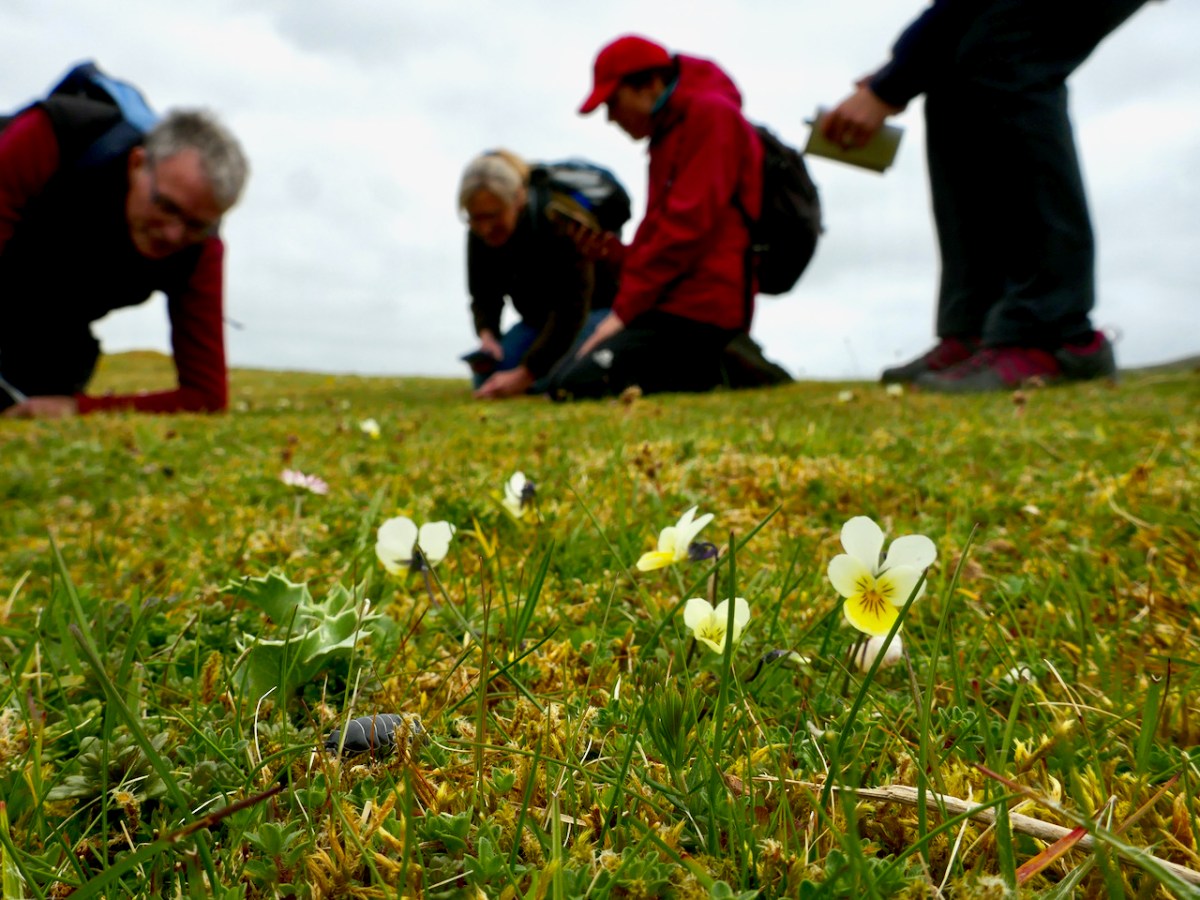
For a wildflower enthusiast there is nothing better than a day spent with like-minded folk looking for interesting plants under the leadership of a true expert.
At this time of year the buttercups all over the dunes are actually Bulbous Buttercups – if you look under the flower head you will see that the sepals turn down away from the petals
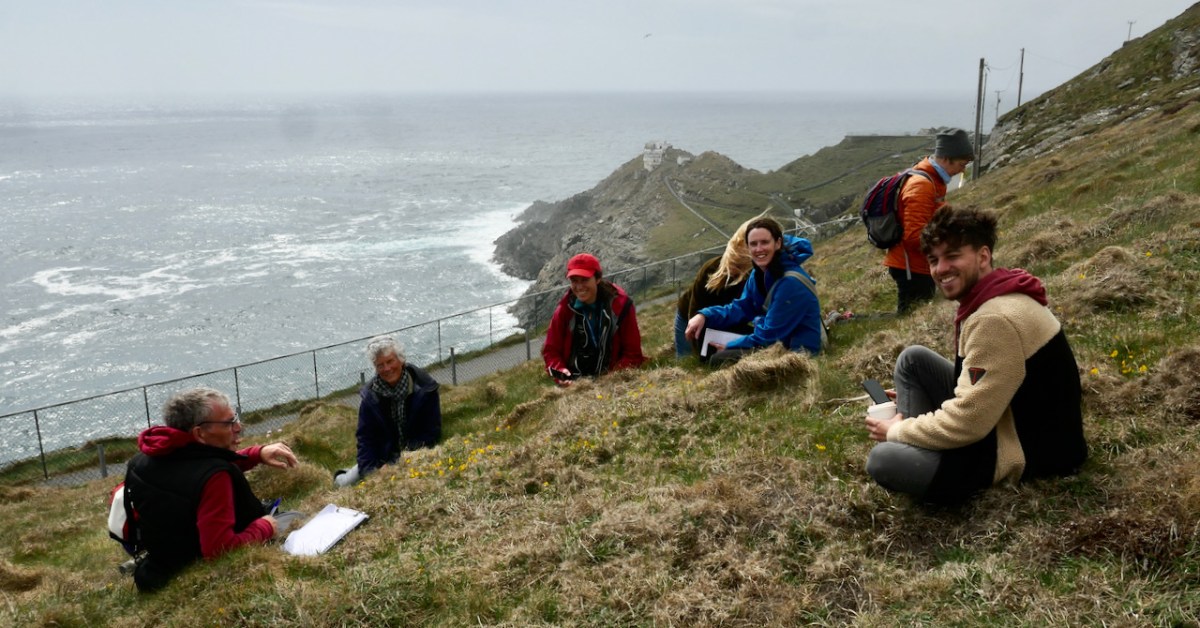
I had the immense privilege of being included in a Rare Plant Monitoring Workshop on Friday the 13th – which also happened to be the day that Biodiversity Week kicked off in Ireland. As you probably all know by now, Nature is in crisis all across the world, and although we may be surrounded by lush hills and boreens in West Cork, there are ominous signs that all is not well with our natural world here as elsewhere. Fewer than ten percent of our native species in Ireland have been assessed for their conservations status – but of those that have been, one fifth (yes – one-fifth!) are at risk of extinction.
Sand Pansy – gorgeous little violas found on the dunes
That’s why counting plants is important – each one is part of the complex web of biodiversity that contribute to the health of our environment and the loss of even one can have knock-on effects on a whole cascade of others. I already monitor two rare plants for the National Biodiversity Data Centre (NBDC), Vervaine and Calamint, so I have an insight into the kinds of threats rare plants can face, from mowing to herbicides to change of land use – all of those have happened to the small populations I monitor.
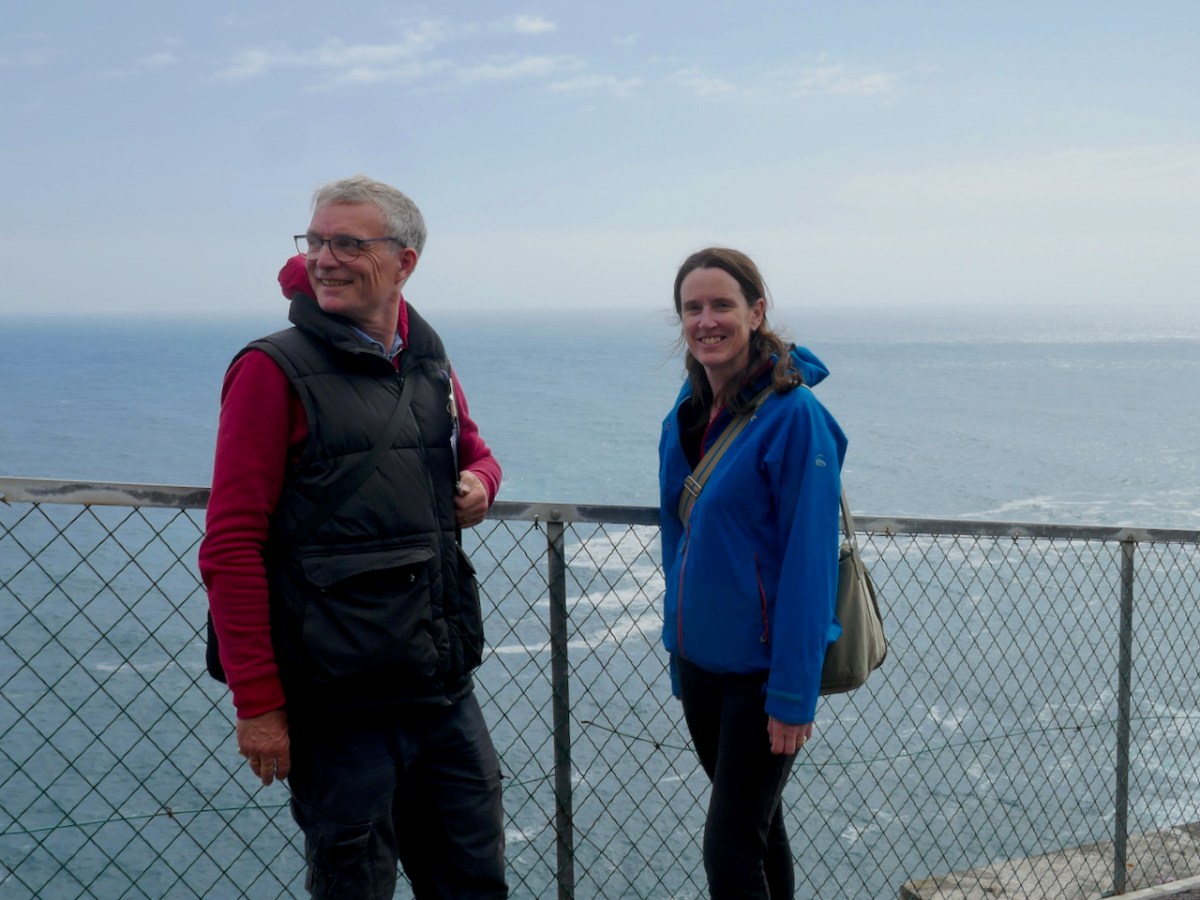
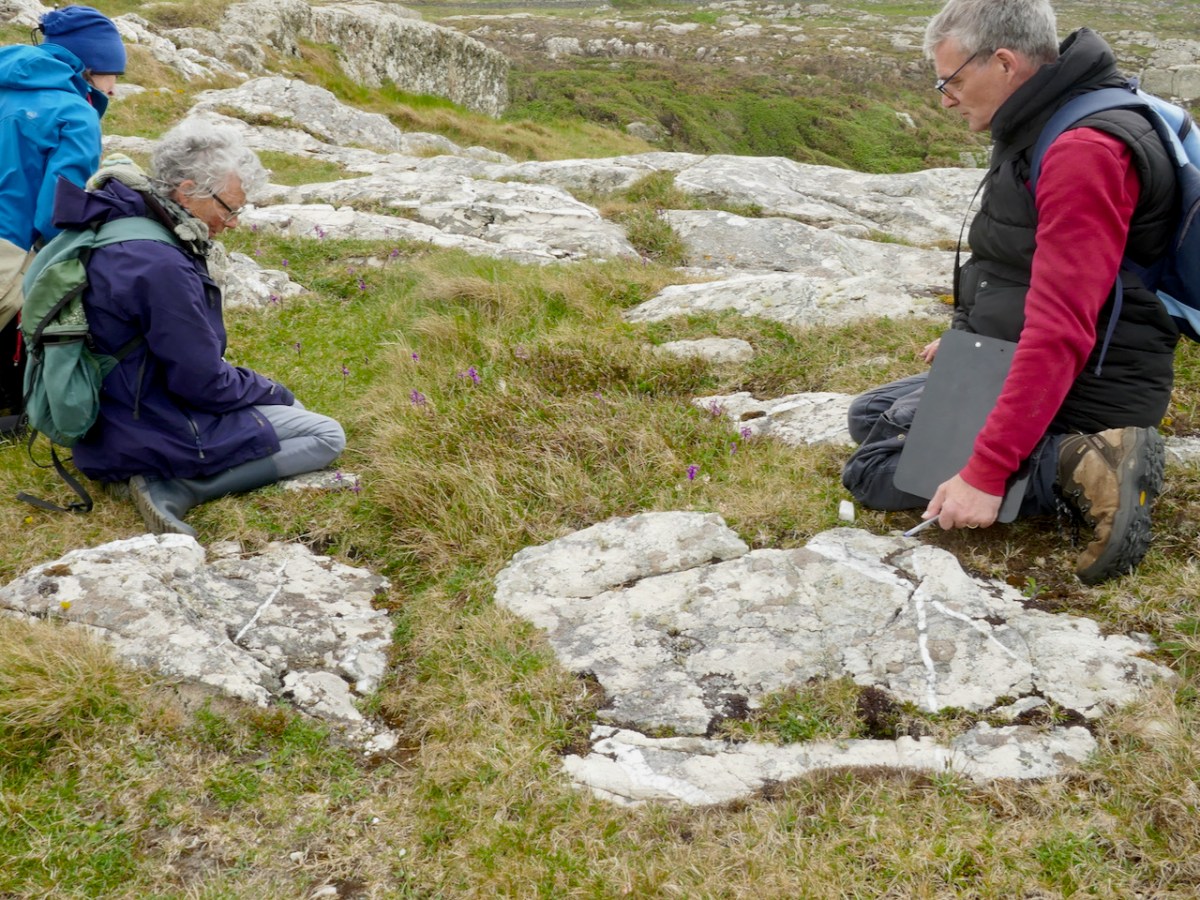
The location for this workshop was Barley Cove and Mizen Head. Having rendezvoused with Botanist Paul Green and NBDC Scientist Úna FitzPatrick (above, at Mizen Head) we set out across the dunes. I had met Paul before and so I knew that he is unfailingly generous about sharing his immense knowledge. Throughout the day we stopped frequently to exclaim over a plant that one or another of us spotted (like the Bulbous Buttercup) on the dunes or the rocks, and Paul always took the time to stop and educate us about each one.
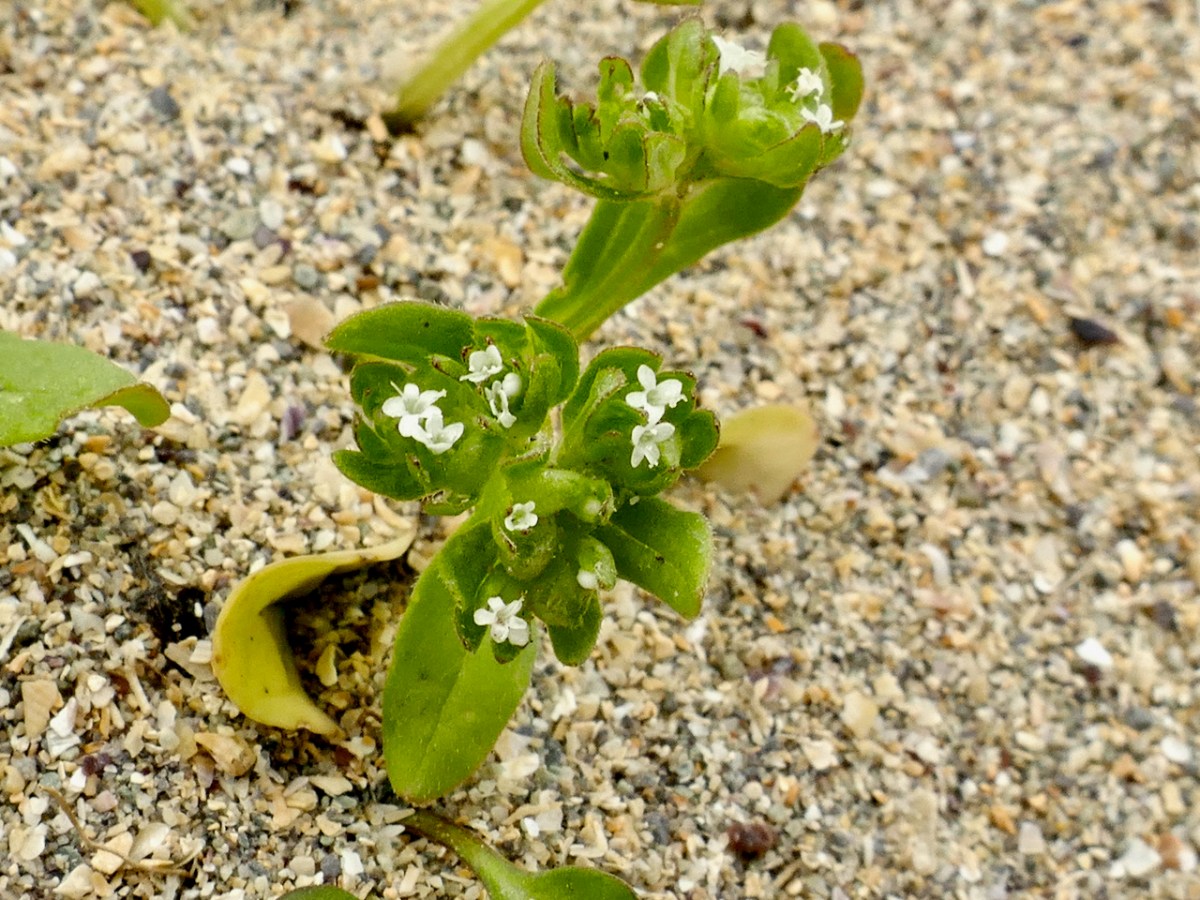
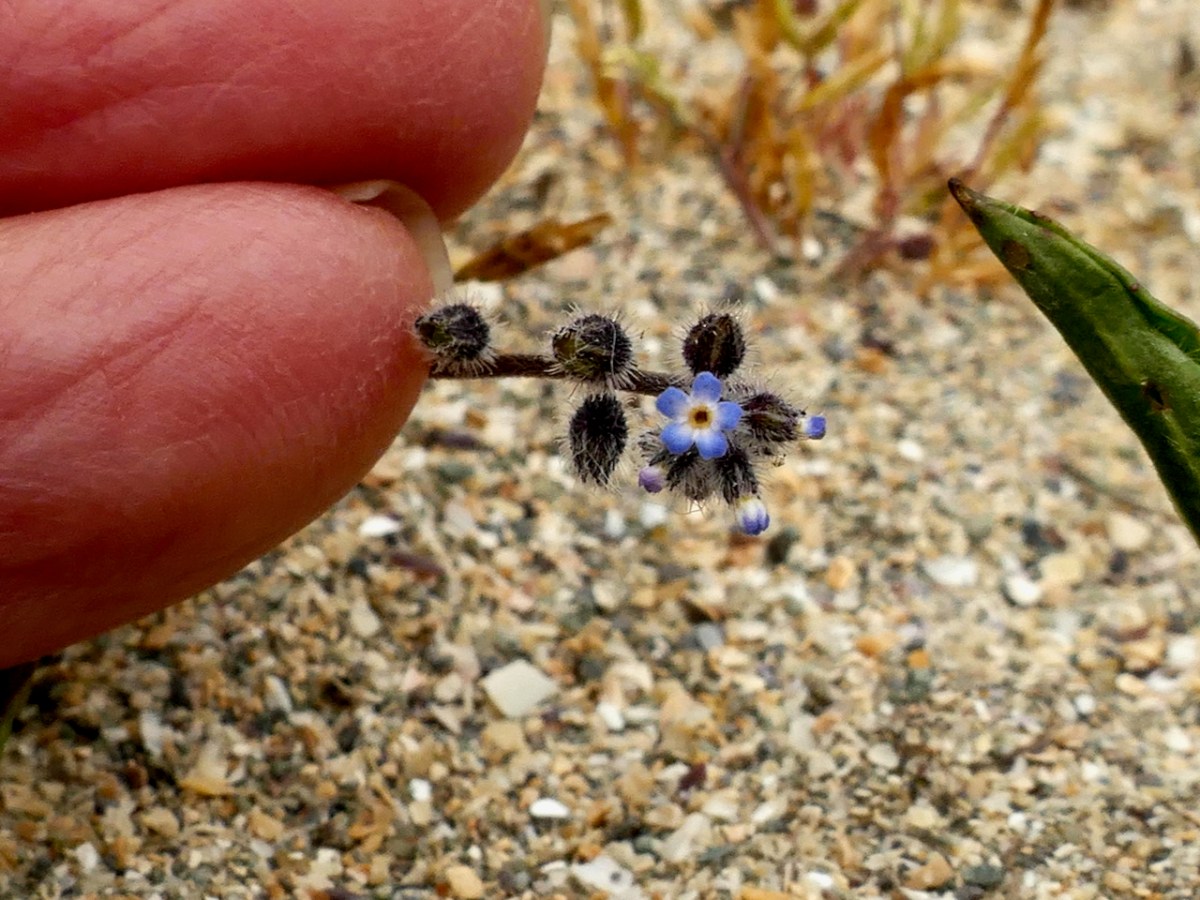
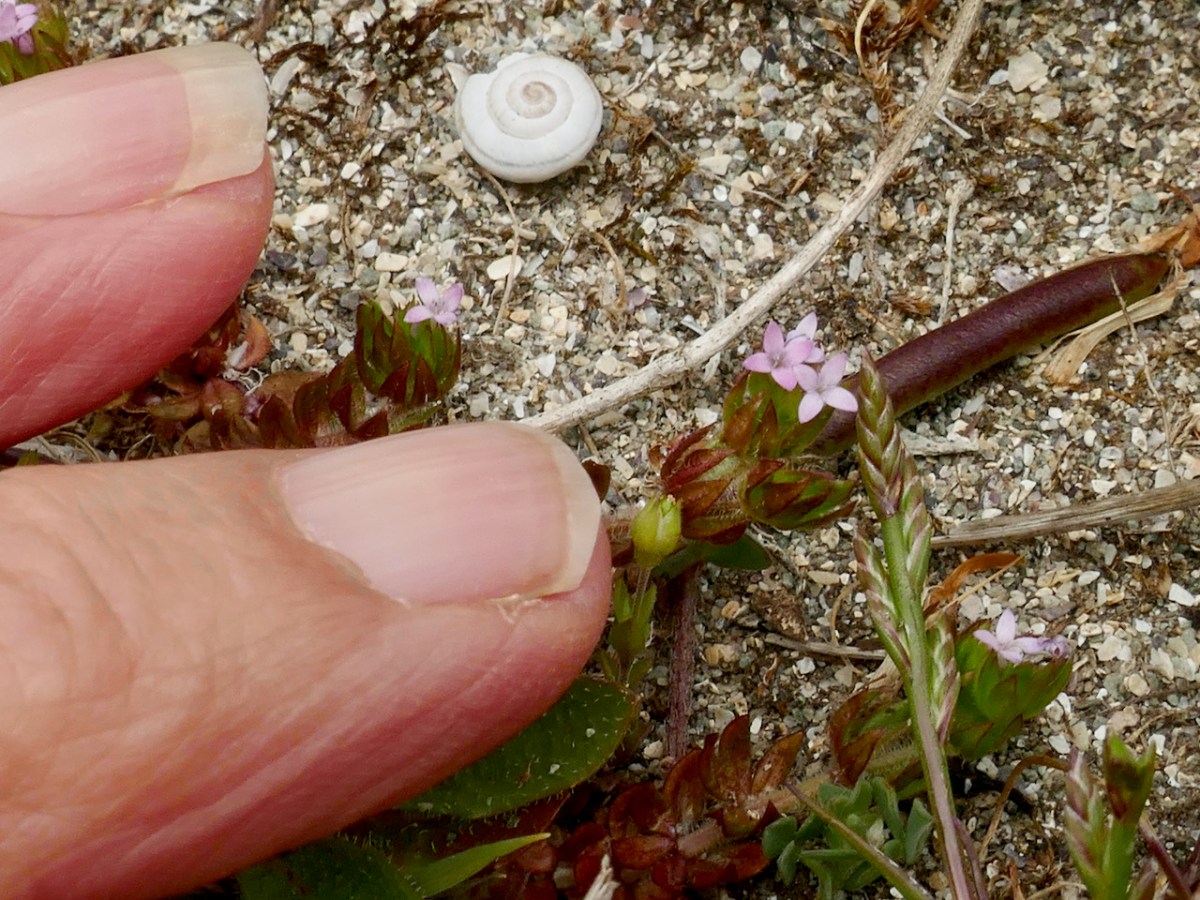
Thus, along the way, I was introduced to several plants that were entirely new to me. Despite the fact that I have been to Barley Cove on numerous occasions, many of them spent lying in the grass on the dunes (see this post and the wildflower slideshow within it, for example), I had never seen Common Cornsalad (above) nor Early Forget-me-not (below) before Friday.
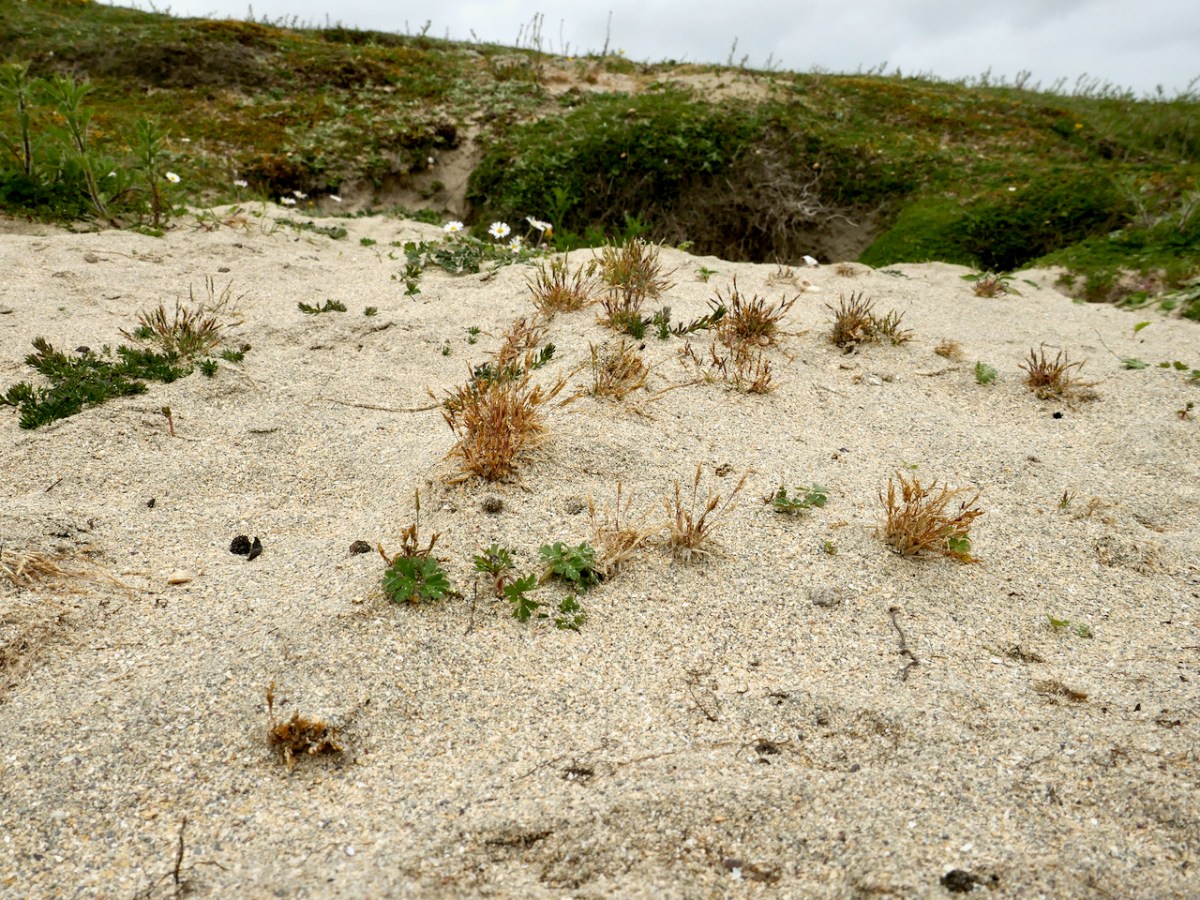
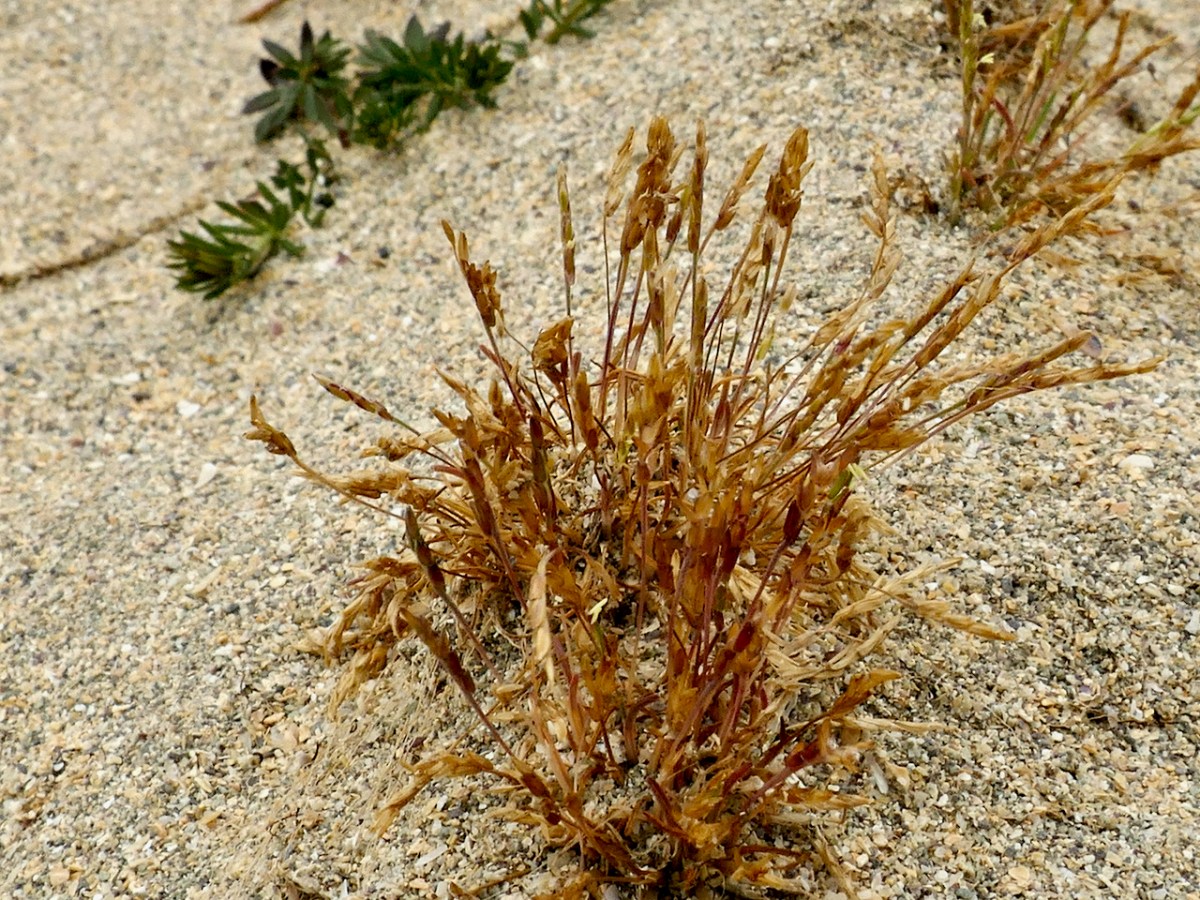
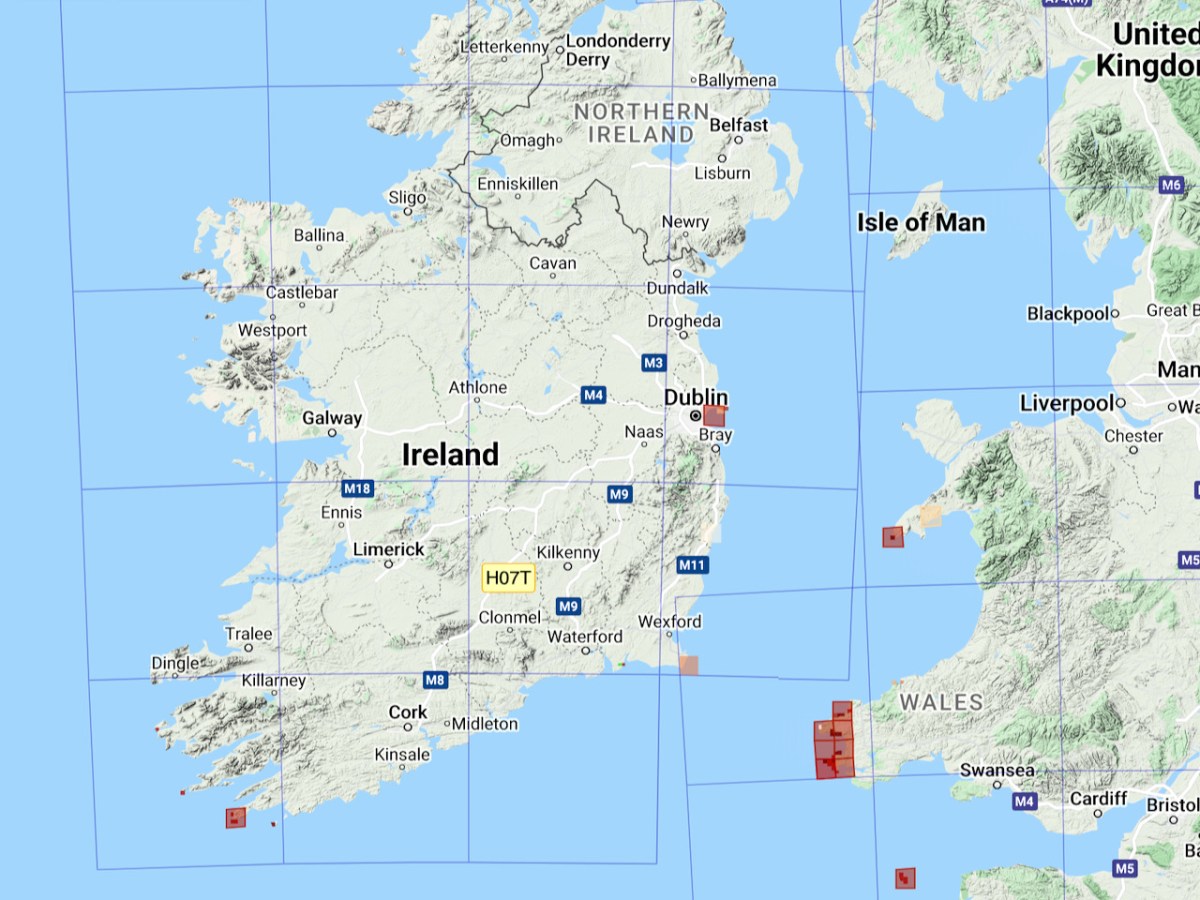
As our first rare plant, we were in search of Early Sand-grass, the kind of undistinguished little plant that you would walk over unthinkingly, but which is so rare that it only occurs here and in the Bull Island Nature Reserve in Dublin. That’s the distribution map below, courtesy of the BSBI.
Paul found it and we collectively traced its extent across the dunes. This is an area with much rabbit activity and Paul speculated that the bare patches of sand created by the busy bunnies was what had encourage or allowed the Sand-grass to colonise this area. It’s a complex issue – those Barley Cove Bunnies can be destructive to the dunes in some ways, but here we have an instance where their presence has been beneficial – one of those complex interactions that are so hard to predict.
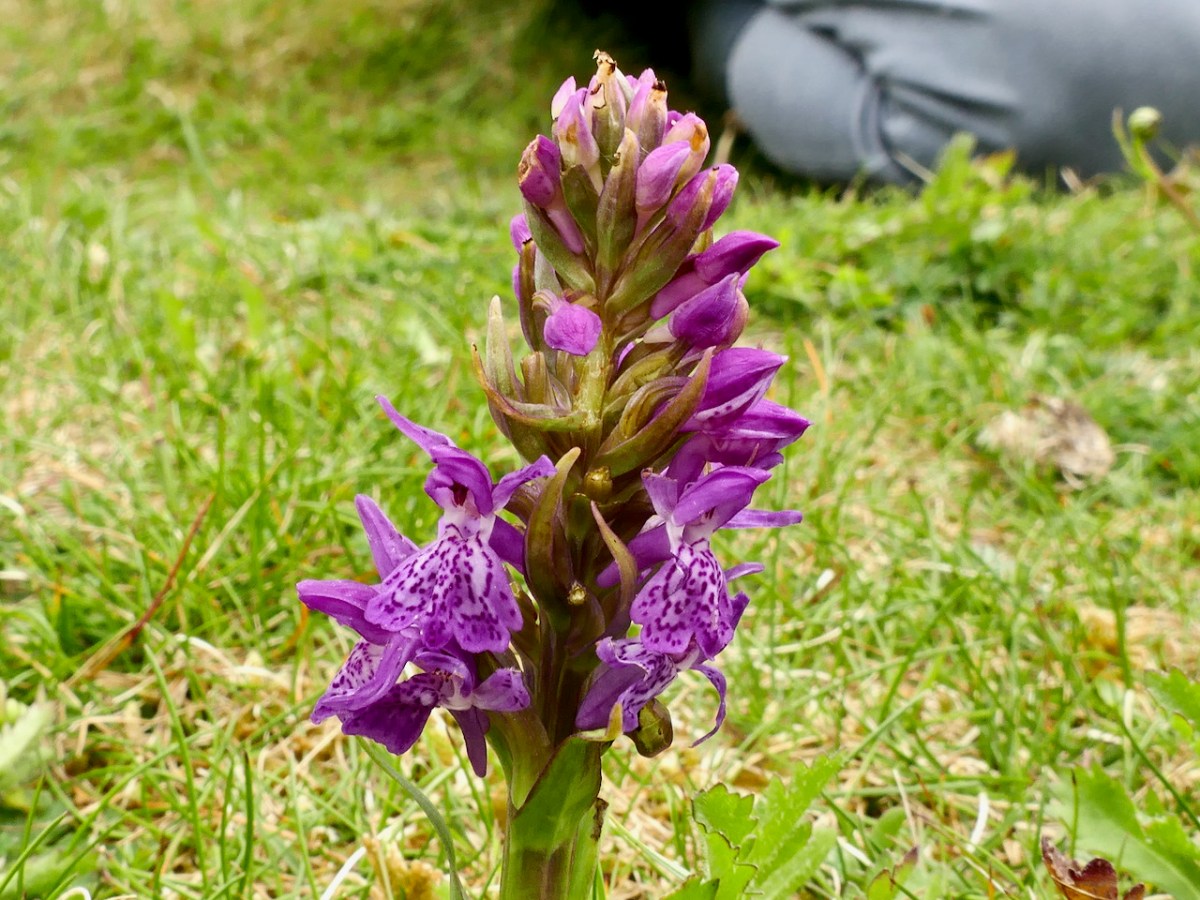
Our next target was an orchid – the Green-winged Orchid. But, on the way, we found another Orchid – the Irish Marsh Orchid (below). It was beautiful and bold and instantly visible in the short grass on the dunes.
In contrast, we almost tripped over the Green-winged Orchid, which upon first glance looked spindly and unremarkable. This is one you have to get close to – can you see them in the grass, below?
Here’s what Zoe Devlin has to say about this flower:
Surely the most exquisite wild orchid in Ireland. . . Green-winged Orchid is a small, erect plant which grows to about 30cm tall in grassland and meadows where grazing occurs. It bears flowers, well separated, in short spikes and these flowers appear in several colours – from snow-white through pink and magenta to deep purple. The three sepals are purple-veined with strong, green lines and these sepals form a hood over a broad, downward folded lower lip which is three-lobed and heavily spotted at its white centre. There is also a stout, slightly-curved spur. These incredible flowers bloom from mid-April to mid-June. The leaves are shiny green, unspotted with the upper leaves sheathing the stem and the lower leaves forming a rosette.
Can you see all that in these photos? I’m not sure you can, which is one of the things that makes wildflower identification interesting – especially with a family like the orchids where there are quite a few that look similar until you really examine them.
There were more plants on the dunes – I was amazed to find Field Madder (above), which I always assumed was a plant of arable ground. One of the things we had to get used to was how tiny many of the plants on the dunes were compared to those that grow in less challenging environments – like miniature versions of themselves.
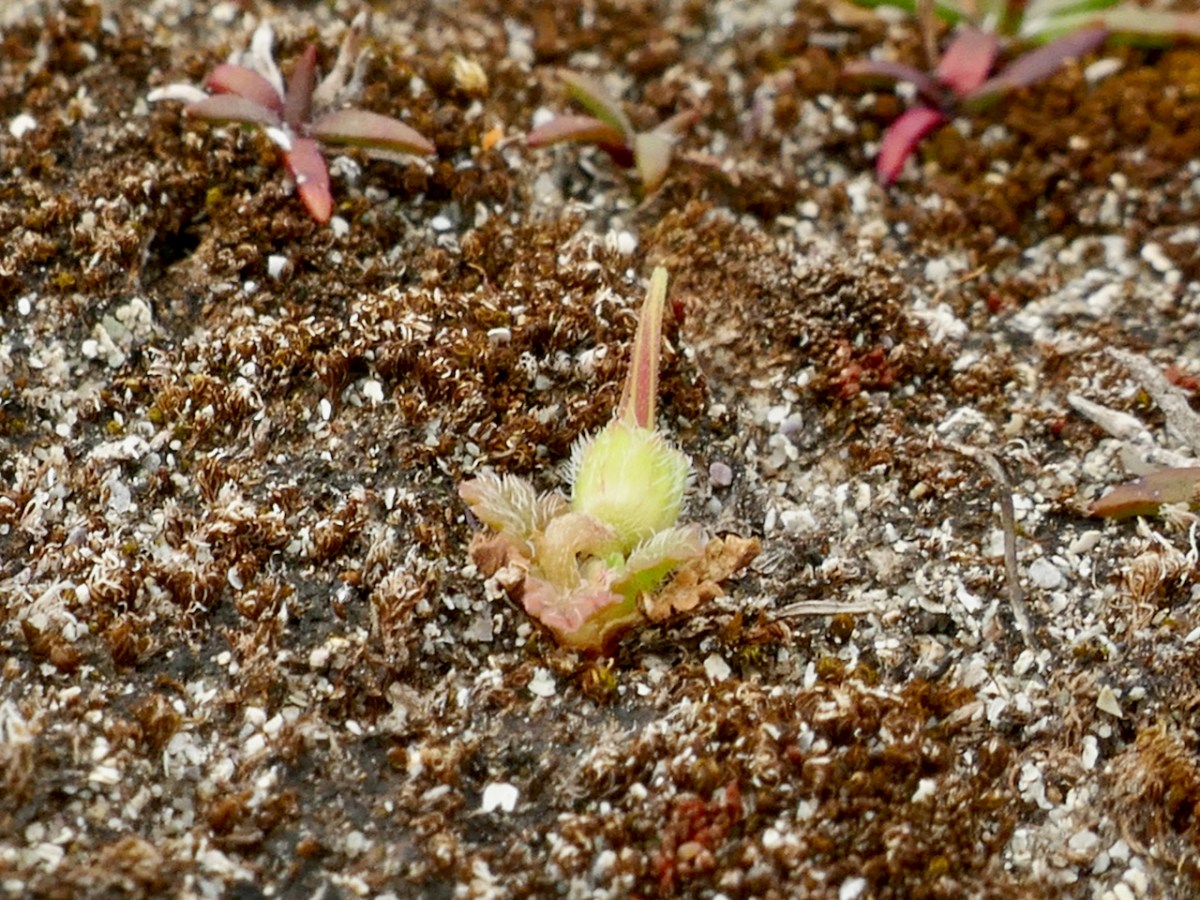
Then there was one of our target species, the Sea Stork’s-bill (above) – really, a flower that only its mother could love, but very rare in Ireland and therefore one of the plants that enable us to chart the conservation of its habitat.
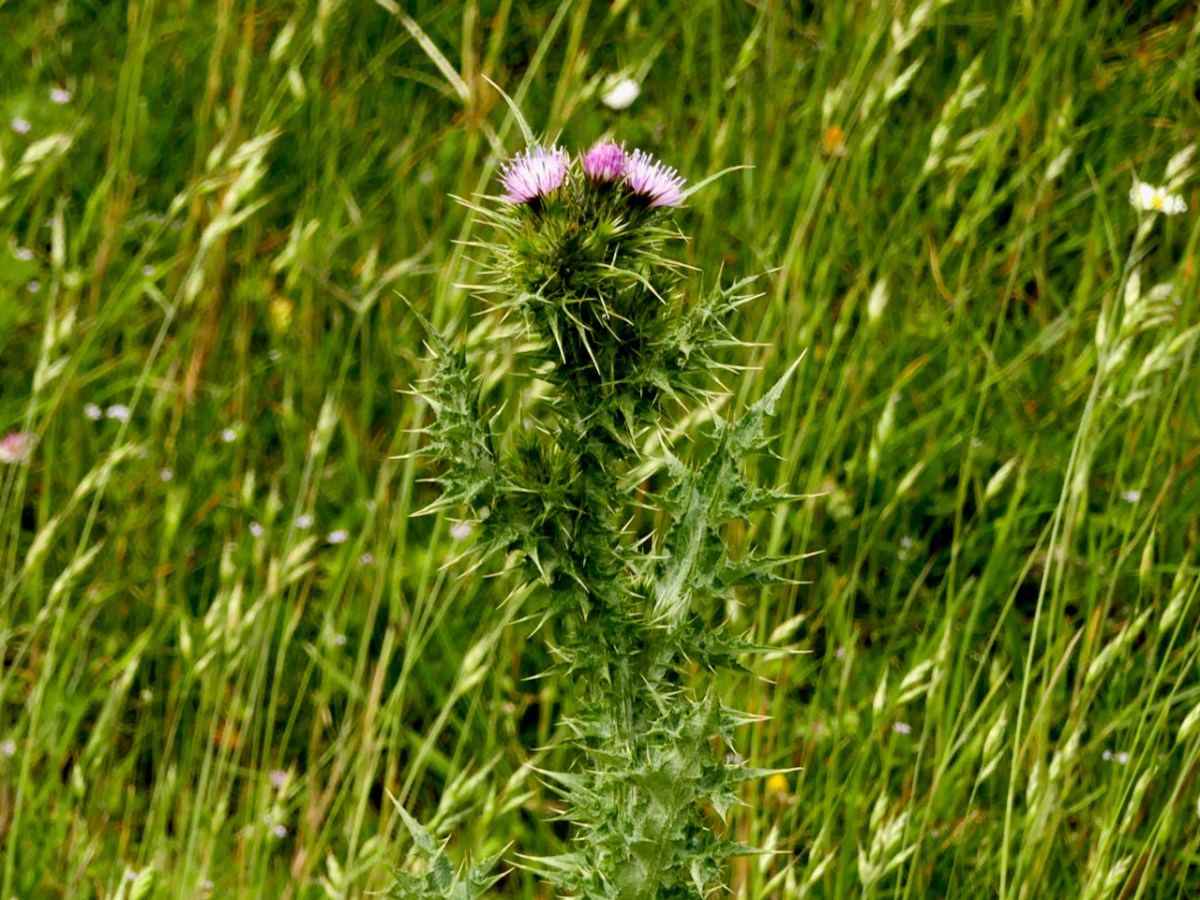
We drove from Barley Cove around to the Holiday Park but were unable to do a count of the Slender Thistle. The land was being grazed by sheep and every access was blocked (above). So we contented ourselves with noting that currently it appears to be abundant, if very localised. I managed a distant shot of this fine head (below) showing the pink flowers but also how spiny it is.
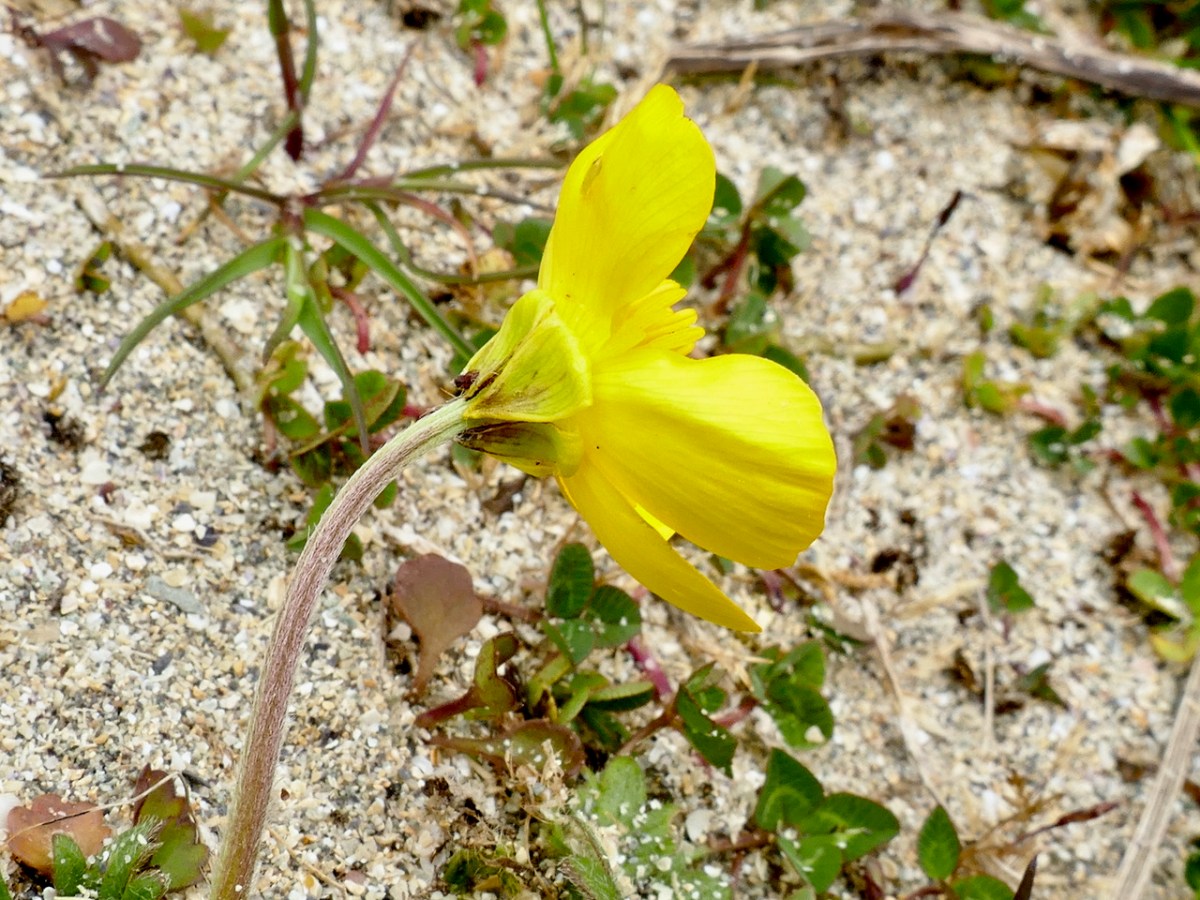
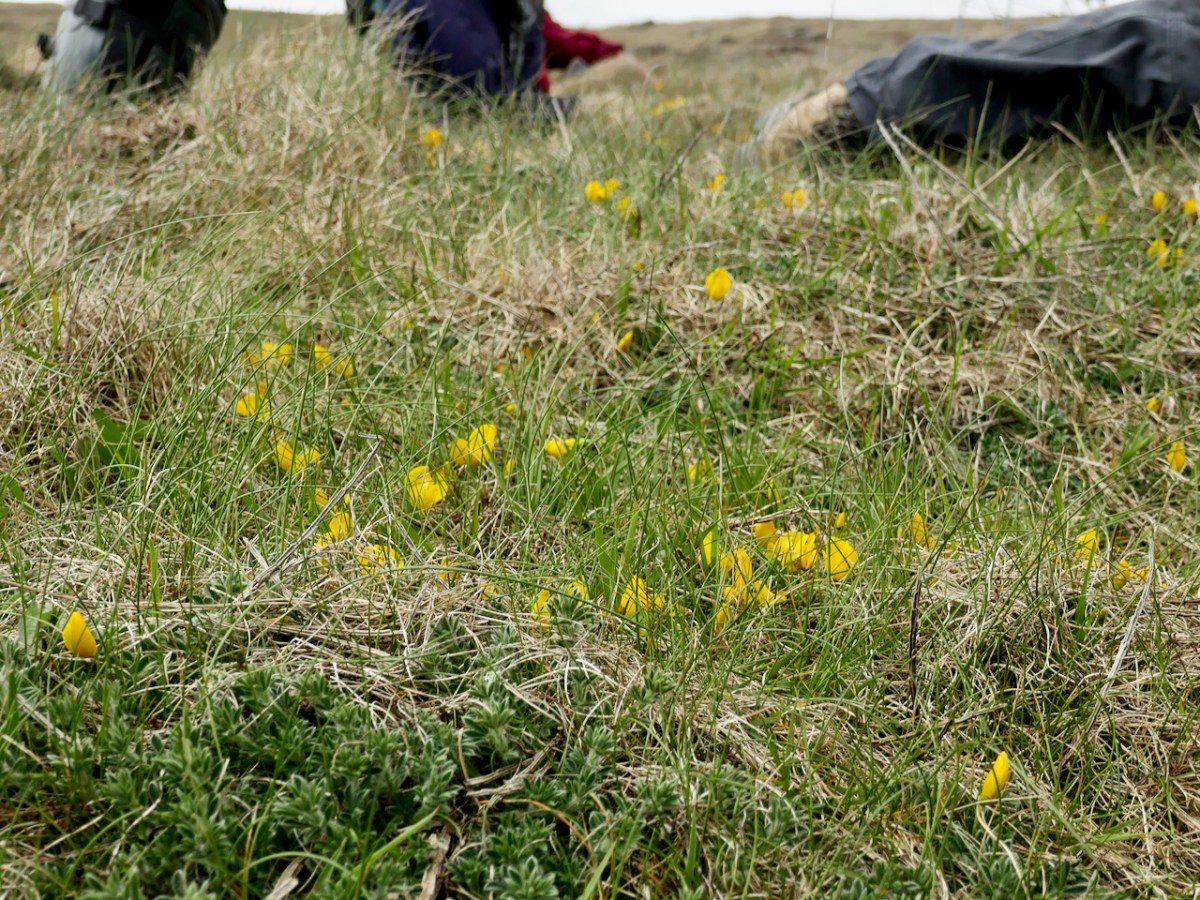
Our final stop was Mizen Head, one of the very few places in Ireland (see map below and the Broom below that) where you can find Prostrate Broom (try saying that fast). This was another exercise in a different kind of counting, since the plant is on sea cliffs and behind fences at the Visitor Centre, so it has to be identified at a distance and the count is an educated estimate. Add in the fact that there are two other yellow flowers gaily blooming around it (Kidney Vetch and Bird’s-foot Trefoil) and you get an idea of the challenge involved.
I have taken on the task of the Early Sea-Grass count. It may bloom as early as February or March, so I’ve made a calendar note to head out to the Dunes next year at that time. Another one of the participants, Damaris, and I will work together on our counts – it’s always more fun if you have a companion and probably more accurate too.
Thank you, Úna and Paul, for such a profoundly educational experience, that also managed to be great fun.
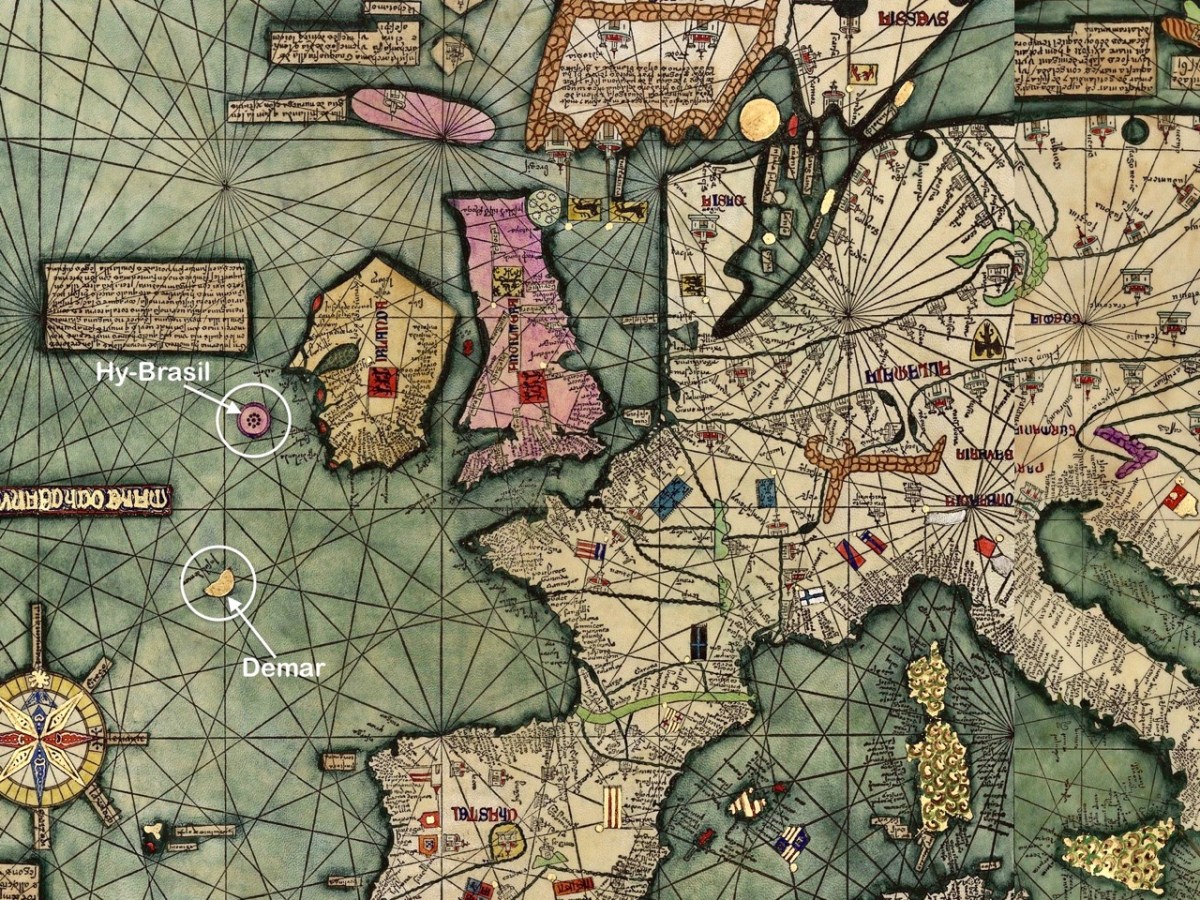
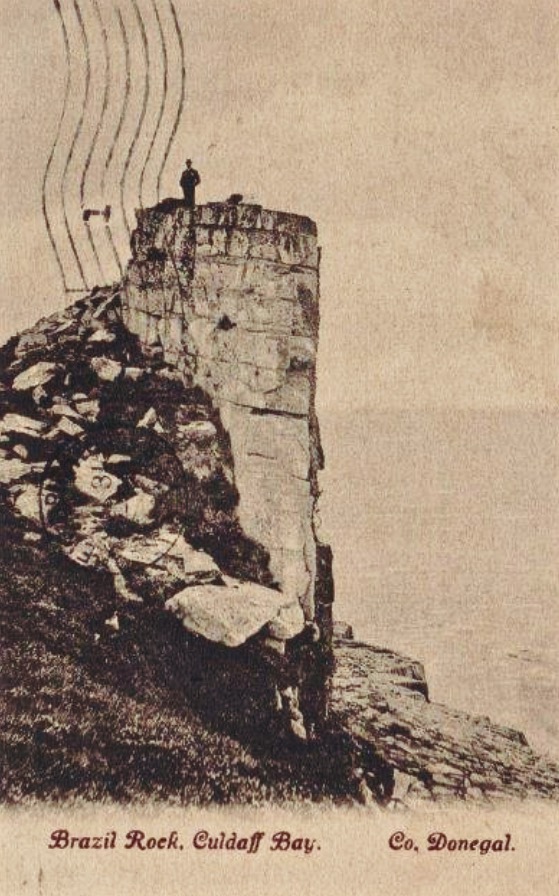
The fine map, above, was drawn in 1375 and is attributed to Abraham Cresques (courtesy Library of Congress, Geography and Map Division). it is known generally as the Atlas Catalan. What interests us is that it depicts two islands off the west and south-west coasts of Ireland (see detail below): Hy-Brasil and Demar. These landfalls are shown on maps since then through the centuries, the last depiction being in 1865.
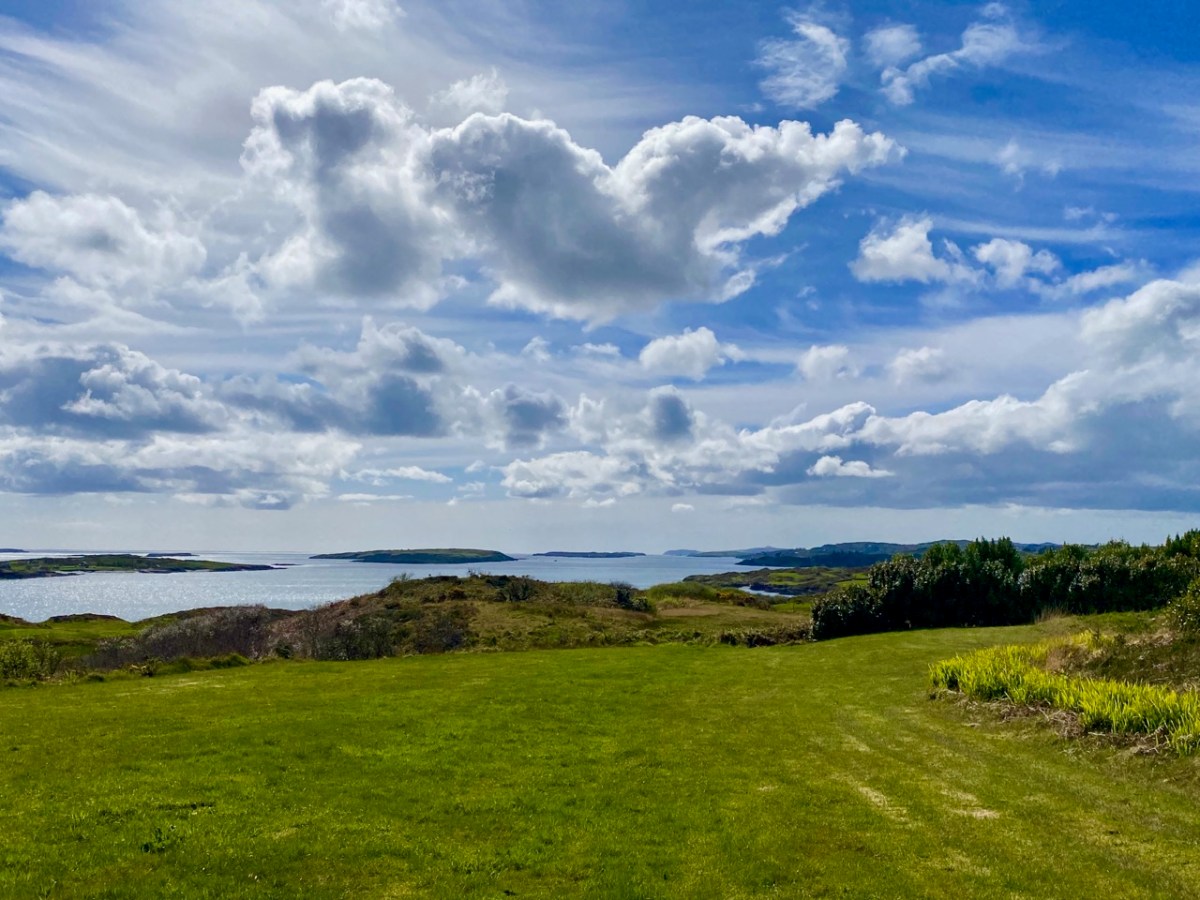
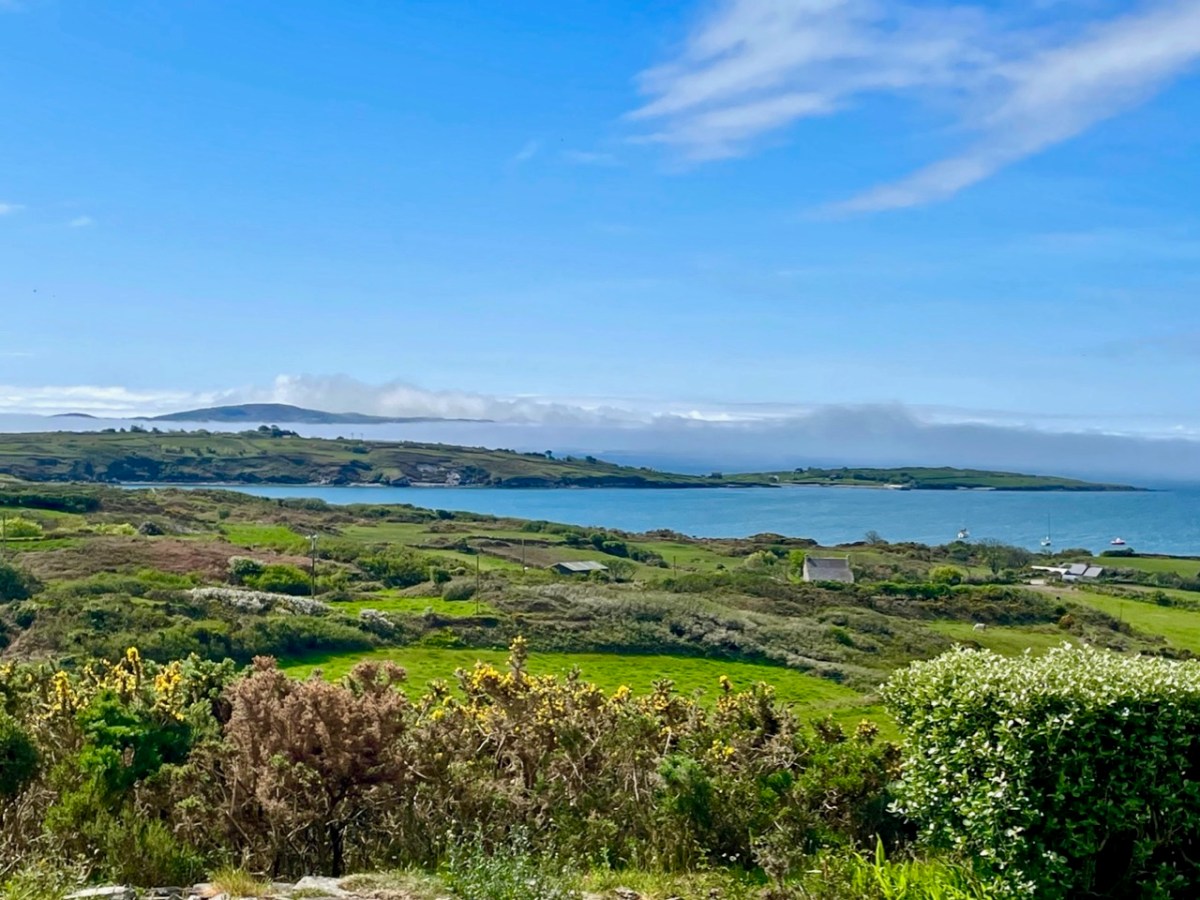
We look out to the hundred Carbery Islands in Roaringwater bay. The view (above) is always changing as sun, rain and wind stir up the surface of the sea and the sky and clouds create wonderful panoramas. But, generally, the view is predictable: we know that Horse island will be across from us, and Cape Clear will always be on the distant horizon, while the smaller islets break up the surface of the ocean in-between, and help calm down its wildness when the storms come.
But, suppose it wasn’t always predictable? What if those islands changed, moved around or appeared and disappeared? It seems that such things do happen, here in Ireland. At least, they do according to some of the recorded evidence. ‘Mythical Islands’ have been mentioned by mariners and storytellers through the centuries.
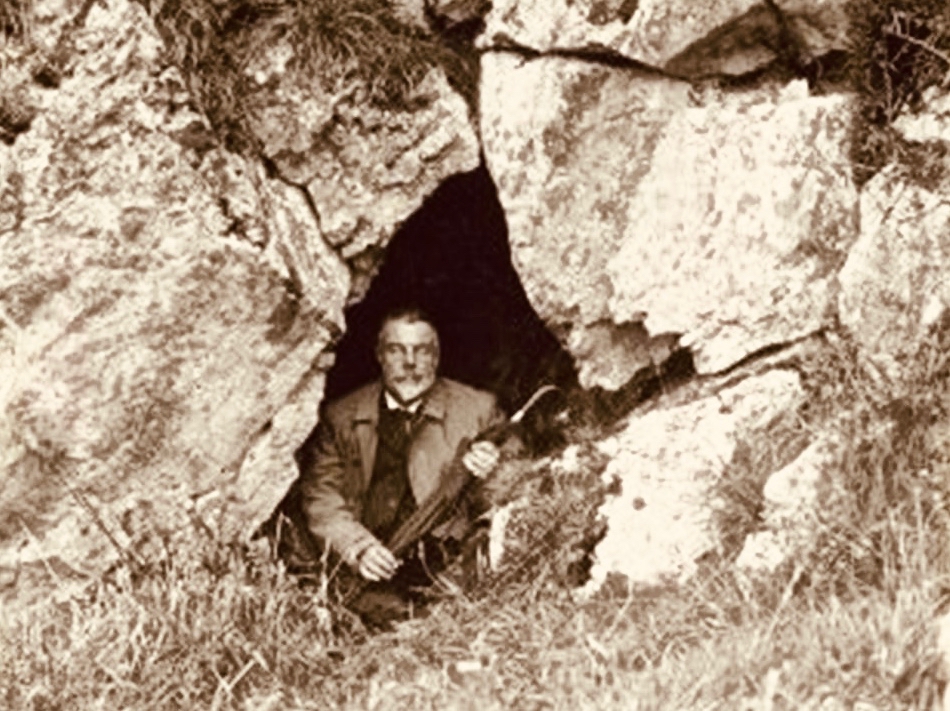
Our best source of information for Ireland’s ‘transcendent’ islands is our old friend Thomas Westropp (above, kitted out for an expedition) who was an archaeologist and folklorist living between 1860 and 1922. He was active in Counties Clare and Limerick and wrote a paper for The Royal Academy in 1912 – Brasil and the Legendary Islands of the North Atlantic: Their History and Fable. This comprehensive paper includes a list of evanescent islands, a new map drawn by Westropp, and a summary of historic maps which have located them:
Westropp’s exploration of the subject is remarkably comprehensive. Here are some extracts:
. . . Bran son of Febal, sleeping near his fort, hears sweet music, and awakes to seize a magic apple branch. An unknown woman sings of “a glorious island round which sea-horses glisten – a fair course against the white swelling surge.” In it dwells no wailing, treachery, death, or sickness; it glows many-coloured in incomparable haze, with snowy cliff’s and strands of dragon-stones and crystals. She vanishes, and Bran, with twenty-seven followers, embarks. They meet the sea-god Mananann mac Lir in his chariot, visit Magh Mell, the Isle of Laughter, and the Isle of Women, whose queen draws Bran to it by a magic clue. Entranced by love, the visitors do not note the flight of time; in apparently undiminished youth and strength they return to Ireland; it is only when the first to step ashore falls to ashes, as if centuries dead, that they know the truth. The survivors tell their tale without landing, and sail out into the deep, never to be seen again . . .
Thomas WESTROPP – Brasil and the Legendary Islands of the North Atlantic, 1912
. . . The Sunken Land. I found no name for this in north Mayo save when it was confused with Manister Ladra. Belief in it prevailed in north Erris and Tirawley from Dunminulla to Downpatrick. In 1839 it was said to extend from near Teelin to the Stags of Broadhaven and thence half way to America. A boatman knew a woman named Lavelle who saw from the shore (when gathering Carrigeen moss) a delightful country of hills and valleys, with sheep browsing on the slopes, cattle in green pastures, and clothes drying on the hedges. A Ballycastle boatman, a native of Co. Sligo, corroborated this, adding that he had seen it twice at intervals of seven years, and if he lived to see it a third time he would be able to disenchant it. He could talk of nothing else, became idle and useless, and died, worn out and miserable, on the very eve of the expected third appearance . . .
Thomas WESTROPP – Brasil and the Legendary Islands of the North Atlantic, 1912
. . . Owen Gallagher, Lieutenant Henri’s servant, heard of one Biddy Took, who, when gathering dillish (seaweed), asked some passing boatmen to put her out to an islet and fetch her back on their return : amused by her talk they brought her fishing, and soon got a ” tremendous bite.” They landed a green, fishy-looking child, quite human in shape, and in their fright let him escape and dive. The man who hooked him died suddenly within a year. Gallagher also said that he had fired at and wounded a seal; soon after, when far out to sea in his currach, he got lost in a fog-bank and reached an unknown island. An old man, moaning, with one eye blinded, stood on the shore and proved to be the seal. With more than human forgiveness, he warned his enemy to fly from the land of the seal men, lest his (the seal’s) sons and friends should avenge the cruelty . . .
Thomas WESTROPP – Brasil and the Legendary Islands of the North Atlantic, 1912
. . . The Aran people now believe that Brasil is seen only once in seven years. They call it the Great Land. In Clare, I have heard from several fishermen at Kilkee and elsewhere that they had seen it ; they also told legends of people lost when trying to reach it. I myself have seen the illusion some three times in my boyhood, and even made a rough coloured sketch after the last event, in the summer of 1872. It was a clear evening, with a fine golden sunset, when, just as the sun went down, a dark island suddenly appeared far out to sea, but not on the horizon. It had two hills, one wooded ; between these, from a low plain, rose towers and curls of smoke. My mother, brother, Ralph Hugh Westropp, and several friends saw it at the same time; one person cried that he could “see New York ” ! With such realistic appearance (and I have since seen apparent islands in 1887 in Clare, and in 1910 in Mayo), it is not wonderful that the belief should have been so strong, probably from the time when Neolithic man first looked across the Atlantic from our western coast. It coloured Irish thought ; stood for the pagan Elysium and the Christian Paradise of the Saints ; affected the early map-makers ; and sent Columbus over the trackless deep to see wonders greater than Maelduin and Brendan were fabled to have seen, till Antilha, Verde, and Brazil became replaced by real islands and countries ; and the birds, flowers, and fruit of the Imrama by those of the gorgeous forests of the Amazon in the real Brazil. ” Admiration is the first step leading up to knowledge, for he that wondereth shall reign.” . . .
Thomas WESTROPP – Brasil and the Legendary Islands of the North Atlantic, 1912
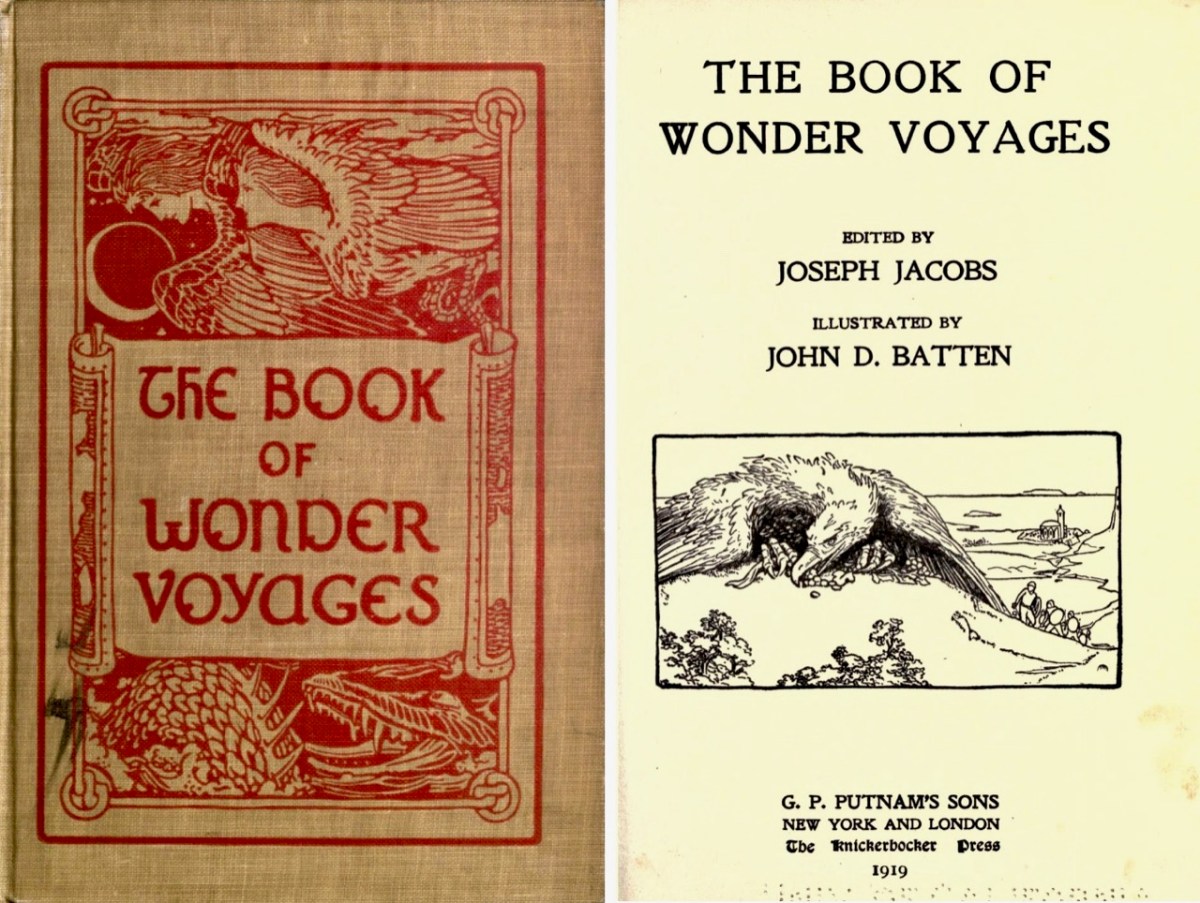
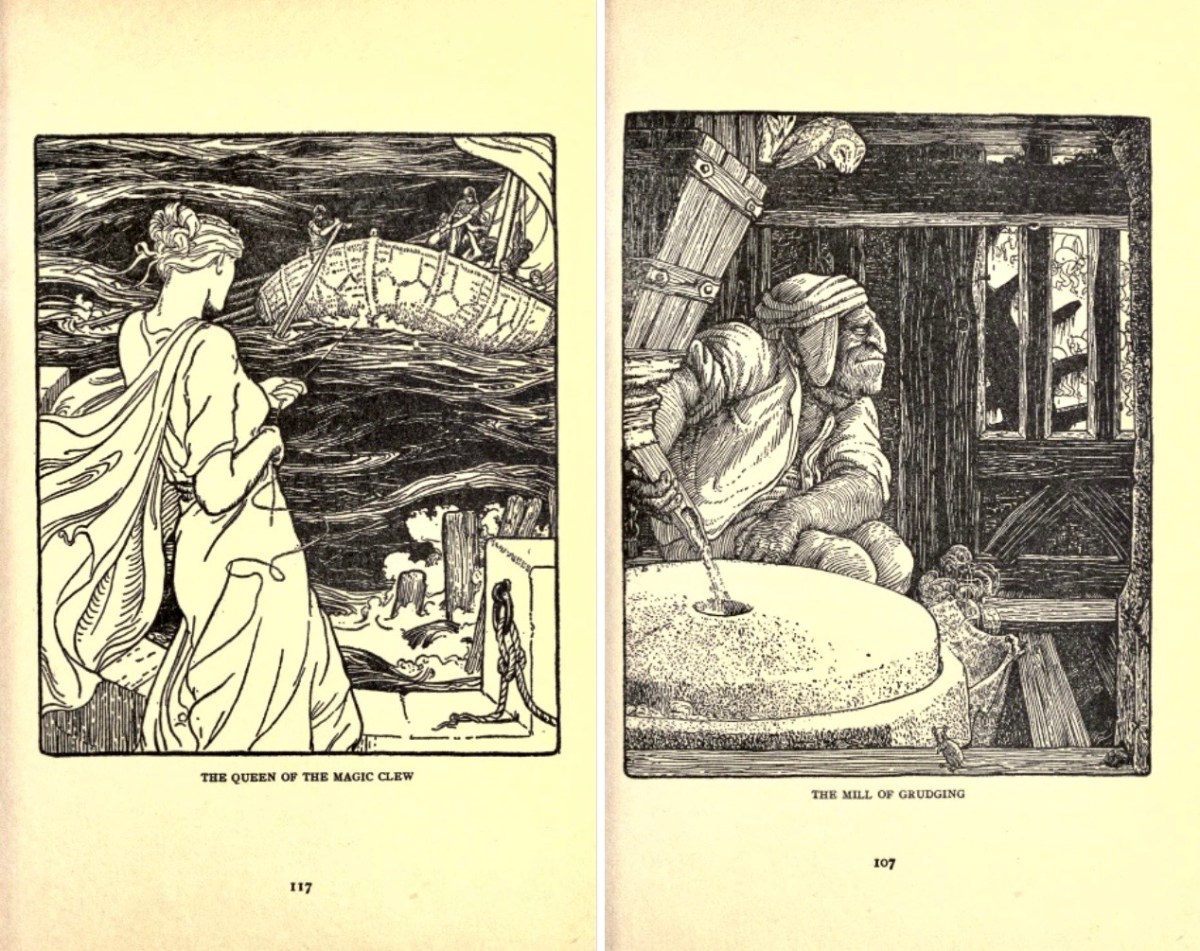
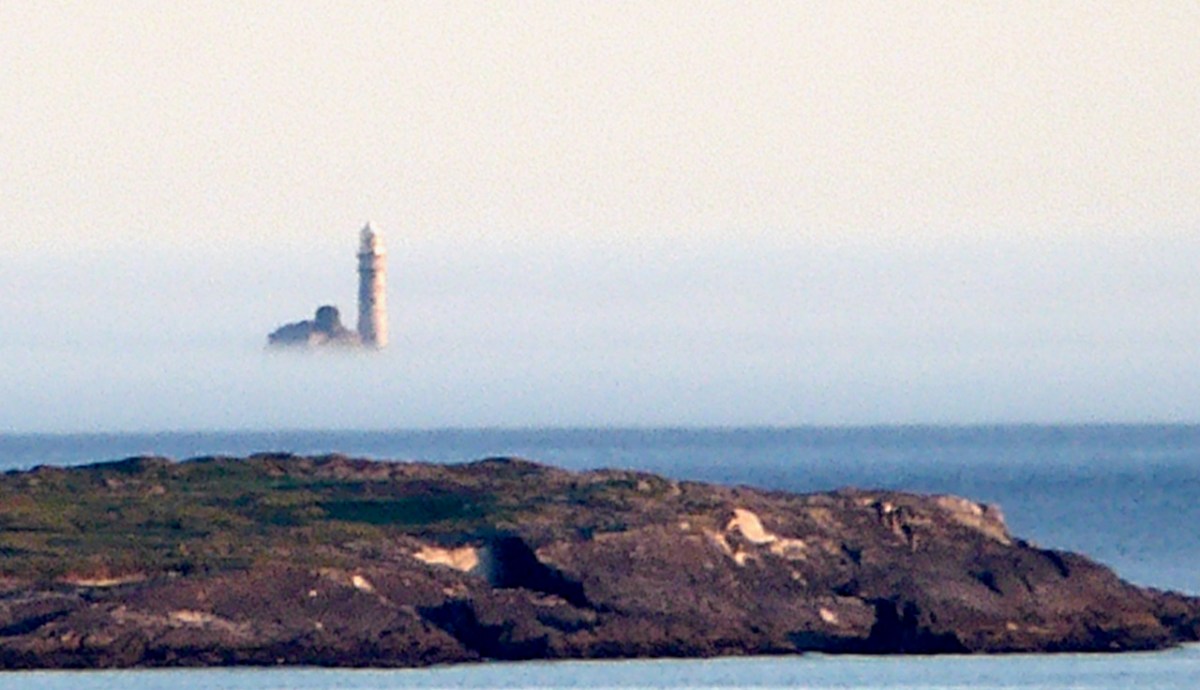
Above is the view from our house – Nead an Iolair – a day or two ago, when a strong sea mist was coming across from the south-west, enveloping Cape Clear and making it float ethereally like one of the mythical islands. Other writers have tackled the subject of the vanishing lands, including Joseph Jacobs, who put together a collection of stories in 1919. The subject is ‘Wonder Voyages’, and the book (available online here) covers some of Ireland’s adventurers, including Máel Dúin – a predecessor of Brendan the Voyager.
Máel Dúin sets out ‘into the limitless ocean’, suggesting that ‘God will bring the boat where it needs to go’. He and his crew encounter a large number of strange islands, including:
The island of ants, from which the men flee because the ants’ intention is to eat their boat
The island of tame birds
The island of the horse-like beast who pelts the crew with the beach
The island of horses and demons
The island of salmon, where they find an empty house filled with a feast and they all eat, drink, and give thanks to Almighty God.
The island with the branch of an apple tree, where they are fed with apples for 40 nights
The island of the “Revolving Beast”, a creature that would shift its form by manipulating its bones, muscles, and loose skin; it casts stones at the escaping crew and one pierces the keel of the boat
The island where animals bite each other and blood is everywhere
The island of apples, pigs, and birds
The island with the great fort/pillars/cats where one of the foster brothers steals a necklet and is burned to ashes by the cat
The island of black and white sheep, where sheep change colours as they cross the fence; the crewmen do not go aboard this island for fear of changing colour
The island of the swineherd, which contained an acidic river and hornless oxen
The island of the ugly mill and miller, who was “wrinkled, rude, and bareheaded”
The island of lamenting men and wailing sorrows, where they had to retrieve a crewman who entered the island and became one of the lamenting men; they saved him by grabbing him while holding their breath
The island with maidens and intoxicating drink
The island with forts and the crystal bridge, where there is a maiden who is propositioned to sleep with Máel Dúin
The island of colourful birds singing like psalms
The island with the psalm-singing old man with noble monastic words
The island with the golden wall around it
The island of angry smiths
The crew voyaged on and came across a sea like a green crystal. Here, there were no monsters but only rocks. They continued on and came to a sea of clouds with underwater fortresses and monsters.
The island with a woman pelting them with nuts
The island with a river sky that was raining salmon
The island on a pedestal
The island with eternal youth/women (17 maidens)
The island with red fruits that were made as a sleeping elixir
The island with monks of Brendan Birr, where they were blessed
The island with eternal laughter, where they lost a crewman
The island of the fire people
The island of cattle, oxen, and sheep
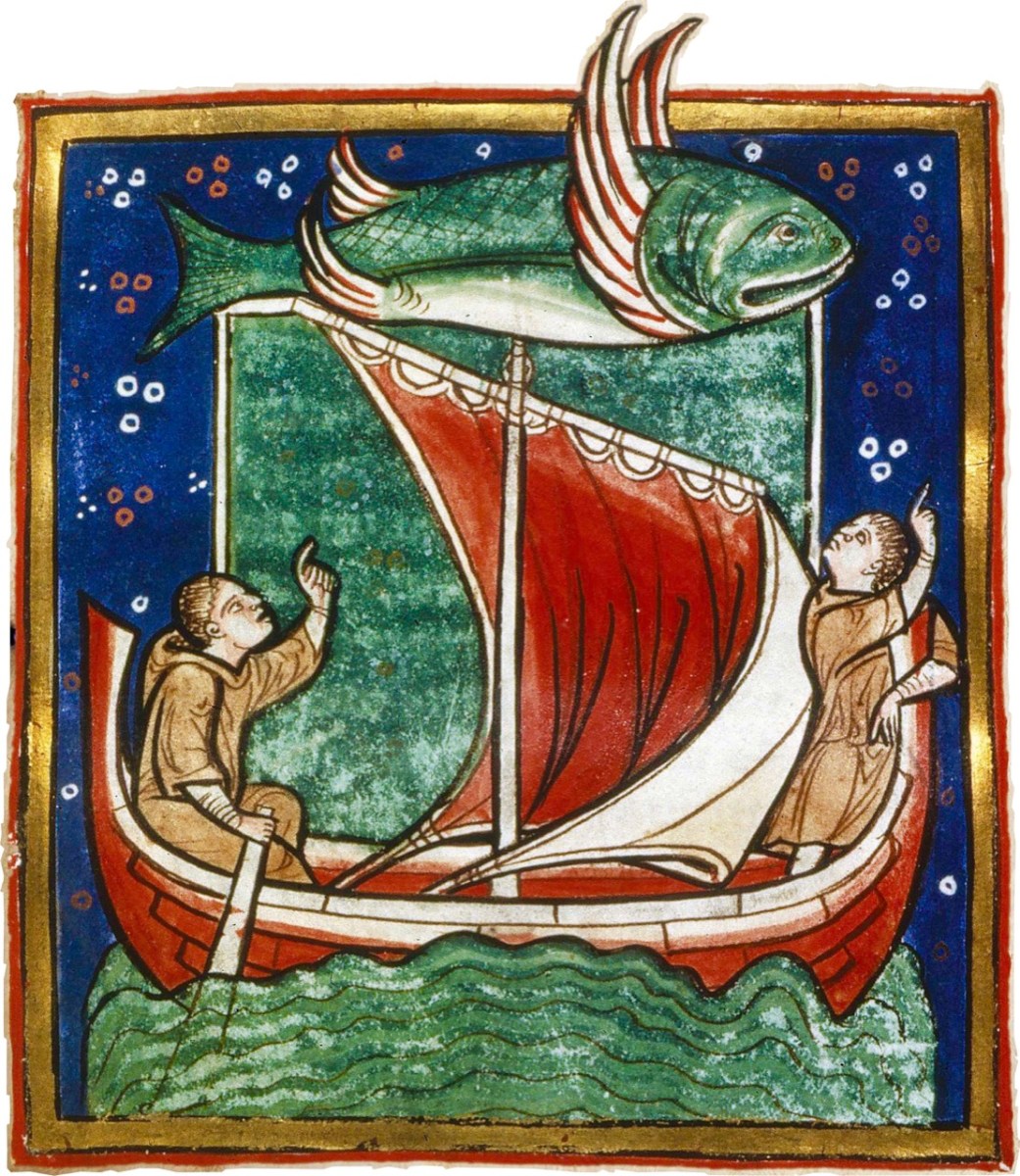
The most well-known voyager of all – in Irish tradition – is Saint Brendan. The image above is from the Finola Window, which was crafted by George Walsh. We all know that Brendan was a real character, who discovered America back in the sixth century. On the way he also encountered many islands – which we cannot locate today (that doesn’t mean they are not there) – and had hair-raising adventures on them. This post will take you through some of his journeyings.
It’s clear that, in the shared Irish psyche, we are aware of places that we can’t always see, or visit. it’s all part of a folk knowledge that’s largely hidden away, except in the memories of older generations, that relates to the sea, and the idea that there are races of people who live on ‘lost’ islands – or even in the sea. In some of the stories about the islands it is suggested that, when they vanish, it’s because they have submerged under the ocean – perhaps temporarily.
There’s a great collection of stories readily available in a series of podcasts known as Blúiríní Béaloidis / Folklore Fragments. Look out for the one titled Blúiríní Béaloidis 16 – Otherworld Islands In Folk Tradition. I have transcribed one of my favourite pieces from this podcast, and will finish this post with it. It summarises, very neatly, the tradition that other worlds are out there, and – at times – our world and theirs meet, providing solid evidence for there being human life under the sea! The tale was collected by Dr McCarthy of Kerry.
. . . People from Dingle Harbour used to sail to Kilrush in Limerick long ago. There was a boat leaving the harbour to Limerick one day with a load of salt. There were 8 men in the boat. They had prepared the boat. There was no quay in Dingle in those days, just a slipway. A fine, strapping young man approached them carrying a pot and a pot-hook, The pot-hook looked as if it had come straight from the forge. He addressed the boat’s captain. Are you going to Limerick, my good man? I am, said the captain, we are just about to leave. Would you mind terribly, said the young man, taking me some of the way? I don’t mind, said the captain, if you wish to come all of the way. He placed his pot and pot-hook in the boat, and got in himself. They rowed away and raised the sail at the mouth of the harbour. They were halfway when the man with the pot and pot-hook roused himself. I’ll be leaving you now, he said to the captain, and I’m very grateful to you. He took hold of his pot and his pot-hook and he leapt into the sea. They never saw him again . . .
Blúiríní Béaloidis
There’s a rather nice postscript to this story:
. . . Some time later, a man with a line and hook was fishing in the sea in the same place, and a boiled potato came up on his hook . . .
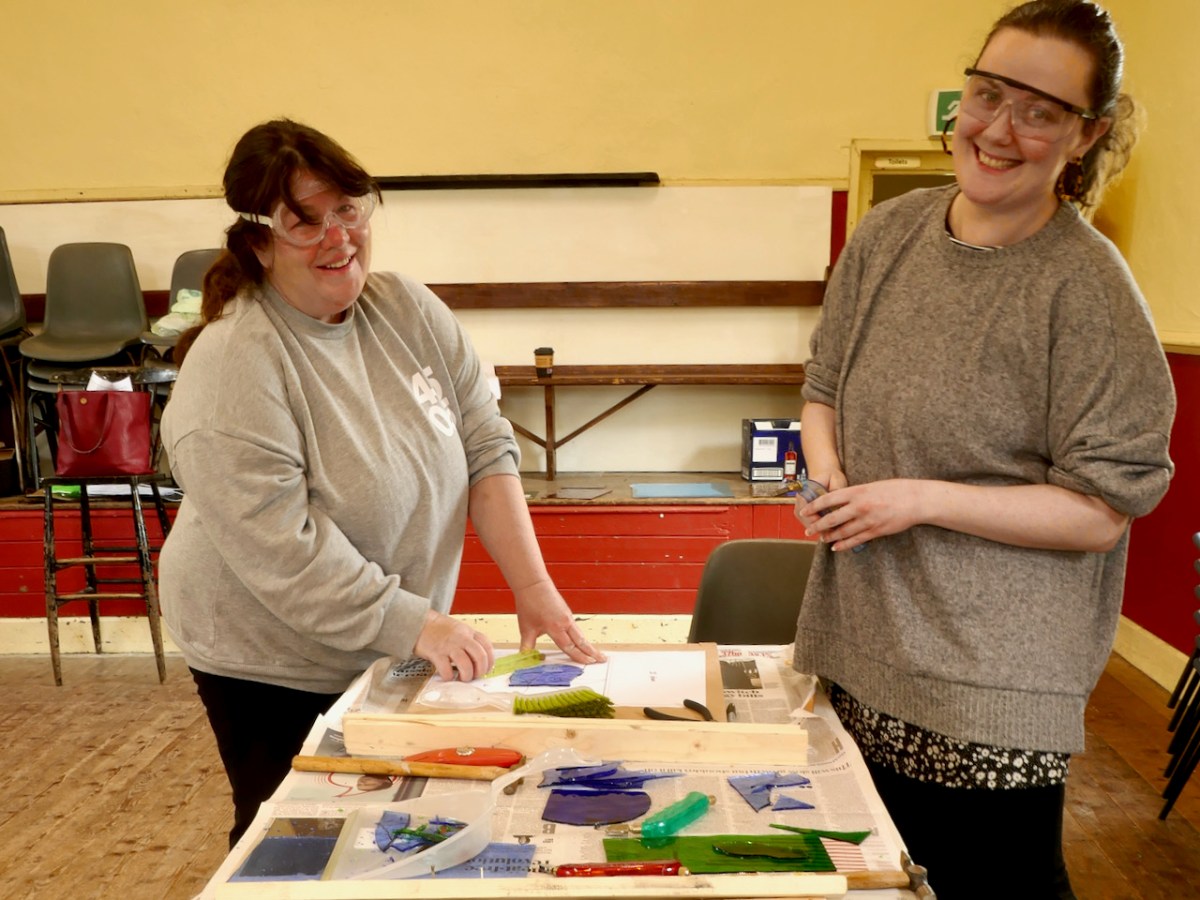
I write about stained glass all the time, but I have never tried my hand at classic leaded glass. Having enormously enjoyed my sortie into fused glass with the wonderful Angela Brady, I’ve been looking for an opportunity to have a similar experience with leaded glass. Luckily, we have in West Cork the equally wonderful Deirdre Buckley Cairns, an award-winning multi-talented artist who lives in Schull and who teaches stained glass. I signed up for a full day workshop.
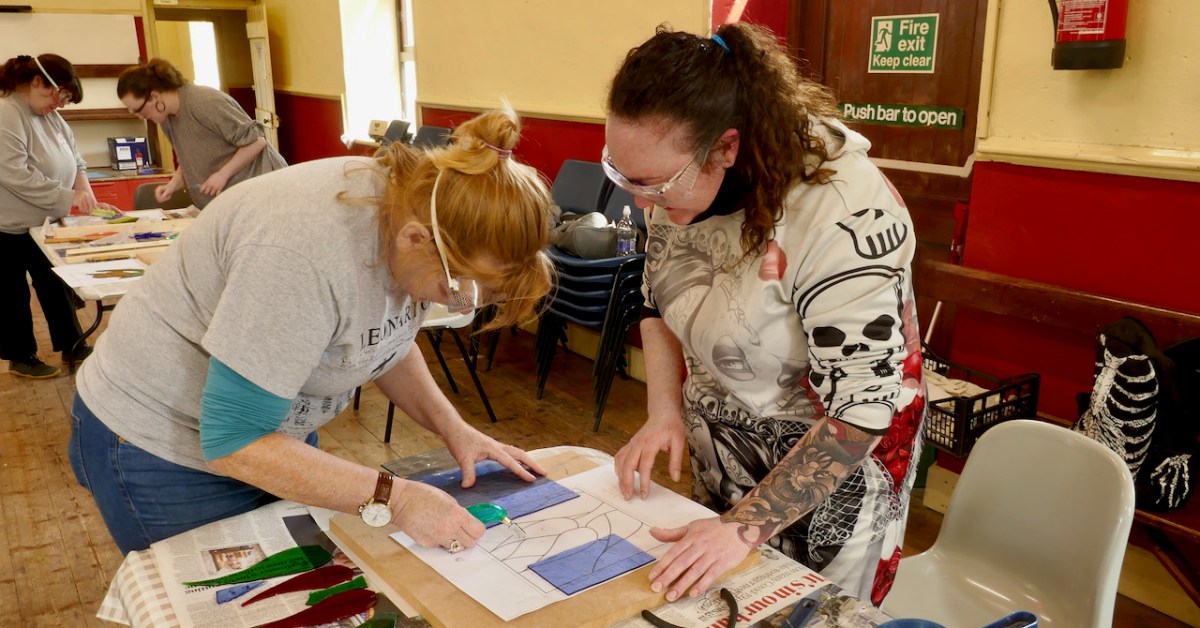
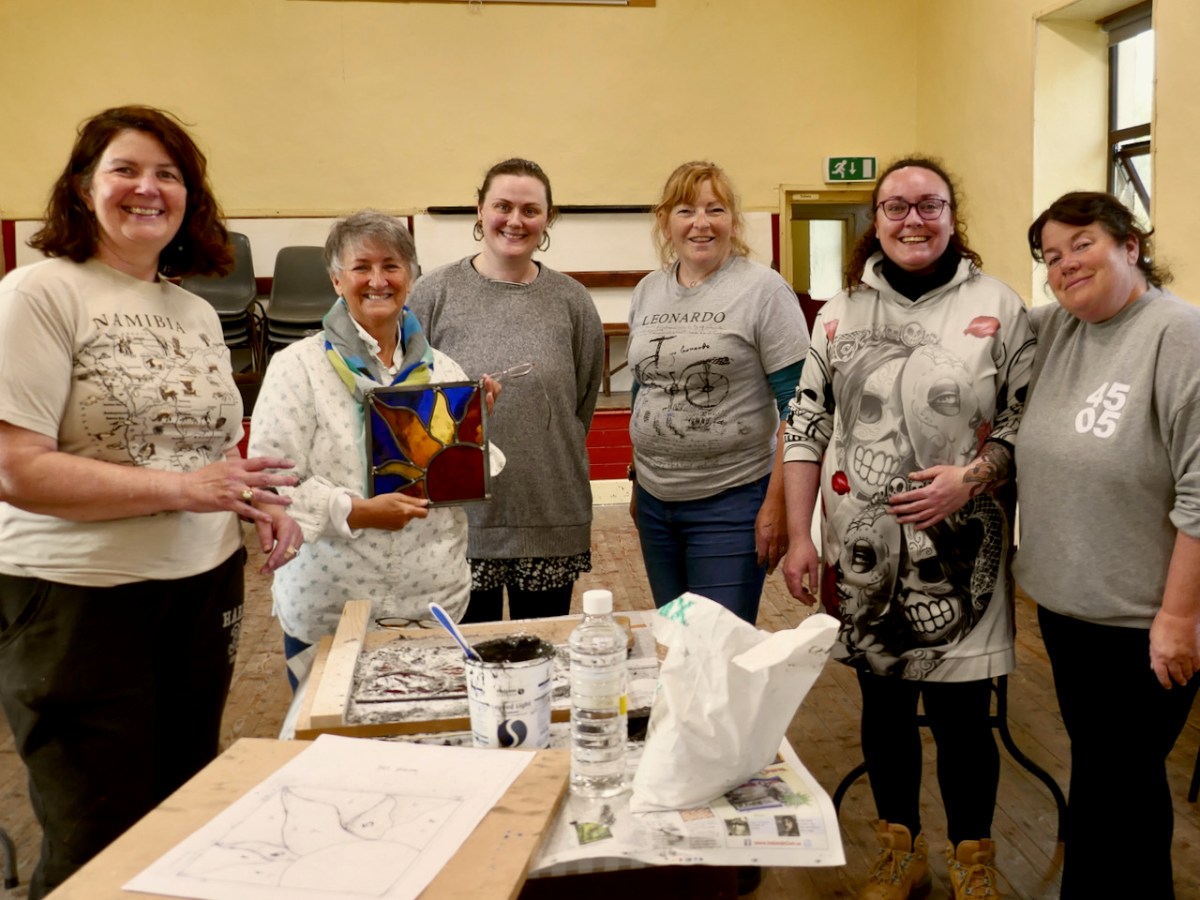
Deirdre is an experienced and excellent teacher. I’m in a good position to judge this as I ran a teacher education program for several years, so I know good technique when I see it. Deirdre was ultra-prepared, guided us through the day in well-calibrated steps, and was unfailingly positive and encouraging. We got there at 9 – Adrienne, Sarah, Susan, Louise and I – and she had everything laid out on each bench – all the tools and supplies we needed – and her own demo bench all set up.
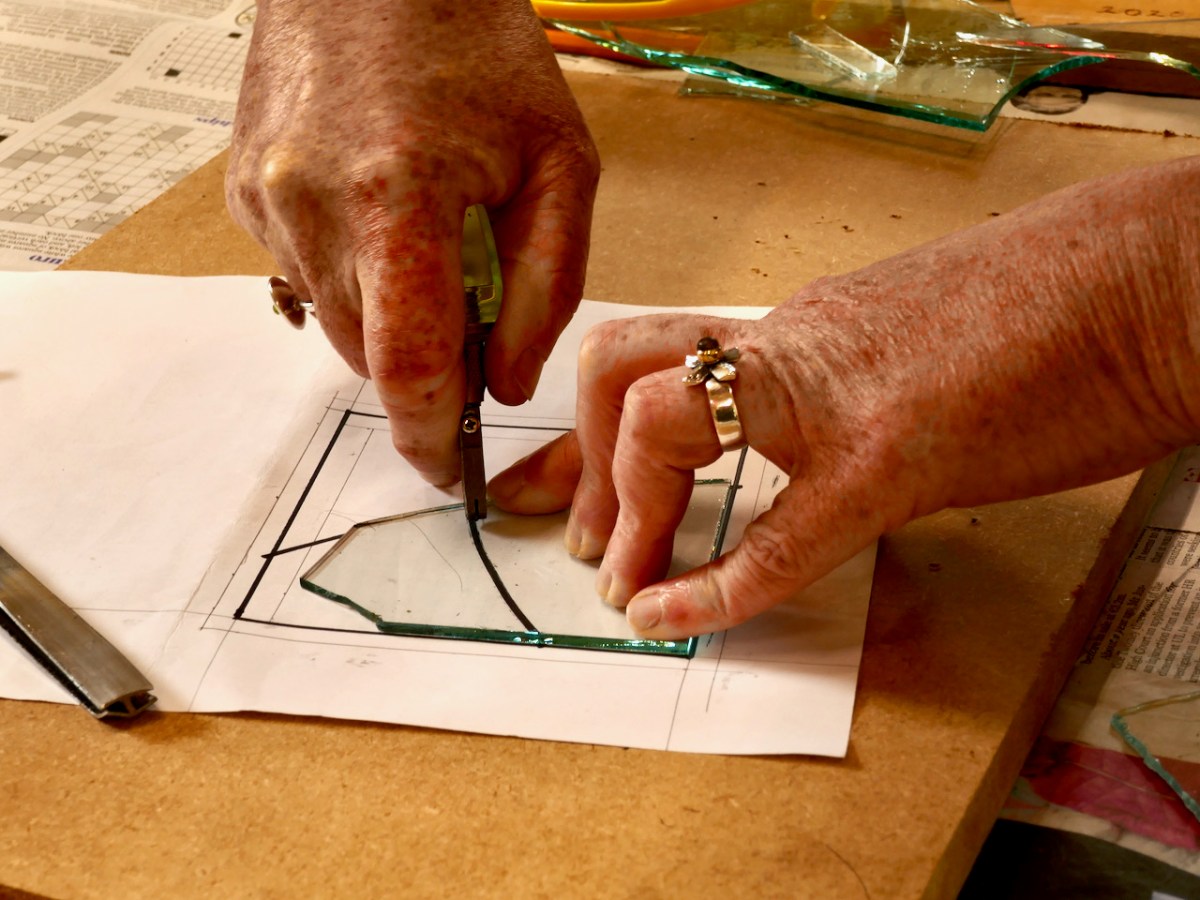
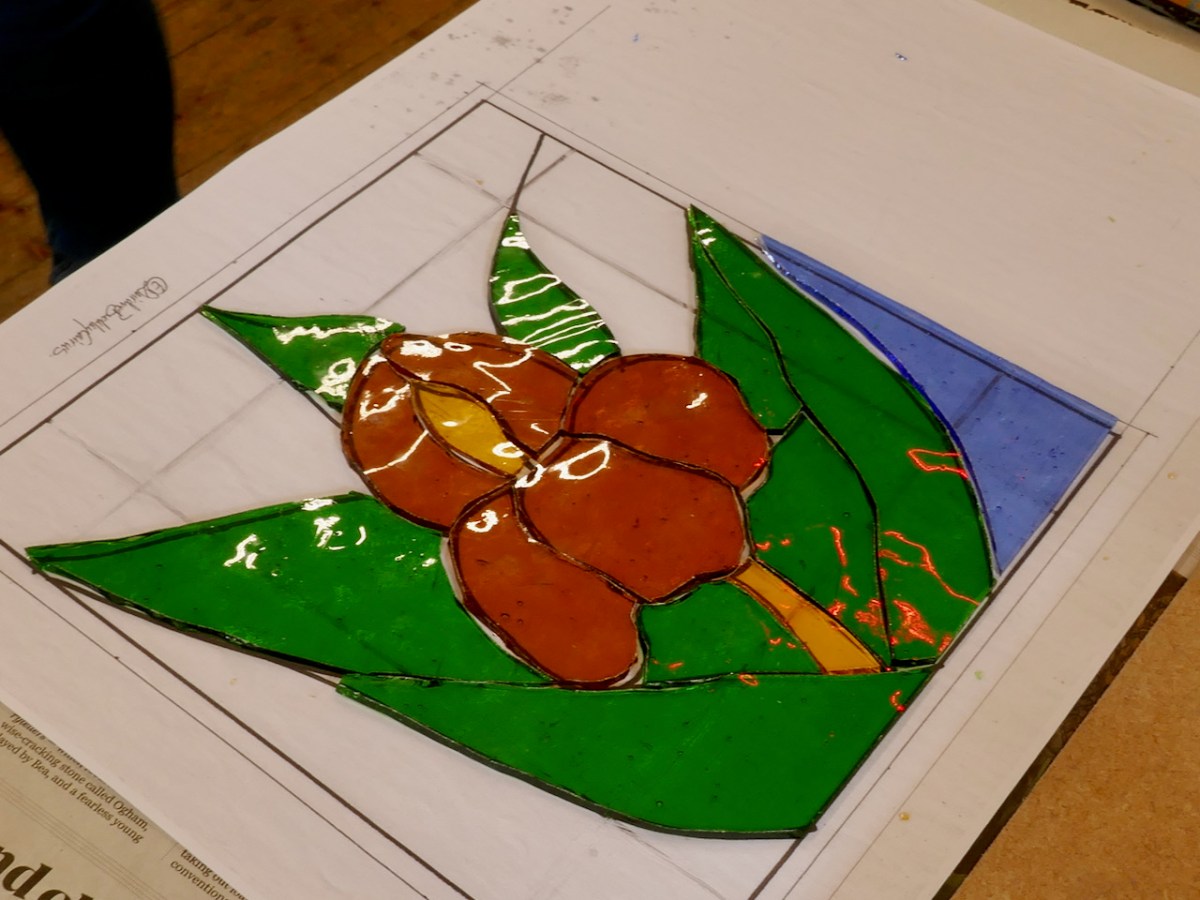
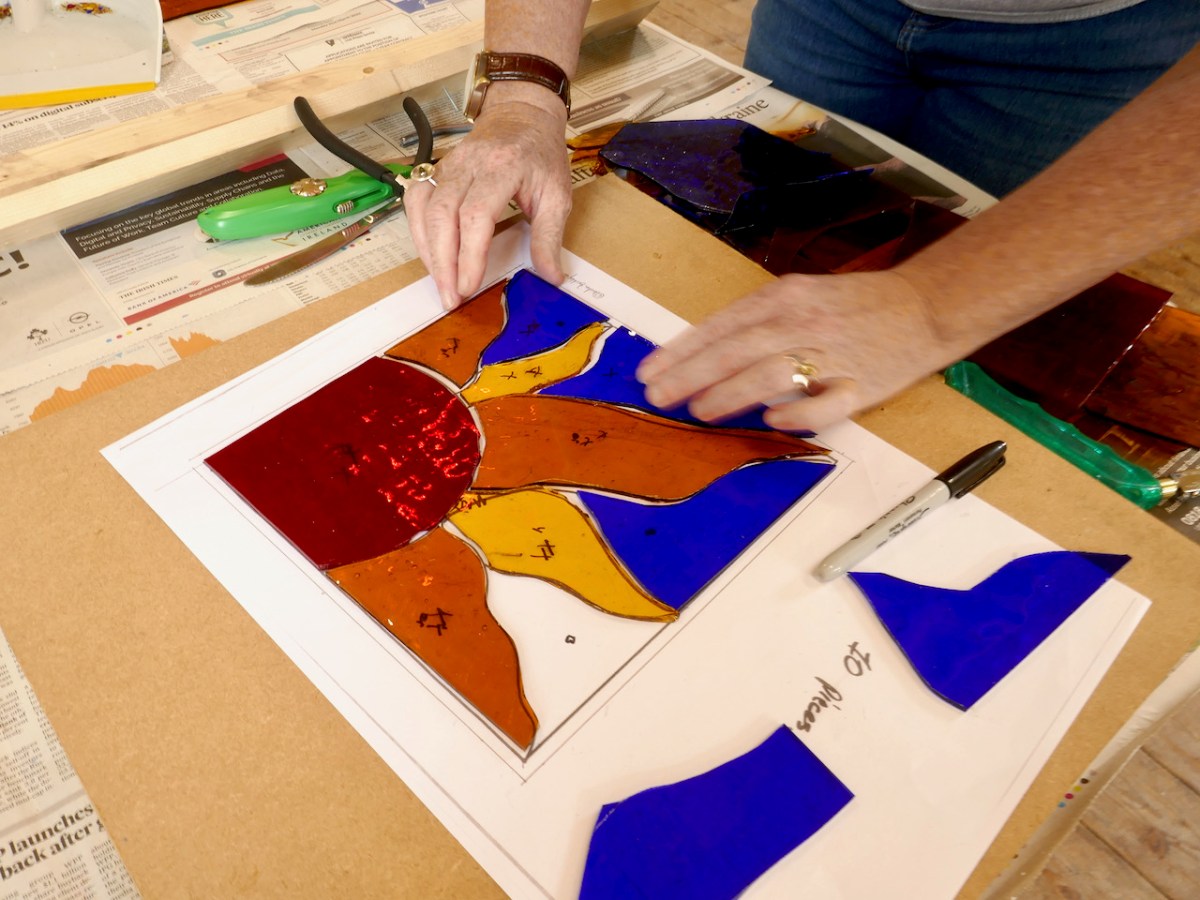
We each chose one of Deirdre’s designs that she has carefully worked out to be doable in a day and I must admit I went straight for the ten-piece design, which looked the least intimidating. Our class started with how to lay the glass properly over the design and how to cut the shapes.
This is where I ran into the first of many humbling fumblings – that nifty little glass cutter thingy is a lot harder to control than it seemed when Deirdre expertly guided it exactly over the felt marker line under the glass. It stops unexpectedly, it shoots off in the wrong direction, it leaves gaps – it’s a fiendish little instrument of the devil. It was the first of my many realisations throughout the day of how much time and practice it takes to develop into a skilful glass cutter.
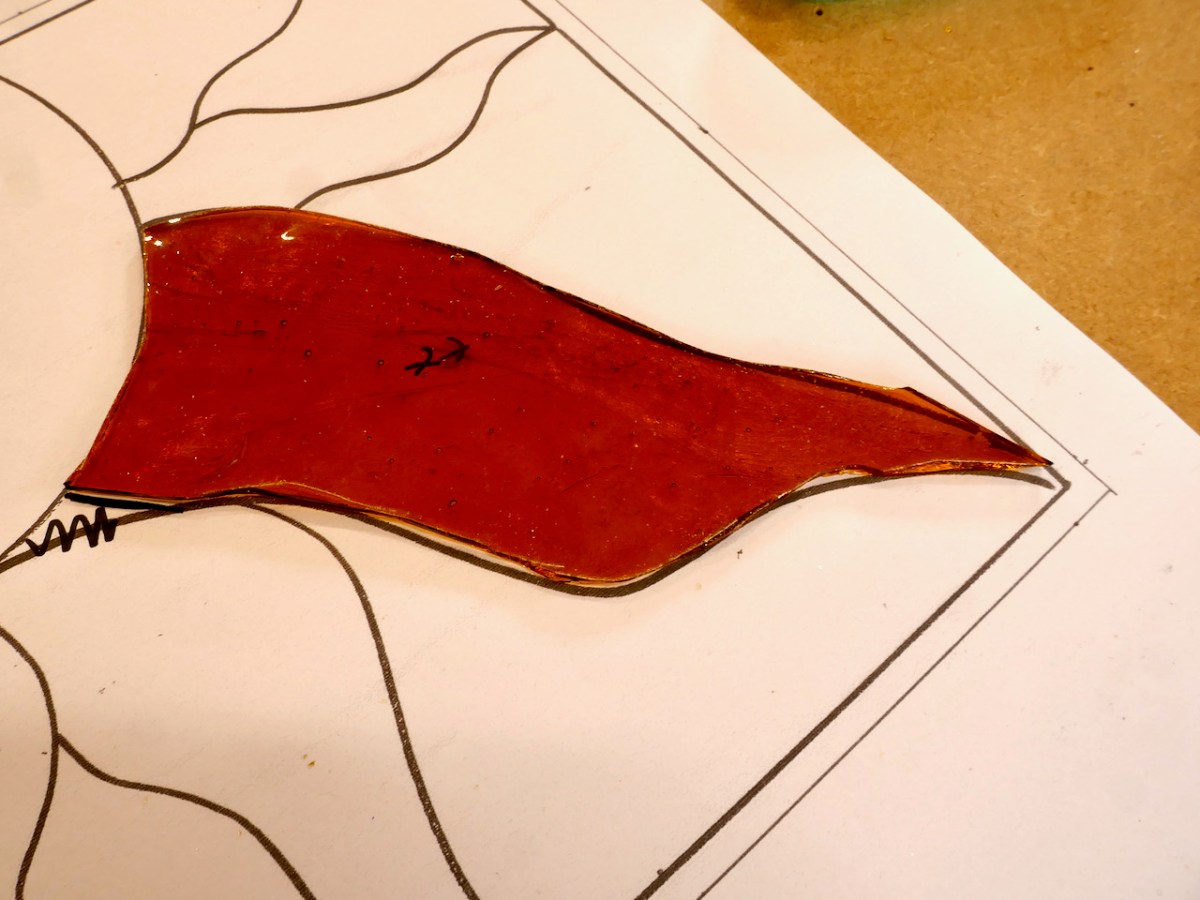
By lunchtime – that’s three hours for ten pieces – I had my glass cut out. They looked a little rough around the edges, but at that point I hadn’t realised how much that lack of finesse would come back to bite me, so I was basking in a warm glow of accomplishment and ready to enjoy a break.
Susan seemed to have grasped the concept better – her pieces looked remarkably accomplished!
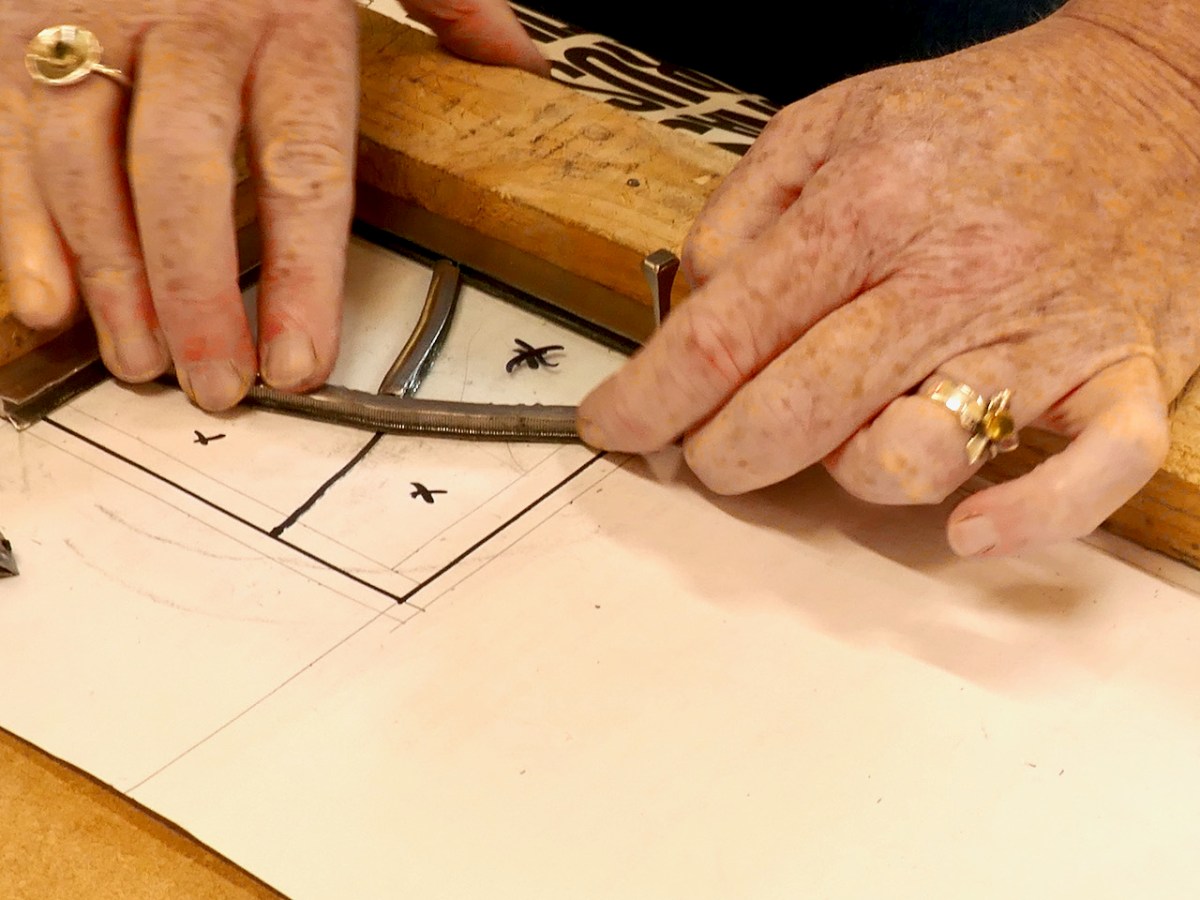
After lunch we had the demo on how to lead the glass together. Starting with two outside leads, Deirdre showed us how to measure, cut and shape the soft lead cames so that all the pieces of glass come together within the lead borders. Seemed straightforward enough – hah!
The first few pieces went fairly well, but then the lack of precision in my glass cutting started to become a problem, as I tried to jimmy and tuck pieces together. Deirdre showed me how to use the grozers (a kind of pliers) to nibble away incorrect edges. Well, nibble is the ideal – in my awkward hands the ‘nibbling’ seemed to create ever more jagged edges. Sometimes we had to use the grinder to try to sort out the final shape – as you can see below, my final piece was far too big for the space it had to fit.
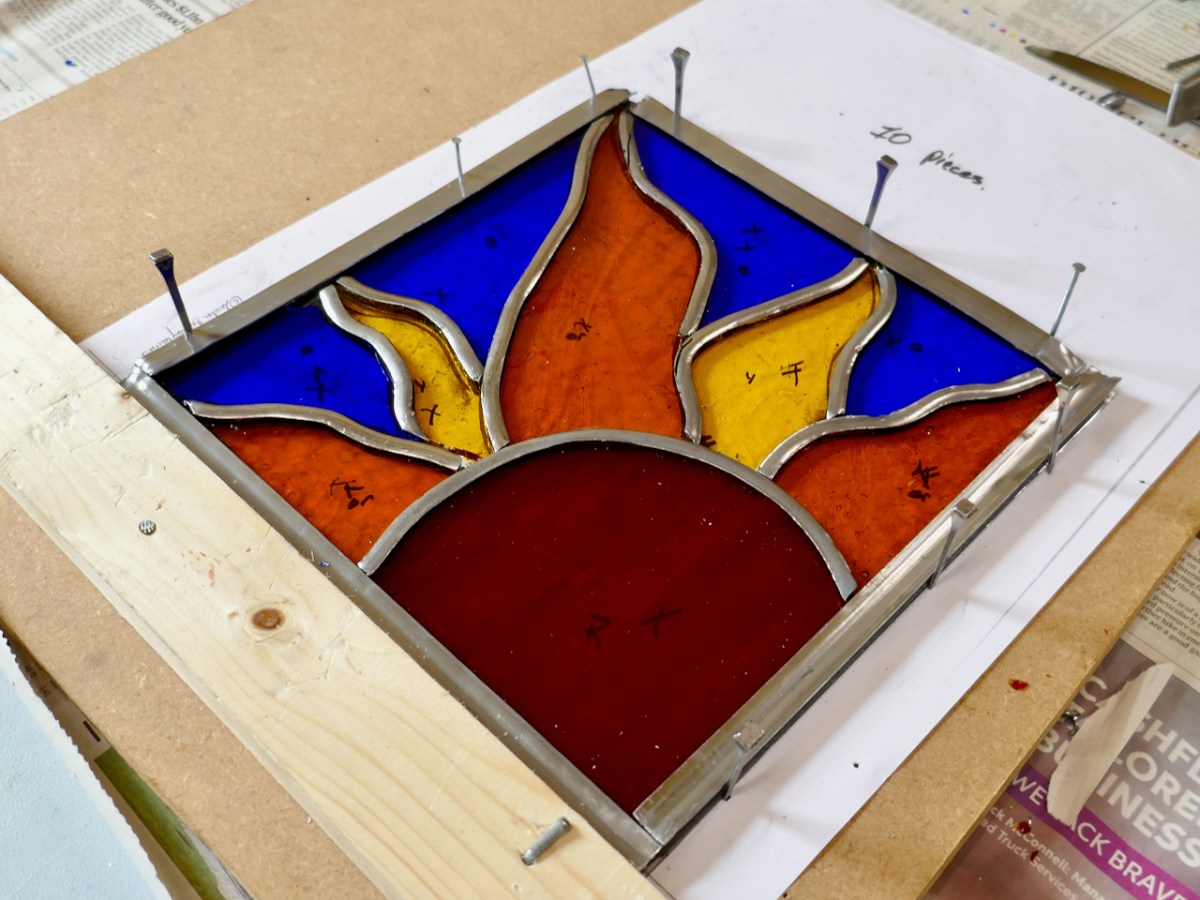
Even though I got the glass more or less leaded in the end, nobody could pretend that it looks anything other than a very amateurish piece of work, with holes where there shouldn’t be holes and a crooked frame. Nevertheless, I was ecstatic to have managed to push and shove it, with lots of help from Deirdre, into a final square shape.
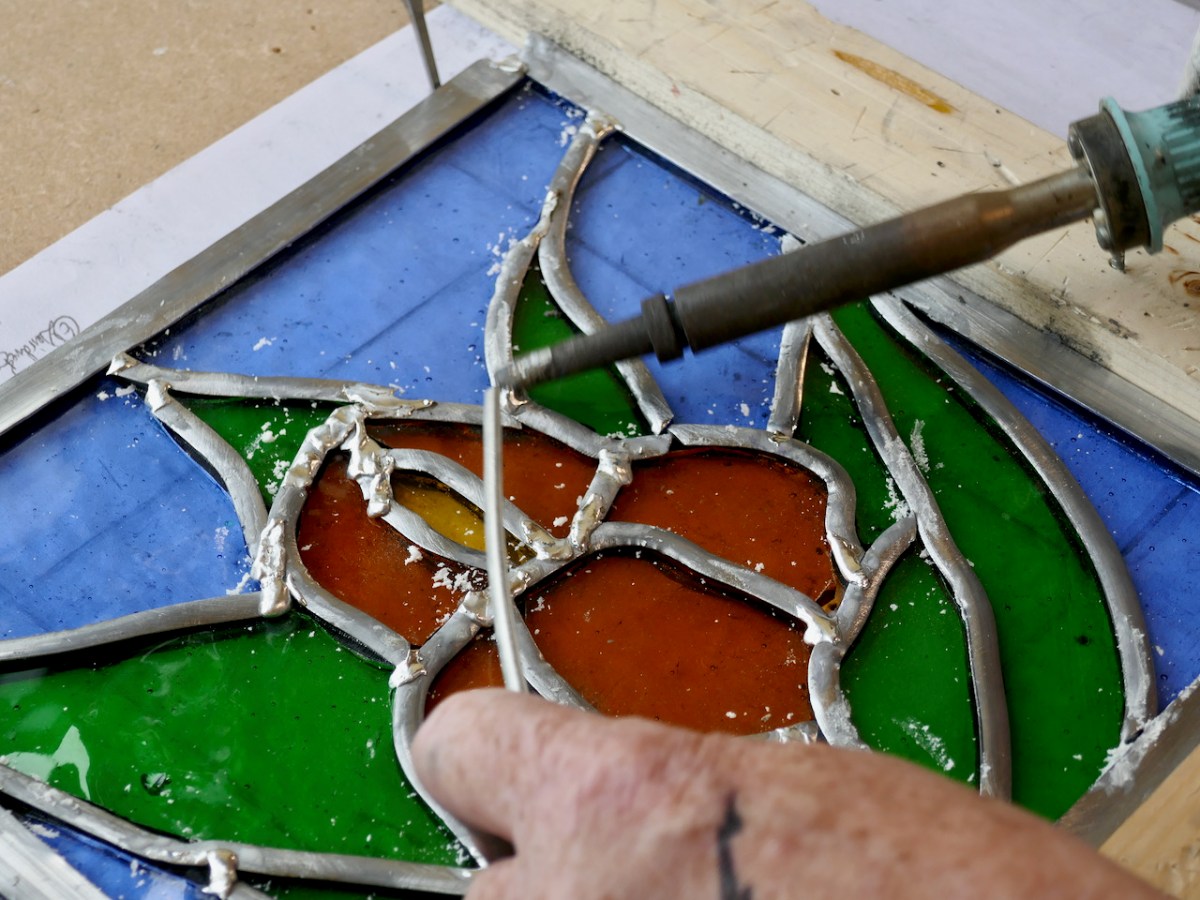
The next step was to secure all the joins with solder and I hate to say it but this was the most fun part. Or maybe I mean the least stressful. There’s something deeply satisfying about melting metal and watching it magically knit two pieces of lead together.
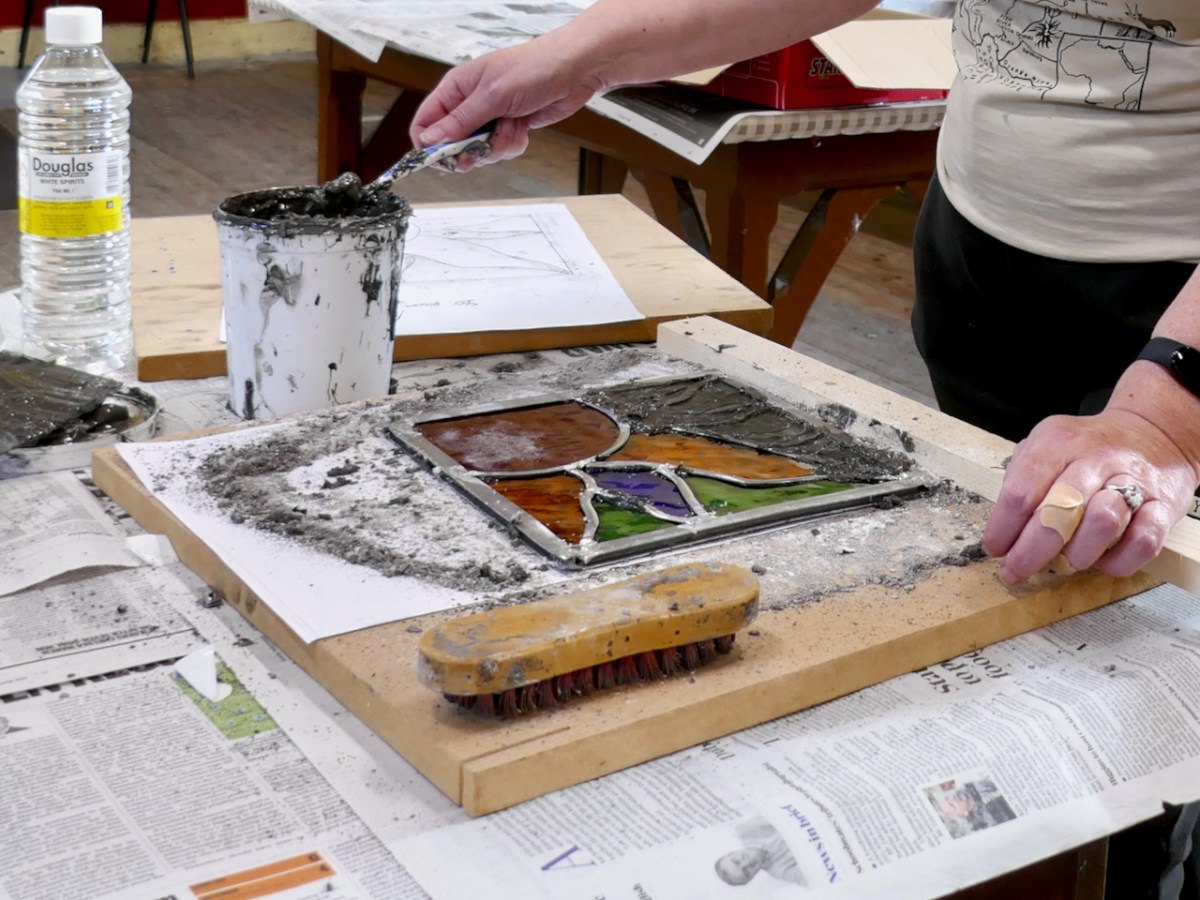
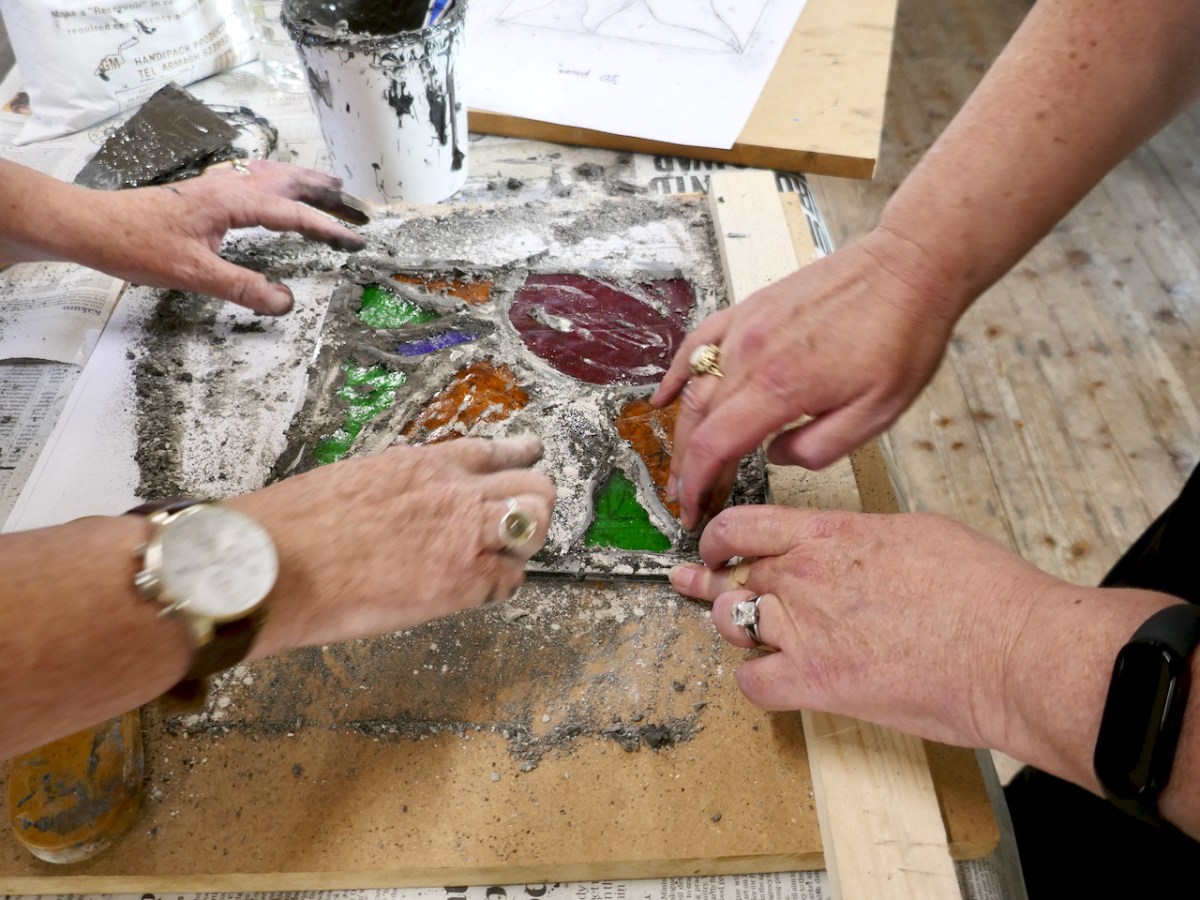
The final process was to cement the glass so that it was properly bedded to the lead cames, and not just rattling around inside them. This was a sloppy business, bringing out those inner children who love to play with mud.
Then came a dusting of plaster to dry the mud and a pushing of the mud/plaster mix into the corners and well under the cames. A final polish with stove blacking and we were done!
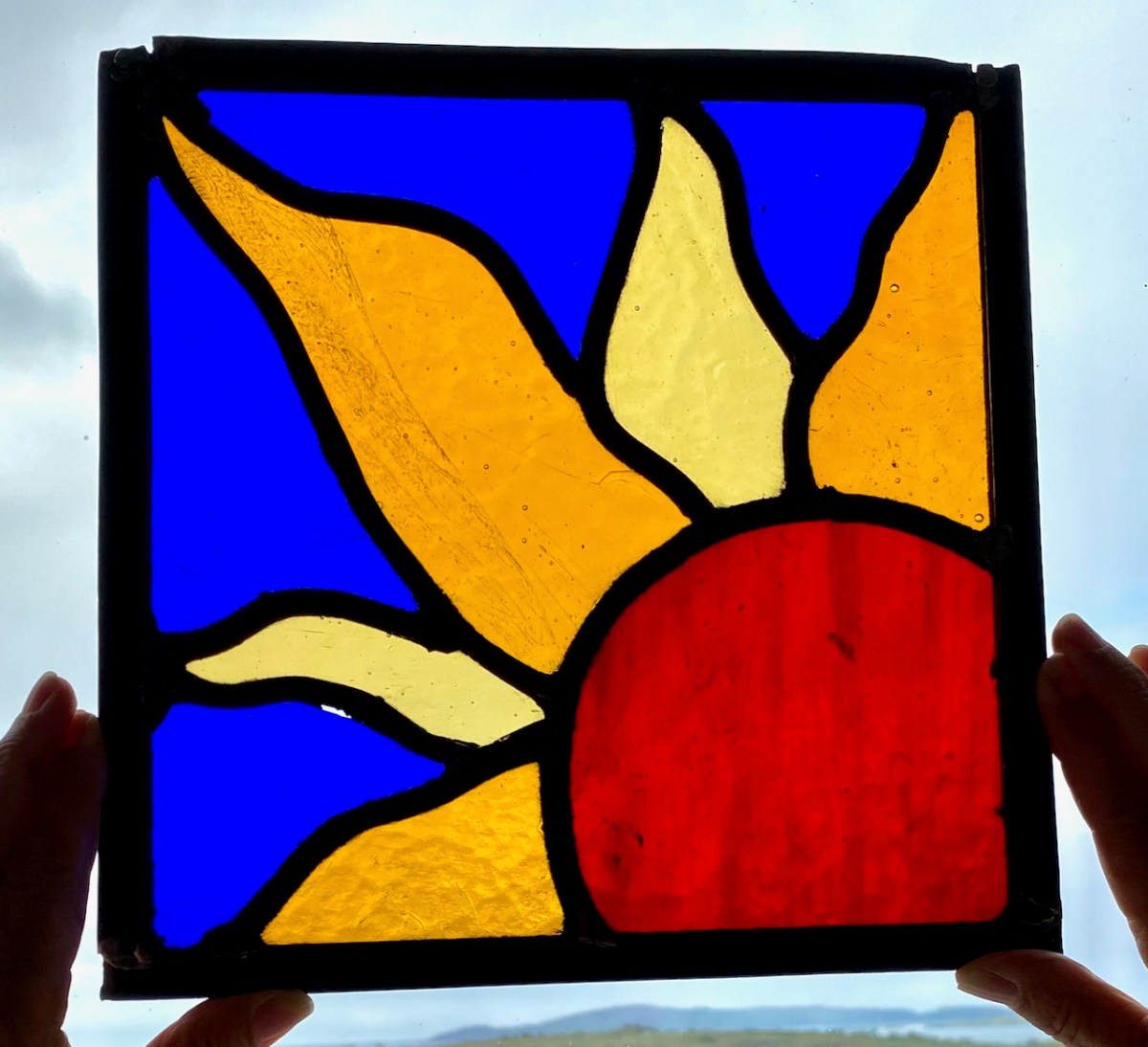
And I was wrecked! My back hurt and my wrists and shoulders ached. I had a little sun window to take home with me (don’t look closely!) – and I had learned SO much.
Mostly, that learning had to do with a whole new appreciation for the skill of making stained glass – how physical it was, how exacting, how long it must take to get truly proficient at it, how many steps were involved.
And of course, this is only the most basic part of making a stained glass window – we did no painting, etching, decorating of any kind. As I type this I have my Finola window to my right – each pane (and there are over a hundred in the window) is worked – painted, scratched, cut away. Some of the glass is flashed with the design cut or etched into it to reveal the colour underneath the coloured flash (thin top layer). Some is covered with thick black paint, through which the design has been etched. Glass has been carefully chosen for different properties – streakiness or bubbles or colour variation.
At the end of the day, I had accomplished my goal, which was just to gain a tiny insight into the most basic of the processes involved in the making of a stained glass window. The workshop was great fun – not least was finding all of us, a wonderfully compatible group, shouting along to some of Deirdre’s musical accompaniments.
It takes years, and true talent, to become a stained glass artist. I remain in awe of those who have mastered this difficult and remarkably beautiful art.
Welcome to the UCD Library Cultural Heritage Collections blog. Discover and explore the historical treasures housed within our Archives, Special Collections, National Folklore Collection and Digital Library