A Signal Success in Irish Engineering – Part 6: Dunnycove

Galley Head, in West Cork, is one of those wild and exposed headlands where you get exceptional views in all directions. In our hunt for Napoleonic-era signal towers on the Irish coast you would fully expect to find one of the towers here – but no! A lighthouse and lightkeepers’ cottages – yes. These date from around 1875 but, in the early years of the nineteenth century, the strategically important signal tower was built inland, in the nearby townland of Dunnycove.
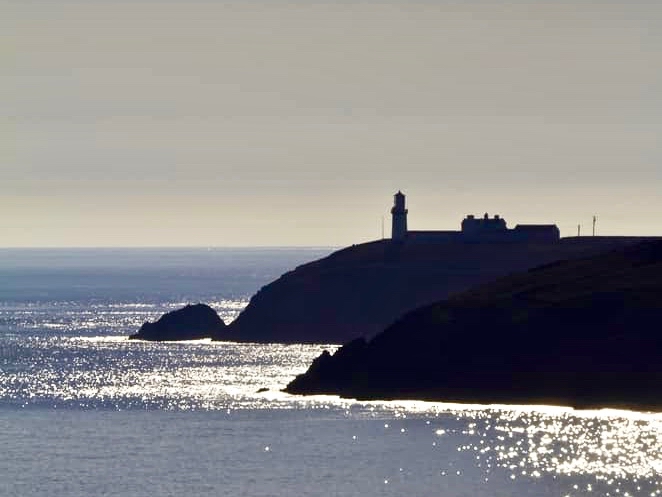
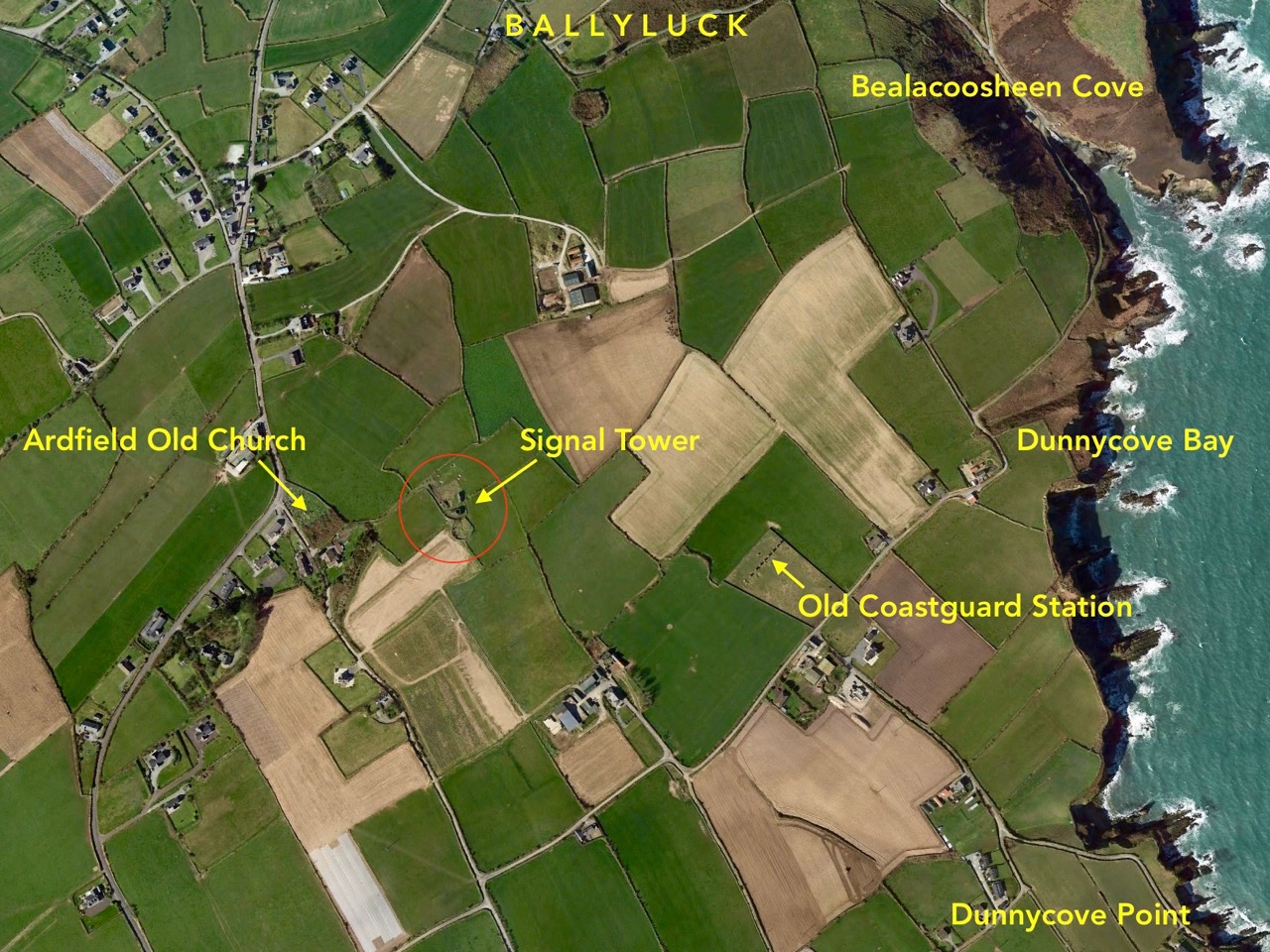
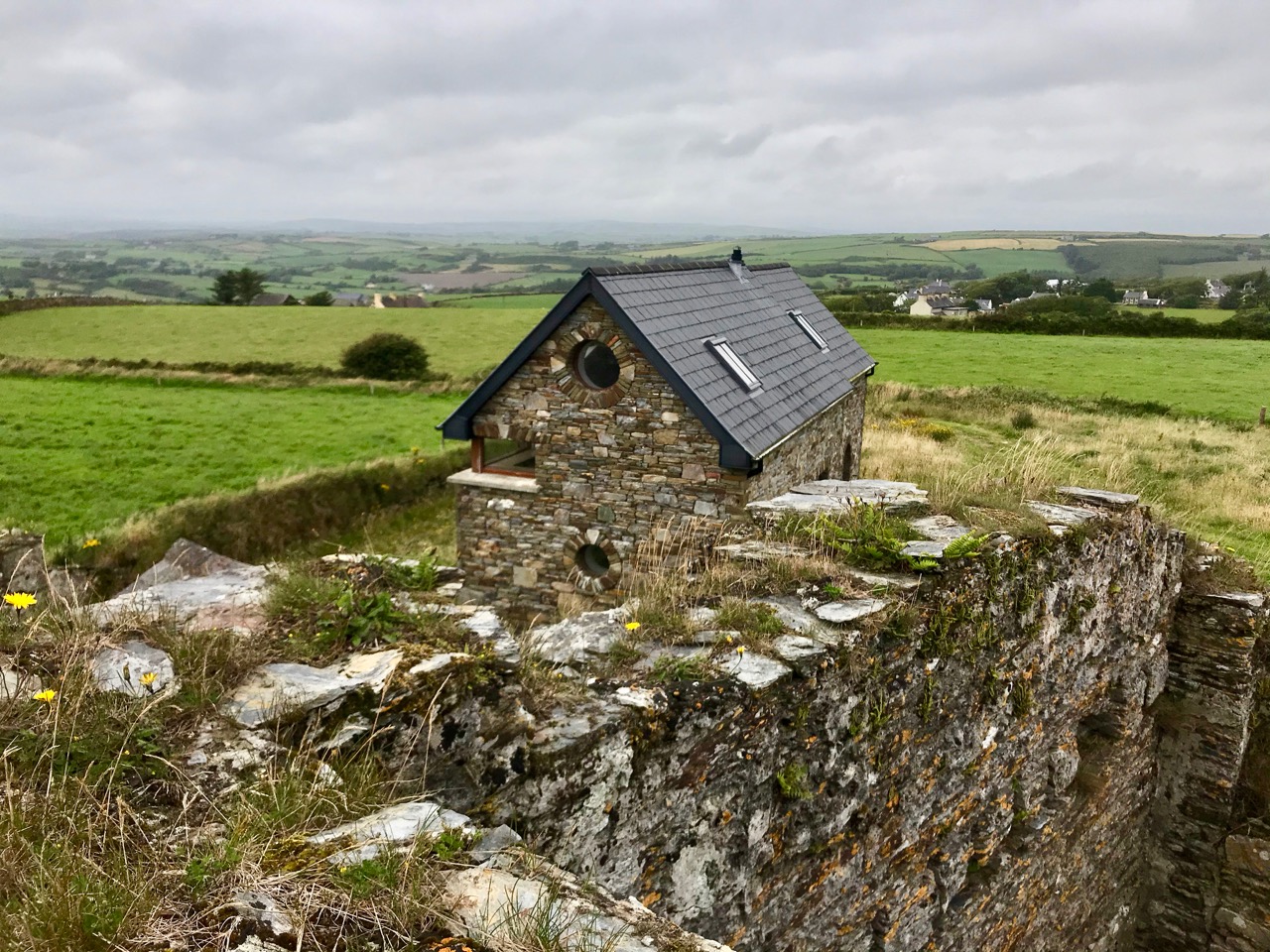
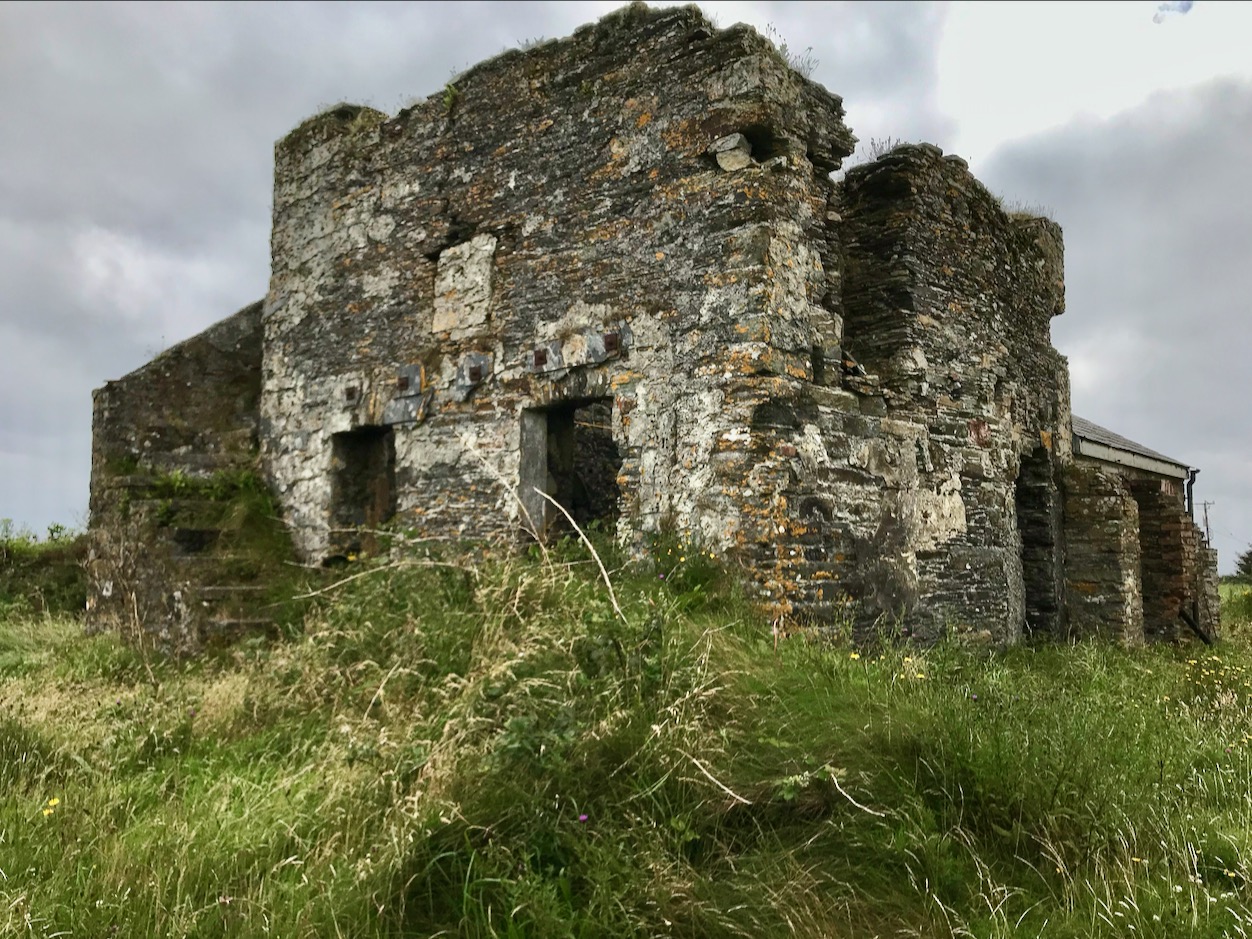
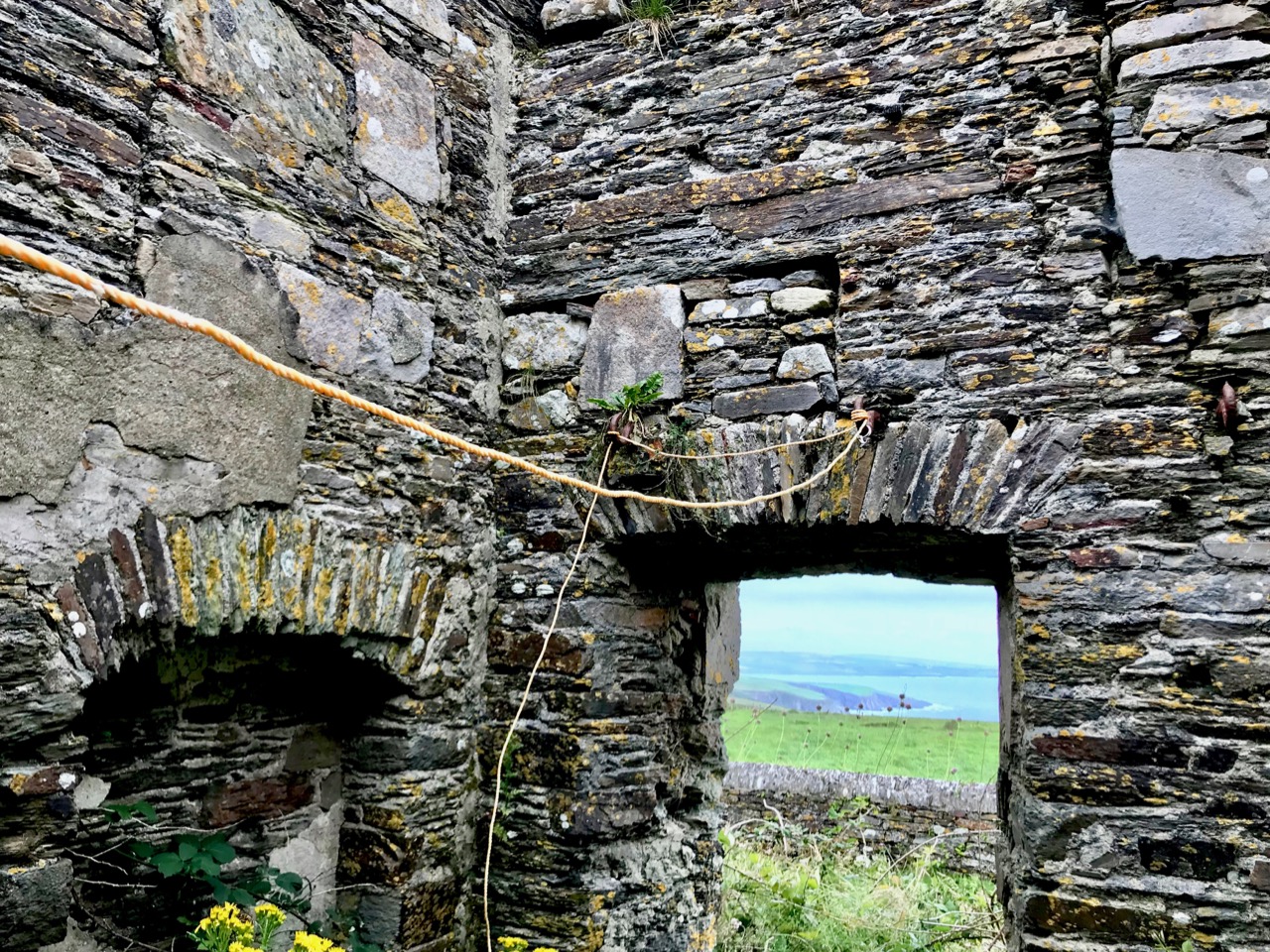
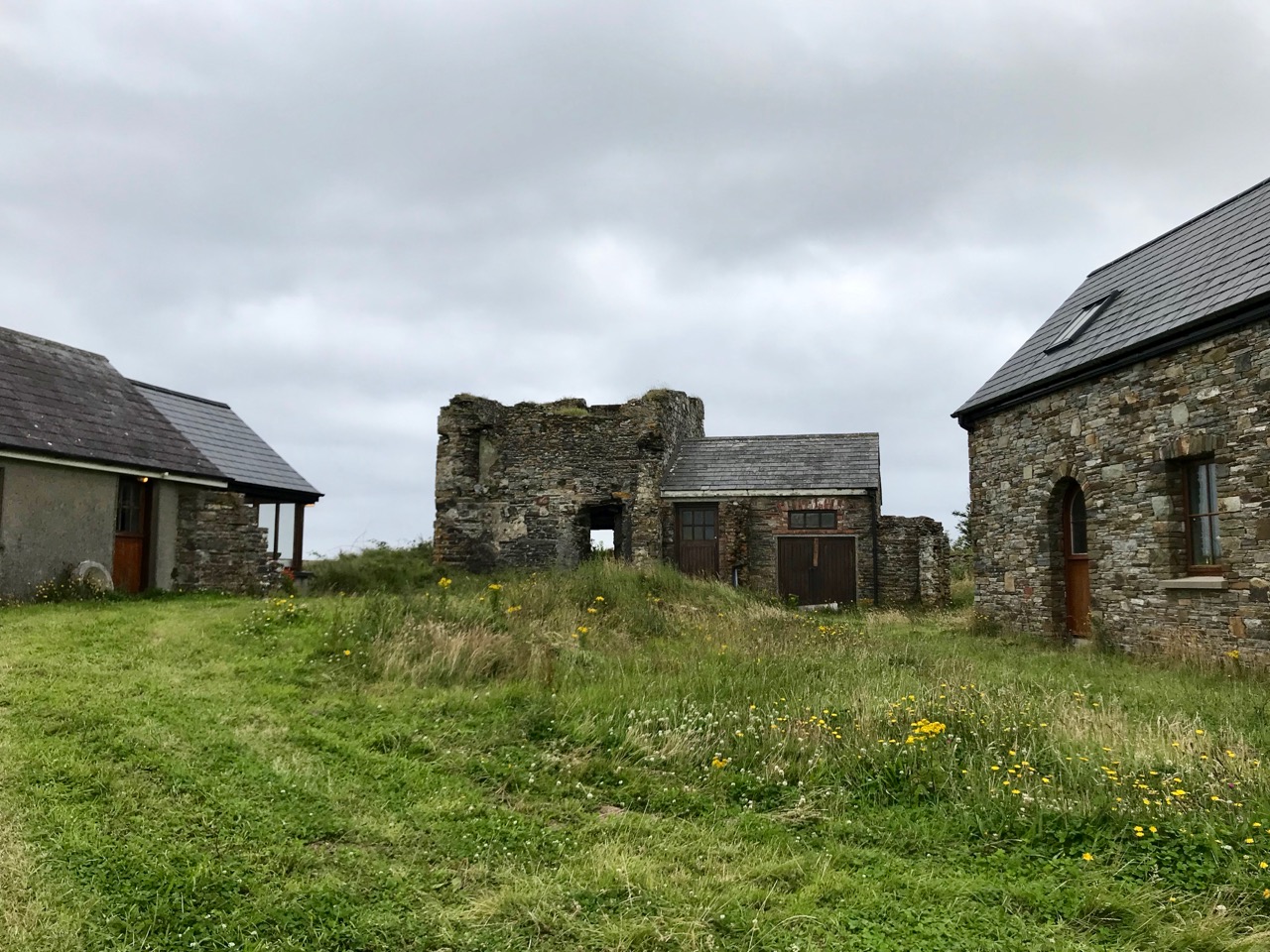
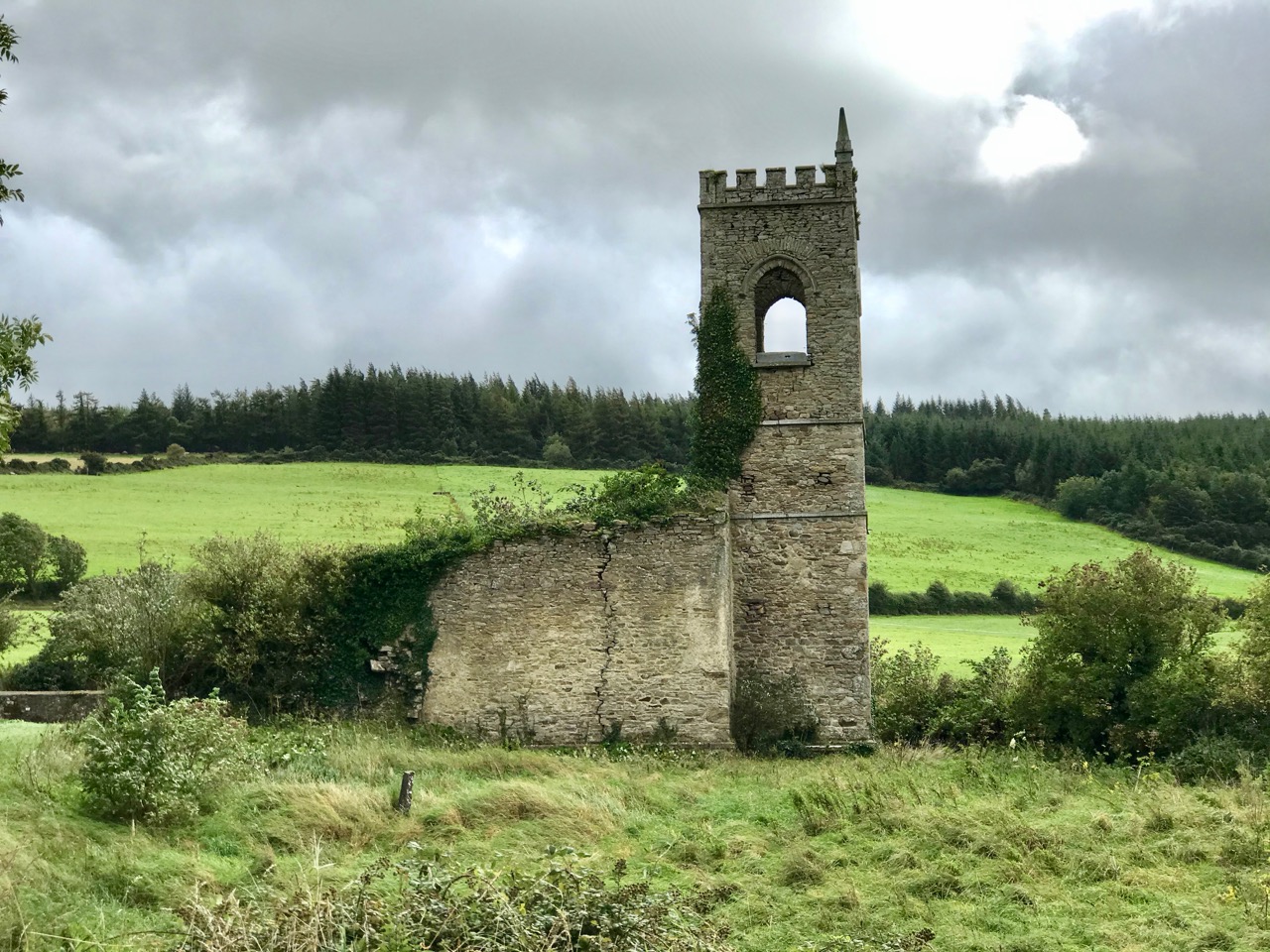
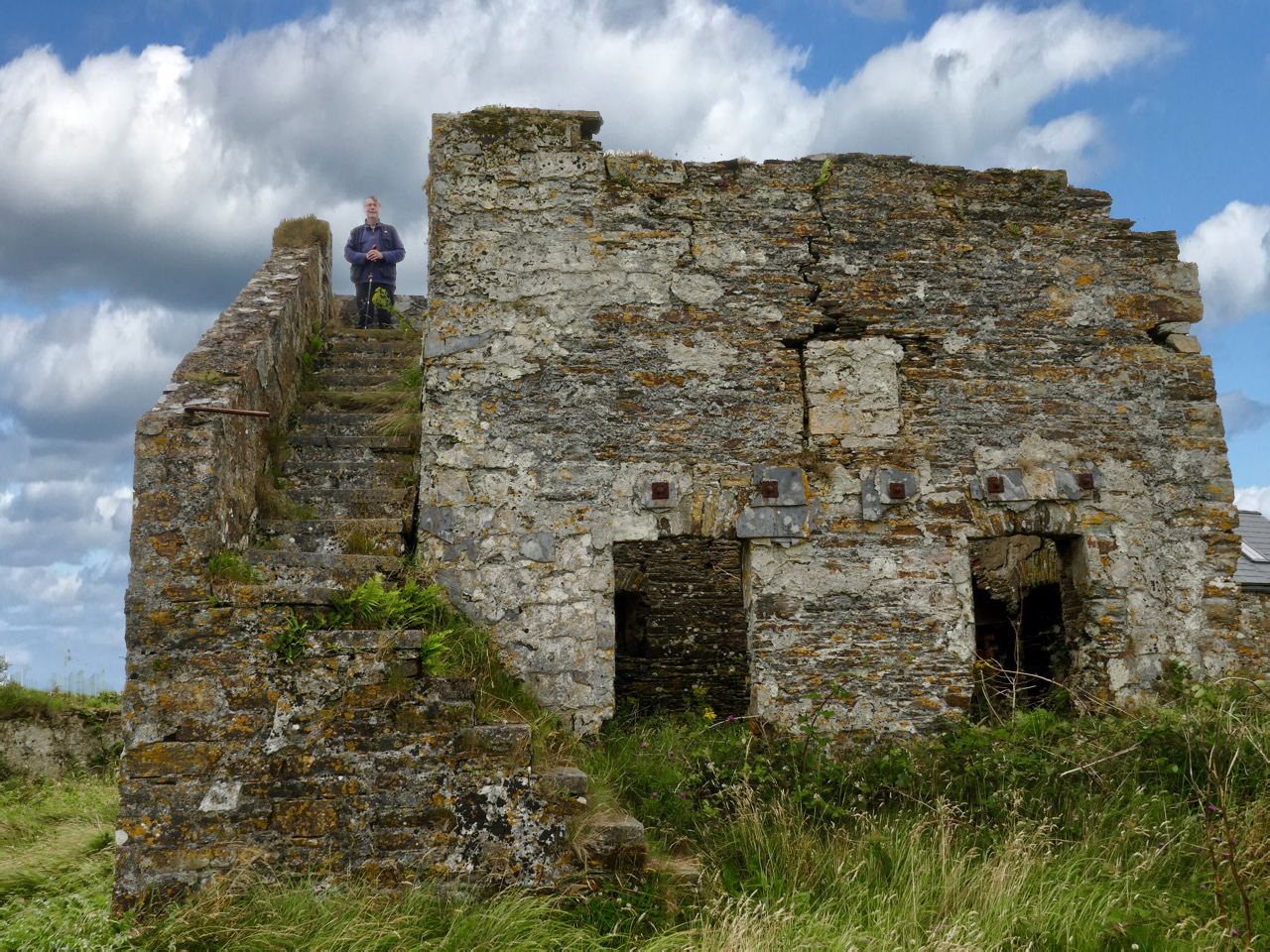
The header picture shows what remains of the tower itself today. This has in fact been adapted over the years, and the original building conformed to the square tower pattern that we have investigated elsewhere (a good example is at the old Head of Kinsale). The upper picture (above) shows the lighthouse at Galley Head seen from high ground to the east, while the lower picture is an aerial view of the Dunnycove signal tower site in its wider surroundings. Below is an 1806 map of the ‘. . . Ground occupied by the Signal Tower and Road leading to it at Galley Head . . .’ This tower is often referred to as the Galley Head Tower, even though it is some distance inland from the Head. But it is well placed to command views to the towers in the communication chain immediately to the west (Glandore) and east (Seven Heads).
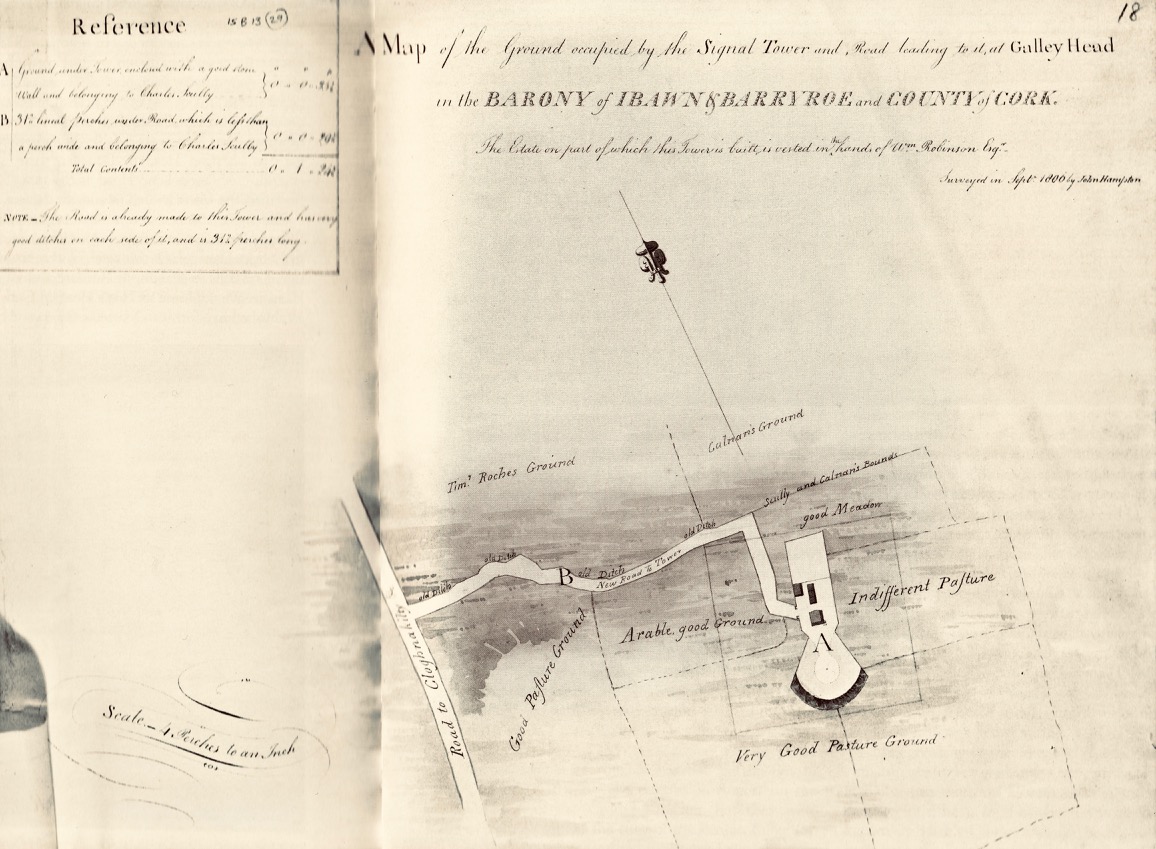
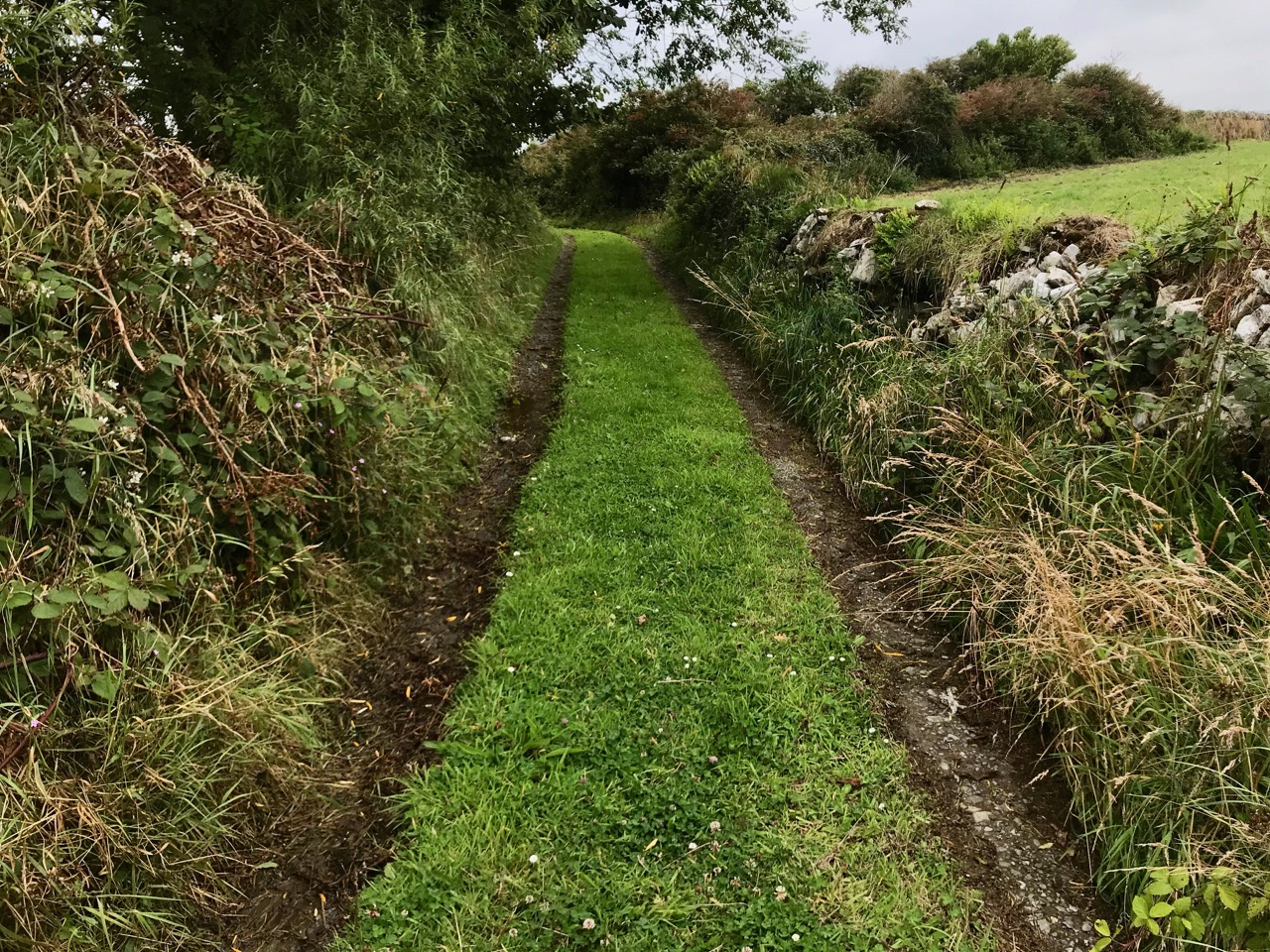
The curious profile of the site as marked out on this early map shows a segmental shaped area to the south of the tower. It is likely that this was where the signal mast itself was situated. I am intrigued by the descriptions of the surrounding land: ‘good Meadow’, ‘Indifferent Pasture’, ‘Very Good Pasture Ground’ and ‘Arable good Ground’. Also, on the left of the survey drawing appears to be a table of land values, and the statement that ‘The Road is already made to this Tower and has very good ditches on each side of it, and is 312 perches long’. The road is in good condition today, as the site has been developed with a cottage and modern studio:
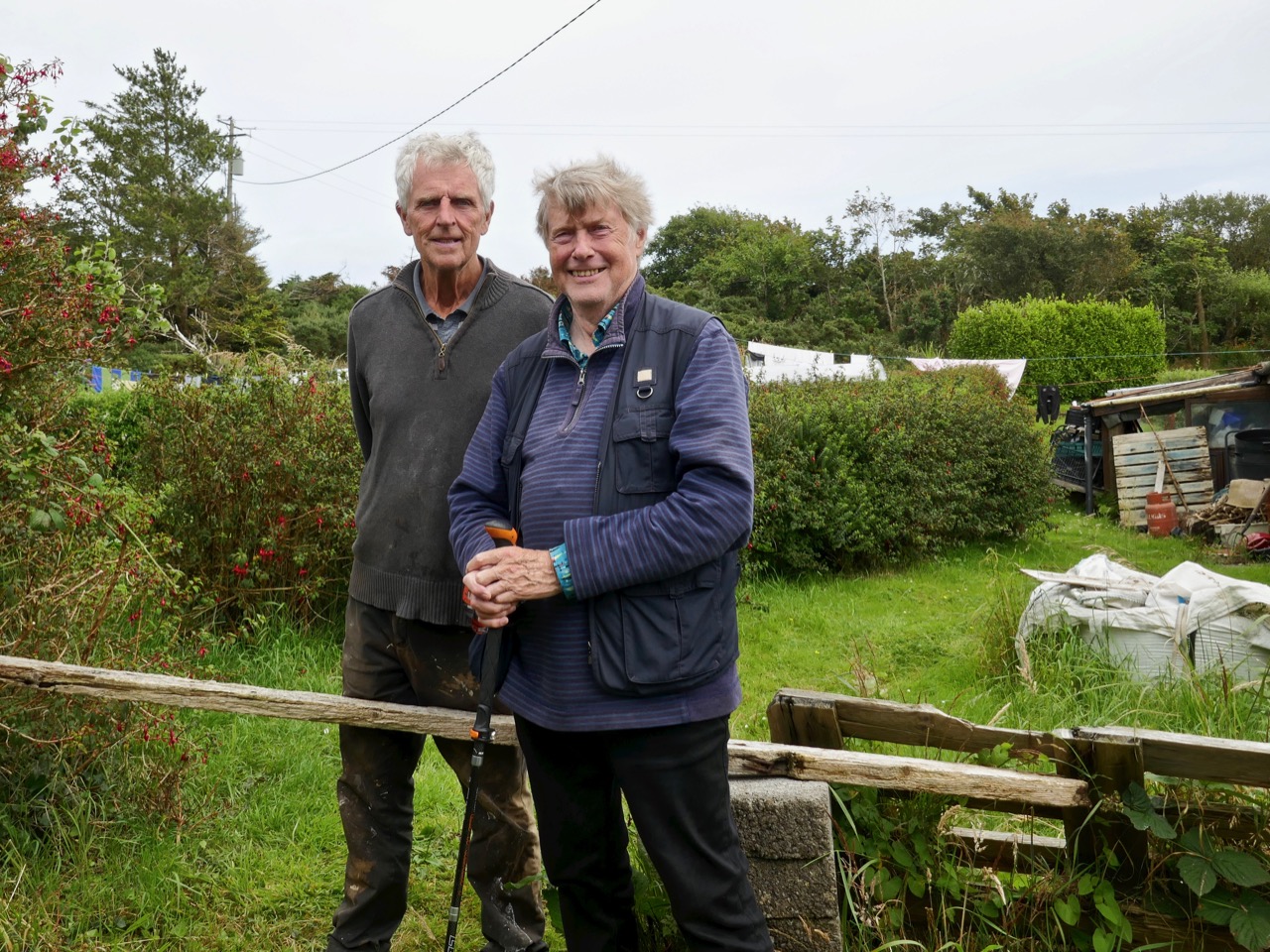
There’s nothing better than good local knowledge when you are trying to piece together a historic jigsaw puzzle. We were delighted to run into Billy Sheehan working in his neighbouring garden: it didn’t take long to establish that his own family had been involved in the signal tower site for generations, and had been connected to the local Coast Guard which had used the tower as a lookout point after the original building had fallen into disuse. Here’s Billy and myself, below. Under us is an extract from the 25″ Ordnance Survey map, drawn between 1888 and 1913. Note how on this map the signal tower site itself has changed since 1806, with many more buildings, a ‘flagstaff’ and a ‘semaphore’ indicated. These all undoubtedly date from the Coast Guard use of the site – you can also see the Coast Guard Station indicated below the tower: there are just a few masonry pillars left at that location today.
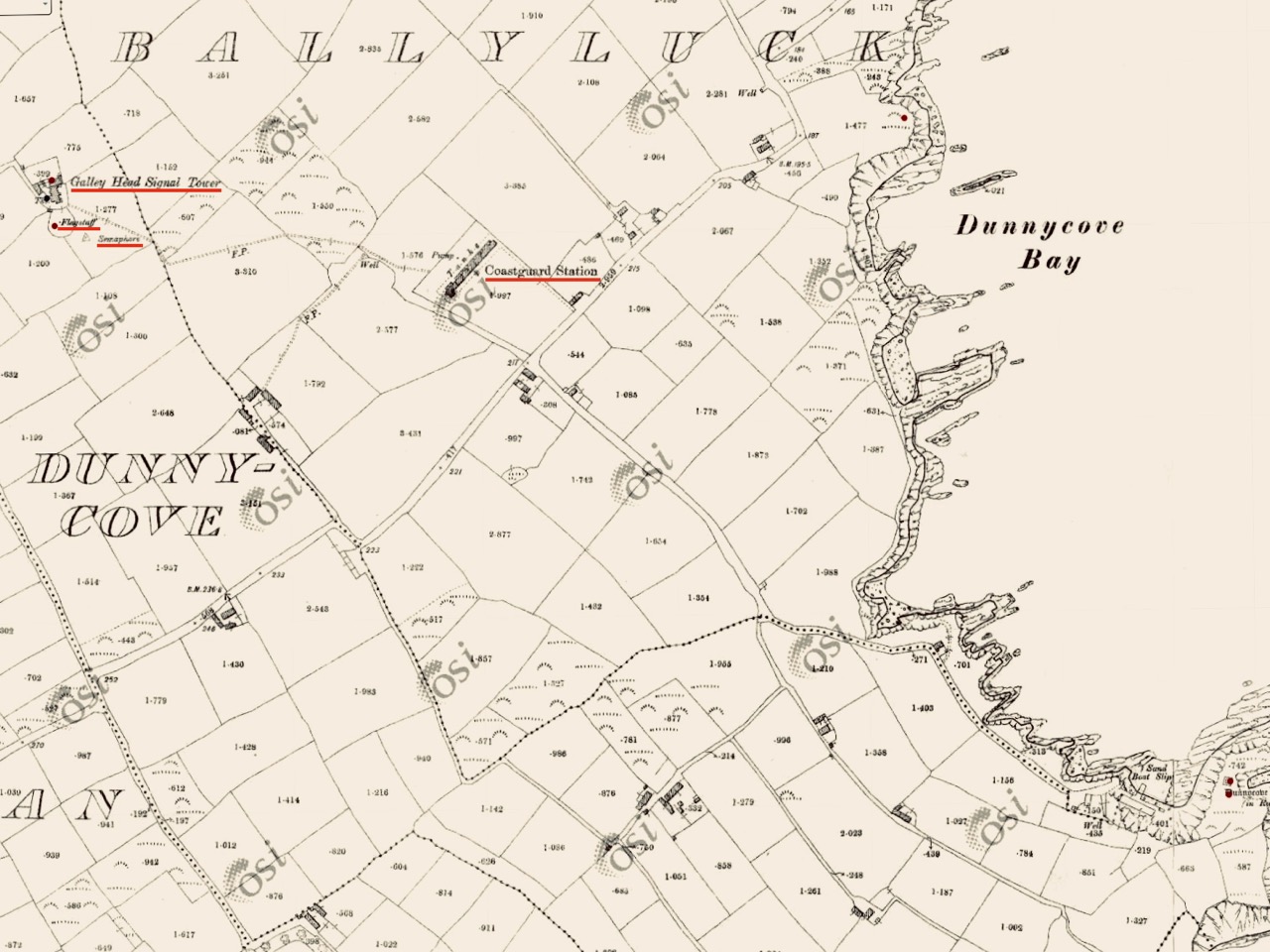
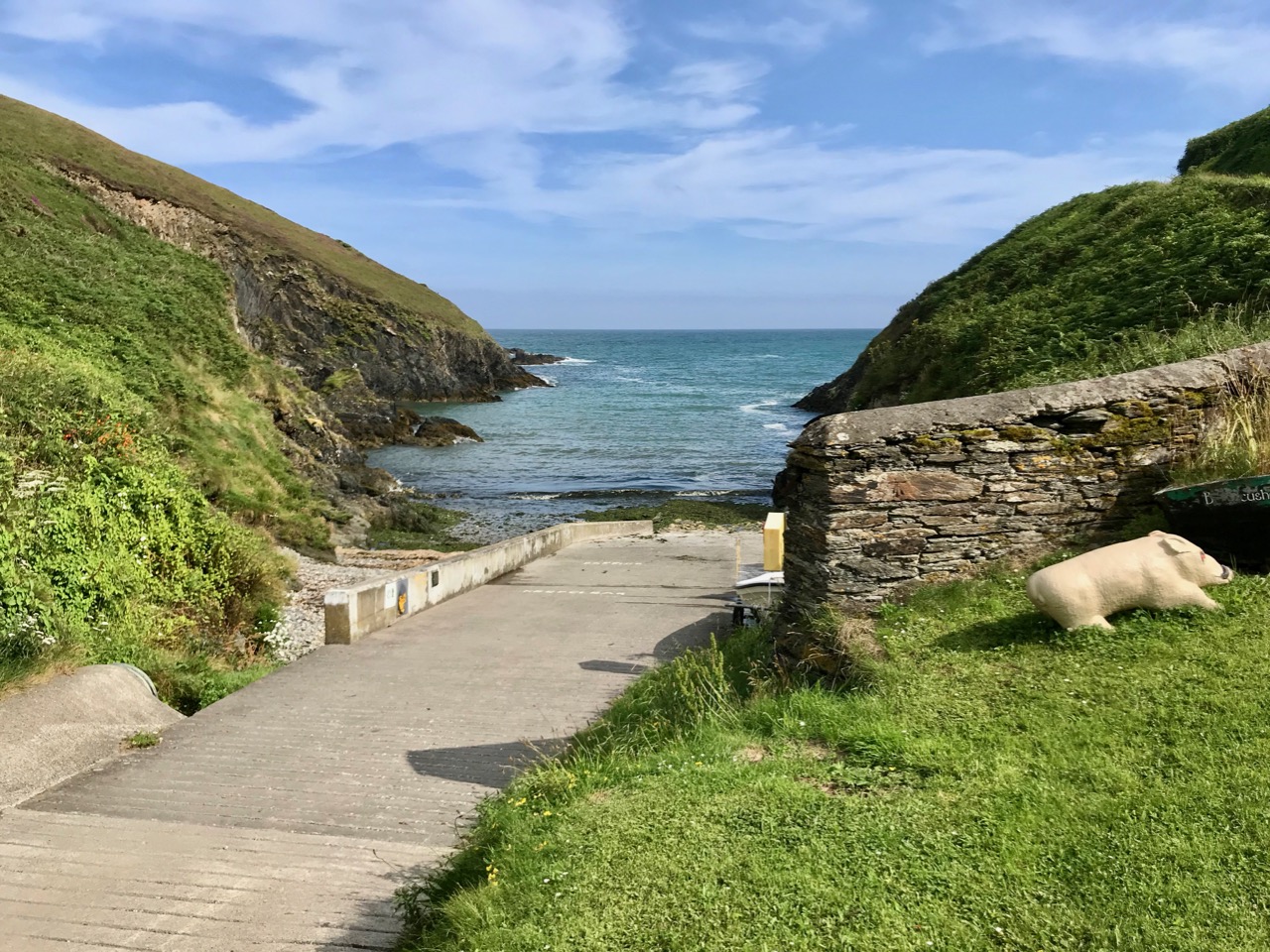
This is the ramp leading down to the water at Ballycusheen Strand, not far from Dunnycove. The pig is a well-known local landmark! I was interested to see the reference to ‘semaphore’ on the OS map, outside the original signal tower enclosure. This word recurs frequently in discussions about signal towers. Theoretically, any visual signalling system is an ‘optical semaphore’, but the term is likely to be more specific here and probably refers to an updated mechanical system rather than the ‘flag and ball’ method generally used in the early 19th century, when the signal stations were run by sailors or retired naval men who were well used to reading flag signals through high quality telescopes. There’s a volume to be written on how long-distance signalling evolved over many centuries – not just in Ireland but across Europe and beyond, beginning, perhaps, with The Scottish Parliament passing an Act in 1455 that said:

One bale, or faggot, shall be warning of the approach of the English. Two bales that they were actually coming and four bales, blazing side by side, shall note that the enemy is in great force.

There is a record of Robert Hooke, ‘curator of experiments’ at the Royal Society, proposing a system that combined a telescope and signalling in 1684. One of the important names that surfaces here in Ireland is Richard Lovell Edgeworth (1744 – 1817).  An inventor and writer, Edgeworth was the son of an Anglo-Irish landlord whose family gave their name to the town of Edgeworthstown, Co Longford; he studied at Trinity College, Dublin. In 1767 he placed a bet with his friend, the horse racing gambler Lord March, that he could transmit knowledge of the outcome of a race in just one hour. Using a network of signalling sections erected on high ground, the signal would be observed from one station to the next by means of a telescope. The signal itself consisted of a large pointer that could be placed into eight possible positions in 45 degree increments. A series of two such signals gave a total 64 code elements and a third signal took it up to 512.
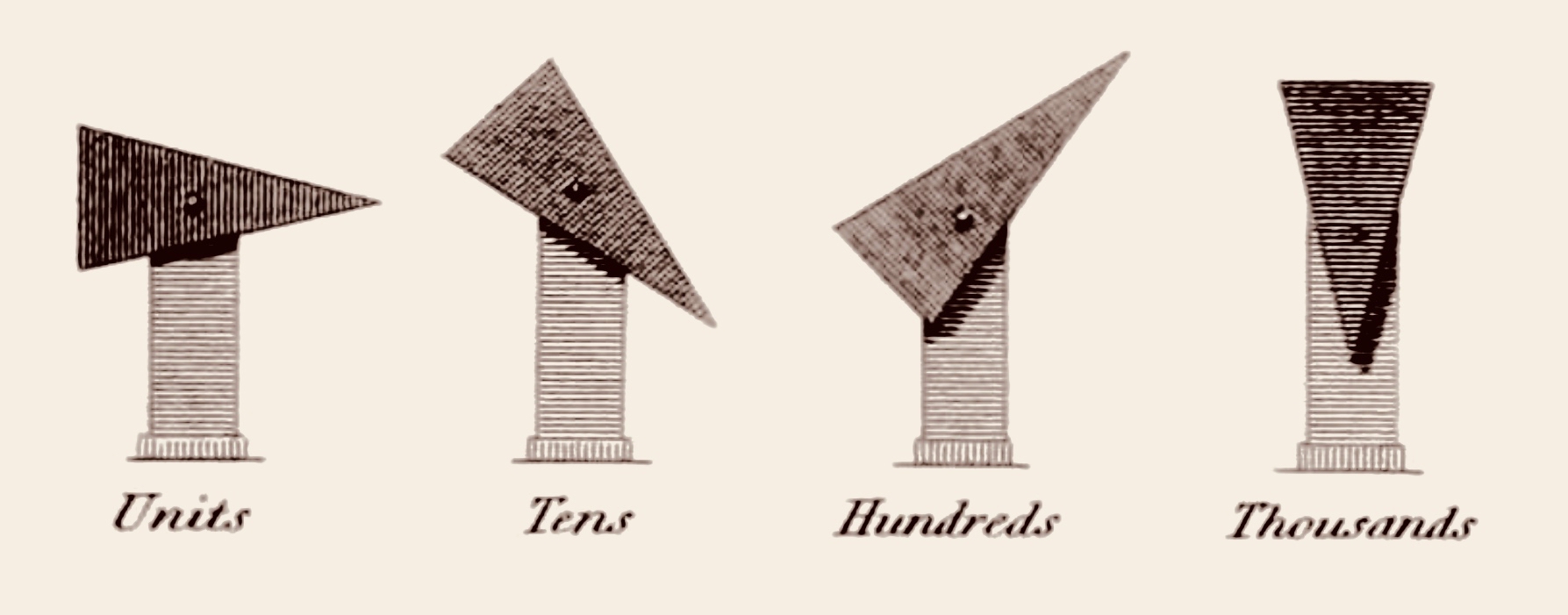
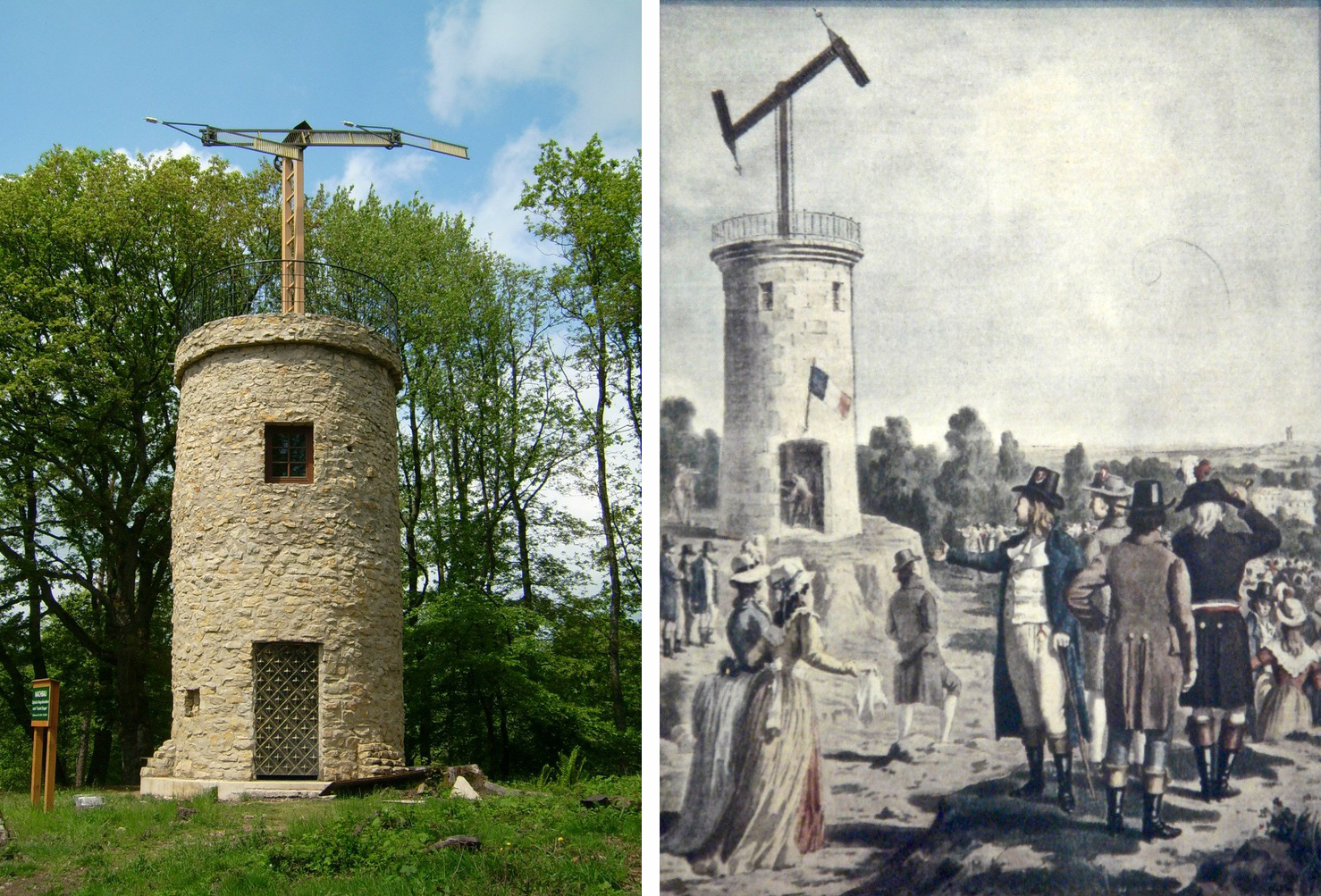
Edgeworth (perhaps best known for fathering the writer Maria Edgeworth (1768 – 1849) – one of his 22 children) termed his device a ‘Tellograph’. In November 1794 the most impressive demonstration of his invention used 30-foot-high Tellographs to communicate between Donaghadee, Ireland and Port Patrick, Scotland (about 40 miles). In France at the same time the Chappe brothers succeeded in covering that country with a network of 556 stations stretching a total distance of 4,800 kilometres (3,000 miles). Le système Chappe was used for military and national communications until the 1850s.
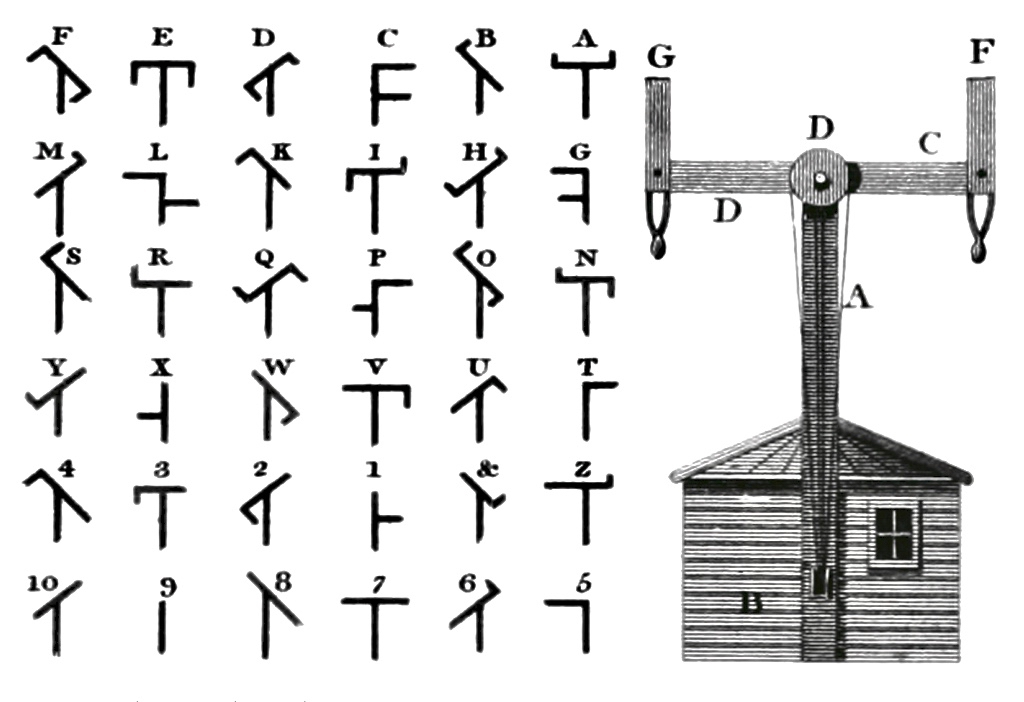
Le système Chappe (above). French technology is demonstrated in the 1790s – the very time the First French Republic was threatening the least defensible part of the British Isles – Ireland – and emphasised by the attempts of Wolfe Tone to land a French fleet in Bantry Bay in December 1796. That landing was a failure – due to atrocious weather – but it did, perhaps, wake the British authorities to the wisdom of guarding the Irish coastline. The signal tower system was a hastily devised result of this.
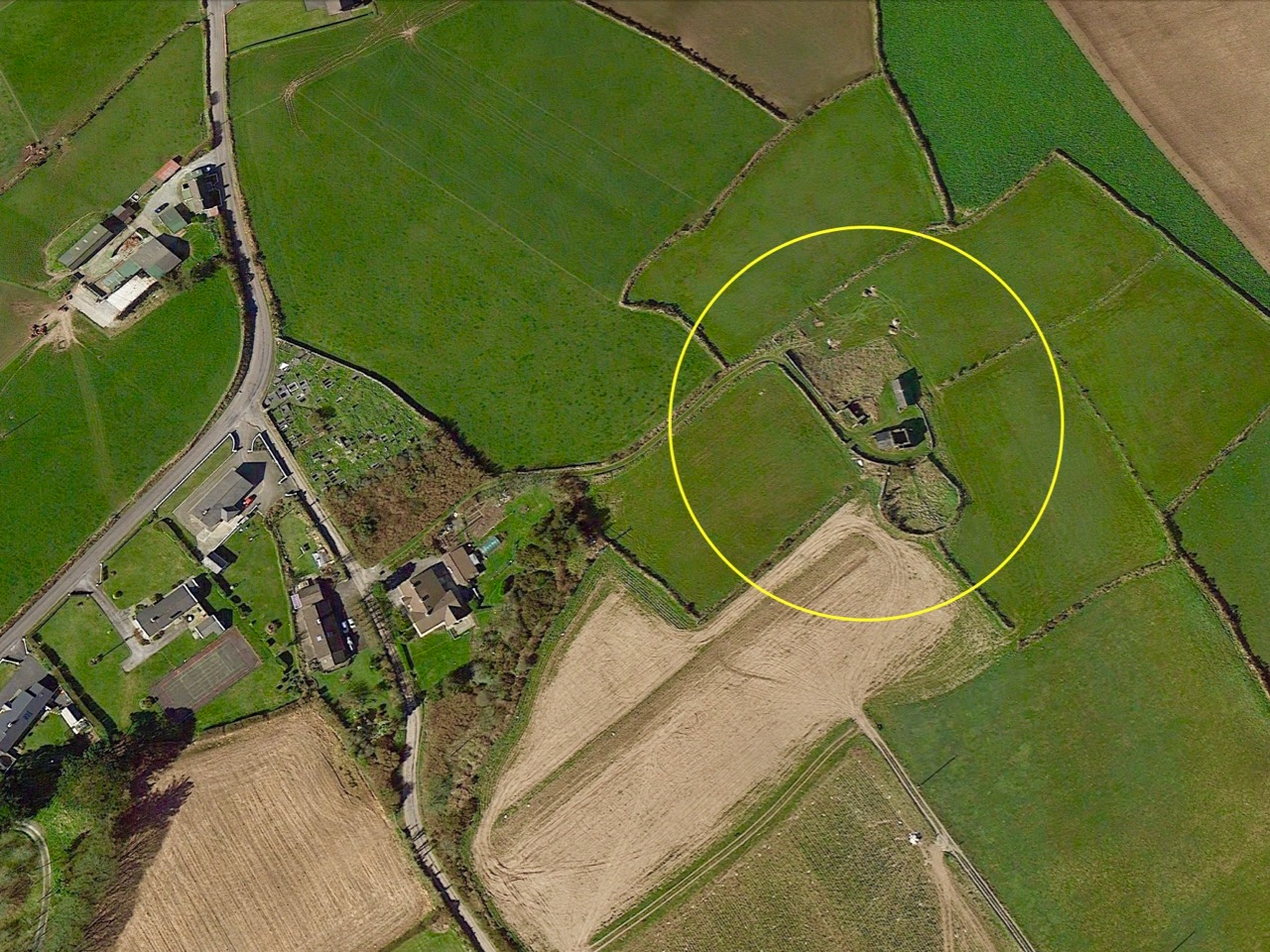
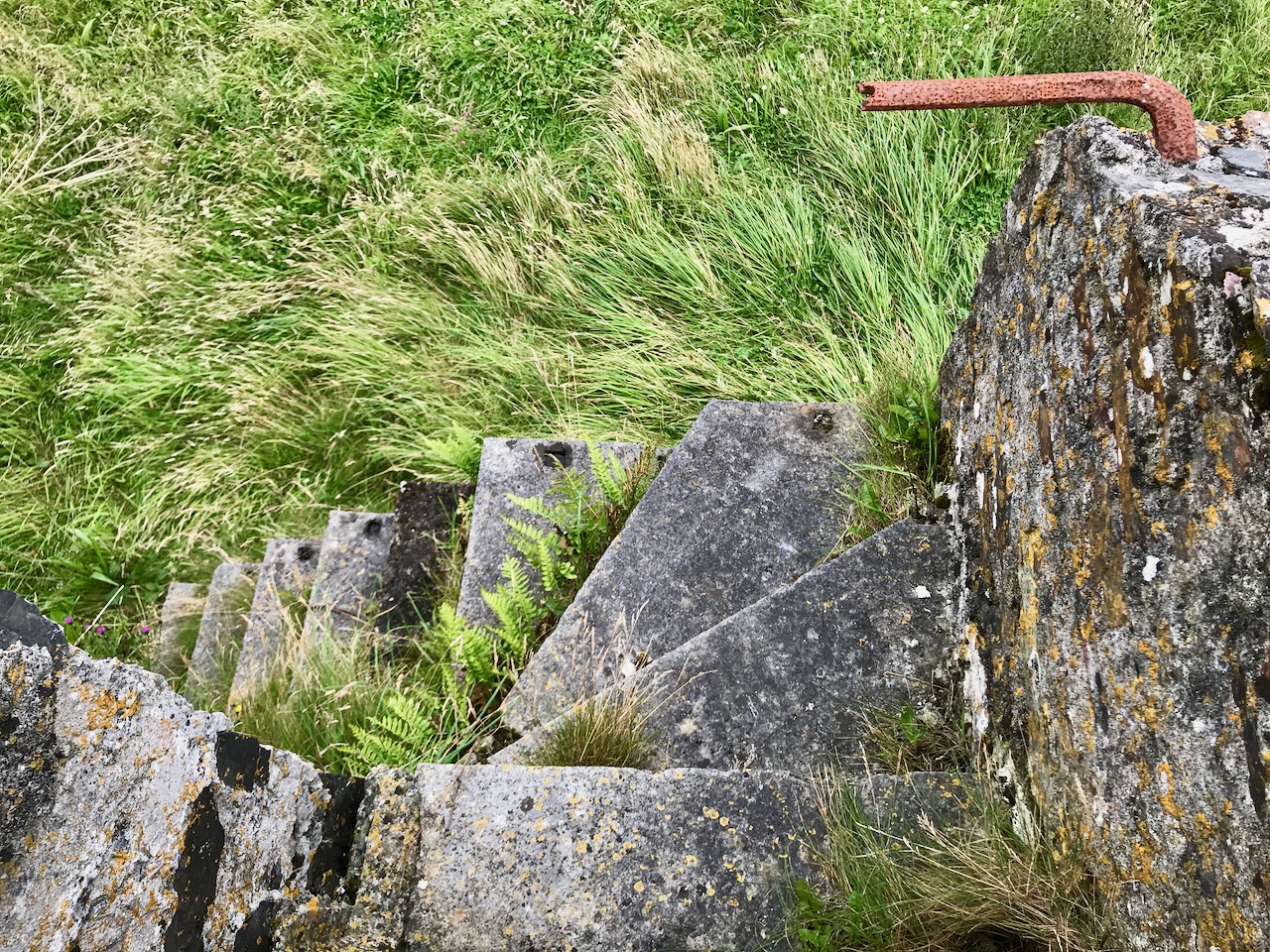
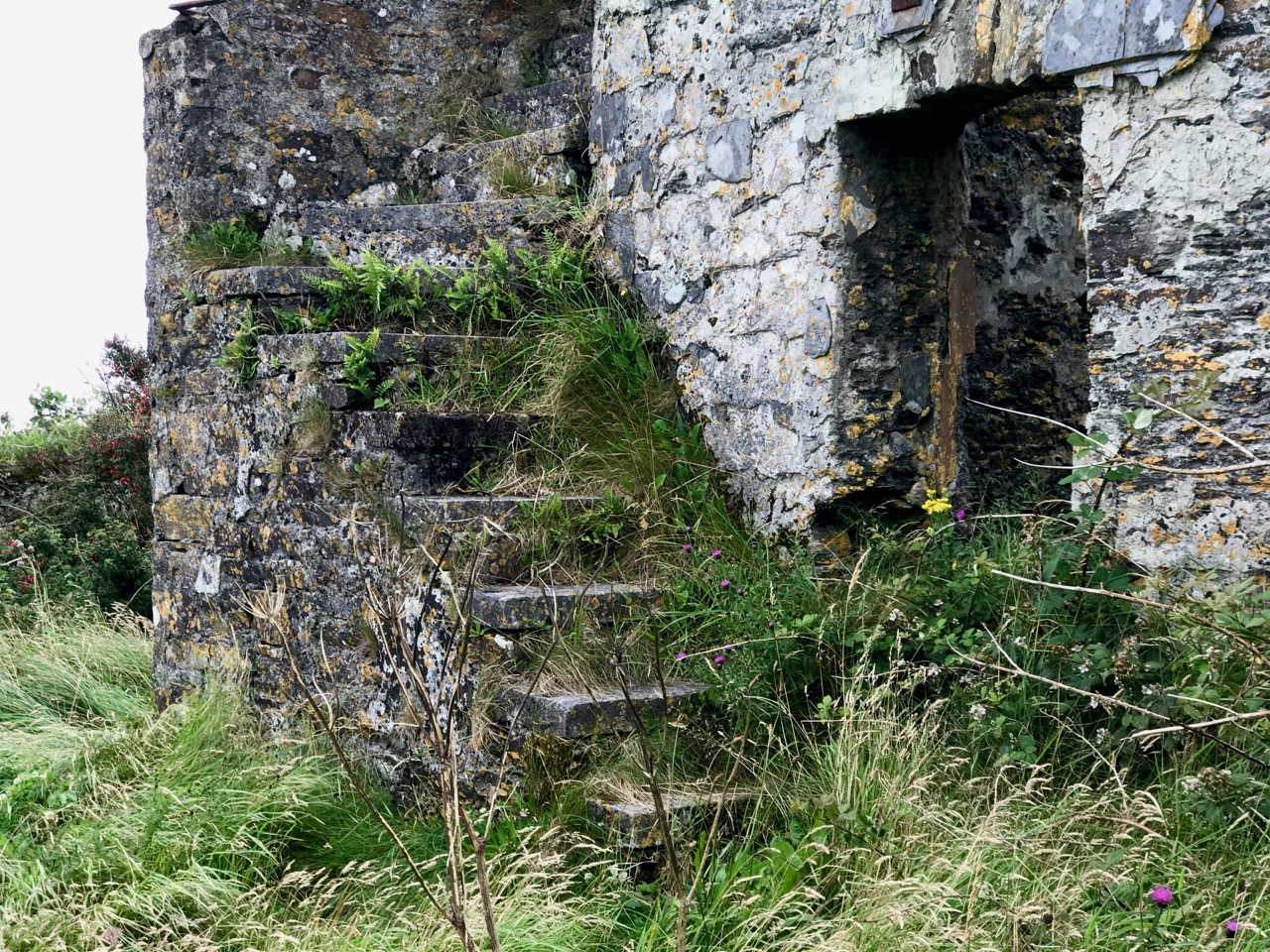
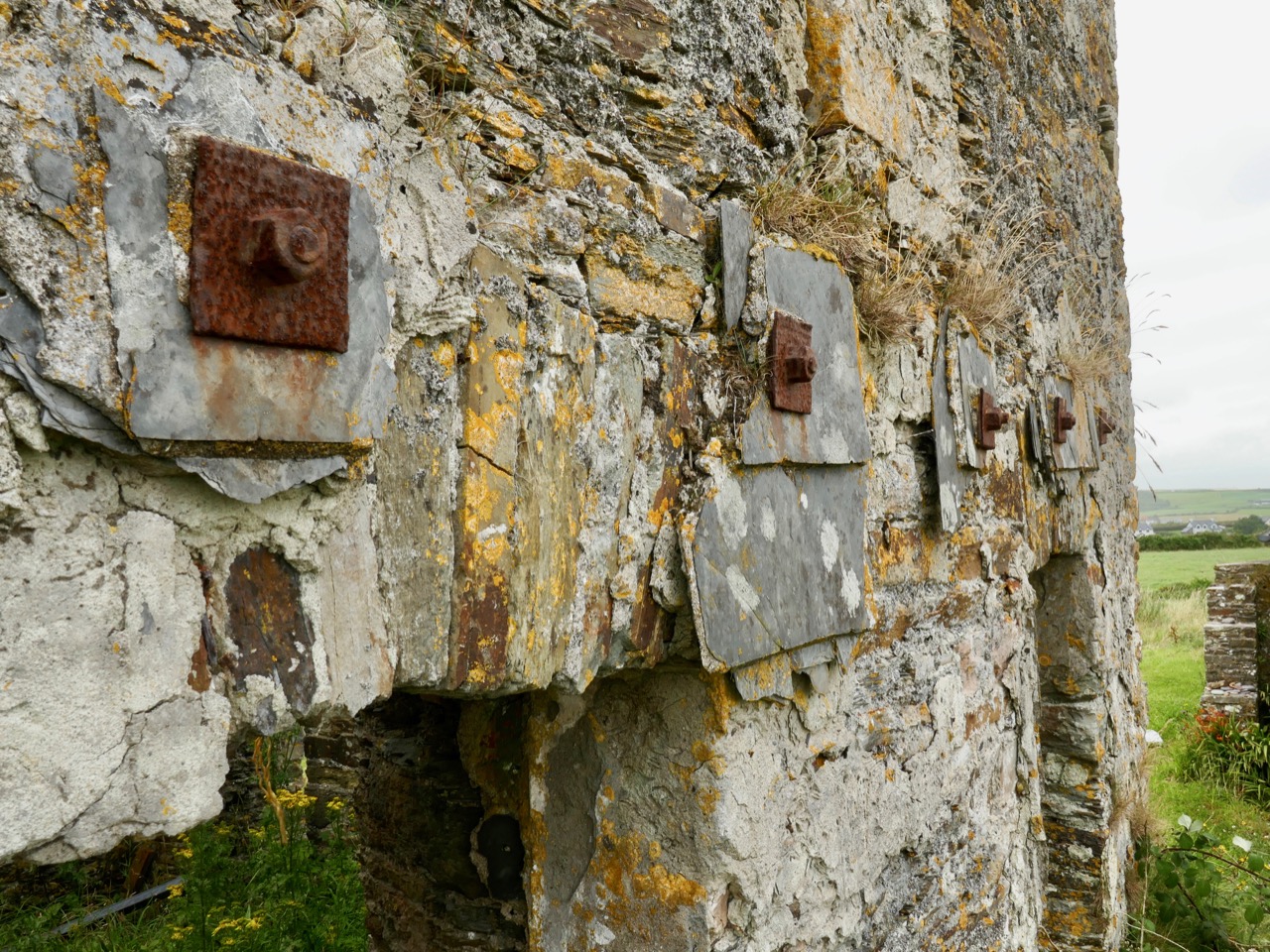
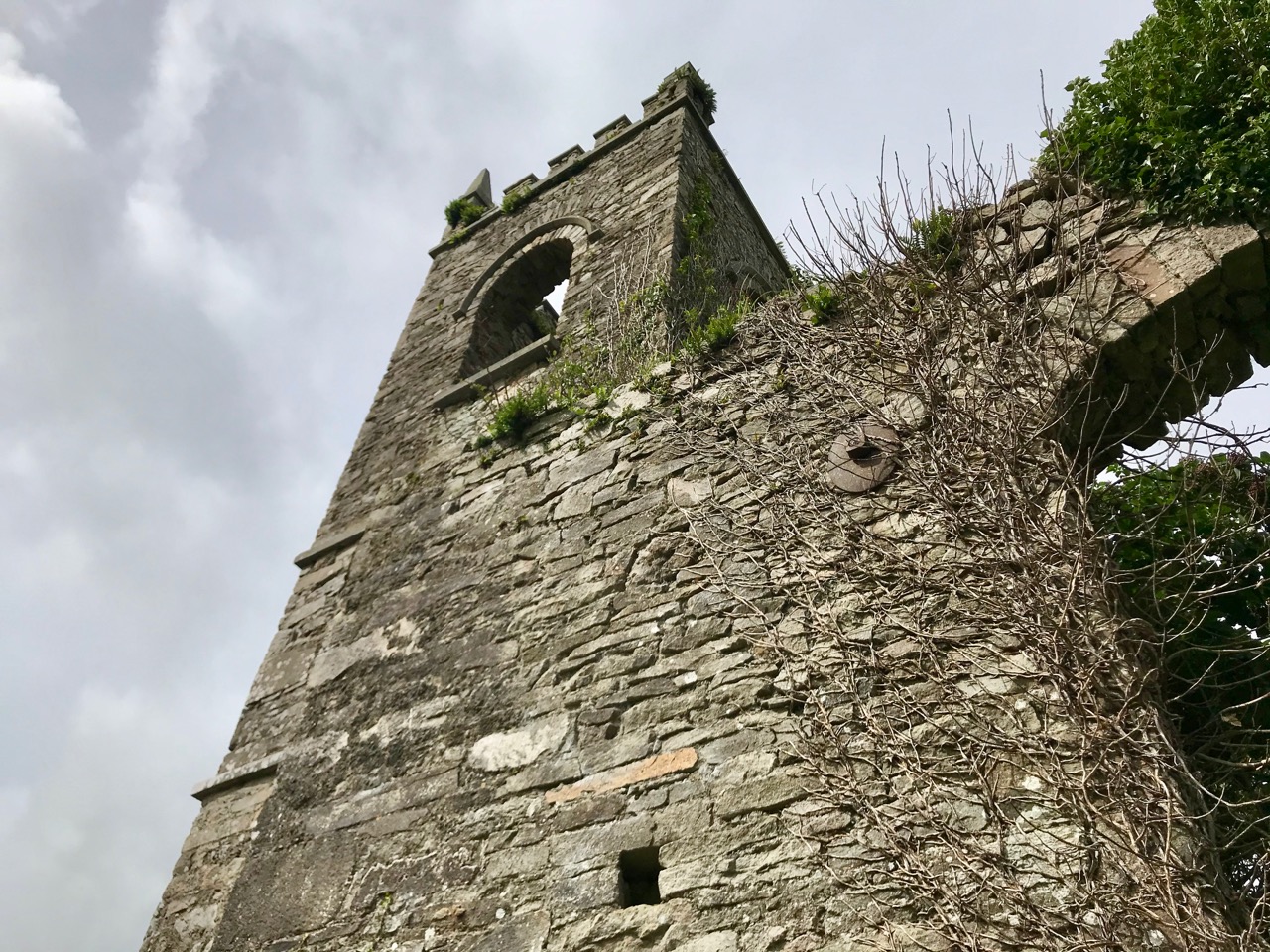
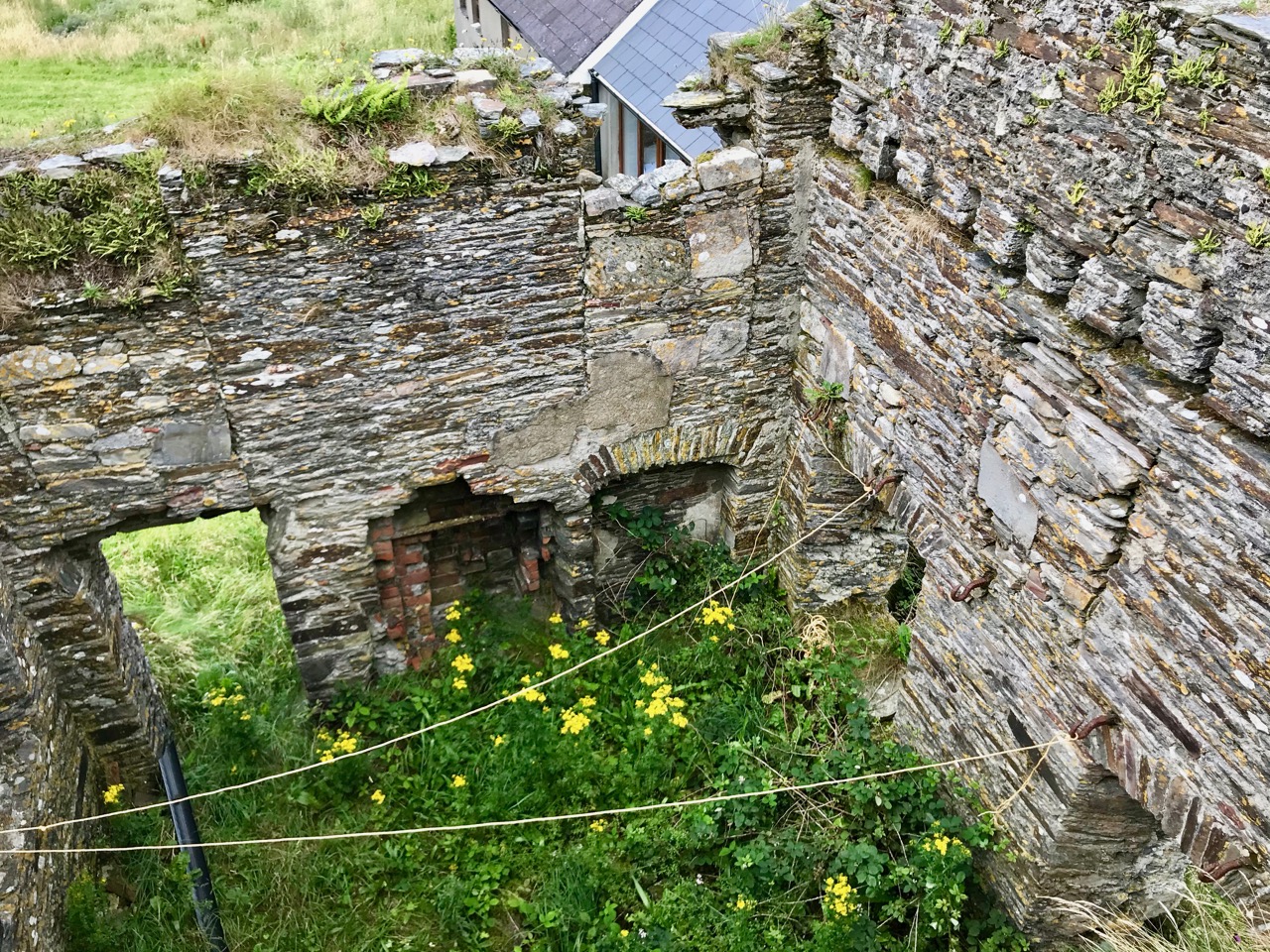
There’s a lot going on at the Dunnycove Signal Station site: the setting remains clearly laid out based on the 1806 plan, and the dominating view is due south. Parts of the original building remain although much has been altered including an external staircase and the surrounding structures.
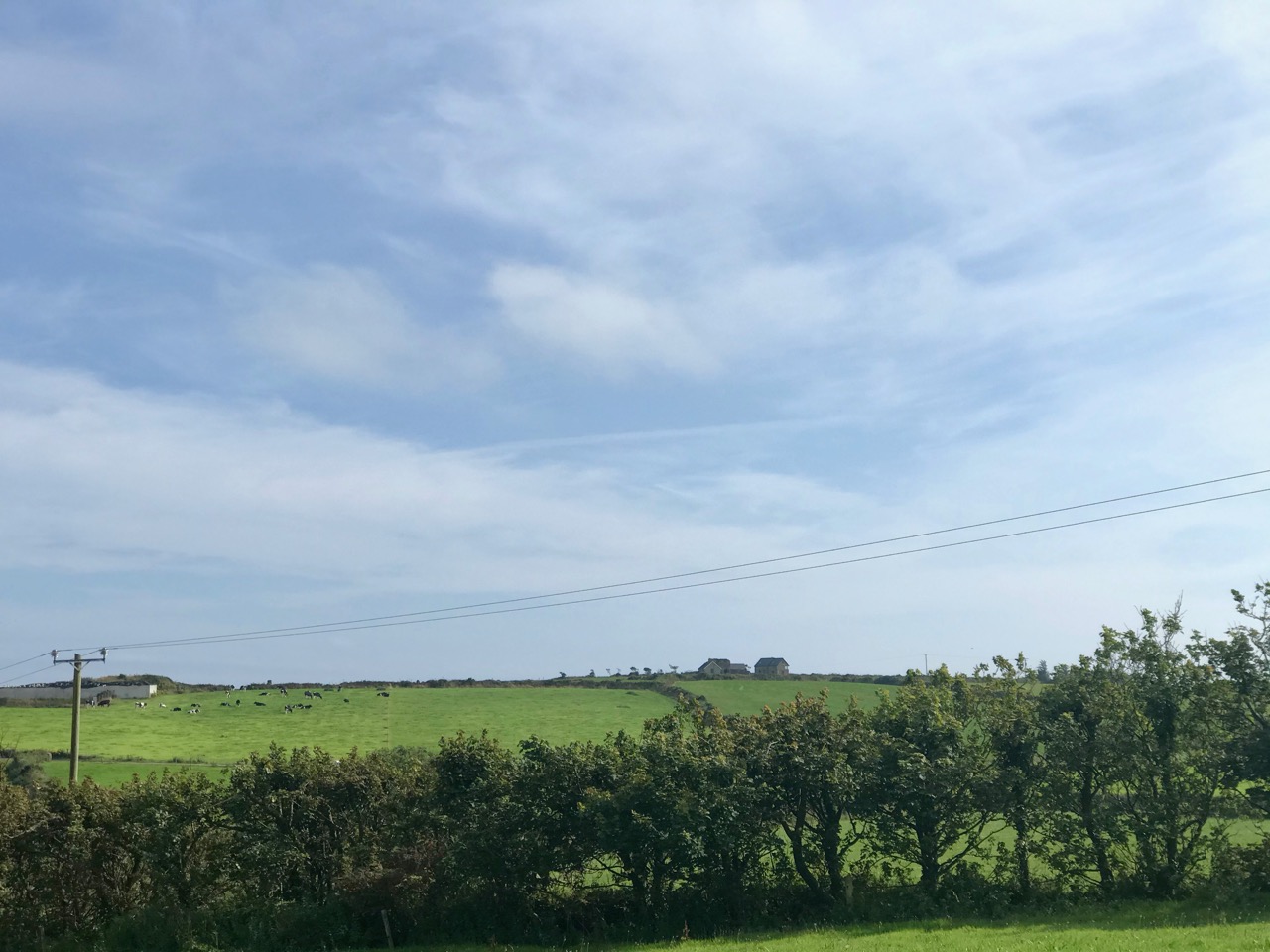
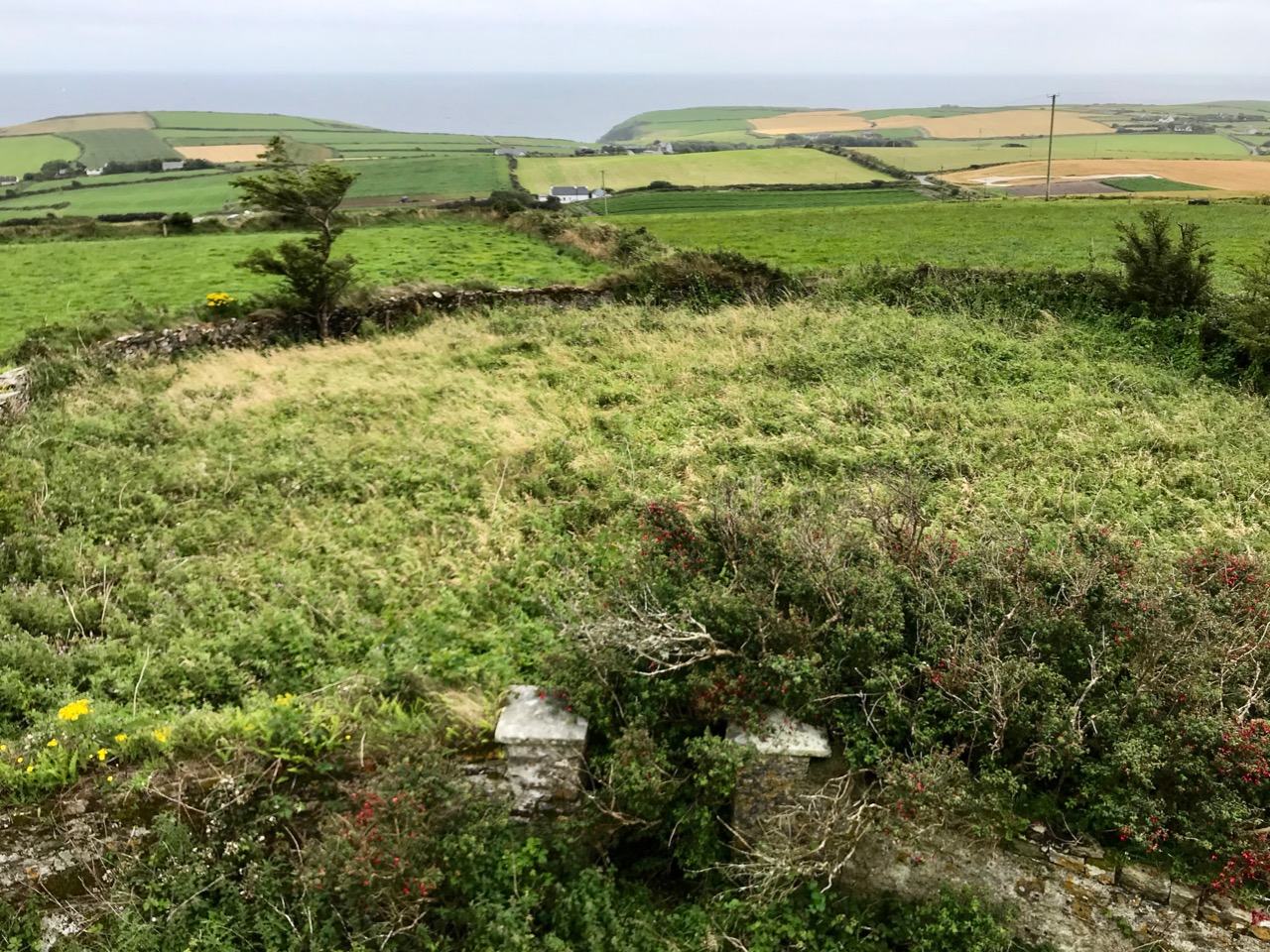
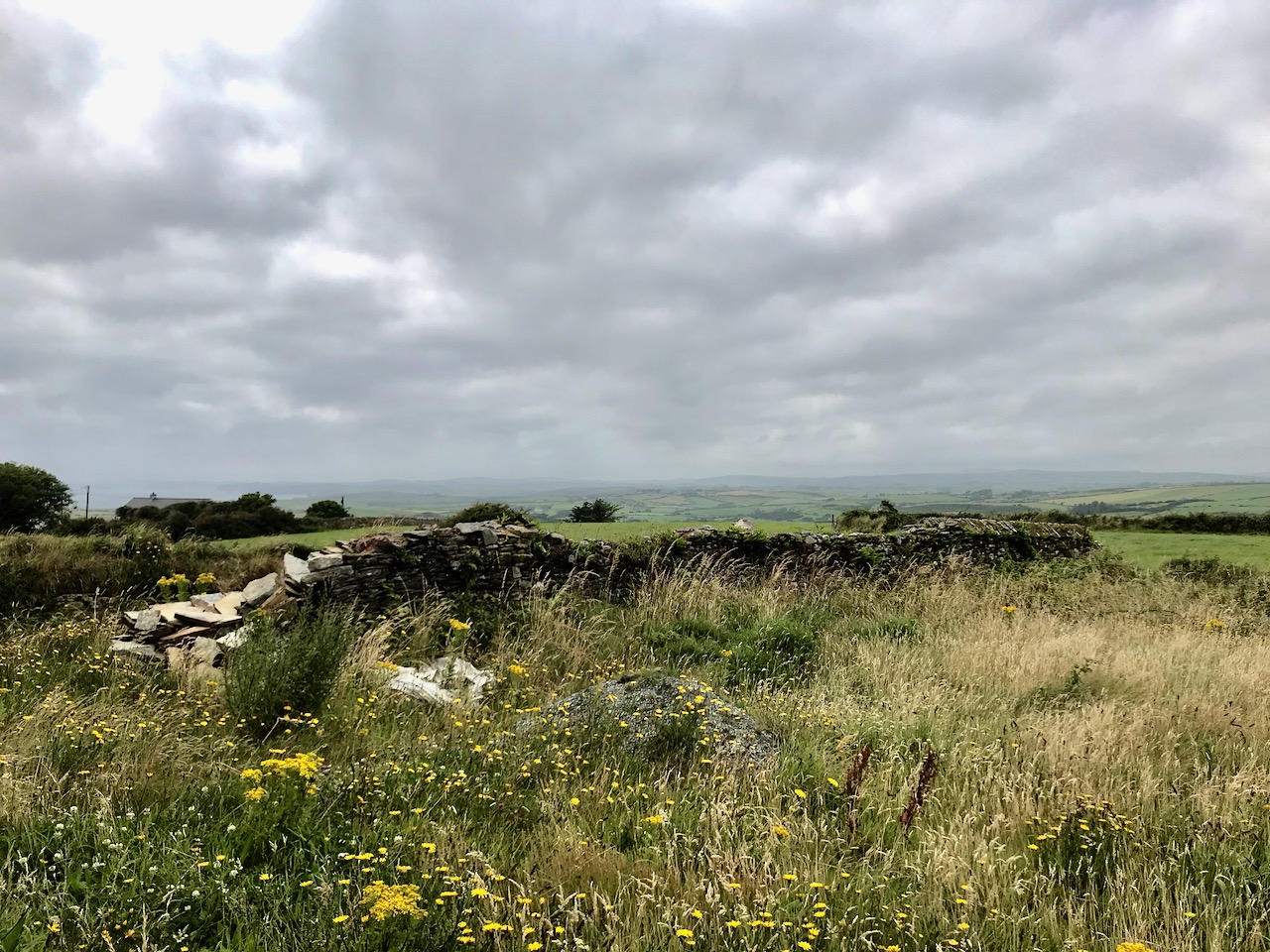
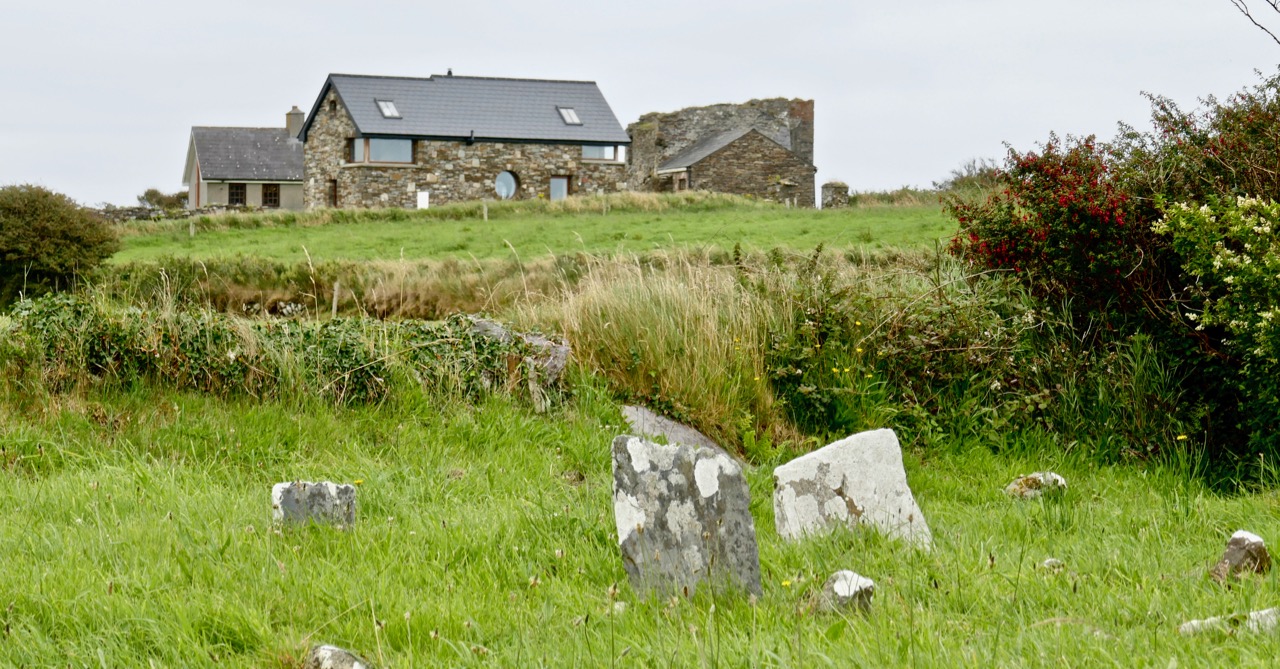
The upper picture shows a distant view towards the signal station complex: it is on the highest point in the immediate landscape. Next is the view from the present top of the old tower, looking across the segment-shaped land which once held the signal mast and – later – the ‘semaphore’, most likely used to communicate with the Coast Guards below: beyond is the ocean. In 1837 Lewis’s Topographical Dictionary of Ireland had this to say about the area:

. . . In the R C divisions this parish is the head of a union or district, comprising the parishes of Ardfield and Rathbarry, in each of which is a chapel; that of Ardfield is a low, plain, but commodious edifice, situated on the commons. There are schools in which 140 boys and 170 girls are taught, also a school at Dunny Cove, a Sunday school under the superintendence of the vicar, and one or two hedge schools. The ruins of the old church are situated on the highest point of land in the parish; and near them is a building which during the war was used as a signal tower, but is now the residence of Lieut. Speck, who commands the coast-guard at Dunny Cove. Close to the Cove are the ruins of a castle . . .
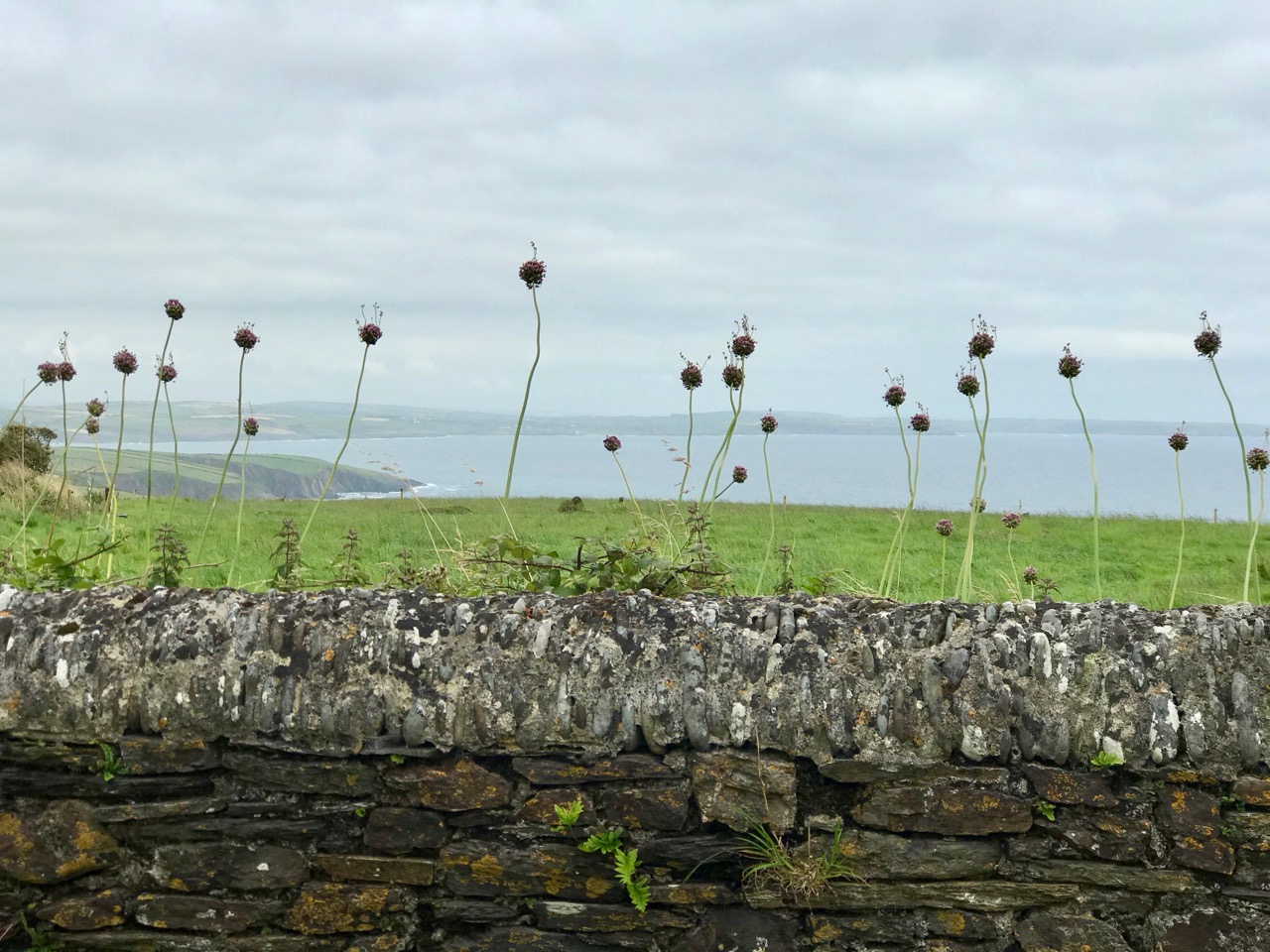
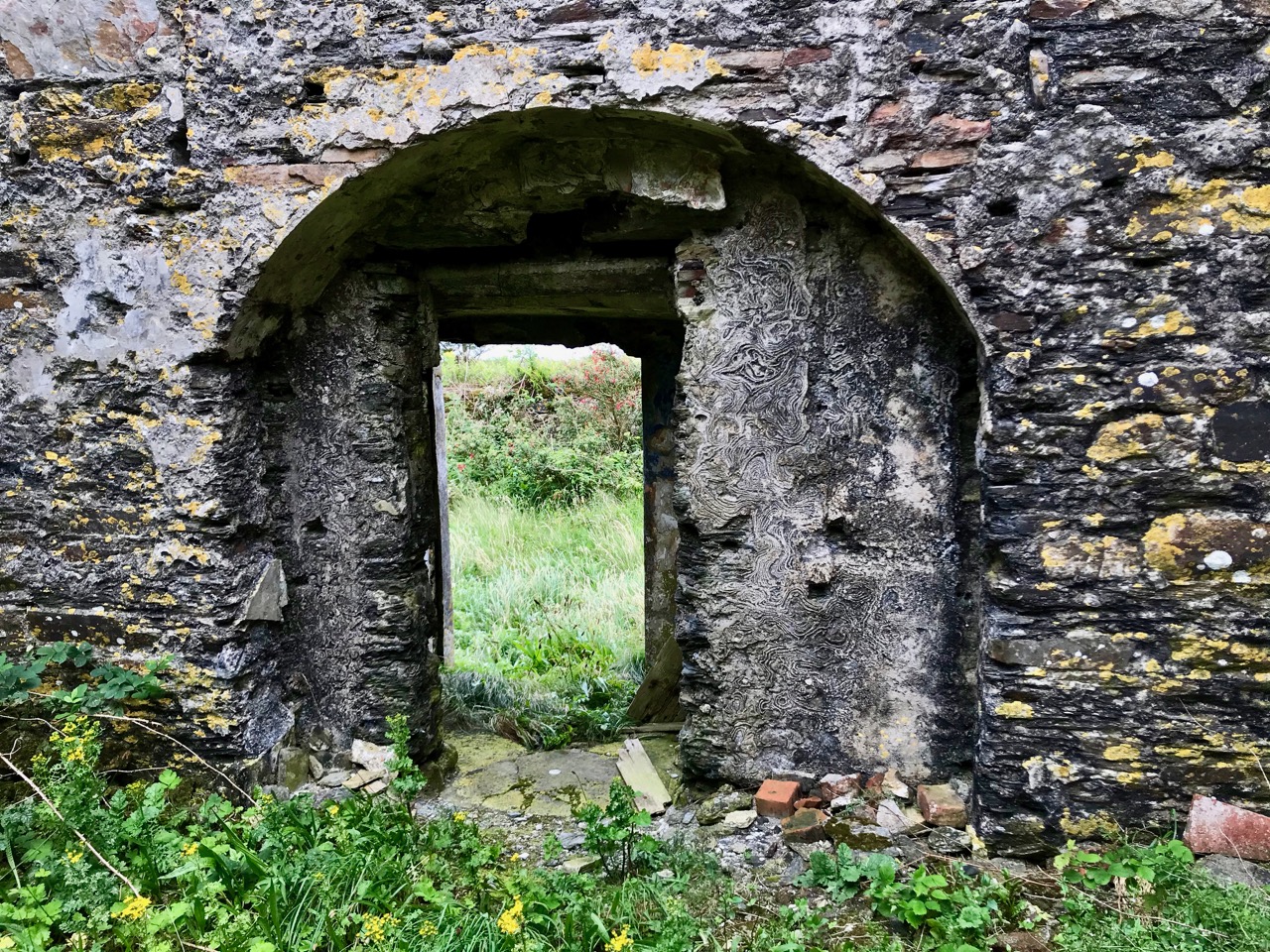
It seems to me that this site, in particular, has so many stories to tell us. Not just about the one period in history that caused the building of the original tower, but also about how a community has developed and adapted around that building. After the close of the Napoleonic era, when the threat of invasion receded, the tower retained its significance as a high place from which observations can be made. The Water Guard (which became the Coast Guard) took it over and it has remained a dwelling place for families ever since. Billy Sheehan is testament to this ‘living’ history, and the old stonework survives to tell where meals were cooked – where sleeping, waking and working became the rhythm of life for generations on this West Cork hilltop.

Please note that Dunnycove Signal Station is a private property and permission to access it must be sought from the owner
The previous posts in this series can be found through these links:

Part 1: Kedge Point, Co Cork

Part 2: Ballyroon Mountain, Co Cork

Part 3: Old Head of Kinsale, Co Cork

Part 4: Robert’s Head, Co Cork
Part 5: Downeen, Co Cork
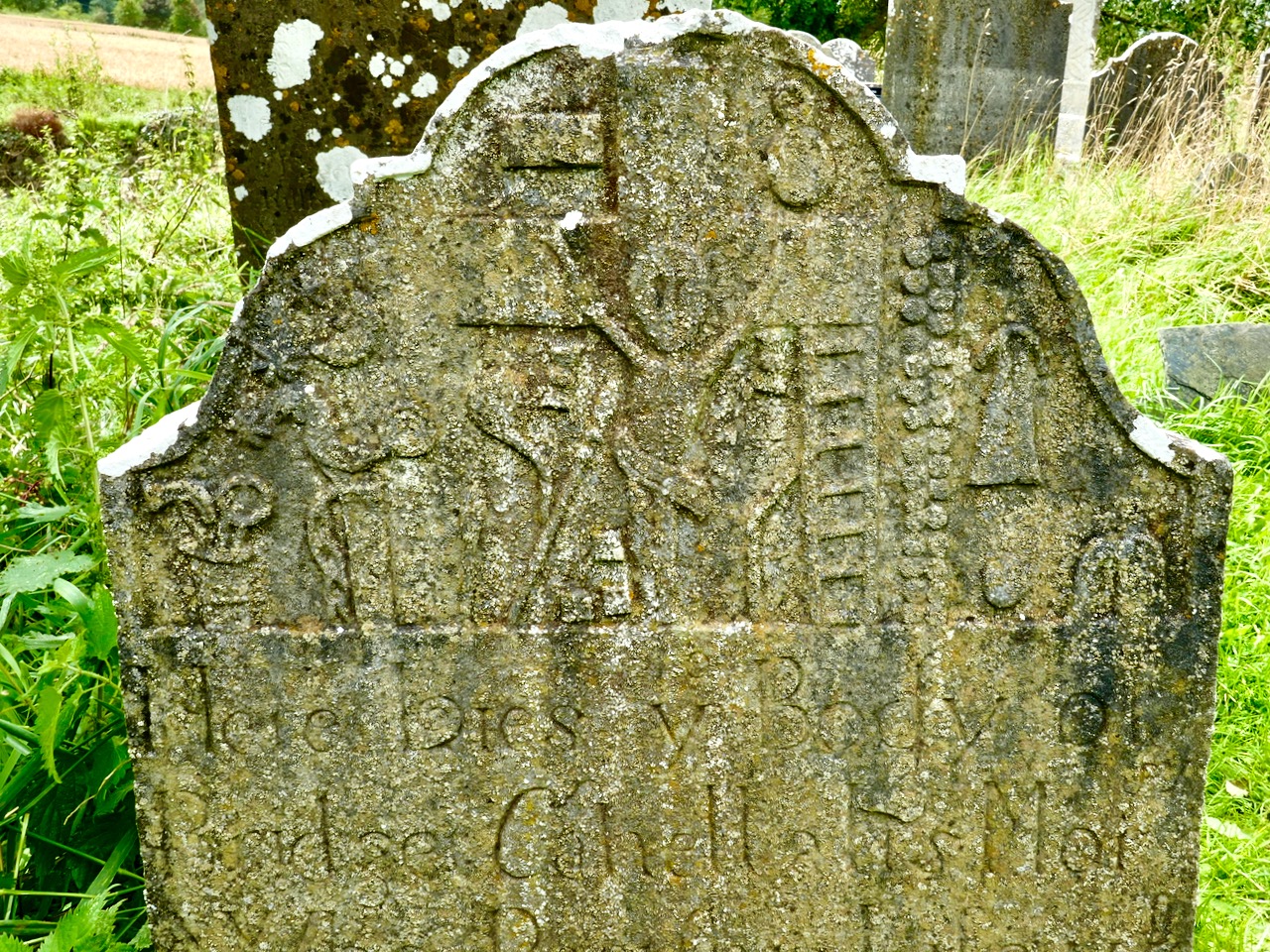
Off the M8 – A High Cross and a Complex Saint

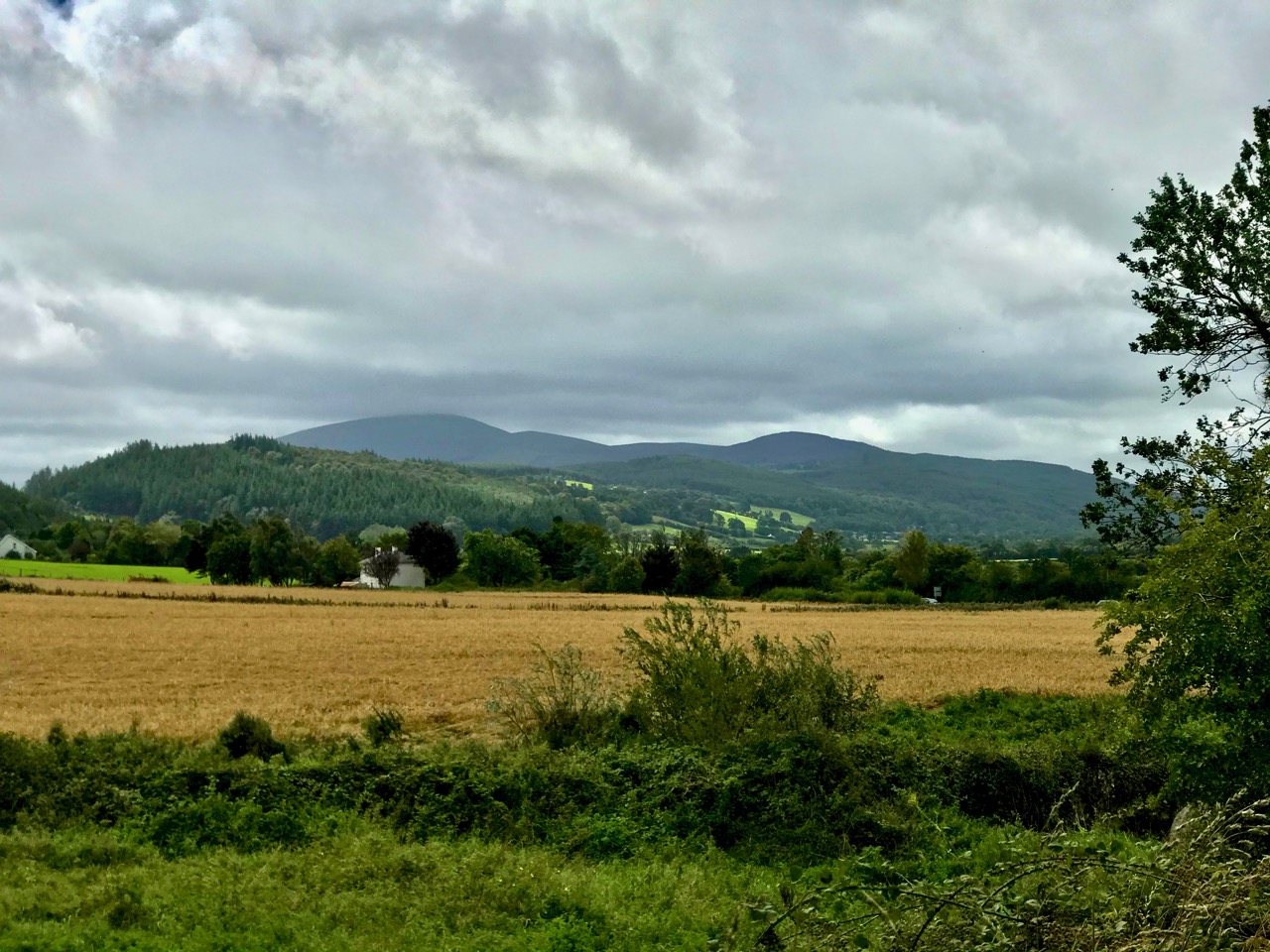
We haven’t had an ‘Off the M8’ for quite some time. You remember that, on our journeys from West Cork to Dublin, we would go (literally) off the beaten track to find new places of interest to visit – making a ‘grand day out’ of every trip. However, the unexpected arrival of the Covid19 pandemic severely curtailed our travelling – and everyone else’s – for many months. Covid is by no means over, even now, but we are slowly venturing further afield and, last week, made the trip up to the Dublin area, following all the guidelines. Nevertheless, we couldn’t resist trying out a fresh route which adds about 40 minutes to the overall journey but which takes in a new (for us) medieval stone cross and a historic site with thought-provoking associations. It is situated with fine views of the Slieveardagh Hills to the west.
We followed the normal route as far as Cahir, on the M8, then headed off east on the N24 and N76 towards Callan. Just after Ninemilehouse (Ireland has some wonderful place names!) you cross from County Tipperary into County Kilkenny and, within a few minutes (watch carefully), you’ll see a small signpost directing you off to the right down a tiny boreen to Killamery High Cross.

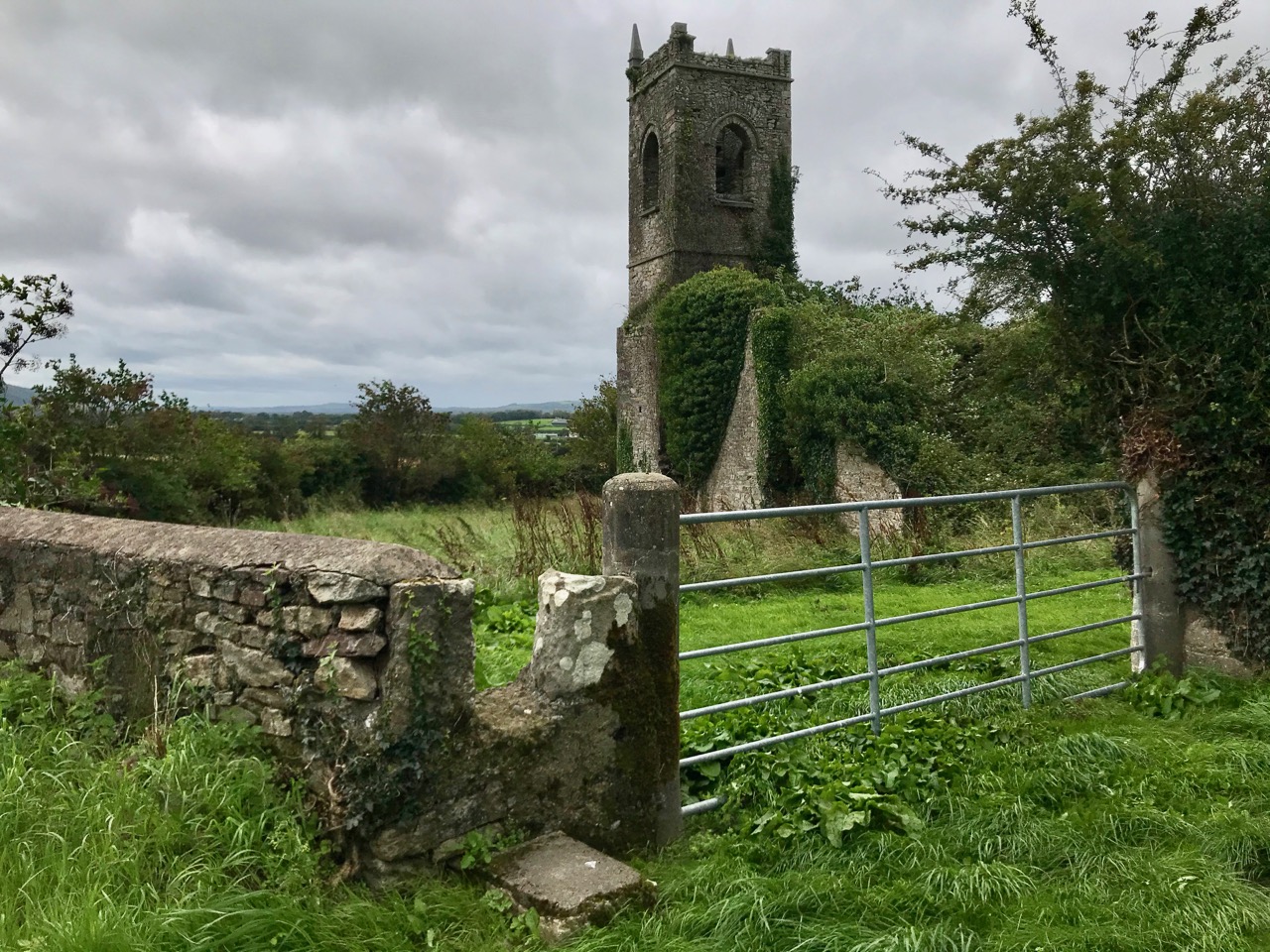
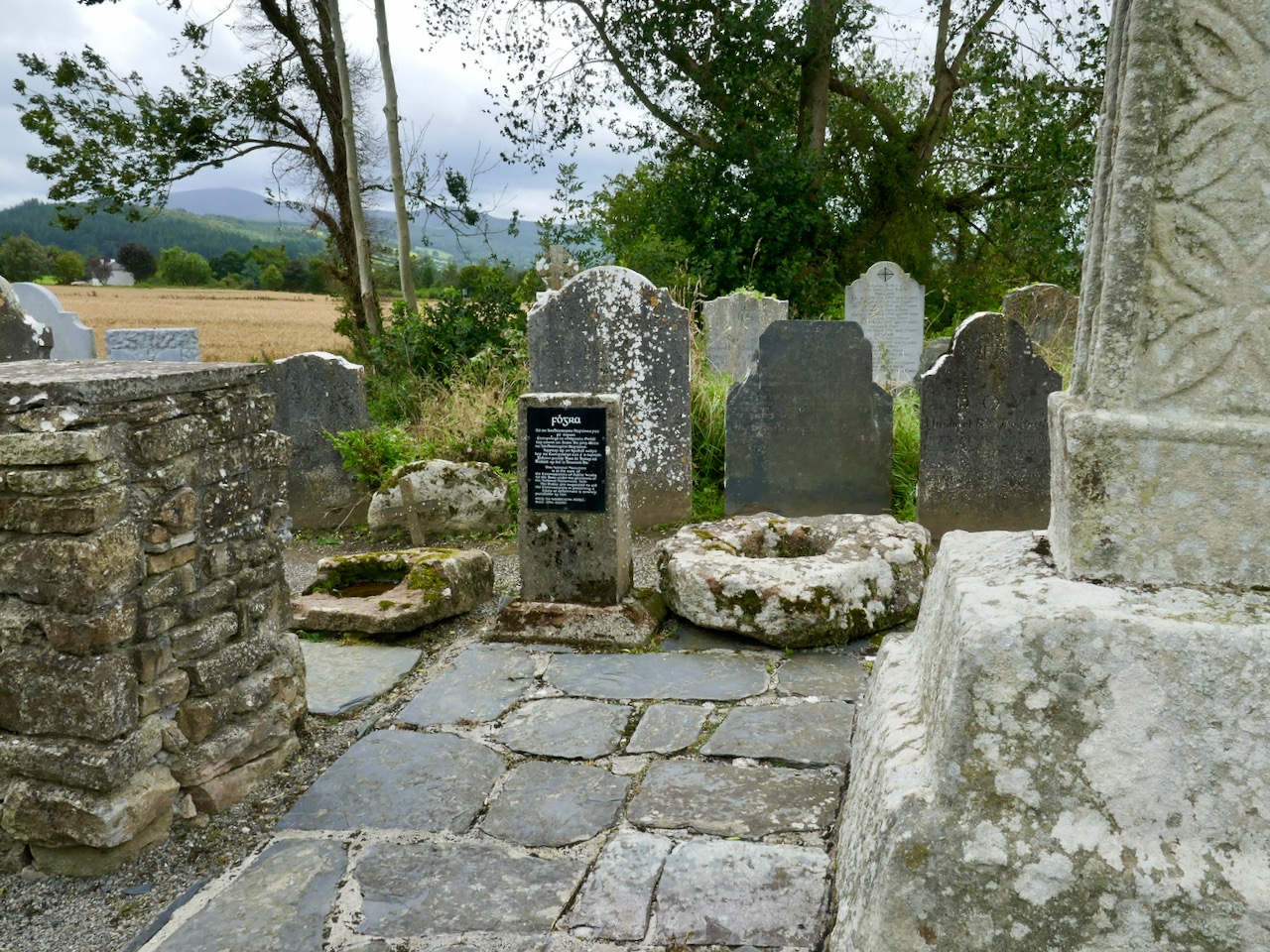
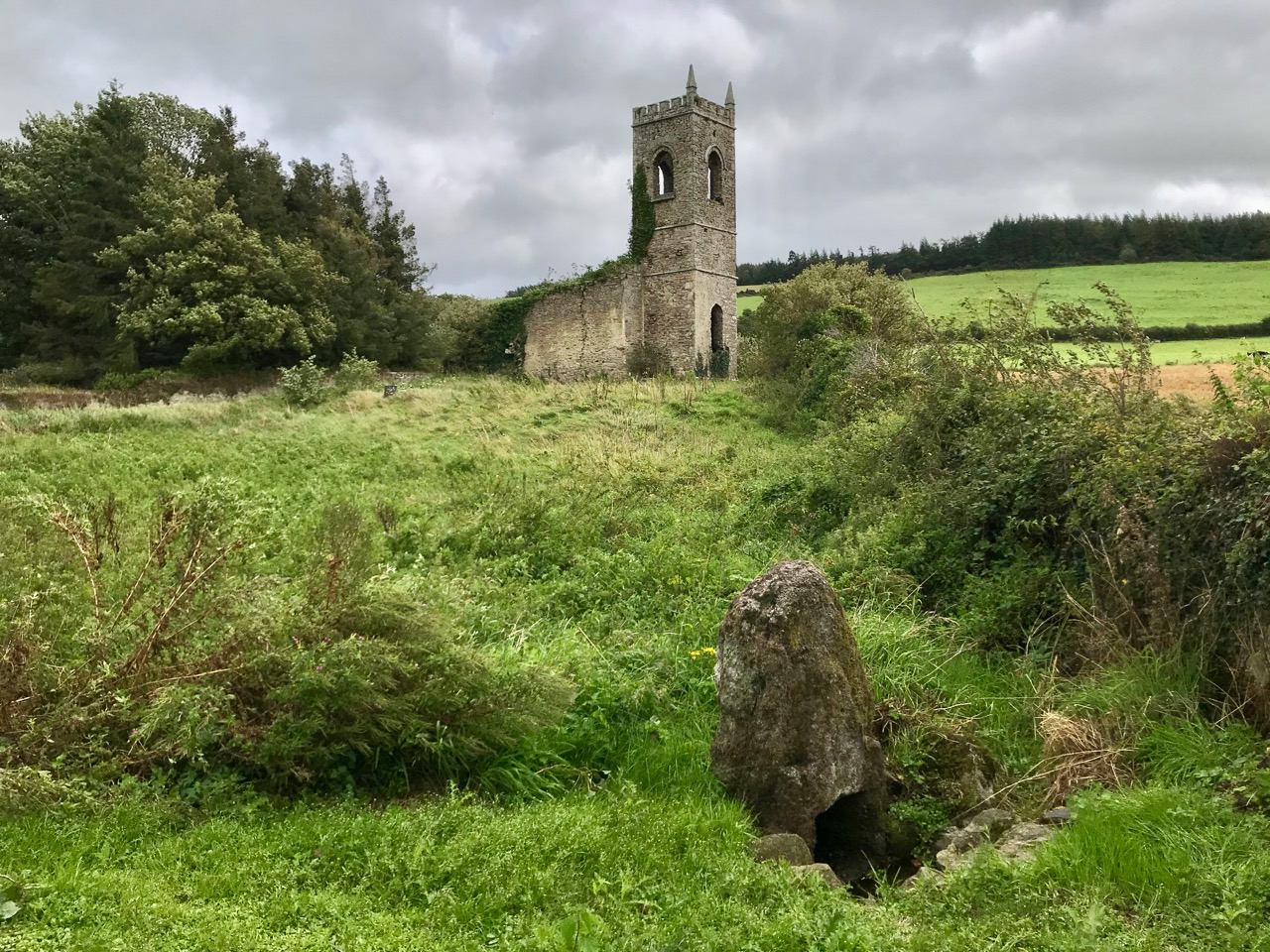
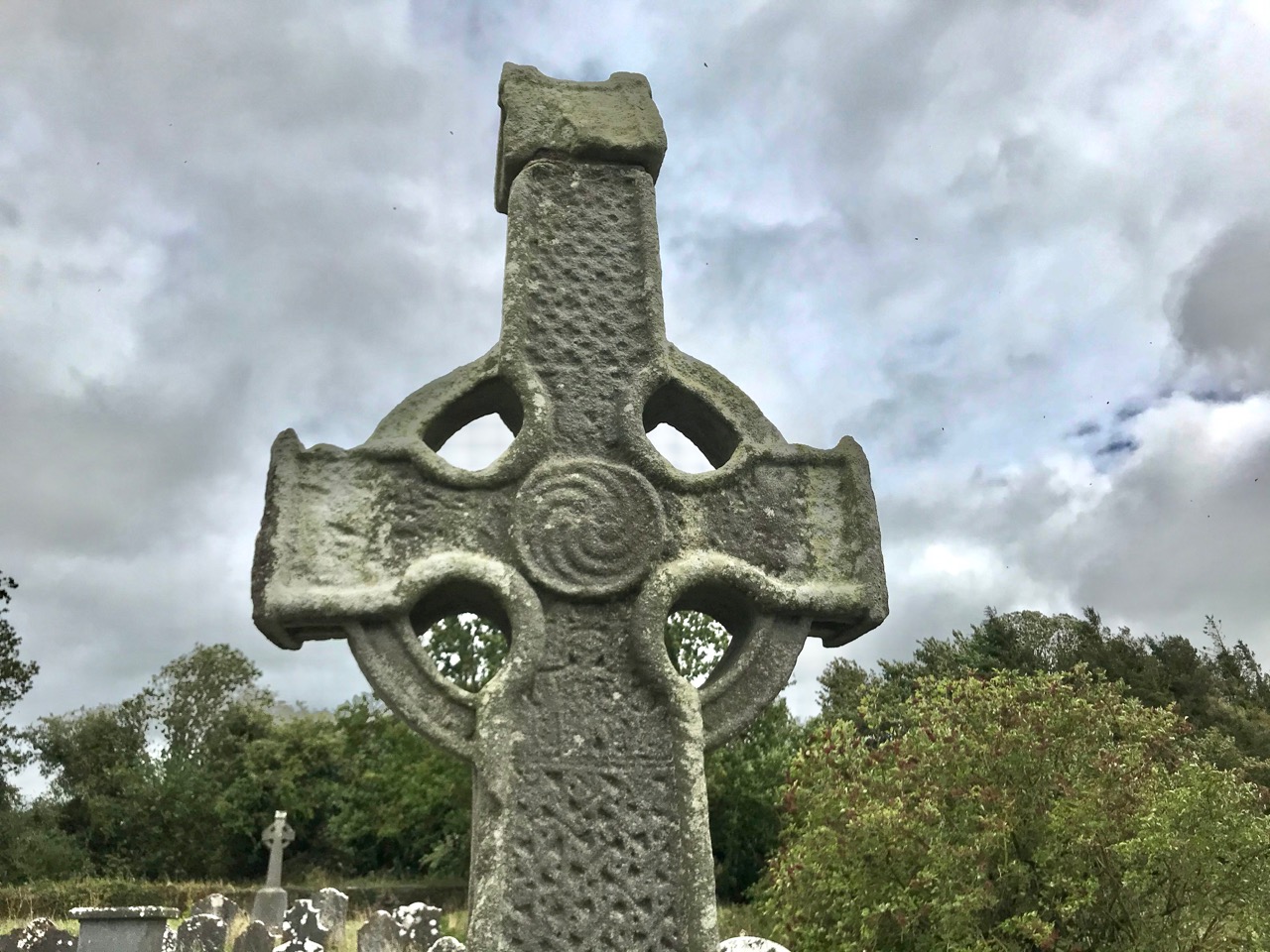
The first thing you’ll see, at the end of this lane, is the ruin of a significant church. Some distance beyond it you’ll make out the distinctive shape of the large, carved stone cross but also many other treasures including old grave slabs, bullaun stones and a very fine holy well dedicated to Saint Nicholas.

The site is associated with an Irish holy man, as you would expect: Saint Gobhan, Gobán Fionn, Gobban – or even Gobanus – who lived from c560 to c639AD. Foundations associated with this saint were many, including Portadown, Co Armagh, in the north; also as Abbot to the monastery of Old Leighlin, County Carlow, where in 633AD he presided over a great Synod held to debate the timing of Easter (we seem to remember only the later Synod of Whitby – 664AD – which also set out to regularise the date but which led to irreconcilable disagreement between the Irish and Roman factions). Latterly, Gobhan was linked to the Kingdom of Kerry – near Tralee, but we are interested today in the monastery he set up by a holy well in Killamery. He had a thousand monks with him and it is said that an army of angels helped build the walls.

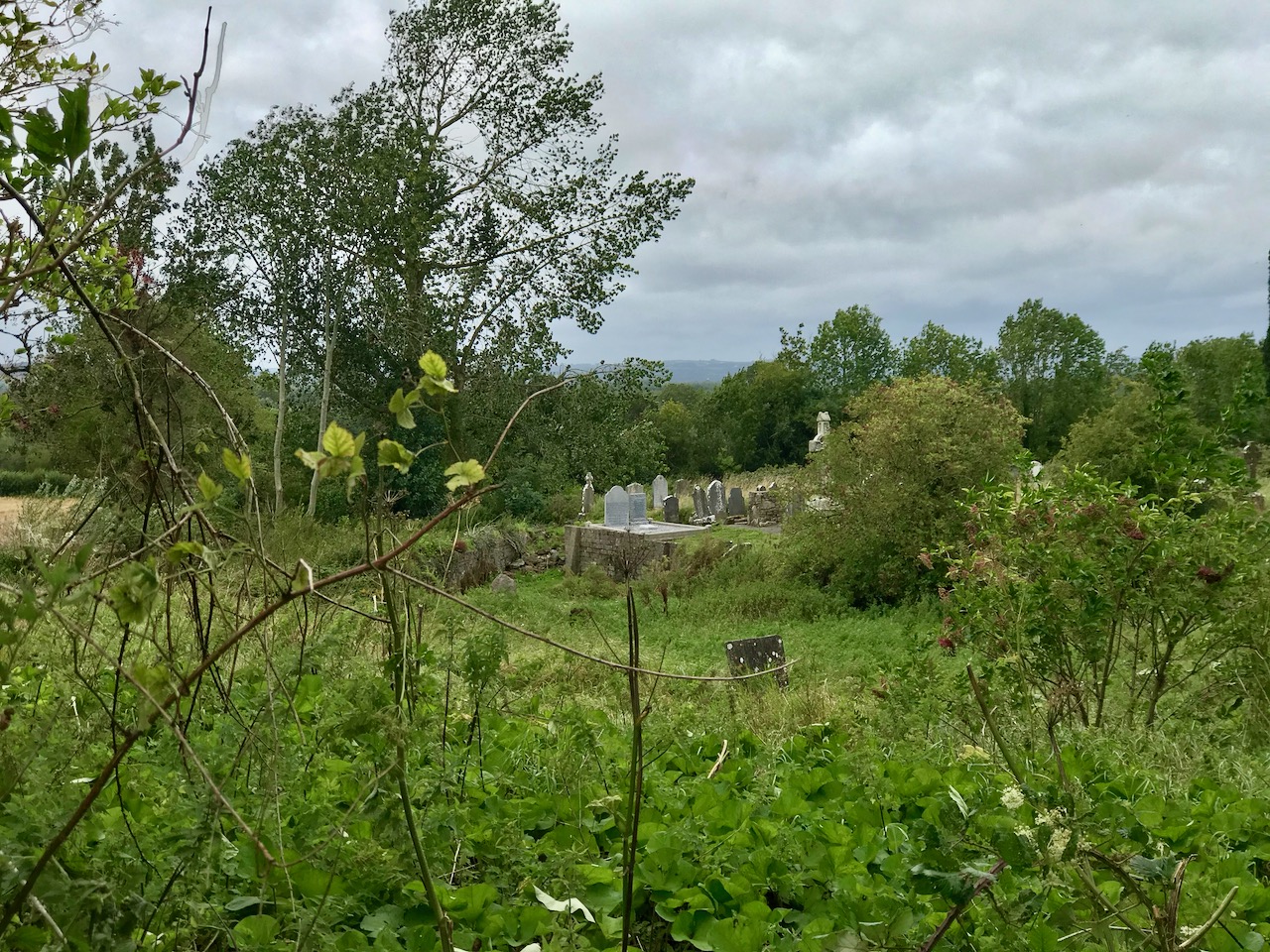
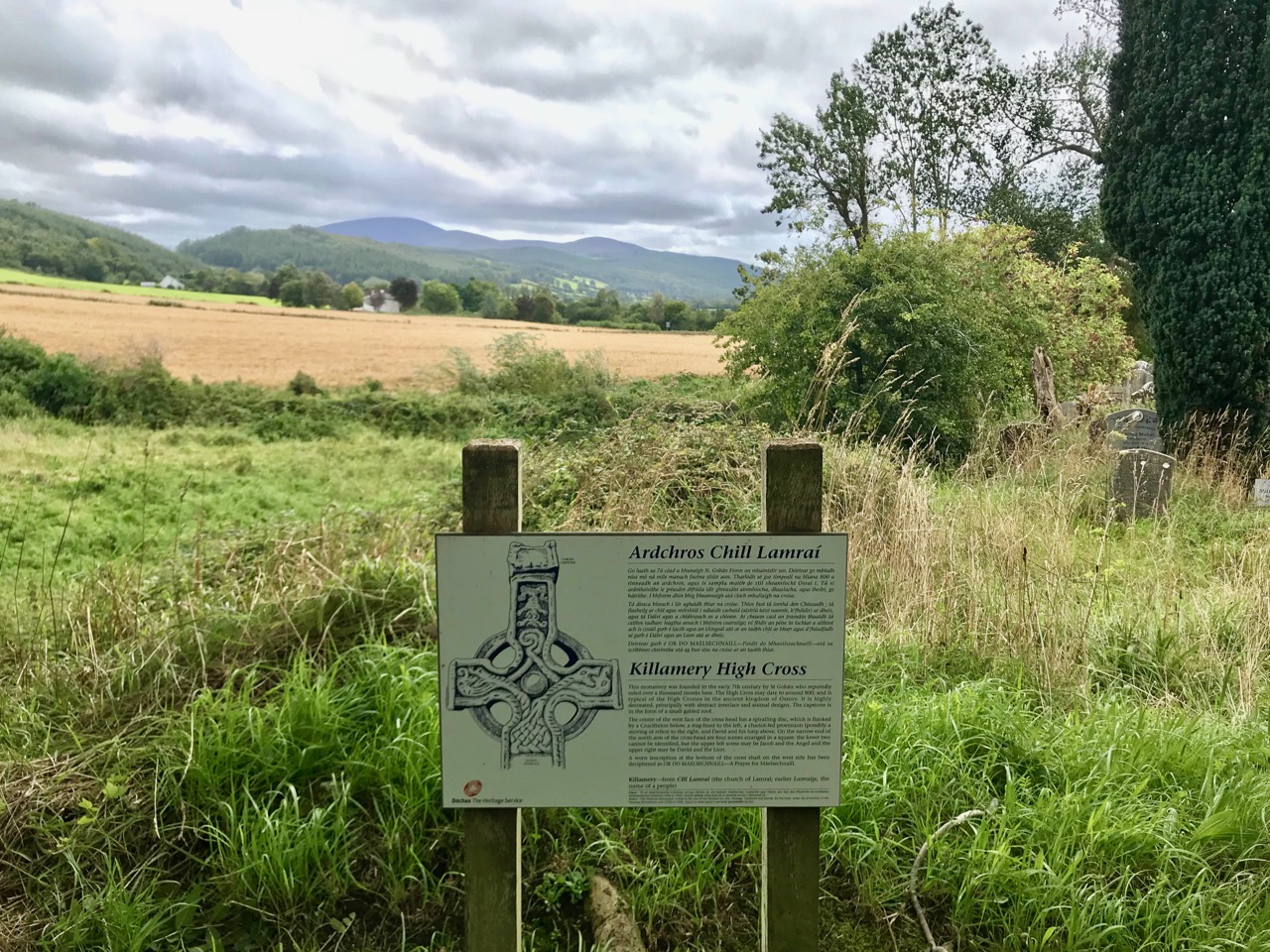
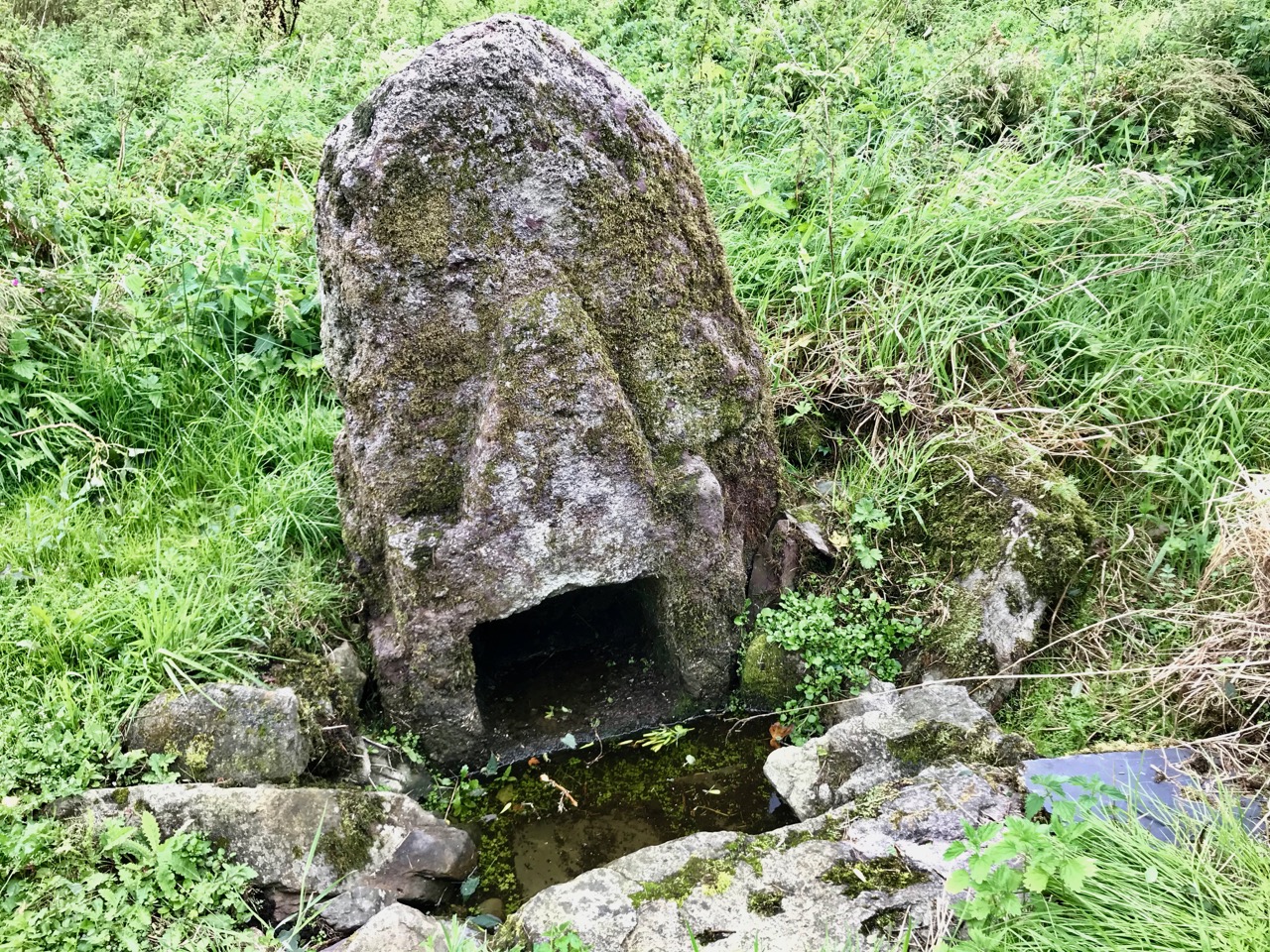
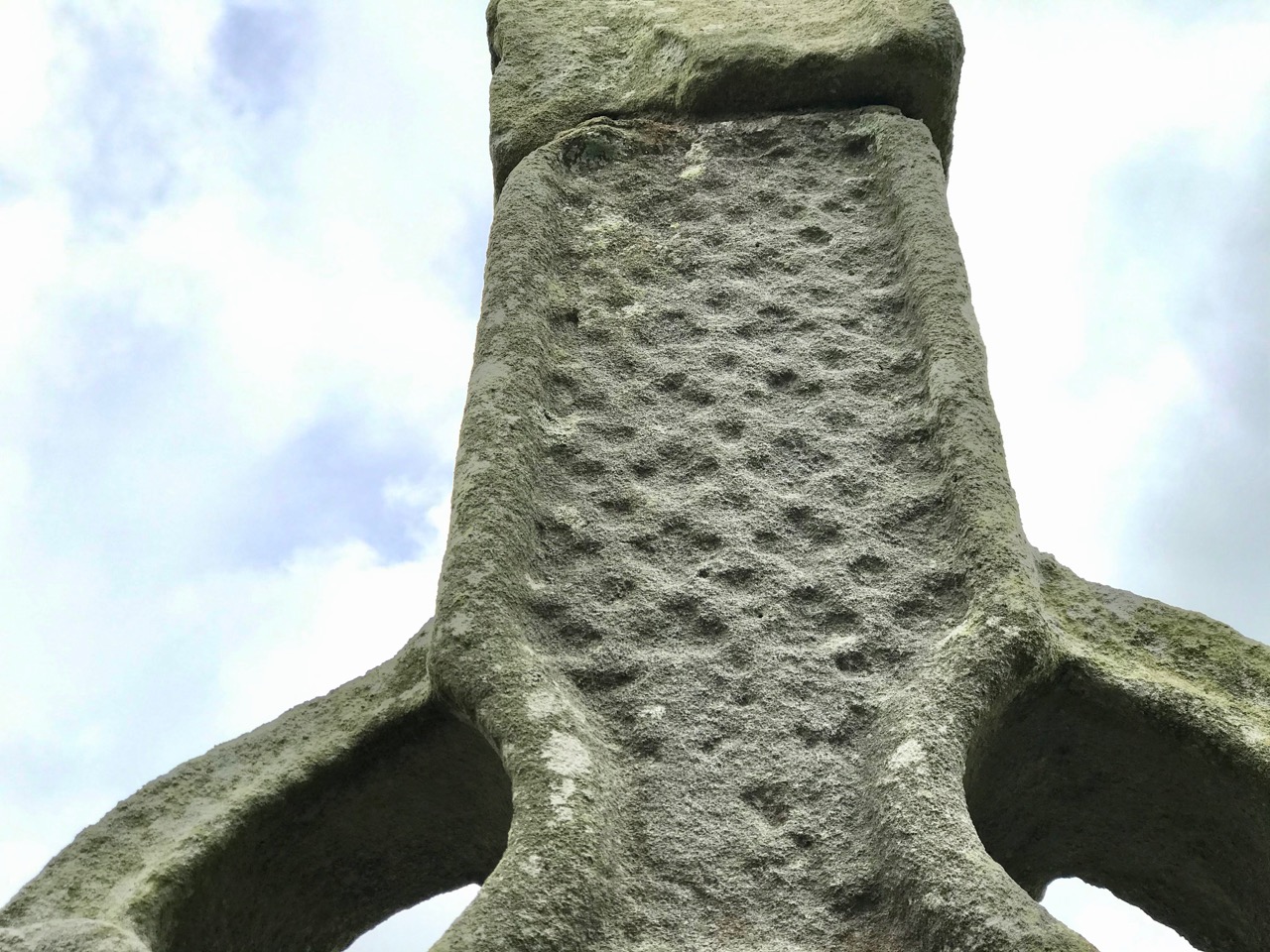
The angels must also have helped to eradicate that monastery as there is now no trace of Gobhan’s foundation in County Kilkenny, just a lonely 19th century church, the well (pictured above), a burial ground and this very fine High Cross. The cross is well worth a visit: some say it’s the oldest of the Western Ossory high crosses, which are themselves considered to be a distinct group. I have looked previously at the Kilkieran examples. Here at Killamery there is just the one cross and, perhaps for that reason, it stands out in the memory. Some scholars reckon it could be 8th century, but most attribute it to the 9th. It’s ancient by any standard, certainly, and it’s probably unavoidable that the carving is so weathered.

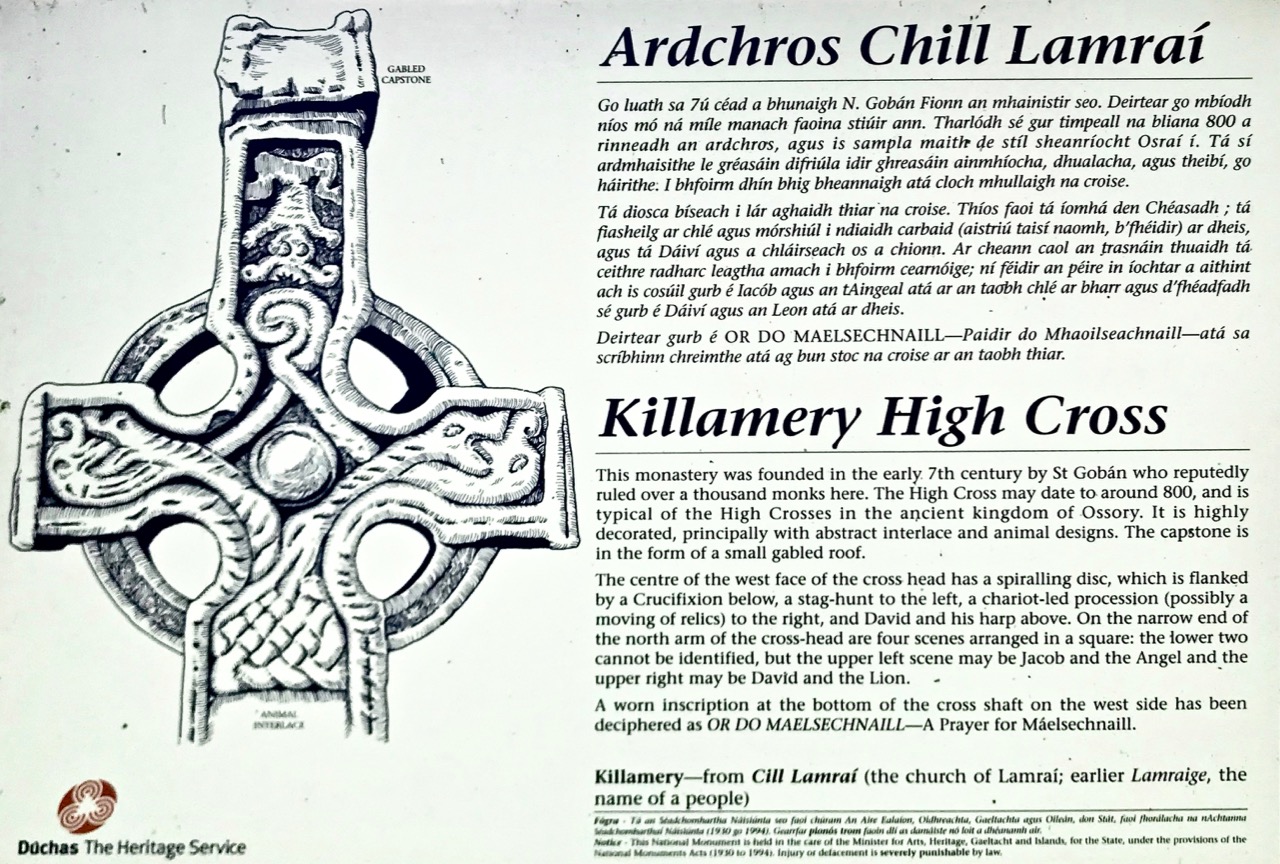
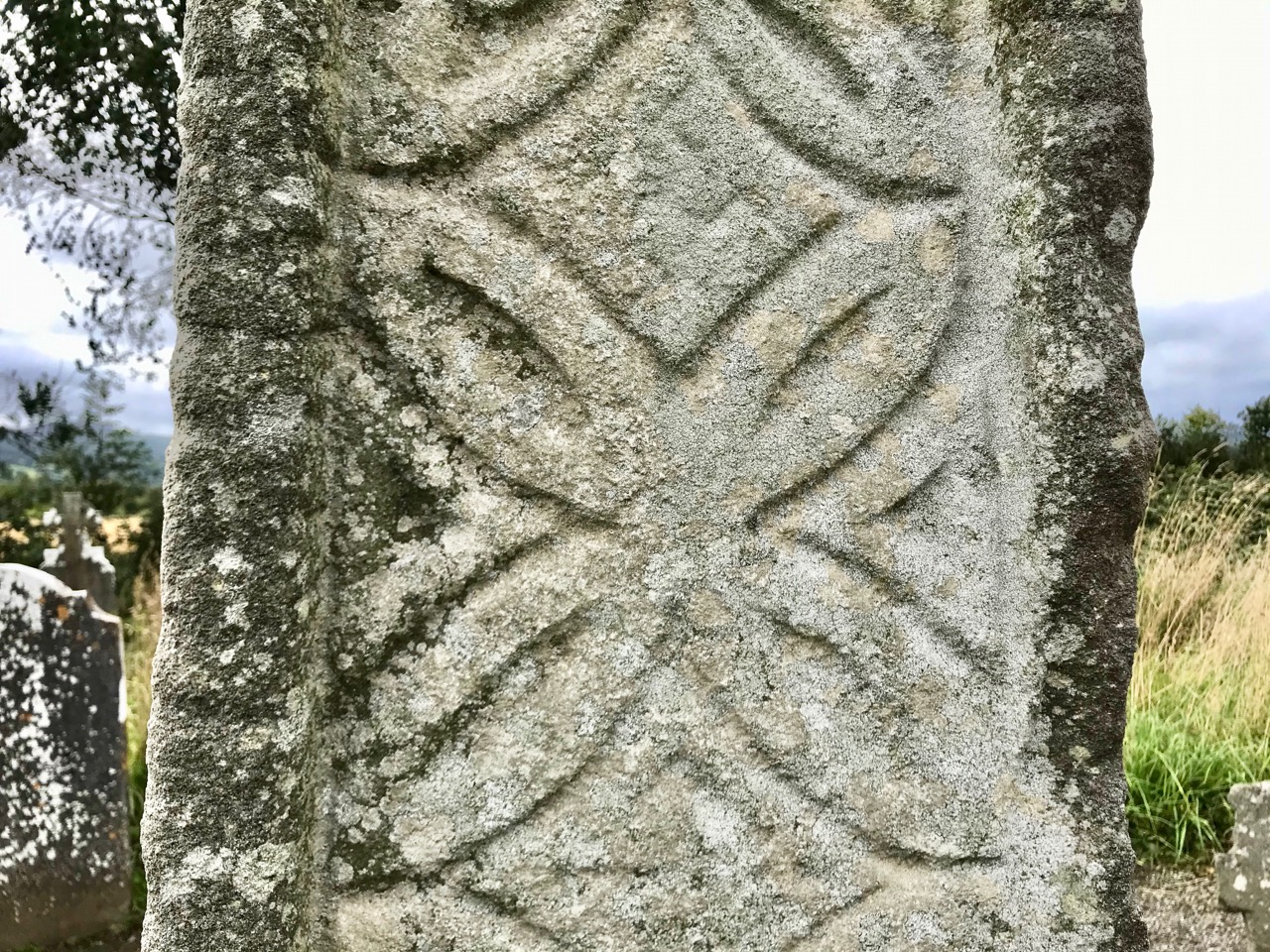
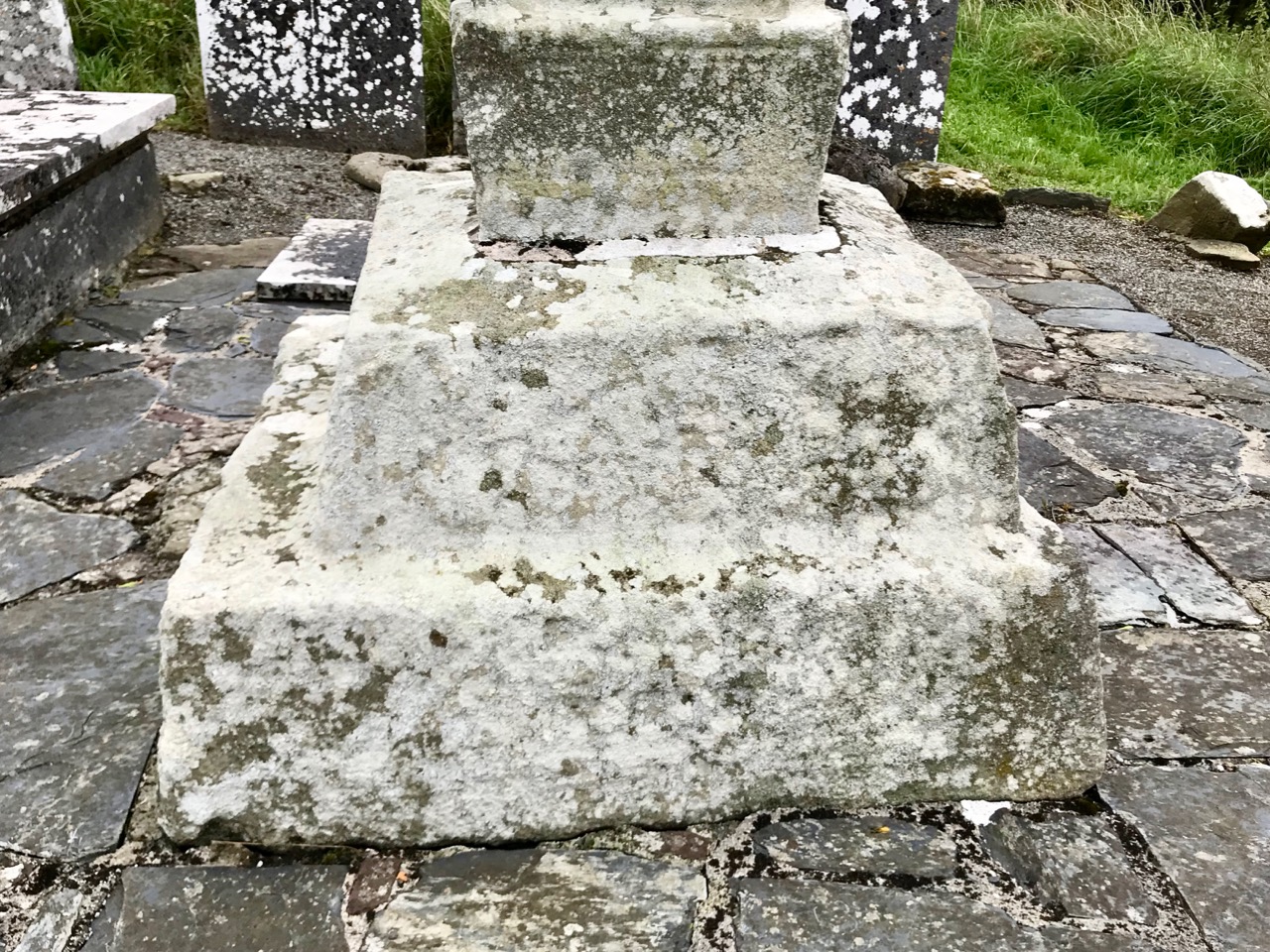
The Duchas signboard (above) describes the scenes depicted on the various elements of the cross,  but most of what we can decipher today is limited to geometrical patterns – very much in the ‘Celtic’ tradition. There may have once been other visible motifs: the large plinth stone is completely worn on all surfaces.

The cross certainly predates any of the other artefacts, bullauns and stone markers which surround it today, but it is likely that the adjacent holy well is even more ancient: it is dominated by an intriguing, large shaped monolith.

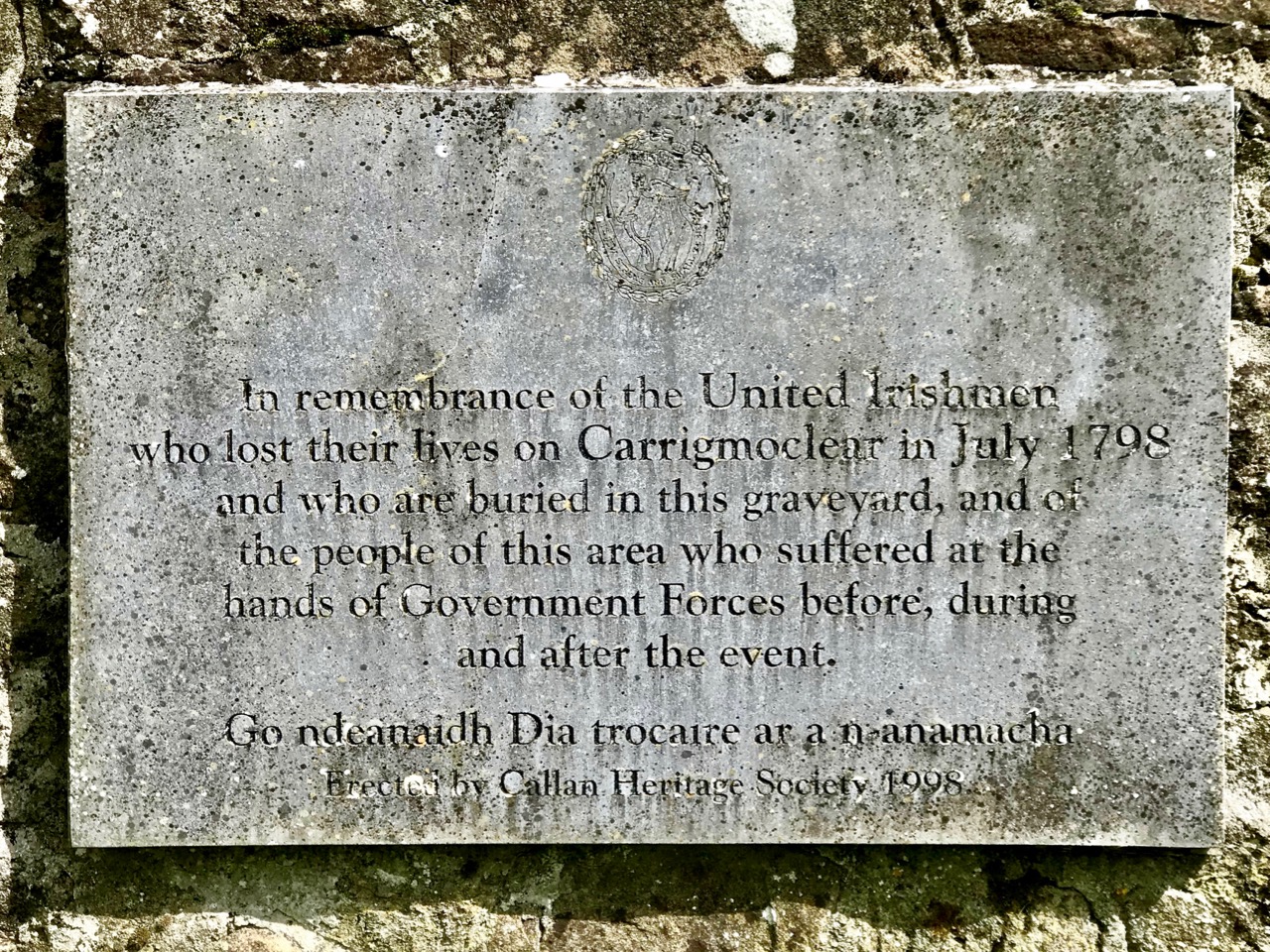
Among the artefacts which have arrived at this site is a fine 17th century (probably) cross slab and a memorial to the United Irishmen who lost their lives at nearby Carrigmoclear in 1798 – both shown below.

The origins of Gobhan himself merit some consideration. He has associations with metalworkers and, of course, we know that Saint Gobnait was their patron saint. Could there be some fusion of names in folk history and oral tradition? Like Gobhan, Gobnait is revered at many sites around Ireland and undertook diverse travels around the island in search of the nine white deer which set her destiny.

There’s nothing more Irish than the experience of finding references to hundreds of years of history hiding down a lonely boreen to nowhere in the rural heart of this land. More than anything, it makes us want to know more. What is real? What is myth – although made to seem logical and credible through stories which are still told? Of course, we can never know the reality, but we can share in the spirit of the stories, and wonder at a piece of stone beautifully carved, perhaps, thirteen hundred years ago . . .

Once you have visited this fascinating site, find your way across to the M9 (it’s straightforward enough) and you’ll be up to the big city in a jiffy!

The Broken Stone – Update

This post was originally written in 2017. I have provided an update at the end.

All the names in this story have been changed. However, it is a true account of how we came to lose one of our ancient monuments – at once a family and a national tragedy.

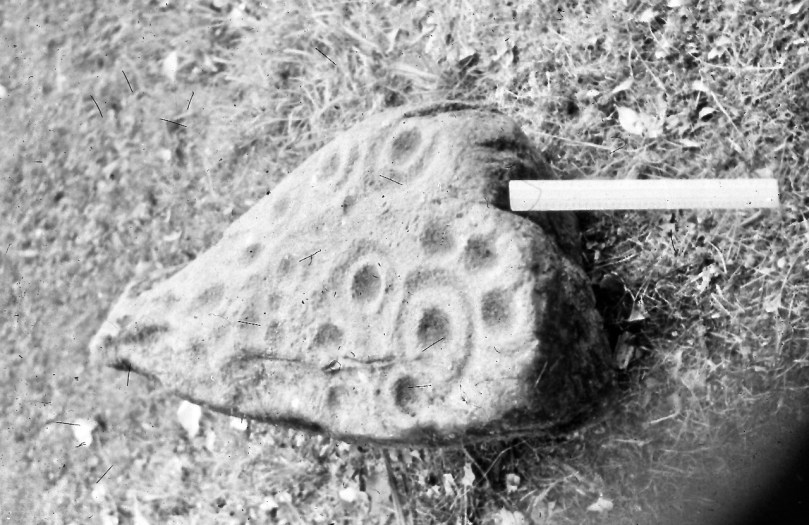
This is my drawing. It shows an excellent example of Irish rock art, a classic cup-and-ring design, deeply carved – a thing of beauty, antiquity and intrigue. I know it now as The Broken Stone.

The drawing was done in 1972, while I was recording all the known examples of rock art in Cork and Kerry, travelling on a Honda 50 with with my equipment in a backpack. The sun shone every day that summer. Everywhere I went I was received with kindness and friendship, nowhere more so than at the big farm house owned by Tim and Clair Flynn. The stone was in their garden, having been found in a bog a short distance away and brought to the house in Tim’s grandfather’s time.
Tim ran the farm, and Clair looked after everything else, including three small children. They were lovely people – they took me in, fed me, took a great interest in the research. I felt I had made friends. On a second visit I observed Clair giving two of the children antibiotics and asked why. She explained that two of the three, Niamh and Shane, although not the youngest, Ciara, had a genetic disorder called Cystic Fibrosis. I had never heard of it, and Clair explained that both parents had to carry the gene, that it primarily affected the lungs, and that it was eventually life-limiting. In fact, at that time, life expectancy for those with the disease was about 20.

Through 40 years, mostly spent in Canada and in arenas far removed from Irish archaeology, I never forgot the Flynns or their wonderful stone. It was a happy memory, coloured by the sadness of the inevitability of the progression of the children’s’ disease.

When Robert and I re-engaged with rock art again in the last few years, I knew that sooner or later we would work our way from Cork to Kerry and I would have an opportunity to go again to Flynn’s farmhouse. In anticipation of this, I went to the National Monuments record, to remind myself of the details. To my surprise, I found a record that stated: There are no visible remains of any cup-marked stone here. It was set between two rocks in a prominent position in the garden but was subsequently broken. Its present location is not known. This made no sense to me: a stone like that, which could not be mistaken for anything except an ancient and significant artefact, could not just disappear. Perhaps it was simply not located by the surveyors. Perhaps it had been moved for some logical reason – it was less than a metre long and it was moveable. If it had been ‘broken’ that would make it more moveable yet.
Then, recently, I met Alison McQueen, tasked with updating the rock art records, and asked her about the stone. Since it had disappeared, it was not on her list to visit, but it turned out that she herself had visited the Flynns years before, although her interest was not in the rock art, but in the trough that was also located on the yard. It was a medieval basin that had been brought, over a hundred years before, from Mount Brandon to be presented to Tim’s Great-Grandfather in recognition for his political work and his support for causes such as Catholic Emancipation and land reform. Alison was able to tell me that the Flynns, ageing, and with Tim no longer able to farm, had sold the house and moved a short distance away, taking the trough with them. Of course! They must have taken the stone too, I realised, and that’s where I would find it.
And so, on a recent trip to Kerry, we travelled to the farm. There was nobody home (and a quick snoop around the garden confirmed there was no stone) so we knocked on a neighbour’s door and were kindly directed to the new house, where we were told, Tim and Clair’s daughter-in-law lived, who would be able to help us.

This is how we met Ciara, the surviving member of the Flynn family, and came to hear the story of the stone. Ciara just happened to be there, that day, spending time with her brother’s children. Her brother, Shane, despite all the health challenges he faced, had defied all predictions and only passed away last year. He was, by her accounts, an adventurous and determined man who lived every moment to the fullest and fought the good fight as long as he could, including undergoing a double-lung transplant. He worked and travelled and married – his two children were bright and curious and charming. His widow was not there when we called.

It has taken Ciara a long time to come to terms with the story of the stone – many many years – but she finally felt ready to tell it. She loved it as a child. She and her brother and sister didn’t know how old it was exactly, or anything about rock art, but they made it the centre of many imaginative games, as children the world over do with special features in their surroundings.

As an adult Ciara moved away in the course of her work. During this time, her sister, Niamh, became a staunch member of a Christian Fellowship church. Gradually, Niamh became convinced that the stone represented something evil. It worked on her mind until she was certain that blood sacrifices had been performed there in pagan rituals, and that it continued to exert some kind of malign influence, and in this she was supported by her church. She determined that it must be destroyed. Her parents were aghast, and refused to countenance this plan. However, by this time, Tim was ill and unable to participate in any real decision-making. Niamh launched a campaign to convince her mother. It was relentless and highly charged and Clair, in desperation, finally gave in.

A neighbour with a large digger agreed to destroy the stone. When I asked Ciara if anything was left, she said, she had never been able to find any remains and had been told by her family that it had been ‘reduced to dust.’

When Ciara returned from a term in Belfast shortly thereafter to discover what had happened, she was heartbroken: so distraught, in fact, that it caused a rift with her family for a time. Over the next few years, however, loss piled upon loss, as she lost her parents, her sister, and finally her brother. (In a typically Irish twist to the story, the neighbour who had crushed the stone was himself killed in an accident.)

In the face of grief the issue of the stone receded to the background but was never forgotten. Ciara has brooded over it in the intervening years and when we knocked on the door that morning, she decided she was finally ready to let go of the secret of what had really happened to the stone. I applaud her grace and courage, and I have immense sympathy for the Flynn family and the difficult path they have travelled.

As far as I know, this drawing is the only record we have of The Broken Stone. One of the questions we face as we study rock art is – Is it safe? The answer is complicated: while most of it has enjoyed a measure of protection due to its remote location and relative anonymity, there are many real threats that can negatively impact on rock art in the field, from weather to overgrowth, land clearance, forestry and outright vandalism. But I could never have written a script like this, or predicted that a fundamentalist form of Christian belief would be responsible for the destruction of a beautiful and iconic piece of rock art.

UPDATE

As regular readers know we bought our house in West Cork in 2012. However, I continued to have a base in Canada and had not fully moved over all my possessions until several years later, after I had written this piece. Among the boxes were a lot of slides (remember those?) dating mostly from my life in Canada. They sat, waiting for me to go through them, in a corner of the study until recently, when I could put the task off no longer (and yes, all you organised people, I can hear you silently judging me).  One of the boxes contained old black and white slides from the early 70 and my heart beat a little more quickly as I realised that it might contain a photograph of the Broken Stone – and it did! I have had the old slide digitised and here it is. The stone may be gone, but at least we have the drawing – and now the photograph.

For more on the topic of Irish Rock Art, see our Navigation Page, Section C2

Parnell, Home Rule and Tom Merry

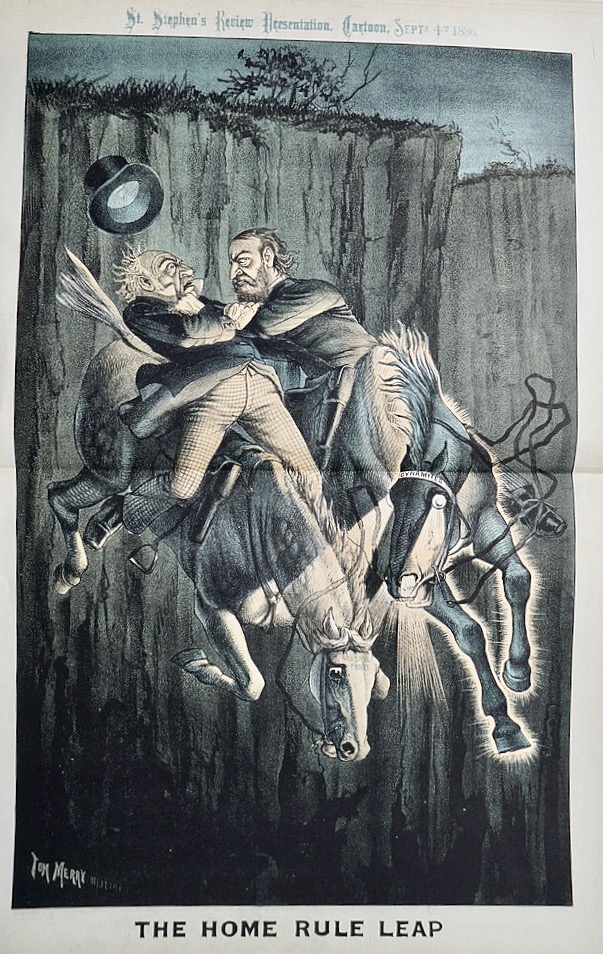
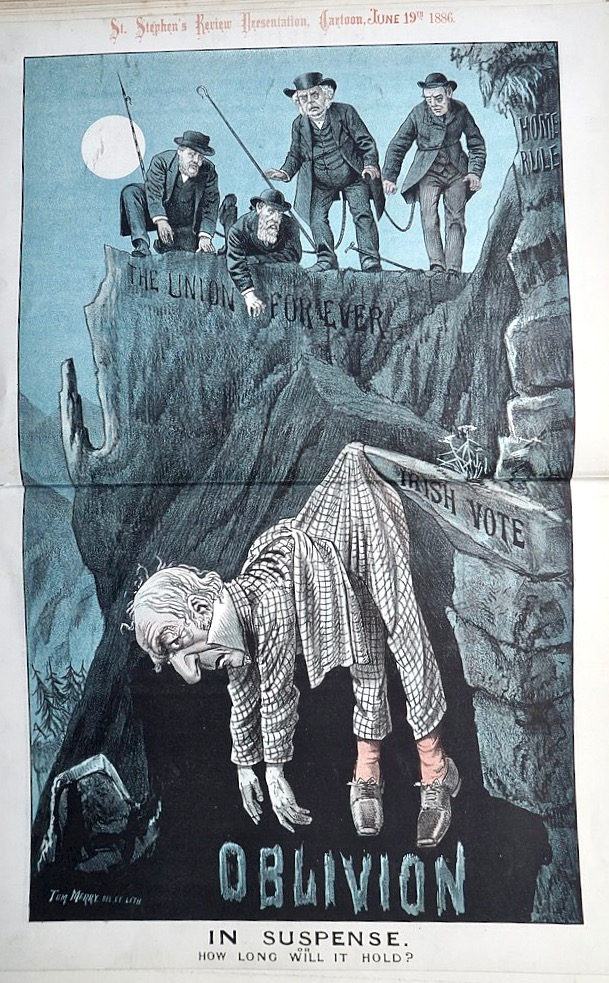
From 1883 to 1892 in Britain, a periodical called St Stephen’s Review was one of the many journals that catered to a conservative (and Conservative) view of the Empire – a Unionist, Loyalist position that saw anything that threatened the social and political order as anathema to the best interests of Britain. Magazines like this employed cartoonists to illustrate their pages and encouraged them to be as savage as they liked. One of the masters of the genre was William Mecham who took the professional name of Tom Merry, and in each issue he provided a political cartoon commenting on the times. Each one was as superbly drawn as it was vicious and as pointed as it was unsubtle.

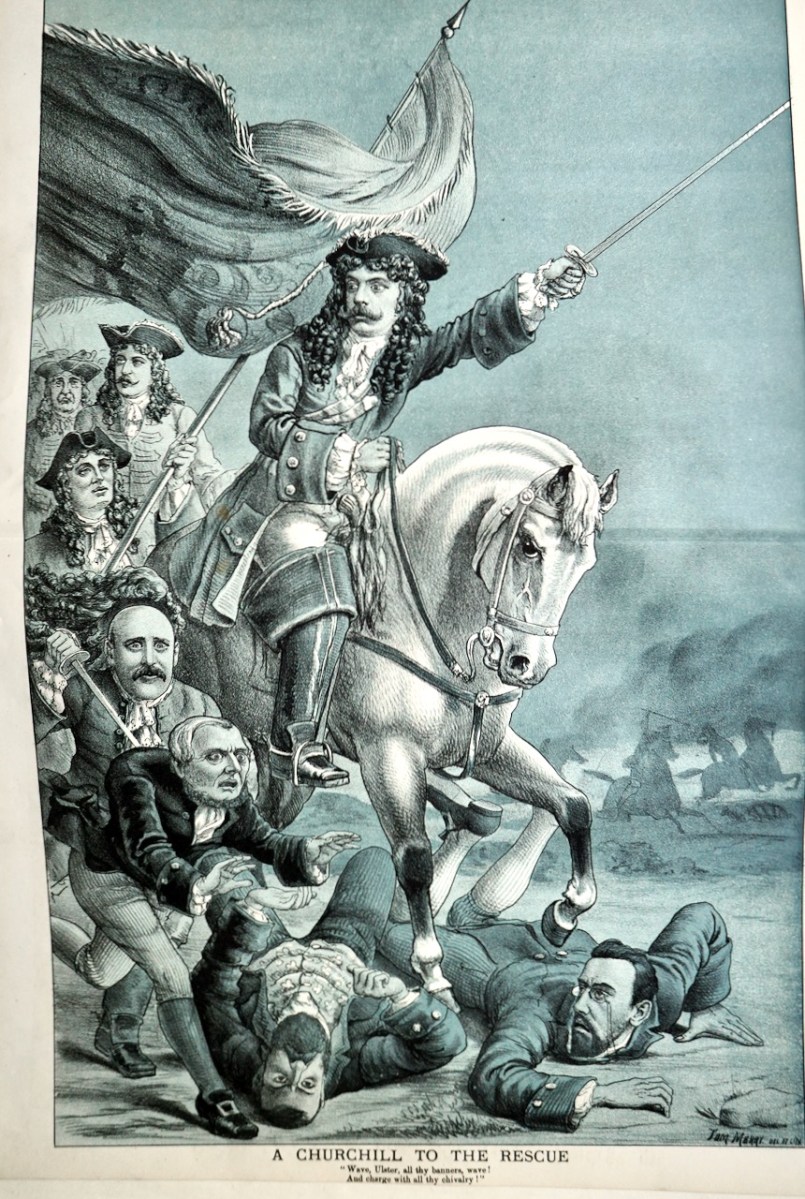
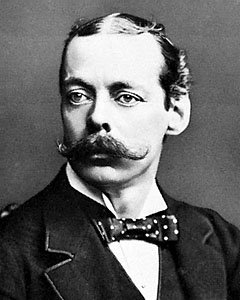
In this one, designed to appeal to Unionists, Lord Randolph Churchill is depicted as King William of Orange trampling the Home Rulers. Merry’s portraiture was outstanding (that’s Churchill below) and his readership would have instantly understood who his subjects were.

In order to place these cartoons in their historical context, a little Irish history is called for, so what follows is a brief and necessarily over-simplistic outline of what Tom Merry was responding to in his cartoons.

During this period the British Parliament was obsessed with The Irish Question. According to historian Conor Mulvagh, “The rise of Charles Stewart Parnell within the Irish Parliamentary Party of the late 1870s ran parallel to a rapidly evolving agrarian crisis.”* In fact, three overlapping and often conflicting strains of Irish activism run through the 1880s. The first is that of national self-government through constitutional means – Home Rule – the goal of the Irish Parliamentary Party led by Parnell.

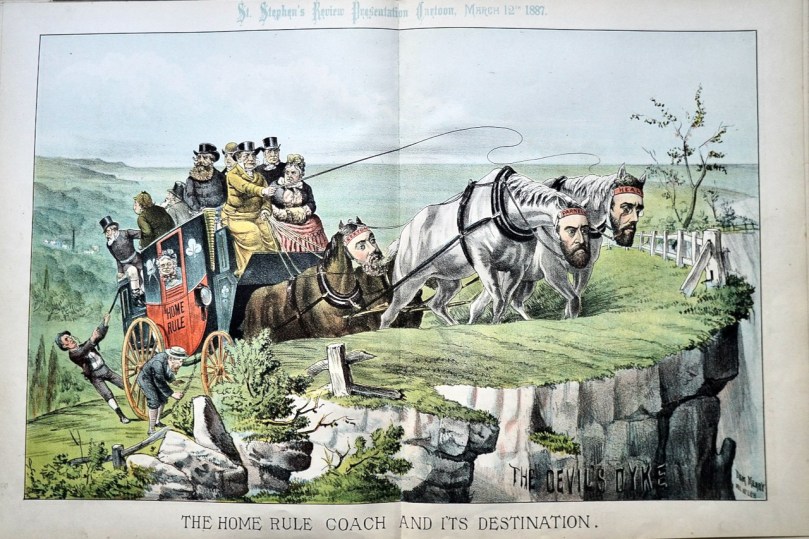
Gladstone, depicted by Merry always as the main threat to stability and Empire, hangs by a thread because of his dependence on the Irish vote

The second strain is that of land reform and this was a period of significant agrarian action led by Michael Davitt and the Land League. After spending much of his youth involved in the IRB, Davitt had become an advocate of non-violent agitation and civil disobedience and used these techniques to great effect in the Land League (see Robert’s post on Michael Davitt). Despite the emphasis on peaceful protest, clashes and skirmishes did occur, including the Mitchellstown Massacre in 1887.

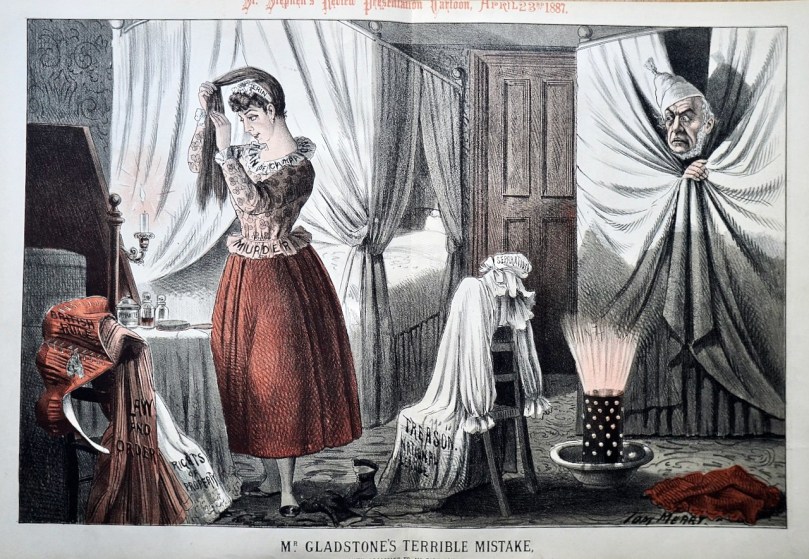
In case the message wasn’t clear enough, Merry would add labels. Erin is sporting Plan of Campaign (more about that next time) and Murder, while a potion bottle on her table has the word Dynamite on it. The discarded clothes are Law and Order, Rights of Property and British Rule

William Ewart Gladstone by Millais, courtesy of the National Portrait Gallery

The third strain was represented by the Fenians – Irish revolutionaries who had staged an unsuccessful uprising in 1867 and many of whom were living in exile in the United States. In the 1880s, orchestrated by O’Donovan Rossa from his base in New York, the Fenians carried out their Dynamite Campaign in England, causing injuries, deaths, and real terror (see my post, O’Donovan Rossa – The First Terrorist?, for more about the Fenians’ operations on Britain). While the Fenian Dynamite Campaign was condemned by the Irish Parliamentary Party and by Davitt’s Land League, both of whom saw it as undermining their objectives, it had an enormous impact in Britain, hardening sympathies against the Irish.

Gladstone and Parnell leap into the void together

The causes of constitutional and agrarian reform, however, found much common ground and the Parliamentary Party and the Land League, Parnell and Davitt, eventually entered an alliance known as the New Departure. “For Parnell, the New Departure offered the alluring prospect of hitching the the rather abstract concept of Home Rule and national Self-Government to the more emotive, popular and established political cause of the land.”*

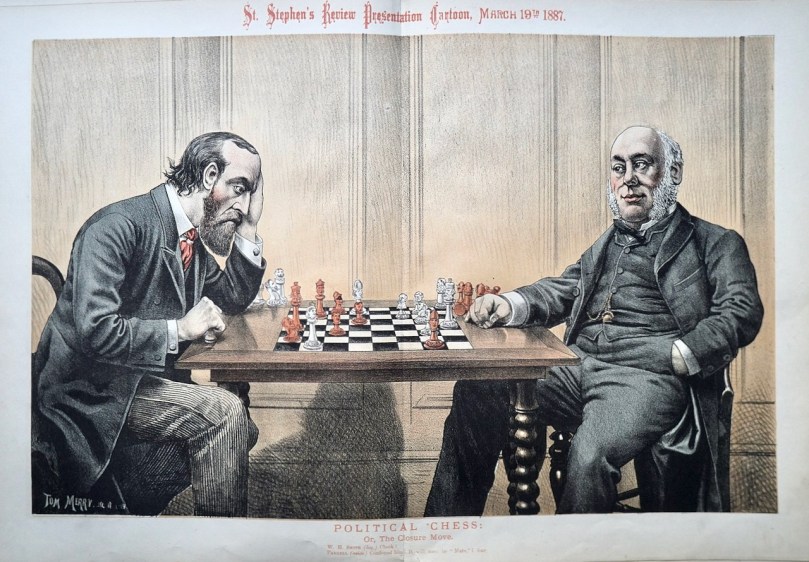
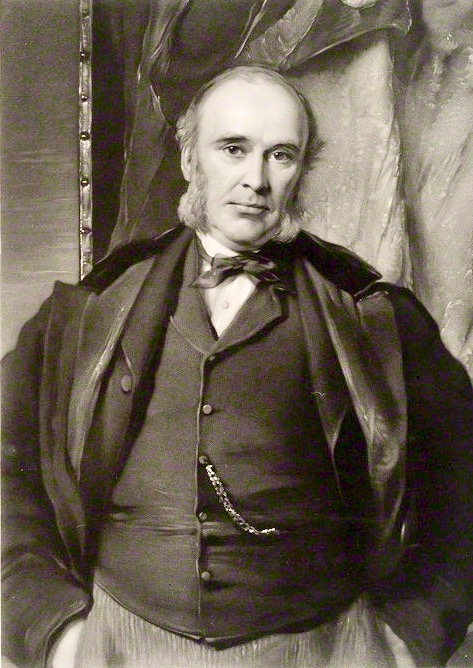
Parnell, looking stressed, plays chess against a confident William Henry Smith. Smith (that’s him below) was the original book seller who founded the modern chain that bears his name. A member of the Conservative party, at one point he was appointed Chief Secretary for Ireland. Each of the chess pieces is labelled. Can you recognise Victoria?

The British Parliament was in essence a two-party system by the 1880s – Liberals represented fiscally progressive and socially liberal ideals, while Conservatives represented pride in Empire and loyalty to monarchy and tradition. Elected parliamentarians from Ireland from the Unionist tradition aligned with the Conservatives, whereas Parnell’s nationalists supported Gladstone’s Liberals on a quid pro quo basis.

W H Smith courtesy if the National Portrait Gallery

Given the Conservative politics of the St Stephen’s Review, Tom Merry’s cartoons cast Parnell and Gladstone as villains. The cartoons often feature shadowy Irishmen in the background, masked and carrying dynamite. Although his Irish caricatures were not as outrageously simian in their features as those of the infamous Punch cartoons, they are often shown as drunken and thuggish.

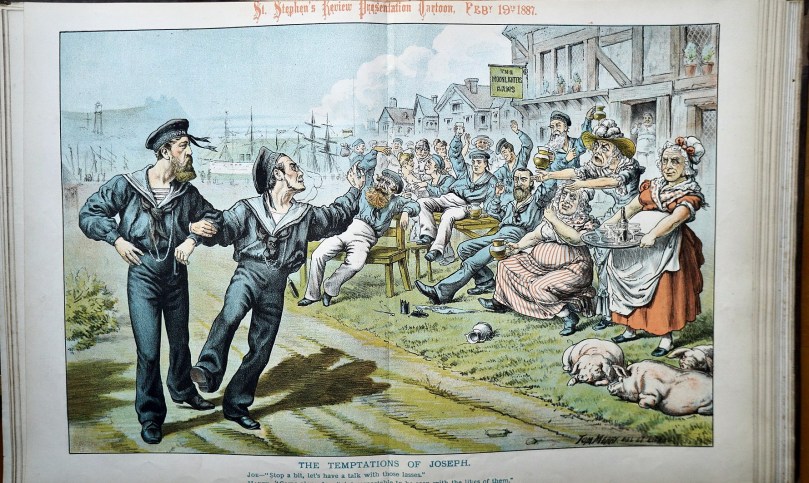
Two sailors wearing HMS Union hats are bing tempted to join the other side

This post will serve as a brief introduction to Tom Merry’s cartoons on The Irish Question. In a subsequent post I will include examples with more Irish politicians who played a leading role in the great events of the times. I will leave you with one of my favourite Merry Cartoons below – every nation, it seems, loves Victoria and being part of her Empire, except the ‘scapegrace’ Irish man, skulking away with his dynamite, his gun, and his shillelagh.


Many thanks to John Lubbock and to Wellcome Images who have made these cartoons freely available on Wikimedia Commons so that they can be used under the Creative Commons license.
*’Home Rulers at Westminster’ by Conor Mulvagh, The Cambridge History of Ireland Vol IV, 2018

Castle Island Explored – Part 1

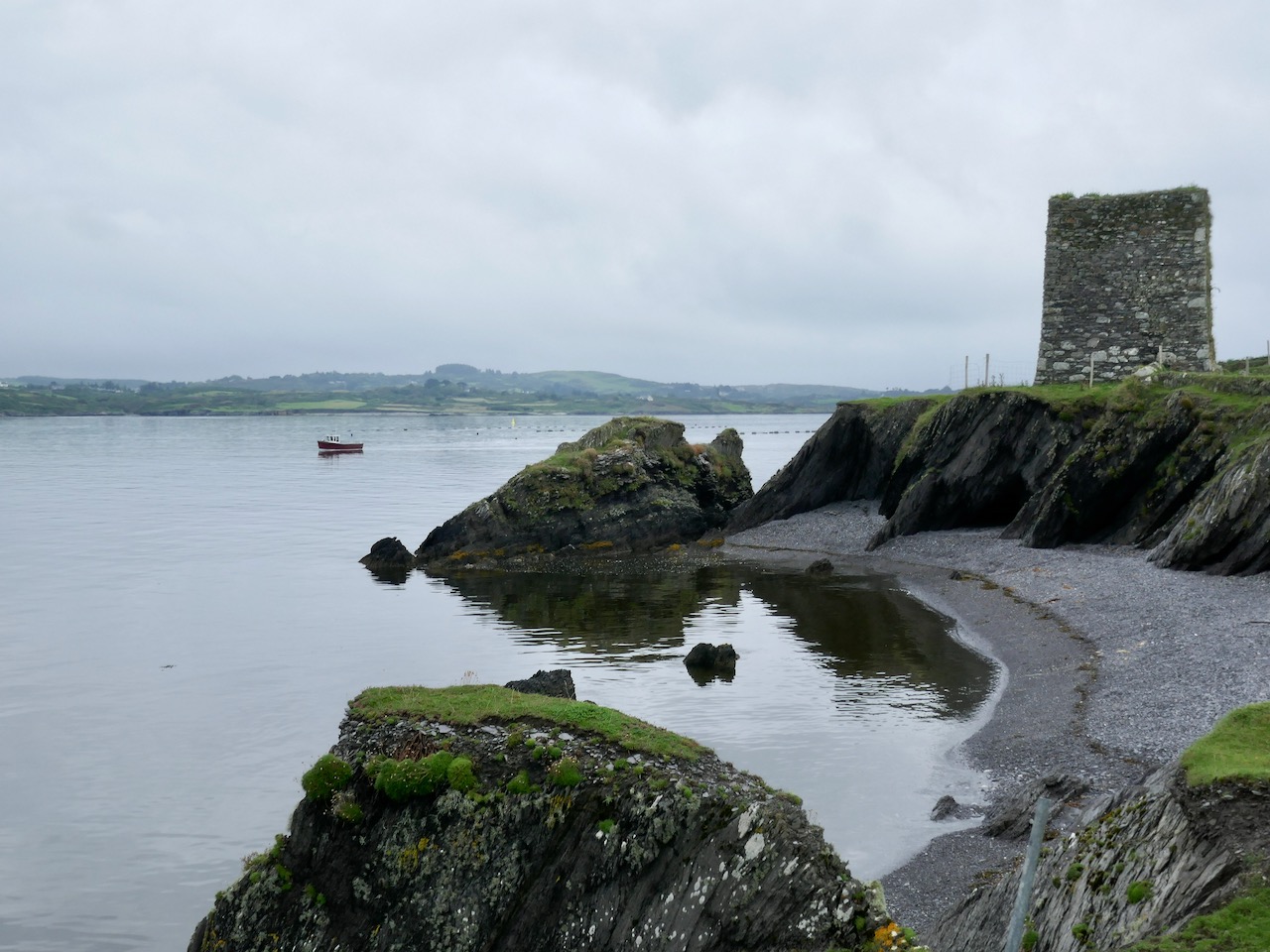
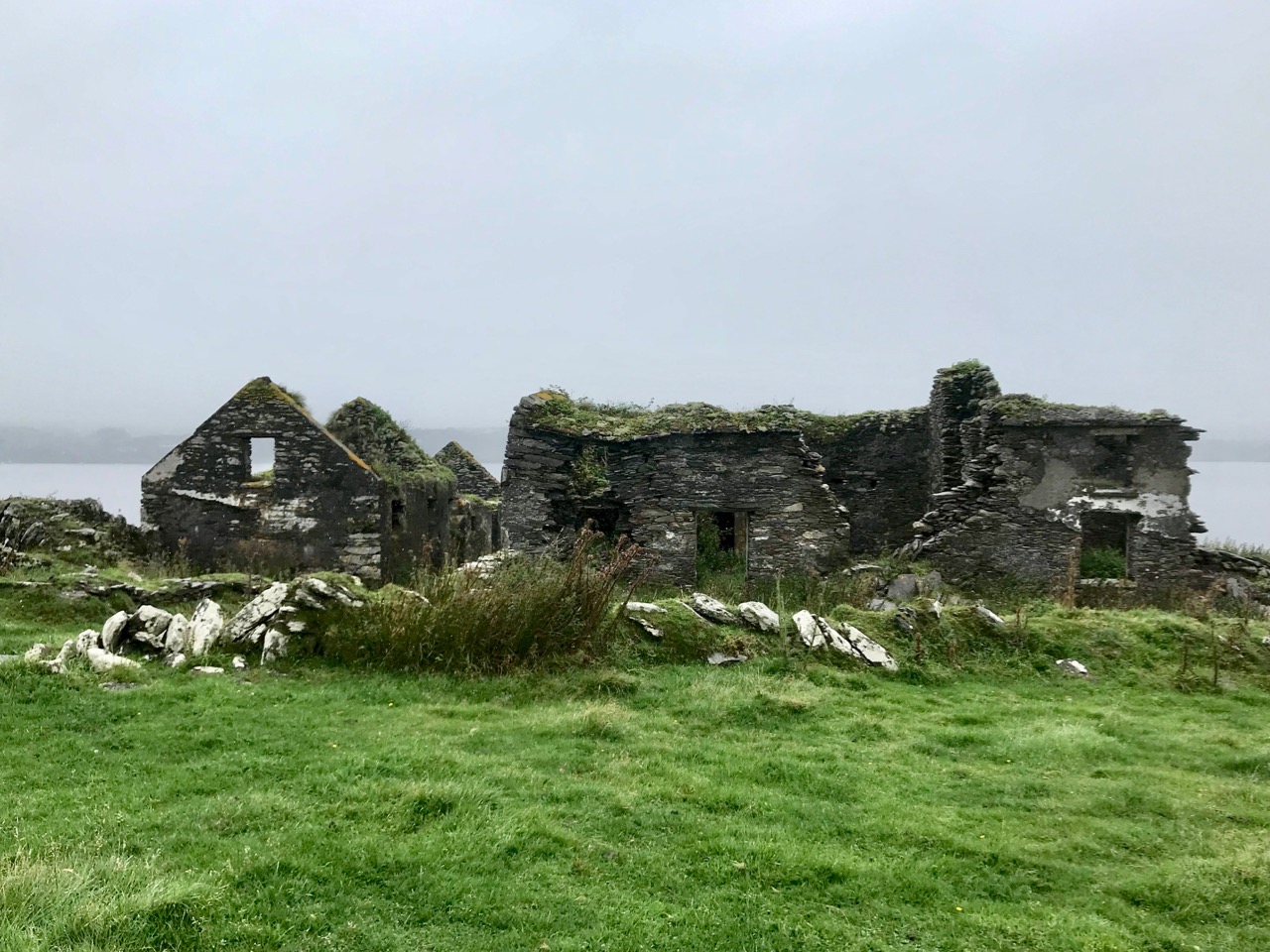
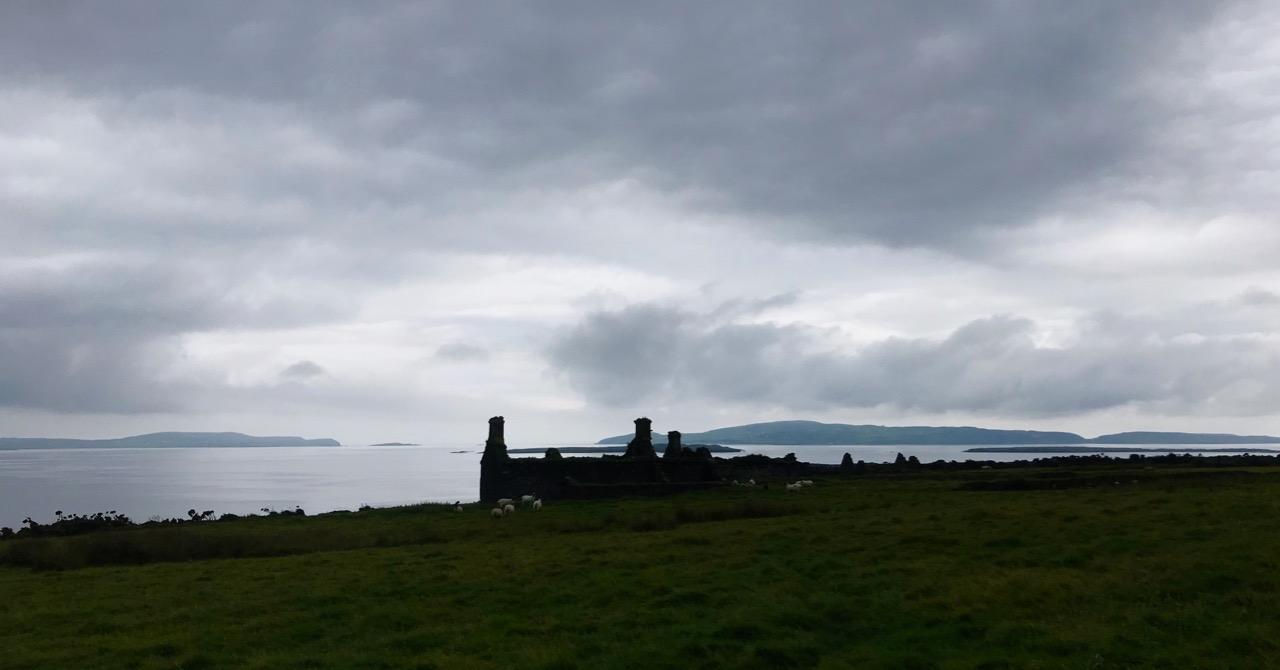
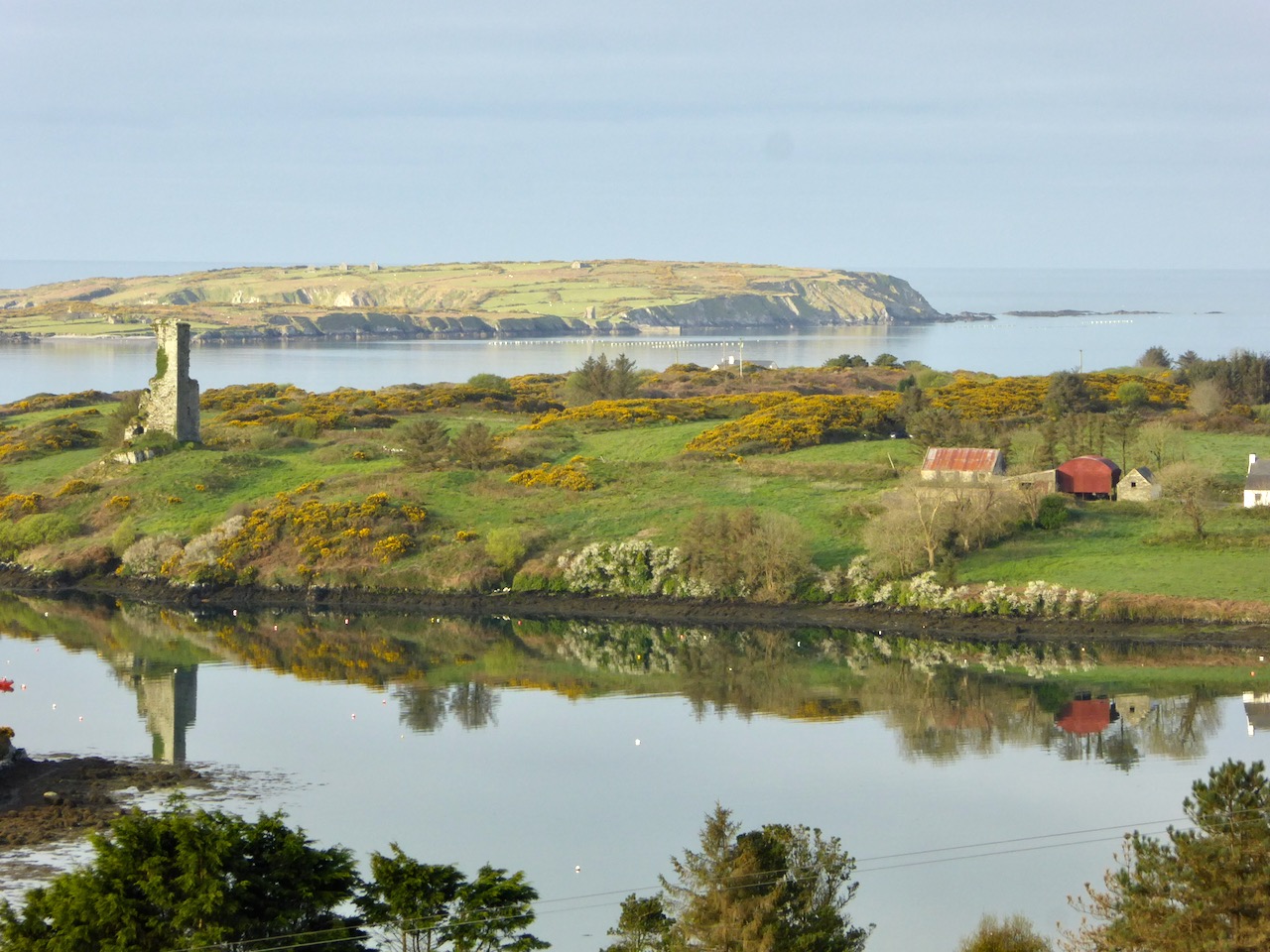
In this early spring photograph, taken from our Eyrie at Nead an Iolair, you can see Rossbrin Castle in the foreground. Beyond it lies Castle Island, uninhabited and slightly mysterious, but with clear traces of former occupation including a medieval tower house, a substantial quay and several abandoned dwellings. As we look over this island every day, we have long held an ambition to visit it, recently fulfilled when we were offered a lift out there on our good friend and neighbour’s fishing boat.

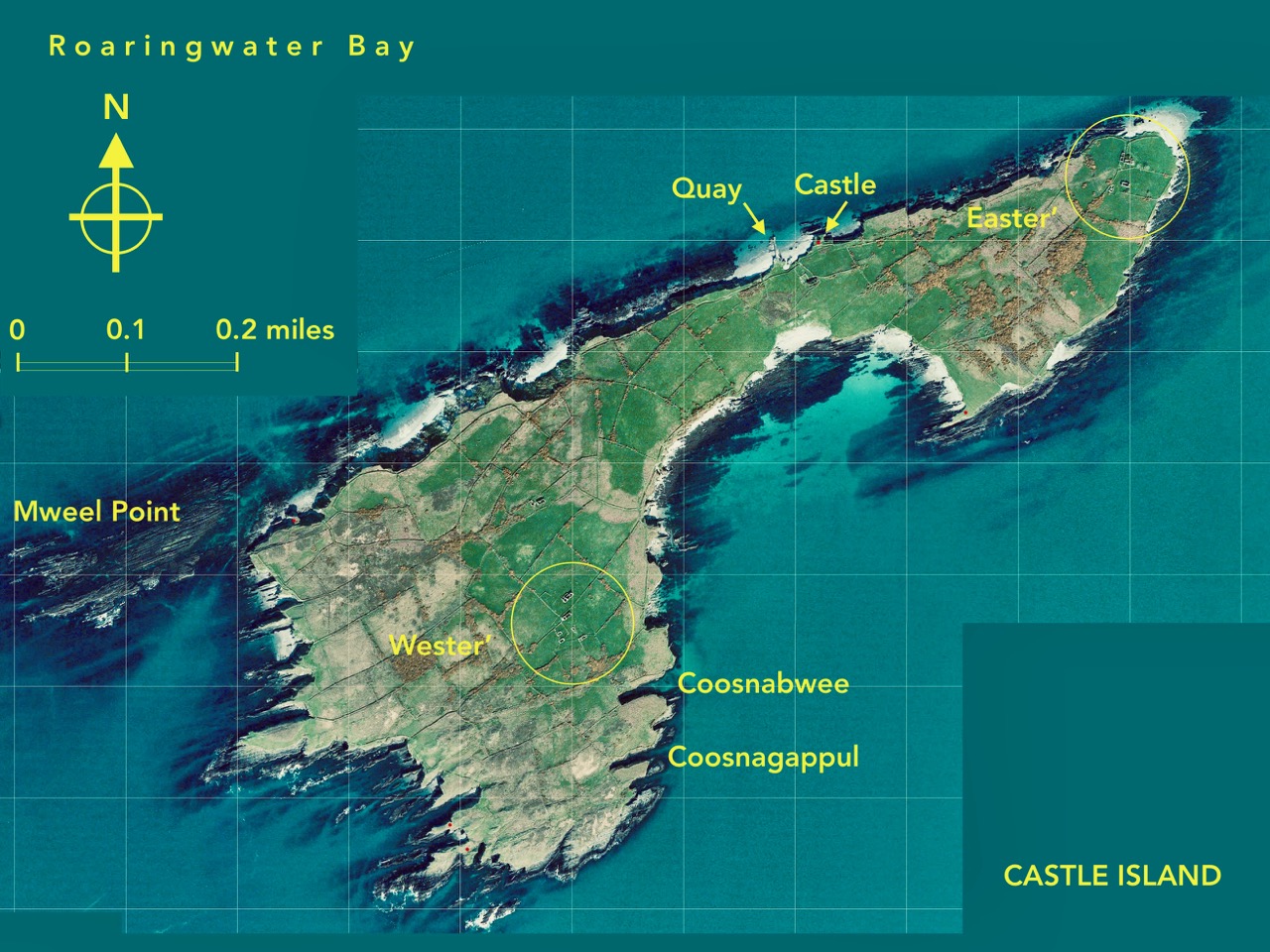
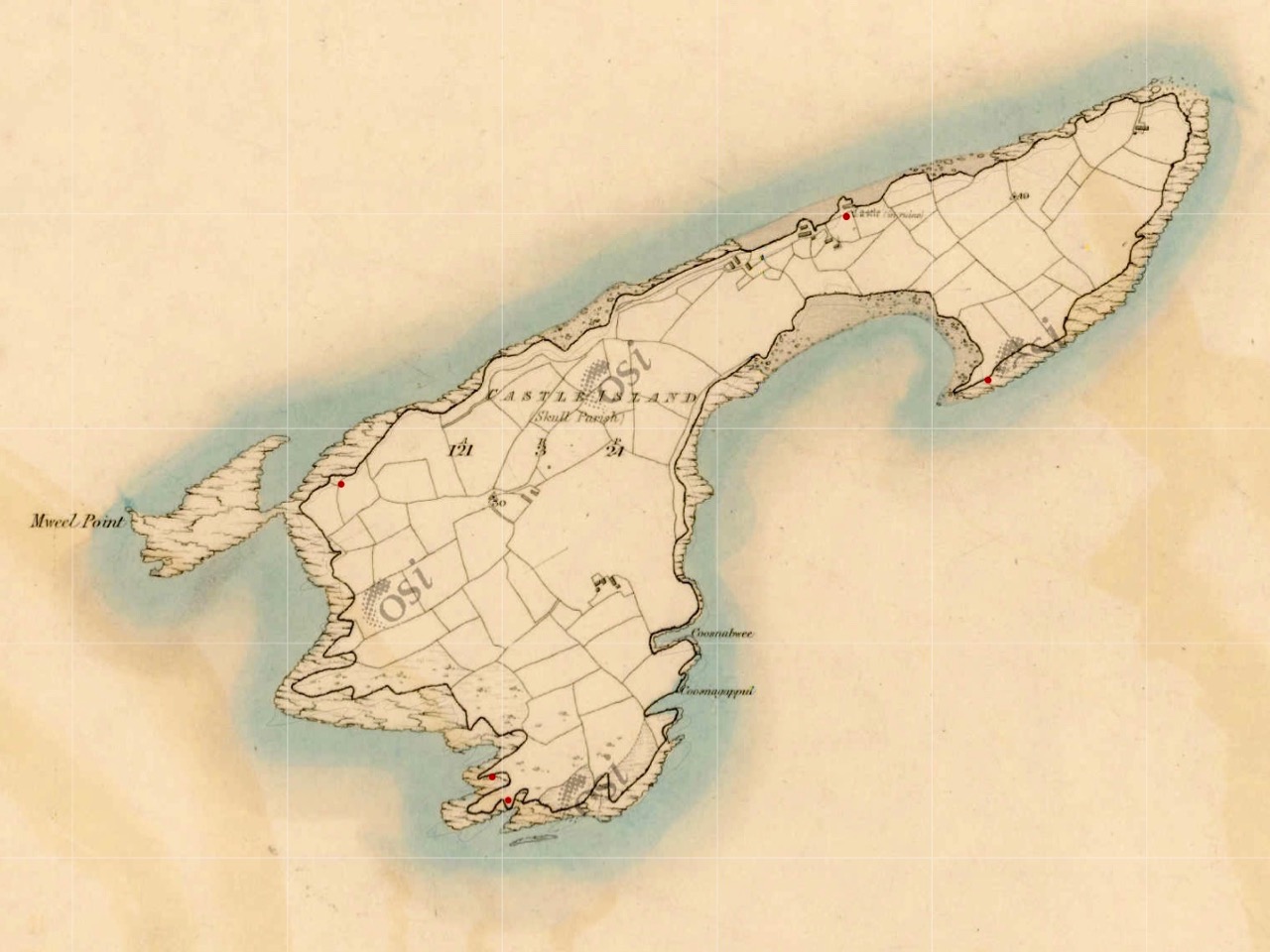
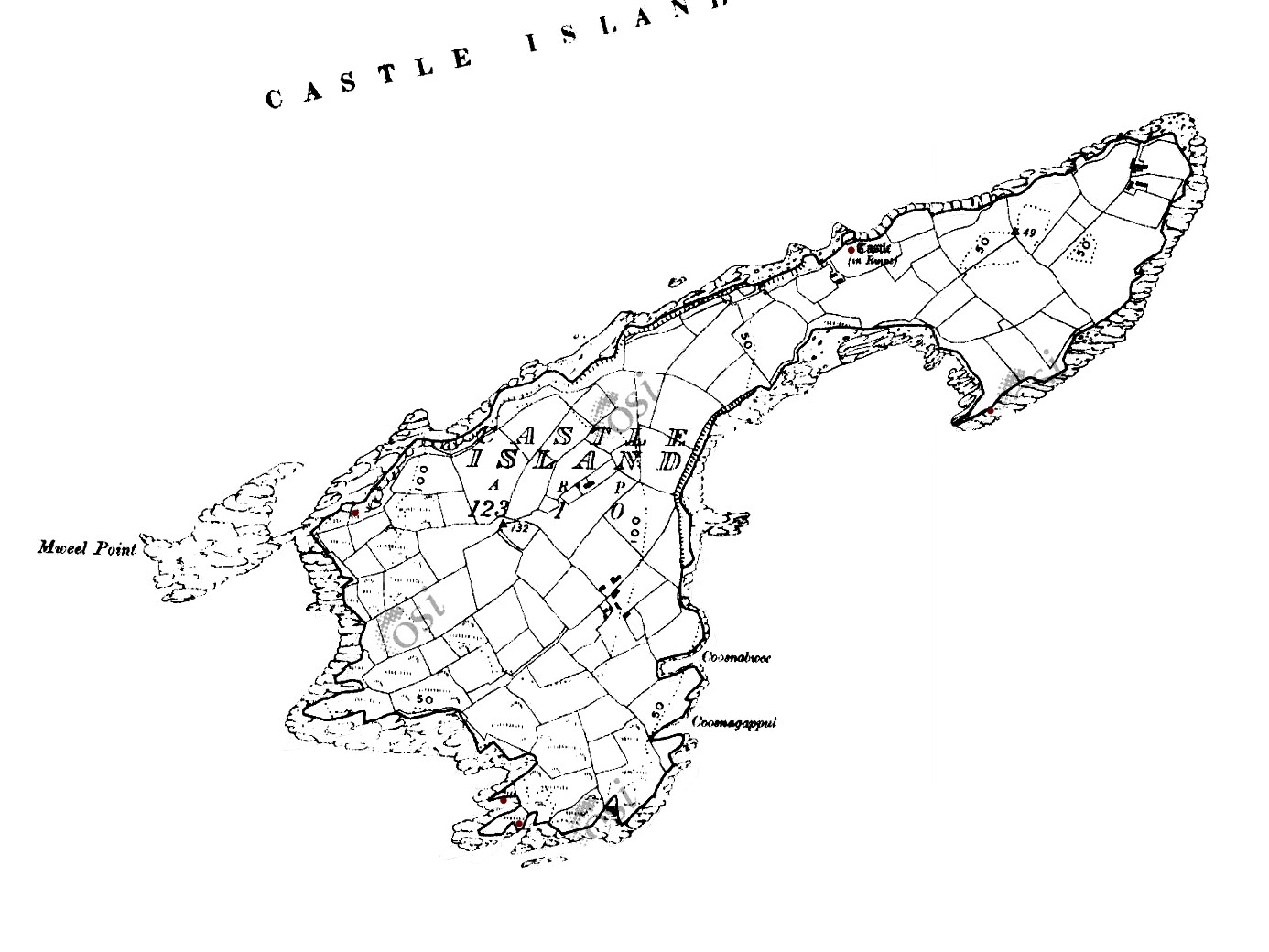
This map shows the scale of the island – just under a mile in length, and occupying 123 acres of mixed land. The main settlements – of Wester’ and Easter’ – are shown, as are the Quay and the Castle. It’s interesting to compare the two Ordnance Survey plans (below): the first 6″ edition was drawn up between 1829 and 1841, and the second one is the 25″ edition, drawn between 1888 and 1913. You can clearly see how the fields have changed, with new boundaries created in the later survey. Presumably this was due to an increase in population resulting in more clearances of rough land.

Both these maps show the Castle – said to date from the 15th century and one of the chain of O’Mahony fortresses that are strategically situated around this most south-westerly part of the Mizen. Of that clan we can find the following written by W O’Halloran in 1916:

Dr Smith says – these Mahowns derive their pedigree from Kean Mc Moyle More, who marrid Sarah, daughter to Brian Boru, by whom he had Mahown, the ancestor of all the sept. It is from this Kean the village of Iniskeen, in Carbery, has its name, and from this sept the Bandon is sometimes called Droghid Mahon. Mahon was the ancestor of the Mahonys, or O’Mahonys . . . The O’Mahonys, whose stronghlad was in the neighbourhood of Bandon (Drohid Mahon), were the first to encroach on the territory of the O’Driscolls. This occurred long before the Anglo-Norman invasion. They possessed themselves of the western portion of Corca Laidhe called Ivahah, which comprised the parishes of Kilmoe, Schull, Durrus, Kilcrohane, Kilmacougue, and Caheragh. They had fourteen strongly built castles . . .

Early Irish History and Antiquities and the History of West Cork, W O’Halloran

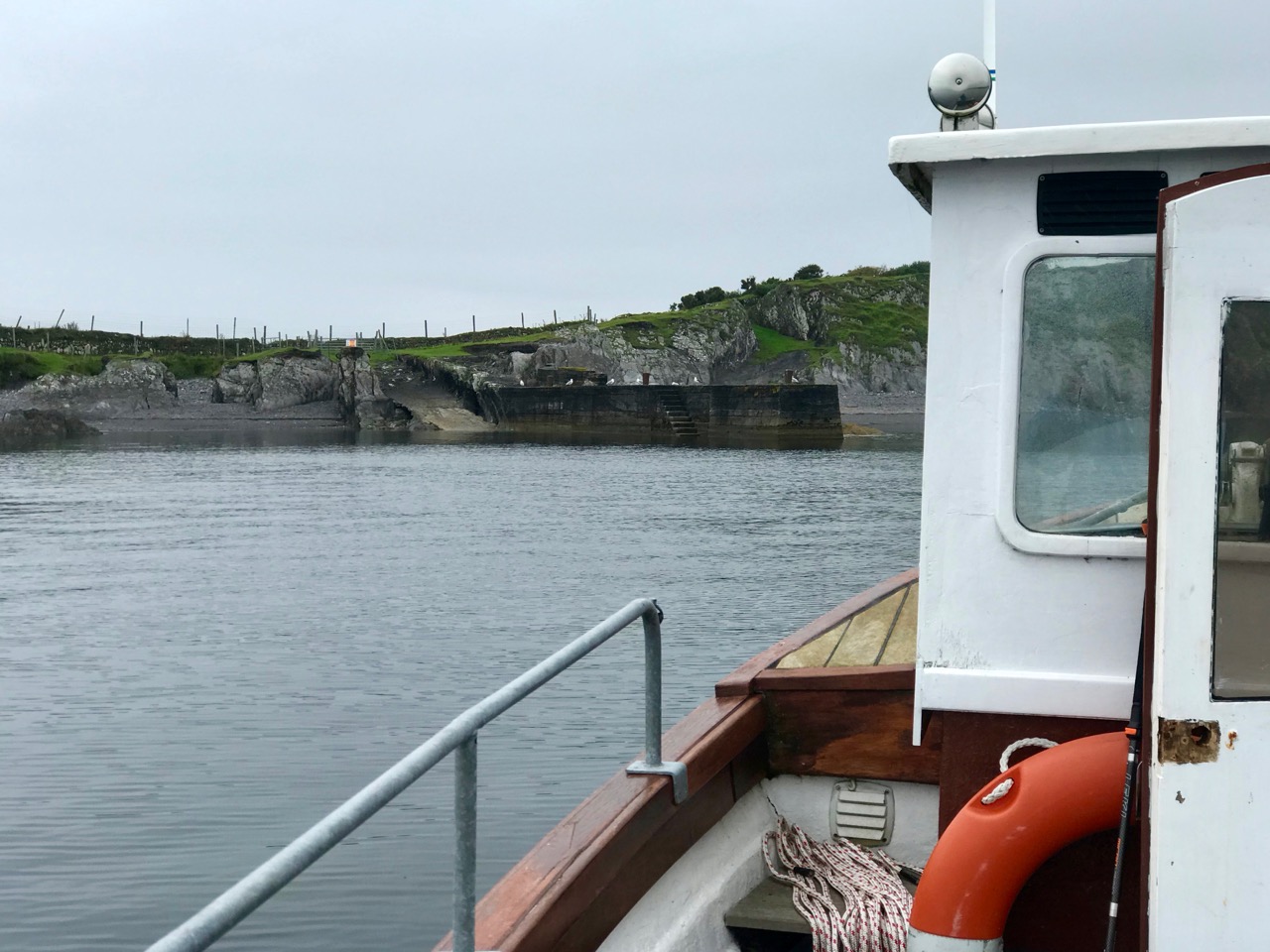
The M V Barracuda approaches Castle Island on an atmospherically damp day in late August. The quay itself seems to have been constructed  during the time of the Congested Districts Board from 1892 to 1922. It is a substantial structure and the investment in that time suggests that there was a significant community living and working on the island to justify it. However, a number of sources assert that Castle Island was “. . . home to a community of approximately 15 families who were last resident on the island up to the year 1870 . . .” Our own observations of the abandoned dwellings on the island led us to the conclusion that, although now significantly deteriorating, these habitations must have been in use more recently than this.

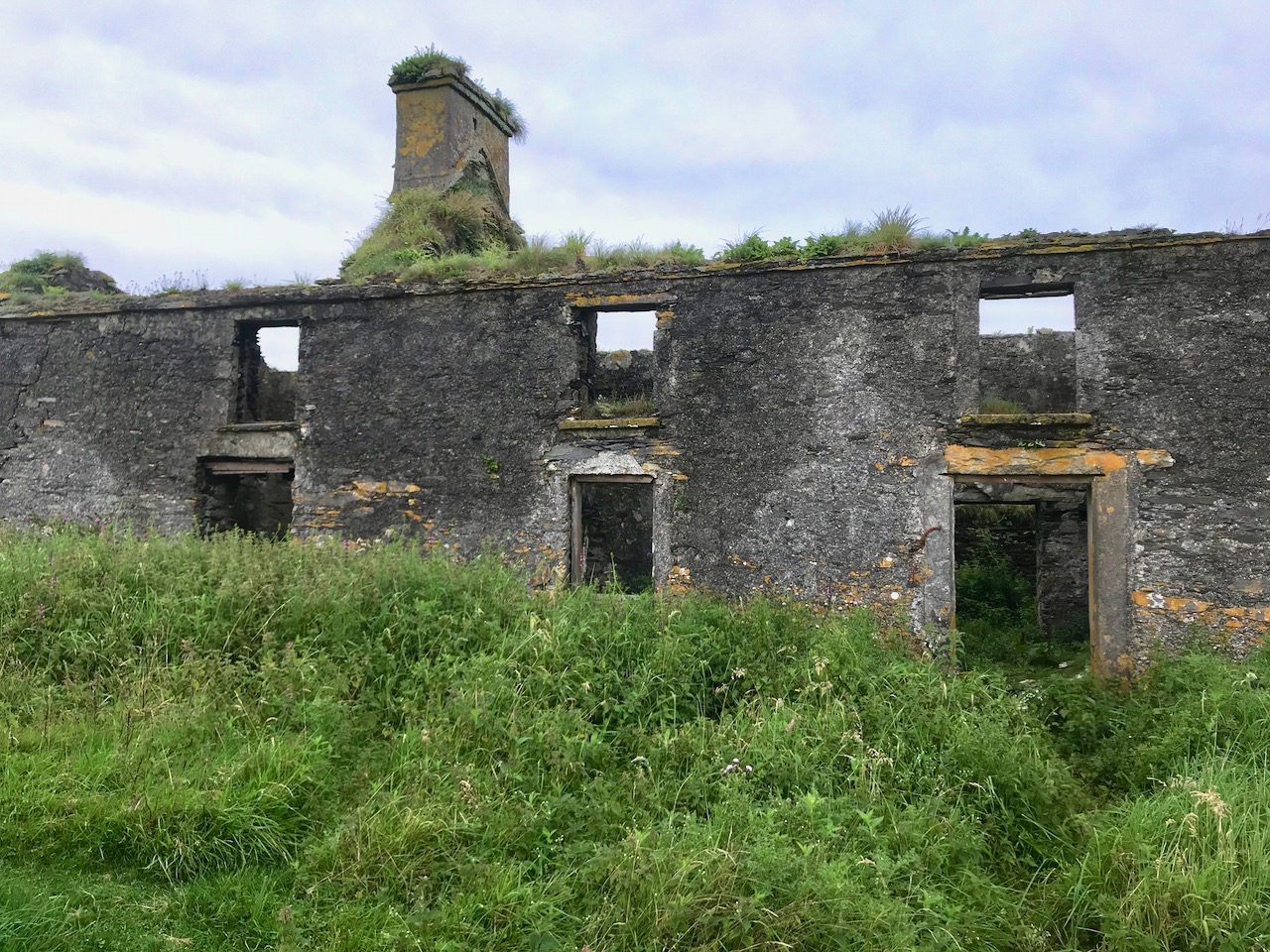
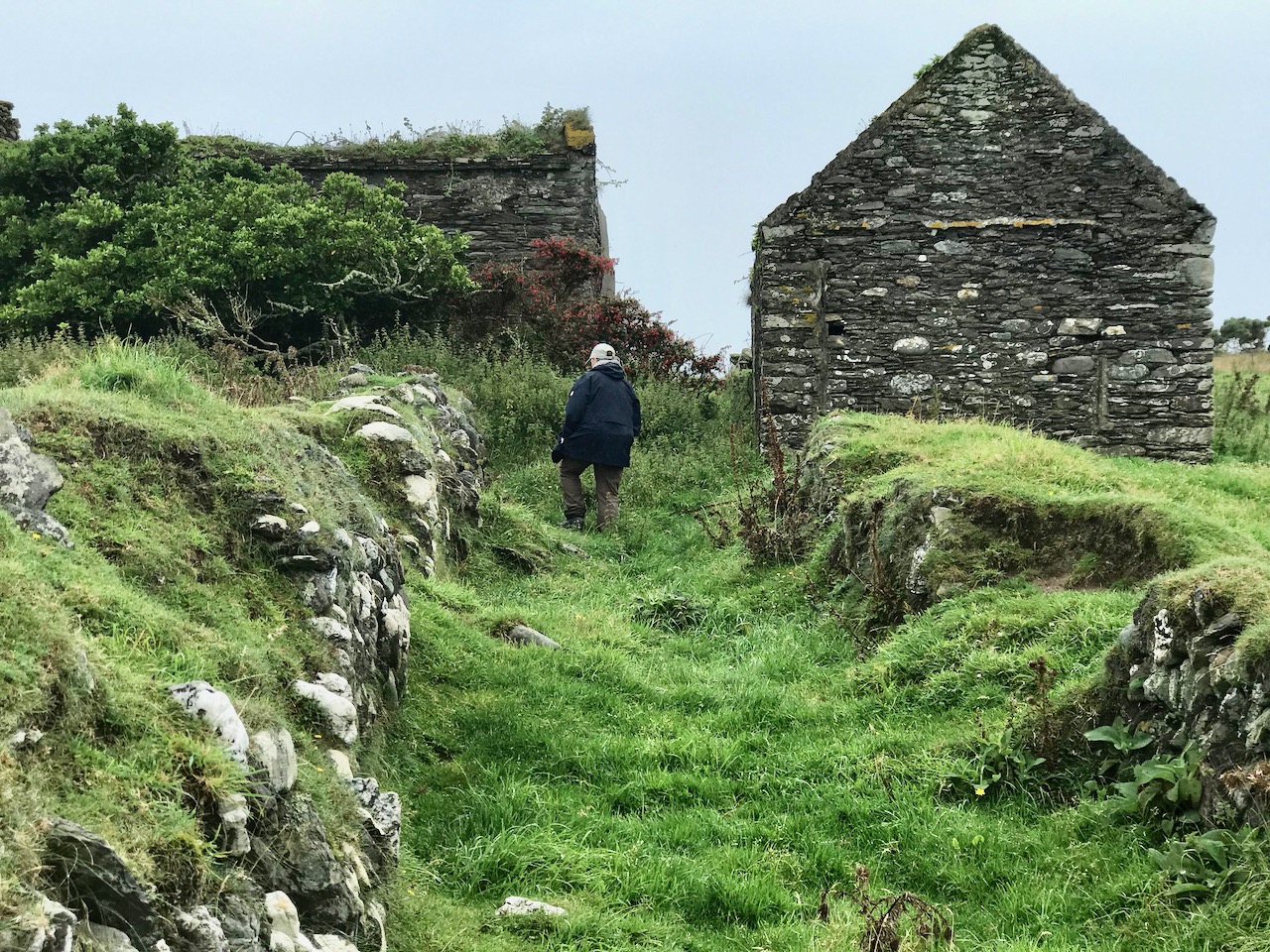
Examples of now-ruined houses, barns and boreens on Castle Island. These are not ‘cabins’ or even cottages, but significant homesteads. Some – including the large residence in the upper picture – have the vestigial remnants of timber door and window frames, unlikely to have survived in place in this harsh environment for 150 years.

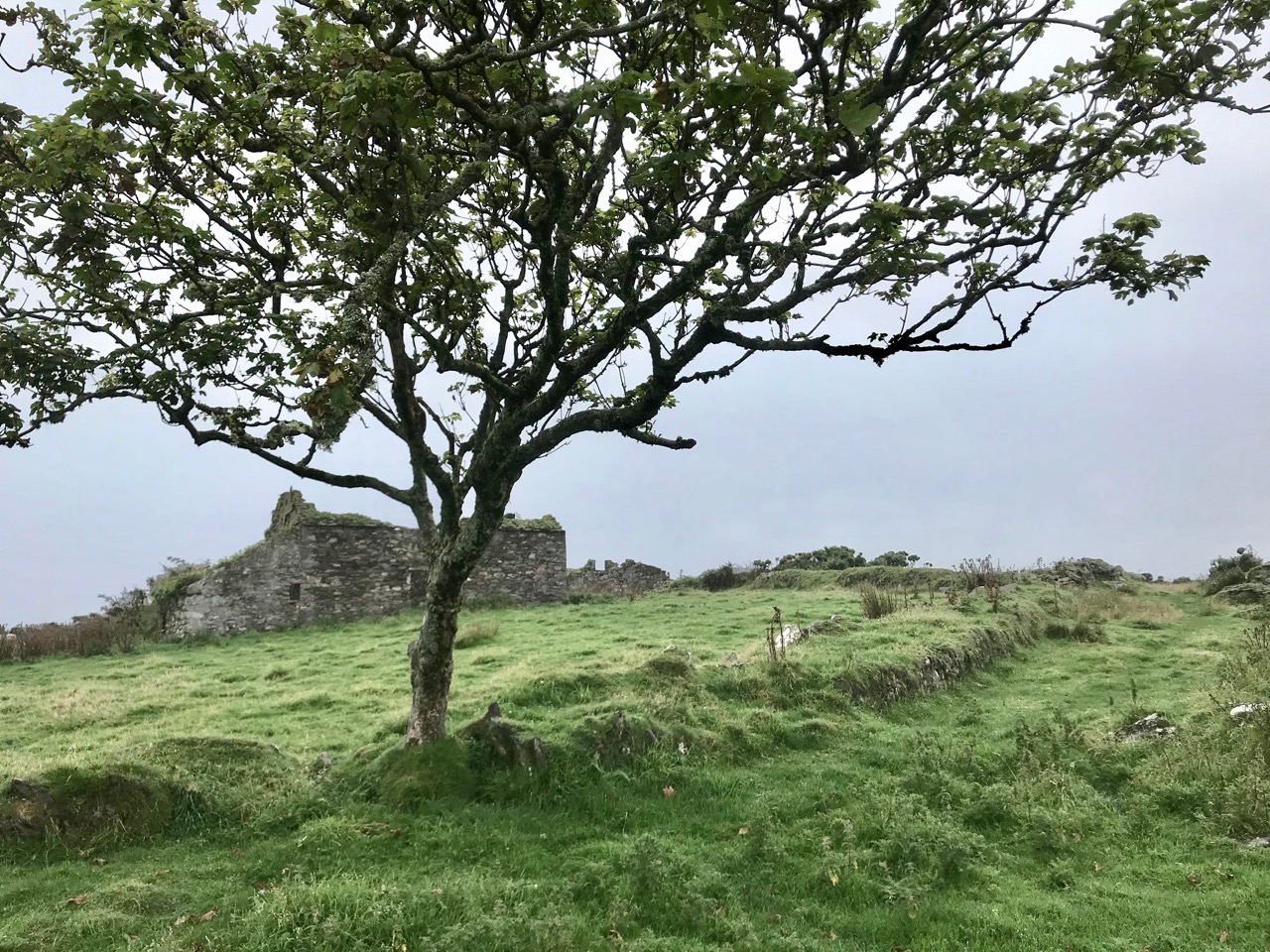
A community of sheep roams unhampered by fences or boundaries, and Finola absorbed how nature has taken over and populated the landscape in spite of wild winters and lack of shelter: we counted precisely two and a bit trees on the whole island!

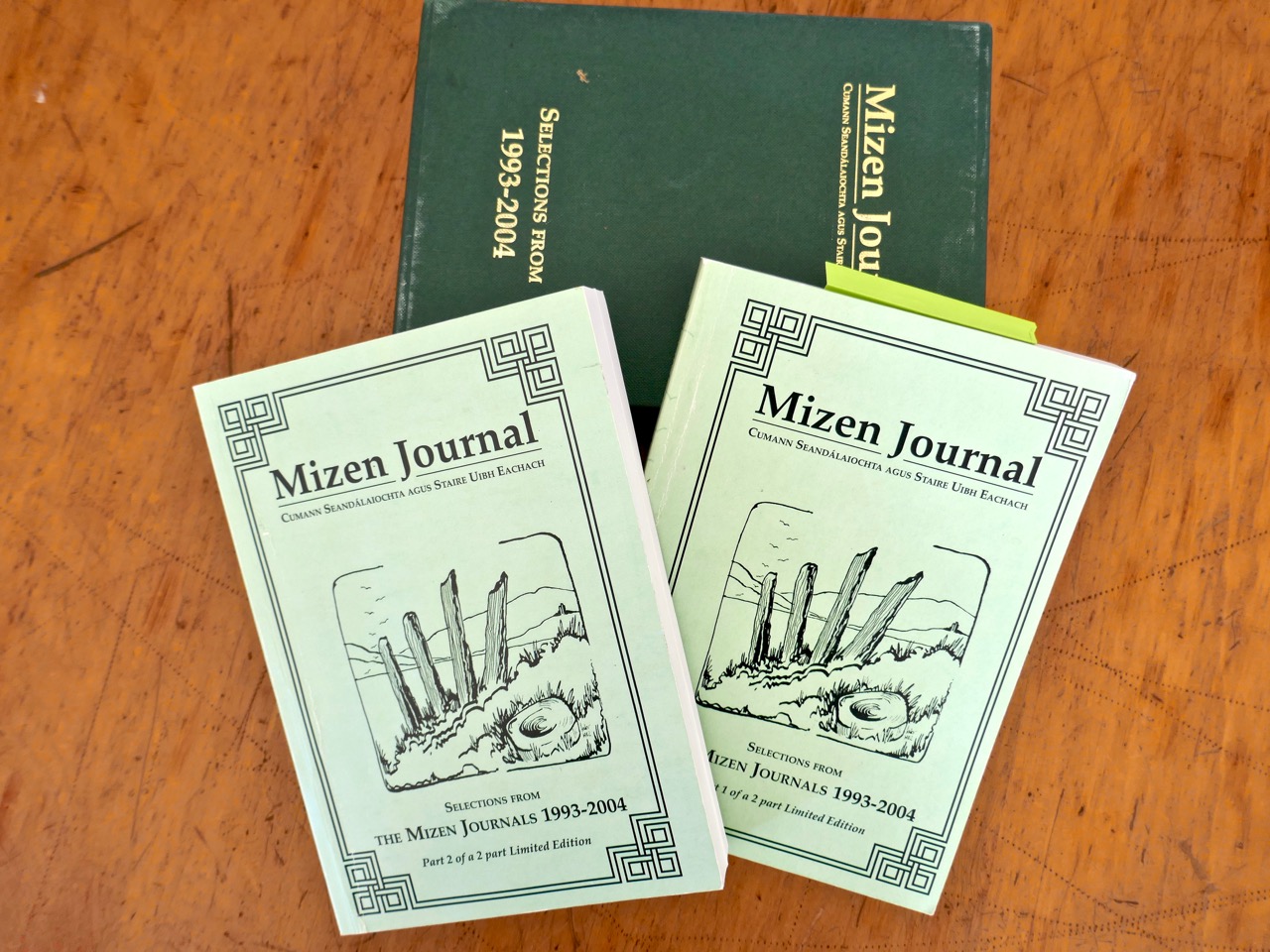
The story of this island is somewhat overlooked generally – one of the reasons we were so keen to visit. In our library, however, we are fortunate enough to have some copies of the Journals of the Mizen Archaelogical and Historical Society – now out of print. That Society was active for thirty years between 1979 and 2010, and produced a dozen journals gathering important historical research by mainly local people. Here’s a post we put together when our good friend Lee Snodgrass – a leading light in that organisation – passed away recently.

In that Journal we have found two articles about Castle Island. One – by Anthony Beese – explores the local placenames, and the other – by Liam O’Regan – speaks of The Castle Island Evictions 1889 – 90. This latter clearly shows that the island was inhabited in the late nineteenth century (apparently contrary to current popular thinking). Also, following those evictions, many of the tenants returned later and it seems very possible that some islanders remained in situ into the twentieth century. Both Journal articles have stories which need to be told, and I will attempt to do that in a later Roaringwater Journal post. For now, however, you will have to be content with . . . the story so far . . . which tells of our voyage of discovery to the island on an overcast day in the summer.

West Cork Creates – Now’s Your Chance!

A rare mid-week post because the West Cork Creates exhibition is on now – and this year it’s all online! That means that wherever you are in the world you can get yourself a stunning piece of West Cork art/craft. We have written about this exhibition just about every year because we believe it’s one of the best things to see and do in West Cork and an incredible showcase for the many artists and makers who have made this place their home. Normally, you have to be here, but this year you can see it all online.

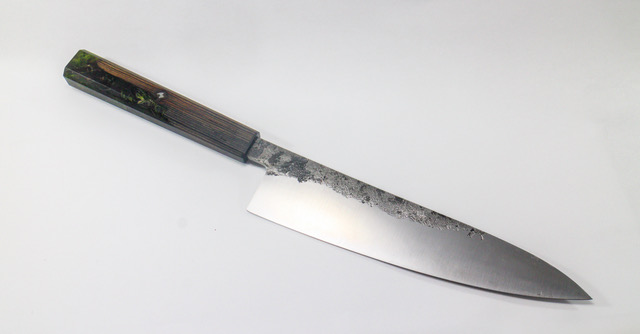
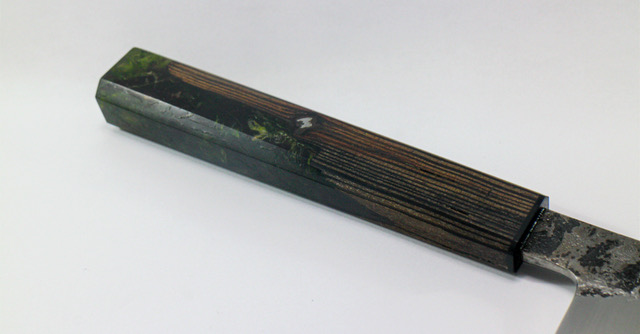
I set myself the task of choosing only a few items to write about, because as you will see when you browse the gallery, the choice is vast. Christmas is a long way off, but I am hoping Robert gets the hint about what I am choosing. It’s all stuff I covet. For example, everyone needs a great chef’s knife in their kitchen, and what about this one from Luka Scannell? Incredibly, this maker is only 17, and already producing work like this! Read about him in this Southern Star article. The handle is from a fishing boat wreck called The Shamrock. Luka has taken the wood and the seaweed clinging to it, fastened it with a nail from the wreck, and encased it all in resin.

The blade is forged from high grade carbon steel – easy to keep sharp forever – and left rough along the non-cutting edge. The finished product is not only beautiful but resonates with deep echoes of West Cork and the sea. Each time I use it I would be transported to the shore line, like holding a shell to my ear. And of course my cooking would improve!

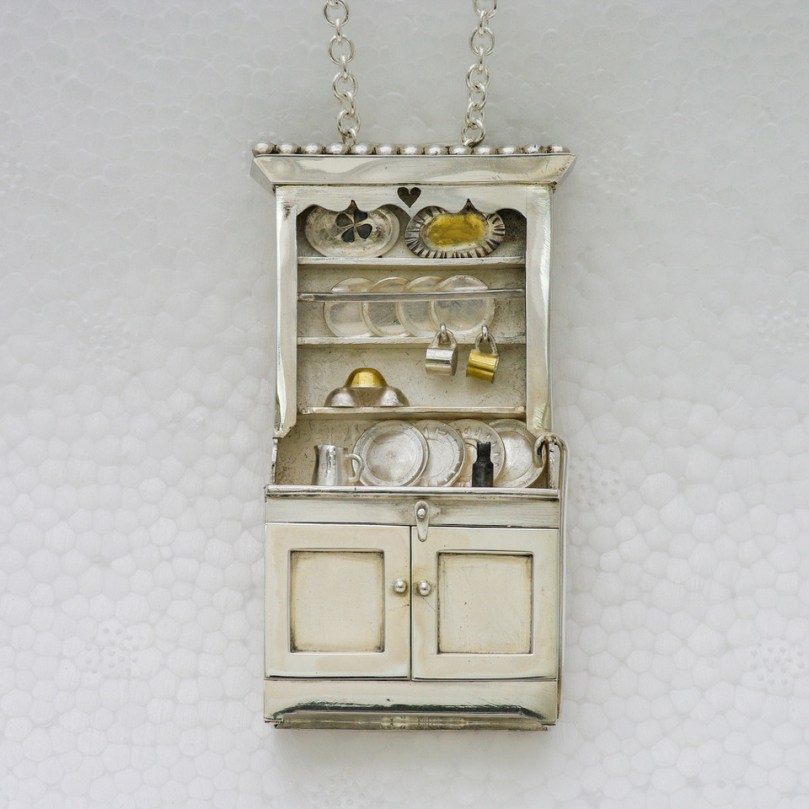
I don’t wear a lot of jewellery nowadays, so it has to be very special indeed to catch my eye. But this pendant from Michael Duerden is spectacular. It’s not just a pendant, but a locket too – the doors open to reveal a place for a precious photograph. But look at it! Michael has captured the spirit of the Irish dresser, with the serving platters, the cup rack, the dinner plates leaning forward on their bar. There’s a peg to close the doors and a walking stick nonchalantly hooked over the side. The detail is extraordinary and the whole piece is magical. Michael lives and works in Leap and you can see more of his work here.

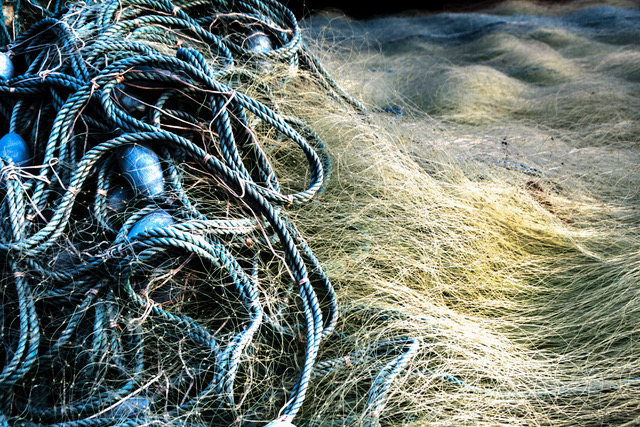
Geoff Greenham has long been one of my favourite photographers and in this image, titled Monofilament, he encapsulates what you might find on any still-used West Cork quay. The rough texture of the rope contrasts with the fine threads of the mesh in the same way that the deep blue overlays the blonds and yellow-greens of the netting. This is material from a working fisherman’s boat, captured in stillness, but look how the net folds and heaves to suggest waves rolling in, reminding us where its true home lies.

And finally, to Sonia Caldwell’s Crom Dubh. I’ve written about Sonia before in my post Kilcoe Studios – Dedication and Passion. Then, I was mainly looking at her wonderful painted and printed pieces, But Sonia’s real passion is sculpting and I was blown away by what she showed me. I wrote then,

Her work has a quality to it that I can only call ‘questing.’ The eyes look far away, seeking answers to some great question. In one case, they are blindfolded, forcing the quester to look inward. The bodies fold in on themselves, or on one another, or are rigid, as if acting as mere plinths for the imagination or the brain. 

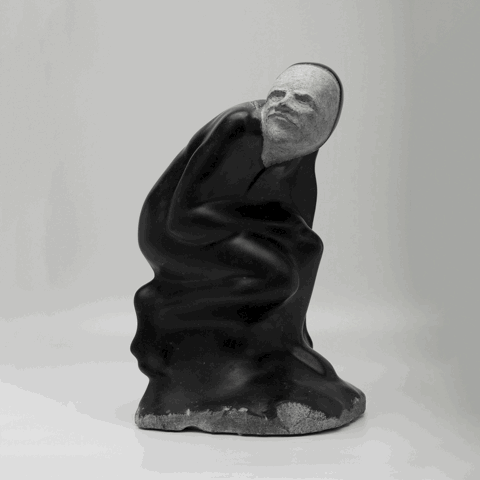
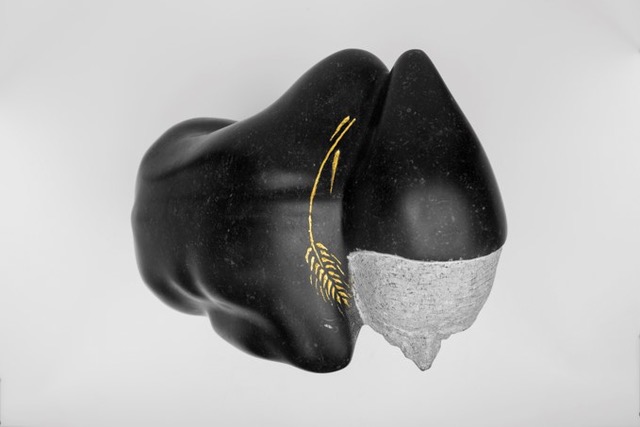
For this year’s West Cork Creates, Sonia is exhibiting a piece called Crom Dubh (pronounced crumb dove (as in the bird)). To get a sense of who Crom Dubh, the Dark Crooked One, was, take a look at this blog post by the wonderful Felicity Hayes-McCoy, writer and folklorist. A figure from deep in Irish mythology, Crom Dubh is paradoxical – either evil or good, depending on who’s telling the story. His dark shape represents death, but he also emerges at the first harvest (Domhnach Crom Dubh, Crom Dubh Sunday is the last Sunday in July) and thus is associated with fertility. It is said that when he emerges from the earth he bears upon his back a sheaf of wheat but also the beautiful Eithne and it is this burden that causes the crooked shape. In Sonia’s sculpture the dark body is surmounted by the intensely gazing face, left in its natural limestone colour, and the wheat is picked out in gold leaf along his shoulders. It’s a powerful and ambivalent figure which does justice to the many aspects of Crom Dubh. You can see more of Sonia’s sculpture at her personal website.

We are missing all of our West Cork Festivals this year, but perhaps most of all West Cork Creates, as it is such a feast for the senses and so consistently excellent. I am glad they decided to mount it all online this year – and not just for us locals but for art and craft appreciators everywhere.

Thank you so much to West Cork Creates for allowing me to use their images (copyrighted) as of course this year I was not able to produce my own.