Travel by Water 2 – A Tale from Trollope

Drumnsa Bridge

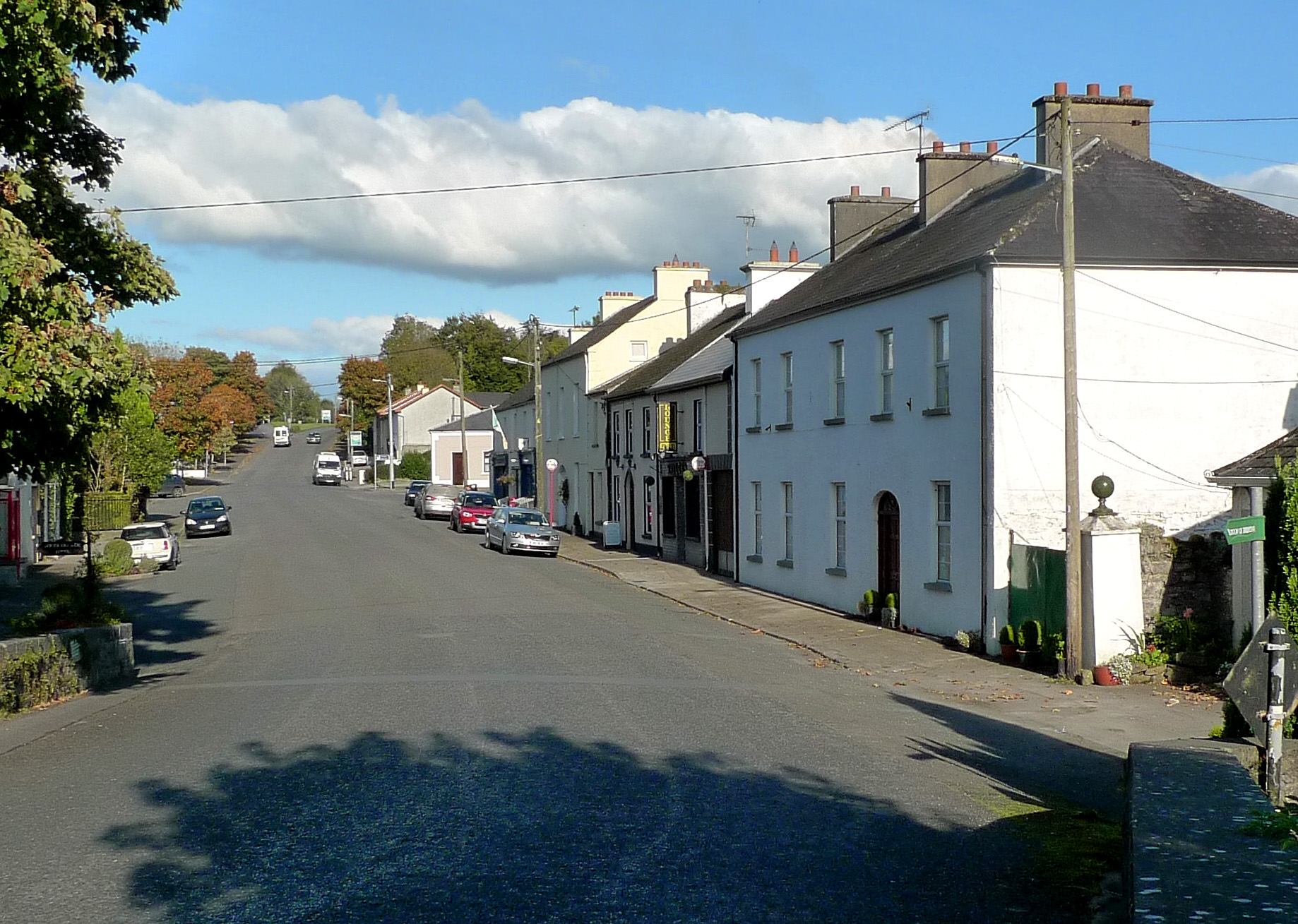
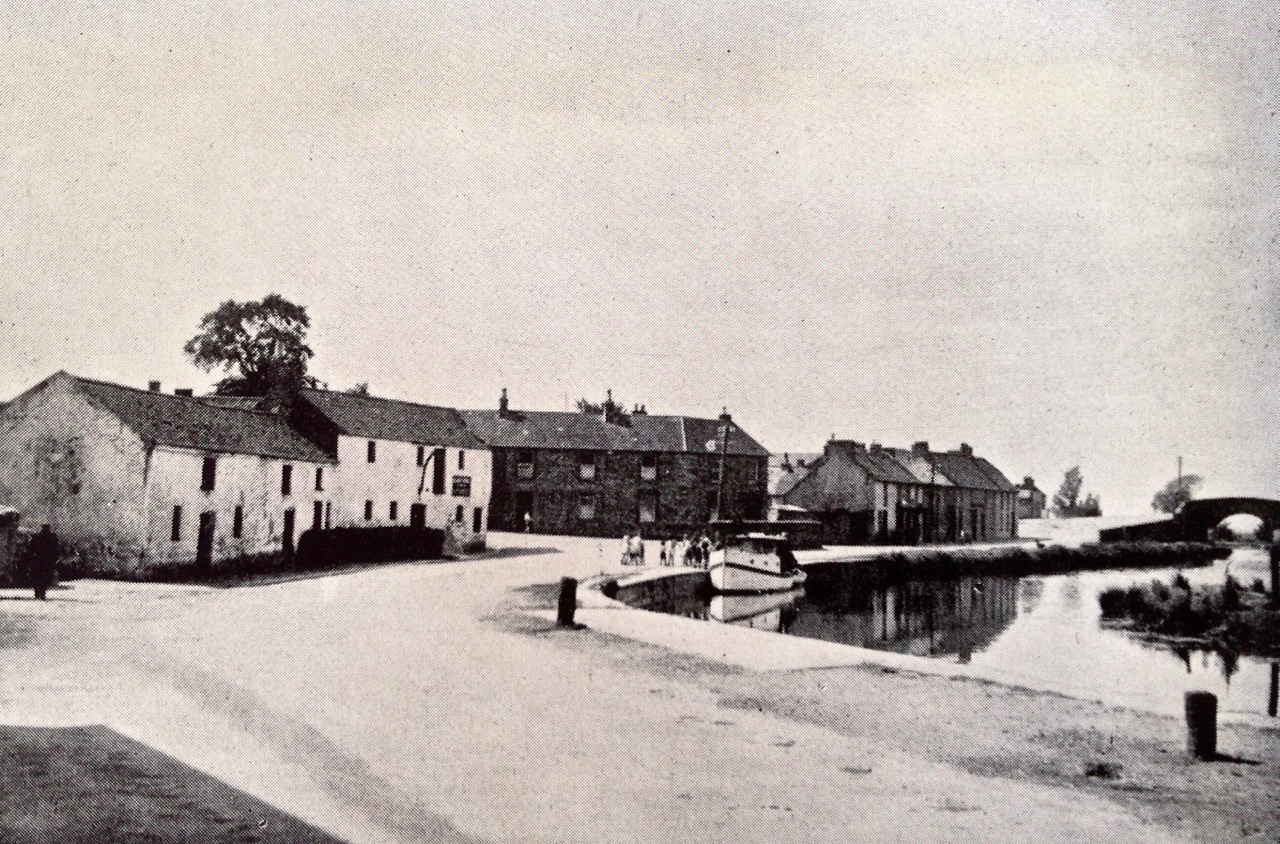
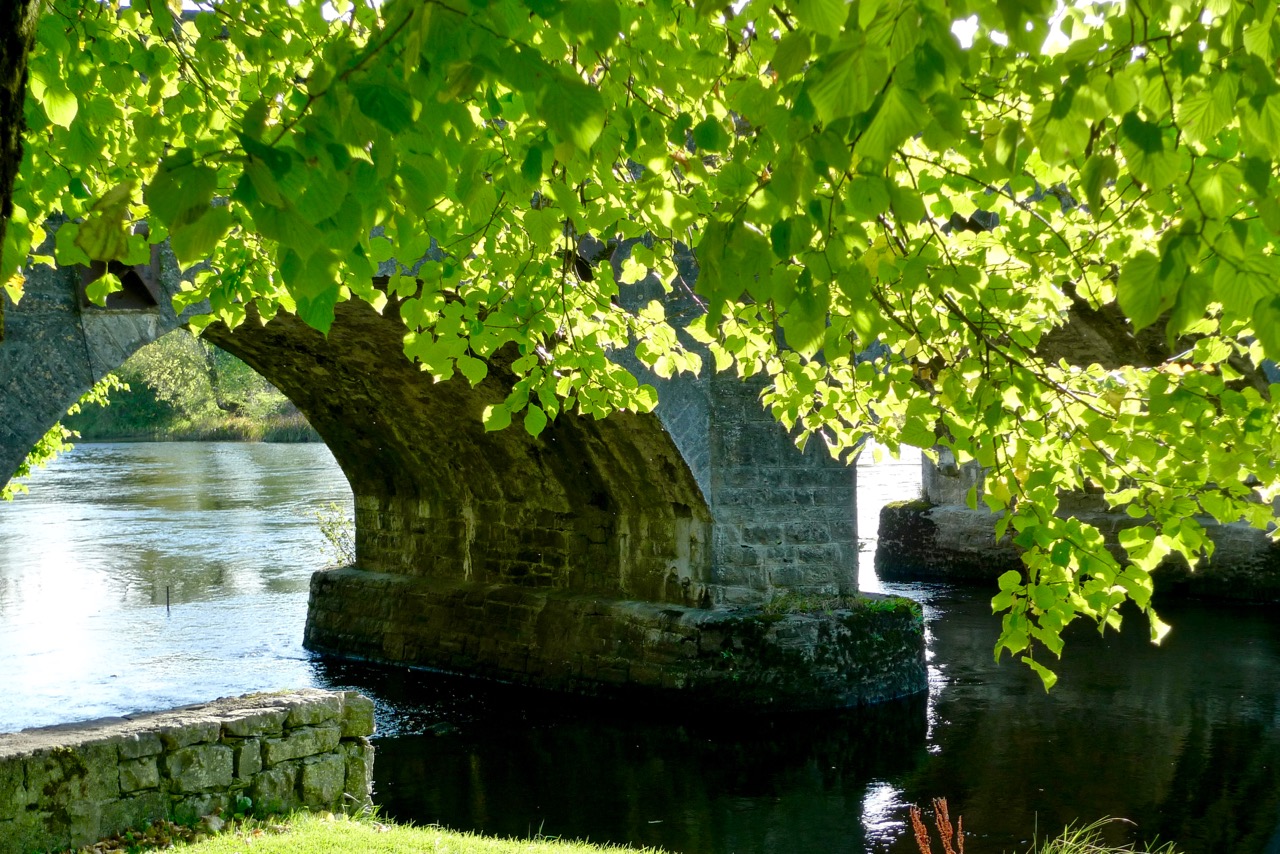
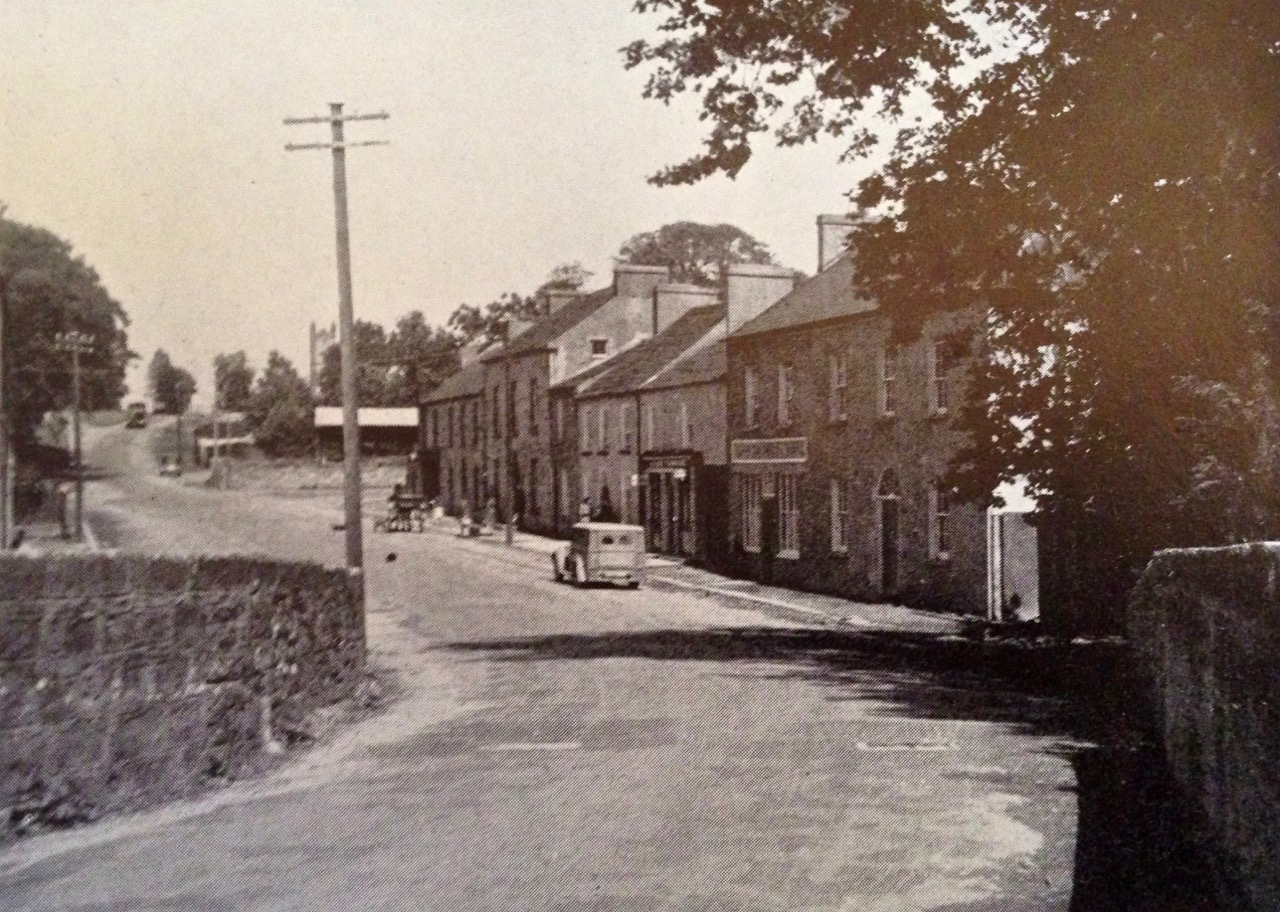
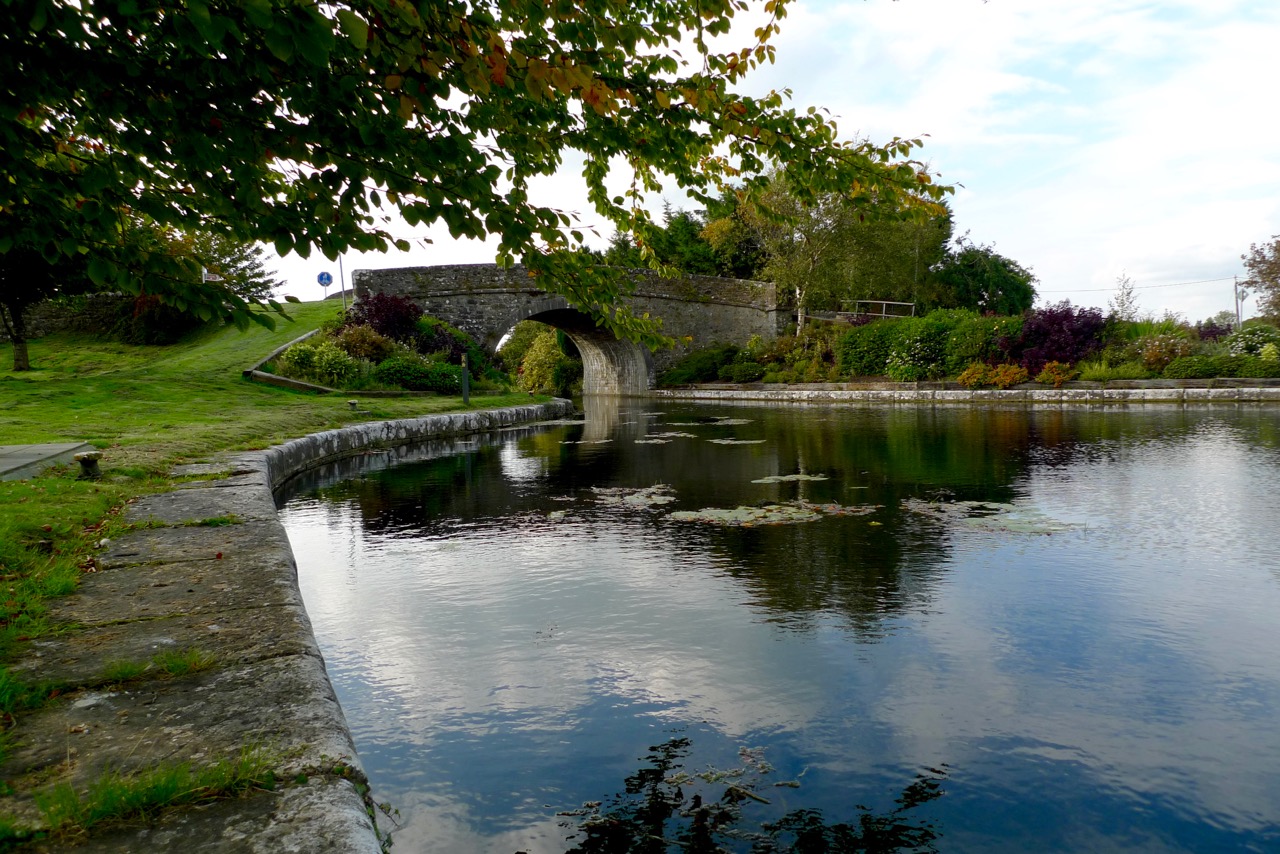
If you travel by water on the Shannon, you can still take your boat up to the bridge at Drumsna, Co Lietrim (above). Just below the bridge is a stone wharf which is the present limit of navigation on that part of the river, a great loop which was bypassed in 1848 by a 2.6km canal. The towns of Drumsna and Jamestown were once thriving river ports but went to sleep once the canal was built. When Tom and Angela Rolt arrived in Drumsna in 1946 the quay there was in ruins, and they had to anchor their boat Le Coq in the shallows and row their small dinghy into the village.
Drumsna (Trollope)

drumnsa-2016

Upper picture – Drumsna in 1946, a photograph taken by Angela Rolt. Lower picture – the same scene in 2016; 70 years have passed but there have been few changes in the fabric of the village

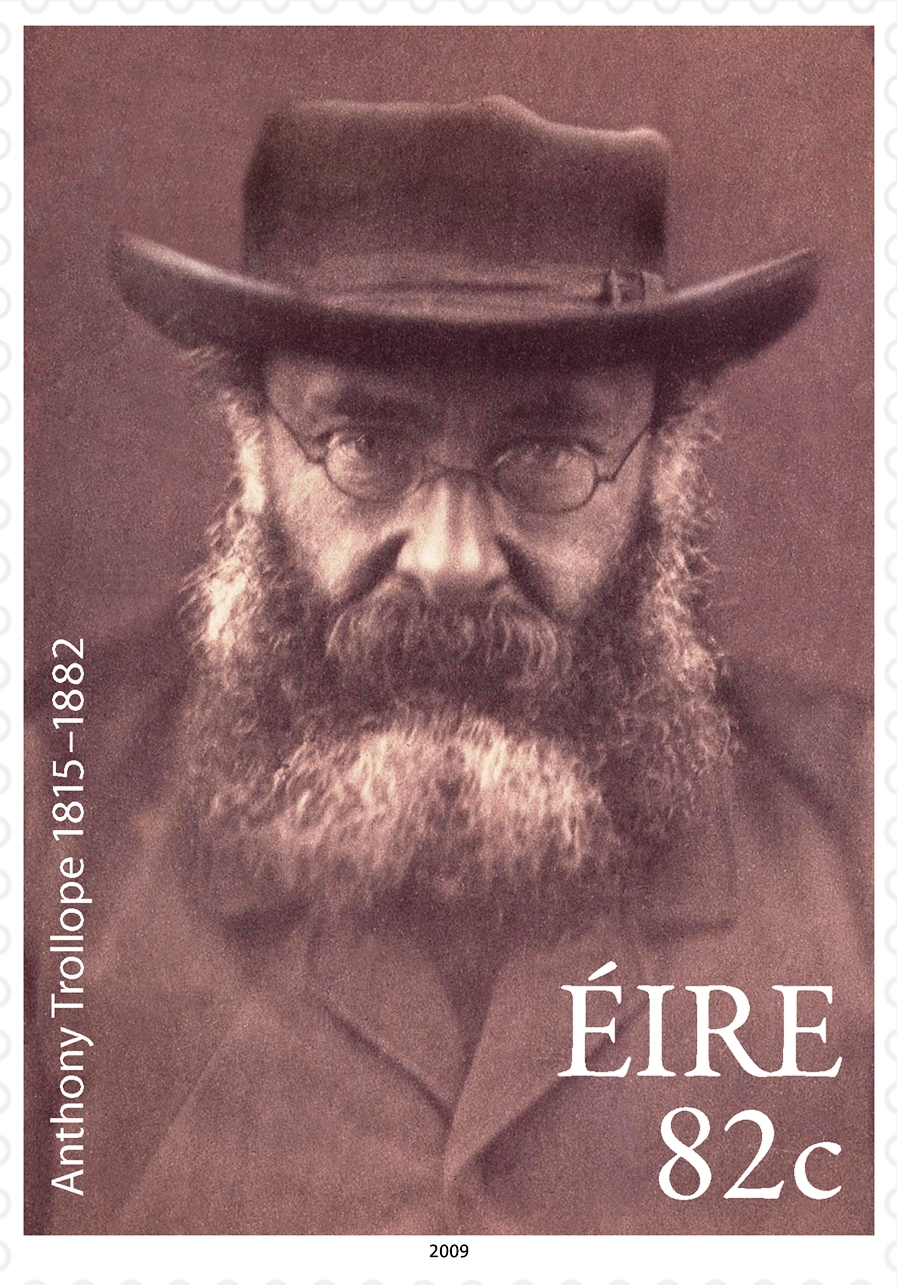
The Rolts were interested in Drumsna because of its associations with Anthony Trollope, who readers will remember for his introduction of post boxes into Ireland. While working as a Post Office Surveyor he was stationed in Drumsna during the 1840s, before the Great Famine, and began his writing career with the novel The Macdermots of Ballycloran (published in 1847). It was not a success but he persevered and became one of the most prolific writers of all time, publishing no less than 47 novels and many more short stories and works of non-fiction during his lifetime. He died in London in 1882, aged 67.
1795 battle Drumsna

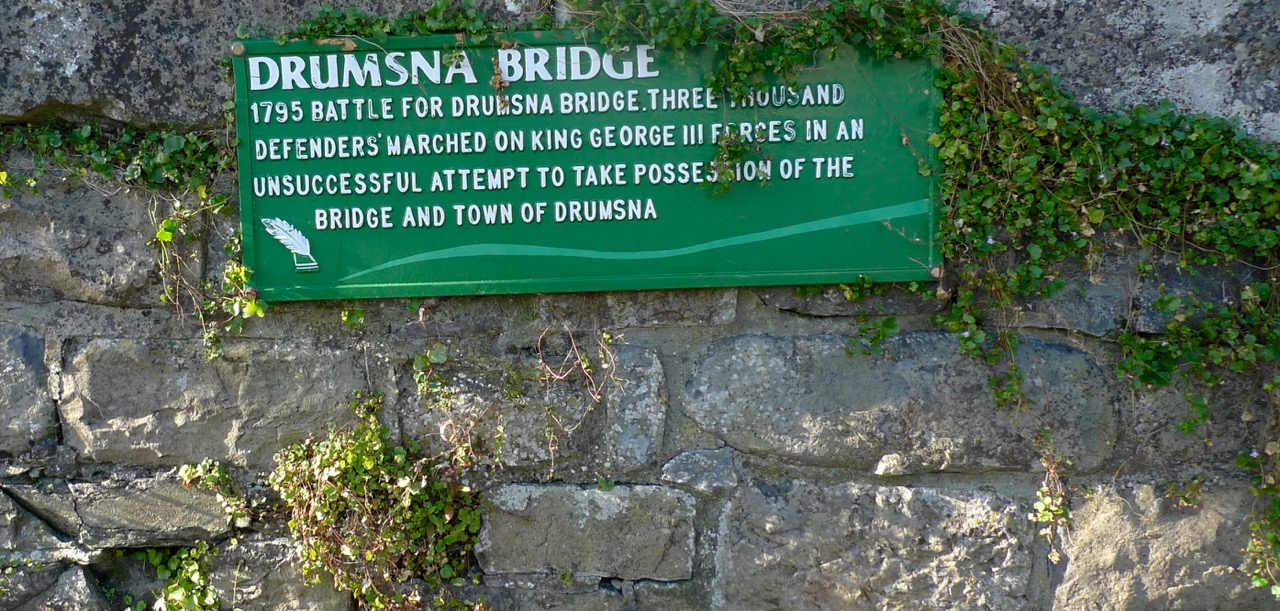
Drumsna was historically important as one of the crossing points of the Shannon: it was the site of a ford until the stone bridge was built, probably in the 18th century. This bridge, one of the oldest on the river, once had a blind eye arch where prisoners were jailed and, reportedly, a handball alley on the side where many a  famous championship was held. The plaque on the bridge today (above) remembers an uprising from 1795

Trollope was living in Ireland at the time when the canal system was thriving. He was certainly familiar with travelling by water on the canals, as we can see through this excerpt from his second novel, The Kellys and the O’Kellys (also inspired by his experience of life in Ireland and a success – it was published in 1848 and sold 140 copies). Trollope was 33 when he wrote this book and he must have had direct personal experience of the passenger boat services running out of Dublin on the Grand Canal:

…MR MARTIN KELLY RETURNS TO DUNMORE

We will now return to Martin Kelly…. Hstarted for home, by the Ballinasloe canal-boat, and reached that famous depot of the fleecy tribe without adventure. I will not attempt to describe the tedium of that horrid voyage, for it has been often described before; and to Martin, who was in no ways fastidious, it was not so unendurable as it must always be to those who have been accustomed to more rapid movement. Nor yet will I attempt to put on record the miserable resources of those, who, doomed to a twenty hours’ sojourn in one of these floating prisons, vainly endeavour to occupy or amuse their minds. But I will advise any who from ill-contrived arrangements, or unforeseen misfortune, may find themselves on board the Ballinasloe canal-boat, to entertain no such vain dream. The ‘vis inertiae’ of patient endurance, is the only weapon of any use in attempting to overcome the lengthened ennui of this most tedious transit. Reading is out of the question. I have tried it myself, and seen others try it, but in vain. The sense of the motion, almost imperceptible, but still perceptible; the noises above you; the smells around you; the diversified crowd, of which you are a part; at one moment the heat this crowd creates; at the next, the draught which a window just opened behind your ears lets in on you; the fumes of punch; the snores of the man under the table; the noisy anger of his neighbour, who reviles the attendant sylph; the would-be witticisms of a third, who makes continual amorous overtures to the same overtasked damsel, notwithstanding the publicity of his situation; the loud complaints of the old lady near the door, who cannot obtain the gratuitous kindness of a glass of water; and the baby-soothing lullabies of the young one, who is suckling her infant under your elbow. These things alike prevent one from reading, sleeping, or thinking. All one can do is to wait till the long night gradually wears itself away, and reflect that, Time and the Hour Run through the Longest Day.

I hardly know why a journey in one of these boats should be much more intolerable than travelling either outside or inside a coach; for, either in or on the coach, one has less room for motion, and less opportunity of employment. I believe the misery of the canal-boat chiefly consists in a pre-conceived and erroneous idea of its capabilities. One prepares oneself for occupation–an attempt is made to achieve actual comfort–and both end in disappointment; the limbs become weary with endeavouring to fix themselves in a position of repose, and the mind is fatigued more by the search after, than the want of, occupation.

Martin, however, made no complaints, and felt no misery. He made great play at the eternal half-boiled leg of mutton, floating in a bloody sea of grease and gravy, which always comes on the table three hours after the departure from Porto Bello. He, and others equally gifted with the ‘dura ilia messorum’, swallowed huge collops of the raw animal, and vast heaps of yellow turnips, till the pity with which a stranger would at first be inclined to contemplate the consumer of such unsavoury food, is transferred to the victim who has to provide the meal at two shillings a head. Neither love nor drink – and Martin had, on the previous day, been much troubled with both – had affected his appetite; and he ate out his money with the true persevering prudence of a Connaught man, who firmly determines not to be done.

He was equally diligent at breakfast; and, at last, reached Ballinasloe, at ten o’clock the morning after he had left Dublin, in a flourishing condition. From thence he travelled, by Bianconi’s car, as far as Tuam, and when there he went at once to the hotel, to get a hack car to take him home to Dunmore…

Long distance travel within Ireland by inland waterways was the preferred form of transport in the first half of the 19th century. The alternative was the stage coach: this was no faster than canal travel because of the sometimes tortuous routes which roads took, and the conditions of the roads themselves, particularly in the winter. It must be significant that in the early years of stage coach travel only departure times were advertised: the journey would take as long as conditions permitted. Coaches were notoriously uncomfortable. At least the canal packet boats were relatively smooth and passengers had the opportunity to stretch their legs on deck. Everything changed, of course, with the coming of the railways as the century progressed.

Duchess Countess

The last days of the former express passenger boat Duchess Countess, photographed by Angela Rolt in the late 1940s. The Rolts initiated attempts to have the boat preserved, but these were unsuccessful

Rolt mentions passenger packet boats or ‘fly boats’ in England in his later book which was published in 1950. In The Inland Waterways of England, George Allen and Unwin, he describes:

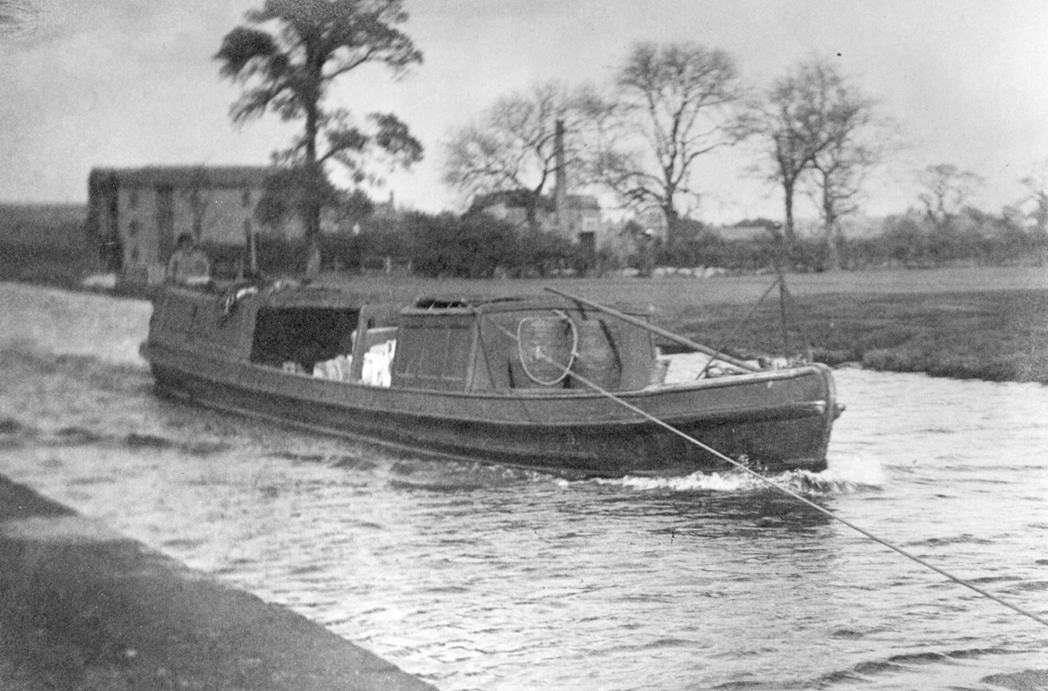
…the miraculous preservation by sinking of the Bridgewater Canal passage boat Duchess Countess (a name recalling the titles of the Bridgewater family). This old boat was eventually raised and, still in substantially original condition even to her cabinwork, began a new lease of life as a houseboat. She was moved on to the Welsh section of the Shropshire Union Canal near Frankton Junction where she is still occupied at the time of writing although, owing to the deterioration of her hull, she has now been drawn out of the water. The Duchess Countess was the last packet boat in regular service. In the heyday of her career as a packet boat she proudly mounted a great curved knife-blade on her bow. This was of much more than symbolic significance, for it was so contrived that it would sever the towline of any boatman who failed to give way to her… …Very soon the Duchess Countess must inevitably disintegrate, and with her passing the last tangible link with these once extensive but little known canal passenger services will be irretrievably lost…

dc_on_water

dcountess_-_line_drawing_boat

Upper picture – a rare photograph of the Duchess Countess still in use  on the canals (courtesy British Waterways Archive – date unknown) and , lower picture – a modern line drawing of the boat. Both images show the blade on the prow which could slice through the towlines of any unfortunate boat which did not get out of the way in time!

Angela Rolt photographed the Duchess Countess on the canal bank and, fortunately, an early photograph of the boat in its working days is preserved. This shows the scythe-like blade on the prow and confirms that the express boat service had priority over all other traffic on the canals. I am not aware that any of the Irish passenger boats were so equipped but, using teams of horses which were frequently changed along the route, they were evidently able to keep up a continuous speed of around 10 miles per hour, which was no mean feat at the time.
trollope-irish-stamp

We will revisit passenger travel on the Irish Canals in a future post continuing this series…
Travel by Water

Ballynacarrigy Bridge

We have been on a voyage of discovery – or, perhaps, rediscovery. You remember that recently I reviewed a book which I received as a school prize in 1963: Green & Silver by L T C Rolt? That was a book about travelling by water through some of the canals and rivers of Ireland. The book was published in 1949 but I found out that the journey was undertaken in 1946 – exactly 70 years ago and, also, the year in which I was born. Tom Rolt was a good travel writer and a good observer, and the book is full of descriptions of the places and people that he and his wife Angela came across: it’s a valuable social document and it is rather significant that three score years and ten have passed since they completed their explorations.

Tom Rolt (left) and Angela and Tom Rolt (right) aboard Le Coq, the boat with which they set sail from Athlone to circumnavigate the inland waterways of Ireland between June and September 1946. The photos are taken on the Grand Canal

Back in my more youthful days I also travelled by water, but around the English canal system, a journey of nearly 2,000 miles, taking several months. I also wrote a book after the journey: Canals and their Architecture. Tom Rolt was to have written the introduction to that book but he was unable to, because of illness. As a tribute to him, and to mark his journey through Ireland, Finola and I have been retracing his steps. We should have travelled by water, too, but that would have impinged overmuch on our busy lives here in West Cork. Instead, we covered in a couple of weeks by car what Tom and Angela had taken three months to achieve. Their’s were difficult times, too, immediately after The Emergency when fuel was virtually unobtainable.

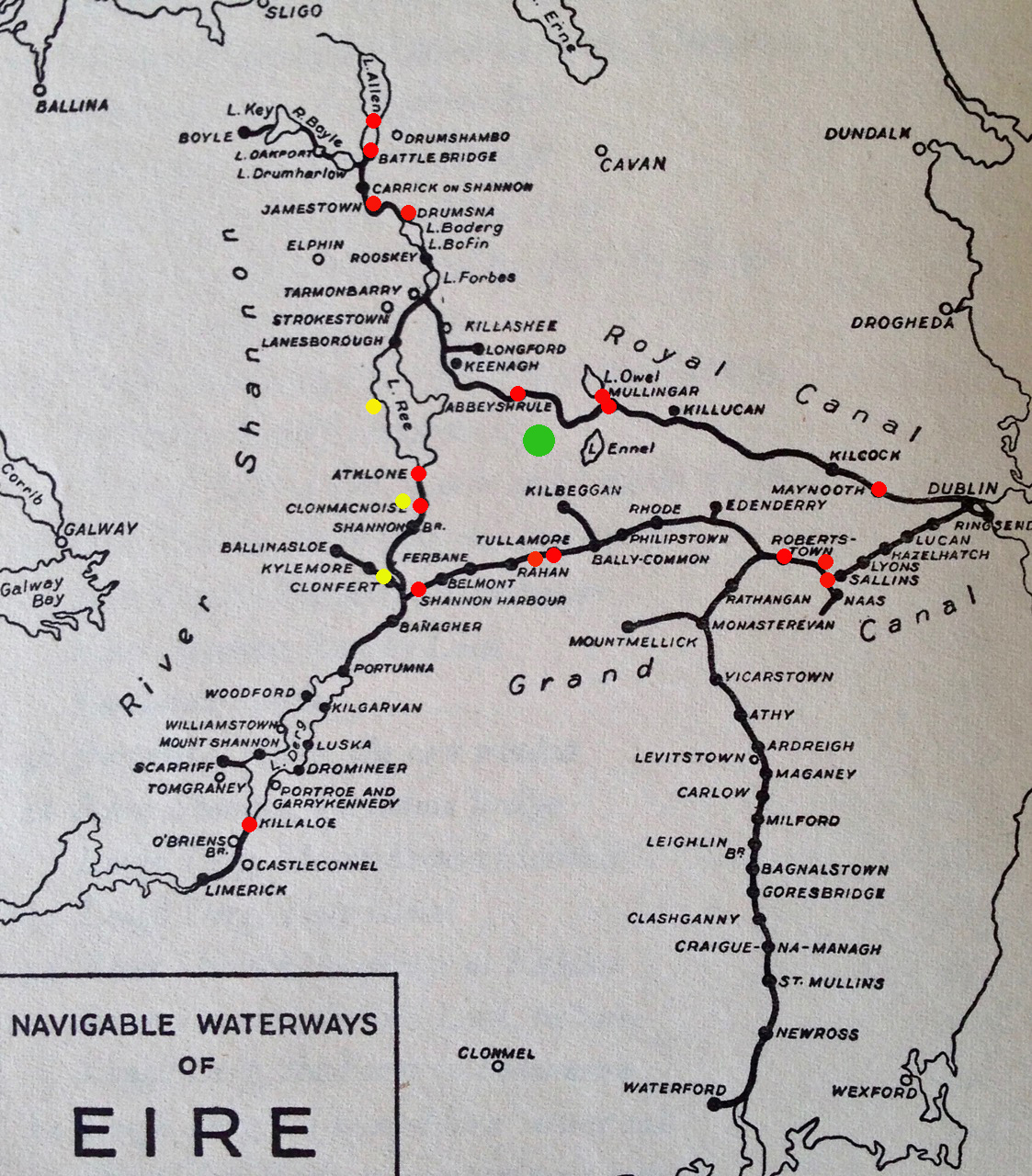
navigable waterways

Map of the journey taken from Green & Silver. We have marked on it the sites which we wanted to visit, either because Angela had photographed them or because there was a ‘story’ about the place in the book

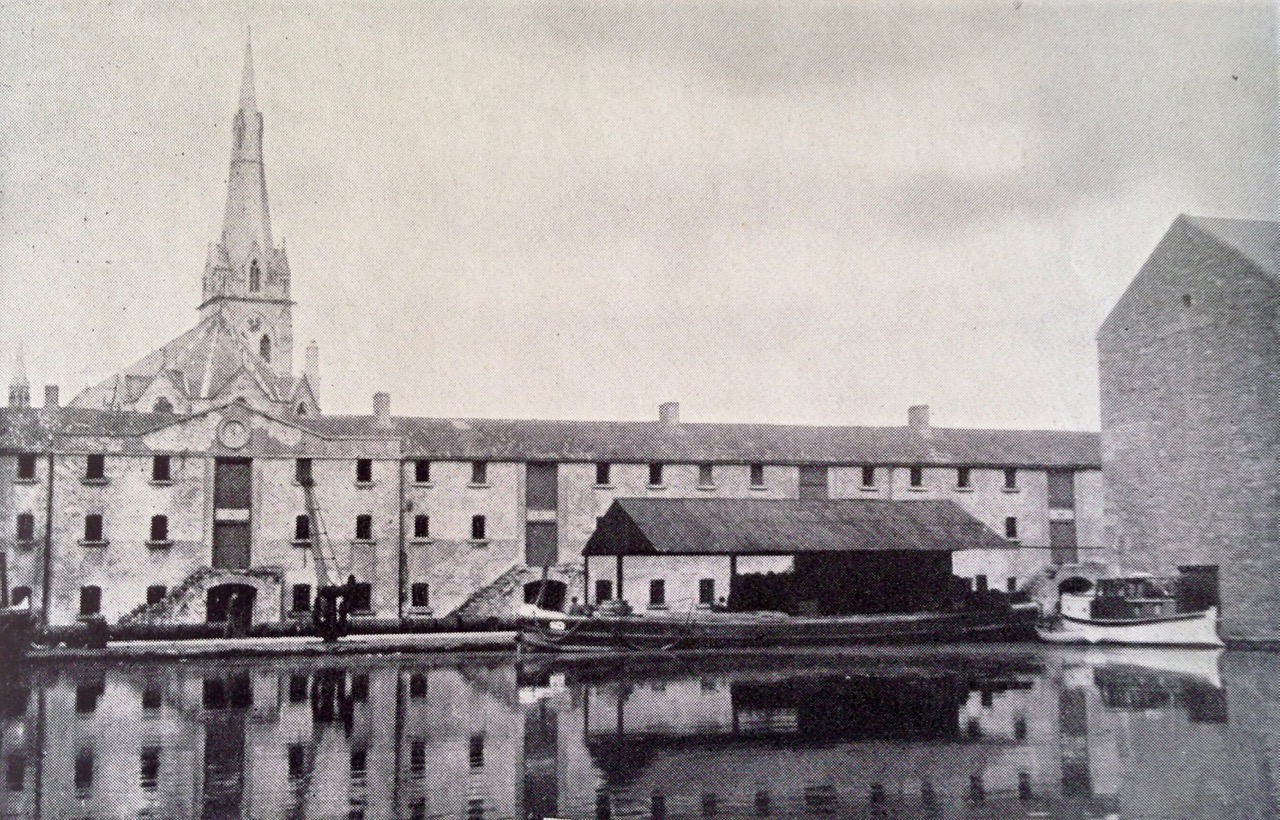
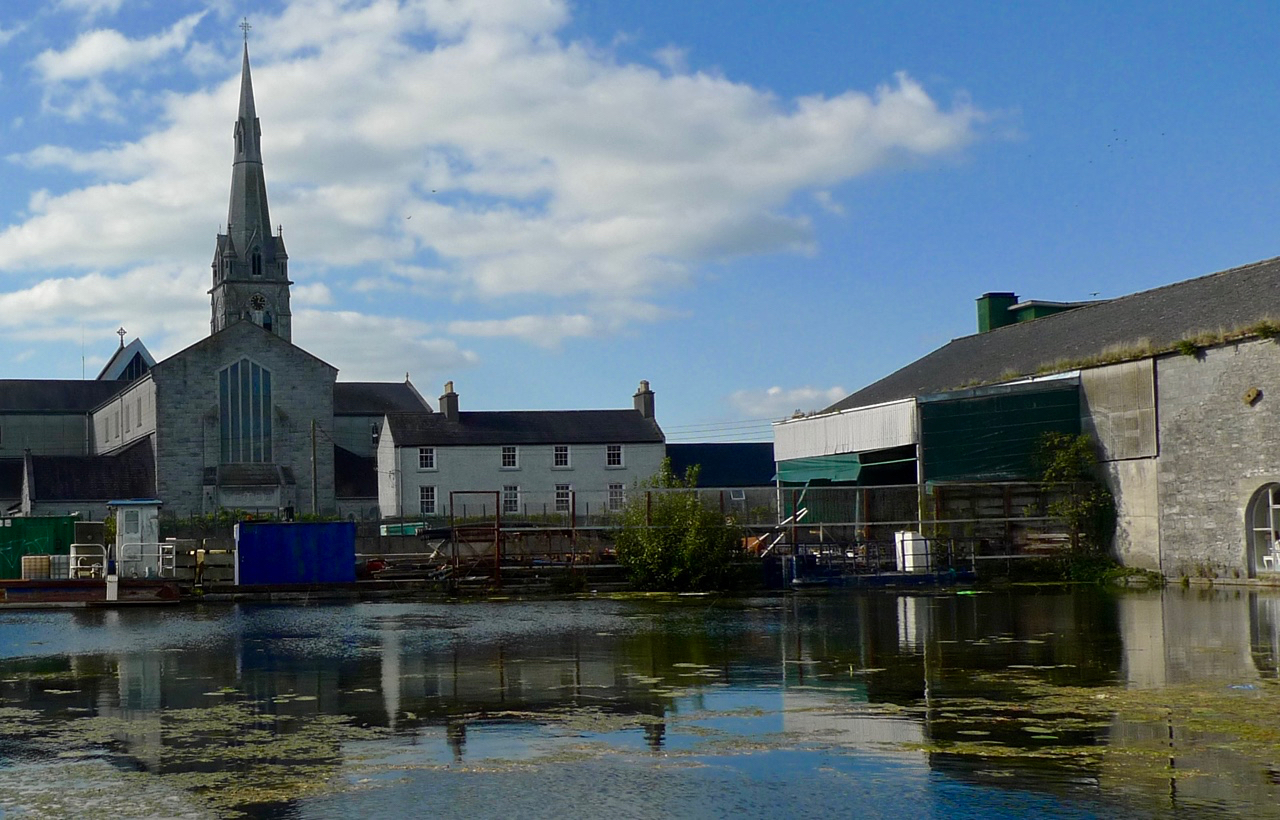
Angela Rolt recorded the journey in her own way – through the lens of her camera. Her wonderfully evocative monochrome photographs illustrate Green and Silver, and provided a goal for each leg of our own travels. Armed with the book and digital scans of all her pictures we set out to retrace the watery steps of Le Coq – the little boat which the Rolts borrowed – and take a new photograph at every place they visited. The aim was to set up each photograph of 2016 to exactly match those of 1946 and, through the lens, to record the differences that have taken place in Ireland during all those years. Of course, there is much more to this exercise than the photos: Rolt’s book contains many stories, of people and places not necessarily illustrated but well described, so we also looked out for those: would anyone today have any memories of the people talked about in the book? And would the descriptions of the places that the waterways served in those days ring true in the present?

harbour town

Tullamore 2016

Just one example of our efforts to retrace the steps of the Rolts and record a changing Ireland. Upper photograph – taken by Angela Rolt in 1946 at Tullamore Harbour, Grand Canal. Lower photograph – taken by Robert at the same site. Although the canal harbour itself is intact today – it is an administrative centre for Waterways Ireland – there have been some significant changes. The fine three storeyed warehouses which faced on to the canal 70 years ago have gone, demolished in the 1960s. The Church of the Assumption beyond the harbour was destroyed by fire in 1983 and has since been rebuilt to a modern design except for the tower, which survived the fire

This project will take a little time to fully document. It might occupy a few blog posts! This one is by way of introduction. One thing that struck me most forcefully is the change which the waterways of Ireland have undergone in seventy years. Now all the navigable waterways of Ireland are administered by a single cross-border authority – Uiscebhealaí Éireann (Waterways Ireland); some of the canals which were derelict or near-derelict in 1946 have been fully restored, and many are equipped with modern electric lock gear – something which the Rolts could never have envisaged in their time. However, the volatile economic situations which Ireland has been subjected to in the late twentieth century, and into the twenty-first, have also had their effects, and we found this reflected in some of the stories which we followed during our travels.

Shannon Erne Waterway

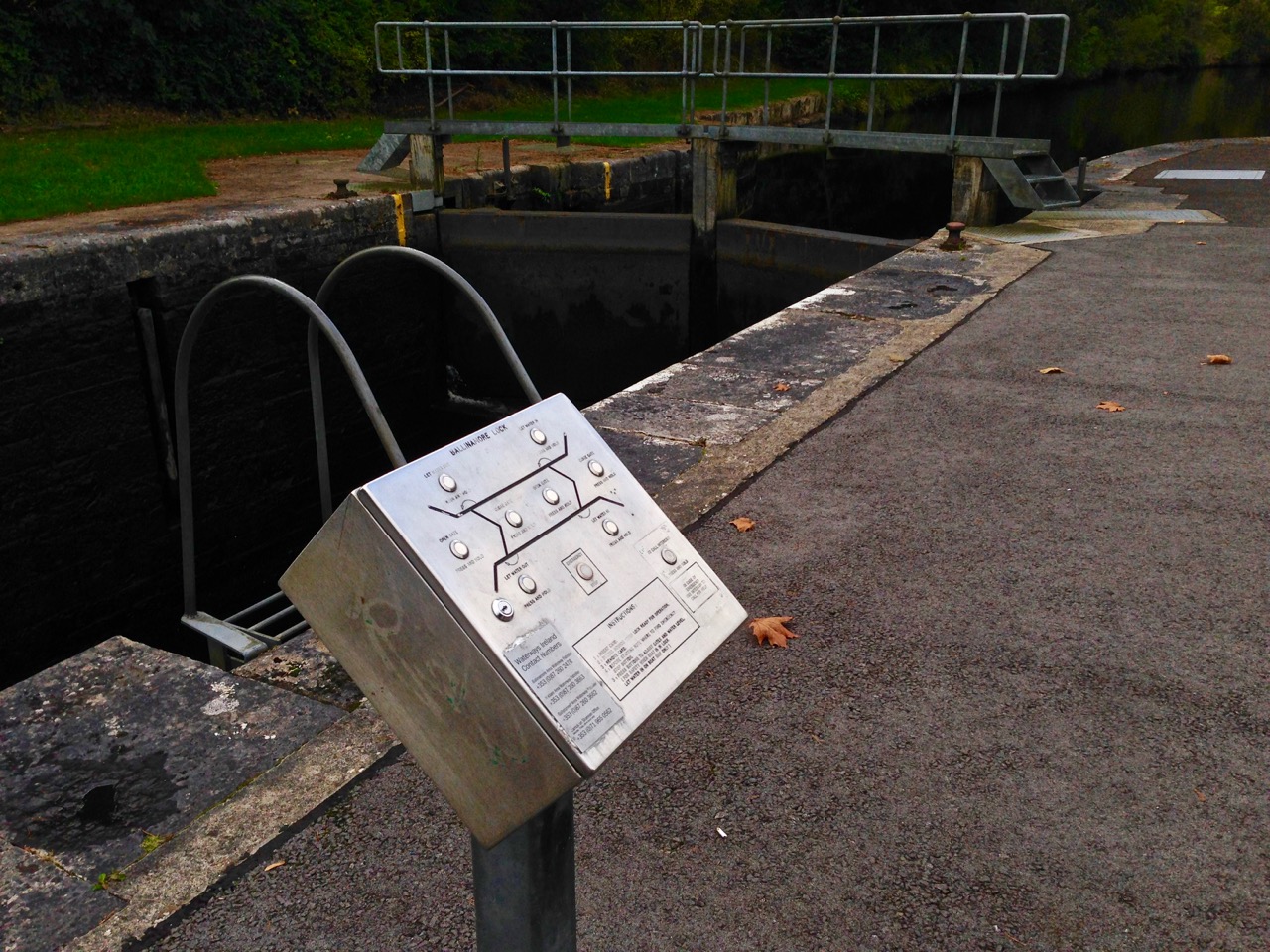
The restored Shannon-Erne navigation links waterways between the Republic of Ireland and Northern Ireland. The 63km canal was constructed originally in the mid nineteenth century but became moribund by 1865. The navigation was reopened in 1994. All sixteen new modern locks are operated electronically by hydraulics: boaters are issued with a key which activates the control panels (above)

Another surprise for me was the quality of the engineering and the scale of the undertakings which Ireland displays on its system of navigations. These were massive construction projects in their day, but they nonetheless manage still to convey a sense of respect for their settings, an appropriateness of all materials used, and a constant appreciation of human scale. The architecture of Ireland’s canals is truly vernacular, something I hope to demonstrate during these explorations.

Mullawornia Lock

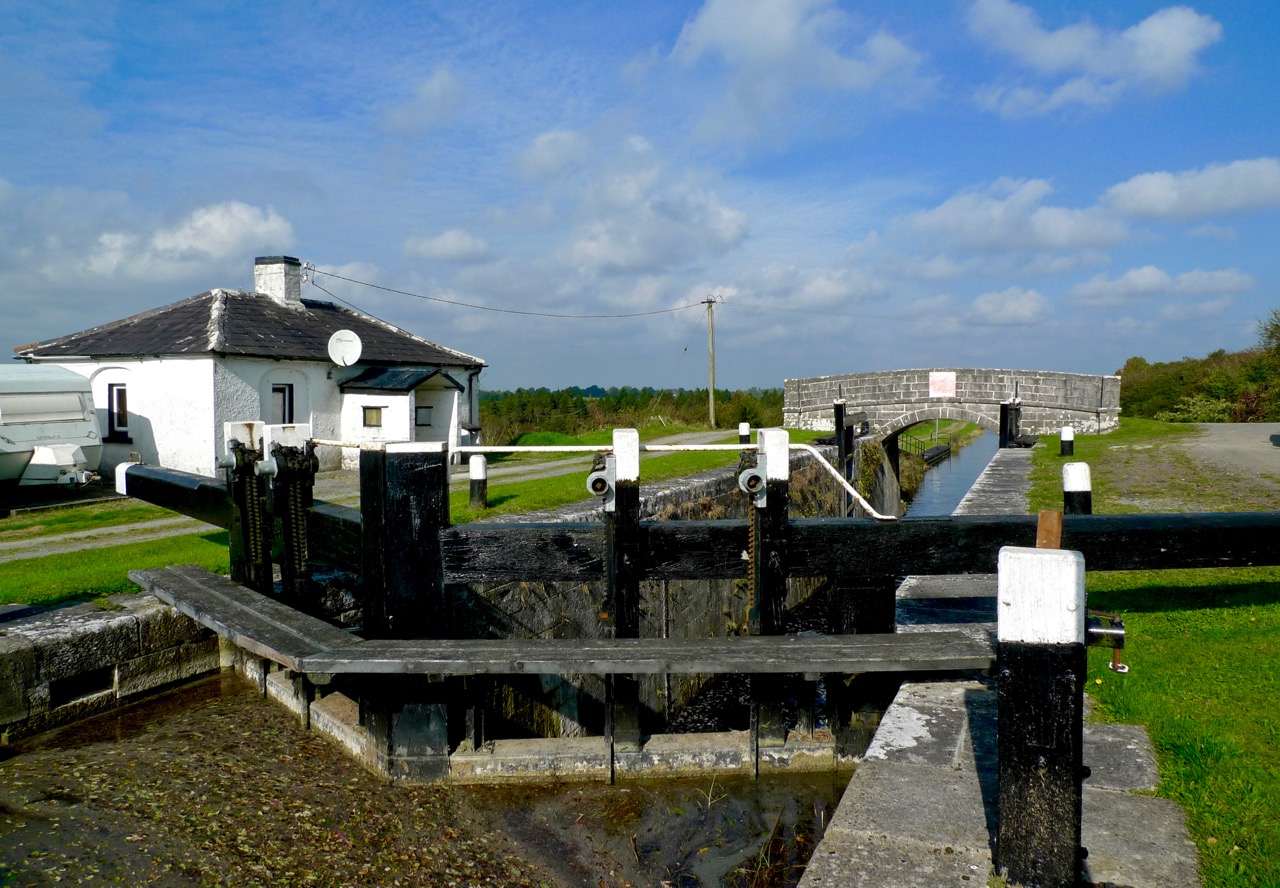
Mullawornia Lock, Lock 40, Royal Canal, County Longford. The lock-keeper’s house is an unspoilt example of a vernacular architecture which can be seen across Ireland’s canals

To be continued…

Into the Heartland

Elphin Windmill

Because we live on it, sometimes we get carried away by the notion that The Wild Atlantic Way represents the best that Ireland has to offer. A recent trip to the midlands – the Heartland of Ireland – convinced us (if we needed it) that there is no part of Ireland that isn’t beautiful and full of fascinating things to do and see. (Like the Elphin Windmill, Co Roscommon, above.)

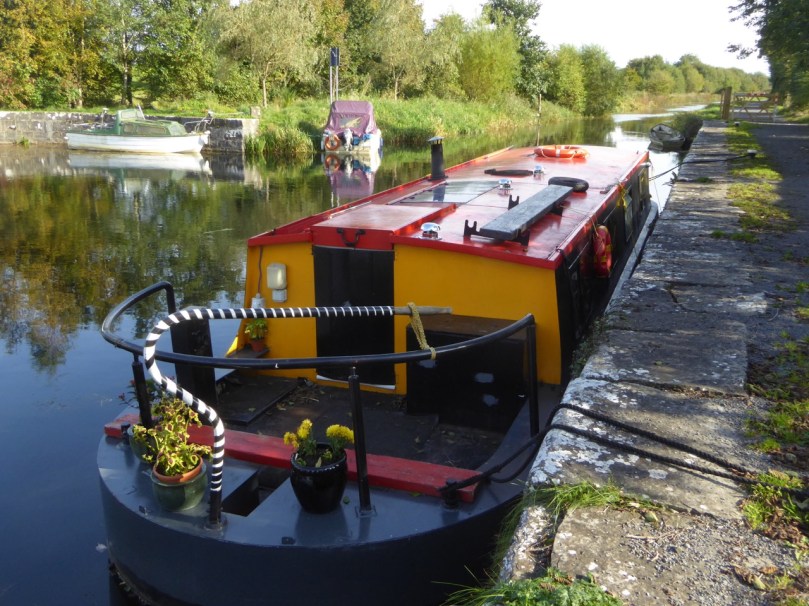
Parked at Coolnahay

We spent a lot of time along rivers and canals! 

Robert explains the background and purpose of our trip in his post, Travel by Water. I knew very little about canals before I met Robert and it’s been eye-opening to learn about the history and the sheer extent of Ireland’s inland waterways. We spent a lot of time exploring the canals – walking and driving – and enjoyed it all tremendously.

Boa Island figures

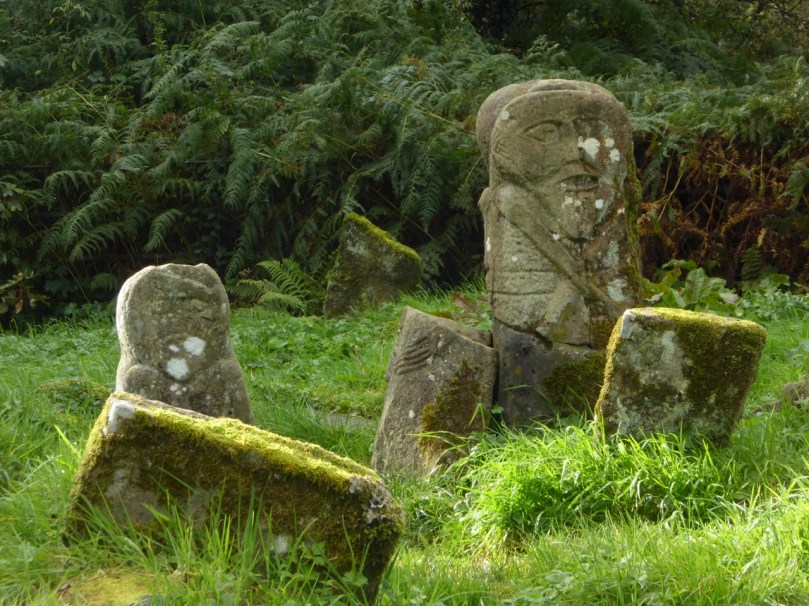
Boa Island on Lough Erne, Co Fermanagh, is home to these mysterious carved figures. Lower left: heads on a medieval church in Kilmallock, Co Limerick. Lower right: a contemporary sculpture celebrates the mythical Finn McCool, in Keshcarrigan, Co Leitrim

But wherever we went there were always other places luring me away – tower houses and fortified houses, churches and graveyards, friendly villages and colourful houses, stained glass windows and prehistoric sites. We drove along roads where we counted ring forts in every field. We explored ancient graveyards and we found a Holy Tree. We visited two sites we posted about last week, the Corlea Iron Age Trackway, and the Hill of Uisneach.

Holy Chestnut

The Holy Tree. A local man we met called it a ‘holy show’ and it certainly had some very questionable items mixed in with the statues and offerings

It’s autumn now, and, while we do experience a change of colour here in West Cork, it’s really in the midlands that the colours of the deciduous trees can overwhelm the senses. They were just starting to turn. I’m strongly tempted to head back in another couple of weeks for the full experience.

Birr Castle Gardens 2

These photographs were all taken at Birr Castle Gardens. Birr Castle (Co Offaly) was one of the most interesting and beautiful places we visited, home of the famous telescope and beautifully maintained

We visited thirteen of Ireland’s 32 counties on this trip – and never came close to the sea or the Wild Atlantic Way. Instead, everywhere we went we saw notices for the latest iteration of the Tourist Board’s marketing scheme. This one is called Ireland’s Ancient East, and appears to take in every county that isn’t on the Atlantic seaboard. A good resource, if you’re considering a trip like this, is Neil Jackman’s guidebook, Ireland’s Ancient East – we kept it by us and found it invaluable.

Grange Stone Circle, Lough Gur

Grange Stone Circle, the largest in Ireland, is one of a complex of monuments at Lough Gur, Co Limerick

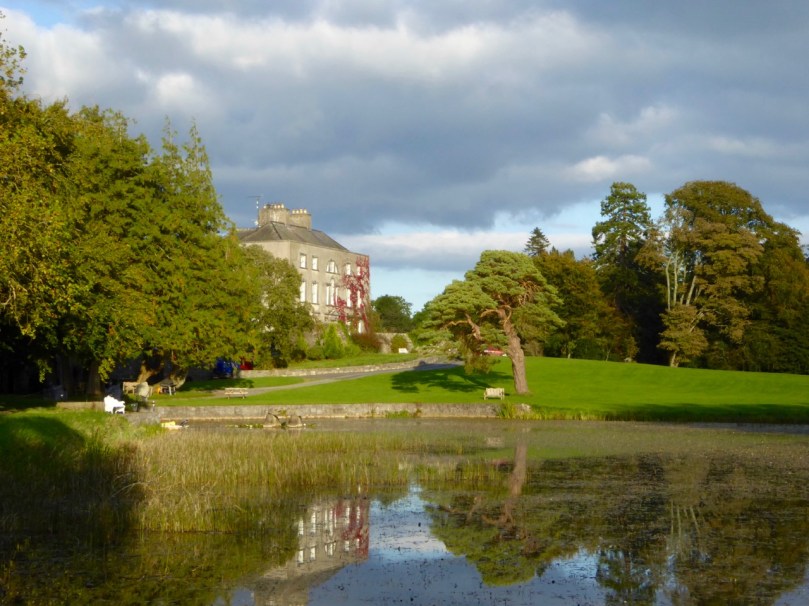
Our headquarters for the biggest chunk of our time away was the incomparable Mearescourt House near Mullingar, Co Westmeath. George and his team made us welcome and comfortable, there were glorious grounds to wander around and animals to meet, and delicious breakfasts that left us feeling full for the rest of the day.

Mearescourt House

Mearescourt House – highly recommended!

When tourists are interviewed about their holidays in Ireland they praise the scenery, the food, the music – but most of all, they say, it’s the people who make it so enjoyable. We agree! Everywhere we went we ended up in conversation, as you do here, with local people delighted to help out with information, share old stories, invite us to the sessions, tell us where to go for a nice dinner, or point out places off the beaten track (and then rescue us later when we got lost).

Claire and Paddy Crinnegan, Coolnahay

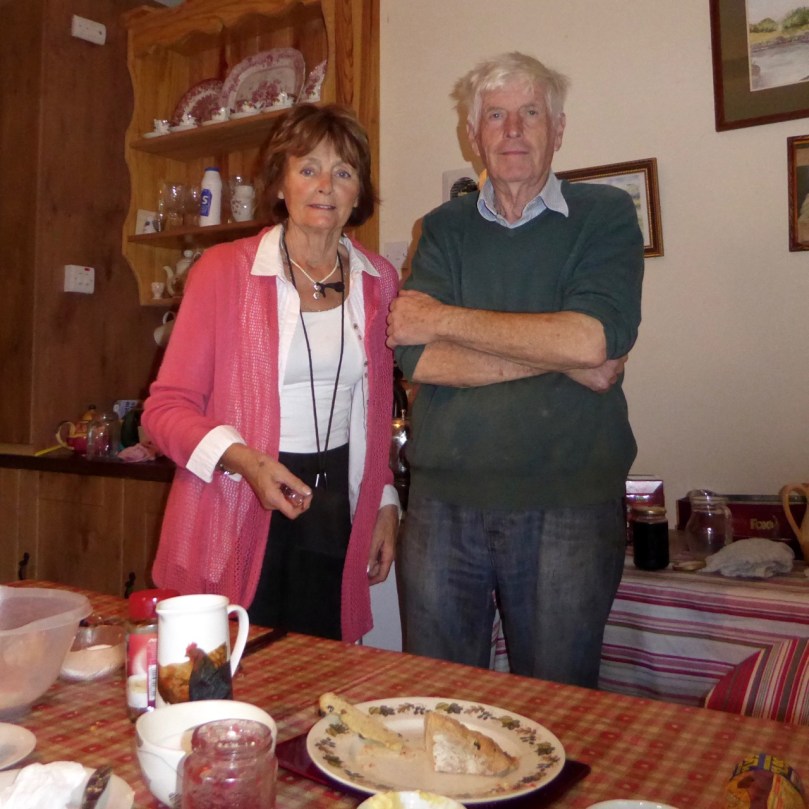
Paddy and Claire Crinnegan maintain the canal lock at Coolnahay on the Royal Canal. in Co Westmeath They made us tea, fed us Claire’s delicious currenty bread, told us about the trad concert that evening, loaned us a book, and related stories of growing up at the lock, where Claire’s father was the lock keeper.

Future posts will go into more depth on some of what we saw and experienced on this trip. This one is just an introduction, to share some of our impressions and drop some hints about what might be upcoming.

Clonfert Doorway

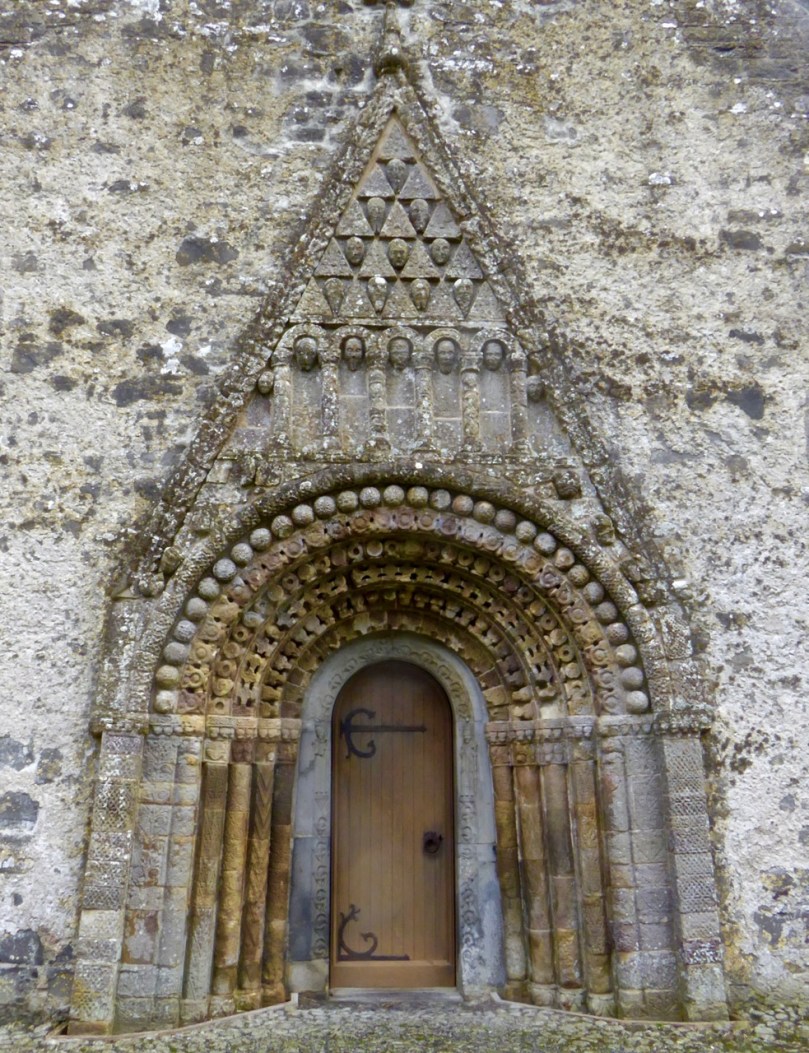
Clonfert Cathedrall (Co Galway) has the most beautiful Romanesque doorway I have ever seen
Along the canals and rivers, flora and fauna
Top left: in case you might get too happy with yourself; top right: the imposing gates to Portumna Castle, Co Galway, a 17th century house now owned and managed by the Office of Public Works; Bottom left: I peeped inside the priest’s section of a confession box and observed how he maintains an efficient count of time spent on each confession; bottom right; we disturb the rooks at Ballycowan Castle, Co Offaly

HC Studio, Athlone

Athlone Cathedral (Co Westmeath) has a gorgeous set of enormous windows from the Harry Clarke Studios – this is a detail from just one of them.

Can you detect a future post or two?

Green & Silver

title

This book review has been a long time coming: I first read the book in 1963! I was still at school then, and I was given it as a prize for essay writing (although I have no memory of the essay). I chose Green & Silver because I was already familiar with the author – Lionel Thomas Caswall Rolt, more usually known as L T C Rolt or ‘Tom’ Rolt. I had found in the local library his first book – Narrow Boat – written in the late 1930s when the author and his wife were living and travelling through England and Wales on board a converted canal boat. At that time the canals of Britain were still in commercial use, although water transport as a way of life was declining. I was smitten with the romanticism of the nomadic life of the canal boatmen – and of Tom Rolt – and Narrow Boat is beautifully illustrated with woodcuts by Denys Watkins-Pitchford, which enhance the experience of reading this classic book (which has never been out of print). Sir Compton Mackenzie wrote “it is an elegy of classic restraint unmarred by any trace of sentiment… Rolt’s pen is as sure as the brush of a Cotman… Narrow Boat will go on the shelf with White and Cobbett and Hudson.”

Woodcuts by Denys Watkins-Pitchford which illustrated the first edition of  Narrow Boat by L T C Rolt, published by Eyre + Spottiswoode, 1944

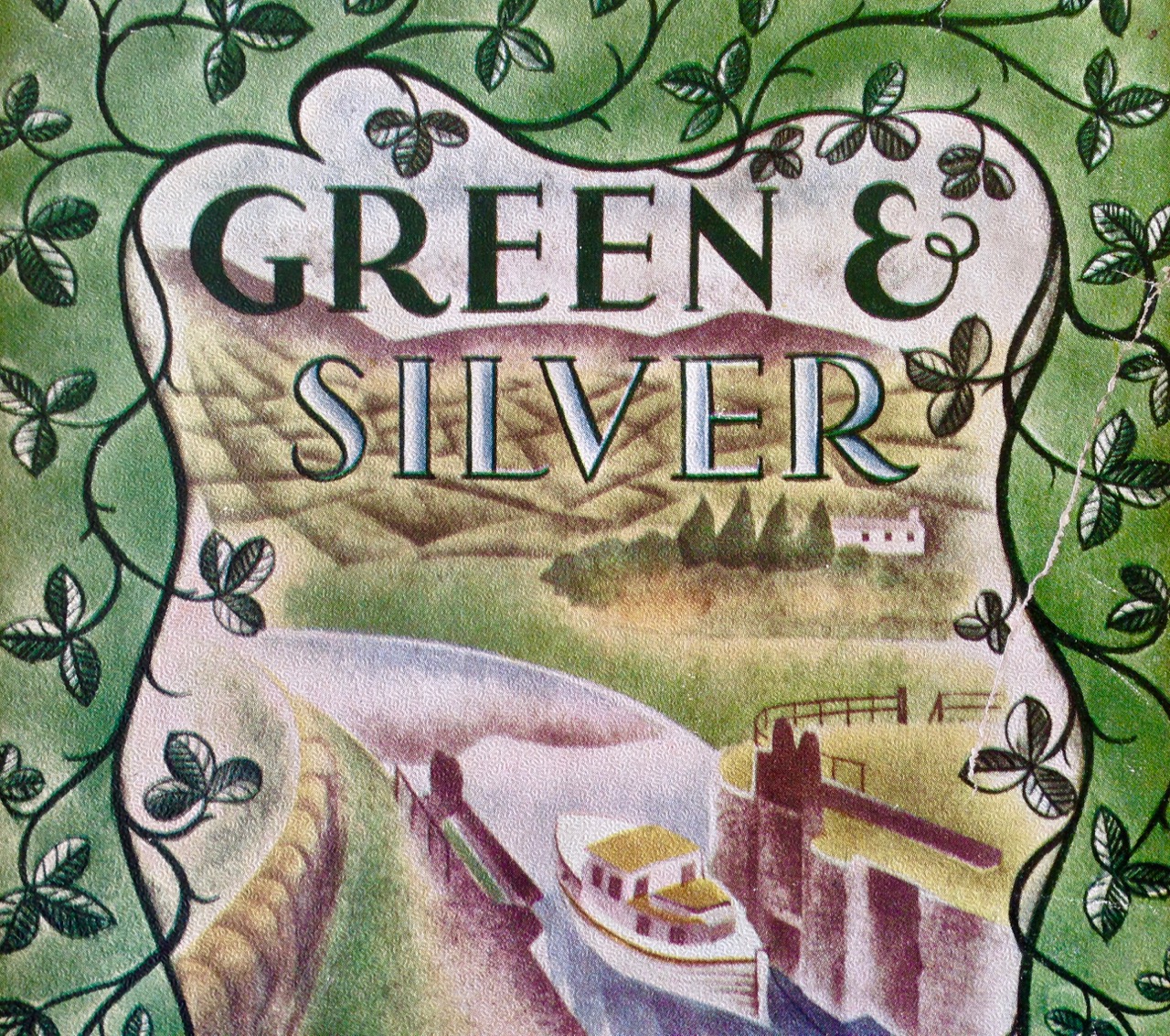
When choosing my essay prize, therefore, it seemed perfectly natural to go for another of Rolt’s books. A brief foray through book catalogues (remember – there was no internet in those days!) brought to light Green & Silver, first published in 1949. I established that it was an account of a journey by the same author through the canals of Ireland. It was the cover as much as anything else that attracted me to the book – it stood out as something quite unusual; I little knew that the content would have a profound effect on me, instilling an immediate yearning to visit the land across the Irish Sea, about which I knew very little.

Left – the bookplate pasted into my first edition of Green & Silver (it’s now in print again); right – the exuberant dust cover which attracted me to the book, painted by Evelyn Hunt

It was, however, to be a dozen years before I first visited Ireland (and then it was more a search for music than the canals), but Rolt’s works as a whole (he wrote more than 50 books) cemented in me an enduring interest in engineering, industrial archaeology, and, specifically, water transport. I spent my youthful leisure time campaigning to restore canals, physically digging them out of dereliction and even building lock gates with oak beams and elm boards using traditional techniques. Within a few years of reading Rolt I had acquired and restored my own boat and followed in his wake, spending a year travelling over the British canal system and writing a new book about their engineering and architecture.

canal port

Green & Silver is illustrated with photographs taken by Angela Rolt on the journey through Ireland. They are a valuable and evocative record of life just after the ‘Emergency’ years of the Second World War. Here is the Rolts’ borrowed boat – Le Coq – at Robertstown, on the Grand Canal: pleasure boating was virtually unheard of in rural Ireland in those days and the voyagers seemed much troubled by groups of children who gathered whenever they moored up, all demanding to see – and board – the ‘yacht’

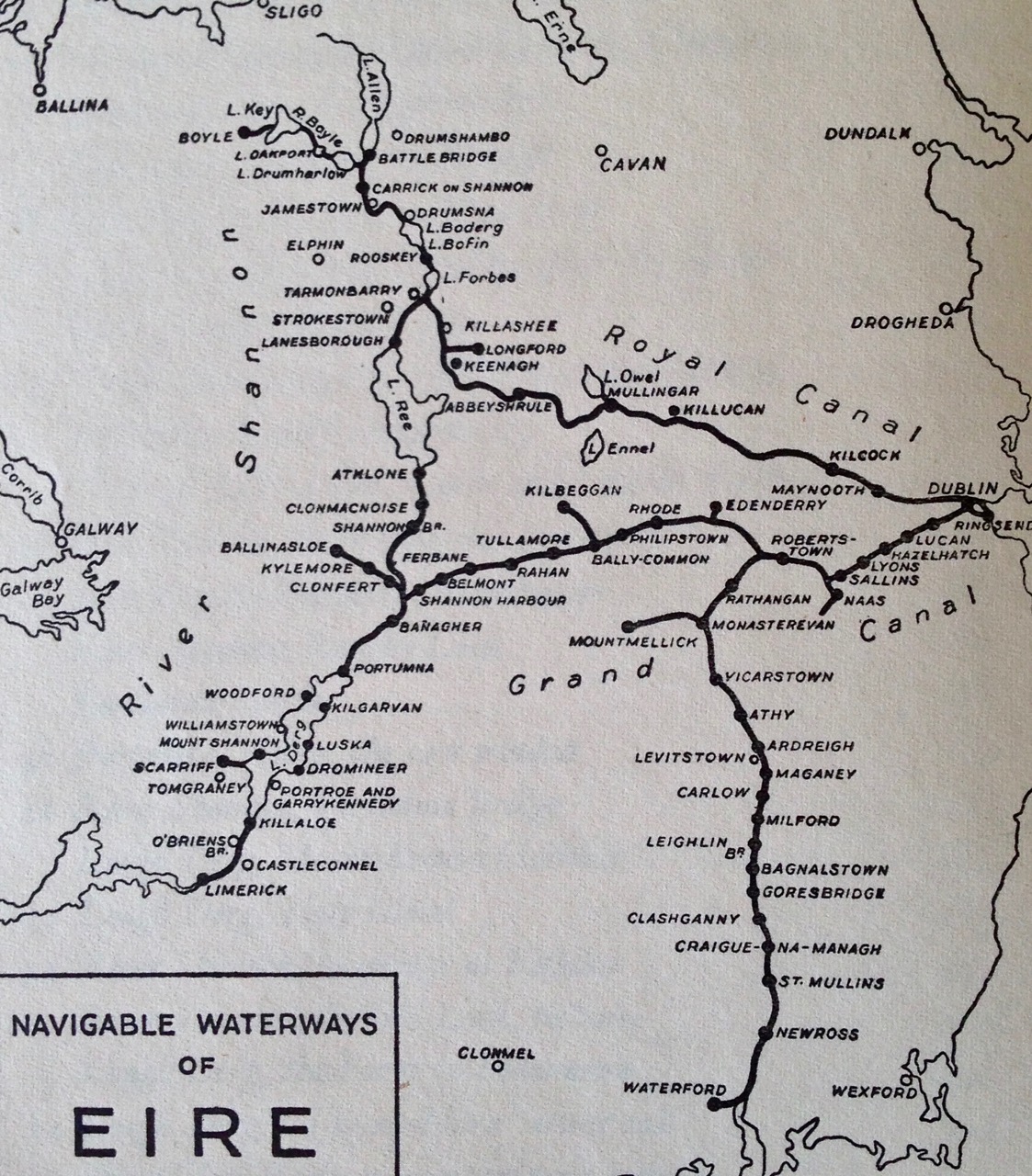
Tom and Angela Rolt faced many challenges in their journey – well documented in the book. They set out to navigate the Shannon, starting at Athlone, to the entrance of the Grand Canal at Shannon Harbour; along that canal to Dublin, then up the Royal Canal to rejoin the Shannon at Tarmonbarry and exploring the river northwards as far as Lough Allen, also taking in the River Boyle. The final part of the journey to Athlone crossed Lough Ree. The ‘Emergency’ years and their aftermath saw restrictions on the availability of fuel: this affected the Rolts’ plans, although they did complete their journey. They encountered commercial traffic on the Grand Canal – some horse drawn – and a little on the Royal Canal, which became derelict shortly after their travels. Le Coq was probably the last boat to complete the circular journey in the twentieth century: after significant efforts by the Inland Waterways Association of Ireland (founded in 1954) the Royal Canal has been fully restored to navigation and reopened in 2010.

navigable waterways

From Green & Silver: a map of the navigable waterways of Ireland at the time of the book’s publication in 1949

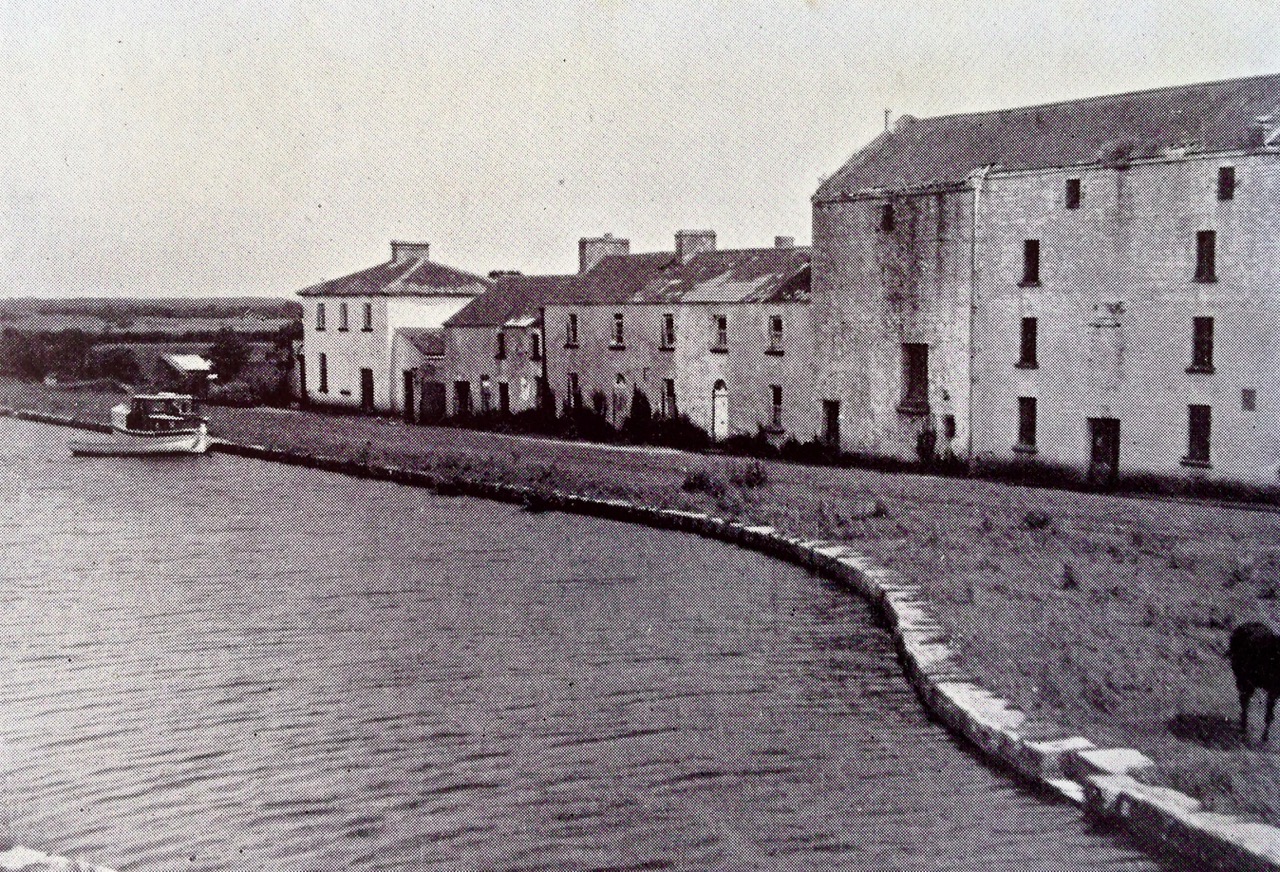
This book is full of descriptive detail and observation of the ways of life and the people that Tom Rolt encountered: every page fascinates. It’s hard to pick out any one section to exemplify the writing style, but here is an extract describing a visit to a corn mill at Cloondara in County Longford close to Richmond Harbour, the junction of the Royal Canal with the River Shannon (the mill ceased operations in the 1950s, not long after Rolt’s visit):

…Across the canal bridge there was a large corn mill which had seen better days but which I was pleased to see was still at work. Moreover it was not, as our few surviving [British] watermills are, relegated by the milling combine to grinding cattle meal. Cloondara Mill was grinding 100 per cent extraction flour for the village bakeries of the district. As we walked over the bridge a small water-turbine was churning merrily, driving the dynamo which provided electric light for the mill and the miller’s house. But the great undershot wheel which drove the mill from the waters of the Fallan River, a tributary of the Shannon, was still and silent. I knew why because, from somewhere in the dim recesses of the rambling stone building I could hear the chip chip of a mill-bill tapping away like some busy woodpecker. This Irish miller, like the English country millers who I have been fortunate enough to meet, was obviously proud of his mill and was delighted by our interest. Having assured himself that the stones being dressed were out of gear, he insisted upon opening the sluice for our benefit, setting the giant wheel revolving with a rumble and surge that wakened the mill and which, via a complex of wooden gearing, shafts and pulleys, set screens and sieves shaking and revolving to the very top of the building…

Cloondara

Angela Rolt’s photograph of Le Coq moored at Richmond Harbour, Cloondara – ‘derelict warehouses and empty cottages’

…There were four pairs of stones, two sets of ‘Peaks’ for meal and two sets of French Burrs for wheat. The runner of one pair of Peaks had been swung off the bedstone, and the dresser sat on a sack, legs astraddle, as he tapped away at the worn furrows with his bill. I had expected to find that the language of the miller’s craft was different in Ireland, but this was not so. Thus the stirrup and shoe which feeds the grain into the eye of the runner stone and whose cheerful clink clack contrasts with the rumble of the stones, our miller, like his fellows in England, called the ‘damsel’. In an earlier book I described how the miller of Minshull Mill in Cheshire used apple wood to renew the teeth of the wooden mill gearing. Here beech wood was used for this purpose…

grand canal boat

guiness

keeper and family

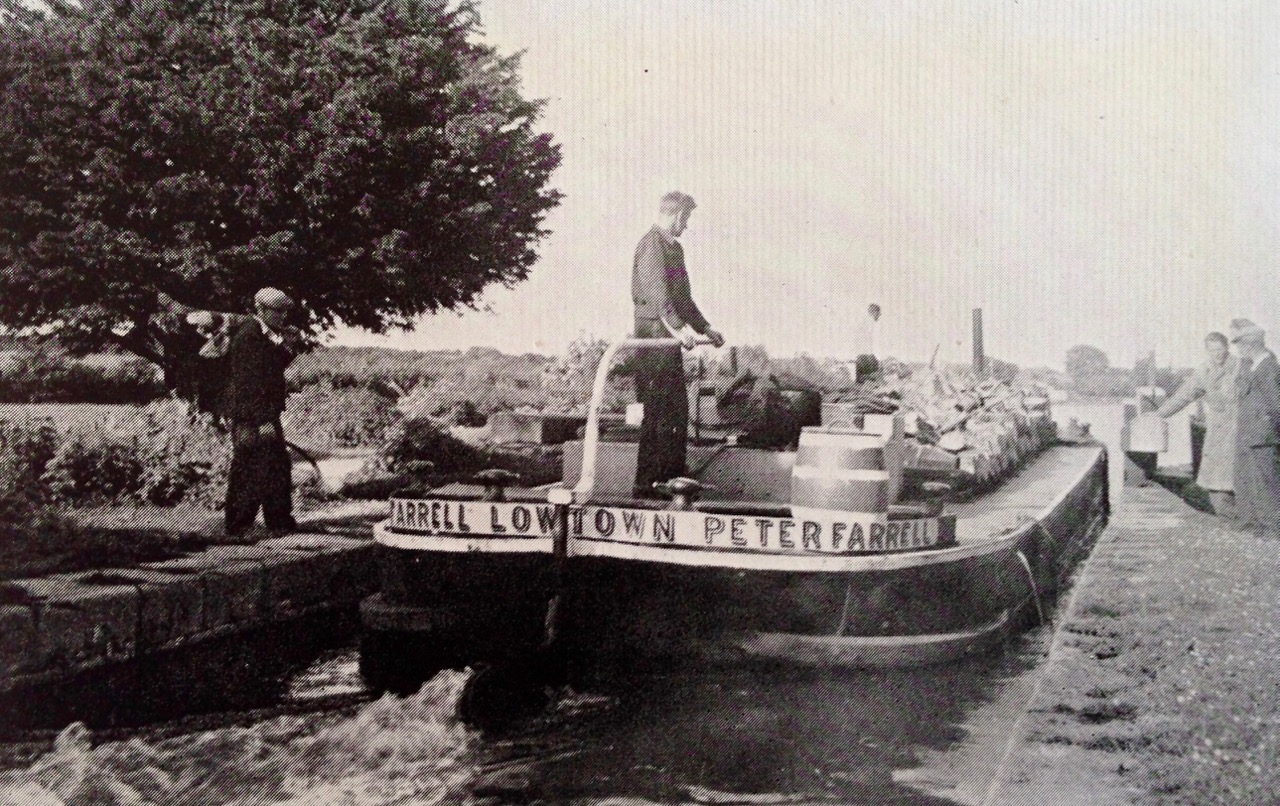
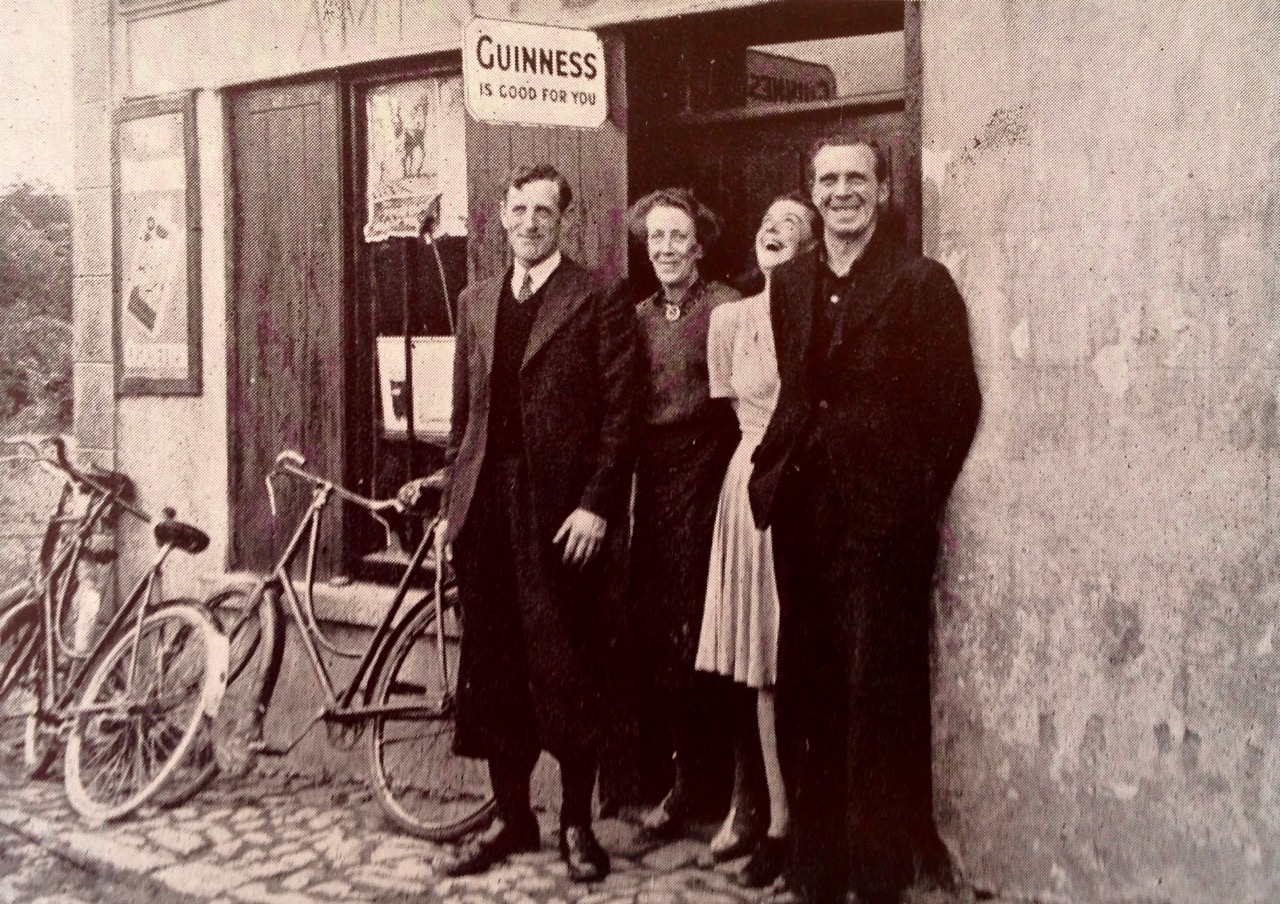
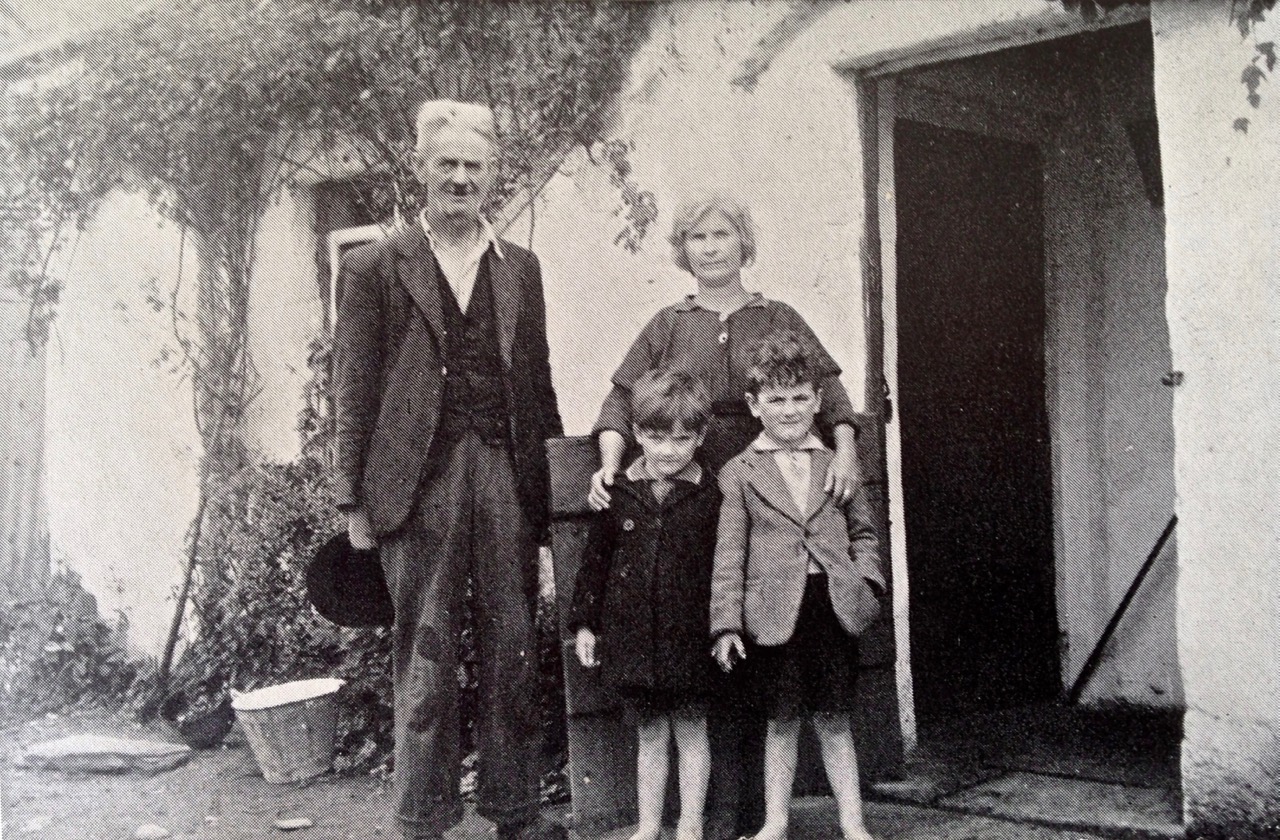
More of Angela Rolt’s photographs from the book: top – Peter Farrell’s working boat on the Grand Canal; centre – the Beirne family outside their inn at Battlebridge, close to the entrance of the abandoned Lough Allen Canal. Le Coq was the first boat to visit Battlebridge in seven years! Bottom – the Lock Keeper and his family at Draper’s Bridge, Royal Canal. The Rolts were always impressed with the generosity of the lock-keepers, particularly on this little-used waterway: they were constantly plied with milk, potatoes and scallions – ‘enough to sink the boat’…

Rolt was at heart an engineer: on leaving school at 16 he took a job learning about steam traction, before starting an apprenticeship at the Kerr Stuart locomotive works in Stoke-on Trent. Railways were in his blood as much as canals were. Thus he couldn’t leave Ireland without a journey on the West Clare Railway – then one of the last surviving narrow gauge railways in Ireland – and the subject of a song written and – famously – sung by Percy French, which includes the refrain:

…Are ye right there, Michael, are ye right?
Do you think that we’ll be there before the night?
Ye’ve been so long in startin’
That ye couldn’t say for certain’
Still ye might now, Michael
So ye might!

The Rolts’ journey on the line from Ennis is well documented in Green & Silver:

…We consigned the bulk of our luggage direct to Limerick to await our arrival there next day, and booked a first class ticket to Kilrush. We might as well enjoy this protracted journey in the maximum of comfort and seclusion. The little train, the only one of the day, was standing in the bay, and we settled ourselves into a compartment that was a period piece in itself. The seats were covered with black American cloth well studded with buttons. Braided arm rests (were they ever used?) were looped over the door pillars, and the captions of the ancient and faded photographs over the seat backs were hand written in painstaking copper-plate. To do justice to such an interior I should, I felt, be wearing a deer-stalker and an ulster…

The West Clare Railway: left – a photograph by Angela Rolt from Green & Silver showing L T C Rolt in a first class carriage on their journey from Athlone and – right – a stamp issued by the Railway Company for the ‘conveyance of single post letters by railway’

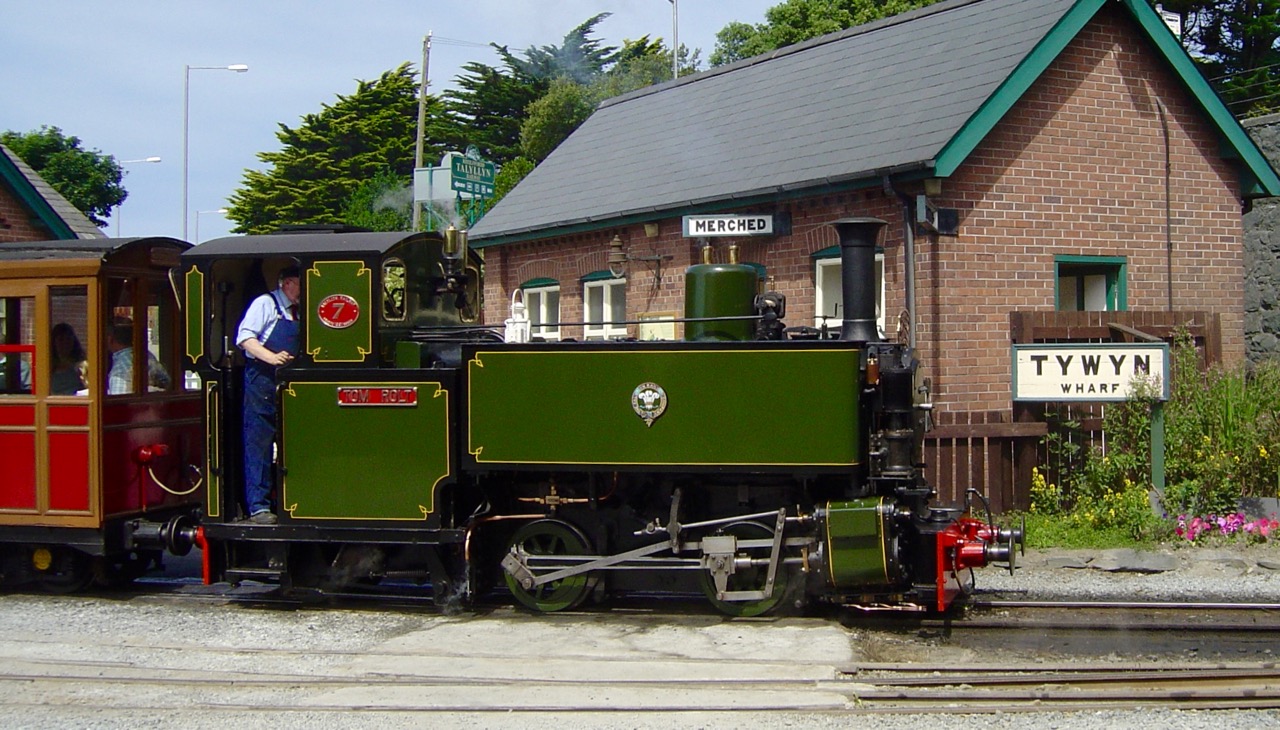
L T C Rolt was heavily involved in a movement in Britain to ‘save’ the declining canal system and in May 1946 the Inland Waterways Association was founded with Robert Aickman as chairman, Charles Hadfield (the canal historian) as vice-chairman and Rolt as secretary. Since that time the IWA has successfully campaigned to secure the restoration of many threatened waterways, and even to build some new ones in Britain. Sadly, within 5 years, Rolt had fallen out with the IWA over ideology, and was expelled from its membership. But Rolt moved on and campaigned to prevent the closure of the Talyllyn narrow gauge railway in Wales. He was involved in its resurrection as the first ‘preserved’ railway line in the world. His name is commemorated on one of the restored locomotives operating on the line: fittingly this engine began life working for Bord na Móna, the company in Ireland created by the Turf Development Act of 1946. The company is still responsible today for the mechanised harvesting of peat and uses narrow gauge railways: formerly steam driven, the lines now use diesel traction. The Tom Rolt (formerly nicknamed Irish Pete) was one of three 3 ft (914 mm) gauge 0-4-0WT well tank locomotives built by Andrew Barclay Sons + Co, an engineering workshop founded in 1840 in Kilmarnock, Scotland.

Tom Rolt Loco

Tom Rolt, the former Bord na Móna locomotive now reconstructed and operating on the Talyllyn narrow gauge railway in Wales, at Tywyn Wharf (photograph courtesy Optimist on the run)

Following in the footsteps of L T C Rolt I wrote my own book on canals and it was published in 1969. The publishers, Hugh Evelyn of London, asked Rolt if he would write an introduction to the book. In the event he was unable to do so, passing the job on to Charles Hadfield. I was sorry not to have a ‘hero’ of mine endorsing the volume, but in my preface I mention my indebtedness to him for introducing me to the world of navigable waterways. Tom Rolt died in 1974 and he won’t know that I am also indebted to him for introducing me to Ireland, now my home.