December in Rossbrin

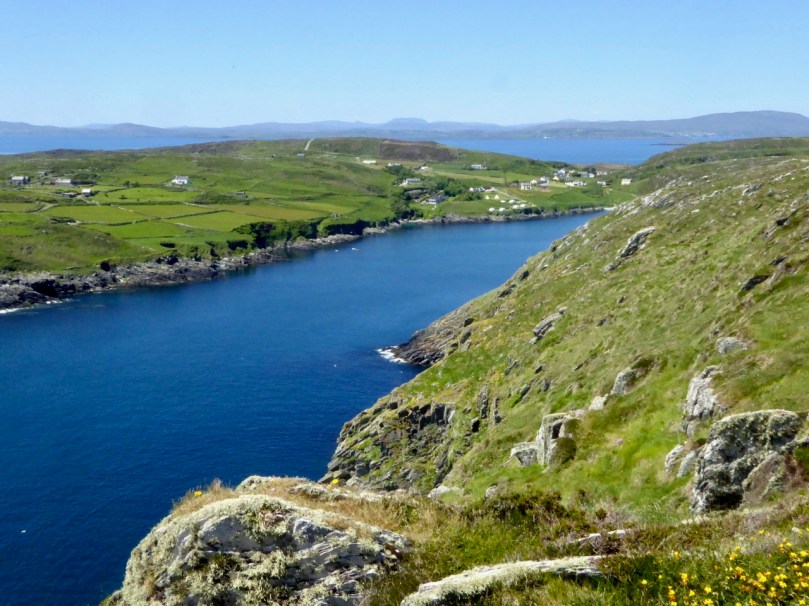
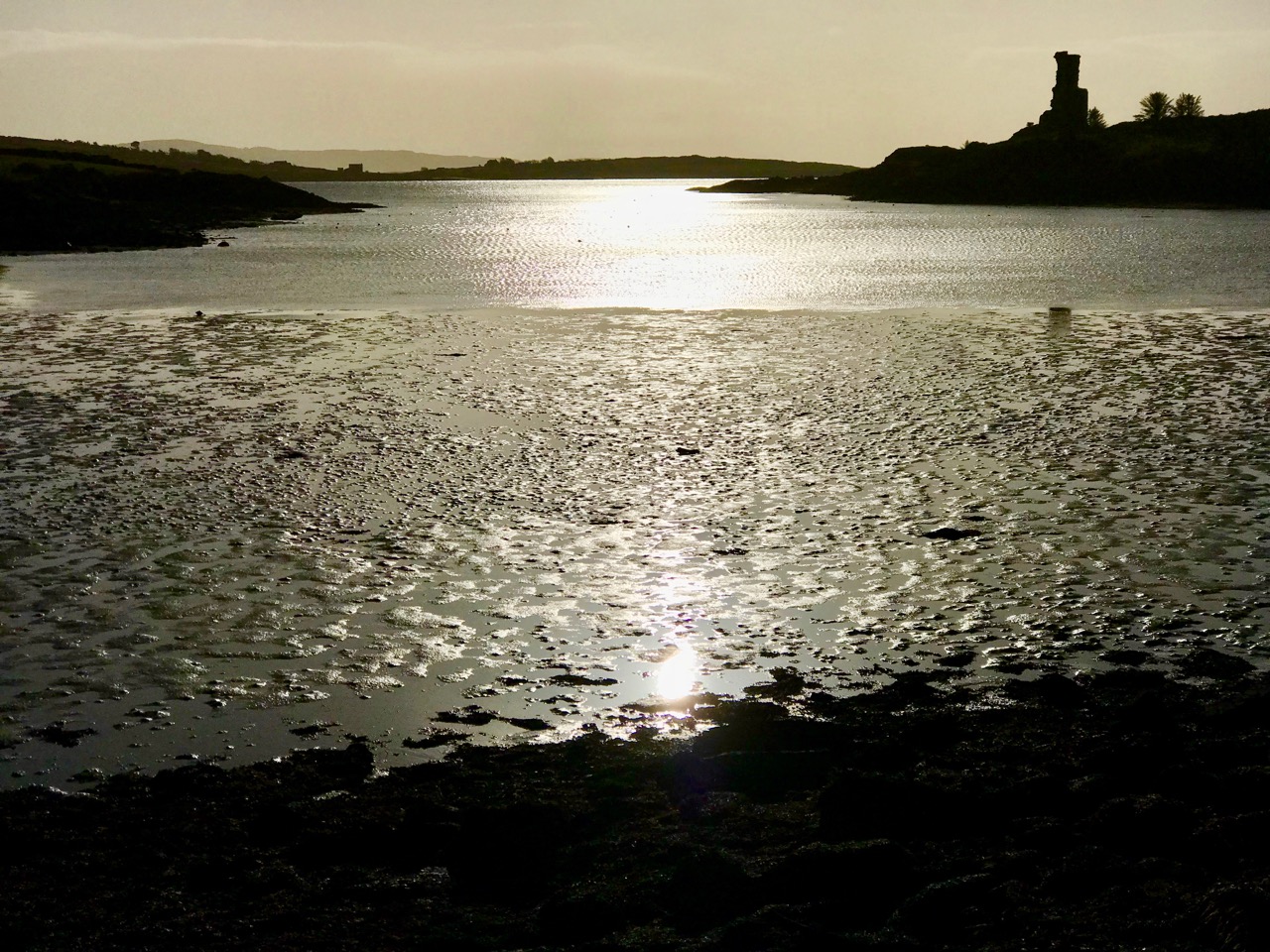
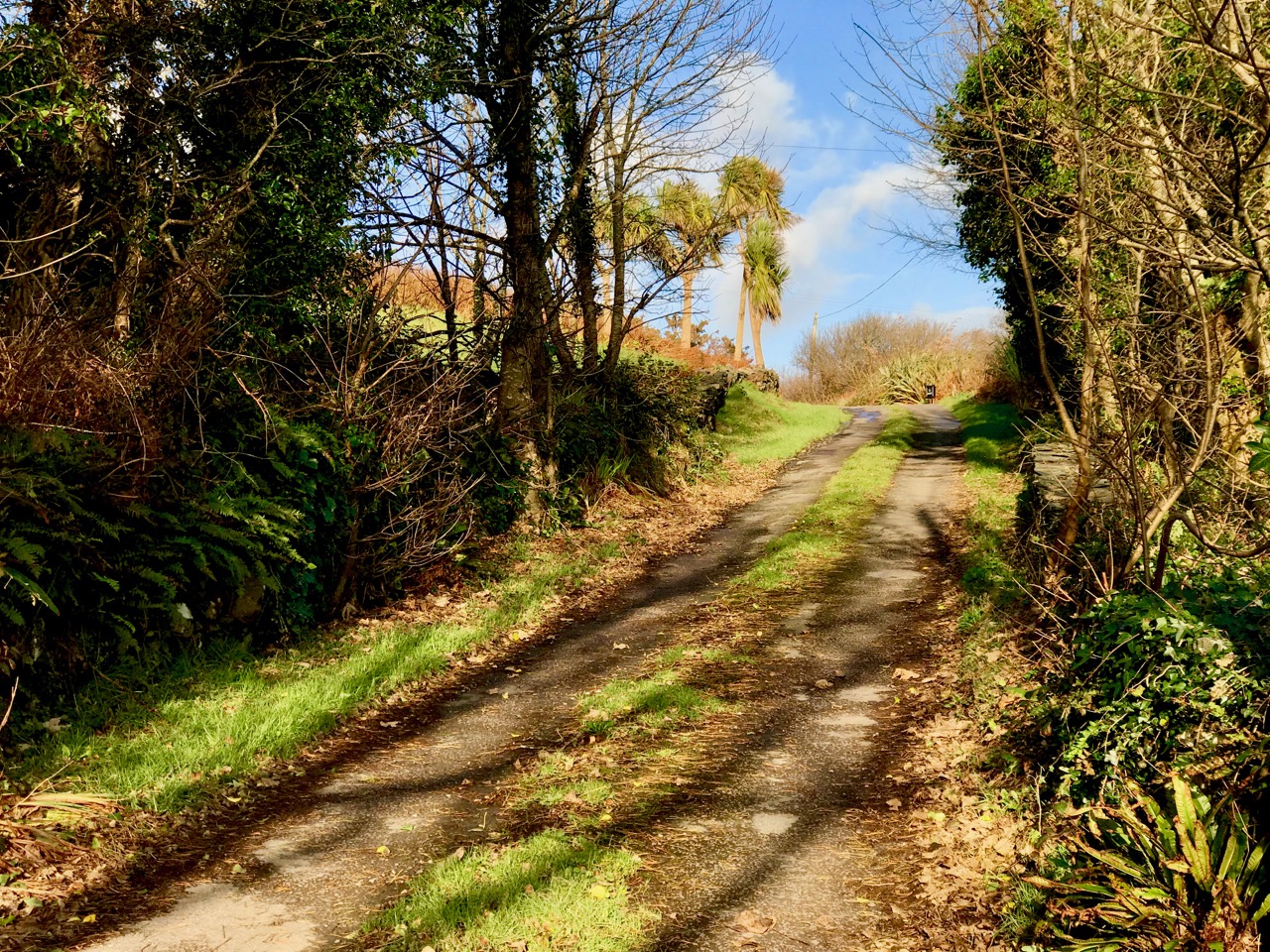
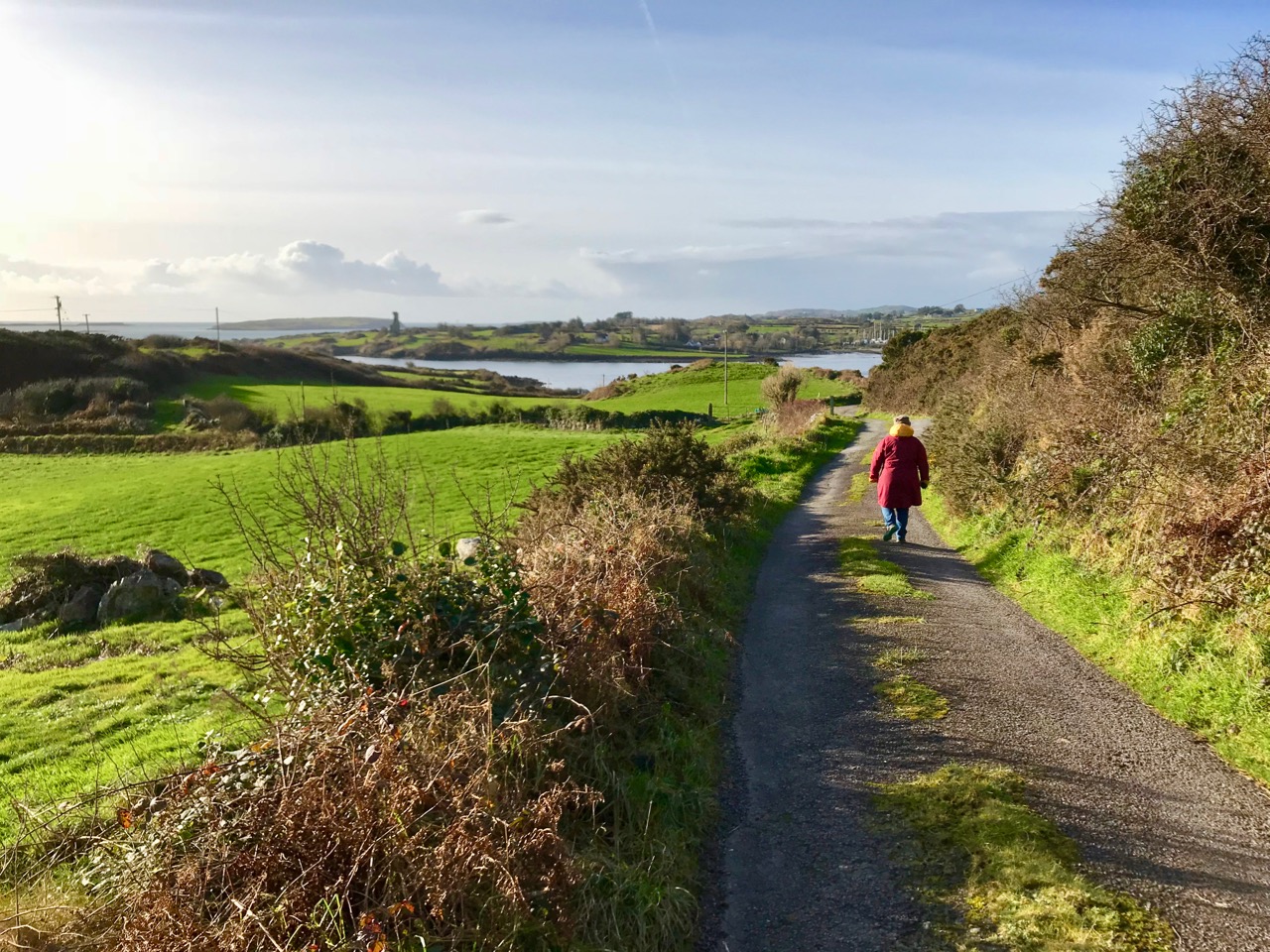
In the past year I have returned to Rossbrin again and again in my posts. That’s not surprising, as it’s just a short and always rewarding walk down our Beautiful boreens:

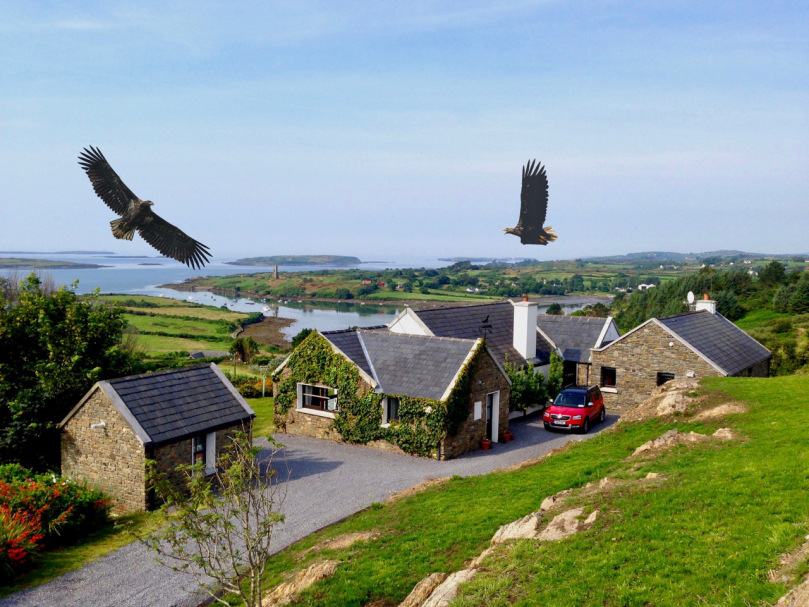
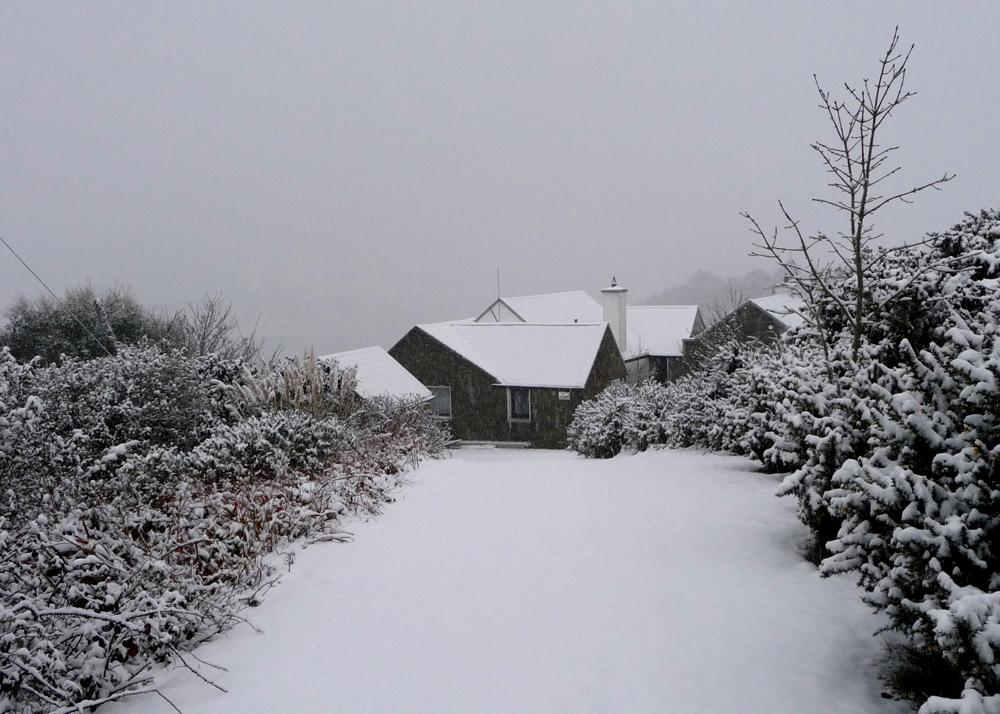
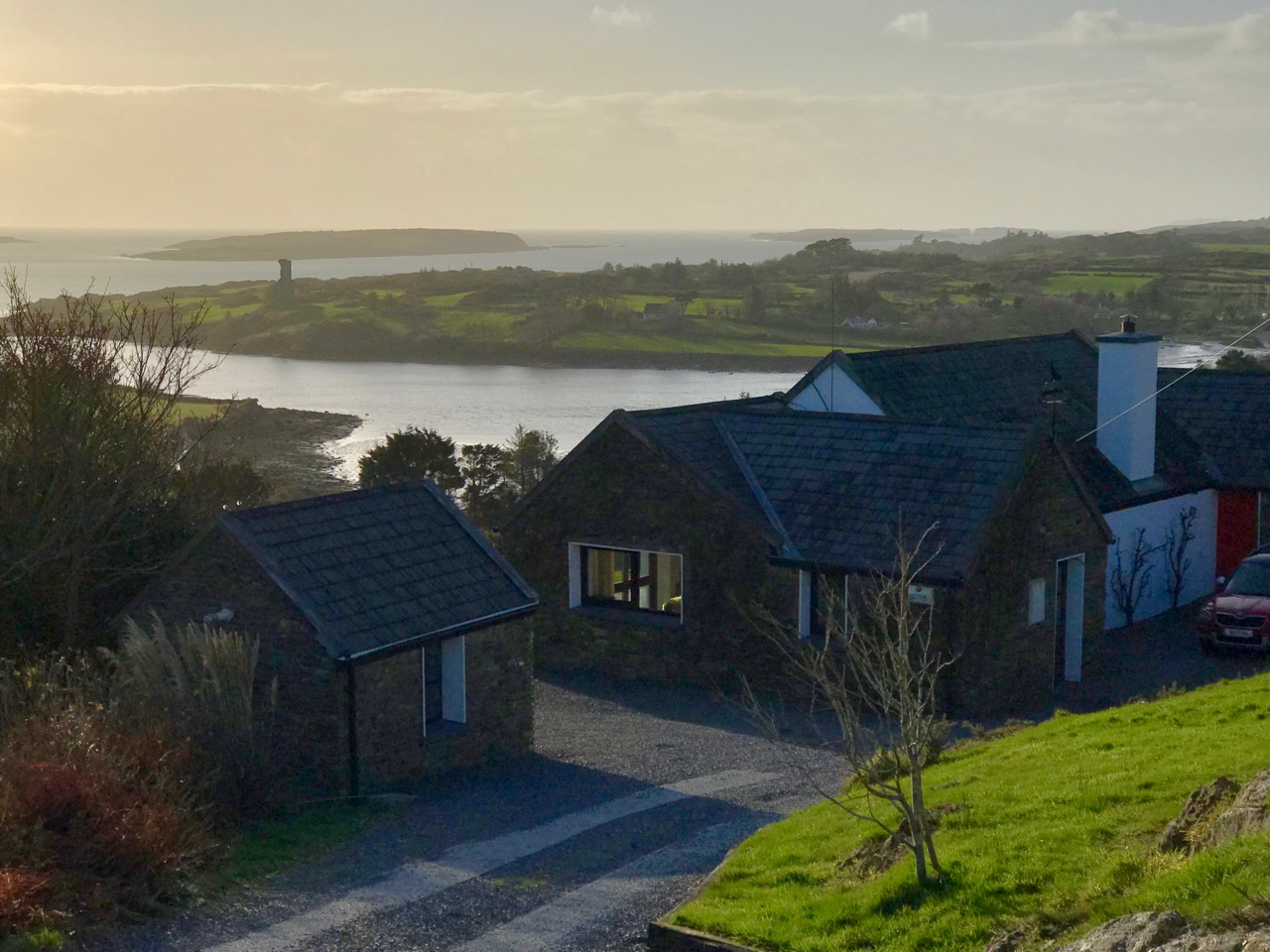
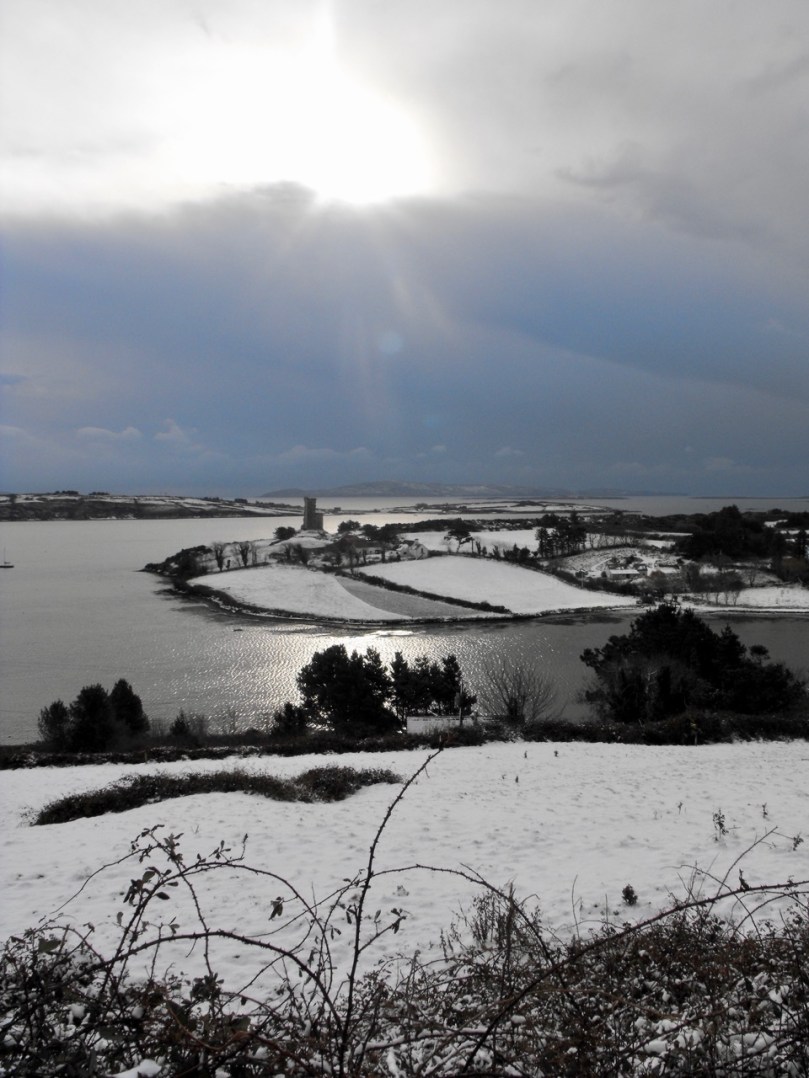
It’s December, and we can expect anything in the way of weather. This is the mildest corner of Ireland: further north and east of us today, spanning Cavan, Donegal and Wicklow, heavy snow is falling and temperatures are forecast to drop to minus 8 degrees C in the coming hours. The last real bit of snow in West Cork came along seven years ago but we weren’t here, then, to see it (image below of Nead an Iolair in 2010 courtesy of our neighbours Dietrich and Hildegard Eckardt with, below it, today’s view of the Cove seen from the house):

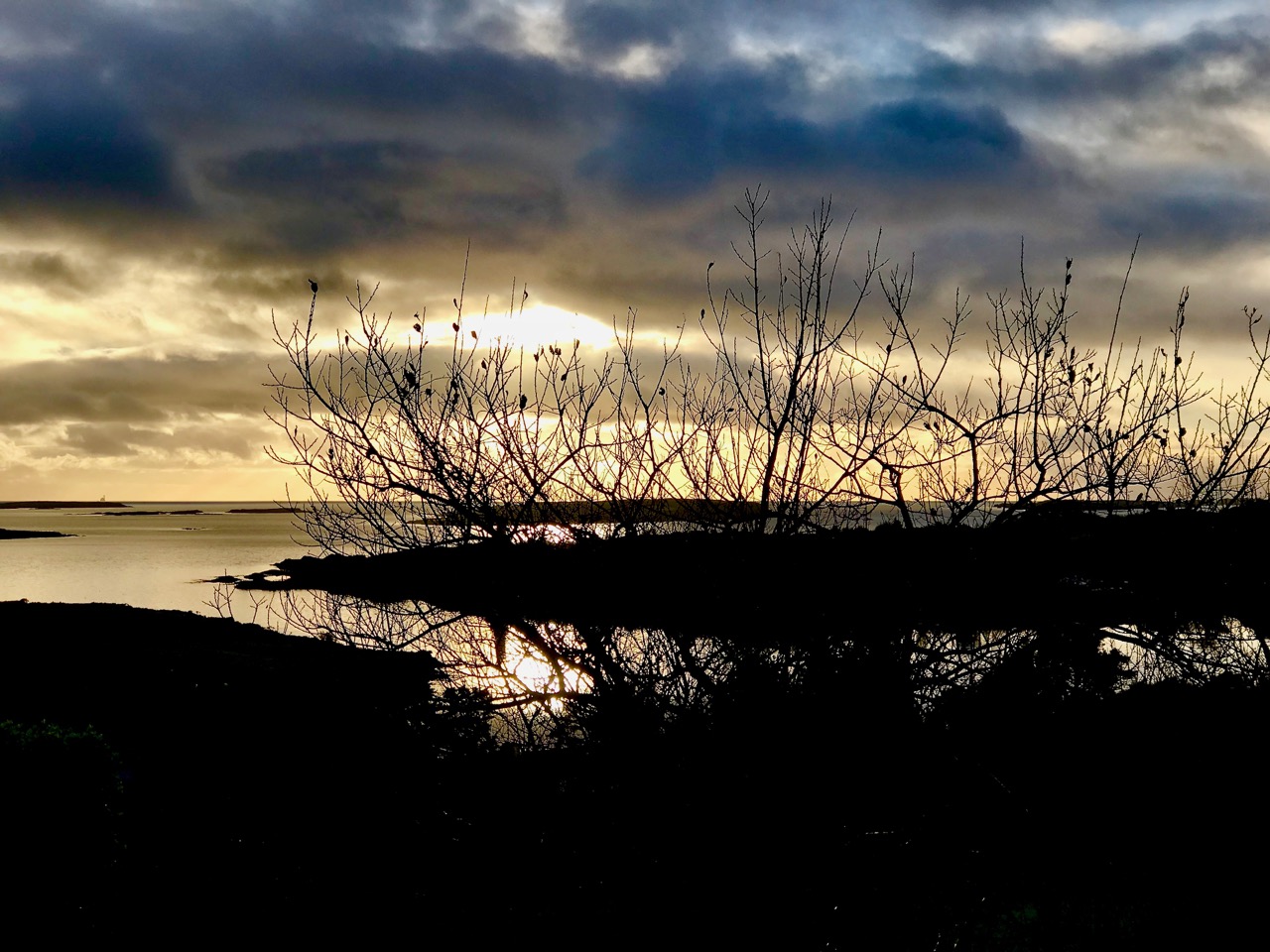
Whatever the weather, our cove has something to offer – and every day is guaranteed to bring a mixture. When the sun is out we can bask in it as if it was the middle of summer, but it’s just as likely that there will be a stiff and invigorating breeze to accompany our bracing walks.

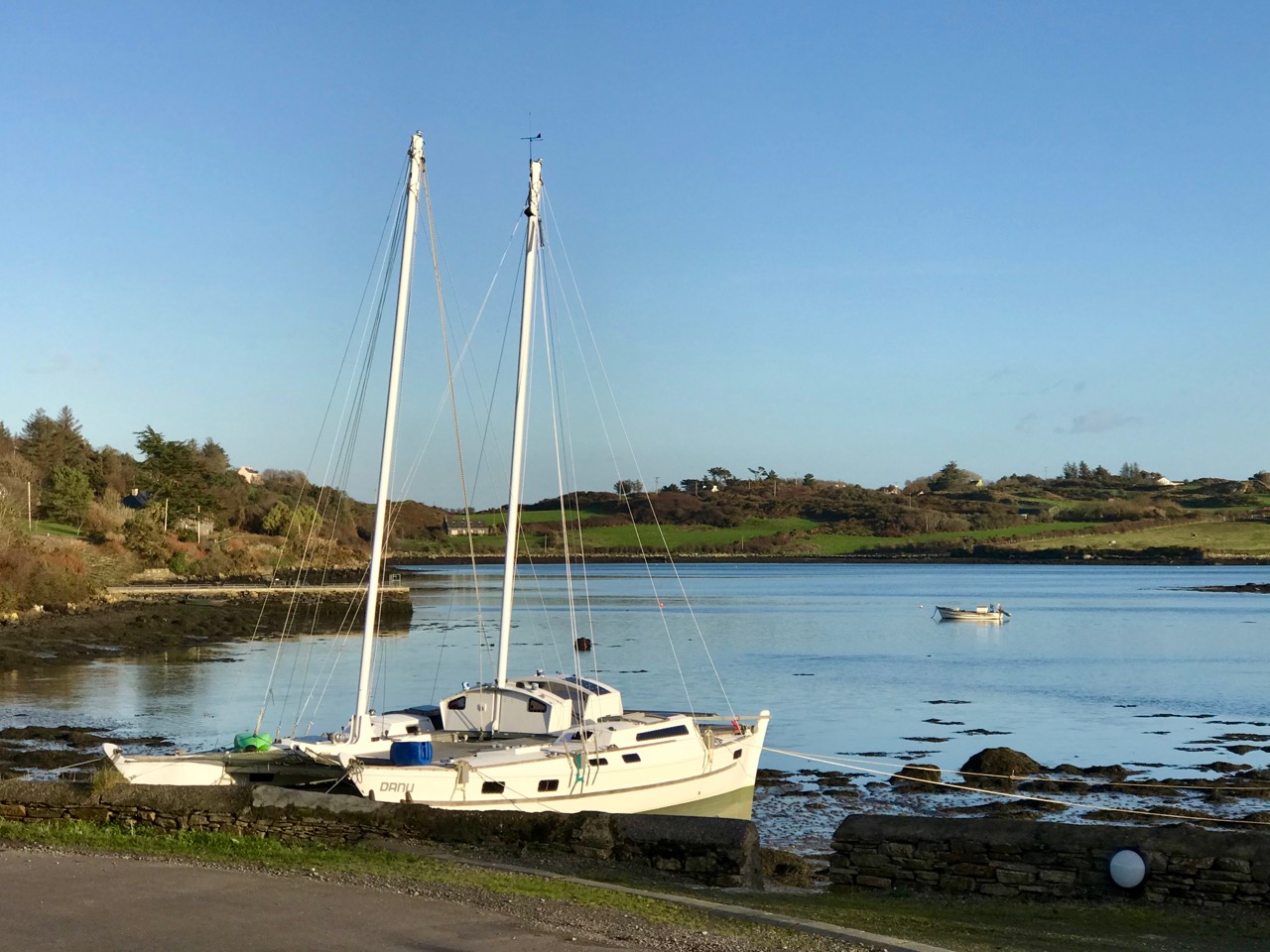
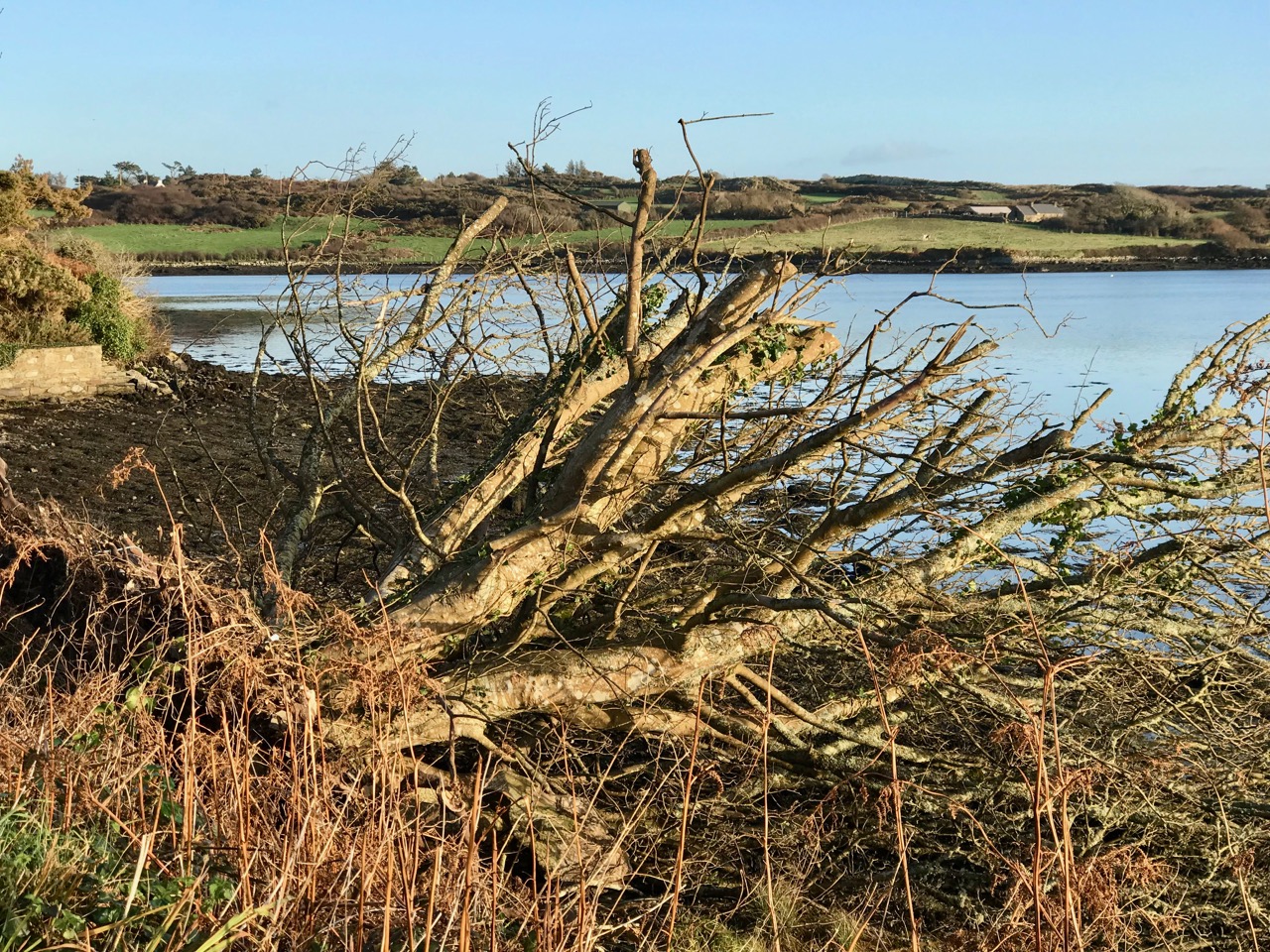
Above – reminders of summer pleasures to come as we wind down to the year’s end in Rossbrin: Andre’s catamaran – Danu – which he built himself, rides out the winter storms on a wet mooring in the Cove. The first of those storms – Ophelia – hit us last month, and there is a fair bit of wind damage still to be seen:

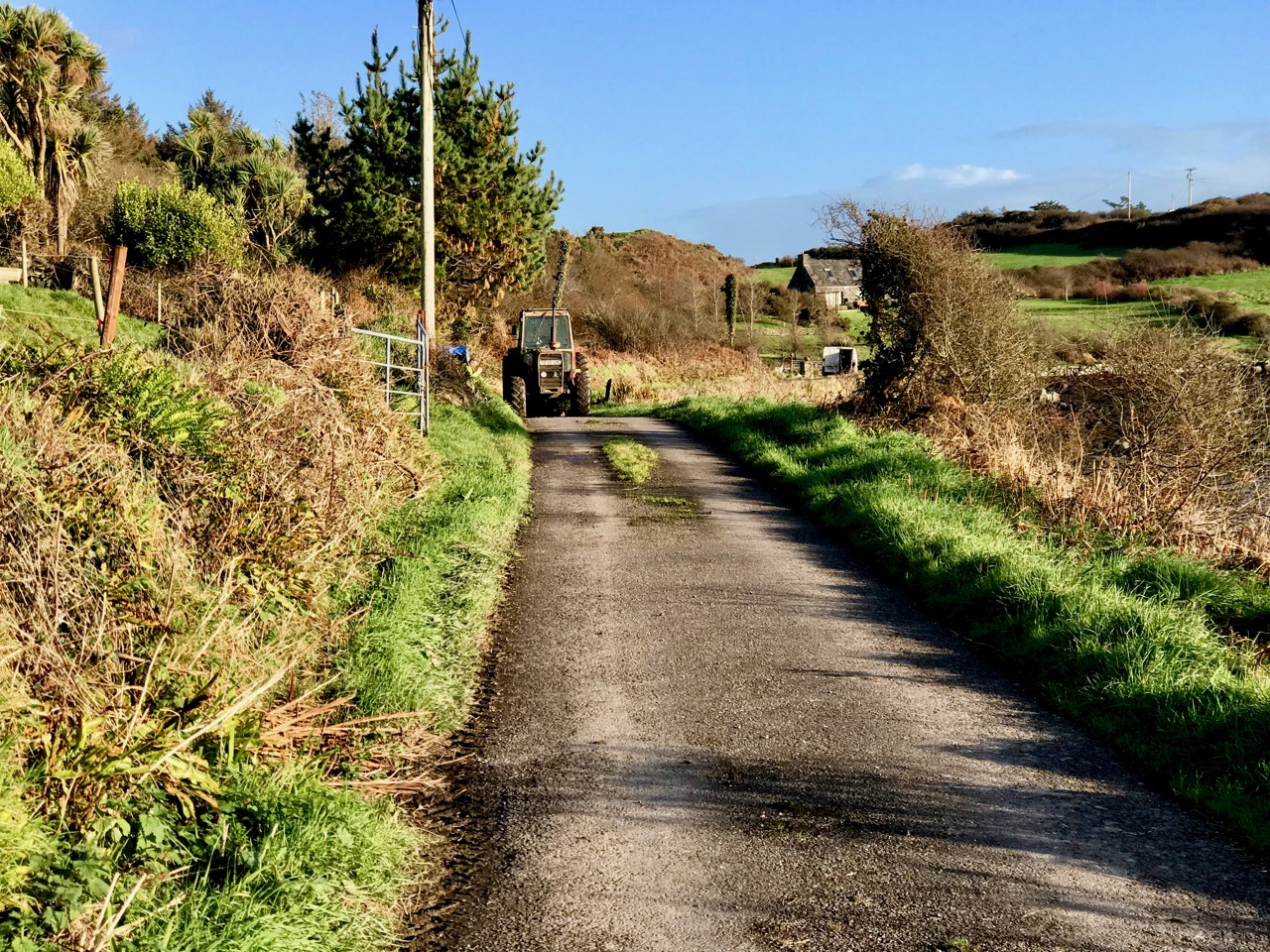
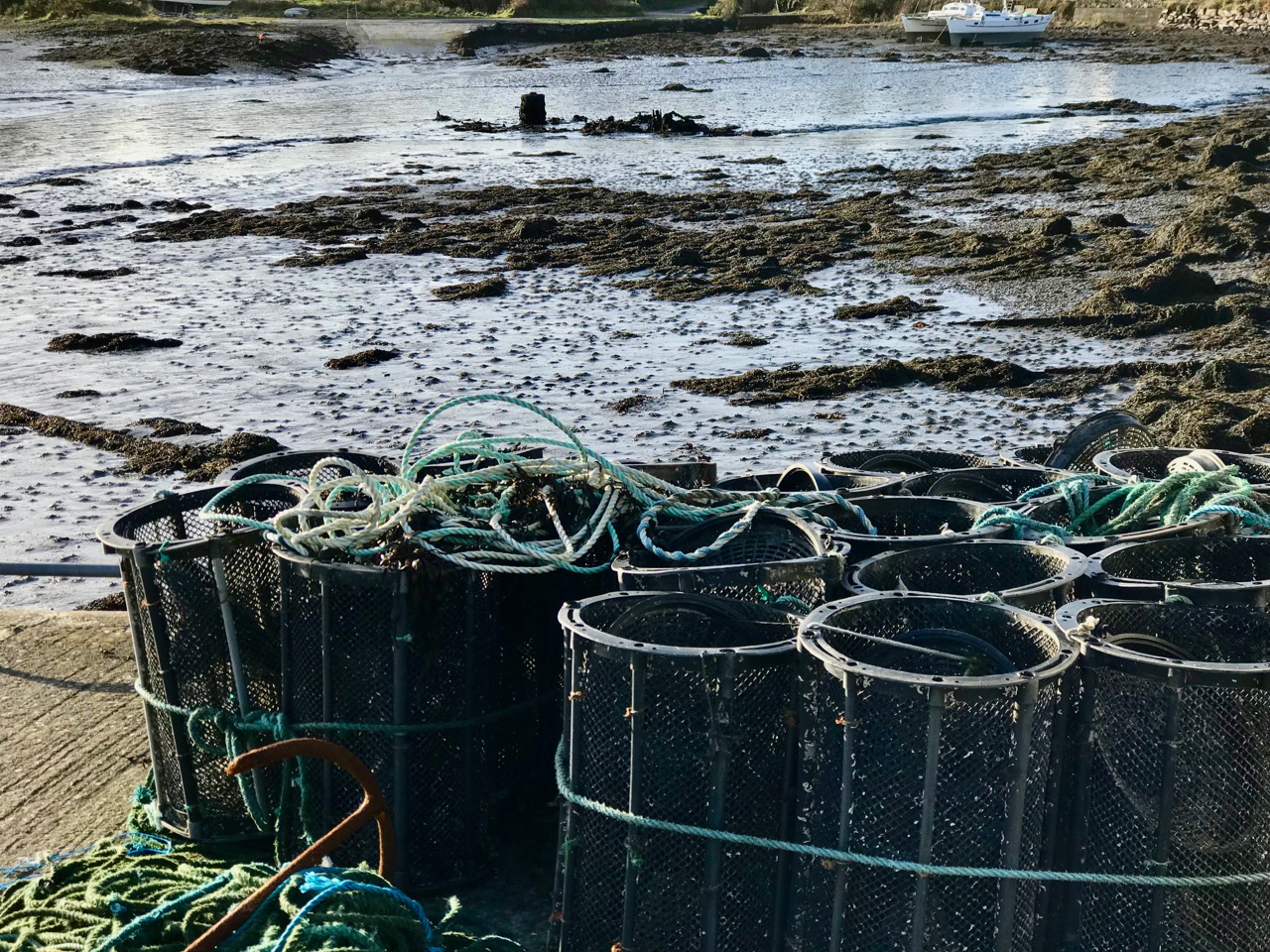
Traffic jam in Rossbrin!

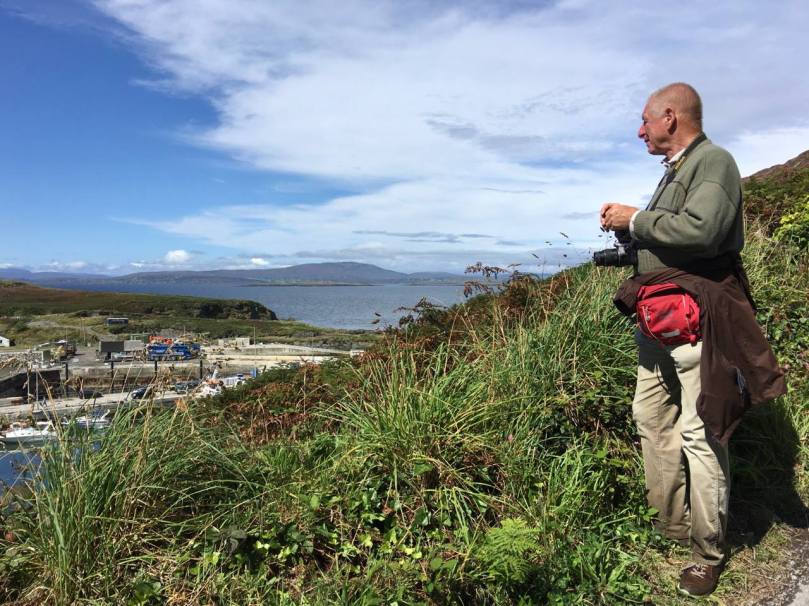
Often, I will start out on the downhill walk with my head buzzing from the inexplicable madness of the outside world: British ethnocentricity, North American absurdity and worldwide chaos. Within minutes these concerns are receding, and when I reach the waterside I am overtaken by the immersive experience of natural things all around me and I find the solace of constancy: not much changes here. This little townland of Rossbrin is above and away from that buzzing, reeking world. It is a far saner place.
Since publishing this post we have received a communication from our good neighbour Julian, who lives down on the Cove, including some excellent photographs of the winter of 2010. Here’s one of them – thank you, Julian…

Cove in the snow 2010

The Fortunes of the Hare

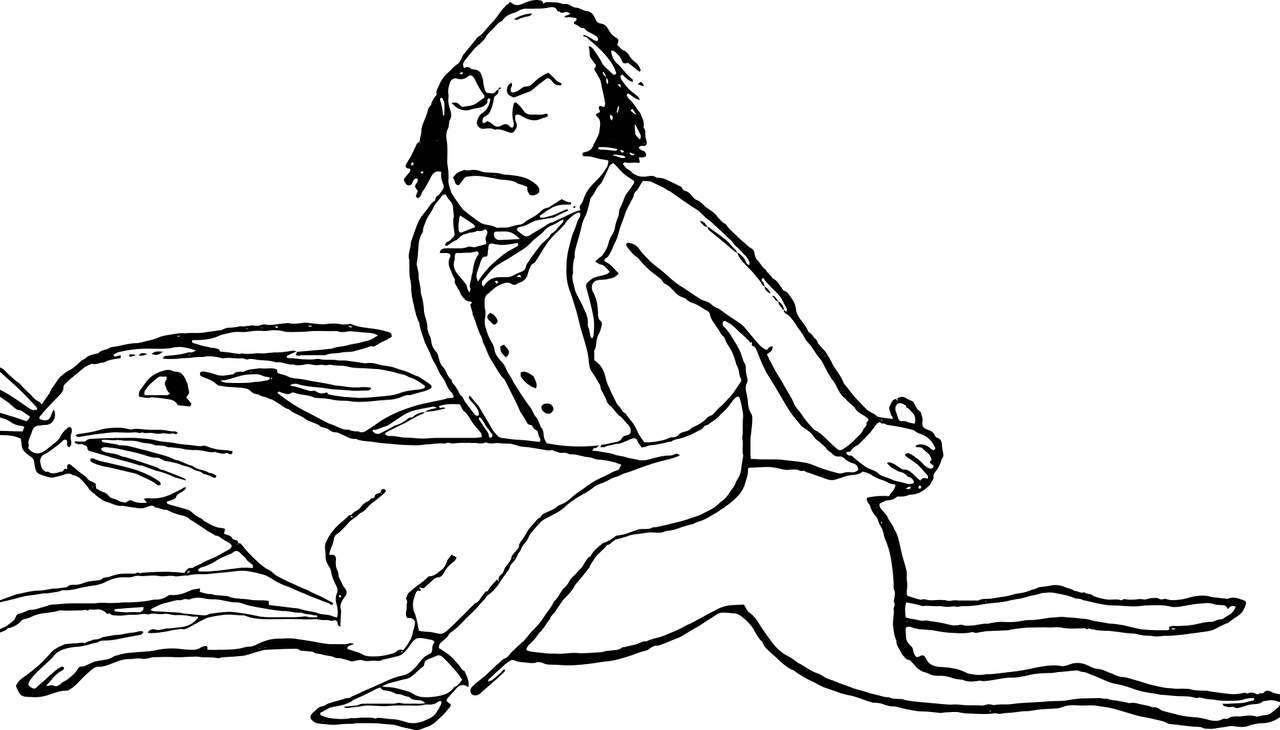
There was an old man whose despair
Induced him to purchase a hare:
Whereon one fine day he rode wholly away,
Which partly assuaged his despair.

(Edward Lear 1872)

We have been writing this Journal pretty regularly for five years now: to date we have published 460 posts – roughly half by Finola and half by me. It’s December, and at this time of the year we review what we have written and it’s always interesting to see the topics have been most popular amongst our readers. We’ll be exploring all that as we lead up to Christmas, but today I have been reviewing our post titles over the years to see what has appealed to me personally during our lives online.

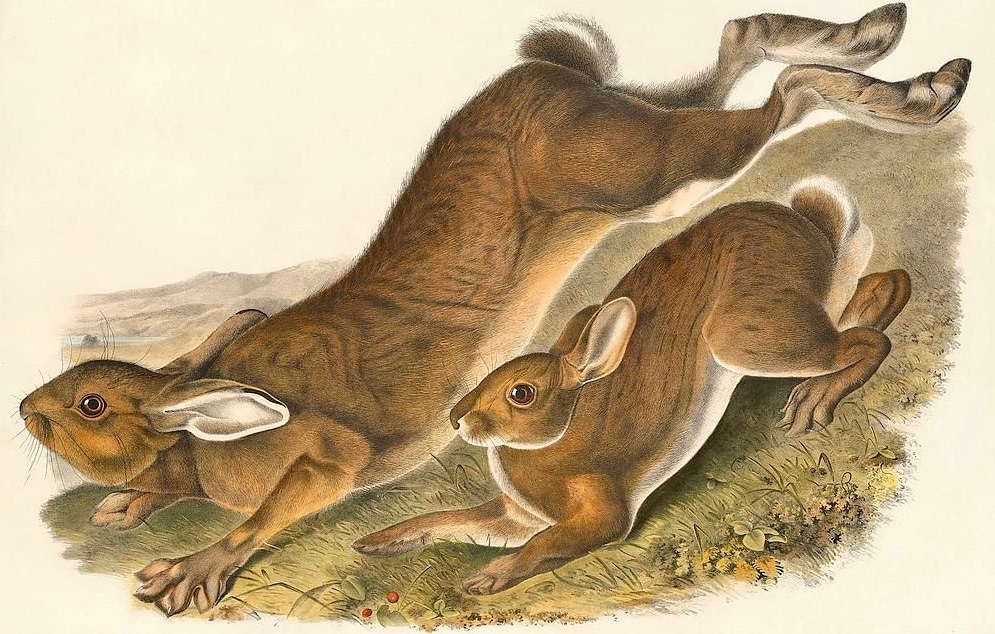
John James Audubon – Northern Hare, 1843

I have a long held passion for the hare – a creature which has inhabited the world unchanged for millions of years: we know this from fossil finds. We can therefore safely conclude that this beautiful animal is perfectly adapted to its natural environment, and hasn’t needed to evolve in any way.

In July 2015 – about halfway through our blogging career – I penned an article, Hares in Abundance, inspired by an exhibition held at the Heron Gallery in Ahakista. I was delighted to see so many images of hares by a number of artists: there were drawings, paintings and prints; ceramic sculptures and ceramic ware; jewellery, felt-work and even cushion covers. I would happily have kitted out the whole of our house with work from this exhibition, but long ago Finola declared we had ‘enough’ hares around the place, so I have to keep myself under control (although, it has to be said, hare imagery here at Nead an Iolair does seem to increase year by year).

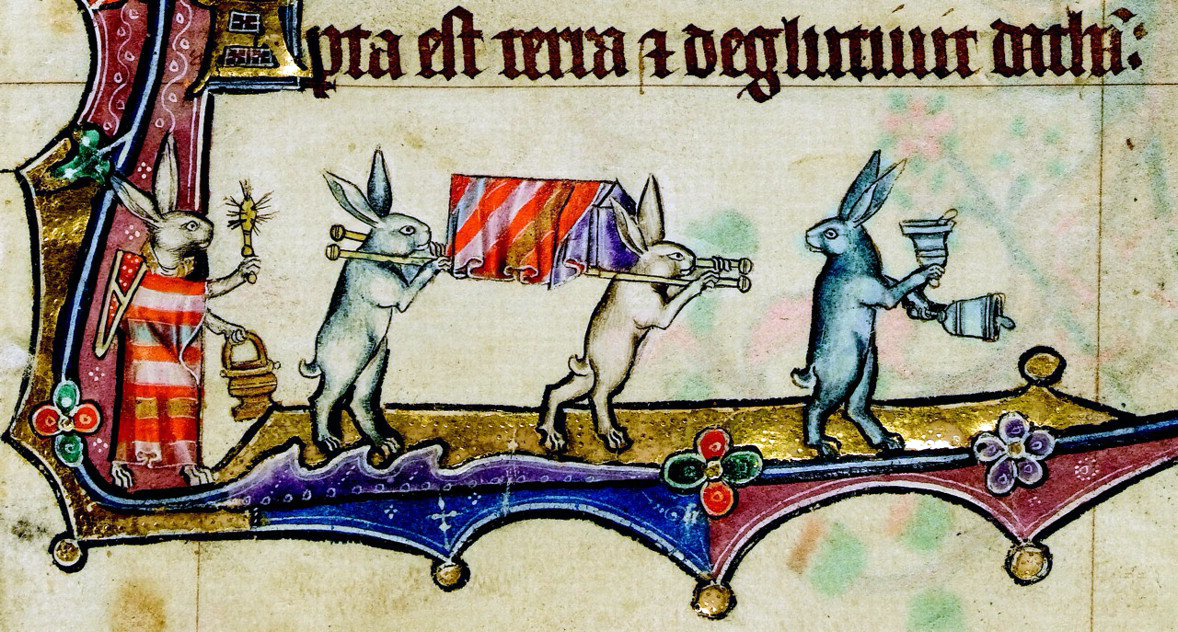
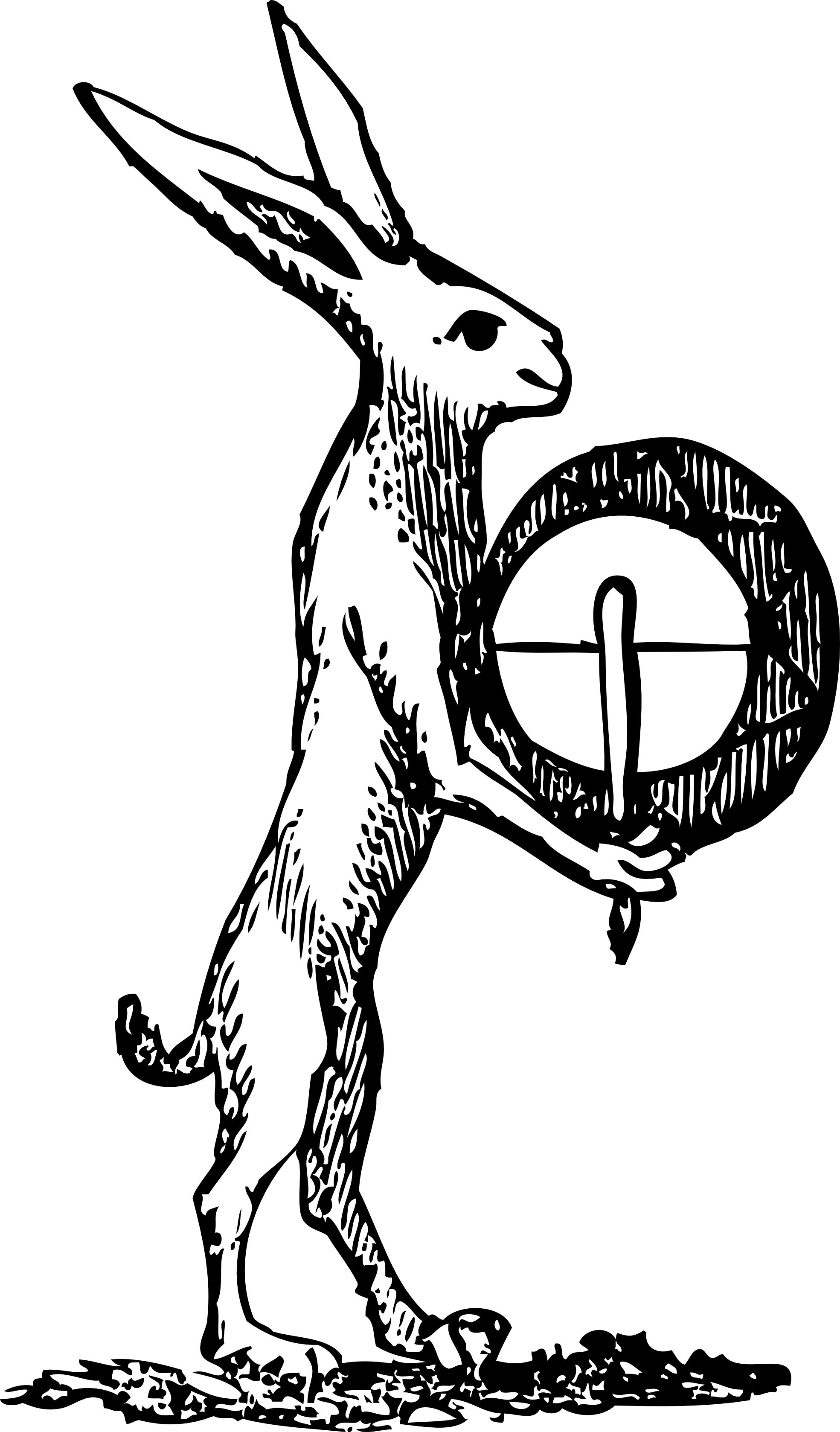
Illumination from the 14th century Macclesfield Psalter, now in the Fitzwilliam Museum, Cambridge

As I mention in that post from 2015, I have kept a ‘hare calendar’ during our time in West Cork, and any hare sightings are recorded. There is definitely a downward trend in the numbers I have spotted. In 2017, for example, I have recorded only one and a half hares (the half was the backside of an animal disappearing into a hedge, which I felt sure was a hare), whereas in past years I have recorded five or six. Back in the 1990s, when I stayed regularly with my friends Danny and Gill in Ballybane West –  just over the hills from here, I saw relatively large numbers of them. Something is surely amiss – and I don’t think it’s my eyesight.

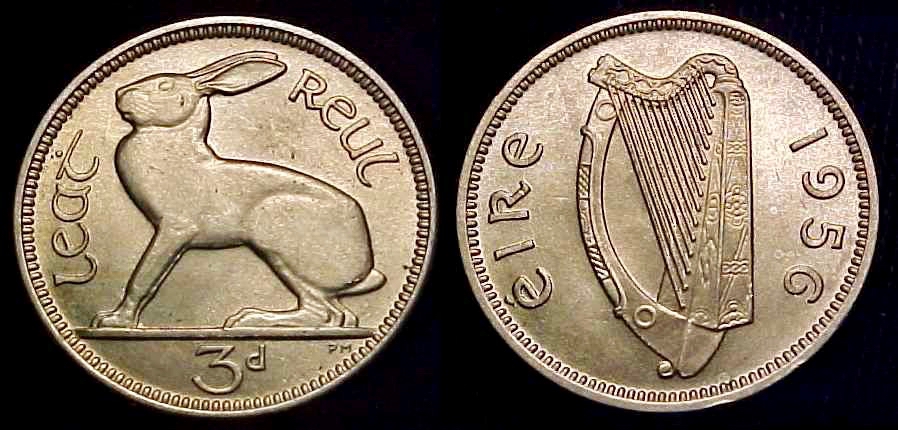
The Irish Hare was portrayed on the Irish Three Pence coin: the design was by the artist Percy Metcalfe, and the coin was continuously produced between 1928 and 1969

On a recent visit to Finola’s cousin in Mayo we were introduced to (and immediately purchased) a new book: The Way of the Hare by Marianne Taylor. If you are in any way inclined to hare adulation, I thoroughly recommend this book as being the most readable and comprehensive study of all aspects of the animal’s place in the world: history, biology and folklore. To my delight, the author even suggests that, in terms of creature relationships:

…we humans are more closely related to hares than we are to cats, bats, dogs, elephants, whales, sloths and most other mammals on earth…

Left – the new book by Marianne Taylor and right – one of the author’s wonderful photographs, showing the ‘mad’ springtime behaviour of two brown hares in the UK

Perhaps unsurprisingly, one of my very first posts on Roaringwater Journal was this one – Two Hares. Written back in November, 2012, it tells of an encounter with two Irish Hares in Ballybane West. Irish Hares – Lepus timidus hibernicus – are peculiar to this country but closely related to Mountain Hares that are found in Scotland, Scandinavia and Northern Europe; they are said to be Ireland’s longest established indigenous species of mammal. They are probably outnumbered today in Ireland by the Brown Hare – Lepus europaeus – which is not indigenous: Brown Hares were brought to Britain by the Romans and then exported to Ireland to be hunted by the owners of large estates.

This new book has crept onto our shelves (it was a present from Finola) Brown Hares in the Derbyshire Dales, published by Vertebrate Publishing: it is beautifully illustrated with photographs by the author, Christine Gregory

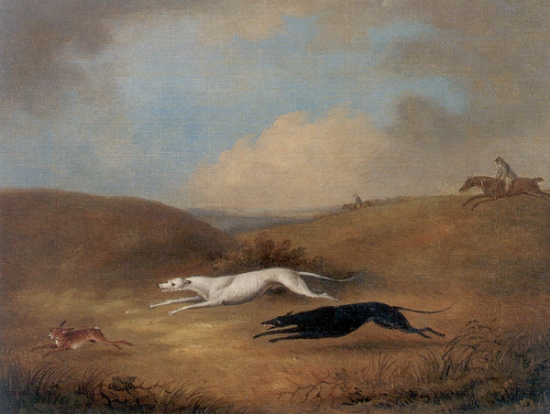
The Irish Hare is a protected species under EU Directive 92/43 Annex V (see page 104), but, curiously it can be hunted and coursed at certain times of the year. On June 23 2016 (on the same day as the UK Brexit referendum) a private member’s bill was brought before Dáil Éireann by Maureen O’Sullivan to ban hare coursing in order to protect this ‘protected’ species. It was heavily defeated – most TDs voted in favour of hare coursing, including your own local TDs (bear that in mind when an election comes around again). Out of 164 TDs attending the debate only 20 voted in favour of a ban. The general argument by the coursing supporters was that coursing is “a regulated sustainable rural industry”. So economics apparently outweigh animal welfare. The whole debate is available online here.
Dean Wolstenholme – Greyhounds coursing a hare – c1800

In February 2013 I wrote another post which mentioned hares in Ireland: Hare Heaven.  This was more optimistic in tone, and was an opportunity to describe the wonderful Sherkin Island Marine Station, run by the indefatigable Matt Murphy. Doubtless hares will feature in future Roaringwater Journal posts and – perhaps – in future Dáil debates. I will hope for a better outcome next time around.

Falconry Fantasy

I’ve waited a whole life for this – the chance to be a falconer, if only for a moment.

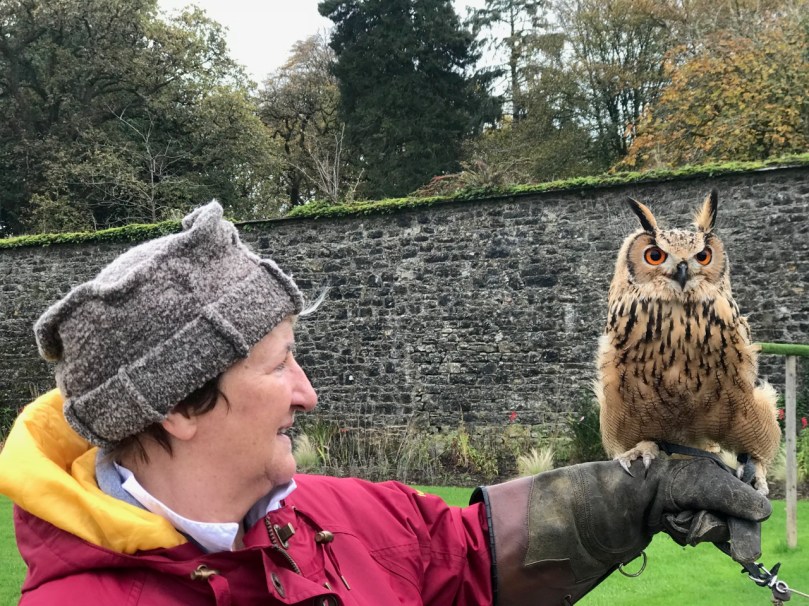
Ever since I read T H White’s The Once and Future King, it’s been a fantasy of mine to interact with one of those magnificent hunting birds that he described so well. A couple of weeks ago, at Adare Manor, Robert and I got a chance to finally live that dream – yes, he read the same book and loved it just as much as I had. T H White was a falconer himself, although not a very successful one. The treat was part of a couple of days stay at Adare Manor – Robert’s post describes this fascinating place in wonderful detail.

This falcon is happier and calmer with his hood on

Our falconer at Adare Manor was Susan Kirwan, one of the team at Adare Country Pursuits. What she doesn’t know about birds would fit on a postcard. She trained her first bird, a jackdaw, at the age of nine, and was hooked. Now she shares her knowledge and her love of birds with those of us who have admired from afar but have never had an opportunity to get up close.

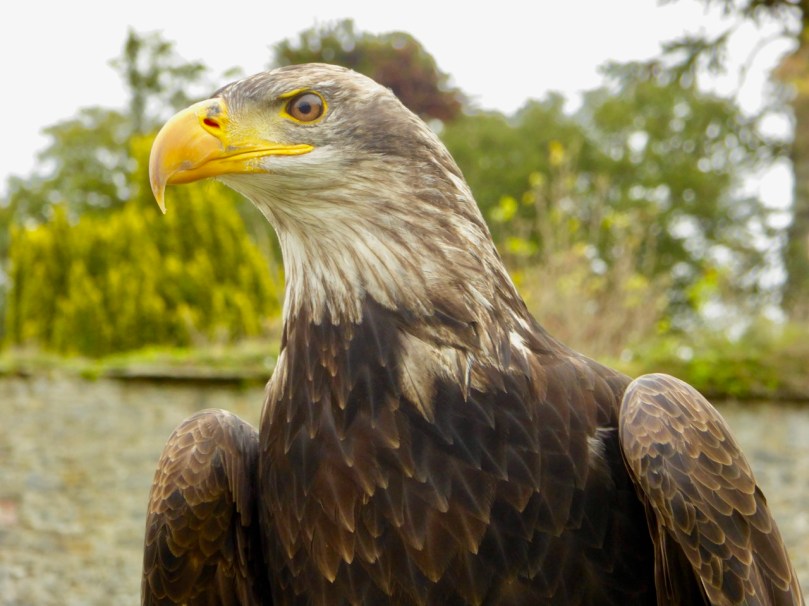
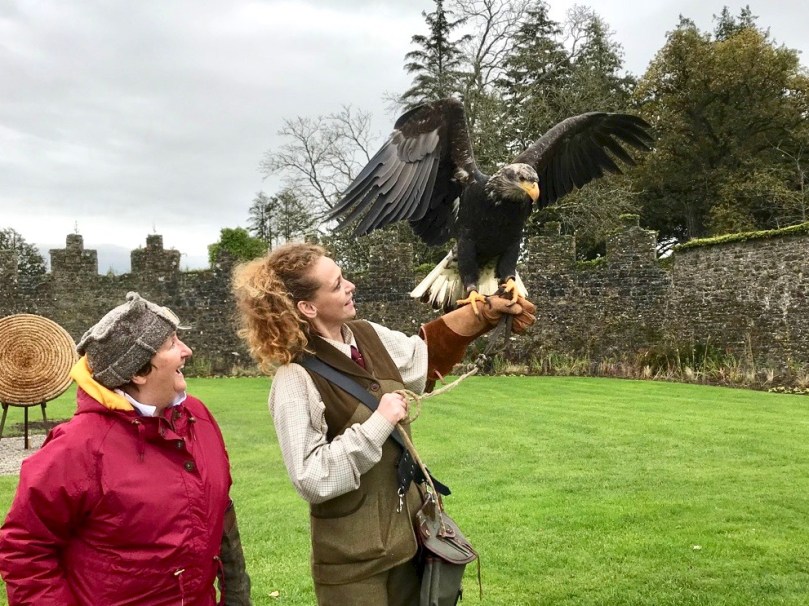
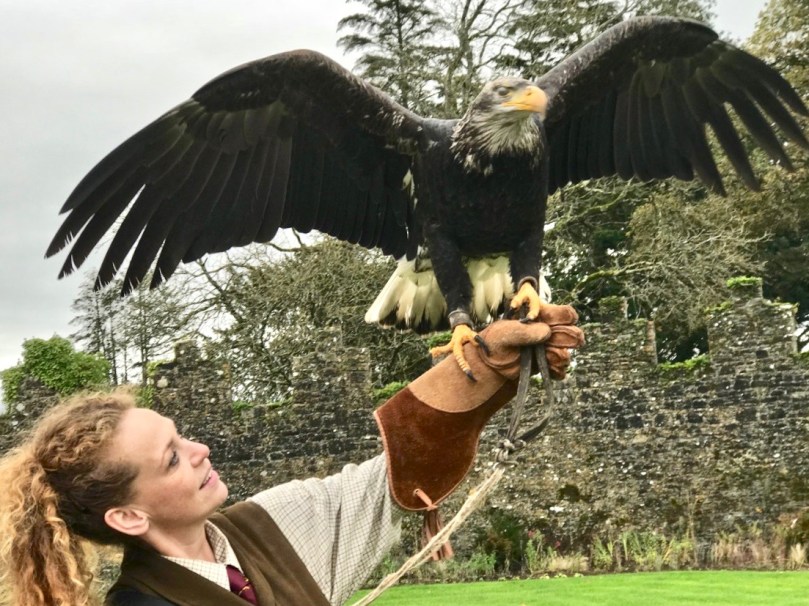
Susan has Saoirse, the American Bald Eagle, show off her wings

She spent the morning with us, handling each bird in turn and giving us an education on each one – habitat, habits, hunting style, personality, peculiarities, nutrition, feathers, weight – it was in-depth and fascinating. There wasn’t a question we asked that she couldn’t answer. She has spent her life studying and living with these birds.

All of the birds wore jesses (ankle leathers) and Susan showed us how to hold our gauntlets and our fingers to secure a bird once on the glove. She encouraged us to speak in a calm voice and not to betray nervousness – birds are excellent at picking up on human emotions.

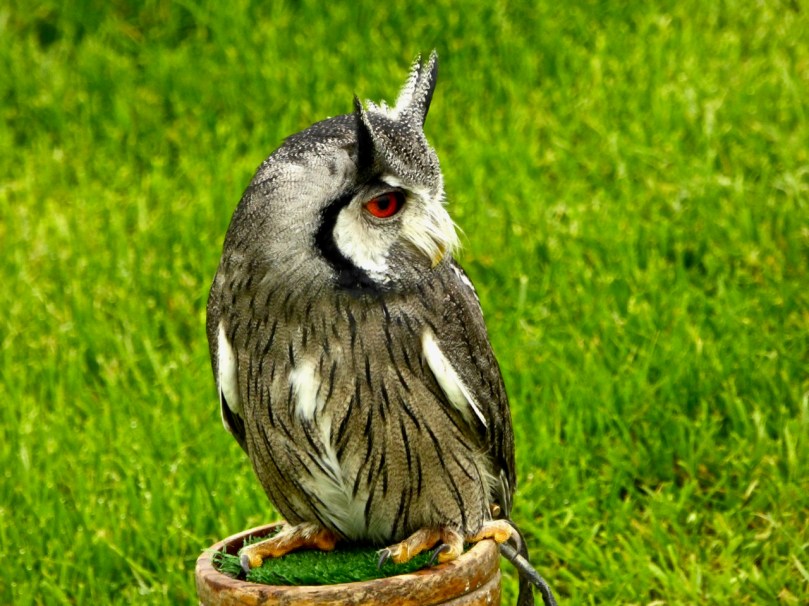
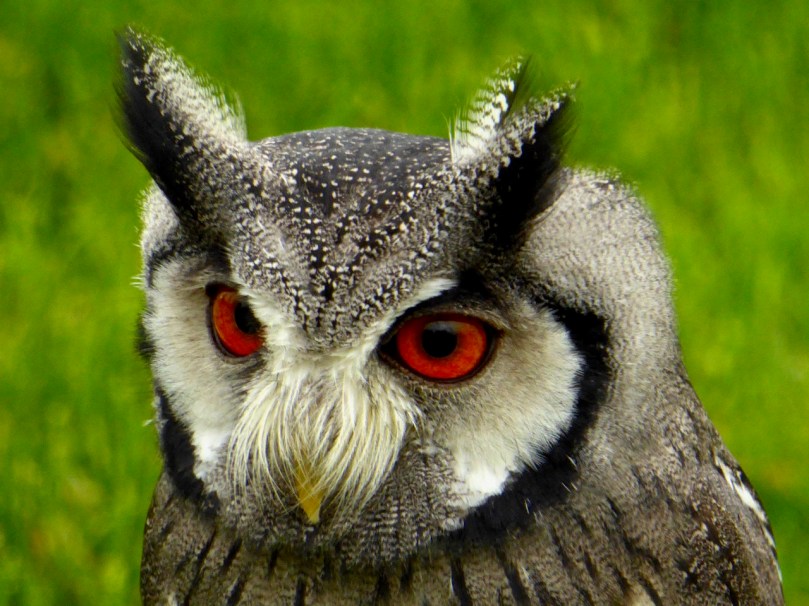
Tiny, the White Faced Scopes Owl, awaits her turn with us

Some of the birds were trained to fly from perch to perch, attached to a ‘creance’ or long line. Each has a optimal weight for flying and it’s essential to keep it there, so weighing and inspecting is part of the daily routine. Food must be as close as possible to what they would eat in the wild, to preserve the level of roughage and protein. Falconry, especially when you keep several birds, is a full-time job.

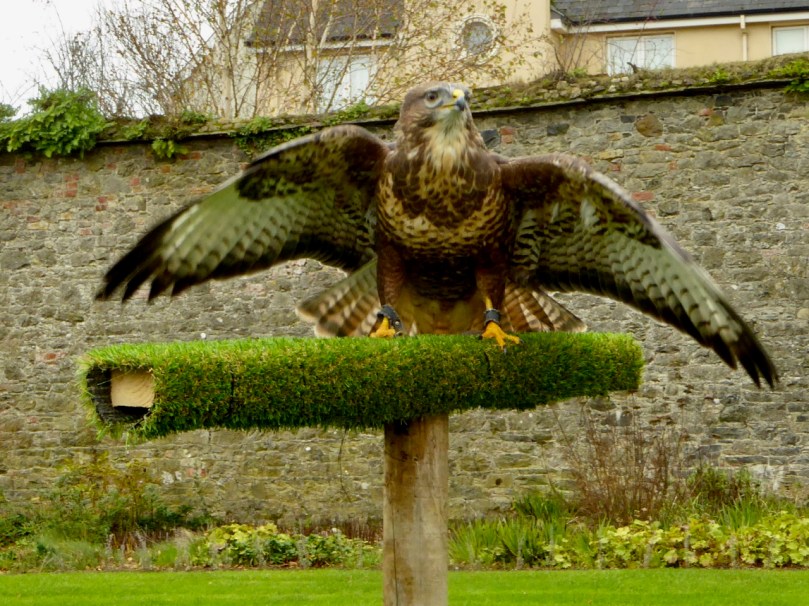
Caesar is a Common Buzzard, which is a native species in Ireland

Owls, although excellent hunters for themselves, don’t make the greatest falconry hunters. However, they are often brought to Susan as motherless chicks and she becomes their parent, as they imprint readily on a human. Susan told us that the Harry Potter series started a trend among some young people of capturing owls ‘to train’ but of course this is almost impossible for an amateur, so that is how some birds have come to her aviary.

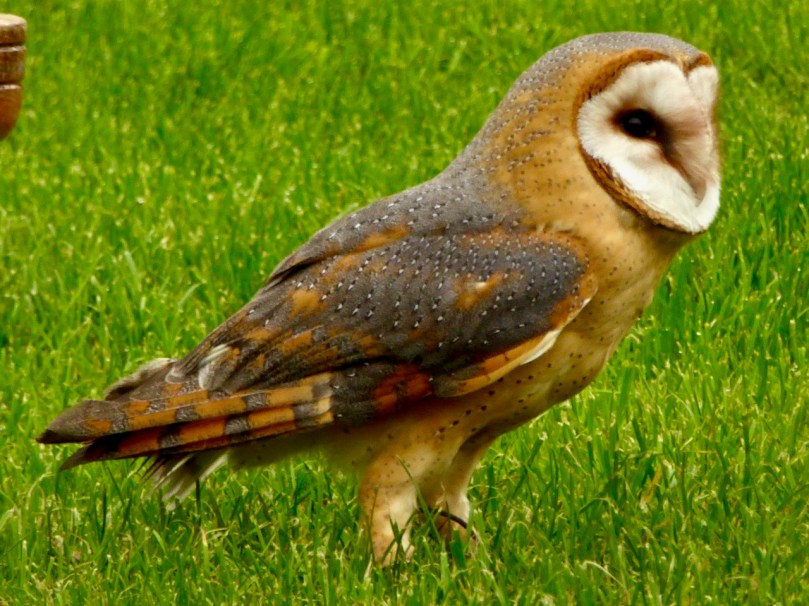
Noddy, a Dark Breasted Barn Own, has beautiful feathers and colouring

Oscar, a Eurasian Eagle Owl, has a good old ruffle

Raising an imprinted bird involves a particular set of skills and deep knowledge of the species. Susan is a certified falconer and has taken all the courses she can find to develop her skills. It was obvious, in the way she talked to and handled her birds how much she loved them.

Top: I’m obviously a ‘natural’ at this! Bottom: Well, maybe not quite yet

It was a thrill to be so close to a bald eagle. Living in Canada, I had many opportunities to observe these magnificent creatures in the wild, but I had never seen one as close up as I did at Adare. Saoirse is not quite four yet, and it takes a full four years for a bald eagle to mature and to grow both the white head and the white tail. Saoirse’s tail was there, but her head was at the salt-and-pepper stage that women of my age can relate to.

The Harris Hawk – ours was called Felix – is considered the easiest hunting bird to train because of its laid-back attitude to life and its natural ability to interact with humans. The highlight of our session came when Susan let Felix loose to fly to a high perch, and then called him down to land on our glove.

What a feeling! This IS a wild bird – Susan affixed a locator transmitter to its leg before we started so that if Felix took it into his head to fly away she could track him through the woods. She described how a falconer would track a bird before locators were used – it involved standing very still and tuning in to the sounds of the forest. Other birds would react to the sudden appearance of a hawk or falcon and the falconer would follow the sound-clues to his bird.

I learned that Oscar’s tufts aren’t his ears and that they don’t always stand up like this

We were extremely lucky to have Susan and her birds all to ourselves that morning – not sure how often that happens! But if you get a chance, don’t pass up an opportunity like this. It’s a once-in-a-lifetime experience. Thank you, Susan – you’ve made some old T H White fans very happy!

See you again, Tiny!

The Gap of Dunloe

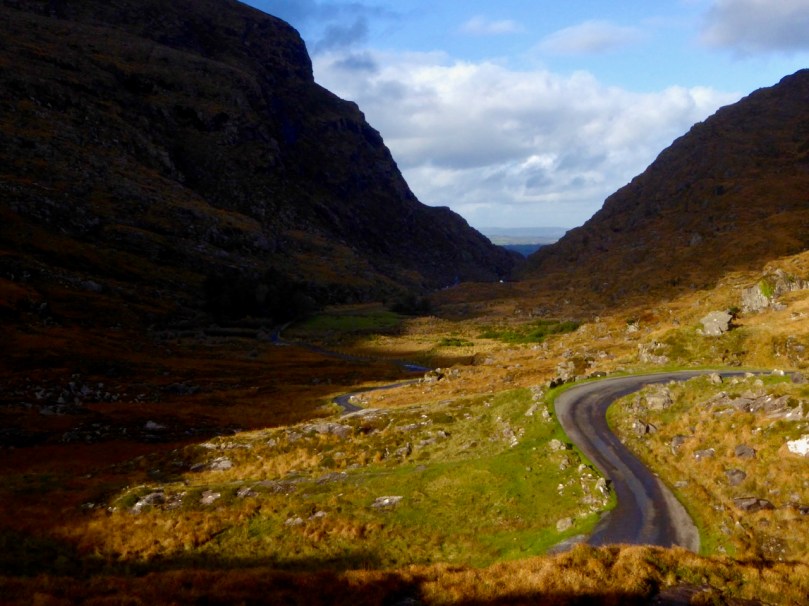
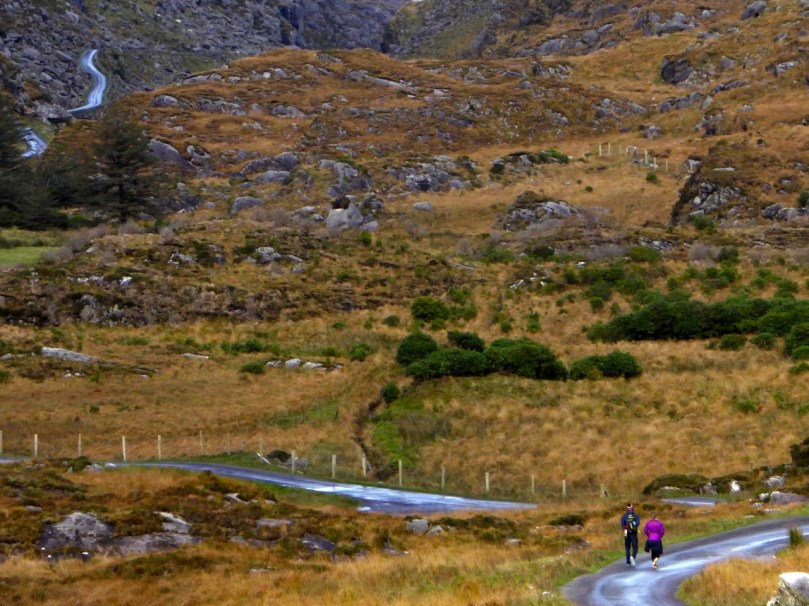
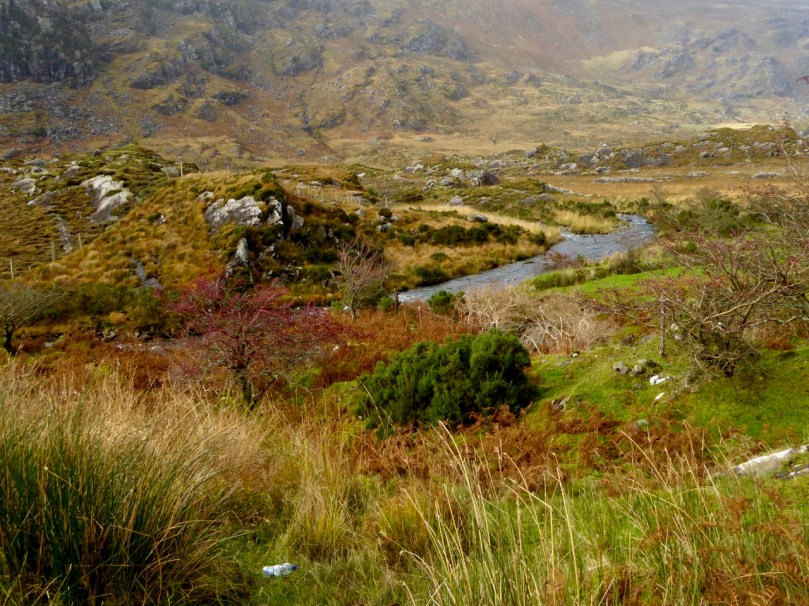
It’s one of Ireland’s, and Kerry’s, premier tourist experiences, but I think it’s at its best when tourist season is over and winter foliage dominates the landscape. Pure winter light mixed with the occasional shower – that combination brings out the the kind of colours that stop me in my tracks. From Killarney, the way to the Gap is west from the town on the N72 to Killorglin – just look for the signs.

From the Wishing Bridge

Driving through the Gap of Dunloe is not recommended at any time except winter, and even then caution is advised. That’s because the traditional way of travelling through the gap is by jaunting car, on horseback, on foot, or by bicycle and cars can be a dangerous and unwanted addition. And those – the on-foot or by horseback options – are the best ways of seeing it. If you have a hankering to experience it for yourself, just Google Gap of Dunloe and all the options will present themselves.

This couple from Germany had walked from the Black Valley

Robert and I have driven it twice now, each time in winter, and each time he has dropped me off to walk at my own pace, camera in hand, and picked me up where he can find a lay-by.  We did it earlier this week, having ascertained that sunshine was a possibility (about the best that can be forecast this time of year), and we hit it lucky.

A river runs through it

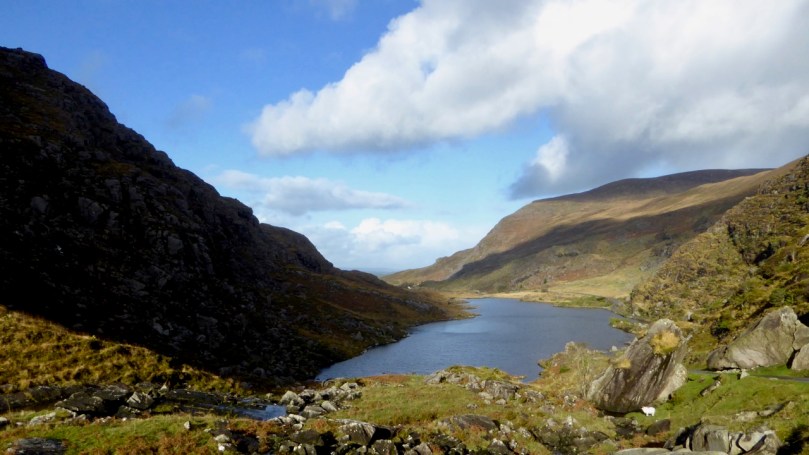
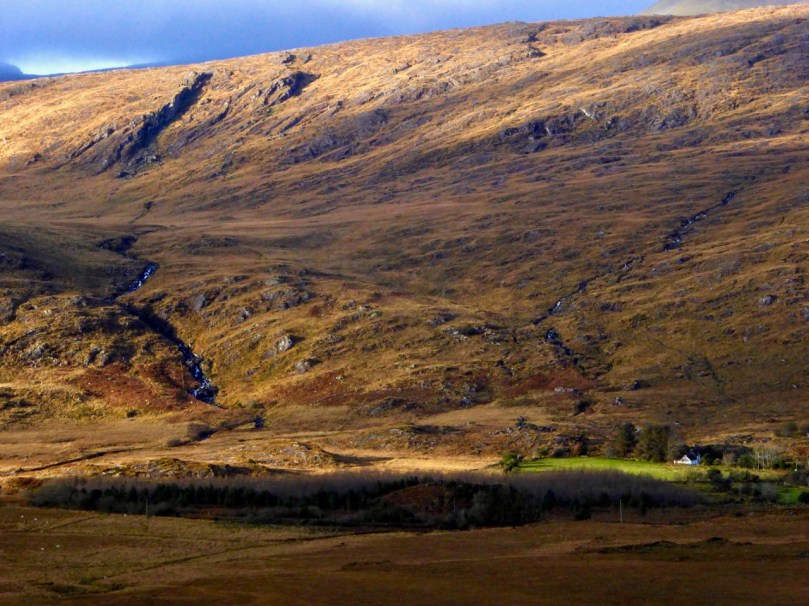
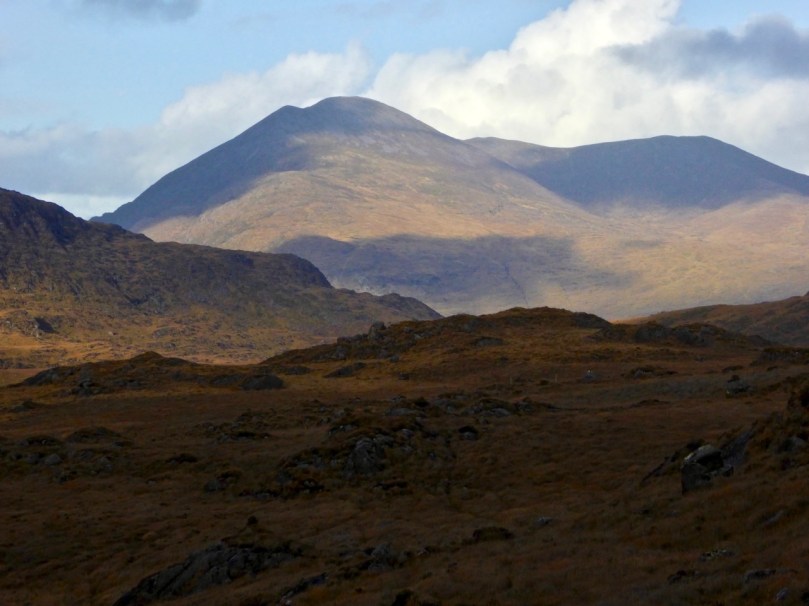
The Gap is a deep glaciated valley, running north/south between MacGillycuddy’s Reeks and the Purple Mountain – can’t lose with a description that starts off like that! The road runs along the Loe River, which empties eventually into the Laune and thence into Lough Leane, the largest of the Lakes of Killarney.

Auger Lake

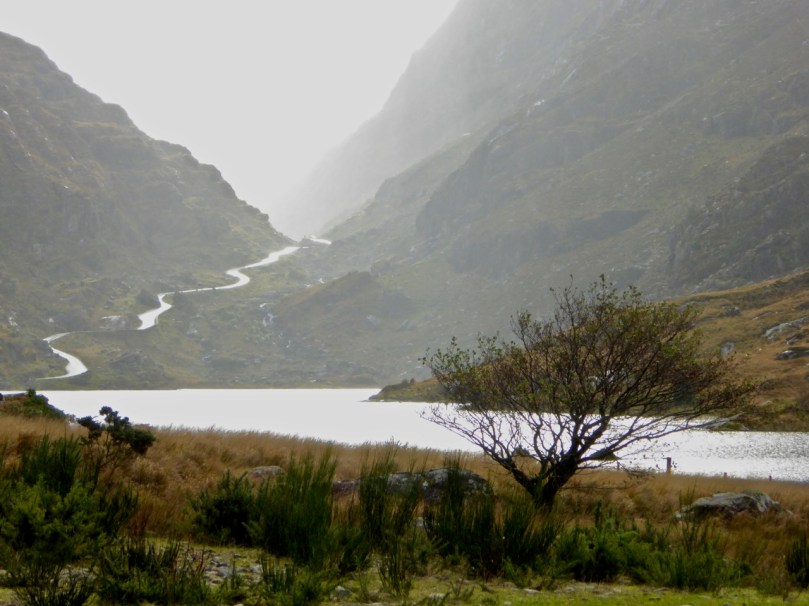
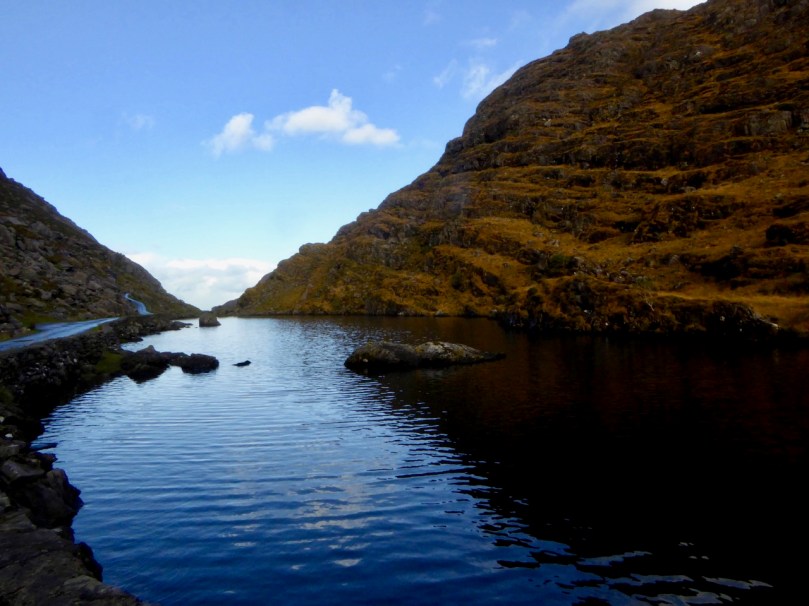
Several lakes lie along the course of the river – Black Lake, Cushvally, Auger Lake and Black Lough. The road switches from the west side of the lakes to the east side as you go along, and then back again. The first bridge you cross is the Wishing Bridge – tradition has it that wishes made on this bridge always come true. My highly scientific testing of this assertion confirms the truth of it.

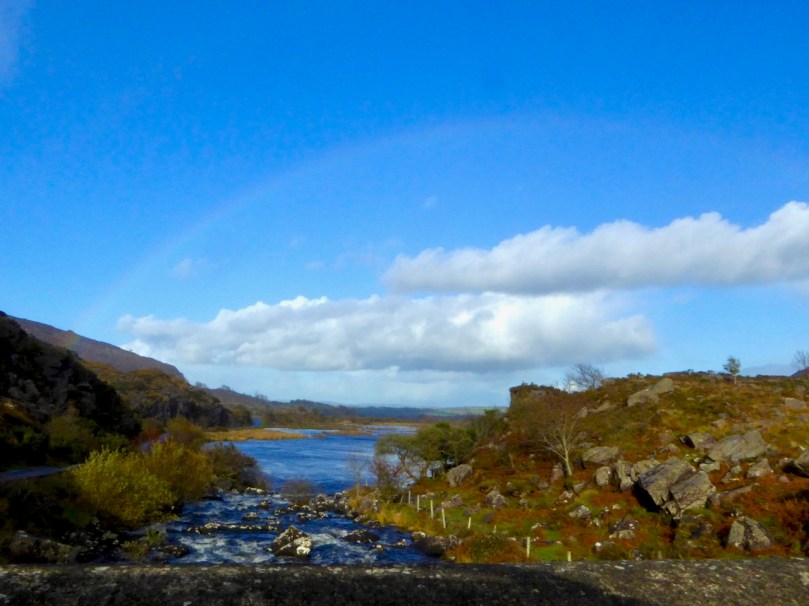
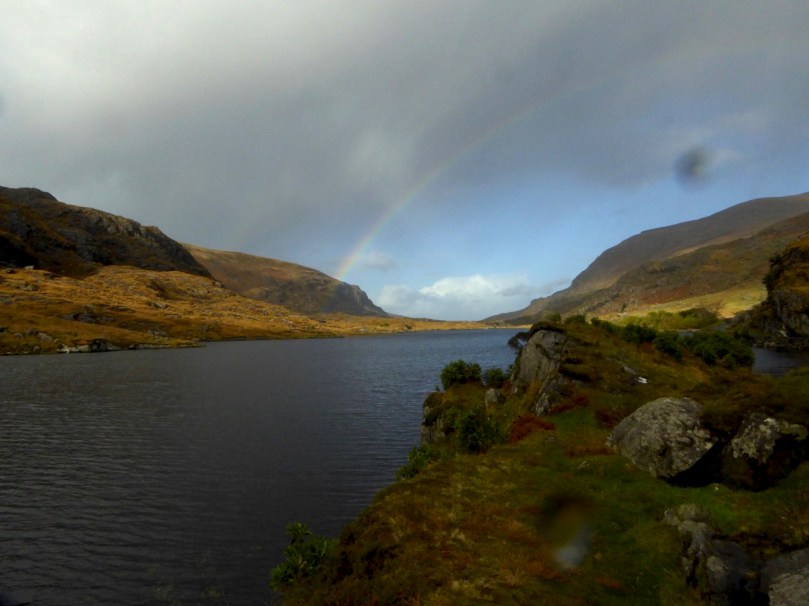
This is Ireland, of course, so no matter how blue the sky you have to expect that it can rain at any moment. True to form, the top of the valley filled with cloud and before I could blink I, and my camera, were being, er, moisturised. The compensation? A rainbow to the north, spanning the Gap.

Is there a hint of a second rainbow? And oops – drops on the lens

The rain didn’t last long – just enough to ensure the air was filled with lots of droplets and vapour to lend extra luminescence to the air – the colours always seem at their most sparkly after a shower.

Black Lough – no need to wonder how that name was earned

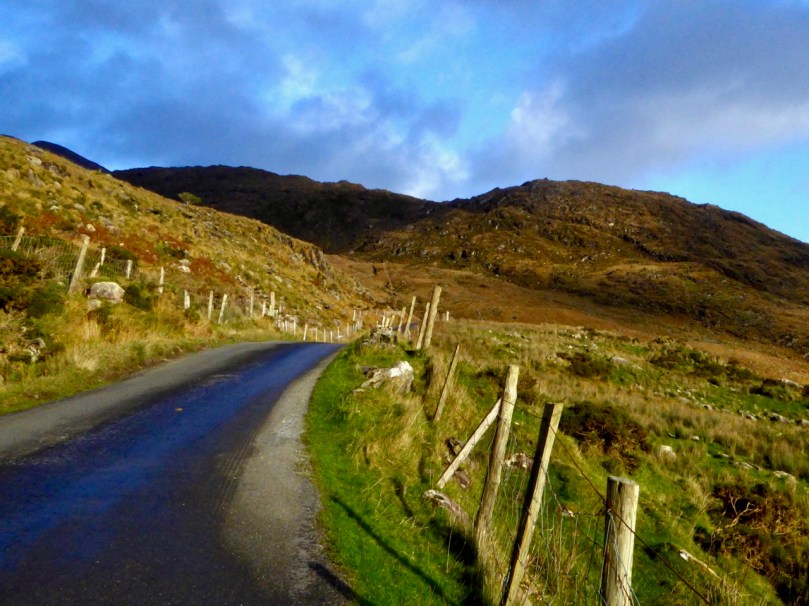
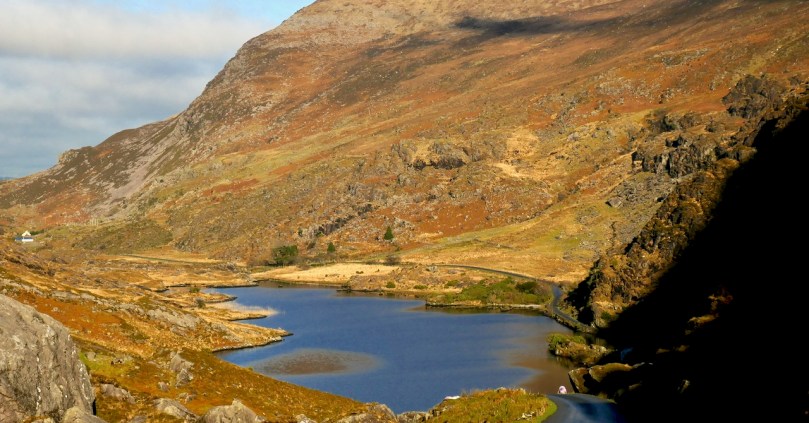
It was a steep walk to the top of the Gap, and it was hard to keep going when every bend brought fresh temptation to stop and take more photographs as the light shifted and shimmered. The photograph at the top of this post was taken from the highest point.

The Black Valley

Once over the top, the Black Valley opens up before you. This is a walker’s paradise, but also a community, with small farms dotted here and there, a church and a school – surely one of the remotest in Ireland. The landscape softens slightly from the craggy steepness of Dunloe to more rounded valleys and mountains.

You have a choice now to carry on West along the interior of the Iveragh Peninsula, but we had to head for home so we joined the N71 at Moll’s Gap where a welcome coffee awaited in the excellent Avoca Cafe.

A road through the Black Valley

Next time, I think we will do this by the traditional horse-drawn method, and return to Killarney by boat from Lord Bandon’s Cottage. Perhaps even in the summer – I wonder how it will look then.

Looking back at the Gap of Dunloe from Moll’s Gap

Update: We did it again in January 2020 and once again were blessed with a great day for it:

Kilcoe Studios – Dedication and Passion

Every year I’ve pounced on the Kilcoe Studios calendars as soon as they come out, and bought their exquisite cards. Recently I met their creator, Sonia Caldwell and discovered that the studio is quite close to me. I told Sonia that I’ve long been an admirer of her work and asked if I could visit her in her studio and talk to her about her inspirations. In the process I discovered a dedicated and hard-working artist and sculptor and a fellow wildflower lover. *

Thrift, or Sea Pinks

Sonia’s botanical artwork is meticulous and yet avoids mere illustration. Her colours are delicate but true and she insists on live models – you just can’t get the detail you need from a photograph, she asserts.

Sea-holly: my own photograph, and a detail from one of Sonia’s paintings

But it’s more than that – she researches each flower, tree, shrub, berry, fruit and provides information on folklore, herbal uses, Irish names and their meanings, and other little titbits of information.

She collaborated with the marvellous Pilgrim’s Restaurant of Rosscarbery for the latest (2018) calendar. We’ve eaten there a couple of times and been blown away by their approach to food – simple, fresh, delicious, and often with foraged ingredients. I’m still living on the memory of their blackberry and meadowsweet sorbet. So with this calendar not only are you getting Sonia’s wonderful botanical prints but recipes from the Pilgrim’s chefs as well.

This is Sea Mayweed and Orache intertwined. Pilgrim’s recommends a one-minute steaming for the Orache, and pairing it with white fish (like hake), new potatoes and a cream sauce. You can also mix it with other “tidal greens” such as rock samphire, sea aster, and sea beet.

The painstaking drawings she lovingly creates for her calendars also go into her cards. That’s great, because they should outlive their ‘year’. The card packaging is a work of art in itself – I’ve given many a set as a gift.

Because I’ve spent so many hours myself photographing wildflowers I know what goes into identifying, researching, and then reproducing each one, but only on a superficial level compared to the kind of attention each one gets from Sonia. Watching her getting the colour of each leaf exactly as she saw it was illuminating, and humbling.

Sonia sells her work in various stores throughout Ireland, but you can also order from her online shop. There’s still time to get those 2018 calendars!

Sea Campion – the front cover illustration for the 2018 calendar

Although I was aware that Sonia was also an accomplished sculptor, I was unprepared for what I found in her studio. She works in stone, on both a small and large scale. She makes beautiful bowls, sundials and plaques as smaller, more affordable pieces, and they are popular buys at the summer markets. 

But her passion is her figurative work. These are large-scale carvings, mostly in Kilkenny limestone, which she polishes to a beautiful finish using finer and finer grades of sandpaper. It’s physically demanding work, but I get the impression that when she’s engaged in it, she’s lost to time, and indeed to everything except what’s under her chisel.

Her work has a quality to it that I can only call ‘questing.’ The eyes look far away, seeking answers to some great question. In one case, they are blindfolded, forcing the quester to look inward. The bodies fold in on themselves, or on one another, or are rigid, as if acting as mere plinths for the imagination or the brain

It’s powerful stuff, and left me wondering why artists such as Sonia face such difficulties in the market place. Sculpture, I now understand, is much harder to sell than paintings. You can see a range of Sonia’s sculpture on her separate artist’s website. She has exhibited widely.

Sonia works with her husband, Eamon Quinn, a master joiner. Take a look at his beautifully-crafted furniture on their website. It’s inspiring to spend time with someone like Sonia, someone so dedicated and talented and committed. The good news is that, even if you don’t happen to live near her, you can still enjoy her art every day of the year.

*All the images of Sonia’s work are used with her permission. Please respect intellectual property issues and copyright for all the artwork in this blog post.

Circumnavigation

It’s a hop and a step from down here on the Mizen (Ireland’s most south-westerly point) up to the top of the island: people are doing it all the time, on foot, by bicycle, by boat… We thought we’d do it as a road trip – in fact, why wouldn’t we circumnavigate the whole of Ireland? We did – it took us three weeks.

Header – the Dark Hedges, Ballymoney, County Antrim, Northern Ireland. Planted by the Stuart family in the eighteenth century to enhance their Georgian mansion of Gracehill, it is now much visited as it features in Game of Thrones. It’s good to know that traffic can no longer go through this avenue, as it has suffered damage in recent times. Above, one of the many byroads that we sought out on our journey around the island: this one is the loop road behind Ben Bulben in County Sligo

It was a most fascinating and educational trip, particularly for me: most of the places I had never visited before. Finola was more familiar with her own country, although for her it was a voyage of rediscovery. In many cases she saw how much had changed over years of boom and bust, while elsewhere her memories were reawakened.

A voyage of rediscovery: Finola’s Great Grandparents are buried here in Killough, County Down, Northern Ireland

This is but a short summary of our travels: a taster. Many of the places we visited will feature in future posts here. As you can imagine, Archaeology, Romanesque architecture, stained glass, saintly shrines, pilgrimage sites, holy wells, stunningly beautiful land- and sea-scapes, and social history were prominent in our must-see itinerary. But we found we were also following in the footsteps of Irish poets. And British eccentrics.
Craftworks: we visited the Belleek Pottery, County Fermanagh, Northern Ireland – which has been operating continuously since 1884 (upper), and (lower) Glebe Mill, Kilcar, County Donegal – where we could watch traditional handweaving on enormous looms

I prefer to stay off the more heavily trafficked tourist spots, but we made exceptions for Europe’s highest sea cliffs at Slieve League, County Donegal (three times the height of the Cliffs of Moher! Beautiful and very wet) and for the Giant’s Causeway. After all, this features strongly in the stories of Finn McCool. I thought that the inevitable crowds were catered for very well and – if you are prepared to walk away from the main site – you can have the spectacular cliff paths largely to yourselves. In Northern Ireland I was very struck by what an asset the National Trust is, for it preserves and makes accessible so many properties and areas of outstanding beauty. If only the Republic had a similar well funded body…

Top – the cliffs at Slieve League. Lower – Giant’s Causeway on a stormy day, and souvenirs in the National Trust’s Causeway Visitor Centre

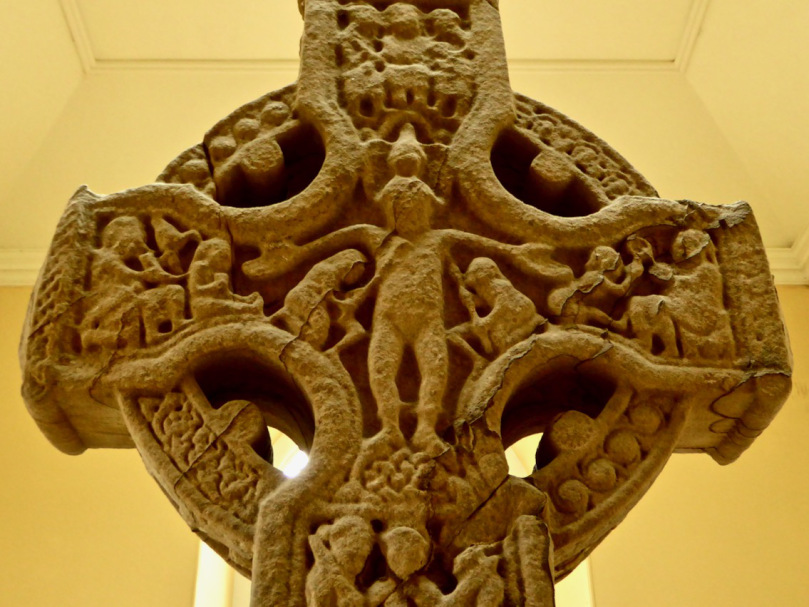
It would, perhaps, be unreasonable to pick out a ‘best’ destination that we visited, but I must say that I was probably most impressed by the medieval sites: we took in many. It’s amazing that right off the beaten track you can find stunning ancient carvings and artefacts tucked away and – sometimes – not even signposted.

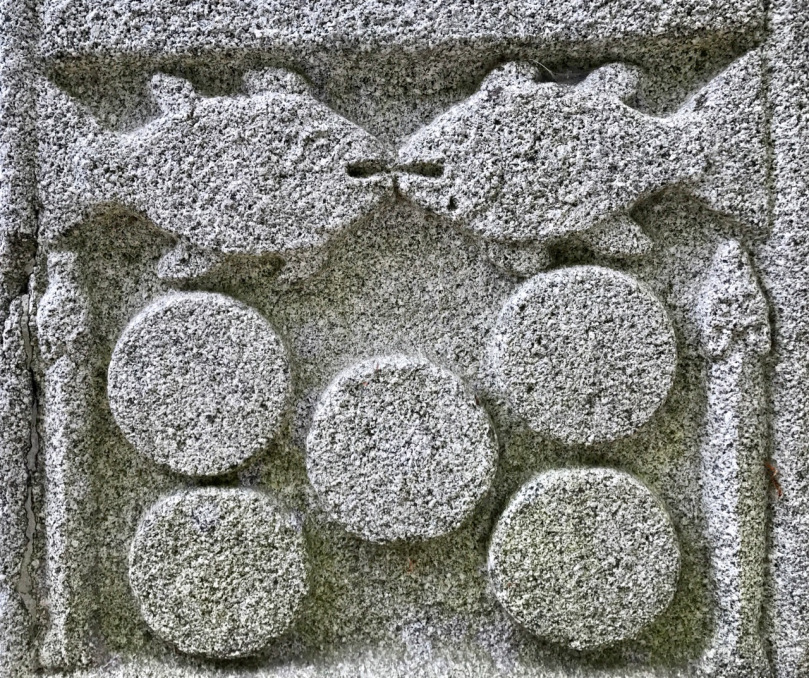
Upper – the superb High Cross at Durrow has been protected and conserved, but it’s not signposted from the busy road that passes nearby. Centre – the beautiful shrine that holds the relic of the True Cross in St Peter’s Church, Drogheda, County Louth: the same church holds the head and remains of Saint Oliver Plunkett. Lower – 13th century font in St Flannan’s Cathedral, Killaloe, County Clare

Our travels were punctuated with a whole variety of experiences, impossible to summarise in one short post. We took in Derry – the only completely walled city in Ireland and one of the finest examples in Europe: we walked the whole length of the early seventeenth century structure. Belfast was intriguing. We undertook the Titanic Experience, and were duly impressed with the building and the exhibitions. We also toured the whole city in the hop-on-hop-off bus: a full two hour tour of everything with a thoroughly enlightening commentary – a good way to keep out of the rain!

Upper – the Peace Bridge in Derry. Lower – the Titanic Experience, Belfast: the exhibition and the building. The external shot is taken from the enormous slipway which was used to launch the ship

We’ve only just got our breath back from all the travelling (although we always went at a leisurely pace with plenty of stops for investigation and coffee). Between us we took well over 5,000 photographs! You’ll see a good few of them in due course.

Often it’s the simple things that impress the most: just little vignettes of Irish life. We would thoroughly recommend a slow exploration of this land – ambling along the byroads and keeping a weather eye open for new experiences. Have a good time!
We are not averse to the odd selfie! Here we are on Carlingford Lough with the Mountains of Mourne behind us… Today it’s an invisible border between Northern Ireland and the Republic: what does the future hold?