Tuning In

sharonshannon

Sharon Shannon in concert, Dalkey

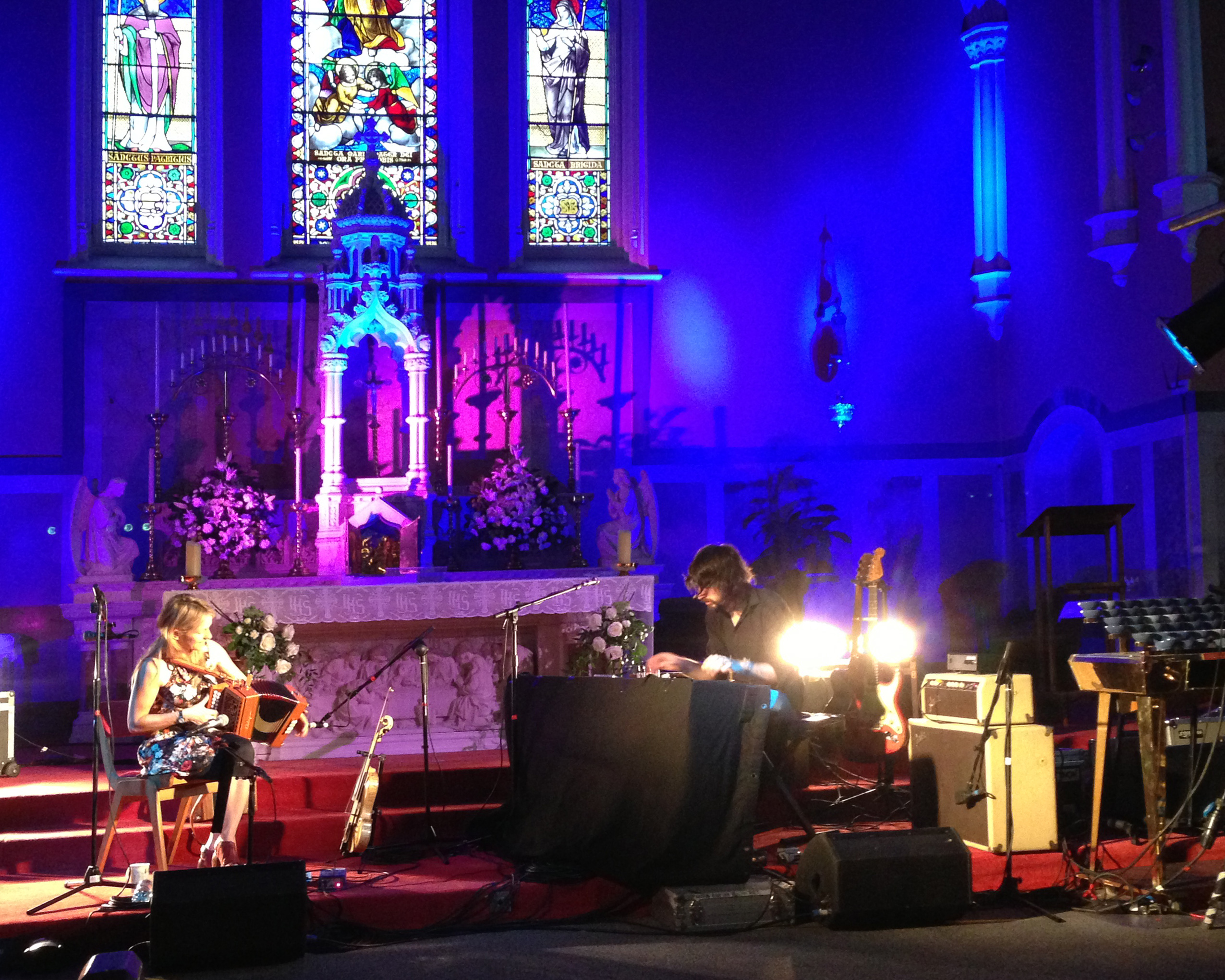
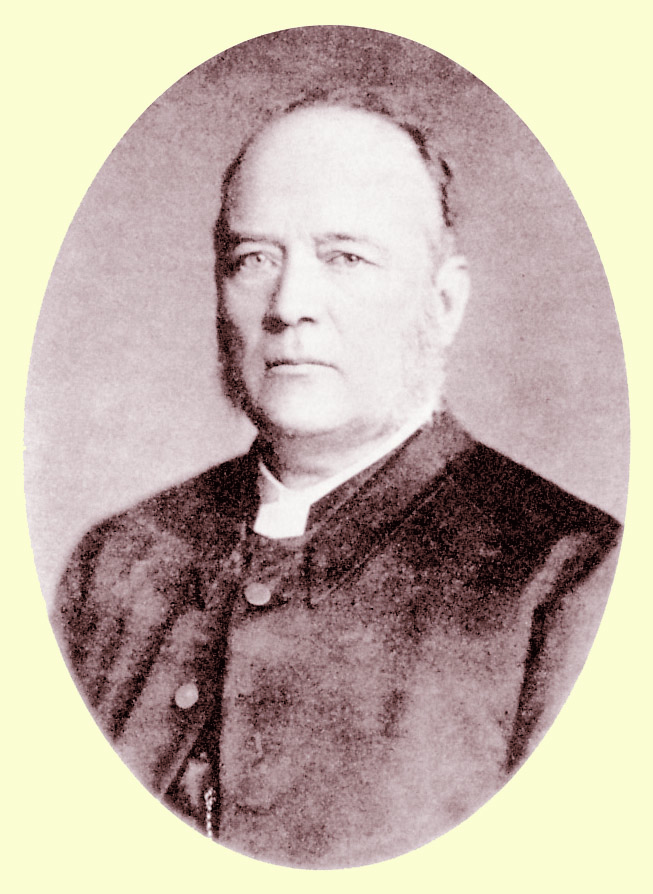
We are safely home in Nead an Iolair – and have immediately become immersed in music. We are making our own – with guests on the doorstep and at the local Friday sessions in Ballydehob – but also attending the many events which take place in West Cork in the summer. On our second night here we couldn’t miss a Skibbereen Festival event in the Abbeytsrewery Church: a concert in memory of Canon James Goodman, a cleric of the Church of Ireland who served the Skibbereen Parish for 30 years until his death in 1896.
james-goodman

There is a statue of the Canon by the gates of the church, where he can be seen with his Uillean pipes: he was a proficient player of this most complicated of all instruments. He is best known, though, for having produced one of the earliest collections of Irish traditional music – transcribing over 2000 tunes which he gathered from local players. All his known manuscripts are now in the library of Trinity College Dublin, where Goodman was also appointed Professor of Irish in 1879, but have only recently been brought to light and performed. Our Skibbereen concert celebrated the Canon and was devoted to his collected music. As Goodman was born in 1828 and starting collecting in his youth, we were listening to music as it would have been played in Ireland before the famine! But this is what The Music is all about – continuity of a timeless cultural tradition passed down through the generations and still very much alive.
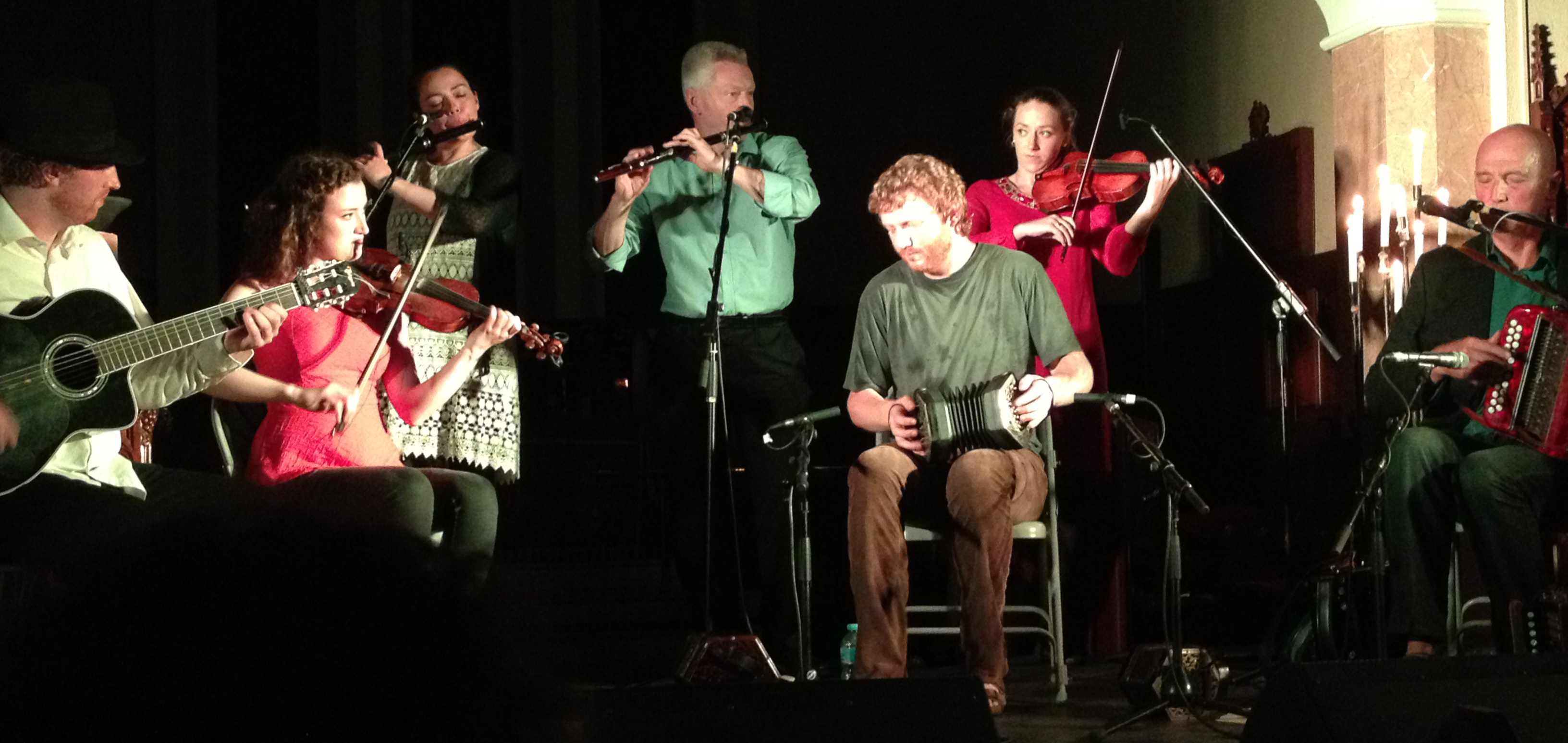
The Canon Goodman concert

The Canon Goodman concert

August was the month for the Masters of Tradition Festival, organised and run by Martin Hayes who hales from East Clare. For me, he is one of the world’s greatest musicians of the Irish tradition: his playing is captivatingly lyrical and seems to carry with it the soul of this ancient land. We attended all the concerts, many of which took place in Bantry House, a gently fading edifice which was once the home of the Earls of Bantry and is still occupied by their descendants. This stately home hosts many artistically based events through the year and provides an impressive – if incongruous – background to the activities. Some of the traditional musicians seemed slightly uncomfortable in the polite ambience of the candlelit Library, being more used to the ‘dancing in the aisles’ atmosphere of pubs and village halls: nevertheless, all the performances were memorable.
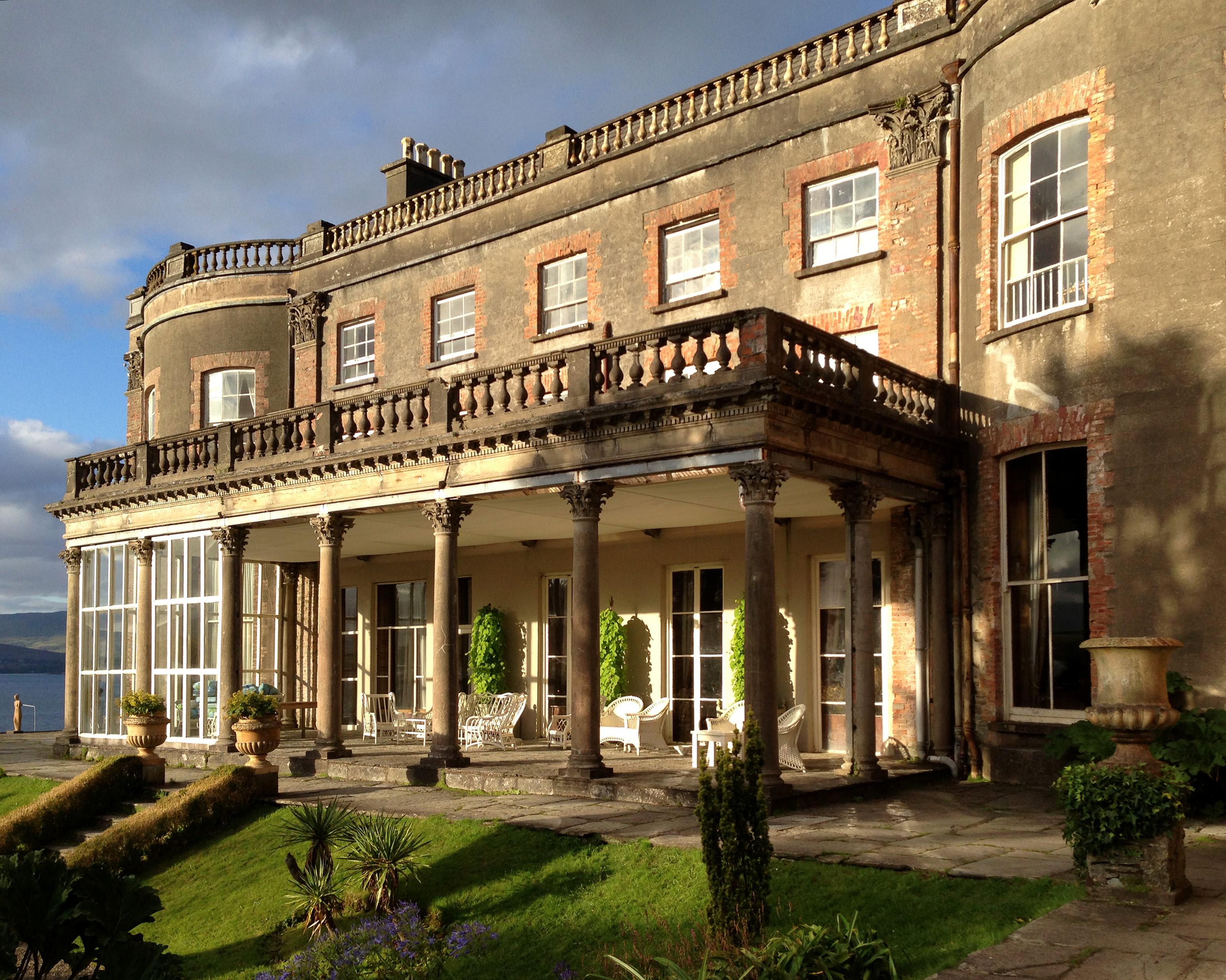
bantryhouse

Bantry House, built in 1690 with a spectacular setting overlooking Bantry Bay

There have been so many events within easy reach of our home here in Cappaghglass through the summer: we have had to miss a few because they overlap. We are keeping those for next year – or the years after that! We visited Finola’s family in Dublin and arrived to find a Sharon Shannon concert happening just down the road. This was wonderfully located in the Catholic Church of the Assumption. Sharon is an outstanding accordion player who has been performing professionally for very many years. In this incarnation of her music we were treated to heavy amplification, a brilliant pianist and singer – Alan Connor (who almost stole the show!) – and a disco light display which was enhanced by the ornate Victorian richness of the altar and reredos. There was very nearly ‘dancing in the aisles’ on this night!
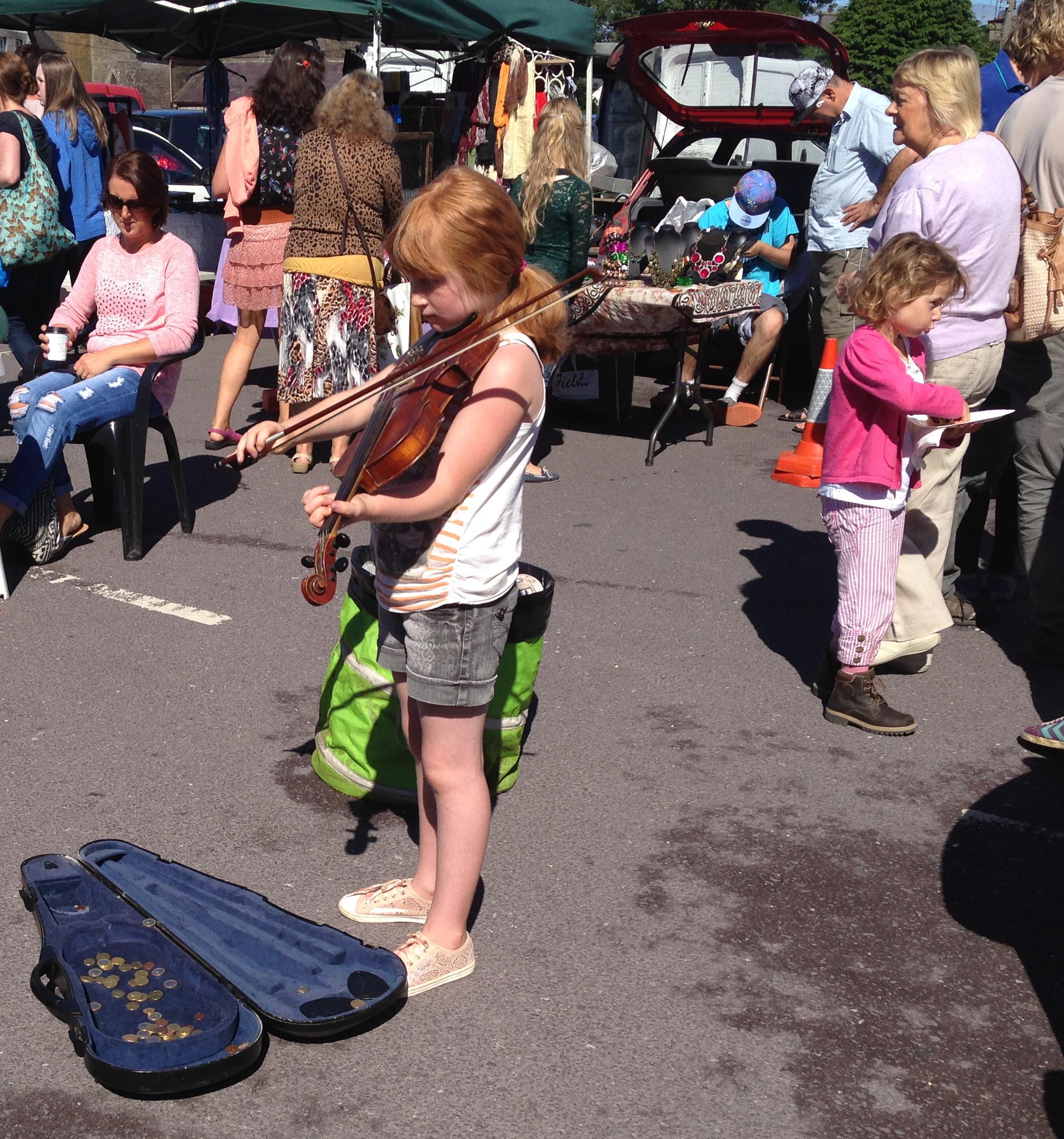
Keeping alive The Music - in the market at Skibbereen

Keeping alive The Music – in the market at Skibbereen

In what seems like just a few whirlwind days we have progressed from music on the doorstep to world calibre concerts in beautiful settings: this is only the beginning of our new life here…
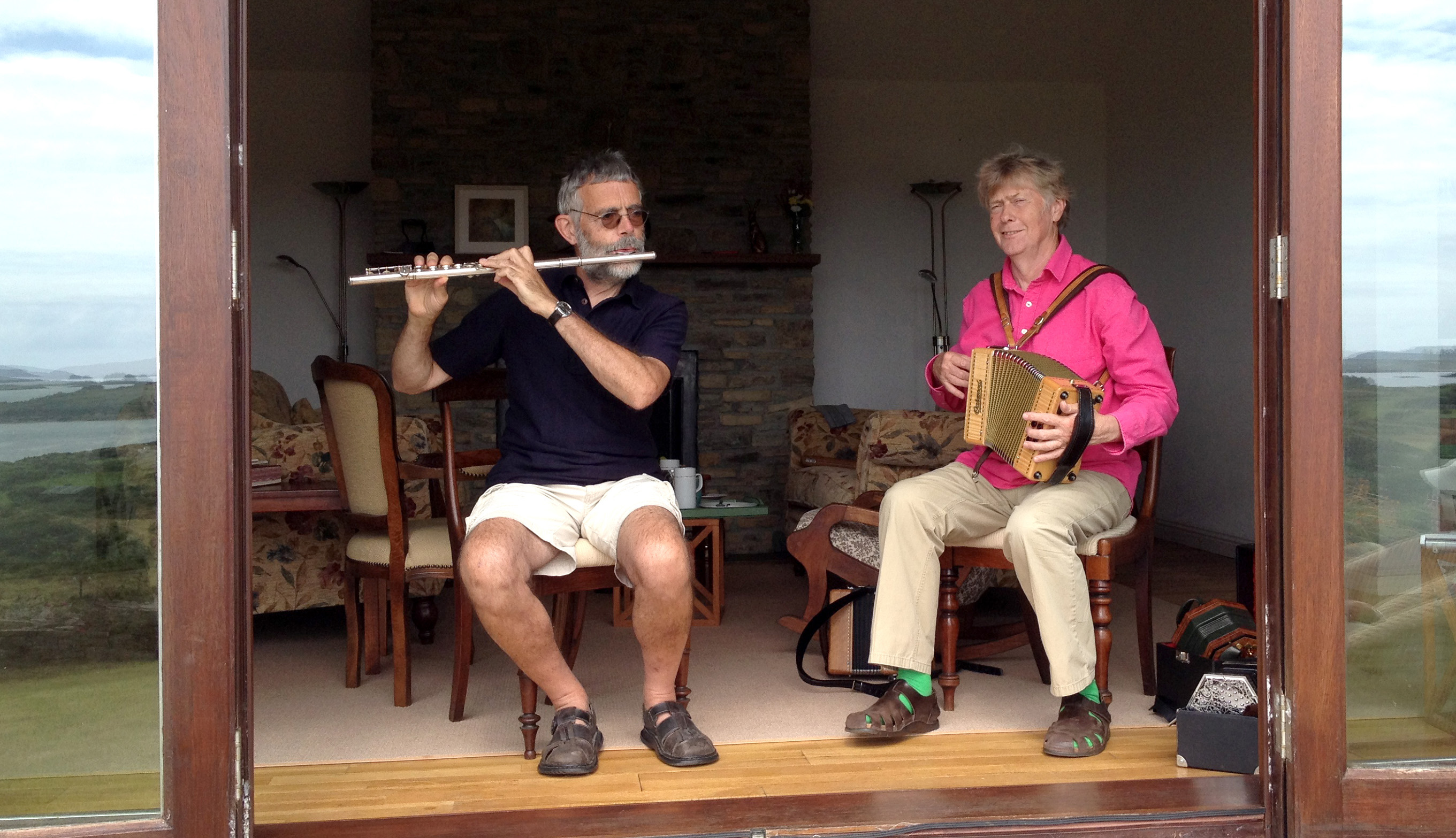
On the doorstep: Nead an Iolair
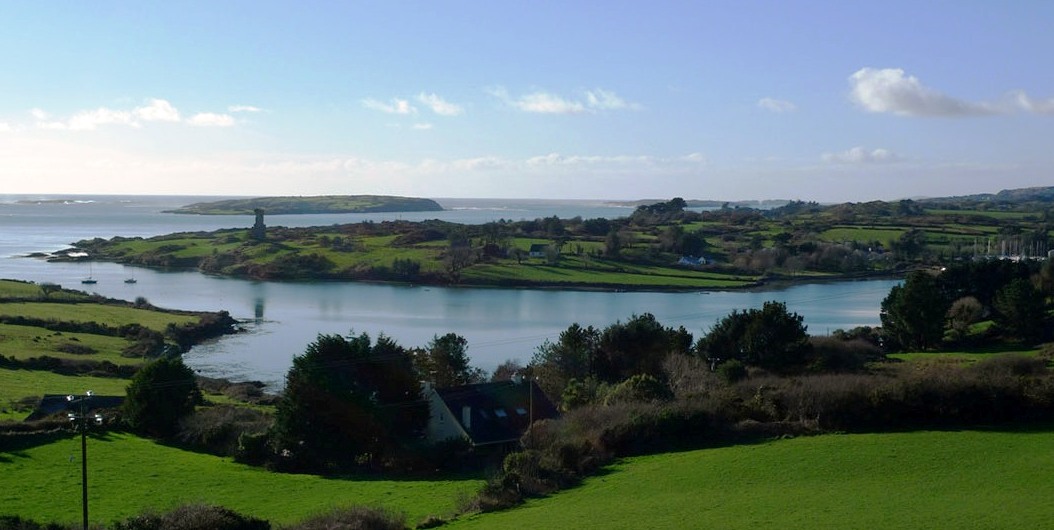
On the doorstep: Nead an Iolair
The Last Post

The view from Nead an Iollair

The view from Nead an Iolair
The time has come to say goodbye to West Cork. Yes, it really has been six months, and we leave next Thursday.

But here’s the thing. If it isn’t obvious how much we have enjoyed it here, then let us spell it out – we have LOVED our time here, in Ballydehob, in West Cork, and in Ard Glas.

In fact we have loved it so much that we are buying a house! It’s the perfect house for us, with views across our beloved Roaringwater Bay, and lots of room for entertaining family and friends. We intend to call the house ‘Nead an Iolair’ – it’s pronounced Nad on Uller, and it means Eagle’s Nest. We will return this summer, although we don’t have an exact date. We plan to resume the blog when we return, although perhaps with some differences. At the very least our sub-title, Six Months in West Cork, will be changing. If you haven’t yet clicked the “Follow” button and left your email address, do it now – that way you will be notified when the blog starts up again.

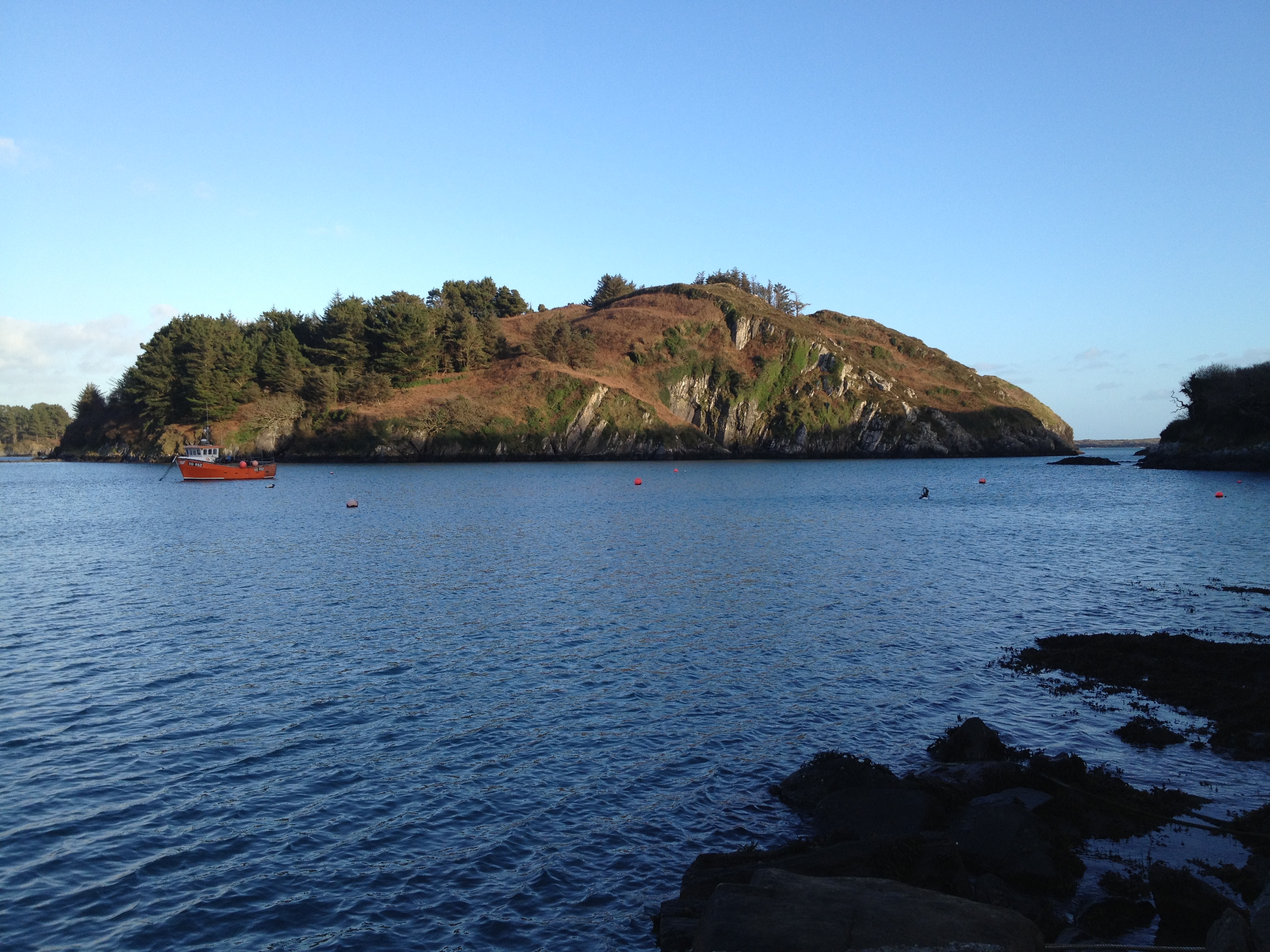
Peaceful Harbour, West Cork

Peaceful Harbour, West Cork

And so, dear reader, we have a couple of questions for you. Even if you’ve been shy about commenting in the past, make an exception now and tell us –

Which posts, or which kinds of posts, have you most enjoyed?

What do you want us to write about that we haven’t yet covered?

And now, until we meet again…

May the road rise to meet you,

May the wind be always at your back,

And may you be in heaven half an hour

Before the Divil knows you’re dead.

Finola and Robert

Another Day in Paradise

Another Day in Paradise

Music Mad

site

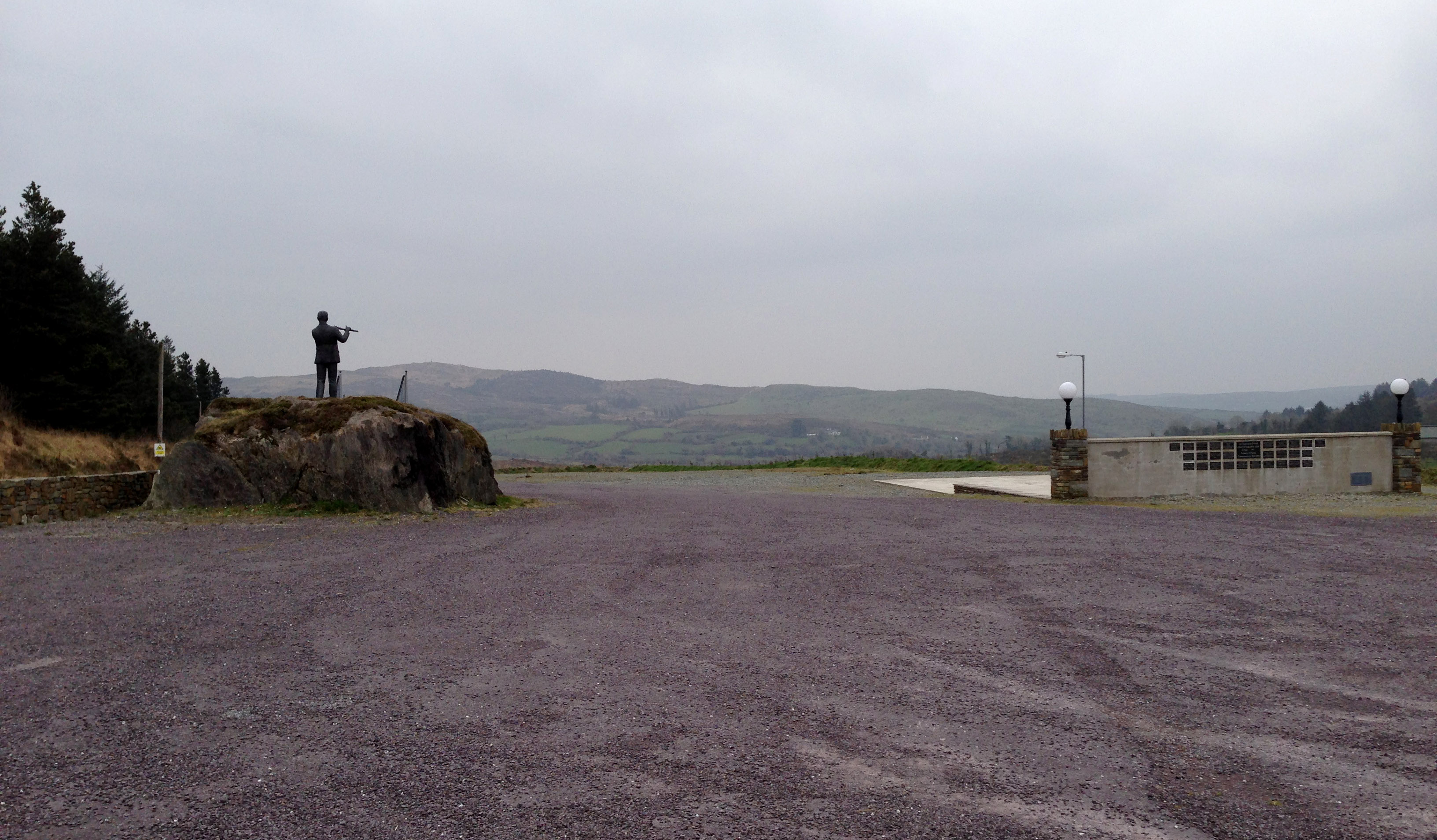
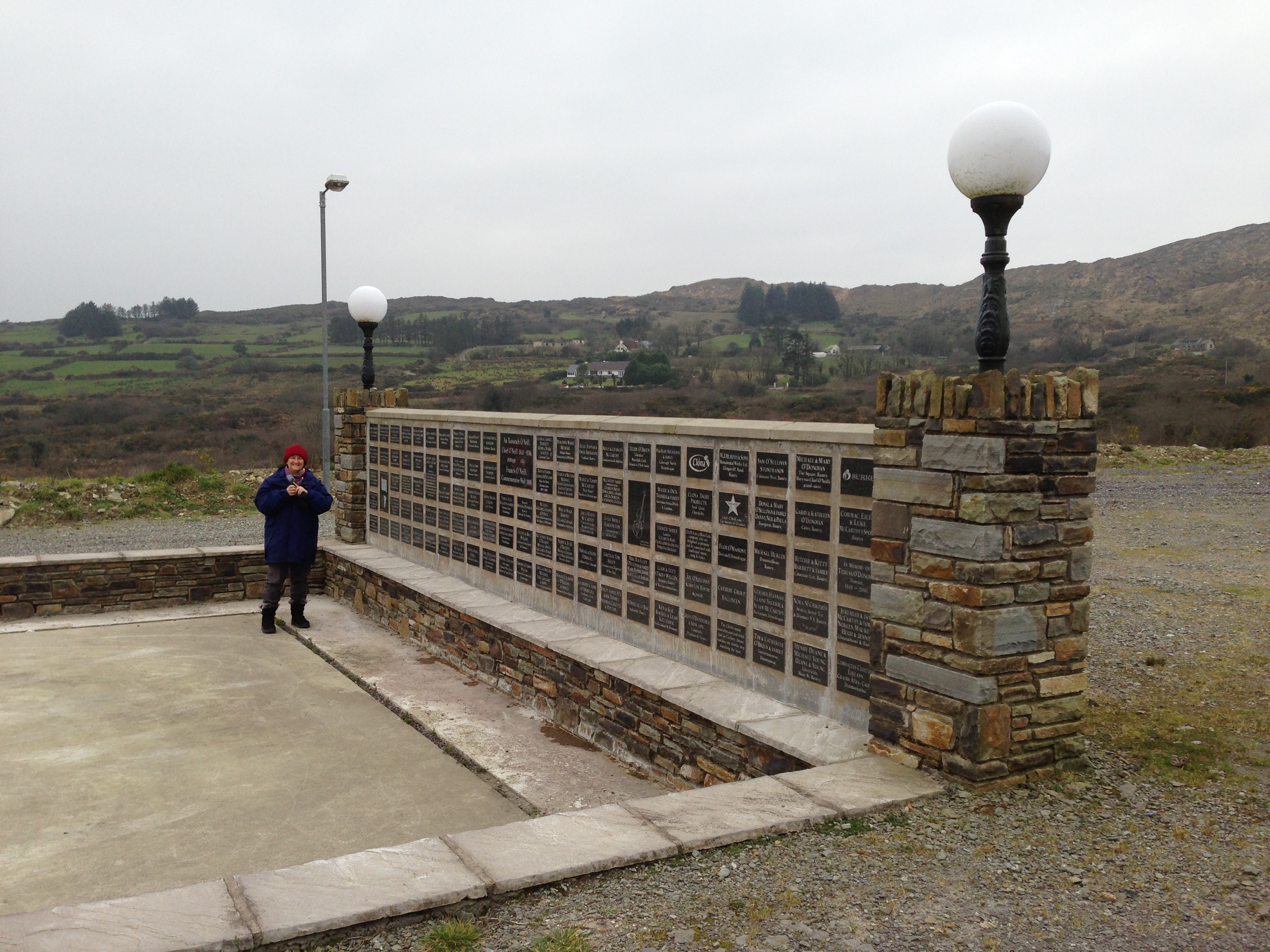
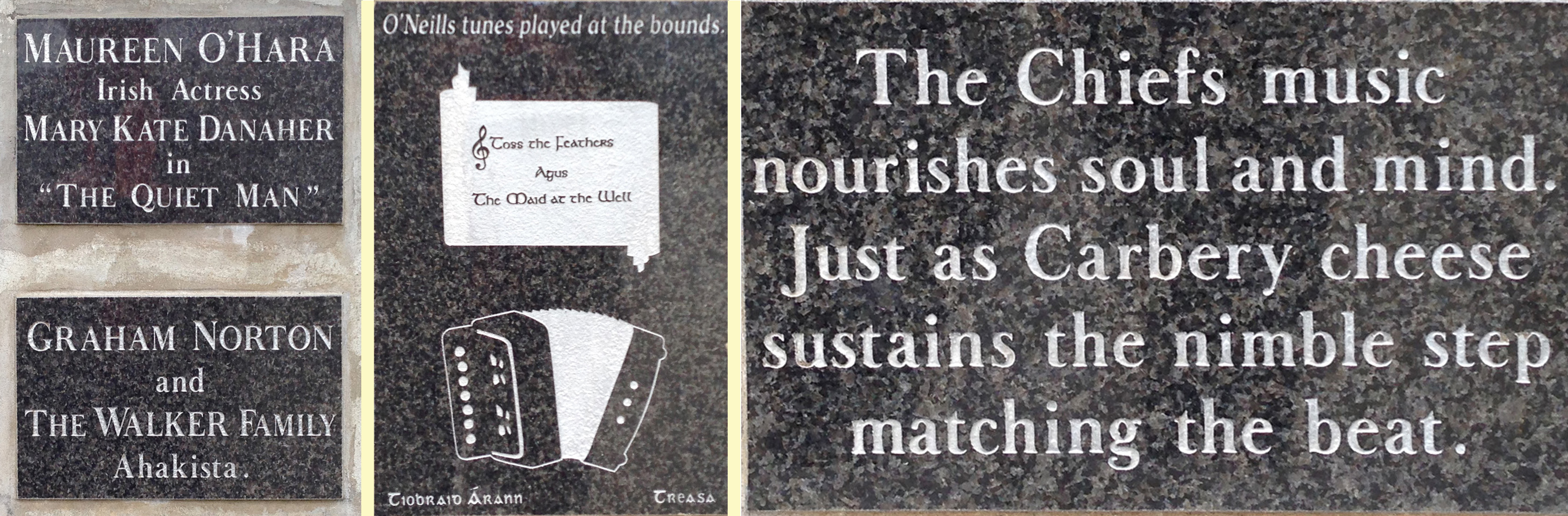
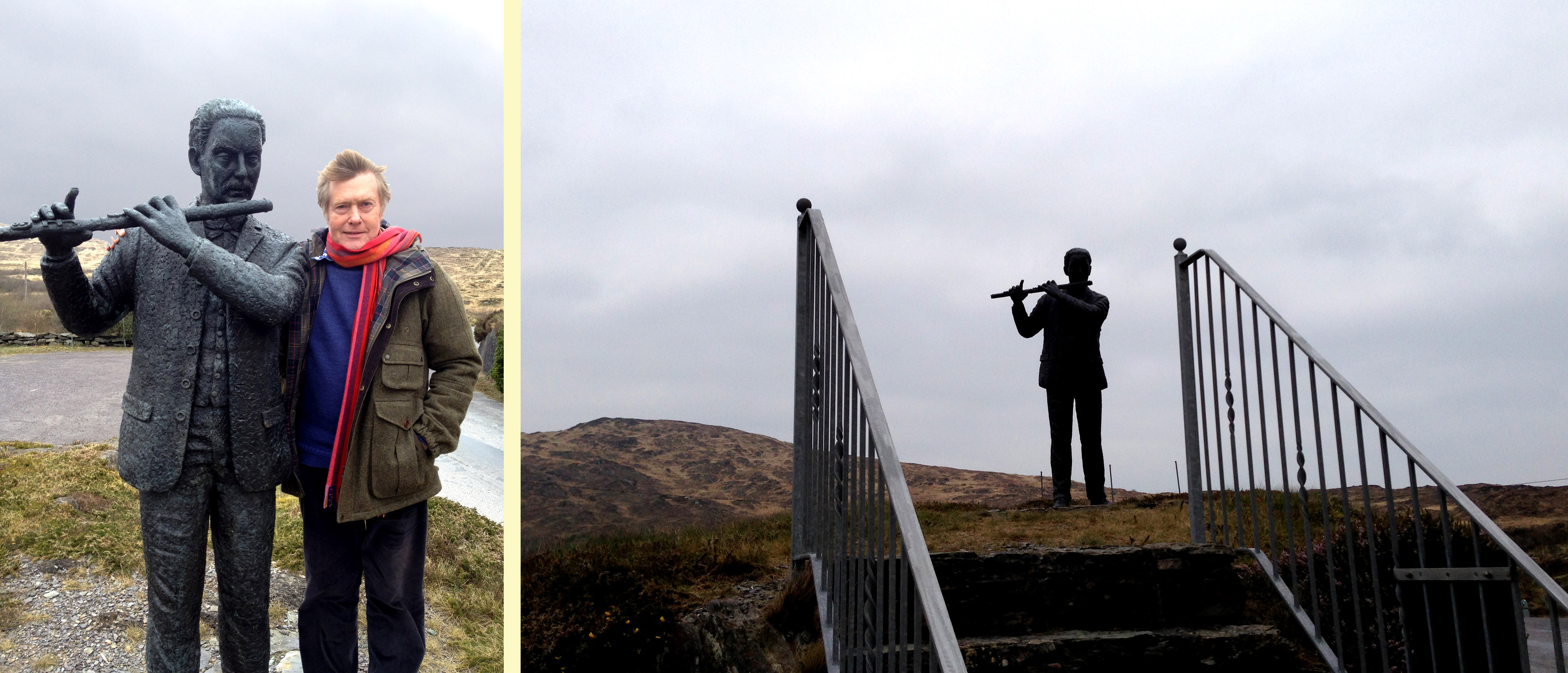
When we set off to find the Road Trotting we travelled roads we had never seen before: out to the east of Bantry. We were intrigued by a sign to ‘Tralibane Memorial’ and duly diverted to investigate. Up the hills and around a sweeping bend in the road: the first thing we saw was Mary, looking down over her modest garden – but that wasn’t the memorial; we found it a little further on. Our immediate view was a man playing a flute on top of a rock, approached by an ornate staircase. As we took in the whole site we had the impression of a huge plateau carved out of the hill summit – somewhere you could park a hundred cars or assemble a mighty crowd. It had the feel of a place where a Pope might come to give the Mass: there is an ornate Commemorative Wall surmounted by grand light fittings and with room for 120 granite name-plaques on each side.

commemorative wall

It’s a place waiting for something to happen. On the day of our visit it was deserted – and a little bleak. But, on other days, things do happen: crowds arrive and pay tribute – they come from all corners of the world. They also dance, and great craic is had. What is it all about? Well, once we’d worked it out we realised that this is a very important shrine for me, and for all other players of Irish Traditional Music. This is a memorial to Captain Francis O’Neill, a man who was born in the townland of Tralibane in 1848; ran away to sea at the age of 16; worked his way around the world and survived a shipwreck; became a policeman in Chicago; survived a gangster shoot-out, and eventually attained the rank of Chief of Police in that city. But he is famous for his greatest achievement: a collection of Irish tunes which numbers nearly two thousand, and which probably forms the repertoire basis of most of the musicians keeping the tradition alive today. The O’Neill collections were certainly my own introduction to The Music, and the several volumes in my own sheet music library are still the most valuable resource I have, bar only the internet.

plaques

O’Neill was imbued with the music of his native West Cork while growing up. He played the flute himself but, like many traditional musicians, he didn’t read or write music. The transcriptions which now appear in his collections (which are still all in print) were made by another O’Neill – James: unrelated but a colleague in Chicago. If you want to read a fuller account of O’Neill’s life try Ronan Nolan’s comprehensive article, where you can also find links to many of the wax phonograph cylinders recorded by Captain Francis during his collecting years (edit 2019: this link is no longer active!).

Robert + Francis

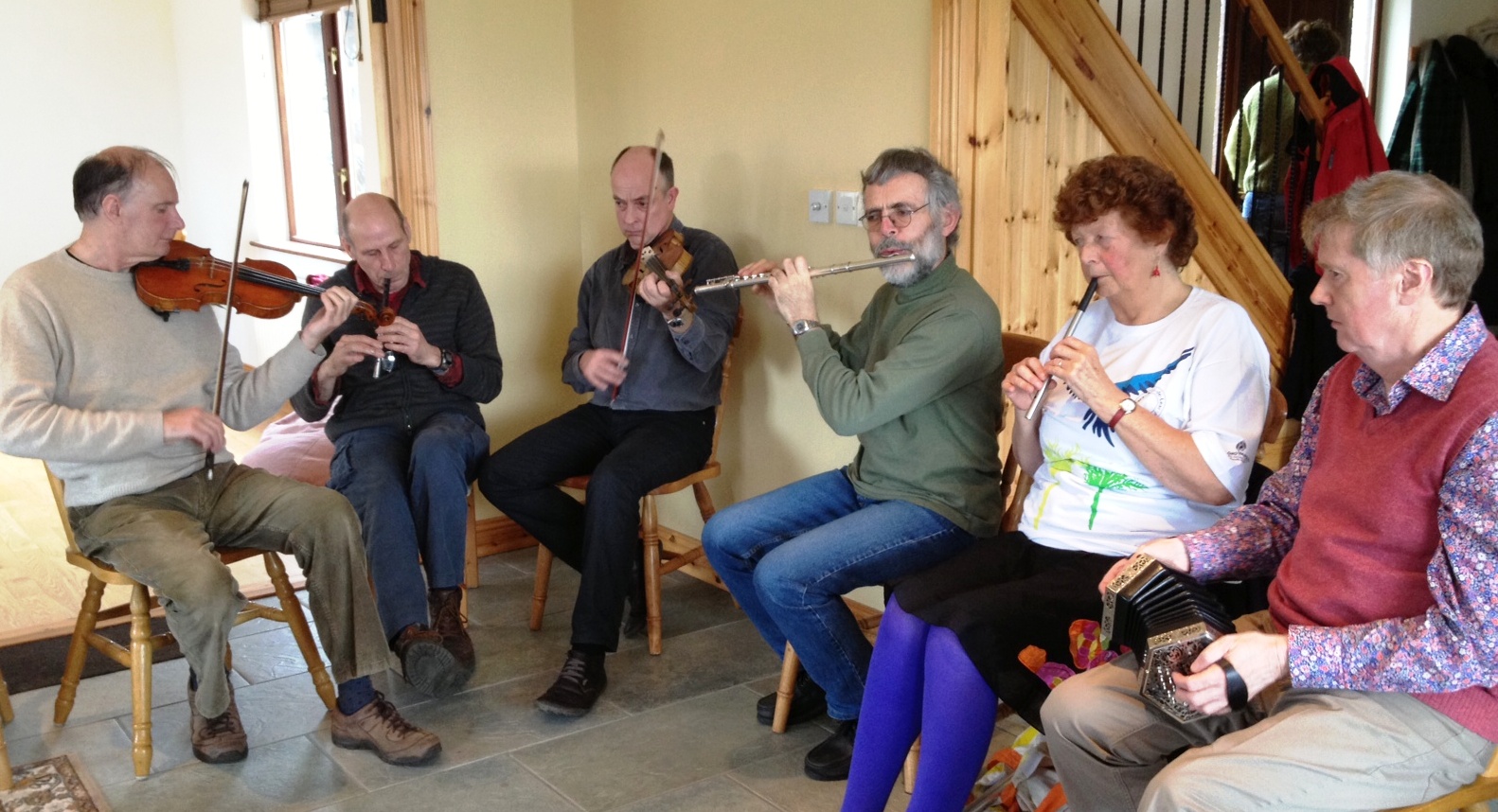
Craic agus Ceol

Let's Make Music!

Let’s Make Music!

First the Drink, Then the Story – this is the legend above Rosies’s pub in Ballydehob. In that spirit, we hosted a brunch at Ard Glas today for about 25 people. It was to say goodbye for a while to all of the wonderful people we have met since coming to live in West Cork and to thank them for their friendship.

Michael tells a Dartmoor Story

Michael tells a Dartmoor Story

Gillian tells The Beekeper and the Hare

Gillian tells The Beekeper and the Hare

Friends of Robert’s, Michael and Wendy Dacre of Raven Tales, are in Ireland and have come to stay for a few days. They are professional storytellers, with a wide repertoire of stories and songs from around the world, and we took advantage of their visit, and of our friends among the session musicians we have met, to bill this as a Stories and Music Brunch.

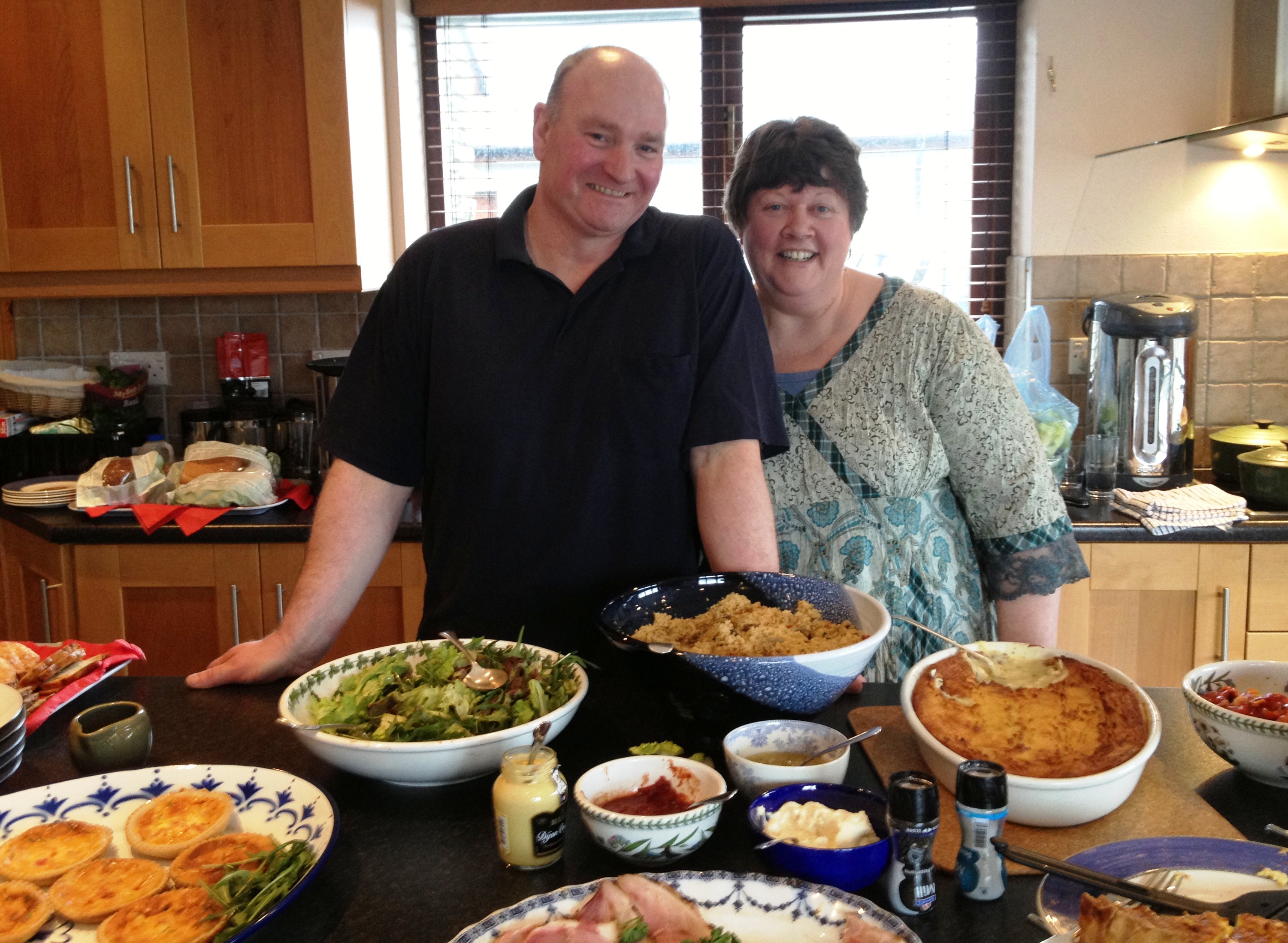
The food was fantastic, thanks to our wonderful catering team of Jo and Bob O’Toole, and when everyone had eaten and drunk their fill we started on the music and the stories.

We listened, wrapt, we tapped our toes, we sang along, and of course we talked and laughed and ate and drank the afternoon away.

You can read Amanda’s take on the afternoon here.

Jo and Bob, our wonderful caterers

Jo and Bob, our wonderful caterering team

Ghosts of the Past

An abandoned village slowly returns to the bog

An abandoned village slowly returns to the bog

Amanda, Bardic School

Amanda, Bardic School

Amanda and Peter Clarke were our hosts yesterday for a Sheep’s Head Day. They know the peninsula intimately and were able to take us to places we would never have found on our own. They also love it: they have made their lives in Ahakista in a beautiful old farmhouse with a productive garden, and between them manage several projects that are great local resources.

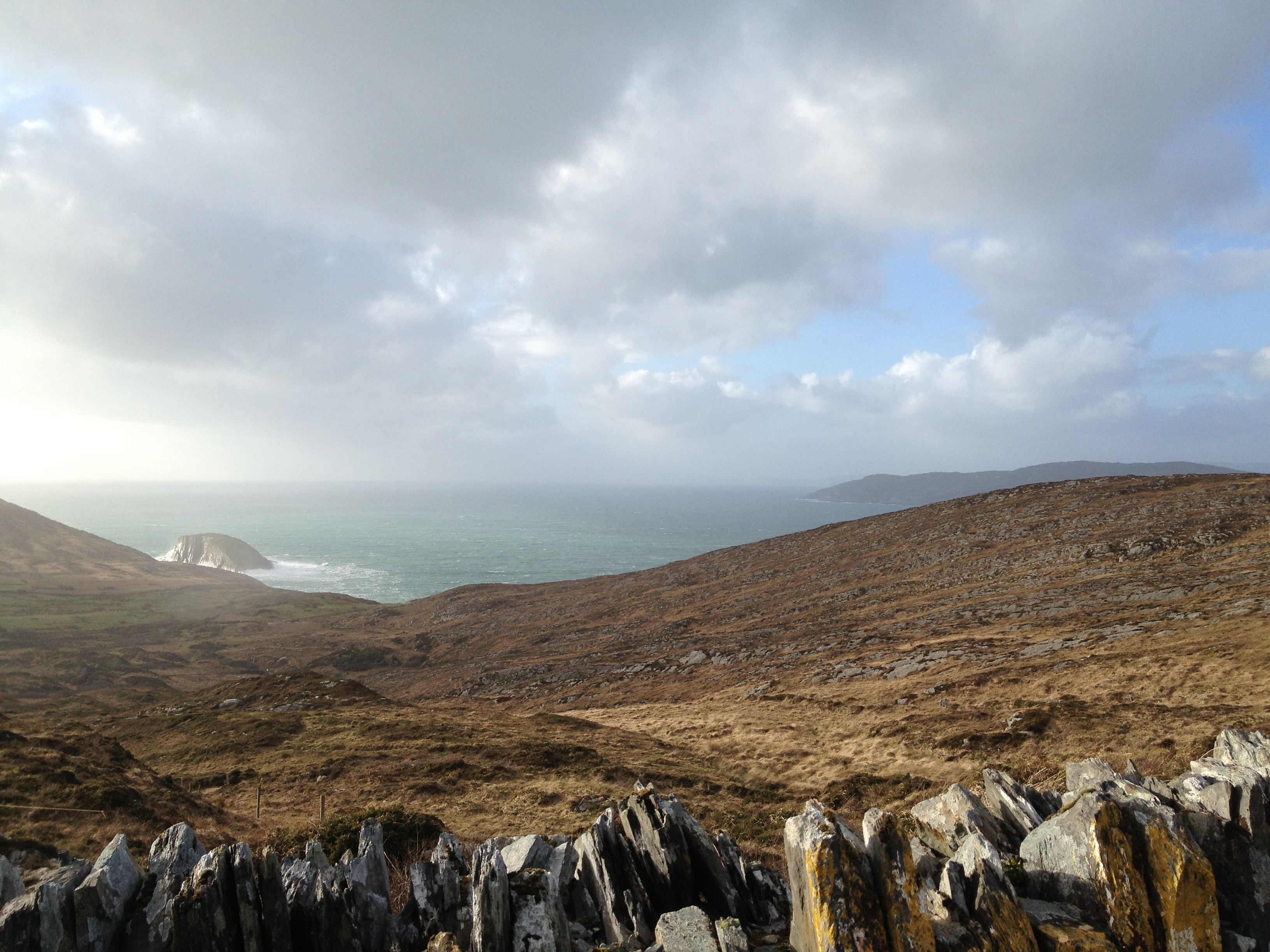
We have written about the Sheep’s Head Peninsula in previous posts. It’s a wild and beautiful place, criss-crossed by a network of world-class marked trails, and full of prehistoric and historic sites. Part of our tour took in the Bardic School, about which Robert wrote in his Kings and Poets piece. But mostly what we saw was new to us: an impressive stone circle and a stone alignment, a lonely and moving famine graveyard, the remains of a pre-famine village, and finally a holy well and mass rock site.

The stone circle is probably the recumbent type, in which two tall portal stone stand opposite a stone with its longest axis parallel to the earth. The sightline from the portals over the recumbent stone is often focused on a solstice sunrise. Stone alignments in this area tend to be three to five stones in a row and may also be part of the solar and lunar observatory system that is characteristic of many Neolithic and Bronze Age monuments.

2013-03-02 11.04.30

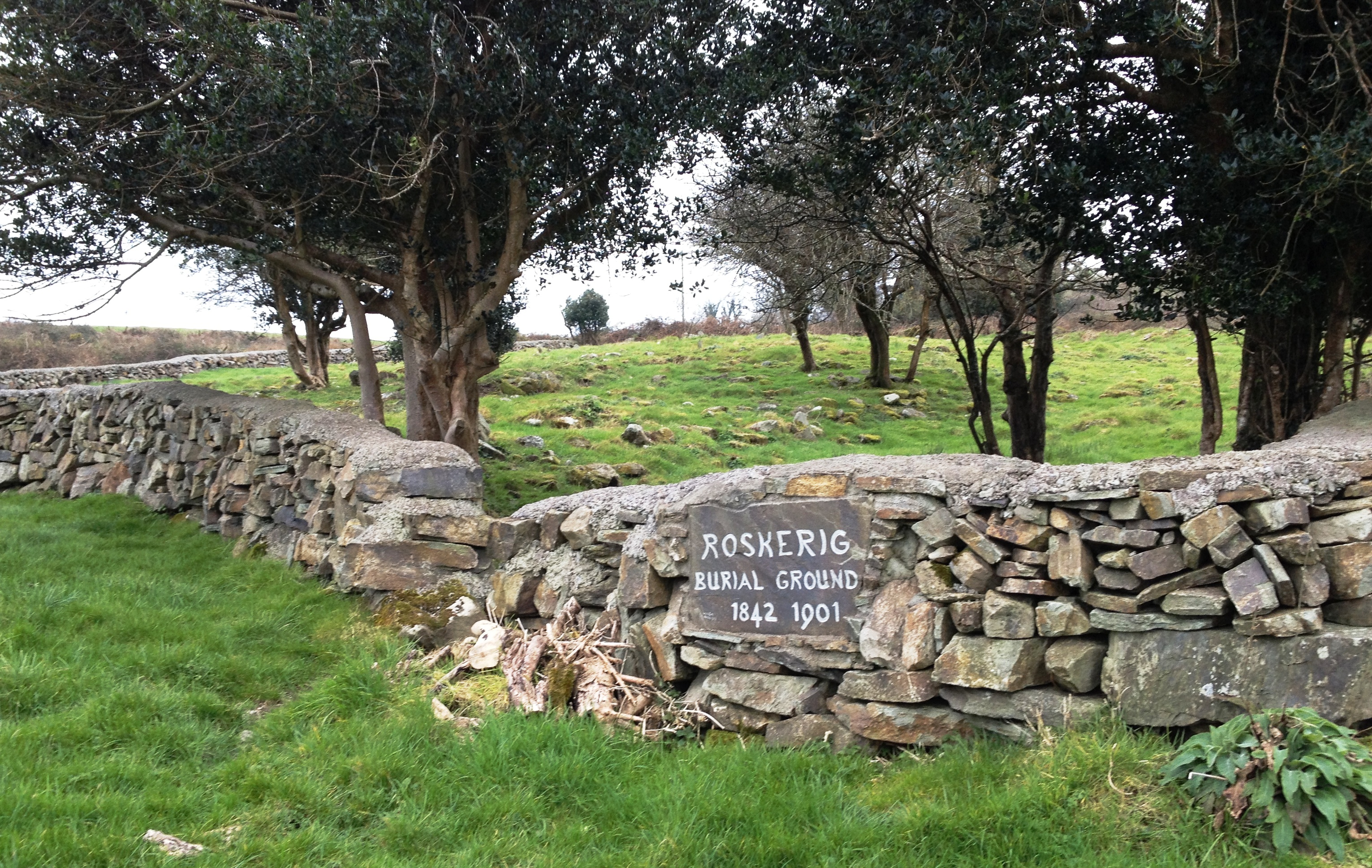
Ireland before 1845 had a population of 8 million people. Over a million died of starvation and disease and another million emigrated in the period of the Great Famine, from 1845 to 1852. West Cork was one of the epicentres of the disaster. It is still alive in the folk memory of the people and we saw two graphic reminders of it on our tour. The first was the Roskerig burial ground. Although stones were scattered around the graveyard, not a single inscription was visible, as if it had been hastily used in a chaotic time and then forgotten. The second reminder was the remains of a long-abandoned village, now slowly returning to the bog.

2013-03-02 11.23.39

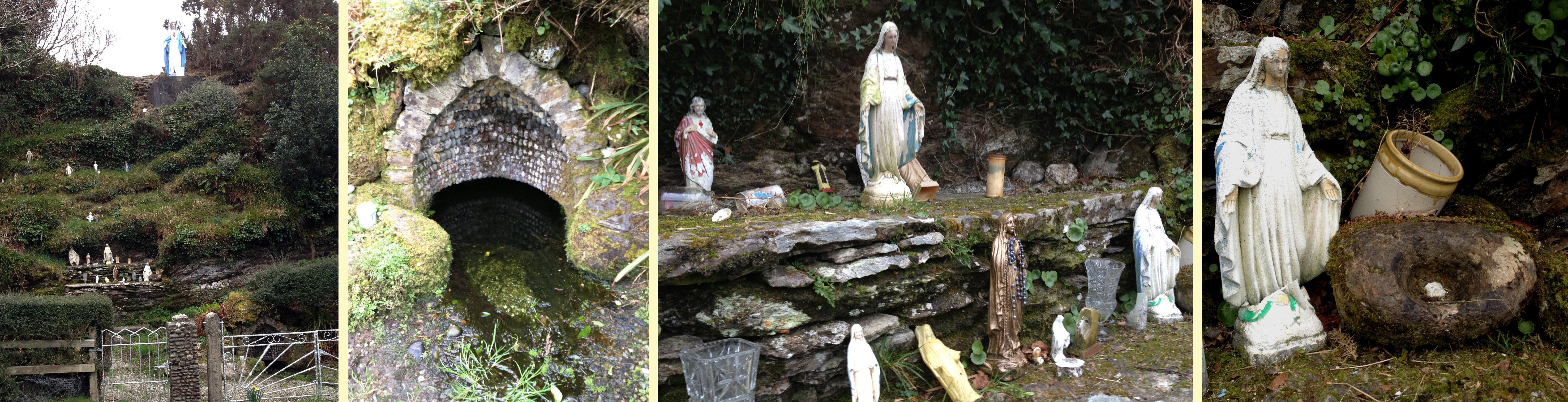
The holy well and mass rock are dedicated to Mary and are adorned with multiple images of her. The well is still in use and credited with miracle cures. The mass rock, where a crowd would gather outdoors in the days of the Penal Laws that outlawed Catholicism, to hear mass, is well preserved. When the Redcoats got wind that a mass was in progress and came to arrest the priest, Mary threw up a thick mist around the area to confuse the soldiers and allow the priest to escape. In acknowledgement, we deposited our coins in the well and said a prayer for something close to our hearts.

well

Road Trotting

watching

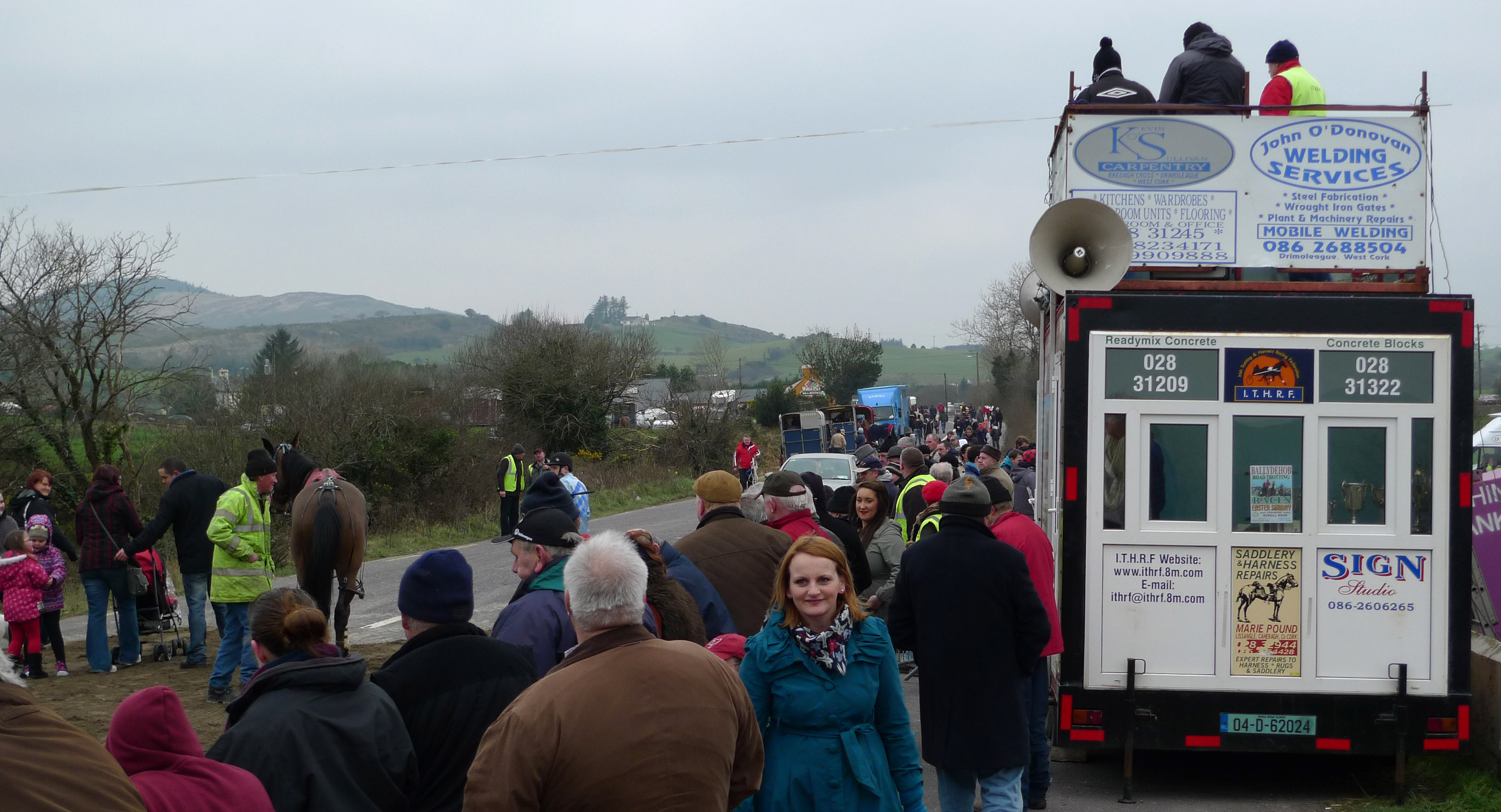
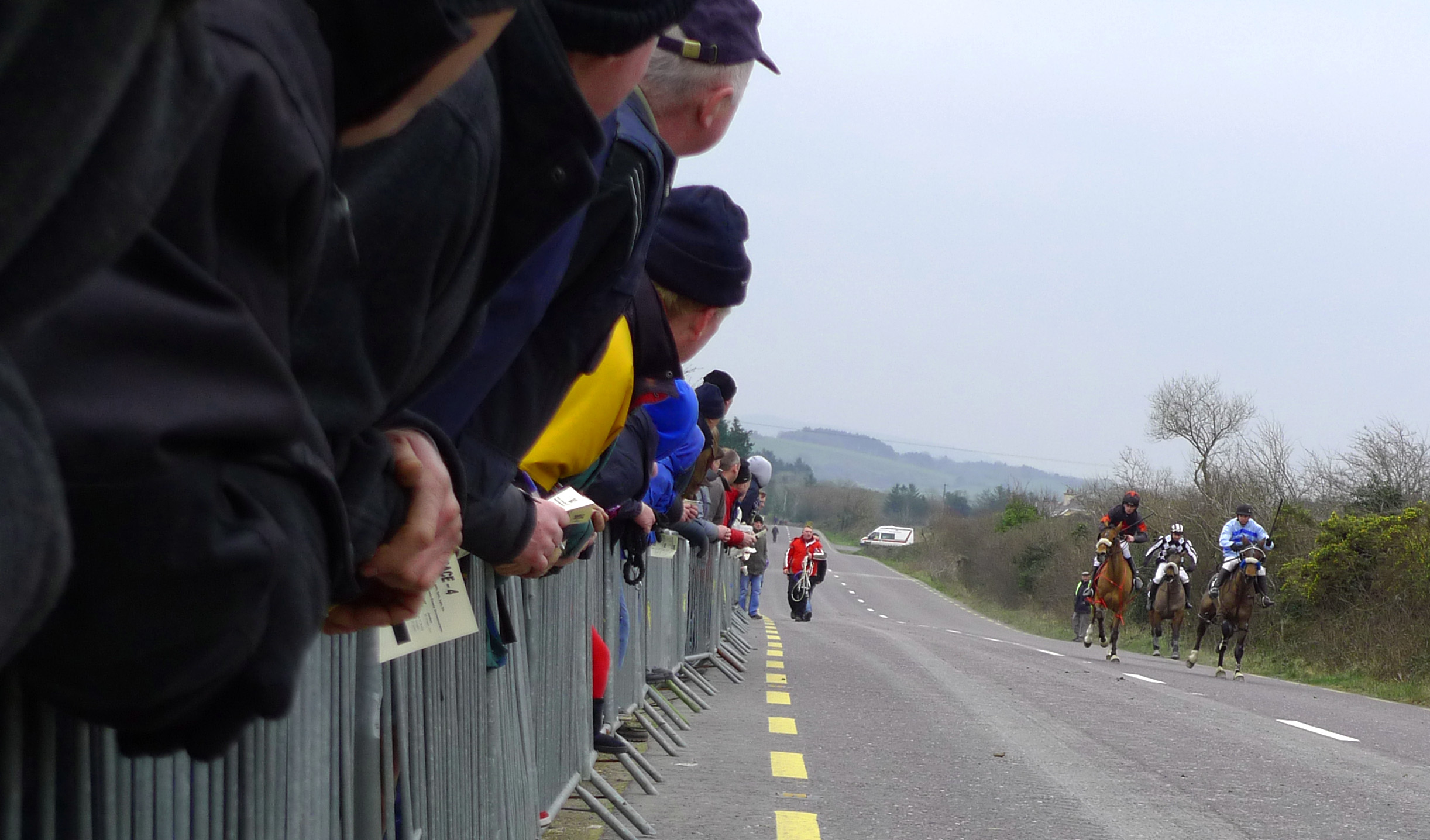
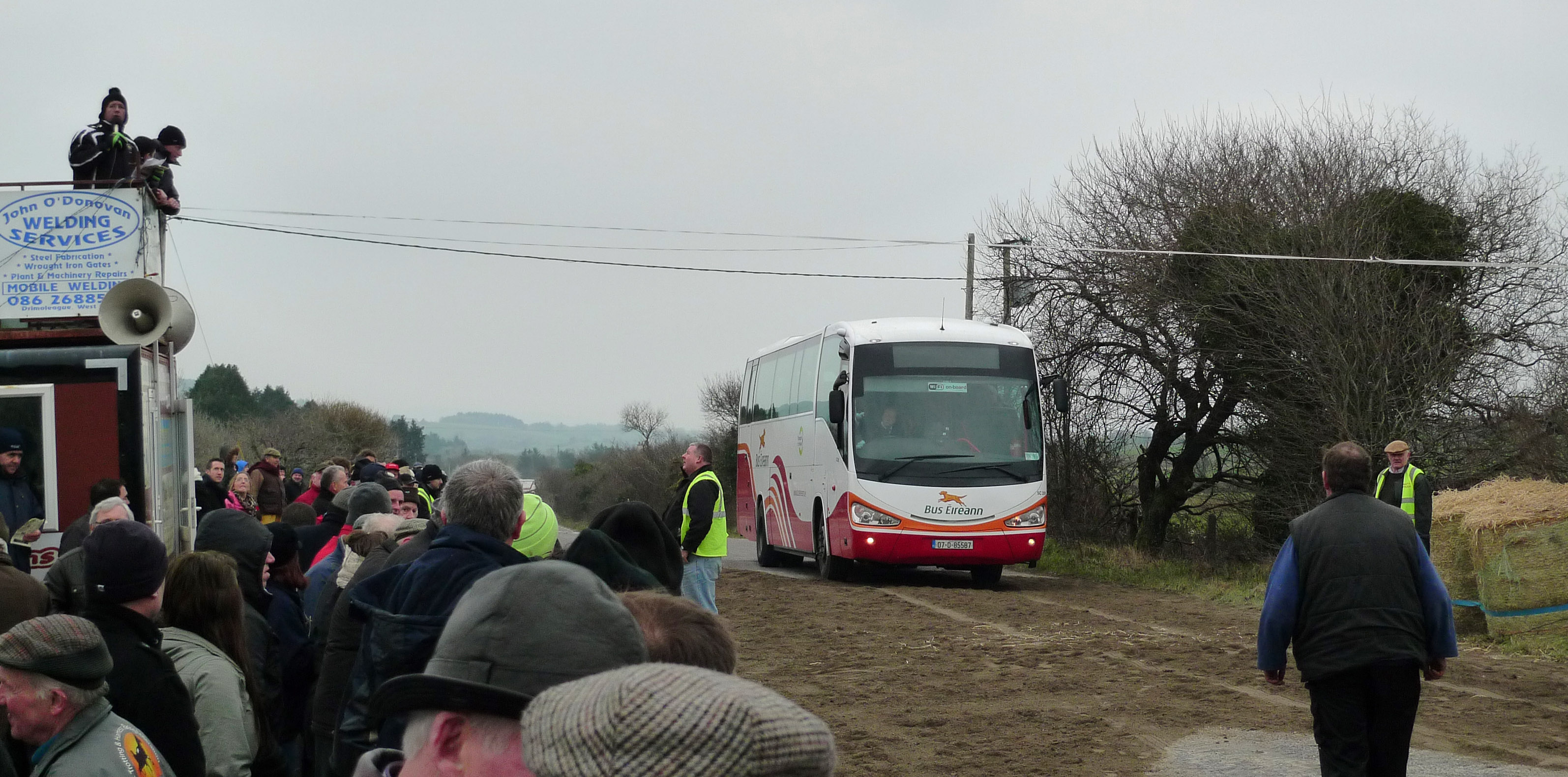
I constantly admire the Irish ability to make great sport and entertainment out of minimal resources. A case in point was the Road Bowling which I described in a previous post and a further example is our Sunday afternoon spent at The Races: not in a big grandstand at a famous course, but at a closed-off section of the R586 – the main highway connecting Bantry to Drimoleague and Cork. Through traffic takes second place, having to negotiate a diversion of narrow, bendy lanes in order to allow The Racing to use a half mile long section of fairly straight and level road (horse racing in Ireland is still measured in ‘miles’). Except when the Cork – Bantry bus comes through, when everything has to stop and move over.

crowds

spectators

start

Horse racing goes back thousands of years, and the Irish have always been good at it: Irish trainers, horses and jockeys dominate many of the big events in Britain. I was fascinated to learn that it is a non-sectarian sport in Ireland: it is governed in the Republic and in Northern Ireland by one body: Rásaíocht Capall Éireann.  The British Horse Racing Authority has no jurisdiction in the North.

triple

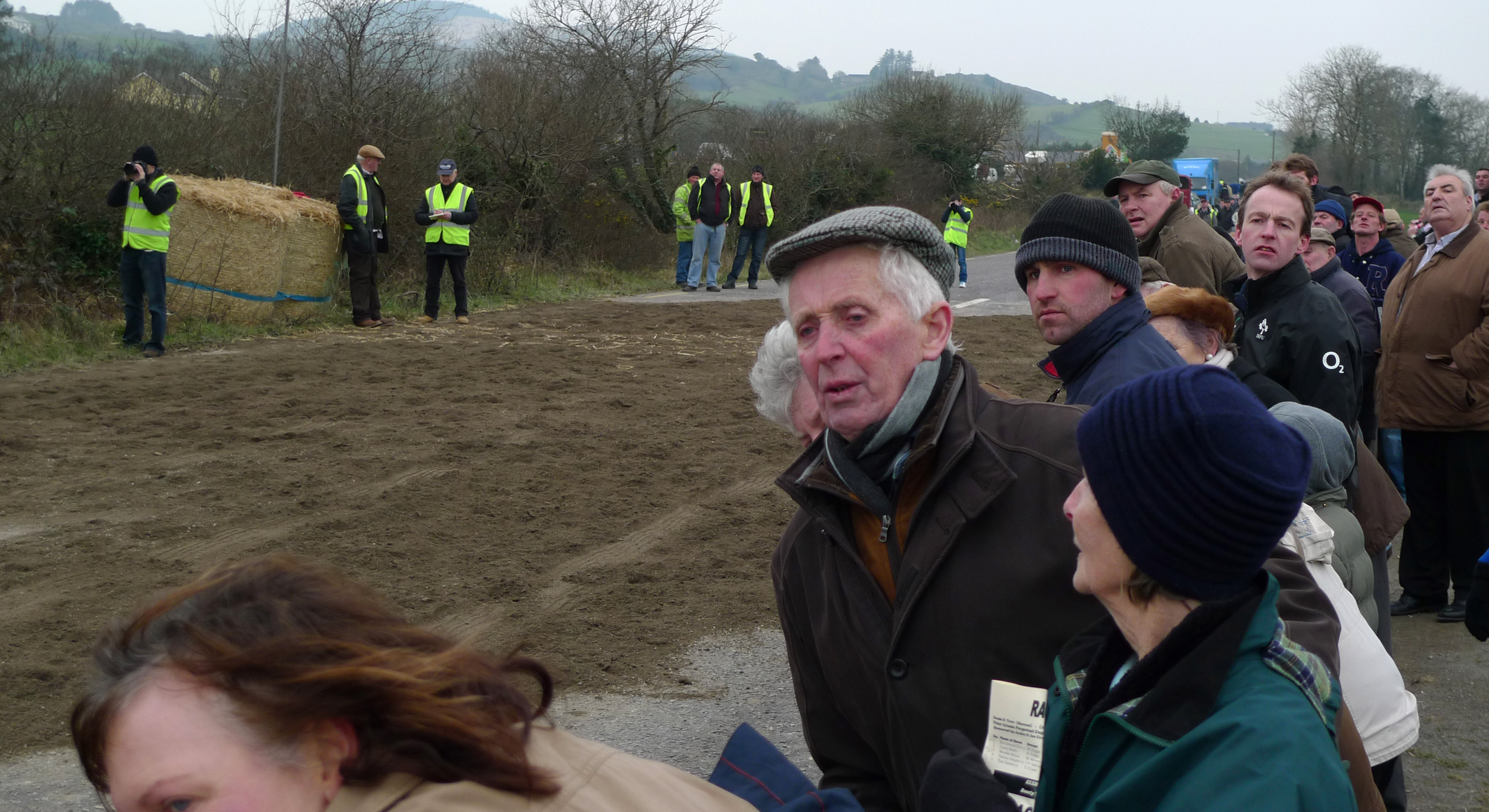
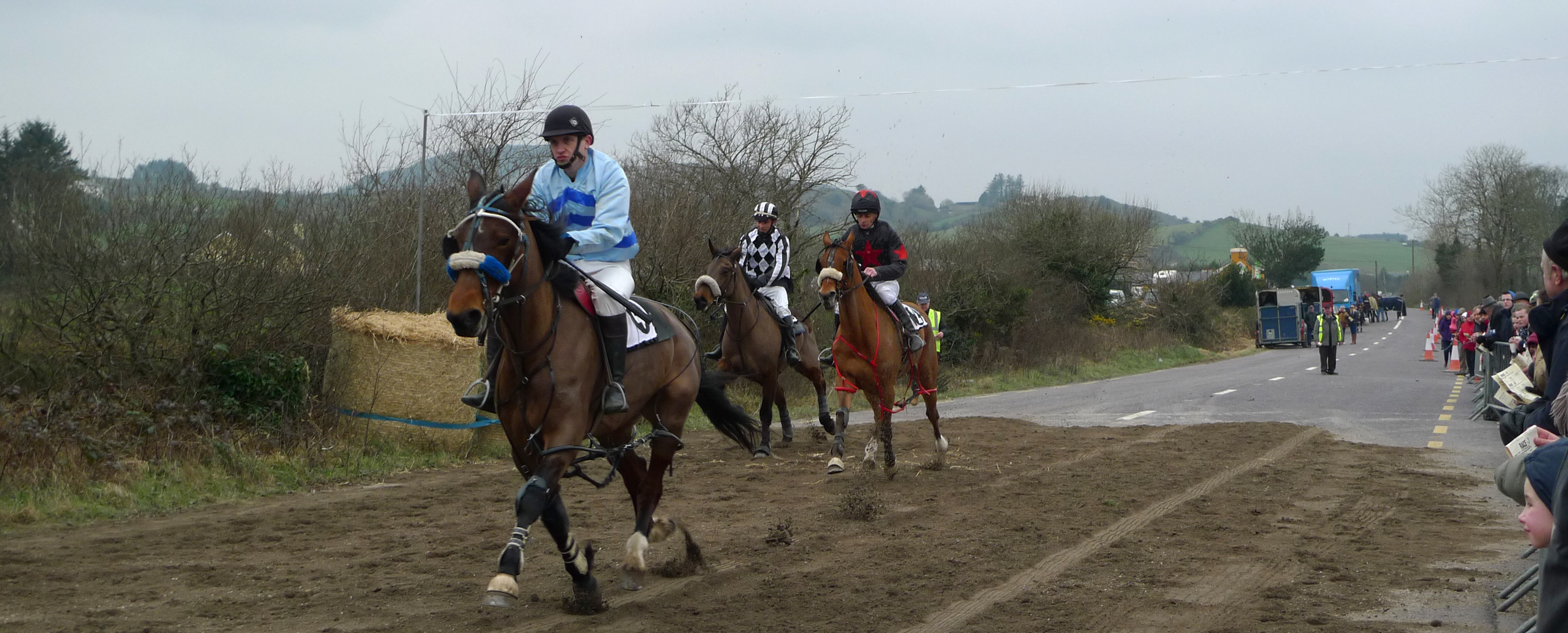
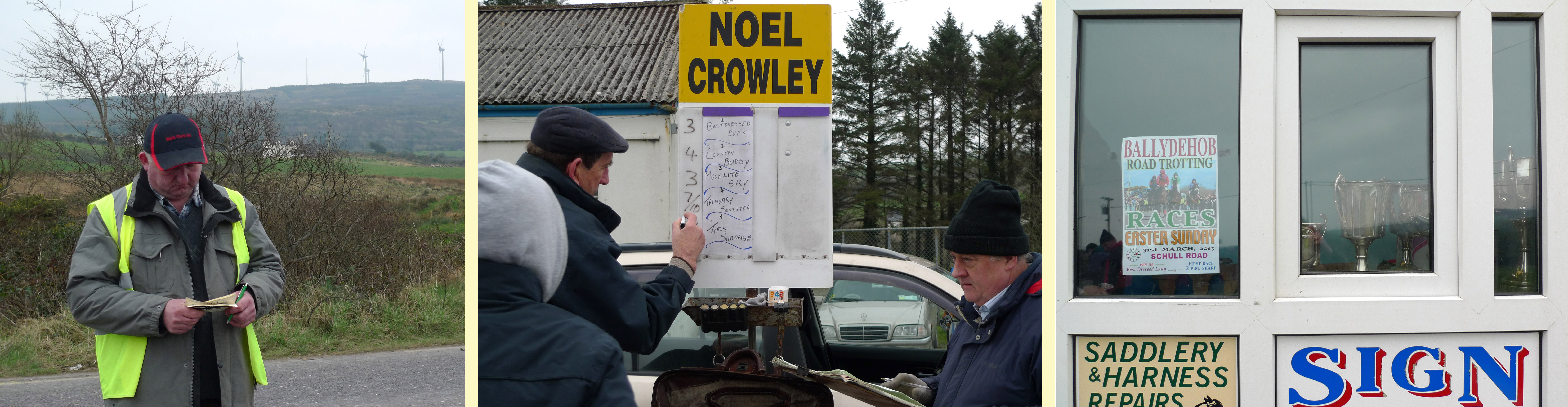
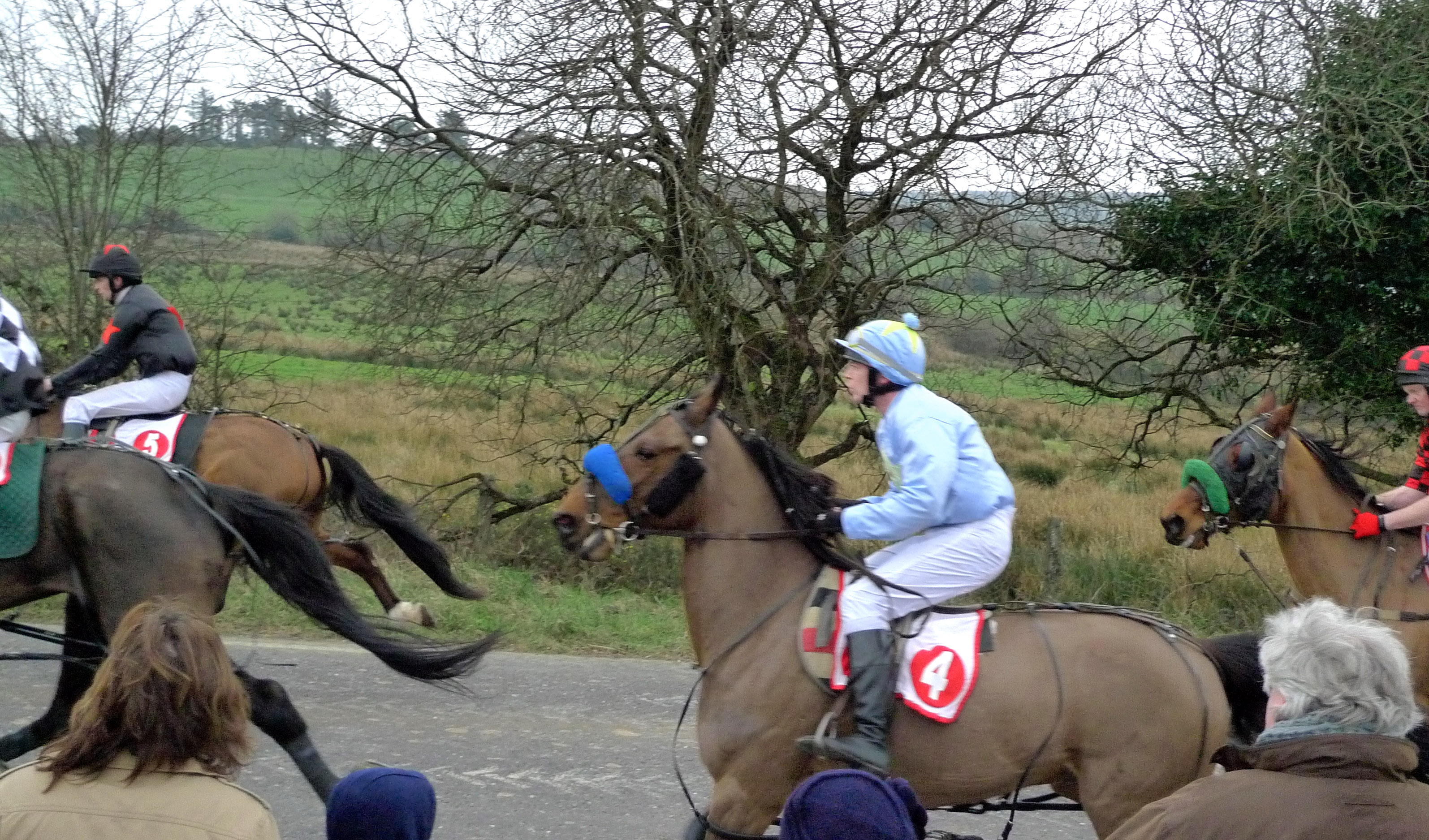
Today we were watching Road Trotting. It has all the spectacle of the sport: beautifully groomed animals with whimsical names, jockeys in outfits of all colours bearing stripes, chequers and stars – and bookmakers. But it’s all very local and approachable: no dressing up or flowery hats. As usual, everyone there is busy catching up with the gossip, but are always ready to have a friendly chat with strangers like us. The animals are ‘standardbred’, developed especially for both Trotting and Harness Racing (the latter involves a two wheeled trolley – also called a Sulky – being pulled along behind to carry the jockey – akin to chariot racing!); and, just to add more confusion, there are two types of ‘standardbred’: Trotters and Pacers. Trotters have the more natural movement: a diagonal gait in which the left front and right rear legs move in unison, as do the right front and left rear. Pacers, on the other hand, move the legs on one side of their body in tandem: left front and rear, and right front and rear. However, they need to be helped in maintaining their gait by wearing plastic loops called hobbles, which keep their legs moving in synchronisation. They are also especially shod to allow them to race on hard road surfaces without wear or injury. Hope that’s all clear…

judge

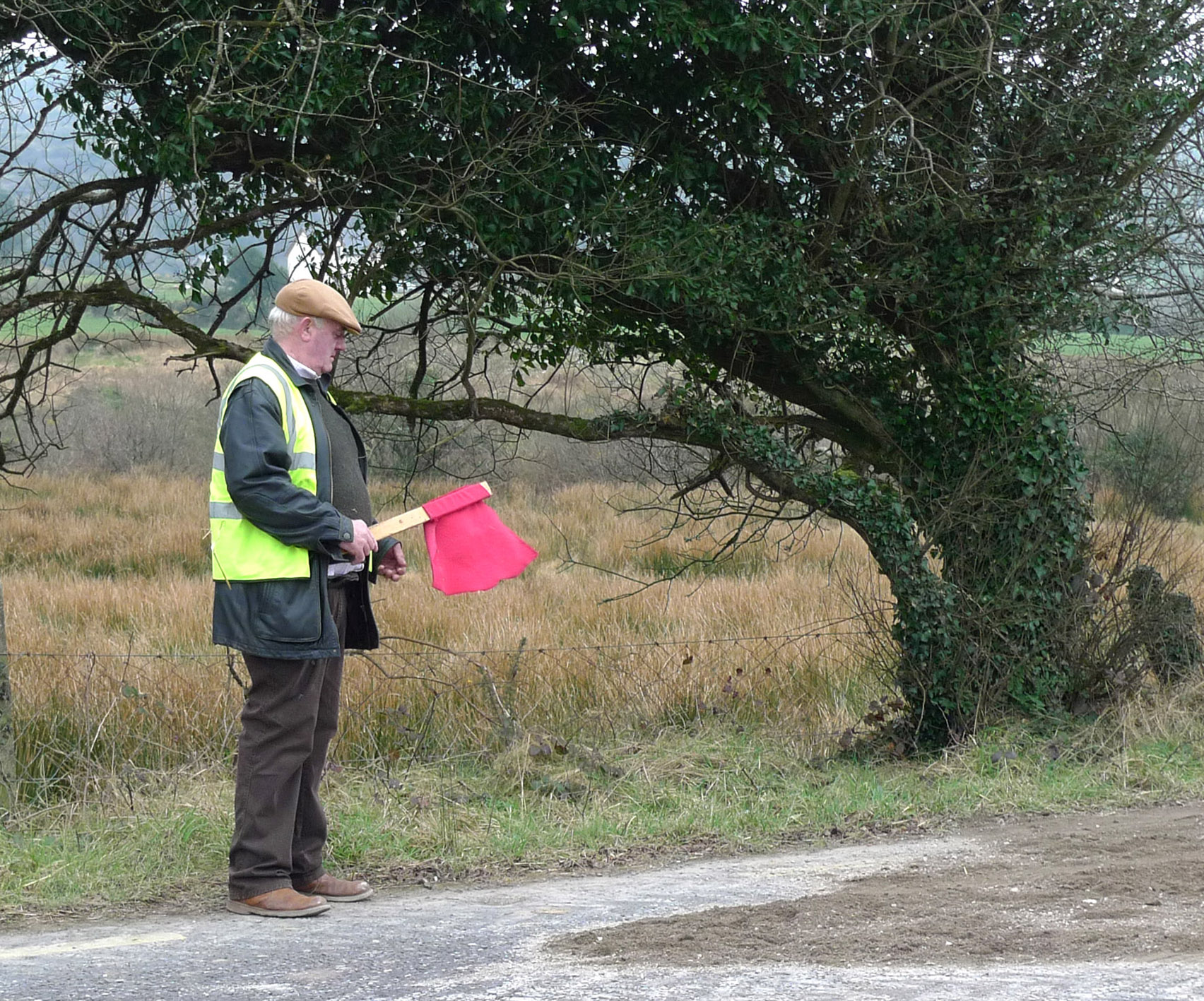
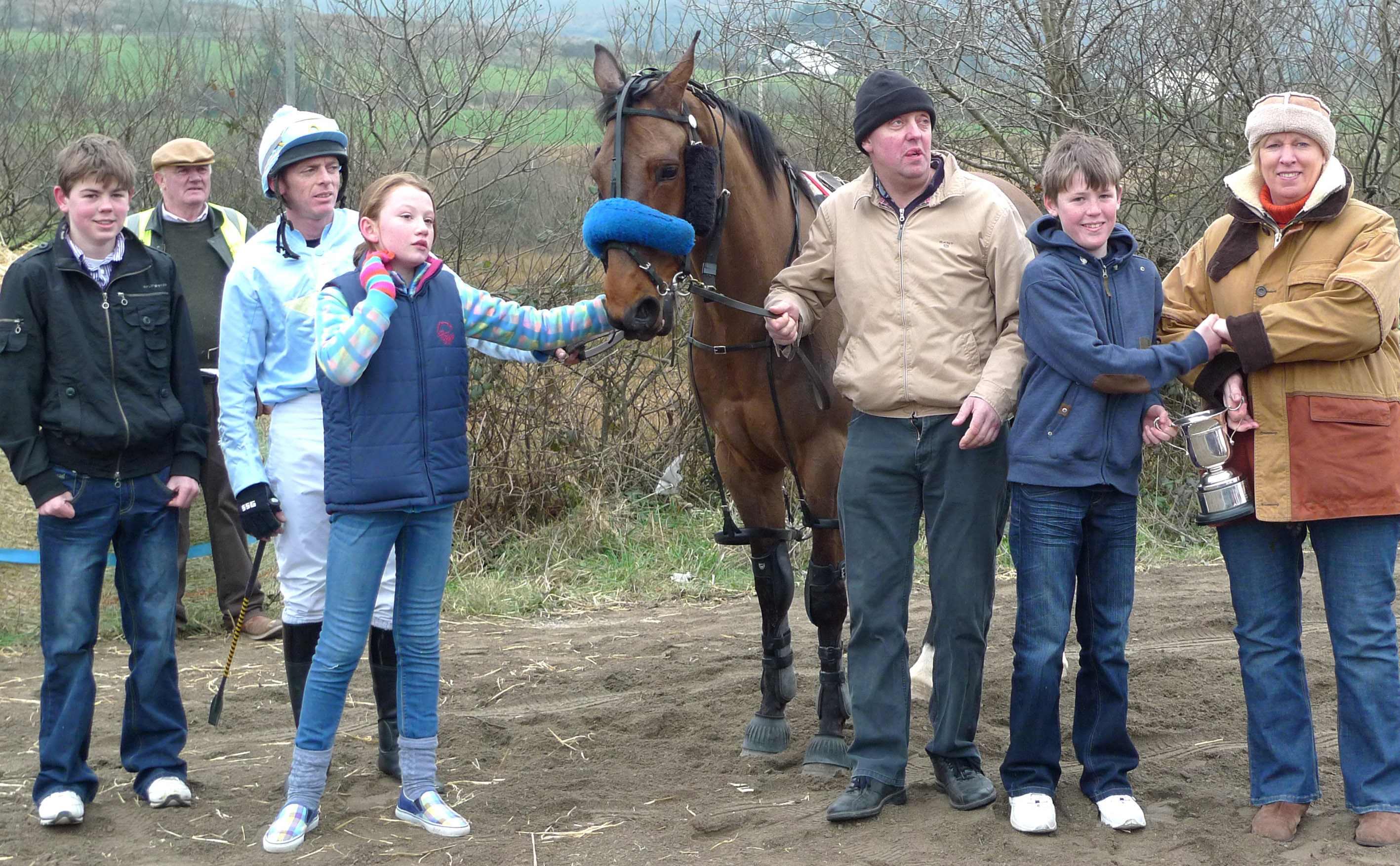
The proceedings were controlled at a trailer from which a commentary was broadcast through a pair of loudspeakers. Cups for the presentation after each race were handed out through the door, while a man in a yellow jacket and a white flag was responsible for starting each race – a tricky affair, as horses and riders were seldom in one place at the same time, and didn’t stand still in any case. Another man had a red flag, and I believe his job was to signal a faulty start. All the spectators congregated at one end of the half mile stretch of road, so we only saw the start and finish of each race. Races were either over one mile or two, and at either end of the course all the riders had to make a 360 degree turn around some large bales of straw. All this looked rather chaotic.

race

presentation

The beginning of March has brought a very cold spell, and our hands and feet were suffering by the time the modest crowd began to disperse. Today’s event has given me a taste for the Sport of Kings, and I’m on the lookout now for some Harness Racing.

bus

Make way!