Your Favourite Posts of 2016

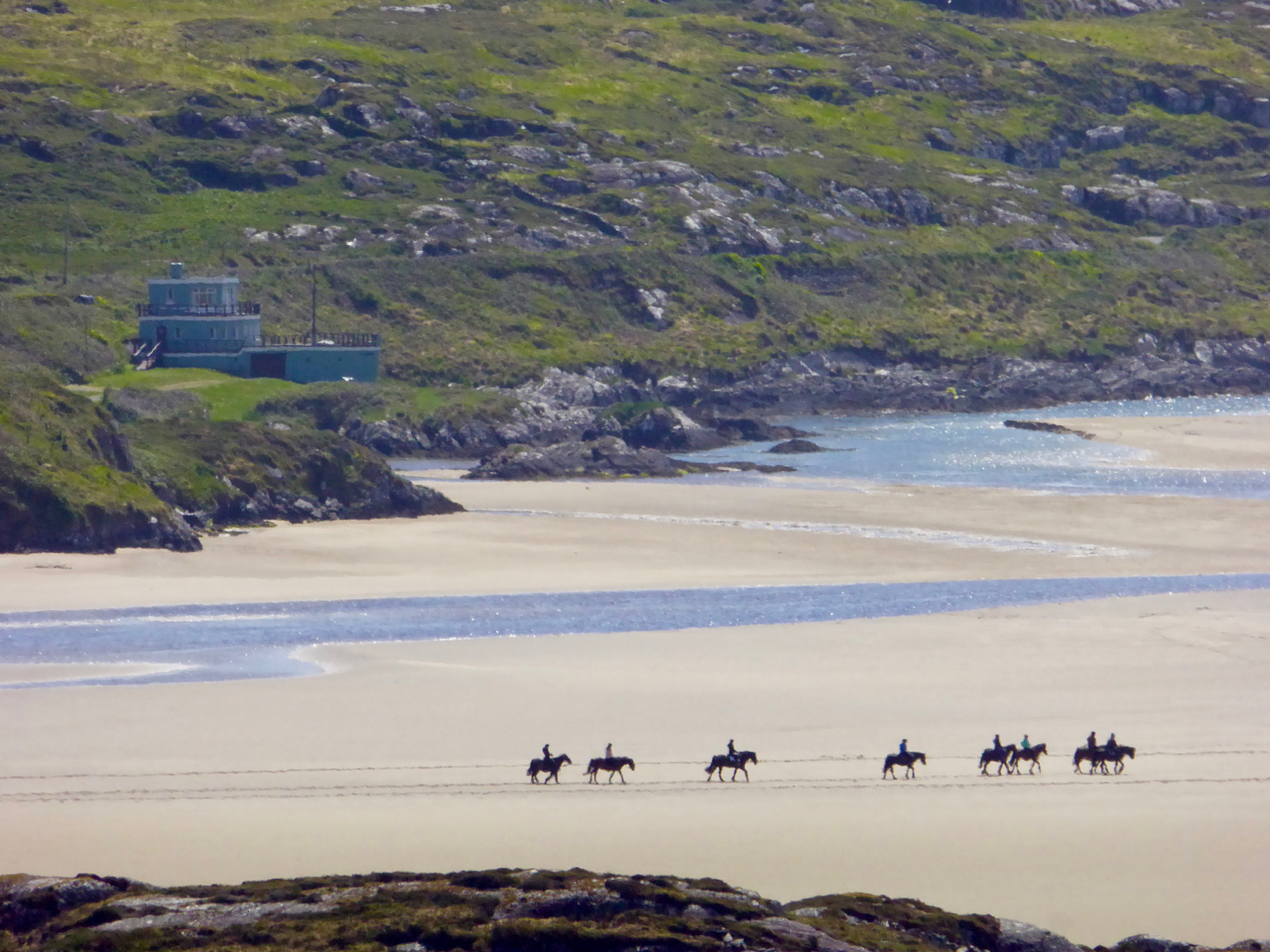
Horses at Caherdaniel

It’s that time of the year again! The wonders of technology enable us to know which of our posts have received the most views: we can see how many people clicked on each article although we don’t specifically know who you are! This is great for us, because we can get an idea of what you – our readers – like to see and this helps us when considering what to write in the future. Not that we necessarily always respond to the statistics, because sometimes we just think there are things that you need to know about, regardless of their potential popularity or otherwise!

Not in the ‘top ten’ – but through the year Finola has expanded – and passed on to you – her knowledge of the wildflowers that make the hedgerows and verges of West Cork so colourful (bee in fuschia, left), while Robert has used the Olympic year of 2016 to examine the history of some sporting events in Ireland (Tailteann Games 1924, right)

So, during this year, Finola and I have published exactly 100 articles for Roaringwater Journal: that’s almost one each every week. It’s fascinating for us to look back and see where we have been, what turns our interests have taken, and of course to see how well (or otherwise) our writing was received. Statistics are one thing, but it’s your comments that really inform us – so keep them coming…

From Outposts of Empire: memorials in St Barrahane’s Church, Castletownshend (left) and St Patrick’s Cathedral, Dublin (right)

Top of the board are two posts from Finola: one from the beginning of the year – Outposts of Empire, which researched and reviewed some of the monuments that are to be found in Protestant churches, cathedrals and graveyards in County Cork and Dublin. It’s a rich history of often only distantly remembered soldiers and battles. Why is this such a popular post? Perhaps because 2016 has been the focus for commemorations: the centenary of the Easter rising, and the fact that one hundred years ago many Irishmen were dying in the Great War. That has rather coloured the whole year in Ireland and Finola’s post – which also mentions some of the experiences of her own family – probably touches on many fertile memories.
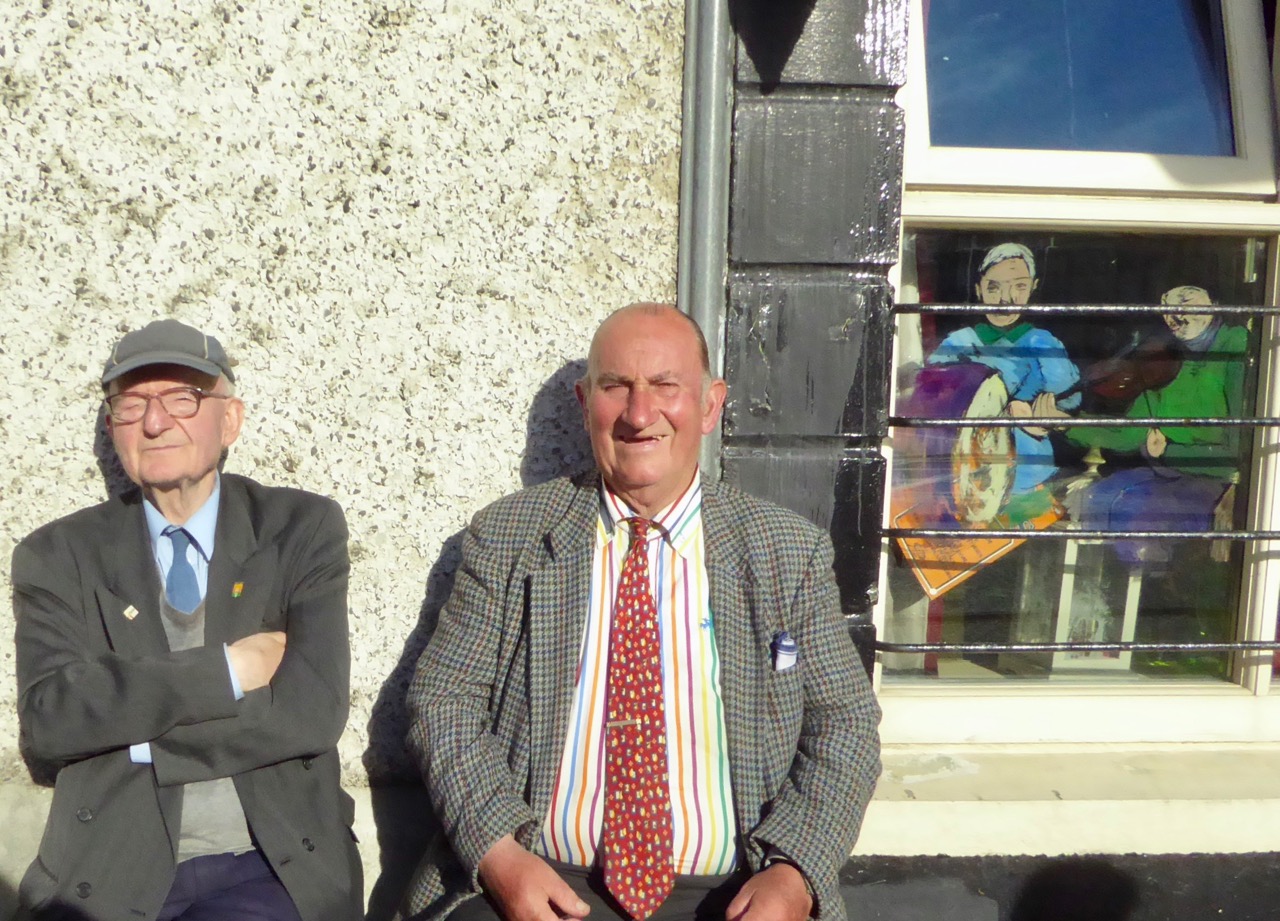
Skibb men

How are ye keeping?

The next post in popularity dates only from last week: Finola’s latest humorous exploration of how people speak in West Cork – How are you keeping? This has become our top ‘viral hit’ on our Facebook page with thousands of views and 69 shares to date… Finola describes it as her ‘latest instalment of the How to Sound Like You’re From West Cork course’. The fifth of the series so far, it’s hilarious and has clearly captured the imaginations of our local readers.

key

Fourknocks, Boyne Valley: fetch the key and let yourself in…

To balance things out a bit the next two posts in popularity have come from Robert: Aweigh in Kerry – which delighted in the discovery of a boat-shaped house (pictured on the page header – an architectural gem) – and Fourknocks – the Little Giant, an account of a very unusual archaeological site in the Boyne Valley, north of Dublin. We were very taken by this site and its eccentricities: in order to gain access we had to collect the key (from a farm a mile away – and leaving a deposit of 20 euros) and let ourselves into the tomb which has some beautiful rock carvings.
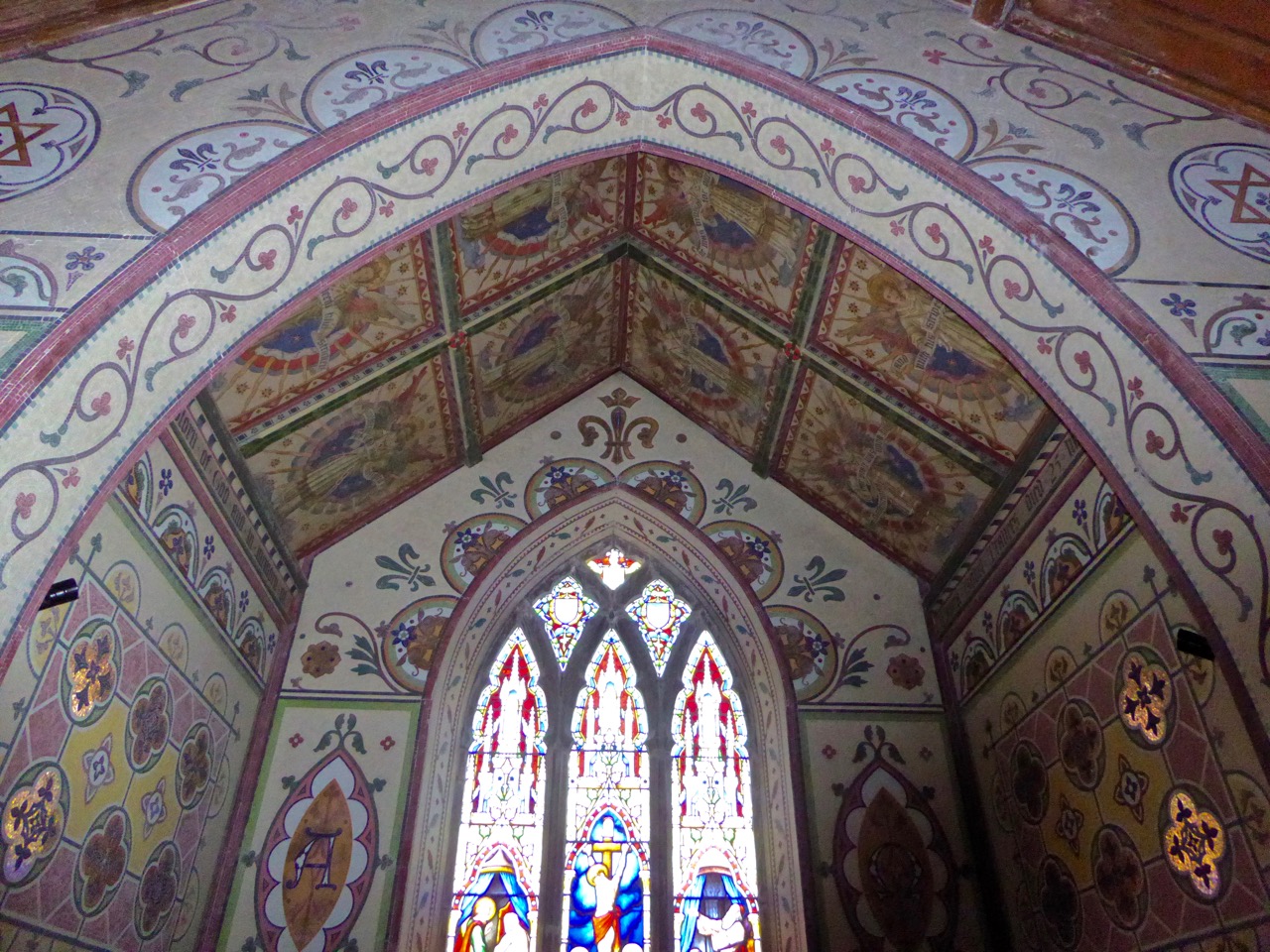
East Window and Apse

Magnificent mosaic work in the Church of the Ascension, Timoleague

Next up is Finola’s Mosaics and Maharajas – an exploration of a wonderful church in Timoleague with walls decorated in mosaic tiling. But there’s also a strange and poignant story which this church reveals to us (read the post)… And – what’s in a name? Well, perhaps the more bizarre – or seductive or beguiling – the title of a post is, the more hits it gets! Finola’s The Murdering Glen (a valley north of Bantry, again, with a story attached) certainly attracted a lot of attention.
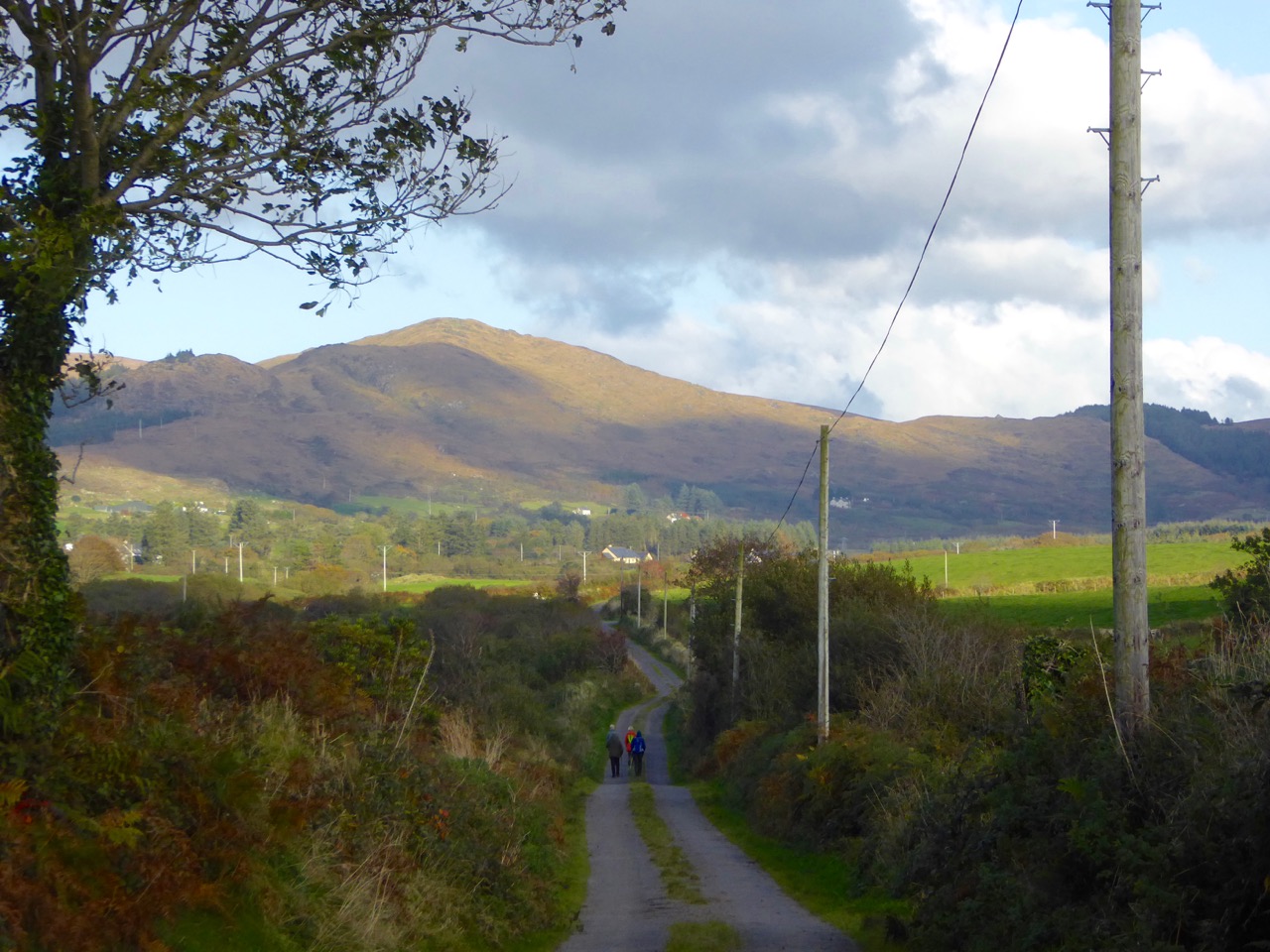
On the walk

looking towards west

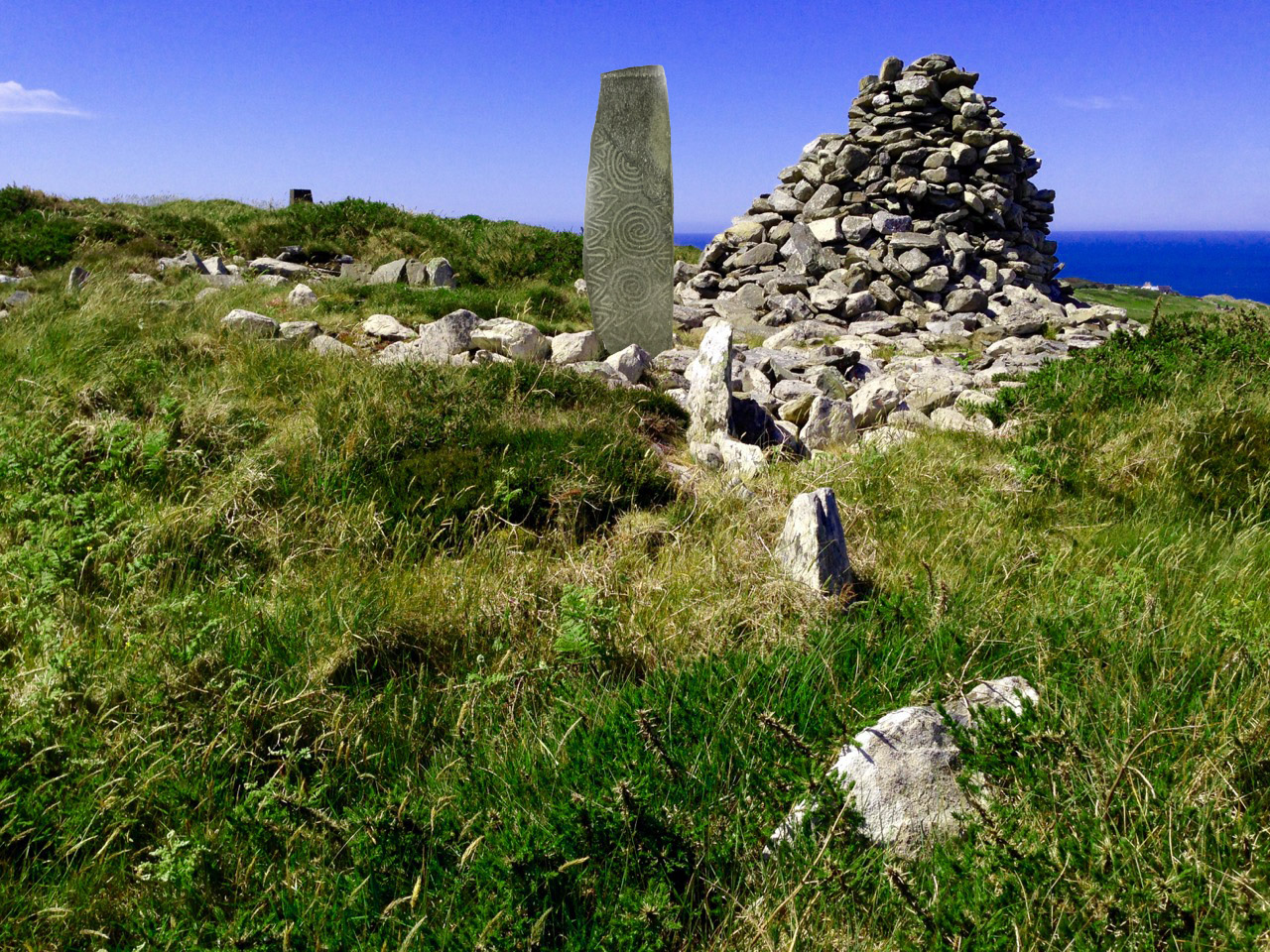
Upper picture – the murdering Glen; lower picture – Robert’s imagining of the Cape Clear Stone restored to its rightful place on the island…

Robert’s report on the passage tomb on the summit of Cape Clear – and the story of the carved stone that’s now in the Cork Public Museum comes next: Cape Clear – the Stone that Moved, closely followed by Finola’s post on the historic walled town of Youghal in East Cork: Youghal’s Walls. Then we had ‘Auf der Waltz” – The Journeymen, a popular piece about two German apprentice blacksmiths who passed through West Cork this summer as part of their three year travels through Europe gaining experience towards becoming masters of their trade. This was also written by Robert.
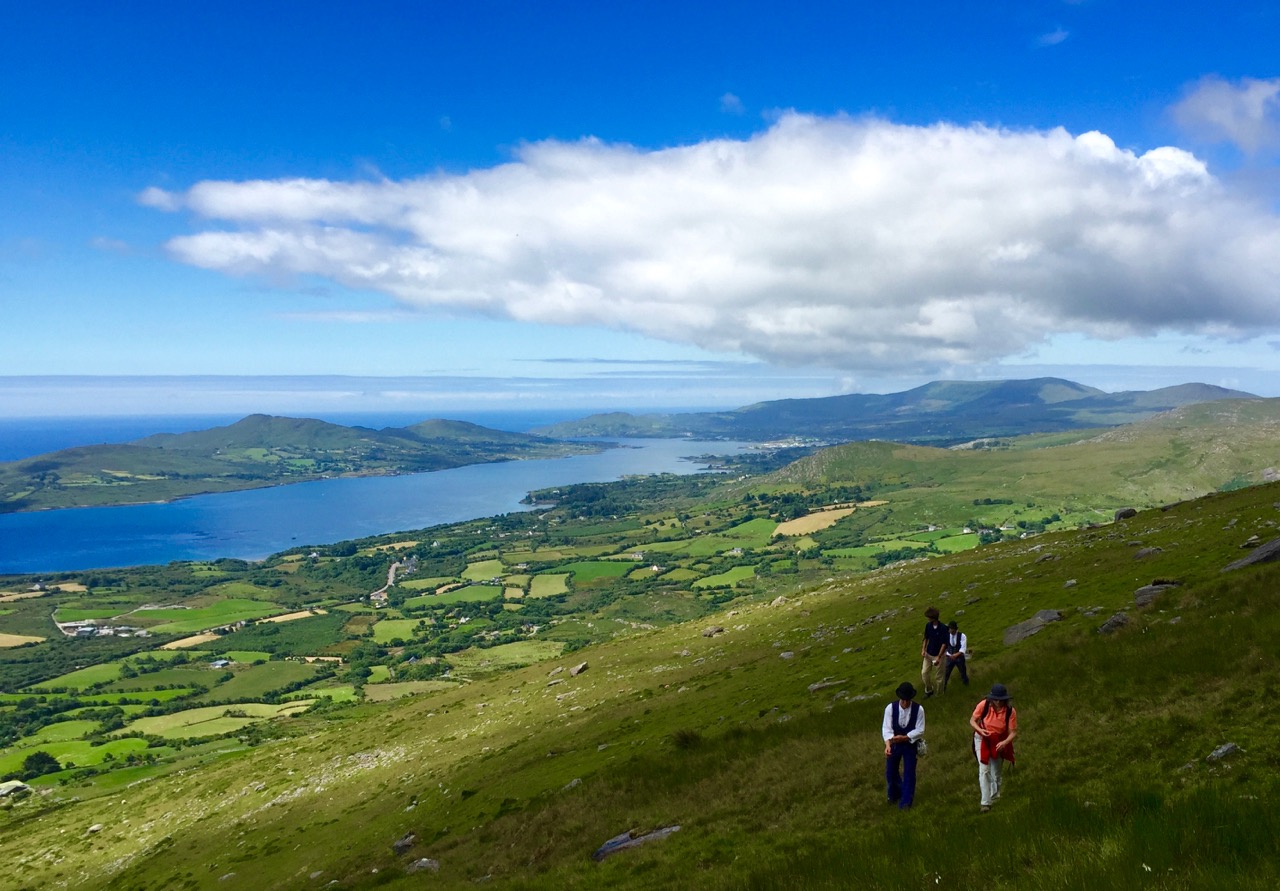
on hungry hill

The Journeymen exploring beautiful West Cork: Hungry Hill (photo by Dietrich Eckardt)

Rather than list all the other posts in some sort of ‘order of popularity’, let’s round up with our own favourites. Finola has been enthusiastically researching stained glass windows in churches – wherever we travel. Besides her continuing respect for Harry Clarke – probably Ireland’s finest artist in this medium – she has discovered the identity and work of artists who inherited his mantle when he passed away (far too young) in 1931. The Harry Clarke Studios continued on until 1973 and also produced some stunning work. Have a look at Discovering Richard King to appreciate just one of the artists who followed after Harry. Another of Finola’s great posts on this medium – The Christmas Story, One Window at a Time – appeared only two weeks ago.
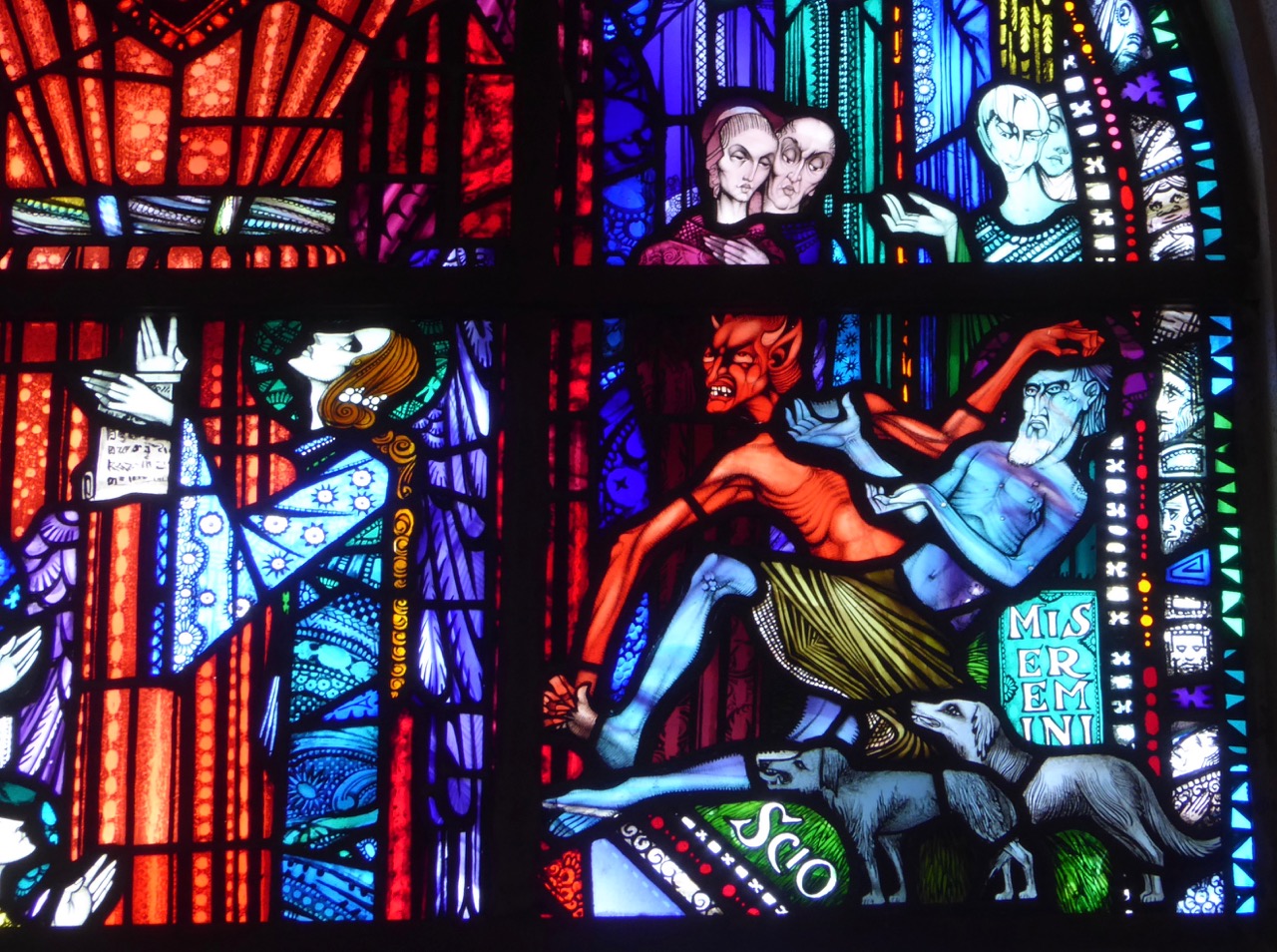
HC Studio, Athlone

The spectacular stained glass work of Richard King, a small detail from Sts Peter and Paul’s Catholic Church in Athlone

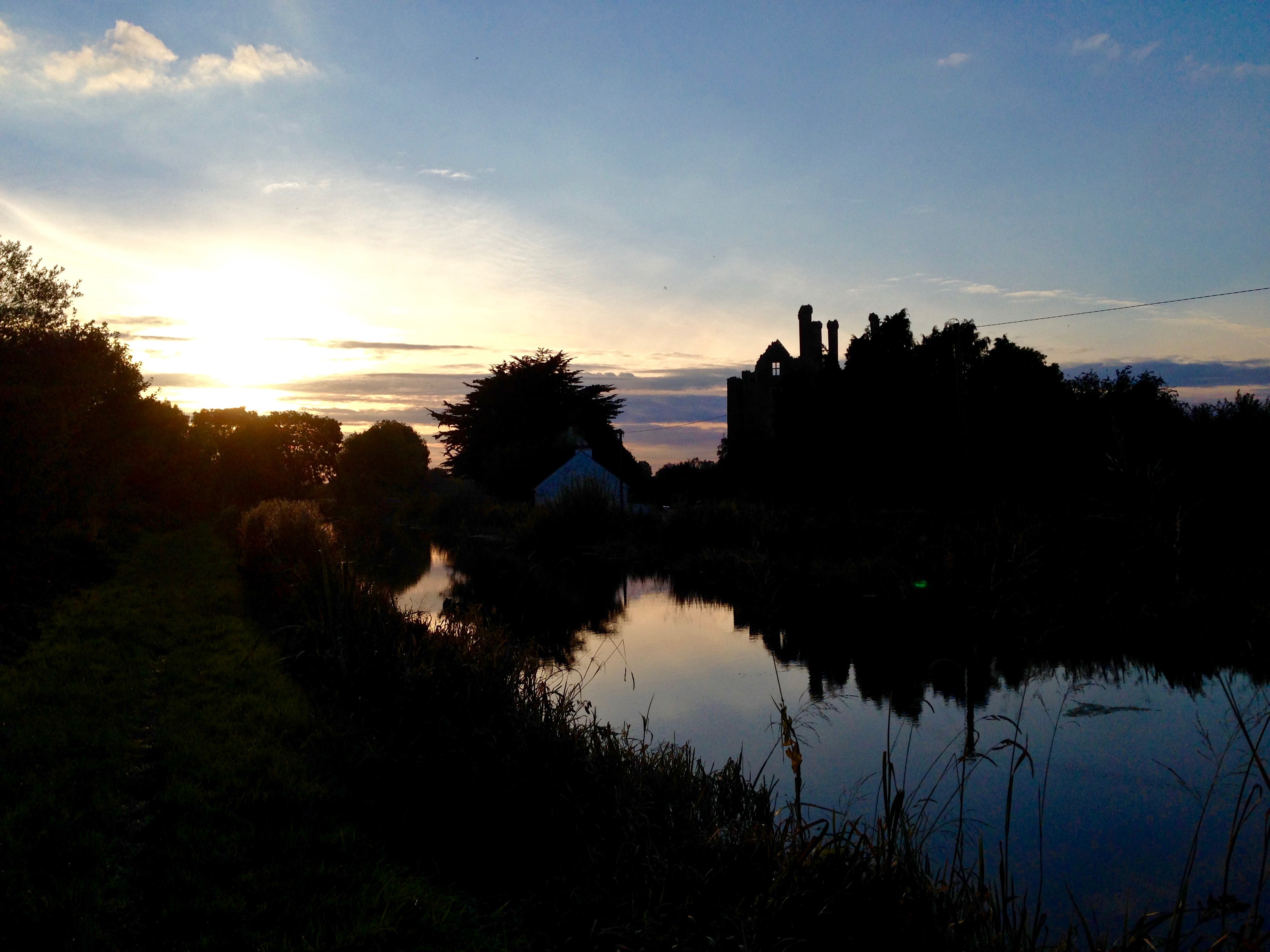
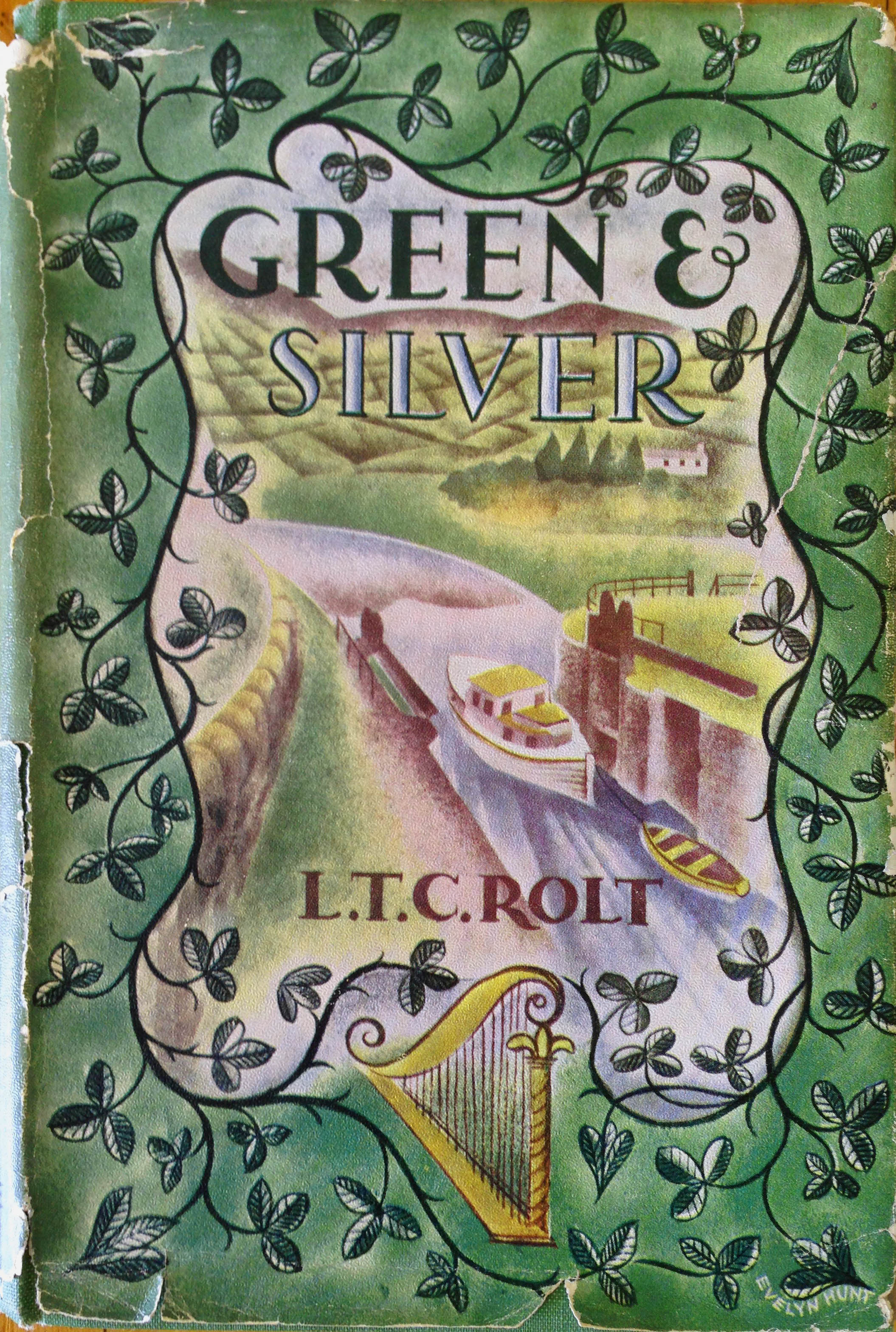
For myself, the subject that has engaged me most this year is my Travel by Water’ series: seven posts (so far) on the Irish Canals inspired by my review of Green & Silver – a book which I was given as a prize at school in 1963! We retraced the steps of L T C Rolt, the author of the book, and his wife Angela who took some very atmospheric photographs as they travelled around the Irish waterways in 1946 – exactly 70 years ago. To celebrate my own 70th birthday this year we attempted to replicate each of the photographs as closely as possible with present-day views of the same scenes. The venture has turned out to be a real social history of Ireland and the changes that have happened during that interval of time.
ballycowan sunset

Travel by Water – ghostly reflections beside the Grand Canal at Ballycowan

So thank you to all of you – our readers. Without you our work on Roaringwater Journal would have been pointless. With you – and with the value of your comments and discussions – we feel the whole exercise is well worthwhile – so, please, let us know your own personal favourites… We certainly intend to keep the Journal going for a few years yet! Don’t forget, there is a full index in the Navigation Page – here. And, I’m sure you all know by now, anything highlighted in blue is a link to something else: either another one of our posts in the Journal, or to another relevant source of information on the subject. Good hunting!
cover

How Are You Keeping?

Mind yourself, now

That’s how people greet each other in West Cork. Lovely, isn’t it? And when we say goodbye we always add Mind yourself. Mind yourself – it’s like being told to be careful, to look after yourself, and not to forget to take time to have a cup of tea and a nice sit down occasionally, all rolled up in one.

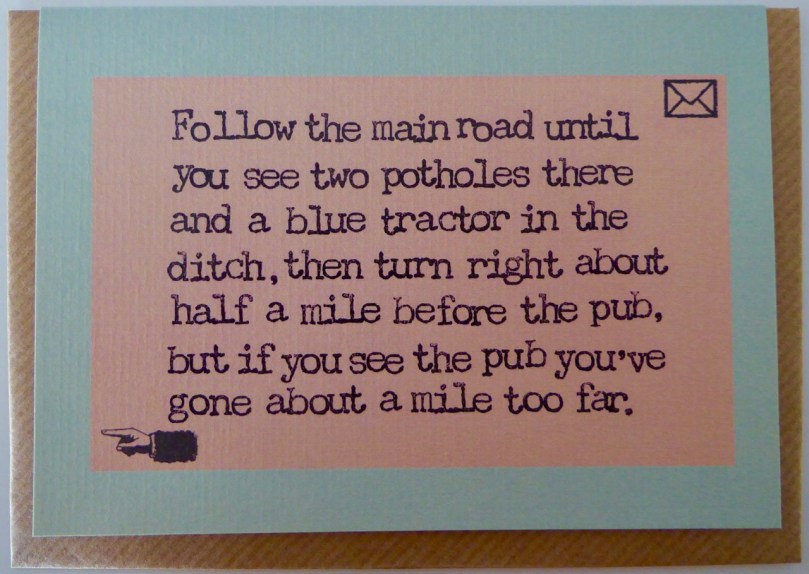
Directions 1

It’s been a while since I’ve written a post on how to speak like you’re Irish (scroll to the end to see a list of the previous posts) but I’ve been keeping notes all along, so here is my latest primer so that you can feel like you’re getting the hang of West Cork Speak.

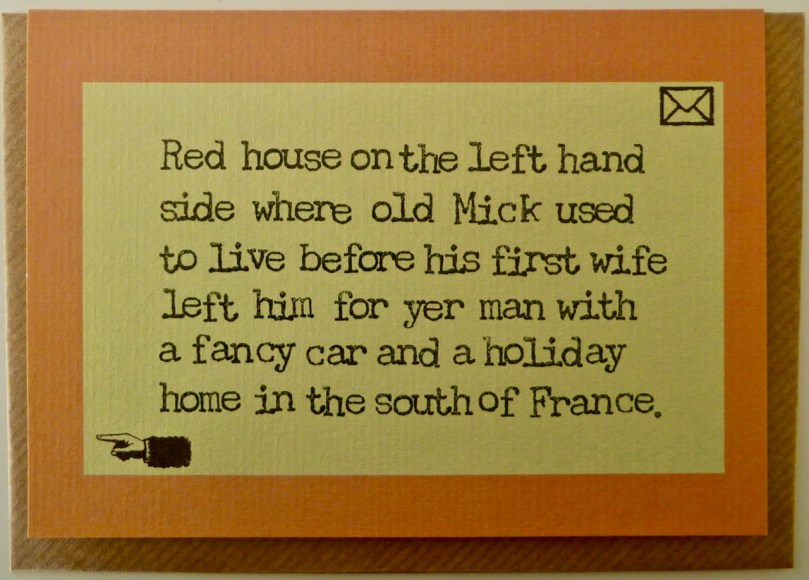
Besides my own images, I’m illustrating this post with cards from Conker Tree Studio. Justyna, from Poland but now living in Ireland, has designed a line of cards and magnets with directions and phrases that she has come to, er, appreciate in the everyday talk around her. Look out for her cards anywhere you go in Ireland, or buy them online.

Directions 4

Directions 3Sure it is!

Sure can be used on its own, but it’s more usually heard in combination with other words in phrases that convey an endless variety of responses useful in almost every circumstance. Take Ah, sure, j’know – use it to express sympathy, along with an exquisite understanding of the circumstances being related. Ah, sure, look is similar although it’s pronounced with a more world-weary air and perhaps without the underlying implied slight cynicism of Ah sure j’know.

Sure, we can't complain

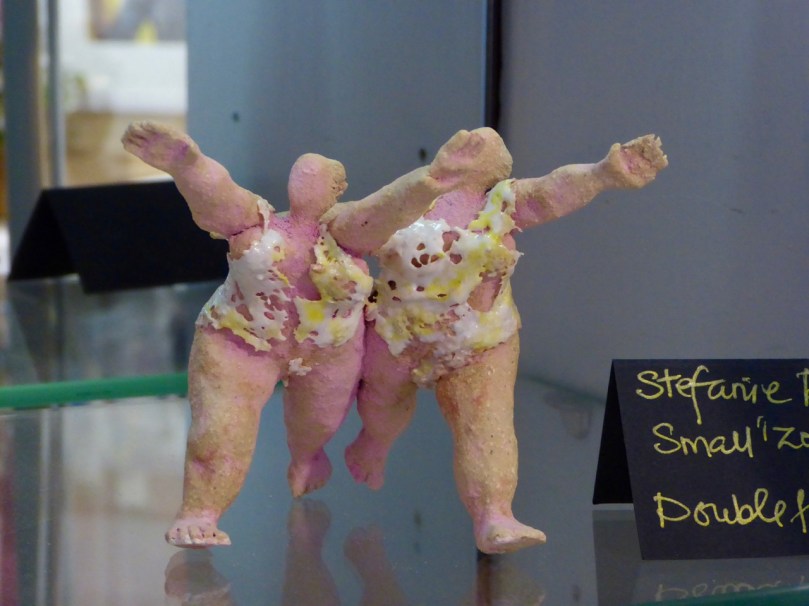
Ceramics by Stefanie Dinkelbach, at Etain Hickey Collections (or here)

The auld arthritis is killing me but isn’t it a grand day?  Sure, we can’t complain. 

I bought it off a farmer and it runs great. But I just discovered it has no seat belts. Ah sure, what harm. 

I paid my water bill, like an eejit, and now I hear the lads who didn’t pay won’t get penalised.  Ah sure, j’know. 

I was hoping to get the silage cut today but would you look at the rain, ’tis coming down in sheets. Ah sure, look.   

Sure aren't we all having a grand time?

Sure, aren’t we all having a grand time?

Don’t be bold!

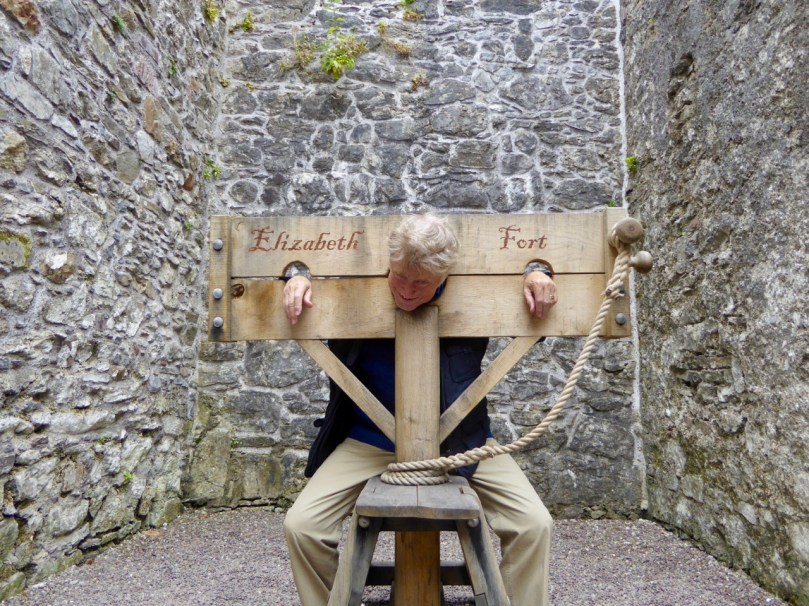
Around children, it’s good to tune in to the specialised vocabulary adults use for their behaviour. Being bold has nothing to do with bravery – to be bold is to misbehave. If a child is being annoyingly but not nastily bold, he might be just acting the maggot. Or she might be a bit giddy. In any case, the proper response of any right-thinking adult in the vicinity is to give out to them. Giving out means rebuking or reprimanding. The other thing adults like to do with children (and other adults) is to put manners on them. This is a very handy phrase that can be used in all kinds of ways.

No acting the maggot

Nobody’s acting the maggot here!

Sinead, stop acting the maggot. Ah, Mammy, don’t be always giving out to me.

The eldest was put into Miss O’Brien’s class this year.   She’s strict out – that’ll put manners on him.

In the stocks

That’ll put manners on him (Elizabeth Fort, Cork City)

Assent and agreement.

Perhaps because it’s considered bad form to say no (even if that’s what you mean) we have developed a plethora of ways to say yes. No bother is a universal favourite, but perfect has lately been making significant inroads. Y’know yerself, however, is the ultimate form of both eliciting and delivering concurrence.

I think the clutch has gone but I need it desperately for tomorrow.  No bother.

I’ll have the Full Irish, but no meat, extra mushrooms, gluten-free toast, a large cappuccino…no wait, I’ve changed my mind, add the black pudding back in and change the cappuccino to a soya latte. Perfect!

Breakfast at Budd's

The full Irish at Budds of Ballydehob – all local ingredients

They’ll all be down for Christmas, there’ll be nine of them including the grandchildren all wanting mince pies and home made scones and mountains of mashed potatoes, but y’know yerself, like…

How are you? Ah sure, y’know yourself.

So now – off you go and do a biteen of practice. You know yourself, like, that it’ll take a while before you can make a good fisht of it, like Justyna from Poland. But if you don’t get around to it, no bother. Life is busy, in fairness. Mind yerself, now.

Ah sure, all in their own time

This is the fifth in a series. Previous posts:

West Cork Speak: Lessons 1 and 2

West Cork Speak: Lessons 3 and 4

West Cork Speak: Lessons 5 to 7

You’re Grand

Skibb men

How are ye keeping?

The Christmas Story, One Window at a Time

Bandon Catholic Church

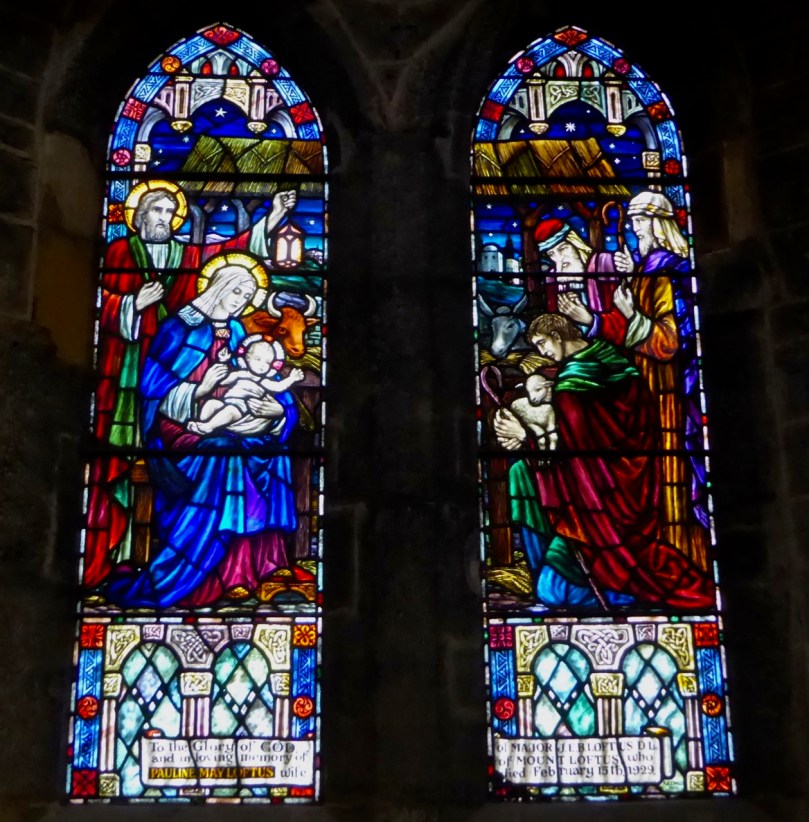
The Christmas story, as told in stained glass in Irish churches, is the biblical story. There are no Christmas trees or Santa Clauses, no references to anything other than the story of the birth of the Christ child. Not surprising, since stained glass is to be found mainly in churches after all. The one above is from the Catholic Church in Bandon. Pop in next time you’re passing – it will surprise you with its size and striking colour.

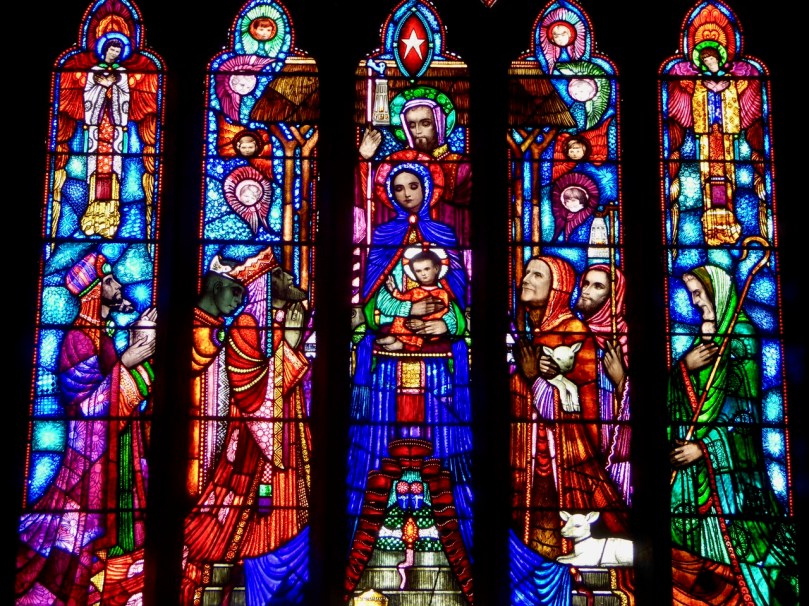
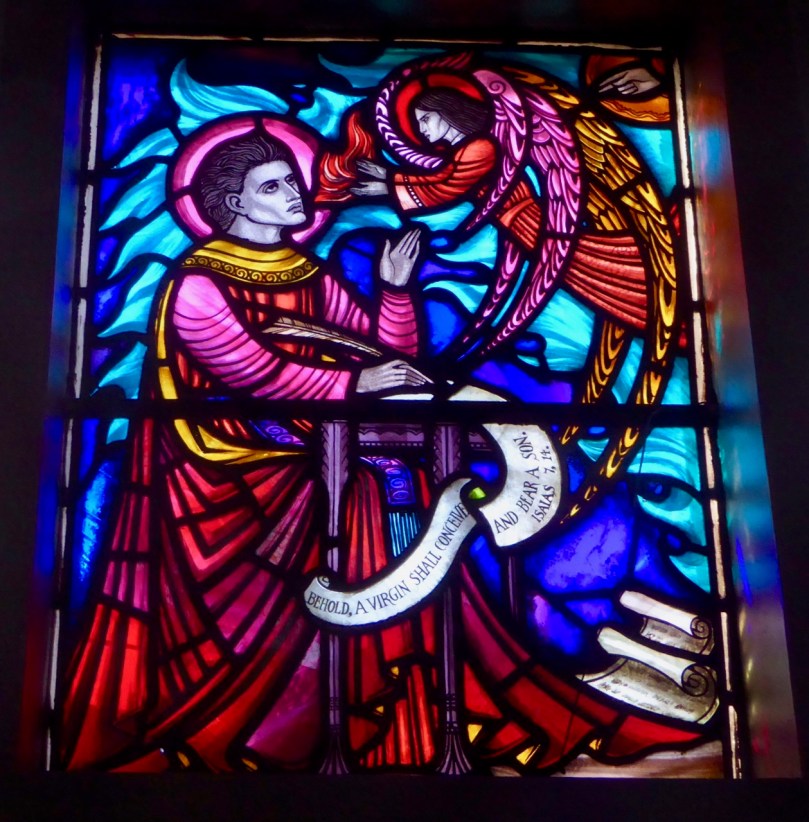
Church of the Annunciation, Cork. AnnunciationFive windows in a Cork church tell the story, beginning with the Annunciation

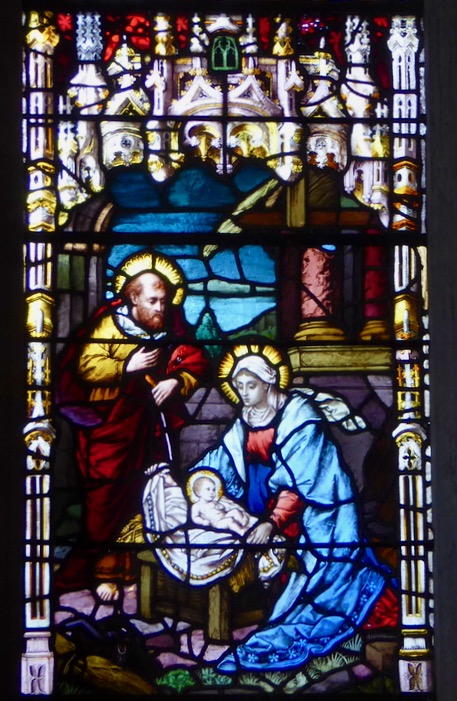
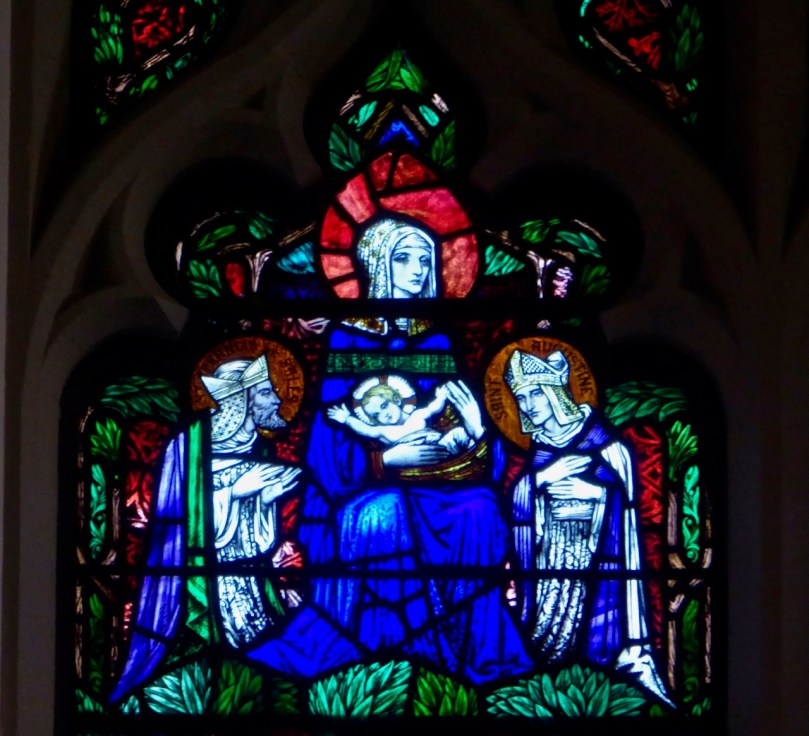
Two years ago I wrote a post about depictions of the Nativity by Harry Clarke. This year I’m branching out, to show you some of the stained glass Nativity images I have found in churches all over Ireland. Some are by artists I can identify, some are by the Harry Clarke Studios (after Harry’s death in 1931), and some are by anonymous artists. Some are traditional and some are avant garde. 

The next two windows show Mary visiting her cousin Elizabeth (mother of John the Baptist), followed by the betrothal of Mary and Joseph

In Cork, in the Church of the Annunciation – a church designed by the stone carver Seamus Murphy – a series of windows illustrate the complete Nativity story, from the Annunciation to the Visit by the Magi. These windows are by the Harry Clarke Studios and were installed in the 40s.

The birth in the manger with shepherds visiting, and the arrival of the Magi round out the story

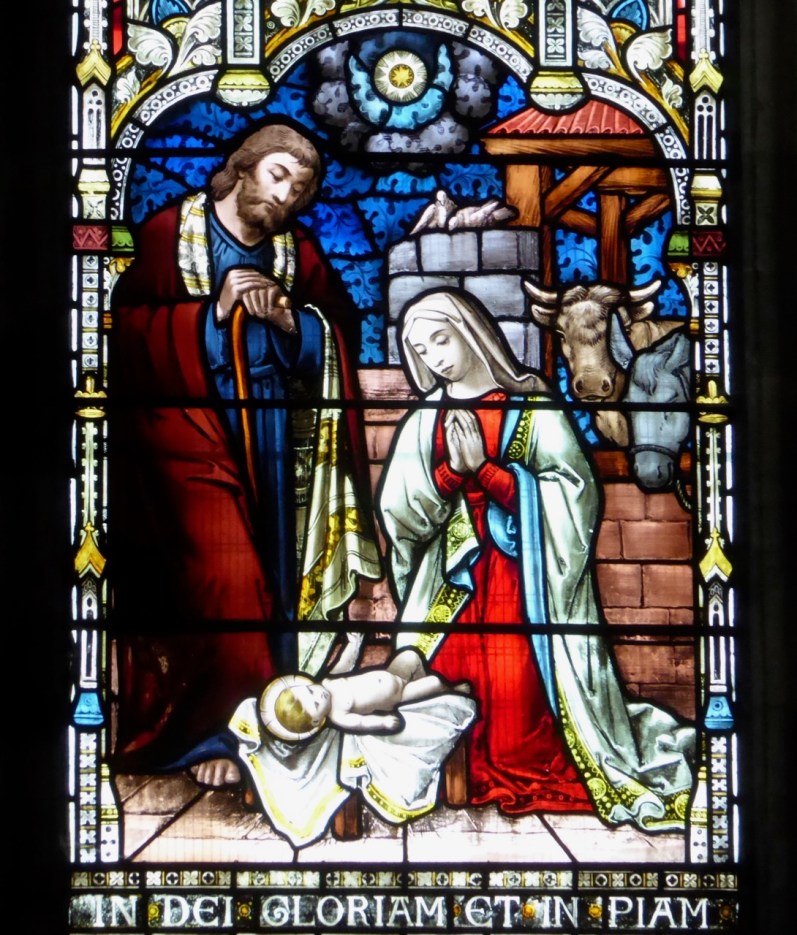
When we visited Kilkenny we saw two examples in St Canice’s Cathedral. The first, a traditional crib scene, looks like it belongs on a Christmas card.

St Canices

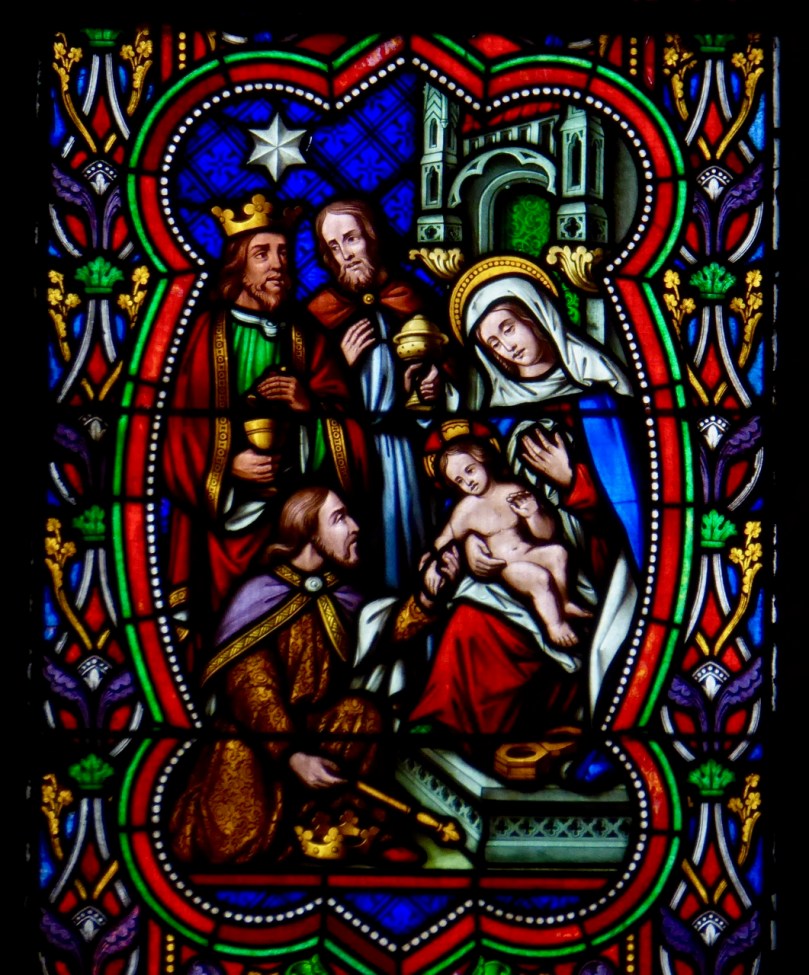
On  another wall in the same church is a two-light window by A E Child, depicting the visit of the Magi. A E Child was a highly influential teacher, and member of Sarah Purser’s Tower of Glass (An Túr Gloine) – a contemporary of Harry Clarke and a highly skilled stained glass artist, but with a more orthodox style than Clarke’s.

Canice's AE Childe

Still in Kilkenny, the Black Abbey has reputedly the largest stained glass window in Ireland. It’s divided into numerous smaller scenes and this one depicts the Nativity. It bears a striking resemblance to the Christmas card window from St Canice’s – perhaps it was from the same studio.

Black Abbey Kilkenny

In  Tullamore, the enormous Church of the Assumption has wonderful stained glass by different artists. Several large windows are by the Dublin firm of Earley. This one of the madonna and child shows a small shepherd on her right and three crowns on her left – a clear indication, I think, that this is intended as a Nativity image. The swirling colours and modern lines create a dramatic effect.

Church of the Assumption, Tullamore

The St Joseph window in the Richard King collection in Athlone contains a detail in one of the side panels that depicts the Flight into Egypt, and another of the marriage of Joseph and Mary.

Back to Cork and to the Holy Trinity Church on Father Matthew Quay, just behind the South Mall. Three windows on the west wall are by the Harry Clarke Studios. Research in the Studio archives (held in Trinity College) has revealed the the middle window was designed by Harry Clarke, but executed in fact by his father. It has many of the hallmarks of Harry but lacks the rich detail for which he became justly famous.

Holy Trinity Church, Cork, Designed by HC and executed by his father

Behind the altar, on the north wall of the same church is an enormous window dedicated to Daniel O’Connell and containing scenes from the life of Christ. It is conventional, but finely painted and the colours are rich.

Holy Trinity Cork, East Window

I will leave you with two of our favourites. Close to home I love the the Sarah Purser/Tower of Glass round window in the Holy Rosary Church in Kilcoe. Here’s a detail.

Tower of Glass Magi closeup. Kilcoe

And finally, from the village church of Eyeries on the Beara Peninsula, Robert wrote about  a stunning set of windows by George Walsh. His nativity scene is touching and beautiful.

george walsh nativity

Dancing Cappaghglass

Cappaghglass by Emma Jervis 1

When you love the place you live in – really love it, in your bones and your heart, how do you express that? How do you convey to others the feeling of waking to the sun rising over Roaringwater Bay and sinking back into the sea behind Long Island after a day of sparkling colour and rural rhythms? How do you represent the sense of coming home after a lifetime of being an emigrant? How to talk about what persists of the Ireland of your youth and what has changed irrevocably, for better or ill?

Fields of Cappaghglass

The green fields of Cappaghglass in evening winter sunlight

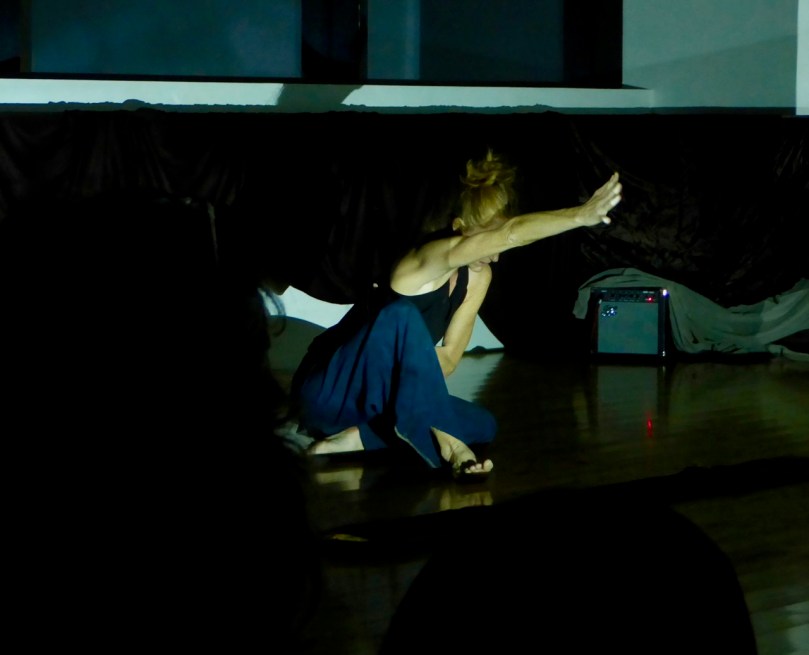
I suppose, like the Bee Gees I would turn to words, but Tara Brandel took on that challenge with Cappaghglass, her final piece of choreography and dance performance at the end of her two year residency at Uillinn, the West Cork Arts Centre.

Reaching

I’ve written about Tara’s dance performances before – her Bridge two years ago in Ballydehob left us speechless and profoundly moved. She has performed numerous pieces in the meantime as part of her Uillinn residency, sometimes solo and sometimes with her company, Chroí Glan. This dance has been gestating all that time.

Mining area

Mine houses and a fenced-off shaft – echoes of mining heritage

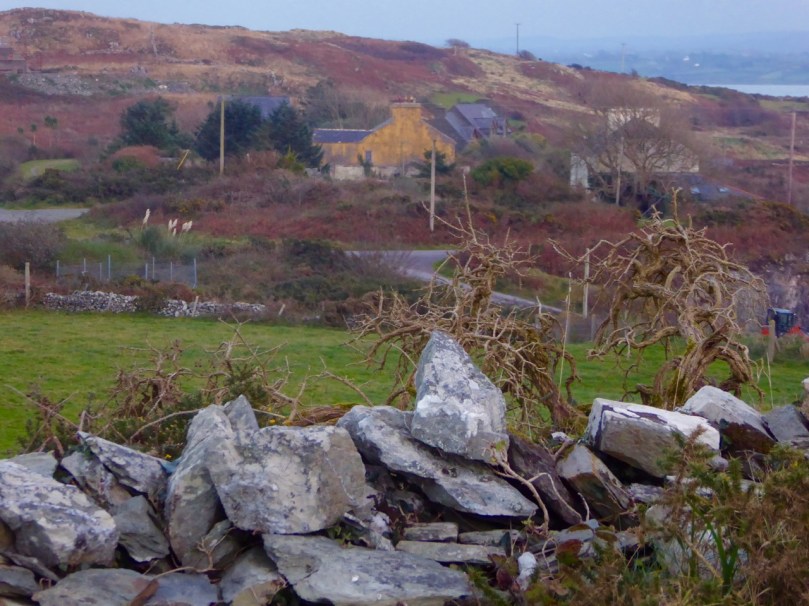
Cappaghglass*, where Tara lives and where we also are currently putting down roots, is undoubtedly beautiful, peaceful, pastoral and scenic. In the past it was also heavily industrial, with 400 tons of copper mined every year, and a population of several hundred people. It had a ‘Big House’ and a hotel: no traces remain of either. It had a dozen farms: now there are two. There are twenty homes in the townland – and another twenty holiday homes that remain empty most of the time.

Cappaghglass by Emma Jervis 2

I gratefully acknowledge Emma Jervis, whose photograph this is, along with the first one in the post

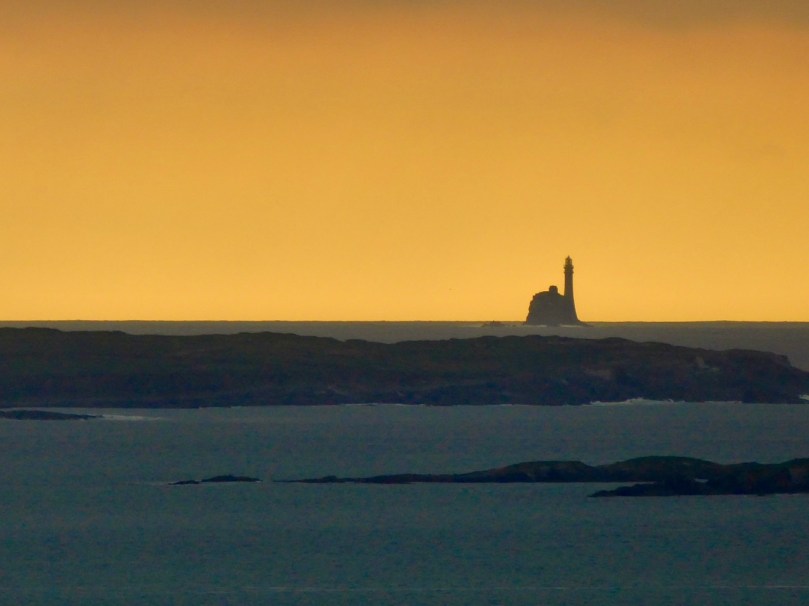
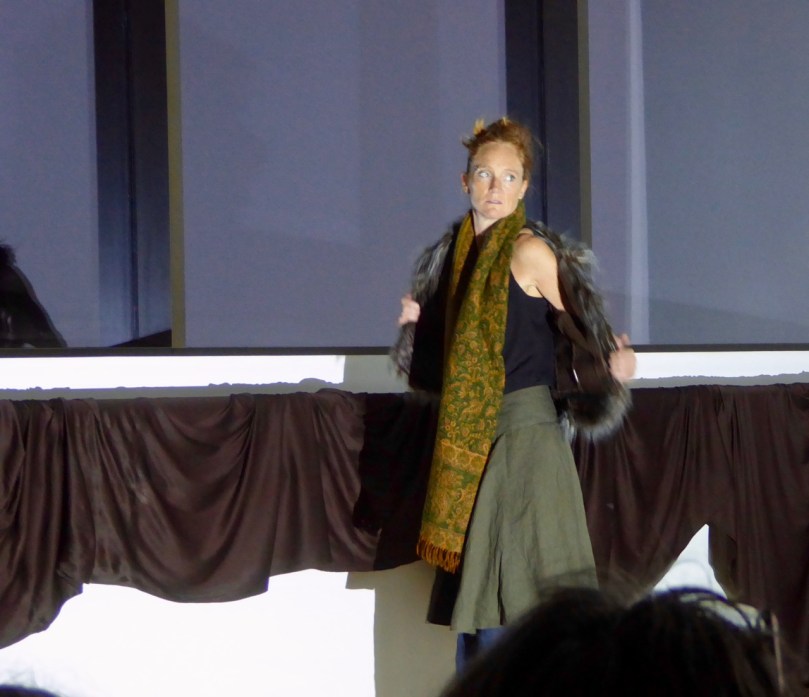
Tara danced it all for us. We watched as she explores her environment as a child, then takes the first tentative steps to leave. Buffeted by the world, she returns to the freedom and the green fields, and always the sea heaves in the background and the Fastnet Light turns on the horizon. She switches effortlessly, with a twitch of a scarf and body movements, from a young, then an old Irish woman to a Syrian refugee, inviting us to consider the experiences of displacement, migration, loss and belonging.

Road through Cappaghglass

The high road through Cappaghglass

Her body speaks to us, but she also uses words and song. She sings – simple repetitive chants – and uses technology to loop the sound so it repeats. Then she records a further piece and then another, and so layers of sound start to build and this provides the music to which she dances.

Gorse Tree

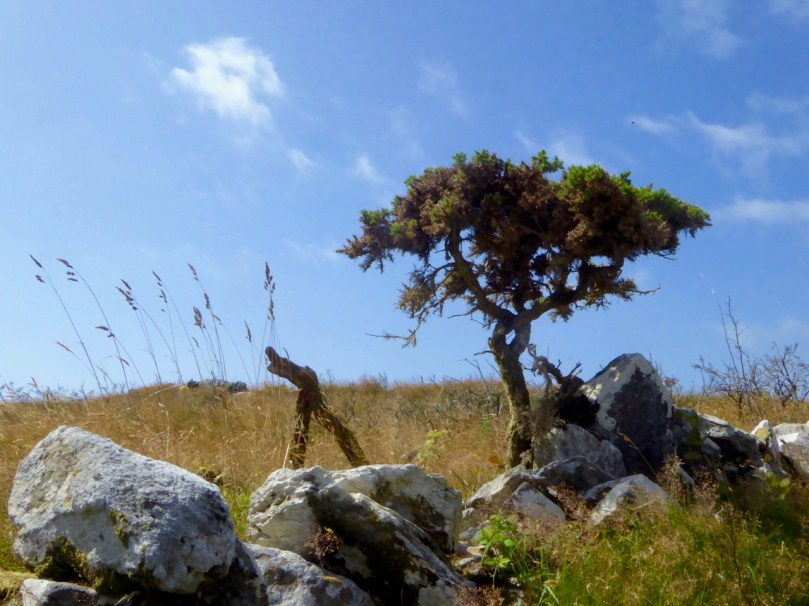
Visual layers are added – projections on the wall of a map, the sea, waving grass, and finally the Fastnet Light.

Fastnet in the sunset

Tara’s dancing is athletic and graceful. Her hands assume critical importance in conveying action and emotion. Clothing is donned and shed in a shorthand for identity.

Clothing is used

In  a final brilliant move she approaches the barre, over which is draped heaps of material. Reaching into the mass of cloth she ties two lengths around her waist and moves towards us. It is then we understand, as the material slowly slides away from the barre and follows her in an enormous train, that this is Cappaghglass – the whole townland spread out behind her, claiming her, rooting her, her home, her place.

townland train

We  walked the townland today in the fading light of late afternoon and we saw it afresh. Like Tara, like so many people, we have experienced migration and displacement. But this is home now and we find it rare and precious.

Ruined ivy-clad houses and the traces of tiny fields hint at families for whom this was home

Only art has the ability to reach down into you and clutch at your soul and make you think and feel in ways you haven’t thought and felt before. Tara did that for us with her dance. We are grateful for her gift.

Cappaghglass sunset*Cappaghglass, in Irish pronounced cappa gloss = the Green Tillage Fields

Tech is Cool and Content is King

NDW16 Discussion

As  we were last year, Robert and I have emerged from our National Digital Week experience inspired and affirmed and, OK, perhaps just a tiny bit daunted.

Mobile Only World

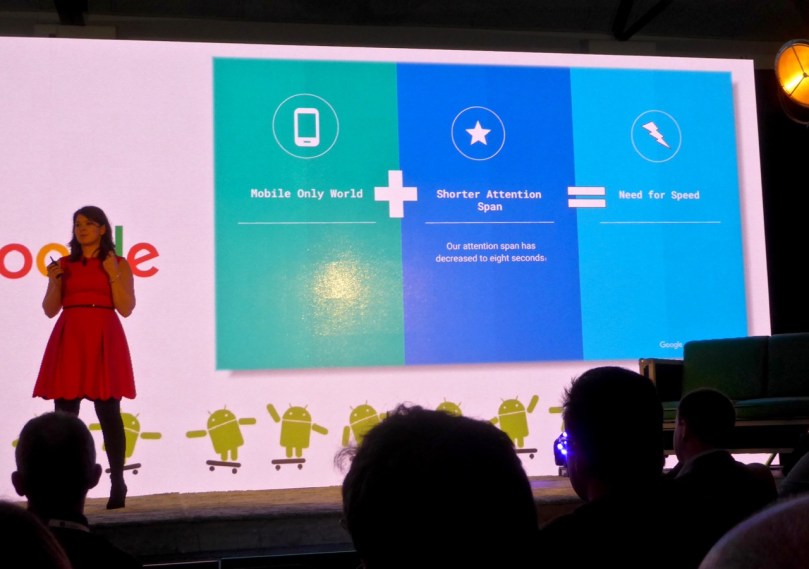
Affirmed? Because even though we are Boomers and the world seems to be run increasingly by and for Millennials, we’re comfortable with most of the technology we need to cope with our progressively digitised daily lives and to produce a weekly blog.

Daunted? At what’s ahead of us: the Internet of Things where everything is connected; augmented reality where a pair of glasses will supply additional information about anything we desire; the gameification of internet experiences; and increased reliance on high quality video.

Work to do

Looks like we have work to do!

Inspired? Because the takeaway message was so encouraging for people like us who create and produce content week after week – you can have the highest, whiz-bang technology in the world but it’s all a means to an end – and that end is to tell a story.

Humans have an innate social and psychological need for stories and a hunger for knowledge – that message was at the core of much of what we heard on the day we attended, even if the sessions had names like Innovation and Creative Thinking or Perspectives and Insights from an Irish Start Up.

FF with Alan Duggan

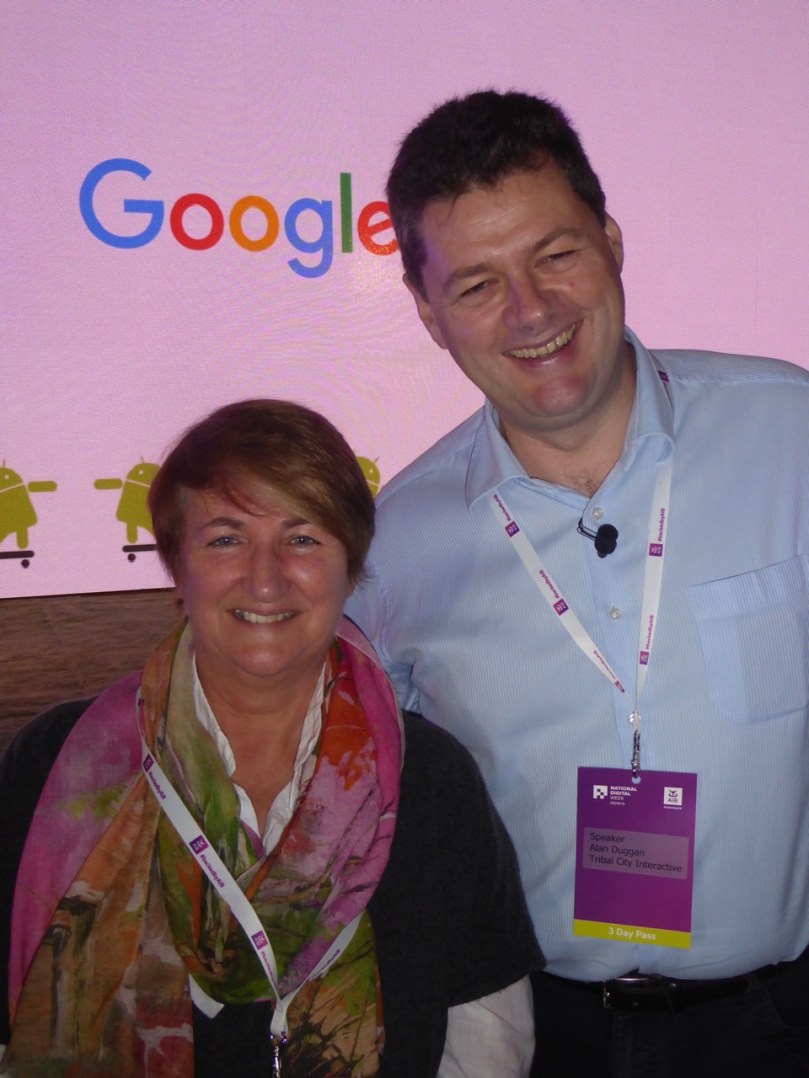
Finola with Alan Duggan of Tribal City Interactive, based in Galway

The Irish Start Up under discussion is a group called Tribal City Interactive and they are developing a new game called Runes of Aran. The thing is, it’s all based on Irish mythology, straight from the Leabhar Gabhála, or the Book of Invasions, which tells the story of the successive waves of people who came to Ireland. (See Robert’s post First Foot for more about the Irish origin tale told in the Leabhar Gabhála.) And the game is going to be stunning! Here’s the premise:
A storm has been raging for days.  Navigation is impossible, your ship is being inexorably pulled towards a mysterious island at the edge of the world.  It is a place which exists in the stories of all mariners; it is a place to be shunned.  It is Aran.

The ship is finally dashed ashore at the foot of huge towering cliffs.  Only you get off the ship alive, crawling ashore into a surprisingly calm bay. The cliffs form an impenetrable barrier, except for a cave that frames a massive doorway composed of two tall blue stones, capped by an even larger lintel piece. Standing in the doorway is an old man, dressed in a long grey tunic.  He is Amergin the Bard, and he waits patiently for you.

Amergin explains an old magic has pulled you to this place and now you are trapped, doomed to spend the rest of your days on this lost island. Unless…

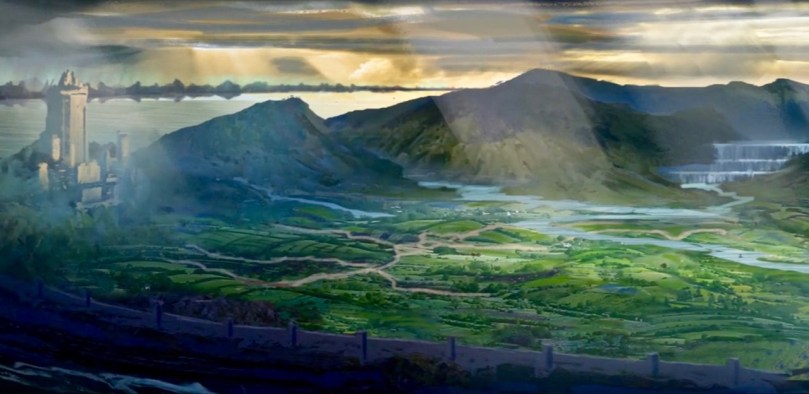
Runes of Aran still

This is a still from Runes of Aran, taken from their concept video – now take a look at the video

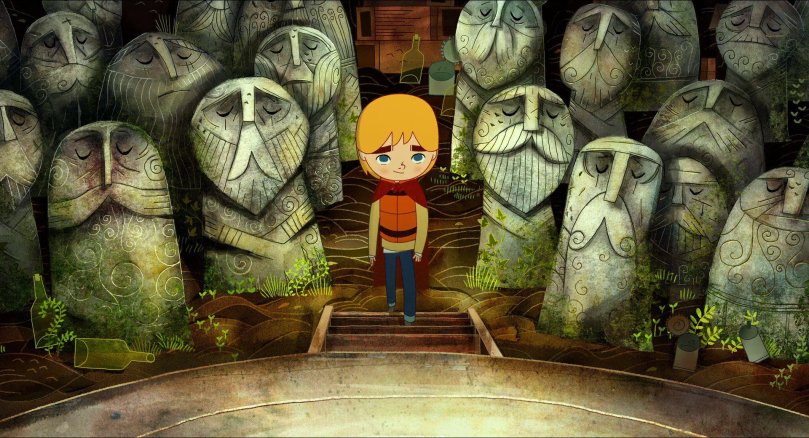
We were also excited to see Cartoon Saloon here, talking about their projects. We love their animated films: The Secret of Kells and The Song of the Sea are both based on Irish legends and myths and both were nominated for major international awards. The Song of the Sea also uses imagery directly inspired by prehistoric Irish art. Just look at this screenshot – it manages to combine Boa Island figures with Newgrange-type spirals.

song-of-the-sea

Google has a massive presence in Ireland and Google folk were here in droves. We had booked a one-to-one session in their Digital Garage, where Karl gave us excellent advice (and food for thought) on how to really look at our website and what we might consider doing a little differently.

RH and Karl, Digital Garage

I’ve only given you a tiny flavour of National Digital Week. We met all kinds of people here, from CEOs to hot-shot young programmers to visionary developers to people just like us, working on the fringes of technology and wanting to learn. And all of this in the heart of West Cork.

The old Lady’s Well Brewery repurposed as the Google Digital Garage

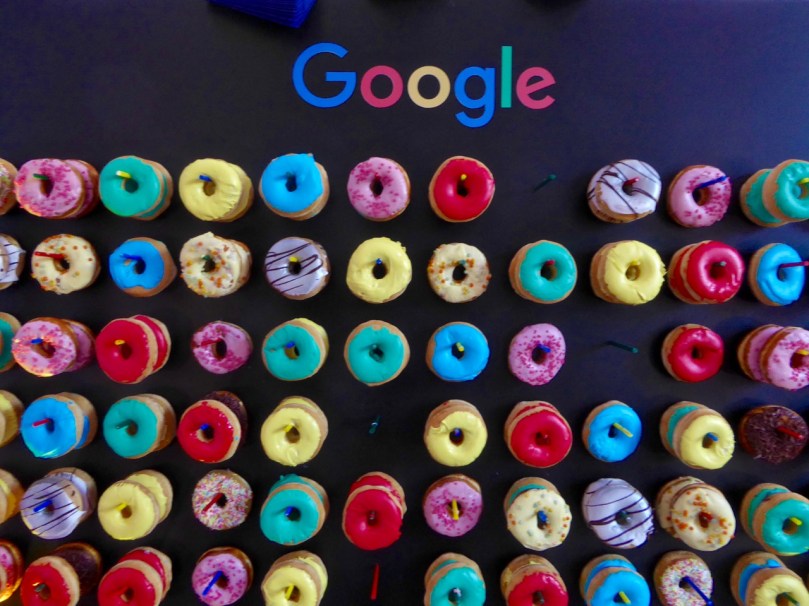
A massive vote of appreciation to the dynamic young people who run the Ludgate Hub in Skibbereen and who organise this conference- what an amazing job they do. Next year, come and experience it for yourself. Oh – and don’t miss the Wall of Donuts!
Donuts

Memento Mori

Fanlobbus

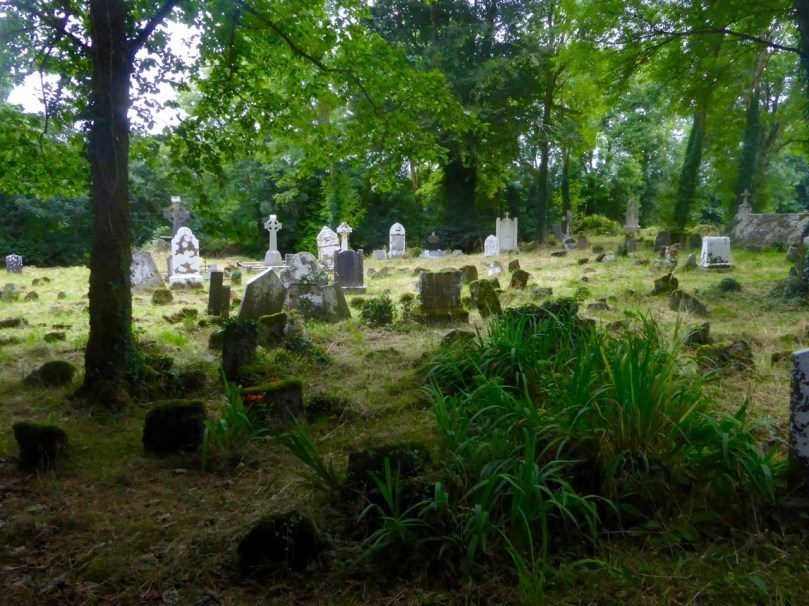
It’s Halloween – what better time to take a wander round an old graveyard! Fortunately, we’re well endowed with them in Ireland, in varying states of preservation and decay.

Old graveyard, near Dunmanway

Except for the wealthy, who could afford to erect tombs and decorate churches with effigies of themselves and carved wall plaques, most people who died in Ireland up to the 1700s lie in unmarked graves. However, in the 18th century the practice of erecting carved headstones become commonplace for those who could pay for it. Styles of headstone carving evolved over time. Local craftsmen used the symbols in vogue, interpreting them according to their own ideas and their level of skill. The result can best be described as folk art.

Bridget Sweeney Kilmallock

Bridget Sweeney’s grave in Kilmallock Co Limerick is memorialised with a great example of a nineteenth century carved headstone

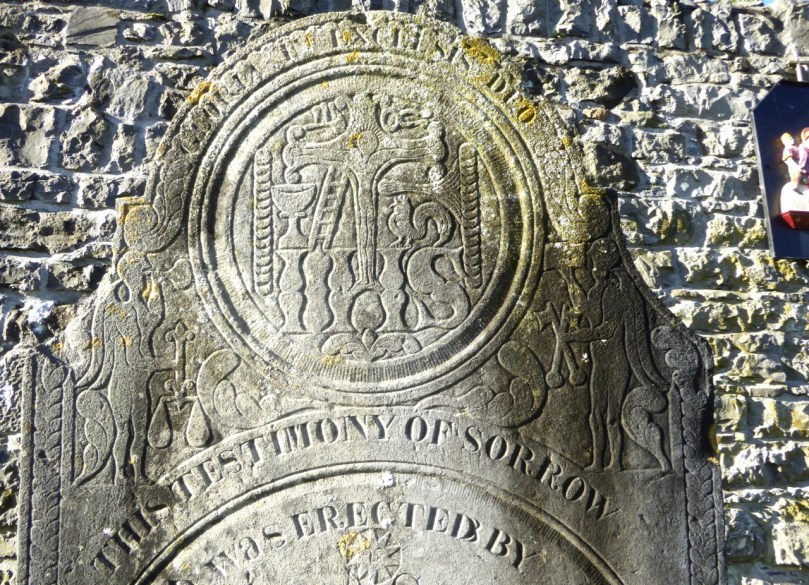
One recurring theme is the passion, or crucifixion of Christ, and a headstone we saw recently in Kilmallock, Co Limerick, is an excellent example of the crucifixion and other symbols.

Bridget Sweeney Closer

Top: Not only a crucifixion image,  but various other symbols feature on the headstone, such as a chalice (eucharist) and a rooster (awakening or time). Below: close up of the two angels: left is Michael blowing his trumpet and bearing a set of scales (reflecting his role of weighing souls at the gates of heaven); right is another angel bearing a book (in which might be recorded a person’s good and bad deeds) and keys (to the gates of heaven?)

Denis Sheehan, Kilmallock

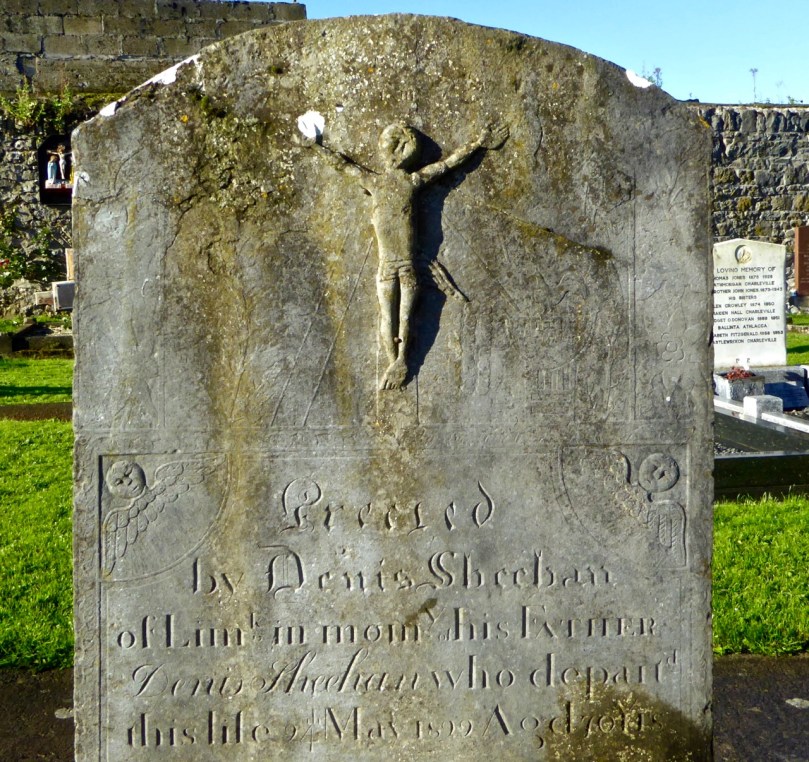
Another crucifixion headstone, also in Kilmallock: harder to make out, but full of interesting elements

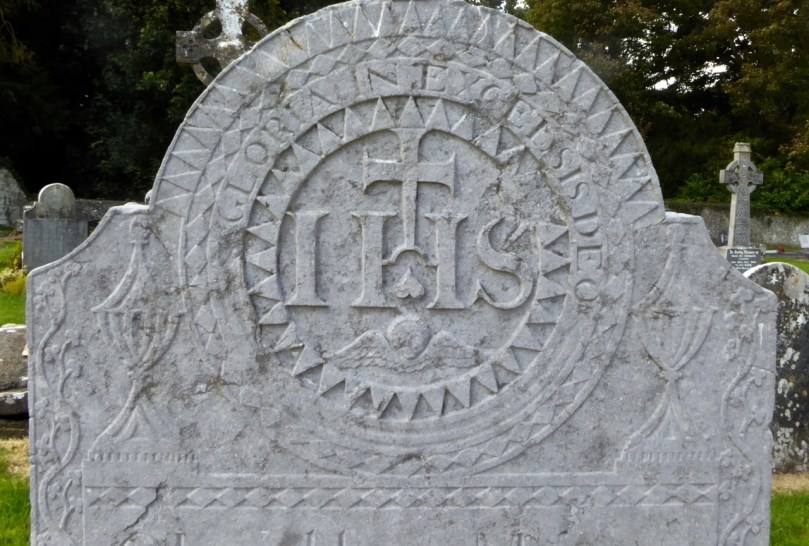
You may have noticed the letters IHS on Bridget Sweeney’s grave. Ubiquitous on old gravestones, on its own, accompanied by a simple cross, or as part of a more elaborate decoration, IHS stood for the name of Jesus. For a full explanation, see this post from the always excellent Pilgrimage in Medieval Ireland.

Thomas Donahoe Clonfert

Another favourite symbol was a head with wings, usually representing the soul on its flight to heaven, but perhaps also an angel. 

Alice Bolster, Kilmallock

A particularly fetching angel/soul on the grave of Alice Bolster, Kilmallock

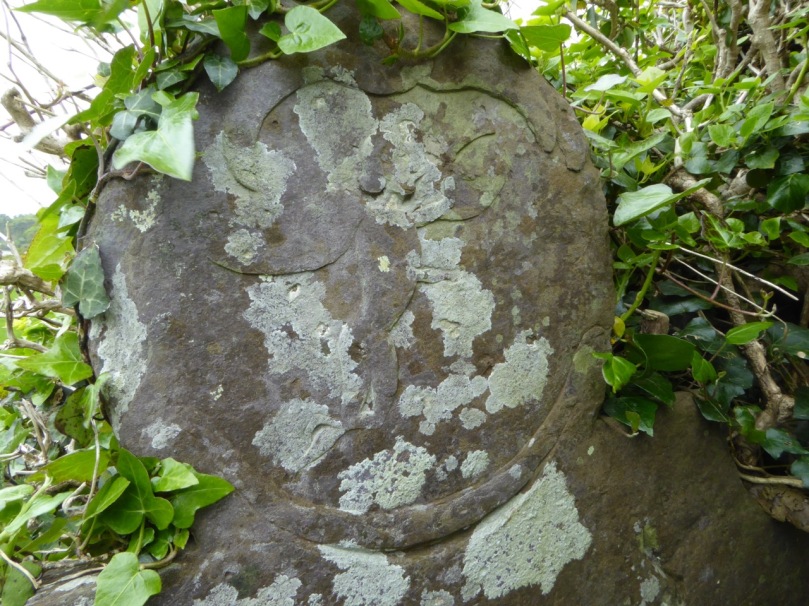
St Michael, blowing his trumpet to welcome that soul to heaven, was a favourite motif. We found one behind a bank of ivy in the old Aughadown graveyard near us, down by the Ilen River.

Aughadown

AughadownCan you make out Michael, blowing his trumpet? The enemies of all headstones are ivy and lichen and this one has been overtaken by both

Symbols of mortality decorate some of the earliest Irish headstone – skull and crossbones, hourglasses, books and bells, skeletons, even rotting corpses – all represent the finite nature of life on earth. Memento Mori literally means Remember, you must die. These images were supposed to encourage us, apparently, to lead better lives by reflecting both on the futility of relying on earthly delights and on the reward awaiting us in heaven. Mortality symbols generally date to the 1700s.

Cloondara, Co Longford, no inscription

Top: this slab is in the churchyard at Cloondara Co Longford and has no inscription. The two images below it are from a grave in Castlelands, near Kinsale. These two images are courtesy of our friend Amanda Clarke: she was told by a man doing maintenance work that this was the grave of Anne Bonny the pirate – hence the skull and crossbones!

Sun, moon and star images represent the glories of creation and we’ve seen many instances of sunbursts, often enclosing the IHS lettering. Here’s a nice example, below, from Kilmallock, which also has winged heads and beautiful lettering.

William Jones Kilmallock

Lettering styles varied widely, as did the carver’s ability to spell and to ensure he had left himself enough room. Anyone wanting to invent new fonts (yes, that’s a thing) could well study old headstones and admire the incredible variety of lettering. Carving some of the more elaborately rounded scripts must have been a job for only the most highly skilled.

Dan Linnehan, Cullen, Co Cork

We often see instances where letters and words have to be added above or below the line, where the carver ran out of room

The Lamb of God is another common image – although it can be hard to recognise a lamb in the often lumpen carving at the top of a headstone.

Headstone, Cullen

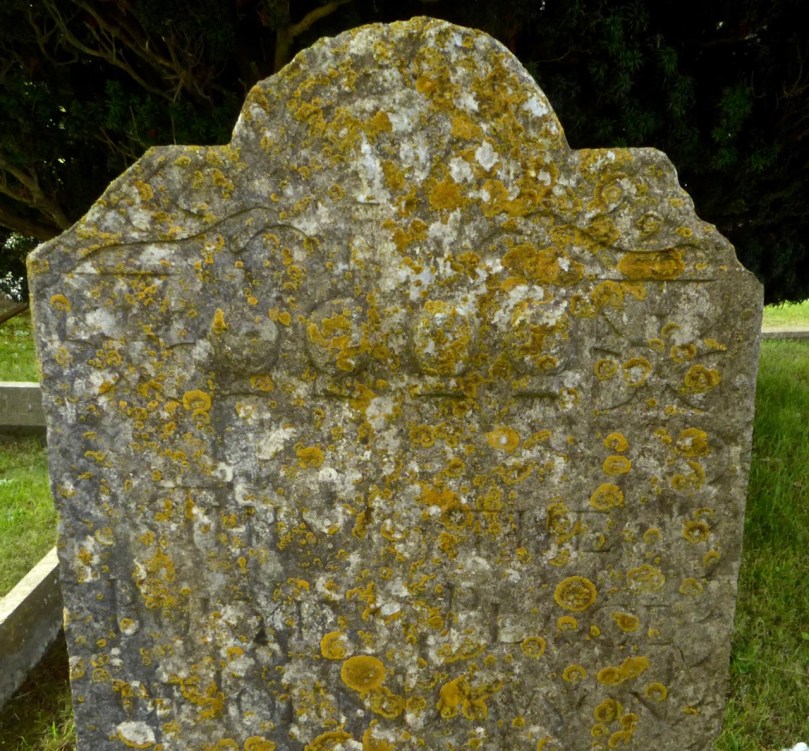
At an old graveyard in Cullen, Co Cork, there are several stones that appear to be in a local style with a head on either side of the top of the stone

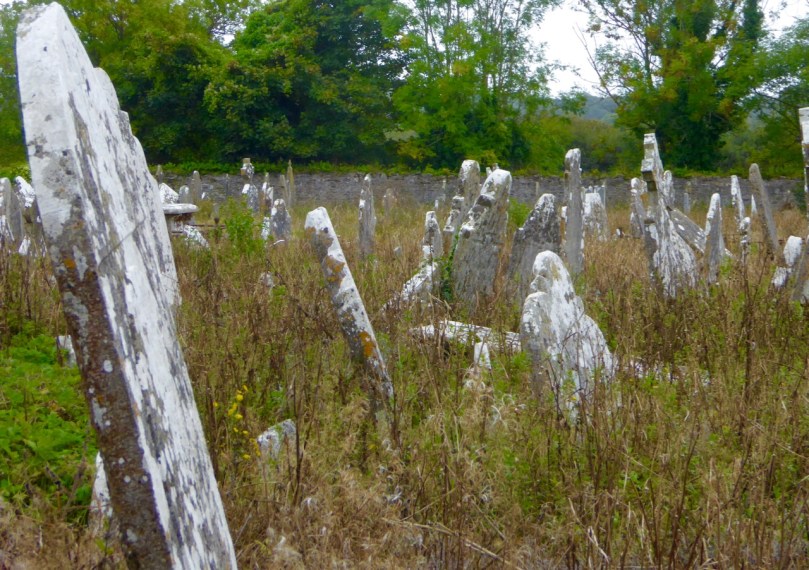
We can’t resist old graveyards – we seldom pass an opportunity for a stroll and an explore. Sometimes we find interesting headstones, sometimes we just soak in the atmosphere, sometimes we worry about the neglect that allows them to slowly disappear into a jumble of brambles and nettles.

Four Children gravestone, Bandon

It’s hard to make out what’s on this old headstone in the churchyard at St Peter’s C of I church in Bandon. The words include a reference to ‘his four children’ so I am tempted to think these four heads representing those little souls.

Here’s some good new – there is an Irish organisation, Historic Graves, that is doing outstanding work in saving our historic graveyards from that fate. In their own words:

The Historic Graves project is a community focused grassroots heritage project. Local community groups are trained in low-cost high-tech field survey of historic graveyards and recording of their own oral histories. They build a multi-media online record of the historic graves in their own areas and unite to form a national resource.

Lissagriffin

Kilmoe churchyard, in LIssagriffin on the MIzen Peninsula, has benefited from a Historic Graves survey

I used information from the Historic Graves survey in my posts about the Stouke Graveyard (Priests and Poets Part 1 and Part 2) and I hope to learn more about their methods and objectives in the future.

Another Historic Graves project was Castlelands, near Kinsale. These photographs are by Amanda Clarke, used with thanks

One thing we have seen is that once a graveyard has been surveyed it’s important to keep it well maintained. The Cloyne graveyard was surveyed in 2013 and many fine old headstones were found and recorded. We visited in May 2014 and loved our walk through the flower-strewn pathways and the newly-revealed headstones. However, earlier this month when we dropped in it had started to resemble a jungle again. 

Cloyne Graveyard

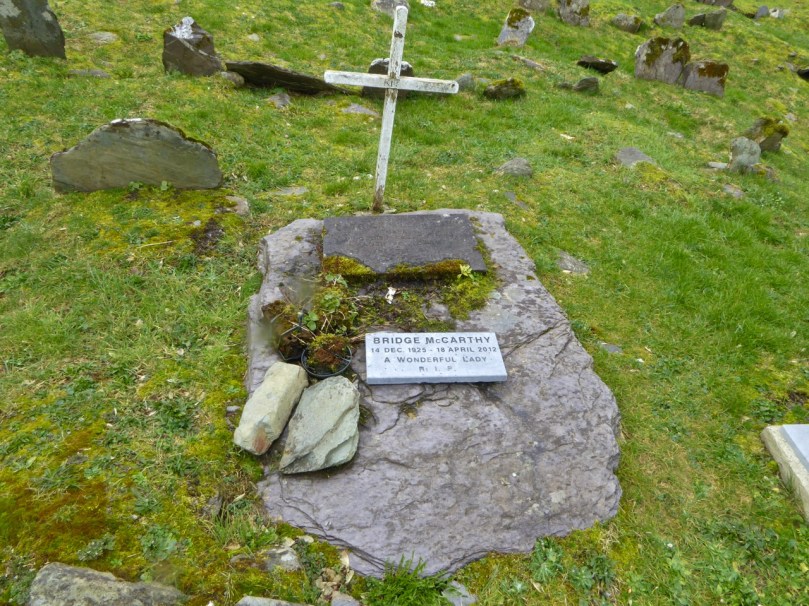
I will leave you with a couple of my personal favourites from graveyard visits – not elaborate, not particularly old, but saying so much. The first is from Castlehaven graveyard in West Cork, the second from Kilbarry, near Dunmanway.

Castlehaven Bridge McCarthy

Crowley Castle St