Close Reading

P1080162

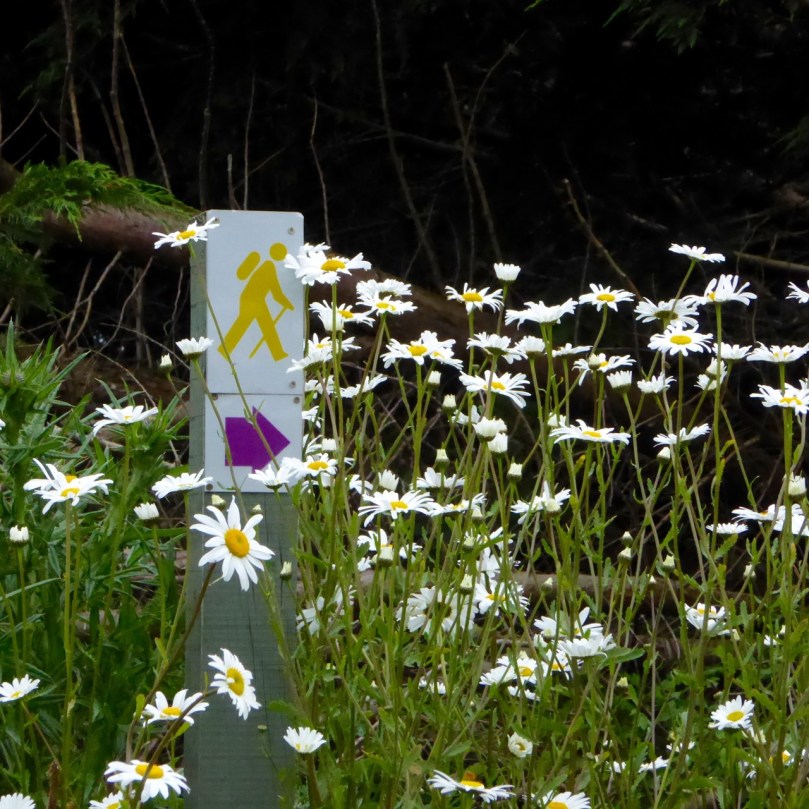
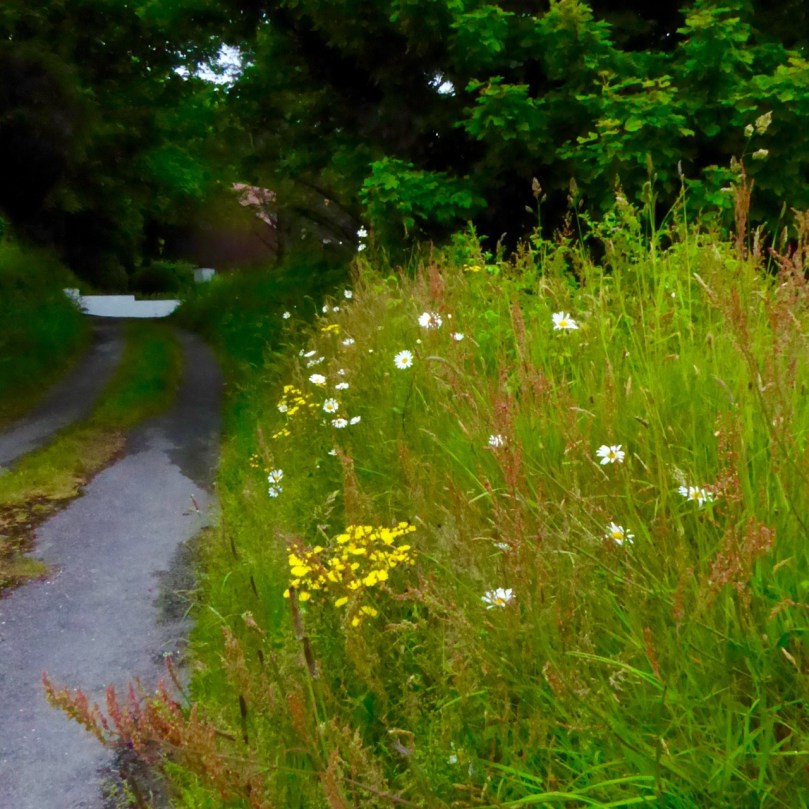
It’s mid June. The gorse and the whitethorn, once the dominant colours in our spring landscape, have come and gone. The last of the bluebells, primroses and the wild garlic are fading fast. By the end of the month, the boreens will be heady with fuchsia and bramble flowers, and soon after that they will be lined with ubiquitous montbretia.

So this is the early summer interregnum – we think of it as the time of the hedgerow flowers. Every day we discover new delights peeping out at us from among the ferns in the ditches and from the ivy-covered stone walls. Not all are wild, or native – it can be hard to distinguish when a planted hedge has gone wild, or a wild plant has turned into a hedge. Some of the flowers overwhelm – as with rapeseed that has colonised a lane or ox-eye daisies massed along a footpath.

But most hedgerows, like a good novel, call for close reading. It’s easy to be aware that they are alive with colours and shapes, but stopping to really look carries the most reward, even as it slows down the pace of our regular walk.

At first glance...

At first glance…

The photographs in this collection were all taken this week. I can’t name them all but I know they include herb robert, campion, foxglove, speedwell, honeysuckle, clover, thistle, marsh orchid, field roses, buttercup, ragwort, navelwort (penny pies). If you can identify others, dear reader, please do!

We weren’t the only ones interested in this bounty.

I kept the sweetest discovery until last. in this age of bred-to-last-and-look-right strawberries, what a thrill to come across a few precious wild ones and wander home with that real, glorious sweetness in my mouth.

A Grand Job!

uillinn name

Here’s a riddle: what’s the connection between rusty steel and the President of Ireland? The answer – Skibbereen! Skibbereen on a summer afternoon in June, in fact…

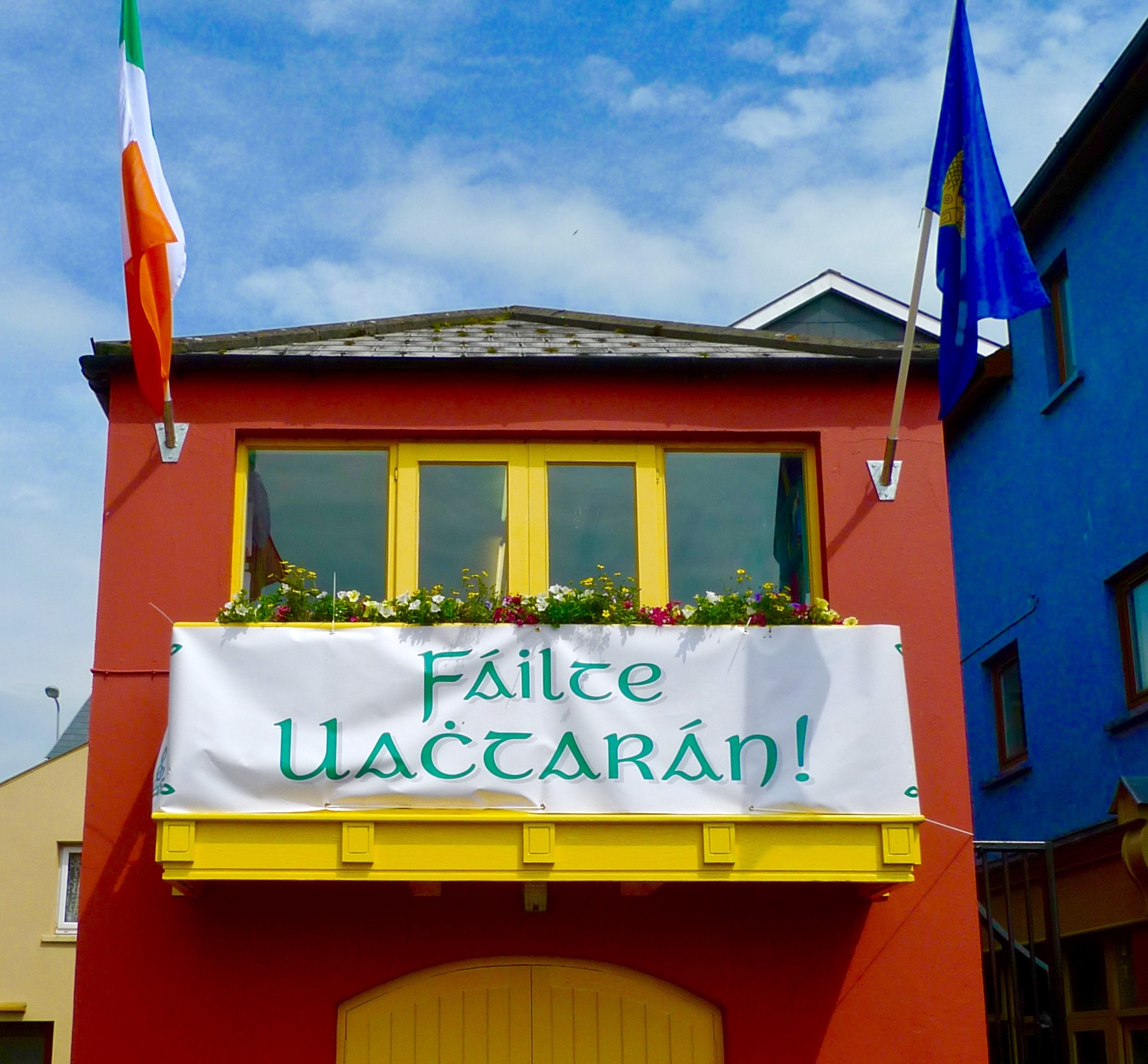
Welcome, President!

Welcome, President!

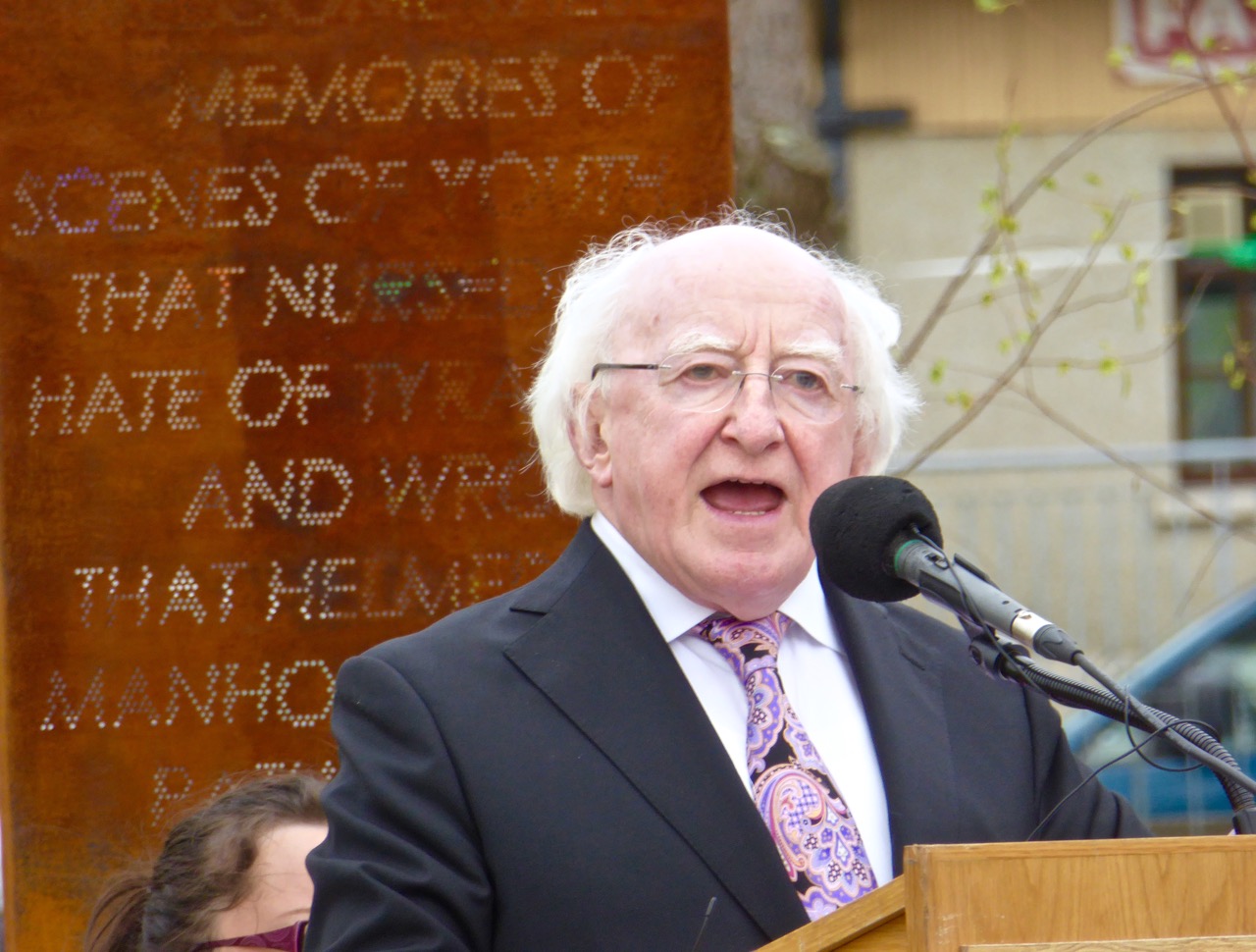
This week the President was in West Cork and on Thursday he came to Skibbereen. Before I lived in Ireland I was pretty ignorant as to the role the President plays in the life of the Republic. It’s not a political position – nothing like the American President, for example: although officially ‘head of state’ the Irish President has no powers – the executive running of the country is entirely in the hands of the government. Instead, the President of Ireland – Uachtarán na hÉireann – acts mainly in a ceremonial capacity and is very visible in civic life. There are always buildings to be opened, institutions to be founded, statues to be unveiled, speeches to be made, important visitors to be hosted… 

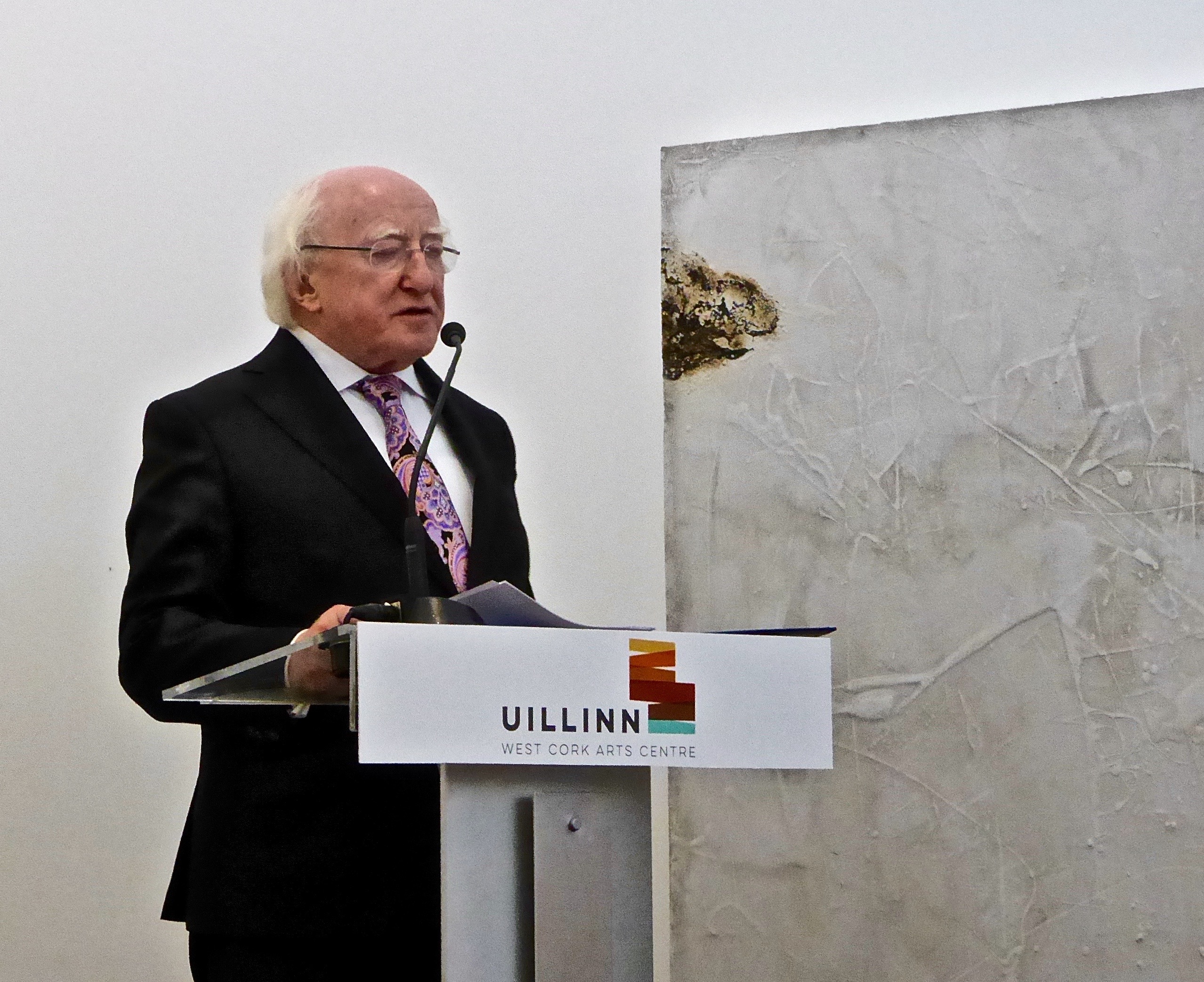
President Michael D Higgins formally opening Skibbereen's new Arts Centre

President Michael D Higgins formally opening Skibbereen’s new Arts Centre

Presidents can either be chosen by popular consensus or elected by a vote of all Irish citizens. Michael D Higgins was elected in October 2011 and his tenancy will run for seven years. Following this he can serve a further term if he and the people so wish. A Limerick man, Michael D (as he is usually known) is well liked: he’s had an impressive career in public life – academic, lecturer, professor, politician, poet, sociologist, author and broadcaster. He served as Minister for Arts, Culture and the Gaeltacht and was President of the Labour Party for many years. He is the first Irish President to have made a state visit to the UK.

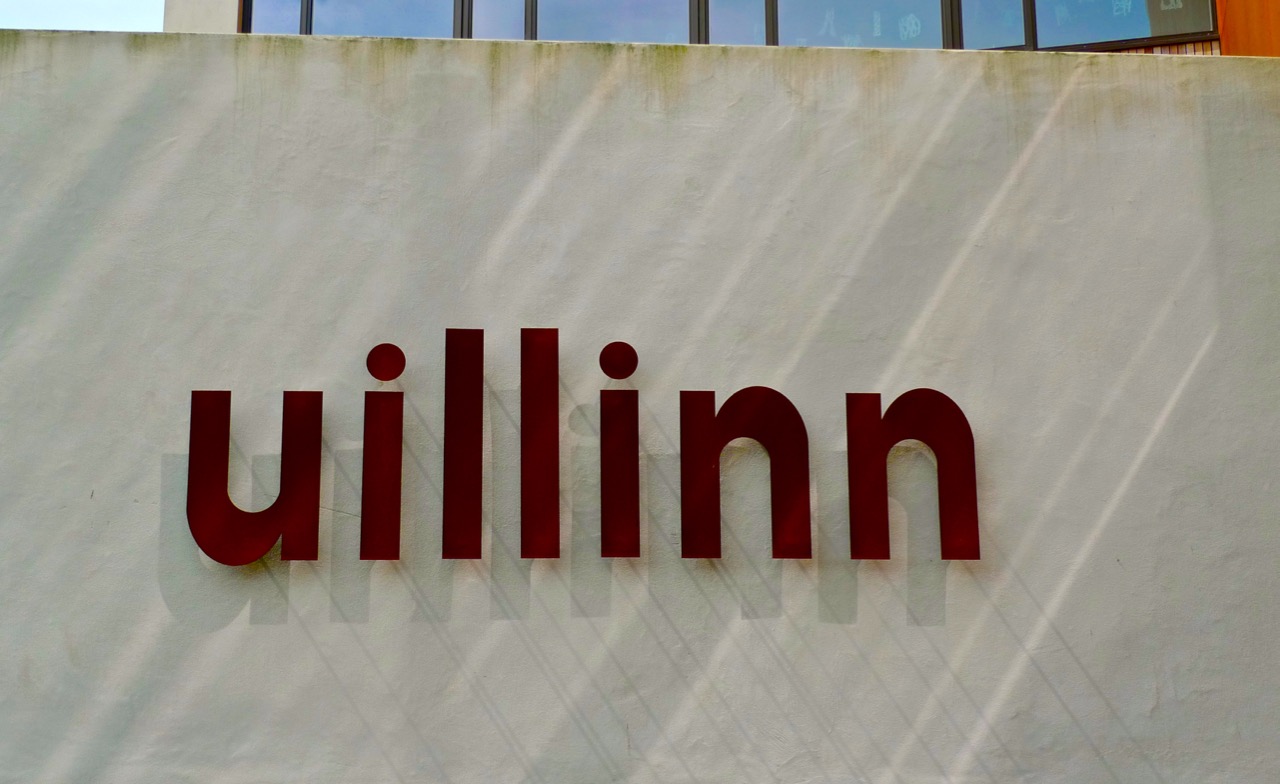
His first appointment in Skibbereen was to open Uillinn – West Cork’s new Arts Centre: that’s where the rusty steel comes in – partly… Regular readers of this blog will know all about this building. It was controversial while under construction, mainly because of the Cor-Ten steel cladding to its prominent five storey tower. Cor-Ten or ‘weathering steel’ is a material consisting of alloys which encourage a rust-like patination on exposure to weather, forming a fully protective coating over a number of years. In fact, the weathering process takes about as long as one term of office of an Irish President! I know many people disagree (although I think some are coming round…), but I find the ‘rusty’ finish very attractive, and I like the fact that the appearance keeps on changing in an organic way.

I was impressed with Michael D’s speech: he’s an enthusiast for all the arts and emphasised how important this modern building is – not just for Skibbereen but for the whole of West Cork. The site – right in the centre of town – had been a bakery for generations, and the President pointed out the analogy between the essentials of bread, fundamental food for the body, and the arts – food for the soul.

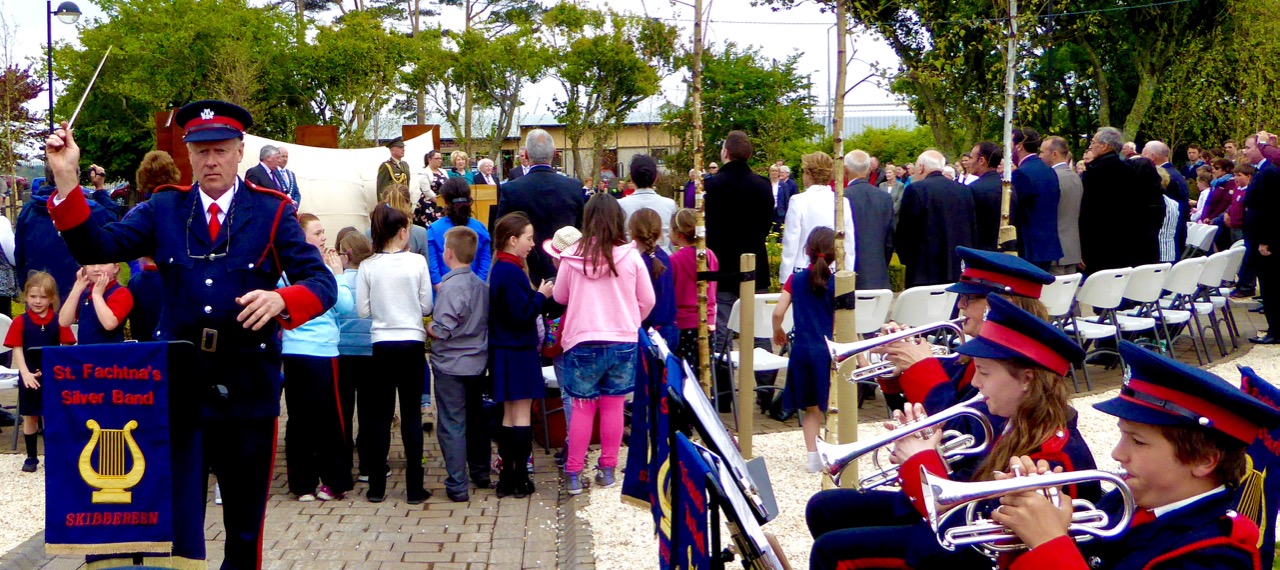
'Presidential Salute' in the O'Donovan Rossa Memorial Park

‘Presidential Salute’ in the O’Donovan Rossa Memorial Park

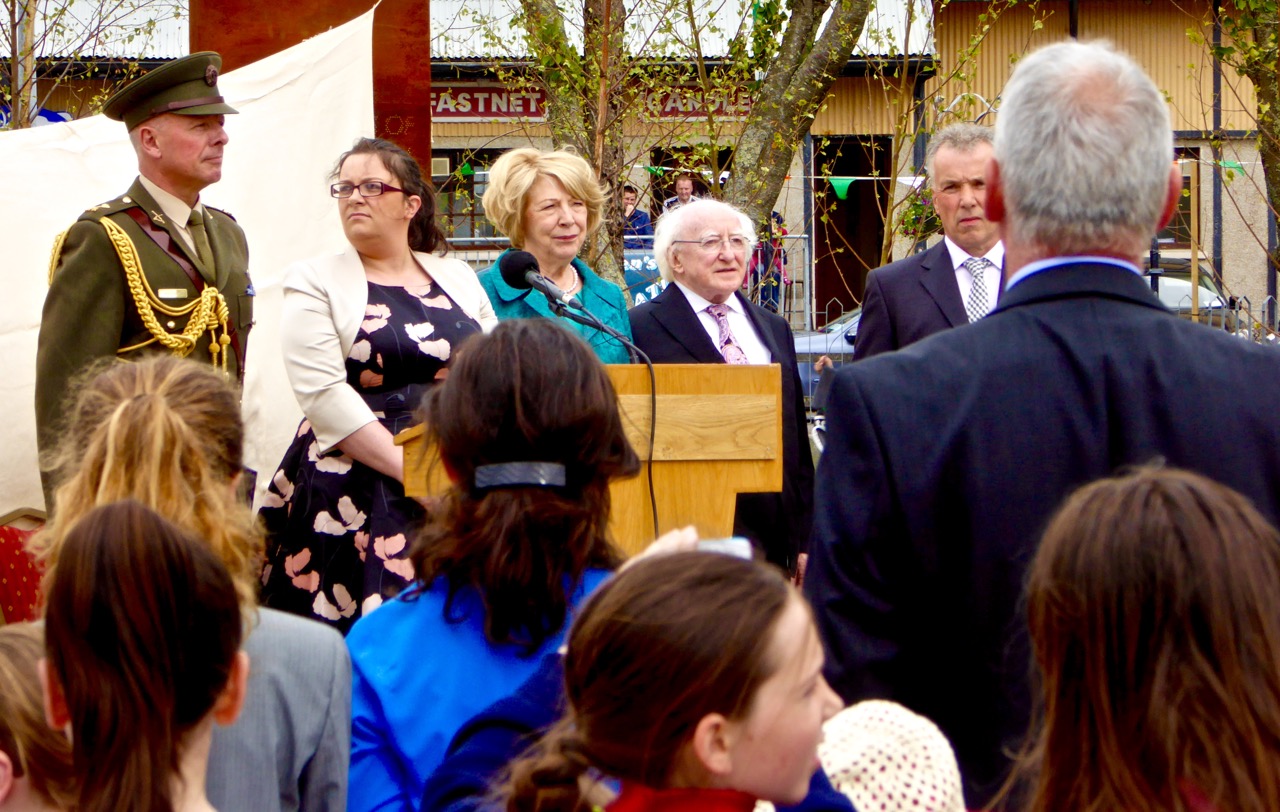
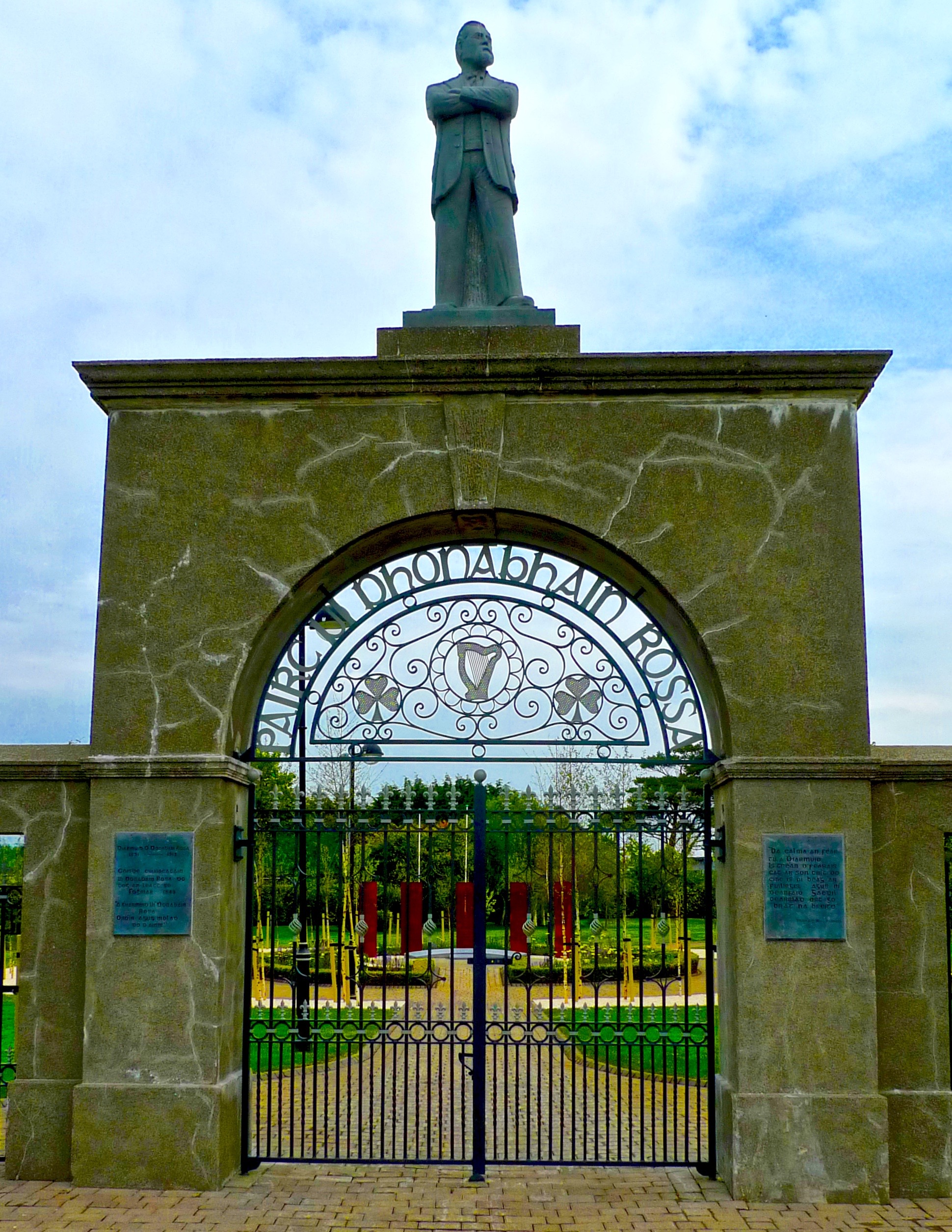
Next item on the afternoon’s agenda was a visit to the park: the President was to unveil a new memorial to Jeremiah O’Donovan Rossa – a local hero who had links with Skibbereen. Finola has mentioned him previously and is currently working on a post about him: July this year marks the centenary of his death. O’Donovan Rossa fought for Ireland’s freedom, just as Michael Davitt did (I wrote about him last week). The President gave a passionate speech emphasising the debt that the Ireland of today owes to those campaigners of yesterday, and I was pleased to hear him mention Davitt specifically.

Ready for the unveiling...

Ready for the unveiling…

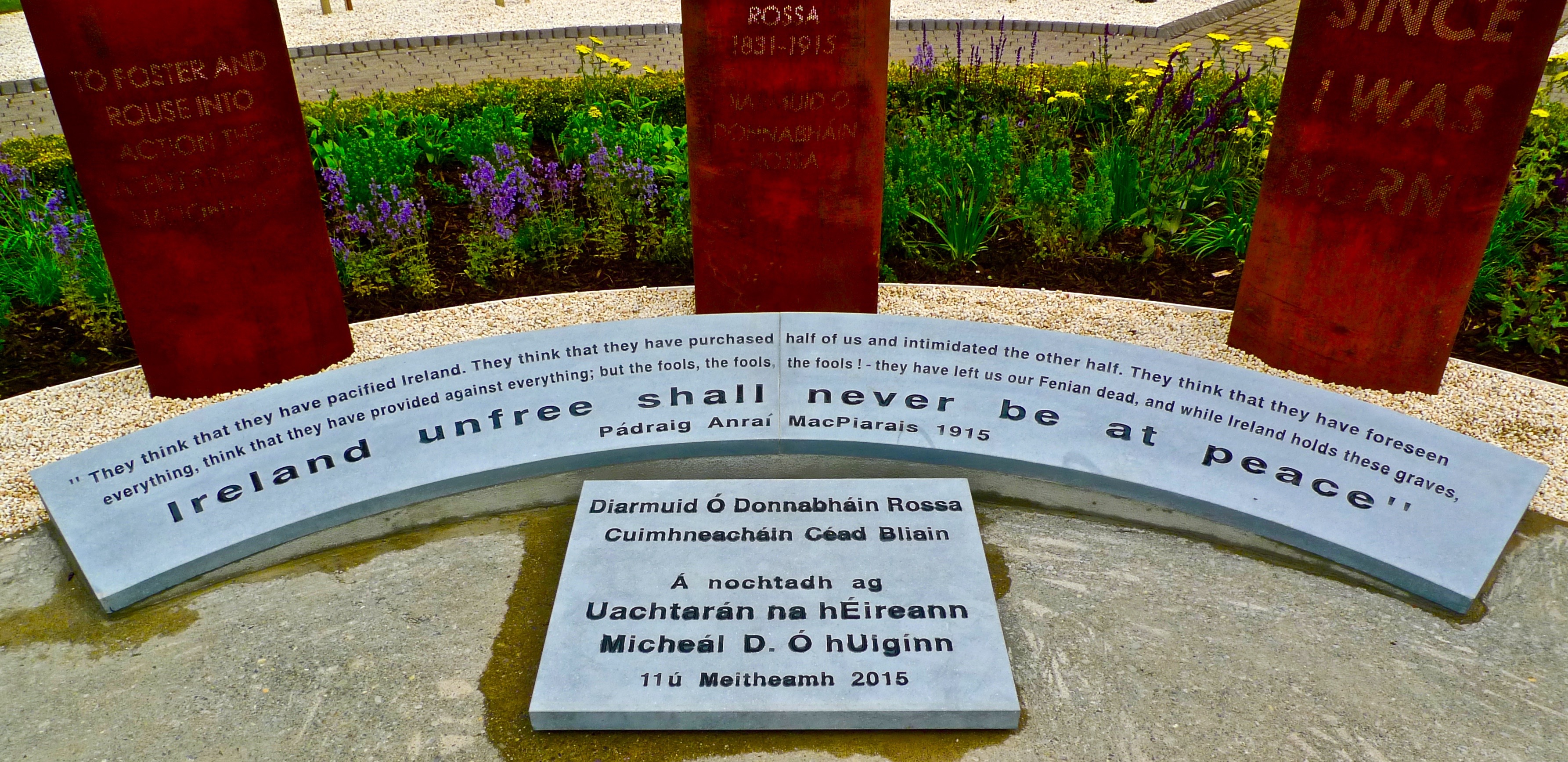
New commemorative sculpture in Skibbereen's O'Donovan Rossa Memorial Park

New commemorative sculpture in Skibbereen’s O’Donovan Rossa Memorial Park

I think the new memorial is a great piece of modern commemorative art: it’s rusty steel again! Five columns are placed in the centre of a garden, each telling something of the hero’s story. You have to work to see all the images: they are made by perforating the ‘weathering steel’ sheets. It’s very effective because it can’t be ignored – you just have to stop and work it all out. I commend the artist – but nowhere can I find any mention of who that is! I’m still searching…**

President Higgins speaks out with passion about freedom fighter Jeremiah O'Donovan Rossa

President Higgins speaks out with passion about Ireland’s freedom fighter Jeremiah O’Donovan Rossa

Michael D is a fluent speaker in Irish. He slipped easily between English and Irish while giving his orations – and made it sound so simple! The sun almost shone, the crowds were in good spirits, and the Band played. The rusty steel was looking good. All in all, the visit of Ireland’s President to Skibbereen was a grand job…

gate

We have now heard from Graepels Perforators in Kinsale letting us know more about the monument. Here is their message: We worked with Giulia Vallone (now Senior Architect at Capital Projects Implementation Unit CPIU) and Orla Higgins (Cork County Council Architect) to create the memorial. We teamed up with Cork County council to create it.

Ewe-nique Experience

Pig in tub

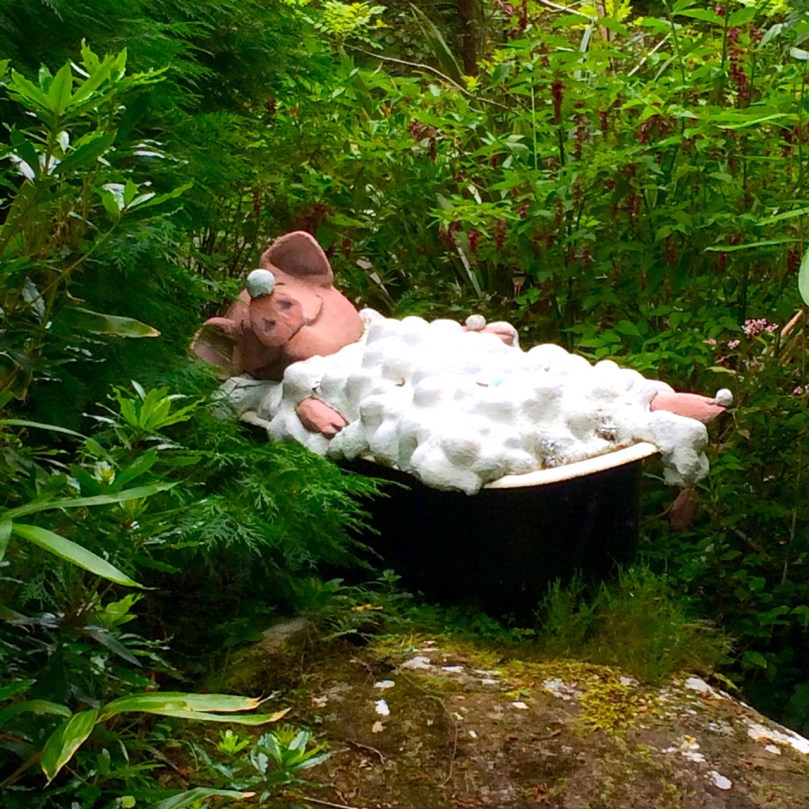
Between Glengariff and Kenmare, amid old-growth forest and tumbling streams, lies an enchanted garden. Hewn from rock, trees, and sheer imagination  – this is The Ewe Experience.

Sheena Wood: artist and ecologist

Sheena Wood: artist and ecologist

Kurt Lyndorf, a former war correspondent, and Sheena Wood, an artist, started the project in Goleen and moved it to this challenging spot several years ago. Their aim was twofold – to beguile and to educate and they have accomplished both in the most delightful way.

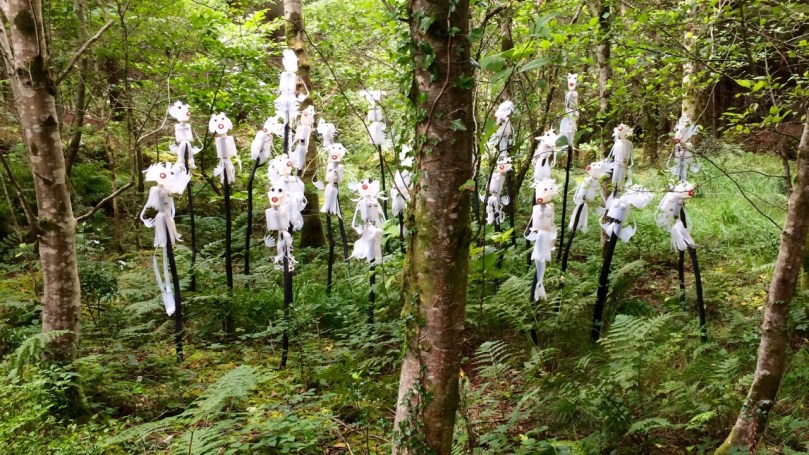
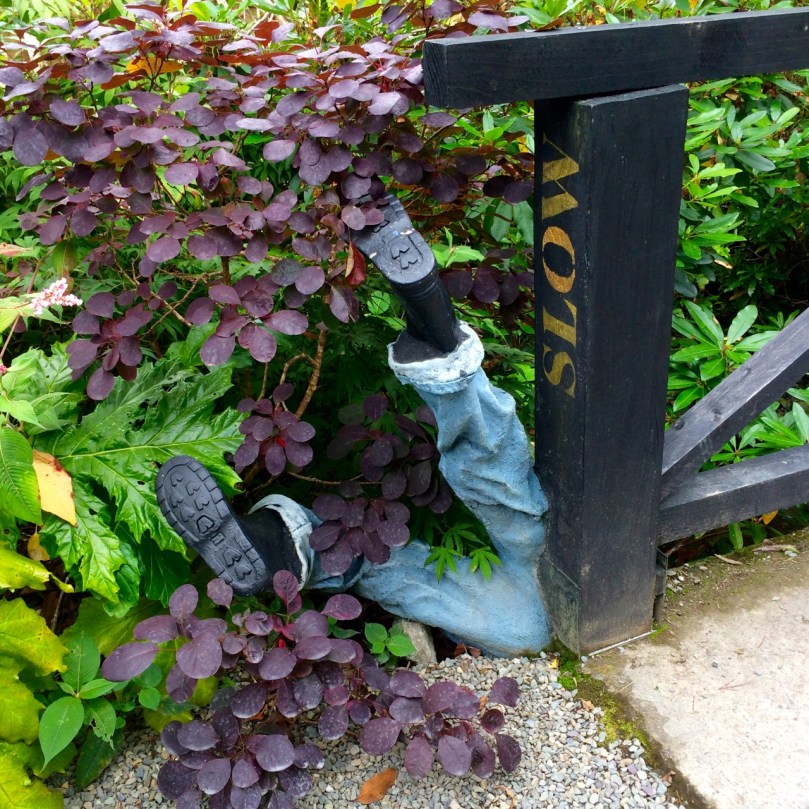
First and foremost this is a sculpture garden in which Sheena’s quirky sculptures of animals and spirits are discovered around every turn. Sometimes they are obvious, and sometimes only sharp eyes will pick out a hint of something hidden in the undergrowth. Made from discarded clothing, old tyres, fallen branches, even plastic bags, the figures are more than they seem at first glance – they carry the message of conservation and sustainability that is one of the themes of this garden.

Ghosts among the trees

Ghosts among the trees

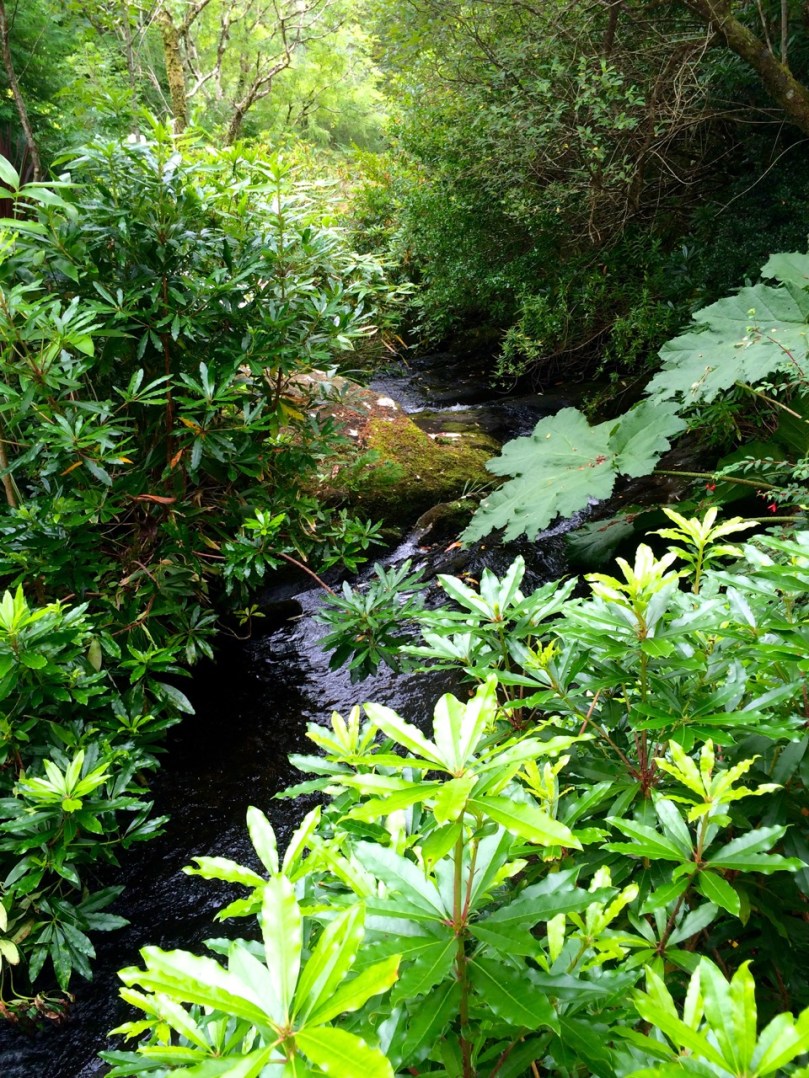
The pathways lead up and down and meander beside a sparkling stream.

Stream

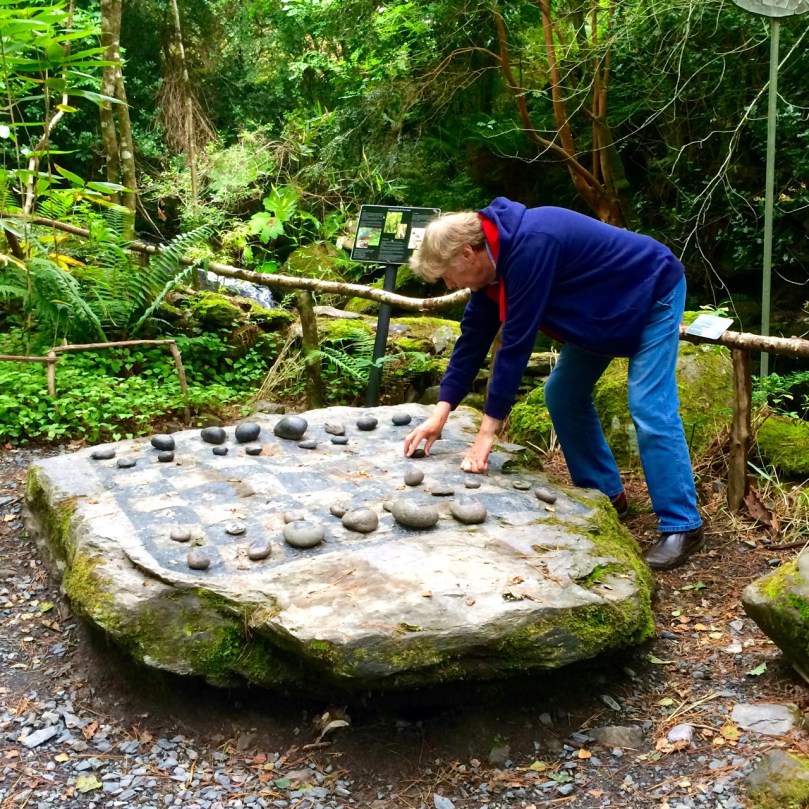
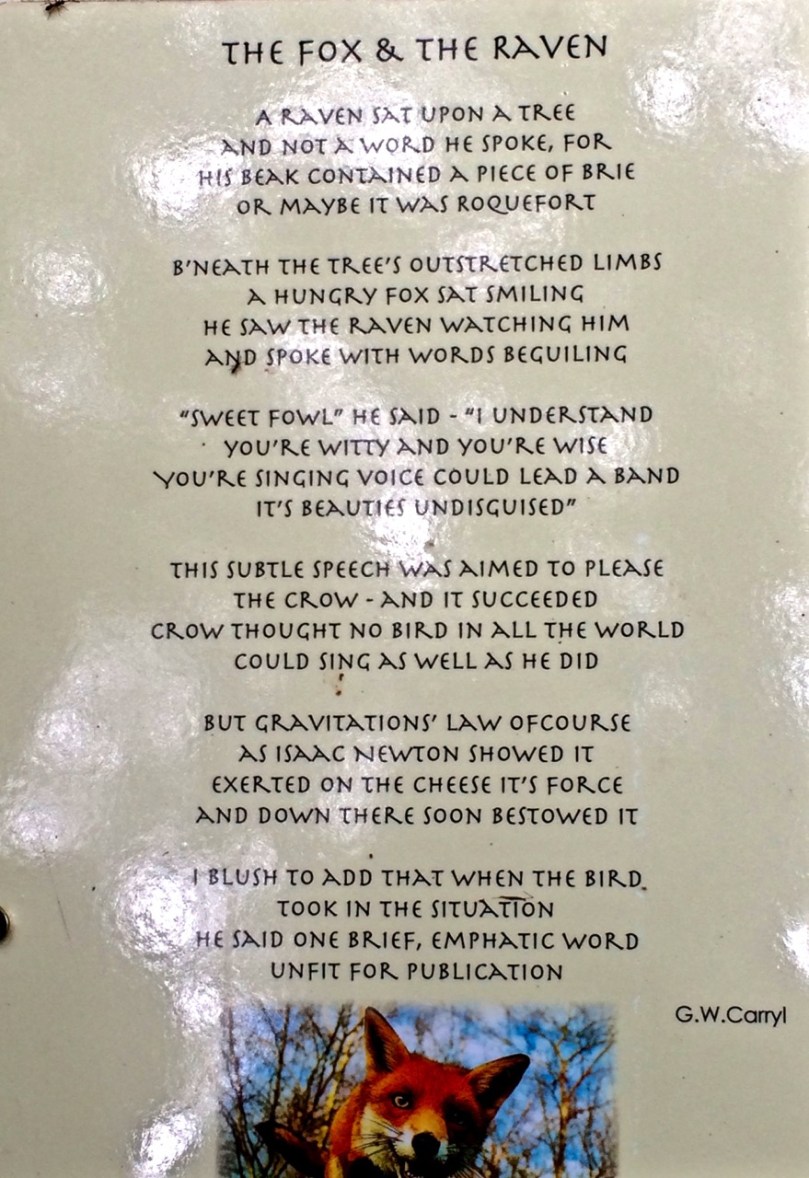
Along the way there are places to stop and play games (we spent a long time trying to beat each other at Stixs) or read snippets of verse. Information panels encourage us to think about how we interact with the natural world and how we understand it.

Your move!

Your move!

Fox and RavenChildren will love this place as much as adults. The photos you see here are but a tiny fraction of the ones I took on the day we visited last year, just at the end of their season. It’s open again now, and I know Sheena and Kurt spend the winter planning new installations, so you may or may not see exactly what we saw.

Prepare to be captivated!

Careful on the way out!

Careful on the way out!

Impressions

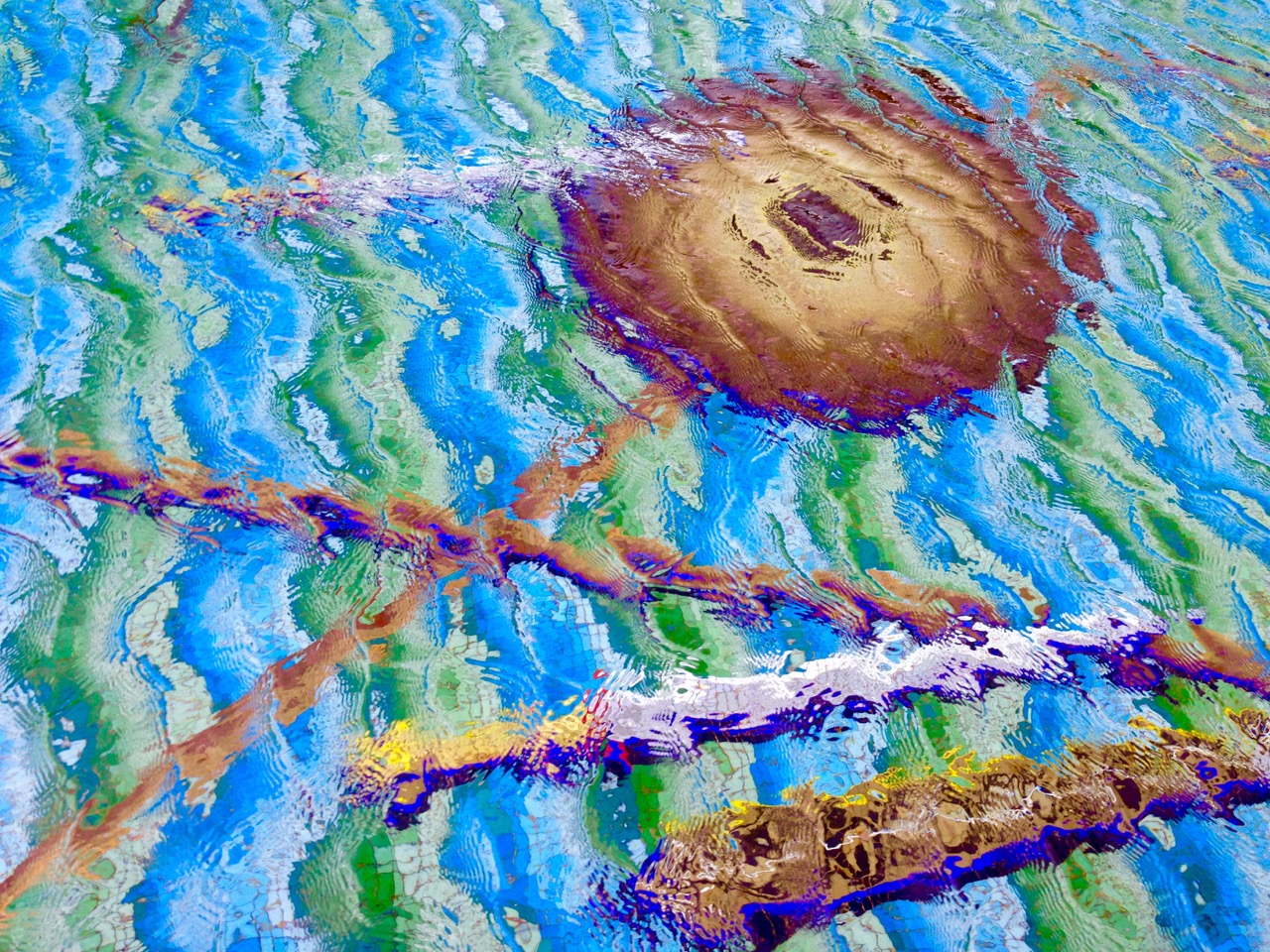
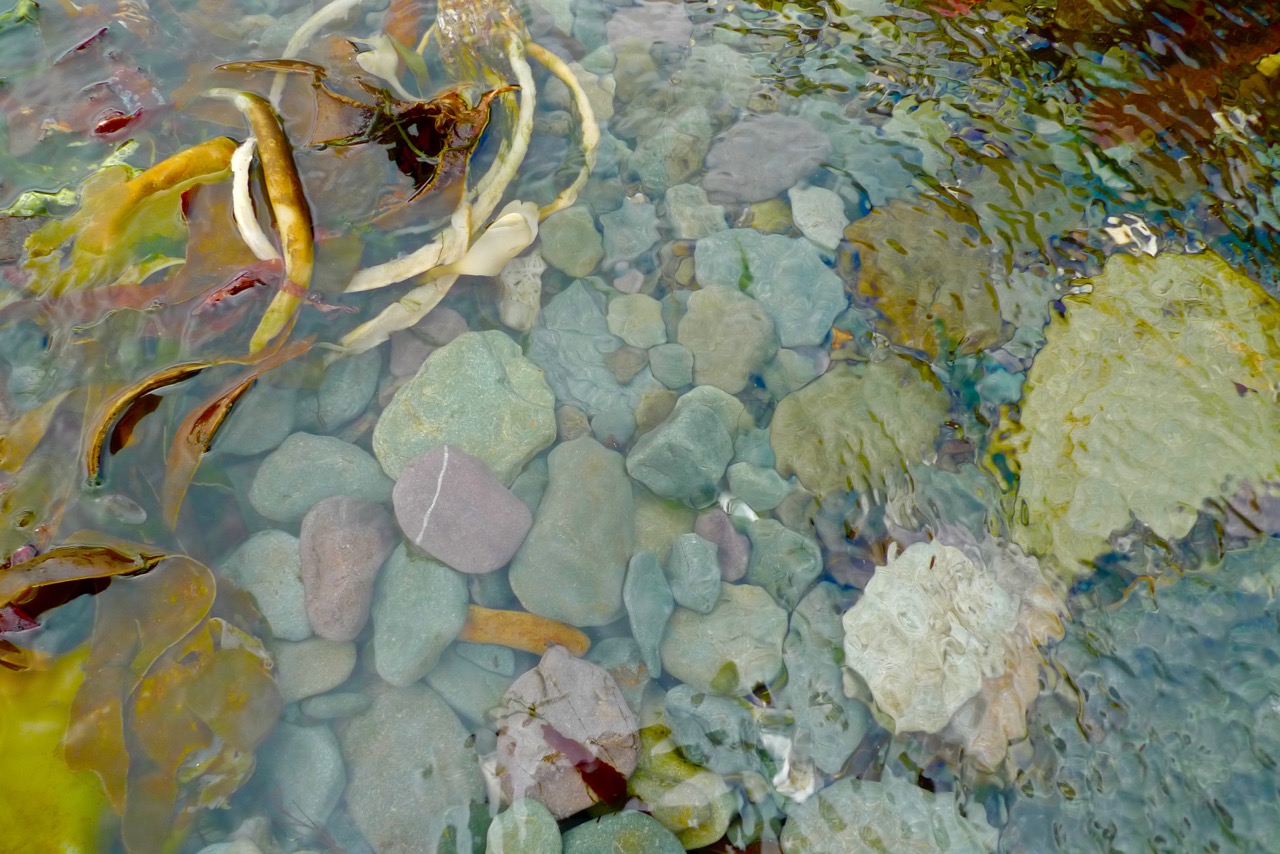
Water worlds - in a Dublin park, above and in the wilds of West Cork, below

Water worlds – in a Dublin park, above and in the wilds of West Cork, below

water 2

It’s over two years since I had a round up of the odd, quirky – or perhaps just very Irish – things that catch my eye during our travels. I called that post Juxtapositions. Here’s another collection of images that have fascinated me enough to record them with the camera. As in Juxtapositions, I have tried to show these pictures in context where it counts – or just let them speak for themselves. Sometimes I’ve added a little text, perhaps to amplify why I have been attracted by certain Impressions…

lion

lions

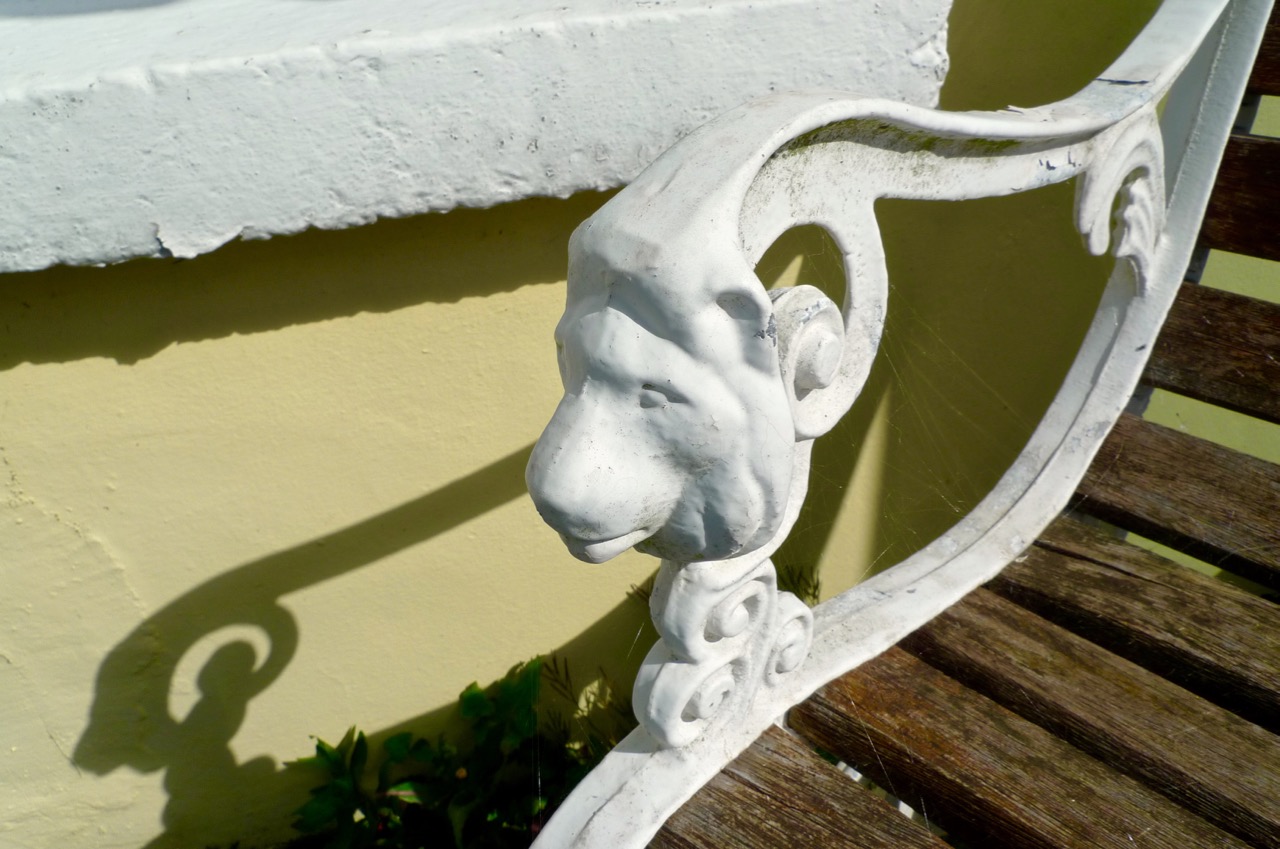
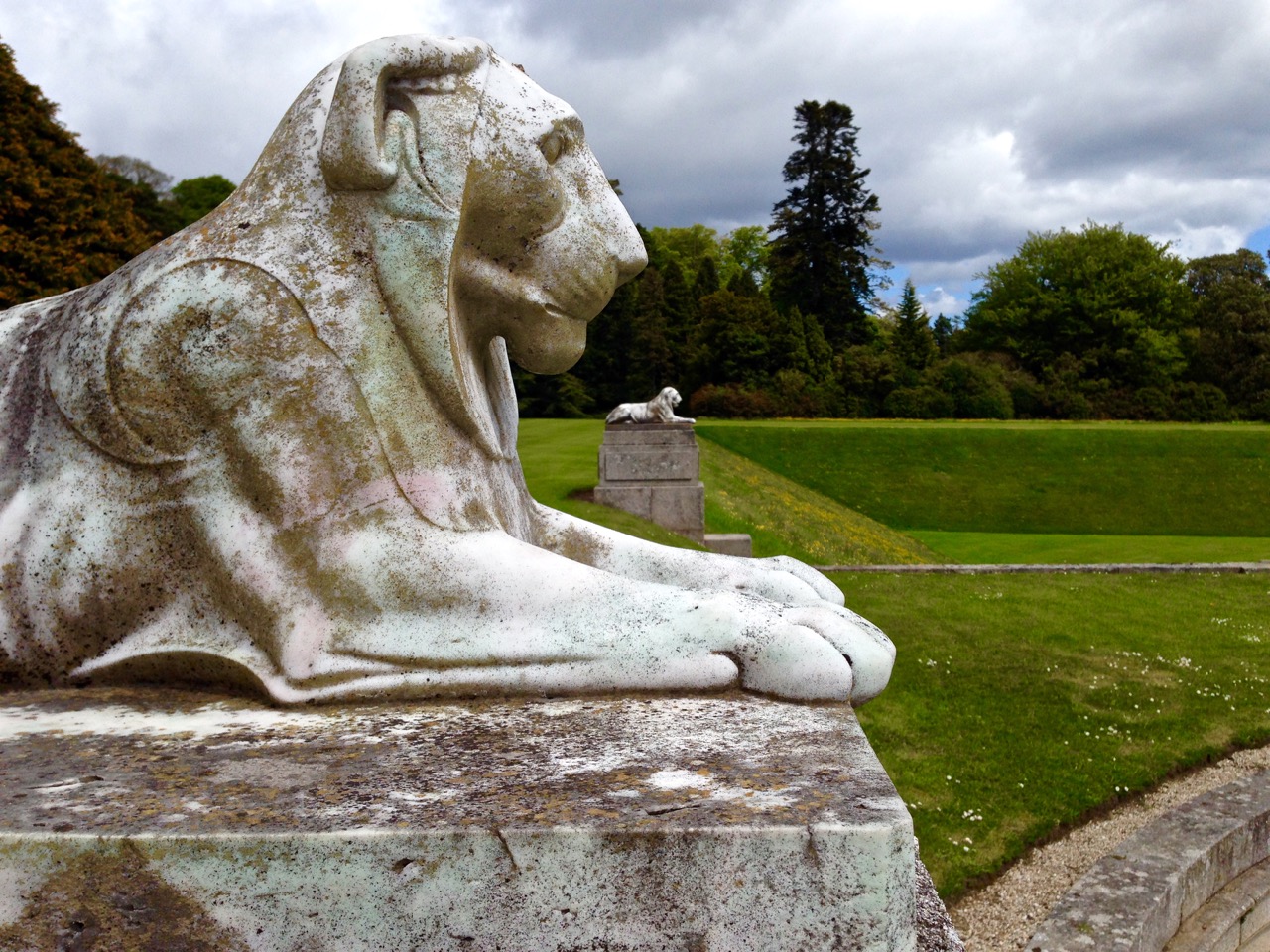
Gentrified Lions at Powerscourt, Co Wicklow, and a domesticated version, above

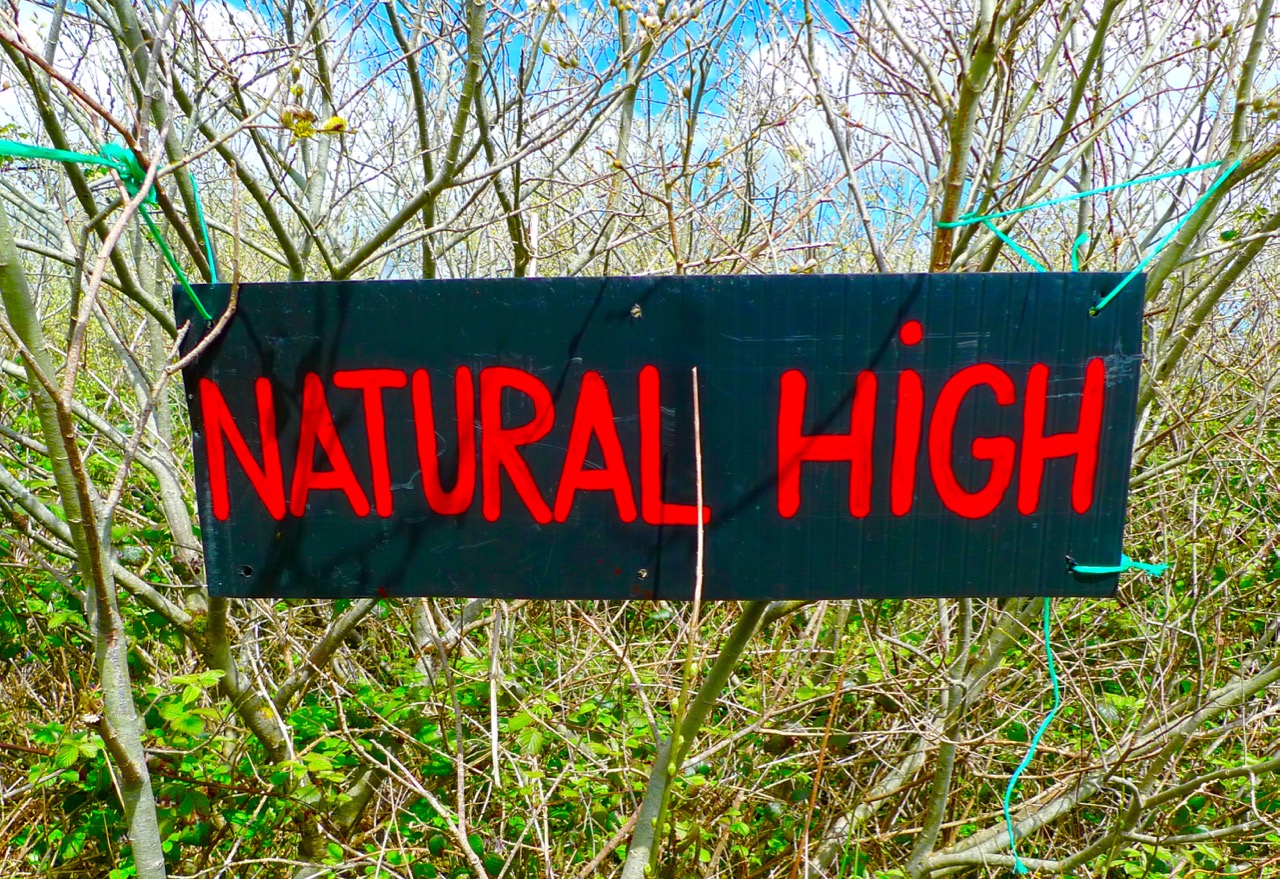
Some high things…

high

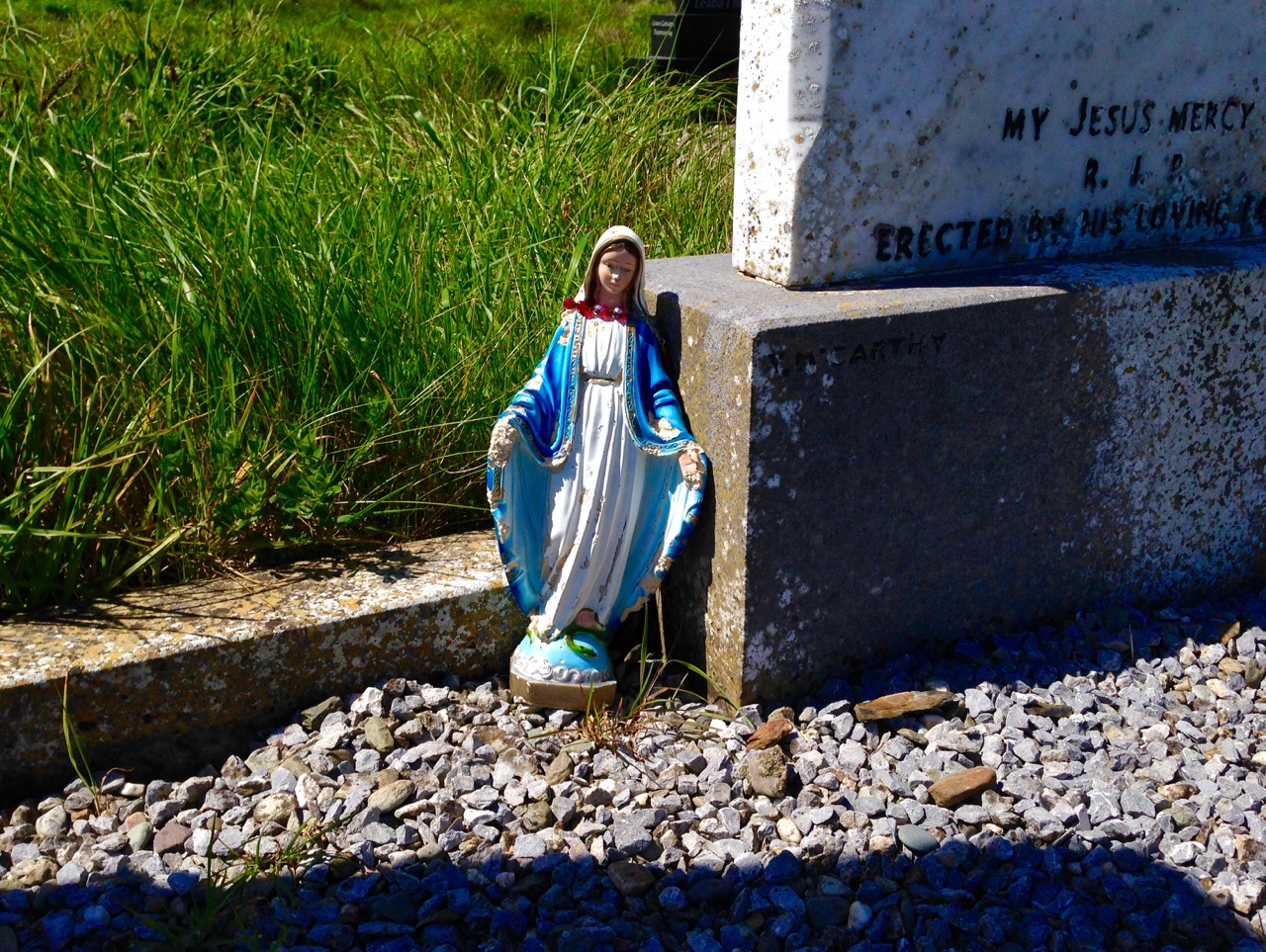
…and some little things…

little mary

pegs

fence

Startling Impressions…

Above left – an ancient stone cross in an urban setting, and – above right – the statue of Cúchulainn – a memorial to the 1916 uprising: an impossible-to-photograph icon in a poignant setting, the General Post Office building, Dublin. On the 24 of April (Easter Monday) 1916, about 2,000 Irish Volunteers and 200 from the Irish Citizen Army occupied the General Post Office as well as other important buildings in the city. They proclaimed the Irish Republic, read the Proclamation and raised the Irish flag for the first time. The British army shelled the GPO and other buildings. After a week’s fighting, the leaders of the rising surrendered: most suffered execution by firing squad. Many civilians died in the cross-fire. The guns and fires had destroyed much of the city and the GPO was in ruins. All this happened in Twentieth Century Great Britain…

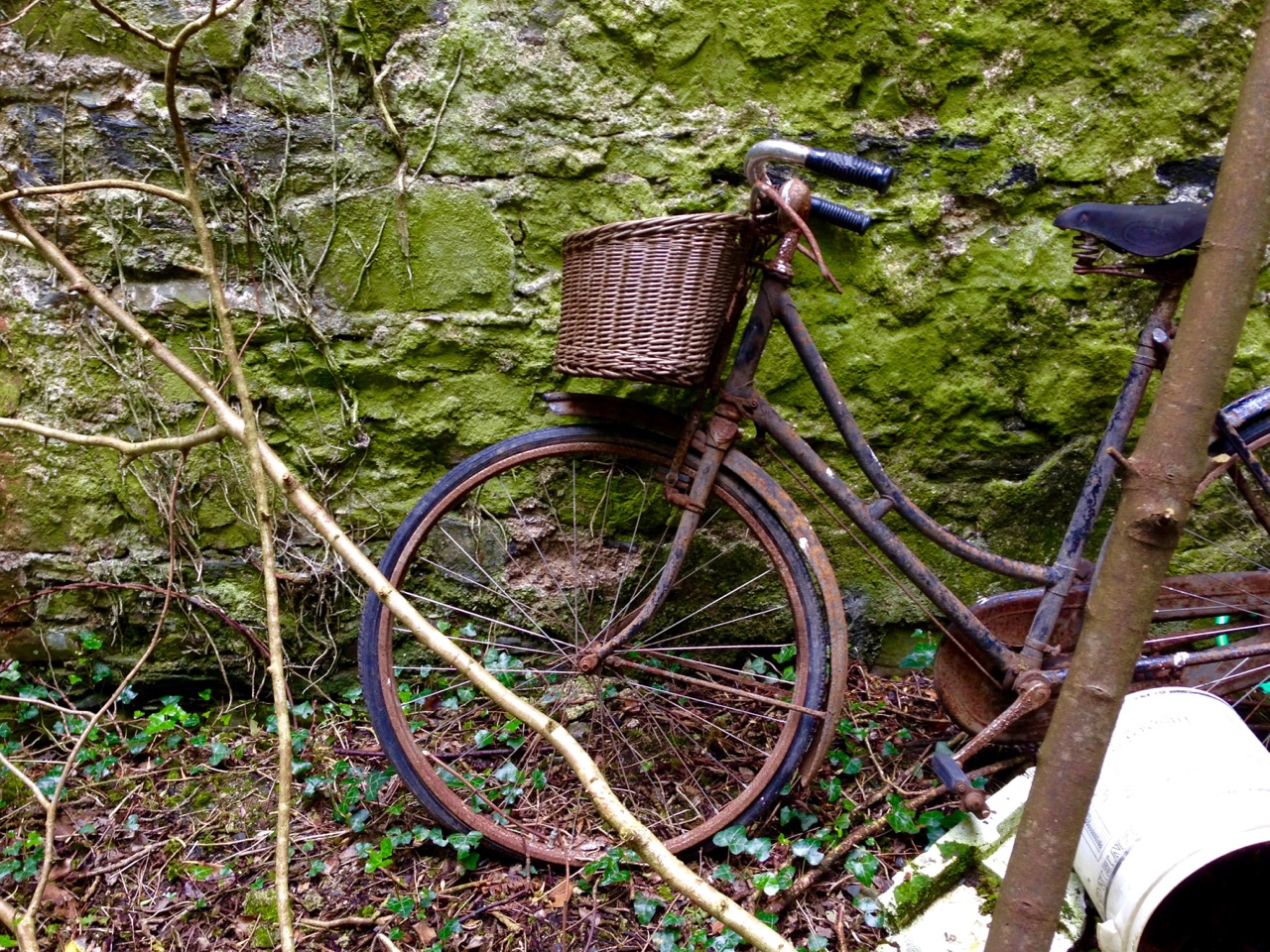
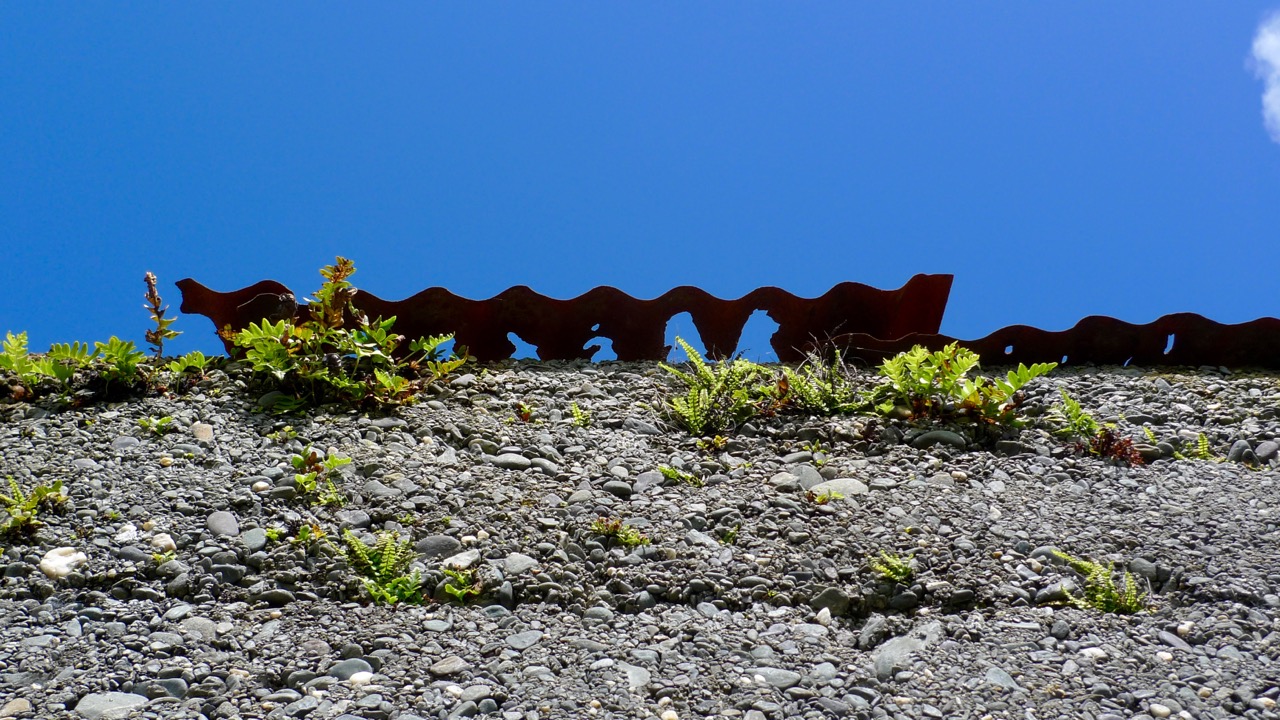
Rust and relics…

bike

corrugated

wavy line

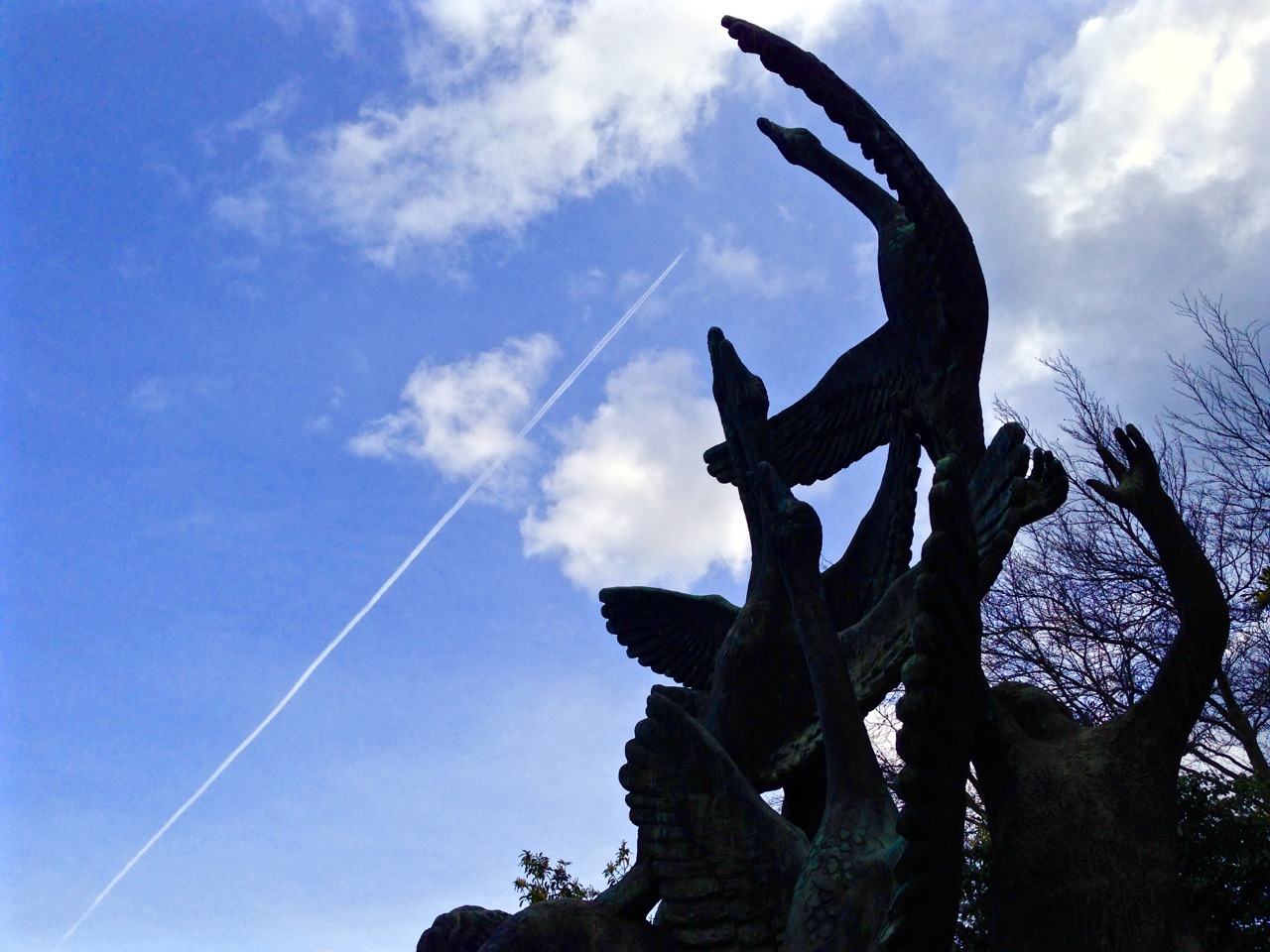
Ancient and modern…

The Children of Lir - sculpture by Oisín Kelly in the Garden of Remembrance, Dubiln

The Children of Lir – sculpture by Oisín Kelly in the Garden of Remembrance, Dubiln

Emerald Isle greens…

Art and ‘Nature Art’…

Seekers…

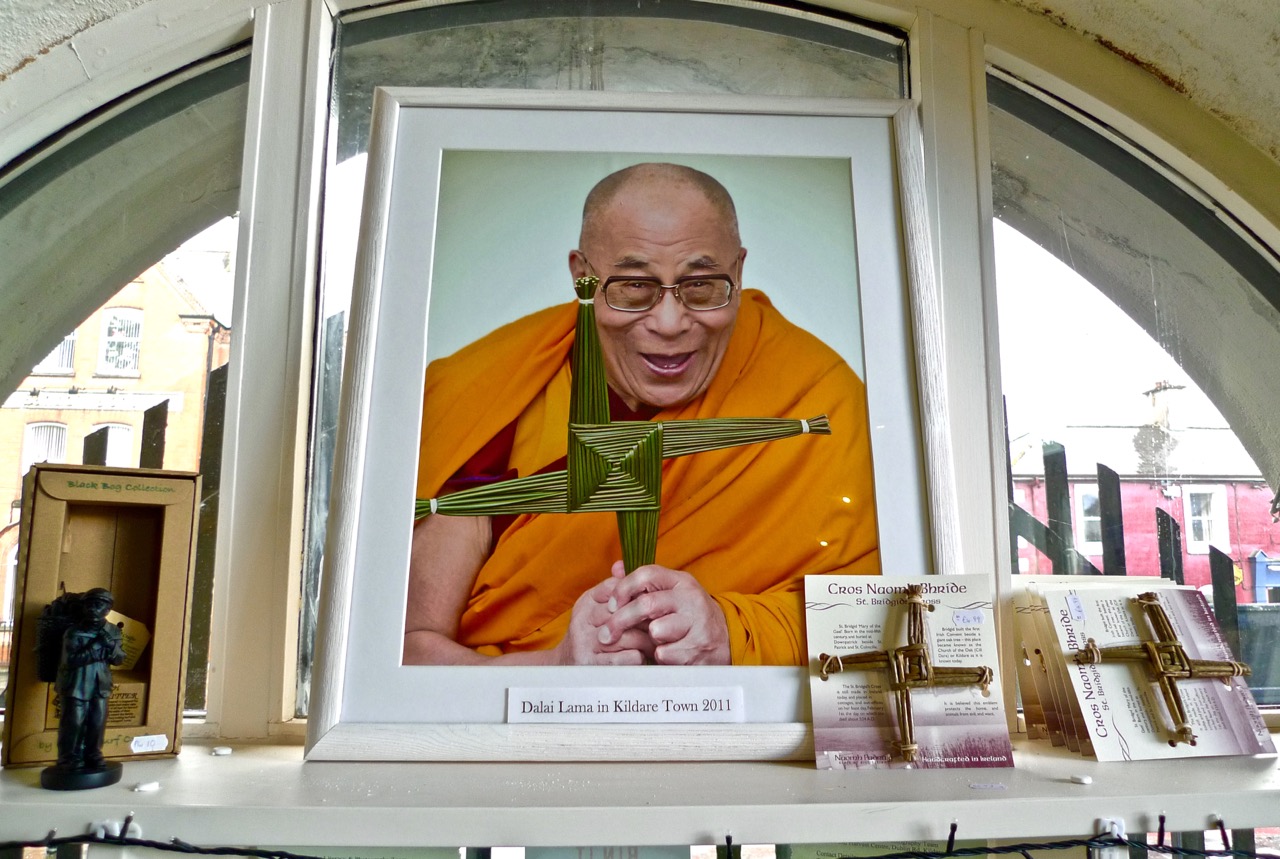
dali lama

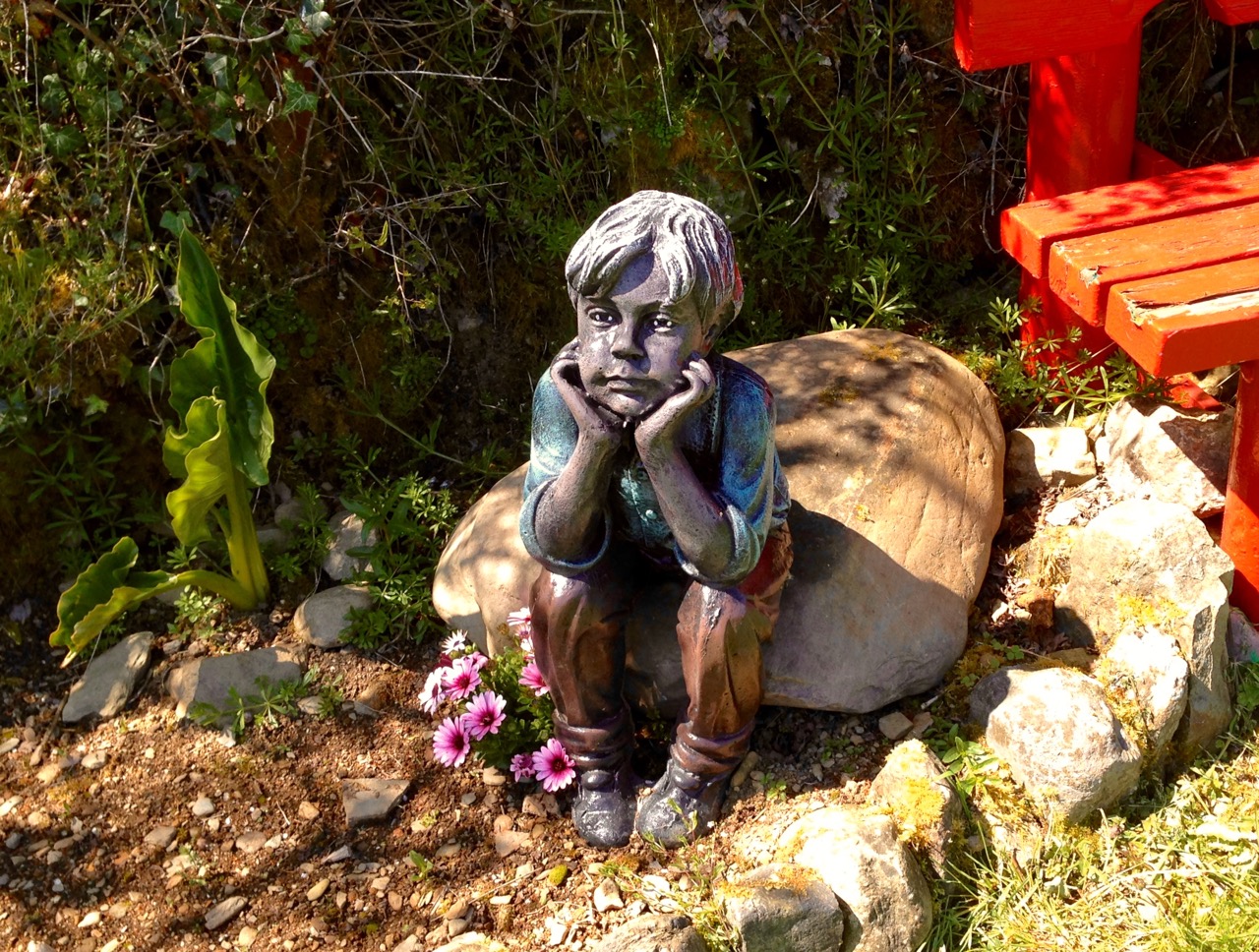
sitting

Lifeline…

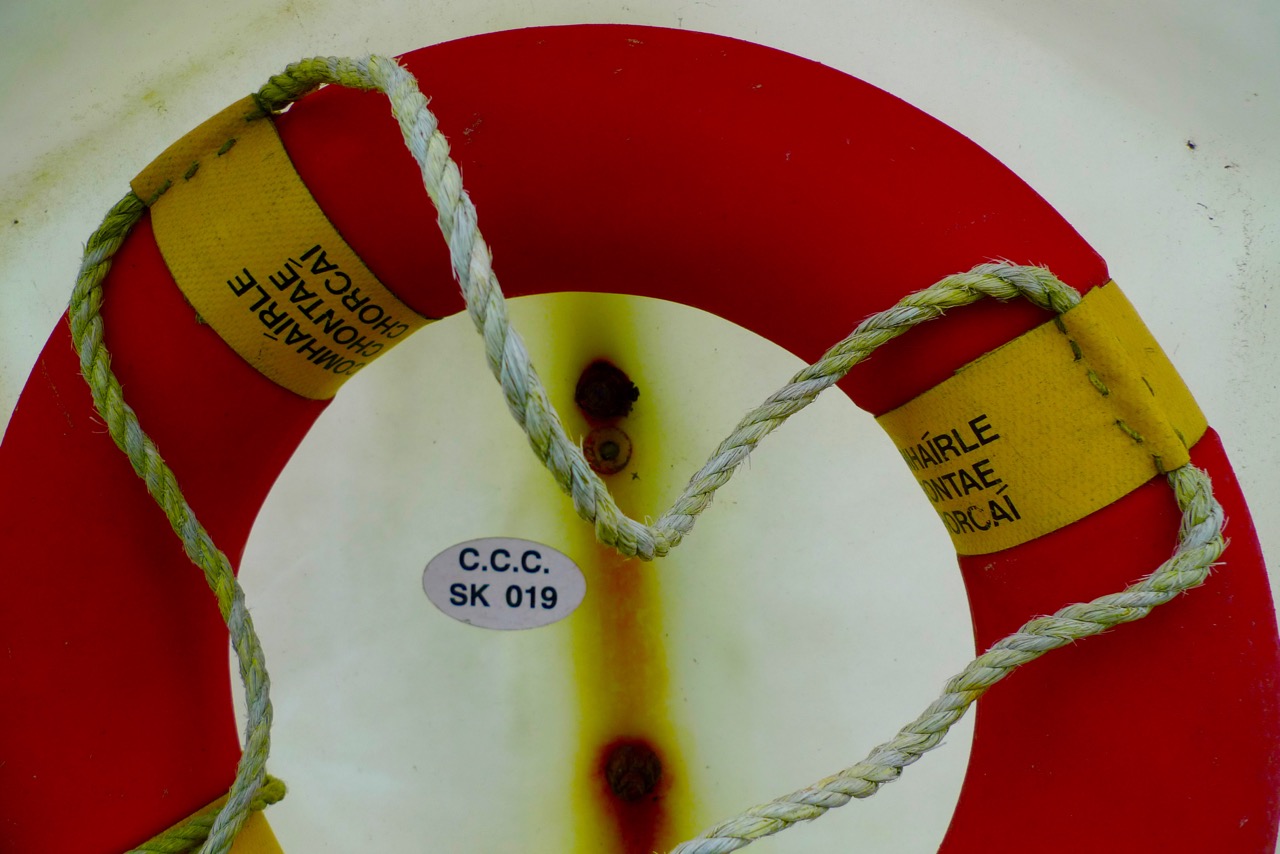
ring

The last word…

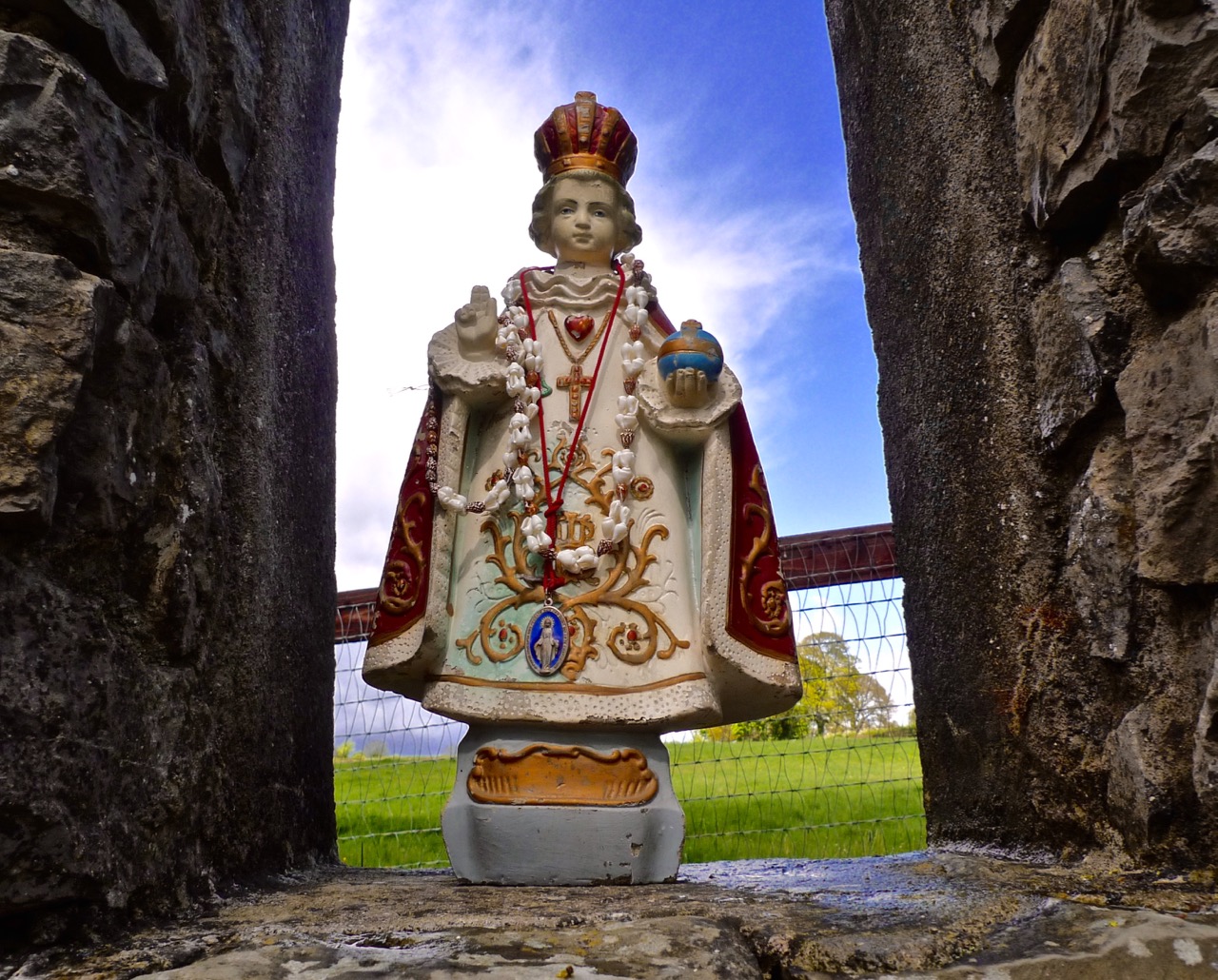
little saint

Time to Refresh

Mum and three lambs

Everything is looking fresh and new in West Cork these days as we revel in the early summer light. Time to perk up Roaringwater Journal too, with a new look and feel and better navigation. We like this full-page look, with the menus in sidebars and more information in the footers. It’s designed to look good on all devices.

We hope you agree, but do let us know what you think.

Trading Up in Tudor Times: Fortified Houses in West Cork

Coppinger's Court, Ballyvireeen, near Rosscarbery

Coppinger’s Court, Ballyvireeen, near Rosscarbery

Fortified houses are a distinctly Irish phenomenon. The Tudor period in Britain ushered in a great era of house building with many distinctive features. But England was a peaceful place – the owners of these great houses did not expect to be attacked. Tudor Ireland was a very different environment: life was still dangerous and conflict between the native Irish and the planter class, or between Irish clans, was common.

Machicolations at Coppinger's Court

Machicolations at Coppinger’s Court

Up to the end of the 16th century the castle/tower house was the residence of choice of the powerful – a tall stone keep mainly focussed on defensive features and horribly uncomfortable to live in. (See When is a Castle..? for a complete run-down on tower houses.) These new houses emphasised the horizontal rather than the vertical, and were built with comfort in mind. However, they incorporated some of the defensive features of the tower houses – they were “fashionable but defendable.”

Mullioned windows

Mullioned windows

In Ireland they represented “a public display of power and wealth…[and] a long-term investment in their owner’s regional future and were monuments to an aspiration for an English and Continental house style suited to local Irish conditions. On a basic level  the construction of a fortified house represented the owners desire to modernise and Anglicize.” These quotes and much of the information that follows is taken from The Fortified Houses of County Cork: Origin, Fabric, Form, Function and Social Use of Space, by Joe Nunan, who has generously made it and related material available on his website.
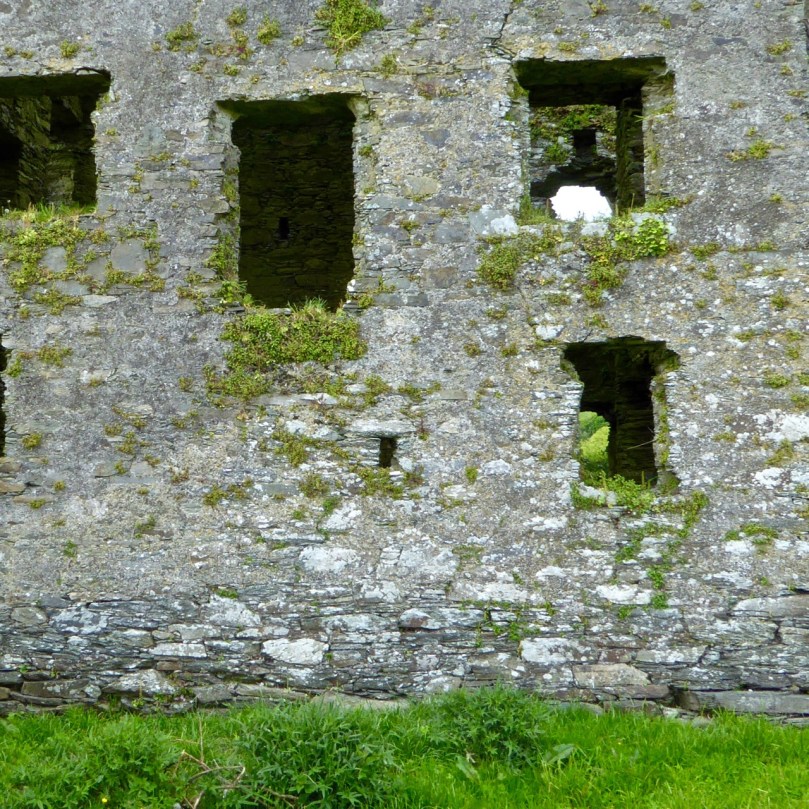
Gun loop at ground floor level, Coppinger's Court

Gun loop at ground floor level, Coppinger’s Court

Fortified houses were built of stone but all internal floors, stairs and partitions were of wood. Defensive features included machicolations, bartizans, wall walks, gun loops, corner towers or wings to provide for flanking fire. They were built starting about 1580 up to about 1650.

Tower and Bartizan, Reeandisert

Tower and Bartizan, Reenadisert

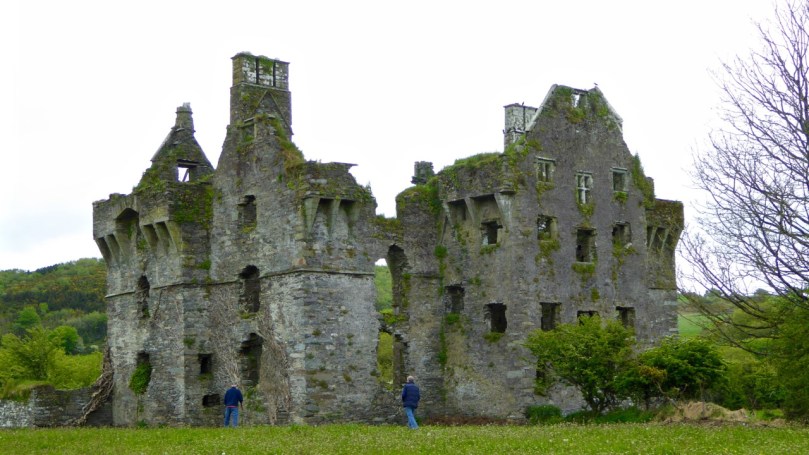
There are four (or five, if you include Baltimore Castle) surviving fortified houses in West Cork. The one that is most accessible (should you wish to visit) is Coppinger’s Court, in Ballyvireen townland near Roscarbery. It is also one of the most magnificent examples of this type of dwelling in Ireland. Some of the mullions remain in upper windows, and a sharp eye will spot gun loops in the outer walls. The machicolations are particularly fine, with impressive cut stone supports. This was the home of the infamous Sir Walter Coppinger, whose plan was to build a complete settlement around him in this lovely spot on the banks of the Roury River. He was a despot who got rich through clever manipulations of mortgage documents and he was said to hang his enemies from a gibbet from one of his windows.
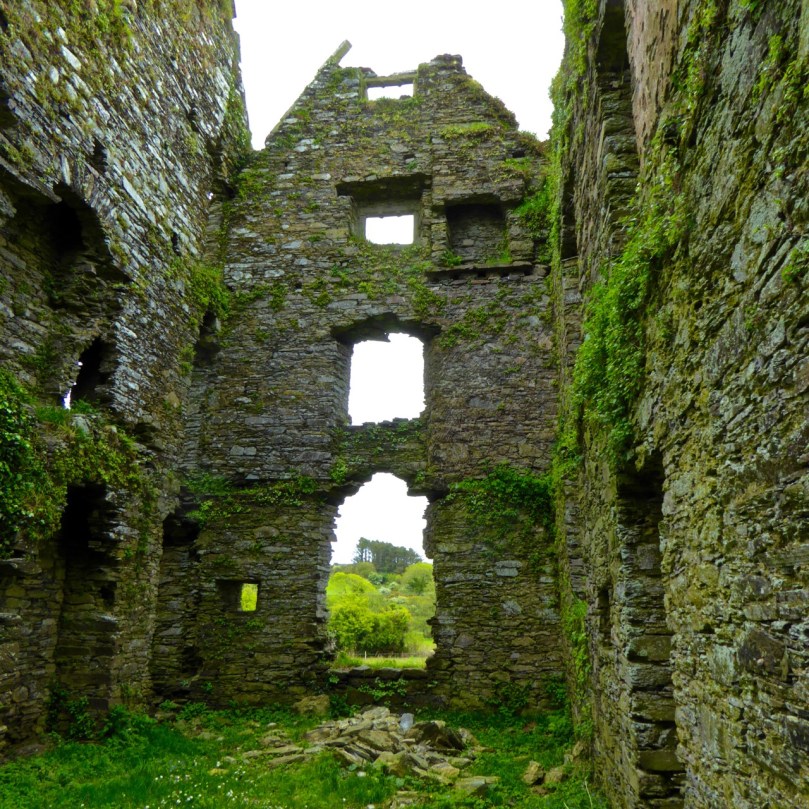
The chimney on top of this wall has fallen - note the pile of stones on the ground.

The chimney on top of this wall has fallen – note the pile of stones on the ground

The house was so awe-inspiring in its time that the legend developed that it had a window for every day of the year, a chimney for every week and a door for every month. The house was eventually attacked and ransacked in 1641 and has sat in ruins ever since. Sadly, one of the magnificent chimneys fell down in the storms of early 2014. Evidence of a bawn wall remains, with possible outdoor cooking areas.
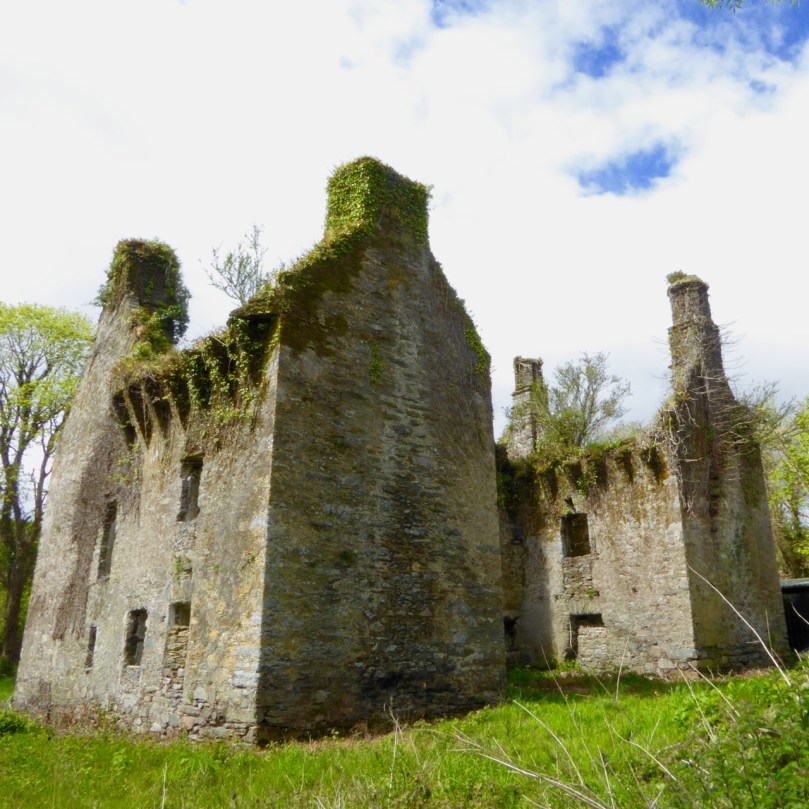
Gearhameen - a U shaped plan

Gearhameen – a U shaped plan

The fortified house at Gearhameen near Durrus, built by the MacCarthy Muclaghs, provides evidence of the comfort that these new ‘castles’ provided. The household work was done on the ground floor – large kitchens contained huge fireplaces, and in this house we can see the main kitchen fireplace had a bread oven to one side and a slop hole for sweeping out leftovers to the pigs, who must have been in an attached pen (the smell!).
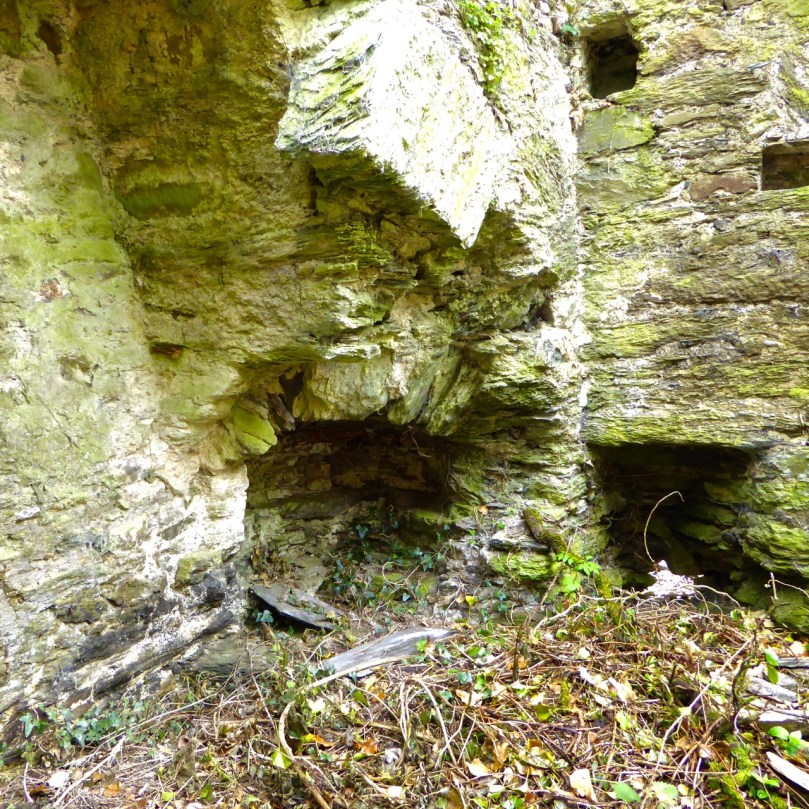
Large ground floor fireplace with bread oven

Large ground floor fireplace with bread oven

The first and second floors have large fireplaces, with magnificent herringbone chimneys still intact (and hosting nesting choughs).

Rather than the machicolations we see at Coppinger’s Court, corbels on the outside walls probably supported wooden or stone platforms.
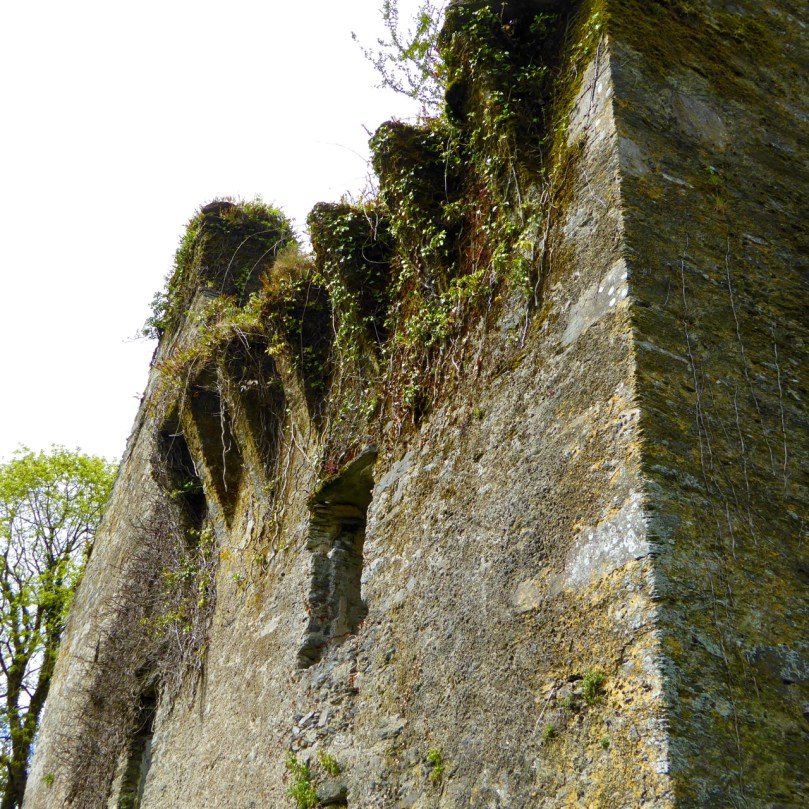
Corbels supported a platform for defenders

Corbels supported a platform for defenders

Like Coppinger’s Court, the outer walls still stand to their full height, but the loss of a keystone above one arch, and the consequent development of a large crack above it, bodes ill for that section of the wall.
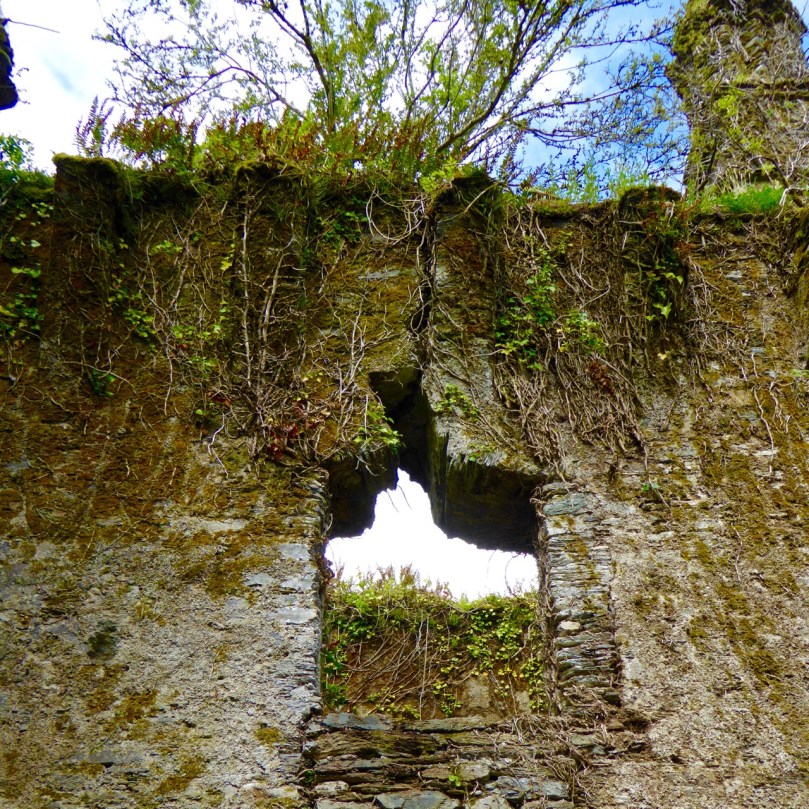
Missing keystone

Missing keystone

The house at Reenadisert, near Ballylickey, has been built onto and within over the centuries, serving as a modified dwelling place and as farm buildings. It was the stronghold of an O’Sullivan and has an impressive bartizan on one of the external towers. It is in a very ruinous state inside – the eeriness is enhanced by an enormous crows’ nest that has fallen from inside one of the chimneys to rest on the ground. There is evidence of a basement but this cannot be accessed.
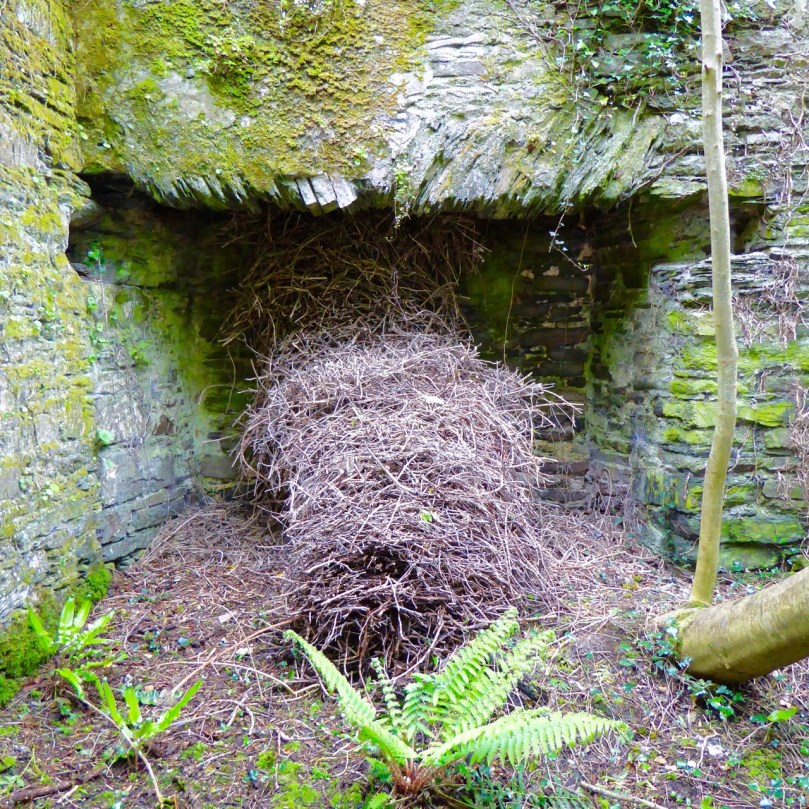
Fallen nest

Fallen nest

The house at Aghadown, home to the Becher family, consists only of one wall with attached towers. Ivy has threatened to take over most of it – I love Leask’s description of ivy – “destructive green mantle beloved of the sentimentalist.” Through it one can make out traces of the slate that once hung on the wall above the ground floor, the outline of corbels at roof level, and a string course between the ground and first floor.
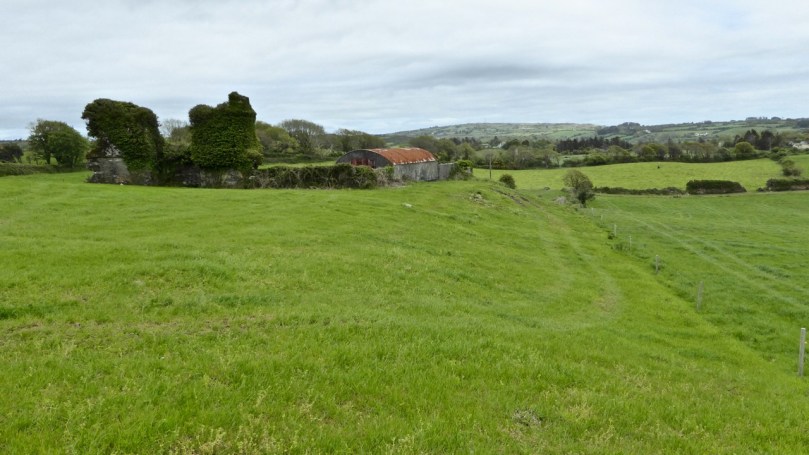
Aghadown Fortified house occupies high ground with a commanding view

Aghadown Fortified house occupies high ground with a commanding view

Interestingly, Dún na Séad Castle in Baltimore, home of the O’Driscolls, is described as a fortified house in the National Monuments Inventory. It possesses aspects of both a tower house and a fortified house – in this photograph you can see the corner bartizan, a gun loop, and the long, rather than tall, shape.
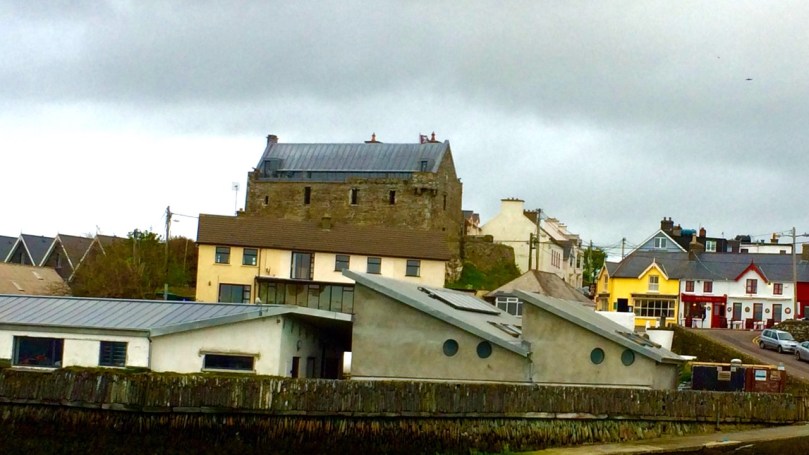
Dún na Séad or Baltimore Castle

Dún na Séad or Baltimore Castle

For a comparison of the two types of edifices, take a look at Leamanagh in Clare – here a 17th century fortified house has been literally tacked on to a 15th century tower house.
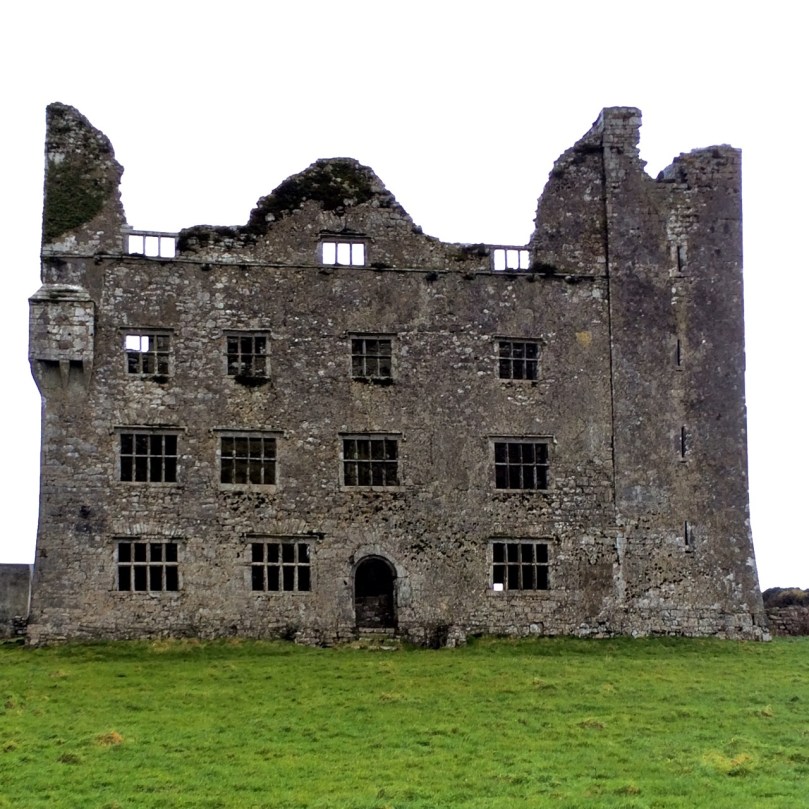
Leamanagh, in County Clare

Leamanagh, in County Clare

Joe Nunan provides useful summations of Irish fortified houses. Among other points, he says the following:

The fortified houses built in Co. Cork had a unique Irish architectural quality and a distinct southern English look and feel; the result of contacts built up between both regions, politically through plantation-immigration and economically, through trade with the port and fishing towns of Waterford, Cork, Kinsale, Youghal and Baltimore. The social changes that took place in Tudor England were reflected in architectural form by the elites in that society and it was the latter who spearheaded the Munster plantations. They were noblemen who viewed Munster as another region within a larger England and it was through these individuals that the initial architectural influence of the many gabled, oblong country manors with circular, square, rectangular and hexagonal corner-towers was introduced into Co. Cork.

Reenadisert

Reenadisert

We are lucky to have these fine examples of  fortified houses in West Cork still. However, all of them apart from Baltimore Castle are in a perilous state of dereliction.  Gearhameen’s owner has tried to stabilise the building and stave off collapse but all of them may eventually succumb to the natural ravages of time. That’s a sad thought.