Cape Clear

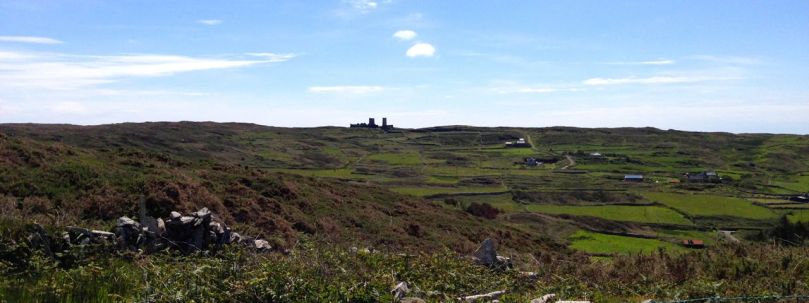
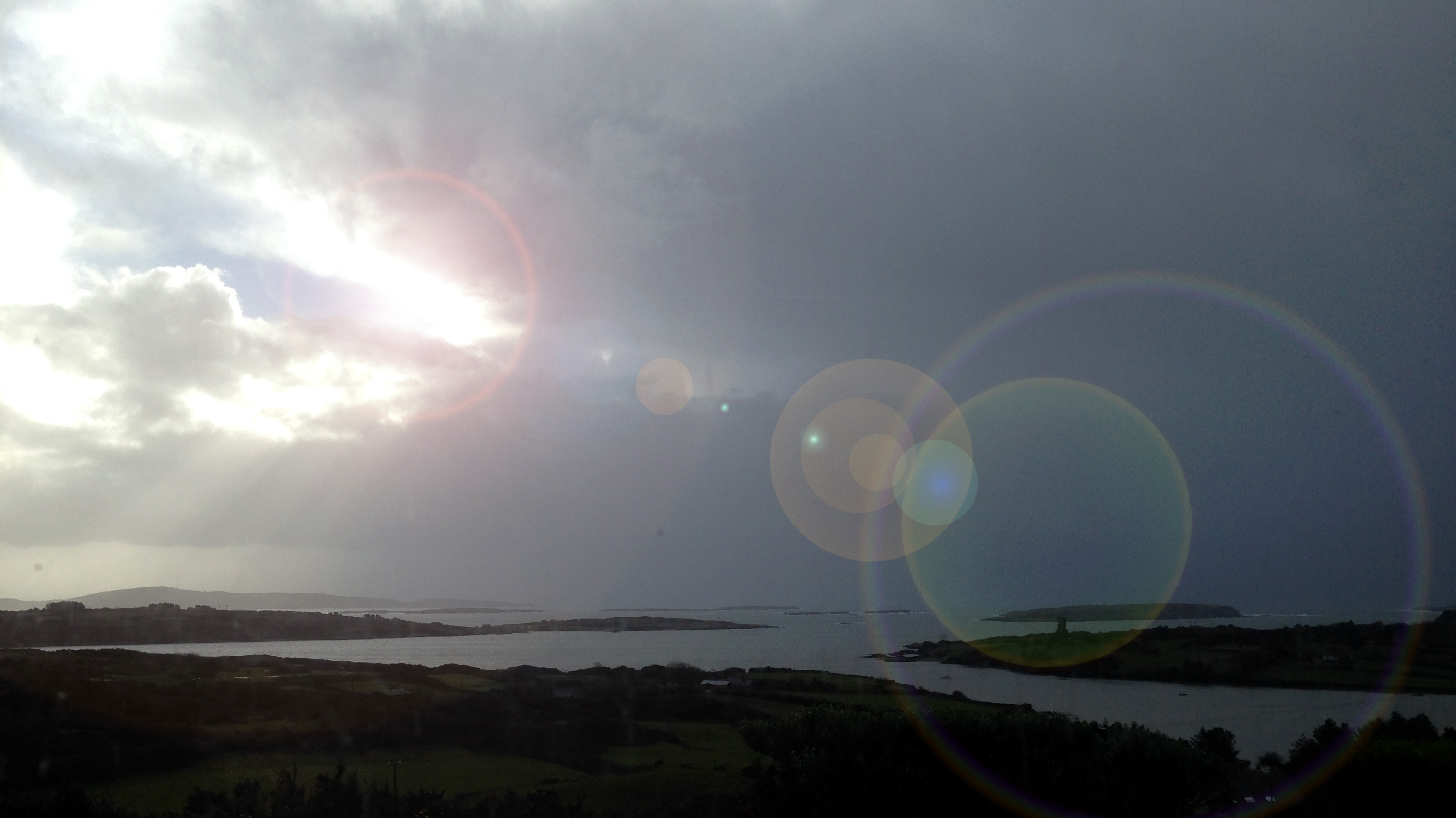
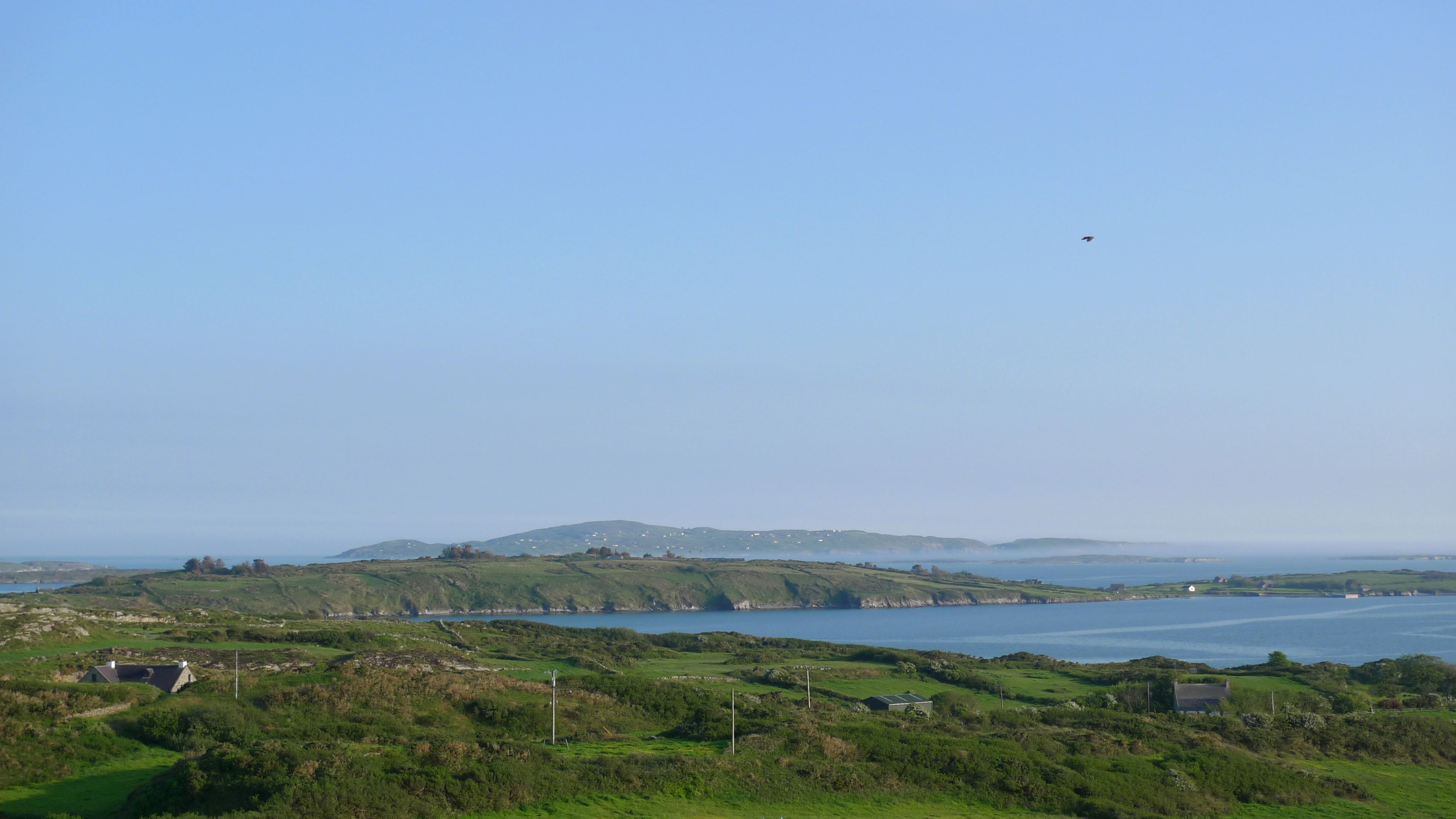
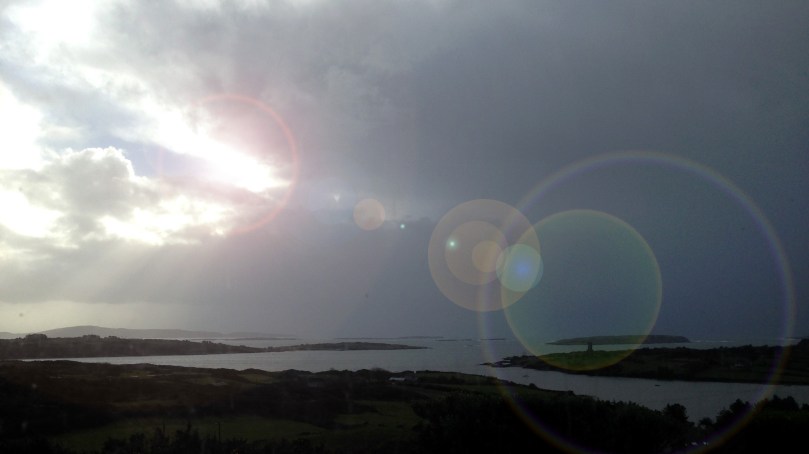
Distant Cape Clear - with solar effects

Distant Cape Clear – with solar effects

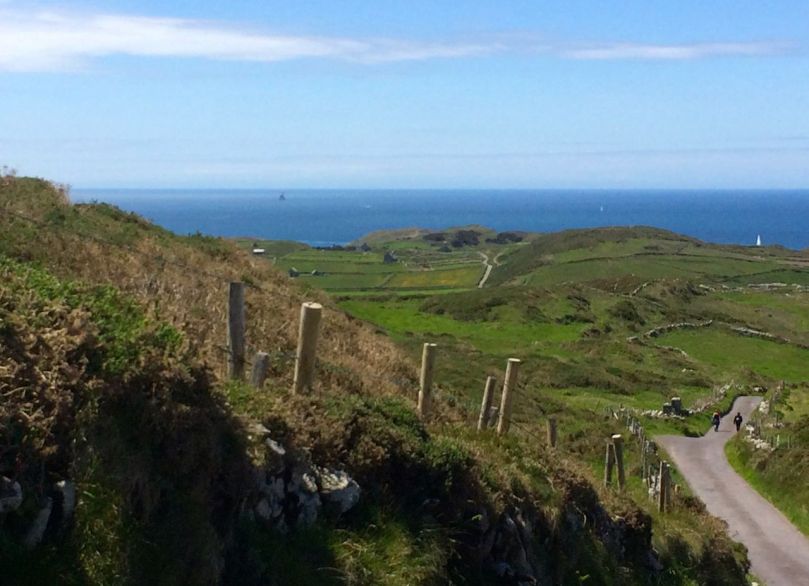
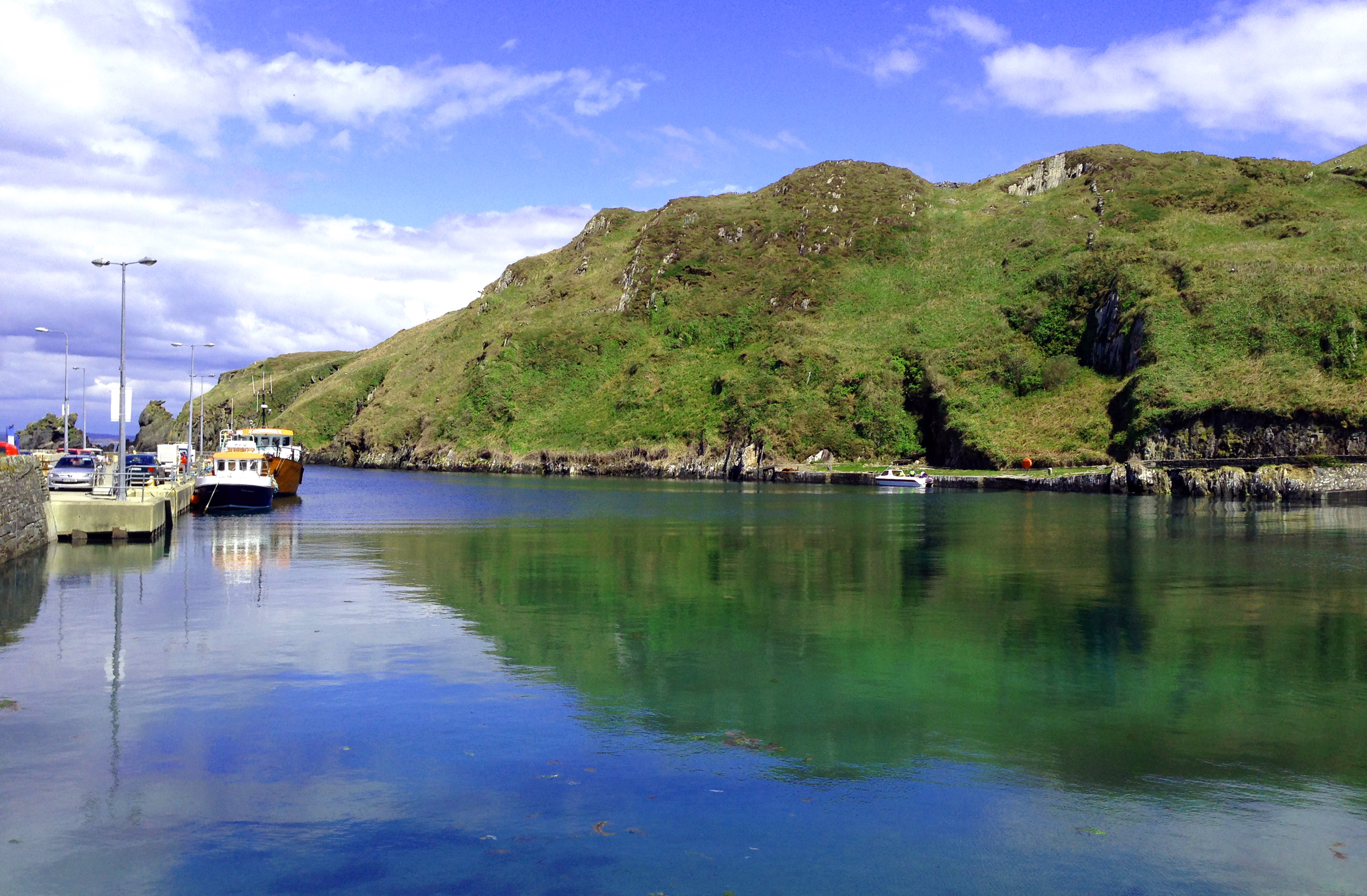
Always in our view from Nead an Iolair are the many islands of Roaringwater Bay: sometimes they are referred to as ‘Carbery’s Hundred Isles’. The largest of them – and the furthest out into the Atlantic – is Cape Clear. From our vantage point in Cappaghglass it sometimes floats on the horizon like a great seal under brooding skies, yet with the clarity of summer skies every hillside cottage can shine like a white jewel. I visited the island for the first time last weekend, drawn to its isolation and history – and by its own Saint – Ciarán, born on this most southerly point of Ireland and preceding Saint Patrick by some generations as the ‘Apostle of Eirinn’.
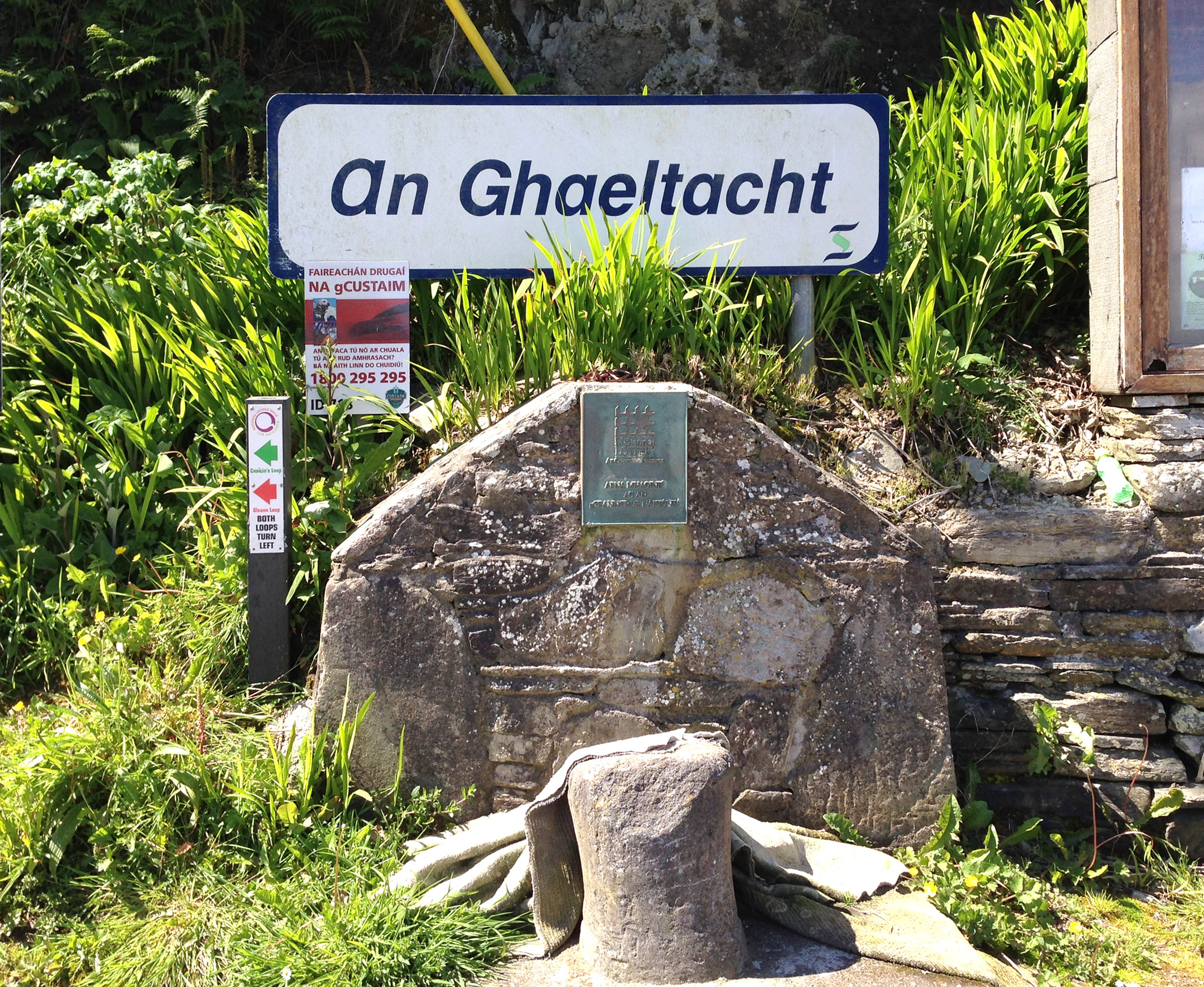
ghaeltact

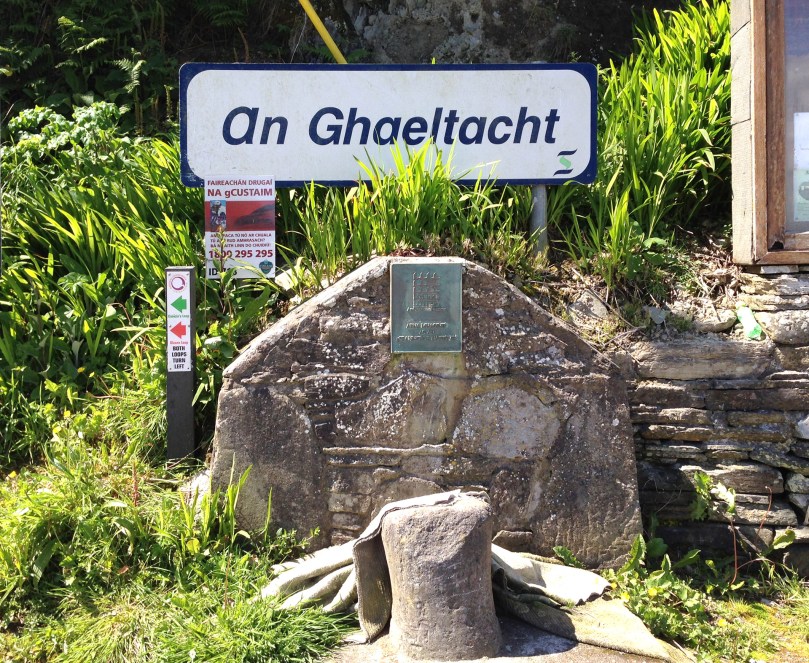
Cape Clear is a place apart. It is one of the Irish Gaeltacht areas – where Irish Gaelic is spoken as the first language. Oileán Chléire is the Island of Ciarán, and one of the first things to be seen after landing is an ancient stone by the quay – said to have been placed there by the Saint himself – and his holy well – while nearby are the ruins of an ancient church and burial ground.

Saint Ciarán’s life has inspired some colourful stories. Before he was conceived Ciarán’s mother (Liadán) had a dream that a star fell into her mouth. She related this dream to the tribal elders who were knowledgeable of such things, and they told her that she would bear a son whose fame and virtues would be known as far as the world’s end. Ciarán’s first disciples included a Boar, a Fox, a Brock and a Wolf: they all became monks and worked together to build the community.
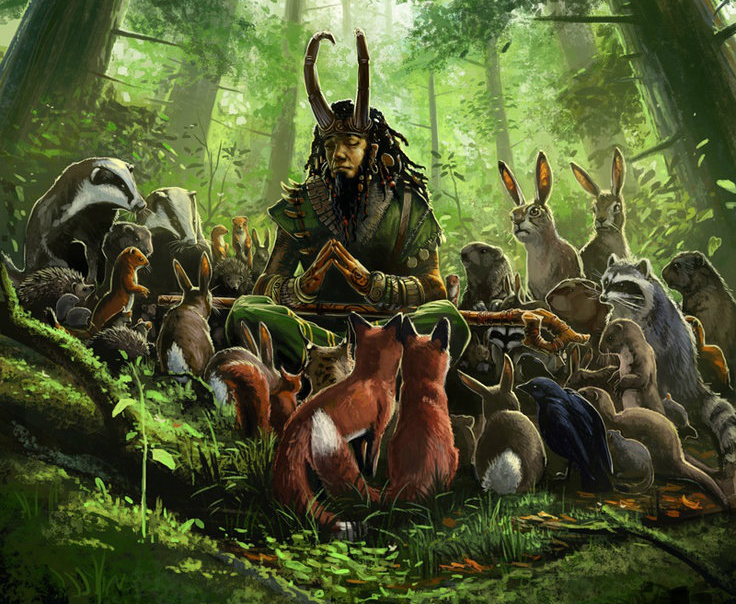
An interesting find: Ciarán as a Celtic God by Astrella

An interesting find: Ciarán as a Celtic god by Astrella
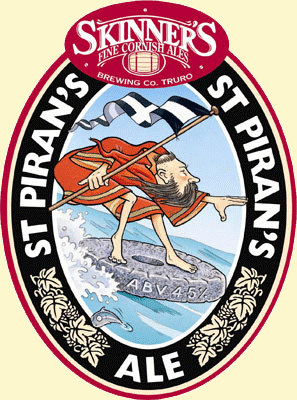
An unusual incarnation of the St Ciaran / Piran legend!

An unusual incarnation of the St Ciaran / Piran legend!

The Saint is also recognised in Cornwall, where he is known as Piran (or Perran) – scholars argue that in some ‘Celtic’ languages the C sound is interchangeable with the P sound. Certainly there is a legend that the Heathen Irish tied St Ciarán to a millstone and dropped him into the sea – and he then floated across to Cornwall where he converted the Heathen Cornish. Whatever the basis of this, both Piran and Ciarán share the same Saints Day: March 5th – which is also my birthday – so that puts me firmly into the picture!

Writers in the past have commented on the island’s particular character:

“…The natives of Cape Clear are distinct in a great measure from the inhabitants of the mainland; they have remained from time immemorial as a separate colony, always intermarrying amongst themselves; so that we must regard them as amongst the most typical specimens at the present day of the old Milesian race. The name of nearly all the islanders is O`Driscoll or Cadogan, the later being only a sobriquet for the former. Baltimore and Cape were originally the stronghold of this family, the principal Chieftain, O`Driscoll Mór, residing in Baltimore. There can be no doubt that they were the aboriginal race residing along the sea-coast of Carbery. The isolated position of the island and its difficulty of approach, have kept the population in a comparatively antique state and distinct condition during the lapse of centuries, so far as nationality and descent. Until the year 1710 Cape was an established monarchy, and an O`Driscoll – the head of the clan- was always styled, “King of the Island”. They had a code of laws handed down from father to son. The general punishment was by fine, unless some grave offence was committed, and then the delinquent was banished forever to the mainland, which was looked upon as a sentence worse than death…’ (from Sketches in Carbery by Daniel Donovan,1876)
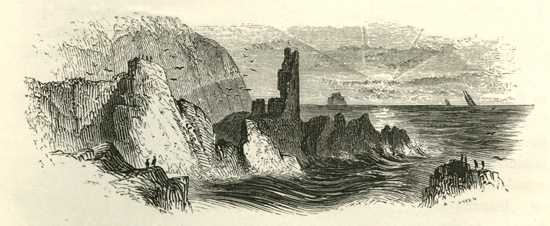
Dunanore – engraving by W Willes 1843

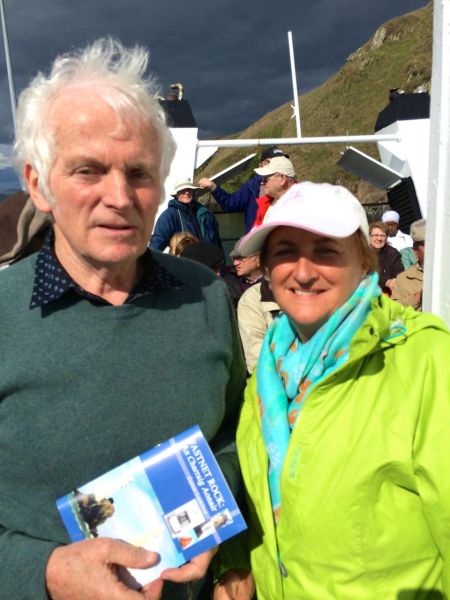
Our visit was organised by the Skibbereen and District Historical Society, and was masterminded by past Chairman Brendan McCarthy. He had arranged for the sun to be shining all day, and for the sea to be the calmest that anyone had known for years. A bonus was the presence of Dr Éamon Lankford – a knowledgeable and erudite local historian and toponymist whose projects have included setting up detailed place name archives for Cork County, Kerry, and Cork City. There are now over 200 large volumes of historic place name references and the work is still under way: examples from the city survey include Black Ash, Cáit Shea’s Lane, Murphy’s Farm, the Snotty Bridge, The Shaky Bridge, the Boggy Road, Tinker’s Cross, Skiddy’s home… Éamons unbounded energy has not stopped there – he has gone on to set up and run the Cape Clear Island Museum and Archive and written books on the Island’s people and landscape, on Saint Ciarán, on the Fastnet Rock, on Cape Clear place names- and has set up the Cape Clear Trail… Phew! We walked up the (very) steep hill to the Museum, which is housed in the restored old school building, and no-one could fail to be impressed by the sheer volume of information and artefacts it contains. Volunteers are needed to help run it through the summer months, so anyone fancying a bit of island life please make contact through the website. On our ferry trip from Baltimore and in the Museum Éamon kept us entertained and educated with stories, history and local lore.

I was keen to visit the Museum because I knew it housed a replica of the passage grave art (carved stone) found on Cape Clear and now believed to have once been part of a passage tomb on the highest point of the island – Cill Leire Forabhain. In 1880 the original stone was turned up in a field and taken across to Sherkin by the then curate of that island to ornament his garden. He left Sherkin only a year later, and the stone became overgrown and forgotten. It was rediscovered in 1945 and given to the Cork Public Museum where it is now on display. The carvings on this stone are in the style of the other spectacular decorated stones in the Boyne Valley and at Loughcrew, rather than the simpler Rock Art we are working on in West Cork and Kerry (although this ‘simplicity’ is belied somewhat by the recent discovery at Derreennaclogh). Beside the replica stone in the Museum is a smaller piece of Rock Art, although debatably labelled as being caused by ‘solution pits’.
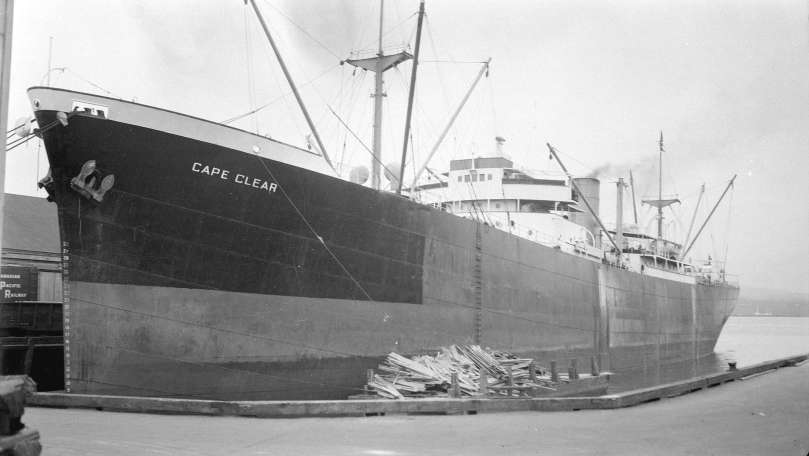
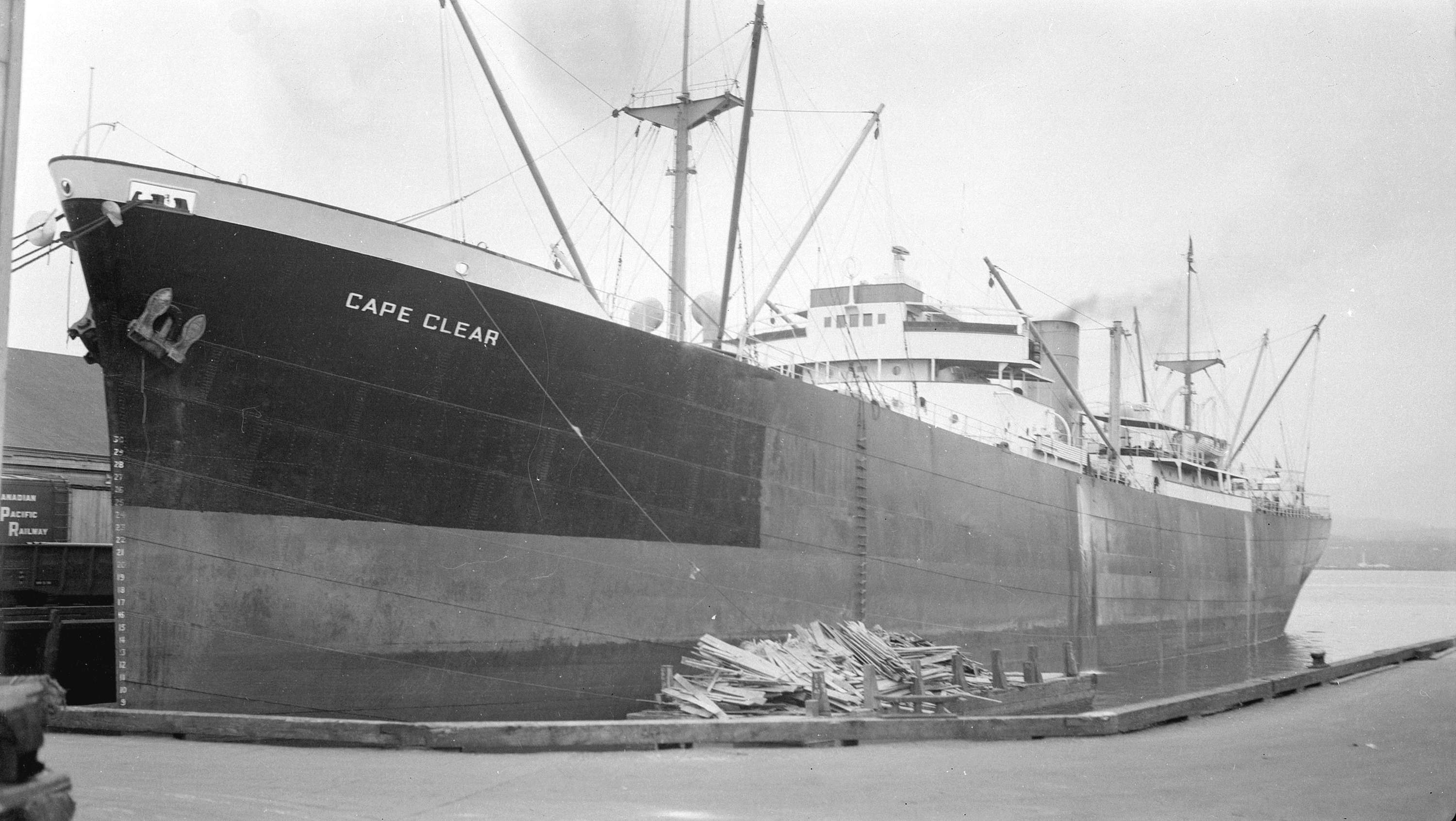
MV Cape Clear - built in Glasgow in 1939; went down in the Red Sea 1944

MV Cape Clear docked in Vancouver – built in Glasgow in 1939; went down in the Red Sea 1944

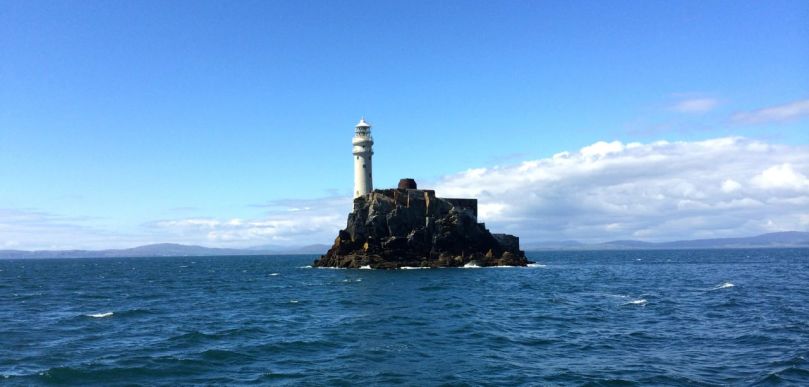
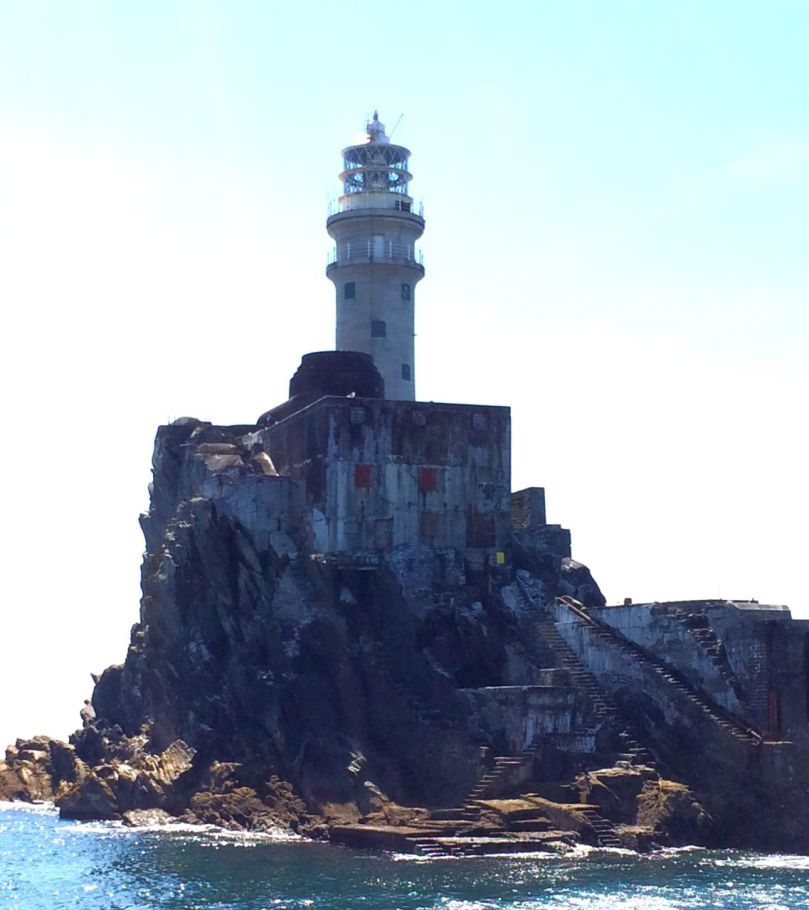
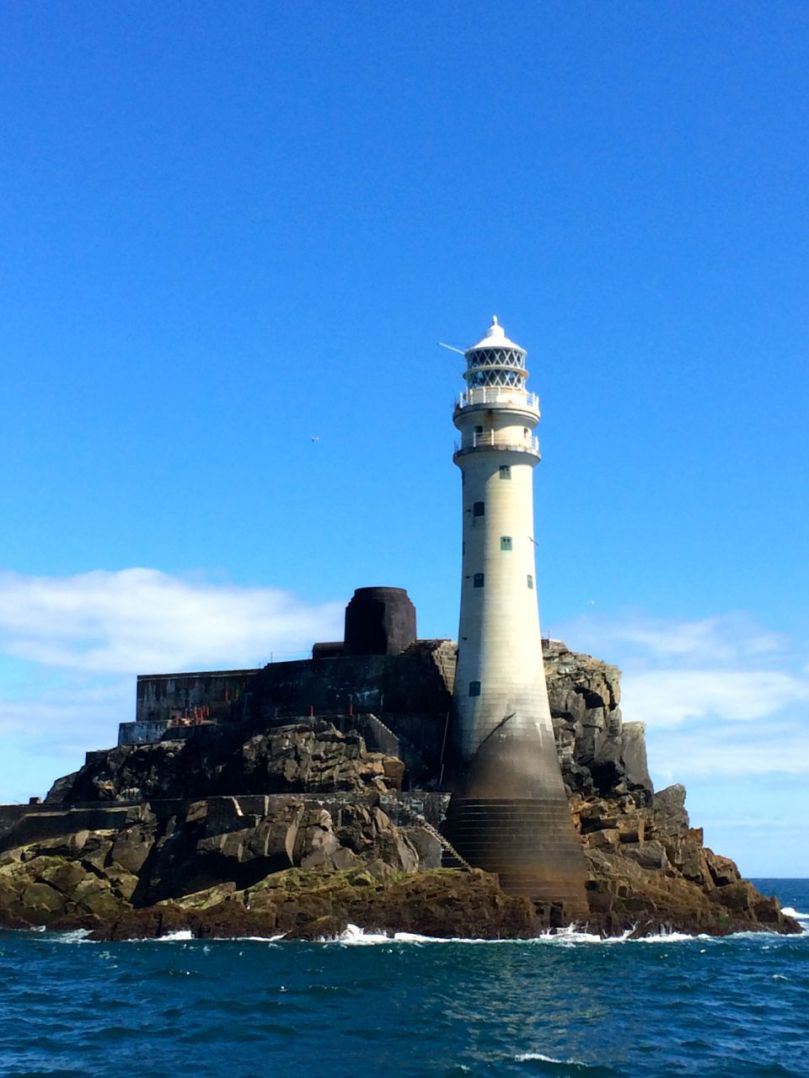
There is so much more to say about Cape Clear: it has given its name to a settlement in Victoria, Australia, supposedly named by gold miners from Ireland, and also to a number of ships built in Scotland. Talking of ships, the surroundings of the island have seen many a shipwreck: more than 50 wrecks have been recorded off Cape Clear between 1379 and 1944. This is partly because of the proximity to the notorious Fastnet Rock. FASTNET
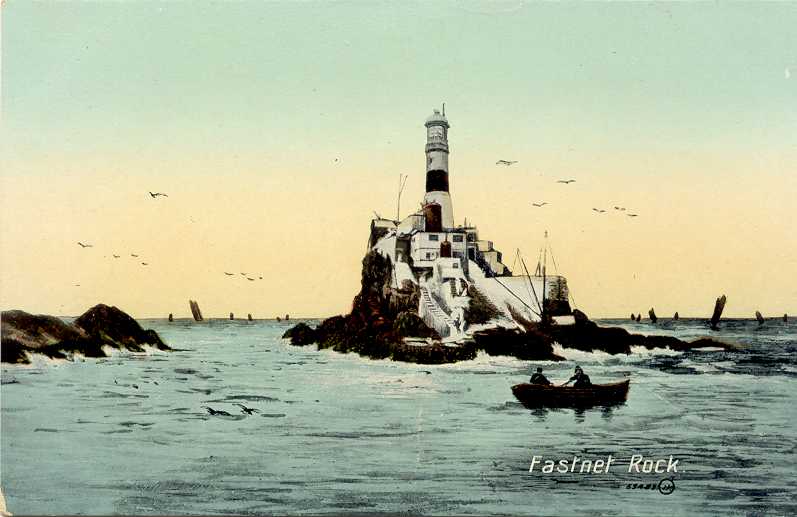
We have to revisit Cape Clear again in the not too distant future, when we can devote more time to a full exploration of the island: it comprises 7 sq kilometres and 16 townlands. This time, however, it was down to the harbour for an excellent lunch before embarking on the ferry for the next stage of the trip to…. But that story must wait until another time!
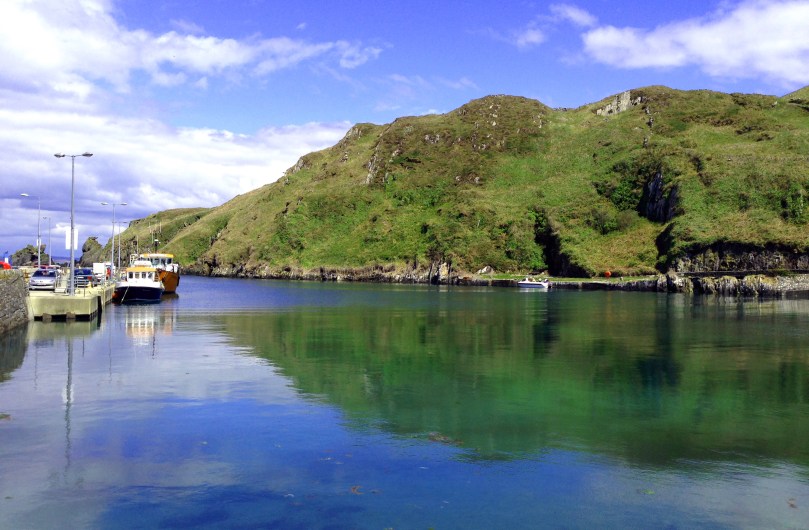
harbour

For me, small island communities have a very particular feel: it’s not just the silence and closeness to nature, but a real awareness of how fragile, yet tenacious, the tenets of human existence / subsistence can be. As I write this, Cape Clear is romantically shrouded in mist out there over the bay: only the highest ridge, the cairn, the watchtower and the old lighthouse visible in grey silhouette. It’s a place that will pull us back across the water very soon.
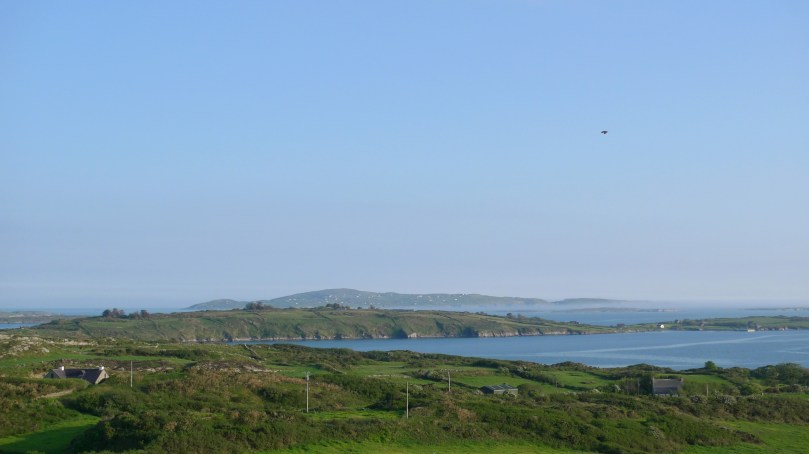
today

Today’s view of the Cape from Nead an Iolair

The Fastnet Short Film Festival

Our Village is Our Screen Schull has been getting ready for this Festival for months. Everyone we know seemed to be volunteering or involved or just, like us, planning to cram in as many films and events as they could. The town was freshly painted (yes – the whole town! Well, it seemed that way), banners and streamers flapped gaily along the main street, and cinemas popped up everywhere. The church hall became The Adelphi, Hackett’s Bar became The Carleton and Grove House turned into The Palace. You see – Schull doesn’t have an actual cinema!

But lack of facilities has never stopped a West Cork town intent on hosting a world-class festival. They have come up with the most ingenious method of screening and watching that you can imagine. For the duration of the Festival, the films are hosted on a server and the whole village becomes an intranet. While the main programme runs at the Adelphi, all the pubs, cafes, shops and premises on the intranet have large screens where you can watch the movies. Some are playing the ones on the programme, and others are hosting re-runs so you can catch up on what you’ve missed. You can sit with a coffee and a scone, or a pint and a sandwich and watch whatever’s on screen. You can drop in and out, all for free. But there’s more: you can bring your own device – computer, tablet, phone – and log into the intranet and watch on a park bench, or sitting in your car, or while shopping, if you want. The marvellous Whyte Books hosted a story telling session, and The Blue House Gallery got in a load of bean bags so you could lie on your back and watch movies on the ceiling.

Robert, Chris O'Dell (Festival Artistic Director) and young Austrailian filmmaker Jake Zappia

At the Opening Reception: Robert, Chris O’Dell (Festival Artistic Director) and young Austrailian film maker Jake Zappia

The opening party was at Grove House – the sun shone, much Corona was downed (the generous Festival sponsor), and then it was off to The Adelphi for The Lord’s Burning Rain, filmed in West Cork and based on the Aeneid – a coming of age story with echoes of Ireland’s War of Independence, the effects of which still resonate in this area. This was followed by a Q and A with the filmmaker, Maurice O’Callaghan, hosted by the excellent John Kelleher. With our Canadian visitors in tow (Alex and Mavis, enjoying it all hugely) we took in some shorts the next day in Newman’s restaurant and that night attended the second featured film, Living in a Coded Land. The Q and A session afterwards was enjoyable and stimulating – the director, Pat Collins, expounded on his vision and his influences, and the host, Aidan Stanley, drew him out with thoughtful questions and directed traffic as audience members got into the conversation.
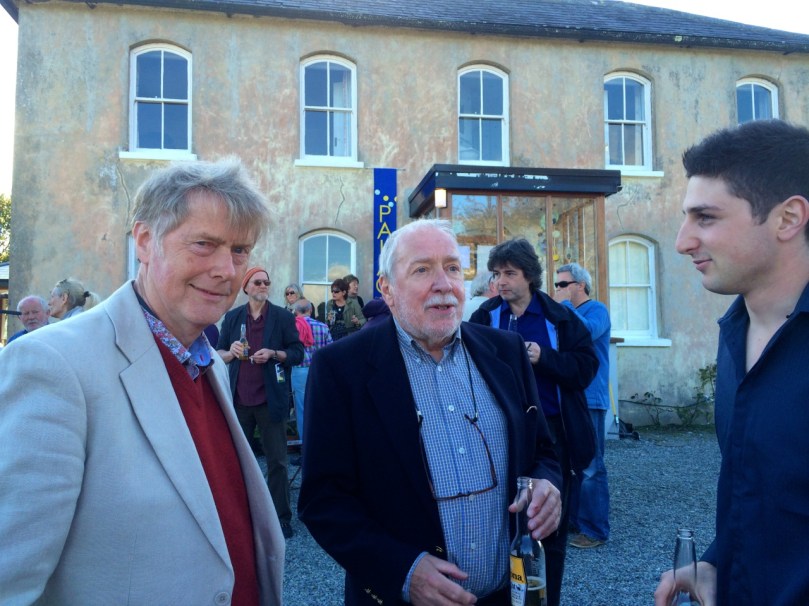
Our most unusual experience of the festival came on Saturday. We took the ferry to Long Island and watched movies in the bedroom of a beautiful island house courtesy of the owners, Maurice and Helen. Long Island has a year round population of under ten people. A local film maker, Helen Selka, has made it her focus. Although we didn’t get to see her longer piece, Bleak Paradise, we watched a shorter one called The Polling Station. In the film, nothing much happens beyond a handful of people coming to a cottage to cast their ballots in a referendum – and yet it was funny, charming and poignant. We also watched one of the eventual Festival winners – a closely observed tragicomedy called Breakfast Wine. The set finished with a gut-wrenching, wonderfully conceived and acted piece called Stolen. I was glad I brought along kleenex for this one. 

There were celebrities to meet (David Puttnam, Steve Coogan and the team from Philomena, Stephen Frears), events for children, lots of technical sessions for the hoards of young filmmakers invading Schull for the festival, and forums and clinics on all kinds of topics. But mostly there were the films – in turn quiet, ambitious, animated, provocative, amusing, youthful-but-showing-potential, soulful, well-written, cleverly directed, beautifully shot. They left us marvelling that powerful stories with fully realised characters can be told in a few precious minutes.

Superlatives fail me – especially when I think that this was all accomplished by a dedicated group of volunteers! Well done indeed Schull and the Fastnet Short Film Festival Team!

Old Nog

The Heron Family - a 19th century print

The Heron Family – a 19th century print

Here at Nead an Iolair we are on a flight-path. Not for Eagles – which you might expect (Nead an Iolair means Nest of the Eagle) – but for Herons. I have often watched one of these most prehistoric seeming of birds lazily flapping its way across our view, apparently from the hills behind us, towards the islands in front – no doubt heading for its shallow water fishing grounds. Yesterday I saw the Heron being mobbed persistently by Crows – presumably worried about their eggs and young – but our Old Nog ignored the harrying and continued stolidly on his way. Herons roost in trees – and do so communally: I would like to search out the Heronry, which would be a rich experience in both sound and smell.

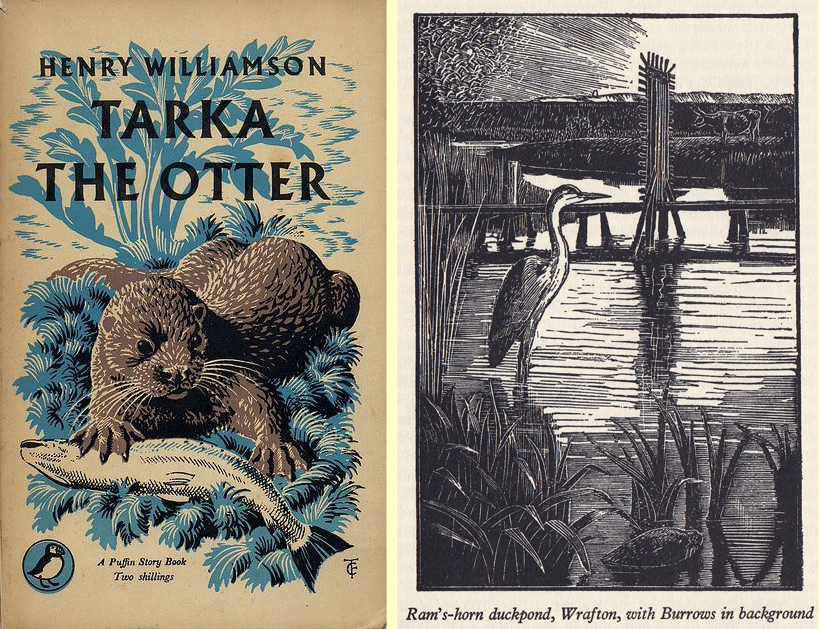
A 'Tarka' edition illustrated by Tunnicliffe

A ‘Tarka’ edition illustrated by Tunnicliffe

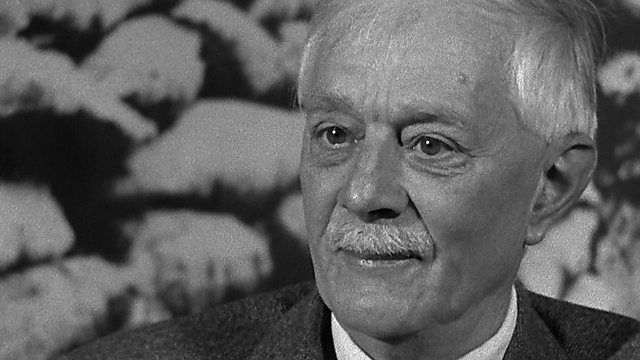
Old Nog – there’s a good name for this character. It comes from Tarka the Otter, probably the most famous book by Henry Williamson – a master nature writer and novelist who lived from 1895 to 1977, spending many of those years in Devon. The book – winner of the Hawthornden Prize for Literature in 1928, and never out of print since it was published – opens with these lines:

…Twilight upon meadow and water, the eve-star shining above the hill, and Old Nog the heron crying kra-a-ark! as his slow dark wings carried him down the estuary. A whiteness drifting above the sere reeds of the riverside, for the owl had flown from under the middle arch of the stone bridge that once carried the canal across the river…

Henry Williamson

Henry Williamson

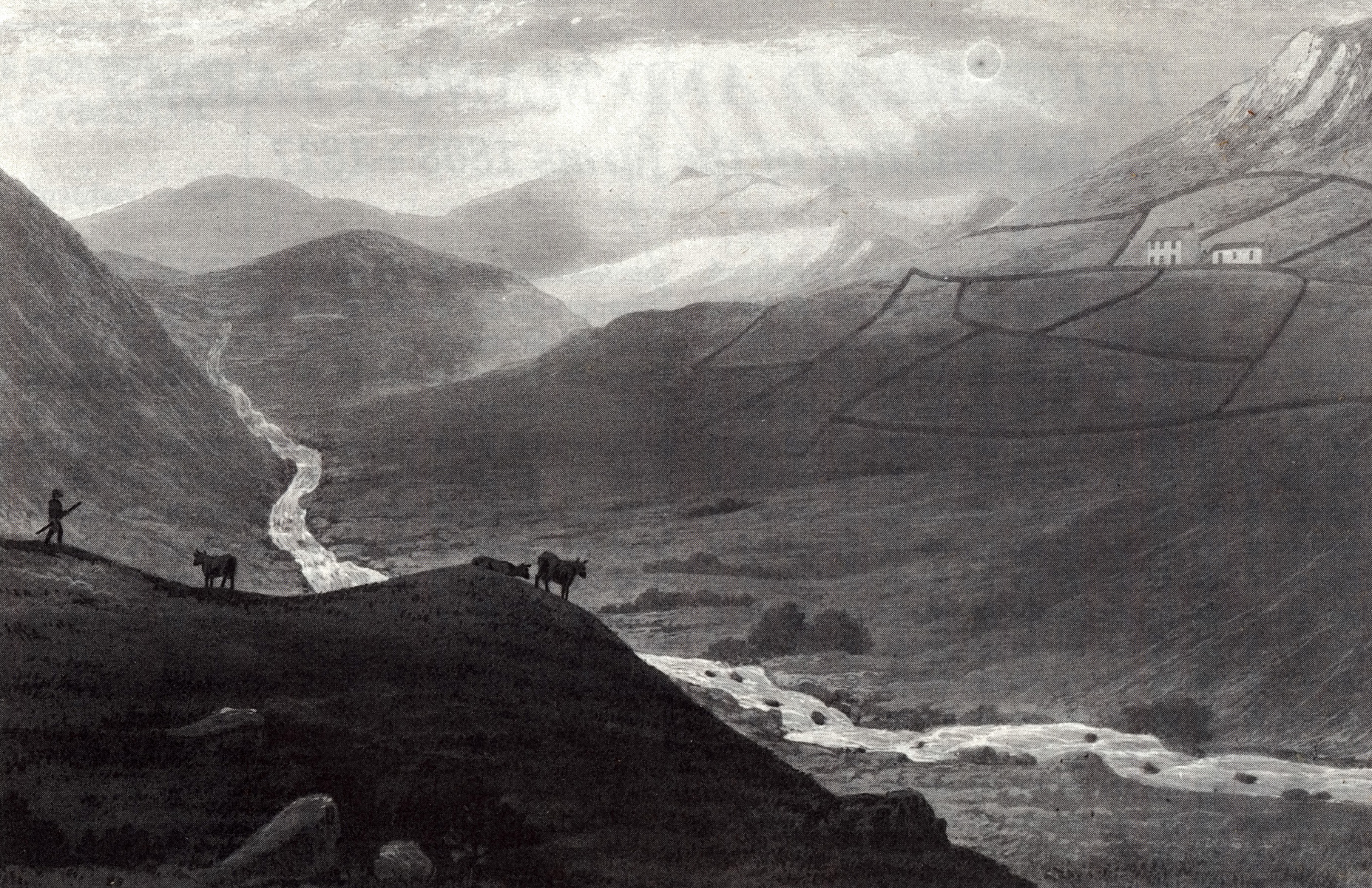
The story of Tarka unfolds in places I know well: I was in Devon for nearly four decades before I came here to Ireland. The stone bridge that once carried the canal across the river is still there, not far from where I once lived: the old aqueduct on the Rolle Canal over the Torridge now carries the driveway to a private house. Tarka’s travels took him right up to the heart of Dartmoor: to Cranmere Pool, close by which stand, today, the ruins of an old farm. This was once described (by William Crossing the Dartnoor writer) as ‘the remotest house in England’. My mother’s grandmother was born and raised there in the nineteenth century, one of fourteen children from a single generation. The name Cranmere comes from ‘mere of the Crane’, and the Crane was and still is a name often given, in England and Ireland, to the Heron.

Home of my forebears: Teignhead, Dartmoor (Strutt 1828)

Home of my forebears: Teignhead, Dartmoor (Strutt 1828)

Having established, perhaps somewhat tenuously, my own relationship to the Heron, I will enlarge upon the bird’s place in folklore and tradition. The Heron was once a regular dish on the English medieval banqueting table: as the property of the crown, heavy fines were levied on anyone caught poaching the bird, while in Scotland the penalty was amputation of the right hand. From observations of the bird standing still for hours in shallow water waiting patiently for its lunch to pass within range of its sharp bill, anglers assumed that the Heron’s feet had some means of attracting the fish towards it, and it was once a custom for the fisherman to carry a Heron’s foot for luck, but also to coat the fishing line with Heron’s fat and a noxious mixture made from boiled Heron’s claws.

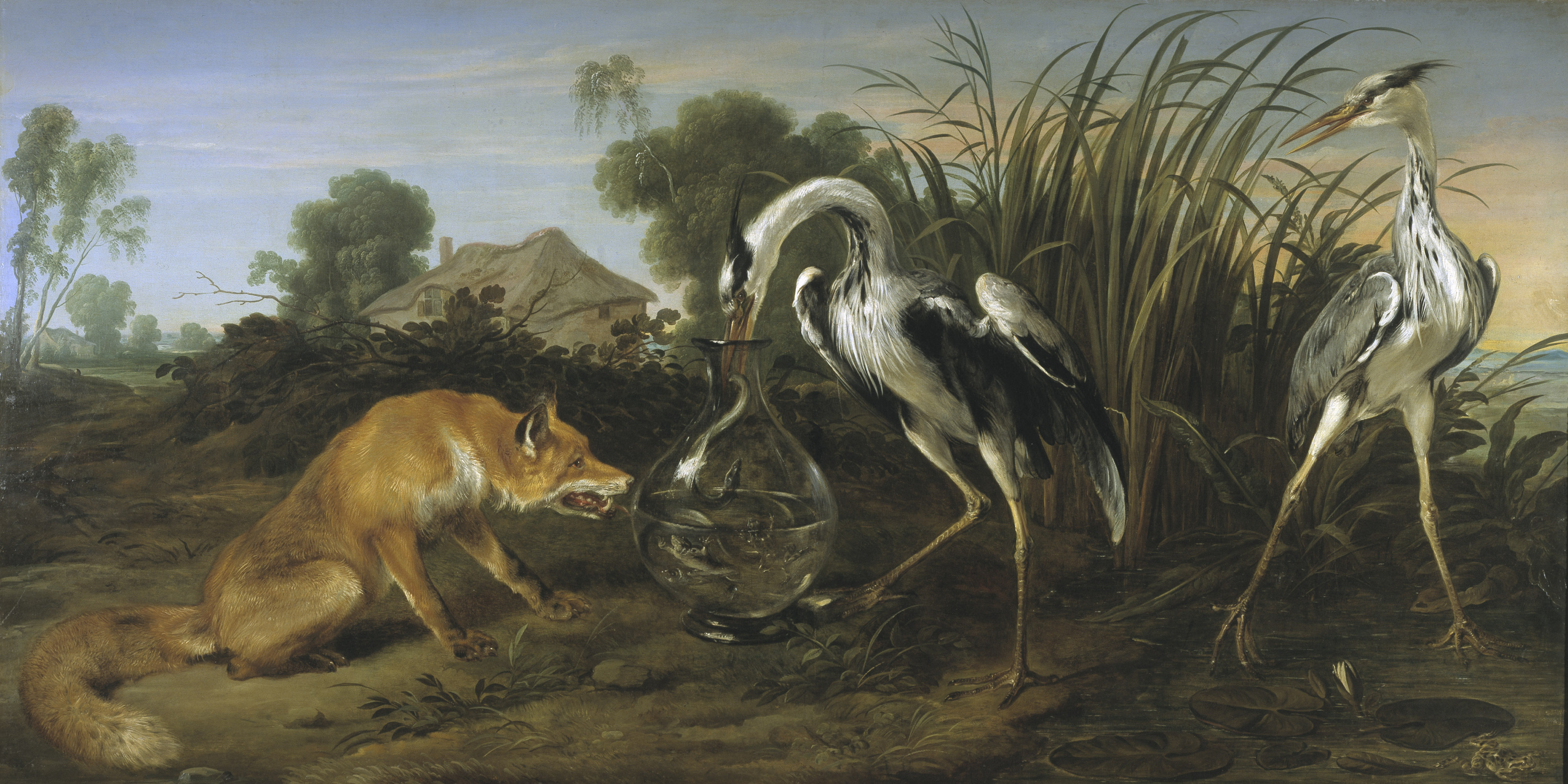
Aesop penned a fable about the Heron and the Fox: Fox invites the Heron to dinner but only provides a shallow plate of soup which the bird is unable to partake of because of its long beak. In retaliation, Heron invites Fox, and provides the food in a bottle with a long narrow neck: Fox is unable to share in this food. The moral? ‘One bad turn deserves another’.

Fox and Heron - Frans Snyder 1657

Fox and Heron – Frans Snyder 1657

I have never successfully photographed a Heron, but you can see some excellent pictures in the portfolio of Sheena Jolley – a professional wildlife photographer who lives not far away from here, in Schull. And here’s another – by our friend Lisa who lives out on the Sheeps Head.

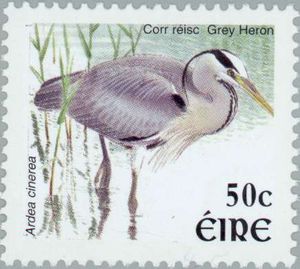
In Ireland the Heron is known as Corr reisc or Corr-ghrian (crying Crane). Although a common bird, I have found no specifically Irish folktale which includes Herons: if you know of one I would be delighted to hear it. There are some superstitions: if a Heron lands on your house you will have good luck, and if some of its plumage floats down to you – then you will have amazing luck! So, come on Old Nog – how about an occasional perch on the roof of Nead an Iolair? And, while you’re at it, throw out a few feathers as well… Of course, if there are more than one of you we will be able to say …there goes a siege of Herons…! 

heron stamp

In the Wilds of West Cork

West Cork night life

West Cork night life

What on earth will you find to do in the wilds of West Cork? One friend asked me this when I announced my plans to move here. Others may have been too polite to express the thought, but the question hovered. They needn’t have worried, of course. I don’t think I have ever lived anywhere else where there was so much going on and so much to do. If that was true in the winter, it’s more so now. It’s spring and summer’s around the corner, so West Cork Festival Season has gone into high gear. I wrote about the Ballydehob Trad Festival six weeks ago. Since then, there have been two more – a jazz festival in Ballydehob and the Fiddle Fair in Baltimore. 

Live jazz in the Irish Whip Bar

Live jazz in the Irish Whip Bar

The Jazz Festival featured a street market, and jazz sessions in most of the pubs all afternoon and well into the night. The village hall was decked out as a night club one night, with dancing into the wee hours. There were musicians and jazz aficionados from all over Ireland, and the pubs were bursting at the seams and spilling over onto the sidewalks.

Soul Driven and the riveting dancer Ksenia Parkhaskaya

Soul Driven and the riveting dancer Ksenia Parkhaskaya

This is the second time we have been here for the Baltimore Fiddle Fair, which has ben going now for over 20 years, under the brilliant direction of Declan McCarthy. World class acts come to play in this tiny village. The audience is diverse too – we met people who had come from Britain, Germany and the USA just for this weekend. We had season tickets, which meant we weren’t asleep before 2 in the morning for four nights in a row – probably earlier than most of the attendees!

Eddi Reader

Eddi Reader

A highlight was Eddi Reader, a Scottish singer/songwriter with a larger than life stage presence, a great line in stories, and a soaring voice. Robert loved seeing Aly Bain, one of his musical heroes, in concert and we both appreciated the wide range of music on offer, from Appalachian old time fiddling to Swedish polskas, Scottish and Irish tunes, and an entertaining group call the New Rope String Band who kept us laughing with their slapstick humour. For the readers who have been requesting videos, I recorded one lively number and uploaded it to YouTube – take a look. It’s a tiny taste of what we experienced.

John Sheahan with young fans

John Sheahan with young fans

One unforgettable afternoon was devoted to a concert by John Sheahan, the sole surviving member of the legendary Dubliners. Accompanied by Eamon Keane on the keyboard, he told stories, read us his poetry, and played his own compositions. He is truly an Irish icon, and it felt like a real privilege to hear him in such an intimate venue. He played a wide variety of music and I recorded this one: St Patrick’s Cathedral.

Of course all these late nights and bouncing around on seats takes a toll on the body, leading to the need for a rejuvenating day at a spa. Fortunately, there is a marvellous one in West Cork, on Inchydoney Island, where my friend Amanda and I repaired for a girly day of pampering. You can read her account of our hedonism here. 

The strand at Inchydoney Island

The strand at Inchydoney Island

And in case you might feel that the entertainment described above is not highbrow enough, last night we attended a performance of a Haydn mass and Mozart’s Requiem by the West Cork Choral Singers. Accompanied by an excellent small orchestra (we recognised some of the players from our regular Firday night trad sessions: fiddlers turned violinists) and four outstanding soloists, the choir rose to the challenge of an ambitious program magnificently, garnering a well-deserved standing ovation by the appreciative audience.

West Cork Choral Singers present Mozart's Requiem in Skibbereen

West Cork Choral Singers present Mozart’s Requiem in Skibbereen

We won’t have much time to recover from all those late night – next weekend is the Fastnet Short Film Festival in Schull as well as a Skibbereen Historical Society trip to Cape Clear, and the one after that is the Ballydehob Country Music Festival (where I may have a small role to play). More on those events in an upcoming post. If I survive it all…It’s a tough life, out here in the wilds!

Durrus Delight: Carraig Abhainn Gardens


IMG_2657

This week we visited a tiny jewel of a garden. Tucked behind Wiseman’s general store in Durrus is a two and a half acre gem called Carraig Abhainn (Rocky River, pronounced KA-rig OW-in [OW to rhyme with now]). It’s been a labour of love for over 20 years – the work of Eugene and Hazel Wiseman. We were lucky to have a chat with Eugene while we were there.

There are no large signs out on the road pointing the way and little advertising in the local media, so this is not as well known as it deserves. You pop into Wiseman’s shop, pay €5, open the gate at the end of the building, and step into a small wonderland.

IMG_2691

 IMG_2734

The first thing you become aware of is water.  A mill stream forms one boundary of the garden, crossed by little bridges here and there. The Four Mile River forms another – and this stretch is truly magnificent. Clear and sparkling, it rushes and falls and leaps over the rocks that give the garden its name. The paths have been cleverly constructed so that as you stroll you encounter the river at different points.  Each point has a unique vista that encourages you to gaze, contemplate, photograph or just sit and listen.

IMG_2663

The daffodils were over when we went and some of the rhododendrons had faded too. Nevertheless, around every bend was a new feast for the eye and the camera, from the undergrowth of bluebells to the camellias, yellow irises and the climbing clematis. Exotic trees add variety of colour, texture and size – “I wonder what that is?” became our mantra. (For those who need an answer, the garden website provides a list of plants.)

A wonderfully idiosyncratic feature of this garden is the statuary – a unique blend of the classical and the quirky, perfectly placed to enhance a long path, mark a set of steps, or simply be discovered rounding a corner. Near the entrance is a mural, with Greek columns and a water garden and benches that invite you to enjoy this sunny spot.

IMG_2682

There’s a West Cork Garden Trail in the second half of June and Carraig Abhainn is one of the gardens featured on the trail. But don’t wait until then – if you are anywhere in the vicinity of Durrus drop by Wiseman’s and treat yourself to a quiet hour or two soaking up the beauty and tranquility of this charming oasis. Bring a latte and piece of cake from the excellent Gateway restaurant next door – that’s all you need to complete your little slice of heaven. 

IMG_2716

Troll Tuning

Baltimore - with Dún na Séad before restoration - painted by Val ByrneBaltimore – with Dún na Séad before restoration – painted by Val Byrne

It’s May, and time for the Baltimore Fiddle Fair, still in progress as I write this, and keeping us up well into the nights with world class concerts: music from so many cultures that involves the ubiquitous violin. My post today has been sparked off by the opening event held in the restored Dún na Séad – the name means fort of the jewels, which may be a reference to the building’s role in the collection of taxes levied on foreign vessels entering the harbour. The Anglo-Norman castle was built in the early 13th century, was besieged and sacked many times, became a garrison for Oliver Cromwell in 1649 and fell into ruin until it was rescued and underwent a superb full restoration only completed in 2005. Friday’s candlelit opening concert featured a fiddle master from the Shetlands, Aly Bain, and his long term musical collaborator Ale Möller, a multi instrumentalist from Sweden. 

Aly Bain, Ale Möller and Bruce MolskyAle Möller, Aly Bain and Bruce Molsky

One piece in their programme immediately caught my attention: Hjaltadans – literally translated as ‘lame’ or ‘limping’ dance. It’s also the name of a Bronze Age stone circle near Houbie in the Shetlands. It’s said that the two central stones of that circle are a fiddler and his wife who were entertaining a group of Trowies (trolls) and were interrupted in their music making by the rising sun which turned them all to stone. Trolls are undoubtedly related to The Other Crowd in Ireland, and also inhabit the shadows in Scandinavia.

Here is an extract from the latest album from Bain, Möller and Molsky – Troll Tuning: King Karl’s March


The Shetland troll dance was followed by a Swedish ‘Troll Tuning Set’. Aly and Ale explained that Troll Tuning is a particular way of setting up a fiddle where the strings are tuned AEAC♯, rather than the more usual GDAE. This tuning is sometimes used in Scandinavia, Shetland and in American old-time music (this probably because there were so many settlers from Sweden in North America). The tuning produces very distinctive, haunting music: ‘…Once you’ve heard a trowie tune you can never forget it…’ Even more interesting is the legend that playing such tunes connects the musicians with magical powers.

The Devil's Music: Hardanger FiddleThe Devil’s Music: Hardanger Fiddle

All this reminded me of traditional stories involving musicians and characters from the Otherworlds: they are pretty universal over many cultures. I also thought about a particular type of fiddle from Norway (regularly seen and heard at the Fiddle Fair) which has ‘magical’ associations: the Hardanger Fiddle or Hardingfele in Norwegian. This traditional instrument is usually magnificently carved and inlaid, and has understrings which are not actually bowed, but are tuned to vibrate when other notes are sounded. The tone and ambience of the instrument is unique and compelling: it is easy to imagine the Trowies or Sióg (pronouced Sheeogue: Irish Fairies) requiring such striking sounds for their festivities. But some have thought the Hardingfele has diabolic connections, and in fact many good players were reputed to have been taught to play by the Devil himself. During the 1800s many fiddles were destroyed or hidden both by fiddlers and laypeople who thought ‘…that it would be best for the soul that the fiddle be burned…’ as it was viewed as ‘… a sinful instrument that encouraged wild dances, drinking and fighting…’

In Ireland, boys were sometimes dressed as girls to stop the Sheehogue from stealing them awayIn rural Ireland, boys were sometimes dressed as girls so the Sióg would not steal them away

At this time of the year it’s not just the instruments and the music we have to be wary of: throughout the month of May the Sióg are active. Yeats tells how an old man saw them fight once: ‘…they tore the thatch off a house in the midst of it all. Had anyone else been near they would merely have seen a great wind whirling everything into the air as it passed. When the wind makes the straws and leaves whirl, that is the Fairies, and the peasantry take off their hats and say, God bless them…’

The wind is certainly whirling and tearing at the trees outside as I write this: May has seen the return of strong gales – the trees are bending again and Roaringwater Bay is alive with white breakers. Looking out to the islands I bring to mind a tune from the Blaskets, over on the coast of Kerry. Port na bPúcaí (Music of the Fairies) is a haunted song if ever there was one. It’s said that the islanders were out fishing in their currachs when a storm broke out. It turned into a gale and they feared for their lives as the canvas hulled craft became swamped. Then, the wind suddenly died and they became aware of music playing somewhere around them – an unearthly music. The island fiddler was amongst the crew; when they got safely back to land he found he could remember the tune they had heard. It has passed into the traditional repertoire and has been played ever since.

My own rendition of Port na bPúcaí on the concertina –


To close, a verse by Seamus Heaney which was inspired by this story of the Fairy music:

The Given Note

On the most westerly Blasket
In a dry-stone hut
He got this air out of the night.

Strange noises were heard
By others who followed, bits of a tune
Coming in on loud weather

Though nothing like melody.
He blamed their fingers and ear
As unpractised, their fiddling easy

For he had gone alone into the island
And brought back the whole thing.
The house throbbed like his full violin. 

So whether he calls it spirit music
Or not, I don’t care. He took it
Out of wind off mid-Atlantic. 

Still he maintains, from nowhere.
It comes off the bow gravely,
Rephrases itself into the air.

Blaskets