The Village That Never Was

Colourful Courtmacsherry

Colourful Courtmacsherry

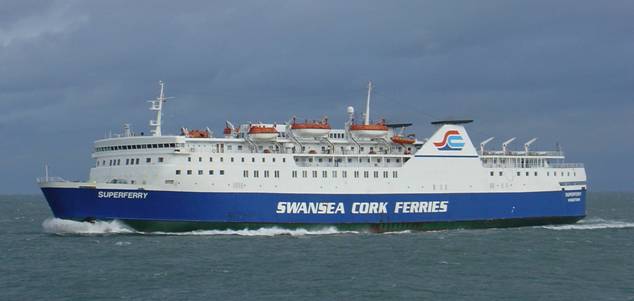
In the Days of Yore – when I first started to visit the west of Ireland – I travelled on the good old Swansea – Cork Ferry. It’s such a shame this route has now been scrapped (not once but twice): it was an overnight crossing, leaving the Welsh port at 9pm and arriving in the mouth of the Lee estuary at dawn. I felt there was nothing more beautiful than the slow cruise up through that great natural harbour in the early morning sunlight: passing lighthouses, lookout towers, mothballed ships, the Irish Navy and the coloured terraces of Cobh (pronounce it Cove), before disembarking at the exotically named Ringaskiddy Terminal.The Swansea-Cork ferry, the Celtic Pride1980s
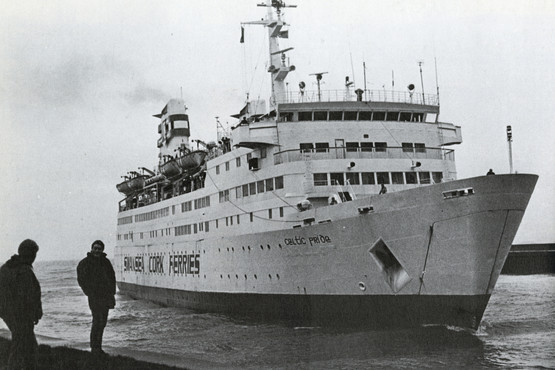
image006

Swansea – Cork Ferry: above – Celtic Pride, 1980s, below – MV Julia, withdrawn in 2011

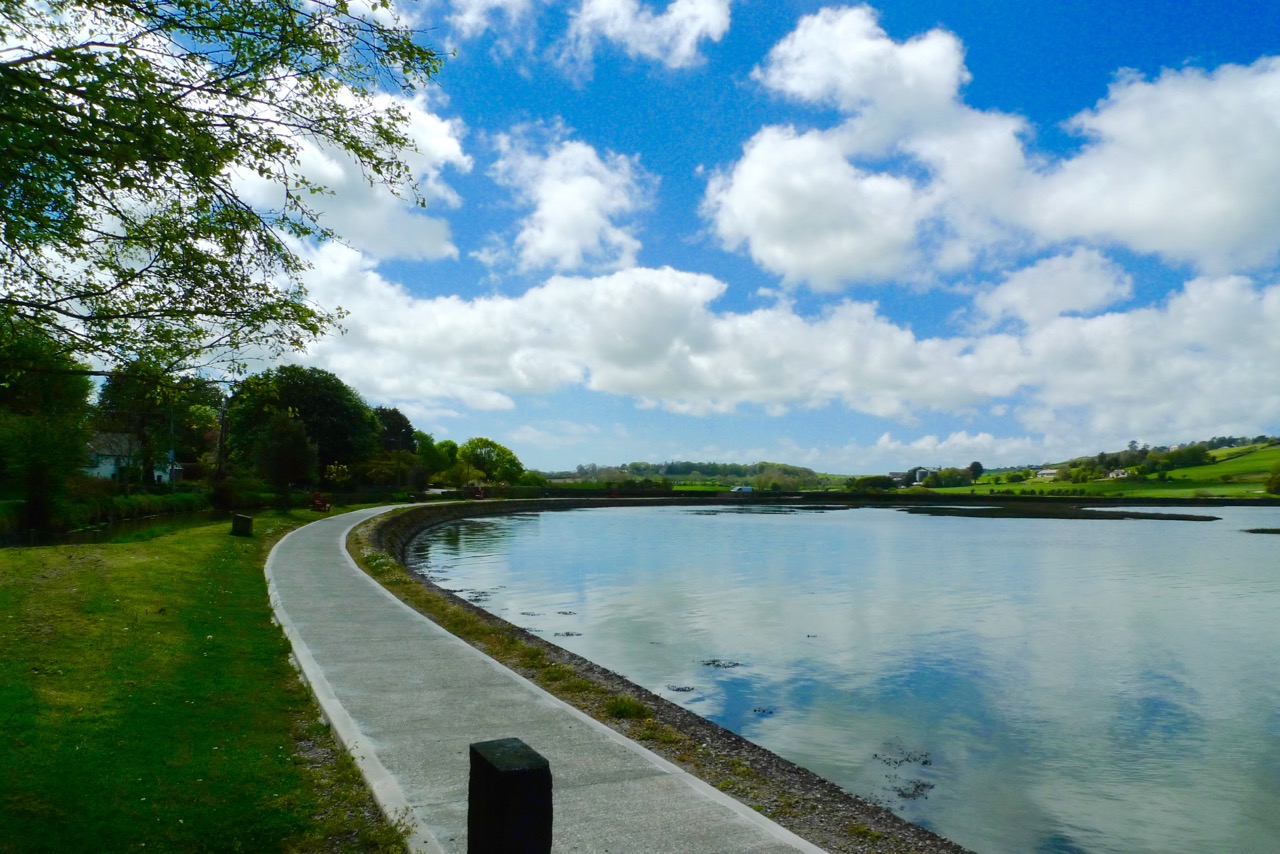
Part of the excitement of that journey was the anticipation of the drive down to Ballydehob and beyond. I always went on the R600 route, passing through Carrigaline and Kinsale – stopping, of course, at Ballinspittle to check that the BVM was safely in place at her grotto – before heading out along Courtmacsherry Bay. The journey alongside that ribbon of water – the road hugs it for some 10 kilometres – is recommended as an exemplary introduction to the landscape characteristics of rural Ireland.
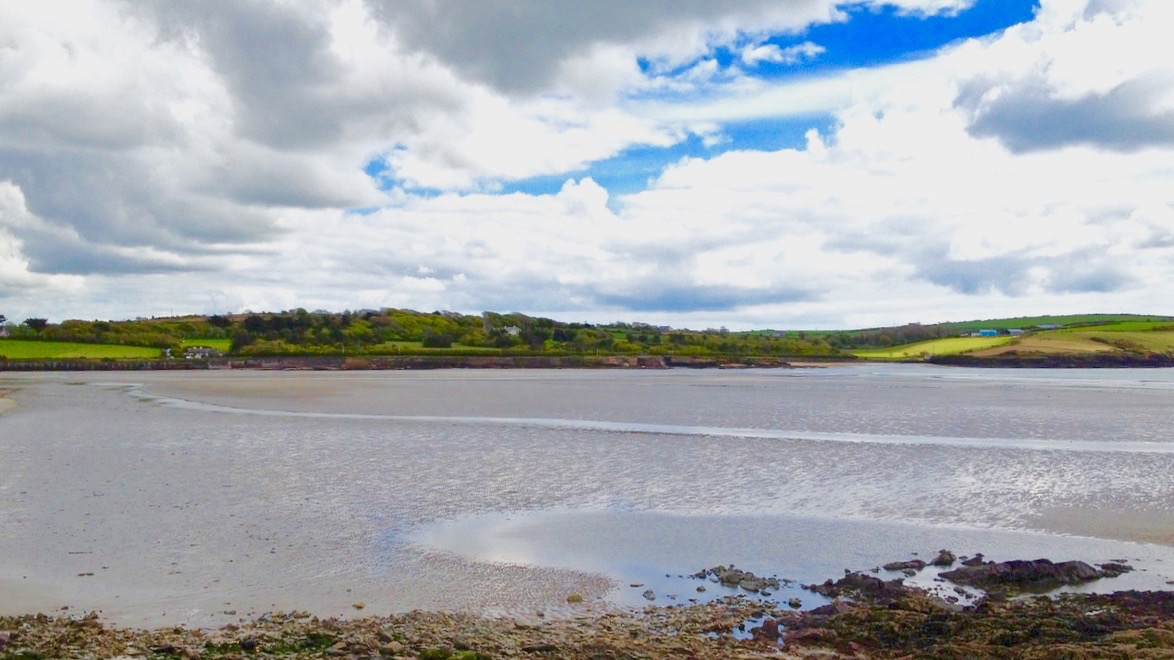
This water was known as Timoleague Bay until it became silted up in the 18th century

This water was known as Timoleague Bay until it became silted up in the 18th century

What was formerly Timoleague Bay is now known as Courtmacsherry Bay. Timoleague was the head of the navigation and thrived from wharfs built in front of the medieval Priory there until a catastrophic earthquake occurred in Portugal in 1755 causing a tsunami which hit the coasts of Britain and Ireland and dramatically changed the topology. This bay is one example: the inlet was no longer navigable for sea-going vessels up to Timoleague, and new piers and quays were built further to the east, closer to the mouth of the estuary, on the north facing shoreline. The place we now call Courtmacsherry didn’t exist until after this maritime event (hence the title of this post).
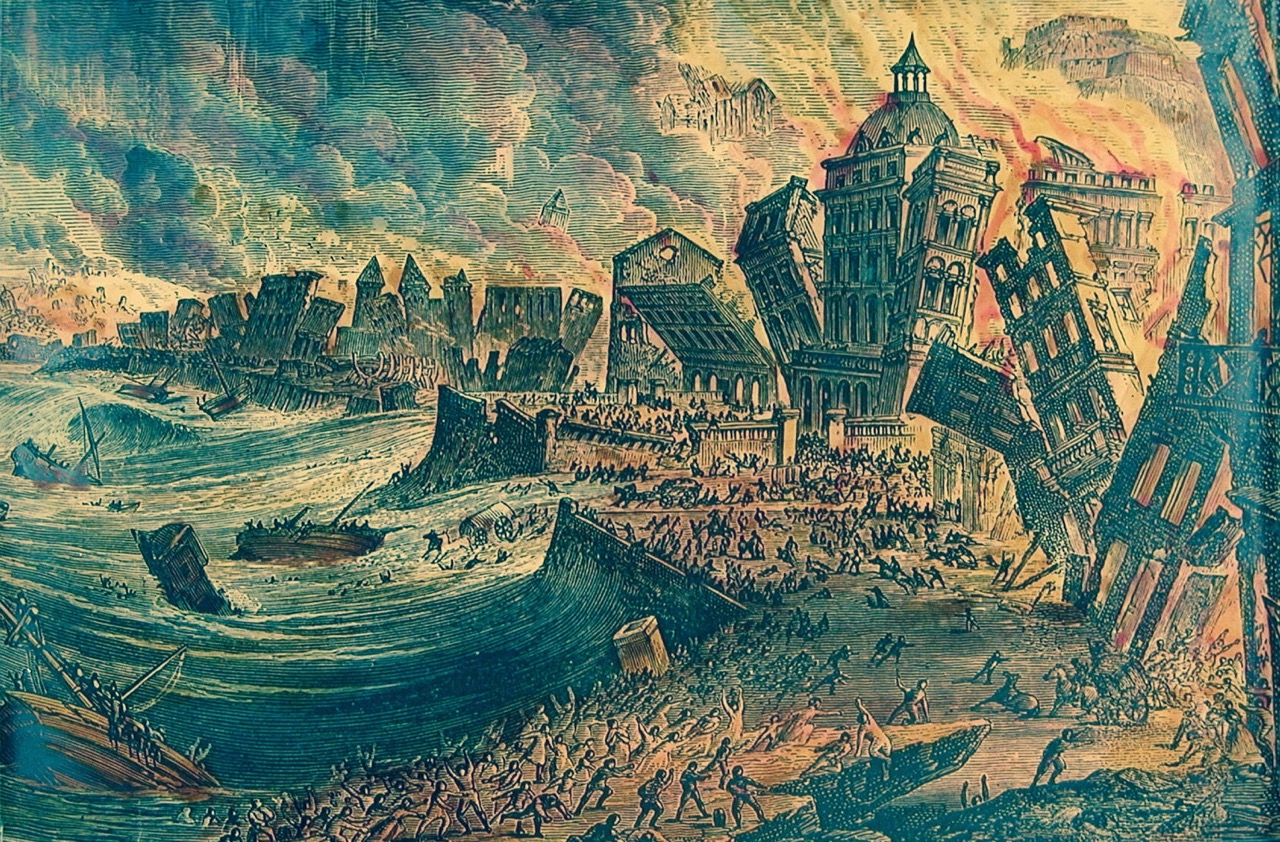
The Lisbon Earthquake of 1755 changed the shoreline of Britain and Ireland

The Lisbon Earthquake of 1755 changed the shoreline of Britain and Ireland

So how did the name ‘Courtmacsherry’ come about? It’s an unusual one, and a bit of a mouthful – locals call it simply ‘Courtmac’. According to Sean de Barra of the Courtmacsherry Historical Society the area was settled by the Hodnett family from Shropshire, in England:

…In the course of time they became more Irish than the Irish themselves and took the Irish version Mac Seafraidh…

…Which sounds like Macsherry – the prefix Cuirt would have been ‘Manor House’ or ‘Mansion’.
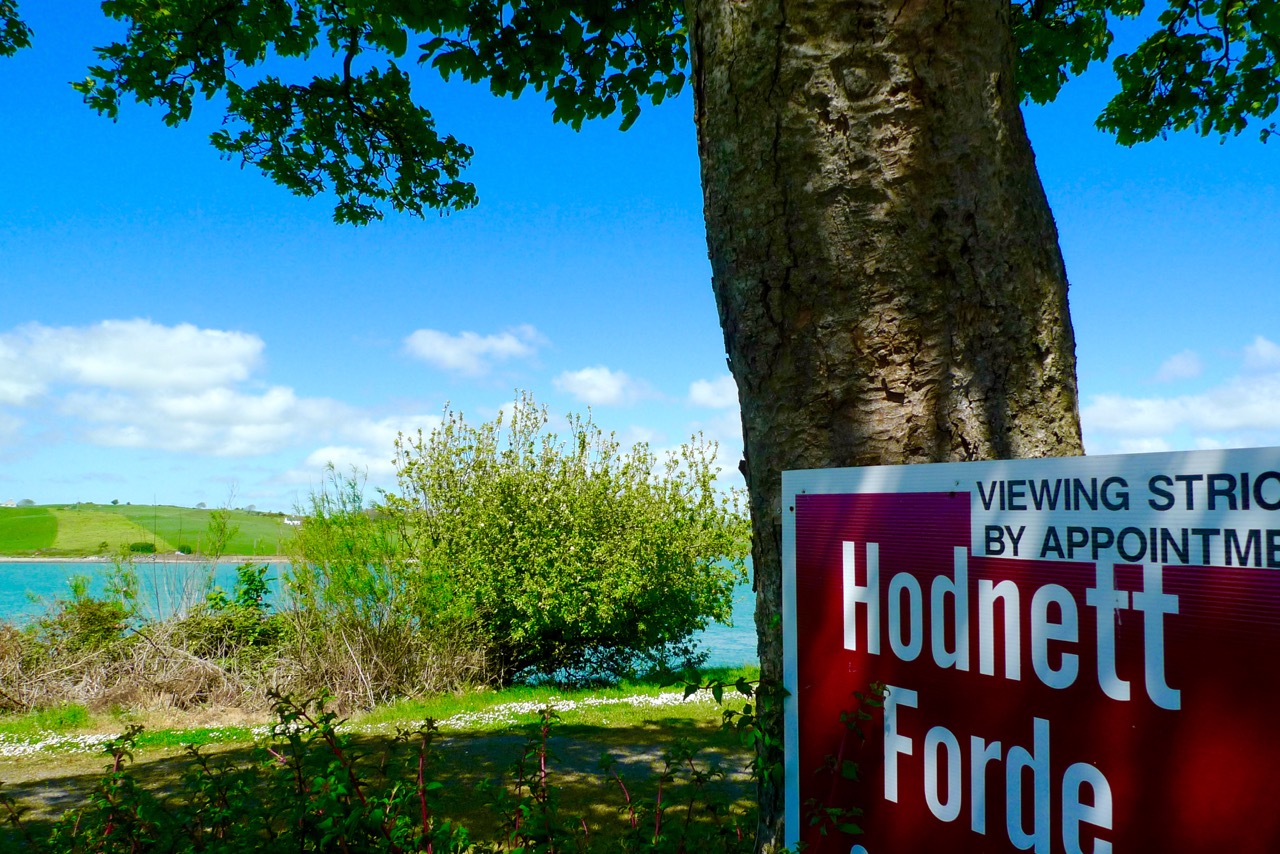
The Hodnett name is still familiar in the area

The Hodnett name is still familiar in the area

Although I travelled so many times along the road up to Timoleague it is only very recently that I actually diverted to visit Courtmacsherry. I’m very pleased that I finally did: it’s an attractive settlement which displays many aspects of its 300 year history. I had heard of the place – it has a lifeboat which is twinned with the one in Bude, Cornwall (have a look at this post). I worked for very many years in Bude with Jonathan Ball, who was Coxswain with the Bude boat and he led (and still leads) a choir from the Bude crew who have an annual twinning visit with the Courtmacsherry crew.

The Courtmacsherry Lifeboat has recently been in the limelight as the Centenary of the sinking of the Cunard liner Lusitania by a German torpedo has just passed (here is a very detailed account of the tragedy). The RNLI lifeboat Kezia Gwilt was on call during that event (having to row the 11 miles out to the wreck because there was no wind to sail her with) and helped rescue survivors. Sadly, 1,198 of the 1,959 people on board lost their lives on 7 May 1915.
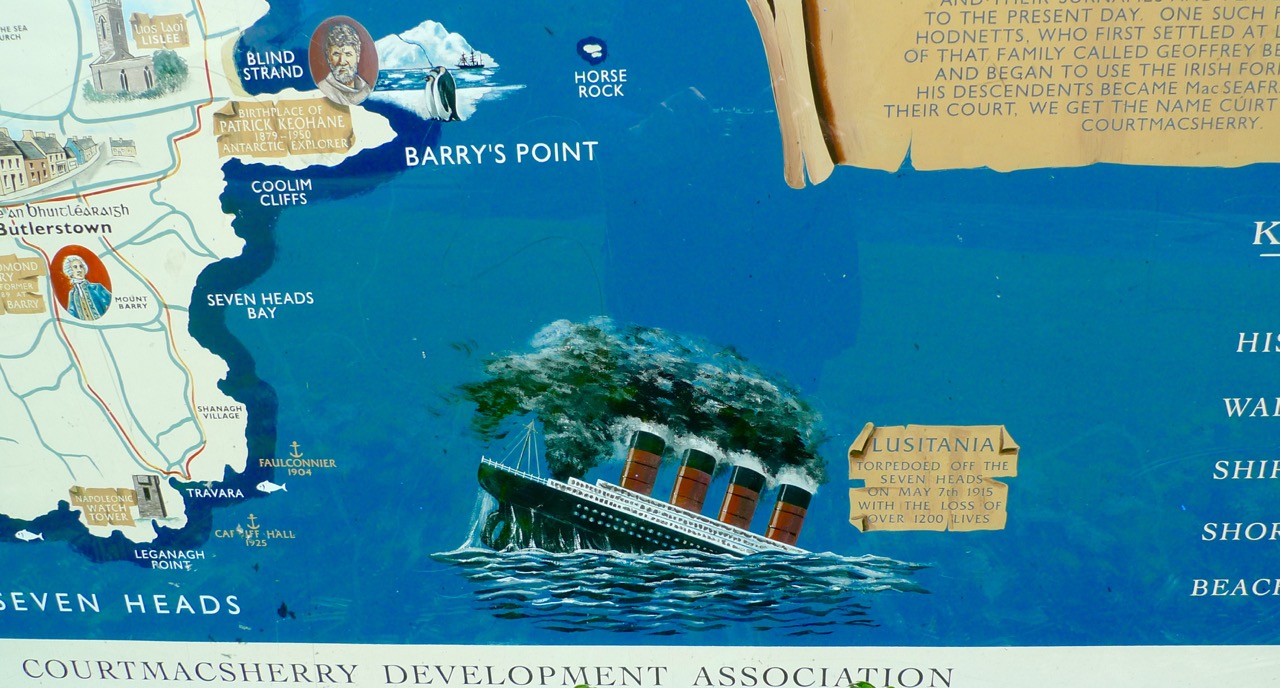
Notice Board

Model of Lusitania on display in Courtmacsherry, 2015

Model of Lusitania on display in Courtmacsherry, 2015

*

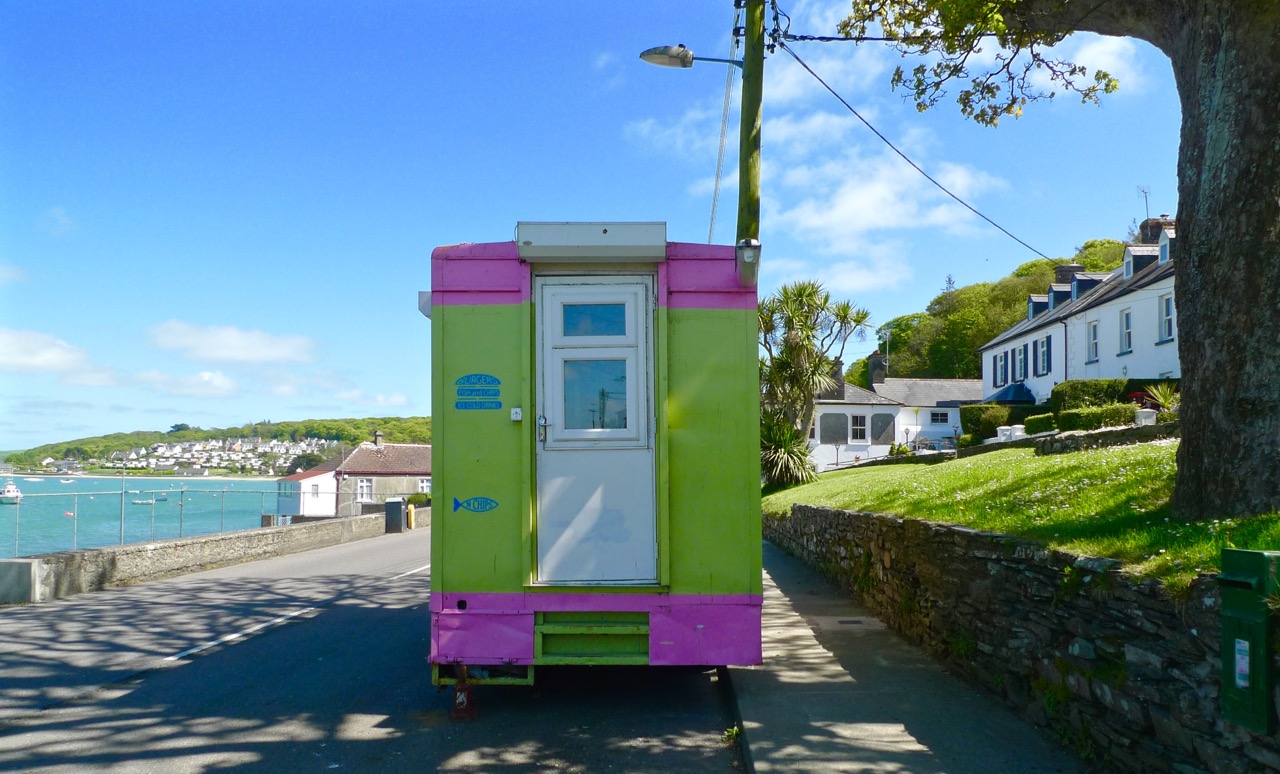
The village is unusual in that it has virtually only a single street facade, which follows the line of the water. Finola liked the colourful house fronts! Fishing is still a living here, just about. Tourism is important nowadays: we certainly appreciated the hostelries, including the Golden Pheasant Cafe. There really are Golden Pheasants in the cafe garden and – to my delight – Robins and Chaffinches who will eat from your hand. Also, in the aviary, a magnificent Eagle Owl. Apart from all this the food is excellent!
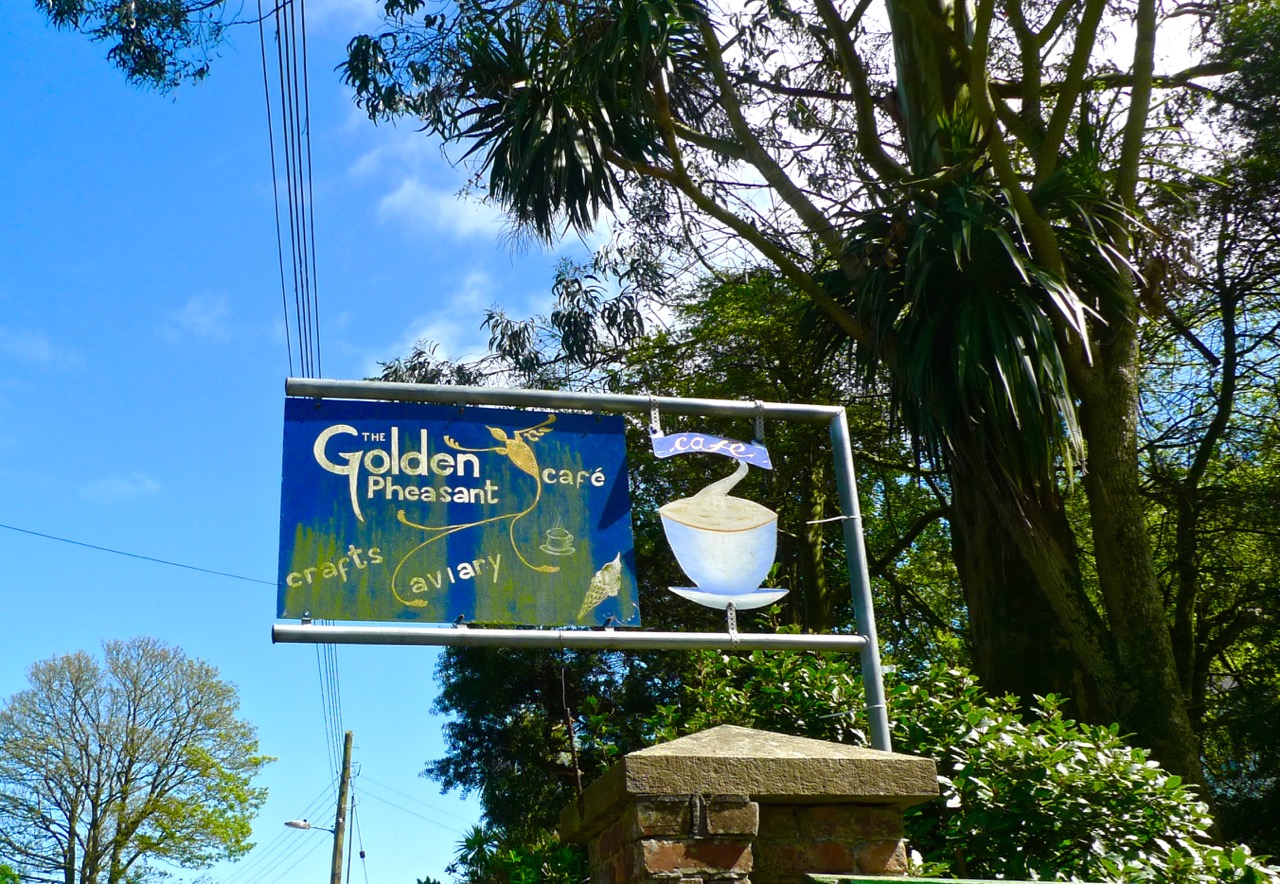
Golden Pheasant

Single sided street...

Single sided street…

As with our own village of Ballydehob, Courtmac was served by a branch of the West Cork Railways. Although planned as a three foot gauge ‘roadside railway’ (just like our Skibbereen to Schull line), the Timoleague and Courtmacsherry Extension Light Railway was actually built to full gauge, and lasted a little longer: our line closed in 1947, this one in 1960. The track bed from Timoleague has been made into a scenic waterside footpath covering several kilometres.

Railway Line Walk

Timoleague Station around 1910, top left – seaside Courtmacsherry 1950s, top right – the waterside walk along the old railway line, above

Our visit to Courtmacsherry was too short: we will be back soon, to take in the Castle and the Abbey – and to try and find out why it has an area called Siberia! My researches showed that there is another Siberia in Ireland: it’s in County Sligo and is also known there as Slieveroe. In that case the name is said to have come from  An Sliabh Rua, which means ‘Red Mountain’ – but there are no such topographical features in this part of West Cork.

I didn’t quite draw a blank with ‘Siberia’. Here’s an extract from Eating Scenery – West Cork, the People and the Place by Alannah Hopkin, The Collins Press 2008:

…In July and August, like most coastal villages in west Cork, Courtmacsherry can be too busy; it is heavenly in May and June, September and October. But in winter Courtmacsherry is deadly quiet, prone to dull, dark days of low sky and mist, when you are acutely aware of its north-facing character.The only compensation in this season is the presence of thousands of migrant birds, great clouds of golden plover, lapwing, blacktailed godwits, and Arctic shags, fleeing the cold of Scandinavia and Siberia to roost on the mudflats of Courtmacsherry Bay…

Houseen

The Nativity – by Harry Clarke and His Studio

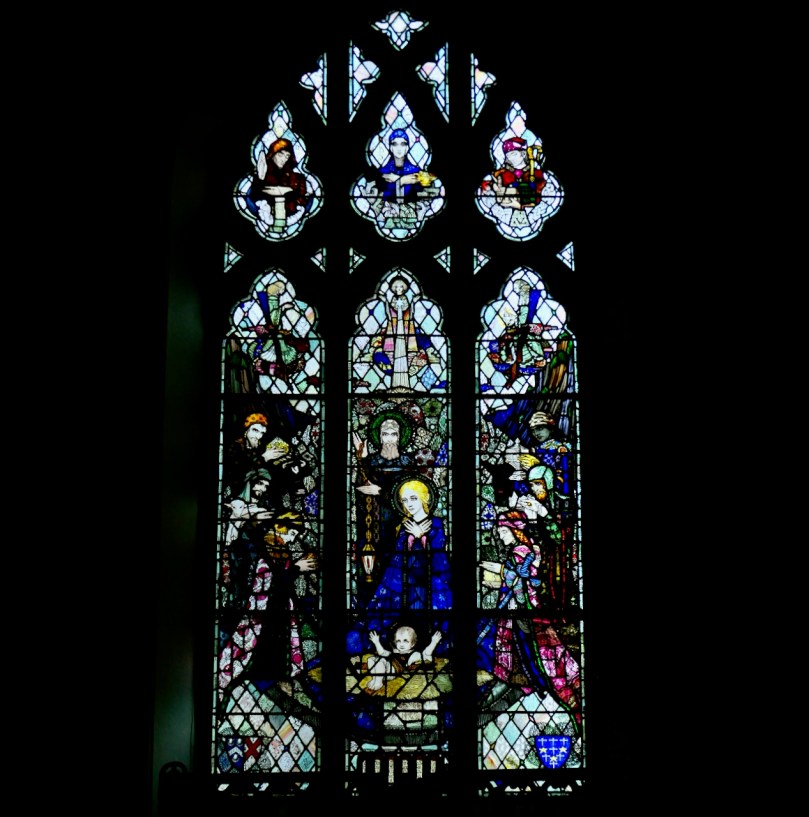
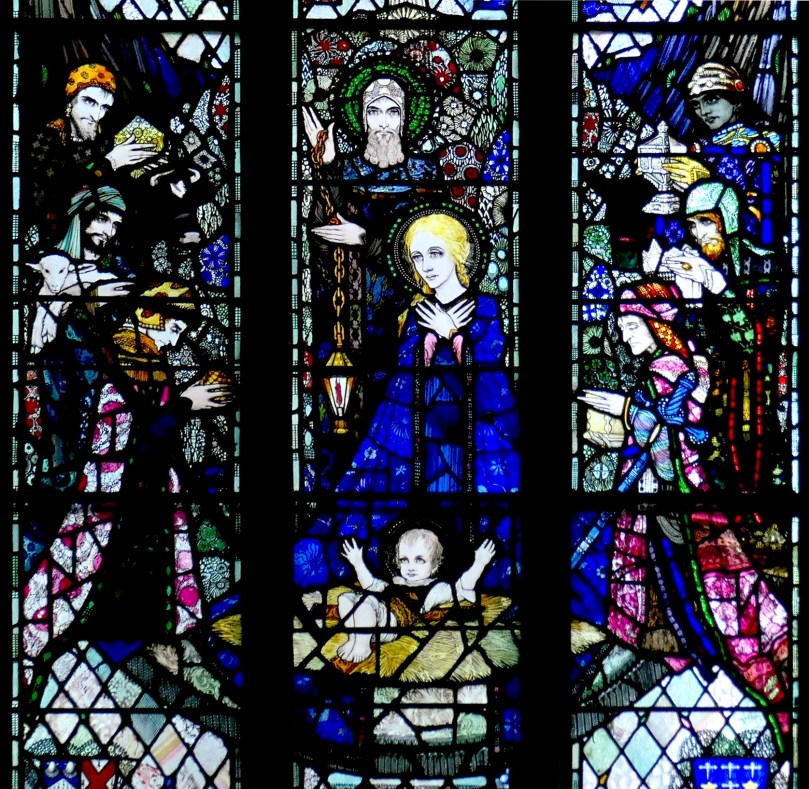
Images of the nativity are a special part of Christmas in Ireland – as witness the proliferation of Christmas cribs in every town and in half the shopfronts. In West Cork (and not too far away in Dingle) we are particularly fortunate to have examples of nativity images in stained glass by the famous Harry Clarke, and by the Studios that bore his name, including this one (above and below) in St Barrahane’s Church of Ireland, in Castletownshend.

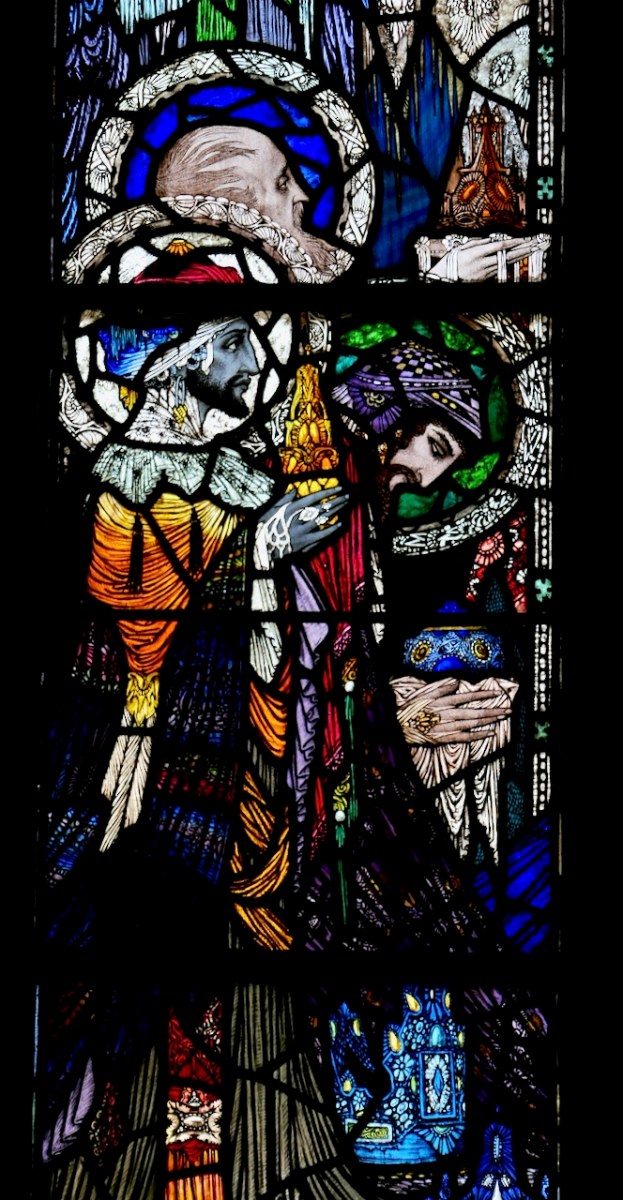
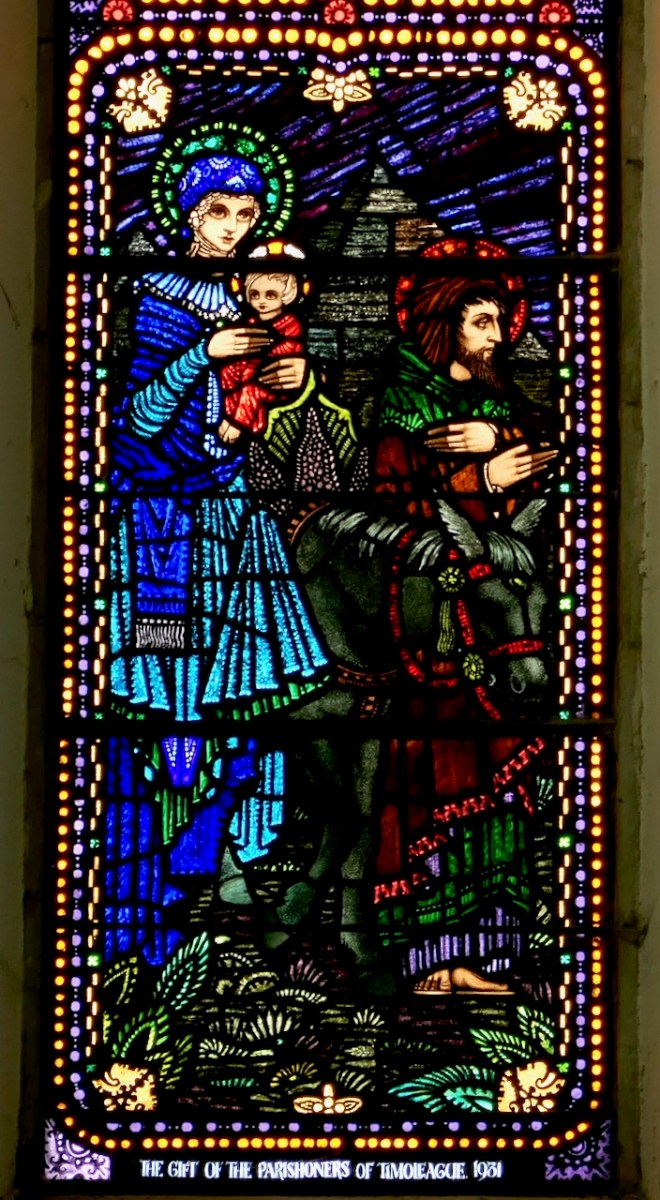
We have mentioned Harry Clarke, Ireland’s most renowned stained glass artist, in several posts before, and no doubt will come back to him again – his gorgeous windows repay multiple visits. In going through the many photographs I have taken I realised that Harry Clarke, at least in the windows I have visited here in the south west, concentrated on only two representations of the Christmas story – the visit of the Magi (below), and the flight into Egypt.

His focus on the the visitation of the Three Kings, traditionally celebrated on January 6th, is poignant, for it was on that day that Harry Clarke died in 1931, after a long battle with tuberculosis. He was, like the Magi, travelling at the time, in a vain attempt to get home from a sanatorium in Switzerland. He was only 41.

On a visit to Dingle we were lucky to find the Díseart Centre of Irish Spirituality and Culture open and to be able to view the magnificent windows in a tiny church previously only open to the nuns of the enclosed Presentation order. One of the windows (above and below) was devoted to the nativity – once again, the Magi scene.

Clarke scholars will only assign a window as a true ‘Harry Clarke’ if it was designed and executed by him or under his close supervision. His studios carried on after his death and windows made at that time are labelled ‘Harry Clarke Studio’ windows. While the Castletownshend and Dingle windows are undisputedly Harry Clarkes, there is a differences of opinion about the ones in Timoleague. When the Timoleague church celebrated its centenary, the Southern Star ran a story with this entry:

Pride of place in the church must go to the beautiful Harry Clarke windows at the back of the church as you exit. Harry Clarke achieved fame for his unique style, his incredible use of colour, his decorative designs and the beautiful medieval-styled figures that have rarely found an equal in the medium of stained glass. These windows were put in place in 1929/’30 and were among the last to be made by Clarke who died in 1931. The windows were in memory of Rev Fr Timothy O’Hea PP (1912-1929) by the parishioners and by his successor as parish priest, Rev Fr  Jeremiah O’Driscoll (1929-’49).

However, these windows are not identified as Harry Clarkes in Nicola Gordon Bowe‘s authoritative book, implying that these are Harry Clarke Studio windows. They are certainly ‘in the Clarke style’, and very striking. Recent scholarship, in fact, has revealed that these windows were a collaborative effort between Richard King and William Dowling, both stained glass masters in their own right, working at the studios to complete orders while Harry was in the Swiss sanatorium.

The Kilcoe Church of the Most Holy Rosary has a stained glass rose window over the entrance. A sign states that it was made by Harry Clarke Stained Glass Ltd (the Studios), designed by T Clarke and installed in 1943. T Clarke, was Terence Clarke, Harry’s nephew, the son of his brother Walter. Like Timoleague, it is also in the Clarke ‘style,’ and although it certainly does not compare to Harry Clarke’s own work, it is beautiful in its own right and expertly done. One of the small windows of the rose depicts the flight into Egypt.

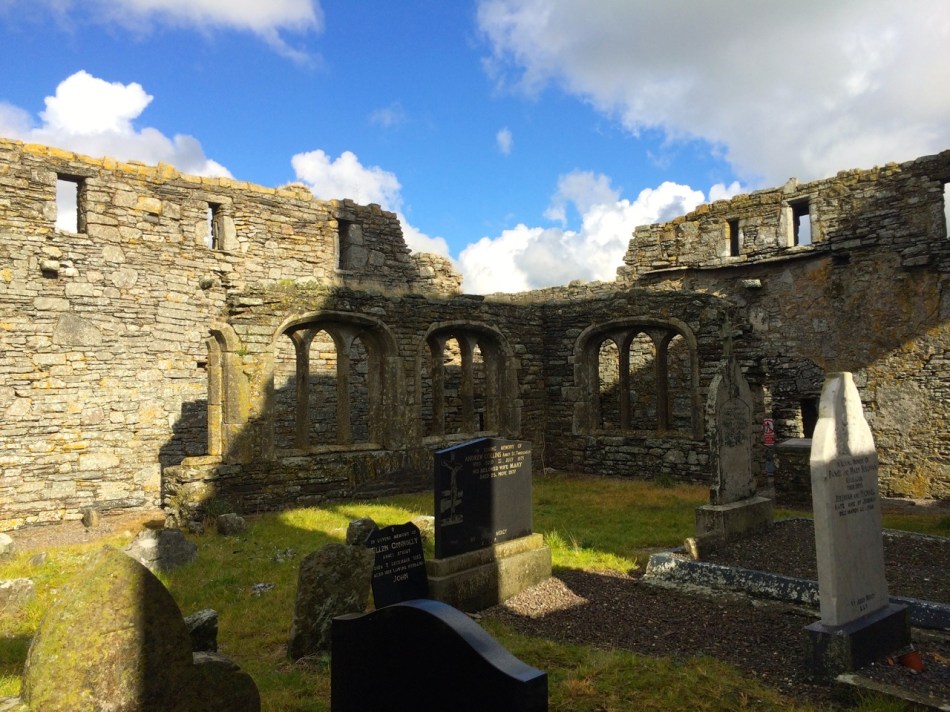
Timoleague Friary

Timoleague Friary

If you take the coast road from West Cork to Cork City, you go through Timoleague, a beautiful village at the top of Courtmacsherry Bay. This little town has a main street of colourful houses and shops, a large and imposing Catholic church with notable stained glass windows, a medieval bridge spanning the inlet, and lovely walkways by the Arigideen River.

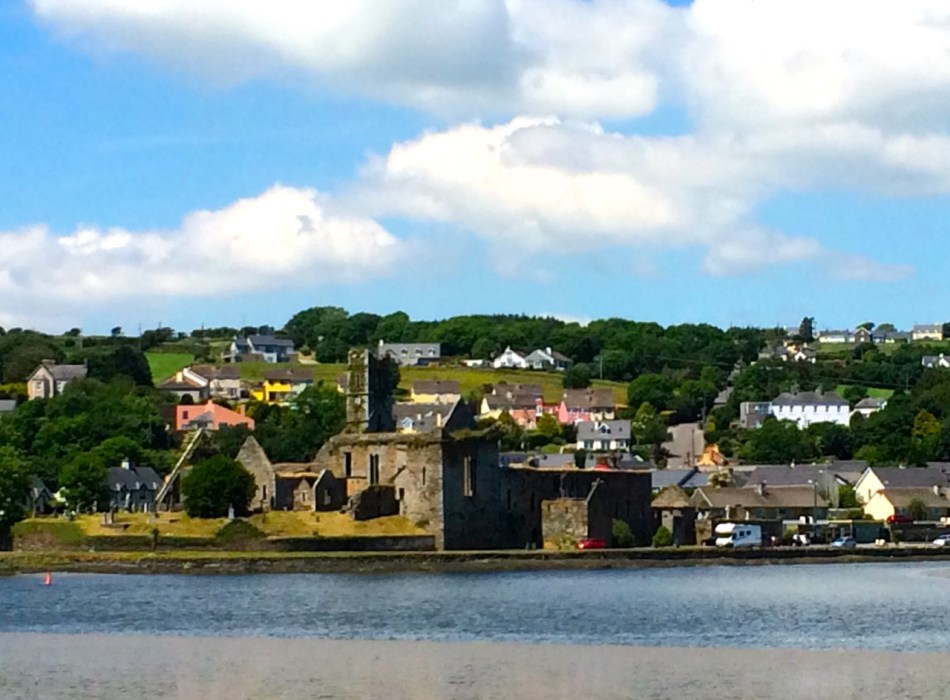
Looking across the river to the Friary

Looking across the river to the Friary

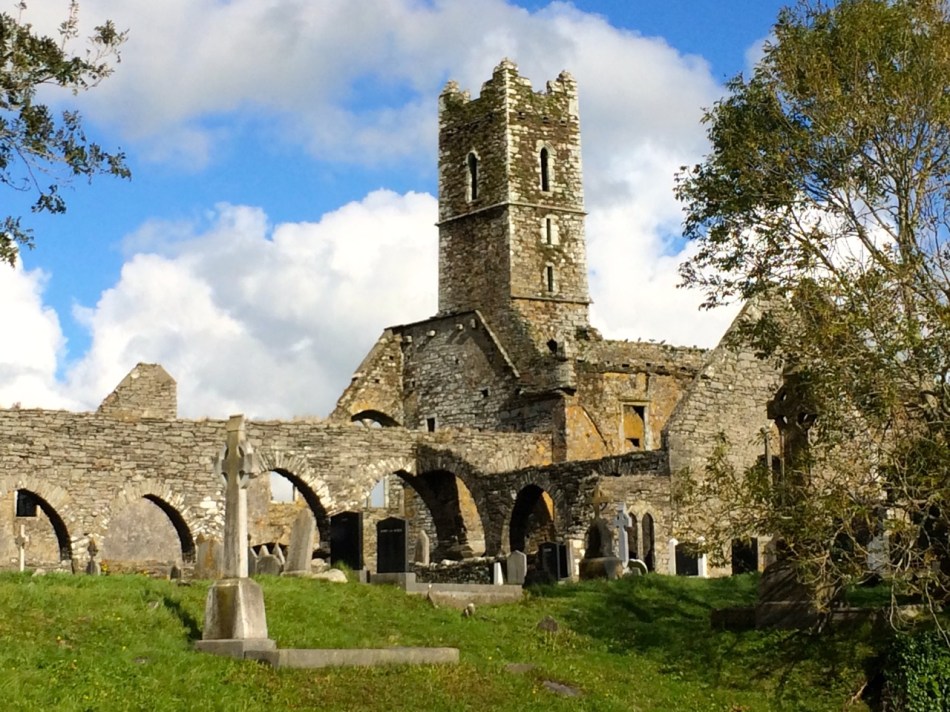
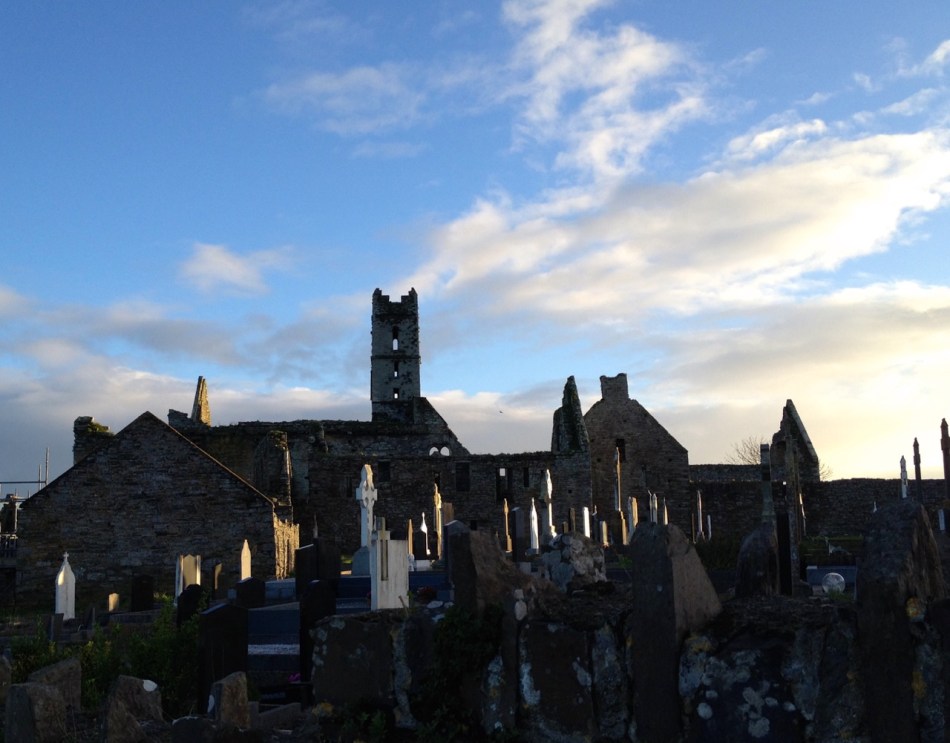
What makes us stop, though, no matter how often we have visited it before, is the Friary. Perched on a knoll overlooking the river, this Franciscan establishment was built in the 13th or 14th Century, and subsequently enlarged and extended. It somehow managed to survive the reformation but was finally abandoned when it was burned in 1642.

The Franciscans first arrived in Ireland about 1230. The order spread quickly and in time there were many Franciscan houses in Ireland. Followers of the Rule of St. Francis, they lived in fellowship in the friary, but went out every day to work among the people. Unlike monks in abbeys or monasteries, they did not shut themselves away to follow a strict regimen of prayer and work. Instead, the friars depended upon their parishioners for sustenance, devoted themselves to their flock during the day and returned to the friary for their simple meals and prayers.

The Cloisters

The Cloisters

Despite this avowed simplicity, the friary is large and imposing. The remains of the cloisters give evidence of the daily meditation and recitation of the Divine Office. Their living quarters included a chapter room, refectory and infirmary.

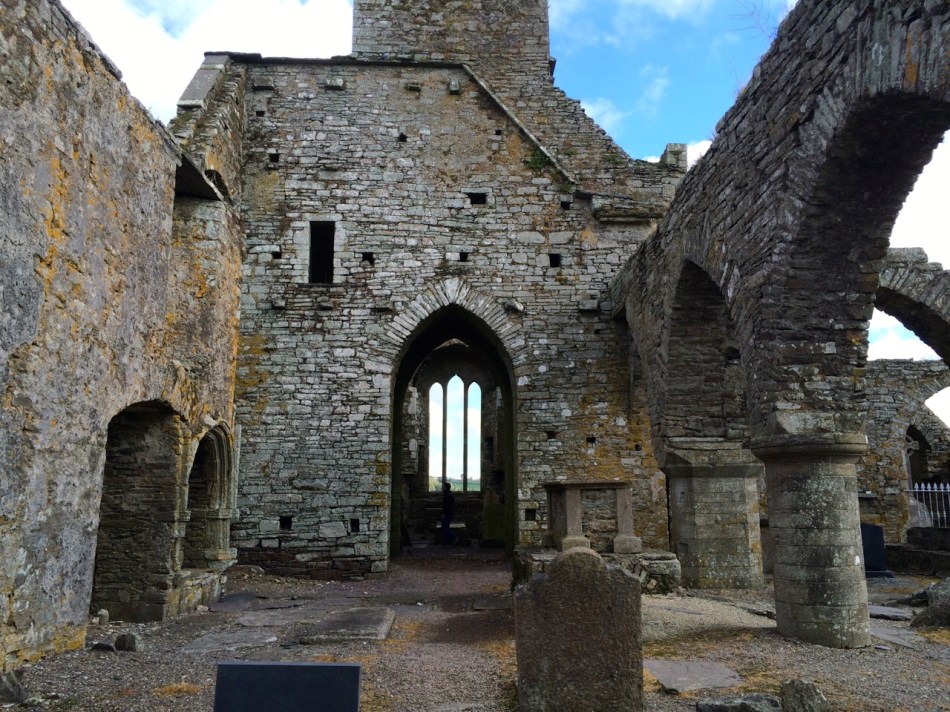
Nave and choir

Nave and choir

The church would have been impressive in its day, with large and elaborate windows, a long nave and a sizeable transept. The columns between the nave and the transept are massive: the cut stone demonstrates the high quality of masonry that went into the building of the Friary.

A wander through the ruins is a delight. There is a wart well, old gravestones (while away half an hour deciphering some inscriptions!) and niches that would have held the tombstones of dignitaries. Lichen of every colour clings to the stones while low archways appear around every corner, with inviting vistas of further corners to explore.

Timoleague is named for St Molaga, who is also associated with other locations in Ireland. Many stories are told of St Molaga. Here is one, recorded by Colonel James Grove White and provided online by Cork City Librarians.

Close to Temple Molaga is a copious spring well, which was always held sacred by the people and should be used only for drinking and curative purposes; but on one occasion, the lady of the manor, an unbeliever, would insist on cooking her husband’s dinner in the water of the sacred spring. When the water had time to boil, the cook remarked it was icy cold; more logs were placed on the fire, still to no effect. The logs were still being piled on, the fire blazed, but when the dinner hour arrived, the water was still as cold as ever. The lord waxed hungry, and, like other mortals, became angry; he rushed into the kitchen to ascertain for himself the cause of the delay, had the cover lifted off the huge pot, and, although the fire was crackling and blazing high about it, he felt the water was quite cold; but what astonished him more was to behold a beautiful trout swimming about in it, without apparently suffering the least inconvenience. He became wonder-stricken, and had his advisers called in. They told him to take the water back to the well without delay and pour it in. This being done, the trout again became invisible, and is since rarely seen, except by certain votaries.

In the district it is a common saying when water is slow to boil, “perhaps the Molaga trout is in it.”

Timoleague Friary, as the largest medieval religious ruin in West Cork, is a unique and special part of the West Cork landscape.

friary silhouette