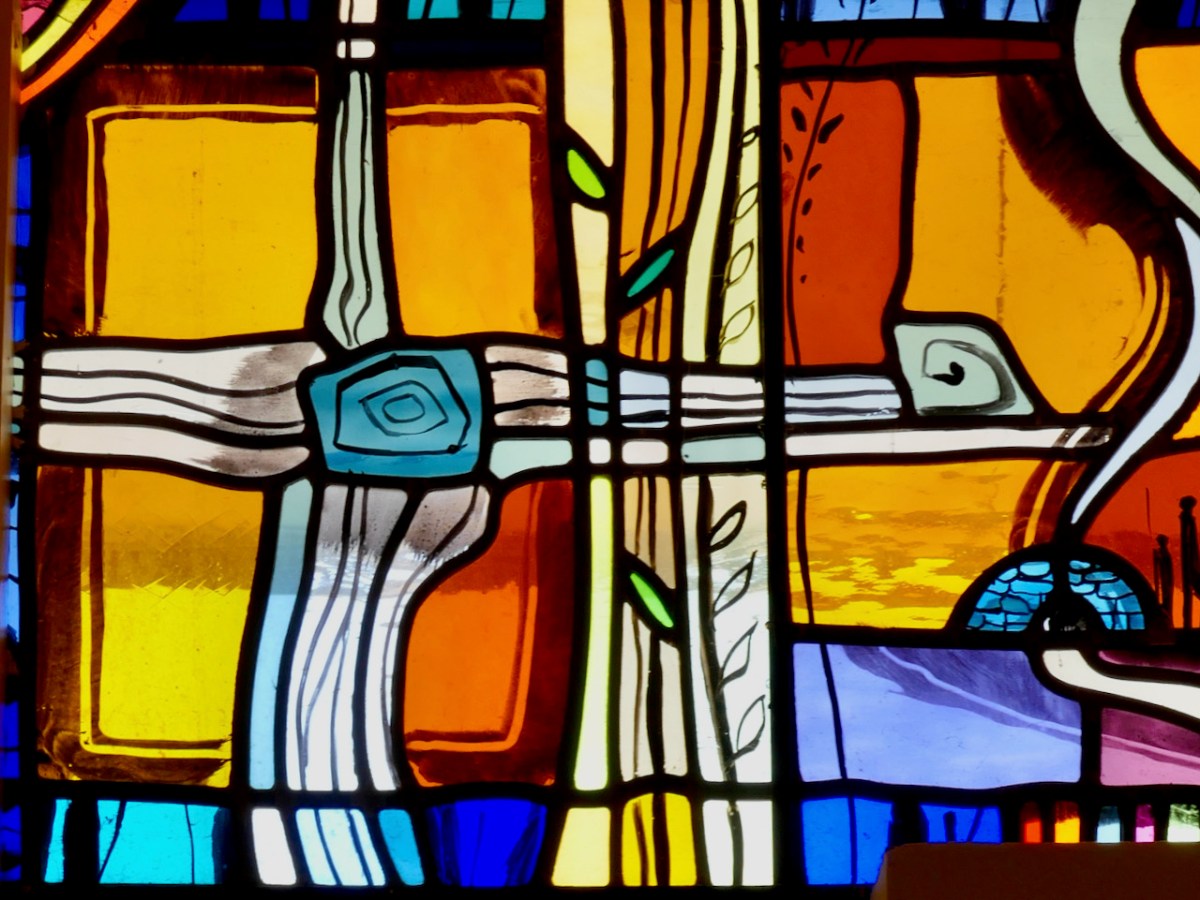
Nollaig na mBan

This post was first published many years ago – in 2014! The subject matter – Women’s Little Christmas – is just as relevant today. So, have another look…

Sounds like ‘Nullig ne mon’ and translates as ‘Christmas of the Women’, but is also known as ‘Little Christmas’. It’s today – the 6th of January – and is celebrated in Ireland and wherever else in the world there are Irish communities. There are other traditions surrounding this day (quite apart from the arrival of the Three Wise Men), and they are confusing. I was brought up knowing that the Christmas decorations have to come down today otherwise there will be some bad luck in the year. Finola, however, knows that they have to stay up all through the day as it’s still part of Christmas – so she would have them down tomorrow instead. Maybe this is a Catholic / Protestant divide? And when is Twelfth Night: 5th or 6th of January? Either one, it seems, depending on which of the many traditions you choose to follow, or which part of the world you live in.

Layout 1

In Tudor Britain the whole winter festival started on All Soul’s Eve (Halloween) and lasted until Twelfth Night. On the first day a cake was baked with a bean in it. Whoever had the slice with the bean was elected Lord of Misrule and presided over a topsy turvy time when the peasant ruled the master and so on. The World Turned Upside Down is a wishful thinking concept that has inspired many artists ever since.

8597011641_560e181106_o

In some parts of Europe a custom of house-blessing takes place today. Dried herbs are burnt and their scents fill the building. Doorways are sprinkled with holy water and the master of the house writes with chalk above the house and barn doors the initials C M B enclosed within the year (eg 20 C  M  B 14). According to the ritual he says: Caspar, Melchior, Balthasar, protect us again this year from the dangers of fire and water. Alternatively it could stand for “Christus Mansionem Benedicat” (May Christ bless this home).

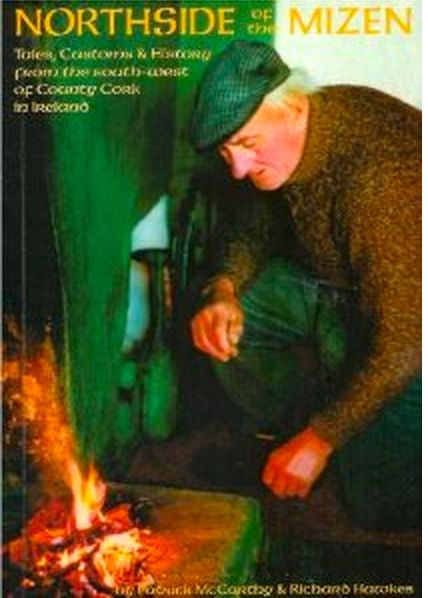
Some traditions closer to home: McCarthy + Hawkes write in Northside of the Mizen

…On Nollaig na mBan (Woman’s Christmas or Epiphany), the women put all the scraps and leftovers from Christmas onto the kitchen table and it was then up to everyone else to cope the best they could. At midnight, on the eve of Nollaig na mBan, the water in the spring well turned to wine. Now that was a great thing! Ne’er a man or woman has ever supped any and that was because it was only for the Little People…

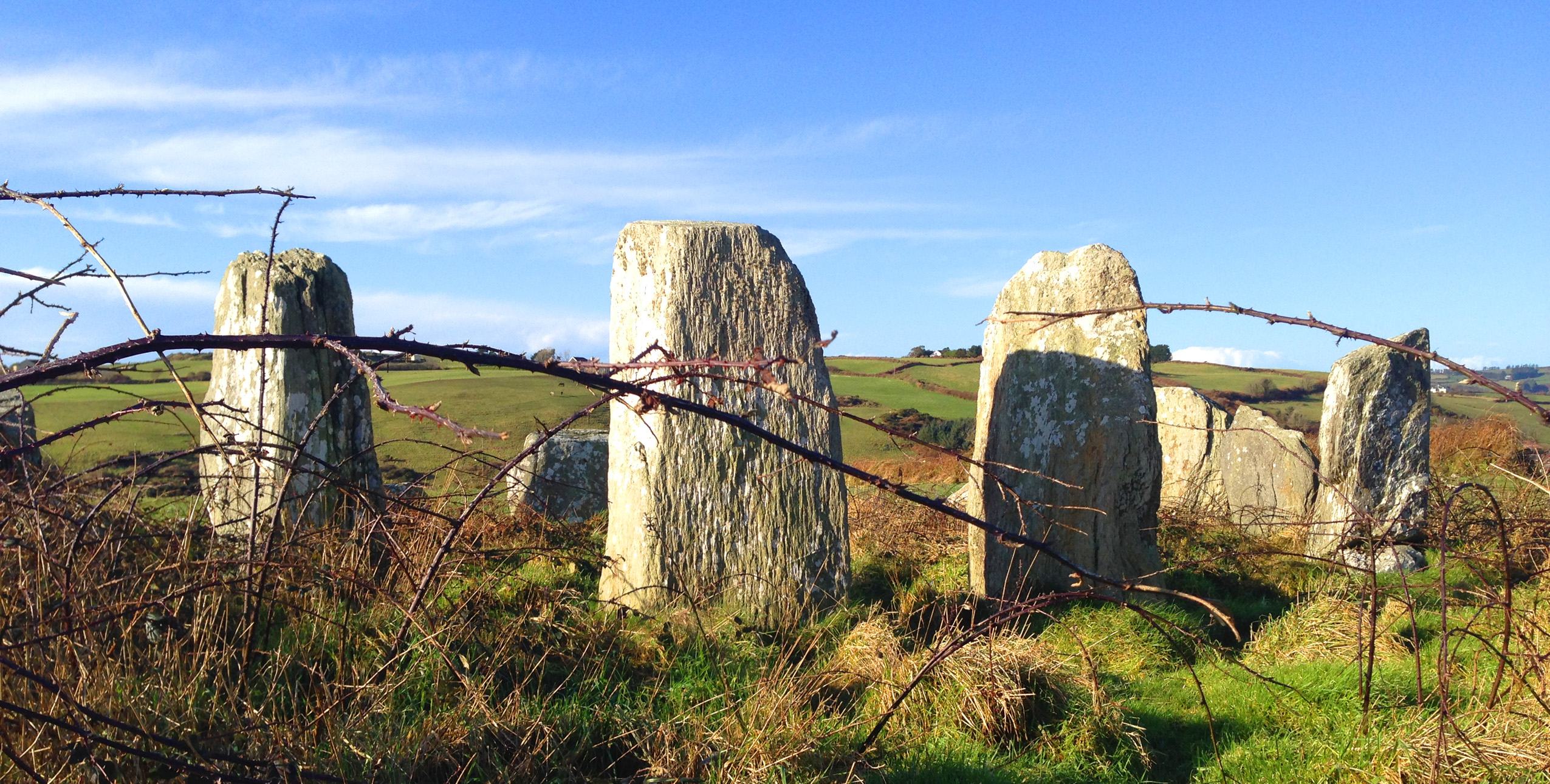
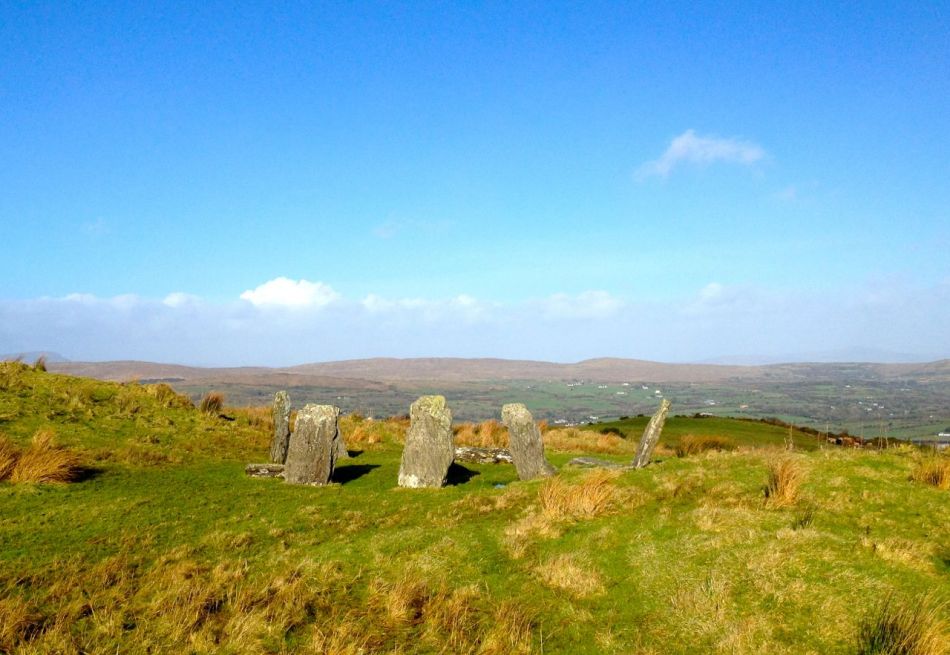
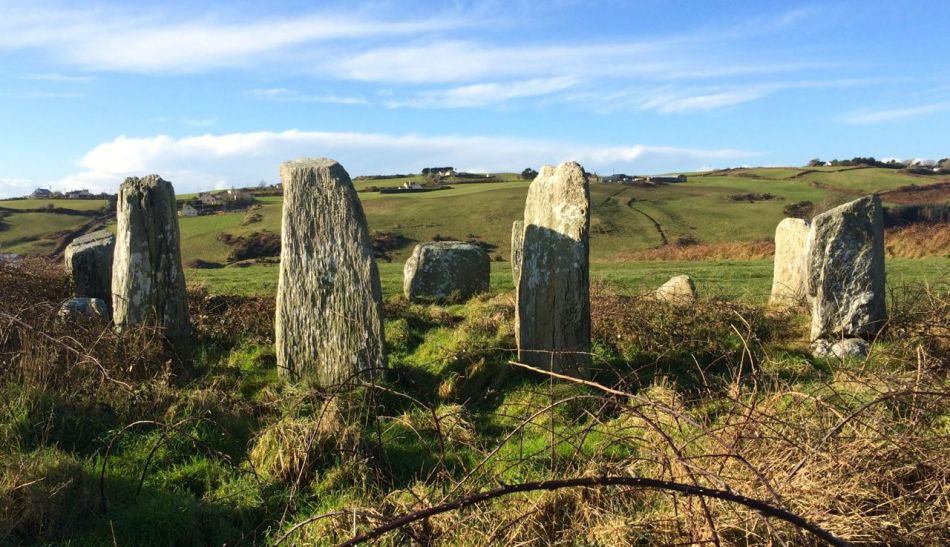
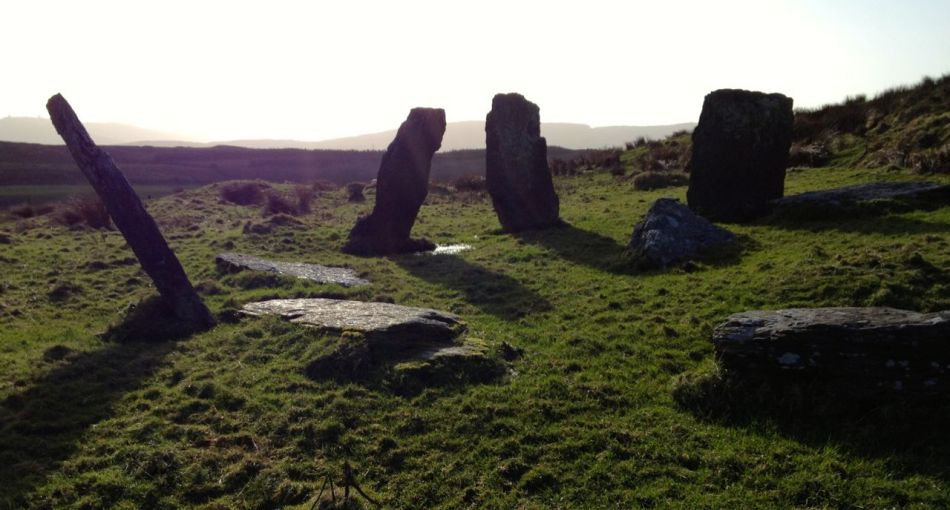
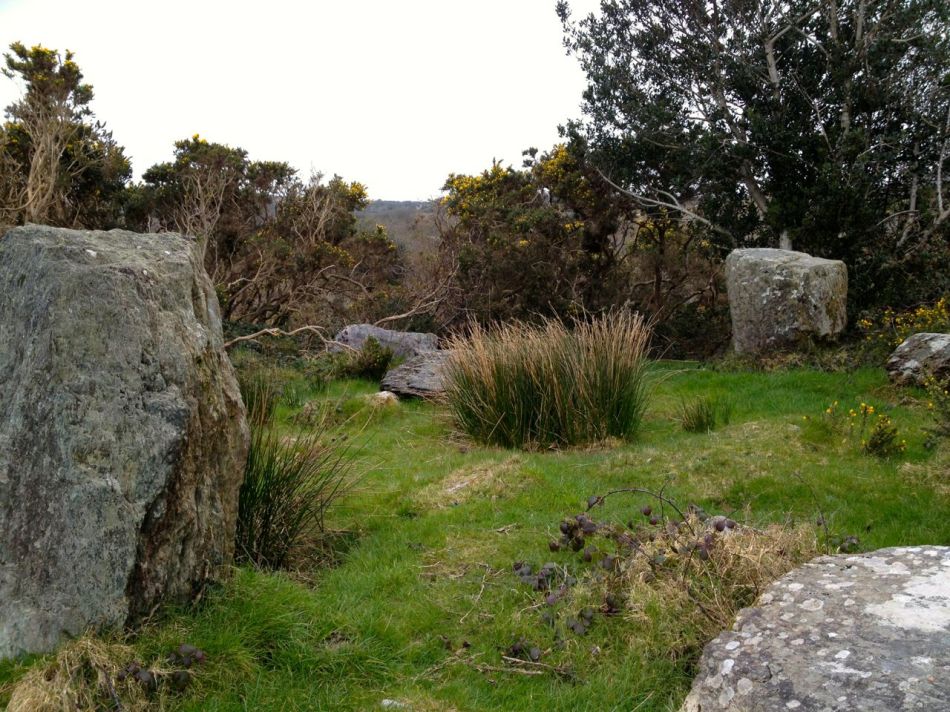
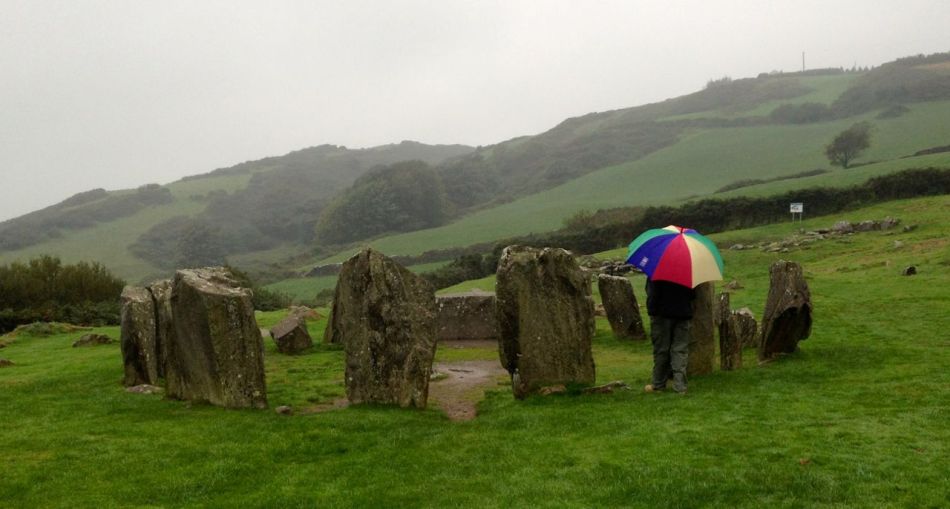
Perhaps to emphasize that such miracles should be the preserve of only the Fairy Folk, there is a tale told of the blessed well of St Brendan in Cill a ‘Ruith, near Ventry in County Kerry: here in days of yore Three Unwise Men sat up to drink their fill of wine at the appropriate hour and were turned into three large boulders which stand there as a warning to this day.

rocks

As this is a Monday, and the first one of the new year, it is also known as Handsel Monday, when children used to visit neighbours and friends and ask for money or cakes. Such a gift was known as a suggit which may derive from the Irish so dhuit – ‘here’s for you – here you are’.

Finola is off out tonight with friends to celebrate Nollaig na mBan, as she used to in Vancouver where the tradition was strongly followed in the Irish community. It is said that the term ‘Women’s Christmas’ can be explained because Christmas Day was marked by beef and whiskey – men’s fare – while on Little Christmas Day the dainties preferred by women – cake and tea – were more in evidence. Finola will no doubt tell me whether this is still the case.

The Roaring

Waves crash against the islands in Roaringwater Bay

Waves crash against the islands in Roaringwater Bay

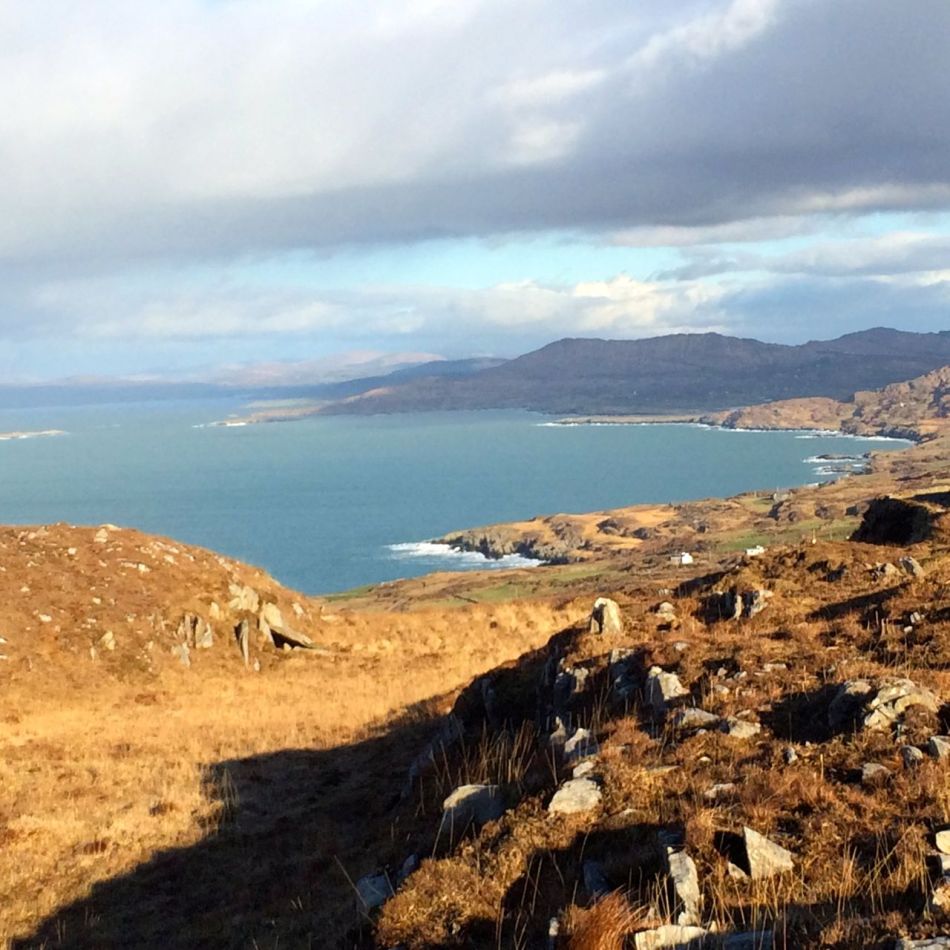
In our early days here I read in a couple of places that Roaringwater Bay got its name from the Roaringwater River, which in turn derived its name from the sound of the water tumbling over the rocks as it neared the sea. Now, I know better. The water in this huge bay, with its multiple islands and rocks, does roar. Not all the time, of course – you could live beside it for weeks, even months and never hear it.

The view past Castle Island, after a storm

The view past Castle Island, after a storm

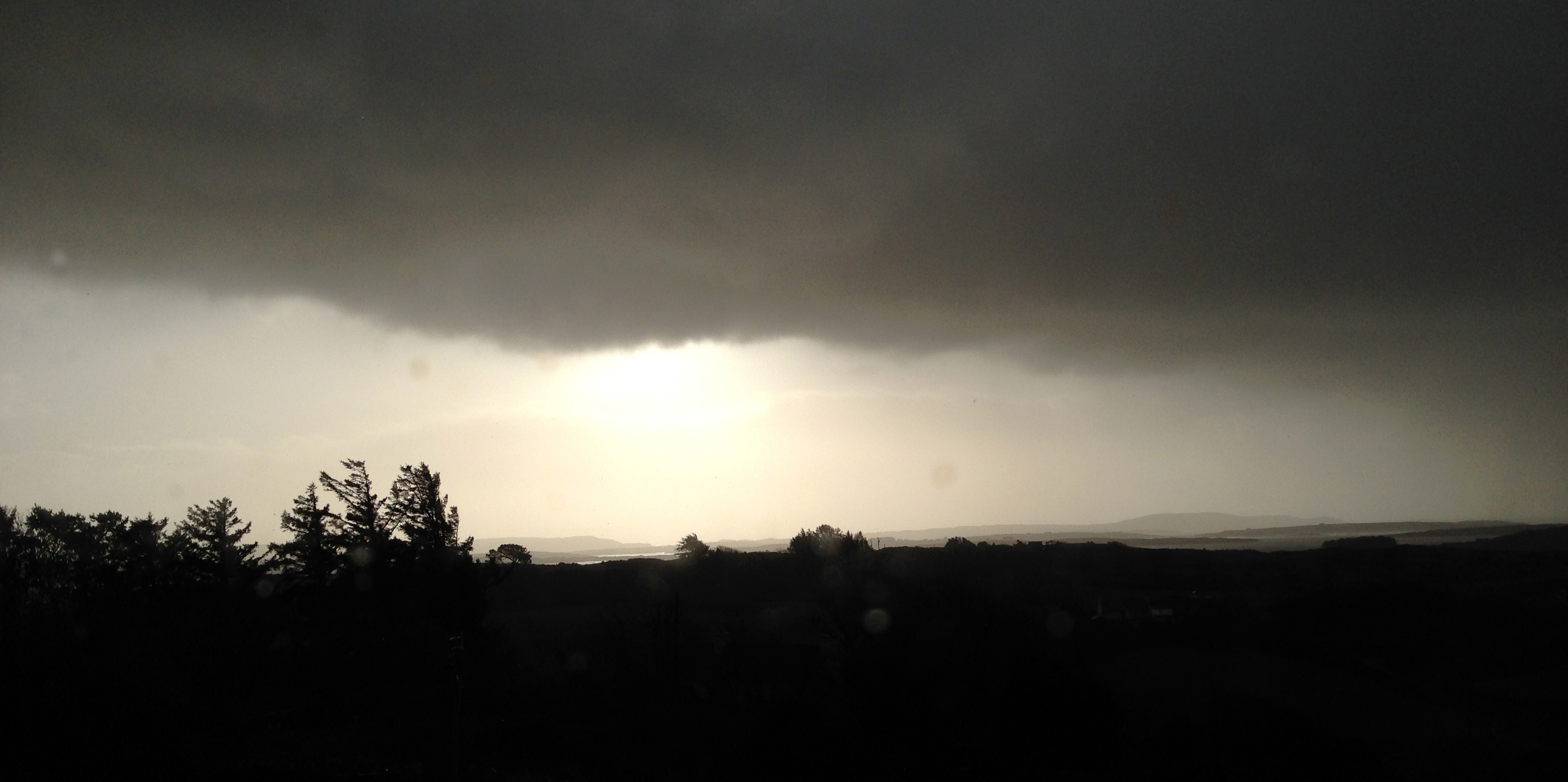
But after a storm, when the wind has died down, the rain has stopped, and all is calm we fling open the doors to enjoy once more the bright sunshine and balmy air. That’s when it stops us in our tracks: a constant roar, like a distant jet engine, or a working factory just out of sight. The first time we heard it we were viewing a house on a hill about a mile inland and came around to the side facing the sea – and there it was. It took us a while to figure out what we were hearing: it sounded like some kind of foundry or industrial equipment. (Aha! So that’s why they want to sell this place!) It gradually dawned on us that there was nothing like that in this isolated spot and that what we were hearing was coming from much further away – from the sea, in fact.

Is there a prevailing wind here?

Is there a prevailing wind here?

Once back home we got out the spotting scope and could clearly see the waves crashing against the islands. In the aftermath of the storm the water was still turbulent, with giant waves pounding against the rocky shores and breaking right over the rocky islets. The cliffs at the western end of Cape Clear were covered in sheets of salt spray. We have a clear view of the Fastnet Rock (more about this in a future post) and in particularly wild conditions we can see waves breaking over it, reaching up to the trunk of the enormous lighthouse.

Near Ahakista: The calm after the storm

Near Ahakista: The calm after the storm

Our recent storms have been, as we say in West Cork, mighty. A particularly vicious series of gale, storm and hurricane force winds (9, 10, 11 and 12 on the Beaufort Scale) has wreaked havoc along the coast. Yesterday we went to Ahakista on the Sheep’s Head. The damage there has been recorded by Amanda – click here to see her photos and account. We had a respite from the winds today – a perfect opportunity to listen to the roaring water.

Earth Winds. Jan 05, 2014

Earth Winds. Jan 05, 2014

Tonight we are expecting another onslaught, like the one on St. Stephen’s night that Robert reported on in his last post. I have discovered the Earth Winds Map – one of the coolest sites on the internet. Updated every three hours, it shows how the winds are flowing around the earth. This screen capture shows the Atlantic storm that is heading for us and packing winds of 109km per hour. That’s classified as “Violent Storm” and just a few km/h short of a hurricane. Met Ireland has issued a warning, especially for areas affected  by high tides, of storm surges and potential flooding. We will hunker down and keep our fingers crossed for ourselves and our neighbours here in West Cork. And when it’s all over, we will listen for the roaring of the waters.

Nollaig ar Nead an Iolair

December 25th! Must be global warming

December 25th! Must be global warming

Our first Christmas at Nead an Iolair and it’s been everything we could have wished for. The day itself was bright and sunny. We threw the French doors wide open and exchanged our gifts in the sunshine. It’s a good job we enjoyed it while we could, as the wild weather set in on St Stephen’s Day (Boxing Day outside Ireland).

Is there a theme developing here?

Robert’s gifts: is there a theme developing here?

Of course, we had to have the ceremonial first cut of each of our Christmas cakes. Readers will remember that I made Monica Sheridan’s recipe while Robert made Delia Smith’s. The verdict? Mine was way better! (This is MY post.)

The avant garde and the traditional approach

The avant garde and the traditional approach

Our new stoves were installed just in time for Christmas. This kind of supplemental heating is essential for the winter months in West Cork, where fuel is very expensive. Together with our decorations, newly purchased from the Christmas markets and hung on twigs culled from nearby hedgerows, they created a cosy and seasonal ambience in the house. Also perfect for a house-warming party, which we are finally hosting this weekend.

Ready for the house-warming party!

Ready for the house-warming party!

Now so, at the end of 2013, we have to say that it’s been a grand year, like. And to our readers, Bliain nua faoi mhaise agus shona dhaoibh – a Prosperous and Happy New Year to you all.

From Roaringwater Bay to all our friends and readers - a Happy New Year!

From Roaringwater Bay to all our friends and readers – a Happy New Year!

Stormy Weather

neadwinter

This picture of Nead an Iolair is here to create a seasonal feel: it was taken by our neighbour Dietrich in the Great Winter of 2010 – 2011 when the extremes were all about deep snow, frozen roads and frozen pipes, unusual for this little corner of the island normally kept mild by the Gulf Stream. This winter we have a different extreme – hurricane force winds!

spiked

‘Hurricane’ on the Beaufort scale means wind speeds of 118 km/hour or more. We went to bed on St Stephen’s Day evening, having measured the wind speed outside as 87 km/h. That seemed wild to us: the trees were bent over and the salt laden rain and sleet were coming in horizontally and lashing our south west facing windows. It was hard to sleep: the slates were rattling loudly above us and the aerials and lightning conductors on our roof were shrieking and bending. The noises got louder and more terrifying as the night went on. I wanted to venture outside with my little hand-held anemometer but I couldn’t face it. The violent storm began to abate only in the early hours of the morning and, when we did creep out, it was to find some damage: two trees down in the haggart, sadly, and our beautiful weather vane collapsed. It was as well that we weren’t underneath when the flying Eagle and its sharply pointed arrow came crashing on to the lawn, just missing our door.

levissession

St Stephen’s Day Session, Ballydehob


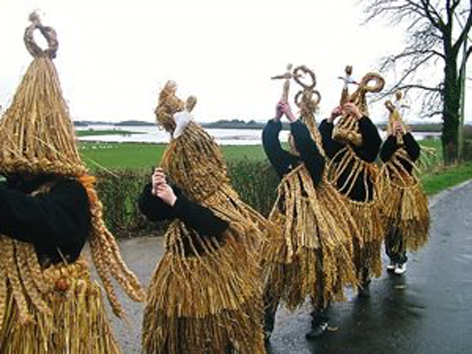
Earlier in the day we had enjoyed an unexpected visit by the Wren Boys to Levis’s pub, where we were involved in an improvised session. Two groups of Wren Boys in fact: the first an adult company with musicians, colourful costumes and bizarre masks, and the second a group of boys dressed in old coats turned inside out, pyjamas and sailor caps, carrying large collecting tins. All were welcomed and the festivities grew merrier as the wind strengthened.

wrenners

wrenboys

Keeping traditions going: outlandish Wrenners visiting Ballydehob – top – and local lads collecting in Levis’s Bar – below

As I lay in bed at the height of the storm I found myself worrying about our birds: how on earth could the Goldfinches, Chaffinches, Robins and Wrens (any Wrens who had escaped the St Stephen’s Day hunt that is) have survived that terrible gale – which stripped the bird feeders of everything moveable and the bushes and shrubs of their sheltering leaves? In the morning, there they were back again, and noisily demanding a refill which, naturally, I was delighted to provide.

message

A Child’s Christmas in Dublin

Clery's lit for Christmas

Clery’s of Dublin lit for Christmas

Last year Robert posted a story for Christmas, The Other Crowd. We decided this should be a tradition, so here is a story based on memories of Christmas in Dublin in the 1950s.  The photographs were taken during a recent trip to Dublin.

“Stuff this turkey?”  Mum was shouting. “It’s you I’ll be stuffing, if you ever do this to me again!”

“But it’s fresh, straight from the country.”  Dad looked crestfallen. “I thought you’d be delighted. You’re always talking about fresh food from the country.”

Dad had arrived home from work several days before with a mysterious parcel strapped to the carrier of his bicycle. As we clustered around the box, he reached in and gingerly pulled out a very large dead bird. It was covered in white feathers, but had an ugly red neck and head and long cruel talons. Uncle Dan in Killarney had sent us up a turkey for Christmas. There would be no butcher shop undersized bird for the Finlays this Christmas, he announced proudly, but farm raised turkey. Mum gazed uncertainly at the dead bird.

“What are you supposed to do with it?” she asked. “How do I get it ready to cook?”

Dad wasn’t too sure, but said that Uncle Dan had said to make sure we hung it for a few days, to “age” it. So it hung by its neck on the back of the bathroom door for a time. Fergus, Hugo and I would creep in to look at and poke at it with our fingers, but Mum started to lock the bathroom door once Hugo started to get nightmares.

Finally, on Christmas Eve Mum declared she couldn’t put it off any longer, and it was time to pluck it and clean it. Pulling the feathers out started off well, with great handfuls of feathers coming away, but the smaller feathers proved to be more resistant, and soon Mum was wielding a pliers, red faced and fierce, shouting at us to get outside and to stop throwing the feathers around. When we ventured back into the kitchen it was to see her smoking a Woodbine with her head tilted upwards to keep the smoke out of her eyes, plunging her arm up to the elbow into the turkey and coming out with masses of slithery guts and gizzards.

polar bearsBy now, it was obvious to us that Mum was in a very bad temper. Three little heads and six hands clinging on to the edge of the kitchen table observing every minute of the operation and making vomiting noises as innards slid onto the table, was the last straw. With a martial light in her eye, she told Dad that she would not be finished in time to go into Dublin with us for our annual visit to see Santa Claus in Clery’s, and he would have to take us by himself. Dad looked close to panic at this, but for some reason didn’t argue, but told us to get ready to catch the bus.

We had been looking forward to this day for weeks. The three of us had agreed that we would each ask Santa Claus for a cap gun for Christmas. That way, we would be able to play Cowboys and Indians together, and shoot each other dead whenever one of us caught the other. Mickey Moran next door had the ideal cap gun, so we knew just what we wanted. It was silver, and looked like a real six gun with a revolving chamber in the middle. Best of all, it cracked open in the middle, so you could load in a round of caps, and it pulled the caps through properly, so each time you pulled the trigger, the hammer came down on a cap, which exploded with a satisfying bang and smell of sulphur. Mickey even had a holster and a sheriff’s badge, so he always got to play “the chap.”  We wanted to be the one to play the chap, the Lone Ranger maybe, or Hopalong Cassidy, and not always have to be the Indians or the stage coach robbers.

Mickey Moran was going to see Santa too, but he said he was going to Switzer’s and that that was better. His father and mother were taking him and his brother in their car. We saw them leave as we set out for the bus, skipping along beside Dad. As we rode on the top deck so Dad could smoke he told us we should be ready with our requests as soon as we sat on Santa’s knee. O’Connell Street was thronged with Christmas shoppers. Groups of carollers had set up at corners, collecting pennies in boxes they rattled at passers-by. Everyone seemed happy. Dad wasn’t really used to having the three of us to mind on an outing like this, and kept wanting us to hold hands with him and with each other. I didn’t mind this, I liked holding his hand. But Fergus thought that a seven year old boy shouldn’t be holding hands with anyone.

Once in Clery’s we took the lift up to the top floor. This wasn’t where Santa was, it was just part of the treat, to ride the wrought iron lift up the open shaft and watch the uniformed man press the buttons and pull the levers and open the double doors to let people in and out. Hugo said he wanted to do that job when he grew up.

Santa's WorkshopWe joined all the other kids and parents going to see Santa, filing slowly past a series of Christmas scenes. Each one had wooden figures set up to show Santa’s workshop, or a family around a Christmas tree, or children skating on a frozen pond. In each scene some of the wooden figures had mechanical parts which moved. A ballet dancer pirouetted on the ice, elves hammered and stitched away at toys, two woodsman sawed a large log, a mother placed an angel on the top of the tree. We were transfixed, pointing and lingering, and having to be pulled along not to lose our place in the queue.

After the scenes, we were directed into a small room, where we sat on benches. The lights went out and I held tight to Dad’s hand when strange music started, and a screen at the front of the room started to flicker. “You are travellers in another galaxy,” a voice boomed. “You are millions of light years away from earth, trying to get home for Christmas.”  And then we were screaming, as our seats were bucking and swaying, and our spaceship was hurtling though space, dodging huge boulders and flying saucers, swooping right and left and finally crash landing on earth at terrifying speed. As the lights came on and the doors opened again smaller kids were clinging to their parents and the bigger ones were wanting to know why they couldn’t stay and do that again, and parents were moving away from the doors and saying it was over now and Santa Claus was next, and exchanging laughing comments with each other.

Fergus had been frowning in concentration, as we stood in the queue drawing closer to Santa, magnificent in his red suit and white beard.

“Daddy,” he demanded suddenly, “How can Santy Claus be here and at Switzer’s at the same time?  And anyway, isn’t he only supposed to come on Christmas Eve?”

Another father gave Dad a cheerful nudge. “The chislers, wha?  They do be up to all the tricks.”

All three of us were now looking earnestly up at Dad, who took out one of his large white handkerchiefs and spent a long time blowing his nose. “Well, this isn’t the real Santy Claus,” he said finally. “This is one of his deputies, because he’s so busy right now he can’t be everywhere.”  He saw Hugo’s and my bewilderment, and before Fergus could get out his next question he coughed a couple of times and said decisively, “But the one who comes on Christmas Eve is definitely the real Santy.”

Any more conversation was impossible, as we had reached the head of the line. I watched as Fergus and Hugo climbed on Santa’s knee. I couldn’t hear what they were saying, but Santa was nodding and smiling and the boys looked happy as they climbed back down. Then it was my turn.

Up close, the beard looked odd, made of some kind of cotton wool. Santa’s knees felt thin and bony, but he sounded jolly as he ho ho ho-ed and asked me what my name was.

“Have you been a good little girl?  Do you think you deserve a nice present this year?”

I assured him I had been extra good, and said, please, that I would like a cap gun. With a holster too, if it wasn’t too much trouble.

“A gun!  A holster!”  Suddenly Santa sounded like Mr. Moran next door instead of himself. “Mother o’ Moses, what would a nice little girl like yerself be wanting with one o’ them yokes?”

Taken aback, I stammered, “But that’s what I want. I thought you would bring me what I said I wanted.”

“Sure guns is for the boys. Tell you what, I’ll bring you a nice little dolly. How ‘bout that. Wouldn’t that be a lot better than a gun?”

I didn’t know what to say. I wanted to shout at him, to tell him I hated dolls, to tell him he was supposed to be listening to what I wanted, because I had been good, and this is how it worked. But if I shouted at Santy Claus’s deputy, he would tell the real Santa and then what hope would I have of getting my gun?  Dad must have seen my lip start to tremble, because suddenly he was hurrying me out and telling me to be a big girl and for God’s sake not to start crying and then we were back out in O’Connell Street and I was hiccuping that I didn’t WANT a stupid doll, I wanted a GUN. And people were starting to stare, and Dad was dabbing ineffectually at my eyes and saying “There now. There now.”

Dublin Lights

But Fergus and Hugo were both pulling at Dad’s leg and saying “Dad look, look!  Can we go over there?”  And as I looked where they were pointing my sobs slowed to a snuffle and I nodded vigorously that yes, I wanted to go there too.

We crossed the street to an enchanted kingdom. Henry Street was ablaze, with archways of lights stretching right across the street, each arch different colours and shapes, but all brilliant, dazzling, resplendent. Vendors and hawkers vied for the custom of the pedestrians who hurried by. Their raucous calls surrounded us.

“Last a de Christmas dekkerayshuns.”

“Get your Sparklers here. Oney a shillin a duzzen.”

Dad bought a packet of sparklers, because we begged him to. And we told him that Mum would love some of the bright paper chains and Chinese lanterns, so he bought some of those too, and some mandarin oranges around the corner in Moore Street.

Moore Stree

By the time we got on the bus, I had talked myself into an optimistic view of my Christmas present. And besides, today was Saturday, so the Beano would have arrived while we were out. After tea we could sit by the fire in our pyjamas and Mum, or maybe Max, would read it to us, putting on funny voices for Lord Snooty, or the Bash Street Kids. And anyway, that hadn’t been the real Santa. He would have received my letter by now, so would know, and when I came down on Christmas morning, a silver cap gun would be under the tree, all wrapped up in shiny paper, with my name on it. I wouldn’t have to fight for my share of someone else’s gun, and maybe even sometimes I would get to be the chap.

And later on, we would all sit down to a magnificent roast turkey, fresh from the country.

Meet the Seanachaí

Eddie Lenihan - travelling storyteller

Eddie Lenihan – travelling storyteller

Seanachaí – a word with many ways of spelling it in the Irish: seanchaidhe (plural seanchaidhthe); seanchaí, or shanachie in its anglicised form. In Scottish Gaelic the word is seanchaidh or shennachie, while in Manx Gaelic the word is shennaghee.

poster

A Seanachaí is a bearer of old lore – the role that the Bards once fulfilled, either attached to the retinue of clan chieftains or individually travelling through the Provinces where it was obligatory to offer them hospitality in return for an evening of elucidation or entertainment. I have previously mentioned the travails of ‘Red’ Aengus O’Daly whose reputation of publicly criticising his hosts on his travels led to a sticky end.

levis

The Seanachaí came to us in Ballydehob – heralded by a missable poster in the window of Levis’ Bar, which held the event. Levis’ is one of the smallest pubs in the town but over fifty people crowded in to listen to Eddie Lenihan – probably Ireland’s best known living storyteller. The pub interior itself is a wonderful backdrop for such an occasion: a selection of groceries and household goods rubs shoulders on the shelves with old postcards and paintings. Behind Eddie in the photo you can see a full length portrait of Ballydehob’s most famous son, Danno O’Mahony, 6ft 3ins tall and weighing over 18 stone: he was regarded as the strongest man in the world. The family haled from Dereenlomane and Danno was born in 1912. By 1934, at the age of 22, he was already the Irish Wrestling Champion and started a professional wrestling career in America. He won 55 out of 55 fights and became Supreme World Wrestling Champion in 1935. He successfully defended his title 125 times. His homecoming to Ballydehob after winning the world title was captured on Pathe News, here.

listeners

Returning to our own champion storyteller, Eddie Lenihan provided a fascinating, amusing and sometimes frightening evening’s entertainment to an enraptured audience of young and old listeners. He has gathered stories of The Other Crowd, Irish folk and country ways from people who still remember them being told in their own youths seventy or eighty years ago, and he is passing them on. Sometimes he speaks of stories which can’t be told: intriguing. He was born in Kerry, lives now in Clare and was passing through Cork: truly keeping alive the tradition of bearing the old lore: the Seanachaí.