Wrens and Rhymers

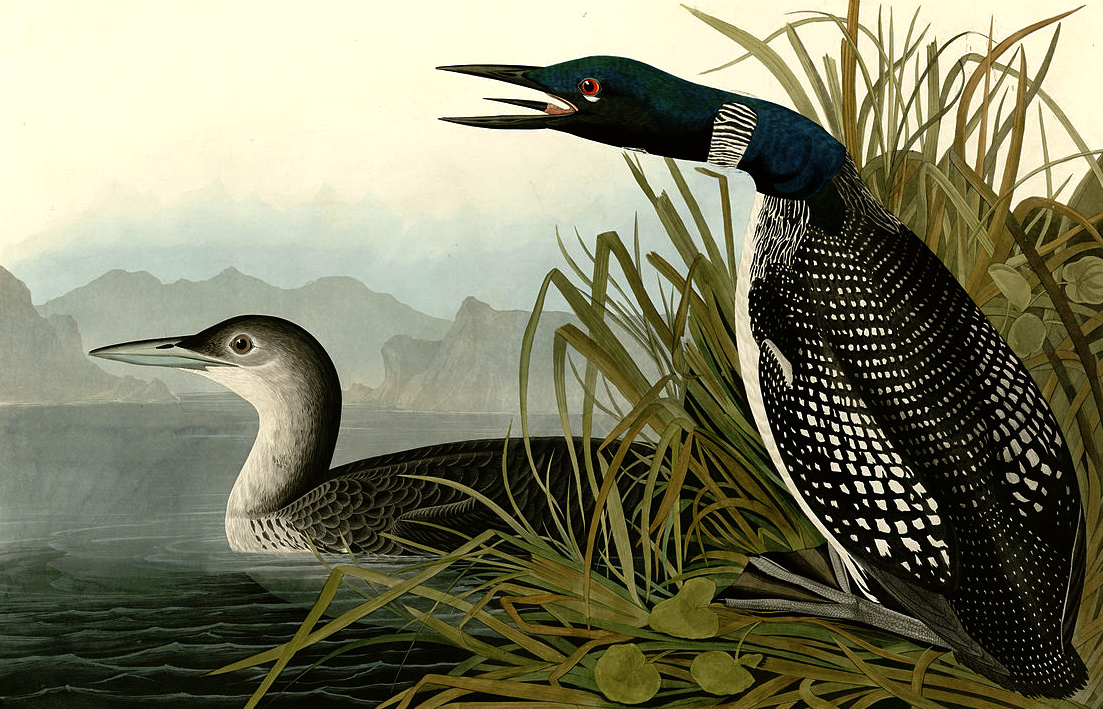
troglodytes

…..…In comes I the Wran,

The Wran, the Wran, the king of all birds.

On St Stephen’s Day I was caught in the furze.

Although I am little my family is great,

Rise up landlady and give us a trate.

Up with the kettle and down with the pan,

Give a few pence to bury the Wran.

Then I’ll dip my wings in a barrel of beer,

And I’ll wish you all a happy New Year.

St Stephen - the stoning
Stoning of St Stephen by Uccello

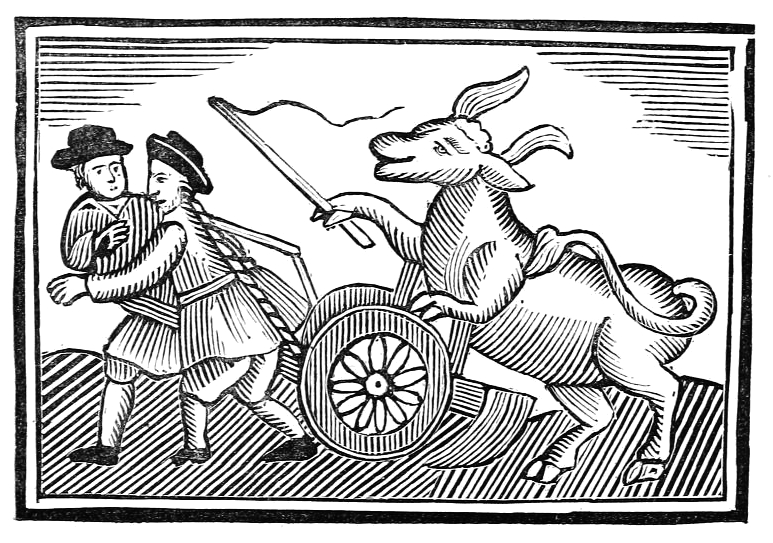
– St Stephen was the very first Christian martyr: in the same year that Christ was crucified he claimed to have a vision of Jesus in heaven standing at the right hand of God. To Stephen’s enemies this was a blasphemy, and he was forced into hiding. But his hiding place was given away by the song of a little Wren, and St Stephen was publicly stoned to death. In retribution for this the Wren is traditionally hunted in Ireland  (and some other Celtic countries) on St Stephen’s Day – December 26th, and groups of Wrenboys carry the bird from door to door – slung from a pole or interred in a small wooden coffin: there was a time when the poor Wren himself would have been stoned to death. An old story also blames the Wren for alerting a band of Vikings to the approach of the Irish army by pecking on a drum; yet another claims that when Cromwell’s soldiers were asleep and the Irish were about to attack, a flock of Wrens rose into the air and wakened the enemy with the sounds of their wingbeats. So there has always been a strong connection with betrayal.

Wrenboys in Cork - 19thC and Wren Boys by Jack Yeats
Wrenboys in Cork – C19th and The Wren Boys by Jack Yeats

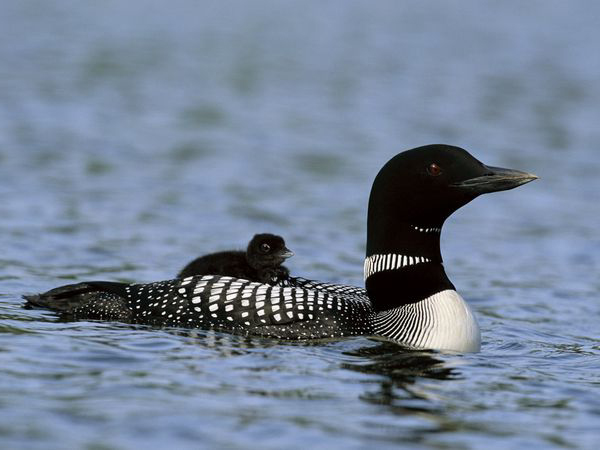
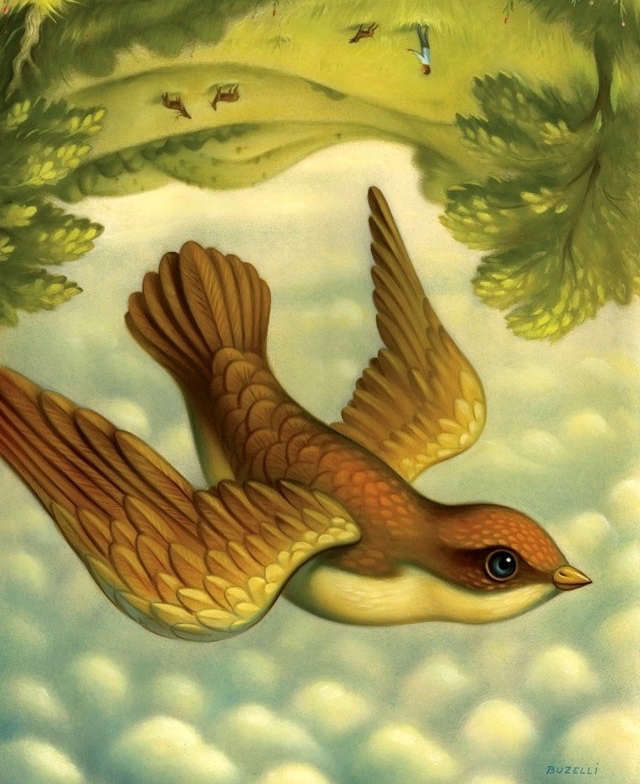
Troglodytidae (cave dweller) is such a small bird: here at Nead an Iolair we occasionally catch sight of him darting out from thick, seemingly impenetrable bushes close to the bird feeder – his movements seem more like a mouse. Small, yet in mythology he’s a giant – King of the Birds in several traditions: Koning Vogel in German, Konije in Dutch, Reytelet in French, Bren in Welsh – all mean King or Little King. When the birds were electing their king they decided that whoever could fly the highest would win the contest; the Eagle easily outflew everyone else but the Wren was hiding in his wings until the Eagle had exhausted himself and then flew on up to claim the title. But there’s more: the Wren is forever associated with that turning point of the year when everything goes topsy turvy: the Twelve Days of Christmas. At this time the Lord of Misrule presides and traditional roles are reversed; it’s not surprising, then, that the tiniest of the birds should become the most important. But, like all kings, his reign is finite – and he is sacrificed at the dark year’s end to ensure that the sun will rise again.

wren song

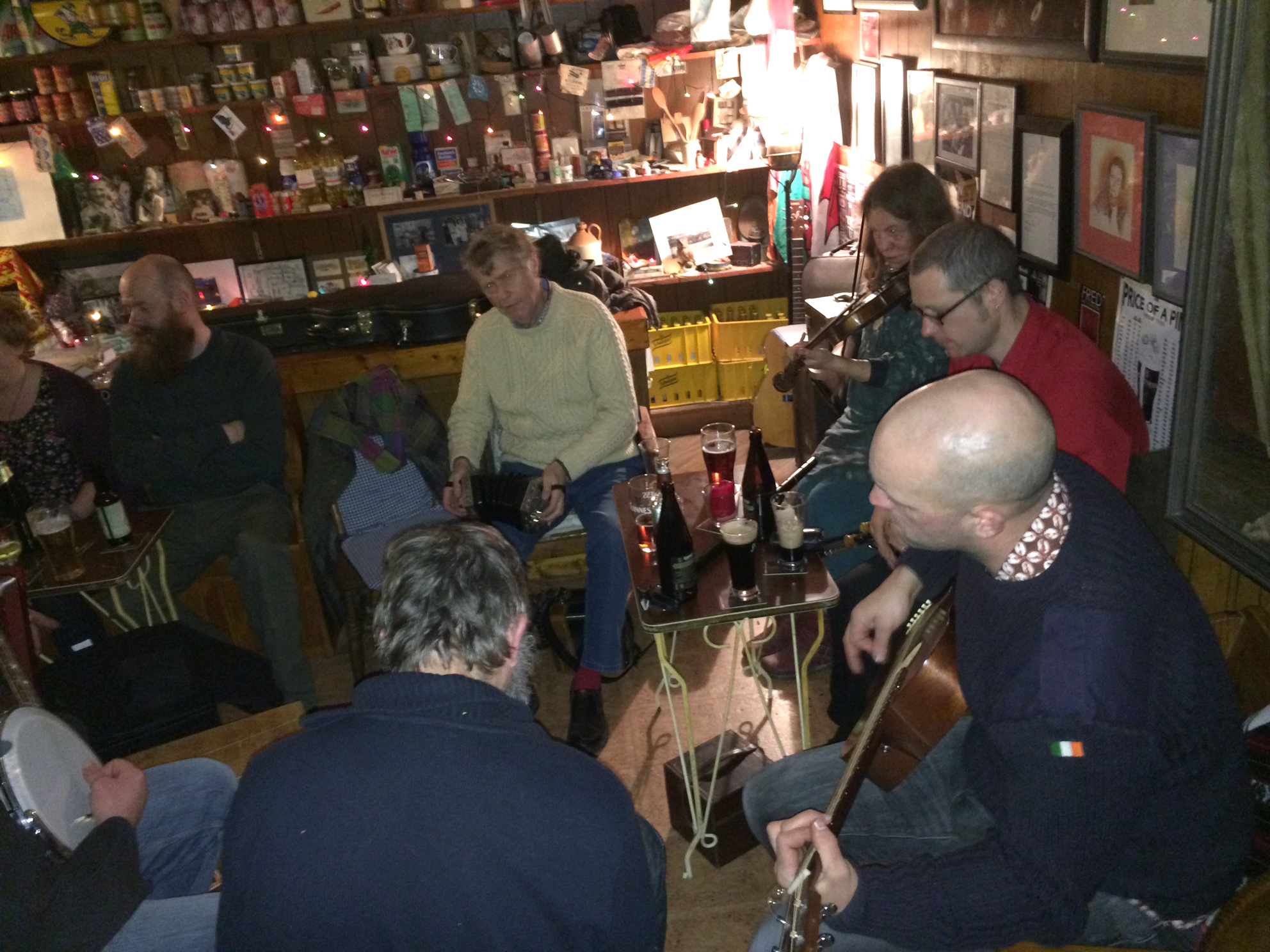
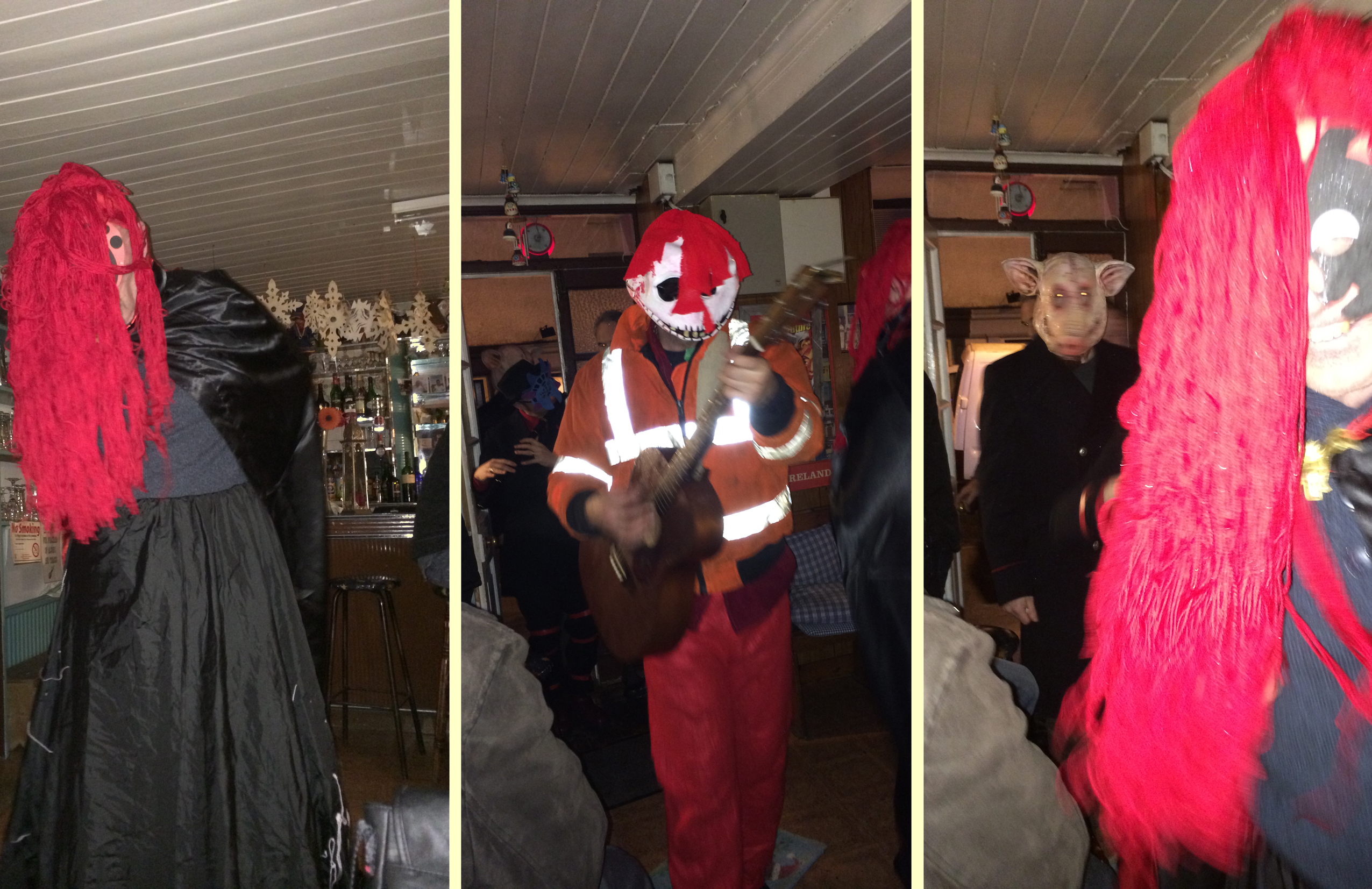
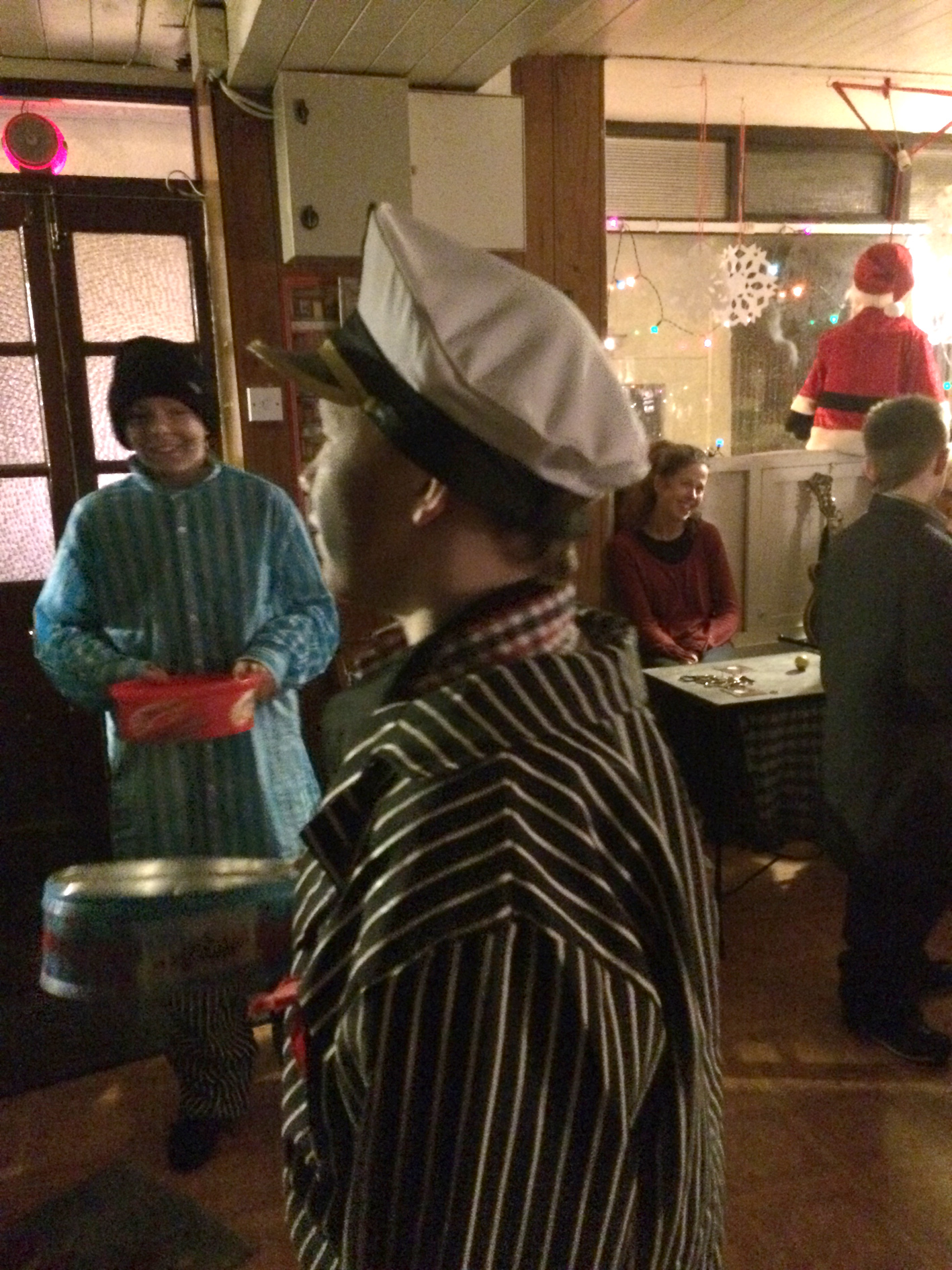
Which brings us to Rhymers… and Wrenboys, Strawboys, Guisers and Mummers… The Feast of Stephen is their day too. When I was a boy we went out every Boxing Day morning to Crookham in Hampshire to watch King George slaying Bold Slasher, who was miraculously brought back to life by the quack Doctor, after which the young fertility figure Trim Tram Jolly Jack ‘…wife and family on my back…’ killed Old Father Christmas – something which must have seemed odd to a child, who might not have understood the symbolism of the  old, dark winter giving way to the new life of spring. Danny tells me that when he was growing up in Limerick he saw the Strawboys or Rhymers performing the same play on the streets – and he remembers the Wren being paraded in procession, too.

crookham mummers
Mummers in Hampshire, England, above – and Wrenning in Kerry, Carrigaline and Dingle below
wren day

The folk play is alive in Ireland: there are Mummers in Wexford, Cork and Dingle, and the Armagh Rhymers travel across the world to perform their rituals. Here at Nead an Iolair I shall be reciting ‘…In comes I…’ around Christmas time: the words of all the characters are locked firmly in my brain – I have never seen them written down. It’s a true oral tradition – and a surviving one. Who knows – if I don’t repeat those words, the sun might just stop shining… It’s not worth the risk.

The Armagh Rhymers
The Armagh Rhymers

And – on St Stephen’s day – I shall be on the lookout for a Chime of Wrens, but I love all our birds, so it will only be a token ‘hunt’.

Christmas Cribs

Bantry Town Square

Bantry Town Square

In this part of Ireland putting up a nativity scene at Christmas time is as natural as breathing. Known as cribs, they appear everywhere at the beginning of December. Every Irish home has one, perhaps passed down through the generations, and they come out from the attic storage boxes along with the decorations to be displayed in a window or on a mantlepiece or hall table. Even for families that consider themselves non-religious, the crib is an essential part of getting a house ready for Christmas.

One for every budget

One for every budget

Large cribs are erected in town squares and in churches. Sometimes the figures in a church crib will be inserted slowly, one a day, in little ceremonies involving children. Traditionally, the baby Jesus, was not placed in the manger until Christmas Eve. Live cribs, where the nativity figures and animals are alive, are often mounted as fundraisers. I wrote about the Skibbereen one last year. There is even, in Dublin, the Moving Crib – an institution that generations of Irish children will remember and which is still going strong almost 60 years after it was first introduced as a Christmas wonder in a church basement.

Rosie's Pub in Ballydehob

Rosie’s Pub in Ballydehob

Many businesses clear their window displays to feature the crib at Christmas – along with Santa, reindeer and the usual holly and candles. Shops, hairdressers, garages, pubs: it’s universal and it’s all a reminder that Ireland, which now prides itself on its multi-cultural and pluralistic society, is still at heart a traditional Catholic country.

Outside the Catholic Church in Schull

Outside the Catholic Church in Schull

A striking aspect of Irish cribs is their conventional character: lifelike (and sometimes life-sized) representation is the norm. Mary, Joseph, Baby Jesus, shepherds and kings, the cow and the donkey are all instantly recognisable and similar, as if stamped out by the same crib-figure factory in Italy.

In Ballydehob

In Ballydehob

John Charles McQuaid and Eamon DeValera - together keeping Ireland devout

John Charles McQuaid and Eamon DeValera – together keeping Ireland devout*

As I considered this, a memory stirred and I went hunting on the internet for more information. In 1964 a new church was built at Dublin Airport. Named, suitably, “Our Lady Queen of Heaven” it was a beautiful piece of mid-century modern architecture designed by an Irish architect, Andrew Devane, who had studied under Frank Lloyd Wright. For Christmas 1966 a new crib was installed. Consisting of minimalist, highly stylised all white figures (I am going by memory here – I can’t find any pictures of it on the internet) it created a sensation at the time. My father, who worked at the airport and who was very proud of the church, brought us to see it. Alas, it was all too much for the Archbishop of Dublin, the famous John Charles McQuaid. Decreeing that it was “beneath the level of human dignity” and that its presence was an offence against Canon Law, he ordered it removed. This sentiment was echoed in the Irish parliament (Dáil Éireann) by the Minister for Public Works of the day, Oliver Flanagan. He said: A crib in modern design was erected at Dublin Airport last winter. The Archbishop of Dublin ordered it to be removed. The images could be described as anything but the kind of images one associates with the Christmas crib. We must have modern art. We must have proper designs for memorials and statues in keeping with the present and the past. Monuments commemorating the past must resemble the past.

I can’t imagine this happening today in Ireland and perhaps there are now many modern and unique cribs around the country. But I certainly haven’t found any so far in West Cork.

How's this for a modern crib?

How’s this for a modern crib?

*From the Irish Independent Website

Christmas Markets

En route to Goleen, every couple of Km, a reindeer points the way to the Christmas Market.

En route to Kilcrohane, every couple of kilometres, a reindeer points the way to the Christmas Market

‘Tis the season…and oh dear, I am afraid to tot up what we have spent at the Christmas markets here in West Cork. We tell ourselves that we have moved here with nothing to hang on a Christmas tree; that we are supporting local entrepreneurs, artists, craftspeople and fund-raisers; that we need to lay in food for visitors; but the truth is that we find the whole Christmas market thing irresistible.

Amanda and her beautiful Wayfarer Cards; December weather in Kilcrohane; furniture and art in Ballydehob

Amanda and her beautiful Wayfarer Cards; blue skies in Kilcrohane; furniture and art in Ballydehob

We love the colour, the carols, and the stalls that only appear at this time of year. We love the ones run by kids – raffling for their youth group, or trying to make a bit of cash by knitting and stitching and sawing and hammering. We love the amazing array of wonderful foods: we have come to know many of the vendors as friends and it feels good to know where your food is coming from.

Raising money for the club; we made them ourselves!

Raising money for the club; elf workshop; we made them ourselves!

This year we have attended markets in Goleen, Ballydehob, Kilcrohane and Skibbereen – so far! Each community is proud of its market and each one has a distinct character. The weather has been marvellous too – a real bonus since at least part of every market is outside.

Everyone loves Eithne's baking; Josephine and he delicious Hannah Quill preserves; Paul and Anne and their Fabulous West Cork Pies; smoked fish, quial's eggs and Coolea cheese.

Everyone loves Eithne’s baking; Josephine and her delicious Hannah Quill preserves; Paul and Anne and their fabulous West Cork Pies; smoked fish, quail’s eggs and Coolea Cheese

I think we might be able to sport a respectable Christmas tree now…and we certainly won’t starve!

Part of the haul.

Part of the haul

The English Market

teeth

We’re both looking at markets this week: Finola is concentrating on the delights of our local Christmas community fairs, while I am looking at the ‘big market’ further afield.

moynihans

The Republic’s second largest city can trace its history back to a community of monks, scholars and scribes which St Finbarr established on the banks of the River Lee in the 6th century. The area was known as an Corcach Mór – ‘the Great Marsh’. This settlement became a notable centre of learning, giving rise to the phrase Ionad Bairre Sgoil na Mumhan – a motto adopted by the modern University College Cork as ‘Where Finbarr taught let Munster learn’.

Finola approves Walter's stall

Finola approves Walter’s ‘pop-up’ stall

First a town and then a city grew up around the marshes and in the 18th century large tracts of low lying land were drained and reclaimed, forming the area which is now the commercial centre of Cork, including Saint Patrick’s Street, the Grand Parade, Grattan Street and Cornmarket Street. In 1786 the Corporation of the City undertook to create here a new meat market ‘in the English style’. A grand opening took place on 1st August 1788. This was before the emerging United States of America had elected George Washington as its first President, and in the same year that Captain Arthur Philip’s First Fleet arrived in Botany Bay with its cargo of convicts – ‘The Founders of Australia’.

queen

ooysters

The English Market in Cork is an essential part of any visitor’s itinerary. Even the Queen went there for a look around during her Irish tour last year and reportedly was very impressed with it. We followed on last week, to visit the new Fresh from West Cork stall which has been set up over the Christmas period to sell the delicious produce which emanates from our small part of the world, and which has justly gained a country wide reputation. The stall is being ably run by Walter from Loughbeg Farm – just down the road from us, and it’s hoped that this trial period will result in Fresh from West Cork becoming a permanent fixture at the market.

loaves

cakes

shelves

cheese

It’s no longer just a meat market – you can find every variety of good food there, as these pictures hopefully show, and an excellent cafe upstairs. If ever you are passing through, don’t forget to call in.

farmgate

jugs

The Flying Snail

Iarnród - between Ballydehob and Schull 1939

Iarnród – between Ballydehob and Schull 1939

In the heydays of transport by rail, the south of Ireland was served by a network of lines radiating out from Cork. Most of these were scenically picturesque – the nature of the countryside saw to that – and all were imbued with Stories, still recounted with relish by the local people who remember them, or whose mothers and fathers remembered them. Here’s one of the stories – told about the Chetwynd Viaduct, coming out of Cork on the way to Bandon.

Chetwynd Viaduct today - a scheduled monument

Chetwynd Viaduct today

This structure was designed by Charles Nixon, a pupil of Isambard Kingdom Brunel, and built between 1849 and 1851. It’s still in place today, passing over the main  N71 road from Skibbereen, and is a scheduled monument. The railway, track and track bed have all gone. For quite a while after its construction it was known as “The Bowlers’ Everest”. Alert followers of these posts will know about Road Bowling already (don’t forget to pronounce it correctly: Road Bowelling) – a very skilful and ancient Irish sport involving hurling a heavy iron ‘bullet’ along a road, and getting it from one place to another in the shortest number of throws. For Bowellers, the viaduct presented an obvious challenge: to throw the ‘bullet’ on to it. This was attempted many times year after year, but it took a mighty man to do it: Mick Barry, widely acknowledged as the greatest bowlplayer ever. My informant was careful to add “…This has been said by many and denied by very few…” The Cork Examiner takes up the tale:

“…Barry conquered the Bowler’s Everest, the Chetwynd Viaduct on the Cork-Bandon Road on Saint Patrick’s Day, March 17th, 1955. He lofted the 16oz bowl on to the 100 foot high parapet; an incredible feat which required almost superhuman strength, virtually defying the laws of physics. This feat was witnessed by thousands of spectators…”

chetwyndbolmc

Bowlers’ Everest – the viaduct at Chetwynd and a 16oz ‘bullet’

Less commonly cited is another Chetwynd story: on September 8th, 1985, watched by over 10,000 people, Hans Bohllen from West Germany lofted a 28oz bowl clean over the viaduct, clearing the top by ten feet.

clonjunctionLines from Cork eventually penetrated surprisingly far into the south west extremities of the state: to Kinsale, Bandon, Courtmacsherry, Clonakilty, Bantry, Baltimore, and – on a 3ft gauge narrow line snaking out of Skibbereen – to our two local towns of Ballydehob and Schull. It’s worth mentioning the colourful history of railway track gauges in Ireland: the standard now is 5ft 3in – something shared in the world with only Brazil, Australia and New Zealand – but earlier lines had 4ft 8½ins [UK and Europe standard], 6ft 2ins and 5ft 2ins, and when trams were first introduced to Dublin they had 5ft 2 and a bit.

plaque

Local history: plaque on the viaduct at Ballydehob

In 1925 all the railway lines in the new Irish Free State were amalgamated to become the Great Southern Railway, and in 1945 the system was consolidated with road transport concerns and trams to become Córas Iompair Éireann. The logo used by CIÉ until 1964 was affectionately (and, perhaps, cynically) known as The Flying Snail.

Córas Iompair Éireann - the national rail and bus company - logo used between the 1940s and 1964: known affectionately as 'The Flying Snail'

‘The Flying Snail’

ballytrainmcThe line out to us here in West Cork was particularly eccentric and would have been a magnet for present day railway enthusiasts if it had survived. In places the narrow gauge track ran along the main road; it reached speeds of up to 15 miles per hour… But how we all wish it was still possible to catch a little train out of Schull, Ballydehob or Skibbereen and arrive in Cork in a bit. It would be grand!

view

Water stop – with a view…

schull station

Leaving Schull Station, 1939

skibb station

All aboard at Skibbereen!

Going for the Messages

Inside Miss Clerke's, Skibbereen

Inside Miss Clerke’s, Skibbereen

When we were growing up in Ireland our mothers would send us up to the shops for messages. Clutching the coins she entrusted to us we would give the note to the shopkeeper, or recite what she wanted and he would duly hand over the message wrapped up in brown paper and tied with string.

Messages I remember: 10 Craven A, a yard of knickers elastic, 2oz of cheddar, 5 codeine, 1lb of broken biscuits, a packet of Bisto, a pair of brown shoelaces, a bottle of paraffin, a nice fresh piece of plaice.

Need a chamber pot?

Need a chamber pot?

Found it!

   Found it!

Nowadays we go off to the brilliant local supermarket (ultra efficient but with a wonderful variety of local produce) or the well-organized hardware store with its stocked and gleaming shelves, where the shopping experience is similar to that in Canada. But the shops of my childhood are still here too, in the small towns and villages. You can find hardware stores stuffed to the ceiling with everything you might need heaped in teetering piles. Ballydehob has one, My Beautiful Launderette, where we have dropped off our laundry and bought glue, mousetraps, nails, tools and flower seeds. In Bantry, when we can’t find the exact light bulb we are looking for in the airy modern electrical supply shop we can be sure to track it down in Vickery’s, a shambolic space loaded to the scuppers with kitchen ware, hinges, table lamps, shovels, and soap dispensers.

My Beautiful Launderette, Ballydehob

My Beautiful Launderette, Ballydehob

While modern boutiques abound in the larger towns, some clothing and haberdashery stores retain an old-fashioned charm, with most of the goods shelved in plastic bags behind glass-fronted counters.

Shoes, hats and First Communion dresses

Shoes, hats and First Communion dresses

Perhaps our favourite is Miss Clerke’s in Skibbereen. It is unchanged from the small grocery shops of the 1950s, with a little of everything neatly arranged around the walls. We go in there to buy bonbons – Robert has a liking for the apple-flavoured ones – although we have been out of luck lately. “The traveller,” she tells us, “hasn’t been able to get the apple ones for a while now.” We go home happily chewing on lemon ones (a ‘quarter’ in a paper bag) and fantasizing about life as a bonbon traveller.

clerke