A Grand Soft Day

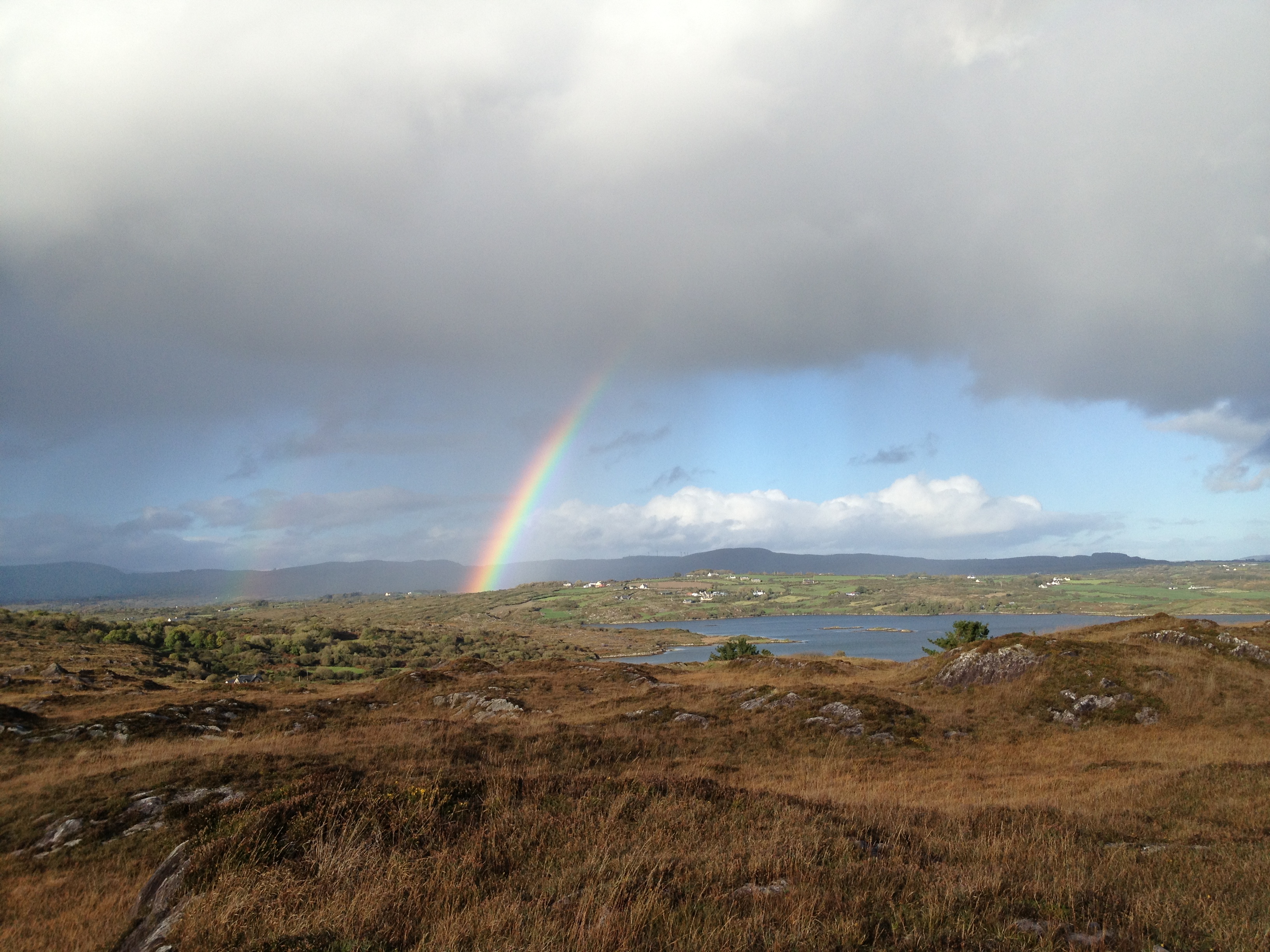
Sometimes the city in which a novel is set functions as a character in the story – a vital influence on events, unthinkable in a different place. I feel the same way about the weather in West Cork. It’s a SHE, of course – in turn tempestuous, caressing, unpredictable, always to be respected and never, ever to be taken for granted. Around here it’s ‘wait five minutes’ forecasting: what it says for the next few days on the iPhone weather app at 9am may have changed radically by noon so we never despair if we see days of rain ahead. We awake to a glorious dawn, with sunshine flooding across the bay and are enveloped in mist by breakfast, only to enjoy a sunny walk that afternoon. The clouds bank up in great mounds, lending glorious light and shade and endless colour variations to the landscape. We have stopped taking rainbow photos because we have so many already. Maybe if I see a triple…
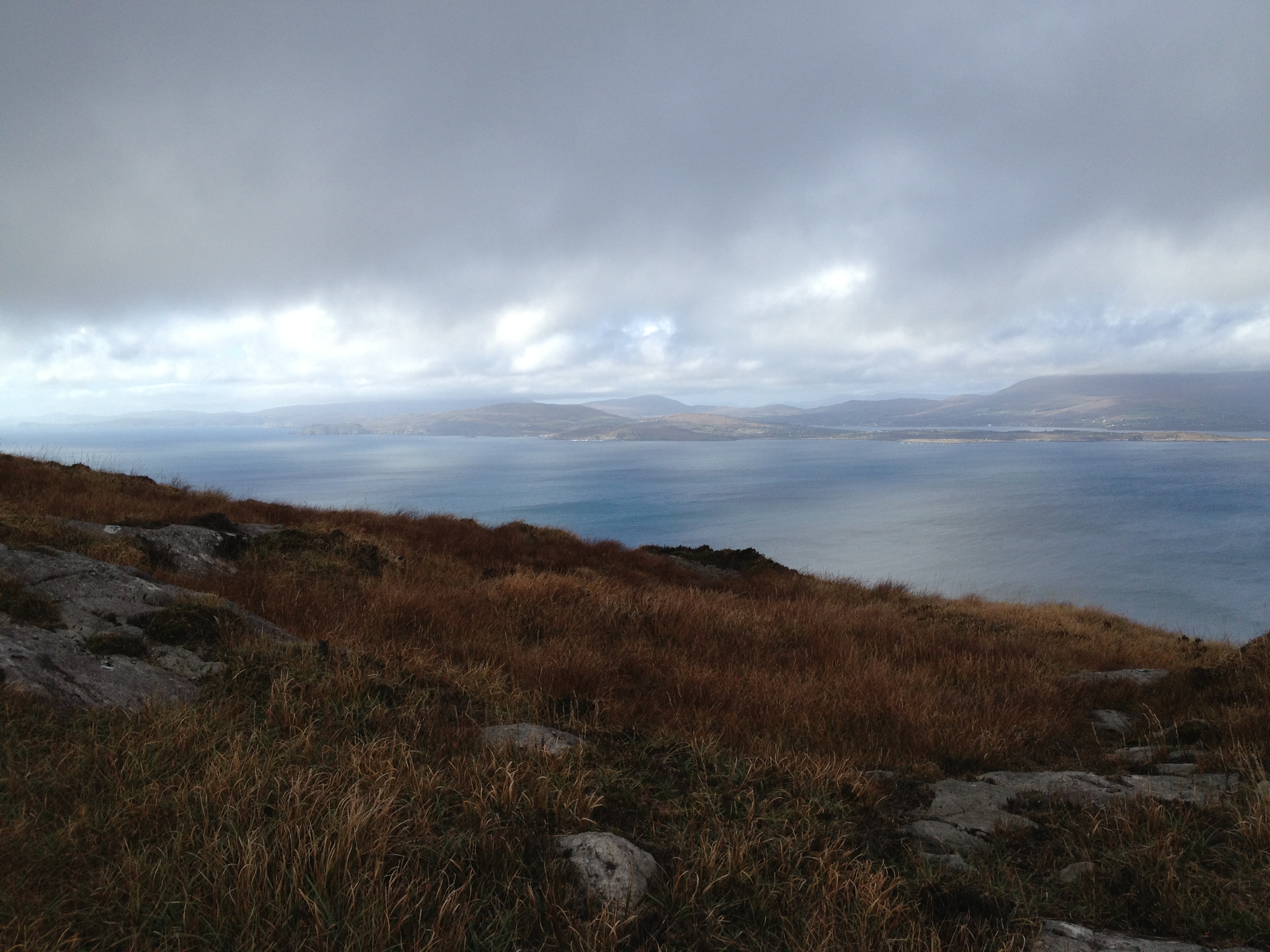
Robert uses the word ‘mizzling’ for that soft wetness that’s one step from mist and that you hardly need a hat for. When we walk along our Greenmount Road to the rise with the great view over to Kilcoe, we can see the rain coming across the sea, slanting down here and there from grey clouds, and sometimes it hits us and sometimes it doesn’t and mostly when it does it’s gone again in a few minutes and we dry out in the breeze that follows it. Odd nights we can hear it lashing on the skylights on the top floor and we echo the Cork people who say “’Tis a hoor of a night.” I remember endless days in Vancouver of rain pelting down and everyone with umbrellas and a grey will-this-never-stop misery sinking into the soul. So far – and maybe we are lucky – that isn’t happening here. We haven’t had a day without some sunshine.
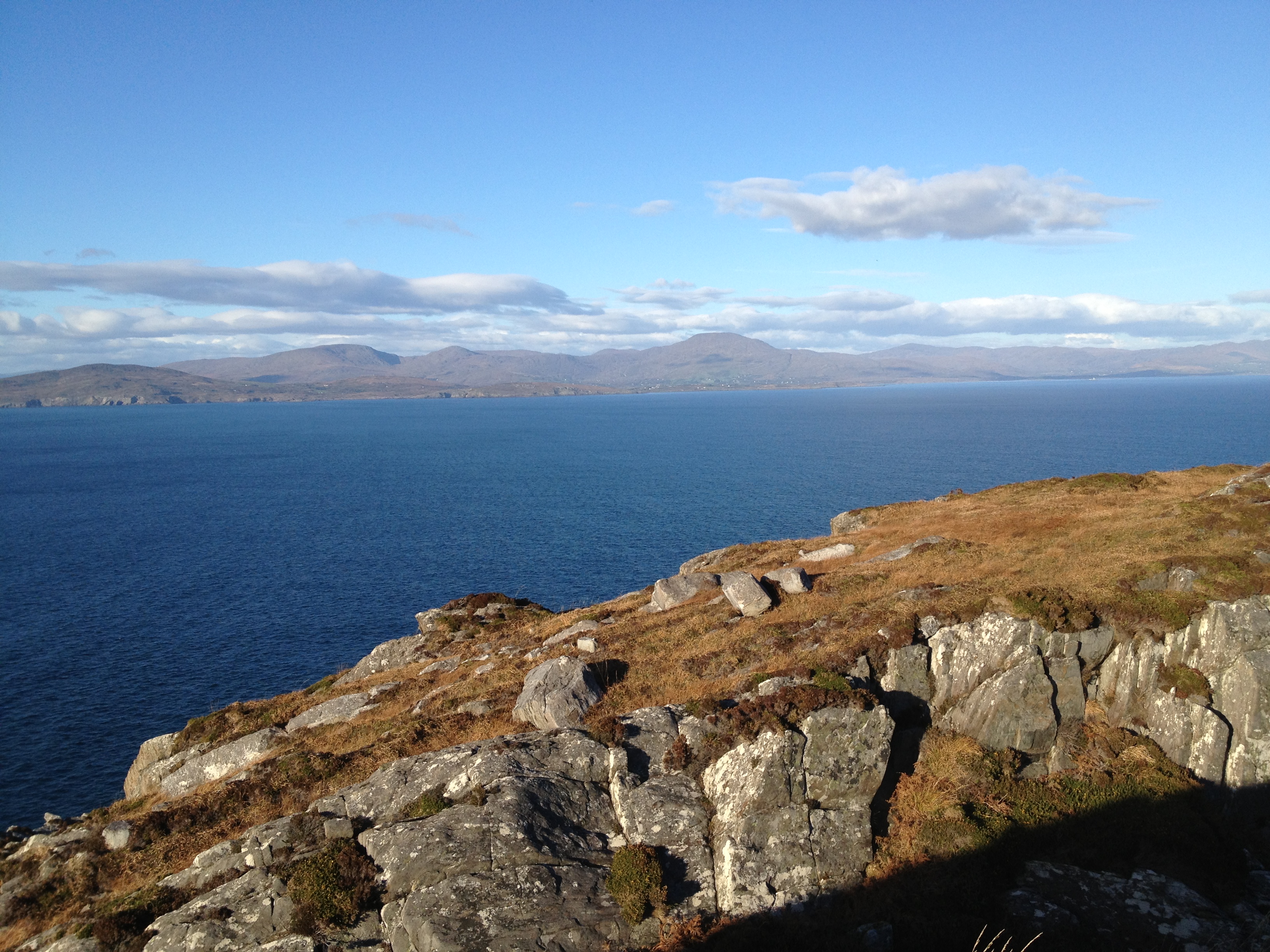
On November the 5th we walked the lighthouse loop on the Sheep’s Head with barely a cloud in sight – what they call locally a “pet day.” This was our third section of the Sheep’s Head Way and took in yet more stunning scenery and a long section where the trail runs on the brink of vertical cliffs, with the waves crashing and roaring below. It was so hot I got sunburn. That might not happen twice: but then again SHE specializes in the art of surprise.
Two Hares

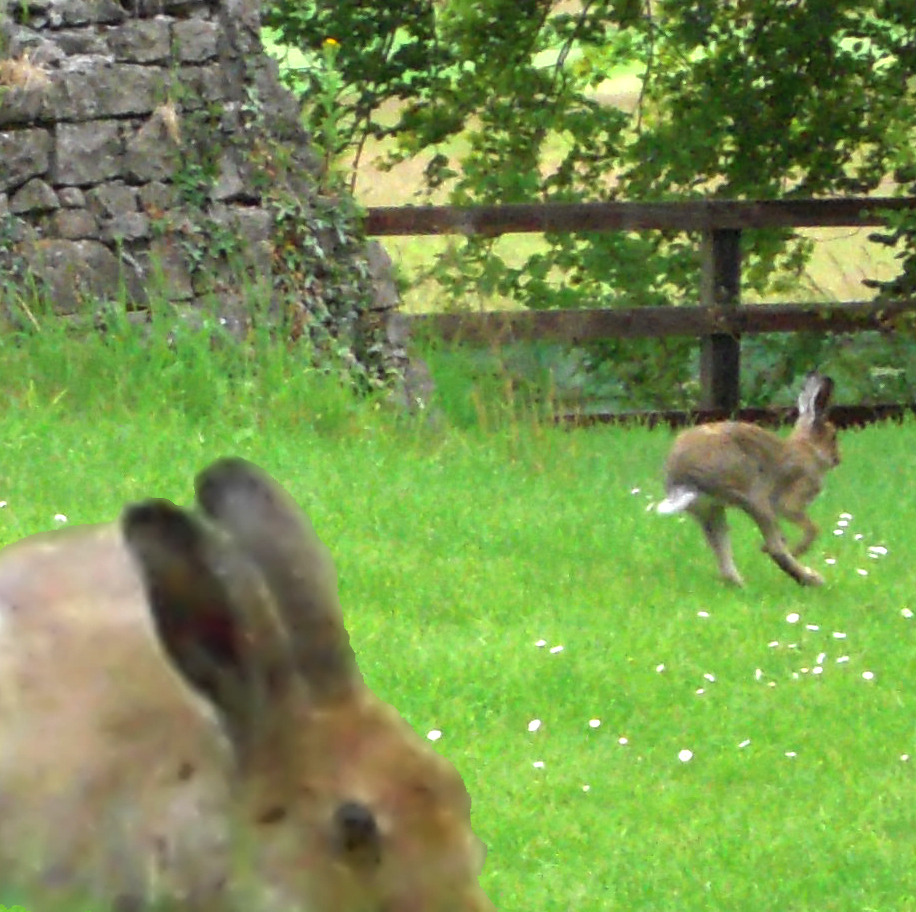
Two Hares ambling together in Ballybane West: grazing, ‘sharing the watch’…

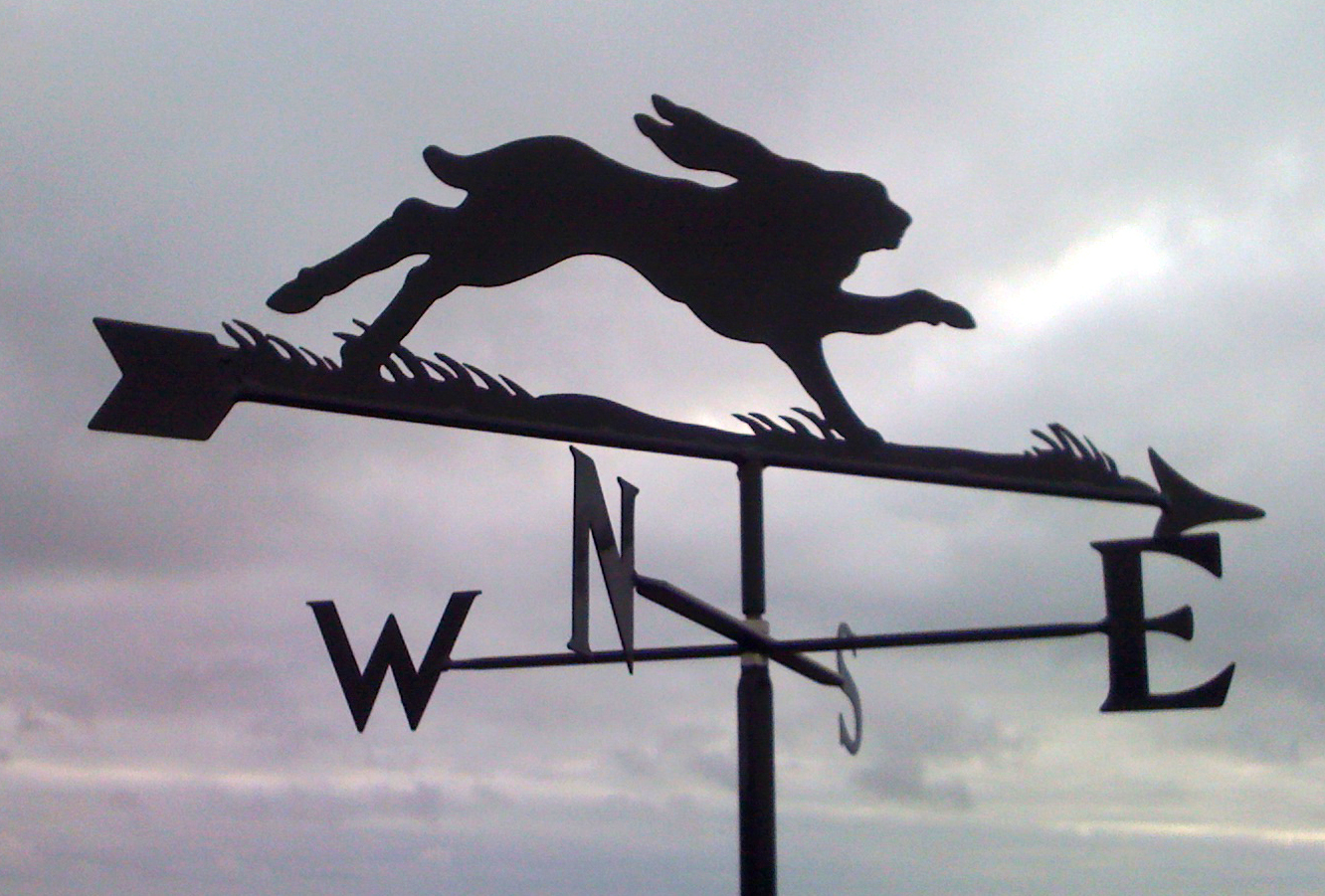
The Irish Hare – Lepus timidus Hibernicus – sometimes confused with the Mountain Hare – Lepus timidus Scoticus – which is smaller, Scottish, and has a lighter, winter coat, is not an unusual sight for the careful watcher in West Cork. Sightings of groups of two or more are frequent enough, in fact, to cause us to question the old folklore that says that Hares are always solitary: I once saw eight Hares running in a cluster across the field next to Danny’s house. But the story goes that the female Hare escaped from the Ark and was drowned, so God gave the male Hare the power to bear children: country people recounted that the Hare is androgynous – even as recently as the twentieth century – and lives in complete isolation, without the need for a mate.

Hares walked our Earth a million years before humans did – and have changed very little in that time: a true archetype. This could explain why the Hare is such a central figure in so many mythologies: trickster, moongazer, mischief-maker… In one pan–African story, the Moon sends Hare, her divine messenger, down to earth to give mankind the gift of immortality. “Tell them,” she says, “that just as the Moon dies and rises again, so shall you.” But Hare, in the role of trickster buffoon, manages to get the message wrong, bestowing mortality instead and bringing death to the human world. The Moon is so angry, she beats Hare with a stick, splitting his lip – as it remains today.

I watch the pair: they are aware of me – but I’m no threat. Two West Cork fields lie between them and me… small fields, perhaps, but they know very well that they could vanish before I even made the gate.

When I first saw the movement I thought it was partridge: I made it out to be two female heads in the long grass. Then I realised – ears laid low, then up and turning. They are all to do with the head: those so defining ears; the nose; the liquid, fathomless eyes – never closed, even in sleep. All the senses, and always at the ready… And – if they had to take off – that confounding sense of dizziness that sends them in impossible zigzags – even doubling back – to confuse their far less intelligent pursuers. They will also leap – up to twelve feet in one bound – to avoid laying a scent.

But – if you can – look further into those eyes: the depth, the perfect attuning, the knowledge… These are not animals for the jug – these are creatures we are privileged to share the Earth’s gifts with: these are the Old Gods.

Liss Ard Gardens

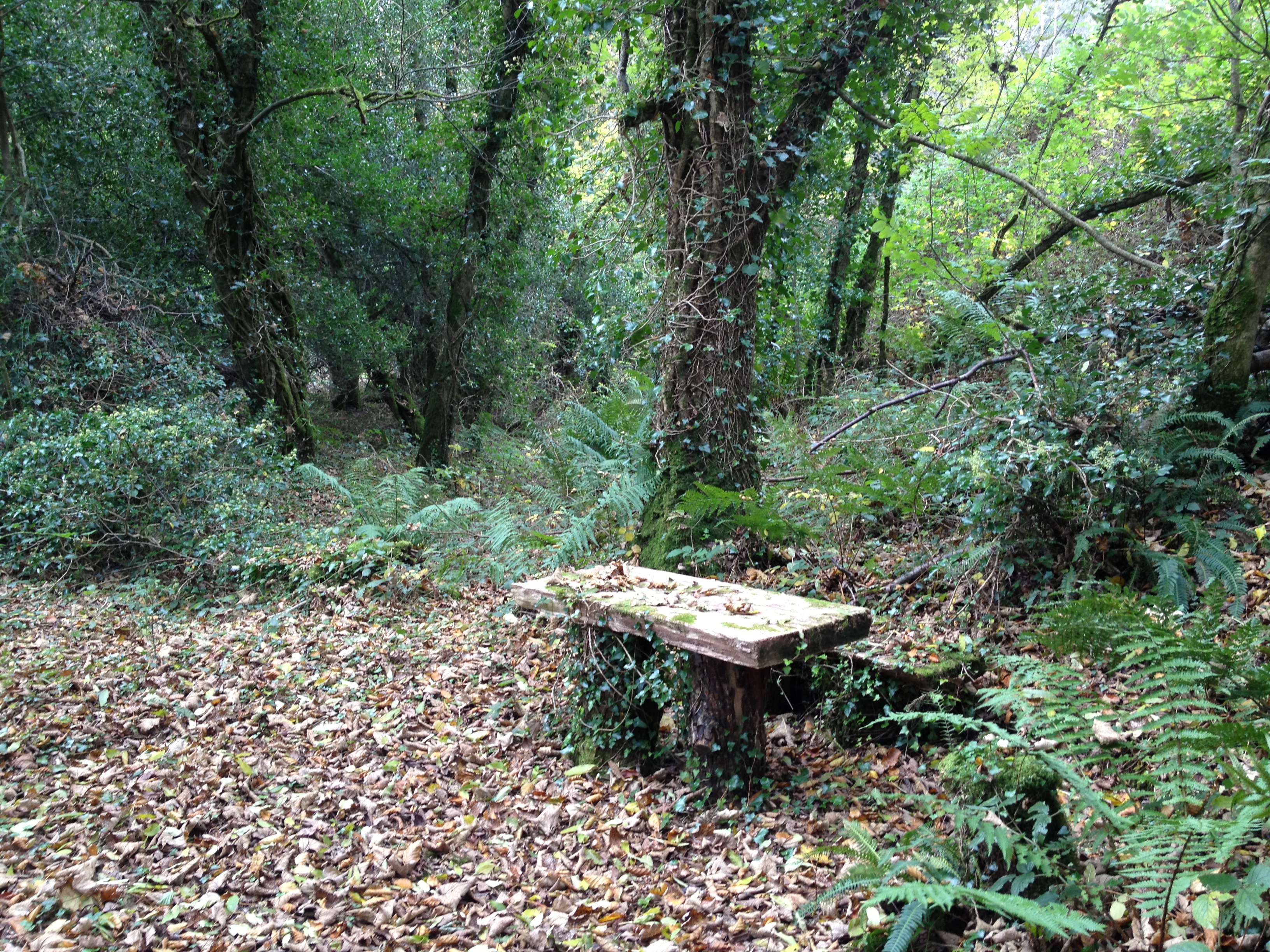
Liss Ard Estate lies just outside Skibbereen. We were lucky to manage a visit to the gardens on the last opportunity before it closes for the season. Parking inside the gate, we made our way up a lime avenue, the trees starting to show autumn colour. Although there are paved driveways and walks, the way forward wound through a wood and led to the water gardens – a series of ponds and serene spaces with rustic benches and a background of nattering streams. Eventually, we emerged onto the lake where we stood on a tiny pier, looking across the rippling water and listening to the sound of the wind in the tall rushes.

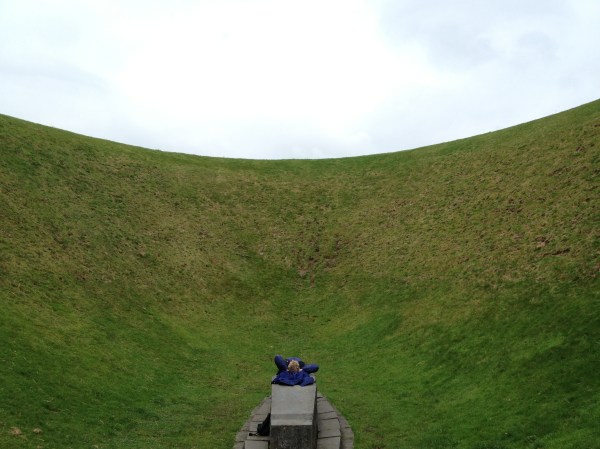
From here we climbed upward through woodland paths to the Sky Garden. An entrancing, curious, confounding construction, the Sky Garden was designed by renowned American artist James Turrell and opened in 1992. It is an oval grassy crater, with an altar-like plinth in the centre. Lying on that stone, gazing at the concentrated area of sky encircled by the walls of the crater is a deeply contemplative experience. Turrell is interested in light above all other considerations. The Liss Ard Sky Garden was the first large scale design to explore his ideas although he has gone on to design more such spaces, mainly in the US. I would love to go back there on a clear night.

Irish gardens come in so many varieties from the formal to the self-conscious ‘wilderness’ to the experimental arboretum to the classical-statued vista; and some gardens encompass all of these styles. Liss Ard invites the visitor to stroll; to see, hear and smell; to luxuriate in the soft carpet underfoot; and to contemplate what lies above as well as around. It is a place of sensual and intellectual pleasure.


The Music

This is written from the perspective of one who sits in on music sessions (or ‘Seshunes’) and attempts to find some commonality in repertoire with the other musicians. Usually, there is no commonality: every session has its own pool of tunes with which the regulars are familiar – I hide in a corner and play along, very approximately and as quietly as possible until I achieve a semblance of the relevant melody, by which time the moment has passed and the tune has changed to something else. It’s a struggle, but the experience of making music with a whole crowd of enthusiasts is a good one.

We first sat in at Levis’s (local opinion seems to differ as to whether this is pronounced as Leeviss or Levviss – or even Leevies) and admired the aesthetic: 1950’s decor and accoutrements. The bar was very much one room of a private house – and a trip to the loo meant going into the domestic quarters of that house. About ten musicians sat around in a circle and took up most of the available space; some bar stools provided a little room for spectators.

There were a few ageing and fascinating paintings and photographs on the back wall – many with political connections – and a little grocery section to the side where, in the daytime, one could purchase cornflakes and other necessities of life. The bar was manned by a niece of the two Miss Levis’s who had presided over the establishment well into their nineties. The Music itself was traditional, and mainly Irish. Instruments spotted included fiddles, guitars, flutes and whistles. The pace was fast and the hour late. Proceedings commenced at a theoretical 9.30pm – actually closer to ten. We were not there for the finish: we had a bed to go to.

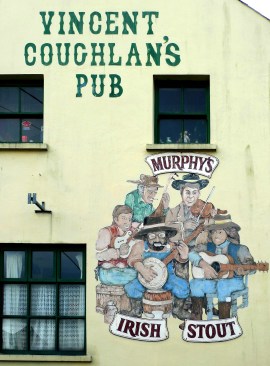
Last night I played my first note at the Ballydehob Seshunes. The venue was Vincent Coughlan’s – a more robust setting with ample space and a roaring stove. Also a television set, which remained on throughout the due process, although the sound was muted while The Music was played. This time there were more players and banjos and squeeze boxes added to the melee – including my own melodeon and concertina. I produced many wrong notes, but I coped. I have always felt shy and reticent about playing Irish traditional music in Ireland, as I am not Irish. But perhaps I needn’t worry: a brief headcount showed that of the musicians there last night eight percent (one person) were Irish, another eight percent were German, and the remaining majority was English! But music is after all a universal language – and we are all Europeans….

Making Friends

One of the joys of our sojourn here is being in communion with a whole world of wild creatures. The house, Ard Glas, is wonderfully situated, looking down over a sheltered inner stretch of Roaringwater Bay where there occurs rapid tidal movement creating – twice a day – mud flats teeming with waders, shorebirds, divers and seals.

Ard Glas

To date the spotting scope has shown up everything we might have expected – Curlews and Oystercatchers seeming the most prolific – and some surprises, including pure white Little Egrets, which are not supposed to be here at all! I’m sure I saw a Great Northern Diver, although it’s not impossible to mistake the profile and behaviour of a Cormorant for one of these most magical of birds. In the Canadian myth-time ‘Loon’ (as she is called over there) shares a high place in the panoply of Gods – or assistant Gods – close to the great creator, transformer and trickster Raven. It was Loon who helped the Great Spirit to recreate land after the all-consuming deluge because poor Loon was lonely: she missed the company of Human and Animals, who had all lived, worked and conversed as one race before the punishment of the flood was brought upon the world, largely through Man’s misdemeanours.

Loon

The Fox (or Foxes) frequently visit Ard Glas and the lanes around the townland, as do errant Cows who are either adept jailbreakers or who are being informally grazed on the ‘long acre’ – as Finola so aptly describes the Irish verges. This necessitates that we keep the gates closed, to preserve our neat lawn – whose pristine sheen we have already disturbed by installing a bird-table: a very Irish bird-table finely executed by our friend Danny and painted a most appropriate green. It has yet to receive a feathered visitor – but it’s early days…

Up in the hills – on the Sheep’s Head Way – the quest for friends continues: rewarded, yesterday, by a glimpse of one tenth of a Hare – the first seen to date on this visit. The one tenth was its backside and tail as it disappeared into the bracken: the tail was long and black striped, thus confirming the sighting as a Brown Hare, rather than an Irish Hare. Another excitement on that walk was an ‘almost certain’ Snow Bunting – distinctively white bodied and black winged in its adult male plumage: a rarity in Ireland, and in all likelihood just passing through: the species only breeds in northern Scotland, Iceland and Scandinavia.

I am always on the lookout for more Hares: they are my passion. I’m rather afraid that I won’t see them in the fields around Ard Glas, as there is a large Rabbit population established here – and Hares don’t like land which is used by Rabbits.

But there is rough and seemingly Rabbitless land up behind us, and I am optimistic that some sightings are to be had over the next few months. I have enjoyed many such sightings in the past around Danny’s townland of Ballybane West: I have seen groups of ten or a dozen racing around a field for no apparent reason (Haring?). They do seem to be animals which have a very strong will to confound and confuse, evidenced by a great lack of logical or consistent behaviours and by a whole wealth of folklore, some examples of which I might recount in future posts.

Hiking the Sheep’s Head Way

In my first post I complained about the endless rain. Fact is, in the first two weeks of October we have had some great weather, including several days of glorious sunshine and NO RAIN. We are fortunate to be within half an hour of the Sheep’s Head Way, a world-class system of marked trails with mountain, coastal and valley hikes of varying lengths but uniformly breath-taking scenery. On back-to-back sunny days this week we undertook to hike parts of the ridge trail that runs along the spine of the peninsula.


Our first hike took off north of Durrus at Booltinagh Mountain and ran south along the ridge to a high point and over the top to the Barna Mor, or Big Gap – an old donkey trail across the peninsula. Although the trail is well marked and clear it is soggy: waterproof boots are essential along with layers for taking off and putting back on as you heat up, cool off, or see a shower sweeping in from the south west. Our views were north to Bantry Bay, all the way back to Glengarriff Harbour and over to the Beara Peninsula. On the other side across Dunmanus Bay lay the Mizen, bathed in sunshine. We shared the trail with sheep, but saw no other walkers.

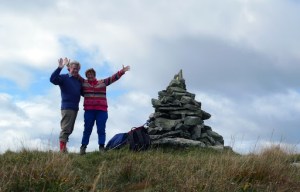
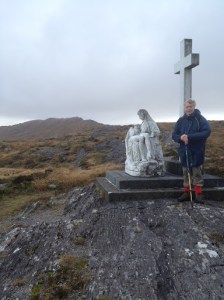
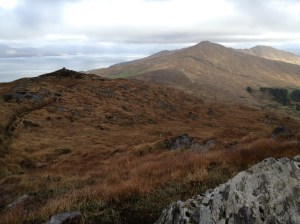
The next day we ventured further west to Kilcrohane, turning north up a steep and winding road to Finn McCool’s seat, a natural saddle on the ridge. This being Ireland, the trailhead is marked by a marble Pieta, perhaps dating to the Marian year of 1954 that saw so many such monuments erected all over Ireland. Once again, we had the mountain to ourselves. Although it was a bright day, a howling wind blew up from the sea below. We leaned into it, and tramped on, to the Peakeen cairn. Along the way we stopped to examine the remains of what may be a Neolithic passage grave, occupying a commanding knoll along the ridge. How important would you have to be to have your tomb in such a place? Perhaps as important to the people who built this monument as the crucifixion images of the Pieta was to the local residents in 1950s West Cork.

The passage grave is on the first knoll on the left
We wondered why this incredible, wild resource that is the Sheep’s Head Way is not a National Park – even a World Heritage Site. Perhaps the answer is that as long as people respect it (and they do – we saw no litter or vandalism) and as long as access is freely given by landowners, there is no need to administer it as a park. The website for the Way indicates that it receives funding from both Ireland and Europe, but that The Sheep’s Head Way committee is a voluntary committee, consisting of landowners/farmers and other representatives from the local community. What a fantastic job they have done!