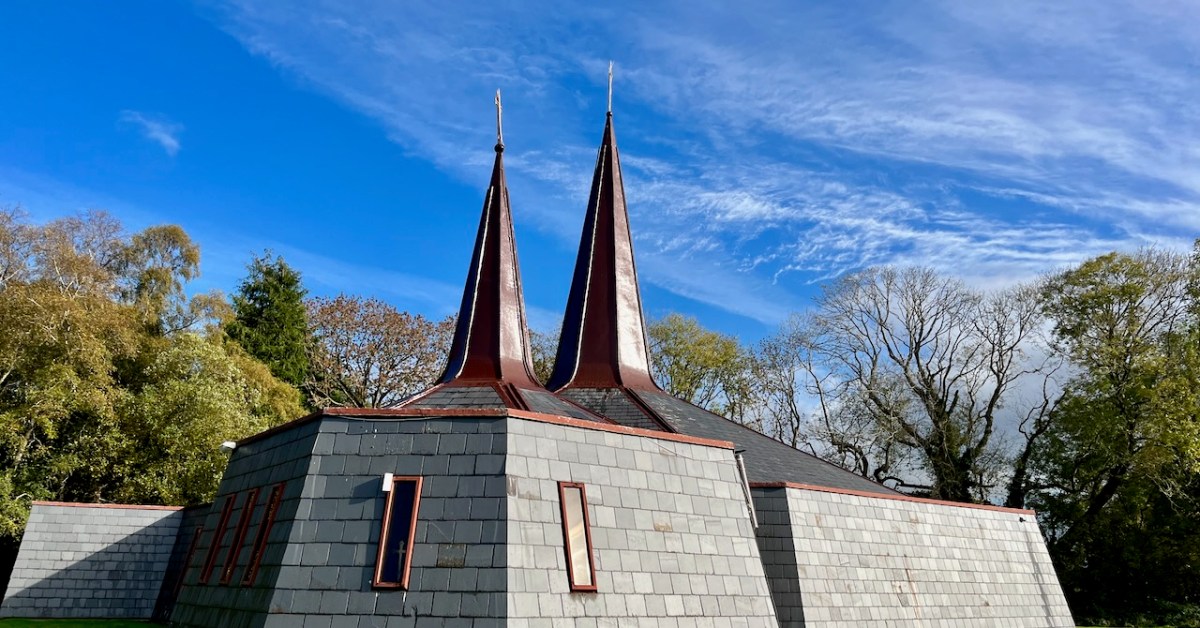
Prince of Peace: A Modern Irish Church

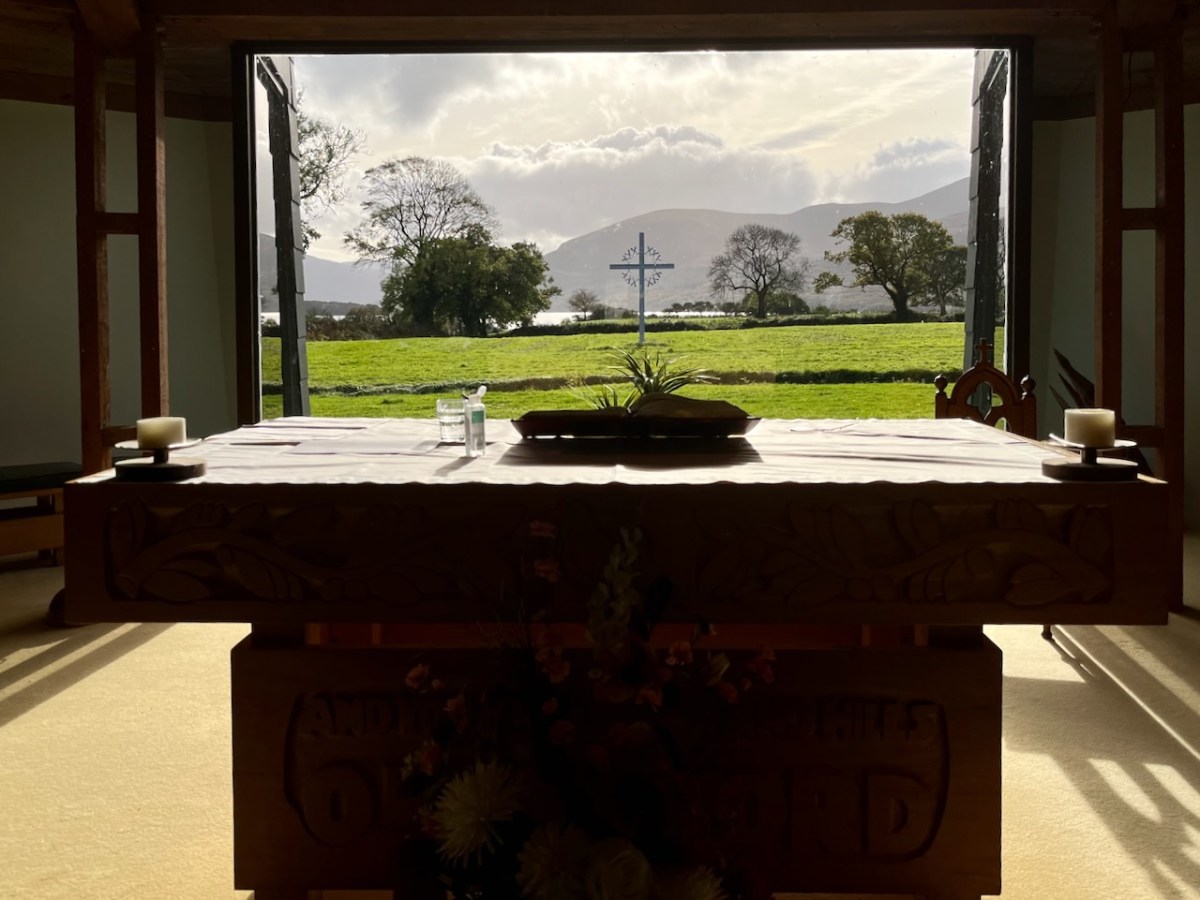
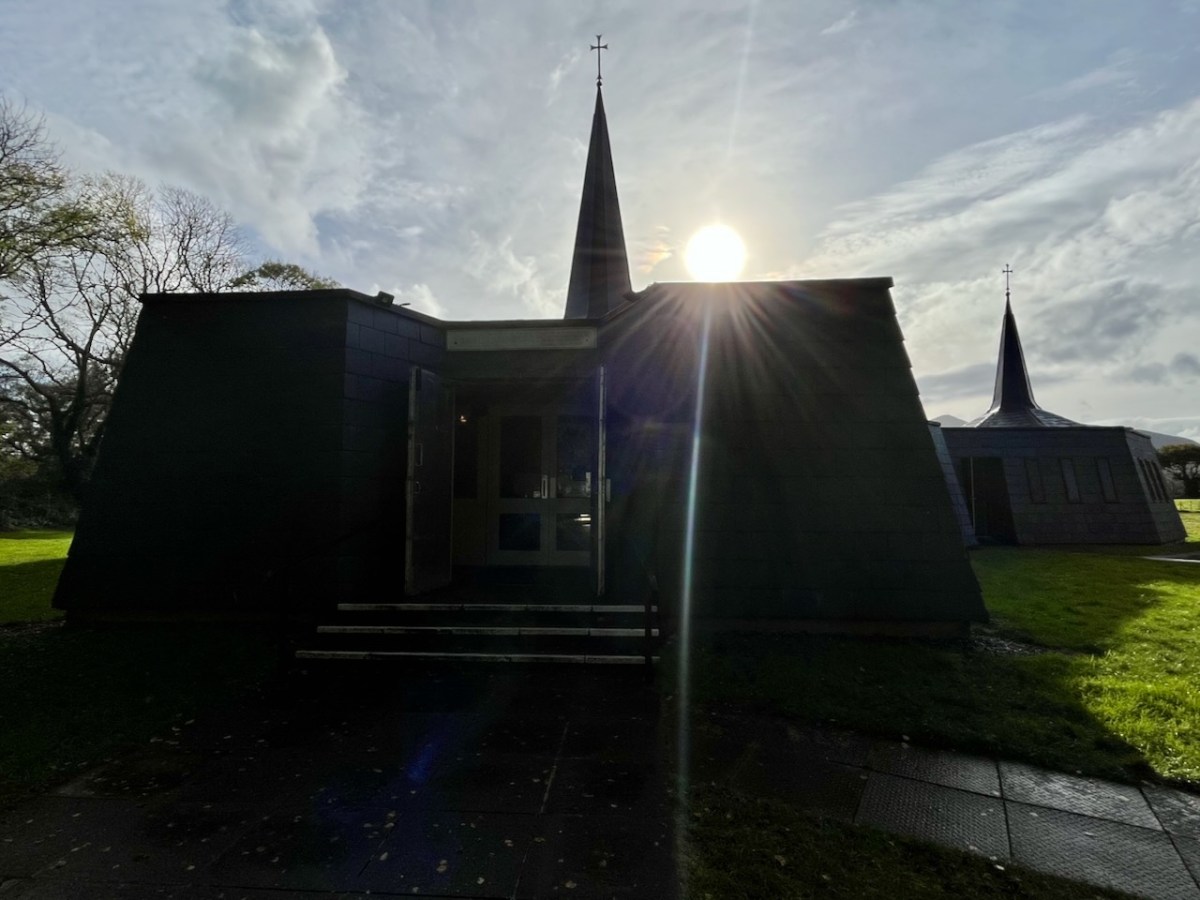
On our travels in Kerry recently, we happened across a striking church building. It’s situated west of Killarney and overlooks Lough Leane: in fact the view of that stretch of water is a principal feature from the interior of the church. An enormous picture window is situated beyond the altar.
I have titled this piece: A Modern Irish Church. Everything is relative, of course: this Fossa Church was completed in 1977, getting on for half a century ago, but one could only fairly describe the style as ‘modern’. It is one of twenty seven ecclesiastical buildings designed by the architectural practices of Liam McCormick (1916-1996). While based in Derry the architects carried out commissions throughout Ireland: the practice of Mullarkey Pedersen Architects, Derry and Dublin, continues their work to this day. My own life experience as an architect – (I carried out a number of church projects) – tempts me to embark on a tour of McCormick’s buildings, many of which are visually dramatic..
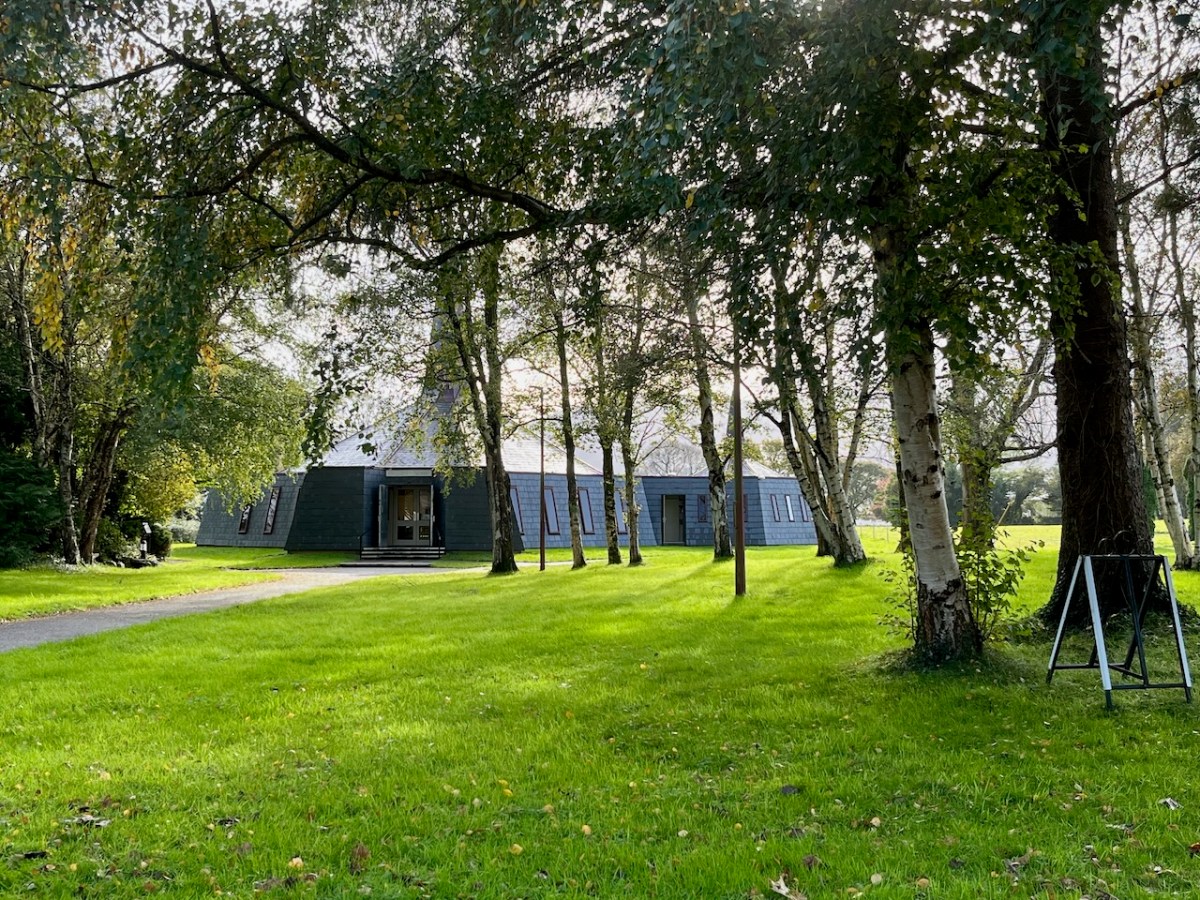
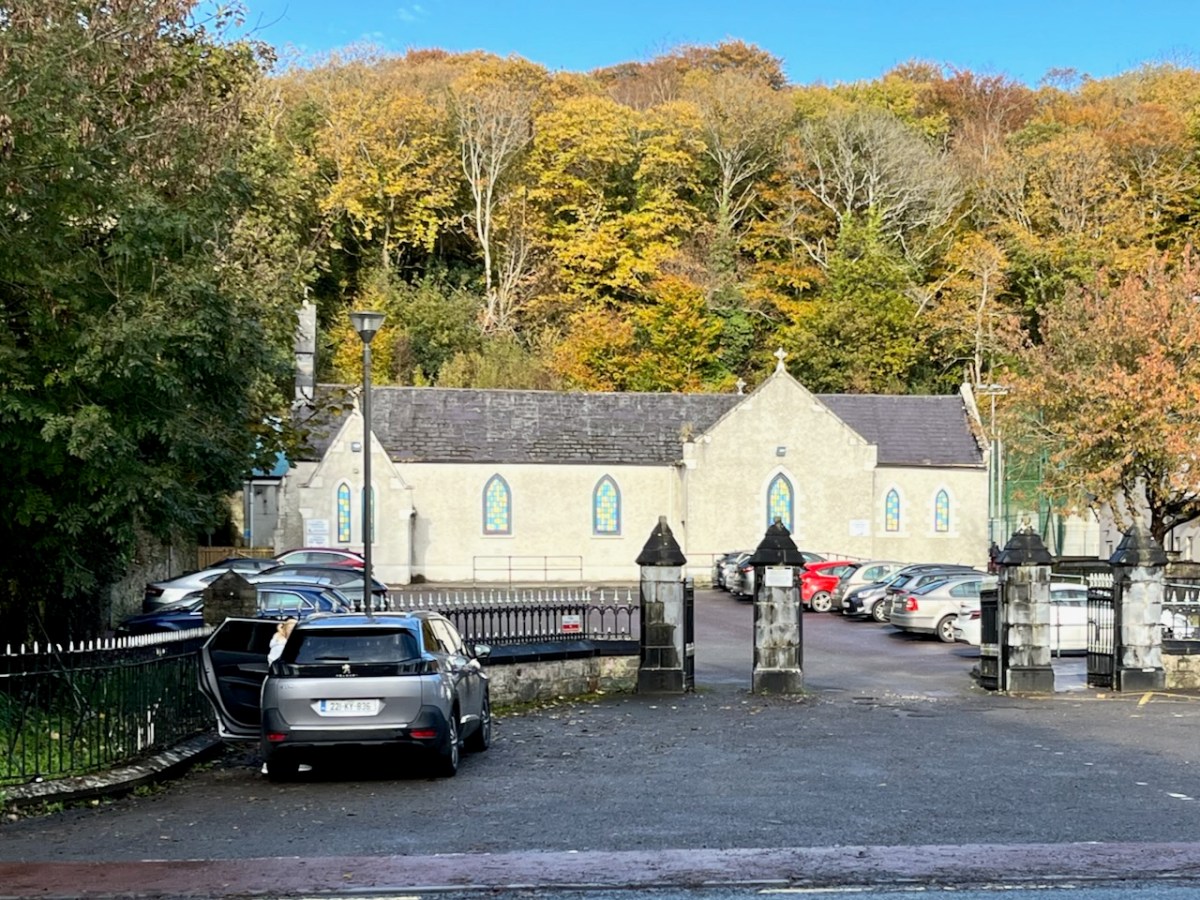
The lakeside church was designed to supersede an earlier building – St Lelia’s – which dated from the 1840s. That building remains and is in communal use (above): it is set back from the present site.
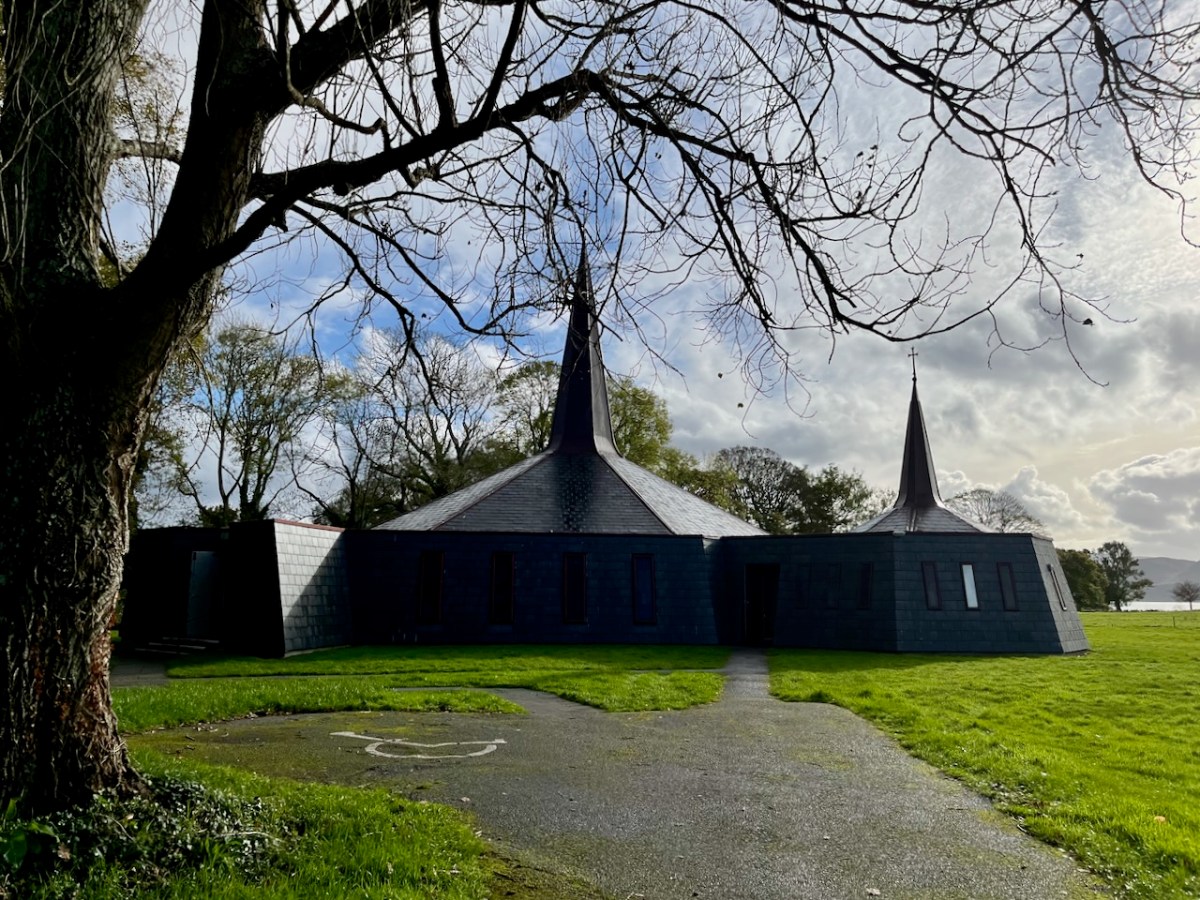
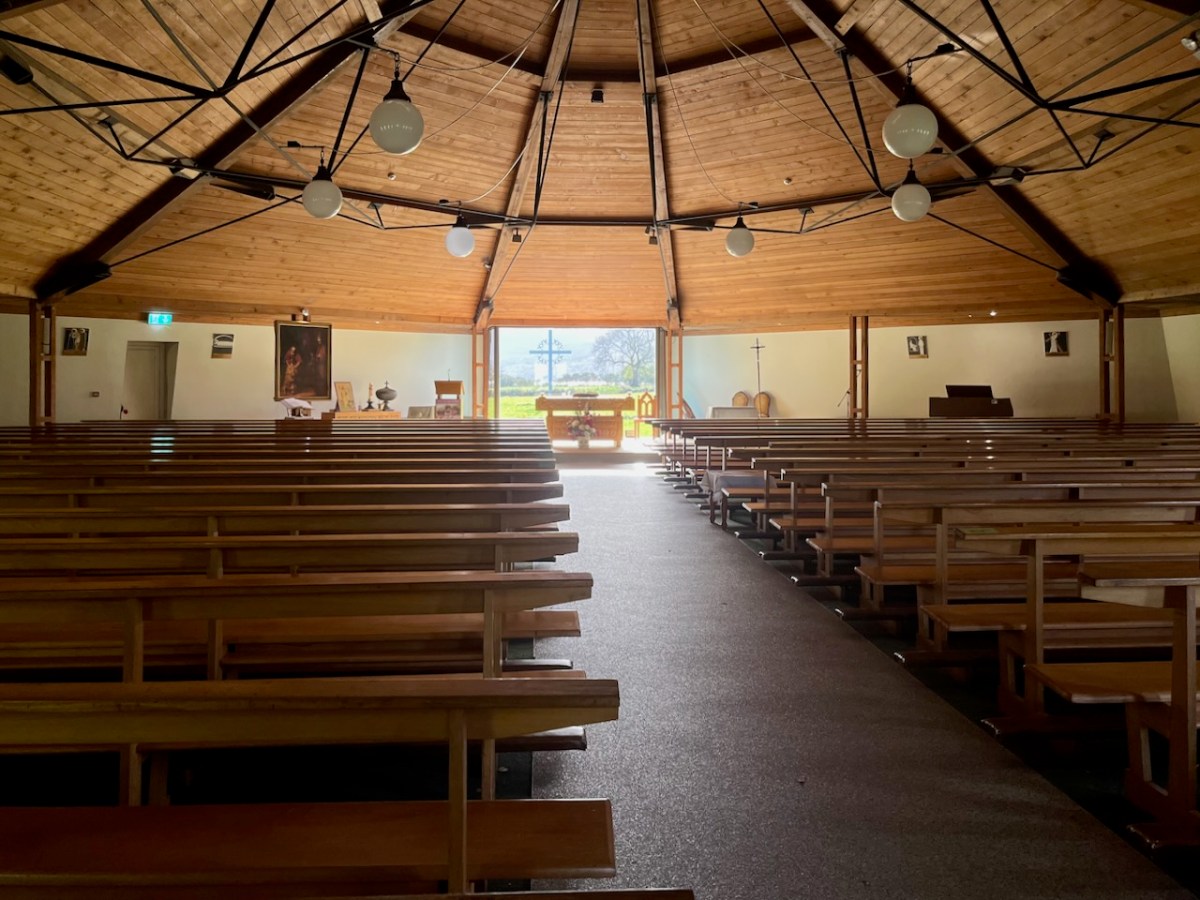
Unusually, there is no contemporary stained glass in this building. Instead, the focal point is the central view. I wonder whether this might be a distraction while the priest is in action? It may be that he would always be in silhouette in daylight: there is no means of subduing the window. The church does contain some distinctive artwork, however.
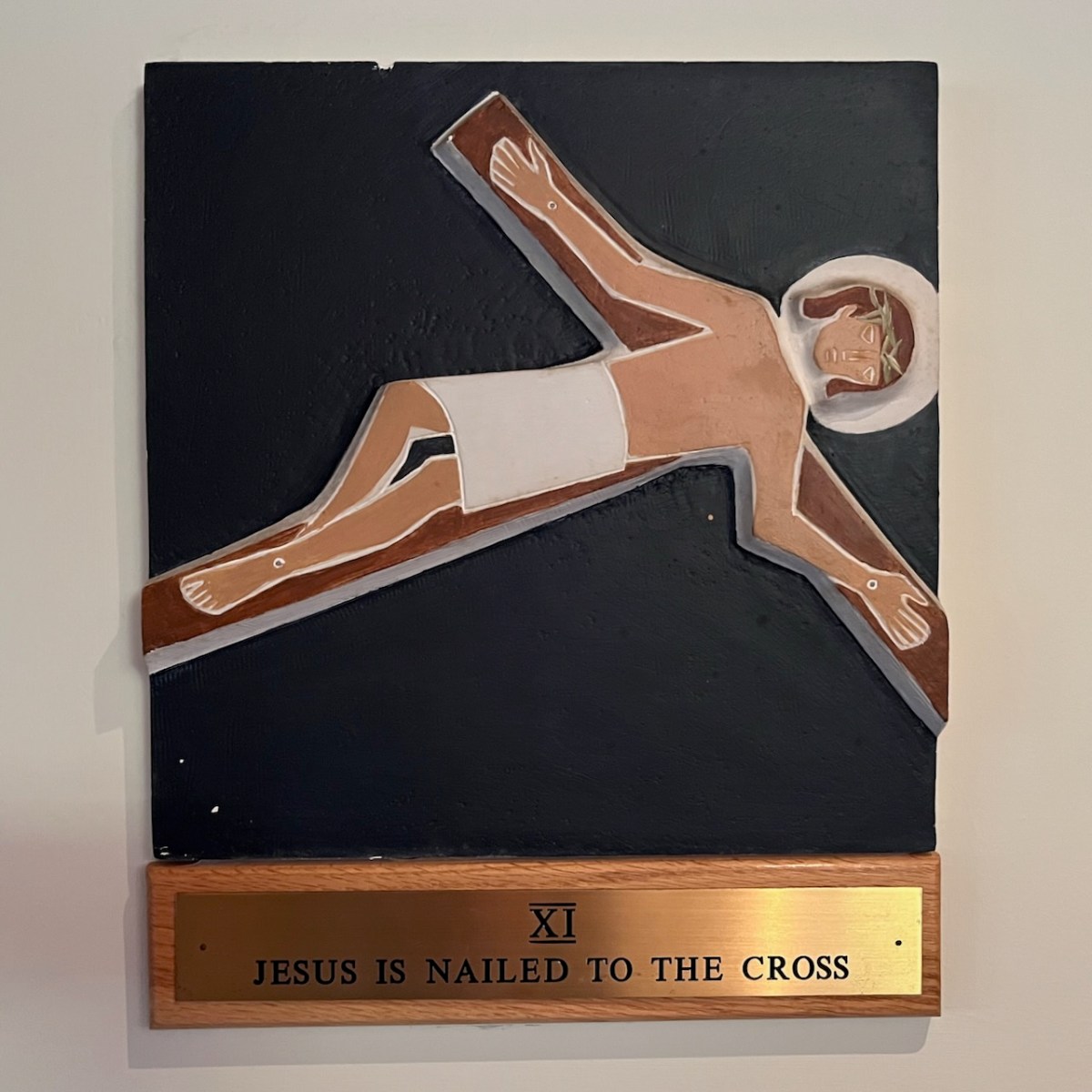
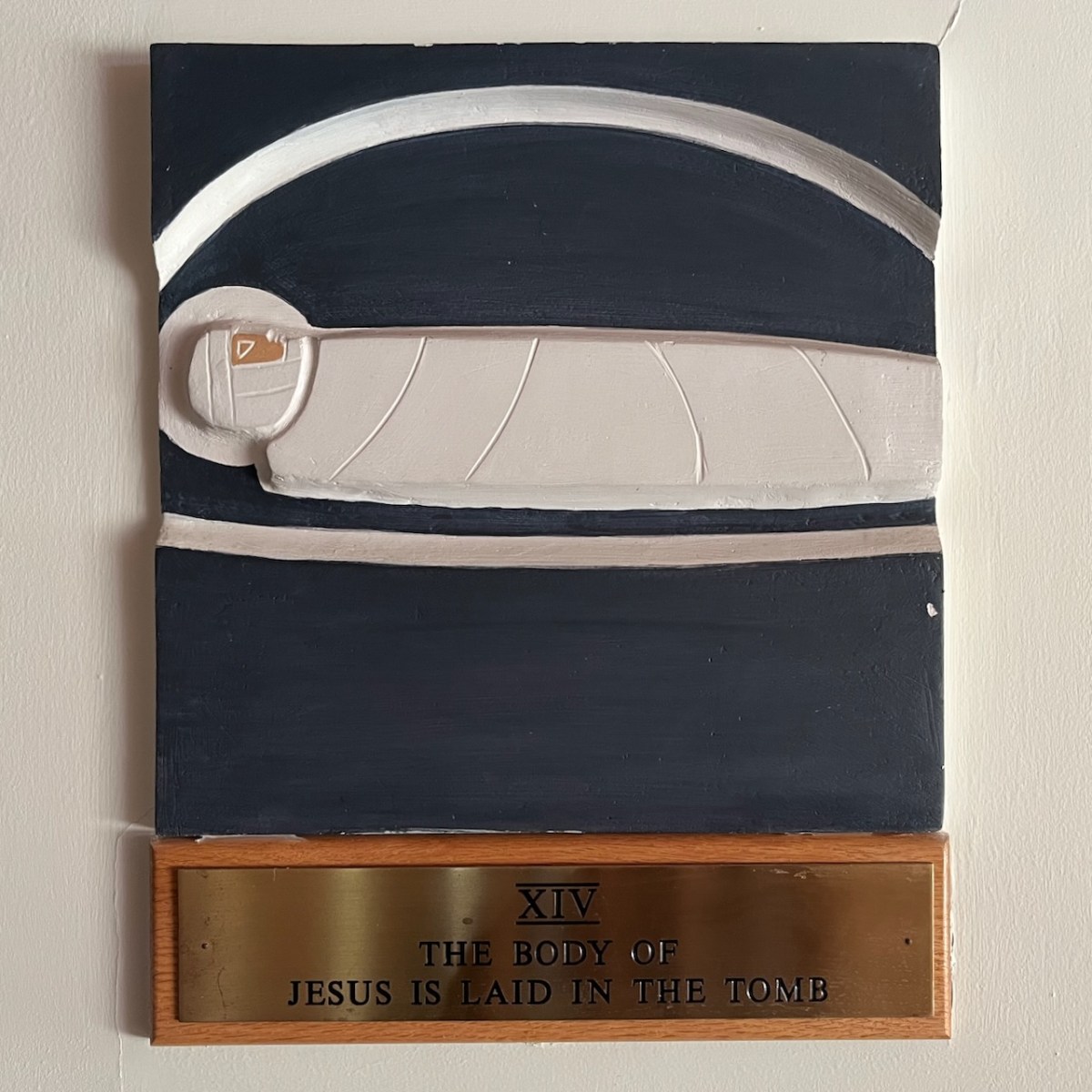
The Stations of the Cross are notable. They are the work of Nell Murphy Pollen (1927-2011). A ceramicist, woodcarver and sculptor, she was a native of New Ross and studied at the Crawford.
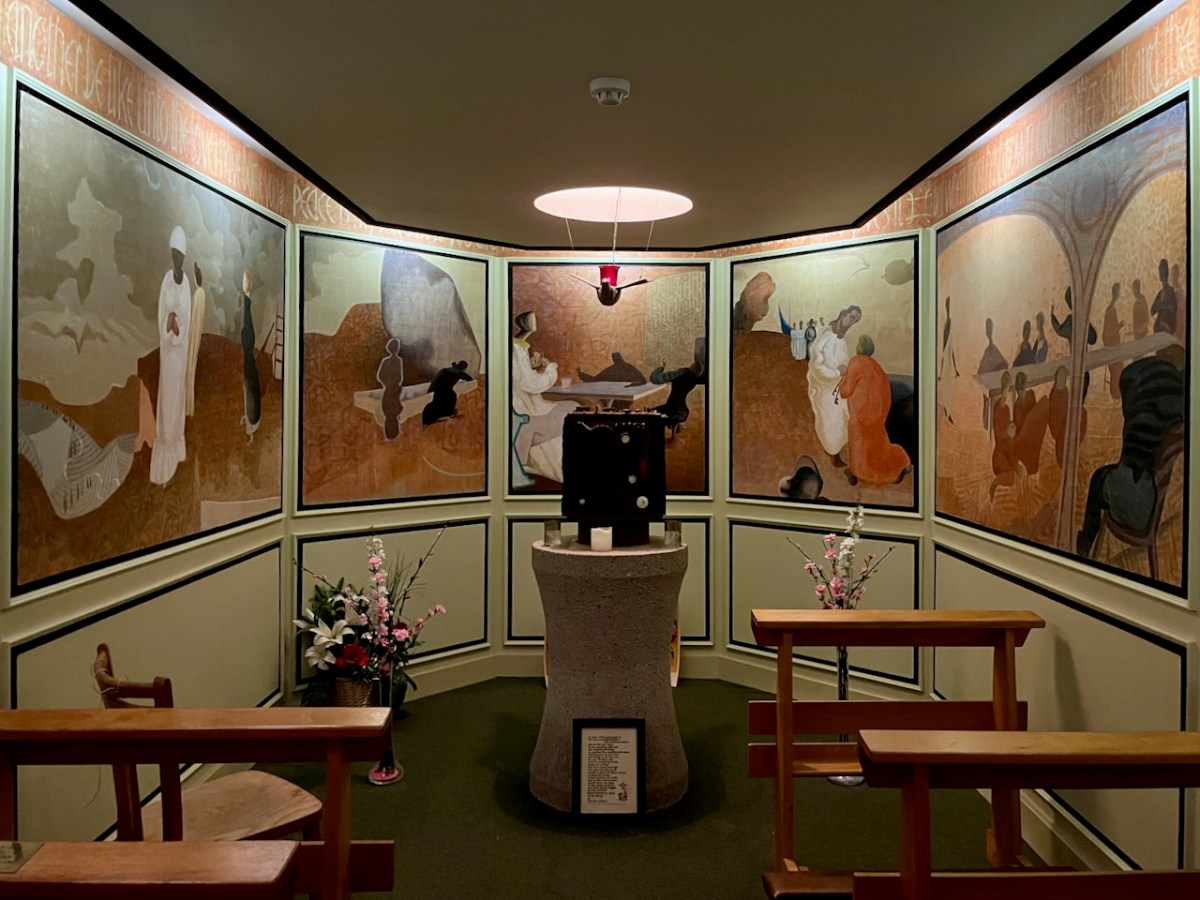
Perhaps one of the most striking aspects of the church at Fossa is the little Blessed Sacrament Chapel: “. . . a chapel of reconciliation dedicated to the Prince of Peace . . .” This (above) is decorated with murals by Patrick Pye (1929-2018). They are produced in a traditional medium which dates from the time of the early Renaissance, tempera on a gesso ground.
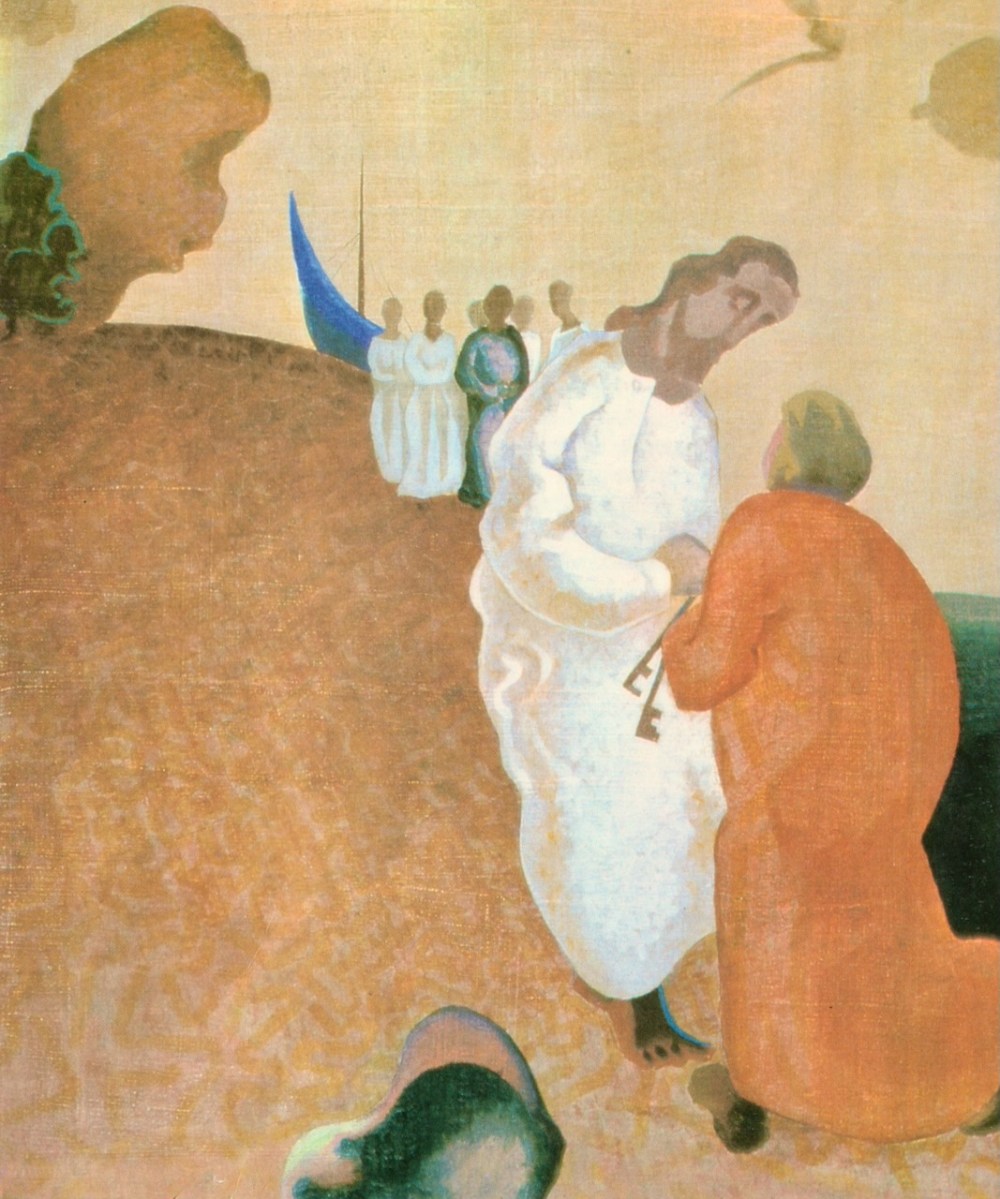
Pye’s tempera/gesso painting Peter receiving The Keys from The Christ – The Blessed Sacrament Chapel, Fossa. Patrick Pye is an artist whose work we have followed, and he will have a post to himself before too long. He was born in Winchester, in Hampshire – a city in which I lived for a while in my younger days, but it is more famous for having been the home and burial place of Saint Swithun, a ninth century Anglo-Saxon Bishop who died in 862 AD – he whose feast day (15 July) traditionally marks either 40 days of fair weather or (more usually) constant rain.
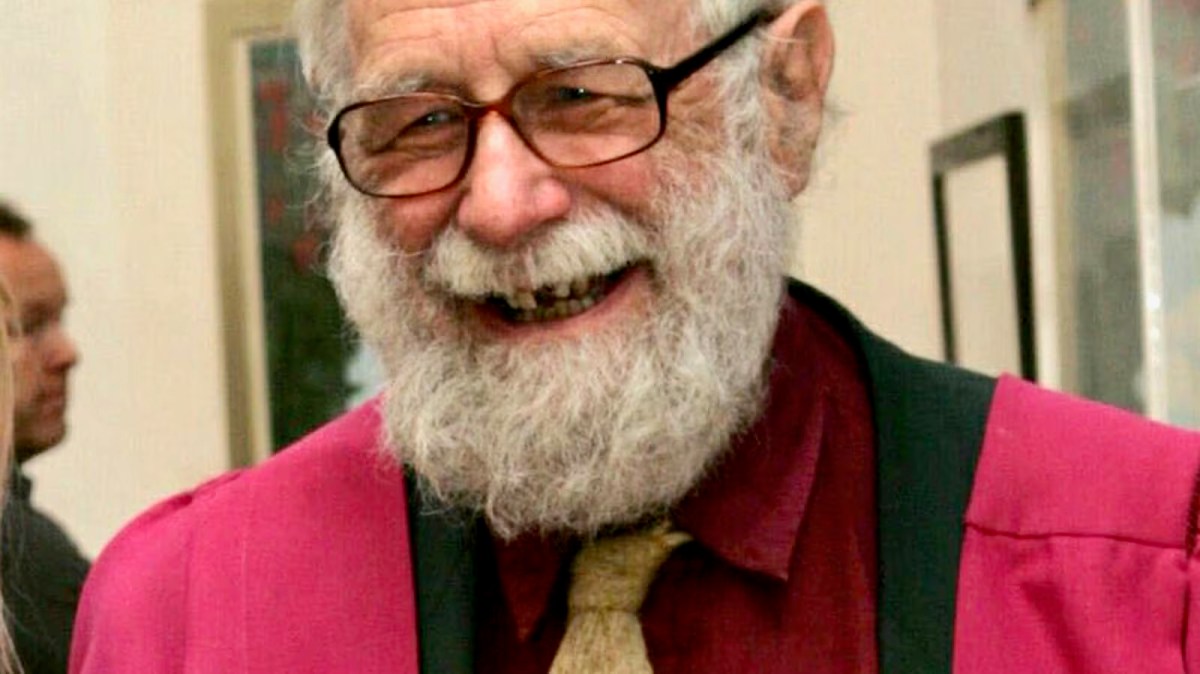
Patrick Pye at the RHA annual exhibition in 2007. Photograph with many thanks to Cyril Byrne.
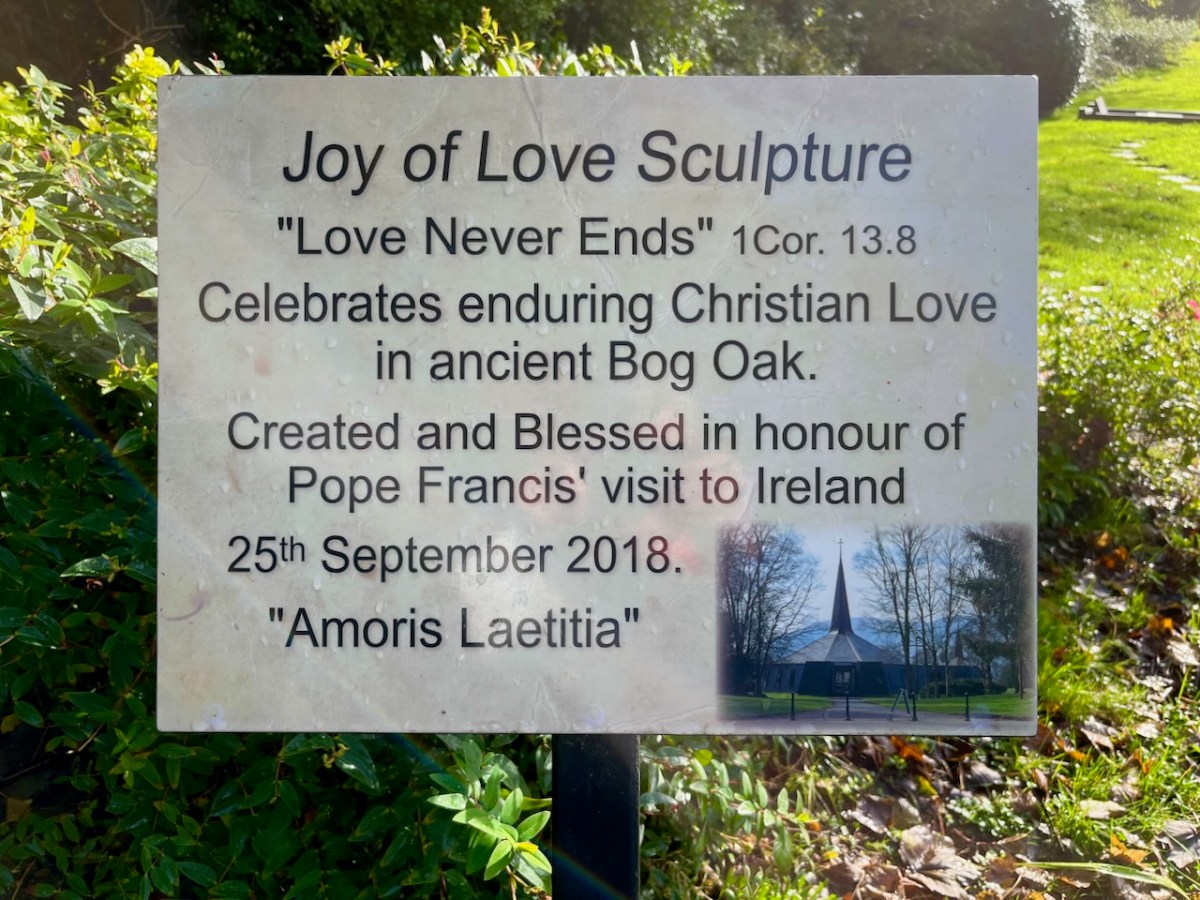
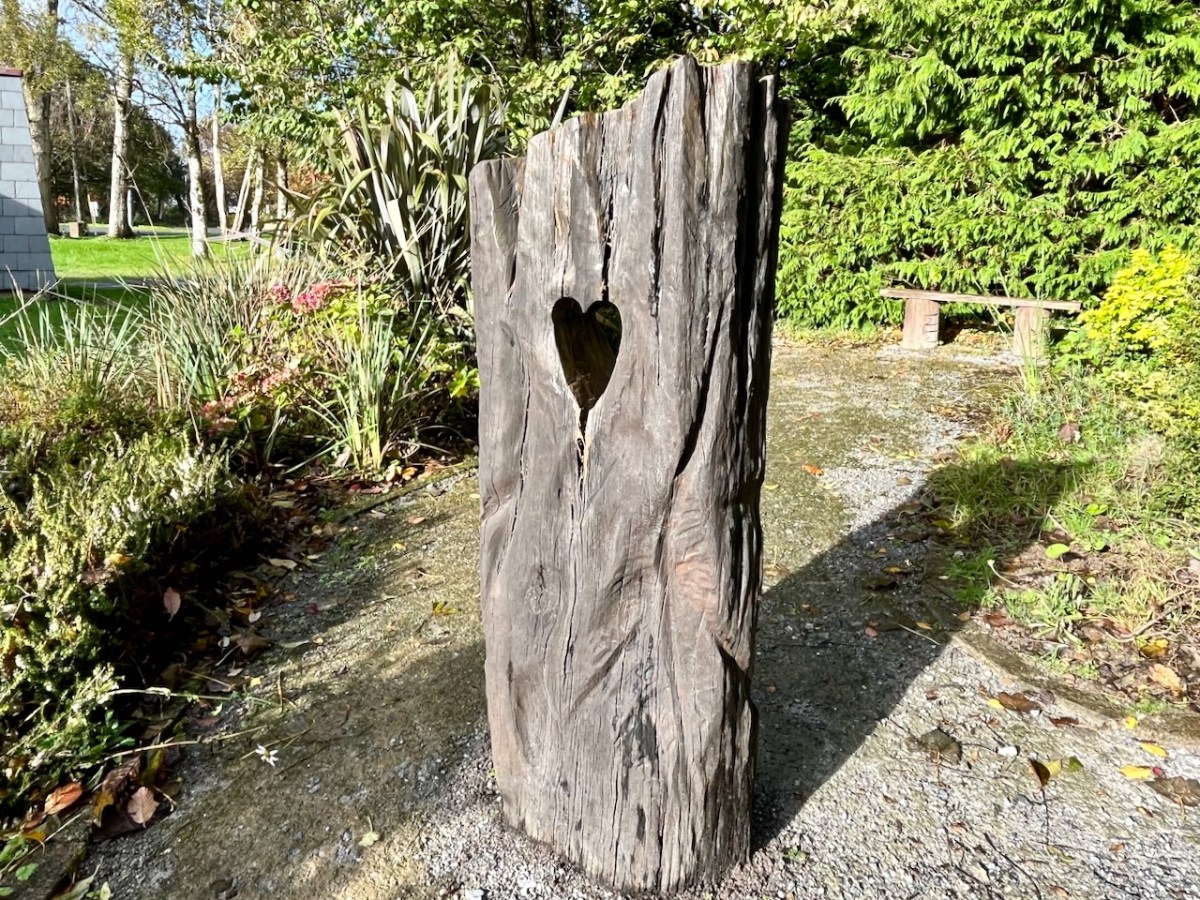
Above: you will find outside the church a bog-oak sculpture, specially commissioned to commemorate the visit of Pope Francis to Ireland. The carved heart at its centre is designed to offer all married couples and sweethearts the traditional Celtic opportunity to touch hands through the opening to commit to each other.
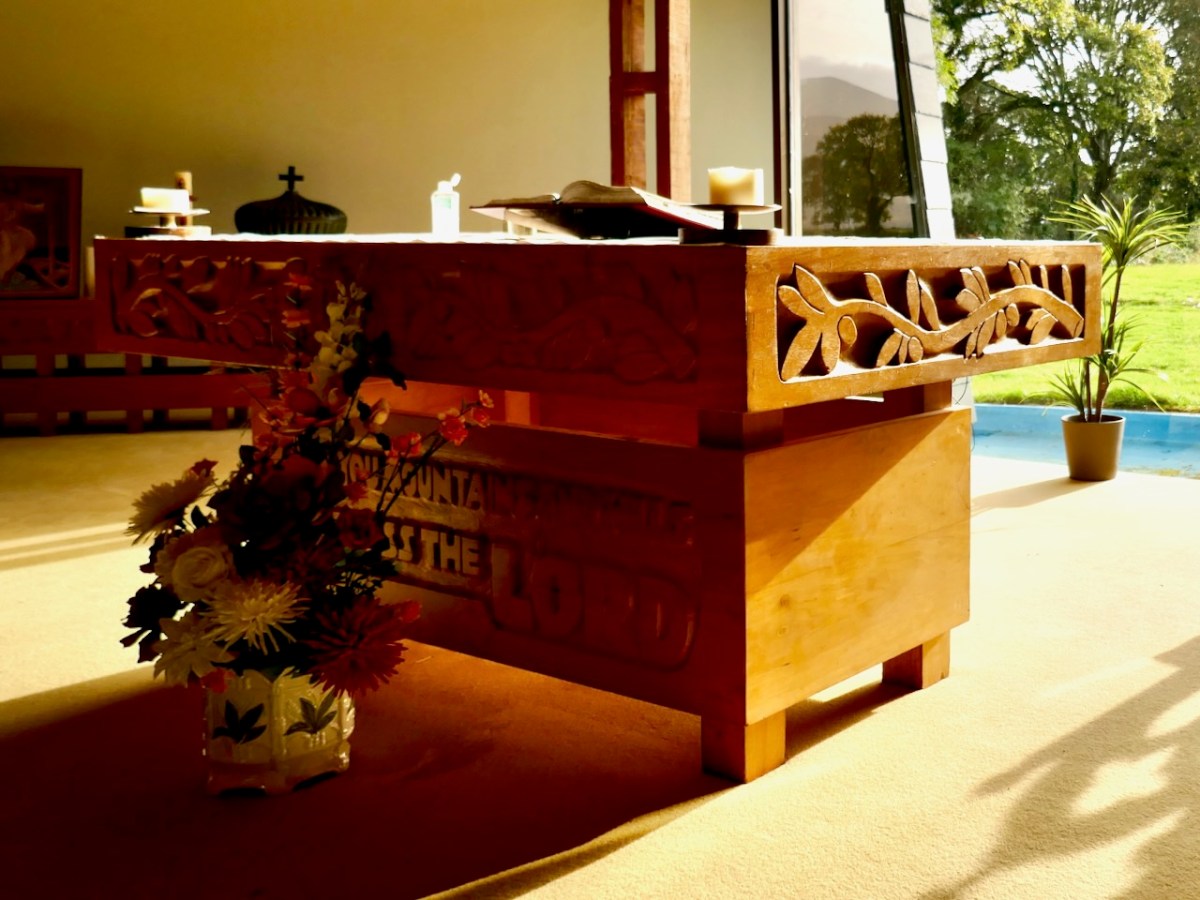
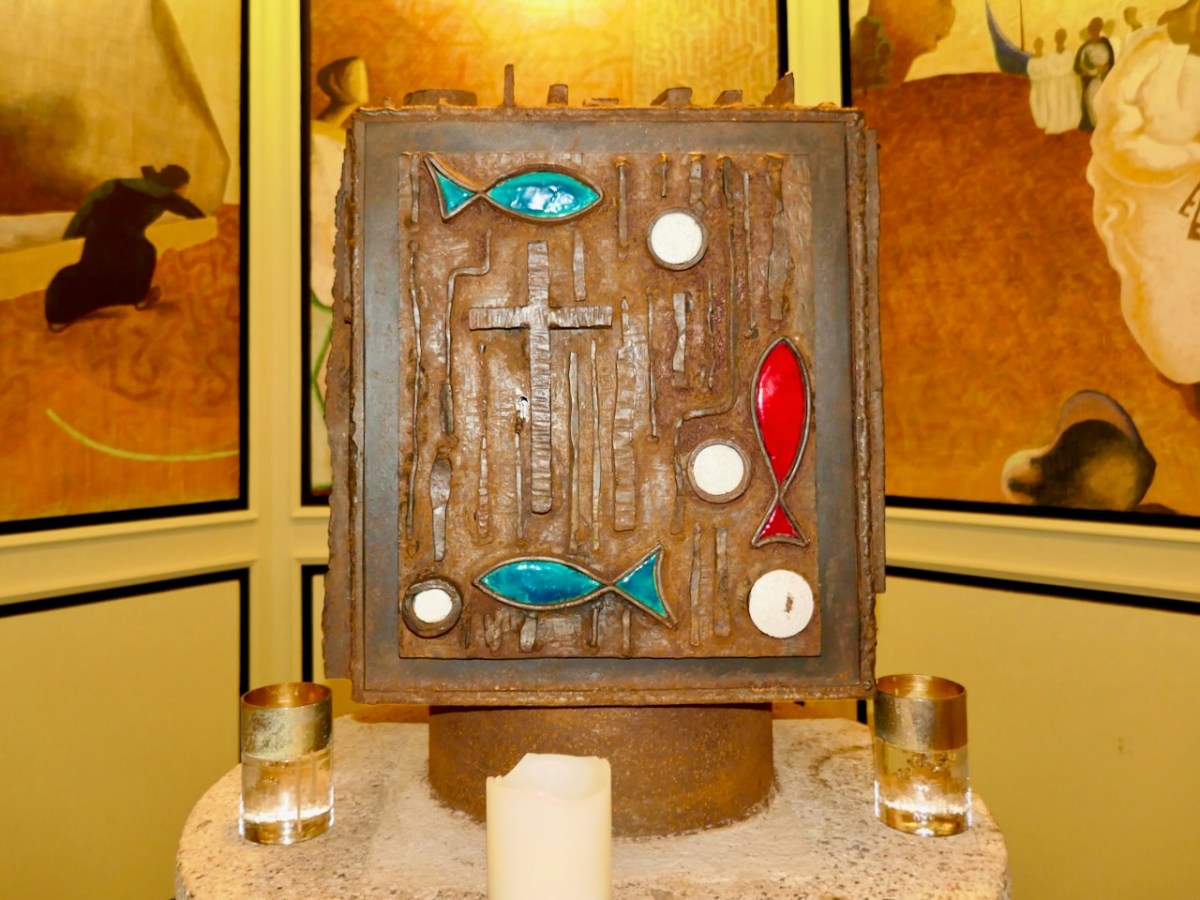
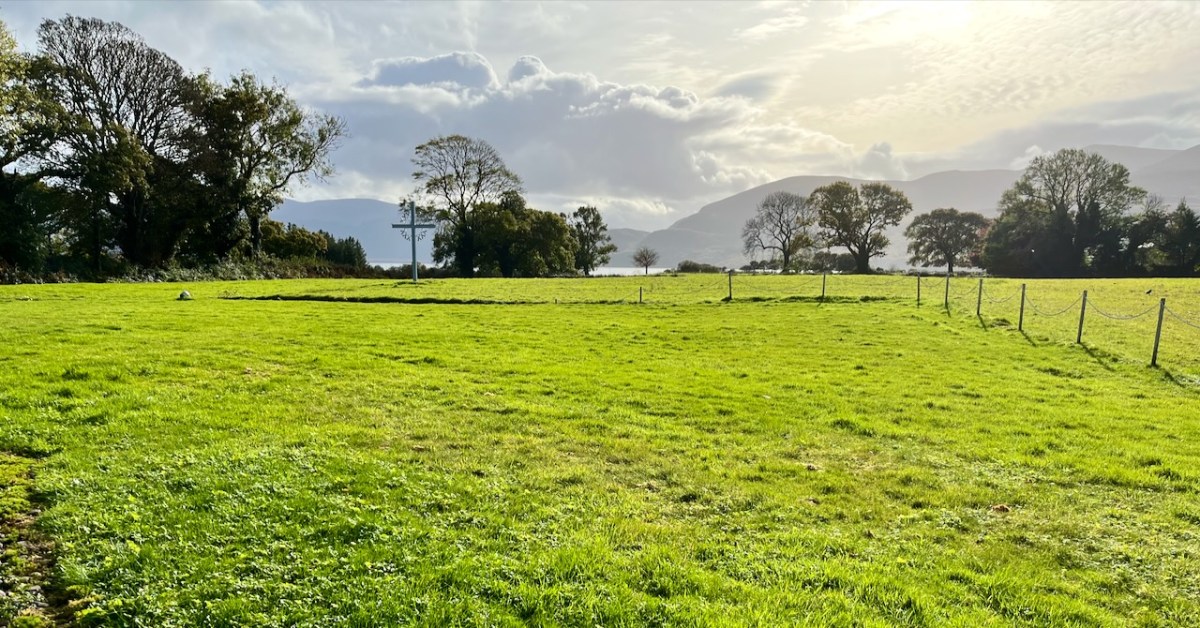
This little Kerry church is very well endowed with high quality artworks, both inside and outside. The carved altar (and a bench, not shown) is by Imogen Stuart (b1927), while (lower and below) is the tabernacle which we believe is by John Behan (b1938) who is also responsible for the cross outside the window. The tabernacle rests on a carved granite plinth by Michael Biggs. All these artists were longtime collaborators of McCormick’s. A brochure has been produced on the church which would give further information on the furnishings, but we have not yet located a copy.
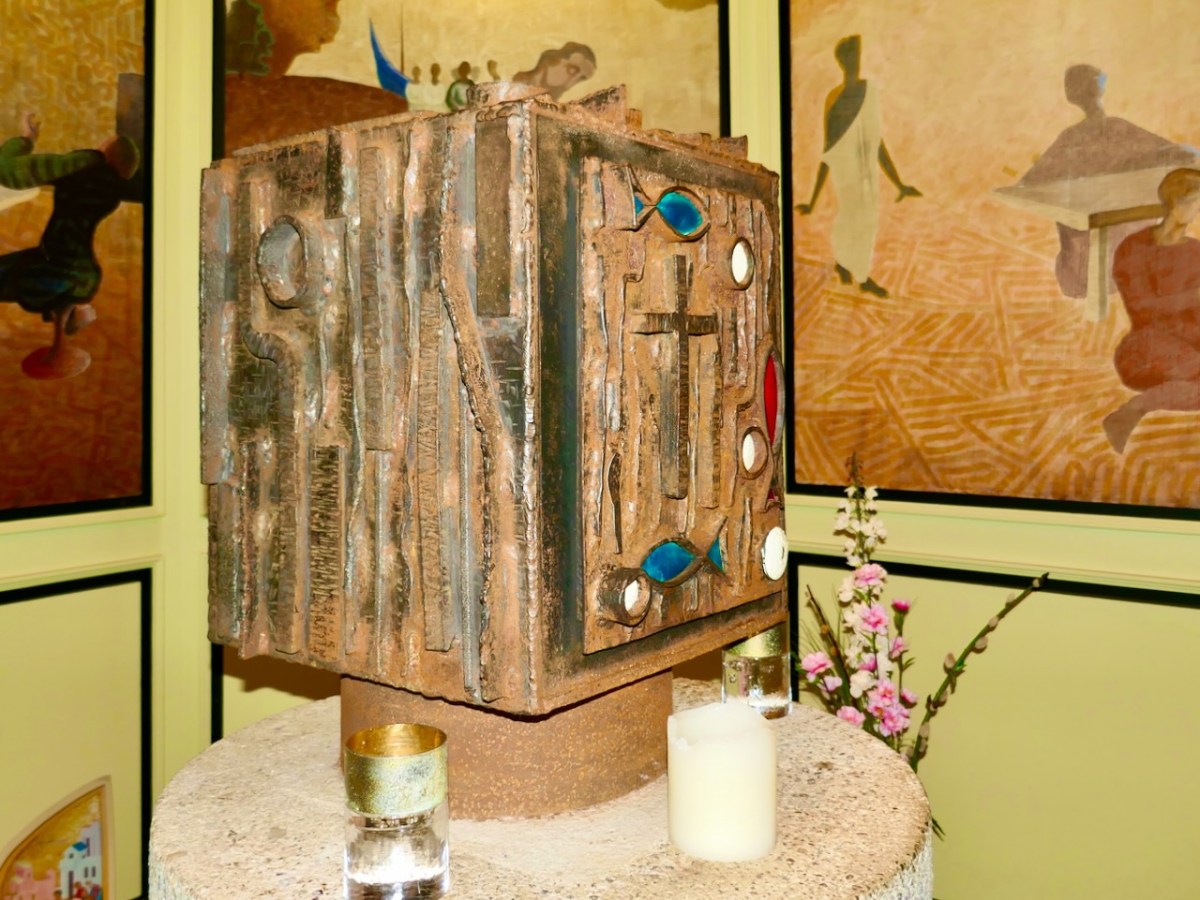
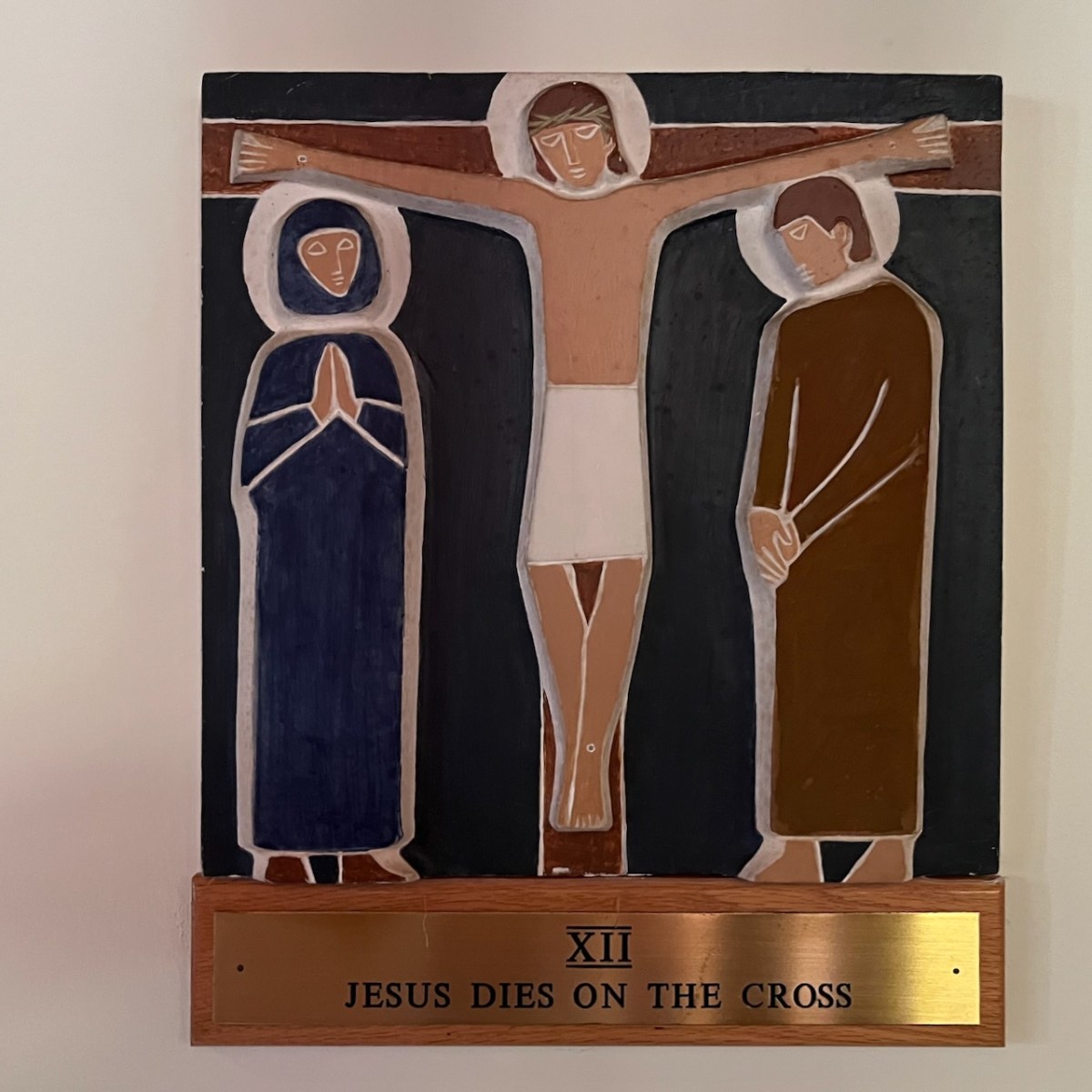
This special church enjoys such a stunning setting with lough and mountains beyond, and is endowed with very fine artworks: it is well worth turning aside for.
‘The Mountain’

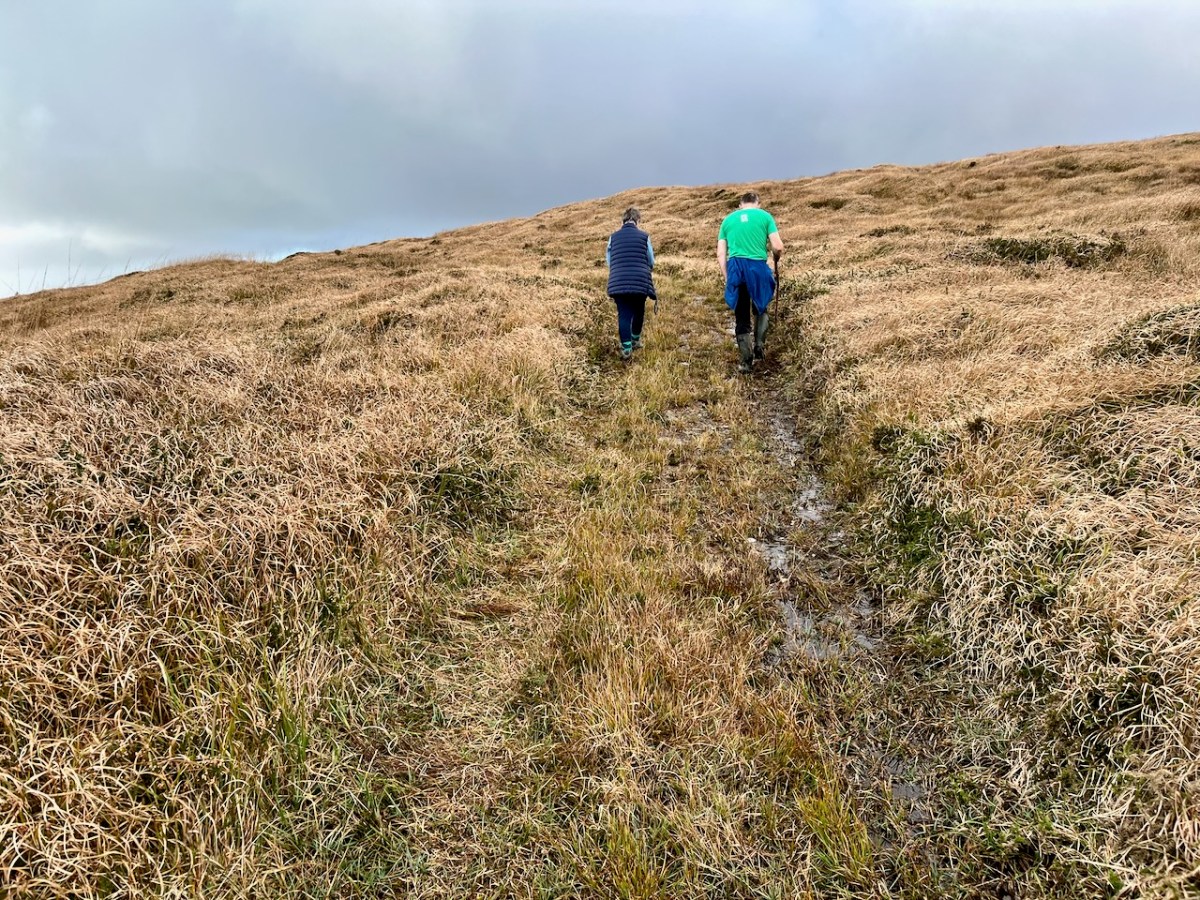
We spent a day on ‘The Mountain’. It’s a West Cork location, not too far away from us. The land has a history that touches on many of our interests covered here in Roaringwater Journal – and some of the West Cork people we have written about over the years – so it’s pretty special. We were delighted to be welcomed to it by its present owner, Oliver Farrell: that’s himself, in the pic below. You have met him before, here. Thank you, Oliver, for allowing us to experience this special site, and for letting us put out this post about it.

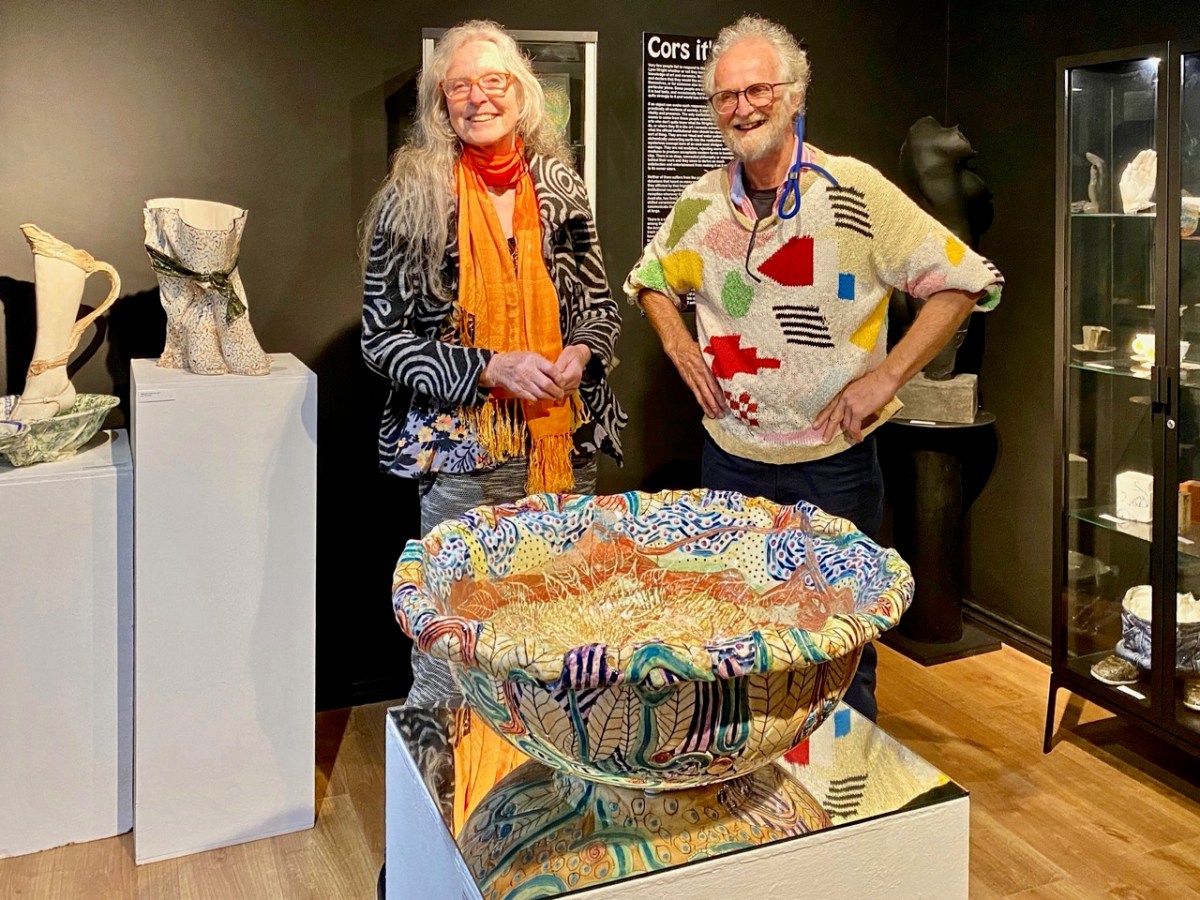
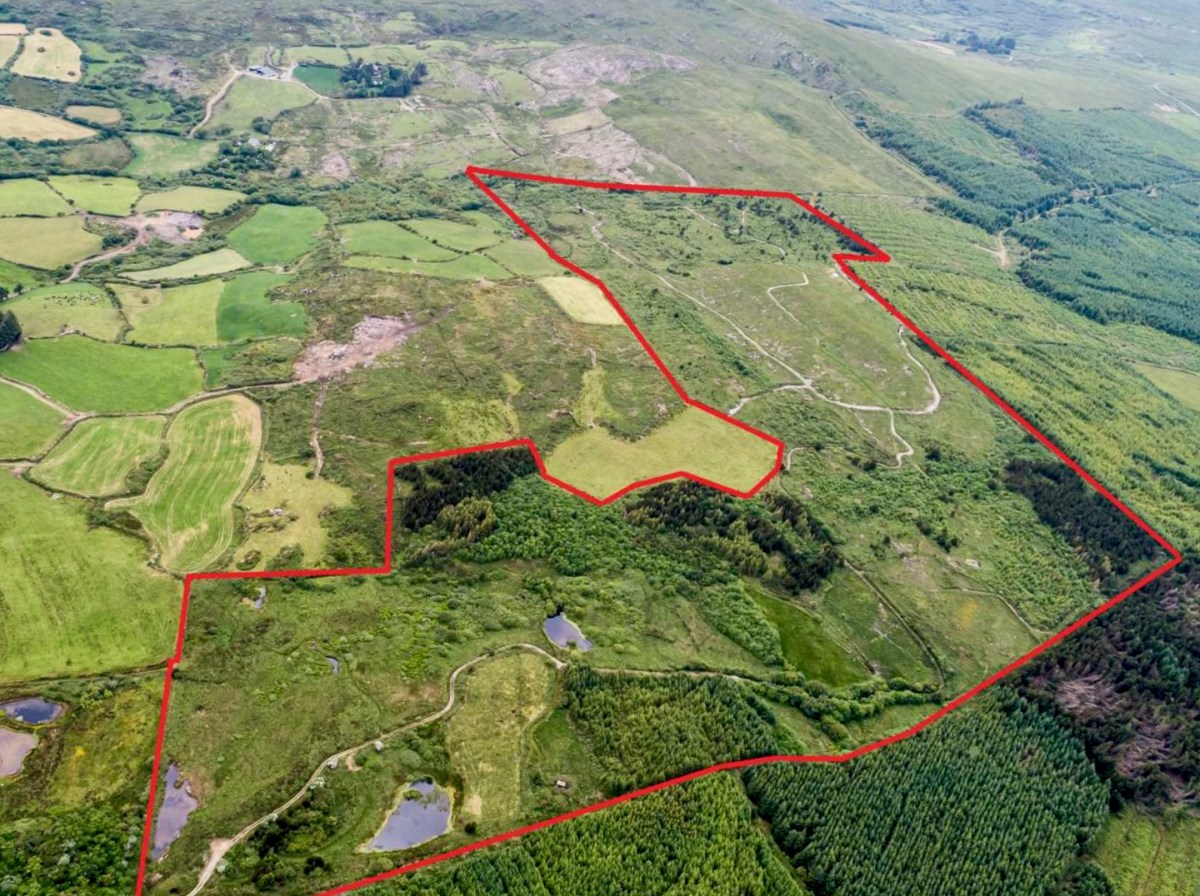
Previously, the 70 acre ‘Mountain’ site was owned by the Wrights – Lynne and Ian (above): you saw them in the 2022 Ballydehob Arts Museum exhibition, here. When they purchased it – in 1997 – it was rough pasture and bog. They aimed to develop an environmentally and economically sustainable forest using existing grants, and successfully challenged the decision of the Forest Service (through the EU) to only grant aid the planting of alien conifers. They set about transforming it: they had a vision of a ‘pure’ West Cork landscape supporting an ecosystem of native species. Now – many years later – it’s possible to see that the Wrights’ vision was fully justified – and realised. Today Oliver is undertaking essential maintenance work, and is committed to expanding on the inherent sustainable qualities that the site embodies. In fact, ‘The Mountain’ is largely in excellent environmental order.

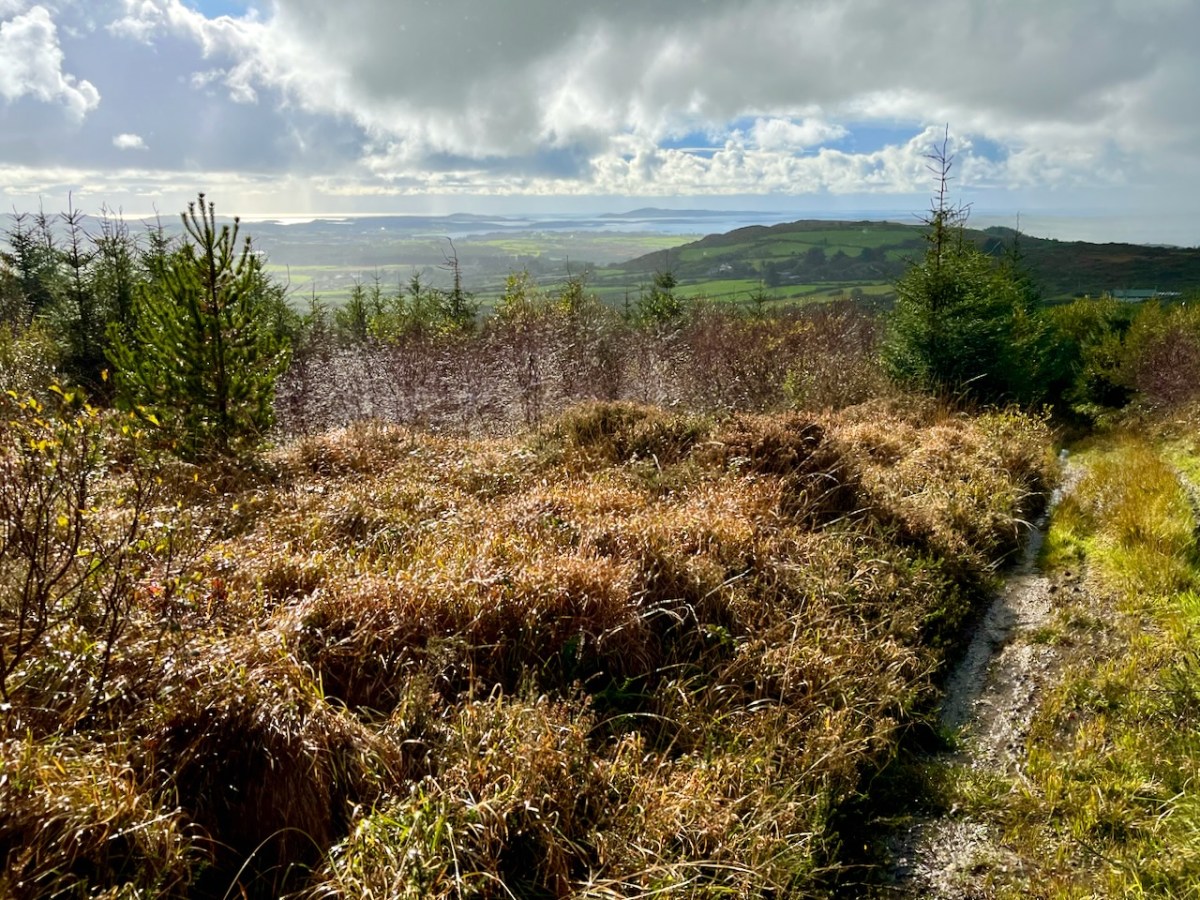
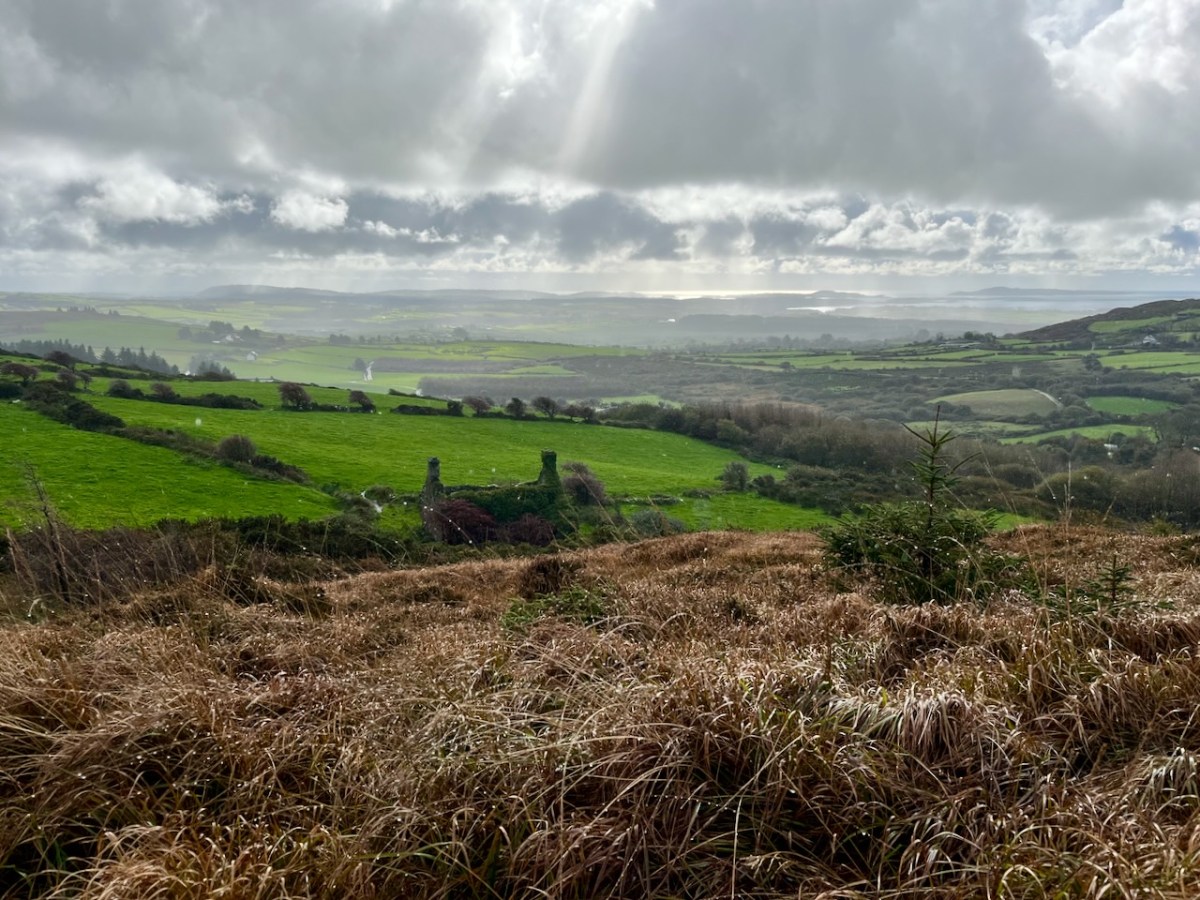
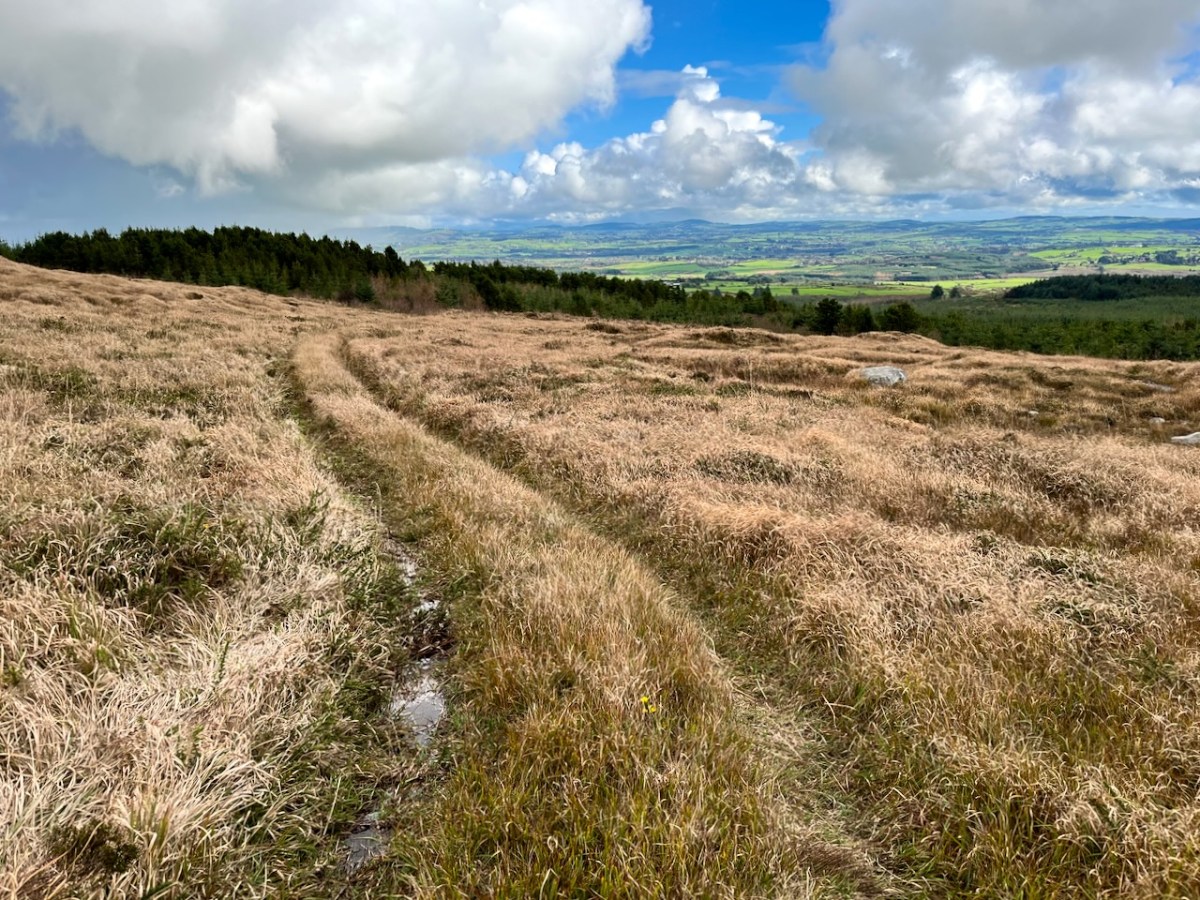
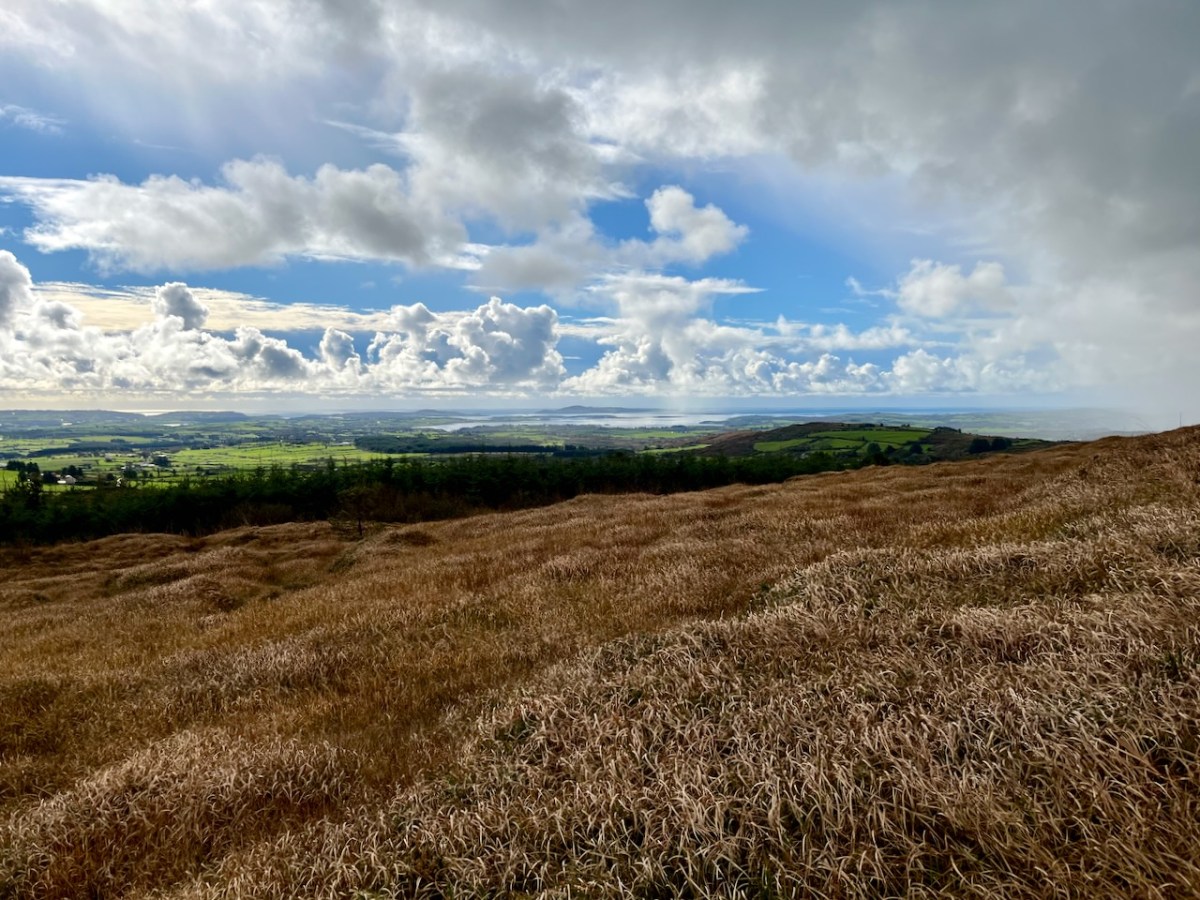
Interestingly, Ian told us that when they made the decision to buy the site they had only seen it under cloud: the spectacular view wasn’t revealed until later on. We were fortunate on the day of our visit to see the full panorama of Roaringwater Bay stretched out before us.

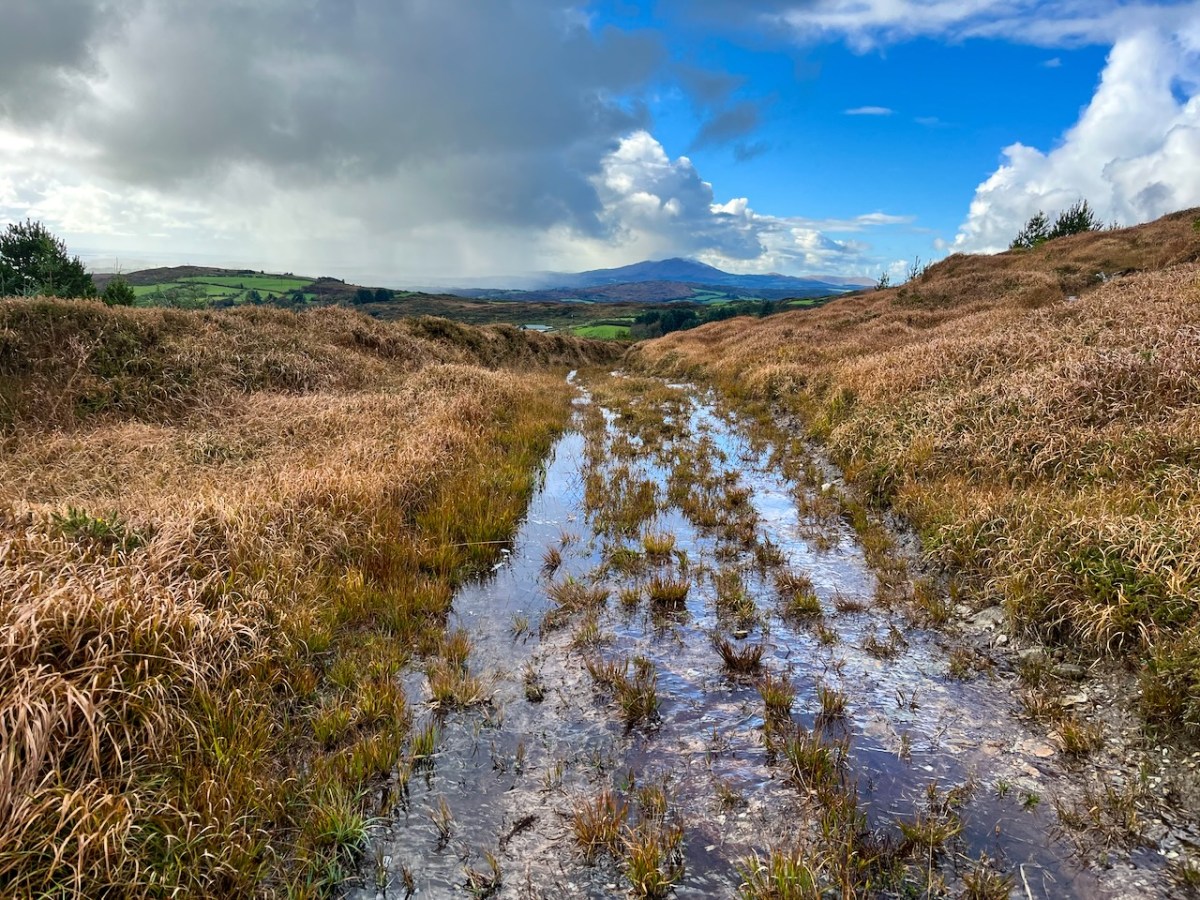
This dramatic view towards Mount Gabriel is a reward for climbing ‘The Mountain’. The ground was waterlogged on the day of our visit as this autumn has been a time of relentless rainfall, but always interspersed with brief dry patches: it’s great to be out to catch these. Springs rise on the high ground here, and I’m working out that they either feed the Roaringwater River – the water that gives its name to the whole Bay and islands that are central to our view from up here in Nead an Iolair, or another of the many streams that drain the West Cork hills below us.

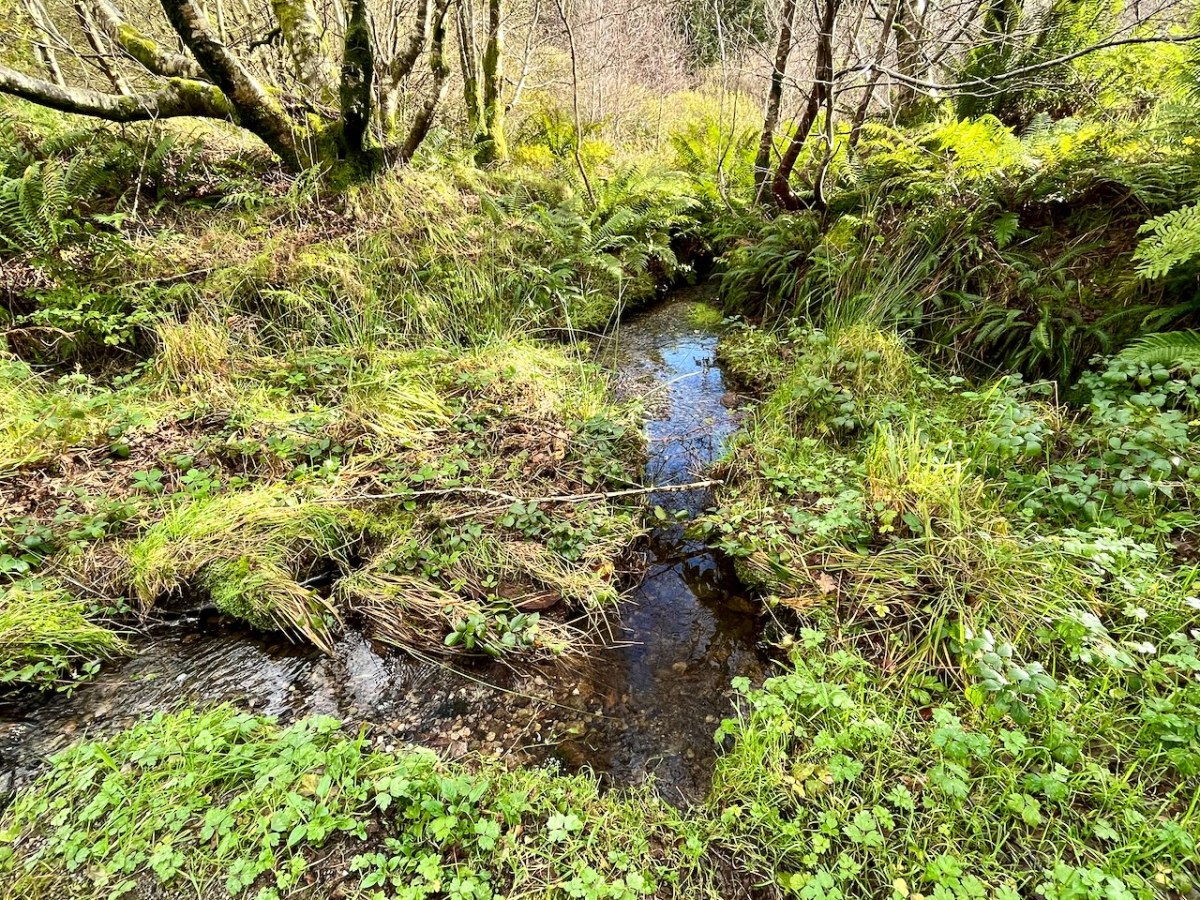
Oliver stands above one of the spring outlets that form the infant waterway (top), while the stream matures as it flows on down through his land (lower). Below – Oliver and Finola inspect one of the lakes which has been created within the site.

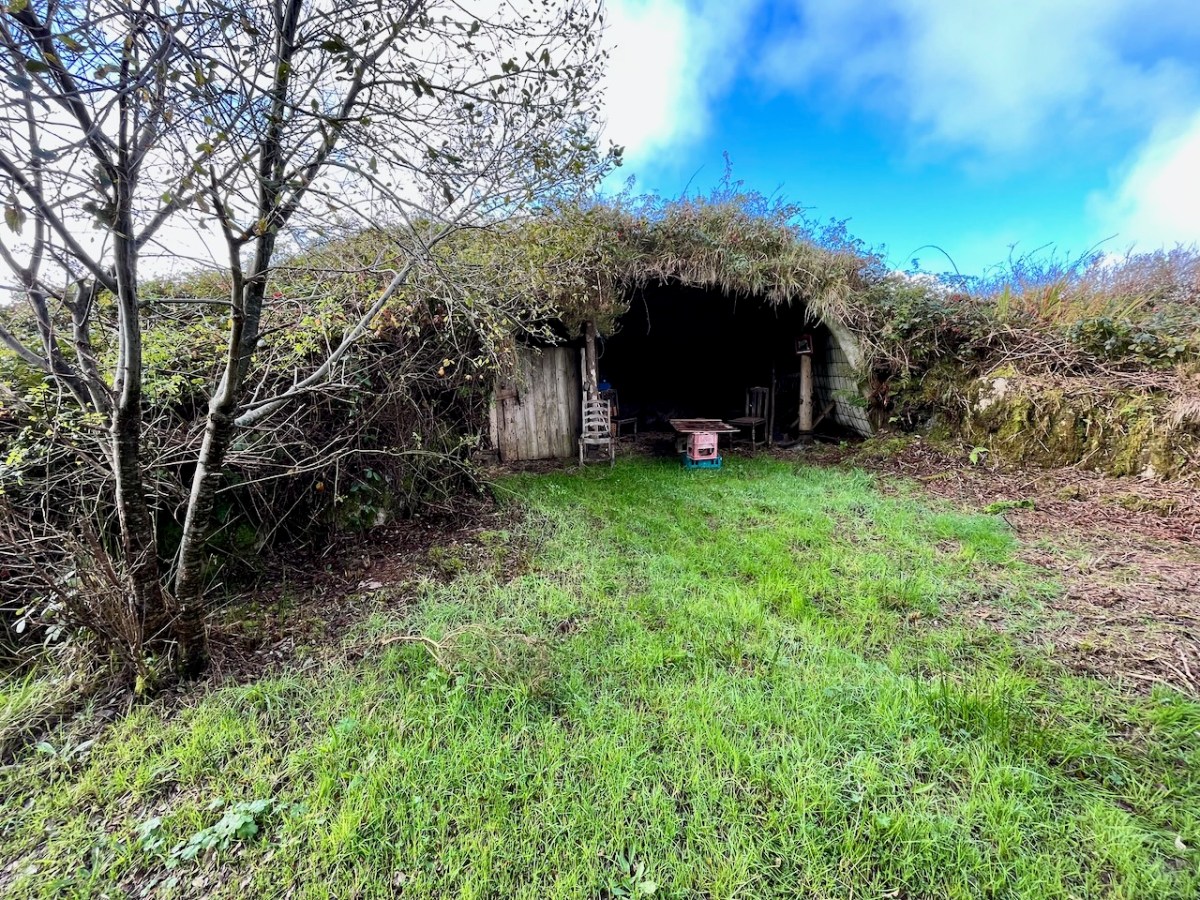
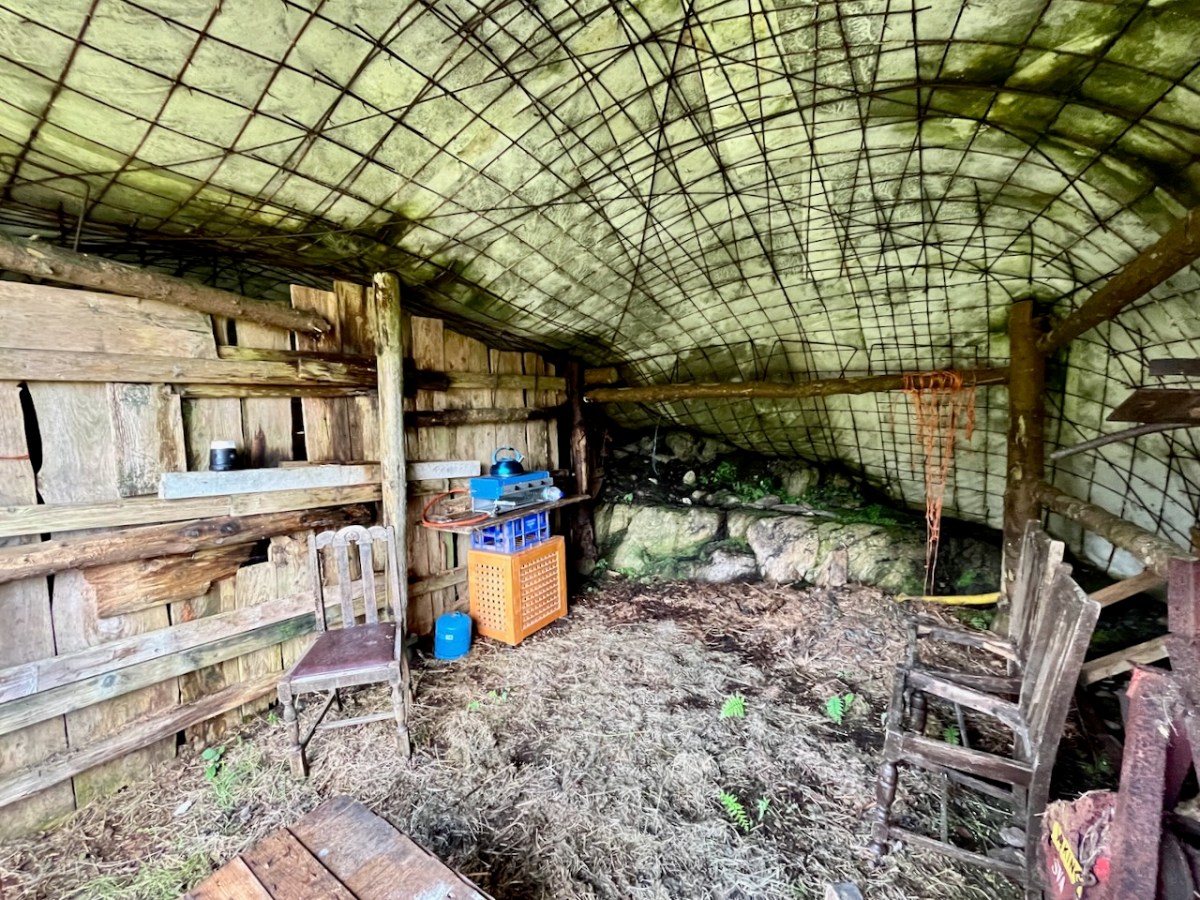
At one stage in his life Ian researched, developed and introduced the building of low–tech ferro–cement boats as a cottage industry on Lake Malawi to help address the problem of unsustainable fishing practices there. At the ‘Mountain’ site he experimented with ferro-cement as a material for establishing a well blended-in shelter and store.

Straddling two townlands, ‘The Mountain’ is an impressive example of how an area of West Cork wilderness has been perfectly moulded into its natural setting. It is an out of the ordinary place which demands exploration.

I’ll be visiting the site, and writing about it more in the future. Oliver will be keen to allow access: keep watching this space.

The Gaelic Story-Teller (Ireland 51 Years Ago)

That’s what happens when you sit down to write – you start out intending to accomplish several objectives but end up getting so caught up in the first, that that’s all you write about. It’s what happened to me in Under Sorrow’s Sign: I meant to go through the whole six issue of Ireland of the Welcomes for 1971, and do a single post about all the articles in them about Irish Literature. My intention with this post is to cover the remaining five issues, in order from the oldest traditions to the newest. Let’s see how I get on.

May-June 1972 includes The Gaelic Story-Teller, by J H Delargy. You can read a very entertaining biography of Delargy in the DIB, in which Eoin Mac Cárthaigh says:

It is no exaggeration to say that he was twentieth-century Ireland’s greatest folklorist. He was a driving force behind the belated recognition of the importance of Ireland’s fast disappearing folklore heritage – much of which, but for his efforts, would have been lost forever.


https://www.dib.ie/biography/o-duilearga-seamus-james-hamilton-delargy-a6353

However, he also adds that his approach was not without its critics:

Nor did Ó Duilearga and his co-workers escape the satirical wit of Myles na gCopaleen (qv), who recounted in An béal bocht the happy tale of an academic building his reputation on a traditional story collected from one of the loquacious piglets of ‘Corca Dorcha’.

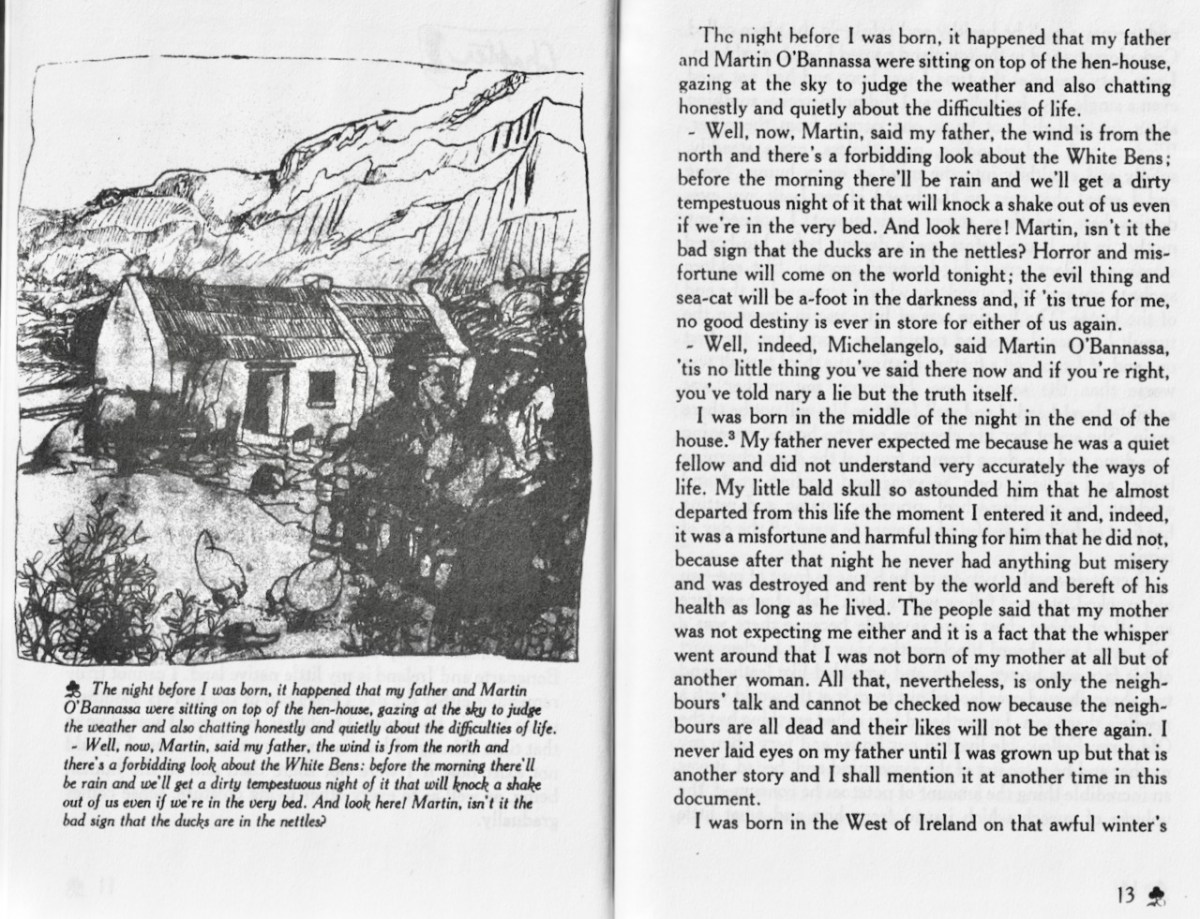
That, of course, sent me on a hunt to my shelves for my copy of The Poor Mouth (the English translation of An Béal Bocht), and an hour later I was still chuckling and trying to remember what I had set out to do in the first place. I apologise here to those not educated in Irish schools and made to read Peig and The Islandman in Irish – but for those who were, this will resonate. The illustration is from the Flamingo Modern Classic edition, translated by Patrick C Power.

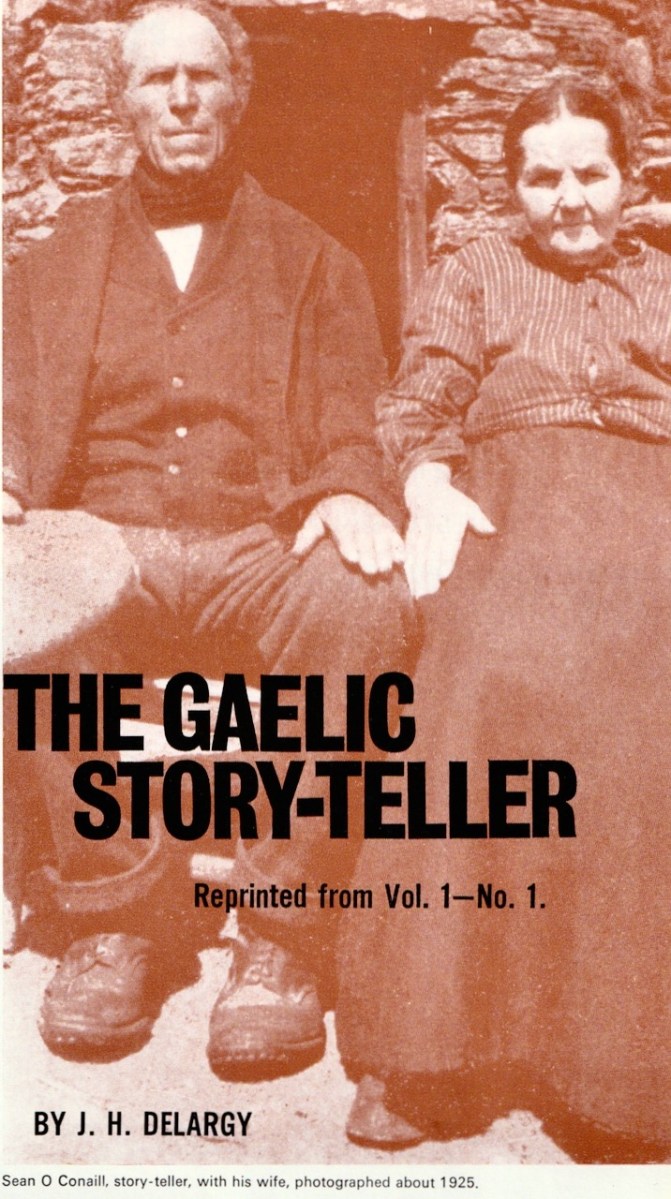
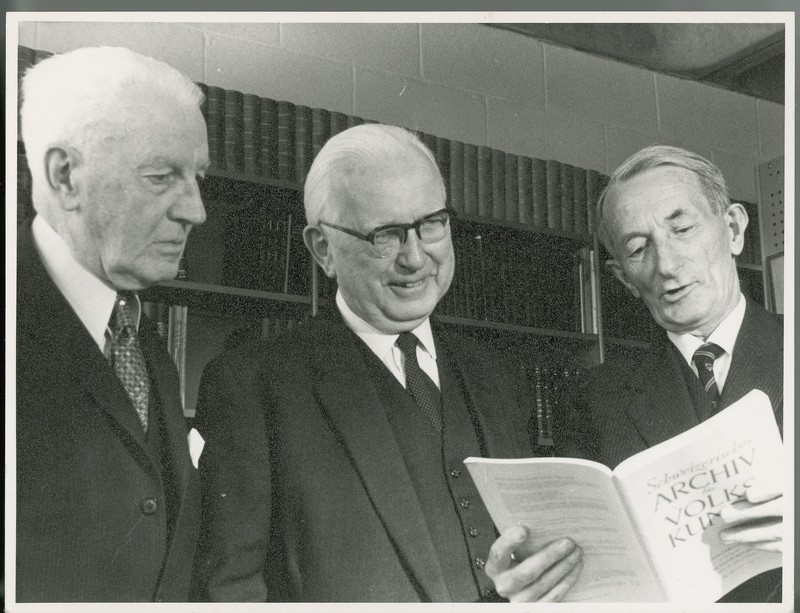
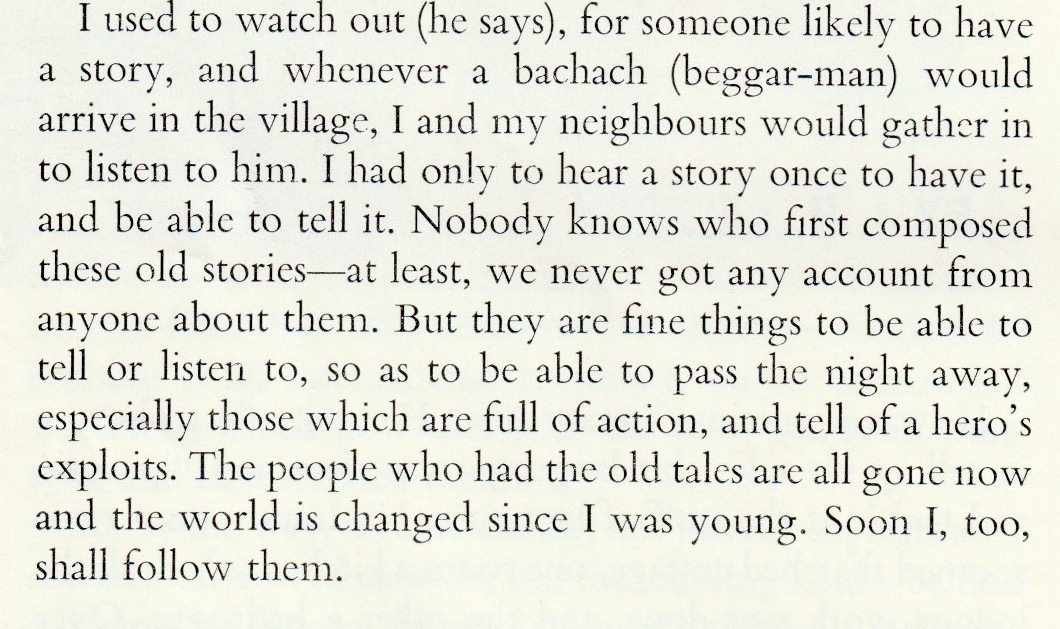
But to get back to Delargy’s article – it mainly centred on Sean Ó Conaill, the story-teller of the title. In a longer essay elsewhere, Delargy (that’s him on the left, above*) tells us that such a person 

is know as a sgéalaí or a sgéaltóir, whereas the more common word seanchaí is applied as a rule to a person, man or woman, who makes a specialty of local tales, family-sagas, or genealogies, social-historical tradition, or the like, and can recount many tales of a short realistic type about fairies, ghosts and other supernatural beings. 

The Gaelic Story-Teller

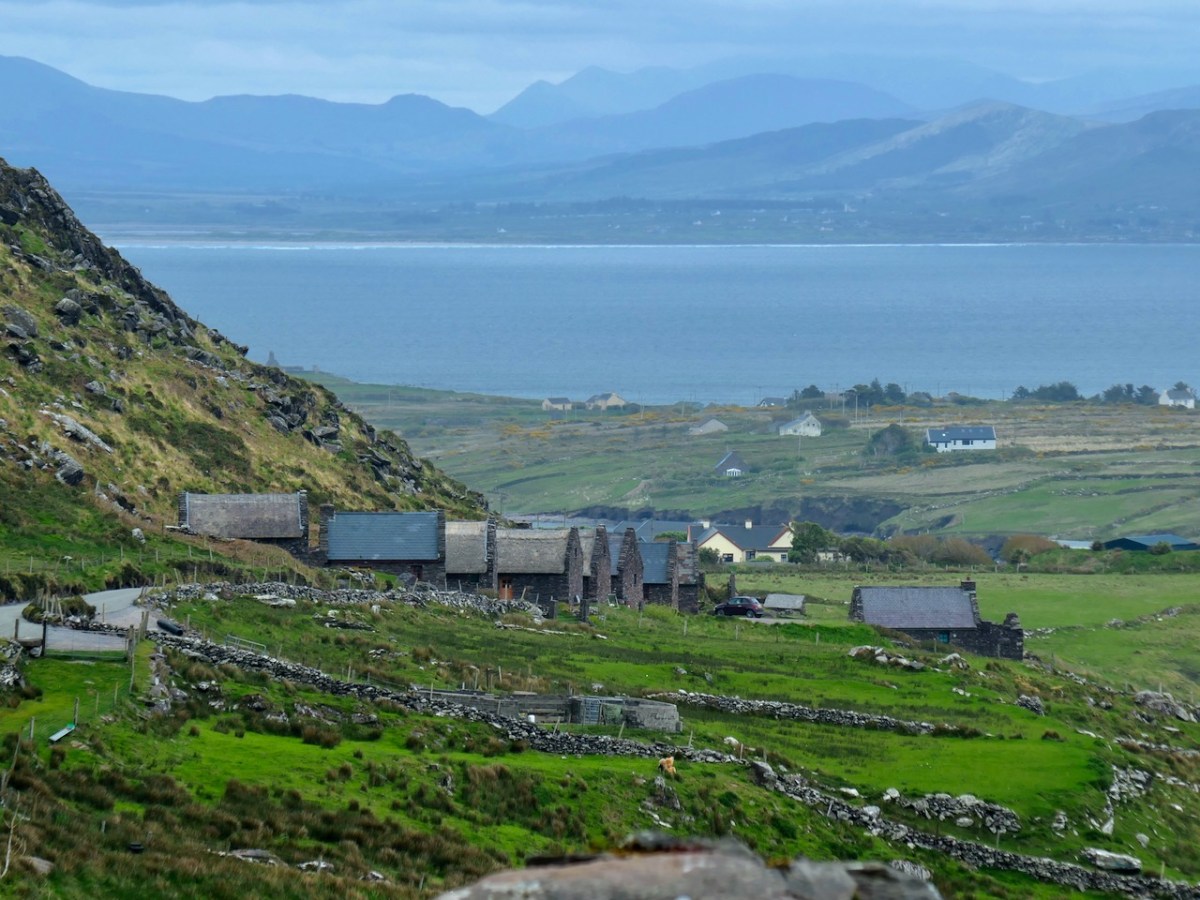
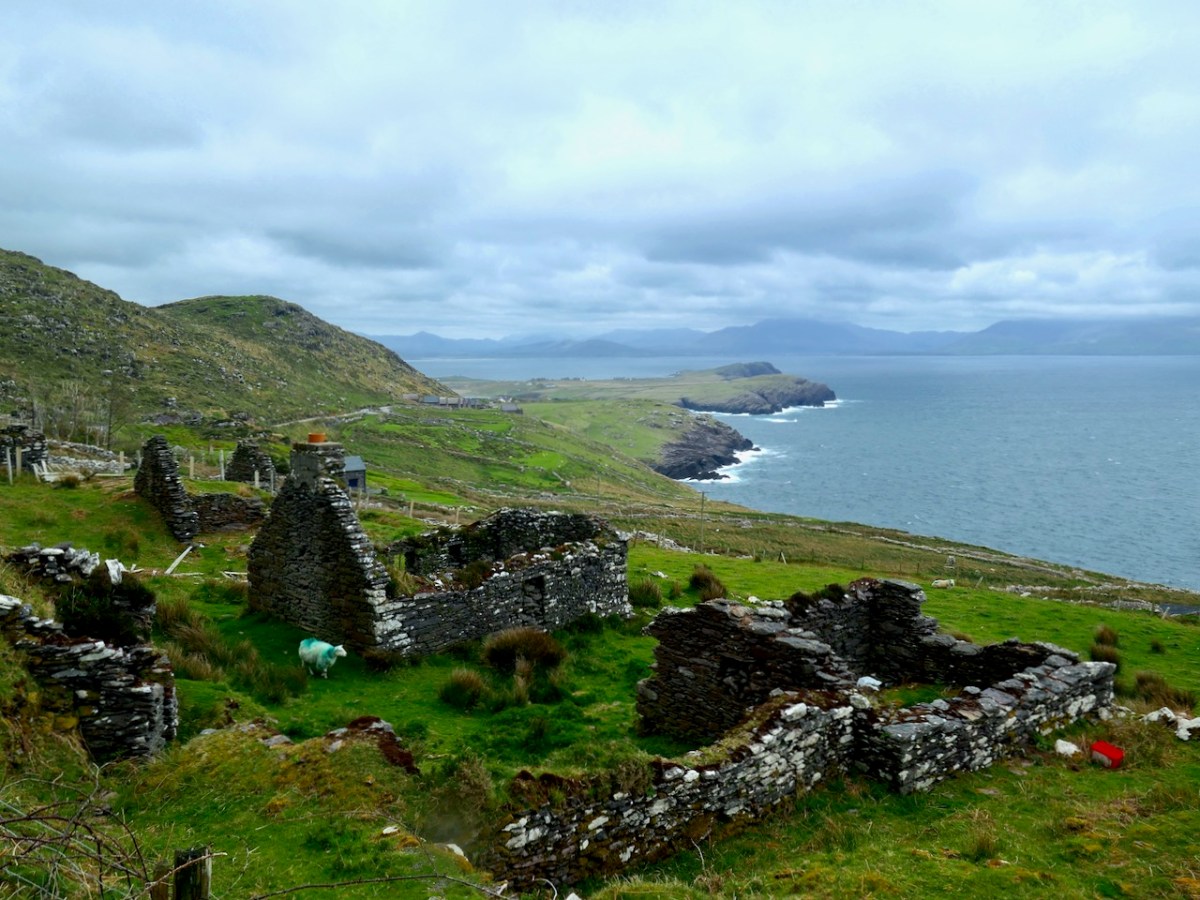
Delargy first met Ó Conaill in Cillrialaig in Kerry, when Ó Conaill was already 70 years old and Delargy, from the Glens of Antrim, was 24. Delargy calls Cillrialaig a village, but in fact there is nothing left there now that resembles a real village – except for a marvellous set of old houses that have been renovated for use as an artists’ retreat (below).

Delargy describes it thus: 

It is a lonely windswept place where man has formed out of the rocks and rough mountain land a crazy quilt of tiny fields to grow his oats and rye, hay and potatoes.

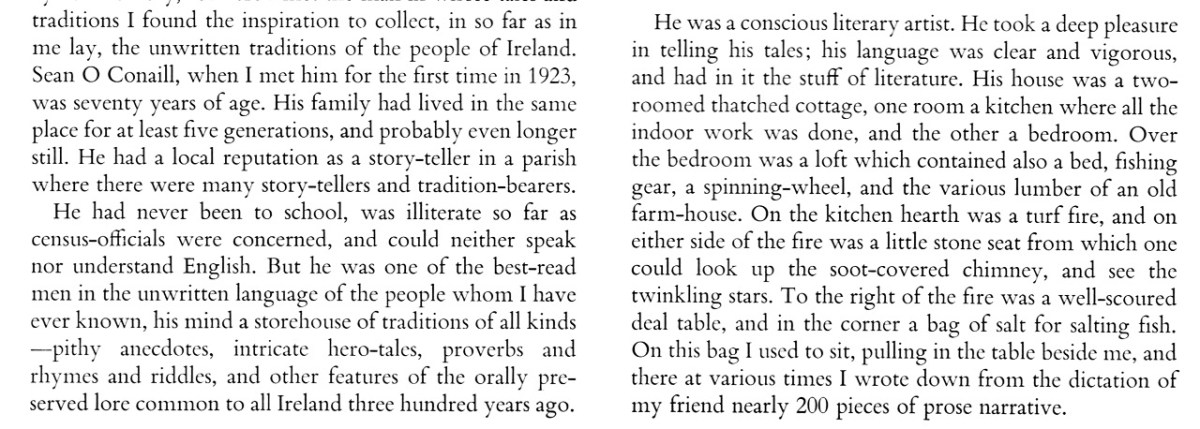
Delargy starts his account of the Story-Teller  in this way:

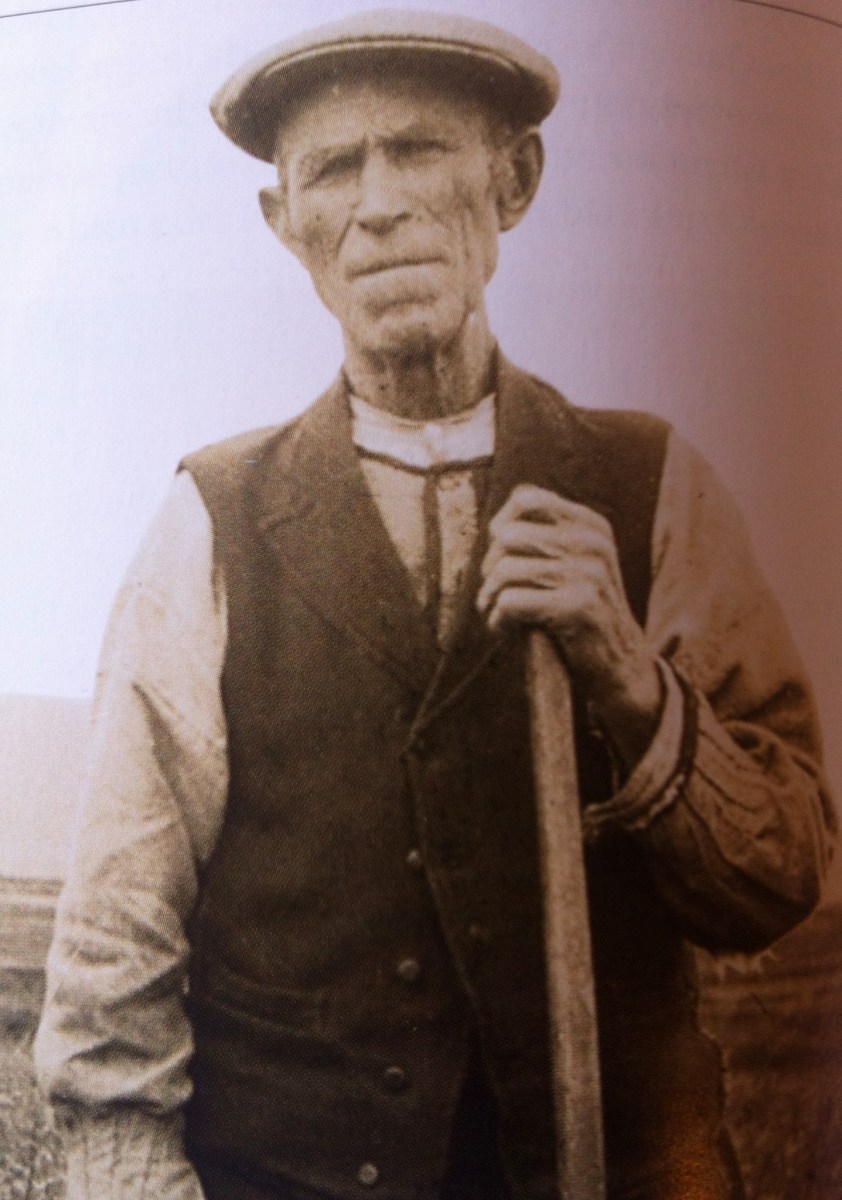
Interestingly, he does not give us Ó Conaill’s wife’s name in this article, although he refers to her. In another account, though, on the Vanishing Ireland Facebook Page, I found another photo of Ó Conaill and this, about his wife, Cáit,

He married Cáit Ní Chorráin and they had six sons and four daughters. Cáit shared his passion for oral storytelling and was always on hand to correct him or remind him if he should lose his way while telling a story.

Delargy’s practice was to visit the Ó Conaill house three nights a week. While Sean dictated his tales (Delargy must have been a fast writer), the neighbours would drop by until the house was full, each listener relishing the stories, even though they had probably heard them many times before. How did O Conaill accumulate such a store?

Delargy’s article concludes with a lament for the dying of the old traditions – it is rare now, he says that stories are told around a fire in this way. Delargy himself died in 1980. If you’re listening, Séamus, you might like to know that there are now thriving story-telling festivals all over Ireland, principally on our own Cape Clear Island. 

Darn it – it’s happened again! I only got to the May-June issue. Never mind – next time, I’ll cover four in one go. Right?

Copies of Sean Ó Conaill’s Book come up for sale occasionally, should you wish to pursue the stories for yourself.
*Photograph of James Hamilton Delargy, Michael Tierney and Jeremiah J. Hogan in the Department of Irish Folklore, UCD. is licensed under a Creative Commons Attribution-NonCommercial-NoDerivatives 4.0 International License

Unseen

© Tomasz Madajczak

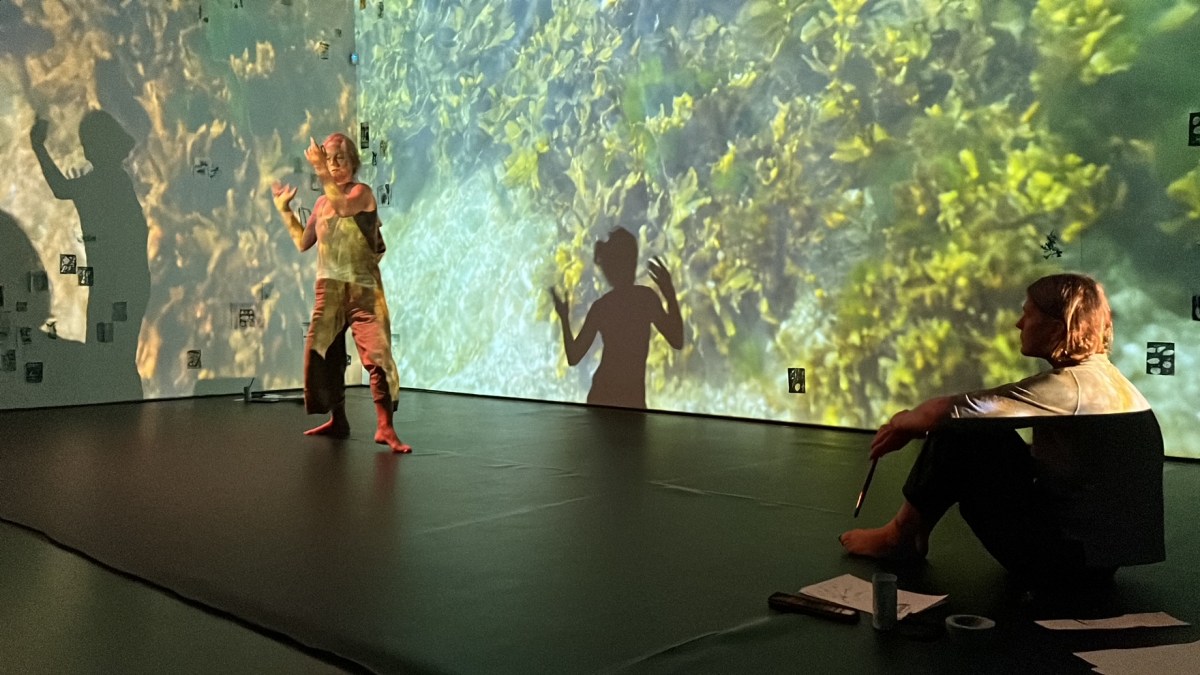
There’s a line early on in Unseen, the new dance piece by Tara Brandel and Stacey White of Croi Glan Integrated Dance Company, where the voice-over says that plankton are so tiny that they are invisible to us. But sometimes, the voice continues, they bloom in such vast quantities that they can be seen from space. 

This dance piece explores the role that plankton – in plant form (phytoplankton) and in animal form (zooplankton) – plays in the life of our planet. It underpins all life but is fragile and threatened  by the effects of climate change. We remain oblivious to this existential danger because plankton does not cry out for our attention.

© Tomasz Madajczak

That disconnect, between the vital nature of this organism versus how aware we are of it, proves to be an apt metaphor for how we depend on our bodies – taking them for granted until they force us to forge a new relationship with them. 

Stacey White is a Californian artist who now lives here in West Cork. She has partnered (in life and in art) with Tara Brandel, who has created this choreographed event, three years in the making. I have written about Tara’s dance before – in Bridge and in Dancing Cappaghglass. Tara is one of the people (more common, she tells me, than we all know) who was injured by the Covid vaccine. It was catastrophic for her, leaving her profoundly debilitated, unable to walk, with difficulty breathing and a racing heart. Her recovery and rehabilitation have taken three years so far and is ongoing. The irony is striking – Croi Glan specialises in an integrated approach to dance, working with both able-bodied and physically- and intellectually-challenged dancers. Up to now, Tara has been the dancer we would describe as ‘able’

© Tomasz Madajczak

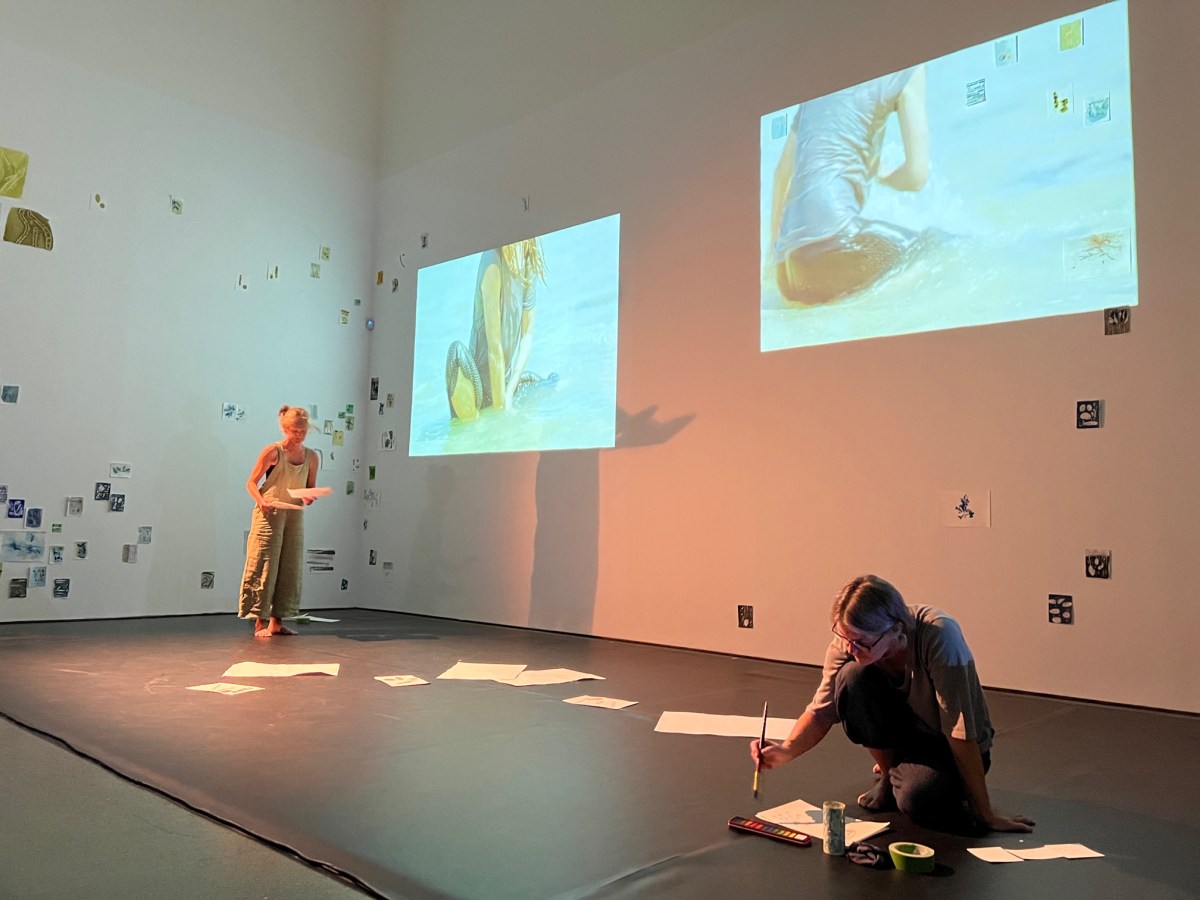
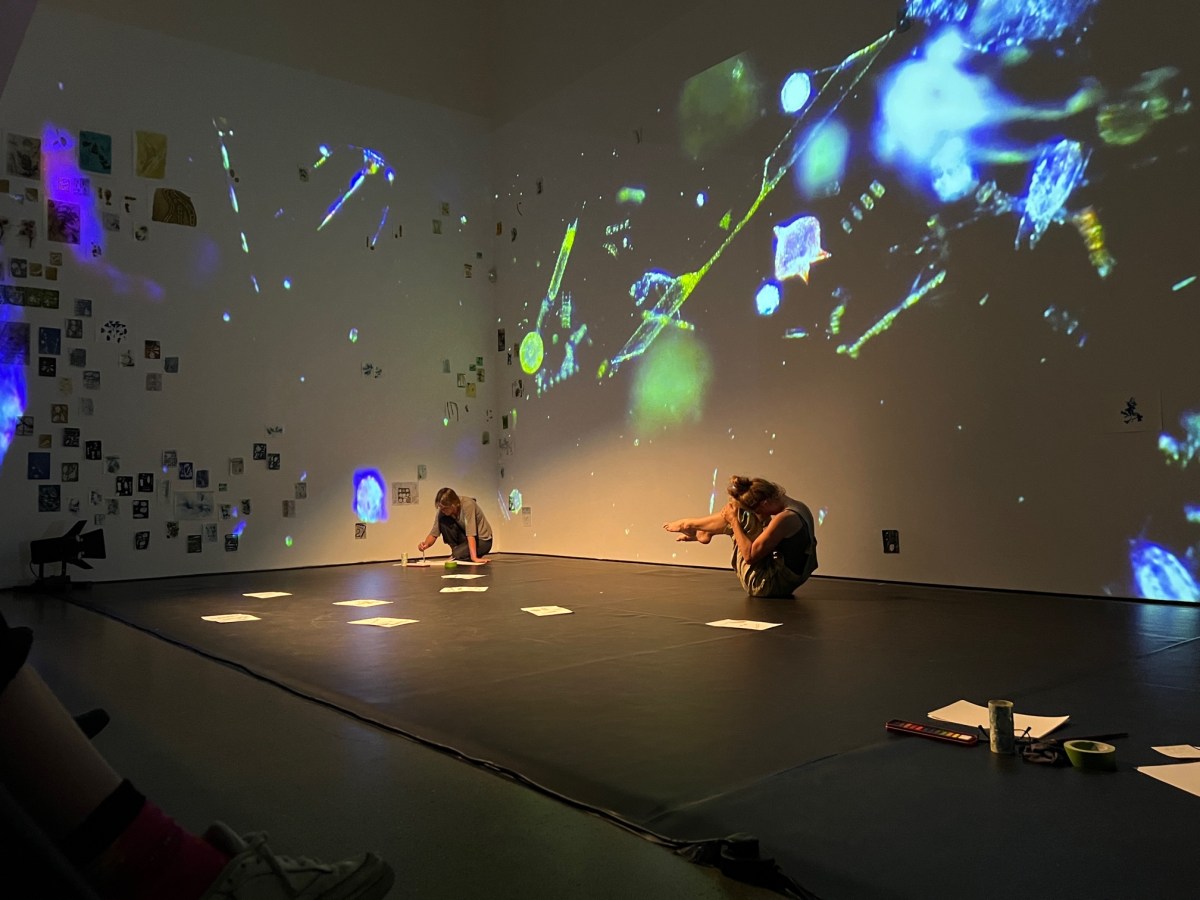
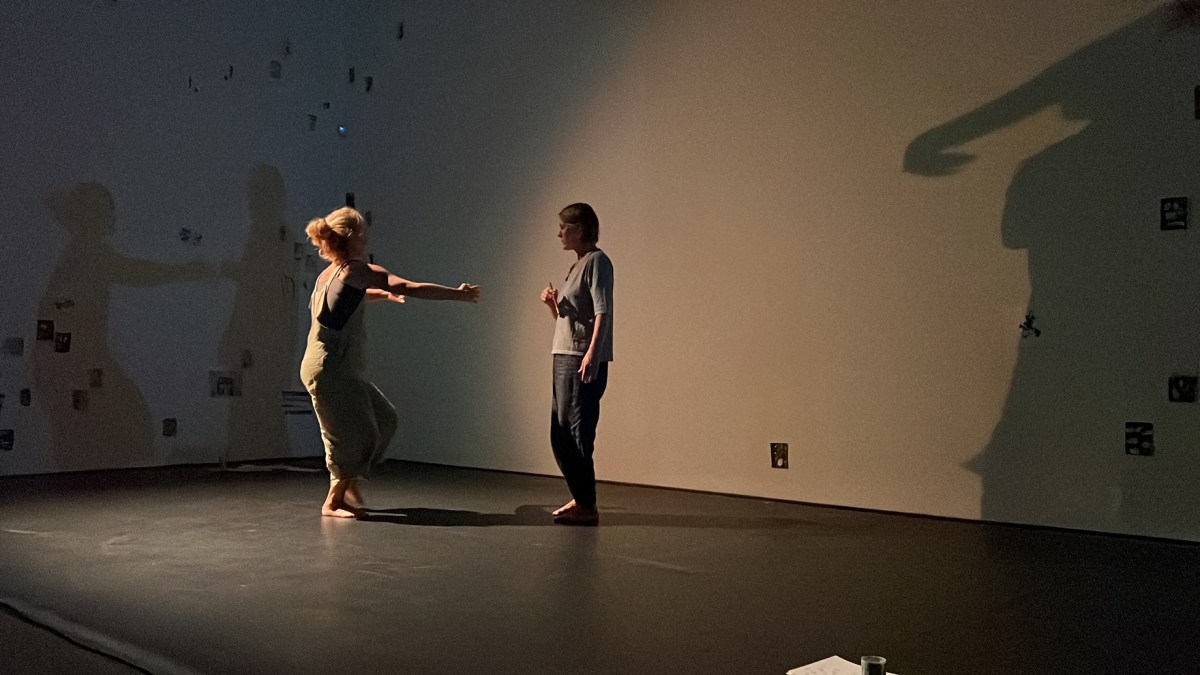
The dance begins with Stacey painting in a corner and Tara asleep on the floor. Projections and voice-overs run throughout the dance, introducing images of plankton, water and tides. There is no music per se, and yet there is a sense throughout of an elemental soundtrack. 
© Tomasz Madajczak

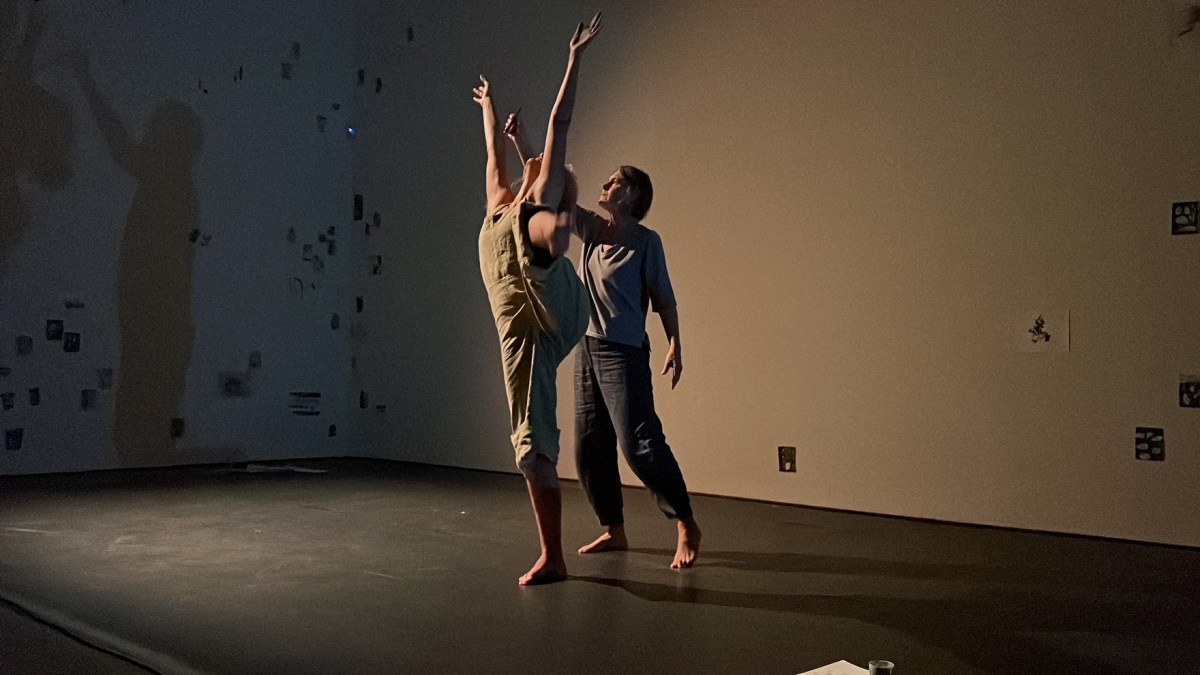
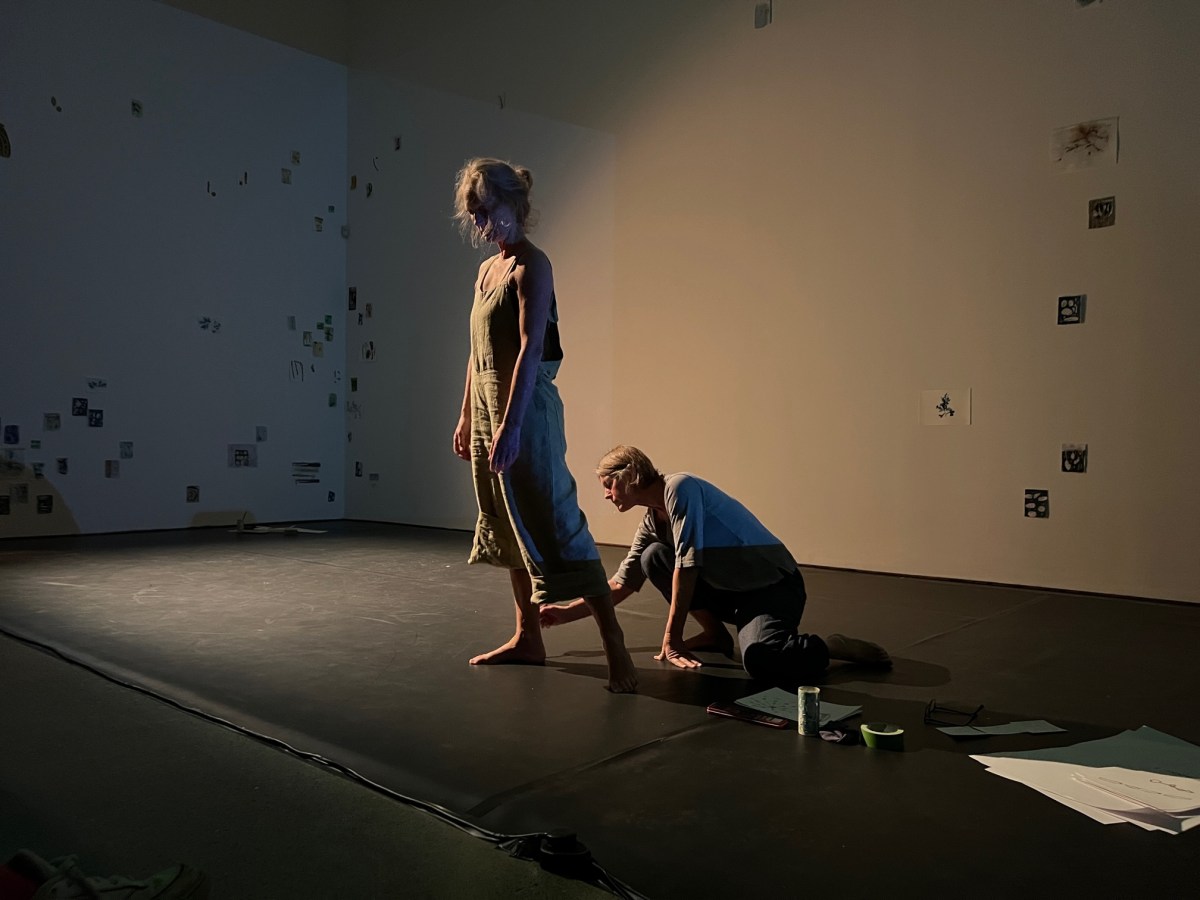
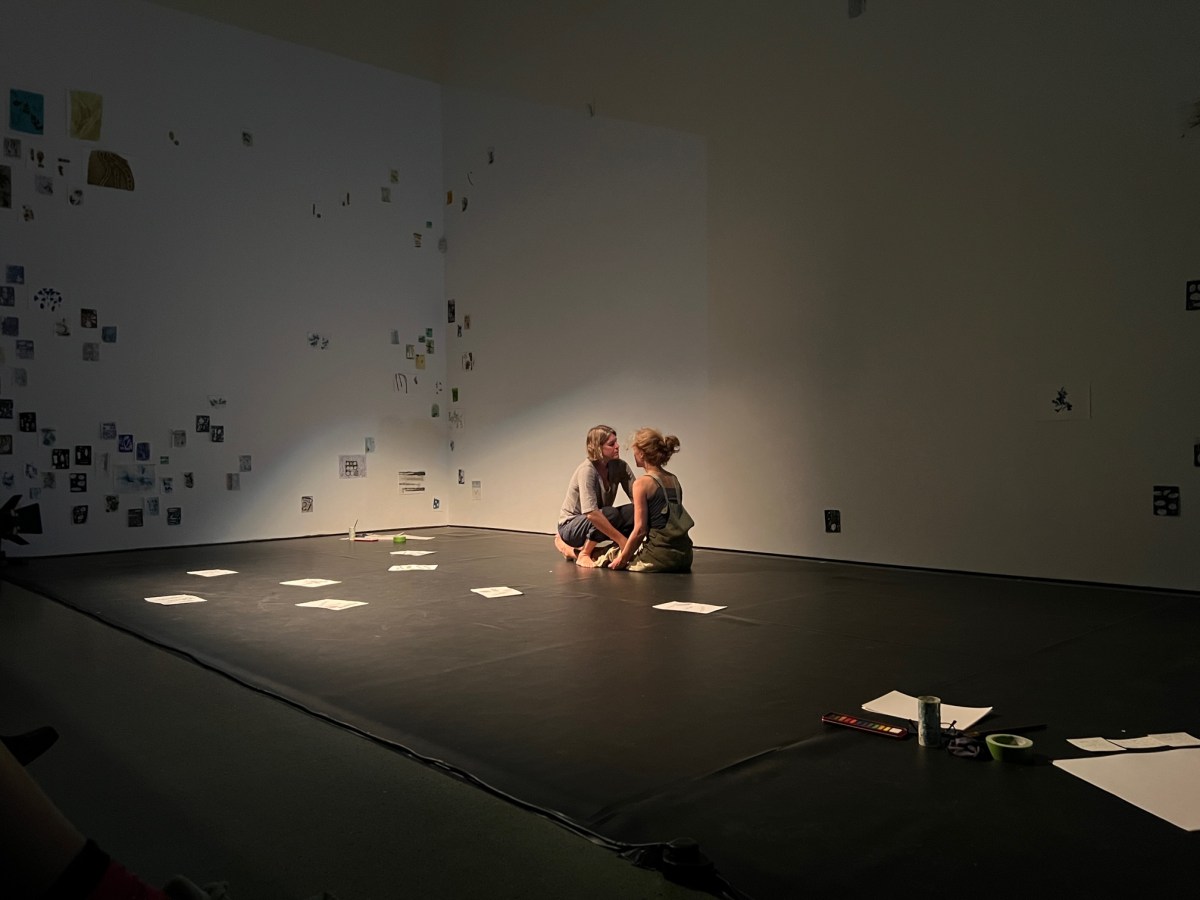
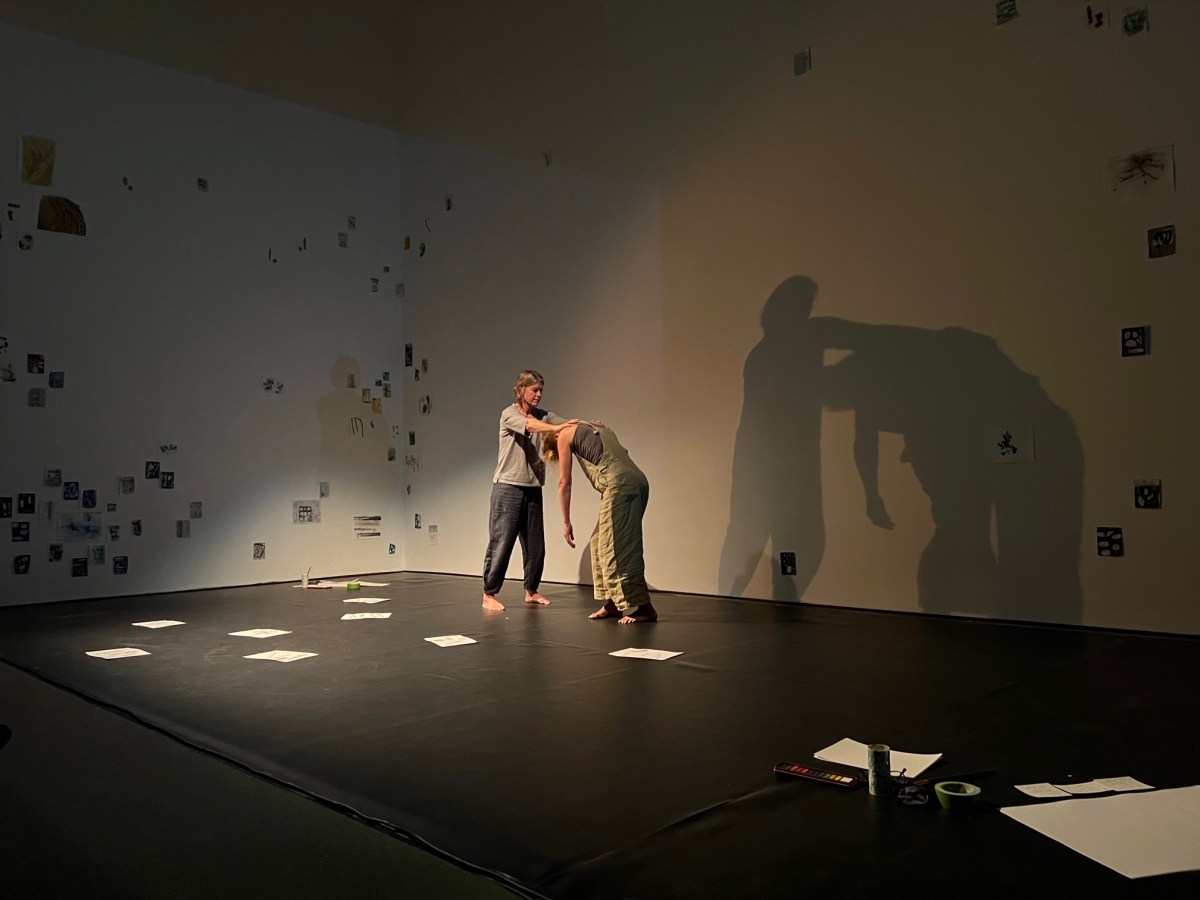
As Tara slowly comes to life her hand movement echo the pulsating and twisting movements of the plankton we have seen on the wall behind her. We see her coming to grips with the challenges of rediscovering the body her illness has given her,  and hear her compare it to putting together a 3D jigsaw, as she strives to heal and to compile the disparate pieces into a coherent whole again. Stacey’s voice also gives us an insight into the profound disconnect that  epilepsy, or rather the drugs she has taken to address it, has created between mind and body. We see them support each other, Stacey (literally) guiding Tara’s faltering steps. 
© Tomasz Madajczak

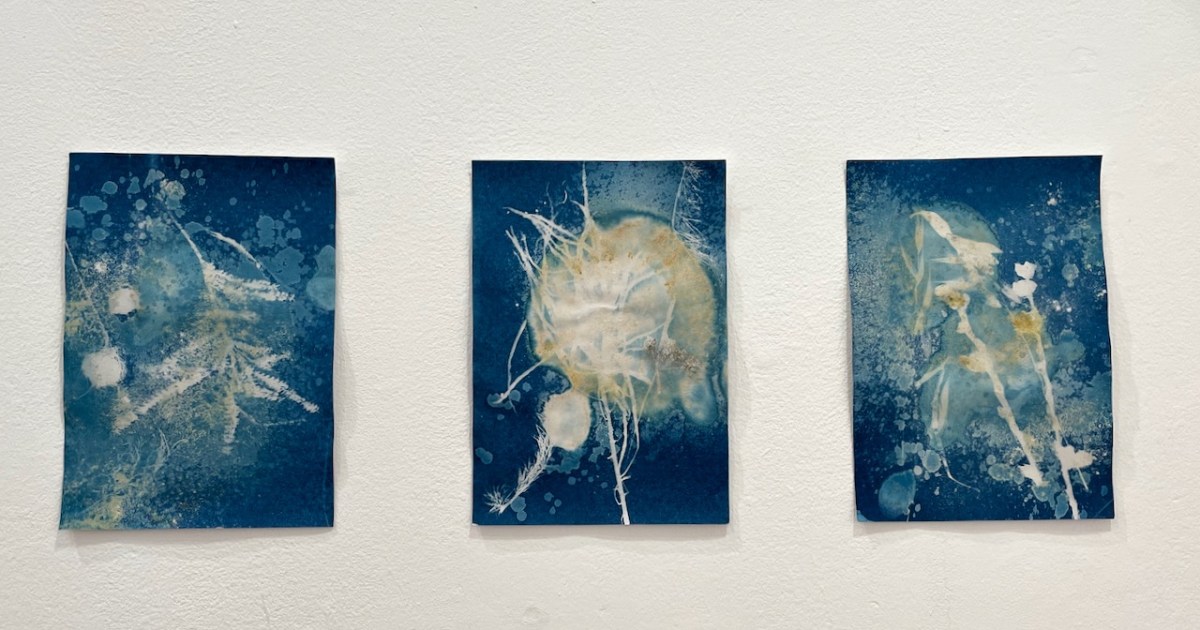
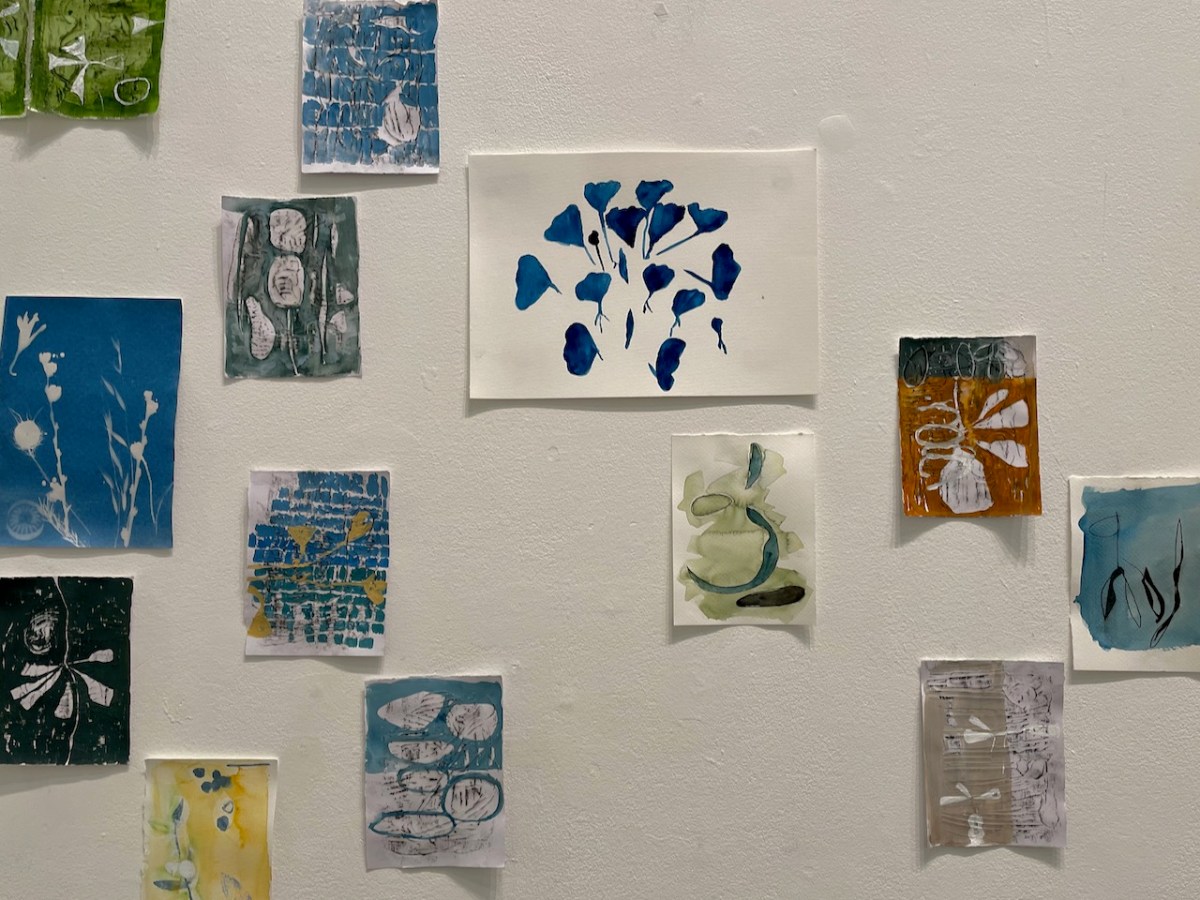
Besides the projections, Stacey’s small plankton paintings fill the wall space behind the dancers, hung to echo the Gulf Stream and Atlantic currents. At one point during the dance she strews them about the floor and Tara carefully makes her way among them before seizing larger pieces of drawing paper to wrap around her body, as if drawing strength from a medium other than the physical.

© Tomasz Madajczak

As someone at home, away from the world, slowly trying to recover from profound weakness, Tara shows us that she feels unseen, locked away from our sight. Sufferers of vaccine injuries have to contend with the neglect of their plight by governments and health systems, who start by ignoring them and then throw enormous burdens onto already-ill people to ‘prove’ that what has happened to them is the fault of the vaccine.

© Tomasz Madajczak

But this is not a pity-me piece, it’s a profound meditation on what it is, and how it feels, to be unseen, and to have the very foundations of the life we take for granted – whether we are talking about our planet or our bodies – suddenly under threat. And ultimately it’s about the healing power of art to help us face those challenges.

© Tomasz Madajczak

I have no doubt this piece will have an afterlife after the two current scheduled performances. Uillinn’s (The West Cork Arts Centre) dance season, now in full, er, swing, reminds us that art comes in many forms, including dance. Like plankton, art blooms where the environment encourages it. Hardly surprisingly, given the quality of what we saw in Unseen, all the dance performances seem to be well subscribed, so run don’t walk if you want tickets for any of the other events over the next week or so – it goes to November 5th.

Thank you to Tomasz Madajczak for allowing me to use his outstanding photographs.

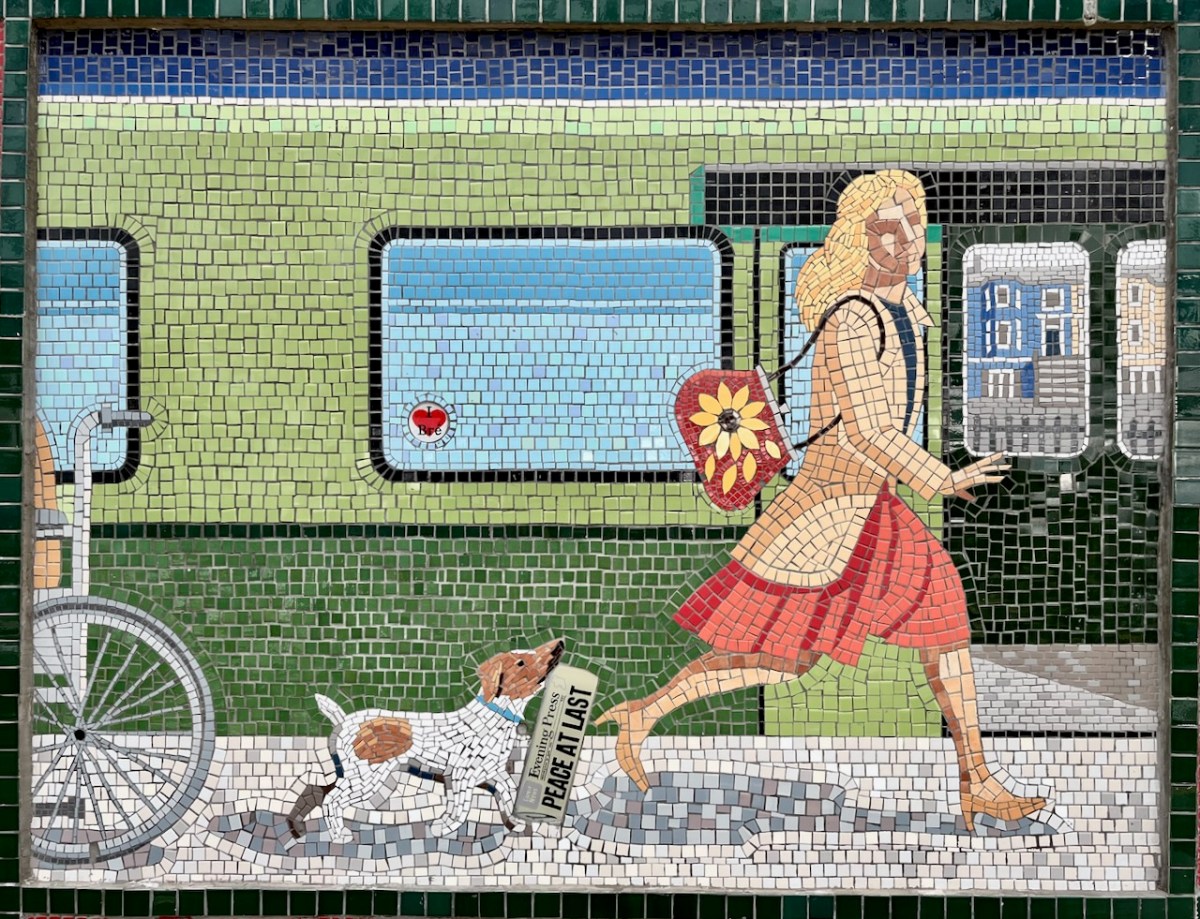
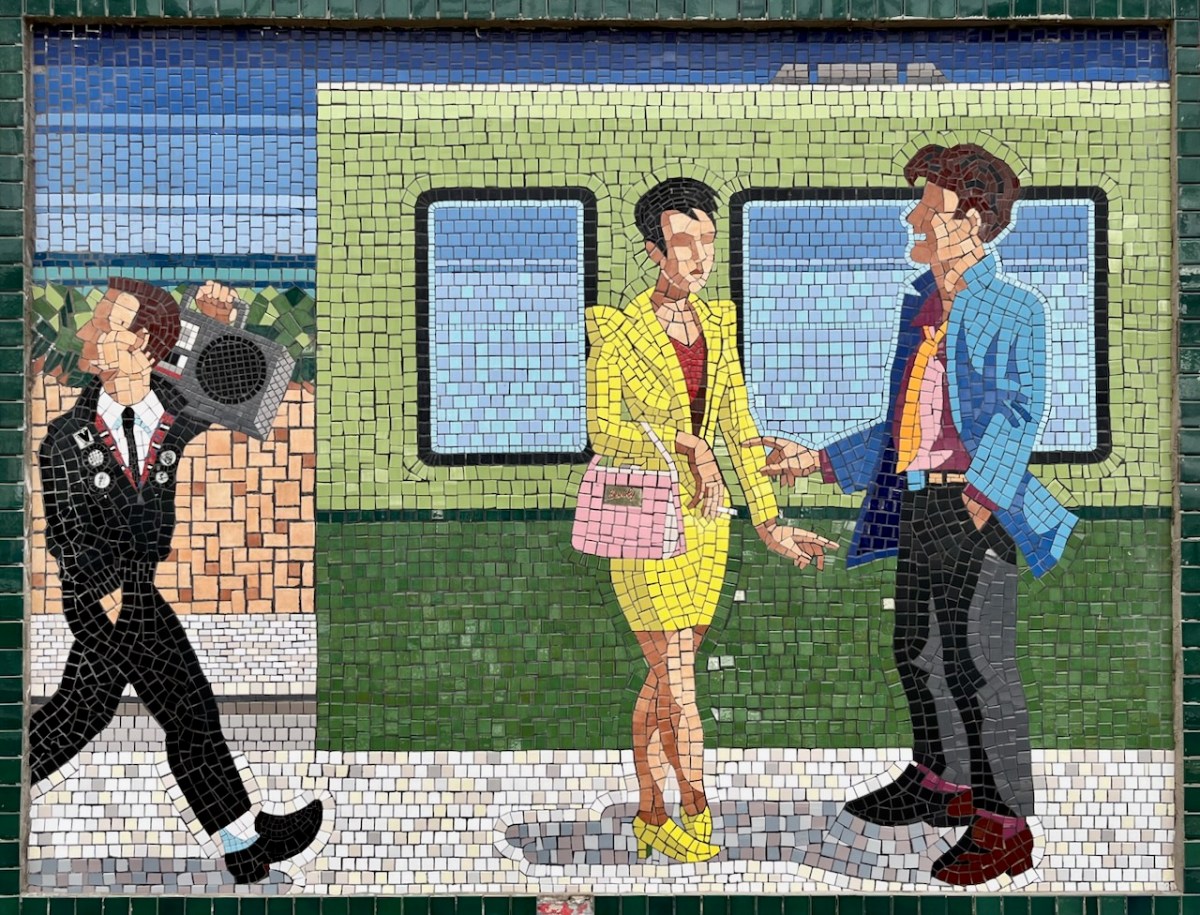
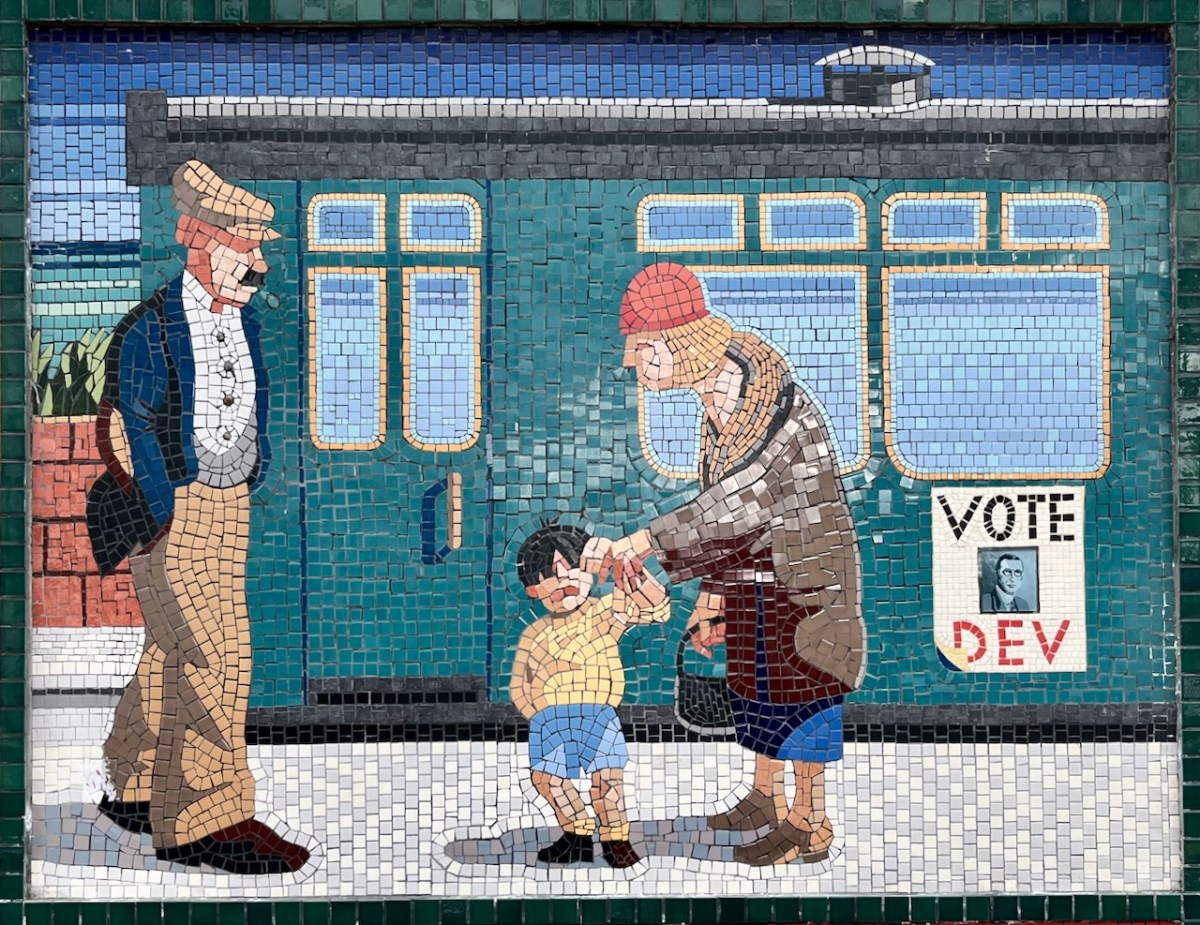
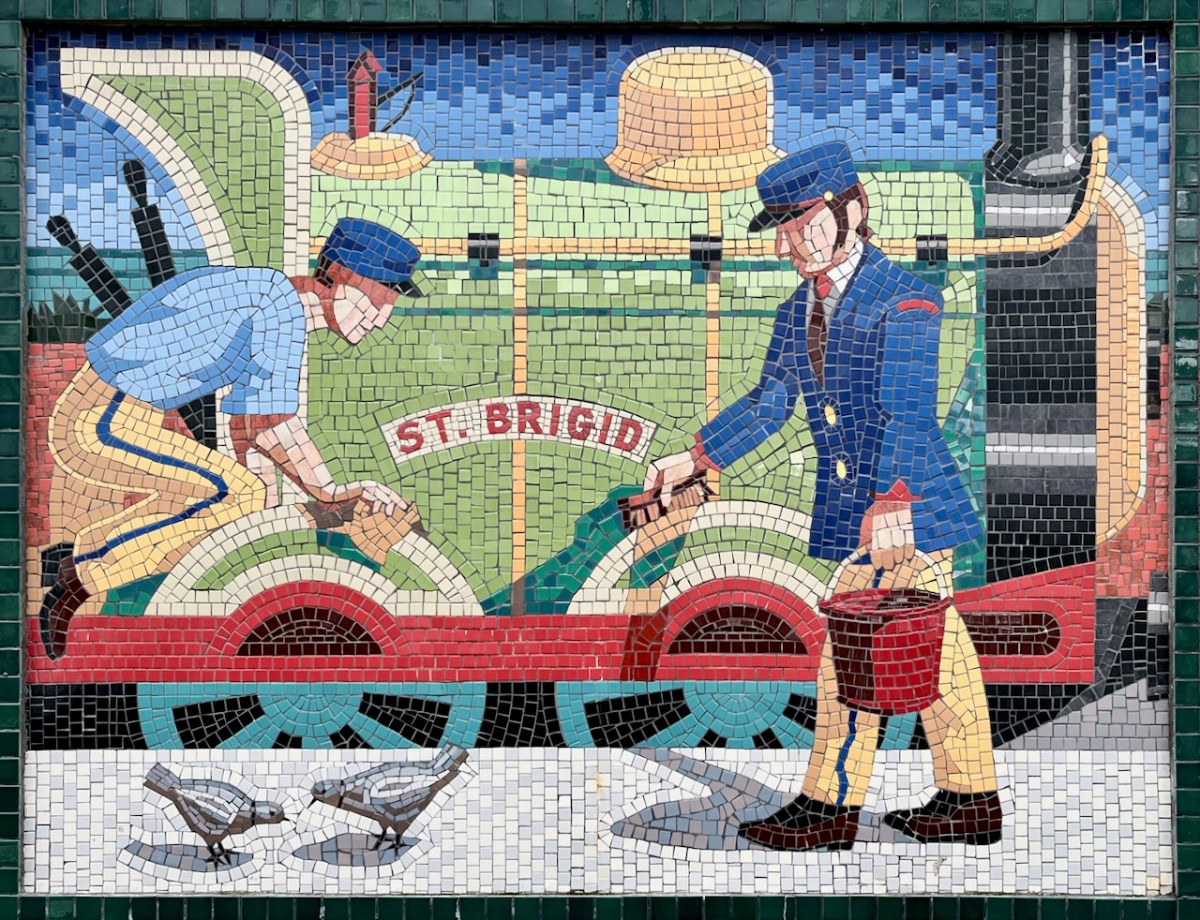
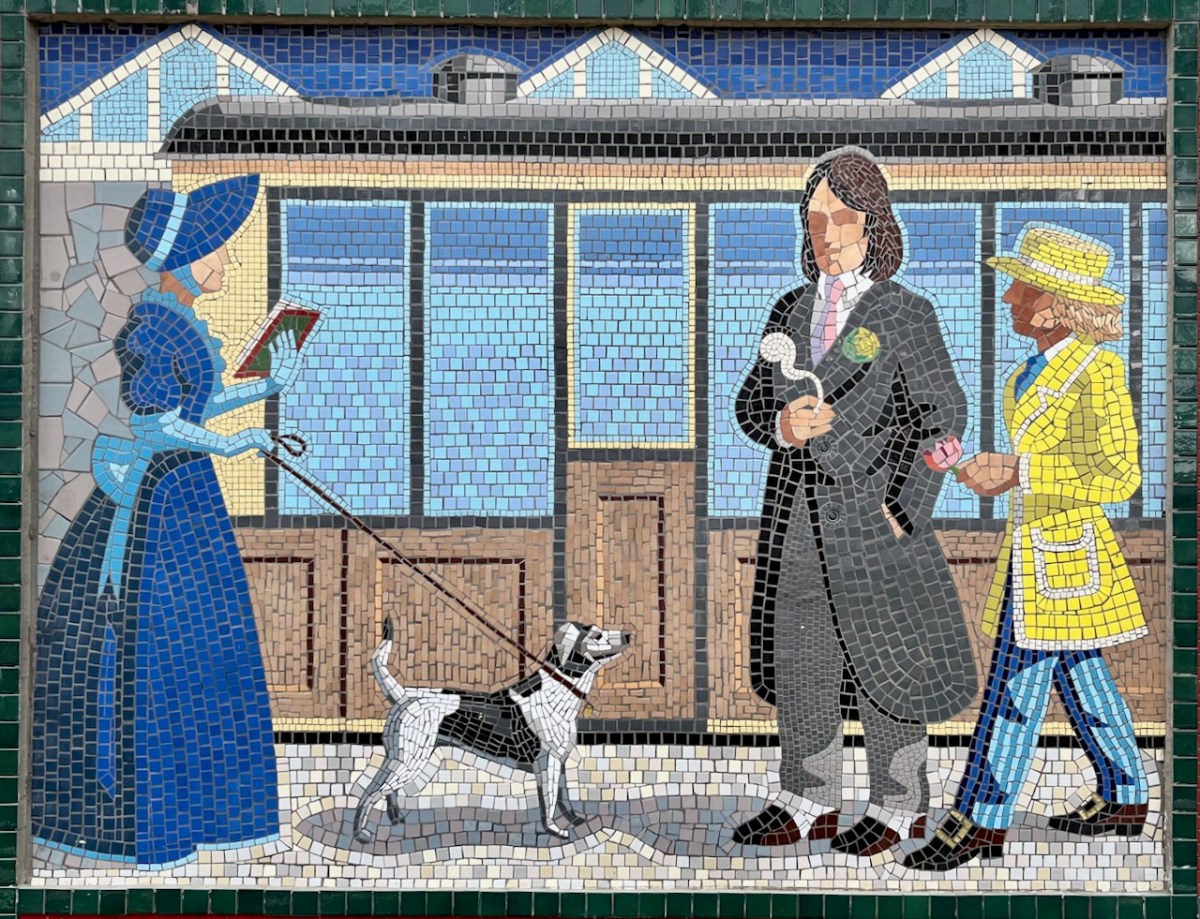
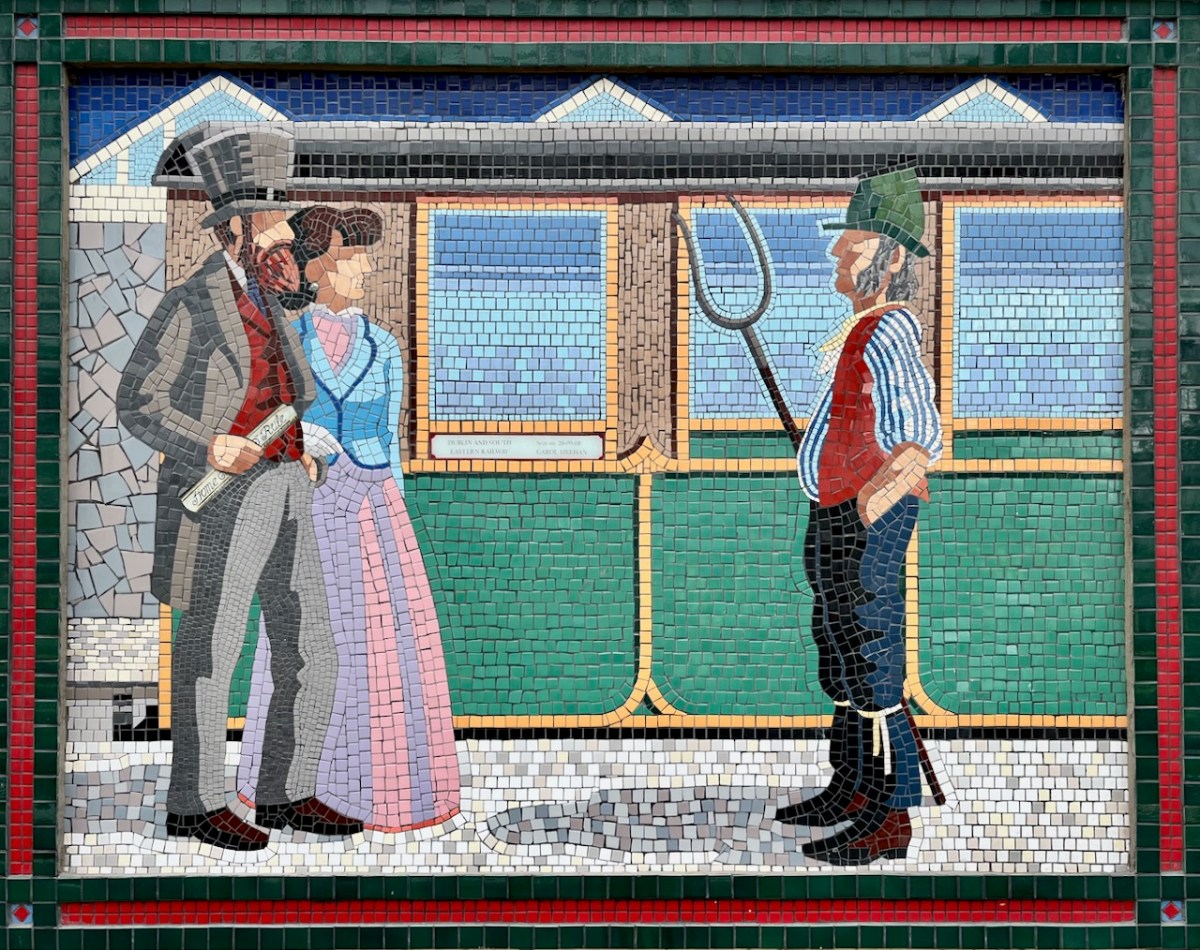
Bray Railway Station Murals

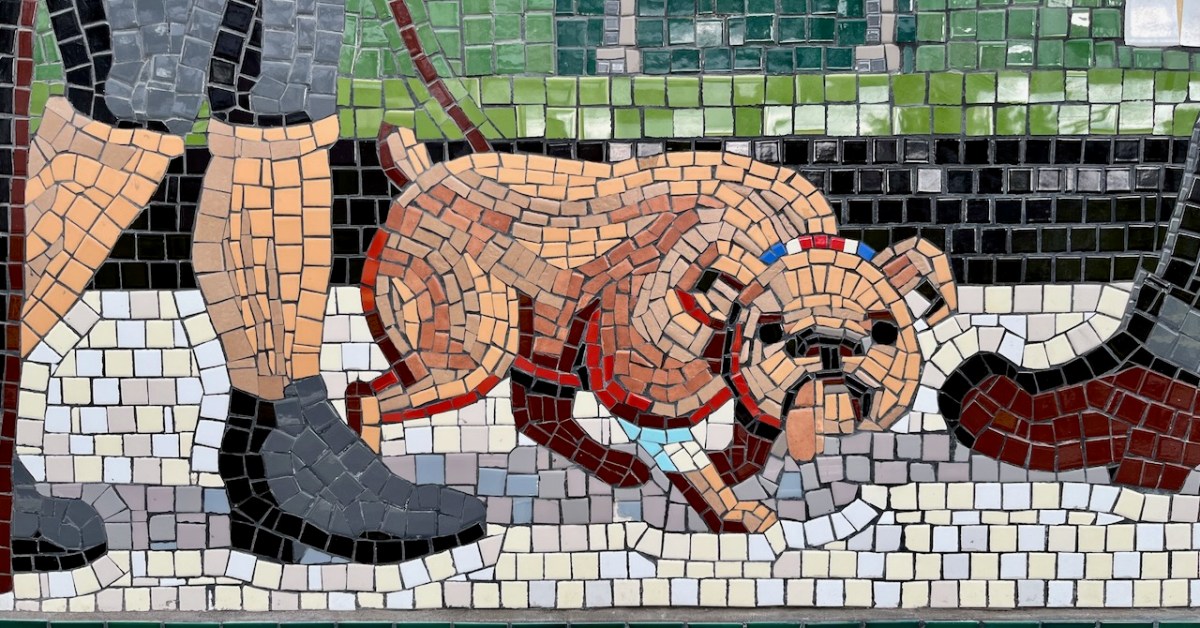
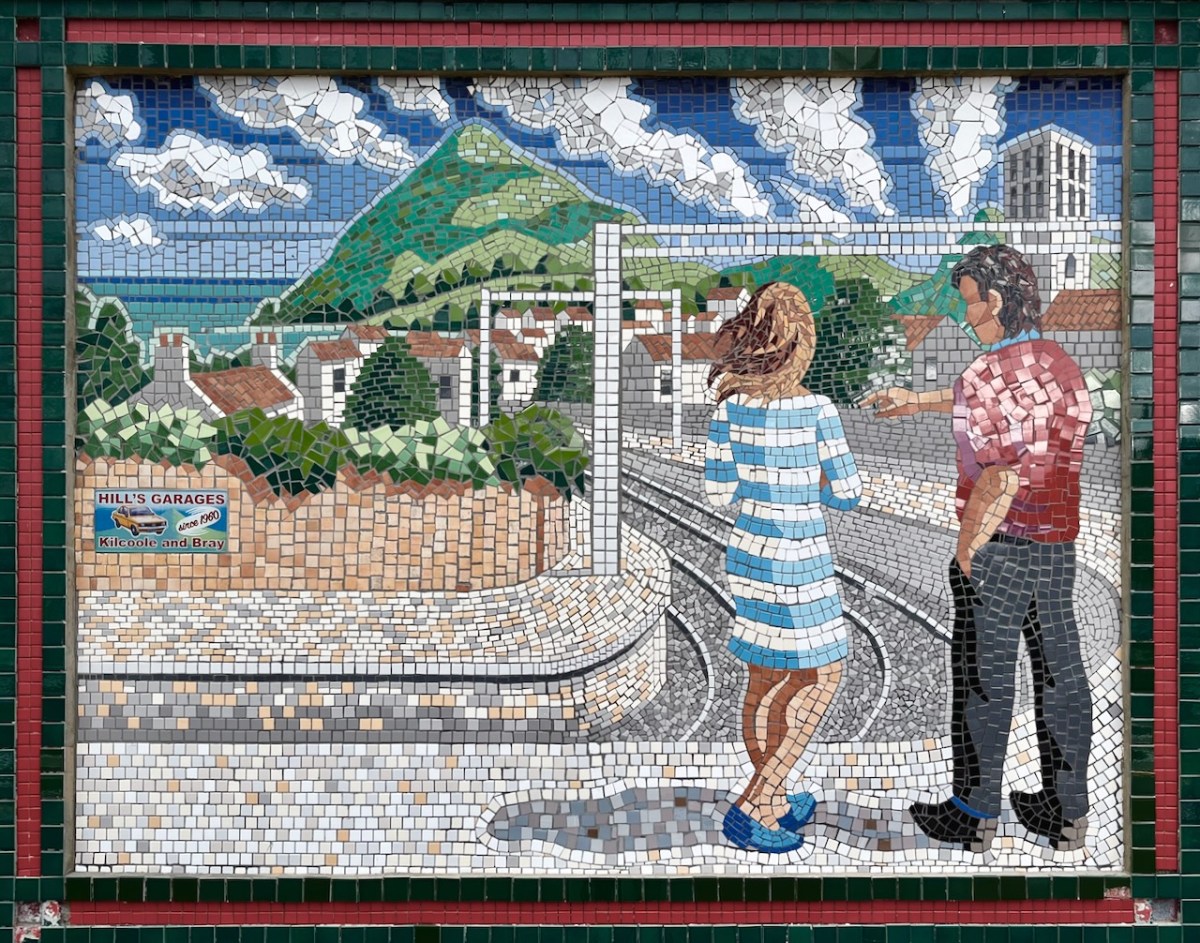
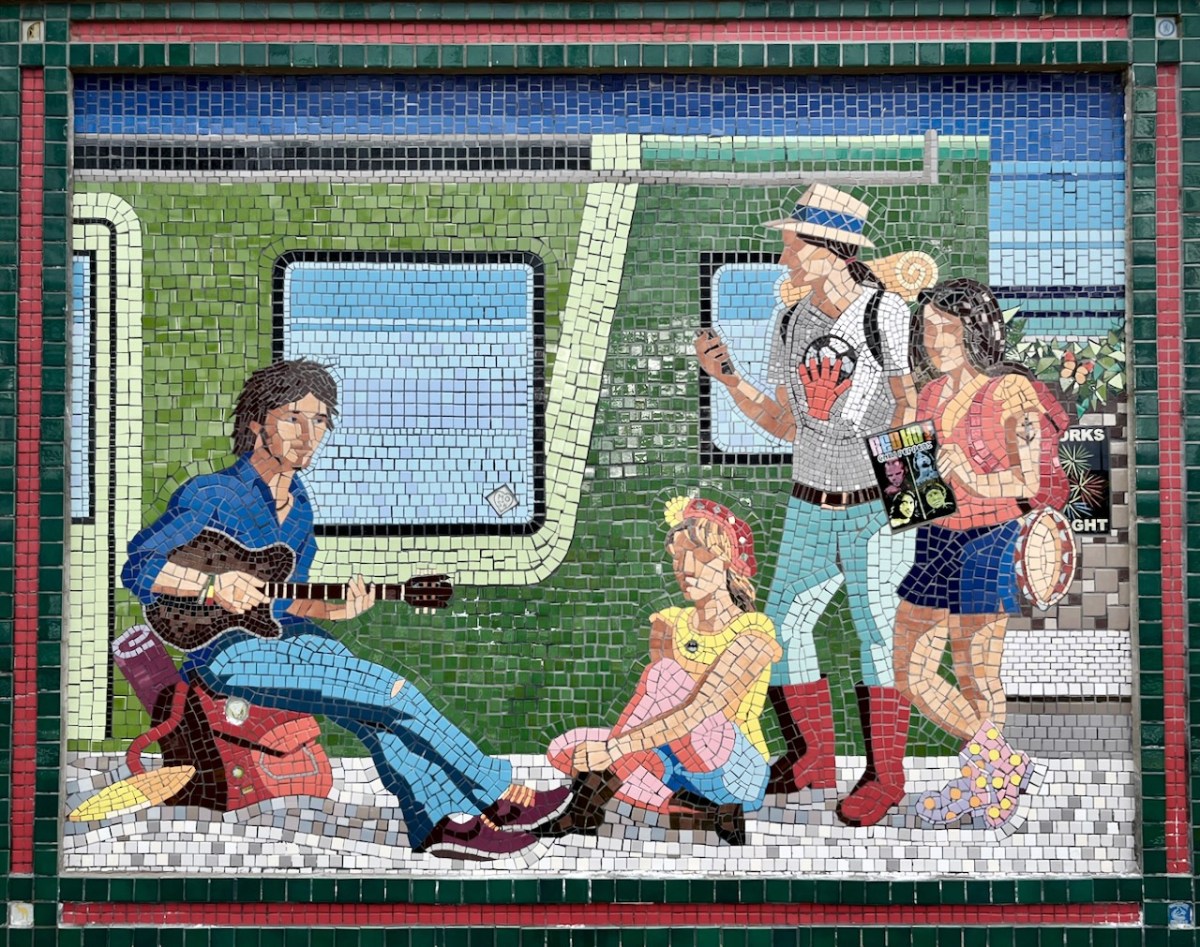
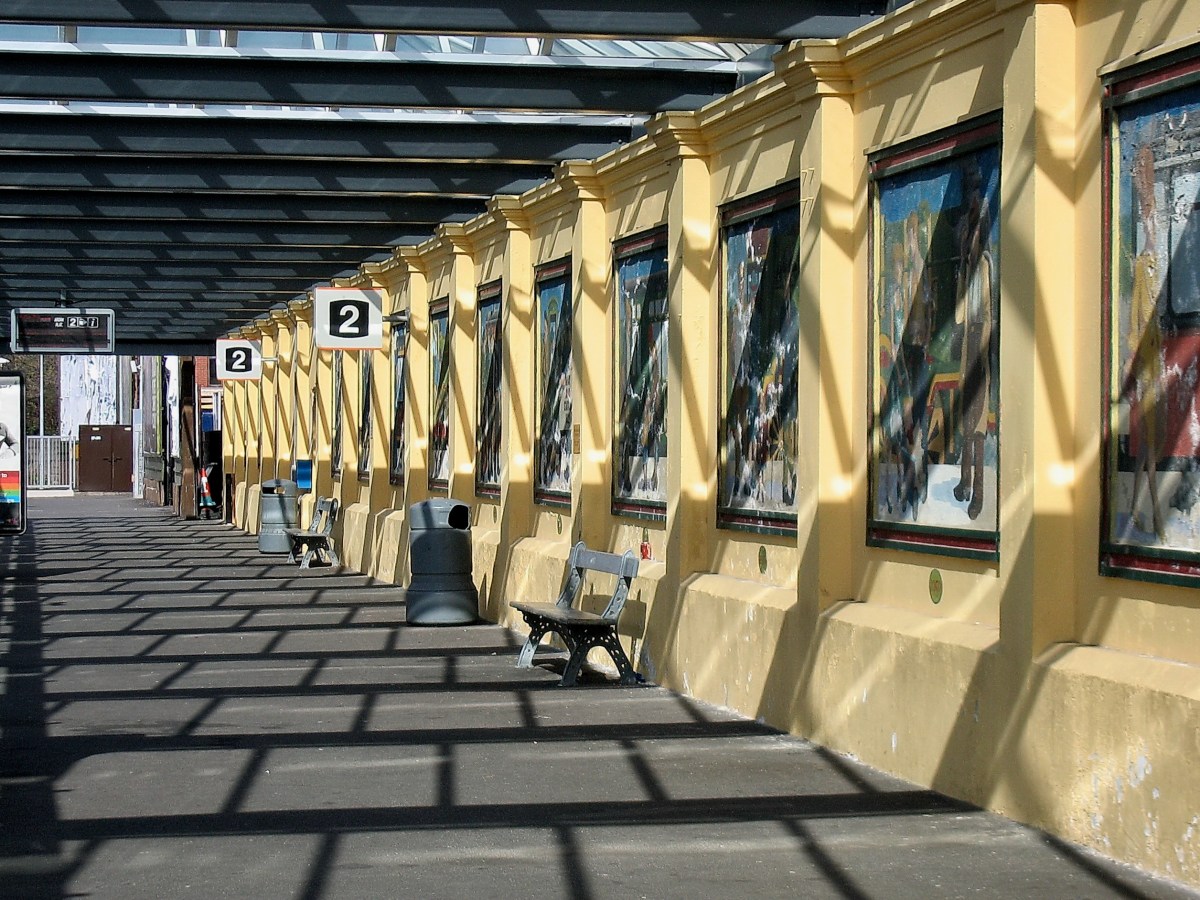
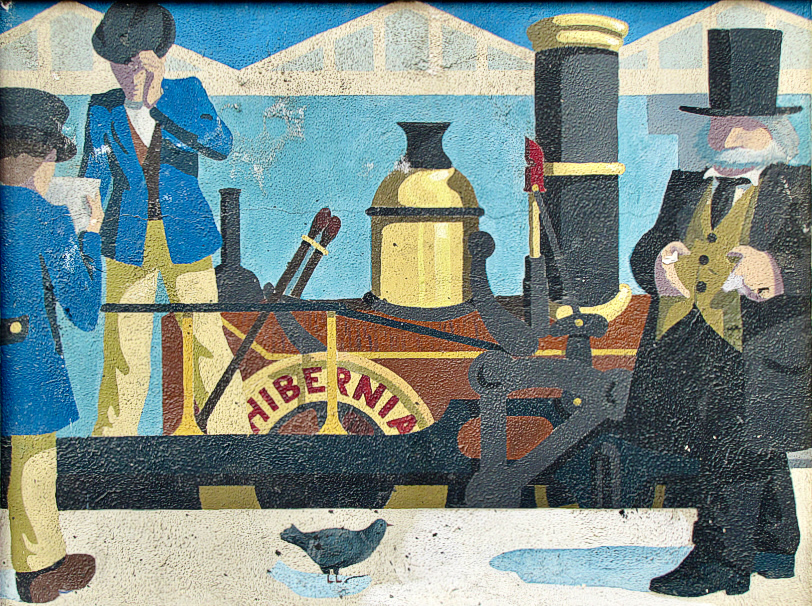
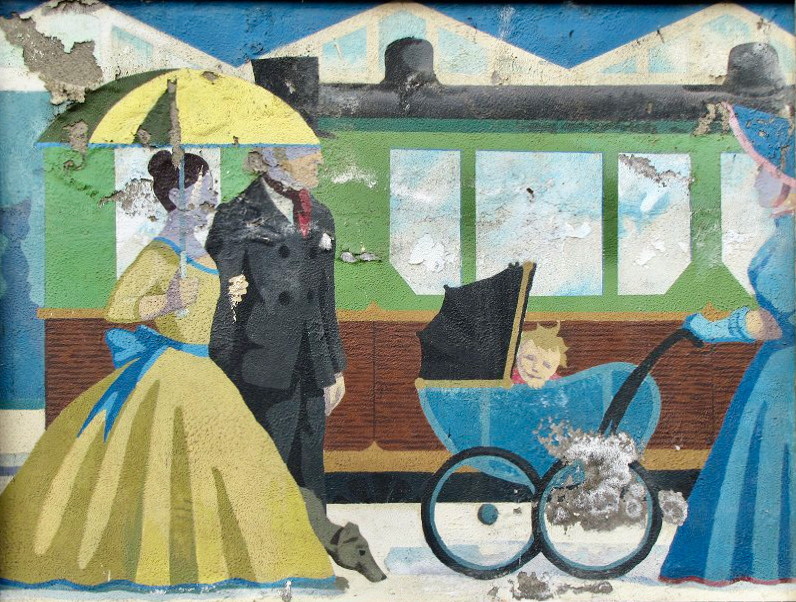
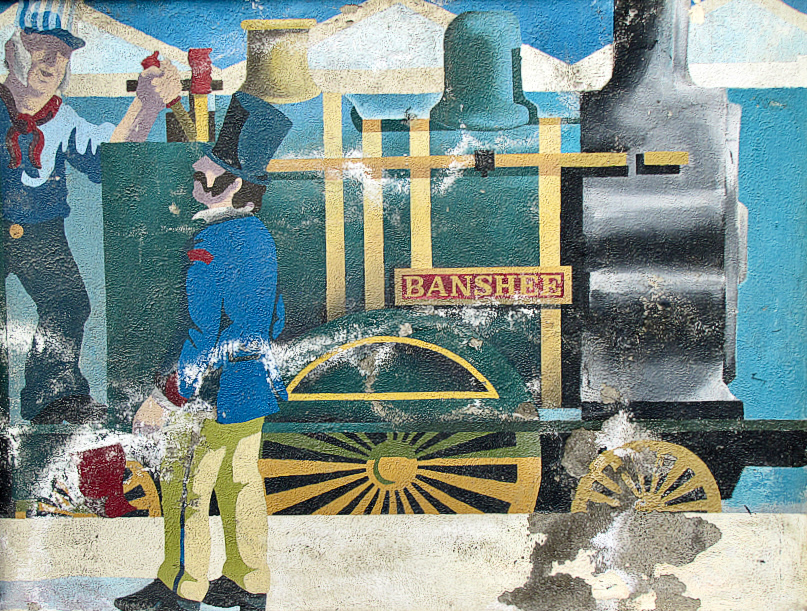
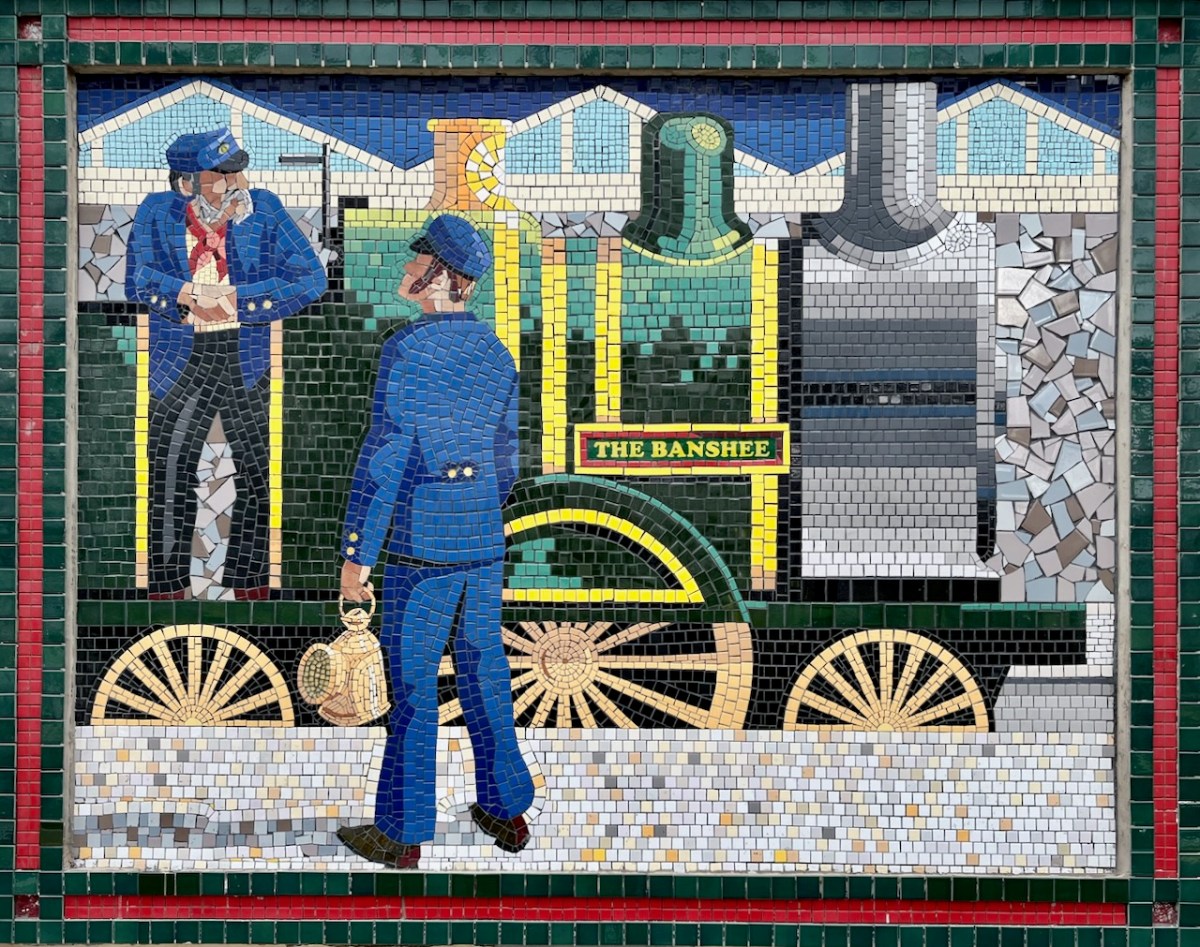
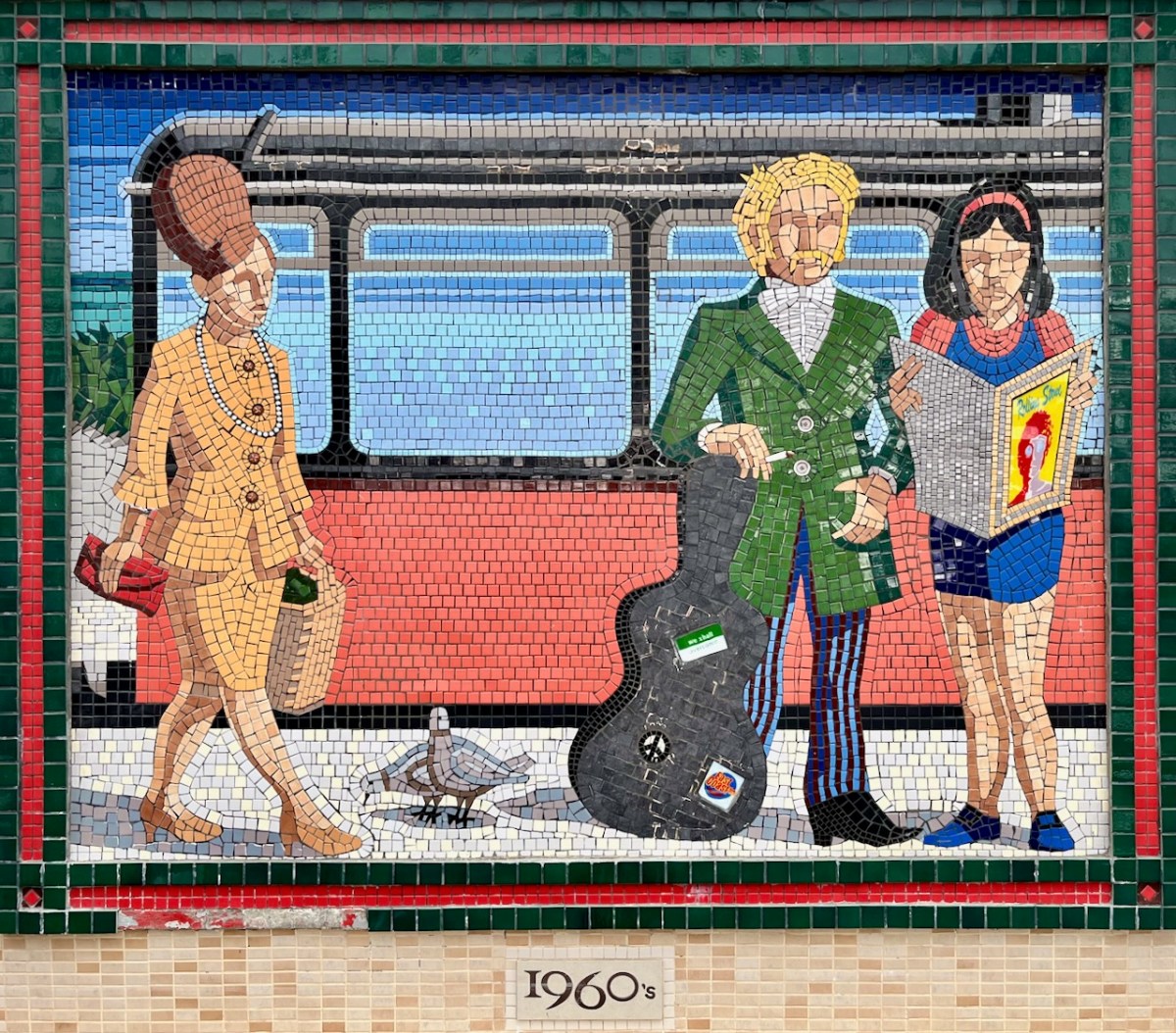
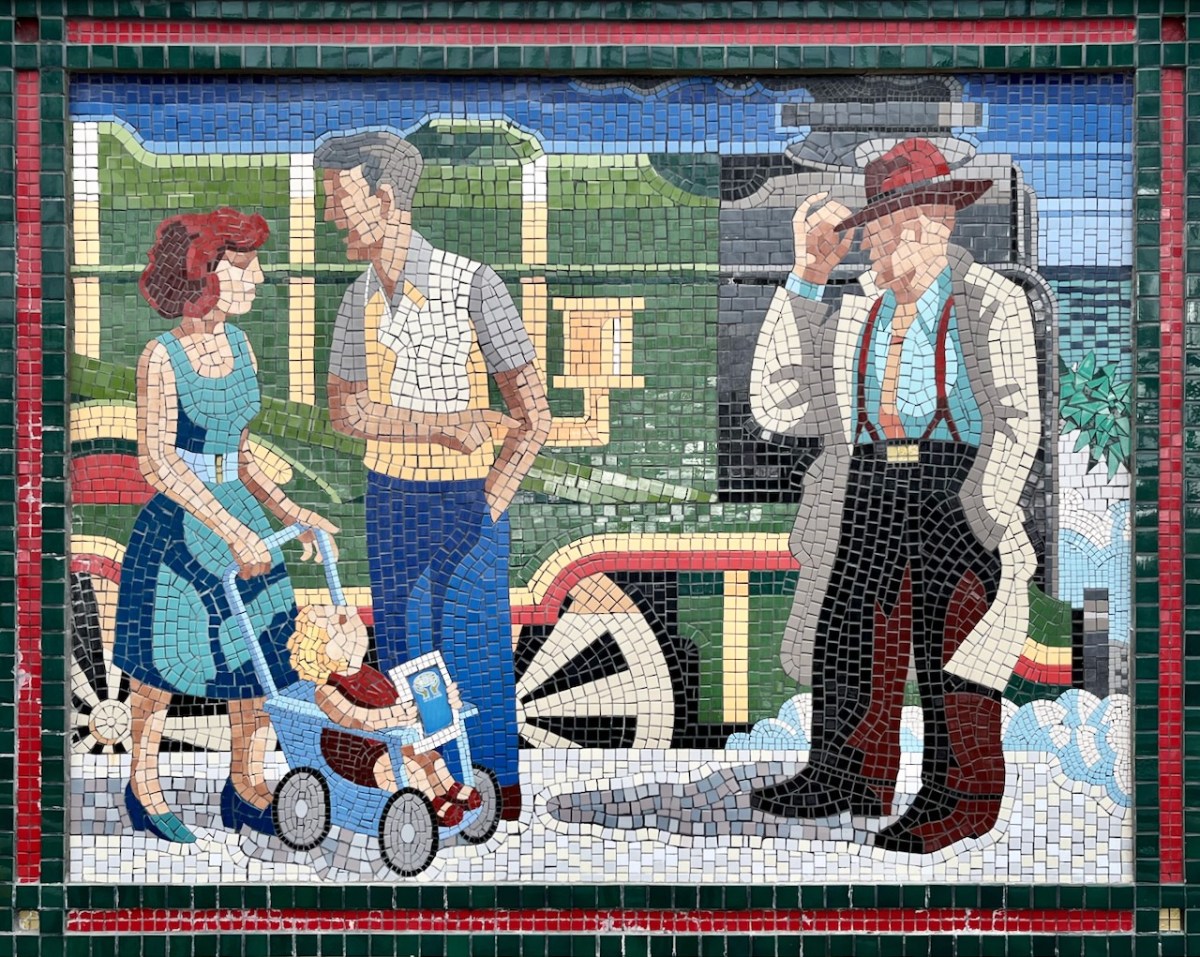
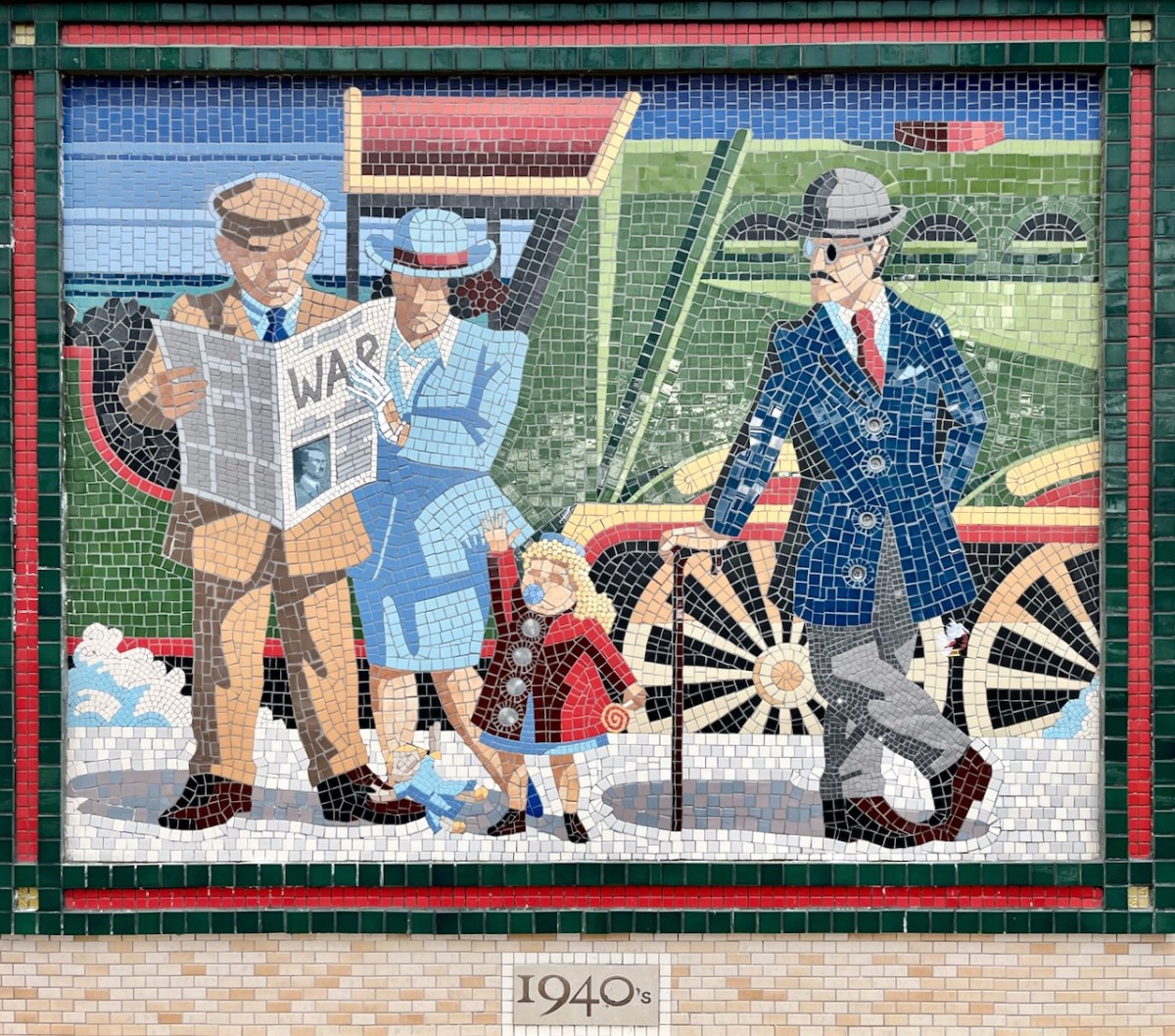
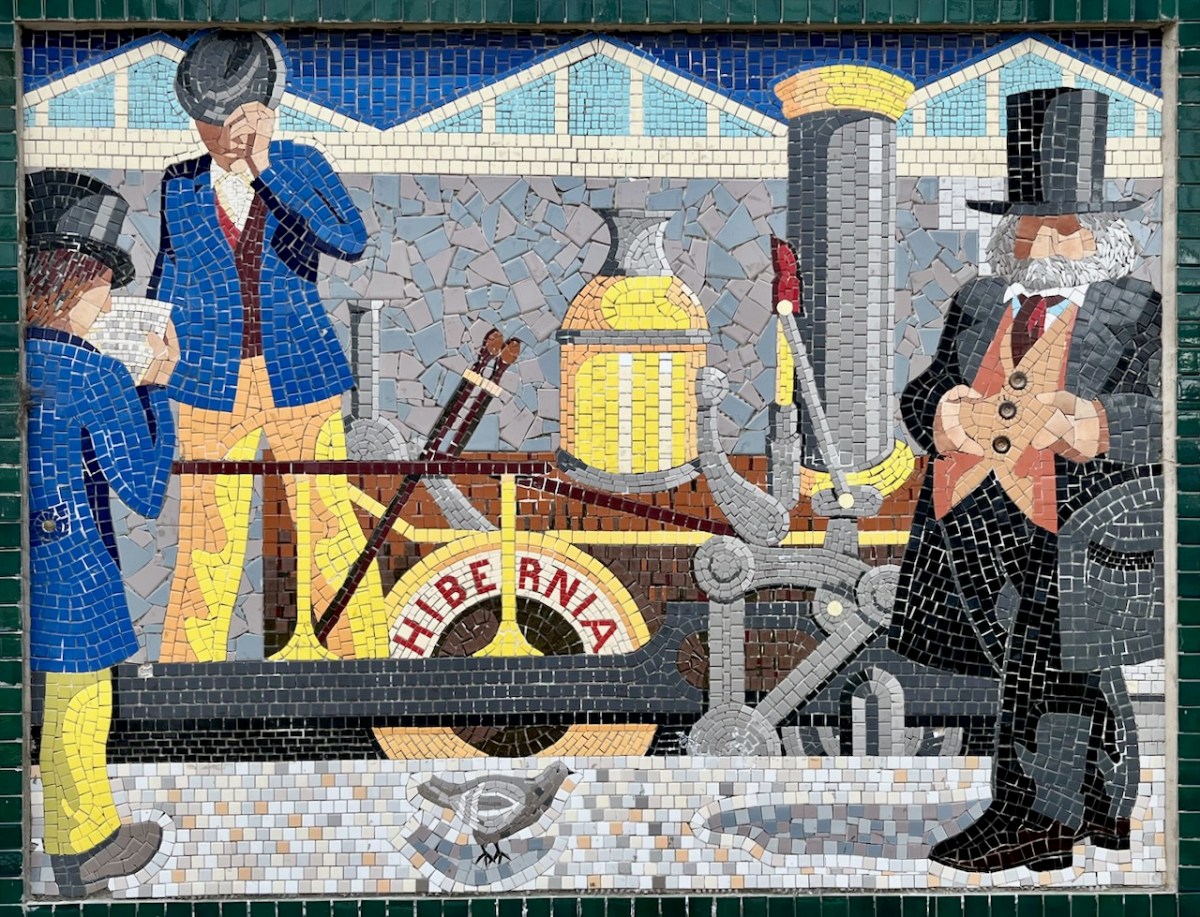
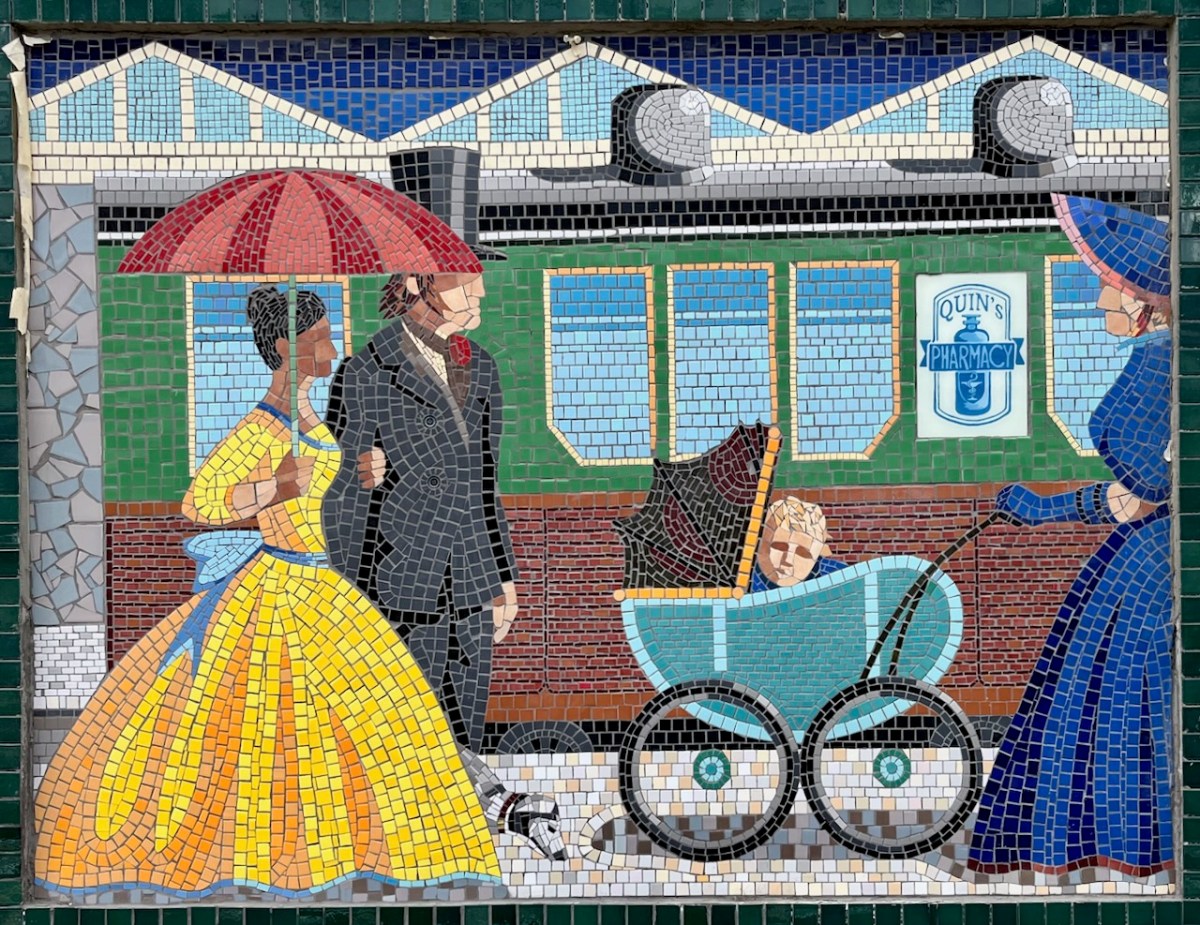
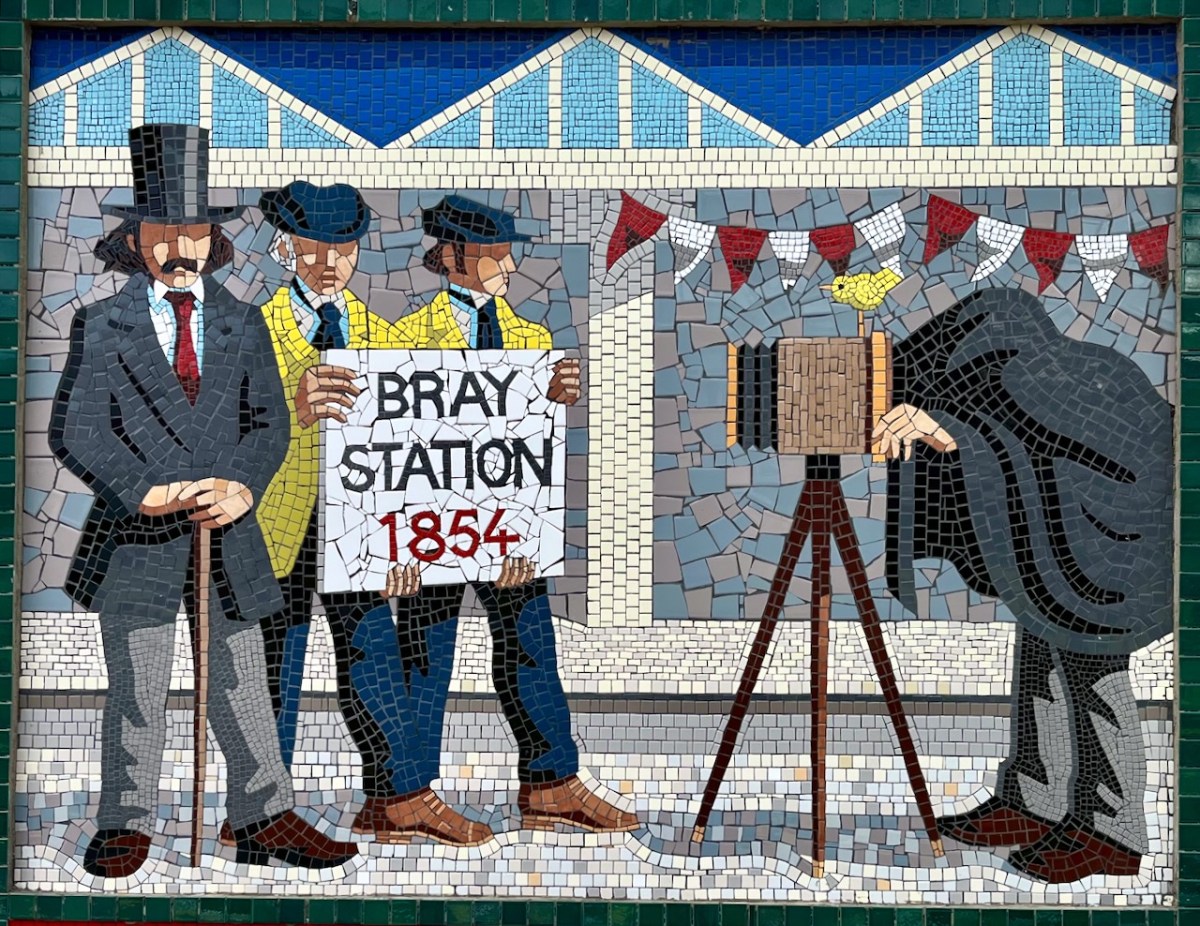
In a recent post I gave some examples of public art which can be seen on the railway station at Bray, Co Wicklow. I think this subject deserves a more comprehensive airing, so here we go! Just to recap, murals were originally painted here by Jay Roche and John Carter, who won a competition in 1987. Over the years the paintings deteriorated, and were replaced by the same team – assisted by Anthony Kelly and Eileen Maguire – with a very fine set of tiled murals. I’m recording the rest of these in this post, as I am so impressed by the overall work.

Each panel represents a decade in the line’s history. You’ll have to decide for yourselves which decade is which . . .

If only that newspaper headline was really true!

From Wiki Commons 2007: A Panel for Every Decade since 1850s in Bray Railway Station. These are the painted murals.

(Above) some of the painted murals in a fairly advanced state of decay: probably early 2000s. The tiled murals are loosely based on the subjects of the originals, but the artists have respected the variations that the change of medium calls out for:

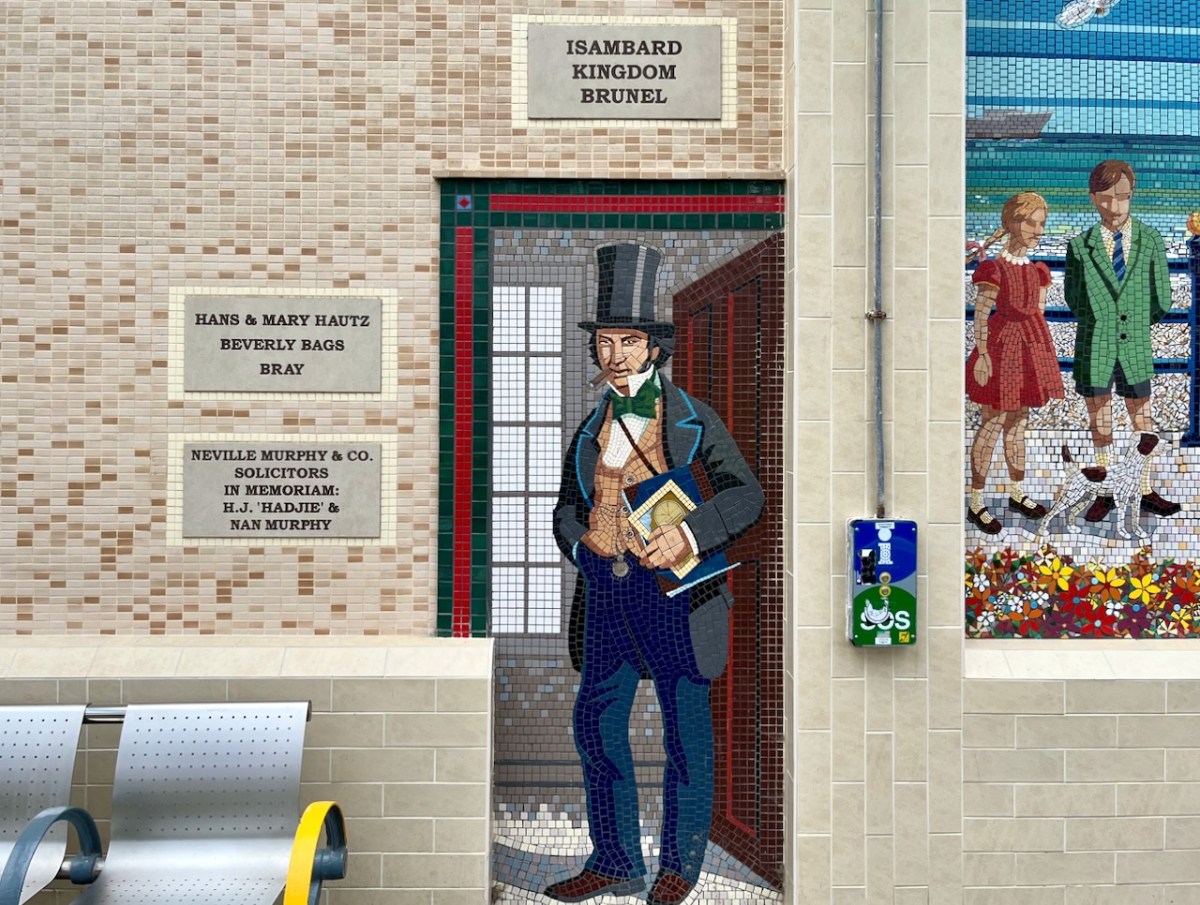
I mentioned – in Taking Notes – that Brunel was responsible for the line that runs through Bray. Here he is, standing on Bray Station:

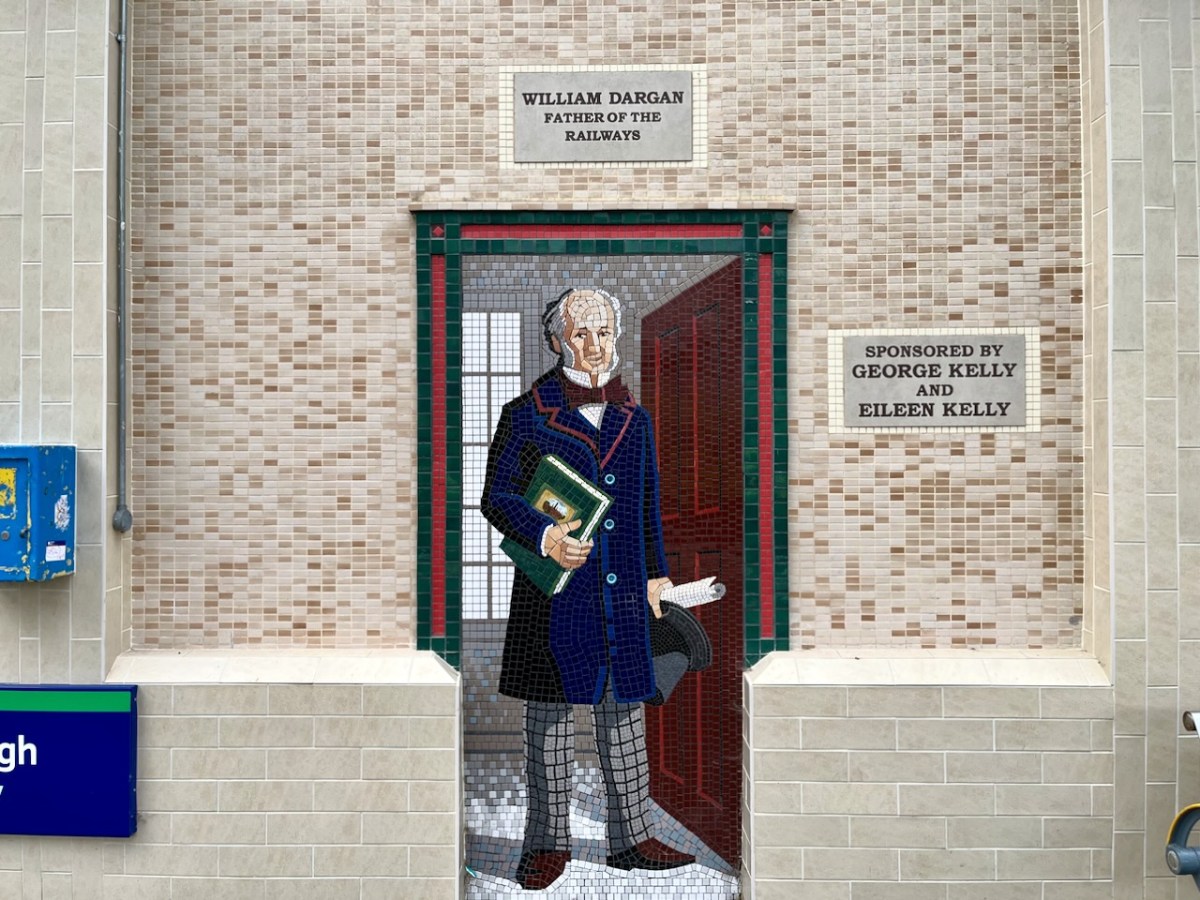
And here (above) – also one of the tiled murals on Bray Station – is a portrait of William Dargan. As you can see – considered ‘Father of the Irish Railways’ – Dargan lived from 1799 to 1867. He engineered over 1300 km of railways in Ireland. Working firstly in the UK he was an assistant to Thomas Telford, and oversaw the construction of roads and canals in the Midlands. He returned to Ireland in the 1820s and took an interest in promoting railways here. The first public commuter railway system in Ireland was designed and built by Dargan: it opened in 1834 and ran between Dublin and Kingstown, now Dún Laoghaire. The line as built was ‘standard gauge’ (ie 1,453mm between rails). This was converted to the ‘Irish standard’ of 1,600mm in 1857. The line extended south to Bray in 1854, and to Greystones the following year.

Isambard Kingdom Brunel, an engineer of Britain’s Great Western Railway, informed the Dublin and Kingstown Railway board that he was planning to build a line into South Wales and start a new sea route from Fishguard to Rosslare. He suggested a joint venture for a line from Wexford to Dublin. A coastal route from Bray (rather than inland) was chosen specifically because it would be scenically attractive for travellers. This led to engineering difficulties including tunnels and retaining structures which are still evolving to this day.

Brunel’s vision of a line going from the capital to Wexford and linking with a service of Irish Sea ferries has been fully realised, and is taken for granted. Let’s hope that this line is maintained and continues on far into the future.

I hope you have noticed how the design of the rolling stock has been changing as we go back through the decades. The representation on these murals is accurate, as far as I can see.

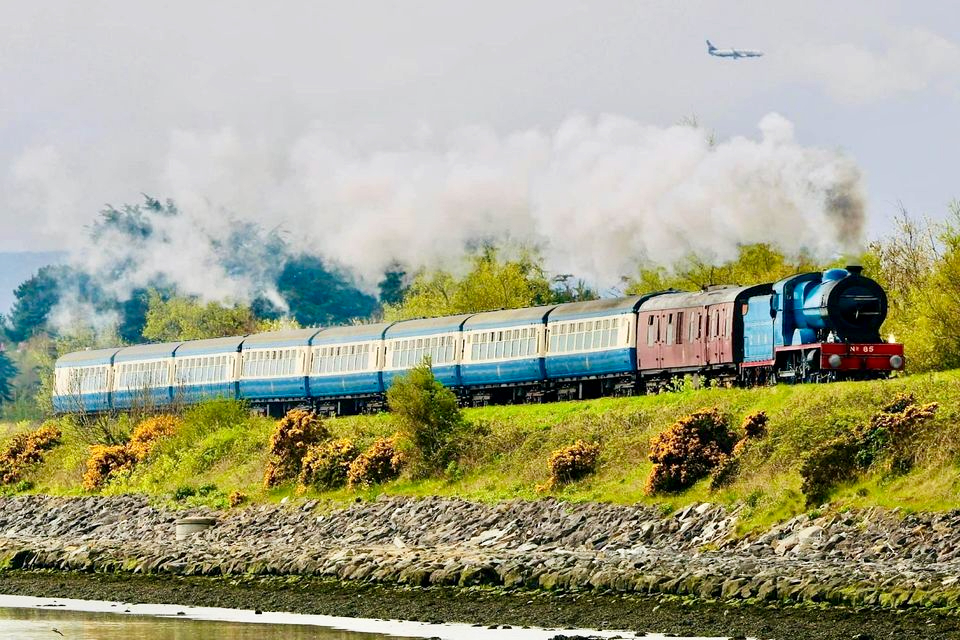
I was sorry to miss the sight of restored steam locomotives and carriages coming through Bray and Greystones on Sunday 24 September this year. Here’s a previous Steam Express visit to Wicklow in 2022 (courtesy Irish Independent):

Here in the West we did have some very singular railway lines – look at these posts: The Great Southern Railway: Headford Junction to Kenmare; Aspects of Baltimore; The Flying Snail and Tracking the Trains. Sadly, it’s no longer possible to travel by train in our region: all lines west of Cork City closed on 31 March 1961. Before that you could get to Skibbereen, Ballydehob, and Schull, Bantry and Baltimore and even, on a little branch line, to Timoleague and Courtmacsherry. Don’t we miss those opportunities?

Road Bowling Catch-Up!

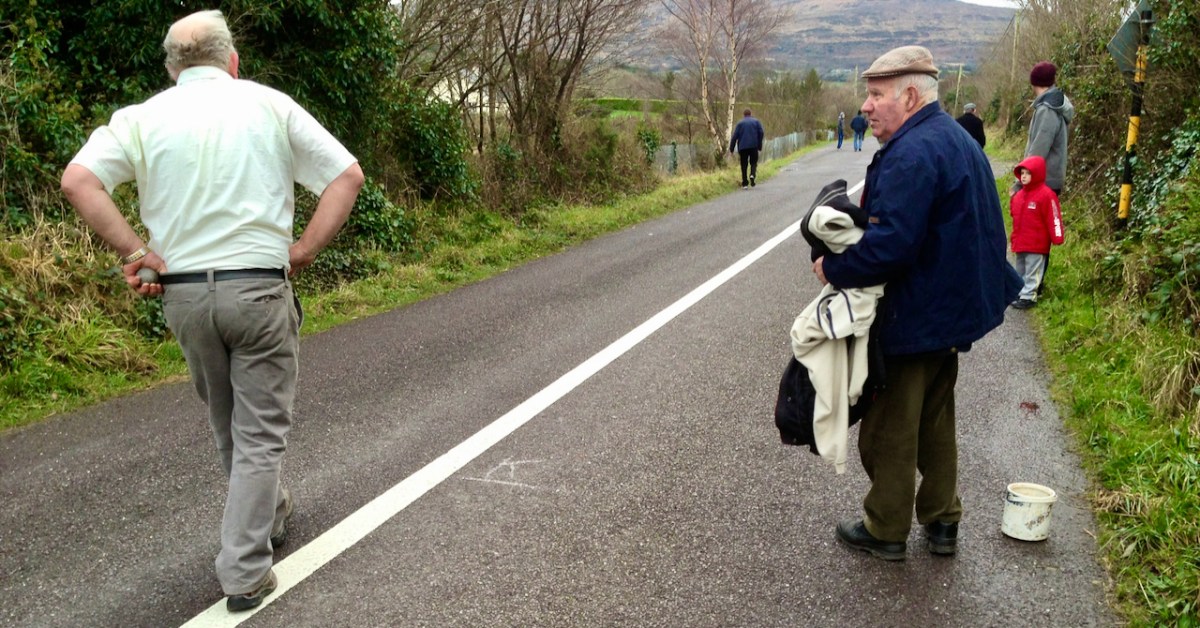
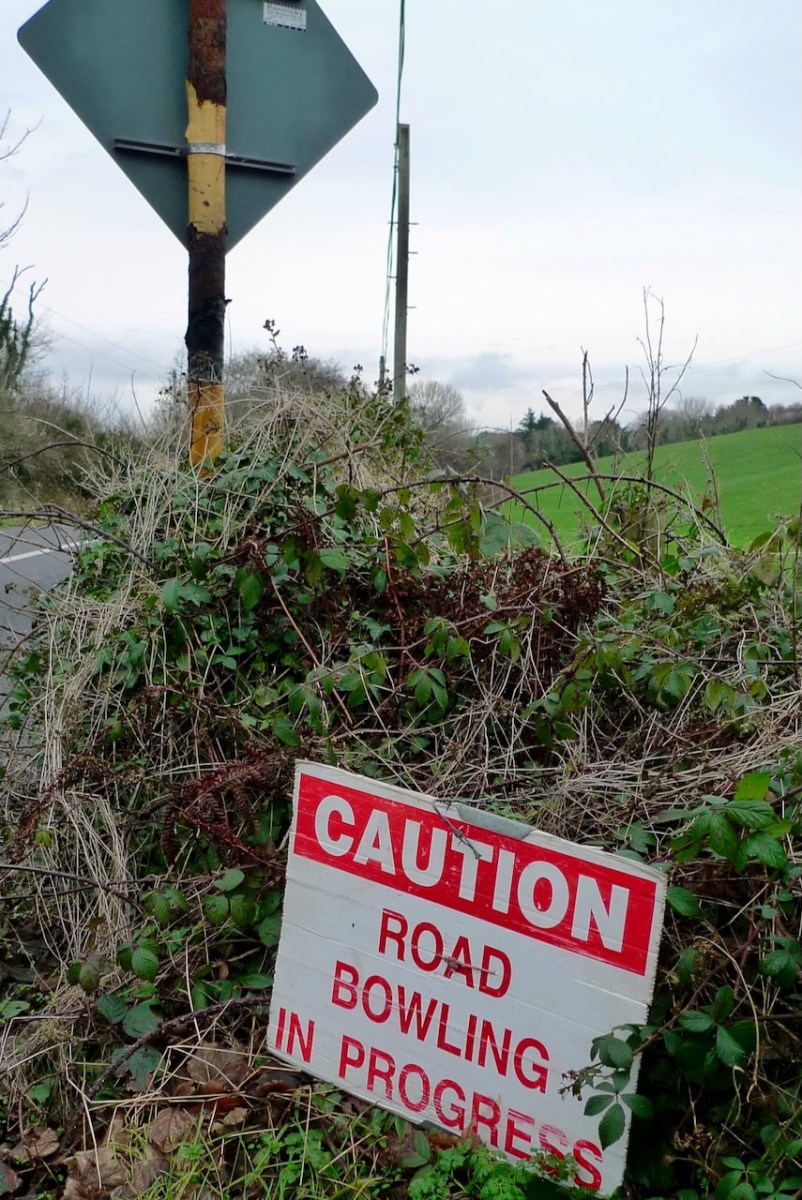
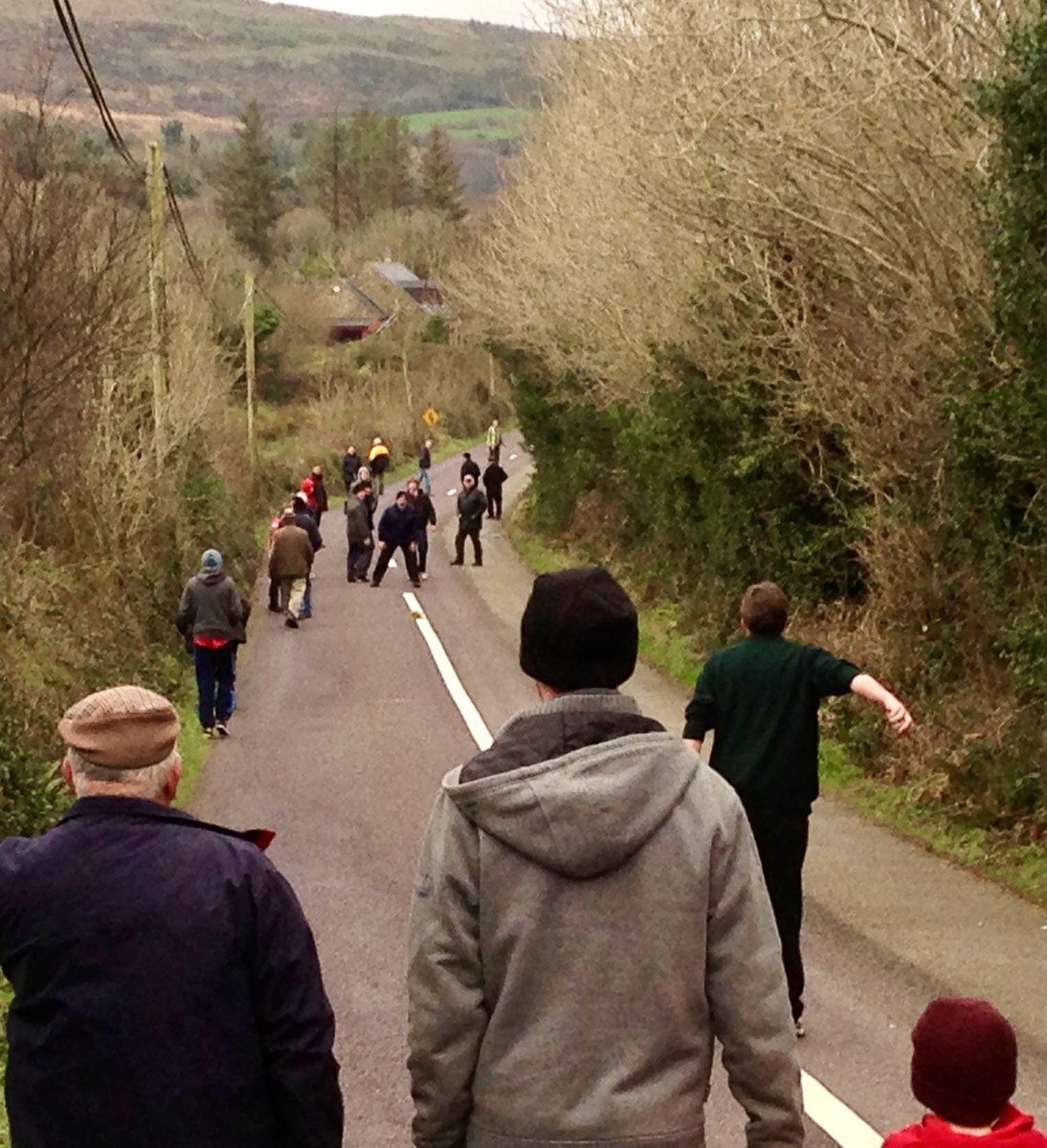
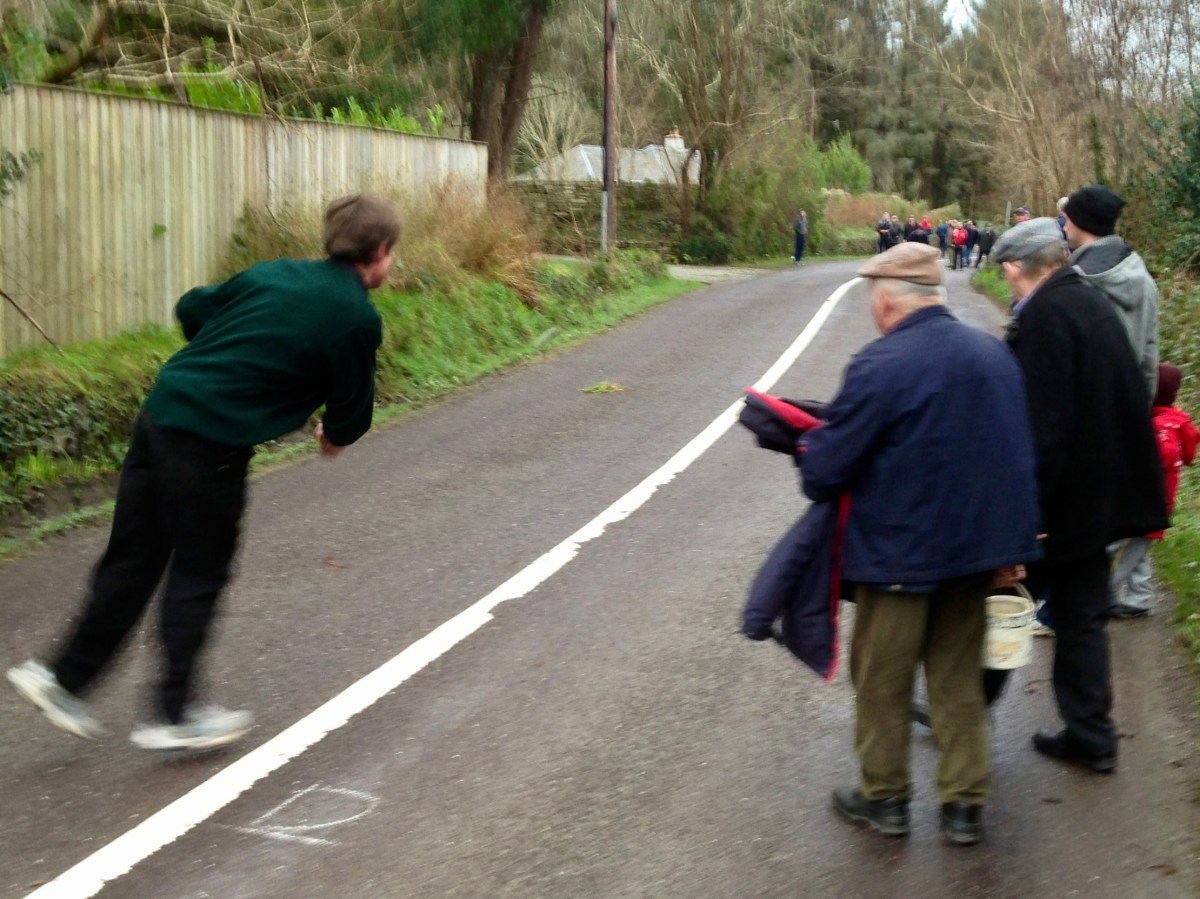
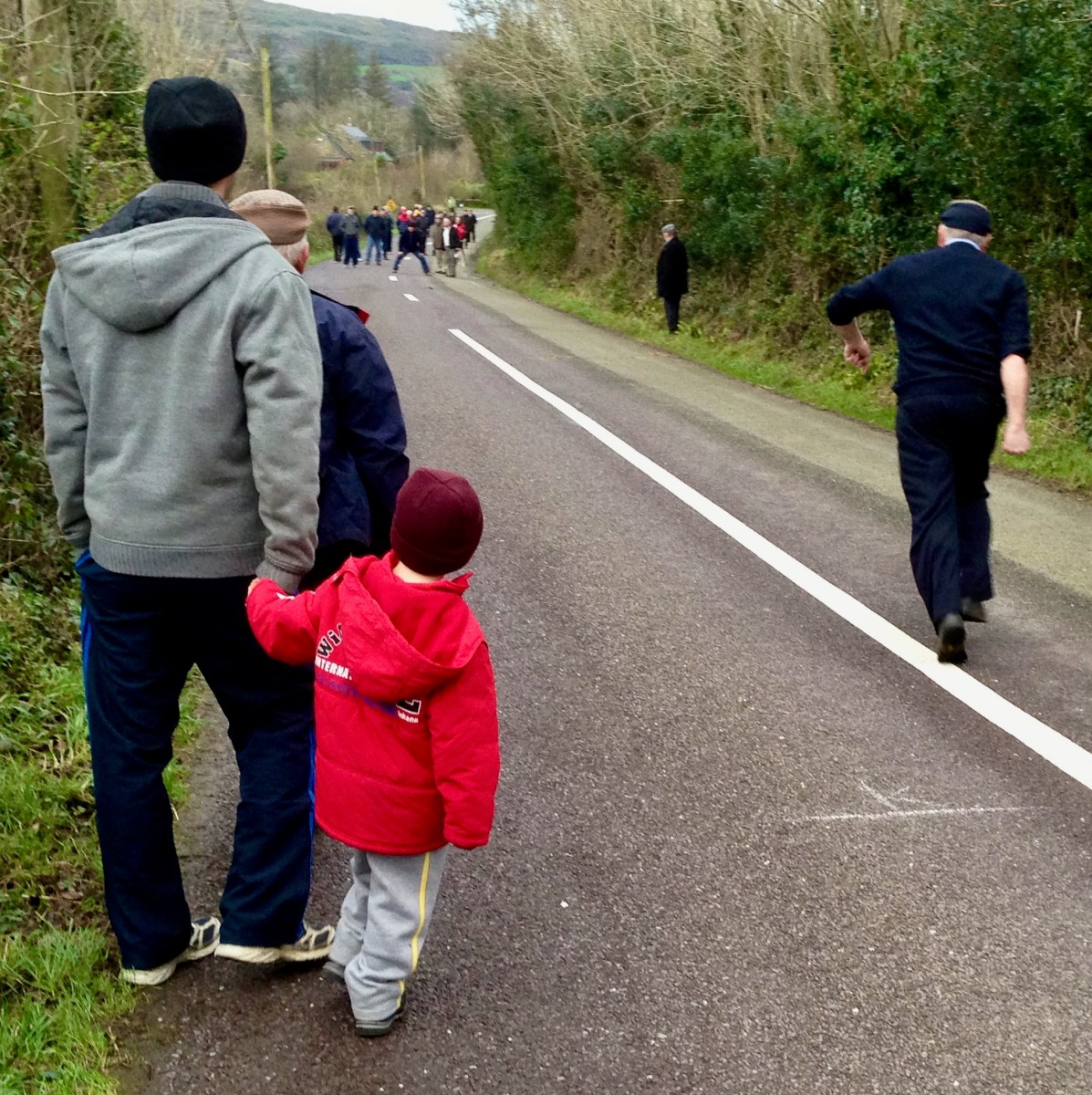
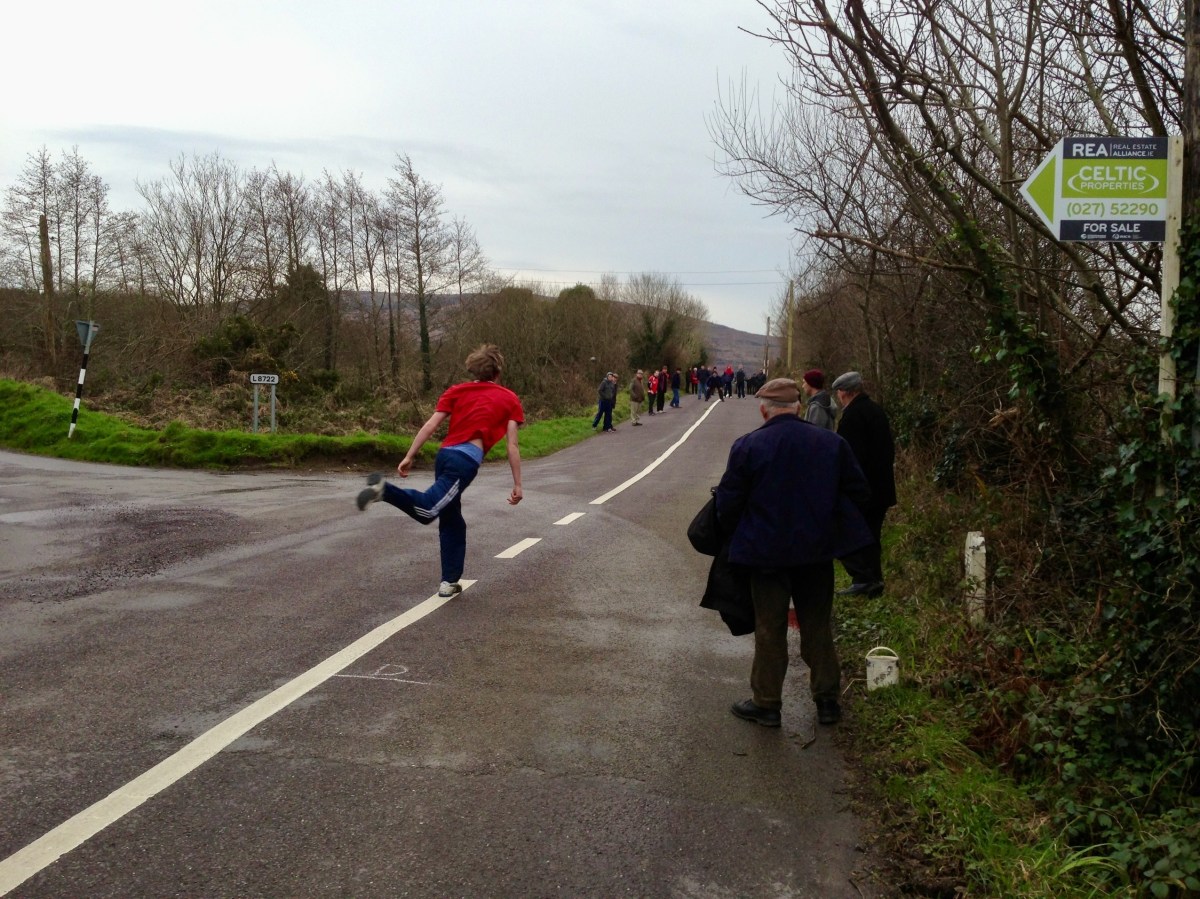
There’s a man about to ‘loft’ a bowling ball. Pronounce it Bowling, to rhyme with ‘growling’: in the Irish language it’s Ból an bhóthair – I’ve also seen the term Long Bullets used. This is a match we watched close to home – here in West Cork – all of ten years ago. It’s amazing we haven’t visited the subject again until now. In fact, it’s quite a secretive sport: if you put yourself ‘in the know’ you will be aware when it’s happening. Otherwise it’s something which you may pass by chance on any of the myriad by-roads of our county – and others.

The sport is played mainly in the Counties of Cork and Armagh, although it may be encountered elsewhere in Ireland – in England, The Netherlands, Germany and – nowadays – in many of the United States. But you won’t find it on any Olympic Games timetable, and I’m not sure that it is ever televised: that would be a strange programme, as it’s challenging to follow and involves walks of many kilometres through tangled lanes and byways. Also, I don’t know whether any traffic laws are bent or broken in its pursuit.

Certainly, it has produced its champions.

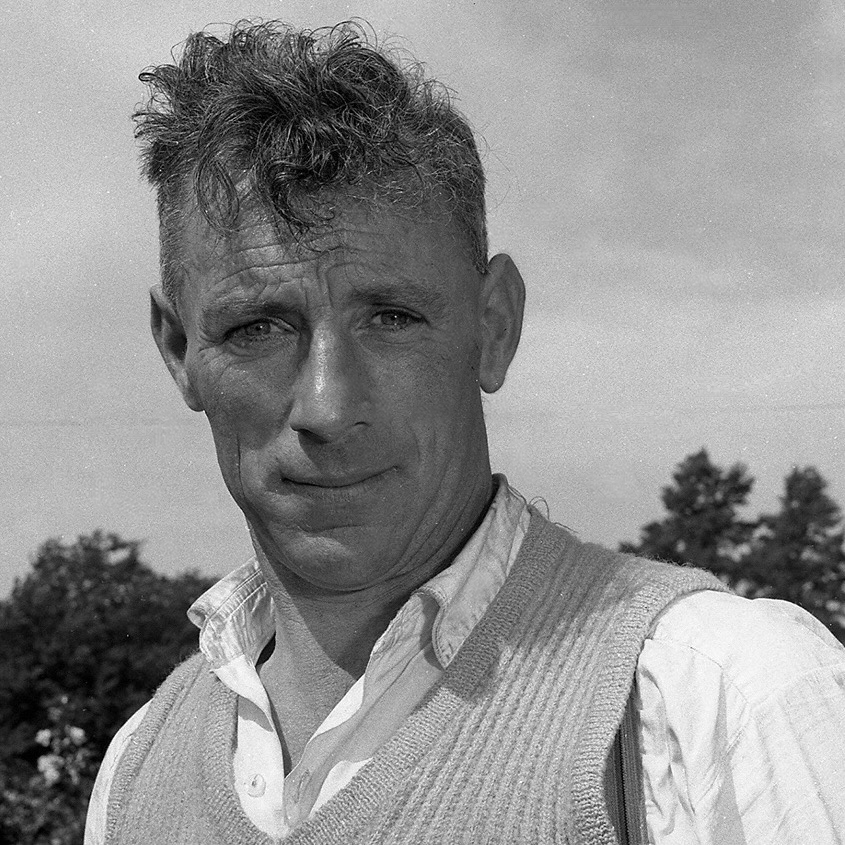
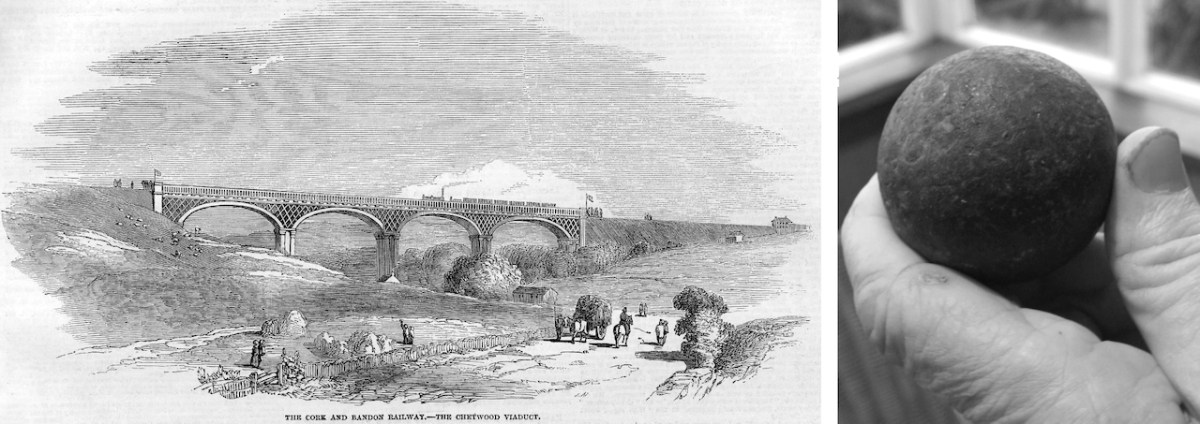
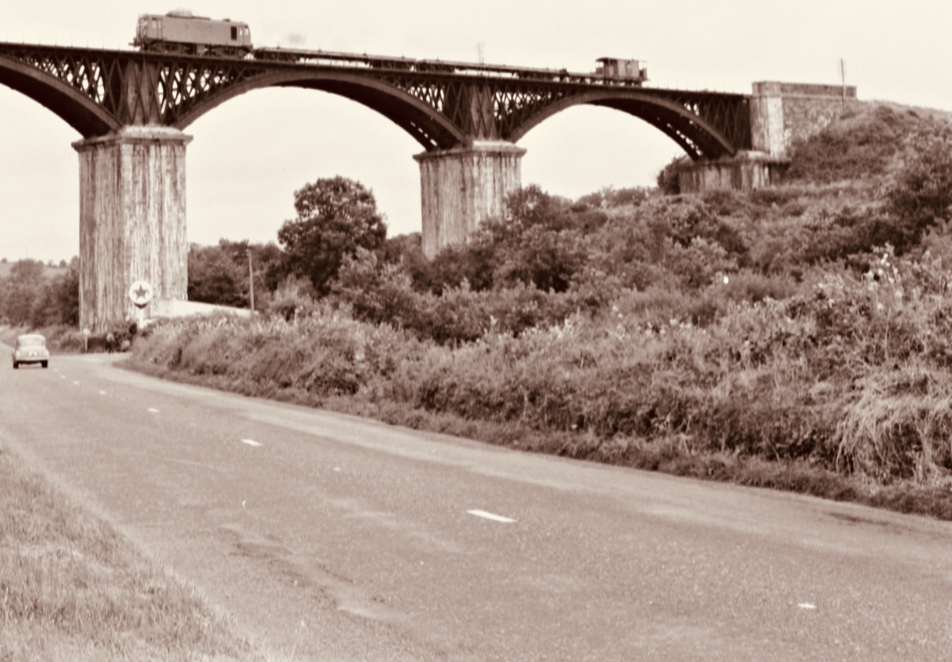
Here’s one: Mick Barry. The photo is likely to date from around 1955. Mick was All-Ireland Champion on eight occasions between 1965 and 1975. He lived a long life – 1919 to 2014. But he is best-known for having established a record – on St Patrick’s Day 1955 – for lofting a bowl on to the 100 ft high parapet of the Chetwynd Railway Viaduct just outside Cork.

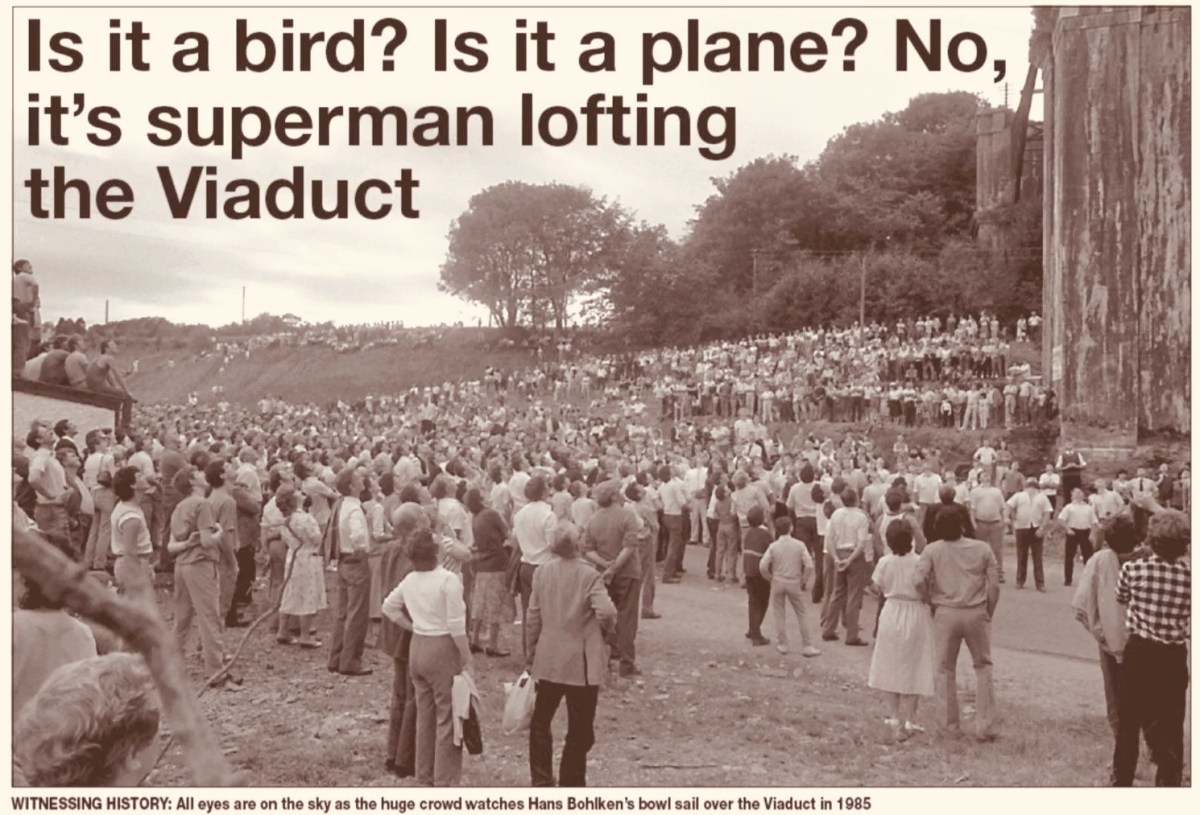
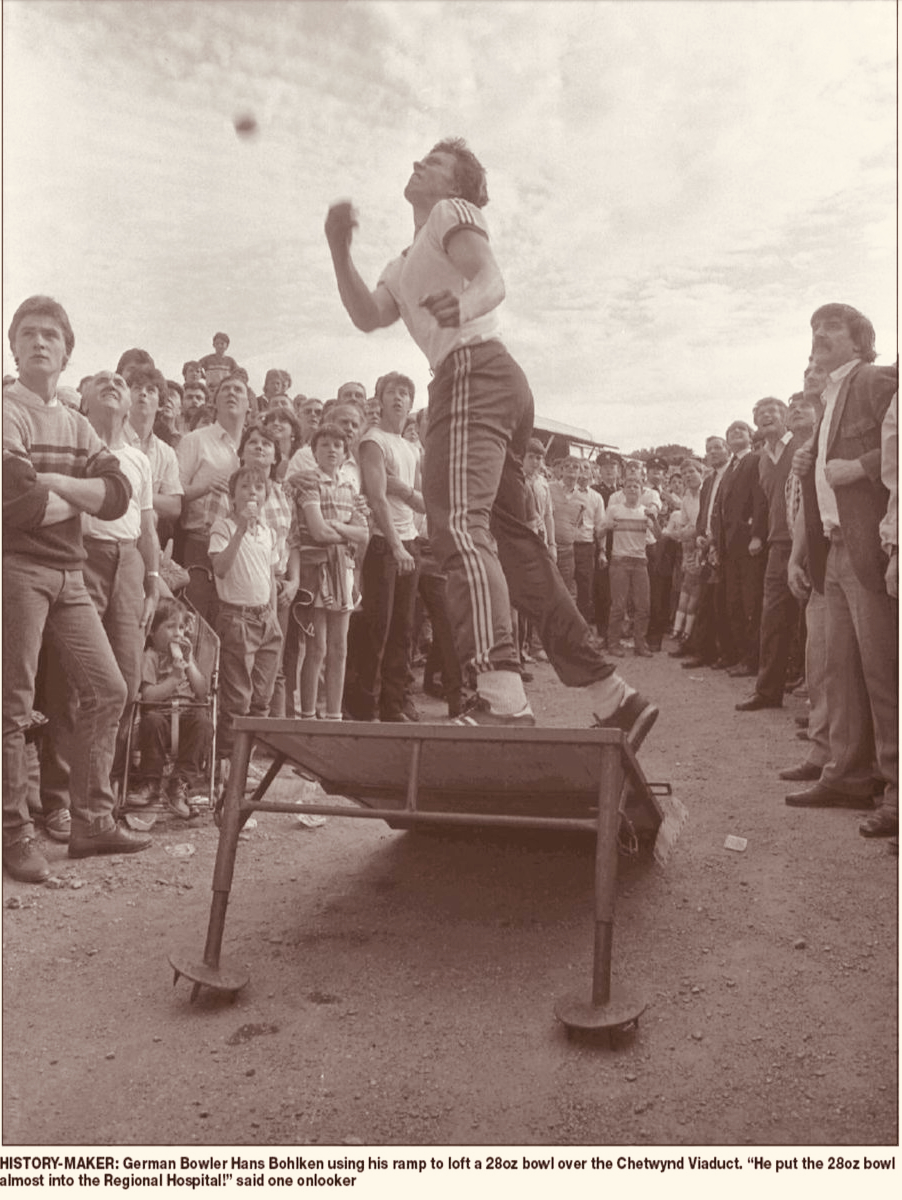
Above – the Chetwynd Viaduct in the 1960s, – after the line was closed, carrying a maintenance train, and – above that – a somewhat fanciful print of the same structure dating from a century before, together with the lead ball used by Barry. The same venue was the scene of another bowling spectacle thirty years later. In 1985 10,000 people showed up to watch a young German named Hans Bohlken loft a 28oz Road Bowl over the viaduct, using a portable ramp to improve his throw (images courtesy Cork Echo):

. . . In Irish road bowling the small iron and steel cannonball called a bowl is hurled down a 1 to 2-mile country lane. Throws can roll 250 or even 300 yards. Similar to golf, the player with the fewest throws to the finish line wins. Excitement builds as two evenly skilled players match each other shot for shot for more than a mile. Often, these memorable matches, called scores, are decided by only a few feet or inches’ distance past the finish line, both players with the same number of throws. The twists and turns of a narrow country lane, as well as the tilt of the road surface (the pitch and camber), provide a rich playing field for strategy and can spark spirited debate among the thrower, his coach and full-throated spectators . . .

WVROADBOWLING.COM

Finola drew my attention to a poem written by folk-poet Liam McGrath, who grew up in Skeaghanore, not far from us here in Nead an Iolair – and therefore as local a ‘folk’ as you could ever find. His work has been collected, but never widely published. Here is his commentary on the ancient pastime of Road Bowling:

Please dear Lord, forgive us all, for that boyish little sin,
When we dashed out from the Rosary, before that last Amen.
Could we only turn back the clock, to re-live those days of Yore,
In the Summer twilight of a Sunday ‘eve, to throw just one more score.

So clearly now each face I see, as we pass Jer Coughlan’s gate,
As the ladies from Ballydehob walked by, looking charming and sedate.
The finishing line was at Stouke cross, then a score the other way.
To stroll the streets of Ballydehob, our young hearts bright and gay.

When’re the twilight lingered on, we had many a thrilling score
’Til the last throw was decided, near Will Regan’s of Clashmore,
Sometimes we changed the venue, our choice, the old Church road.
But the skill and thrill remained unchanged, it was the bowler’s code.

A penny, tossed high in the air, a bowler called the toss.
The first bowl flew from the bowler’s hand, in a score to Raheen Cross.
From Bantry Cross to Skehanore, was also a favourite distance.
Such happy lads in the good old days, when nothing seemed a nuisance.

St Peter and St Patrick, went out for a little walk.
“What’s that iron ball, asked Peter, and who is that happy mob?”
“They are throwing a score, said Patrick, and they’re all from Ballydehob.”

I must conclude this little poem, ‘cause I know it’s getting late,
Only time for a score up Bantry Road, to Charlie Daly’s gate.
Just lofted that turn, near Berry’s house, and my wrist is feeling sore,
So I’ll down this pen, may we meet again, to throw just one more score . . .

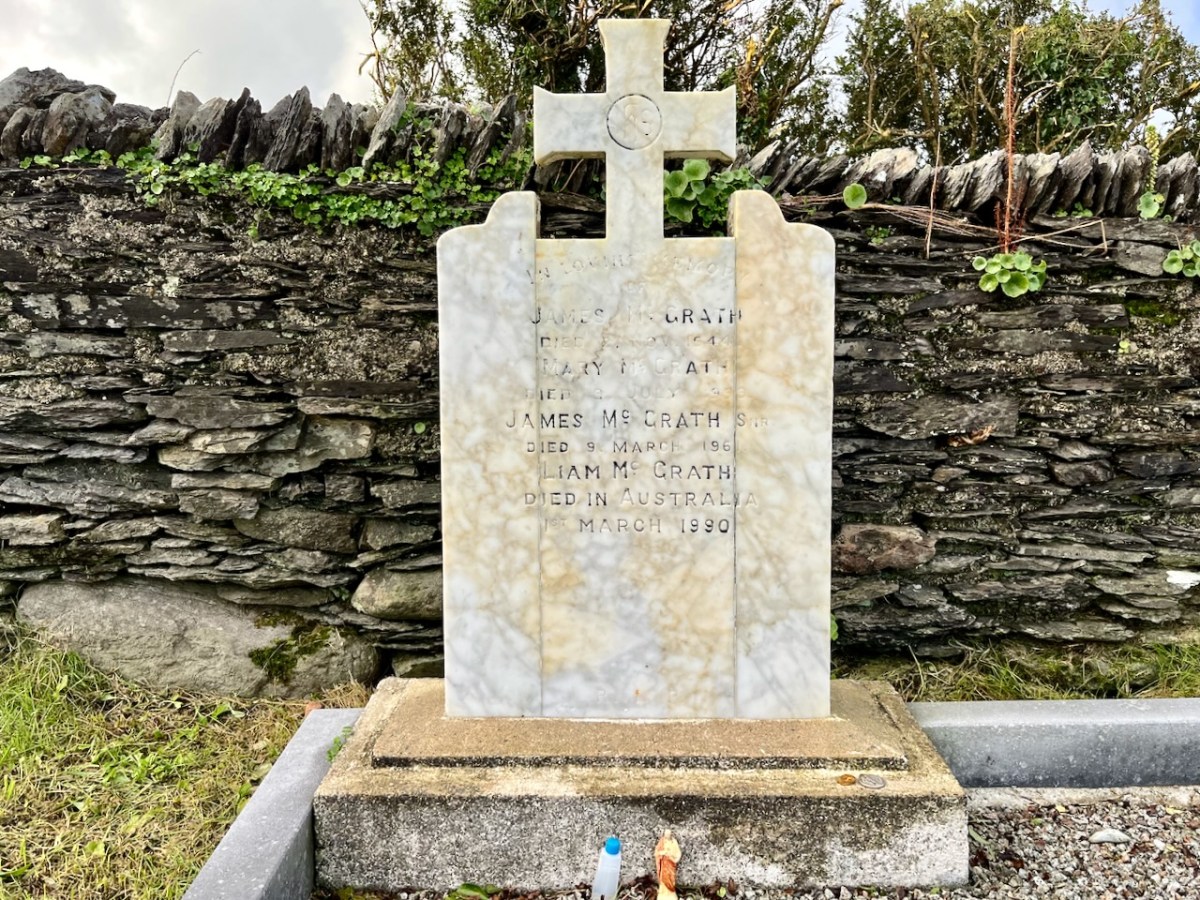
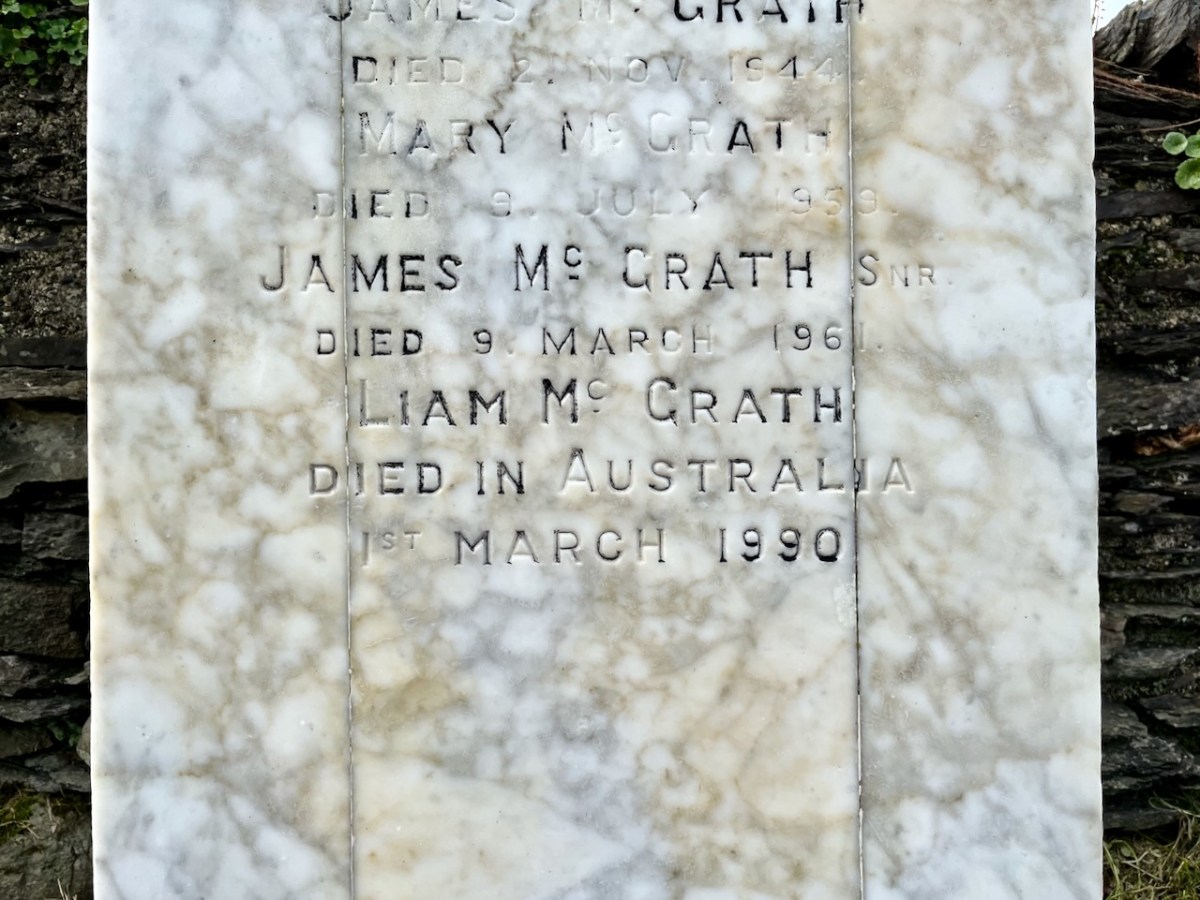
LIAM MCGRATH – Died in Australia – 1990

(Above) The McGrath grave in Stouke graveyard, in the next townland above our home. Liam died in Australia and his ashes are interred here.