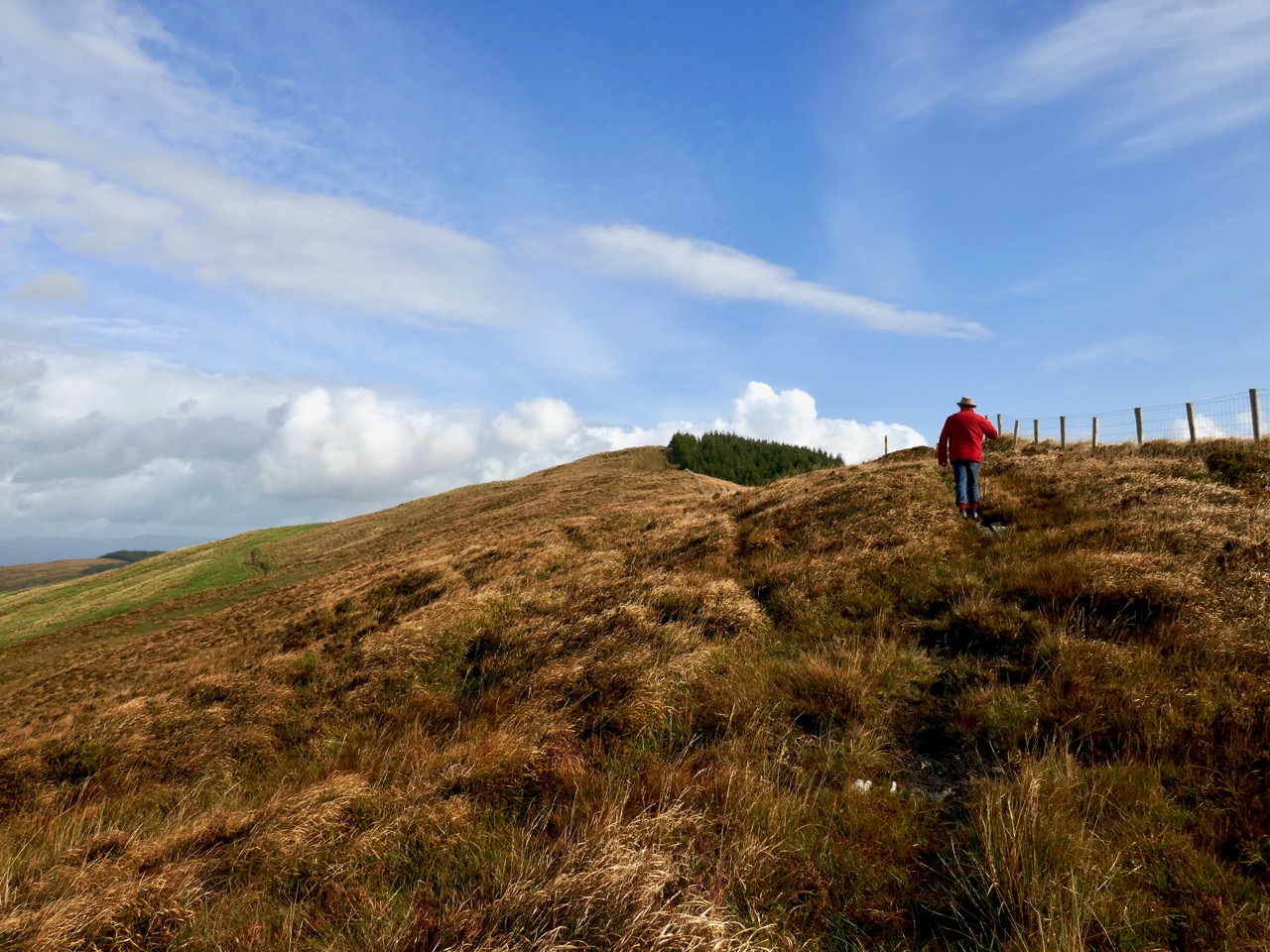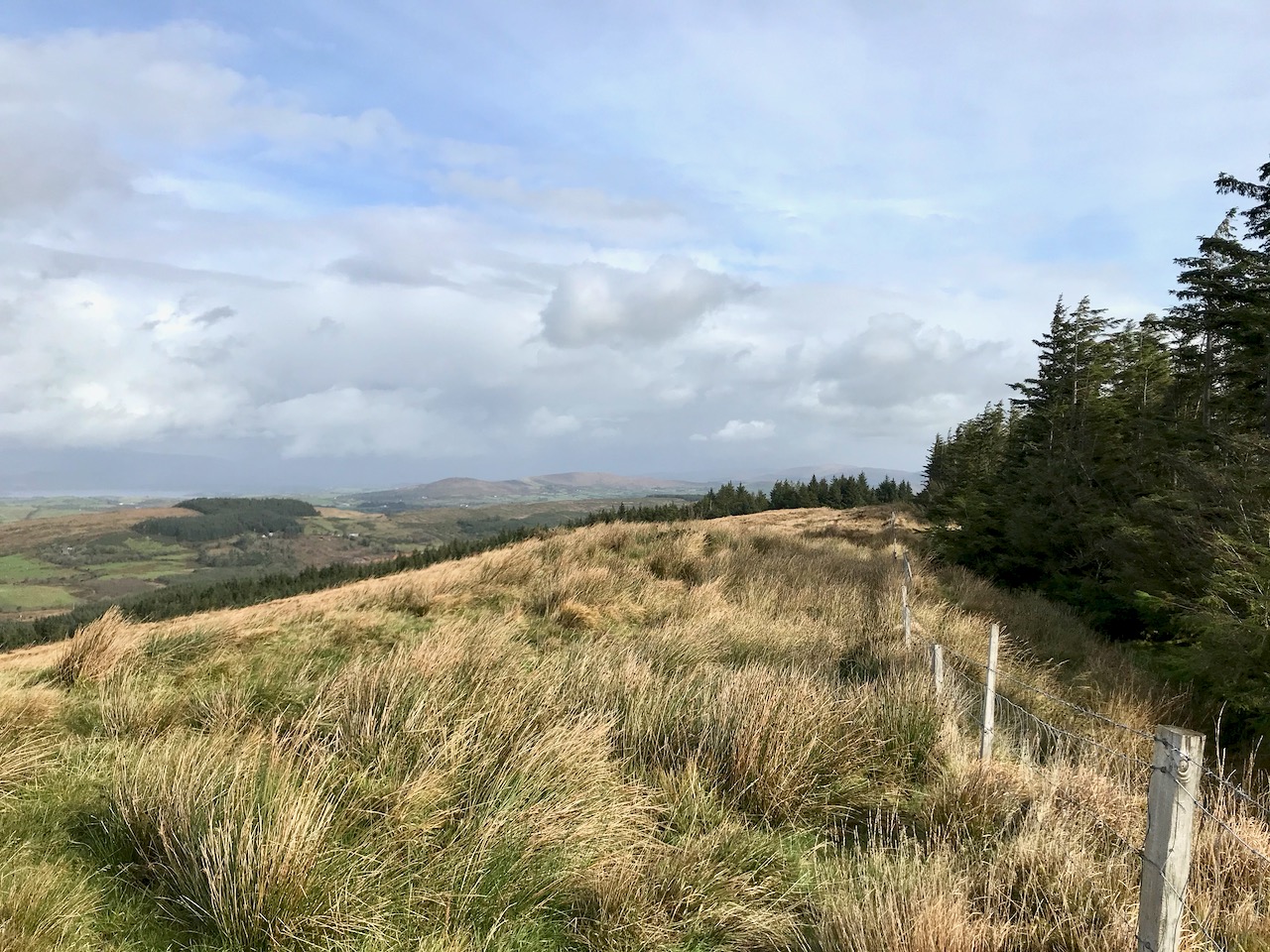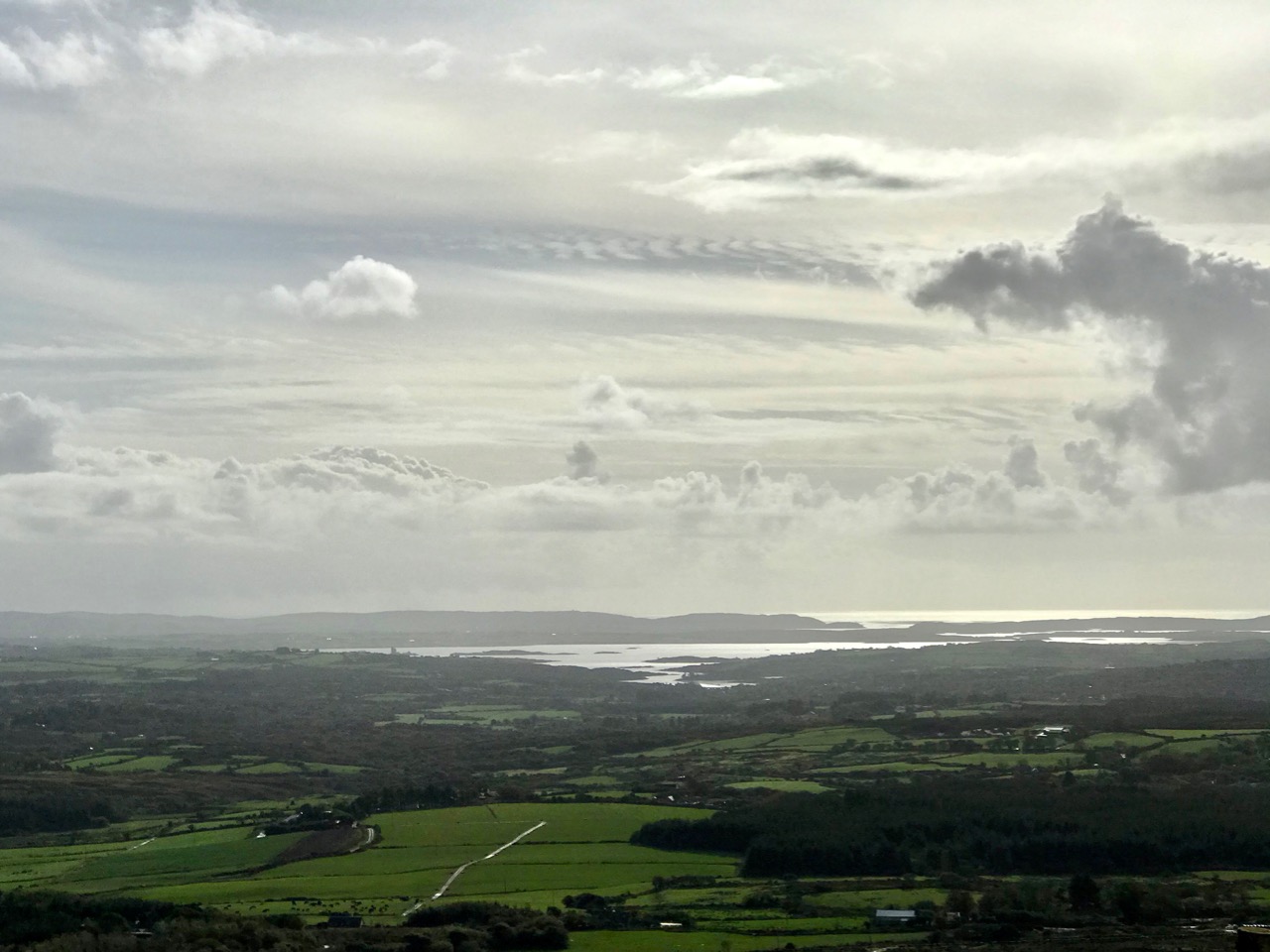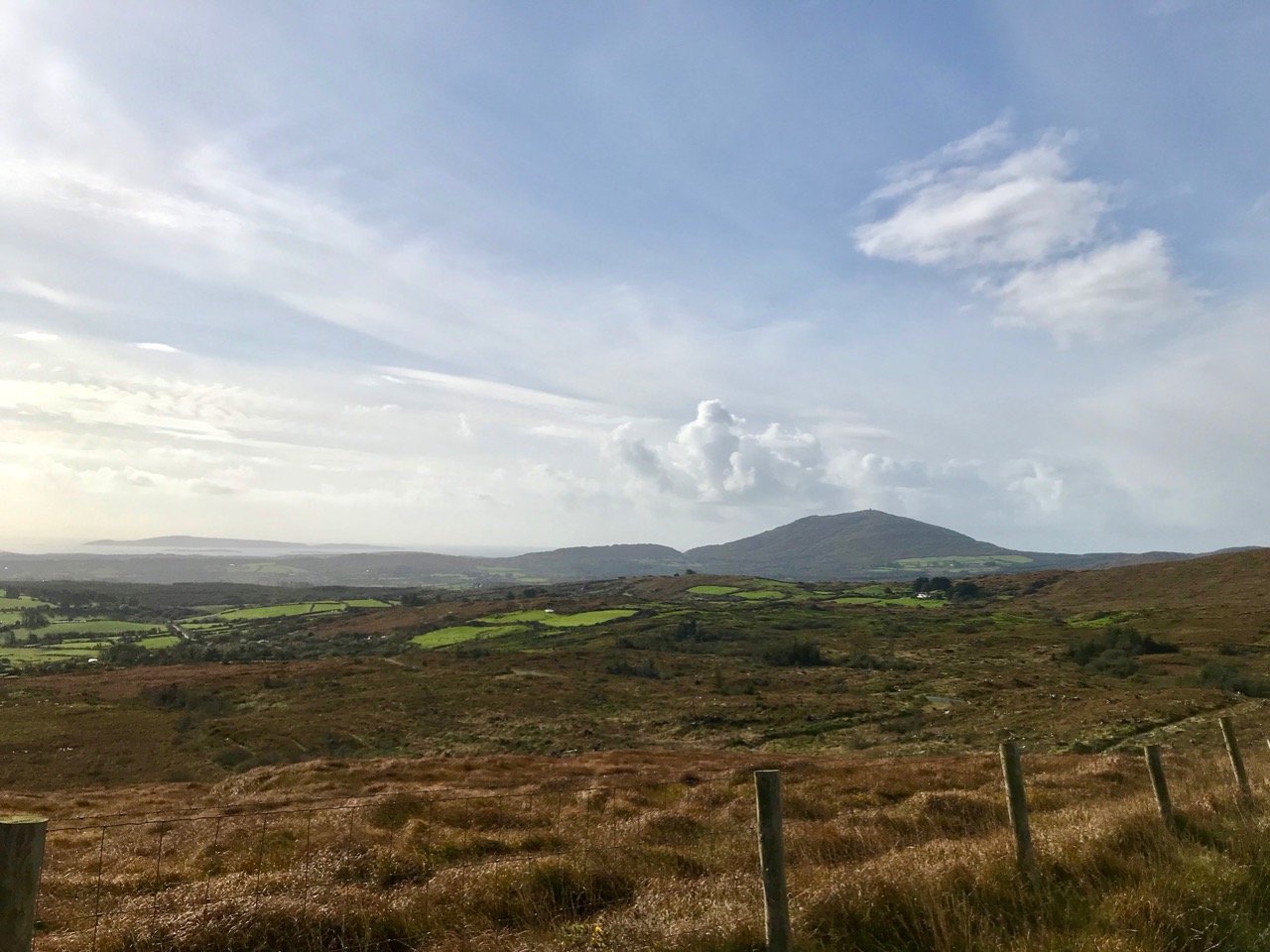
Barley Cove: A Special Area of Conservation

Did you know that Barley Cove to Ballyrisode is a European Special Area of Conservation (SAC)? SACs are areas designated as particularly interesting or sensitive on account of their flora or fauna. There’s a complex assessment process carried out that looks at the species present in the area, how important or endangered they are, or how representative of a particular habitat. It’s all done by the National Parks and Wildlife Service and the report on the Barley Cove area is online.

Barley Cove not only has an established dune system, but also a tidal wetland behind it. Because of the mild climate here, it has both Atlantic and Mediterranean Salt Meadows – that is, communities of plants that thrive in a salty environment on the edge of tidal shores. Some of those plants are quite rare and others are valued because they are diagnostic of a particular environment.

But it’s not isolated or unused – in fact during the summer it is one of the most popular swimming, dog-walking, picnicking, surfing and sea-gazing sites in West Cork. In the off-season, you can often have all this magnificence to yourself!

The fact that it’s so well used presents some challenges in conserving the habitat. Once, for example, there was quite an industrial level of sand removal at the Dunes, but that was stopped when it was realised how much damage it was doing. By and large, it’s encouraging that people do seem to respect the dunes – there is little evidence of litter.

In fact, one of the biggest challenges to the dunes is the enormous rabbit population. Rabbits burrow into the sand, creating extensive warrens which undermine the stability of the dunes. The evidence of the rabbits is everywhere – warren entrances and pellets – but the rabbits themselves are only glimpsed at night. Perhaps the dog walkers have encouraged them in their strictly nocturnal habits. But we do like the idea that the rabbits have a home here too.

Coastal heath surrounds Barley Cove. Characteristic of West Cork, it supports a wide variety of plant life, dominated by heathers and gorse, and lends our peninsula its background and ever-changing colours. There’s an artificial lake, Lissagriffin Lake, which is classed as a ‘brackish lagoon’ and which hosts a large expanse of rushes.

The whole thing is beautiful as well as special. Walking on the dunes is one of our favourite past-times, always with the camera in hand. The sheer variety of what grows here is a wonder, changing with the seasons. On a warm day you can just lie in one of the tiny dune amphitheatres and let your eye tune in to the multitude of flowers around you. Here’s a slideshow of some of what I have seen there.

This slideshow requires JavaScript.

If you like music with your slideshows, start the audio below. It’s the Wild Rose of the Mountain and The Gentle Maiden by Eugene O’Donnell & James MacCafferty.

Next time you go to Barley Cove wander in from the beach and take a stroll through the dunes. Better still, sit for a while and see if you can see some of the flowers in the slideshow. Let us know how you did.


Mizen Mountains 1 – the Hill of the Foxes

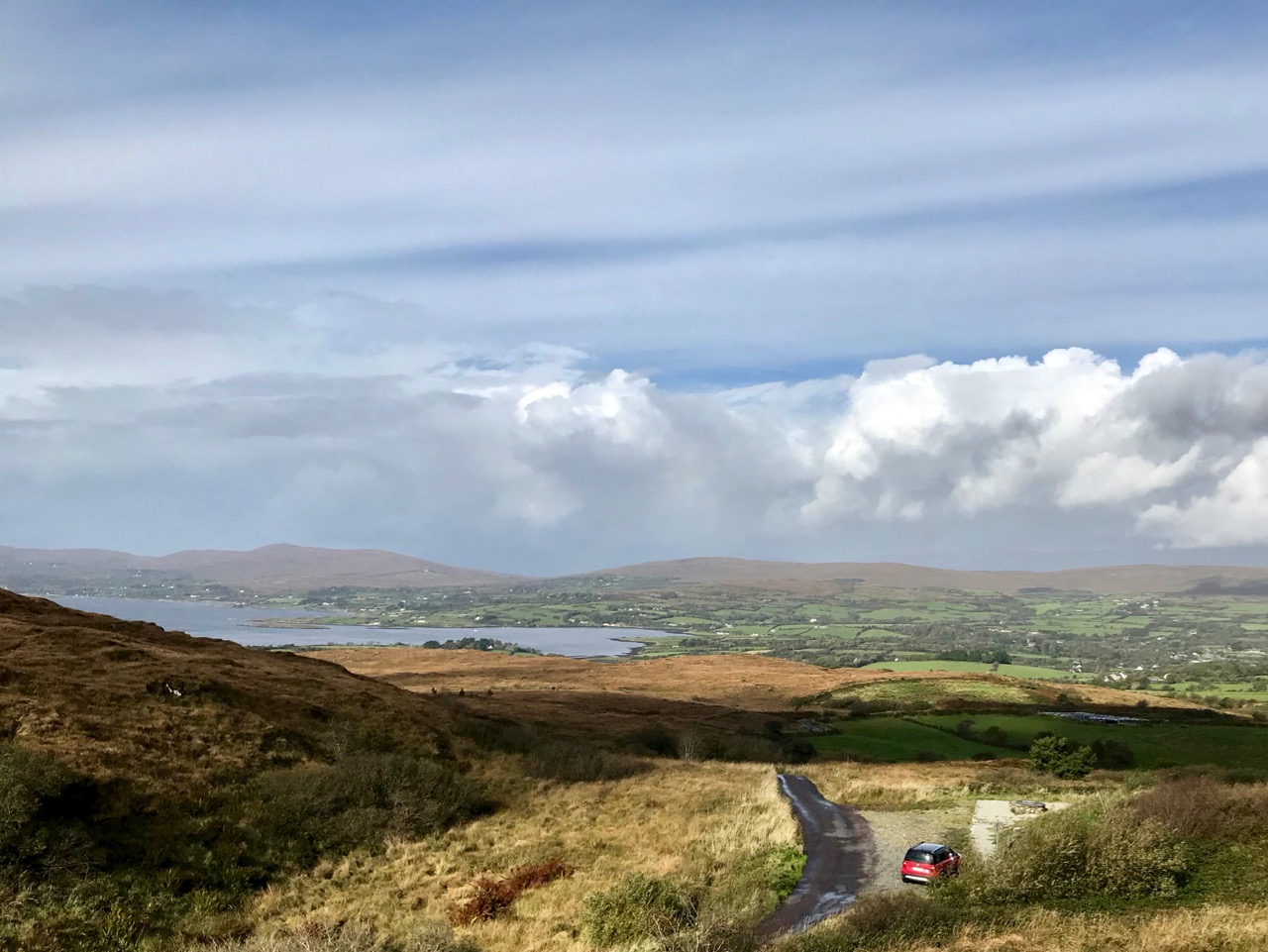
The first day of October seemed ripe for starting a new project. It was also a beautiful, rich, blustery autumnal day – ideal for heading to the remotest uplands. I have always been drawn to high places: there’s something romantic about seeing the coastal landscape laid out below your eyes, especially in these western wildernesses where bare rock, gorse and heather intertwine with history: ancient farmsteads, ruined cottages and impossibly isolated forgotten quays, seemingly abandoned along our most rugged shores.

Header – Toor Island just off the mainland close to the west end of the Mizen Peninsula: the high ground beyond is the peak of Knockatassonig. Above – it’s a most remote and wild place for a pier, but Toor Quay is still accessible from a winding, overgrown footpath and 107 concrete steps: today it’s only the occasional haunt of anglers

This project – Mizen Mountains – sets out to explore all the peaks on our westernmost peninsula. Are they mountains? It all depends on the context, and your perspective. Mizen’s loftiest outcrop – Gabriel – is 400 metres above sea level. Quite modest (Kerry’s MacGillycuddy’s Reeks claim the country’s highest summit, Carrauntoohil, at 1,038 metres), yet when you do look down on the spine of our peninsula from above, it’s all rocky crags and ridges pushing upwards towards the heavens, while at the edges the mountains fall precipitously towards the sea. It’s great, dramatic country, calling out for exploration – and there’s nothing we like better than finding new ways to discover this land and all its stories.

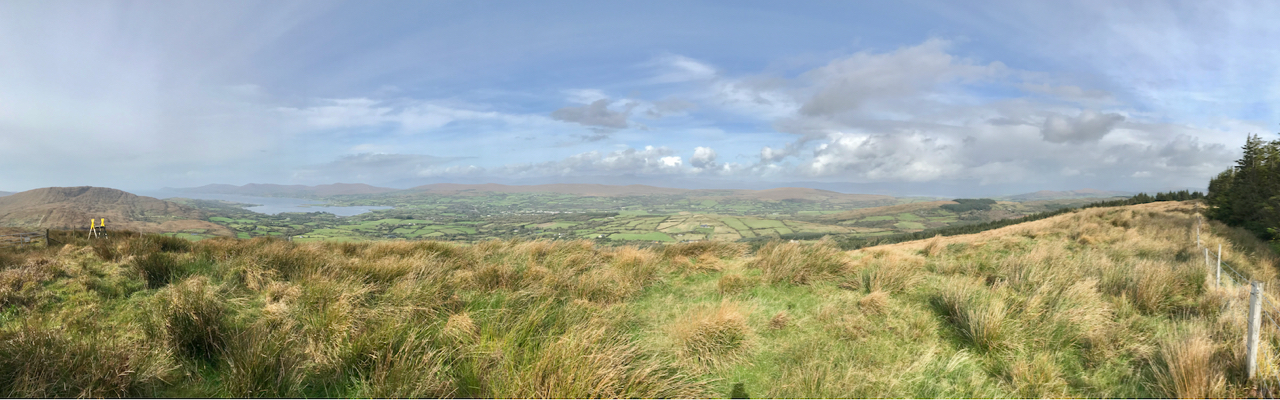
The view to the western end of the Mizen Peninsula, seen from the slopes of Mount Gabriel. The Sheep’s Head is across to the right

50 years ago the writer, Peter Somerville Large, set out to travel the western peninsulas of Ireland on a rusty bicycle purchased for the purpose in Skibbereen. I like the introduction he gives to his book The Coast of West Cork, first published in 1972, and still in print – it serves my own project well:

. . . I set out into the country. The sun had filtered through after rain, making the tarmac steam with moisture and sending up towering clouds off the mountains into the sky. Cattle stood motionless in the boggy fields and water dripped from the leafless sycamores . . . I travelled along the coast of West Cork, through Carbery, from Clonakilty to Roaringwater Bay with its fringe of islands and castles, and north to Bantry and the Beare peninsula. Much of the land near the coast consists of bog and mountain with headlands like lines of slanting spears thrust into the Atlantic. But there are parts that are sheltered, with a tropical lushness that is partly ascribed to the benign influence of the Gulf Stream. Ruins are soon covered with thick ivy and it takes only a few trees or slips of fuchsia to make a protective wall. Some valleys and hillsides have pockets of moss-covered oak-trees which are survivors of the ancient forest that covered the country three hundred years ago . . . From Goleen the old road wound high over a ridge before dropping down to Crookhaven. Almost all the land was rocky around Knocknamadree; The quilted shadows of clouds passed along the high ground over to the sea . . .

Satellite view of the rocky landscape towards the western edge of the Mizen: Knockatasonnig is a barren peak

I have set the bar at the 200 metre contour line – anything above that is, for me, a mountain! So I will be traversing the terrain in search of all the eminences above this elevation on the Mizen, looking specifically at topography and any traceable history and folklore specific to these ‘mountains’. But I will also be talking about our journeys to these destinations: you know how fond we are of getting ‘off the beaten track’. Every new exploration is invariably a revelation! This time around, we are going west – almost as far as is possible on this peninsula – to the townland of Knockatassonig, which peaks at 204 metres.

Top – the 25″ Ordnance Survey map, locating Toor Quay and Knockatassonig. Lower – the earlier 6″ map outlining the townlands

Knockatassonig is a curiosity. It’s a townland which doesn’t seem to have any habitation – and possibly never did. The 6″ map, above, was originally surveyed in 1846 and is valuable in outlining the townland boundaries at that time. It may be that in pre-famine times there were dwellings in the area: Ireland was much more heavily populated in those days, even in places like this which seem so remote today. But sometimes the townland names are particularly useful to us because they can tell us something of the history, which would have been passed on aurally through the generations until the maps were made.

Upper – detail from the 25″ map, showing the ‘Boat Slip’ at Toor. The map was presumably surveyed before the present pier was made; the slip has been cut into the solid rock and launching boats there must have been a treacherous business. Lower – today, a steep, narrow boreen can be negotiated as far as the Stop sign! An overgrown footpath goes on down to the sea and quay. The mountains seen over the water are on the Sheep’s Head

So far we haven’t talked much about the ‘Mountain’ of Knockatassonig. This summit is very visible, but virtually inaccessible at this time of the year due to bracken and spiky fences. It can just be seen on the left in the header picture: that’s taken from the footpath which goes down to Toor Quay. Like most of the Mizen peaks, Knockatassonig commands good distant views. It should be more approachable in the winter months. Although it’s hard to get to, it can be seen from several places on the Mizen, including Dunlough. The photo below shows the peak on the horizon beyond the ruins of Three Castle Head:

Here’s a view of Knockatassonig summit seen from the south-west side, taken from the small road that goes down towards Toor.  The view below shows the complex profile of the summit seen from the north

In looking at the peaks of the Mizen I intend to explore and uncover – where possible – any extant memories of stories or local lore relating to them. As far as Knockatassonig goes, I have found nothing recorded, other than the name, which is shared with the townland. So what does it mean? Well, it’s not clear, but the logainm website suggests ‘The hill of the Englishman’, and compares this name to the entry for Corr na Seirseanach in Co Monaghan ‘The round hill of the Englishmen’ or ‘The round hill of the mercenaries or hired soldiers’. Well – that’s a surprise . . . and a bit hard to reconcile with the unpopulated landscape we see today in this part of West Cork. The Monaghan version of the name can be supported by political events dating from the early 1300s: it’s hard to relate these to any activities we are aware of on the Mizen, but Irish history is a complex thing – as are place-names. When Finola heard the name she thought it meant ‘The hill of the foxes’: a direct translation into the Irish of that would be Knock an tSionnaigh. Townland names were often written down in Anglicised form by surveyors whose ears may not have been attuned to the Irish nuances. I’m voting with Finola on this one: there’s sure to be a good few foxes in that landscape!

Here’s an earlier source of information on Irish names: the Down Survey. Undertaken between the years 1656 and1658, the Down Survey of Ireland is the first ever detailed land survey on a national scale anywhere in the world. It sought to measure all the land to be forfeited by the Catholic Irish in order to facilitate its redistribution to merchant adventurers and English soldiers. The extract above details the Parish of Kilmoe at the end of the Peninsula: note Three Castle Head depicted at the far left. The survey does not give modern townland names but we can work out where the Knockatassonig peak would be – in the section labelled Unforfeited Lands belonging to the Earle of Corke and Coghlane protestants  In which case, of course, not only the present day townland of Knockatassonig but all those around it could reasonably be termed ‘ . . . of the Englishman . . .’ Food for thought?

Below – peaks of the Mizen: many will be the subjects of future posts

The Marvel of Margaret Barry

When I was in my college years, I lived on the fringes of London. It was the 1960s and – among many other cultural stirrings – there was a burgeoning Irish traditional music scene, in and around Camden Town. The Irish community in the capital had been thriving since the 1950s, when London was being rebuilt following the Blitzes of the recent war. Although not a close follower of Irish music at that time I had taken up the squeeze-box, and, curious enough to hover at the edges of The Music, was fortunate to briefly encounter many singers and players who are now considered legends. One of these is Margaret Barry, seen above in her later years and, below, when she was first becoming established as an Irish traditional music performer.

If you ever saw (and heard) Margaret Barry, you would never forget her. Her voice is unlike anyone else’s. She was born in the City of Cork, and has the distinctive accent of that place, whether she is speaking or singing. I find it completely compelling, but I can understand that it’s not to everyone’s taste. Nevertheless, whatever your own views, her story is fascinating – and at the same time a valuable social commentary on aspects of twentieth century Ireland. Margaret was born in 1917 – on New Year’s Day – and died in 1989. She made a living from music – and spanned the spectrum from obscure street performer to lauded professional much in demand on radio and television, performing in venues which included London’s Royal Albert and Festival Halls and New York’s Rockefeller Centre.

The reason I’m writing about Margaret Barry today is that she was the subject of a talk given at this year’s Drimoleague Singing Festival: “…A celebration of the human voice in the heart of West Cork…”, now an established annual event held around the feast day of Cork’s patron saint, St Finnbarr, September 25th. It’s great that Ireland’s special saints – who ‘kept alive civilisation’ during the otherwise Dark Ages in pre-medieval Europe – are still living and celebrated in traditional culture, which encompasses literature, art, music and folk tradition. Yesterday’s talk, in a crowded hall, was presented by Jason Murphy and Lisa O’Neill (pictured above mid-talk, with Lisa – Singer in Residence at this year’s Festival – giving her own extraordinary rendering of one of Margaret Barry’s songs). It’s worth watching the following YouTube video of Lisa singing a version of ‘The Galway Shawl’ to give you an idea of Margaret’s characteristic style as interpreted by Lisa, and sealing her own authority on the perpetuation of The Music:

Because Margaret Barry is a legend, it’s inevitable that the life and exploits of this lady from Cork have become imbued with folklore. This can happen very quickly in Ireland! Jason – a radio documentary maker – and Lisa – who has studied Margaret’s work – set out to shed light on the reality of her life, times and travels. The talk is work in progress – look out for a comprehensive programme coming up on RTE Radio soon. The talk in no way diminished Margaret Barry’s status and renown in the folk music world, but it did question some of the hitherto accepted accounts of her life. For example, when I first became interested in her singing over fifty years ago, I gleaned (mainly from notes on the sleeves of LPs) that she was from travelling stock, and that’s something you’ll still find quoted in practically every contemporary account of her life. According to Lisa and Jason, however, she came from musical families in Peter Street, Cork. Her mother’s father – Bob Thompson – was an accomplished uilleann pipe maker and player who was married to a Spanish Guitarist and singer. Living through hard times, Bob had to temporarily pawn his own uilleann pipes but lost them when a fire broke out in the pawnshop: he did not play again for ten years! Margaret’s parents and uncles were street singers and musicians, her father earning a precarious living playing the violin in silent-era cinemas and with dance bands. 

Another invariably quoted story is that she left home at 16 with nothing but a bicycle and a banjo tied to her back with string as she set off to busk her way through the harsh streets of Ireland. It’s an engaging picture, but probably simplifies a complex situation. Margaret’s mother died when she was only twelve years old, and soon afterwards her father married a girl not very much older than she was. It’s likely that she did decide to go off and fend for herself – and during her lifetime she did travel around Ireland, sometimes in a horse-drawn caravan, but she had also become interested in the musical traditions she experienced around her and took every opportunity to learn songs from every source, to teach herself to play the fiddle and banjo – and also to use her own talents to earn money wherever she could, and to survive. Here’s her own account of those times, recorded by American musicologist Alan Lomax in the 1950s:

Alan Lomax left a valuable collection of information on ethnic musical cultures from America, Africa and Europe, which he and a dedicated team collected over many years. Much of the collection is available online in the archive of the Association for Cultural Equity. Amongst the publications of the Association is a CD of Margaret Barry singing and talking about her life, which can currently be purchased as a download.

Margaret succeeded in her chosen life of itinerant song performer and always said that she had enjoyed it, regardless of the often hard times. She certainly achieved notoriety and featured in programmes on TG4 and RTE in her lifetime. She had a long-term relationship and musical partnership with the Sligo musician Michael Gorman, whose fiddle playing features on many of the recordings made of her. It seems appropriate to include here this 1965 recording of Margaret accompanied by Michael, singing ‘Still I Love Him’:

The talk we heard in Drimoleague on Saturday was a tour-de-force by Lisa and Jason, reviving my own interest in Margaret Barry, the ‘street singer’ from Cork (also known as ‘Queen of the Gypsies’, a title she was happy enough to embrace, whatever the true circumstances of her ancestry). To finish this post, here’s one of her songs for which she is, perhaps, best known: ‘She Moved Through the Fair’. Margaret was once asked if this tune had come to her from her traveller background: she is said to have replied that she had learned it from a recording of Count John McCormack…

The Stone Circles of West Cork: An Introduction

Southwest Munster, and West Cork in particular, is home to the greatest concentration in Ireland of stone circles. There are two main kinds recorded in the National Monuments website, each making up about half the total number of circles – the multiple-stone circle and the five-stone circle. (There are also a small number of enigmatic monuments called ‘four posters’ which share some features with stone circles, but I will write about them some other time.) 

Peter Clarke’s illustration of the Ardgroom Stone Circle on the Beara, from his online journal, Hikelines

The division based on the number of stones is somewhat arbitrary, since both share most other features. Both have uneven numbers of stones – five in the case of the five-stone circle, and seven or more (up to 19) in the multiple-stone circles.

Our old friend Du Noyer loved to illustrate antiquities. We’re  not quite sure which stone circle this one is**

Both types are axial or recumbent stone circles. The name recumbent comes from the lowest stone in the circle, the only stone set on its side, with its long axis parallel to the ground. All the other stones are set upright and they often increase in size from the recumbent to the portal stones. The portals appear to form an entrance into the circles and are sometimes set end-on to the circle. An axis drawn from the point between the portals to the middle of the recumbent bisects the circle – hence the name axial stone circle. All these features can be seen in the photograph of Drombeg Stone Circle (below).

While the multiple-stones circles appear roughly circular, they may have been laid out using more complicated geometry than the string-marking-out-a-circle technique. Some are more elliptical than truly circular. The five-stone circles, given the dominance of the recumbent, are actually D-shaped.

The five-stone circle which is part of the Kealkill complex

Many of our stone circles have disappeared over time, with only folkloric memory indicating that here was once a circle of stones. Some have lost stones over time, while in others uprights have collapsed. Whole monuments have vanished into forests or dense undergrowth. Even where we still have partial circles it can be difficult to make out which are the portals and which the recumbent.

Upper: Labbamolaga – we think this was a stone circle but so few stones remain that it’s hard to be definitive. Lower: This sad little heap of stones is all that remains of the Ahagilla Stone Circle. The recumbent is to the left and a portal to the right.

The circles are constructed from local stone and in some cases it is easy to see where they have been quarried from nearby rock outcrops. There is no evidence of the builders transporting the stones from elsewhere, with the exception, perhaps of the quartz blocks which are found occasionally either as uprights or associated with the circle inside or outside it. Although quartz is found in abundance in West Cork a large block of it may have been especially prized and reserved for such a situation.

This sizeable quartz block lies beside the Lettergorman Five-Stone Circle

The circles were carefully and deliberately constructed: Fahy’s excavations at Drombeg and Reenascreena shows that the ground was levelled.  Stones were, it seems, selected for shape as well as size. The recumbent is usually flat on top, which may indicate the side closest to the parent rock from which it was split. Some may well have been deliberately shaped by knocking or splitting off sections – we often notice, for example, how well certain uprights mirror the landscape behind them, like the one at Ardgroom, below.

Stone circles are often associated with other monuments, most commonly boulder burials and standing stones, and at least two have radial stone cairns beside them. Some of the standing stones appear to function as outliers to the circle, extending alignments towards solar or lunar orientations (more of that next time).

Upper: This boulder burial is part of a complex of monuments at Bohonagh which also includes a stone circle (visible behind the boulder burial), a cupmarked stone and a standing stone which is no longer to be found. Lower: A standing stone pair (one fallen) at Knocknakilla with (behind it) a five-stone circle (recently fallen over) and a  radial stone cairn – of all the elements of this complex only this standing stone is really visible in the landscape

West Cork stone circles, from the sparse excavation evidence, date from the middle to late Bronze Age (about 1500 to 600BC). They are commonly found on elevated ground with a clear and expansive view southwards, but stretching from the northeast to the southwest – that portion of the sky in which both the sun and the moon rise and set.

This tiny monument is a five-stone circle at Inchybegga. When the grass grows tall enough you can’t see it at all

Our stone circles have always fascinated antiquarians, happy to label them ‘druidic temples’ or make outlandish claims about their construction by visiting Egyptians. Some of the older illustration owe more to the imagination than to accurate depictions.

Templebryan Stone Circle as it actually is (lower) and as depicted by the antiquarian, Clayton, in 1742 (upper). The illustration for Clayton, done by Ann la Bush, shows the fashionable preoccupation at the time for Egyptian-type obelisks. Nevertheless it is important in that it shows that there were more stones in the circle than there are now. Note the central block of quartz

In more recent times, they have been the subject of a great deal of new-age speculation about long-distance ley lines, mystical ‘energies,’ extra-terrestrial builders, associations with pagan goddess cults and the like. As an archaeologist, I think this is a pity, in the sense that these stone circles are fascinating enough as they are – they embody so much that we need to understand about the scientific knowledge, advanced construction technology, and social organisation of the builders. The belief systems that underlie their reasons for constructing these monuments are equally important and more difficult to discern after the passage of millennia, but should be based on close and serious study of the monuments themselves.

Above is the Derreenataggart Stone Circle on the Beara, and below is a much more romantic and monumental rendering of it from Francis Grose’s Antiquities of Ireland (1790s), illustrated by Daniel Grose. My lead image is also a Daniel Grose illustration, this time of a stone circle that once stood on the slopes of Hungry Hill, but which has since disappeared*

The next post in this series will be about the multiple-stone circles.

*The two illustrations by Daniel Gross are from Daniel Grose (c.1766-1838). The Antiquities of Ireland, a supplement to Francis Grose, by Roger Stalley, Irish Architectural Archive 1991
**I now know that this is almost certainly not a West Cork example but Boleycarrigeen in Wicklow (thanks to Ken Williams for the ID)

Reen Farm Revisited

Last week, for the Taste of West Cork Festival, we went back to one of our favourite West Cork places for a very special concert.

Reen Farm is the home, gallery and sculpture garden of the artists John Kelly and his wife Christina Todesco-Kelly. But that description comes nowhere close to doing justice to this utterly unique, fascinating and beautiful venue. We have written about Reen Farm before – two years ago in Where Art and History Meet and last year in Out in the Field.

This year’s event was a concert by Jessie Kennedy and Justin Grounds, joined by Tess Leak on the cello. Jessy and Justin have collaborated on many occasions and always to great effect. Highly accomplished musicians and composers, their concerts are hot ticket items in West Cork. One of the attractions on this occasions was that seats were limited so we were promised an intimate occasion.

We started in John Kelly’s Tate – a sculpture/structure/installation intended to invoke the conjunction of wealth and art in a place that in fact is remembered historically for poverty and famine. This is mainly due to the visit of NM Cummings to Reen and to his famous letter to the Duke of Wellington, in which he relates the horrors of what he has witnessed in Reen and pleads with Wellington to intervene.

Christina read the letter and Jessie performed I am stretched on Your Grave.  It was deeply moving and we filed out of the Tate a more mournful and thoughtful group than the one who entered. We needed a lift and what better to deliver that than John’s iconic Cow up a Tree Sculpture. It doesn’t hurt that it’s located on one of the most scenic stretches of the West Cork coastline, either.

By the time we got back to the garden the tea and coffee were on and Billy (sound engineer and baker extraordinaire) had laid out a feast for us.

We tucked in, and settled down for the concert. It wasn’t just that we were listening to accomplished musicians – it was that it was all taking place on a warm summer evening as the sun was sinking low, in this amazing and exotic location. It felt like such a privilege to be in that place at that time.

Thank you, John and Christina, for your warm hospitality and for sharing your vision for future developments with us. We look forward very much to seeing what the next year or two brings at Reen Farm!

John and Christina


William Trevor’s Skibbereen – “The Back of Beyond”

Yellow furniture vans – Nat Ross of Cork – carted your possessions off, through Cork itself, westward through the town that people call “Clonakilty God Help Us”, to Skibbereen, the back of beyond . . .

William Trevor, one of Ireland’s most celebrated writers of short stories and novels, grew up in Skibbereen. His father worked for the Bank of Ireland, and the family was frequently moved to pastures new, but Trevor’s memories of our own West Cork town are amongst his earliest, encompassing his first schooldays and all the traumas of that ‘learning experience’.

Where and when did my writing life begin? I suppose it was in a small schoolroom in Skibbereen when, as an alternative to parsing and analysis, I was occasionally required to compose six sentences on such random subjects as A Wet Afternoon or A Day in the Life of a Dog. I did my best, but even at seven I believe I probably guessed that there was more to words and what you did with them than recording rainfall or reporting that our smooth-haired fox terrier was infatuated by our cat . . .

The way to school? Bridge Street, Skibbereen today. William Trevor’s family lived a mile and a half out of town, so we are not really sure what path his daily journey took

William Trevor was born in Mitchelstown, County Cork, in 1928, and moved to the town before he began to go to school, so he would have known what the Skibbereen of the 1930s looked like. He provides wonderfully descriptive word-pictures of his memories of the time in Excursions in the Real World, autobiographical sketches published in 1993 but now out of print. I have used some of his descriptions from this work and others from various sources – including a 2001 school exam paper – to make a narrative in his own words. I have illustrated this with some of my own present day images of the town, and some historic material. In fact I have as yet found no photographs from 1930s Skibb! But – reading between his lines (and, remember, he was renowned as a storyteller) – we can get a good feel for the place and those times.

A bit too early for William Trevor . . . This photograph of the Square with the Maid of Erin statue was taken in 1912. It has in fact changed very little even in the present day: the statue has been moved backwards but the visible buildings (that’s the Post Office in the background) are recognisable, so this is a good picture of what the writer is likely to have seen

My world at that time was not extensive. There was memory, as far back as it would go, and the modest reality of Skibbereen, which afterwards became memory also. A mile and a half it was, the journey to school, past Driscoll’s sweetshop and Murphy’s Medical Hall, and Power’s drapery, where you could buy oilcloth as well as dresses. Pots of geraniums nestled among chops and ribs in butchers’ windows. A sunburnt poster advertised the arrival of Duffy’s Circus a year ago. Horses trudged slowly, carts laden with a single churn for the creamery. On fair-days, farmers stood stoically by their animals, hoping for the best; there was a smell of whiskey and sawdust and stout . . .

This photo of Main Street was taken before the Maid of Erin statue was moved – and while Skibereen’s main streets were two-way (and also while sign-posts were still in miles)- so it must be pre-1988

In the town’s approximate centre, where four streets meet, a grey woman still stands, a statue of the Maid of Erin. E O’Donovan, undertaker, still sells ice-cream and chocolate. The brass plate of Redmond O’Regan, solicitor, once awkwardly high, is now below eye-level. In the grocers’ shops the big-jawed West Cork women buy bread and sausages and tins of plums, but no longer wear the heavy black cloaks that made them seem like figures from another century. They still speak in the same West Cork lisp, a lingering careful voice, never in a hurry. I ask one if she could tell me the way to a house I half-remember. “Ah, I could tell you grand,” she replies. “It’s dead and buried, sir.”

Extract from the 6″ Ordnance Survey map showing Skibbereen town centre during the first half of the twentieth century. The Station and railway to Baltimore can be seen on the left (it closed in 1961); the Bank of Ireland where Trevor’s father worked is outlined in blue, and Trevor went to a school that was ‘next to the Methodist Church’ – outlined in pink. Note the ‘Urinal’ usefully marked on the map!

You made the journey home again at three, the buying and selling over, the publican’s takings safely banked, the last of the dung sliding to the gutters. If you had money you spent it on liquorice pipes or stuff for making lemonade that was delicious if you ate it as it was. The daughters of Power’s drapery sometimes had money. But they were always far ahead, on bicycles because they were well-to-do. Or their mother drove them home in the Hillman car because of the dung.

Upper – the Maid of Erin statue and the Town Hall clock tower, both familiar elements in the Sklibbereen streetscape, both in William Trevor’s time, and today. Lower – the facade of the Methodist Church still stands, although the building was converted to a restaurant in 2005. Trevor’s school adjoined the church, although we are not sure on which side

The door beside the Methodist church, once green, is purple. The church, small and red-brick, stands behind high iron railings and gates, with gravel in front of it. Beyond the door that used to be green is the dank passage that leads to Miss Willoughby’s schoolroom, where first I learnt that the world is not an easy-going place. Miss Willoughby was stern and young, in love with the cashier from the Provincial Bank. Like the church beside her schoolroom, she was a Methodist and there burnt in her breast an evangelical spirit which stated that we, her pupils, except for her chosen few, must somehow be made less wicked than we were. Her chosen few were angels of a kind, their handwriting blessed, their compositions a gift from God. I was not one of them . . .

Upper – an anonymous building stands at the back of the former Methodist church – a possible site for Miss Willoughby’s school? Lower – the impressively gaunt Bank of Ireland building in Skibbereen – unchanged externally since William’s father worked there. Although we know that his father became a Bank Manager in his career, it probably wasn’t when he was in Skibbereen, otherwise William would have lived with the family in the rooms above the bank. Instead, we know that he walked a mile and a half to school in the town

On the gravel in front of the red-brick church, I vividly recall Miss Willoughby. Terribly, she appears. Severe, and beautiful, she pedals against the wind on her huge black bicycle. ‘Someone laughed during prayers,’ her stern voice accuses, and you feel at once that it was you, although you know it wasn’t. V poor she writes in your headline book when you’ve done your best to reproduce, four times, perfectly, Pride goeth before destruction. As I stand on the gravel, her evangelical eyes seem again to dart over me without pleasure. Once I took the valves out of the tyres of her bicycle. Once I looked in her answer book. ‘Typical,’ her spectre says. ‘Typical, to come prying.’ I am late. I am stupid. I cannot write twenty sentences on A Day in the Life of an Old Shoe, I cannot do simple arithmetic or geography. I am always fighting with Jasper Swanton. I move swiftly on the gravel out on to the street and into the bar of the Eldon Hotel: in spectral form or otherwise, Miss Willoughby will not be there . . .

In Shannon’s grocery there is a man who breeds smooth-haired fox-terriers. He gave us one, a strange animal, infatuated by our cat. The man was tall and thin, and behind the counter now he’s only different because he’s old. Other faces, forgotten and now remembered, are different in that way too. But Barbara, the belle of Miss Willoughby’s schoolroom, eldest daughter of Power’s drapery, is nowhere to be found. She runs a café in the main street, I’d heard, with an exotic African name, where every morning at coffee-time she presides. Perhaps I dreamed it, for the café in the main street has no name at all, and trades mundanely in lunchtime fare of stewed meat and vegetables. I peer through the window, and through the diners seated at chromium-legged tables, but the soft-haired Barbara is not there. No figure stands there as gracious as the Lady of Shallott, no face recalls the nine-year-old beauty of Class III. Can she really be one of those hurrying women with trays? A man consuming turnips wags his head at me. A message in the window says someone has found a purse . . .

William Trevor, photographed by Jerry Bauer, Bauer (1934-2010), often called “the author’s photographer,” made portraits of an endless list of writers

Biographical note – William Trevor died on 20 November 2016, aged 88. His full name was William Trevor Cox, but he always wrote under ‘William Trevor’. Although his first career was as a sculptor he is known only for his considerable literature output: he had published fifteen novels, three novellas and twelve volumes of short stories, and he won numerous awards for his work. He described the Irish family he was born into as ‘lace curtain’ middle class Protestants. He left Ireland in 1954 and spent the rest of his life in England, settling near Crediton in Devon.
With thanks to Philip O’Regan and Skibbereen Heritage Centre for alerting me to William Trevor’s local connections

Illusions fall fast in the narrow streets of Skibbereen, as elsewhere they have fallen . . .