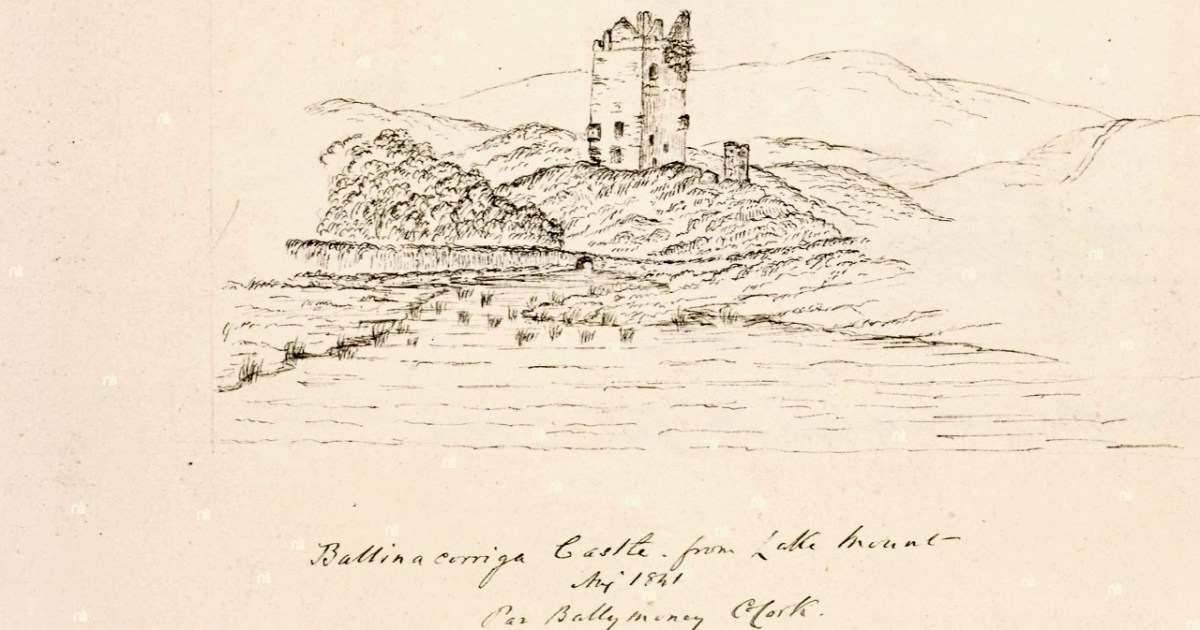
Ballinacarriga Castle Part 1

It’s been a long time since I wrote about a castle – you might like to refresh your memory about castles in West Cork, with a quick read of some of the posts on this page. They contain all kinds of details about castle architecture and lay-out, as well as the history of many of our West Cork castles.

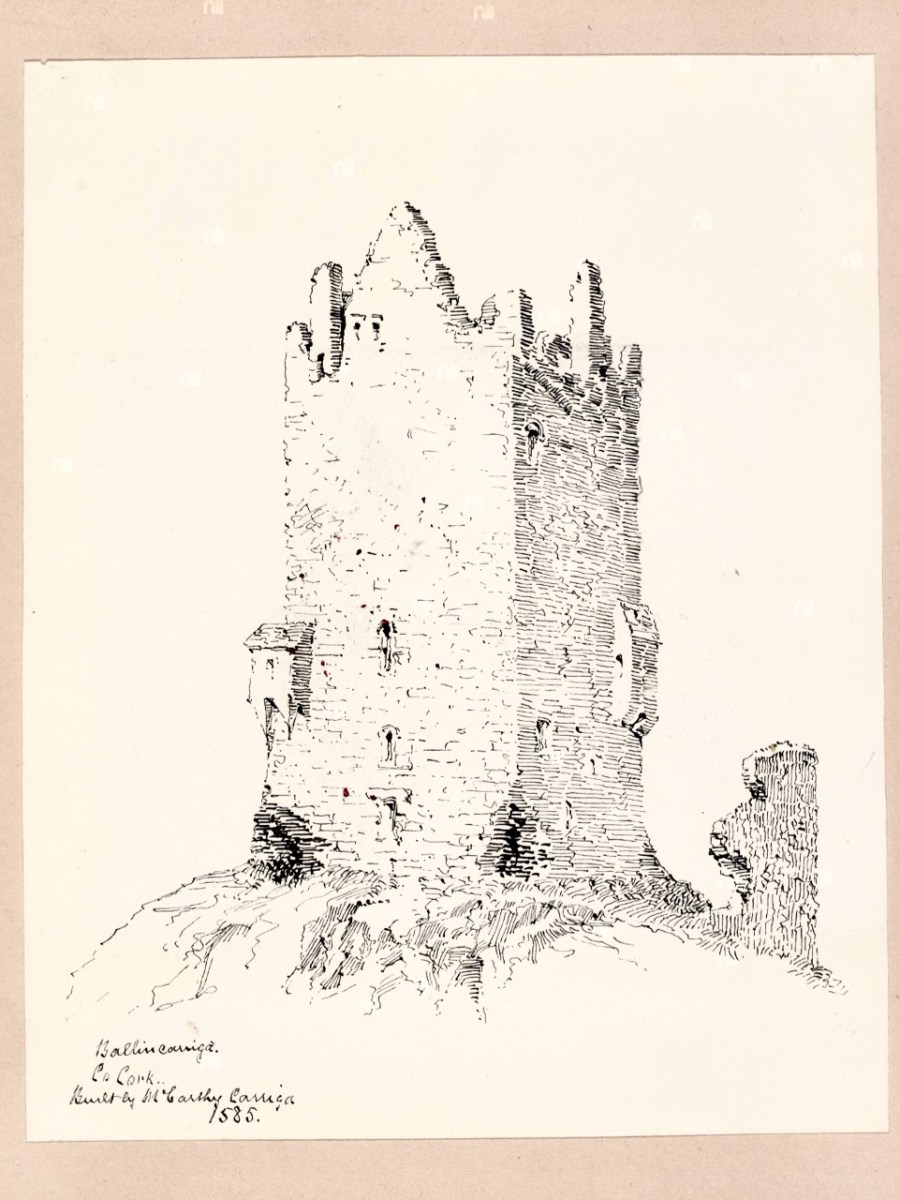
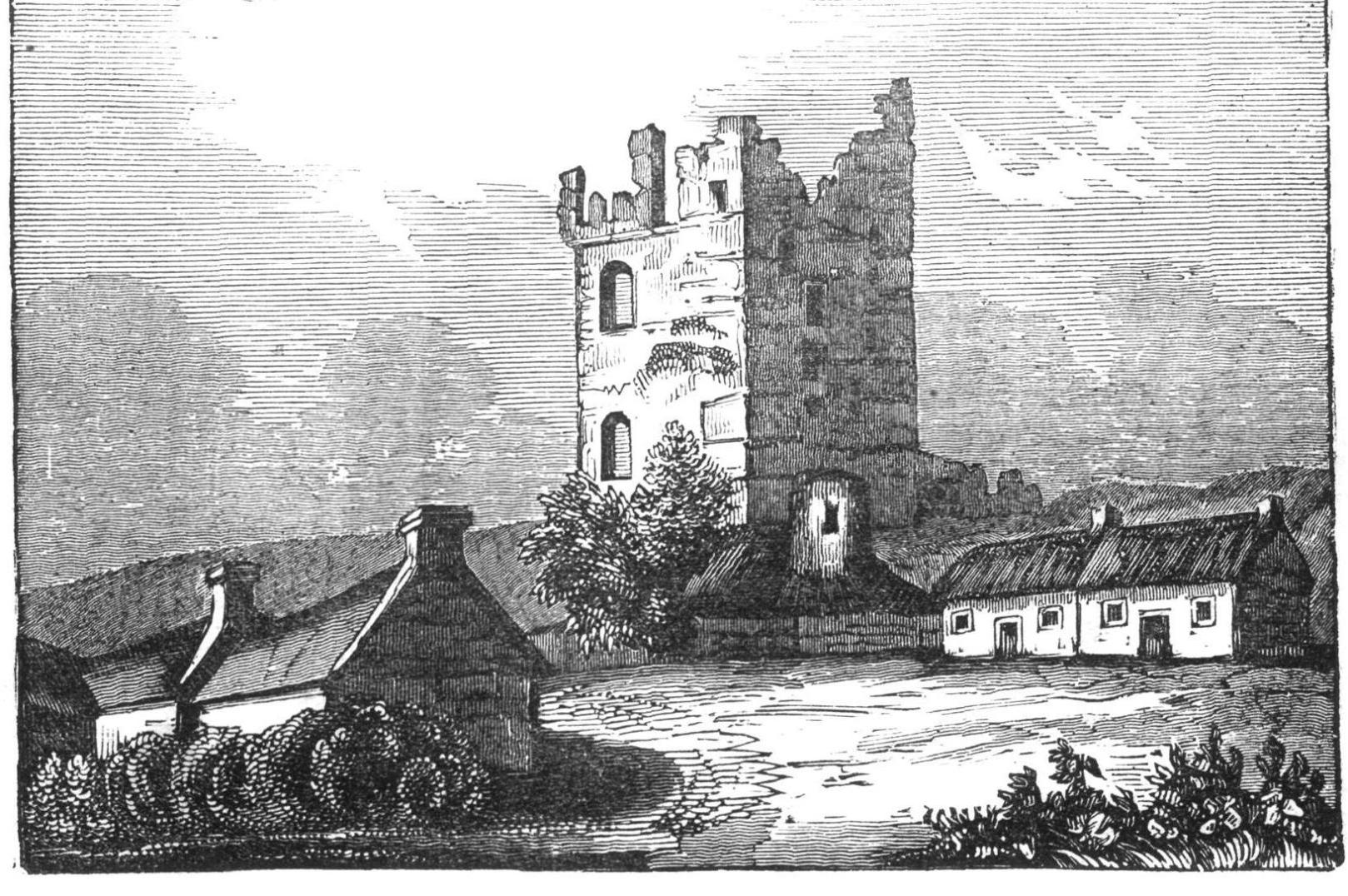
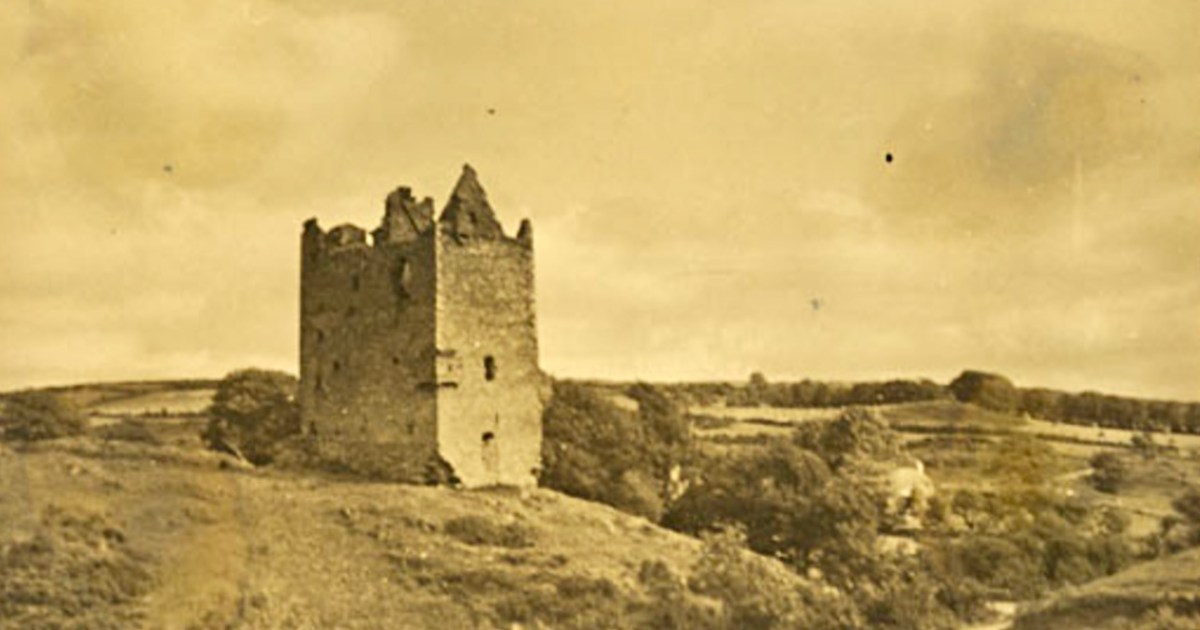
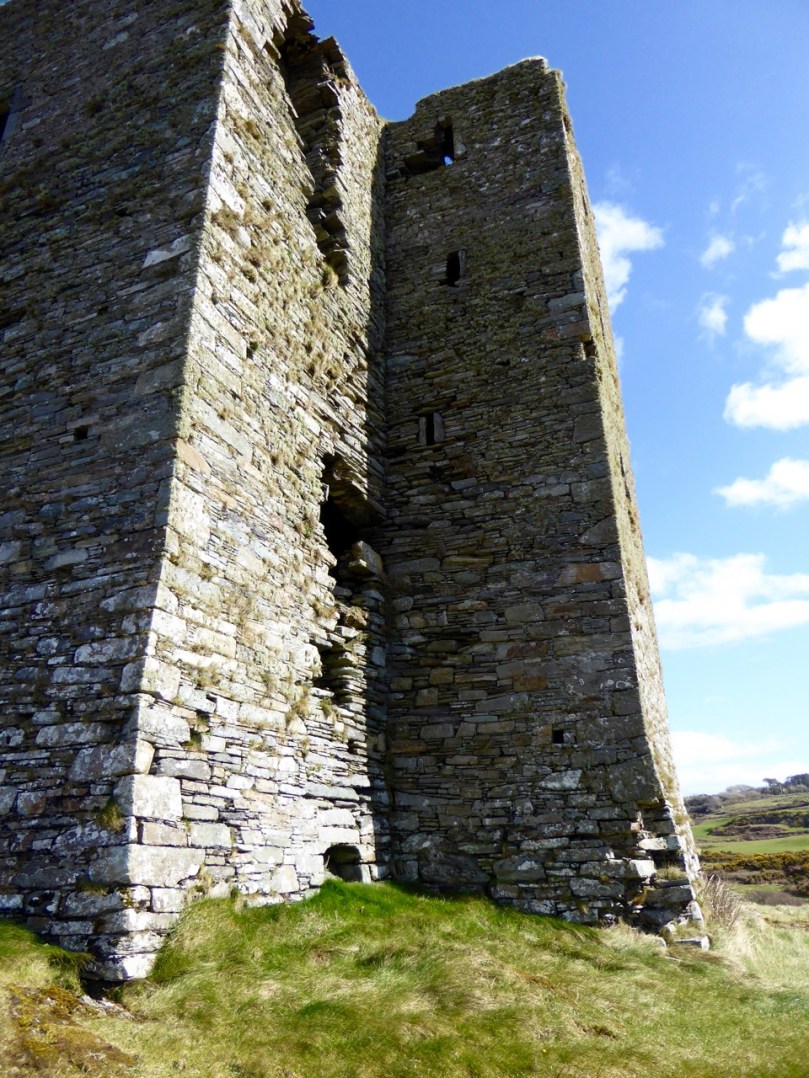
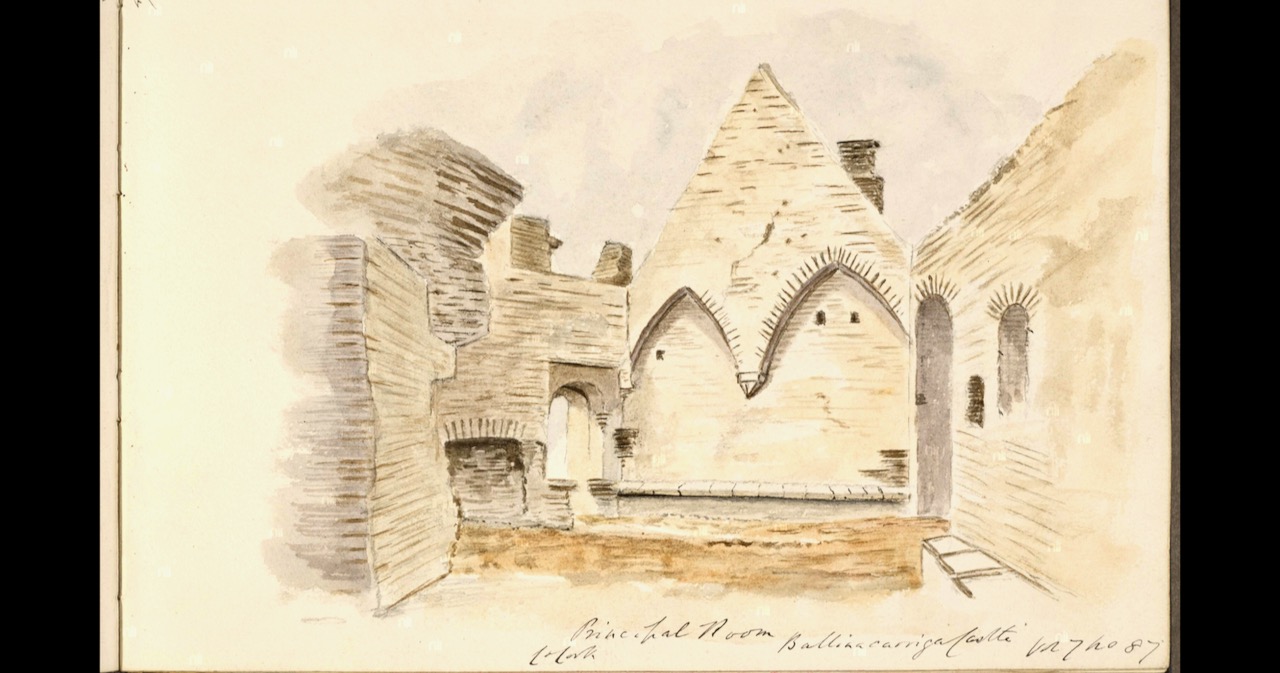
The castle I am writing about today, Ballinacarriga, is one of the best preserved and has many unusual details. It’s located just south of the Bandon River, between Dunmanway and Enniskean. The black and white illustration at the top of the post is from The Dublin Penny Journal of 1834. The sepia photo is from James Healy’s notebook, upon which he based his book Castles of Cork. Unfortunately, the castle is normally only really viewable from the outside, as it is quite hazardous to navigate internally. I have been very lucky indeed to have been able to visit it, including the interior, a couple of times, most recently in the company of eminent archaeologist and medievalist, Con Manning. Con was able to point out to me several features that I would not have understood on my own. 

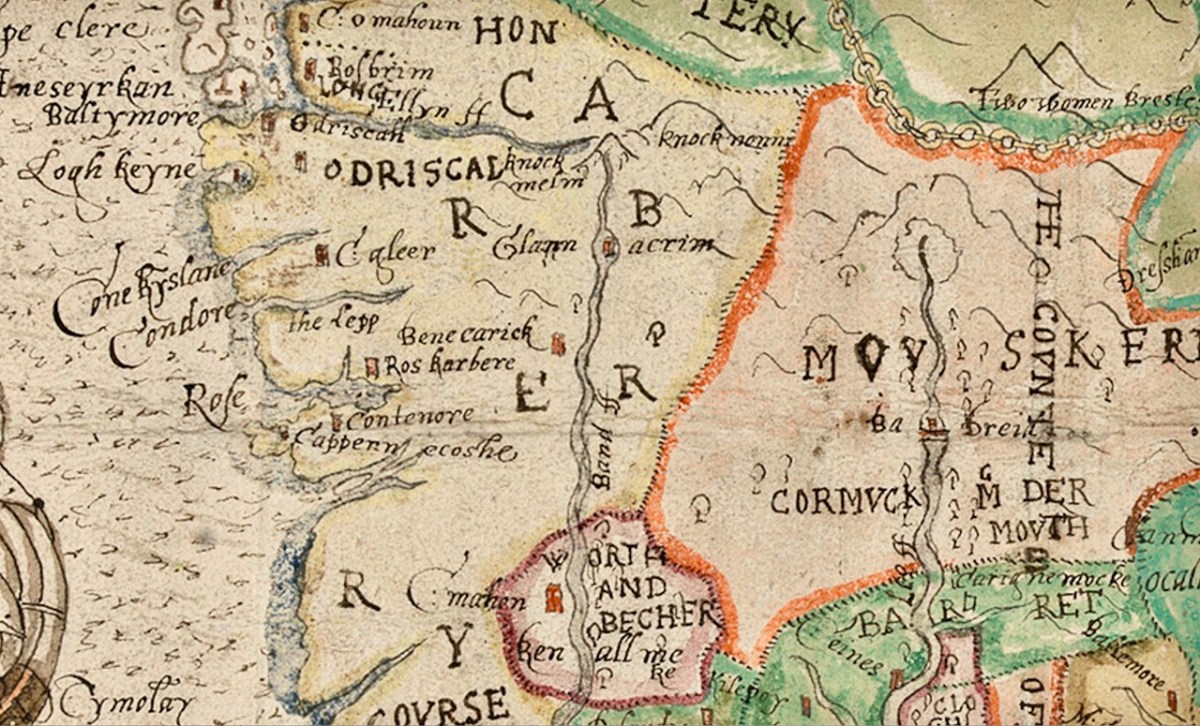
This is a ‘ground entry’ castle – they were built later than the ‘raised entry’ castles of the O’Mahonys and are consequently more designed for comfort (fireplaces!) and more likely to be inland rather than coastal. This one was a castle of the Hurley (Ó Muirthile) clan, although it may also have been built (or acquired, or relinquished) by the McCarthys. The Hurleys managed to hang on to it until the mid-1600s when it was seized by forfeiture and handed over to the Crofts. The castle shows up in Jobson’s Map of Munster, completed around 1584, noted as Benecarick Castle – can you see it? It’s right where it should be, but don’t forget that this map has south on the left and north on the right.

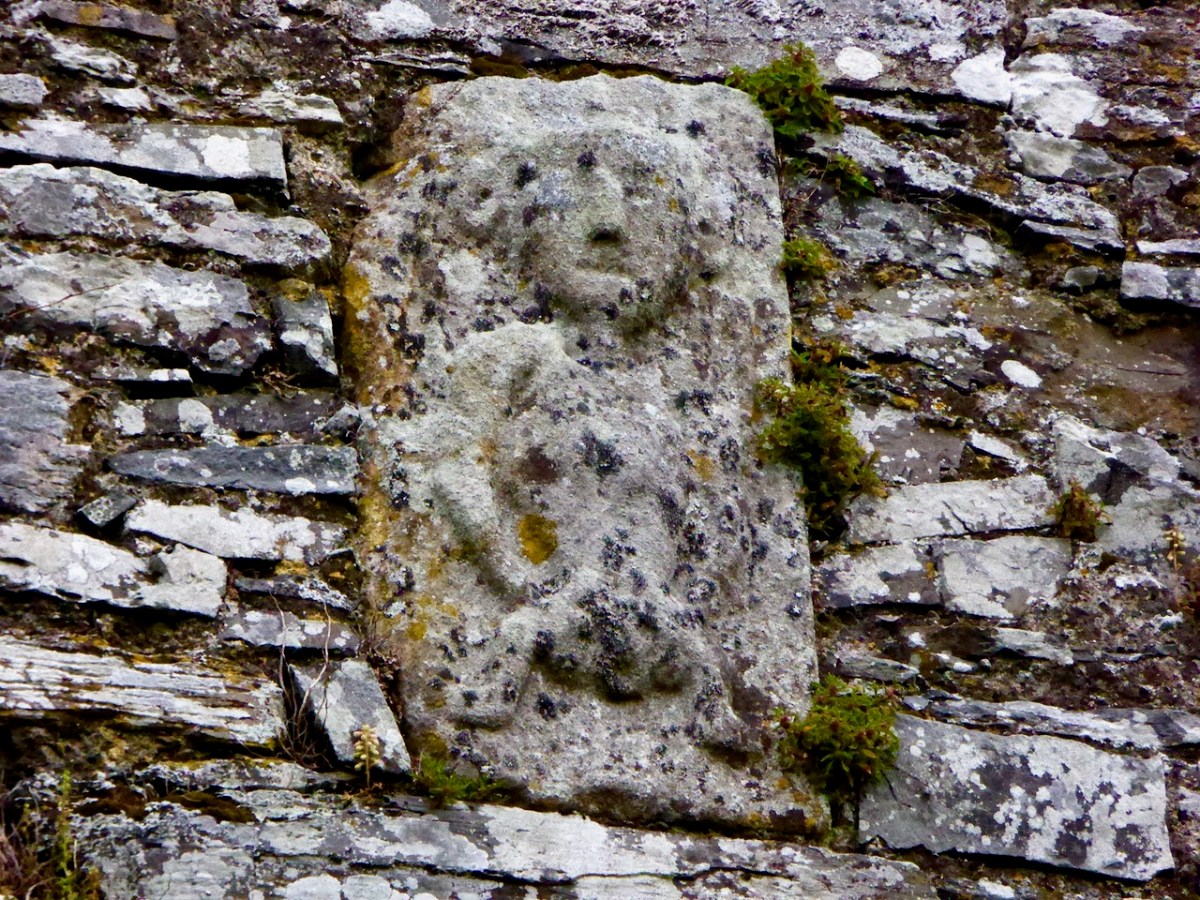
One authority says that the tower was probably built in the late 1400s and the upper floors modified in the later 1500s but that is not obvious from an examination of the architecture. Let’s look at the outside first for some of the unusual features of this castle – beginning with the Sheela-na-gig (for more on Sheelas see our post Recording the Sheelas).

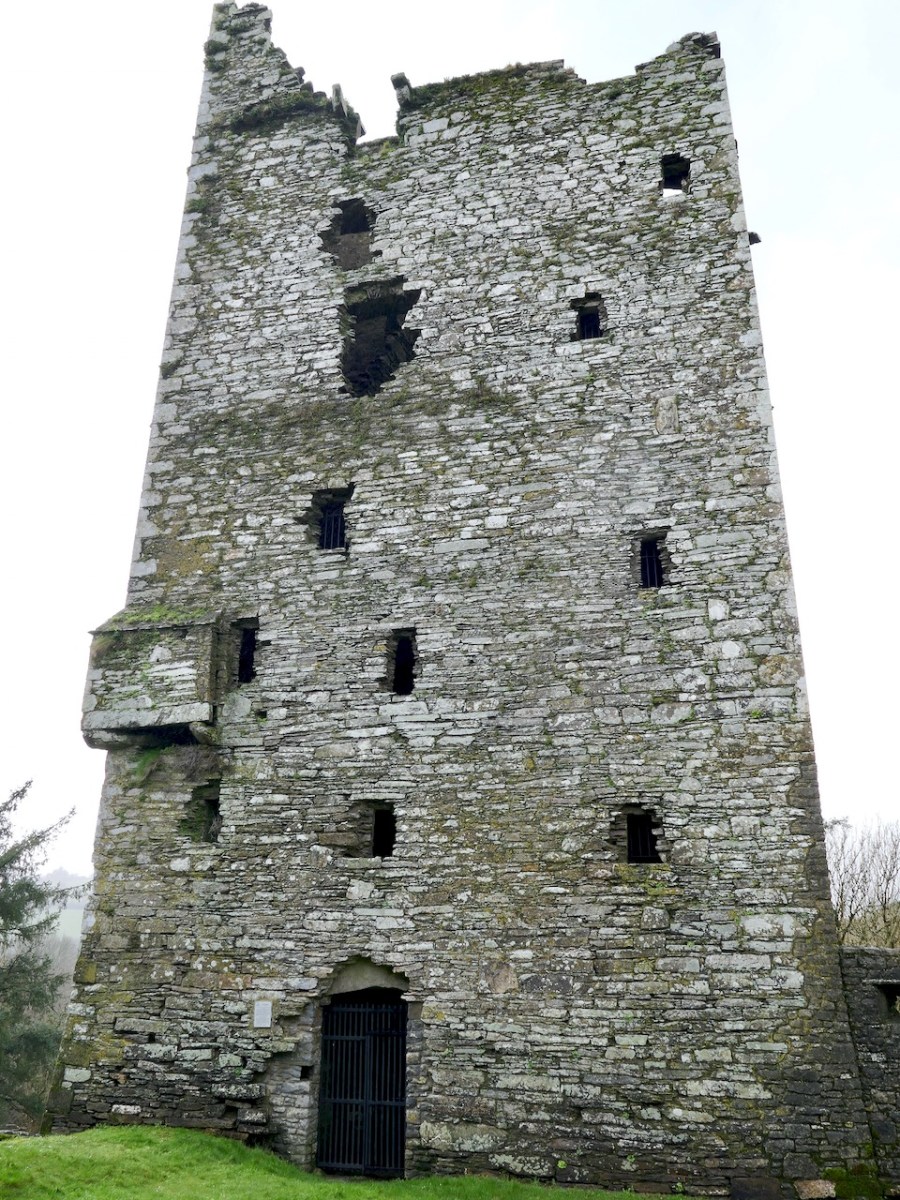
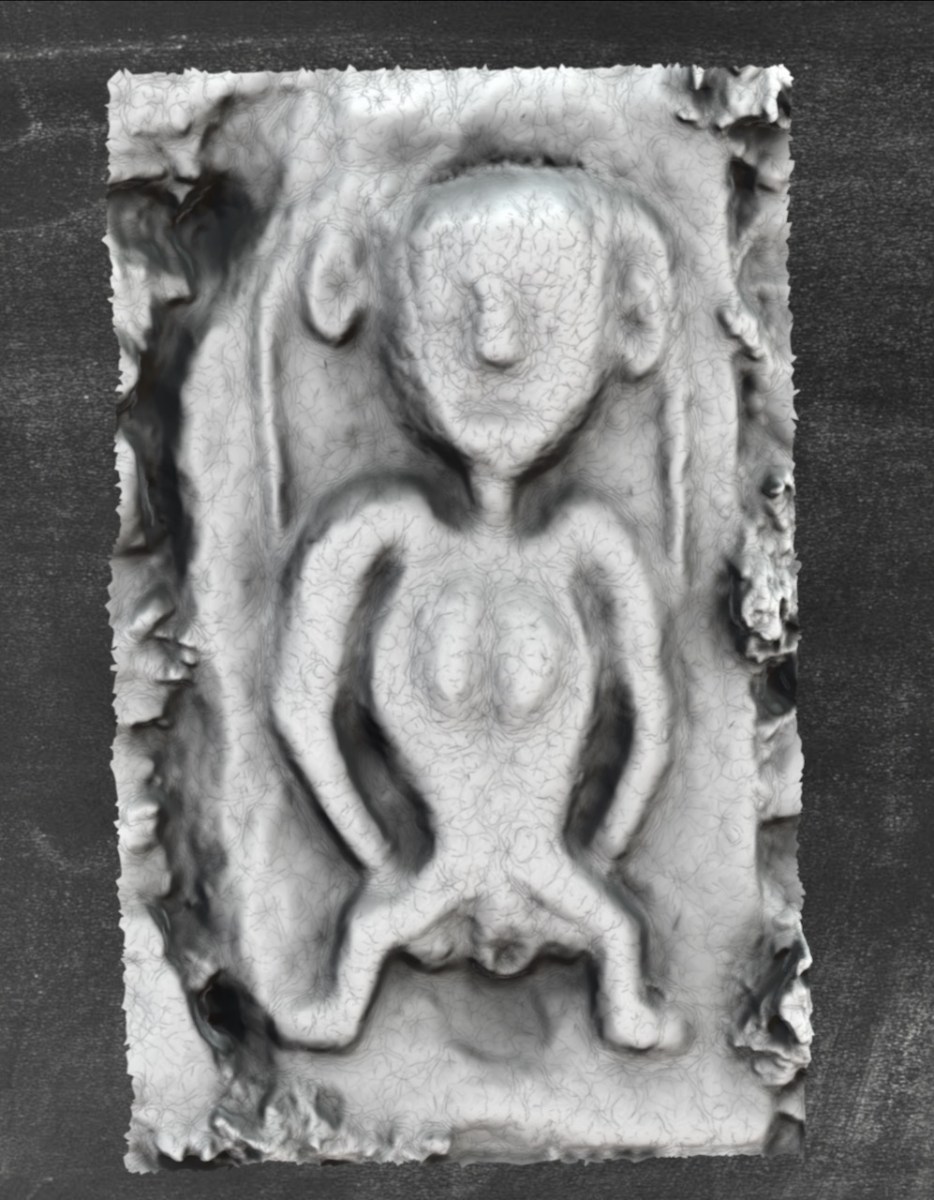
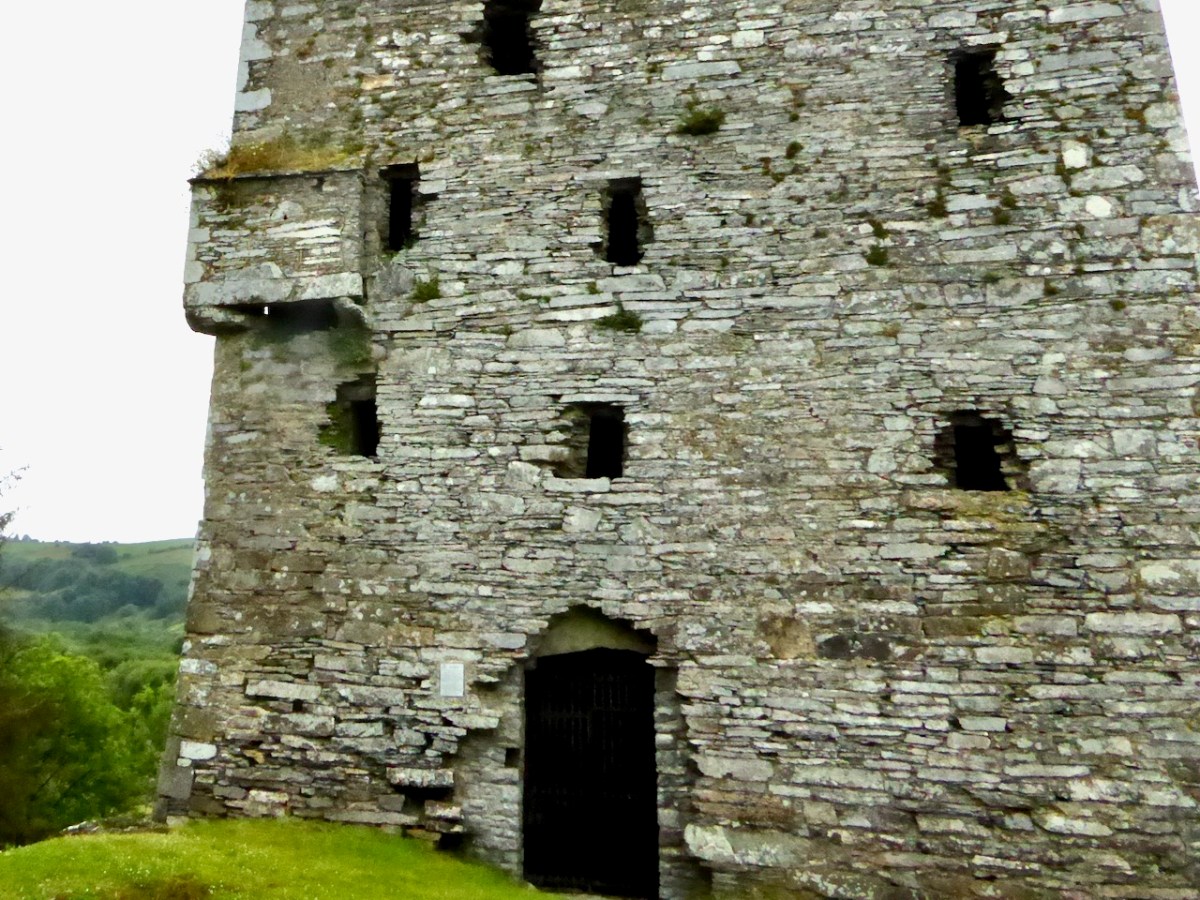
The Sheela can be seen in the image of the front of the castle above, between the second and third windows (from the bottom) on the right hand side. Here’s a 3D rendering by the marvellous Digital Heritage Age 3D Sheela project. It’s great to have this, as the Sheela on the castle is high up and hard to see in any detail. Its placement does seem to suggest that it was there to ward off the evil eye, one of the many theories about the function of Sheela-na-gigs.

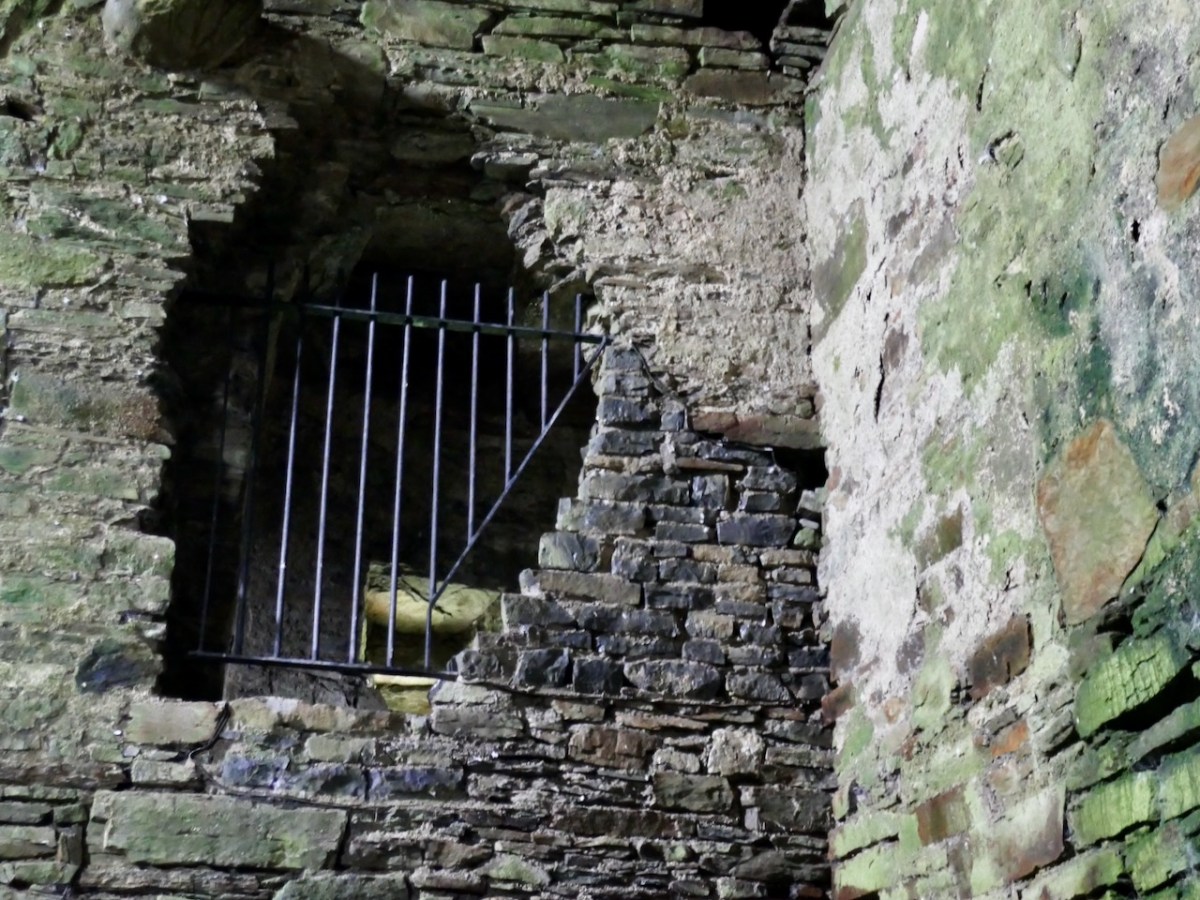
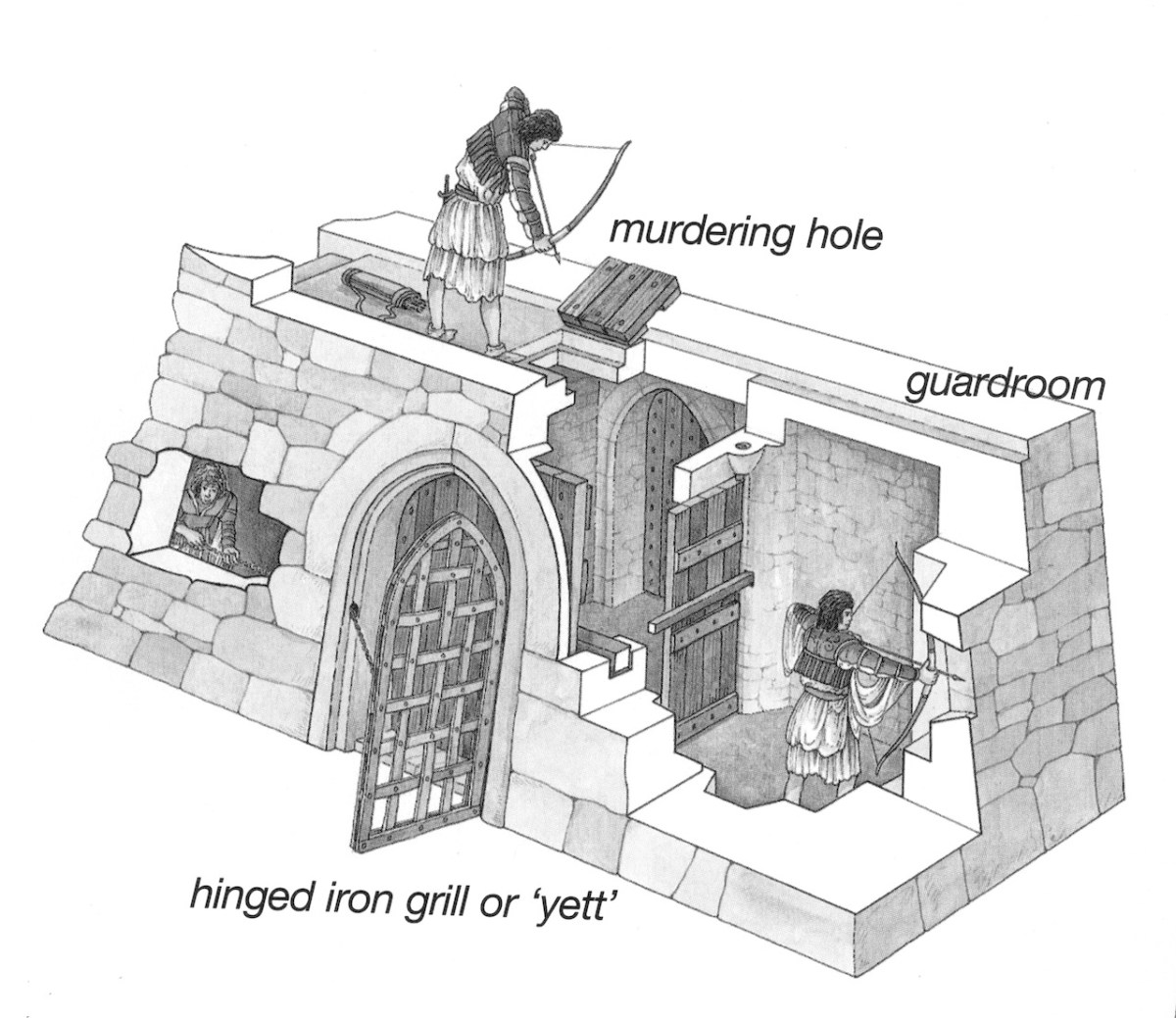
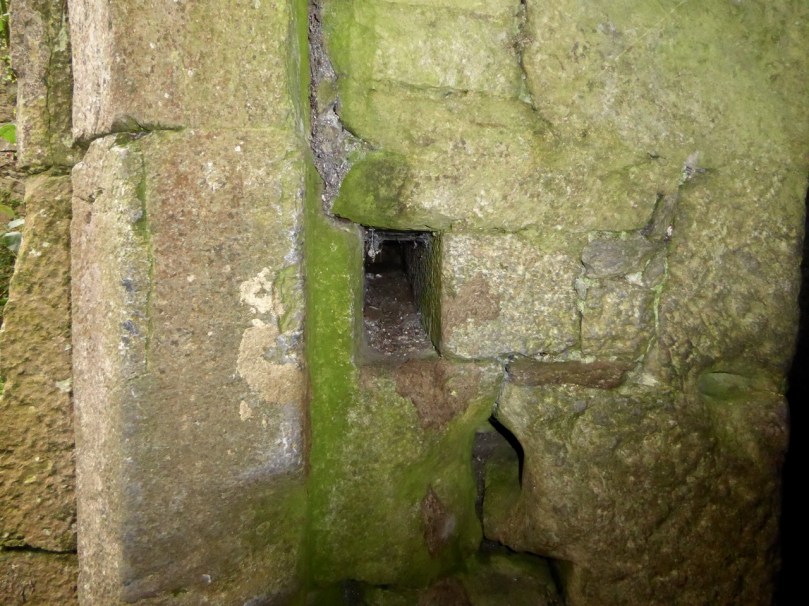
The door, as mentioned above, is at ground level – this necessitated different kinds of defences than a raised entry which could only be accessed via a stairway that could be detached and thrown away from the castle. Ballinacarriga had an iron gate that could be pulled across the door from inside, via a hole in the stone surround. 

This feature was known as a yett. The chain that pulled it closed was managed by a sentry in a small sentry room to the left of the doorway. There is no sign of a murder hole above the entry lobby, as there is, for example, at Kilcrea. 

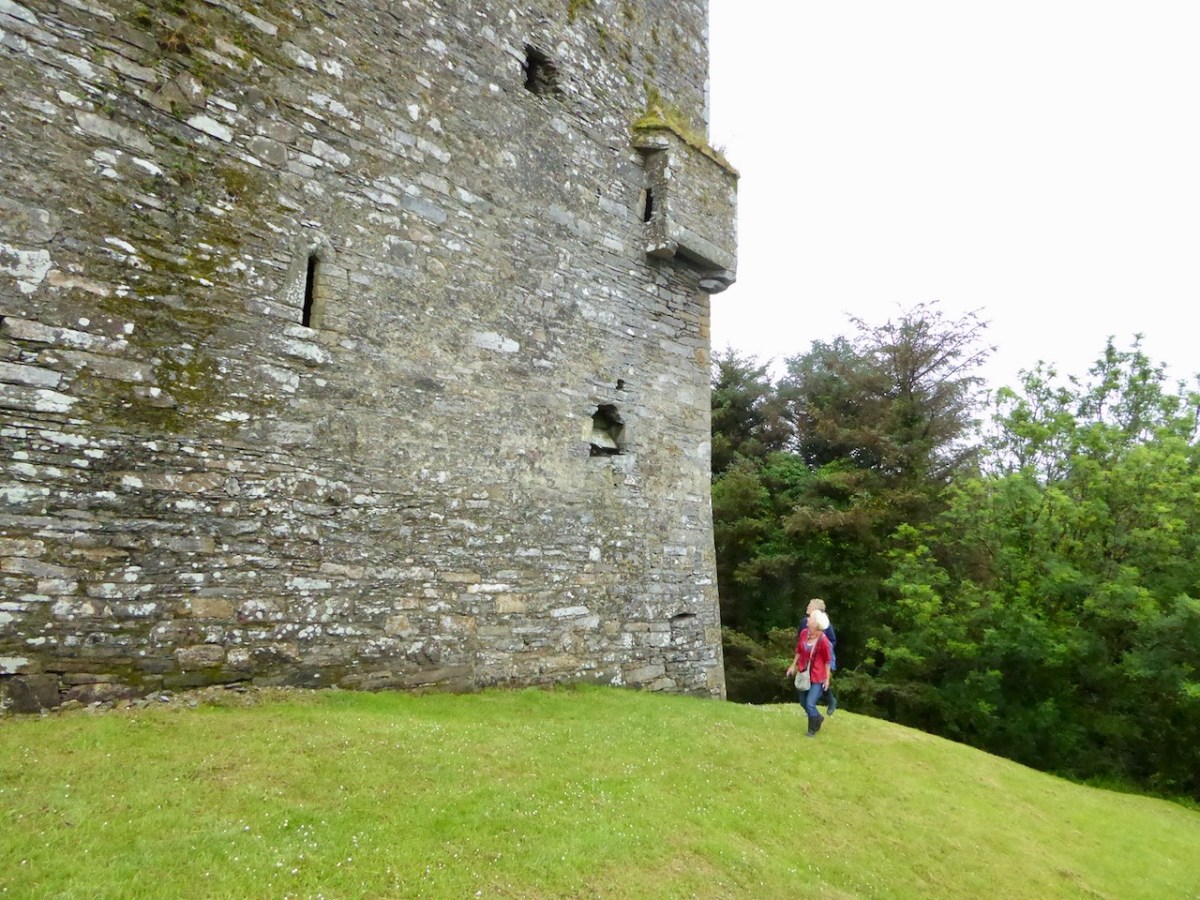
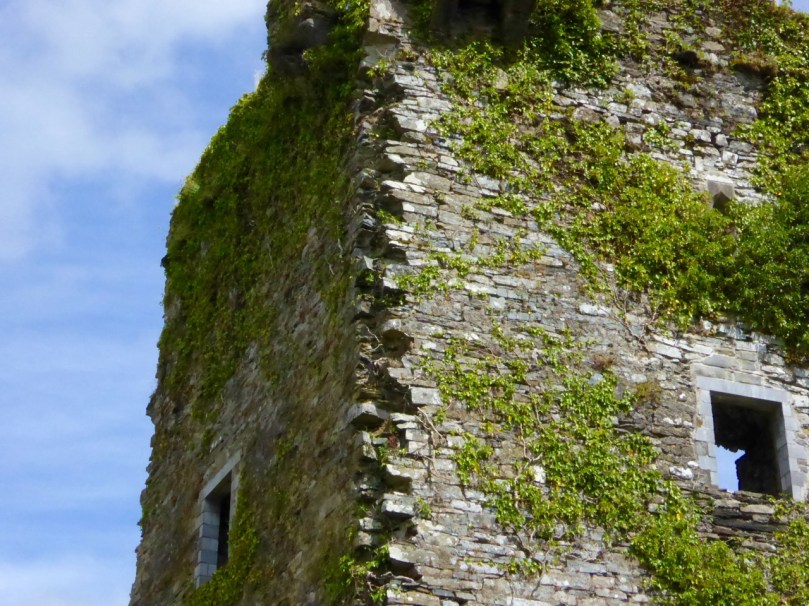
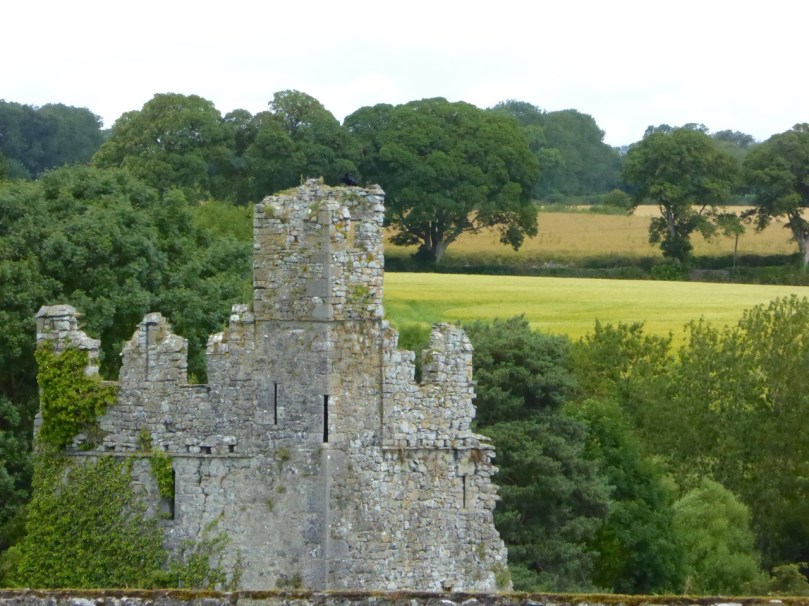
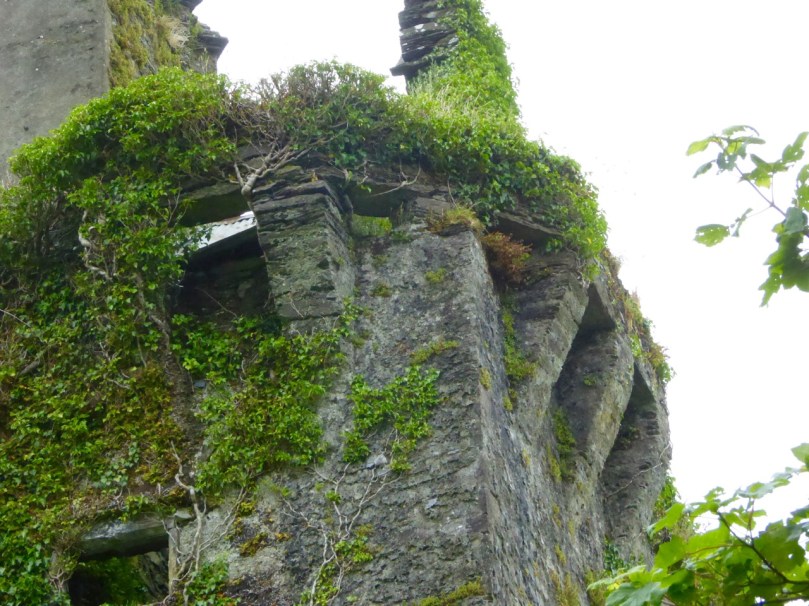
Outside, we can see other defensive feature – bartizans, which are small projecting turrets at the corners, and a space that probably held a machicolation (like a bartizan but on a straight stretch of wall) over the door. 

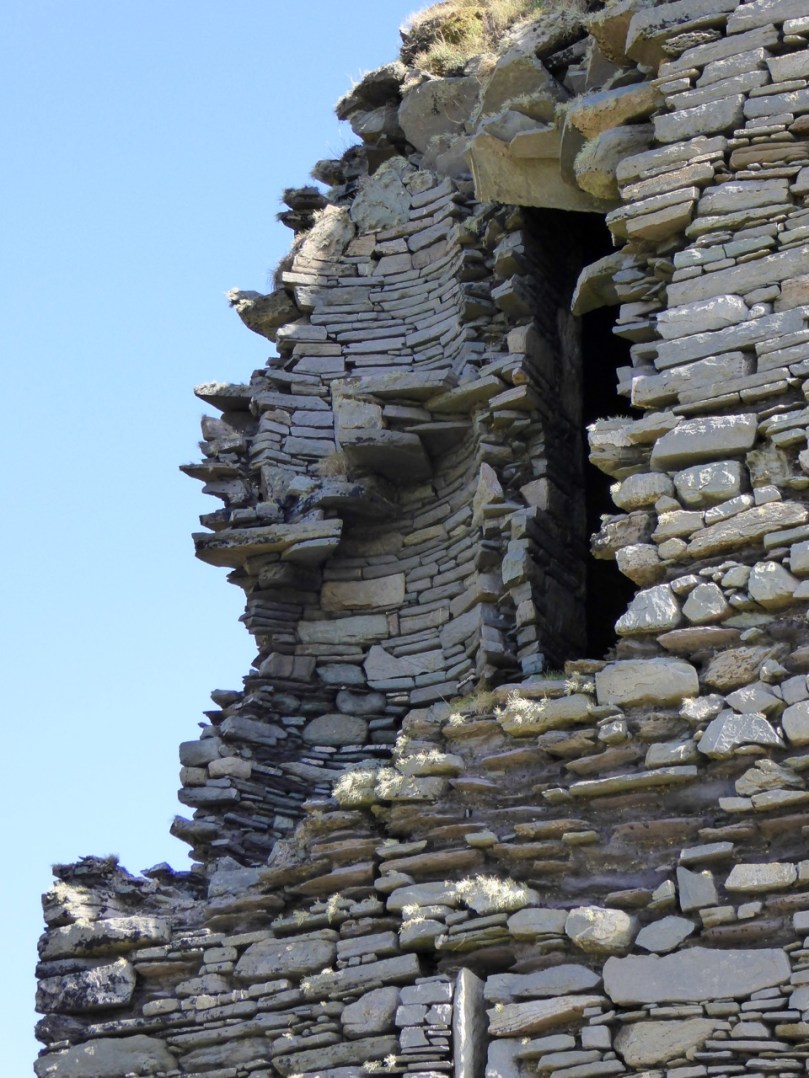
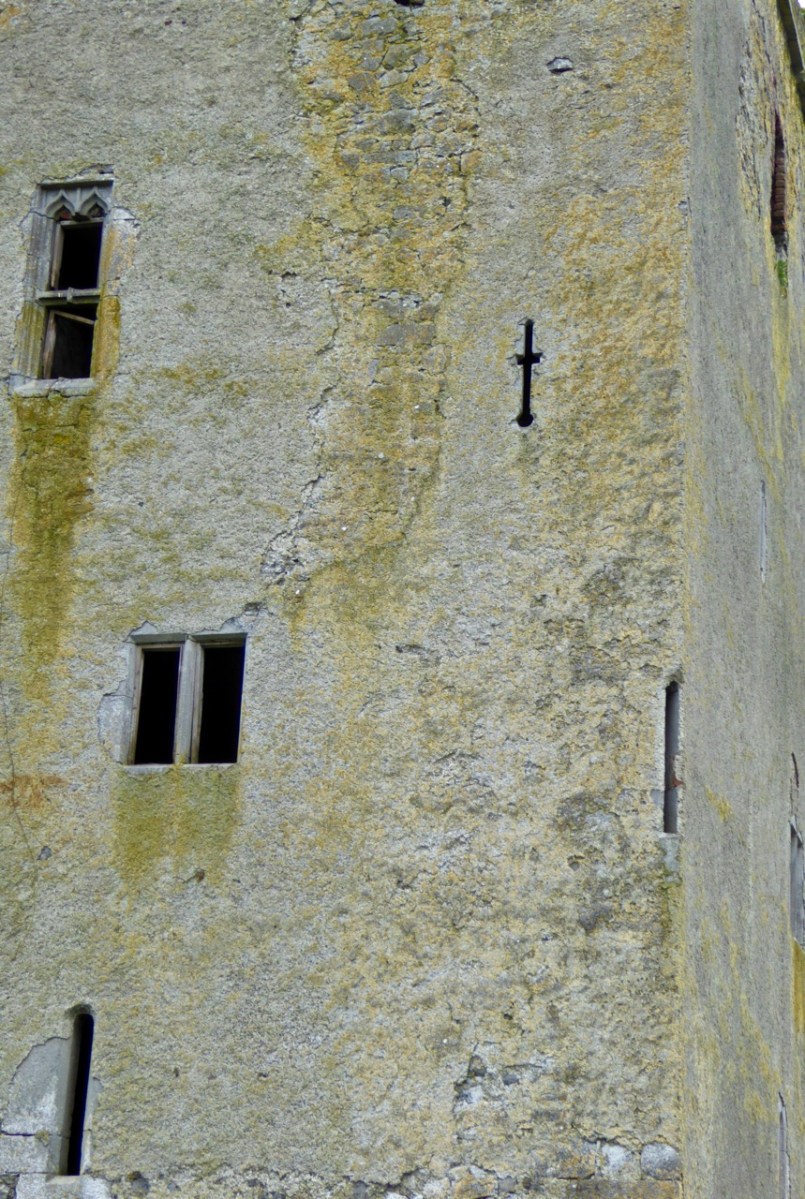
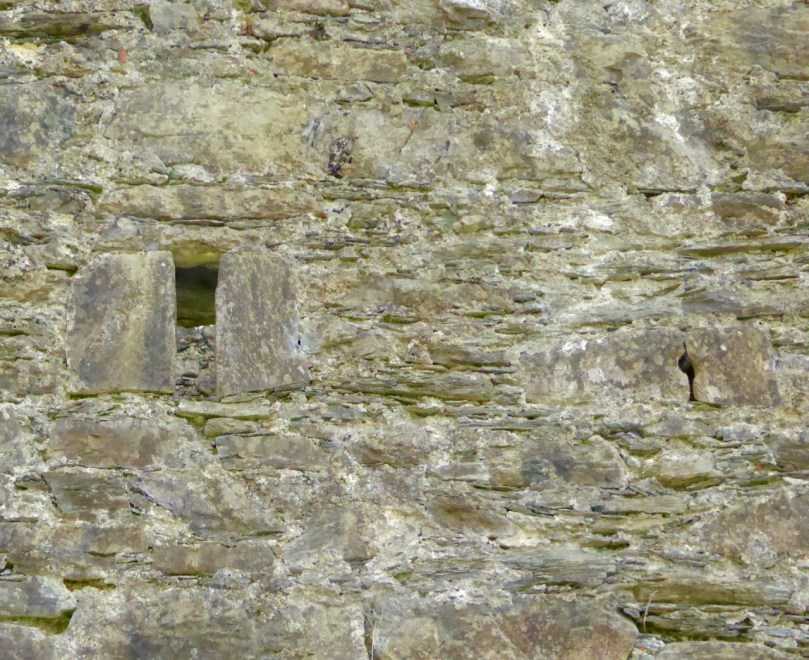
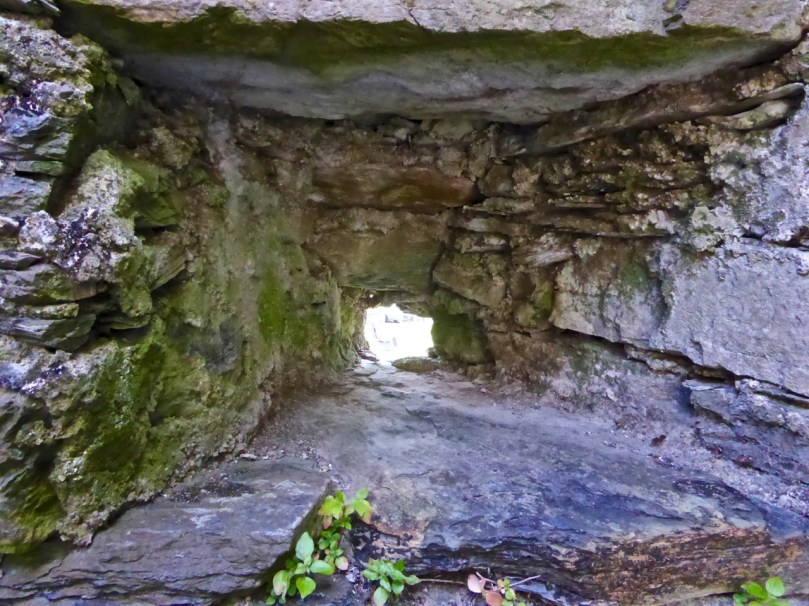
We also see the base batter and a garderobe chute (above) – chute exits are normally near the ground but this one emptied its content at first floor level, leading no doubt to a foul-smelling area that had to be regularly cleaned by an unfortunate individual. 

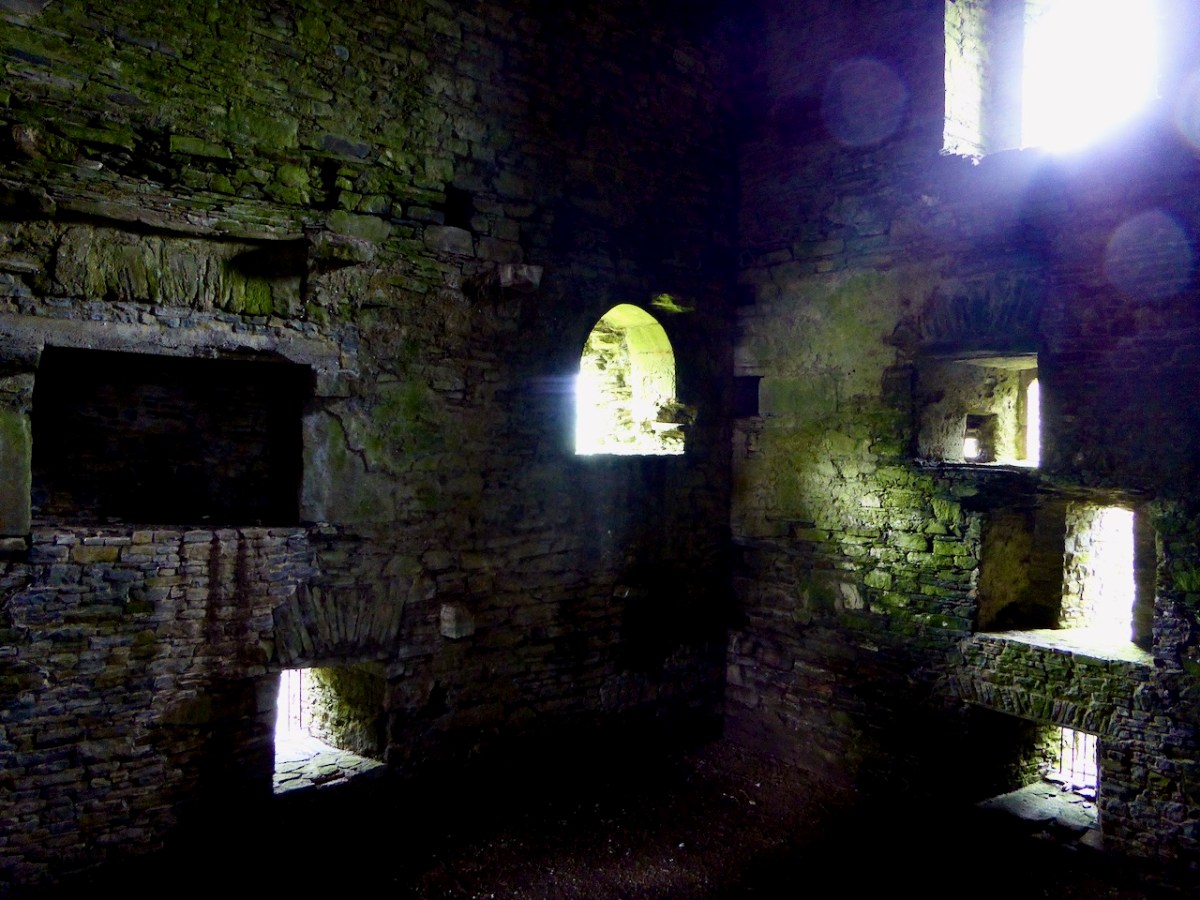
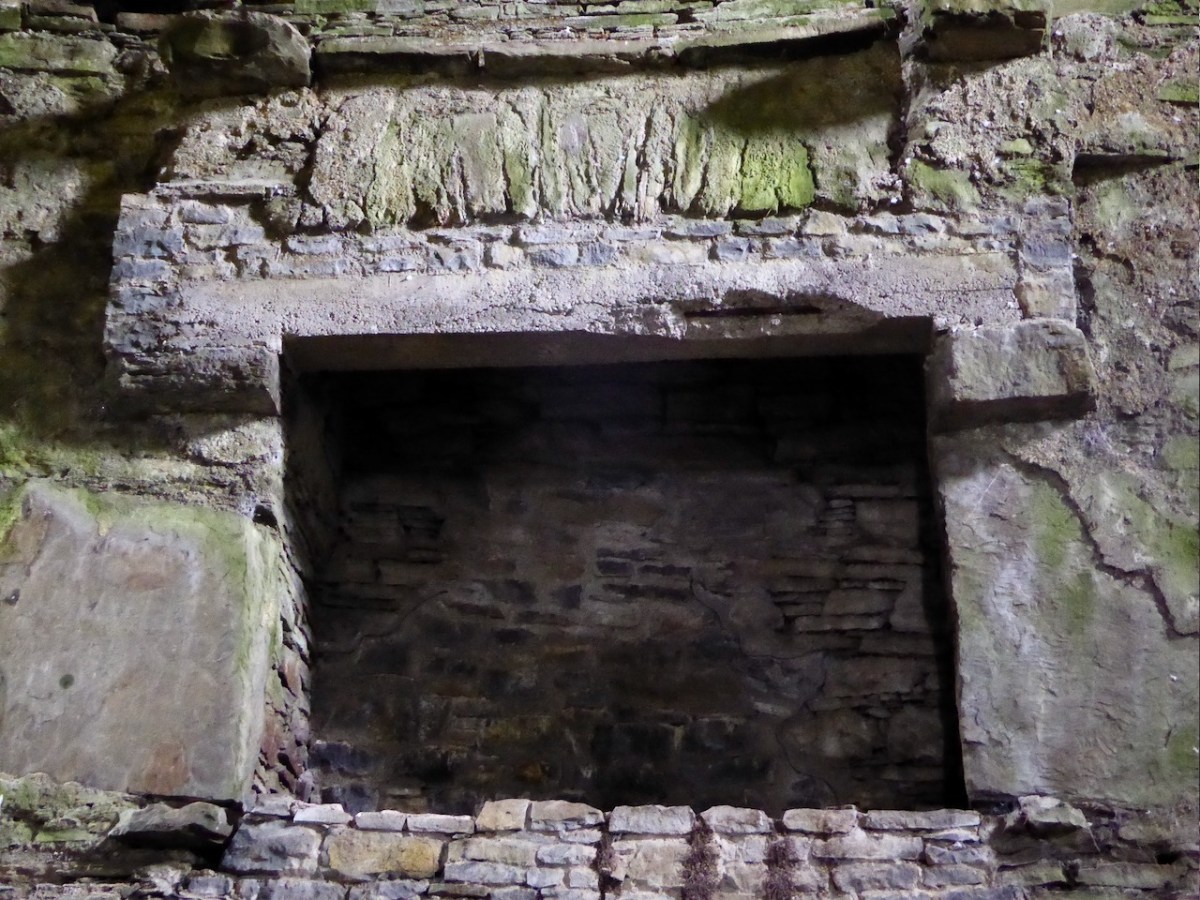
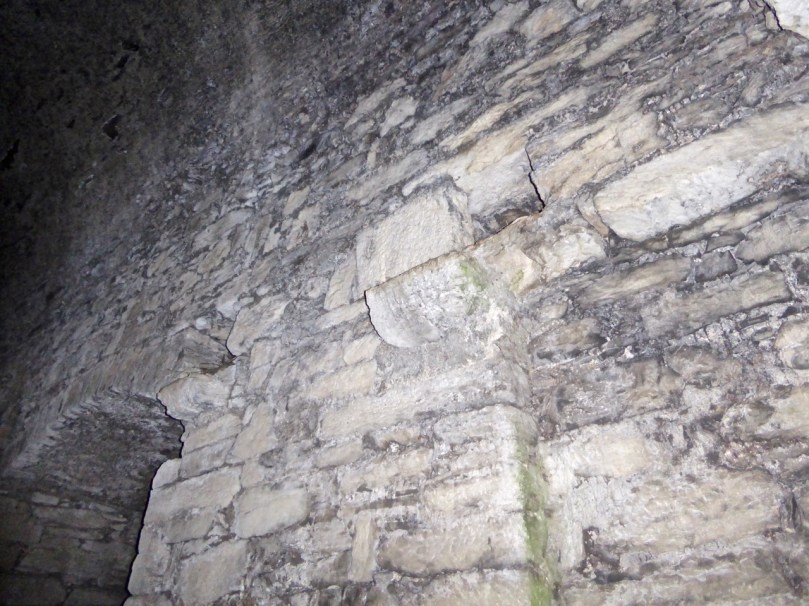
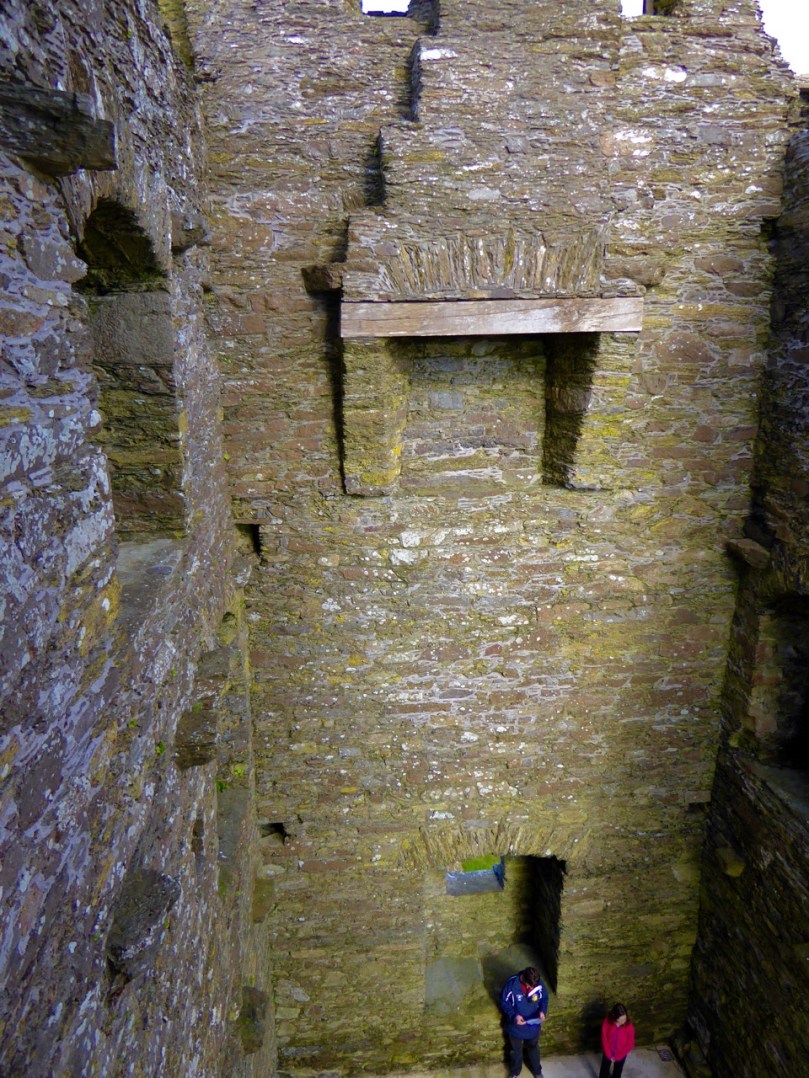
Inside the main space is vaulted and there are at least two floors under it and a possible third or mezzanine floor. The second floor must have been a residential space as it contains an impressive fireplace.

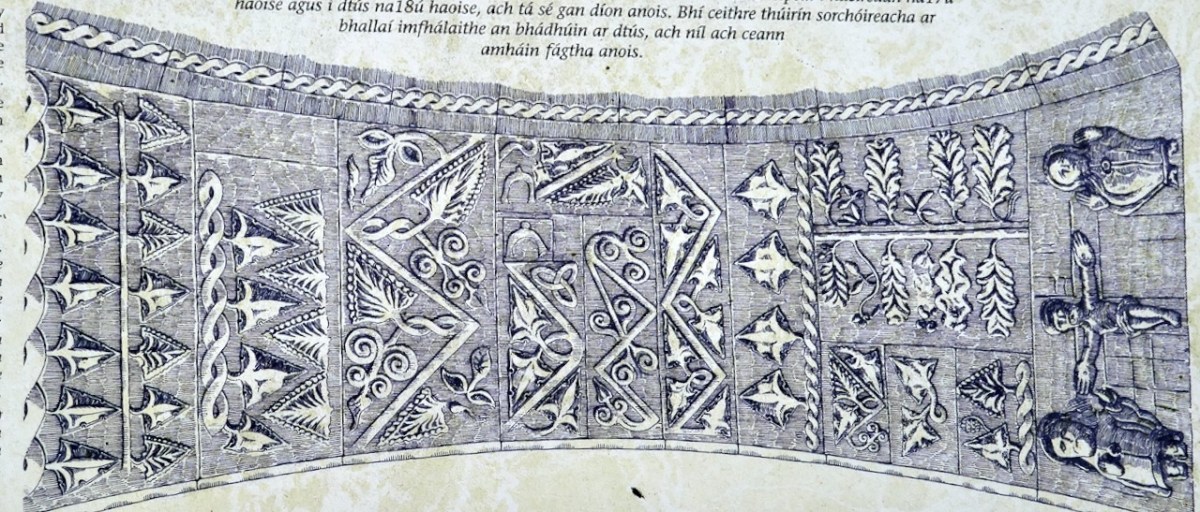
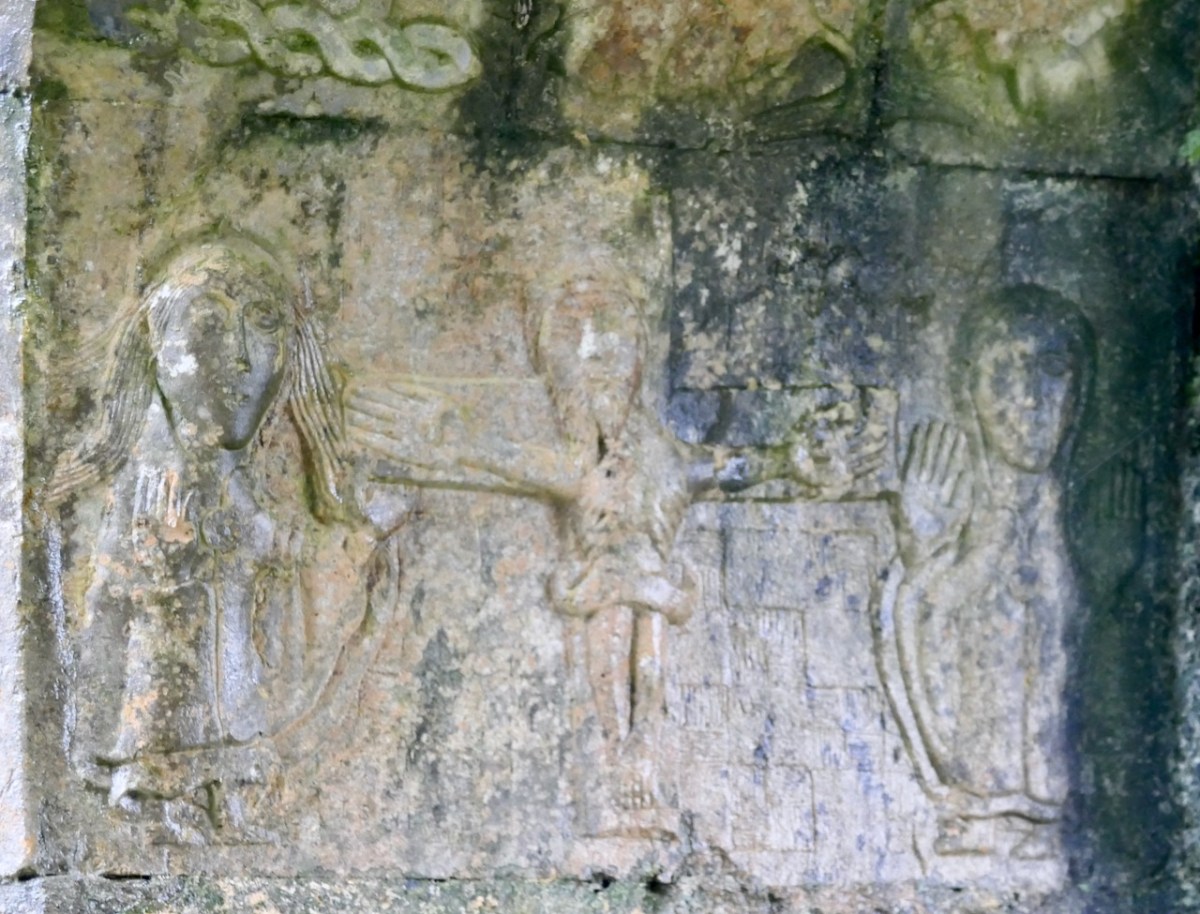
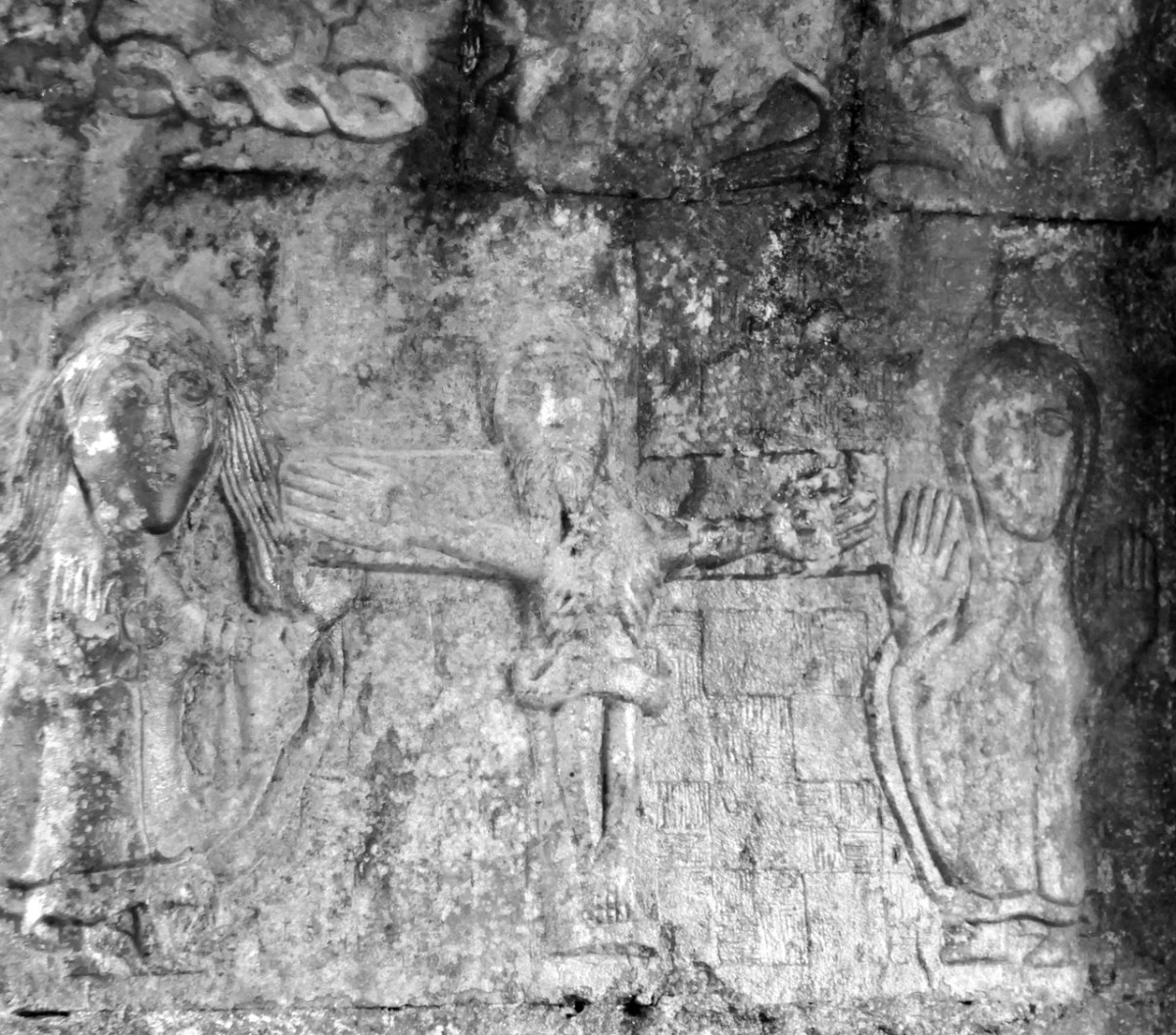
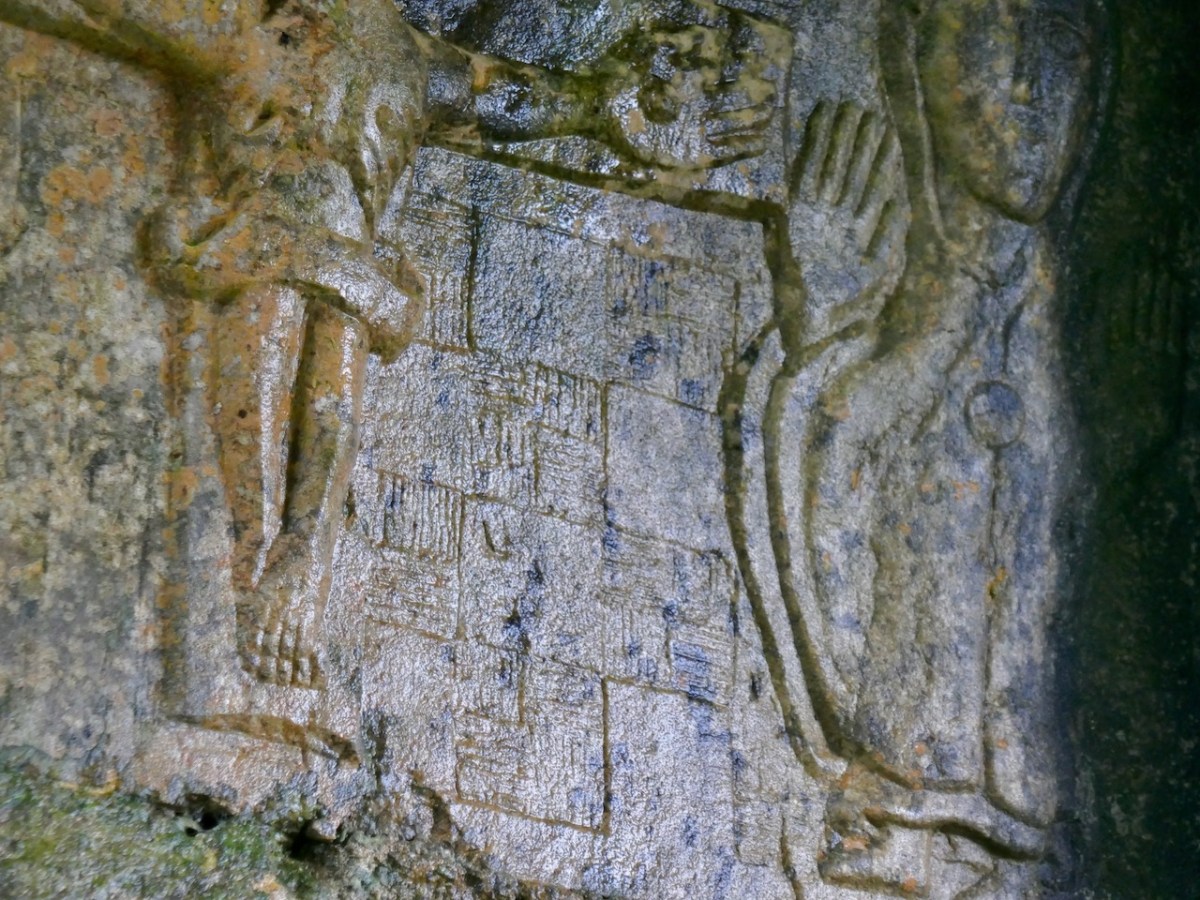
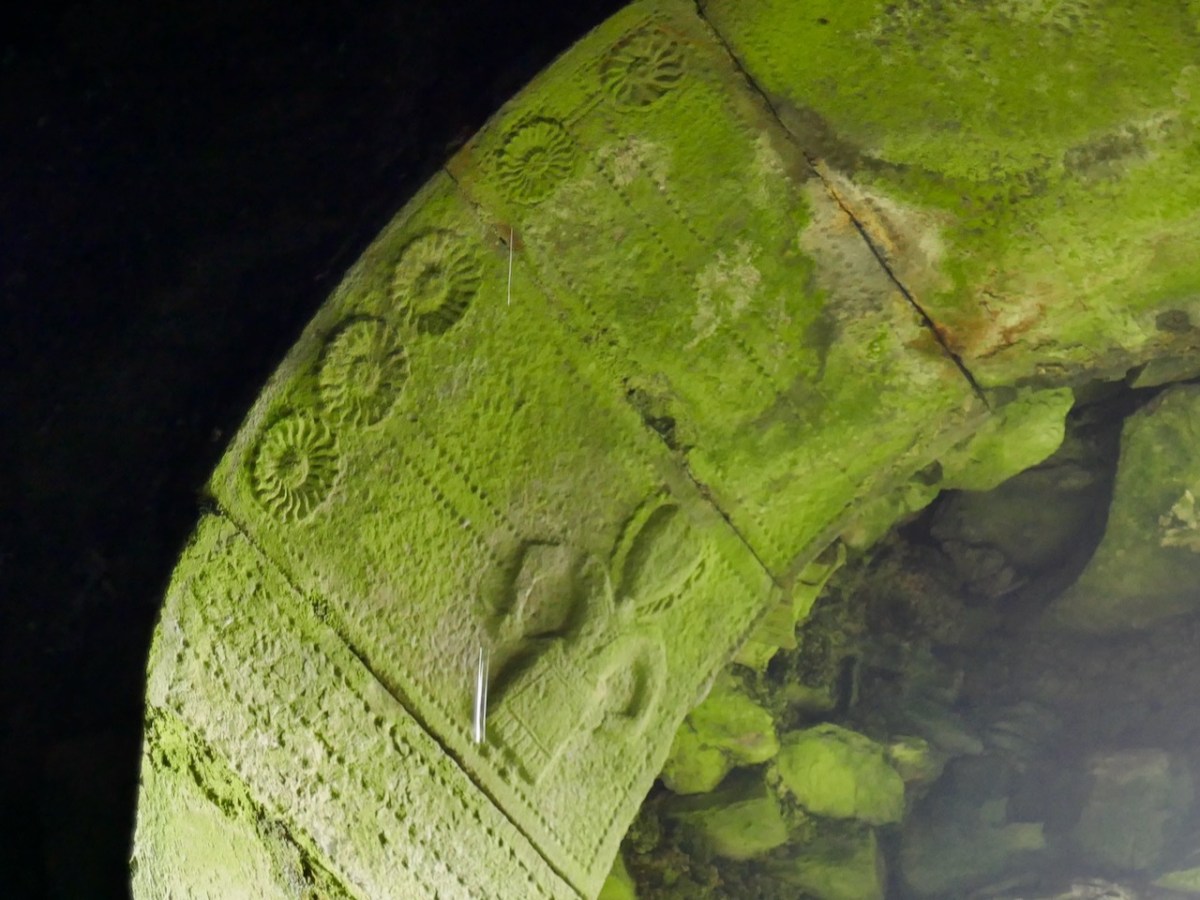
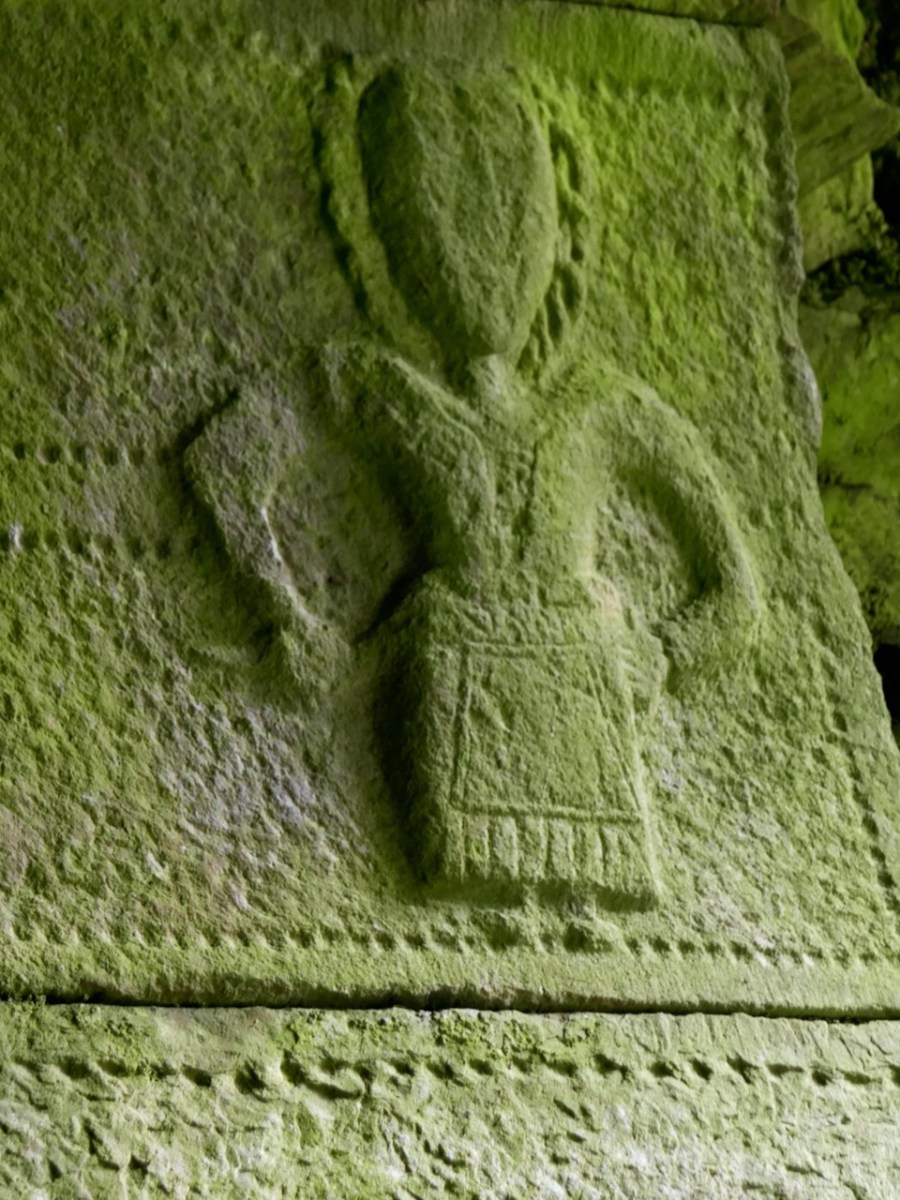
In a window surround at this same level (the arched one to the right of the fireplace) we can see the first of several carvings. It’s a figure of a woman with five rosettes, interpreted as Catherine O Cullane and her children. It’s an extraordinary detailed carving and I couldn’t help searching the internet to see if I could find analogous illustrations – and I did!

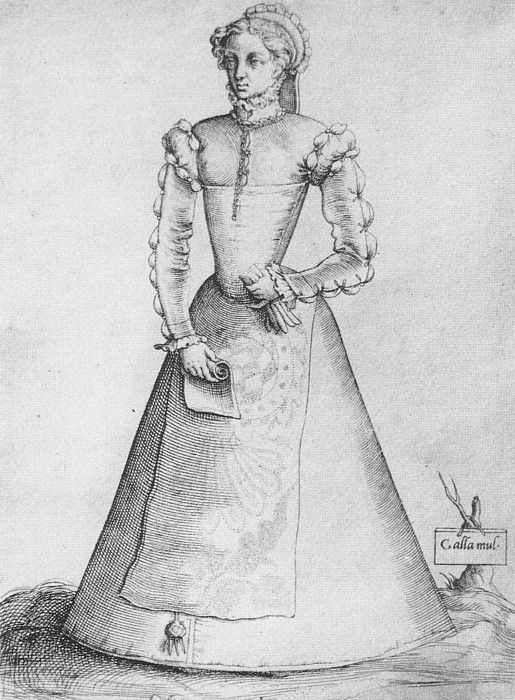
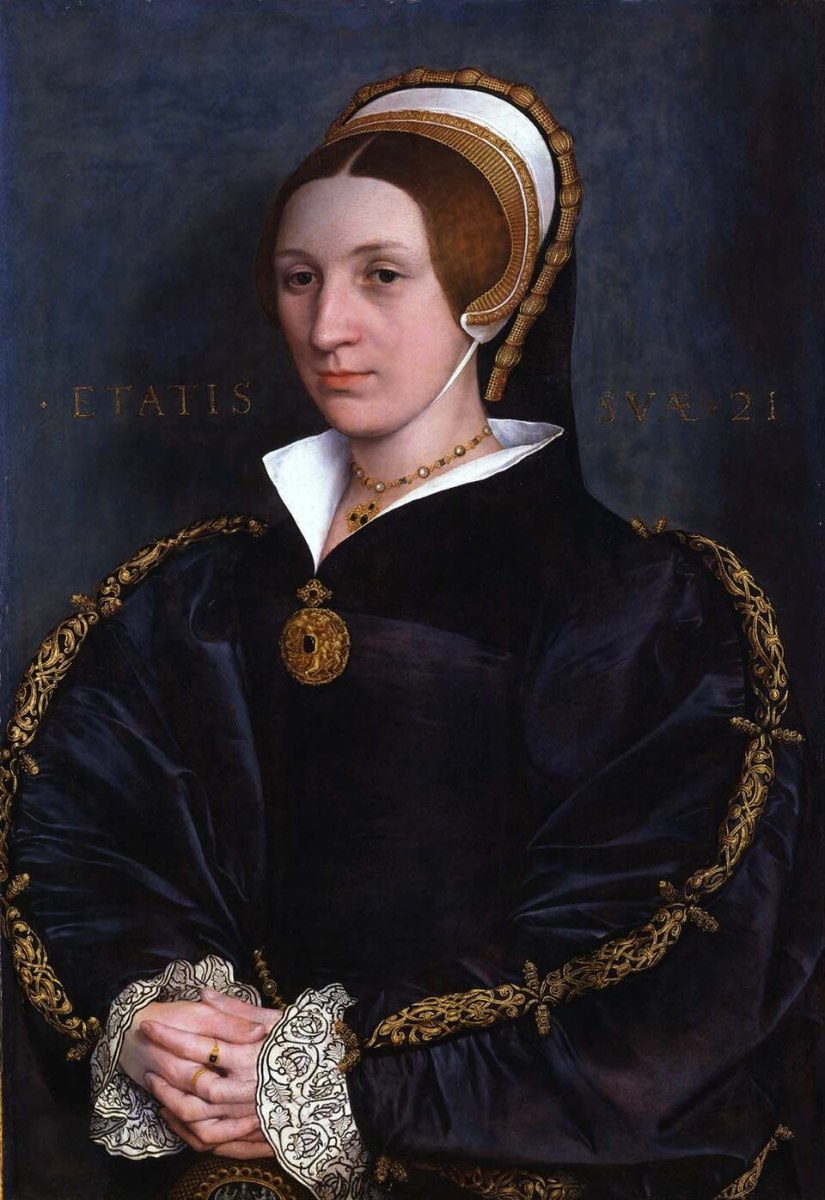
Obviously Catherine enjoyed the height of contemporary fashion. The black and white illustration shows her French hood and apron, while the Holbein portrait is a good representation of her puffy sleeves and open collar.

There are more carvings and more features to come – part 2 next week!

First: French woman from Habitus Nostrae Aetatis by Enea Vico, c. 1556. Available here: https://www.meisterdrucke.ie/fine-art-prints/Enea-Vico/1328771/Galla-Woman-%28title-on-object:-Galla-mul%28ier%29%29-A-Married-Woman-from-France,-Dressed-in-the-Fashion-of-ca.-1550-%28series-title:-Diversarum-gentium-nostrae-aetatis-habitus%29.html
Second: Holbein, Hans 1535. Portrait of a lady, probably of the Cromwell Family formerly known as Catherine Howard. Public Domain

Tower House Tutorial, Part 2

Oooh, it open - let's go inside!

Oooh, it’s open – let’s go inside!

It’s time to move inside! Now that you are all experts in tower house construction from the outside, let’s go into one of these small castles and see how they were built.

Remember that a tower house was all about defence and thus many of the features you will find inside have much to do with an expectation of attack and little to do with comfort. This was all fine, of course, as long as weapons consisted of bows and arrows, swords and spears, and even muskets. But as soon as cannon appeared on the scene the tower house was doomed – even its thick stone walls were no proof against such a bombardment.

Raheen architecture

Ironically, having a wall or two blown away by cannons, as at Raheen Castle (by Cromwellian forces), above, allows us to see the internal construction of the castle. In the case of Raheen the lower floors were separated from the upper floor by an enormous barrel-vaulted ceiling.

Dunlough Castle - note the projecting corbel denoting a wooden floor, and the imprint of the wicker scaffolding on the ceiling mortar

Dunlough Castle – note the projecting corbel denoting a wooden floor, and the imprint of the wicker scaffolding on the ceiling mortar

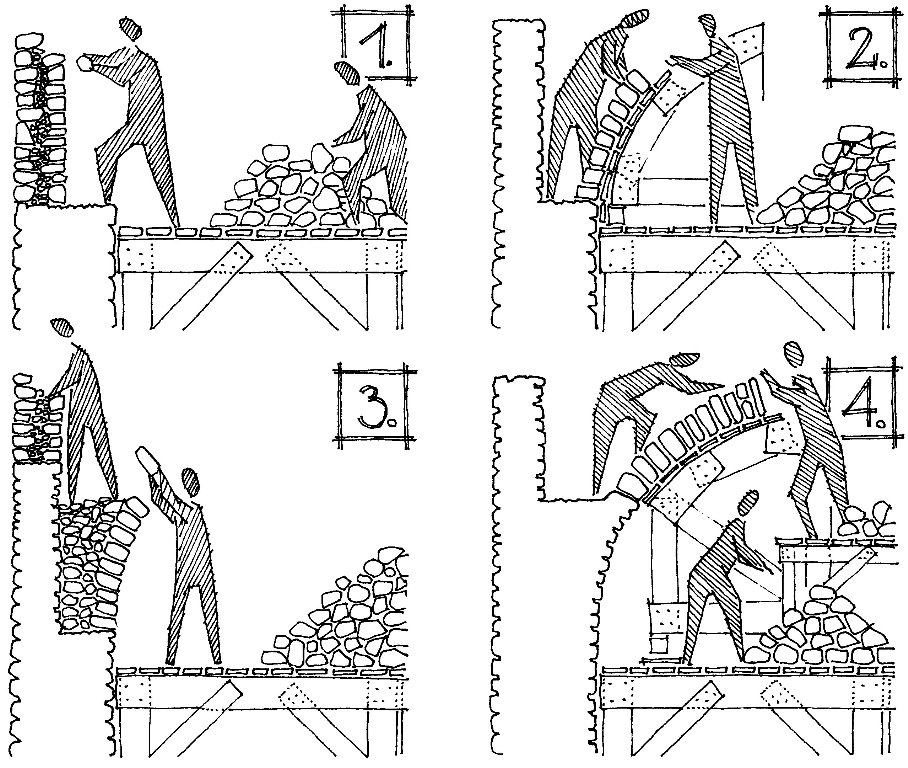
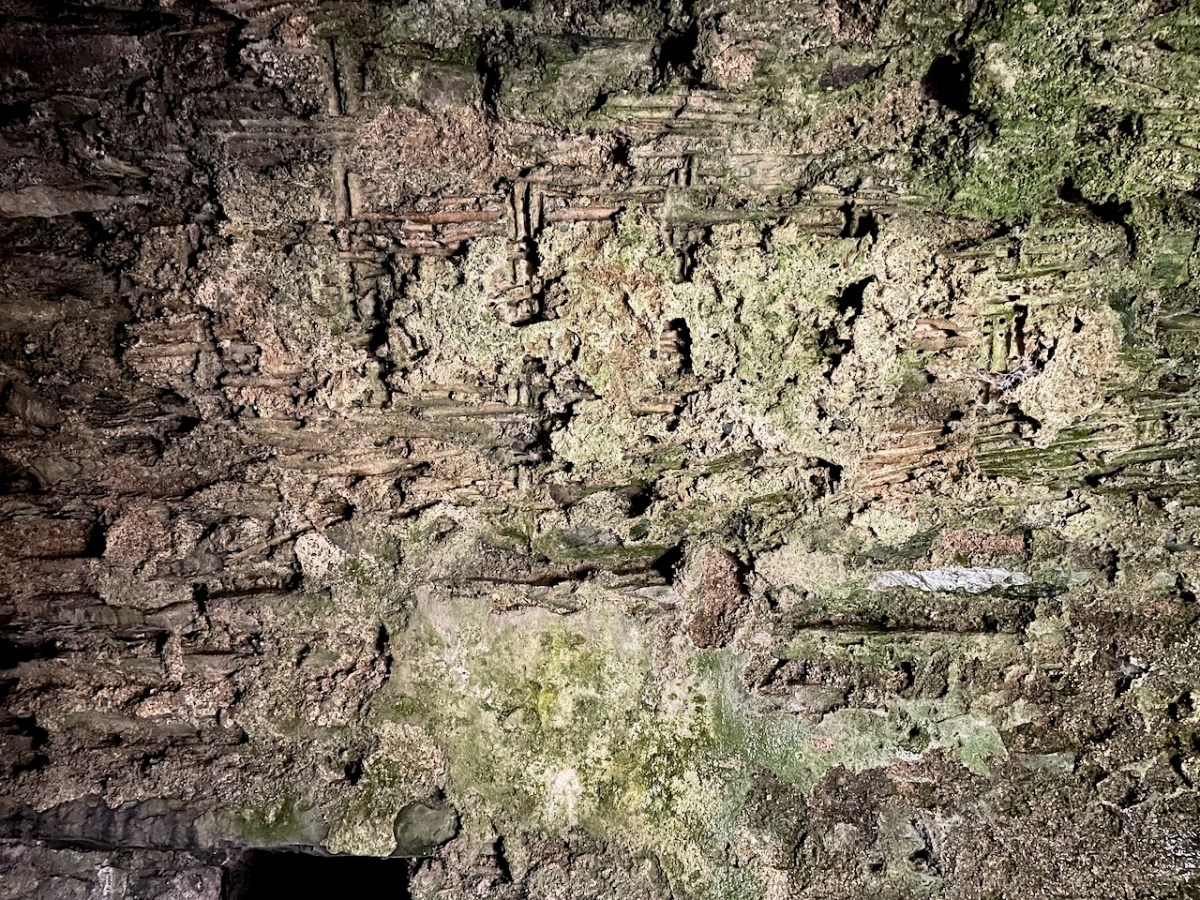
These vaulted ceilings were wicker-centered. A scaffolding of wicker was erected first and a layer of mortar laid on top of that. Ceiling stones were laid on the scaffold and mortared into place and then the stone work was built up to provide the floor of the next story. When the scaffold was dismantled the impression of the wicker was left on the mortar – clearly visible in several of our examples here.
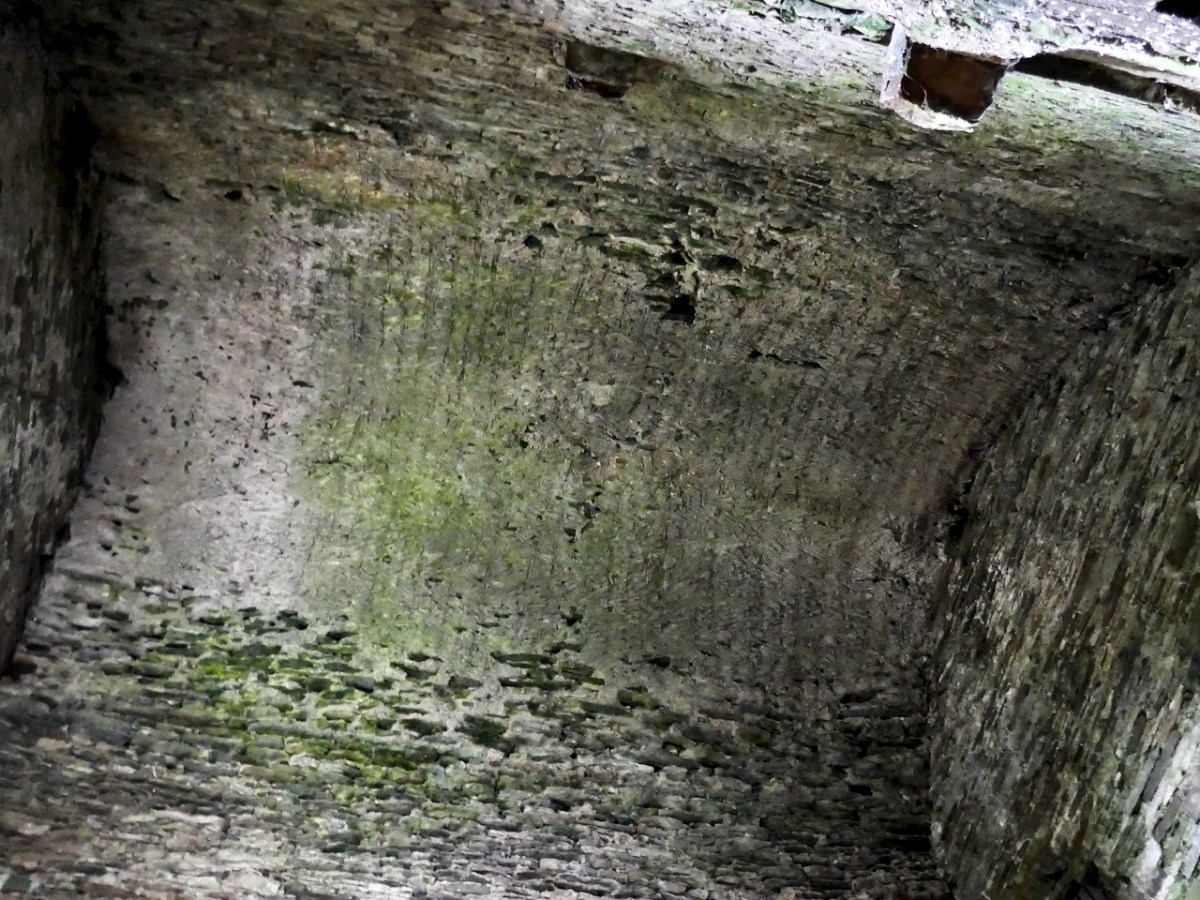
Floors were supported using projecting corbels and beams which fitted into sockets

Floors were supported using projecting corbels and beams which fitted into sockets

The entrance was often a raised entrance (see When is a Castle..?) with access via an outside wooden stairs that could be pulled up when necessary. Tower houses where the entrance was on the ground floor needed a defended access and this was often in the form of a small lobby, externally (as at Dunlough Castle) or internally, as at Kilcrea Castle. The door was secured with a heavy wooden bar, slotted into a bar-hole.

Look for a bar-hole behind the main door

Look for a bar-hole behind the main door

At Kilcrea we see that the lobby could be defended from each side and also from above, with the addition of a murder hole – literally a hole through with the inhabitants could throw rocks or boiling water down on those trapped in the entry.

Each floor was accessed by a stairway. Although some very basic castles may have relied on internal wooden stairs leading from one floor to another, most staircases were accommodated inside the walls – thus they are called mural stairs.

Dún an Óir Castle on Cape Clear Island. The mural stair can be clearly seen

Dún an Óir Castle on Cape Clear Island. The mural stair can be clearly seen

Stairs were both straight or spiral and some castles had both. A straight set of stairs didn’t need a very thick wall, but a spiral stairs needed either very thick walls or a corner tower or projection. Building a set of spiral stairs was a highly-skilled task and not just because of the inherent difficulty of working with intractable stone.

Castle Donovan spiral staircase

Castle Donovan spiral staircase

They were usually built so that you ascended them clockwise, thus presenting more of yourself to defenders above, who could hold onto the newel post with their left hand and wield a sword in their right. It was important to make the steps slightly uneven too, so that an ascending attacker could trip easily if he didn’t watch carefully.

Dunlough spiral staircase

Dunlough spiral staircase

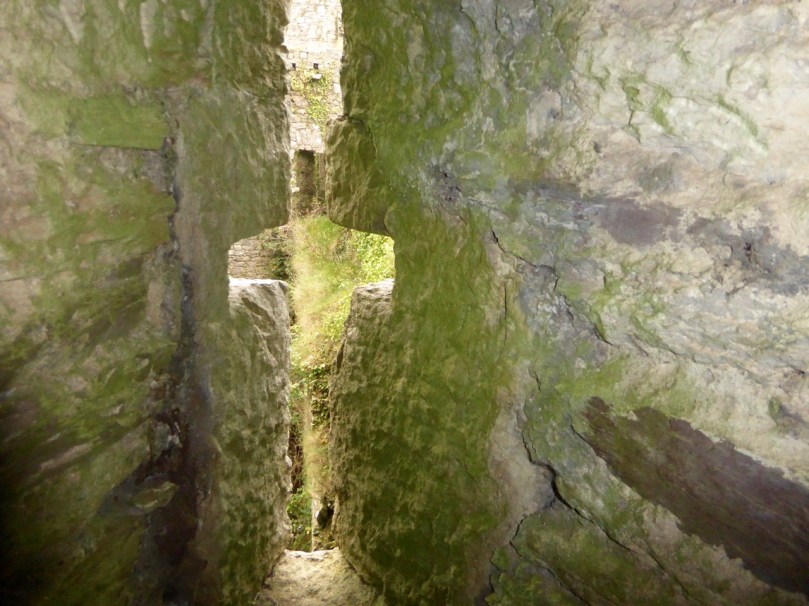
Windows had to be inserted to light the way but these could only be slits, to be used as arrow or gun loops when necessary. A cross-shaped loop was called a crosslet.

This crosslet provides light for a spiral staircase and allows an archer to shoot from inside the castle

This crosslet provides light for a spiral staircase and allows a defender to shoot from inside the castle

spiral stairsOne of the most beautiful examples of a spiral staircase we have come across is at Kilcrea Castle, near Aherla in Cork. While all such staircases* are impressive, the one at Kilcrea is a work of art. All the wall and sill stones are dressed to conform to the shape of the spiral and the sinuous progression of the newel and the steps is a joy to behold.

Kilcrea spiral staircase

The beautifully constructed spiral staircase at Kilcrea Castle. All the stones are dressed to fit the contours of the circular stairwell

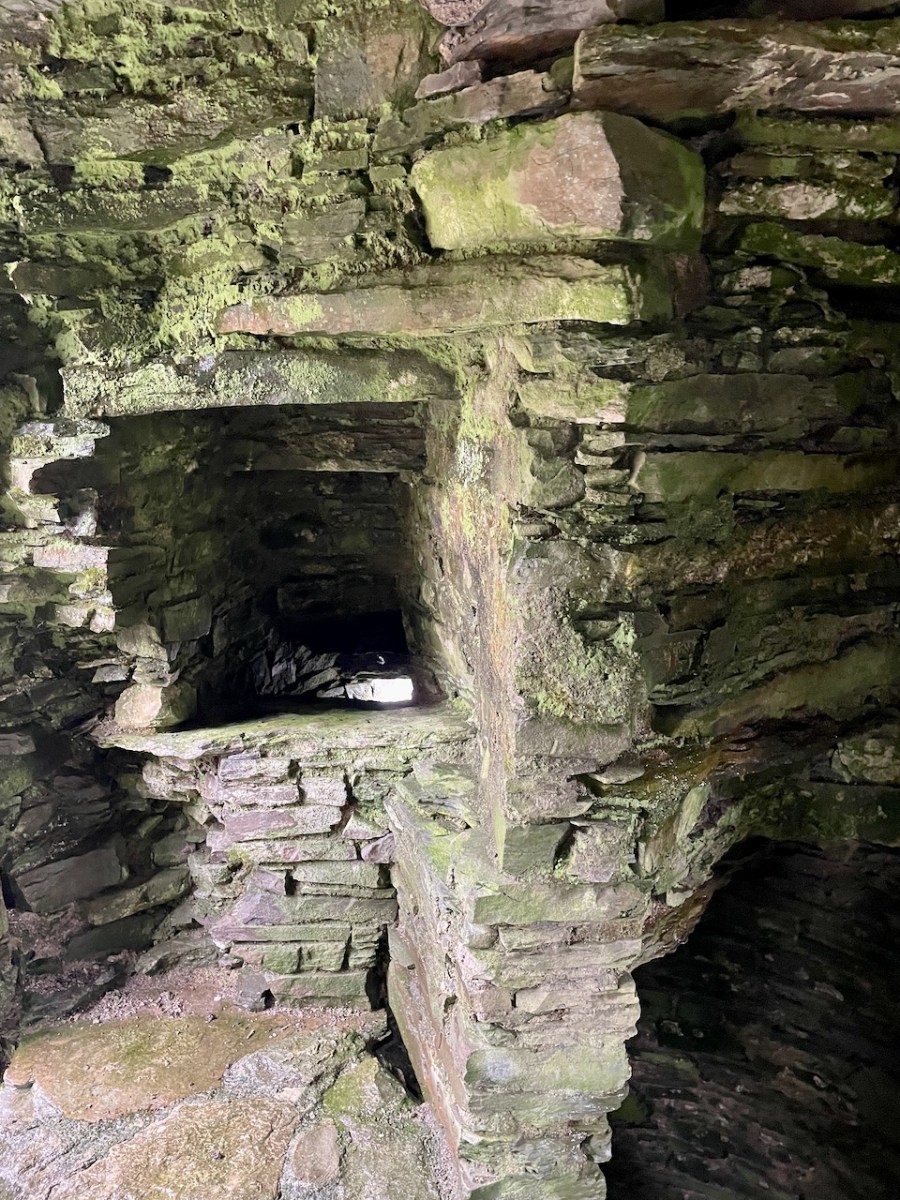
The walls hold other items of interest too. Mural chambers, for example, may have served a variety of purposes from storage to dressing – some have loops for lighting but many have not. Cupboards were built into the walls to hold lights and valuables – a mural cupboard is called an aumbry.

Two mural chambers: left is a rectangular chamber with two aumbries (cupboards) and right is an L-shaped chamber light by a loop

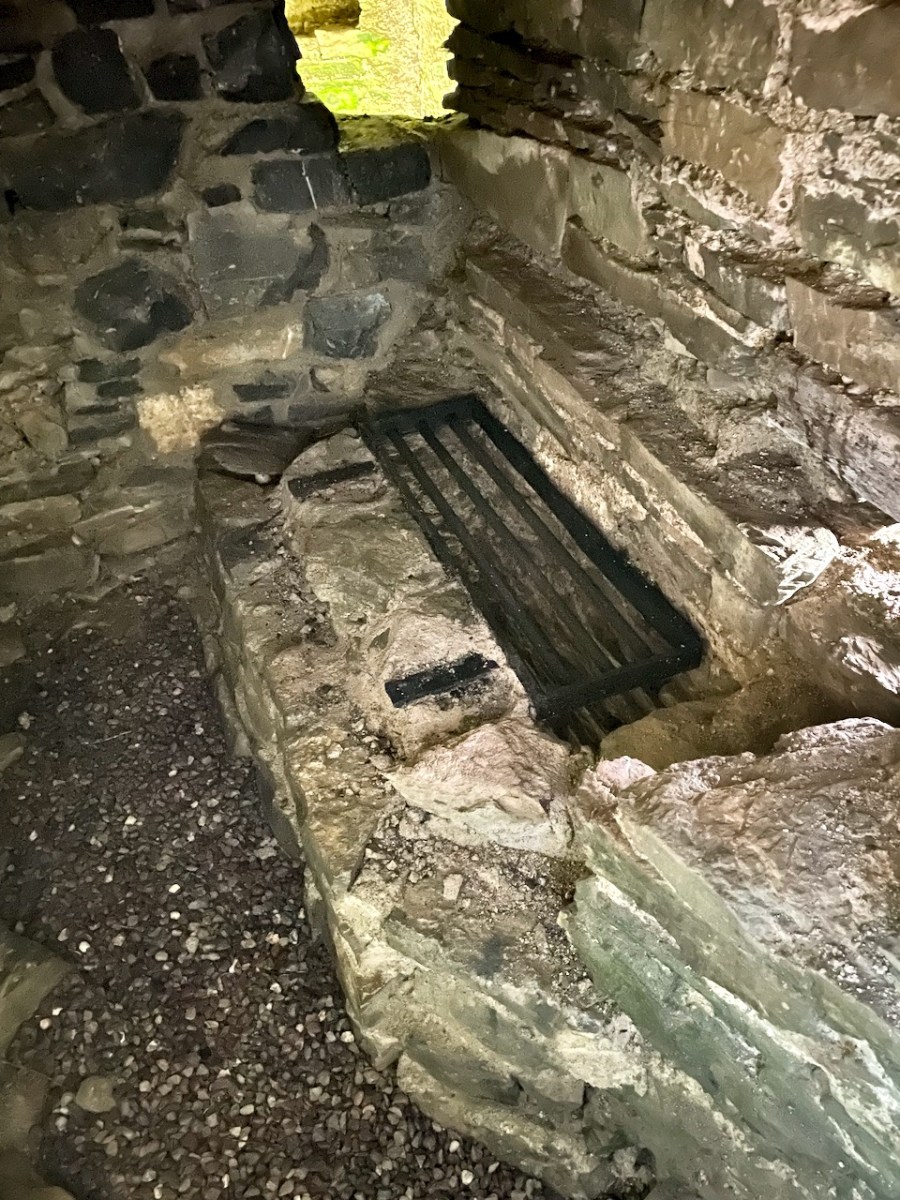
Garderobes (indoor toilets) are usually enclosed in a mural chamber for privacy (although not always!), with the garderobe chute extending down the wall to an external exit.

Dunmanus Garderobe chute
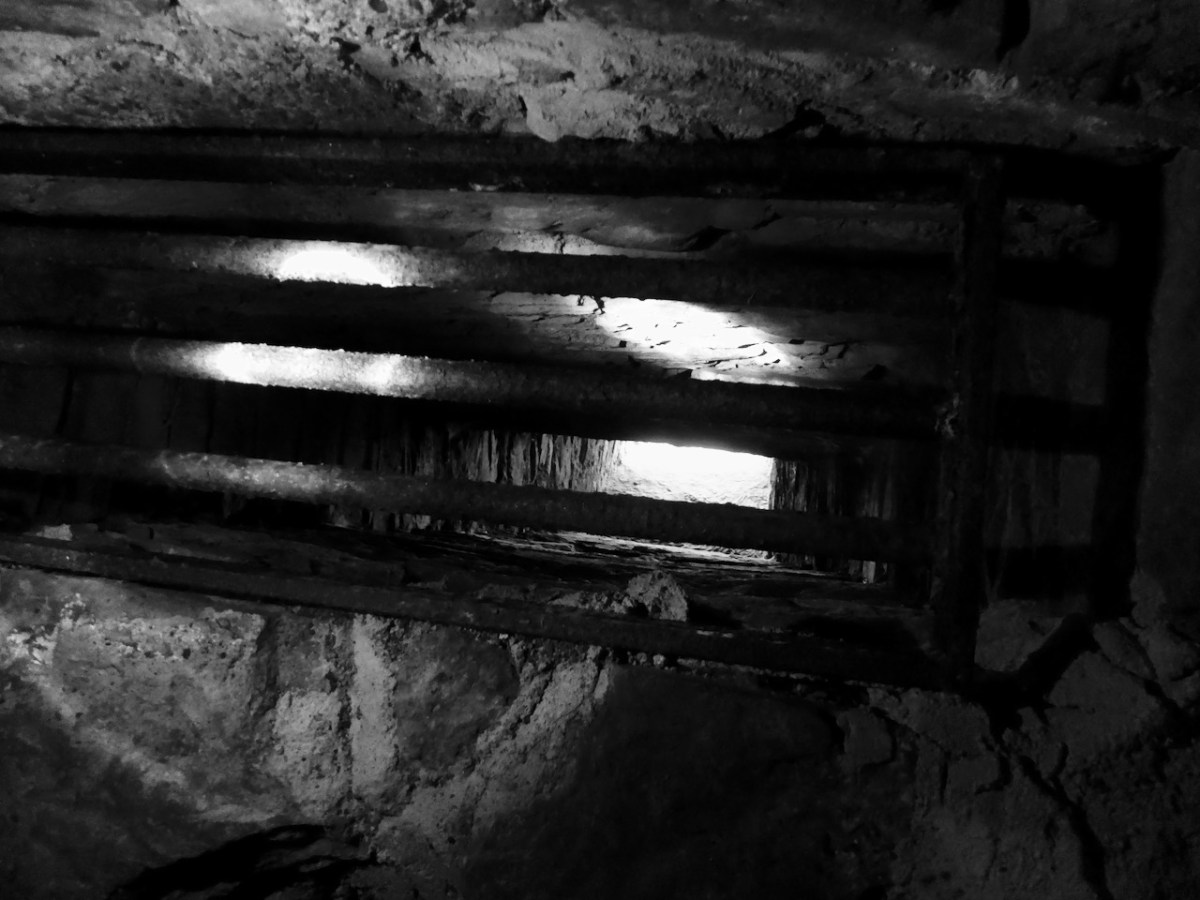
Upper: The garderobe at Ballinacarriga. Lower: Dunmanus Castle showing where the garderobe chute exits at the base of the castle

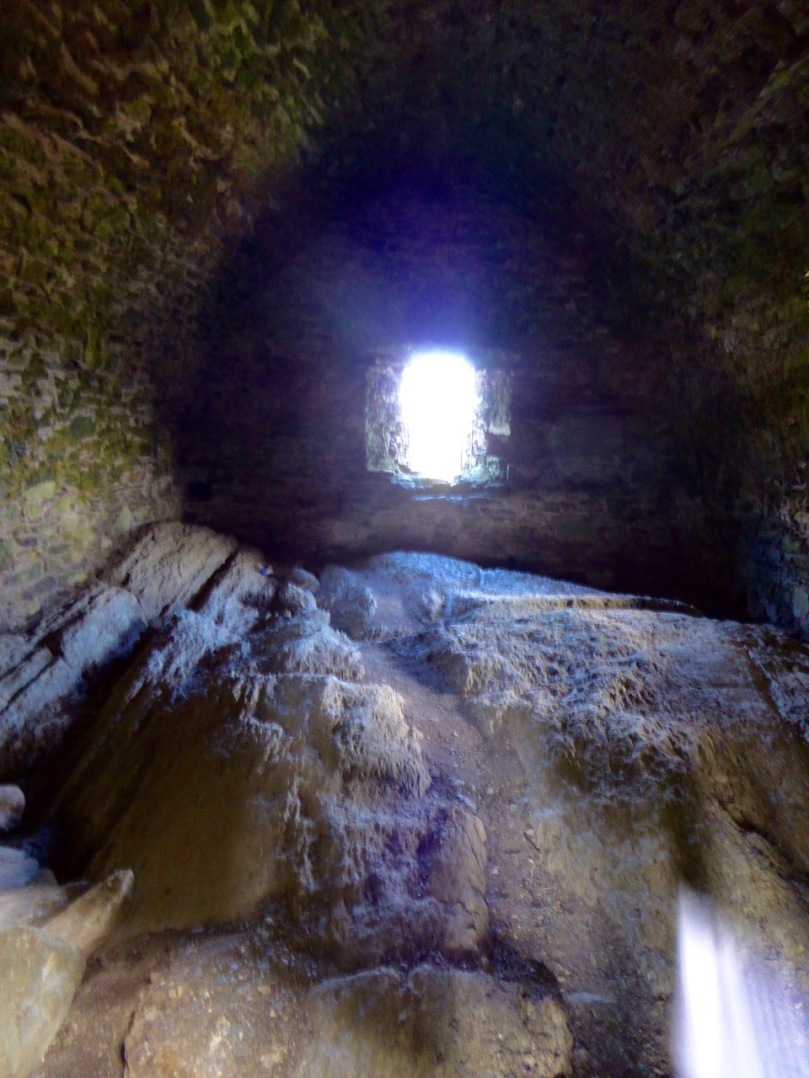
The lowest floor was often used for storage or for cattle and hence the floor was sometimes left in a natural state.

Castledonovan ground floor

Castle Donovan ground floor

The next floors were for administration and daily living activities of castle inhabitants and workers. Floors were wooden – corbels and beam sockets to support the floors show where the next level began.

Cullohill Castle - floor levels clearly visible, plus the addition of a later firepalce that obscures a window

Cullohill Castle – floor levels clearly visible, plus the addition of a later fireplace that obscures a window

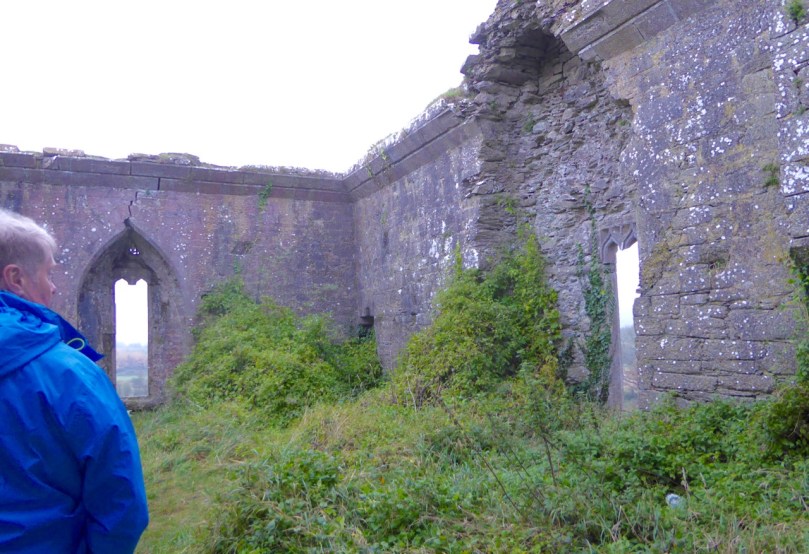
Fenestration (the arrangement of windows) was organised to emphasise defence – small windows and loops on the lower floors, larger on the top floor or solar. This was the private living quarters of the lord and his family, and a place where the women of the household could enjoy privacy and peace.

A fireplace from Castledonovan

A fireplace from Castledonovan

It was sometimes the only room in the castle to have a fireplace and generally speaking was the most comfortable room and therefore also used for entertaining.

Top floor, Kilcrea - the only floor with sizeable windows and more finely finished than the lower floors

Top floor, Kilcrea – the only floor with sizeable windows and more finely finished than the lower floors

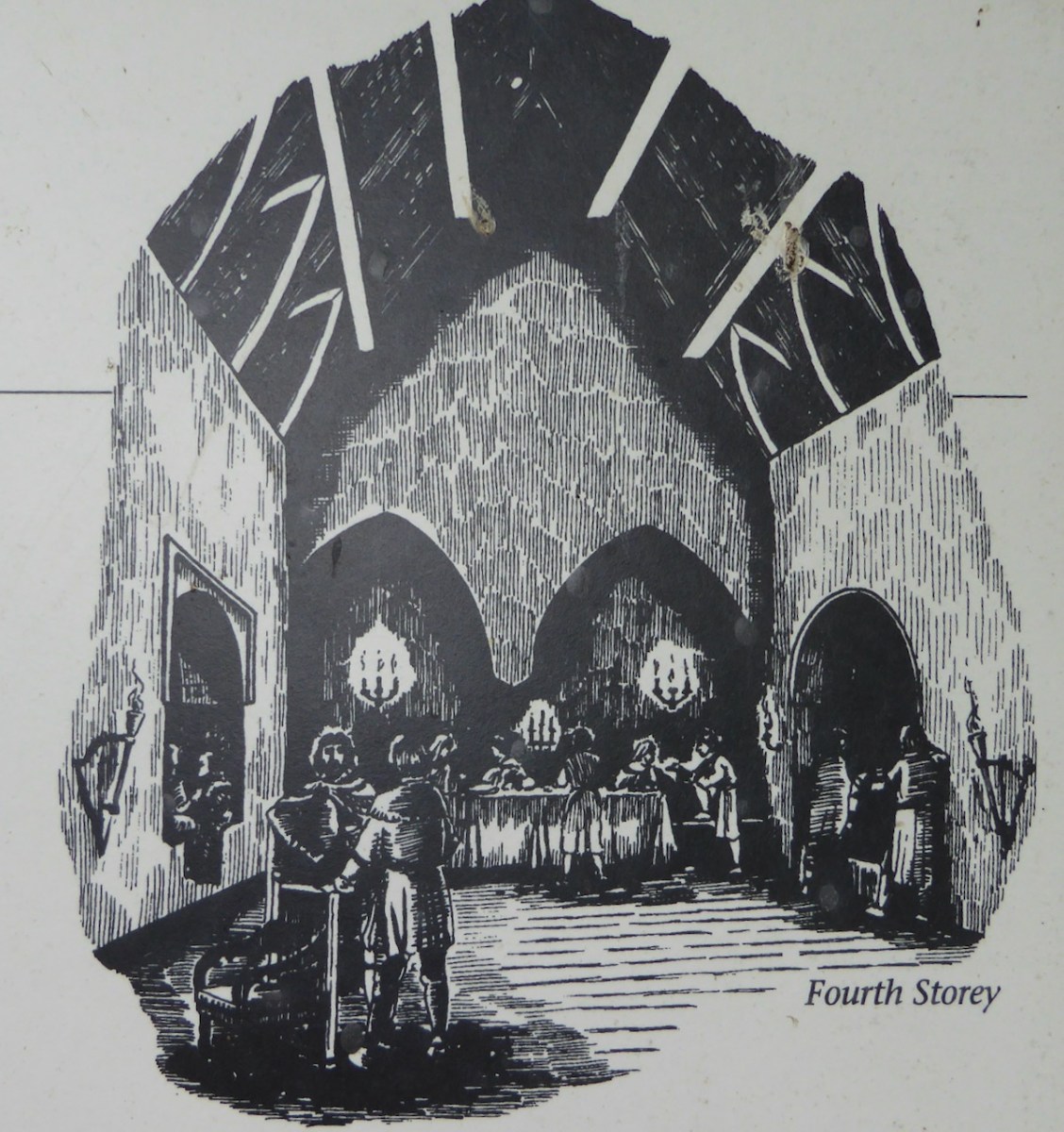
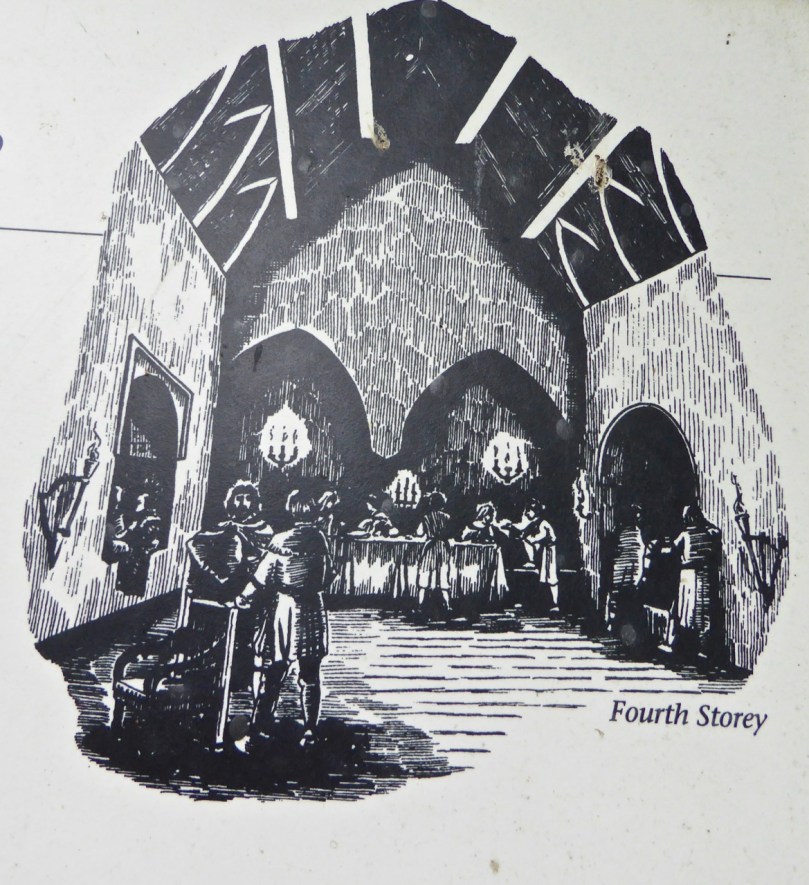
If this floor had more than one room, the other might be called the great hall and be the entertainment space.

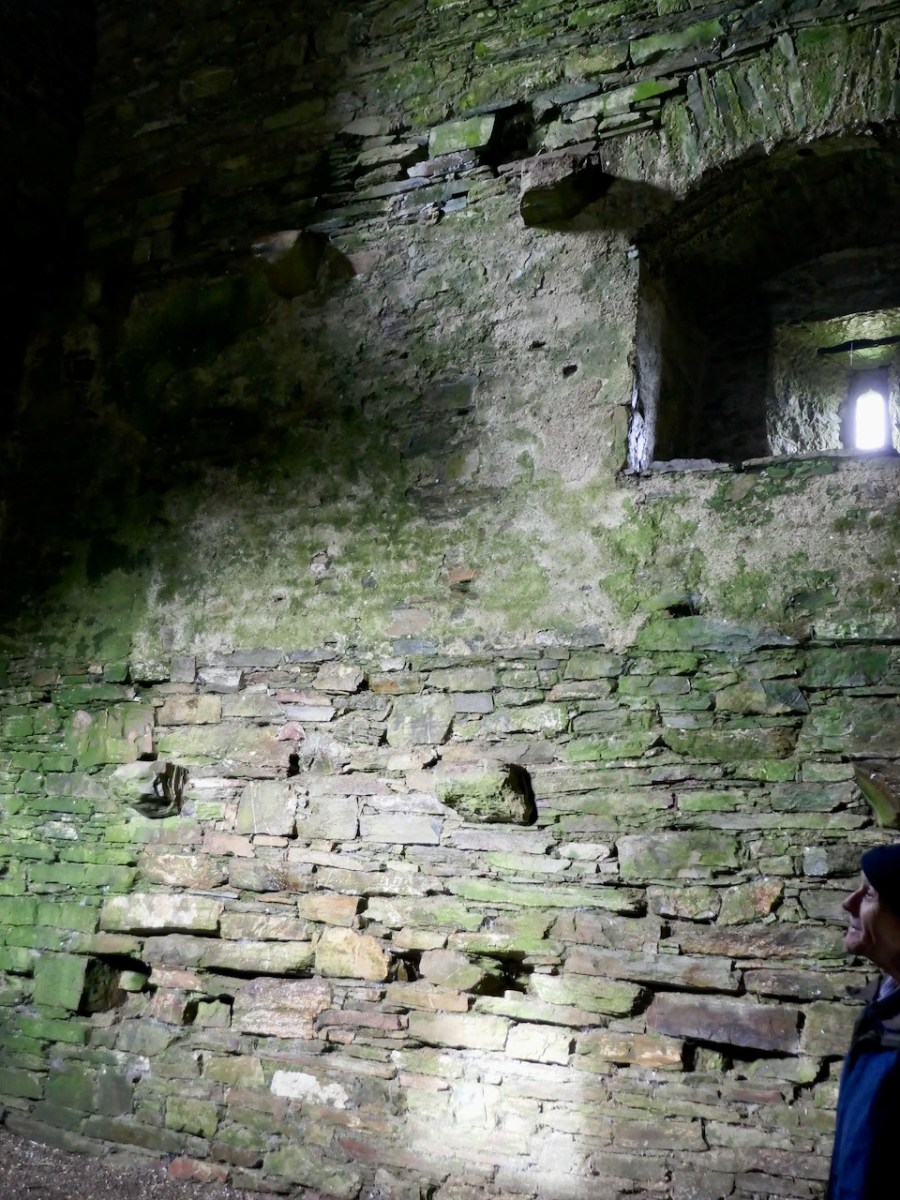
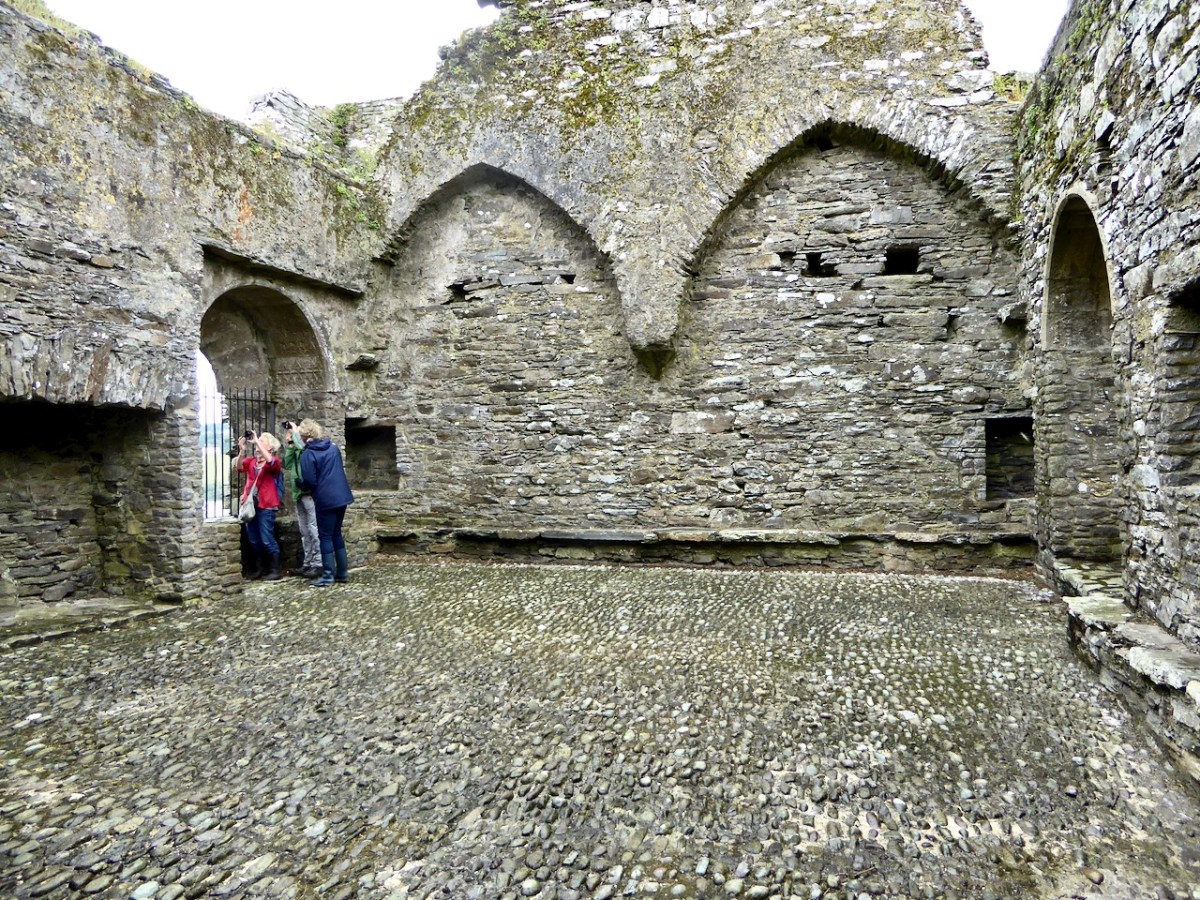
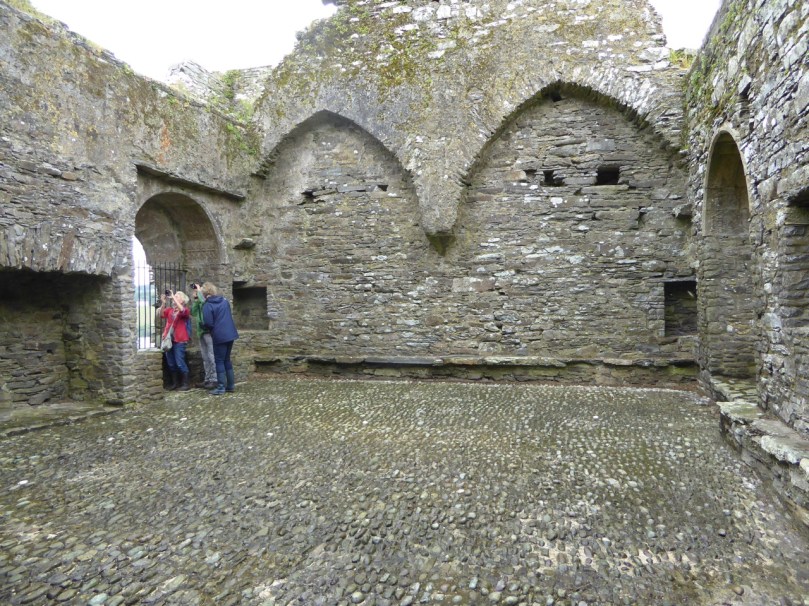
The Great Hall at Ballinacarriga. But what are we all looking at?

The Great Hall at Ballinacarriga. But what are we all looking at?

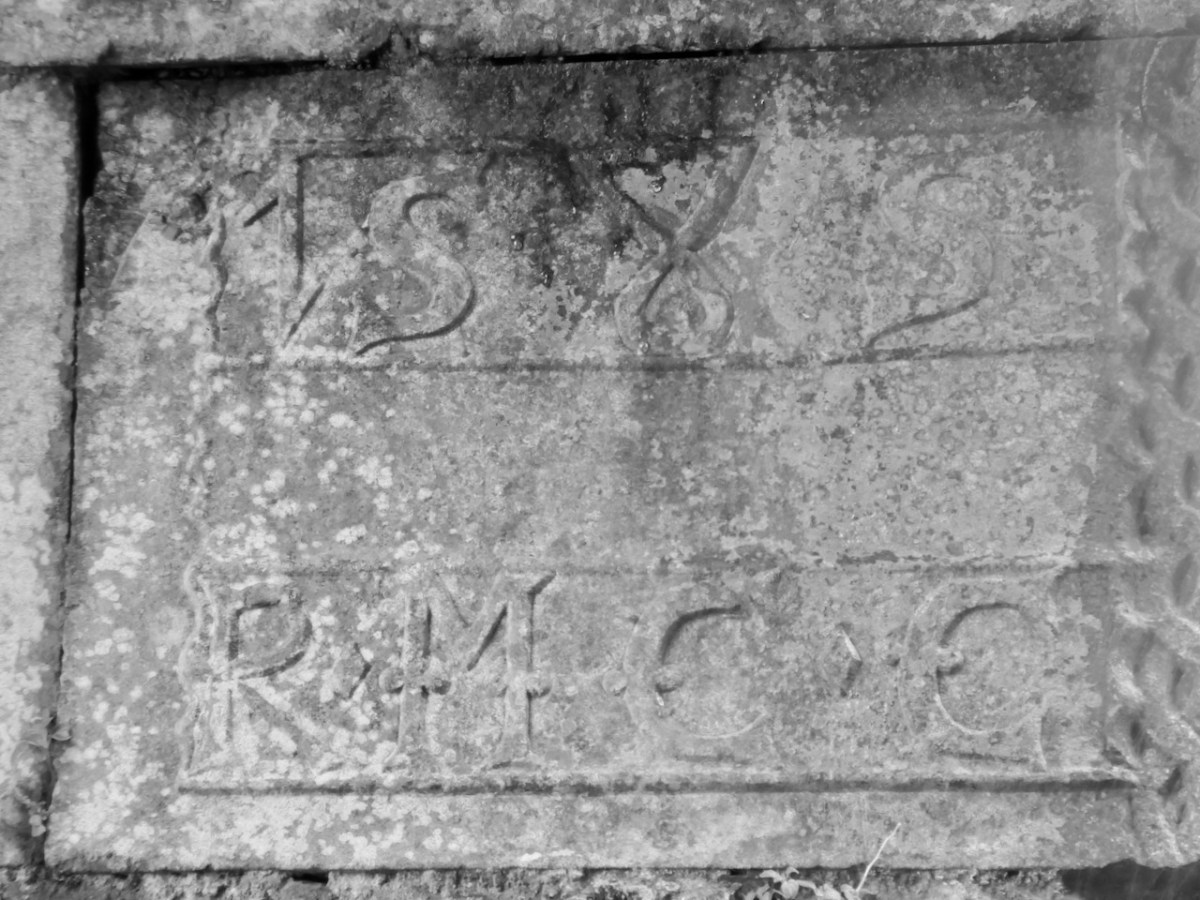
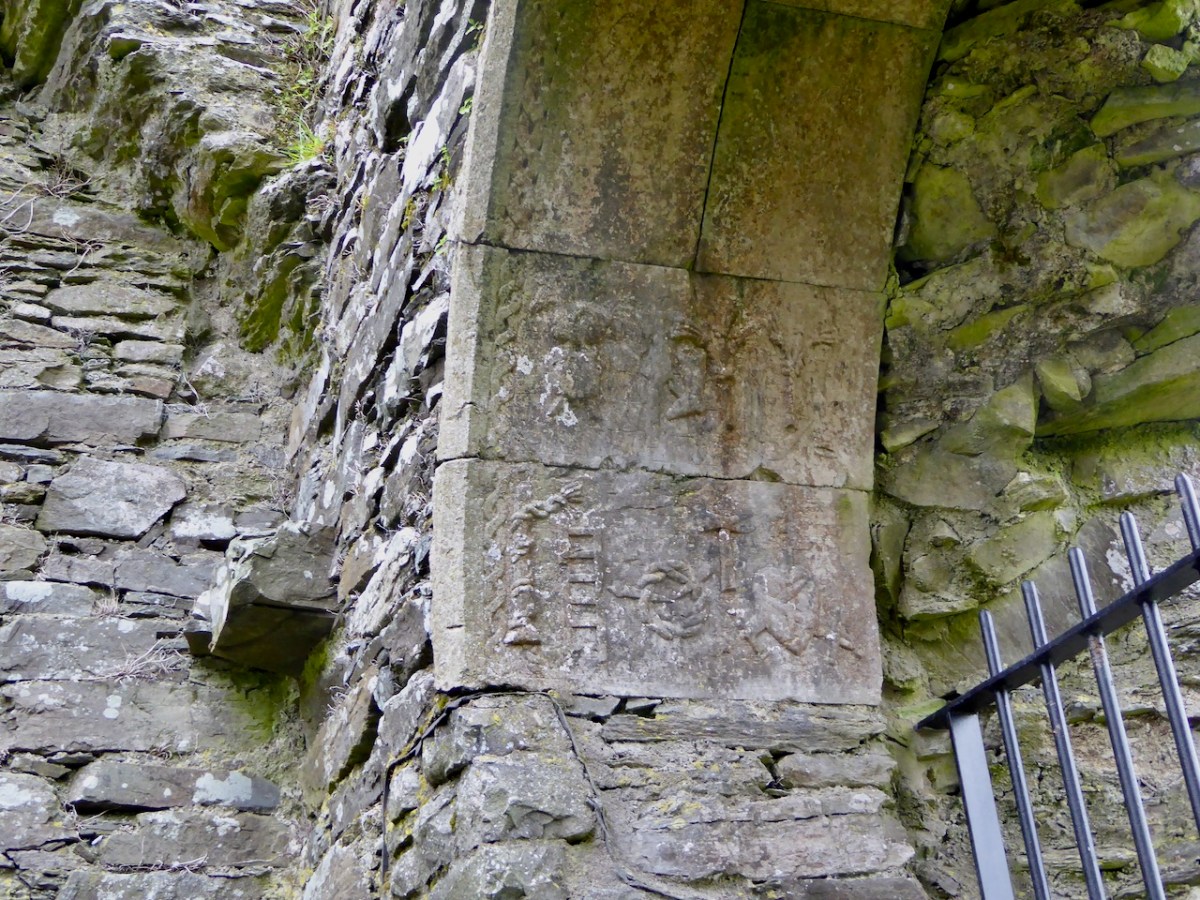
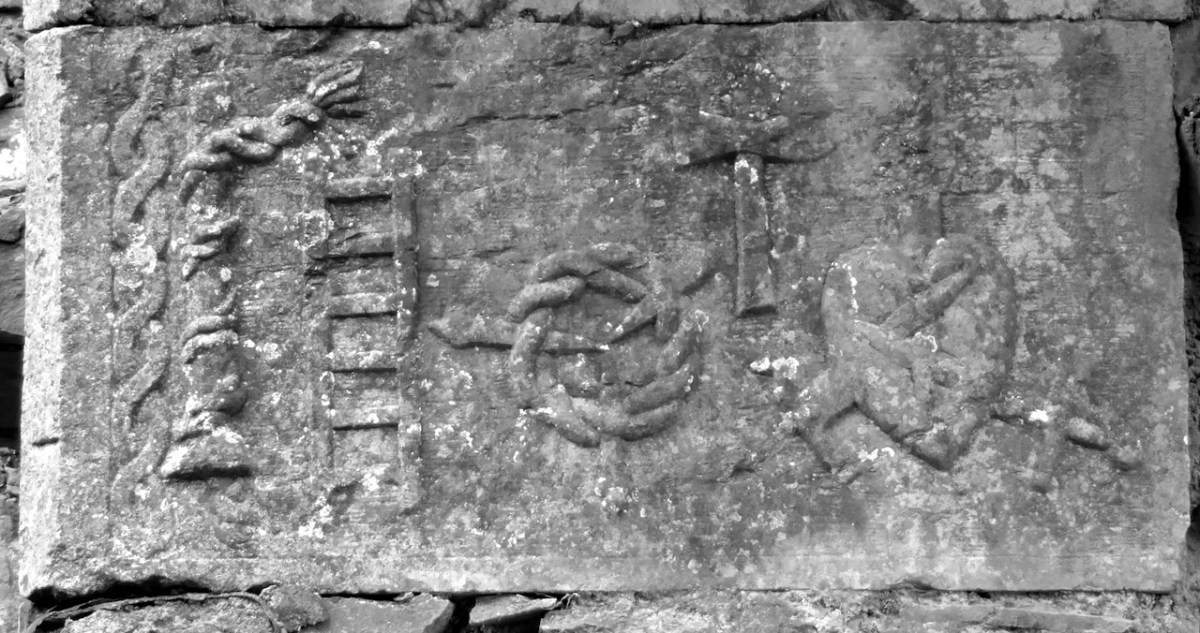
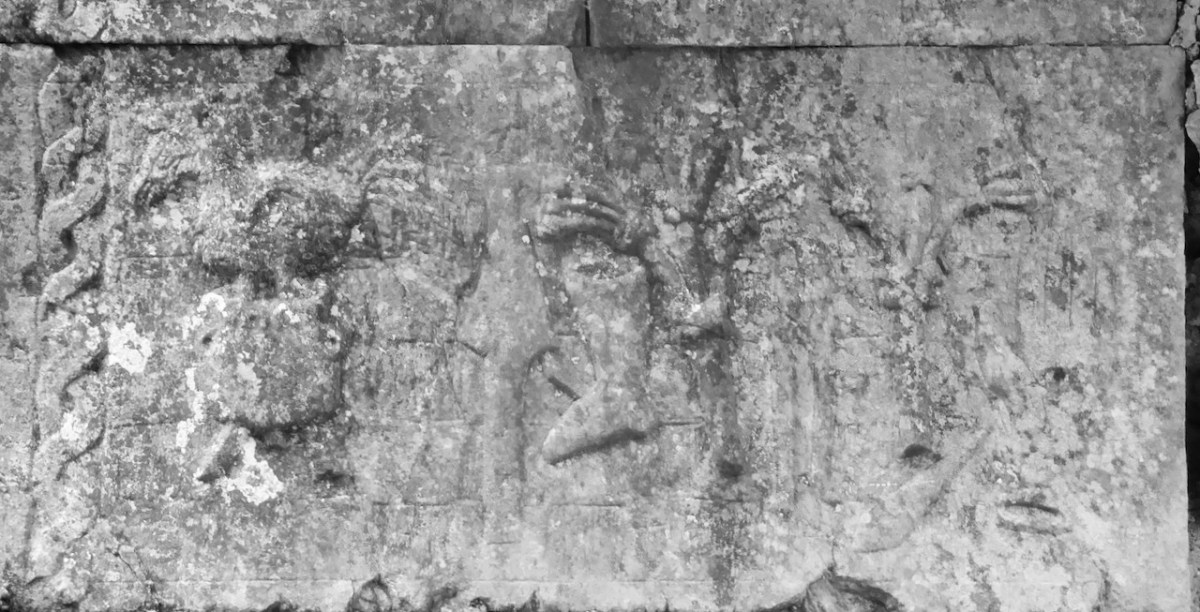
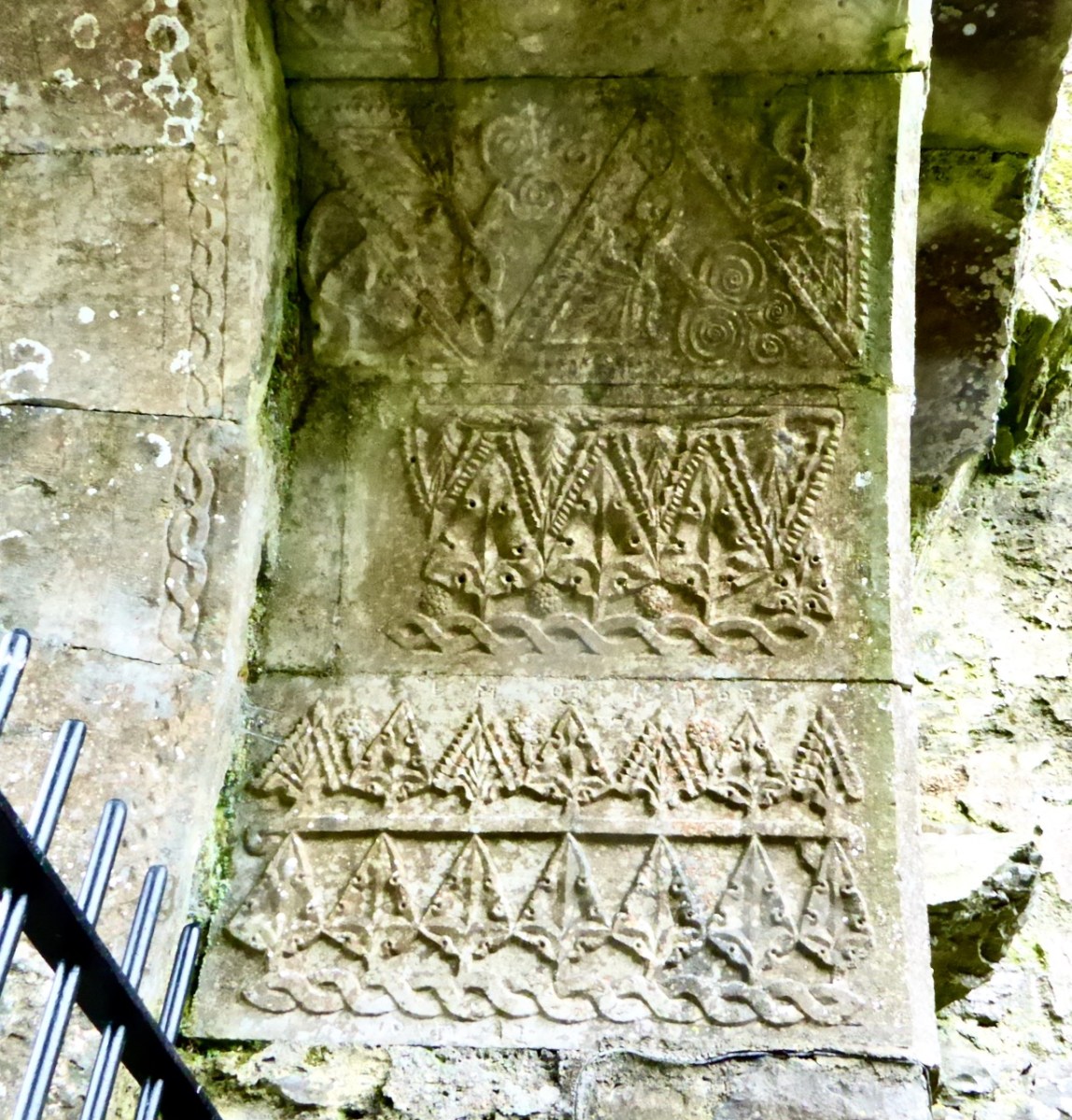
Ballinacarriga is unique in West Cork in that there are several carved window embrasures.

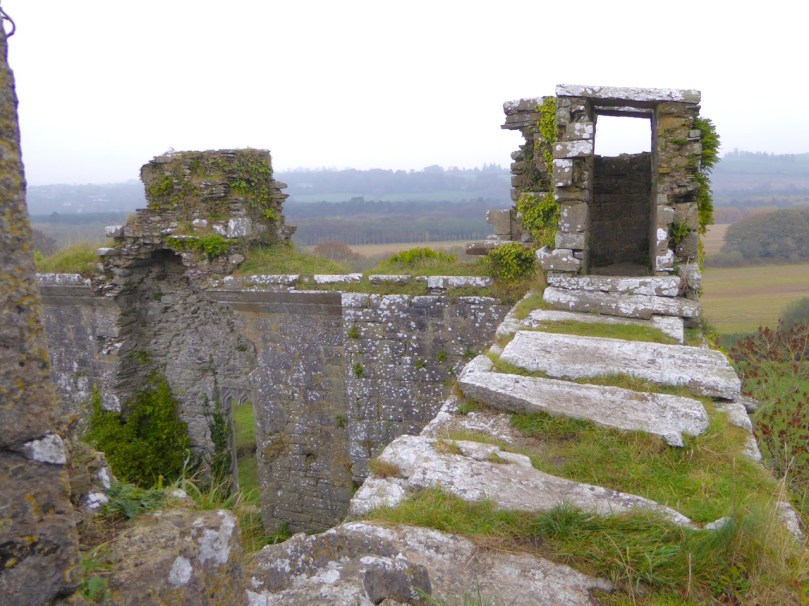
From the solar a stairway led to the battlements and wall walk. The roof could be made of timber, slate, or even thatch. The wall walk at Kilcrea had specially designed weepers to carry water away from the roof.

The wall walk at Kilcrea - note the weepers

The wall walk at Kilcrea – note the weepers

So there you are – next time you wander around a deserted castle in Ireland (we specialise in them!) you will be able to rattle off the proper terms for everything you see. The more you know, the more you appreciate the genius of our Medieval castle-builders.

Ballinacarriga Great Hall

Ballinacarriga Great Hall

I’ve learned so much doing these posts on castle architecture I am tempted to move on to abbeys – what do you think?

* The illustration of the newel stairs is from the Castles of Britain website. I believe it is from an Irish castle. That site also has an excellent glossary.

Tower House Tutorial, Part 1

Ross Castle, Killarney

Ross Castle, Killarney

Can you distinguish between a crenellation and a machicolation? How about a bartizan and a barbican? By the end of this tutorial on the architecture of tower houses you will amaze your friends at dinner parties by casually dropping such terms into the conversation. (Of course you might also be labelled as a hopeless nerd.)

Rincolisky or White Hall Castle in West Cork - a good example of a basic tower house

Rincolisky or White Hall Castle in West Cork – a good example of a basic tower house

Start by reading, or re-reading, When is a Castle..? It goes over the basics of how the tower houses of West Cork were constructed and lived in. Essentially tall, square stone dwellings, they were built more for defence than comfort. Let’s look more closely at how exactly Medieval architecture coped with making such massive structures stable and workable. We’ll start with the outward appearance – walls, windows, roof and bawn. (In Part 2 we’ll go inside.)

Like many West Cork Castles, Castle Donovan is built on a rock outcrop

Like many West Cork Castles, Castle Donovan is built on a rocky outcrop

In West Cork, there’s a noticeable preference for building tower houses on rock outcrops. Since these are massive, heavy structures, building on rock is a good idea. The downside of that has been well expressed by Peter Somerville-Large in The Coast of West Cork: “Contrary to what may be written in Holy Scripture, buildings on rock have little in the way of foundation, and when they fall down or are swept away there is nothing left of them except a memory.” Somerville-Large reminds us that there were once castles at Ballydevlin, Castlemehigan and Crookhaven of which no trace now remains.

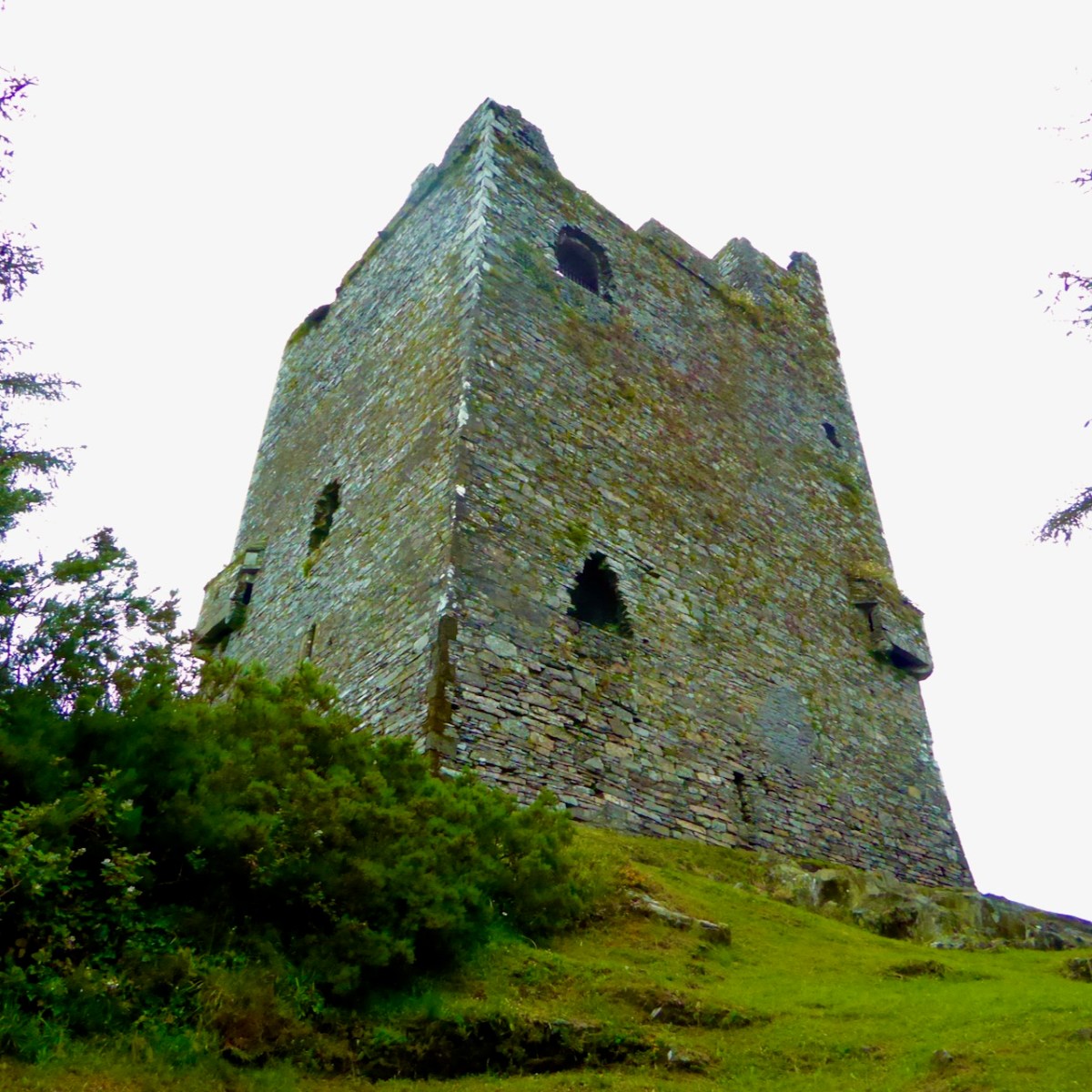
Ballinacarriga Castle. Note the splayed base batter and the unusual second floor bartizans

Ballinacarriga Castle. Note the splayed base batter and the unusual second floor bartizans

To support the tall walls, the lowest level was the thickest, splayed outwards in what is termed a base batterThe walls were constructed of stone and mortar. The mortar was lime-based – it wasn’t totally impermeable so these tower houses were damp places. Generally speaking, the cut stones were reserved for the outer and inner facings of the walls in fine castles, and in more basic ones they were reserved for quoins – the stones that were used in the angles or corners.  

A vestige of a tower house at Abbeymahon, near Courtmacsherry, shows the best cut stones reserved for the quoins

A vestige of a tower house at Abbeymahon, near Courtmacsherry, shows the best cut stones reserved for the quoins

Where walls have collapsed it is often obvious that the interior of the wall could be filled with rubble, with the best stones with the flattest faces, or the cut stones, being reserved for the outside. Cut stones were, of course, prized and many have disappeared over the intervening years, adding to the potential instability of some tower houses.

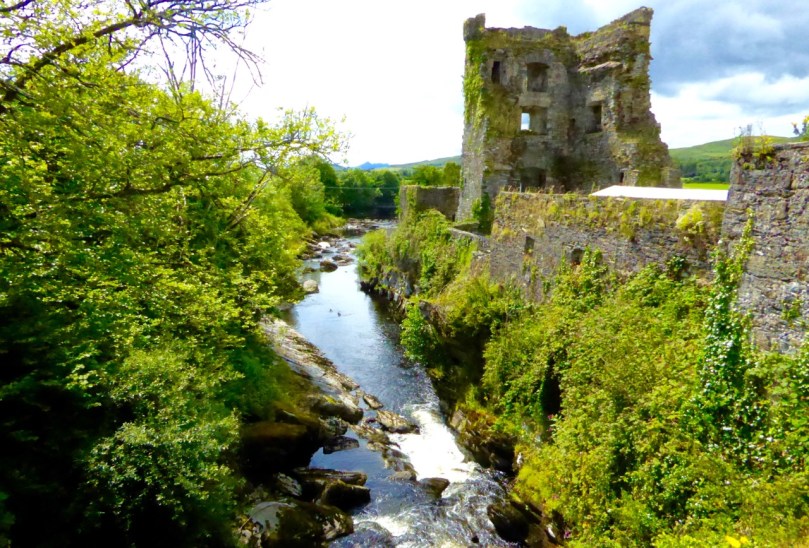
At Carriganass Castle most of the quoins have disappeared

At Carriganass Castle most of the quoins have disappeared

The walls were rendered with plaster on the outside. They could be whitewashed, which made them visible from afar. One of our local castles is known as White Castle, another as White Hall – perhaps these were originally whitewashed. The plaster could also be tinted to produce various colours – Kilcoe Castle is a good example of a tinted render based on research into this practice.

Glashare Castle in Kilkenny still shows the rendering on the outside. Note the unusual corner arrow loop

Glashare Castle in Kilkenny still shows the rendering on the outside. Note the unusual corner and cross-shaped arrow loops

The walls were pierced at various points with opes – a technical term that simply means an opening of any kind. Opes came in three varieties: doors, windows and loops. We talked about doors (raised entrances) and windows (smallest at the lowest levels, largest at the top) in When is a Castle..? Loops, arrow loops or musket loops, were always small from the outside, presenting a tiny target to attackers and preventing anyone from squeezing through (think about the origin of the word ‘loophole’). Muskets had totally replaced longbows and crossbows by the end of the 16th century so any castle built after that time had gun loops, and some even had larger cannon loops.

Carriganass Castle has many loops - the tiny one in this pictures seems to small to be useful

Carriganass Castle has many loops – the tiny one in this pictures seems too small to be useful

Inside, the loops were deeply splayed to allow the head and shoulders of the archer/shooter into the space, or embrasure. Loops could appear in the walls of the castle, or of the bawn.

A deeply splayed gun embrasure at Carriganass

A deeply splayed gun embrasure at Carriganass

At the top of the tower was the roof and the battlements. The roof was made of various materials – slate, wood or even thatch. Between the roof and the outside wall was a wall walk, protected by a parapet.

Dún an Óir, or the Fort of Gold, on Cape Clear Island. The wall walk can be clearly seen

Dún an Óir, or the Fort of Gold, on Cape Clear Island. The wall walk can be clearly seen*

In Ireland, this parapet most often took the form of what became known as Irish Crenellations. These were stepped or ‘toothed’ battlements, with tall parts (merlons) behind which defenders could take cover and shorter parts (crenels) for shooting from.

A good example of Irish crenellations from Kells Priory in Kilkenny

A good example of Irish crenellations from Kells Priory in Kilkenny

Another defensive feature was a platform that projected away from the walls, called a machicolation.  Defenders used the opening between the wall of the machicolation and the castle wall to hurl things down on attackers. Machicolations are often located above doorways, but also at corners which afford a view of two sides. When they are on corners they are called bartizans.

Corner machicolation, or bartizan, at Tocher Castle, north of Dunmanway

Corner machicolation, or bartizan, at Togher Castle, north of Dunmanway

The machicolation was supported by corbels which could be simple triangles or carved stone elements.

Shrule Castle in Mayo has decorative corbels. Note also the rounded corners of the castle which did away with the need for quoins

Shrule Castle in Mayo has decorative carved corbels. Note also the rounded corners of the castle which did away with the need for quoins

The bawn is the courtyard immediately surrounding the tower. Bawns could be restricted in size – little more than the immediate courtyard of the castle – or extensive. They are sometimes known as wards. The bawn wall was often fortified with loops and a wall walk.

The bawn wall of Carriganass Castle at Kealkill hovers picturesquely over the river

The bawn wall of Carriganass Castle at Kealkill hovers picturesquely over the river

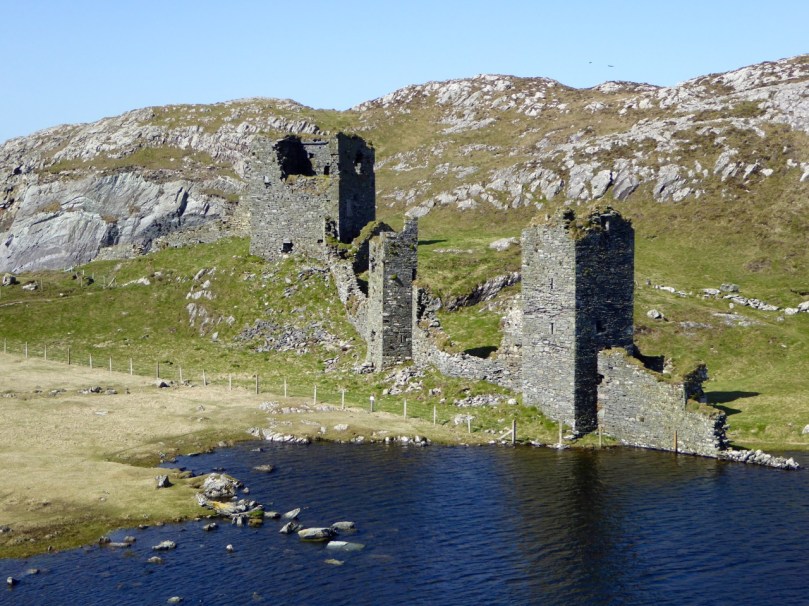
Bawn walls are often called curtain walls, but this term is also appropriate when the wall does not actually enclose a bawn, as at Dunlough Castle at Three Castle Head. Because the towers are situated between the lake and an impregnable cliff the curtain wall provides a barrier behind which defenders can shelter.

Dunlough, or Three Castles. The curtain wall presented a formidable barrier to attackers

Dunlough, or Three Castles: the curtain wall presented a formidable barrier to attackers

In the next tutorial we will cover the inside of the tower house. Meanwhile, here’s a pop quiz. Take a look at this photo of Ross Castle and see how many features you can identify. 

Ross Castle, in Killarney, is also built on an outcropping rock base

So – how did you do?

*Thanks to Lisa Scarff for the Dún an Óir photograph.