Although there is evidence that animals were able to survive in Ireland during warming periods occurring during the Pleistocene (Ice Age), there were (until recently*) no signs of humans until the Mesolithic Period, starting about 10,000 years ago. But even evidence for Mesolithic activity in the south west of Ireland is sparse. After the last of the ice sheets retreated, plants and animals may have travelled across land bridges that are believed to have existed for short periods. People may have come that way too, but are more likely to have arrived by boat.**
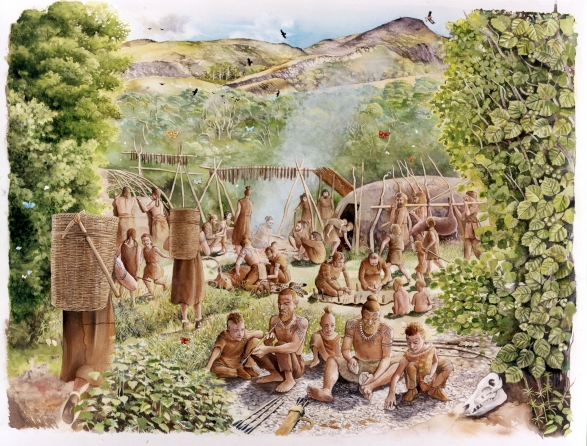
This illustration is a Reconstruction of Mesolithic life at Holyrood Park, Edinburgh, © Crown Copyright Historic Scotland reproduced courtesy of Historic Scotland. http://www.historicscotlandimages.gov.uk.
The Mesolithic people were hunter-gatherers with a close relationship to the land and the sea. They lived nomadic or semi-nomadic lives – going to the rivers to fish and to the sea to collect shellfish, hunting in the forests and open areas, and gathering wild plants such as berries and vegetables. The earliest evidence we have for them in Ireland comes from Mount Sandel in Co Derry and Lough Boora in Co Offaly, both dating to around 7500BCE, or 9,500 years ago.
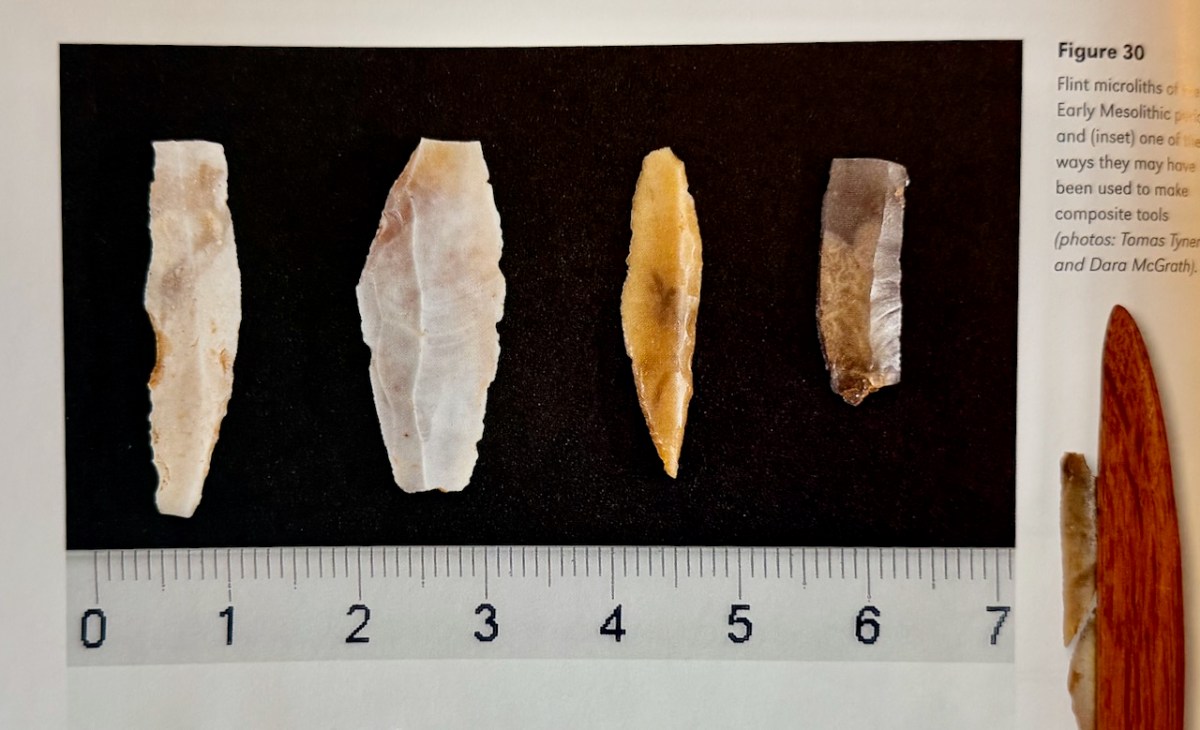
They made distinct tools from flint. Flint occurs naturally in chalk and there’s lots of it in Southern England, but not much in Ireland except in the far north east. When flint is found in Cork it may have arrived by way of glacial till – dropped by glaciers as they moved across the landscape. Or, of course, it may have been brought by people – it was after all, the preferred and prized material for making stone tools, as it would break predictably and produce a sharp edge.
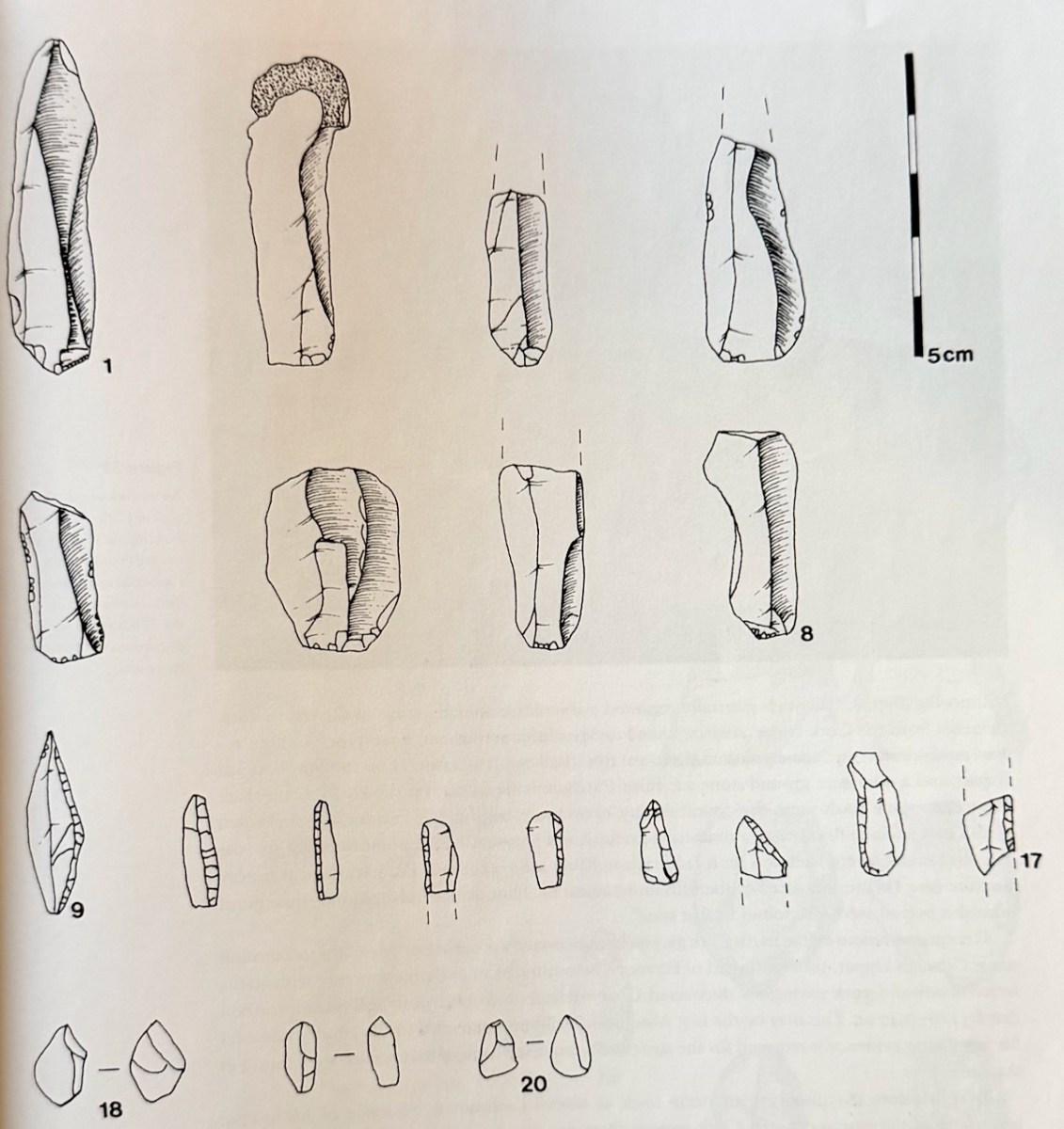
This (above) is what Mesolithic stone tools looked like – the illustration is from excavations in Kilcummer, near Castletownroche. The site was identified when small pieces of flint were picked up as a result of tillage. Excavation uncovered many small pieced of worked flints (microliths) but no evidence of settlement or other cultural activity. The site was on the banks of the River Blackwater. Note how small the flints are – the longest is 5cms and some are as small as 2cms.
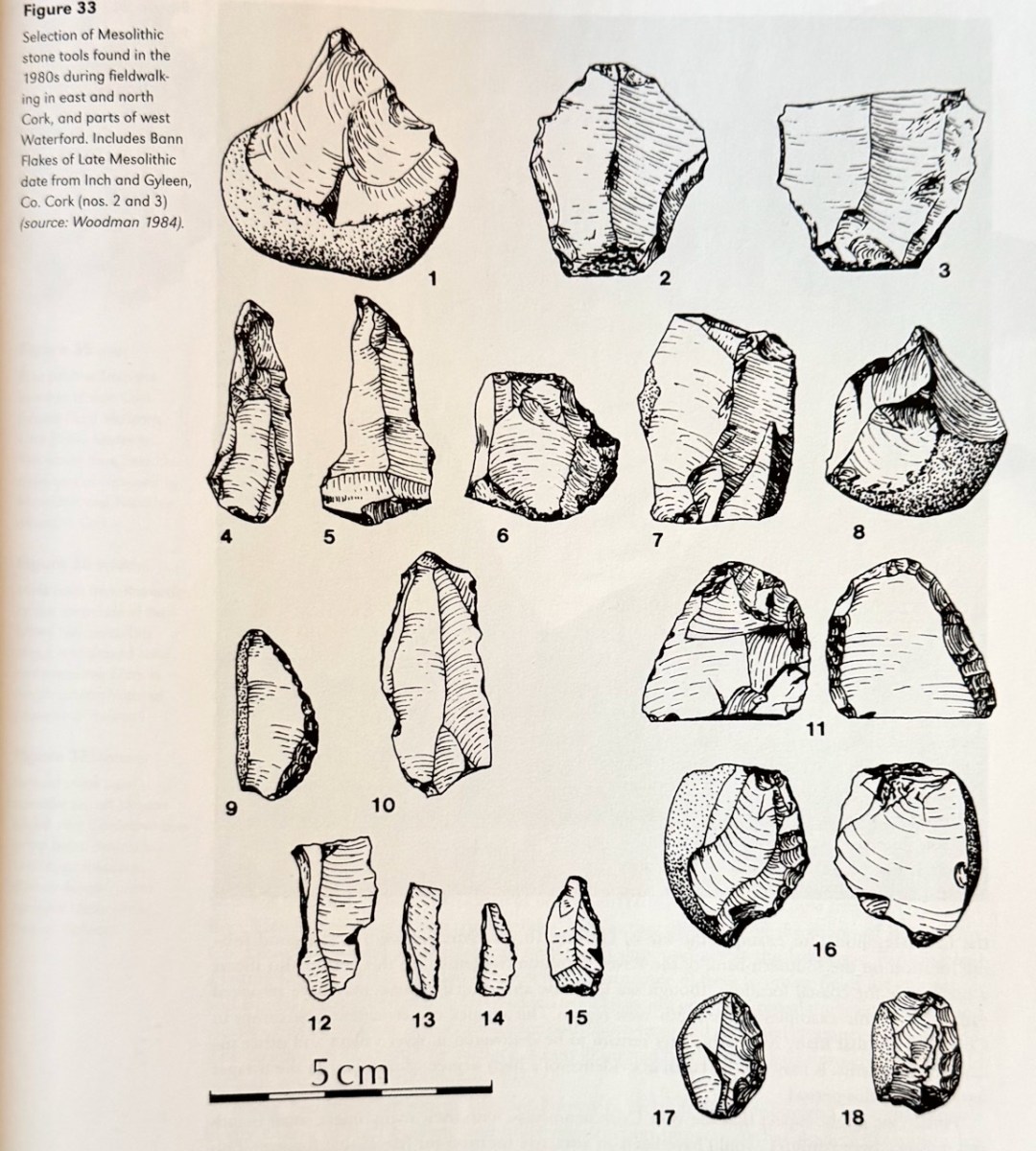
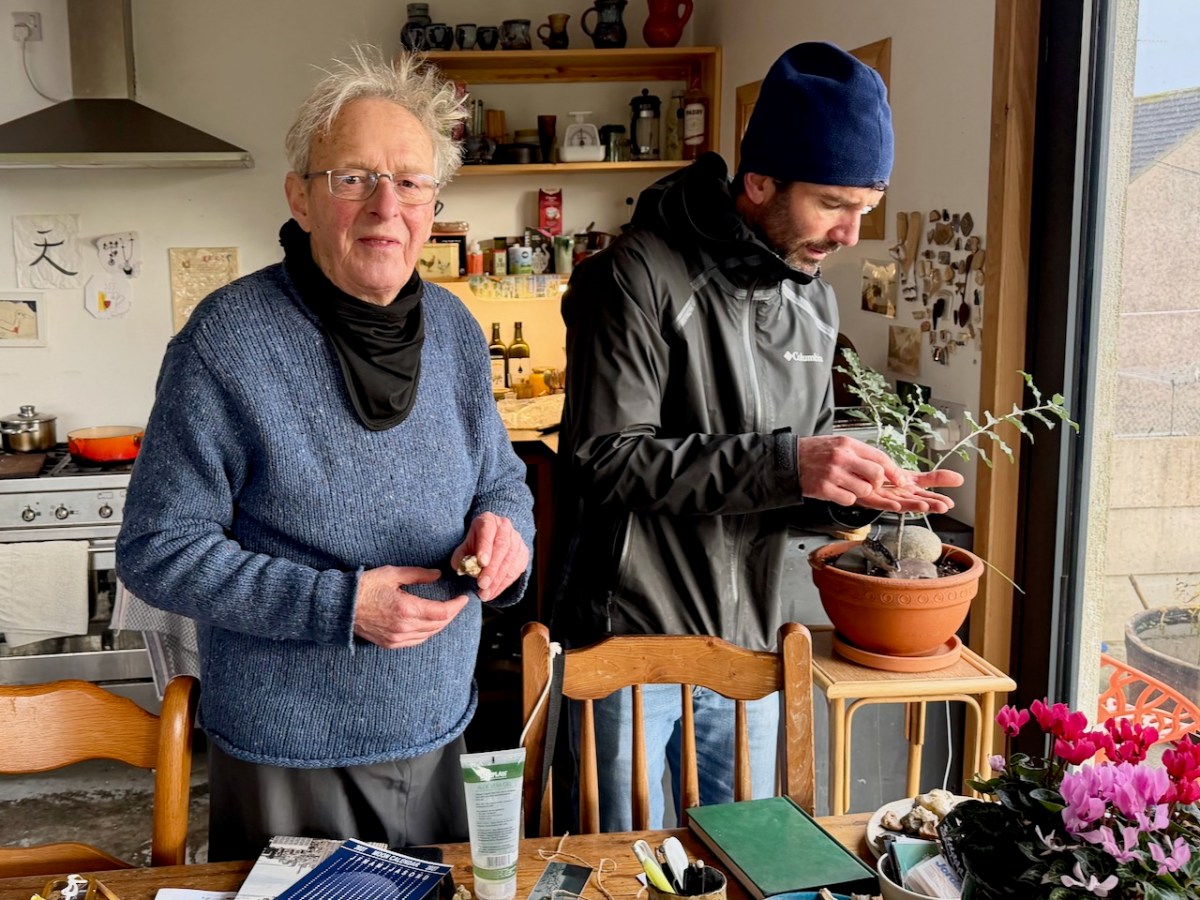
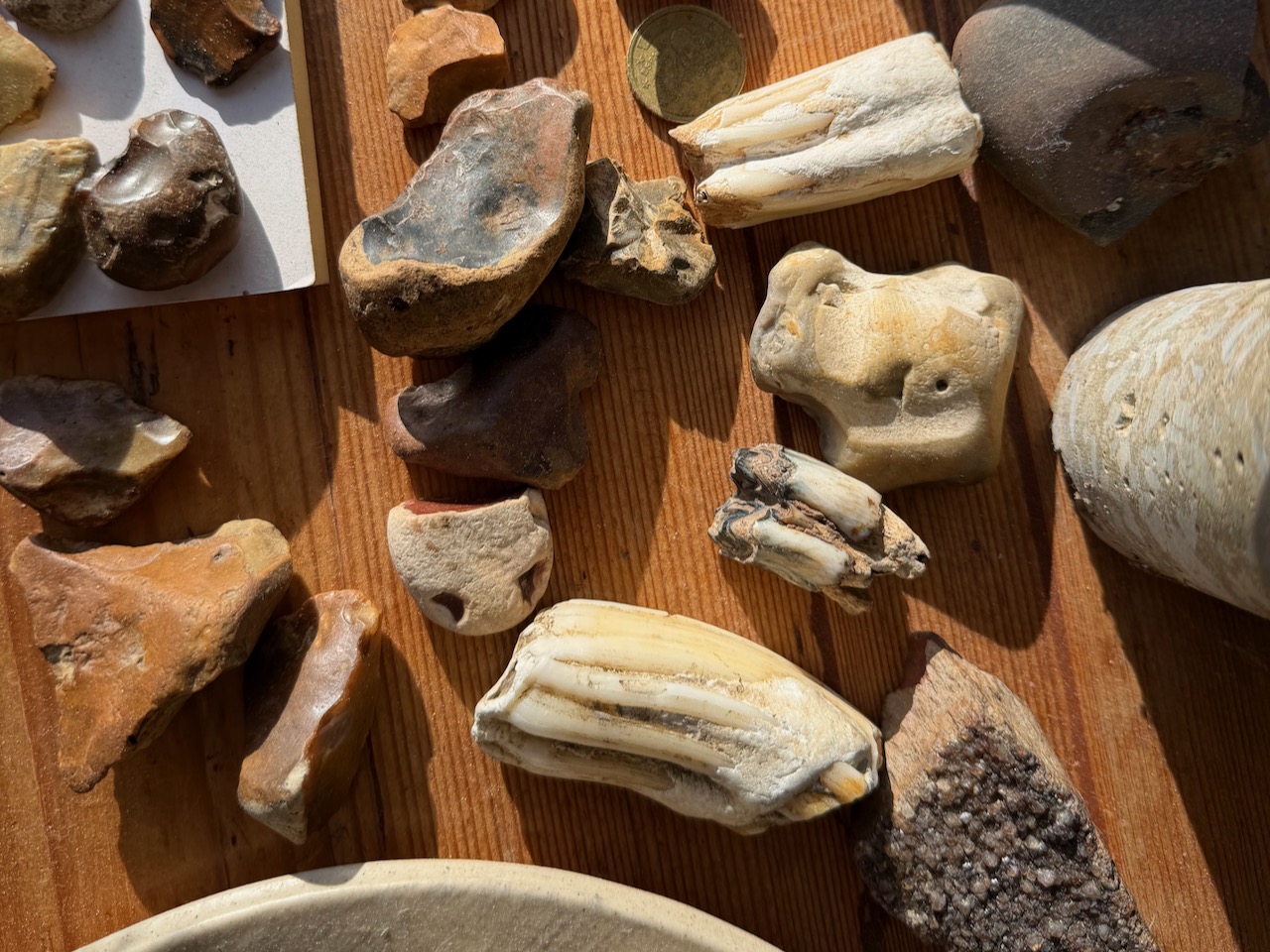
Here’s another illustration (above) – this time of finds from ‘field-walking’ in East Cork. We have no secure knowledge of how they lived beyond what was found at Mount Sandel – hut circles, hearths and storage pits, interpreted as evidence of a ‘long stay base camp.’ So – as you can imagine, when flint finds like this are discovered in West Cork, it is a cause of great excitement. That’s exactly what I felt when my friend, Fred LaHaye, invited me to view his interesting collection of flints. Here is some of what he showed me.
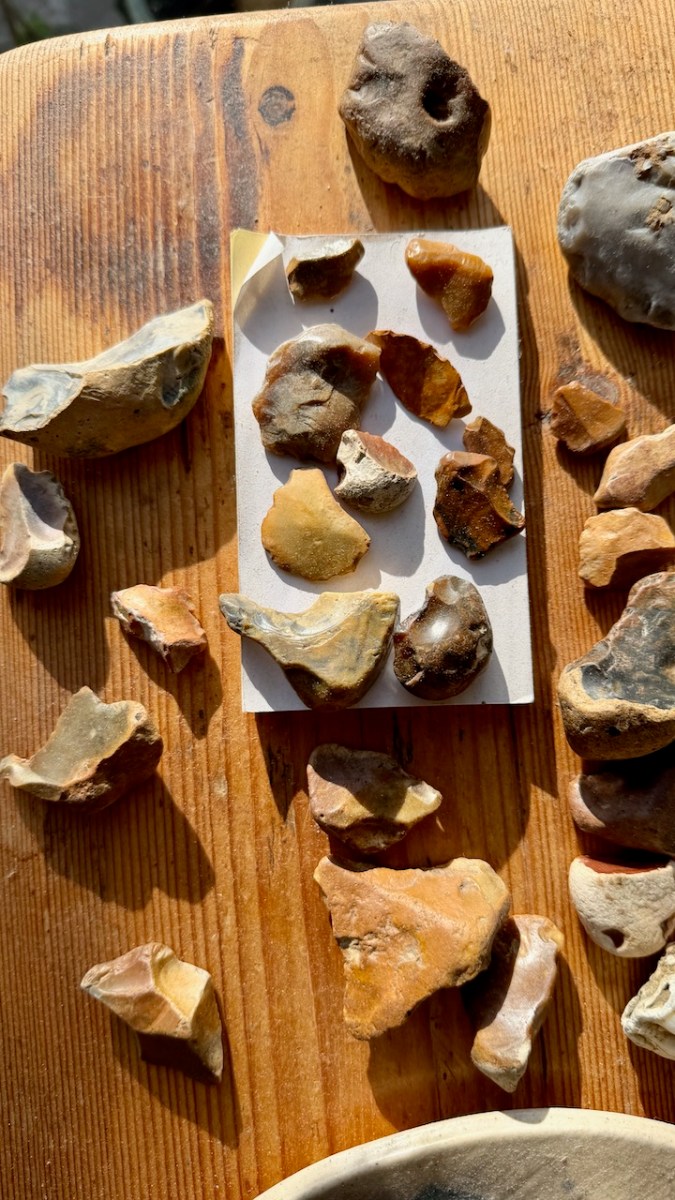
Fred has contacted the Dept of Archaeology at UCC but as we subsequently discovered his message met a sad fate when the person who received it died suddenly. I emailed Nick Hogan from the Department, and sent some photographs. Nick agreed that this was a potentially very interesting find and we arranged for the three of us to visit the site. It’s on the coast, but the exact location is under wraps for the moment.
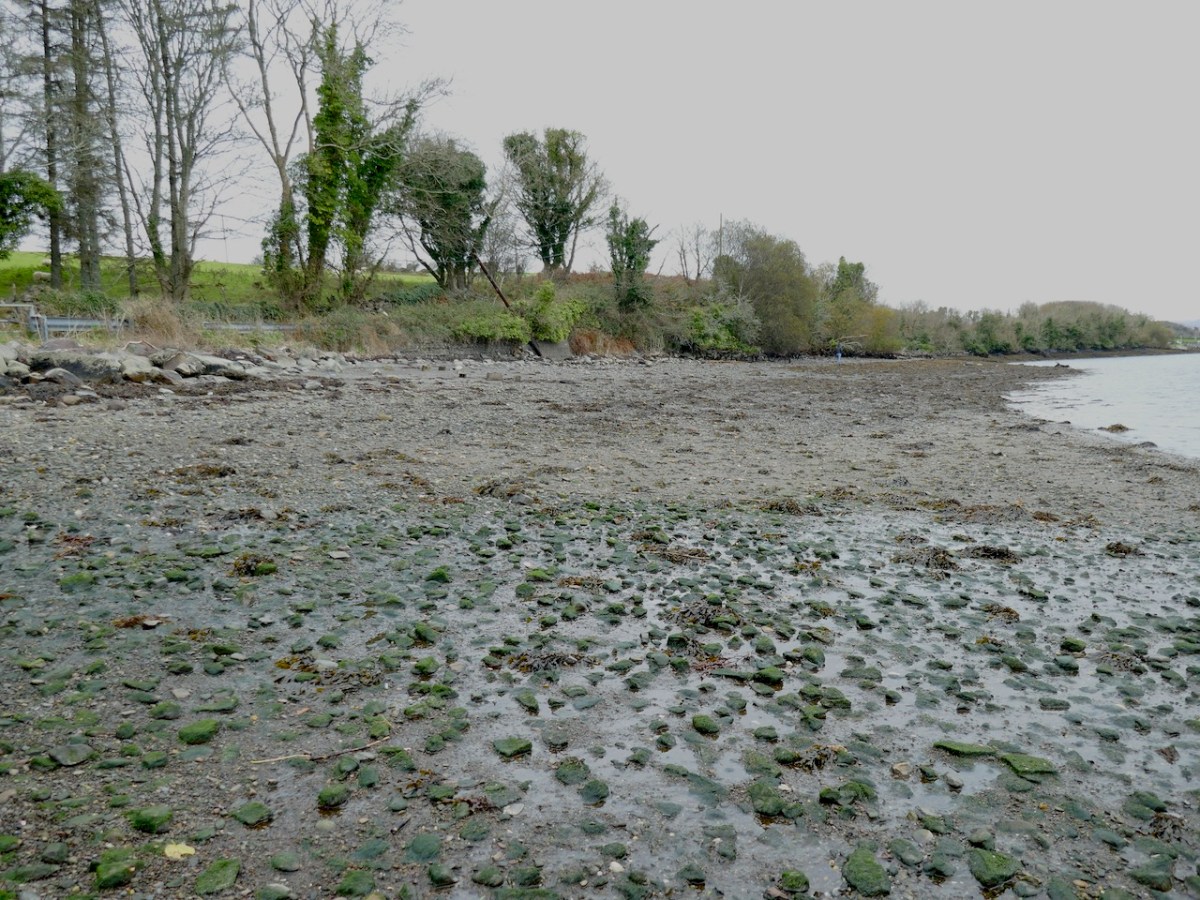
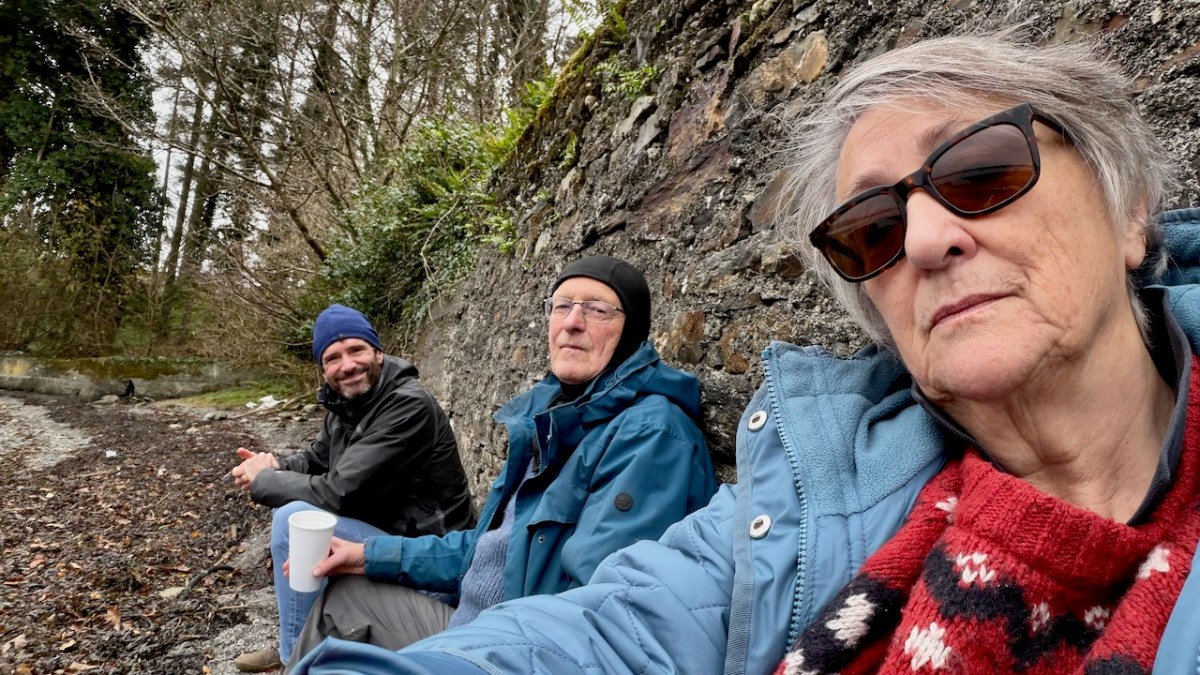
We walked the site and found many additions to the assemblage. It felt so good to be out doing this kind of fieldwork again after decades of absence from it. When I was a student at UCC, Prof O’Kelly made us draw flints for hours – he believed it was the best way for us to really look and see what a worked flint looks like and to get to know the terminology and morphology (size and shape) of stone tools. That’s Nick, Fred and yours truly on our coffee break.
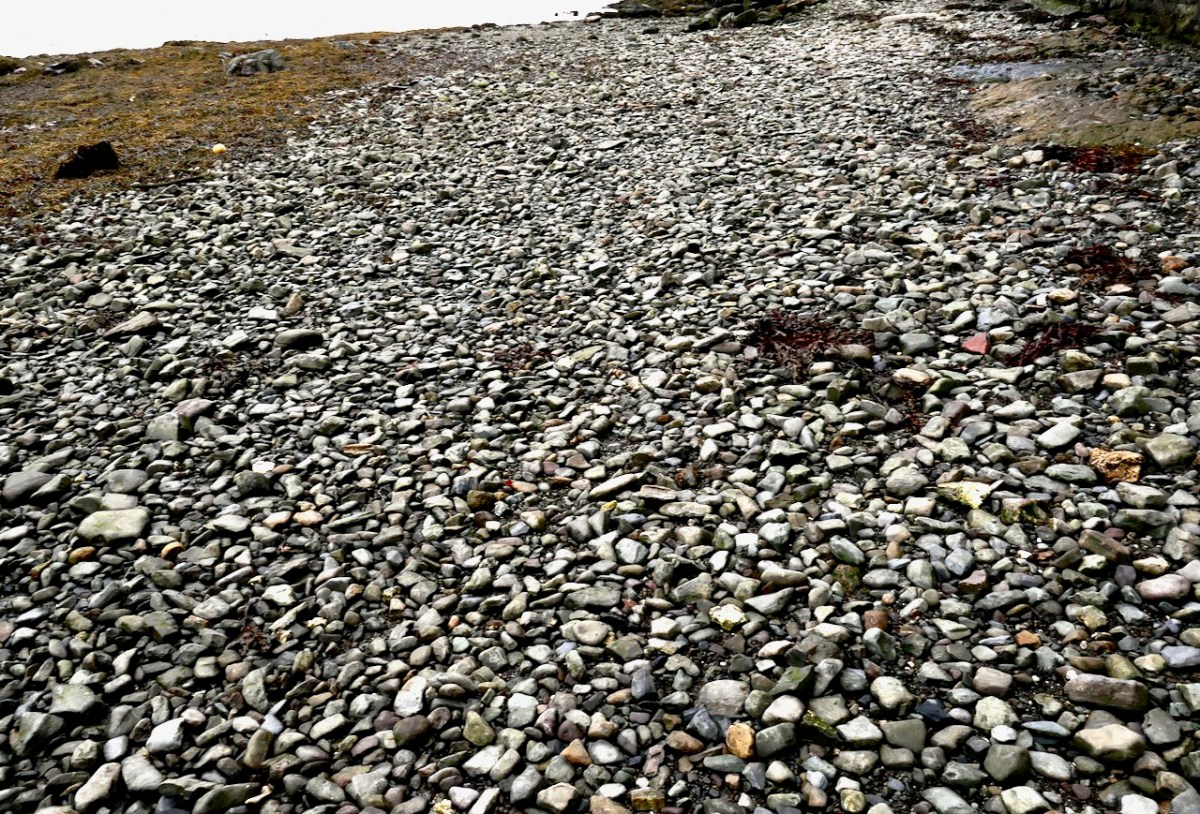
But here’s the rub – a piece of flint on a beach is subject to wave action, tumbling and rolling and getting knocked about. This can produce pieces that look like artefacts – that is, tools that were ‘worked’ by human hands. You can see how pebbles like the ones we were searching in (below) can get jumbled and knocked every time the tide goes in and out. This also illustrates the needle-in-a-haystack nature of what we were looking for.
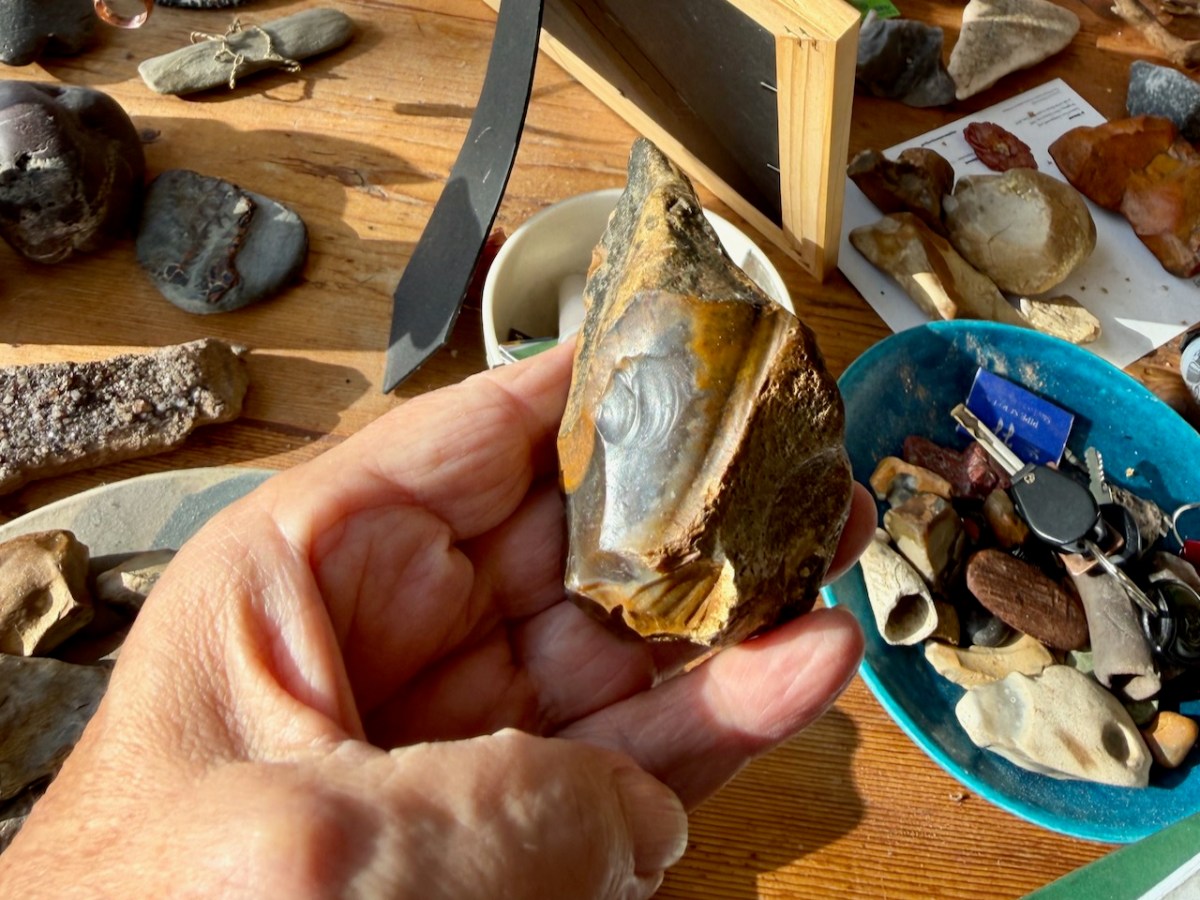
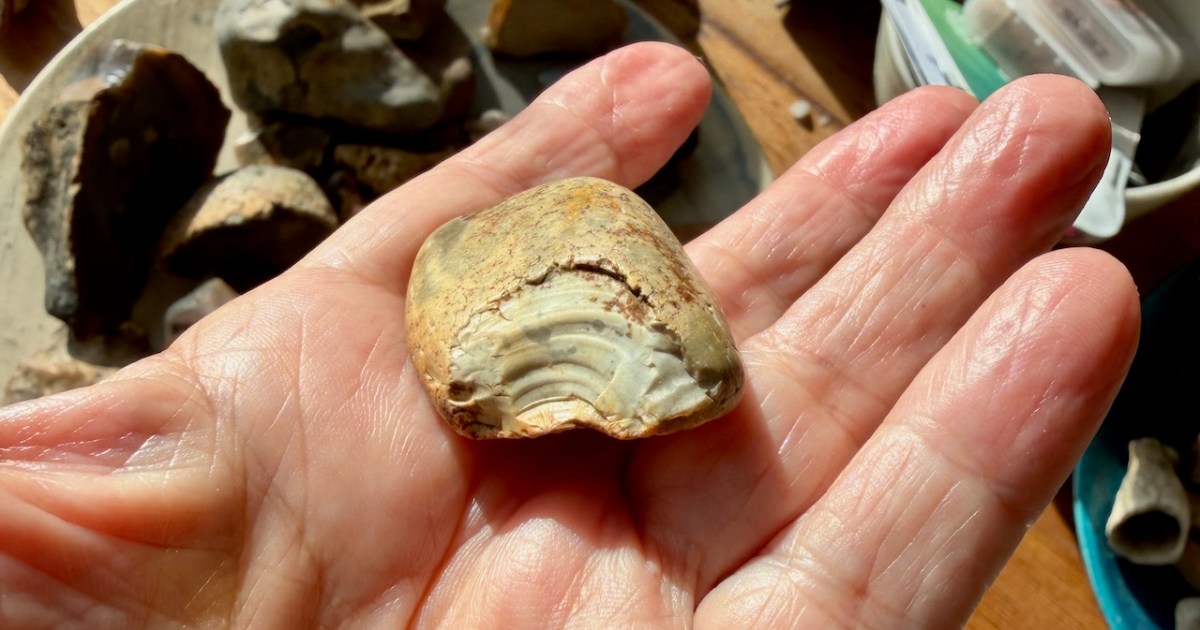
A nodule, or core, of flint is often covered with a rough skin called the cortex. When a spall is knocked off the core, the inside is revealed of shiny grey-brown glass-like rock. The impact of the blow creates distinct ripples across the surface known as conchoidal fracture. You can see all that in the core I am holding in the image below.
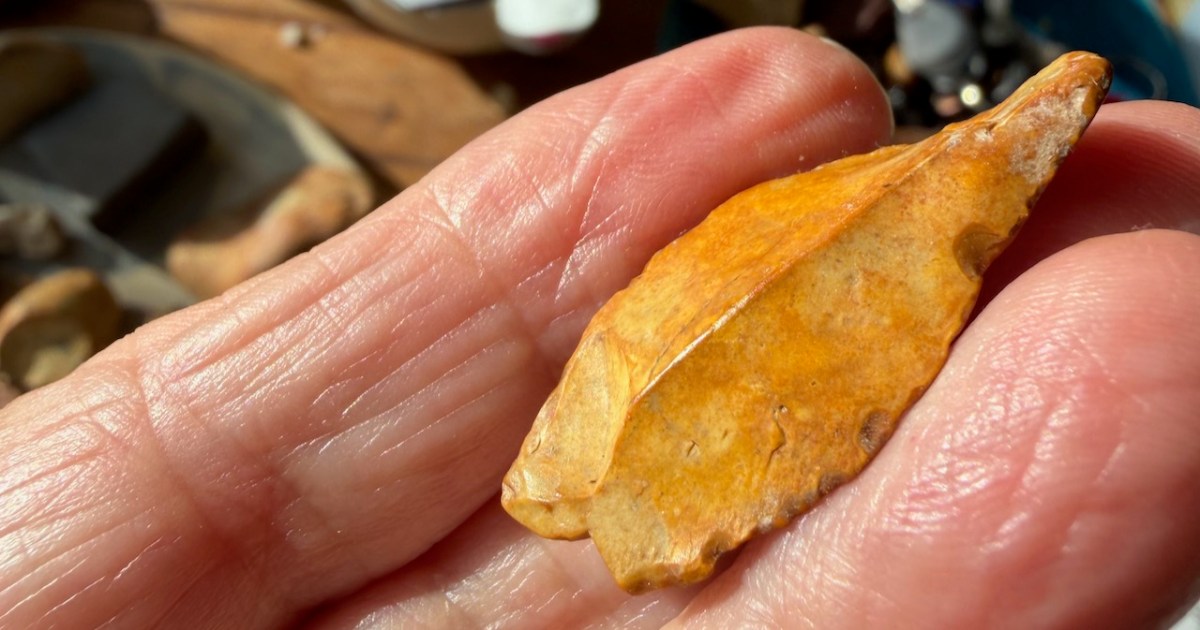
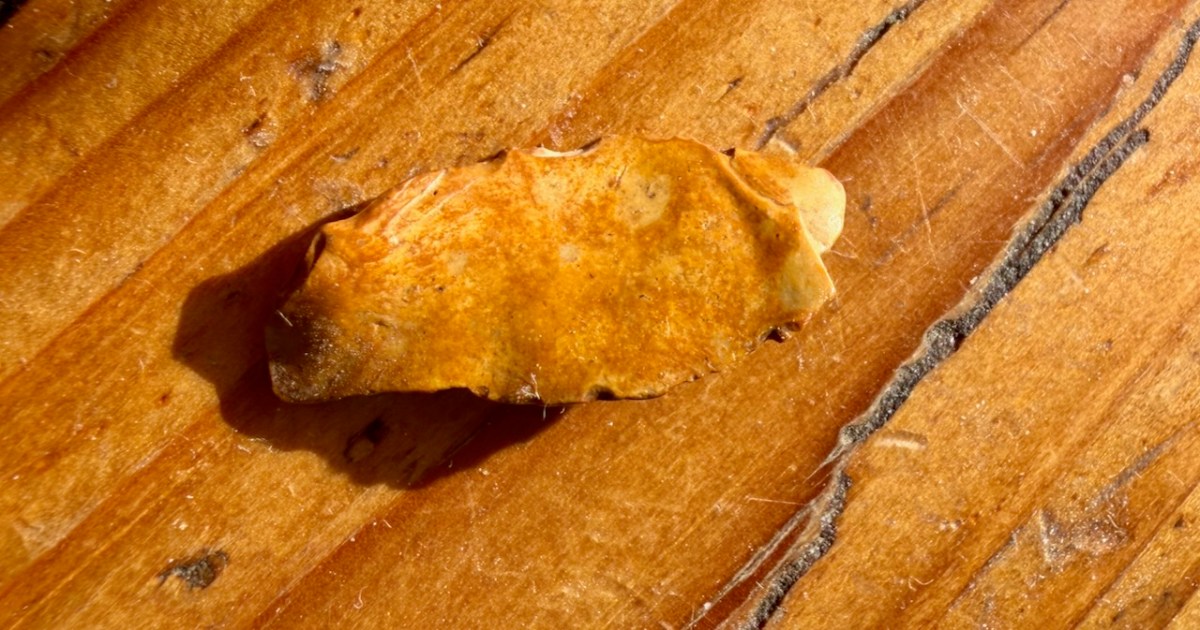
Scrapers were one of the most useful tools for hunter-gatherers, used to scrape meat and sinew off bone, to scrape fat off hides and to smooth wood for spears. Scrapers need to fit in the hand and be robust enough to do the job. The piece below is the reverse of my lead photograph – is it or isn’t it a ‘worked’ flint?
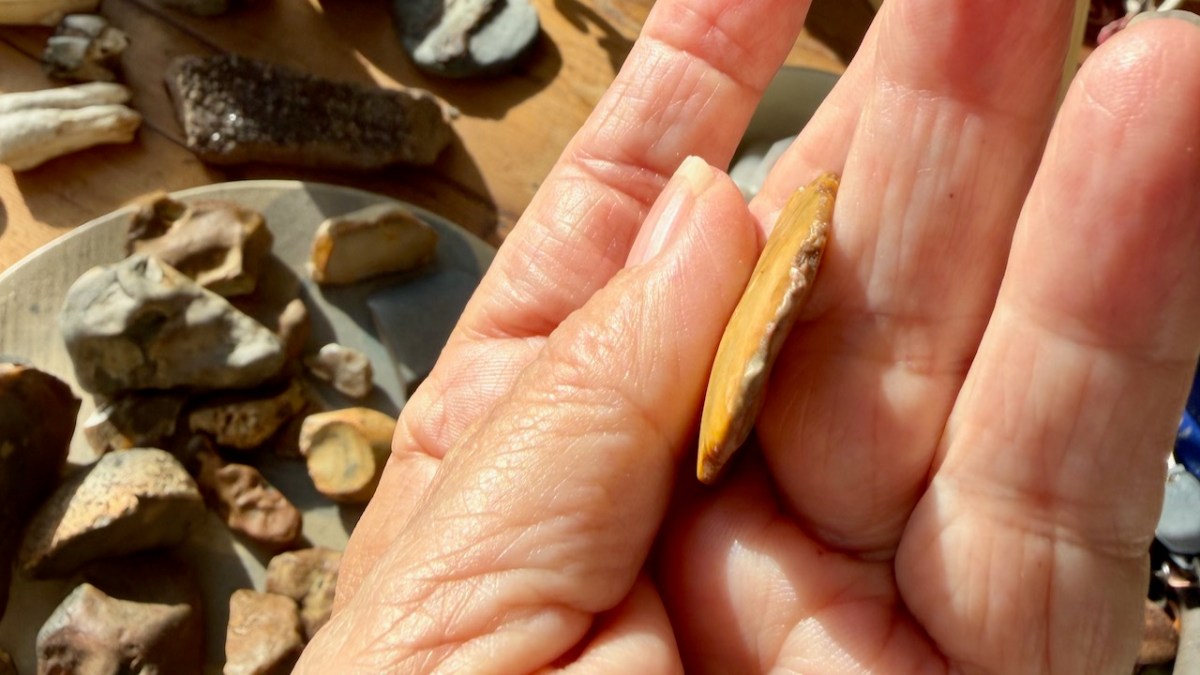
Some small scrapers are known as thumb, or thumbnail, and may have been used for finer or precision work.
Are these indeed mesolithic tools or are they bits of flint that have been knocked around by natural processes? The answer at this point is that we don’t really know. However, they are on their way to the National Museum, where there are experts in this kind of identification. Sending finds like these to the National Museum, by the way, is required by law. Anyone who picks up a possible artefact should do the same and leave the location undisturbed.
The other possibility is that they are indeed prehistoric but later – Neolithic rather than Mesolithic. Stay tuned – as soon as we hear, you will be the first to know! After Fred and Nick, of course.