Sit Stand Smoke – and Remember Kathleen

This week I experienced, in Virtual Reality, what is was to belong to a Flying Column during the Irish War of Independence. With the men, I crawled through a West Cork field, gun at the ready, alert for any sign of the British army or the Black and Tans.
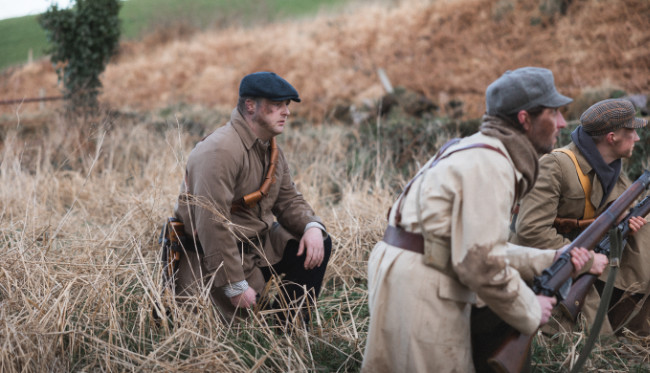
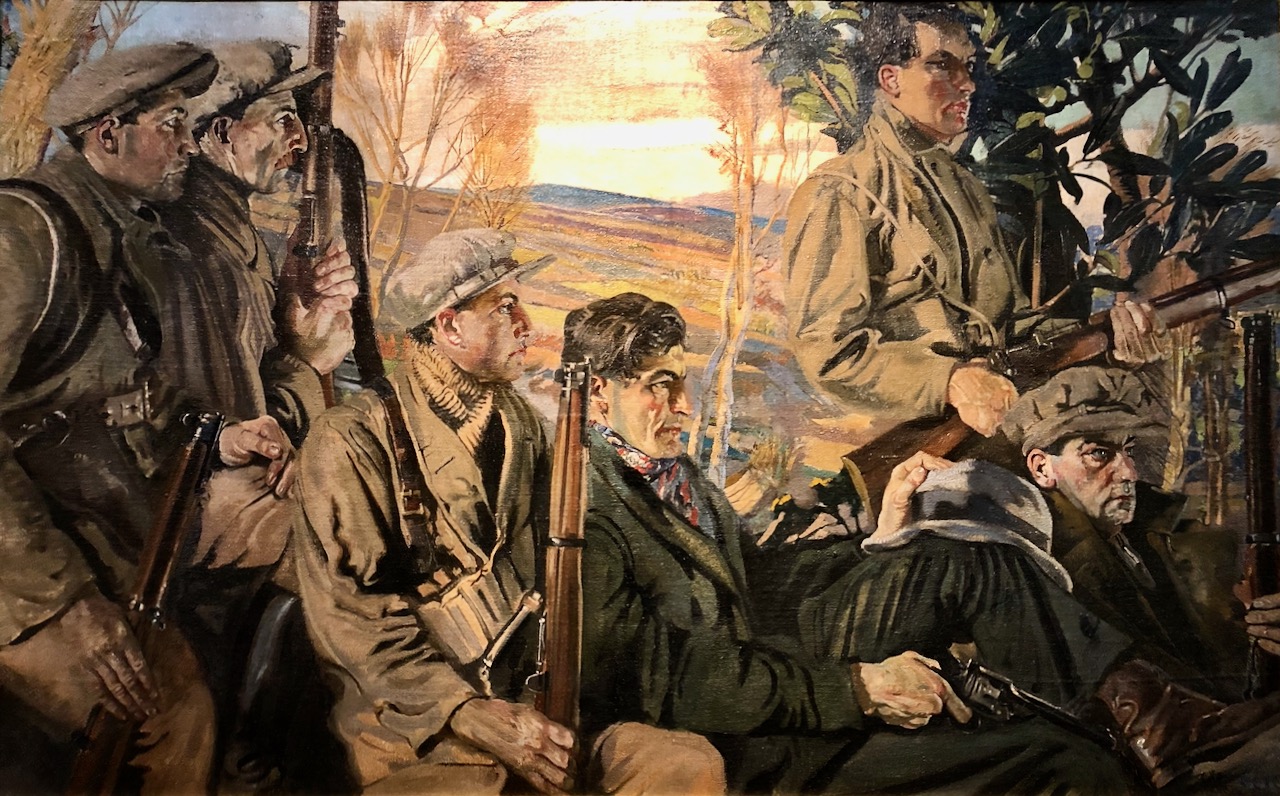
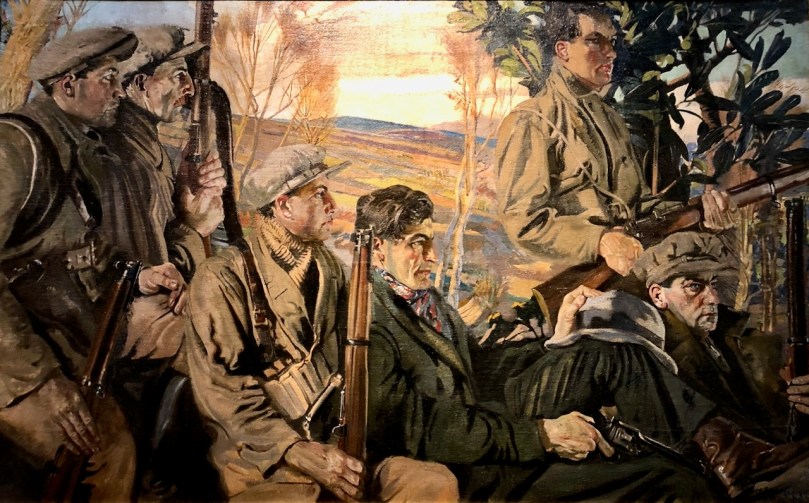
Or, at least, that’s what it felt like, and I must admit to a slight pounding of the heart as we were crouched behind that stone wall. In reality, I was on a swivel chair in the old Uillinn coffee shop, now repurposed as a VR theatre, wearing a VR headset. The Sean Keating painting that this experience is based on is the iconic Men of the South and you can read all about it here

Keating’s grandson, David Keating, and his creative partner Linda Curtin, have produced the VR experience, shooting it in West Cork in “360 stereoscopic + volumetric capture” with the help of many local people and the new West Cork Film Studio. Dr Éimear O’Connor provided the expert consultations on Sean Keating (below) and features, amusingly, as an exasperated director of the action. If you get a chance to see this anywhere, grab it! You can also read more about Sean Keating in this post by Robert from 2020.
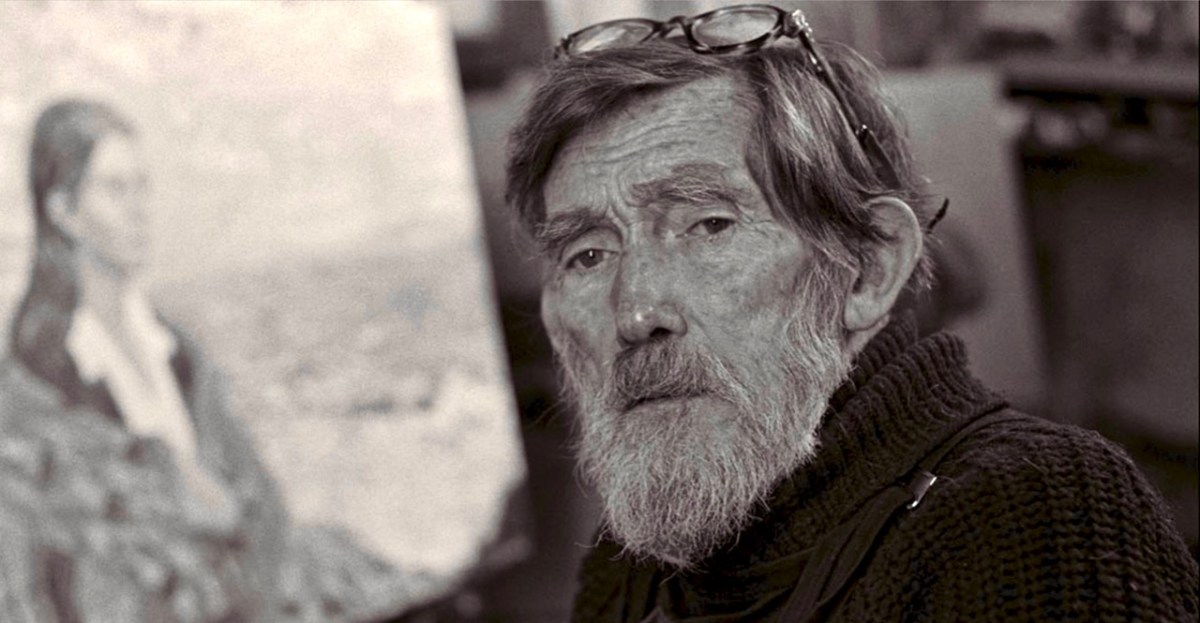
And this War of Independence action leads nicely into Kathleen O’Connell. You will remember her as one of the heroines of Karen Minihan’s book More Extraordinary Ordinary Women. Take a quick trip back to this post and read all about her and her daring and courageous deeds.  I concluded this section by saying

Kathleen was ruined financially by all her support for the cause. Letters of support for her pension application were fulsome in praise of her work and her commitment. She was awarded a grade E pension in 1939. She died, here in 1945, aged 50. She had not married and had no children, and all memory of her gradually disappeared from Ballydehob. When Karen went looking for the house she had lived in, it seemed nobody could remember the heroic Kathleen O’Connell who had once lived here.

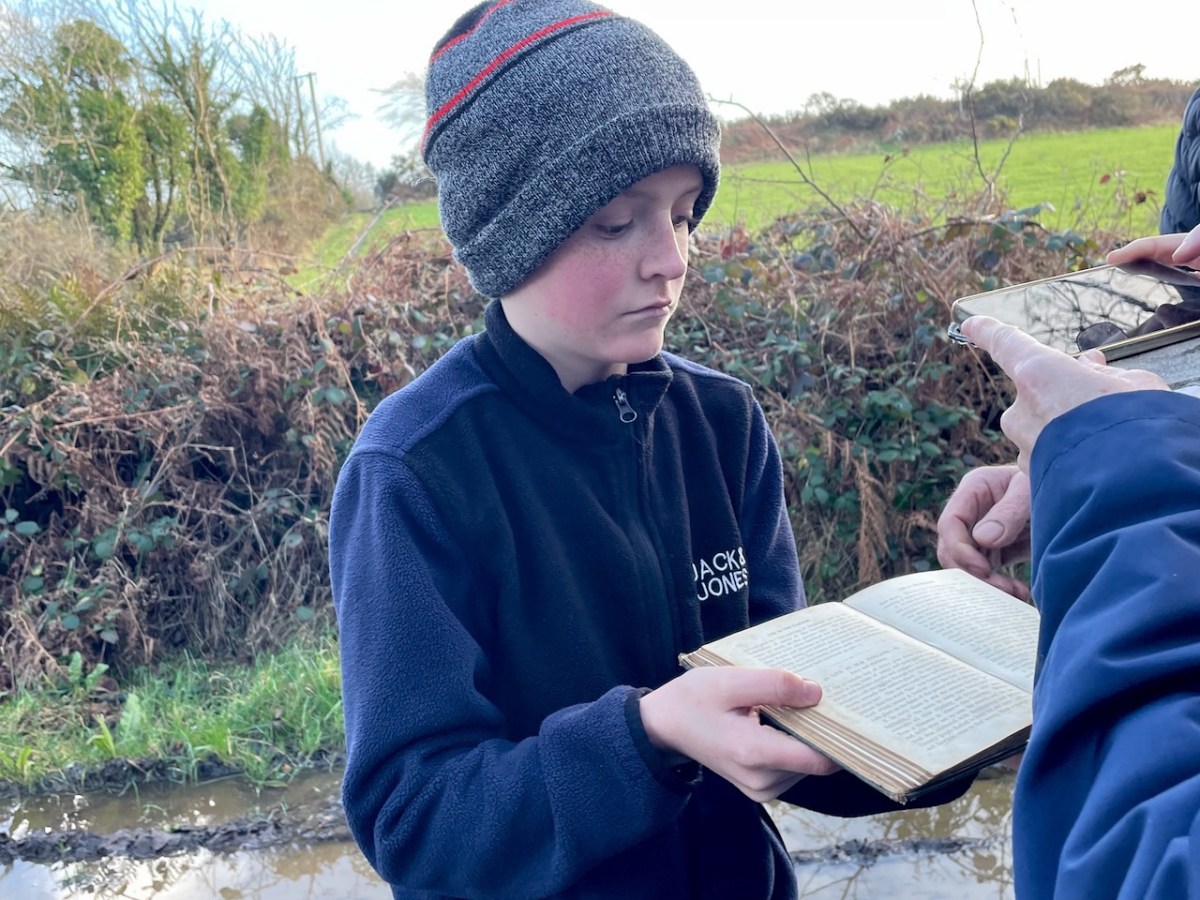
How wrong we were! Memory of Kathleen was far from dead. A relative of hers recently contacted Karen and on Friday afternoon we spent several hours with him and his charming grandson, rediscovering Kathleen from a man in whose family her memory was still fully alive. (He didn’t want his photo in the blog post, although Neven, the grandson, was happy to be in it.)
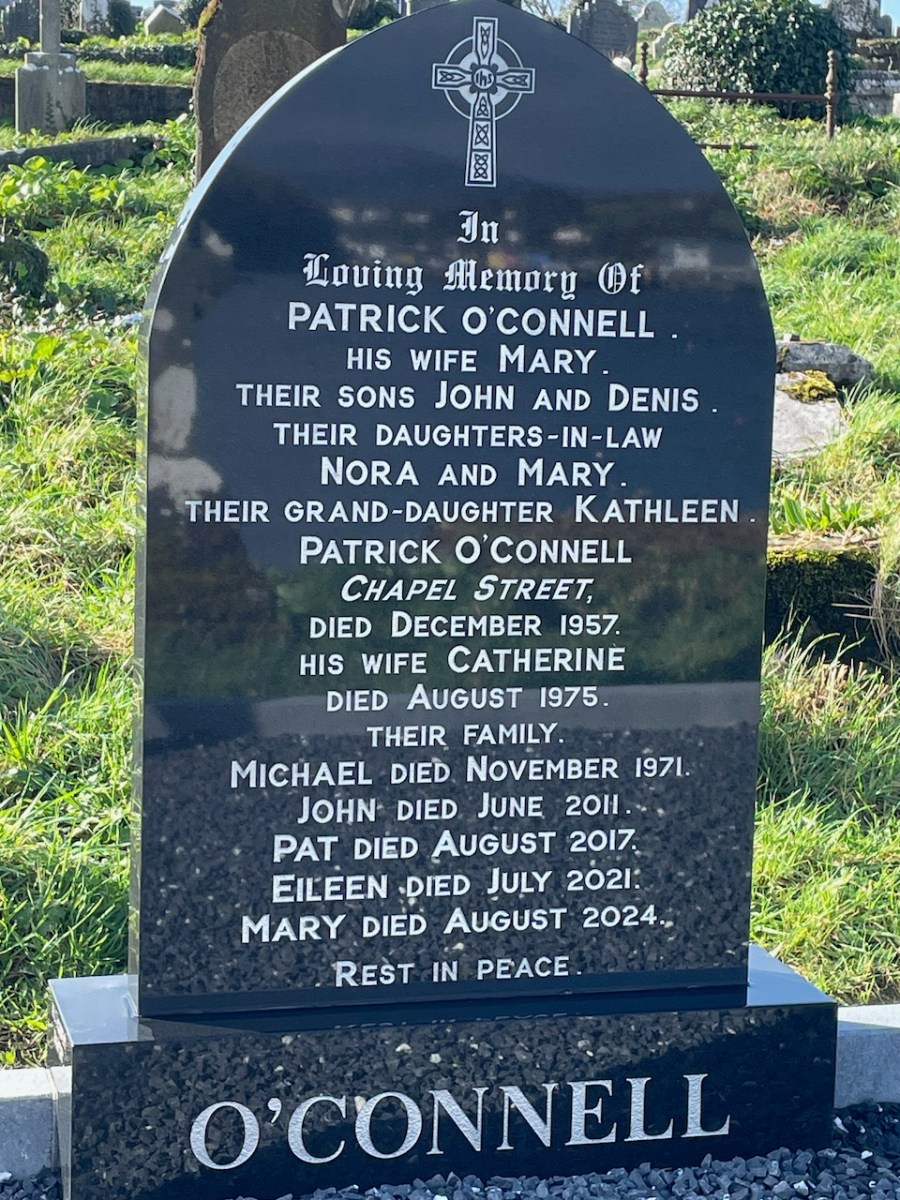
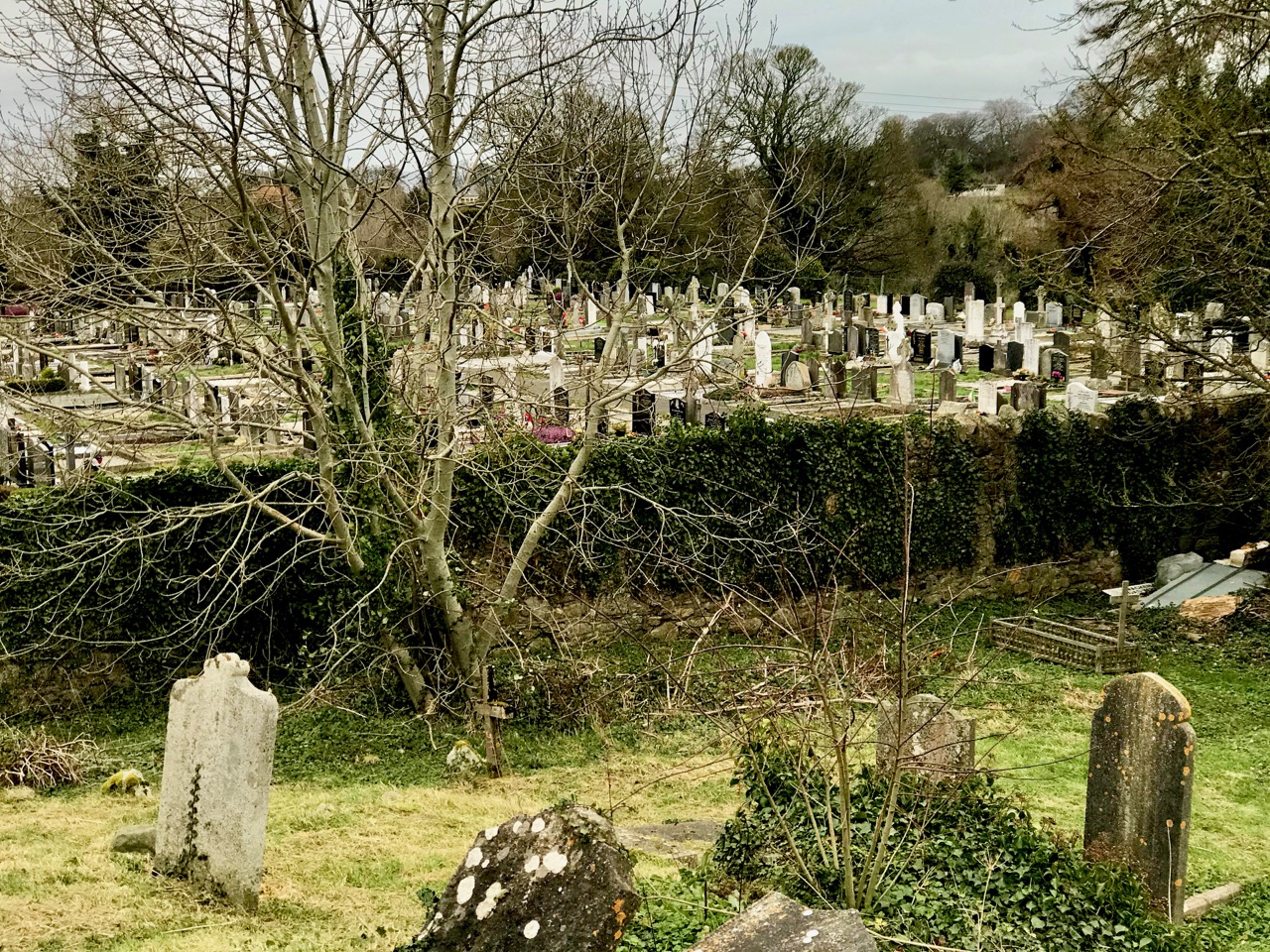
The first thing he showed us was her grave, at the historic Abbey Graveyard in Bantry. It contained many family members, including Kathleen. Our guide had knowledge of everyone in the grave and how they were related, and told us that there were probably more people in the plot than commemorated on the headstone. The grave looks out over the sea at Bantry.
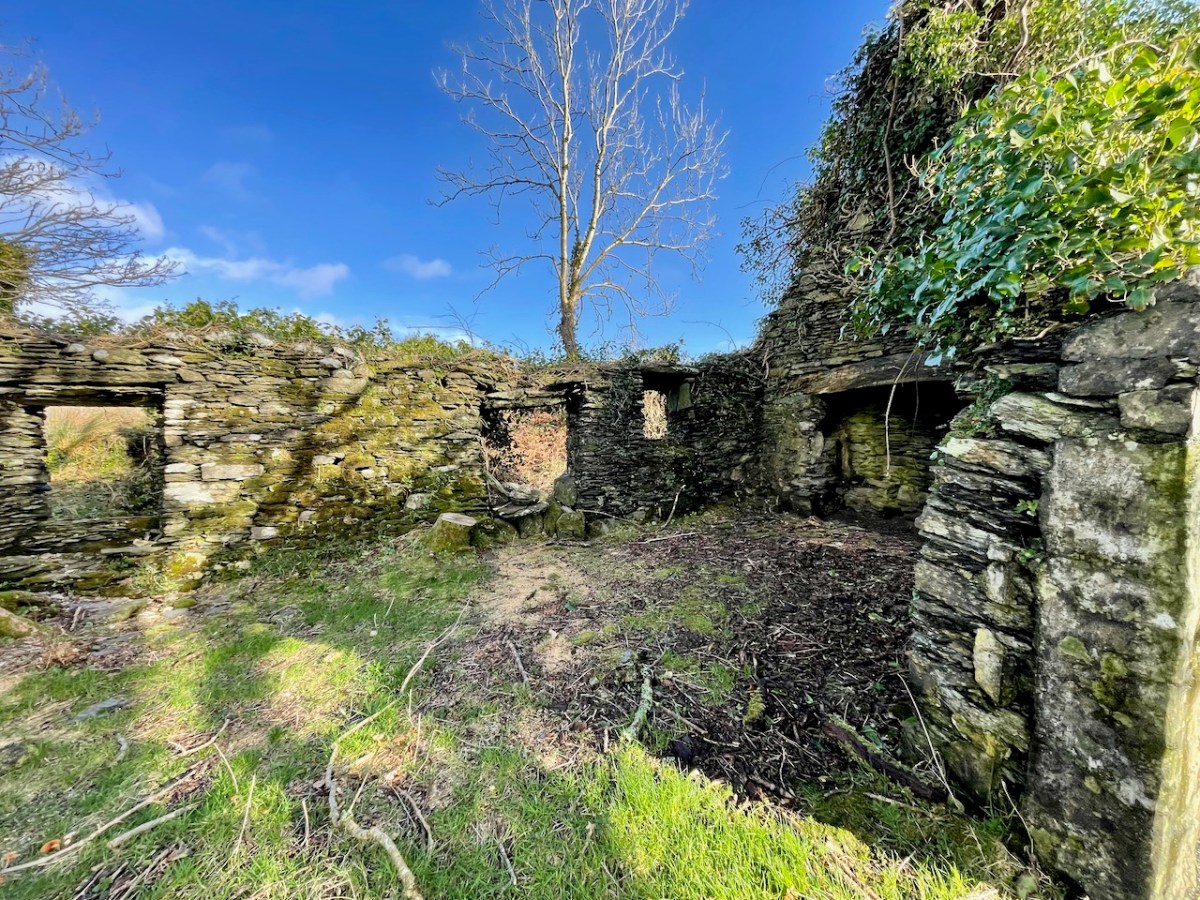
Next, he brought us to the cabin belonging to her Uncle Pat where she sheltered men on the run. It’s located in the hills behind Ballydehob, down several lonely boreens and across a couple of (very muddy) fields. The cabin, now roofless, still stands and still has the wonderful oak mantle across the open fireplace.
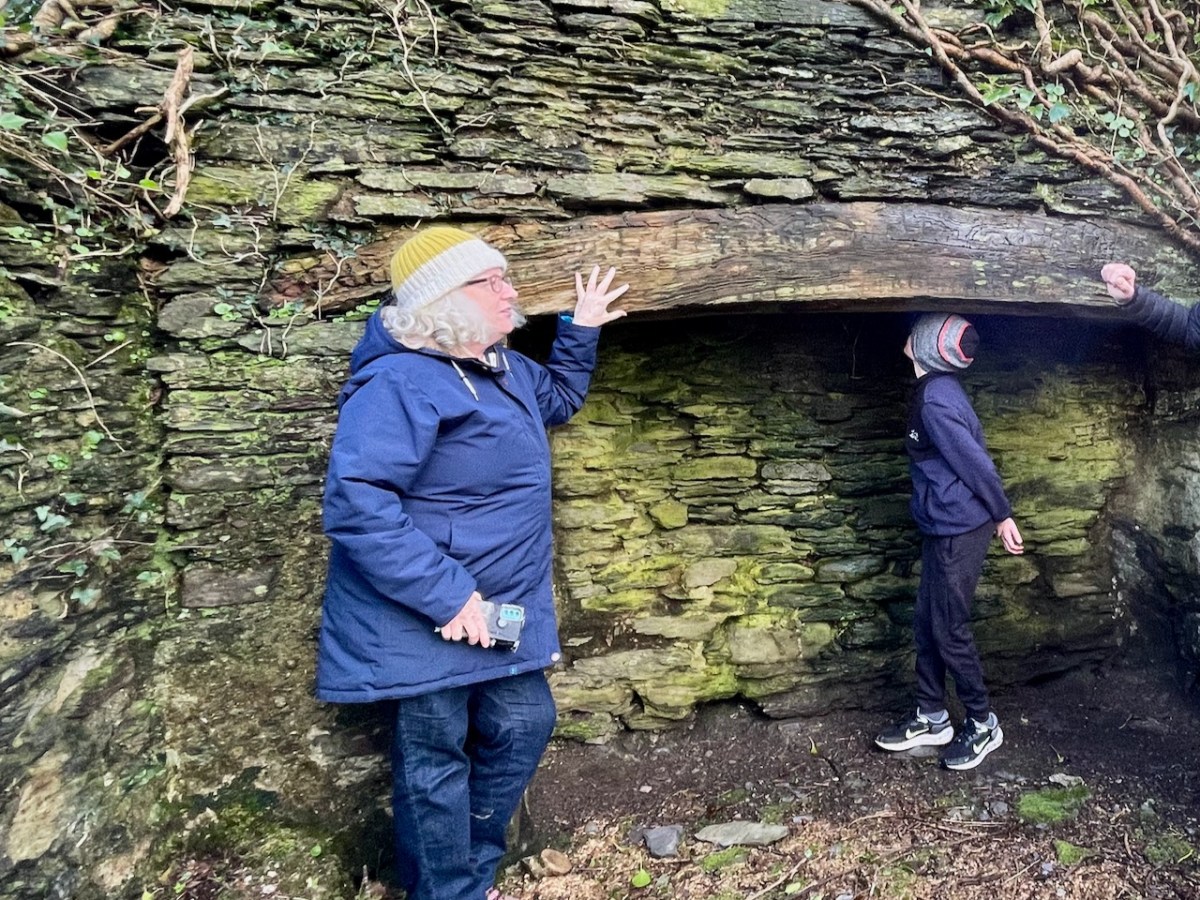
We marvelled that Kathleen was doing all this on her bicycle – it’s several kilometres above Ballydehob and about 100 metres above sea level. And of course few of the roads would have been paved at that time. Our guide told us that she was totally and passionately committed to the cause, and that, since she was an only child, she carried her parents along with her. It was really they who underwrote all the expenses she incurred in her work. 
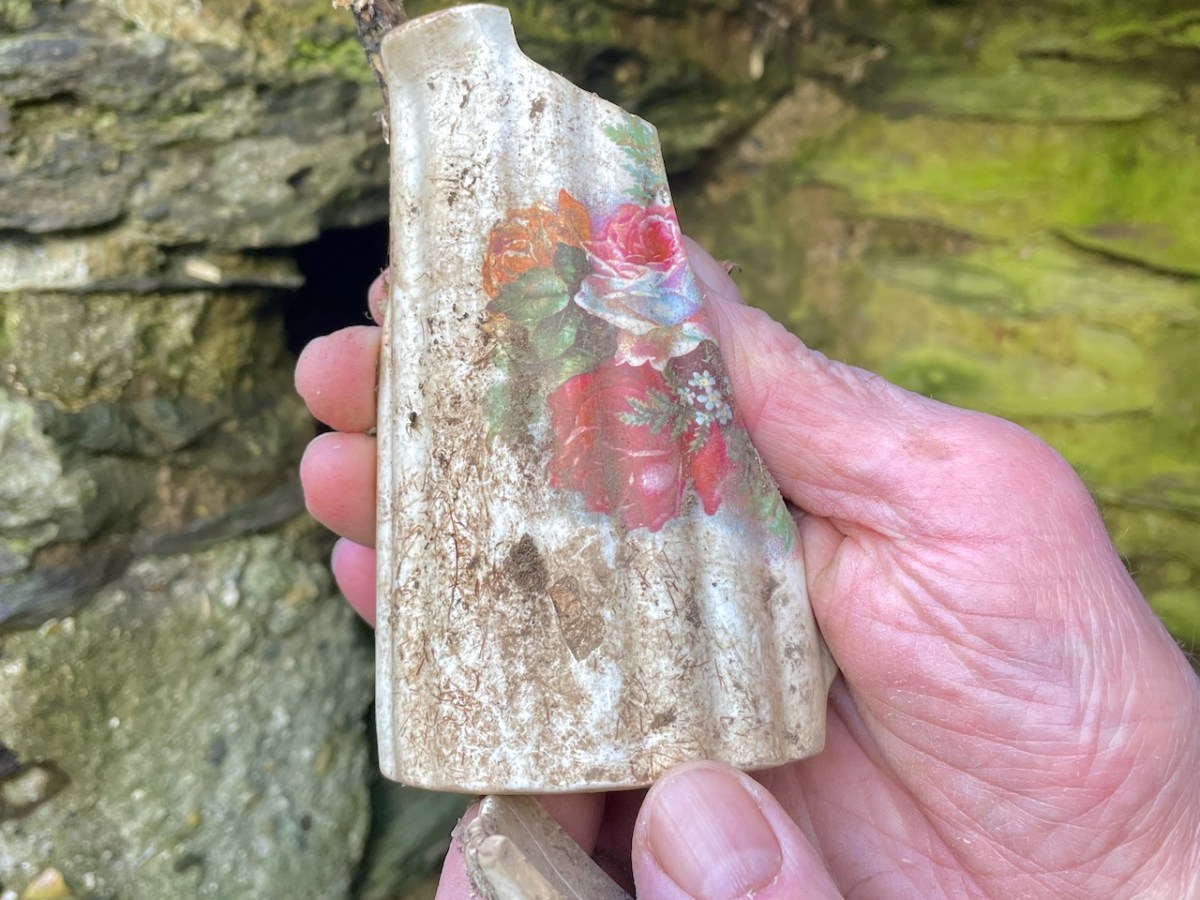
In the family, it was understood that she had been engaged to a man who was a member of a Flying Column – just like one of the Men of the South, but that he had been shot. We could only wonder at the trauma and distress she had experienced. She left for America in 1925, but returned to live in Ballydehob, and her father eventually outlived her. 
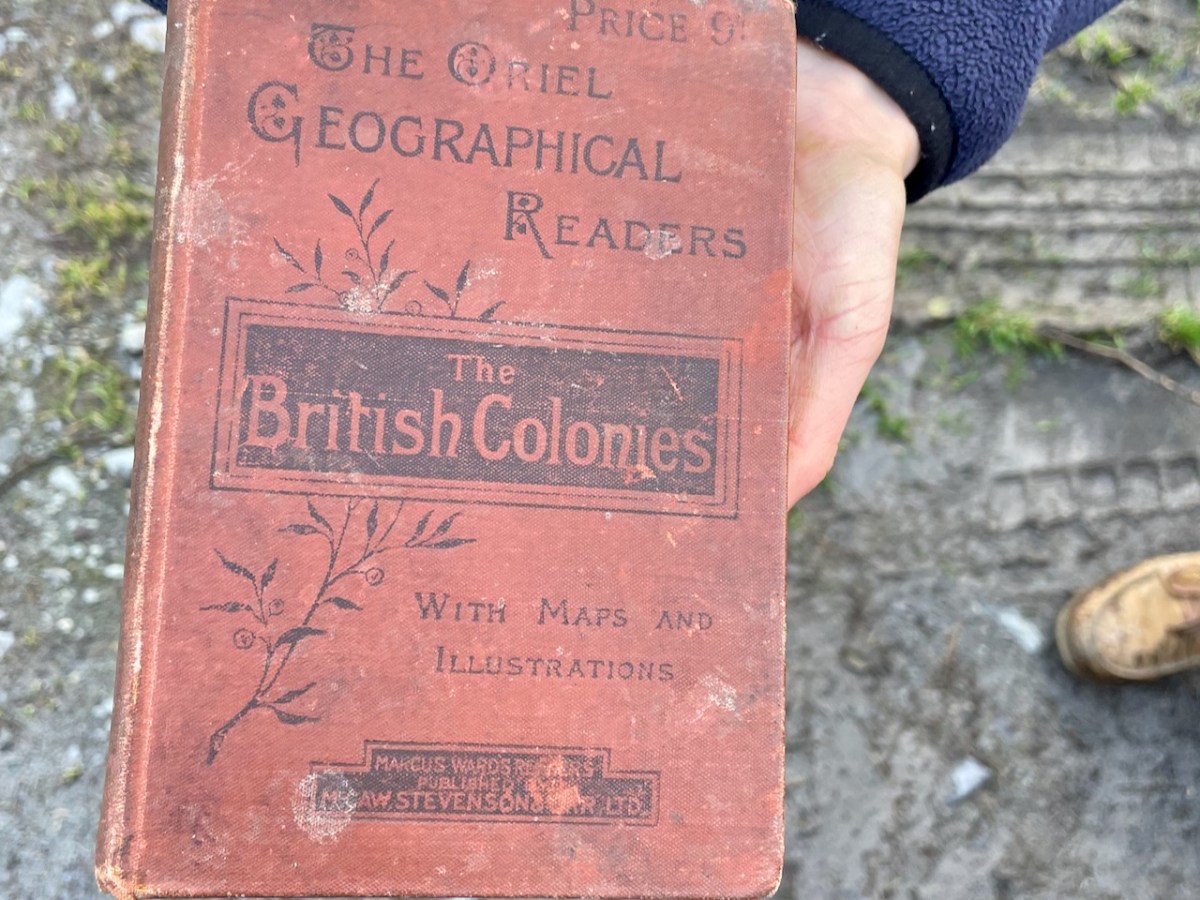
Our final mementoes of Kathleen were particularly poignant. Surviving in the family were two of her books, school books we think, in which she had written her name.
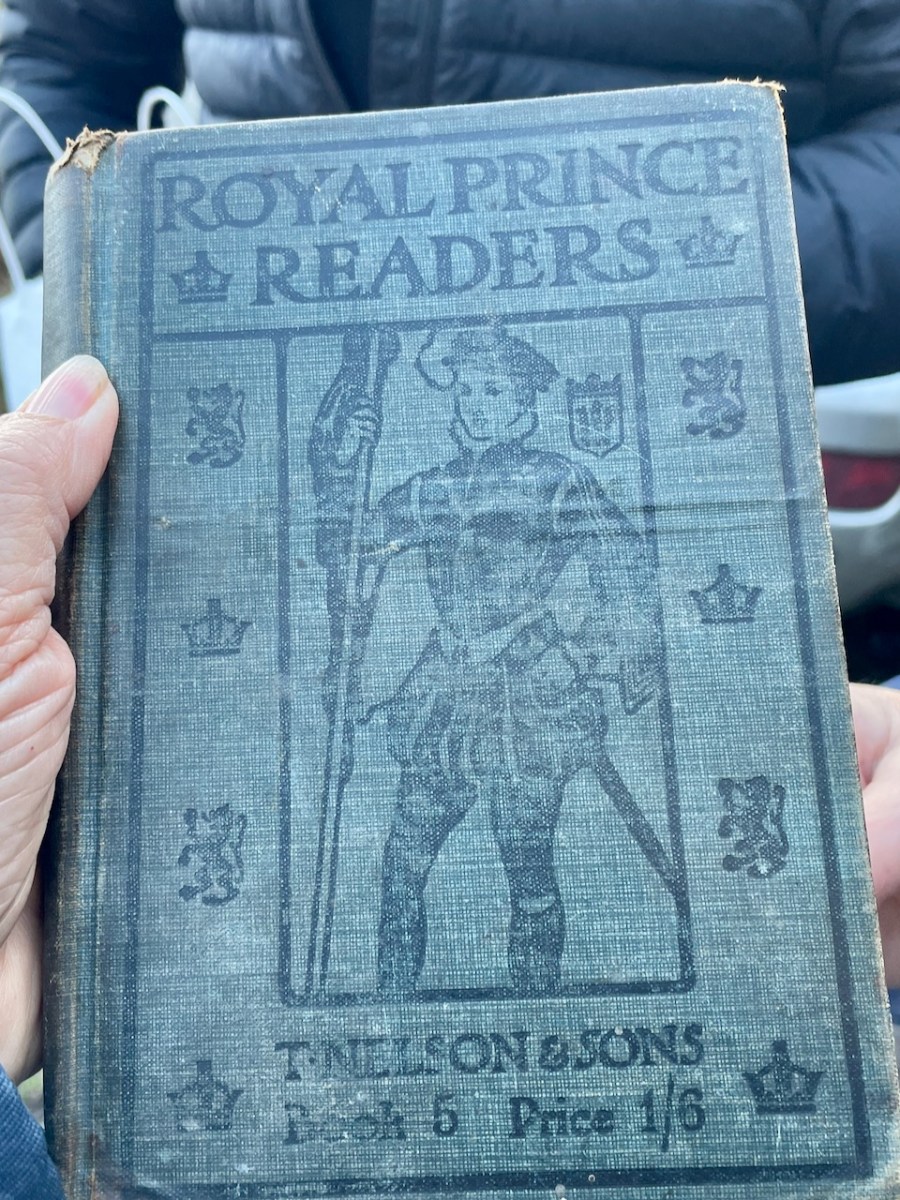
Each was very British – a reminder to us all what the standard school fare was at the time when we were members of the British Empire.
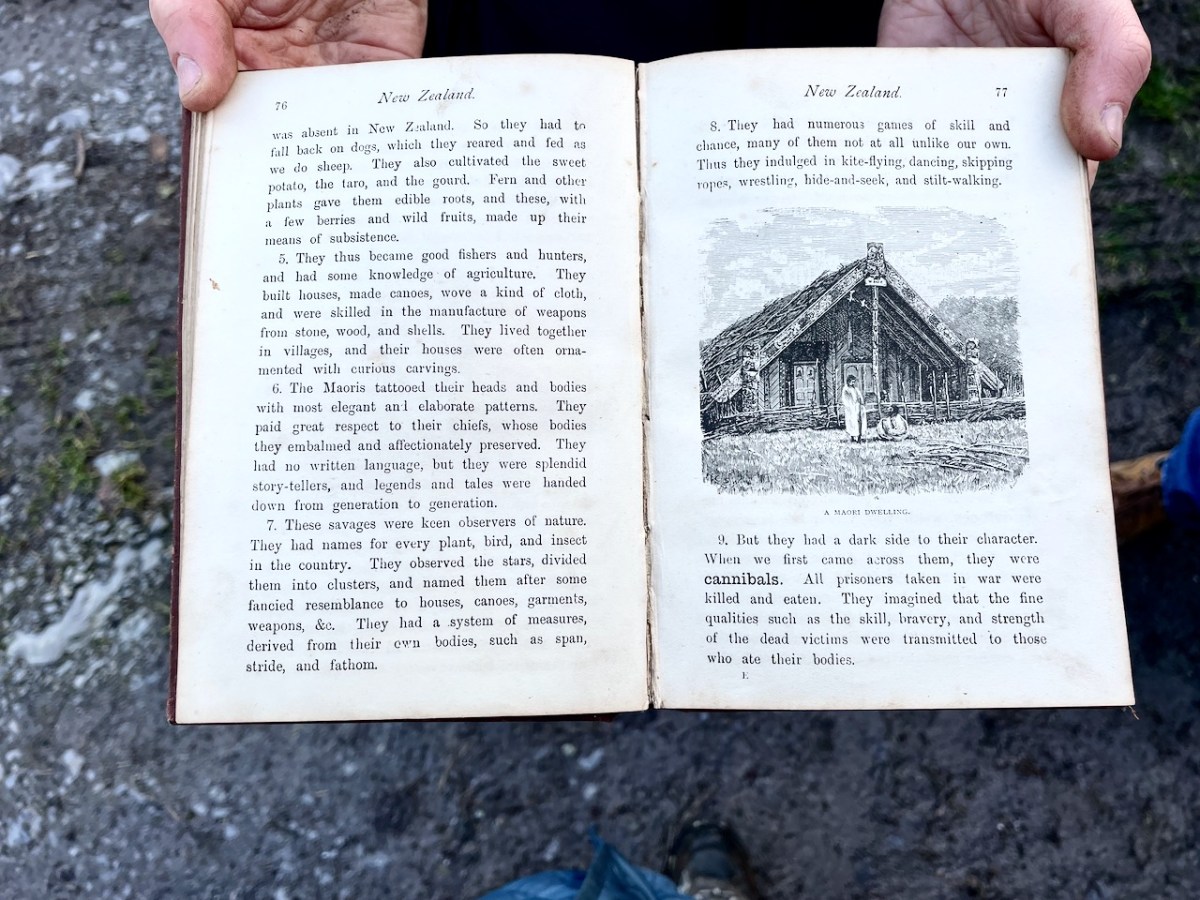
I have located a copy of the Royal Prince Reader (1910) on EBay – in Rajastan! A further reminder that empire was promoted through children’s literature as much as through military occupation.
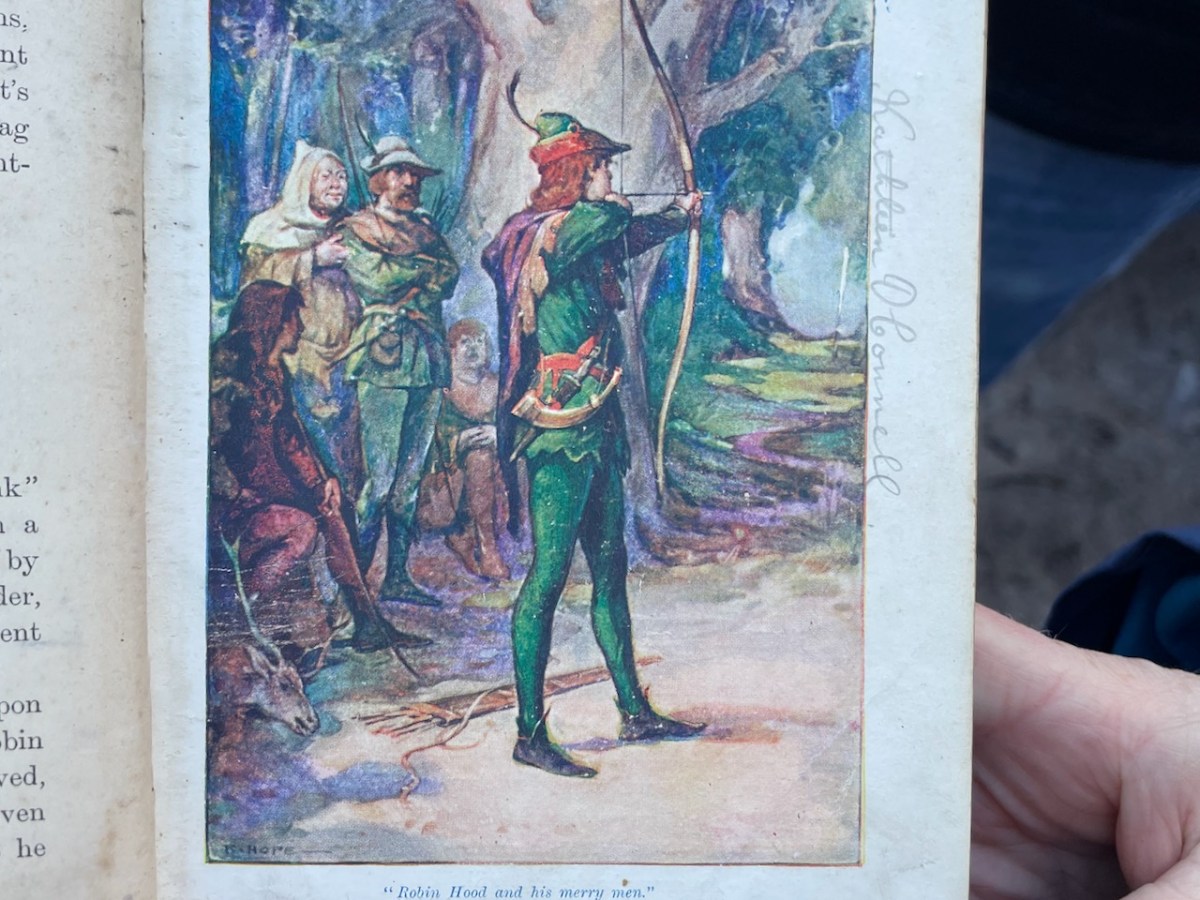
Somehow these two books, her own possessions, brought Kathleen to life as nothing else could have done. We imagined her devouring these stories in school, and her gradual disillusion as she matured with what the Empire stood for.
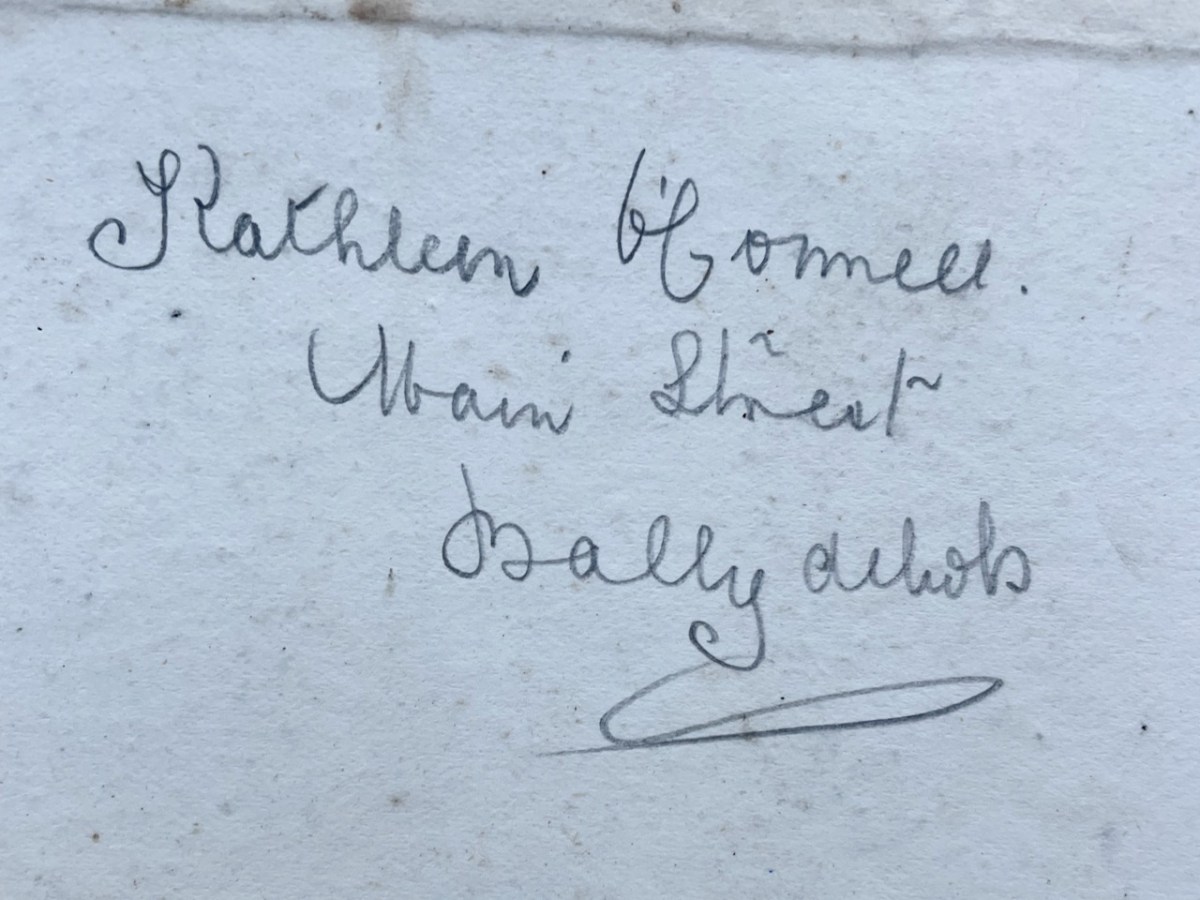
It is an immense comfort to know that she is not forgotten after all.
Cnoc Buí Arts Centre and 20th Century Irish Art

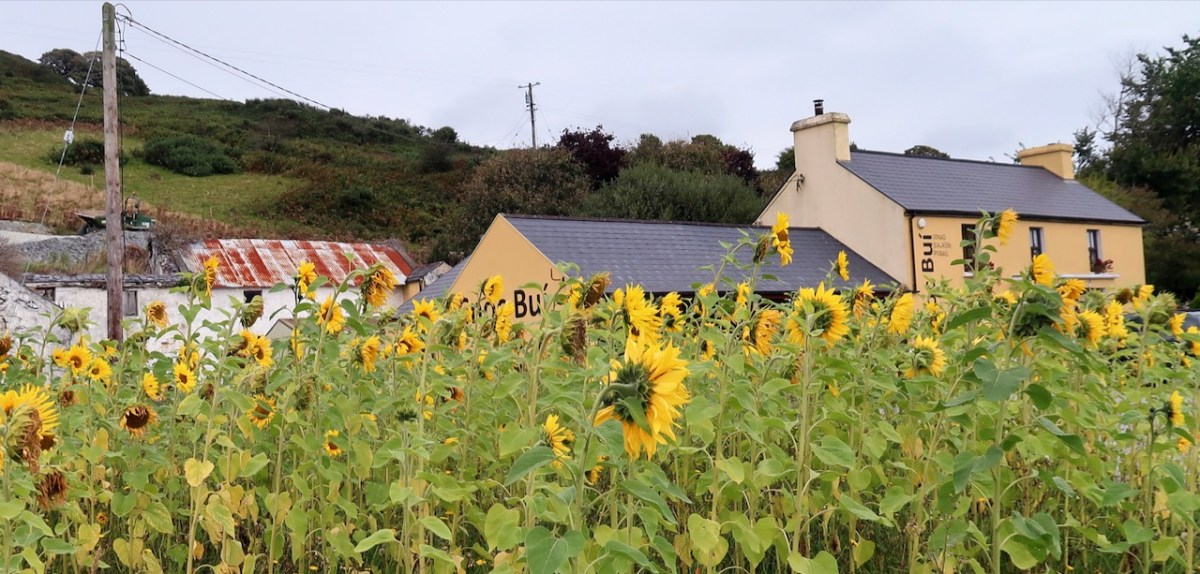
We have a major new player in the arts scene in West Cork. Over the last couple of years, Cnoc Buí (cnoc buí – yellow hill) Arts Centre in Union Hall, has quietly established itself as a significant focus for the arts. I have attended several exhibitions there, always marvelling at the space, the light, the curation and the excellence of the art on exhibit. Here’s the list for 2024, although it doesn’t include the current exhibition, and that’s the one I want to write about today. 

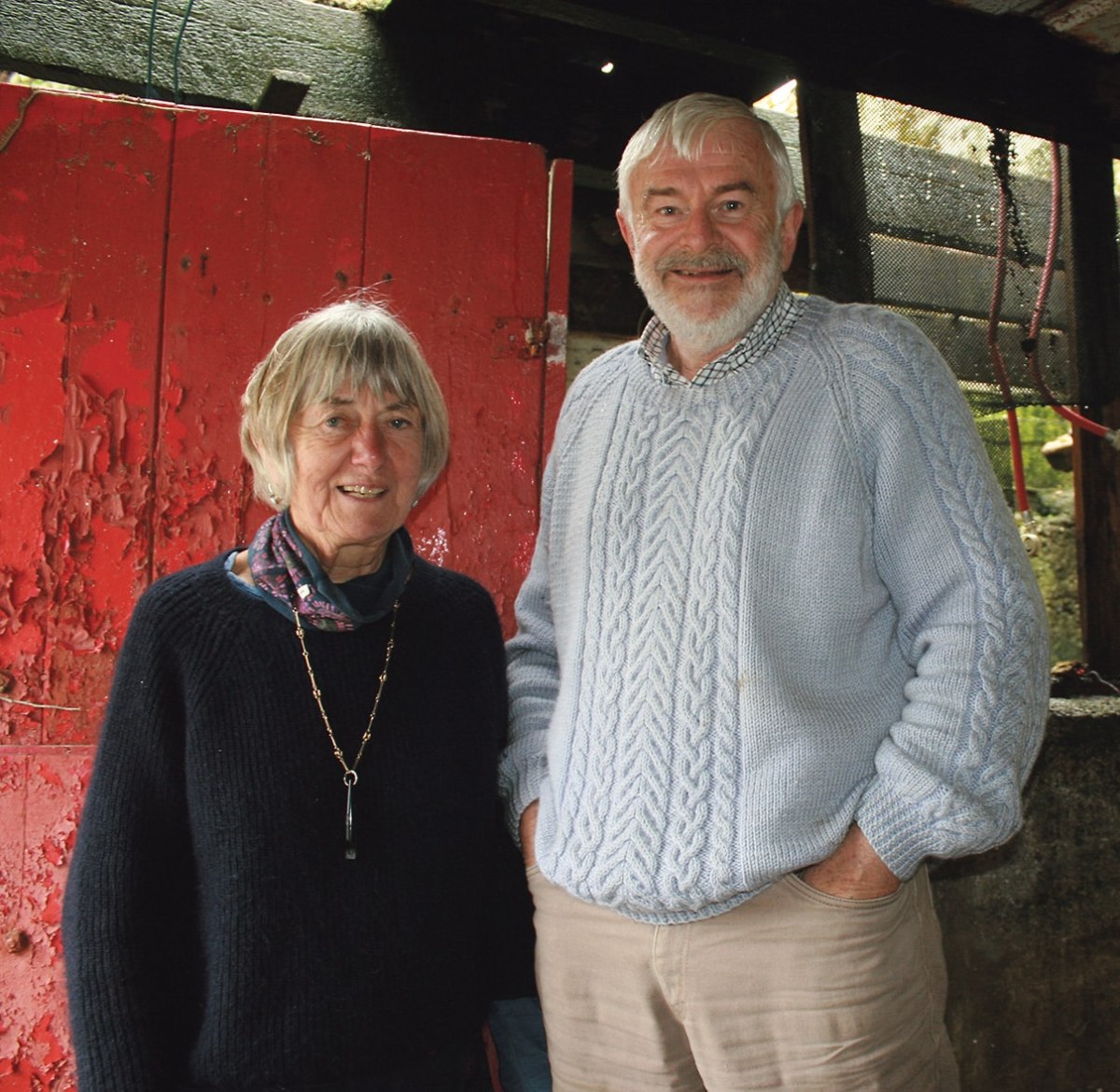
First of all, a little about Cnoc Buí itself (photo above by Amanda Clarke). As the name suggests, it’s a yellow house, beside the sea in in Union Hall, renovated and fitted out for the arts. It’s the brainchild of Paul and Aileen Finucane, who have come to live in Union Hall permanently, after owning a house here for forty years. Passionate about art, and avid collectors, they are ‘giving back’ in the most magnificent way possible through their philanthropic efforts. Read more about them and Cnoc Buí in this story from the West Cork People. (Photo below courtesy of the West Cork People.)

Those of you not living in West Cork – you have no idea how rare it is to come face to face, in your own backyard, with the great Irish artists of the 20th century. Normally we have to go to Dublin, to the National Gallery, or the Hugh Lane.

Ahakista by Letitia Hamilton

I often get my fix from the wonderful Facebook Page 20th Century Irish Art, and I have come, thanks to that source, to recognise many of the names and styles of our leading artists.

Phyllis Leopold’s The Belfast Blitz

The only other comparable experience I have had here in West Cork was with the Coming Home expedition in 2018. Don’t get me wrong – I love 21st century art and we have SO many excellent artists and great venues here in West Cork, and we have written about and reviewed many, many shows. Remember The Souvenir Shop? Rita Duffy is here as well.
Kathleen Fox, Still Life with Bust

This show emphasises Irish women artists – over half of the pieces are by women. We are all rediscovering the superb women artists who were in the shadow of famous husbands (Grace Henry, Margaret Clarke) or unjustly neglected (Kathleen Bridle, Hilda Roberts, Gladys Mccabe), better known as stained glass ‘craftswomen’ (Evie Hone, Sarah Purser, Olive Henry, Kathleen Fox), written off as mere ‘Illustrators’ (Norah McGuinness), or who were even actively discriminated against by the male establishment and dominating figures like Sean Keating. Some are getting the last laugh now – there’s a new exhibition opening now in the National Gallery devoted to Mildred Anne Butler, who is represented in this exhibition.

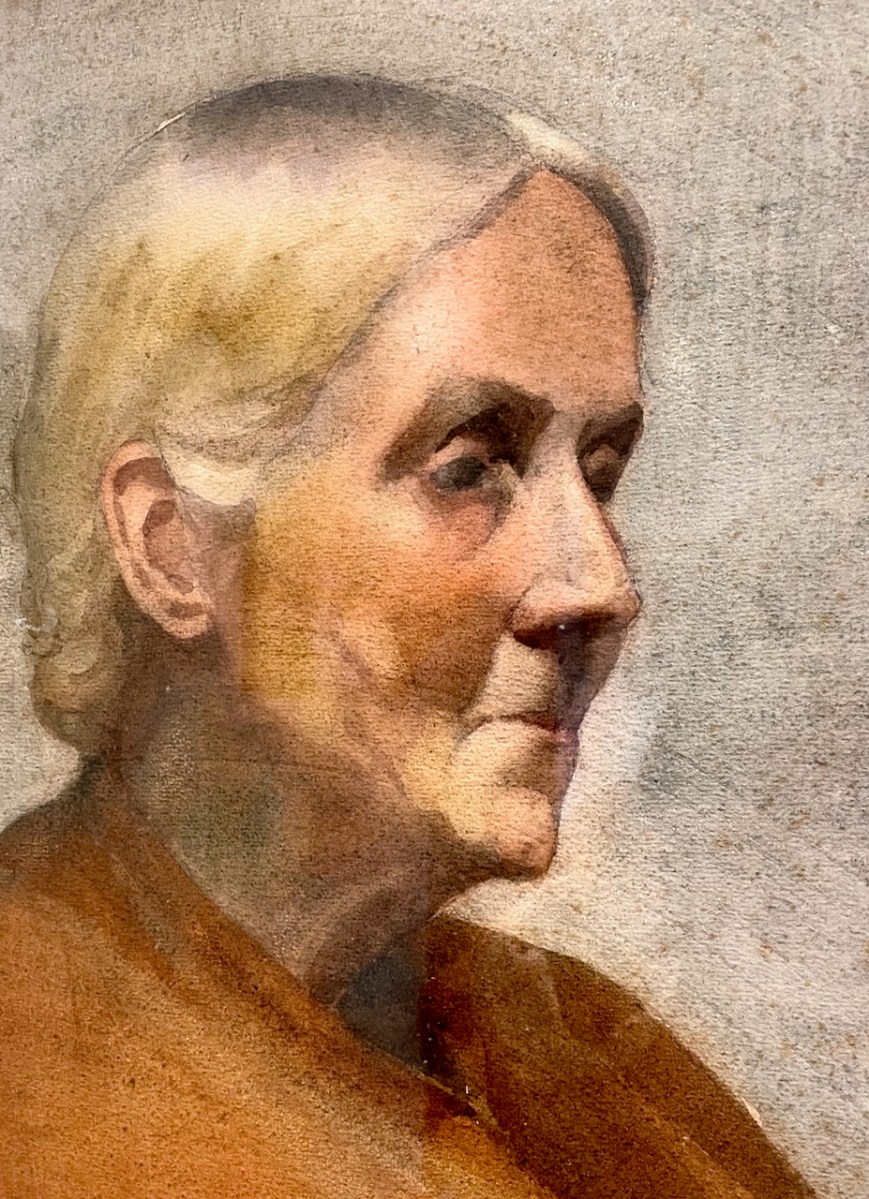
Olive Henry is more familiar to me as a stained glass artist, so I was delighted to see this fine portrait

But it was women who led the Irish art world into the modern era: The Irish Exhibition of Living Art was founded by women who had been able to afford to go abroad to study  and had picked up newfangled ideas on the continent – women like Evie Hone and Mainie Jellett. Young artists flocked to their exhibitions, while the old guard stuck to their conservative, academic forms – echoed, of course, in the suppression of women and modernism in the new Irish State.

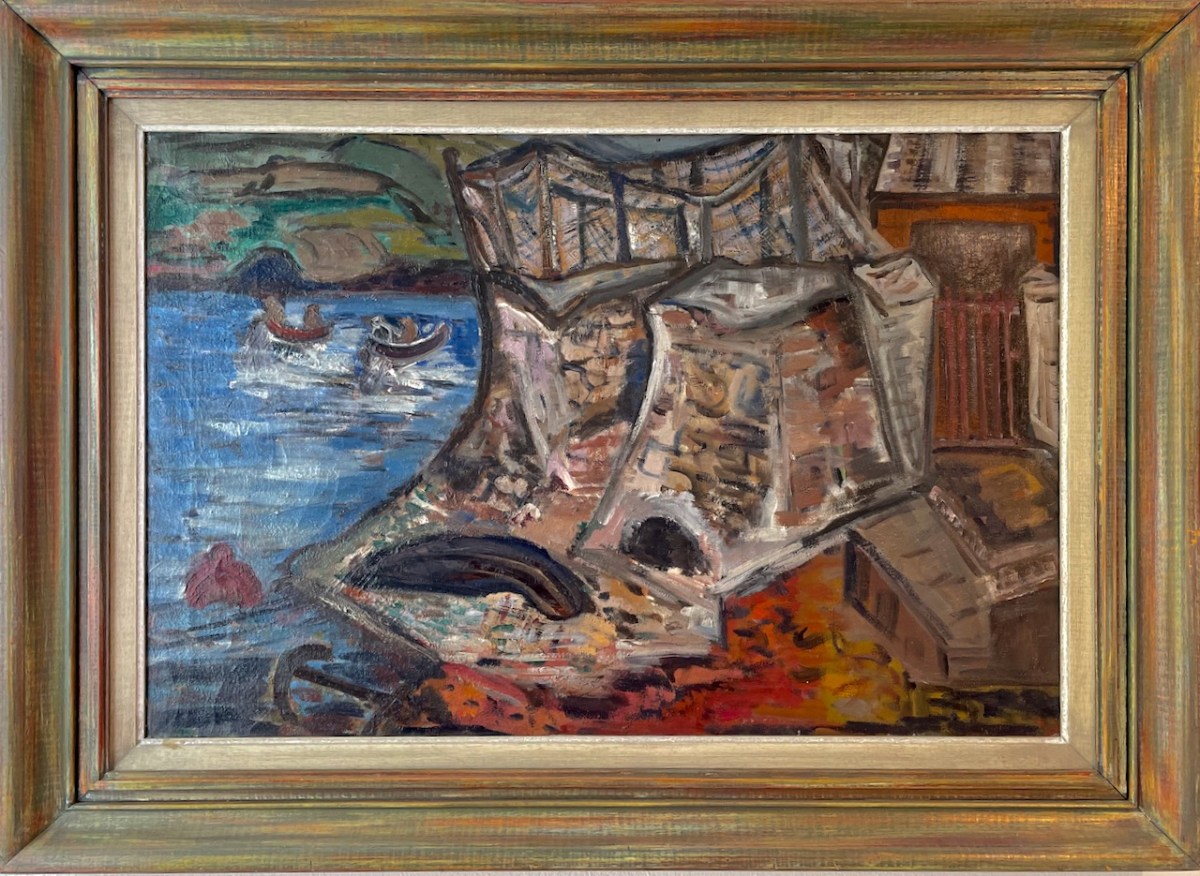
Evie Hone, Drying Nets – The Harbour Wall, Youghal

But here they all are, in Union Hall! The pioneering, courageous, persistent, driven, women of the new State. 

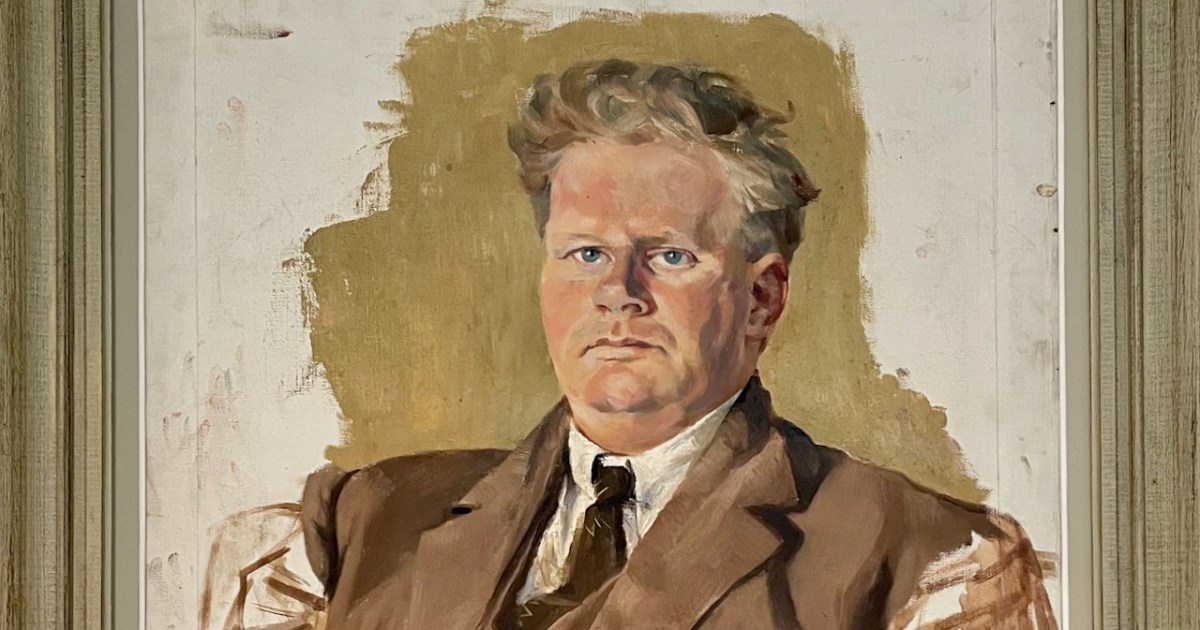
Portrait by Hilda Roberts

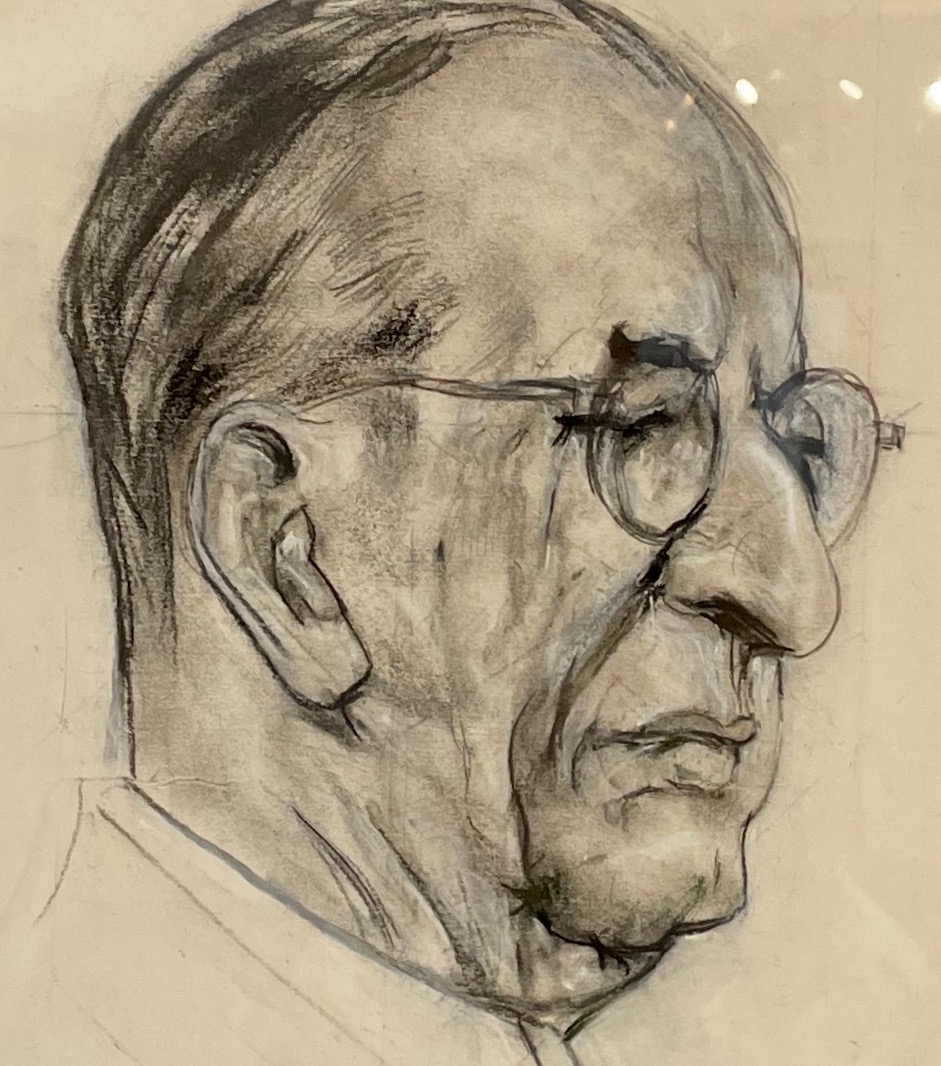
There are lots of men here too, of course – even Sean Keating, with a marvellous charcoal portrait of deValera. Did they grumble together about the goings-on over at the IELA?

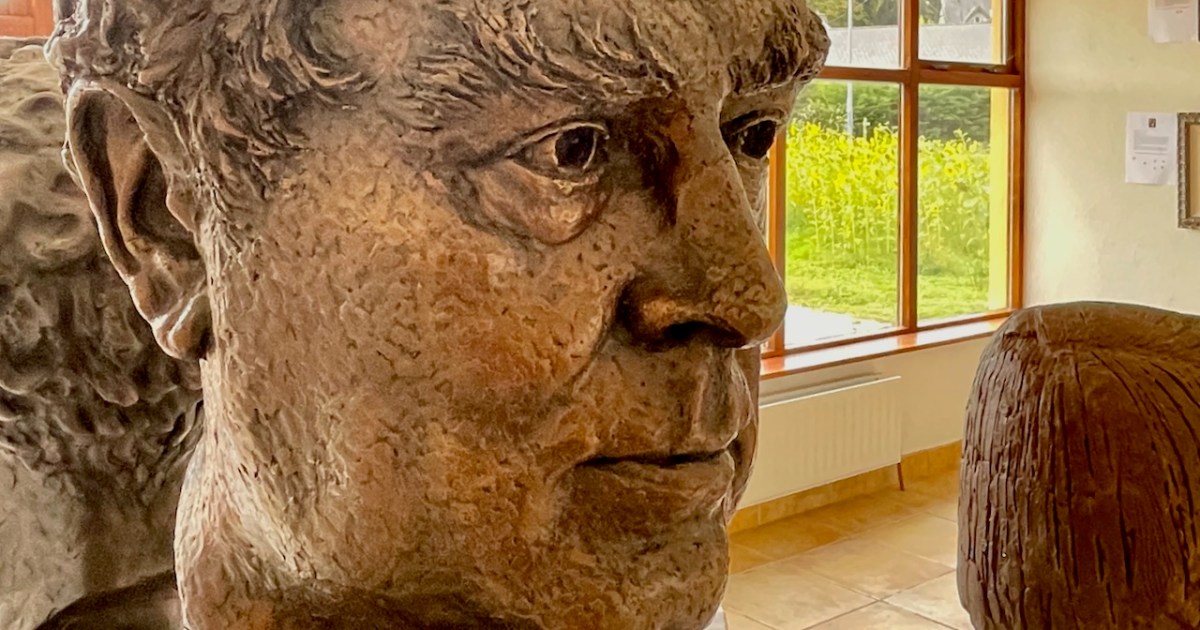
John Sherlock was new to me and a great discovery – I have used his bust of John Hume as my lead image. 

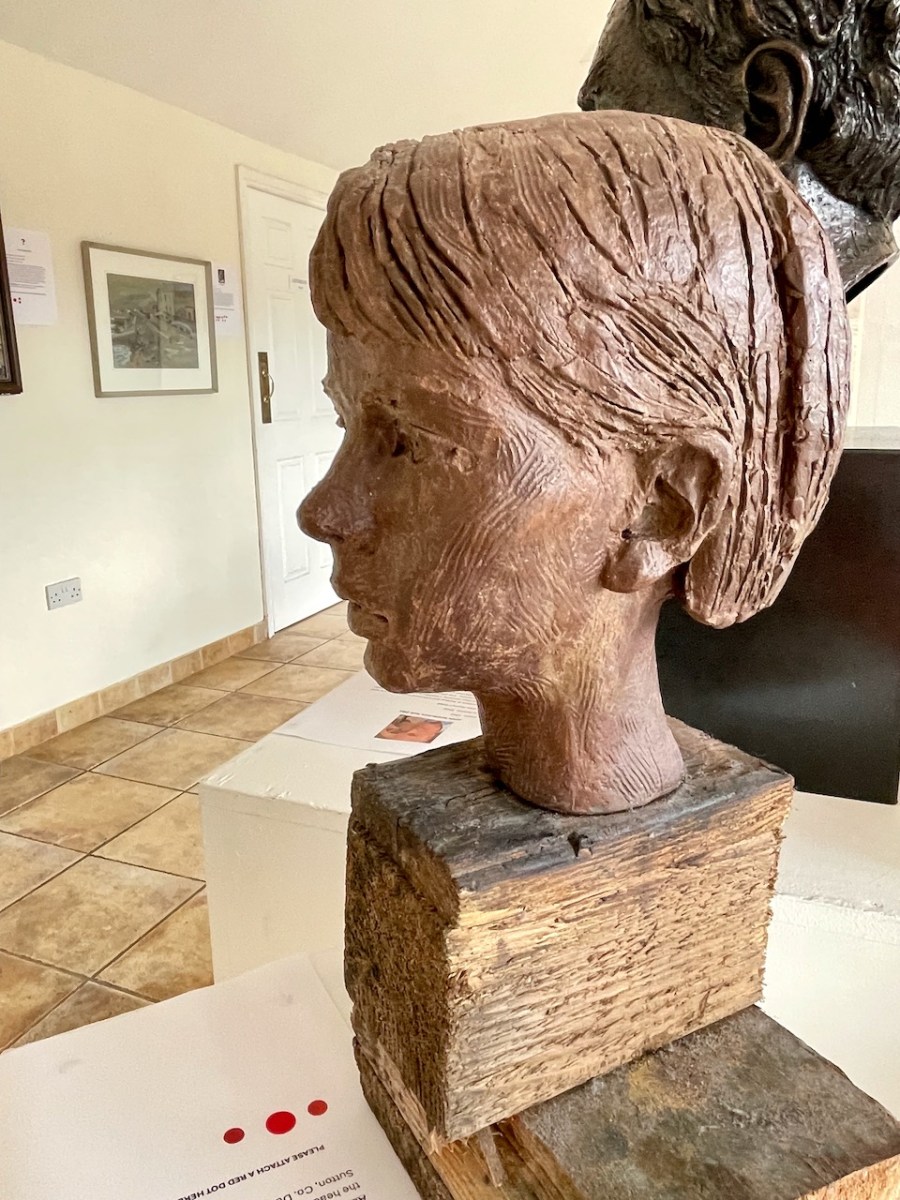
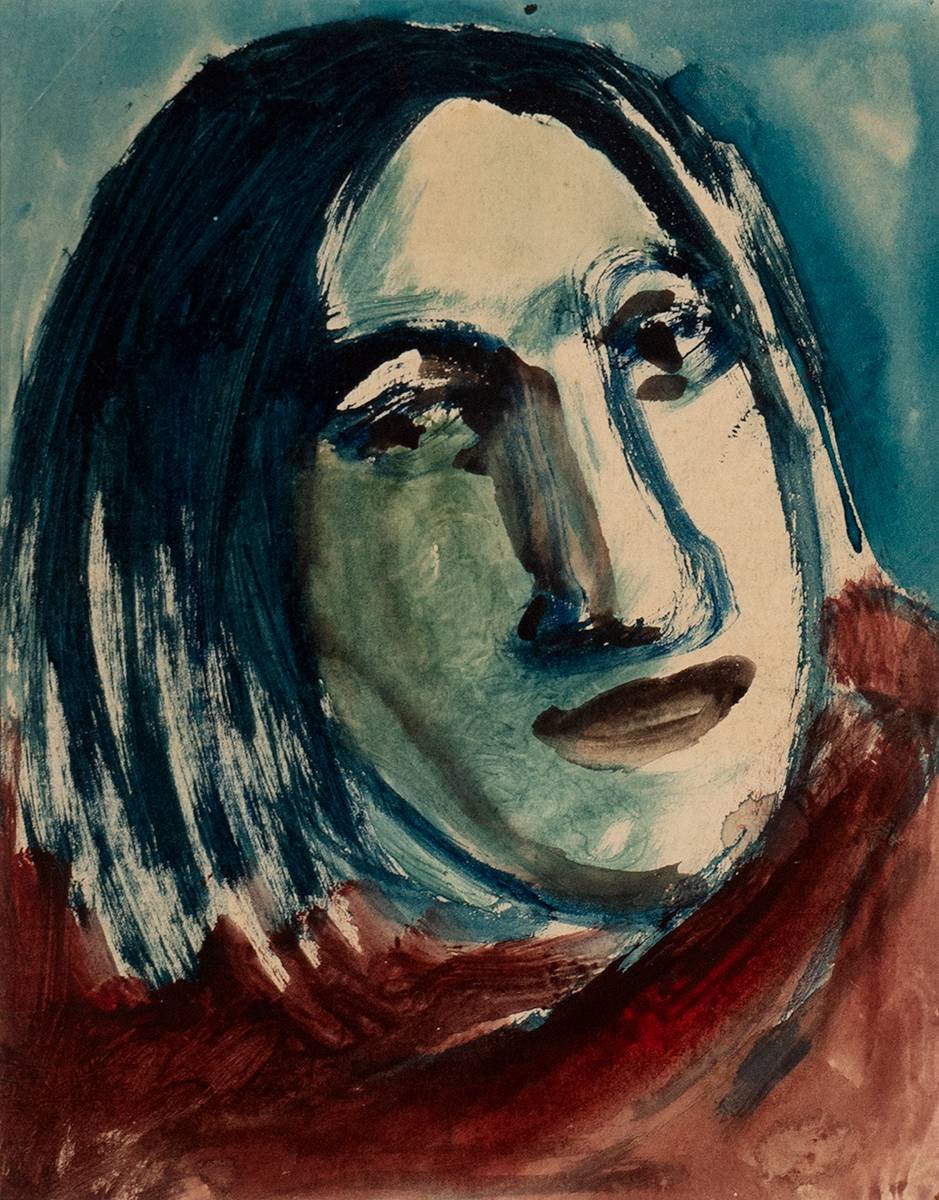
Oisín Kelly (above, Bust of a Young Girl) is a personal favourite, and I have mentioned Thomas Ryan in another context: he is also, perhaps, under-appreciated. George Campbell, despite designing windows for Abbey Studios in the 60s and 70s, never got written off as a stained glass craftsman. The portrait (below) is of his mother, Greta Bowen, who only began painting at 70 and exhibited well into her 90s.

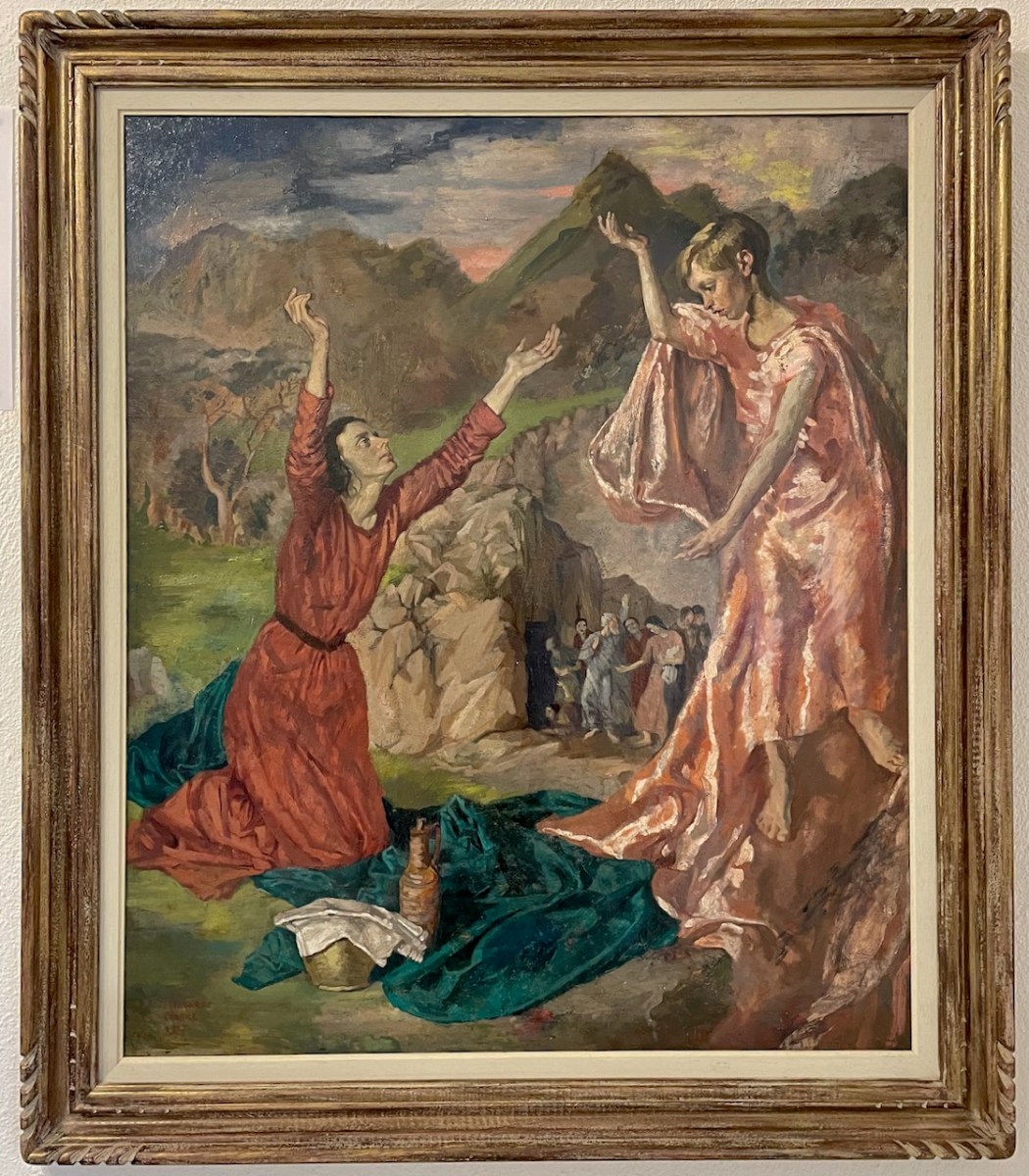
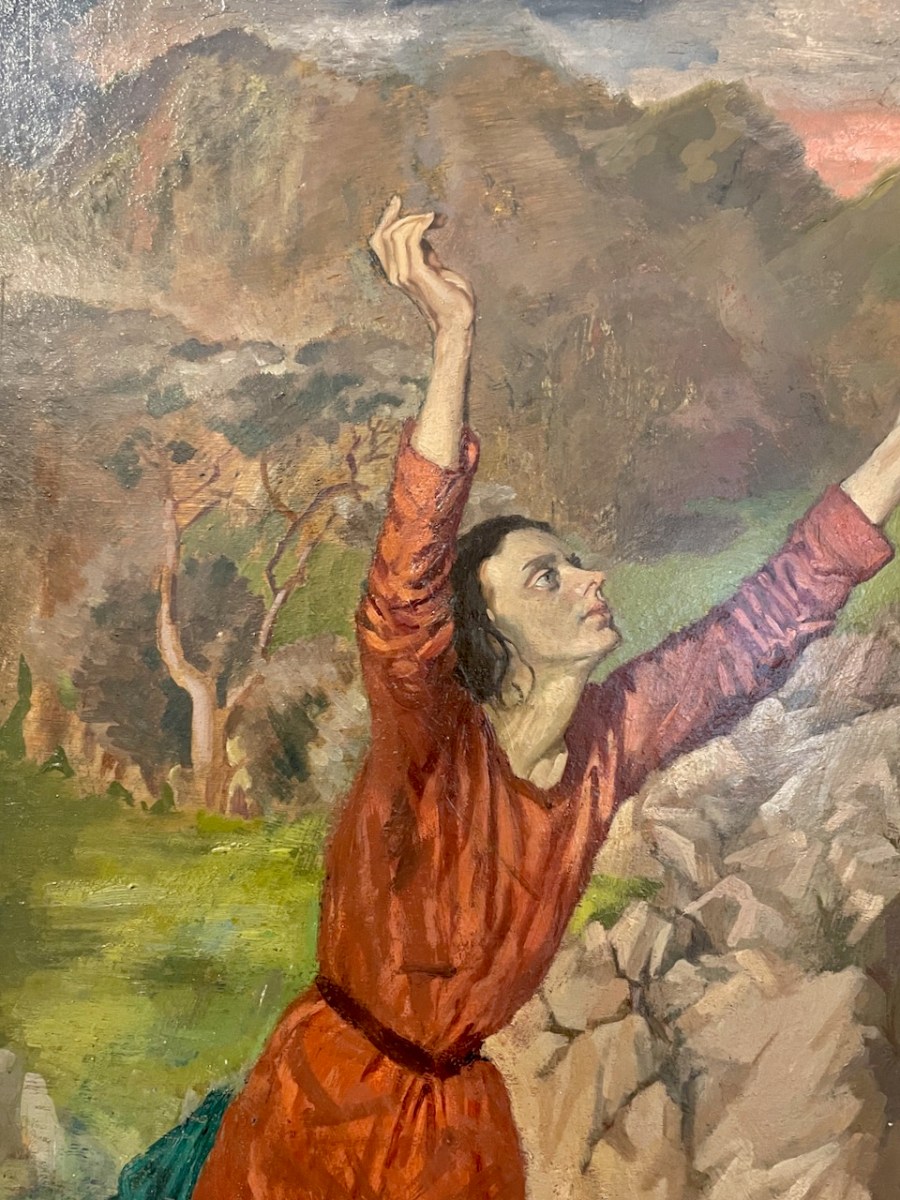
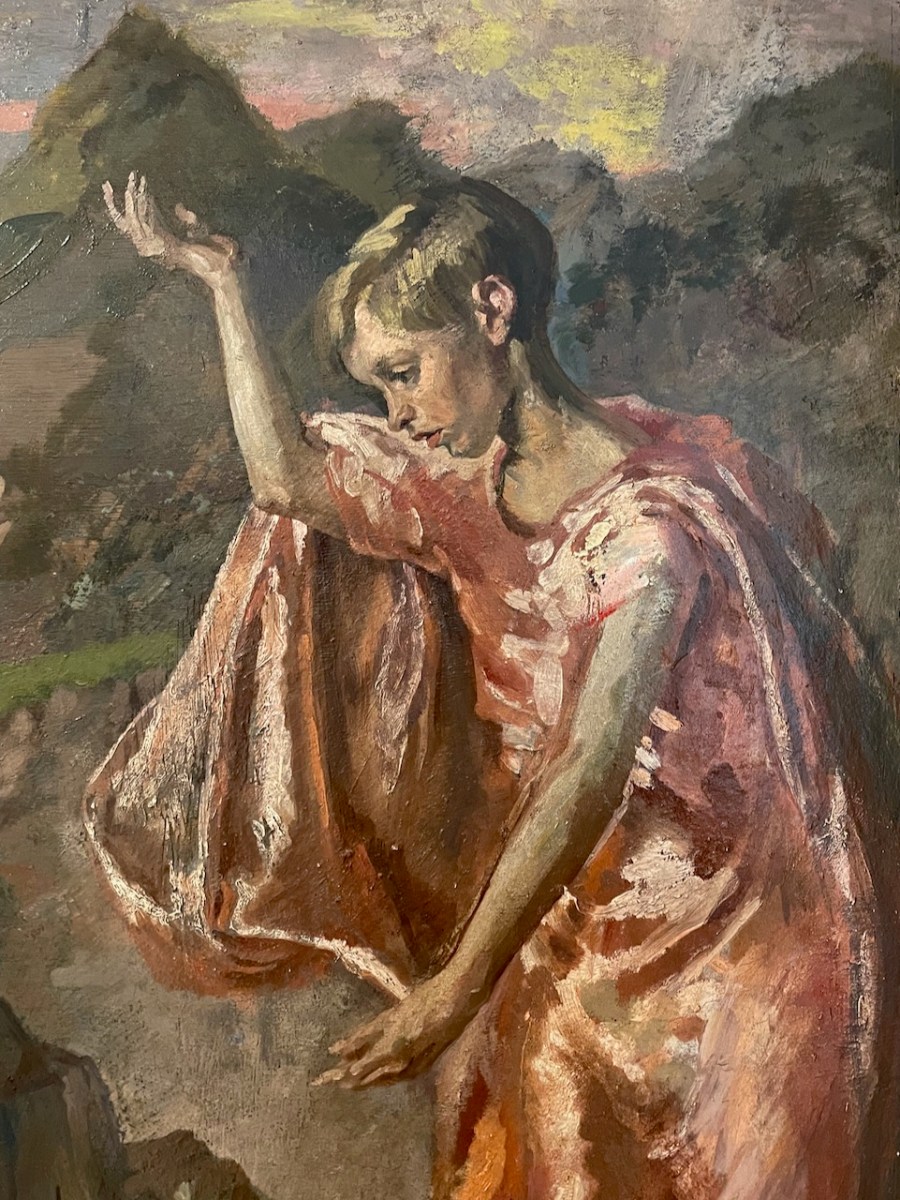
I recognised this painting, Mary Magdalen (below) as a Margaret Clarke right away, even though I had never seen it before.

It’s that combination of exact portraiture (I am willing to bet the angel was based on one of her children), the haunting expression in the eyes of Mary Magdalen, and the way the gestures mirror the scenery and shrubbery behind the figures.

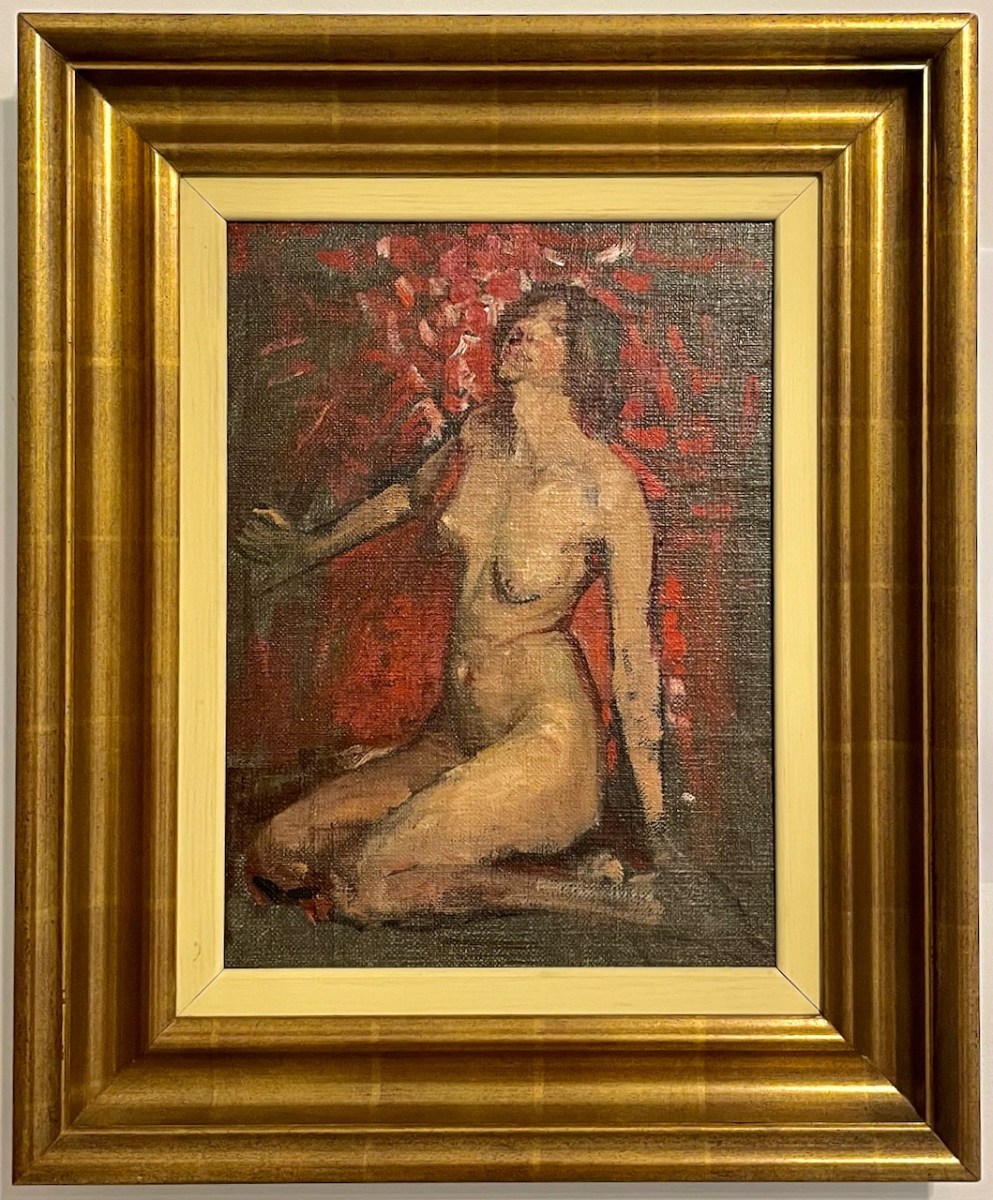
The Sarah Purser is interesting on a number of fronts. Purser made her name with portraiture, using her connections to obtain many commissions – she herself said she went through the British nobility ‘like the measles.’ But this nude (below) is of Kathleen Kearney, ‘Mother of All the Behans’, who worked for Purser as a young (and very beautiful) woman. Sarah Purser’s many talents (she was a superb manager of An Túr Gloine Stained Glass Studio among many other things) are currently on full display at the Hugh Lane Gallery.

I have only given you a flavour of what’s in this exhibition. If you can, get down to Union Hall and take a wander through it yourself. If you get there on a weekend, the charming Nolan’s Coffee House will be open. 

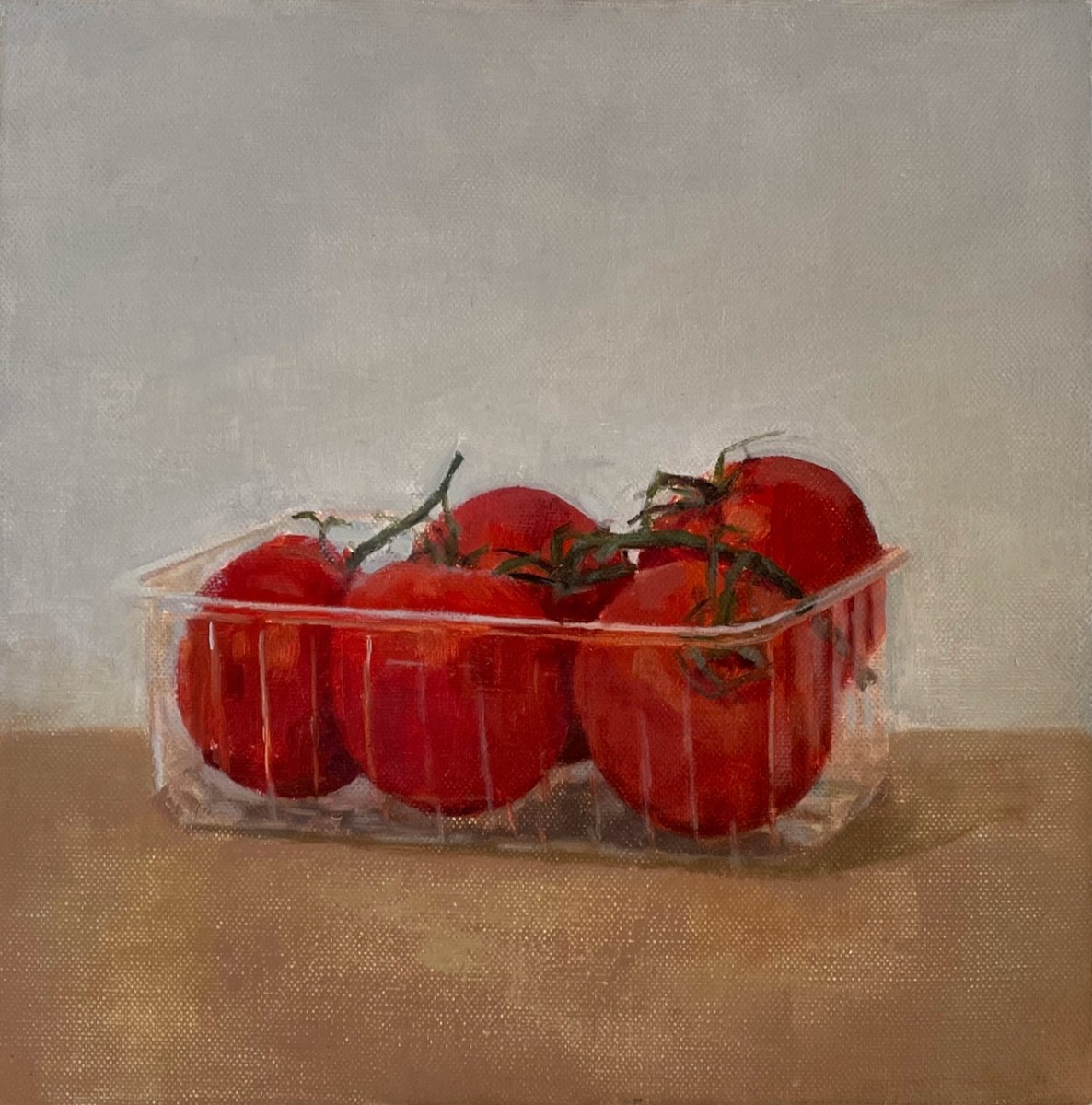
Maeve McCarthy’s Tomatoes

Night’s Candles are Burnt Out

There’s a wealth of tales to be told about the first decades of independent Ireland. The 1920s and 1930s saw a flourishing of confident projects portraying a nation on the cusp of change, establishing itself in Europe and beyond. One such was the hydro-electric scheme at Ardnacrusha on the River Shannon. Foundations were laid in 1925 and works completed within four years, providing the young country with what was then the world’s largest power station. The intention was to enable everyone in Ireland to avail of the most trendsetting modern commodity: electricity.

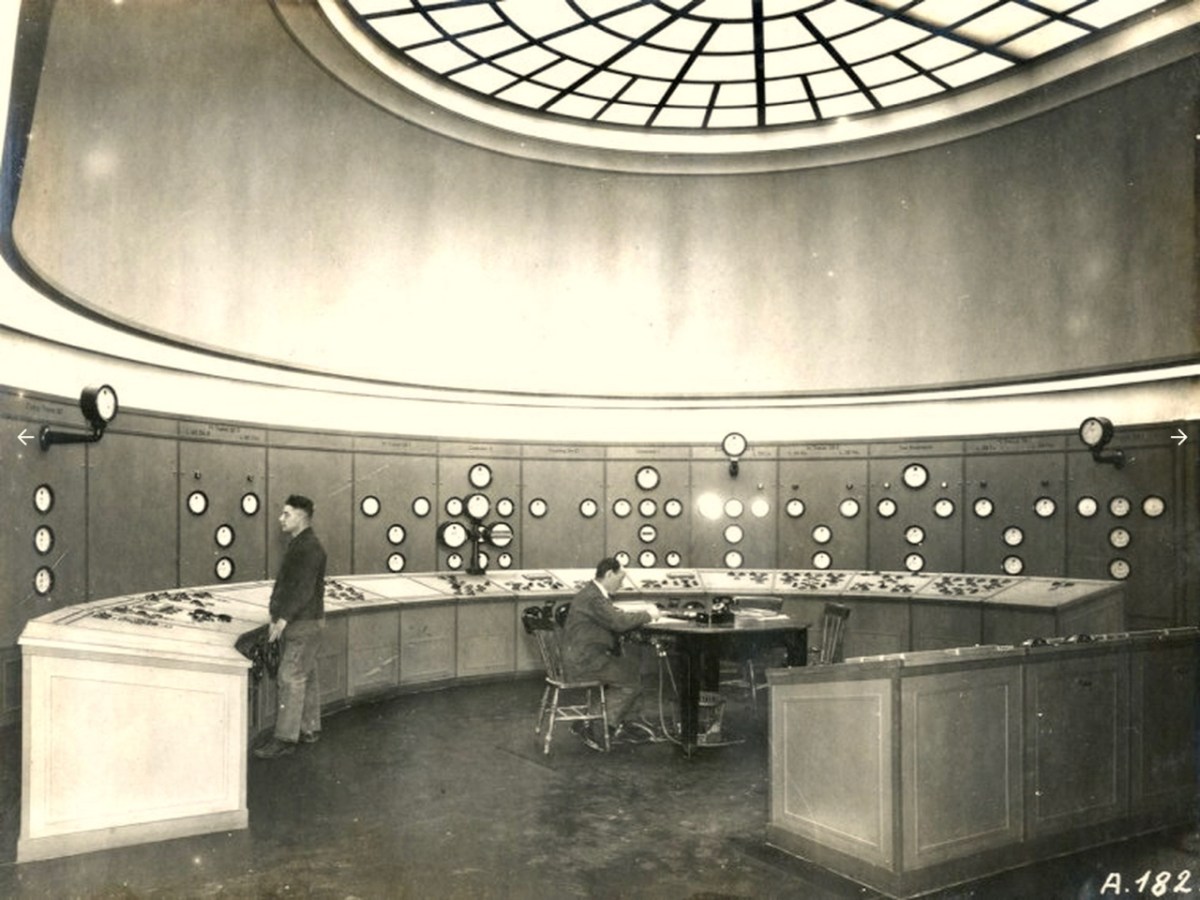
The documentary photo above looks like a scene from a science-fiction film: it’s the control station at Ardnacrushsa, shortly after the completion of the project. This, and many other of the illustrations which I will refer to, are taken from the excellent ESB Archives: I am very grateful to them for the use of these. The building of the huge dam and power station was documented in fine detail – and not just in words and photographs. The notoriously outspoken and visionary artist – Seán Keating – chose to record the accomplishments in his own medium, painting.

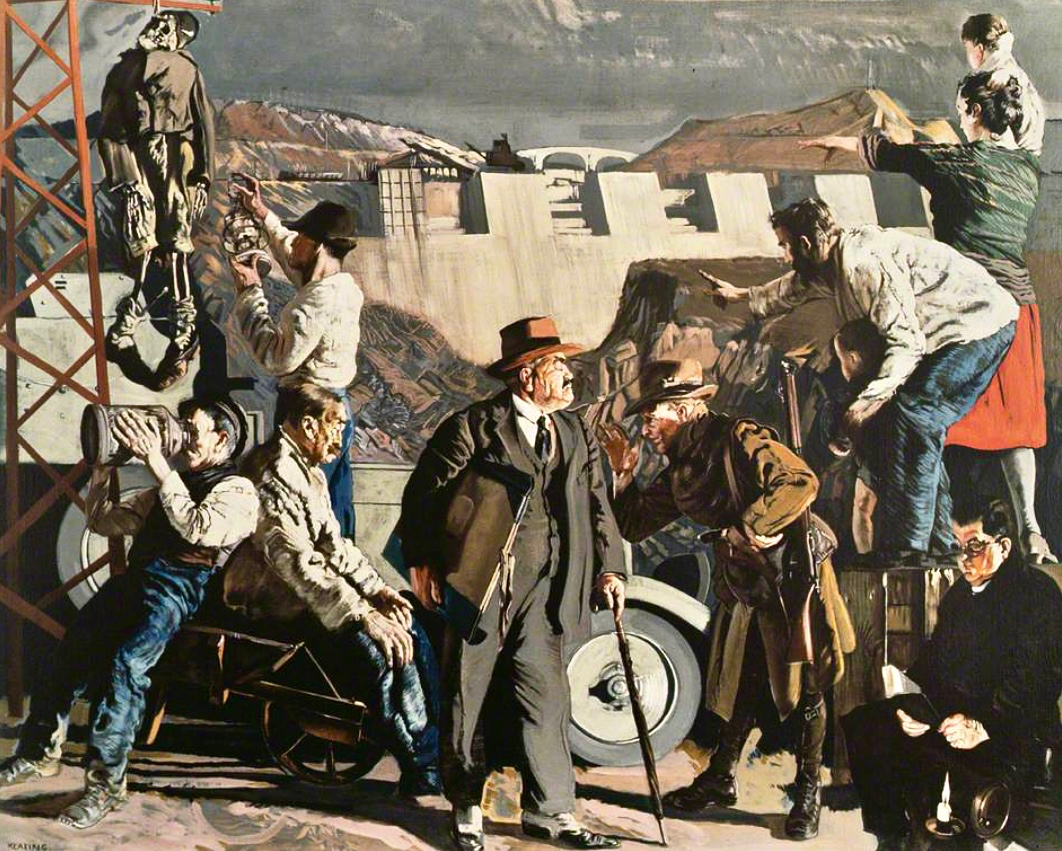
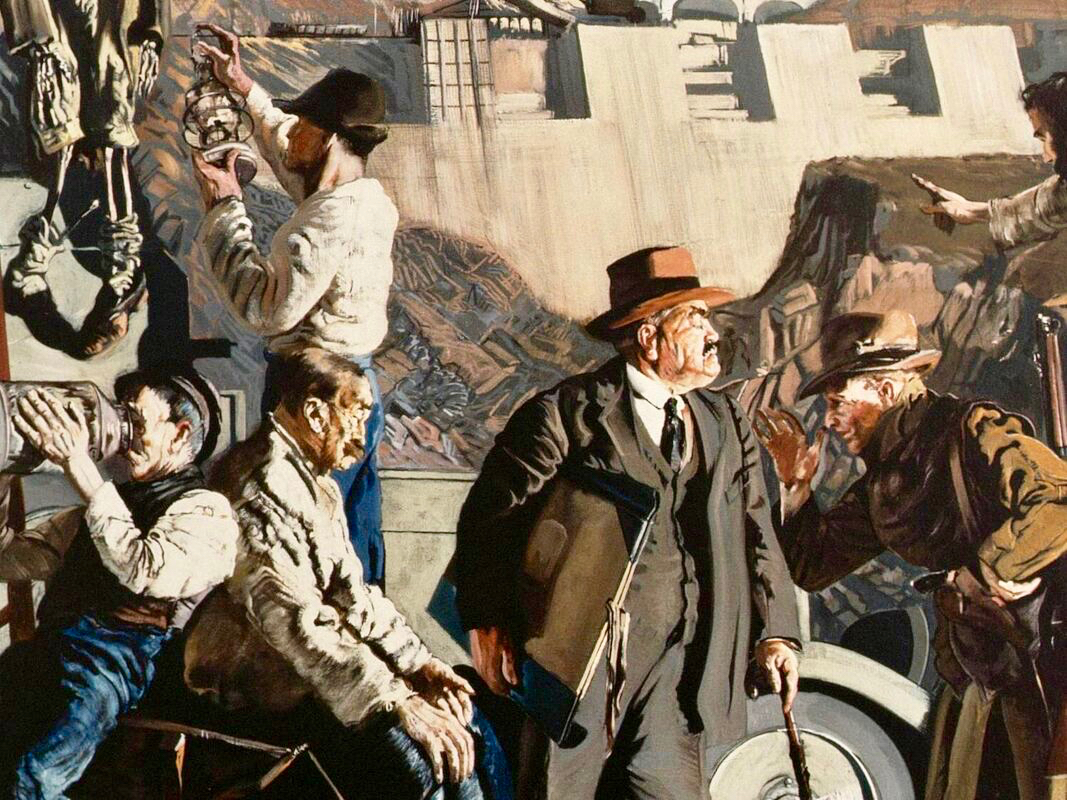
This is one of Keating’s works from the time: Night’s Candles are Burnt Out. (Thanks to Gallery Oldham). It is, perhaps, the finale of his series drawn and painted during the construction of the works – which he undertook on site under his own initiative and without a sponsor. Art historian (and biographer of Keating) Dr Éimear O’Connor suggests:

. . . Keating went down to Ardnacrusha because he knew that the construction project was emerging history. It was all happening around where he was born and raised. The machinery was going to carve up this landscape that he saw as ‘a medieval dungheap’, that was how he described it in later years. And this was a metaphor for him, the whole thing was all about Ireland moving forward into modernity. Night’s Candles features the dam at Ardnacrusha, but also includes a group of figures in the foreground, all of whom represent different aspects of what Keating saw as the Ireland of the day. When he showed it at the Royal Hibernian Academy in Dublin, it was called ‘the problem painting of the year,’ which Keating thought was hilarious. They couldn’t get their heads around this idea of what he was trying to do at all . . .

O’Connor: Seán Keating: Art, Politics and Building the Irish Nation, 2013 (Irish Academic Press)

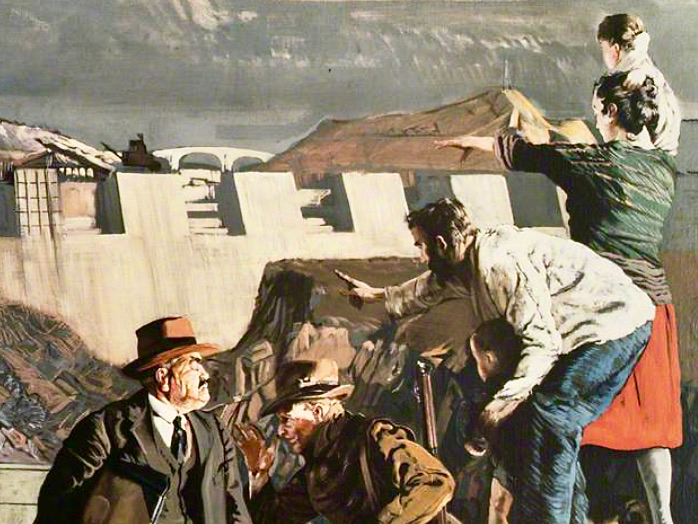
In this detail from the painting we see Keating himself (top right) together with his wife and sons, pointing to the vision of Ireland’s future. On the left of the full painting is Keating again, inspecting a hanging skeleton, perhaps reminiscent of the Famine. Most significantly, perhaps, at the bottom right is a priest reading by the light of the candle. O’Connor is clear about this portrayal:

. . . It tells you an awful lot about Keating and his attitude to the Church at the time. Like many others in the cultural sphere in Ireland, he was disappointed with post-Treaty Ireland, with successive governments and the Church, who were in cahoots, if you know what I mean. He knew well that the whole country was tied up with them, and with that kind of organized religion that was deeply conservative. And Night’s Candles is very much an expression of that disappointment, I think . . .

O’Connor: Seán Keating: Art, Politics and Building the Irish Nation, 2013 (Irish Academic Press)

It’s worth dwelling on this painting a little longer, and viewing Keating’s thought processes, through O’Connor’s eyes:

. . . What Keating was trying to do was reflect upon a country on the brink of change. It was in those years, in the 1920s, that the term ‘gombeen man’ came into being. We all know that it means the kind of businessman or politician who’s making money off the backs of everybody else. And that’s the gombeen man in the middle of the painting. I think it’s quite clear that Keating’s hope was that modernity, as represented by Ardnacrusha, would end all that stage-Ireland paddywhackery that had prevailed for years . . .

O’Connor: Seán Keating: Art, Politics and Building the Irish Nation, 2013 (Irish Academic Press)

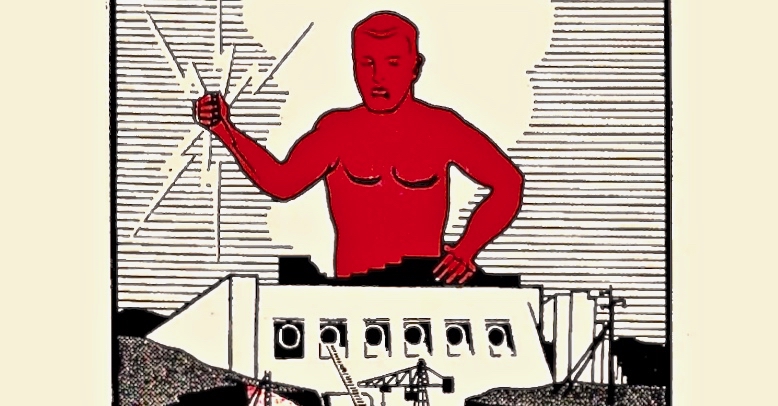
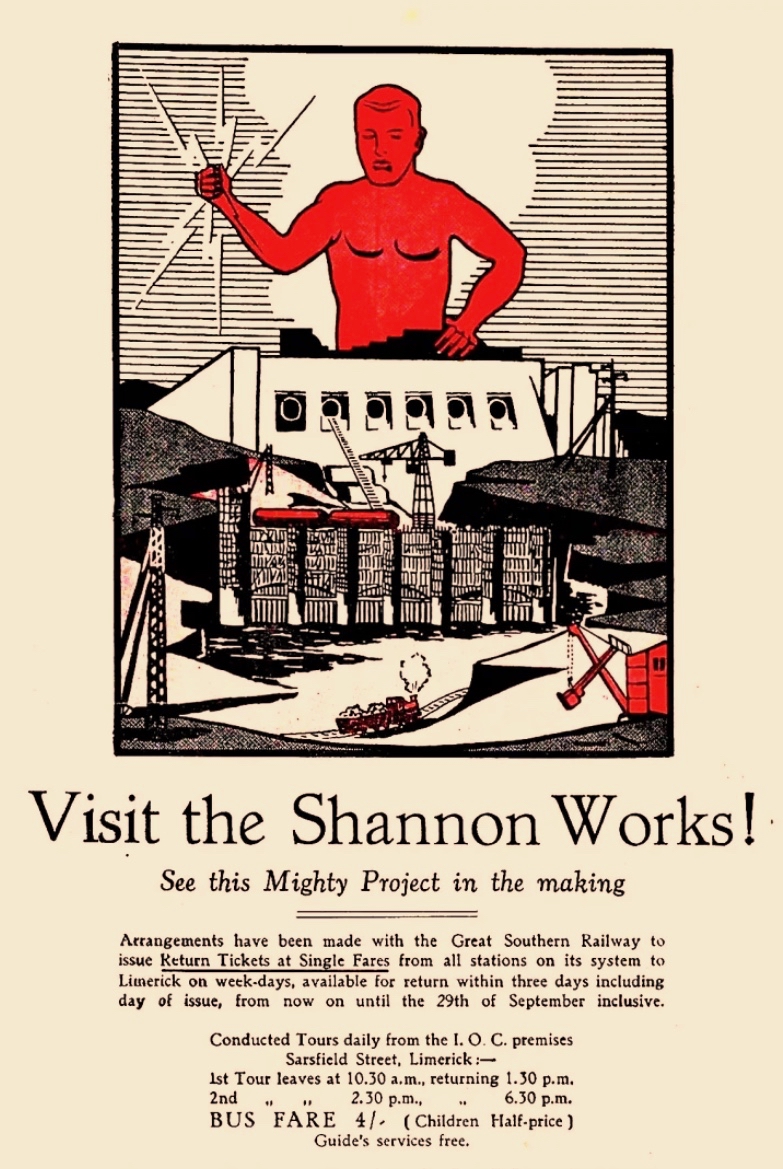
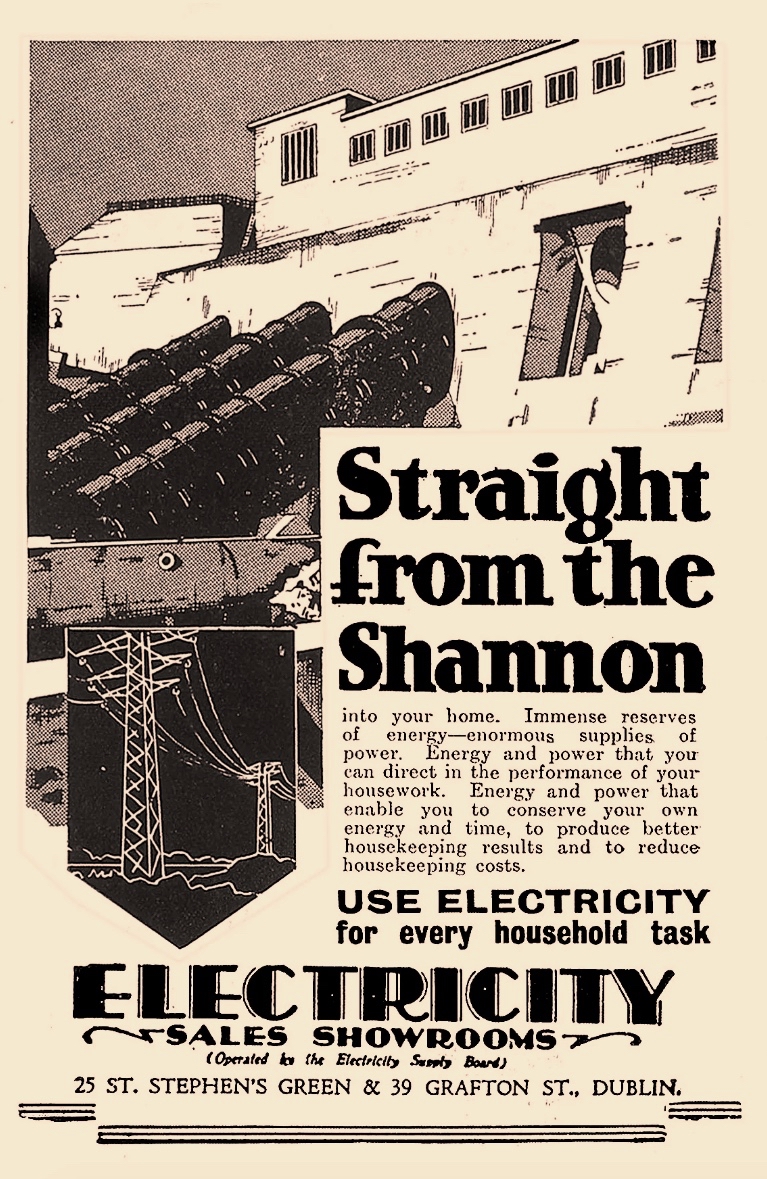
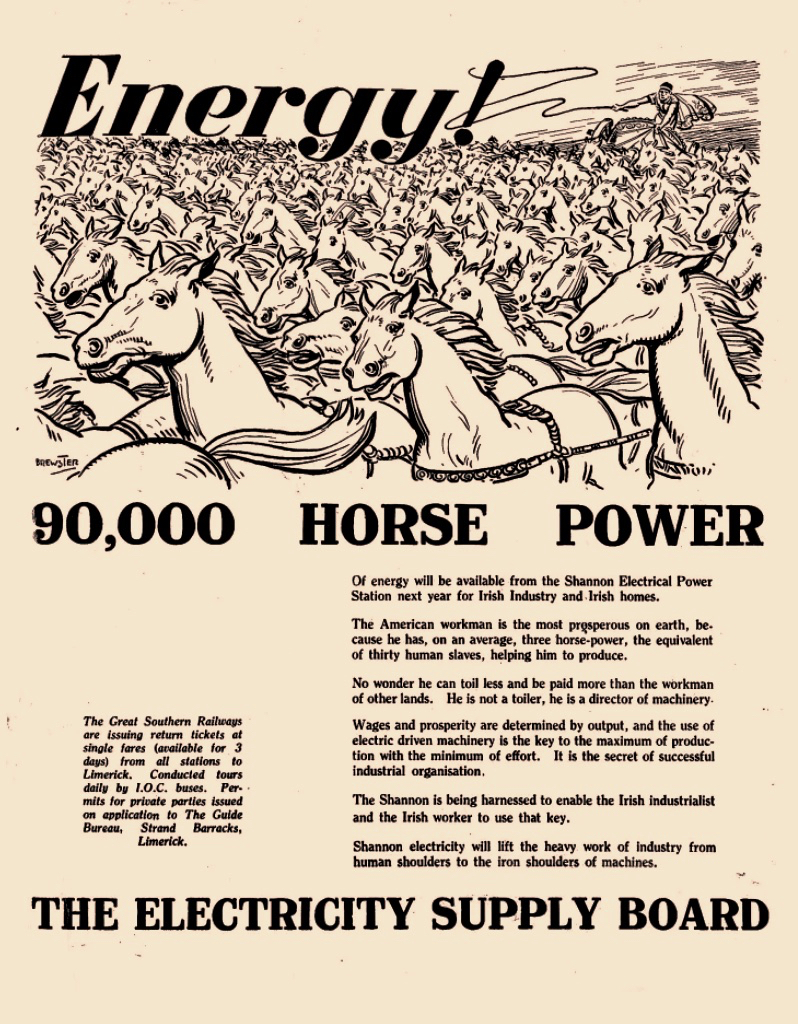
Above – posters from the time of the construction work at Ardnacrusha (ESB Archives). It was certainly the most exciting project in Ireland’s young days, and tourism was encouraged. Hand-in-hand with the major works themselves went a crucial publicity campaign to encourage people to embrace the coming of a readily available electricity supply to homes and businesses. The steps taken to try and ‘get the message across’ was an uphill task. Considerable funds were expended – and a large sales force garnered – to tour the country and persuade the population to buy into the project.

The visuals, humour and underlying psychology of this Ardnacrusha construction-era promotional poster really appeal to me. In case you can’t read the ‘small print’, this is the message that’s being pushed:

. . . 90,000 Horse Power of energy will be available from the Shannon Electrical Power Station next year for Irish Industry and Irish homes . . . The American workman is the most prosperous on earth, because he has, on average, three horse-power, the equivalent of thirty human slaves, helping him to produce. No wonder he can toil less and be paid more than the workman of other lands. He is not a toiler, he is a director of machinery . . .

Post-Famine, America was always seen as the ‘golden land of opportunity’ for Irish emigrants. Now, in 1930, we are being told that Ireland will have the capability to match those fabled fortunes!

. . . Shannon Electricity will lift the heavy work of industry from human shoulders to the iron shoulders of machines . . .

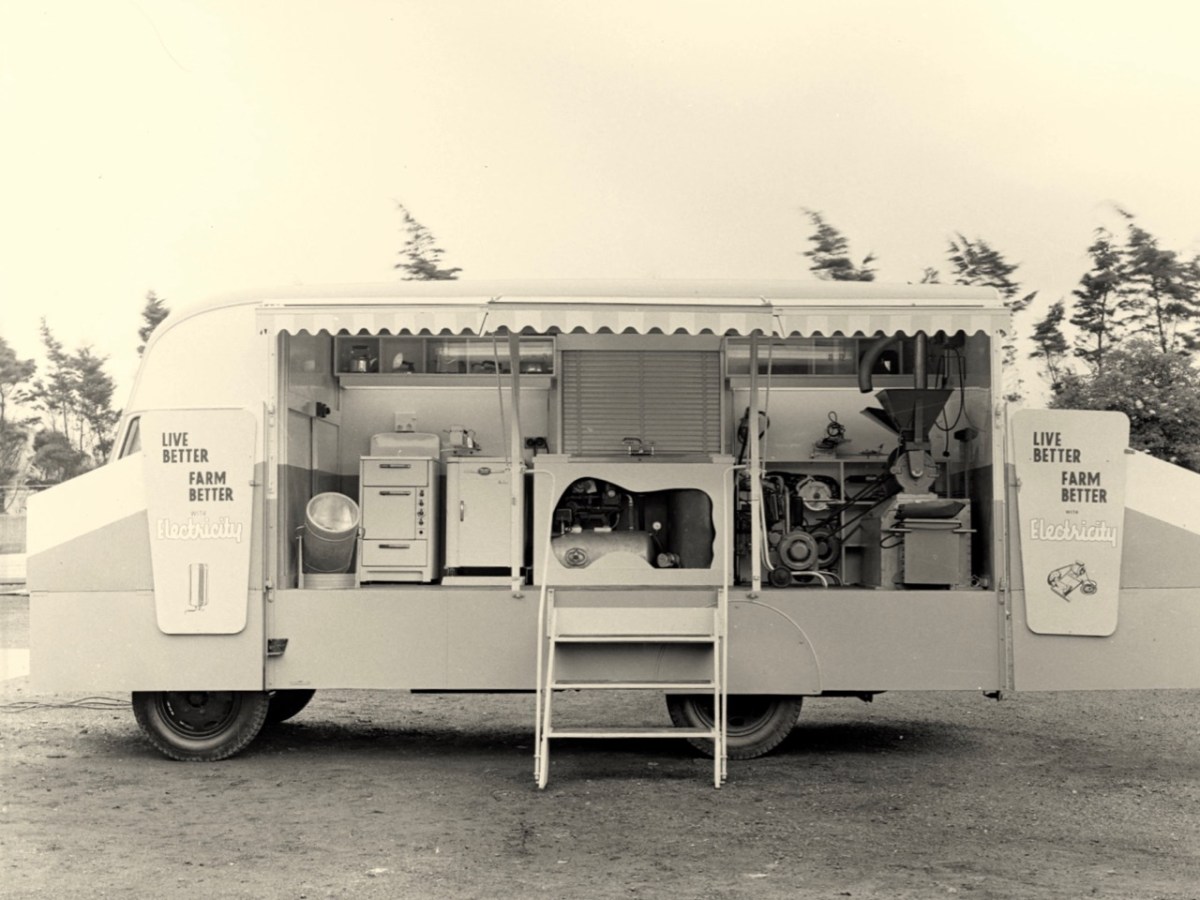
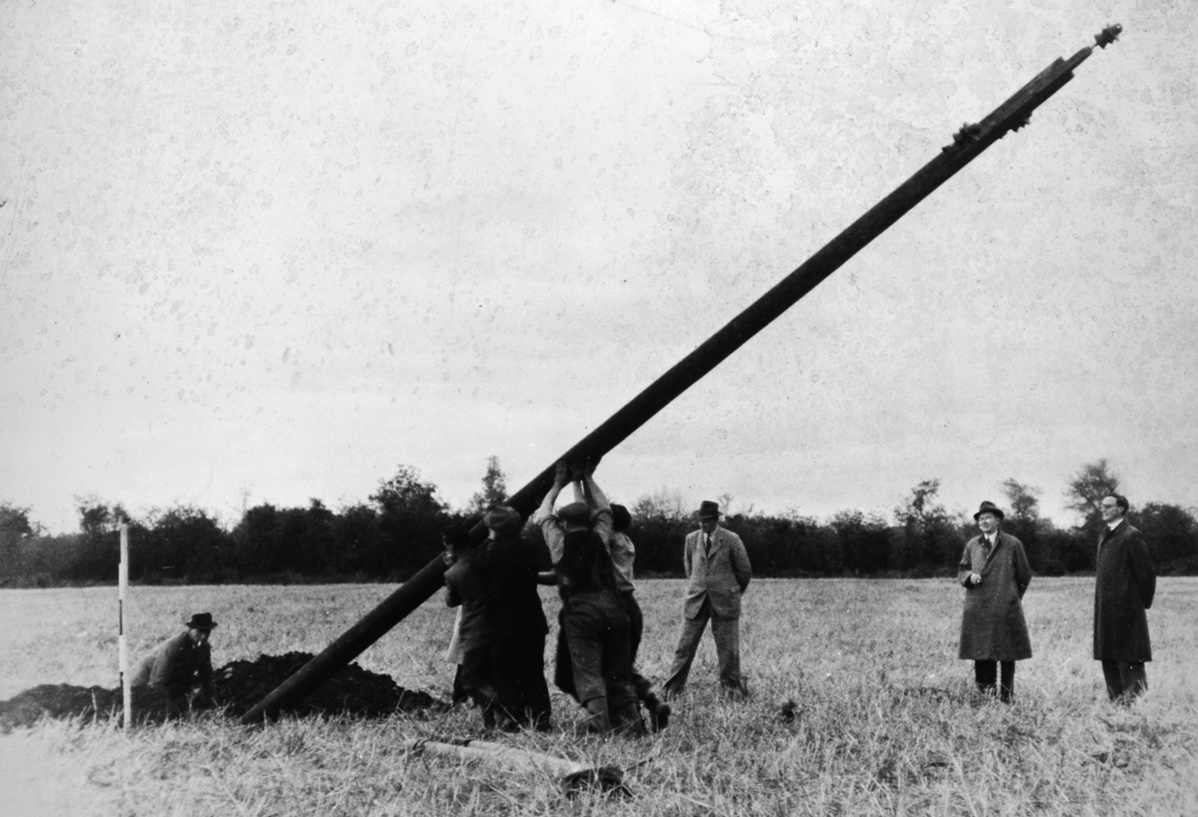
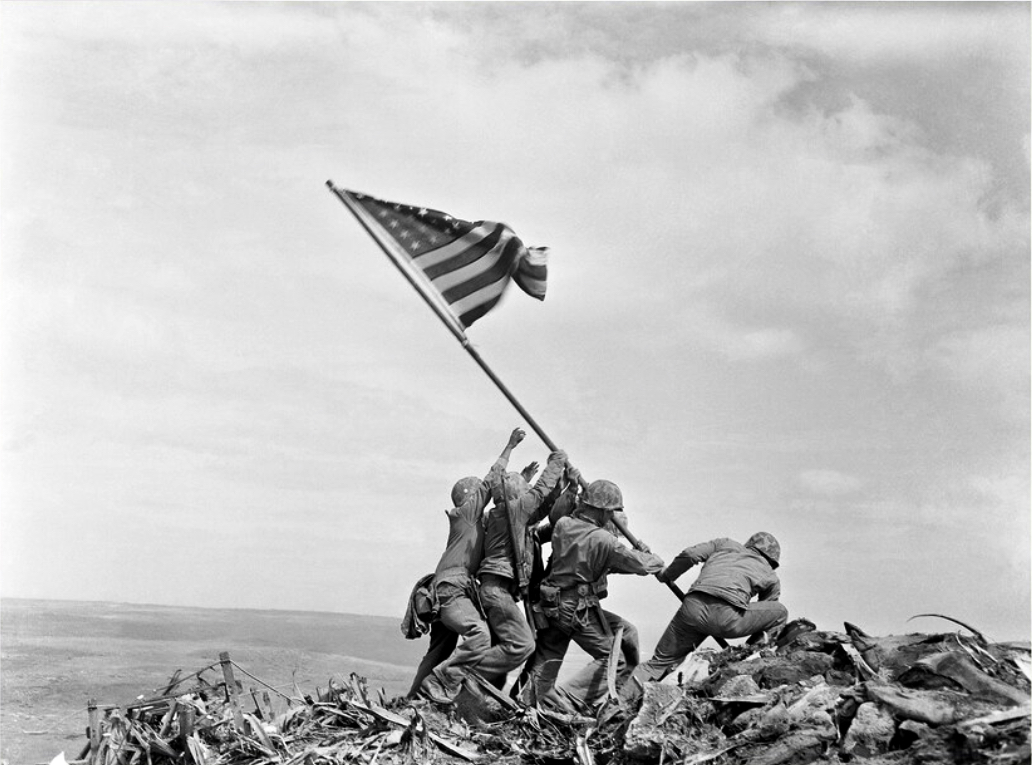
The coming of electricity across Ireland opened up markets for retailers to vend a host of innovative gadgets. This mobile electricity showroom from the 1950s (ESB Archives) covers the gamut of lighting, cooking, refrigerating, water supply to sinks using pumps, milking machines and labour-saving devices for farms. In a future post I want to focus on Rural Electrification, which was a long haul: taking poles and wires out into the extensive hinterland. This was – arguably – the most heroic part of the process of electrification, and we can’t help wondering whether the following somewhat iconic ESB print of the first ‘peg’ being raised at Kilsallaghan, on 5 November 1946 was inspired by the famous Iwo Jima Victory photograph taken by Associated Press photographer Joe Rosenthal on February 23 1945 (lower pic). Both portray a moment of triumph.

Many thanks are due to Michael Barry who referred me to material from the ESB Archives covering our own West Cork areas. Watch out for our commentary on this in a forthcoming post!

Irish Artists and Stations of the Cross

Every Catholic Church in Ireland has a set of Stations of the Cross on the wall – fourteen focus points for devotion and reflection on the Way of the Cross. The Stations, as they are universally known in Ireland, come from a long tradition within the Catholic Church, often associated with St Francis, but also with the Via Dolorosa in Jerusalem, and the custom that Pilgrims had of retracing Jesus’ footsteps on the way to Calvary.

Most Stations appear to have been ordered from a catalogue and all look similar, painted in an Italianate Renaissance style and framed in wood. The image above, of one of the stations in a rural church in Cork, is typical.
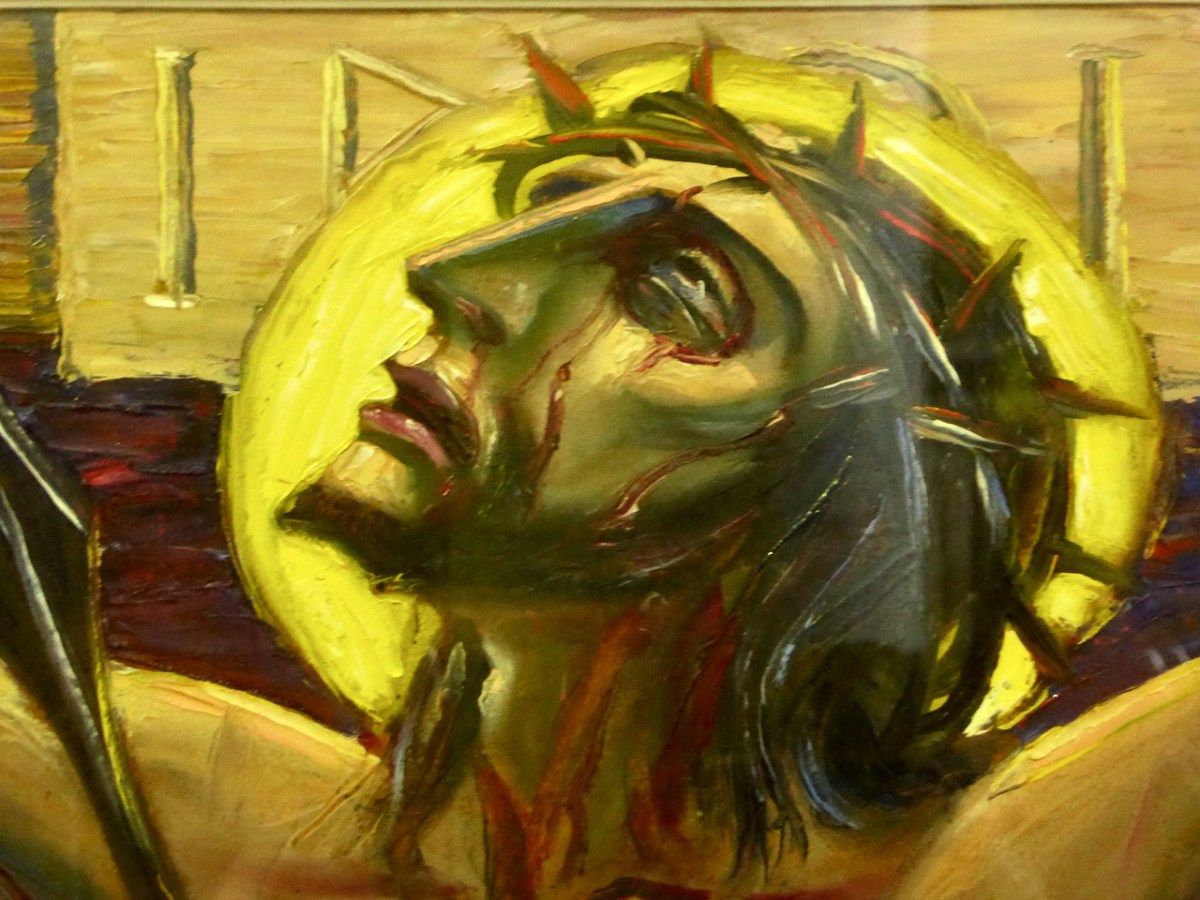
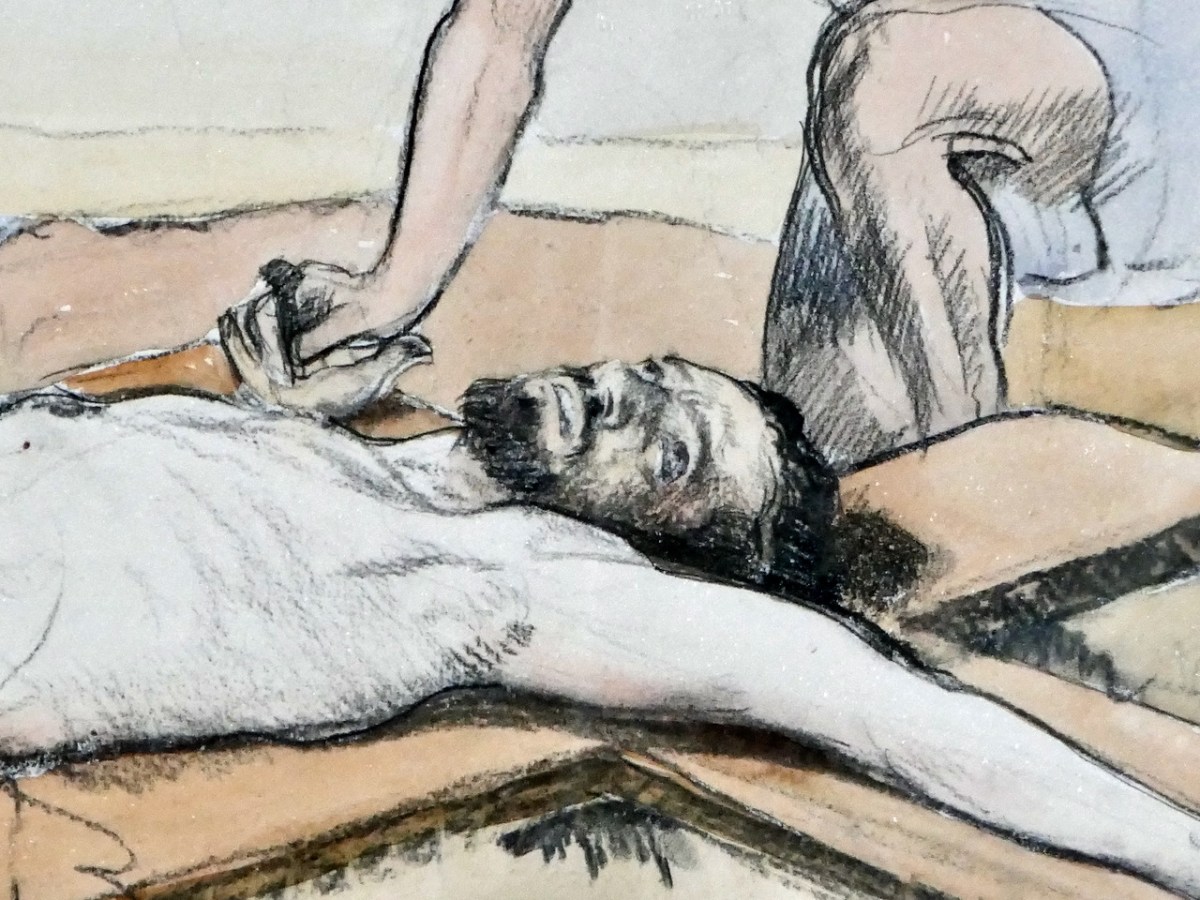
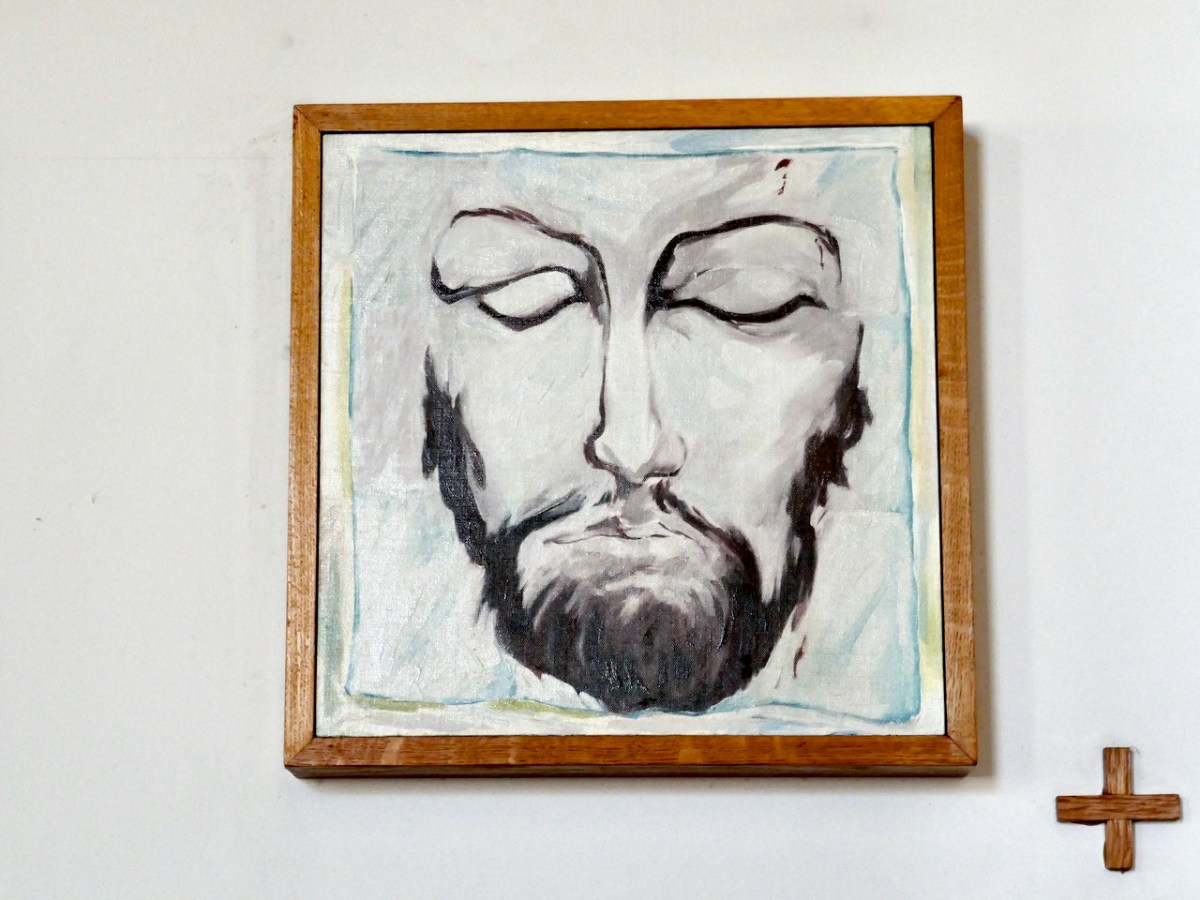
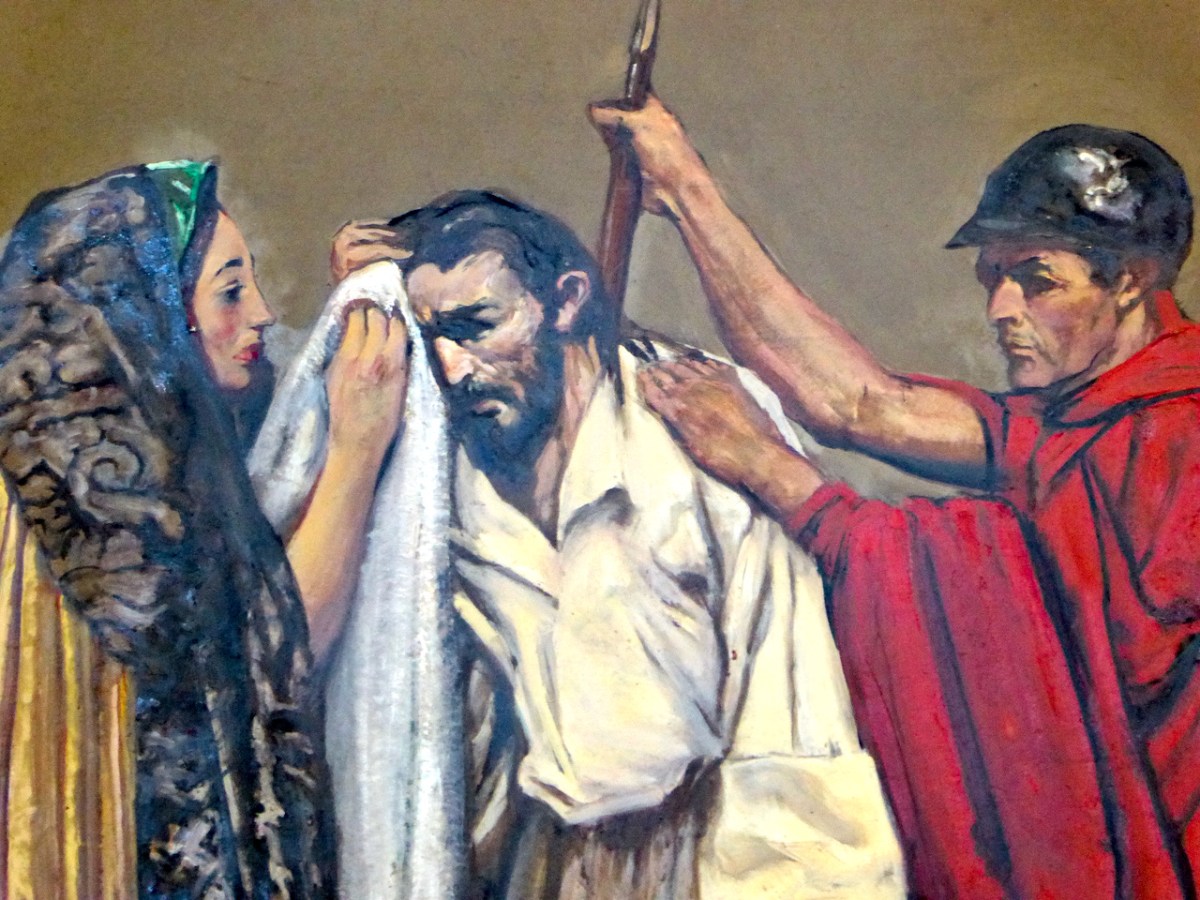
However, architects, priests, and parish committees sometimes took the bolder step of commissioning Stations from a contemporary artist. The lead image and the one above are both from sets of Stations by Richard King. The lead image is the Deposition (Christ taken down from the Cross) and is in a small church in Foilmore in Kerry, while that immediately above is from Swinford, Co Mayo, as is the one below – a painting that focuses ferociously on the suffering of the crucified Jesus.
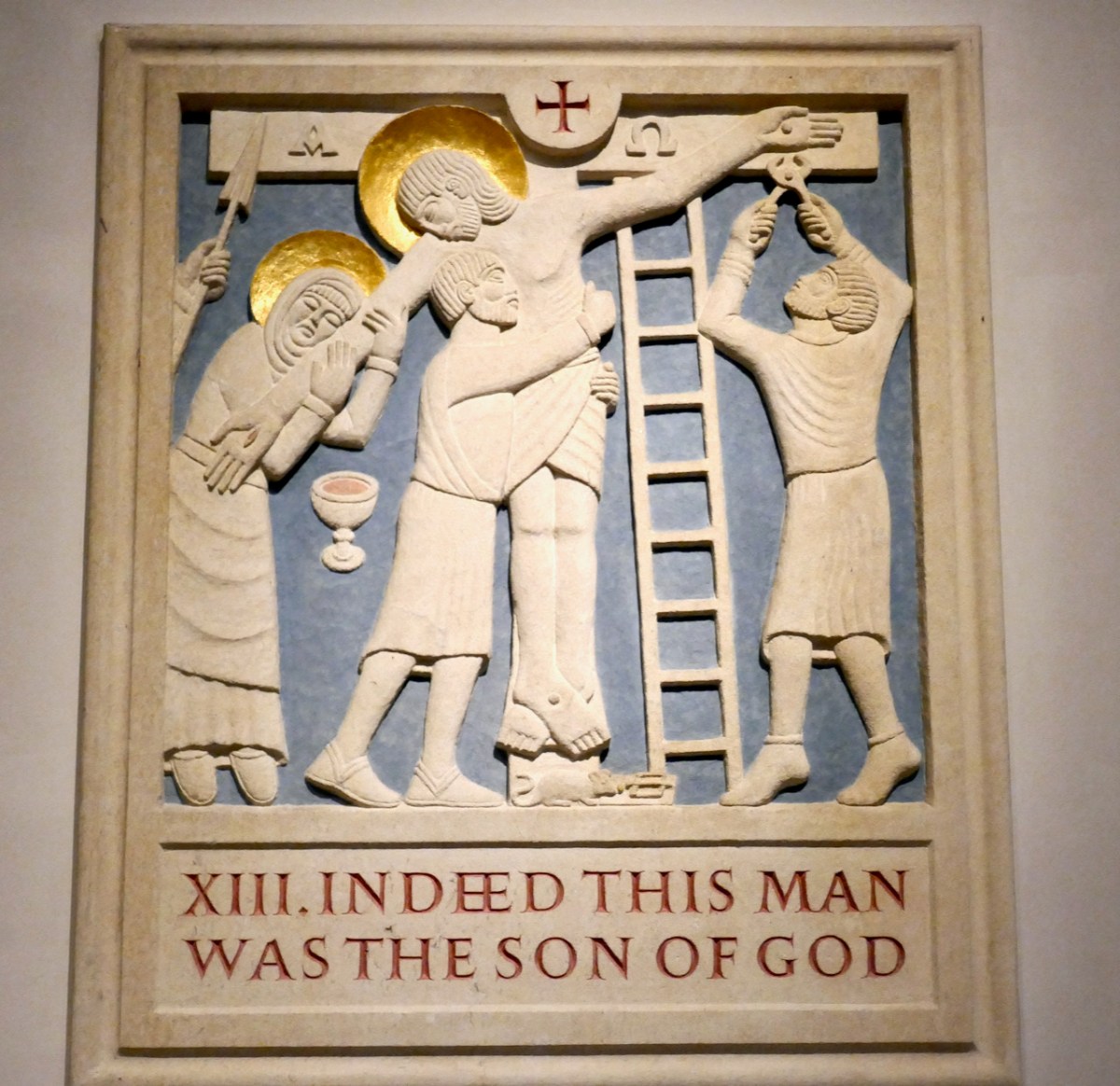
This was an important source of income for artists from the beginning of the new Irish State. While we don’t often think of the Catholic Church as a patron of the arts, in practical terms it functioned as such for many painters and sculptors. In fact it is hardly an exaggeration to say that the church was the largest commissioner of contemporary art in Ireland during most of the twentieth century. 

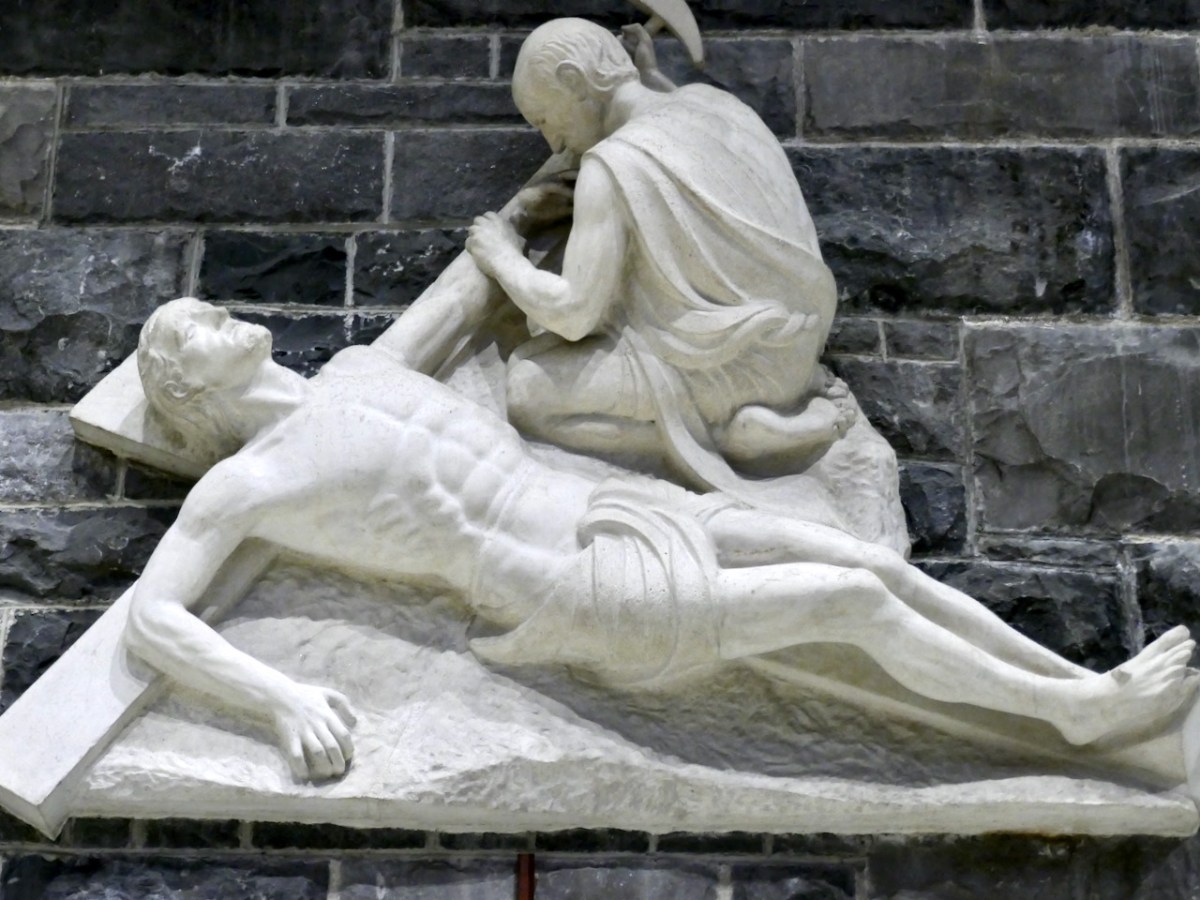
Galway Cathedral is a showcase for twentieth-century artists and all fourteen Stations were carved in portland stone by Gabriel Hayes. It took her eighteen years to complete them and she called them ‘the main work of my life.’

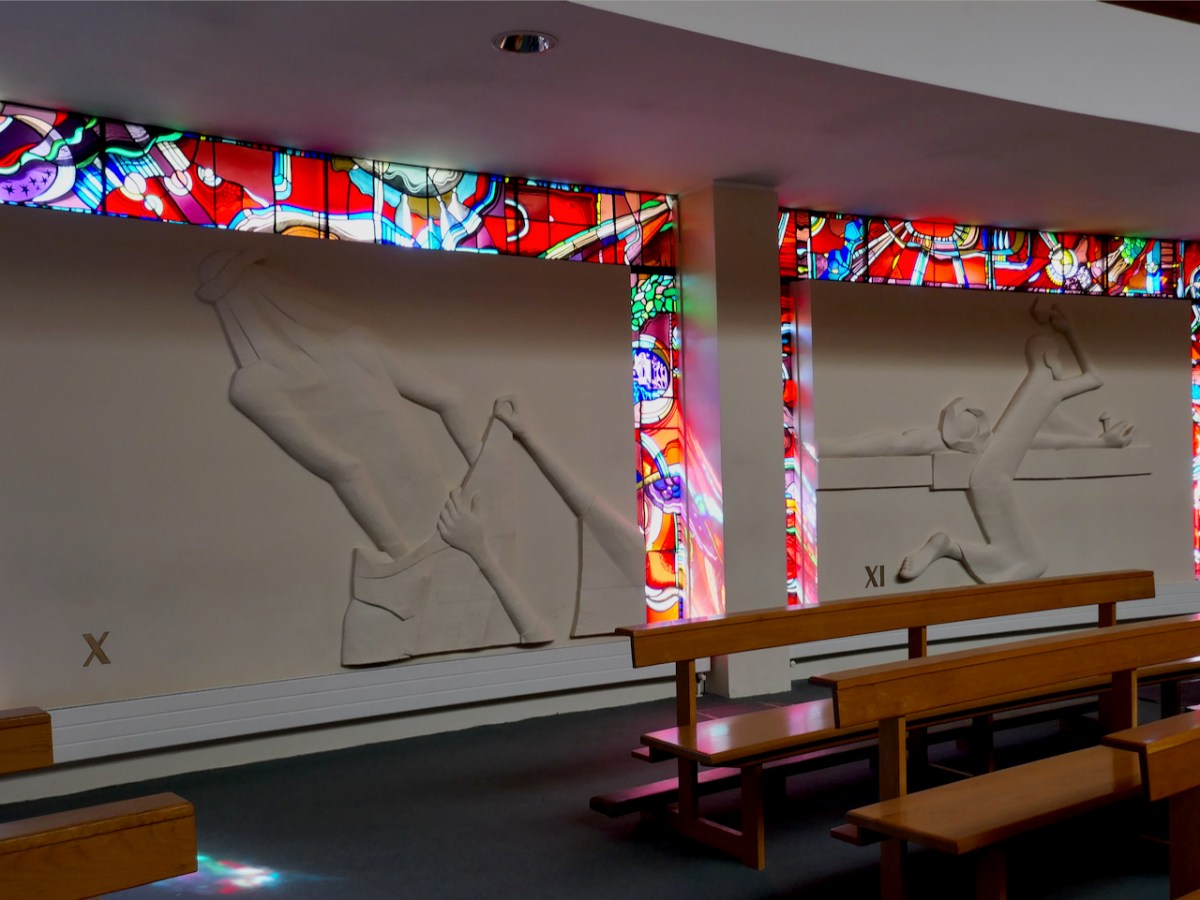
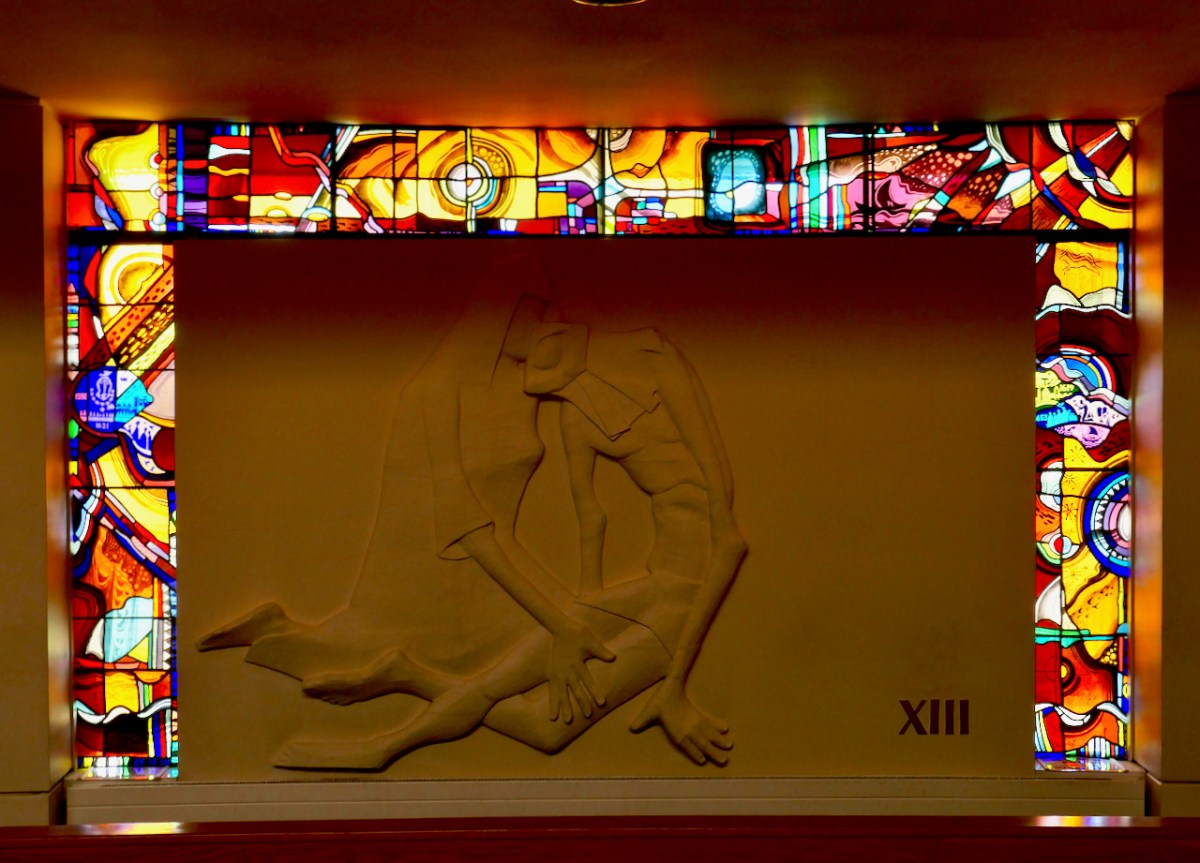
Certain architects – Liam McCormack, for example, or Richard Hurley – considered each aspect of their design and included specification for contemporary art. Some indeed, like Eamon Hedderman, worked closely with artists to plan a church holistically, incorporating the art into the integral fabric of the building. A magnificent example of this can be seen in the Church of the Irish Martyrs in Ballycane (Naas) where large-scale graphic stations designed by Michael Burke are surrounded by contemporary glass by George Walsh.

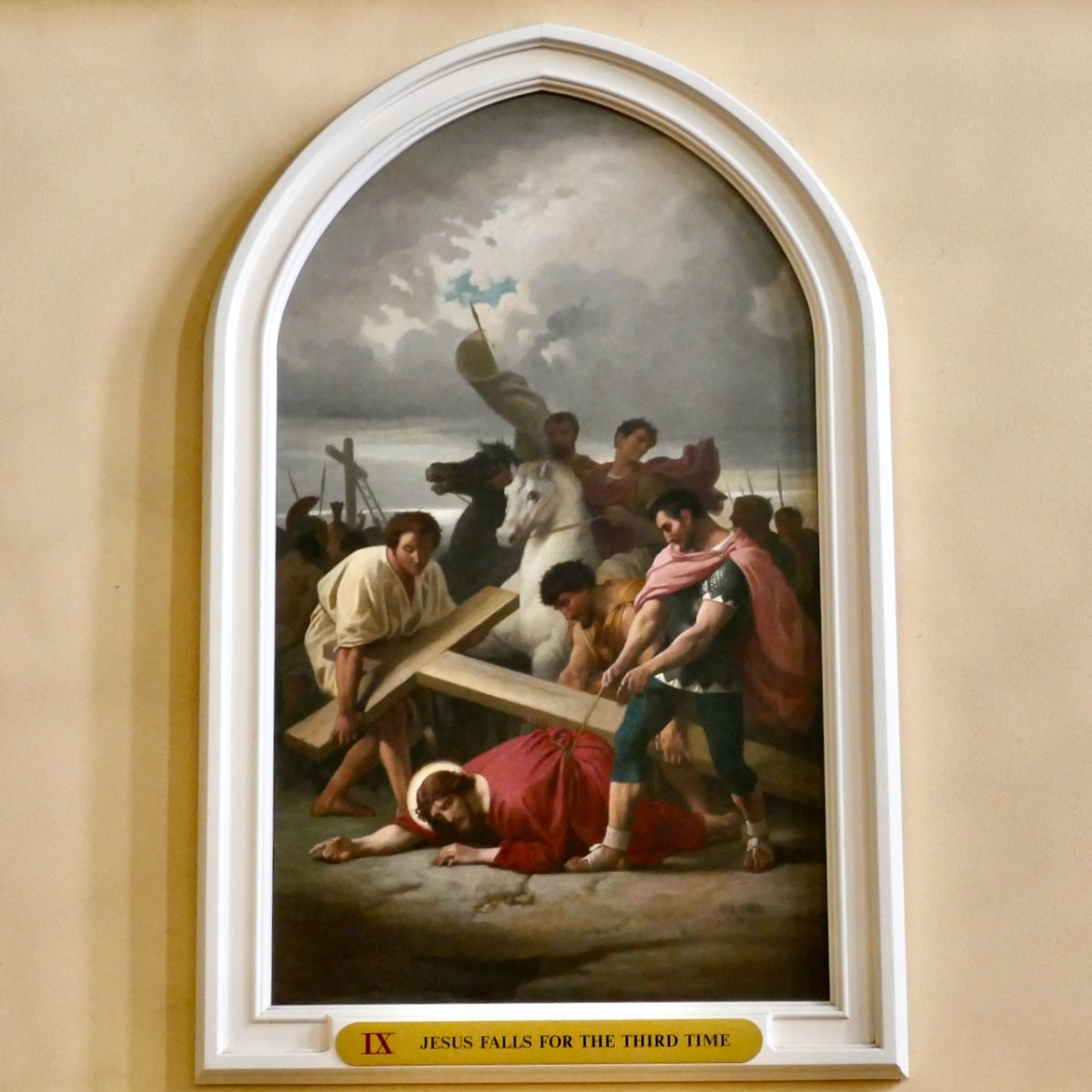
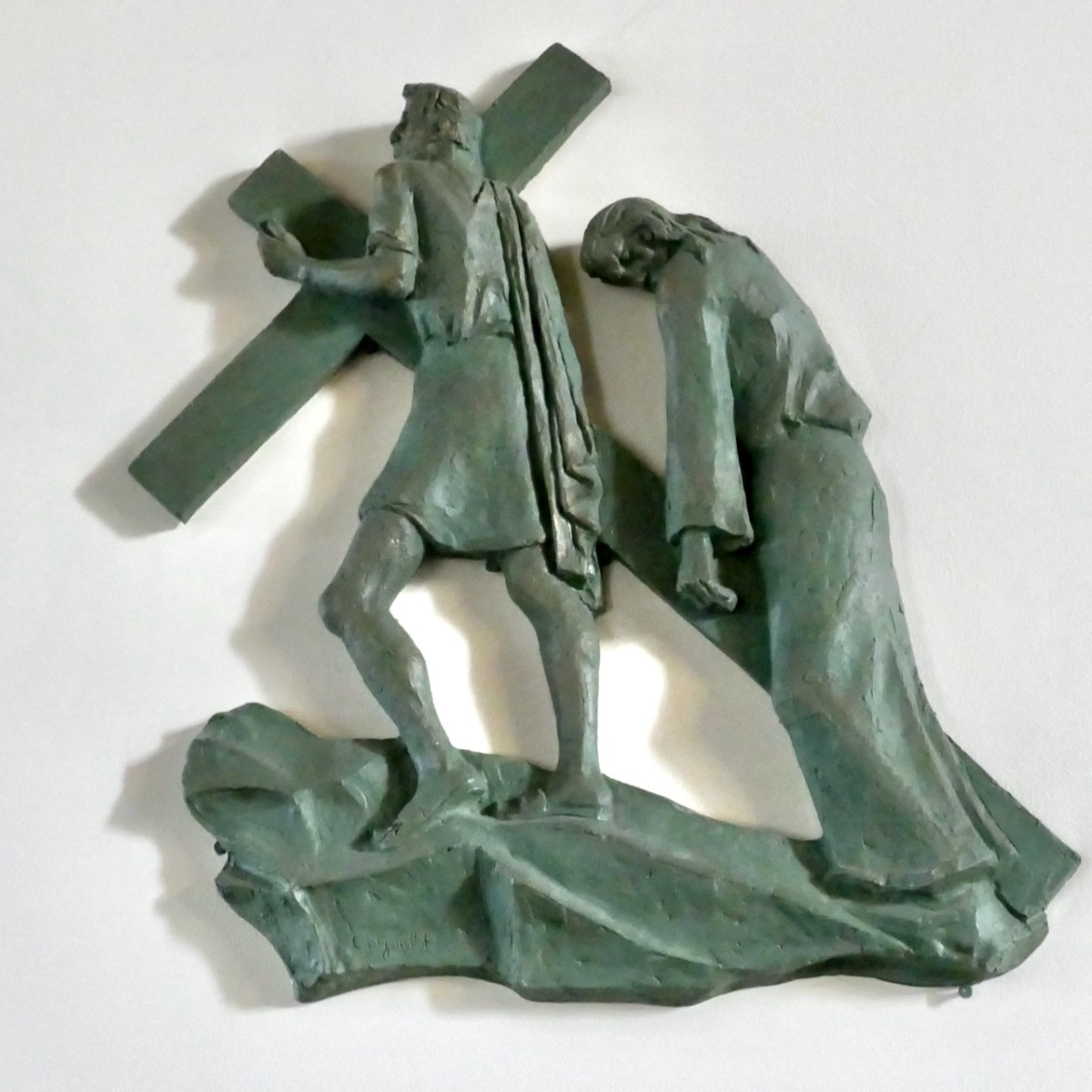
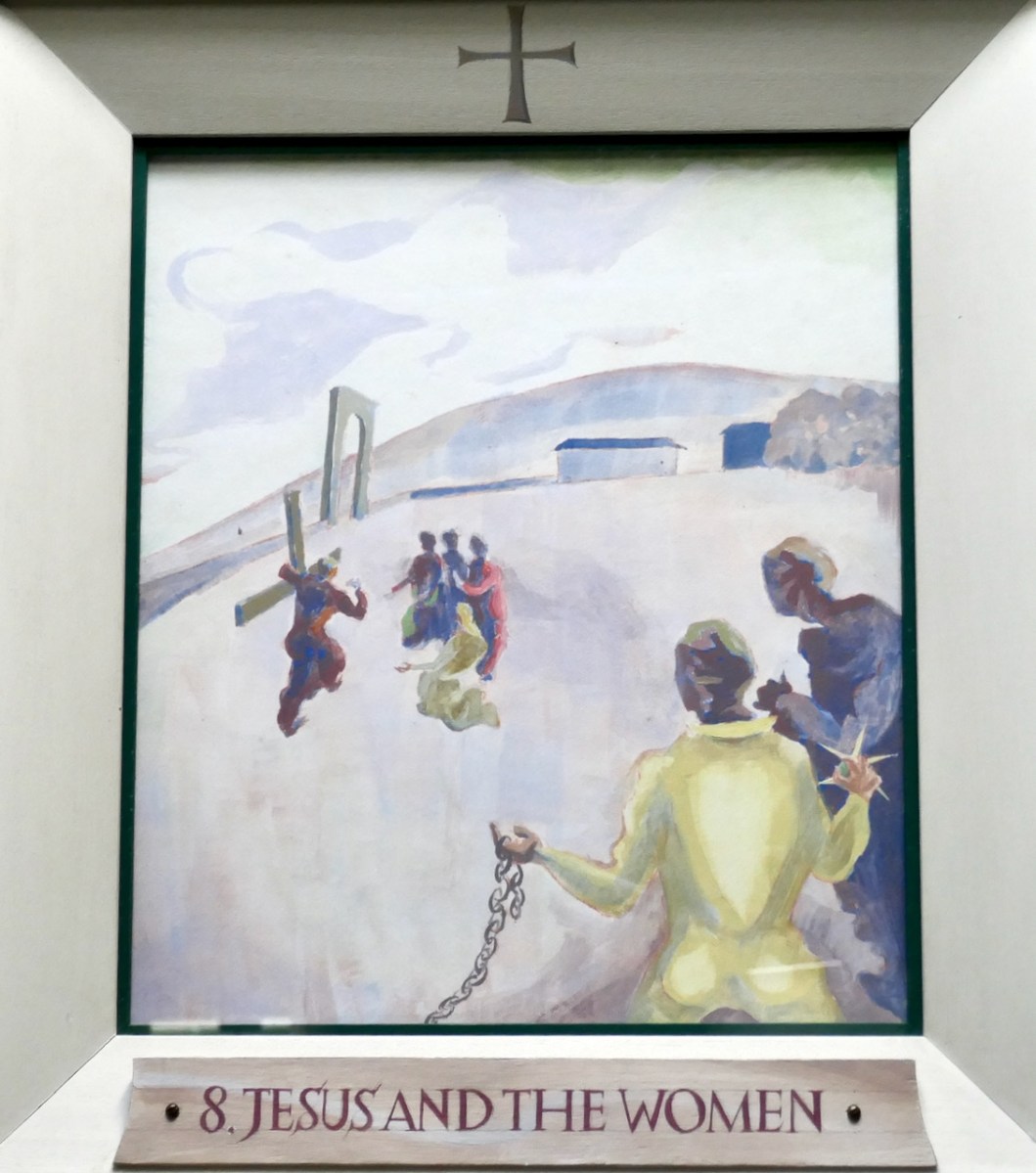
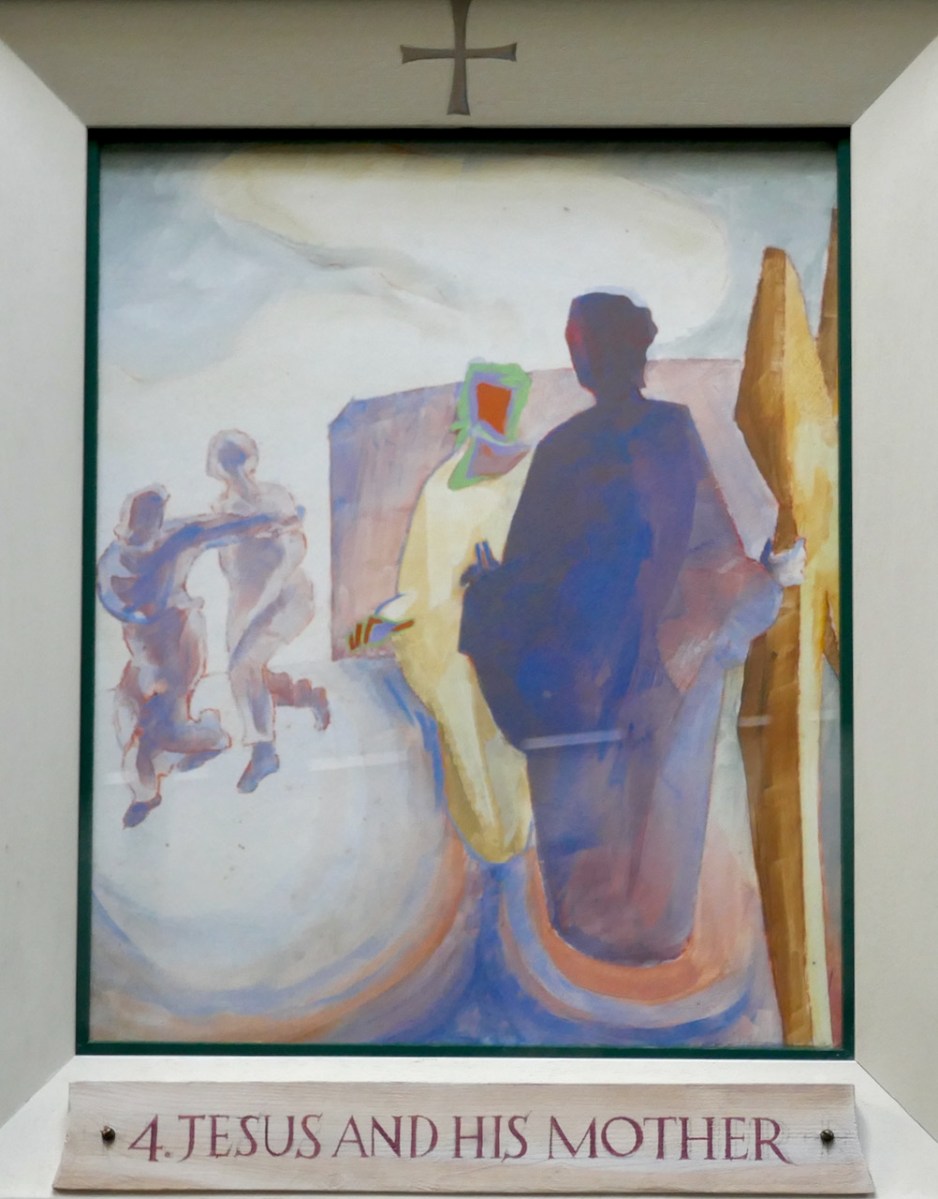
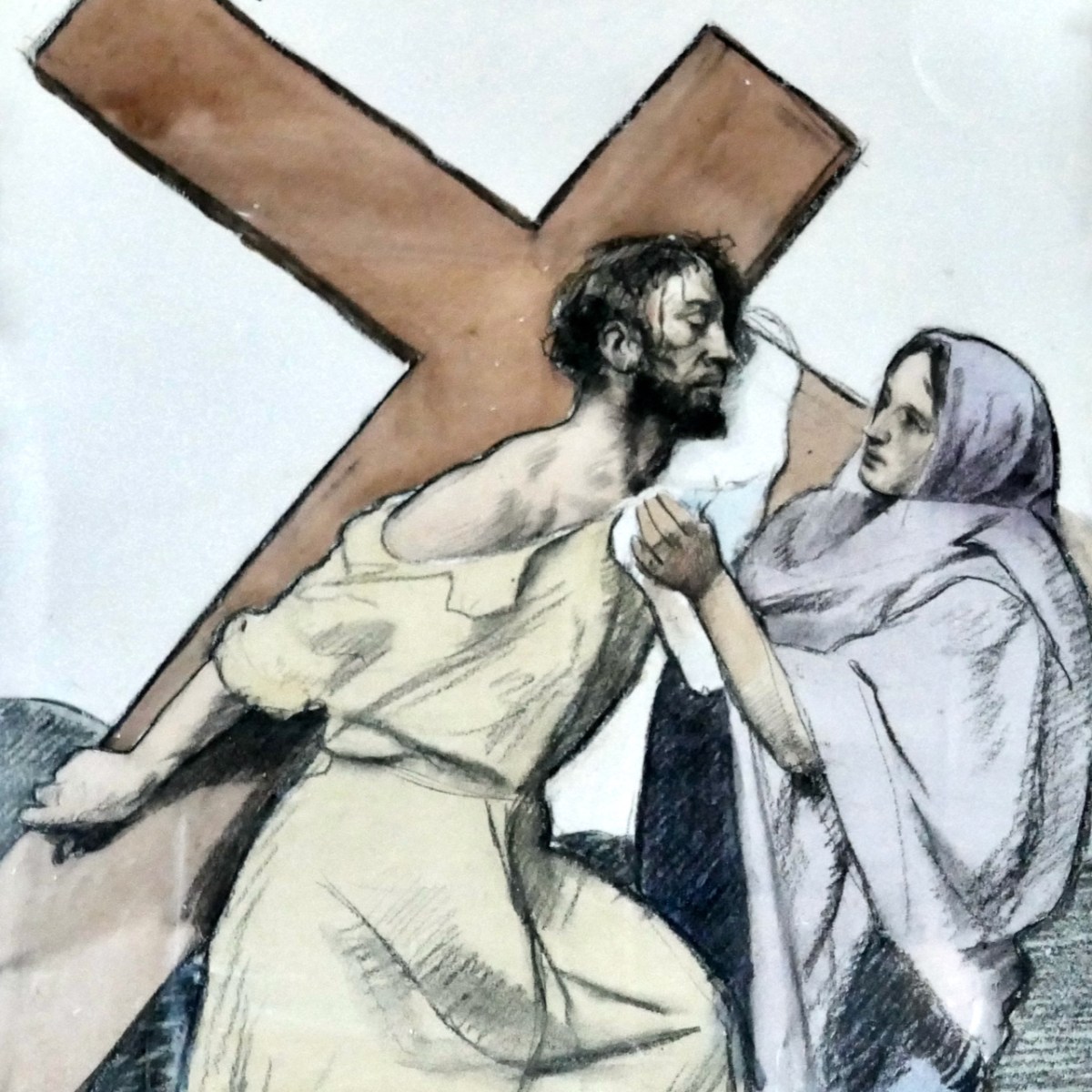
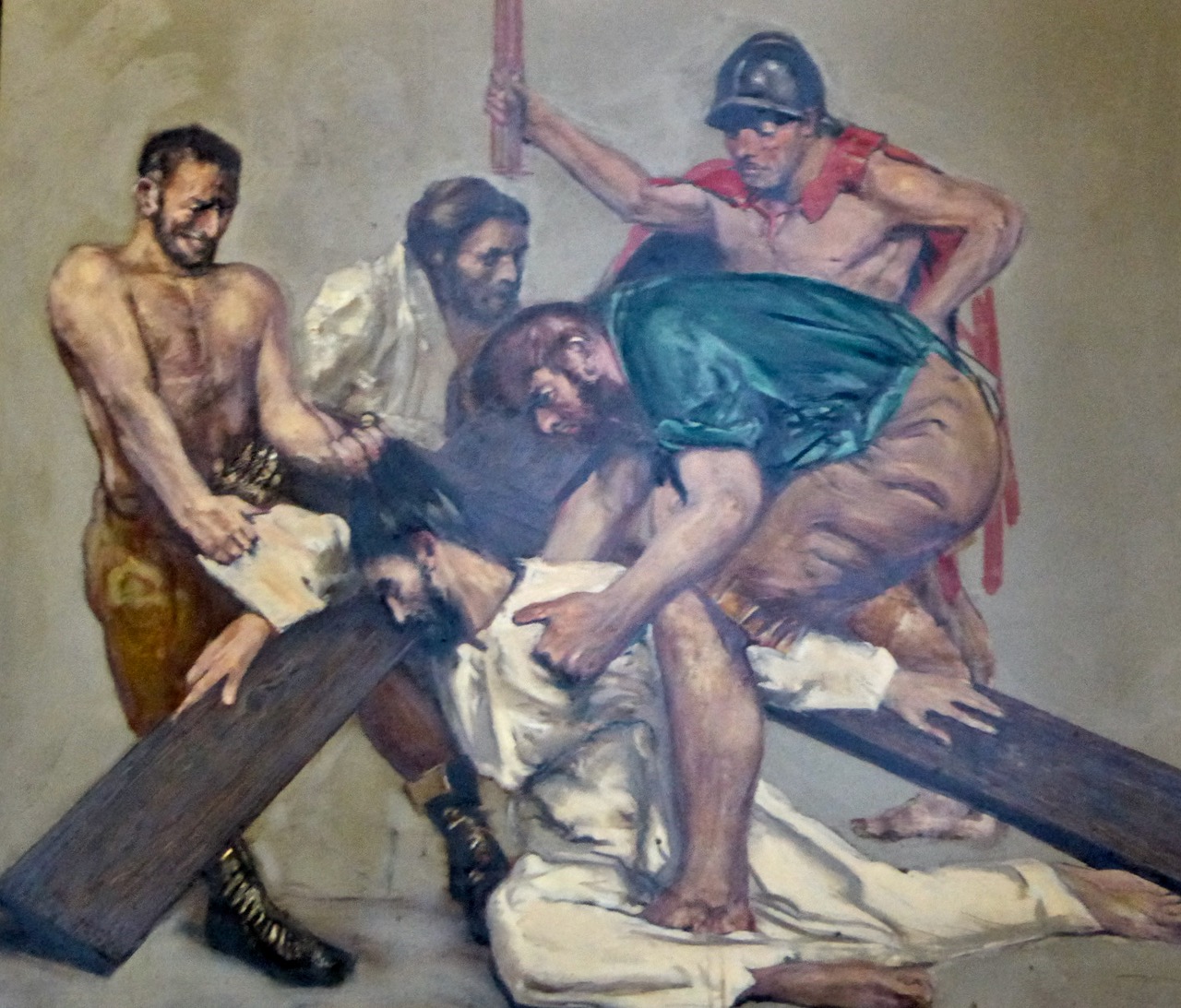
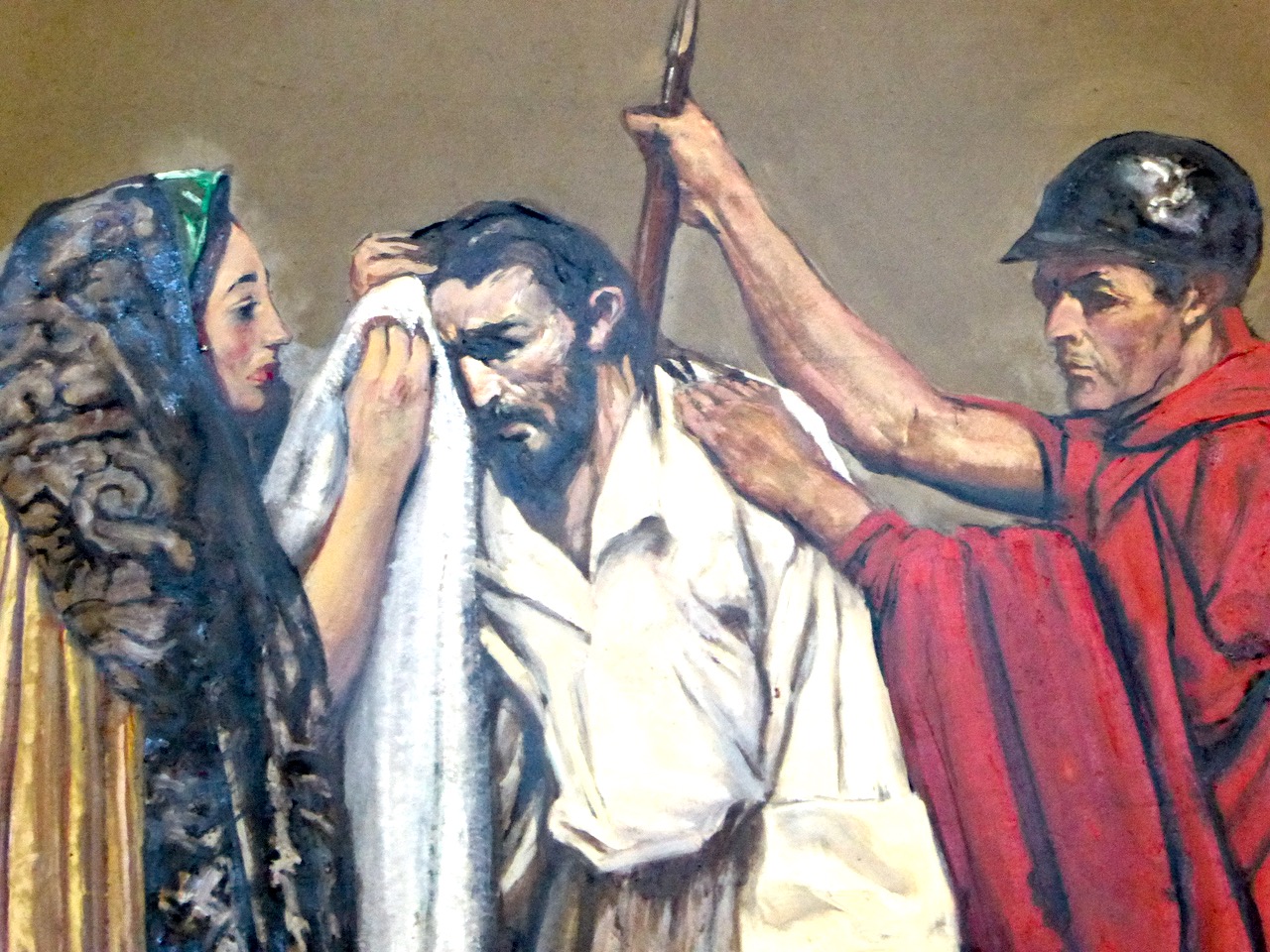
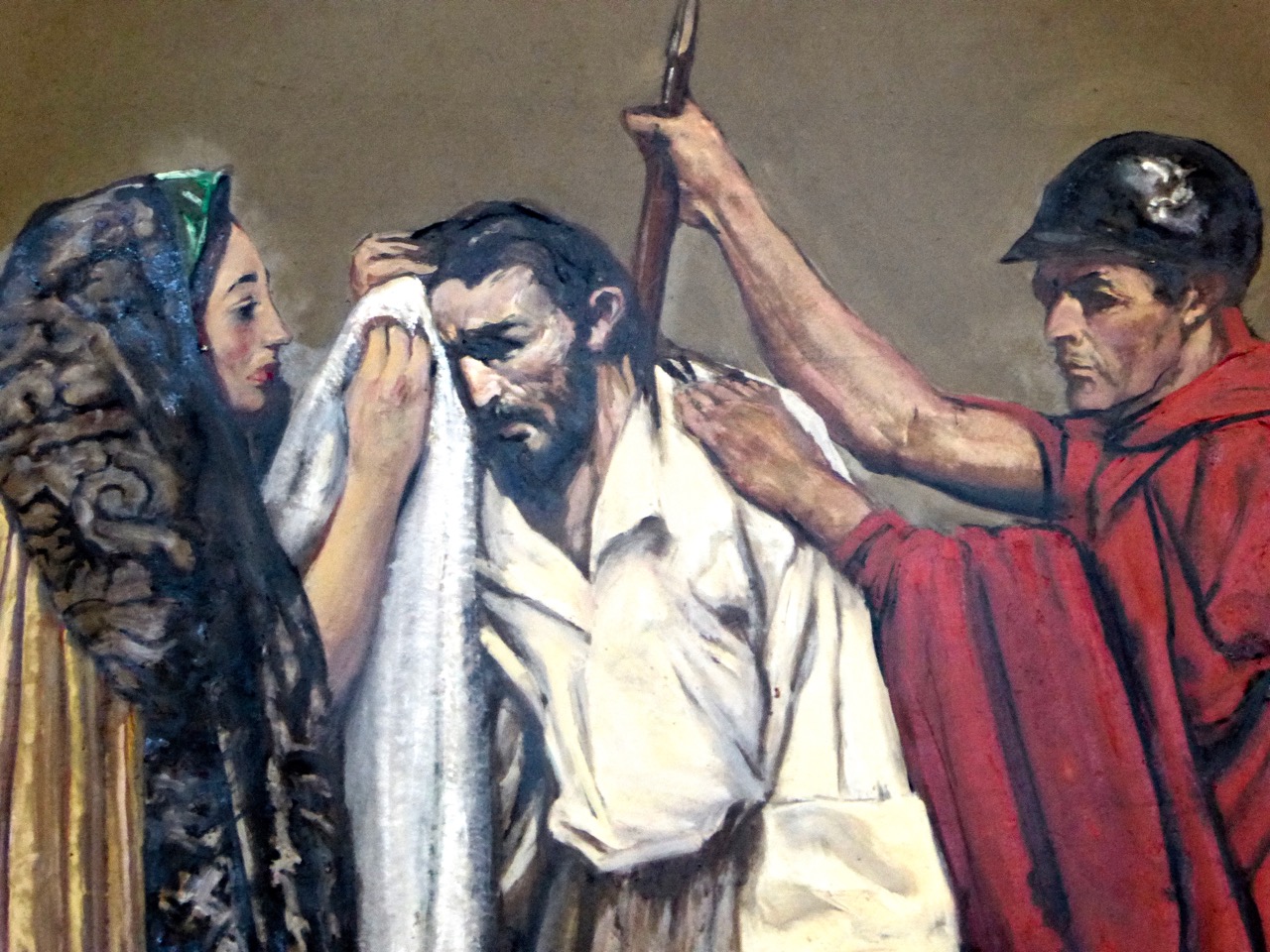
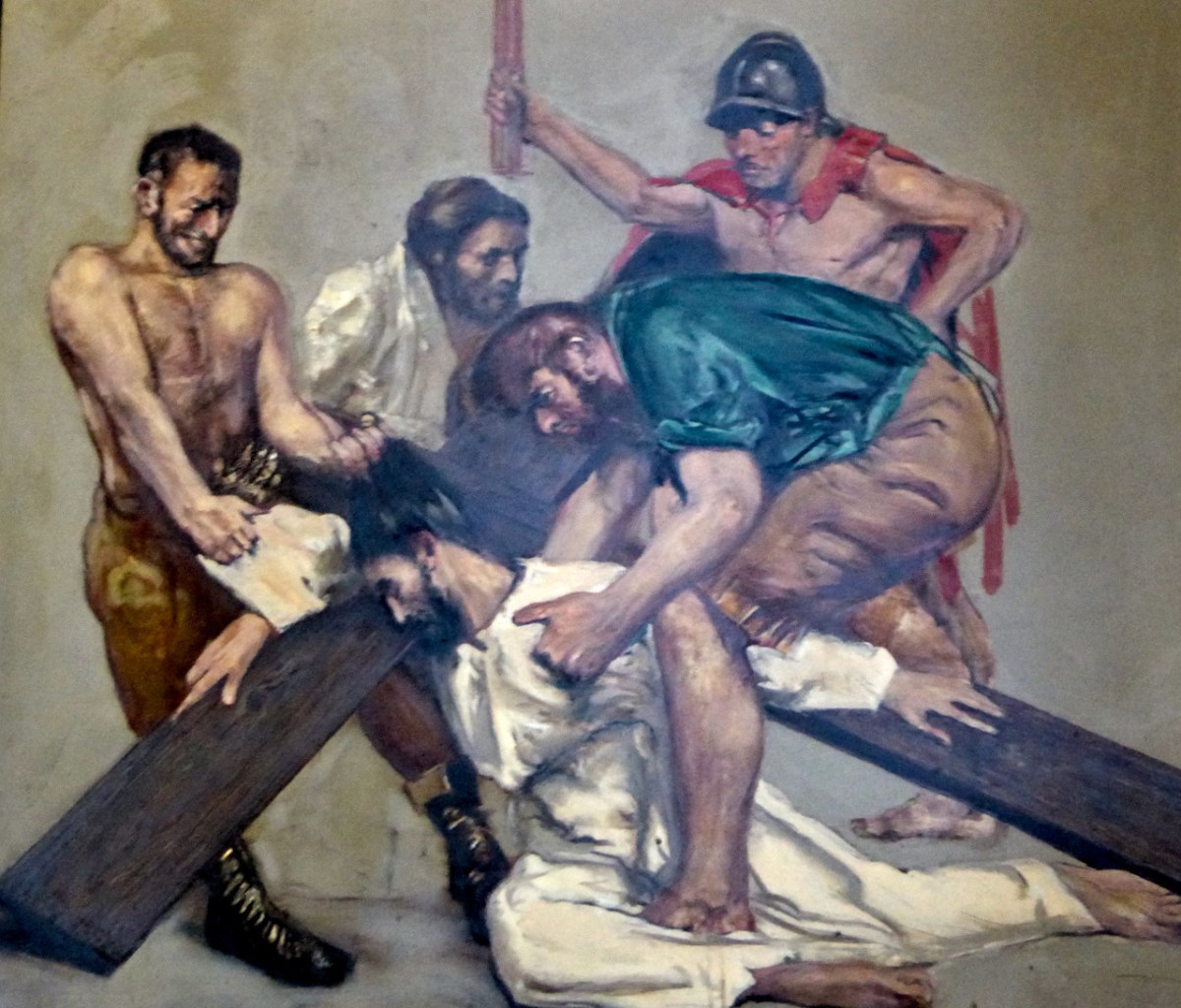
Many of the Irish artists familiar to us from the 20th century catalogues have contributed Stations to churches around the country – sometimes to the large cathedrals but often too to obscure country parishes where the priest (it was usually the priest) wanted something more than a standard imported set. Sean Keating‘s Stations for St John’s Church in Tralee (both images below) are arresting in their drama and strong character studies.

Stations come in many media and I have tried to show a variety in this post by well-known Irish artists. Bath stone was the medium of choice for Ken Thompson – the image below is of one of his stations for St Mel’s Cathedral in Longford. Below that is a Station from Ballywaltrim Church in Bray by the Breton/Irish Sculptor Yann Renard Goulet, although I am not sure what the material is.

Patrick Pye is more commonly associated with his stained glass windows for Irish churches, but his painted Stations for the Church of the Resurrection in Killarney (below) bring a quietly beautiful reflective focus to a contemporary interior.

Sean O’Sullivan was known primarily as a portrait painter, but he also designed Stations, such as the ones below for the church in Newquay in Clare. Using only pencil and colour washes, he has produced powerfully emotive scenes (below).

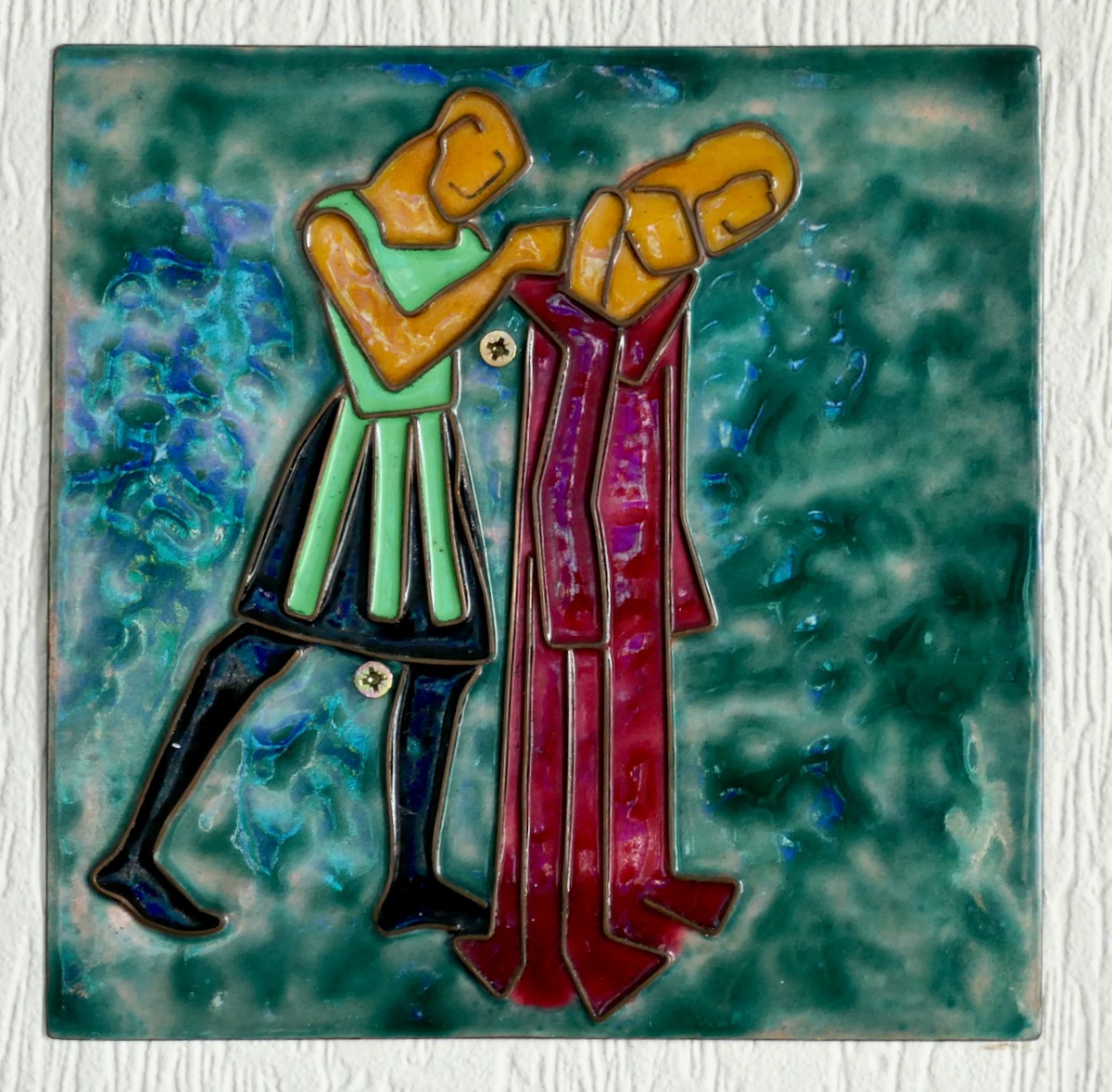
Stations, however, are often unsigned and so our old friend Anon is responsible for many. A future post will include some of his or hers. The enamel Station below, for example, may be by Nell Murphy, but I can’t confirm this, so Anon it is, for the moment.

I am also planning a post on Stations done in stained glass – they are some really beautiful example, starting of course with Harry Clarke’s Lough Derg windows. But this post will start us off with some of the examples I have seen in churches around the country – let’s call it an Introduction to Irish Contemporary Stations. I’d love to hear from readers who have their own favourite set. And if anyone knows the artist responsible for the Stations in the Franciscan Church in Wexford (example below), do let me know!

Seán Keating – Escaping the Storm

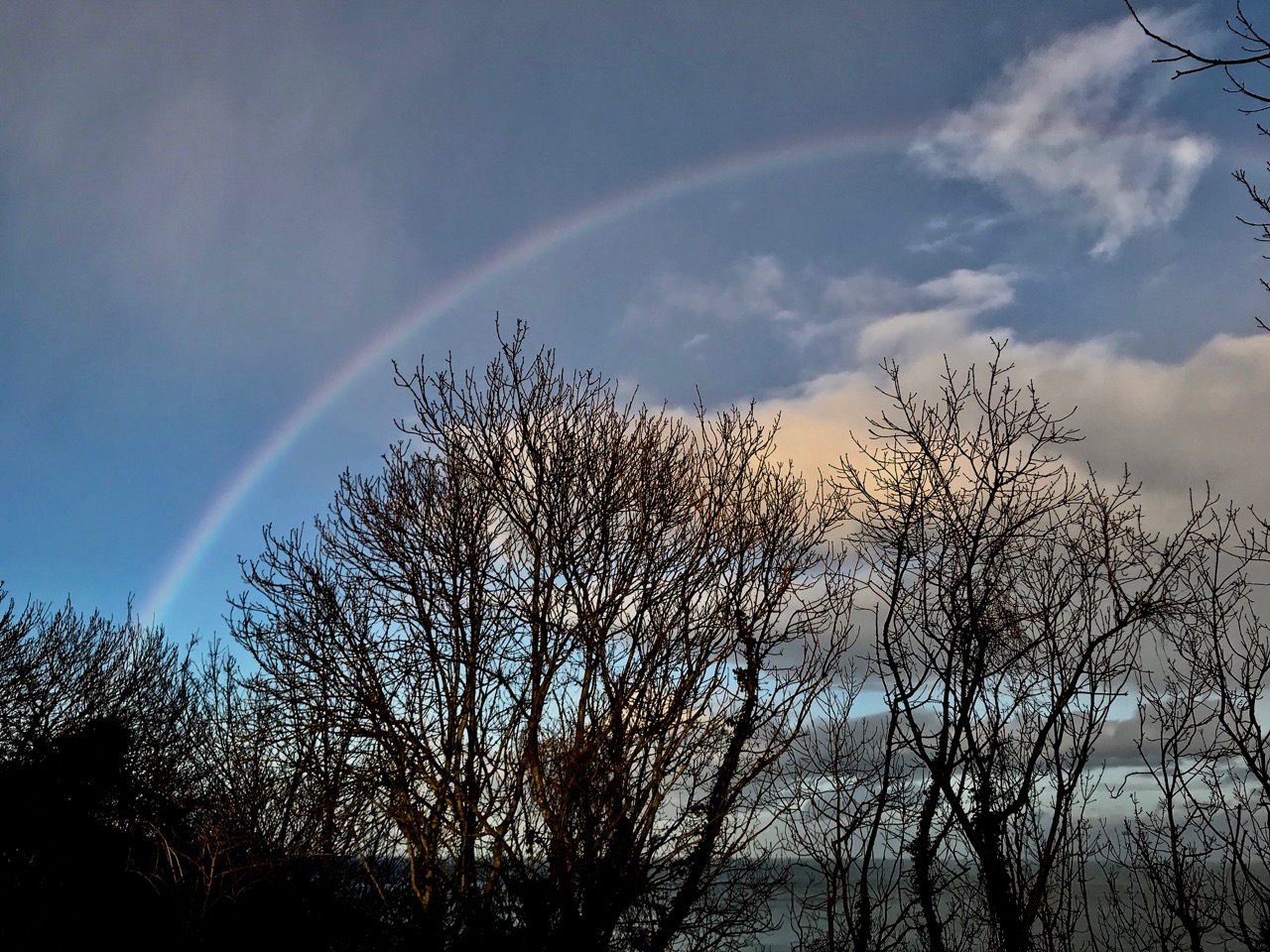
Storm Ciara was upon us as we headed over to the east coast – a mere few hops from Nead an Iolair. But it wasn’t all black clouds and thunder and lightning: winter storms here in Ireland feature high winds and spectacles such as this rainbow (above) which seemed to hang in the sky over County Wicklow for hours. When the rain comes, we often find refuge in a church – especially if it helps Finola’s quest for new stained glass windows. Sometimes they seem to reflect the weather patterns:

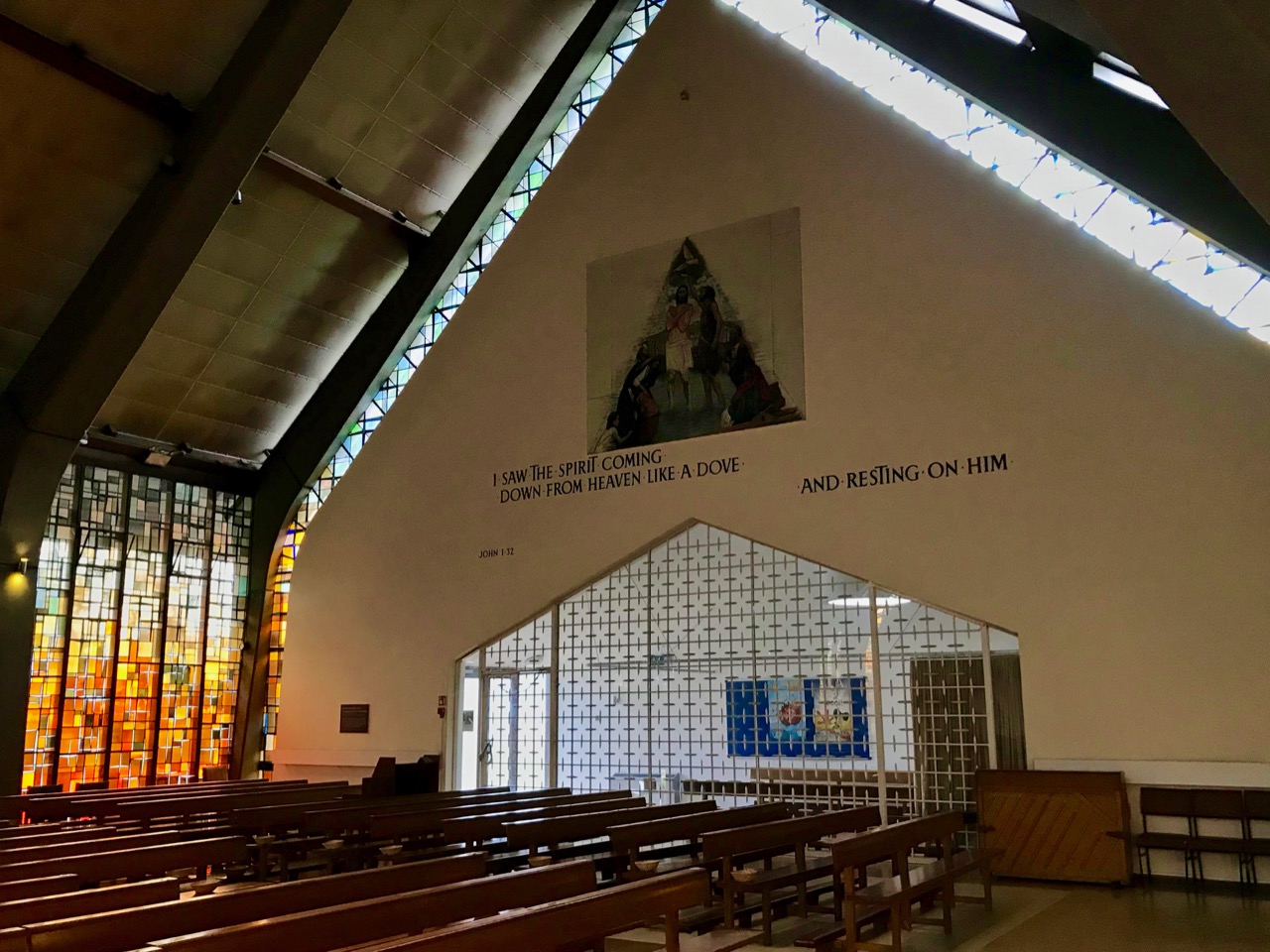
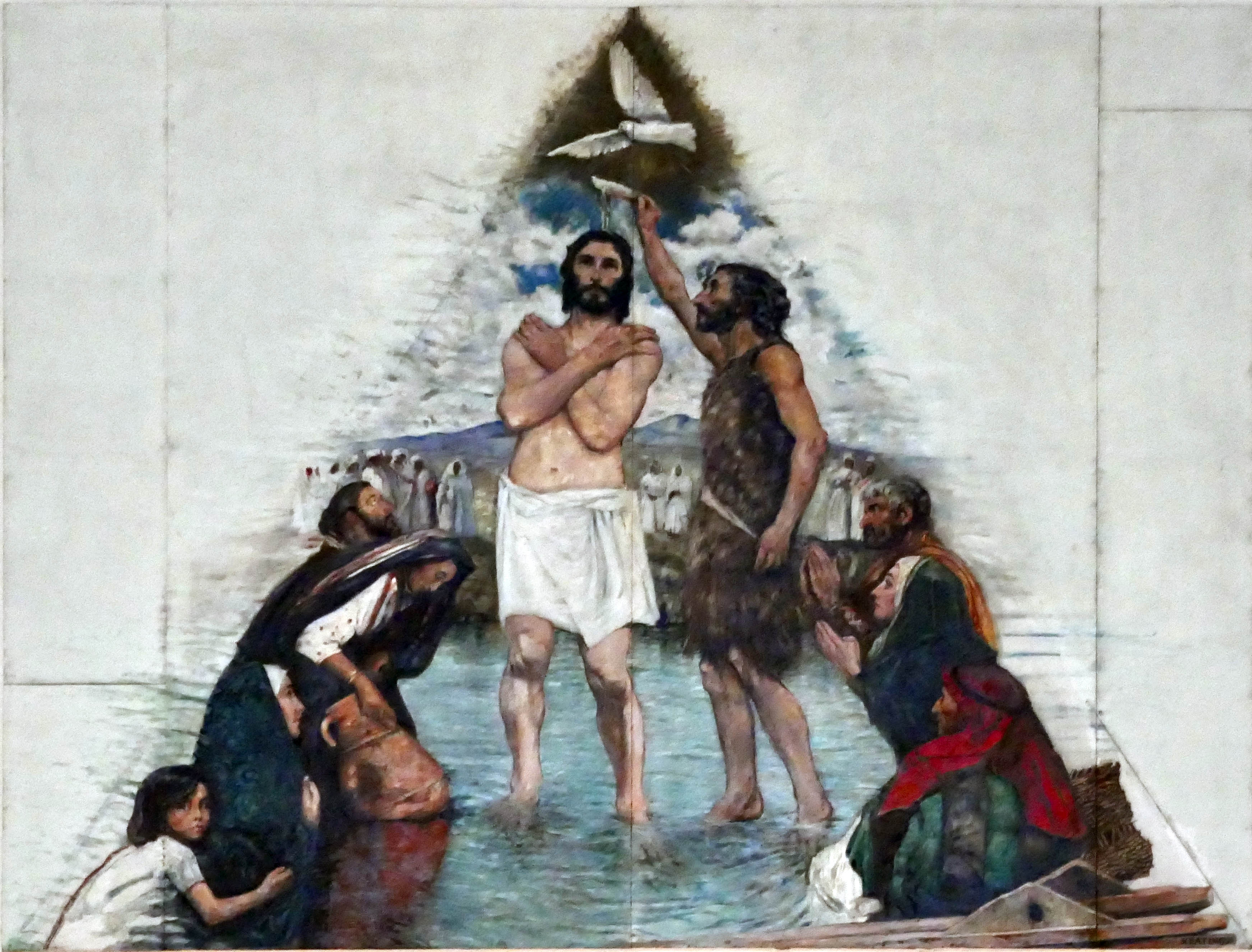
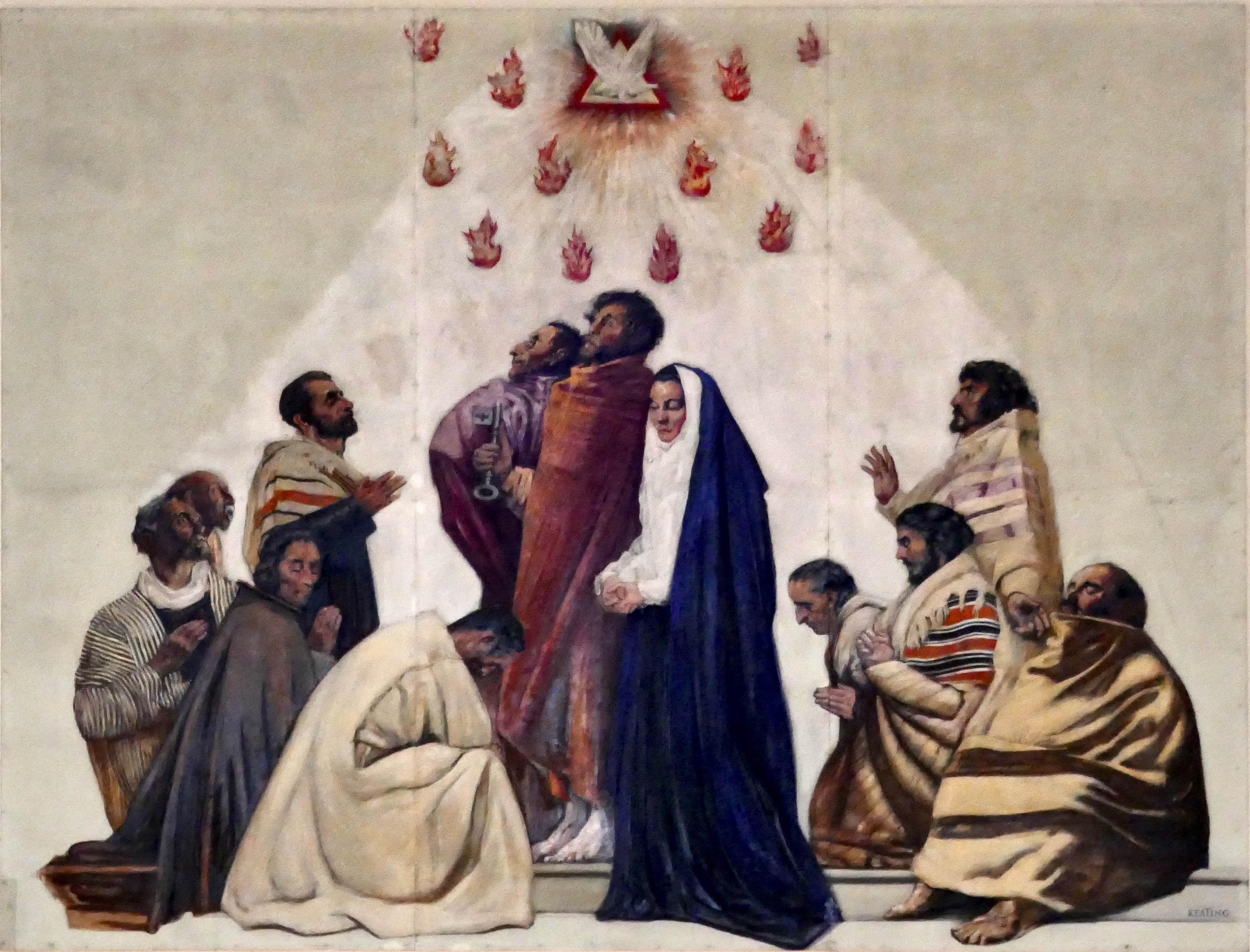
This panel, which could be seen as an indoor rainbow, is in an impressively large church in Ballyroan, Rathfarnham Parish, County Dublin: it was built in 1967 to seat a thousand. What caught my eyes was not the array of windows by Murphy Devitt (Finola has written extensively about this creative partnership), but two murals high on the walls of the crossing. I was delighted to find that these were painted by one of Ireland’s great artists working through the turbulent twentieth century – Seán Keating.

Seán Keating’s ‘Baptism of Christ’ mural in the Church of the Holy Spirit, Ballyroan

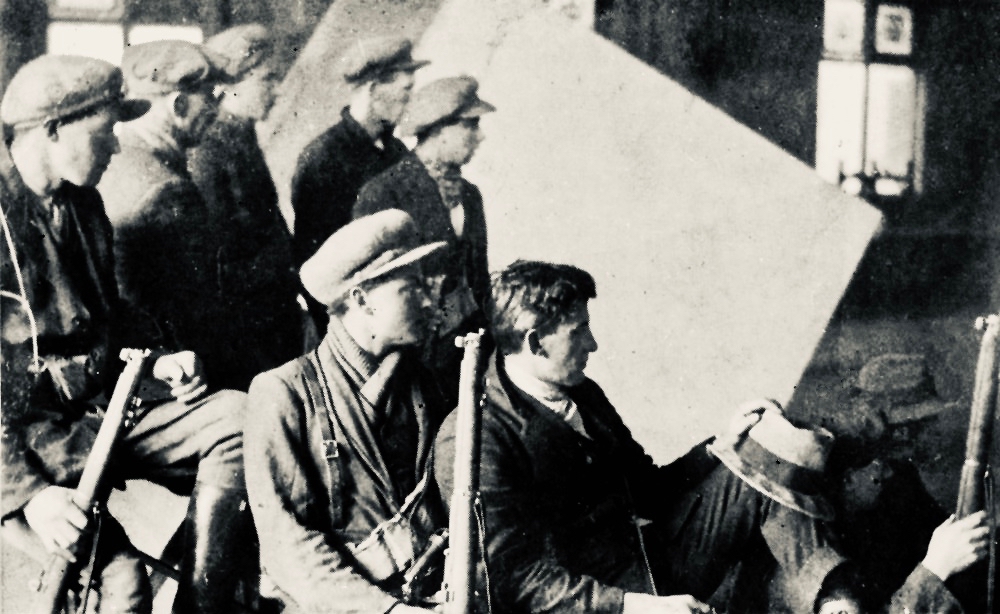
I am always surprised to find that Keating is under-appreciated: yes, he gets mentioned in books of art history, and is reasonably well represented in the state’s galleries. Yet you will also find terms such as ‘not great art’ applied to his work by critics and commentators. This is possibly because he is best known for his documentary work and, particularly, for his raw representations of the tempestuous years of Ireland’s struggle to gain independence. Here is ‘Men of the South’, dating from 1921 when there was a ceasefire in the Irish War of Independence while the Anglo-Irish Treaty was being negotiated and out of which the Irish Free State was born.

Top: Men of the South – Seán Keating’s documentary portrayal of the North Cork Brigade of the Irish Republican Army. Below the painting is one of the photographs taken in Keating’s Dublin studio in preparation for the work. Two versions of this painting were made by the artist: the one above is in the Crawford Gallery, Cork City, while the other (which depicts eight men) is now in Áras an Uachtaráin, the official residence of the President of Ireland.

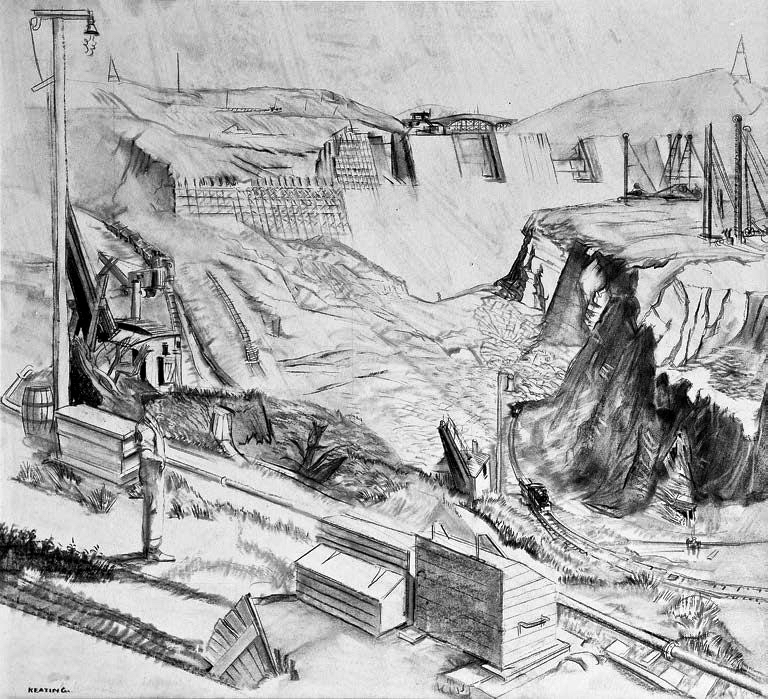
After the War of Independence and the abhorrent Civil War which followed it, Keating’s work concentrated on documenting the founding and burgeoning of the new State. Scenes of conflict were replaced by works showing industrial development, such as Ireland’s largest ever civil engineering contract: harnessing the power potential of the State’s major waterway, the River Shannon. The construction of a dam and hydro-electric generating station at Ardnacrusha, County Clare, together with a country-wide electric distribution infrastructure, was a symbol of major importance to the nation’s fledgling government. Keating began recording the work in 1926, soon after inception. No-one had commissioned him – he saw the significance of making dramatic documentary work of this nature, but his vision was eventually recognised by the Electricity Supply Board (ESB) – which now owns the largest collection of Keating’s paintings in Ireland. Above is one of the artist’s working sketches of the dam under construction.

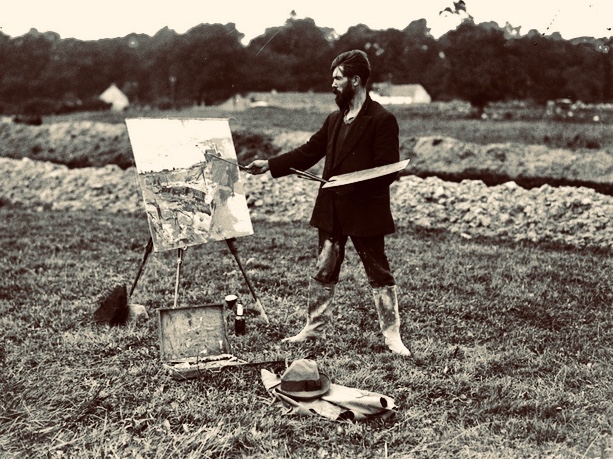
Seán Keating painting en plein air at Ardnacrusha, 1920s

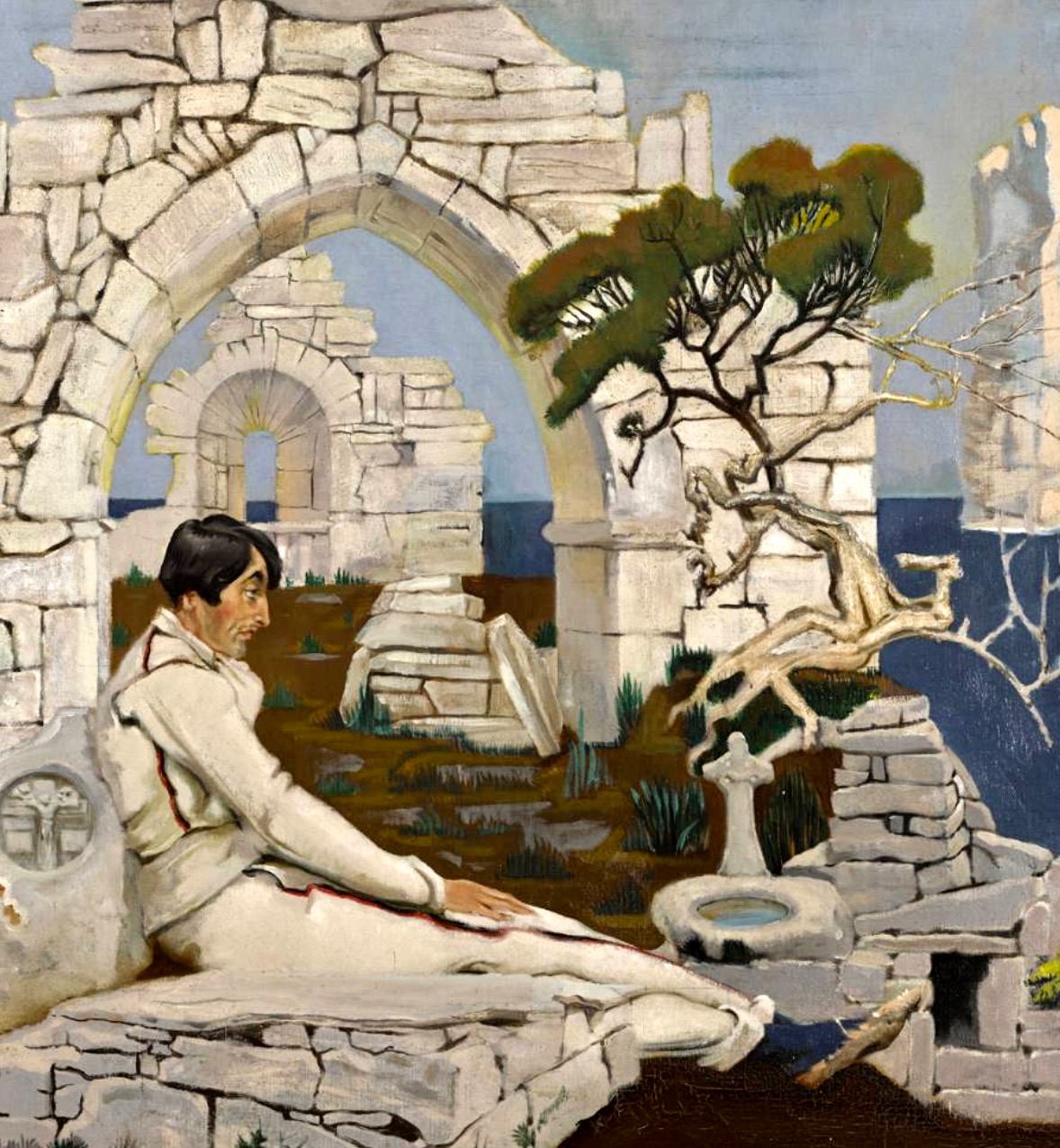
Keating studied under William Orpen in Dublin. He was to become one of Orpen’s important pupils (and, latterly, his assistant) and his documentary painting style owes a debt to his teacher. One of his famous early paintings is Thinking Out Gobnet (below), a portrait of his good friend Harry Clarke, dating from 1917. Keating and Clarke frequently visited the Aran Islands together. The painting shows Clarke sitting on a grave slab within the ruins of Teampall Chaomháin (St Kevin’s church) on Inis Oírr, along with a holy water font at his feet, and a holy well to the bottom right of the image. The suggestion is that Clarke is finding inspiration for his series of eleven windows for the Honan Chapel, Cork, which include a fine representation of St Gobnet. The ‘healing’ symbolism of the holy water and well are deliberate references to Clarke’s TB, the illness which ended his life at the age of 41.

Seán Keating was always a committed Catholic, and we have seen many examples of his artwork in churches, including the murals at Ballyroan. Most striking, perhaps, are the Stations of the Cross which he painted for St John’s Church, Tralee – the church which features in Finola’s wonderful Irish Arts Review article (and RWJ blog post) about Ireland’s Newest Stained Glass Window.

Stations of the Cross by Seán Keating in St John’s Church, Tralee, County Kerry

Back to Ballyroan: while we were sheltering from the tempest and admiring the church architecture, and the murals, I was delighted to find out that Seán Keating had lived for much of his life just down the road, in Ballyboden, in a house which he had designed himself. He attended mass regularly at Ballyroan until his death in December 1977, aged 88.

Keating’s mural The Descent of the Holy Spirit in his own church of Ballyroan, Parish of Rathfarnham, installed in 1967

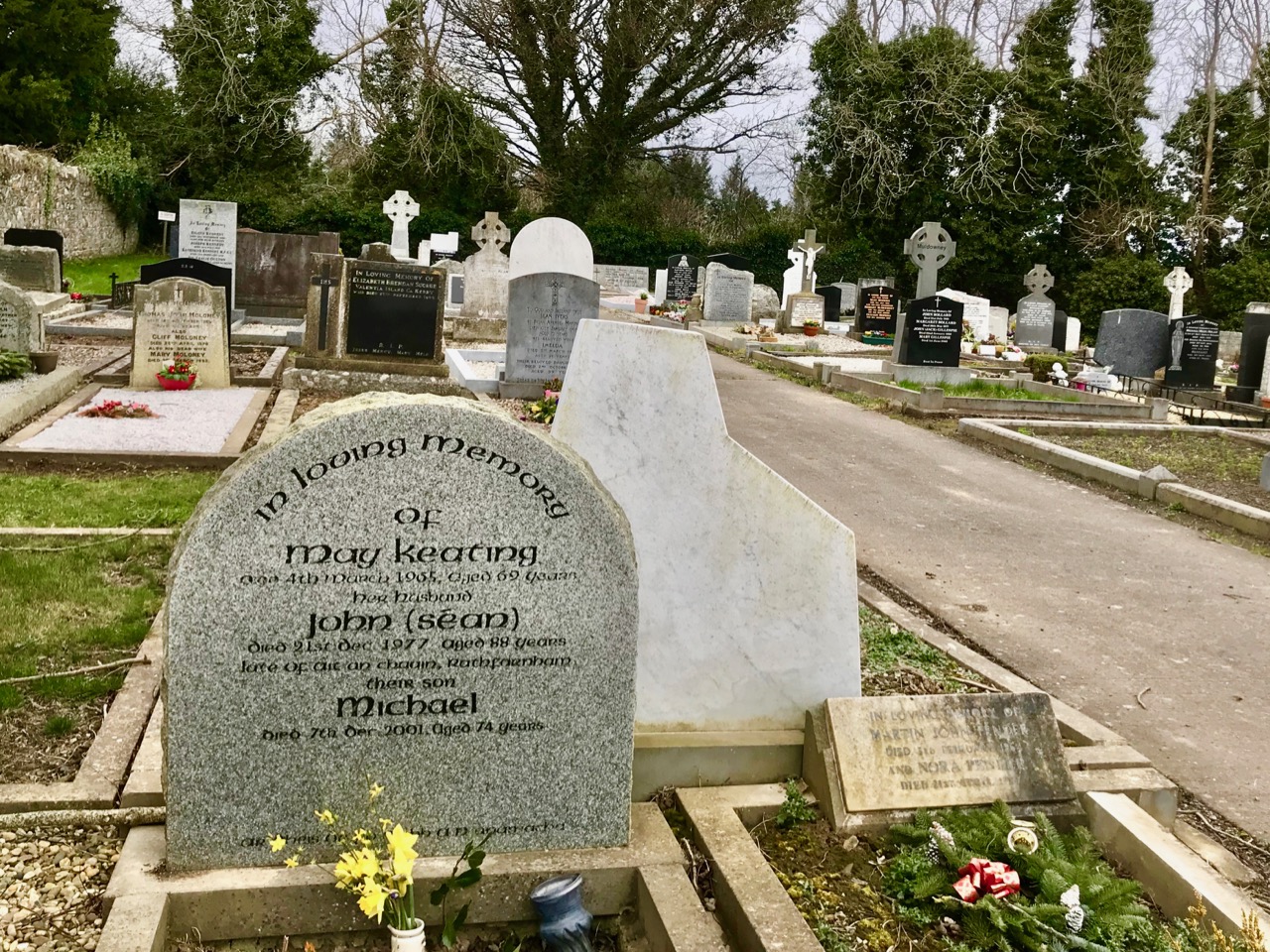
We discovered that Keating is buried in the nearby Cruagh Cemetery, so we had to head out into the storm again to find his grave. It is as unassuming as he apparently was in life: a visitor would not be aware that herein lies one of modern Ireland’s greats.

Cruagh Cemetery, Co Dublin (top) is the resting place of Seán Keating. His grave is shared with his wife, May, and son Michael

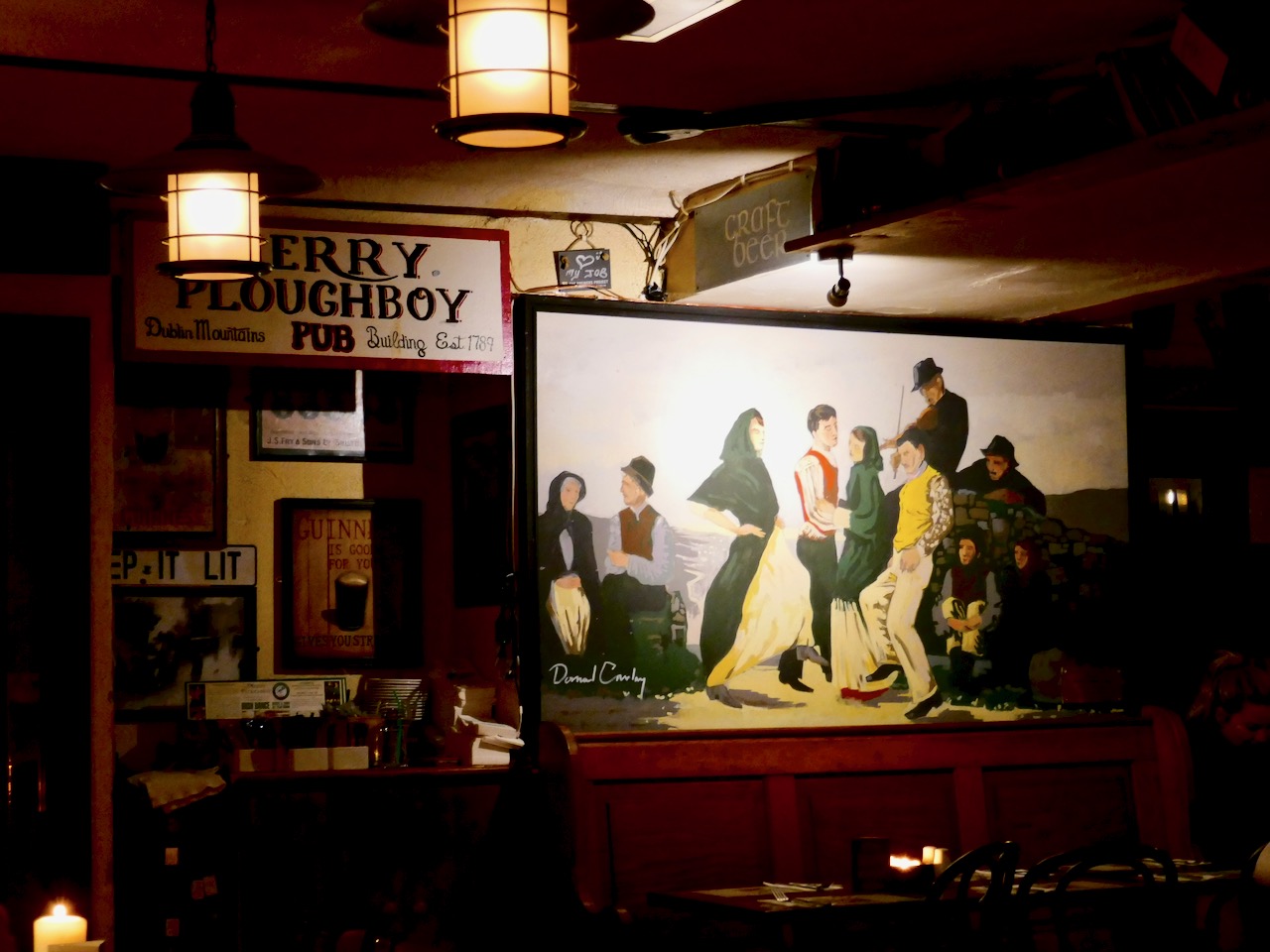
Our little artist’s memoir is almost over. The gale continued with ferocious lashing rain: cold and hungry we made a beeline for the local pub – the Merry Ploughboy, evidently a famous music venue. It was warm and welcoming, and full of a crowd watching Six Nations Rugby on the big screen (Ireland won the match).

In the lounge we were intrigued to find an oblique reference to Seán Keating – a painting which has a nod to his style but is by a different artist!

We agreed that our day trip to the east, in the teeth of the gale, was a memorable way to discover the life, work and death of one of Ireland’s significant artists.

Ireland’s Newest Stained Glass Window

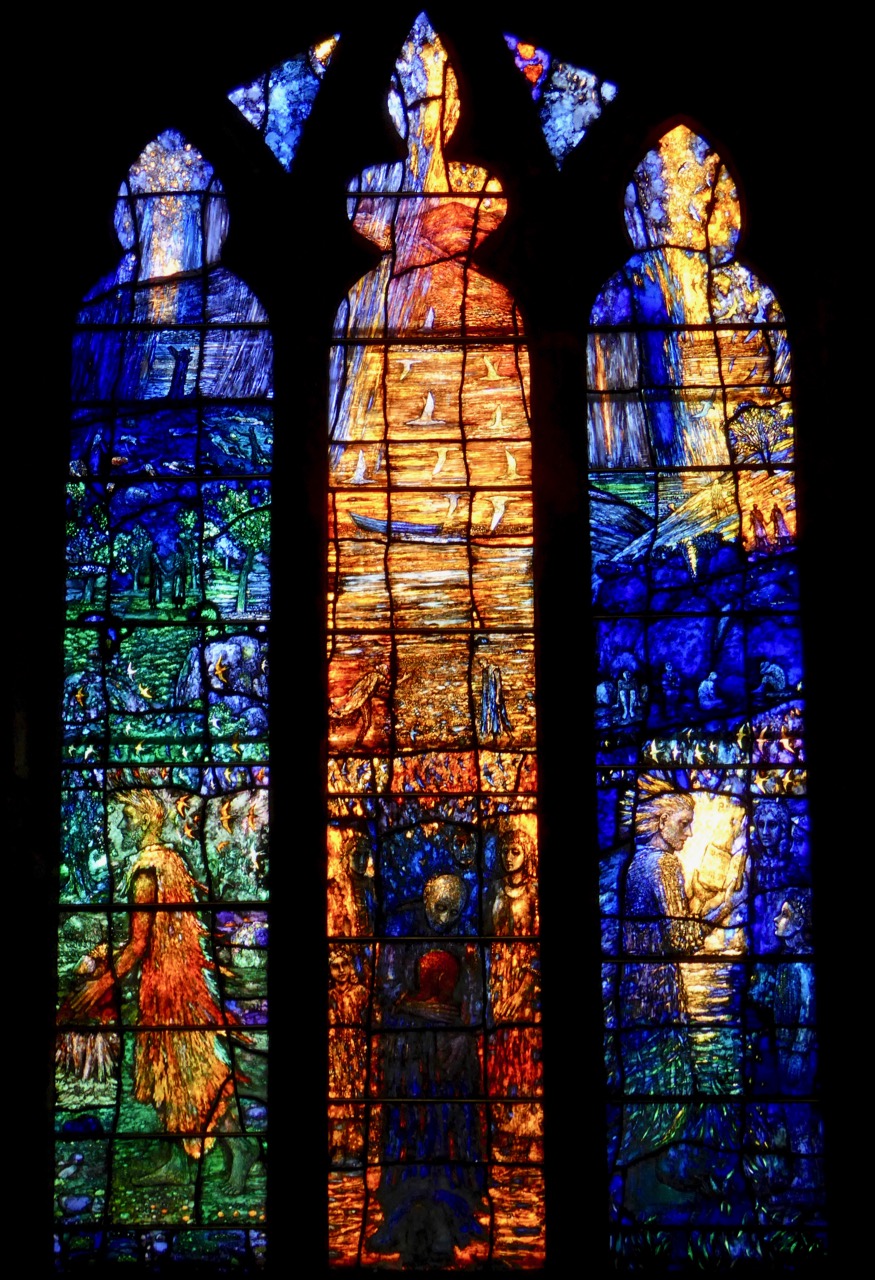
It’s in Tralee, in St John’s Church – and it’s breathtaking!

It isn’t often that new stained glass windows are installed in Irish churches. In fact, depressingly, many churches fall into disrepair from lack of use and the windows break (or are broken). Nowadays we are more likely to be losing stained glass than gaining it. So it’s a huge cause for celebration when a community commissions a new piece. Hats off to Tralee!

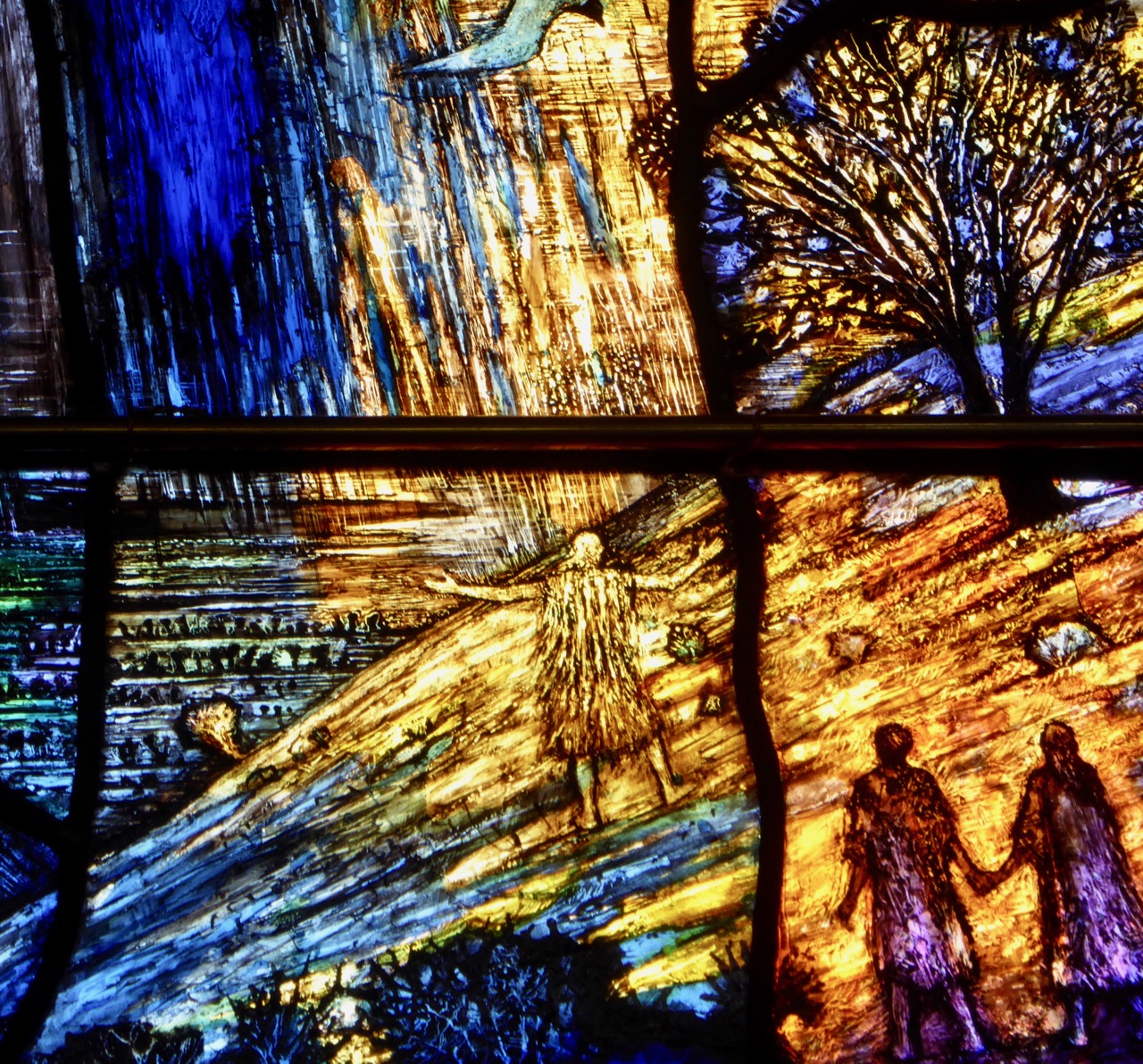
The Garden of Eden or an image of reconciliation: one of the window details

This window is out of the ordinary in many ways. Let’s start with who commissioned it, which leads us on to the theme. Although it’s installed in the Catholic church, it was a joint initiative of the Catholic and Church of Ireland congregations. There may be other windows that can claim that distinction, but I don’t know of them. (Readers?)

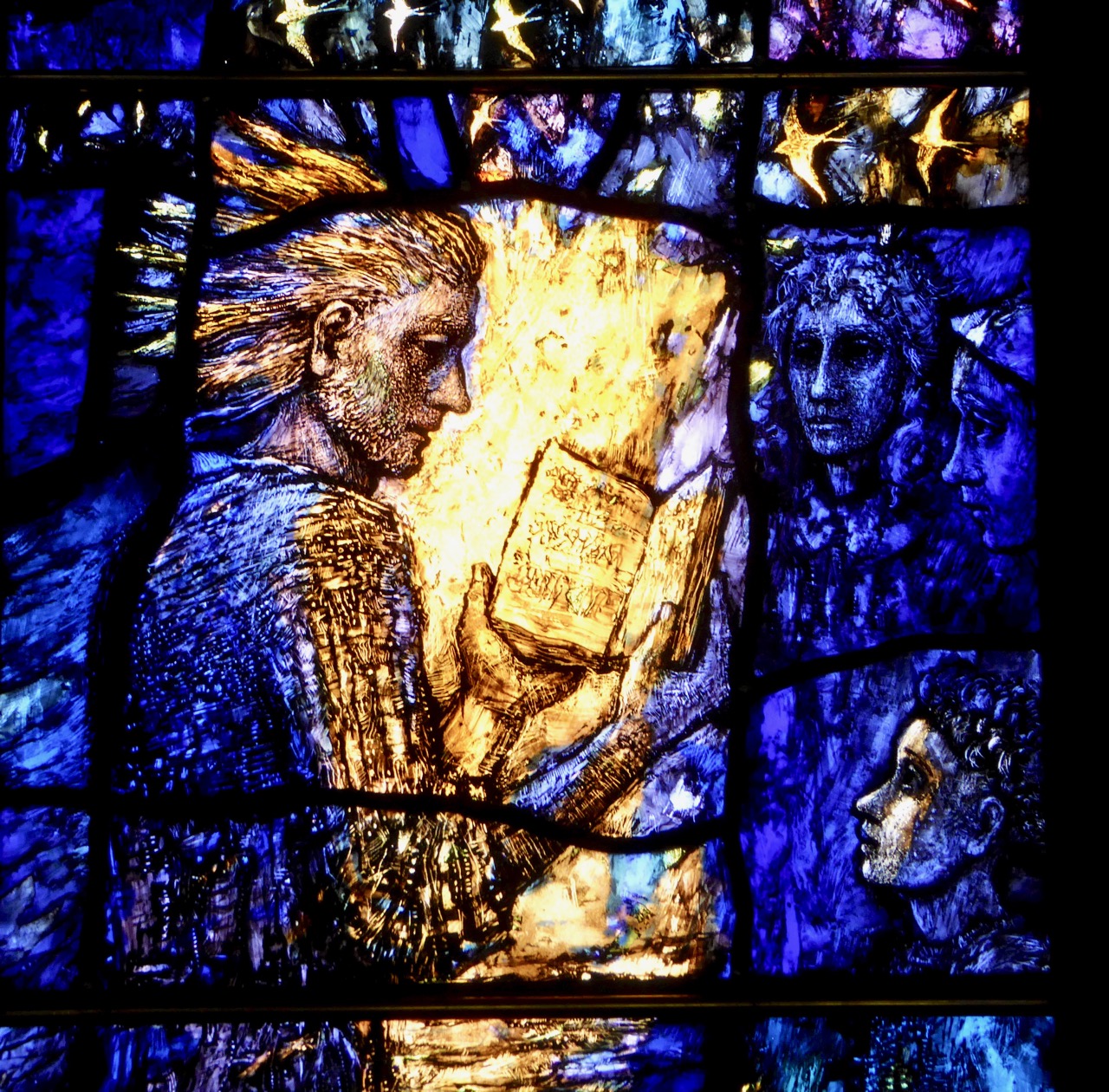
The theme is Reconciliation, and the central figure is the return of the prodigal son. The right panel is of Jesus reading from the Book of Isaiah and the left is of John the Baptist, patron saint of the church.

The father embraces his prodigal son

The Parable of the Prodigal Son is a natural choice to illustrate reconciliation, with the father embracing the son who has squandered his inheritance but returns home, contrite, to his family. Instead of punishing him (as his brother resentfully feels the father should do) his father embraces him, orders that the fatted calf be slain for a feast, and says, It was meet that we should make merry, and be glad: for this thy brother was dead, and is alive again; and was lost, and is found.

Jesus Reading from Isaiah is perhaps at one remove from a direct reference to reconciliation. It happened in Nazareth, his old home town, and he read at the behest of the elders. The passage is a beautiful one and points to ideas of love and healing, and perhaps to the real purpose of Christianity, no matter the denomination: he hath sent me to heal the brokenhearted, to preach deliverance to the captives, and recovering of sight to the blind, to set at liberty them that are bruised.

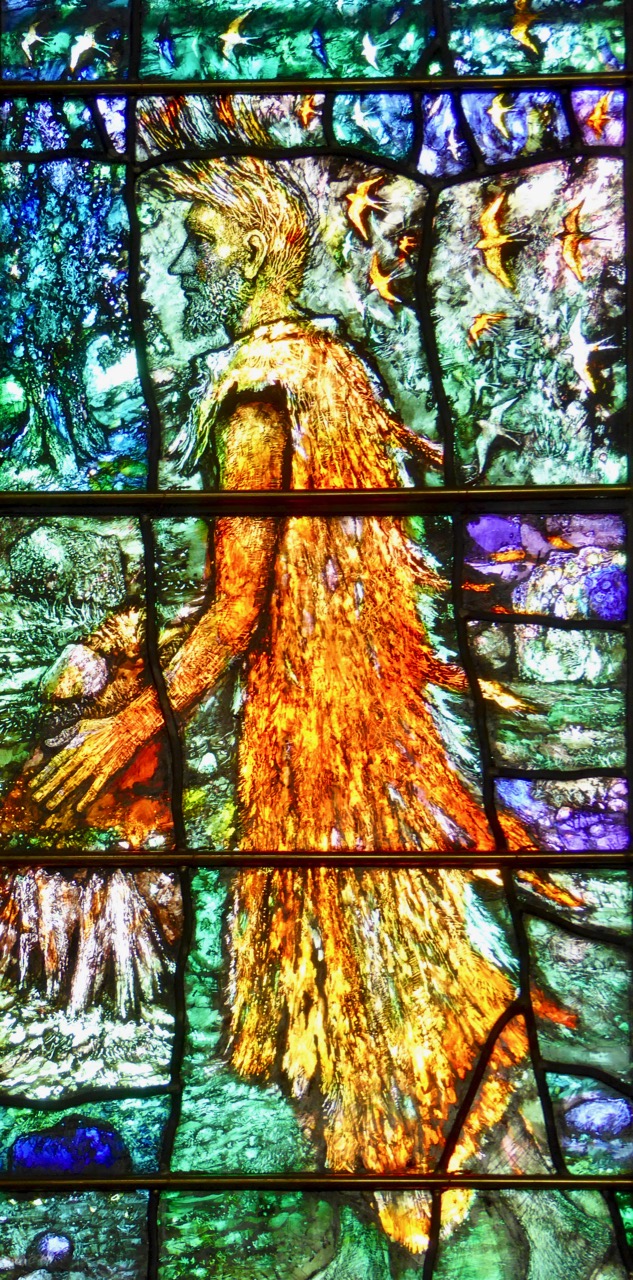
St John is the patron saint of the church 

Possibly my favourite image is that of John. Usually, he is shown in the act of baptising Jesus, but here he is, the ascetic in his coat of camel hair, very much as he described himself, as a voice crying in the wilderness.

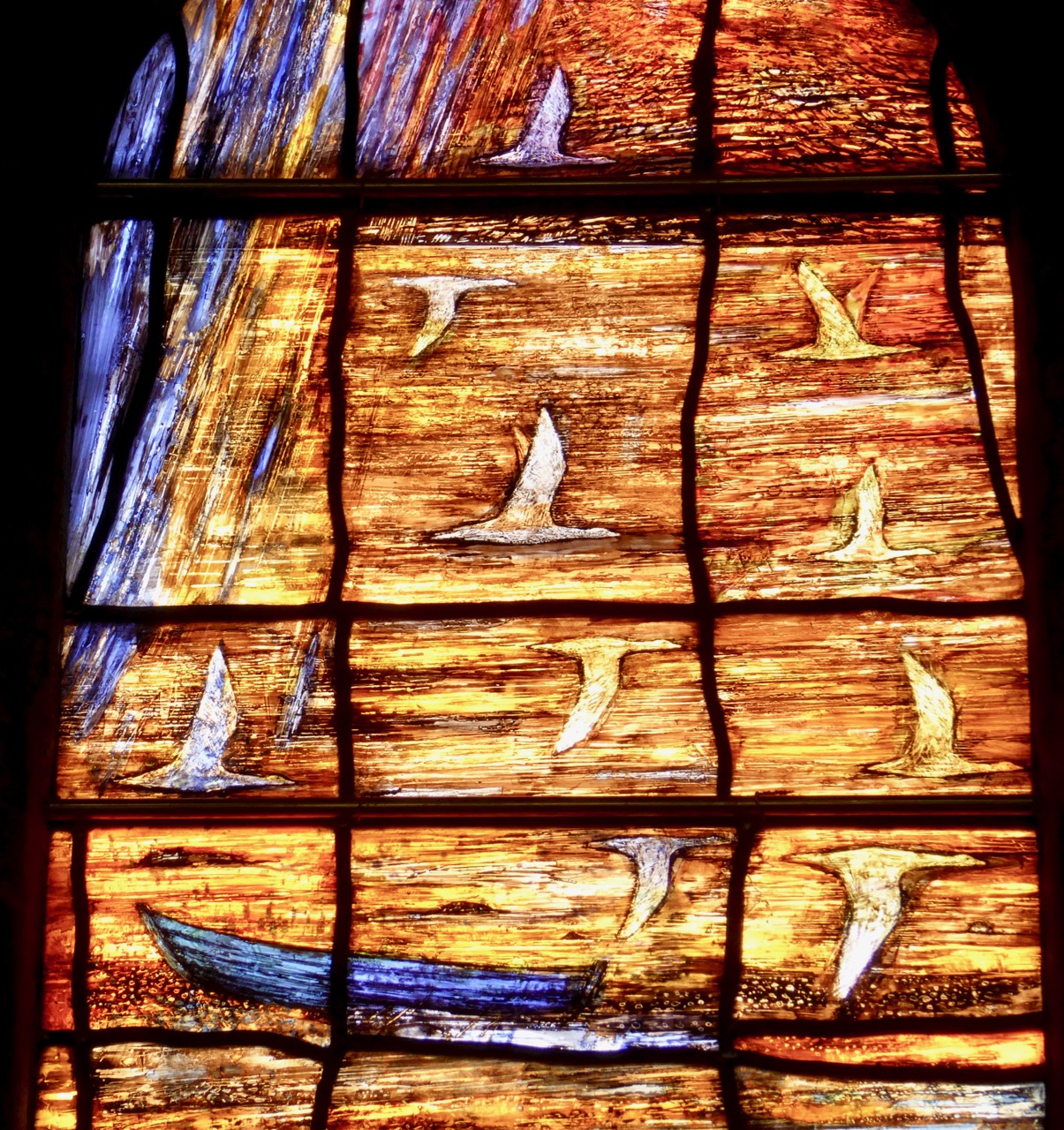
A myriad of tiny images fills the panels – figures holding hands (reconciliation), swallows (hope of spring, renewal), Tralee Bay, figures from Tralee history. . . there are even tiny names engraved where it is impossible to see them. Take a look at this video, where Tom Denny shows us some of those names.

Tom Denny? Yes – he’s the artist but the significance of that goes beyond the fact that he is one of Britain’s most eminent and respected stained glass artists, responsible for numerous windows in British churches. A browse of his website reveals the breadth and depth of his skill and the uniqueness of his style. The Tralee windows are typical – blazing with colour, filled with large and small figures and scenes that reveal themselves upon close inspection, rich and intricate, thoughtfully composed to draw the viewer into the subject of the panels.

Tralee Bay

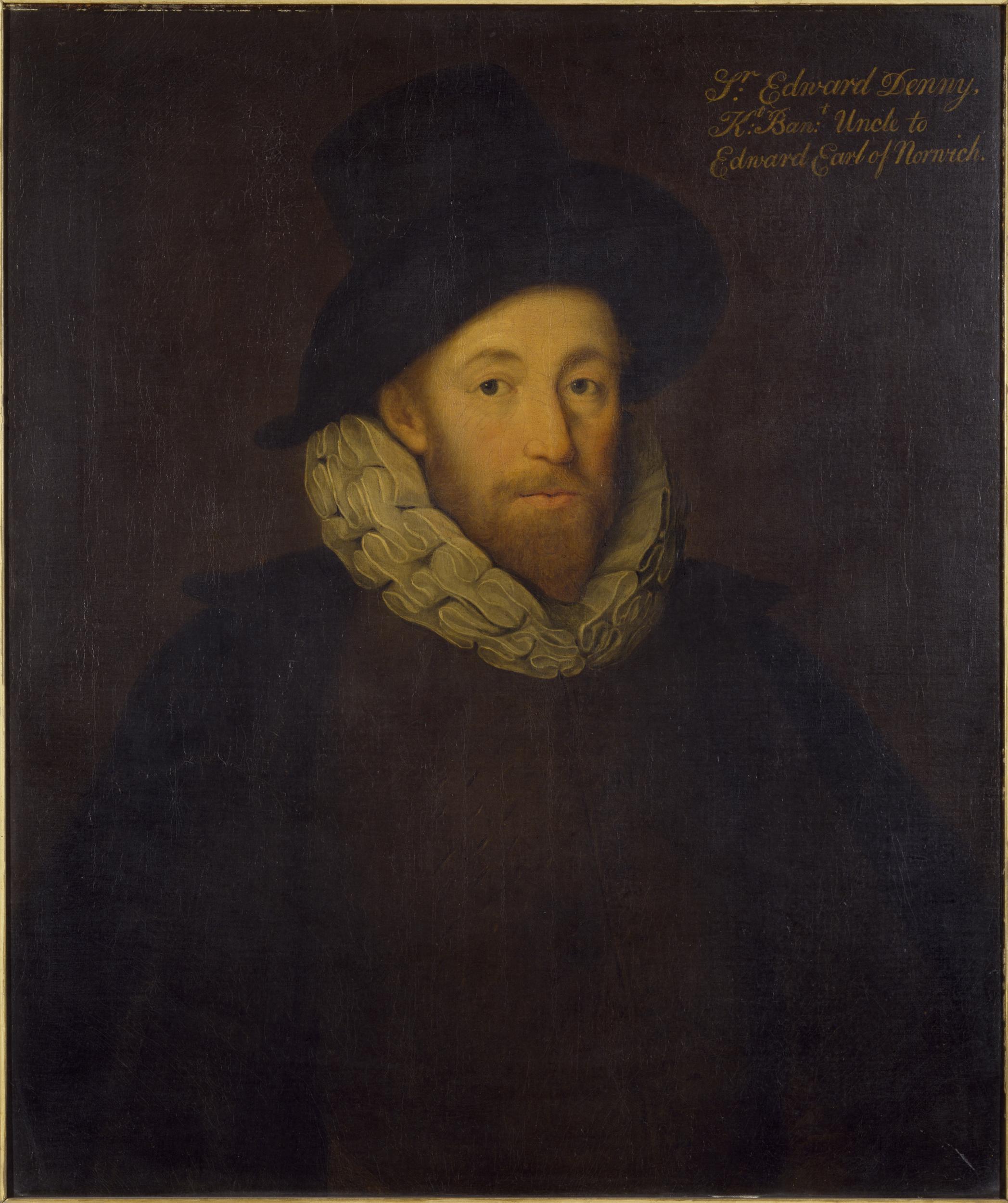
You see, the Denny’s came to Tralee as part of a British military expedition in the 1500s and the name is inextricably linked with the North Kerry area. Sir Edward Denny (1547 to 1599) was one of the architects and enforcers of the Plantation of Munster, and was rewarded with lands taken from the Earl of Desmond including Tralee Castle, a knighthood and the title of Governor of Kerry. Tom is a direct descendent. 

Sir Edward Denny. Image used with the permission of the Victoria and Albert Museum

The Denny’s stayed in Ireland for hundreds of years, branching out and acquiring land and estates. Eventually the family spent less time in Ireland and concentrated on their estates in Britain**. In Ireland, such a history as this is a complicated legacy, and Tom was eager to be part of the whole idea of a reconciliation window, donating his services to the project. Over twenty members of the Denny family came for the unveiling. This adds a rich and poignant dimension to the purpose of the window – reconciling the past with the present, and looking to the future. 

The father runs out to meet his returning son

Finally, this magnificent work of art is only one of the many artistic delights of this Tralee church. They deserve a post of their own some day, but I will give you a sneak peek by telling you that the Stations of the Cross are by none other than the famous Irish artist, Sean Keating. Here’s a detail from just one of them.

My friend Eileen drew my attention to this new window.  So thank you, Eileen – as you can see I lost no time in making the trip to see it. I am SO glad I did.

**Edit: I got this wrong. There were no English estates. The Denny’s, along with many members of the Anglo-Irish landlord class, eventually lost their lands. In the case of Tom Denny’s grandfather, although he was a baronet he was also a clergyman,  living the life of an impoverished cleric dedicated to his church. The move to England was related to his church service. RTE has now screened their program on the window and it does a marvellous job of adding fascinating detail about the window and the history of the Dennys – mostly supplied by Tom himself.