West meets West

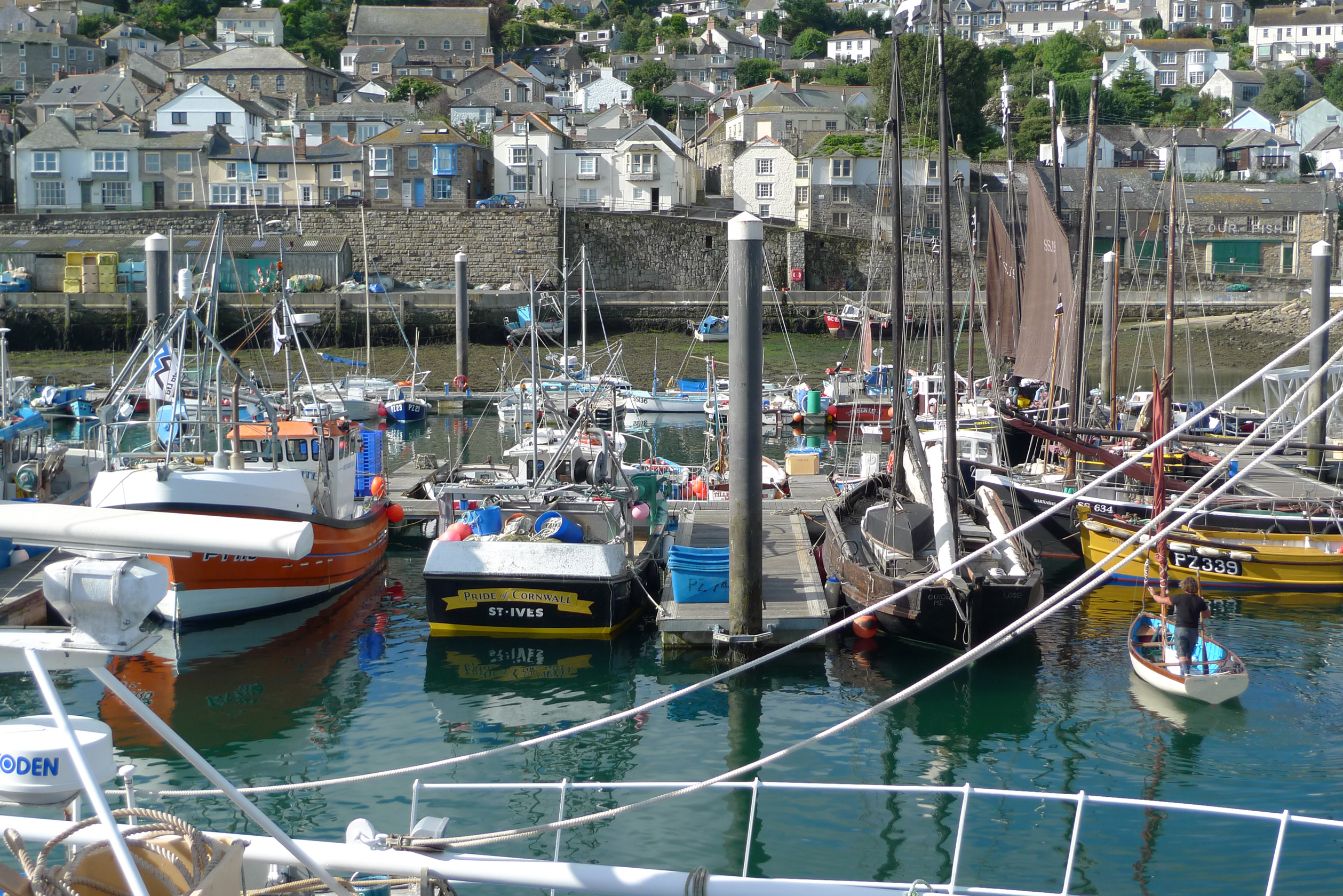
Picturesque Newlyn, Cornwall – the fishing village was the centre of a major art movement in the late 19th and early 20th centuries

I have been working hard with Uillinn – West Cork Arts Centre‘s fantastic new gallery in Skibbereen – to bring over an exhibition of the work of contemporary Cornish artists, which opens in June. West meets West will be the launch of a continuing programme which sees the art and culture of Cork and Cornwall being shared, to the mutual benefit of all working artists and art lovers – and to residents and visitors.
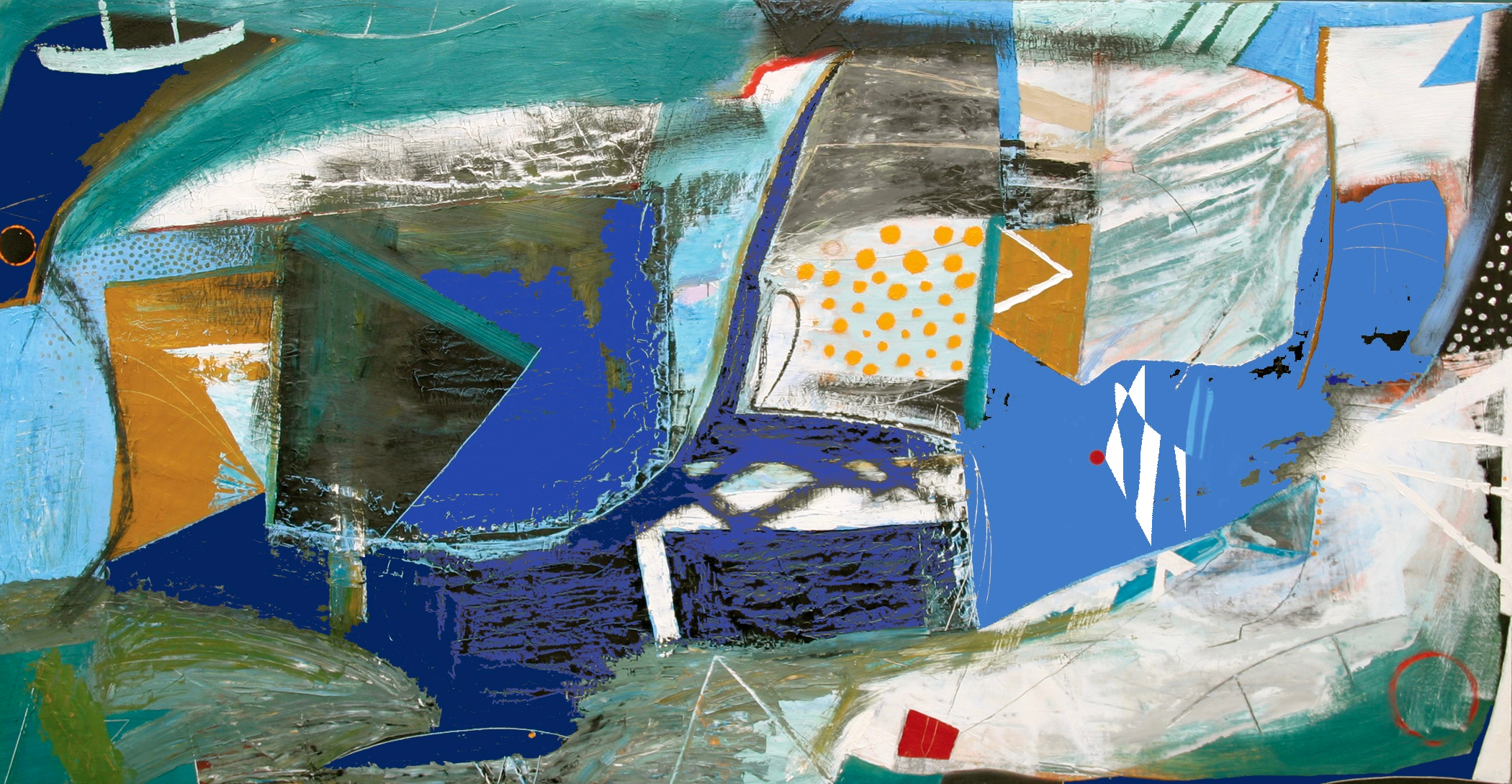
Greenstone – a canvas by the late Matthew Lanyon, one of Cornwall’s important contemporary artists whose work will be shown at Uillinn in June this year

Why Cornwall and Cork? And, particularly, why these westernmost peninsulas of Ireland and England? Well, as you may have noticed from past posts on this Journal, historic links between the two geographical areas go back a very long way. Starting between three and four thousand years ago copper was mined on Mount Gabriel and was mixed with tin from Cornwall to produce a revolutionary new metal – Bronze. This material was hard enough to make tools and weapons – therefore a practical commodity: also it does not rust. It has, too, been used to make bells for centuries, so its properties include sonority. In fact the word bronze probably originates from the Medieval Latin bronzium, in modern Italian bronzo, meaning ‘bell metal’. Regardless of all this, the important thing we know is that relations between the west of England and the west of Ireland were well enough advanced to set up regular trading between the two outposts in those far-off days.

Tony Lattimer, international award winning ceramic artist based near The Land’s End in Cornwall, whose large ceramic sculptures will be shown in West meets West, Skibbereen, June of this year

In a recent post I alluded to the incredible debt that Cornwall owes to us in West Cork because we gave them their patron saint – Saint Piran. The fact that the gift wasn’t intentional shouldn’t delay us too long: we tied Cape Clear’s Saint (whose Irish name was Ciarán) to a millstone and threw him over a cliff. Instead of meeting his doom he miraculously surfed the millstone across to the Cornish coast, where his landing place – Perranzabuloe – is named after him, and where he is royally celebrated on March 5th every year, with all the zeal that we show to our own St Patrick!

Apart from metal mining and saints, another important connection is shared fishing grounds. From medieval times onwards (and perhaps before) the Cornish fishing fleets put out from Mousehole and Newlyn to follow the pilchard and herring shoals across to Roaringwater Bay. This is really where art comes into our story, as it was the way of life of some of the Cornish fishing communities that attracted artists to that western County of England in the late nineteenth century, once the arrival of the Great Western Railway in Penzance had established the direct connection with London. Newlyn was an early focus, and a young man from Dublin, Stanhope Alexander Forbes, an up and coming young painter in the plein air tradition, made his home there in 1884 and stayed for life. Forbes found in Cornwall a true ‘rural idyll’: an unspoiled countryside where life was simply lived, and a rugged coastline with a magical quality of light. Known as the ‘Father of the Newlyn School’, he gathered around him like-minded artists who recorded (and perhaps romantically idealised) the way of life of the communities there, and that special quality of the light, in canvasses which are highly admired and respected today.

A preliminary sketch by Stanhope Alexander Forbes for a painting known as On Paul Hill (Paul is the name of a village between Newlyn and Mousehole in Cornwall). Forbes painted in the Plein Air style, out of doors and from real life

I made my home in Cornwall for a number of years, before I decided that I hadn’t come far enough to the west, and followed the pilchards and herring myself to Roaringwater Bay, where I now look down on them from my eyrie in Nead an Iolair (although the shoals are today much diminished). During my years in Cornwall I came to know and respect the stories of the artists from Victorian years up to the present day. The ‘Newlyn School’ which Forbes represented was only one piece of the jigsaw there: we will explore others later. Art is probably Cornwall’s biggest asset. Ever since the opening of the Tate Gallery in St Ives – established there because of that town’s historic links with artists and craftspeople of international repute – ‘art tourism’ has grown to become a major year-round driver of the local economy.

Newlyn old and new: left – Stanhope Alexander Forbes in 1900 painting outside Trelyn, Boase Street, Newlyn – my home for 25 years! Right – Newlyn today is Britain’s largest fishing port

Cornwall is home to a number of artists renowned today in the British Isles. I got to know many of them when I lived in Newlyn. Three of them will be exhibiting in Uillinn from 3 June to 8 July this year: Philip Booth, Matthew Lanyon and Tony Lattimer. Their work is large scale, stimulating and mutually complementary: constructions, canvasses and ceramic sculptures. Please make a note of the dates now: this exhibition is important for West Cork and for Cornwall. Please don’t miss it!

Below: Philip Booth, from Lamorna, Cornwall, will be showing a number of his spectacular relief constructions at West meets West, Uillinn, Skibbereen, in June. This one is titled ‘Formed in Running Water’
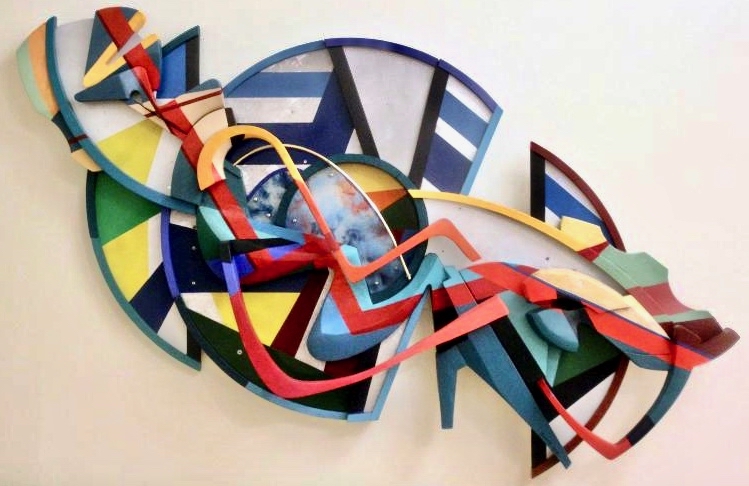
Formed in Running Water

A Saint’s Day – Ciarán and Piran

Horse and Cape Clear

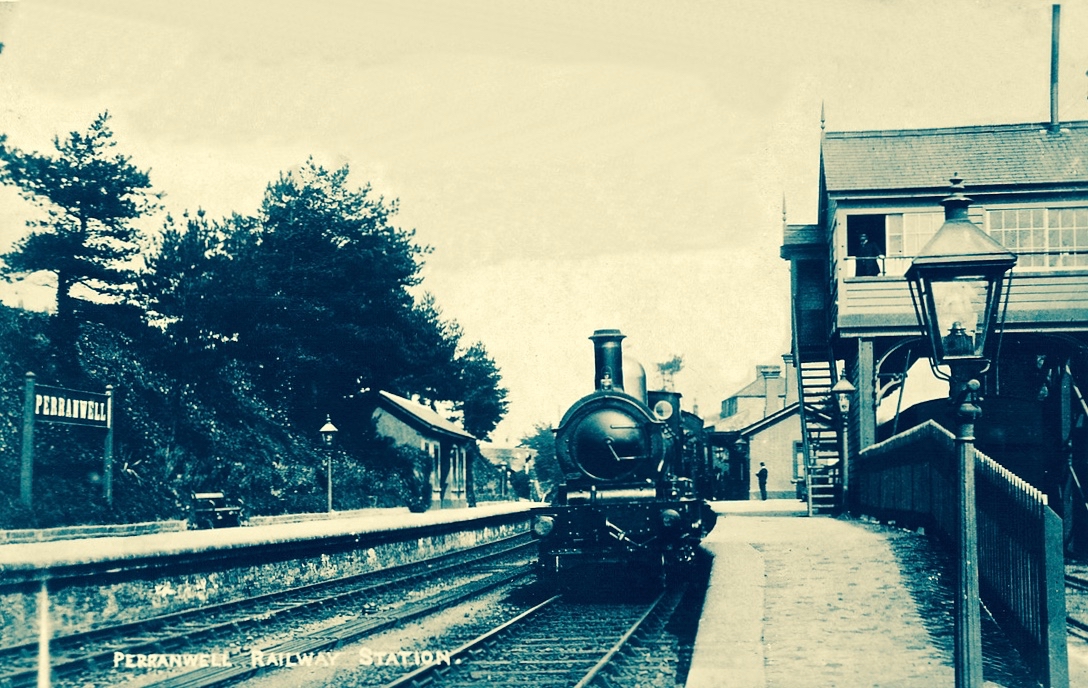
I was born in the first half of the last century. Early memories of the 1950s include the regular journeys my brother and I made as small boys on the mighty Atlantic Coast Express via Okehampton to visit, first, our sets of cousins on Dartmoor, and then beyond – via the even mightier Great Western Railway – to our cousins in the depths of Cornwall. The latter visits were particularly idyllic: the cousins (generations older than us) had a small farm and a herd of cows which they milked twice a day – by hand. Following this they cooled the milk in a big steel drum by stirring it with a propellor (we were allowed to do this) before pouring the precious liquid into bottles which were then sealed with silver caps using a rubber device which impressed on them the name ‘Cove Farm’. Then, together, we set out  on bicycles to deliver the bottles to the doorsteps of every dwelling in the small village of Perran-ar-worthal.

Perranwell Station 1950s
Perranwell Station 1950s – disemabark here for Perran-ar-Worthal and Cove Farm! The header picture is a view of Cape Clear seen beyond Horse Island, taken from our own Rossbrin Cove

Perran-ar-Worthal (in Cornish Peran ar Wodhel) means ‘St Piran’s village by the creek’. Who is St Piran? He is the Patron Saint of Cornwall and we’ve met him before, briefly, in my account of St Ciarán, who was born on Cape Clear, and was known as ‘The First Saint of Ireland’. Even before St Patrick arrived to start his missionary work in 432 AD, St Ciarán (according to some records born in 352 AD) had been at work converting the ‘heathen Irish’. Unfortunately, his efforts were not always appreciated and Ciarán was despatched from the top of a tall cliff with a millstone tied around his neck! The story is elaborated by Robert Hunt FRS in his Popular Romances of the West of England first published in 1908. I have the third, 1923 edition on my bookshelves.

Robert Hunt Popular Romances 1923

On a boisterous day, a crowd of the lawless Irish assembled on the brow of a beetling cliff, with Ciarán in chains. By great labour they had rolled a huge millstone to the top of the hill, and Ciarán was chained to it. At a signal from one of the kings, the stone and the saint were rolled, to the edge of and suddenly over, the cliff into the Atlantic. The winds were blowing tempestuously, the heavens were dark with clouds, and the waves white with crested foam. No sooner was Ciarán and the millstone launched into space, than the sun shone out brightly, casting the full lustre of its beams on the holy man, who sat tranquilly on the descending stone. The winds died away, and the waves became smooth as a mirror. The moment the millstone touched the water, hundreds were converted to Christianity who saw this miracle. St Ciarán floated on safely to Cornwall; he landed on the 5th of March on the sands which bear his name. He lived amongst the Cornish men until he attained the age of 206 years…

Left – St Ciarán celebrated in modern stained glass, in the church at Caheragh, West Cork; centre – Ciarán at Rath church, near Baltimore, and right – St Piran is the top figure (with church and bell) in this window panel from Truro Cathedral, Cornwall

So, what is the connection between Saints Ciarán and Piran? Apparently, they are the same person! Charles Lethbridge Kingsford reporting in the Dictionary of National Biography 1885 – 1900 (a 63 volume work!) states:

…PIRAN or PIRANUS, Saint, is commonly identified with Saint Ciaran of Saigir. The names Piran and Ciaran or Kieran are identical—p in Britain being the equivalent of the Irish k. The history of the two saints is in the main features the same, though the Irish lives of St Ciaran do not record his migration to Cornwall…

Many writers make the same assertion about the orthophony of the name but – to be fair – others, including some saintly hagiographers, do not agree, suggesting we are talking about two different saints. As someone who has a birthday on 5th March (today) – the Saint’s Day for both Ciarán and Piran – I have no doubts about the matter. Here’s another source that concurs with the view that they are one and the same saint – The Irish Ecclesiastical Record, Volume X (1874):

The labours of St Kieran were not confined to Ireland. He passed several years on the western coast of Britain, and, as we learn from Blight’s “Churches in West Cornwall,” his memory is still cherished there. Four ancient Cornish parochial churches bear his name : these are Perran-zabuloe, or St Piran-in-the-sand; Perran-arworthal; Perran-uthnoe, situated near the coast opposite St Michael’s Mount, and St Kevern, or Pieran, which in Domesday-book is called Lanachebran. St Kieran’s holy well is also pointed out on the northern coast of Perran-zabuloe. The parish church of St Keverne stands in the district called Meneage, which terminates at the Lizard Point, the southernmost land of England. The name Meneage is supposed to mean, in the old Cornish dialect, “the deaf stone”, and the reason given for it is that, though there are several mineral veins or lodes in the district, on trial they have been found to be of no value, and hence are called deaf or useless. Tradition tells that St Kieran inflicted on the inhabitants, as a punishment for their irreligion, that the mineral veins of the district would be un-productive, and the old proverb is still handed down, “No metal will run within the sound of St Kieran’s bell”…

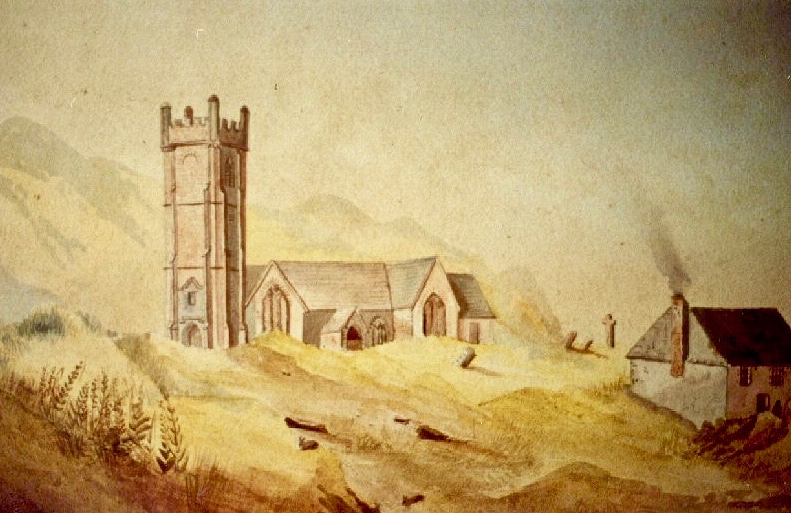
St Piran's Church, Perran SandsAn image of St Piran’s Church which was built in the 12th century on the dunes at Penhale Sands, Perranzabuloe Parish, to replace the Saint’s original oratory which was buried by the shifting sands. The sands encroached on this church, too (the sands can be seen in the picture), and it was dismantled around 1800 and stone from the site was then used to build another new church two miles inland which was dedicated to St Piran in July 1805

To complement that little story of the saint in Cornwall, we have to visit Ossory, an Irish diocese which encompasses parts of Kilkenny, Laois and Offaly. There they also celebrate St Ciarán of Saigir on March the fifth: he is said to have returned from Rome after years of study, firstly visiting his native Cape Clear, then commencing his travels through Ireland until his bell rang of its own accord – this happened at a small hamlet in County Offaly, now known as Seir Kieran. There he set up a foundation, the remains of which are still visible – as is a holy well, a holy bush (bedecked with clouties) the base of a round tower, the base of an ancient high cross (now holding water which has curative powers) and a holy rock which was once said to have displayed the hand print and knee prints of the saint, now completely obscured.

barry-cotrell-st-piran

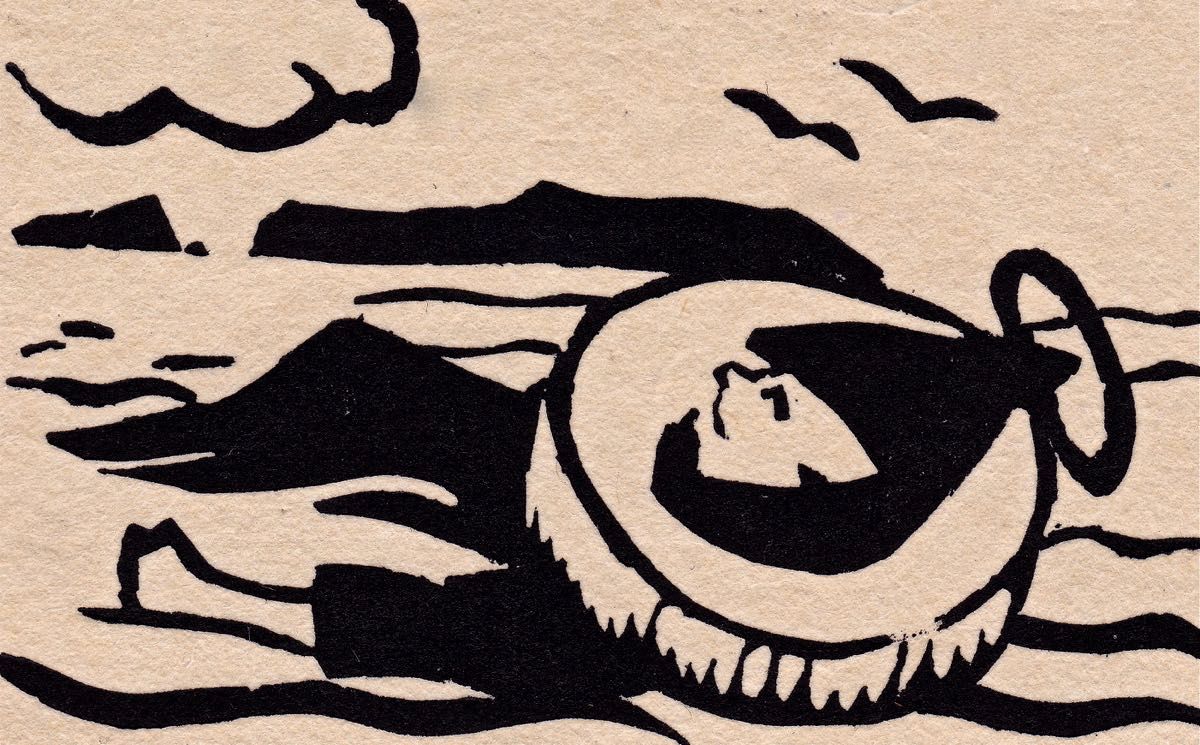
St Piran’s journey to Cornwall: “The millstone kept our man afloat” from The Discovery of Tin – a collection illustrated by Barry Cottrell

One of my favourite stories about St Piran tells of how he discovered tin smelting. He used as his hearth a piece of local stone; when he lit a fire on the hearth the veins of tin ore in the stone melted and a stream of silver ran out across the black rock, in the form of a cross. From that day to this the flag of Cornwall is a white cross on a black background, and Piran is the patron saint of tin and tinners.

marching-and-flags

Just about now in Cornwall a great celebration is going on in honour of the saint. There will be a procession to the original oratory buried in the sands, led by the Grand Bard of the Cornish Gorsedd. Cornish flags – and the Cornish tartan – will be very much in evidence. The Cornish people have a great nationalistic spirit and have called for the 5th March to be an official public holiday. In a recent debate on Cornwall some interesting views were expressed on the place of Cornwall in a post-Brexit world, and the attributes of St Piran were symbolic of this – his inventiveness, his love of nature, and his belief in the inclusivity of all peoples in an international community.

Left – Geevor Mine, in West Penwith, one of Cornwall’s last working tin mines, now a museum of mining; right – an incarnation of the saint: Cornish author Colin Retallick stands in front of St Piran’s ancient cross on the saint’s day

St Piran lived to a great age. They say in Cornwall that he was ‘fond of the drink’ and met his end by falling into a well when walking home from a party. I hope it was a holy well! Today, seventeen centuries after St Ciarán / Piran was thrown from the cliffs of Cape Clear I am looking out to that island: …the winds are blowing tempestuously, the heavens are dark with clouds, and the waves are white with crested foam… There have been so many links between Cornwall and West Cork, ever since the Bronze Age, when Cornish tin traders brought their metal to mix with copper mined above us here on Mount Gabriel. Watch out for more posts about these links, and mark your diaries for an exhibition coming up in June in Uillinn, West Cork’s fine new gallery, of the work of artists from Cornwall. This will be followed next year by an exhibition in a Cornish gallery of the work of artists from West Cork. West meets West will forge new and lasting links between the two communities: links which would have warmed the heart of our shared saint!

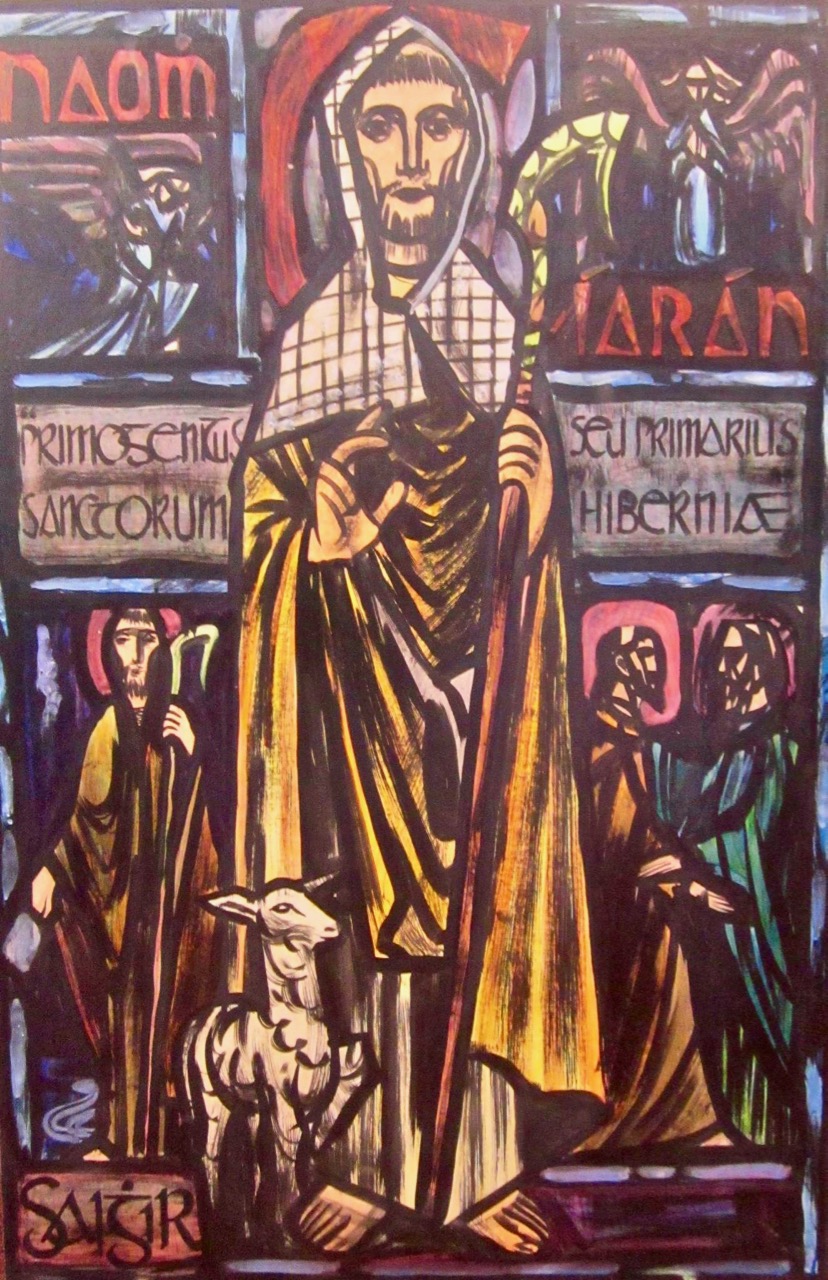
Below – St Ciarán by Richard King, painted for the Capuchin Annual in the 1950s

Richard King Ciaran

Off to Skibbereen!

Newlyn Harbour, Cornwall

Newlyn Harbour, Cornwall

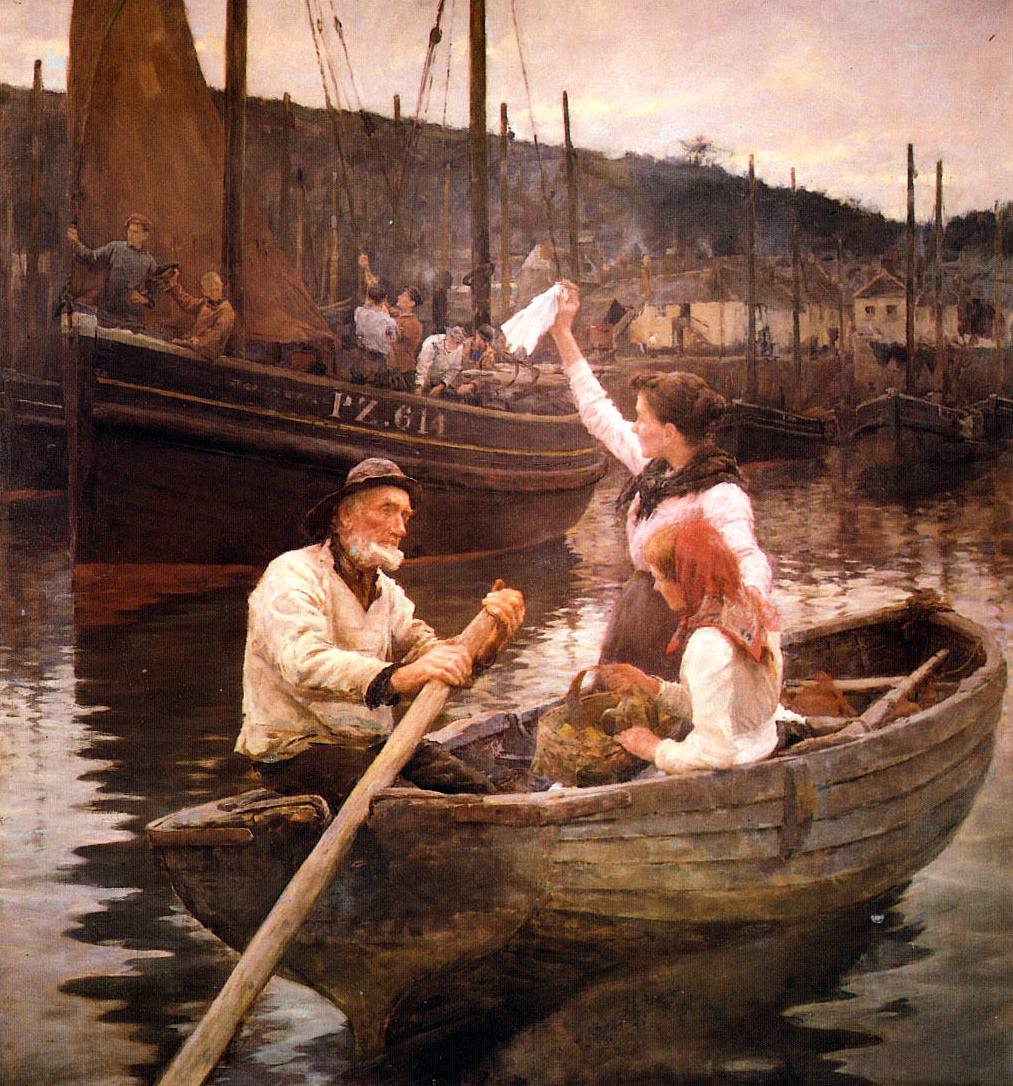
What’s the link between Newlyn in Cornwall – where I had a fisherman’s cottage for 20-odd years – and Skibbereen, our nearest town here in West Cork? The answer is ‘art’, and the painting below by Alexander Stanhope Forbes sums it up: Off to Skibbereen from Newlyn.

offtoskibb1

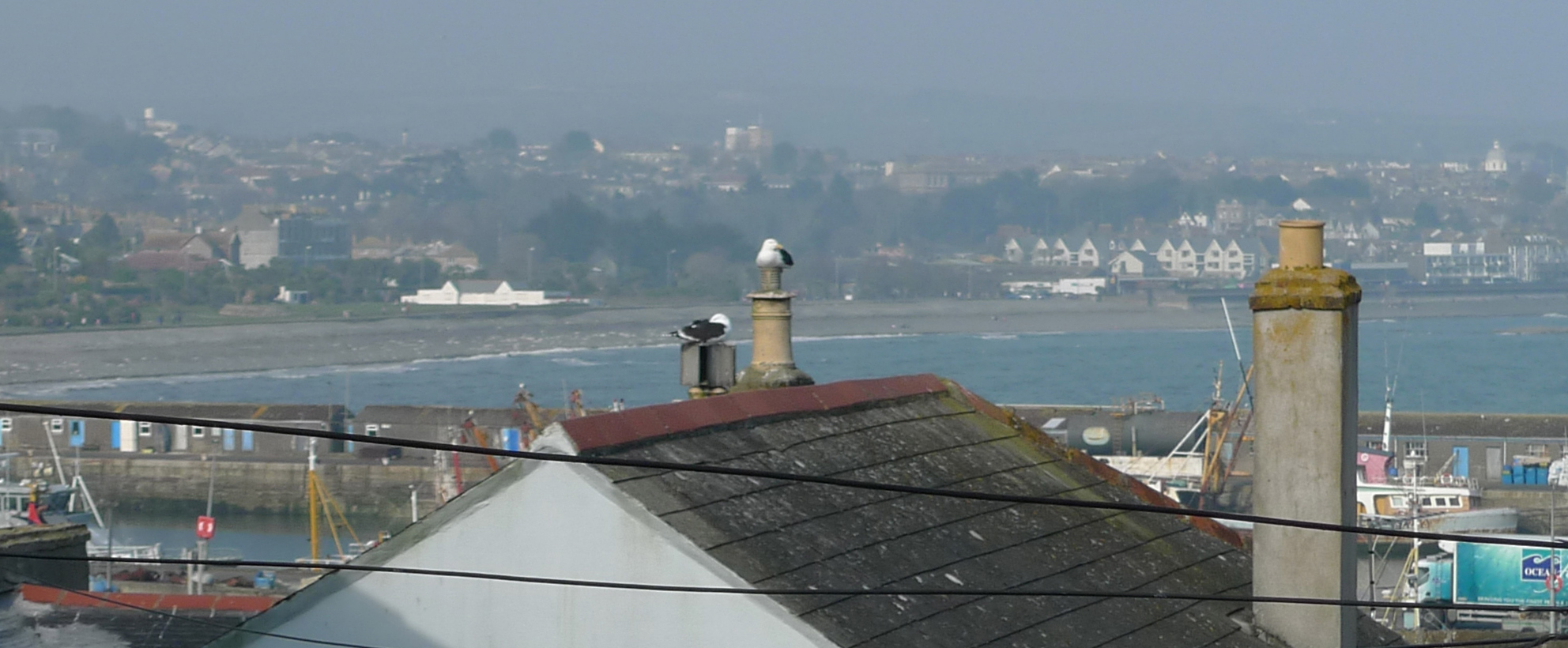
Stanhope Forbes was born in 1857 in Dublin and worked in the en plein air technique of painting, first in Brittany and then in Cornwall, where he settled and founded the Newlyn School of artists. He died in Newlyn (a day or two short of my first birthday) in 1947. If you want to see a collection of Newlyn School paintings visit the Penlee Gallery in Penzance: they are superbly detailed depictions of everyday life in a working fishing community during the late nineteenth and early twentieth centuries. En plein air was all about light, sun and clarity: the artists chose places where the light was at its best, usually close to the sea. My cottage looked out over Mounts Bay in West Penwith, on the far south western tip of Britain. Like the lugger in the picture I have crossed the Celtic Sea from Cornwall, and I now live on the far south western tip of Ireland.

View from my cottage in Cornwall

View from my cottage in Cornwall

I am intrigued by the Off to Skibbereen painting. It tells a story, but we can’t guess that story. It’s presumably PZ 614 that’s on its way to Ireland, and not the ladies in a small open punt with a basket of sandwiches… But why Skibbereen? Records show that from the 1820s Newlyn fishermen were chasing the Herrings off the coast of County Cork. On the whole the fishermen of Newlyn were active most of the year. In January and February they fished for Mackerel off South Devon, following the shoals westwards to Mounts Bay for the next couple of months. Then they moved to Irish waters for the Herring season, returning in July to catch Pilchards until December. They were away from home for weeks at a time so a departure could be a poignant time for their families.

Skibbereen at the end of the 19th century: can you spot the cat?

Skibbereen at the end of the 19th century: can you spot the cat?

Skibbereen was a settlement served by water. The River Ilen is tidal and in the early 19th century boats of up to 200 tons could navigate to Oldcourt, within two miles of the town centre. From there goods were transferred into ‘lighters’ (unpowered barges) and then brought into the quays where there were warehouses and a Customs House. Now, sadly, Skibbereen’s waterfront is a bit neglected and its active past shipping history is no longer obvious. Five historic quays have been identified along the river: Steam Mill Quay, Long Quay, Levis Quay, Minihane’s Quay and Chapel Quay. The Skibbereen Town Development Plan has this to say about them:

…Historic Quays – Comprising of old disused stone quays along the town side of the River Ilen between the two road bridges, these quays were once the primary means to transport goods and people in and out of Skibbereen. Some of the quays are in private ownership, others are unrecognisable and some have been blocked with stone and deposits. However,what is unquestioned is the historic significance and value of the quays and therefore their protection should be considered as part of this plan. In the past, communities and public bodies turned their back on water bodies but now the tide is turning in this regard. Therefore an opportunity presents itself … by ensuring that the quays are redeveloped as part of any proposal on adjoining land…

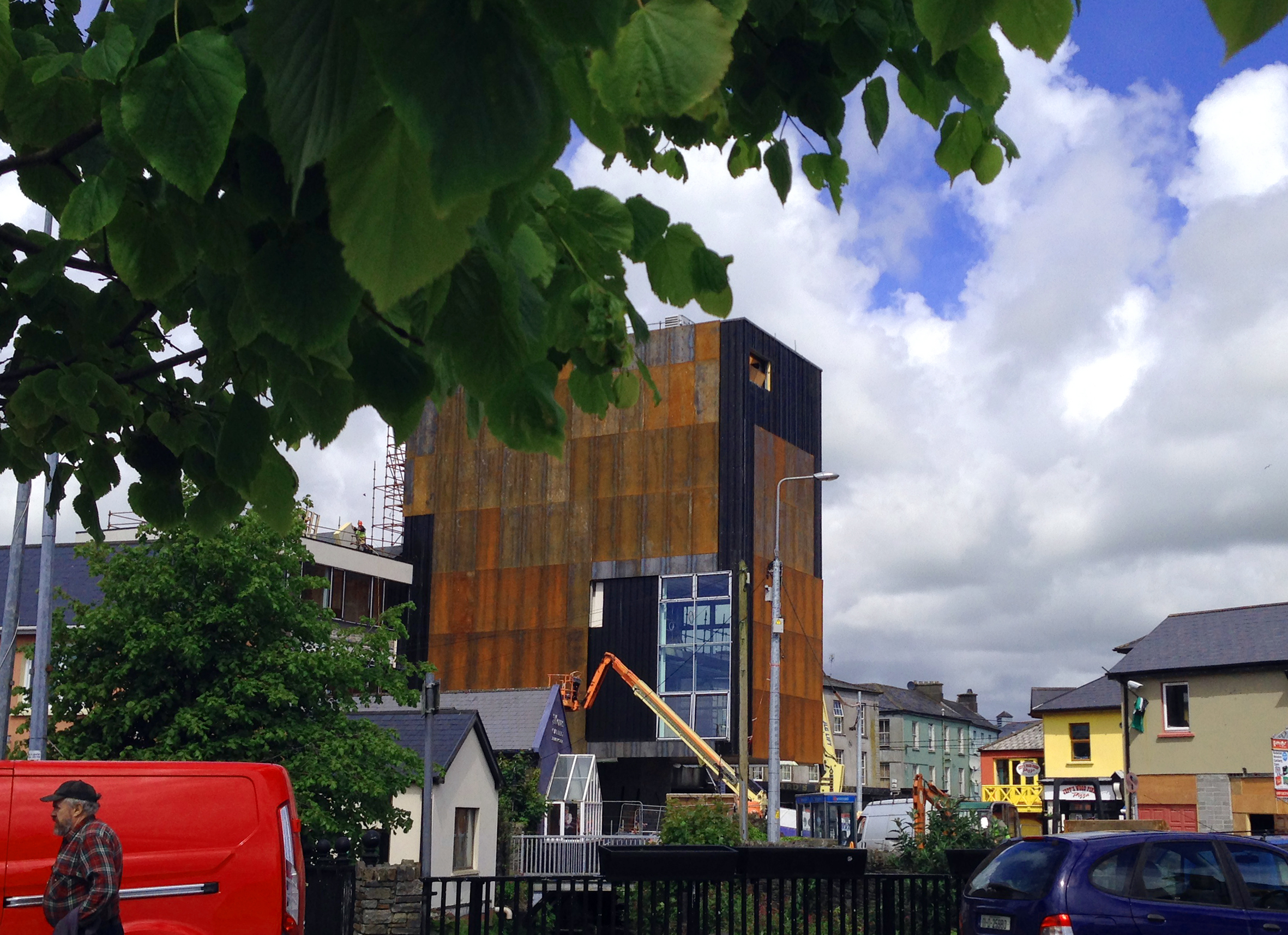
Building work progresses in Skibbereen

Building work progresses in Skibbereen

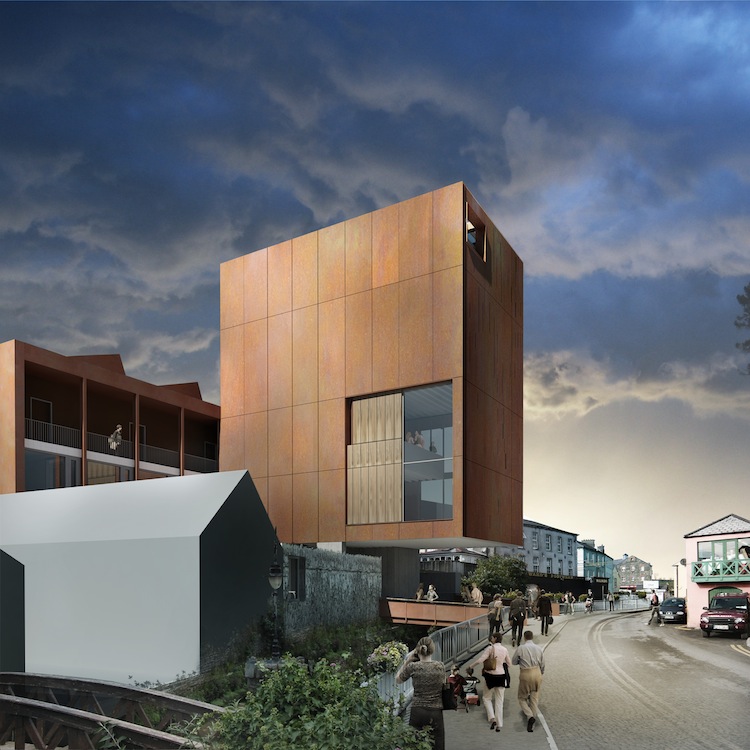
There is a new development going up in the centre of Skibbereen right now, just by the old Levis Quay. It’s on the site of a rather bleak four-storey warehouse structure (now demolished) known most recently as Wolfe’s Bakery. This new building is all about art – rather neatly for my thesis on the artistic links between West Cornwall and Western Ireland.

WCAC_north_view_final-sized

Competition Winner – Skibbereen’s new Arts Centre

The people of Skibbereen are very fortunate to have secured funding for a major arts building, especially in the present climate of austerity. The West Cork Arts Centre will house exhibition space and studio space for artists and social spaces for the community, including enhanced workshop, dance, performance and film club facilities providing a ‘centre for excellence’ in the visual arts at local, national and international levels. The building occupies the ghost of the earlier warehouse and is on five storeys, all fully accessible. Valuable extra space is cleverly gained by cantilevering a portion of the main block out over the Caol Stream. An international design competition was held for the design of the new centre, and this was won by Architects Donaghy and Dimond of Dublin. Visually the building is stunningly contemporary – and this works well in a small town with a diverse architectural language spanning many centuries. So often, new buildings are not allowed to be ‘of their time’ and resort to pastiches of older styles with the result that present day town centres can lack any dynamic character.

The building is being clad with a material known as ‘Corten‘. It’s actually rusted steel! It’s an attractive and durable finish which matures and stabilizes as time goes on. The appearance of a large rusty steel box in the centre of town is exciting some comment but – as always with anything new – judgement is best reserved until the project is completed. In my opinion it will add to the attractions of Dear Old Skibbereen and provide very welcome new facilities in the heart of this creative community. Well done Skibbereen!

Taking Shape - 21 May 2014

Taking Shape – 21 May 2014

Here’s an idea: several of the Newlyn School artists were Irish – or had Irish connections. Perhaps in West Cork we should put on an exhibition highlighting artistic links – old and new – between Cornwall and Ireland?

Wolfe’s Bakery – site of the new Arts Project