Baby Jumping

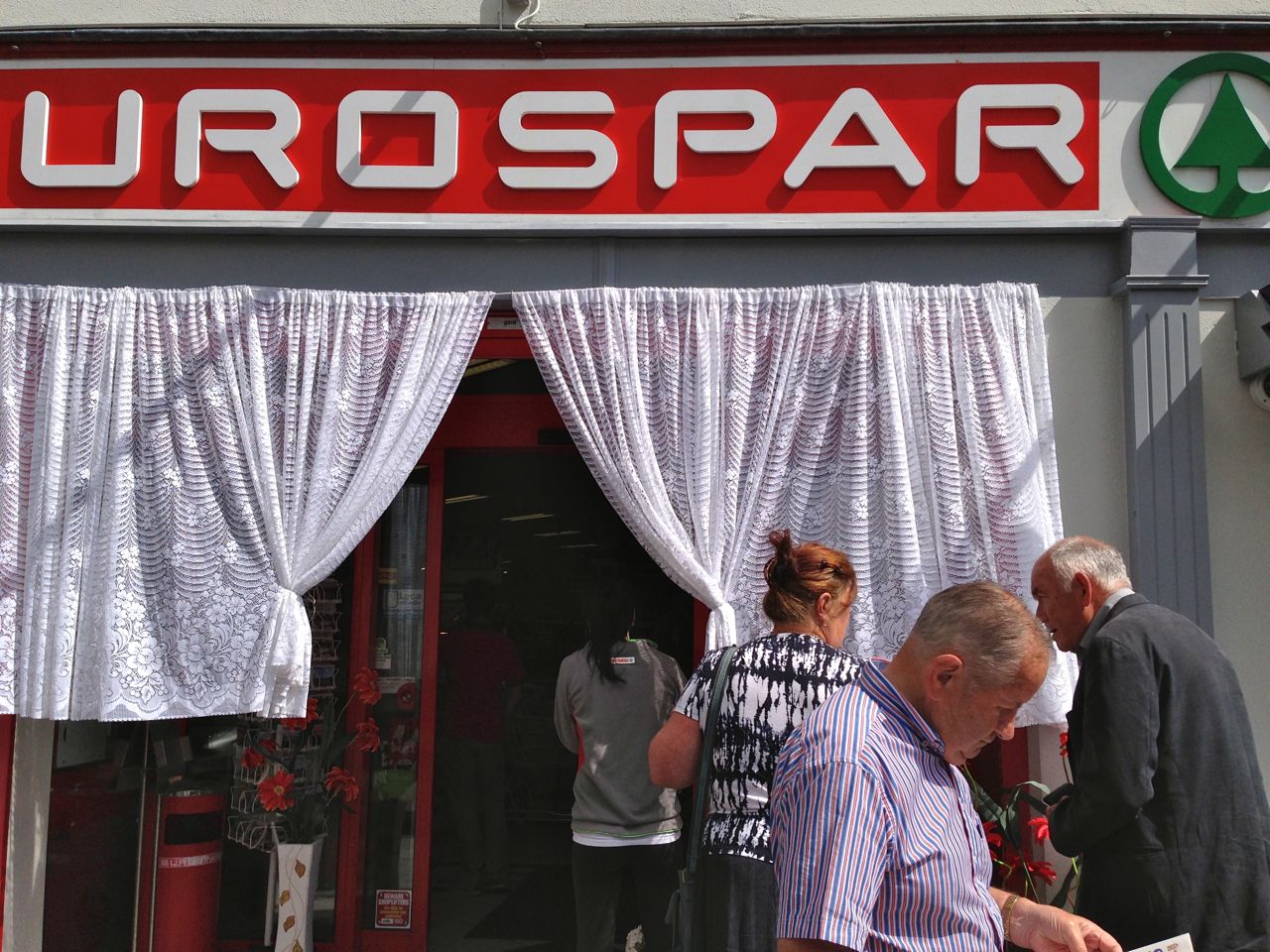
eurospar

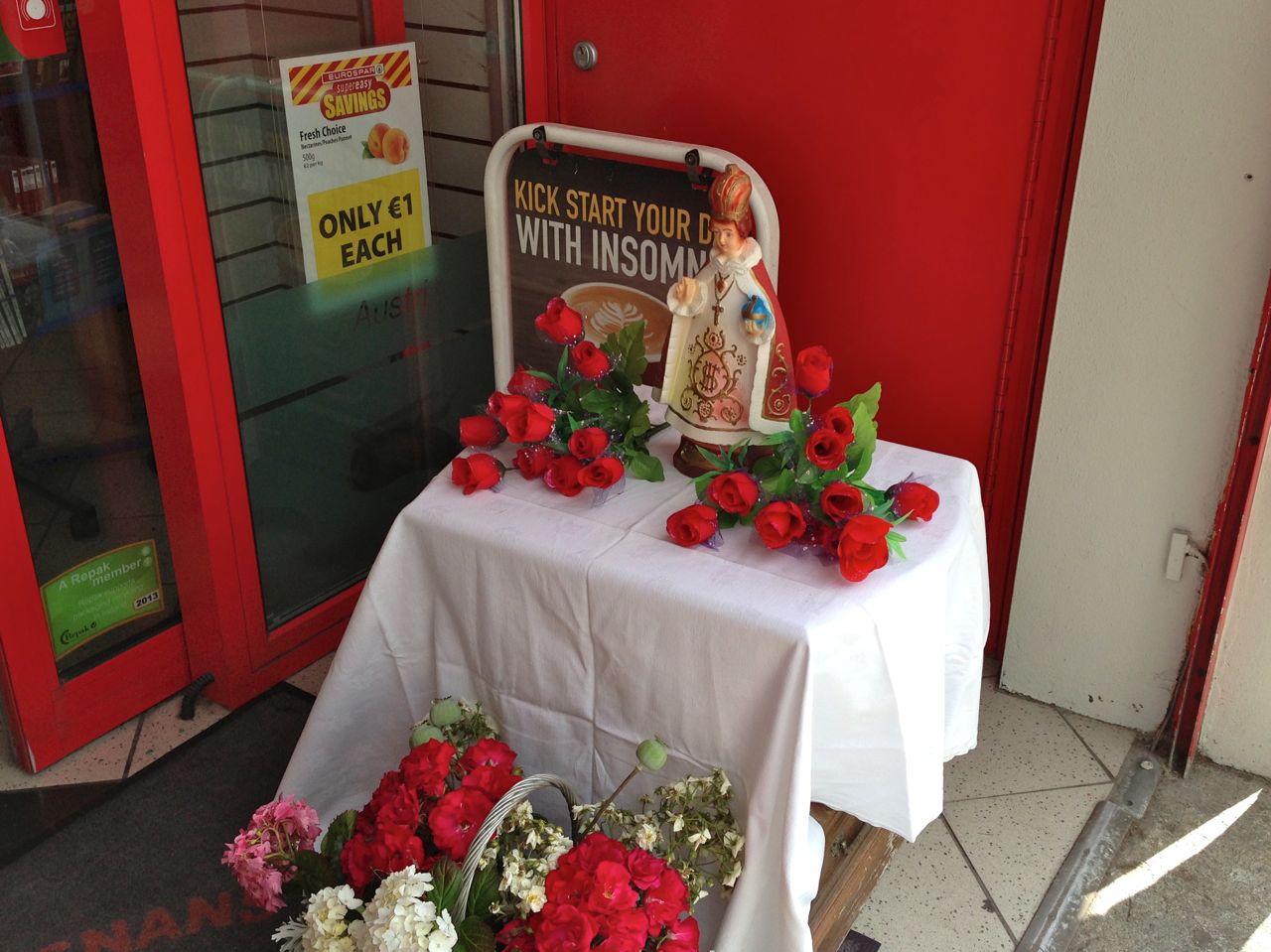
There was something odd about the Eurospar in Schull when we went to get our paper this morning…

Tell me.

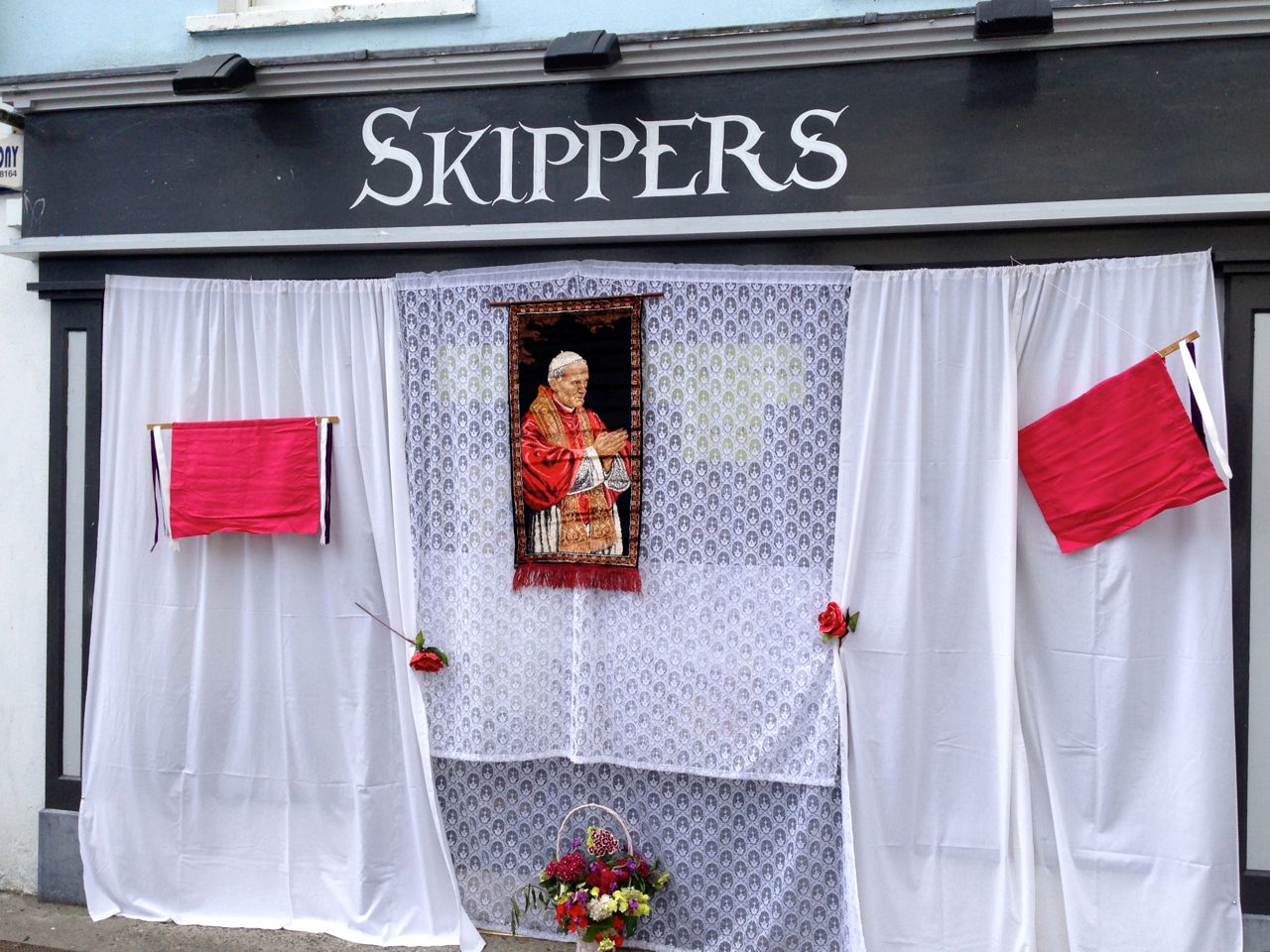
There were lace curtains across the doors – on the outside!

A new decorating fashion for Schull? It’s a trendy place you know.

table

street

spar

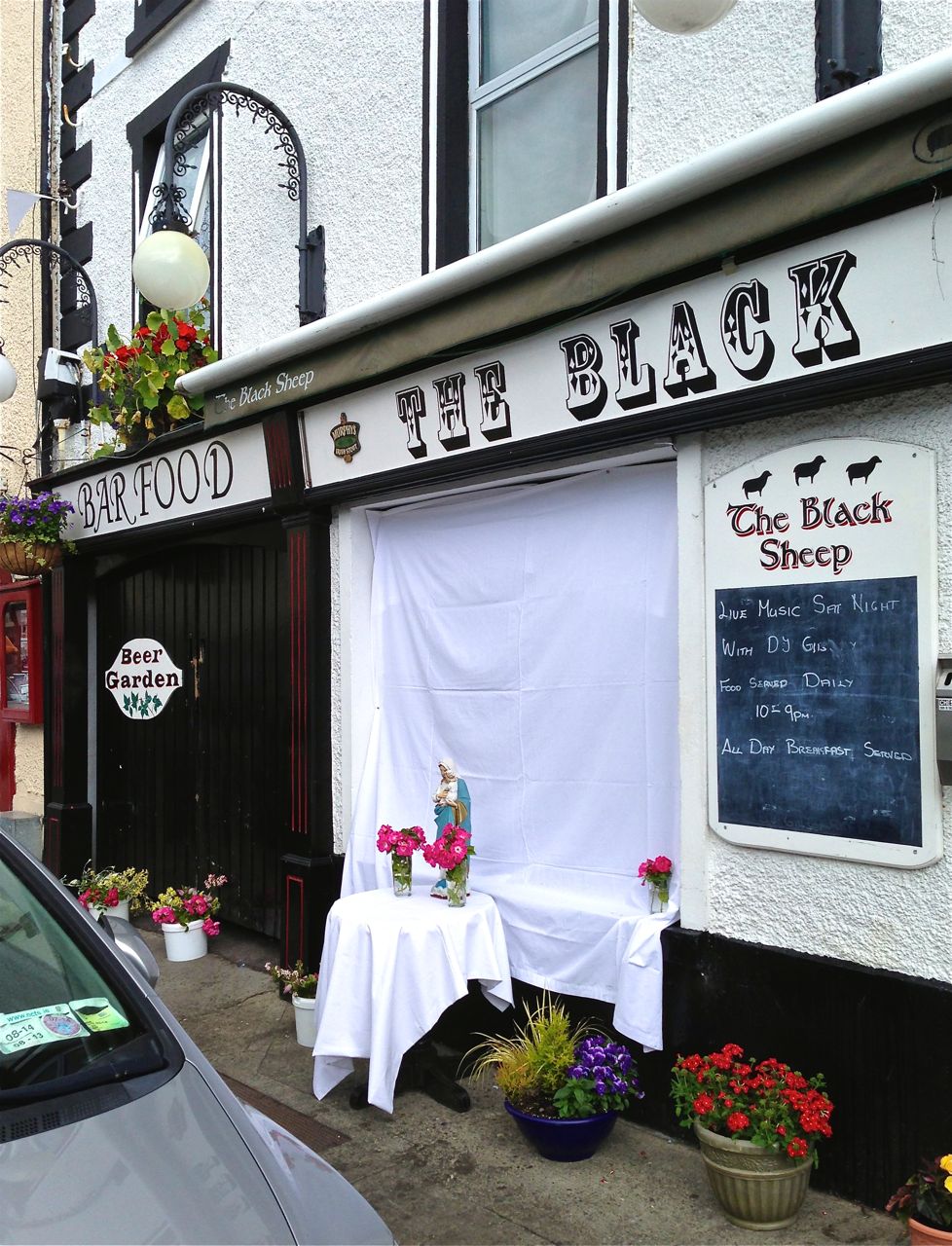
But also a table outside with flowers and an Infant Jesus of Prague statue on it… And similar treatments to shops and pubs all down the street.

Aha! – Religious connections: is it a Saints Day?

Well it is – by chance – St Peter’s Day, 29 June. But that’s not what this was all about.

How did you know?

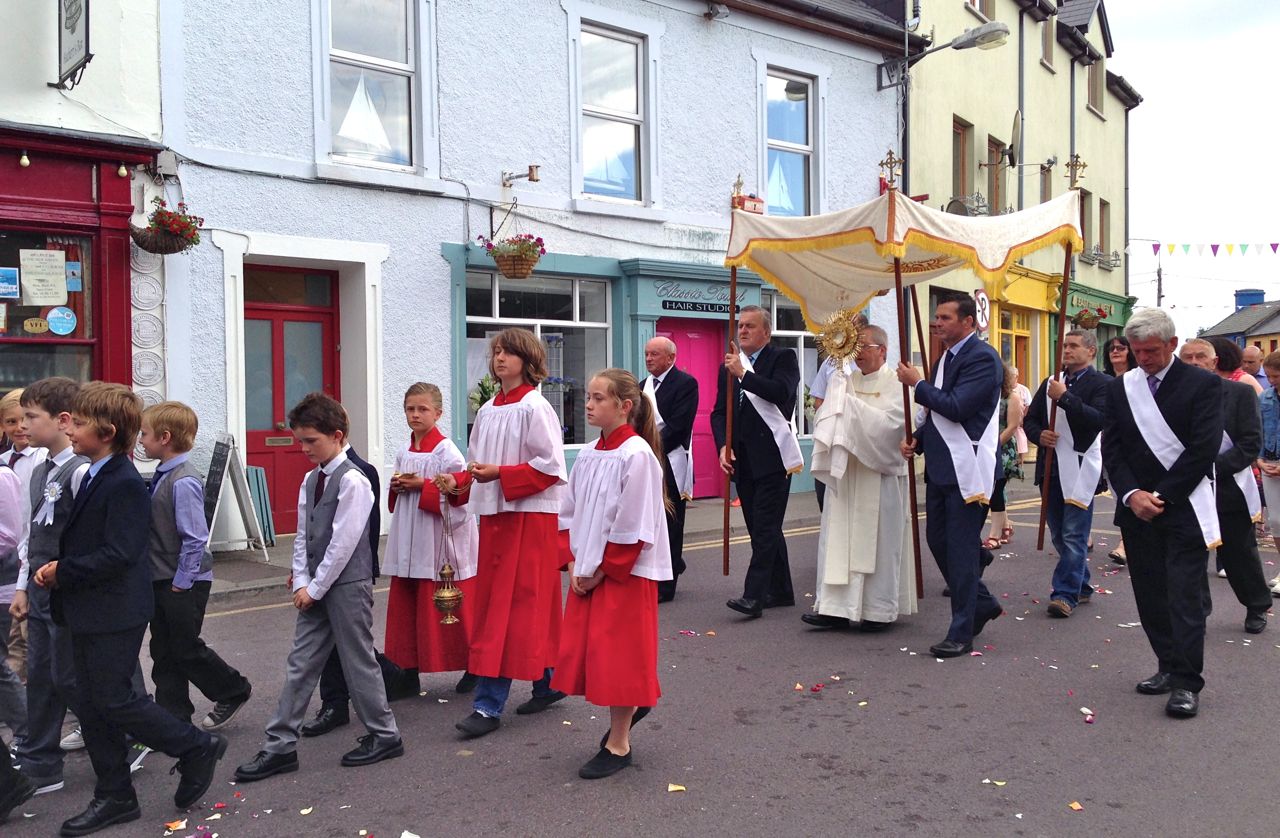
Simple: we asked someone on the street, and they told us that there was going to be the annual Corpus Christi procession.

procession

leadingcanopy

petals

Oh! Isn’t that a big thing in other countries?

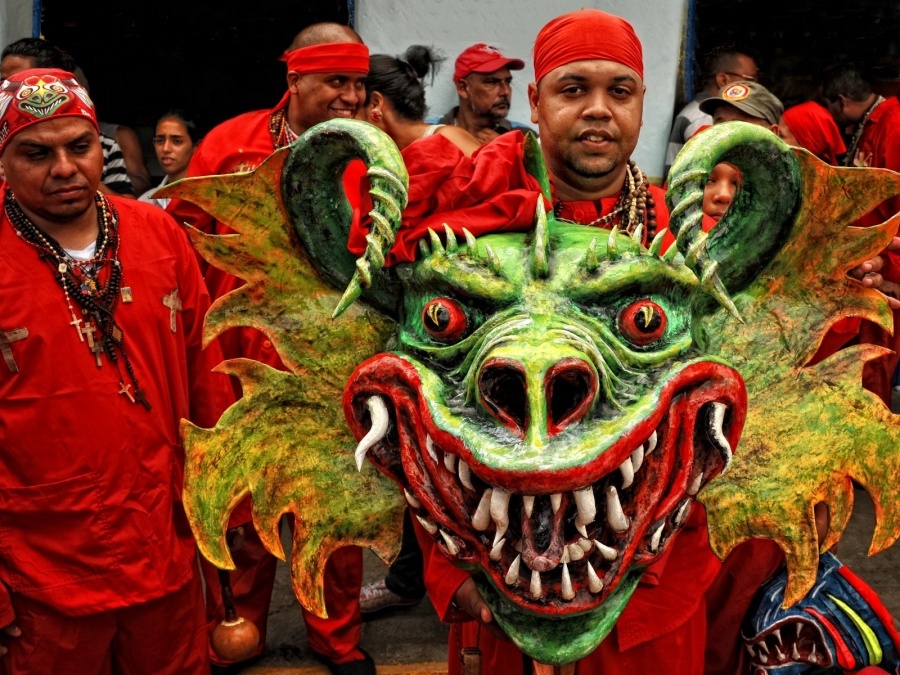
There are certainly some exotic examples – take a look at the Dancing Devils of Yare in Venuzuala… It is a custom originally frowned upon by the church as it seems to hark back to African pre-Christian roots. Now it’s brought into the church calendar and on Corpus Christi men dress up as devils, wage battle with each other, and then ‘surrender’ to the Eucharist and are blessed by the priest.
davil

black sheep

Anything like that in Schull?

Not exactly, but the procession is quite singular, going through a busy Irish street on a sunny Sunday morning. I counted about 200 people, with mainly men at the front, then women, then children, many of whom were dressed in their First Communion finery, and were scattering flower petals all across the road. At the back was the priest, walking under a decorated canopy which was carried by men in suits and white sashes; the priest was holding up the Monstrance…

You’ll have to explain that to me.

monstrance

Monstrance – from the Latin monstrare – to show: it’s ‘…the vessel used in Roman Catholic, Old Catholic and Anglican churches to display the consecrated Eucharistic host during Eucharistic adoration or Benediction of the Blessed Sacrament…’ The symbolism is a sunburst, the source of all life, which in the Christian tradition is represented by the Body of Christ – Corpus Christi.

sun

Is all this rooted in something more ancient than Christianity?

Well – apart from the sun symbolism – probably not. The feast was promulgated by Juliana of Liège, Belgium, who was born in the 13th century and became an Augustinian nun and, eventually, Prioress of her convent. She experienced a recurring vision of the bright full moon which was flawed by a dark spot or stripe. She believed that the moon symbolised the Church, which was flawed by the absence of a liturgical feast for the adoration of the Eucharist. She spent much of her life petitioning for such a festival but did not see her hopes realised: she died in 1258. Her work was not in vain, however, as in 1264 Pope Urban IV instituted the feast of Corpus Christi.

So this year sees the 750th anniversary of Corpus Christi?

Yes it does. But it’s a movable feast, relating to the date of Easter – theoretically it should have occurred this year on 22 June but Schull obviously has other ideas.

So it seems. Now, I see you’ve called this post Baby Jumping….

jumping

You are very observant! Well, I can’t resist mentioning this traditional Spanish holiday dating back to 1620 that takes place annually to celebrate Corpus Christi in the village of Castrillo de Murcia. The custom is known as El Colacho, and men dressed up as devils jump over babies born during the previous year who are lying on mattresses in the street.

El_colacho_saltando

Why?

The Brotherhood of Santísimo Sacramento de Minerva organises the festivities which culminate when the ‘devils’ jump over the babies on the mattresses placed on the procession route traversing the town. It is said that this cleanses the babies of original sin, ensuring them safe passage through life and guarding against illness and evil spirits. Pope Benedict evidently wasn’t impressed by the custom and asked Spanish priests to distance themselves from El Colacho. As he put it, ‘…the Church teaches that it is baptism by water, not a giant leap by an airborne devil, which cleanses the soul…’

How did that go down?

According to a report this year ‘…The festival is still a vibrant tradition replete with musical processions through the village with El Colacho chasing the young and old, and teenagers in lederhosen dancing an Irish jig…’

Something Schull could consider perhaps?

spectators

Perhaps. But in the meantime have a look at this curious but highly entertaining Pathe News clip from 1941 showing a Corpus Christi procession in Bandon, not very far from here.

http://www.britishpathe.com/video/corpus-christi-procession-1
skippers

After the Procession

After the Procession


Rock Art in Danger

The age-old landscape of Derrynablaha

The age-old landscape of Derrynablaha

Both Robert and I have written about prehistoric rock art several times in this Journal – here and here, here and here. Readers will know that it was the subject of my Master’s thesis in the early 70s, and that it has become a shared passion for us both as well as a retirement project. One aim of this project for me is to assess how rock art has been doing, as a category of ancient monument in Ireland, since I last studied it intensively forty years ago.

Benign neglect - rock art in a cow field

Benign neglect – rock art in a cow field

Within the archaeological community there is discussion about how best to protect rock art sites. The arguments take shape around opposing approaches: the first alternative is to promote and advertise rock art, to make it as well-known as other monuments such as megalithic tombs and medieval friaries; the second is to leave it lie in obscurity. 
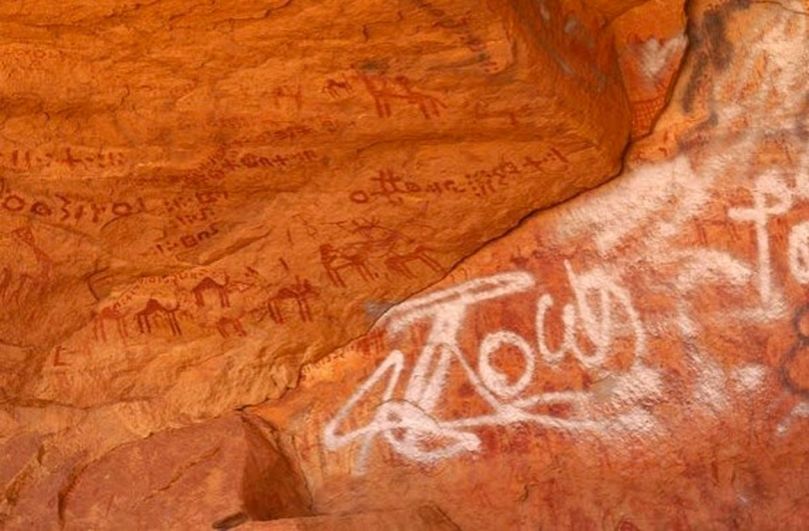
Spain has a lot of rock art, and the approach there is to encourage people to come and view it and explore it. There are visitor centres, interpretive signs, rock art trails. While the results have been positive on the whole, raising the profile of this class of site and increasing the understanding and respect of visitors, it has not been without challenges: some damage and vandalism has occurred on carved panels.

Vandalism to rock art in Libya

Vandalism to rock art in Libya

In Ireland we have taken a low profile approach when it comes to promoting rock art. Its very obscurity, the argument goes, is its protection. All known rock art sites are recorded in the database maintained by the National Monuments Service, and anyone planning on building on or developing a piece of property must check plans against this inventory. But apart from that we do not advertise the presence of rock art with signs or centres. A few are marked on the Ordnance Survey maps, but are difficult to find. The folk-beliefs of country people have helped in the past – where any prehistoric site was known it was never interfered with for fear of the bad luck that would follow. 

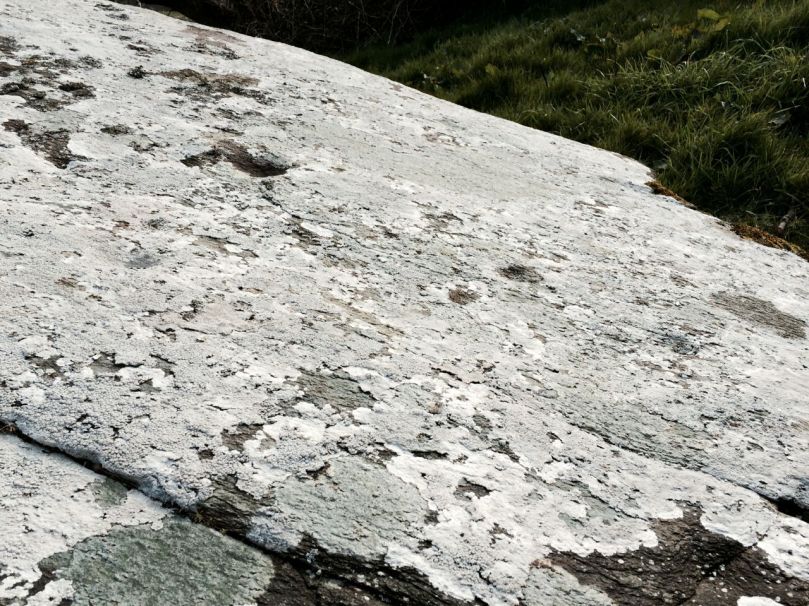
Under all that lichen lie many cupmarks

Under all that lichen lie many cupmarks

Weathering and lichen growth are not kind to carved surfaces over time and rock art in Ireland has not been protected from such natural occurences. On the  whole, however, the  fact that rock art is little known has indeed functioned to ensure that carved panels remain in place and my own sympathies would have lain therefore with the second argument.  However, times are a-changing in Ireland and I have become alarmed at the prospects for the conservation of this important prehistoric resource. I have come to believe that the more people who know about rock art, who know the locations of the rocks and can keep an eye on them, the better. 
Robert and I have spent a year now, in West Cork, visiting rock art sites and re-recording them. I have begun to understand in that time that there are two main dangers to rock art in the Irish landscape: ignorance and the economy. 
If only we'd known, we would never have built it on top of the rock art!

If only we’d known, we would never have built it on top of the rock art!

First: lack of awareness. By this I mean that in general people simply do not know that there is a class of ancient monument known as rock art. They don’t know what it looks like and don’t recognise it when they walk over it. This is not their fault – rock art can be almost impossible to see on the surface of a weathered rock on a grey day, even when you know it’s there. We have described how in one case a building was erected on top of rock art. In another case we are aware of, a piece of rock art was unrecognised and probably damaged when a homeowner erected an ornamental stone circle beside it. In both cases the homeowners would have protected the rock art had they known it was there, or understood the extent of it.

The shadows are from a newly built stone circle

The shadows are from a newly built stone circle

Second: the economy. Here, two huge threats to rock art exist. The first is in the rapid growth of forestry plantations in Ireland – a practice that is altering the landscape and obscuring what lies underneath in many areas of the country. We have experienced this first hand: rock art in a nearby townland can no longer be located in a young forestry plantation. 

The second is even more serious – the threat lies in the encouragement to farmers to improve and bring into production previously marginal land. All around us in West Cork the sound of the rock breaker is as common as the lowing of cattle. Vast stretches of rocky land, suitable only for a few sheep, are being levelled, drained and seeded. Green fields are appearing where once only scrubby grass and bog could grow.

The excavator is at the top left of the photograph

The excavator is at the top left of the photograph

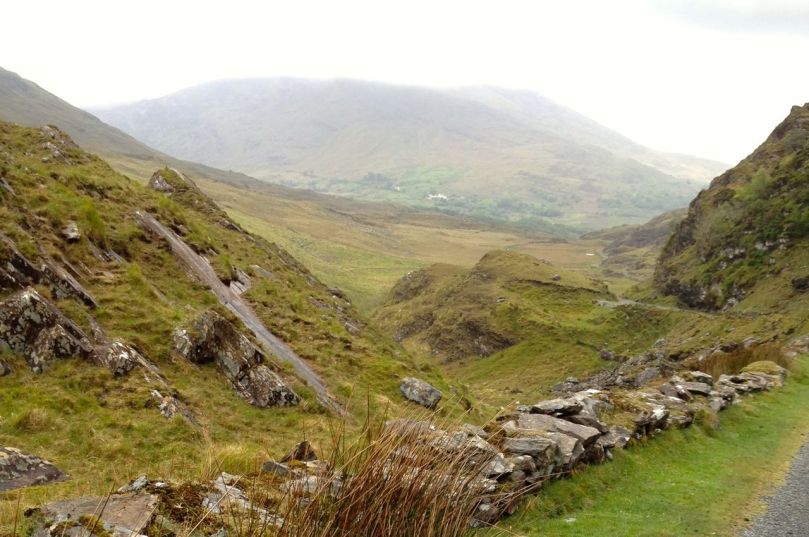
We saw first hand what this could mean on a recent trip to Kerry. In the mountains above Sneem, on the Iveragh Peninsula, lies the lonely valley of Derrynablaha. It is spectacularly beautiful, but wild and remote. Forty years ago the one house in the valley was occupied by the farmer who ran his sheep on the mountain slope. That house is now in ruins: a new owner until recently simply carried on the use of the land for sheep. Imagine our surprise and concern, therefore, when, on a recent trip to Derrynablaha, we observed an enormous excavator working in the fields above the house. It had been there for some time. The ground had been levelled, all rocks and old field boundaries had been cleared away, and the land is now ready to be seeded and made into an enormous and pristine green field.

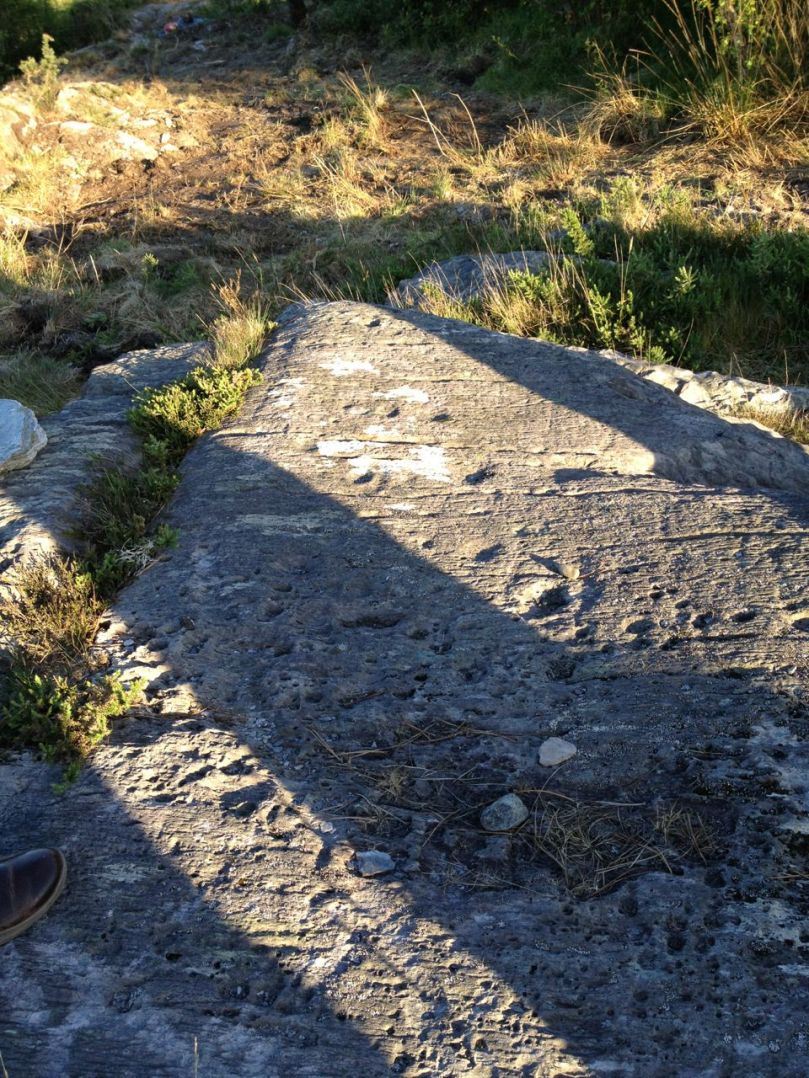
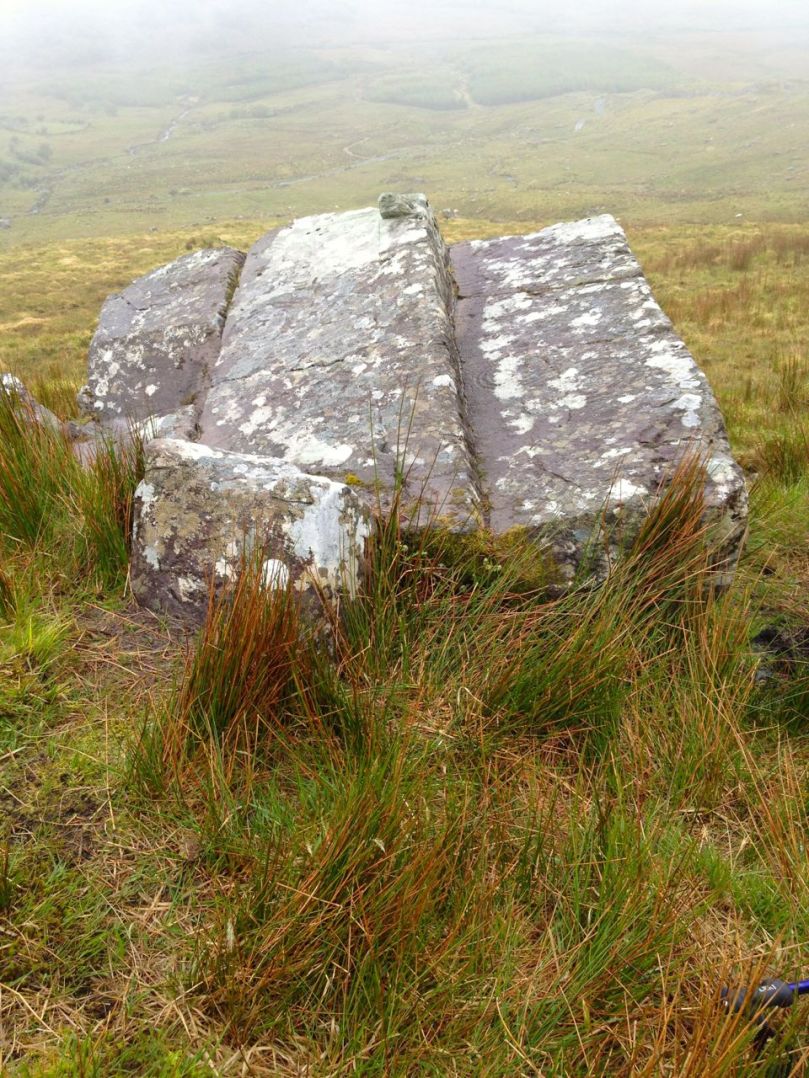
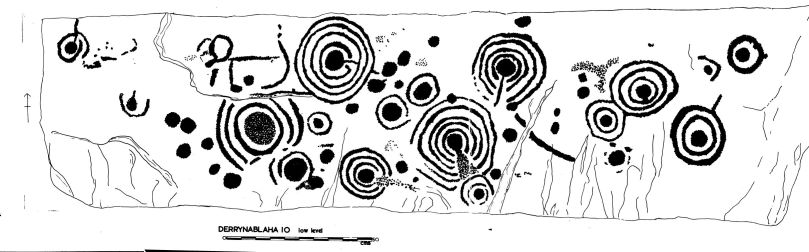
So what’s the problem with this? It’s alarming because Derrynablaha, and the neighbouring townland of Derreeny, contain the largest and most significant concentration of rock art in Ireland. Forty examples have been found and recorded so far. Some of them lie right beside the new field. An assessment by the National Monuments Service took place immediately and they will monitor closely now that they know this is happening. However, damage has already been done. Rock art does not exist in a vacuum – it is part of a prehistoric landscape and nowhere is this more so than in Derrynablaha, where the land has been lightly lived on over the centuries and where prehistoric and historic features lie just beneath the boggy turf. 

It's hard to see, isn't it? But tjis is one of the most iconic pieces of Irish rock art

It’s hard to see, isn’t it? But this boulder at Derrynablaha is one of the most iconic pieces of Irish rock art

The farmer, of course, is just doing his job. With the encouragement of the grants system he is improving his land, trying to be more competitive and hoping to pass on a viable farm to his son, so the young man won’t have to emigrate like many of his contemporaries. He is aware of the rock art and is avoiding direct contact with any pieces he knows. He needs no planning permission (a process that would have involved and alerted the County Archaeologist) to do what he’s doing.

Just part of the surface of the Derrynablaha rock above

Just part of the surface of the Derrynablaha rock above

In both these scenarios – lack of awareness and the economy – the intentions of everyone concerned were honourable. But honourable intentions won’t save rock art from damage and destruction. Our only hope lies in a Save the Whales approach: the more people who know about and appreciate rock art and who are committed to helping to preserve this precious resource, the better its chances of survival will be. 

Derrynablaha - current landscape at that rock

Derrynablaha – current landscape at that rock

Pigs and Ponds in Ahakista

The Garden Trail is declared open at the Heron Gallery Gardens

The Garden Trail is declared open at the Heron Gallery Gardens

The West Cork Garden Trail takes place in the second half of June and this year the opening ceremony was held at the Heron Gallery Gardens in Ahakista. The gardens are a natural extension of the gallery, cafe and gift shop that Annabel and Klaus operate, with a satellite store in Schull and an online shop.

Welcome to the gardens!

Welcome to the gardens!

Annabel and Klaus have only been developing these gardens for nine years, although it’s hard to believe that this was wilderness so recently. Every year brings innovation and new plantings and trails. Although we kept our shoes on this time, we explored the barefoot trail, an invitation to experience the sensual pleasures of texture underfoot and squishiness between the toes. Along the trail we met friendly pigs (say hello to Fuchsia, Fern and Fay!) and climbed the hillside to a bench situated to enjoy glorious views of Dunmanus Bay. 

Robert makes a friend

Robert makes a friend

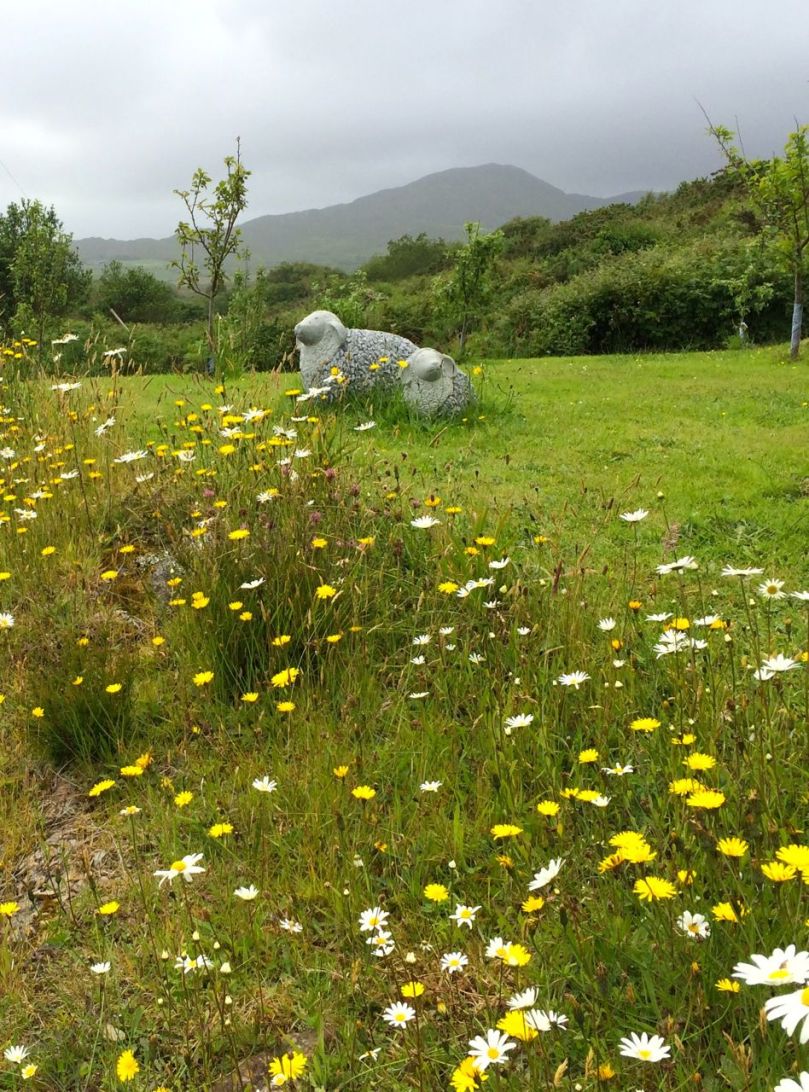
On the way back down we lingered by the pond, where wild flowers have been left to blow enthusiastically on a small hillside.

Wildflower meadow

Wildflower meadow

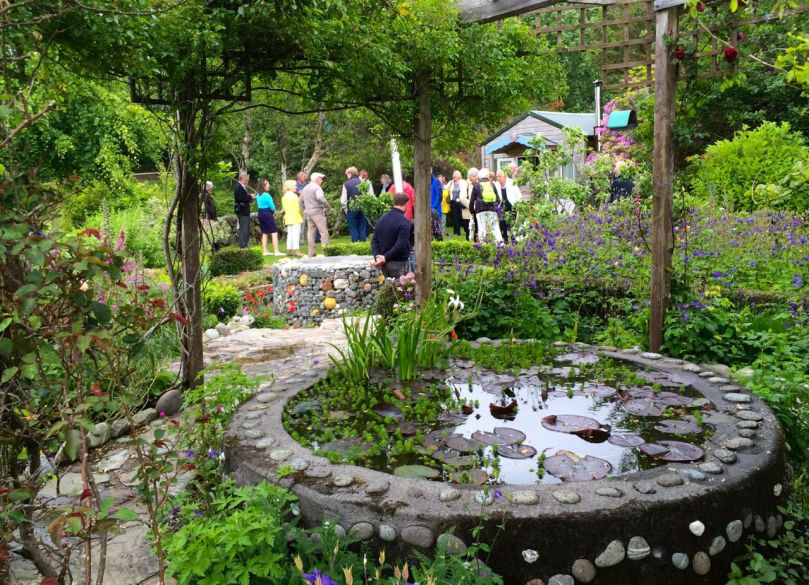
The more formal parts of the garden are a joy, with colourful herbaceous borders, pools with water lilies, tables and benches for eating or resting, and everywhere delightful, quirky sculptural installations.  

This is the perfect spot to enjoy lunch, or coffee and cakes, before a browse around the gallery featuring Annabel’s captivating images. Having travelled along the Sheep’s Head and wandered the garden, her inspirations will be obvious to you – look out for her oil painting of Fuchsia the Pig, or her many depictions of the Irish hare, two of which feel right at home at Nead an Iolair.

Midsummer Maunderings…

Beautiful Cappaghglass

Beautiful Cappaghglass

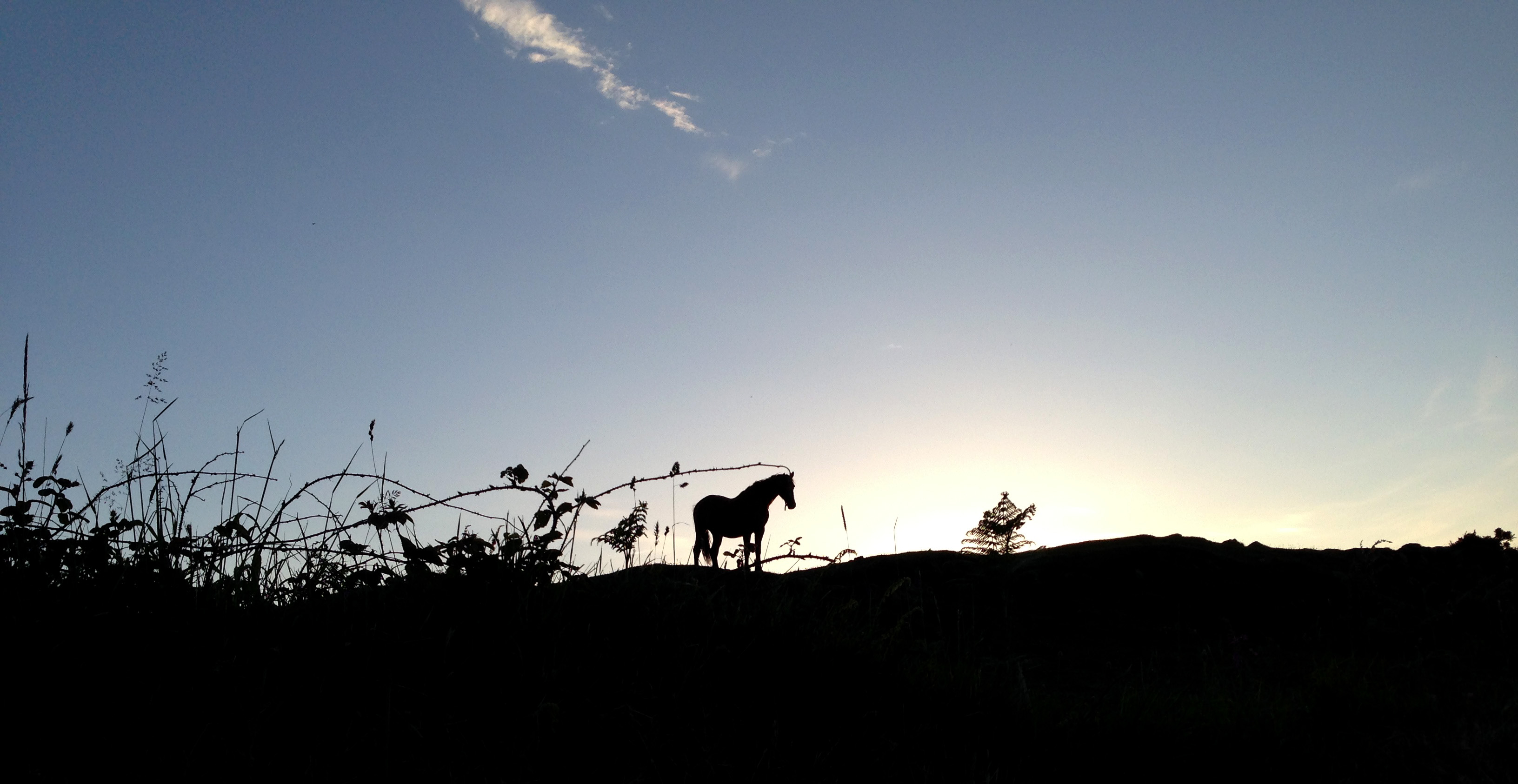
…or Life Seen Through a Lens… Things found, places visited, mainly in the environs of West Cork, often just a few steps from Nead an Iolair, although one or two are from further afield. We have been away in Tipperary this week, so these posts are ‘ones we have prepared earlier’.

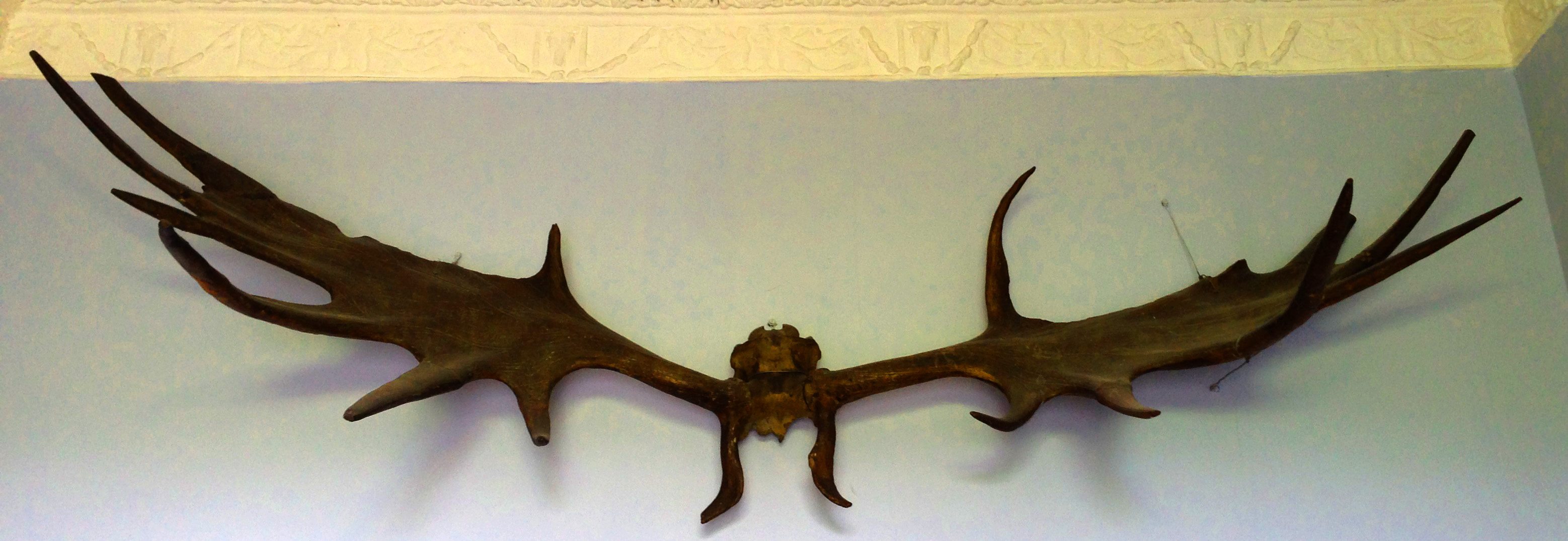
A reminder of Megaloceros - the extinct Irish Elk

A reminder of Megaloceros – the extinct Irish Elk, at Ballymaloe

curraghs

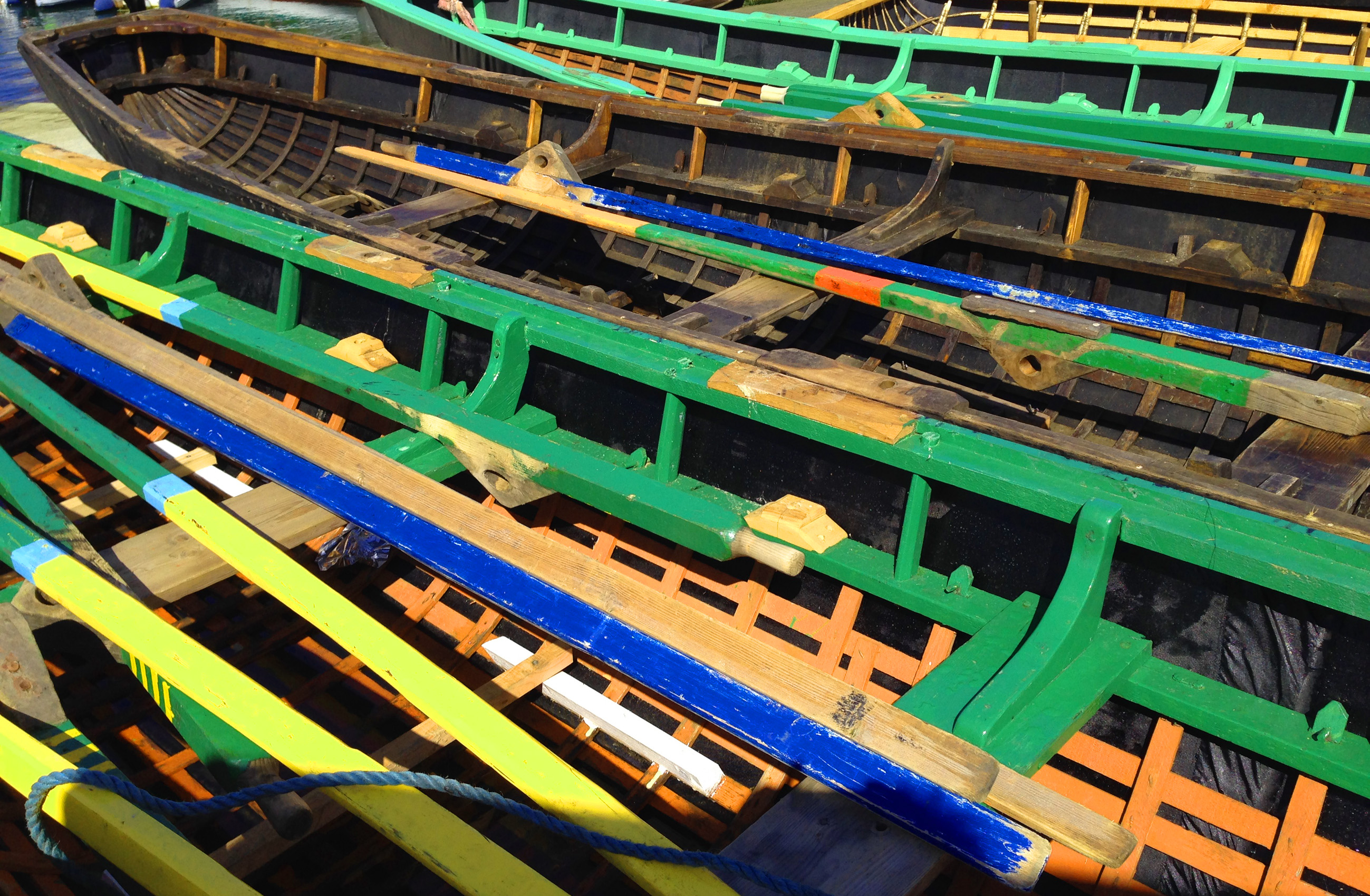
Currachs at Baltimore

Shelly Beach - our local secret

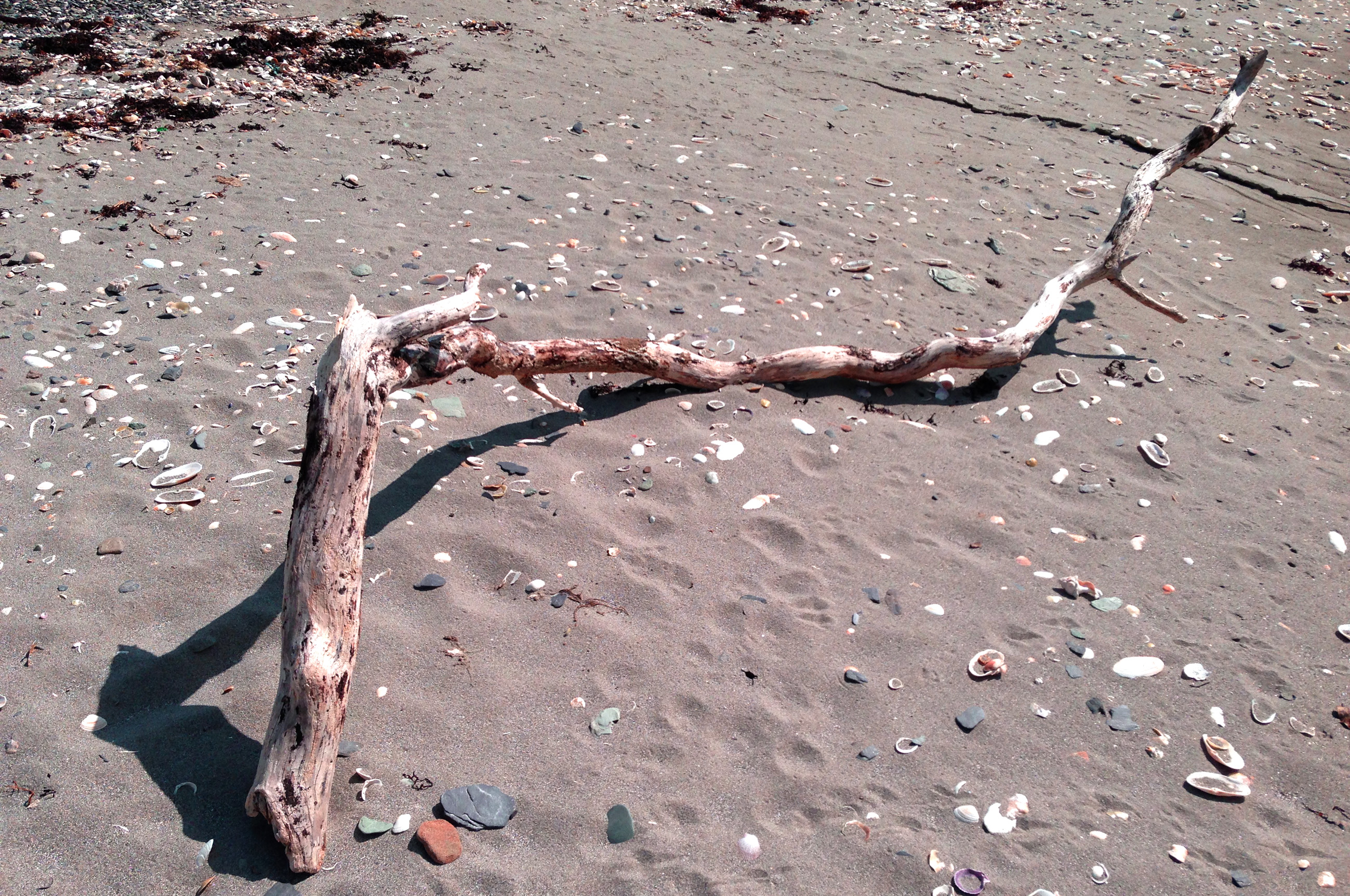
Shelly Beach – our local secret

Hugo helps himself!

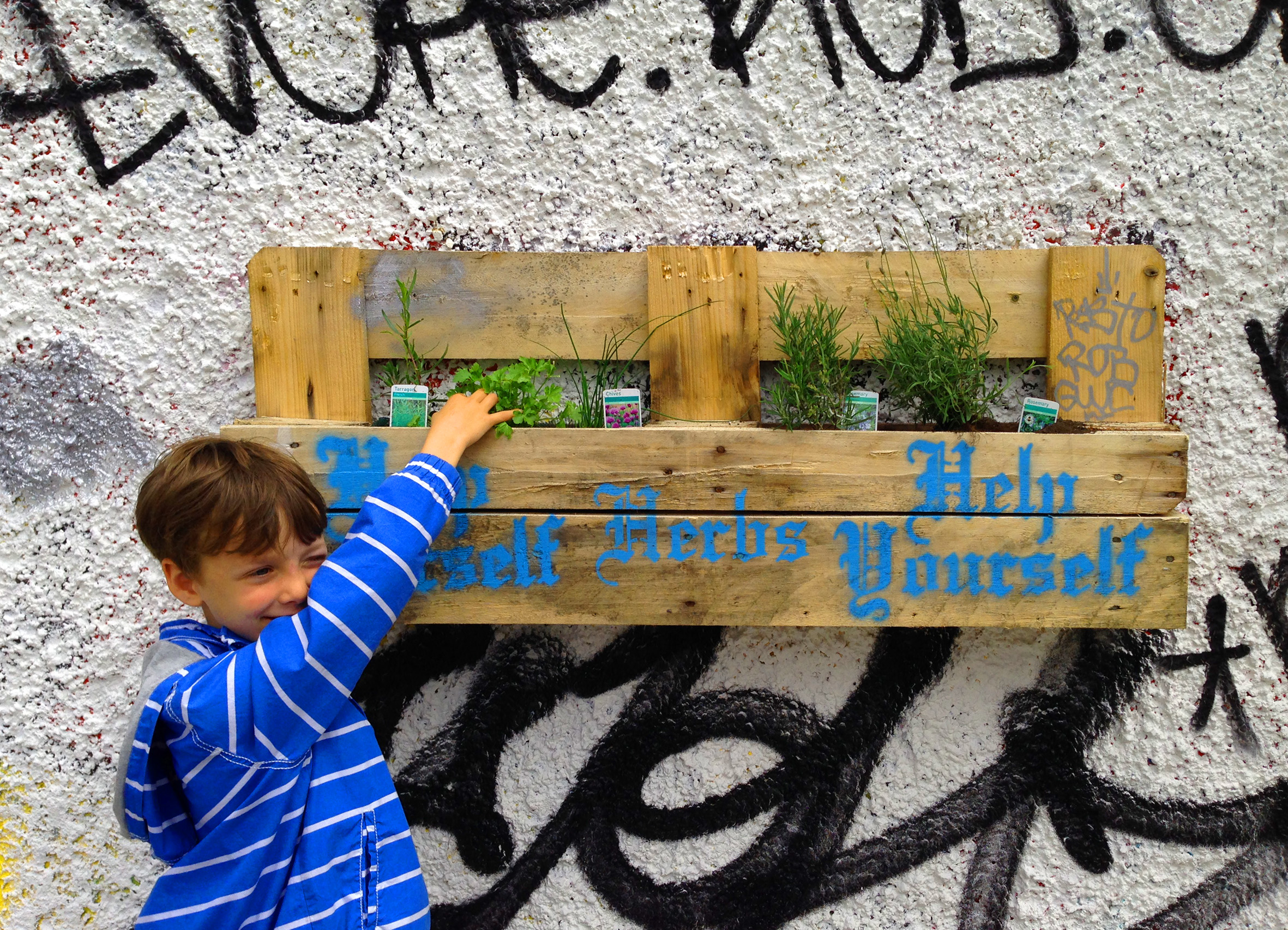
Hugo helps himself!

guiness

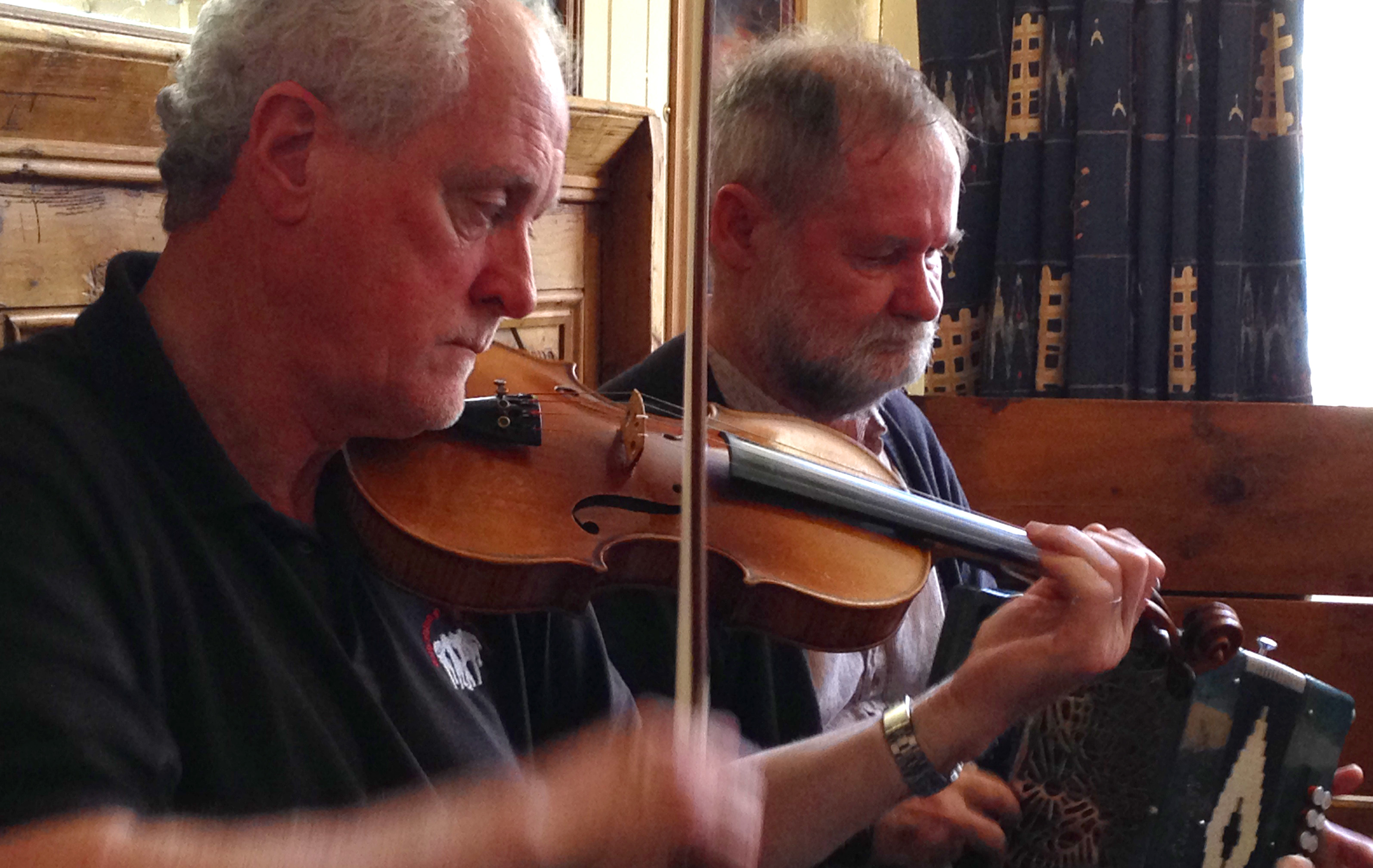
Maestros Matt Cranitch and Jackie Daly playing in Ballydehob

Maestros Matt Cranitch and Jackie Daly playing in Rosie’s

An ordinary day in Ballydehob - with seanchaí Eddie Lenihan

An ordinary day in Ballydehob – with Seanchaí Eddie Lenihan

Ferdia - our garden companion

Ferdia – our garden companion

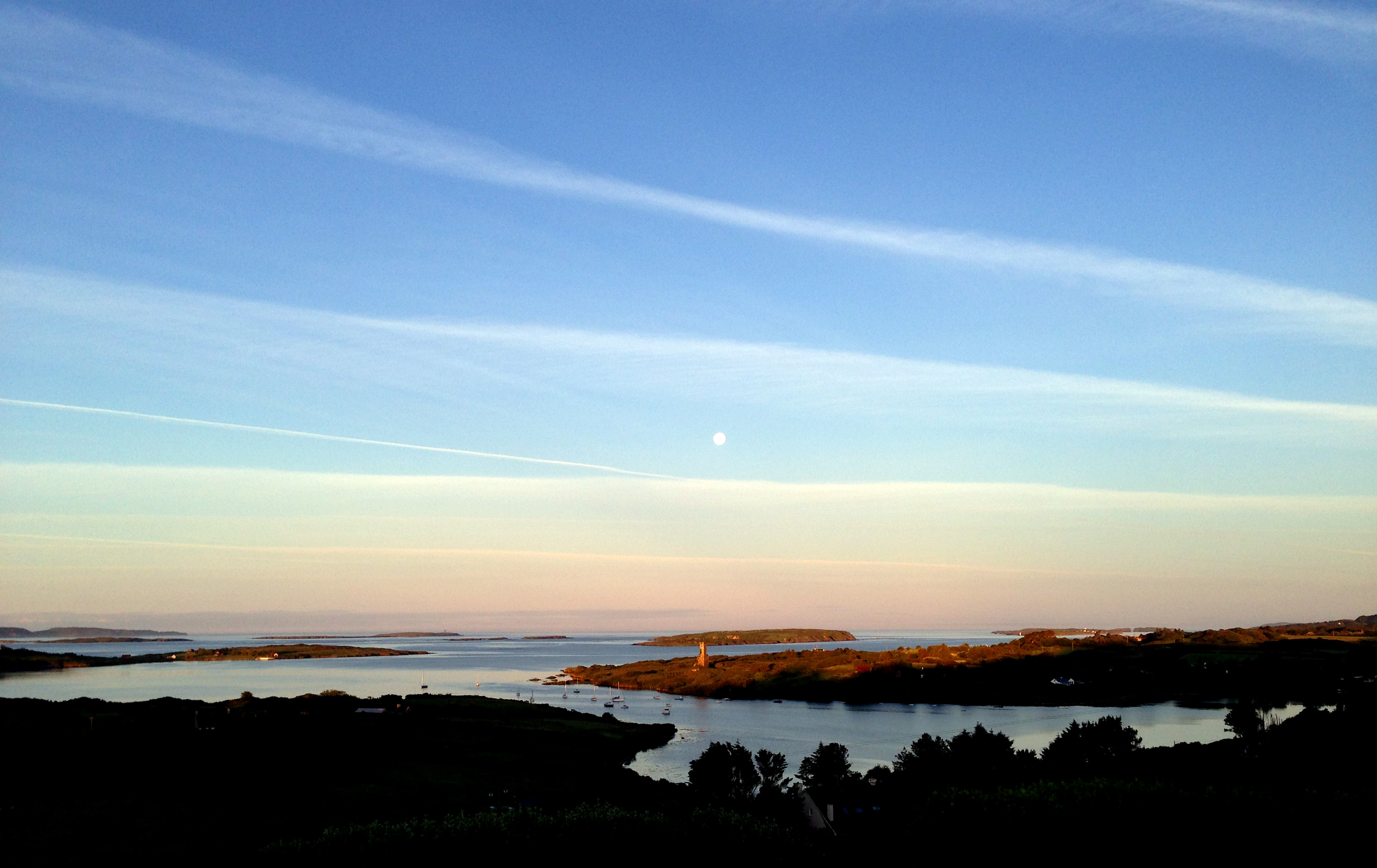
Dawn Moon over Rossbrin Castle

Dawn Moon over Rossbrin Castle

***

By the way… Dictionary definition of Maunder: to move or act in a dreamy, idle or thoughtful manner. Synonyms: wander, drift, meander, amble, dawdle, potter, straggle… Finola has only ever heard the word used in Ireland.

thady's

Thady’s window on the World

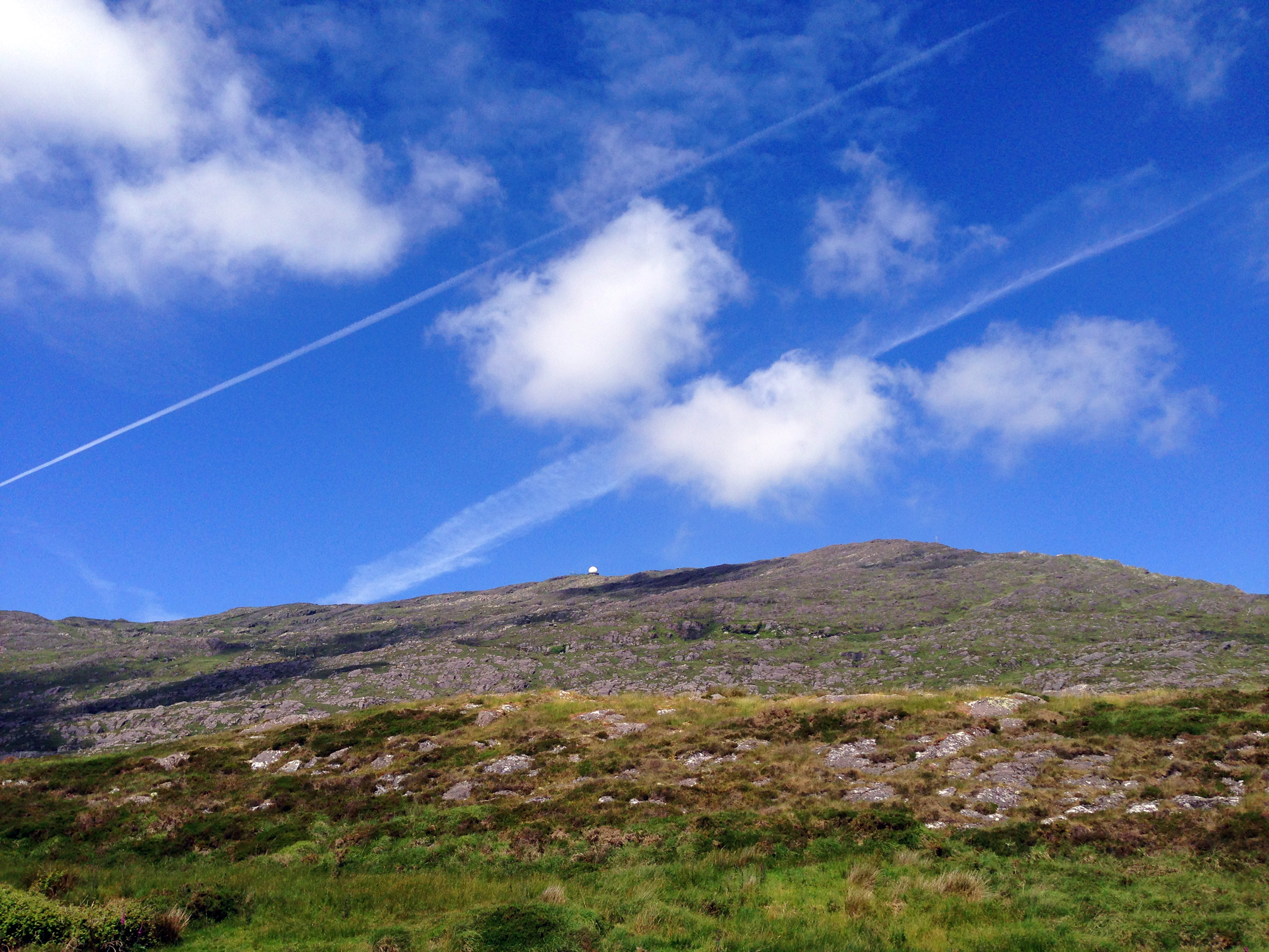
Mount Gabriel

Trails over Mount Gabriel

Trails over Mount Gabriel

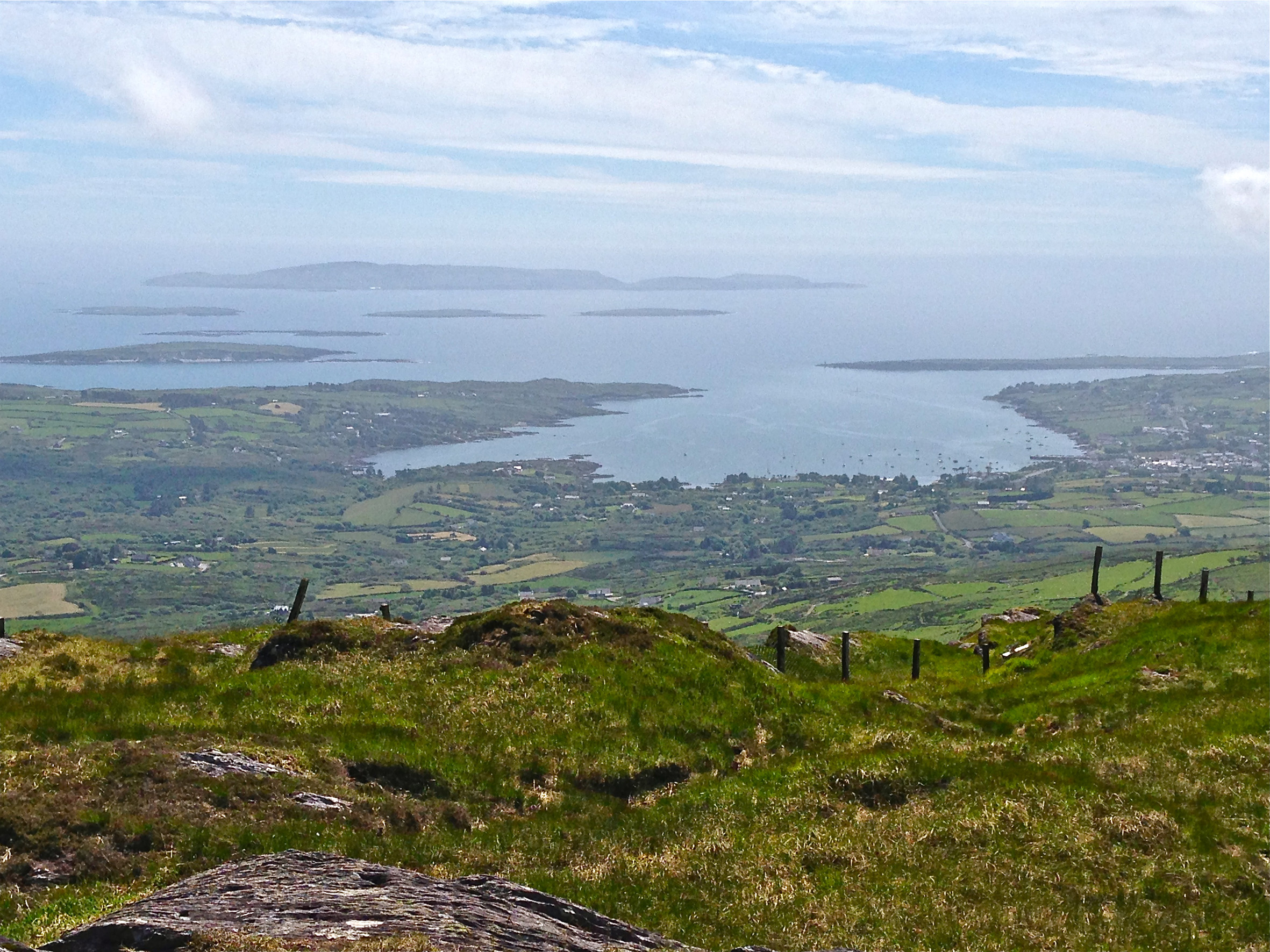
Only a few kilometres from Nead an Iolair – as the Crow flies – sits Mount Gabriel: at 407m elevation it’s the highest piece of land in West Cork. Cork mountains are dwarfed by those from Kerry: McGillycuddy’s Reeks has the highest peaks in Ireland, at over 1,000 metres. However, our own local mountain is nevertheless impressive and on a good, clear day provides a view not to be missed – to all points of the compass.

Looking west to the Mizen

Looking west to the Mizen

I spent a while researching why a mountain in the west of Ireland should be called Gabriel. There is no received opinion about this. I suppose there’s no reason why it shouldn’t be named after the Archangel himself: after all, we have Croagh Patrick (after St P) and Mount Brandon (after St Brendan) and many others: Ireland’s landscape is alive with place-names having religious connections, although such associations are likely to be fairly young. In Irish the mountain is Cnoc Osta – possibly ‘hill of the encampment’ – so there’s no clue there.

Roaringwater Bay

Roaringwater Bay

I did find this fascinating piece from the Church of Ireland Magazine, dated 1826 – written by John Abraham Jagoe, Vicar of Cape Clear …where I have no protestant parishioners… and Curate of Schull …where interspersed amongst moor and mountain, I have fifteen hundred Protestants, to visit and oversee… It’s well worth a verbatim extract:

‘…amidst these everlasting hills arose, in peculiar prominence, Mount Gabriel. Why, my lads, said I, is yonder mountain called such an outlandish name; one would think it was brought here by Oliver Cromwell, it has such an un-Irish – such a saxon name. O! says Pat, it is a pity that the blockhead is not here to tell the gentleman the story about this, for sure and certain such poor garcoons as the likes of us know little, and care not the tail of a herring for such old stories. And who, said I, is the blockhead? O, says my friend, the blockhead is an old man living up on the mountain, who, from his great memory, his knowledge of cures for cattle, charms against fairy-struck people, experience in bleeding, acquaintance with legends about the good people, the Milesians, and Fin McCoul, is called far and near, the blockhead.

My dear fellow, will you tomorrow bring me to that man; I would pilgrimage over all the hills in Cork and Kerry to get into chat with him: says I to myself, this is just the man that I want. Ah my good friend, do bring me to the blockhead to-morrow. Why yes to be sure, – but stay, can you speak Irish? Not a word, to my sorrow be it spoken. Well then go home first and learn Irish, for Thady Mahony can speak no other language. – Well boys, can none of you (as I cannot get it out of the blockhead) tell me about Mount Gabriel; O! yes, Sir, says Pat Hayes, my Godmother used to tell me it was called after the Angel Gabriel, who came, you know, from Heaven to deliver the happy message of mercy to the Virgin – ever blessed be her name. And so on his return, as he was flying back, he looked down upon Ireland, and as he knew that in time to come, this honest island would never part with the worship and duty it owes to the Mother of God, he resolved to take a peep at the happy land, that St Patrick was to bestow for ever on the Virgin. So down he came, and perched on the western peak of that mountain; the mark, they say, of his standing is there to this day, and his five toes are branded on the rock, as plain as if I clasped my four fingers and thumb upon a sod of drying turf; and just under the blessed mark, is a jewel of a lake, round as a turner’s bowl, alive with trout; and there are islands on it that float about up and down, east and north and south; but every Lady-day they come floating to the western point, and there they lie fixed under the crag that holds the track of the Angel’s foot…’

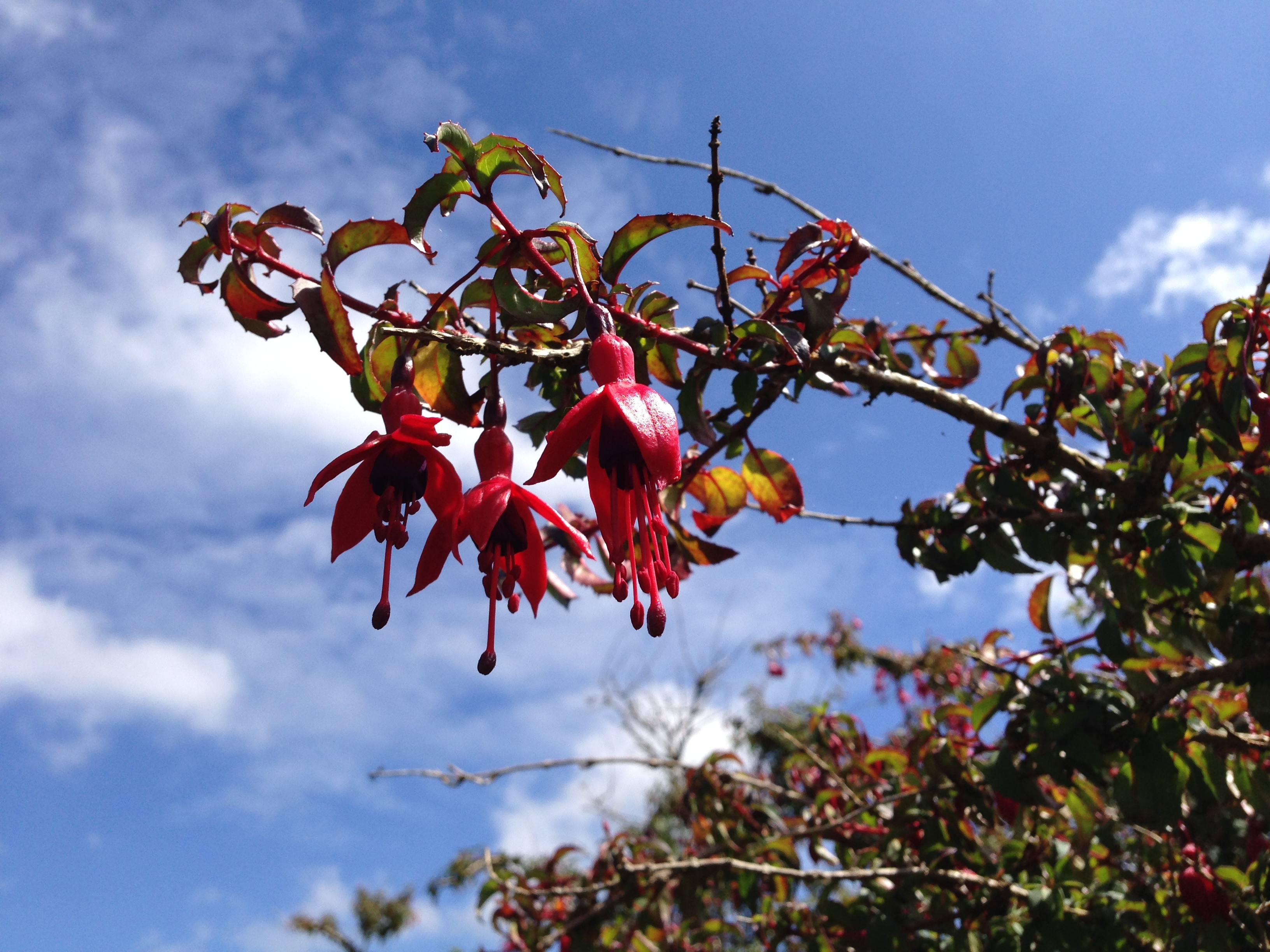
Hidden Glen Fuschia

Hidden Glen Fuschia

Well, there’s enough in those few lines to keep us going on field trips for some time to come! We did find, on the western slopes, a beautiful hidden valley holding the ruins of a one roomed cottage. I have convinced myself that this must have been the dwelling place of the blockhead Thady Mahony, who may once have been the keeper of all the secrets of the mountain. But we have yet to find the jewel of the lake with its trout and its miraculous floating islands, notwithstanding the Archangel’s footprint…

View from the summit

View from the summit

One other possibility for the name is a corruption of the Old Irish Gobhann – which means smith, as in a metal smith. Remember Saint Gobnaitt? She was the patron saint of ironworkers (blacksmiths) and her name is supposed to be rooted in Gobhann. There is also a Goibhniu in Irish mythology: he was the smith of the Tuatha De Danaan and forged their weapons for battle with the Formorians. So – Gobhann, Goibhniu, Gabriel…? Too much of a leap of faith? But it is known that Mount Gabriel was the site of extensive copper mining a few thousand years ago – remains of pits, shafts and spoil heaps can be seen:  so perhaps there just could be something more ancient inherent in the name.

golf ball

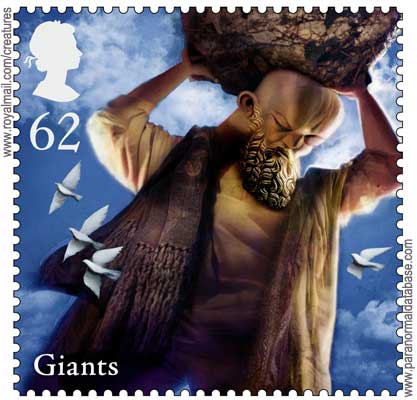
There is mythology attached to the Mountain: the Fastnet Rock was torn from the slopes and thrown into the sea by a giant; once we were searching for a piece of Rock Art within sight of the mountain and the landowner assured us that the carved stone had been thrown there by Finn MacCool (we didn’t find it).

giant stamp

The story about Mount Gabriel that most captures my imagination is the suggestion that the last Wolves in Ireland inhabited the rocky landscape there back in the eighteenth century (although it’s true that several other places make the same claim). Until that time Wolves were commonly seen in the wilder parts of the land and feature in local stories and folklore. Interestingly they were often portrayed in a positive way and were sometimes companions of the saints. There are very few records of Wolves having maimed or killed humans, yet in 1653 the Cromwellian government placed a bounty on them – 5 pounds for a male Wolf, and 6 pounds for a female: worthwhile prize money in those days. This encouraged professional hunters and, coupled with the dwindling forest habitats, the fate of the animal was sealed.

grey wolf

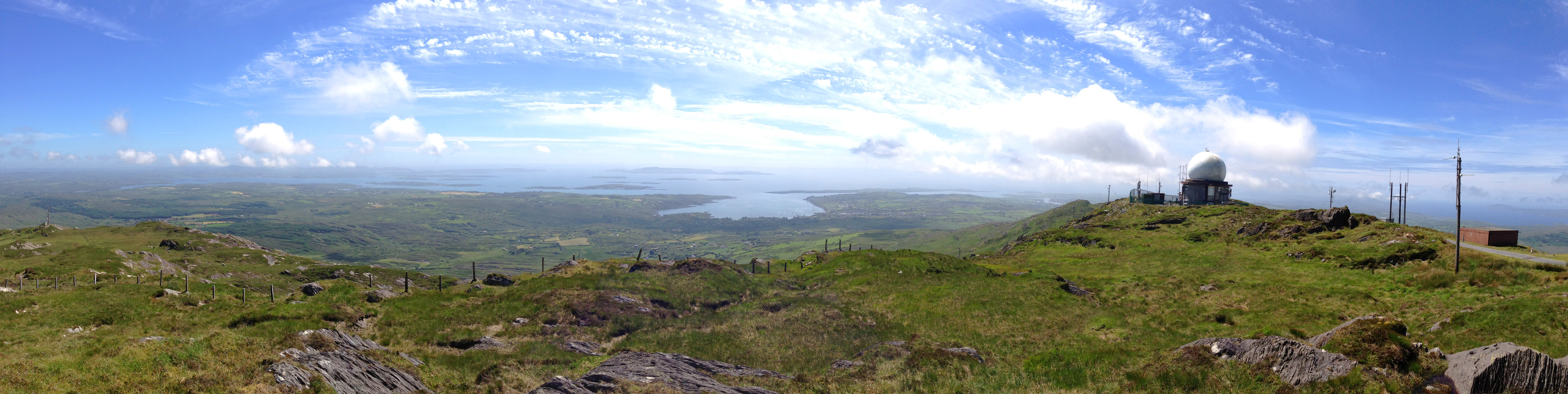
Mount Gabriel today is relatively benign, although it still has its remoter parts. The Irish Aviation Authority has kindly provided a road up to the summit, where sit the distinctive ‘golf ball’ radar domes and aerials of an Air Traffic Control installation. From these heights we can see Rossbrin Cove, Ballydehob, Schull and all the islands of Roaringwater Bay set out in a magnificent panorama – on a clear day.

iaa

Aerials and view to the north

Aerials and view to the north

Modern events have affected the mountain: a German plane crashed here in 1942, and in 1982 the Irish National Liberation Army bombed the radar station, believing that it was providing assistance to the North Atlantic Treaty Organisation, allegedly in violation of Irish neutrality.

IMG_3573

For us the mountain is a landmark and, like most of our view, its profile changes with the weather on a daily – perhaps hourly basis. As a repository of archaeology, human history, lore and nature Gabriel provides a rich resource.

Gabriel

Gabriel

Bridge

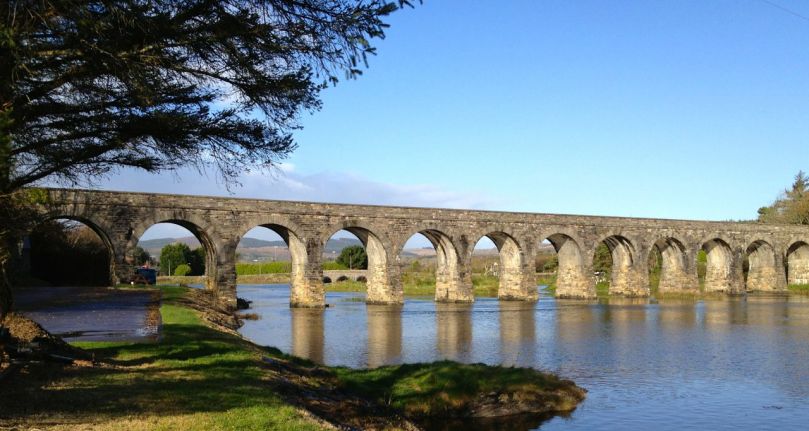
The Famous Twelve Arch Bridge in Ballydehob

The Famous Twelve Arch Bridge in Ballydehob

Recently, as part of the Ballydehob Country Music Festival (although the connection may be a little tenuous) we noticed posters going up around the town for a dance to be performed on the famed Twelve Arch Bridge. The dance company, Croi Glan (Kree Glan – pure heart) had more information on their website:

Professional dancers from Croi Glan, 5 musicians performing live, Croi Glan’s aerial dancers suspended from the bridge on rope and harness and aerial silks, and 40 West Cork Inclusive Dance Group community performers from COPE, CoAction and the local West Cork area, 25 of whom have intellectual disabilities, in a once-in-a-lifetime, hugely ambitious project directed by Tara Brandel, a native of Ballydehob.

Intrigued, I sought more information on Croi Glan. Here is a piece from TG4, the Irish language television station, that illustrates what the company is all about:

We arrived at the Pier to find that the whole of Ballydehob had turned out. The place was rocking, with live entertainment, gourmet hot dogs and a wine bar. While the morning had been overcast, by early afternoon the clouds had parted and brilliant sunshine added to the festive atmosphere.

Siobhan Heapes

Siobhan Heapes

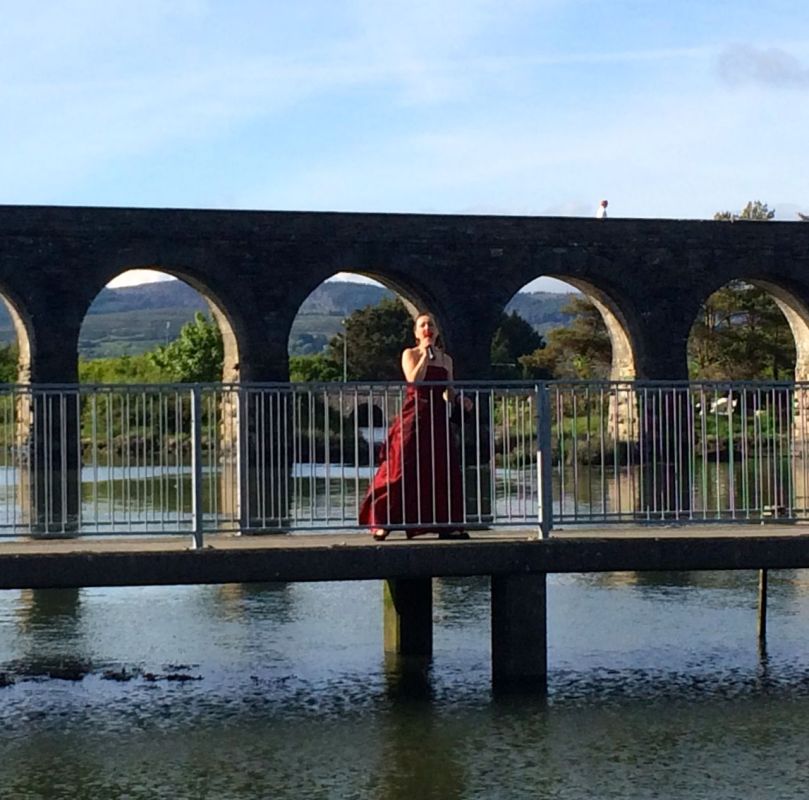
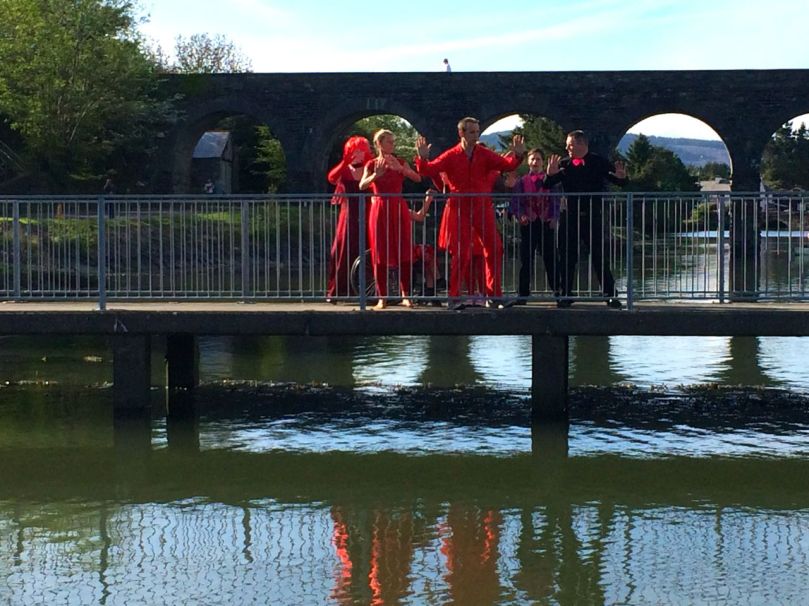
The dance started with a local singer, Siobhan Heapes, singing on the walkway over the water, calling the dancers. One by one and in groups they arrived on the walkway and we began to appreciate the diversity of the troupe – some professional and balletic, some in wheelchairs or with mobility difficulties, some with intellectual disabilities. Together, they told a story: a story of bridging and transcending differences, of supporting each each other, of honouring the part each played in the dance. 

The dance begins

The dance begins

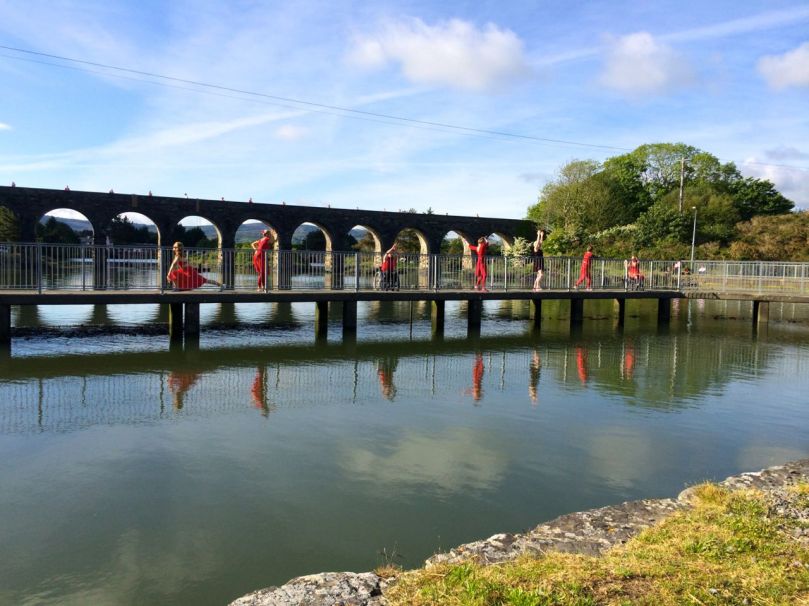
The stage became larger and larger, as the dancers occupied the green spaces around the walkway, and then moved onto the bridge itself.

Using the whole space

Using the whole space

Two dancers were lowered over the bridge –  a heart-stopping moment – and then yellow silks unfurled and their bodies twined and moved with the silks as we watched entranced from the Pier and Siobhan provided the haunting musical background.

Aerial dance

Aerial dance

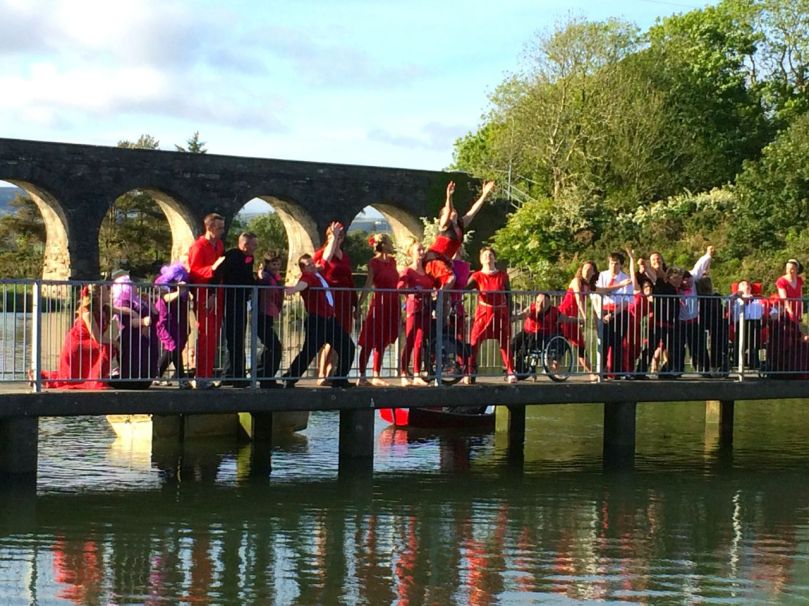
The finale had all the dancers back on the walkway for one final movement together of intense communication, lifting and balancing each other, paying a last homage to the theme of Bridge. And suddenly it was over and we erupted into possibly the most enthusiastic standing ovation I have ever been a part of. It was loud, it went on and on and then on some more. Some us were in tears, all of us were smiling and turning to each other and searching for superlatives to describe what we had just witnessed. 

Finale

Finale

There were flowers, and speeches. Tara Brandel said she had “never been prouder to be from Ballydehob.” We lingered, chatted with the dancers, congratulated Tara (it was hard to get close to her) and her assistant choreographer, Mary. People took a long time to disperse – something had stirred us all in that way that makes you want to hang on to the feeling as long as possible.

Mary Nugent, Assistant Choreographer

Mary Nugent, Assistant Choreographer

Perhaps it was, as Tara explains in the YouTube video above, that when you watch a Croi Glan performance, you are operating entirely in your heart.