Youghal’s Walls

Outside the walls 2

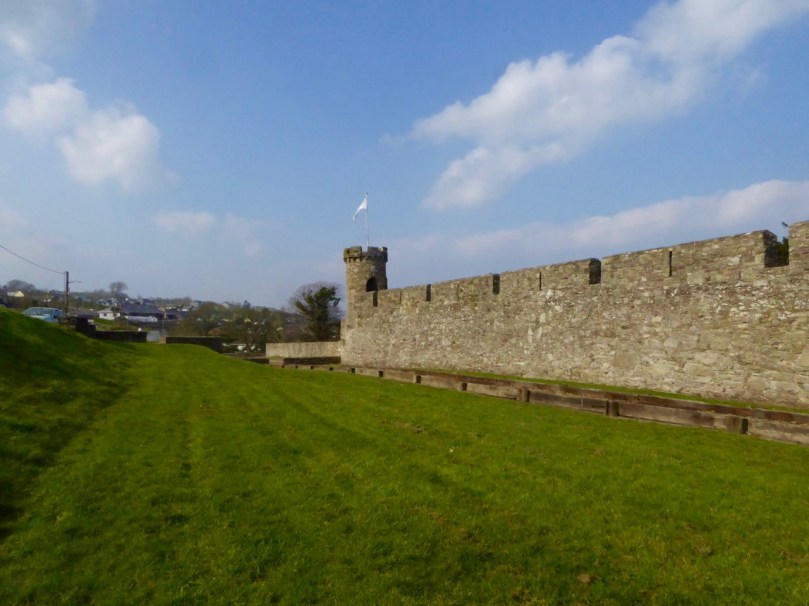
Walled towns are relatively rare in Ireland and it’s even rarer to find substantial sections of wall still standing. But Youghal (pronounced YAWL), in County Cork, miraculously has a significant extent of its medieval wall still in place. 
Mural Tower

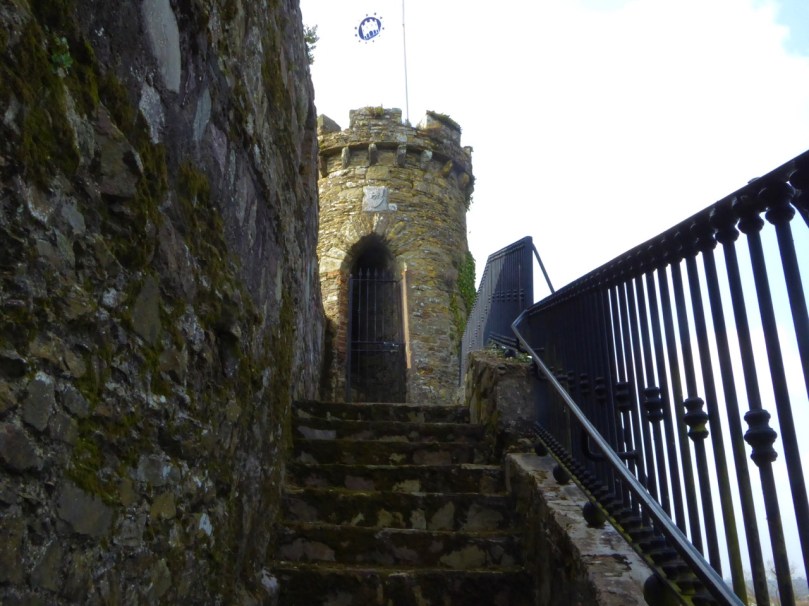
Drew’s Tower, one of the mural towers that punctuated  the wall. Some of the others were called Montmorenci, Half-Moon and Banshee Towers

A walking tour of Youghal is a great way to spend a day. Robert is writing about the wondrous Collegiate Church, one of the highlights of the tour but by no means the only stop of interest.

Boyle's Almshouses

Almshouses built by Richard Boyle and still in use today

The history of Youghal is inextricably mixed up with Walter Raleigh, an early resident, and Richard Boyle, the Great Earl of Cork. They lived here in Tudor times, but the town started out as a Viking stronghold. The Norsemen may have built earthen defences, precursors to the later stone walls.
PacataHiberniaYoughalc 1600_800x537

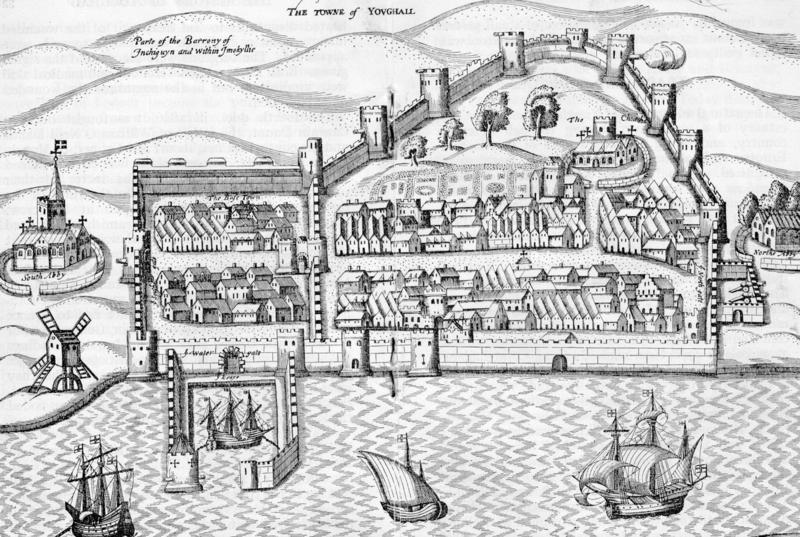
Map of Youghal from the 17th century Pacata Hibernia. The smaller walled section to the left was known as Base Town or Irish Town. It was for the native Irish and the entrance to the main town was through a guarded gate. Note the heavily fortified quay walls

It’s not hard to understand the importance of Youghal if you consider its strategic setting. Situated in an excellent natural harbour, it guarded access to one of the south coast’s longest and most navigable rivers – the Blackwater. The Irish and Norse banded together to defend Youghal against a Norman raiding party that had sacked Lismore in 1173. They were unsuccessful, and from then on Youghal became a Norman town. It was these Normans who built the first sections of the wall, in the 13th century.
Walls above graveyard

The great family of Fitzgerald, Earls of Desmond, dominated the town for the next three hundred years. The Desmonds ignored the dictates of Dublin Castle and lived like independent princes – a factor that was to lead to their eventual downfall and along with it the decline of the old Gaelic order and the arrival of a planter class from England that would include Raleigh and Boyle.

View from Walls

Youghal occupied an important position at the mouth of the Blackwater, with a sheltered harbour

But in the early medieval period, before those troubles, Youghal prospered and became the 6th largest port in Ireland and a booming centre of trade.

Portugal sent wine, oil and olives; Spain, iron, lemons, oranges, shumack; France, silk, salt, spirits, vinegar; Amsterdam, paper; Flanders, bark, tapestry and silk; Rotterdam, cider, coffee-mills, corn powder, earthenware; Bremen, iron, oak-boards, and Rjenish window glass; Norway, balks and deals; Drontheim, oars, spars masts etc. Articles of luxury were imported in abundance; amongst other articles of fashion, we have ivory combs, fans, head-rolls, masks and papers of patches.**
Tynte's Castle streetscape

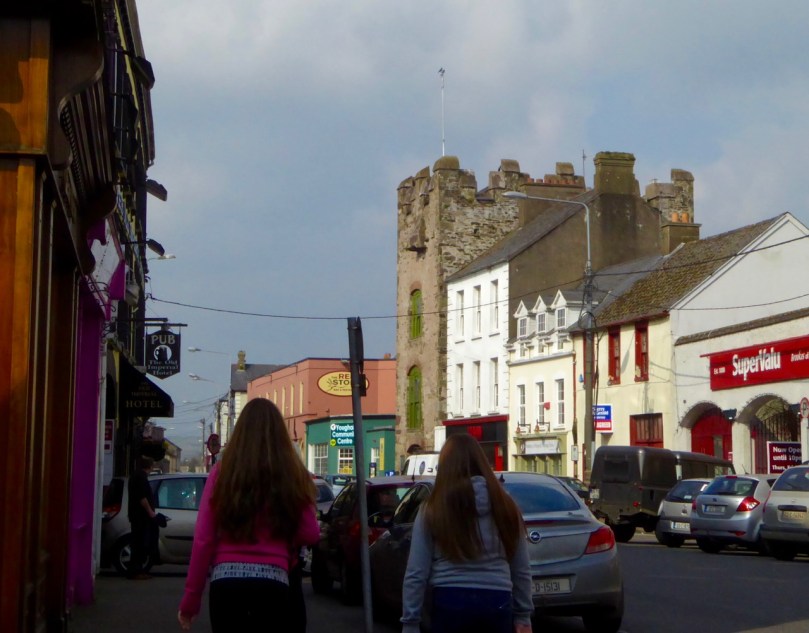
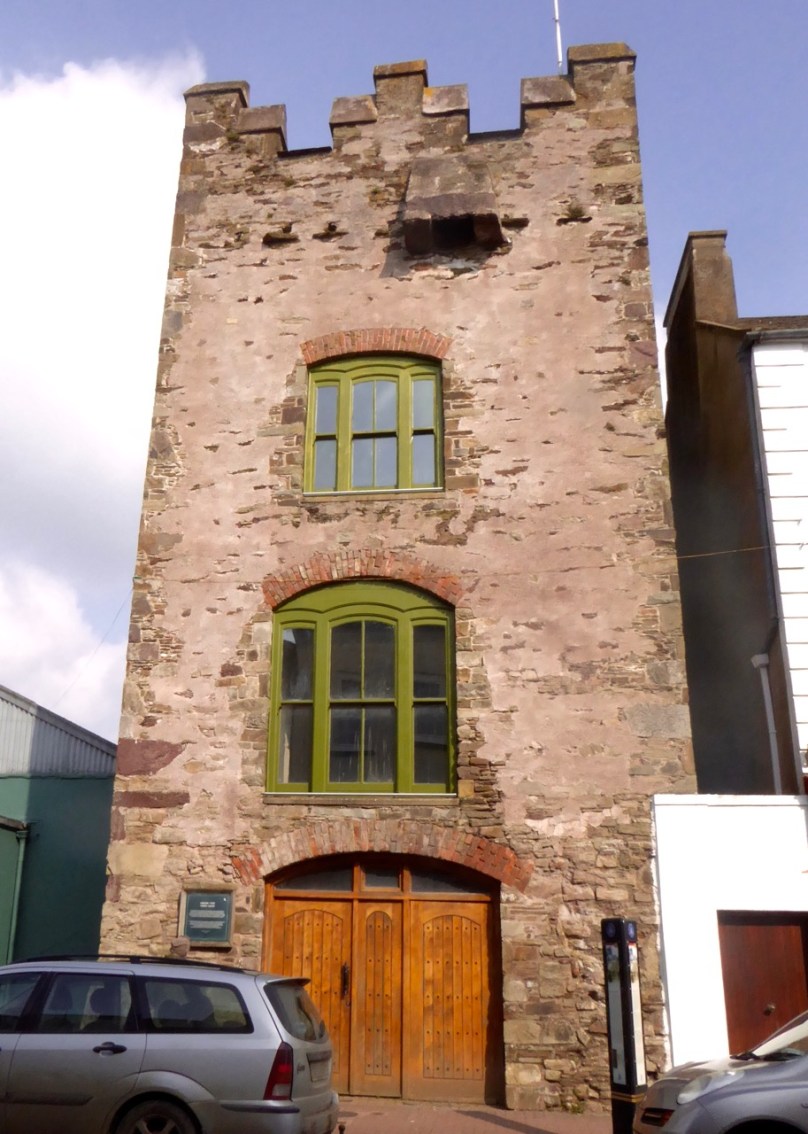
Tynte’s Castle which once overlooked the quay walls and helped to defend the town

To the sea side the main defence consisted on the quay wall, which was strengthened with crenellations and fortified by towers. One of those towers, Tynte’s Castle, is still in use on the main street. It was once the home of Elizabeth Spenser, widow of the poet Edmund Spenser, to whom he wrote the love poem Epithalamion. Spenser was not popular in Ireland – read more about that here. 
Tynte's Castle

The quays and the walls behind the town were the subject of petitions for ‘murage grants’ over the centuries as they were difficult to maintain and the town itself was subject to attack from the sea by pirates and by the ‘Wild Irish’ from the high land behind the town.
Clock Gate

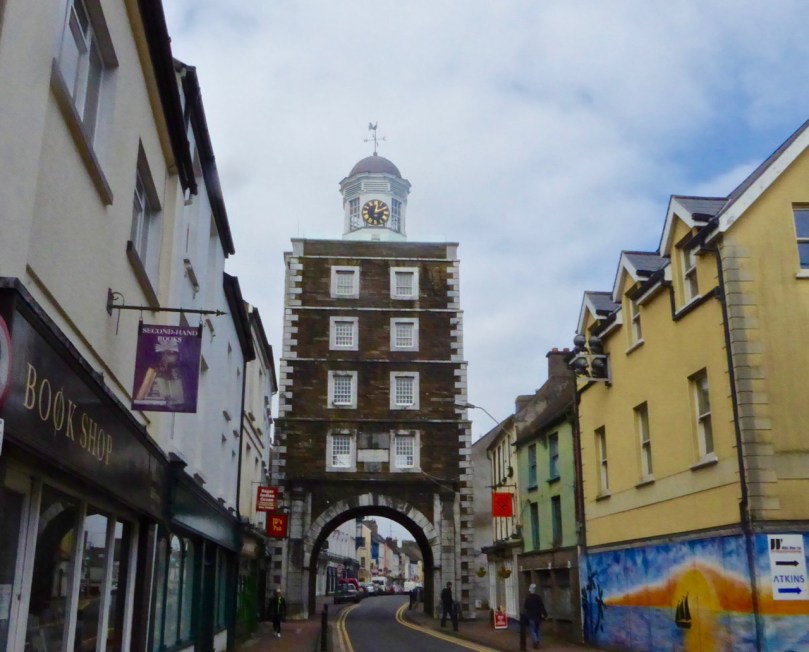
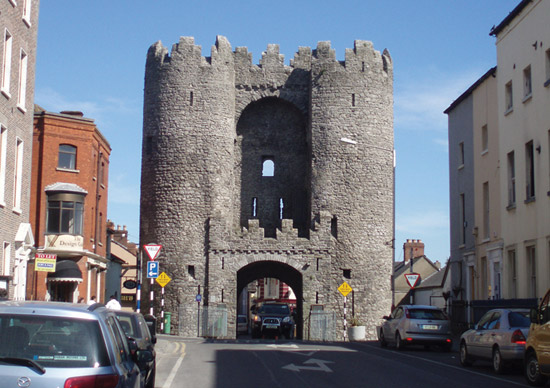
Access to the walled town was provided by means of guarded gates. While no original gates have survived, the Clock Gate, built in 1777, is located where the original gate was. The current tower functioned as a gaol for many years. It is believed the original gate may have looked like St Laurence’s gate in Drogheda, one of the few town gates surviving in Ireland.
laurencesgate-01

The surviving town gate in Drogheda – St Laurence’s Gate – shows us what Youghal’s gates would have looked like

The town was attacked and devastated by the Desmonds in 1579. Eventually driven out and defeated, the Earl’s lands were forfeited to the crown and granted to Sir Walter Raleigh who came to live in the house called Myrtle Grove. He later sold his lands to Richard Boyle, under whose energetic patronage the town once again prospered and the walls were repaired. Much of what we see now dates to this period.

Model of walls

A model of the town – this section shows the walls in the north-east section, St Mary’s Collegiate Church and Myrtle Grove

Walls were rendered obsolete by the advent of heavy canon and they gradually fell once again into decay by the late 1700s. Meanwhile the prosperous town needed wider streets and gates were removed, although the portion inside the walls kept its medieval layout for the most part.
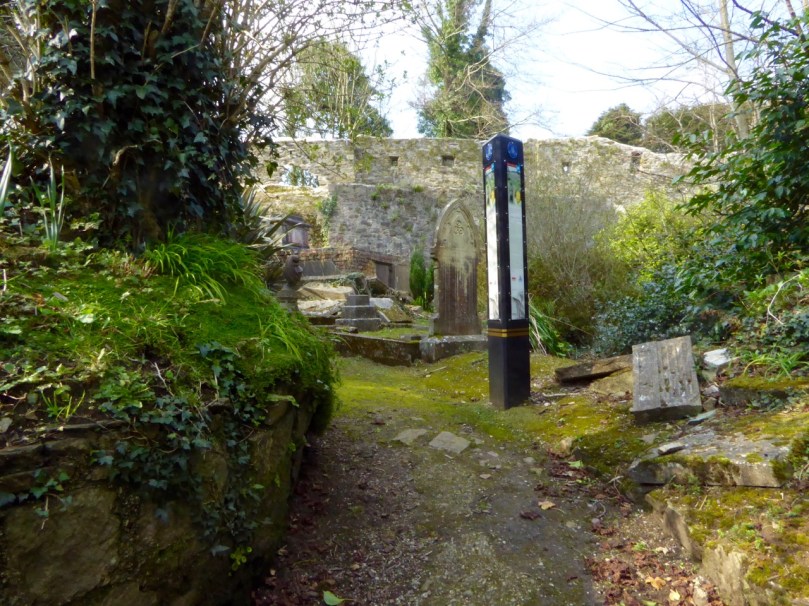
Through the graveyard

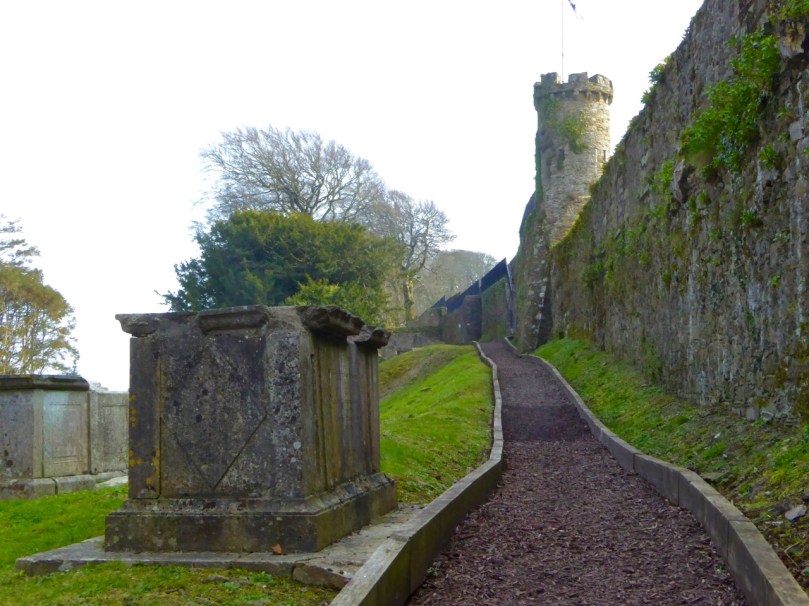
The old graveyard behind the Collegiate Church and within the walls is waiting to be explored

Enough of the town wall survived, however, and the citizens of Youghal are rightly proud of it. They have undertaken an ongoing program of  stabilisation and repair. For one thing, they have removed the ivy that threatens to destroy so much of our medieval heritage.

Wall repairs

Today, you can wander freely around the walls. There are magnificent views from the top, where you can appreciate the strategic importance of the port and admire the formal collegiate gardens preserved as a town park. Take one of the walking tours offered by the Youghal Heritage Centre – in a land steeped in history, this experience ranks as unique!
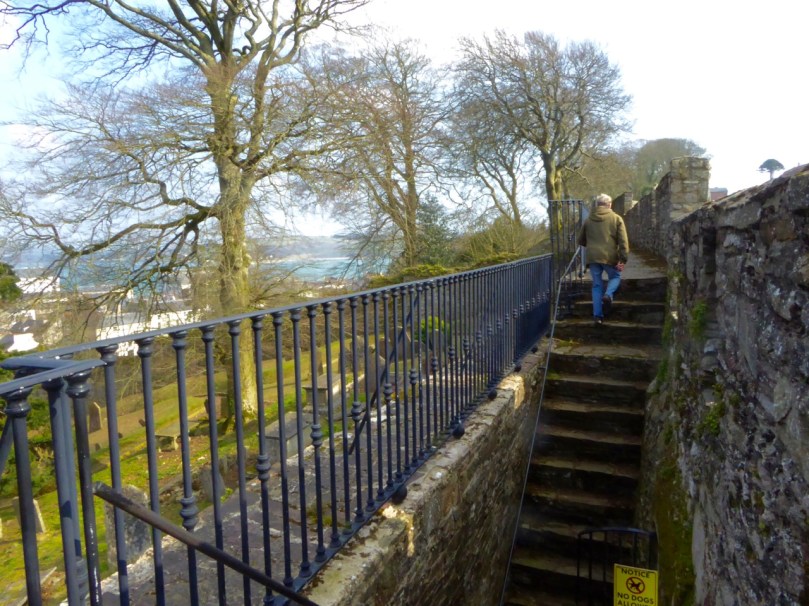
Wall walk

**This quote and much of the information in this post came from the excellent publication: Youghal Town Wall: Conservation and Management Plan, by Cork County Council. Thanks also to the Youghal Visitor Centre for the walking tour map and the friendly greeting.
When in Youghal…

boyle header

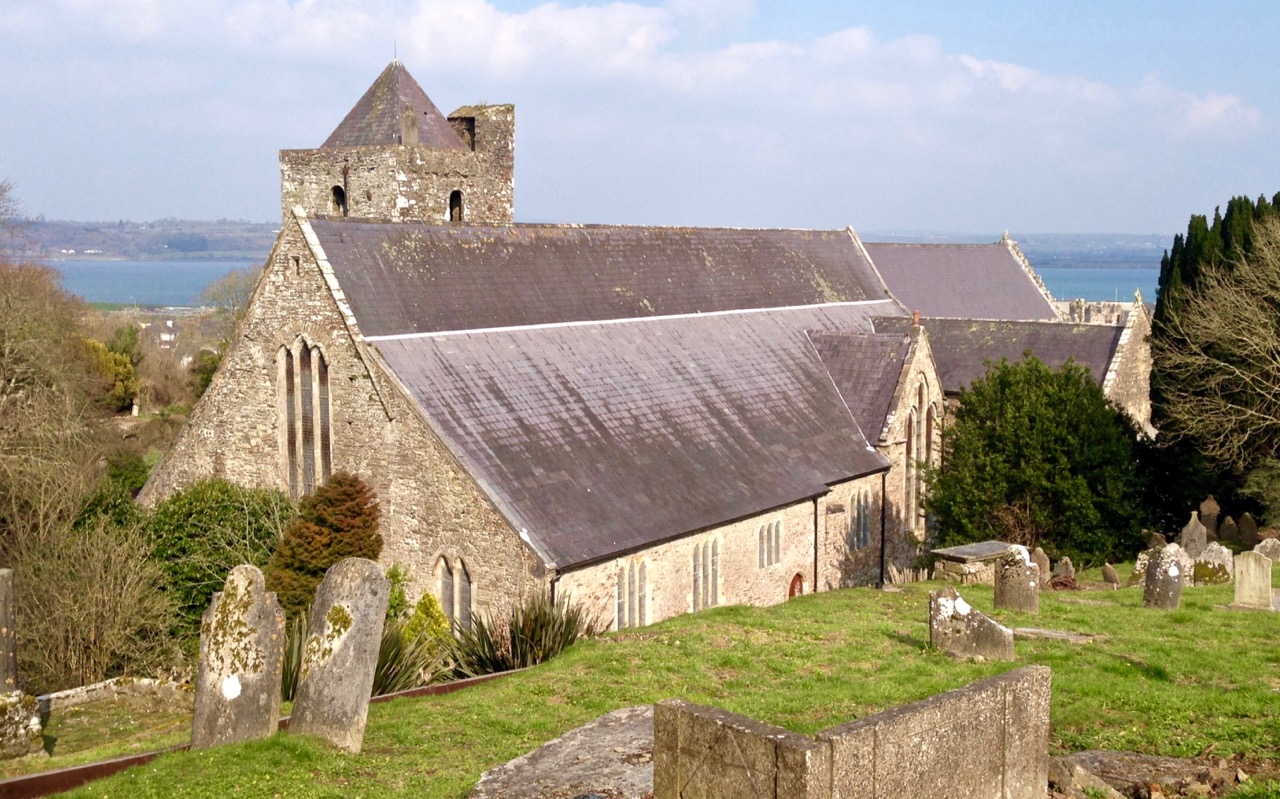
We spent St Patrick’s Day in Youghal – within County Cork but a long way from our own part of that territory. The place is falling down with history, and warrants an extended visit. Finola has written about the walled town and some of its architecture: I will be concentrating on the Collegiate Church of St Mary, a building that goes back a long way and is said to be on the site of the monastic foundation of Saint Declan, a fifth century contemporary – or even a predecessor of – St Patrick.

Saints by Harry Clarke: St Patrick, Ballinasloe (left) and St Declan, Honan Chapel (right)

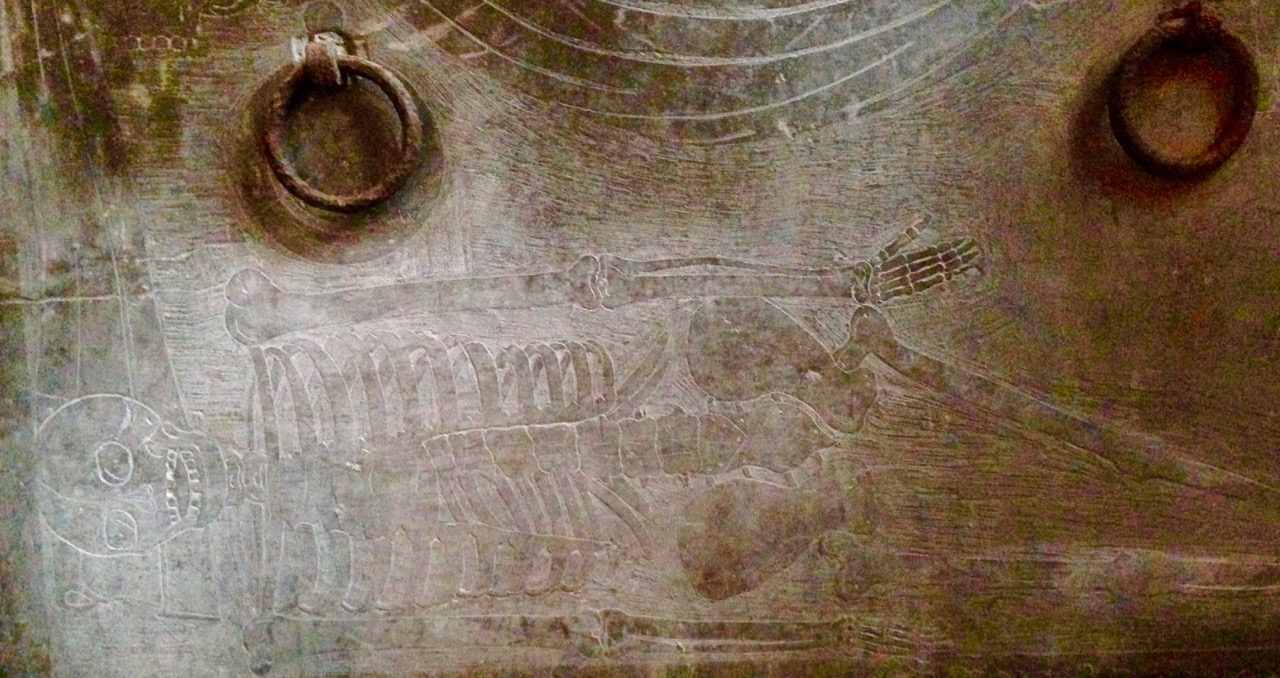
The Vikings came to Youghal, and one stone slab in the church depicts a vessel from those days. There are so many other memorial stones, carvings and inscriptions that we spent hours in the building just trying to take them all in. I can only show you a taster and recommend you to go and see for yourselves.

longboat

Carving of a Viking longboat – can you see it?

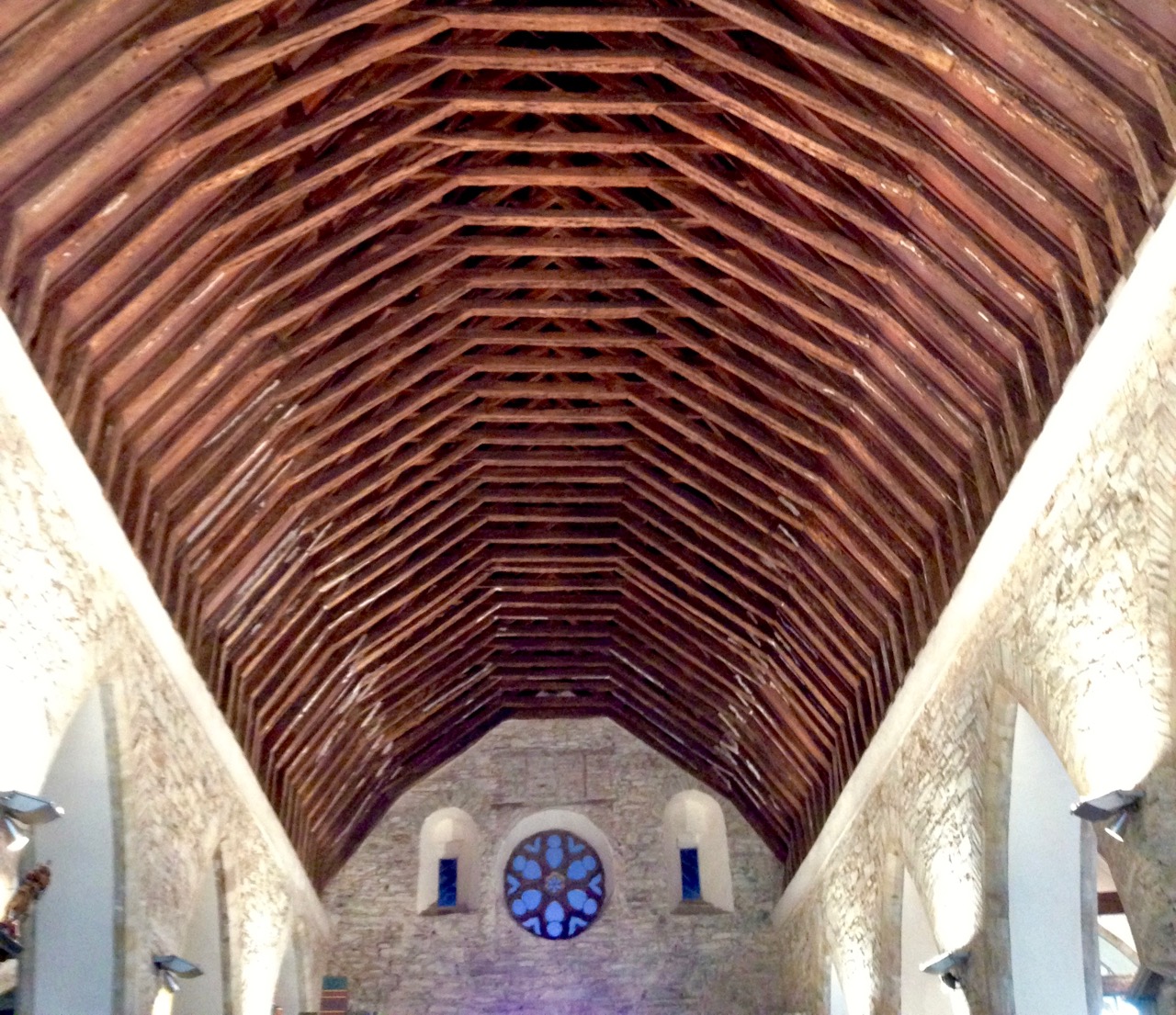
The structure of the present church deserves close study. It claims to be the oldest church in Ireland that has had continuous worship taking place – since the 13th century. Look firstly at the roof over the Great Nave: the timbers have been carbon dated to around 1170, although an intriguing hand-printed notice about this feature states …The roof of this church was put up there in 1220 by French labour, there are two german cathedrals roofed with Irish Oak and their walls bear the same masons marks as this church. They were all built by the same hands. Ireland was covered with oak woods in 1220, but saw mills were not invented until 1328. They had to pick each oak tree the same size, and with an axe skin and square it up. So each piece is a small oak tree – or Saplyn…

oak roof

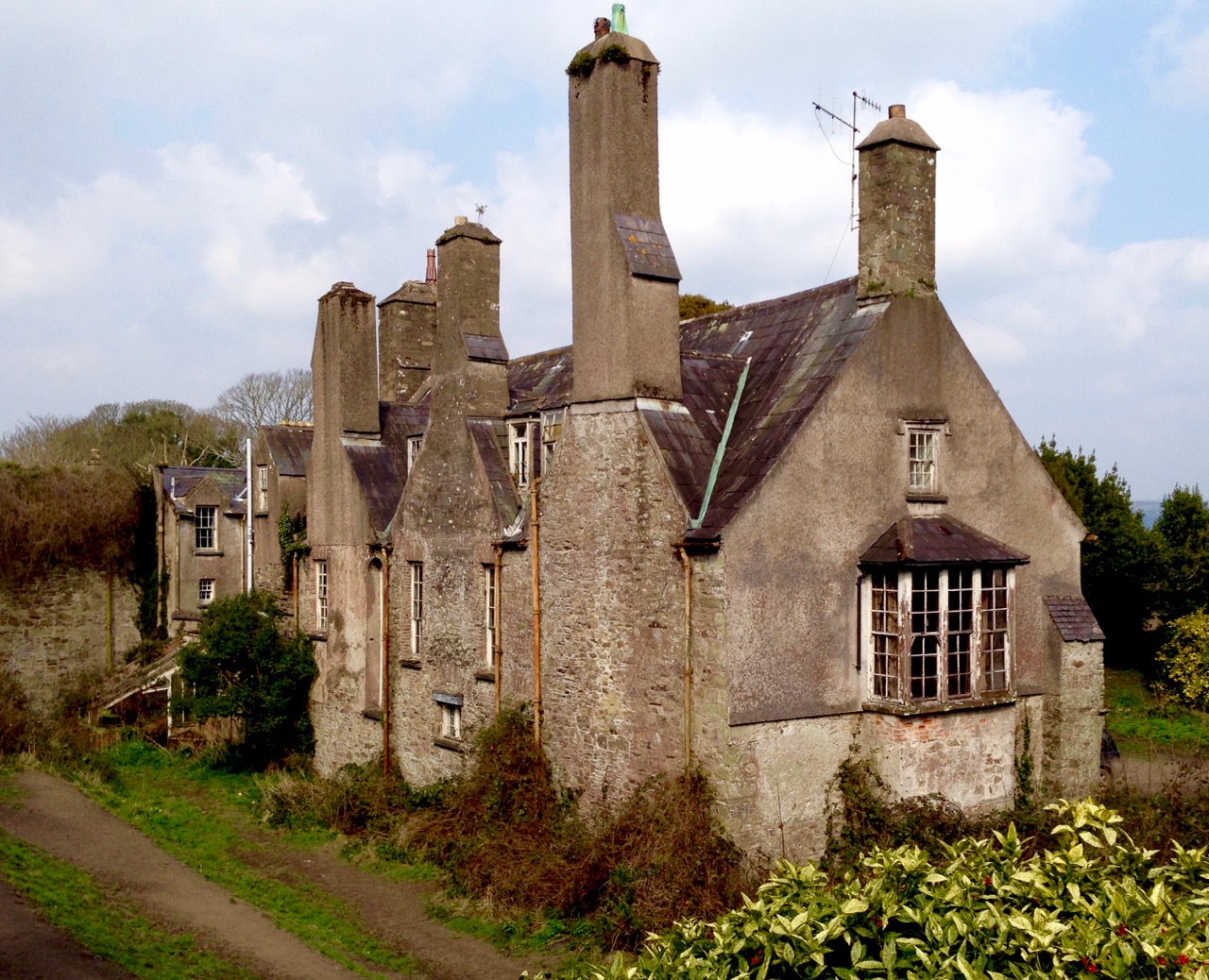
In 1464 St Mary’s was made a Collegiate Church, with the foundation of Our Lady’s College of Yoghill by the Earl of Desmond. It was served by a ‘ Warden’ of eight ‘fellowes’ and eight ‘singing clerks’. In the precincts of the church is the Warden’s House, known as Myrtle Grove. This also has a long and complex history: this article about Henry and Edith Blake – two of its colourful inhabitants (who are buried in its garden) is worth a read. Another former inhabitant of the house – and one of Youghal’s celebrities – is (or was) Sir Walter Raleigh.

myrtle grove 2016

Sir Walter Raleigh, once the owner of many thousand acres in Cork, including the whole settlement of Youghal – and his home, Myrtle Grove, in 1833 (top right) and seen today (above)

Myrtle Grove is said to be one of the oldest houses in Ireland: it remains in private ownership. St Mary’s Church itself is unusual in that it is in the guardianship of the state while also continuing as a place of worship.

st mary's church

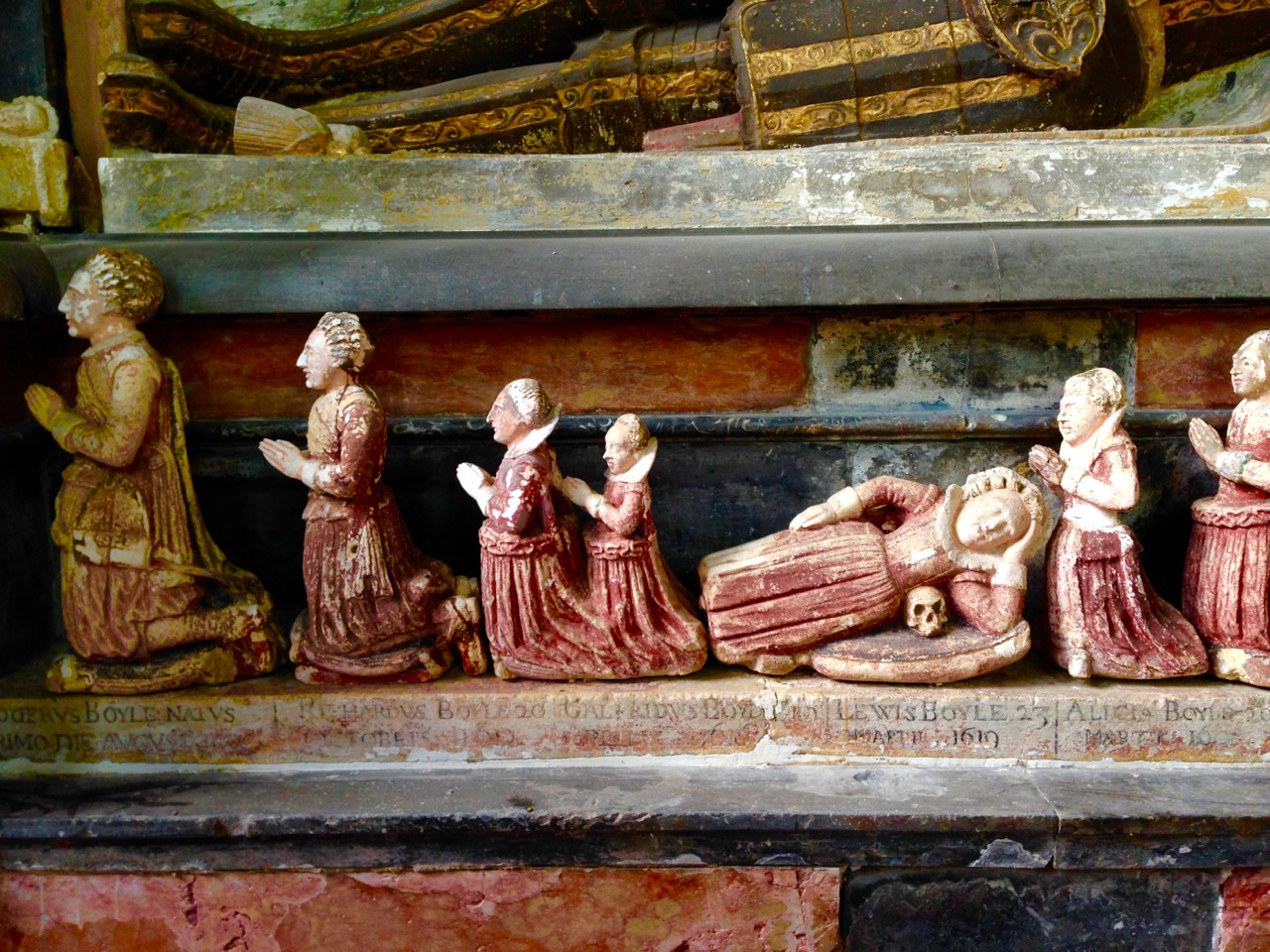
Another Youghal celebrity was Richard Boyle – the Great Earl of Cork (1566 – 1643). While Raleigh had acquired his estates during the English ‘plantations’ following the Desmond rebellion, Boyle, also an English incomer, was an entrepreneur and an opportunist. He invested in many ventures – mining, fishing, iron smelting and linen weaving – as well as studying law and pursuing his political career. He was appointed Clerk of the Council of Munster in 1600, became a privy councillor for the whole of Ireland in 1612, and, having found favour with Queen Elizabeth, was knighted and made Earl of Cork and Viscount Dungarvan in 1620. Eventually he was created Lord Treasurer of Ireland. He owned Bandon and designed and built Clonakilty, while also relieving Raleigh of all his estates – 42,000 acres – for the rather small sum of £1500. Boyle died in 1643 and is interred in a tomb he built for himself and his family in St Mary’s Church, Youghal. He is said to have been the richest man in the known world at the time of his death. Go and see his tomb – it is spectacular! Boyle had two wives and fifteen children by one of them: all – and Boyle’s mother – are included in the monument.

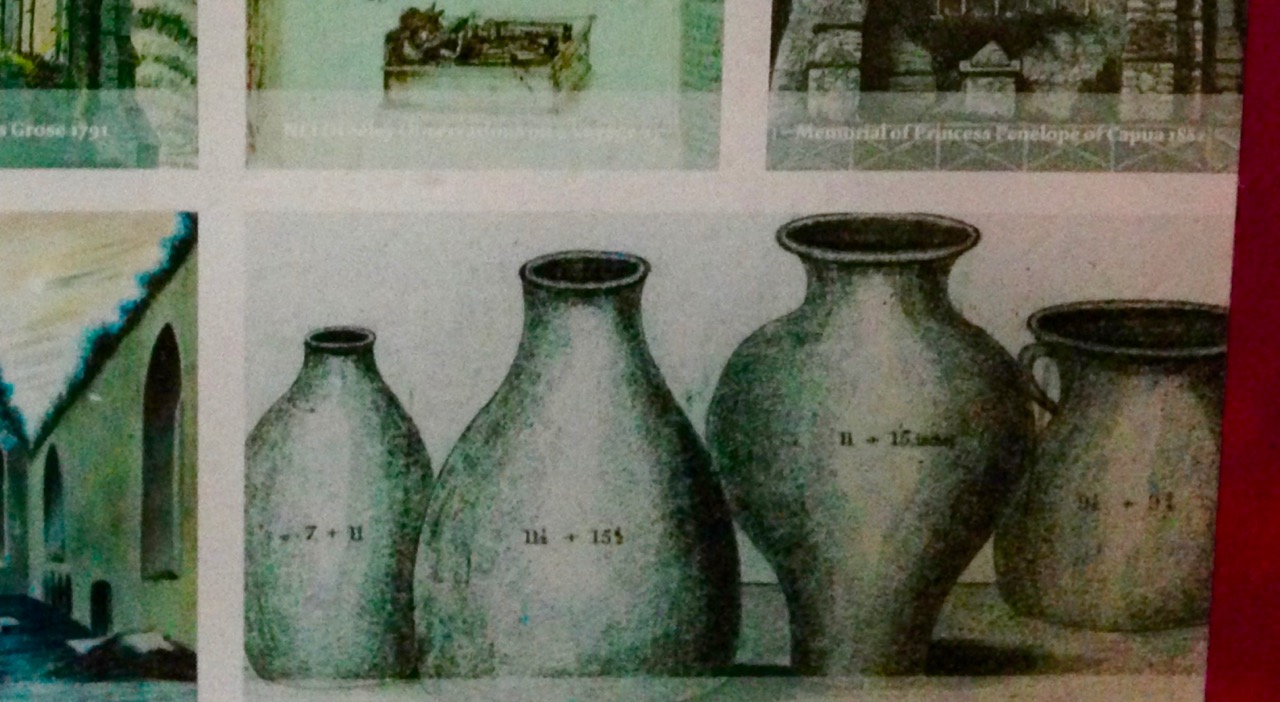
The Collegiate Church is one of the places where – in the middle ages – ‘acoustic jars’ were used to enhance acoustics. These ceramic vessels were placed in niches above the choir area: the niches are still there but, unfortunately, the vases are not.

acoustic jars

There’s a lot more to the fascinating story of this church. I’ll leave you with a visual round-up of some of the details that we found, all of which add to the interest and the richness of the place. You could call it a ‘medieval miscellany’ – I call it my Youghal Menagerie.

miscellany 17

The Holy Wells of Cork

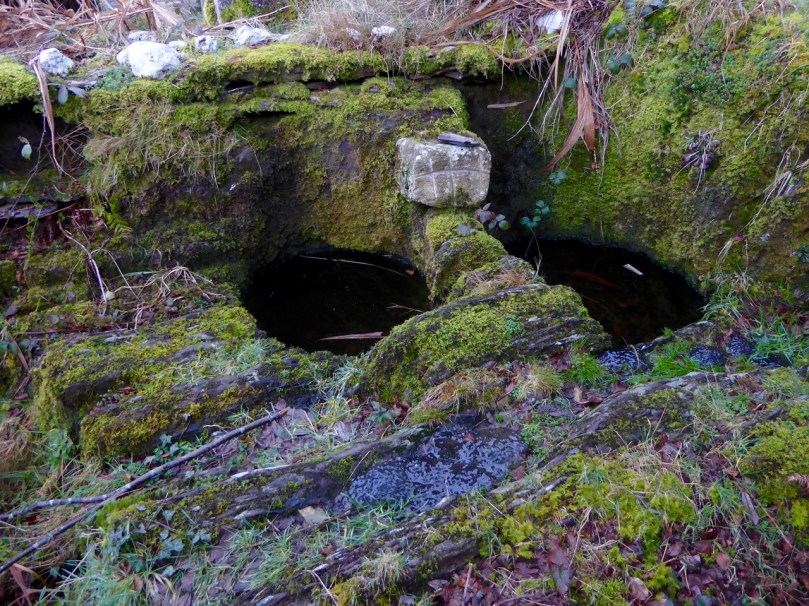
Kealkill Holy Well

There’s a new blog on the scene – and it’s just the sort of thing to appeal to Roaringwater Journal readers. Holy Wells of Cork is the brainchild of Amanda Clarke. We’ve written about Amanda before – she often comes along on our adventures and she and Peter are the team behind the book Walking the Sheep’s Head Way and the website Sheep’s Head Places.

Amanda on a holy well trip

Amanda’s always been fascinated by holy wells. We’ve gone to see quite a few over the last couple of years – often a case of hunting down an obscure reference or a dot on a map. She decided that the perfect day to launch her blog was, of course, St Brigid’s Day, February 1st, and that, in order to do it properly, she should visit a St Brigid’s well on that exact day. I tagged along as the recorder.

The holy well is up there?

It’s up there? And I have to go up on my knees?

St Brigid’s well, Tobar Breedy, is on private land on the side of Lough Hyne, south of Skibbereen, and Amanda had sought and been granted kind permission by the landowner to visit the site. You can read her account here – it’s all in her signature chatty style that manages to make you feel as if you’re on the adventure as well. 

Amanda at Tobar Breedy

As a bonus, there’s a tiny ruined medieval church, also dedicated to Brigid (Templebreedy).

Temple Breedy

However, all is not well in the land of holy wells. A recent post is about four holy wells that were once the focus of veneration in Cork City. Read how they have weathered the passage of time, and be glad that she is recording them before some of them disappear from public consciousness altogether.

The first time I went to this secluded holy well in Castle Haven I was afraid to venture over the crumbling bridge. But when we returned, the bridge had been replaced. Local people are often proud of their holy wells and keep them up

Amanda will be posting regularly so go on over and sign up so you will get the updates as soon as they are on the blog. There’s lots of background information as well.

Finding Tobar Abán

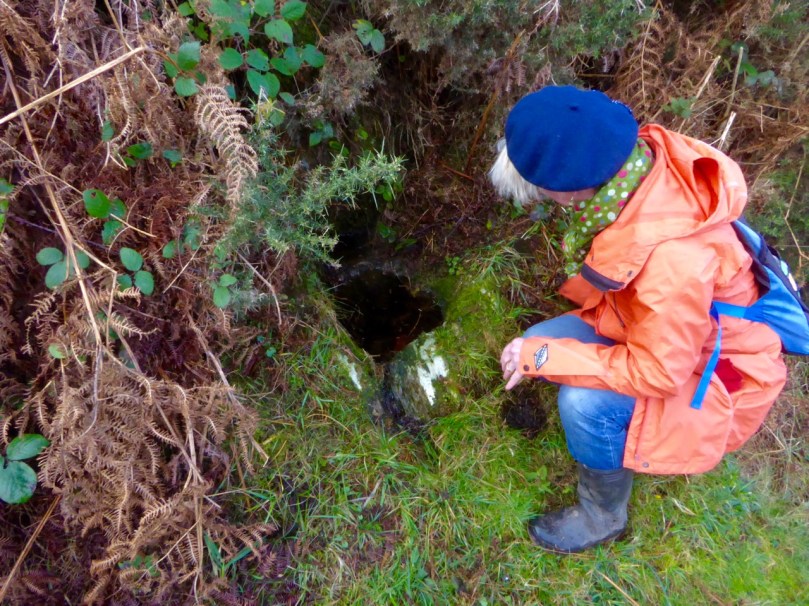
Believe it or not there’s a tiny well under all that decaying foliage

We’ve featured holy wells ourselves from time to time. One of our favourites was this time last year, just outside Ballyvourney, where we found the well of St Abán , who may have been St Gobnait’s brother.

altar at the well

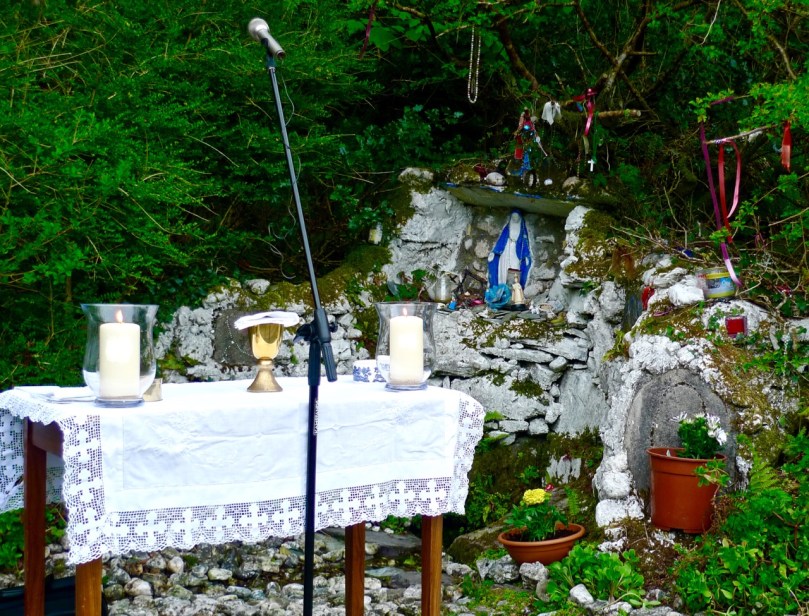
Robert wrote about the other holy wells near Lough Hyne, one a Lady’s Well and one dedicated to curing eyesight. Last year, he attended the mass which is still said here every May.

Tiny holy well in the woods

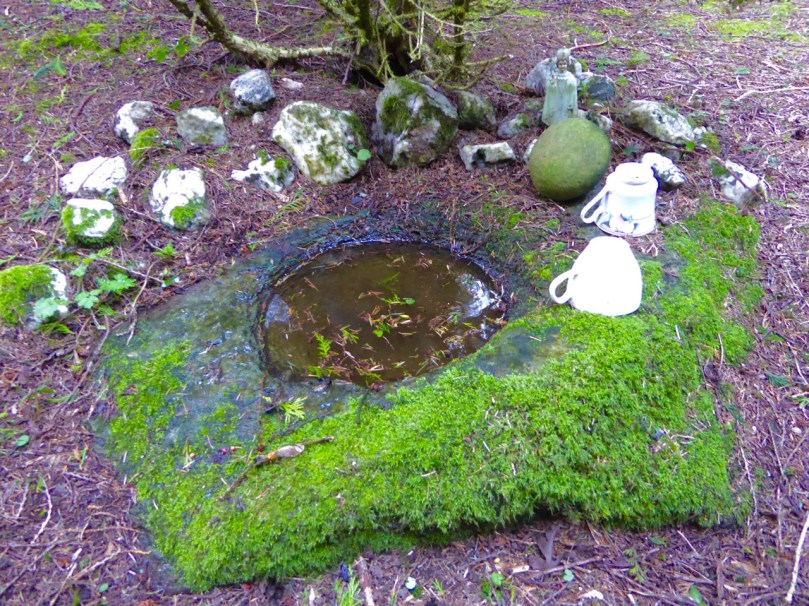
This little well is in the middle of a small wood, with evidence it is still in use. Note the white quartz stones around it – white quartz is often found at prehistoric sites too

No doubt Amanda will record all of this properly in time. I’m looking forward to her future posts and to going along on the field trips!

Offerings at a holy well

I love the offerings that you see at Holy wells. Sometimes you get extras too. In the case below, St Lachtan’s Well, it’s frogspawn. Holy frogspawn, of course.

St Lachtan's holy well

Atlantic Winter

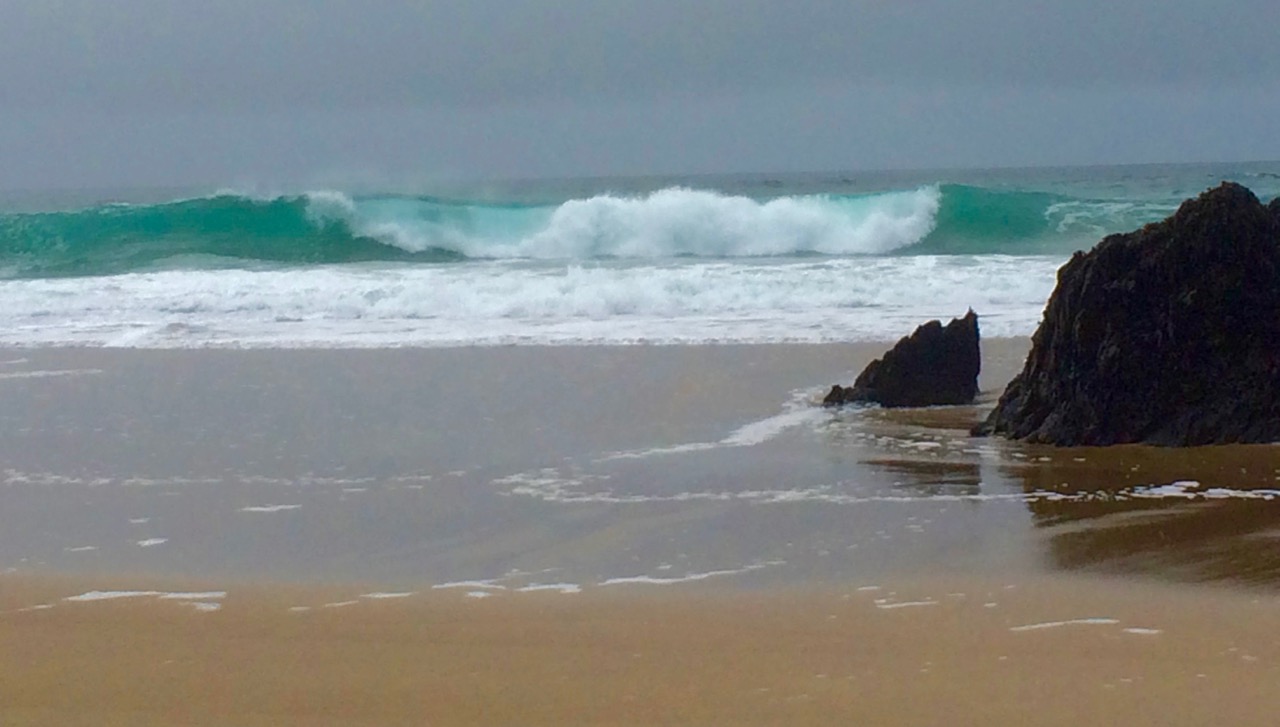
Dingle Beach

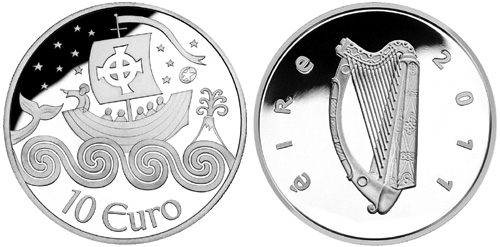
When St Brendan of Clonfert set out to discover America in 512 he and his fellow monks had to face the enormity of the Atlantic Ocean in tiny boats built out of wood and oxhides, sealed with animal fat. Up here in Nead an Iolair our view out to the islands of Roaringwater Bay and beyond is dominated by that same ocean and – sometimes – we feel just as small. This year the winter gales have started early, and spates of fierce westerlies have been throwing the Atlantic straight at our windows. The tiles rattle alarmingly while we are tucked up in bed at night. At these times I think of the Saint and what he had to face. But, like Brendan, we always survive the storms, and often wake up in the morning to a calm, clear day – except that you can hear the constant ‘roaring’ of the open sea out over the bay.

celebrating massOn their way to the New World – Saint Brendan and his companions take advantage of a passing Atlantic denizen to celebrate Mass…

The Atlantic has shaped Ireland. The sea is omnipresent: poets have written about it, storytellers have woven tales around it, and composers have tried to capture its spirit in music. Here’s a small section from the impressive ‘Brendan Voyage’ written by Shaun Davey for orchestra and Uillinn pipes – it’s the haunting second movement, played by Liam O’Flynn with the Irish National Youth Orchestra, at a performance in Cork City Hall. It makes me think of the wonderful sunrise on that calm day after the storm…

Brendan Voyage

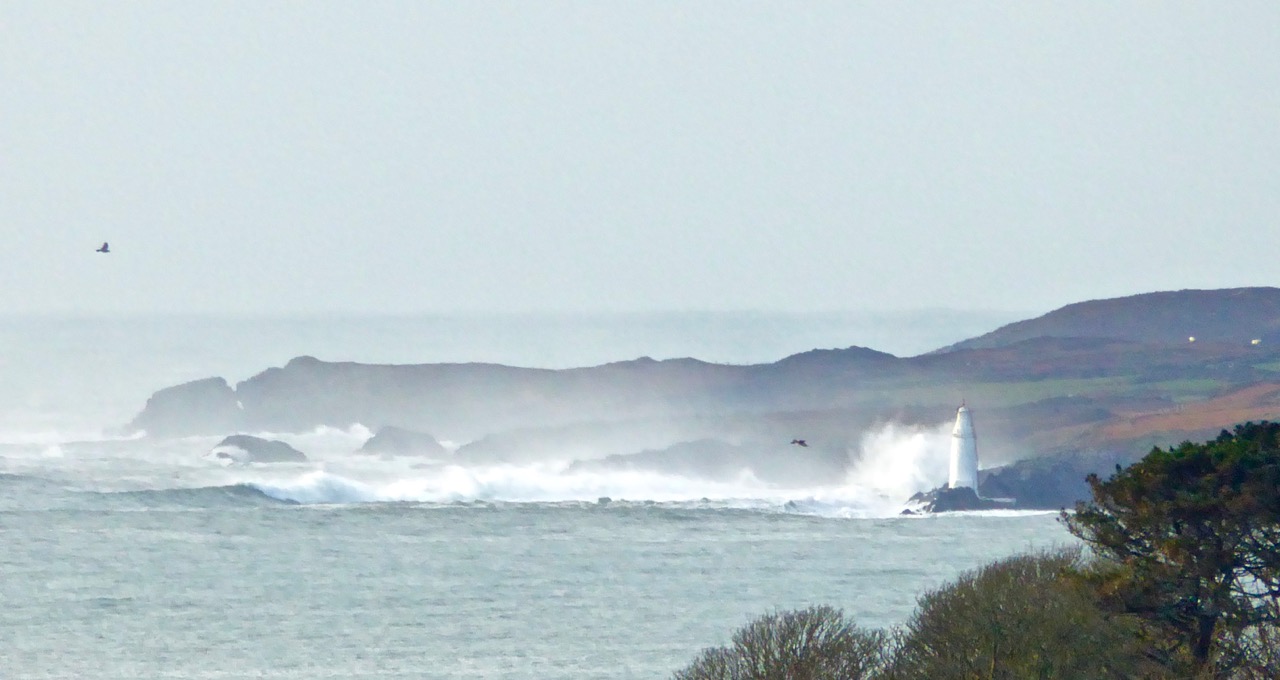
Long Island Beacon

Brow Head

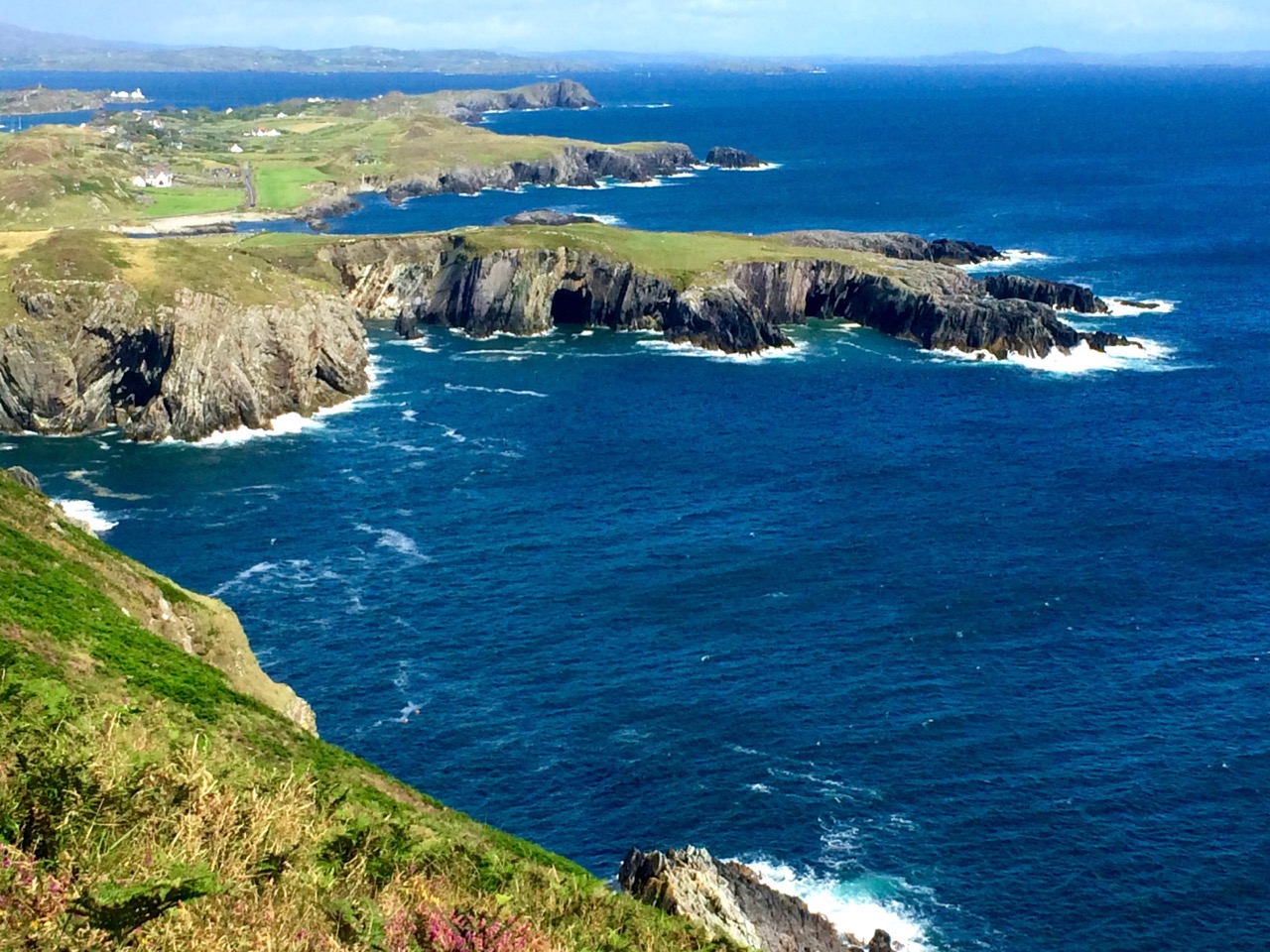
Mizen Head

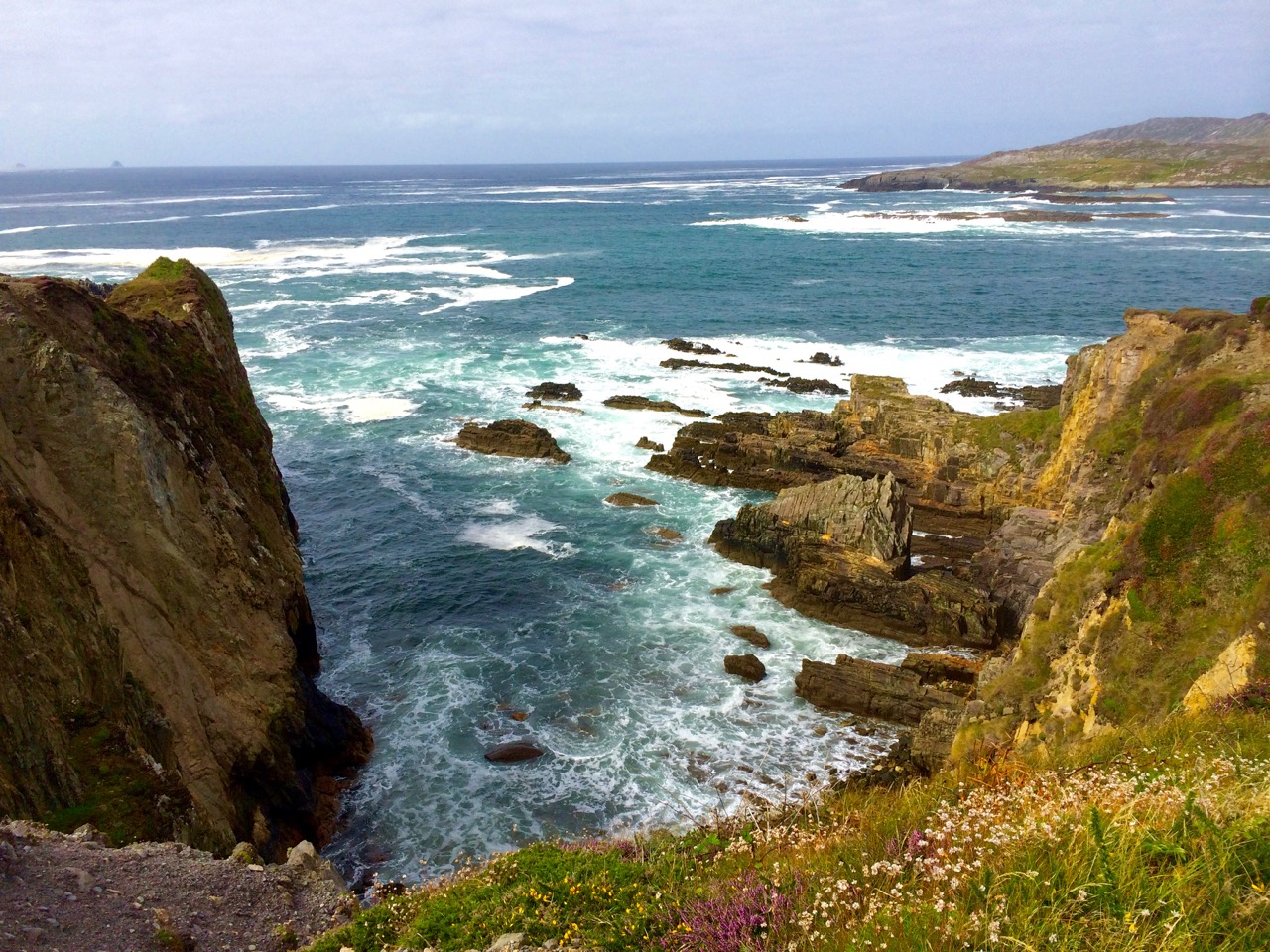
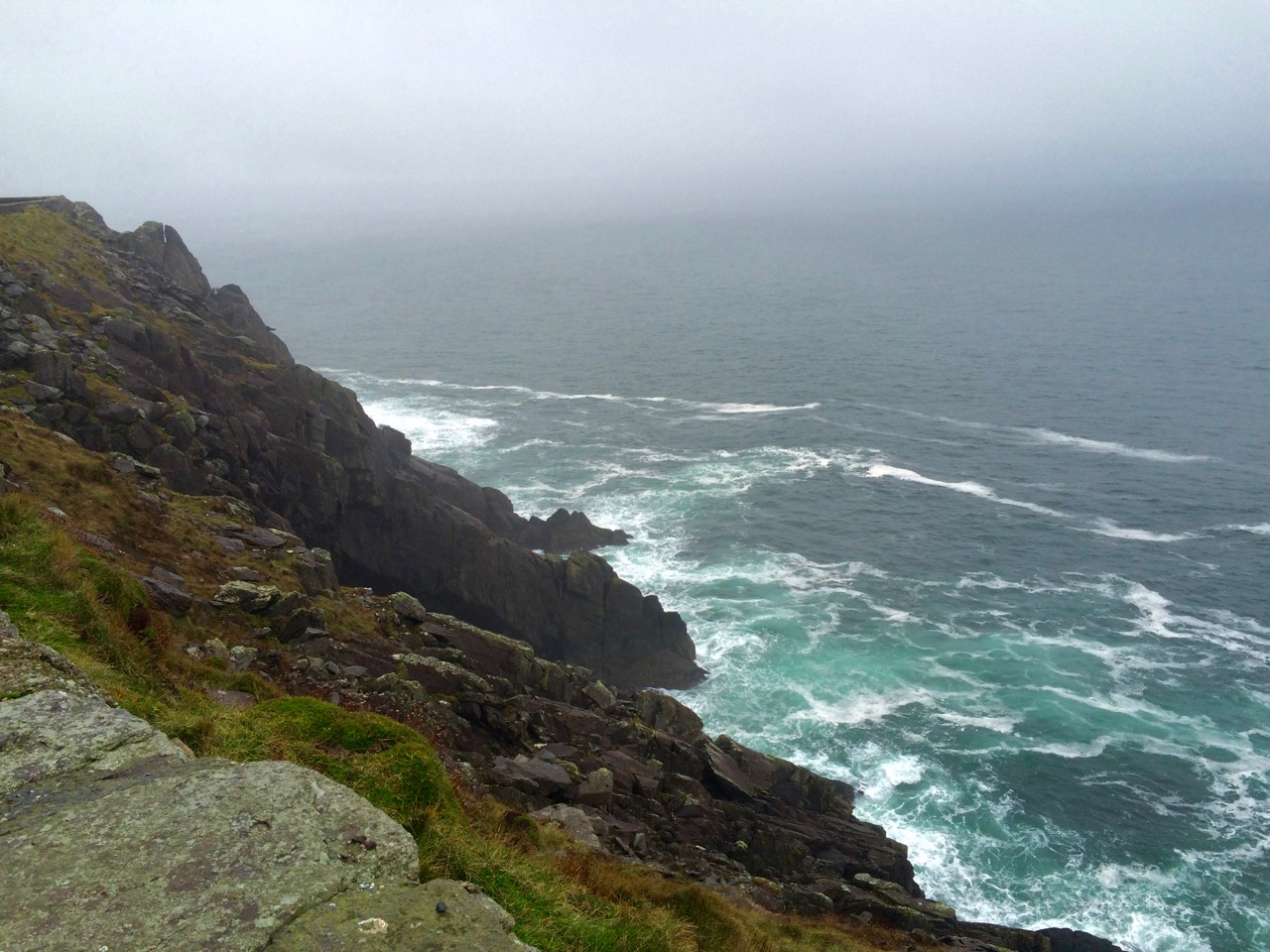
Our own Atlantic: telescopic view of a storm battering Long Island, taken from our garden at Nead an Iolair (top), Brow Head, near Crookhaven (centre), and the impressive land and seascape at Mizen Head – Ireland’s most south-westerly point (lower picture). At the head of this page you can see the huge rollers that come into Dingle Bay, Co Kerry

Dogger, Rockall, Malin, Irish Sea:
Green, swift upsurges, North Atlantic flux
Conjured by that strong gale-warning voice,
Collapse into a sibilant penumbra.
Midnight and closedown. Sirens of the tundra,
Of eel-road, seal-road, keel-road, whale-road, raise
Their wind-compounded keen behind the baize
And drive the trawlers to the lee of Wicklow.
L’Etoile, Le Guillemot, La Belle Hélène
Nursed their bright names this morning in the bay
That toiled like mortar. It was marvellous
And actual, I said out loud, “A haven,”
The word deepening, clearing, like the sky
Elsewhere on Minches, Cromarty, The Faroes.

Glanmore Sonnets VII, taken from Field Work by Seamus Heaney, published by Faber and Faber Ltd

Seamus Heaney was deeply affected by the seascape of his native Ireland. Anyone who works on or beside the sea is aware of the resonant names from the Shipping Forecasts, and the poet has used those names here to introduce his word-picture of the elemental Atlantic.

Near Malin Head 2

On the Beara

Donegal Beach

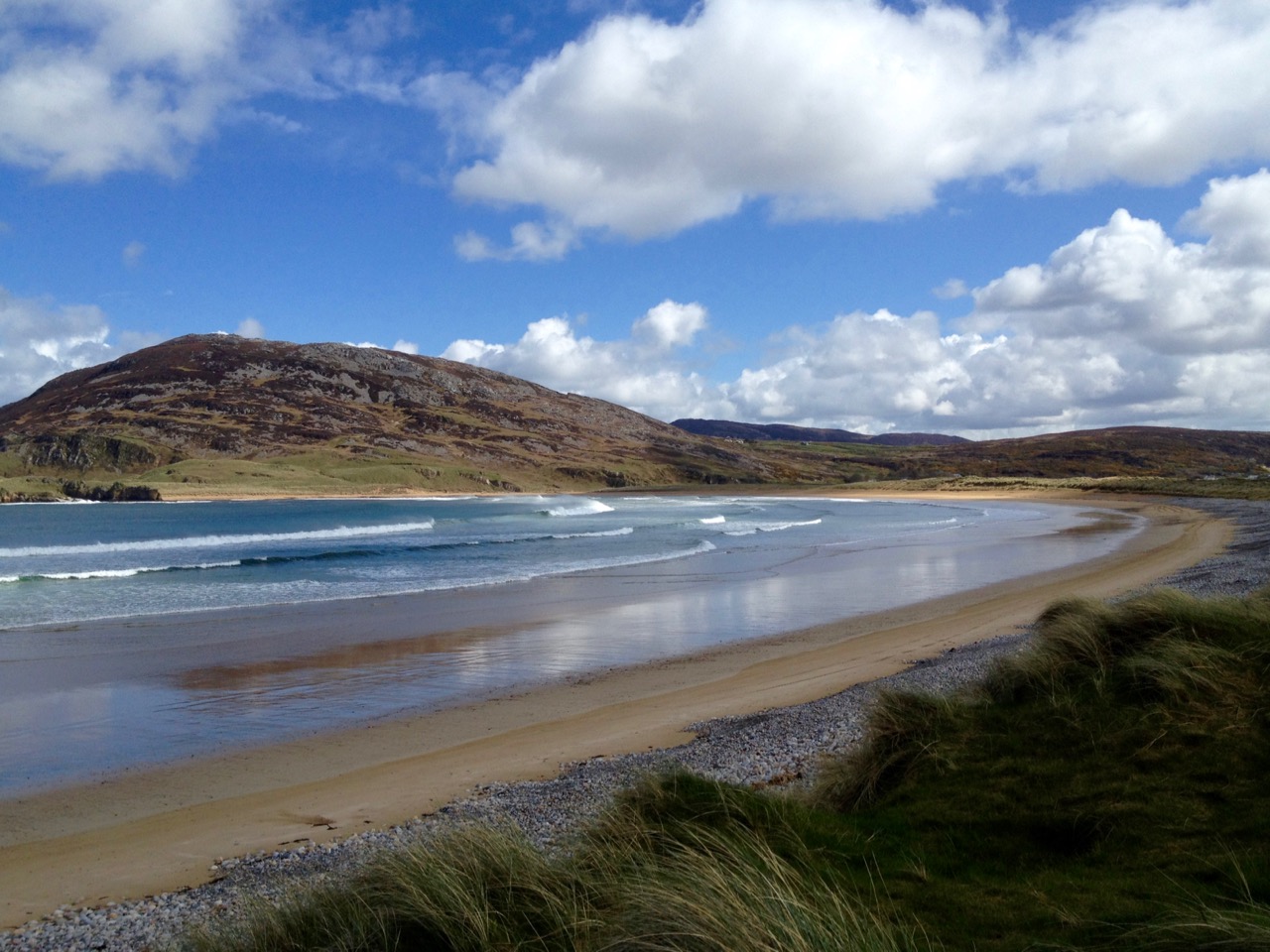
Atlantic contrasts from Mizen to Malin: near Malin Head – Ireland’s most northerly point (top), off the Beara (centre) and a beach in Donegal (lower)

A later traveller over the Atlantic waters was Chistopher Columbus in the 15th century. On the way he looked out for St Brendan’s Isle, a spectral island situated in the North Atlantic somewhere off the coast of Africa. It appeared on numerous maps in Columbus’ time, often referred to as La isla de Samborombón. The first mention of the island was in the ninth-century Latin text Navigatio Sancti Brendani Abatis (Voyage of Saint Brendan the Abbot), from whence it became firmly implanted into Irish mythology. St Brendan took a little party of monks to the island to say Mass: when they returned after a few days to the rest of the flotilla, they were told that they had been away for a year! The phantom island was seen on and off by mariners for years until in 1723 a priest performed the rite of exorcism towards it during one of its apparitions behind low cloud… You can see St Brendan’s Isle for yourselves, above the wonderful giant fish in the second picture down.

Dingle Peninsula

Coast Road

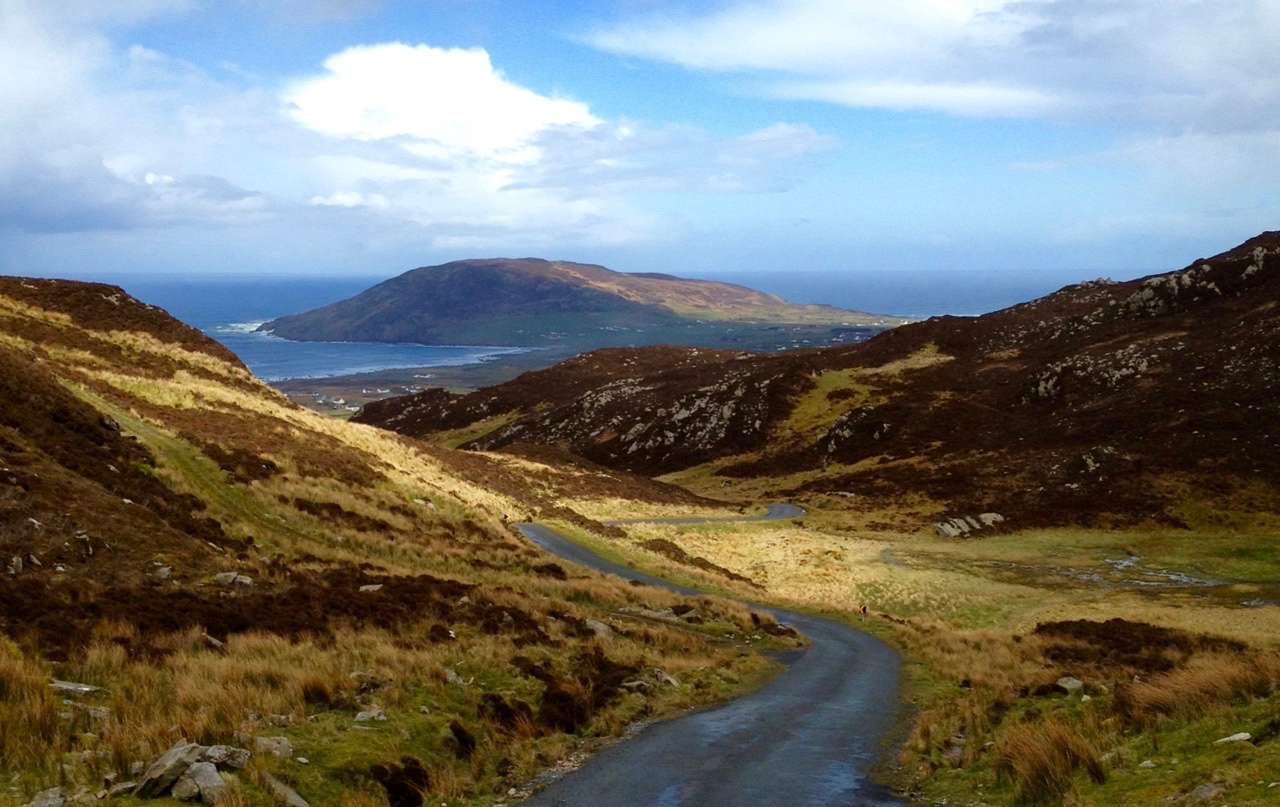
Dingle peninsula (top), and Coast Road in Donegal (lower)

I was pleased to find this Irish Times video made by Peter Cox when he was fundraising for his book Atlantic Light: spectacular photographs of the coastline on Ireland’s Wild Atlantic Way. The excellent aerial views in this film are all taken by a drone… Look out for places you will have seen in our blogs!

atlantic video

We are privileged that the Atlantic Ocean is the abiding but ever-changing feature in our daily lives. It must affect us in unknown ways: I do know that, wherever I go in this world, I will – like Saint Brendan – always be drawn back here to our wonderful safe haven…

St-Brendan-Coin1


Murphy wins by a neck!

High Stakes

Romping home! Dirty Dick Murphy winning the Salthill Fiesta, Galway, in June 1977 (photograph Connacht Tribune)

In the All-Ireland Name Stakes we’ve always known that Murphy is the front runner. In fact it’s the most popular surname, significantly outnumbering the next in line: Kelly. This was the case in 1890 – when the Registrar General of Births, Marriages and Deaths, Robert Matheson, compiled the first comprehensive analysis of names for the whole of Ireland. Then, there were 62,600 Murphys and 55,900 Kellys in a population of 4.7 million. More recently the phone network company Eircom published A Survey of Irish Surnames 1992-97 compiled by Sean J Murphy from telephone directory records in the Republic and Northern Ireland (making it comparable to the 1890 study): this showed 70,900 Murphys and 59,800 Kellys in a total population of 5.3 million.

The race

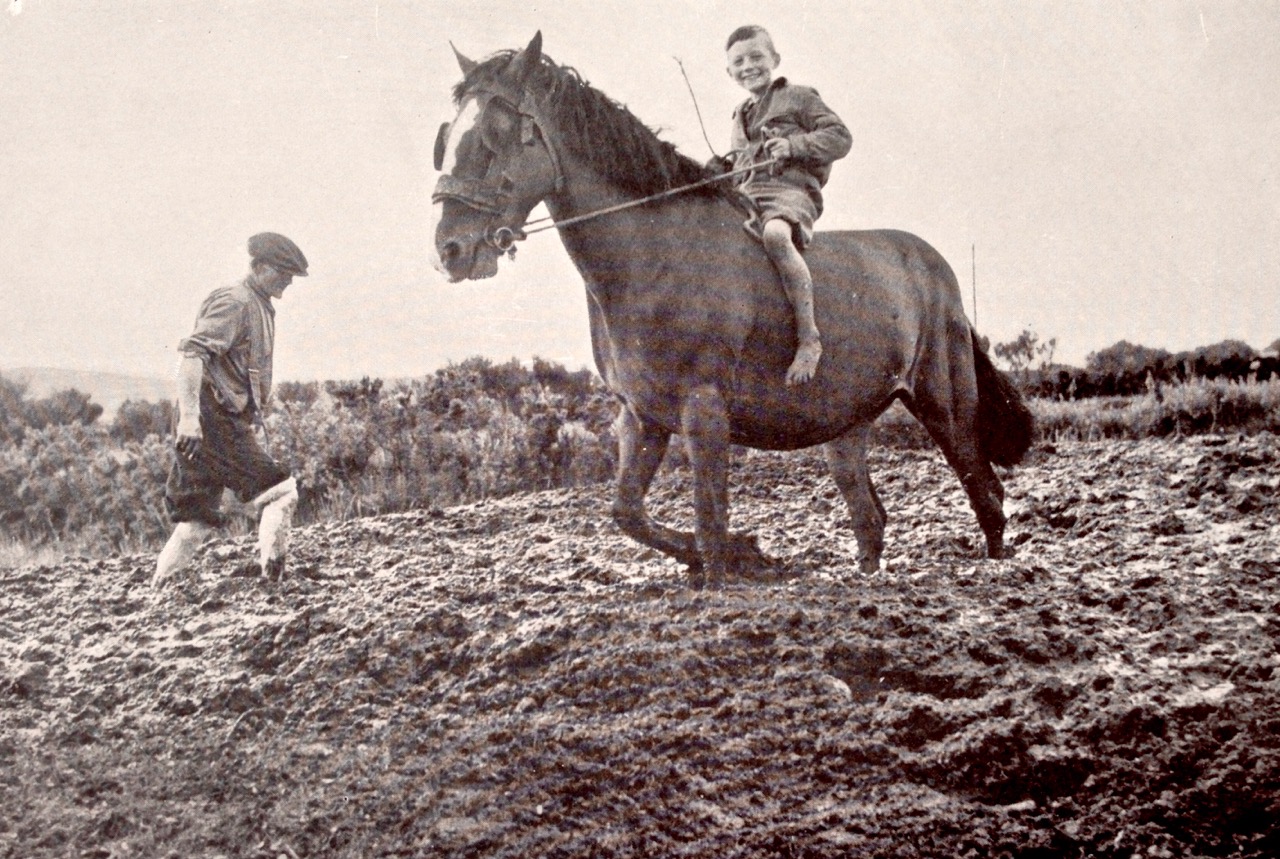
Runner-up! A Kelly, perhaps… from the collection of photographer Tomás Ó Muircheartaigh, who documented life in rural Ireland between the 1930s and the 1950s

So Murphy wins – by a margin. Let’s have look at the name: Ó Murchadha (or in modern Irish Ó Murchú) means ‘sea warrior’ (Irish Medieval History gives Murchú as ‘hound of the sea’). Most of the Murphys are evidently here in County Cork, with Counties Wexford and Kilkenny next up. There are O’Murphys – mainly confined to Ulster, where the family were part of the tribe claiming descent from Eoghan, son of Niall of the Nine Hostages, who was responsible for kidnapping St Patrick and bringing him to Ireland. Otherwise the Murphys usually trace their ancestry back to Diarmait Mac Murchadha – King of Uí Cheinnsealaig and King of Laigin (Leinster) who lived in the twelfth century and was himself descended from the High King Brian Boru through his father’s grandmother.

Key players in Murphy geneaology and Irish history: Brian Boru, Diarmait Mac Murchadha and Henry II

Diarmait Mac Murchadha was deprived of his titles by the then High King of Ireland, Ruaidrí Ua Conchobair, and asked the English King, Henry II, to help him retrieve them. In return, Mac Murchada pledged an oath of allegiance to Henry, who sent troops in support. As a further thanks for his reinstatement, Mac Murchada’s daughter Aoife was married to Richard de Clare, the second Earl of Pembroke, popularly known as ‘Strongbow‘. The result of all this was that the Normans came to Ireland – and stayed – and it’s all thanks to the Murphys!

murphy's irish stout

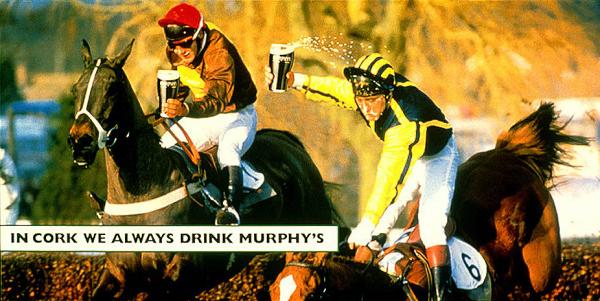
We mustn’t forget Murphy’s Irish Stout! (advertisement by BBH London)

Now let’s look at some famous Murphys. Father John Murphy – an Irish freedom fighter – is immortalised in the ballad Boolavogue. Fr John was born in 1753 and studied for the priesthood in Seville as this was the time of the Penal Laws when Catholics were persecuted in Ireland. He returned to his homeland in 1785 and there he was only known as ‘Mister Murphy’: Irish priests were not styled as ‘Father’ until the 1860s. John Murphy led a group of rebels against English forces in the 1798 uprising. He was captured, tortured and brutally executed at Tullow, Co Carlow. Here is a rendering of the beautiful elegy Boolavogue composed by Patrick Joseph McCall in 1898, the centenary of the Rebellion, played on the pipes by Davy Spillane, with Aly Bain on fiddle:

Boolavogue is a town in Co Wexford where the rebels secured their first victory before they were captured. Here are the words to the ballad:

At Boolavogue, as the sun was setting
O’er the bright May meadows of Shelmalier,
A rebel hand set the heather blazing
And brought the neighbours from far and near.
Then Father Murphy, from old Kilcormack,
Spurred up the rocks with a warning cry;
“Arm! Arm!” he cried, “For I’ve come to lead you,
For Ireland’s freedom we fight or die.”

He led us on against the coming soldiers,
And the cowardly Yeomen we put to flight;
‘Twas at the Harrow the boys of Wexford
Showed Booky’s Regiment how men could fight.
Look out for hirelings, King George of England,
Search ev’ry kingdom where breathes a slave,
For Father Murphy of the County Wexford
Sweeps o’er the land like a mighty wave.

We took Camolin and Enniscorthy,
And Wexford storming drove out our foes;
‘Twas at Sliabh Coillte our pikes were reeking
With the crimson stream of the beaten Yeos.
At Tubberneering and Ballyellis
Full many a Hessian lay in his gore;
Ah, Father Murphy, had aid come over
The green flag floated from shore to shore!

At Vinegar Hill, o’er the pleasant Slaney,
Our heroes vainly stood back to back,
And the Yeos at Tullow took Father Murphy
And burned his body upon the rack.
God grant you glory, brave Father Murphy
And open heaven to all your men;
The cause that called you may call tomorrow
In another fight for the Green again.

Two of my Murphy heroes are musicians: Denis Murphy (1912 – 1974) was a great fiddle player from the Sliabh Luachra area of Cork and Kerry. There were so many Murphy families in that area that Denis’s father Bill was always known as ‘Bill the Waiver’ because his people had been weavers of flax in olden times. I have Denis in my collection of Irish music cd’s but was never able to hear him playing live. I did meet my other hero, however, on my first visit to Ireland back in 1975. That’s Paddy Murphy (1913 – 1992), the renowned concertina player from Co Clare. I was privileged to be taken out to a private session in a remote townland somewhere north of Kilmihil. There, in a bar which seemed like someone’s front parlour, I heard Paddy play and talk of his family history and his very individual virtuoso style of playing an instrument which I have been trying to master for the last 50 years!

Noted traditional musicians: Denis Murphy (left) from the Sliabh Luachra and Paddy Murphy (right) from County Clare

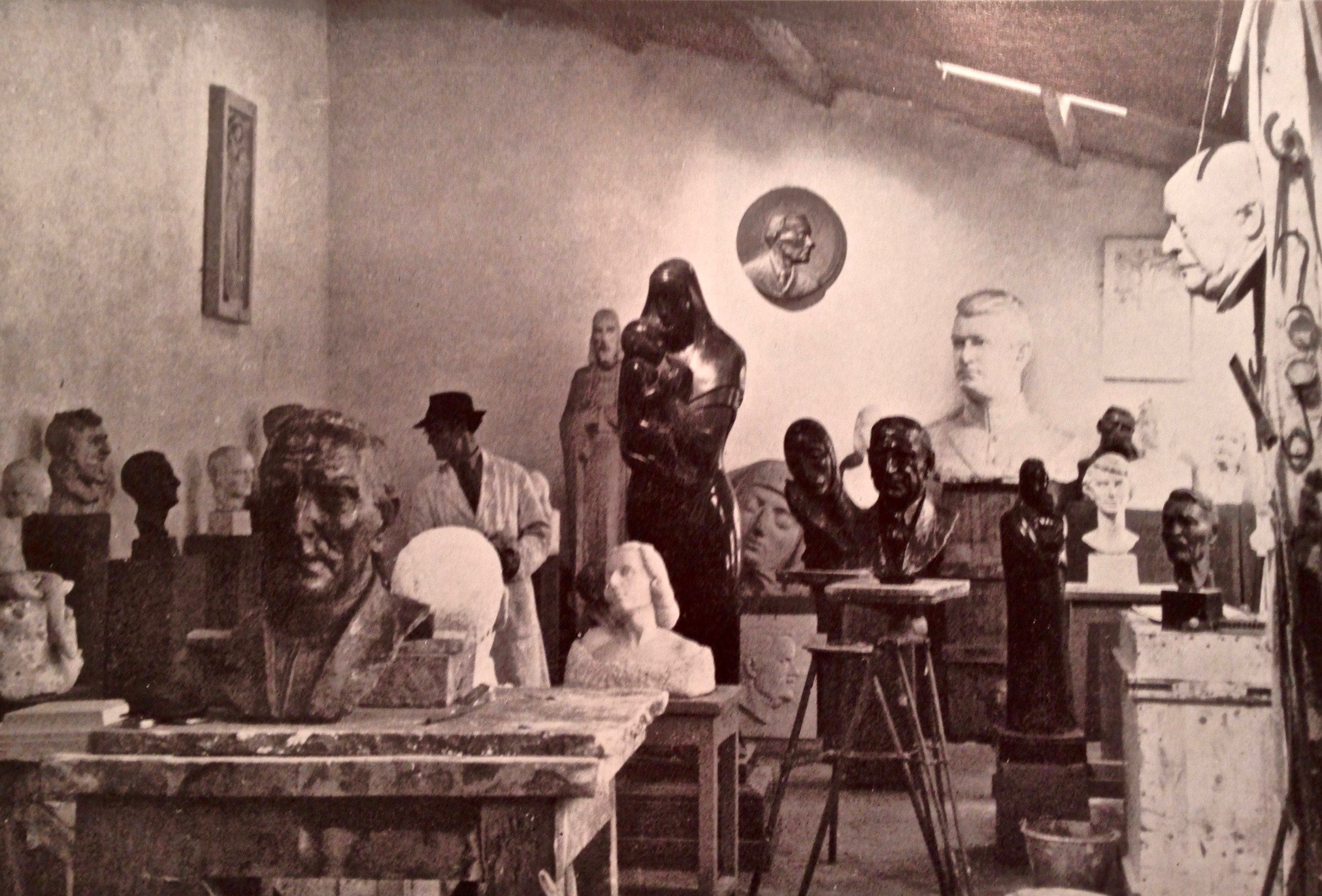
Next is someone we have met before, in our posts on Saint Gobnait and The Tailor and Ansty: that’s the sculptor Seamus Murphy (1907 – 1975). This Murphy, from Burnfort near Mallow, Co Cork, became Professor of Sculpture at the Royal Hibernian Academy. He is also known for his book, Stone Mad, which was published in 1950.

Murphy in studio

Seamus Murphy in his studio: pictures top and lower left are from the collection of photographer Tomás Ó Muircheartaigh, who documented life in rural Ireland between the 1930s and the 1950s

The last Murphy that I want to mention (and there could be so many) is, perhaps, an unexpected one – she is Marie-Louise O’Murphy, who lived from 1737 to 1814. Although she was born and died in France she was of Irish extraction: her grandfather Daniel, a former army officer, had left his home in Cork for Rouen, where he worked as a master shoe-maker. When just in her teens, the physical features of young Mlle O’Murphy were spotted by Giacomo Casanova, who recommended her to King Louis XV. As a result she became the King’s Petite maîtresse – little mistress (or, rather, one of them) and bore him a daughter. However, the King’s favourite, Madame de Pompadour, decided that Marie-Louise’s presence in the royal household was too challenging and she was sent off to the country to marry a nobleman – and also received a handsome dowry for life. Marie-Louise O’Murphy (who was given the name of Marie-Louise Morphy de Boisfailly – possibly to raise her status in Versailles) is familiar to us as the artist’s model for François Boucher’s Resting Girl, painted in 1751. The canvas is now in the Wallraf Richartz Museum, Cologne.

A colourful note on which to end our survey on the Murphys of Ireland (and beyond), perhaps. We apologise to all the thousands of Murphys who we have not mentioned, but we’d like to hear from any of them…

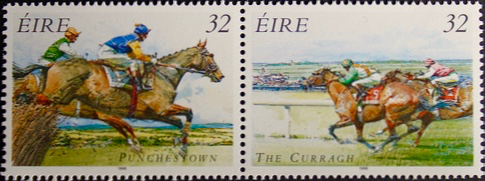
Racing stamps


Rossa: The Skibbereen Years

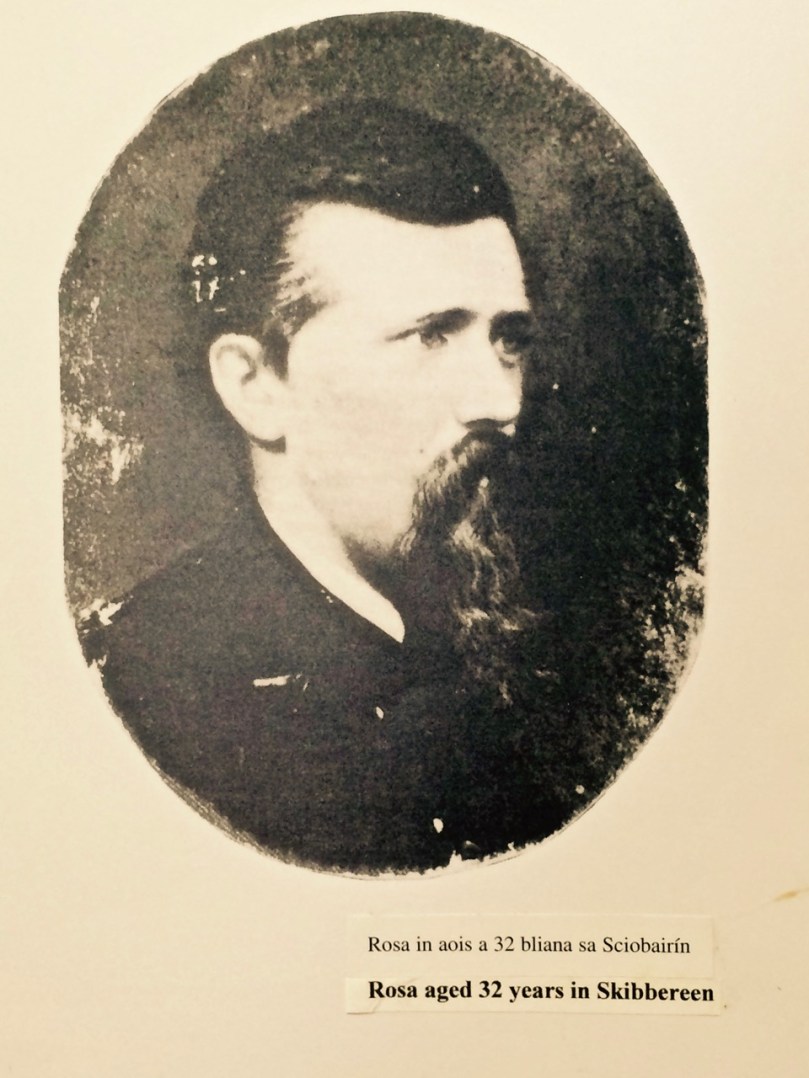
Rossa aged 32

This is the third post in a series about Jeremiah O’Donovan Rossa. In the first, March Back in Time, I introduced the man and described the thrilling re-enactment of the famous 1863 demonstration in Skibbereen. In the second, O’Donovan Rossa – the First Terrorist? I looked at his activities in America and the British bombing campaign he coordinated, as well as the influence of the Fenians in general on American and Canadian history. For more on the question of whether he can be considered a terrorist or a freedom-fighter, or both, I refer readers to the excellent research of Shane Kenna, author of Jeremiah O’Donovan Rossa, Unrepentant Fenian. In particular, Kenna’s  thoroughly researched article available on The Irish Story website, ‘One skilled scientist is worth an army’ – The Fenian Dynamite Campaign 1881-85 is a useful summary of the arguments.

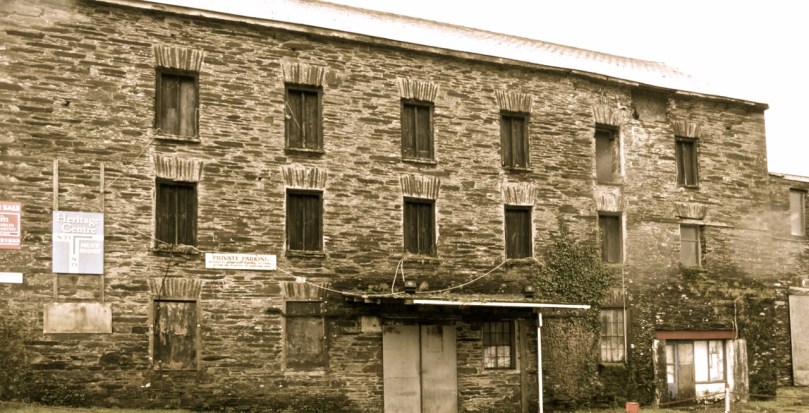
The Skibbereen Heritage Centre is an incredible resource for local history and specialises in the Great Famine. Their Walking Trail and its associated app and book have been immensely helpful in preparing this post (and many others).

My aim on this post is to outline the events in Rossa’s young life that led to his radicalisation and, since much of that time was spent in Skibbereen, to see what traces remain in this West Cork town that can help us to understand the man.

2012-05-19 16.04.23

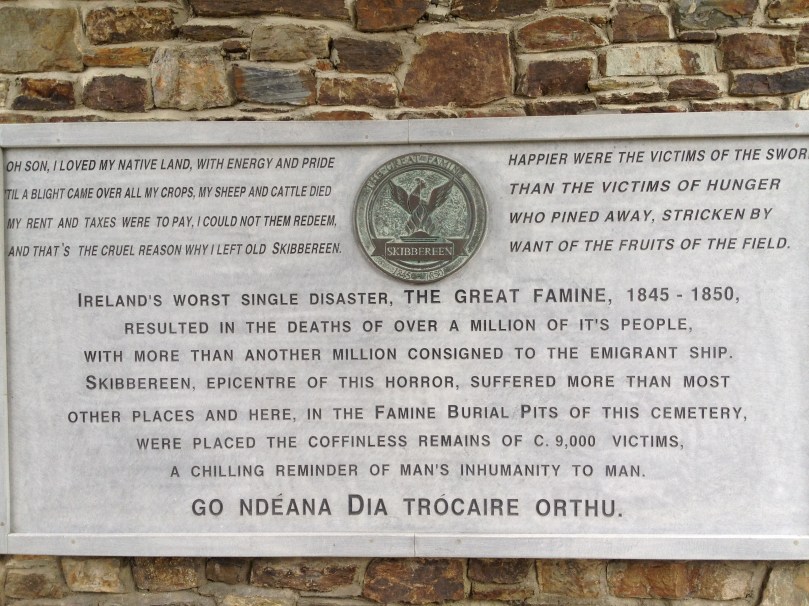
We have to start with the Great Famine of 1845 to 1850, although that’s a hard place to begin. It’s hard because it’s almost impossible to read about it without welling up with emotion and rage. The details are harrowing in the extreme and Skibbereen was the epicentre of the disaster. When Rossa arrived here, aged 16, to live with an aunt, he had witnessed his father die of famine fever after being forced to labour on one of the infamous Board of Works schemes. As was happening all around him, his widowed mother and his siblings were evicted from their home for non-payment of rent, and made the wrenching decision to emigrate. He had had a normal happy childhood and now everything was torn from him under the most appalling conditions.

Cillín near Durrus

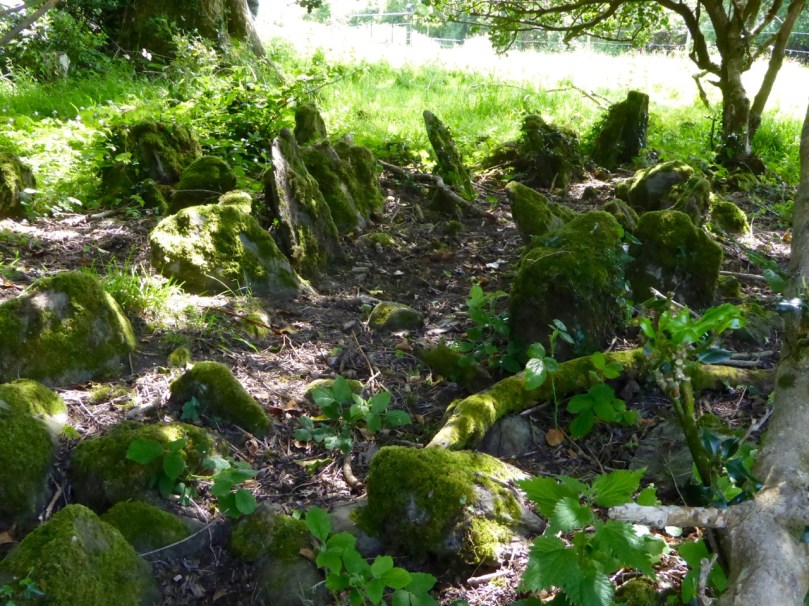
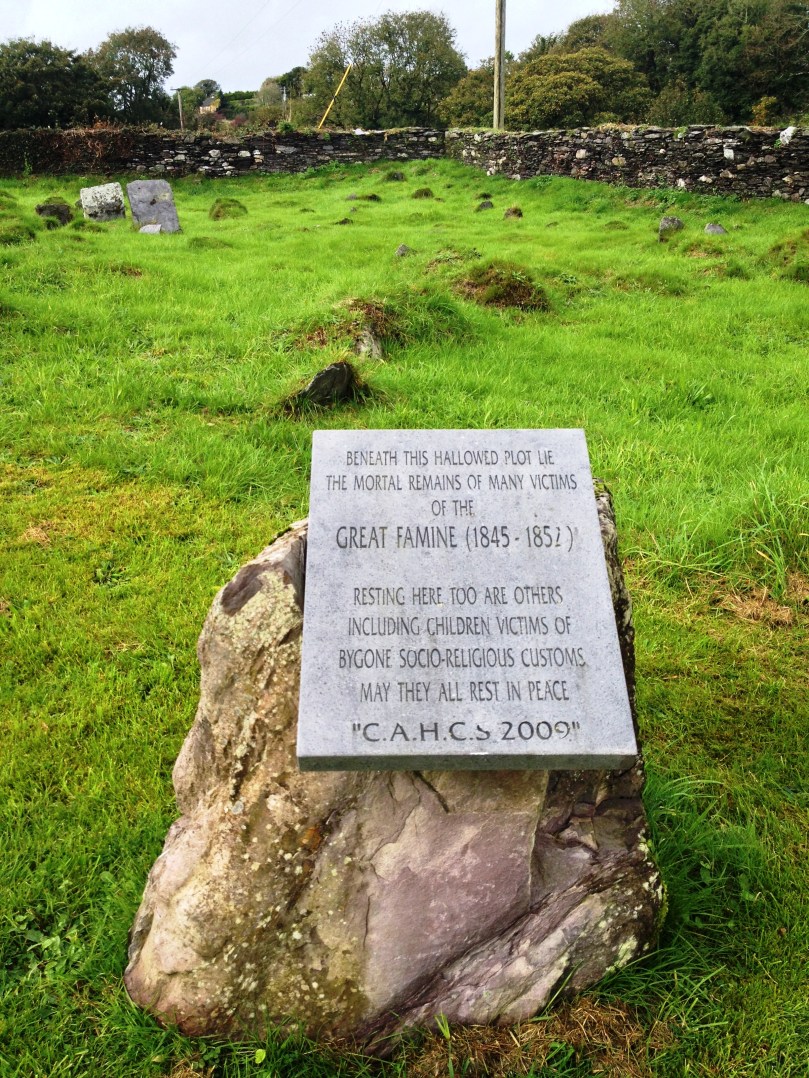
Famine graveyards full of mass burials and unmarked graves are scattered throughout West Cork, like this one near Durrus

In Skibbereen, in Black ’47, the 16 year old saw the worst of the Famine – the carts piled with bodies taking them every day to mass graves, the soup kitchens, the sickness and despair.

Famine soup Kitchen

This building in Skibbereen was used as a soup kitchen during the famine. Thousands of people were fed a watery soup that had little nutritional value but had the advantage of being cheap to make

Meanwhile he saw that tons of food was being exported from the surrounding countryside. He helped an old friend to bury his mother, Jillen Andy. Later, in prison, he would hold that memory and write a moving poem about the experience. It’s a long poem and it begins this way:

 ‘Come to the graveyard if you’re not afraid,
I’m going to dig my mother’s grave. She’s dead,
And I want someone that will bring the spade
For Andy’s out of home, and Charlie’s sick in bed.’

2013-10-20 13.44.38 HDR

Rossa became a shopkeeper in Skibbereen while at the same time founding and organising the Phoenix National and Literary Society which, although supposedly a educational group, had the aim of liberating Ireland by force of arms. It eventually merged with the Irish Republican Brotherhood after Rossa formed an alliance with James Stephens. ‘Fenians’ was the general term applied to the IRB and other such nationalist organizations.

Phoenix Soc meeting place

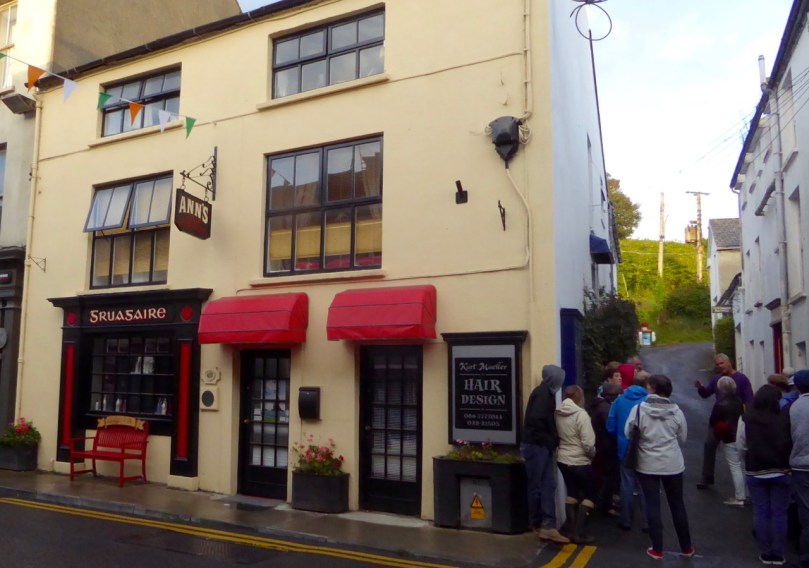
Philip O’Regan of the Skibbereen Heritage Centre leads us on a walking tour. One of the places he points out is the meeting rooms above what is now a hairdressers, where Rossa and his fellow members of the Phoenix Society used to gather

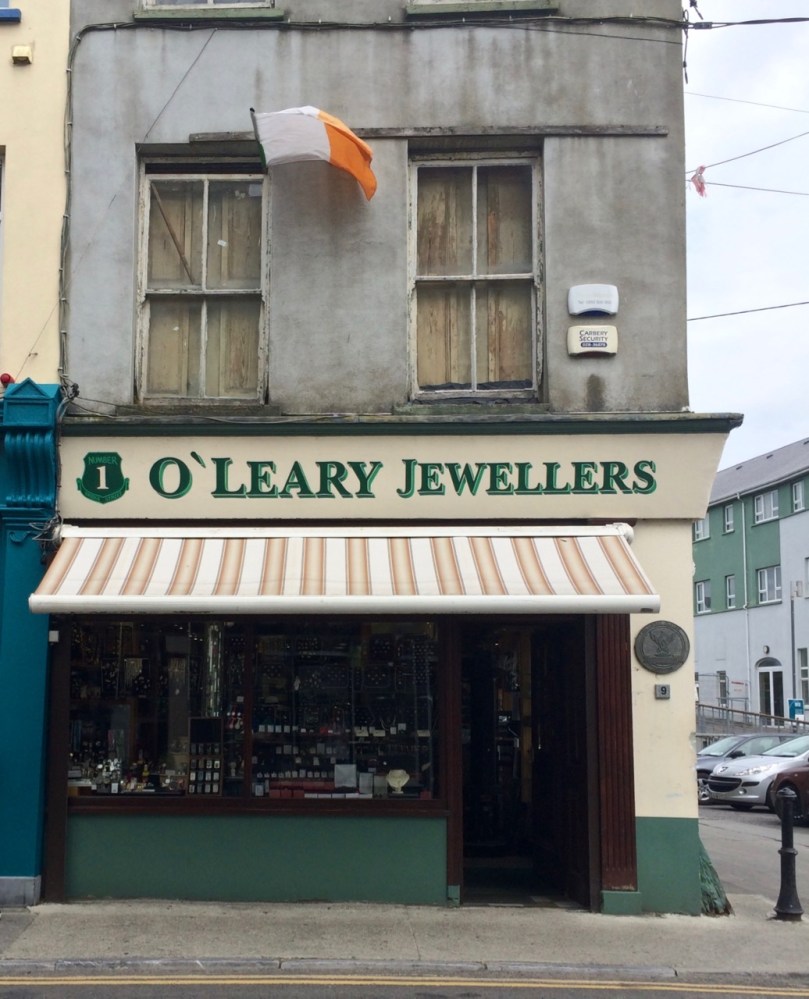
Business and politics didn’t mix well and life was a constant economic struggle. His store is still there, now a jewellers run by the genial Mr O’Leary.

Rossa shop

Rossa married a local woman, Honora Eager, and they had four sons, before her untimely death. I can find no image of Honora, known as Nanno, and can only imagine the devastation to the little family caused by her demise.

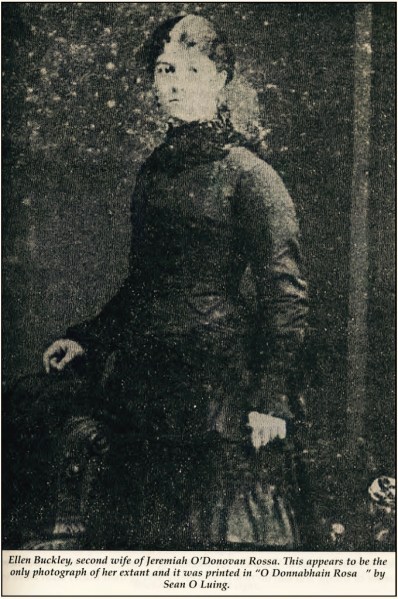
Ellen BuckleyThe following year he met another local woman, Ellen Buckley, who was only 18 at the time and who married him despite the fierce opposition of her parents. She was beautiful and well-educated – and strong willed, obviously. She took on the task of being a mother to his four sons and she bore another son, known as Flor Rossa. But then she also died, leaving Rossa devastated once more. He was in America when it happened and she was buried in Castlehaven graveyard. Her grave is marked with a large headstone – which bears no reference to Rossa, only to her parents. Flor was eventually buried there too, having died as a young man.

The remote and beautiful Castlehaven graveyard, final resting place of Rossa’s second wife, Ellen Buckley. Note that her gravestone makes no reference to Rossa.

annie-mays-bar-skibbereen-920x450

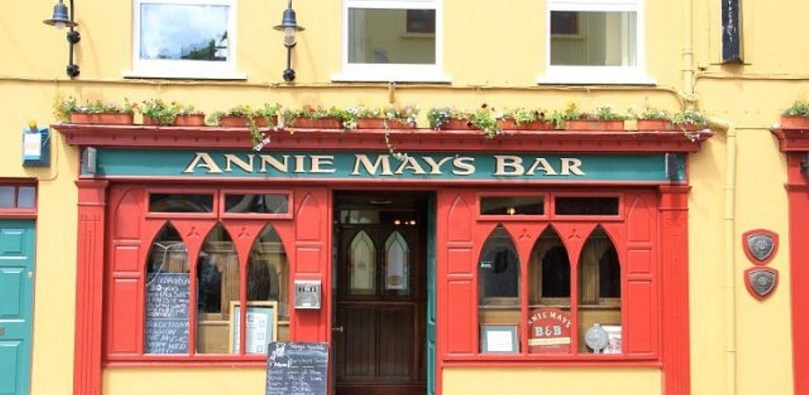
Members of the Buckley family still farm near Skibbereen and run Annie May’s bar and restaurant, a favourite with locals. Photo courtesy of Skibbereen.ie

Rossa’s third wife was Mary Jane Irwin from Clonakilty. Once again, she was young, well-educated, and married him despite the opposition of her parents.

The young Mary Jane Irwin, and Mary Jane in her mourning dress at Rossa’s funeral. Still beautiful. She supported the family with her poetry readings and recitals while Rossa was in prison

She would go on to have thirteen children with Rossa and they would be married for over 50 years – by all accounts a successful and happy union. Their happiness was short-lived at first. Rossa spent several years under atrocious conditions in English prisons, while Mary Jane wrote poetry and speeches and travelled across America and Ireland raising money for the cause and supporting the family.

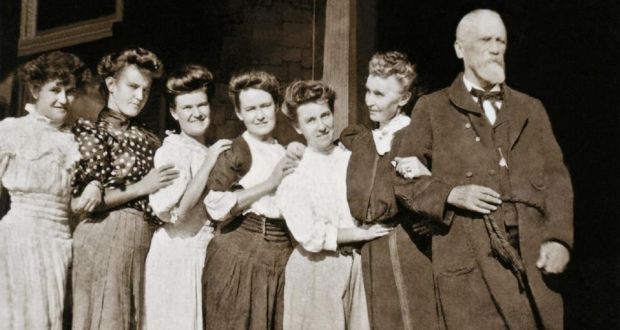
Rossa and daughters

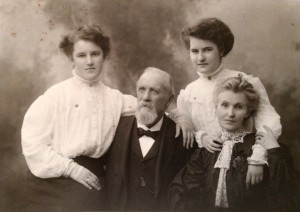
Rossa, Mary Jane and their daughters.

Shortly after his third marriage Rossa moved from Skibbereen and only returned once, in 1904. This was the occasion of the unveiling of the Maid of Erin statue: a fascinating monument that commemorated two failed uprisings against British rule, while Britain still ruled!

North St and Maid

The Maid of Erin statue was originally in the middle of the intersection but was disruptive of traffic so was moved closer to the town hall

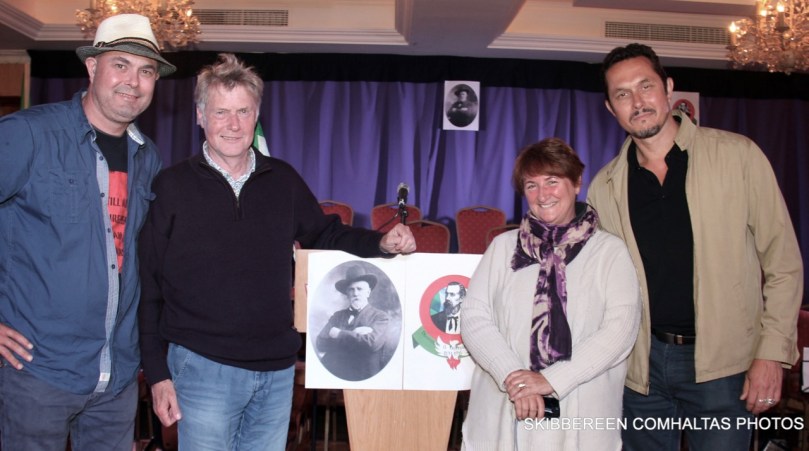
But the Rossa family connection to Skibbereen remains strong, and this summer we were delighted to meet two of his great-grandsons, Williams Rossa Cole and Ross Williams Cole, in town to record footage on the Rossa commemorations for a documentary they are making on the life of their great-grandfather. You can read more about them in this Examiner article. And take a look at the trailer for the documentary!

Rossa boys in Skibbereen

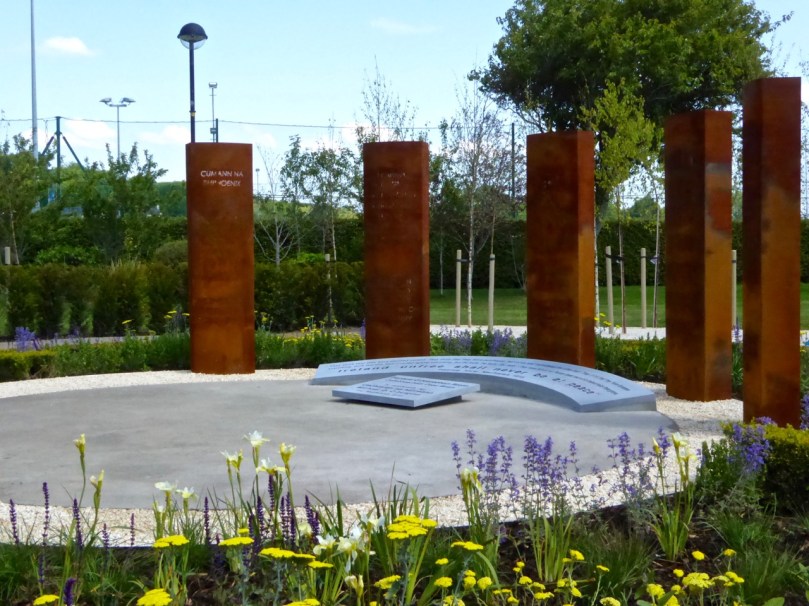
The final stop on any Rossa trail in Skibbereen has to be the park that is dedicated to him. Robert recorded the grand opening by Michael D Higgins, the President of Ireland. It’s a striking monument in stone and steel reflecting the unbending and steadfast commitment of Rossa to his own brand of patriotism, forged in tragedy and hardened in the crucible of prison.

Rossa Memorial

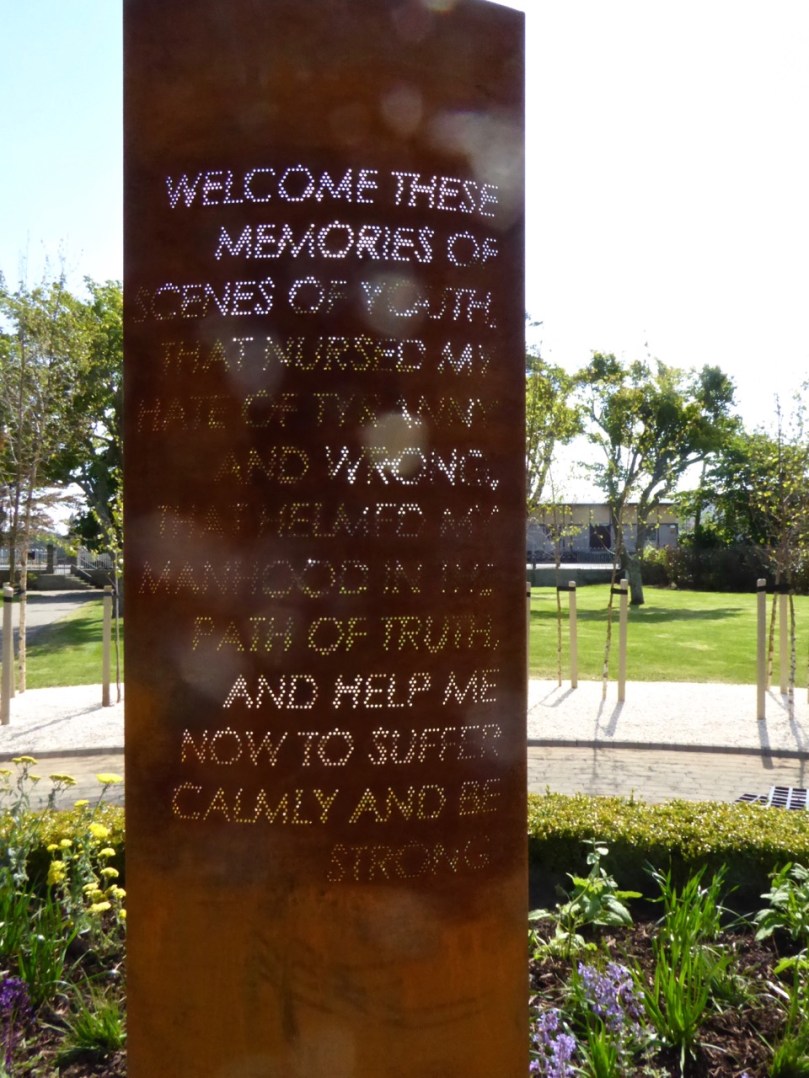
The steel columns have cut-outs of quotes and images silhouetted against the sky. Among these quotes are the poignant final words of Jillen Andy. The poem was composed in prison, not written but memorised because he had no paper. It was a talisman he held close to his heart for when his courage faltered: he conjured up again the image of the wasted body of Jillen, dead of famine sickness as a result of the egregious lack of compassion and mismanagement of resources by the British Parliament and it cemented his resolve once more.

How oft in dreams that burial scene appears,
Through death, eviction, prison, exile, home,
Through all the suns and moons of twenty years,
And oh! How short these years compared with years to come.
Some thing are strongly on the mind impressed
And other faintly imaged there, it seems;
And this is why, when reason sinks to rest.
Phases of life do show and shadow forth in dreams.
And this is why in dreams I see the face
Of Jillen Andy looking in my own,
The poet-hearted man, the pillow case,
The spotted handkerchief that softened the hard stone.
Welcome these memories of scenes of youth
That nursed my hate of tyranny and wrong,
That helmed my manhood in the path of truth,
And help me now to suffer and be strong.

The complete text of Jillen Andy is here.
Welcome these memories

Perhaps we can leave Rossa now to the judgement of history. And perhaps with one last image of him and Mary Jane in happier times. Rest in Peace, you Unrepentant Fenian.

Rossa MJ ans 2 daughters